


Abstract
Life cycle greenhouse gas (GHG) accounting is increasingly required to substantiate the climate value of wind power beyond “zero-emission” operation, especially under China’s dual-carbon targets. Robust estimation of life cycle GHG emission intensity and the identification of actionable mitigation levers are therefore important for credible transition planning. In this study, a process-based life cycle assessment (LCA) was conducted for a representative 100 MW onshore wind farm in Gaoyou, Jiangsu Province, China, following ISO 14040/14044. To enhance engineering relevance, the construction and installation phase was modeled in a refined manner by decomposing it into road, wind-turbine, booster-station, and transmission-line engineering and further into unit processes. The results show that the overall life cycle GHG emission intensity of the studied wind farm is 24.6 g CO2-eq/kWh. Scenario analysis further indicates that reducing curtailment and improving end-of-life recycling are effective pathways to lower emission intensity, while the net advantage of hybrid versus steel towers depends on recycling performance when end-of-life credits are included. The study also summarizes practical implications for low-carbon equipment/material procurement and green supply-chain governance, low-carbon construction and logistics, coordinated “source–grid–load–storage” planning to curb curtailment, and more standardized and comparable life cycle carbon accounting for wind projects in China.
1. Introduction
With the intensifying impacts of global climate change, environmental risks associated with GHG emissions—including more frequent extreme weather events, sea-level rise, and ecosystem degradation—are increasingly threatening sustainable socioeconomic development. The Intergovernmental Panel on Climate Change (IPCC) Sixth Assessment Report indicates that global mean surface temperature has increased by approximately 1.1 °C relative to the pre-industrial period, and continued high emissions could lead to substantially higher warming by the end of this century, with severe ecological and economic consequences [1]. In response, the international community has advanced coordinated mitigation actions and low-carbon transitions through a series of climate agreements.
The Paris Agreement, adopted at the 21st Conference of the Parties in 2015, strengthened global consensus on climate action [2]. It aims to hold the increase in global average temperature to well below 2 °C above pre-industrial levels and to pursue efforts to limit warming to 1.5 °C. Unlike the Kyoto Protocol, the Paris Agreement requires all Parties to submit Nationally Determined Contributions reflecting national circumstances, thereby promoting broad participation in mitigation and accelerating progress toward long-term net-zero emissions.
As one of the world’s major emitters, China has actively aligned its national strategy with global climate governance. In 2020, China announced its “Dual Carbon” goals: peaking carbon emissions before 2030 and achieving carbon neutrality before 2060 [3]. These commitments have accelerated energy-system transformation and industrial upgrading. With advances in renewable technologies and grid infrastructure, clean electricity is increasingly substituting for fossil-based generation, improving electrification and reducing CO2 emissions across the economy.
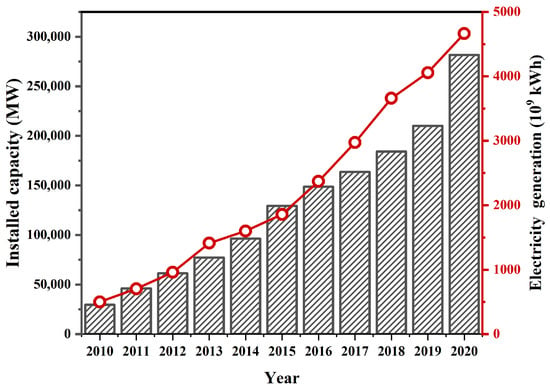
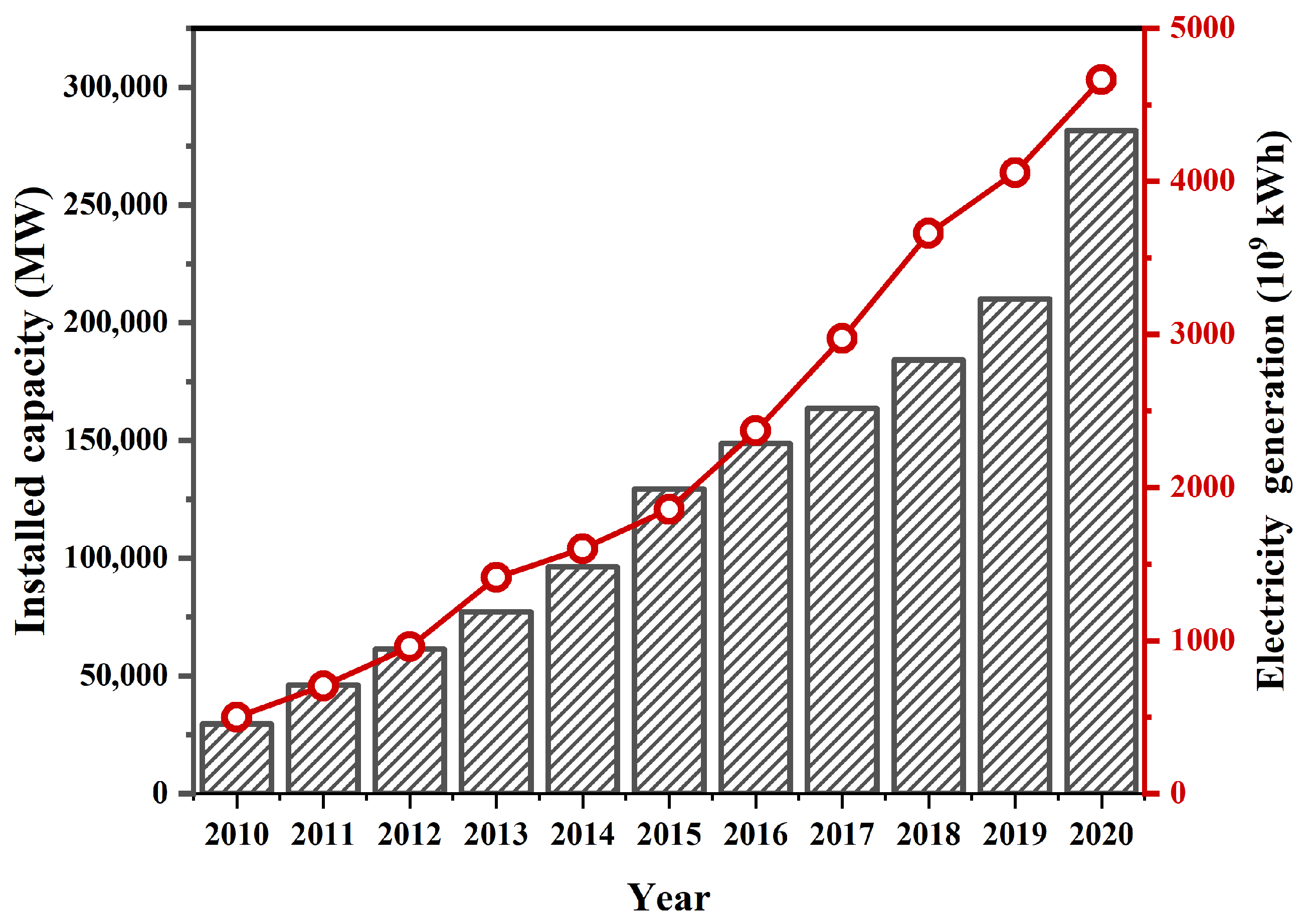
Among renewable options, wind power is widely recognized as a key technology for carbon reduction due to its abundant resource base, scalability, and low operational emissions [4]. Compared with other renewables, wind resources are broadly distributed and can be deployed at a large scale with limited direct environmental burdens during operation, making wind power a core pillar of power-sector carbon reduction strategies. Supported by policy incentives and technological progress, global wind power capacity has expanded rapidly in recent years, and China has become a leading market in terms of both deployment scale and growth rate (Figure 1). According to the Global Wind Energy Council 2024 annual report, China added 75 GW of new wind capacity in 2023, accounting for nearly 65% of global newly installed wind capacity.
Figure 1.
China’s installed capacity and power generation capacity of wind power from 2010 to 2020.
Despite wind power’s crucial role in reducing power-sector emissions, non-negligible GHG emissions still occur across its life cycle, including raw material extraction, component manufacturing, transportation, construction, operation and maintenance, and end-of-life treatment. As installed capacity expands, cumulative embodied emissions associated with wind projects become increasingly important. Conventional carbon accounting approaches may not provide sufficient resolution for identifying life cycle hotspots and designing targeted mitigation measures [5], particularly under China’s “Dual Carbon” policy framework that emphasizes rigorous and transparent assessment.
Life cycle assessment (LCA) is a widely used “cradle-to-grave” environmental assessment tool for carbon accounting and impact evaluation, which quantifies resource inputs, energy use, and emissions across all life cycle stages of a product or system and thereby supports hotspot identification and mitigation strategy design [6]. In carbon-oriented applications, LCA is commonly used to (i) locate high-emission processes, (ii) optimize resource allocation and technology pathways, and (iii) inform low-carbon policy and investment decisions. Its usefulness has been demonstrated across multiple sectors. For example, in the building sector, LCA is used to compare carbon burdens of alternative materials and design options across production, transport, construction, use, and end-of-life stages [7]. In the transport sector, LCA supports life cycle comparisons between new-energy vehicles and conventional internal-combustion vehicles by capturing fuel- and electricity-supply-chain emissions [8]. In the energy sector, LCA is extensively applied to benchmark renewable and fossil-based technologies and to quantify carbon reduction potential under different energy-system configurations [9].
To address diverse accounting needs and data constraints, several LCA modeling paradigms have been developed, most notably process-based LCA (PLCA), input–output LCA (IOLCA), and hybrid LCA (HLCA). PLCA disaggregates a system into engineering-relevant unit processes and provides high-resolution attribution of emissions and mitigation opportunities, but it is data-intensive and may truncate upstream supply-chain contributions when process data are unavailable [10,11]. In contrast, IOLCA uses monetary input–output tables to capture both direct and indirect emissions throughout the economy, offering comprehensive coverage at the expense of lower technological resolution and potential instability associated with sector-average statistics [12,13]. HLCA combines both approaches—using PLCA for key processes and IOLCA for upstream completeness—thereby reducing truncation while preserving interpretability, although it requires more complex data integration and methodological choices [14,15,16].
A growing body of literature has applied LCA to wind power systems and reported consistently low life cycle GHG intensities relative to fossil generation. Early European studies provided quantitative benchmarks: Schleisner et al. reported life cycle intensities of 16.5 g CO2-eq/kWh (offshore) and 9.7 g CO2-eq/kWh (onshore) for Danish wind farms [17], while Ardente et al. estimated 8.8–18.5 g CO2-eq/kWh for Italian wind farms and identified equipment manufacturing and construction as the main contributors [18]. In the United States, Dolan and Heath synthesized 240 wind projects and reported an average life cycle intensity of 11.0 g CO2-eq/kWh, emphasizing that cross-study variability is more strongly driven by assumptions and system conditions than by turbine rating alone [19]. Comparative analyses further indicate that differences in capacity factor, methodological choices, manufacturing location, tower material selection, and end-of-life treatment can substantially influence results [20]. Beyond Europe and the United States, studies in developing regions also report low intensities, albeit with site- and supply-chain-dependent variation [21,22,23]. In China, wind-project LCAs have expanded rapidly using both process-based and hybrid approaches; for example, HLCA of the Donghai Bridge offshore wind farm reported 26.47 g CO2-eq/kWh, with manufacturing and transport being major contributors [24], while PLCA of a typical 2 MW onshore turbine reported 20.7 g CO2-eq/kWh with production as the dominant stage and recycling rate as a key driver [25]. Additional Chinese case studies similarly highlight manufacturing/construction as hotspots and show sensitivity to boundary definitions, data representativeness, and recycling assumptions [26,27].
Despite these advances, existing evidence is not always directly transferable to China’s rapidly evolving wind sector. Differences in project scale and geographic conditions, domestic supply-chain characteristics, construction practices, curtailment and grid-integration constraints, and locally representative background data can materially affect life cycle carbon estimates and hotspot profiles. Many published studies rely on simplified boundaries or generic datasets, which may underrepresent balance-of-plant infrastructure and construction machinery or overlook the carbon-intensity implications of curtailment when the functional unit is defined as electricity delivered to the grid. These gaps motivate a project-grounded, engineering-consistent LCA with refined construction-stage modeling and decision-oriented mitigation assessment, which is developed in this study.
In response to these gaps, this study applies a project-grounded process-based LCA to a representative 100 MW onshore wind farm in Gaoyou, China, using as-built engineering settlement/design data and a complete, engineering-consistent boundary with a functional unit of 1 kWh delivered to the grid, thereby explicitly capturing curtailment effects on carbon intensity. A distinctive feature is the refined modeling of the construction and installation stage, decomposed into road, wind-turbine, booster-station, and transmission-line engineering and further into unit processes accounting for both material and machinery inputs. Building on hotspot identification, a three-factor scenario analysis is conducted to quantify mitigation potential and to derive practical pathways for low-carbon procurement, construction/logistics carbon reduction, enhanced end-of-life circularity, and improved accounting comparability for Chinese wind projects. Accordingly, this study makes three contributions:
- It presents a project-specific LCA of a 100 MW onshore wind farm in China based on as-built engineering data, reporting results per 1 kWh electricity delivered to the grid electricity and explicitly accounting for curtailment;
- It refines the construction and installation modeling into engineering-consistent subcategories and unit processes, enabling more actionable hotspot identification;
- It integrates curtailment and end-of-life recycling into scenario analysis to quantify practical mitigation pathways under China’s power-system context.
The remainder of this paper is structured as follows. Section 2 (Materials and Methods) describes the goal and scope definition, the life cycle inventory analysis, the case study description, and the scenario settings. Section 3 (Results) presents the life cycle impact assessment results, including stage-by-stage contributions, scenario analysis, sensitivity analysis, and comparison with relevant studies. Section 4 (Discussion) discusses implications and improvement opportunities. Finally, Section 5 (Conclusions) summarizes key findings and outlines future work.
2. Materials and Methods
To systematically evaluate the life cycle greenhouse gas (GHG) emissions of the wind power system, this study applied an LCA framework in accordance with ISO 14040 and ISO 14044 [28,29]. Foreground inventory data were compiled from project-specific engineering documents and suppliers’ technical manuals, while background processes (upstream material production, energy supply, and auxiliary processes) were modeled using the Ecoinvent 3.11 database. Climate impacts were quantified using the IPCC 100-year Global Warming Potential (GWP100) characterization factors, and results were reported as kg CO2-eq per functional unit [30].
2.1. Goal and Scope Definition
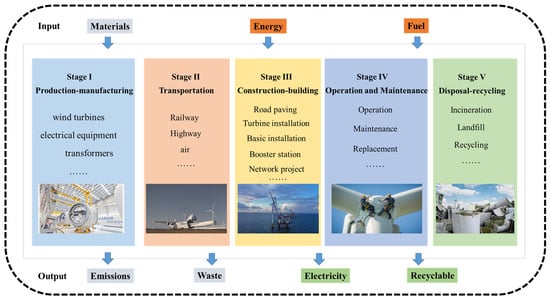
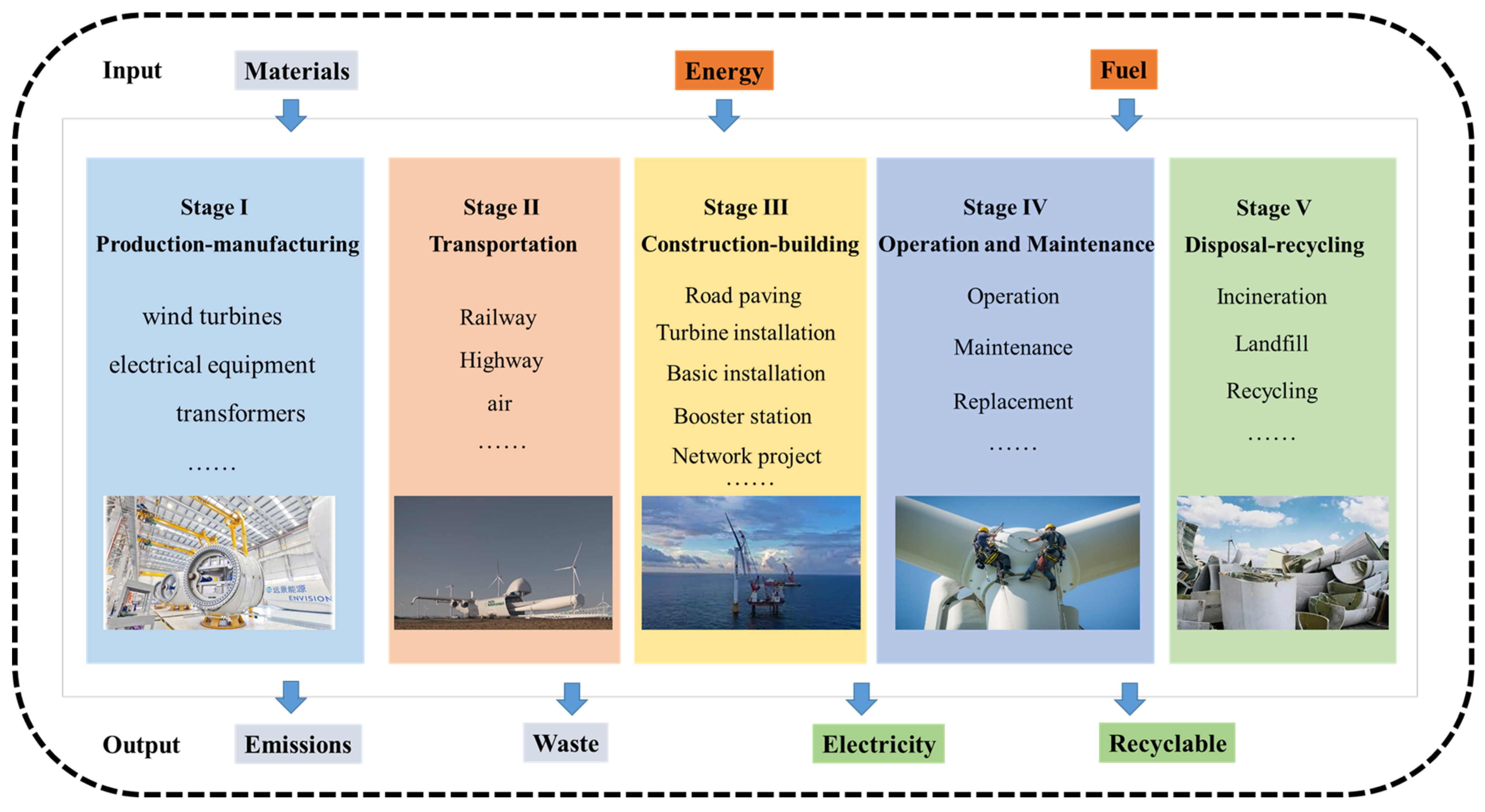
The purpose of this study was to account for carbon emissions over the whole life cycle of a typical wind power project and identify carbon emission hotspots, so as to provide constructive suggestions for carbon emission reduction in wind farms. The functional unit was defined as 1 kWh of electricity delivered to the grid. An explicit equation defining lifetime delivered electricity is shown in Equation (S1) in Supplementary Materials. This study divided the wind power-system boundary (Figure 2) into five stages: the production-manufacturing (Stage I), the transportation (Stage II), the construction-building (Stage III), the operation-maintenance (Stage IV), and the disposal-recycling (Stage V).
Figure 2.
The system boundary of LCA analysis of the Gaoyou wind power plant.
The assessed system covered the wind turbine generator systems and the balance-of-plant infrastructure required to deliver electricity to the grid, including turbine foundations and platforms, on-site roads, the internal collection system, the booster station/substation, and the grid-connection facilities up to the on-site substation. Auxiliary facilities and temporary construction works were included where inventories were available. Impacts associated with administrative activities and staff commuting were excluded.
2.2. Life Cycle Inventory (LCI) Analysis
LCI involves data collection, data validation, data correlation, data distribution, and system boundary adjustments, etc. The data for the wind power plant was primarily collected from suppliers’ technical and maintenance manuals. Data for the background system, including upstream and auxiliary processes, were sourced from the Ecoinvent 3.11 database. Notably, the most critical background data, such as the electricity mix, was specific to China, ensuring the analysis reflects local conditions. Since China-specific datasets for certain materials (e.g., steel and concrete) were not available in ecoinvent at the required level, proxy datasets from “Rest of World/other regions (RoW)” were adopted. For other background processes, global data sources were used, such as records from Europe and other regions, due to the lack of a localized database in China. While this may have introduced some uncertainties into the results, especially as some components are internationally traded, efforts were made to prioritize Chinese-specific data wherever available. In cases of data gaps, alternative secondary data were used.
2.2.1. Production-Manufacturing
Stage I accounted for embodied emissions associated with the manufacturing of wind turbine generator systems and major electrical equipment (Table S1). Due to confidentiality constraints, inventory data for key components (notably turbines and transformers) were supplemented using publicly available literature and engineering-consistent approximations where primary data were unavailable. Specifically, the material compositions of the G115-2.0 [31] and V110-2.0 [32] turbines were obtained from literature data, and the main transformer was modeled based on published studies [33].
2.2.2. Transportation
Stage II covered off-site and on-site freight movements associated with the wind farm across its life cycle (Table S2). Road freight was assumed because project logistics records indicate road dominance. The transportation distances for each section were preset. It included (i) delivery of wind turbine components (500 km) and electrical equipment from manufacturing sites to the project area, (ii) delivery of bulk construction materials to the site (200 km), (iii) intra-site logistics during construction and maintenance where relevant (300 km), and (iv) transport of dismantled materials and wastes from the wind farm site to designated recycling or disposal facilities at end of life (300 km). Transportation-related emissions depend on mode, distance, and total freight demand. Unless otherwise specified, only one-way transport was considered.
2.2.3. Construction-Installation
Stage III included emissions from civil works and installation activities required to build the wind farm, including roads, turbine foundations and erection, the booster station/substation, and grid-connection works. Detailed activity data (materials and construction machinery use) were derived from project settlement documents, material surveys, and preliminary design reports. The construction stage was further decomposed into sub-processes and unit operations to enable refined hotspot identification and mitigation analysis (Table S3). Because the engineering inventory did not provide tower-type-specific construction activity data, we distinguished steel and hybrid towers primarily through their material inventories; potential process-level differences will be refined in future work when activity-level construction logs become available.
2.2.4. Operation-Maintenance
Stage IV covered routine maintenance and overhaul activities over the 20-year lifetime, including replacement of parts, lubricant and consumable use, and transport/energy inputs associated with maintenance operations [34] (Table S4). Replacement and consumption rates were estimated from observed operation records where available and supplemented by engineering assumptions for lifetime extrapolation.
2.2.5. Disposal-Recycling
Stage V covered emissions from decommissioning activities and the end-of-life treatment of major materials. End-of-life recycling was modeled using the avoided-burden approach, where recovered secondary materials are assumed to displace the production of corresponding virgin materials in the background system, and the resulting avoided emissions are reported as negative credits [35]. To capture the effect of end-of-life recovery on overall GHG results, this study selected several materials (Table S5) with the largest contributions to life cycle emissions and quantified the corresponding recycling credits [36].
2.3. Case Study
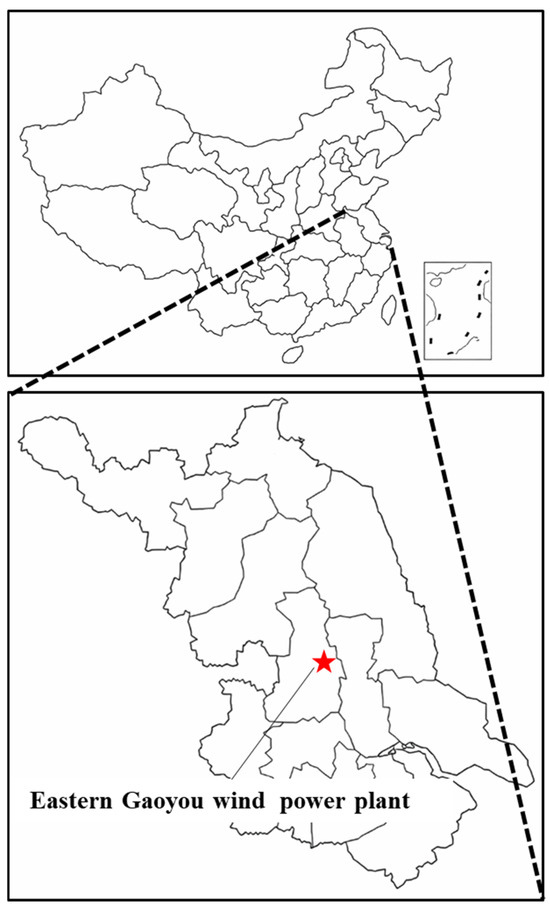
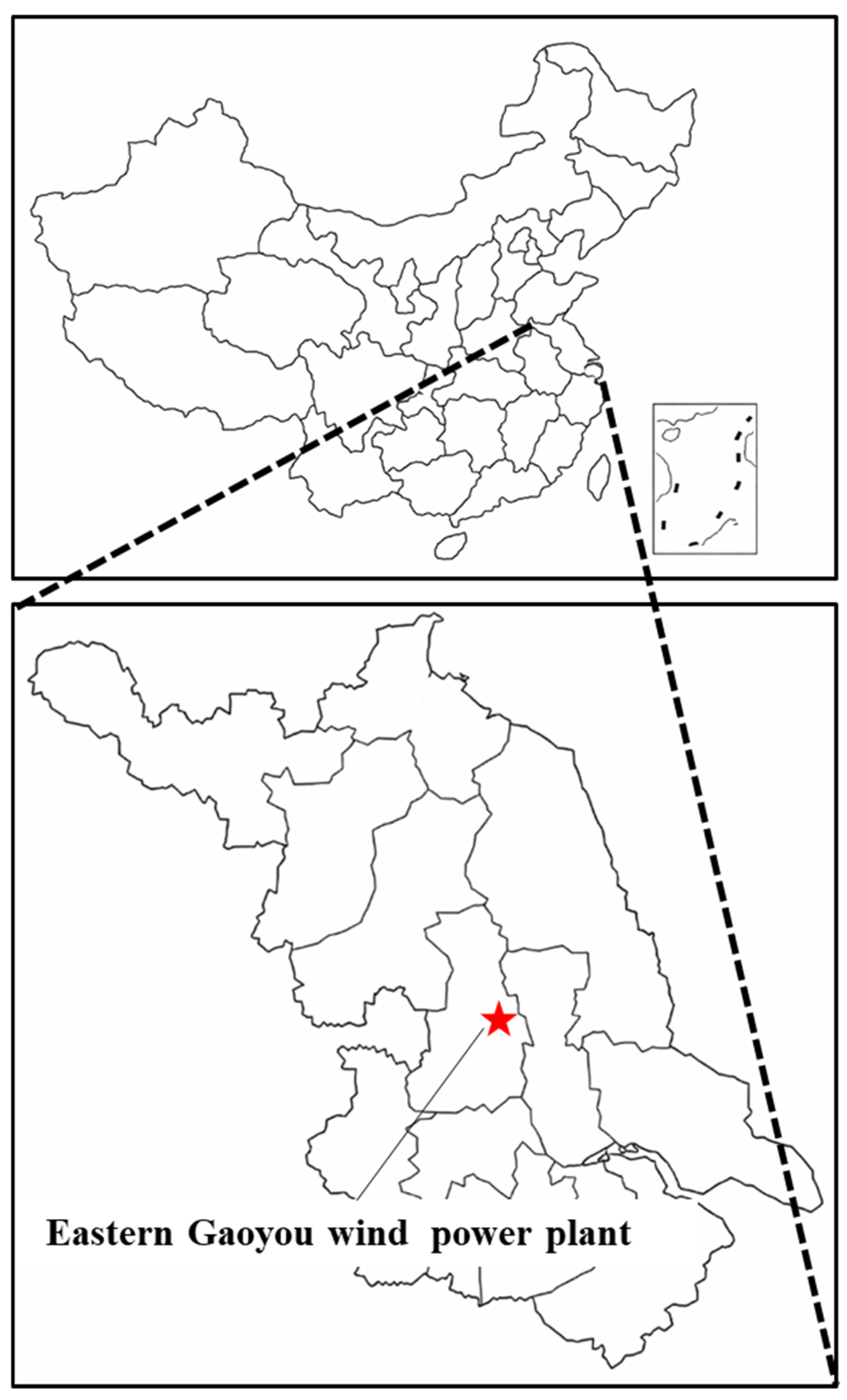
The investigated wind power plant is located in the eastern part of Gaoyou in Jiangsu, China (Figure 3). It occupies an area of 80 km2. The slope terrain is mostly between 18 and 40 degrees. The surface vegetation is mostly mixed deciduous and evergreen broad-leaved forest. The physical geological condition is favorable to carry out engineering work. The basic parameters of the wind power project are shown in Table 1.
Figure 3.
Geographical location of Gaoyou wind power plant.
Table 1.
Technical parameters of the Gaoyou wind power plant.
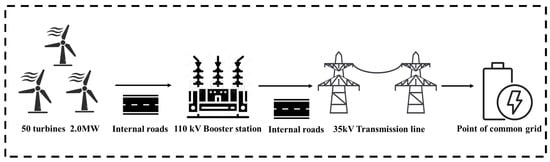
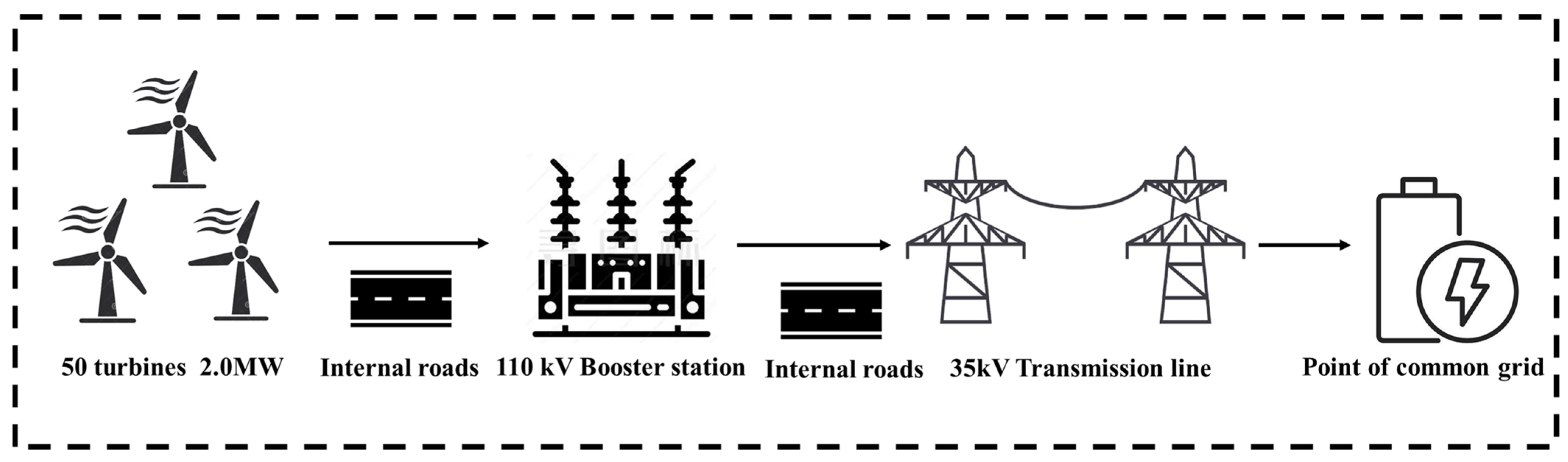
The site is equipped with fifty 2 MW wind turbines (each with a blade diameter of 121 m and a hub height of 120 m). Each wind turbine tower is connected to a 3500 KVA box-type transformer (S11-2200/35, JULI, Suzhou, China). The towers and the transformers are installed on steel-reinforced concrete and concrete foundations, respectively. A 110 kV step-up transformer is installed to connect the power plant to the existing DEJI substation. The cables are arranged parallel to roads, buildings and structures according to the positions of electrical equipment. In November 2018, after a one-year period of construction, the plant started to operate, and it has a designed operational life of 20 years. The diagram of the analyzed plant is shown in Figure 4.
Figure 4.
The diagram of Gaoyou wind power plant.
The installed capacity of the studied wind power plant is 100 MW. The annual average wind speed is 5.27 m/s at a 120 m height, and the corresponding average annual wind power density at this height is 147 W/m2. An annual on-grid electricity of 230 GWh with a 25 GWh power curtailment was assumed in this study, and the capacity factor was set as 0.263 based on the practice in the past few years.
2.4. Scenarios Setting
Different scenarios for the future growth of the Gaoyou wind power plant were created to estimate the changes in environmental impacts under different scenarios. The scenario settings were designed to reflect key decision levers that were controllable at the project and system level. By considering three variable factors—wind curtailment rate, concrete wind turbine tower ratio and reuse level—to set different development scenarios, we were able to obtain the carbon emissions and corresponding carbon reduction potential of this wind power project under multiple scenarios. The selected parameter ranges were based on observed practice in China and values commonly reported in the literature. For scenario design (Table 2), the “wind curtailment rate” factor was categorized into three tiers: high (20%), medium (10%), and low (5%). The baseline curtailment rate (10%) was obtained from the Gaoyou wind farm’s operational/settlement statistics for 2018–2020, while 5% and 20% were used as low- and high-curtailment scenario assumptions to bound plausible integration conditions. The “concrete wind turbine tower ratio” was categorized as follows: high (100%), medium (50%), and low (0%). The “reuse level” was classified into three modes: high (90%), medium (50%), and low (10%). Then, 9 scenarios were set under 3 wind curtailment rates.
Table 2.
Scenario setting of wind power project.
3. Results
3.1. Life Cycle Impact Assessment
3.1.1. Result Analysis
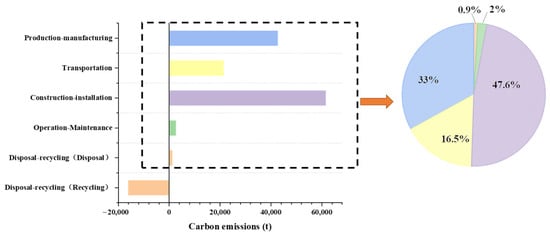
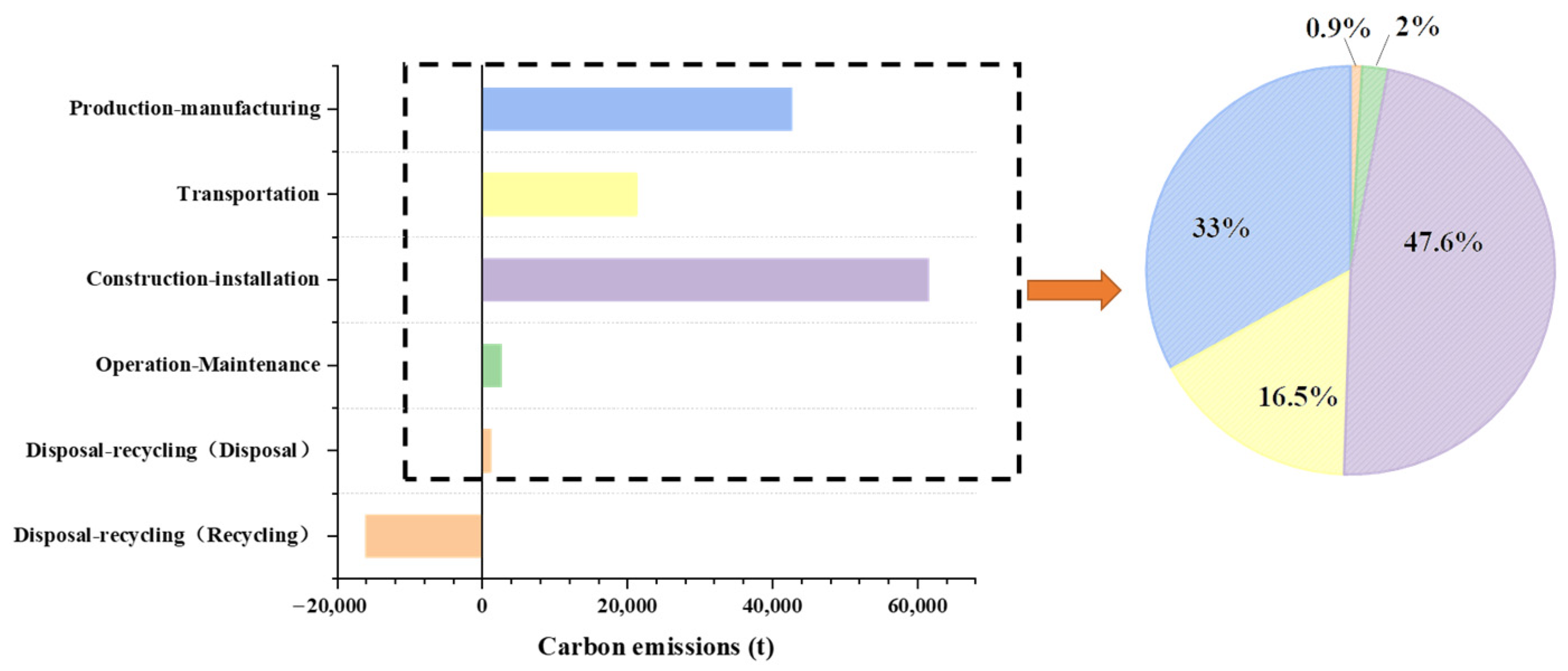
Based on the LCI established in this study and the stage-specific carbon accounting model, the life cycle GHG emissions of the Eastern Gaoyou wind farm were quantified. The net life cycle carbon emissions of the project were estimated at 113,061 t CO2-eq, and the stage-wise contributions are shown in Figure 5. Based on the wind farm’s theoretical annual generating capacity of 230 GWh and an operating lifespan of 20 years, the carbon emissions per unit of electricity generated over the entire life cycle of the wind farm were calculated to be 24.6 g/kWh and 1131 t/MW. In terms of gross emissions, total emissions amounted to 129,124 t CO2-eq. The construction and installation stage was the largest contributor, emitting 61,484 t CO2-eq (47.6%), followed by the production and manufacturing stage with 42,694 t CO2-eq (33.0%) and the transportation stage with 21,300 t CO2-eq (16.5%). By contrast, emissions from operation-maintenance are relatively small, totaling 2650 t CO2-eq (2%), and the emissions from wind farm decommissioning and recycling during disposal-recycling amounted to only 1167 tons (0.9%). The carbon emissions at different stages and unit processes are presented in Table 3.
Figure 5.
Carbon emissions and proportion at each life cycle stage.
Table 3.
Division of unit processes across all stages of the wind farm life cycle.
Notably, the disposal and recycling stage yielded an estimated carbon credit of 16,063 t CO2-eq, reflecting avoided burdens from material recovery and reuse. This credit reduces the overall footprint from 129,124 t CO2-eq to 113,061 t CO2-eq, corresponding to an offset of approximately 12.4% of gross life cycle emissions. Overall, the wind farm’s life cycle carbon footprint was dominated by production-manufacturing, construction-installation, and transportation, while disposal-recycling provides a meaningful mitigation contribution and operation and maintenance emissions remain comparatively minor. In the following sections, the major emitting processes are examined in greater detail by life cycle stage to identify key sources and driving factors, providing quantitative evidence to support targeted emission-reduction measures for wind farm engineering and supply-chain optimization.
3.1.2. Production-Manufacturing
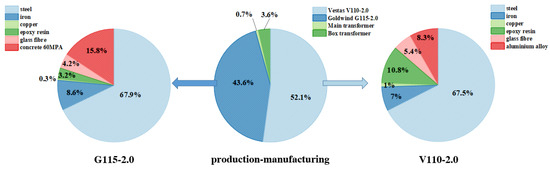
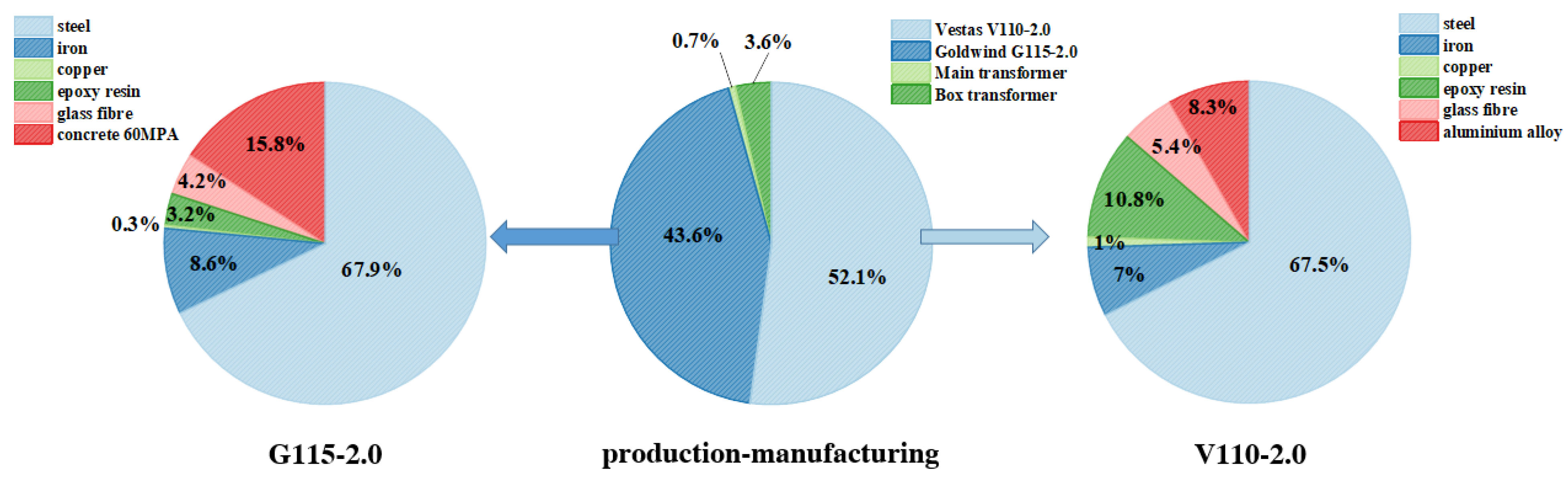
The production-manufacturing stage involves multiple large-scale pieces of equipment. Because their fabrication is energy and resource intensive, this stage exhibits relatively high embodied carbon emissions. In this study, Stage I primarily accounted for emissions associated with manufacturing the wind turbines and transformers (Figure 6). The two turbine types dominated the footprint of this stage, contributing 40,559 t CO2-eq, which represented approximately 95% of Stage I emissions. In comparison, emissions from the main step-up transformer and box-type transformers were much smaller, estimated at 342 t CO2-eq and 1793 t CO2-eq, accounting for 0.8% and 4.2% of Stage I emissions, respectively.
Figure 6.
Carbon emissions proportion in production-manufacturing stage and material composition of two types of wind turbines.
To further explain the differences in embodied emissions, the material composition of the turbine foundations and major structural components was examined. Owing to differences in turbine configuration, the two turbine types with the same rated power exhibited distinct material mixes and corresponding carbon intensities (Figure 4). The Vestas turbine, configured with a steel tower, showed a material profile dominated by steel, with steel accounting for approximately 67.5% of total material input. By contrast, the Goldwind turbine, equipped with a hybrid tower, featured high shares of both steel and concrete, which led to a different embodied-emission structure and shifted the main material-driven hotspots within the turbine system.
3.1.3. Transportation
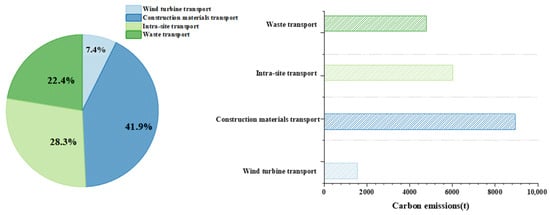
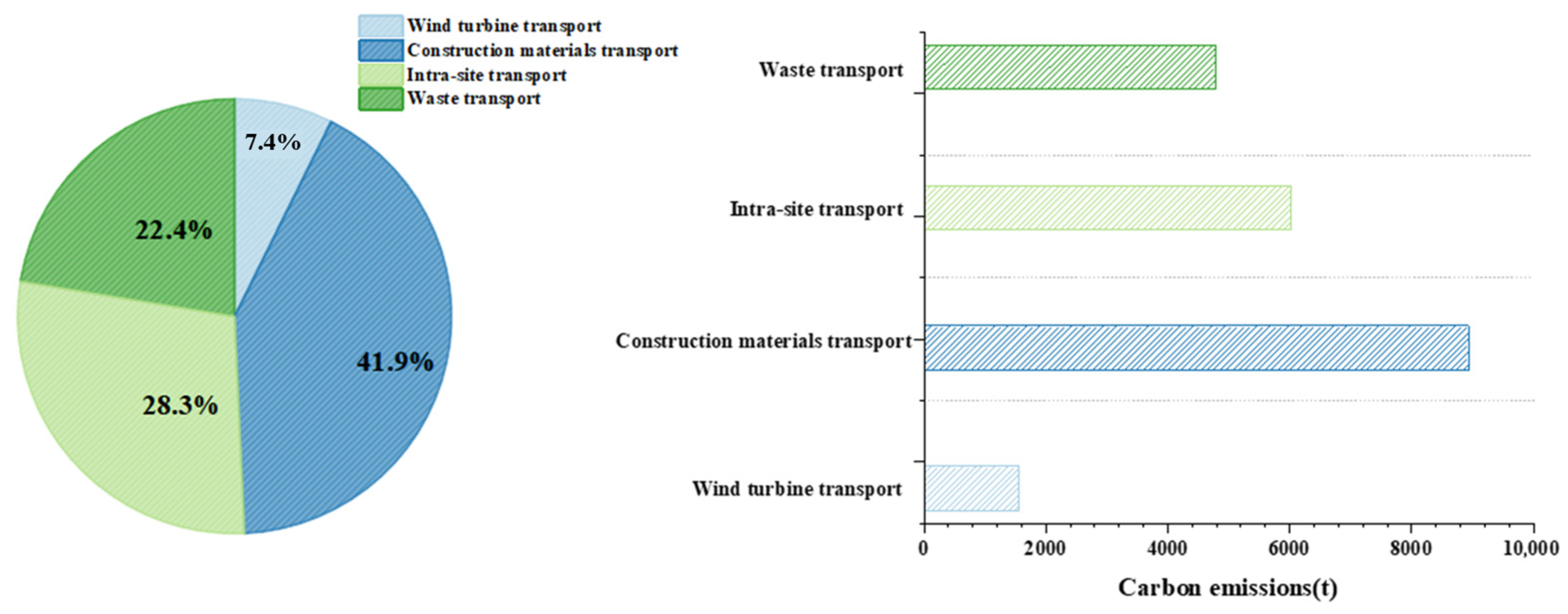
Emissions in the transportation stage were mainly attributed to four parts: wind turbine transport, construction materials transport, intra-site transport, and waste transport, accounting for 7.3%, 41.9%, 28.3%, and 22.4%, respectively (Figure 7). All material movements considered in this project were assumed to be conducted via road freight transport. The reason for this outcome is that turbine components are transported over relatively long distances, whereas construction materials are processed and supplied from facilities near the project area, resulting in shorter transport distances but substantially larger transported masses. Transportation distances for intra-site logistics and for waste delivery to recycling/disposal facilities were estimated based on reasonable engineering assumptions and local conditions.
Figure 7.
Carbon emissions proportion in transportation stage.
3.1.4. Construction-Installation
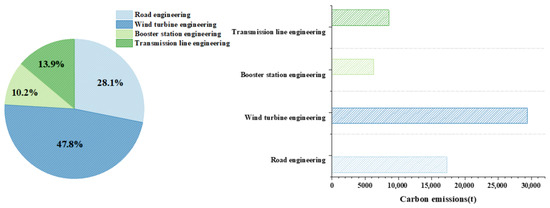
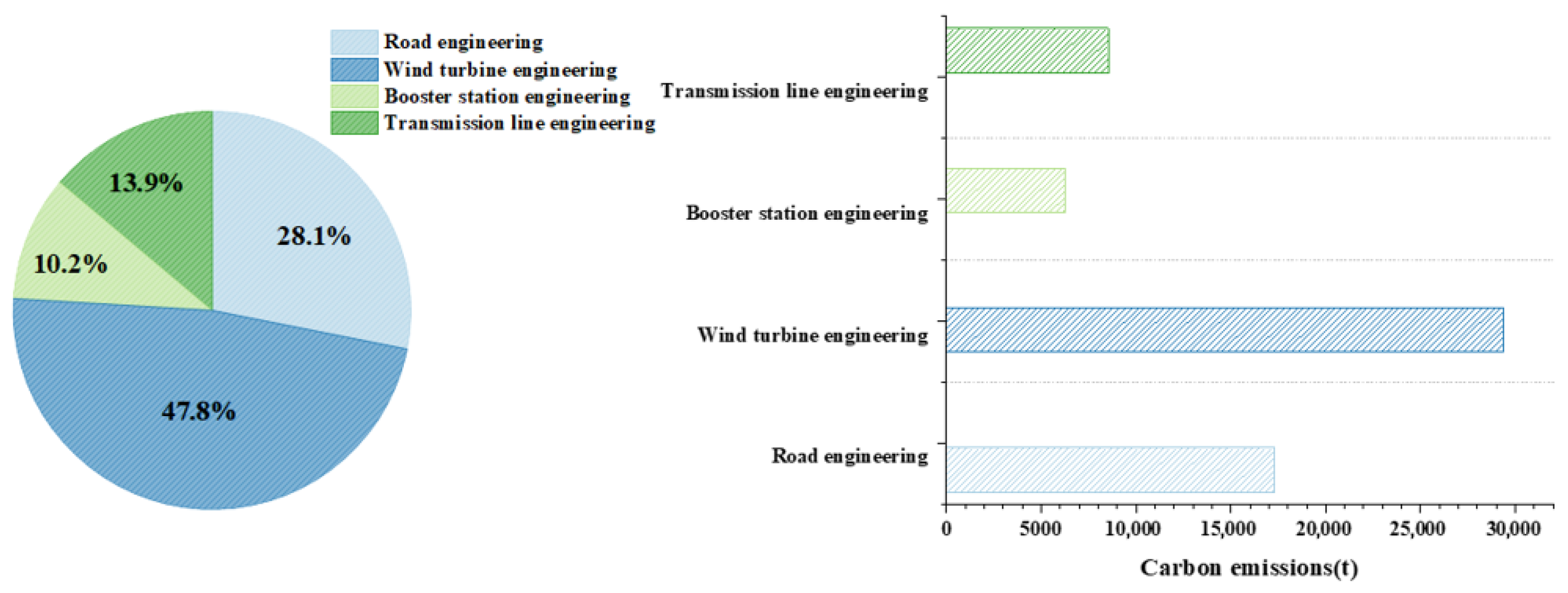
The construction-installation stage was the largest contributor to life cycle emissions; to identify actionable hotspots, it was decomposed into road engineering, wind turbine engineering, booster-station engineering, and transmission line engineering and further into unit processes covering both material and machinery inputs.
As shown in Figure 8, among these four subcategories, wind turbine engineering accounts for the largest share of carbon emissions, contributing 47.8%. This is followed by road engineering with 28.1%. Booster-station engineering and transmission line engineering have relatively lower emissions, with 10.2% and 13.9% of the total emissions in the construction and installation phases, respectively. This breakdown enables targeted strategies for reducing emissions in the highest-impact areas of the construction process.
Figure 8.
Carbon emissions proportion in construction-installation stage.
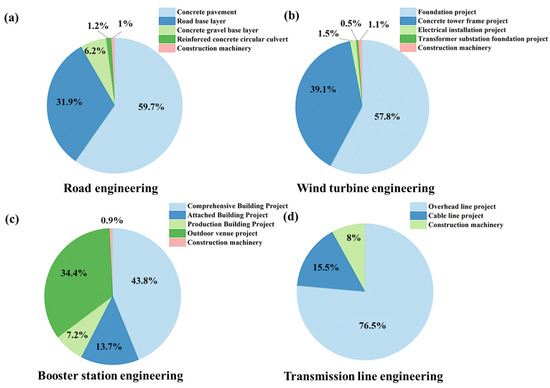
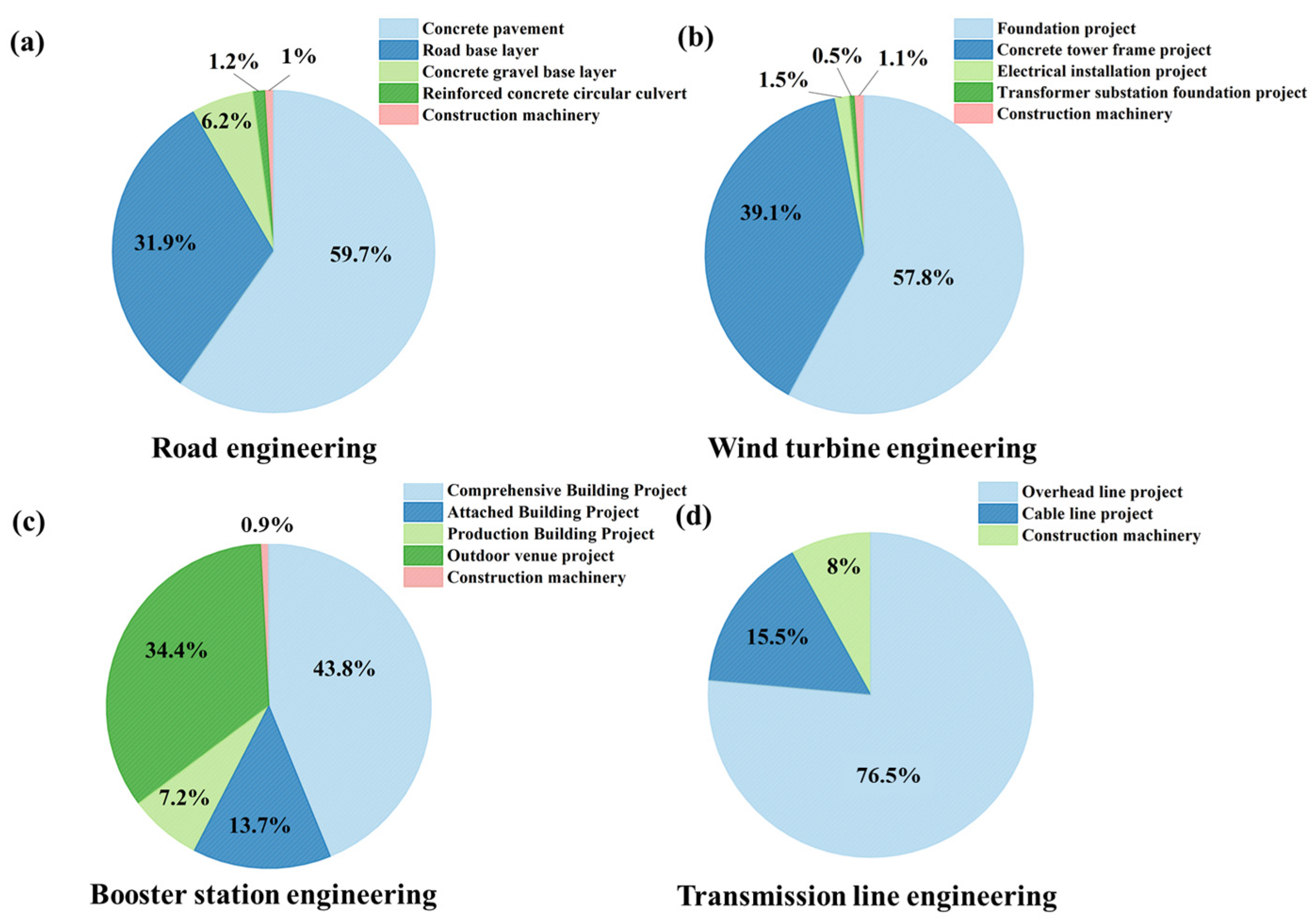
Furthermore, Figure 9 illustrates the carbon emissions distribution among the unit processes within each of the four subcategories. In the road engineering subcategory, the construction of concrete road surfaces accounted for the largest share of emissions, contributing 59.7% (Figure 9a). In the wind turbine engineering subcategory, emissions from wind turbine foundation project and concrete tower frame project together accounted for 96.9% of the total emissions for this stage (Figure 9b). Within booster station engineering, emissions were predominantly driven by the construction of comprehensive building, which contributed 43.8%, followed by the outdoor venue and attached building, which accounted for 34.4% and 13.7%, respectively (Figure 9c). Finally, in transmission line engineering, emissions from the overhead transmission lines were notably higher than those from the cable lines, reflecting the greater material intensity and construction complexity associated with overhead line installation (Figure 9d).
Figure 9.
Carbon emissions proportion of four subcategories: (a) road engineering; (b) wind turbine engineering; (c) booster station engineering; (d) transmission line engineering in construction and installation stage.
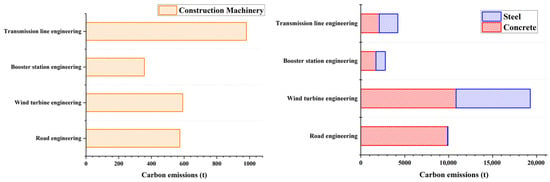
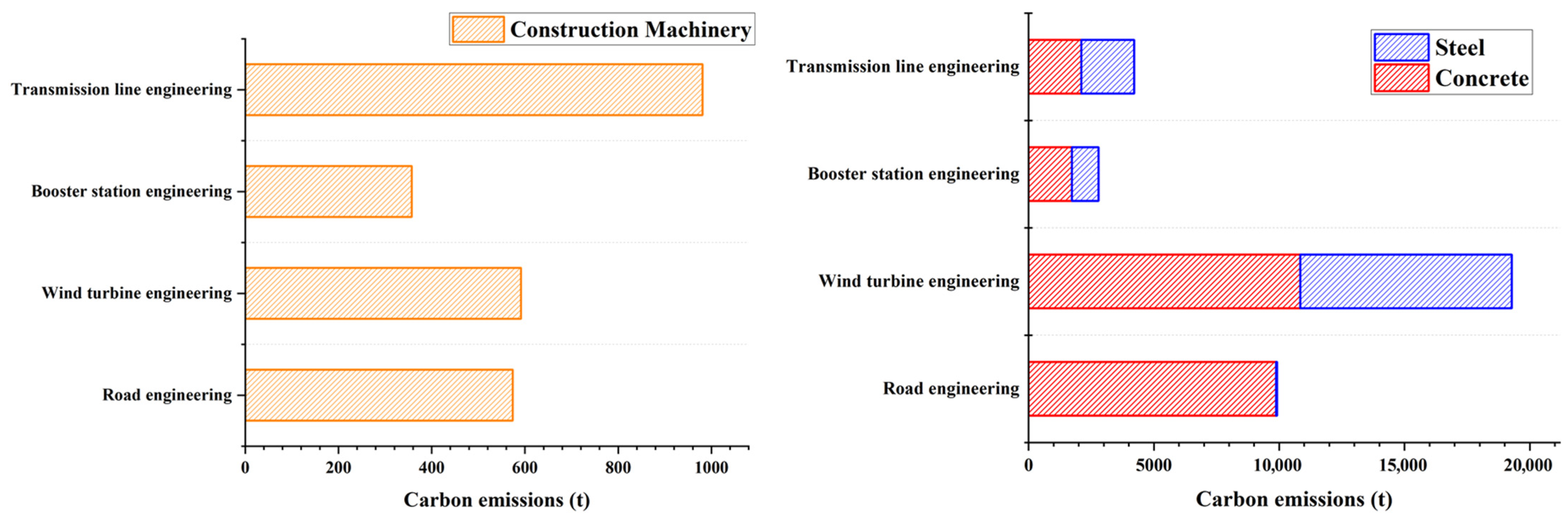
Subsequently, the carbon emissions from materials and construction machinery across the different stages of the construction and installation process were compared. The use of steel and concrete accounted for over 95% of material consumption in this phase. As shown in Figure 10, the material consumption across the construction-installation stage was compared. In the wind turbine engineering stage, the significant consumption of concrete and reinforcement steel was primarily due to the construction of foundations for the 50 wind turbines and the box-type transformer foundations, which resulted in the highest carbon emissions among the four stages. Additionally, since the wind farm employs concrete road surfaces, there is substantial concrete consumption in the road engineering stage as well, further contributing to the overall emissions during construction. In terms of construction machinery-related carbon emissions, the transmission line engineering stage exhibited significantly higher emissions compared to the other three stages. This was primarily due to the extensive use of the Impact drill CZ-22 during the piling process, which consumed considerable energy and generated high carbon emissions. The energy consumption and associated carbon emissions from machinery used in the other stages can be compared in Table S3, providing a clearer picture of the emissions distribution across the construction-installation processes.
Figure 10.
Carbon emissions from materials and construction machinery across the different subcategories of the construction and installation.
3.1.5. Operation-Maintenance
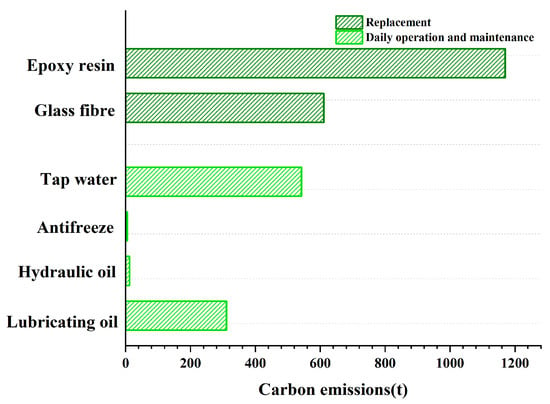
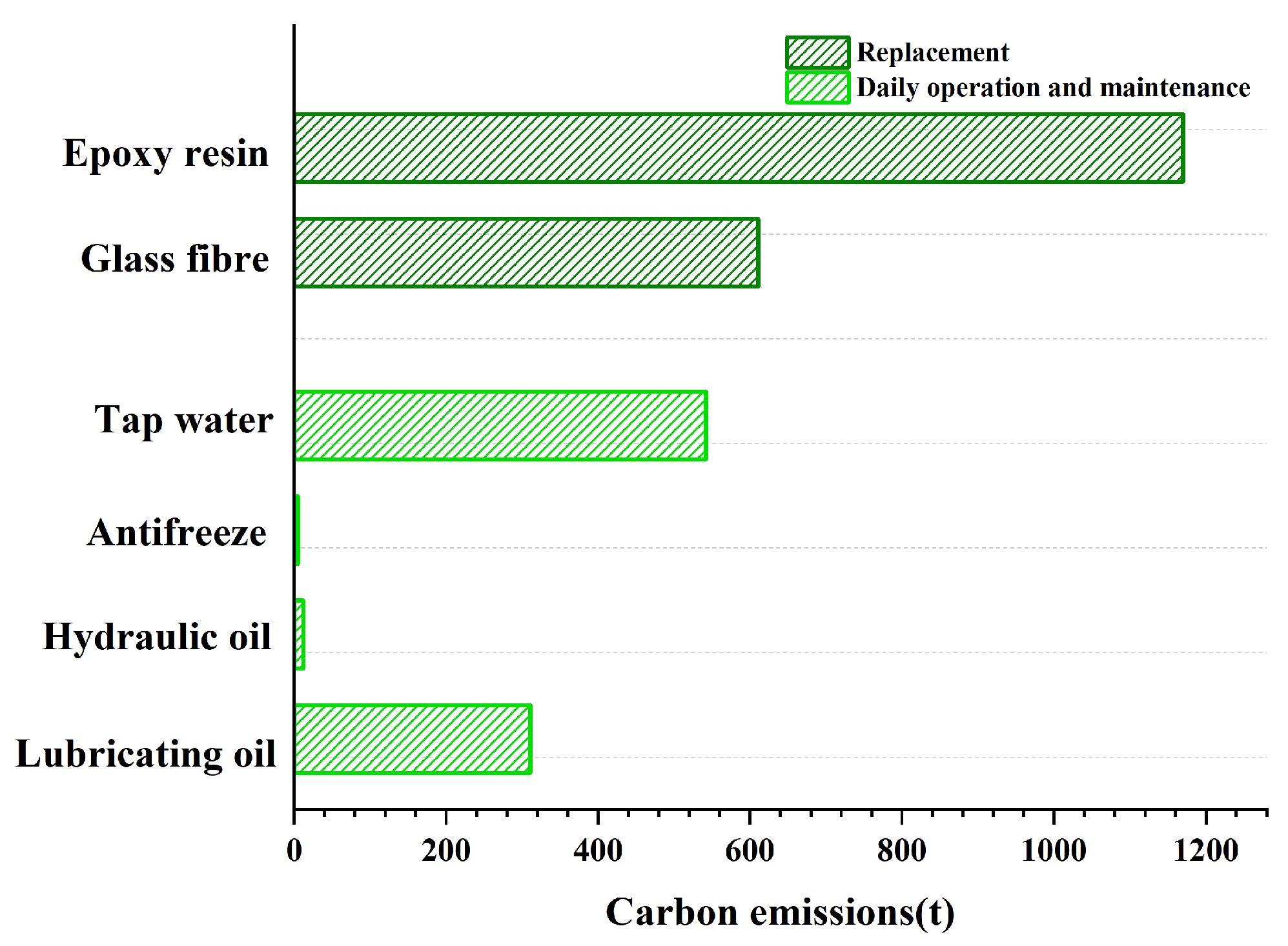
The operation-maintenance stage accounted for inputs associated with maintaining stable wind farm performance over the designed service life, including replacement of equipment and materials, consumption of lubricants and other maintenance supplies, and related energy use. Figure 11 presents the carbon emissions attributable to each input. For routine maintenance materials and energy consumption, the annualized inventory was estimated using the average level observed to date and extrapolated as a constant yearly value over the 20-year operating lifetime. Wind turbine blades were modeled assuming a replacement rate of 1/3 of the blades over the life cycle. As a result, emissions associated with blade replacement—driven by the embodied emissions of the required materials—constituted the largest share of related emissions. In addition, the consumption of tap water and lubricating oil during routine maintenance also contributed a non-negligible fraction of the operation and maintenance carbon footprint.
Figure 11.
Carbon emissions in operation and maintenance stage.
3.1.6. Disposal-Recycling
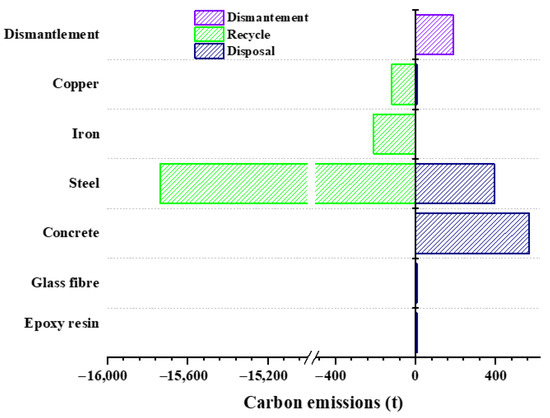
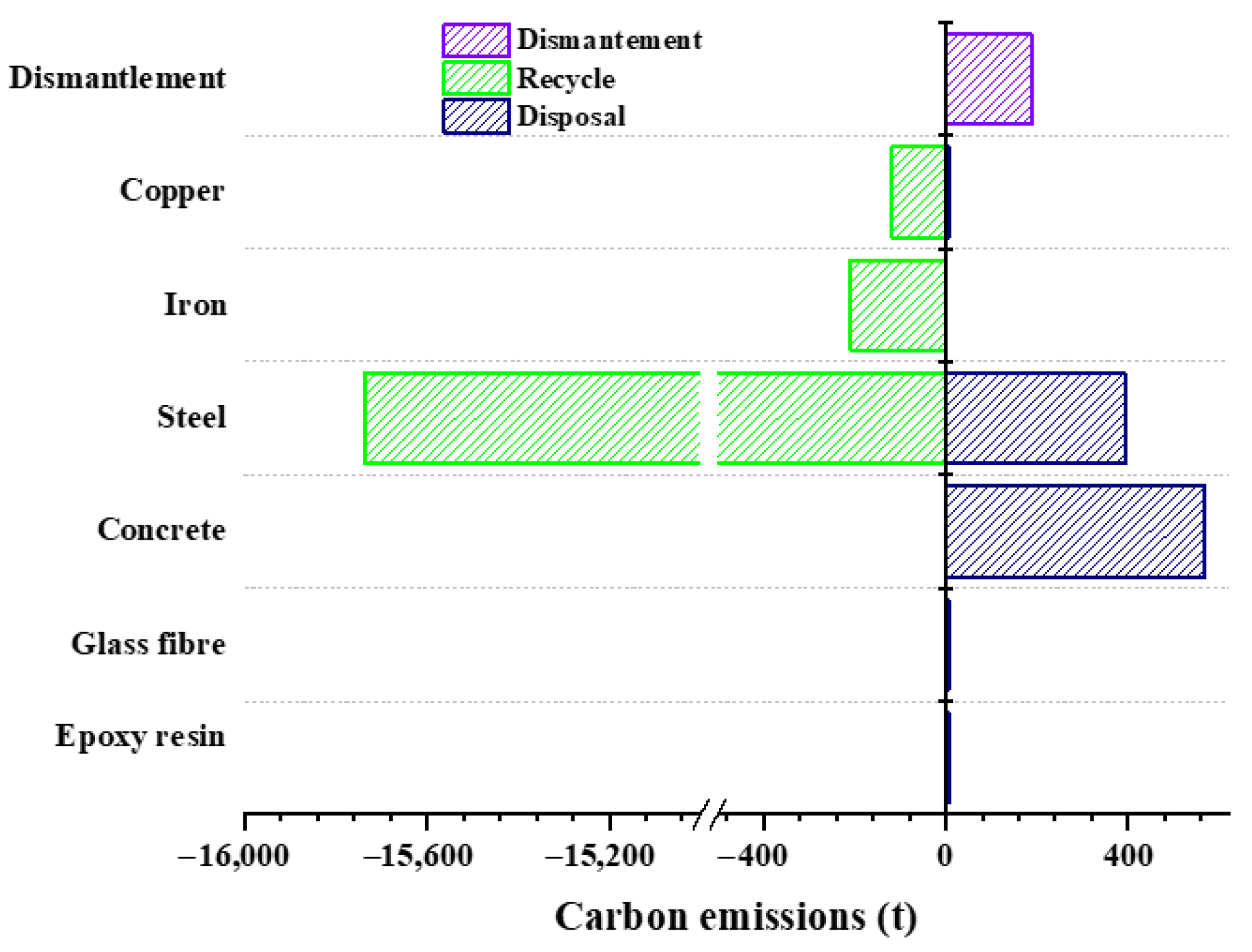
The disposal and recycling stage considered energy consumption during wind farm dismantling and the treatment and end-of-life management of several bulk materials with high mass and/or large associated emissions. Table S5 summarizes the energy inputs required for decommissioning activities and lists six representative material categories with relatively large quantities and emission relevance, together with the recommended treatment routes adopted in this study. As shown in Figure 12, under the predefined end-of-life assumptions, emissions in this stage were mainly driven by the handling of steel and concrete and by the energy use during dismantling. In particular, steel recycling represented the key mitigation lever in this phase. Assuming a 50% recycling rate, the avoided emissions associated with recovered steel resulted in a carbon reduction of 16,063 t CO2-eq, highlighting the importance of improving metal recovery and recycling efficiency at end of life.
Figure 12.
Carbon emissions in disposal and recycling stage.
3.2. Scenario Analysis
To investigate the effects of wind curtailment, turbine type composition, and end-of-life reuse/recycling level on life cycle carbon performance, a multi-scenario analysis was conducted. Using the project’s current operating condition as the medium baseline, the three factors were perturbed to quantify how total and unit electricity emissions changed across scenarios. The curtailment rate directly affected the wind farm’s effective electricity delivered to the grid over its lifetime, thereby changing the denominator of the carbon intensity. The share of steel-tower versus hybrid tower turbines influenced both embodied emissions in the production and manufacturing stage through differences in material inputs and the total quantity of recoverable materials available at end of life. The recycling level determined the magnitude of avoided emissions that could be achieved in the disposal and recycling stage.
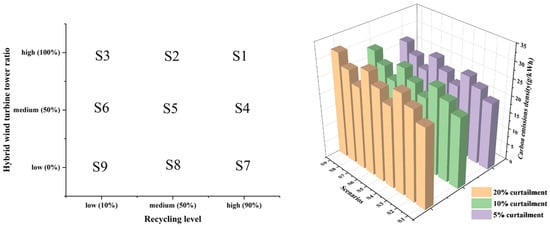
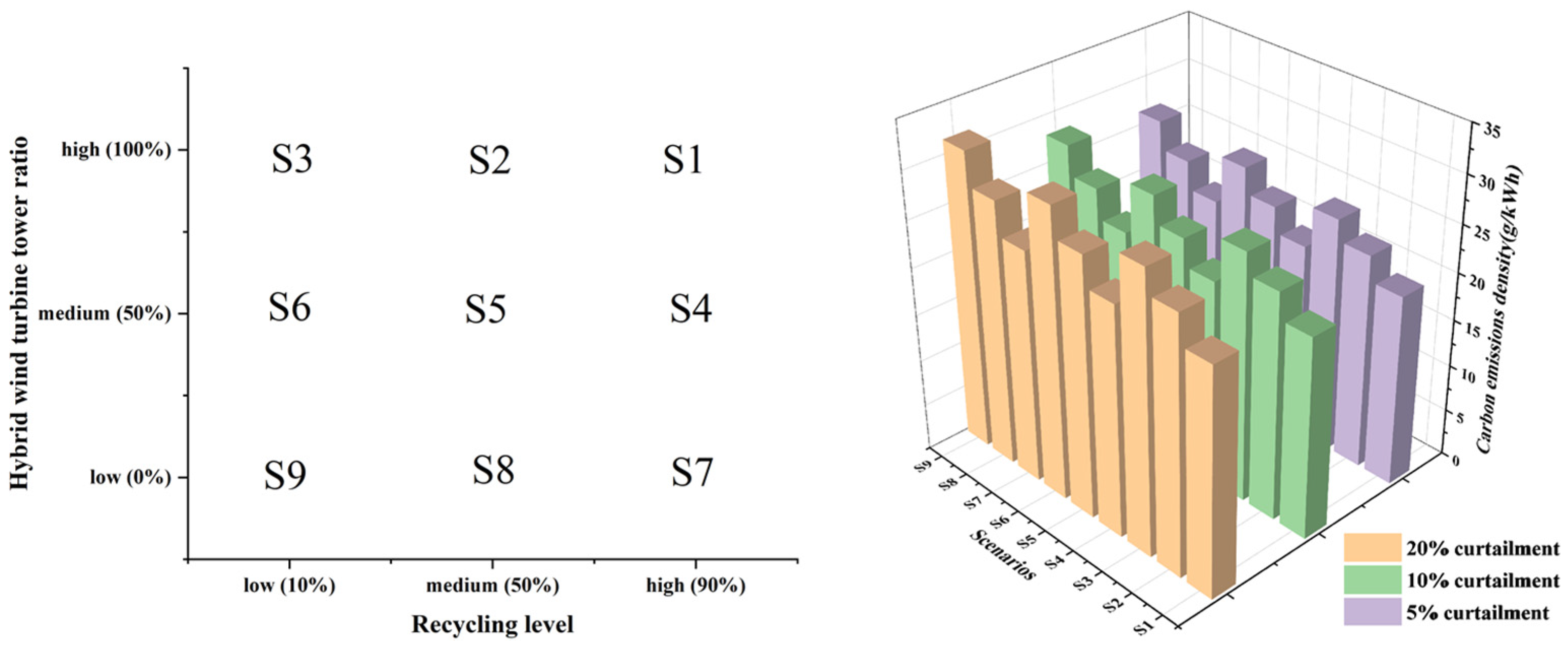
As shown in Figure 13, a total of nine scenarios under three wind curtailment rates were generated, and the resulting net life cycle carbon emissions and carbon intensity per kWh were calculated for each scenario, enabling a comparative assessment of emission-reduction potential under different development pathways.
Figure 13.
Scenario setting and carbon emissions intensity.
From the single-factor perspective, lower curtailment consistently led to lower carbon intensity across all scenario combinations. Compared with the high-curtailment cases, the low-curtailment cases reduced life cycle emissions by approximately 4–5 g CO2-eq/kWh, indicating that curtailment mitigation is an effective pathway for reducing the wind farm’s life cycle carbon footprint per unit of electricity delivered. As the recycling level was considered, a higher recycling rate markedly reduced the life cycle carbon intensity across the scenario set. Depending on the combinations of curtailment and tower-type composition, increasing the recycling level could lower the carbon intensity by approximately 5–7%. This reduction is mainly driven by the substantial use of steel in wind farm infrastructure and turbine systems: higher steel recovery at end of life yields larger avoided-burden credits, thereby decreasing the net life cycle emissions per kWh. Regarding turbine tower configuration, the two tower types exhibited different embodied emission profiles. In this case, each steel-tower turbine emitted approximately 157.3 t CO2-eq more than each hybrid tower turbine when considering the production and manufacturing stage only. Under this production-only comparison, adopting 100% hybrid towers would reduce the life cycle carbon intensity by about 1.7 g CO2-eq/kWh.
However, when end-of-life effects are included, the advantage of hybrid towers becomes conditional on the recycling level. In high-recycling scenarios (S1, S4, and S7), large quantities of steel are recovered while concrete is still assumed to be landfilled, which narrows the gap between the all-steel-tower and all-hybrid-tower cases to only ~0.5 g CO2-eq/kWh. In contrast, under low-recycling scenarios (S3, S6, and S9), fewer materials are recovered and the difference increases, with the carbon-intensity gap reaching ~1.9 g CO2-eq/kWh.
3.3. Sensitivity Analysis
Sensitivity analysis is a key procedure in life cycle assessment, as it evaluates how uncertainties or variations in input data propagate to the life cycle impact assessment results. In this study, the one-factor approach was applied by varying the input quantities of materials across the life cycle by ±10%, while keeping all other parameters unchanged. This analysis identifies the materials with the greatest influence on the overall carbon footprint and quantifies their corresponding sensitivity coefficients, thereby highlighting the most critical inventory drivers for improving data quality and prioritizing emission-reduction measures.
The sensitivity analysis indicated that steel, concrete, reinforcing steel, epoxy resin, and iron were the most influential material inputs in the inventory. A ±10% variation in their quantities led to changes in the overall life cycle carbon results of 2.8%, 2.2%, 1.1%, 0.38%, and 0.22%, respectively. This ranking was consistent with the process-level hotspot findings: steel and concrete dominated the bill of materials in both the manufacturing and construction stages, and therefore small relative changes in their quantities translated into comparatively large changes in total embodied emissions. Rebar showed a lower but still notable sensitivity because it was closely coupled with concrete-intensive works such as turbine foundations, transformer foundations, and civil structures. In contrast, epoxy resin and iron exhibited smaller sensitivities, reflecting either lower total mass contributions or a more limited system-wide deployment; nevertheless, they remained important because they were associated with specific high-impact components. Overall, the results suggest that improving the accuracy of inventory data and prioritizing mitigation measures should focus first on steel- and concrete-related processes, followed by targeted strategies for reinforcement and composite material use.
The sensitivity analysis in this study varied only material quantities (±10%) based on the project engineering inventory. Other potentially influential parameters—namely the curtailment rate, project lifetime, recycling rate, and electricity mix—were not included due to the lack of robust project-specific and scenario-consistent data within the current scope.
3.4. Comparison
To benchmark the life cycle carbon performance of the Gaoyou onshore wind farm, five Chinese wind farm LCA studies reported in the literature were selected for comparison. As shown in Table 4, the reported carbon intensities spanned a relatively wide range (4.4–31.2 g CO2-eq/kWh), suggesting that results differed substantially across projects and studies even within the same national context. Nevertheless, even the upper end of wind farm life cycle intensities remained orders of magnitude lower than fossil thermal generation; for context, China’s average CO2 emissions intensity of thermal power generation in 2024 was reported as 823 g CO2/kWh [37].
Table 4.
Comparison of carbon emissions intensity of other onshore wind power projects in China.
Although the carbon intensity reported in this study may appear slightly higher than that of some Chinese wind farm LCAs (summarized in Table 4), this difference should be interpreted primarily as a consequence of more comprehensive system coverage and more realistic project representation, rather than inferior carbon performance. Many published studies adopted simplified boundaries or relied heavily on generic datasets, which could lead to systematic underestimation. In contrast, this study applied a complete, engineering-consistent system boundary that explicitly included key infrastructure required to deliver electricity to the grid. In addition, transportation was treated consistently across the life cycle, including the transport of dismantled materials/wastes to recycling or disposal facilities, thereby reducing boundary truncation and improving accounting completeness.
Our study is consistent with representative Chinese wind LCA literature in adopting a cradle-to-grave system boundary. Key differences are instead found in the functional unit, curtailment normalization, and process resolution, as well as in how EoL recycling benefits are operationalized. Xu et al. [34] defined the functional unit as 1 kWh electricity provided by the 220 kV step-up transformer and reported plant-level curtailment in the operational description, while Li et al. [38] evaluated wind electricity on a 1 kWh basis without explicitly parameterizing curtailment in the functional-unit normalization. In contrast, we report impacts per 1 kWh delivered/on-grid electricity and explicitly incorporate curtailment rate by normalizing results to delivered electricity. Regarding construction-stage resolution, two mentioned Chinese wind LCAs did not further break down construction into activity-level sub-processes; consequently, construction machinery impacts are commonly represented by aggregated diesel/gasoline consumption proxies, which may reduce accuracy when equipment utilization, scheduling, and idling vary across sites and tower types. Finally, for end-of-life, our baseline adopts an avoided-burden recycling approach, crediting recycling via displacement of primary material production, and we state the substitution assumptions transparently for comparability.
More importantly, the inventory in this study was grounded in project-specific, as-built engineering data, enabling a more precise and transparent quantification of life cycle emissions. Activity data for construction and installation were derived from project settlement documents, material surveys, and design reports, and the construction stage was further decomposed into subcategories and unit processes to capture material- and machinery-related emissions in a manner consistent with actual construction practice. By combining this high-resolution foreground inventory with China-representative background parameters where available, the study provides a robust estimate of wind farm life cycle emissions and yields more reliable hotspot identification and mitigation prioritization. Meaningful benchmarking across projects will require harmonized reporting and modeling, including a consistent reference boundary and transparent, standardized assumptions for curtailment treatment and end-of-life allocation.
4. Discussion
4.1. Life Cycle Emission Reduction Pathways for Onshore Wind Farms
Rather than viewing wind power as “zero-carbon” in operation, the results highlight that the achievable reductions depend on managing embodied emissions and end-of-life credits under a complete system boundary. The case study demonstrates that the carbon performance of an onshore wind farm is shaped by a portfolio of mitigation levers across the full life cycle, rather than by a single stage-specific measure. Given that embodied emissions from materials and civil works dominate the footprint while end-of-life management can generate meaningful credits, effective carbon reduction should combine technology choices at the design/manufacturing stage, low-carbon construction practices during delivery and installation, and improved circularity at decommissioning.
First, equipment configuration and manufacturing-oriented choices can reduce embodied emissions without sacrificing energy performance. In particular, turbine/tower selection should be evaluated not only by cost and annual energy production, but also by life cycle carbon implications. The scenario analysis indicates that increasing the share of hybrid towers can reduce manufacturing-stage embodied emissions per unit of installed capacity; however, the net advantage depends on end-of-life assumptions and recycling performance, highlighting the need to assess tower options under consistent life cycle conditions rather than relying on component-level comparisons.
Second, the transportation and construction-installation stages offer practical opportunities for rapid emission reductions through “low-carbon construction”. A key direction is the electrification of transport fleets and construction machinery, replacing diesel-based trucks and equipment with electric alternatives where feasible, supported by grid electricity and/or temporary on-site charging solutions [41]. Partial substitution with rail or water transport—where feasible—would generally reduce transport emissions per ton-km compared with road freight and therefore decrease Stage II impacts, with the magnitude depending on achievable modal share and last-mile trucking needs. Complementary measures include optimizing logistics to reduce unnecessary hauling, improving equipment utilization and scheduling to avoid idling, and prioritizing low-carbon energy sources for temporary power and commissioning activities. These actions directly target fuel-related emissions and can be implemented through procurement requirements, contractor management, and construction planning.
Third, further reductions can be achieved by strengthening end-of-life recovery and recycling, especially for materials with large mass and high emission relevance. While metals already provide substantial mitigation potential through recycling, additional gains depend on improving the recovery of materials that are currently recycled at low rates or treated via higher-emission routes. Advancing dismantling and sorting technologies, expanding recycling pathways for difficult-to-recycle materials, and avoiding high-carbon disposal options such as incineration where alternatives exist would increase recycling rates and enlarge avoided-burden credits. Overall, these three directions—low-carbon equipment choices, electrified/low-carbon construction, and enhanced circularity—form a coherent life cycle mitigation strategy that aligns with the hotspots identified in this study and provides actionable targets for wind farm developers and supply-chain stakeholders.
4.2. Enhance the Green and Low-Carbon Level of the Supply Chain
Green supply-chain governance determines the embodied emissions that are locked into a wind farm before it starts operation and therefore sets the baseline of life cycle carbon performance regardless of subsequent operational improvements. From a full life cycle perspective, the largest share of emissions is often associated with material inputs across manufacturing and construction, including turbine production and the steel and concrete consumed during civil works. In this context, the carbon reduction challenge for wind power investment is not limited to building more capacity, but also to reducing the carbon footprint of what is built. Given that life cycle assessment allocates upstream embodied emissions to the delivered electricity over the project lifetime, lowering embodied emissions through cleaner materials and manufacturing processes directly improves life cycle carbon intensity and complements system-level measures.
This logic places carbon disclosure and low footprint procurement at the center of wind farm development policy and project governance. Encouraging manufacturers to disclose product-level carbon information and requiring comparable, verifiable carbon footprint data in tendering can steer procurement toward lower carbon turbines and lower carbon construction materials. Contractual mechanisms can translate disclosure into action by linking supplier selection and pricing to carbon performance attributes, while third-party verification helps ensure credibility and reduces the risk of inconsistent accounting. For construction-intensive inputs such as steel and concrete, procurement standards that favor lower-footprint products can create a demand signal that incentivizes upstream carbon reduction, making green supply-chain management an actionable pathway to reduce life cycle impacts without waiting for disruptive technology shifts.
4.3. Coordinated “Source–Grid–Load–Storage” Planning to Reduce Curtailment
Curtailment rules and flexibility governance determine the effective utilization of wind generation and therefore shape its life cycle carbon intensity when the functional unit is defined on delivered electricity. Market-based dispatch, transparent curtailment accounting, and investment incentives for flexibility are conducive to improving system absorption and enhancing the climate value of variable renewables. With the rapid expansion of wind capacity in resource-rich regions, wind power development has entered a stage in which the core constraint shifts from installation to integration, and the industry faces the challenge of reducing curtailment while maintaining cost-effectiveness and supporting green development. Given that life cycle carbon intensity is calculated per unit of electricity actually supplied to the grid, any electricity that is generated but not absorbed reduces the denominator and increases the carbon intensity even if embodied emissions remain unchanged, implying that policy-controlled curtailment becomes a decisive lever for carbon performance. Scenario analysis results confirm that lowering curtailment consistently improves carbon intensity by increasing the volume of delivered electricity and diluting upstream embodied emissions over larger on-grid output. Thus, bold and effective policies should be implemented to treat curtailment as a controllable outcome rather than an unavoidable byproduct. For example, coordinated source–grid–load–storage planning can be mandated to align generation expansion with transmission reinforcement and flexibility procurement [42]. In addition, market mechanisms that compensate storage and demand response services can be strengthened to improve temporal matching between supply and demand. Particularly, regions with concentrated wind deployment can be selected as pilots for integrated flexibility markets and credible curtailment disclosure, so that the mitigation benefits of wind power are realized through higher absorption and lower curtailment.
4.4. Improving the Accuracy and Comparability of Life Cycle Carbon Accounting
Improving the carbon performance of wind power requires not only technical and system-level measures, but also a more accurate and comparable accounting framework. For wind projects, reported life cycle carbon intensity can vary substantially across studies even when technologies are similar, largely because system boundaries, functional units, data sources, and allocation choices are defined differently. This methodological variability weakens cross-project comparability and may bias investment and policy decisions. Strengthening LCA practice, therefore, becomes an enabling condition for credible mitigation claims and for identifying the truly dominant levers along the value chain.
A core requirement is to standardize boundary and functional-unit definitions in a way that reflects power-system reality. This study adopts delivered on-grid electricity as the functional unit, so the denominator must be consistently defined as net electricity injected into the grid, with explicit treatment of auxiliary consumption and curtailment to avoid implicit shifts in carbon intensity driven by accounting choices rather than physical performance. End-of-life modeling should be handled with equal clarity: recycling, disposal routes, and the choice of allocation approach (cut-off versus substitution/system expansion) need to be transparently reported and applied consistently, otherwise recycling credits can dominate results or become incomparable across studies.
Methodological integration can address persistent data gaps along multi-tier supply chains. Where engineering inventories are available, PLCA provides transparency and traceability; where data are incomplete or inaccessible, input–output LCA can serve as a structured backstop to capture upstream activities such as complex services and indirect supplier contributions. A HLCA framework that combines both approaches can improve completeness without sacrificing interpretability, provided that a clear mapping of which modules are covered by process data and which are estimated by IO-LCA is established, along with explicit “de-duplication” rules to prevent double counting at the interface between the two methods.
As for the evaluation method, this study focuses on life cycle greenhouse gas emissions as the key indicator for evaluating the environmental performance of a wind farm. Accordingly, the IPCC 100-year Global Warming Potential method was selected, as it allows for a direct and robust assessment of carbon emissions throughout the full life cycle. While multi-impact assessment methods such as ReCiPe could provide complementary insights into broader environmental impacts, their application would significantly expand the scope of the present study and introduce additional uncertainty in climate change assessment. Future research could integrate ReCiPe or similar frameworks to explore trade-offs between climate change impacts and other environmental categories under different physical and regional conditions.
Recycling credits are sensitive to end-of-life allocation. Under the avoided-burden approach applied here, recovered materials are assumed to displace virgin production, generating negative credits. Under a cut-off (or allocation-at-point-of-recycling) approach, these credits would be reduced or excluded from the project system, increasing net GHG intensity and potentially changing the magnitude of tower-type differences. Therefore, conclusions regarding the size of recycling benefits should be interpreted as method-dependent.
Data representativeness remains a major source of uncertainty, particularly when inventories rely on a common database. While ecoinvent offers broad coverage and internal consistency, its default datasets may not fully reflect local production routes, electricity mixes, transport patterns, and construction practices. A limitation is the use of RoW/other-region proxy datasets due to the lack of China-specific ecoinvent datasets, which may introduce regional representativeness bias. A pragmatic pathway is therefore to couple ecoinvent with incremental localization: prioritize high-impact contributors, replace generic factors with domestic or project-specific data where feasible, and progressively build a localized database over time. This effort should be supported by explicit data-quality evaluation, uncertainty and sensitivity analysis for key parameters, and stronger primary-data collection through procurement records, engineering quantities, transport logs, etc. Together, these steps make LCA results more accurate, comparable, and decision-useful for guiding green procurement, carbon disclosure, and system planning.
5. Conclusions
This study applied a project-grounded process-based LCA to a representative 100 MW onshore wind farm in Gaoyou, Jiangsu, China, using an engineering-consistent system boundary and a functional unit of 1 kWh of electricity delivered to the grid. The overall life cycle GHG emission intensity of the wind farm was estimated to be approximately 24.6 g CO2-eq/kWh. The results confirm that, while wind power is low-carbon in operation, non-negligible embodied emissions arise across the life cycle and should be managed explicitly when evaluating carbon-reduction benefits.
A key contribution of this work is the refined modeling of the construction and installation phase. By decomposing this phase into road engineering, wind turbine engineering, booster-station engineering, and transmission line engineering and further into unit processes that include both material and machinery inputs, the analysis provides actionable, engineering-level hotspot identification. The findings indicate that steel- and concrete-intensive civil works and related construction activities dominate emission drivers, which is consistent with the sensitivity analysis showing that the total footprint is most responsive to changes in steel and concrete quantities.
Scenario analysis demonstrates that reducing wind curtailment and increasing end-of-life recycling are effective pathways to lower emission intensity, because curtailment directly reduces delivered electricity and recycling enlarges avoided-burden credits for recoverable materials. The comparative assessment of tower configurations suggests that the carbon advantage of hybrid versus steel towers is conditional on recycling performance when end-of-life effects are included, highlighting the need to evaluate technology options under consistent assumptions and complete boundaries rather than component-only comparisons.
Compared with published life cycle GHG intensities for onshore wind farms reported in the literature, the estimated value for this project falls within the typical range and is broadly consistent with studies adopting cradle-to-grave boundaries. Notably, differences across studies are driven not only by site conditions but also by methodological choices, particularly system boundary completeness, the treatment of curtailment, and end-of-life allocation and recycling credits. By using as-built engineering data and explicitly accounting for curtailment and end-of-life effects, this study improves transparency and helps reconcile variability in reported carbon intensities across Chinese wind projects.
Overall, the study provides a transparent and replicable carbon accounting framework and supports practical mitigation strategies across the full life cycle: low-carbon procurement and green supply-chain governance for major materials and equipment, low-carbon construction and logistics, strengthened circularity at decommissioning, and coordinated “source–grid–load–storage” planning to reduce curtailment.
Future work should prioritize further localization of background datasets and improved primary-data collection to reduce uncertainty and improve comparability across Chinese wind projects. In particular, future studies should (i) develop or substitute China-specific inventories for key upstream materials and energy supply chains where regional proxies are currently used; (ii) strengthen construction-stage activity data by collecting site records and equipment-hour logs to reduce reliance on aggregated fuel proxies; (iii) expand scenario and uncertainty analyses beyond the foreground material inventory to include influential parameters such as curtailment dynamics, lifetime assumptions, recycling performance, and electricity-mix evolution; and (iv) test the robustness of conclusions under alternative LCIA methods and characterization frameworks to evaluate the sensitivity of results to impact-assessment choices.
Supplementary Materials
The following supporting information can be downloaded at: https://www.mdpi.com/article/10.3390/pr14071045/s1, Table S1: Materials resource inventory of Production-manufacturing (stage I); Table S2: Materials resource inventory of Transportation (stage II); Table S3: Division of unit processes of Construction-installation (Stage III); Table S4: Materials resource inventory of Operation and Maintenance (stage IV); Table S5: Materials resource inventory of Disposal-recycling (stage V).
Author Contributions
Conceptualization, H.L. and J.C.; methodology, H.L. and D.C.; validation, X.Z., J.C. and H.L.; formal analysis, M.L.; investigation, X.Z. and Y.L.; resources, M.L.; data curation, Z.Y.; writing—original daft preparation, H.L.; writing—review and editing, H.L.; visualization, H.L.; supervision, X.Z. and N.Z.; project administration, Y.L.; funding acquisition, N.Z. All authors have read and agreed to the published version of the manuscript.
Funding
This research was funded by Power China Huadong (grant number KY2024-NGH-02-02).
Data Availability Statement
The original contributions presented in this study are included in the article/Supplementary Materials. Further inquiries can be directed to the corresponding author.
Conflicts of Interest
All authors were employed by PowerChina Huadong Engineering Corporation Ltd. The remaining authors declare that the research was conducted in the absence of any commercial or financial relationships that could be construed as a potential conflict of interest.
Abbreviations
The following abbreviations are used in this manuscript:
| LCA | Life cycle assessment |
| LCI | Life cycle inventory |
| IPCC | United Nations Intergovernmental Panel on Climate Change |
| GHG | Greenhouse gas |
| PLCA | process-based LCA |
| IOLCA | input–output LCA |
| HLCA | hybrid LCA |
References
- Masson-Delmotte, V.; Zhai, P.; Pirani, S.; Connors, C.; Péan, S.; Berger, N.; Caud, Y.; Chen, L.; Goldfarb, M.; Scheel Monteiro, P.M. IPCC, 2021: Summary for policymakers. In Climate Change 2021: The Physical Science Basis. Contribution of Working Group i to the Sixth Assessment Report of the Intergovernmental Panel on Climate Change; IPCC: Geneva, Switzerland, 2021. [Google Scholar]
- Horowitz, C.A. Paris agreement. Int. Leg. Mater. 2016, 55, 740–755. [Google Scholar] [CrossRef] [Scilit]
- Liu, L.; Wang, X.; Wang, Z. Recent progress and emerging strategies for carbon peak and carbon neutrality in China. Greenh. Gases Sci. Technol. 2023, 13, 732–759. [Google Scholar] [CrossRef] [Scilit]
- Arvesen, A.; Hertwich, E.G. Assessing the life cycle environmental impacts of wind power: A review of present knowledge and research needs. Renew. Sustain. Energy Rev. 2012, 16, 5994–6006. [Google Scholar] [CrossRef] [Scilit]
- Keith, H.; Vardon, M.; Obst, C.; Young, V.; Houghton, R.A.; Mackey, B. Evaluating nature-based solutions for climate mitigation and conservation requires comprehensive carbon accounting. Sci. Total Environ. 2021, 769, 144341. [Google Scholar] [CrossRef] [Scilit]
- Hellweg, S.; Milà i Canals, L. Emerging approaches, challenges and opportunities in life cycle assessment. Science 2014, 344, 1109–1113. [Google Scholar] [CrossRef] [Scilit]
- Ding, G.K.C. 3—Life cycle assessment (LCA) of sustainable building materials: An overview. In Eco-Efficient Construction and Building Materials; Woodhead Publishing: Sawston, UK, 2014; pp. 38–62. [Google Scholar]
- Bicer, Y.; Dincer, I. Life cycle environmental impact assessments and comparisons of alternative fuels for clean vehicles. Resour. Conserv. Recycl. 2018, 132, 141–157. [Google Scholar] [CrossRef] [Scilit]
- Menten, F.; Chèze, B.; Patouillard, L.; Bouvart, F. A review of LCA greenhouse gas emissions results for advanced biofuels: The use of meta-regression analysis. Renew. Sustain. Energy Rev. 2013, 26, 108–134. [Google Scholar] [CrossRef] [Scilit]
- Asdrubali, F.; Baldassarri, C.; Fthenakis, V. Life cycle analysis in the construction sector: Guiding the optimization of conventional Italian buildings. Energy Build. 2013, 64, 73–89. [Google Scholar] [CrossRef] [Scilit]
- Notter, D.A.; Gauch, M.; Widmer, R.; Wäger, P.; Stamp, A.; Zah, R.; Althaus, H.-J. Contribution of Li-ion batteries to the environmental impact of electric vehicles. Environ. Sci. Technol. 2010, 44, 6550–6556. [Google Scholar] [CrossRef] [Scilit] [PubMed]
- Lenzen, M. Errors in Conventional and Input-Output—based Life—Cycle Inventories. J. Ind. Ecol. 2008, 4, 127–148. [Google Scholar] [CrossRef] [Scilit]
- Huang, Y.A.; Lenzen, M.; Weber, C.L.; Murray, J.; Matthews, H.S. The role of input–output analysis for the screening of corporate carbon footprints. Econ. Syst. Res. 2009, 21, 217–242. [Google Scholar] [CrossRef] [Scilit]
- Yang, Y.; Heijungs, R.; Brandão, M. Hybrid life cycle assessment (LCA) does not necessarily yield more accurate results than process-based LCA. J. Clean. Prod. 2017, 150, 237–242. [Google Scholar] [CrossRef] [Scilit]
- Majeau-Bettez, G.; Stromman, A.H.; Hertwich, E.G. Evaluation of process- and input-output-based life cycle inventory data with regard to truncation and aggregation issues. Environ. Sci. Technol. 2011, 45, 10170–10177. [Google Scholar] [CrossRef] [Scilit]
- Häkkinen, T.; Belloni, K. Barriers and drivers for sustainable building. Build. Res. Inf. 2011, 39, 239–255. [Google Scholar] [CrossRef] [Scilit]
- Schleisner, L. Life cycle assessment of a wind farm and related externalities. Renew. Energy 2000, 20, 279–288. [Google Scholar] [CrossRef] [Scilit]
- Ardente, F.; Beccali, M.; Cellura, M.; Lo Brano, V. Energy performances and life cycle assessment of an Italian wind farm. Renew. Sustain. Energy Rev. 2008, 12, 200–217. [Google Scholar] [CrossRef] [Scilit]
- Dolan, S.L.; Heath, G.A. Life cycle greenhouse gas emissions of utility-scale wind power: Systematic review and harmonization. J. Ind. Ecol. 2012, 16, S136–S154. [Google Scholar] [CrossRef] [Scilit]
- Lenzen, M.; Munksgaard, J. Energy and CO2 life-cycle analyses of wind turbines—Review and applications. Renew. Energy 2002, 26, 339–362. [Google Scholar] [CrossRef] [Scilit]
- Santoyo-Castelazo, E.; Stamford, L.; Azapagic, A. Environmental implications of decarbonising electricity supply in large economies: The case of Mexico. Energy Convers. Manag. 2014, 85, 272–291. [Google Scholar] [CrossRef] [Scilit]
- de Bona, J.C.; Ferreira, J.C.E.; Duran, J.F.O. Analysis of scenarios for repowering wind farms in Brazil. Renew. Sustain. Energy Rev. 2021, 135, 110197. [Google Scholar] [CrossRef] [Scilit]
- Anagreh, Y.; Bataineh, A. Renewable energy potential assessment in Jordan. Renew. Sustain. Energy Rev. 2011, 15, 2232–2239. [Google Scholar] [CrossRef] [Scilit]
- Yang, J.; Zhang, L.; Wang, C.; Cai, Y.; Hao, Y. Energy consumption and greenhouse gas emission of an offshore wind farm in China: A hybrid life cycle assessment perspective. Acta Sci. Circumstantiae 2017, 37, 786–792. [Google Scholar]
- Yang, D.; Liu, J.; Yang, J.; Ding, N. Carbon footprint of wind turbine by life cycle assessment. Acta Sci. Circumstantiae 2015, 35, 927–934. [Google Scholar]
- Guo, M.; Cai, W.; Wang, C.; Chen, J. Quantifying CO2 emissions of one wind farm using life cycle assessme. China Environ. Sci. 2012, 32, 742–747. [Google Scholar]
- Xiang, N.; Wang, L.; Qu, Q.; Xiong, C.; Wang, B. Comparison of emissions from offshore and onshore wind power systems based on life cycle assessment. Resour. Sci. 2021, 43, 745–755. [Google Scholar]
- ISO 14040:2006; Environmental Management—Life Cycle Assessment—Principles and Framework. International Organization for Standardization (ISO): Geneva, Switzerland, 2006.
- ISO 14044:2006; Environmental management—Life Cycle Assessment—Requirements and Guidelines. International Organization for Standardization (ISO): Geneva, Switzerland, 2006.
- Kendall, A. Time-adjusted global warming potentials for LCA and carbon footprints. Int. J. Life Cycle Assess. 2012, 17, 1042–1049. [Google Scholar] [CrossRef] [Scilit]
- Arnelo, J.; Kolte, M. Climate Impact of Wind Turbine Production: Emissions from Material and Energy Usage for Onshore and Offshore Wind Turbines; KTH Royal Institute of Technology: Stockholm, Sweden, 2023. [Google Scholar]
- Razdan, P.; Garrett, P. Life Cycle Assessment of Electricity Production from an Onshore V110-2.0 MW Wind Plant; Vestas Wind Systems A/S: Aarhus, Denmark, 2015. [Google Scholar]
- Li, J.; Li, S.; Wu, F. Research on carbon emission reduction benefit of wind power project based on life cycle assessment theory. Renew. Energy 2020, 155, 456–468. [Google Scholar] [CrossRef] [Scilit]
- Xu, L.; Pang, M.; Zhang, L.; Poganietz, W.-R.; Marathe, S.D. Life cycle assessment of onshore wind power systems in China. Resour. Conserv. Recycl. 2018, 132, 361–368. [Google Scholar] [CrossRef] [Scilit]
- Nakatani, J. Life cycle inventory analysis of recycling: Mathematical and graphical frameworks. Sustainability 2014, 6, 6158–6169. [Google Scholar] [CrossRef] [Scilit]
- Yang, J.; Chen, B. Integrated evaluation of embodied energy, greenhouse gas emission and economic performance of a typical wind farm in China. Renew. Sustain. Energy Rev. 2013, 27, 559–568. [Google Scholar] [CrossRef] [Scilit]
- Zong, J.; Ding, Q.; Wang, H.; Cao, X.; Wei, J. Analysis of the deployment scale and investment prediction of China’s coal power carbon capture technology under typical scenarios before 2050. PLoS ONE 2025, 20, e0324240. [Google Scholar] [CrossRef] [Scilit]
- Li, H.; Jiang, H.D.; Dong, K.Y.; Wei, Y.M.; Liao, H. A comparative analysis of the life cycle environmental emissions from wind and coal power: Evidence from China. J. Clean. Prod. 2020, 248, 119192. [Google Scholar] [CrossRef] [Scilit]
- Ji, S.; Chen, B. Carbon footprint accounting of a typical wind farm in China. Appl. Energy 2016, 180, 416–423. [Google Scholar] [CrossRef] [Scilit]
- Li, Q.; Duan, H.; Xie, M.; Kang, P.; Ma, Y.; Zhong, R.; Gao, T.; Zhong, W.; Wen, B.; Bai, F. Life cycle assessment and life cycle cost analysis of a 40 MW wind farm with consideration of the infrastructure. Renew. Sustain. Energy Rev. 2021, 138, 110499. [Google Scholar] [CrossRef] [Scilit]
- Xiao, J.; Shuai, J.; Deng, W.; Liu, L.; Wang, P.; Li, L. Low-Carbon and Green Materials in Construction: Latest Advances and Prospects. Buildings 2025, 15, 1508. [Google Scholar] [CrossRef] [Scilit]
- Zhang, Z.; Xia, P.; Zhang, X. A complex grid investment decision method considering source-grid-load-storage integration. Front. Energy Res. 2023, 10, 1015083. [Google Scholar] [CrossRef] [Scilit]

Disclaimer/Publisher’s Note: The statements, opinions and data contained in all publications are solely those of the individual author(s) and contributor(s) and not of MDPI and/or the editor(s). MDPI and/or the editor(s) disclaim responsibility for any injury to people or property resulting from any ideas, methods, instructions or products referred to in the content. |
© 2026 by the authors. Licensee MDPI, Basel, Switzerland. This article is an open access article distributed under the terms and conditions of the Creative Commons Attribution (CC BY) license.