Article

Analysis and Optimization Research on the Failure Mechanism of the Sealing Structure of the High-Pressure Casing Hanger


1
CNPC R & D Center for Ultra-Deep Complex Reservior Exploration and Development, Korla 841001, China
2
Engineering Research Center for Ultra-Deep Complex Reservoir Exploration and Development, Korla 841001, China
3
Xinjiang Key Laboratory of Ultra-Deep Oil and Gas, Korla 841001, China
4
PetroChina Tarim Oilfield Company, Korla 841001, China
5
CNPC Bohai Equipment Manufacturing Co., Ltd., Tianjin 300457, China
6
School of Mechatronic Engineering, Yangtze University, Jingzhou 434023, China
*
Author to whom correspondence should be addressed.
Processes 2026, 14(6), 1028; https://doi.org/10.3390/pr14061028
Submission received: 14 February 2026 / Revised: 12 March 2026 / Accepted: 19 March 2026 / Published: 23 March 2026
(This article belongs to the Section Petroleum and Low-Carbon Energy Process Engineering)

Abstract

In order to design a new type of long-life and reliable casing hanger, this paper studied the failure mechanisms of the rubber sealing structures of the slip hanger and the mandrel hanger. Through tensile and compressive tests, the tests and analyses of different rubber structures were completed, data fitting was carried out, and the constitutive relationship of the rubber material was obtained. A superior constitutive model was applied to the sealing materials of the hanger. Numerical calculations were used to obtain the strength and sealing performance variation laws of the rubber sealing components with different structures, and the reasons for the failure of the conventional hanger were found. The results show that the rubber components and the ball-shaped metal sealing components will lose their elastic deformation under high-pressure and large-load conditions, and the reliability will decrease. Finally, a new type of metal sealing structure was designed. Compared with the previous metal sealing structures, this paper conducts a more in-depth and detailed study, and further presents the superiority of metal sealing in terms of structural dimensions and working principles. Experiments were conducted, and the results showed that this sealing structure can meet the usage requirements of the casing hanger with large loads and high pressure. The research results provide theoretical and application guidance for the design of long-life and reliable performance hanger sealing structures.

1. Introduction

With the increase in production and wellhead pressure, the safety of the casing head of high-temperature and high-pressure gas wells is related to the integrity of the well [1,2]. The damage to the integrity leads to the destruction of the cement ring structure of the casing, resulting in wellhead uplift or wellhead leakage accidents [3,4,5]. With the development and utilization of ultra-deep wells and even 10,000 m wells, higher quality requirements have been put forward for high-temperature and high-pressure wellhead casing hangers [6]. At present, the demand for casing hangers with a pressure of over 140 MPa at the wellhead is gradually increasing. Experts and scholars have conducted some related research on casing hangers for ultra-high-pressure wellheads. Yingying Wang et al. [7] utilized the structural axial symmetry characteristics of the C-shaped metal sealing ring, decomposed it into the cantilever beam model and the simply supported beam model for theoretical analysis. Zhi Zhang et al. [8,9,10,11,12] analyzed the failure causes of the Cava hanger by using optical microscopy, scanning electron microscopy, an energy dispersive spectrometer and other techniques. The research results mainly prove that the Cava hanger cannot adapt to the ultra-high pressure operating conditions. Liu Yang et al. [13,14,15] conducted a systematic study on the metal sealing structure of the gas wellhead under 140 MPa high pressure and extreme temperature by using a fully metal-sealed hanger device. Janardhan Rao Saithala et al. [16] studied high-pressure/high-temperature sulfur-containing gas well tubing hangers. The microstructure study analyzed by optical and scanning electron microscopy (SEM) revealed several harmful metallurgical phases. Yong Chen et al. [17] introduced the structure and working principle of the φ 273.1 mm casing hanger device, derived the mechanical balance equation of the main seal and the casing head step, analyzed the sealing performance of the casing hanger device. Jing Zeng et al. [18,19] discussed the lateral load-bearing stability of conventional wellhead devices and suction anchor wellhead devices under the influence of wellhead loads. Harshkumar Patel et al. [20,21,22] proposed a finite element modeling method to evaluate the performance and applicability of conventional elastomer hanger sealing components. For this purpose, a three-dimensional computer model composed of liner, casing and sealing assembly elements was used to evaluate the sealing performance based on the contact stress generated at the interface of the sealing tube. Pablo Cirimello et al. [23,24] studied the failure problem of a 5 “ casing hanger in an oil well. The analysis found that the combined load of internal pressure, casing weight and tightening torque caused the structural stress of the hanger to approach the yield strength of the material. Shuangjin Zheng et al. [25,26] established the calculation models of the wellbore temperature field, pressure field and the lifting force height at the wellhead, developed the experimental device for the lifting force at the wellhead, and conducted experimental studies on the lifting of the wellhead under different working conditions. Feng et al. [27] designed different types of metal sealing structures for the sealing problem of ultra-high pressure mancore-type tubing hangers, analyzed the interrelationship of sealing rings under different load conditions and different parameters, and optimized them using the response surface method. The contact pressure of the optimized sealing structure has been improved to a certain extent. It ensures the sealing performance and can also extend the service life of the sealing parts.
The above literature has studied the limitations of conventional casing hangers and conducted in-depth research on the sealing structure of mandrel hangers. It has proposed various types of metal sealing structures and verified the rationality of metal sealing structures. This paper mainly draws on the research results of predecessors and aims to conduct in-depth research on the existing four commonly used sealing structures under various complex working conditions. The existing literature has not yet conducted relevant research on whether the sealing effect of metal seals and sealing parts meets the actual requirements when there are defects. In fact, similar working conditions are more likely to occur at the four-way wellhead. During transportation, movement and installation, the sealing parts often get knocked and collided. The surface accuracy of the mandrel, four-way and sealing parts is not as accurate as the factory surface. In order to obtain analysis results that are consistent with the actual working conditions we will provide theoretical guidance for the actual service assessment of the four-over-wellhead mandrel type oil casing hanger.

2. Research on the Sealing Structure of the Mandrel-Type Hanger

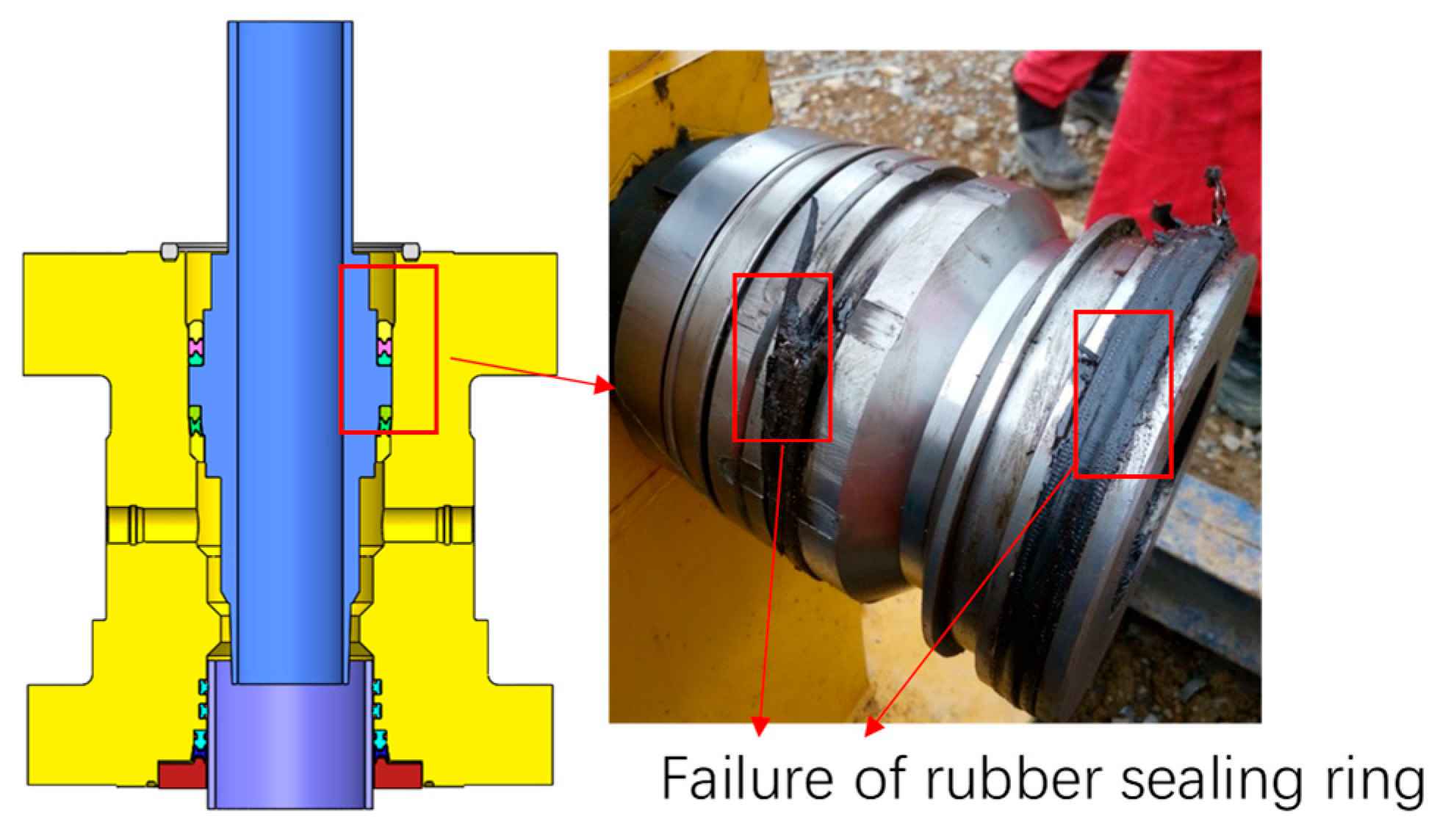
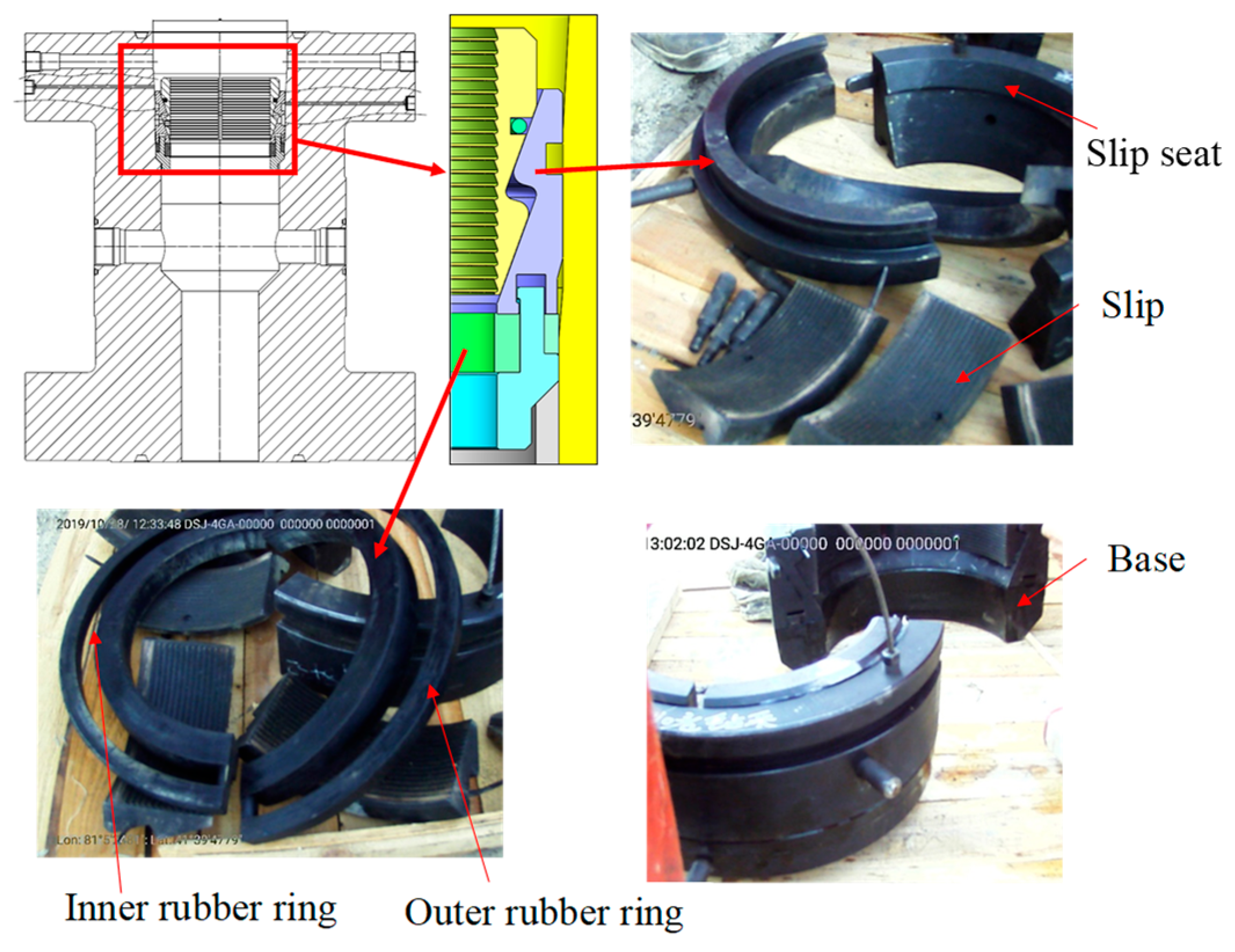
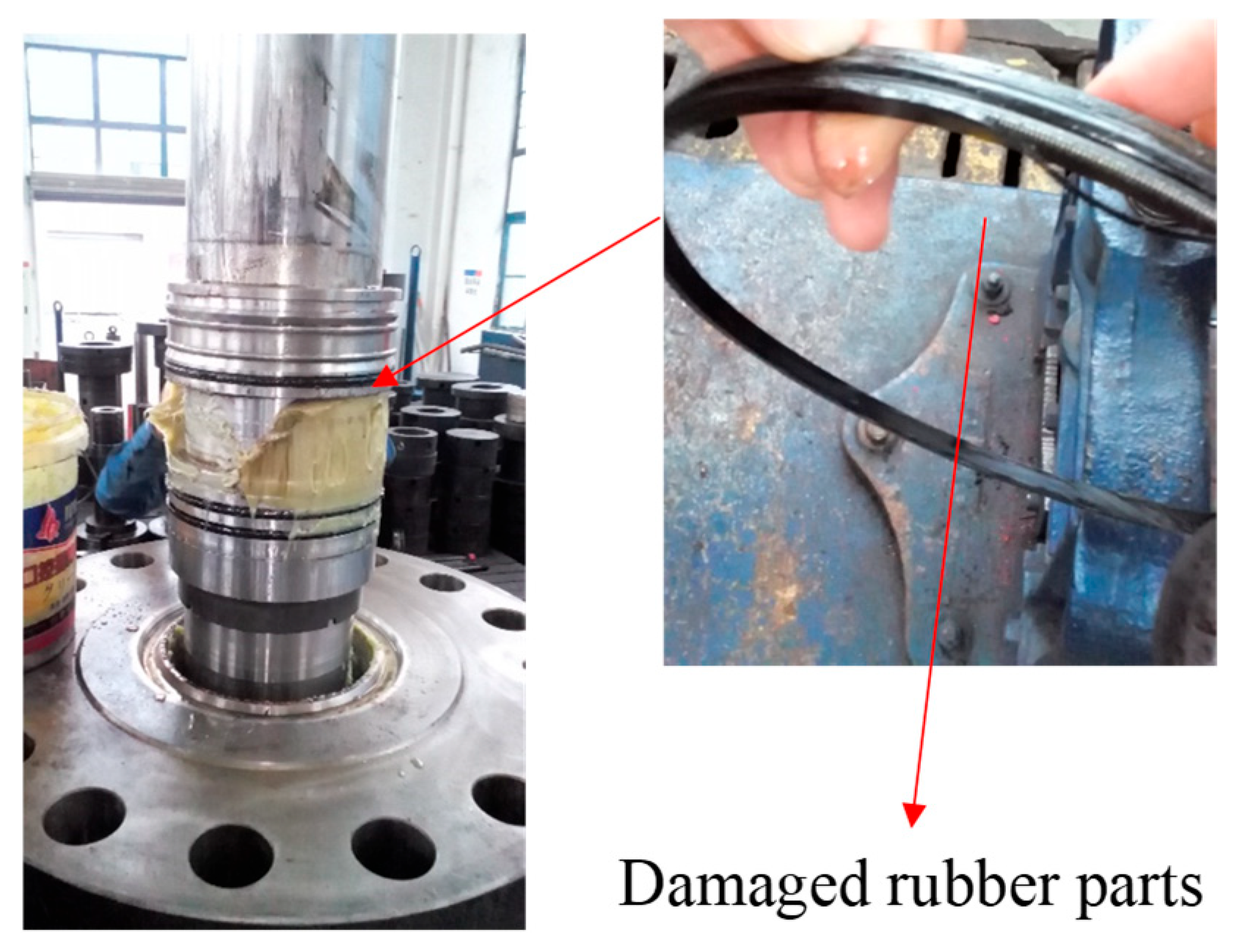
The existing patents and products for the suspension devices inevitably require the use of rubber seals at the sealing parts, which are prone to aging. Under various harsh external conditions, the lifespan of the rubber seals will be greatly affected, significantly reducing the reliability of the rubber seals. This cannot guarantee permanent sealing and safety at the later stage. Figure 1 shows a case of failure of the rubber ring in a slip hanger.
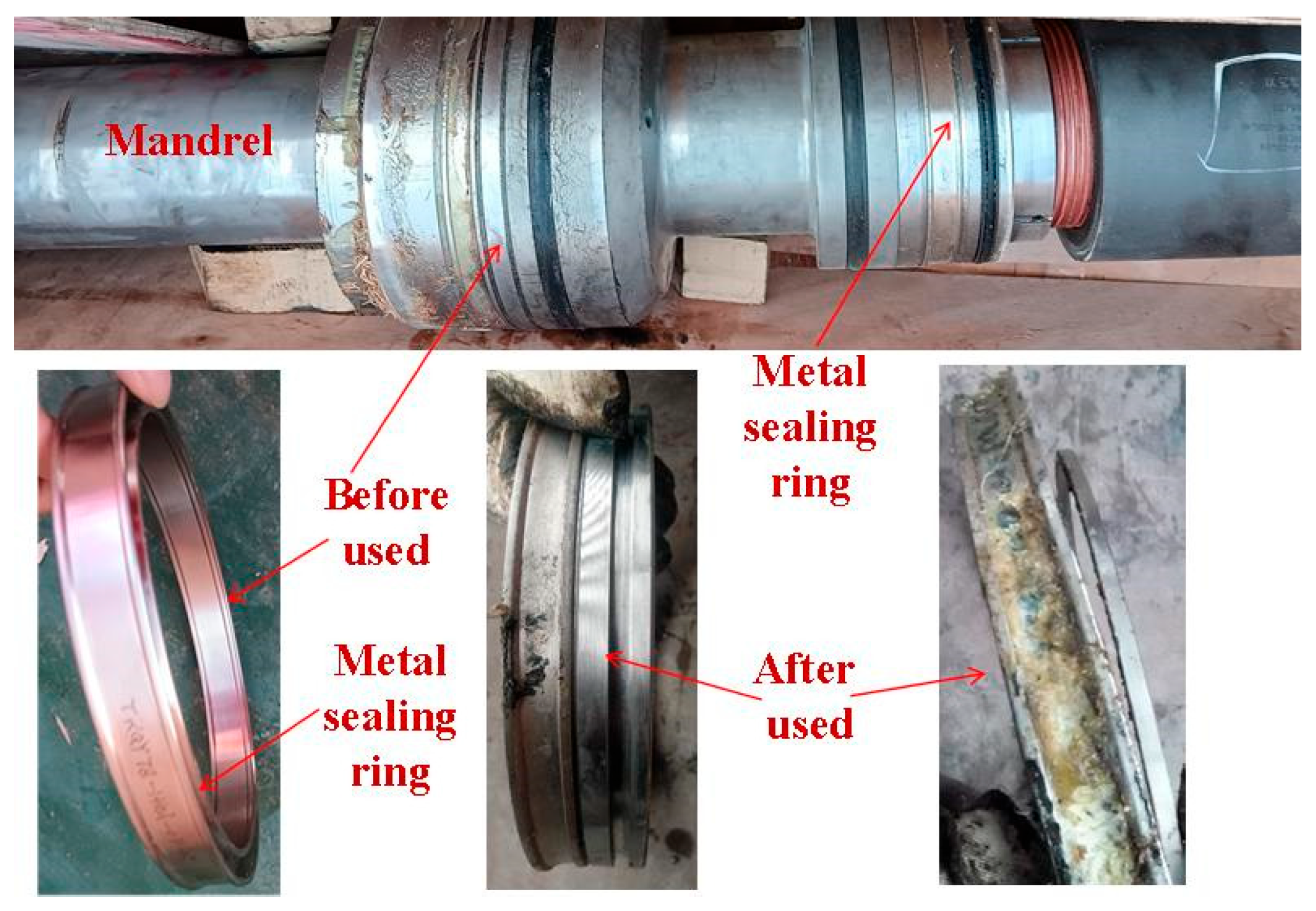
As shown in Figure 2, the existing mandrel-type casing hanger is usually composed of a combination of rubber and metal to form the main sealing unit. The operators have not taken effective protective measures for the installation of the mandrel-type casing hanger. During the transportation and installation process, the surface of the metal sealing ring will be damaged, forming defects, which will have a certain impact on the sealing performance. The research on the sealing performance of defective seals will be conducted in this paper.
The sealing structure of the mandrel hanger was tested in an indoor environment and was later used for on-site installation. Figure 3 and Figure 4 show the cases of the failure of the sealing rubber ring after the indoor test and the on-site use.

3. Constitutive Model of the Sealing Material of the Hanger

The finite element method was mainly used to analyze the working mechanism of the rubber sealing ring, as explored in the previous literature, which has certain guiding significance for the strength and sealing performance of the rubber sealing ring, but did not consider the optimal constitutive equation of the rubber sealing ring. Only the conventional Yeoh model or Mooney–Rivlin model are used to simulate and analyze the mechanical behavior of the rubber sealing ring, and the advantages of these two models are not elaborated. The common rubber sealing materials and new materials are comprehensively considered in this paper, and comparative experimental research is carried out, and the better constitutive model and performance parameters of the rubber sealing ring are obtained, providing more reference data for the selection of rubber core materials in the future [28,29].

3.1. Neo–Hookean Model and Mooney–Rivlin Model

The strain energy density function can be decomposed into strain partial energy and volume strain energy, and its polynomial form is shown in Equation (1).
W = i + j = 1 N C i j I 1 3 i I 2 3 j + i = 1 N 1 D i ( J 1 ) 2 i
In Equation (1), the parameter N is the order of the polynomial, I and J are the two variables, I1 and I2 is the deformation tensor invariant, C i j is the material constant, which describes the shear properties of the material, the value of D i determines whether the material is compressible, if all D i are 0, J is the elastic volume ratio. Considering the incompressibility of rubber, Rivlin proposes the following equation:
W = i , j = 0 n C i j I 1 3 i I 2 3 j
In Equation (2), C i j is the material constant. The model is relatively complex, and on this basis, an appropriate model is generally obtained by simplification. For example, if N = 1 is taken, only the first term is retained, and the Neo–Hookean model as shown in Equation (3) is obtained, and only the first two terms are retained, the Mooney–Rivlin model is obtained as shown in Equation (4).
W = C 10 ( I 1 3 )
W = C 10 ( I 1 3 ) + C 01 ( I 2 3 )
The Mooney–Rivlin model is more accurate than the Neo–Hookean model, but it also yields a constant shear modulus, which does not accurately describe the mechanical behavior of the carbon black filler vulcanized rubber, and it does not predict multiaxial data.

3.2. Yeoh Model

In the process of studying the effect of vulcanized rubber, Yeoh simplified the model to order W I 2 = 0 , so that it was found that in uniaxial tension and uniaxial compression through experiments, the stress of the simplified model decreased with the increase of ( I 1 − 3), reaching a minimum value and then increasing again. Thus, he came up with a cubic strain energy function, the Yeoh model [30,31]:
W = C 10 ( I 1 3 ) + C 20 ( I 1 3 ) 2 + C 30 ( I 1 3 ) 3
where C10, C20, and C30 are temperature-dependent material constants, separately. The Yeoh model is simple in form and has sufficient accuracy, but it does not explain the axial tensile experiment well [32,33,34].

3.3. Sampling of Rubber Core Materials

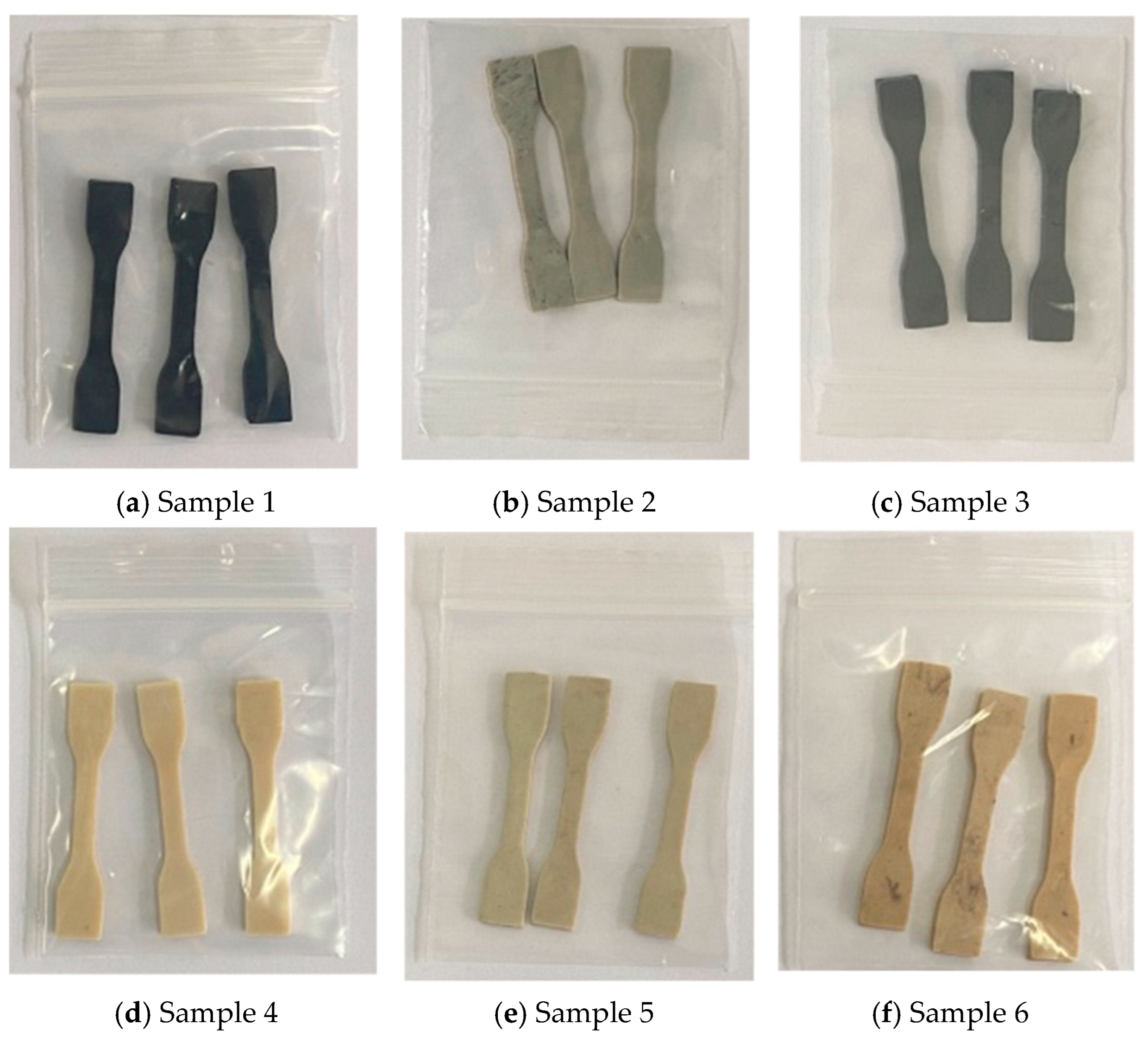
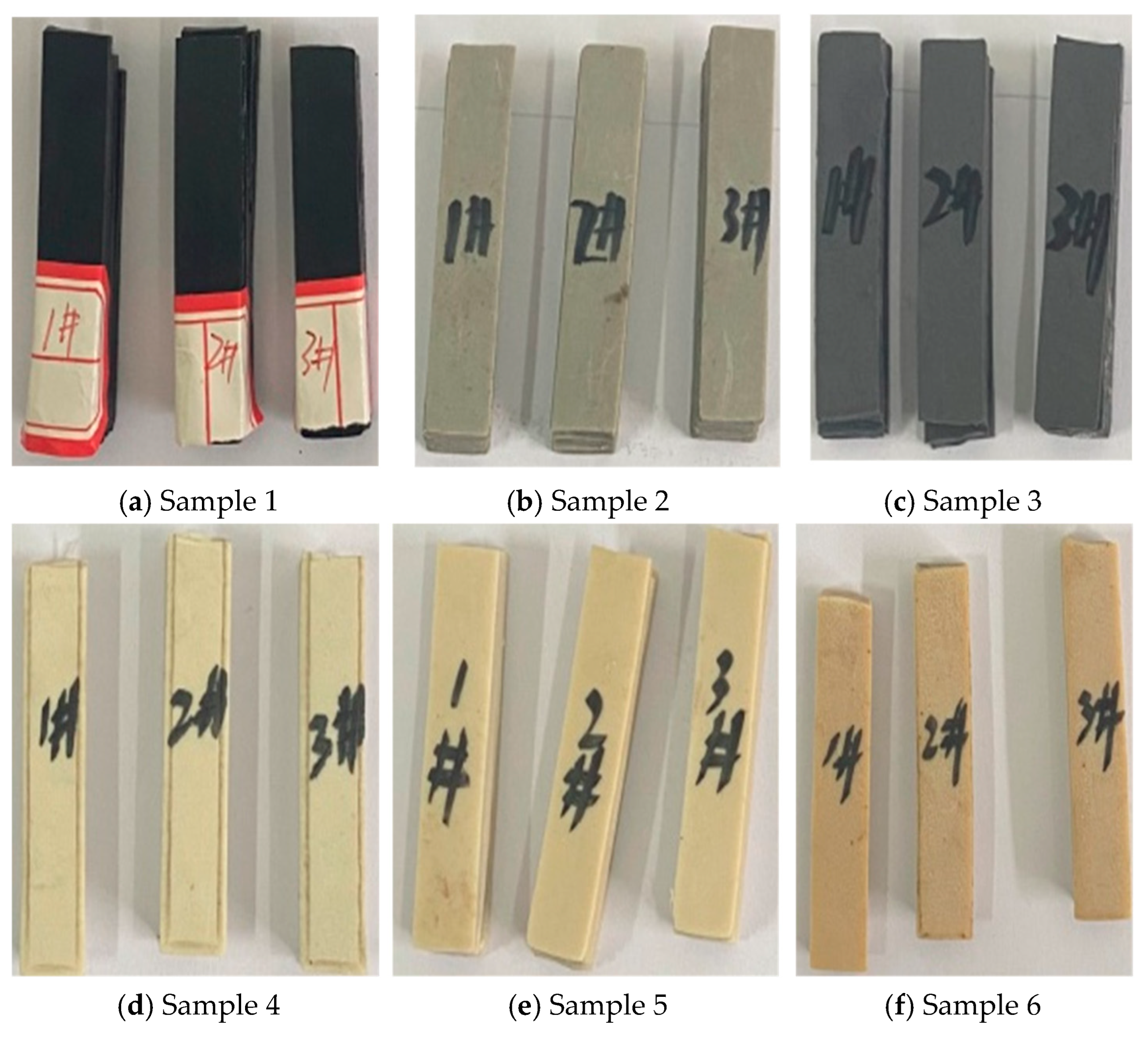
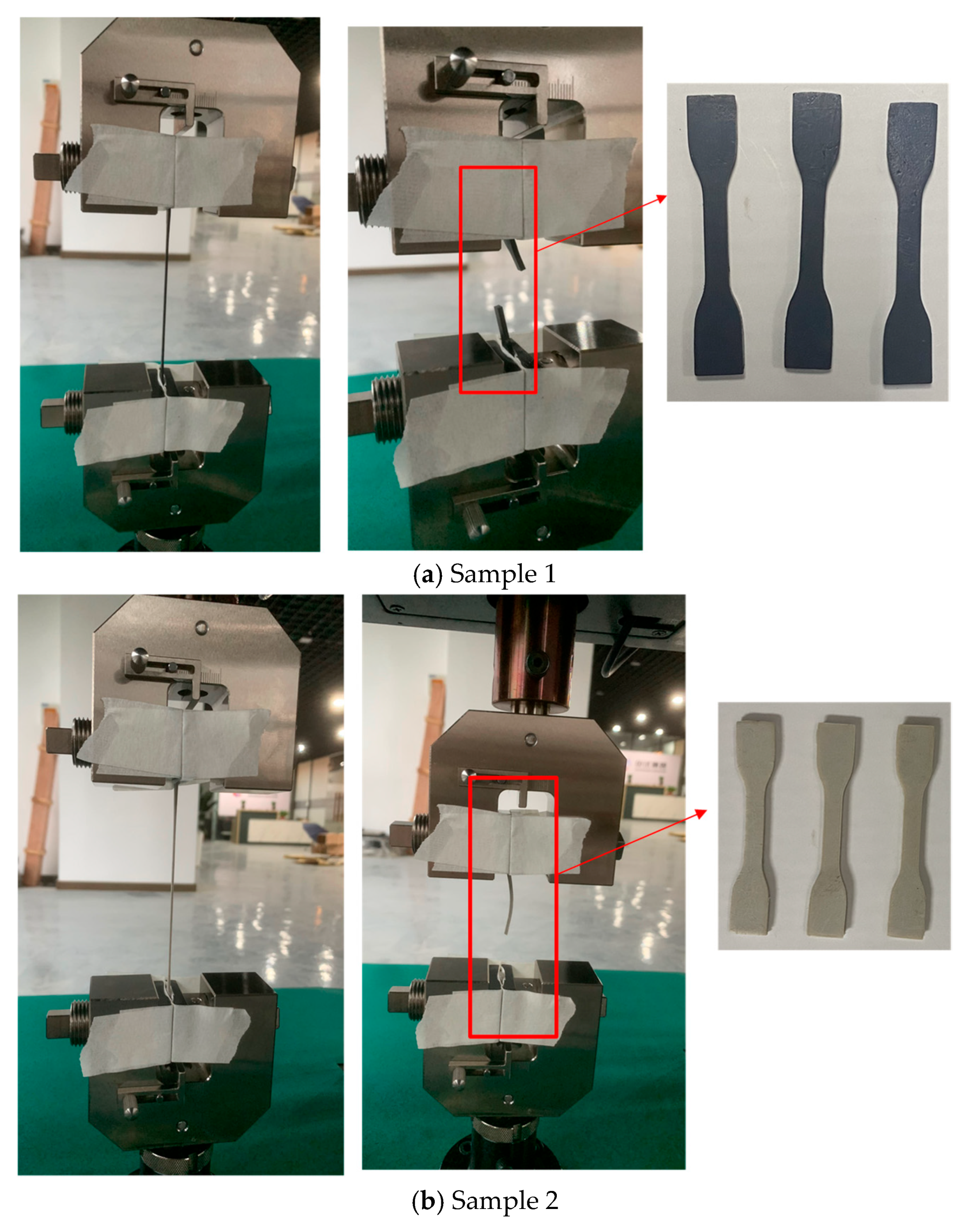
Due to the good wear resistance and oil resistance of nitrile rubber, nitrile rubber is mostly used as the sealing material of the hanger. In order to find better materials for processing the sealing components of the suspension device, this paper selected six common rubber materials and conducted a mechanical performance analysis. Obtain a more superior constitutive model. In this paper, uniaxial tensile and uniaxial compression experiments were carried out on six materials, including carbon black nitrile rubber (sample 1), silica black bubble nitrile butadiene rubber (sample 2), graphene nitrile butadiene rubber (sample 3), silica dense nitrile rubber (sample 4), calcium carbonate nitrile butadiene rubber (sample 5) and natural rubber (sample 6) as shown in Figure 5 and Figure 6.

3.4. Mechanical Experiments of Rubber

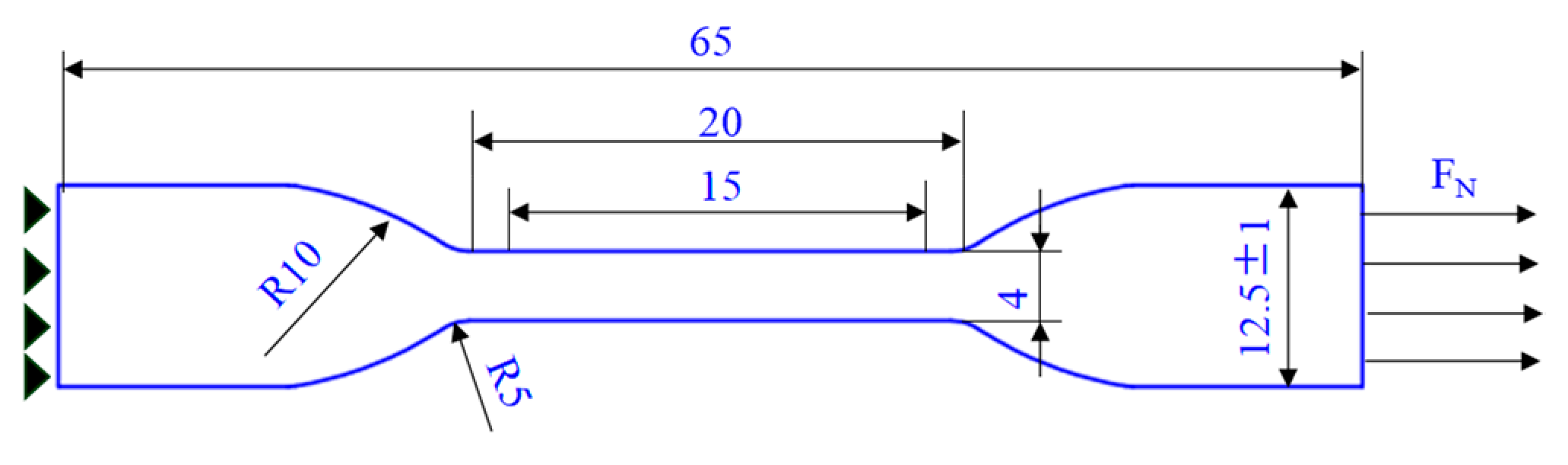
The mechanical behavior of rubber is usually studied in experiments by uniaxial tension and uniaxial compression. According to the relevant regulations [35], a total of 6 dumbbell-shaped samples were prepared of nitrile rubber, with a length of 65 ± 0.5 mm and a height of 10 ± 0.5 mm, as shown in Figure 7. The uniaxial tensile test equipment is shown in Figure 8.
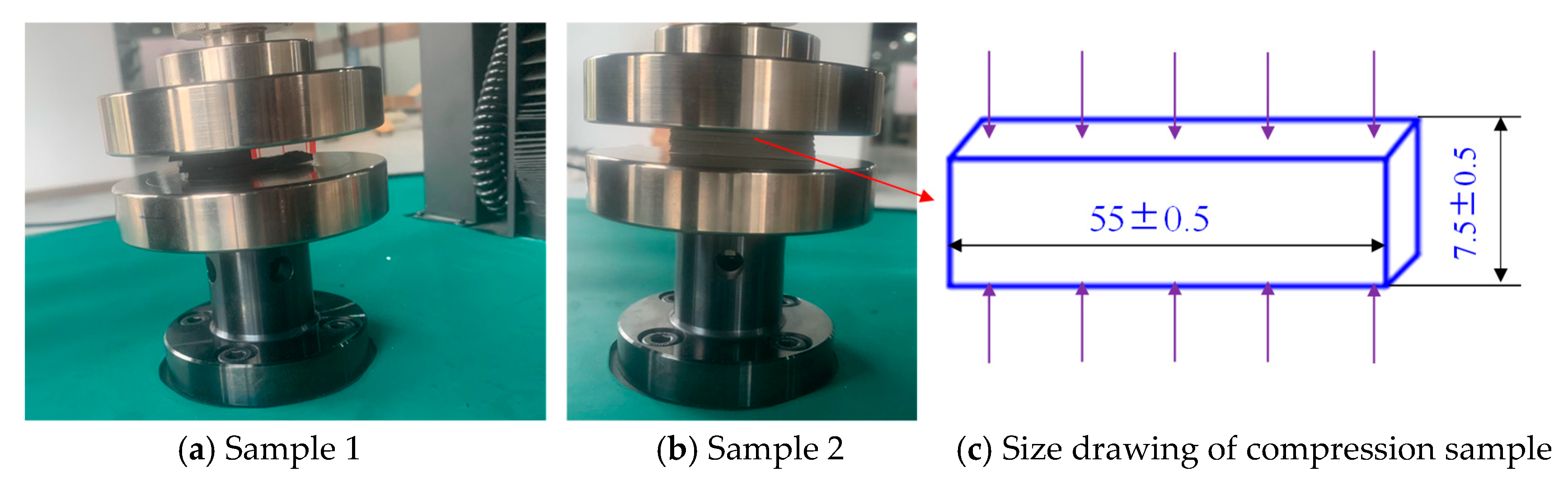
According to the relevant regulations [36,37], a total of six rectangular samples of nitrile rubber were prepared, with a length of 55 ± 0.5 mm and a height of 7.5 ± 0.5 mm, as shown in Figure 9c. The uniaxial compression experimental equipment is shown in Figure 9a,b.
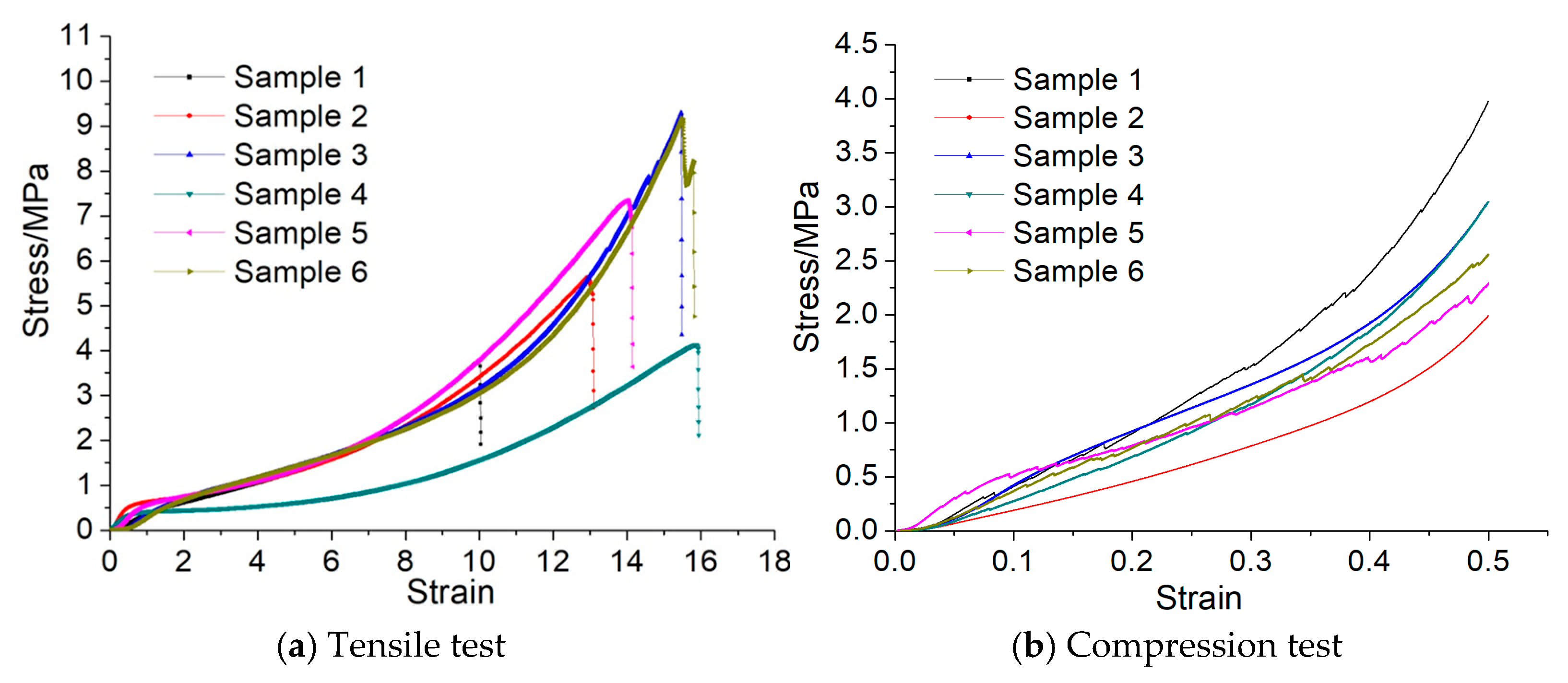
In Figure 10, the tensile and compressive strengths of samples 1 and 3 are large, and in order to determine the final rubber material, the nonlinear behavior of the rubber needs to be described by a suitable constitutive model, and the model parameters should be fitted by experimental data. These experimental results are of great significance for understanding the deformation characteristics and engineering applications of rubber. After the sample is compressed, in order to facilitate the observation of the stress–strain relationship of the sample material, it is still similar to the tensile curve, and the deformation amount is taken as positive.

3.5. Experimental Data Processing

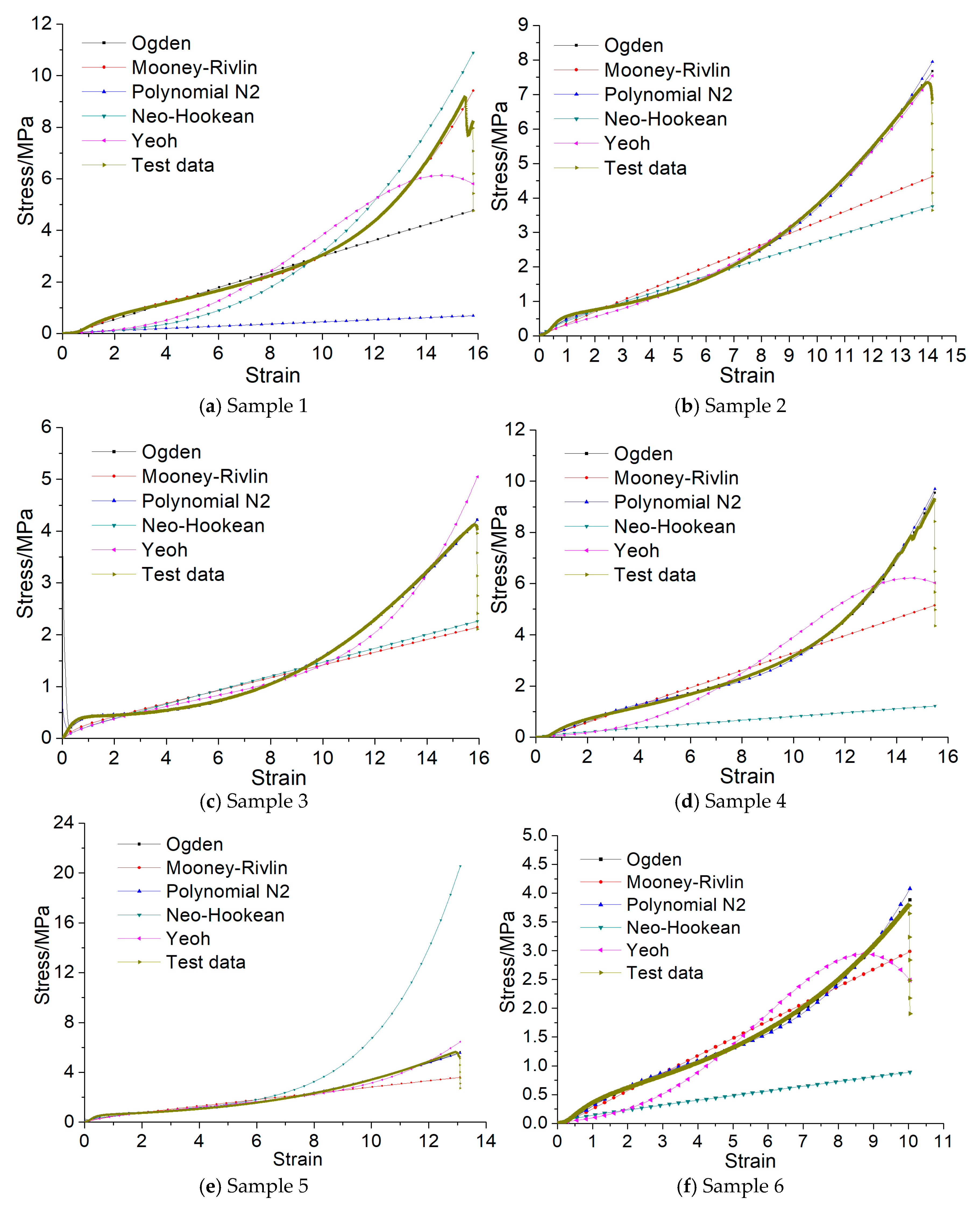
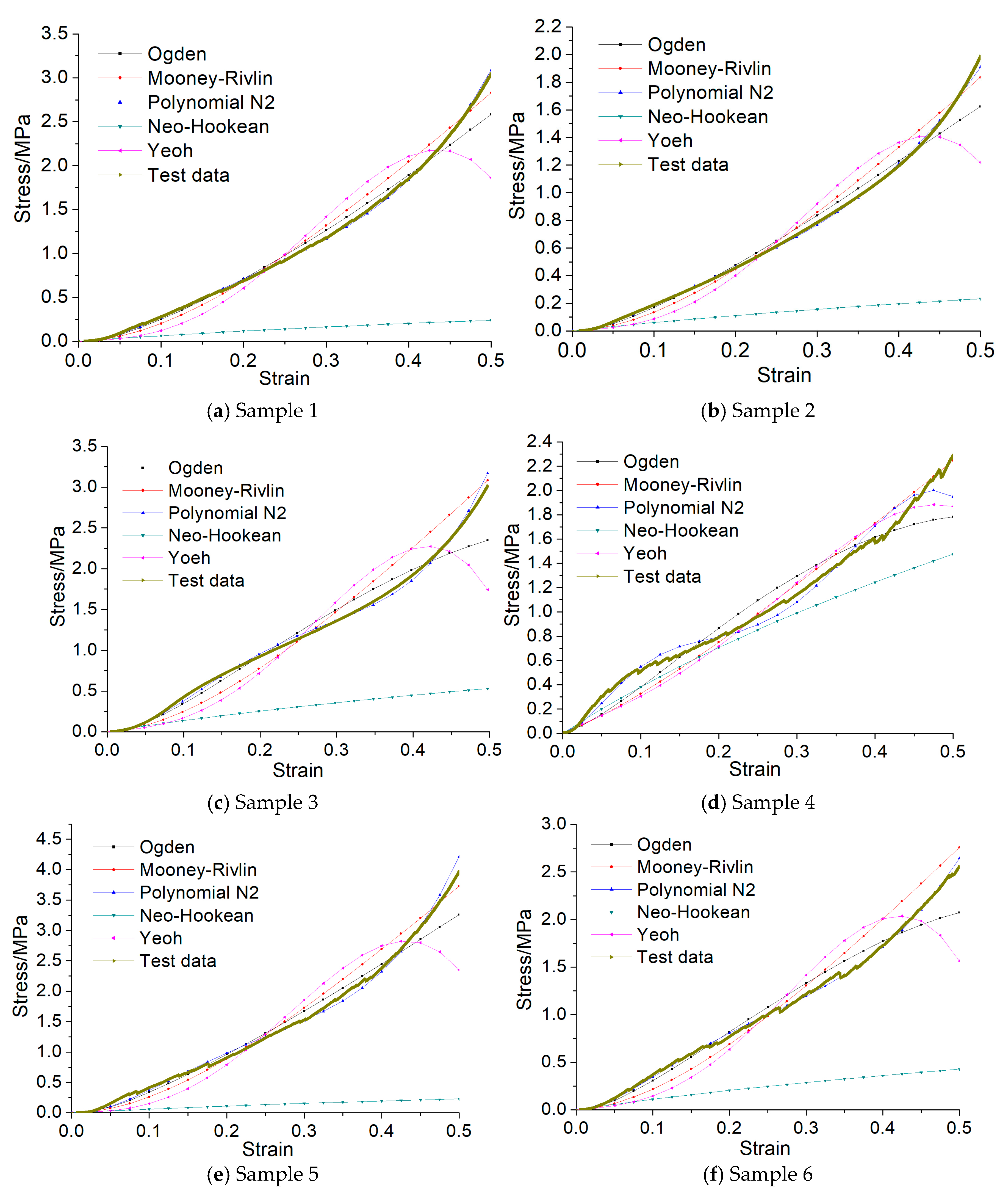
The experimental data were fitted [38,39,40], and the constitutive model of the rubber material was preferentially obtained. All the models are close to the experimental data when the strain is small, in Figure 11 and Figure 12, but it is found that the polynomial second-order model is in the best agreement with the experimental data when the nominal strain is 300%. The rubber of the hanger has a large deformation during operation, so the polynomial second-order model is selected as the constitutive model of the rubber material [30,31,32].
For the silica type, the tensile strength and compressive strength curves of sample 1 (with carbon black nitrile rubber) are smooth, the mechanical properties are relatively stable, and the tensile strength and compressive strength are high, so it is more appropriate to choose sample 1 as the material of the rubber core, According to the fitting results, the parameters of the polynomial second-order constitutive model are: C10 = −0.058 MPa, C20 = 13.64 MPa, C30 = 0.039 MPa, C01 = −29.056 MPa, C02 = 22.10 MPa.

4. Finite Element Calculation of the Slip Hanger

4.1. Finite Element Analysis Model of Sealing Structure of Slip

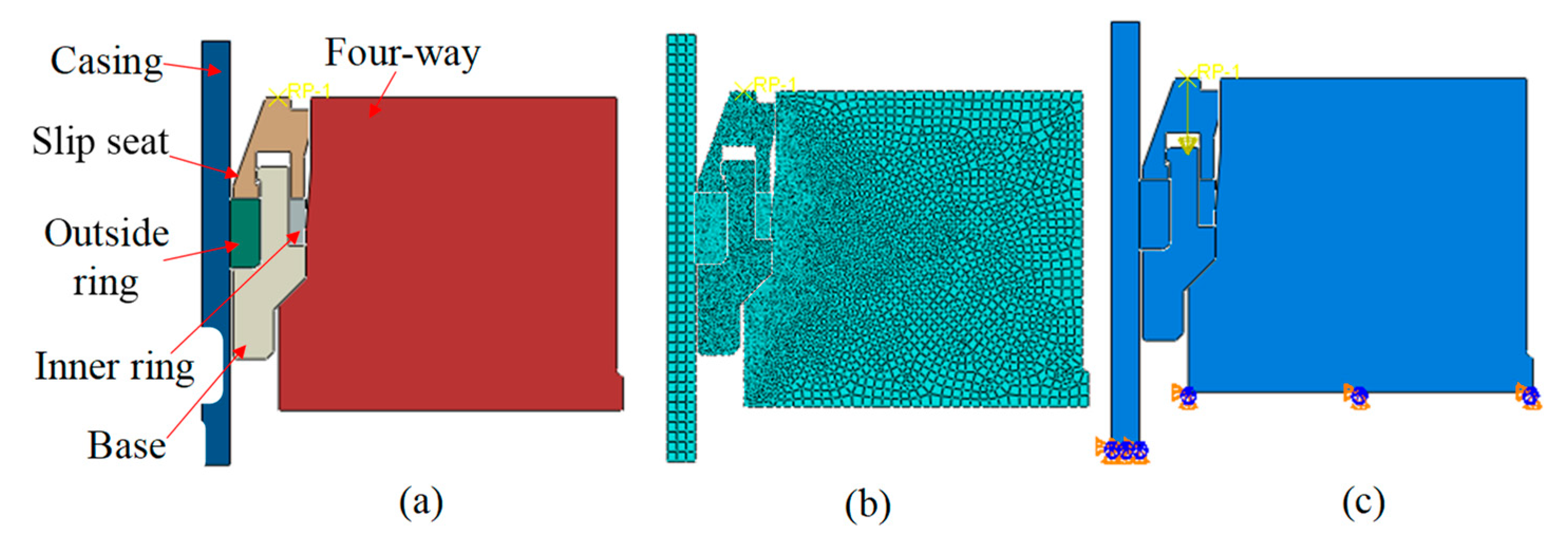
The physical structure of the slip casing hanger is shown in Figure 13a. The material of the slip is 20CrMnTi, with a yield strength of 835 MPa and a tensile strength of 1080 MPa. The material of the slip seat is 35CrMo, with a yield strength of 835 MPa and a tensile strength of 980 MPa. The material of the casing is 42CrMo, with a yield strength of 930 MPa and a tensile strength of 1200 MPa. The elastic modulus of these materials is 2.1 × 10⁵ MPa and the Poisson’s ratio is 0.3. The polynomial rubber constitutive model is adopted in the rubber sealing ring, and the material parameters are obtained from the previous test. During the entire analysis process, the four-way connector of the hanger and the bottom of the casing are fully constrained. A pressure load of 50 t to 400 t is applied to the upper surface of the sealing ring. Figure 13a is the assembly diagram of the sealing structure, Figure 13b is the finite element model of the sealing structure, and Figure 13c is the loading model of the sealing structure. CAX4I is used as the grid type for the sealing component. The finite element mesh consists of a mixture of quadrilateral and triangular elements.

4.2. Analysis of the Calculation Results of the Slip Seal Structure

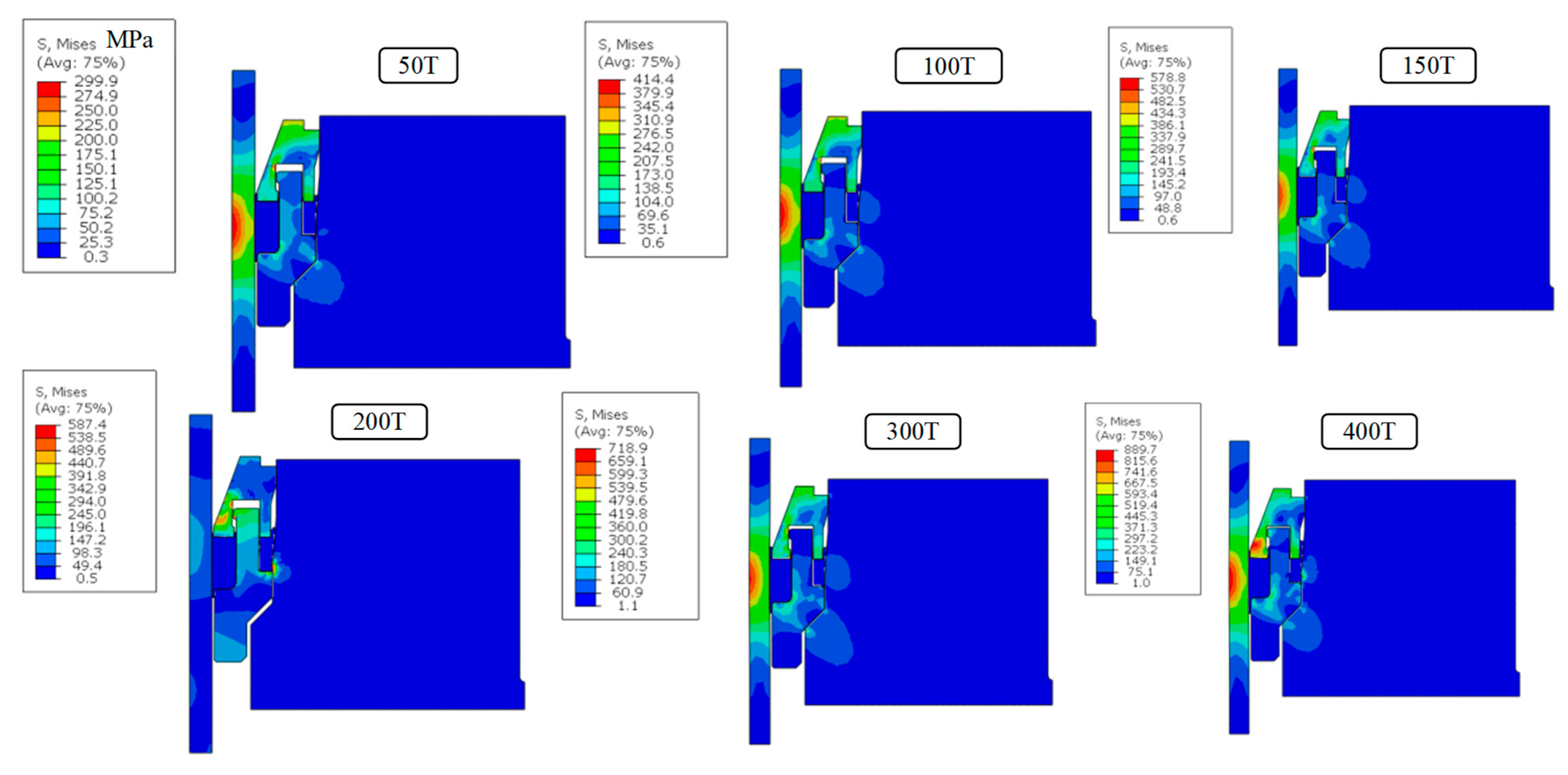
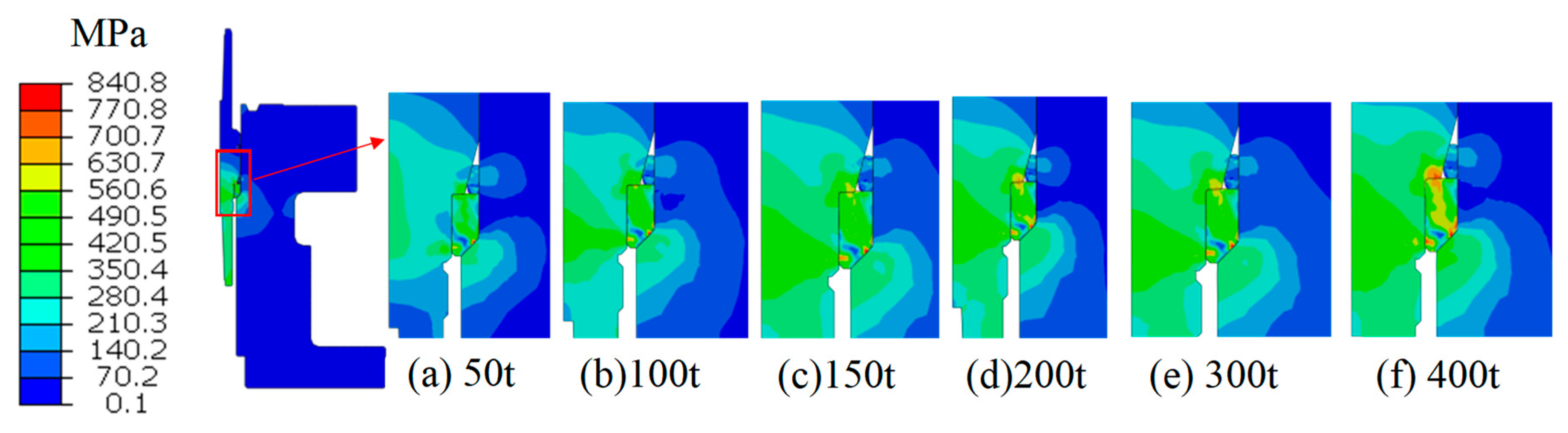
The stress distribution of each component of the sealing structure under different suspended loads is shown in Figure 14. The maximum stress of each component varies between 299.9 and 889.7 MPa when the suspended load of the casing is 50–400 t. As the load on the upper pressure ring increases, the stress on the lower support ring does not change much. The main difference is that the contact area between the inner wall of the casing and the pressure ring and the outer wall of the casing experiences a significant increase in stress. With the increase in pressure, the deformation also gradually increases. The rubber sealing ring undergoes significant deformation when the suspended load of the casing is 200–400 t, and the contact area also increases accordingly. Finally, it adheres tightly to the mandrel and the four-way sealing surface, effectively completing the sealing.
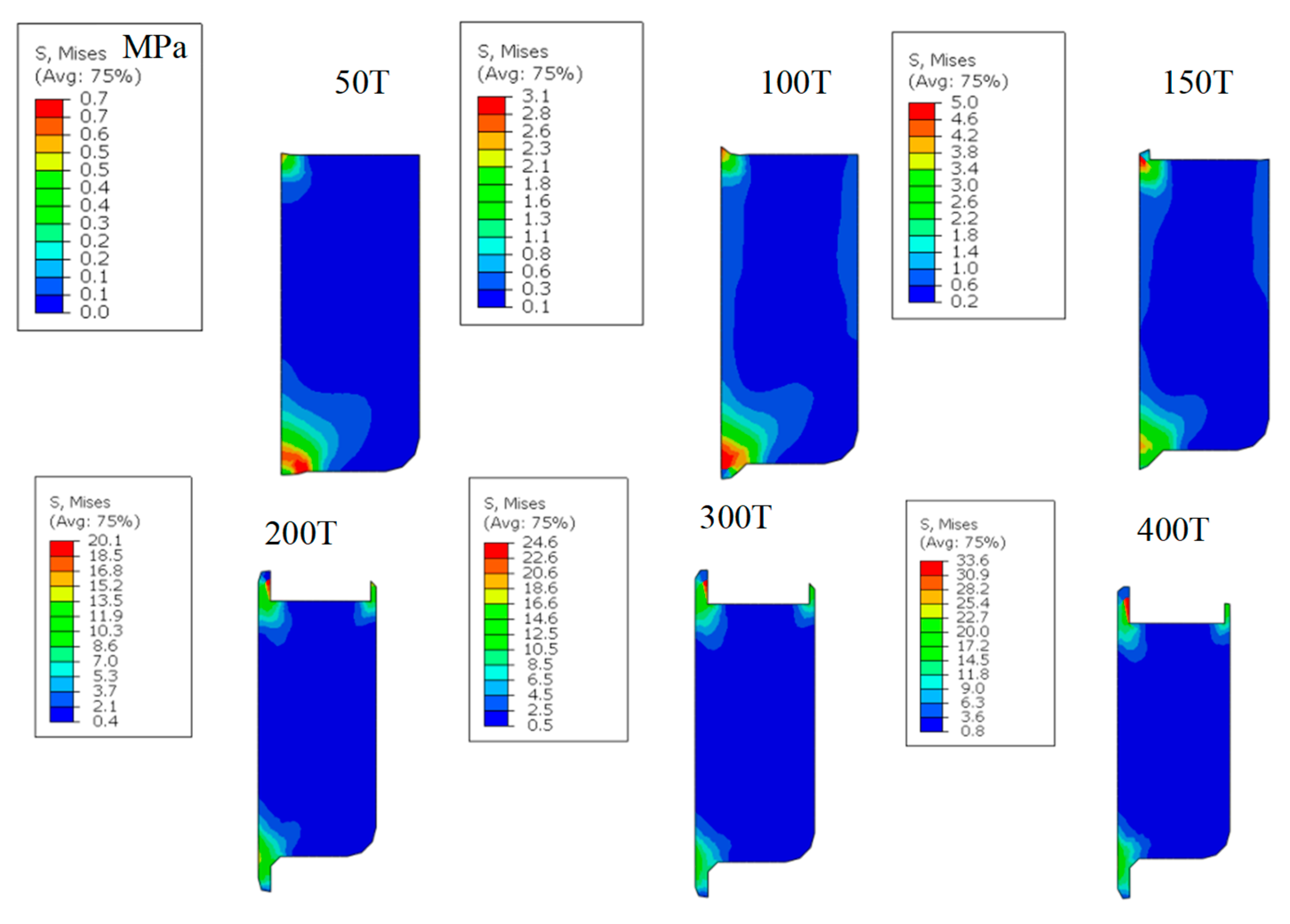
It shows that the maximum stress of the rubber ring varies between 0 and 33.6 MPa when the casing suspension weight is between 50 t and 400 t in Figure 15. The stress at the compressed position on the upper surface of the rubber ring is relatively large, while the stress at the central part of the upper surface of the rubber ring is relatively small. When the casing suspension weight is 300 t, the maximum stress of the rubber ring reaches 24.6 MPa. The rubber ring is fully compressed and a significant deformation has occurred on the upper part of the rubber ring when the suspension weight of the casing is 400 t.
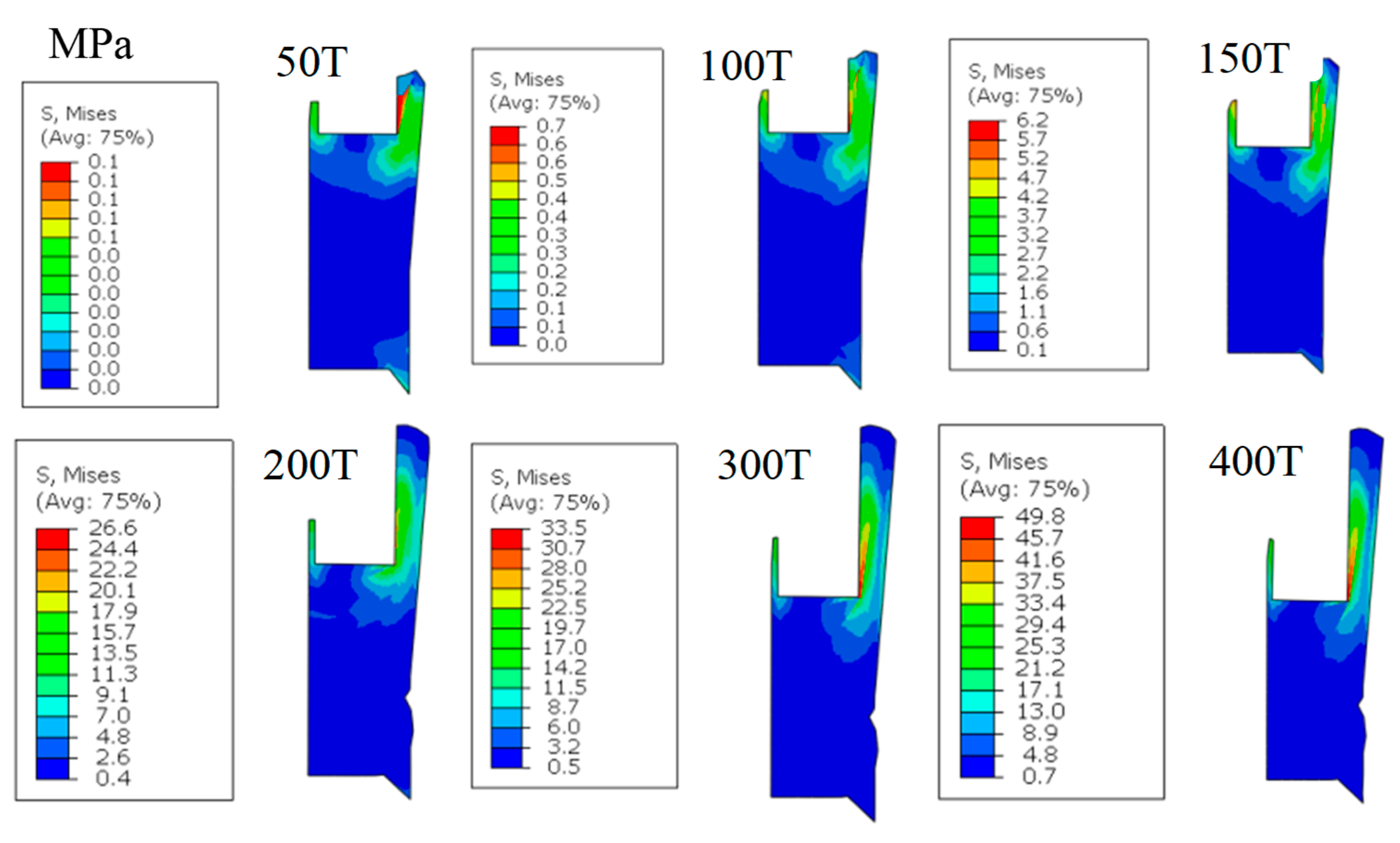
It shows that the maximum stress of the rubber ring varies between 0.1 MPa and 49.8 MPa when the casing suspension weight is between 50 t and 400 t in Figure 16. The stress at the compressed position on the upper surface of the rubber ring is relatively large, while the stress at the central part of the upper surface of the rubber ring is relatively small. When the casing suspension weight is 300 t, the maximum stress of the rubber ring reaches 33.5 MPa. The rubber ring is compressed as a whole, and a significant deformation has occurred at the upper part of the rubber ring. This will cause the rubber to undergo excessive deformation and lose its elasticity, seriously affecting the sealing performance and service life of the sealing structure.
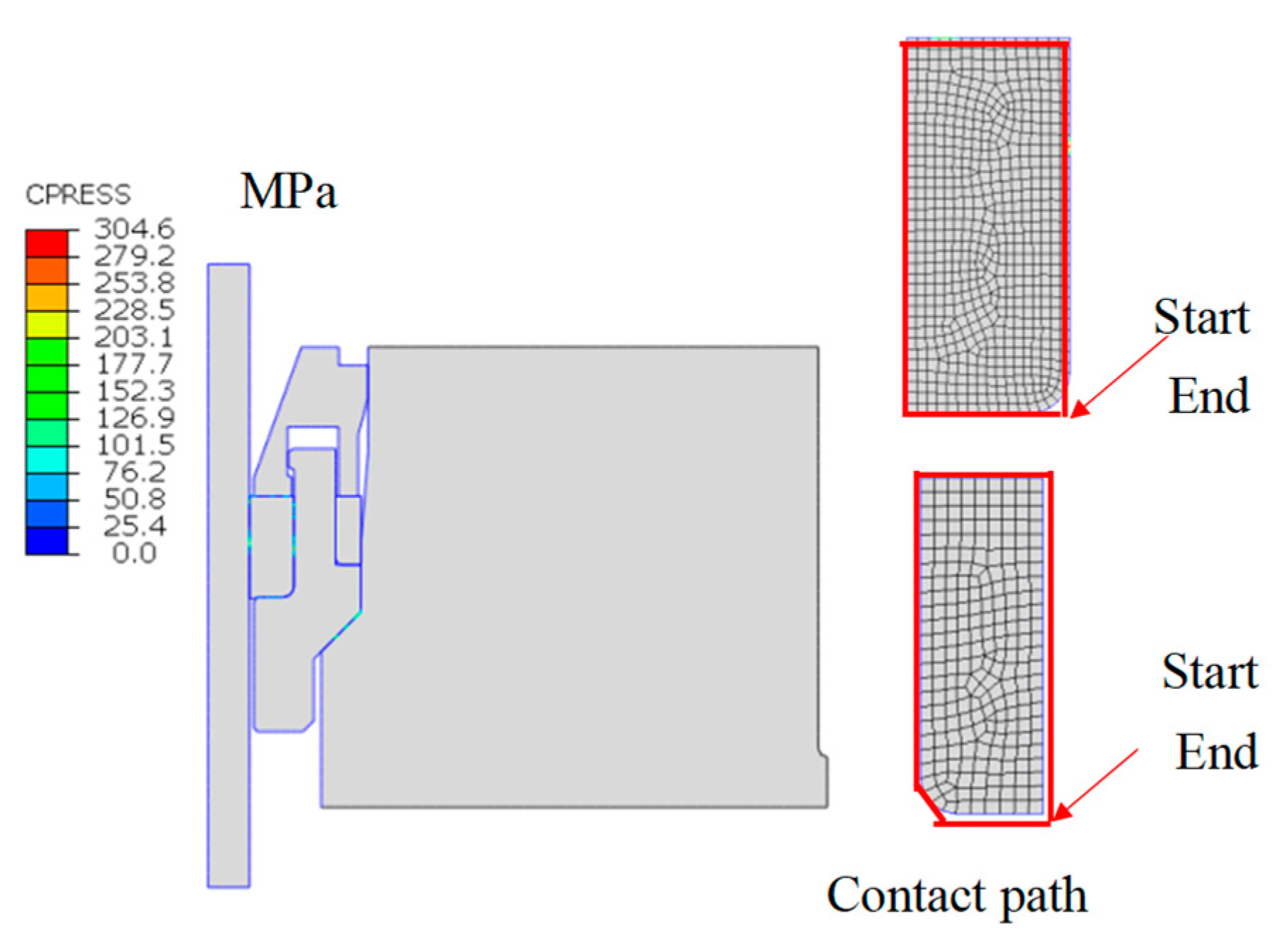
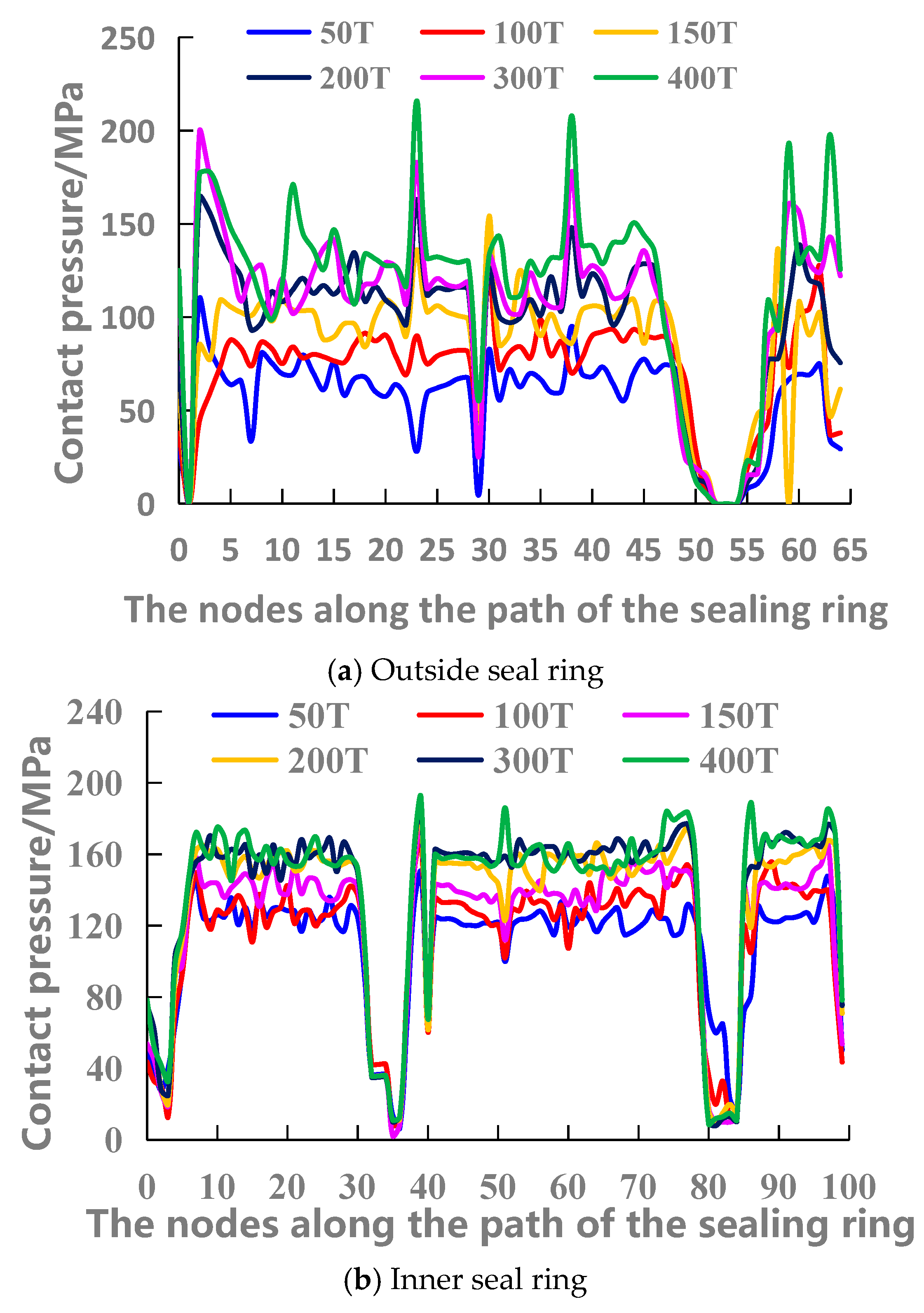
Based on the analysis results of contact pressure, the path on the contact surface of the outer surface of the inner and outer rubber sealing structure was selected, as shown in Figure 17. According to the contact pressure data, the curve of pressure changes at the nodes on the contact path was edited.
It shows that the contact pressure of the outer rubber ring varies between 50 and 200 MPa when the upper load P is constant in Figure 18, and the suspended weight of the casing varies between 50 t and 400 t, and the contact pressure of the outer rubber ring varies between 120 and 160 MPa. The average contact pressure basically meets the requirements of the minimum sealing pressure ratio. As the load increases, the contact pressure also gradually increases. From the variation in the contact pressure curve, it can be seen that the curve shows a wavy pattern change, and in some places, there are sawtooth-like abrupt changes, which will cause severe deformation of the rubber.

5. Research on Performance of Incomplete Sealing Structures

5.1. Analysis of Rectangular Rubber Seal Structure

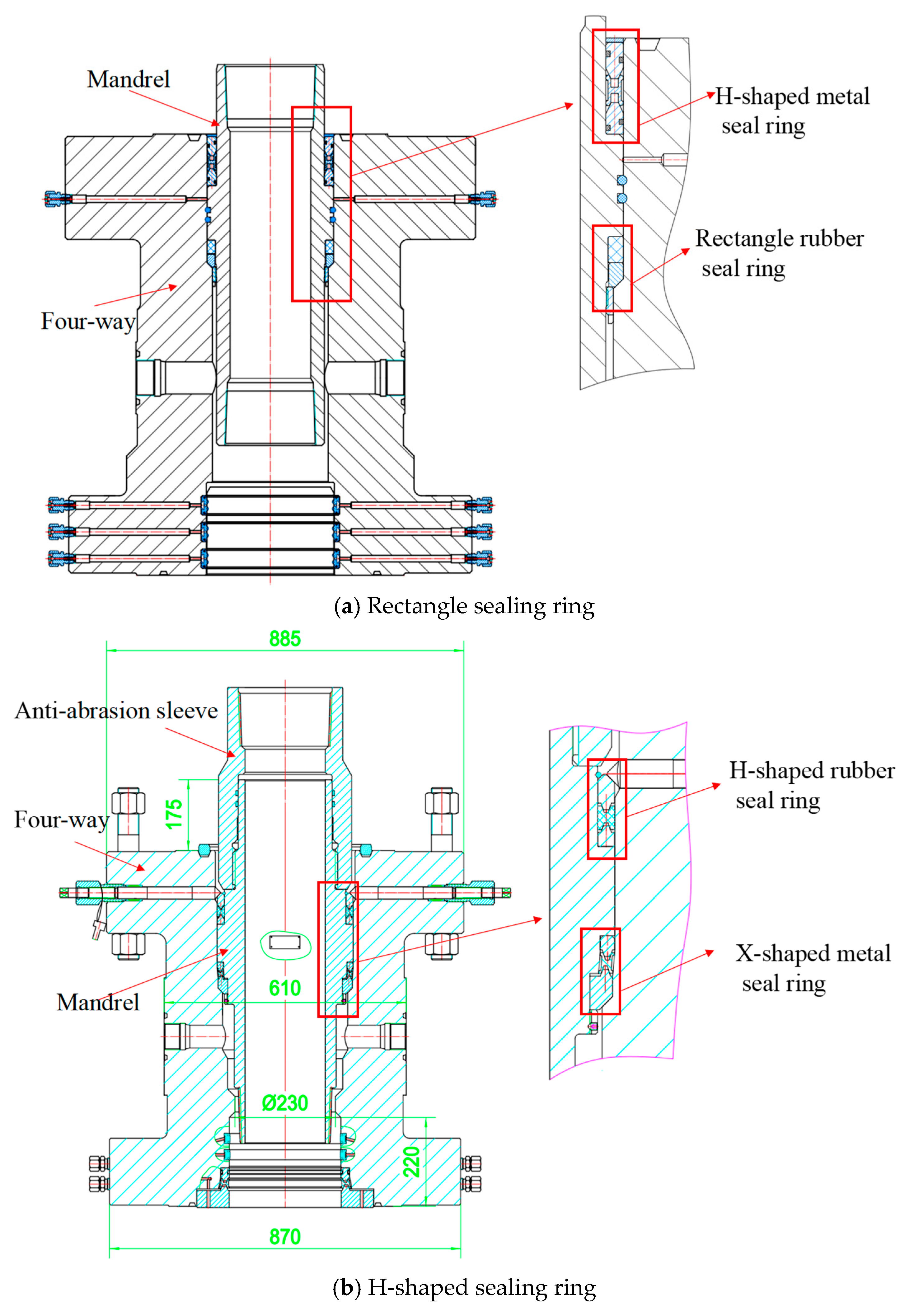
Since the rubber sealing structure adopted in Figure 19 is quite similar to the aforementioned structure, and the rectangular rubber seal at the bottom still has problems of aging and failure in sealing. Similar to the aforementioned calculation method, a calculation model is still established based on the actual dimensions of its structure to analyze the sealing performance and load-bearing capacity of the mixed structure of metal and rubber seals.
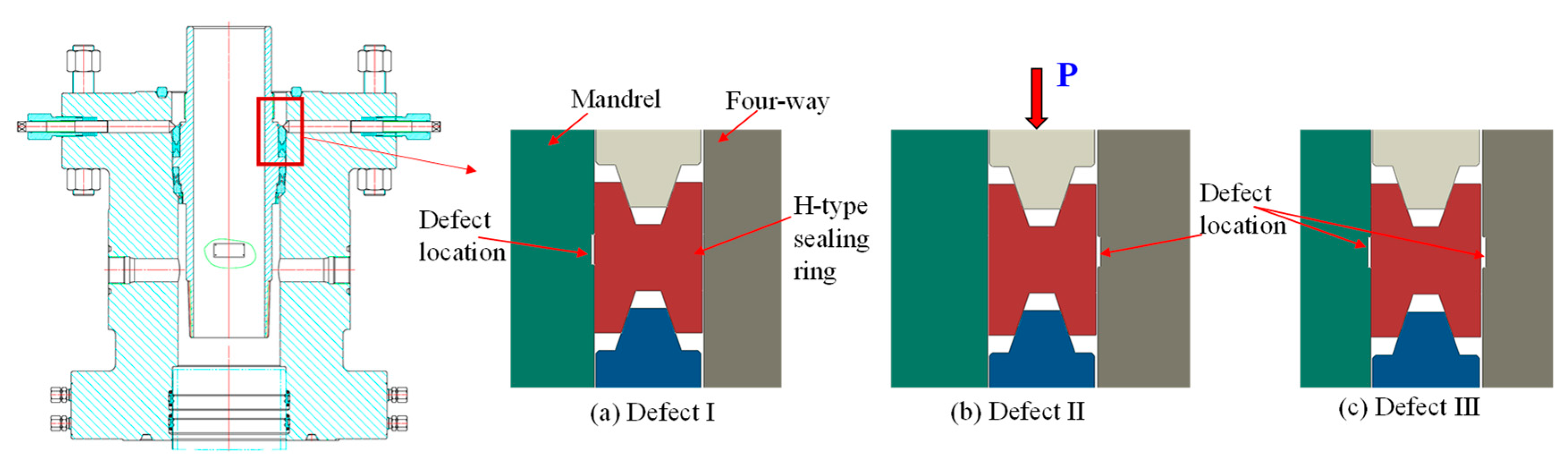
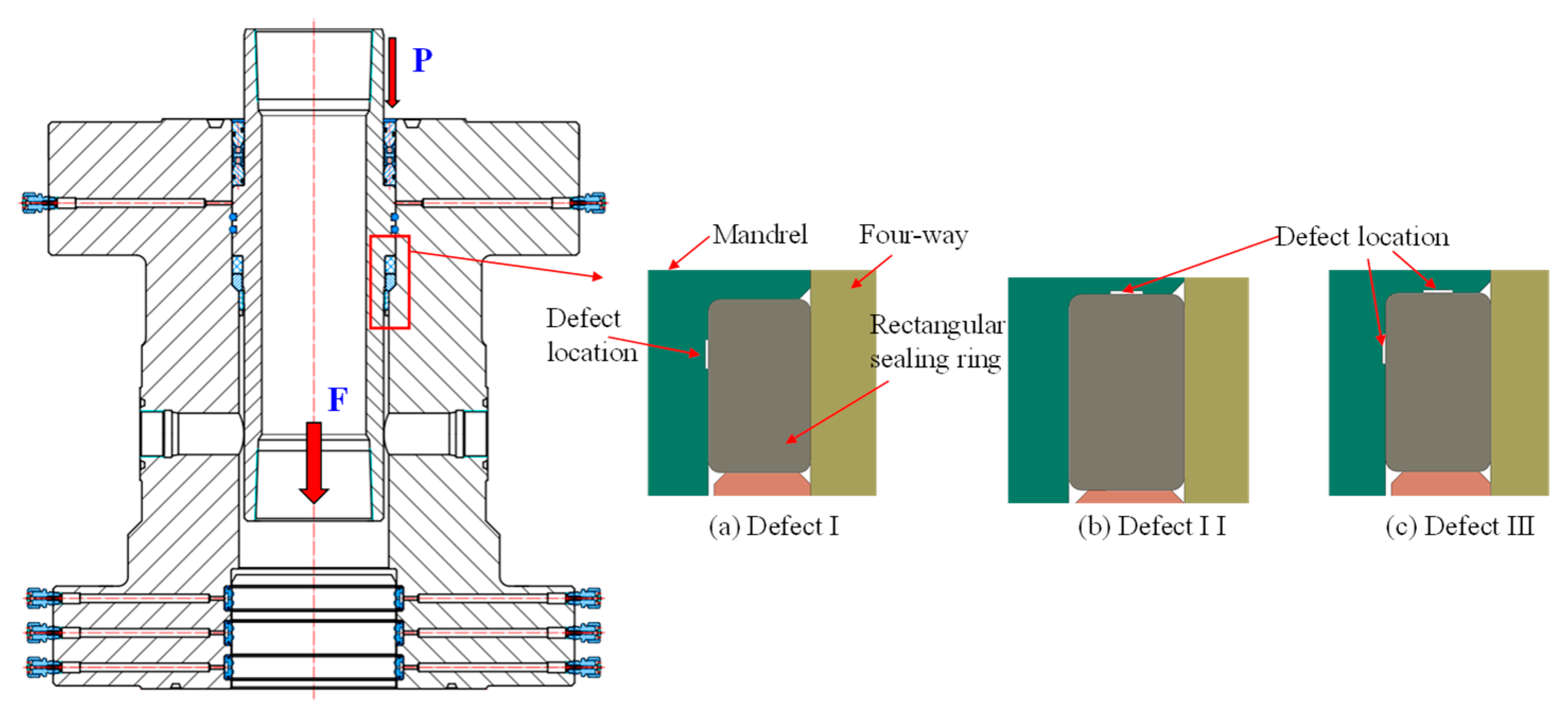
The upper H-shaped metal seal is a structure that achieves sealing through manual excitation. By applying mechanical force P externally, the H-shaped metal seal undergoes plastic deformation to achieve upper auxiliary sealing, thereby sealing the annular space between the four-way and the mandrel. However, during the actual transportation, movement and installation processes, defects were formed on the surfaces of the mandrel, four-way connectors and seals. There are three different types of defects at various positions in Figure 20.
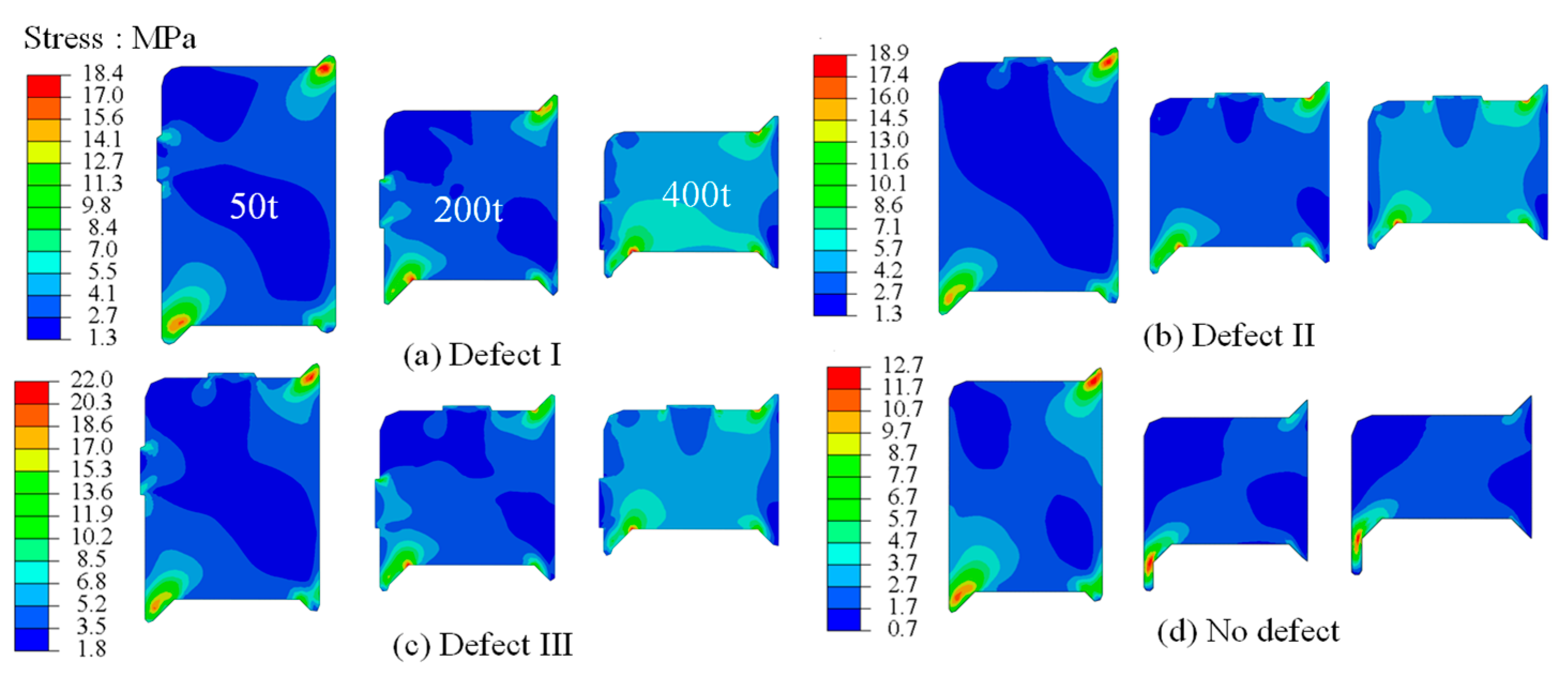
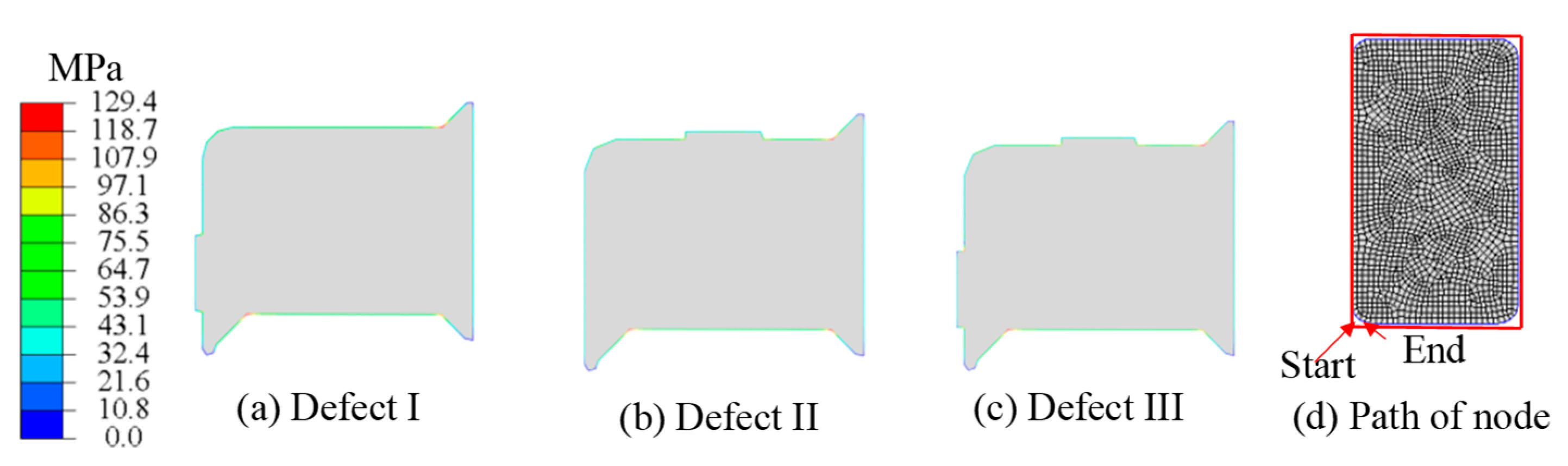
It shows that the stress of the rectangular rubber sealing ring rises significantly as the lower load increases in Figure 21, and its deformation gradually intensifies with the increase in pressure. In particular, the rectangular rubber sealing ring undergoes significant deformation due to compression when the upper load reaches 200 t to 400 t. Although this enhances the sealing effect to a certain extent, the degree of deformation has approached or even exceeded the load-bearing limit of the material, posing a potential risk of structural failure. The stress on the rubber is relatively large when there are defects, with the maximum stress ranging from 18.4 MPa to 22 MPa. Compared with the absence of defects, the deformation of the contact parts between the sealing ring, the four-way and the mandrel is relatively small. When there are no defects, the stress that the rectangular rubber sealing ring bears ranges from 0.7 MPa to 12.7 MPa, and the deformation at the contact part is relatively large.
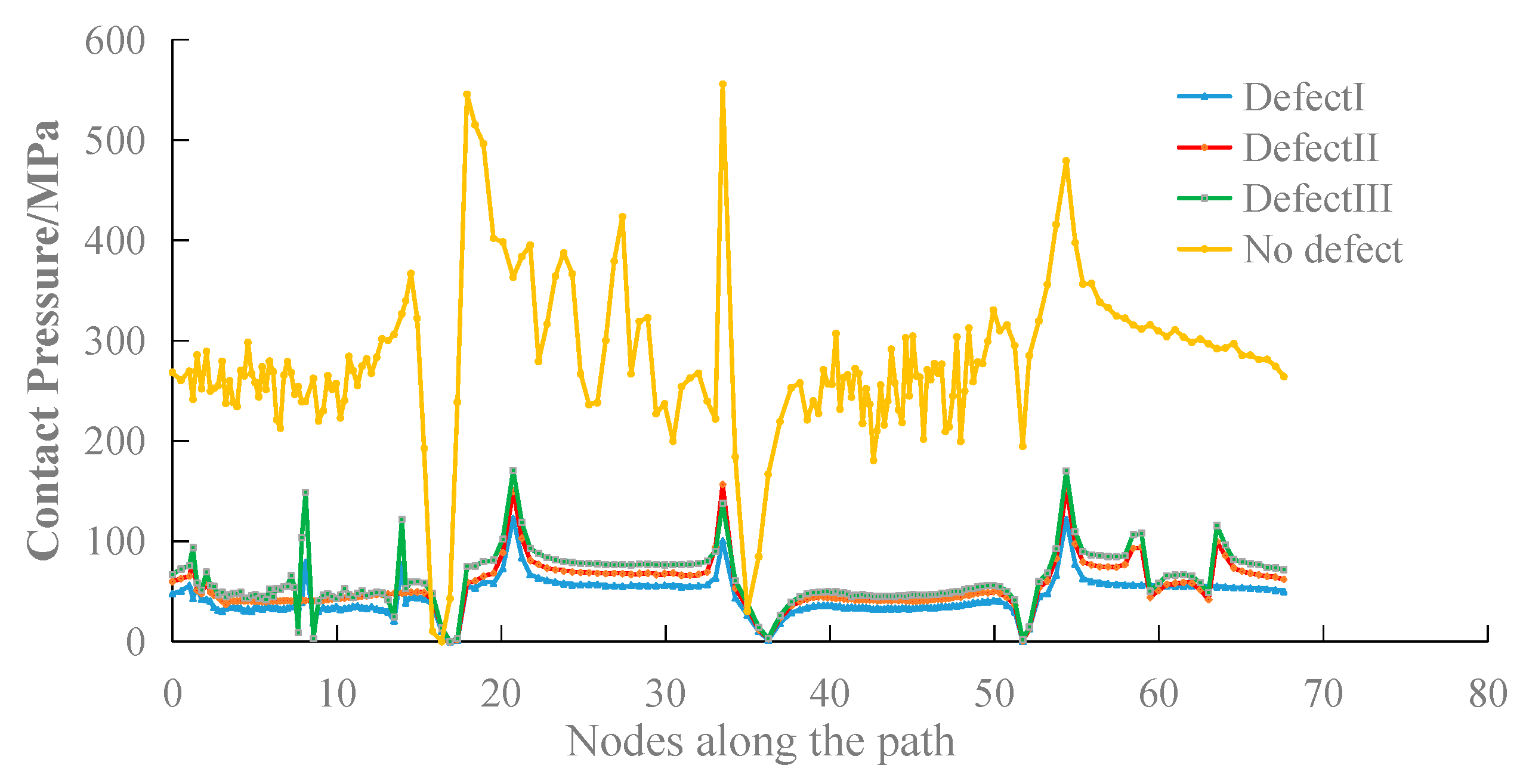
Figure 22 shows the selection of contact path data. Figure 23 shows the contact pressure law curves of sealing rings with different defects. Under the three defect states, the contact pressure of each sealing ring varies between 0 and 100 MPa, and the curve laws are approximately the same. When there are no defects, the contact pressure varies between 200 and 300 MPa. The absence of defects can improve the sealing performance of the rectangular sealing ring. When the suspended weight of casing reaches a certain level, the rubber material will lose its elastic deformation ability, which will accelerate the aging and failure of the rubber [13].

5.2. Structural Analysis of H-Type Rubber

Impose full constraints on the bottom of the four-way, that is, fix its six degrees of freedom. By means of stepwise loading, tensile loads F = 50–400 t are applied successively on the lower end face of the mandrel, while pressure loads P = 20–70 MPa are applied on the upper end face of the sealing pressure ring. The specific loading method is shown in Figure 24.
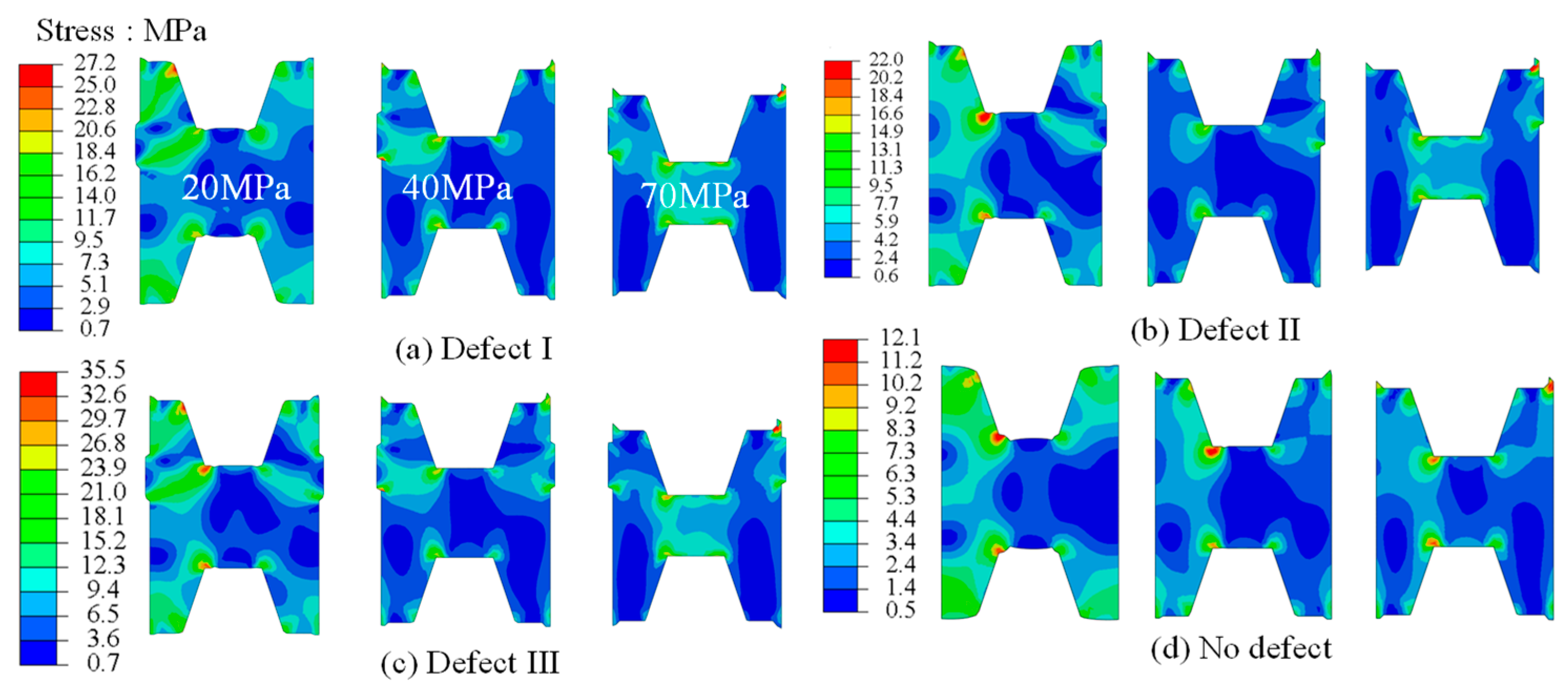
It shows that the stress of the H-shaped rubber sealing ring rises significantly as the load on the compression ring increases in Figure 25, and its deformation gradually intensifies with the increase in pressure. In particular, the H-shaped rubber sealing ring undergoes significant deformation due to compression when the load reaches 40 MPa to 70 MPa. Although this enhances the sealing effect to a certain extent, the degree of deformation has approached or even exceeded the load-bearing limit of the material, posing a potential risk of structural failure. When the upper applied load range is from 20 MPa to 70 MPa, the maximum stress endured by the H-shaped rubber sealing ring is between 0.08 MPa and 13.08 MPa, and the overall stress level gradually decreases with the height direction. At the three defect locations, rubber can be squeezed into the defect gaps, maintaining the sealing performance to a certain extent. The stress of the rubber is relatively large when there are defects on both sides, with the maximum stress ranging from 22 MPa to 35.5 MPa, which is relatively dangerous.
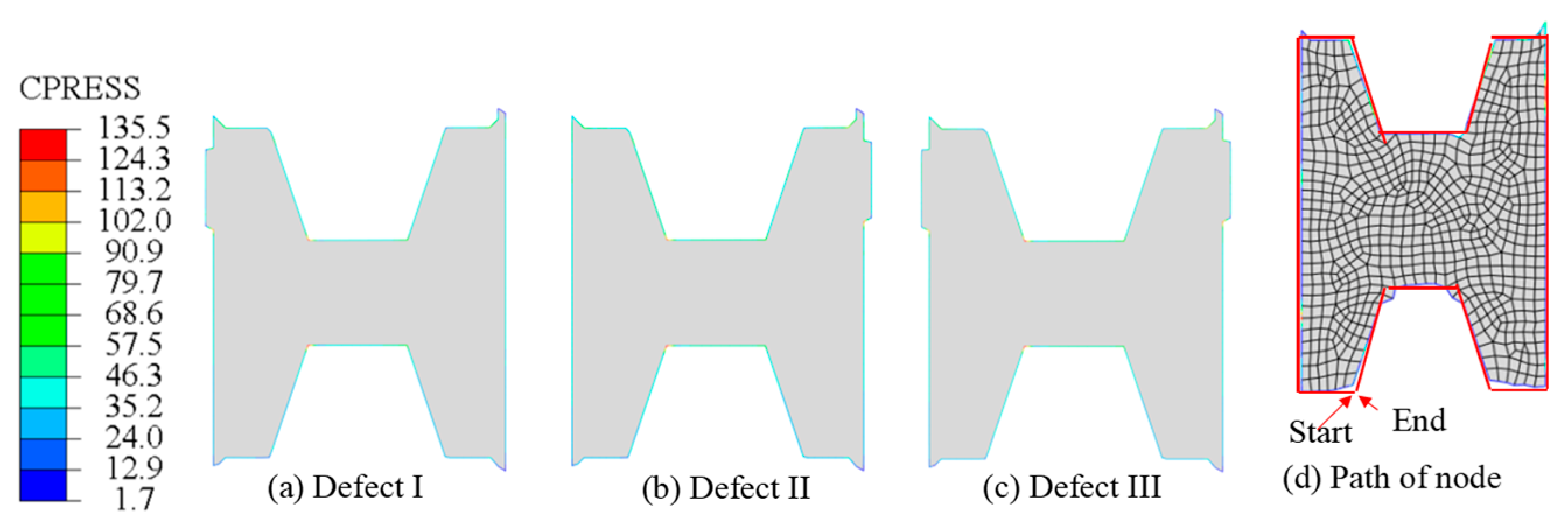
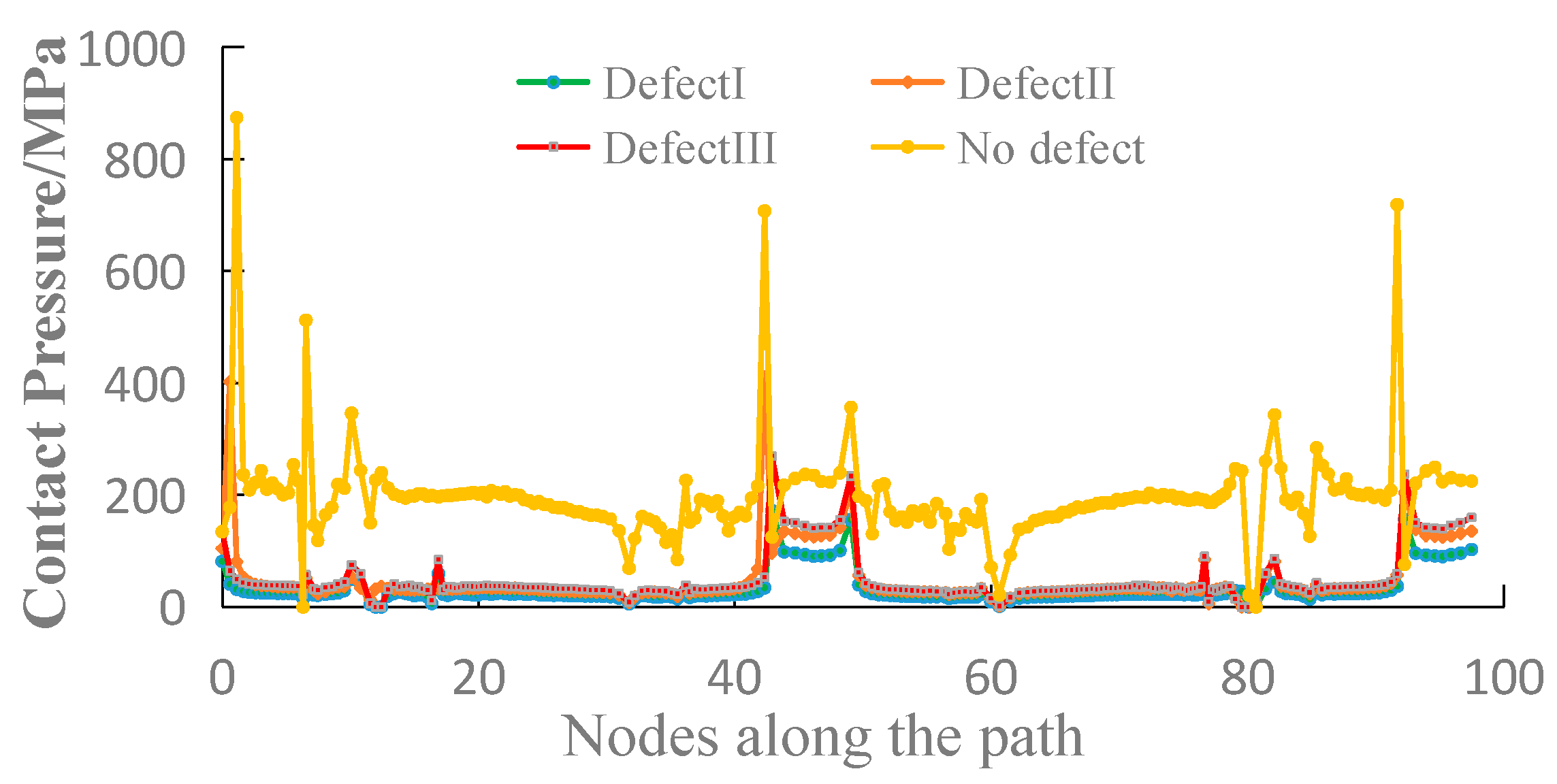
Figure 26 shows the contact path, and Figure 27 shows the contact pressure law curves of sealing rings with different defects. Under the three defect states, the contact pressure of each sealing ring varies between 0 and 100 MPa, and the curve laws are approximately the same. The contact pressure varies between 100 and 300 MPa when there are no defects. The absence of defects is conducive to improving the sealing performance of the H-ring seal [13,14].

5.3. Analysis and Evaluation of S-Type Rubber Rings

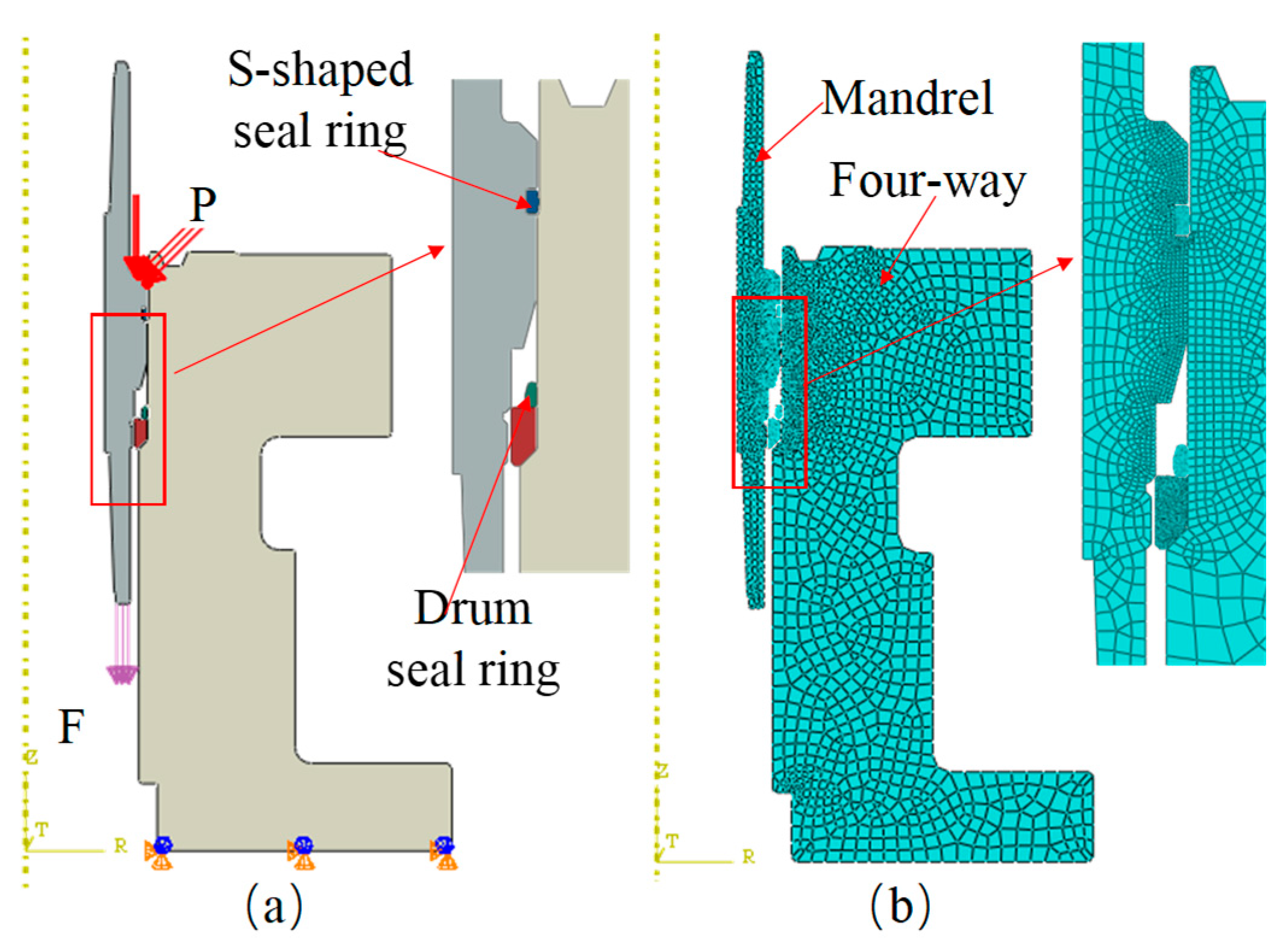
The geometric analysis model, including the mandrel, four-way, ball-drum metal sealing structure and S-type rubber sealing structure, is shown in Figure 28. Among them, Figure 28a is the assembly diagram of the sealing structure, and Figure 28b is the finite element model of the sealing structure.
As shown in Figure 29, the stress and deformation of each component, the spherical drum-type metal sealing structure and the S-shaped rubber sealing ring are analyzed. It shows that the maximum stress of the lower support ring is 865.5 MPa, and the stress and deformation of the lower rectangular rubber sealing structure are relatively large. It shows that the maximum stress range of the four-way step position is 258.7–577.1 MPa when the lower tensile load F = 50–400 t is applied, and the stress of the lower support ring does not change much. As the tensile load increases, the stress of the spherical drum-type metal sealing does not change significantly. When the lower tensile load F = 150 t is applied, the stress on the lower support ring changes significantly, but overall, the maximum stress is within the yield strength of the support ring material, so it can work safely under the action of the maximum tensile load.
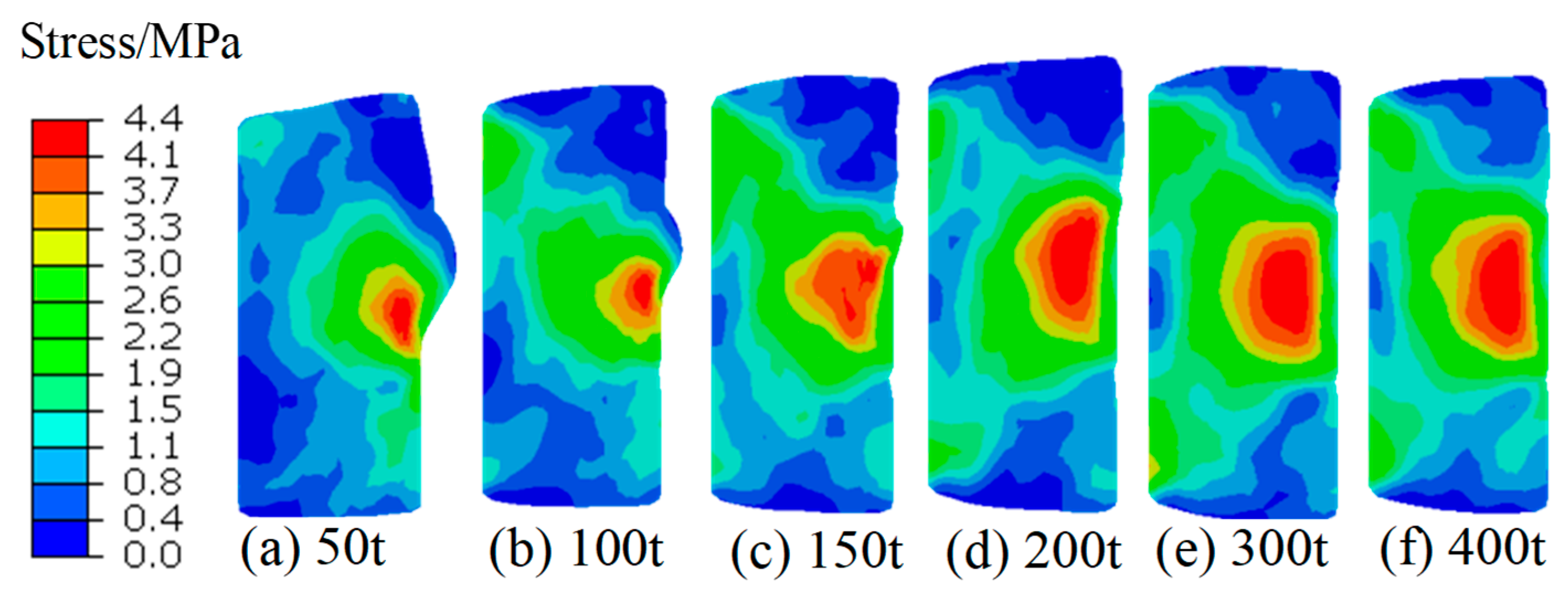
Under different tensile loads, the stress distribution of the S-type rubber sealing ring is shown in Figure 30. When the lower tensile load varies between F = 50–400 t, the maximum stress of the S-type rubber sealing ring ranges from 3.7 MPa to 4.4 MPa, and the stress in the outer circumferential direction changes slightly. The stress increase in the S-type rubber sealing ring is not obvious, and the maximum stress is in the middle of the rubber ring, with a concentrated stress area. This stress area presents an elliptical structure, and this elliptical structure gradually becomes larger as the load increases. From the stress variation in the S-type rubber sealing ring, the rubber ring basically does not undergo excessive deformation. Therefore, within this load increase range, the rubber ring works safely and will not fail within a short period of time.
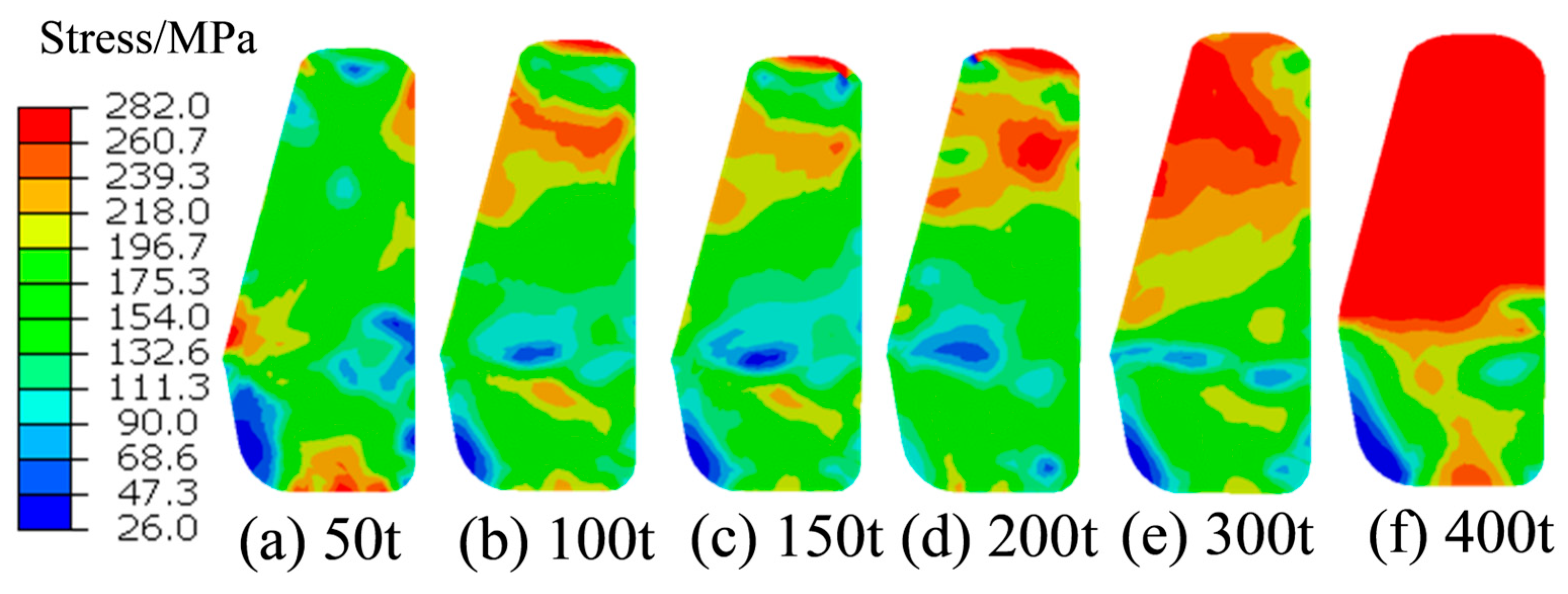
As shown in Figure 31, when a certain load P = 120 MPa is applied to the upper end surface, and the suspended weight of the casing varies between 0 t and 300 t, the maximum stress of the ball drum metal sealing ring changes between 228.7 MPa and 282 MPa. The maximum stress of the ball-drum metal sealing ring is 282 MPa when the suspended weight of the casing is 400 t. At this point, the maximum stress of the ball-drum metal sealing ring reaches its material yield strength. After the suspended weight of the casing exceeds 400 t, the upper part of the ball-drum metal sealing ring is basically in the plastic deformation stage. According to the selection principle for the compressive pressure of high-pressure metal seals [41,42,43,44,45], the minimum sealing compressive pressure should be 1.2 to 1.4 times the pressure of the sealing medium. The contact pressure of the metal sealing ring is between 1.2 and 1.5 times the yield limit, which can form a good gas pressure seal.
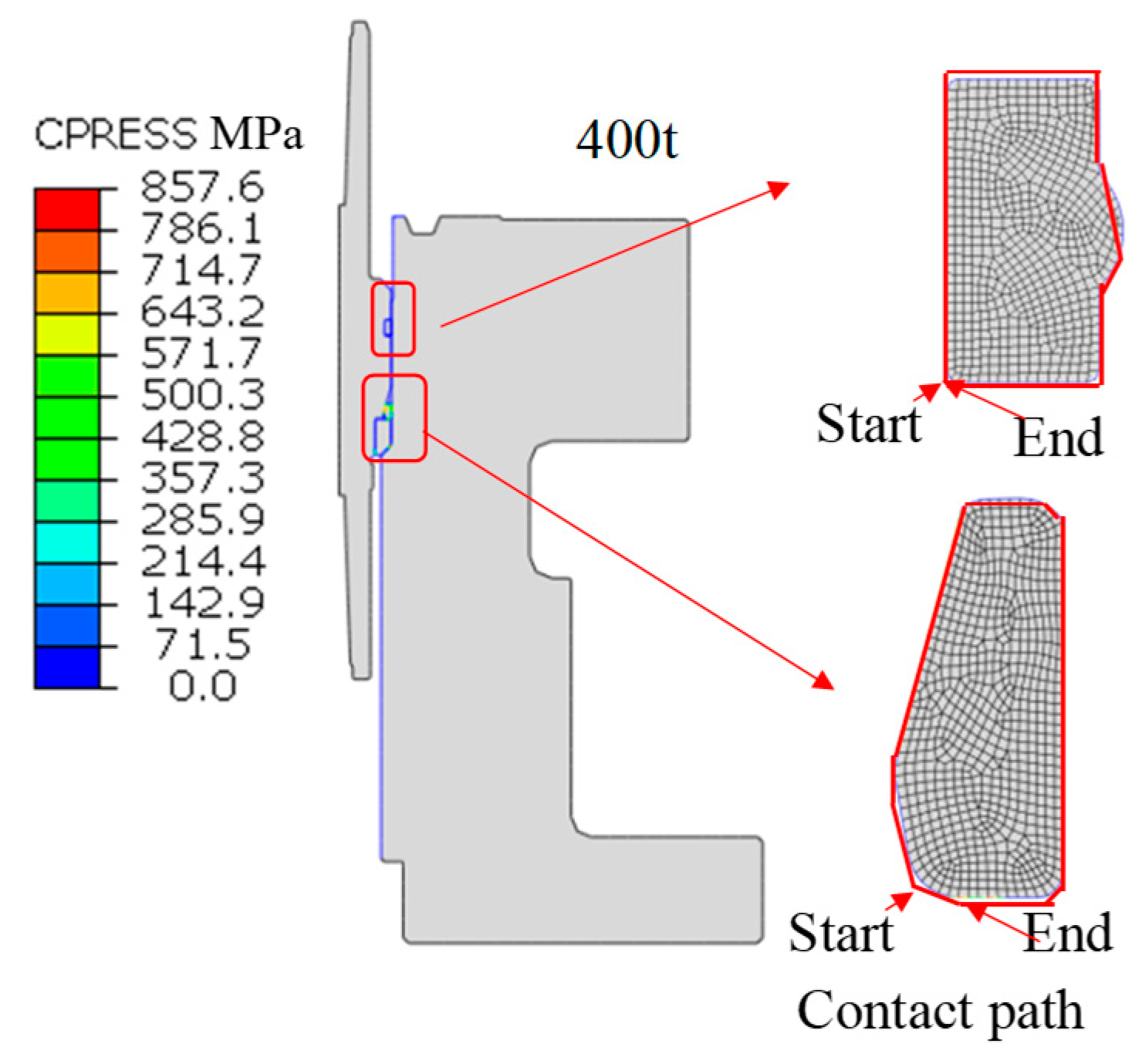
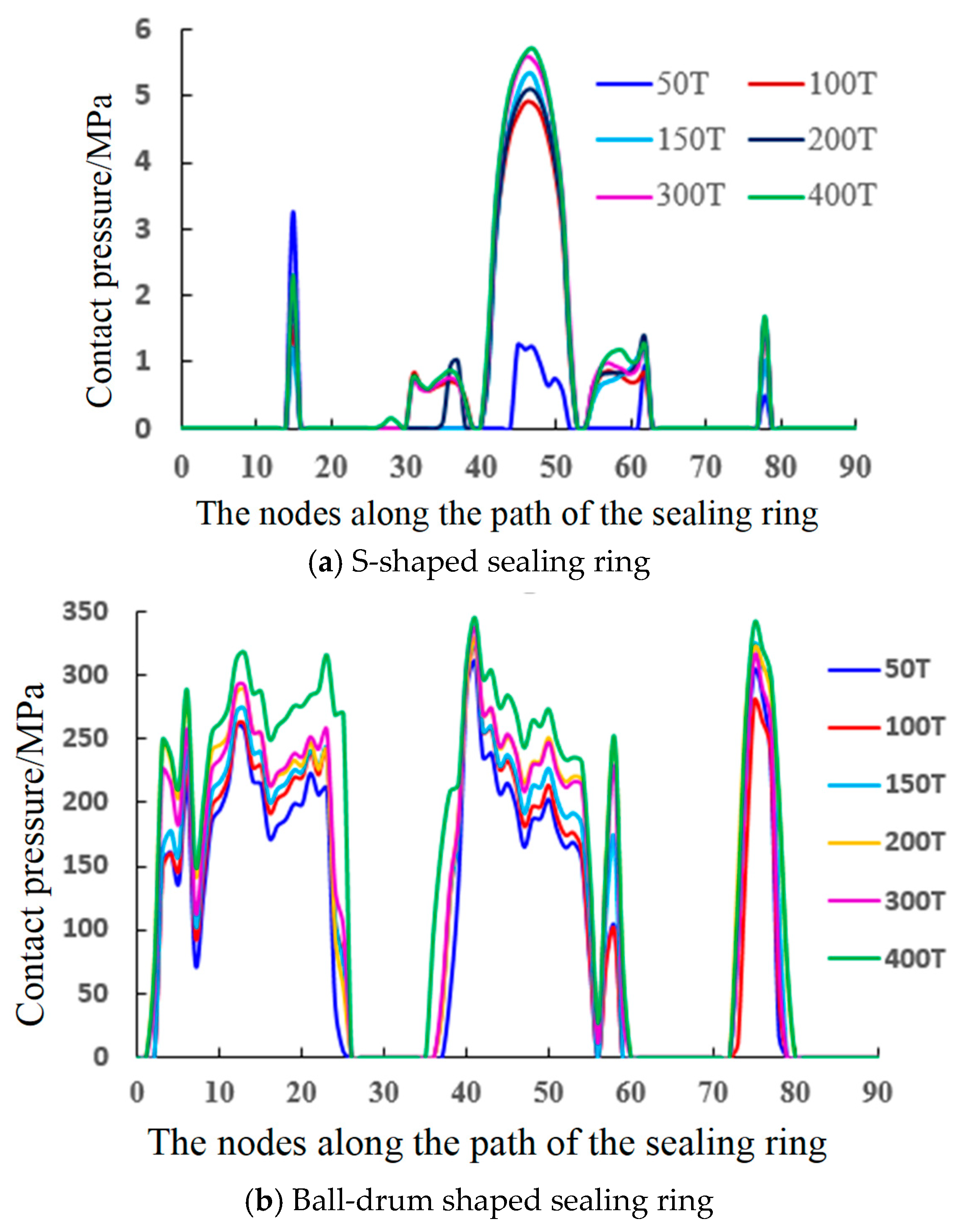
Based on the analysis results of contact pressure, the path on the outer surface contact area of the ball-drum type metal sealing ring was selected, as shown in Figure 32. According to the contact pressure data, the contact pressure variation curves of the nodes on the contact path were edited, as shown in Figure 33. From the contact pressure variation curve of the S-type rubber ring in Figure 33a, when a certain load P is applied to the upper part, and the casing suspension weight varies between 50 t and 400 t, the contact pressure on the contact path of the S-type rubber ring changes between 2 and 6 MPa. The load variation is small, and there is a closed area in the middle of the contact pressure curve. Overall, the contact pressure is much smaller than the pressure of the external fluid medium. Therefore, this rubber ring basically does not play a sealing role.

6. Research on the Metal Structure Design of the Hanger

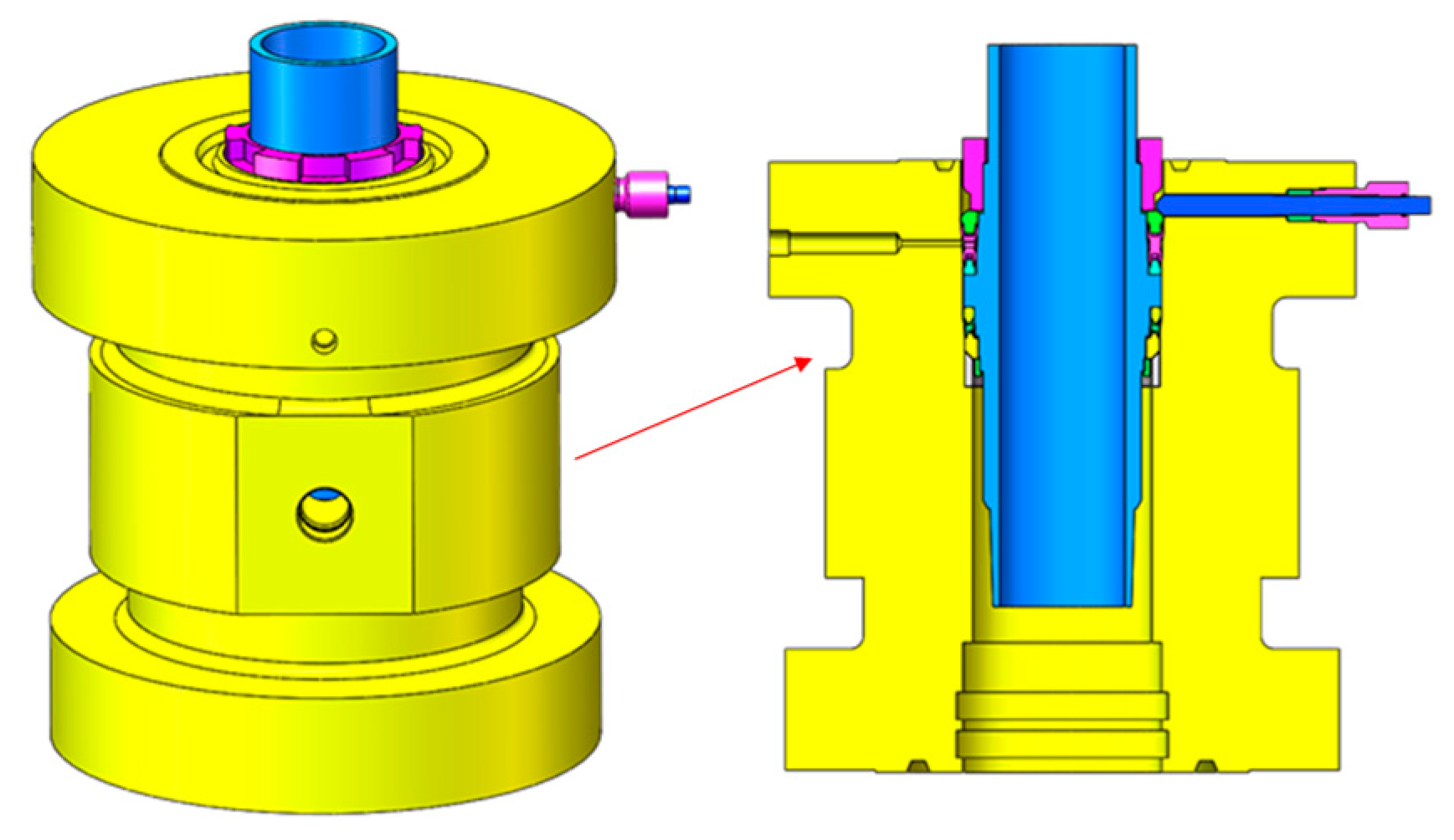
In order to overcome the aforementioned difficulties and the shortcomings of the existing sealing structures, a mandrel-typed casing hanger of all-metal sealing structure with 3U-type is designed in this paper to ensure the permanent safety of oil and gas extraction operations, and to prevent failure accidents of later sealing leakage as shown in Figure 34. This hanger can be used in the long-term extraction process, where the wellhead and the oil production tree act as multi-level barriers, providing the highest safety margin. Under the protection of the multi-level all-metal sealing barrier, the formation fluids cannot directly leak into the atmospheric environment.
The overall design drawing of the sealing structure includes the design of the upper and lower sealing assemblies in Figure 35.
After comparing the advantages and disadvantages of the design schemes, the final scheme selected is the upper double U sealing structure and the lower single U sealing structure. Finally, the main design points were determined:
(1)
The design taper is 6°, which makes the radial force generated during opening larger and the contact area larger, and the sealing performance more reliable.
(2)
Using a circular contact surface, compared with a linear contact surface, the opening contact area is larger, and the sealing performance is more reliable.
(3)
The sealing performance is more reliable. Reducing the wall thickness is more conducive to the opening of the sealing steel ring.
As shown in Figure 36, the shape and size of the lower metal sealing structure are presented. The main body is in an H-shaped structure, and the sealing part is designed as a circular contact surface, an elliptical contact surface, and a combined contact surface of a straight cone and an elliptical shape.

6.1. The Metal Sealing Structure Design of the 10 3/4″ Hanger

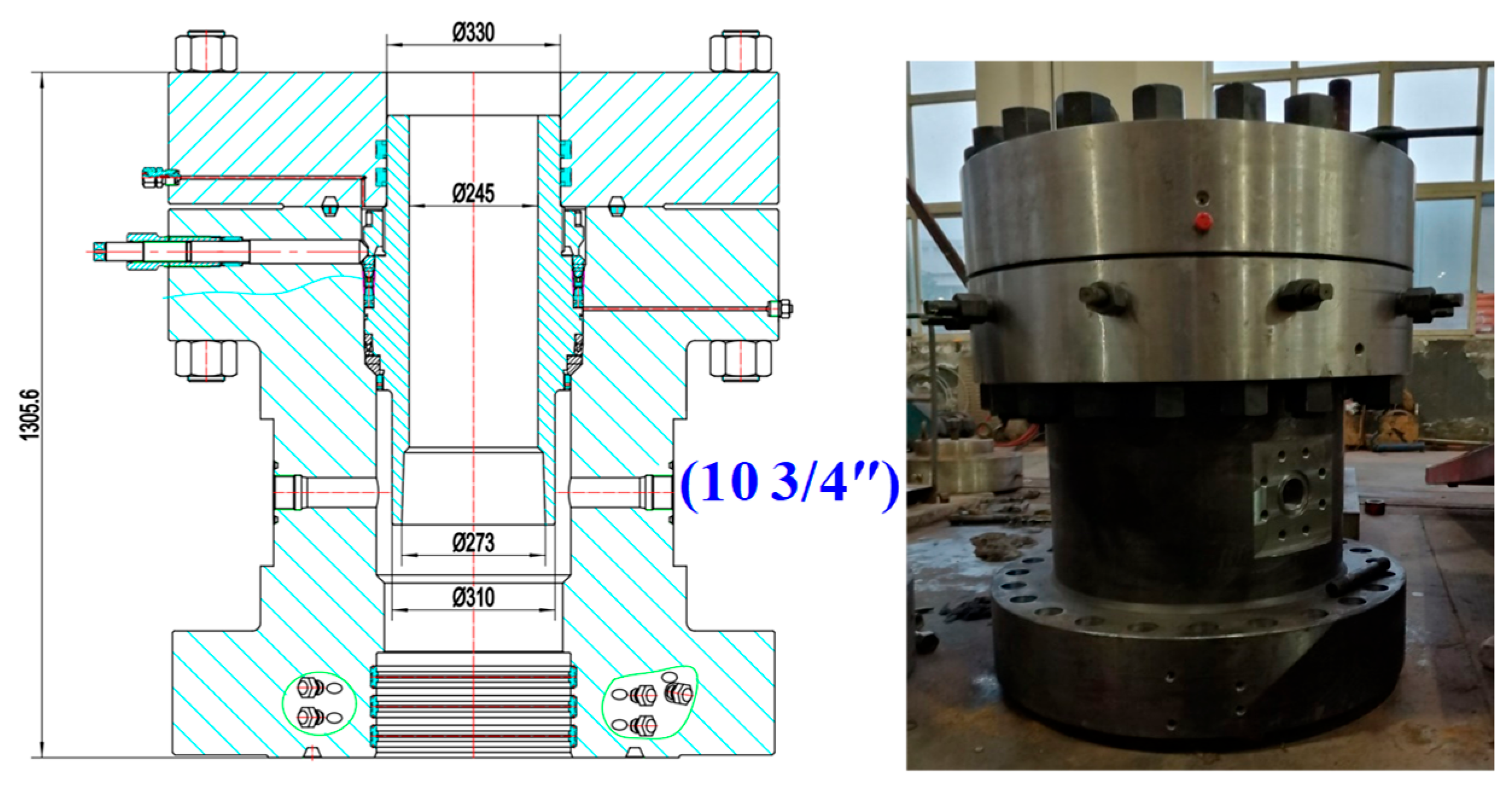
In order to meet the requirements of large-sized mandrel type casing hanger, a 10 3/4″ full-metal sealed mandrel type casing hanger was designed. It was confirmed that the final designed product can meet the casing hanging function of 105 MPa. The overall design drawing and the local enlarged drawing of the sealing structure are shown in Figure 37.
The structural drawing and key dimension parameters of the 10 3/4″ full-metal sealed hanger are shown in Figure 38.
In order to meet the requirements for high-pressure sealing performance testing of large-sized mandrel type casing suspension devices, a 10 3/4″ full-metal sealed mandrel type casing suspension device for high-pressure sealing performance testing was developed, as shown in Figure 39.
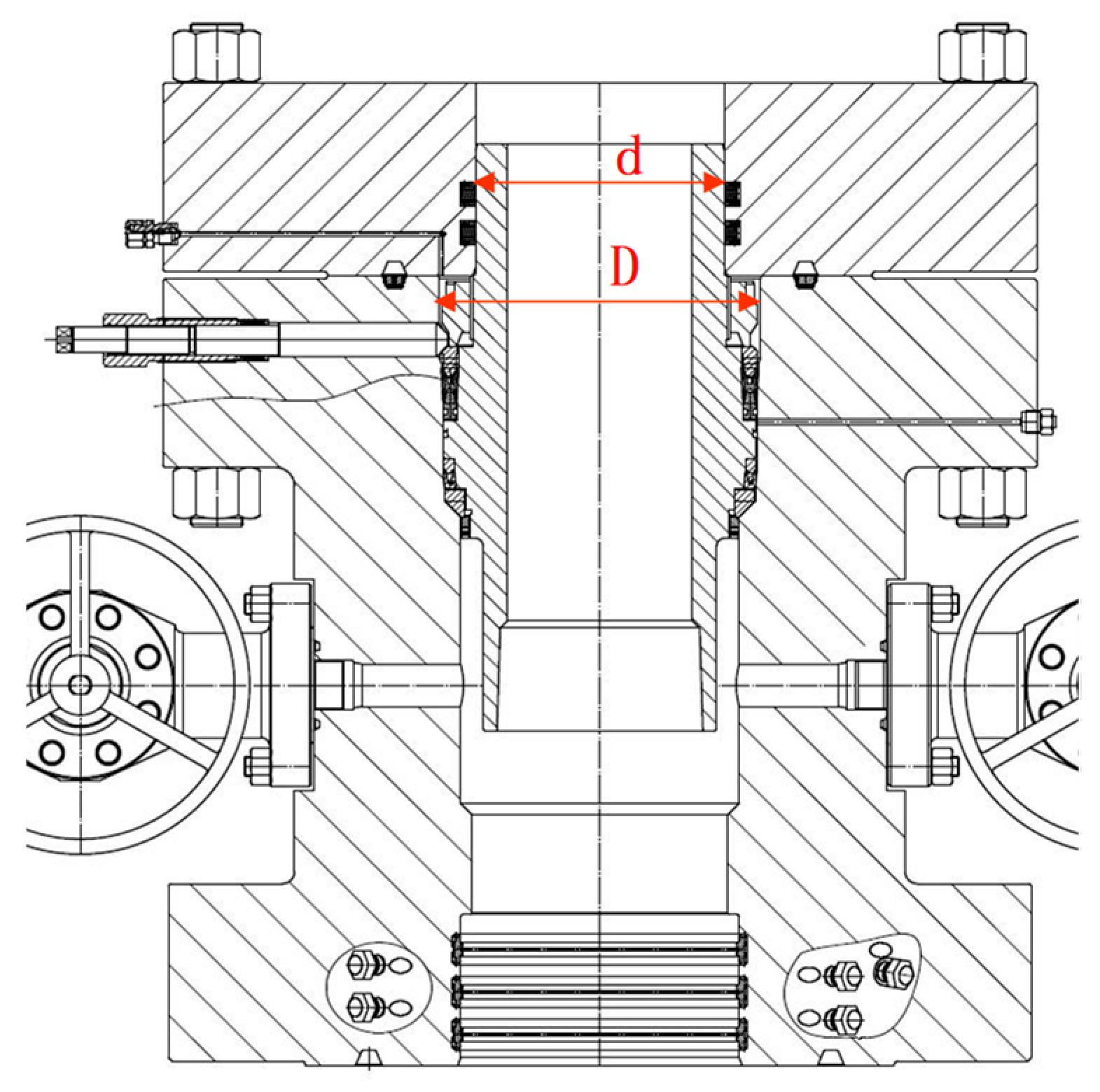
Through the design and calculation of the annulus formed by the double U, the steel ring, the locking screw, and the upper four-way pipe, a pressure of 112 MPa was applied to the upper annulus, which is equivalent to applying a 650 t axial load to the 45° conical surface of the four-way pipe to verify the bearing capacity of the 45° conical surface of the four-way. A pressure of not less than 112 MPa was applied, and the pressure was stabilized for no less than 5 min. The test was conducted three times to verify the bearing capacity of the 45° step of the four-way. The calculation conversion relationship of the test pressure is shown in Figure 40 and Table 1.

6.2. Analysis of the Test Results of the 10 3/4″ Metal Sealing Structure

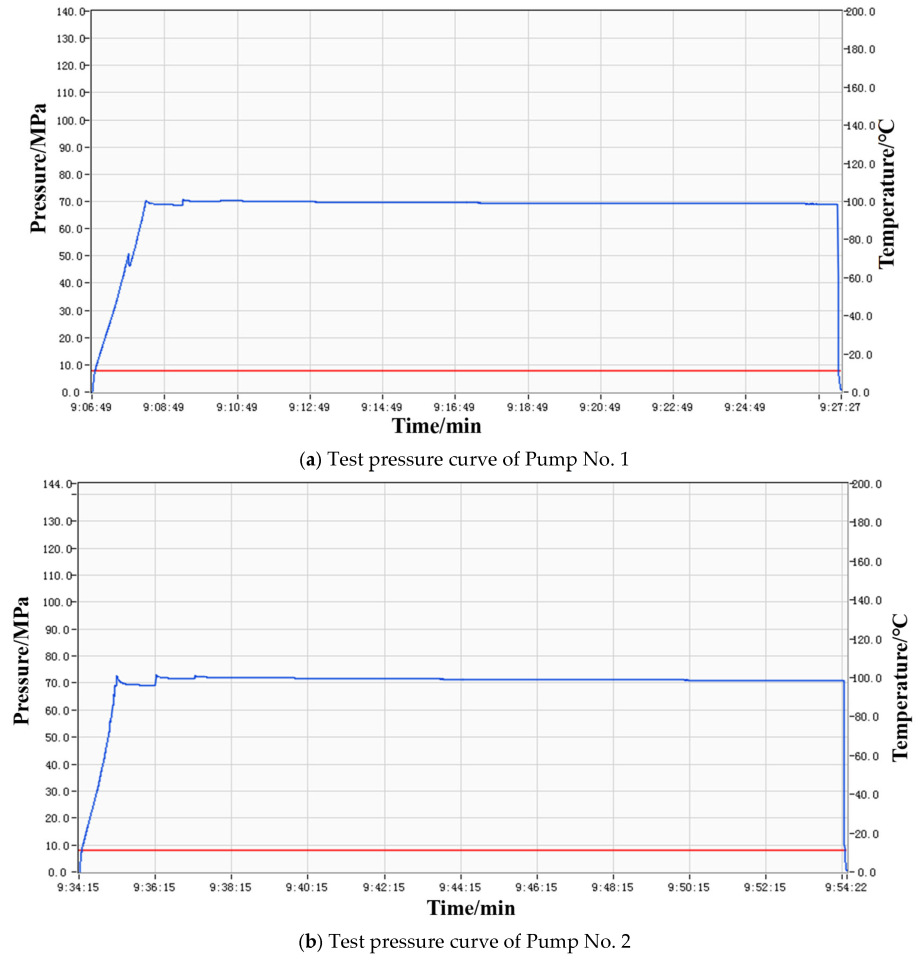
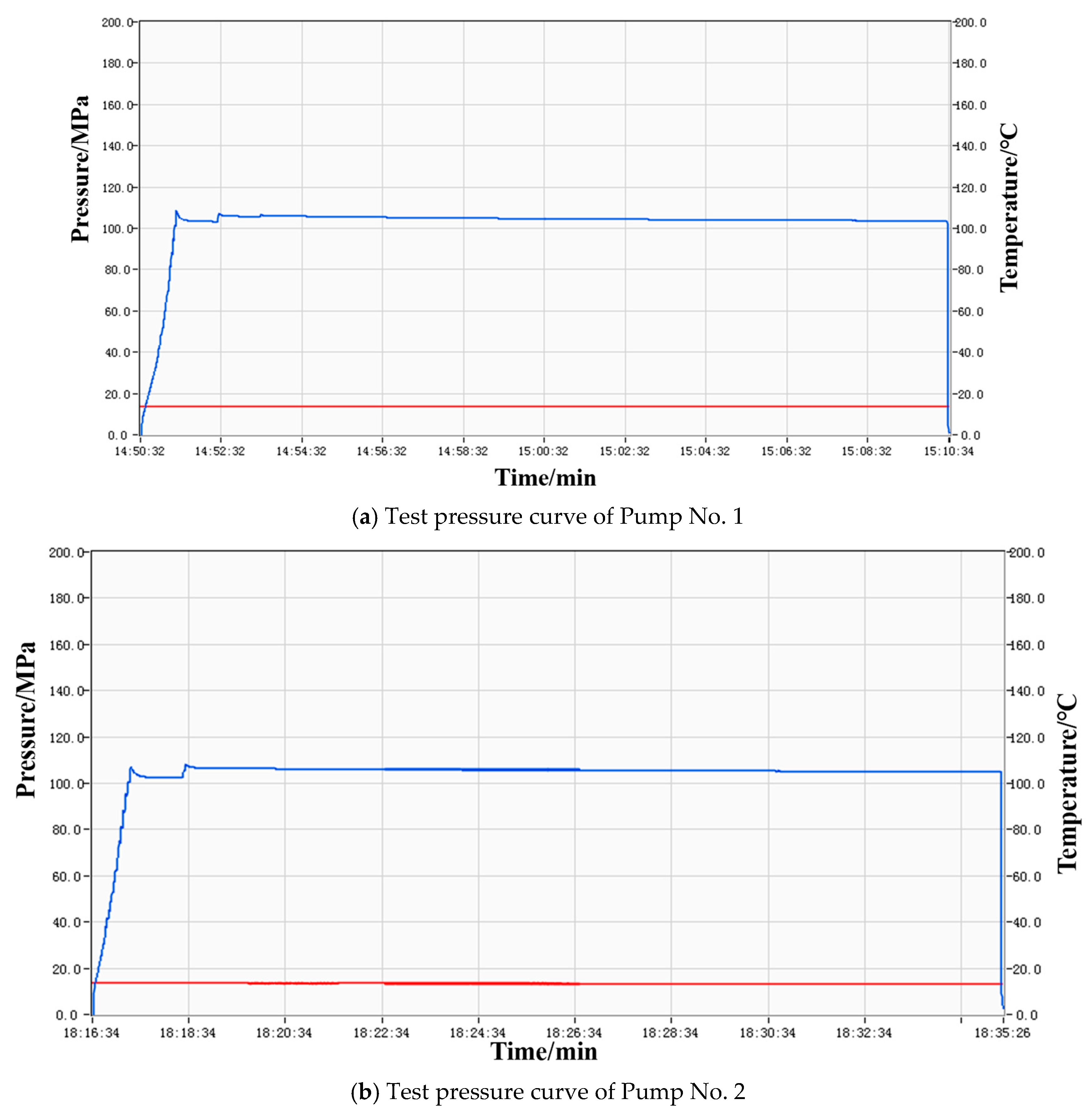
A pressure cycling test of 105 MPa was conducted on the closed loop space formed by the 10-3/4″ × 105 MPa double U sealing ring, and the upper cover flange P seal for no less than 20 times. The test pressure was not less than 105 MPa. The holding pressure time after each pressure stabilization should not be less than 15 min. As shown in the test curve diagram: The first pump stabilized for 15 min, with a pressure drop of 0.65 MPa; the second pump stabilized for 15 min, with a pressure drop of 1.21 MPa, as shown in Figure 41. As in references [13,14,15,17], a comparison was made and it was found that the contact pressure on the sealing surface should also be less than the yield limit of the harder material.
Apply a pressure of 70 MPa to the annulus formed by the single U. The test pressure must not be lower than 70 MPa. After the pressure stabilizes, the holding time must not be less than 15 min. The test medium is nitrogen. The pressure drop during the stabilization period should not exceed 2.5 MPa for it to be considered qualified. The stabilization time is 60 min. The sealing effect is good. The test result is stable pressure, no leakage, and good sealing effect. The test pressure of the first pump is 70 MPa. The stabilization time is 15 min, and the pressure drop is 0.80 MPa. The test pressure of the second pump is 71.90 MPa. The stabilization time is 15 min, and the pressure drop is 0.98 MPa, as shown in Figure 42.
The experimental research on the 105-type hanger has led to the following conclusions:
(1)
Through the structural design and finite element calculation of the 105-type hanger, it was found that under the maximum weight of the casing, the reliability of the lower seal is good and can meet the requirements of on-site use.
(2)
This time, multiple pneumatic sealing tests were conducted on the 10-3/4″ hanger product. The pressure was stable at 105 MPa, and the stable pressure time was 60 min [13,14,15,16,17]. The sealing effect was good, and the test results showed that the pressure was stable, and there was no leakage.

7. Conclusions

Through simulation optimization comparison and experimental research, the following conclusions have been drawn:
(1)
The polynomial second-order model is in the best agreement with the experimental data when the nominal strain is 300%. The rubber of the hanger has a large deformation during operation, so the polynomial second-order model is selected as the constitutive model for the rubber material.
(2)
The stress at the compressed position on the upper surface of the rubber ring is relatively large, while the stress at the central part of the upper surface of the rubber ring is relatively small. The maximum stress of the rubber ring reaches 24.6 MPa when the casing suspension weight is 300 t. The rubber ring is fully compressed and a significant deformation has occurred on the upper part of the rubber ring when the casing suspension weight is 400 t. The sealing effect is better in the elastic deformation state. When the suspended weight reaches a certain level, the rubber material will lose its elastic deformation ability, which will accelerate the aging and failure of the rubber.
(3)
The stress of the rectangular and H-shaped rubber is relatively large with the maximum stress ranging from 18.4 MPa to 35.5 MPa when there are defects. Compared with the absence of defects, the deformation of the contact parts between the sealing ring, the four-way and the mandrel is relatively small. When there are no defects, the stress that the rectangular rubber sealing ring bears ranges from 0.7 MPa to 12.7 MPa, and the deformation at the contact part is relatively large. When the sealing structure is in a defect-free state, the rubber ring remains relatively intact and will not undergo significant local deformation. This can effectively extend the service life of the rubber sealing ring.
(4)
Under the three defect states, the contact pressure of each sealing ring varies between 0 and 100 MPa, and the curve laws are approximately the same. When there are no defects, the contact pressure varies between 200 and 300 MPa. The absence of defects can improve the sealing performance of the rectangular sealing ring.
(5)
Multiple air pressure sealing tests were conducted on the 10 3/4″ mandrel-type casing suspension products. The pressure was stably maintained at 105 MPa, with a stabilization time of 15 min. The sealing effect was good. The test results showed stable pressure, no leakage, and excellent sealing performance. Therefore, the metal sealing structure can effectively seal the gas pressure and can also significantly extend the service life of the sealing structure.

Author Contributions

Methodology, Y.Z. and P.W.; Software, X.Z.; Validation, Y.Z. and R.M.; Formal analysis, Y.Z. and Y.L.; Investigation, X.Z., F.L., P.W. and Y.L.; Resources, F.L.; Data curation, F.L. and F.Z.; Writing—original draft, P.W. and J.W.; Supervision, J.W. and R.M.; Project administration, F.Z.; Funding acquisition, X.Z. and J.W. All authors have read and agreed to the published version of the manuscript.

Funding

This research was funded by research and development of an ultra-high-pressure wellhead and supporting equipment (2015ZG15) of Major Science and Technology Project of China National Petroleum Corporation.

Data Availability Statement

The original contributions presented in this study are included in the article. Further inquiries can be directed to the corresponding author.

Conflicts of Interest

Authors Yaoming Zhang, Xuliang Zhang and Pengcheng Wang were employed by CNPC R & D Center for Ultra-Deep Complex Reservior Exploration and Development and PetroChina Tarim Oilfield Company. Authors Fudong Liu, Jianfei Wang, Fei Zhan and Rui Ma were employed by CNPC Bohai Equipment Manufacturing Co., Ltd. The remaining author declares that the research was conducted in the absence of any commercial or financial relationships that could be construed as a potential conflict of interest. The authors declare that this study received funding from China National Petroleum Corporation. The funder was not involved in the study design, collection, analysis, interpretation of data, the writing of this article or the decision to submit it for publication.

References

  1. Yang, Y.; Huang, F.; Kang, S. Mechanism of Penetration Rate Improvement in Hot Dry Rock Under the Coupling of Impact Load and Confining Pressure Release. Reserv. Sci. 2026, 2, 52–64. [Google Scholar] [CrossRef]
  2. Ali, J.; Ansari, U.; Ali, F.; Javed, T.; Hullio, I.A. Application of Machine Learning for Effective Screening of Enhanced Oil Recovery Methods. Reserv. Sci. 2026, 2, 65–80. [Google Scholar] [CrossRef]
  3. Kaiser, M.J. Rigless well abandonment remediation in the shallow water U.S. Gulf of Mexico. J. Pet. Sci. Eng. 2017, 151, 94–115. [Google Scholar] [CrossRef]
  4. Hu, Y.; Yang, Y. A Comparative Study on Drag Reduction Methods for Continental Shale Drilling in the Fuxing Block, Southeastern Sichuan Basin. Reserv. Sci. 2026, 2, 81–96. [Google Scholar] [CrossRef]
  5. Lian, W.; Li, J.; Xu, D.; Lu, Z.; Ren, K.; Wang, X.; Chen, S. Sealing failure mechanism and control method for cement sheath in HPHT gas wells. Energy Rep. 2023, 9, 3593–3603. [Google Scholar] [CrossRef]
  6. Kabeyi, M.J.B.; Olanrewaju, O.A. Geothermal wellhead technology power plants in grid electricity generation: A review. Energy Strategy Rev. 2022, 39, 100735. [Google Scholar] [CrossRef]
  7. Wang, Y.; Luo, W.; Liu, S.; Feng, H.; Li, J.; Wang, J. A model for reliability assessment of sealing performance of the C-shaped metal sealing ring at the outlet of the subsea tubing hanger. Ocean Eng. 2022, 243, 110311. [Google Scholar] [CrossRef]
  8. Zhang, Z.; Sang, P.; Sang, Z.; Hou, D.; Lv, Y.; Zheng, Y.; Zhang, C. Analyzing failure of casing head slip hanger. Eng. Fail. Anal. 2020, 108, 104301. [Google Scholar] [CrossRef]
  9. Lian, Z.; Wan, Z.; Wu, Y.; Shi, J.; Zhao, C. Finite element analysis on mechanical strength of casing at slip hanger in ultra-deep wells. China Pet. Mach. 2023, 51, 1–8. [Google Scholar] [CrossRef]
  10. Mou, Y.; Xie, Y.; Wei, F.; Zhao, H.; Han, L. Research on Thread Seal Failure Mechanism of Casing Hanger in Shale Gas Wells and Prevention Measures. Processes 2024, 12, 1253. [Google Scholar] [CrossRef]
  11. Klinger, C.; Michael, T.; Bettge, D. Fatigue cracks in railway bridge hangers due to wind induced vibrations—Failure analysis, measures and remaining service life estimation. Eng. Fail. Anal. 2014, 43, 232–252. [Google Scholar] [CrossRef]
  12. Liu, Y.; Lian, Z.; Shi, T.; Sang, P. Fracture failure analysis and research on slip of casing head. Eng. Fail. Anal. 2019, 97, 589–604. [Google Scholar] [CrossRef]
  13. Liu, Y.; Lian, Z. Failure analysis on rubber sealing structure of mandrel hanger and improvement in extreme environments. Eng. Fail. Anal. 2021, 125, 105433. [Google Scholar] [CrossRef]
  14. Liu, Y.; Lian, Z.; Deng, C.; Zhang, Q.; Mu, Y. Design and experimental study on full-metal sealing structure of mandrel-type casing hanger. Adv. Mech. Eng. 2019, 11, 168781401984625. [Google Scholar] [CrossRef]
  15. Liu, Y.; She, Y.; Li, W. Research on Working Mechanism and Structural Optimization of High-Speed Bearing of Tricone Bits Based on Finite Difference Method. J. Tribol. 2025, 147, 044103. [Google Scholar] [CrossRef]
  16. Saithala, J.R.; Kharusi, A.; Suryanarayana, M.; Behlani, N.; Nabhani, T. Implications of failure of alloy 718 (UNS N07718) tubing hanger in sour well. Eng. Fail. Anal. 2021, 120, 105060. [Google Scholar] [CrossRef]
  17. Chen, Y.; Xiao, G.; Yi, H.; Ding, Y.; Tan, J. Investigation on critical load and sealing capacity of mandrel hanger wellhead. Int. J. Press. Vessel. Pip. 2022, 199, 104767. [Google Scholar] [CrossRef]
  18. Zeng, J.; Xie, W.-W.; Kou, B.-B.; Lu, J.-A.; Li, X.-C.; Cai, D.-J.; Shi, H.-X.; Zhang, K.-W.; Liu, H.-Q.; Li, J.; et al. Lateral bearing characteristics of subsea wellhead assembly in the hydrate trial production engineering. China Geol. 2023, 6, 455–465. [Google Scholar] [CrossRef]
  19. Xiang, S.; Zhang, Z.; Xu, H.; Hu, S.; Sang, P.; Zhao, Y.; Ding, J.; Peng, N. Investigation on Complex Nonlinear Flow-induced Vibration Characteristics of Production Strings in Ultra-deep Gas Wells. Appl. Math. Model. 2025, 146, 116156. [Google Scholar] [CrossRef]
  20. Patel, H.; Salehi, S.; Teodoriu, C.; Ahmed, R. Performance evaluation and parametric study of elastomer seal in conventional hanger assembly. J. Pet. Sci. Eng. 2019, 175, 246–254. [Google Scholar] [CrossRef]
  21. Patel, H.; Salehi, S.; Ahmed, R.; Teodoriu, C. Review of elastomer seal assemblies in oil & gas wells: Performance evaluation, failure mechanisms, and gaps in industry standards. J. Pet. Sci. Eng. 2019, 179, 1046–1062. [Google Scholar] [CrossRef]
  22. Ahmed, S.; Salehi, S.; Ezeakacha, C. Review of gas migration and wellbore leakage in liner hanger dual barrier system: Challenges and implications for industry. J. Nat. Gas Sci. Eng. 2020, 78, 103284. [Google Scholar] [CrossRef]
  23. Cirimello, P.; Otegui, J.L.; Aguirre, A.; Carfi, G. Undetected non-conformities in material processing led to a service failure in a casing hanger during pre-fracture operation. Eng. Fail. Anal. 2019, 104, 203–215. [Google Scholar] [CrossRef]
  24. de Souza, C.O.; de Sousa, J.R.M.; Ellwanger, G.B. Wellhead axial movements in subsea wells with partially cemented surface casings. J. Pet. Sci. Eng. 2020, 194, 107537. [Google Scholar] [CrossRef]
  25. Zheng, S.; Li, W.; Cao, C.; Wang, C. Prediction of the wellhead uplift caused by HT–HP oil and gas production in deep-water wells. Energy Rep. 2021, 7, 740–749. [Google Scholar] [CrossRef]
  26. Ruschel, A.; Dantas, C.M.S.; de Sousa, F.J.M.; Simão, M.L.; Sagrilo, L.V.S.; Percy, J.G.; Oliveira, F.L. Wellhead fatigue analysis considering the effect of wind-sea and swell waves by using Univariate Dimension Reduction Method. J. Pet. Sci. Eng. 2021, 206, 108989. [Google Scholar] [CrossRef]
  27. Feng, C.; Li, A.; Chen, X.; Du, W.; Luo, X. Metal seal of tubing hanger in ultra-high pressure gas wells. China Pet. Mach. 2025, 53, 102–108, 131. [Google Scholar] [CrossRef]
  28. Wang, J.; Feng, S.; Wei, J.; Li, K.; Zhu, L.; Jia, Z.; Liu, F. Optimization Analysis of Structural Parameters of Special Metal Sealing for 175 MPa Tube Hanger. Processes 2025, 13, 2970. [Google Scholar] [CrossRef]
  29. Jia, Z.; Wang, P.; Wei, J.; Zou, G.; Zhu, J.; Wang, J.; Guo, C. Research on the Metal Sealing Performance of a Casing Head Hanger Under High-Pressure Conditions. Lubricants 2026, 14, 43. [Google Scholar] [CrossRef]
  30. Yeoh, O.H. Some forms of the strain-energy function for rubber. Rubber Chem. Technol. 1993, 66, 754–771. [Google Scholar] [CrossRef]
  31. Xu, D.; Yang, Y.; Wu, K. Data processing method for constitutive relation of the rubber core material in spherical blowout preventer. Adv. Mech. Eng. 2018, 10, 1687814018789523. [Google Scholar] [CrossRef]
  32. Béranger, A.S.; Qin, J.; Heuillet, P.; Baurier, H. Fatigue crack growth behavior of NBR, HNBR, HNBR ZSC compounds. Procedia Eng. 2018, 243, 145–152. [Google Scholar] [CrossRef]
  33. Zhang, Y.; Wang, H.; Che, J.; Du, M.; Dou, M.; Liang, G. Theoretical analysis of pressure-bearing performance on compression packer in low permeability reservoirs. Int. J. Press. Vessel. Pip. 2021, 191, 104325. [Google Scholar] [CrossRef]
  34. Hu, G.; Wang, M.; Wang, G.; Zhu, T.; Wei, L. Sealing performance and failure mechanism analysis of packing unit used in rotary blowout preventer for under–balanced drilling. Eng. Fail. Anal. 2021, 129, 105654. [Google Scholar] [CrossRef]
  35. GBT 528–2009/ISO 37:2005; Rubber, Vulcanized or Themoplastic Determinnation of Tensile Stress–Strain Properties. International Organization for Standardization: Geneva, Switzerland, 2005.
  36. GBT 7757–2009/ISO 7743:2007; Rubber, Vulcanized or Themoplastic Determinnation of Compression Stress–Strain Properties. International Organization for Standardization: Geneva, Switzerland, 2007.
  37. Liu, Y.; Qian, L.; Xia, C.; Zou, J.; Lian, Z.; Yi, X. Failure analysis and structural optimization of rubber core and support rib of full-size spherical blowout preventer. Eng. Fail. Anal. 2023, 143, 106865. [Google Scholar] [CrossRef]
  38. Liu, Y.; Qian, L.; Zou, J.; Xia, C.; Lian, Z. Study on failure mechanism and sealing performance optimization of compression packer. Eng. Fail. Anal. 2022, 136, 106176. [Google Scholar] [CrossRef]
  39. Liu, Y.; Qian, L.; Xia, C.; Yi, X. Design and experimental study on a novel sealing structure of rotary control head for coalbed methane underbalanced drilling. Eng. Fail. Anal. 2022, 139, 106441. [Google Scholar] [CrossRef]
  40. Dong, L.; Liu, J.; Zhu, X. Study on sealing behavior of corroded tubing in a high pressure environment. Int. J. Press. Vessel. Pip. 2022, 200, 104826. [Google Scholar] [CrossRef]
  41. Singeetham, S.P.; Valka, W.A.; FMC Corp. Development of All-Metal-Sealing Subsea Wellhead System for Critical Service Applications. In SPE Offshore Europe Conference and Exhibition; SPE Offshore Europe: Aberdeen, UK, 1991; p. SPE-23056. [Google Scholar]
  42. Danner, L.; Henderson, H.O. Development of an Advanced Subsea Wellhead System corporating ALL Metal-to-Metal Sealing. In Offshore Technology Conference; SPE: Houston, TX, USA, 1990. [Google Scholar] [CrossRef]
  43. Hou, C. Structure Design and Reliability Study of Subsea Wellhead Seal Assembly. Ph.D. Thesis, China University of Petroleum (EastChina), Qingdao, China, 2015. [Google Scholar]
  44. Qin, H. Serialization Design and Research of Seal Assembly of Subsea Wellhead System. Master’s Thesis, China University of Petroleum (EastChina), Qingdao, China, 2014. [Google Scholar]
  45. Cai, L. Process Equipment Sealing Technology; Chemical Industry Press: Beijing, China, 2006; pp. 6–10. [Google Scholar]
Figure 1. Three-dimensional and physical structure of the slip casing hanger.
Processes 14 01028 g001
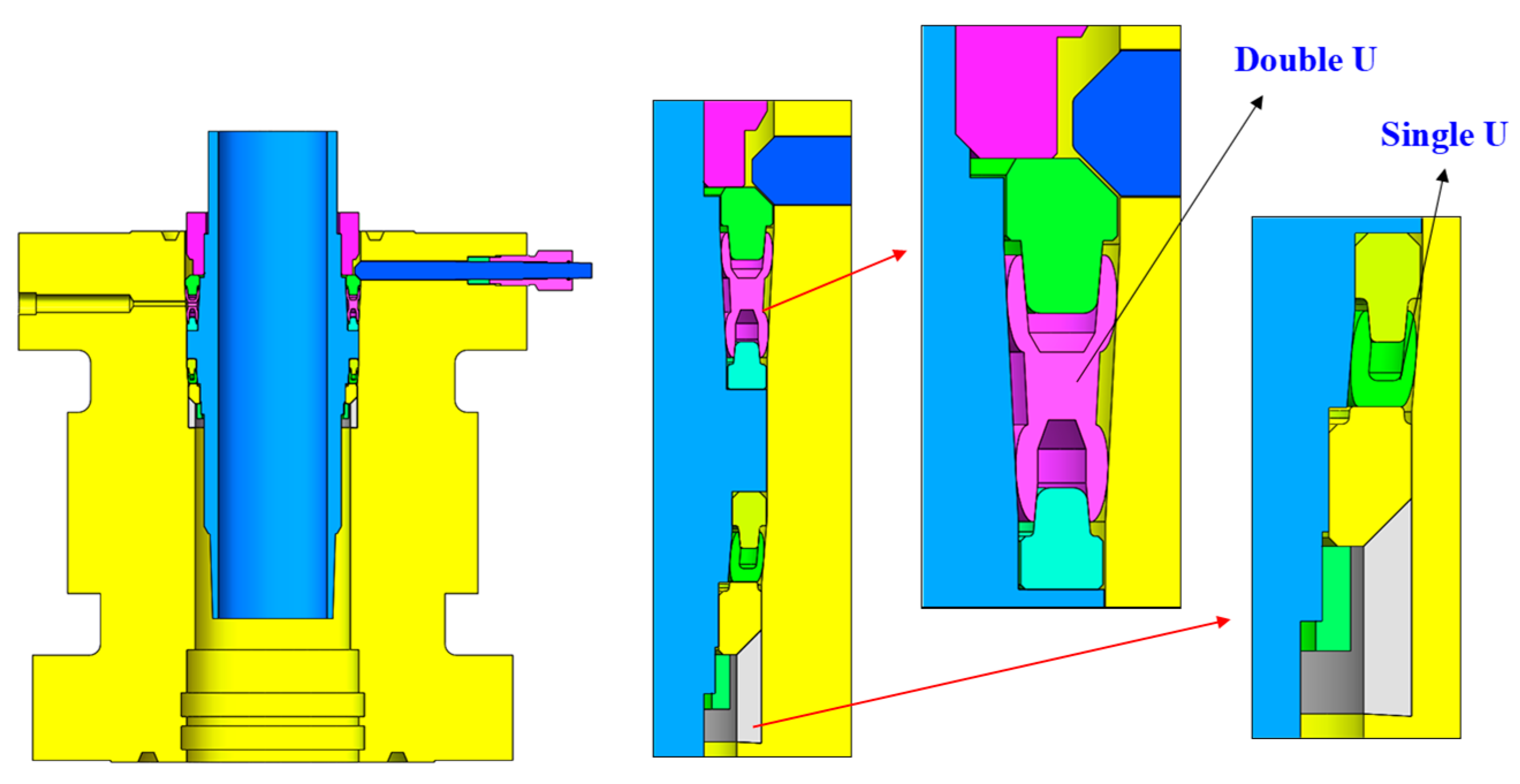
Figure 2. The sealing ring before and after use.
Processes 14 01028 g002
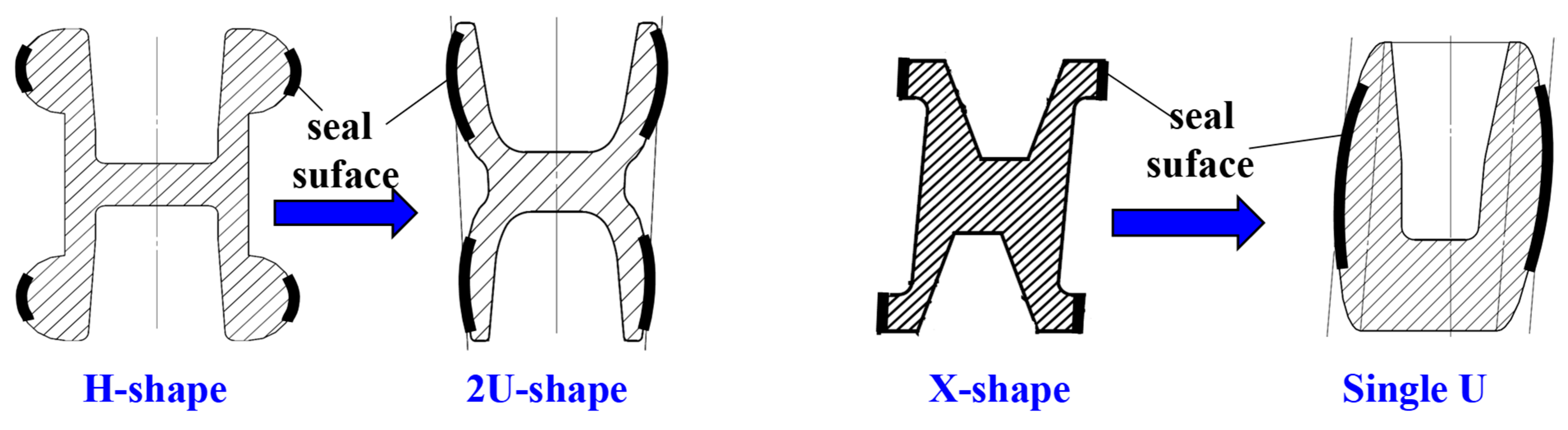
Figure 3. Failure of the rubber ring after the test.
Processes 14 01028 g003
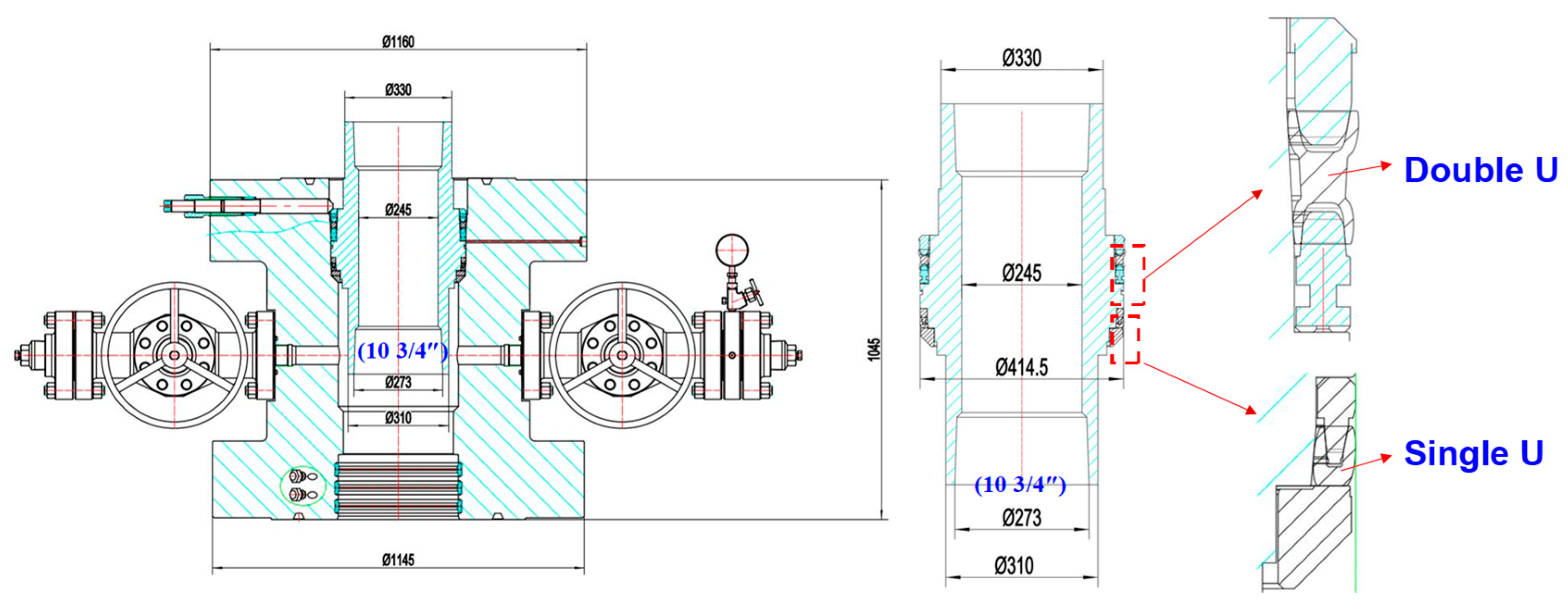
Figure 4. Failure of the rubber ring after on-site use.
Processes 14 01028 g004
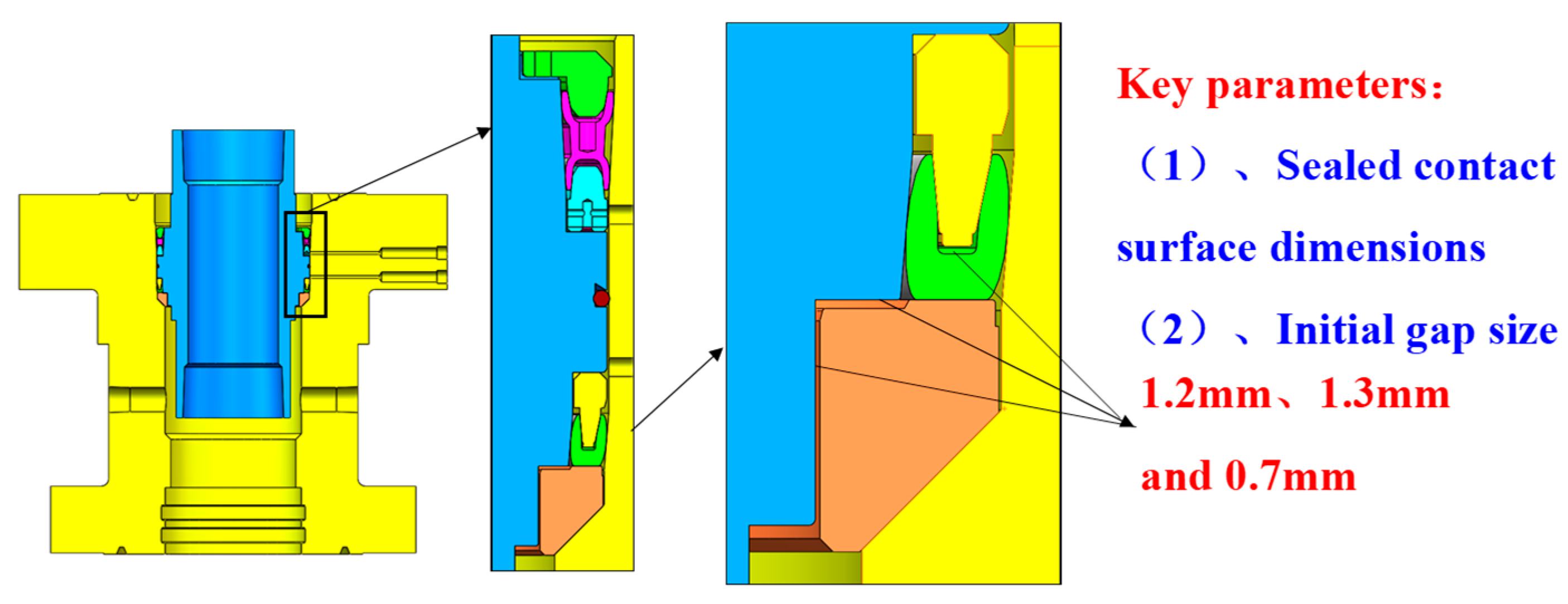
Figure 5. Uniaxial tension experiment samples.
Processes 14 01028 g005
Figure 6. Uniaxial compression experiment samples.
Processes 14 01028 g006
Figure 7. Structural dimensions of a uniaxial tensile specimen.
Processes 14 01028 g007
Figure 8. Uniaxial tensile test.
Processes 14 01028 g008
Figure 9. Specimen structural dimensions.
Processes 14 01028 g009
Figure 10. Uniaxial tensile and compression test data.
Processes 14 01028 g010
Figure 11. Fitting results of tensile test of rubber material.
Processes 14 01028 g011
Figure 12. Fitting results of compression test of rubber material.
Processes 14 01028 g012
Figure 13. Assembly of sealing structure and load and boundary conditions. (a) Assembly diagram of the sealing structure; (b) The finite element model of the sealing structure; (c) The loading model of the sealing structure.
Processes 14 01028 g013
Figure 14. Stress contour of the sealing structure under different pressure conditions.
Processes 14 01028 g014
Figure 15. Stress contour of the outer rubber ring under different pressures.
Processes 14 01028 g015
Figure 16. Stress contour of the inner rubber ring under different pressures.
Processes 14 01028 g016
Figure 17. Selection of contact path of inner and outer rubber sealing ring.
Processes 14 01028 g017
Figure 18. Variation curve of contact pressure between the inner and outer rubber rings.
Processes 14 01028 g018
Figure 19. Structures of the hanger with two types of rubber sealing systems.
Processes 14 01028 g019
Figure 20. Structure and defect distribution of the mandrel hanger.
Processes 14 01028 g020
Figure 21. Stress diagrams of rectangular sealing rings under different pressures.
Processes 14 01028 g021
Figure 22. Selection of contact paths for rectangular sealing rings.
Processes 14 01028 g022
Figure 23. Contact pressure curve of the sealing ring.
Processes 14 01028 g023
Figure 24. Assembly drawing of the sealed structure and the finite element model.
Processes 14 01028 g024
Figure 25. Stress contour of sealing rings.
Processes 14 01028 g025
Figure 26. Selection of contact paths for H-ring seal rings.
Processes 14 01028 g026
Figure 27. Contact pressure curve variation in the sealing ring.
Processes 14 01028 g027
Figure 28. Casing hanger suspension system and sealing structure. (a) Assembly diagram of the sealing structure; (b) Finite element model of the sealing structure.
Processes 14 01028 g028
Figure 29. Stress diagrams of the sealing structure under different hanging weights.
Processes 14 01028 g029
Figure 30. Stress contour of S-shaped sealing ring.
Processes 14 01028 g030
Figure 31. Stress contour of ball-drum shaped sealing ring.
Processes 14 01028 g031
Figure 32. Selection of the contact paths of the two sealing rings.
Processes 14 01028 g032
Figure 33. Curve showing the variation in sealing ring contact pressure.
Processes 14 01028 g033
Figure 34. Overall design drawing and sectional drawing of sealing structure.
Processes 14 01028 g034
Figure 35. Up and down sealing design and enlarged view.
Processes 14 01028 g035
Figure 36. Design process of metal sealing structure.
Processes 14 01028 g036
Figure 37. Overall design drawing of the 10 3/4″ full-metal sealing casing hanger.
Processes 14 01028 g037
Figure 38. Overall design of gap size for the sealing contact surface.
Processes 14 01028 g038
Figure 39. Test device of 3U all-metal sealing.
Processes 14 01028 g039
Figure 40. Bearing verification design diagram of the four-way.
Processes 14 01028 g040
Figure 41. Test results of the double U sealing ring (The red curve is the temperature curve).
Processes 14 01028 g041
Figure 42. Test results of the single U sealing ring (The red curve is the temperature curve).
Processes 14 01028 g042
Table 1. Parameters for axial load test of mandrel.
TypeD
(mm)
d
(mm)
Cross-Sectional Area
(mm2)
Test Pressure/P
(MPa)
Axial Force/F
(t)
10 3/4″ 42633056,972105610
42633056,972112651
42633056,972120698
Disclaimer/Publisher’s Note: The statements, opinions and data contained in all publications are solely those of the individual author(s) and contributor(s) and not of MDPI and/or the editor(s). MDPI and/or the editor(s) disclaim responsibility for any injury to people or property resulting from any ideas, methods, instructions or products referred to in the content.