1. Introduction
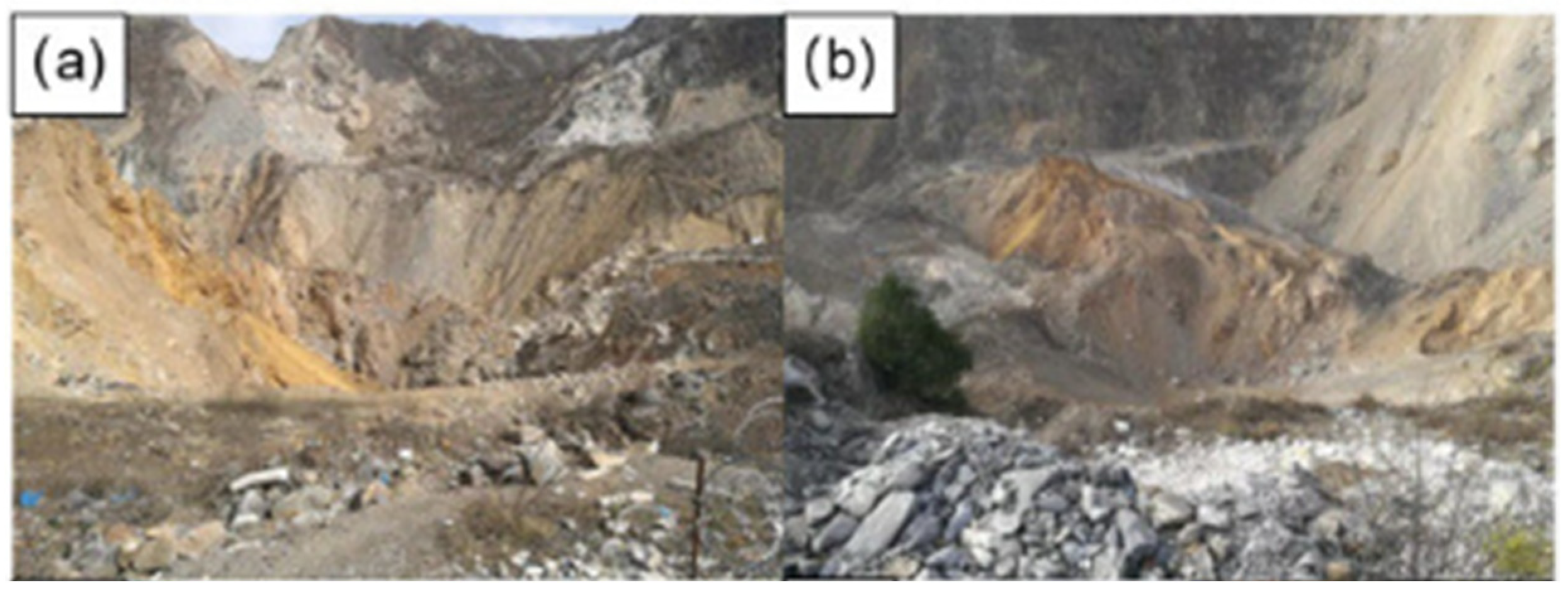
Open-pit mining plays a pivotal role in the global exploitation of mineral resources. With the gradual depletion of shallow reserves, mining operations continue to expand both vertically and horizontally, creating deep pits with steep slopes, as shown in
Figure 1 [
1]. Deep mining exposes increasingly complex stratigraphic structures where the rock mass undergoes significant unloading and relaxation. Coupled with alterations in groundwater migration paths, these conditions frequently lead to geological hazards, including landslides and collapses in high-steep slopes [
2]. Such instability not only poses a severe threat to the safety of mining equipment and personnel but also significantly impacts the economic efficiency and environmental sustainability of mining projects. Consequently, the accurate characterization of deep, complex rock masses and the elucidation of their instability mechanisms under multi-field coupling have become focal points of research in international rock mechanics and engineering geology.
In sedimentary rock regions, open-pit mine slopes often exhibit a typical structure of interbedded soft and hard strata characterized by the alternating deposition of robust sandstone and low-strength layers like mudstone, shale, or coal seams [
3]. The stability of such slopes is frequently controlled by the mechanical behavior of weak structural planes, which exhibit significant anisotropy and heterogeneity. Argillaceous rocks within these strata are particularly water-sensitive. While they often retain substantial bearing capacity in their natural dry state, exposure to rainfall infiltration or groundwater table fluctuations triggers swelling, slaking, and softening. This leads to an order-of-magnitude reduction in shear strength [
4,
5]. This degradation of rock properties induced by water-rock interaction is often the fundamental cause of large-scale bedding slides or cross-layer failures.
To evaluate the stability of such slopes, the empirical strength criterion proposed by Hoek and Brown [
6], as well as the limit equilibrium theories developed by Bishop [
7], Spencer, and others, have been widely applied. However, the accuracy of these numerical simulations and analytical calculations relies heavily on the reliability of input parameters. Obtaining representative in situ mechanical indices for deep weak layers is notoriously difficult due to sampling challenges and their susceptibility to drilling disturbance [
8]. Furthermore, existing studies have predominantly focused on the degradation laws of macroscopic mechanical parameters but often lack a quantitative link between specific mineral percentages (e.g., expansive clay content) and the triggering of macroscopic instability. Specifically, standard Limit Equilibrium Method (LEM) analyses often treat strata as homogenous layers, neglecting the “Stiffness Mismatch” effect caused by microscopic mineralogical differences. This study addresses this gap by integrating quantitative XRD/SEM data to propose a “Micro-driven Stiffness Mismatch” mechanism.
In recent years, significant progress has been made in understanding the stability and deformation evolution of rock masses under complex engineering conditions. For instance, regarding the spatiotemporal evolution of slope deformation, Xu et al. [
9] investigated the dynamic response characteristics of high-steep slopes. Similarly, Feifei [
10] elucidated the formation mechanism of landslide disasters caused by complex goaf groups in high-altitude regions, emphasizing the impact of mining disturbances. In the context of excavation-induced deformation, Yin et al. [
11] analyzed the mechanical response of underlying tunnels and foundation pits. Furthermore, the understanding of rock damage has been deepened by recent experimental studies: Ding et al. [
12] explored the strain evolution of rock masses under blasting disturbance. Complementing these macroscopic studies, Zhang et al. [
13] utilized optical monitoring to reveal the cracking and deformation behaviors of rock masses, providing a basis for understanding failure precursors. Finally, Zhao et al. [
14] proposed a coupled macro-micro failure model, establishing a quantitative link between microscopic creep damage and macroscopic fracture. These studies collectively underscore the necessity of integrating macroscopic deformation analysis with microscopic damage mechanisms.
In parallel, the development of microscopic testing technologies has provided new perspectives for revealing the disaster-causing mechanisms of soft rocks. Analyses using X-ray diffraction (XRD) and scanning electron microscopy (SEM) indicate that the hydrological behavior of mudstone is directly determined by its content of hydrophilic clay minerals, such as montmorillonite and illite-smectite mixed layers [
15]. Research by Li X et al. [
16] suggests that the entry of water molecules into the interlayers of clay minerals not only causes lattice expansion but also dissolves cementing materials, thereby inducing the initiation and coalescence of micro-cracks. Although the Slake Durability Index established by Franklin et al. [
17] serves as a significant standard for evaluating the weathering resistance of rocks, the cross-scale coupling mechanism connecting mineral composition and microstructure to macroscopic instability requires further investigation. Specifically, there is a lack of systematic empirical data based on full-hole in situ core sampling to verify this link.
To address these gaps, this paper investigates the XG Open-pit Coal Mine as a typical case of a slope with interbedded soft and hard strata. Unlike routine engineering reports, this study integrates quantitative XRD analysis and SEM pore characterization to build a mechanistic model. The primary objectives are to: (1) quantify the specific content of hydrophilic minerals that drive softening; (2) elucidate the essential mechanism of soft rock slaking from the perspective of microscopic composition and structural defects; and (3) reveal the instability mode of interbedded slopes under hydro-mechanical coupling.
2. Engineering Geological Conditions
The XG Open-pit Coal Mine is located in a tectonically stable region, characterized by a gentle monocline structure with stable strata dipping at shallow angles of 2–8°, free from magmatic intrusions. The site exhibits a typical dual stratigraphic structure: the surface is extensively covered by Quaternary (Q) loose deposits, consisting primarily of aeolian sand and alluvial-diluvial sediments characterized by loose texture and developed vertical joints. Underlying this cover lies the bedrock of the Cretaceous Zhidan Group (K 1 z) and Jurassic Yan’an Group (J 1−2y), which presents a distinct sedimentary feature of interbedded soft and hard strata.
Within this sequence, the hard, fine sandstone and conglomerate form the stable structural skeleton of the slope. In contrast, poorly cemented mudstones, sandy mudstones, and coal seams—rich in micro-cracks—are interleaved throughout the formation. Notably, the roof and floor of the primary coal seams are predominantly composed of mudstone. With softening coefficients ranging between 0.02 and 0.58, these layers are classified as extremely soft rocks that rapidly disintegrate and soften upon water contact, thereby constituting the primary weak structural planes controlling slope stability. Although the aquifers in the mining area generally exhibit weak water abundance, during the rainy season, atmospheric precipitation infiltrates along fractures and accumulates atop the relatively impermeable weak interlayers. This process creates a critical condition prone to triggering shear sliding along these interlayer weak zones.
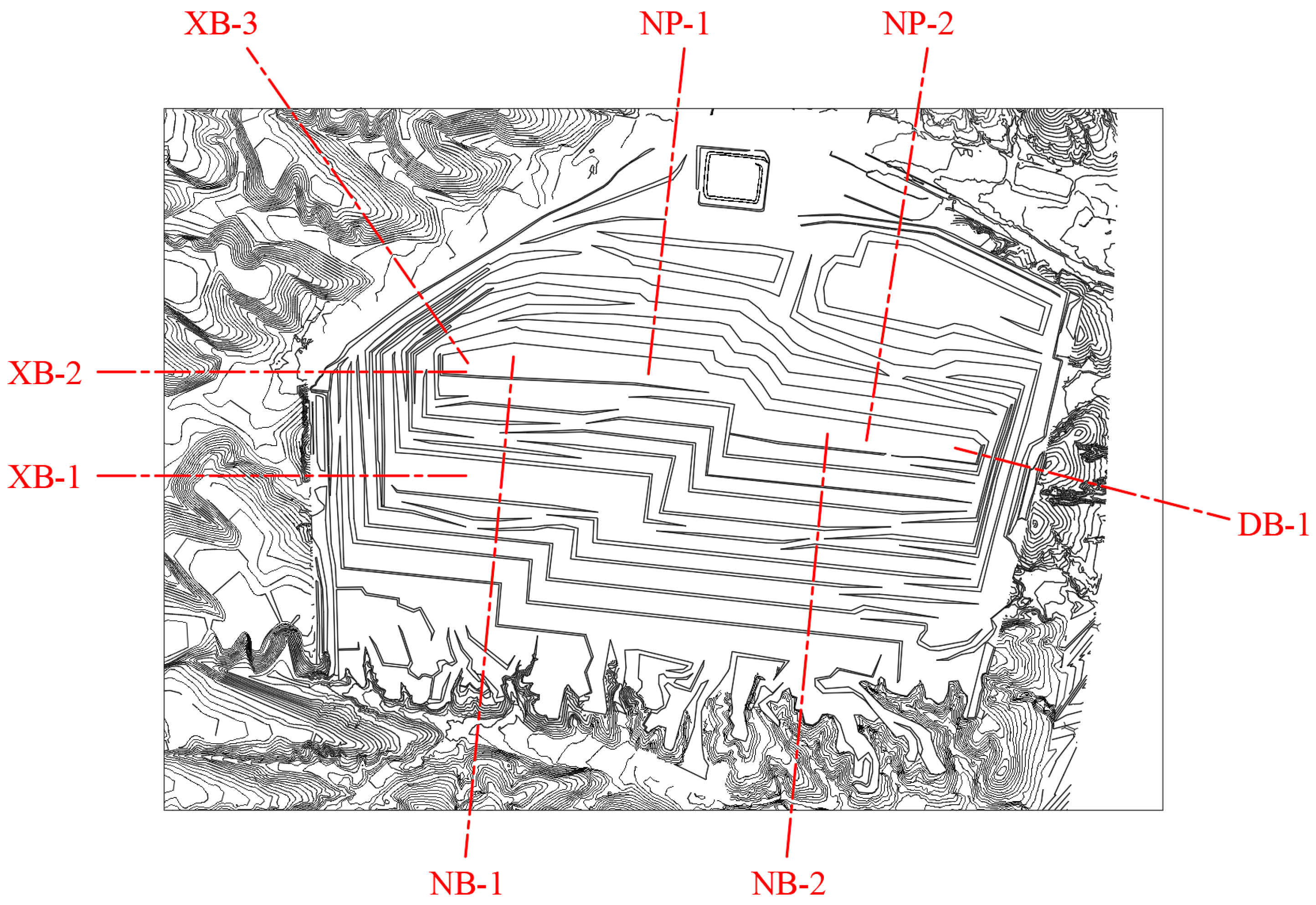
Based on comprehensive borehole data totaling 1,500.7 m across the mining area, the three-dimensional geological structure of the slopes has been elucidated (
Figure 2). To rigorously evaluate slope stability, two representative engineering geological profiles were selected for this study:
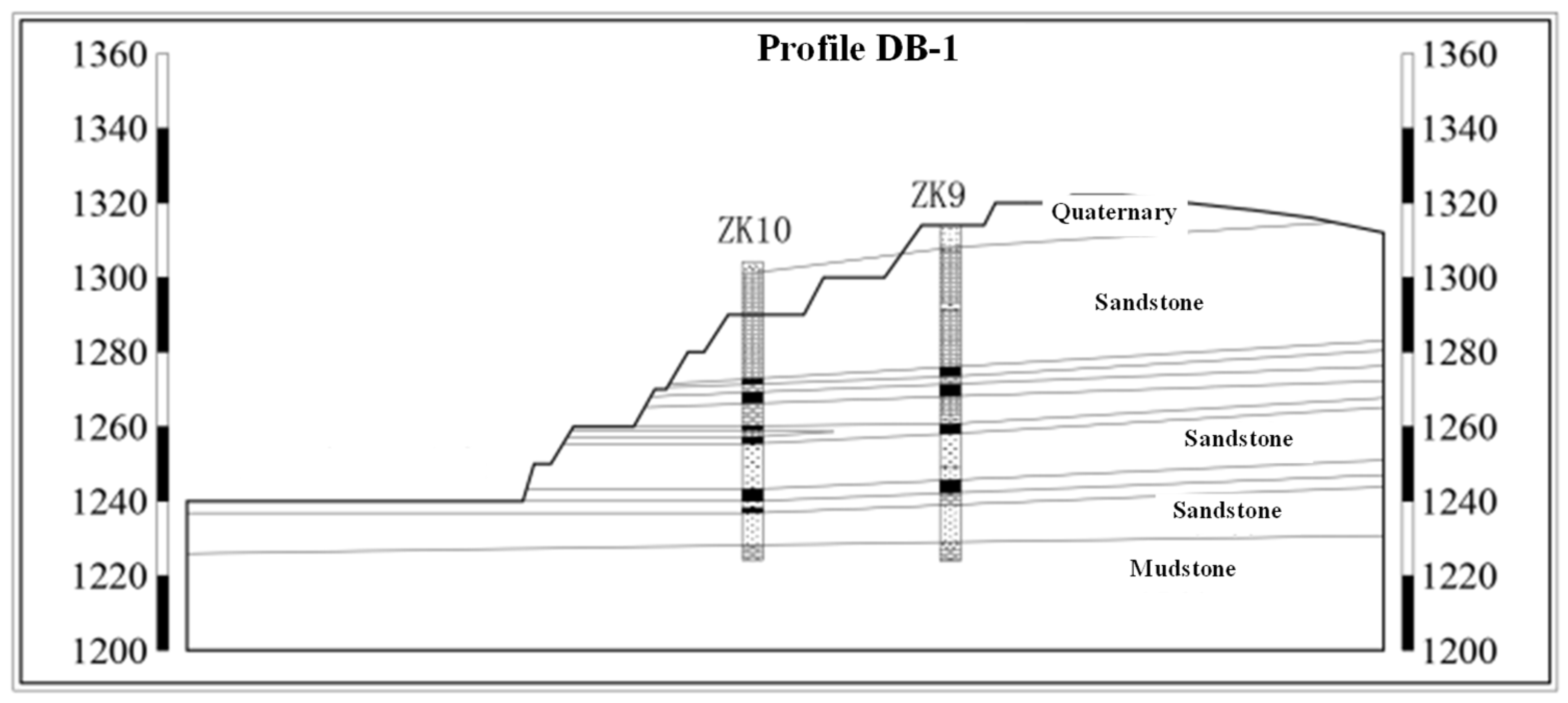
Profile DB-1 (
Figure 3): Located on the non-working wall of the eastern pit, this profile represents a typical dip slope (consequent bedding slope) where the strata dip in the same direction as the slope face. Here, the weak coal seams are directly exposed on the slope surface, identifying it as the most critical zone for potential bedding-plane sliding.
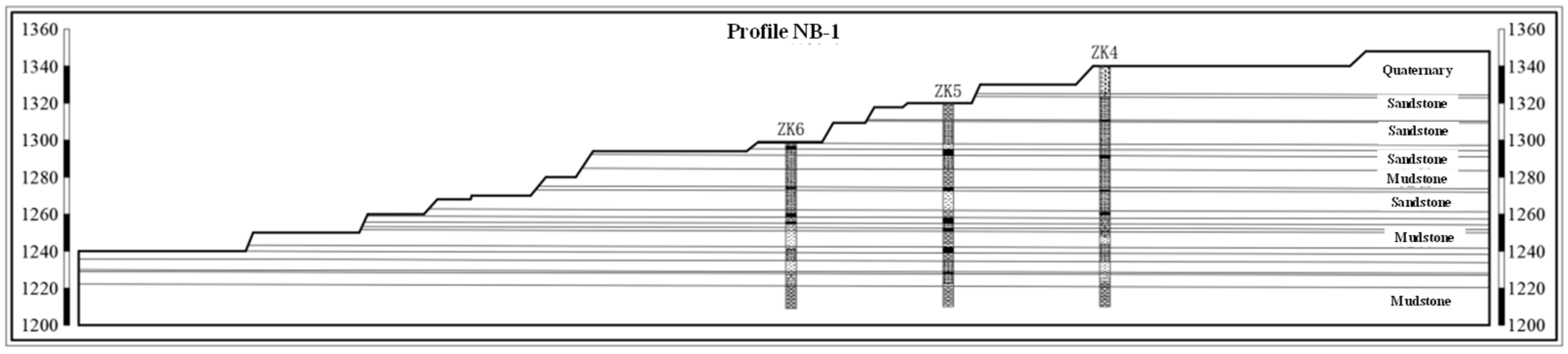
Profile NB-1 (
Figure 4): Situated on the working wall of the southern pit, this profile represents an anti-dip or cross-layer slope where the strata dip opposite to or intersect the slope face at high angles. Its stability is primarily governed by the shear strength of the rock mass itself.
These two profiles encompass the two most critical failure modes in the mine—“bedding-plane sliding” and “cross-layer shearing”—providing a precise geological model foundation for the subsequent physico-mechanical testing and numerical simulations presented in this paper.
3. Methods
To ensure data accuracy, sample preparation and testing strictly adhered to relevant national and international standards, such as the suggested methods of the ISRM [
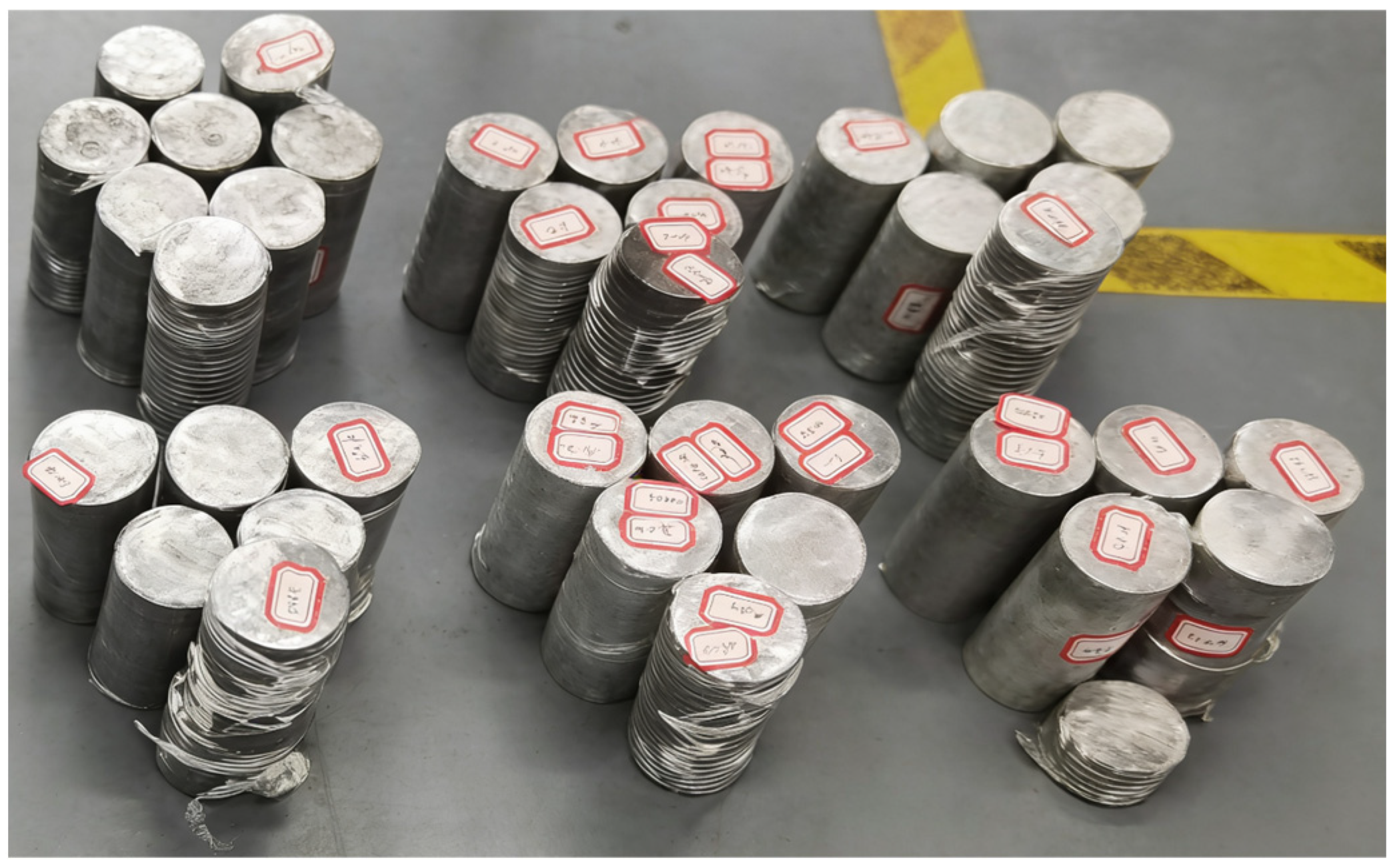
18]. First, the on-site rock cores were processed into standard cylindrical specimens with a diameter of 25 mm and a height of 50 mm, as shown in
Figure 5. During this process, the flatness of the end faces was strictly controlled.
3.1. Physico-Mechanical Property Testing
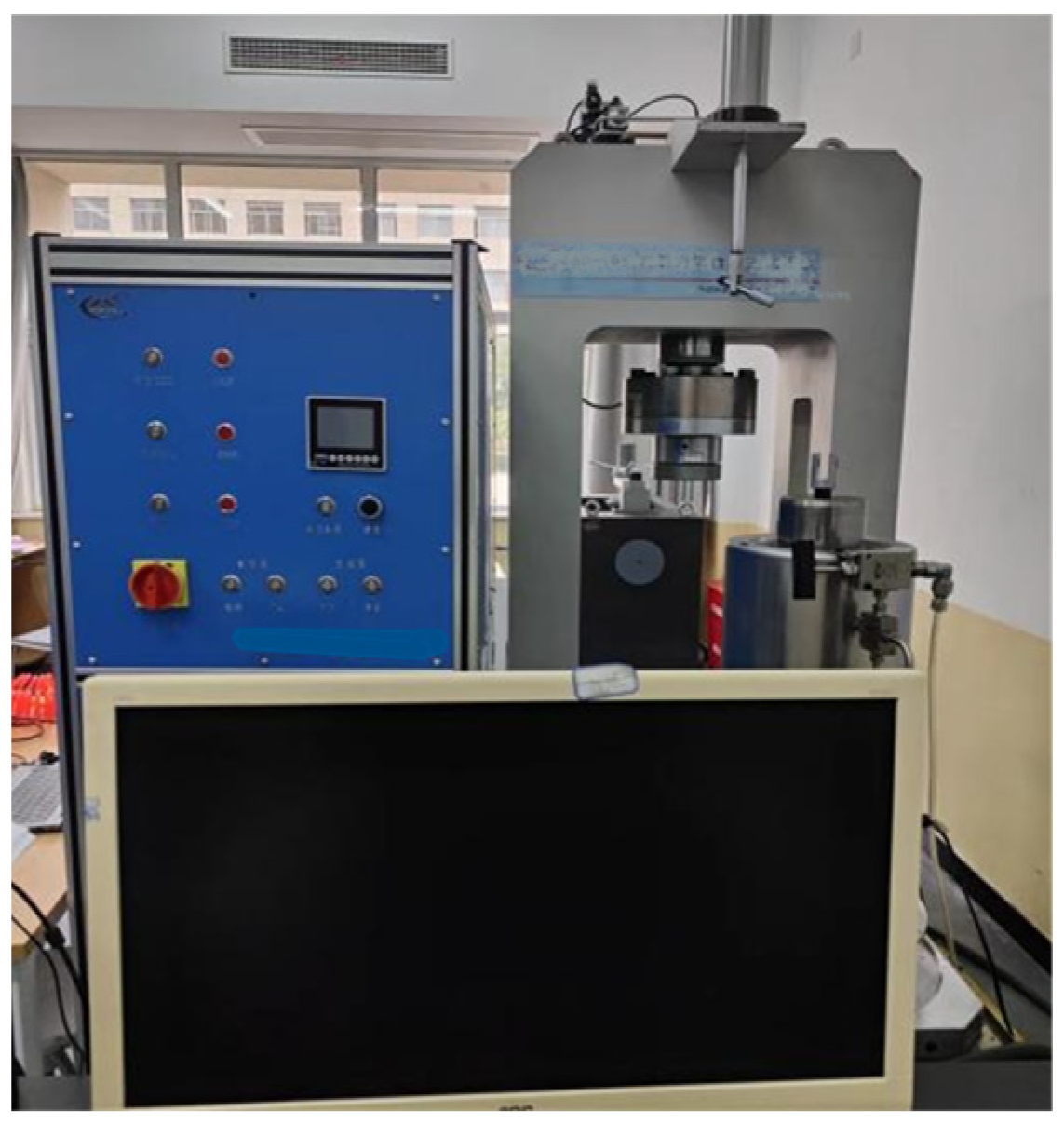
Uniaxial compression tests were conducted using the ZSC-106 rock mechanics testing system (Changchun Chaoyang Test Instrument Co., Ltd., Changchun, China;
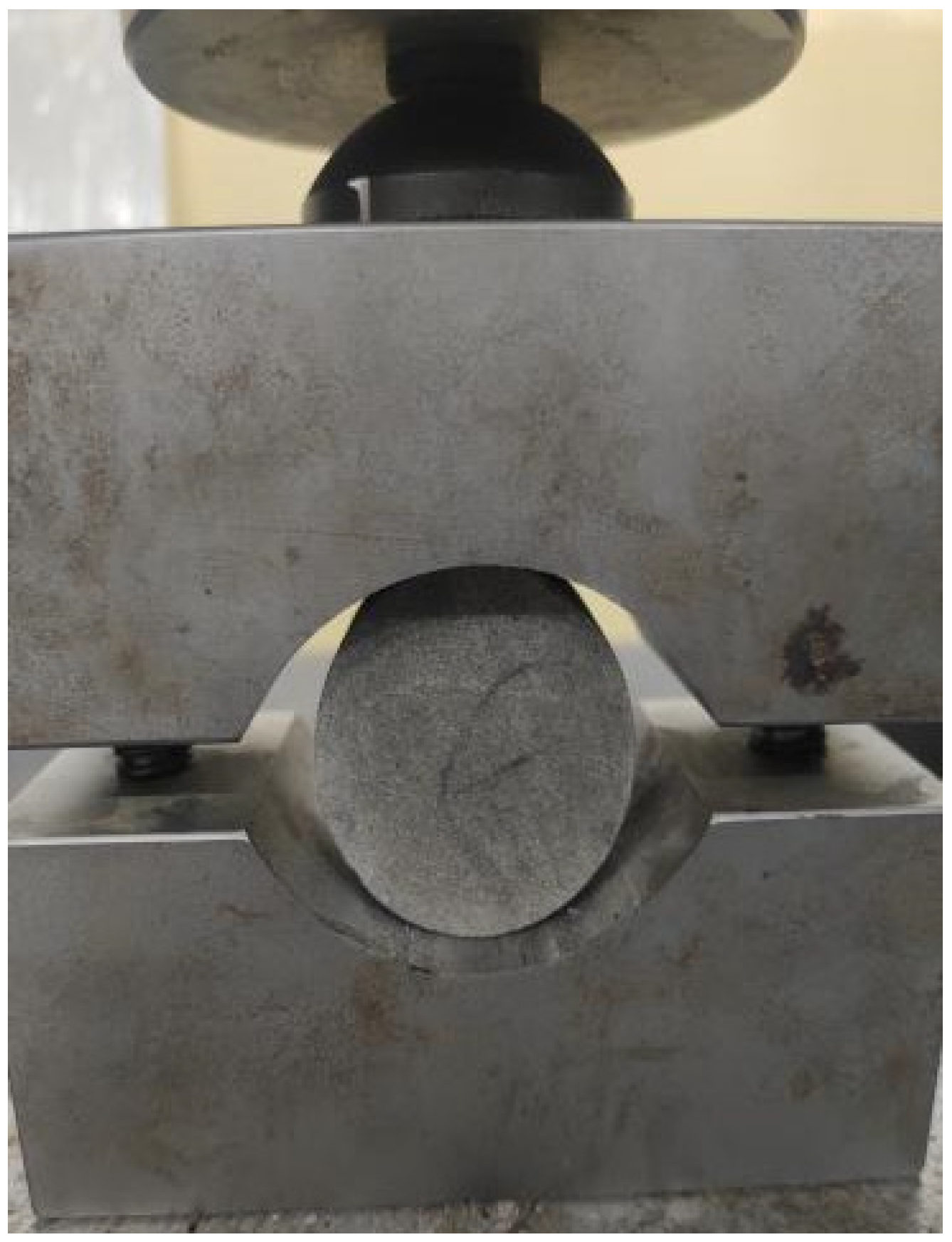
Figure 6) in accordance with ISRM suggested methods. The loading rate was displacement-controlled at 0.002 mm/s to capture the post-peak behavior. Cylindrical samples (50 mm × 100 mm) were prepared with dimensional deviations strictly controlled within ±0.1 mm. Complementing this, the tensile strength was evaluated using the Brazilian split test method (
Figure 7). Direct shear tests were performed at a shear rate of 0.5 mm/min under normal stresses of 100, 200, 300, and 400 kPa to determine shear strength parameters. Collectively, these tests provided the fundamental mechanical indices required for the subsequent slope stability analysis.
3.2. Moisture Content Test
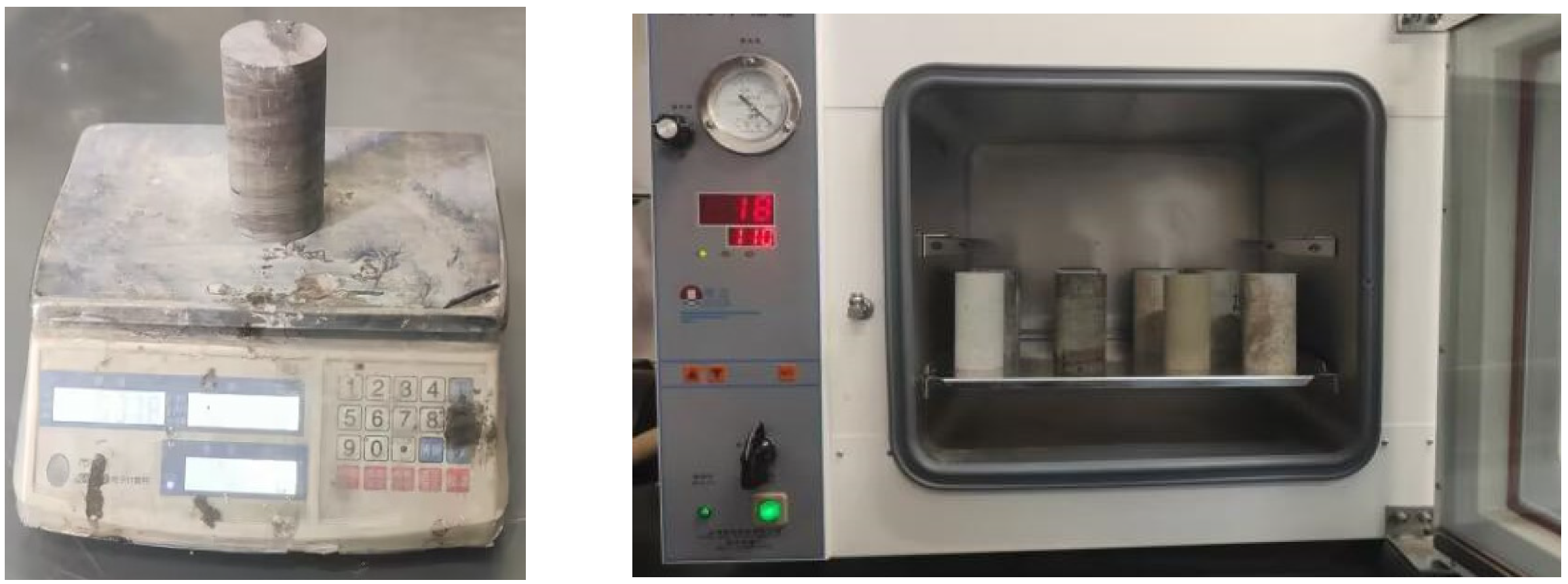
The natural moisture content of the rock was determined using the standard oven-drying method (
Figure 8). Representative samples were placed in weighing bottles and dried in a thermostatic oven maintained at temperatures between 105 °C and 110 °C until a constant weight was achieved. The moisture content was then calculated based on the proportion of water mass lost during this process.
The rock moisture content is calculated using the following formula:
where
w is the rock moisture content (%);
m0 is the mass of the weighing bottle (g);
m1 is the total mass of the rock sample and weighing bottle before drying (g);
m2 is the total mass of the rock sample and weighing bottle after drying (g).
3.3. Microstructure and Composition Analysis
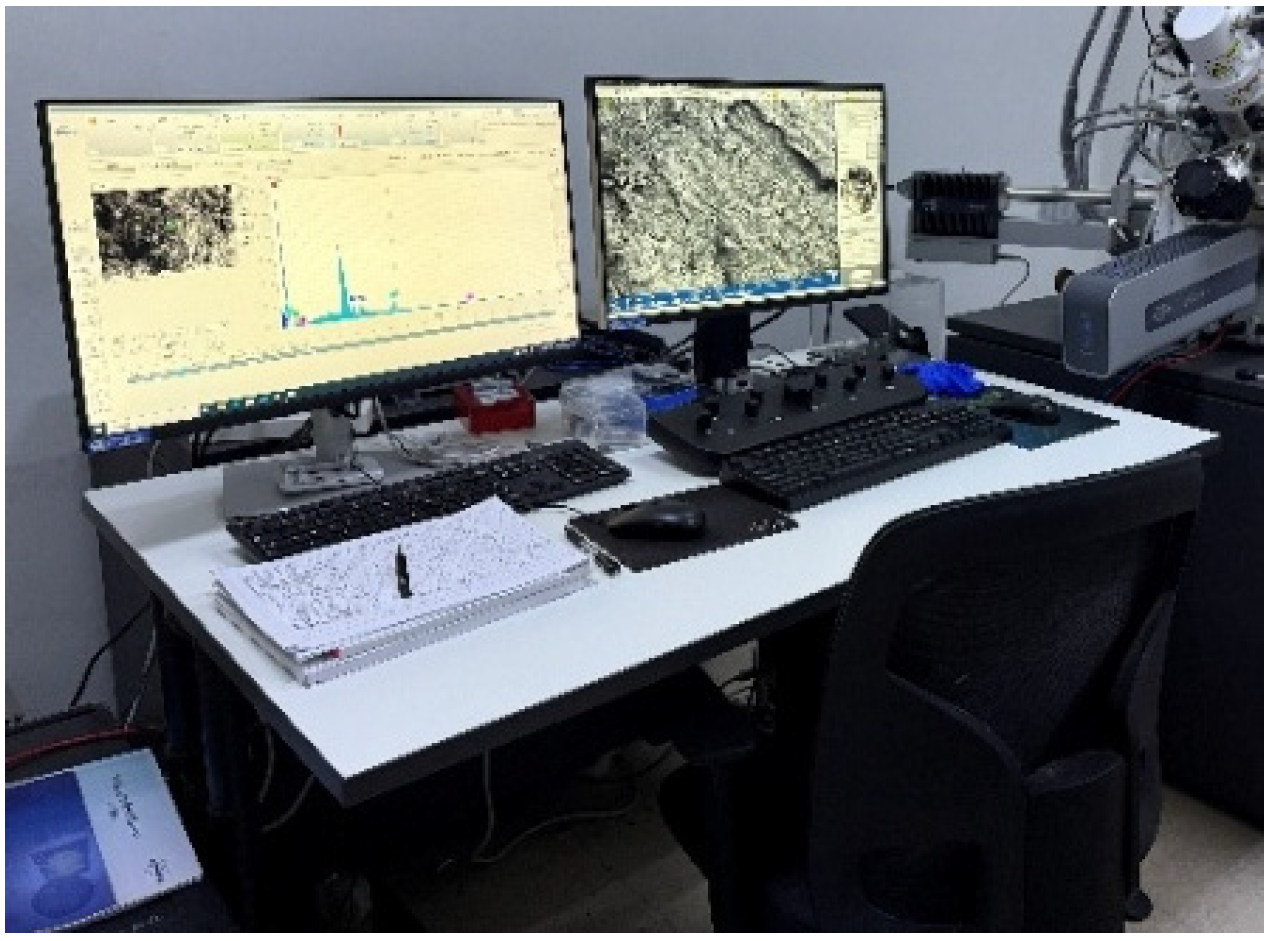
A Rigaku X-ray Diffractometer (Model Ultima IV, Rigaku Corporation, Tokyo, Japan) was employed for quantitative analysis of the whole-rock mineral composition. A JSM-6490LV Scanning Electron Microscope (SEM; JEOL Ltd., Tokyo, Japan,
Figure 9) was used to perform microscopic imaging of typical soft rock specimens at magnifications of 1000× to 5000× to observe micropore structures. Simultaneously, standard slake durability tests were conducted following ASTM D4644 standards [
19]. The procedure involved two cycles of oven-drying at 105 °C for 24 h and immersion in water for 24 h. The second-cycle slake durability index (I
d2) was calculated to quantify the deterioration and disintegration process of rocks under water action.
3.4. Slope Stability Analysis Method: Morgenstern–Price Method
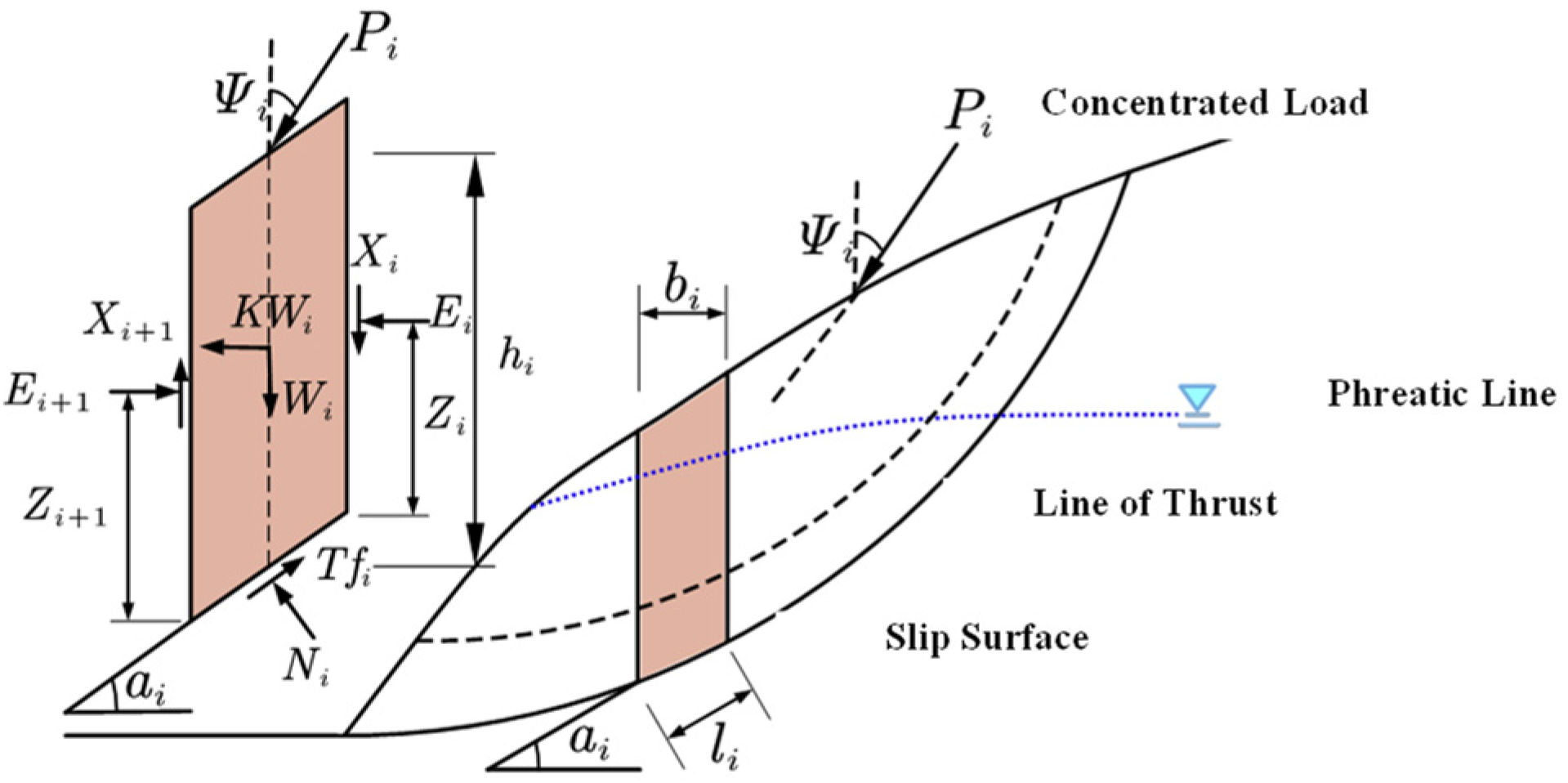
To validate the controlling effect of the laboratory-determined rock mechanics parameters on engineering-scale stability, the Limit Equilibrium Method (LEM) was employed for slope stability evaluation. Given the presence of weak interlayers (specifically coal seams) within the mining area, potential failure surfaces are likely to exhibit non-circular geometries governed by these structural planes. Consequently, the Morgenstern–Price (M-P) method (
Figure 10) was selected as the analytical tool for this study. Among the various limit equilibrium techniques, the M-P method is distinguished by its rigorous formulation. Unlike simplified methods, it strictly satisfies both force and moment equilibrium conditions for each slice and the entire sliding mass. Furthermore, it imposes no geometric constraints on the slip surface, making it uniquely capable of accurately locating complex critical slip surfaces controlled by geological discontinuities.
The rigorous nature of the M-P method is achieved through the introduction of an interslice force function, which defines the relationship between the interslice normal and shear forces. By iteratively solving for the scaling factor λ and the factor of safety (FoS), the method ensures that the internal force distribution aligns with realistic mechanical behavior. This capability renders it particularly suitable for analyzing slopes with complex geological structures, such as those containing weak intercalations or faults, where composite or polygonal failure modes are anticipated. In this study, the analysis was implemented using the Geo-Studio2022 software suite to ensure computational precision and efficiency.
The calculation method of Morgenstern–Price is as follows:
where
Based on the integral forms of Equations (3) and (5) and the boundary conditions specified in Equation (6), the equations for static force and moment equilibrium can be expressed as follows:
where
In these equations, F is the factor of safety; c′ and φ′ denote the effective cohesion and effective internal friction angle of the rock/soil mass, respectively; ru represents the pore water pressure coefficient; W is the weight of the slice; η is the seismic coefficient; and G denotes the total force acting on the vertical interslice boundaries.
Equation (7) embodies the requirements for both static force and moment equilibrium of the sliding mass. These two equations contain two unknowns: the factor of safety
F and the variable
β(x). Regarding the inclination angle
β(x) of the interslice forces, its distribution pattern can be assumed to follow a function f(x), such that
where
λ is a scaling factor to be determined.
Once the interslice force function f(x) is defined, the stability analysis is reduced to solving the system of simultaneous equations for the two unknowns: F and λ. In the computational process, by specifying f(x), the Newton–Raphson iterative method is employed to solve for the factor of safety F and the scaling factor λ.
4. Result and Analysis
4.1. Analysis of Rock Mineral Composition
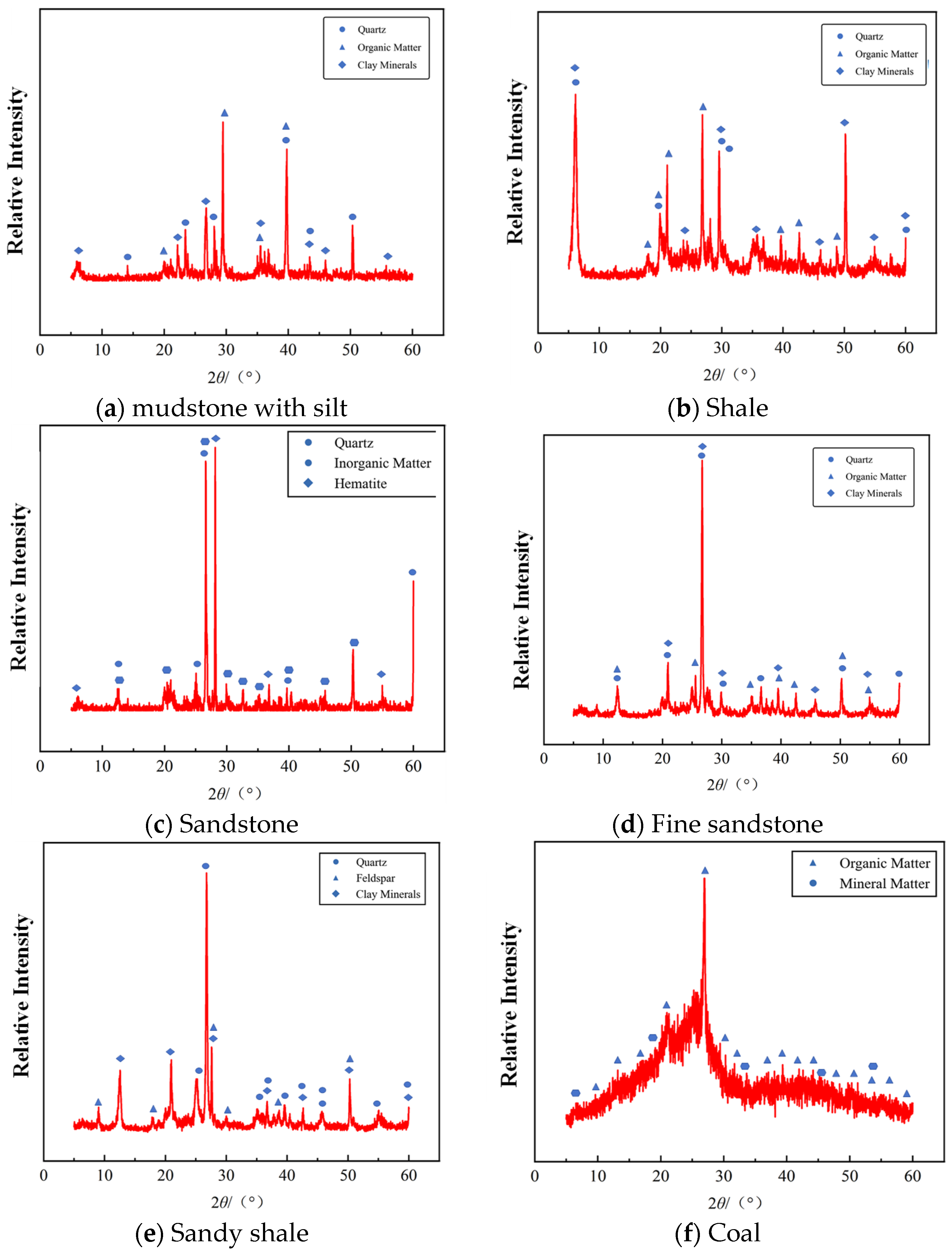
The X-ray diffraction patterns presented in
Figure 11 visually highlight the distinct mineral compositions across different lithologies within the mining area. (Specifically, representative mudstone samples were collected from the immediate roof of the main coal seam at a depth of approximately 125 m to capture the properties of the critical weak interlayer). To address the need for quantitative interpretation, we calculated the relative content of mineral components based on diffraction peak intensities.
As illustrated in
Figure 11c,d, fine and gravelly sandstones exhibit an intense and sharp characteristic peak at a 2θ angle of approximately 26.6°. Calculated mineral contents indicate that these sandstones are dominated by quartz (68.5%) and Feldspar (18.2%), with only a minor fraction of clay minerals (<10%). From the perspective of crystal chemistry, the quartz lattice consists of silicon–oxygen tetrahedra linked by strong covalent bonds into a robust three-dimensional network. This microscopic structure possesses high bond energy and chemical stability that directly endows the rock with the macroscopic mechanical characteristics of high hardness and rheological resistance. Consequently, these sandstone layers function as a rigid skeletal framework that maintains slope stability.
Conversely,
Figure 11a,b reveal that mudstone and argillaceous siltstone display characteristic diffraction peaks for clay minerals in the low-angle region (specifically centering at 2θ ≈ 6° for montmorillonite), accompanied by pronounced diffuse scattering. The quantitative results show that the total clay mineral content in mudstone reaches as high as 60.3%. Crucially, hydrophilic expansive minerals, specifically montmorillonite and illite/smectite mixed layers, account for 32.4% of the total mass. These minerals possess a typical 2:1 layered structure held together by weak van der Waals forces, where the interlayer region contains abundant hydrophilic exchangeable cations. Upon hydration, water molecules easily overcome these weak interlayer attractions and penetrate the lattice to induce intracrystalline swelling along the c-axis. This specific quantitative finding identifies the high content (32.4%) of hydrophilic clay as the intrinsic geological factor driving the volume expansion, disintegration, and strength degradation observed in soft rock.
4.2. Microstructural Analysis
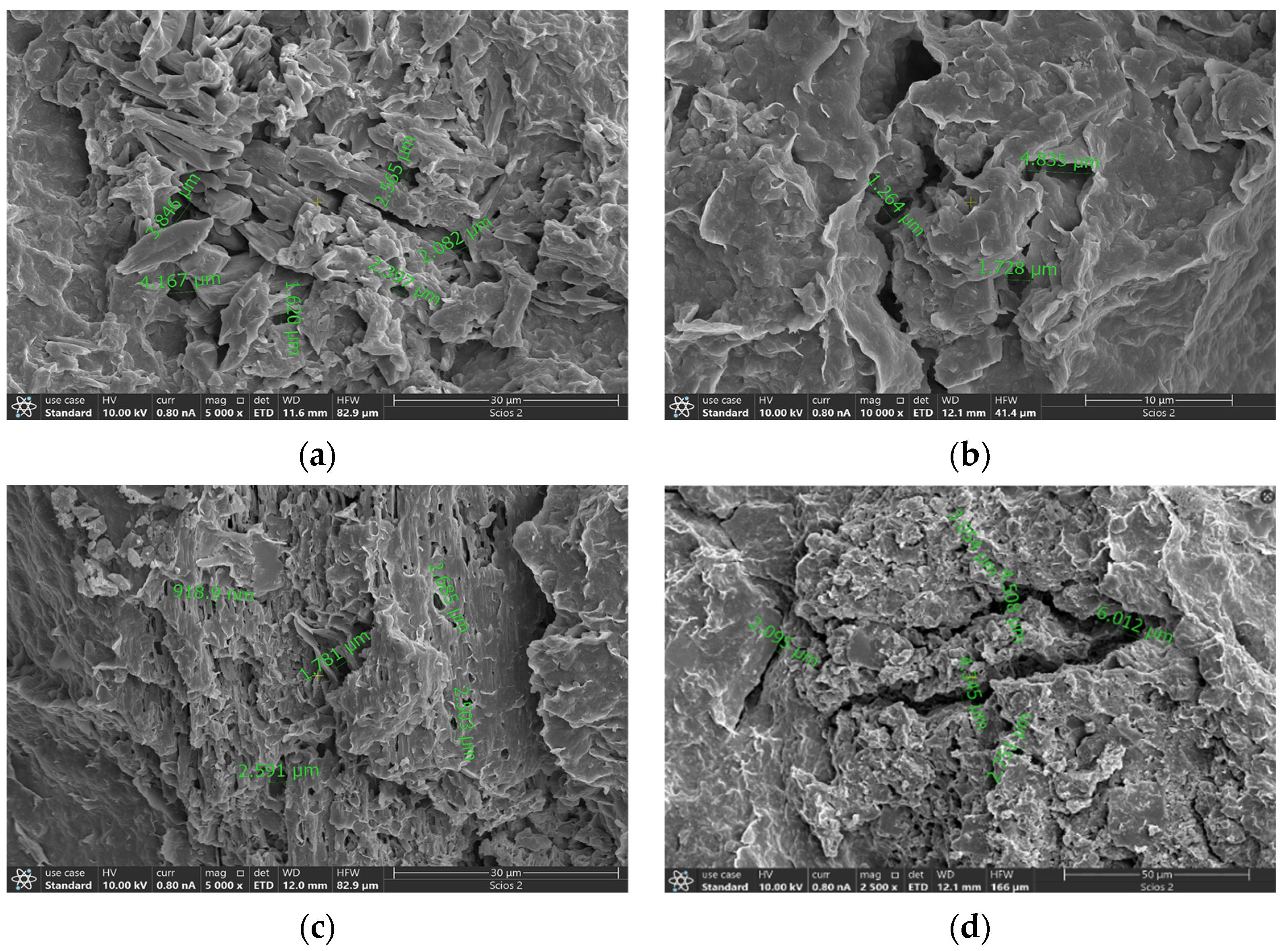
The SEM observations in
Figure 12 further elucidate how microstructural characteristics intrinsically control hydraulic properties. As revealed in
Figure 12a,b, the mudstone matrix exhibits a typical layered or flocculated structure with loose inter-granular cementation. More crucially,
Figure 12c,d expose a pervasive network of micrometers and pores ranging from 1 to 2 μm (as visually estimated from the 5000× magnification images in
Figure 12) in diameter.
According to unsaturated soil mechanics and capillary theory, these specific micron-scale voids (1–2 μm) generate high matric suction under natural dry conditions. This suction significantly enhances the effective normal contact stress between particles and thereby contributes to the high apparent strength. This mechanism effectively accounts for the dry compressive strength of 12.05 MPa listed in
Table 1. However, this pore size range is also the most efficient for capillary water absorption. Once the environment becomes saturated during events such as rainfall infiltration, the capillary suction dissipates rapidly. Combined with the swelling of the 32.4% clay minerals identified in
Section 4.1, the simultaneous loss of suction and the accumulation of pore water pressure sharply reduce the effective stress, triggering a precipitous decline in macroscopic strength.
4.3. Analysis of Rock Physico-Mechanical Properties
Table 1 details the physical and mechanical parameters for each lithology, revealing significant disparities in stiffness and strength. The data reveals a critical “Stiffness Mismatch” phenomenon: the elastic modulus of harder strata like argillaceous siltstone reaches 3.03 GPa, which is approximately three times the 1.05 GPa stiffness of the coal seam. Similarly, the compressive strength of the fine sandstone is 46.85 MPa, nearly twenty times higher than the 2.28 MPa measured for the coal seam. This alternating sequence creates a structural vulnerability. Under the combined stresses of overburden weight and excavation unloading, the distinct deformation moduli cause the soft layers (coal/mudstone) to deform significantly more than the rigid hard layers (sandstone). This incompatibility concentrates high shear stress at the lithological interfaces. Since weak layers possess yield strengths far lower than the hard rock, they enter a plastic state earlier and evolve into potential sliding zones.
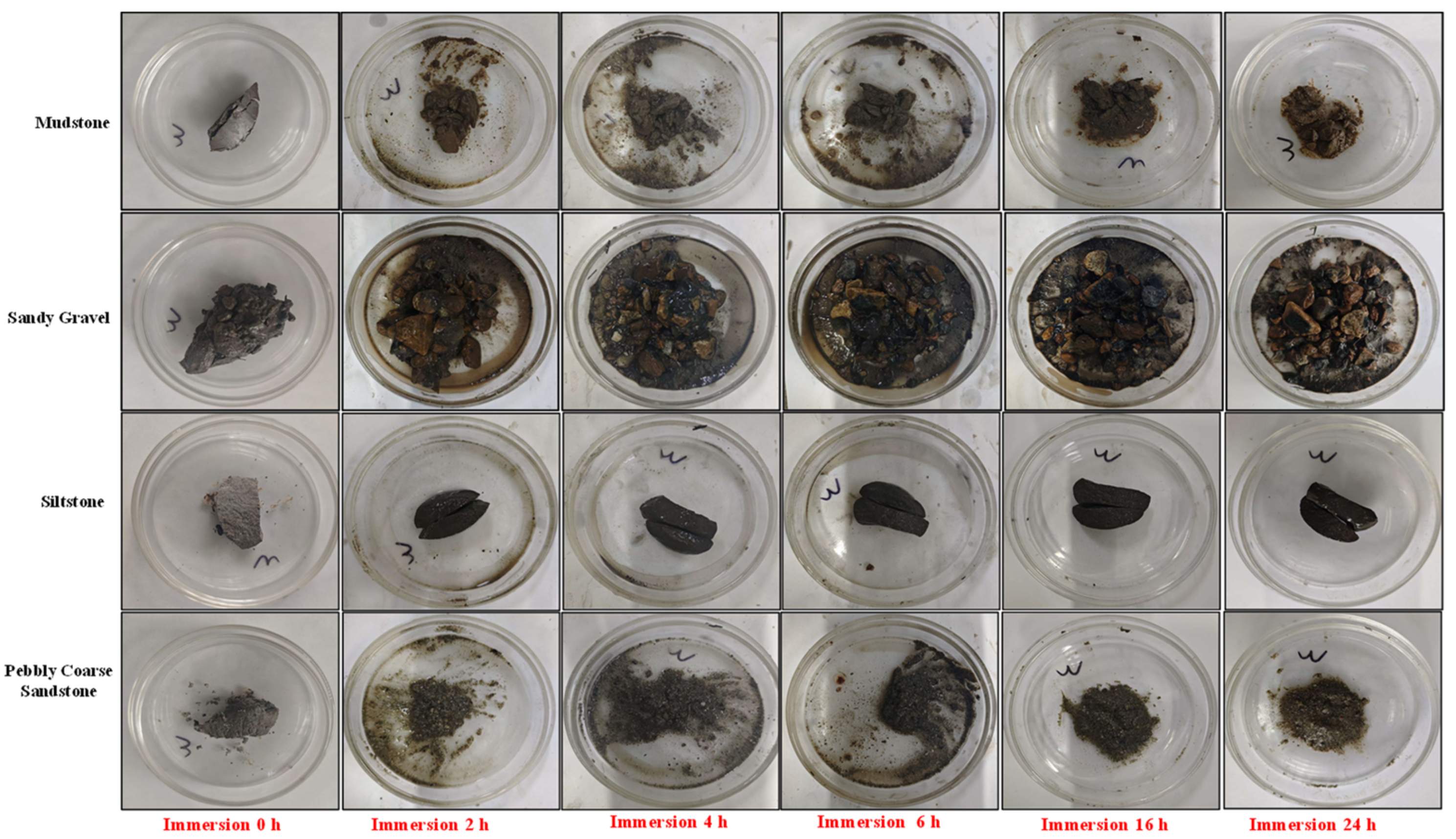
Furthermore, an analysis of tensile strength and slaking durability indicates that while mudstone possesses a moderate compressive strength of 12.05 MPa, its tensile strength is critically low at just 0.95 MPa. As shown in
Figure 13, the Slake Durability Index (I_d2) is measured below 60%, classifying it as “Low Durability” according to ISRM standards. This explains the rapid disintegration observed: as water rapidly infiltrates the dry sample along the 1–2 μm micro-cracks, it compresses the air trapped in blind pores to generate an “air wedge effect.” When the combined stress from air wedge pressure and the hydration swelling of montmorillonite exceeds the tensile limit (0.95 MPa), micro-cracks instantly initiate. These findings imply that the strength of mudstone is highly environment-dependent, and its true residual strength in a saturated state is far lower than the natural values listed in
Table 1.
4.4. Slope Stability Evaluation Using the Morgenstern–Price Method
Based on the physico-mechanical parameters obtained from the experiments described in
Section 3.1, a two-dimensional limit equilibrium model was constructed using Geo-Studio software to quantitatively evaluate the stability of representative slope profiles within the mining area. Given the pronounced structure of interbedded soft and hard strata, which often leads to irregular potential slip surfaces, the Morgenstern–Price (M-P) method was selected for the automatic search of the critical slip surface. This method was chosen specifically for its rigorous satisfaction of both force and moment equilibrium conditions. In the model, material parameters were assigned strictly according to
Table 1. Special emphasis was placed on defining the coal seams, characterized by high montmorillonite content and extremely low strength, and the mudstone layers as controlling weak zones. This setup was designed to accurately simulate how these weak interlayers govern macroscopic slope stability.
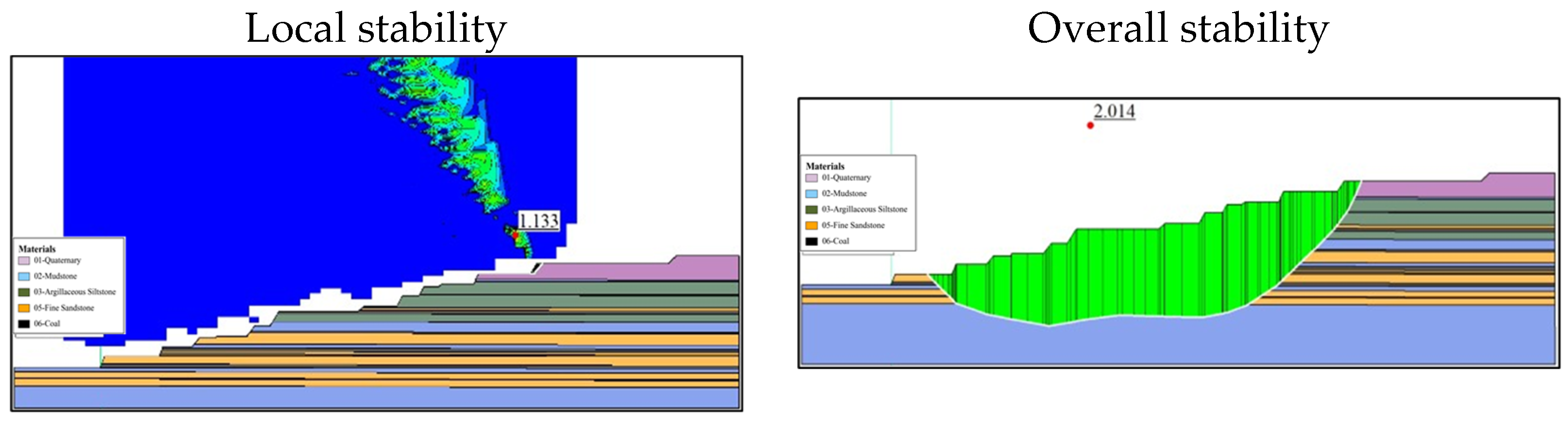
The computational results indicate that the presence of weak lithological layers fundamentally dictates the potential failure modes of the slope. Taking the typical dip slope profile DB-1 shown in
Figure 14 as an example, the minimum factor of safety (FoS) calculated by the M-P method is 1.481. The critical slip surface exhibits a distinct non-circular, polygonal geometry; it is characterized by tension cracking at the trailing edge, while the basal slip plane shears strictly along the floor of the low-strength coal seam. This finding corroborates the experimental conclusions at the engineering scale, confirming that the coal seam serves as the “weakest link” in the stratigraphic sequence and constitutes the preferential plane for slope sliding.
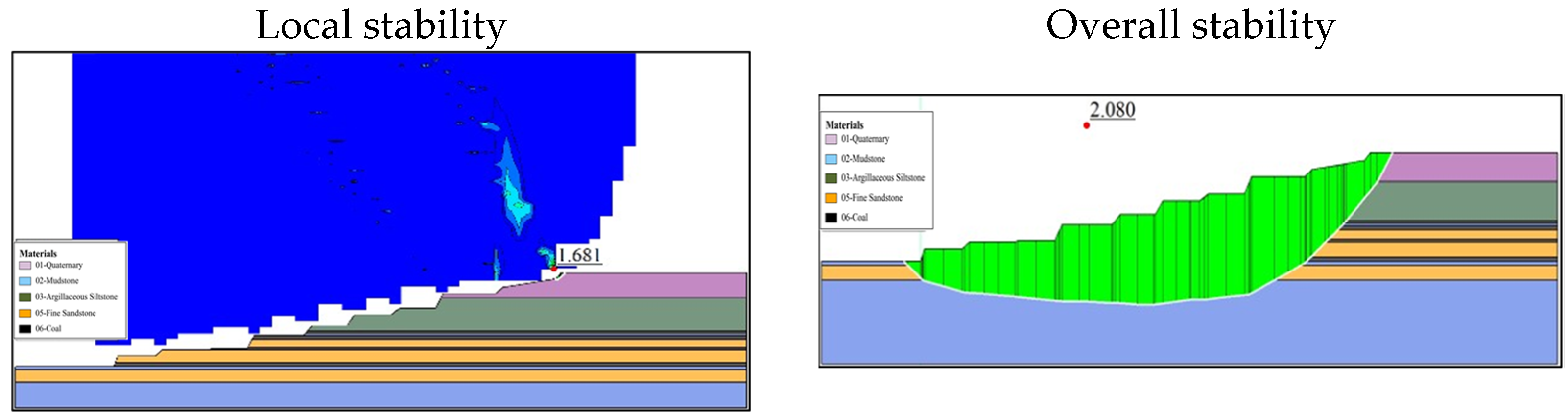
Conversely, for the cross-layer profile NB-1 depicted in
Figure 15, although the critical state (FoS = 1.979) manifests as an approximate circular failure, the shear exit point remains localized within the fractured mudstone layer at the slope toe. Synthesizing the results from both profiles reveals that, regardless of the structural configuration (dip or cross-layer), the potential instability path automatically traces and exploits the weak rock layers with the lowest shear strength. This demonstrates a high degree of consistency between the macroscopic numerical calculations and the degradation mechanisms revealed by the microscopic experiments.
4.5. Analysis of Slope Instability Mechanism
Integrating the comprehensive analyses of mineral composition, microstructure, and physico-mechanical properties with the specific geological setting of the open-pit mine, we propose a slope instability mechanism defined by the differential deformation of soft-hard interbeds coupled with water-rock weakening. This mechanism encompasses three distinct evolutionary stages.
Unloading Relaxation and Stress Concentration: Excavation disrupts the original in situ stress equilibrium and causes the rock mass to rebound towards the free face. As evidenced by the large disparity in elastic moduli details in
Table 1, the stratigraphy features a significant stiffness mismatch between the rigid sandstone and the softer coal or mudstone layers. Under a unified unloading strain field, the hard layers deform minimally while the soft layers undergo significant deformation. This incompatibility forces an intense concentration of shear stress at the interlayer interfaces. Since the coal seams and mudstone possess extremely low strength, they yield plastically at these interfaces to form a damage zone rich in micro-cracks. These cracks serve as the initial channels for subsequent rainfall infiltration.
Water–Rock Chemical–Mechanical Coupled Weakening: Rainfall or groundwater infiltrates the weak layers along the joint fissures and unloading cracks. The XRD and SEM results presented in
Section 3 reveal that hydrophilic minerals like montmorillonite swell upon contact with water while the air wedge effect within micropores disintegrates the rock structure. This process generates significant swelling pressure that squeezes the hard layers and leads to an exponential decay in the shear strength parameters of the weak layers. Ultimately, the apparent strength originally provided by matric suction is lost completely, and the weak layers transform into plastic rheological bodies.
Progressive Shear Sliding Instability: As the strength of the weak layers deteriorates, the anti-sliding resistance of the slope decreases significantly. Once the gravitational driving force of the overlying thick hard strata, such as fine sandstone, exceeds the residual shear strength of the weak interlayers like coal seams or argillaceous mudstone, the weak zones coalesce to form a continuous basal sliding surface. Consequently, the upper hard rock loses its basal support and undergoes traction or push-style sliding driven by its own weight.
In essence, the instability of this open-pit slope stems from two factors. The geological stiffness mismatch acts as the intrinsic predisposing factor for stress concentration, while the sudden strength degradation induced by physicochemical water-rock interactions serves as the critical external trigger. Therefore, engineering countermeasures should focus on intercepting surface water and reinforcing or replacing the critical weak layers, including coal seams and mudstone.
5. Discussion
To synthesize the experimental findings and clarify the instability mechanism, this section discusses the coupling between microscopic characteristics and macroscopic failure modes.
5.1. Quantitative Micro-Macro Coupling Mechanism
The connection between mineralogy and strength is not merely descriptive but mechanically deterministic. The XRD results (
Section 4.1) quantified the hydrophilic expansive mineral content (montmorillonite/illite) at 32.4%. Theoretically, the hydration of this specific clay fraction generates significant swelling pressure. Given that the tensile strength of the mudstone is only 0.95 ± 0.18 MPa (
Table 1), the swelling pressure generated in the confined 1–2 μm pores easily exceeds this tensile limit (P
swell > σ
t). This quantitative comparison explains why the rock disintegrates: the internal swelling force physically tears the weak cementation apart, leading to the macroscopic loss of cohesion.
5.2. Theoretical Sensitivity of Stability Factors
Although numerical sensitivity analysis was not explicitly visualized, a theoretical deduction can be made based on the calculated FoS of 1.48. According to the experimental study by Erguler and Ulusay [
5], clay-bearing rocks containing montmorillonite (similar to the 32.4% content found in this study) typically experience drastic strength reductions upon saturation. Their data indicate that the softening coefficient (Kr) for such mudstones generally ranges from 0.3 to 0.6 (representing a 40–70% strength loss).
To be conservative, if we assume a moderate strength reduction of 40% (i.e., Kr = 0.6):
Since 0.89 < 1.0, this deduction quantitatively proves that while the slope appears stable in the dry state, the hydro-softening of the clay-rich interlayers will inevitably lead to failure. This clarifies why the high initial FoS does not guarantee safety.
Furthermore, a parametric sensitivity analysis indicates that the factor of safety is most sensitive to the cohesion (c) of the weak layer. A 20% reduction in cohesion leads to a roughly 15% drop in FoS, whereas the influence of the internal friction angle (ϕ) is less pronounced. This confirms that the water-induced degradation of cohesive strength (softening) is the primary controlling parameter for slope stability.
5.3. Evolution of “Stiffness Mismatch” Instability
Aligning with the process-oriented focus of this study, the instability mechanism is defined by a temporal evolution process:
Process 1: Stiffness Mismatch (Pre-failure). The large contrast in elastic modulus between the rigid sandstone (E = 1.70 GPa) and soft coal (E = 1.05 GPa) causes asynchronous deformation during excavation. Stress concentrates at the interface, initiating micro-cracks even before rainfall occurs.
Process 2: Hydro-Chemical Activation. Rainfall infiltration activates the 32.4% clay minerals, reducing strength by 40% (as derived in
Section 5.2).
Process 3: Critical Transition. The system crosses the threshold where FoSFoS drops below 1.0, triggering rapid shear failure.
5.4. Engineering Implications
The calculated drop in FoS from 1.48 to 0.89 dictates the engineering strategy. Since the slope is stable in the dry state (FoS > 1.3FoS > 1.3), the primary mitigation goal is to prevent the “Saturated Scenario.” Therefore, we recommend:
Deep Drainage: Horizontal drainage boreholes should be drilled specifically into the coal/mudstone interface to relieve pore pressure.
Surface Sealing: Shotcrete should be applied to prevent rainfall from entering the 1–2 μm pores identified in the SEM analysis.
6. Conclusions
Based on the macroscopic and microscopic tests and stability analysis of the XG Open-pit Coal Mine, the following conclusions are drawn:
(1) Lithological Control on Stability: The slope exhibits a distinct binary structure. Hard rocks like fine sandstone form a rigid skeletal framework, whereas soft lithologies such as mudstone and coal seams act as the primary weak layers. The “Stiffness Mismatch” between these layers (Esandstone > 1.5 Ecoal) creates a geological predisposition for stress concentration.
(2) Quantitative Deterioration Mechanism: The abundance of hydrophilic clay minerals (specifically 32.4% montmorillonite/illite) and the development of micropores (1-2 μm) are the intrinsic causes of soft rock degradation. This specific mineralogical composition renders the rock highly susceptible to the “air wedge effect” and hydration swelling.
(3) Hydro-Mechanical Coupling Instability: Theoretical analysis indicates that a strength reduction of >35% in the weak layers—highly probable given the mineralogy—is sufficient to reduce the factor of safety from 1.48 to below 1.0. This confirms that the disintegration and softening of weak interlayers caused by water infiltration serve as the critical “trigger” for instability. Therefore, the core of engineering mitigation must focus on the hydraulic protection and drainage of weak horizons.
7. Limitations and Future Recommendations
While this study elucidates the hydro-mechanical coupling mechanism controlling slope instability, several limitations regarding the scope, geological setting, and methodology must be acknowledged:
(1) Geological Applicability: The XG Open-pit Mine represents a specific geological setting characterized by a tectonically stable region and gently dipping strata (2–8°). While the “Stiffness Mismatch” mechanism is identified as the primary driver here, failure modes may differ significantly in tectonically active zones or slopes with steeper dips (>20°) where kinematic sliding dominates. Caution should be exercised when extrapolating these findings to such complex structural environments.
(2) Exclusion of Dynamic Loads: The current stability analysis is based on static limit equilibrium theory. However, the XG Open-pit Coal Mine is located in a deep mining area where slopes are frequently subjected to dynamic disturbances, such as production blasting vibration and seismic activities. As noted by Xu et al. [
13] and Ding et al. [
15], dynamic loads can accelerate the fatigue damage of weak interlayers and induce instantaneous instability, which was not accounted for in the current static FoS calculations.
(3) Spatial Dimensionality: The analysis relies on representative 2D cross-sections (DB-1 and NB-1). Although these profiles capture the critical failure modes, they simplify the complex three-dimensional spatial geometry of the geological structure. The lateral constraint effects and the spatial variability of the weak interlayers may influence the actual sliding mass boundaries.
(4) Scale Effect: The mechanical parameters were derived from laboratory-scale core samples (50 mm diameter). Due to the “scale effect,” these values may differ from the rock mass properties at the engineering scale, which contain macroscopic joints and fractures not present in small specimens.
To address these limitations and enhance the practical applicability of the findings, future research should focus on the following directions:
Extension to Complex Settings: Future research should apply the proposed methodology to slopes with steeper dips and complex tectonic features (e.g., faults and folds) to test the universality of the “Stiffness Mismatch” mechanism beyond gently dipping strata.
Dynamic Response Analysis: Incorporate blasting vibration monitoring data into numerical models to evaluate the dynamic stability of slopes under cyclic loading, specifically investigating the fatigue weakening of the coal-mudstone interfaces.
3D Geological Modeling: Establish a three-dimensional geological model to perform 3D slope stability analysis, providing a more accurate assessment of the spatial distribution of potential landslides.
Field Monitoring Validation: Implement deep displacement monitoring (e.g., using TDR or fiber optic sensors) and pore water pressure monitoring in the weak layers. Real-time field data will be used to calibrate the laboratory-derived parameters and validate the “Stiffness Mismatch” failure mechanism proposed in this study.




 ,
,