Article

Study on Mechanical Response of Composite Rock Mass with Different Coal Seam Dip Angles Under Impact Load

College of Mining Engineering, Heilongjiang University of Science and Technology, Harbin 150022, China
*
Author to whom correspondence should be addressed.
Processes 2026, 14(5), 738; https://doi.org/10.3390/pr14050738
Submission received: 21 January 2026 / Revised: 18 February 2026 / Accepted: 21 February 2026 / Published: 24 February 2026

Abstract

To investigate the dynamic instability mechanism of surrounding rock in deep, rockburst-prone coal seams, a Split Hopkinson Pressure Bar (SHPB) system was utilized to carry out dynamic impact compression tests on Rock–Coal–Rock (RCR) composites featuring four different seam dip angles, namely 0°, 15°, 30°, and 45°. We systematically analyze incorporating high-speed imaging, the mechanical properties, energy evolution, and progressive failure characteristics of the composites under various strain rates. The results indicate that the dynamic compressive strength and elastic modulus of the composites exhibit a significant strain-rate hardening effect. With the increase in the dip angle of the coal seam, the compressive strength of the specimen decreases accordingly. Specifically, the range of 15–30° is identified as a critical transition zone where the failure mode shifts from matrix-dominated bearing to interfacial slip instability. At an impact pressure of 0.12 MPa, the compressive strength drops by 36.9% within this interval. Furthermore, the energy distribution is profoundly modulated by the geometric characteristics of the interface. As the dip angle increases, the degree of wave impedance mismatch at the coal–rock interface intensifies, leading to a sharp rise in the reflected energy ratio (up to 80.7%) and a pronounced attenuation of transmitted energy. Notably, the dissipation energy per unit volume increases with the dip angle, revealing that interfacial sliding and frictional work become the primary energy dissipation pathways under large-inclination conditions. High-speed camera monitoring confirms that the instability mechanism shifts from axial splitting/tension to an interfacial shear-slip mode as the dip angle increases. These findings provide a scientific reference for the stability evaluation of roadway surrounding rock and the prevention of dynamic disasters.

1. Introduction

As coal extraction activities in China progressively descend into deeper geological strata, the implementation of mining operations at depths surpassing the 1000 m threshold has evolved from a technical challenge into a widespread industrial reality. Deep mining environments are characterized not only by complex quasi-static conditions involving high geostress, high temperatures, and high pore pressures, but also by frequent dynamic disturbances such as mine tremors, blasting impacts, and large-scale roof fractures. The mechanism of these dynamic disasters, notably rockbursts, essentially involves the unstable release of energy within the surrounding rock system under varying dynamic loads [1]. Furthermore, interfacial geometry, specifically the seam inclination, acts as a decisive factor in modulating the mechanical stability of coal–rock combined structures. Under complex stress environments, the bearing capacity of these structures gradually degrades, eventually triggering the destabilization and collapse of coal pillars. Therefore, investigating the mechanical response and damage mechanisms of deep coal–rock masses across a full spectrum of strain rates is of paramount engineering significance for ensuring the safety of deep mining operations.
The evolution of rock dynamics has been significantly propelled by rigorous investigations into the dynamic mechanical behaviors of coal–rock systems, yielding a wealth of foundational theoretical and experimental insights. Regarding the stress evolution during deep mining, Li and Gong [2] elucidated the mechanical behaviors, destruction mechanisms, and energy dissipation rules of deep rock under dynamic loading, offering a basic interpretation of the failure mechanisms of unconventional rock. By employing the Split Hopkinson Pressure Bar (SHPB) system, Wang et al. [3] investigated the mechanical response of coal–rock masses under varying impact pressures, clarifying the dynamic stress–strain relationships, energy dissipation, and crack evolution patterns. Shi et al. [4] investigated how pre-existing distributed cracks affect the mechanical behaviors and failure patterns of sandstone specimens, demonstrating that the number and distribution of cracks significantly modulate the strength and elastic modulus under impact loading. Furthermore, Zhang et al. [5] established the correlation between incident wave energy and the quality of resulting debris, revealing the critical influence of fragmentation on energy dissipation. The structural characteristics of coal–rock masses also play a decisive role in their dynamic behavior. Wang et al. [6] examined the energy dissipation characteristics and fractal properties of coal samples with different aspect ratios, identifying a high consistency between their derived damage constitutive model and experimental curves. Zheng et al. [7,8] combined SHPB tests with high-speed photography and Digital Image Correlation (DIC) technology to investigate the fracture characteristics of pre-damaged sandstone, emphasizing the sensitivity of dynamic mechanical properties to the extent of initial damage. In terms of three-dimensional loading, Wu et al. [9] conducted dynamic–static coupling tests, elucidating the change laws of stress–strain with respect to strain rate and aspect ratio. Moreover, Li et al. [10] compared the energy dissipation and fragmentation of coal-like materials, rock monomers, and composites, noting that composite structures exhibit higher energy accumulation potential but lower energy thresholds for dynamic instability.
In actual geological environments, coal seams and their adjacent strata typically exist as integrated Rock–Coal–Rock (RCR) composite systems. Consequently, many scholars have utilized RCR models to investigate the influence of combination modes, aspect ratios, and prefabricated cracks [11,12,13]. Yang et al. [14] revealed the influence of impact velocity, rock strength, and wave impedance matching on the dynamic response of coal–rock bearing structures. Xie et al. [15] conducted comparative experiments on the dynamic failure of raw coal with vertical and horizontal bedding, highlighting the anisotropy of ultrasonic wave velocity and dynamic modulus. Regarding the influence of structural orientation, Ji and Zhao et al. [16,17] explored the response of composite rock masses with different bedding dip angles, emphasizing the modulation of strain rates and failure modes by impedance matching. Zhu et al. [18] further identified special mechanical responses at a 45° combination angle under dynamic loading. Numerically, Duan et al. [19] utilized PFC2D to analyze the interface inclination effect, revealing a linear decrease in peak strength with increasing dip angle. Zhao and Chen et al. [20,21] systematically summarized the energy accumulation–release characteristics and acoustic emission patterns, providing insights into the interface effects and instability mechanisms of coal–rock structures. Chen et al. [22] conducted dynamic compression experiments under different impact air pressures. The dynamic mechanical response characteristics, energy evolution laws, and fragment distribution characteristics of impact-prone sandstone under different cyclic thresholds and impact air pressures were discussed. The results showed that the dynamic stress–strain curves of rock samples can be generally divided into three stages: elastic stage, yield stage, and failure stage.
Despite these advancements, current research on rock dynamic failure predominantly focuses on single lithologies or composites with horizontal interfaces perpendicular to the loading direction. However, actual stopes frequently involve inclined coal seams, where the dip angle fundamentally alters the distribution of normal and shear stresses. Under dynamic loading, these inclined interfaces not only modulate the propagation efficiency of stress waves but are also prone to inducing interfacial slip instability, thereby shifting the macroscopic failure mode from axial splitting to shear-slip. To address this research gap, the present study investigates RCR composites with four distinct dip angles (0°, 15°, 30°, and 45°). By employing the SHPB system across four impact pressure levels (0.10, 0.12, 0.14, and 0.16 MPa), the present study aims to elucidate the mechanical behaviors and energy dissipation mechanisms of coal–rock composites under the combined effects of dynamic impact and coal seam dip angle, effect strain rate and dip angle, thereby offering a scientific basis for the prevention and control of dynamic disasters in roadways of inclined coal seams.

2. Experimental Methodology

2.1. SHPB System Composition

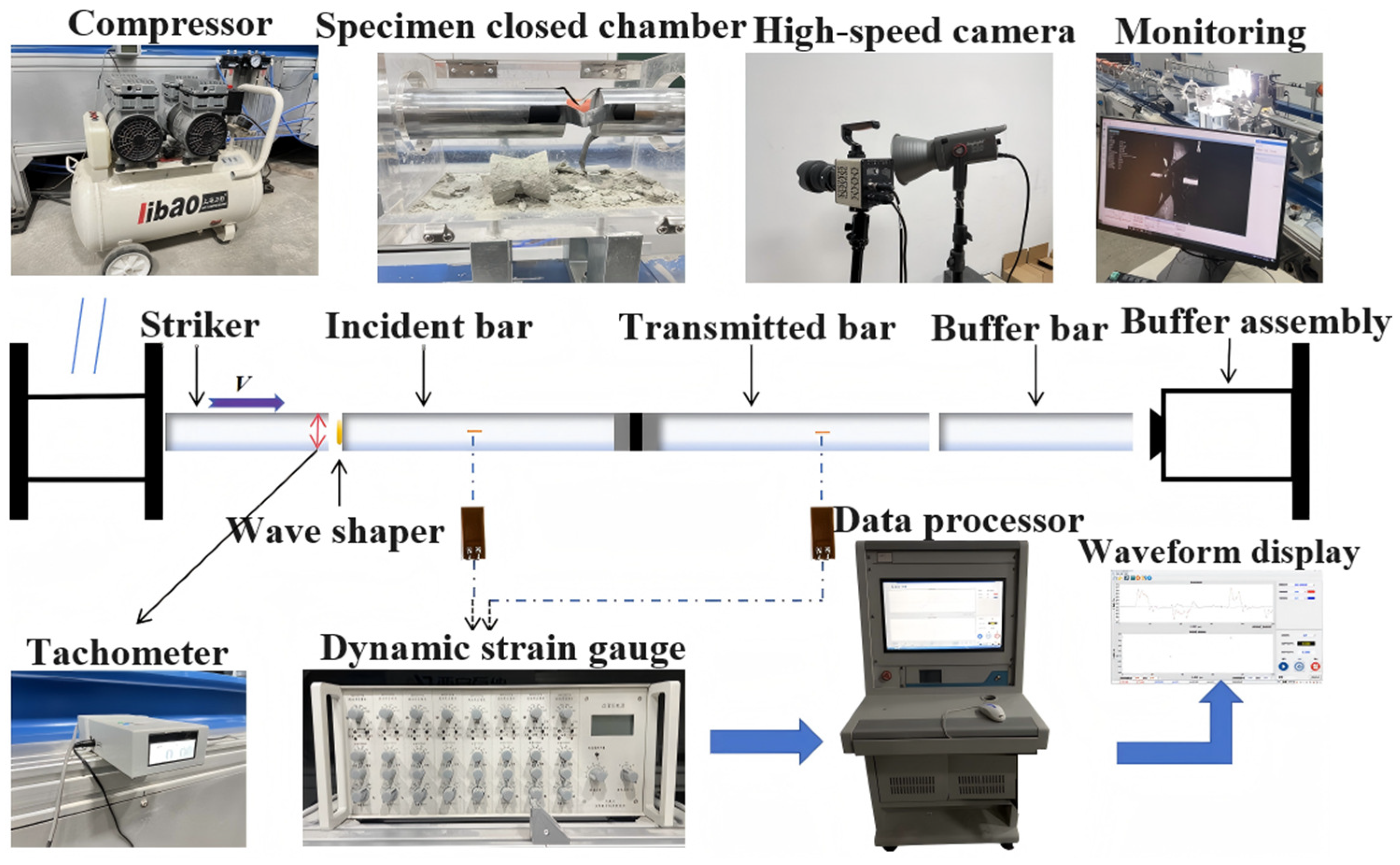
The φ50 mm SHPB system is used in the test. The pressure bar system includes a 0.3 m bullet (impact bar), 2.5 m incident bar, 2.5 m transmission bar, and 1.5 m buffer bar. The three bars are a diameter of 49.95 mm. The elastic wave velocity is 5000 m/s; the elastic modulus is 210,000 MPa. The speed measurement system includes a velocimeter and an infrared induction head; the data detection system includes SDY2017 A ultra-dynamic strain gauge and BE120-3AA strain gauge. The pressurization system includes compressor, gas storage tank, specimen closed tank, and so on. The camera system includes SH3-130-M16 high-speed camera and Joylight220 fill light. The camera uses 30,000 frame mode to record as shown in Figure 1.

2.2. Principle of SHPB Experiment

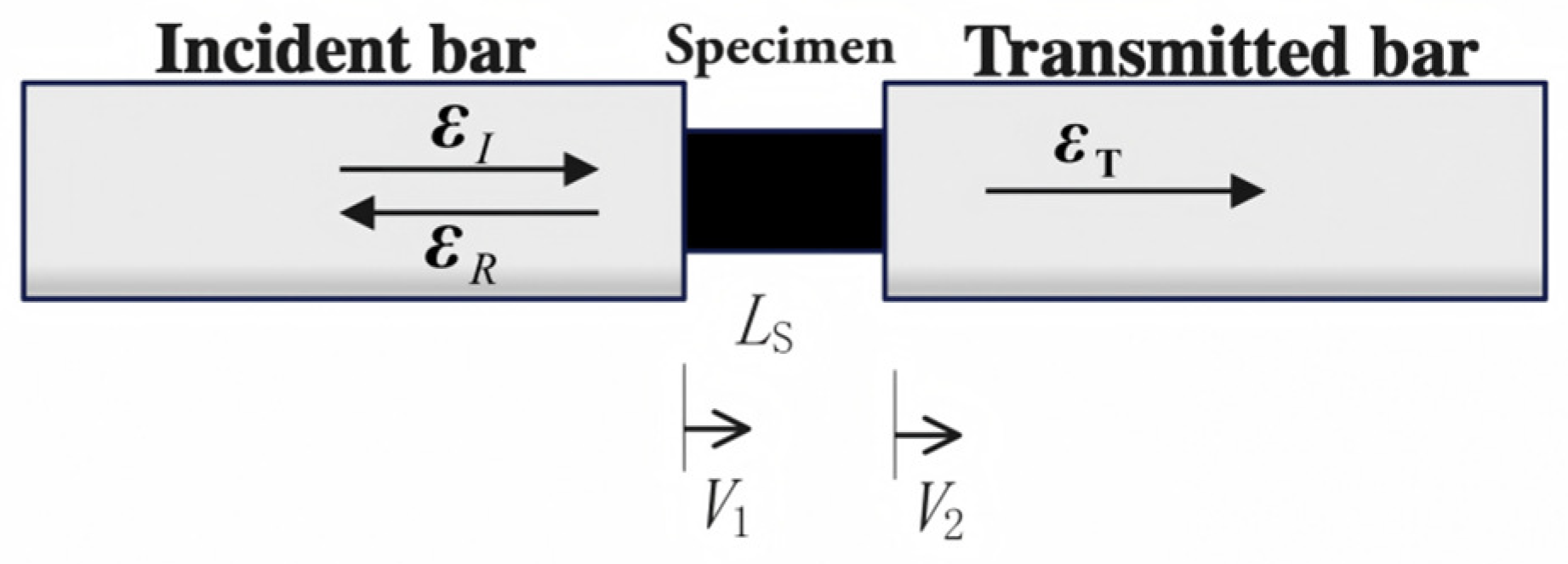
According to the one-dimensional stress wave hypothesis, the dispersion phenomenon is neglected in the propagation of stress waves in the incident and transmission bars. This hypothesis associates the particle velocity at both ends of the sample with four sets of measured stress waves, as shown in Figure 2:
The calculation formulas of dynamic stress, strain, and average strain rate of rock samples are calculated [23] as follows:
σ S t = E A A S ε T t
ε S t = 2 C L 0 t ε R t d t
ε ˙ S t = 2 C L S ε R t
In the formula: E, A and C are the elastic modulus, cross-sectional area, and longitudinal wave velocity of the elastic compression bar. As and Ls are the cross-sectional area and length of the sample, respectively.

2.3. Specimen Preparation and Test Scheme

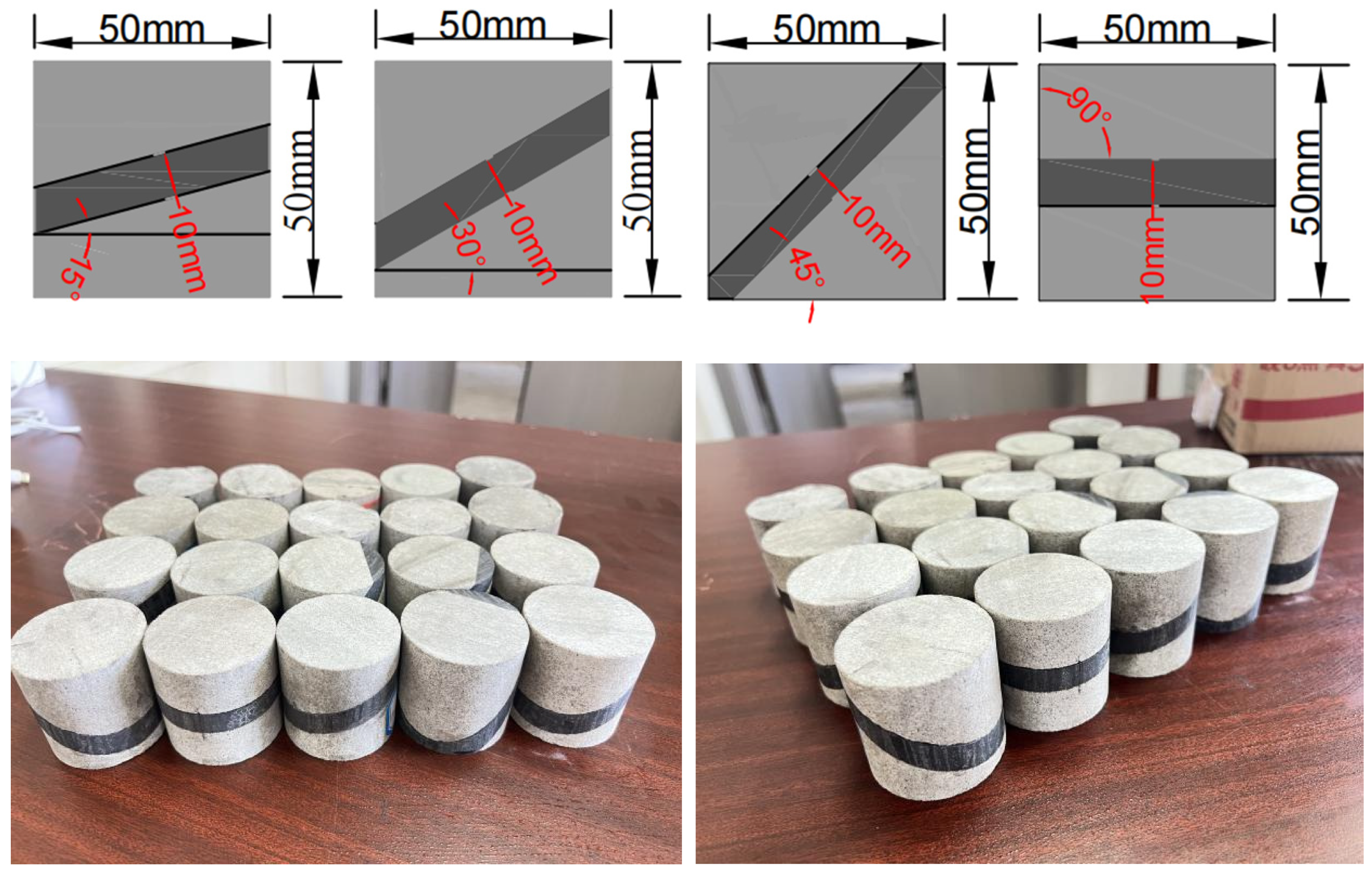
The coal and rock specimens of the test were all taken from a coal mine in Shuangyashan, Heilongjiang Province. Several coal, roof, and floor sandstones with good integrity and homogeneity were selected as the research objects; After a systematic laboratory preparation process, including standard coring, directional cutting, rapid drying of dryer, precision grinding, and other processes, the standard specimens meeting the experimental requirements were finally obtained. Four groups of coal–rock assemblages with four different interface angles (0°, 15°, 30°, 45°) were designed and manufactured, with a size of Φ50 * 50 mm, as shown in Figure 3.
Rock failure characteristics under high strain rate impact are highly sensitive, where even minor increments in impact velocity can lead to extensive fragmentation exceeding the intended observation range. To calibrate the appropriate loading conditions, preliminary tests were conducted on rock samples of the same lithology. Initially, a pressure of 0.03 MPa was used; however, the striker bar remained stationary due to insufficient driving force. The pressure was then incrementally increased until, at 0.1 MPa, the specimen exhibited a characteristic double-cone failure pattern. Based on these preliminary results, four impact pressure levels—0.10, 0.12, 0.14, and 0.16 MPa—were established. These pressures were applied to four groups of Rock–Coal–Rock (RCR) composites with varying seam dip angles (θ) of 0°, 15°, 30°, and 45°. The specimens were categorized into four groups (HP-0.1 to HP-0.16) according to the impact pressure, with each group comprising four distinct dip angle specimens.

3. Analysis of Dynamic Mechanical Properties of Coal–Rock Combination

The key dynamic mechanical test results are summarized in Table 1.

3.1. Dynamic Stress Equilibrium Relationship

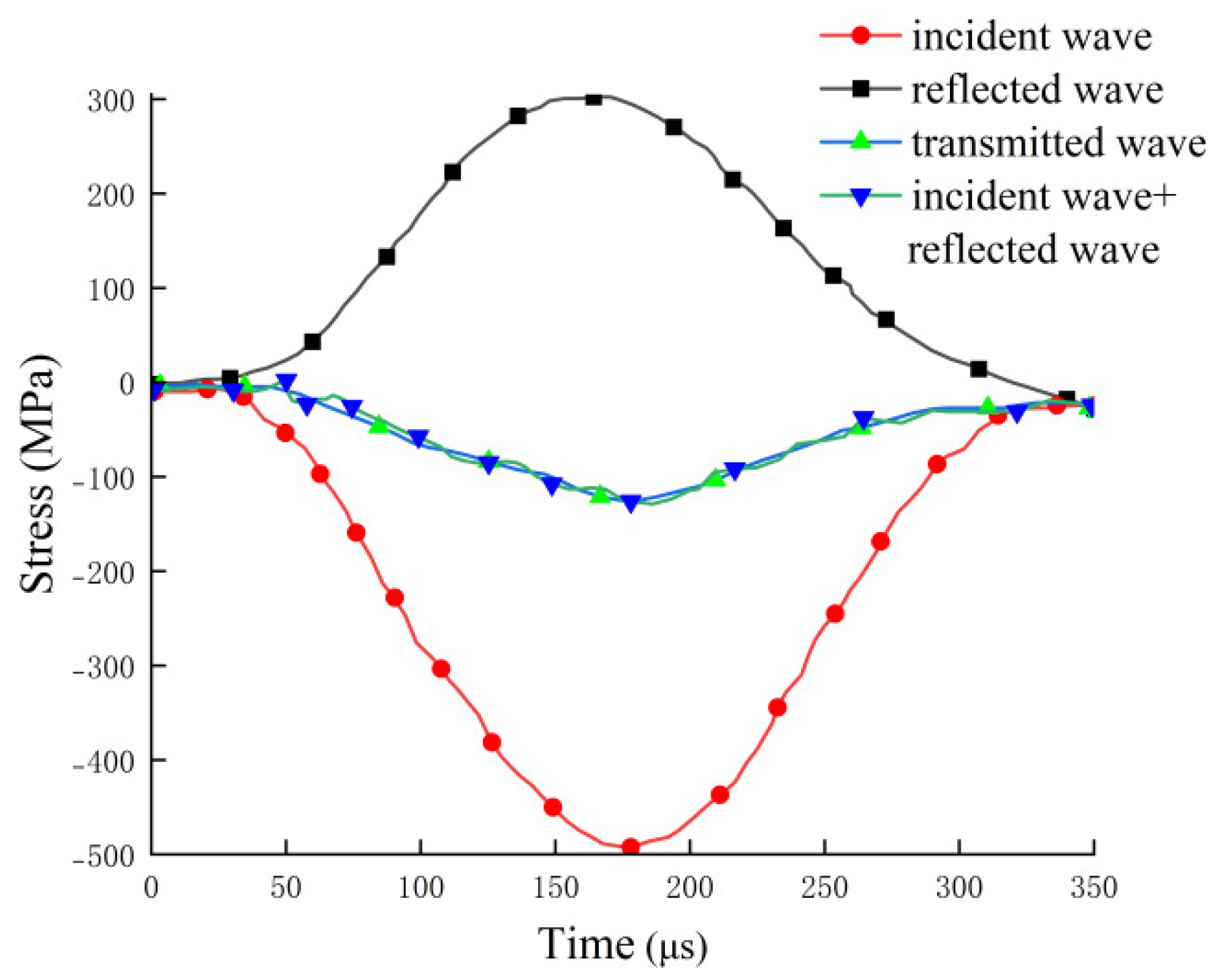
In an effort to secure the accuracy of test data, we carried out dynamic stress equilibrium analysis before the formal experiment. Since no significant stress gradient existed within the specimen, the axial inertia effect could be considered negligible. Figure 4 illustrates the dynamic stress equilibrium curves obtained from the preliminary tests. By comparing the waveforms, a slight deviation between the sum of incident and reflected pulses and the transmitted pulse was observed within the 0–100 μs interval. This discrepancy can be attributed to the evolution of macroscopic cracks and subsequent changes in the contact interface once the striker impacted the incident bar, which does not compromise the validity of the equilibrium. The two waveforms exhibited high consistency after 100 μs, confirming that the dynamic equilibrium condition was satisfied and thus ensuring the reliability of the experimental results.

3.2. Analysis of Stress Waveforms Under Various Impact Gas Pressures

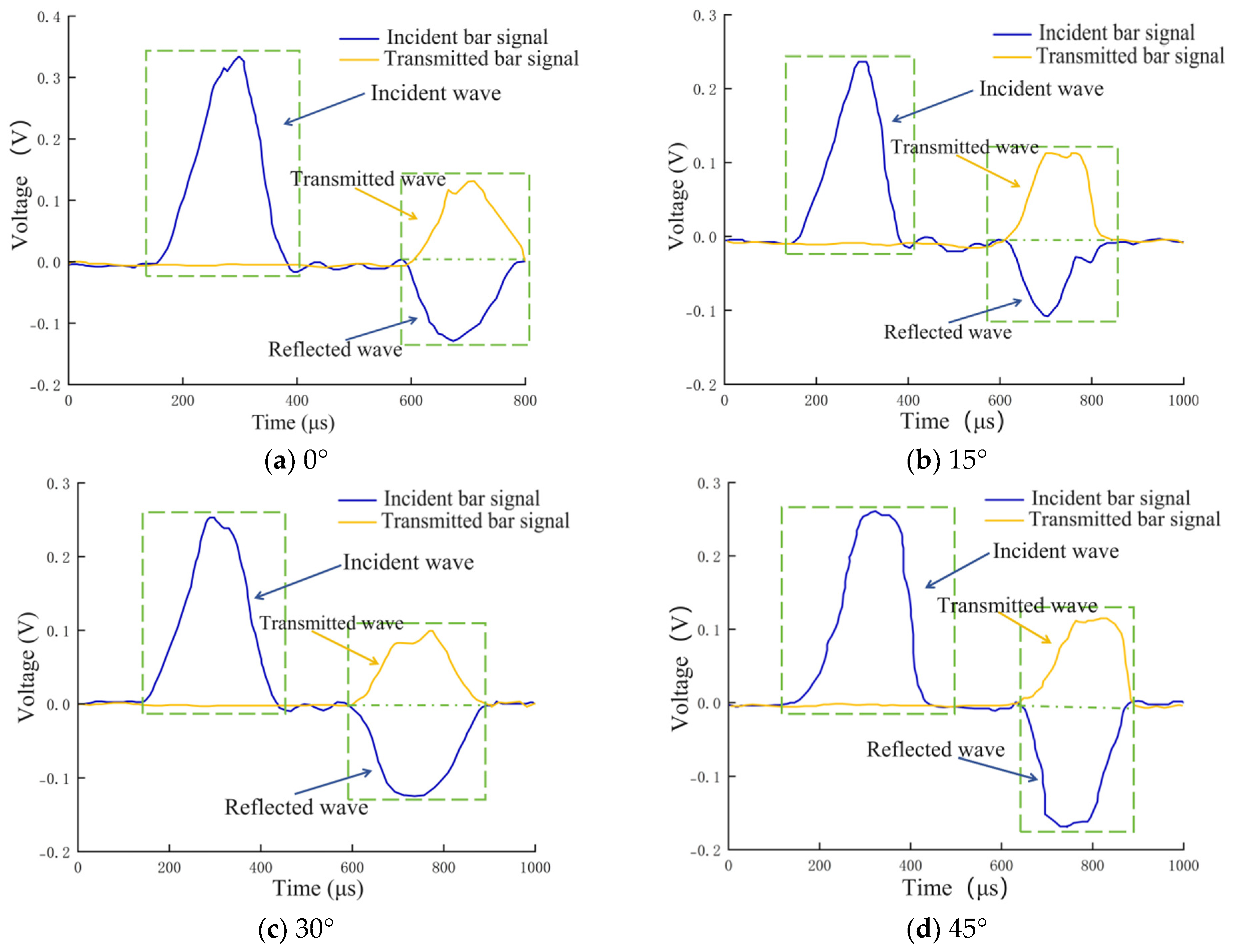
To investigate the impact of different coal seam dip angles on the incident, reflected and transmitted wave, typical datasets under an impact gas pressure of 0.12 MPa were selected from the four experimental groups. The characteristic analysis of voltage amplitudes for different composites was conducted based on the signals captured by the strain gauges attached to the incident and transmission bars, as shown in Figure 5.
As illustrated in Figure 5, as the coal seam dip angle increases, the peak amplitude of the reflected wave gradually intensifies, while that of the transmitted wave exhibits a corresponding attenuation. The attenuation of the transmitted wave is mainly attributed to the reflective phenomena at the interfaces between the bars and the specimen during the transmission process from the incident bar to the transmission bar. The composite specimen acts as a transmission medium, and the incident wave undergoes significant strength attenuation during its propagation through the internal structure of the specimen. Furthermore, under constant impact gas pressure, an elevation in the dip angle leads to a distinct degradation of the internal stability of the composite. This transition in the failure mechanism results in a decrease in transmitted energy and a concomitant increase in reflected energy during the impact process.

3.3. Analysis of Dynamic Stress-Strain Curve Characteristics for RCR Composites

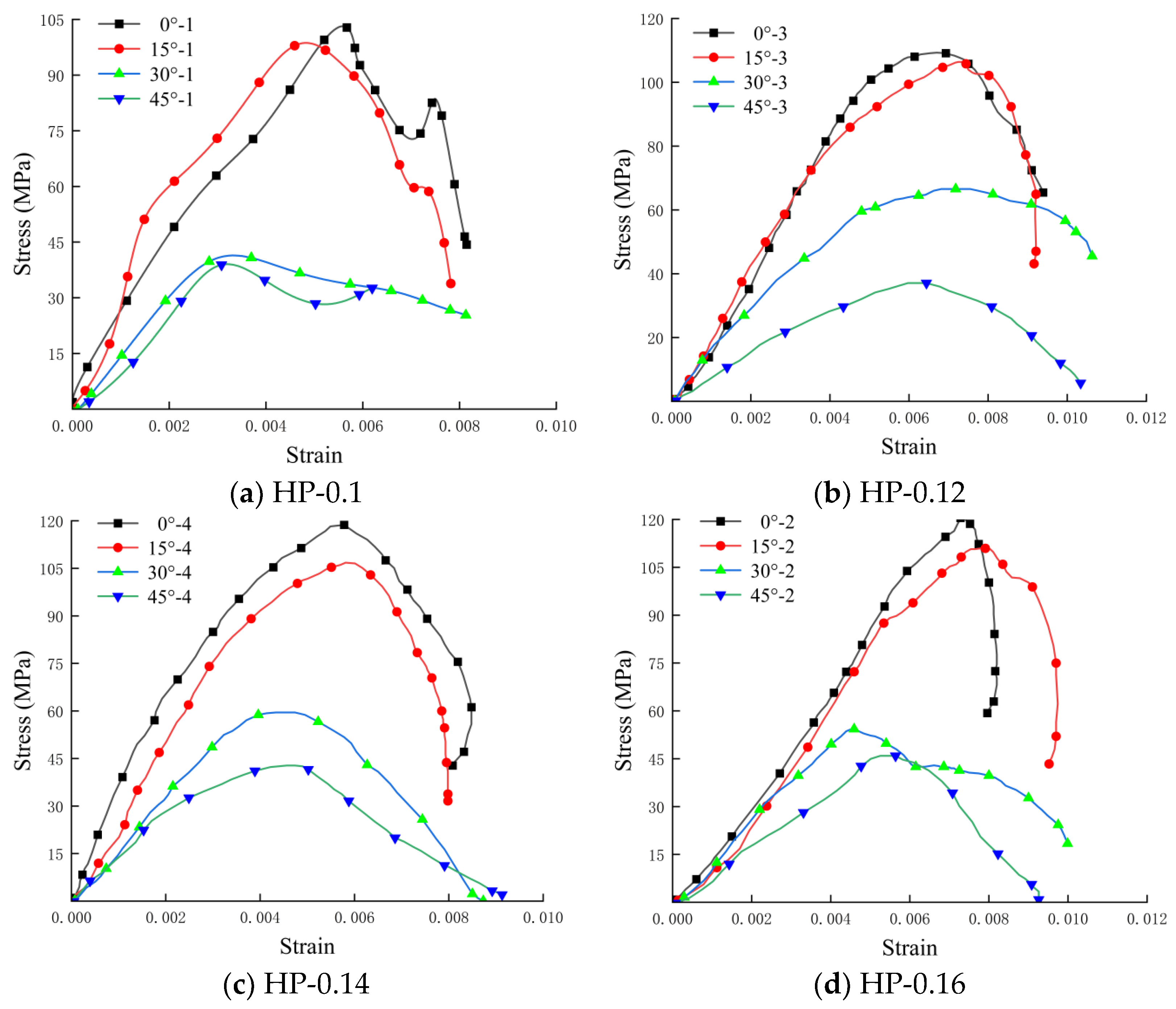
Figure 6 presents the dynamic stress–strain curves of the four sets of specimens. Because the tests are carried out under high strain rate conditions, the impact speed is fast, the load occurs instantaneously, and the pores inside the specimens have not yet closed, directly reaching the elastic stage. The stress on the specimens shows an elastic growth stage before reaching 90 MPa. When the specimen reaches the peak stress, some stress–strain curves show different degrees of stress rebound, which is mainly because the elastic energy accumulated in the loading stage is released, and the reverse stress wave is generated on the incident bar. Since the tests are performed in a high strain rate environment, the samples are damaged at the ascending stage of the stress wave. The stored elastic energy is transformed into the surface energy and kinetic energy of the fragments post the combination’s fracture; thus, stress declines with the growth of strain.
It can be seen from Figure 6 that the peak stress of the sample decreases with the increase of the dip angle of the coal seam. Under the impact, the peak stress and the corresponding maximum stress–strain curve of the 0° specimen are higher than those of the 15° specimen. The 15° sample is higher than the 30° sample, and so on. Through four groups of experiments, it is found that the peak stress of each group of coal seam dip angle 15–30° sample decreases in a cliff-like manner. Based on the classification of coal seam dip angles, under high strain rate impact conditions, the greater the coal seam dip angle, the more prominent the slip effect, resulting in the decrease of overall stability. It is further explained that the overall stability decreases sharply when the angle interval from the gently inclined coal seam to the inclined coal seam.
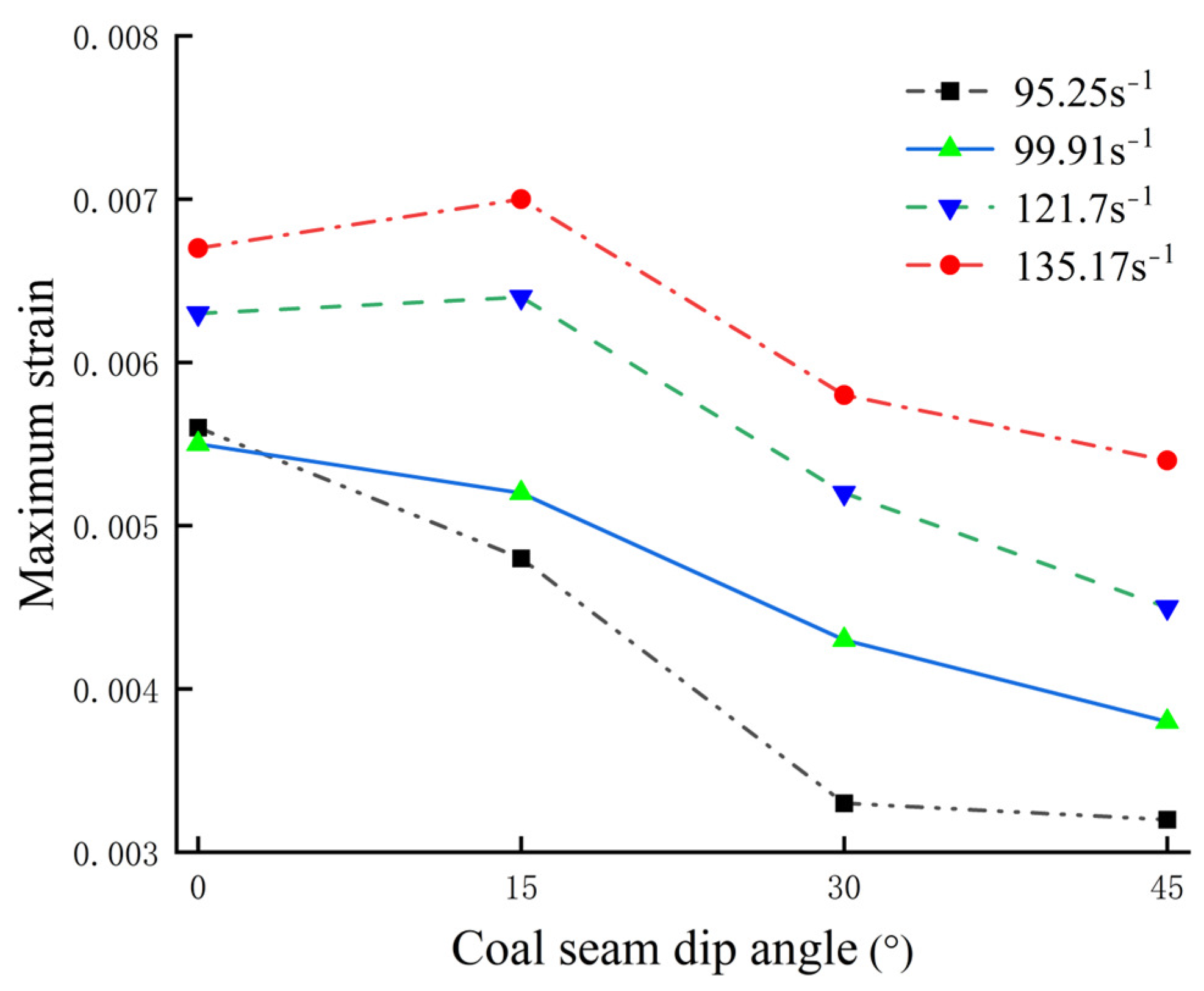
Figure 7 depicts the correlation among various coal seam dip angles of the coal–rock composites, strain rate, and the maximum strain of the specimens. During the impact loading process, the maximum strain generated by the specimen is the direct embodiment of the maximum deformation capacity that can be withstood under dynamic load conditions. It is found that of the four groups of experiments, in the two groups of experiments with strain rates of 95.25 s−1 and 99.91 s−1, the maximum strain of the combination did not fluctuate too much, and the upper and lower ranges are about 0.002, indicating that the strain rate is comparatively low. In this case, the change of deformation caused by coal seam dip angle is not obvious under high strain rate conditions. As the strain rate increases, the maximum strain of the specimen rises, and the deformation induced by the coal seam dip angle shows a more notable growth. The maximum strain of the samples with 0° and 15° inclination angles shows little difference during the experimental process. In the first two groups of experiments, the maximum deformation of the specimens with inclination angles of 0° is greater than that of the specimens with inclination angles of 15°. In the latter two groups of experiments with higher strain rates, the specimens with inclination angles of 0° are less than 15°. Compared with the specimens with inclination angles of 30°, it is more stable and there will be no obvious slip effect. Especially under the condition of high strain rate, many cracks in the specimens produce expansion resistance, which leads to the situation that the maximum strain of 15° specimens is slightly larger than that of 0°. Coal seam dip angles of 30° and 45° are, respectively, categorized as the inclined coal seam and the steeply inclined coal seam. The stability is poor, and the slip failure effect will occur at each strain rate. The specimen is destroyed more quickly, and the maximum strain decreases with the increase of the dip angle.

3.4. Relationship Between Dynamic Compressive Strength and Elastic Modulus of Coal–Rock Combination

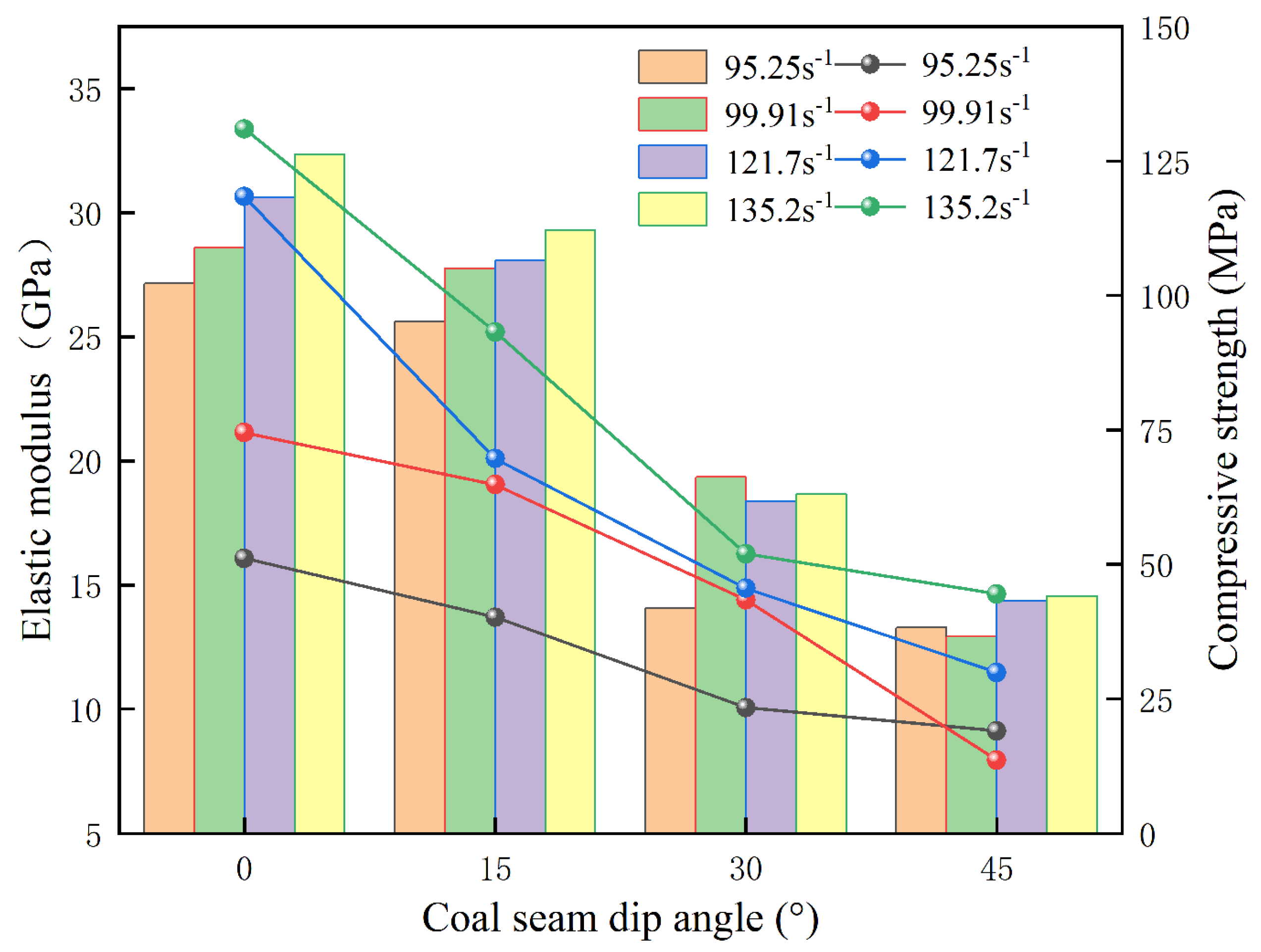
In the Hopkinson bar impact test of coal–rock combination specimens with different coal seam dip angles, the changes of coal seam dip angle, compressive strength, and elastic modulus of the specimens are shown in Figure 8. When the impact pressure of each group is set to 0.1, 0.12, 0.14, and 0.16 MPa, the average values of the highest dynamic strain rate of the corresponding specimens are 95.25 s−1, 97.91 s−1, 121.7 s−1, and 135.17 s−1, respectively. It is found that the compressive strength of each group in the experiment shows a downward trend with the increase of angle, and the decrease is particularly obvious when the dip angle is 15~30°, which corresponds to the span of gently inclined coal seam and inclined coal seam. Through the comparison of experimental data across groups under varying strain rates, it is observed that the dynamic compressive strength of specimens with a 0° coal seam dip angle is 102.21, 108.89, 118.20, and 126.21 MPa, respectively, when the strain rate is 95.25 s−1–135.17 s−1, which increases by 6.54%, 8.55%, and 6.78%, respectively. This is because in the impact process of different strain rates, the duration of the sample in the elastic stage is not long, and the plastic characteristics are obvious. As the experiment progresses, the specimen reaches the compressive peak and is destroyed. The peak values of strength at different strain rates are also significantly different, and the strain rate effect appears [24]. During the experiment, each crack of the sample will produce propagation resistance under dynamic loading. The higher the strain rate, the stronger the expansion resistance, and consequently the greater the peak strength of the specimen.
As shown in Figure 8, the increased dip angle brings about a progressive reduction in the specimen’s load-bearing capacity, accompanied by a corresponding decrease in its elastic modulus. In order to compare the changes of elastic modulus in each group selected the change rates of specimens with 0° and 45° inclination angles for comparative study. In the four processes of strain rate increasing from 95.25 s−1 to 135.17 s−1, the elastic modulus of specimens with inclination angles of 0° and 45° decreased by 167.2%, 152.1%, 128.0%, and 75.5%, respectively. This is because, with the increase of strain rate, the slip effect of the specimen will become more and more obvious. The faster the impact speed is, the faster the rock mass at one end of the specimen is ejected.
Examining the relationship between the elastic modulus and the coal seam dip angle, the elastic modulus of the same dip angle of each group of experiments under different strain rates also showed significant differences. In order to eliminate the influence of the dip angle of the coal seam on the data, four groups of 0° samples were selected under different strain rates. The order of the elastic modulus of the specimen under the change of strain rate from low to high is 16.07 GPa, 21.13 GPa, 30.65 GPa, and 33.37 GPa. Strain rate changes show a positive correlation with the elastic modulus of the composite. The fracture toughness of the specimen itself plays a role. Each micro-unit and crack in the specimen will produce expansion resistance under impact. The higher the strain rate is, the greater the expansion resistance will be, resulting in a positive correlation between the two.

4. Energy Dissipation of Coal–Rock Combination Under Different Impact Pressures

The elastic modulus is frequently adopted as a standard index to characterize the deformation properties of rocks [25]. However, in high strain rate environments, the initial segment of the stress–strain curve is often non-linear, where the elastic modulus is conventionally defined as the tangent slope at the origin of the curve. Nevertheless, as illustrated in Figure 8, the linear tangent segment is extremely short, leading to insufficient precision for slope determination; thus, the conventional tangent method is inapplicable here. Consequently, following the methodology proposed in Reference [26], the secant modulus is employed as the dynamic elastic modulus of the rock, expressed as:
E 50 = σ 50 / ε 50
where E50 is the deformation modulus of the rock (GPa); σ50 is the stress value corresponding to 50% of the peak dynamic compressive strength (MPa); ε50 represents the axial strain at σ50. The dynamic elastic modulus data are calculated based on this formula.

4.1. Energy Dissipation Characteristics of Coal–Rock Combination with Different Coal Seam Dip Angles

Coal–rock composites contain numerous primary cracks, and their failure process stems from the propagation and coalescence of these cracks. The process of failure is accompanied by energy absorption, dissipation, and release [27].
In the process of the SHPB experiment, the bullet is impacted on the incident rod by air pressure, and most of the impact kinetic energy is largely transformed into incident energy in wave form. Some of this energy will be reflected back to the incident rod, while the remaining part will be conveyed to the specimen. The energy incoming to the specimen undergoes additional reflection and transmission between the specimen and the transmission bar, featuring repeated reciprocal reflection and transmission between the two components.
The calculation formula of the energy contained in the stress wave is:
W = A e C e E e 0 t σ 2 ( t ) d t = A e E e C e 0 t ε 2 ( t ) d t
In the formula: Ae denotes the cross-sectional area of both the incident bar and the transmission bar, Ee denotes the elastic modulus corresponding to both the incident bar and the transmission bar, Ce is the wave velocity of the incident rod and the transmission rod, ε(t) denotes the strain associated with the stress wave.
According to the conservation of energy [28], in the SHPB test, the calculation formula of the dissipation energy Ws of the combination is:
W S = W I W R W T
In the formula: WI, WR, and WT stand for incident, reflection, and transmission energy in sequence. The calculation formula is:
W I = A e C e E e 0 t σ I 2 ( t ) d t = A e E e C e 0 t ε I 2 ( t ) d t
W R = A e C e E e 0 t σ R 2 ( t ) d t = A e E e C e 0 t ε R 2 ( t ) d t
W T = A e C e E e 0 t σ T 2 ( t ) d t = A e E e C e 0 t ε T 2 ( t ) d t
In the formula: σ I ( t ) / σ R ( t ) / σ T ( t ) are the stress of incident wave, reflected wave, and transmitted wave, respectively.
ε I ( t ) / ε R ( t ) / ε T ( t ) represent the strain of incident, reflected, and transmitted wave respectively [29].
In the process of deformation or stress, the material per unit volume will produce energy dissipated by irreversible processes such as internal friction and plastic deformation, and the size of the composite specimen is different. To study the energy dissipation of the sample, unit volume energy absorption is usually utilized as a key indicator, also known as dissipation energy per unit volume [30].
W v = W s V
Wv is the dissipated energy per unit volume, J/cm3; v is the volume of the sample, cm3.
The dynamic energy parameters of all specimens are listed in Table 2.

4.2. Relationship Between Reflection Energy and Transmission Energy and Dip Angle of Coal Seam

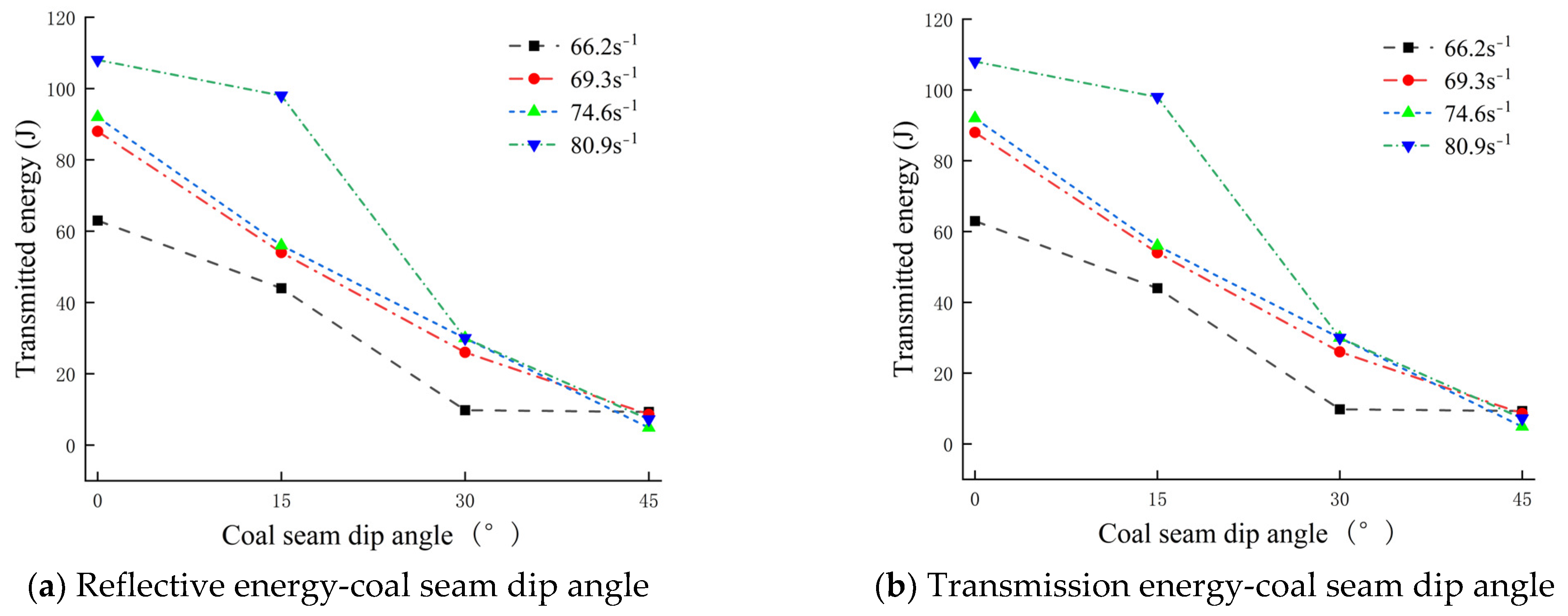
In the experimental process, the energy-related data of rock–coal composite specimens under different coal seam dip angles and strain rates were analyzed and sorted, yielding the curves depicting the relationship between transmission energy, reflection energy, and the dip angle of the coal seam. As shown in Figure 9, when the incident energy is 139~327 J, as the coal seam dip angle increases, the reflection energy of the specimen rises steadily, while the transmission energy decreases gradually. This trend is most significant when the incident energy is in the range of 305~327 J, and the reflection energy of different inclination angles increases the most, from 57 J of 0° to 103 J of 45°, with an increase of 80.7%. At the same time, the transmission energy decreases the most, from 108 J of 0° to 7.2 J of 45°, with a decrease of 93.4%. The above phenomena show that under the action of different coal seam dip angles, the damage degree of the internal structure of the sample gradually increases. Because the bearing capacity of the coal body is lower than that of the rock mass, the micro-cracks first generated by the coal body increase, and the slip effect becomes more obvious with the increase of the dip angle, resulting in an increase in the degree of damage. The greater the dip angle of the coal seam, the more proportion of energy reflected to the incident rod continues to increase. When the impact pressure is constant, the transmission energy decreases, which also reflects the significant defects of the large dip angle of the coal seam in the process of high strain rate impact.
With the coal seam dip angle being the same, the size of incident energy also demonstrates obvious rules regarding the reflection energy and transmission energy of the specimen. The reflection energy maintains good strain rate sensitivity at all inclination angles. Even at a 45° inclination angle, the difference in reflection energy between high and low strain rates is still significant. This shows that the large inclination angle combination will return more energy in the form of reflected wave rather than absorption or transmission in the face of high strain rate.
The reflection energy is also sensitive to the change of strain rate. At the strain rate of 80.9 s−1, the slope of the curve is significantly larger than that of other lower strain rate groups. This demonstrates that with the synergistic influence of a large dip angle and an elevated strain rate, the stress wave reflection phenomenon at the interface of the composite is the most severe. Transmission energy shows an increasing trend as the strain rate rises. For instance, in the case of specimens with a 0° coal seam dip angle, when the strain rate increases from 66.2 s−1 to 80.9 s−1, the transmission energy correspondingly rises from 63 J to 108 J. This shows that the total energy of the load at high strain rate is higher. Although there is loss at the interface, the energy transmitted to the transmission rod increases.
As the dip angle of the coal seam grows progressively larger, coal body crushing and interfacial shear failure become the dominant failure modes of the specimen. At this time, the increased impact energy cannot completely penetrate the inclined interface and is converted into reflection energy, specimen crushing, and energy dissipation. This regularity embodies the intrinsic mechanism governing energy distribution within the coal–rock composite. At the same dip angle, an elevated strain rate shortens the duration of stress wave interaction with the interface while boosting the per-unit-time energy input density [31].

4.3. The Relationship Between Unit Volume Dissipation Energy, Compressive Strength, and Coal Seam Dip Angle

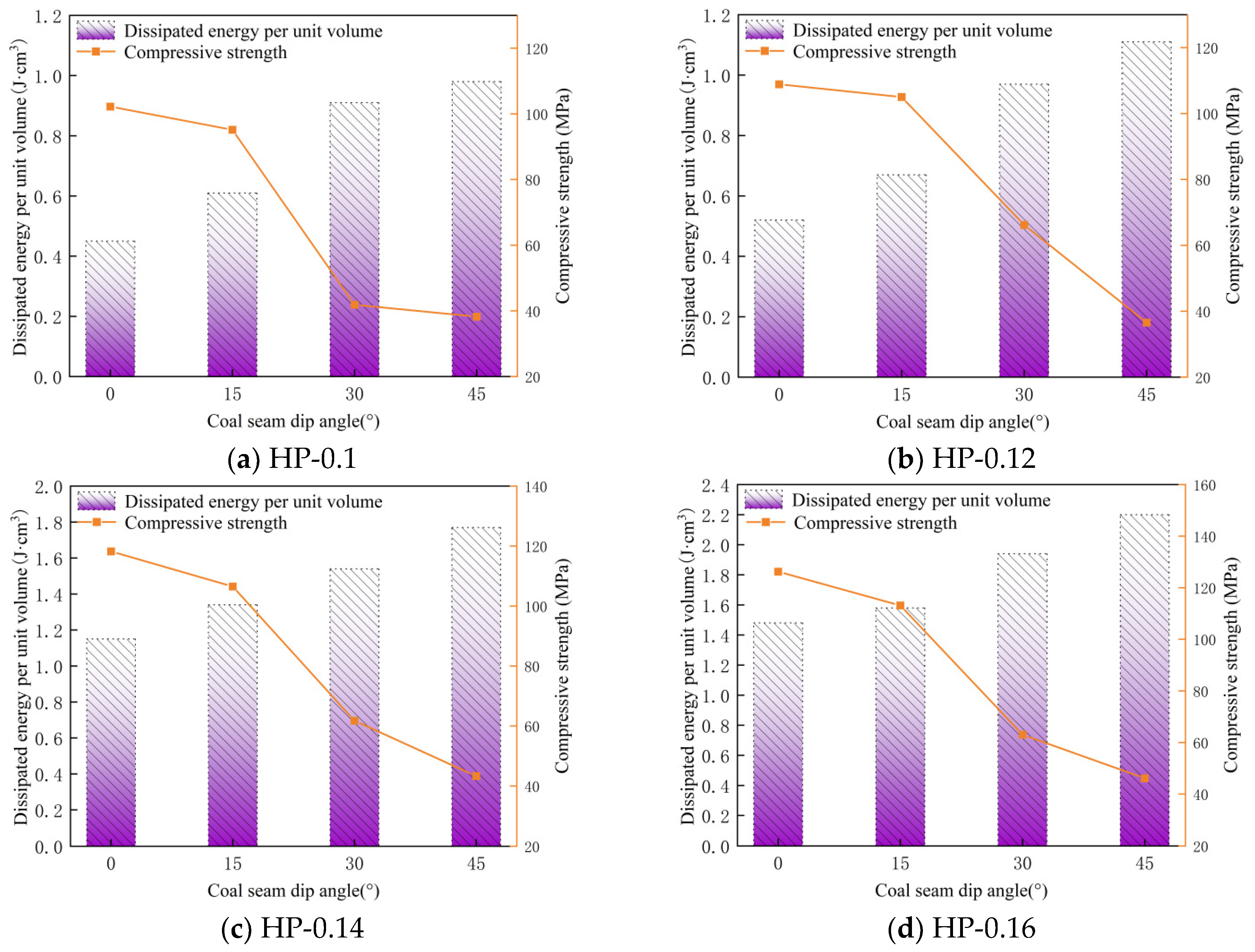
To further delve into the energy dissipation mechanism underlying the dynamic instability of coal–rock composites, the intrinsic evolutionary relationships between dynamic compressive strength, unit volume dissipation energy, and varying coal seam dip angles were analyzed, as illustrated in Figure 10.
It is evident from the figure that the dynamic compressive strength of the coal–rock composite presents obvious nonlinear degradation characteristics with increasing coal seam dip angle under identical impact pressure [32]. In the dip angle range of 0–15°, the rate of strength reduction is relatively slow. However, when the dip angle falls into the gently inclined interval of 30–45°, the dynamic compressive strength undergoes a significant decline. For instance, at an impact pressure of 0.12 MPa, the strength drops by 36.9%, from 105.01 MPa to 66.21 MPa, as the dip angle increases from 15° to 30°.
The mechanical nature of this strength reduction is due to the change of failure mode. At low dip angle, the combination is subject to fracture or compression-shear failure dominated by coal strength. Different from the law of ‘the higher the strength, the greater the dissipation energy’ of homogeneous rock, with the gradual increase of the coal seam dip angle, the unit volume dissipation energy of coal–rock composites shows an inverse increasing tendency. Under the high pressure impact of 0.16 Mpa, the unit volume dissipation energy of the combination with an inclination angle of 45° reaches 2.20 J/cm3, which is significantly higher than that of the 0° sample of 1.48 J/cm3.
The dynamic mechanical response of coal–rock combination is affected by the constraint of coal seam dip angle and strain rate effect. The increase of inclination angle not only leads to the weakening of strength structure, but also changes the distribution form of energy.

5. Macroscopic Failure Characteristics of Coal–Rock Combination Under Different Impact Pressures

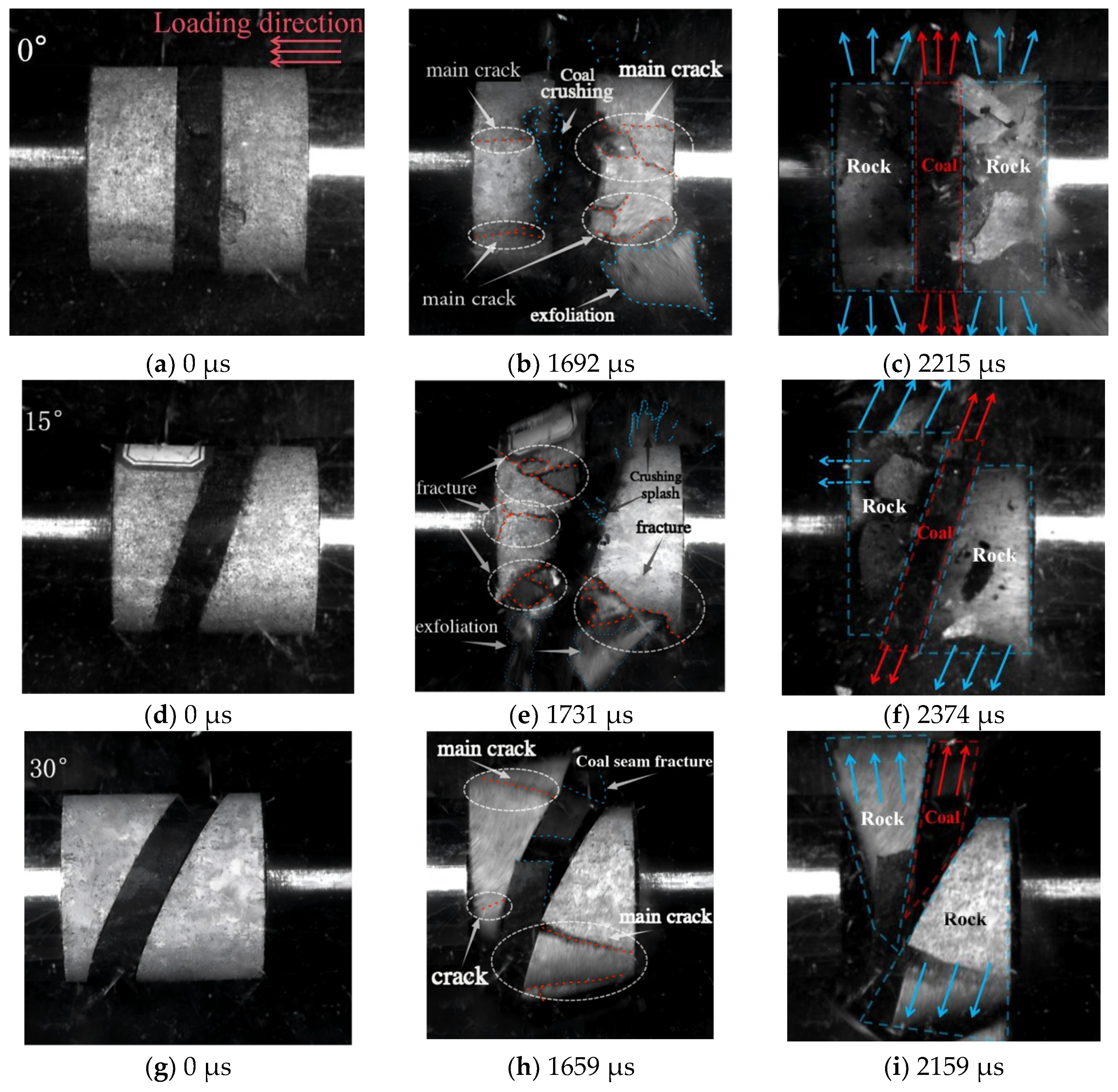
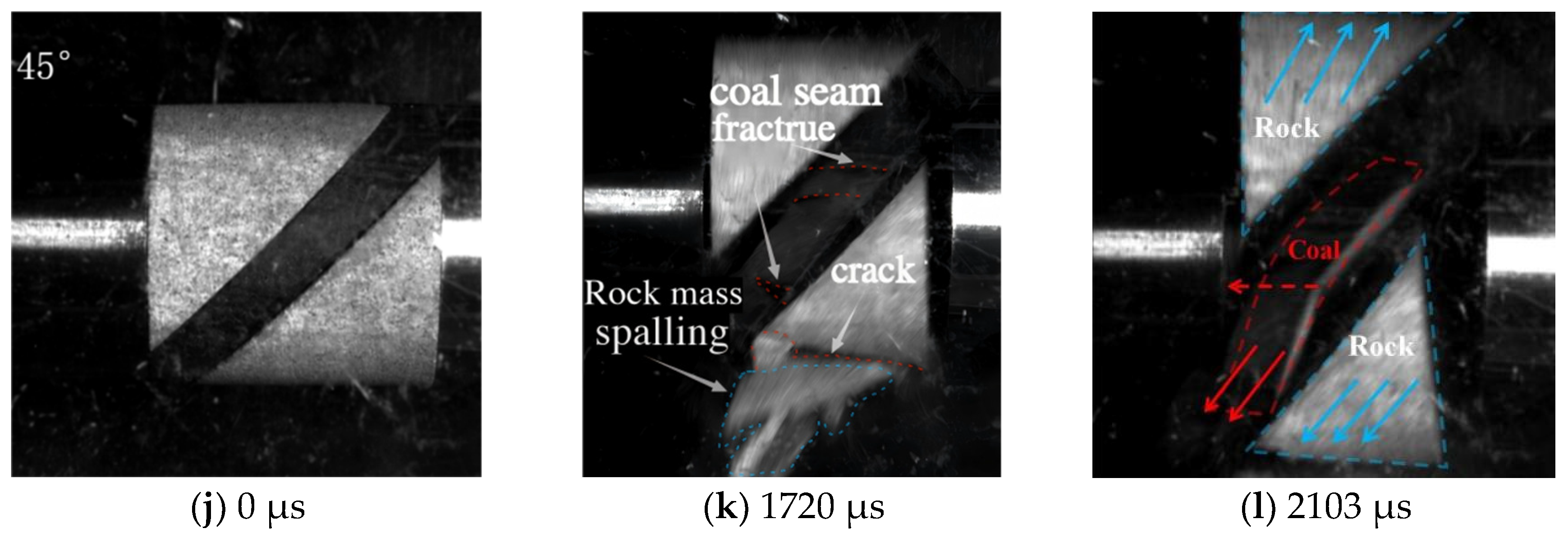
To explicitly compare the influences exerted by impacts of diverse coal seam dip angles and strain rates on the failure mechanisms of coal–rock composites, the first and fourth groups of tests were selected for comparison. The impact pressures were 0.10 MPa and 0.16 MPa, respectively. Three photos of key stages were selected for analysis in each experiment, which were pre-failure stage, bearing stage, and post-failure stage.
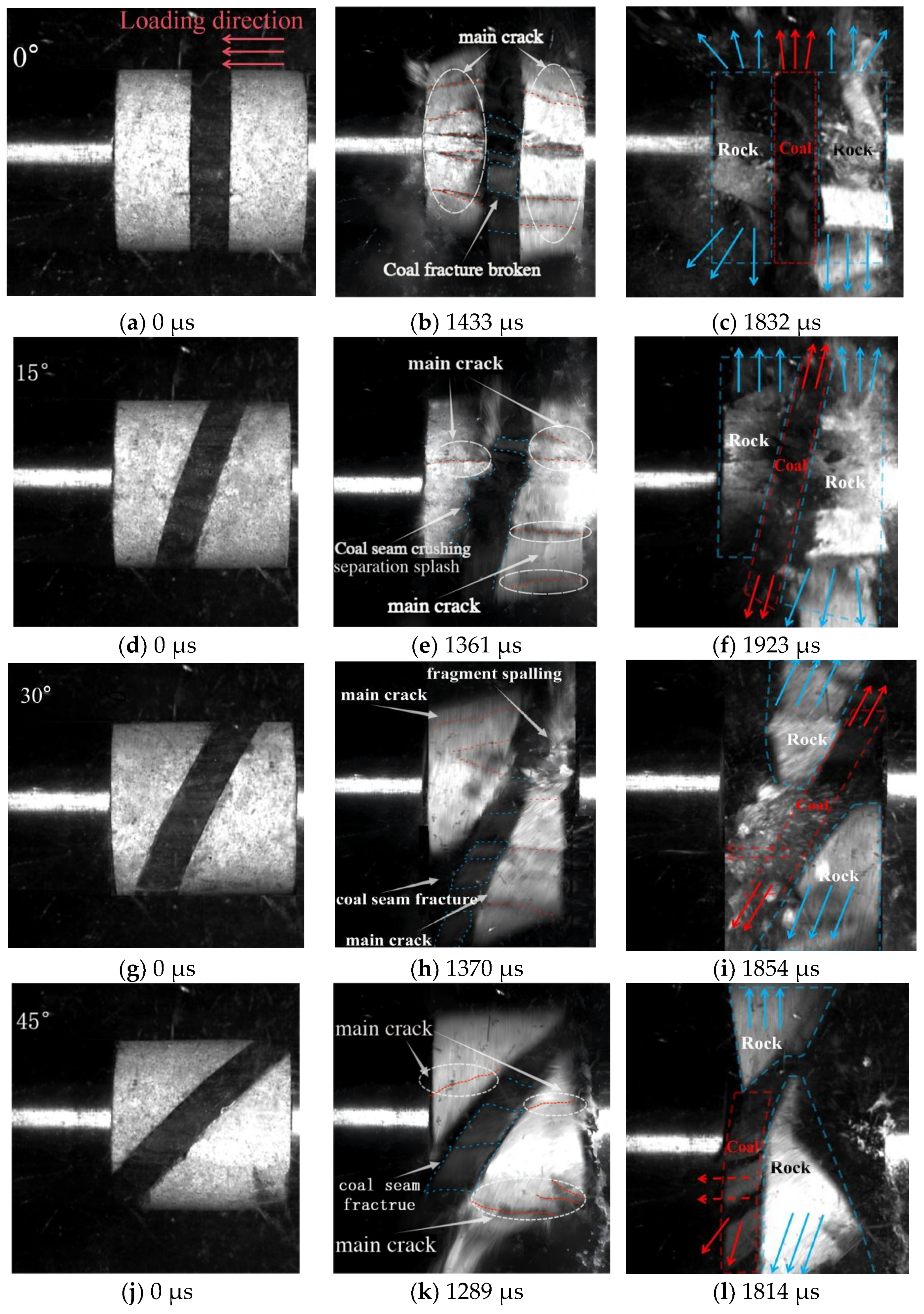
The phase change diagram of each angle of the coal–rock combination under 0.10 MPa air pressure impact is shown in Figure 11. Firstly, by comparing the 0° and 15° specimens, it is found that the failure process of the two specimens is similar. First, stress concentration occurs between coal seams, resulting in compression and bulging. The low strength results in many pores and large deformation of the coal seam in the combination. The stress wave reflects and transmits at the joint and the cementation surface, and the reflected wave will promote the local initiation of the cementation surface. Cracks and separation. According to the stress–strain data, when the stress reaches the peak value, the coal seam is stripped, the cementation surface produces new cracks, and the separation is intensified. During the post-peak period of the stress–time curve, accumulated joint energy is released, with a large number of coal seams flaking off and joints fracturing; this process ultimately causes the coal–rock composite to fracture entirely and lose its load-bearing capacity completely.
When stress is steadily increased up to the peak, subsequently moving into the post-peak phase, the primary cracks initiate and propagate at a fast rate. The rock mass at both ends develops from local spalling to large-scale fragmentation, and a large number of rock blocks are scattered in blocks or sheets. In this stage, the overall instability of the rock mass occurs due to the concentrated release of energy. The failure range extends from the interface to the depth of the rock mass until the coal body is completely broken, and the whole specimen loses its bearing capacity. Observing the specimens of 0° and 15°, it is found that the spalling direction of rock fragments in the impact is different. The direction of rock spalling of the 15° specimen is roughly the same as that of the coal seam dip angle, while the spalling direction of the 0° specimen is upward or downward. This is because when the coal seam dip angle of the coal–rock combination reaches 15°, the phenomenon of sliding failure will occur during loading. For the coal–rock composite with a 0° dip angle, the crack initiation direction of the rock is parallel to the maximum principal stress direction, and the coal body undergoes splitting tensile failure. In contrast, the rock’s crack initiation direction in the 15° dip angle composite is at an angle to the maximum principal stress, with failure resulting from the compressive-shear effect on the coal body and the tensile-shear effect on the rock mass. Observing the degree of coal seam breakage in the two tests, it is found that the 0° specimen is more broken than the 15° specimen, which is also related to the different failure modes of the two inclination angles.
The slip effect of 45° specimen is more obvious than that of 30° specimen. The main crack in coal seam is parallel to the direction of principal stress and accompanied by multiple cracks. At the same time, the rock mass has a relative slip trend with the direction of coal seam dip angle. When the stress–strain curve reaches the post-peak stage, the number of coal flake spalling increases, resulting in plastic deformation and a large relative slip of rock mass, and the energy gathered in the specimen is released instantaneously.
Figure 12 depicts the stage-wise evolutionary process of coal–rock composites with varied inclination angles under an impact air pressure of 0.16 MPa. Notably, the coal–rock composites with 0° and 15° dip angles exhibit remarkable similarity in their failure processes. Under the high-speed dynamic impact, the specimen is destroyed instantaneously. The fine cracks inside the coal–rock combination have not yet reached the compression and closure stage, and have directly reached the elastic stage. Along with the main cracks parallel to the principal stress in the rock mass at both ends and the fragments formed by multiple fractures in the coal body, the stress concentration occurs between the coal body and the rock mass, and the drum phenomenon occurs. The subsequent main cracks are interconnected, and the specimen is divided into several fragments.
The specimens with 0° and 15° dip angles correspond to the near horizontal coal seam and the gently inclined coal seam, respectively, which is also the reason why the compressive strength and failure form of the two dip angles are similar. There are also distinct disparities between the two aforementioned dip angles. For the 0° dip angle specimen, the coal shows more severe crushing and splashing than the 15° dip angle specimen. Although the area of the contact interface between the rock mass and the coal body of the 15° inclination specimen is larger than that of the 0 degree specimen, due to the poor continuity, low density, and the existence of primary pores and secondary cracks between the coal body and the rock mass, during the loading process, the first damage appears in the coal body segment adjacent to the loading direction, and thereafter, the rock along the loading direction develops numerous main cracks. Because the coal body plays a role in buffering and changing the stress direction between the two rock masses, the main cracks on the other side of the rock mass are much less. The comprehensive failure extent of the specimen is also less severe than that of the 0° dip angle specimen, with large-sized fragments being more numerous than those of its 0° counterpart.
By observing the failure process of 30° and 45° inclined coal–rock combination under 0.16 MPa air pressure impact, it is found that the failure process after 0.10 MPa. After the inclination angle reaches 30°, the combination begins to slip. Regarding the failure characteristics, the larger the dip angle, the more pronounced the slip effect. An increase the strain rate intensifies the failure severity of the specimen significantly, while the number of fragments generated after coal body fracture also rises, and the relative sliding speed of rock mass with the angle of inclination will be faster. With the release of the energy accumulated within the coal–rock composite, the transmission and reflection of the stress wave are superimposed. Both the coal body and the rock mass generate shear cracks that form a specific angle with the principal stress direction. Subsequently, the coal body starts to fracture and spall, while fragments of the rock mass begin to detach. Eventually, the main part of the rock mass slides along the coal seam dip angle, leading to the coal–rock composite’s complete loss of load-bearing capacity.
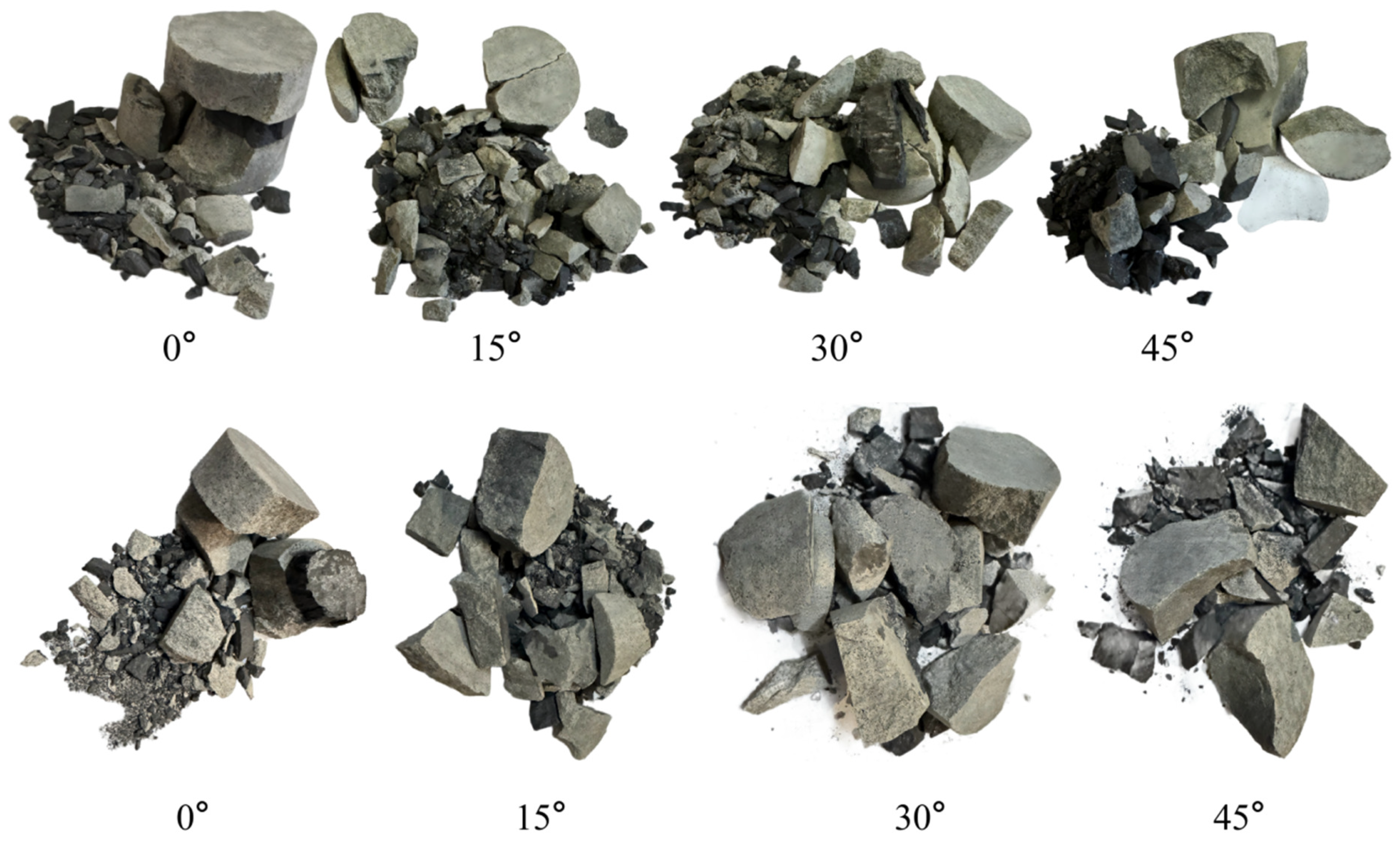
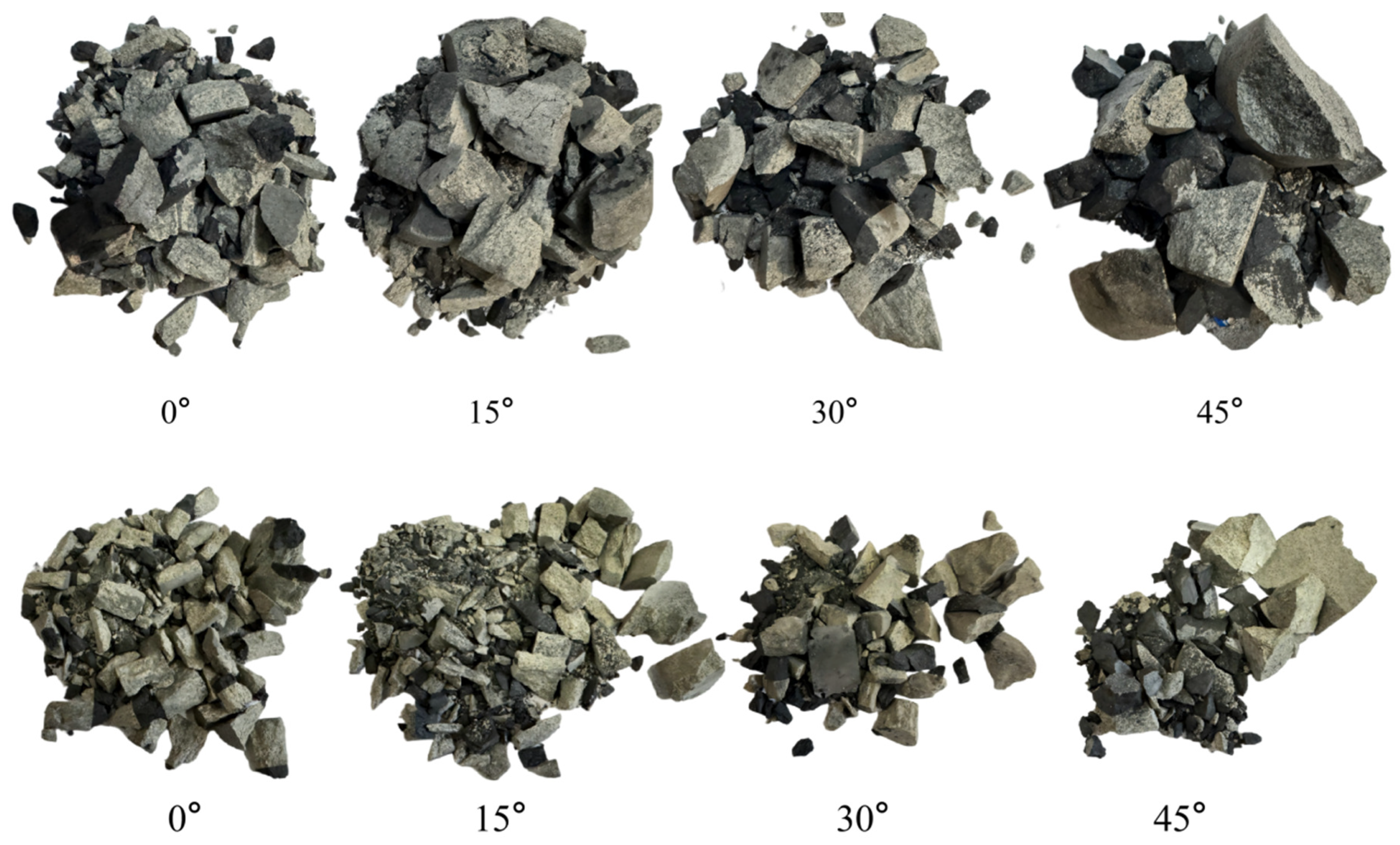
Figure 13 illustrates the failure characteristics of coal–rock composites with distinct coal seam dip angles under dynamic impact conditions of varying pressures. Four kinds of angle samples were selected for analysis in each group. Under low impact air pressure conditions, splitting failure is the dominant mode of the specimens. As the impact air pressure increases, the failure mode also changes into crushing failure mode. In terms of particle size distribution, the increase of air pressure directly leads to the decreasing trend of sample size, the proportion of small particle size fragments increases, and the overall crushing degree of the sample also increases. Specimens with different dip angles also exhibit distinct failure modes under identical impact pressure conditions. Because the high strain rate gives the sample a large impact energy in a short time, and its loading rate is much larger than the speed of crack closure inside the sample, the crack will expand in different directions when the sample is loaded. The dip angle of the coal seam is the dominant factor of the overall failure mode of the specimen.
From the perspective of crack propagation of the sample, due to the different natural damage of the coal rock mass in the sample, there will be primary cracks of different sizes inside the sample. At low strain rates, the damage severity of the specimen is relatively slight, with only a small number of microcracks being generated. The excited cracks expand along the direction parallel to the principal stress, resulting in the fragmentation of the sample showing a strip of tensile failure characteristics. When the strain rate increases, a large quantity of new cracks emerges within the specimen. These newly formed cracks propagate and link up with the pre-existing cracks, causing the composite’s fragmentation degree to intensify until it is completely shattered [33].
In addition to the effect exerted by coal seam dip angle on the destructive behaviors of the composite, various strain rates also act as key factors influencing the specimen’s failure mode. Under identical coal seam dip angle conditions, the degree of specimen fragmentation differs noticeably across varying impact pressures. As the impact pressure increases, the specimen gains more energy in a brief period, and high-speed impact triggers the activation of internal cracks, ultimately leading to a more intense fragmentation failure mode with a large quantity of powdery particles.

6. Discussion

In this study, the split Hopkinson pressure bar (SHPB) system was adopted to investigate the dynamic mechanical responses of coal–rock composites with different coal seam dip angles (0°, 15°, 30°, 45°) under high strain rates. The core research findings and their implications are as follows:
The dynamic compressive strength and elastic modulus of the composites exhibit significant strain rate strengthening effects, while showing nonlinear weakening characteristics with the increase of coal seam dip angle. A critical dip angle range of 15~30° was identified: under an impact pressure of 0.12 MPa, the compressive strength within this range decreases by 36.9%. The strain rate strengthening effect observed in this study is consistent with the findings of Li and Wang et al., and both studies indicate that the strain rate effect is the core reason for the significant increase in the dynamic strength of coal-rock masses with the rise in strain rate [34,35]. This transition stems from the switch in bearing mode: at low dip angles (0~15°), coal and rock masses bear loads through synergistic deformation; when the dip angle exceeds 30°, the normal stress at the interface decreases while the shear stress surges sharply, triggering interface slip instability and resulting in a drastic drop in strength [36].
The energy evolution also presents a unique law: with the increase of dip angle, the wave impedance mismatch at the coal–rock interface intensifies, leading to a maximum increase of 80.7% in reflected energy and a maximum decrease of 93.4% in transmitted energy. Unlike homogeneous rocks, the energy dissipation density per unit volume of the composites increases inversely with the dip angle, revealing that interface slip and friction have replaced matrix fragmentation as the main energy dissipation pathways at large dip angles. For rock and coal masses, the studies by Bai and Yang et al. indicate that their energy dissipation density generally increases with the rise in strain rate, with matrix cracking as the primary dissipation mode [37,38]. In contrast, the results of this study highlight the novel energy dissipation pathway induced by the inclined interface, and the quantitative analysis of dynamic tests on coal–rock composites enriches the relevant research content.
High-speed camera results verified the transition of failure modes: axial splitting tension dominates at 0~15°, while interface shear slip prevails at 30~45°. This transition is the combined result of dip angle regulating stress distribution and strain rate compressing failure time. Han et al. employed high-speed cameras in their research on coal splitting tests under SHPB impact [39]. The characteristics of “tensile splitting at low dip angles and shear slip at high dip angles” observed in their work further verify the reliability of the test results of this study.
Compared with previous studies focusing on horizontal interfaces, this work clarifies the critical dip angle effect and the inverse evolution law of energy dissipation, filling the research gap in composite materials with inclined interfaces. For engineering applications, long anchor cable support should be adopted in the critical dip angle range to balance anti-splitting and anti-slip capabilities [40]; energy-dissipating structures such as buffer layers should be installed in high-dip-angle coal seams, and a more than 50% increase in reflected energy or a more than 70% decrease in transmitted energy can be used as early warning indicators for slip-type hazards [41].
7. Conclusions

In the present study, dynamic compression experiments were performed on Rock–Coal–Rock (RCR) composites featuring different coal seam dip angles at various impact gas pressure levels by means of a SHPB system. The mechanical response, energy evolution, and failure characteristics were systematically investigated. The main conclusions are as follows:
(1)
The mechanical parameters of the RCR composites exhibit significant strain-rate effects and structural weakening. The dynamic compressive strength shows a strong positive correlation with the average strain rate, demonstrating pronounced strain-rate hardening characteristics. Conversely, the load-bearing capacity of the composites degrades as the coal seam dip angle increases. Notably, a sharp decline in compressive strength is observed when the dip angle increases from 15° to 30°, revealing the structural instability sensitivity during the transition from gently inclined to inclined coal seam configurations.
(2)
The coal seam dip angle profoundly modulates the energy partitioning within the composites. As the dip angle increases, stress wave reflection at the coal–rock interface intensifies, leading to a significant rise in the reflected energy ratio and a concomitant attenuation of transmitted energy. The energy dissipation density (dissipation energy per unit volume) increases with the dip angle, indicating that the energy consumed by interfacial sliding and frictional work under large-dip conditions significantly surpasses the matrix fragmentation energy observed at lower angles.
(3)
The failure mode of the RCR composites transitions from axial splitting to interfacial shear-slip. High-speed imaging reveals that specimens with low dip angles (0–15°) are dominated by axial splitting tensile failure parallel to the loading direction, characterized by severe fragmentation of the coal matrix. In contrast, specimens with higher dip angles (30–45°) exhibit shear-slip instability along the coal–rock interface. This shift underscores a transition in the failure mechanism from strain-rate-driven matrix damage to interface-dominated shear instability as the dip angle increases.

Author Contributions

Conceptualization, T.Q.; Methodology, T.Q.; Validation, Y.S.; Resources, Y.D.; Data curation, Y.Z.; Writing—original draft, Y.S.; Writing—review & editing, Y.D. and G.L.; Supervision, T.Q.; Funding acquisition, T.Q. All authors have read and agreed to the published version of the manuscript.

Funding

This study was financed by the Heilongjiang Provincial Natural Science Foundation of China (Grant No. JQ2025E012).

Data Availability Statement

The original data of the manuscript can be obtained from the corresponding author Yue Song (e-mail: yuesong075@gmail.com).

Acknowledgments

We thank BC Wang for valuable suggestions, and the laboratory staff for technical support.

Conflicts of Interest

The authors declare no conflicts of interest.

References

  1. Xie, H.; Zhang, R.; Zhang, Z.; Gao, M.; Li, C.; He, Z.; Li, C. Exploration and thinking of deep earth science and deep earth engineering technology. J. China Coal Soc. 2023, 48, 3959–3978. [Google Scholar]
  2. Li, X.; Gong, F. Research progress and prospect of rock mechanics in deep mining based on dynamic and static combined loading mechanical tests. J. China Coal Soc. 2021, 46, 846–866. [Google Scholar]
  3. Wang, C.; Yang, K.; Liu, W.; Zhang, Z.; Zheng, S.; Xu, R.; Guo, P. Failure mechanism and energy dissipation characteristics of bolted body under dynamic load. Coalf. Geol. Explor. 2025, 52, 232–242. [Google Scholar]
  4. Shi, H.; Zhang, H.; Song, L.; Li, M.; Li, M.; Lin, G.; Shi, X.; Long, W.; Wu, J. Study on mechanical properties and fracture process of sandstone with prefabricated cracks under dynamic load. J. Vib. Shock. 2023, 42, 28–38. [Google Scholar]
  5. Zhang, R.; Jing, L. Relationship between fragmentation degree and energy dissipation of deep sandstone after high and low temperature in SHPB test. J. China Coal Soc. 2018, 43, 1884–1892. [Google Scholar]
  6. Wang, L.; Yuan, Q.; Xie, G.; Gu, S.; Jiao, Z.; Liu, H.; Chen, L. Aspect ratio effect of energy dissipation and fragmentation fractal of coal samples under impact load. J. China Coal Soc. 2022, 47, 1534–1546. [Google Scholar]
  7. Sun, Z.; Wu, Y.; Li, J.; Fu, Y.; Zhou, P. Dynamic damage constitutive model of sandy mudstone considering coupling effect of aspect ratio and strain rate. Coal Sci. Technol. 2026, 53, 86–99. [Google Scholar]
  8. Zheng, Q.; Li, P.; Xu, Y.; Yin, Z.; Hu, H. Energy evolution and dynamic response of pre-damaged sandstone under impact load. Adv. Sci. 2026, 58, 1–14. [Google Scholar]
  9. Wu, Y.; Sun, Z.; Fu, Y. Mechanical properties and energy dissipation laws of coal samples with different aspect ratios under 3D dynamic and static loading. Chin. J. Rock Mech. 2022, 41, 877–888. [Google Scholar]
  10. Li, C.; Xu, Y.; Ye, Z. Analysis of energy dissipation and fragmentation characteristics of coal-like rock composites under impact load. Chin. J. Geotech. 2020, 42, 981–988. [Google Scholar]
  11. Tang, L.; Tu, S.; Tu, H.; Miao, K.; Guo, B.; Zhao, H.; Ma, J. Damage characteristics and energy evolution of coal-rock composites under high static load influenced by dynamic load parameters. J. Cent. South Univ. 2025, 32, 4397–4416. [Google Scholar] [CrossRef]
  12. Zhang, J.; Zhang, S.; Bu, X.; Wang, K.; Song, Z.; Zhang, Y.; Dong, X.; Wu, S.; Xing, C.; Li, X.; et al. Mechanical damage and progressive instability characteristics of coal-rock composites under coal thickness effect. Coal Sci. Technol. 2025, 53, 96–116. [Google Scholar]
  13. Tang, J.; Wang, H.; Zhu, J.; Wang, M.; Gao, H.; Lv, N. Experimental study on fracture toughness and crack propagation characteristics of weakly cemented coal and rock under impact load. Blasting 2025, 42, 40–50. [Google Scholar]
  14. Yang, K.; Liu, W.; Ma, Y.; Dou, L.; Li, S.; Wei, Z.; Xu, R. Experimental study on impact dynamic characteristics of coal-rock composites. J. China Coal Soc. 2022, 47, 2569–2581. [Google Scholar]
  15. Xie, B.; Wang, X.; Lyu, P. SHPB impact failure dynamic mechanical properties experiment of bedded coal and rock. J. Vib. Shock. 2017, 36, 117–124. [Google Scholar]
  16. Ji, D.; Gao, X.; Dong, B.; Gao, L.; Zhao, X.; Ma, Y.; Liu, Y. Mechanical instability mechanism and damage constitutive model of composite rock mass under dynamic load. J. Vib. Shock. 2024, 43, 103–116. [Google Scholar]
  17. Zhao, H.; Ji, D.; Liu, S.; Cheng, H.; Wu, T. Dynamic response mechanical properties and constitutive model of composite rock mass under impact load. Chin. J. Rock Mech. 2023, 42, 88–99. [Google Scholar] [CrossRef]
  18. Zhu, C.; Ma, C.; Zhou, J.; Ren, J.; Yu, Q. Mechanical properties and failure characteristics of composite coal-rock mass under dynamic and static load coupling. J. China Coal Soc. 2021, 46, 817–829. [Google Scholar]
  19. Duan, H. Analysis of strength and failure characteristics of coal-rock composites under different interface dip angles. Shanxi Metall. 2024, 47, 54–56. [Google Scholar]
  20. Zhao, Y.; Tang, T. Study on impact failure characteristics of coal-rock composites with different dip angles. Coal Technol. 2024, 43, 34–38. [Google Scholar]
  21. Chen, G.; Wang, C.; Tian, C.; Li, T.; Wang, E.; Gao, N.; Xu, Z.; Zhang, G.; Chen, W.; Shang, J. Review on research progress of dynamic failure response of coal-rock composites. Met. Mine 2024, 12, 10–25. [Google Scholar]
  22. Chen, J.; Zeng, B.; Zhang, J. Effect of loading-unloading behavior under impact loading on mechanical properties of impact-prone rock. J. China Coal Soc. 2024, 49, 2283–2297. [Google Scholar] [CrossRef]
  23. Ma, Z.; Ma, Z.; Pan, R.; Cui, F. Mechanical properties and energy evolution law of combined coal-rock mass under different stress states and strain rates. Coal Sci. Technol. 2025, 53, 102–113. [Google Scholar]
  24. Li, X.; Li, H.; Liu, K.; Zhang, Q.; Zou, F.; Huang, L.; Zhao, J. Study on dynamic mechanical properties and fracture characteristics of rocks under impact load. Chin. J. Rock Mech. 2017, 36, 2393–2405. [Google Scholar]
  25. Qin, T.; Duan, Y.; Sun, H. Mechanical characteristics and energy dissipation characteristics of sandstone during triaxial loading. J. China Coal Soc. 2020, 45, 255–262. [Google Scholar]
  26. Li, X.; Gong, F.; Gao, K.; Yin, T. Experimental study on impact failure of rock under 1D dynamic and static combined loading. Chin. J. Rock Mech. 2010, 29, 251–260. [Google Scholar]
  27. Qin, T.; Duan, Y. Influence of advance speed of working face on roof strata movement in steeply inclined thin coal seam. Chin. Min. Mag. 2020, 29, 130–134. [Google Scholar]
  28. Hong, L.; Zhou, Z.; Yin, T. Energy consumption in rock fragmentation at intermediate strain rate. J. Cent. South Univ. Technol. 2009, 16, 677–682. [Google Scholar] [CrossRef]
  29. Xia, C.; Xie, H.; Ju, Y.; Zhou, H. Experimental study on energy dissipation of porous rock under impact load. Eng. Mech. 2006, 09, 1–5. [Google Scholar]
  30. Meng, Q.; Han, L.; Pu, H.; Wen, S.; Li, H.; Li, H. Experimental study on the influence of strain rate and size effect on rock energy accumulation and dissipation. J. China Coal Soc. 2015, 40, 2386–2398. [Google Scholar]
  31. Yang, L.; Gao, F.; Wang, X. Mechanical response and energy zonal evolution law of combined coal-rock with different strength ratios. J. Rock Mech. 2020, 39, 3297–3305. [Google Scholar]
  32. Wu, Y.; Yan, Z.; Luo, S.; Tang, Y.; Wang, T.; Cao, J. Stress transfer and strength characteristic dip angle effect of coal-rock mass combination. Coal Sci. Technol. 2023, 51, 105–116. [Google Scholar]
  33. Luan, H.; Jia, Z.; Zhang, S.; Guo, Y.; Jiang, Y. Macro and meso mechanical behaviors of fractured coal-rock mass combinations under cyclic loading. J. Min. Strata Control Eng. 2025, 7, 193–212. [Google Scholar]
  34. Li, M.; Mao, X.; Cao, L.; Mao, R.; Pu, H. Experimental study on mechanical properties of coal under high strain rates. J. Min. Saf. Eng. 2015, 32, 317–324. [Google Scholar] [CrossRef]
  35. Wang, E.; Kong, X.; He, X.; Feng, J.; Ju, Y.; Li, J. Dynamic analysis and damage constitutive equation of triaxial coal under impact loading. J. China Coal Soc. 2019, 44, 2049–2056. [Google Scholar] [CrossRef]
  36. Yao, S. Study on failure law and stability control of combined coal pillars of coal-rock mass with different dip angles. Coal Technol. 2025, 44, 88–92. [Google Scholar]
  37. Bai, Y.; Li, B.; Ren, C.; Li, J.; Ye, P.; Wang, H. Damage fracture mechanism and energy response of coal-rock with different bedding dip angles. J. Min. Strata Control Eng. 2025, 44, 113–129. [Google Scholar] [CrossRef]
  38. Yang, L.; Wang, B.; Liu, C.; Gan, S.; Yu, H. Energy consumption characteristics and constitutive model of structural filling body under uniaxial compression and verification. Trans. Nonferrous Met. Soc. China 2024, 3532–3546. [Google Scholar]
  39. Han, X.; Li, C.; Xing, T.; Gao, P. Experimental study on impact splitting of coal based on spatiotemporal evolution of deformation field. J. China Coal Soc. 2016, 41, 2743–2748. [Google Scholar] [CrossRef]
  40. Fu, Y.; Wu, Y.; Zhou, P.; Sun, Z.; Li, J. Dynamic mechanical properties and engineering application of high elongation anchor cable. Coal Sci. Technol. 2024, 52, 49–62. [Google Scholar]
  41. Sun, L.; Zhang, H.; Zhang, X.; Mu, Y.; Wang, K.; Yang, X.; Yang, B.; Lan, C. Large deformation characteristics of surrounding rock in dynamic pressure roadway of extremely soft coal seam and research on full anchor cable support technology. J. Min. Saf. Eng. 2021, 38, 937–945. [Google Scholar] [CrossRef]
Figure 1. Schematic diagram of SHPB experimental device.
Processes 14 00738 g001
Figure 2. SHPB principal schematic.
Processes 14 00738 g002
Figure 3. Part of coal–rock combination specimen.
Processes 14 00738 g003
Figure 4. Verification of dynamic stress equilibrium in RCR composite specimens.
Processes 14 00738 g004
Figure 5. Typical stress waveforms of RCR composite specimens at various dip angles.
Processes 14 00738 g005
Figure 6. Stress–strain curves of each test group.
Processes 14 00738 g006
Figure 7. Relationship between peak strain and dip angle of coal seam.
Processes 14 00738 g007
Figure 8. Relationship between elastic modulus and compressive strength and dip angle of coal seam.
Processes 14 00738 g008
Figure 9. Relationship between reflection energy, transmission energy, and dip angle of coal seam.
Processes 14 00738 g009
Figure 10. The relationship between dissipated energy per unit volume and compressive strength and inclination angle.
Processes 14 00738 g010
Figure 11. The progressive failure process of specimens with different inclination angles under air pressure of 0.10 MPa.
Processes 14 00738 g011aProcesses 14 00738 g011b
Figure 12. The progressive failure process of specimens with different inclination angles under air pressure of 0.16 MPa.
Processes 14 00738 g012
Figure 13. Failure characteristics of specimens with different inclination angles in each group of experiments.
Processes 14 00738 g013aProcesses 14 00738 g013b
Table 1. Influence Range of Hydraulic Fracturing.
Specimen NumberImpact Air Pressure
/(MPa)
Coal Seam
Dip Angle
/(°)
Maximum Stress
/(MPa)
Average
Strain Rate
/(s−1)
Impact Velocity
/(m/s)
HP-0.10.100102.2157.9011.39
1595.1762.1611.94
3041.8767.2311.75
4538.2277.5211.71
HP-0.120.120108.8959.3612.89
15105.0163.6812.89
3066.2167.6312.42
4536.5686.3712.69
HP-0.140.140118.2062.2614.10
15106.5165.1413.73
3061.7479.5414.11
4543.2791.2714.08
HP-0.160.160126.2168.7116.13
15113.1272.6315.93
3063.0285.0116.12
4546.1197.3115.8
Table 2. Dynamic energy parameters of specimen.
Specimen
Number
Coal Seam Dip Angle
/(°)
Incident Energy
/(J)
Reflected Energy
/(J)
Transmitted Energy
/(J)
Dissipated Energy
/(J)
Dissipated Energy Per Unit Volume
/(J·cm−3)
HP-0.101393263440.45
151454144600.61
30148499.8890.91
45156519.3960.98
HP-0.1201763788510.52
151624254660.67
301735226950.97
45174568.61091.11
HP-0.14024742921131.15
1526376561311.34
3026685301511.54
45275964.91741.77
HP-0.160310571081451.48
1530571781561.60
3031993361901.94
453271037.22162.20
Disclaimer/Publisher’s Note: The statements, opinions and data contained in all publications are solely those of the individual author(s) and contributor(s) and not of MDPI and/or the editor(s). MDPI and/or the editor(s) disclaim responsibility for any injury to people or property resulting from any ideas, methods, instructions or products referred to in the content.