

Communication

Rapid and Efficient Detection of Glyphosate in Breast Milk Samples Using High-Performance Liquid Chromatography (HPLC)


by
Lorenza Eivazian Brandão
1,†,
Rayssa Piton Rijo Costa
2,†,
Rodrigo Fernando Marandola
1,
Jéssica Aparecida Serafim
1,
Yasmin Saegusa Tadayozzi
1,
Carolina Leticia Zilli Vieira
3,
Cristiane Hengler Corrêa Bernardo
1 and
Eduardo Festozo Vicente
1,*
1
Department of Biosystem Engineering, School of Sciences and Engineering, São Paulo State University (UNESP), Tupã 17602-496, SP, Brazil
2
Department of Animal Science, School of Agricultural and Veterinarian Sciences, São Paulo State University (UNESP), Jaboticabal 14884-900, SP, Brazil
3
Department of Environmental Health, Harvard T. H. Chan School of Public Health, Boston, MA 02114, USA
*
Author to whom correspondence should be addressed.
These authors contributed equally to the work.
Processes 2026, 14(4), 677; https://doi.org/10.3390/pr14040677
Submission received: 15 January 2026 / Revised: 12 February 2026 / Accepted: 13 February 2026 / Published: 17 February 2026

Abstract

The excessive use of phytosanitary products represents a growing concern, due to their persistence and potential environmental and toxicological impacts. Among these compounds, glyphosate, a glycine-derived chemical marketed as a broad-spectrum herbicide, is one of the most widely used pesticides worldwide. Breast milk is a complex biological matrix that can reflect environmental exposure, making it highly suitable for assessing glyphosate contamination. This study aimed to demonstrate a screening method to determine glyphosate concentrations in the breast milk of 100 postpartum women residing in Tupã, São Paulo, Brazil—90 in urban areas and 10 in rural areas—using high-performance liquid chromatography (HPLC) for rapid detection. By validation parameters, it was possible to verify, through the correlation coefficient (r), that the method is linear within the working range; the LD was 0.14 mg/L and the LQ was 0.43 mg/L. The recovery obtained by standard sample fortification was 92%. All analyzed samples presented detectable levels of glyphosate, indicating consistent exposure patterns and suggesting relevant environmental contamination routes in the region. These findings provide evidence of glyphosate presence in human milk and reinforce the importance of continuous monitoring strategies and preventive public health measures aimed at reducing exposure to agricultural contaminants.

1. Introduction

The National Environmental Health Surveillance Subsystem (SINVSA), associated with the Sistema Único de Saúde (Unified Health System, SUS) in Brazil, is dedicated to overseeing and monitoring chemicals used, water quality and other issues related to the environment and agrobusiness. According to the National Cancer Institute (INCA), the exposure time and quantity of organophosphate pesticide products can cause several diseases, especially in rural producers and workers in industries linked to these pesticides [1].
When contamination happens in human breast milk, pollution by phytosanitary products can occur in the field due to direct contact with the product. The contamination can occur in many ways, from mishandling contaminated product commerce in the urban area to the extrapolation of the rural environment of the production chain [1].
Contamination of breast milk with glyphosate can also occur through contact at the time of application, skin exposure, the air, or consumption of contaminated water and/or food. Breast milk is a biological matrix of high importance, as it reflects women’s exposure to these contaminants, in addition to being the main source of food for newborn babies: a crucial period in individual development [2,3]. Thus, the evaluation of postpartum women’s milk provides relevant information for health surveillance and risk assessment.
Numerous studies have investigated the occurrence of glyphosate in human breast milk and other biological matrices, underscoring the importance of this type of monitoring in agricultural regions; they analyzed human milk samples in the United States using LC-MS/MS and emphasized that glyphosate detection requires highly robust analytical methodologies, due to matrix interferences and the compound’s low UV absorbance [4]. In Brazil, human exposure to glyphosate in areas of intensive agricultural activity reinforces the need for continuous surveillance of environmental contamination and the potential risks posed to vulnerable populations, such as lactating women and newborns [5].
Collectively, these studies demonstrate that breast milk constitutes a sensitive matrix for biomonitoring and that its analysis contributes significantly to understanding human exposure to widely used herbicides. On the other hand, rural producers do not strictly follow the Brazilian Regulatory Standards (NR) numbers 6 and 31, which demand a mandatory use of personal protective equipment (PPE) for the application of phytosanitary products in crops, contributing to increased contamination of field workers. Within this framework, the present study offers a relevant contribution by providing data for the region of Tupã, São Paulo, Brazil, analyzing an appropriate chromatographic methodology for glyphosate detection in human milk.
In this context, the objective of this study was to analyze the glyphosate contamination level in the breast milk of postpartum women in the city of Tupã, São Paulo, Brazil. For this, a very efficient, rapid and straightforward chromatograph methodology was developed to detect glyphosate pesticide in a complex matrix, such as human breast milk.
The relevance of this research lies in the need to generate reliable analytical data on glyphosate contamination in a complex biological matrix, such as breast milk. Given the compound’s high polarity and lack of strong chromophores, its detection requires robust and well-validated chromatographic procedures. Therefore, this study contributes not only by reporting the presence of glyphosate levels in breast milk samples from women living in Tupã, Brazil, but also by demonstrating the applicability, performance, and analytical reliability of an HPLC-based method for glyphosate detection in human biological fluids.

2. Materials and Methods

2.1. Data Collection

This study was conducted with 100 postpartum women from the municipality of Tupã, São Paulo, Brazil, residing in both rural and urban areas of the city. The study obtained 90 samples of women from the urban area and 10 from the rural area. It should be noted that the intention was to obtain 50 postpartum women from the rural area and 50 from the urban area; however, it turns out that the rural population is much smaller, which also limited the number of postpartum women available during the data collection process. Data collection was carried out using questionnaires between 4 April 2022 and 19 May 2022. Collection took place between the third and eighth week postpartum, following the guidelines of the Brazilian Ministry of Health, as indicated by the Dietary Guidelines for the Brazilian Population [6]. A total volume of 15 mL of breast milk was collected directly into a Falcon tube manually at each woman’s home. The material was kept at a temperature of −4 °C in a common freezer and processed in the Laboratory of Chemistry and Biochemistry, School of Sciences and Engineering (São Paulo State University, UNESP), Tupã, Brazil.

2.2. Materials

Chemicals

All acid solutions were prepared using analytical grade reagents (Sigma-Aldrich, St. Louis, MO, USA) and ultrapure water obtained from a Milli-Q® purification system (Millipore, Bedford, MA, USA). The mobile phase consisted of HPLC grade acetonitrile, purchased from Honeywell International Inc. (Morris Plains, NJ, USA), 9-fluorenylmethyloxycarbonyl chloride (Fmoc-Cl; Sigma-Aldrich, St. Louis, MO, USA) and analytical grade phosphoric acid (H3PO4), supplied by Dinâmica Química Contemporânea Ltda. (Indaiatuba, SP, Brazil). Analytical-grade glyphosate standard (Sigma-Aldrich®, St. Louis, MO, USA) a 20 mmol L−1 phosphate buffer solution at pH 2.5, and borate buffer at pH 10 were used throughout the analyses. The borate buffer (0.05 mol L−1, pH 10.0) was prepared by dissolving an appropriate amount of boric acid in ultrapure water, followed by pH adjustment with 1.0 mol L−1 of NaOH solution. The solution was filtered through a 0.45 µm nylon pore membrane and stored at −4 °C until application.

2.3. Methods

2.3.1. Chromatographic Conditions

The analysis of glyphosate in breast milk samples was performed using a Shimadzu HPLC system, Prominence model, equipped with a UV-Vis detector (Shimadzu Corporation, Kyoto, Japan) programmed to operate at a wavelength of 260 nm, which was suitable for detecting the glyphosate-Fmoc derivatized complex. Chromatographic separation was achieved using a Zorbax Eclipse Plus C18 column (2.1 × 100 mm, 3.5 µm particle size), maintained at a controlled temperature (column oven temperature of 40 °C). The mobile phase consisted of phosphate buffer (pH 2.5, mobile phase A) and acetonitrile (mobile phase B). The mobile phase consisted of 20 mM phosphate buffer (pH 2.5) as mobile phase A and acetonitrile as mobile phase B, operating at a concentration of 65% of phase B under isocratic conditions, at a flow rate of 1.0 mL min−1. The sample injection volume was 20 µL.

2.3.2. Sample Collection and Preparation

Breast milk samples were collected in sterile 15 mL Falcon tubes and stored in a standard freezer until analysis. Prior to derivatization, samples were thawed and centrifuged for 10 min at 3600 rpm. A 50 µL aliquot of the aqueous phase was transferred to scintillation vials. For derivatization, 750 µL of borate buffer (pH 10) was added, followed by 375 µL of Fmoc solution (879 mg L−1) and 1825 µL of acetonitrile. The reaction mixture was maintained under constant stirring for 15 min. Then, samples were transferred to Eppendorf tubes and centrifuged at 15,000 rpm for 10 min in a refrigerated centrifuge at 15 °C. The supernatant was filtered through a 0.45 µm nylon pore membrane and injected into the HPLC system.

2.3.3. Derivatization Procedure and Calibration Curve Construction

For glyphosate quantification, a 3300 mg L−1 stock standard solution was prepared in acetonitrile and subsequently diluted to concentrations ranging from 11 to 100 mg L−1 (concentrations of 11, 22, 33, 44, 55, 66, 77, 88, 99, and 100 mg L−1). Preparation of the calibration curve followed the method described by Hottes (2021) [7], ensuring compliance with the maximum acetonitrile limit to avoid FMOC precipitation. After thawing and centrifugation (3600 rpm, 10 min), 50 µL of the aqueous phase were derivatized with 750 µL of borate buffer (pH 10), 375 µL of FMOC solution (879 mg L−1), and 1825 µL of acetonitrile. All calibration points were derivatized using the same procedure applied to the samples. The analytical method was validated considering linearity, selectivity, limit of detection (LD), limit of quantification (LQ), and recovery. Calibration curves were constructed using peak areas versus nominal concentrations, and linear regression analysis was applied to obtain the correlation coefficient and method sensitivity.

2.3.4. Validation of the Chromatographic Method

The validation of the chromatographic method was conducted in accordance with Agência Nacional de Vigilância Sanitária (ANVISA) Resolution RDC No. 166/2017, which establishes the national criteria for analytical method validation. The limits of detection (LOD) and quantification (LOQ) were calculated from the ratio between the standard deviation of the blank signal and the slope of the calibration curve, using factors of 3.3 and 10, respectively. This approach is widely accepted for chromatographic methods applied to biological matrices and provides robust estimates of analytical sensitivity.
Recovery was assessed by fortifying previously analyzed breast milk samples at three concentration levels. The results remained within ANVISA’s recommended range (80–120%), demonstrating adequate method performance with respect to operational accuracy. The study did not apply the concept of “accuracy” in the sense of comparison with certified reference materials, as RDC No. 166/2017 primarily bases validation for this type of matrix on recovery.
It is important to note that no maximum residue limits (MRLs) are established for glyphosate in human breast milk under national or international regulations. Thus, the results of this study should be interpreted within the context of environmental biomonitoring and exploratory exposure assessment, rather than regulatory compliance.
The obtained LOD and LOQ values were consistent with those reported in the literature for methods employing FMOC derivatization and HPLC-UV detection, indicating suitable sensitivity for quantifying glyphosate in complex matrices such as human milk [8,9].
The calibration curve used in the analysis was prepared in a solvent, with all concentrations subjected to the same derivatization procedure applied to the samples. This approach is permitted under RDC No. 166/2017, which provides parameters for selectivity, linearity, and recovery for the validation of analytical methods. Although matrix-matched calibration may reduce residual matrix effects, the data indicates that the employed procedure is appropriate for the aims of the present study.

2.3.5. Interferences Associated with the Lipid Content of Human Breast Milk

To minimize interferences associated with the high lipid content of human breast milk, an initial cleanup step was performed by protein precipitation with 5% TCA, followed by centrifugation, which enabled efficient removal of the lipoprotein fraction prior to derivatization. Although solid-phase extraction (SPE) techniques are recommended for more complex matrices, previous studies have demonstrated that the combination of protein precipitation, centrifugation, and filtration is adequate for human breast milk samples when the analyte is converted into a stable chromophore derivative, as in the case of the FMOC–glyphosate complex [8,9].
Potential matrix effects were assessed indirectly by comparing the recovery obtained from fortified breast milk samples with that observed for standards subjected to the same derivatization procedure. Recovery rates remained within ANVISA’s recommended range for quantitative methods (80–120%), indicating that the adopted procedure was sufficient to reduce significant matrix interferences. The use of pre-column derivatization with FMOC further contributed to minimizing the impact of endogenous compounds, as the resulting derivative exhibits greater selectivity and a consistent response under the chromatographic conditions employed. Based on these findings, the applied cleanup step was considered to be adequate for the biomonitoring purposes of this study. Nonetheless, it is recommended that future methodological applications, particularly in regulatory contexts, evaluate complementary alternatives such as SPE or systematic matrix-effect assessment through post-column infusion.

3. Results

Validation of the analysis method was performed following linearity parameters, which relate the concentration of the analyte in a sample and its analytical response through the calibration curve, specifically the angular coefficient, in which it was also possible to determine the analytical sensitivity, the limit of detection (LD), limit of quantification (LQ) and recovery values (Table 1).
Through the validation parameters, it was possible to verify, through the correlation coefficient (r), that the method is linear within the working range; the LD was 0.14 mg/L, and the LQ was 0.43 mg/L. The recovery obtained through standard sample fortification was 92%. Therefore, the parameters established to obtain the calibration curve for glyphosate quantification analyses in milk samples proved to be adequate and robust, allowing them to be carried out (Figure 1). The samples are arranged and identified with codes from U1 to U100, which are the 90 postpartum women living in urban areas, and with the codes R1 to R10, which represent the 10 rural residents who agreed to participate in this research.

4. Discussion

The HPLC application for glyphosate detection in biological matrices has stood out as one of the most sensitive, reproducible, and suitable analytical strategies for highly polar and thermally unstable compounds. Glyphosate exhibits low UV absorbance because it lacks aromatic chromophores. Consequently, its direct detection relies on the use of very low wavelengths. Glyphosate shows markedly higher absorbance below 200 nm, rendering it more amenable to sensitive detection within this range [10]. At 210 nm, the analytical response is considerably diminished, resulting in reduced sensitivity and increased variability. Moreover, glyphosate’s absorbance declines sharply above 200 nm, making 210 nm suboptimal for quantification without derivatization [8]. The 195 nm region provides an improved signal-to-noise ratio for underivatized glyphosate, particularly when compared to wavelengths above 200 nm [10,11]. Detection at 210 nm is more susceptible to matrix interference, as several intrinsic milk components exhibit strong absorption in this spectral region, thereby compromising selectivity [3]. As observed by Serafim et al. [12], who demonstrated the efficiency of HPLC coupled with UV/Vis and refractive index detectors to simultaneously identify short-chain fatty acids and glucose, the present study reinforces the versatility of this technique for the separation and quantification of structurally distinct analytes under conditions of high analytical complexity.
In the context of glyphosate analysis, an herbicide characterized by high water solubility, the absence of strong chromophores, and low volatility—the use of HPLC, combined with a prior derivatization step, proved fundamental to increasing the detectability and selectivity of the molecule. These observations agree with the literature, which reports several analytical strategies for glyphosate determination, including HPLC with (1) fluorescence detection after derivatization [13], (2) LC-MS/MS in biological and environmental matrices [3,14,15], (3) GC-MS after derivatization [11,16], (4) CE-MS [17] and (5) immunoassays and biosensor-based approaches [14,18,19,20,21,22]. The obtained results demonstrate that the employed method was efficient in promoting adequate separation, good peak resolution, and detection limits that were compatible with the expected levels in human biological fluids. These findings corroborate previous studies that highlight the HPLC as a preferred technique for a rapid and efficient determination of glyphosate in dairy and environmental matrices, especially when compared to spectrophotometric or immune enzymatic methods, which have more laborious, time-consuming and expensive sample preparation methods.
Regarding the analyzed samples, in previous studies, it was found that the postpartum woman with the highest concentration of glyphosate was sample U88, with a concentration of 19.43 mg/L of glyphosate in her milk. Specifically, the woman is 29 years old, lives in the urban area in the western region of the municipality, has had two births, one abortion, no other abnormalities with the newborns, has completed a high school education, has a monthly family income between one and two minimum wages and obtains health knowledge from the Internet, which she accesses only through her cell phone. She states that neither she nor her husband have contact with glyphosate and drink tap water. This sample is consistent with the finding of Chen et al. (2018) [19], in which they report that women with low family income have higher concentrations of pesticides in their breast milk. On the other hand, the postpartum woman who presented the lowest concentration of glyphosate in her breast milk was sample U31, with a concentration of 7.705 mg/L of the pesticide in her milk. The woman is 37 years old and has had six births. Interestingly, this result is consistent with recent studies conducted in India by Sharma et al. (2020) [20], in which the concentration of pesticides in breast milk decreases in women with a higher number of children, since these women would have already excreted the substance in previous lactation periods.
Recent studies investigating the incidence of glyphosate in breast milk have yielded varying results, depending on factors such as geographic location, agricultural intensity, and analytical methodology. In Brazil, in agricultural regions with intensive soybean cultivation, such as those similar to the context of Tupã (SP), glyphosate was detected in a high proportion of breast milk samples, with concentrations in the µg L−1 range, suggesting greater environmental exposure in rural and urban populations [21]. In contrast, studies conducted in the United States and Europe, using highly sensitive LC-MS/MS methods, showed undetectable or low levels in breast milk, indicating lower exposure levels in these regions [22].
Despite these differences, daily intake calculations for exclusively breastfed infants indicate exposures that are several orders of magnitude below the acceptable daily intake (ADI) established by regulatory agencies. Toxicokinetic and ADME data corroborate the low transfer rate of glyphosate into breast milk, due to its hydrophilic nature and limited bioaccumulation potential. Global data highlights the importance of region-specific exposure assessments, particularly in areas with intensive glyphosate use, and justify continued monitoring.
Although no maximum residue limits (MRLs) have been established for glyphosate in human breast milk, the reference values for related matrices, such as milk and infant foods, are set at 0.05 and 0.01 mg kg−1, respectively. In this context, the limit of quantification (LOQ) achieved by the proposed method (0.5 mg kg−1) is higher than these reference levels, which restricts its applicability for regulatory or confirmatory purposes.
Furthermore, the approach used in this study demonstrates that the optimization of chromatographic conditions, including the choice of column, mobile phase, derivatizing agent, and detection parameters, plays a critical role in ensuring analytical reliability, particularly in complex matrices such as breast milk. The method’s ability to identify and quantify glyphosate with good repeatability demonstrates its potential for applications in both environmental monitoring and epidemiological studies focused on human exposure.

5. Conclusions

The study presents a rapid and efficient method in which, combined with the derivatization process with Fmoc, we demonstrate a high linearity methodology within the working range, provided by the correlation coefficient (r); the LD was 0.14 mg/L, and the LQ was 0.43 mg/L and the recovery obtained by standard sample fortification was 92%. Therefore, the parameters established to obtain the calibration curve for glyphosate quantification analyses in milk samples proved to be adequate and robust. In addition, the results highlight the importance of applying robust chromatographic methods for the detection of contaminants in breast milk. Therefore, the proposed method should be considered a screening tool that is suitable for rapid assessment of the presence or absence of glyphosate in human breast milk samples. Positive findings obtained using this method should be confirmed by more sensitive and fully validated analytical techniques, such as LC–MS/MS, in accordance with SANTE validation criteria.
In parallel, the high average rate of glyphosate found in breast milk samples from postpartum women reinforces the need for increased oversight regarding the use of pesticides to comply with the use of PPE by rural workers. As this research progresses, it is expected that these results will help to warn people about the need for sustainable regional development in other locations worldwide.

Author Contributions

Conceptualization, R.F.M., E.F.V. and C.H.C.B.; methodology, J.A.S., Y.S.T. and C.L.Z.V.; software, validation and data curation J.A.S.; investigation and research, R.F.M.; writing—original draft preparation, L.E.B. and R.P.R.C.; writing—review and editing, L.E.B., R.P.R.C. and E.F.V.; project administration, funding acquisition, supervision, E.F.V. and C.H.C.B.; writing—original draft preparation, L.E.B. and R.P.R.C.; writing—review and editing, L.E.B., R.P.R.C. and E.F.V. All authors have read and agreed to the published version of the manuscript.

Funding

This research was funded by Fundação de Amparo à Pesquisa do Estado de São Paulo (FAPESP), grant process number 2021/06706-9) and the Conselho Nacional de Desenvolvimento Científico e Tecnológico (CNPq), grant number 311935/2022-2.

Institutional Review Board Statement

No significant hazards or risks associated with the present work were verified. All procedures were conducted in accordance with the Ethics e Bioethics (protocol 8418/2019) of the School of Sciences and Engineering (Unesp), Tupã, Brazil. The breast milk samples were obtained from women who agreed to participate in the research and are in accordance with the Circular number 0212 from 21 October 2010 from the Comissão Nacional de Ética em Pesquisa/Conselho Nacional de Saúde (CONEP/CNS).

Data Availability Statement

The original contributions presented in this study are included in the article. Further inquiries can be directed to the corresponding author.

Acknowledgments

The authors thanks to Santa Casa de Misericórdia from Tupã/SP, Brazil, the research group Peptides, Synthesis, Optimization and Applied Studies (PeSEAp), nurse Mariângela dos Santos Jado, Tupã Milk Bank, and pediatrician Andressa Lopes Luchi, who kindly collaborated on this research.

Conflicts of Interest

The authors declare no conflicts of interest.

References

  1. Brasil. Instituto Nacional do Câncer (INCA), Ministério da Saúde. Exposição a agrotóxicos. 2023. Available online: https://www.gov.br/inca/pt-br/assuntos/causas-e-prevencao-do-cancer/exposicao-no-trabalho-e-no-ambiente/agrotoxico (accessed on 30 September 2025).
  2. Davis, J.H.; Goldberg, R. A Concept of Agribusiness; Division of Research, Graduate School of Business Administration; Harvard University: Boston, MA, USA, 1957; Available online: https://babel.hathitrust.org/cgi/pt?id=uc1.32106006105123&seq=8 (accessed on 28 September 2025).
  3. Marandola, R.F.; Bernardo, R.; Vieira, C.L.Z.; Vicente, E.F.; Bernardo, C.H.C. Organochlorine pesticides in human breast milk: A review. Toxicol. Environ. Chem. 2025, 107, 857–879. [Google Scholar] [CrossRef] [Scilit]
  4. Bouwman, H.; Kylin, H. Malaria Control Inseticide Residues in Breast Milk: The need to consider infant health risks. Environ. Health Perspect. 2009, 117, 1477–1480. [Google Scholar] [CrossRef] [Scilit] [PubMed]
  5. LaKind, J.S.; Wilkins, A.A.; Berlin, C., Jr. Environmental chemicals in human milk: A review of levels, infant, exposures and health, and guidance for future research. Toxicol. Appl. Pharmacol. 2004, 198, 184–208. [Google Scholar] [CrossRef] [Scilit] [PubMed]
  6. Brasil Ministério da Saúde. Guia Alimentar para a População Brasileira; 2. ed.,1. reimpr.; Ministério da Saúde: Brasília, Brazil, 2014. Available online: https://bvsms.saude.gov.br/bvs/publicacoes/guia_alimentar_populacao_brasileira_2ed.pdf (accessed on 28 January 2026).
  7. Hottes, E.; Bauerfeldt, G.F.; Herbst, M.H.; Castro, R.N.; Gil, R.A.S. Rapid quantification of residual glyphosate in water treated with layered double hydroxides using liquid chromatography. Braz. J. Dev. 2021, 7, 20923–20938. [Google Scholar] [CrossRef] [Scilit]
  8. Islas, G.; Rodriguez, J.A.; Mendoza-Huizar, L.H.; Pérez-Moreno, F.; Carrillo, E.G. Determination of glyphosate and aminomethylphosphonic acid in soils by HPLC with pre-column derivatization usin 1,2-naphthoquinone-4-sulfonate. J. Liq. Chromatogr. Relat. Technol. 2014, 37, 1298–1309. [Google Scholar] [CrossRef] [Scilit]
  9. Chamkansen, N.; Harmon, T. Direct determination of glyphosate, glufosinate, and AMPA in soybean and corn by liquid chromatography/tandem mass spectometry. Anal. Bioanal. Chem. 2016, 408, 4995–5004. [Google Scholar] [CrossRef] [Scilit]
  10. López-Vázquez, J.; Pérez-Mayán, L.; Fernández-Fernández, V.; Cela, R.; Rodríguez, I. Direct, automated and sensitive determination of glyphosate and related anionic pesticides in environmental water samples using solid-phase extraction on-line combined with liquid chromatography tandem mass spectrometry. J. Chromatogr. A 2023, 1687, 463697. [Google Scholar] [CrossRef] [Scilit] [PubMed]
  11. Motojyuku, M.; Saito, T.; Akieda, K.; Otsuka, H.; Yamamoto, I.; Inokuchi, S. Determination of glyphosate, glyphosate metabolites, and glufosinate in human serum by gas chromatography–mass spectrometry. J. Chromatogr. B 2008, 875, 509–514. [Google Scholar] [CrossRef] [Scilit] [PubMed]
  12. Serafim, J.A.; Silveira, R.F.; Vicente, E.F. Fast determination of short-chain fatty acids and glucose simultaneously by ultraviolet/visible and refractive index detectors via high-performance liquid chromatography. Food Anal. Methods 2021, 14, 1387–1393. [Google Scholar] [CrossRef] [Scilit]
  13. Alonso, B.; Griffero, L.; Pereira, H.B.; Pareja, L.; Parada, A.P. Determination of glyphosate and AMPA in freshwater and soil from agroecosystems by 9-fluorenylmethoxycarbonyl chloride derivatization and liquid chromatography-fluorescence detection and tandem mass spectrometry. MethodsX 2022, 9, 101730. [Google Scholar] [CrossRef] [Scilit] [PubMed]
  14. Kenny, L.; Sams, C.; Jones, K.; Polledri, E.; Mercadante, R.; Fustinoni, S.; Göen, T.; Hartwig, A.; MAK Commission. Glyphosate—Determination of glyphosate and AMPA in urine by LC-MS/MS. Biomonitoring Method—Translation of the German version from 2025. MAK Collect. Occup. Health Saf. 2025, 10, Doc021. [Google Scholar] [CrossRef] [Scilit]
  15. Martin Reina, J.; Dahiri, B.; Carbonero-Aguilar, P.; Soria-Diaz, M.E.; González, A.G.; Bautista, J.; Moreno, I. Development and validation of a LC–MS/MS method to quantify glyphosate and AMPA in human urine. Microchem. J. 2021, 170, 106760. [Google Scholar] [CrossRef] [Scilit]
  16. Junqué, E.; Fernández, P.; Filippi, I.; Grimalt, J.O. Determination of glyphosate and its derivative, aminomethylphosphonic acid, in human urine by gas chromatography coupled to tandem mass spectrometry and isotope pattern deconvolution. J. Chromatogr. Open 2023, 4, 100087. [Google Scholar] [CrossRef] [Scilit]
  17. Moraes, M.P.; Gonçalves, L.M.; Pereira, E.A. Determination of glyphosate and aminomethylphosphonic acid by capillary electrophoresis with indirect detection using pyridine-2,6-dicarboxylic acid or 3,5-dinitrobenzoic acid. Int. J. Environ. Anal. Chem. 2018, 98, 258–270. [Google Scholar] [CrossRef] [Scilit]
  18. McGuire, M.K.; McGuire, M.A.; Price, W.J.; Shafi, B.; Carrothers, J.M.; Lackey, K.A.; Goldstein, D.A.; Jensen, P.K.; Vicini, J.L. Glyphosate and AMPA in human milk are not related to consumption of glyphosate-treated crops. J. Agric. Food Chem. 2016, 64, 1414–1420. [Google Scholar] [CrossRef] [Scilit]
  19. Chen, M.-W.; Santos, H.M.; Que, D.E.; Gou, Y.-Y.; Tayo, L.L.; Hsu, Y.-C.; Chen, Y.-B.; Chen, F.-A.; Chao, H.-R.; Huang, K.-L. Association between Organochlorine Pesticide Levels in Breast Milk and Their Effects on Female Reproduction in a Taiwanese Population. Int. J. Environ. Res. Public Health 2018, 15, 931. [Google Scholar] [CrossRef] [Scilit]
  20. Sharma, N.D.; Chandel, R.S.; Sharma, P.L.; Gurung, B. Pesticides contamination of lactating mothers’ milk in the north-western Himalayan region of India. J. Environ. Biol. 2020, 41, 23–28. [Google Scholar] [CrossRef] [Scilit]
  21. Steinborn, A.; Alder, L.; Michalski, B.; Zomer, P.; Bendig, P.; Martinez, S.A.; Hans Mol, G.J.; Class, T.J.; Pinheiro, N.C. Determination of glyphosate levels in breast milk samples from Germany by LC-MS/MS and GC-MS/MS. J. Agric. Food Chem. 2021, 64, 1414–1421. [Google Scholar] [CrossRef] [Scilit] [PubMed]
  22. Camiccia, M.; Candiotto, L.Z.; Gaboardi, S.C.; Panis, C.; Kottiwitz, L.B.M. Determination of glyphosate in breast milk of lactating women in a rural area from Paraná state, Brazil. Braz. J. Med. Biol. Res. 2022, 55, 12194. [Google Scholar] [CrossRef] [Scilit] [PubMed]
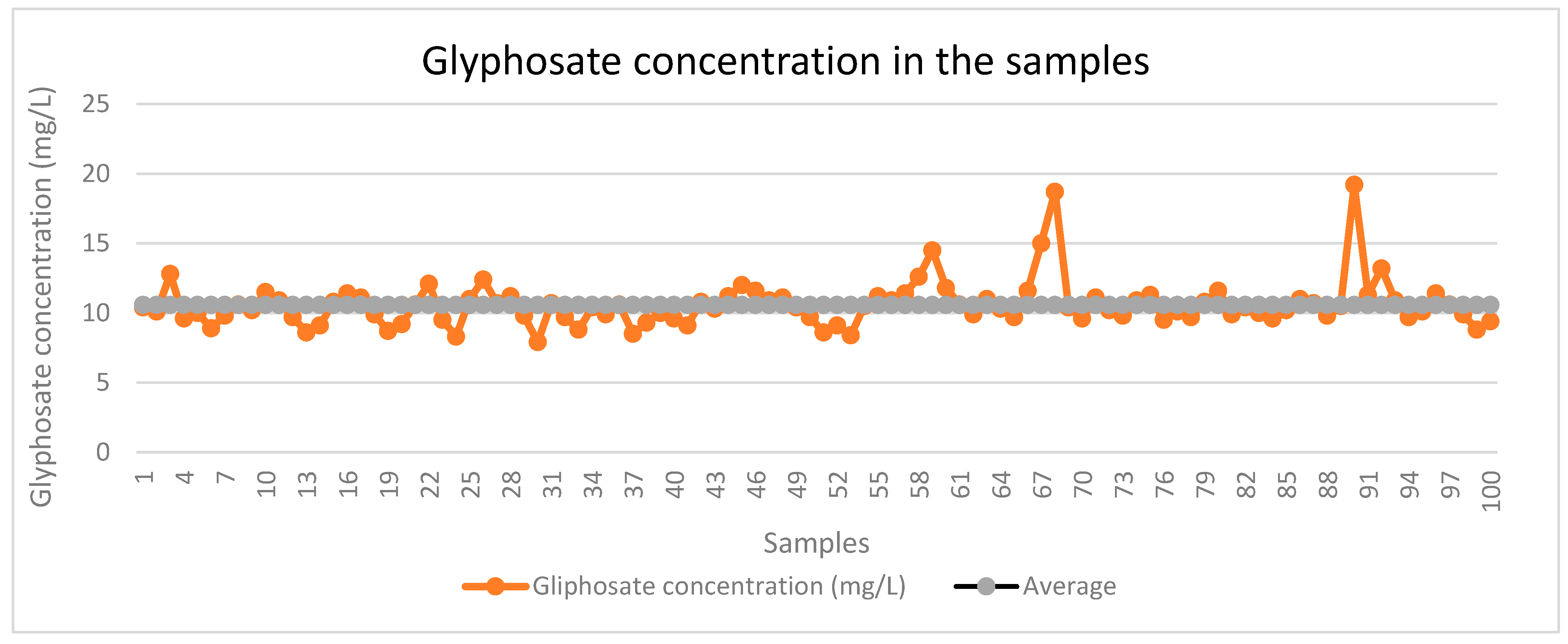
Figure 1. Glyphosate concentration detected in milk samples collected in this study (mg/L).
Processes 14 00677 g001
Table 1. Validation parameters used for chromatographic methodology developed.
Validation Parameters
R0.9983
Slope42,504.8
Intercept275,168
LD (mg/L)0.14
LQ (mg/L)0.43
Recovery (%)92
Disclaimer/Publisher’s Note: The statements, opinions and data contained in all publications are solely those of the individual author(s) and contributor(s) and not of MDPI and/or the editor(s). MDPI and/or the editor(s) disclaim responsibility for any injury to people or property resulting from any ideas, methods, instructions or products referred to in the content.


