Article

An Integrated Adsorption–Regeneration–Distillation–Plasma System for Low-Energy PFAS Remediation with Waste Heat and Solvent Recovery

1
College of Resources and Environmental Engineering, Wuhan University of Science and Technology, Wuhan 430081, China
2
Hubei Key Laboratory for Efficient Utilization and Agglomeration of Metallurgic Mineral Resources, Wuhan University of Science and Technology, Wuhan 430081, China
3
Industrial Safety Engineering Technology Research Center of Hubei Province, Wuhan University of Science and Technology, Wuhan 430081, China
4
College of Materials Science and Chemical Engineering, Hubei University of Technology, Wuhan 430081, China
*
Authors to whom correspondence should be addressed.
Processes 2026, 14(4), 665; https://doi.org/10.3390/pr14040665
Submission received: 25 December 2025 / Revised: 10 February 2026 / Accepted: 12 February 2026 / Published: 14 February 2026
(This article belongs to the Special Issue Advances in Remediation of Contaminated Sites: 3rd Edition)

Abstract

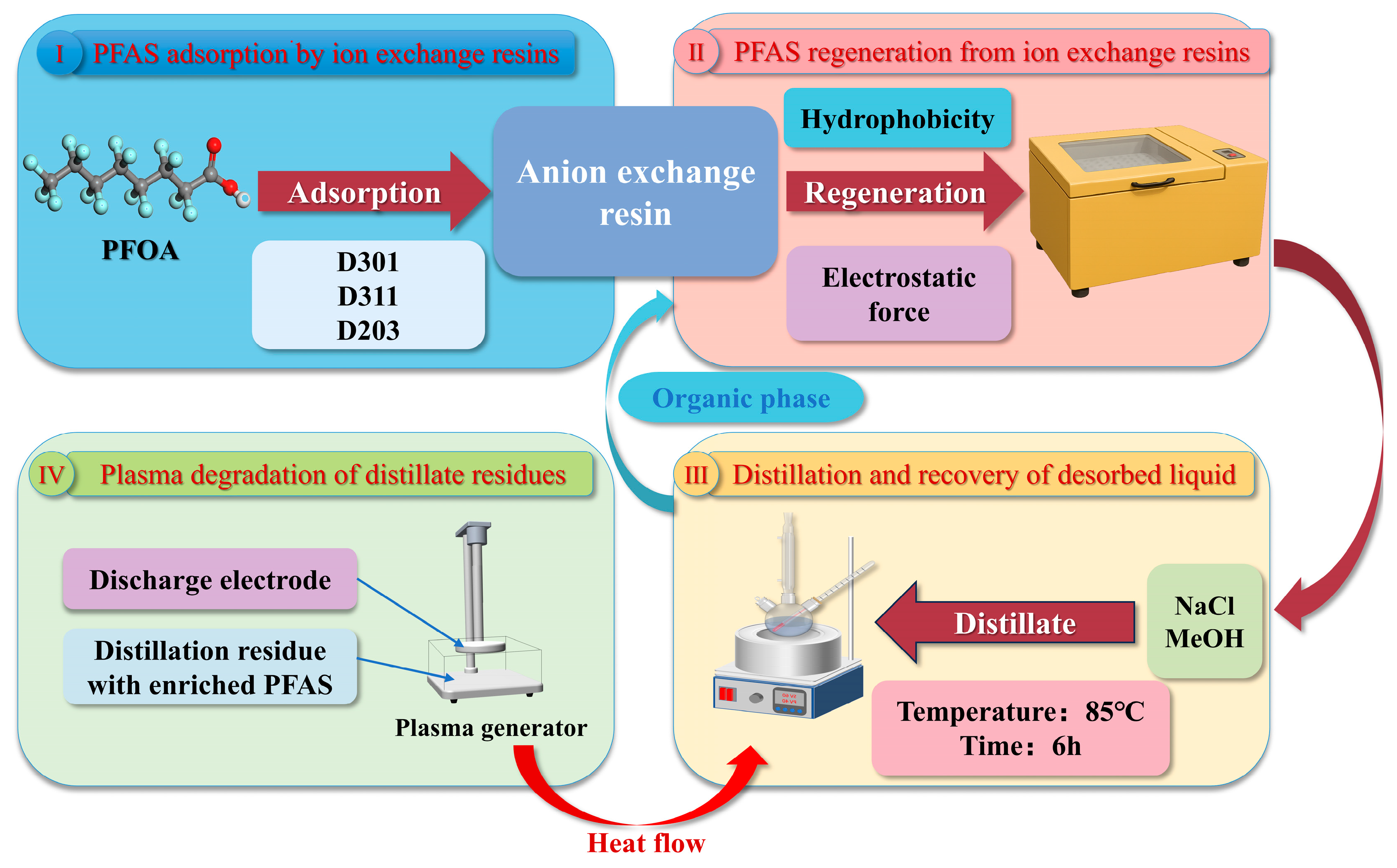
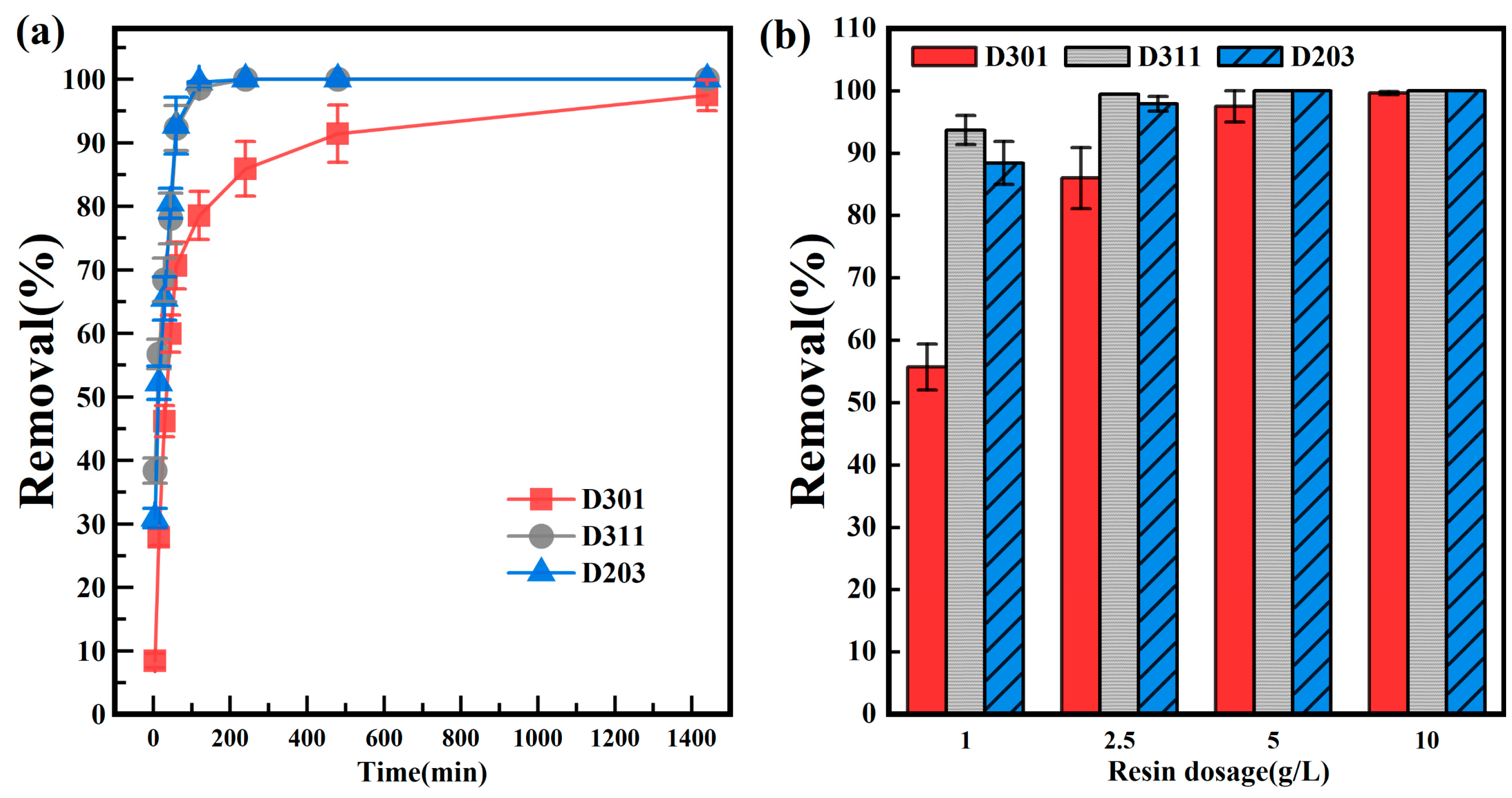
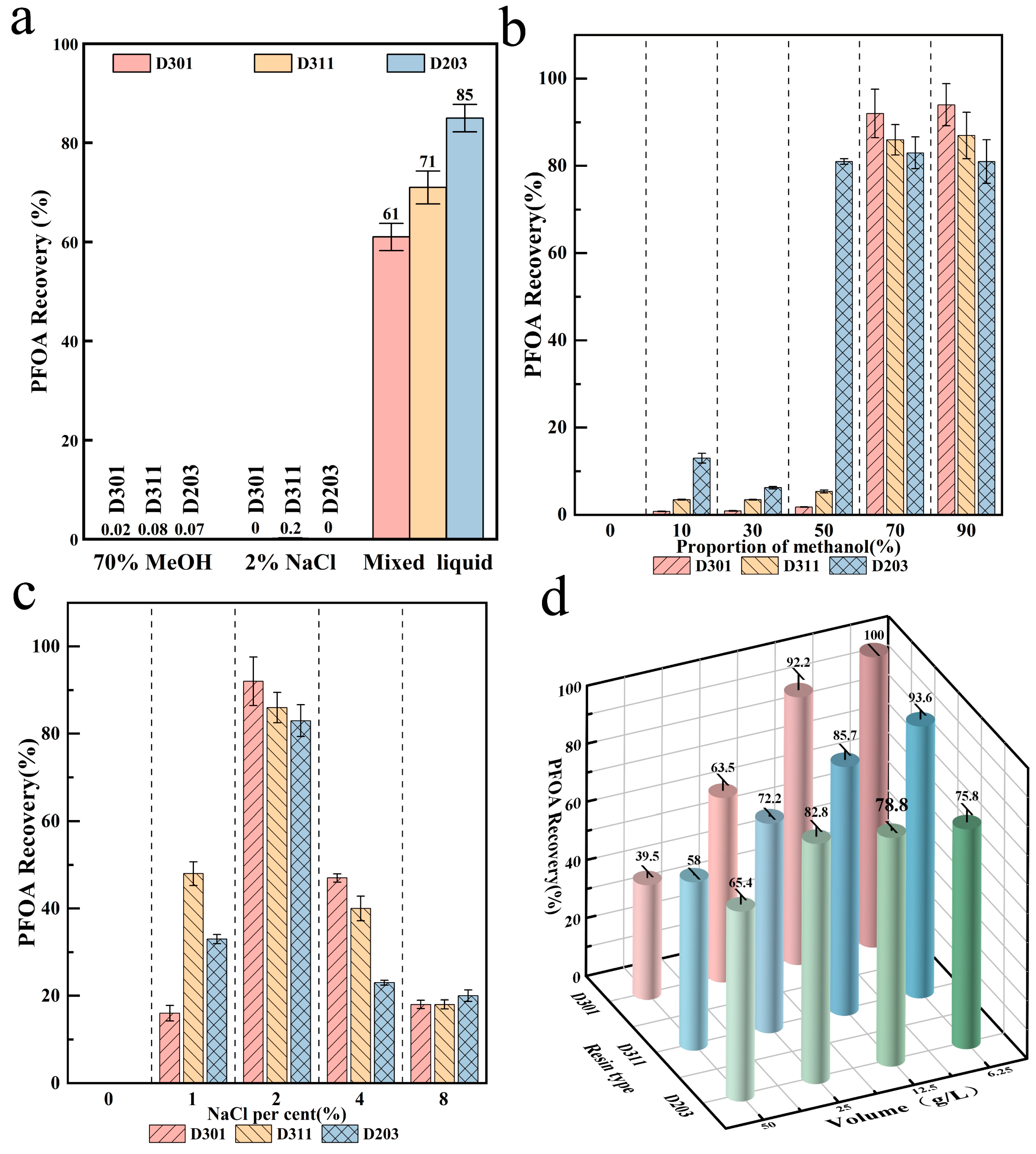
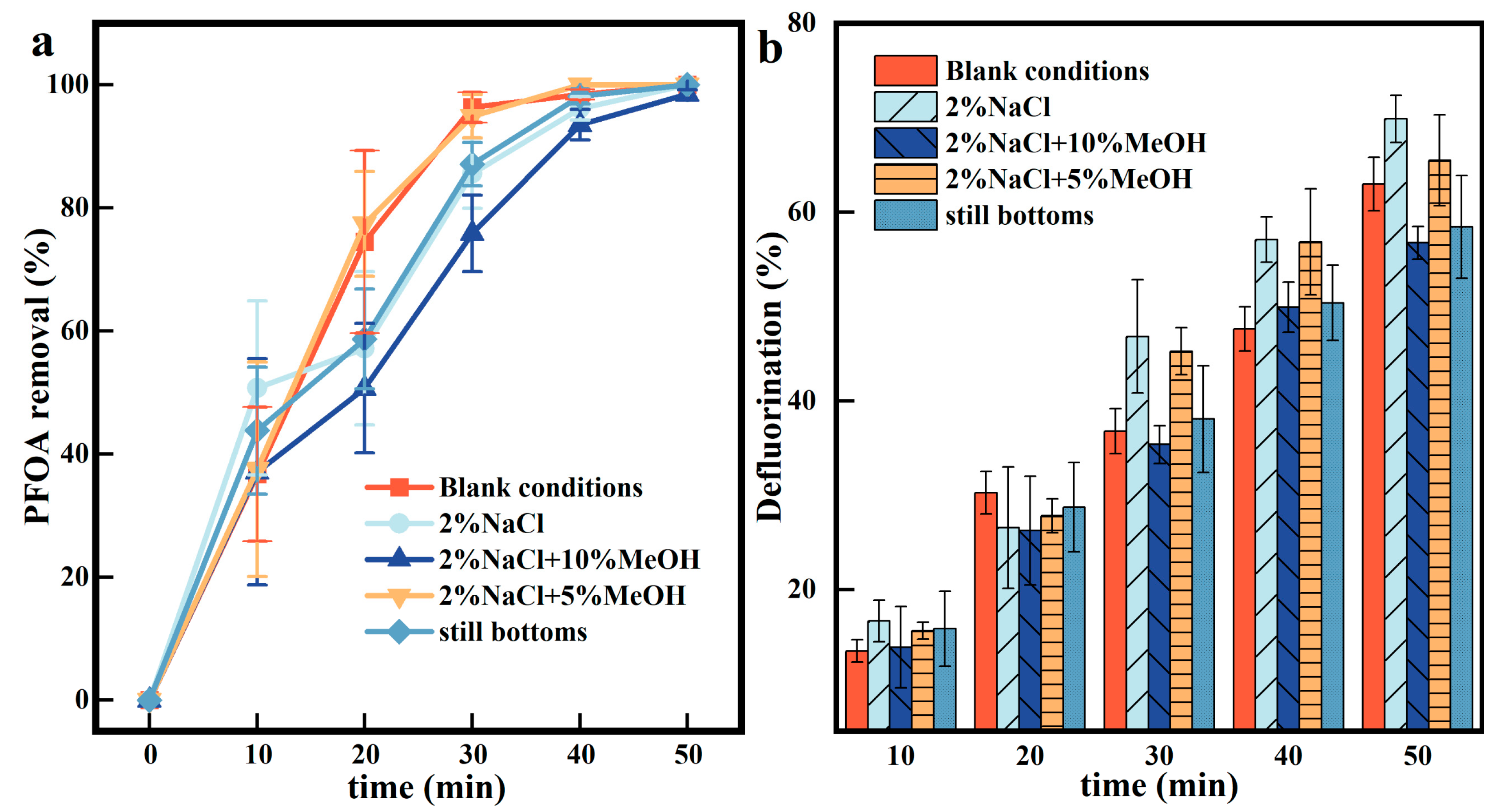
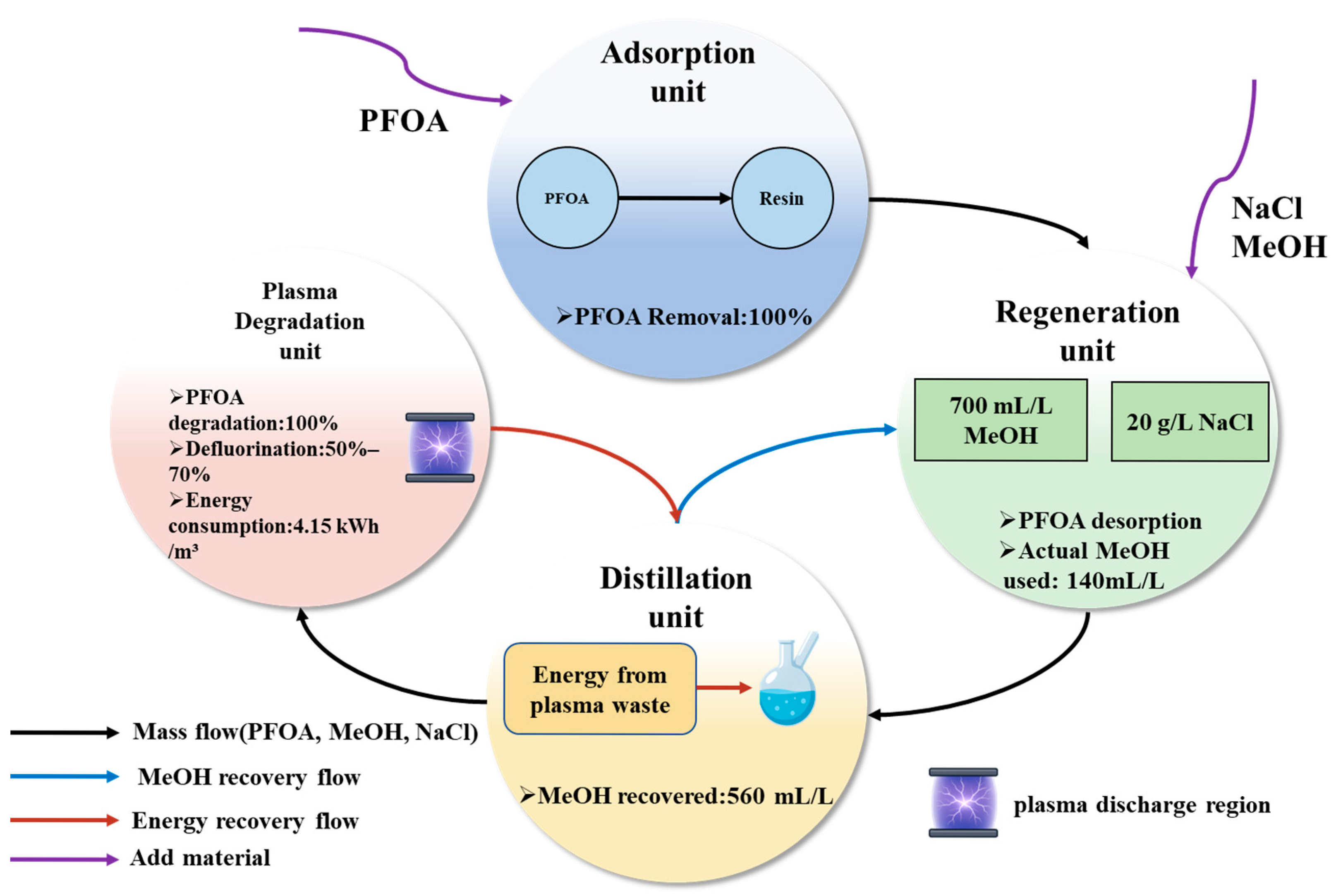
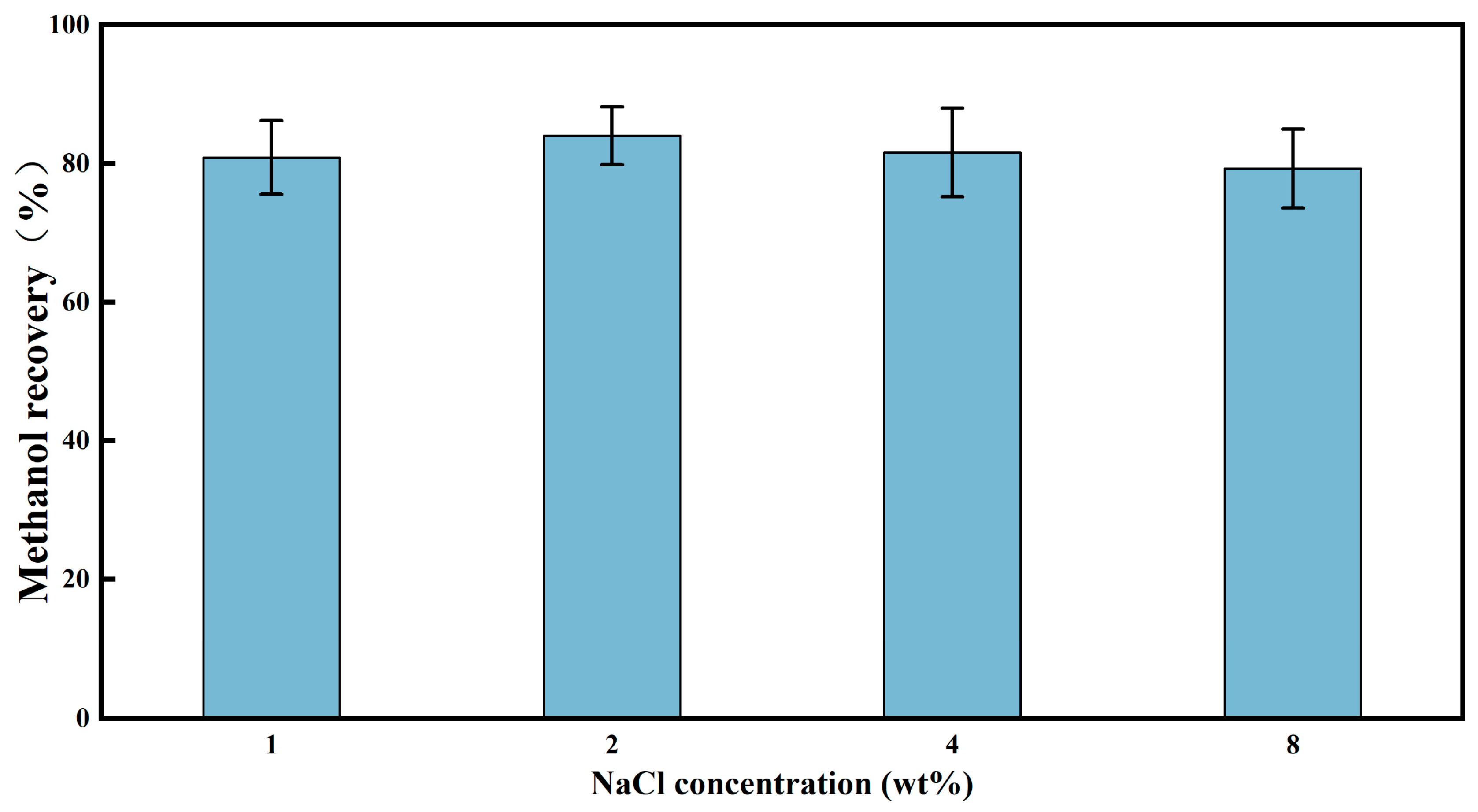
The extreme persistence of per- and polyfluoroalkyl substances (PFAS), exemplified by perfluorooctanoic acid (PFOA), demands remediation technologies that surpass conventional approaches. This study introduces a novel closed-loop adsorption–regeneration–distillation–plasma (ARDP) process designed for high-efficiency PFOA removal with low energy and chemical consumption. Comparative evaluation of anion-exchange resins identified D311 (macroporous methyl polyacrylate) as the optimal adsorbent. In batch experiments with an initial PFOA concentration of 100 mg/L, D311 achieved an adsorption capacity of ~20 mg/g, exhibited rapid kinetics, and achieved high regeneration efficiency (up to 100% under optimized conditions) via a methanol–NaCl solution. Distillation of the spent regenerant recovered approximately 80% of methanol while simultaneously concentrating PFOA for subsequent destruction, accomplished by utilizing waste heat from the plasma system, without the need for additional thermal energy input. Subsequent dielectric barrier discharge (DBD) plasma treatment of the residue achieved 100% PFOA degradation and up to 69% defluorination. The ARDP process proves to be a highly sustainable strategy, characterized by a low specific energy input (4.15 kWh/m3) and minimized secondary waste, making it a promising approach for practical PFAS remediation.
Keywords: PFAS; PFOA; anion-exchange resin; non-thermal plasma; water treatment PFAS; PFOA; anion-exchange resin; non-thermal plasma; water treatment