Aerodynamic Optimisation of a Tandem Blade Centrifugal Compressor Through Parametric Analysis of Blade Angles and Count

Abstract
1. Introduction
2. Methodology
2.1. Physical Model and Governing Equations
- Continuity Equation: The conservation of mass for a steady flow is defined as:
- 2.
- Momentum Equation: The conservation of momentum is expressed as:
- 3.
- Energy Equation: To account for high-speed effects and heat transfer, the total energy equation is utilized:
- 4.
- Equation of State: The working fluid is modeled as an ideal gas, specifically air, to account for compressibility effects. The relationship among pressure, density, and temperature is described by the following equation:
2.2. Geometrical Model and Parametrization
2.2.1. Parameter Definition
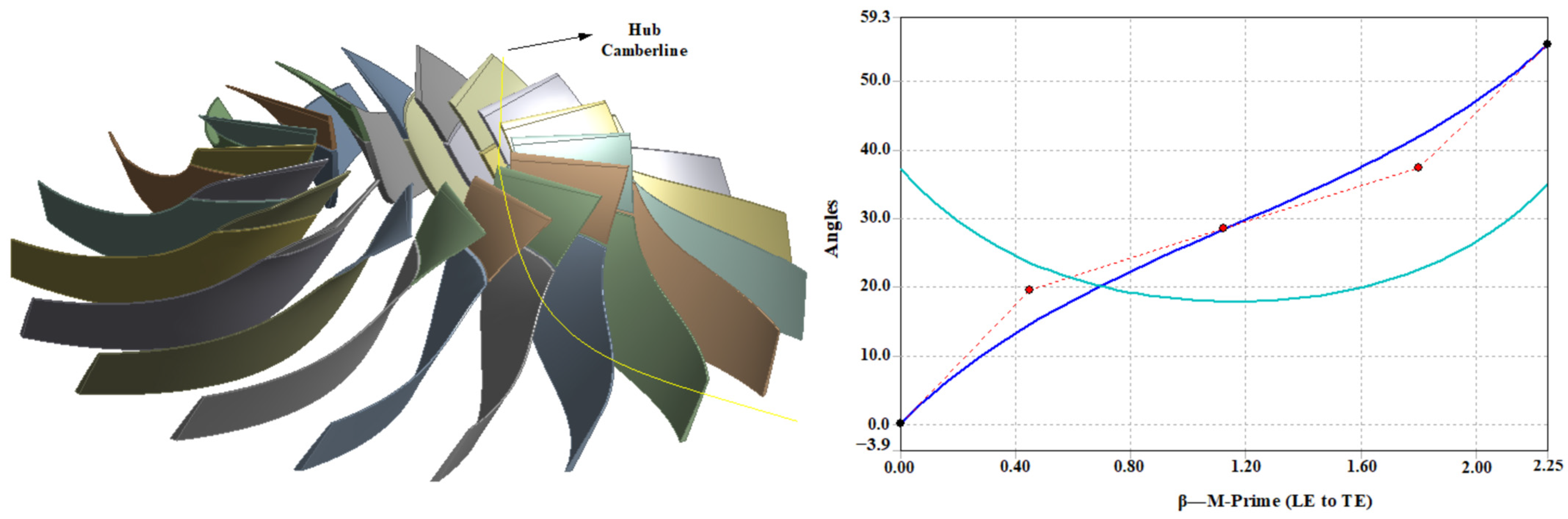
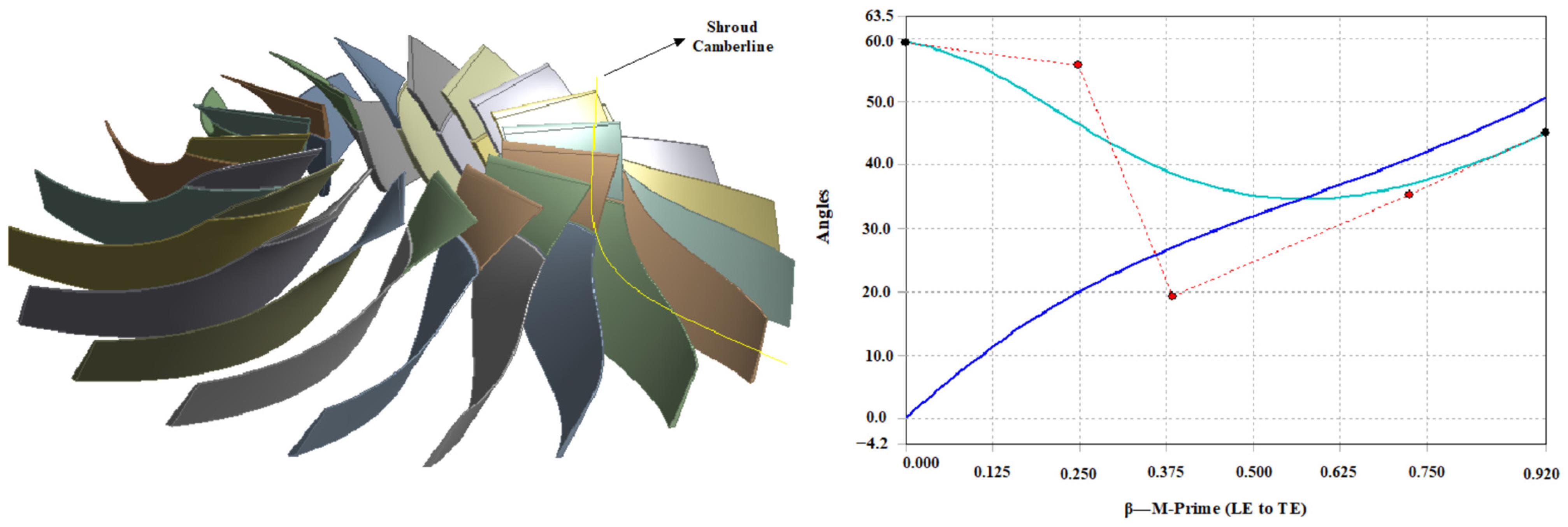
2.2.2. Blade Angle Distributions
2.2.3. Computational Domain Simplification
2.3. Meshing Strategy and Grid Independence
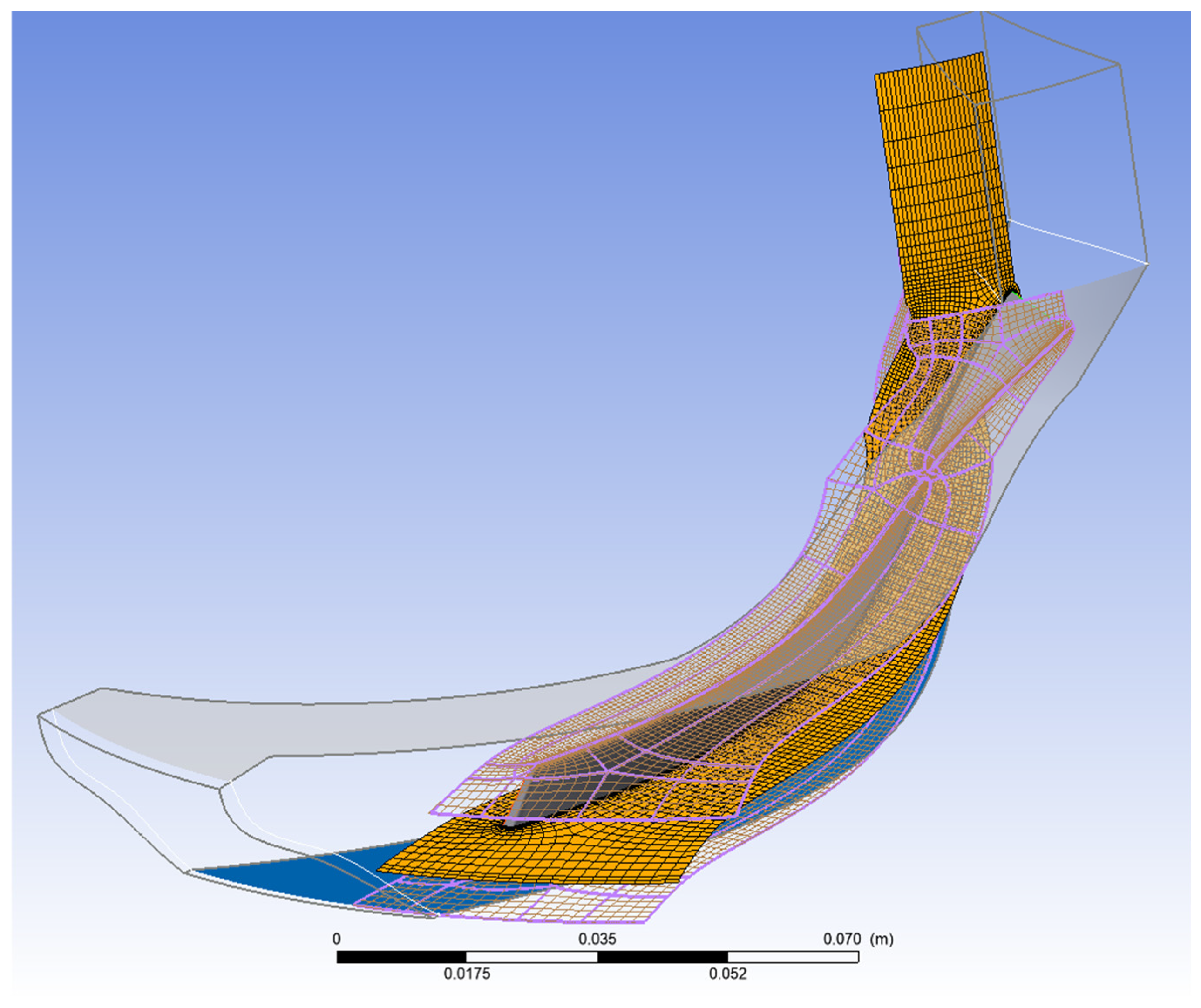
2.3.1. Meshing Strategy
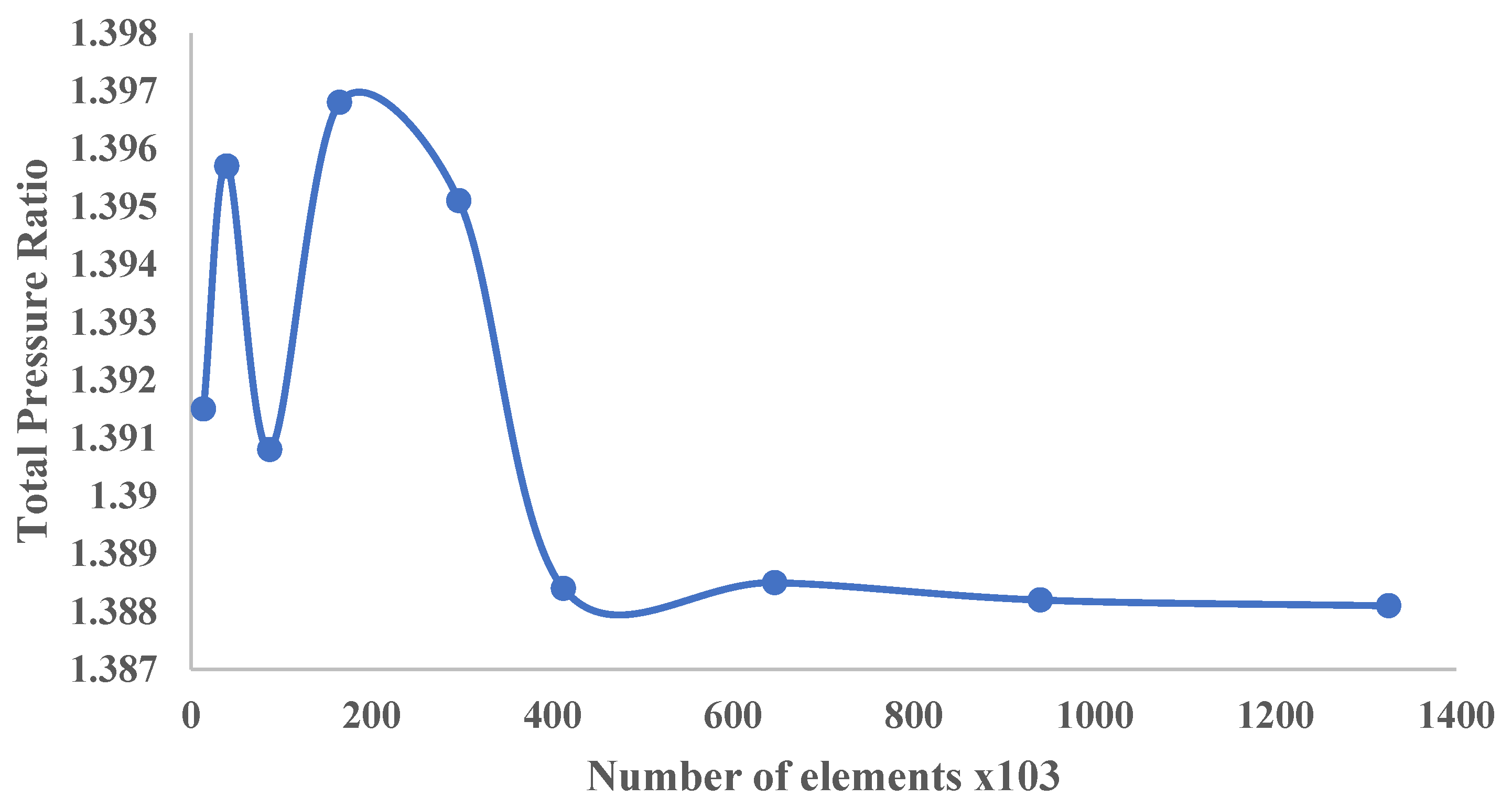
2.3.2. Grid Independence Study
2.4. Numerical Setup and Boundary Conditions
- Inlet: A stationary frame was applied with a Total Pressure of 101,325 Pa and a Total Temperature of 288.15 K. Turbulence intensity was set at a moderate level (5%) and a turbulence viscosity ratio of 10, following standard practices for centrifugal compressor CFD validation studies.
- Outlet: To regulate the operating point and facilitate the mapping of the compressor, a mass flow rate boundary condition was employed as the output parameter.
- Walls: All solid surfaces, including the hub, shroud, and blades, were modelled as adiabatic, no-slip walls.
- Interfaces: Periodic boundary conditions were imposed on the passage sides to simulate the complete annulus effect.
2.5. Sensitivity Analysis and Response Surface Validation Method
3. Results and Discussion
3.1. Performance Comparison and Validation
3.2. Internal Flow Field Analysis
3.3. Sensitivity Analysis Results
3.3.1. Sensitivity of Isentropic Efficiency
3.3.2. Sensitivity of Total Pressure Ratio
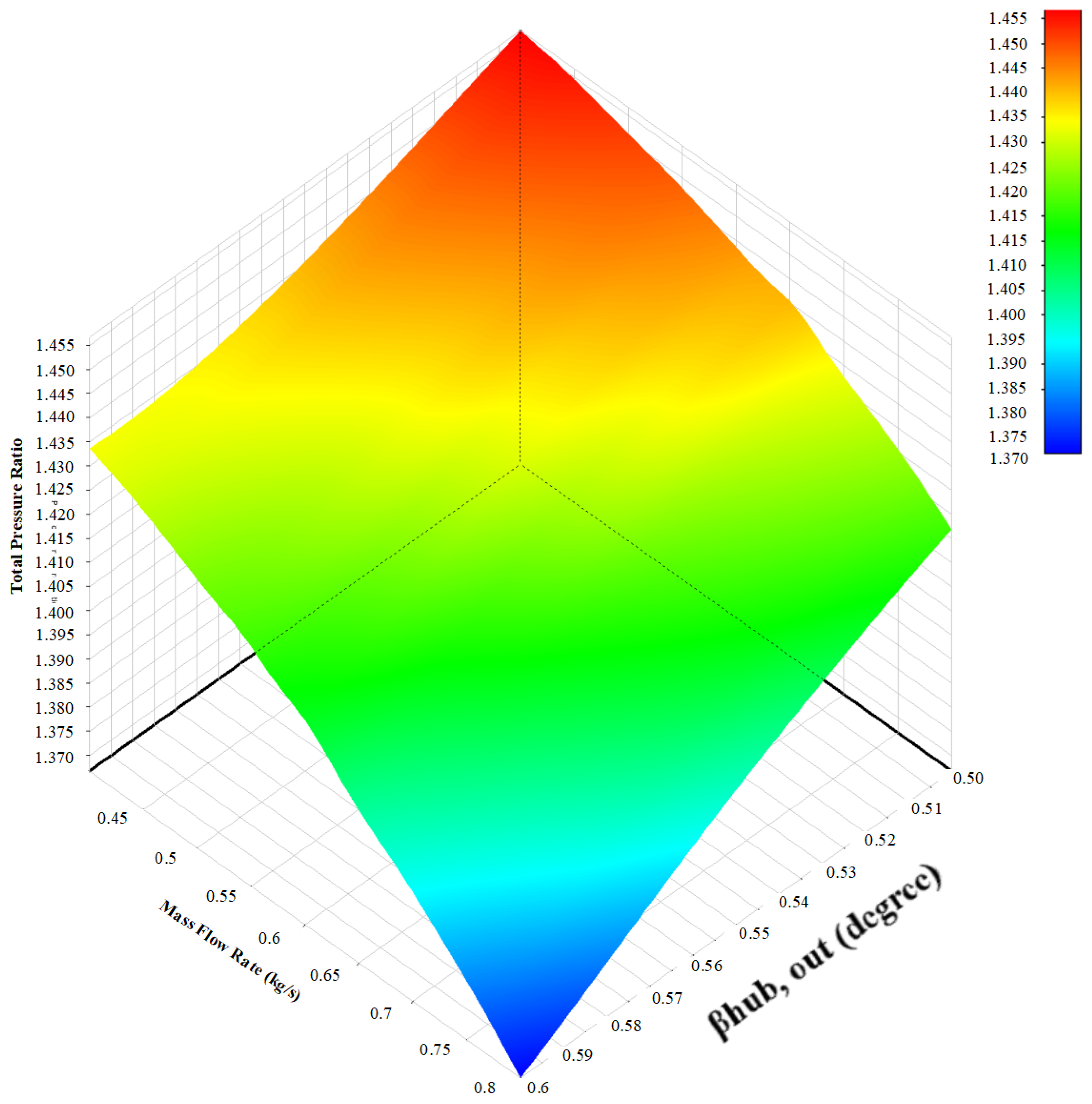
3.4. Combined Effect of Mass Flow and Blade Angles
3.5. Multi-Objective Optimization Results
4. Conclusions
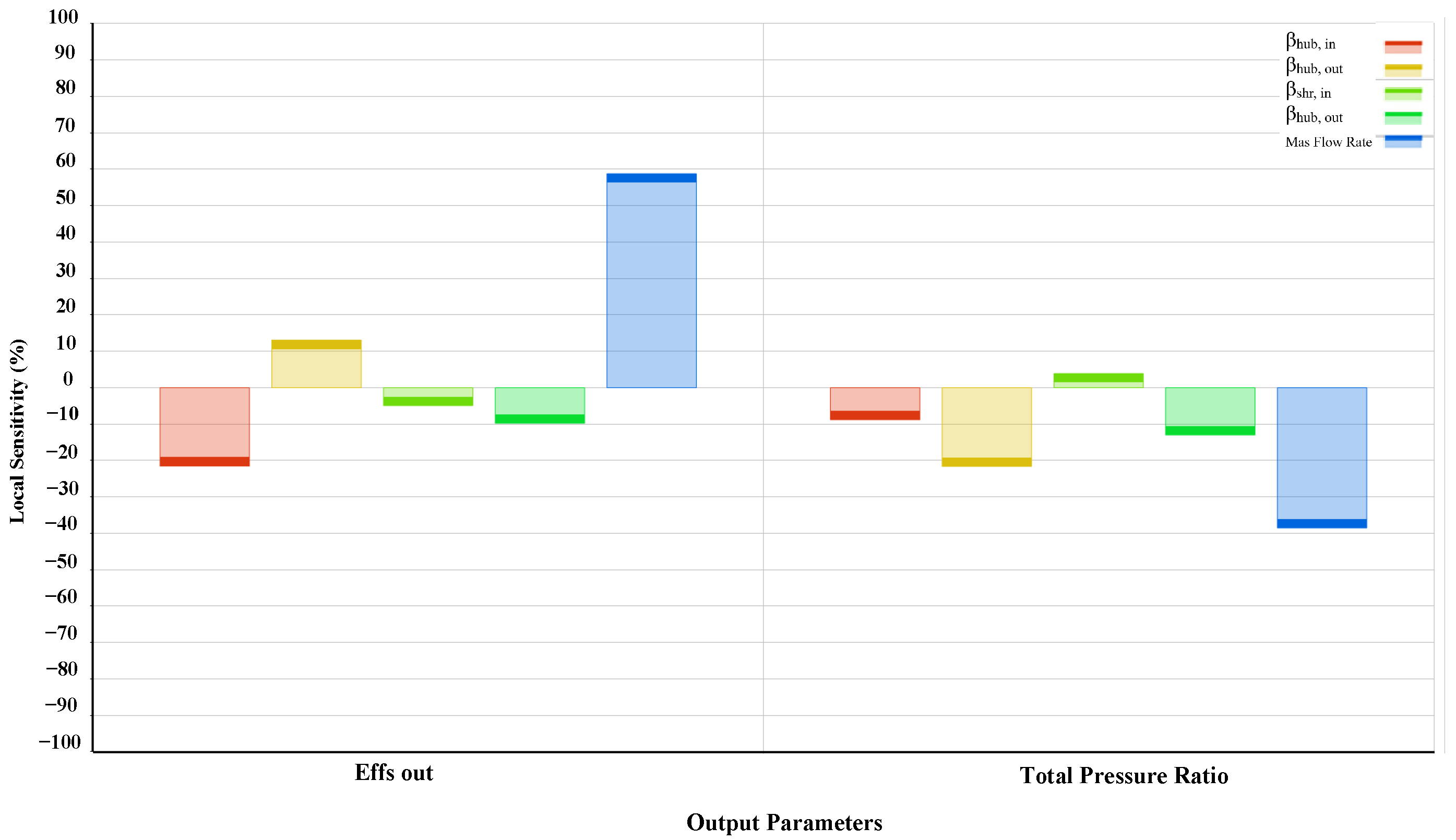
- Local sensitivity analysis identified the hub outlet angle as the primary geometric parameter influencing the total pressure ratio, exhibiting a strong negative correlation attributable to the backsweep effect. Conversely, the hub inlet angle was determined as the critical factor affecting isentropic efficiency by directly impacting incidence losses at the blade root.
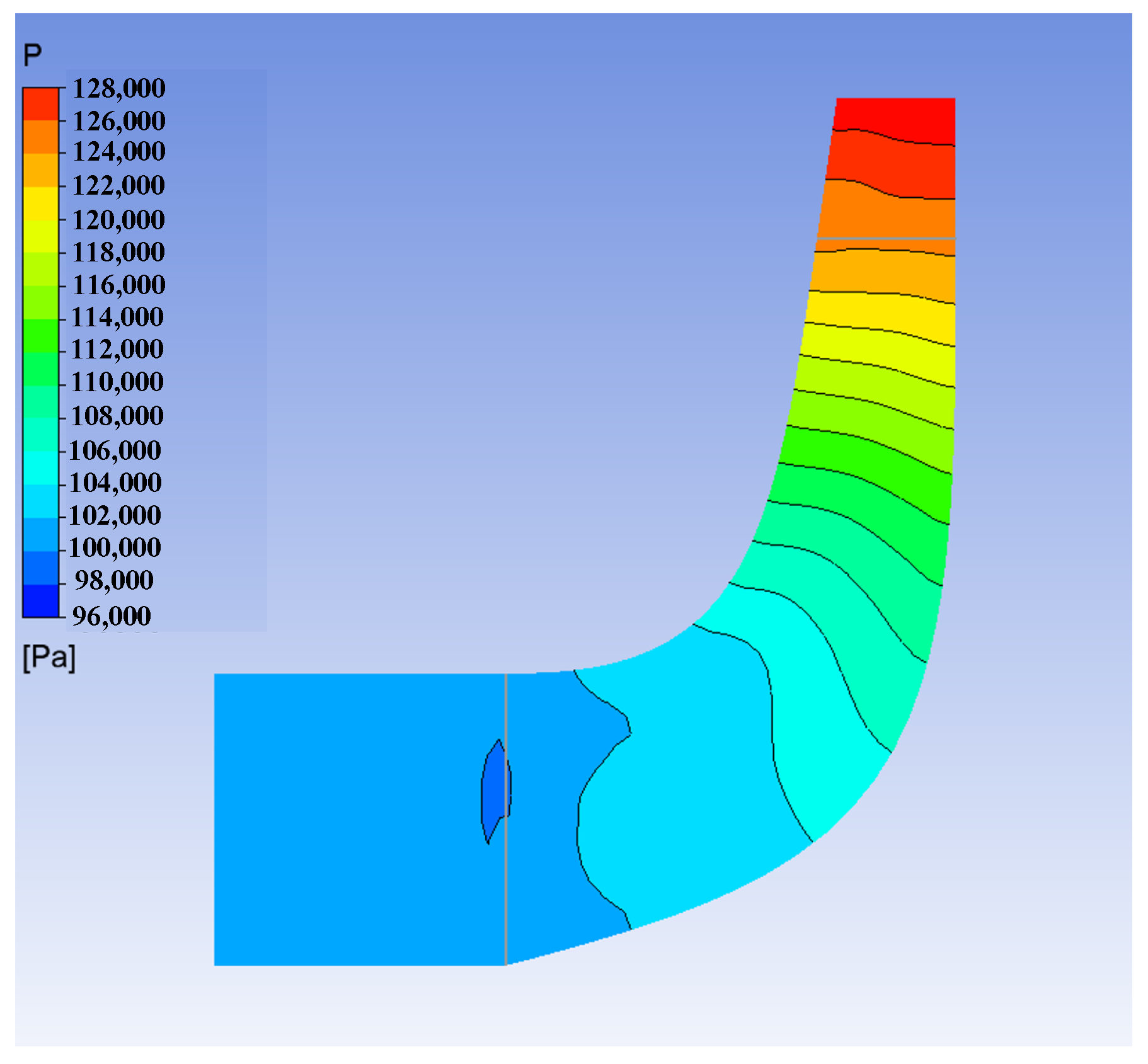
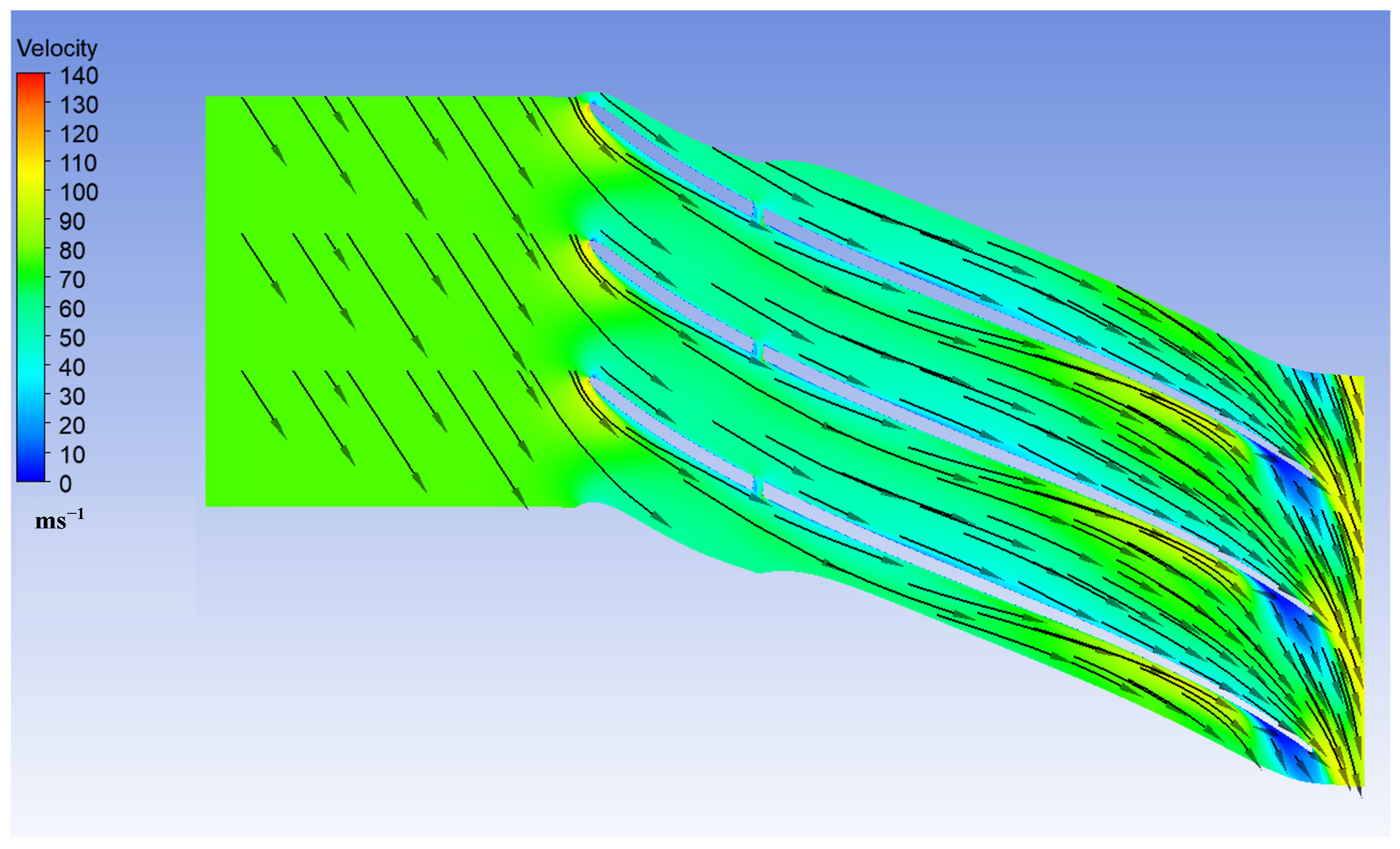
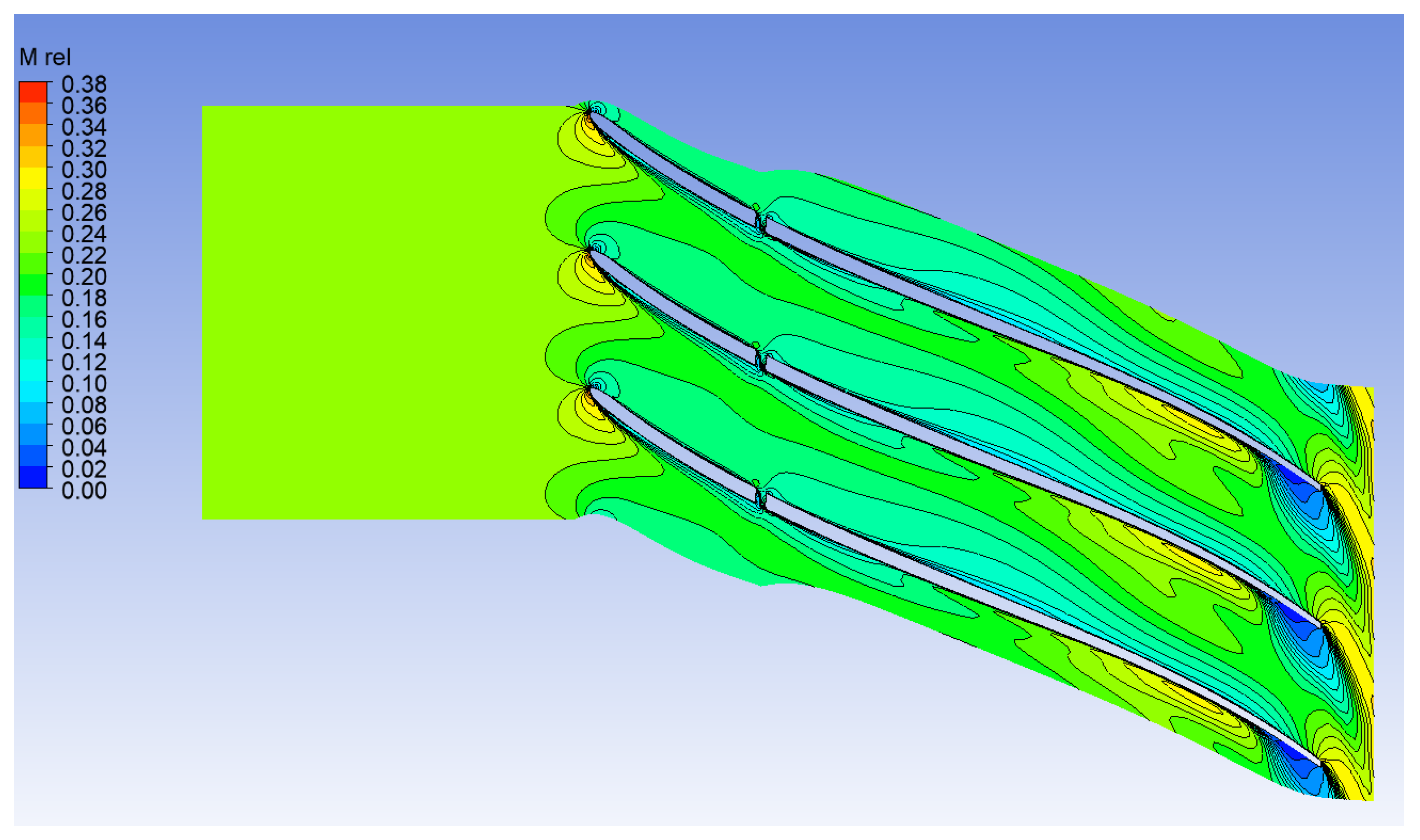
- A detailed flow field analysis, through velocity, pressure, and relative Mach number contours, validated the aerodynamic advantages of the tandem configuration. The inducer- exducer interface effectively re- energises the boundary layer, thereby suppressing flow separation and ensuring a more uniform velocity distribution relative to conventional designs.
- The operational parameter of mass flow rate demonstrated a predominant influence on both performance metrics. This underscores the importance of incorporating operational conditions within the geometric optimization process to accurately delineate the peak- efficiency regions of the compressor map.
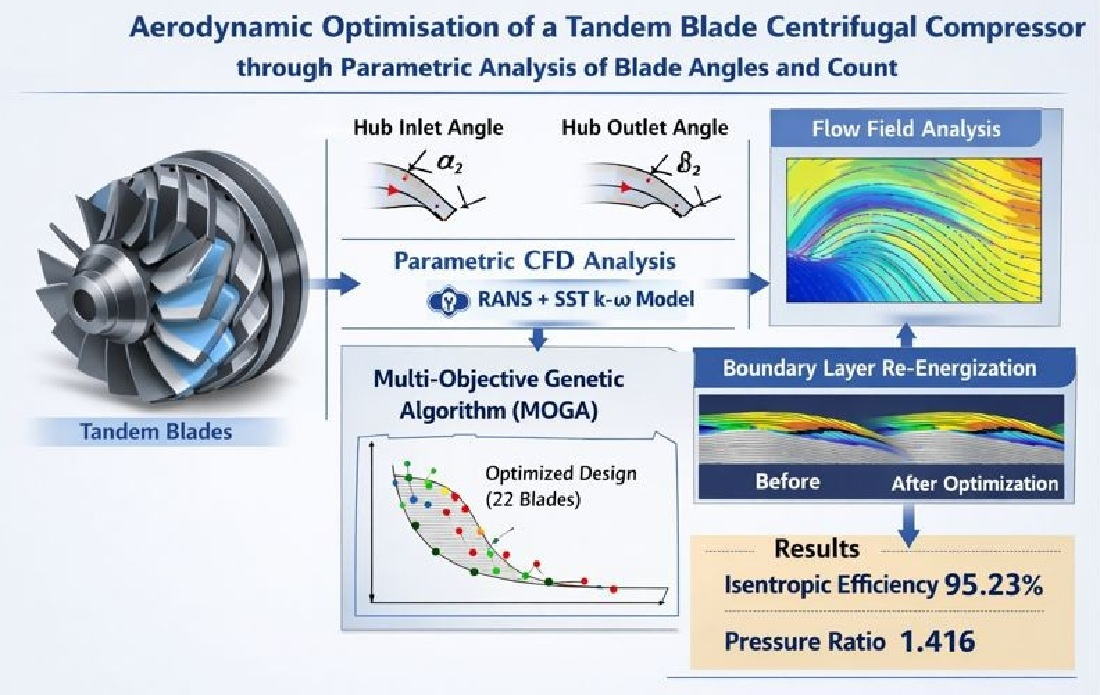
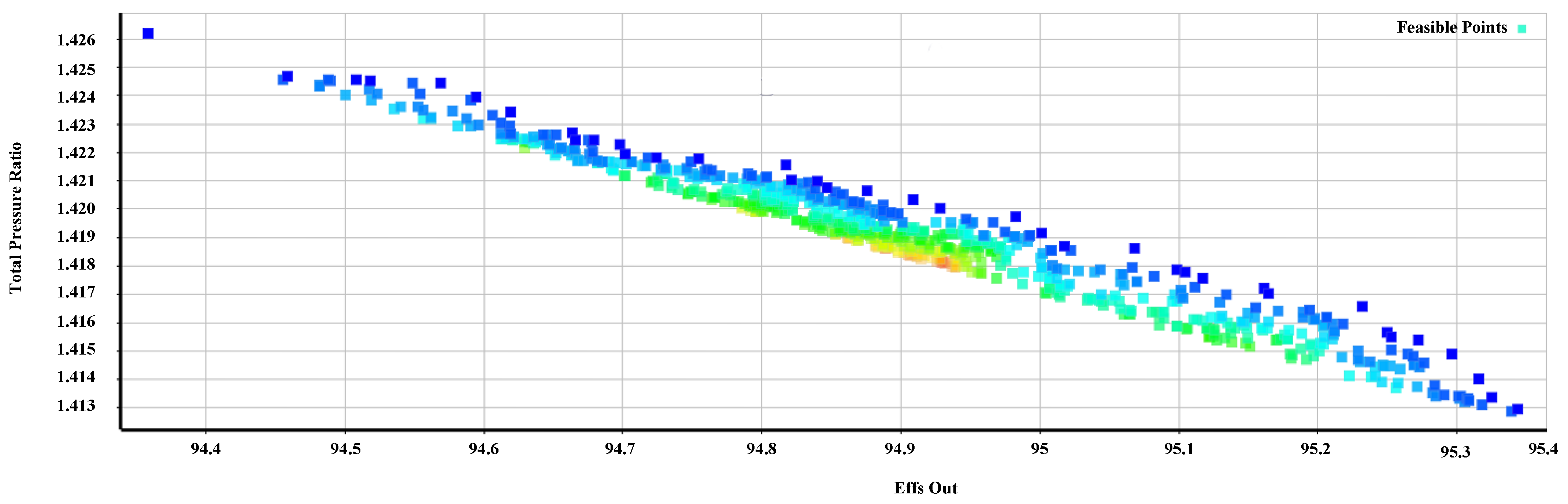
- The MOGA effectively explored the design space, revealing that a blade count of 22 optimises flow guidance, notably reducing secondary flow losses without imposing excessive penalties due to skin friction.
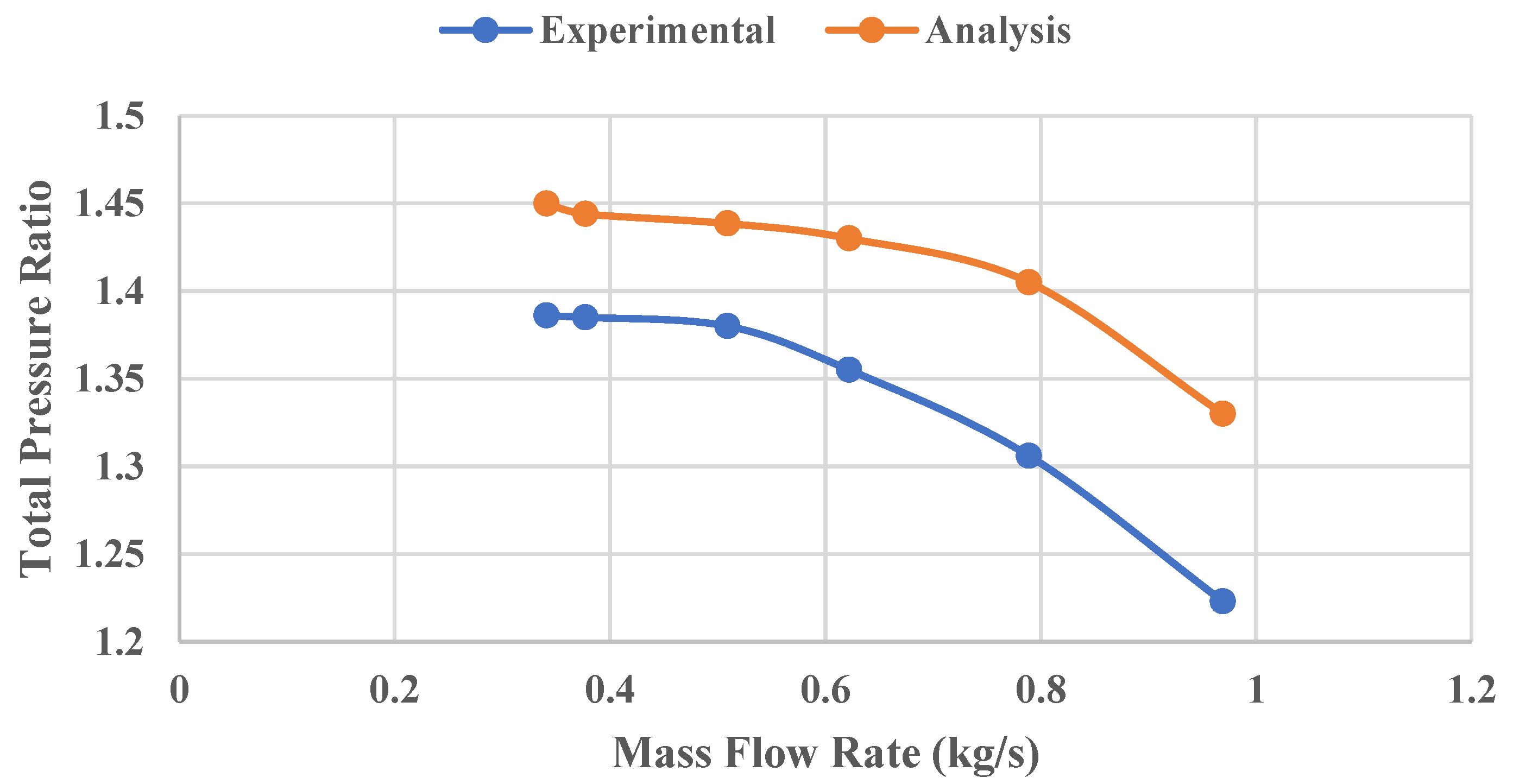
- The final optimized design exhibited outstanding performance, attaining an isentropic efficiency of 95. 23% and a total pressure ratio of 1. 416 at a mass flow rate of 0.79 kg/s, representing a significant enhancement over the baseline configuration.
Author Contributions
Funding
Data Availability Statement
Conflicts of Interest
Abbreviations
| CFD | Computational Fluid Dynamics |
| RSM | Response Surface Methodology |
| RANS | Reynolds-Averaged Navier–Stokes |
| MOGA | Multi-Objective Genetic Algorithm |
| DOE | design of experiments |
| RMS | root-mean-square |
| RMSE | Root Mean Square Error |
| PR | Pressure Ratio |
| η | isentropic efficiency |
| ρ | fluid density |
| U | velocity vector |
| p | pressure |
| SM | The viscous stress tensor |
| λ | thermal conductivity |
| SE | denotes energy sources |
| SST | The Shear Stress Transport |
| k | turbulent kinetic energy |
| ω | specific dissipation rate |
| β | blade metal angle |
| Z | primary blade count |
References
- Shaaban, S. Design optimization of a centrifugal compressor vaneless diffuser. Int. J. Refrig. 2015, 60, 142–154. [Google Scholar] [CrossRef]
- Demir, F.; Özer, S.; Demir, U.; Körükçü, K.; Oduncu, H.; Ekin, M.Ş. Design optimization and field validation of industrial fans with CFD for cement production: Performance, energy savings, and environmental benefits. Sustainability 2025, 17, 10279. [Google Scholar] [CrossRef]
- Hagelstein, D.; Hillewaert, K.; van den Braembussche, R.A.; Engeda, A.; Keiper, R.; Rautenberg, M. Experimental and Numerical Investigation of the Flow in a Centrifugal Compressor Volute. J. Turbomach. 1999, 122, 22–31. [Google Scholar] [CrossRef]
- Galloway, L.; Rusch, D.; Spence, S.; Vogel, K.; Hunziker, R.; Kim, S.I. An investigation of centrifugal compressor stability enhancement using a novel vaned diffuser recirculation technique. J. Turbomach. 2018, 140, 121009. [Google Scholar] [CrossRef]
- Cheng, H.; Song, Z.; Liu, B. Aerodynamic Study on the Influence Mechanism of Bow Blades on the Flow Field of Supersonic Tandem Rotors. Energies 2022, 15, 4474. [Google Scholar] [CrossRef]
- Josuhn-Kadner, B. Flow field and performance of a centrifugal compressor rotor with tandem blades of adjustable geometry. In Turbo Expo: Power for Land, Sea and Air; American Society of Mechanical Engineers: New York, NY, USA, 1994; Volume 78835, p. V001T01A004. [Google Scholar]
- Denton, J.D. Loss mechanisms in turbomachines. J. Turbomach. 1993, 115, 621–656. [Google Scholar] [CrossRef]
- Jin, W.; Wang, J.; Li, J.; Xu, R.; Zhou, M.; Huang, Q. Optimization Design of Multi-Blade Centrifugal Fan Based on Variable Weight PSO-BP Prediction Model and Multi-Objective Beluga Optimization Algorithm. Appl. Sci. 2025, 15, 5950. [Google Scholar] [CrossRef]
- Söylemez, M.E.; Behçet, R.; Parlak, Z. Analysis and Optimization of the Performances of the Tandem Blade Radial Compressor Using the CFD. Appl. Sci. 2024, 14, 4256. [Google Scholar] [CrossRef]
- Ziliang, L.; Xingen, L.; Ge, H.; Enliang, H.; Chengwu, Y.; Junqiang, Z. Numerical and experimental investigation of flow mechanism and application of tandem-impeller for centrifugal compressor. Aerosp. Sci. Technol. 2020, 100, 105819. [Google Scholar] [CrossRef]
- Guo, Y.; Wang, Y.; Cao, Y.; Long, Z. A New Optimization Design Method of Multi-Objective Indoor Air Supply Using the Kriging Model and NSGA-II. Appl. Sci. 2023, 13, 10465. [Google Scholar] [CrossRef]
- Roberts, D.A.; Kacker, S.C. Numerical Investigation of Tandem-Impeller Designs for a Gas Turbine Compressor. J. Turbomach. 2002, 124, 36–44. [Google Scholar] [CrossRef]
- Khiloshiya, M.; Mouvanal, S.; Jayakumar, R. CFD Based Design of a Centrifugal Compressor for Enhanced Range of Operation. In Proceedings of the ASME Turbo Expo 2025: Turbomachinery Technical Conference and Exposition, Memphis, TN, USA, 16–20 June 2025; p. V012T34A009. [Google Scholar] [CrossRef]
- Guidotti, E. Towards Centrifugal Compressor Stages Virtual Testing. Ph.D. Thesis, University of Bologna, Bologna, Italy, 2014. Available online: https://amsdottorato.unibo.it/id/eprint/6550/1/Guidotti_Emanuele_tesi.pdf (accessed on 1 February 2026).
- Yoon, S.Y.; Lin, Z.; Lim, K.T.; Goyne, C.; Allaire, P.E. Model validation for an AMB-based compressor surge control test rig. In Proceedings of the 48th IEEE Conference on Decision and Control, Shanghai, China, 15–18 December 2009; IEEE: New York, NY, USA, 2009; pp. 756–761. [Google Scholar]
- ANSYS, Inc. ANSYS CFX Theory Guide. ANSYS Help. 2017. Available online: https://www.ansys.com (accessed on 1 February 2026).
- Mojaddam, M.; Moussavi Torshizi, S.A. Design and optimization of meridional profiles for the impeller of centrifugal compressors. J. Mech. Sci. Technol. 2017, 31, 4853–4861. [Google Scholar] [CrossRef]
- Juan-Nan, L.; Dingxi, W.; Xiuquan, H. Investigation of turbulence models for aerodynamic analysis of a high-pressure-ratio centrifugal compressor. Phys. Fluids 2023, 35, 106108. [Google Scholar] [CrossRef]
- ASME. ASME V&V 20–2009; Standard for Verification and Validation in Computational Fluid Dynamics and heat TRANSFER. American Society of Mechanical Engineers: New York, NY, USA, 2009. Available online: https://www.asme.org/getmedia/692ee706-d396-49fd-b62c-d8e3de655a27/21356.pdf (accessed on 1 February 2026).
- Mangani, L.; Casartelli, E.; Mauri, S. Flow field investigation in a high pressure ratio centrifugal compressor with vaneless diffuser. In Proceedings of the ASME Turbo Expo 2011: Turbine Technical Conference and Exposition, Vancouver, BC, Canada, 6–10 June 2011; ASME: New York, NY, USA, 2011. [Google Scholar] [CrossRef]
- Xu, C.; Amano, R. Aerodynamic and structure considerations in centrifugal compressor design blade lean effects. In Proceedings of the ASME Turbo Expo, Copenhagen, Denmark, 11–15 June 2012; p. 68207. [Google Scholar]
- Qin, R.; Ju, Y.; Galloway, L.; Spence, S.; Zhang, C. High Dimensional Matching Optimization of Impeller–Vaned Diffuser Interaction for a Centrifugal Compressor Stage. ASME J. Turbomach 2020, 142, 121004. [Google Scholar] [CrossRef]
- Shao, X.; Liu, Y.; Wang, B.; Li, X.; Chen, J.; Zhu, Z.; Ma, X. Fast regulation of multi-position differentiated environment: Multi-step joint optimization of air supply parameters. Build. Environ. 2023, 239, 110425. [Google Scholar] [CrossRef]
- Ju, Y.; Qin, R.; Kipouros, T.; Parks, G.; Zhang, C. A high-dimensional design optimisation method for centrifugal impellers. Proc. Inst. Mech. Eng. Part A J. Power Energy 2016, 230, 272–288. [Google Scholar] [CrossRef]
- Bernhard, S.; Mihai, M. Flow phenomena leading to surge in a centrifugal compressor. Energy 2016, 103, 572–587. [Google Scholar] [CrossRef]
- Bardelli, M.; Cravero, C.; Marini, M.; Marsano, D.; Milingi, O. Numerical Investigation of Impeller-Vaned Diffuser Interaction in a Centrifugal Compressor. Appl. Sci. 2019, 9, 1619. [Google Scholar] [CrossRef]





| Name | Lower Bound | Upper Bound | Variable Type |
|---|---|---|---|
| βhub,in (degree) | −5 | 5 | Continuous |
| βhub,out (degree) | 50 | 60 | Continuous |
| βshr,in (degree) | 55 | 65 | Continuous |
| βshr,out (degree) | 40 | 50 | Continuous |
| Blade counts | 14-16-18-20-22 | - | Discrete |
| Mass flow rates | 0.4 | 0.8 | Continuous |
| Response Variable | R2 | RMSE | Cross-Validation R2 | Cross-Validation RMSE |
|---|---|---|---|---|
| Total to total ratio | 0.99767 | 0.0005367 | 0.92913 | 0.0029581 |
| Isentropic efficiency | 0.99514 | 0.0012204 | 0.91462 | 0.0075387 |
| Parameter | Baseline Design | Optimized Design | Change (%) |
|---|---|---|---|
| Blade Count (Z) | 18 | 22 | 22.22 |
| βhub,in (degree) | 0 | −4.98 | - |
| βhub,out (degree) | 55 | 53.59 | −2.56 |
| βshr,in (degree) | 59.33 | 61.04 | +2.88 |
| βshr,out (degree) | 44.99 | 40.79 | −9.33 |
| Mass Flow Rate (kg/s) | 0.789 | 0.79 | +0.13 |
| Total Pressure Ratio | 1.306 | 1.416 | +8.47 |
Disclaimer/Publisher’s Note: The statements, opinions and data contained in all publications are solely those of the individual author(s) and contributor(s) and not of MDPI and/or the editor(s). MDPI and/or the editor(s) disclaim responsibility for any injury to people or property resulting from any ideas, methods, instructions or products referred to in the content. |
© 2026 by the authors. Licensee MDPI, Basel, Switzerland. This article is an open access article distributed under the terms and conditions of the Creative Commons Attribution (CC BY) license.
Share and Cite
Söylemez, M.E.; Özer, S. Aerodynamic Optimisation of a Tandem Blade Centrifugal Compressor Through Parametric Analysis of Blade Angles and Count. Processes 2026, 14, 552. https://doi.org/10.3390/pr14030552
Söylemez ME, Özer S. Aerodynamic Optimisation of a Tandem Blade Centrifugal Compressor Through Parametric Analysis of Blade Angles and Count. Processes. 2026; 14(3):552. https://doi.org/10.3390/pr14030552
Chicago/Turabian StyleSöylemez, Mustafa Ertürk, and Salih Özer. 2026. "Aerodynamic Optimisation of a Tandem Blade Centrifugal Compressor Through Parametric Analysis of Blade Angles and Count" Processes 14, no. 3: 552. https://doi.org/10.3390/pr14030552
APA StyleSöylemez, M. E., & Özer, S. (2026). Aerodynamic Optimisation of a Tandem Blade Centrifugal Compressor Through Parametric Analysis of Blade Angles and Count. Processes, 14(3), 552. https://doi.org/10.3390/pr14030552