Increasing Efficiency of Chemico-Technological Systems and Prevention of Accidents: Approaches, Models, Portfolios



Abstract
- Hit two targets with one arrow!
1. Introduction
- Integrating the principle of “sustainable development” into all business plans and activities;
- Monitoring the environmental impacts at every stage of production; achieving multiple benefits with the least possible use of resources.
- All definitions are relevant, reflecting the different aspects of the problem;
- There is a dramatic discrepancy among the definitions;
- Definitions 3 and 4 do not concretely assess eco-efficiency.
- Rough risk assessment for chemical processes;
- The search for new approaches to identifying potential hazards;
- The problem is characterized by the general uncertainty;
- A large number of controlled variables (including interdependent quantities) creates difficulties for making the right decision within the limited time required to eliminate technological disruptions;
- A combination of various critical situations is possible, which complicates the prevention of accidents [1].
- Uncertainty of goals caused by having several control objectives;
- Uncertainty in the characteristics of technological processes determined by the complexity of measuring certain parameters and changes in the characteristics of the control object, as in the following examples:
- Uncertainty of the operator actions: in automated systems, a number of control actions calculated by a computer are realized manually.
- Setting of vector objective functions with ecological and economic components; practically overcoming the uncertainty of the control goals;
- Beneficial accident prevention, which combines economic and ecological efficiency;
- Practical considerations of the trends in the accident risk;
- Development of approaches that ensure reliable stabilization of system parameters under rapid changes in the object characteristics over a wide range;
- Ability to enhance the CTS efficiency via control, both with and without a complete mathematical model;
- Development of Portfolio models for analysis and increasing the eco-efficiency of the CTS.
2. Materials and Methods
- Examples of this include the following:
- ▪
- In ammonia produced from coke oven gas (ACG), the criterion of energy savings corresponds both to economic goals (maximizing profit by minimizing energy costs) and environmental goals (saving resources and energy).
- ▪
- When controlling the methane converter in ammonia production from natural gas (ANG) by supplying fuel gas, the economic criterion of minimizing natural gas consumption coincides with the environmental criterion for effluent restriction.
- Reliability;
- Ability for fast computation;
- Simplicity of implementation;
- Taking measurement errors into account;
- Sufficient accuracy for solving the concrete task;
- Low sensitivity to disturbances;
- Capability for fast adaptation in critical situations.
- An example of this is as follows:
- Measurement errors of technological variables;
- Errors in the realization of control actions;
- Uncertainty of the operator actions (see Section 1).
3. Results
3.1. Approach to Improving the Ecological and Economic Efficiency of the CTS
- (1)
- Minimizing the risk;
- (2)
- Maximizing the output of the main product;
- (3)
- Minimizing the costs.
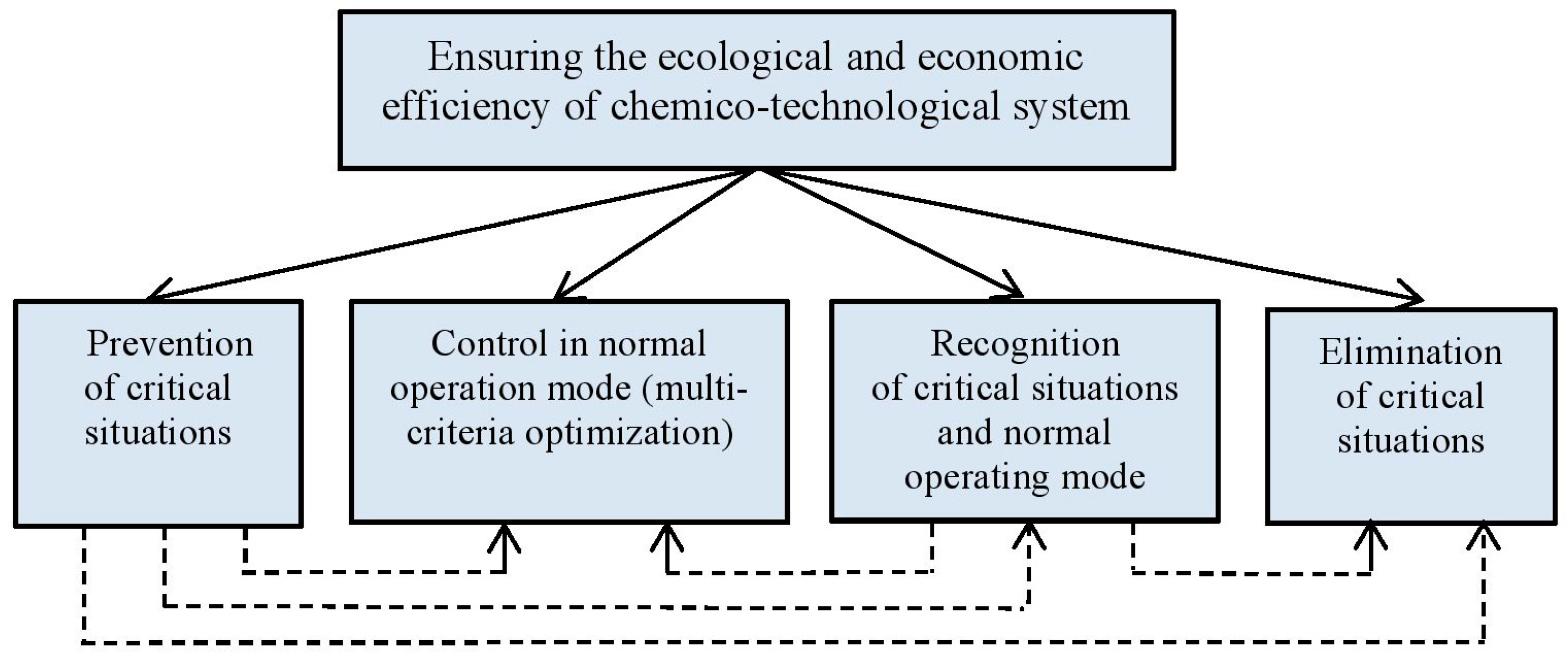
- (a)
- Optimization of the CTS based on productivity and cost criteria;
- (b)
- Recognition of critical situations and normal operating mode;
- (c)
- Elimination of detected critical situations, which are observed in the operating unit;
- (d)
- Realization of complementary subtasks (procedures) in solving tasks (a)–(c), aimed at preventing critical situations and increasing the reliability and survivability of the system.
- Example 1.
- Example 2.
- Logico-technological verification of the input data and the computed control actions;
- Approximate estimation of unreliable process parameters;
- Using simplified control algorithms when some process parameters are unreliable;
- Prediction and analysis of key process parameters, such as temperature, pressure, and concentration;
- Dynamic stabilization of controlled parameters under rapid and significant changes in the object characteristics, especially during critical situations;
- Checking the realization of control actions in each control step.
- Calculation of variable constraints on process parameters depending on input parameters and/or the actual state of the technological object;
- Monitoring the technological process state;
- Monitoring the operator performance (assessment of operator efficiency).
- Fault detection and diagnosis of technological equipment;
- Catalyst state diagnosis.
- Organization of autonomous control for the subsystems of the technological object [1];
- Application of combined control methods for creating fast and robust control systems (see Section 3.2.4);
- Ensuring shock-free switching the control systems;
- Realization of considered tasks based on the modular principle.
3.2. Some Approaches to Improving the Efficiency of Stabilization Systems for Accident Prevention
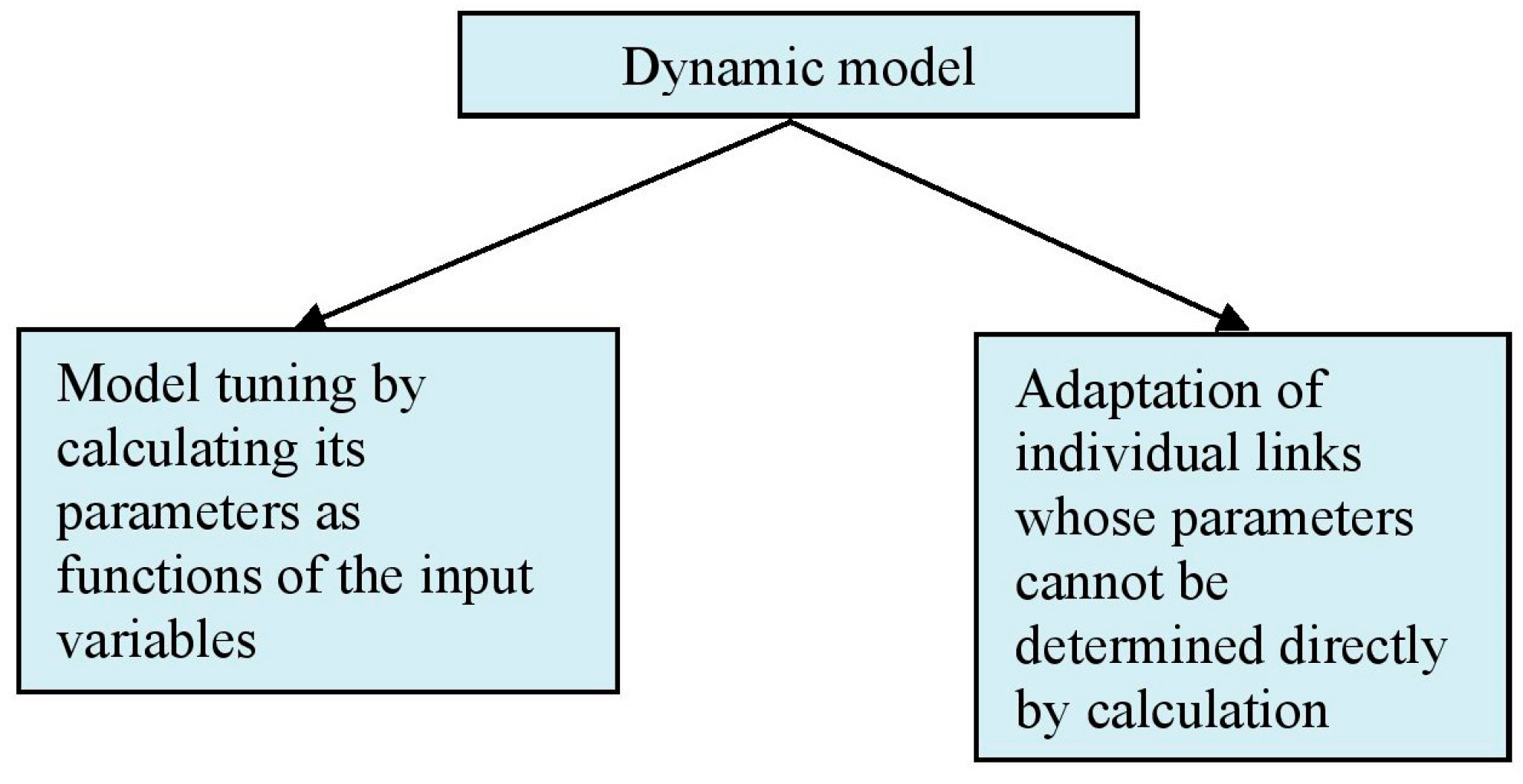
3.2.1. Rational Dynamic Modeling of Control Object
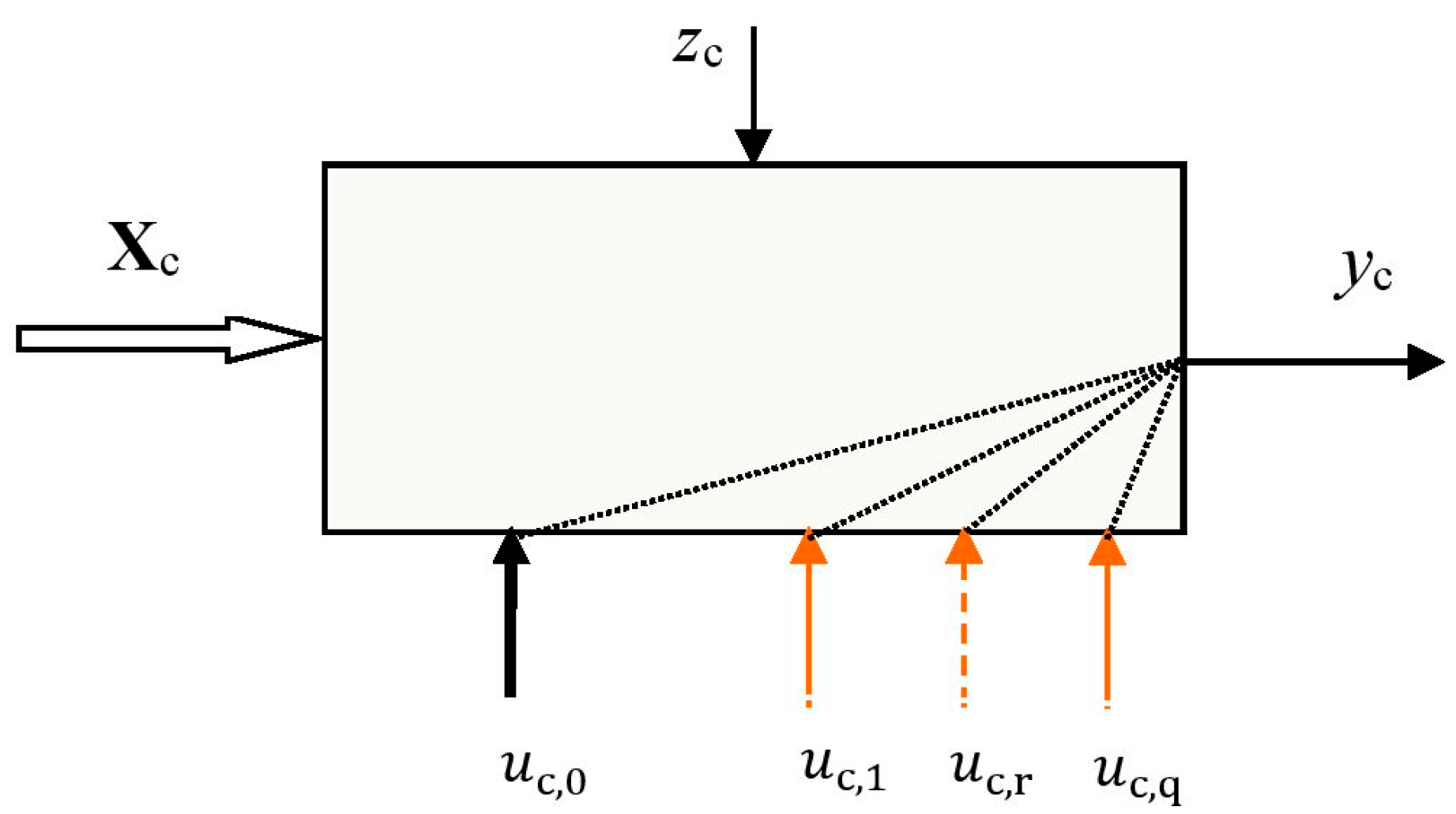
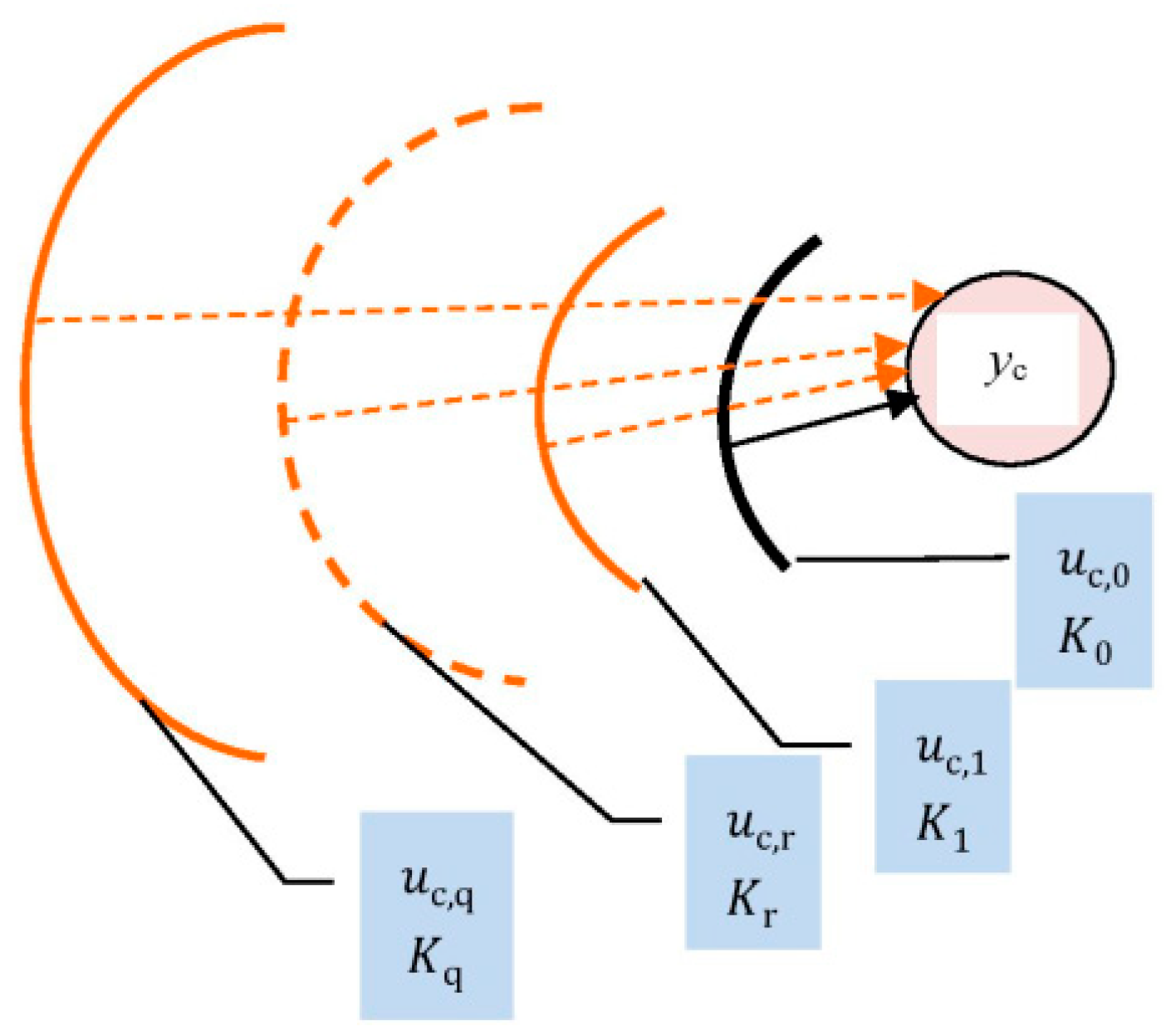
3.2.2. Consecutive Emergency Control
3.2.3. Modeling: Variations of Parameter Ranges
3.2.4. Combined Compensation of Changes in the Control Object’s Characteristics
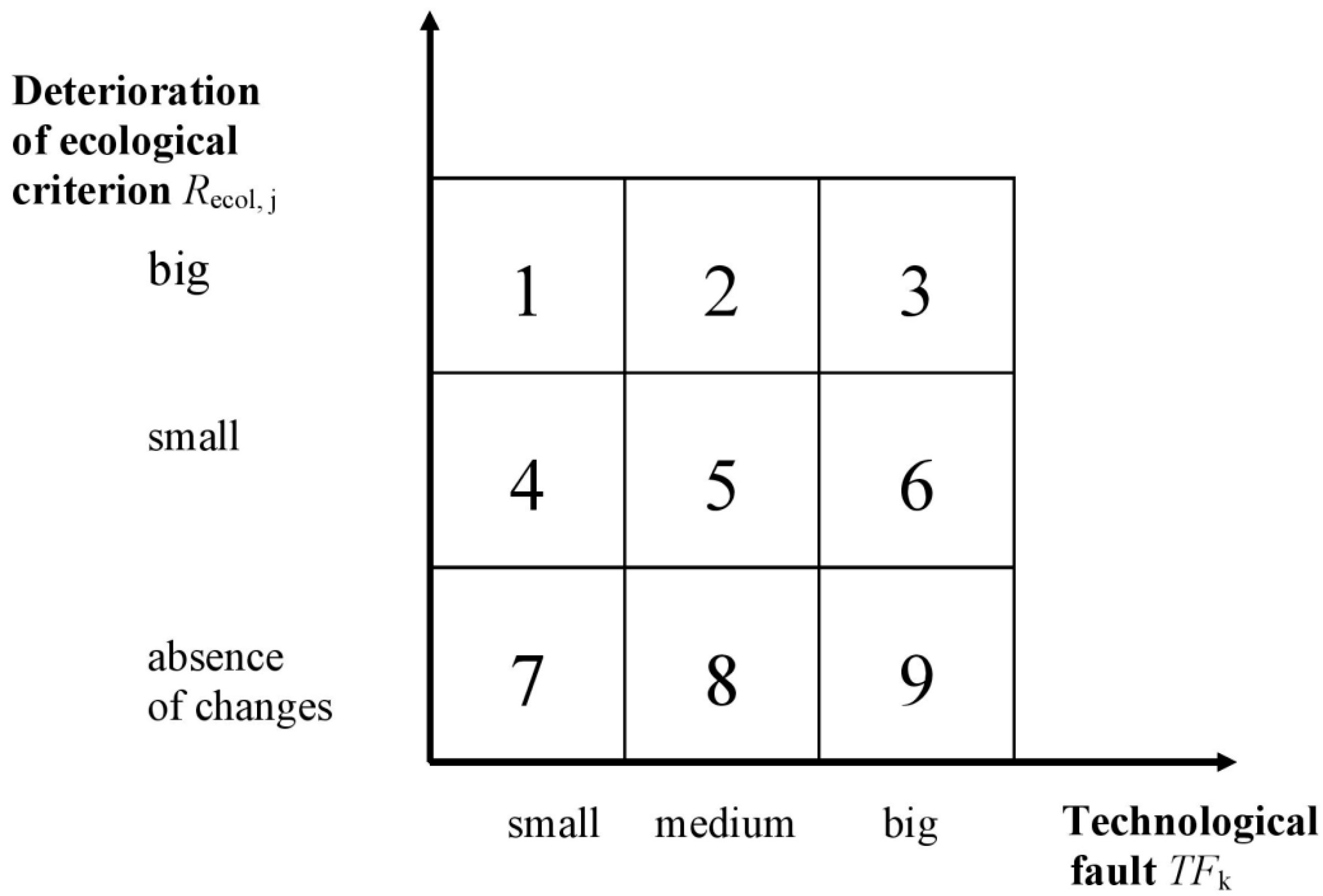
3.3. Extended Ecology–Technological Portfolios
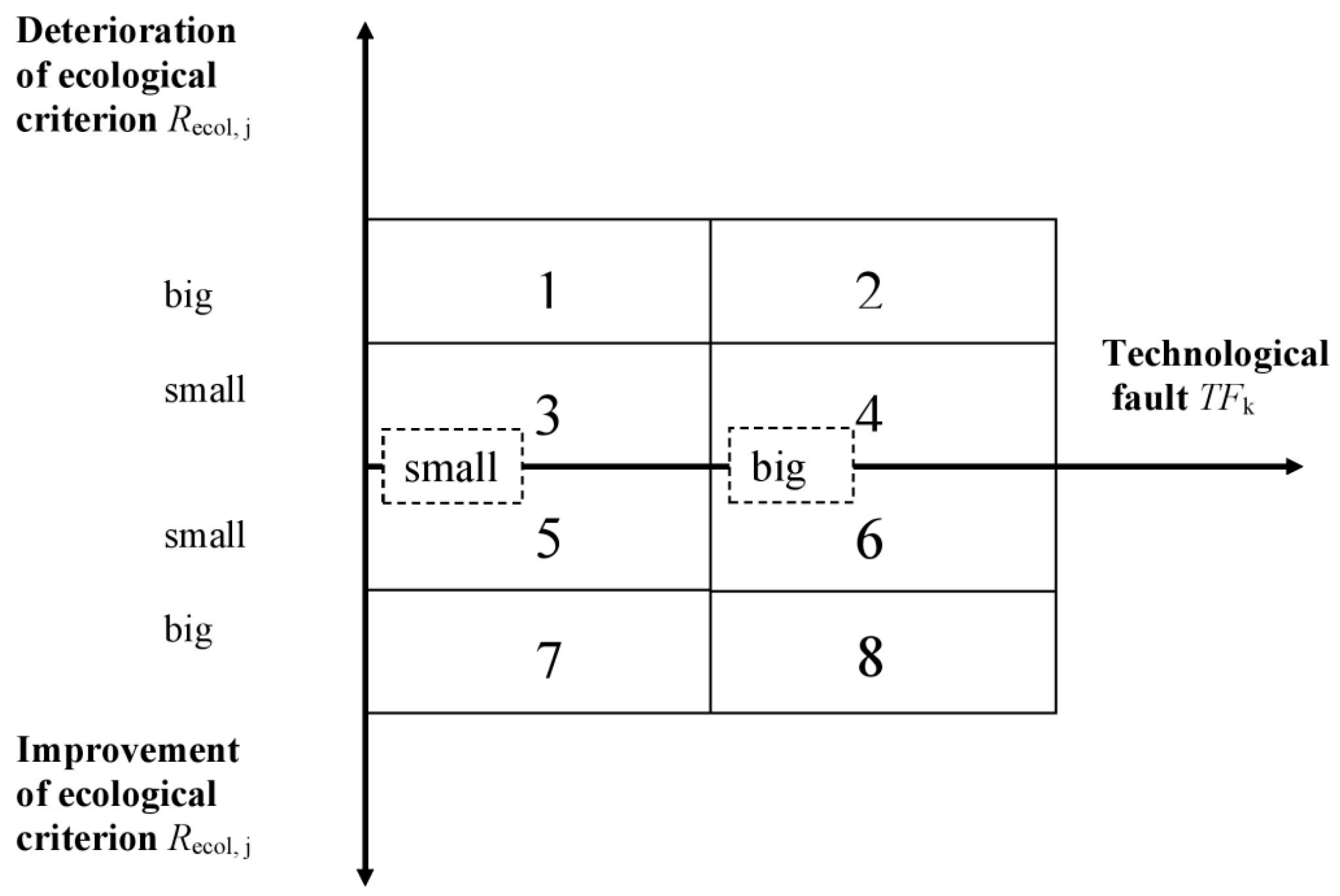
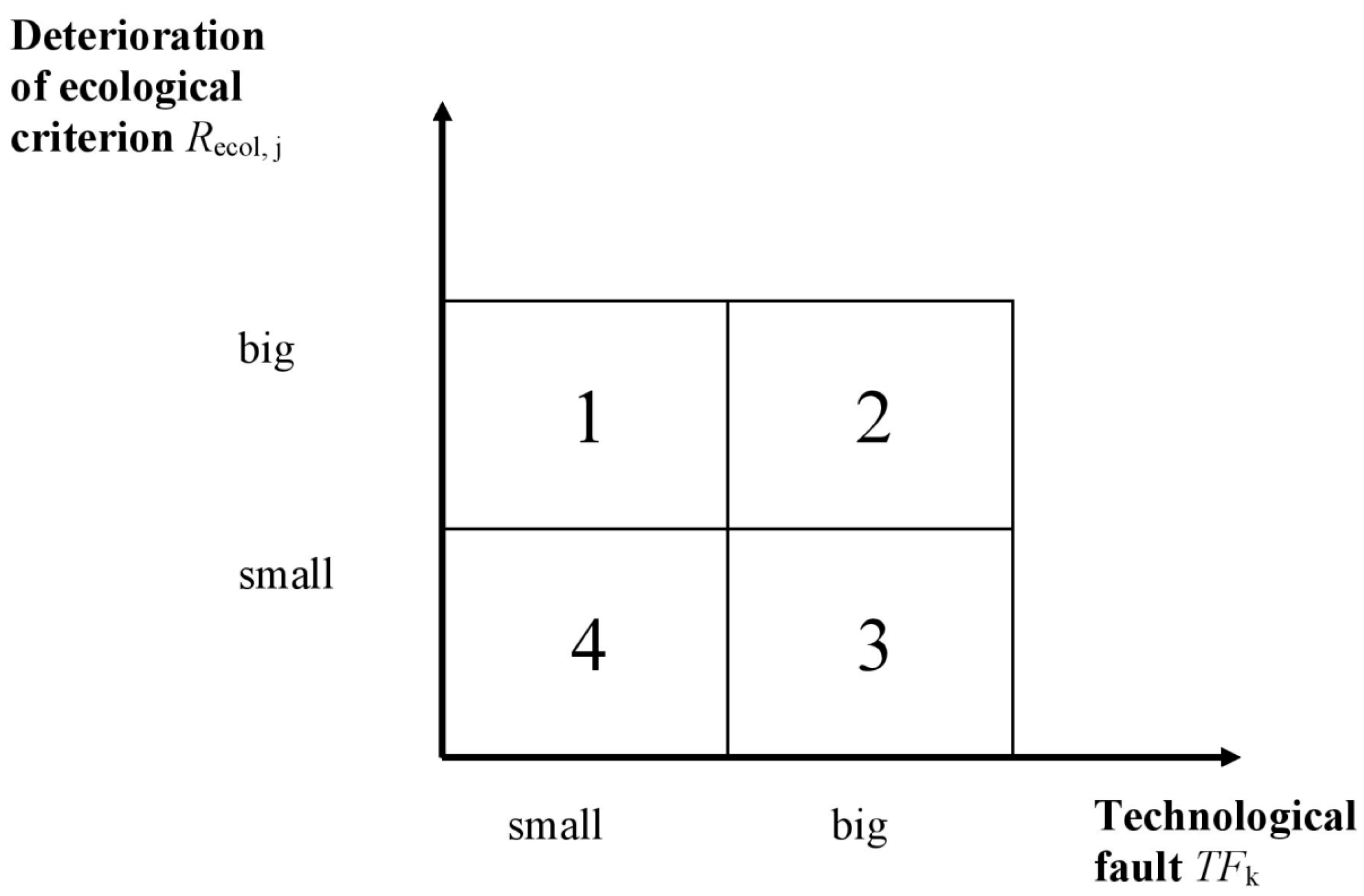
- Small TFk, big Recol, j;
- Big TFk, big Recol, j;
- Big TFk, small Recol, j;
- Small TFk, small Recol, j.
- Distinguishing the control actions that influence a specific criterion, and those that do not have a significant impact on it;
- Finding overlap between the criteria;
- Adjusting the technological constraints in accordance with environmental regulations and current market requirements;
- Clarifying the selection of scalar objectives included in the multi-criteria objective function;
- Acquisition of information for overcoming the uncertainty of control objectives.
3.4. Techno-Ecological Vectors and Techno-Ecological Matrices
- The nitrogen supply for H2/N2 ratio control;
- The temperature change at the outlet of the ammonia vaporizer;
- The liquid ammonia supply into the vaporizer;
- Change in ‘cold’ bypass flow.
3.5. Constraint Adjustment Strategy
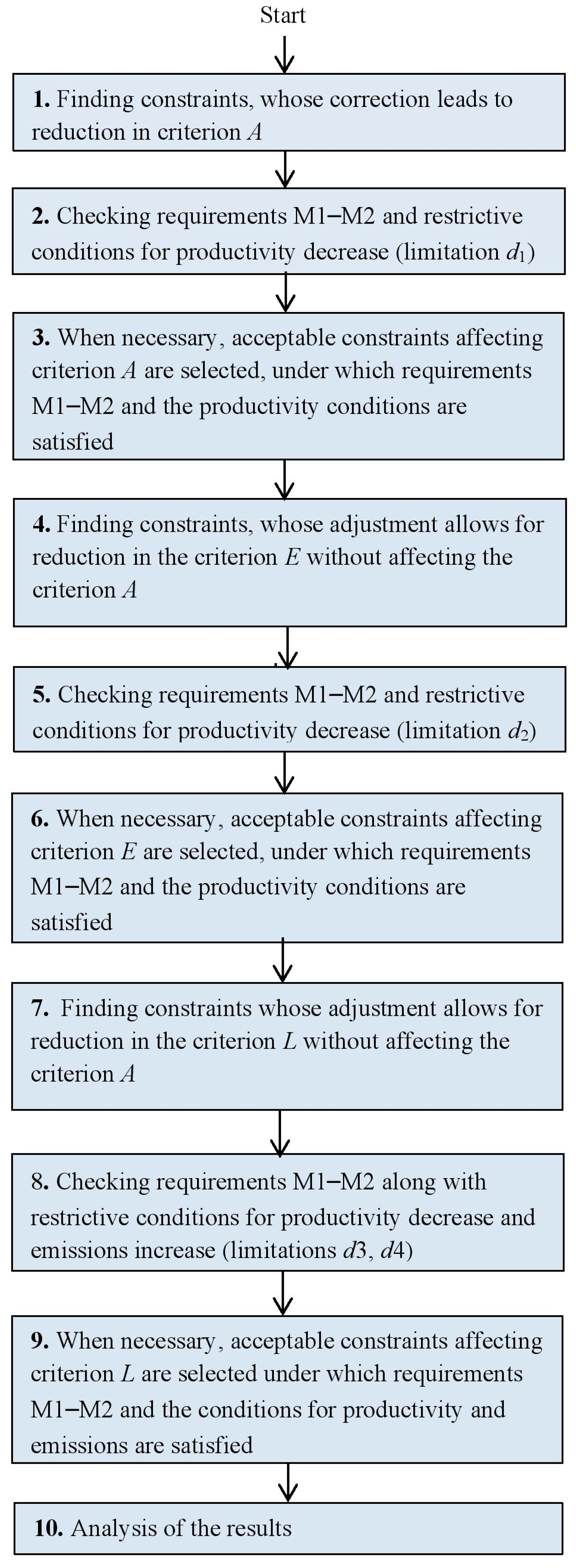
- The potential decrease in productivity should not exceed the allowable amount d = d1 + d2 + d3, where d1, d2, d3 are the allowable reduction in productivity at each stage of optimization, respectively;
- The potential increase in emissions E resulting from cost reductions L must not exceed the allowable value d4.
4. Discussion
5. Conclusions
6. Future Directions
- Development of accident-free control systems for autothermal reactors, using the Rational Methodology of Efficiency Increasing (RMEI) and modeling the corresponding systems;
- Development of maps of potentially hazardous processes based on Extended Ecological–technological Portfolios and using the RMEI;
- Development of approaches for creating real-time dynamic gray-box models of chemical reactors. The potential applications are systems for training operators, process simulators, and digital twins.
Author Contributions
Funding
Data Availability Statement
Conflicts of Interest
Nomenclature
| Latin letters | |
| ak,1, ak,2, ak,3, ak,4 | components of the techno-ecological vector Tk |
| A | risk of accidents |
| bk,1, bk,2, bk,3, bk,4 | components of the techno-ecological vector Tk |
| c | gain parameter (°C/%) |
| d, d1–d3 | limitations on decrease in productivity (t/h) |
| d4 | limitation on increase in emissions (t/h) |
| Dk | amount of reduction in the upper limit Hk |
| E | emissions (t/h) |
| G | set of admissible solutions in the problem with objective function (1) |
| Hk | upper limits on controlled parameters |
| Kr | specific cost associated with the r-th control used to eliminate the critical situation |
| kg | gain parameter (°C/%) |
| L | resulting costs (USD/h) |
| Nk | lower limits on controlled parameters |
| P | productivity (t/h) |
| R | vector objective function |
| Recon, i | economical components of vector objective function |
| Recol, j | ecological components of vector objective function |
| t | time (s) |
| T, Te | time constants (s) |
| Tk | techno-ecological vector |
| u | position of the gas supply valve to the reaction zone (%) |
| uc,r | r-control action in the respective control loop of the subsystem 2 |
| control action that causes the change in the parameter zk, | |
| U | control vector of CTS |
| Ue,Uc | control vectors of the subsystems 1 and 2 |
| Vk | amount of increase in the lower limit Nk |
| X | vector of input variables of CTS |
| Xe, Xc | input vectors of the subsystems 1 and 2 |
| Xf | vector of input variables affecting the temperature |
| yc | controlled variable in the subsystem 2 |
| ye | output variable in the subsystem 1 |
| yf, yu | mean and maximum temperatures in the reaction zone, (°C) |
| zc | disturbance in the subsystem 2 |
| ze | sum of external and internal disturbances in the subsystem 1 |
| zk | controlled process parameter |
| zu | disturbance for the maximum temperature in the reaction zone (°C) |
| Z | vector of controlled process parameters included in the system of technological constrains |
| Greek letters | |
| index of the control action that causes a change in the parameter zk | |
| , | functions of vector |
| Ψ | sequence of activation of the auxiliary control loops |
| , , | functions of vector |
| functions of vector | |
| set of admissible solutions in the problem with objective function (2) | |
| Subscripts | |
| i | index of scalar economic criteria, i = 1,…, n |
| j | index of scalar ecological criteria, j = 1,…, m |
| k | index of the controlled parameter and technological fault, k = 1,…, p |
| l | index of control action in the subsystem 1, l = 1,…, λ |
| r | index of control action in the subsystem 2 and the respective control loop, |
| s | index of input variables in the subsystem 1, s = 1,…, µ |
| Abbreviations | |
| ACG | ammonia production from coke oven gas |
| EETP | extended ecological–technological portfolio |
| ANG | ammonia production from natural gas |
| ETP | economic–technological portfolio |
| CTS | chemico-techological system |
| SATC | strategy for adjusting the technological constraints |
| MC | manual control |
| RMEI | rational methodology of efficiency increasing |
| TEM | techno-ecological matrix |
| TEV | techno-ecological vector |
| TSC | traditional static control |
| VOF | vector objective function |
References
- Fedorov, A.; Yablonsky, G. Critical Situations and Prevention of accidents in Chemico-Technological Systems (Methodological Aspects). Processes 2024, 12, 161. [Google Scholar] [CrossRef] [Scilit]
- Hao, X.; Wen, S.; Xue, Y.; Wu, H.; Hao, Y. How to improve environment, resources and economic efficiency in the digital era? Resour. Policy 2023, 80, 103198. [Google Scholar] [CrossRef] [Scilit]
- Chen, Y.; Song, G.; Yang, F.; Zhang, S.; Zhang, Y.; Liu, Z. Risk Assessment and Hierarchical Risk Management of Enterprises in Chemical Industrial Parks Based on Catastrophe Theory. Int. J. Environ. Res. Public Health 2012, 9, 4386–4402. [Google Scholar] [CrossRef] [Scilit]
- Ökoeffizienz. Available online: https://de.wikipedia.org/wiki/%C3%96koeffizienz (accessed on 20 May 2024).
- Eco-Efficiency. Available online: https://www.ecomatters.nl/services/lca-epd/life-cycle-assessment/eco-efficiency-analysis/ (accessed on 7 June 2025).
- Kopnina, H.; Blewitt, J. Sustainable Business; Routledge: London, UK, 2018; Available online: https://www.taylorfrancis.com/books/mono/10.4324/9781315110172/sustainable-business-john-blewitt-helen-kopnina (accessed on 23 January 2026).
- Fussler, C. Die Öko-Innovation: Wie Unternehmen Profitabel und Umweltfreundlich Sein Können; S. Hirzel Verlag GmbH: Stuttgart, Germany, 1999; Available online: https://www.amazon.de/Die-%C3%96ko-Innovation-Unternehmen-profitabel-umweltfreundlich/dp/3777608742 (accessed on 23 January 2026).
- Ökoeffizienz. Available online: https://wupperinst.org/a/wi/a/s/ad/211 (accessed on 21 May 2024).
- Fedorov, A.; Stefan, T.; Noisser, R.; Weinmann, A. Vermeidung und Beseitigung von Notfallsituationen mit regelungstechnischen Lösungen. Int. J. Autom. Austria 1999, 7, 2–17. [Google Scholar]
- de Oliveira Neto, G.C.; Lucato, W.C. Production planning and control as a tool for eco-efficiency improvement and environmental impact reduction. Prod. Plan. Control 2015, 27, 148–156. [Google Scholar] [CrossRef] [Scilit]
- Beder, S. Environmental economics and ecological economics: The contribution of interdisciplinarity to understanding, influence and effectiveness. Environ. Conserv. 2011, 38, 140–150. [Google Scholar] [CrossRef] [Scilit]
- Methodensammlung zur Nachhaltigkeitsbewertung. Grundlagen, Indikatoren. Hilfsmittel. Karlsruher Institut für Technologie—KIT. Available online: https://www.iip.kit.edu/downloads/Methodensammlung%20zur%20Nachhaltigkeitsbewertung.pdf (accessed on 6 November 2025).
- Nachhaltige Chemie. Positionen und Kriterien des Umweltamtes. Available online: https://www.umweltbundesamt.de/themen/nachhaltigkeit-strategien-internationales (accessed on 23 January 2026).
- Saling, P.; Kicherer, A.; Dittrich-Krämer, B.; Wittlinger, R.; Zombik, W.; Schmidt, I.; Schrott, W.; Schmidt, S. Eco-efficiency analysis by BASF: The method. Int. J. Life Cycle Assess. 2002, 7, 203–218. Available online: https://www.researchgate.net/publication/226248943_Eco-efficiency_analysis_by_BASF_The_method (accessed on 23 January 2026). [CrossRef] [Scilit]
- Ökoeffizienz-Analyse. Available online: https://www.google.com/url?sa=t&source=web&rct=j&opi=89978449&url=https://www.basf.com/global/de/who-we-are/sustainability/our-contributions-to-enabling-the-green-transformation/eco-efficiency-analysis&ved=2ahUKEwiv9M20yOeQAxWm1QIHHbGIHZIQFnoECBUQAw&usg=AOvVaw2YVdjAV2jI1MlPslsPCPU3 (accessed on 10 November 2025).
- Fedorov, A.; Weber, M.; Frei, H.; Kenig, E.Y. Dynamisches Grey-Box-Modell des Prozesses der chemischen Absorption für Echtzeitanwendungen. Chem. Ing. Tech. 2025, 97, 195–203. [Google Scholar] [CrossRef] [Scilit]
- Fedorov, A.; Frei, H.; Bothe, M.; Lutters, N.; Kenig, E.Y. Entwicklung von Echtzeitmodellen für Kreislaufprozesse der chemischen Absorption. Chem. Ing. Tech. 2020, 92, 1962–1967. [Google Scholar] [CrossRef] [Scilit]
- Bothe, M.; Fedorov, A.; Frei, H.; Lutters, N.; Kenig, E.Y. Untersuchung des dynamischen Prozessverhaltens bei Betriebsstörungen im Bereich der chemischen Absorption. Chem. Ing. Tech. 2020, 92, 299–304. [Google Scholar] [CrossRef] [Scilit]
- Arendt, J.S. Management of quantitative risk assessment in the chemical process industry. Process Saf. Prog. 1990, 9, 262–268. [Google Scholar] [CrossRef] [Scilit]
- Achour, M.H.; Haroun, A.E.; Schult, C.J.; Gasem, K.A.M. A new method to assess the environmental risk of a chemical process. Chem. Eng. Process. 2005, 44, 901–909. [Google Scholar] [CrossRef] [Scilit]
- Schmitz, P.; Reniers, G.; Swuste, P. Determining a realistic ranking of the most dangerous process equipment of the ammonia production process: A practical approach. J. Loss Prev. Process Ind. 2021, 70, 104395. [Google Scholar] [CrossRef] [Scilit]
- Risk Identification. Available online: https://www.mitre.org/publications/systems-engineering-guide/acquisition-systems-engineering/risk-management/risk-identification (accessed on 6 December 2025).
- Heinze, E.; Biwer, A.; Eissen, M.; Abdul Kholig, M. Bewertung biotechnologischer Prozesse in frühen Phasen der Entwicklung hinsichtlich Risiken bezüglich Ökologie, Sicherheit und Gesundheit. Chem. Ing. Tech. 2006, 78, 301–305. [Google Scholar] [CrossRef] [Scilit]
- Utkin, V.; Fedorov, A. Prevention of emergency situations with sliding mode control. In Proceedings of the 11th IEEE International Workshop on Variable Structure Systems (VSS), Mexico City, Mexico, 26–28 June 2010; pp. 136–141. Available online: https://www.researchgate.net/publication/251943055_Prevention_of_emergency_situations_with_sliding_mode_control (accessed on 23 January 2026).
- Yablonsky, G. Kinetic models of catalytic reactions, V. 32. In Comprehensive Chemical Kinetics; Elsevier: Amsterdam, The Netherlands, 1991. [Google Scholar]
- Marin, G.B.; Yablonsky, G.S.; Constales, D. Kinetics of Chemical Reactions, Decoding Complexity; Wiley-VCH Verlag GmbH & Co. KGaA: Weinheim, Germany, 2019. [Google Scholar]
- Yablonsky, G.; Ray, A. Equilibrium and Optimum: How to Kill Two Birds with One Stone? Int. J. Chem. React. Eng. 2008, 6, 36–48. [Google Scholar] [CrossRef] [Scilit]
- Hopfenbeck, W. Umweltorientiertes Management und Marketing; Moderne Industri: Landsberg/Lech, Germany, 1990. [Google Scholar]
- Steger, U. Umweltmanagement; Gablerverlag: Wiesbaden, Germany, 2013. [Google Scholar]
- Zimmermann, H.J.; Gutsche, L. Multi-Criteria Analyse; Springer: Berlin/Heidelberg, Germany, 1991. [Google Scholar]
- Moiseev, N.N. Mathematical Problems of Systems Analysis; Editorial URSS: Moscow, Russia, 2013; Available online: https://urss.ru/cgi-bin/db.pl?lang=Ru&blang=ru&page=Book&id=170868&srsltid=AfmBOopTaxw4fh32N7WzCZN27dBjRANnne8CKNKD0H5GBt6X6bdNoSTX (accessed on 23 January 2026).
- Seidel, E.; Strebel, H. Umwelt und Oekonomie; Gabler: Wiesbaden, Germany, 1991. [Google Scholar]
- Fedorov, A.; Statjuha, G. Algorithm of decision-making by control of complex chemico-technological object. Chem. Technol. 1987, 4, 70–72. (In Russian) [Google Scholar]
- Luptacik, M.; Bohm, B. An environmental input-output model with multiple criteria. Ann. Oper. Res. 1994, 54, 119–127. Available online: https://www.google.com/url?sa=t&source=web&rct=j&opi=89978449&url=https://link.springer.com/article/10.1007/BF02031730&ved=2ahUKEwjawPGApLOSAxUslP0HHUHYHQ4QFnoECCsQAQ&usg=AOvVaw0t25q0kuE5_aXUeThBEj1W (accessed on 23 January 2026). [CrossRef] [Scilit]
- Fedorov, A. Control system for ammonia units. Control Syst. Comput. 1991, 3, 120–124. (In Russian) [Google Scholar]
- Belton, V.; Stewart, T. Multiple Criteria Decision Analysis—An Integrated Approach; Kluwer Academic Press: Boston, MA, USA, 2002. [Google Scholar]
- Jahn, J. Vector Optimization: Theory, Applications, and Extensions; Springer: Berlin/Heidelberg, Germany, 2011; Available online: https://www.google.com/url?sa=t&source=web&rct=j&opi=89978449&url=https://link.springer.com/book/10.1007/978-3-642-17005-8&ved=2ahUKEwib-eKZlaSSAxXYVfEDHUpSCI0QFnoECBAQAQ&usg=AOvVaw1UHGf1iPpa6oRA_jfmVFFE (accessed on 23 January 2026).
- Figueira, J.; Greco, S.; Ehrogott, M. Multiple Criteria Decision Analysis—State of the Art Surveys; Springer: New York, NY, USA, 2016; Available online: https://www.researchgate.net/publication/327333063_Figueira_J_Greco_S_Ehrgott_M_Multicriteria_Decision_Analysis_State_of_the_art_Surveys_Springer-Verlag_New_York_NY_2016 (accessed on 23 January 2026). [CrossRef] [Scilit]
- Merzlikina, G.S. Environmental economic efficiency of industrial enterprises: Evaluation and management. Vestnik of Astrakhan State Technical University. Ser. Econ. 2019, 3, 7–20. (In Russian) [Google Scholar] [CrossRef] [Scilit]
- Fedorov, A.V.; Korchaka, N.I.; Kisil, I.M.; Kotovenko, E.A.; Shablij, A.G.; Andrianov, V.V.; Krot, V.G. Method of Ammonia Production Control. UA Patent 9449, 30 September 1996. [Google Scholar]
- Rangaiah, G.P.; Feng, Z.; Hoadley, A.F. Multi-Objective Optimization Applications in Chemical Process Engineering: Tutorial and Review. Processes 2020, 8, 508. [Google Scholar] [CrossRef] [Scilit]
- Usheva, N.V.; Moizes, O.E.; Mityanina, O.E.; Kuzmenko, E.A. Mathematical Modeling of Chemico—Engineering Processes: A Textbook; Tomsk Polytechnic University Press: Tomsk, Russia, 2014; Available online: https://portal.tpu.ru/SHARED/o/OEM/Ucheba/Tab/Uch_posobie_Mod_XTP.pdf (accessed on 15 December 2025).
- Kafarov, V.V. Cybernetics Methods in Chemistry and Chemical Engineering; Khimiya: Moscow, Russia, 1985; Available online: https://www.centrmag.ru/catalog/product/etody-kibernetiki-v-himii-i-himicheskoy-tehnologii-4-e-izdanie/ (accessed on 23 January 2026).
- Kafarov, V.V.; Glebov, M.B. Mathematical Modeling of Basic Processes of Chemical Production; URSS: Moscow, Russia, 2023; Available online: https://urss.ru/cgi-bin/db.pl?lang=Ru&blang=ru&page=Book&id=240899&srsltid=AfmBOoprc0SdmD2_ZrC7O__w9JuUV6dKt_h8PkhqkeC1sFDcTejUkVnW (accessed on 23 January 2026).
- Ponce-Ortega, J.M.; Ochoa-Barragán, R.; Ramírez-Márquez, C. Optimization of Chemical Processes: A Sustainable Perspective; Springer: Cham, Switzerland, 2024; Available online: https://www.researchgate.net/publication/380310246_Optimization_of_Chemical_Processes_A_Sustainable_Perspective (accessed on 23 January 2026).
- Robin Smith, R. Chemical Process Design and Integration; John Wiley & Sons Ltd.: Chichester, UK, 2016; Available online: https://www.google.com/url?sa=t&source=web&rct=j&opi=89978449&url=https://www.wiley.com/en-us/Chemical%2BProcess%2BDesign%2Band%2BIntegration%252C%2B2nd%2BEdition-p-9781119990147&ved=2ahUKEwiH18z7r6SSAxWlA9sEHRnMFPcQFnoECBAQAQ&usg=AOvVaw3BhNMHDvIr737DiccPA34j (accessed on 23 January 2026).
- Shardt, Y.A.W. Statistics for Chemical and Process Engineers: A Modern Approach, 1st ed.; Springer Nature: Cham, Switzerland, 2022; Available online: https://books.google.de/books/about/Statistics_for_Chemical_and_Process_Engi.html?id=rN9XEAAAQBAJ&redir_esc=y (accessed on 23 January 2026).
- Sridha, D.V.; Seagrave, R.C.; Bartlett, E.B. Process modeling using stacked neural networks. AIChE J. 1996, 42, 2529–2539. [Google Scholar] [CrossRef] [Scilit]
- Upreti, S.R. Process Modeling and Simulation for Chemical Engineers: Theory and Practice; John Wiley & Sons Ltd.: Hoboken, NJ, USA; Chichester, UK, 2017; Available online: https://content.e-bookshelf.de/media/reading/L-9747059-78f83fb599.pdf (accessed on 23 January 2026).
- Rotatsch, V.Y. Theory of Automatic Control of Thermal Power Processes; Energoatomizdat: Moscow, Russia, 1985; Available online: http://tes.kpi.ua/wp-content/uploads/2020/04/1985-%D0%A0%D0%BE%D1%82%D0%B0%D1%87-%D0%92.-%D0%AF.-%D0%A2%D0%B5%D0%BE%D1%80%D0%B8%D1%8F-%D0%B0%D0%B2%D1%82%D0%BE%D0%BC%D0%B0%D1%82%D0%B8%D1%87%D0%B5%D1%81%D0%BA%D0%BE%D0%B3%D0%BE-%D1%83%D0%BF%D1%80%D0%B0%D0%B2%D0%BB%D0%B5%D0%BD%D0%B8%D1%8F-%D1%82%D0%B5%D0%BF%D0%BB%D0%BE%D1%8D%D0%BD%D0%B5%D1%80%D0%B3%D0%B5%D1%82%D0%B8%D1%87%D0%B5%D1%81%D0%BA%D0%B8%D0%BC%D0%B8-%D0%BF%D1%80%D0%BE%D1%86%D0%B5%D1%81%D1%81%D0%B0%D0%BC%D0%B8.pdf (accessed on 23 January 2026).
- Schulz, G. Regelungstechnik 1, 3. Auflage; Oldenbourg Wissenschaftsverlag: München, Germany, 2007; Available online: https://api.pageplace.de/preview/DT0400.9783486594027_A21723424/preview-9783486594027_A21723424.pdf (accessed on 23 January 2026).
- Medvedev, R.B.; Muravjev, A.I.; Fedorov, A.V.; Shljachanov, A.N. Algorithms for checking the reliability of parameter values in the information subsystem of the system for computer process control. Chem. Technol. 1977, 4, 51–52. (In Russian) [Google Scholar]
- Castillo, I.; Steinberger, M.; Fridman, L.; Moreno, J.A.; Horn, M. A Lyapunov based Saturated Super-Twisting algorithm. In Emerging Trends in Sliding Mode Control, Studies in Systems, Decision and Control; Mehta, A., Bandyopadhyay, B., Eds.; Springer Nature Singapore Pte Ltd.: Singapore, 2021; Available online: https://www.tugraz.at/fileadmin/user_upload/Institute/IRT/Clover/A_Lyapunov_based_Saturated_Super-Twisting_Algorithm.pdf (accessed on 23 January 2026).
- Der Windup-Effekt bei Reglern mit Begrenzten Stellgrößen. Available online: http://www.kramann.info/62_Regelungssysteme/11_Stabilitaet/03_Windup/ (accessed on 6 December 2025).
- Wang, D.D. Unravelling the Effects of the Environmental Technology Portfolio on Corporate Sustainable Development. Corp. Soc. Responsib. Environ. Manag. 2018, 25, 457–472. [Google Scholar] [CrossRef] [Scilit]
- Social-Ecological-Technological Systems (SETS). Available online: https://www.researchgate.net/publication/373647349_Resilience_of_Urban_Social-Ecological-Technological_Systems_SETS_A_Review (accessed on 23 January 2026).
- Ciullo, A.; Viglione, A.; Castellarin, A.; Crisci, M.; Di Baldassarre, G. Socio-hydrological modelling of flood-risk dynamics: Comparing the resilience of green and technological systems. Hydrol. Sci. J. 2017, 62, 880–891. [Google Scholar] [CrossRef] [Scilit]
- Portfolios. Available online: https://www.google.com/url?sa=t&source=web&rct=j&opi=89978449&url=https://www.siemens-energy.com/global/en/home/products-services/product-offerings/blue-high-voltage-products.html&ved=2ahUKEwi-o9a3_bCSAxWS_7sIHaUCEMUQFnoECBwQAQ&usg=AOvVaw35UdgCo3l-sO8jQINTs5VF (accessed on 23 January 2026).
- Grubler, A.; Wilson, C. Energy Technology Innovation; Cambridge University Press: Cambridge, UK, 2013; Available online: https://www.cambridge.org/core/books/abs/energy-technology-innovation/energy-technology-innovation/80016D8AFCBB459D397301F0ECD68938 (accessed on 23 January 2026). [CrossRef] [Scilit]
- Danesh, D.; Ryan, M.J.; Abbasi, A. Multi-criteria decision-making methods for project portfolio management: A literature review. Int. J. Manag. Decis. Mak. 2017, 17, 75–94. [Google Scholar] [CrossRef] [Scilit]
- Methods for Expert Evaluation. Available online: https://habr.com/ru/articles/189626/ (accessed on 15 April 2024).





| No | Definition | Source (References) |
|---|---|---|
| 1 | Eco-efficiency is the ratio of the economic value of a product to the environmental impact caused by its production process, measured in an appropriate unit | [4] |
| 2 | Eco-efficiency is an emerging method for transforming unsustainable development into sustainable development. Specifically, the eco-efficiency calculation determines the ratio between the value of products and their environmental impacts and gives clear financial results. These insights help create more goods and services with the use of fewer resources. As a result, this creates less waste and pollution and can improve the bottom line | [5] |
| 3 | Eco-efficiency is based on the idea of “doing more with less,” that is, reducing the consumption of resources (e.g., energy) and the impact on nature (e.g., air pollution) while maintaining or increasing the value of the manufactured product | [6] |
| 4 | Eco-efficiency—commonly understood as “producing more with less energy and resource consumption”—is described by the former Dow Chemical manager Claude R. Fussler as the idea “that environmental performance and business success go hand in hand” | [7] |
| No. | Technological Faults | Main Ecological Consequences | Corresponding Ecological Criteria | Corresponding Type of EETP | Corresponding Point on EETP |
|---|---|---|---|---|---|
| 1 | Loss of the thermal stability of the ammonia synthesis reactor (ACG), emergency decrease in the temperature in the reaction zone | Emergency shutdown with emission of coke oven gas, CO2, and NH3 is possible | Environmental pollution | 1 | 1 |
| 2 | Emergency pressure increase in system of circulation (ACG) | Emissions of circulating gas | Environmental pollution | 1 | 1 |
| 3 | Emergency increase in the temperature of the reformed gas in the primary methane reformer (ANG) | Explosion and fire caused by burning-out of reactor tubes | Risk | 1 | 2 |
| 4 | Increase in steam surplus in steam/gas ratio control (ANG) | Small increase in CO2 emissions in smoke-gases | Environmental pollution | 1 | 3 |
| 5 | Dangerous frequency of temperature fluctuations in the reaction zone (ANG and ACG) | Gas leakages, possibility of explosion and fire Factors: temperature stresses in structural elements of the reactor, loss of reactor impermeability | Risk of pollution, explosion, and fire | 1 | 2 |
| 6 | Emergency decrease in natural gas feed (ANG) | Reduction of purge-gas and smoke-gas emissions, along with a potential decrease in fuel gas consumption | Environmental pollution, resource saving | 3 | 6 |
| 7 | Small violations in the nitrogen–hydrogen mixture concentration (ANG and ACG) | No noticeable environmental changes | Ecological criteria practically do not vary | 2 | 7 |
| 8 | Decrease in temperature in the methane reformer (ANG) | Small decrease in the risk of tube burnout in the reformer | Risk of pollution, explosion, and fire | 3 | 6 |
| 9 | Increase in the concentration of inert gases in the circulation mixture (ANG) | Increase in energy and resource consumption | Resource saving | 1 | 4 |
| Nr. | Parameter | Index of Control Action | Low Boundary | Small Violation of the Lower Boundary | Upper Boundary | Small Violation of the Upper Boundary | ||||
|---|---|---|---|---|---|---|---|---|---|---|
| Risk | Environmental Pollution | Resource Consumption (Costs) | Risk | Environmental Pollution | Resource Consumption (Costs) | |||||
| 1 | H2/N2 ratio | 1 | 1 | 0 | 0 | 1 | 1 | 0 | 0 | 1 |
| 2 | Ammonia concentration at the reactor inlet | 2 | 0 | 0 | 0 | 0 | 1 | 3 | 1 | 2 |
| 3 | Liquid ammonia level in the evaporator | 3 | 1 | 3 | 1 | 2 | 1 | 3 | 1 | 2 |
| 4 | Temperature in the reaction zone of the ammonia synthesis reactor | 4 | 1 | 3 | 1 | 1 | 1 | 3 | 1 | 2 |
| No. | Task | Field of Application |
|---|---|---|
| 1 | Data preparation for artificial intelligence solutions: development of knowledge bases and expert systems for potentially hazardous CTS, design of systems based on fuzzy logic, artificial neural networks, and evolutionary modeling | Control, safety, training and professional development |
| 2 | Formulation of environmental requirements for design and operation of chemical plants | Development and improvement of technological processes and units |
| 3 | Identification of potential hazards in chemical process control | Safety |
| 4 | Comprehensive assessment of losses caused by process violations | Controlling |
| 5 | Targeted investigation of the CTS for solving multi-criteria optimization problems | Computer control |
| 6 | Creation of control object maps, i.e., a visual representation of the object’s behavior in critical situations | Safety |
| 7 | Monitoring of operator performance/efficiency | Computer control, Controlling |
| 8 | Statistical analysis of emergency situations | Safety |
| 9 | Comparison of hazards caused by violations of technological constraints | Safety |
| 10 | Comparative safety evaluation of different technological processes for the same product | Development and improvement of technological processes and units |
| 11 | Development of additional constraints beyond technological regulations | Computer control, operation of the chemical plant |
| 12 | Training specialists. Fostering ecological culture | Training and professional development |
| Methodologies of Control | Compared Characteristics | |||||
|---|---|---|---|---|---|---|
| Productivity | Costs | Risk | Consideration of CTS Impact on the Environment | Prevention of Accidents | Operation in Critical Situations | |
| Manual Control (MC) | Lower than in the TSC case | Difficult to assess | Higher than in the RMEI case | Limited accounting | Quite limited | Limited |
| Traditional static control (TSC) | Higher than in the MC case | Difficult to assess | Slightly lower than in the MC case | Limited accounting | Limited | Limited |
| Rational Methodology of Efficiency Increasing (RMEI) | Slightly lower or equal to the productivity in the TSC case | Lower than or equal to TSC case | Significantly less than in the TSC case | Significant consideration | Goal-oriented procedures for accident prevention | Recognition and elimination of critical situations |
Disclaimer/Publisher’s Note: The statements, opinions and data contained in all publications are solely those of the individual author(s) and contributor(s) and not of MDPI and/or the editor(s). MDPI and/or the editor(s) disclaim responsibility for any injury to people or property resulting from any ideas, methods, instructions or products referred to in the content. |
© 2026 by the authors. Licensee MDPI, Basel, Switzerland. This article is an open access article distributed under the terms and conditions of the Creative Commons Attribution (CC BY) license.
Share and Cite
Yablonsky, G.; Fedorov, A. Increasing Efficiency of Chemico-Technological Systems and Prevention of Accidents: Approaches, Models, Portfolios. Processes 2026, 14, 524. https://doi.org/10.3390/pr14030524
Yablonsky G, Fedorov A. Increasing Efficiency of Chemico-Technological Systems and Prevention of Accidents: Approaches, Models, Portfolios. Processes. 2026; 14(3):524. https://doi.org/10.3390/pr14030524
Chicago/Turabian StyleYablonsky, Gregory, and Alexander Fedorov. 2026. "Increasing Efficiency of Chemico-Technological Systems and Prevention of Accidents: Approaches, Models, Portfolios" Processes 14, no. 3: 524. https://doi.org/10.3390/pr14030524
APA StyleYablonsky, G., & Fedorov, A. (2026). Increasing Efficiency of Chemico-Technological Systems and Prevention of Accidents: Approaches, Models, Portfolios. Processes, 14(3), 524. https://doi.org/10.3390/pr14030524