Smart Protection Relay for Power Transformers Using Time-Domain Feature Recognition
Abstract
1. Introduction
1.1. Background
1.2. Recent Work
1.3. Motivations and Contributions
2. Transformer Time-Domain Feature Signal Fusion Method
2.1. Analysis of the Transformer Time-Domain Electrical Quantity Characteristics
2.2. Input Model of Time-Domain Characteristic Quantities for Transformers
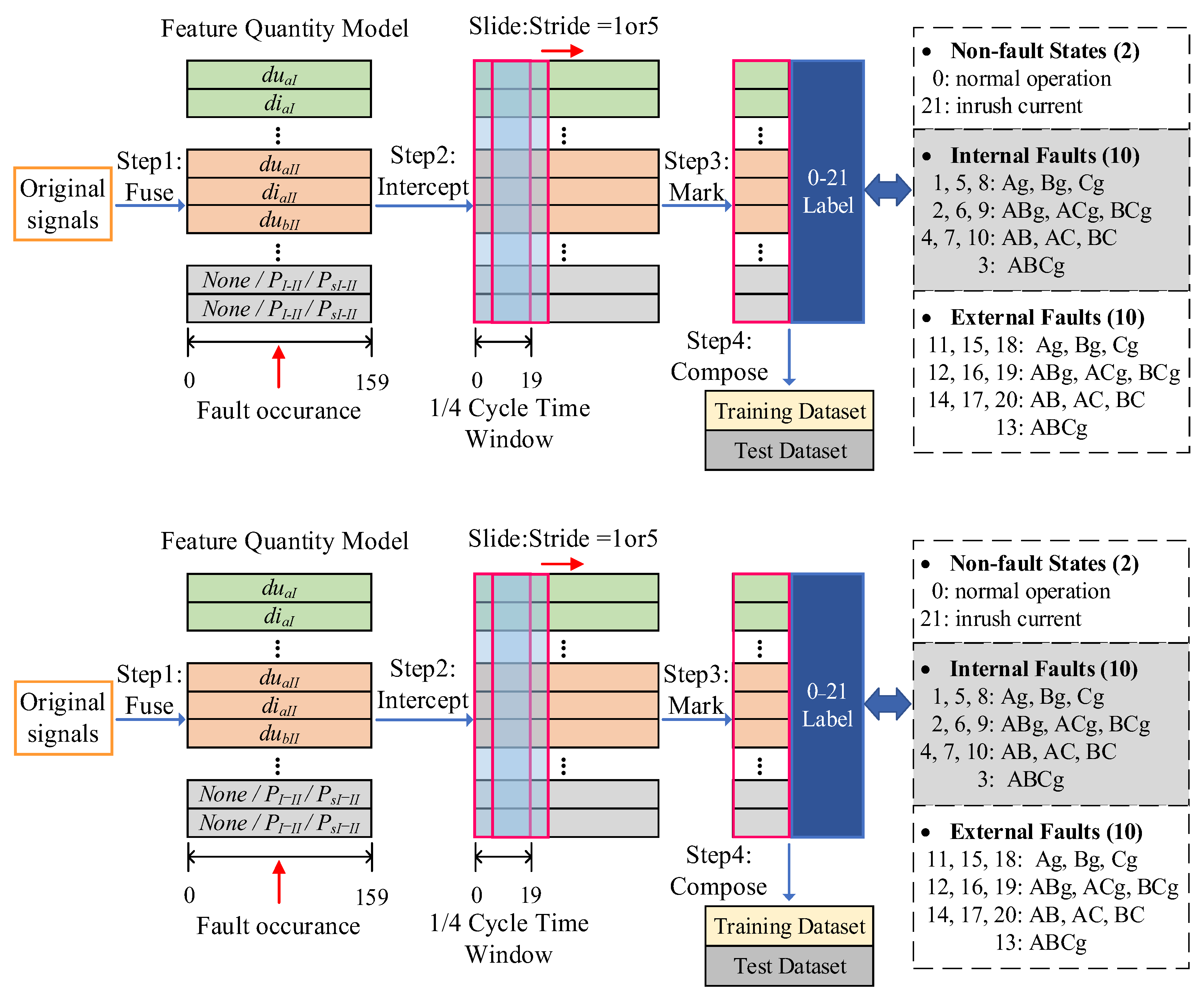
2.3. Data Fusion Method
3. Capsule Network Model Based on Channel Attention
3.1. Capsule Network
3.2. Capsule Network Based on a Channel Attention Mechanism
4. SE-CapsuleNet-Based Transformer Operational State Discrimination
4.1. Transformer Simulation Dataset
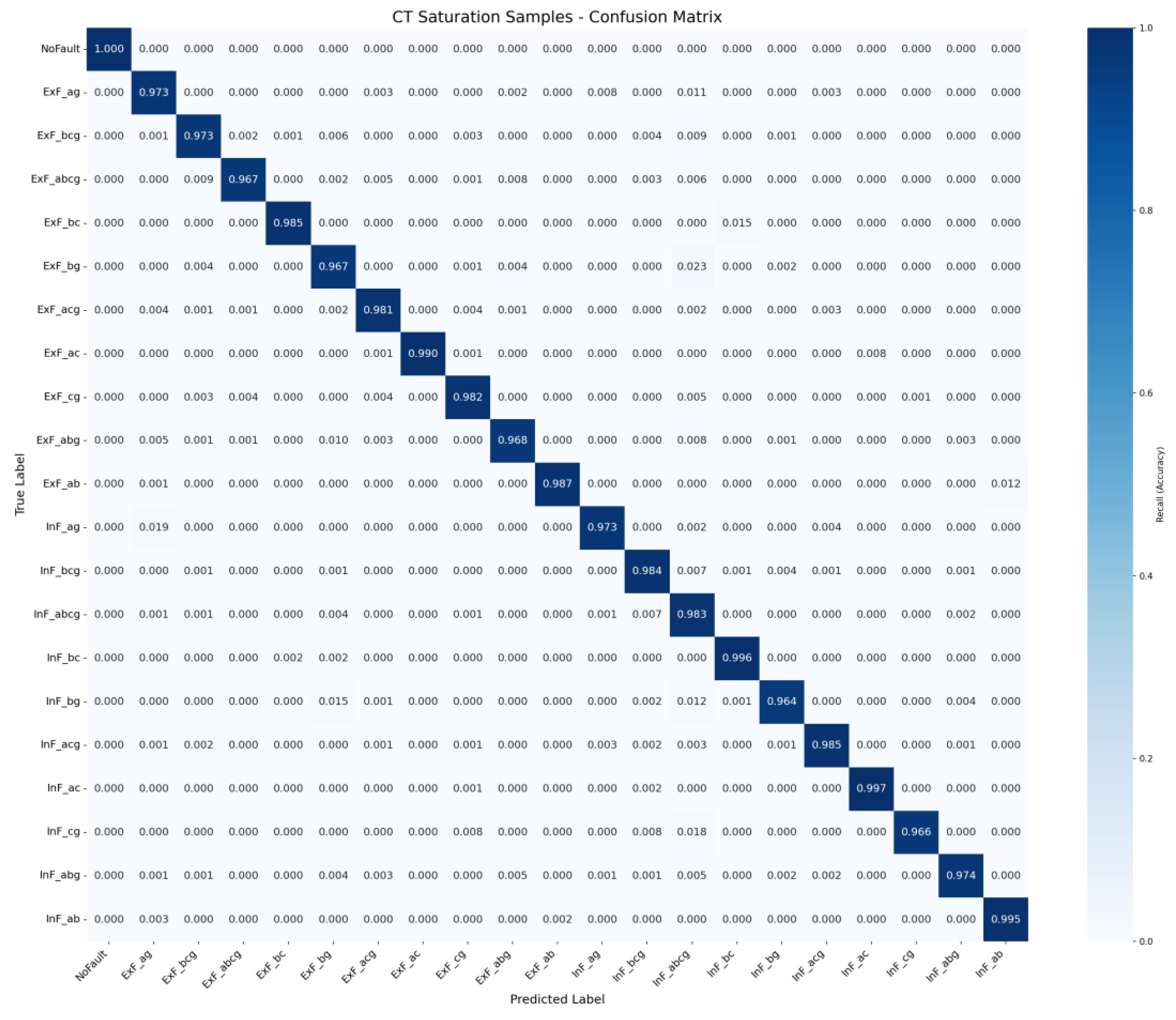
4.2. Training and Testing Results
5. Analysis of Factors Influencing Model Performance
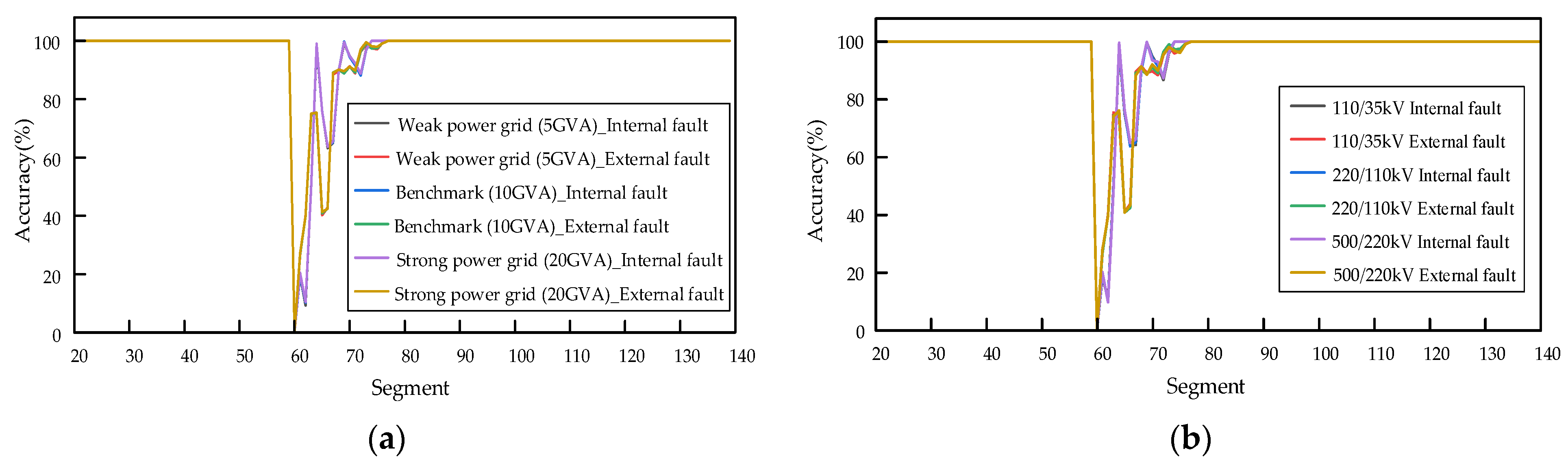
- (1)
- The fault component is calculated by differentiating the post-fault electrical quantities from the pre-fault ones, thereby eliminating the steady-state component. The resulting transient feature waveforms possess similar morphological characteristics across transformers of different voltage levels;
- (2)
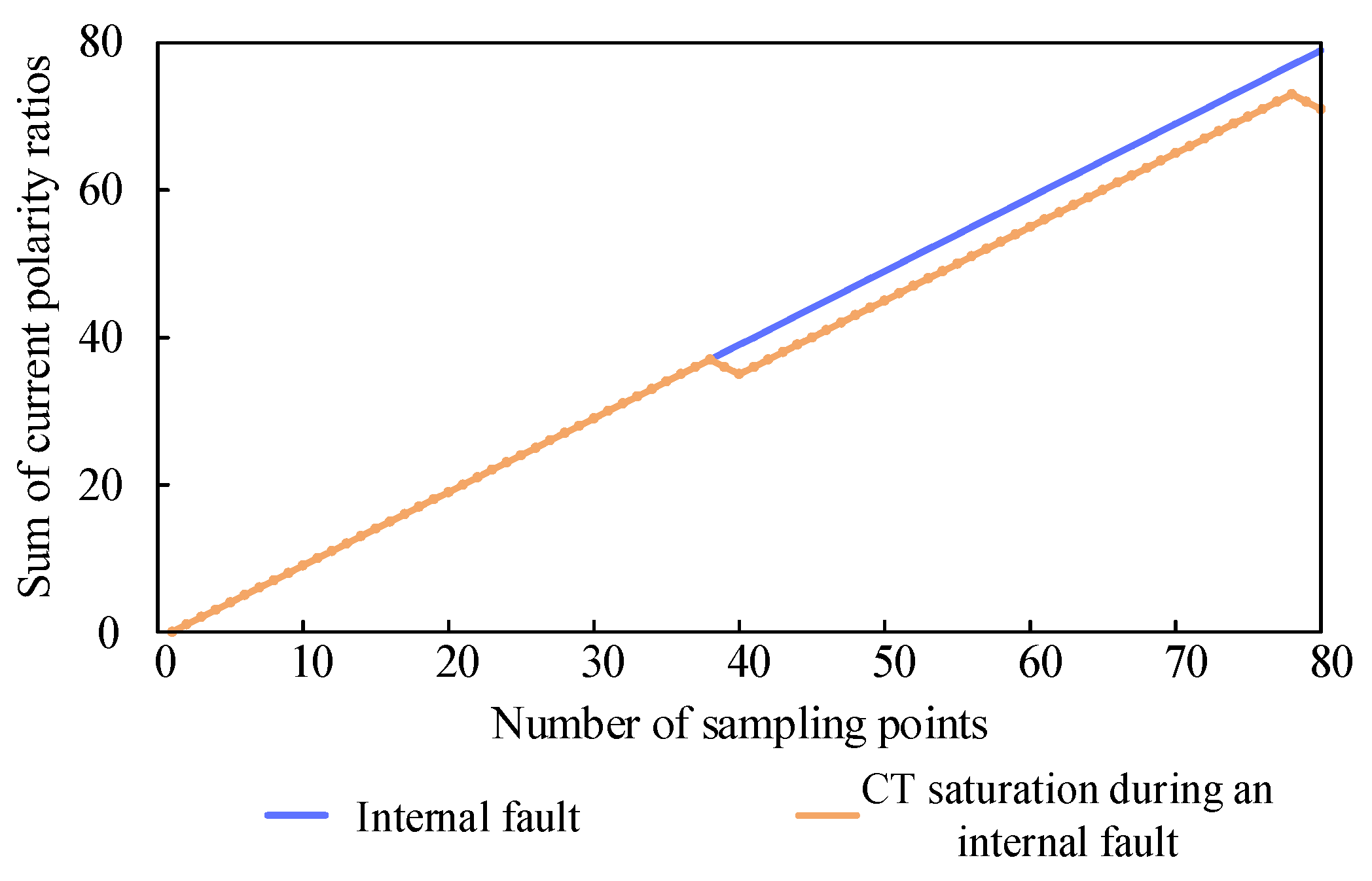
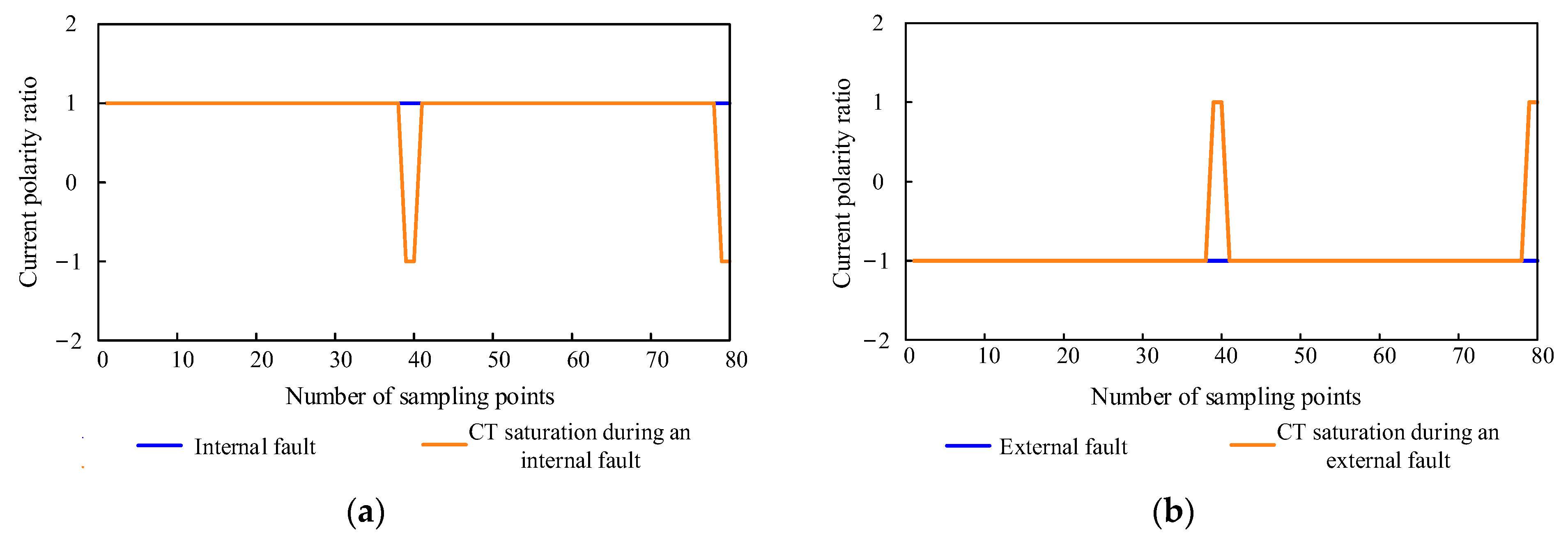
- As defined in Equation (1), the current polarity characteristic takes values only from {−1, 0, 1}, representing the polarity relationship between the currents on both sides of the transformer. This polarity-based feature is independent of voltage levels or topological structures and depends solely on the fault location;
- (3)
- The sum of the current polarity characteristics represents the trend of polarity variation over time, which is similarly independent of voltage levels or topological structures.
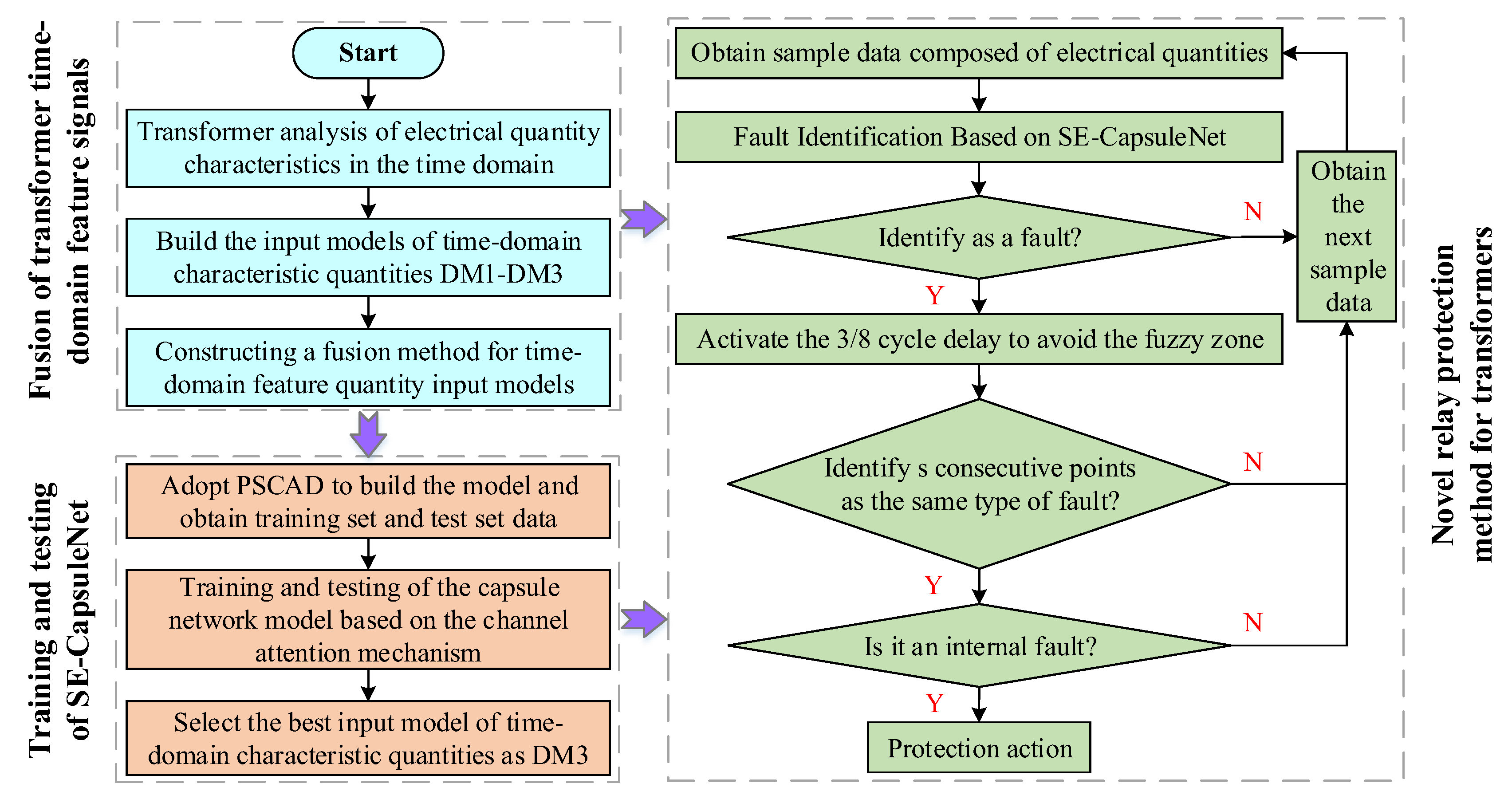
6. New Transformer Relay Protection Scheme
7. Summary
- (1)
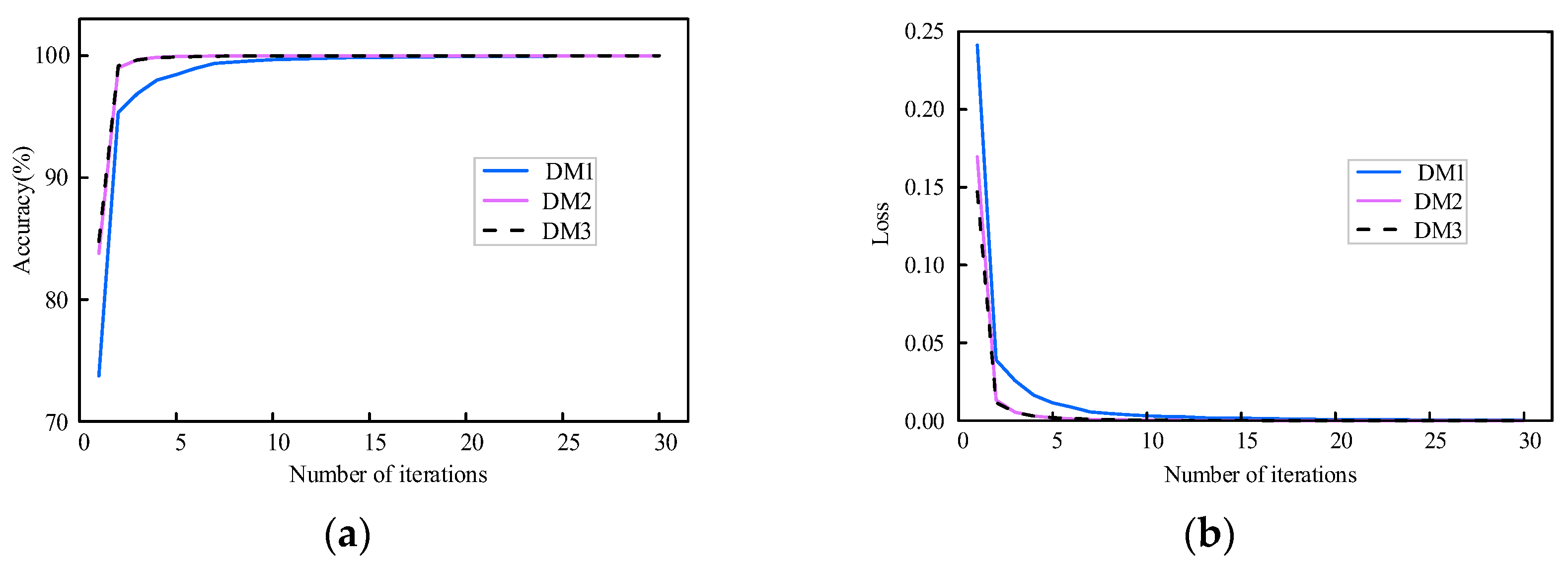
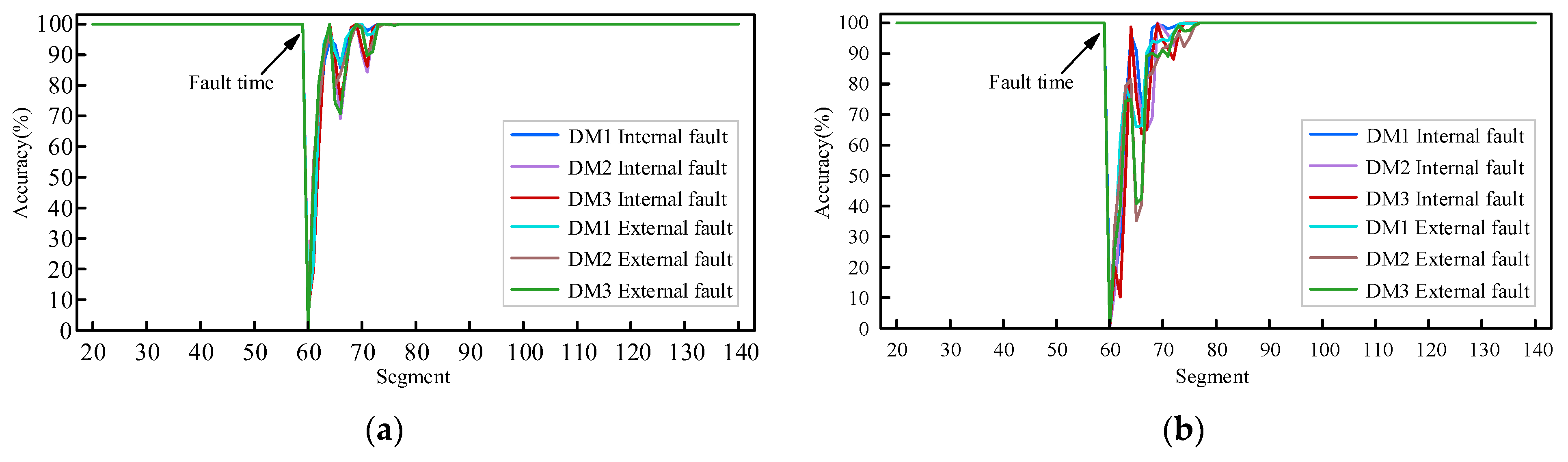
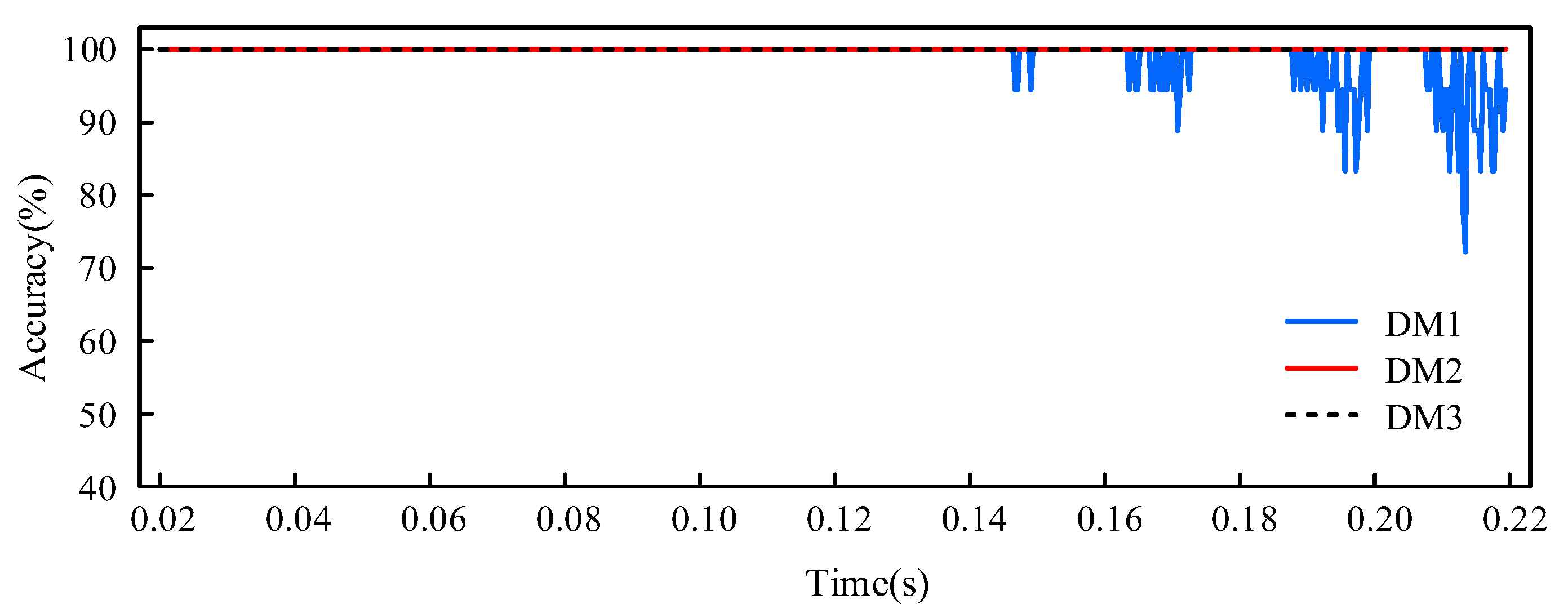
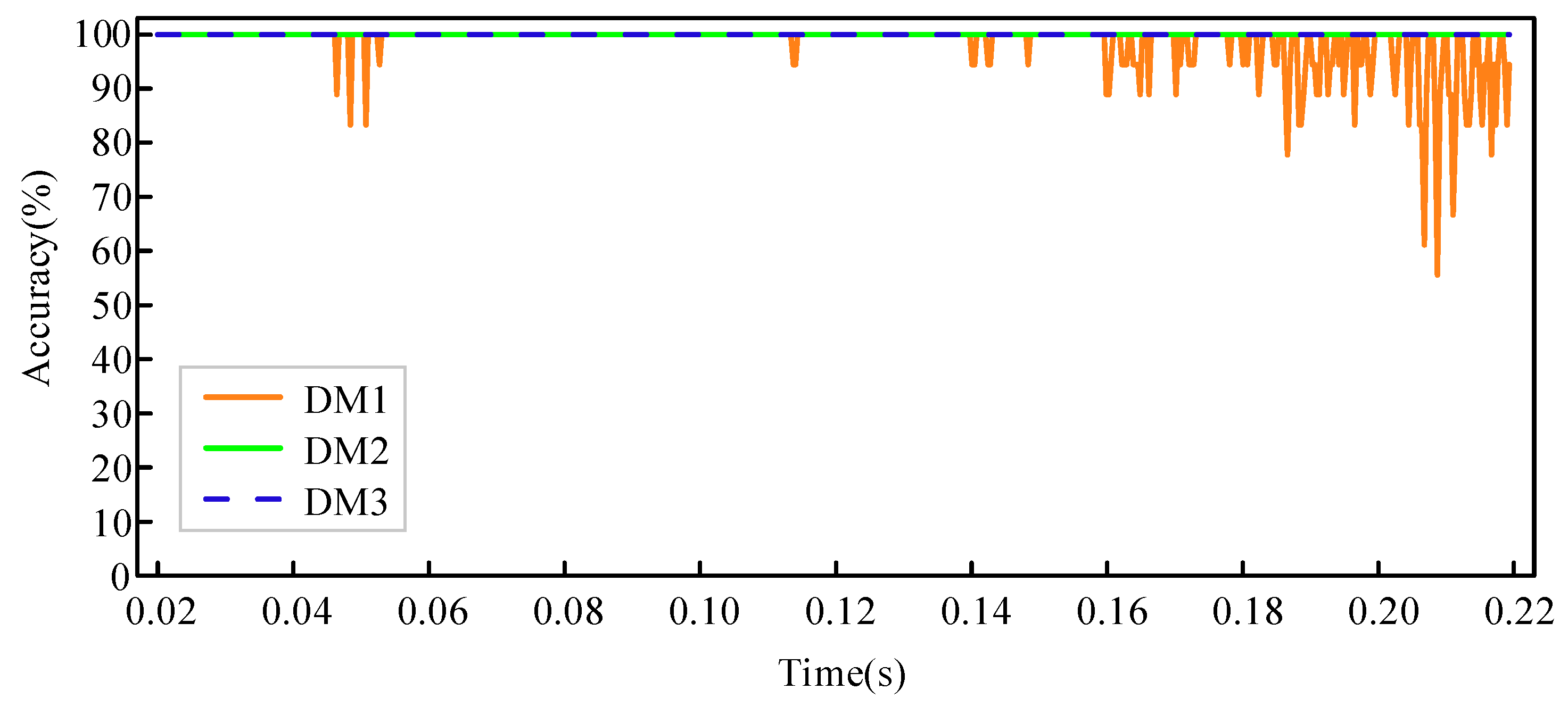
- Polarity ratios are incorporated for input integration. While misjudgments occur in voltage-current-only models (DM1) after the 6th cycle, a fairly high accuracy is maintained by the proposed model (DM3) within 10 cycles. This is sufficient for fault type classification in the steady state.
- (2)
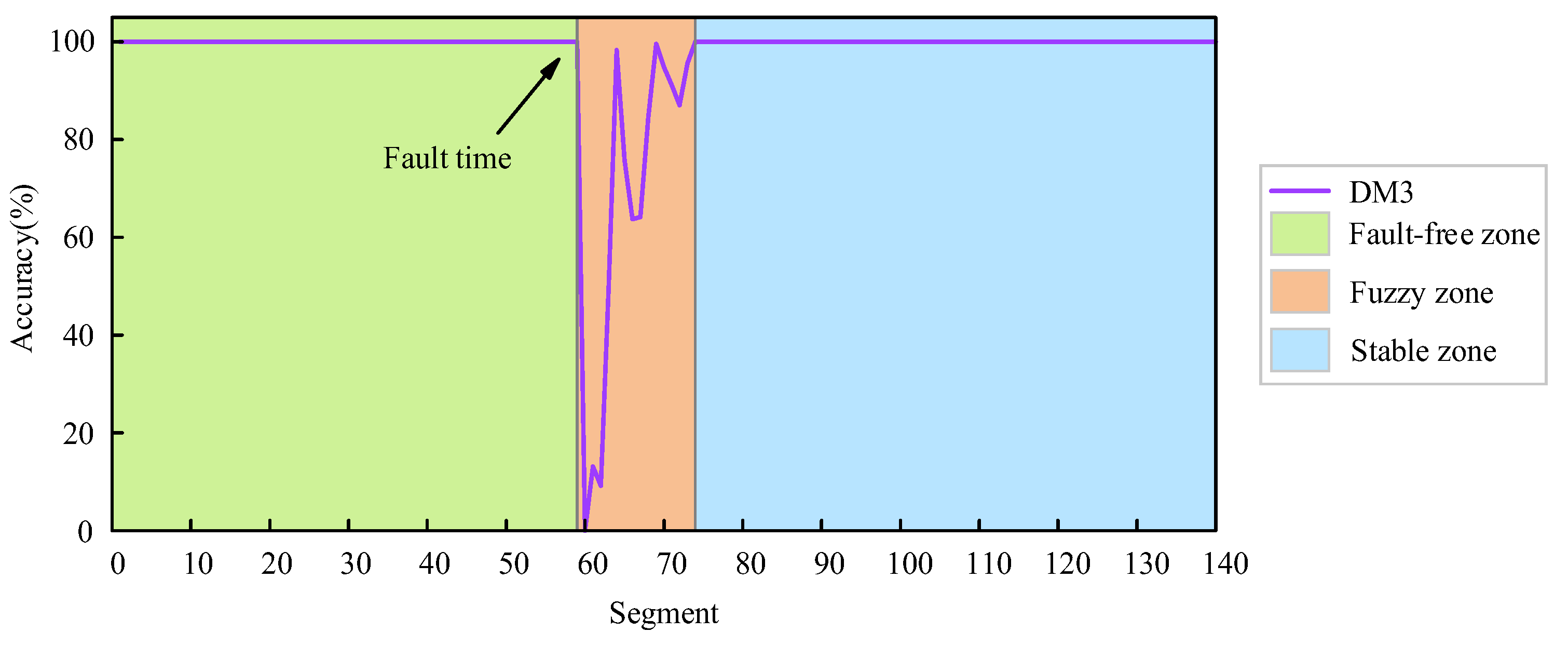
- The fuzzy zone is reduced to 4 ms by SE-CapsuleNet, outperforming SECNN (5 ms) and CAP (4.5 ms). Furthermore, in the stable zone, each type of working condition is given a very high confidence coefficient, such as nearly 100%. This validates the architecture’s efficiency.
- (3)
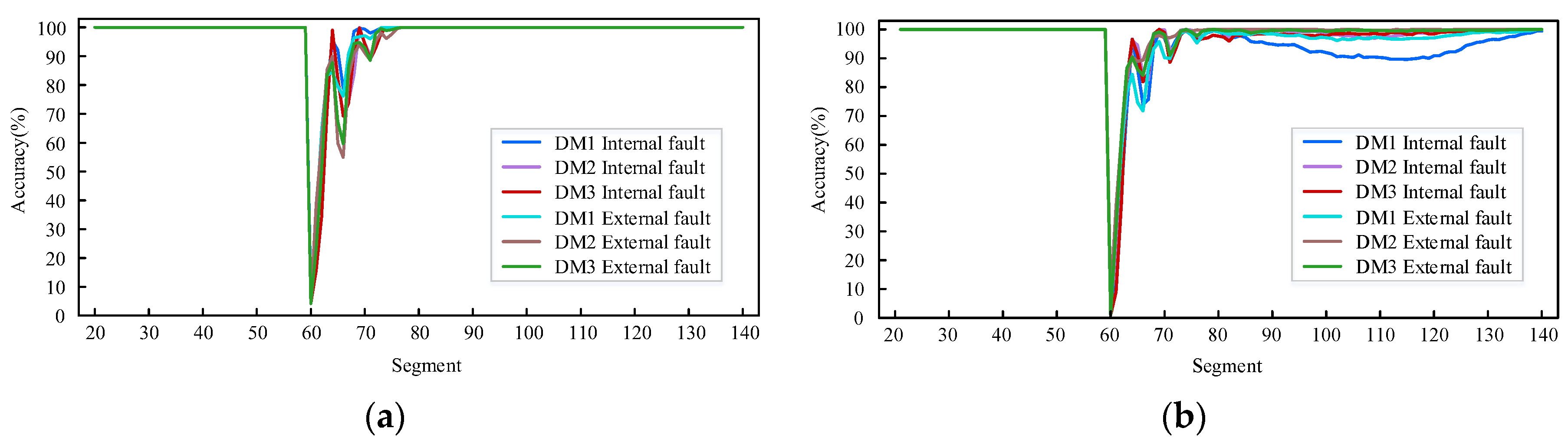
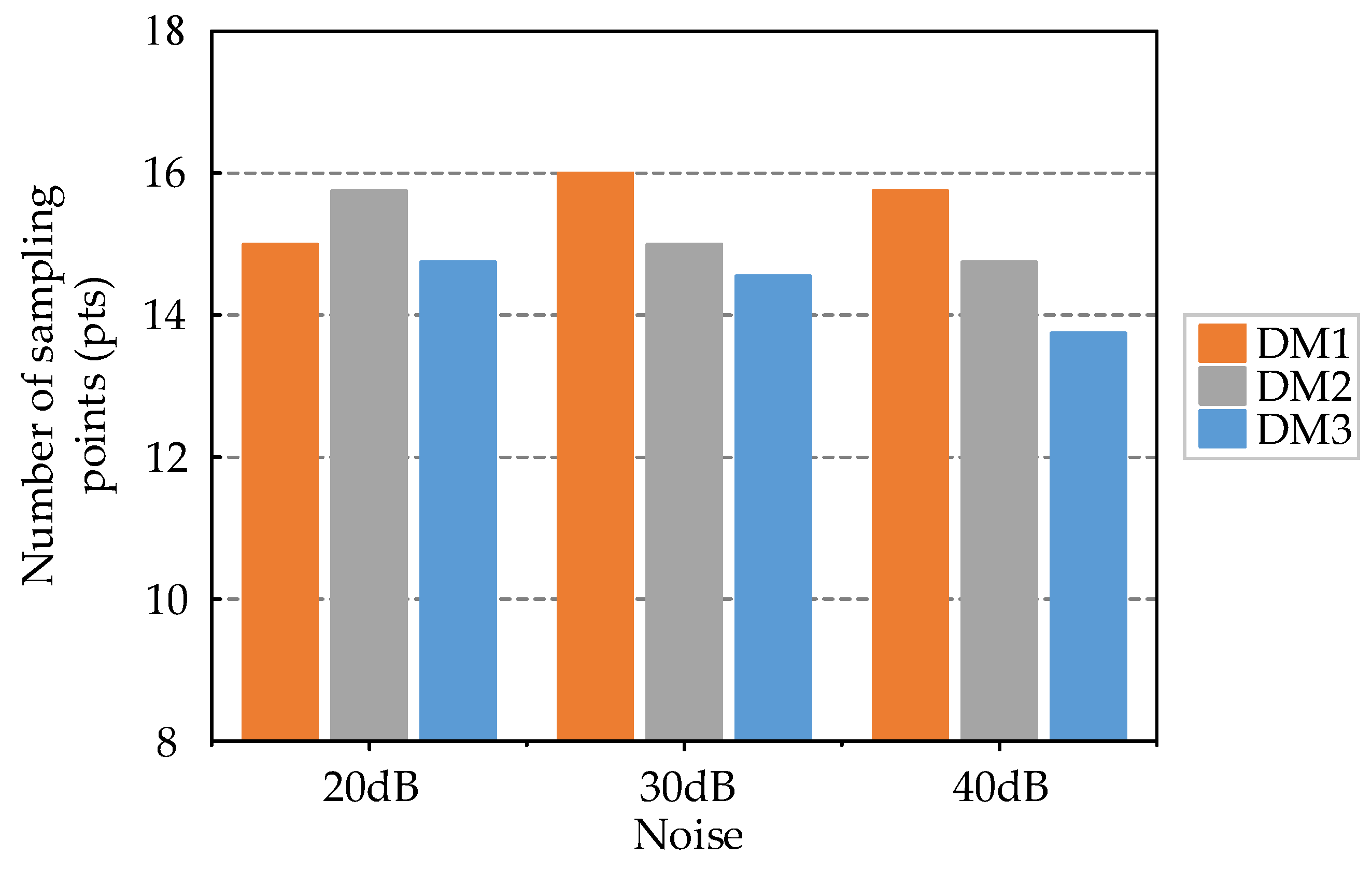
- Clear working condition classifications are sustained under adverse conditions (CT saturation, 0.7 p.u. remanence, 400 Ω fault resistance, 20 dB noise). Fuzzy zones for high-resistance faults are limited to 5 ms.
- (4)
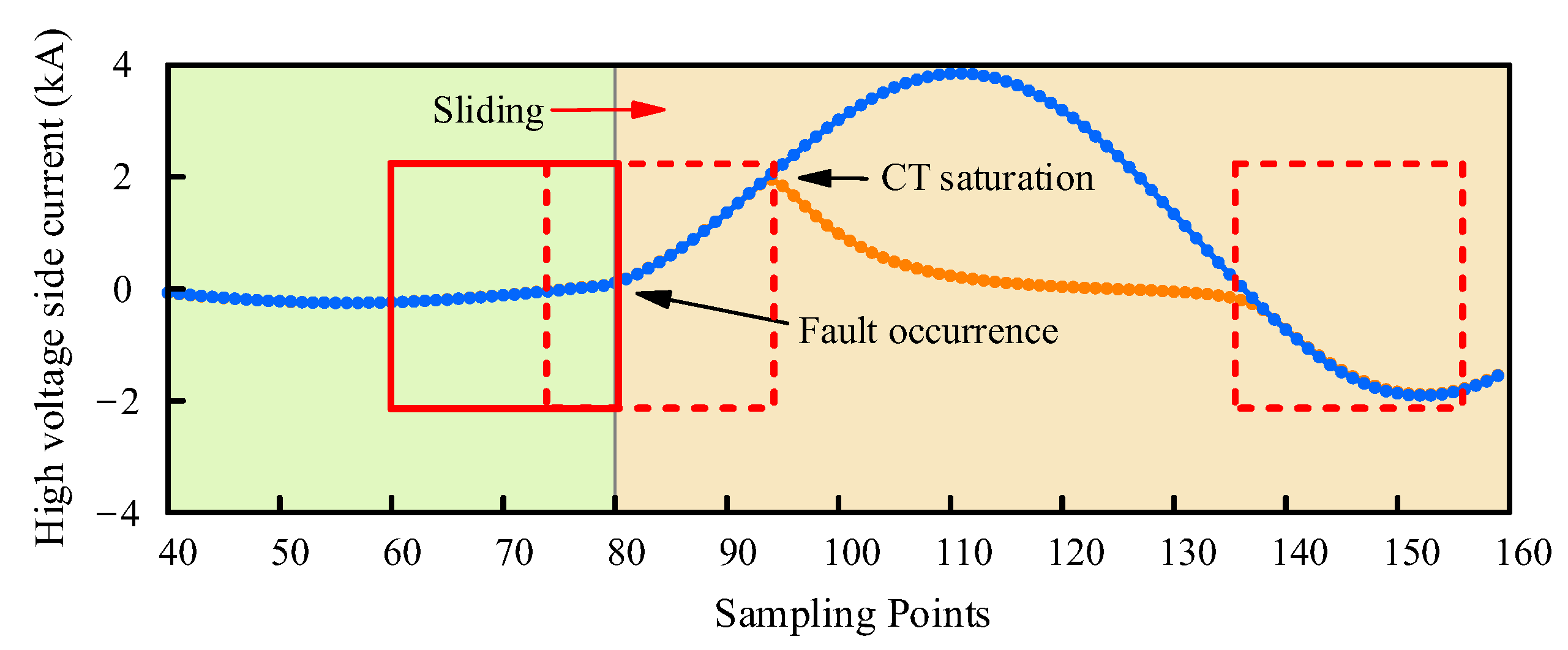
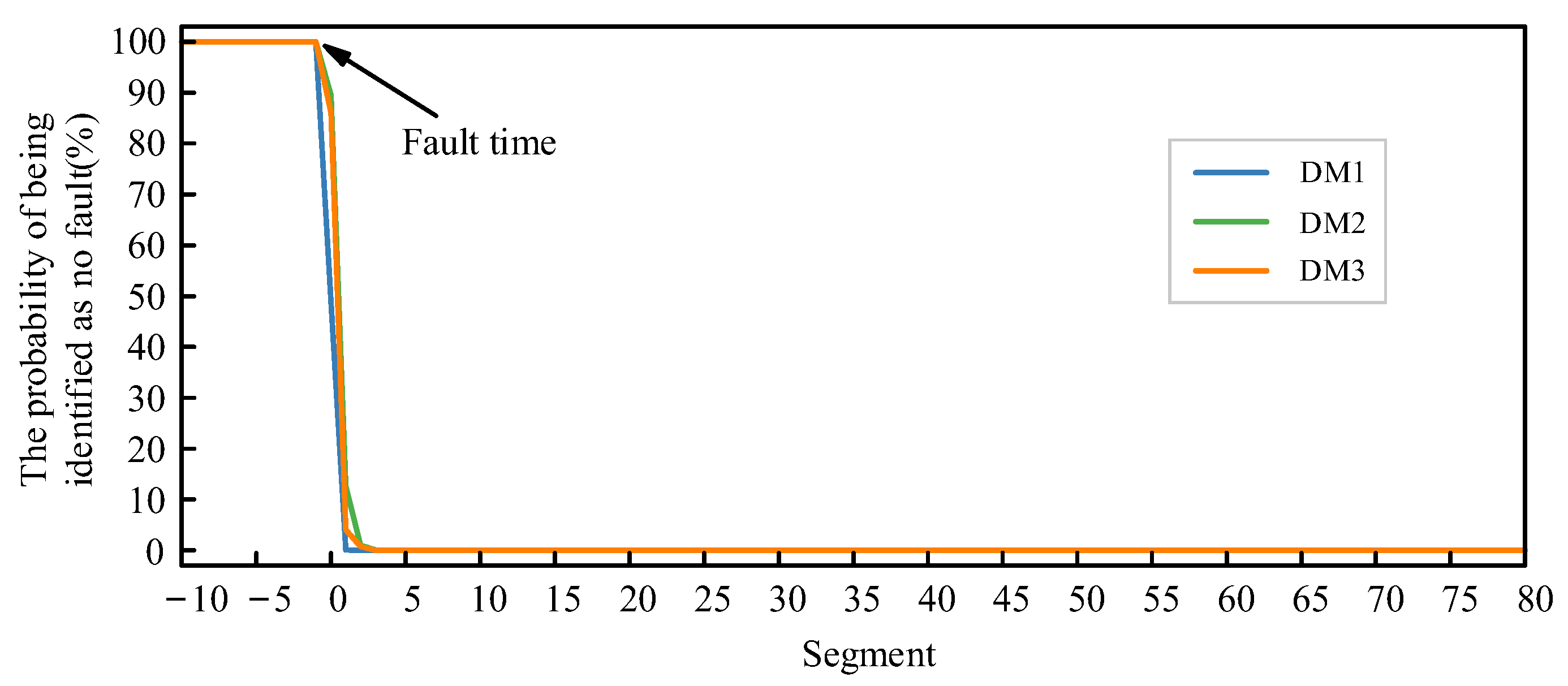
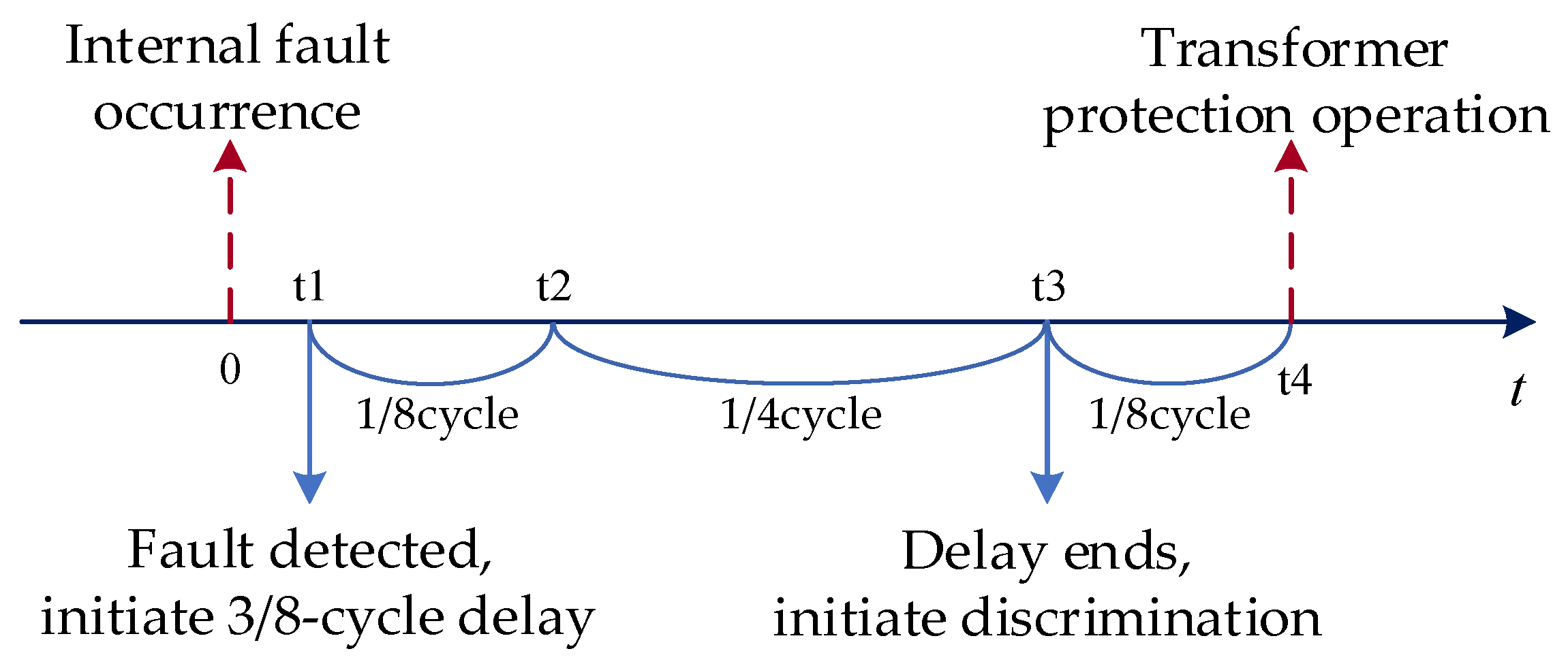
- A scheme utilizing a 3/8 cycle delay and 10-point confirmation is proposed. Identification is completed within 12 ms at 4 kHz, eliminating manual threshold dependence.
Author Contributions
Funding
Data Availability Statement
Conflicts of Interest
Appendix A
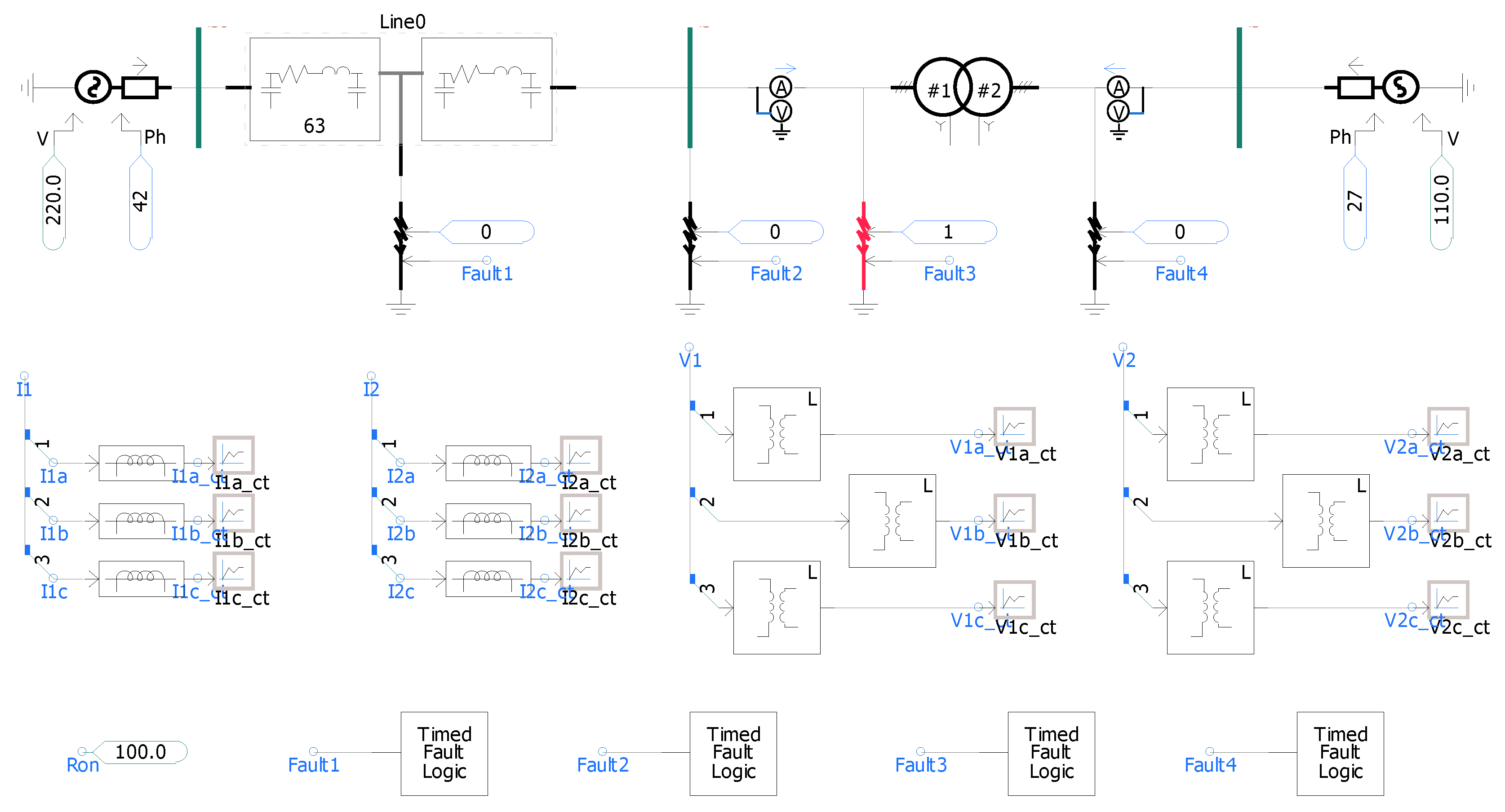

| Type | System Parameters |
|---|---|
| System frequency | 50 Hz |
| Voltage of Source1 | 220 kV |
| Rated capacity of Source1 | 250 MVA |
| Voltage of Source2 | 110 kV |
| Rated capacity of Source2 | 200 MVA |
| Line model | Bergeron |
| Length of Line1 | 60 km |
| Resistance value of Line1 | 0.025 Ω/km |
| Inductance value of Line1 | 0.379 Ω/km |
| Transformation ratio of T1 | 220/110 kV |
| Connection configuration of T1 | Y/Y |
| Rated capacity of T1 | 200 MVA |
| Type | Parameters | Type | parameters |
|---|---|---|---|
| Primary turns | 5 | Secondary Inductance | 0.8 × 10⁻³ [H] |
| Secondary turns | 75 | Burden Resistance | 2.5 [ohm] |
| Area | 2.601 × 10⁻³ [m2] | Burden Inductance | 0.8 × 10⁻³ [H] |
| Path Length | 0.6377 [m] | Remanent Flux Density | 0.0 [T] |
| Secondary Resistance | 0.5 [ohm] | Magnetic Material | material 1 |
Appendix B
| Algorithm A1: Novel Transformer Relay Protection Scheme Based on SE-CapsuleNet |
| Input: Transformer voltage/current signals (time-domain samples) Output: Protection trip command or Continue monitoring Constants: cycle (Safety margin delay) (Consecutive confirmation threshold ) kHz (Sample rate) |
| 1: Procedure MAIN() 2: Initialize , 3: Initialize , 4: While protection is enabled do 5: 6: 7: If then 8: 9: If not then 10: 11: , , 12: Continue 13: End If 14: 15: If then 16: Continue 17: End If 18: If then 19: 20: Else 21: , 22: End If 23: If and then 24: 25: Return 26: End If 27: Else 28: , , 29: End If 30: End While 31: End Procedure |
References
- Medeiros, R.P.; Costa, F.B. A wavelet-based transformer differential protection with differential current transformer saturation and cross-country fault detection. IEEE Trans. Power Deliv. 2017, 33, 789–799. [Google Scholar] [CrossRef]
- Shahbazi, N.; Bagheri, S.; Gharehpetian, G.B. Transformer differential protection scheme based on self-adaptive biased characteristic curve and considering cross-country faults. Int. J. Circuit Theory Appl. 2023, 51, 1110–1131. [Google Scholar] [CrossRef]
- Liu, Q.; Mei, N.; Wang, Z.; Sun, J.; Zhou, S. Enhanced Transformer Overcurrent Protection via Oil Temperature Acceleration. Energies 2024, 17, 4916. [Google Scholar] [CrossRef]
- Porawagamage, G.; Dharmapala, K.; Chaves, J.S.; Villegas, D.; Rajapakse, A. A review of machine learning applications in power system protection and emergency control: Opportunities, challenges, and future directions. Front. Smart Grids 2024, 3, 1371153. [Google Scholar] [CrossRef]
- Key, S.; Ko, C.-S.; Song, K.-J.; Nam, S.-R. Fast Detection of Current Transformer Saturation Using Stacked Denoising Autoencoders. Energies 2023, 16, 1528. [Google Scholar] [CrossRef]
- Ghanbari, T.; Samet, H.; Ghafourifard, J. New approach to improve sensitivity of differential and restricted earth fault protections for industrial transformers. IET Gener. Transm. Distrib. 2016, 10, 1486–1494. [Google Scholar] [CrossRef]
- Chen, Z.; Li, H.; Dong, X.; He, Y.; Zhou, Q.; Zhang, Y.; Zhang, Y. Magnetizing inrush current elimination strategy based on a parallel type asynchronous closing hybrid transformer. IEEE Trans. Power Electron. 2022, 38, 931–943. [Google Scholar] [CrossRef]
- Peres, L.M.; Silva, K.M. Power transformer protection using an instantaneous-current-value negative sequence differential element. Int. J. Electr. Power Energy Syst. 2019, 105, 96–106. [Google Scholar] [CrossRef]
- Oliveira, M.O.; Bretas, A.S.; Ferreira, G.D. Adaptive differential protection of three-phase power transformers based on transient signal analysis. Int. J. Electr. Power Energy Syst. 2014, 57, 366–374. [Google Scholar] [CrossRef]
- Gunda, S.K.; Dhanikonda, V.S.S.S.S. Discrimination of transformer inrush currents and internal fault currents using extended kalman filter algorithm (Ekf). Energies 2021, 14, 6020. [Google Scholar] [CrossRef]
- Shahbazi, N.; Bagheri, S.; Gharehpetian, G.B. Performance improvement of transformer differential protection during cross-country fault using hyperbolic S-transform. IEEE Trans. Instrum. Meas. 2022, 71, 1–9. [Google Scholar] [CrossRef]
- Zhao, Y.C.; Crossley, P. Countermeasure to prevent the incorrect blocking of differential protection applied to converter transformers. IEEE Trans. Power Deliv. 2020, 35, 95–105. [Google Scholar] [CrossRef]
- Jazebi, S.; Doğan, R.; Kovan, B.; De Leon, F. Reduction of inrush currents in toroidal transformers by sector winding design. IEEE Trans. Power Electron. 2016, 31, 6776–6780. [Google Scholar] [CrossRef]
- Łukaniszyn, M.; Baron, B.; Kolańska-Płuska, J.; Majka, Ł. Inrush current reduction strategy for a three-phase dy transformer based on pre-magnetization of the columns and controlled switching. Energies 2023, 16, 5238. [Google Scholar] [CrossRef]
- Samantaray, S.R. Phase-space-based fault detection in distance relaying. IEEE Trans. Power Deliv. 2011, 26, 33–41. [Google Scholar] [CrossRef]
- Hajipour, E.; Vakilian, M.; Sanaye-Pasand, M. Current-transformer saturation compensation for transformer differential relays. IEEE Trans. Power Deliv. 2015, 30, 2293–2302. [Google Scholar] [CrossRef]
- Shah, A.M.; Bhalja, B.R.; Patel, R.M.; Bhalja, H.; Agarwal, P.; Makwana, Y.M.; Malik, O.P. Quartile based differential protection of power transformer. IEEE Trans. Power Deliv. 2020, 35, 2447–2458. [Google Scholar] [CrossRef]
- Zacharias, D.; Gokaraju, R. Prototype of a negative-sequence turn-to-turn fault detection scheme for transformers. IEEE Trans. Power Deliv. 2015, 31, 122–129. [Google Scholar] [CrossRef]
- Bakhshipour, M.; Namdari, F.; Rezaeealam, B.; Sedaghat, M. Setting-Less Differential Protection of Power Transformers Based on Wavelet Transform. Iran. J. Sci. Technol. Trans. Electr. Eng. 2024, 48, 1685–1695. [Google Scholar] [CrossRef]
- Balaga, H.; Gupta, N.; Vishwakarma, D.N. GA trained parallel hidden layered ANN based differential protection of three phase power transformer. Int. J. Electr. Power Energy Syst. 2015, 67, 286–297. [Google Scholar] [CrossRef]
- Afrasiabi, S.; Afrasiabi, M.; Parang, B.; Mohammadi, M. Integration of accelerated deep neural network into power transformer differential protection. IEEE Trans. Ind. Inform. 2019, 16, 865–887·. [Google Scholar] [CrossRef]
- Afrasiabi, S.; Afrasiabi, M.; Parang, B.; Mohammadi, M. Designing a composite deep learning based differential protection scheme of power transformers. Appl. Soft Comput. 2020, 87, 105975. [Google Scholar] [CrossRef]
- Afsharisefat, R.; Jannati, M.; Shams, M. A power transformer differential protection method based on variational mode decomposition and CNN-BiLSTM techniques. IET Gener. Transm. Distrib. 2024, 18, 767–778. [Google Scholar] [CrossRef]
- Wang, L.; Zhao, X.; Pei, J.; Tang, G. Transformer fault diagnosis using continuous sparse autoencoder. SpringerPlus 2016, 5, 448. [Google Scholar] [CrossRef]
- Cao, H.; Zhou, C.; Meng, Y.; Shen, J.; Xie, X. Advancement in transformer fault diagnosis technology. Front. Energy Res. 2024, 12, 1437614. [Google Scholar] [CrossRef]
- Dalian, Y.; Junjun, Z.; Hui, L. Capsule networks for intelligent fault diagnosis: A roadmap of recent advancements and challenges. Expert Syst. Appl. 2025, 296, 128814. [Google Scholar] [CrossRef]
- Sevov, L.; Khan, U.; Zhang, Z. Enhancing power transformer differential protection to improve security and dependability. IEEE Trans. Ind. Appl. 2017, 53, 2642–2649. [Google Scholar] [CrossRef]
- Mishra, M.; Singh, J.G. A comprehensive review on deep learning techniques in power system protection: Trends, challenges, applications and future directions. Results Eng. 2025, 25, 103884. [Google Scholar] [CrossRef]








| Domain | Contribution | |
|---|---|---|
| Traditional Methods | Inrush Current Identification | Harmonic ratio [8] Wavelet analysis [9] Extended Kalman filter (EKF) [10] Mathematical morphology [11,12] |
| Inrush Current Suppression | Series resistance in the main circuit [13] Combined core pre-magnetization and controlled switching [14] Controlled switching strategy [15] | |
| CT Saturation Handling | Saturation detection and current compensation algorithm [16] Modified ratio differential characteristic [17] | |
| High-Impedance Fault Handling | Negative-sequence/zero-sequence current criteria [18] | |
| Deep Learning Methods | Directly Using Differential Current as Input | Artificial neural network [20] Accelerated convolutional neural network [21] CNN-GRU hybrid [22] |
| Using Preprocessed Differential Current as Input | VMD combined with CNN-BiLSTM [23] Continuous sparse autoencoder based on DGA [24] |
| Processing Stage | Operation Description | Tensor Shape Transformation |
|---|---|---|
| Initial Input | Raw Feature Matrix | |
| Convolution Extraction 1 | 3 × 3@28 kernels, stride 1, ReLU | |
| Attention Enhancement | SE Channel Weighting | |
| Convolution Extraction 2 | 3 × 3@28 kernels, stride 1, ReLU | |
| Primary Capsule Layer | 3 × 3@20 kernels, stride 2, ReLU | |
| Dynamic Routing | Squash Function Aggregation | |
| Output Layer | Vector Modulus Calculation |
| Dataset Type | Operating Condition | Fault Setting Location | Initial Power Angle (°) | Fault Insertion Angle/ Closing Angle (°) | Fault Resistance (Ω) | Fault Distance (km) |
|---|---|---|---|---|---|---|
| Training Set | External Fault | Line1, Bus3 | 12/18/22/28/32 | 0~315 (sampled at 45° intervals) | 0.1, 12, 85, 105, 210, 320 | Line1: 22 |
| Internal Fault | Transformer High-Voltage Winding, Low-Voltage Winding | 12/18/22/28/32 | 0~315 (sampled at 45° intervals) | 0.1, 12, 85, 105, 210, 320 | None | |
| Inrush Current | None | 12/18/22/28/32 | 0~330 (sampled at 30° intervals) | None | None | |
| Test Set | External Fault | Line1, Bus3 | 7/19/29 | 0~330 (sampled at 30° intervals) | 0.5, 6, 155 | Line1: 18, 38 |
| Internal Fault | Transformer High-Voltage Winding, Low-Voltage Winding | 7/19/29 | 0~330 (sampled at 30° intervals) | 0.5, 6, 155 | None | |
| Inrush Current | None | 3/7/19/25/29/35 | 0~330 (sampled at 15° intervals) | None | None |
| Performance | Overall Accuracy (%) | Ambiguous Zone (ms) | F1 Score (%) | ||||||
|---|---|---|---|---|---|---|---|---|---|
| SECNN | CAP | SE-CapsuleNet | SECNN | CAP | SE-CapsuleNet | SECNN | CAP | SE-CapsuleNet | |
| DM1 | 94.26 | 94.57 | 94.48 | 5 | 5.25 | 4 | 94.06 | 94.37 | 94.28 |
| DM2 | 95.33 | 95.65 | 95.72 | 5.5 | 4.75 | 4.25 | 95.13 | 95.45 | 95.52 |
| DM3 | 95.62 | 95.67 | 95.80 | 5 | 4.5 | 4 | 95.42 | 95.47 | 95.60 |
| Input Model | Fault Resistance (Ω) | Average Fuzzy Zone Accuracy (%) | Fuzzy Zone Duration (ms) | Average Fuzzy Zone Duration (ms) |
|---|---|---|---|---|
| DM1 | 260 | 75.23 | 3.61 | 3.597 |
| 350 | 76.15 | 3.45 | ||
| 400 | 73.98 | 3.73 | ||
| DM2 | 260 | 72.45 | 4.14 | 4.19 |
| 350 | 73.82 | 3.86 | ||
| 400 | 71.26 | 4.57 | ||
| DM3 | 260 | 72.10 | 3.71 | 3.857 |
| 350 | 75.23 | 3.61 | ||
| 400 | 76.15 | 3.45 |
Disclaimer/Publisher’s Note: The statements, opinions and data contained in all publications are solely those of the individual author(s) and contributor(s) and not of MDPI and/or the editor(s). MDPI and/or the editor(s) disclaim responsibility for any injury to people or property resulting from any ideas, methods, instructions or products referred to in the content. |
© 2026 by the authors. Licensee MDPI, Basel, Switzerland. This article is an open access article distributed under the terms and conditions of the Creative Commons Attribution (CC BY) license.
Share and Cite
Shi, H.; You, H.; Chen, X.; Li, R.; Xu, S.; Zhang, J.; He, R. Smart Protection Relay for Power Transformers Using Time-Domain Feature Recognition. Processes 2026, 14, 449. https://doi.org/10.3390/pr14030449
Shi H, You H, Chen X, Li R, Xu S, Zhang J, He R. Smart Protection Relay for Power Transformers Using Time-Domain Feature Recognition. Processes. 2026; 14(3):449. https://doi.org/10.3390/pr14030449
Chicago/Turabian StyleShi, Hengchu, Hao You, Xiaofan Chen, Ruisi Li, Shoudong Xu, Jianqiao Zhang, and Ruiwen He. 2026. "Smart Protection Relay for Power Transformers Using Time-Domain Feature Recognition" Processes 14, no. 3: 449. https://doi.org/10.3390/pr14030449
APA StyleShi, H., You, H., Chen, X., Li, R., Xu, S., Zhang, J., & He, R. (2026). Smart Protection Relay for Power Transformers Using Time-Domain Feature Recognition. Processes, 14(3), 449. https://doi.org/10.3390/pr14030449