1. Introduction
The ability to preserve foods of plant and animal origin has been a fundamental milestone in human survival and societal development. Throughout the history of
Homo sapiens, ensuring a stable food supply has been closely linked to technological advances in food processing and preservation [
1]. Fresh meat represents one of the most perishable food commodities due to its intrinsic properties, including high water activity (>0.98), moderately high pH values (>5.2), and the abundance of readily available proteins, low-molecular-weight organic compounds, and minerals [
2]. Under inadequate storage conditions, particularly at temperatures exceeding 10 °C, rapid microbial proliferation occurs, leading to metabolic activity that manifests as sensory deterioration and ultimately spoilage.
From a food safety perspective, meat and meat products are also recognized as frequent vehicles of foodborne pathogens [
3]. According to recent reports of the European Food Safety Authority, following the COVID-19 pandemic, the incidence of foodborne zoonoses such as salmonellosis, infections caused by Shiga toxin-producing
Escherichia coli, and listeriosis has increased across EU Member States [
4,
5]. Among available control measures, thermal processing remains the most effective intervention for eliminating pathogenic microorganisms in meat. High-temperature treatments, including sterilization of canned products, reliably inactivate even spore-forming bacteria relevant to food safety [
6]. However, intensive heat treatments are frequently associated with undesirable sensory and nutritional changes, which increasingly conflict with current consumer expectations [
7].
Modern meat processing is therefore characterized by a clear contradiction. On the one hand, consumers demand products that are microbiologically safe; on the other hand, they increasingly prefer minimally processed foods with reduced levels of synthetic preservatives and additives while maintaining high sensory quality [
8]. Within this context, biopreservation has emerged as a promising strategy. Biopreservation is defined as the extension of shelf life and enhancement of food safety through the use of natural microbiota and/or their antimicrobial metabolites [
9]. An ideal biopreservative should exhibit targeted antimicrobial activity against specific pathogens or spoilage microorganisms without negatively affecting the native gut microbiota of the consumer [
7].
Lactic acid bacteria (LAB), which are naturally present in meat and meat products, have demonstrated pronounced antagonistic activity against both pathogenic and spoilage bacteria [
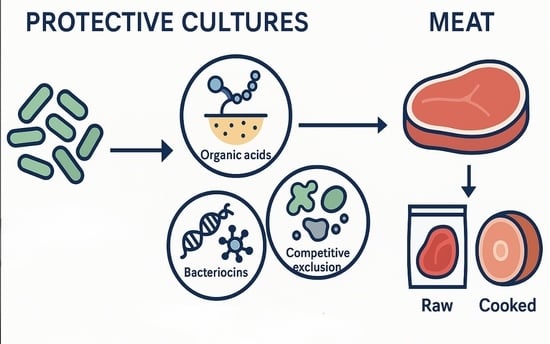
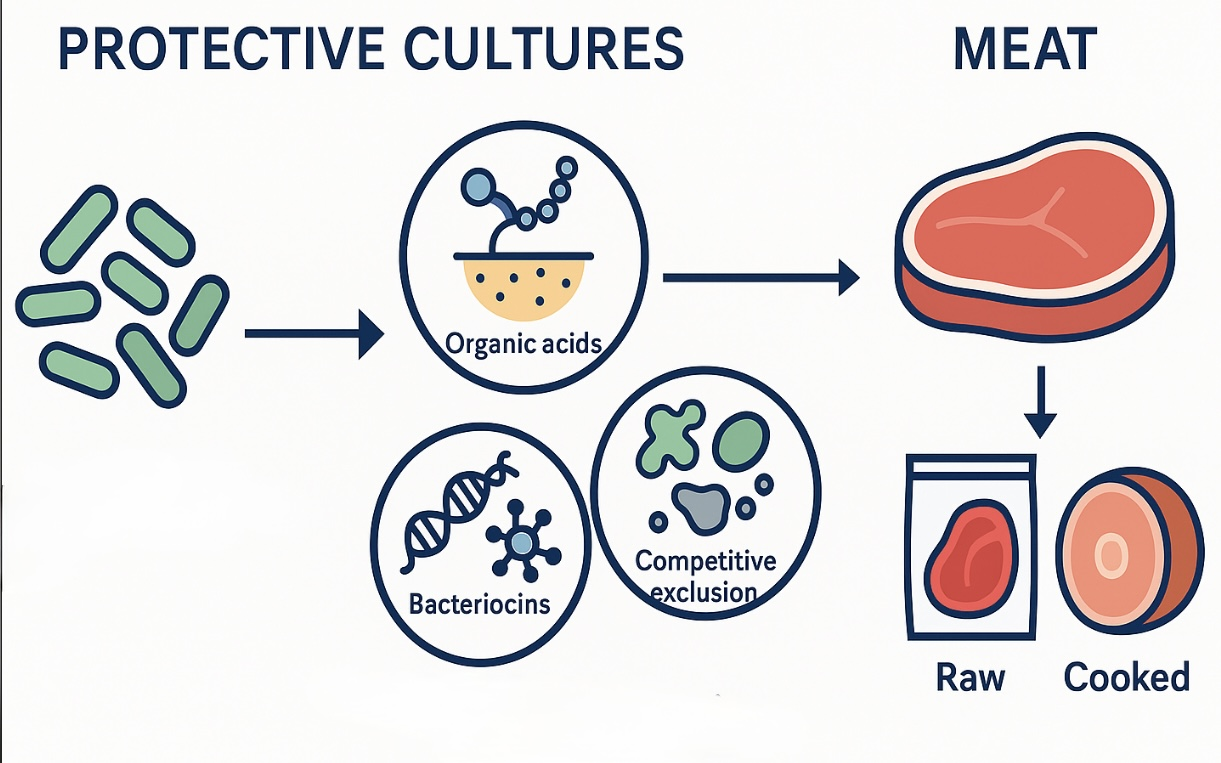
8]. This antagonism is mediated through organic acid production, competition for nutrients and ecological niches, and the synthesis of antimicrobial compounds [
10,
11]. These properties have positioned selected LAB strains as candidates for use as protective cultures.
The development of protective cultures in meat processing is closely linked to earlier research on starter cultures used in fermented meat products. While starter cultures are primarily selected for their metabolic activity and contribution to fermentation and product development, protective cultures are applied with the specific objective of inhibiting undesirable microorganisms, ideally in a sensory-neutral manner [
12,
13]. In recent years, interest in protective cultures has further intensified due to clean-label trends, efforts to reduce nitrite and other chemical preservatives, and growing concerns regarding antimicrobial resistance in food-associated microbiota [
14,
15].
The objective of this review is to critically synthesize current knowledge on the application of protective cultures in meat and meat products, with particular emphasis on their mechanisms of antimicrobial action, strain- and matrix-dependent efficacy, technological and sensory limitations, safety aspects related to antimicrobial resistance, and emerging challenges associated with consumer perception and industrial implementation.
2. Starter Cultures as Precursors of Protective Cultures
The application of protective cultures in meat processing did not emerge as an isolated concept but evolved naturally from decades of research on starter cultures used in fermented meat products. The 1980s are often regarded as a pivotal period in the development of starter cultures for fermented sausages, during which extensive research demonstrated the technological and microbiological roles of lactic acid bacteria (LAB) and non-pathogenic members of the family
Micrococcaceae, such as
Staphylococcus carnosus and
Staphylococcus xylosus [
16,
17,
18,
19,
20,
21].
These early studies primarily focused on fermentation control, colour formation, flavour development, and product safety. However, they also revealed an important secondary effect: the ability of starter cultures, particularly LAB, to suppress the growth of undesirable microorganisms through competitive exclusion and antimicrobial metabolite production. This observation laid the conceptual foundation for the subsequent development of protective cultures.
The transition from starter to protective cultures was further supported by the introduction of the hurdle technology concept. When Leistner formulated the hurdle model, starter cultures and their metabolic activity were explicitly recognized as one of the barriers limiting the growth of pathogenic and spoilage microorganisms in foods [
13,
22]. Within this framework, LAB contribute not only to product fermentation but also to microbial stability and safety by lowering pH, competing for nutrients, and producing antimicrobial compounds [
12,
23].
Lactic acid bacteria are a heterogeneous group of Gram-positive, non-spore-forming, catalase-negative, facultatively anaerobic microorganisms characterized by their ability to ferment carbohydrates primarily into lactic acid. In a taxonomic sense, LAB largely correspond to the order
Lactobacillales, which currently includes the families
Aerococcaceae,
Carnobacteriaceae,
Enterococcaceae,
Streptococcaceae, and
Lactobacillaceae, while excluding other lactic acid-producing bacteria such as Bifidobacteria and Bacilli [
24]. Their nutritional fastidiousness, acid tolerance, and capacity to rapidly adapt to food environments make LAB particularly well-suited for application in meat matrices.
The ability of LAB to inhibit pathogenic and spoilage bacteria has been consistently demonstrated across a wide range of food systems. Their antagonistic activity is attributed to a combination of mechanisms, including organic acid production, competition for ecological niches and nutrients, and the synthesis of antimicrobial substances such as bacteriocins and other low-molecular-weight metabolites [
10,
11]. These properties prompted a conceptual shift from viewing LAB solely as technological agents of fermentation to recognizing their potential as targeted bioprotective agents.
Protective cultures, therefore, represent an extension and specialization of the starter culture concept. While starter cultures are intentionally selected for their metabolic activity and ability to drive desired biochemical transformations in fermented products, protective cultures are selected primarily for their capacity to inhibit specific undesirable microorganisms, ideally without inducing measurable sensory or technological changes in the final product [
12,
25]. This distinction is particularly relevant in non-fermented or mildly processed meat products, where any pronounced metabolic activity of the added microorganisms may be undesirable.
The growing interest in protective cultures since the 1990s reflects broader developments in food processing, including the demand for clean-label products, reduced reliance on chemical preservatives, and increasing awareness of food safety risks associated with pathogenic bacteria. In this context, LAB-based protective cultures have become an integral component of biological approaches to food preservation, complementing other strategies such as bacteriophage application, direct use of bacteriocins, probiotics, and prebiotics [
14].
3. Antimicrobial Mechanisms of Lactic Acid Bacteria
The antimicrobial activity of lactic acid bacteria (LAB) is a multifactorial phenomenon resulting from the combined action of metabolic products and ecological interactions within the food matrix. In the context of protective cultures applied to meat and meat products, three principal mechanisms are generally recognized: (i) the production of organic acids, (ii) competition for nutrients and ecological niches, and (iii) the synthesis of antimicrobial compounds, including bacteriocins and other low-molecular-weight metabolites [
10,
11]. Importantly, these mechanisms rarely act in isolation; rather, their combined and sometimes synergistic effects determine the overall inhibitory potential of a given strain.
3.1. Organic Acids and Weak Acid Theory
The production of organic acids represents the primary antimicrobial mechanism of LAB in most food systems. Lactic acid and acetic acid are the major end products of carbohydrate metabolism and play a dominant role in the growth inhibition of competing microorganisms [
24]. The antimicrobial activity of organic acids is best explained by the weak acid theory, according to which undissociated acid molecules diffuse across the cytoplasmic membrane of sensitive microorganisms due to their lipophilic nature. Once inside the cytoplasm, where the pH is near neutral, the acids dissociate, leading to intracellular acidification, disruption of proton gradients, and inhibition of essential metabolic processes [
11,
13].
Beyond cytoplasmic acidification, organic acids may also impair membrane integrity by neutralizing the electrochemical potential of the cell membrane and increasing its permeability. These effects result in reduced nutrient transport, energy depletion, and ultimately bacteriostasis or cell death. The efficacy of organic acids is strongly influenced by environmental factors such as pH, temperature, and the buffering capacity of the meat matrix, which explains the observed variability in antimicrobial performance across different products [
7,
13].
3.2. Competition for Nutrients and Ecological Niches
In addition to metabolite production, LAB exert antimicrobial effects through rapid colonization of the food matrix and competition for essential nutrients and ecological niches. This mechanism is particularly relevant in raw and minimally processed meat products, where protective cultures can establish dominance early during storage and thereby limit the growth of spoilage-associated microbiota and pathogens. Competitive exclusion may involve preferential utilization of available carbohydrates, amino acids, and micronutrients, as well as occupation of surface attachment sites, effectively reducing the ecological space available for undesirable microorganisms [
11].
While competition alone is rarely sufficient to achieve complete inhibition, it can significantly enhance the efficacy of other antimicrobial mechanisms. For example, rapid population growth of LAB may accelerate acidification or facilitate earlier production of antimicrobial compounds, leading to a cumulative inhibitory effect.
3.3. Low-Molecular-Weight Antimicrobial Metabolites
Certain LAB species are capable of producing additional antimicrobial metabolites beyond organic acids, including diacetyl, hydrogen peroxide, and reuterin. Diacetyl, formed during citrate metabolism, exhibits antimicrobial activity primarily against Gram-negative bacteria by disrupting membrane integrity, although its contribution in meat systems is often secondary due to relatively low concentrations [
11].
Reuterin, a product of glycerol fermentation under anaerobic conditions, is synthesized by several LAB species, including
Limosilactobacillus reuteri,
Levilactobacillus brevis,
Lentilactobacillus buchneri,
Secundilactobacillus collinoides, and
Loigolactobacillus coryniformis [
11]. Reuterin exhibits broad-spectrum antimicrobial activity against Gram-positive and Gram-negative bacteria, yeasts, moulds, protozoa, and viruses, primarily through inhibition of ribonucleotide reductase and interference with DNA synthesis [
26,
27]. Despite its potency, the practical relevance of reuterin in meat systems remains limited by substrate availability and specific metabolic requirements.
3.4. Bacteriocins
Bacteriocins are ribosomally synthesized antimicrobial peptides or proteins produced by bacteria that exhibit bactericidal activity against a relatively narrow spectrum of target organisms, typically closely related species [
3,
28]. Unlike antibiotics, bacteriocins are primary metabolites, produced during active growth, and are generally degraded by proteolytic enzymes, which limits their impact on the human gut microbiota [
29].
Bacteriocins produced by LAB are commonly classified into three major classes. Class I bacteriocins (lantibiotics) are small (<5 kDa), heat-stable peptides that undergo extensive post-translational modifications and typically act by forming pores in the cytoplasmic membrane of target bacteria. Nisin, produced by
Lactococcus lactis subsp.
lactis, is the most prominent example and remains the only lantibiotic approved for use as a food additive in the European Union (Regulation (EC) No. 1333/2008). Class II bacteriocins are small (<10 kDa), heat- and pH-stable, non-modified peptides, including pediocin-like bacteriocins with pronounced activity against
Listeria monocytogenes. Class III bacteriocins are large (>30 kDa), heat-labile proteins with more limited applicability in food systems [
9].
In meat products, bacteriocins are particularly effective against Gram-positive bacteria, including
Listeria monocytogenes and several spoilage-associated LAB. In contrast, Gram-negative bacteria such as
Salmonella spp. and
Escherichia coli generally exhibit intrinsic resistance due to the protective function of their outer membrane, unless membrane-disrupting conditions are present [
7]. Consequently, bacteriocins are most effective when acting synergistically with other hurdles, such as low pH, reduced oxygen availability, or competitive exclusion by protective cultures.
3.5. Synergistic and Matrix-Dependent Effects
In practical applications, the antimicrobial efficacy of protective cultures results from the simultaneous action of multiple mechanisms rather than a single dominant factor. Organic acid production often provides the baseline inhibitory effect, while bacteriocins and other metabolites contribute additional, strain-specific activity. The relative importance of individual mechanisms depends on the meat matrix, packaging conditions, temperature, and intrinsic product properties such as fat content and buffering capacity.
Understanding these synergistic and matrix-dependent interactions is essential for the rational selection of protective cultures and explains why strains exhibiting strong in vitro antimicrobial activity may perform inconsistently in complex meat systems. This highlights the need for application-oriented screening and validation under realistic processing and storage conditions.
4. Characteristics and Selection Criteria of Protective Cultures
Protective cultures are defined as deliberately added microorganisms that improve the microbiological quality and safety of foods through inhibition of undesirable microorganisms while causing minimal or no adverse effects on the technological and sensory properties of the final product [
12,
25]. Although this definition has remained conceptually valid for several decades, advances in food microbiology, molecular biology, and food processing technologies have substantially refined the criteria used for the selection and application of protective cultures in meat systems.
Early descriptions of the “ideal” protective culture emphasized safety, technological neutrality, and inhibitory efficacy [
12]. While these criteria remain foundational, contemporary research has expanded this framework to incorporate strain-level specificity, matrix-dependent performance, genomic safety assessment, and compatibility with clean-label and consumer-oriented product concepts [
14,
30].
4.1. Safety and Regulatory Status
Safety remains the primary prerequisite for any microorganism intended for application as a protective culture. Candidate strains must be non-pathogenic, non-toxigenic, and should not produce harmful metabolites under food processing and storage conditions. Many lactic acid bacteria commonly considered for protective applications belong to taxa that are generally recognized as safe (GRAS) by the U.S. Food and Drug Administration or included in the Qualified Presumption of Safety (QPS) list of the European Food Safety Authority [
25]. However, GRAS or QPS status at the species level does not guarantee safety at the strain level, highlighting the importance of thorough strain-specific evaluation.
4.2. Inhibitory Efficacy and Target Specificity
Protective cultures should exhibit reproducible inhibitory activity against relevant pathogens and/or spoilage microorganisms commonly associated with meat and meat products, such as Listeria monocytogenes, Brochothrix thermosphacta, Pseudomonas spp., and members of the family Enterobacteriaceae. Importantly, this activity should be sufficiently robust under realistic processing and storage conditions, including refrigeration, modified atmosphere packaging, and vacuum packaging.
Unlike starter cultures, where metabolic activity is desirable, protective cultures are selected to exert antimicrobial effects without inducing pronounced biochemical changes in the product. Excessive acidification, gas production, slime formation, or pigment alteration indicate inappropriate strain–matrix matching rather than a failure of the protective culture concept itself. Consequently, selection strategies increasingly focus on strains exhibiting moderate metabolic activity combined with strong competitive fitness and antimicrobial potential.
4.3. Technological Compatibility and Sensory Neutrality
A defining characteristic of protective cultures is their minimal impact on sensory attributes such as flavour, aroma, texture, and colour. Sensory deviations observed in some studies are often linked to high fermentable carbohydrate availability, low buffering capacity of the product, or inappropriate application conditions, rather than intrinsic properties of the cultures [
31,
32]. From a technological perspective, protective cultures should therefore be compatible with the intrinsic properties of the meat matrix, including pH, salt content, fat level, and formulation.
In modern meat processing, protective cultures are increasingly viewed as part of a hurdle system rather than a standalone preservation tool. Their performance must be evaluated in combination with packaging atmosphere, storage temperature, and other preservation factors to ensure consistent efficacy without compromising product quality.
4.4. Genomic Characterization and Antibiotic Resistance
Advances in whole-genome sequencing have significantly influenced the selection criteria for protective cultures. Beyond phenotypic screening, genomic analysis is now routinely employed to identify virulence factors, toxin genes, and determinants of antimicrobial resistance. While the presence of antimicrobial resistance genes in food-associated lactic acid bacteria does not necessarily pose an immediate risk to consumers, their potential role as reservoirs of resistance genes cannot be ignored [
15].
Environmental stresses encountered during food processing, such as low pH, refrigeration temperatures, and salt exposure, may influence gene expression and potentially modulate antimicrobial resistance phenotypes [
15]. Consequently, contemporary selection strategies emphasize the absence of transferable resistance genes and the genetic stability of candidate strains under processing conditions.
4.5. From Conceptual Criteria to Application-Oriented Selection
Taken together, the concept of protective cultures has evolved from a set of general characteristics toward a more application-oriented framework that integrates microbiological efficacy, technological compatibility, safety, and consumer acceptance. Rather than searching for universally “ideal” strains, current research focuses on identifying strain–product combinations optimized for specific meat matrices and processing conditions.
This shift reflects a broader transition in food preservation strategies, where protective cultures are specifically tailored to predefined technological objectives and integrated into holistic preservation systems aimed at meeting both safety requirements and consumer expectations.
Representative applications of protective cultures in meat systems, including typical application settings and dominant antimicrobial mechanisms, are summarized in
Table 1.
5. Application of Protective Cultures in Raw Meat
For a concise overview of the meat matrices, target microorganisms, and typical application settings discussed in this section, see
Table 1.
The application of protective cultures in raw meat primarily aims to delay spoilage processes and reduce the risk associated with foodborne pathogens, particularly Listeria monocytogenes, while maintaining the sensory attributes of fresh products. Raw meat represents a highly competitive microbial ecosystem in which protective cultures must rapidly establish dominance in order to exert their inhibitory effects. Consequently, strain selection, packaging conditions, and intrinsic properties of the meat matrix play a decisive role in determining efficacy.
5.1. Dominant Protective Species in Raw Meat Systems
Among LAB, strains belonging to the genera
Latilactobacillus,
Lactiplantibacillus,
Leuconostoc,
Lactococcus, and
Carnobacterium have been most frequently investigated as protective cultures in raw meat. Across multiple studies,
Latilactobacillus sakei has consistently emerged as one of the most competitive species in raw red meat, particularly under refrigerated storage and vacuum packaging conditions. Its ability to rapidly colonize meat surfaces, compete effectively with spoilage-associated microbiota, and exert moderate antimicrobial activity without excessive acidification makes it a recurrent candidate for protective applications [
40,
41,
42].
Similarly, Latilactobacillus curvatus has demonstrated inhibitory effects against Brochothrix thermosphacta and other spoilage organisms, often contributing to delayed structural degradation of muscle tissue and extended shelf life. Importantly, studies comparing single-strain and multi-strain applications suggest that combinations of closely related LAB strains may enhance inhibitory performance through complementary growth dynamics and metabolite production.
5.2. Influence of Packaging Atmosphere
Packaging conditions strongly modulate the efficacy of protective cultures in raw meat. Vacuum packaging generally enhances the inhibitory effects of LAB-based protective cultures by limiting oxygen availability and suppressing the growth of aerobic spoilage bacteria such as Pseudomonas spp. In contrast, modified atmosphere packaging (MAP) with high oxygen concentrations may partially counteract the activity of protective cultures, particularly against aerobic spoilage organisms, despite the presence of CO2.
Comparative studies indicate that protective cultures are consistently more effective under vacuum packaging than under high-oxygen MAP, especially in controlling
B. thermosphacta and
Enterobacteriaceae. These findings underscore the importance of integrating protective cultures into a broader hurdle system rather than evaluating their performance in isolation [
33].
5.3. Matrix Effects: Fat Content and Buffering Capacity
The intrinsic properties of the meat matrix represent a critical but often underestimated factor influencing protective culture performance. Fat content, in particular, has been shown to significantly modulate antimicrobial efficacy. In lean or low-fat raw meat, protective cultures can effectively reduce populations of spoilage-associated bacteria and Enterobacteriaceae. However, in high-fat matrices, the inhibitory effect may be markedly diminished.
This reduction in efficacy has been attributed to the sequestration of antimicrobial metabolites, including organic acids and bacteriocins, within the lipid phase, thereby reducing their bioavailability to target microorganisms. Consequently, protective cultures are generally more suitable for lean cuts or low-fat, minced meat products, whereas their application in high-fat matrices requires careful strain selection or combination with additional preservation hurdles [
35].
5.4. Multi-Strain and Mixed-Culture Approaches
An emerging trend in raw meat applications is the use of mixed protective cultures combining LAB with non-pathogenic staphylococci, such as
Staphylococcus carnosus or
Staphylococcus xylosus. These combinations have demonstrated enhanced inhibitory effects against spoilage microbiota, particularly
B. thermosphacta, while simultaneously contributing to improved colour stability and reduced accumulation of spoilage-related metabolites, such as total volatile basic nitrogen (TVB-N) [
43].
The observed synergistic effects are likely driven by complementary metabolic activities, including oxygen scavenging by staphylococci and competitive dominance of LAB under reduced-oxygen conditions. However, such combinations must be carefully evaluated to avoid unintended sensory deviations, particularly under extended storage.
5.5. Carnobacterium spp. as a Low-Acidification Alternative
Species of the genus
Carnobacterium, particularly
C. maltaromaticum, have attracted increasing attention as protective cultures in raw meat due to their relatively low acidification capacity and pronounced inhibitory effects against spoilage bacteria. Studies have demonstrated that
C. maltaromaticum can effectively delay the growth of
B. thermosphacta and
Pseudomonas fluorescens while maintaining pH values within the normal range for fresh meat. This combination of antimicrobial efficacy and sensory neutrality positions
C. maltaromaticum as a promising alternative to more acidogenic LAB, especially in products where preservation of fresh-meat sensory attributes is critical [
34].
5.6. Implications for Shelf-Life Extension
Collectively, available evidence indicates that protective cultures can significantly extend the shelf life of raw meat by delaying microbial spoilage and suppressing specific pathogenic or spoilage-associated populations. However, their efficacy is highly context-dependent and influenced by strain selection, packaging atmosphere, meat composition, and storage conditions.
Rather than serving as universal solutions, protective cultures should be viewed as tailored biopreservative tools designed for specific raw meat applications. Their successful implementation requires a holistic understanding of microbial ecology, matrix interactions, and processing parameters.
6. Application of Protective Cultures in Processed Meats
In processed meats, including cooked, cured, and ready-to-eat (RTE) products, protective cultures are primarily applied as a post-processing intervention aimed at controlling microbial recontamination and delaying spoilage during refrigerated storage. Unlike raw meat systems, where protective cultures interact with a complex and competitive native microbiota, processed meats often represent relatively simplified microbial ecosystems following heat treatment. This creates favourable conditions for targeted bioprotective strategies, particularly against Listeria monocytogenes.
6.1. Post-Processing Application as a Critical Control Point
Thermal processing effectively inactivates vegetative cells of pathogenic and spoilage microorganisms; however, it does not prevent post-processing contamination occurring during slicing, packaging, or handling. Consequently, post-processing application of protective cultures could be identified as a critical control point for ensuring the microbiological safety of RTE meat products.
Across multiple studies, surface application of protective cultures following heat treatment has consistently demonstrated superior efficacy compared to pre-processing inoculation. This difference is largely attributable to the thermal sensitivity of antimicrobial metabolites (including bacteriocins) and to the reduced competitiveness of protective cultures when they are exposed to heat before colonization of the product surface. As a result, post-processing inoculation allows protective cultures to retain antimicrobial activity and to establish dominance precisely at the site where contamination risk is highest [
38,
39].
6.2. Control of Listeria monocytogenes in Cooked and RTE Meats
The control of L. monocytogenes is the most extensively studied and practically relevant application of protective cultures in processed meat products. In cooked, sliced, and vacuum- or MAP-packaged meats, L. monocytogenes contamination is often associated with post-processing handling. Protective cultures based on LAB—particularly bacteriocinogenic strains—can suppress Listeria growth and thereby increase the safety margin during chilled storage.
Evidence from application studies indicates that protective cultures can reduce or prevent
Listeria outgrowth in cooked products under chilled conditions, with efficacy depending on strain, inoculation approach, and storage temperature. Notably, experiments with
Leuconostoc carnosum DMRICC 4010, a producer of leucocin 4010, demonstrate that the method and timing of application strongly influence anti-listerial outcomes. When applied after heat processing,
L. carnosum established high populations on the product surface and produced measurable bacteriocin activity, resulting in significant suppression of
L. monocytogenes during storage. In contrast, pre-processing inoculation prior to heating was less effective, consistent with reduced bacteriocin availability and/or impaired survival and activity of the protective culture [
38,
39].
6.3. LAB Protective Cultures in Cooked Ham and Similar Products
Cooked ham and related sliced, vacuum-packaged products represent a frequent target for protective culture application because they are susceptible to both Listeria and spoilage LAB/Leuconostoc populations. Several studies screening autochthonous LAB from meat environments have shown that a substantial proportion of isolates can inhibit L. monocytogenes and key spoilage organisms, but only a subset combine antimicrobial efficacy with desirable growth characteristics at refrigeration temperatures and sensory neutrality.
In this context,
L. sakei has repeatedly been identified as a suitable candidate for cooked meat matrices. Selected strains were able to inhibit
L. monocytogenes and spoilage-associated microbiota while maintaining acceptable sensory properties during extended chilled storage, highlighting the importance of strain-level selection and application-specific validation [
44,
45].
6.4. Carnobacterium as a Sensory-Neutral Protective Option
Species of the genus
Carnobacterium, particularly
C. maltaromaticum, are of interest as protective cultures in cooked products because they tend to produce less pronounced acidification than many LAB while retaining inhibitory activity against
Listeria under refrigeration. Experiments in liquid media and on cooked ham slices demonstrated that selected
C. maltaromaticum strains can substantially suppress
Listeria at low temperatures, with limited impact on product pH and colour parameters. Mechanistically, inhibition was attributed primarily to organic acids and/or other metabolites and competitive interactions rather than bacteriocin production, underscoring that effective protection in processed meats may be achieved through different mechanistic routes depending on the strain [
36].
6.5. Lactococcus lactis and Nisin-Associated Protection
Lactococcus lactis has particular relevance for processed meats due to its association with nisin production. Although nisin is approved as a food additive in the EU, nisinogenic cultures may also contribute to bioprotection when applied as live protective cultures, especially in systems where
Listeria control is critical. In raw sausage systems, a bacteriocin-producing
L. lactis subsp.
lactis strain reduced
L. monocytogenes counts more effectively than a non-bacteriocin-producing counterpart, illustrating the mechanistic contribution of bacteriocin production under realistic product conditions [
37]. In cooked products, protective cultures including
L. lactis have also been reported to suppress spoilage-associated microorganisms and reduce spoilage manifestations such as discoloration, slime formation, package swelling, and off-odours, thereby extending shelf life [
46]. In addition, strain screening approaches have identified
L. lactis isolates carrying genes associated with nisin production as candidates for cooked ham bioprotection, although only selected strains achieved dominance and measurable technological impact in situ [
47].
6.6. Technological and Sensory Considerations in Processed Products
While processed meat products offer favourable conditions for protective culture application, successful implementation remains dependent on technological compatibility. Protective cultures must be able to grow or persist at refrigeration temperatures, tolerate salt and curing-related conditions, and remain sensorially neutral. Some studies have reported mild acidification-related sensory changes (e.g., slightly sour notes) in certain products, indicating that even in cooked matrices, strain selection and product formulation (e.g., fermentable carbohydrate availability and buffering capacity) can influence sensory outcomes [
31,
39]. Therefore, protective cultures should be integrated into product-specific preservation strategies rather than applied as universally interchangeable solutions.
6.7. Summary and Practical Implications
Collectively, research indicates that protective cultures can meaningfully enhance the microbiological stability and safety of processed meat products, particularly by suppressing post-processing growth of L. monocytogenes and delaying spoilage during chilled storage. The strongest and most consistent outcomes are achieved when protective cultures are applied after heat treatment (surface inoculation) and when strain selection accounts for product-specific technological constraints and sensory neutrality. These findings support the inclusion of protective cultures as a targeted hurdle within integrated safety management systems for RTE meat products.
7. Open Questions and Practical Considerations in the Use of Protective Cultures
Although protective cultures are conceptually positioned as a sensory-neutral bioprotective tool, their real-world performance depends on complex interactions between strain physiology, product formulation, and storage conditions. In practice, the successful use of protective cultures requires balancing microbial inhibition with technological compatibility and consumer acceptance. Key considerations include (i) the risk of unintended sensory deviations, (ii) consumer perception and transparency, and (iii) safety aspects related to antimicrobial resistance.
7.1. Sensory Neutrality: Boundary Conditions Rather than a Conceptual Contradiction
From a technological perspective, starter cultures are selected for metabolic activity (e.g., fermentation, acidification), whereas protective cultures are selected primarily for inhibition of undesirable microbiota with minimal impact on product attributes [
12]. Therefore, sensory deviations observed after applying protective cultures should not be interpreted as a failure of the protective culture concept per se, but rather as an indicator of suboptimal strain–matrix matching, inappropriate application conditions, or excessive availability of fermentable substrates.
Experimental evidence in cooked meat products suggests that certain LAB strains—despite strong inhibitory potential—may induce mild acidification-associated sensory changes, particularly during extended refrigerated storage. For example,
L. sakei applied to a variety of cooked meat products was reported to cause sour notes in some matrices, despite its anti-listerial and anti-spoilage activity [
31]. Similarly, a surface application of
L. sakei on Bologna-type sausage slices was initially sensorially acceptable, but sour aroma became noticeable after prolonged storage, highlighting that sensory neutrality may be time-dependent and product-specific [
32].
Importantly, available data indicate that two product properties are especially relevant in determining whether sensory deviations occur: (i) buffering capacity and (ii) the availability of fermentable carbohydrates (e.g., glucose). Products with high buffering capacity and low levels of fermentable sugars tend to better tolerate protective culture application without sensory drift [
31]. Consequently, sensory neutrality should be approached as a selection criterion and a formulation constraint, rather than an assumption automatically fulfilled by any strain labelled as a protective culture.
7.2. Consumer Perception and the Need for Transparent Communication
Even when protective cultures are scientifically justified and technologically effective, their successful adoption is influenced by consumer perception and trust. Protective cultures can be framed as a natural preservation approach consistent with clean-label expectations; however, consumer reactions may vary depending on demographic factors, purchasing habits, product type, and the perceived balance between “naturalness”, value, and sensory quality.
A national survey of Australian consumers (
n > 800) investigated willingness to purchase and consume packaged fresh meat products containing added microbial cultures intended to extend shelf life. While the majority expressed acceptance, a subset of respondents indicated a reduced willingness to purchase or complete refusal to consume such products, suggesting that consumer acceptance is not universal and may require targeted education and communication strategies [
48]. In practical terms, transparent labelling and evidence-based messaging (e.g., “natural protective cultures to maintain freshness”) may help reduce uncertainty, particularly for consumers sensitive to ingredient lists or unfamiliar technological concepts.
7.3. Antimicrobial Resistance as a Safety and Due-Diligence Issue
Antimicrobial resistance (AMR) is a global challenge driven largely by antimicrobial use in veterinary and human medicine and, historically, by use as growth promoters in livestock. The food chain can contribute to the circulation and persistence of resistant bacteria and resistance genes, including via food-associated microbiota [
49]. In this context, protective cultures—often LAB and occasionally other taxa—must be evaluated not only for immediate consumer safety but also for their potential contribution to the broader AMR ecology.
Studies examining LAB isolated from foods, including starter and adjunct cultures, have reported resistance phenotypes and highlighted that food-associated LAB may act as reservoirs of AMR determinants [
50]. Similarly, a recent assessment of Spanish dry-cured meat products reported widespread AMR among LAB (including
Enterococcus), with multi-drug resistance observed in a substantial proportion of isolates and marked variation across microbial groups and products [
51]. These findings do not necessarily imply direct consumer harm from protective cultures; however, they emphasize the importance of screening for transferable resistance determinants and ensuring strain-level safety.
A focused analysis of strains derived from starter and protective cultures reported high MIC values for several antibiotics and discussed the potential for horizontal gene transfer under in vitro and in situ conditions, reinforcing that strain-level assessment is essential [
15]. Moreover, environmental stresses typical for meat processing (refrigeration, low pH, NaCl) can induce bacterial stress responses and may modulate the expression of resistance-associated genes; for example, lower pH conditions were associated with increased expression of genes linked to resistance against gentamicin, kanamycin, and tetracycline in selected strains [
15].
Given the taxonomic reclassification of the former genus
Lactobacillus into multiple genera, AMR reporting and interpretation also benefit from consistent contemporary nomenclature, particularly when comparing across studies and databases [
52]. Overall, AMR in protective cultures should be treated as a due-diligence domain: not necessarily a “critical barrier” for implementation in all cases, but a non-negligible selection and documentation requirement. Current best practices, therefore, support combining phenotypic susceptibility testing with genome-based screening (including whole-genome sequencing) to detect acquired and potentially transferable AMR genes and to support robust strain qualification [
15,
50].
8. Conclusions
Protective cultures represent a mature and increasingly industrially relevant biopreservation strategy for meat and meat products, responding to simultaneous demands for microbiological safety, extended shelf life, and reduced reliance on synthetic preservatives within clean-label frameworks. Across the available evidence, their efficacy is best understood as strain- and matrix-dependent: successful applications require that protective cultures rapidly establish dominance and express inhibitory activity under realistic storage conditions, while remaining technologically compatible and sensorially neutral.
From a safety and due-diligence perspective, antimicrobial resistance should be addressed systematically at the strain level. Food-associated LAB and related taxa can carry resistance determinants and may contribute to the broader ecology of AMR, even when direct consumer risk is not immediate. Because processing stresses (e.g., low pH, refrigeration, salt) may modulate resistance-associated phenotypes and gene expression, robust qualification should combine phenotypic susceptibility testing with genome-based screening (including whole-genome sequencing) to exclude acquired and potentially transferable AMR genes and to ensure consistent taxonomic reporting under current nomenclature.
Future progress in the field will likely be driven by (i) application-oriented strain selection tailored to defined meat matrices and packaging conditions, (ii) rational design of multi-strain consortia to leverage complementary mechanisms, and (iii) integration of genomic safety assessment into routine qualification workflows. Overall, protective cultures should be viewed not as standalone replacements for good hygiene and process control, but as a targeted hurdle within integrated preservation systems designed to meet both regulatory expectations and consumer demands.
Author Contributions
Conceptualization, M.J., L.K., M.D. and J.K.; investigation, M.J., M.D., J.K. and J.S.; writing—original draft preparation, M.J., L.K., M.D., S.O., J.K. and J.S.; writing—review and editing, M.J. and J.S.; visualization, M.J. and J.S.; supervision, M.J., M.D., J.K. and J.S.; project administration, M.J. and M.D.; funding acquisition, M.J. and M.D. All authors have read and agreed to the published version of the manuscript.
Funding
This study was supported by the project QK23020047 “Verification of methods for demonstrating the use of protective cultures in the production of food of animal origin”, funded by the Ministry of Agriculture of the Czech Republic under the Applied Research Programme ZEMĚ (2017–2025).
Data Availability Statement
Data sharing is not applicable.
Conflicts of Interest
The authors declare no conflicts of interest.
References
- Spyrou, A.; Maher, L.A.; Martin, L.A.; Macdonald, D.A.; Garrard, A. Meat outside the freezer: Drying, smoking, salting and sealing meat in fat at an Epipalaeolithic megasite in eastern Jordan. J. Anthropol. Archaeol. 2019, 54, 84–101. [Google Scholar] [CrossRef]
- Bruckner, S.; Albrecht, A.; Petersen, B.; Kreyenschmidt, J. Characterization and comparison of spoilage processes in fresh pork and poultry. J. Food Qual. 2012, 35, 372–382. [Google Scholar] [CrossRef]
- Woraprayote, W.; Malila, Y.; Sorapukdee, S.; Swetwiwathana, A.; Benjakul, S.; Visessanguan, W. Bacteriocins from lactic acid bacteria and their applications in meat and meat products. Meat Sci. 2016, 120, 118–132. [Google Scholar] [CrossRef] [PubMed]
- EFSA. The European Union One Health 2023 Zoonoses report. EFSA J. 2024, 22, e9106. [Google Scholar] [CrossRef]
- EFSA. The European Union One Health 2024 Zoonoses report. EFSA J. 2025, 23, e9759. [Google Scholar] [CrossRef]
- Feiner, G. Meat Products Handbook: Practical Science and Technology; Woodhead Publishing Limited: Cambridge, UK; CRC Press LLC: Boca Raton, FL, USA, 2006; 648p. [Google Scholar]
- Barcenilla, C.; Ducic, M.; López, M.; Prieto, M.; Álvarez-Ordóñez, A. Application of lactic acid bacteria for the biopreservation of meat products: A systematic review. Meat Sci. 2022, 183, 108661. [Google Scholar] [CrossRef]
- Castellano, P.; Belfiore, C.; Fadda, S.; Vignolo, G. A review of bacteriocinogenic lactic acid bacteria used as bioprotective cultures in fresh meat produced in Argentina. Meat Sci. 2008, 79, 483–499. [Google Scholar] [CrossRef]
- Cocolin, L. Microbial bioprotection: An opportunity to improve safety and quality of meat products in a sustainable way. Meat Sci. 2025, 219, 109576. [Google Scholar] [CrossRef]
- Carolissen-Mackay, V.; Arendse, G.; Hastings, J.W. Purification of bacteriocins of lactic acid bacteria: Problems and pointers. Int. J. Food Microbiol. 1997, 34, 1–16. [Google Scholar] [CrossRef]
- Dalié, D.K.D.; Deschamps, A.M.; Richard-Forget, F. Lactic acid bacteria—Potential for control of mould growth and mycotoxins: A review. Food Control 2010, 21, 370–380. [Google Scholar] [CrossRef]
- Holzapfel, W.H.; Geisen, R.; Schillinger, U. Biological preservation of foods with reference to protective cultures, bacteriocins and food-grade enzymes. Int. J. Food Microbiol. 1995, 24, 343–362. [Google Scholar] [CrossRef]
- Leistner, L. Basic aspects of food preservation by hurdle technology. Int. J. Food Microbiol. 2000, 55, 181–186. [Google Scholar] [CrossRef] [PubMed]
- Nielsen, B.; Colle, M.J.; Ünlü, G. Meat safety and quality: A biological approach. Int. J. Food Sci. Technol. 2021, 56, 39–51. [Google Scholar] [CrossRef]
- Zarzecka, U.; Chajęcka-Wierzchowska, W.; Zadernowska, A. Microorganisms from starter and protective cultures—Occurrence of antibiotic resistance and conjugal transfer of tet genes in vitro and during food fermentation. LWT–Food Sci. Technol. 2022, 153, 112490. [Google Scholar] [CrossRef]
- Katsaras, K.; Leistner, L. Topographie der Bakterien in der Rohwurst. Fleischwirtschaft 1988, 68, 1295–1298. [Google Scholar]
- Rödel, W. Rohwurstreifung. Klima und andere Einflussgrössen. In Mikrobiologie und Qualität von Rohwurst und Rohschinken; Leistner, L., Ed.; Bundesanstalt für Fleischforschung: Kulmbach, Germany, 1985; 244p. [Google Scholar]
- Lücke, F.-K.; Hechelmann, H. Starterkulturen für Rohwurst und Rohschinken. In Mikrobiologie und Qualität von Rohwurst und Rohschinken; Leistner, L., Ed.; Bundesanstalt für Fleischforschung: Kulmbach, Germany, 1985; 244p. [Google Scholar]
- Lücke, F.-K.; Hechelmann, H. Starterkulturen für Rohwurst und Rohschinken. Zusammensetzung und Wirkung. Fleischwirtschaft 1986, 66, 154–166. [Google Scholar]
- Schillinger, U.; Lücke, F.-K. Einsatz von Milchsäurebakterien als Schutzkulturen bei Fleischerzeugnissen. Fleischwirtschaft 1989, 69, 1581–1585. [Google Scholar]
- Stiebing, A.; Rödel, W. Einfluss des pH-Wertes auf das Trocknungsverhalten von Rohwurst. Fleischwirtschaft 1989, 69, 1530–1538. [Google Scholar]
- Leistner, L. Allgemeines. In Mikrobiologie und Qualität von Rohwurst und Rohschinken; Leistner, L., Ed.; Bundesanstalt für Fleischforschung: Kulmbach, Germany, 1985; 244p. [Google Scholar]
- Schmidt, U. Salmonellen. Bedeutung bei Rohwurst und Rohschinken. In Mikrobiologie und Qualität von Rohwurst und Rohschinken; Leistner, L., Ed.; Bundesanstalt für Fleischforschung: Kulmbach, Germany, 1985; 244p. [Google Scholar]
- Qiao, N.; Gänzle, M.G. A genomic view on lactic metabolism. Food Microbiol. 2026, 134, 104945. [Google Scholar] [CrossRef]
- Di Gioia, D.; Mazzola, G.; Nikodinoska, I.; Aloisio, I.; Langerholc, T.; Rossi, M.; Raimondi, S.; Melero, B.; Rovira, J. Lactic acid bacteria as protective cultures in fermented pork meat to prevent Clostridium spp. growth. Int. J. Food Microbiol. 2016, 235, 53–59. [Google Scholar] [CrossRef]
- Nes, I.F.; Kjos, M.; Diep, D.B. Antimicrobial Components of Lactic Acid Bacteria. In Lactic Acid Bacteria. Microbiological and Functional Aspects, 4th ed.; Lahtinen, S., Ouwehand, A.C., Salminen, S., Von Wright, A., Eds.; CRC Press: Boca Raton, FL, USA, 2012; 779p. [Google Scholar] [CrossRef]
- Sun, M.-C.; Hu, Z.-Y.; Li, D.-D.; Chen, Y.-X.; Xi, J.-H.; Zhao, C.-H. Application of the Reuterin System as Food Preservative or Health-Promoting Agent: A Critical Review. Foods 2022, 11, 4000. [Google Scholar] [CrossRef]
- Schillinger, U. Bacteriocins of Lactic Acid Bacteria. In Biotechnology and Food Safety; Bills, D.D., Ed.; Verlag Chemie: Weinheim, Germany, 1990; 431p. [Google Scholar]
- Zacharof, M.P.; Lovitt, R.W. Bacteriocins Produced by Lactic Acid Bacteria. A Review Article. APCBEE Procedia 2012, 2, 50–56. [Google Scholar] [CrossRef]
- Abouloifa, H.; Gaamouche, S.; Yahyaoui, M.I.; Moumnassi, S.; Hasnaoui, I.; Bellaouchi, R.; Rokni, Y.; Ghabbour, N.; Saalaoui, E.; Asehraou, A. The efficiency of Lactiplantibacillus plantarum S61 strain as protective cultures in ground beef against foodborne pathogen Escherichia coli. World J. Microbiol. Biotechnol. 2023, 39, 327. [Google Scholar] [CrossRef] [PubMed]
- Vermeiren, L.; Devlieghere, F.; Vandekinderen, I.; Rajtak, U.; Debevere, J. The sensory acceptability of cooked meat products treated with a protective culture depends on glucose content and buffering capacity: A case study with Lactobacillus sakei 10A. Meat Sci. 2006, 74, 532–545. [Google Scholar] [CrossRef] [PubMed]
- Kröckel, L.; Dederer, I.; Troeger, K. Starter- und Schutzkulturen bei Fleischerzeugnissen (Starter and protective cultures for meat products). Mitteilungsblatt Fleischforsch. Kulmb. 2010, 49, 173–182. [Google Scholar]
- Xu, M.M.; Kaur, M.; Pillidge, C.J.; Torley, P.J. Evaluation of the potential of protective cultures to extend the microbial shelf-life of chilled lamb meat. Meat Sci. 2021, 181, 108613. [Google Scholar] [CrossRef]
- de Andrade Cavalari, C.M.; Imazaki, P.H.; Pirard, B.; Lebrun, S.; Vanleyssem, R.; Gemmi, C.; Antoine, C.; Crevecoeur, S.; Daube, G.; Clinquart, A.; et al. Carnobacterium maltaromaticum as bioprotective culture against spoilage bacteria in ground meat and cooked ham. Meat Sci. 2024, 211, 109441. [Google Scholar] [CrossRef]
- Xu, M.M.; Kaur, M.; Pillidge, C.J.; Torley, P.J. Culture-dependent and Culture-independent Evaluation of the Effect of Protective Cultures on Spoilage-related Bacteria in Vacuum-packed Beef Mince. Food Bioprocess Technol. 2023, 16, 382–394. [Google Scholar] [CrossRef]
- Danielski, G.M.; Imazaki, P.H.; Cavalari, C.M.A.; Daube, G.; Clinquart, A.; Macedo, R.E.F. Carnobacterium maltaromaticum as bioprotective culture in vitro and in cooked ham. Meat Sci. 2020, 162, 108035. [Google Scholar] [CrossRef]
- Benkerroum, N.; Daoudi, A.; Kamal, F. Behaviour of Listeria monocytogenes in raw sausages (merguez) in presence of a bacteriocin-producing strain as a protective culture. Meat Sci. 2003, 63, 479–484. [Google Scholar] [CrossRef]
- Budde, B.B.; Hornbæk, T.; Jacobsen, T.; Barkholt, V.; Koch, A.G. Leuconostoc carnosum 4010 has the potential for use as a protective culture for vacuum-packed meats: Culture isolation, bacteriocin identification, and meat application experiments. Int. J. Food Microbiol. 2003, 83, 171–184. [Google Scholar] [CrossRef] [PubMed]
- Jacobsen, T.; Budde, B.B.; Koch, A.G. Application of Leuconostoc carnosum for biopreservation of cooked meat products. J. Appl. Microbiol. 2003, 95, 242–249. [Google Scholar] [CrossRef] [PubMed]
- Katikou, P.; Ambrosiadis, I.; Georgantelis, D.; Koidis, P.; Georgakis, S.A. Effect of Lactobacillus-protective cultures with bacteriocin-like inhibitory substances’ producing ability on microbiological, chemical and sensory changes during storage of refrigerated vacuum-packaged sliced beef. J. Appl. Microbiol. 2005, 99, 1303–1313. [Google Scholar] [CrossRef] [PubMed]
- Castellano, P.; González, C.; Carduza, F.; Vignolo, G. Protective action of Lactobacillus curvatus CRL705 on vacuum-packaged raw beef. Effect on sensory and structural characteristics. Meat Sci. 2010, 85, 394–401. [Google Scholar] [CrossRef]
- Ortiz, S.; López, V.; Garriga, M.; Martínez-Suárez, J.V. Antilisterial effect of two bioprotective cultures in a model system of Iberian chorizo fermentation. Int. J. Food Sci. Technol. 2014, 49, 753–758. [Google Scholar] [CrossRef]
- Comi, G.; Tirloni, E.; Andyanto, D.; Manzano, M.; Iacumin, L. Use of bio-protective cultures to improve the shelf-life and the sensorial characteristics of commercial hamburgers. LWT-Food Sci. Technol. 2015, 62, 1198–1202. [Google Scholar] [CrossRef]
- Bredholt, S.; Nesbakken, T.; Holck, A. Protective cultures inhibit growth of Listeria monocytogenes and Escherichia coli O157:H7 in cooked, sliced, vacuum- and gas-packaged meat. Int. J. Food Microbiol. 1999, 53, 43–52. [Google Scholar] [CrossRef]
- Vermeiren, L.; Devlieghere, F.; Debevere, J. Evaluation of meat born lactic acid bacteria as protective cultures for the biopreservation of cooked meat products. Int. J. Food Microbiol. 2004, 96, 149–164. [Google Scholar] [CrossRef]
- Comi, G.; Andyanto, D.; Manzano, M.; Iacumin, L. Lactococcus lactis and Lactobacillus sakei as bio-protective culture to eliminate Leuconostoc mesenteroides spoilage and improve the shelf life and sensorial characteristics of commercial cooked bacon. Food Microbiol. 2016, 58, 16–22. [Google Scholar] [CrossRef]
- Alessandria, V.; Ferrocino, I.; Carta, V.; Zuliani, V.; Seibert, T.M.; Soeltoft-Jensen, J.; Rantsiou, K.; Cocolin, L. Selection of food cultures with protective properties for cooked ham. Food Microbiol. 2023, 112, 104218. [Google Scholar] [CrossRef]
- Xu, M.M.; Kaur, M.; Pillidge, C.J.; Torley, P.J. Australian consumers’ attitudes to packaged fresh meat products with added microbial bioprotective cultures for shelf-life extension. Meat Sci. 2023, 198, 109095. [Google Scholar] [CrossRef]
- Bardon, J.; Mlynarcik, P.; Prochazkova, P.; Roderova, M.; Mezerova, K.; Kolar, M. Occurrence of bacteria with a dangerous extent of antibiotic resistance in poultry in the Central Region of Moravia. Acta Vet. Brno 2018, 87, 165–172. [Google Scholar] [CrossRef]
- Dušková, M.; Morávková, M.; Mrázek, J.; Florianová, M.; Vorlová, L.; Karpíšková, R. Assessment of antibiotic resistance in starter and non-starter lactobacilli of food origin. Acta Vet. Brno 2020, 89, 401–411. [Google Scholar] [CrossRef]
- Díaz-Martínez, C.; Bolívar, A.; Pérez-Rodríguez, F. Influence of product type and ripening time on the antibiotic resistance profile of lactic acid bacteria isolated from Spanish fermented pork products. Meat Sci. 2026, 232, 109998. [Google Scholar] [CrossRef]
- Zheng, J.; Wittouck, S.; Salvetti, E.; Franz, C.M.A.P.; Harris, H.M.B.; Mattarelli, P.; O’Toole, P.W.; Pot, B.; Vandamme, P.; Walter, J.; et al. A Taxonomic Note on the Genus Lactobacillus: Description of 23 Novel Genera, Emended Description of the Genus Lactobacillus Beijerinck 1901, and Union of Lactobacillaceae and Leuconostocaceae. Agric. Food Nutr. Sci. 2020, 70, 2782–2858. [Google Scholar] [CrossRef]
Table 1.
Examples of protective cultures applied in meat and meat products (corrected references). Abbreviations: MAP = modified atmosphere packaging; LAB, lactic acid bacteria.
Table 1.
Examples of protective cultures applied in meat and meat products (corrected references). Abbreviations: MAP = modified atmosphere packaging; LAB, lactic acid bacteria.
| Protective Culture | Matrix | Targets | Conditions | Main Outcome | Reference |
|---|
| Lactobacillus (Latilactobacillus) sakei; Lactobacillus curvatus; Leuconostoc carnosum; Lactococcus lactis; Staphylococcus equorum; Staphylococcus xylosus | Raw lamb slices | Brochothrix thermosphacta, Pseudomonas spp., Carnobacterium spp., Lactobacillus spp.; overall spoilage microbiota chothrix thermosphacta, Enterobacteriaceae, Pseudomonas spp. | MAP (high O2) or vacuum; chilled storage (details per study) | Extended microbial shelf-life; protective effect depended on packaging and culture composition. | [33] |
| Carnobacterium maltaromaticum | Ground beef | Brochothrix thermosphacta, Pseudomonas fluorescens (spoilage bacteria) | Vacuum packaging; chilled storage (details per study) | Bioprotective effect against spoilage bacteria; strain-dependent performance. | [34] |
| Lactiplantibacillus plantarum S61 | Ground beef | Escherichia coli (foodborne pathogen) | Chilled storage (details per study) | Reduced E. coli levels and improved microbiological safety indicators in ground beef. | [30] |
| Lactobacillus sakei alone and combined with Staphylococcus carnosus | Beef mince (low- vs. high-fat) | Enterobacteriaceae, Pseudomonas spp., Brochothrix thermosphacta (spoilage-associated) | Vacuum packaging; refrigeration (details per study) | Combination (L. sakei + S. carnosus) showed the most consistent suppression of spoilage-related bacteria, particularly at later storage stages. | [35] |
| Lactiplantibacillus plantarum + Lactobacillus delbrueckii | Fermented minced pork (model system) | Clostridium spp. (incl. C. sporogenes/C. perfringens as model contaminants) | Fermentation/warm incubation (details per study) | Prevented or strongly limited the growth of Clostridium spp. via acidification and competitive exclusion. | [25] |
| Carnobacterium maltaromaticum | Cooked ham (in vitro + food system) | Listeria innocua (model for Listeria) | Refrigerated storage (details per study) | Demonstrated anti-listerial activity in vitro and in cooked ham; mechanisms likely include acidification/competition and/or bacteriocin-like activity depending on strain/conditions. | [36] |
| Bacteriocin-producing Lactococcus lactis (protective culture) | Raw sausage (merguez) | Listeria monocytogenes | Raw sausage model; storage conditions per study | Bacteriocin-producing lactococcal strain inhibited L. monocytogenes during storage. | [37] |
| Leuconostoc carnosum 4010/Leuconostoc carnosum (application strains) | Vacuum-packed meats/cooked meat products (incl. saveloys, cooked meats) | Listeria monocytogenes; spoilage LAB; general spoilage microbiota | Vacuum or MAP; refrigerated storage (details per studies) | Potential for use as protective culture in vacuum-packed meats; bacteriocin-mediated and competitive effects reported; applied successfully in cooked meat products. | [38,39] |
| Lactobacillus sakei 10A (protective culture) | Heat-treated/cooked meat products (case study) | Primarily spoilage microbiota; sensory stability | Cooked meat with varying glucose/buffering capacity; storage per study | Sensory acceptability depended on matrix composition (glucose/buffering), highlighting matrix–culture interactions. | [31] |
| Disclaimer/Publisher’s Note: The statements, opinions and data contained in all publications are solely those of the individual author(s) and contributor(s) and not of MDPI and/or the editor(s). MDPI and/or the editor(s) disclaim responsibility for any injury to people or property resulting from any ideas, methods, instructions or products referred to in the content. |




 ,
,