Article

Influence of Inner Diameter and Pleat Number on Oil Filter Performance

1
School of Energy and Power Engineering, North University of China, Taiyuan 030051, China
2
School of Mechanical and Electrical Engineering, North University of China, Taiyuan 030051, China
*
Author to whom correspondence should be addressed.
Processes 2026, 14(3), 426; https://doi.org/10.3390/pr14030426
Submission received: 10 December 2025 / Revised: 11 January 2026 / Accepted: 21 January 2026 / Published: 26 January 2026
(This article belongs to the Section Petroleum and Low-Carbon Energy Process Engineering)

Abstract

To address the limitation of existing research on engine oil filter structural parameters—overemphasizing pressure drop while neglecting internal flow uniformity and filter media utilization—this study establishes a three-dimensional Computational Fluid Dynamics (CFD) model of a pleated oil filter for a certain type. With other structural and material parameters fixed, nine inner diameter schemes (60–84 mm) and seven pleat number schemes (50–80) were designed to systematically investigate their effects on pressure drop, flow uniformity, and media utilization via numerical simulations and experimental validation. The results show that pressure drop decreases monotonically with increasing inner diameter, with smaller diameters being more sensitive to flow rate variations; flow uniformity improves nonlinearly, with severe jets and large dead zones causing poor uniformity for smaller diameters, while uniformity is significantly enhanced with larger diameters, though marginal benefits diminish after a critical threshold. In contrast, pressure drop increases monotonically with more pleats, and higher pleat numbers are more sensitive to resistance changes; flow uniformity follows a threshold effect—deteriorating gradually without extensive dead zones for fewer pleats (maintaining high utilization) but declining sharply beyond a threshold due to narrowed inter-pleat spacing inducing intense jets and expanded dead zones.

1. Introduction

The engine oil filter is a core component of the internal combustion engine lubrication system, critically influencing the operational reliability and service life of the engine [1,2,3,4,5,6]. Its primary function is to continuously remove impurities—such as wear metal particles, carbon deposits, and colloidal sediments—from the oil. This ensures efficient circulation of clean oil between key friction pairs (e.g., pistons and crankshafts), thereby preventing increased wear and lubrication failure [7]. The ongoing development of modern engines toward higher power density, greater intensification, and extended oil change intervals imposes increasingly stringent demands on the filtration efficiency, service life, and anti-clogging capacity of engine oil filters [8,9,10,11].
The structural parameters of the filter are key factors governing its performance. Among these, the inner diameter and the pleat number are particularly critical. The inner diameter governs the fluid channel characteristics within the filter element, whereas the pleat number is closely related to the available filtration area and the distribution of the flow field [12,13,14,15,16]. Extensive research has been conducted on these two parameters in recent years. For instance, Liu [17] employed FLUENT to simulate the flow field around a two-dimensional pleated filter element model and determined through analytical calculations that the optimal pleat number for a V-shaped configuration is 60. Fu et al. [18] established a two-dimensional CFD model and, under the constraint of a fixed filter element outer diameter of 43 mm, concluded that the optimal inner diameter is 28 mm and that pressure drop is minimized when the pleat number is 33. Similarly, Ba et al. [19] utilized CFD to simulate the internal flow field of a two-dimensional filter element model and determined mathematically that the optimal pleat number for their specific structure is 71. However, current research predominantly focuses on pressure drop as the sole performance indicator, often overlooking the widespread issue of internal flow non-uniformity in practical oil filter operation. This non-uniformity manifests as localized high-velocity jets and low-velocity dead zones. High-velocity jets not only risk premature breakthrough of the filter media—thereby reducing filtration efficiency—but also accelerate localized clogging, significantly shortening the overall service life of the filter [20]. Meanwhile, low-velocity dead zones indicate that portions of the filtration area remain inactive, leading to underutilization of the filter media’s dust-holding capacity. Conversely, low-speed dead zones indicate that portions of the filtration area do not effectively participate in filtration, leading to the under-utilization of the filter material’s dust retention potential.
Numerous studies have confirmed that optimizing the flow field for uniformity can effectively enhance the effective flow area of filter elements, extend fluid residence time, and significantly prolong service life. For instance, Korkmaz [21] highlighted that fluid in filters tends to concentrate at the inlet and outlet sides, leaving the filter area on the opposite side idle for long periods and thus hindering uniform filtration across the entire filter. Complementary research further validates this mechanism: Saleh et al. [22] demonstrated through modeling that uniform flow distribution promotes homogeneous cake formation, delaying the rapid pressure rise caused by local cake thickening and thereby postponing filter replacement cycles; Rukshan et al. [23] indicated via CFD-based optimization studies on closed-end cylindrical air filters that improved flow uniformity increases the filter’s dirt-holding capacity by 23%, indirectly extending service life. Specifically for oil and diesel filters, Mastai [24]’s numerical simulations revealed that non-uniform flow leads to excessively high local shear stress at filter pleat tips, causing premature fatigue failure of filter paper, whereas uniform flow reduces such damage by 60%; Xu et al. [25]’s research on air filter elements also verified that optimizing internal flow uniformity extends filter service life. Yeom et al. [26]’s CFD study further confirmed that optimizing DPF internal support structures to enhance airflow uniformity extends the service life of diesel filter paper by approximately 20% through the mitigation of local particulate accumulation.
To address these challenges, subsequent research has explored various approaches, offering new ideas for the structural optimization of filters. For example, Hu [27] investigated the coupled effects of flow uniformity and pressure drop on separator performance. Focusing on diesel particulate filters, Xu [28] and Gong et al. [29] examined how parameters like filter body length, diameter ratio, porosity, pore size, and inlet velocity affect flow uniformity and resistance. Zeng et al. [30] enhanced the flow field uniformity in air filters by modifying the inlet pipe position, exhaust pipe structure, and filter screen; furthermore, they proposed a velocity uniformity index for quantitative assessment. Similarly, Hu et al. [31] used numerical simulation to analyze the impact of bag length, pleat height, and pleat number on filtration wind speed uniformity in pleated filter bags.
Building upon this foundation, this study takes a certain type of diesel engine pleated oil filter as the research subject. A three-dimensional simulation model was developed using ANSYS Fluent to systematically analyze the influence of two key parameters—inner diameter and pleat number—on the filter’s pressure-drop characteristics, internal flow uniformity, and effective utilization of the filter media. The study aims to provide a theoretical basis for optimizing the structural design of pleated engine oil filters.

2. Methods and Experimental Verification

2.1. Governing Equations

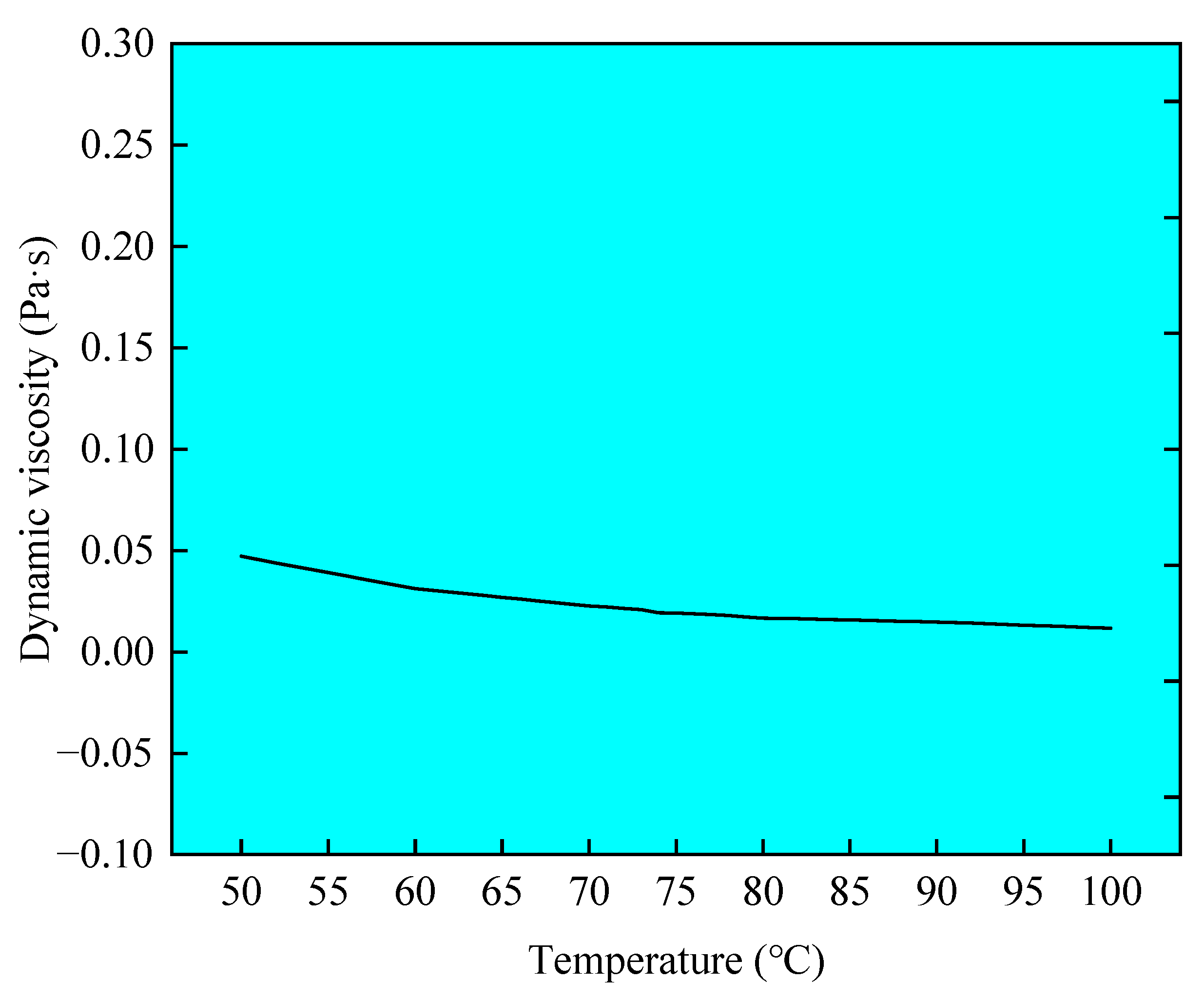
Figure 1 shows the variation curve of engine oil viscosity with temperature. The normal operating temperature of a diesel engine typically ranges from 60 to 100 °C, which is its optimal working temperature interval. As indicated in the figure, the engine oil viscosity fluctuates slightly within this range, varying only from 0.0118 Pa·s to 0.0313 Pa·s. This study assumes that the flow inside the oil filter is isothermal at 74 °C, treating the engine oil as an incompressible fluid with constant viscosity. Based on this assumption, only the conservation of mass and momentum equations need to be considered, and the Reynolds-Averaged Navier–Stokes (RANS) approach is employed to solve the governing equations. The relevant numerical calculations are performed using the commercial computational fluid dynamics (CFD) software ANSYS Fluent 2022 R1, which adopts the finite volume method for spatial discretization—a technique widely validated for fluid simulations in filtration systems [32].
(1)
Continuity equation.
u x + ν y + w z = 0
where u, v, and w represent the components of the velocity vector in the x, y, and z directions, respectively, m/s.
(2)
Momentum conservation equation.
( ρ u ) t + d i v ρ u U = u ( τ x x ) x + u ( τ x y ) y + u ( τ z x ) z p x + F x
where p represents the pressure on the fluid microelement, Pa; τ x x , τ y y , and τ z z represent the components of viscous stress on the microelement surface, Pa; F x , F y , F z represent the volume forces in the x, y, and z directions, Pa; U represents the velocity vector, m/s; u represents the component of U in the x direction, m/s.
For the filter paper region, modeled as a simple and uniform porous medium, the pressure drop (ΔP) across it is described using a standard mathematical model comprising viscous and inertial loss terms [33,34], as expressed in Equation (3):
Δ P = C 1 μ δ ν + C 2 1 2 ρ δ ν 2
where Δ P represents the pressure drop across the porous medium, Pa; μ represents the dynamic viscosity of engine oil, Pa·s; C1 represents the viscous resistance coefficient, m−2; v represents the velocity component perpendicular to the filter medium surface, m/s; C2 represents the inertial resistance coefficient; ρ represents the density of engine oil, kg/m3; and δ represents the thickness of the filter medium, mm.

2.2. Boundary Conditions and Computational Model

The boundary conditions and numerical setup for the oil-filter simulation are defined as follows. The outlet is specified as a pressure-outlet boundary. The inlet is set as a velocity inlet, with the inlet velocity calculated from the inlet flow rate. The inlet flow rate is taken as 75 L/min, corresponding to the rated oil-circulation condition of the engine matched with this filter model. The filter-paper region is modeled as a porous-media zone; All solid walls, including the filter housing, are assigned the no-slip condition. The two side faces of the model are set as periodic boundaries, with the periodicity angle determined by the total number of pleats. For the solution procedure, the SIMPLE algorithm is employed for pressure–velocity coupling. A second-order upwind scheme is used for the discretization of convective terms, while the PRESTO! scheme is adopted for the pressure-gradient term. The characteristics of turbulent models are shown in Table 1. Considering the presence of strong jets, confined channels, and separated flow regions in the flow field, the k-ω SST turbulence model is selected.
The model constants are listed in Table 2. In the simulation, the near-wall mesh was refined to ensure that the y+ values at all solid walls and porous-media interfaces remained within the range of 0.5 to 3, which is consistent with the low y+ requirement of the turbulence model. Turbulence at the inlet is characterized by turbulence intensity and hydraulic diameter, with the turbulence intensity calculated using Equations (4) and (5):
Re = ν ρ D H / μ
I = 0.16 Re 1 / 8
where v represents the flow velocity, m/s; ρ represents the oil density, 814 kg/m3; I represents the turbulence intensity; DH represents the hydraulic diameter of the inlet pipe, mm; and μ represents the dynamic viscosity, 0.01944 Pa·s at 74 °C.

2.3. Geometric Model and Mesh Generation

2.3.1. Establishment of Geometric Model

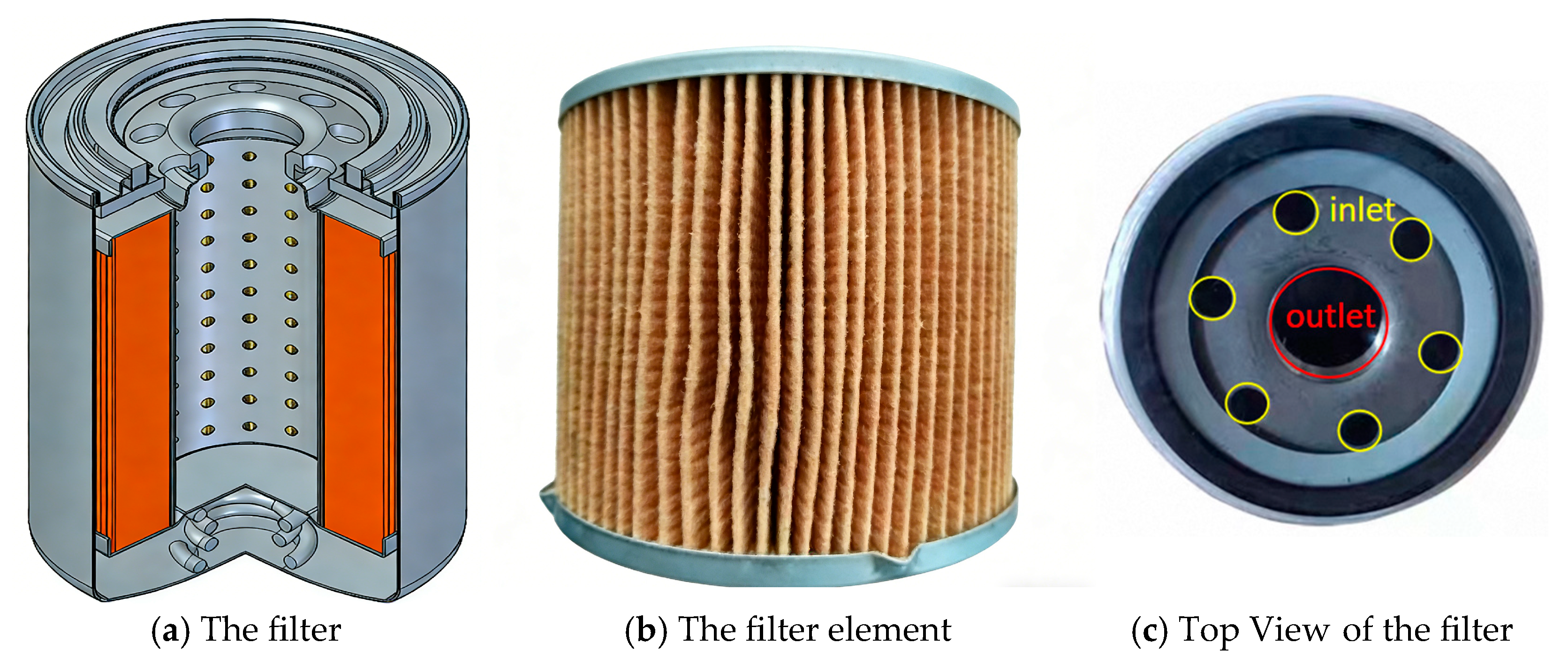
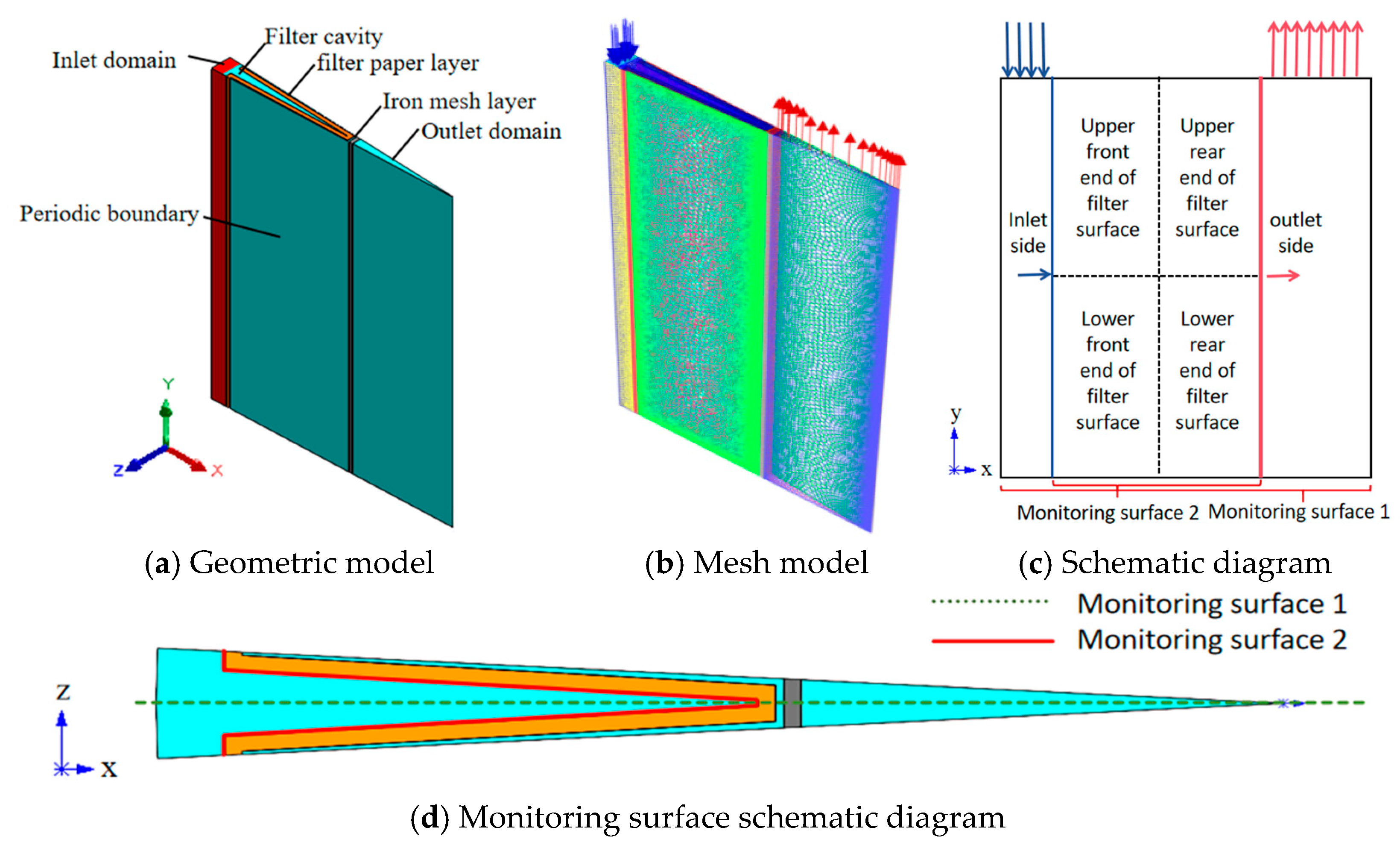
To facilitate the analysis of internal flow, the physical structure of the oil filter was simplified. Figure 2 shows the structure of the oil filter and its element, while the key structural parameters are summarized in Table 3. The corresponding three-dimensional simplified geometric model is illustrated in Figure 3.
The oil filter adopted in this study is a typical rotary-type oil filter. As shown in Figure 2c, its oil inlet is symmetrically arranged. After entering through the inlet, the oil is distributed evenly by a baffle into the annular cavity. The filter element is uniformly arranged around the central pipe, giving the whole structure and flow space a high degree of circumferential symmetry. In this study, the inlet is simplified, and the process from the flow entering the annular cavity to exiting the filter is simulated. The oil enters the annular cavity through the top inlet domain of the filter, passes through the filter element for filtration, and then exits the filter through the top outlet domain. Therefore, a single pleat representing 1/80 of the full filter is selected and modeled in SOLIDWORKS 2025 as a three-dimensional, parametrized geometry driven by equations.

2.3.2. Grid Independence Verification

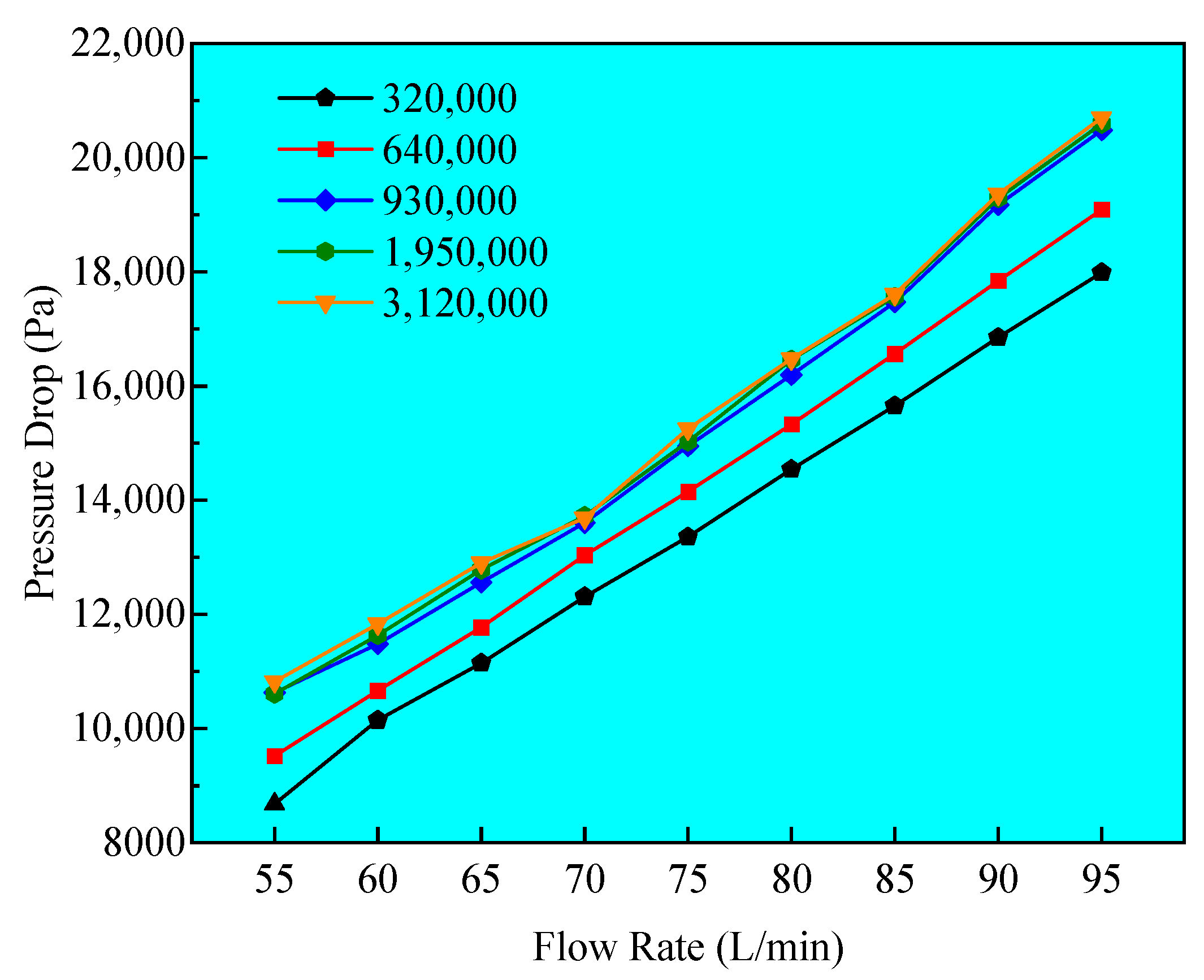
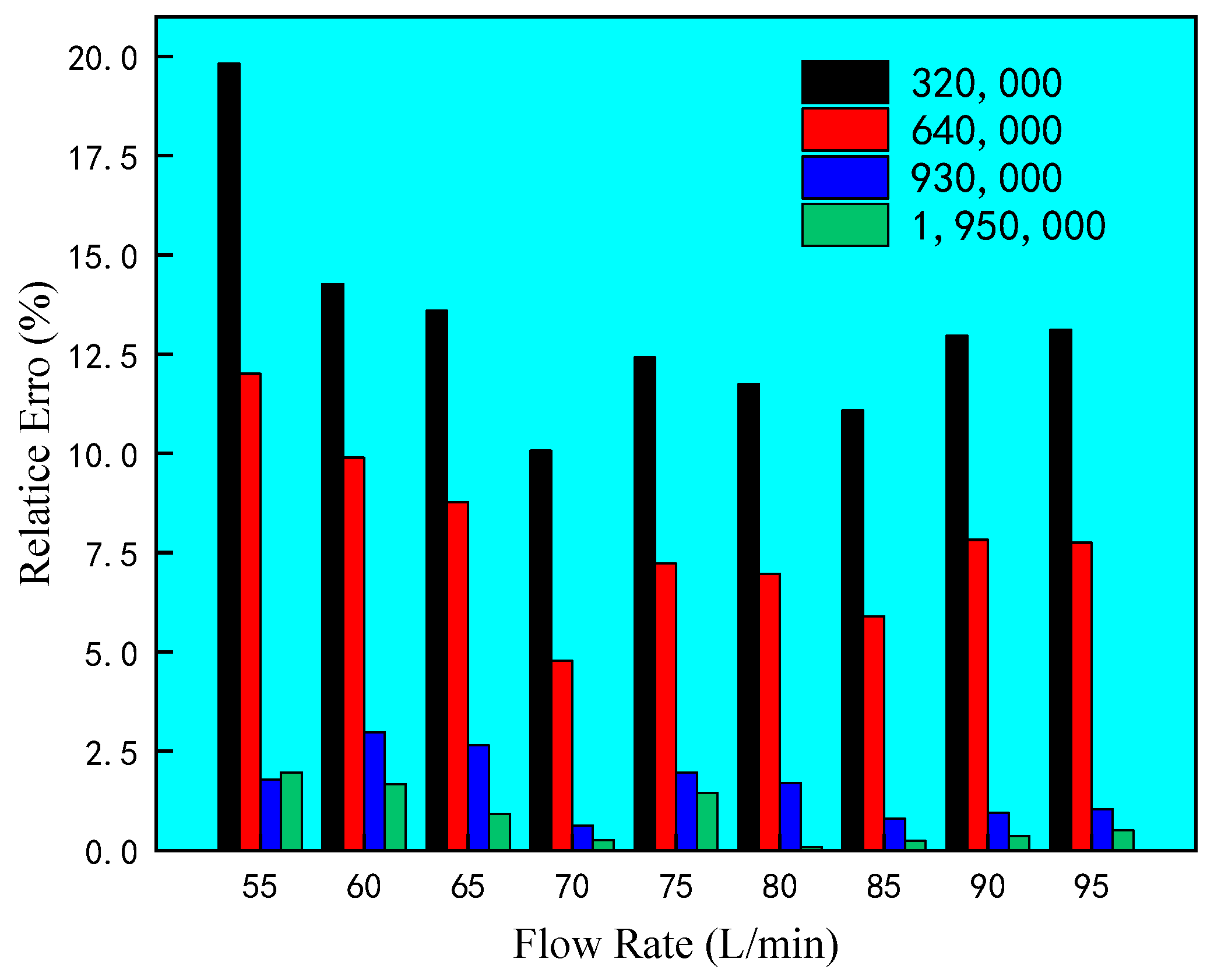
Grid independence verification was conducted to ensure that the results were insensitive to mesh density. Using the 80-pleat filter model as a baseline, five computational models with varying mesh counts (approximately 320,000, 640,000, 930,000, 1,950,000, and 3,120,000 cells) were generated. The simulated pressure drop across a range of flow rates was compared for each mesh. As shown in Figure 4, results from the 310,000 cells and 640,000 cells meshes deviated noticeably from those obtained with finer meshes. In contrast, results from the 930,000, 1,950,000, and 3,120,000 cells meshes showed negligible differences, indicating that a mesh size of approximately 930,000 cells is sufficient to achieve grid-independent solutions. The bar chart in Figure 5 shows the relative error between the pressure drop and the number of the densest grids for different grid schemes. Therefore, the model with approximately 930,000 cells was selected for all subsequent simulations to balance computational accuracy and cost.

2.4. Experimental Validation

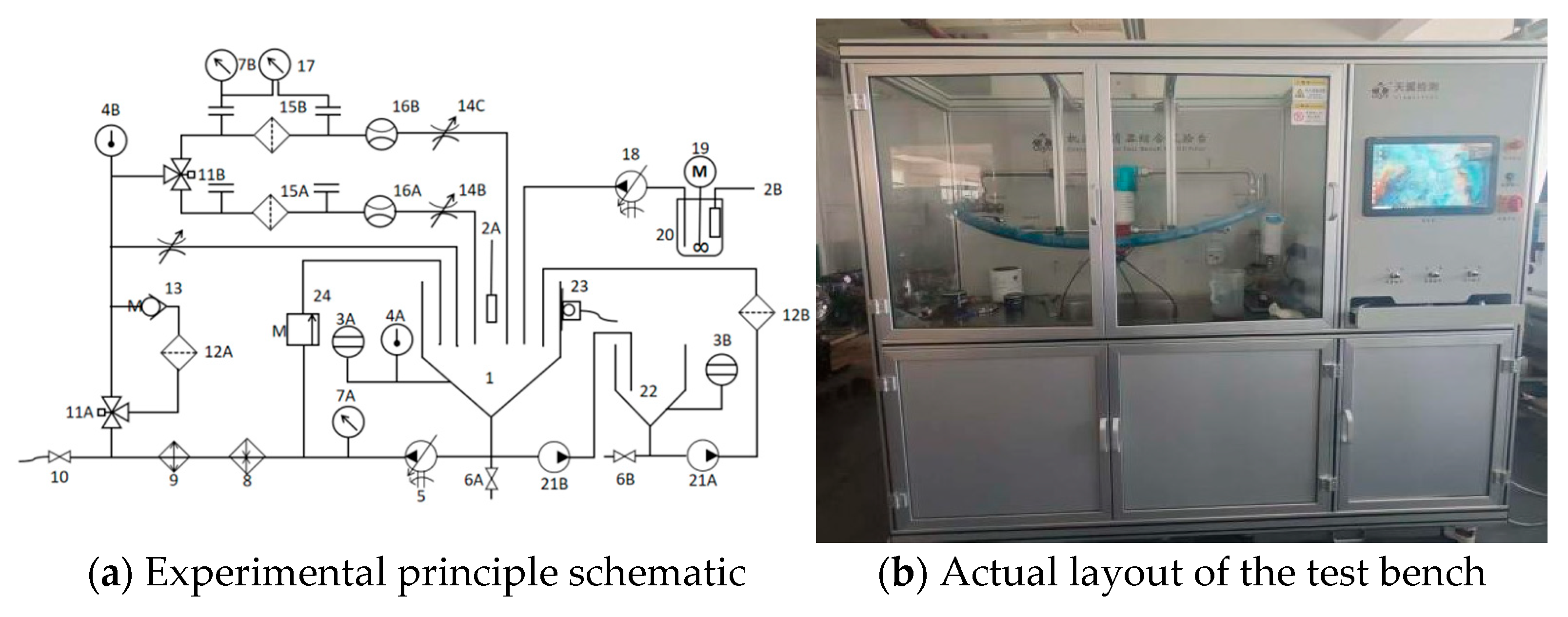
The experimental setup, designed in accordance with the standard GB/T 8243.1-2003 [39], is schematically shown in Figure 6, while Table 4 lists the test bench components. The physical dimensions of the test filter sample matched those of the simulation geometry. A differential pressure sensor was employed to measure the pressure drop across the filter under various flow rates.
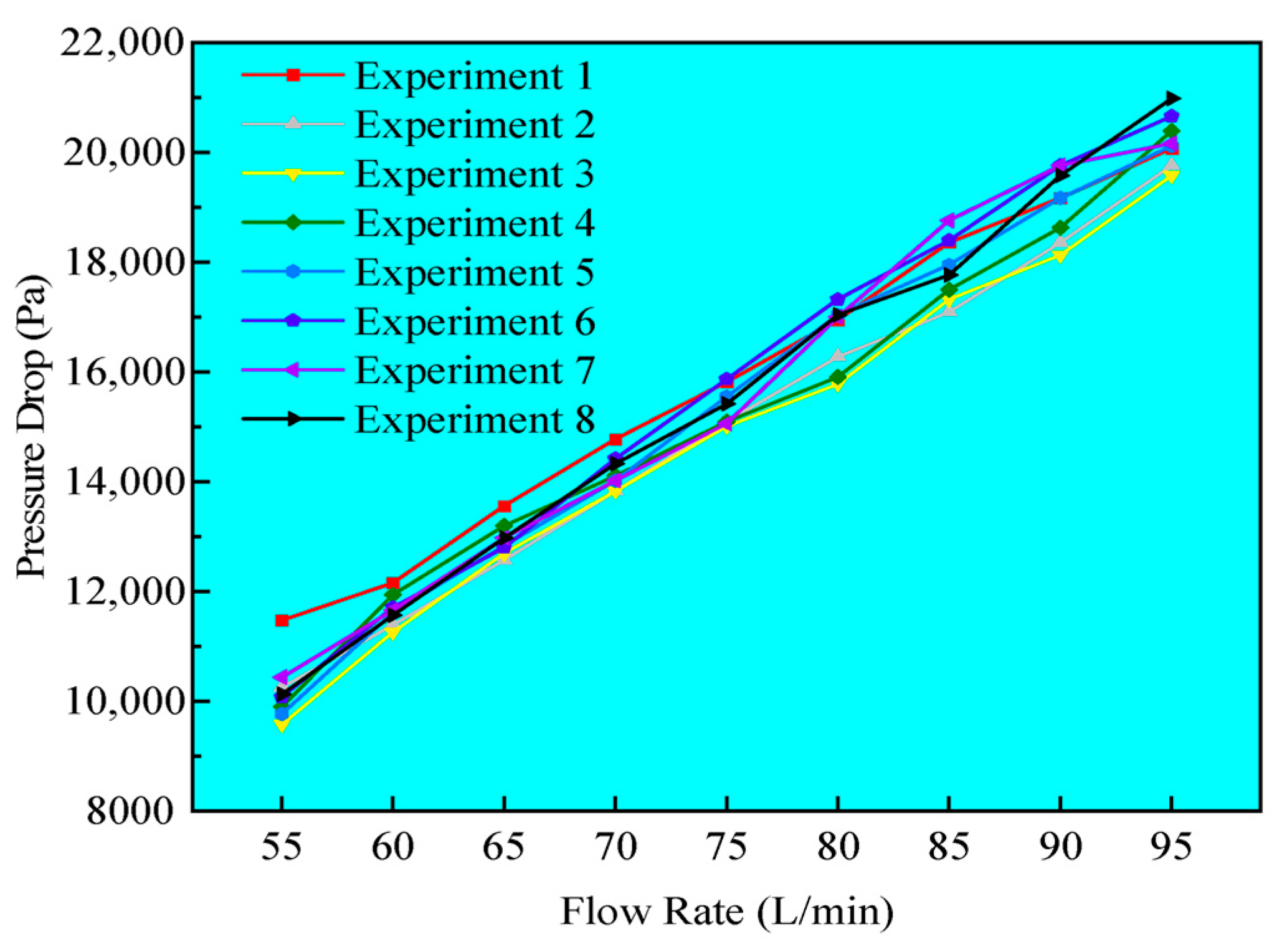
The experimental pressure drop data across eight flow rates were fitted to Equation (3), as depicted in Figure 7. The viscous (C1) and inertial (C2) resistance efficients extracted from each fit were averaged, yielding final values of C1 = 9.94 × 10⁷ m−2 and C2 = 207.
This study adopts the experimentally obtained viscous resistance coefficient C1 and inertial resistance coefficient C2 as input conditions for the porous medium region, conducts numerical simulations on the resistance loss of the engine oil filter under different flow rates, and thereby obtains the simulated values.
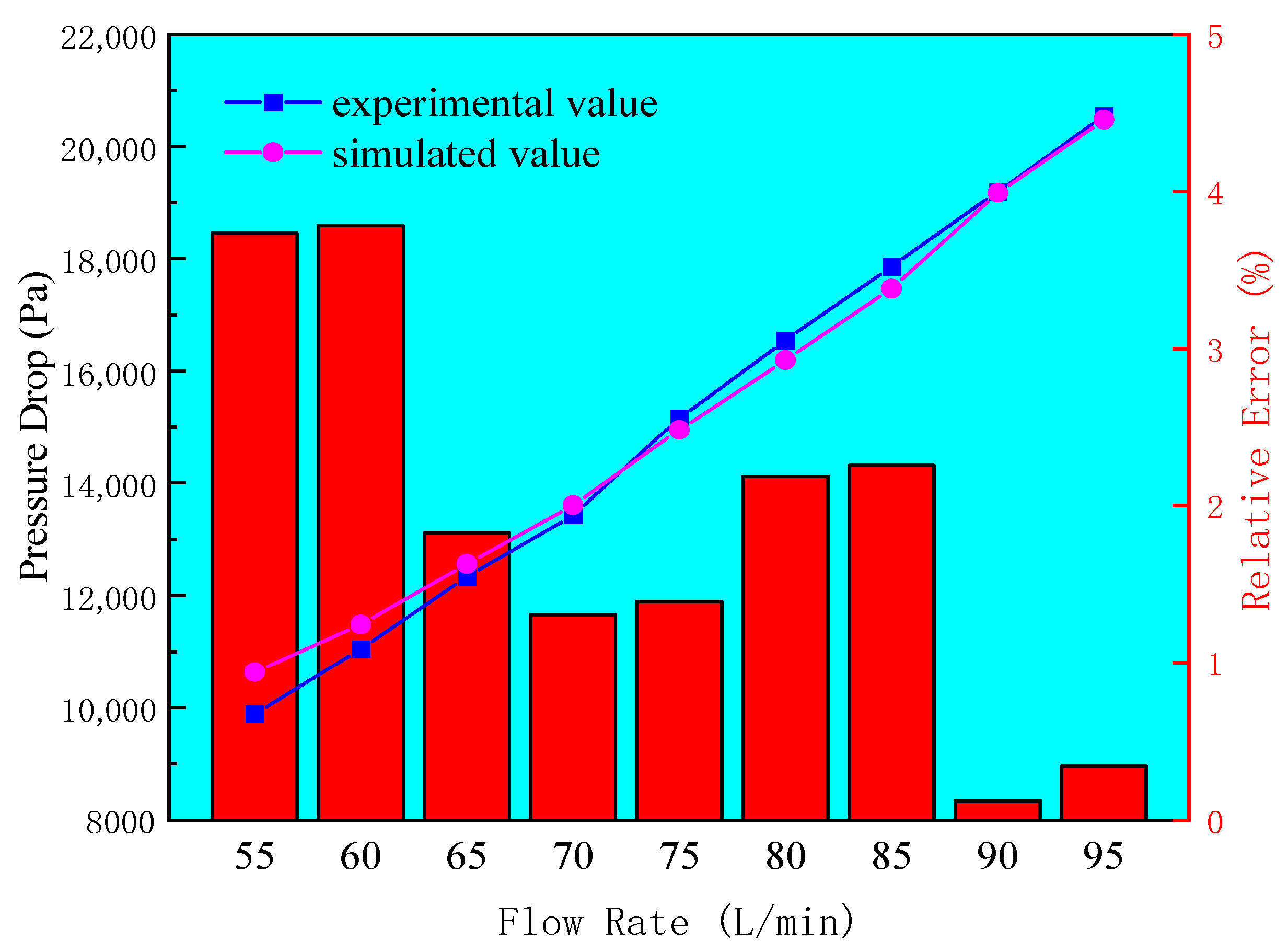
To ensure the predictive capability of the model and avoid circular validation, three independent experimental tests—the data from which were not used in determining any model parameters—were conducted. The measured values were compared with the corresponding simulation results, and the relative errors were calculated, as illustrated in Figure 8. The maximum deviation between the simulated and experimental values was found to be 3.8%, demonstrating good agreement and confirming the feasibility of the simulation methodology.

3. Results and Discussion

To study the effects of two key structural parameters—pleat number (N) and filter element inner diameter (d)—on engine oil filter performance, two sets of comparative simulation schemes were designed based on baseline models, with core structural and material parameters (including filter media properties, filter element outer diameter, filter paper height, and housing structure) kept constant to isolate the independent influence of the target variables. For the pleat number study, seven schemes were set with N ranging from 50 to 80 (maximum N = 80 due to structural constraints), while nine schemes were configured for the inner diameter study with d spanning 60 mm to 84 mm (minimum d = 60 mm limited by structure); all schemes were simulated using CFD at a constant flow rate of 75 L/min to obtain key performance data including uniformity index (λ), pressure drop, and velocity contours, providing a basis for analyzing how N and d affect filter performance and supporting subsequent optimization.

3.1. Analysis of Factors Influencing Flow Uniformity

The pleated structure of an engine oil filter inherently modifies the oil flow path, often resulting in a highly non-uniform internal velocity distribution. This flow maldistribution can lead to several performance drawbacks. For example, high-velocity regions may generate localized jet flows, which impose elevated shear stress on the filter medium and accelerate its fatigue. Conversely, low-velocity zones can develop into “filtration dead zones,” leaving significant portions of the filter area underutilized and thus reducing the overall media effectiveness and dust-holding capacity. Therefore, a detailed analysis of internal flow uniformity is crucial for optimizing the comprehensive performance of oil filters. In this section, two critical structural parameters—the inner diameter and the pleat number—are selected to systematically study their influence on the flow uniformity inside the engine oil filter.
To quantify the uniformity of velocity distribution on the filter surface and study the influence of various factors on the flow uniformity of the engine oil filter, an evaluation index is needed to assess the uniformity of velocity distribution of the engine oil filter. The uniformity index was first proposed by Weltens et al. [40], and its expression is as follows:
γ = 1 1 2 n i = 1 n ν i ν ¯ 2 ν ¯
where γ represents the uniformity index, ranging from 0 to 1; n represents the number of sample points; v i represents the flow velocity at the i-th point, m/s; v ¯ represents the arithmetic mean of the velocity scalars of all sample points, m/s. In 2010, Tao et al. [41,42] proposed a uniformity calculation formula based on area-weighted average velocity and mass-weighted average velocity, as shown in Equation (7).
This index eliminates the need to set data collection points and can quickly evaluate cross-sectional uniformity. Moreover, both the area-weighted average velocity and mass-weighted average velocity can be provided by the simulation program itself, which greatly improves computational convenience and simplifies the calculation process. Therefore, this study introduces the dimensionless parameter λ to reflect the uniformity of velocity distribution on the filter surface of the engine oil filter. A value closer to 1 indicates better uniformity of fluid flow, while a value closer to 0 indicates poorer uniformity.
λ = ( 1 V a V m V m ) × 100 % V a = 1 A j = 1 n v j A j V m = j = 1 n v j ρ j V j A j j = 1 n ρ j V j A j
where Va represents the area-weighted average velocity, m/s; Vm represents the mass-weighted average velocity, m/s; A represents the total surface area, m2; Aj represents the area vector of the j -th unit; vj represents the velocity magnitude on the j -th unit surface, m/s; Vj represents the velocity vector on the j -th unit surface; ρj represents the fluid density on the j -th unit surface, kg/m3; and n represents the number of unit surfaces into which the flow cross-section is divided.

3.1.1. Influence of Inner Diameter on Flow Uniformity

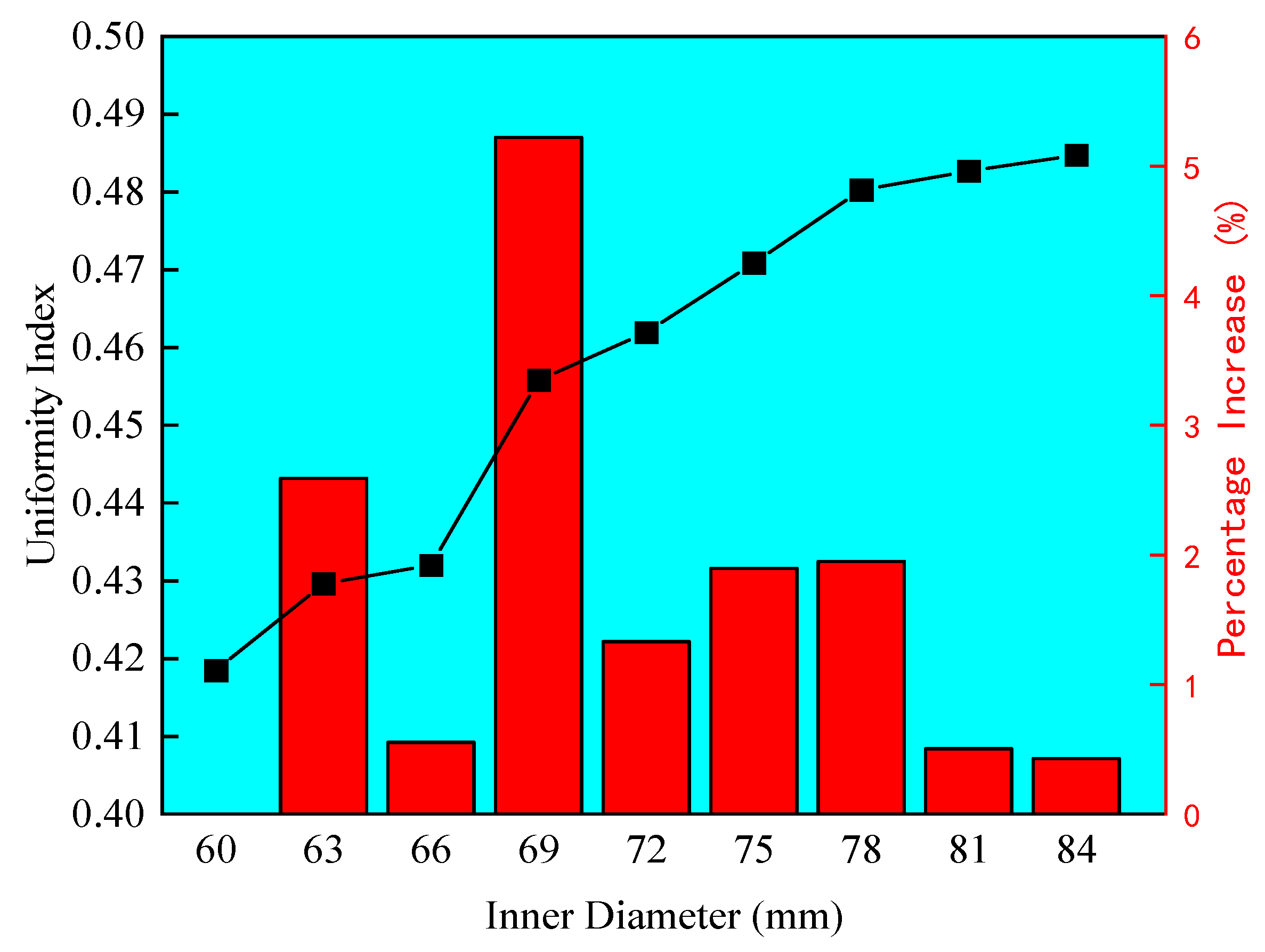
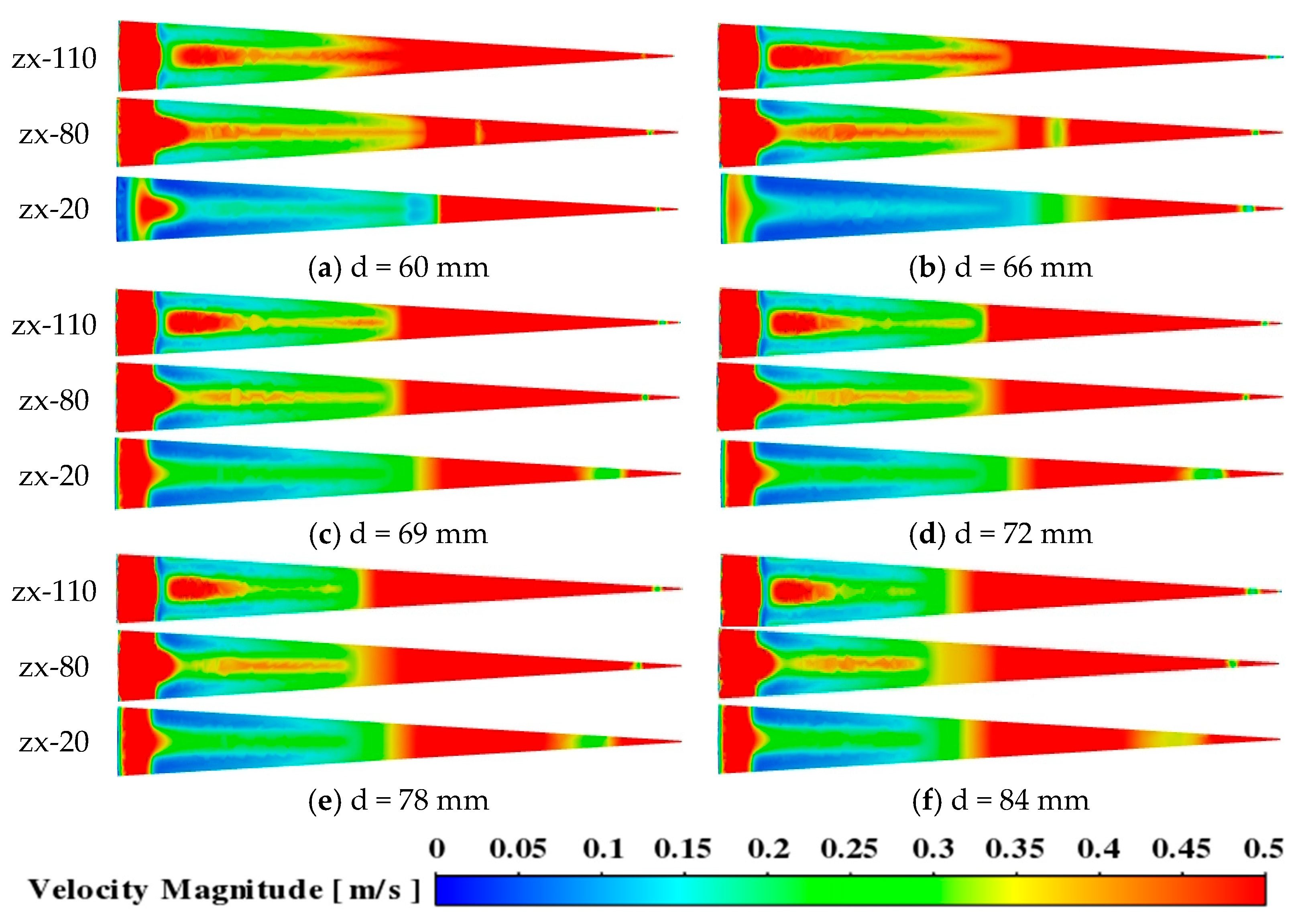
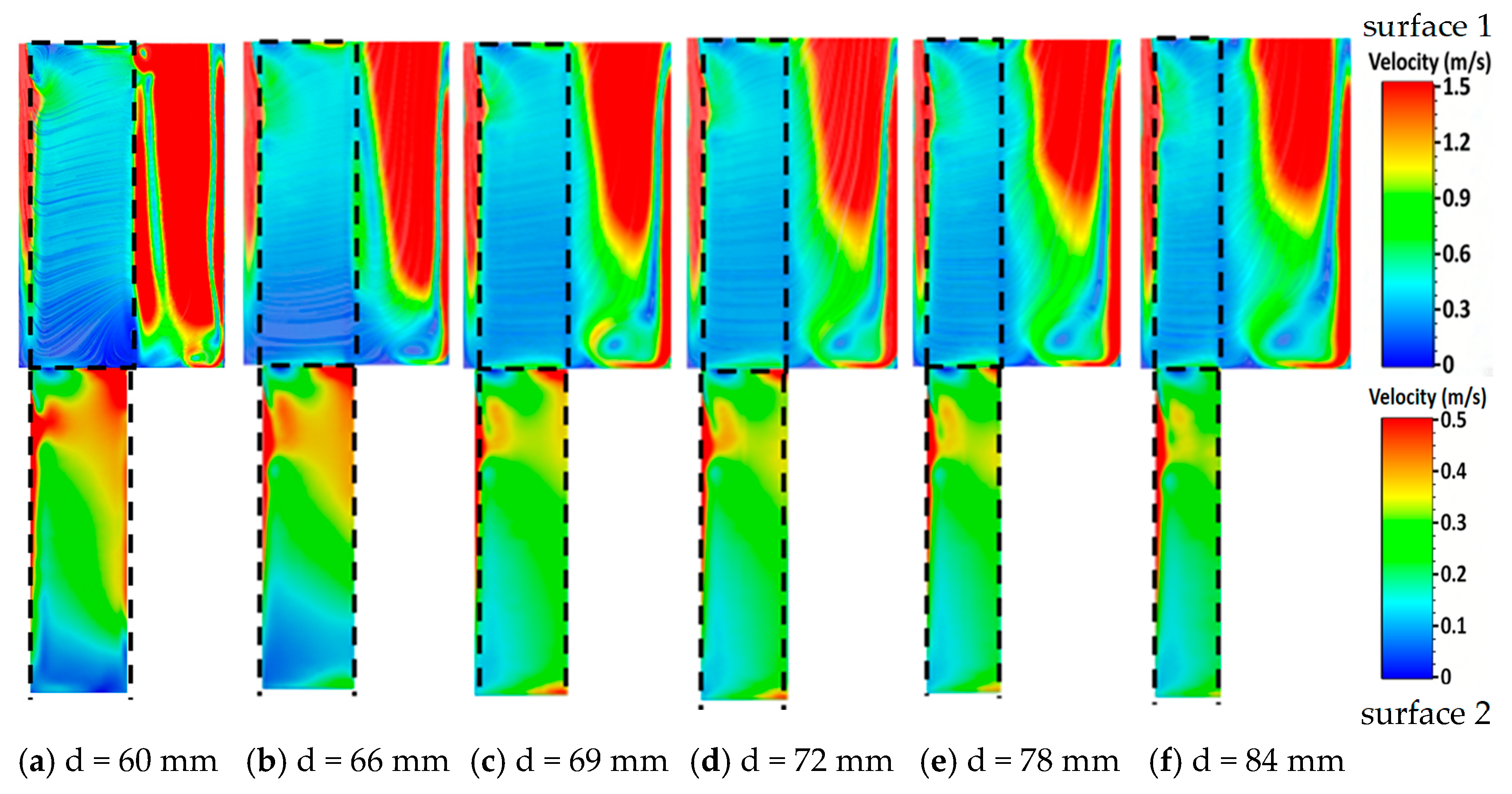
According to Figure 9, a larger inner diameter of the filter element leads to a more uniform velocity distribution on the filter surface and a higher utilization rate of the filter paper. Notably, when the diameter increases from d = 66 mm to d = 69 mm, the uniformity of the surface flow velocity distribution shows an improvement of 5.22%. The velocity distributions on the zx-plane at heights of y = 20, 80, and 110 mm are presented in Figure 10. Figure 11 shows the velocity contour plots of the two detection planes, with the streamline plot superimposed on the velocity contour plot of Detection Plane 1.
For inner diameters smaller than the 69 mm critical point, a reduction in diameter results in a narrower filter cavity. Under a constant flow rate, the reduced flow area—governed by the continuity equation—leads to an increased flow velocity. This higher velocity augments fluid inertia while simultaneously diminishing the relative effects of viscous forces and turbulent diffusion. Consequently, the fluid tends to maintain high-speed axial motion, forming a distinct jet-like flow structure. As visualized in Figure 10, the confinement imposed by the filter walls on both sides creates a constricted flow space. Within this space, the effective cross-section of the developing jet narrows progressively along the flow direction. The jet’s momentum remains highly concentrated in the central region, creating a large velocity gradient between the jet core and the surrounding fluid. This impedes efficient momentum transfer via turbulence or viscous effects, preventing the flow from diffusing fully across the entire filter surface within the cavity.
Furthermore, as indicated in Figure 11, proximity to the inlet causes the upper portion of the filter cavity to receive most of the incoming fluid at high speed. This fluid undergoes filtration primarily in this upper region before exiting. Meanwhile, the lower-velocity fluid in the bottom section is effectively squeezed by the dominant high-speed flow from above as it passes through the filter media. This interaction results in a localized high-speed concentration zone on the outlet side. This acceleration and concentration phenomenon becomes increasingly pronounced with smaller inner diameters, as the reduced internal flow area forces a greater proportion of the total flow toward the outlet side.
Crucially, while a smaller inner diameter geometrically increases the total theoretical filtration area, for inner diameters below 69 mm, most of the engine oil flows through and is filtered by the upper part of the filter surface, while surface velocities in certain areas of the lower filter surface approach zero, creating filtration dead zones. These dead zones are doubly detrimental: they contribute no filtration, and the near-stagnant fluid within them induces additional pressure drop through viscous friction. From the velocity contour maps overlaid with streamlines, dead zones are characterized by sparse or swirling streamlines. The significant velocity gradient between the stagnant fluid in dead zones and the surrounding flowing fluid triggers intense viscous shear, and the slow creep of fluid in dead zones generates extra frictional loss, leading to irreversible energy dissipation that further increases the system pressure drop. This clearly reveals the flaw in a design strategy that blindly minimizes inner diameter to maximize theoretical area: the ensuing dead zones not only render part of that area ineffective but also exacerbate unnecessary energy consumption. Thus, merely reducing the inner diameter without considering flow uniformity is not a practical approach to improve the filter’s effective filtration performance.
A significant enhancement in flow uniformity is achieved at the specific inner diameter of d = 69 mm. This improvement stems from the fixed outer diameter, which preserves a constant total annular volume. Within this fixed volume, an increased inner diameter reduces the radial pleat height. For diameters smaller than 69 mm, the jet flow undergoes a full development cycle of acceleration, constriction, and concentration. At 69 mm, however, the reduced pleat height restricts the radial distance available for jet acceleration and suppresses excessive flow constriction toward the center. This induces a substantial velocity reduction as the flow reaches the pleat bottoms, disrupting the radial continuity of the high-velocity core. Second, the increased inner diameter mitigates the previously noted spatial constraint. Incoming fluid is no longer forced into a concentrated path along the upper filter layer; instead, it can distribute and fill the entire filter chamber more effectively. This expanded internal flow area promotes a more consistent fluid penetration velocity through the filter media across the entire surface. Consequently, the extents of both localized high-velocity regions and stagnant dead zones are minimized.
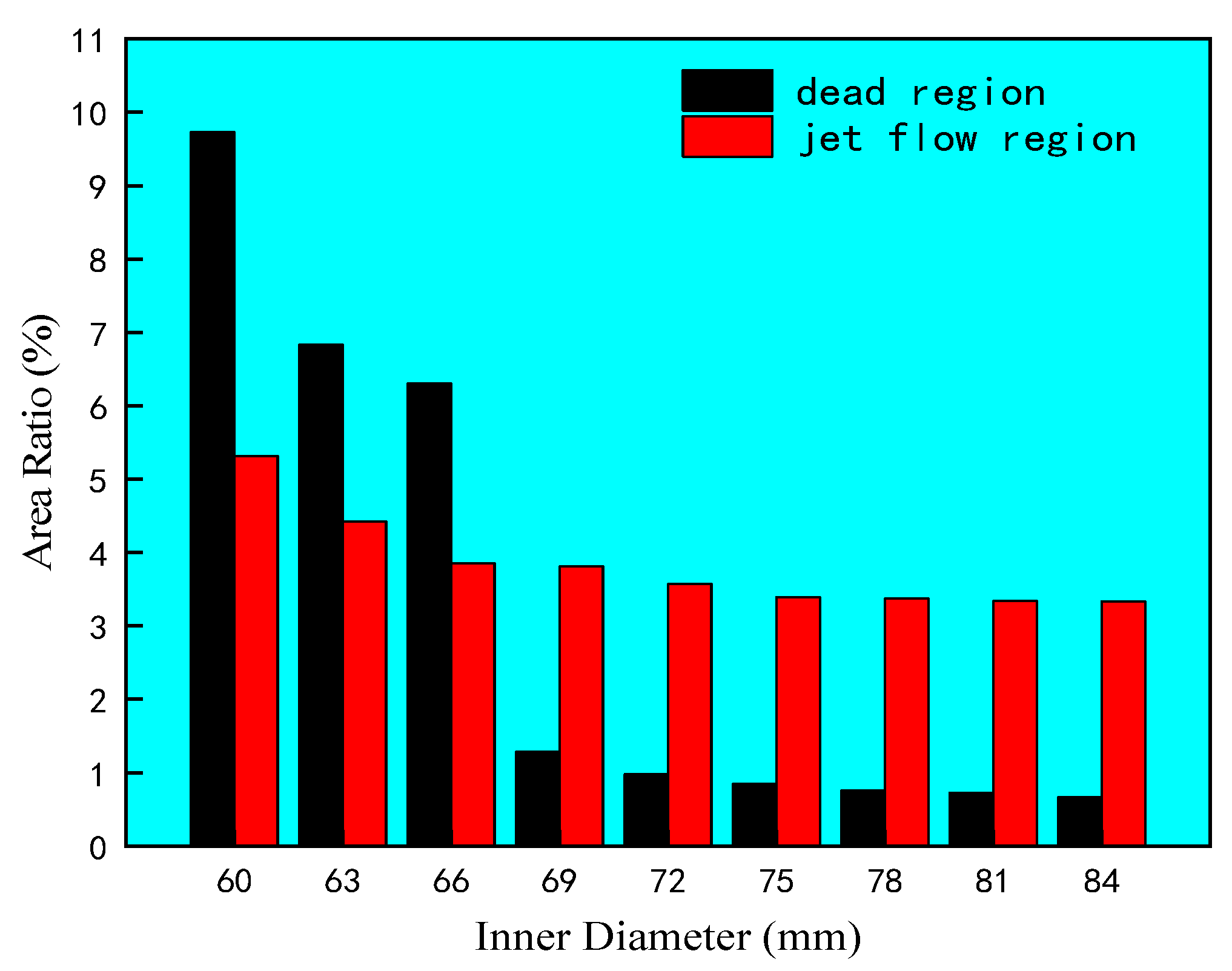
This behavior is intuitively illustrated by the area fraction data in Figure 11: the figure depicts the proportions of the jet flow region and dead region at varying inner diameters, and the fractions of these two regions at 69 mm are markedly lower than those at smaller inner diameters (e.g., 60 mm, 63 mm). This directly validates the aforementioned velocity distribution optimization, with the core mechanism driving the significant improvement in flow uniformity at this critical inner diameter.
For inner diameters exceeding 69 mm, the pleat height decreases further, and the inter-pleat flow channels adopt a more regular geometry. Under these conditions, the conventional jet flow development process is effectively suppressed, with minimal local acceleration. The central flow velocity at the pleat bottom becomes gentler, and the radial velocity gradient gradually diminishes. Simultaneously, the inherent wavy structure of the pleats helps stabilize and enhance turbulence within the channels. This enhanced turbulent mixing promotes more thorough momentum transfer from the central region to the edges, increasing the edge fluid velocity and thereby continuously narrowing the center-periphery velocity difference. However, since a relatively uniform flow distribution is already established at the 69 mm critical point, the marginal benefit of further increasing the inner diameter to enhance turbulence is significantly diminished. Moreover, the continuous expansion of the internal flow area (with increasing diameter) causes the high-velocity region previously observed at the rear of the upper filter layer to dissipate gradually. This is because the expanded flow area eliminates extrusion of the fluid (induced by channel constraints) upon exiting the filter media, allowing it to discharge uniformly along the outlet side. The flow capacity of the outlet passage is more than sufficient to meet the volumetric flow rate requirement, and the continuous, uniform moderate-velocity region covers a broader range.
This trend is also evidenced in Figure 12: as the inner diameter exceeds 69 mm, the area fractions of the jet flow region and dead region decrease slightly further, with the trend gradually flattening. This aligns with the aforementioned conclusion that flow uniformity improves only marginally, confirming that the marginal benefit of further increasing the inner diameter has been substantially reduced.

3.1.2. Influence of Pleat Number on Flow Uniformity

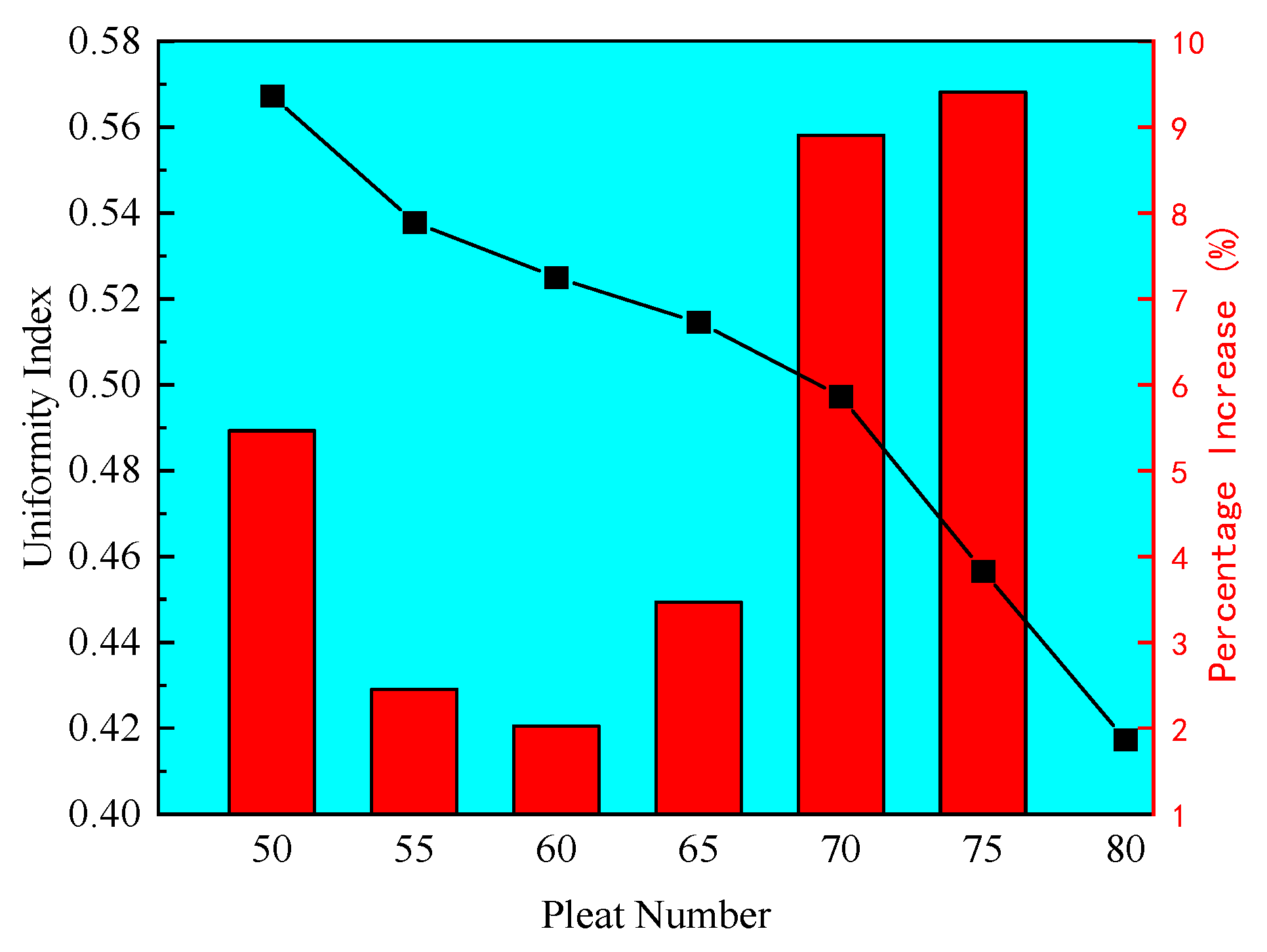
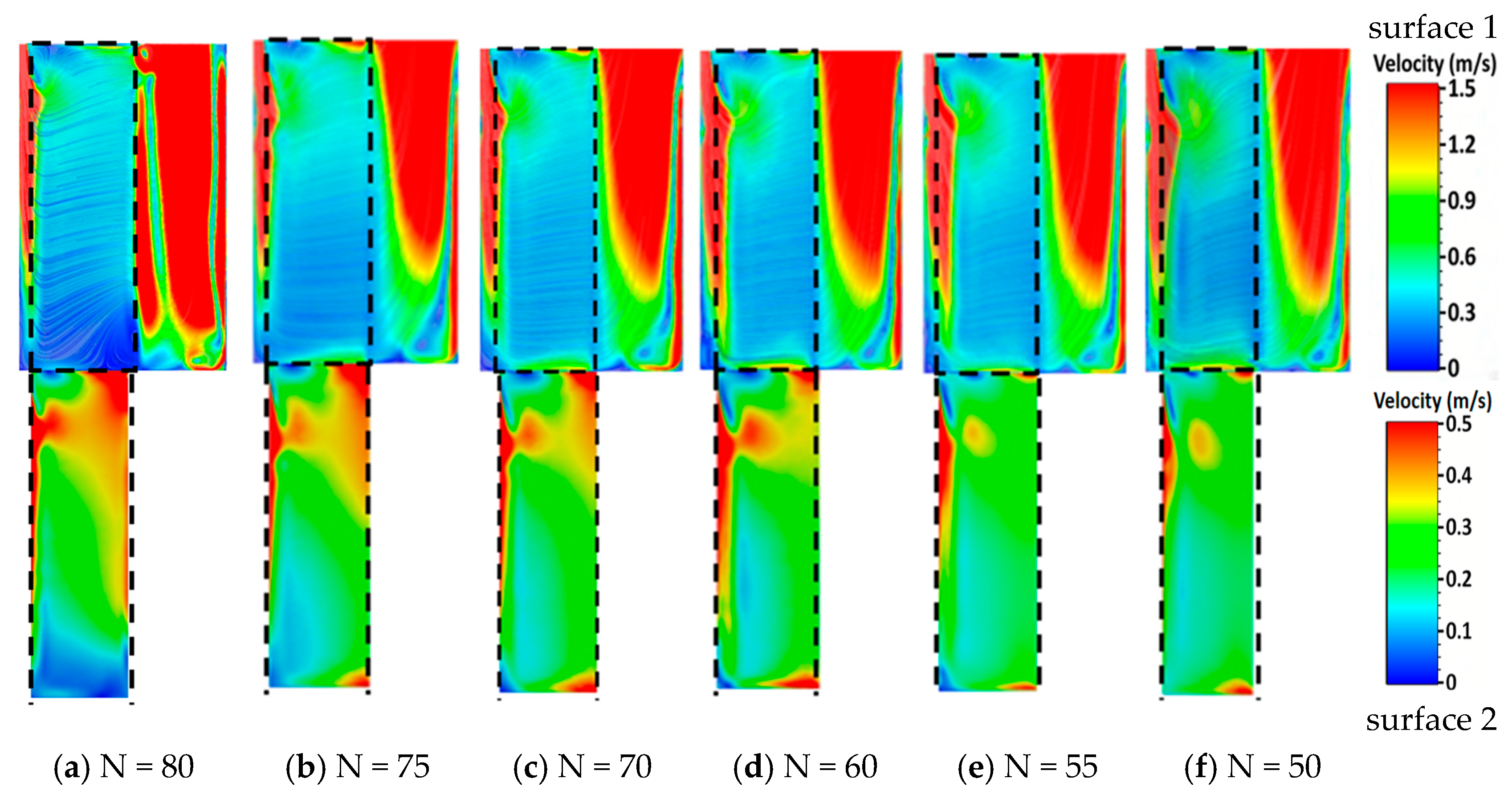
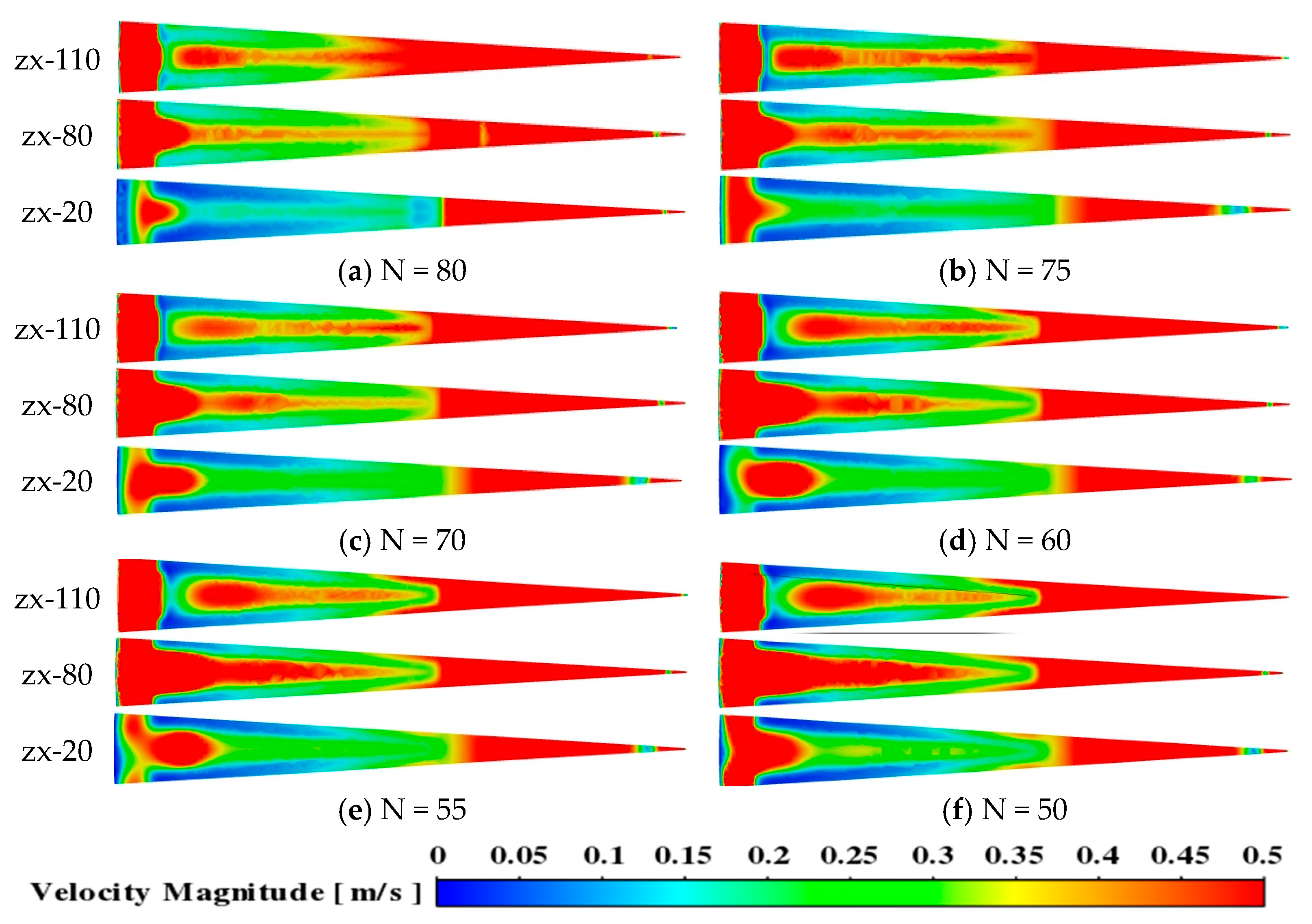
According to Figure 13, a higher pleat number in the filter element results in poorer uniformity of the velocity distribution on the filter surface and a lower utilization rate of the filter paper. A particularly sharp deterioration in the uniformity of the surface flow distribution is observed as the pleat number increases from N = 70 to N = 80. Figure 14 shows the velocity contour plots of the two detection planes, with the streamline plot superimposed on the velocity contour plot of Detection Plane 1. The upper and lower dashed boxes in Figure 14 are the contour plots corresponding to the positions of the two monitoring surfaces in the flow field. The corresponding velocity distributions on the zx-plane at heights of y = 20, 80, and 110 mm are presented in Figure 15.
The data in Figure 13, Figure 14 and Figure 15 show that the reason for the influence of the pleat number on flow uniformity is similar to that of the inner diameter. When the pleat number is less than 70, the smaller the pleat number, the better the uniformity of the filter surface velocity distribution and the higher the filter paper utilization rate. For pleat numbers below 70, a lower number of pleats yields superior flow uniformity and higher filter media utilization. As the pleat number increases from 50 to 70, the degradation in flow uniformity is gradual, and no large-area filtration dead zones are evident.
As shown in Figure 15, this behavior stems from the ample inter-pleat spacing at low pleat densities, resulting in a wider filter cavity that provides a relatively large effective flow area. Based on the continuity equation, under the condition of a constant volumetric flow rate, the larger the effective flow area, the smaller the flow velocity. The reduced fluid inertia at this lower velocity inhibits the formation of an accelerated, constricted, and concentrated jet. Meanwhile, the wall constraints are relatively weak, and the fluid can fully diffuse within the filter cavity upon entry, resulting in a smaller velocity gradient between different regions. Consequently, no pronounced high-speed region is observed in the upper cavity near the inlet (Figure 15). As the fluid permeates the filter layer, the penetration velocity remains relatively consistent across the entire surface, and no localized high-speed extrusion occurs on the outlet side. Thus, although the theoretical filtration area is smaller with fewer pleats, the entire area participates effectively in filtration. This high utilization minimizes both area wastage and the additional pressure drop attributable to dead zones. Therefore, for pleat numbers below 70, good flow uniformity and high media utilization are achieved, representing a reasonable design range that balances filtration efficiency and energy consumption.
In contrast, increasing the pleat number from 70 to 80 triggers a significant decline in flow uniformity. This is because an increase in pleat number reduces the inter-pleat spacing, causing adjacent pleats to be nearly in contact. The fluid is thus subjected to wall constraints from the filter surfaces on both sides, forming a constricted filter cavity space; as a result, the fluid can hardly diffuse toward the channel edges and can only maintain high-velocity axial flow along the channel center, leading to the formation of a jet flow structure in the upper part of the filter surface with momentum highly concentrated in the central region, and filtration dead zones with flow velocities close to zero in the lower part of the filter surface. As shown in the velocity contour maps overlaid with streamlines, streamlines in dead zones are sparse and even form local eddies. The velocity difference between the stagnant fluid in these zones and the high-velocity jet flow intensifies viscous shear effects, and the internal friction of the near-stagnant fluid itself further dissipates energy. This dual energy loss mechanism directly contributes to the increase in pressure drop as the number of pleats exceeds the threshold.
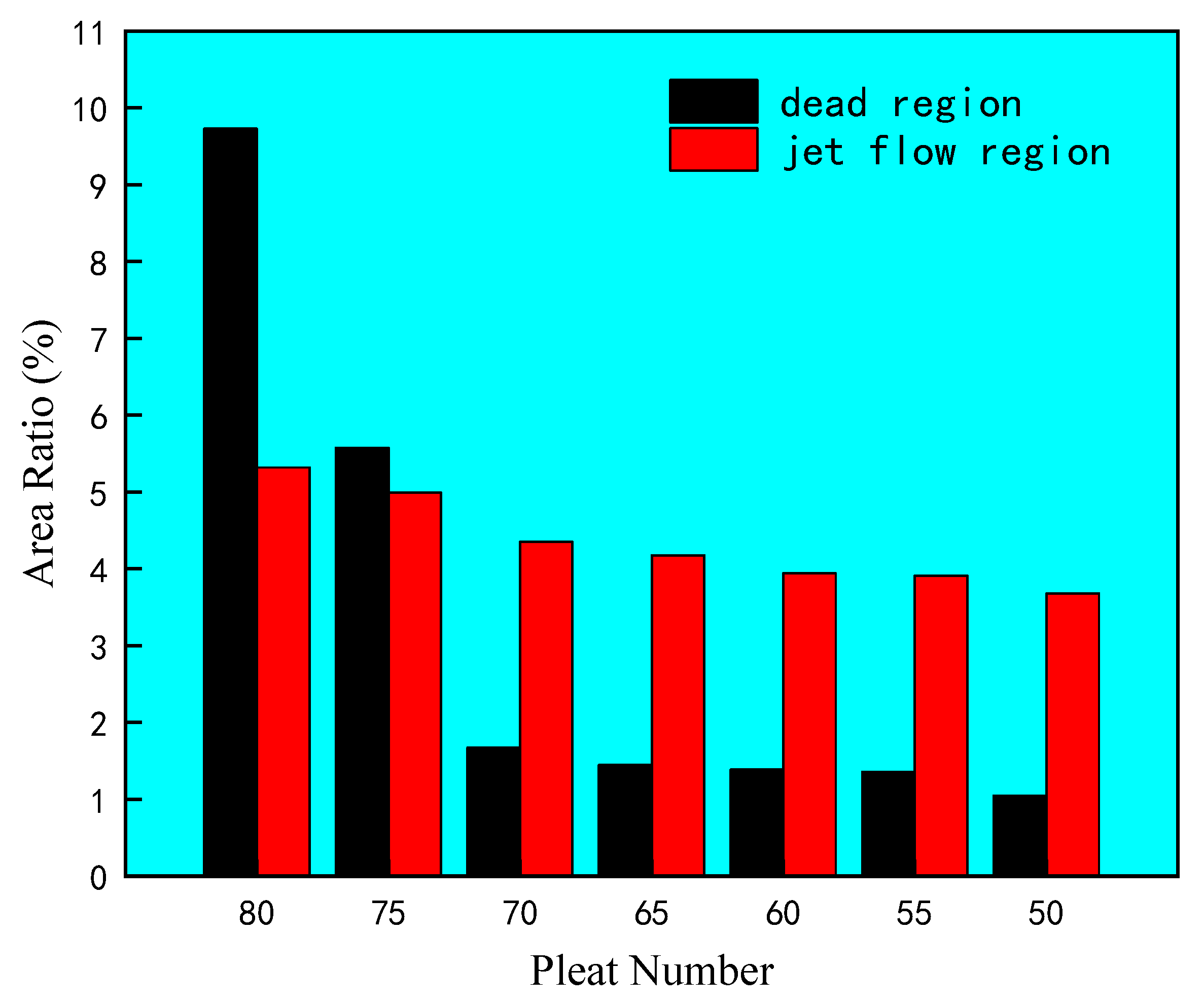
This structural flow field coupling effect is directly reflected in Figure 16: Jet/Dead Region Area Fractions at Different Inner Diameters at different pleat numbers. When N increases from 70 to 80, the dead region fraction surges from ~2% to ~6%, and the jet flow fraction also rises sharply; these data directly verify the worsening flow separation caused by higher pleat numbers.
Furthermore, as the pleat number increases, the effective flow area of a single filter cavity decreases accordingly. Similar to the inner diameter, as the upper part of the filter cavity is close to the inlet region, most of the fluid flows into the front end of the upper filter surface, takes the path of least resistance, and exits at a high velocity from the rear end of the upper filter surface—as illustrated in Figure 14a,b. The fluid with lower velocity in the lower region is squeezed by the high-velocity fluid from the upper part when passing through the filter media, forming a local high-velocity concentrated region on the outlet side; the greater the pleat number, the more pronounced this acceleration and concentration phenomenon becomes. Despite the increase in the theoretical filtration area with pleat number, the actual flow distribution becomes highly non-uniform. Continuous high-velocity zones dominate the upper surface, while extensive dead zones occupy the lower part. This analysis clearly shows that the design approach of merely increasing the pleat number to pursue a larger filtration area exhibits significant drawbacks. The existence of filtration dead zones not only wastes the effective filtration area but also exacerbates energy loss. Therefore, in the design process, we do not recommend selecting a pleat number exceeding 70.

3.2. Analysis of Influencing Factors of Pressure Drop

The engine oil filter is a critical component installed within the internal combustion engine lubrication system. Pressure drop serves as a significant parameter and key performance indicator for the filter. The generation of pressure drop arises from multiple factors. When oil flows through porous filter media, interactions between the fluid and the fibrous matrix create pressure gradients, resulting in viscous resistance losses. Additionally, due to the intricate and tortuous pore channels within the porous medium, the fluid’s flow direction undergoes continuous changes, generating inertial resistance and contributing further to pressure loss. Considering the power output and operational efficiency of the engine, a lower pressure drop across the oil filter is generally desirable, as it minimizes the pumping work required from the engine and promotes better overall system performance. In this section, the influence of the filter element’s inner diameter and pleat number on the pressure drop of the engine oil filter is studied and analyzed through a numerical simulation.

3.2.1. Influence of Inner Diameter on Pressure Drop

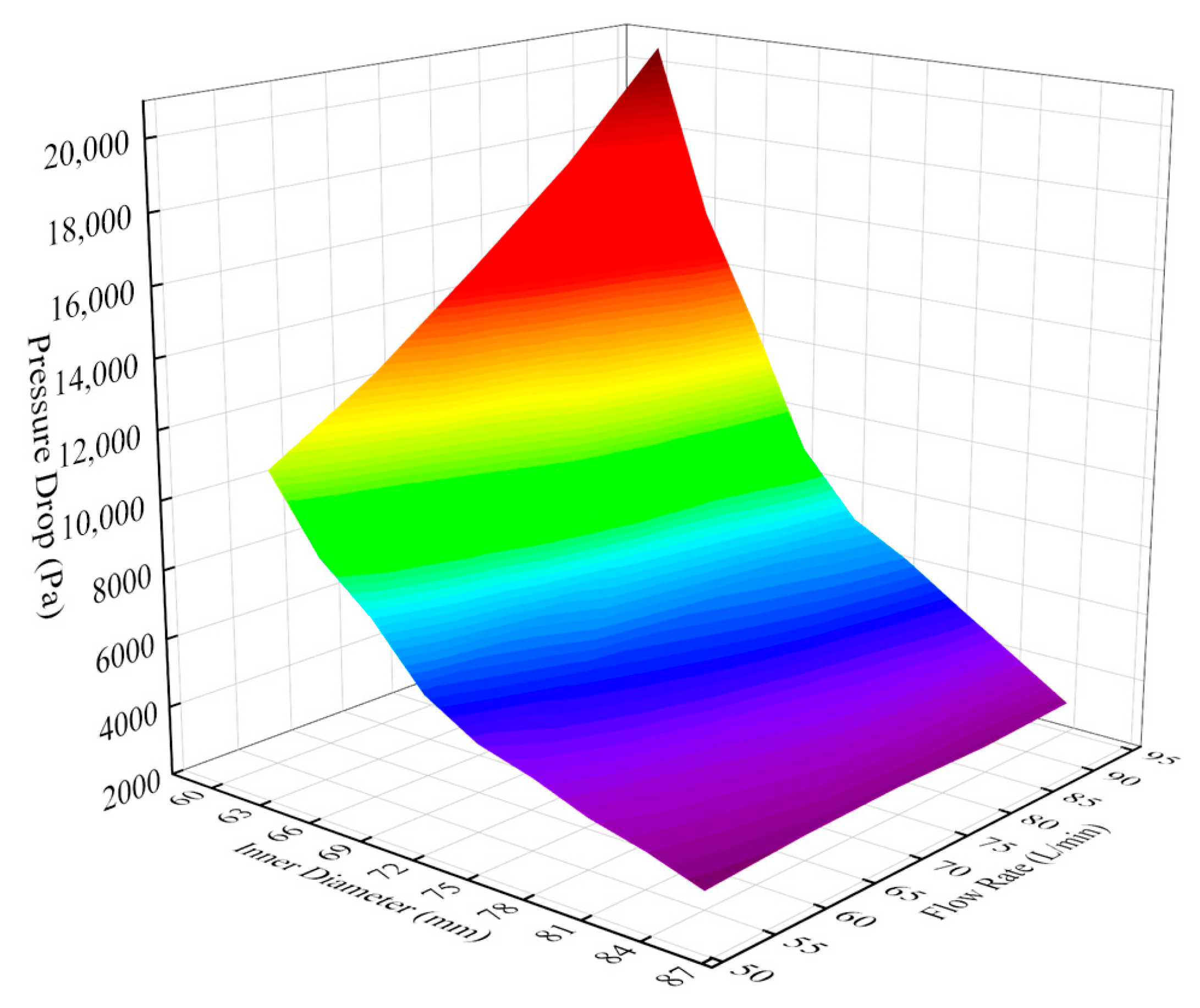
As illustrated in Figure 17, filters with a smaller inner diameter exhibit a more pronounced variation in pressure drop in response to changes in flow rate. This phenomenon occurs because a smaller inner diameter results in a substantially reduced effective flow area within the filter element. According to the continuity equation, flow velocity is proportional to the volumetric flow rate and inversely proportional to the cross-sectional flow area. Since flow area is related to the square of the inner diameter, even minor fluctuations in flow rate are amplified into substantial increases in v.
Consequently, the flow field in small-inner-diameter filters is highly sensitive to flow rate variations. An increase in flow rate leads to a disproportionate surge in v, which in turn causes a sharp rise in pressure drop. Furthermore, the narrow filter cavity in such designs exacerbates local fluid extrusion and impact within the pleated channels as the flow rate rises, significantly increasing localized pressure losses. Simultaneously, the increased fluid flux through the filter media enhances viscous pressure drop effects and can even induce transient pore clogging, further amplifying pressure drop fluctuations.
In contrast, the ample flow area in large-inner-diameter filters ensures that flow velocity variations remain within a moderate range for a given change in flow rate. Local flow disturbances are subdued, leading to only gradual changes in the flow pressure drop coefficient. Thus, the pressure drop response to flow rate variations is more moderate.
Across all tested flow rates, the pressure drop exhibits a monotonic decrease with increasing inner diameter [43]. This trend is attributed to the geometric relationship: with a fixed outer diameter, an increase in inner diameter reduces the radial width of each pleat, effectively transforming the filter cavity from a long to a short configuration. This geometric change shortens the flow path from the inlet to the outlet side. Since frictional head loss along the path is positively correlated with its length, the shortened path directly reduces viscous energy dissipation.
Simultaneously, the quadratic expansion of the flow area results in a significant reduction in flow velocity. This reduction has two beneficial effects: it weakens the viscous shear at the filter media surface, reducing frictional pressure loss; and it mitigates the risk of local high-velocity impingement on the filter media, thereby avoiding additional pressure losses associated with flow separation. Moreover, a larger inner diameter promotes a more uniform flow field distribution within the cavity. This helps to avoid the development of a concentrated jet, which is typical in small inner diameter filters due to their elongated flow paths. The fluid can thus distribute more evenly across all pleated channels, minimizing the formation of local high-velocity zones and the consequent superposition of pressure losses associated with such zones. Perhaps most importantly, the lower flow velocity facilitates smoother permeation through the filter media, reducing the risk of pore structure deformation. For these reasons, the trend of decreasing pressure drop with increasing inner diameter is consistently observed across various flow rates.

3.2.2. Influence of Pleat Number on Pressure Drop

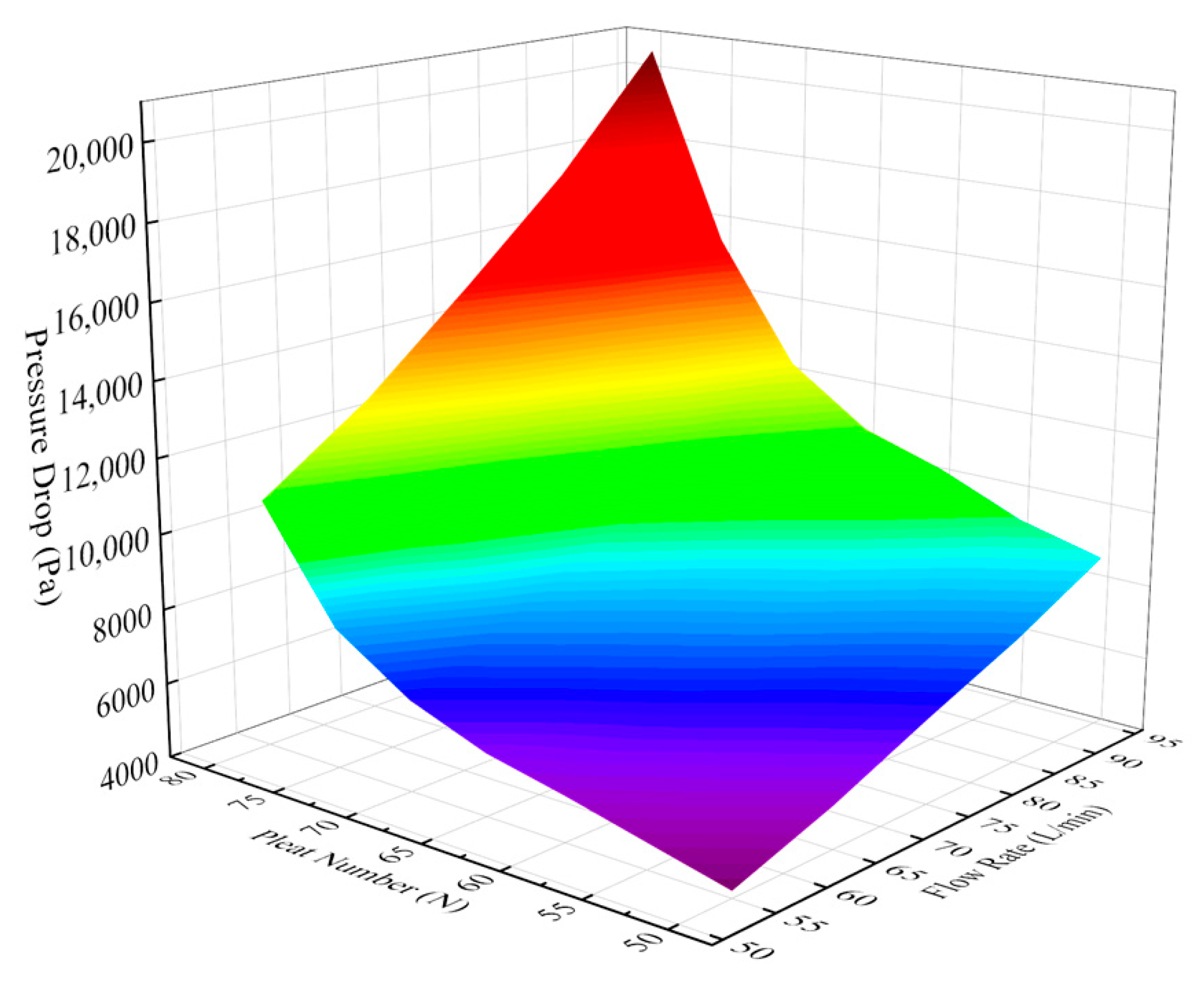
As shown in Figure 18, a higher pleat number leads to a more pronounced variation in pressure drop in response to flow rate fluctuations. This behavior is attributed to the fundamental geometric effect: adding pleats substantially reduces the circumferential width of the inter-pleat flow channel for a given filter element. Consequently, the total effective flow area for the fluid is inversely proportional to the pleat number. This reduced flow area imposes a greater constraint on the fluid flow. Based on the continuity equation, for a constant flow rate, a decrease in area necessitates an increase in velocity. Thus, even minor flow rate increments are amplified into substantial velocity surges when the pleat number is high.
More critically, the flow field in high-pleat-count filters exhibits heightened sensitivity. An increase in flow rate intensifies fluid extrusion and impingement within the already narrow channels. This effect rapidly translates the elevated flow velocity into a sharp spike in pressure drop. In contrast, filters with fewer pleats feature wider, less dense inter-pleat channels. In these configurations, flow velocity variations induced by flow rate changes are moderated, resulting in a more gradual and subdued pressure drop response. Therefore, the pressure drop in low-pleat-count filters demonstrates a more moderate dependence on flow rate variations.
Across the range of tested flow rates, the pressure drop increases monotonically with increasing pleat number. This monotonic trend originates from the fixed geometry: with constant inner and outer diameters, adding pleats reduces the inter-pleat spacing, effectively transforming the flow channels from wide to narrow configuration. This geometric transformation significantly increases the flow-path pressure drop, as the fluid travels from the inlet to the outlet side, leading directly to greater viscous energy dissipation. Simultaneously, the narrow channels promote flow separation, which superimposes additional pressure losses on the system. Furthermore, a higher pleat density complicates the flow field distribution within the filter cavity, disrupting the more stable flow state characteristic of low-pleat-number designs. Localized high-velocity regions readily form between densely packed pleats, thereby intensifying the overall pressure drop through superposition effects. For these reasons, the pressure drop increase associated with a higher pleat number is consistently observed across various flow rates.

4. Conclusions

To address the limitations of existing research that overemphasizes pressure drop while neglecting flow uniformity and filter media utilization, this study established a three-dimensional CFD model of a pleated oil filter for a certain type of diesel engine. The effects of two key structural parameters (inner diameter and pleat number) on the filter’s pressure drop and internal flow uniformity were systematically investigated through numerical simulations and experimental validation. The results provide valuable guidance for the structural optimization of pleated oil filters, and the main conclusions are as follows:
(1)
The geometric constraints of the filter cavity (governed by inner diameter and pleat number) and the resulting flow separation (localized jet flows and stagnant dead zones) are the primary reasons for non-uniform flow and energy loss in the oil filter. The inner diameter determines the radial pleat height and effective flow area, while the pleat number affects inter-pleat spacing and flow channel configuration. Both parameters directly regulate fluid inertia, turbulent diffusion, and momentum transfer, thereby dominating flow uniformity and pressure drop characteristics.
(2)
The pressure drop of the filter decreases monotonically with increasing inner diameter, and smaller inner diameters are more sensitive to flow rate variations. Flow uniformity exhibits a nonlinear improvement trend with increasing inner diameter: for smaller inner diameters, severe jet formation and large-area dead zones lead to poor uniformity and low media utilization; as the inner diameter increases, flow uniformity is significantly enhanced, but the marginal benefit of further increasing the inner diameter gradually diminishes due to the optimized flow field.
(3)
The pressure drop increases monotonically with increasing pleat number, and higher pleat numbers show greater sensitivity to resistance changes. Flow uniformity follows a distinct threshold effect with the increase of pleat number: when the pleat number is relatively small, the deterioration of uniformity is gradual, and no extensive dead zones are formed, maintaining high media utilization; beyond a certain threshold, narrowed inter-pleat spacing induces intense jet flow and expanded dead zones, leading to a sharp decline in uniformity and wasted filtration area.
In summary, this research clarifies the quantitative effects of varying the inner diameter and pleat number on the pressure drop and internal flow uniformity of pleated engine oil filters. It identifies the critical parameter thresholds at which flow uniformity undergoes significant change, providing direct guidance for the structural design and performance analysis of such filters.

Author Contributions

Conceptualization, X.Z. and L.L.; Methodology, R.Z.; Validation, X.Z.; Investigation, J.W.; Writing—original draft, X.Z.; Writing—review and editing, X.Z., L.L. and J.W.; Resources, T.S. and Y.Z.; Supervision, L.L., R.Z., T.S. and Y.Z. All authors have read and agreed to the published version of the manuscript.

Funding

This work was supported by the Basic Product Innovation Scientific Research Program in China (DEDP2023019).

Data Availability Statement

The original contributions presented in this study are included in the article. Further inquiries can be directed to the corresponding authors.

Conflicts of Interest

The authors declare no conflicts of interest.

Abbreviations

AbbreviationDescriptionUnit
CFDComputational Fluid Dynamics-
RANSReynolds-Averaged Navier–Stokes-
SIMPLESemi-Implicit Method for Pressure-Linked Equations -
k-εk-epsilon turbulence model-
GB/TGuobiao/Tuijian (Chinese National Standard/Recommended)-
FLUENTFLUENT (commercial CFD software)-
u, v, wVelocity components in the x-, y-, and z-directionsm/s
pPressurePa
σEngine oil densitykg/m3
μDynamic viscosityPa·s
ΔPPressure dropPa
C1Viscous resistance coefficientm−2
C2Inertial resistance coefficient
vVelocity component perpendicular to the filter medium surfacem/s
δFilter medium thicknessmm
AFiltration aream2
NNumber of pleats
HFilter element heightmm
LPleat heightmm
αInter-pleat angle°
λFlow uniformity index
VaArea-weighted average velocitym/s
VmMass-weighted average velocitym/s
D2Filter element outer diametermm
dFilter element inner diametermm
D1Filter housing outer diametermm
εPorosity
MTheoretical dust holding capacityg
ΔPzTerminal resistancekPa
ΔP0Pressure drop increment per unit area due to dust loadingkPa·m2/g
ReReynolds number
ITurbulence intensity
DHHydraulic diametermm

References

  1. Chen, J.; Xi, D.; Wang, G.; Zhou, M.; Hu, Y.; Xie, X. Numerical Investigation into Particle Migration Characteristics in Hydraulic Oil Filtration. Processes 2025, 13, 1289. [Google Scholar] [CrossRef]
  2. Hydraulic Filtration Product Guide. Available online: https://www.donaldson.com/content/dam/donaldson/engine-hydraulics-bulk/catalogs/Hydraulic/North-America/F112100-ENG/Hydraulic-Filtration-Product-Guide.pdf (accessed on 15 January 2023).
  3. Kang, S.; Lee, H.; Kim, C.; Chen, R.; Pui, Y. Modeling of Fibrous Filter Media for Ultrafine Particle Filtration. Sep. Purif. Technol. 2019, 209, 461–469. [Google Scholar] [CrossRef]
  4. Liu, X.; Ding, X.; Chen, C.; An, R.; Guo, W.; Zhang, W.; Wang, Y. Investigating the Filtration Behavior of Metal Fiber Felt Using CFD-DEM Simulation. Eng. Appl. Comput. Fluid Mech. 2019, 13, 426–437. [Google Scholar] [CrossRef]
  5. Cao, B.; Wang, S.; Dong, W.; Zhu, J.; Qian, F.; Lu, J.; Han, Y. Investigation of the Filtration Performance for Fibrous Media: Coupling of a Semi-Analytical Model with CFD on Voronoi-Based Microstructure. Sep. Purif. Technol. 2020, 251, 117364. [Google Scholar] [CrossRef]
  6. del Pozo, D.F.; Ahmad, A.; Rehman, U.; Verliefde, A.; Nopens, I. A Novel CFD Model to Predict Solids Concentration and Pressure Drop in Deep Bed Granular Filtration. Sep. Purif. Technol. 2022, 295, 121232. [Google Scholar] [CrossRef]
  7. Liu, Z.; Wang, P. Numerical Investigation of Viscous Flow Fields Around Multifiber Filters. Aerosol Sci. Technol. 1996, 25, 375–391. [Google Scholar] [CrossRef]
  8. Kelbaliev, I.; Rzaev, G.; Rasulov, R.; Guseinova, V. Simulation of Anomalous Oil Filtration in a Porous Bed. J. Eng. Phys. Thermophys. 2015, 88, 299–304. [Google Scholar] [CrossRef]
  9. Zhou, Y.; Chen, L.; Gong, Y.; Wang, S. Pore-Scale Simulations of Particles Migration and Deposition in Porous Media Using LBM-DEM Coupling Method. Processes 2021, 9, 465. [Google Scholar] [CrossRef]
  10. Bagherzadeh, A.; Darbandi, M.; Barezban, M.B. Numerical Simulation of Particle Separation in a Two-Phase Flow Passing Through a Vortex-Based Air Classifier Using Eulerian–Lagrangian DDPM Approach. Powder Technol. 2024, 445, 120036. [Google Scholar] [CrossRef]
  11. Ma, H.; Zhou, L.; Liu, Z.; Chen, M.; Xia, X.; Zhao, Y. A Review of Recent Development for the CFD-DEM Investigations of Non-Spherical Particles. Powder Technol. 2022, 412, 117972. [Google Scholar] [CrossRef]
  12. Xu, D.; Shen, Y. A Novel CFD-DEM-DPM Modelling of Fluid-Particles-Fines Reacting Flows. Chem. Eng. Sci. 2024, 292, 120014. [Google Scholar] [CrossRef]
  13. Wang, H.; Zhao, H.; Wang, K.; He, Y.; Zheng, C. Simulation of Filtration Process for Multi-Fiber Filter Using the Lattice-Boltzmann Two-Phase Flow Model. J. Aerosol Sci. 2013, 66, 164–178. [Google Scholar] [CrossRef]
  14. Ansari, V.; Goharrizi, S.; Jafari, S.; Abolpour, B. Numerical Study of Solid Particles Motion and Deposition in a Filter with Regular and Irregular Arrangement of Blocks with Using Lattice Boltzmann Method. Comput. Fluids 2015, 108, 170–178. [Google Scholar] [CrossRef]
  15. Li, W.; Shen, S.; Li, H. Study and Optimization of the Filtration Performance of Multi–Fiber Filter. Adv. Powder Technol. 2016, 27, 638–645. [Google Scholar] [CrossRef]
  16. Wang, N.; Chen, W.; Ning, G.; Ma, H. Numerical Investigation of Influence of Structure and Operating Parameters on Performance of Vortex Oil Filter. In Proceedings of the CSAA/IET International Conference on Aircraft Utility Systems (AUS 2018), Guiyang, China, 19–22 June 2018; pp. 1150–1155. [Google Scholar] [CrossRef]
  17. Liu, P. Study on Structural Parameters of Pleated Filter Element Based on FLUENT Technology. Filtr. Sep. 2014, 24, 11–16. [Google Scholar] [CrossRef]
  18. Fu, H.M.; Zhu, J. Simulation and Optimization Design of Cylindrical Pleated Oil Filter. J. Traffic Transp. Eng. 2009, 9, 60–65. [Google Scholar] [CrossRef]
  19. Ba, P.; Fang, Y.C.; Ou, Z.H.; Zhang, P.F. Optimization and Numerical Simulation of Filter Element Structural Parameters. Mach. Tool Hydraul. 2012, 40, 73–76. [Google Scholar] [CrossRef]
  20. Deng, B. Study on the Influence of Outlet Mode of Cartridge Dust Collector on Internal Flow Field and Its Structural Optimization. Master’s Thesis, Xi’an University of Architecture and Technology, Xi’an, China, 2017. Available online: https://kns.cnki.net/kcms2/article/abstract?v=CeTIW1Ci4b2xCRugpp4wFjQP0NFAQrpwsPV5eNBaY2fWMOk5Kds3SRqseqNZm_ubpyLkjquQLNCw-uGs6L_3ds034wCxZANdy1HbFYG-b2fsI9fQemmGxGePcUKTRQo82F-m0EcfL_IhHFpmAFY3NCErRWJAzyrNXrX5pe6tc1dJhuzFkznJhA==&uniplatform=NZKPT&language=CHS (accessed on 15 February 2018).
  21. Korkmaz, Y.S.; Kibar, A.; Yigit, K.S. Experimental and Numerical Investigation of Fluid Flow in Hydraulic Filters. J. Appl. Fluid Mech. 2022, 15, 363–371. [Google Scholar] [CrossRef]
  22. Saleh, A.M.; Tafreshi, H.V.; Pourdeyhimib, B. Modeling Service Life of Pleated Filters Exposed to Poly-Dispersed Aerosols. Powder Technol. 2014, 266, 79–89. [Google Scholar] [CrossRef]
  23. Rukshan, K.D.L.; Faraji, F.; Hamad, F.A. Geometrical Optimization of Closed-End Cylindrical Air Filter Using CFD Simulation. J. Korean Soc. Environ. Eng. 2024, 46, 357–369. [Google Scholar] [CrossRef]
  24. Mastai, L. Modeling and CFD Analysis of an Oil Filter for Automotive Applications. Master’s Thesis, Politecnico di Torino, Torino, Italy, 2021. Available online: https://webthesis.biblio.polito.it/20201/1/tesi.pdf (accessed on 1 October 2021).
  25. Xu, H.B.; Li, J.C.; Su, F.; Dong, Y. Structural Improvement and Flow Performance Analysis of Air Purifier. J. Xi’an Polytech. Univ. 2018, 32, 216–221+236. [Google Scholar] [CrossRef]
  26. Yeom, G.; Han, D.; Yoon, J.; Ha, N.; Baek, Y. Optimization Study for Improving Flow Uniformity of Diesel Particulate Filter through CFD Analysis. Int. J. Innov. Eng. Technol. 2018, 11, 14–21. [Google Scholar] [CrossRef]
  27. Hu, X.B.; Peng, Z.Y.; Chen, D.; Ma, Z.H.; Liu, W.; Zhao, B. Optimization of an Oil–Gas Separator of Gas Storage Compressor with Consideration of Velocity Uniformity in Filter Inlets. Energies 2023, 16, 8015. [Google Scholar] [CrossRef]
  28. Xiu, W.R.; Kang, C.F.; E, J.Q.; Feng, C.L.; Tan, Y. Effect Analysis on the Flow Uniformity and Pressure Drop Characteristics of the Rotary Diesel Particulate Filter for Heavy-Duty Truck. Energy 2024, 288, 129820. [Google Scholar] [CrossRef]
  29. Gong, J.K.; Tian, C.; Wang, S.H.; Chen, T.; Zuo, Q.; Guan, Q.; Liu, H. Grey relational analysis on influencing factors of muffling characteristic in a radial rotatable diesel particulate filter. J. Environ. Eng. 2013, 7, 643–648. [Google Scholar]
  30. Zeng, H.T.; Fu, J.; Guo, X.; Shi, K.; Xiao, Z.H. Numerical Simulation and Structural Improvement of a Certain Type of Air Filter Based on CFD. J. Wuhan Univ. (Eng. Ed.) 2018, 51, 1105–1113. [Google Scholar] [CrossRef]
  31. Hu, L.J.; Wang, Y.J.; He, W.D.; Lin, X.L. Influence of Pleat Height and Pleat Number on Filtration Air Velocity Distribution of Pleated Filter Bag. Metal Mine 2024, 10, 249–256. [Google Scholar] [CrossRef]
  32. Ansys Inc. Ansys Fluent 2022 R1 Theory Guide: Finite Volume Method for Spatial Discretization; Ansys Inc.: Canonsburg, PA, USA, 2022; Available online: https://ansyshelp.ansys.com/public/account/secured?returnurl=////Views/Secured/corp/v242/en/flu_th/flu_th.html (accessed on 1 January 2022).
  33. Tian, T.; Chen, J.; Zhu, J.X.; Tian, T.; Chen, J.; Zhu, J.X. Numerical Investigation of Particle Transfer in an Hydraulic Oil Filter. Chin. Hydraul. Pneum. 2024, 48, 86–92. [Google Scholar] [CrossRef]
  34. Li, W.; Wang, K. Study on Filter Material Simulation Parameters Based on CFD. Auto Parts 2011, 10, 85–87. [Google Scholar] [CrossRef]
  35. Fu, J.; Tang, Y.; Li, J.; Ma, Y.; Chen, W.; Li, H. Four Kinds of the Two-Equation Turbulence Model’s Research on Flow Field Simulation Performance of DPF’s Porous Media and Swirl-Type Regeneration Burner. Appl. Therm. Eng. 2016, 93, 397–404. [Google Scholar] [CrossRef]
  36. Tang, G.P.; Sun, G.Q.; Zhang, J.T.; Qi, J. A Numerical Simulation Method for Pressure Drop and Normal Air Velocity of Pleated Filters During Dust Loading. PLoS ONE 2023, 18, e0282026. [Google Scholar] [CrossRef] [PubMed]
  37. Menter, F.R. Two-Equation Eddy-Viscosity Turbulence Models for Engineering Applications. AIAA J. 1994, 32, 1598–1605. [Google Scholar] [CrossRef]
  38. Kazemian, M. Transient Turbulence Models: URANS or DDES? Dlubal Knowledge Base, 2024. Available online: https://www.dlubal.com/en/support-and-learning/support/knowledge-base/001886?srsltid=AfmBOopFAGVzfixeKi9fIqkOXT10eU_EodLd3G9YNznMzCbz5c0gqCfZ (accessed on 29 July 2024).
  39. GB/T 8243.1-2003; Methods of Test for Full-Flow Lubricating Oil Filters for Internal Combustion Engines—Part 1: Differential Pressure/Flow Characteristics. National Technical Committee of Internal Combustion Engine Standardization. China Standards Press: Beijing, China, 2003. Available online: https://kns.cnki.net/kcms2/article/abstract?v=VYuoLtjwl8Na-QLSBuTcsI3JICa1pfPpEGiWYOi-vrPkqNBBYfzCWSTGS7-CsHvPZUdoi5hdLh_RIapqOHGKUZwgVr_s20oS_spQEaRwAqC25OJ6IyvlixGj0l3Or5UBmUQ56IGLLT9cEtCqt8C6FbzEsWLsMy2h&uniplatform=NZKPT (accessed on 15 April 2003).
  40. Weltens, H.; Bressler, H.; Terres, F.; Neumaier, H.; Rammoser, D. Optimisation of Catalytic Converter Gas Flow Distribution by CFD Prediction. SAE Tech. Pap. 1993, 930780. [Google Scholar] [CrossRef]
  41. Tao, H.G.; Chen, H.X.; Xie, J.L.; Shu, Z.H.; Hu, Y.P.; Lu, H.L. Flow uniformity index based on area-weighted and mass-weighted average velocity. CIESC J. 2010, 61, 116–120. [Google Scholar]
  42. Li, T.; Jin, S.P.; Huang, S.Y.; Liu, W. Comparison and Application Study of Evaluation Indexes for Flow Field Velocity Distribution Uniformity. Therm. Power Gener. 2013, 42, 60–63+92. [Google Scholar] [CrossRef]
  43. Tan, Y.N. Simulation Analysis and Experimental Study of Air Filter. Master’s Thesis, Zhejiang University, Hangzhou, China, 2010. Available online: https://kns.cnki.net/kcms2/article/abstract?v=CeTIW1Ci4b34NdTwLrB_q2jFyTc7FmdrYwoksc5VrAWQ5SiiuqRdA-Tq-1-83bHiGh6J8gdLZJiEYYdcpH-ropOuHWw3gP6jFLqdYRHkFpvi3RD7_snSP4tD4YYp7zcvc2T1a8yv9jcX8MR3jGBPhJ3_jYh8IkGWUVbzv0syCkgxHALL5Xeztg==&uniplatform=NZKPT&language=CHS (accessed on 1 May 2010).
Figure 1. Thermophysical property curves of the engine oil.
Processes 14 00426 g001
Figure 2. Schematic diagram of the oil filter.
Processes 14 00426 g002
Figure 3. Schematic of the simulation model for a single pleat.
Processes 14 00426 g003
Figure 4. Results of the grid independence verification.
Processes 14 00426 g004
Figure 5. Relative error.
Processes 14 00426 g005
Figure 6. Overall layout of the flow pressure drop test bench.
Processes 14 00426 g006
Figure 7. Polynomial fit of experimental pressure drop data versus flow rate.
Processes 14 00426 g007
Figure 8. Comparison between simulated data and experimental data.
Processes 14 00426 g008
Figure 9. Influence of inner diameter on λ .
Processes 14 00426 g009
Figure 10. Velocity contour maps at different heights on the zx-plane for d = 60, 66, 69, 72, 78, 84 mm.
Processes 14 00426 g010
Figure 11. Contour maps of monitoring surfaces for d = 60, 66, 69, 72, 78, 84 mm.
Processes 14 00426 g011
Figure 12. Jet/dead region area fractions at different inner diameters.
Processes 14 00426 g012
Figure 13. Influence of pleat number on λ .
Processes 14 00426 g013
Figure 14. Contour maps of monitoring surfaces for d = N = 80, 75, 70, 60, 55, 50.
Processes 14 00426 g014
Figure 15. Velocity contour maps at different heights on the zx-plane for N = 80, 75, 70, 60, 55, 50.
Processes 14 00426 g015
Figure 16. Jet/dead region area fractions at different pleat number.
Processes 14 00426 g016
Figure 17. Pressure drop characteristics of filters with different inner diameters.
Processes 14 00426 g017
Figure 18. Pressure drop characteristics of filters with different pleat numbers.
Processes 14 00426 g018
Table 1. Characteristics of turbulent models [35,36,37,38].
Turbulent ModelCharacteristic
standard k-ε modelHigh-Reynolds-number assumption; Low computational cost & good convergence; Relies on wall functions
realizable k-εImproved turbulence viscosity formula; More reasonable physical constraints; Slightly better separation flow prediction
k-ω SSTk-ω (near-wall) + k-ε (far-field) hybrid; No wall functions needed; Accurately captures separation/jet flows
Table 2. Turbulence model constants.
Alpha*_infAlpha_infBeta*_infA1Beta_i (Inner)Beta_i (Outer)
10.520.090.350.050.0828
Table 3. Structural parameters of the engine oil filter.
ParameterValueUnit
Filter element height H120mm
Filter element outer diameter D2125mm
Filter element outer diameter d60mm
Filter housing outer diameter D1133mm
Porosity ε0.8538
Filter element pleat number N80
Inter-Pleat angle α3.9°
Filter paper thickness δ1mm
Table 4. List of test bench devices.
NumberNameNumberName
1Oil tank13Check valve
2Particle dispersion device14Regulating valve
3Liquid level sensor15Test sample
4Temperature sensor16Flow meter
5Variable-frequency pump set17Differential pressure sensor
6Ball valve18Metering pump
7Pressure sensor19Stirrer
8Heater20Ash adding tank
9Radiator21Fixed-frequency pump
10Sampling valve22Collection oil tank
11Three-way ball valve23Heating belt
12Filter24Relief valve
Disclaimer/Publisher’s Note: The statements, opinions and data contained in all publications are solely those of the individual author(s) and contributor(s) and not of MDPI and/or the editor(s). MDPI and/or the editor(s) disclaim responsibility for any injury to people or property resulting from any ideas, methods, instructions or products referred to in the content.