Article

Technoeconomic and Life Cycle Analysis of a Novel Catalyzed Process for Producing Ethylene from Waste Plastic

Department of Chemical and Biomedical Engineering, West Virginia University, Morgantown, WV 26506, USA
*
Author to whom correspondence should be addressed.
Processes 2026, 14(2), 333; https://doi.org/10.3390/pr14020333 (registering DOI)
Submission received: 15 December 2025 / Revised: 8 January 2026 / Accepted: 13 January 2026 / Published: 17 January 2026
(This article belongs to the Section Chemical Processes and Systems)

Abstract

Polyethylene is the most used plastic in the world, and over 90% of this plastic is ultimately disposed of in landfills or released into the environment, leading to severe ecological implications. In this research, the technoeconomic feasibility of upcycling low-density polyethylene (LDPE) to produce ethylene is studied. The catalytic conversion of LDPE to ethylene is considered in microwave heating mode and Joule heating mode. Experimental data is obtained under conditions where most of the upcycled products are in the gas phase. A flowsheet is developed that produces industrial quantities of ethylene for both heating modes. A technoeconomic analysis and a life cycle analysis are conducted and compared with the traditional ethane cracking process for producing ethylene. Simulation results indicate that the upcycling system exhibits a lower capital expenditure and a comparable operating expenditure relative to conventional ethane steam cracking while generating additional valuable co-products, such as propylene and aromatic hydrocarbons, leading to a higher net present value potential. Sensitivity analyses reveal that the electricity price has the most significant impact on both the net present value and levelized cost of production, followed by the low-density polyethylene feedstock cost. Life-cycle assessment reveals a substantial reduction in greenhouse-gas emissions in the upcycled process compared to the fossil-based ethane steam-cracking route, primarily due to the use of renewable electricity, the lower reaction temperature that reduces utility demand, and the use of plastic waste as the feedstock. Overall, the proposed process demonstrates strong potential for the sustainable production of ethylene from waste LDPE.

1. Introduction

Plastics are incorporated into a broad spectrum of consumer and industrial products and have largely displaced traditional materials such as wood, metal, and glass in many applications. Global annual plastic production has risen nearly 200-fold, increasing from approximately 2 million metric tons in 1950 to 400.3 million metric tons in 2022 [1,2]. Although the average service life of plastic products is roughly a decade, their environmental persistence is orders of magnitude longer; depending on polymer composition and disposal conditions, complete degradation can require up to 500 years. Most plastic waste is currently managed through landfilling or incineration. Landfilled plastics degrade extremely slowly, while incineration generates harmful air pollutants. Mismanaged plastic waste—disposed at illegal dumpsites, openly burned, or released into the environment—frequently enters riverine and marine systems. Between 1970 and 2019, an estimated 30 million metric tons of plastic accumulated in the world’s oceans, and over 100 million metric tons accumulated in rivers and lakes [2]. Such extensive contamination poses severe risks to aquatic ecosystems and biodiversity.
The dominant fraction of global plastic waste consists of single-use plastics, primarily polyolefins (POs) (~60%), including low- and high-density polyethylene and polypropylene [3,4]. Currently, less than 10% of plastic waste is recycled annually, and most of this recycling relies on mechanical processing. For this reason, there is significant research interest in “upcycling” technologies, where the waste plastic is chemically transformed into smaller units via reaction. Upcycling technologies such as pyrolysis, hydrogenolysis, and hydrocracking enable the conversion of waste plastics into chemical intermediates that can be integrated into conventional bulk chemical manufacture. Among available upcycling routes, pyrolysis is widely regarded as a promising technology, with numerous studies demonstrating superior efficiency and economic performance relative to alternative methods [5,6,7]. Pyrolysis, conducted at temperatures between 500 °C and 800 °C, produces solid char, condensed liquid hydrocarbons, and non-condensable gases, and the distribution of these products is governed by polymer feed composition, heating rate, carrier-gas flow rate, and other process variables. Liquid products, such as pyrolysis oils, generally exhibit poor stability, broad compositional distributions, and low quality, necessitating extensive downstream upgrading to obtain economically valuable products [8,9,10]. Thermochemical alternatives such as hydrogenolysis and hydrocracking also exhibit significant limitations. Both processes are energy-intensive, resulting in substantial greenhouse gas emissions. In addition, they often yield broad product slates with low selectivity toward target olefins, imposing costly separation and upgrading requirements [11,12]. These challenges make it difficult to achieve efficient, economically viable plastic recycling or upcycling using conventional thermochemical approaches. Consequently, substantial research opportunities exist to advance next-generation plastics upcycling technologies that can lower energy consumption, reduce lifecycle emissions, and enhance the circularity of polymeric materials.
In this research, the technoeconomic feasibility of upcycling low-density polyethylene (LDPE) to produce ethylene is studied. The catalytic conversion of LDPE to ethylene is considered in two different heating modes: (1) microwave heating and (2) thermal heating. Experimental data is obtained under conditions where most of the upcycled products are in the gas phase. Microwave heating differs from conventional heating as it can selectively heat the catalyst surface without heating the entire reactor, thereby having the potential to lower heating costs [13,14,15]. Furthermore, this mode of heating can result in different product distribution, which has an impact on the overall technoeconomic analysis. A flowsheet is developed that produces industrial quantities of ethylene for both heating modes. A technoeconomic analysis and a life cycle analysis are conducted and compared with a traditional ethane cracking process that produces 77 t/h of polymer-grade ethylene.

2. Materials and Methods

In this work, LDPE was selected as the model single-use plastic feed and was used as received from Sigma-Aldrich. A 1 wt. % Ru/α-Fe2O3 catalyst was synthesized via the incipient-wetness impregnation technique as described elsewhere [16,17]. Microwave-assisted depolymerization experiments were conducted using a Sairem solid-state microwave generator (Sairem Corp., Peachtree Corners, GA, USA) operating at 2.45 GHz with a maximum output of 1 kW, coupled to a TE10 monomode cavity [16,17,18]. The temperature of the reacting bed was monitored by an infrared pyrometer, which regulated incident microwave power through a CBA Eurotherm control interface (Eurotherm USA, Ashburn, VA, USA). Forward and reflected microwave powers were continuously logged, with reflected power quantified using a crystal detector. For the thermal heating LDPE depolymerization process, the reaction was carried out using a thermal jacket heater (Ultraflex, NY, USA) while all other process conditions, catalysts, and configurations were kept the same as in the microwave-catalyzed process.
During an initial equilibration period of approximately one minute, the autotuning algorithm stabilized the bed temperature at 160 °C. Thereafter, the sample was heated at 20 °C·min−1 until the prescribed reaction temperature was attained. As the system approached the isothermal setpoint, the required forward power decreased and remained stable throughout the 30 min dwell period. External surface temperatures were independently monitored using an infrared thermometer (Micro Epsilon America, IL, USA), and thermal mapping was performed with a FLIR infrared camera (Teledyne FLIR, OR, USA) to verify spatially uniform heating. LDPE particles (<2 mm) were mixed with the catalyst at a 1:1 mass ratio and charged into a quartz tube reactor. Prior to microwave irradiation, the system was purged with nitrogen at 50 mL·min−1 for 30 min to eliminate residual oxygen. Reactions were then conducted under continuous nitrogen flow (20 mL·min−1). Gaseous effluents were collected in sampling bags, and condensable products were captured in a cold trap maintained at 0 °C.
Although the system was operated for 30 min to ensure complete removal of products from the reactor, direct visual inspection revealed that LDPE depolymerization occurred almost instantaneously once microwave heating commenced, typically completing within ~5 min. Gas-phase products were quantified using a four-channel Inficon Fusion Micro-GC (Inficon, NY, USA) equipped with the following analytical columns: Rt-Molsieve 5A (O2, N2, H2, CO, CH4), Rt-U-Bond (CO2, C2 hydrocarbons), Alumina-Na2SO4 (C3–C4 hydrocarbons), and Rxi-1ms (aromatic species such as benzene and toluene). To ensure reliable BTX quantification, the transfer line was maintained at ~120 °C using heating tape (BriskHeat, OH, USA) to prevent condensation. Gas compositions were recorded at 3 min intervals during each experiment.
Microwave and thermal heating LDPE conversion was evaluated at 400, 500, and 600 °C to identify a temperature regime that maximizes gaseous product formation while minimizing coke deposition and liquid by-product formation. Temperatures below this range promote the formation of substantial liquid fractions, whereas excessively high temperatures favor coke formation, which reduces selectivity toward the target olefin.

3. Results

In this section, the laboratory-scale reactor results for the microwave and thermal reactors are analyzed. These results are utilized to develop suitable flowsheets that can produce an industrial scale of ethylene. The technoeconomic and life cycle analysis of these flowsheets is conducted and compared with the current industrial process of making ethylene via ethane cracking.

3.1. Experimental Results

For the microwave-catalyzed reaction, there was a considerable amount of liquid in the product stream at 400 °C, and so this temperature was not considered for further analysis. Table 1 summarizes the gas-phase compositions of the laboratory-scale microwave and thermal reactors, along with the solid residue fraction relative to the LDPE feed at 500 °C and 600 °C. While the LDPE was converted mostly to gaseous products at 500 °C and 600 °C, ethylene selectivity decreased at 600 °C, and it also produced a larger amount of solid residue. For the thermally catalyzed reaction, mostly gaseous products were observed only at 600 °C, whereas a large amount of solid residue was produced at 500 °C. For this reason, the 500 °C results for the microwave reactor and the 600 °C results for the thermal reactor were selected for scale-up and further analysis.
The experimental results reveal clear distinctions in product distribution between microwave-assisted and thermal LDPE depolymerization using the same catalyst. Microwave heating produced a significantly higher fraction of ethylene (44.7 wt. % compared to 24.3 wt. % under thermal conditions), indicating a strong enhancement in selective chain scission toward shorter, lighter olefins. This behavior is consistent with the unique heating characteristics of microwaves, where rapid, volumetric, and potentially localized “hot-spot” energy deposition can accelerate β-scission pathways and promote the formation of low-molecular-weight products. In contrast, the thermal jacket heater provides uniform, surface-driven heat transfer with slower penetration into the polymer–catalyst matrix. This results in a broader distribution of products, including higher yields of other olefins and valuable hydrocarbons, such as propylene and benzene. Such distributions suggest that thermal depolymerization progresses through more gradual random scission and secondary reactions, producing a mix of C2–C4 olefins, paraffins, and light aromatics.

3.2. Flowsheet Development

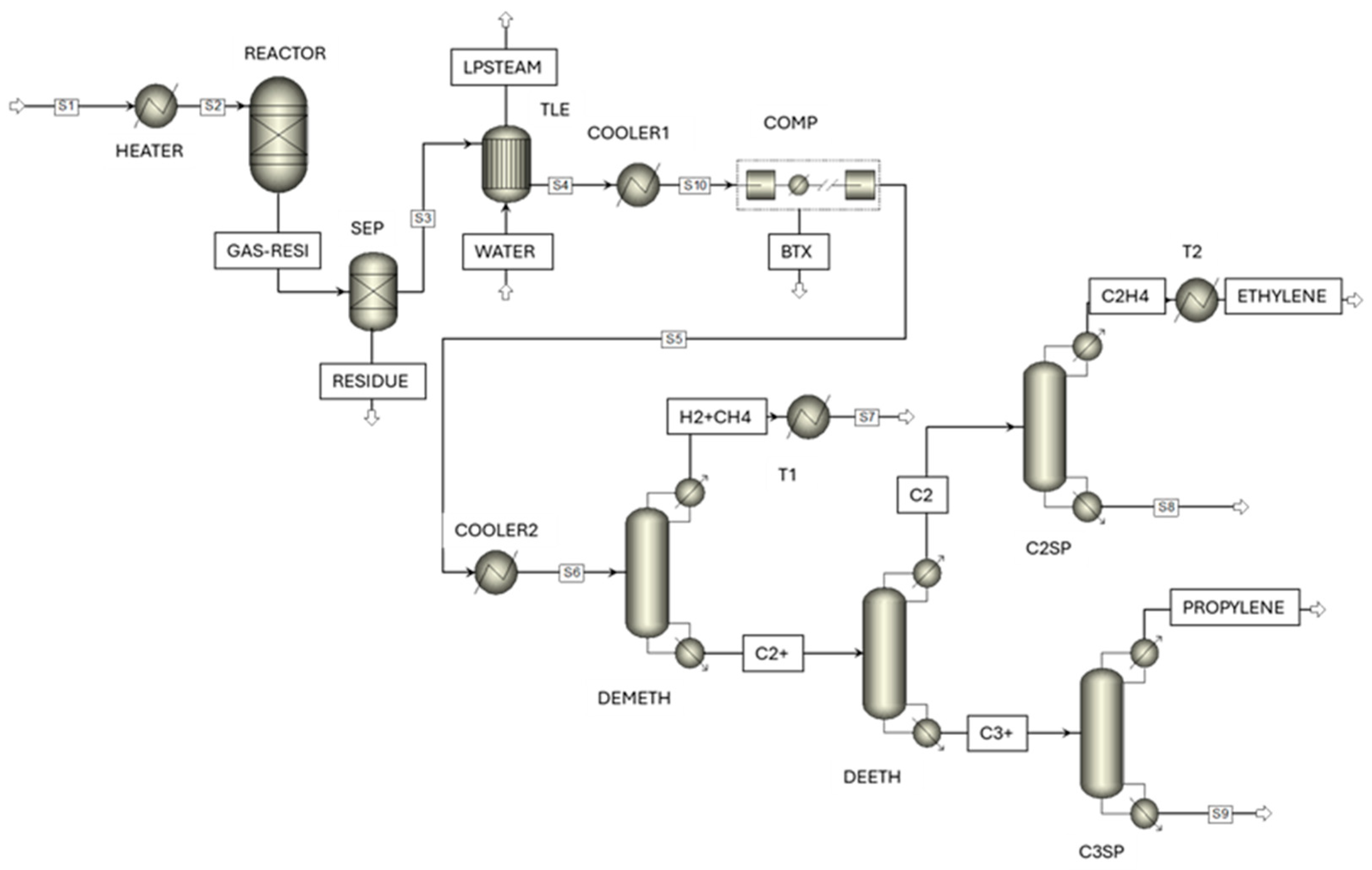
A steady-state flowsheet of the novel catalyzed process designed to produce polymer-grade ethylene is shown in Figure 1. An LDPE feed rate of 187 t/h is utilized, and the product steam is compared with a conventional ethane steam cracking that produces 77 t/h of ethylene. The reactor can be either the microwave-catalyzed unit or the thermally catalyzed unit, and depending on which reactor is used, the downstream separation systems are of different capacities. This is because the reactor effluent changes depending on the heating mode, as shown in Table 1. The reactor effluent, shown in Table 2, is introduced into separation units. The gaseous phase is recovered as the primary product stream. It is subsequently compressed and cooled prior to fractionation. Light gases such as hydrogen and methane are removed in a demethanizer column, and the resulting stream is fed to a deethanizer column. The overhead stream from the deethanizer is directed to a C2 splitter (C2SP) to recover polymer-grade ethylene, while the bottom stream is routed to a C3 splitter (C3SP) for propylene recovery. The unpurified aromatic compounds exit with the bottom stream of the C3SP.
The flowsheet shown in Figure 1 was simulated in ASPEN Plus for both the microwave and the thermal process. To utilize laboratory reactor performance in industrial-scale conditions, several assumptions were required in constructing the ASPEN Plus simulation model, each of which introduces potential uncertainties in the robustness and broader applicability of the technoeconomic analysis. Key laboratory-scale parameters, including the effectiveness factor and product distribution, were assumed to remain invariant at larger scales. Similarly, catalyst activity, selectivity, and the characteristic non-equilibrium microwave heating behavior were treated as directly scalable, with the model further assuming uniform heating and ideal mixing throughout the system. Since the largest commercial microwave reactor that is currently available is 100 kW, a “numbering up” strategy was adopted for the microwave reactor, where it was assumed that there were several 100 kW microwave reactors operating in parallel instead of one large microwave reactor. While this leads to a more expensive reactor cost, this strategy ensures that the reactor conversion is close to the conversion observed in the laboratory-scale microwave reactor. Both the thermal process and the microwave process were modeled using an RYield reactor in ASPEN Plus. All separation columns were sized using rigorous RadFrac modules in ASPEN Plus. Heat integration was performed by extracting hot and cold utility requirements from the ASPEN simulation and applying pinch-analysis principles.
The detailed stream table with unit operation conditions (temperature, pressure, and flow rate) is shown in Table 3 for the microwave process and in Table 4 for the thermal process. It is observed that the microwave process can achieve the target of 77 t/h of ethylene, and in addition, it produces 17.77 t/h of propylene and 44.69 t/h of pye gas (contains 13 t/h BTX), which are valuable co-products. On the other hand, the thermal process produces only 40.57 t/h of ethylene, but it produces 43.93 t/h of propylene and 39.86 t/h of pye gas (contains 17 t/h BTX). This product mix affects the technoeconomic analysis, which will be explored in the next sub-section.

3.3. Technoeconomic Analysis

Aspen Process Economic Analyzer is used to perform the techno-economic evaluation of the novel catalyzed process to make ethylene. In the proposed novel catalyzed process, low-density polyethylene (LDPE) is combined with a suitable catalyst and introduced into a microwave or thermal reactor using industrial-scale extruders. The melting point of LDPE ranges from 109 to 125 °C, while its thermal decomposition temperature under vacuum conditions lies between 280 and 300 °C. Above this threshold, additional energy input is required to overcome the molecular bond dissociation energies necessary to initiate chain scission and thermal degradation. Accordingly, the energy demand for LDPE decomposition was estimated based on process conditions and feed rate.
The extruder cost was estimated using the six-tenths scaling rule with an exponent of 0.6, resulting in a base equipment cost of USD 9.47 million. Applying a Lang factor of 3.1, appropriate for solid-handling processes, yields a total direct extruder cost of USD 29.37 million. The capital cost of the microwave reactor could not be directly estimated using APEA. Instead, the cost was derived from industrial quotations for magnetron modules and the calculated total energy requirement, which was determined from the feed throughput and specific energy consumption. Each magnetron module possesses a power rating of 100 kW and a unit cost of USD 113,872.8. Assuming a reactant residence time of 5 min within the reactor, 213 magnetron modules are required to achieve the desired processing capacity. Microwave reactor costs were assumed to scale linearly with capacity due to the disproportionate power requirements and operational constraints associated with single large-scale units. Consequently, multiple parallel microwave reactors were assumed to achieve the desired throughput, yielding a total direct cost of USD 109.95 million. For the thermal reactor, a fluidized bed reactor is considered the most suitable choice for the thermal conversion of LDPE due to its excellent solid–gas contact, uniform temperature distribution, and high heat and mass transfer rates. The cost estimation for a fluidized bed reactor includes several key components: reactor vessel and internals; feed and product handling systems (solid feeding, gas injection, and product collection); heat exchangers, preheaters, and utilities. Based on typical industry references and scaling correlations, the total fluidized bed reactor cost is largely dominated by the reactor vessel and heat transfer system, followed by auxiliary equipment for solids handling and product separation. Accurate cost estimation requires consideration of reactor size, throughput, operating temperature, and energy efficiency, all of which are strongly influenced by the LDPE feed rate and the desired conversion. For the present design basis—an LDPE feed rate of 187 t/h, a reactor height of 3–4 m, and a single-train configuration—the total reactor cost was estimated to be USD 200 million. Upon exiting the reactor, the product mixture passes through a solid–gas separation unit, where unreacted residues, tar, and char are removed from the gaseous effluent. Four distillation columns are employed to isolate ethylene, propylene, and the pye gas (BTX mixture) from the gas mixture, following a configuration analogous to that of the conventional ethane-to-ethylene process. Equipment cost for the separation train was estimated using Aspen Process Economic Analyzer.
Operating expenditures were determined from raw material consumption rates, utility demands, catalyst requirements, and maintenance costs, while product revenues were calculated using current market prices for ethylene and its principal co-products. Since the iron-based catalyst used in this study is similar to that used in industry, it was assumed that this catalyst is stable and is replaced every three years as per standard industry practice. A plant lifetime of 20 years was assumed for both systems, and standard profitability indicators—including annualized cash flow, payback period, and net present value (NPV)—were calculated to compare the microwave-catalyzed process with the conventional ethane steam-cracking process. The corresponding investment parameters are summarized in Table 5.
The unit prices of raw materials, utilities, and products employed in the analysis are summarized in Table 6. All cost data were derived from sources relevant to the United States or the broader North American market. In the microwave-assisted base-case scenario, the price of LDPE feedstock was assumed to be zero, reflecting its origin from post-consumer waste plastic recycling streams. However, this assumption may vary depending on feedstock availability, purity, collection and processing costs, and applicable regulatory frameworks, and will be addressed via a sensitivity analysis in the succeeding section. The cost of steam was also set to zero, as it is generated internally through energy recovery within the process.
A summary of the capital costs (CAPEX) and operating costs (OPEX) for the microwave-catalyzed process, as well as the thermal process, is shown in Table 7 and Table 8. These values are compared with the conventional ethane steam cracking process.
Table 9 shows the products and co-products formed from the two catalyzed processes, and these are compared with the product distribution from a conventional ethane cracker. For the microwave-catalyzed LDPE conversion process, 76.67 t/h of ethylene is produced, whereas only 40.57 t/h is recovered in the conventional thermal LDPE conversion process. In contrast, the conventional thermal process generates significantly higher quantities of propylene (43.93 t/h) and BTX compounds (17.76 t/h) compared to the microwave-assisted case, which yields 17.77 t/h of propylene and 13.04 t/h of BTX.
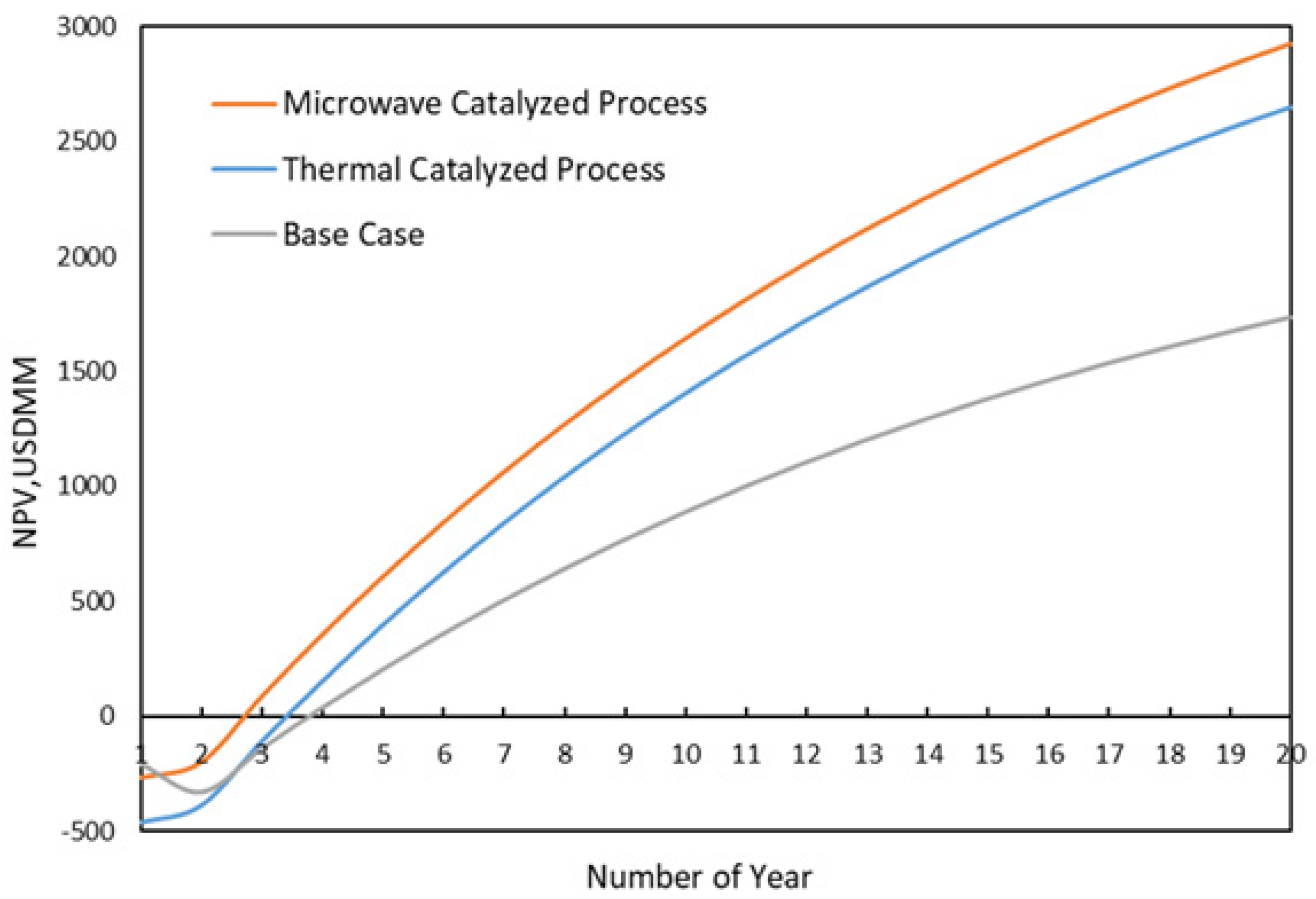
A comparison of the three processes—microwave-assisted LDPE conversion, thermal LDPE conversion, and the conventional ethane steam cracking (labeled as the base case in Figure 2) process—highlights how differences in product distribution and heating mechanisms influence overall economics. Figure 2 presents the net present value (NPV) of the microwave-catalyzed and thermal processes, which are compared with the NPV of the base case. The results indicate that the LDPE upcycling processes have the potential to be significantly more profitable than the conventional ethane steam cracking process.
The overall profitability of the novel microwave process is significantly impacted by LDPE feedstock cost, reactor capital investment, and electricity price. A comprehensive sensitivity analysis was performed to evaluate the effect of these key economic parameters on the overall profitability of the proposed novel microwave process.
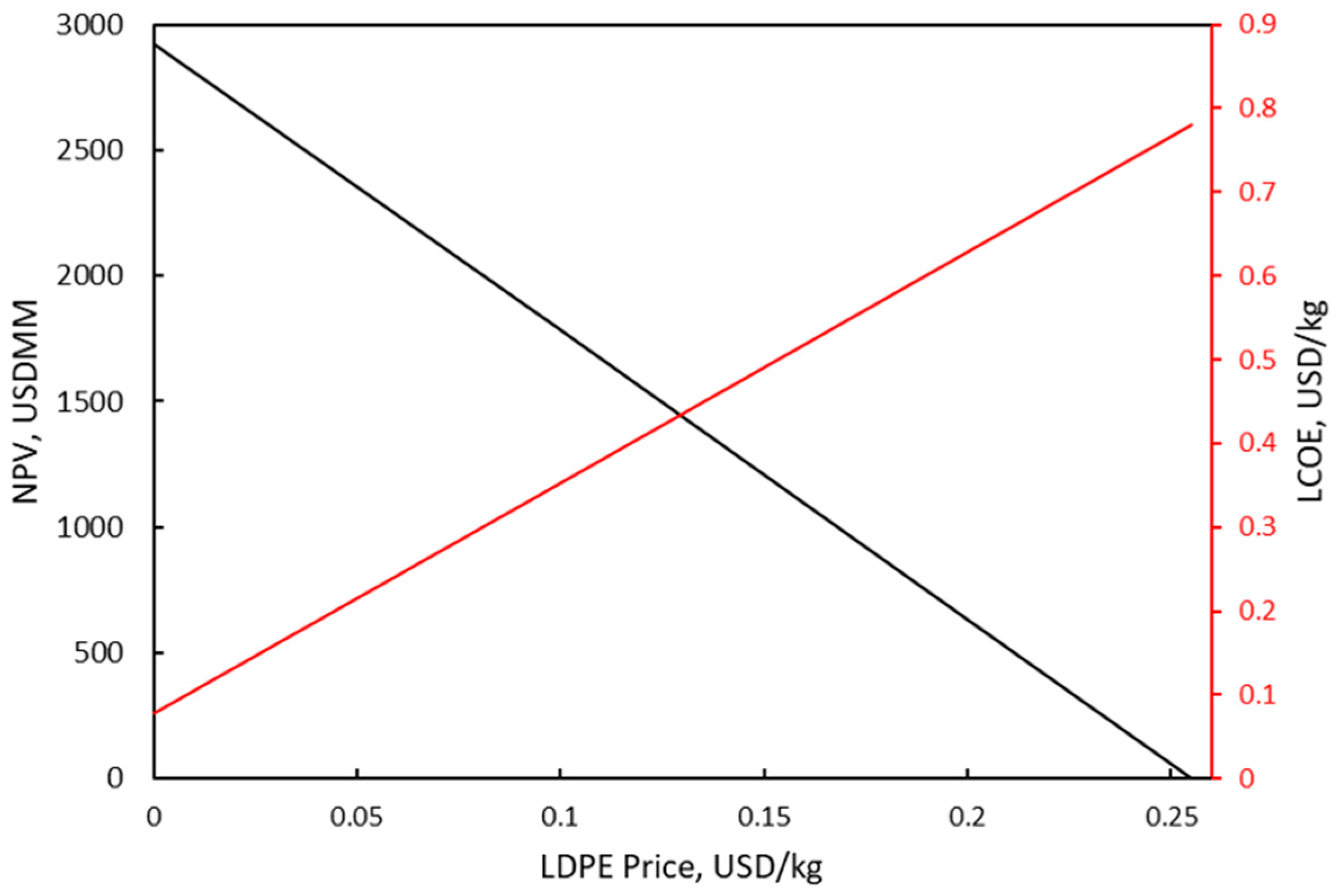
The cost of recycled LDPE raw material can vary, depending on collection, sorting, washing, transportation, and energy costs, with potential reductions of 10–25% achievable through governmental incentives and recycling subsidies [19,20]. In this study, the feedstock cost varied from USD 0 to USD 0.54/kg to quantify its influence on both the NPV and the levelized cost of ethylene (LCOE). The results reveal a pronounced inverse correlation between feedstock cost and economic performance. The process remains economically viable (NPV > 0) only when the LDPE cost is below USD 0.2549/kg, which represents the economic break-even threshold. Incorporation of revenues from propylene and BTX substantially enhances profitability, thereby lowering the effective LCOE of ethylene and reinforcing the potential of microwave-catalyzed plastic upcycling as a viable and sustainable alternative to conventional ethane steam cracking.
Figure 3 illustrates a nearly linear relationship between LDPE feedstock price and the LCOE. When the LDPE cost remains below USD 0.2549/kg, the corresponding ethylene selling price aligns with the market average of approximately USD 0.78/kg, allowing the project to achieve break-even performance over its lifetime. Conversely, under highly favorable feedstock conditions (LDPE ≈ USD 0/kg), the ethylene production cost can decrease to as low as USD 0.0777/kg, yielding an NPV of USD 2922.72 million, which indicates robust economic potential.
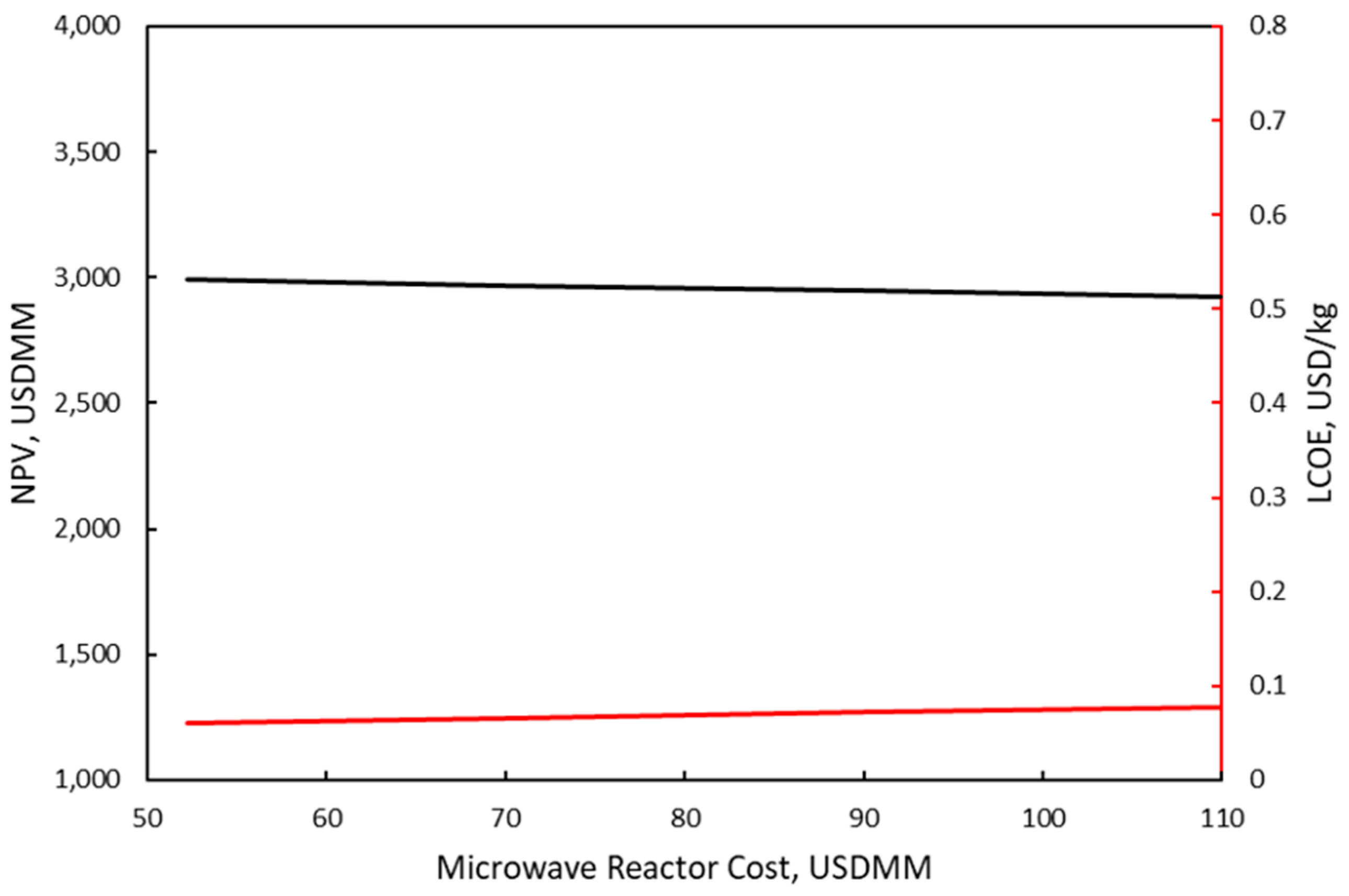
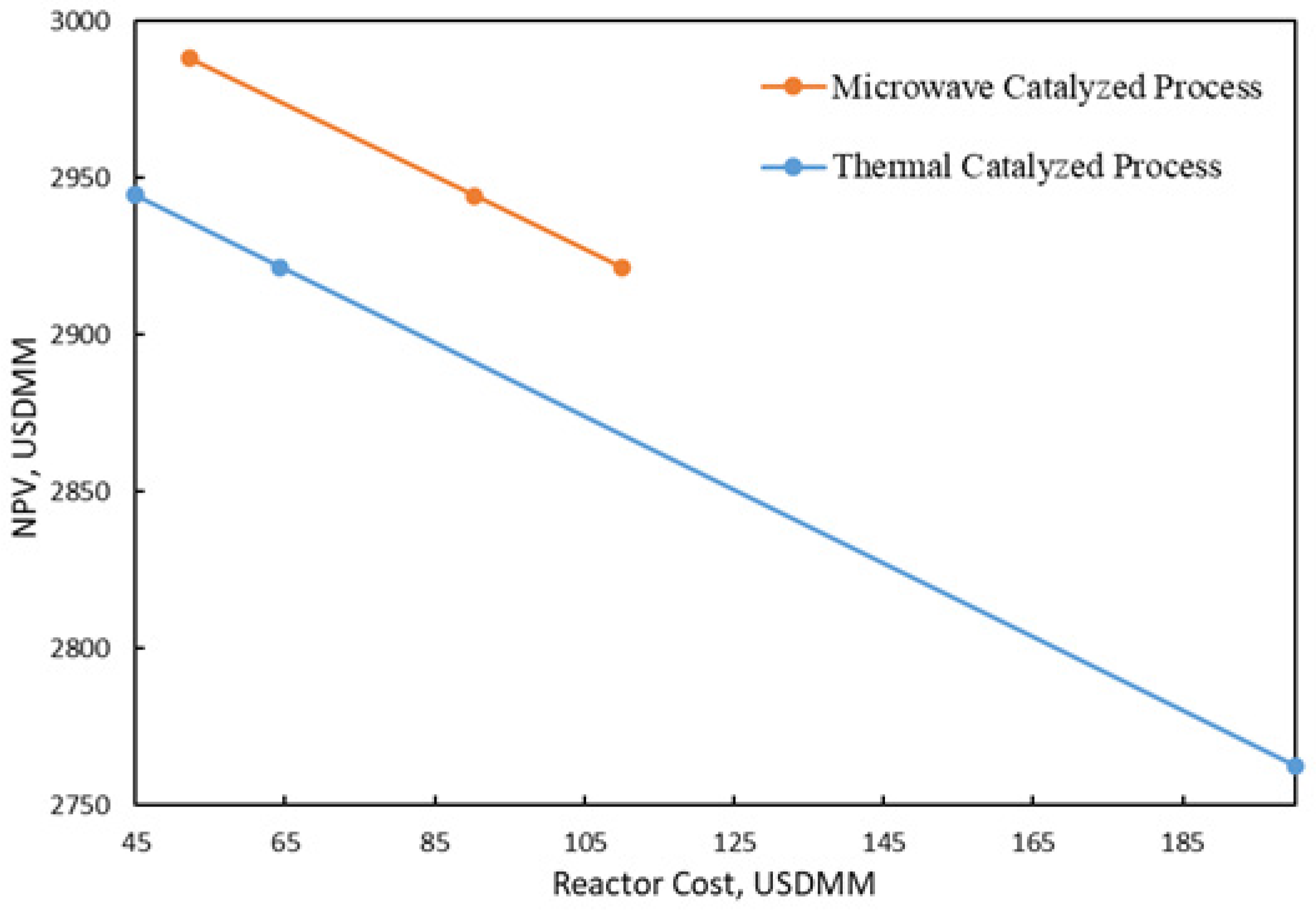
The total direct cost of the microwave (MW) reactor represents a significant portion of the overall capital investment. As no commercial single-unit microwave reactor currently exists that can accommodate the required LDPE feed rate, substantial uncertainty remains regarding its cost scaling. To examine this effect, reactor cost sensitivity was evaluated across a range of configurations. The estimated cost for the base case was estimated as USD 109.95 million for multiple parallel reactor units. This can potentially be reduced to USD 52.27 million for a single large-scale system if the microwave reactor follows scale-up rules similar to traditional thermal reactors. The resulting impact of reactor cost on overall project economics is presented in Figure 4, showing that variations in reactor capital expenditure can have a moderate influence on project feasibility.
The estimated reactor cost in the thermally catalyzed model is set at USD 200 million, representing the upper end of the projected cost range. This value is associated with the significant uncertainty in designing a fluidized-bed reactor capable of handling such a large LDPE feed rate. The cost range for two parallel fluidized-bed reactors is unusually broad, with estimates spanning from approximately USD 45 million (low estimate) to nearly USD 200 million (high estimate). A similar level of uncertainty exists for the microwave reactor system, whose cost estimates range from USD 52.27 million to USD 109.95 million depending on reactor configuration, magnetron arrangement, and scale-up assumptions. Given the overlap and large variability in microwave and thermal reactor cost ranges, it is important to investigate whether there exist scenarios in which the economic ranking of the microwave-assisted and thermally catalyzed processes could shift—particularly under reactor-cost configurations near their respective high or low bounds. Figure 5 presents the NPV lines at the lower and upper bounds of reactor costs for the microwave and thermally catalyzed processes over a 20-year period. The NPV variation with different reactor costs for both models. When the reactor costs are equal, the microwave process exhibits a higher NPV than the thermal process. An overlap in the NPVs is observed when the MW reactor cost exceeds USD 90.29 million, while the fluidized bed reactor cost is below USD 64.34 million. The thermally catalyzed model attains a higher NPV than the microwave-catalyzed model.
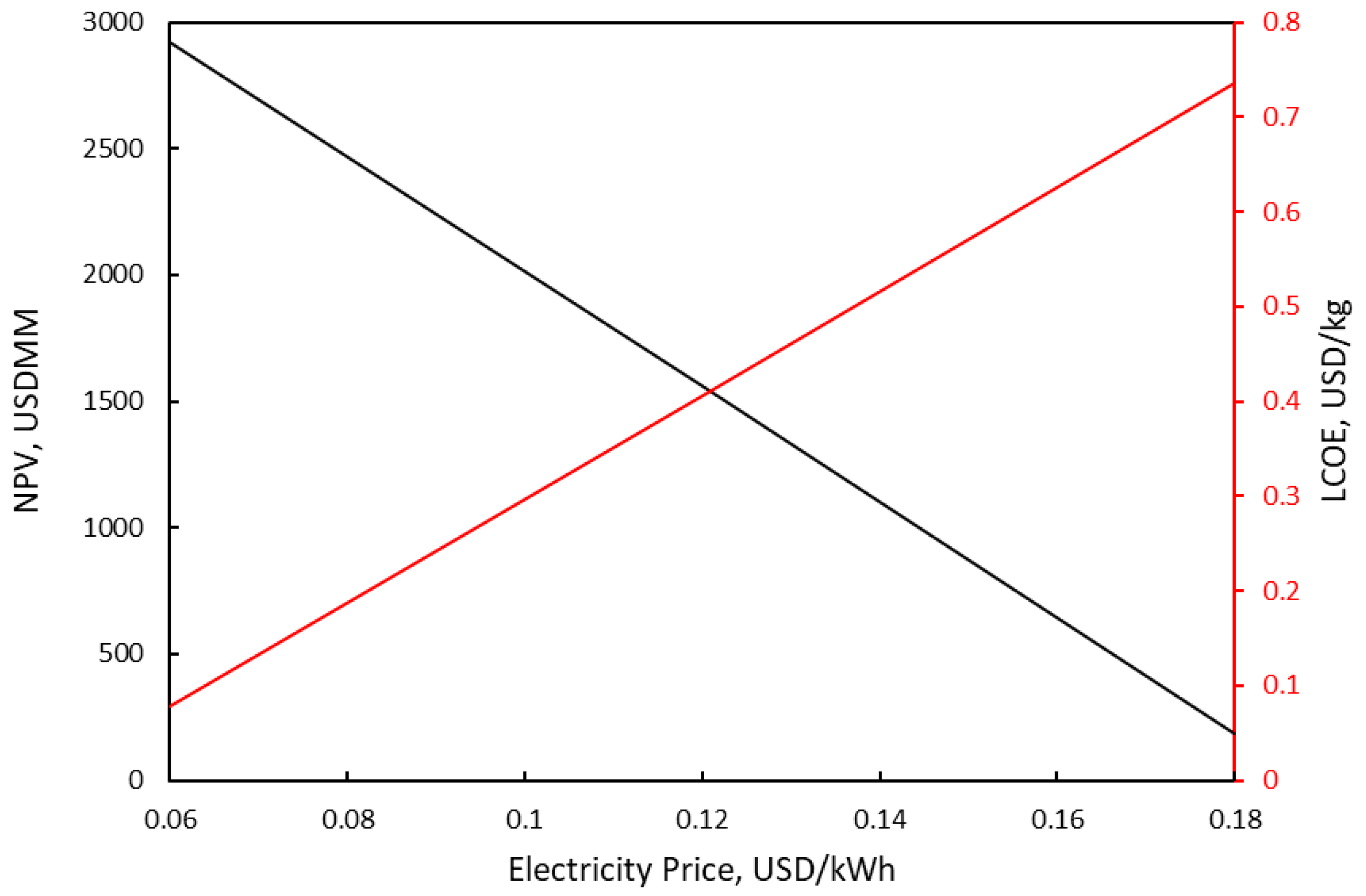
To evaluate how variations in energy prices affect overall profitability, three electricity pricing scenarios (0.06 USD/kWh, 0.12 USD/kWh, and 0.18 USD/kWh) were examined. Increasing the electricity price from 0.06 USD/kWh to 0.18 USD/kWh leads to a sharp decrease in NPV from USD 2922.72 million to USD 185.58 million, while the LCOE correspondingly rises from USD 0.077/kg to USD 0.7356/kg, as shown in Figure 6. These results indicate that electricity cost exerts a significant influence on both NPV and LCOE, surpassing the effects of variations in LDPE feedstock price and microwave reactor capital cost.

3.4. Life Cycle Analysis

This section presents the life cycle assessment (LCA) of the novel catalyzed process to upcycle waste polyethylene to ethylene, conducted in accordance with the ISO 14040:2006 [21] and ISO 14044:2006 standards [22]. This assessment is compared with the conventional thermal LDPE conversion and the conventional ethane steam cracking route. The assessment framework follows the four standardized phases of an LCA: (i) goal and scope definition, (ii) life cycle inventory (LCI), (iii) life cycle impact assessment (LCIA), and (iv) interpretation.
The LCA was performed using SimaPro 9.6.0.1, a professional software developed by PRé Sustainability, which provides access to multiple life cycle inventory databases and facilitates modeling of energy, material, and emission flows across the process boundaries. The ReCiPe 2016 Midpoint (H) method was employed for impact assessment, with the global warming potential (GWP, 100-year) category used as the primary indicator to evaluate carbon emissions. The primary goal of this LCA is to evaluate and compare the environmental performance of three integrated ethylene production pathways: a. Conventional ethane steam cracking, b. Microwave-catalyzed LDPE depolymerization, and c. Thermally catalyzed LDPE depolymerization. The results aim to identify the dominant contributors to greenhouse gas emissions and energy consumption within each pathway and to quantify potential environmental advantages of the proposed microwave-catalyzed process relative to conventional fossil-based production. The findings support decision-making for process improvement, scale-up, and future decarbonization strategies.
The functional unit is defined as 1 kg of ethylene produced, representing a cradle-to-gate boundary that includes feedstock acquisition, transport, processing, and product purification up to the plant gate. All upstream and downstream processes beyond the plant boundary (e.g., ethylene polymerization, product use, or disposal) are excluded. The system boundary encompasses all major process stages within the production system:
  • Feedstock preparation (LDPE waste collection and handling or ethane supply),
  • Reactor operation (microwave or thermal conversion/steam cracking),
  • Separation and purification units,
  • Utilities generation (electricity, cooling water, steam, and other energy inputs),
  • Waste management (tar/char handling and off-gas treatment).
In this study, waste LDPE is considered a burden-free feedstock, consistent with the end-of-life recycling allocation approach defined in ISO 14044. Under this approach, the environmental burdens associated with the original plastic production are excluded, and only the impacts from the collection, transportation, and reprocessing of the waste material are accounted for.
Inventory data for material and energy inputs were derived from ASPEN Plus process simulations, equipment sizing, and literature sources. Emission factors and background data were obtained from the Ecoinvent v3.9.1 database integrated in SimaPro. Energy and mass balances from the process model provided detailed input–output flows for electricity, fuel, steam, and material streams. Emission factors for energy carriers and utility generation were derived from U.S. average grid data unless otherwise specified.
The LCA focused on global warming potential (GWP, 100-year horizon), expressed in kg CO2-equivalent per kg ethylene, as the primary indicator. Supplementary indicators, including energy use and fossil resource depletion, were also calculated to support broader sustainability evaluation. Impact calculations followed IPCC (2021) characterization factors, applied to all relevant inventory flows. Interpretation involved identifying key environmental hotspots and conducting sensitivity analyses on major parameters, such as electricity price and carbon intensity, LDPE feedstock cost and allocation, and reactor efficiency. The comparative results highlight the trade-offs between renewable electricity use, feedstock assumptions, and process yields, providing insights into how each factor influences the overall environmental performance.
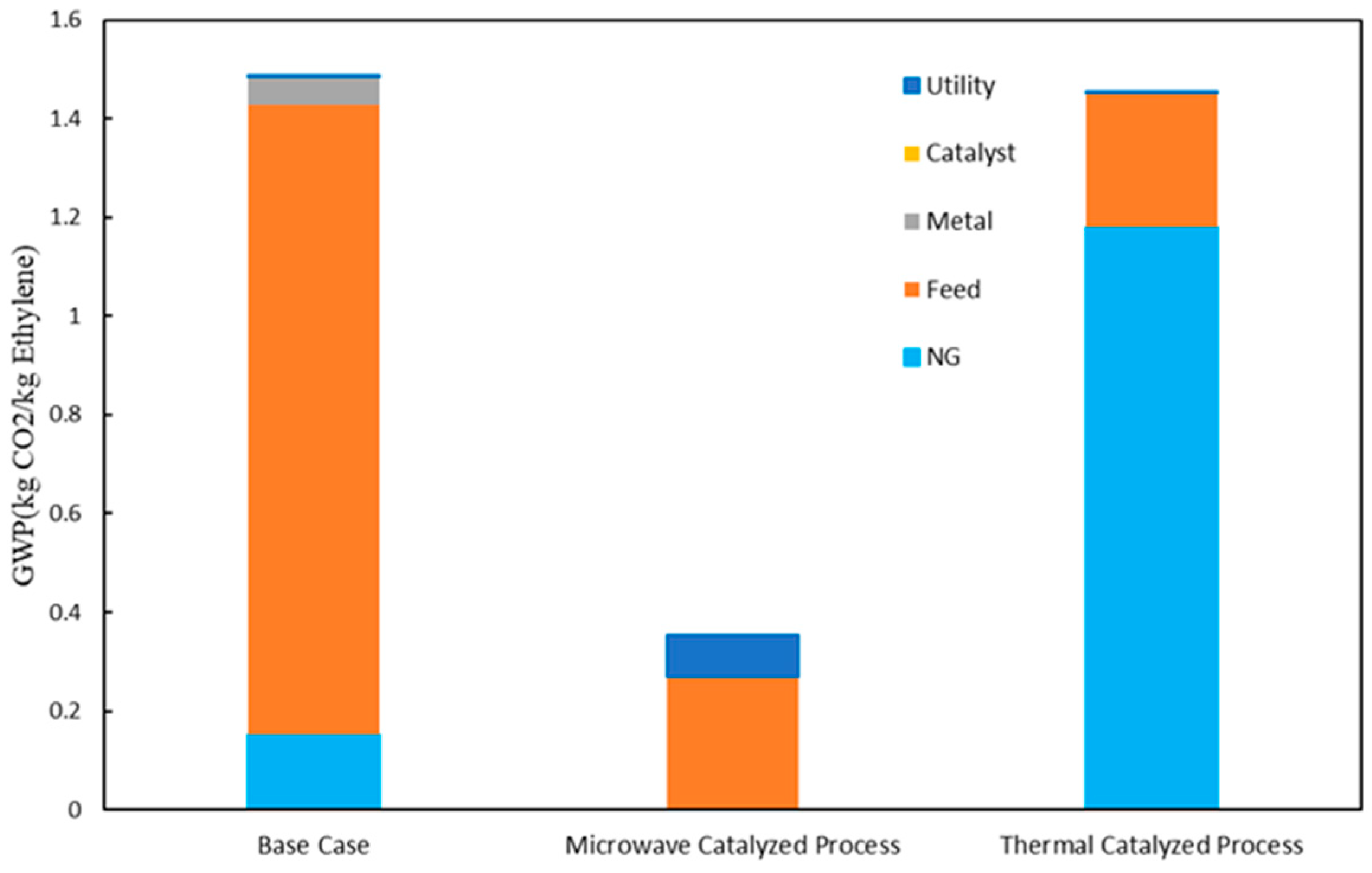
The global warming potentials (GWPs) associated with producing 1 kg of ethylene using the conventional ethane steam cracking process, the microwave-catalyzed LDPE Process, and the thermally catalyzed LDPE process are 1.49, 0.35, and 1.45 kg CO2-eq, respectively. As shown in Figure 7, the conventional ethane steam-cracking (base case) exhibits the highest carbon footprint at approximately 1.49 kg CO2-eq/kg ethylene. This impact is mainly driven by the fossil-derived ethane feedstock and the substantial fuel demand of the cracking furnaces, which rely on natural gas combustion. Notably, this value aligns well with industry data and previously reported literature, supporting the validity of the model assumptions and methodology [23,24,25,26].
In comparison, the thermal LDPE-catalyzed route demonstrates a GWP of 1.45 kg CO2-eq/kg ethylene, similar to the conventional ethane steam-cracking (base case). The dominant contributor is again the natural gas combusted to provide reactor heat. The microwave-catalyzed LDPE process, however, exhibits a substantially lower carbon footprint of 0.35 kg CO2-eq/kg ethylene due to its significantly reduced fuel-based heating requirement. Importantly, if the conventional reactor heating were replaced with renewable electricity, the GWP of both thermal and ethane steam-cracking processes would also decrease, narrowing the gap between the pathways.
The conventional ethane steam-cracking pathway shows GWP contributions from both the ethane feed and natural gas combustion, totaling 1.49 kg CO2-eq/kg ethylene. More than 85% of these emissions arise from ethane consumption. Consequently, the feed contribution alone accounts for 1.27 kg CO2-eq/kg ethylene, underscoring the carbon-intensive nature of ethane production and the substantial fuel required to operate the high-temperature cracking furnaces. This dominant feed-related burden results in a significantly higher overall GWP for the conventional fossil-based route. In comparison, although the thermal LDPE conversion process operates at a lower reactor temperature (600 °C) than the base case (840 °C), its CO2 emissions from natural gas combustion are higher. This is because, in the conventional ethane steam-cracking process, the feed stream can be preheated to approximately 500 °C using recovered heat from downstream process units, substantially reducing the external fuel demand. In contrast, the thermal LDPE pathway lacks this level of heat integration, leading to greater reliance on natural gas for reactor heating and, consequently, higher combustion-related emissions per kilogram of ethylene produced.
For the thermal LDPE pathway, the major contributors include feed-related impacts (0.27 kg CO2-eq/kg ethylene) and renewable electricity-related impacts (0.08 kg CO2-eq/kg ethylene). Between the two alternative pathways, the microwave-catalyzed process achieves a roughly 76% reduction in GWP compared to the base case with the same ethylene production (~77 t/h of ethylene). In contrast, the thermally heated LDPE-to-ethylene process yields a lower ethylene production rate (~44 t/h) for the same amount of LDPE feed but has a higher GWP, 1.45 kg CO2-eq/kg ethylene. These results emphasize the potential of microwave-catalyzed waste-plastic-derived ethylene production to significantly mitigate carbon emissions relative to conventional fossil-based production routes.
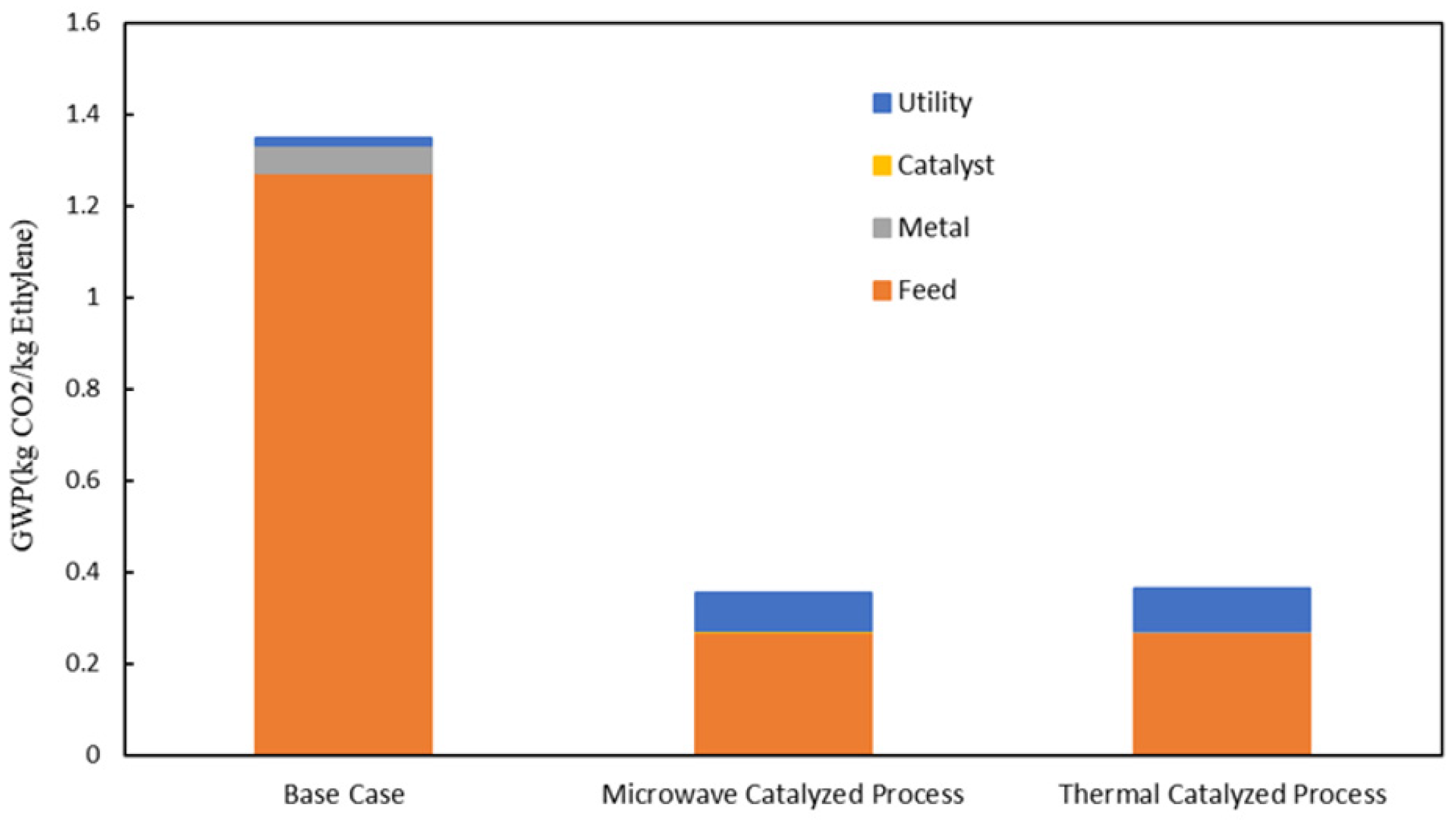
As shown in Figure 8, replacing natural gas used for heating with renewable electricity in all three scenarios leads to a reduction in the life-cycle global warming potential (GWP) per kilogram of ethylene produced. This effect is particularly pronounced for the thermal-ldpe process, where the GWP decreases from 1.45 to 0.27 kg CO2-eq/kg ethylene—an approximate 81% reduction. The conventional ethane steam-cracking (base case) process also shows a decrease, from 1.48 to 1.33 kg CO2-eq/kg ethylene. Although the reaction temperature in the base case is higher than in the thermally catalyzed LDPE process, its GWP reduction is smaller because a substantial portion of the feed is preheated to 500 °C using recovered process heat. This heat recovery lowers the demand for natural gas, which is the primary contributor to CO2 emissions in the conventional ethane steam-cracking route.

4. Conclusions

This study evaluated the technical, economic, and environmental performance of a novel catalyzed process for the depolymerization of waste LDPE to form ethylene. Two different heating sources were utilized in this novel process: microwave heating and thermal heating. Laboratory-scale experimental results indicated that the form of heating played a significant role in gaseous product distribution. Microwave heating produced a significantly higher fraction of ethylene (44.7 wt. % compared to 24.3 wt. % under thermal conditions), indicating a strong enhancement in selective chain scission toward shorter, lighter olefins. Steady-state flowsheets of the novel catalyzed process designed to produce polymer-grade ethylene were developed for both the microwave process and the thermal process, and a technoeconomic analysis was conducted and compared with the industrial process that converts ethane to ethylene via ethane cracking. It was observed that the novel upcycling processes based on microwave-catalyzed or thermally catalyzed reactors have the potential to be significantly more profitable compared to the base case. The overall profitability of the novel upcycling process is impacted by LDPE feedstock cost, reactor capital investment, and electricity price, and a sensitivity analysis of these three factors was conducted to determine their impact on the overall NPV. Finally, a life cycle analysis was conducted, and it was shown that the global warming potential of the novel upcycling process based on microwave heating or thermal heating is significantly lower than that of traditional ethane cracking, especially if renewable electricity is utilized. Furthermore, shifting from fossil feedstocks to waste-plastic-derived feedstocks dramatically lowers feed-related emissions and redistributes impacts toward manageable downstream processes. Overall, the results indicate that waste-LDPE-to-ethylene pathways offer substantial environmental advantages and can achieve competitive economic performance under favorable electricity and feedstock cost conditions.

Author Contributions

Conceptualization S.P.; methodology, S.P. and J.H.; software, X.W. and M.E.H.; validation, X.W., M.E.H., and C.L.; formal analysis, X.W. and M.E.H.; investigation, X.W. and C.L.; resources, J.H. and C.L.; data curation, X.W.; writing—original draft preparation, X.W.; writing—review and editing, S.P.; visualization, X.W.; supervision, S.P.; project administration, S.P. and J.H.; funding acquisition, J.H. and S.P. All authors have read and agreed to the published version of the manuscript.

Funding

This research was partially funded by a United States Department of Energy grant DE-EE0010838.

Data Availability Statement

The original contributions presented in the study are included in the article, further inquiries can be directed to the corresponding author.

Acknowledgments

During the preparation of this manuscript/study, the author(s) used ChatGPT 5.2 for the purposes of correcting grammatical errors. The authors have reviewed and edited the output and take full responsibility for the content of this publication.

Conflicts of Interest

The authors declare no conflicts of interest. The funders had no role in the design of the study; in the collection, analyses, or interpretation of data; in the writing of the manuscript; or in the decision to publish the results.

Abbreviations

The following abbreviations are used in this manuscript:
CAPEXCapital Cost
GWPGlobal Warming Potential
LCALife Cycle Assessment
LCOELevelized Cost of Ethylene
LDPELow-Density Polyethylene
NPVNet Present Value
OPEXOperating Cost

References

  1. Garside, M. Global Plastic Production 1950–2022. Published by Bruna Alves, Plastic Waste Worldwide—Statistics & Facts. 26 April 2024. Available online: https://www.statista.com/topics/5401/global-plastic-waste/ (accessed on 10 January 2024).
  2. Geyer, R.; Jambeck, J.R.; Law, K.L. Production, use, and fate of all plastics ever made. Sci. Adv. 2017, 3, e1700782. [Google Scholar] [CrossRef] [PubMed]
  3. Rahimi, A.; García, J.M. Chemical recycling of waste plastics for new materials production. Nat. Rev. Chem. 2017, 1, 46. [Google Scholar] [CrossRef]
  4. Aguado, J.; Serrano, D.; Escola, J. Fuels from waste plastics by thermal and catalytic processes: A review. Ind. Eng. Chem. Res. 2008, 47, 7982–7992. [Google Scholar] [CrossRef]
  5. Serrano, D.P.; Aguado, J.; Escola, J.M. Developing Advanced Catalysts for the Conversion of Polyolefinic Waste Plastics into Fuels and Chemicals. ACS Catal. 2012, 2, 1924–1941. [Google Scholar] [CrossRef]
  6. Sharuddin, S.D.A.; Abnisa, F.; Daud, W.M.A.W.; Aroua, M.K. A review on pyrolysis of plastic wastes. Energy Convers. Manag. 2016, 115, 308–326. [Google Scholar] [CrossRef]
  7. Motasemi, F.; Afzal, M.T. A review on the microwave-assisted pyrolysis technique. Renew. Sustain. Energy Rev. 2013, 28, 317–330. [Google Scholar] [CrossRef]
  8. Suriapparao, D.V.; Tejasvi, R. A Review on Role of Process Parameters on Pyrolysis of Biomass and Plastics: Present Scope and Future Opportunities in Conventional and Microwave-Assisted Pyrolysis Technologies. Process Saf. Environ. Prot. 2022, 162, 435–462. [Google Scholar] [CrossRef]
  9. Arshad, H.S.; Sulaiman, A.; Hussain, Z.; Naz, Y.; Basrawi, F. Microwave assisted pyrolysis of plastic waste for production of fuels: A review. MATEC Web Conf. 2017, 131, 02005. [Google Scholar] [CrossRef]
  10. Hamad, K.; Kaseem, M.; Deri, F. Recycling of waste from polymer materials: An overview of the recent works. Polym. Degrad. Stab. 2013, 98, 2801–2812. [Google Scholar] [CrossRef]
  11. Lee, A.; Liew, M.S.; Mater, J. Tertiary recycling of plastics waste: An analysis of feedstock, chemical and biological degradation methods. Cycles Waste Manag. 2021, 23, 32–43. [Google Scholar] [CrossRef]
  12. Horikoshi, S.; Serpone, N. Role of microwaves in heterogeneous catalytic systems. Catal. Sci. Technol. 2014, 4, 1197–1210. [Google Scholar] [CrossRef]
  13. Brandon, R.; Ashley, C.; Xinwei, B.; Victor, A.; Dushyant, S.; Jianli, H. Catalytic direct conversion of ethane to value-added chemicals under microwave irradiation. Catal. Today 2020, 356, 3–10. [Google Scholar] [CrossRef]
  14. Xiaoyan, W.; Yuxin, W.; Brandon, R.; Ashley, C.; Jianli, H. Selectivity modulated oxidative dehydrogenation of ethane with CO2 under microwave catalytic processing. Catal. Sci. Technol. 2023, 13, 3499–3504. [Google Scholar] [CrossRef]
  15. Harrison, K.L.; Yang, K.; Wang, C.; Yilmaz, A.E.; Manthiram, A. Microwave-assisted Low-temperature Growth of Thin Films in Solution. Sci. Rep. 2012, 2, 1003. [Google Scholar]
  16. Luo, C.; Liu, S.; Li, S.; Robinson, B.; Wu, T.; Hu, J.; Wang, Y. Boosting upcycling polypropylene waste to propylene via microwave catalysis. Appl. Catal. B Environ. Energy 2026, 381, 125834. [Google Scholar] [CrossRef]
  17. Wang, Y.; Biddle, T.; Jiang, C.; Luong, T.; Chen, R.; Brown, S.; Jie, X.; Hu, J. Microwave-driven upcycling of single-use plastics using zeolite catalyst. Chem. Eng. J. 2023, 465, 142918. [Google Scholar] [CrossRef]
  18. Tuli, V.; Luo, C.; Robinson, B.; Hu, J.; Wang, Y. Microwave-assisted catalytic technology for sustainable production of valuable chemicals from plastic waste with enhanced catalyst reusability. Chem. Eng. J. 2024, 489, 151551. [Google Scholar] [CrossRef]
  19. Theis, J. Quality Guidelines for Energy Systems Studies Cost Estimation Methodology for NETL Assessments of Power Plant Performance; National Energy Technology Laboratory: Albany, OR, USA, 2021.
  20. Douglas, S.T.; Joshua, D.K.; David, T.B. The U.S. Plastics Recycling Economy: Current State, Challenges, and Opportunities; NIST Advanced Manufacturing Series; National Institute of Standards and Technology: Gaithersburg, MD, USA, 2024. [CrossRef]
  21. ISO 14040; Environmental Management—Life Cycle Assessment—Principles and Framework. International Organisation for Standardisation (ISO): Geneve, Switzerland, 2006.
  22. ISO 14044; Environmental Management—Life Cycle Assessment—Requirements and Guidelines. International Organisation for Standardisation (ISO): Geneve, Switzerland, 2006.
  23. Chen, Y.; Kuo, M.J.; Lobo, R.; Ierapetritou, M. Ethylene production: Process design, technoeconomic and life-cycle assessments. Green Chem. 2024, 26, 2903–2911. [Google Scholar] [CrossRef]
  24. Young, B.; Hawkins, T.R.; Chiquelin, C.; Sun, P.; Gracida-Alvarez, U.R.; Elgowainy, A. Environmental life cycle assessment of olefins and by-product hydrogen from steam cracking of natural gas liquids, naphtha, and gas oil. J. Clean. Prod. 2022, 359, 131884. [Google Scholar] [CrossRef]
  25. Shen, W.; Tian, Z.; Zhao, L.; Qian, F. Life Cycle Assessment and Multiobjective Optimization for Steam Cracking Process in Ethylene Plant. ACS Omega 2022, 7, 15507−15517. [Google Scholar] [CrossRef]
  26. Pahola, T.B.; Ulises, R.G.; Kirti, R.; Jennifer, P.; Troy, R.H. Cradle-to-Gate greenhouse gas emissions of the production of ethylene from U.S. Corn ethanol and comparison to fossil-derived ethylene production. Bioresour. Technol. 2025, 430, 132565. [Google Scholar]
Figure 1. Novel catalyzed process designed to produce polymer-grade ethylene.
Processes 14 00333 g001
Figure 2. NPV comparative plot of all cases.
Processes 14 00333 g002
Figure 3. Impact of LDPE cost on NPV and LCOE.
Processes 14 00333 g003
Figure 4. Impact of microwave reactor cost on NPV and LCOE.
Processes 14 00333 g004
Figure 5. Impact of reactor cost on NPV.
Processes 14 00333 g005
Figure 6. Impact of electricity price on NPV and LCOE.
Processes 14 00333 g006
Figure 7. Comparison of life cycle global warming potential (GWP).
Processes 14 00333 g007
Figure 8. Life cycle global warming potential (GWP) of renewable electricity.
Processes 14 00333 g008
Table 1. Gas phase composition and residue of the laboratory-scale microwave/thermal reaction.
Parameter500 °C600 °C
LDPE-Thermal
(wt. %)
LDPE-MW
(wt. %)
LDPE-Thermal
(wt. %)
LDPE-MW
(wt. %)
Hydrogen0.11.60.23.5
Methane5.815.99.415.1
Ethylene14.944.724.342.9
Ethane10.33.519.610.2
Propane11.03.27.63.4
Propylene18.69.825.816.9
n-butane7.37.70.00.0
t-2-butene0.05.51.80.8
1-butene1.50.40.00.0
Isobutylene1.10.51.60.6
Benzene11.56.48.35.8
Toluene17.90.81.40.8
TOTAL100100100100
Solid residue fraction0.330.0040.0020.15
Table 2. Reactor effluent mass flows (t/h).
Gas CompositionsThermalMicrowave
C2H635.886.34
C2H444.4980.96
H20.372.90
C3H647.217.75
CH417.2128.80
C6H615.2011.59
C4H600.00
C2H200.00
C3H813.915.80
C4H86.211.59
C4H100013.95
C7H82.561.45
Residue3.935.87
Table 3. Microwave-catalyzed process stream table.
ParameterLDPEProductC2H4C3H6S5S6S7S8S9
Temperature (°C)25.00500.00−58.4410.5160.00−55.00−119.5−44.1452.55
Pressure (bar)1.001.008.008.008.008.001.008.008.00
Molar Vapor Fraction0.001.001.001.001.000.791.000.000.00
Mass Flows (t/h)187.00187.0076.6717.77181.13181.1333.528.0244.69
Mass fraction
C2H60.000.030.000.000.030.030.000.320.00
C2H40.000.451.000.000.450.450.150.380.00
H20.000.020.000.000.020.020.080.000.00
C3H60.000.100.001.000.100.100.000.270.08
CH40.000.160.000.000.160.160.770.000.00
C6H60.000.060.000.000.060.060.000.000.24
C4H60.000.000.000.000.000.000.000.000.00
C2H20.000.000.000.000.000.000.000.000.00
C3H80.000.030.000.000.030.030.000.030.11
C4H80.000.060.000.000.060.060.000.000.24
C4H100.000.080.000.000.080.080.000.000.29
C7H80.000.010.000.000.010.010.000.000.03
LDPE1.000.000.000.000.000.000.000.000.00
Table 4. Thermal catalyzed process stream table.
ParameterLDPEProductC2H4C3H6S5S6S7S8S9
Temperature (°C)25600−58.4710.3450−5525−40.0437.62
Pressure (bar)118888888
Molar Vapor Fraction011110.37100
Mass Flows (t/h)187.00187.0040.5743.93183.05183.0519.8738.8239.86
Mass fraction
C2H60.000.200.000.000.200.200.000.920.00
C2H40.000.241.000.000.240.240.110.050.00
H20.000.000.000.000.000.000.020.000.00
C3H60.000.260.001.000.260.260.000.030.06
CH40.000.090.000.000.090.090.860.000.00
C6H60.000.080.000.000.080.080.000.000.38
C4H60.000.000.000.000.000.000.000.000.00
C2H20.000.000.000.000.000.000.000.000.00
C3H80.000.080.000.000.080.080.000.000.34
C4H80.000.030.000.000.030.030.000.000.16
C4H100.000.000.000.000.000.000.000.000.00
C7H80.000.010.000.000.010.010.000.000.06
LDPE1.000.000.000.000.000.000.000.000.00
Table 5. Investment parameters.
ParameterValueParameterValue
Contingency20%Working Capital5%/yr
Tax Rate21%Plant Overhead50%
Desired Internal Rate of Return10%G and A Expense8%/yr
Salvage Value20%O and M Escalation3%/yr
Project Capital Escalation5%/yrNo. of Period Analysis20 yrs
Product and Raw Material Escalation3%/yrOperating hours per year8000
Utility Escalation3%/yrLength of startup period20 weeks
Table 6. Price of raw materials, products, and utilities.
ClassificationDescriptionValue
Raw MaterialEthane (USD/t)90
Polyethylene (USD/t)0
Steam (USD/t)0
ProductEthylene (USD/t)780
Propylene (USD/t)850
Benzene (USD/t)950
Toluene (USD/t)1030
UtilityElectricity (USD/kWh)0.06
Natural Gas (USD/GJ)3.59
Table 7. CAPEX of two processes.
ParameterMW-Catalyzed ProcessThermally Catalyzed ProcessConventional Ethane Steam Cracking Process
Reactor109.95200149.96
Extruder29.370.000.00
Heat Exchanger4.553.346.68
Compressor44.9529.038.26
Distillation Column 41.1847.7731.00
Separator1.972.020.00
EPC, Contingency, Others 101.87116.13109.63
Total Project CAPEX Cost333.84398.29357.38
Table 8. OPEX of two processes.
ParameterMicrowave-Catalyzed ProcessThermally Catalyzed ProcessConventional Ethane Steam Cracking Process
Raw Material and Catalyst 0.910.9162.62
Operating Charges0.190.190.23
Utility 175.81192.92111.73
O and M 2.572.040.86
Plant Overhead1.291.020.86
G and A Cost14.3915.714.49
Total Project OPEX Cost195.16212.78195.65
Table 9. Main product distribution of different processes.
ParameterEthylenePropyleneBTX
MW-LDPE76.6717.7713.04
Thermal-LDPE40.5743.9317.76
Ethane 76.638.250
Disclaimer/Publisher’s Note: The statements, opinions and data contained in all publications are solely those of the individual author(s) and contributor(s) and not of MDPI and/or the editor(s). MDPI and/or the editor(s) disclaim responsibility for any injury to people or property resulting from any ideas, methods, instructions or products referred to in the content.