Article

Environmental Compliance of Ferrous Waste Moulding Sand and Best Foundry Practices for Hazardous Metals (Mn, Ni, and Cr)

by
Kolela Joseph Nyembwe
1,
Martina Petranikova
1,
Kasongo Didier Nyembwe
2,
Thabo T. I. Nkambule
3 and
Mukuna Patrick Mubiayi
3,*
1
Nuclear Chemistry and Industrial Materials Recycling Group, Energy and Materials Division, Department of Chemistry and Chemical Engineering, Chalmers University of Technology, Kemivägen 4, SE-412 96 Gothenburg, Sweden
2
Department of Mechanical and Mechatronic Engineering, Faculty of Engineering and Building Environment, Cape Peninsula University of Technology, Bellville, Cape Town 7535, South Africa
3
Institute for Nanotechnology and Water Sustainability, College of Science, Engineering and Technology, University of South Africa, Florida Campus, Johannesburg 1709, South Africa
*
Author to whom correspondence should be addressed.
Processes 2026, 14(2), 273; https://doi.org/10.3390/pr14020273
Submission received: 31 October 2025 / Revised: 31 December 2025 / Accepted: 8 January 2026 / Published: 13 January 2026
(This article belongs to the Special Issue Advanced Methods of Metal Recycling)

Abstract

The circular economy approach aims to reduce raw material use and limit landfill disposal of industrial by-products. In the metal casting industry, waste foundry sand (WFS) disposal is a persistent financial and environmental challenge due to hazardous metal contamination. This study assessed three South African ferrous foundries’ sand streams—virgin, fettling/shot blast, and moulding/shakeout—using the toxicity characteristic leach procedure (TCLP) under the South African Waste Management Act. Results showed that while virgin sand was inert, fettling/shot blast and shakeout sands contained elevated Cr (0.024–1.02 mg/L), Mn (62–97 mg/L), and Ni (0.14–3.26 mg/L), exceeding inert waste thresholds (Cr: 0.05 mg/L; Mn: 0.5 mg/L; Ni: 0.07 mg/L). The shakeout sand, which accounts for 50–70% of total foundry waste, was the most critical stream. Particle size analysis revealed that the majority of sand (70%) falls between 600 and 75 µm, with hazardous metals concentrated in fine fractions (<150 µm). These fines contained up to 94–97% magnetic metallic debris, primarily Cr, Mn, and Ni, and exhibited TCLP leachability above inert classification limits. By contrast, coarser fractions (>150 µm) had low leachability and characteristics comparable to virgin sand. A simple size segregation treatment reduced hazardous metal content by up to 93–97%, rendering 75–85% of shakeout sand inert, while only 10–15% (fine portion) required hazardous waste disposal. These findings highlight that targeted removal of fines can substantially reduce disposal costs and environmental risk, supporting greener and more sustainable foundry operations.

1. Introduction

Waste production has increased as a result of the rising world population and technological advancements. Consequently, numerous scholars and researchers around the globe are working to find innovative approaches to decrease waste, or, as a cleaner option, turn it into valuable resources [1]. Within the metallurgical industry, primarily in manufacturing operations, waste foundry sand has been disposed of in landfills, including pre-owned and municipal waste landfills, as solid waste originating from the foundry industry for several decades. These facilities use sand as a refractory material for moulding purposes. The process is referred to as “sand casting,” and it accounts for the production of the large majority of castings. Typically, about 1 ton of foundry sand is required for each ton of iron or steel casting produced [2]. Ideally, the use of the same sand within the foundry should be long-lasting. However, as sand is repeatedly reused or reclaimed in foundries [3], a portion becomes unusable for moulding purposes and is discarded from the core and moulding line. Foundry sand (FS) waste creates a serious solid waste management problem worldwide due to the high volumes produced [4]. For instance, it was reported that approximately 100 million tons of waste foundry sands (WFSs) are generated annually worldwide by the foundry industry [5]. A total of 6–10 million tonnes of FS waste in the USA and around 3 million tons in Brazil were landfilled in 2012. South Africa, an emerging country, annually disposes of 342,000 tons of waste foundry sand in municipal landfills in the Gauteng province alone [6]. The classification of all waste sand as hazardous landfill material has led to significant dumping costs for the metal casting industry, which has negatively affected their turnover. This general classification attributed to all waste sand material is primarily due to environmental concerns regarding the potential leaching of hazardous compounds, including heavy metals, from the waste sand [7,8,9] and aromatic compounds [5]. For instance, metals such as cadmium (Cd), chromium (Cr), copper (Cu), mercury (Hg), and lead (Pb) cannot be degraded and consequently can accumulate in the aquatic food chain, reaching human beings and causing several pathologies [10]. According to the EU Waste Directives [5], the waste foundry sand can be classified as non-hazardous and hazardous waste, depending on its chemical characteristics.
Recovery and reuse of waste play a fundamental role from a circular economy perspective. However, it is necessary to systematically assess the waste material prior to its reuse or recycling. Such information may also assist waste generators to comply with greener/sustainable processes and best environmental practices within their production facilities [11]. To the best of the authors’ knowledge, most of the work conducted on spent foundry sand mainly categorises the potential risk assessment associated with the waste material [12]. Furthermore, numerous studies have addressed resource management and sustainability objectives by exploring various reuse options, notably within the construction industry for concrete production [1,13]. These reuse options are implemented to encapsulate or diminish the leachability of hazardous components. However, waste foundry sand mixes for geotechnical and highway applications potentially possess leachable content of regulated hazardous matter [14]. It is therefore necessary to expand research on waste foundry sand to establish effective cleaning methods for safe reuse, establish a more cyclic approach to the process, and safeguard the environment. This work, therefore, aims to characterise the waste foundry sand from ferrous casting, conduct an environmental assessment of its suitability, and explore routes for adequate sand management within foundries to reduce its hazardous potential.

2. Materials and Methods

2.1. Materials

The waste foundry sand sample was obtained from a local South African ferrous foundry, which produces cast iron (SG) in resin and greensand. The choice of this foundry was based on the same virgin sand supplier and monthly volume discarded (8000 tons), which represented the biggest local foundry. Laboratory sampling and homogenization were conducted according to the waste soil sampling protocol published by the US EPA [15].

2.2. Existing Sand Management in the Visited Casting Facilities

  • Foundry 1 (Sample A): The facility appears to have a waste management practice within the foundry, and it appears that each foundry waste stream is collected individually. It possesses 3 sand streams: virgin, shakeout/moulding sand, and shot blast sand. The waste sand destined for landfill is a mixture of shot blast sand and shakeout sand, obtained after the sand reclamation operation. Three (3) sand samples of approximately 20 kg (virgin, waste shakeout, and shotblast sand) were collected from their respective streams for this study.
  • Foundry 2 (Sample B): The facility had virgin, shakeout, and fettling as the principal sand streams. Within this facility, all sand waste, such as moulding/shakeout waste sand, fettling, and dust, is combined into one stockpile and discarded in a landfill. As in foundry A, three samples (waste moulding/shakeout, fettling, and virgin sand) of equal quantities were collected for analysis in this study.
  • Foundry 3 (Sample C): In this facility, the shakeout waste sand is mixed with the dust sand. In addition to this, all the waste streams are mixed into one material for landfill. The facility has virgin, waste shakeout, and shot blast as the major sand streams. Approximately 15 kg of each stream, including raw material, shakeout waste, and shot blast, was collected for this study.

2.3. Methods

A stepwise method was used during this study, as depicted in Figure 1. Firstly, the collected foundry sand streams were characterised for pollutant identification, and their current environmental state was established using the toxicity characteristic leach procedure (TCLP) (Method 1113 (EPA 1992)). This was followed by a systematic characterisation based on particle size distribution. Additionally, the nature of each size fraction was quantified and environmentally evaluated. Finally, a cleaning operation was conducted on the waste casting sand, considering its varying physical properties such as size distribution and magnetism. The treated sand was further assessed for its hazardous and environmental properties.
The sands’ bulk chemistry was analysed by using an X-ray fluorescence powder technique with an XRF Rigaku ZSX Primus II and SQX analysis software (Rigaku Corporation, Tokyo, Japan). Operating parameters were set at 4 kW, 60 kV, and 150 mA to identify hazardous metals in compliance with South African waste management regulations.
The sands’ toxicity was assessed using the toxicity characteristic leach procedure (TCLP method 1311 [16]) as prescribed under the SA regulation. The technique allows one to determine whether a waste material is a toxic hazardous product. It involves a simulation of leaching through a landfill site and can provide a rating compared to regulatory threshold values to prescribe precautions in handling and disposal. Determination of heavy metals in liquids (TCLP leached product) was assessed and quantified using atomic absorption flame spectroscopy (AAFS) (Thermo Scientific ICE 3000 Thermo Fisher Scientific Inc., Cambridge, UK). Throughout this study, the TCLP test was conducted to assess the environmental impact of the sand.
The cleaning process was carried out on a dry basis through size segregation to determine the size fraction containing the highest concentration of metallic debris. The authors believe that once the size fraction containing the most pollutants and debris is removed, the waste casting sand could exhibit similar chemical characteristics to the virgin sand. To assess this, the virgin sand was used as a control or reference. The screening process involved sieving the sand through a shake sieve with apertures ranging from +1700 to −53 microns.

3. Results and Discussion

3.1. Waste Foundry Sand Stream Characterisation, Pollutant Identification, and Environmental State

3.1.1. Waste Foundry Sand Stream Bulk Chemistry and Pollutant Identification

For this study, the environmental compliance of the casting sands was assessed according to the South African Waste Management Regulations of 2013, which specify sixteen metallic elements classified as hazardous in solid materials. Figure 2 and Table 1 individually display the physical attributes and bulk chemistry of the moulding sand as collected from the waste sand foundry facility designated for landfill.
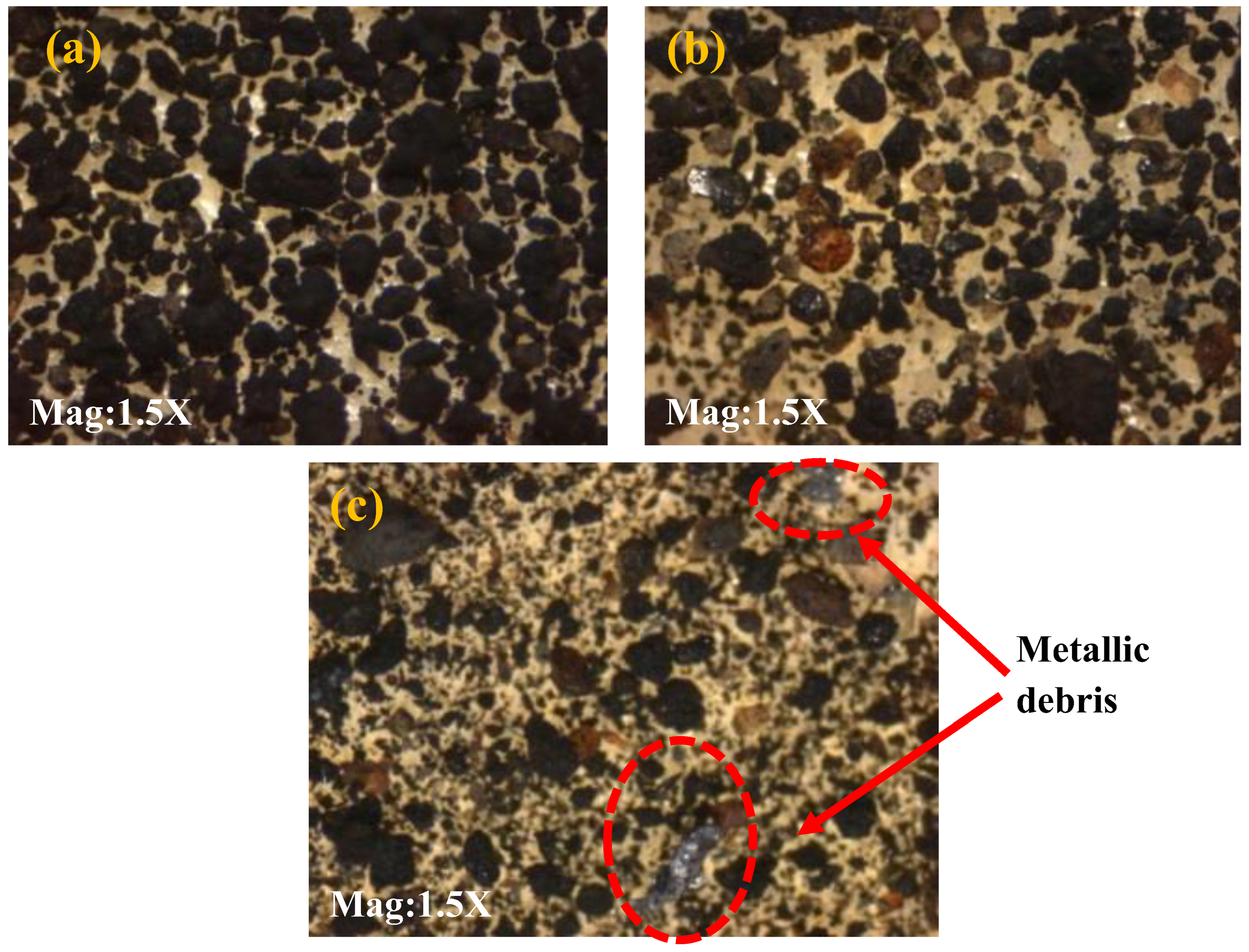
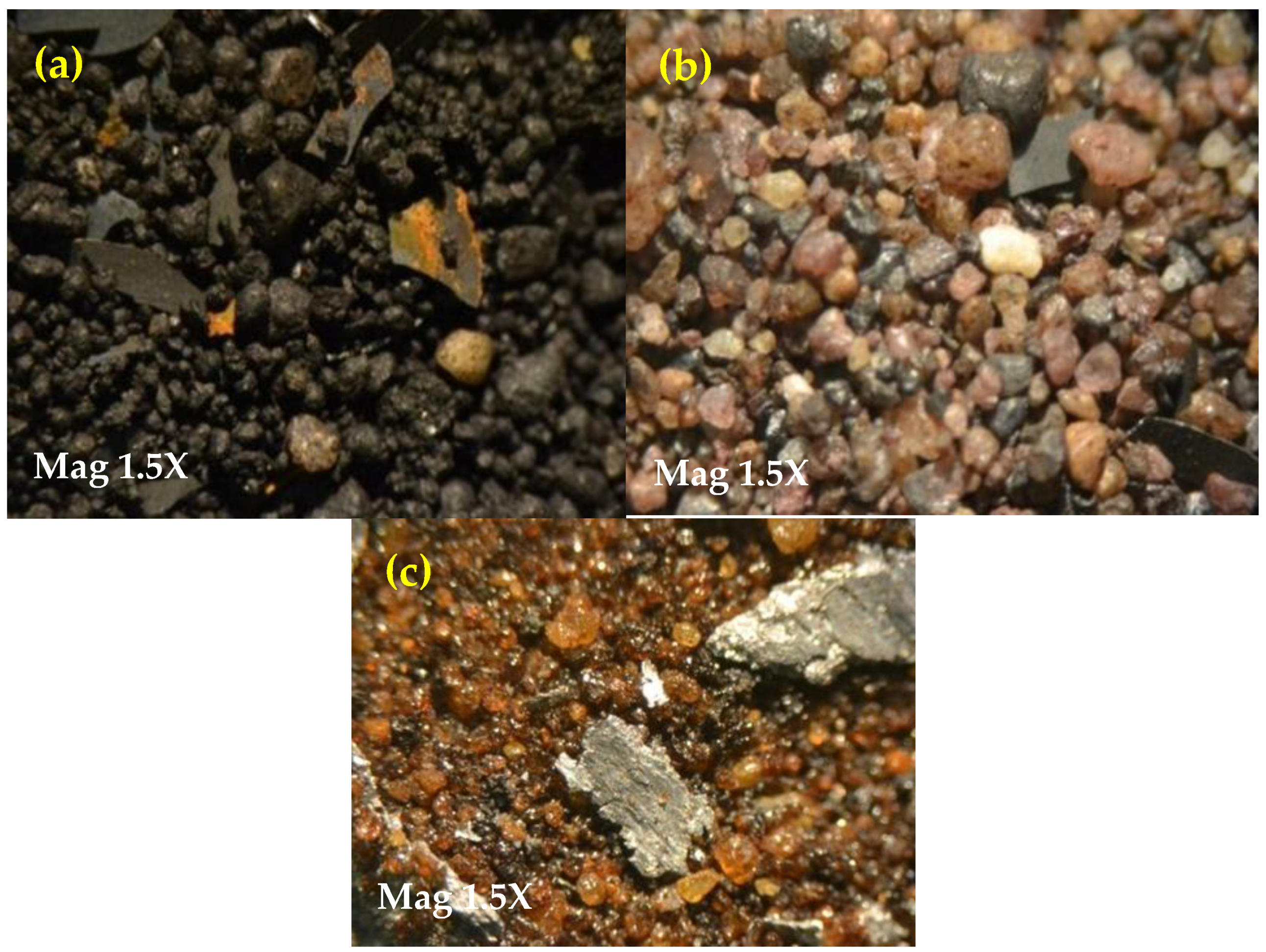
The optical microscope analysis (Figure 2) revealed the presence of metallic debris (Figure 2a–c), residual burnt binder (Figure 2a), and deteriorated sand grains (Figure 2c). The bulk chemistry under X-ray fluorescence (Table 1) compares the elemental chemistry of the different foundry sand streams against their corresponding virgin sand used for moulding. Three environmentally concerning metals, namely, Mn, Ni and Cr, were detected in ferrous casting sands. In addition, variations in Fe content reflect the type of alloy produced by each foundry. The presence of Mg and Al, representing alkaline earth and aluminosilicate components of the sand, is also highlighted.
In all cases, the waste sands were mainly composed of silica (SiO2), which is the major component of foundry sand [17]. An increase in trace elements associated with the cast alloy’s main ingredients (Fe, Mn, Cr, and Ni) was observed in the waste sand foundry streams, compared to their respective content within the raw/virgin sand. Our results support earlier investigations by Alves and coworkers [8] and Nyembwe and colleagues [18], who highlighted an increase in metallic traces promoted by the casting process. For instance, the foundry A samples (Table 1) revealed an increase in Al, Cr, Fe, Mg, Mn, and Ni in the waste sand (shakeout) when compared to its corresponding virgin sand’s concentrations. The high content of these metals in the fettling and shotblast sand could be attributed to the high metallic debris contamination, as the former operation mainly involves the cutting and polishing of the cast product, while the latter focuses on irregularity removal on the cast alloy surface using abrasive or steel balls. Three of the sixteen stipulated toxic and hazardous metallic elements (South African Regulation Act) were identified in the various collected sand samples. These metals were Cr, Mn, and Ni, and their content appeared to vary according to the sand streams (shakeout/moulding, fettling, and shotblast and virgin sand). Quantifications and leachable concentrations of these elements play a vital role in the toxicity assessment, environmental threat, and regulatory compliance of a waste stream.

3.1.2. Sand Stream Environmental Assessment and Compliance

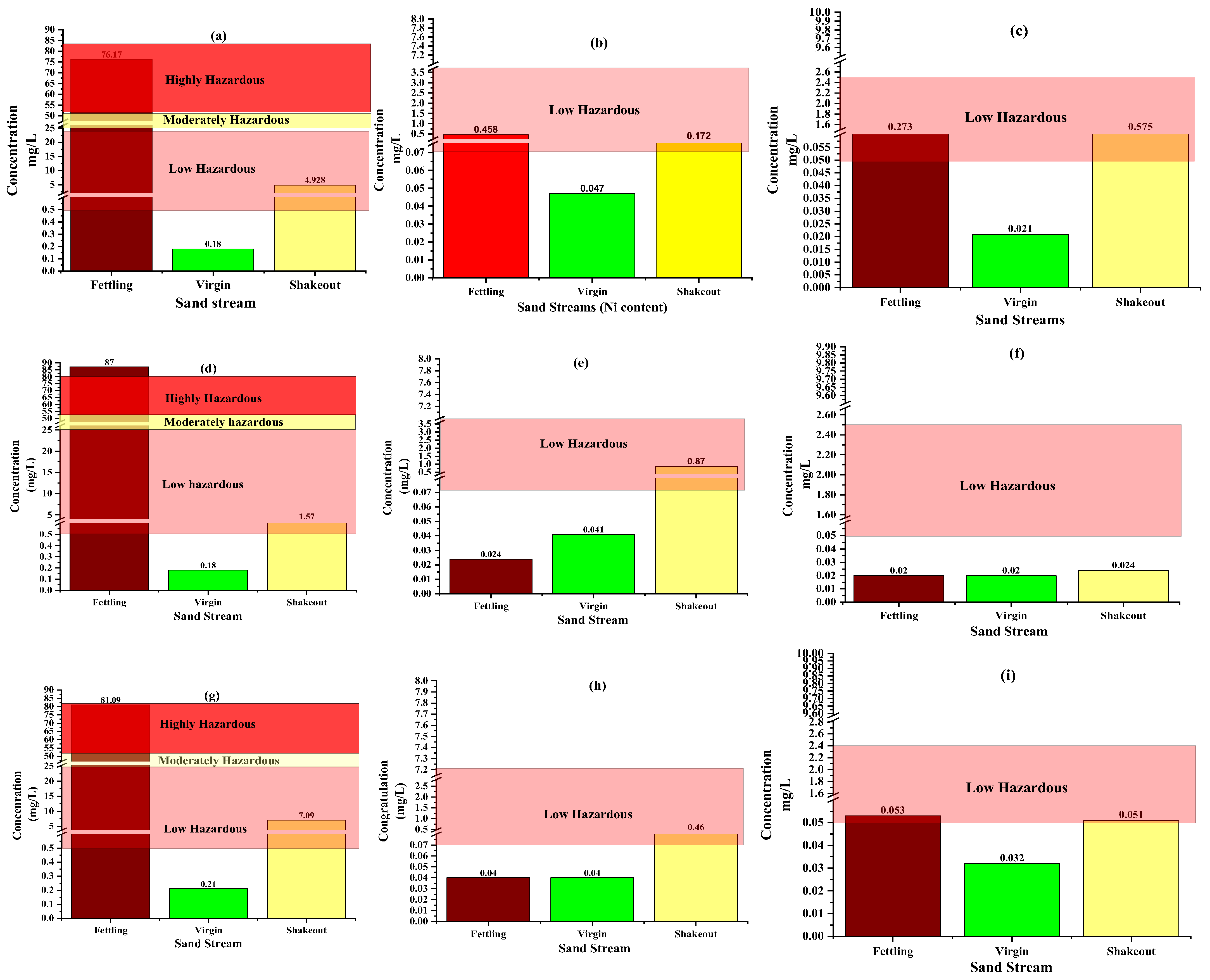
Table 2 outlines how waste materials are classified in South Africa based on their leachability characteristics (LC values relative to leach concentration thresholds, LCTs), their hazardous level, and the type of landfill site permitted for disposal. The leaching concentrations of the identified hazardous metals (Mn, Ni and Cr) are shown in Figure 3. The latter also compares the leachable metallic concentration of the various sand streams, after subjection to the TCLP test, against the South African Waste Management Regulation Act (https://www.dffe.gov.za (accessed on 7 June 2025)) limit thresholds (LCT0 to LCT2). In the figure the elemental classification of stipulated elements is summarised, whereby (a), (b), and (c) show the leachable content of Mn, Ni, and Cr from foundry A sand material. In the same order, (d), (e), and (f) summarise the foundry B sand characteristics. Lastly, (g), (h), and (i) are assigned to foundry C. The results showed that the virgin sand had a low metallic content and did not exceed the minimum limit threshold (LCT0). This sand could be regarded as an inert material. However, the fettling, shot blast, and shakeout sands all exceeded the minimum limit threshold (LCT0) and should be regarded as hazardous material for landfill.
The environmental status of the collected sands, expressed in terms of toxic component leachable content, is presented in Figure 3a–i. For all identified toxic elements, both the shakeout and fettling/short blast sand appeared hazardous for their content of Cr, Mn, and Ni. However, the results showed that the shakeout sand appeared less hazardous than the fettling/short blast stream. Foundry A, for instance, showed hazardous content for Ni and Mn. Its shakeout sand was a low risk level due to Cr, Mn, and Ni (LCT0 < shakeout < LCT1), while the fettling sand was highly hazardous due to its high Mn content, which exceeded the LCT2 limit. Similarly, sand samples collected from foundries B and C exhibited a similar trend to foundry A, with the shakeout sand being hazardous due to the high leachability of Mn and Ni. For foundry C, the shakeout stream showed a high content of Cr and Mn. The obtained metallic leachable content contradicts the results and data obtained by Deng [19], who reported that, apart from the waste sand originating from the Cu alloy casting facilities, the waste foundry sand can be regarded as a non-hazardous material in terms of its leachate characteristics. This could be attributed to the relatively high TCLP thresholds as opposed to the SA Waste Management Act values. However, the author highlighted that ferrous casting waste sand is likely to contain high levels of metal content related to the cast alloys, i.e., mainly Mn. Nevertheless, the current data corroborates the findings of Zhang et al. [20], who suggested that improperly disposed waste foundry sands may pose a significant threat to the environment. Moreover, the results obtained suggest that the moulding sand should be adequately separated from other waste stream components, such as baghouse dust, slag, or sludge, as well as short blast or fettling materials. These components may pose hazards in certain instances, as previously reported by Bolshakov [21].

3.2. Systematic Characterisation of Waste Foundry Sand for Cleaning Purposes

Among all foundry waste streams, the shakeout sand represents the largest portion of waste generated within a casting facility [22]. From the foundries visited, this stream appeared to constitute 50–70% of the total solid waste produced. It is important to closely evaluate the waste moulding/shakeout sand and attempt to further treat it to remove metallic debris and/or sand pollutants. This operation could, to some extent, comply with a greener and more sustainable process, reduce the foundry’s overall sand pollution, and have financial benefits in terms of the dumping cost and sand disposal. Particle size distribution and characterisation would assist through the identification of the size fraction(s) containing the largest proportion of metallics.

3.2.1. Particle Size Distribution and Size Chemistry

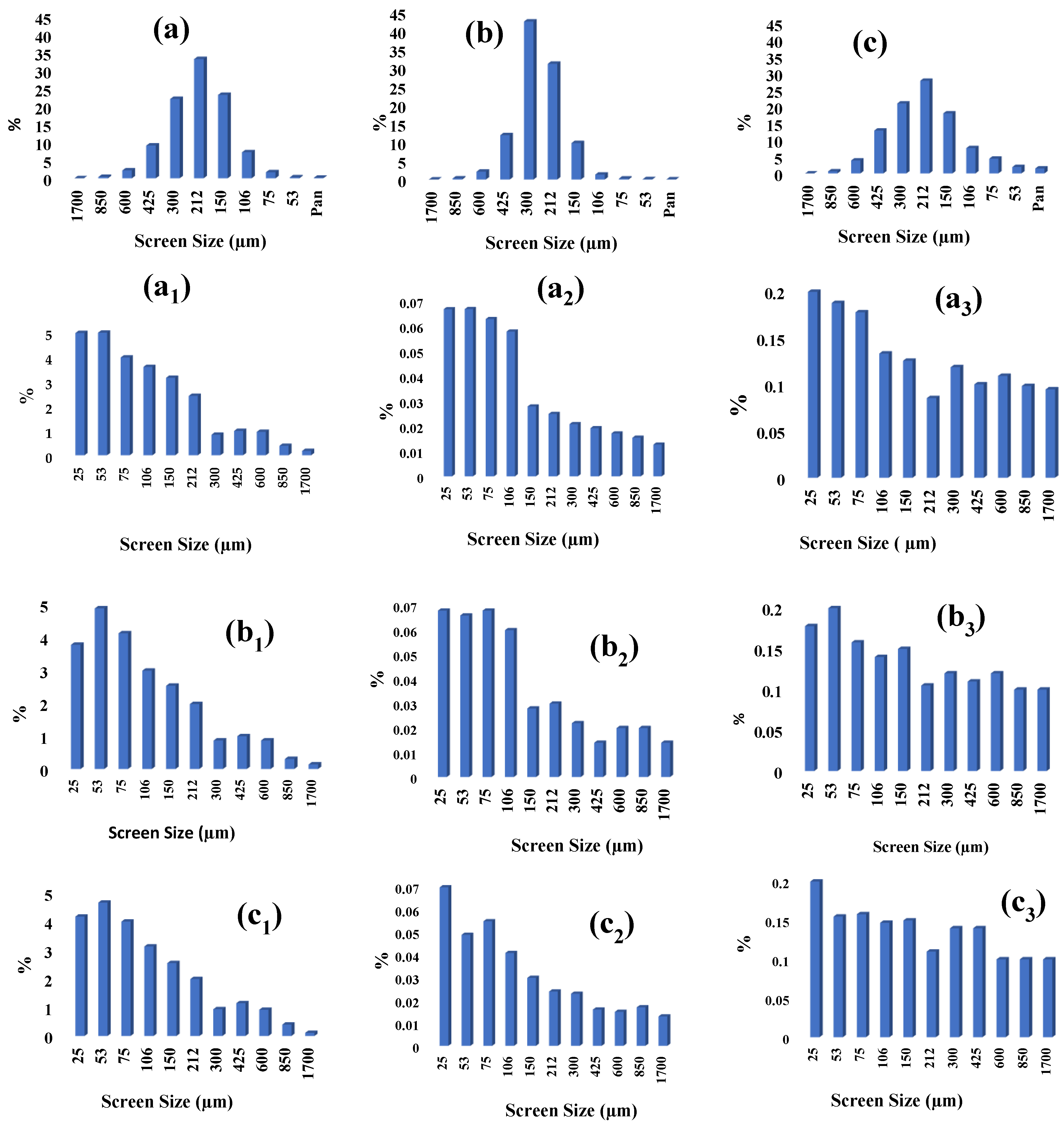
Figure 4 shows the particle size distribution of the different collected shakeout sands and the content of hazardous metals (Mn, Ni, and Cr) per screen sizes. (a), (b), and (c) display the particle size distribution of foundry sand A, B, and C, respectively, while (a1), (a2), and (a3) individually show the content of Mn, Ni, and Cr in the different sizes of foundry A’s sand. In a similar pattern, (b1), (b2), and (b3) display the particle size pollutant content for foundry B’s moulding sand. Lastly, (c1), (c2), and (c3) summarise the hazardous metal (Mn, Ni, and Cr) content contained in the casting sand originating from foundry C.
The particle size distributions (Figure 4a–c) reveal that the major portion of sand (>70%) lies in screen sizes ranging from 425 to 106 µm. Our results support those of Bhardwaj and co-workers [13], who earlier reported that waste sand is mainly composed of grains in the size range of 0.05 mm to 2 mm. In addition, the bulk chemistry of each screen size (Figure 4(a1–c3)) indicates that the content of the hazardous metals (Mn, Ni, and Cr) previously identified by XRF (Table 1) appears to increase with decreasing particle size (Figure 4). This suggests that fine particles are more likely to possess hazardous characteristics and contain metal debris than coarse sand grains. This is further complemented by the microscope analysis of fine sand aggregates, as represented in Figure 5. The latter shows the physical characteristics of the shakeout moulding originating from foundry A at various particle sizes, mainly at 425, 212, and 106 µm, displayed in (a), (b), and (c), respectively. It can be observed that, at a coarser size, the grains appeared to have residual burnt binder (Figure 5a,b), while the finer grains displayed the presence of metallic debris (Figure 5c). The observed results (microscope analysis) agree with those of Nyembwe et al. [18], who observed an increase in metallic content related to the cast alloys.

3.2.2. Waste Moulding Sand Metallic Quantification and Environmental Assessment

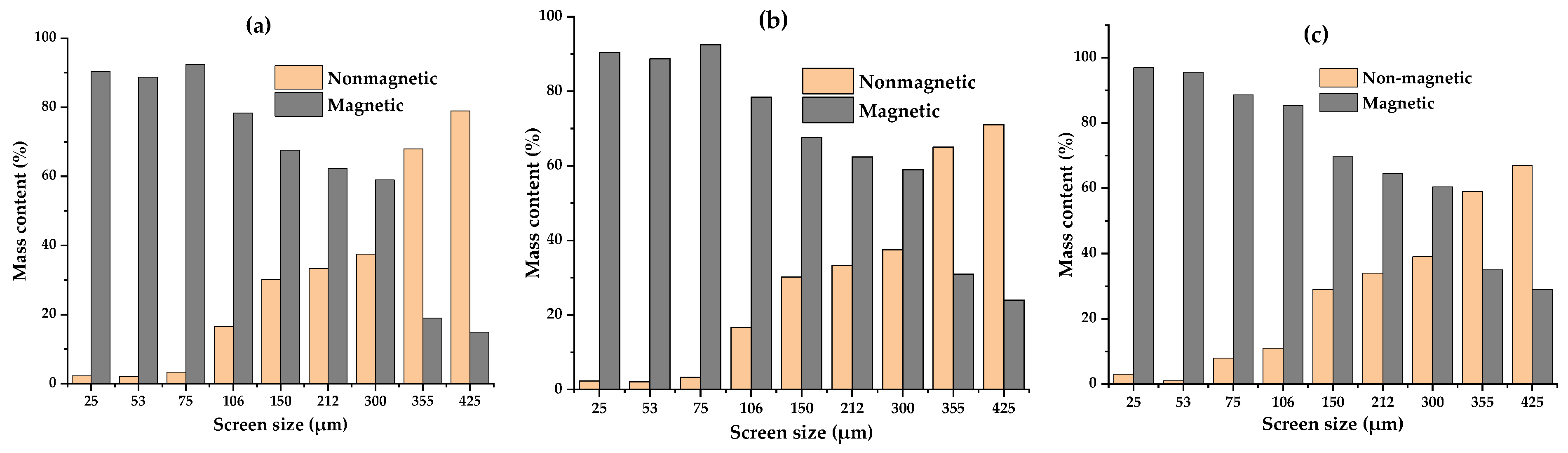
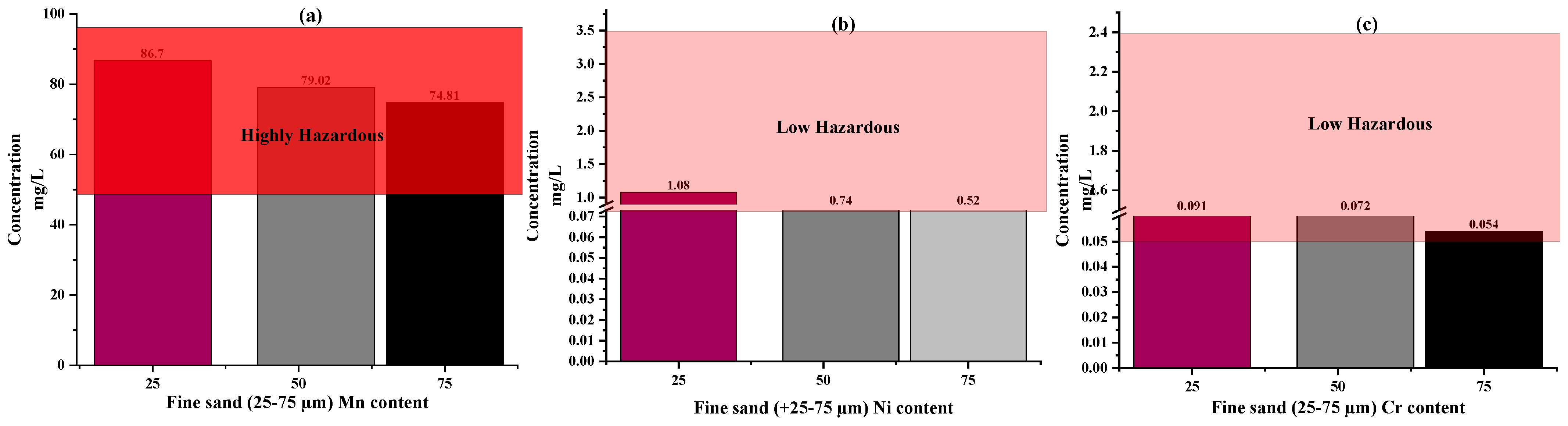
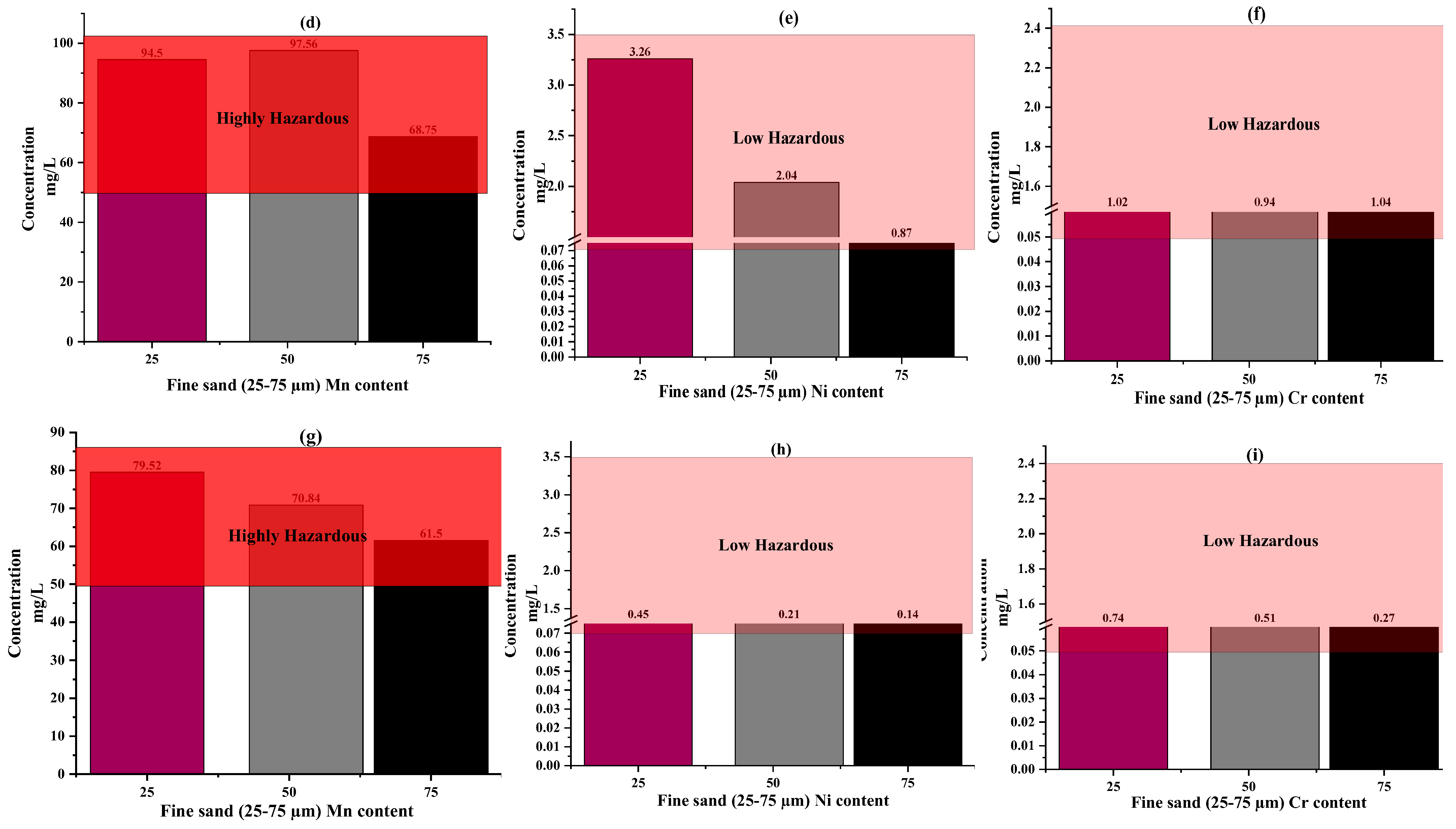
It has become evident that ferrous waste casting sand possesses magnetic debris. Each screen size fraction was then subjected to magnetic separation to quantify the metallic debris observed under the optical microscope (Figure 5a–c). Figure 6 illustrates the content of magnetic and non-magnetic sand per screen size for the three different foundries. Panels (a), (b), and (c) display the distribution of sand based on its magnetic properties. This enabled a rapid identification of size particles containing high metallic debris content. It is observed that the content of the magnetic portion appeared to increase with decreasing size (Figure 6). For instance, at a size fraction of 425 µm (Figure 6a), only 17% of the sand belonged to the magnetic portion, while the remaining 83% was non-magnetic. The magnetic portion further increased to 94% as particle size decreased to −25 µm. A similar trend was observed for the shakeout sand from foundry B, which originally had a low magnetic content of 29% at a coarse grain size of 425 µm, progressively increasing to 97% for finer grains (−25 µm) (Figure 6b). Lastly, the content of magnetic sand from foundry C (Figure 6c) increased from 31% at 425 µm to 97% at −25 µm. These findings suggest that finer grains are more likely to contain metallic debris and are, thus, more hazardous than coarser grains. This observation aligns with the earlier chemical composition analysis of different sand sizes, which indicated an increase in metallic pollutants as particle sizes decreased (Figure 4(a1–c3)). Based on this observation, finer grain sizes were investigated for their environmental attributes. Figure 7 shows the environmental assessment of the fine sand portion (25, 50, and 75 µm) for the different casting facilities (A, B, and C). In Figure 7, (a, b, and c) individually represent the Mn, Ni, and Cr content in the varying fine portion of foundry A sand. Similarly, (d), (e), and (f) summarise the fine portion chemistry of foundry sand B. Lastly, (g), (h), and (i) correspond to foundry C. The assessment revealed that these fine sand grains appeared to be highly hazardous as they exceeded the limit concentration thresholds (LCTs) for inert classification. All metallic pollutants (Mn, Ni, and Cr) were above the inert classification. The finer sand size (25 µm) had a high leachable content, followed by the sands with grain sizes of 53 µm and 75 µm. This implies that the fine grain of sizes ranging from 75 to 25 µm is more hazardous than the coarser grains, as indicated by chemical analysis (Figure 4(a1–c3)), sand size visual examination (Figure 5a–c), and screen sizes metallic quantification (Figure 7a–c). The results further showed that the Mn content was the most leachable element, followed by Ni and Cr. This is probably because these sand portions were mainly composed of magnetic particles (Figure 6). In addition to that, their metallic contents were found to be similar to those of the fettling/short blast sand (Table 1). It could be said that the nature of the fine moulding sand is, to some extent, like that of the fettling sand.

3.3. Waste Moulding Sand Cleaning Method and Environmental Assessment

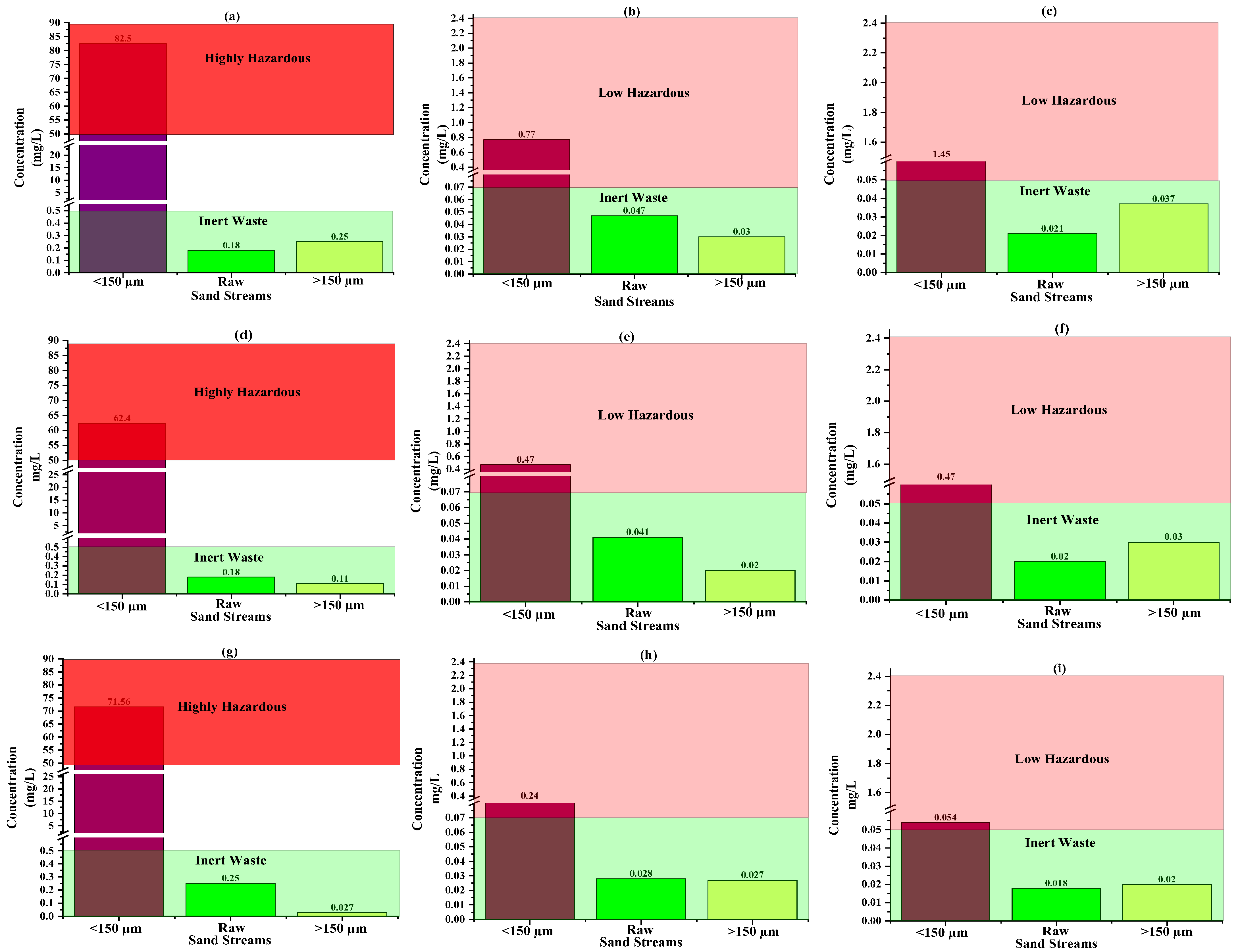
The results further suggest that adequate and systematic practices should be adopted before waste casting sand landfill disposal. This should be conducted to eliminate the highly hazardous sand portion, which is likely to contaminate and render the whole waste moulding sand batch unsuitable for landfill. These practices could involve physical segregation, such as size and/or magnetic separation. Particle size segregation appeared to be a rapid and effective method for waste sand treatment. In this way, 150 µm was adopted as the cut size for the waste casting sand cleaning process. Figure 8 shows the pollutant quantification of treated waste (+150 µm), its corresponding fine portion (−150), and raw virgin sand. The treated sand was obtained by removing the fine sand portion (−150 to −25) of the shakeout sand. The figure further compares their environmental attributes in terms of the identified toxic metals (Mn, Ni, and Cr). (a), (b), and (c) individually display the Mn, Ni, and Cr TCLP results from the moulding aggregates originating from foundry A, while (e), (f), and (d) summarise sand obtained from foundry B. Lastly, (f), (h), and (i) represent the pollutant attributes for foundry C. The removal of fine sand grains (−150 to 25 µm) from the rest of the sand showed that the coarse grains, ranging above (+150 µm), possess less hazardous contamination and appear to have comparable characteristics to the virgin sand characteristics (leachable metallics), as opposed to the fine sand. For instance, a decrease of 93, 94, and 80%, respectively, was recorded for Cr, Mn, and Ni in the treated sand from the waste moulding sand originating from foundry A. Similarly, the treated sand of foundry B showed a drop of 92 and 97% in the leachable content of Mn and Ni. Lastly, a decline of over 90% was recorded for the leachable content of Cr and Mn in the treated sand from the waste casting sand from foundry C. These treated casting sands (foundry A, B, and C) could be regarded as non-hazardous waste since they reported metallic contents well below the concentration thresholds for hazardous classification (LCT0). The obtained results support those of Dañko et al. [23], who earlier reported the possibility of the entire elimination of or considerable reduction in toxic and hazardous substances to acceptable levels through adequate reclamation practices.
The fine sand of 75 µm and below (Figure 8), on the other hand, displayed high contents of Mn, Ni, and Cr above the concentration threshold limit values and could be regarded as hazardous waste material. The obtained results complement those recorded during the bulk chemistry of the casting sand screen size metallic contents, suggesting that high metal contamination is promoted by the cast alloy ingredients [24]. In addition, the results further show that the removal of the fine portion from the waste casting sand renders the coarser portions more environmentally benign. This fine portion of sand represents 12, 10, and 15% of sand, respectively, for foundries A, B, and C.

4. Conclusions

This study showed that while the virgin foundry sand was inert, secondary sand streams such as fettling/shot blast and shakeout sand exceeded regulatory thresholds due to high concentrations of Cr (0.024–1.02 mg/L), Mn (62–97 mg/L), and Ni (0.14–3.26 mg/L), with shakeout sand being the most critical as it represented over 70% of the total WFS generated. Particle size analysis indicated that 70% of the material lay between 600 and 78 µm, but hazardous contamination was concentrated in the <150 µm fraction, which contained up to 94–97% of the magnetic metallic debris and exhibited toxicity characteristics above inert classification limits, while coarser fractions (>150 µm) remained comparable to virgin sand. Application of a simple size segregation treatment reduced hazardous metal content by 93–97%, allowing 75–85% of the shakeout sand to be reclassified as inert and leaving only 10–15% of the total waste stream to be disposed of as hazardous material, resulting in a potential 80–90% reduction in hazardous waste volumes. These results demonstrate that fines removal at a size cut of 150 µm can significantly reduce disposal costs, improve environmental compliance of ferrous casting facilities, and enable the transformation of WFS into a safe, recyclable by-product, aligning foundry practices with circular economy principles.

Author Contributions

K.J.N.: Writing, conceptualization, and original draft preparation. M.P.: Review, editing, and validation. K.D.N.: Review, editing, and validation. T.T.I.N.: Review, editing, and validation. M.P.M.: Review, editing, validation, and administration. All authors have read and agreed to the published version of the manuscript.

Funding

This research has been financed by the Institute for Nanotechnology and Water Sustainability (iNanoWS), University of South Africa (UNISA).

Data Availability Statement

The original contributions presented in this study are included in the article. Further inquiries can be directed to the corresponding author(s).

Acknowledgments

The authors express their gratitude to the local foundries that participated in this research, as well as to the Metal Casting Technology Station (UJ-MCTS) and the South African Institute of Foundrymen (SAIF) for their support.

Conflicts of Interest

No potential conflicts of interest were reported by the authors.

References

  1. Ahmad, J.; Zhou, Z.; Martínez-García, R.; Vatin, N.I.; De-Prado-Gil, J.; El-Shorbagy, M.A. Waste Foundry Sand in Concrete Production Instead of Natural River Sand: A Review. Materials 2022, 15, 2365. [Google Scholar] [CrossRef]
  2. Anderson, C.G. Recycling of Foundry Sand Through Chemical and Physical Beneficiation. In Proceedings of the CR3 Kick Off Meeting, Boston, MA, USA, 8–9 April 2010. [Google Scholar] [CrossRef]
  3. Nyembwe, J.K.; Makhatha, M.E.; Banganayi, F.C.; Nyembwe, K. Characterization of Foundry Waste Sand Streams for Recycling Applications in Construction Industry. Waste Biomass Valorization 2017, 9, 1681–1686. [Google Scholar] [CrossRef]
  4. Mavroulidou, M.; Lawrence, D. Can waste foundry sand fully replace structural concrete sand? J. Mater. Cycles Waste Manag. 2018, 21, 594–605. [Google Scholar] [CrossRef]
  5. Cioli, F.; Abbà, A.; Alias, C.; Sorlini, S. Reuse or Disposal of Waste Foundry Sand: An Insight into Environmental Aspects. Appl. Sci. 2022, 12, 6420. [Google Scholar] [CrossRef]
  6. Iloh, P.; Fanourakis, G.; Ogra, A. Evaluation of Physical and Chemical Properties of South African Waste Foundry Sand (WFS) for Concrete Use. Sustainability 2019, 11, 193. [Google Scholar] [CrossRef]
  7. Moreno, F.N.; Sígolo, J.B.; Figueira, A.V. Peat-Assisted Phytoremediation of Waste Foundry Sands: Plant Growth, Metal Accumulation and Fertility Aspects Accumulation and Fertility Aspects. Int. J. Phytoremediat. 2012, 14, 247–260. [Google Scholar] [CrossRef]
  8. Alves, B.S.Q.; Dungan, R.S.; Carnin, R.L.P.; Galvez, R.; de Carvalho Pinto, C.R.S. Metals in Waste Foundry Sands and an Evaluation of Their Leaching and Transport to Groundwater. Water Air Soil Pollut. 2014, 225, 1963. [Google Scholar] [CrossRef]
  9. Bożym, M. The study of heavy metals leaching from waste foundry sands using a one-step extraction. In Proceedings of the International Conference Energy, Environment and Material Systems (EEMS 2017), Polanica Zdrój, Poland, 13–15 September 2017; pp. 1–6. [Google Scholar] [CrossRef]
  10. Faisal, A.A.H.; Ahmed, M.D. Removal of copper ions from contaminated groundwater using waste foundry sand as permeable reactive barrier. Int. J. Environ. Sci. Technol. 2015, 12, 2613–2622. [Google Scholar] [CrossRef]
  11. Major-Gabryś, K. Environmentally Friendly Foundry Molding and Core Sands. J. Mater. Eng. Perform. 2019, 28, 3905–3911. [Google Scholar] [CrossRef]
  12. Siddique, R.; Kaur, G.; Rajor, A. Waste foundry sand and its leachate characteristics. Resour. Conserv. Recycl. 2010, 54, 1027–1036. [Google Scholar] [CrossRef]
  13. Bhardwaj, A.; Kumar, P.; Siddique, S.; Shukla, A. Comprehensive review on utilization of waste foundry sand in concrete. Eur. J. Environ. Civ. Eng. 2023, 27, 1056–1087. [Google Scholar] [CrossRef]
  14. Naik, T.R.; Singh, S.S.; Ramme, B.W. Performance and Leaching Assessment of Flowable Slurry. J. Environ. Eng. 2001, 127, 359–368. [Google Scholar] [CrossRef]
  15. Simons, K. Soil Sampling, Operating Procedure; US Environmental Protective Agency (US-EPA): Atlanta, GA, USA, 2014.
  16. Environmental Protection Agency (EPA). Method 1311: Toxicity Characteristic Leaching Procedure. Operating Protocol. U.S. EPA. 1992. 1–35. Available online: https://www.epa.gov/sites/default/files/2015-12/documents/1311.pdf (accessed on 12 January 2020).
  17. Li, Y.; Ma, S.; Chen, G.; Wang, S. Mechanical properties and durability of cement-stabilised macadam incorporating waste foundry sand. Int. J. Pavement Eng. 2021, 24, 2011278. [Google Scholar] [CrossRef]
  18. Nyembwe, K.J.; Makhatha, M.E.; Madzivhandila, T. Physico-Chemical Characterization of South African Waste Moulding Sands. Eng. J. 2016, 20, 35–48. [Google Scholar] [CrossRef]
  19. Deng, A. Contaminants in waste foundry sand and its leachate. Int. J. Environ. Pollut. 2009, 38, 425–443. [Google Scholar] [CrossRef]
  20. Zhang, H.-F.; Wang, Y.-J.; Wang, J.-L.; Huang, T.-Y.; Xiong, Y. Environmental toxicity of waste foundry sand. Huan Jing Ke Xue 2013, 34, 1174–1180. [Google Scholar] [PubMed]
  21. Bol’shakov, A.A. Final Report—Characterization of Foundry Sand Waste; The Center for Energy Efficiency and Renewable Energy, Ed.; University of Massachusetts Amherst: Amherst, MA, USA, 2000. [Google Scholar]
  22. Zanetti, M.; Godio, A. Recovery of foundry sands and iron fractions from an industrial waste landfill. Resour. Conserv. Recycl. 2006, 48, 396–411. [Google Scholar] [CrossRef]
  23. Dañko, J.; Dañko, R.; Holtzer, M. Reclamation of used sands in foundry production. Metalurgija 2003, 42, 173–177. [Google Scholar]
  24. Ji, S.; Wan, L.; Fan, Z. The Toxic Compounds And Leaching Characterisation of Spent Foundry Sands. Water Air Soil Pollut. 2001, 132, 347–364. [Google Scholar] [CrossRef]
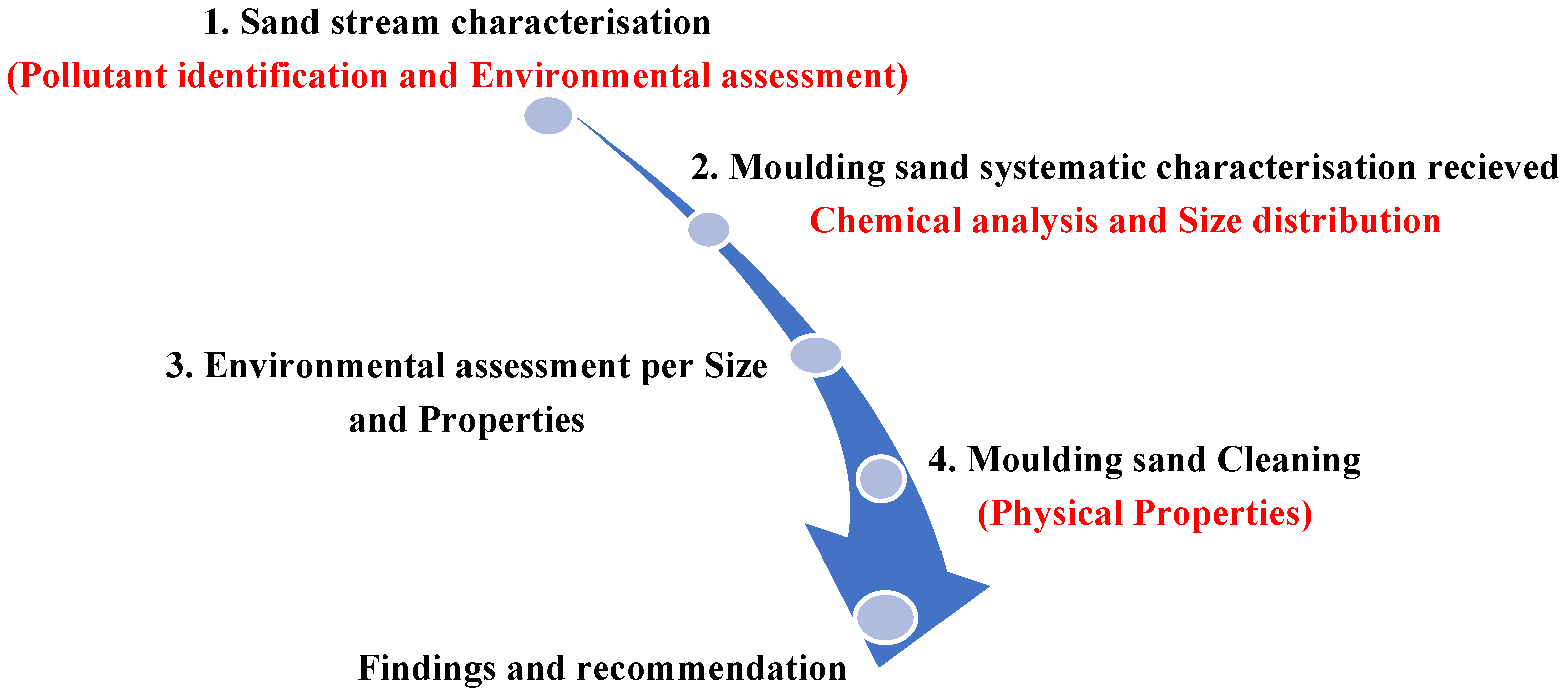
Figure 1. Stepwise schematic methodology summary.
Processes 14 00273 g001
Figure 2. Waste foundry sand physical attributes with visible metallic debris (Stereo microscope analysis). (a): Waste casting sand from foundry 1 with residual unburnt binder and coal dust; (b): waste moulding sand originating from foundry 2; (c): waste casting sand composed of deteriorated sand grains, obtained from foundry 3.
Processes 14 00273 g002
Figure 3. Foundry sand stream elemental environmental assessments. (ac) show the leachable content of Mn, Ni, and Cr from foundry A sand material. In the same order, (df) summarise the foundry B sand characteristics. Lastly, (gi) are assigned to foundry C.
Processes 14 00273 g003
Figure 4. Particle size distribution and bulk chemistry; (ac) displays the particle size distribution of foundry sand A, B, and C, respectively. The graphs (a1a3) individually show the content of Mn, Ni, and Cr in the different sizes of foundry A’s sand. Similarly, graphs (b1b3) a summary is given of the hazardous metal (Mn, Ni, and Cr) content contained in the different screen sizes of foundry B’s sand. Lastly, In (c1c3) a summary is given of the hazardous metal (Mn, Ni, and Cr) content contained in the different screen sizes of foundry C’s sand.
Processes 14 00273 g004
Figure 5. Optical micrographs of waste moulding sand’s physical attributes: (ac) show the sand grains at 425, 212, and 106 µm particle size fractions, respectively.
Processes 14 00273 g005
Figure 6. Moulding sand metallic quantification per screen size: (ac) show the magnetic and non-magnetic sand portion of the various shakeout sands from foundries A, B and C, respectively.
Processes 14 00273 g006
Figure 7. Foundry sand stream elemental environmental assessments. (ac) show the leachable content of Mn, Ni, and Cr from foundry A sand material. In the same order, (df) summarise the foundry B sand characteristics. Lastly, (gi) are assigned to foundry C.
Processes 14 00273 g007aProcesses 14 00273 g007b
Figure 8. Foundry sand stream elemental environmental assessments. (ac) show the leachable content of Mn, Ni, and Cr from foundry A sand material. In the same order, (df) summarise the foundry B sand characteristics. Lastly, (gi) are assigned to foundry C.
Processes 14 00273 g008
Table 1. Bulk chemistry of collected sands.
Element(s)Foundry 1/(Streams)Foundry 2/(Streams)Foundry 3/(Streams)
RawShakeoutFettlingRawShakeoutFettlingRawShakeoutFettling
Al5.214.49.11.234.463.250.521.511.25
Fe2.16.158.30.350.74410.352.7531.2
Cr0.21.28.20.030.026.780.060.913.78
Mn0.030.832.030.030.733.030.020.031.72
Ni0.010.030.450.010.030.480.020.031.45
Mg0.070.390.160.060.70.130.060.690.12
Element is bold are the identified toxic stipulated elements.
Table 2. South African waste classification standard.
South African Waste Type Classification and Landfill Designation
Waste DesignationClassificationHazardous LevelLandfill Rate
Type4LC < LCT0InertClass D site
Type3LCT0 > LC < LCT1LowClass C Site
Type2LCT1 < LC < LCT2ModerateClass B Site
Type1LCT2 < LC < LCT3HighClass A Site
Type0LC > LTC3Very highNot Allowed
Disclaimer/Publisher’s Note: The statements, opinions and data contained in all publications are solely those of the individual author(s) and contributor(s) and not of MDPI and/or the editor(s). MDPI and/or the editor(s) disclaim responsibility for any injury to people or property resulting from any ideas, methods, instructions or products referred to in the content.