Environmental Compliance of Ferrous Waste Moulding Sand and Best Foundry Practices for Hazardous Metals (Mn, Ni, and Cr)


 , , and
Abstract
1. Introduction
2. Materials and Methods
2.1. Materials
2.2. Existing Sand Management in the Visited Casting Facilities
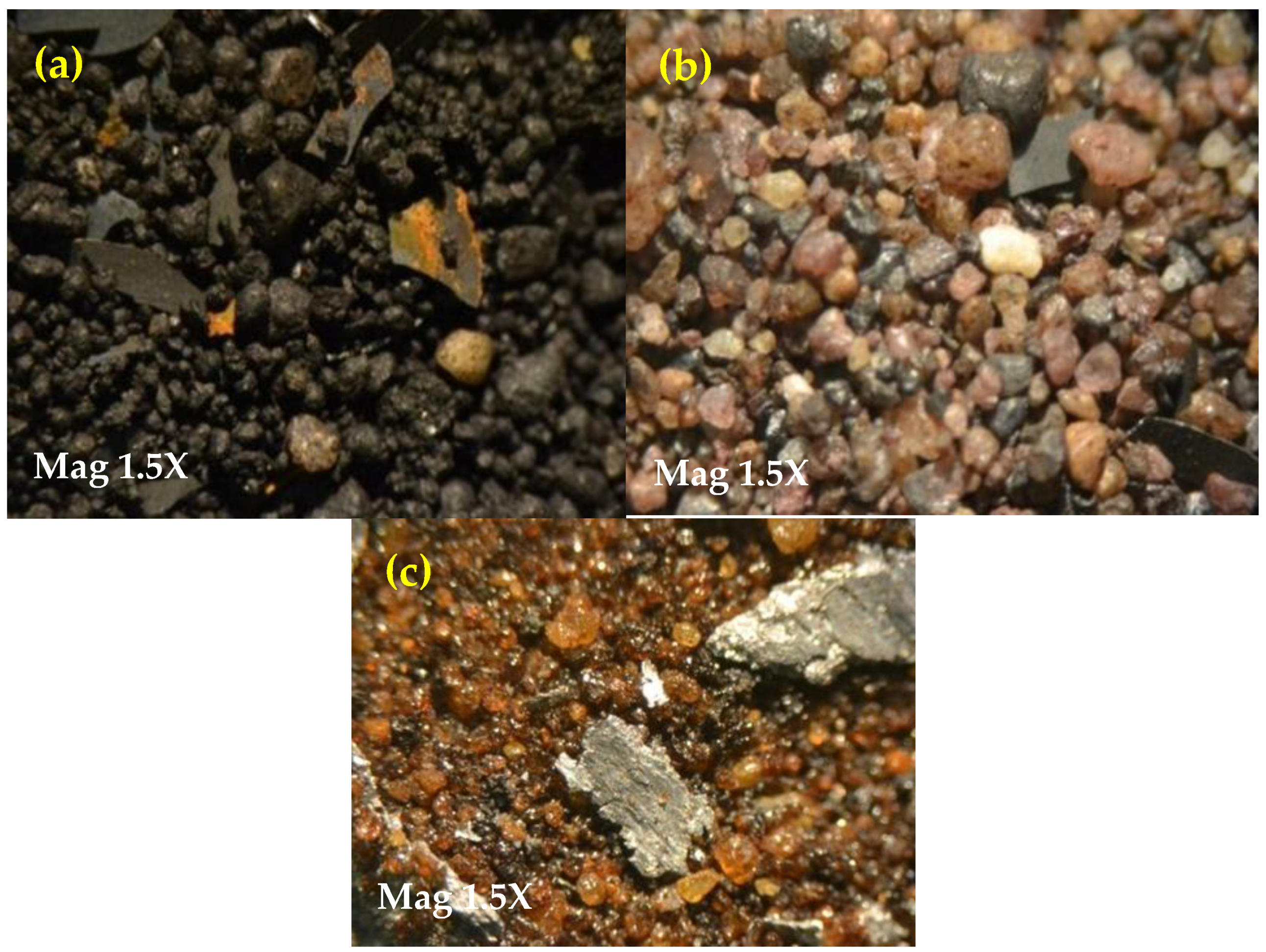
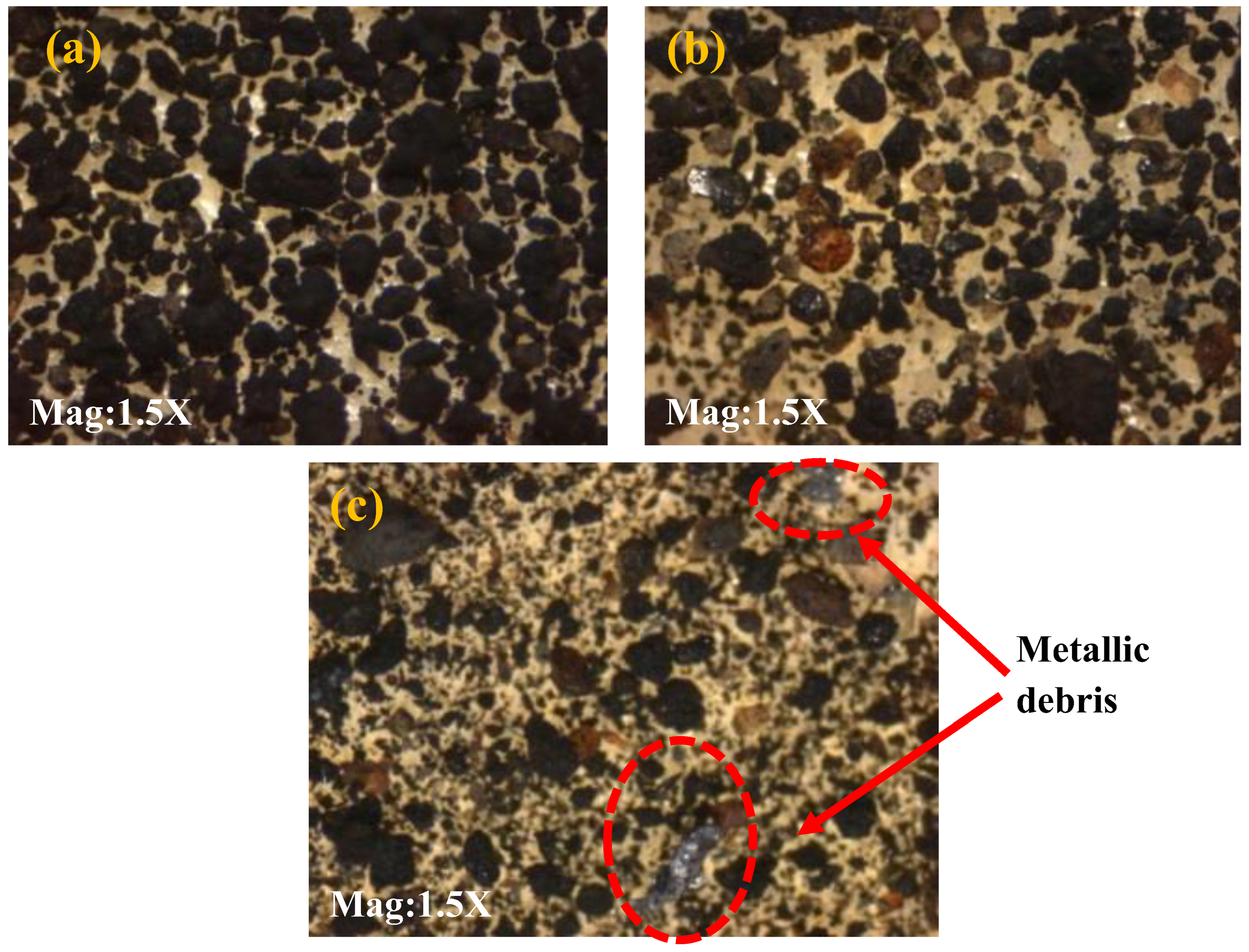
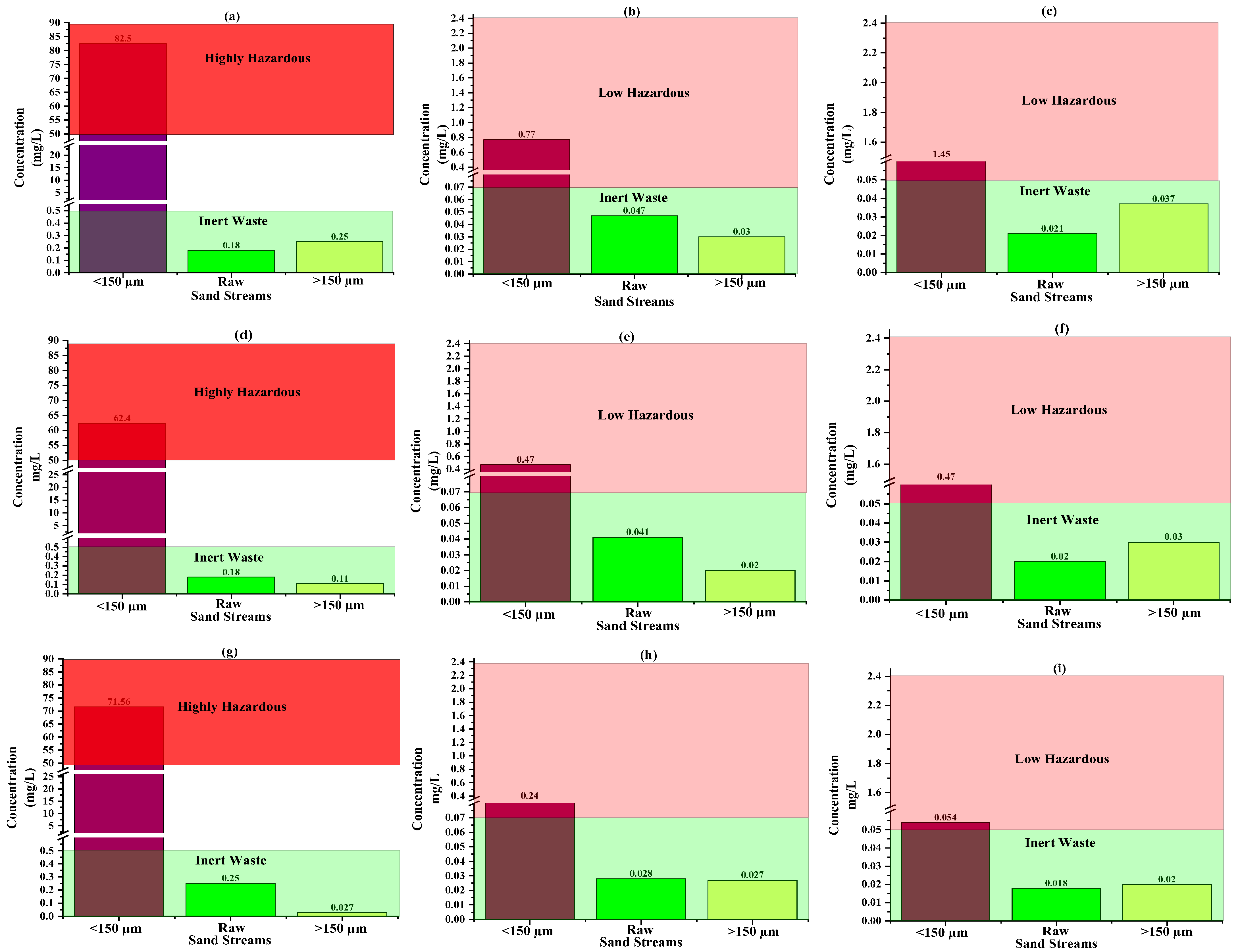
- Foundry 1 (Sample A): The facility appears to have a waste management practice within the foundry, and it appears that each foundry waste stream is collected individually. It possesses 3 sand streams: virgin, shakeout/moulding sand, and shot blast sand. The waste sand destined for landfill is a mixture of shot blast sand and shakeout sand, obtained after the sand reclamation operation. Three (3) sand samples of approximately 20 kg (virgin, waste shakeout, and shotblast sand) were collected from their respective streams for this study.
- Foundry 2 (Sample B): The facility had virgin, shakeout, and fettling as the principal sand streams. Within this facility, all sand waste, such as moulding/shakeout waste sand, fettling, and dust, is combined into one stockpile and discarded in a landfill. As in foundry A, three samples (waste moulding/shakeout, fettling, and virgin sand) of equal quantities were collected for analysis in this study.
- Foundry 3 (Sample C): In this facility, the shakeout waste sand is mixed with the dust sand. In addition to this, all the waste streams are mixed into one material for landfill. The facility has virgin, waste shakeout, and shot blast as the major sand streams. Approximately 15 kg of each stream, including raw material, shakeout waste, and shot blast, was collected for this study.
2.3. Methods
3. Results and Discussion
3.1. Waste Foundry Sand Stream Characterisation, Pollutant Identification, and Environmental State
3.1.1. Waste Foundry Sand Stream Bulk Chemistry and Pollutant Identification
3.1.2. Sand Stream Environmental Assessment and Compliance
3.2. Systematic Characterisation of Waste Foundry Sand for Cleaning Purposes
3.2.1. Particle Size Distribution and Size Chemistry
3.2.2. Waste Moulding Sand Metallic Quantification and Environmental Assessment
3.3. Waste Moulding Sand Cleaning Method and Environmental Assessment
4. Conclusions
Author Contributions
Funding
Data Availability Statement
Acknowledgments
Conflicts of Interest
References
- Ahmad, J.; Zhou, Z.; Martínez-García, R.; Vatin, N.I.; De-Prado-Gil, J.; El-Shorbagy, M.A. Waste Foundry Sand in Concrete Production Instead of Natural River Sand: A Review. Materials 2022, 15, 2365. [Google Scholar] [CrossRef]
- Anderson, C.G. Recycling of Foundry Sand Through Chemical and Physical Beneficiation. In Proceedings of the CR3 Kick Off Meeting, Boston, MA, USA, 8–9 April 2010. [Google Scholar] [CrossRef]
- Nyembwe, J.K.; Makhatha, M.E.; Banganayi, F.C.; Nyembwe, K. Characterization of Foundry Waste Sand Streams for Recycling Applications in Construction Industry. Waste Biomass Valorization 2017, 9, 1681–1686. [Google Scholar] [CrossRef]
- Mavroulidou, M.; Lawrence, D. Can waste foundry sand fully replace structural concrete sand? J. Mater. Cycles Waste Manag. 2018, 21, 594–605. [Google Scholar] [CrossRef]
- Cioli, F.; Abbà, A.; Alias, C.; Sorlini, S. Reuse or Disposal of Waste Foundry Sand: An Insight into Environmental Aspects. Appl. Sci. 2022, 12, 6420. [Google Scholar] [CrossRef]
- Iloh, P.; Fanourakis, G.; Ogra, A. Evaluation of Physical and Chemical Properties of South African Waste Foundry Sand (WFS) for Concrete Use. Sustainability 2019, 11, 193. [Google Scholar] [CrossRef]
- Moreno, F.N.; Sígolo, J.B.; Figueira, A.V. Peat-Assisted Phytoremediation of Waste Foundry Sands: Plant Growth, Metal Accumulation and Fertility Aspects Accumulation and Fertility Aspects. Int. J. Phytoremediat. 2012, 14, 247–260. [Google Scholar] [CrossRef]
- Alves, B.S.Q.; Dungan, R.S.; Carnin, R.L.P.; Galvez, R.; de Carvalho Pinto, C.R.S. Metals in Waste Foundry Sands and an Evaluation of Their Leaching and Transport to Groundwater. Water Air Soil Pollut. 2014, 225, 1963. [Google Scholar] [CrossRef]
- Bożym, M. The study of heavy metals leaching from waste foundry sands using a one-step extraction. In Proceedings of the International Conference Energy, Environment and Material Systems (EEMS 2017), Polanica Zdrój, Poland, 13–15 September 2017; pp. 1–6. [Google Scholar] [CrossRef]
- Faisal, A.A.H.; Ahmed, M.D. Removal of copper ions from contaminated groundwater using waste foundry sand as permeable reactive barrier. Int. J. Environ. Sci. Technol. 2015, 12, 2613–2622. [Google Scholar] [CrossRef]
- Major-Gabryś, K. Environmentally Friendly Foundry Molding and Core Sands. J. Mater. Eng. Perform. 2019, 28, 3905–3911. [Google Scholar] [CrossRef]
- Siddique, R.; Kaur, G.; Rajor, A. Waste foundry sand and its leachate characteristics. Resour. Conserv. Recycl. 2010, 54, 1027–1036. [Google Scholar] [CrossRef]
- Bhardwaj, A.; Kumar, P.; Siddique, S.; Shukla, A. Comprehensive review on utilization of waste foundry sand in concrete. Eur. J. Environ. Civ. Eng. 2023, 27, 1056–1087. [Google Scholar] [CrossRef]
- Naik, T.R.; Singh, S.S.; Ramme, B.W. Performance and Leaching Assessment of Flowable Slurry. J. Environ. Eng. 2001, 127, 359–368. [Google Scholar] [CrossRef]
- Simons, K. Soil Sampling, Operating Procedure; US Environmental Protective Agency (US-EPA): Atlanta, GA, USA, 2014.
- Environmental Protection Agency (EPA). Method 1311: Toxicity Characteristic Leaching Procedure. Operating Protocol. U.S. EPA. 1992. 1–35. Available online: https://www.epa.gov/sites/default/files/2015-12/documents/1311.pdf (accessed on 12 January 2020).
- Li, Y.; Ma, S.; Chen, G.; Wang, S. Mechanical properties and durability of cement-stabilised macadam incorporating waste foundry sand. Int. J. Pavement Eng. 2021, 24, 2011278. [Google Scholar] [CrossRef]
- Nyembwe, K.J.; Makhatha, M.E.; Madzivhandila, T. Physico-Chemical Characterization of South African Waste Moulding Sands. Eng. J. 2016, 20, 35–48. [Google Scholar] [CrossRef]
- Deng, A. Contaminants in waste foundry sand and its leachate. Int. J. Environ. Pollut. 2009, 38, 425–443. [Google Scholar] [CrossRef]
- Zhang, H.-F.; Wang, Y.-J.; Wang, J.-L.; Huang, T.-Y.; Xiong, Y. Environmental toxicity of waste foundry sand. Huan Jing Ke Xue 2013, 34, 1174–1180. [Google Scholar] [PubMed]
- Bol’shakov, A.A. Final Report—Characterization of Foundry Sand Waste; The Center for Energy Efficiency and Renewable Energy, Ed.; University of Massachusetts Amherst: Amherst, MA, USA, 2000. [Google Scholar]
- Zanetti, M.; Godio, A. Recovery of foundry sands and iron fractions from an industrial waste landfill. Resour. Conserv. Recycl. 2006, 48, 396–411. [Google Scholar] [CrossRef]
- Dañko, J.; Dañko, R.; Holtzer, M. Reclamation of used sands in foundry production. Metalurgija 2003, 42, 173–177. [Google Scholar]
- Ji, S.; Wan, L.; Fan, Z. The Toxic Compounds And Leaching Characterisation of Spent Foundry Sands. Water Air Soil Pollut. 2001, 132, 347–364. [Google Scholar] [CrossRef]


| Element(s) | Foundry 1/(Streams) | Foundry 2/(Streams) | Foundry 3/(Streams) | ||||||
|---|---|---|---|---|---|---|---|---|---|
| Raw | Shakeout | Fettling | Raw | Shakeout | Fettling | Raw | Shakeout | Fettling | |
| Al | 5.2 | 14.4 | 9.1 | 1.23 | 4.46 | 3.25 | 0.52 | 1.51 | 1.25 |
| Fe | 2.1 | 6.1 | 58.3 | 0.35 | 0.74 | 41 | 0.35 | 2.75 | 31.2 |
| Cr | 0.2 | 1.2 | 8.2 | 0.03 | 0.02 | 6.78 | 0.06 | 0.91 | 3.78 |
| Mn | 0.03 | 0.83 | 2.03 | 0.03 | 0.73 | 3.03 | 0.02 | 0.03 | 1.72 |
| Ni | 0.01 | 0.03 | 0.45 | 0.01 | 0.03 | 0.48 | 0.02 | 0.03 | 1.45 |
| Mg | 0.07 | 0.39 | 0.16 | 0.06 | 0.7 | 0.13 | 0.06 | 0.69 | 0.12 |
| South African Waste Type Classification and Landfill Designation | |||
|---|---|---|---|
| Waste Designation | Classification | Hazardous Level | Landfill Rate |
| Type4 | LC < LCT0 | Inert | Class D site |
| Type3 | LCT0 > LC < LCT1 | Low | Class C Site |
| Type2 | LCT1 < LC < LCT2 | Moderate | Class B Site |
| Type1 | LCT2 < LC < LCT3 | High | Class A Site |
| Type0 | LC > LTC3 | Very high | Not Allowed |
Disclaimer/Publisher’s Note: The statements, opinions and data contained in all publications are solely those of the individual author(s) and contributor(s) and not of MDPI and/or the editor(s). MDPI and/or the editor(s) disclaim responsibility for any injury to people or property resulting from any ideas, methods, instructions or products referred to in the content. |
© 2026 by the authors. Licensee MDPI, Basel, Switzerland. This article is an open access article distributed under the terms and conditions of the Creative Commons Attribution (CC BY) license.
Share and Cite
Nyembwe, K.J.; Petranikova, M.; Nyembwe, K.D.; Nkambule, T.T.I.; Mubiayi, M.P. Environmental Compliance of Ferrous Waste Moulding Sand and Best Foundry Practices for Hazardous Metals (Mn, Ni, and Cr). Processes 2026, 14, 273. https://doi.org/10.3390/pr14020273
Nyembwe KJ, Petranikova M, Nyembwe KD, Nkambule TTI, Mubiayi MP. Environmental Compliance of Ferrous Waste Moulding Sand and Best Foundry Practices for Hazardous Metals (Mn, Ni, and Cr). Processes. 2026; 14(2):273. https://doi.org/10.3390/pr14020273
Chicago/Turabian StyleNyembwe, Kolela Joseph, Martina Petranikova, Kasongo Didier Nyembwe, Thabo T. I. Nkambule, and Mukuna Patrick Mubiayi. 2026. "Environmental Compliance of Ferrous Waste Moulding Sand and Best Foundry Practices for Hazardous Metals (Mn, Ni, and Cr)" Processes 14, no. 2: 273. https://doi.org/10.3390/pr14020273
APA StyleNyembwe, K. J., Petranikova, M., Nyembwe, K. D., Nkambule, T. T. I., & Mubiayi, M. P. (2026). Environmental Compliance of Ferrous Waste Moulding Sand and Best Foundry Practices for Hazardous Metals (Mn, Ni, and Cr). Processes, 14(2), 273. https://doi.org/10.3390/pr14020273