1. Introduction
Drilling fluids, commonly referred to as drilling muds, play a critical role in the success and safety of oil and gas exploration and production. These complex fluid systems serve multiple essential functions: they lubricate and cool the drill-bit, maintain wellbore stability, suspend and transport drill cuttings to the surface, and control subsurface pressure by mitigating fluid loss [
1]. Drilling fluids are typically classified into two main categories of water-based drilling fluids (WBDFs) and oil-based drilling fluids (OBDFs), each offering distinct performance characteristics and suited to different drilling environments [
2].
WBDFs, which are more commonly used due to their lower cost and environmental compatibility, consist primarily of water as the base fluid. Various additives—such as bentonite, polymers, viscosifiers, and fluid-loss control agents—are used to tailor the fluid’s rheological and filtration properties [
3]. OBDFs, on the other hand, employ oil (e.g., diesel or synthetic hydrocarbons) as the continuous phase, offering enhanced thermal stability, superior lubrication, and better performance under high-pressure, high-temperature (HPHT) conditions and in reactive shale formations. However, the use of OBDFs is constrained by their higher cost, greater environmental impact, and more complex handling and disposal requirements [
4].
A critical operational challenge when drilling with WBDFs is the loss of drilling fluid through permeable formations, which can cause complications such as formation damage, stuck-pipe incidents, increased non-productive time, and elevated operational costs [
5]. Moreover, uncontrolled fluid loss can contribute to environmental degradation through the contamination of terrestrial and aquatic ecosystems. To address this issue, fluid-loss control additives are routinely incorporated into WBDFs. Traditional additives, such as potassium chloride, sodium hydroxide, polyamines, and synthetic polymers, while effective, are often expensive, non-biodegradable, and may pose toxicity risks to both human health and the environment [
6].
When improperly disposed of, drilling fluids, particularly those containing synthetic chemicals, can pose significant ecological hazards. They may contain heavy metals, polycyclic aromatic hydrocarbons (PAHs), and other aquatic-toxic or potentially carcinogenic constituents, which can contribute to long-term soil degradation and harm aquatic ecosystems [
7]. Given these concerns, there has been a growing emphasis on developing more sustainable drilling fluid formulations.
Recent shifts in industry and academic focus have highlighted the potential of natural, biodegradable materials, particularly those derived from agricultural waste, as environmentally friendly alternatives to conventional additives. These materials offer a dual advantage: they reduce dependence on synthetic chemicals while providing a means of valorizing organic waste streams. Fruit peels, crop residues, and plant-based powders have shown considerable promise in enhancing both the rheological and filtration properties of WBDFs [
8]. Notable examples include mandarin peel, bean peel, and other fruit-derived powders that are abundant, biodegradable, and inexpensive, as shown in
Table 1.
Studies have demonstrated that natural additives can significantly reduce filtrate loss, improve viscosity profiles, and produce thinner, more resilient filter cakes. For example, banana tree powder has been reported to stabilize mud rheology and reduce filtrate volume, while tamarind seed and rambutan shell powders have enhanced gel strength and reduced fluid loss [
9]. Recent investigations have shown that adding 4 wt% mandarin peel powder (MPP) can produce a plastic viscosity (PV) of 63 cP and a yield point (YP) of 109 lb/100 ft
2. Similarly, medium broad bean peel powder (MBBPP) and prosodies fractal (PF) have been reported to significantly reduce fluid loss and enhance gel strength [
10].
The filtration behavior of drilling fluids depends strongly on mud cake formation and fluid migration through porous media. Filtration occurs when the liquid phase (filtrate) is forced through the permeable formation matrix or a filter medium, leaving behind a layer of retained solids known as the filter cake. The key properties of the filter cake, particularly its permeability and thickness, directly govern fluid-loss performance by controlling the resistance to filtrate flow [
11].
According to Darcy’s law, smaller bioparticle additives can fill voids between larger particles in the mud cake, thereby reducing permeability and controlling fluid loss [
12]. Regular monitoring of mud cake thickness and fluid loss is, therefore, crucial for operational efficiency and to mitigate formation damage. In addition to fluid-loss considerations, drilling fluid invasion can also influence reservoir mechanical behavior by altering pore pressure and stress distribution, which may contribute to fracture initiation and energy dissipation within the formation. Related fluid–solid interaction mechanisms affecting energy evolution and fracture development have been reported in geomaterials such as coal under dynamic loading conditions [
13].
Beyond organic waste, nanomaterials such as titanium dioxide (TiO
2) and silicon dioxide (SiO
2) nanoparticles have been employed to enhance WBDF performance [
14]. These nanoparticles have been shown to reduce friction by 23% to 76%, depending on their concentration, thereby improving wellbore hydraulics and extending drill-bit life [
15]. However, concerns about the long-term environmental implications of nanomaterials persist, making biodegradable, natural alternatives a more sustainable solution when comparable performance is achievable.
The increasing push for circular economy practices and stricter environmental regulations further underscore the need for sustainable drilling technologies. For instance, initiatives in water-scarce regions such as New Mexico have begun to explore the reuse of treated oil and gas wastewater for agricultural and industrial applications [
16,
17]. Such strategies not only demonstrate a commitment to sustainability but also reflect the broader industry shift towards integrating waste recovery and resource efficiency in drilling operations. Similarly, valorizing agricultural waste for use in drilling fluids represents a promising avenue for reducing environmental footprints and promoting resource circularity.
In response to these challenges and opportunities, this study explores the use of four specific biodegradable waste materials, banana tree powder, avocado seed powder, rambutan shell powder, and tamarind shell powder, as eco-friendly additives in WBDFs. These materials were selected based on their abundance and biodegradability. Their application in drilling fluids remains relatively underexplored, particularly in combination and comparative studies at HTHP conditions, presenting a unique opportunity for innovation.
To support this investigation, a comprehensive material characterization is conducted using Scanning Electron Microscopy (SEM), Energy-Dispersive X-ray Spectroscopy (EDX), and Fourier Transform Infrared Spectroscopy (FTIR). These techniques help identify the surface morphology, elemental composition, and functional groups of the biowaste materials, respectively [
14]. The effectiveness of the additives is assessed through standard drilling fluid performance parameters, including plastic viscosity, yield point, gel strength, filtrate volume, and filter-cake thickness [
4].
Furthermore, a review of the recent literature reveals a growing body of research on biodegradable drilling fluid additives derived from diverse agricultural sources such as coconut shells, potato and corn starch, mango and cashew peels, rice husks, barley, and apple skins. Notably, barley additives have shown stability even under high-temperature conditions, indicating potential for use in deep and geothermal drilling [
18]. Rice husks have also been reported to reduce filter-cake thickness by up to 8.57% [
19].
Table 1 provides a consolidated summary of these biodegradable additives in recent years, showcasing their effectiveness and reinforcing the viability of biowaste utilization in WBDFs.
Table 1.
The recent studies in using biodegradable materials for development of WBDFs additives.
Table 1.
The recent studies in using biodegradable materials for development of WBDFs additives.
| Study | Reference | Biodegradable
Materials | Combination | Purpose |
|---|
| (1) | [20] | Potato/corn starch | A reduction (20.66% and 26.66%, respectively) in fluid loss and (6.33% and 17.77%, respectively) in filter-cake thickness was achieved. | Fluid loss control agent |
| (2) | [21] | Coconut shell | Amounts of 0 g, 10 g, 20 g, 30 g and 40 g
Time intervals (10 min, 20 min, 30 min, and 40 min) | Control fluid loss |
| (3) | [22] | Sugarcane | Size of 150 μm and 75 μm | Viscosity reduces twice, drilling mud also increased the gel strength |
| (4) | [23] | Tamarind seed | 10 g, 20 g, and 25 g powder weight on addition to the mud | Control fluid loss |
| (5) | [2] | Coffee and watermelon rind waste | 1, 2 and 3 gm added to conventional WBDF | Reduction of the fluid loss
Reduction of the mud thickness |
| (6) | [6] | Waste mandarin peel | Different concentrations (0.5, 1, 1.5, and 2% by volume of water) added to WBDF | Fluid loss control |
| (7) | [4] | Peanut shell | Concentrations of 1, 2 and 3 wt% by volume added to the WBDF | Fluid loss control |
| (8) | [24] | Pumpkin peel (PP), courgette peel (CP), and butternut squash peel (BSP) | Concentrations of 1, 2 and 3 wt% by volume added to the WBDF | Fluid loss control |
| (9) | [25] | Wheat nano-polymer | 75–600 μm in concentration of 2% to conventional WBDF | Fluid loss control
Plastic viscosity modifier |
| (10) | [26] | Ultrafine potato waste | 0.5 wt% added to the conventional WBDF | Fluid loss control
Viscosity modifier |
| (11) | [1] | Prosopis farcta plant and pomegranate peel powders | Adding 3 wt% of the utilized material to the WBDF reduced the fluid loss from 11.6 mL to 7.9 mL | Fluid loss control agent |
| (12) | [27] | Palm tree leaves | 1.5 and 3 wt% of water materials added to the WBDF and HTHP | pH reducer, viscosity modifier, filtration loss control |
| (13) | [28] | Rambutan waste | 0.01, 0.1, and 0.5 g were added to the WBDF at LTLP | Fluid loss control agent
Viscosity modifier |
This study builds upon and extends these findings by focusing on underutilized waste streams. Specifically, the inclusion of avocado and tamarind wastes in drilling fluids remains largely unexplored, despite their potential. For example, avocado seeds contain biodegradable polymers and fibers that may reinforce mud structure, while tamarind shells are fibrous and carbon-rich, making them suitable for filtration enhancement. Although limited studies such as [
23,
28,
29] have explored the use of tamarind and avocado seed powder in drilling muds, no published work has reported the use of tamarind shells, nor any formulation incorporating avocado seeds under HPHT conditions, making the present study the first to evaluate these specific by-products in WBDF systems. The cellulose–hemicellulose–lignin composition of avocado seeds (55–65 wt% carbohydrate and lignin fractions) and the high carbon and calcium content of tamarind shells from the EDX data are expected to promote compact filter-cake formation and improve thermal stability under HPHT conditions. These compositional and morphological features provide the mechanistic basis for the enhanced rheological and filtration performance observed.
Similarly, banana plant waste, particularly the pseudostems and peels, has shown efficacy in modifying mud properties. Reference [
9] demonstrated that banana peel powder at concentrations of 1–3% significantly reduced calcium content and enhanced filtration control. However, increases in salinity and filtrate volume were observed, indicating the need for optimized formulations. Moreover, comparisons with bagasse and coconut fiber in lost-circulation studies suggest that banana trunks perform competitively but require further rheological and filtration analysis [
30].
Rambutan shell, although less studied, has yielded promising results. Reference [
28] reported that just 0.01 g of raw rambutan peel reduced fluid loss from 9 mL to 4 mL and produced the thinnest mud cake (1.09 mm), outperforming base fluids that generated a 2.82 mm cake. These findings support the hypothesis that rambutan-based additives improve both rheology and filtration behavior at LPLT; however, performance at HPHT, which is the aim of this study, needs to be explored. Although previous studies have investigated individual biodegradable additives for drilling fluid applications, most have focused on a single material, limited particle-size ranges, or ambient testing conditions. The present study advances the field by providing a systematic, comparative evaluation of four agricultural waste-derived additives across controlled micro-scale particle sizes and under both LPLT and HPHT conditions. In particular, the use of tamarind shell powder, which has previously not been reported in drilling fluid applications, and the direct comparison with avocado seed, banana trunk, and rambutan shell powders represent a novel contribution. By coupling rheological and filtration performance with detailed physicochemical characterization, this work provides new insights into the mechanisms by which biodegradable microparticles control fluid loss and mud-cake development under realistic drilling conditions.
In summary, this study aims to investigate and compare the performance of banana tree, avocado seed, rambutan shell, and tamarind shell powders as sustainable, biodegradable additives in WBDFs under HPHT conditions. Through detailed material characterization and experimental testing, it seeks to identify cost-effective and environmentally responsible alternatives to conventional drilling fluid additives. The primary objectives include reducing fluid loss, enhancing rheological properties, and promoting ecological stewardship through the valorization of agricultural waste.
The remainder of this paper is structured as follows:
Section 2 details the experimental methodology used to conduct the filtration experiments with the selected biowaste materials.
Section 3 presents the rheological properties and corresponding experimental procedures.
Section 4 discusses material characterization using SEM, EDX, and FTIR analyses. This is followed by an in-depth examination of filtration performance, the core objective of this study, and a comparative analysis across the four materials. Finally, the concluding section synthesizes the key findings and offers directions for future research.
2. Materials and Methods
This study employed a systematic experimental procedure to evaluate the effectiveness of biodegradable waste-derived additives in water-based drilling fluids (WBDFs). The primary aim was to assess the influence of particle size and concentration of powders derived from banana tree (BT), avocado seed (AS), tamarind shell (TS), and rambutan shell (RS) on the rheological and filtration properties of drilling muds. The materials for the experiments were collected from food waste in the UK.
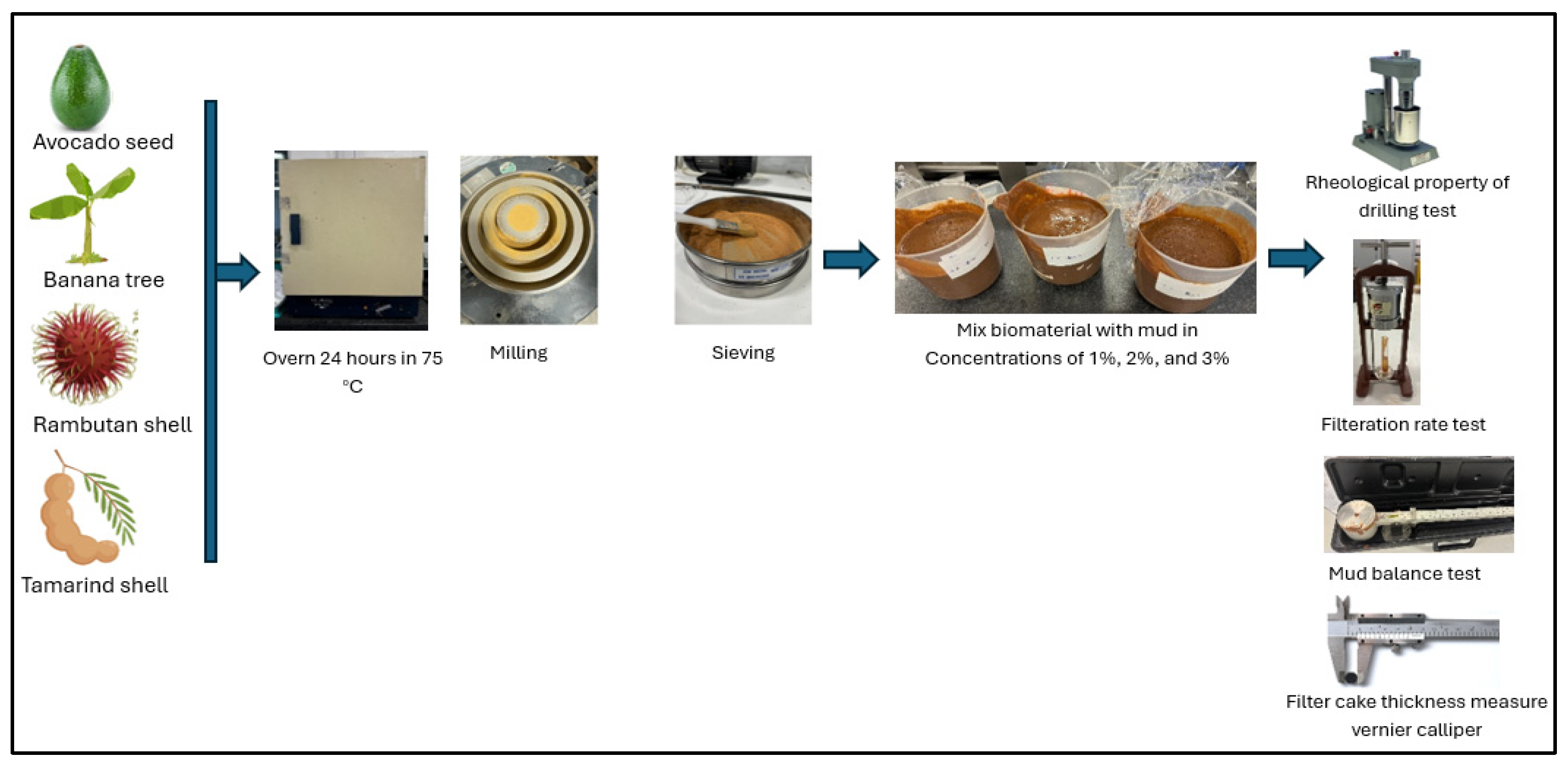
Figure 1 illustrates the full workflow, including material preparation, additive incorporation, and subsequent fluid testing.
The process began with the preparation of powdered biomaterials. Once the tamarind shell and other selected biomaterials were ground into powders, they were sieved into defined particle size ranges. Each size fraction was stored separately and used at three concentrations (7 g, 14 g, and 21 g), corresponding to 1%, 2%, and 3% by weight of the drilling mud base. A series of standardized tests, including mud balance, rheological assessment, and API filtration, were conducted using appropriate equipment to ensure reliable comparisons across all formulations.
2.1. Preparation of Biomaterials
Four agricultural waste materials—banana tree (BT), avocado seed (AS), tamarind shell (TS), and rambutan shell (RS)—were selected for evaluation as eco-friendly additives. The preparation began with the removal of any edible or unwanted parts, leaving only the relevant shells and seeds. These were thoroughly washed using deionized water, chopped into smaller pieces, and oven-dried at 75 °C for four hours to reduce moisture content. The dried samples were then milled into fine powders using a mechanical grinder. After milling, the powders were sieved to obtain consistent particle sizes (300 μm, 150 μm, 75 μm, and 32 μm). This particle-size control was essential to ensure uniformity and reproducibility in the drilling fluid experiments. Following preparation, material characterization was performed using standard techniques: Fourier Transform Infrared Spectroscopy (FTIR), Scanning Electron Microscopy (SEM), and Energy-dispersive X-ray Spectroscopy (EDX).
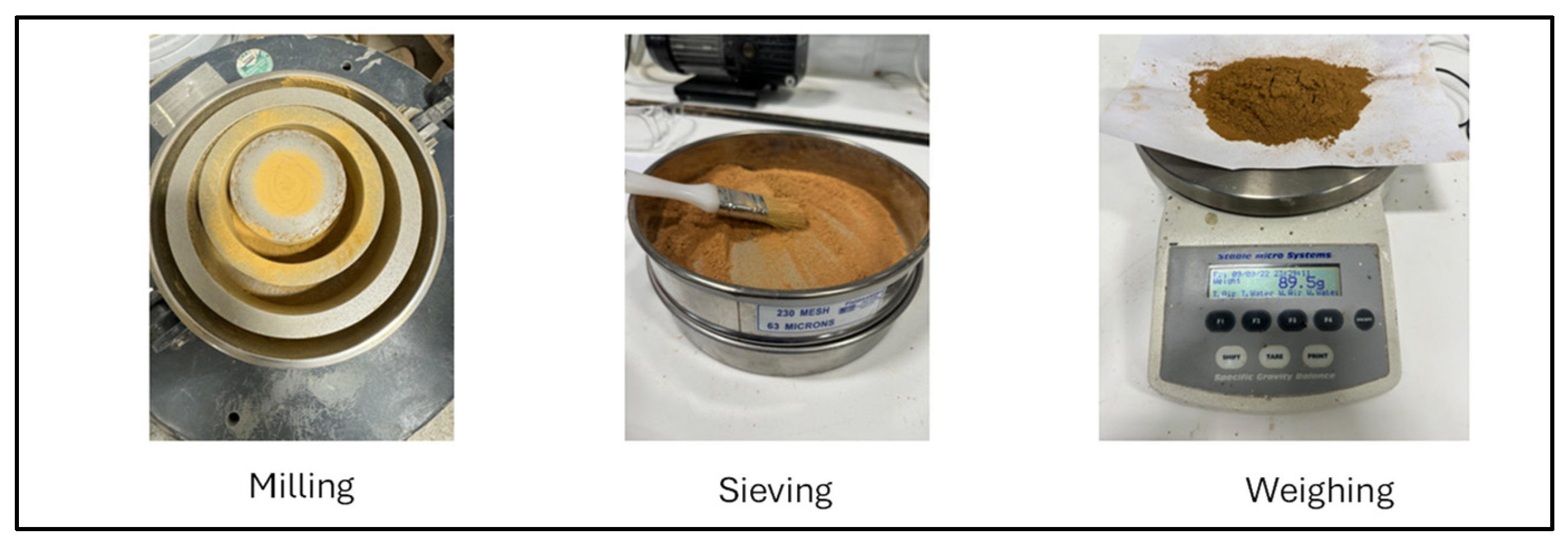
As shown in
Figure 2, visual documentation of the preparation process reinforces the importance of meticulous handling and size refinement. Accurate weighing and size consistency ensured experimental reliability and facilitated valid performance comparisons.
2.2. Mud Preparation with Biomaterials
To investigate the influence of biodegradable additives on WBDFs, three concentrations (7 g, 14 g, and 21 g) of each powder were added to the base mud. These amounts were selected to represent 1%, 2%, and 3% wt%. For each formulation, 700 mL of deionized water was measured into separate beakers labeled according to the additive type and concentration. Following established procedures, 40 g of bentonite was dispersed into the water under continuous stirring to prevent agglomeration [
3]. Additionally, 1 g of sodium hydroxide (NaOH) was introduced into each formulation to stabilize the pH and enhance viscosity. Subsequently, the biomaterial powders, namely BT, AS, RS, and TS, were added in their respective quantities and particle sizes [
1]. Each mixture underwent homogenization using a high-speed mechanical mixer for five minutes, ensuring even distribution of additives throughout the fluid matrix [
2]. The mud samples were then left to rest for 24 h to facilitate full hydration and structural stability before testing. This procedure followed the recommendations of [
31] and was consistent with API RP 13B-1 protocols (API RP 13B-1 [
32]). The goal of this step was to ensure repeatability in the formulation process and to compare additive performance under identical baseline conditions.
2.3. Characterization of the Materials
Each of the experimental formulations followed a consistent recipe: 700 mL of deionized water, 40 g of bentonite, and 1 g of NaOH, with varying concentrations of the biodegradable additives.
Table 2 summarizes the different formulations prepared using BT, AS, RS, and TS powders, outlining the particle size ranges and weight percentages employed. The table also includes a reference mud without any additives to serve as a baseline for performance evaluation. The biodegradable additives (tamarind shell, rambutan shell, banana trunk, and avocado seed powders) were characterized to examine their morphology, functional groups, and elemental composition. Scanning Electron Microscopy (SEM) was used to analyze particle shape, surface texture, and microstructural features [
33]. Fourier Transform Infrared (FTIR) Spectroscopy was employed to identify the main functional groups present in the materials [
34], while Energy-Dispersive X-ray (EDX) analysis was conducted to determine elemental composition [
33]. These characterization techniques provide the physicochemical basis for interpreting the drilling fluid’s rheological and filtration behavior, which is discussed in subsequent sections.
2.3.1. Energy-Dispersive X-Ray Spectroscopy (EDX)
EDX analysis was employed to quantify the elemental composition of the biomaterial powders. This technique, often coupled with SEM, detects characteristic X-rays emitted by elements upon electron beam excitation [
33].
Table 3 presents the EDX elemental composition of the four studied materials, showing that carbon and oxygen are the dominant elements in rambutan, avocado seed, and tamarind, confirming their lignocellulosic organic nature. Rambutan and avocado seed exhibit very similar compositions, with carbon at about 60 wt% and oxygen between 38 and 39 wt% as the major constituents, alongside minor amounts of inorganic elements such as Na, P, S, K, and Ca, indicating the presence of trace mineral content. Tamarind follows the same trend, though with slightly higher oxygen content and marginally increased calcium concentration, suggesting subtle compositional variation among biomass sources. In contrast, Banana Trunk displays a markedly different elemental profile, characterized by the absence of carbon data and the presence of substantial inorganic elements, including potassium (31.70 wt%), calcium (14.94 wt%), silicon (9.48 wt%), aluminum (3.01 wt%), magnesium (1.94 wt%), chlorine (4.39 wt%), and copper (1.30 wt%), indicating a significantly higher mineral and ash content. Overall, the results highlight clear compositional differences between fruit-derived biomaterials and banana trunk, which may have important implications for their thermal behavior, ash formation, and suitability for filtration or structural applications.
2.3.2. Fourier Transform Infrared Spectroscopy (FTIR)
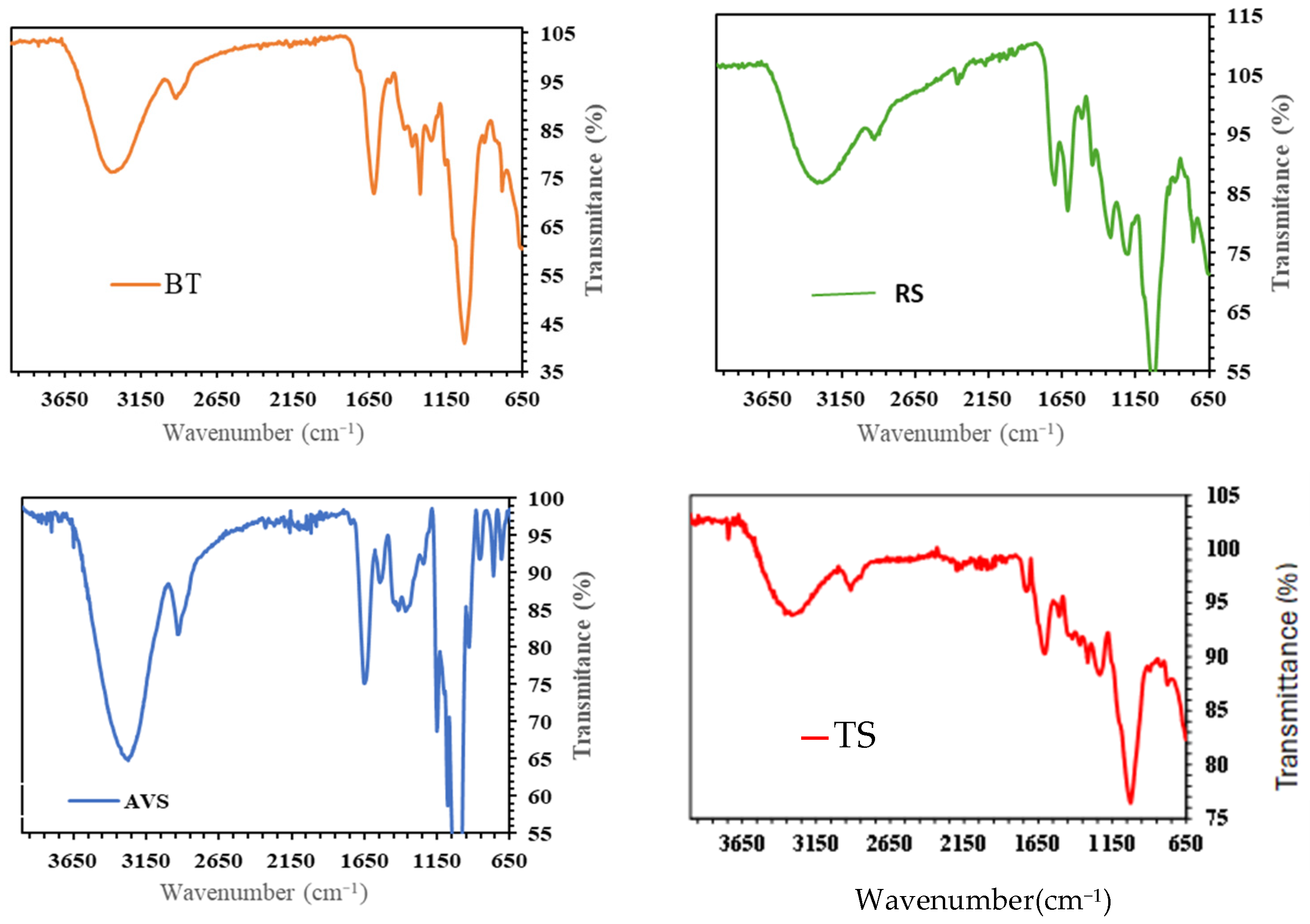
FTIR Spectroscopy was conducted to analyze surface chemistry and detect functional groups in the biomaterial powders The results of the FTIR for all four utilized materials are shown in
Figure 3. This method is well-established for identifying organic compounds such as proteins, lipids, carbohydrates, and nucleic acids [
35]. FTIR spectra for each sample, avocado seed (AS), banana trunk (BT), tamarind shell (TS), and rambutan shell (RS), were recorded over a wavenumber range of 650–4000 cm
−1 [
2].
Distinct peaks in the FTIR spectra indicate the presence of specific functional groups. For instance, banana trunk biomass exhibited three prominent peaks: one at 3400.84 cm
−1 attributed to O–H stretching, another at 1624.01 cm
−1 corresponding to the N-H bond in primary amines, and a peak near 1054.52 cm
−1 associated with carboxylic (-COOH) vibrations [
36].
The chemical diversity observed in the FTIR spectra supports the potential multifunctionality of the biomaterials in drilling fluid enhancement, including improved interaction with fluid phases and additive compatibility.
2.3.3. Scanning Electron Microscopy (SEM)
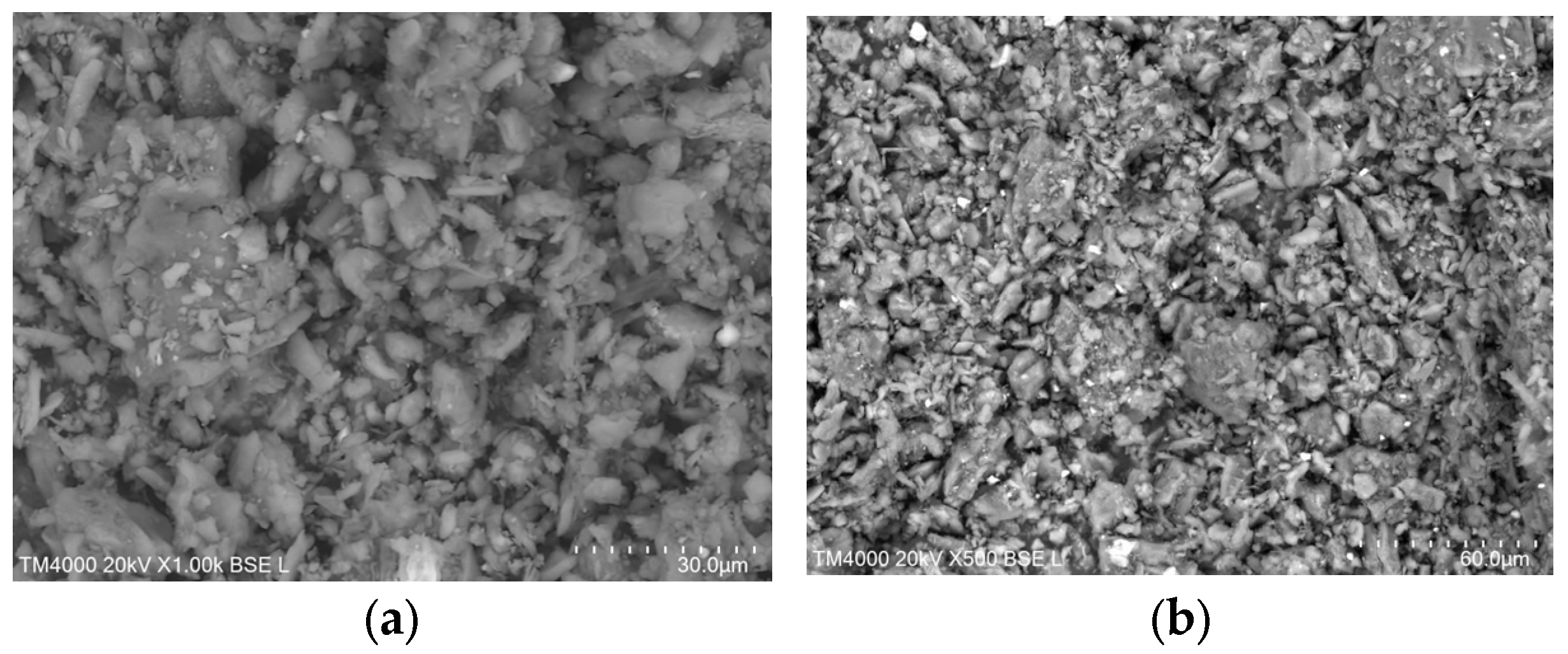
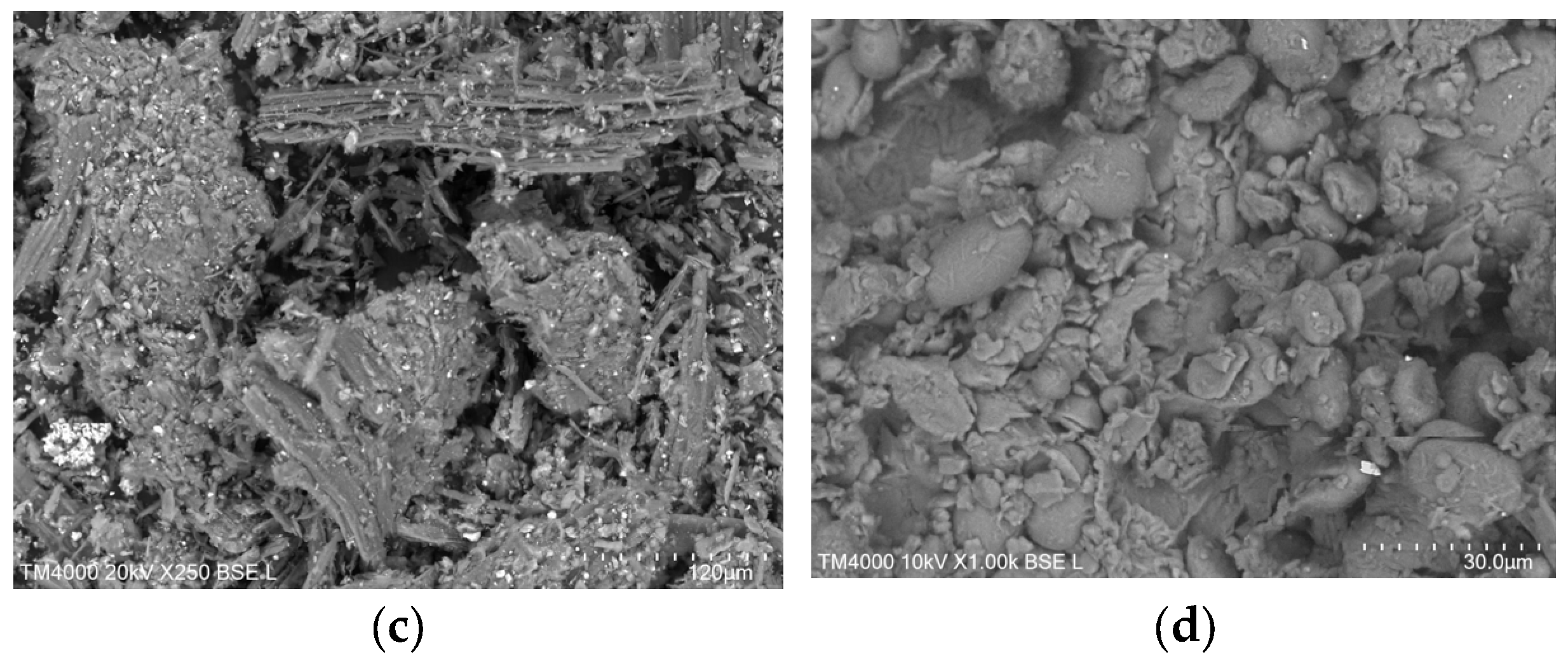
The morphological analysis of the tamarind shell powder was performed using SEM to observe particle size distribution, structure, and surface texture, as shown in
Figure 4 SEM imaging at three different magnifications (100×, 250×, and 500×) was carried out using a Hitachi TM4000 microscope (Hitachi High-Tech Corporation, Tokyo, Japan), with a 9.8 mm working distance and a 300 µm scale bar at 100× magnification. The images reveal agglomerated, irregularly shaped particles with rough, porous surfaces, indicating a high surface area suitable for interaction with drilling fluids. The loosely packed morphology, presence of fine particulates attached to larger particles, and visible gaps suggest a heterogeneous composition and the potential presence of both organic and inorganic phases. Higher magnification (500×) micrographs provided more detailed views of surface features and particle boundaries, while lower magnification (100×) highlighted overall structural organization. These SEM observations confirm the submicron- to micron-scale nature of the tamarind powder, which may contribute to favorable rheological behavior in the fluid matrix.
2.4. Fluid Circulation Loss and Filter-Cake Thickness Measurements
The study evaluated filtration performance, fluid loss, and filter-cake formation using experiments conducted under both API-standard low-pressure, low-temperature (LPLT) and high-pressure, high-temperature (HPHT) conditions. The HPHT tests were explicitly performed to evaluate the filtration and rheological performance of water-based drilling fluids (WBDFs) containing biodegradable waste additives under realistic downhole reservoir conditions. HPHT filtration was carried out following API Specification 13A, while the permeability-plugging test was performed at 75 °C and 1500 psi, and comparative filtration tests were conducted under both normal (25 °C, 100 psi) and HPHT conditions.
Rheology (plastic and apparent viscosity, yield point, and 10 s/10 min gel strengths) was measured with a rotational viscometer at 25 °C and 75 °C. Filtration performance and mud-cake formation were evaluated under LPLT (room temperature, 100 psi) and HPHT conditions following API protocols, and permeability-plugging tests were run at 75 °C and 1500 psi using ceramic disks to assess sealing effectiveness. This integrated program enabled time-resolved fluid-loss tracking, end-point cake-thickness measurement, and temperature/pressure sensitivity analysis across particle size and concentration for BT, AS, TS, and RS additives.
Filter paper was placed in the press cell, the sample was loaded, and a graduated cylinder positioned beneath the filtrate tube. The test ran for 30 min, with filtrate volume recorded at set intervals. At the end, filter-cake thickness was measured. This protocol enabled time-resolved fluid-loss tracking and end-point cake-thickness assessment.
To evaluate the rheological behavior of the formulated water-based drilling fluids (WBDFs), viscometer readings were obtained at rotational speeds of 3, 6, 100, 200, 300, and 600 revolutions per minute (rpm). These rotational speed readings were critical for calculating key rheological parameters such as plastic viscosity (µp), apparent viscosity (µa), and yield point (). For each WBDF formulation, viscosity measurements were repeated twice under identical conditions, and the average was taken as the final reported value. This was performed to evaluate repeatability and enhance confidence in the measurements. The results from the two runs were very close, with only minor differences observed. Gel strength was assessed by measuring the maximum dial deflection before the gel structure broke, with measurements taken after static periods of 10 s and 10 min. These readings indicate the fluid’s ability to suspend particles during static conditions.
Plastic viscosity (
μp), apparent viscosity (
μa), and yield point (
) were calculated from viscometer dial readings (∅) using API RP 13B-1 procedures as follows.
In drilling fluid engineering, these parameters are fundamental for assessing a fluid’s ability to transport cuttings, maintain borehole stability, and minimize formation damage. Plastic viscosity (μp), derived from the difference between the 600 rpm and 300 rpm viscometer dial readings (∅600 and ∅300) in Equation (1), quantifies the internal friction primarily associated with the concentration and size distribution of solids suspended in the fluid. Apparent viscosity (μa), given by half the 600 rpm reading in Equation (2), reflects the overall resistance to flow under dynamic conditions. The yield point (), expressed in lb/100 ft2 and calculated using Equation (3), represents the combined electrochemical and mechanical interactions between particles and provides insight into the fluid’s ability to initiate flow and to suspend and transport cuttings, particularly under low-shear or static conditions. Together, μp, μa and provide a practical rheological basis for comparing drilling fluid formulations and for selecting additives that promote efficient and safe drilling operations.
As shown in
Table 4, the viscosity of tamarind-based drilling fluid increases with rising shear rates, from ∅
3 to ∅
600. The different formulations, denoted by the particle size values of 32 µm, 75 µm, 150 µm, and 300 µm, likely represent increasing concentrations of tamarind-based additive. Generally, higher additive concentrations correlate with increased viscosity values, indicating enhanced resistance to flow. This behavior reflects the shear-thinning nature of the fluid and its ability to adapt to changing flow conditions, which is vital in various industrial applications such as food processing, pharmaceuticals, and oilfield operations. Understanding this shear-dependent viscosity behavior is essential for optimizing drilling fluid performance under dynamic downhole conditions.
To investigate the physicochemical and morphological properties of the biomaterial additives, comprehensive characterization techniques were employed. For each powdered material sample (1.5 g), FTIR was used to identify organic functional groups, while SEM, EDX, and XRD were applied for morphological, elemental, and crystalline structure analysis, respectively. FTIR analysis was performed in transmission mode across the infrared spectrum to assess the characteristic absorption frequencies of the materials. When exposed to IR radiation, biomaterial samples absorbed specific wavelengths corresponding to their molecular structures while transmitting others. FTIR spectra were obtained with technical assistance, and the data were analyzed to compare functional group profiles across the four biomaterials. These analyses provided critical insights into the molecular identity and compatibility of the additives with water-based drilling fluid formulations.
3. Results
3.1. Relationship Between Shear Rate and Shear Stress
According to
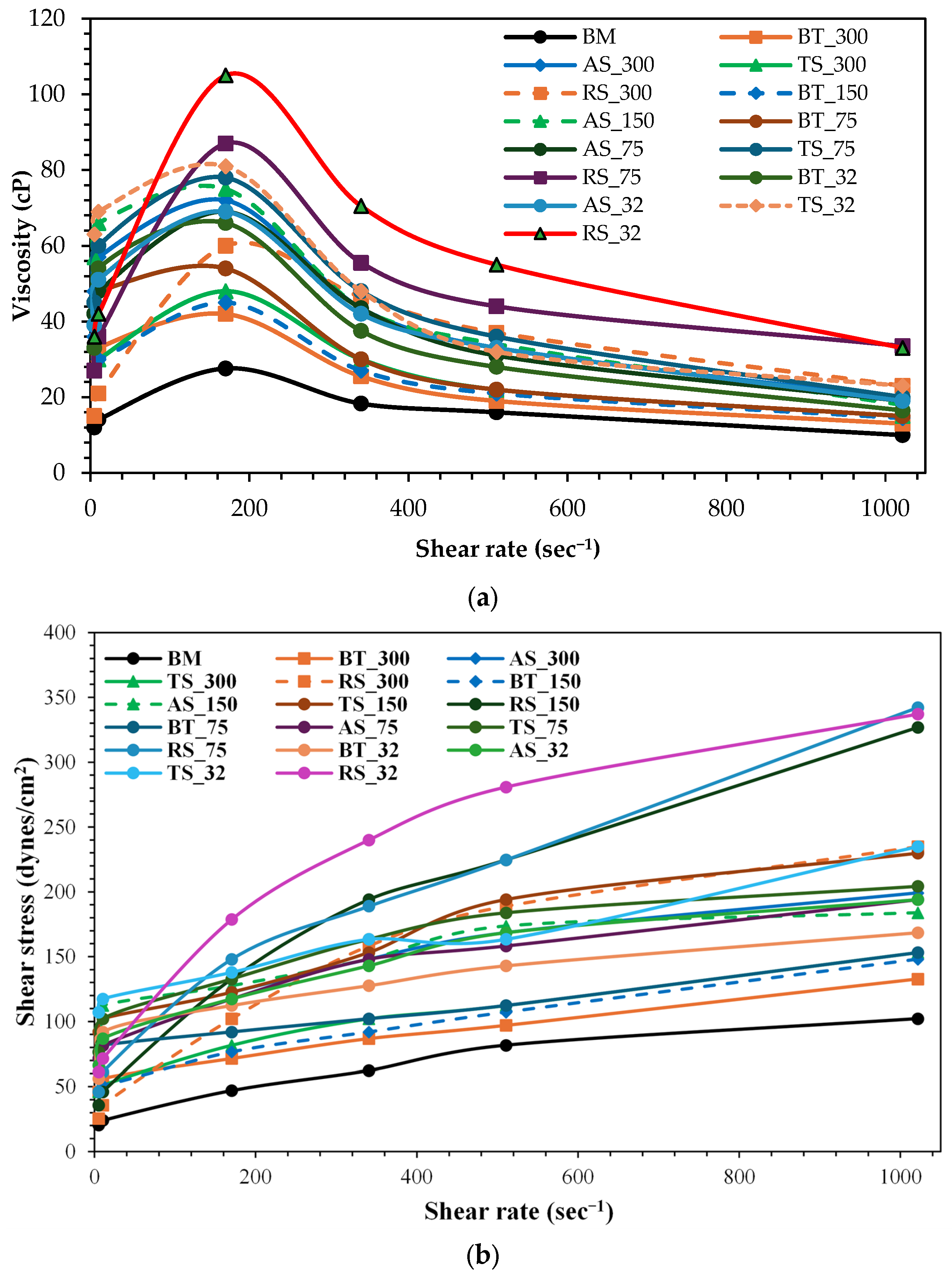
Figure 5, four biodegradable drilling fluid formulations have been prepared using banana trunk (BT), avocado seed (AS), tamarind shells (TS) and rambutan shells (RS) at four different particle sizes (300, 150, 75, and 32 µm). Based on the viscosity-shear rate curves (
Figure 5a), all tested samples exhibit pseudoplastic or shear-thinning behavior, with viscosity decreasing with an increasing shear rate. All biomaterial-enhanced formulations show markedly higher viscosities than base mud (BM), confirming their effectiveness in improving rheological properties. In particular, the finest particle size (32 µm) exhibits the highest viscosity across all materials, with TS_32 showing the most pronounced peak, indicating strong interaction with water and enhanced gel structure formation.
As shear rate increases from 0 to 1000 s−1, apparent viscosity (cP) increases with increasing shear rate. As shear rate increases, viscosity decreases. Based on the viscosity curve of the base mud, it appears that biomaterials have a significant effect on improving viscosity, enhancing the cleaning and suspension of holes. The finest particle sizes (32 µm and 75 µm) exhibit the highest viscosity, especially TS_32 (tamarind 32 µm), which peaks at more than 100 cP. In addition to hydrating better, smaller particles exhibit polymer-like characteristics.
The shear stress–shear rate profiles (
Figure 5b) show a consistent increase in shear stress with rising shear rate, further confirming pseudoplastic flow behavior. Similarly to the viscosity results, biomaterial additions significantly increase shear stress relative to the base mud, indicating improved internal structural strength and better carrying capacity. Tamarind shell at 32 µm again demonstrates the highest shear stress response, suggesting superior ability to develop a strong flocculated network within the mud system. These findings collectively show that the incorporation of biodegradable microparticles, particularly at finer sizes, enhances drilling mud stability, improves suspension properties, and produces rheological characteristics favorable for efficient and environmentally responsible drilling operations. The results confirm that particle size plays a critical role, with smaller biomaterial particles providing greater surface area, better hydration, and stronger rheological reinforcement. A structure’s shear strength will be reduced when the pressure or shear stress drops below that level. This point is called the fluid yield stress. When left motionless for some time, these non-Newtonian fluids (such as Bingham Plastic and Herschel–Bulkley fluids) continue to form a semi-rigid structure, and the shear stress required to initiate flow increases. This shear stress is referred to as gel strength according to [
37].
3.2. Filtration Properties
Filtration performance is a critical parameter in evaluating the quality of water-based drilling fluids, particularly in terms of fluid loss control and mud-cake formation. In this study, a standard filtration apparatus was used, where the filtrate tube collected the fluid that passed through the filter medium. Upon setting up the equipment, the test was initiated by activating a 30 min timer. Fluid loss measurements were recorded at specific intervals (5, 10, 15, 20, 25, and 30 min), allowing for the continuous assessment of fluid retention capabilities over time.
Table 5 presents a comparative analysis of mud cake thickness and cumulative filtration volumes (in cubic centimeters) for drilling fluids containing different biomaterial additives: BT, AS, TSP, and RS, each at various particle sizes or concentrations (e.g., 300, 150, 75, and 32 µm) at LPLT. Then, the same experiment was repeated at a high pressure of 1500 psi and a temperature of 150 °C and the results are recorded and presented in
Table 6. This condition represents the downhole pressure and temperature condition, which makes it challenging for WBDFs to perform as well as their oil-based counterparts.
The filtration performance of the formulated drilling fluids is closely linked to the physicochemical characteristics of the biodegradable additives. SEM analysis (
Figure 3) reveals distinct differences in particle morphology and packing behavior among tamarind shell, rambutan shell, banana trunk, and avocado seed powders, which provide a mechanistic explanation for the observed filtrate-volume reduction and mud-cake thickness trends.
The tamarind shell powder exhibits densely packed, irregular and angular particles with rough surfaces and abundant fine fragments. This morphology promotes effective particle bridging, void filling, and the formation of a compact, low-permeability mud cake. Consequently, tamarind-based formulation exhibits the lowest filtrate volumes and thinnest mud cakes under both LPLT and HPHT conditions, as evidenced in
Table 5 and
Table 6. In particular, the TSP_32 formulation produced a minimum mud-cake thickness of 0.33 mm and a lower filtrate volume (5.3 mL at 30 min under LPLT and 9.9 mL at 30 min under HPHT).
The rambutan shell powder, while also irregular and rough, shows comparatively looser packing and greater fragmentation. This structure supports moderate permeability reduction but results in slightly higher filtrate volumes and thicker mud cakes than tamarind-based systems. In contrast, the banana trunk powder displays a predominantly fibrous and elongated morphology with larger plate-like fragments and fewer fine particles. Although this fibrous structure contributes to viscosity enhancement through mechanical entanglement, it limits efficient pore sealing and mud-cake compaction, leading to higher filtrate volumes and thicker mud cakes, particularly for coarse particle sizes (e.g., BTP_300).
The avocado seed powder demonstrates intermediate morphological behavior, consisting of irregular but relatively smoother particles with moderate fine content. This enables improved packing and filtration control compared with banana trunk formulations, although it remains less effective than tamarind shell powder due to reduced surface roughness and particle heterogeneity.
Across all formulations, mud-cake thickness and filtration volume show a clear correlation. Coarser formulations such as BTP_300 and ASP_300 produced thicker mud cakes (up to 0.78 mm) and higher filtrate volumes, whereas finer formulations, particularly TSP_32, formed thinner, more compact cakes and exhibited superior fluid-loss control. This indicates that thicker mud cakes do not necessarily imply better filtration performance; rather, compactness and low permeability—governed by particle morphology and fine-particle content—are the dominant factors controlling fluid retention.
Overall, the morphology-driven trends predicted from SEM observations are in excellent agreement with the experimentally measured filtration-loss results. These findings confirm that particle shape, surface roughness, packing efficiency, and fine-particle distribution are key parameters governing mud-cake permeability and filtration control in water-based drilling fluids. These findings highlight the role of biomaterial type and concentration in influencing both cake-building and fluid loss behavior. Understanding these relationships is essential for optimizing drilling fluid formulations aimed at minimizing formation damage and enhancing wellbore stability.
3.3. Effect of Particle Size and Additive Concentration on Rheological Properties
An analysis of the effects of particle size and additive concentration on the rheological properties of the drilling fluids is presented in this section. Water-based reference mud (BM) and biodegradable drilling fluids formulated with coarse (300 μm), medium (150 μm), very fine (75 μm), and ultrafine (32 μm) particles were evaluated at different concentrations.
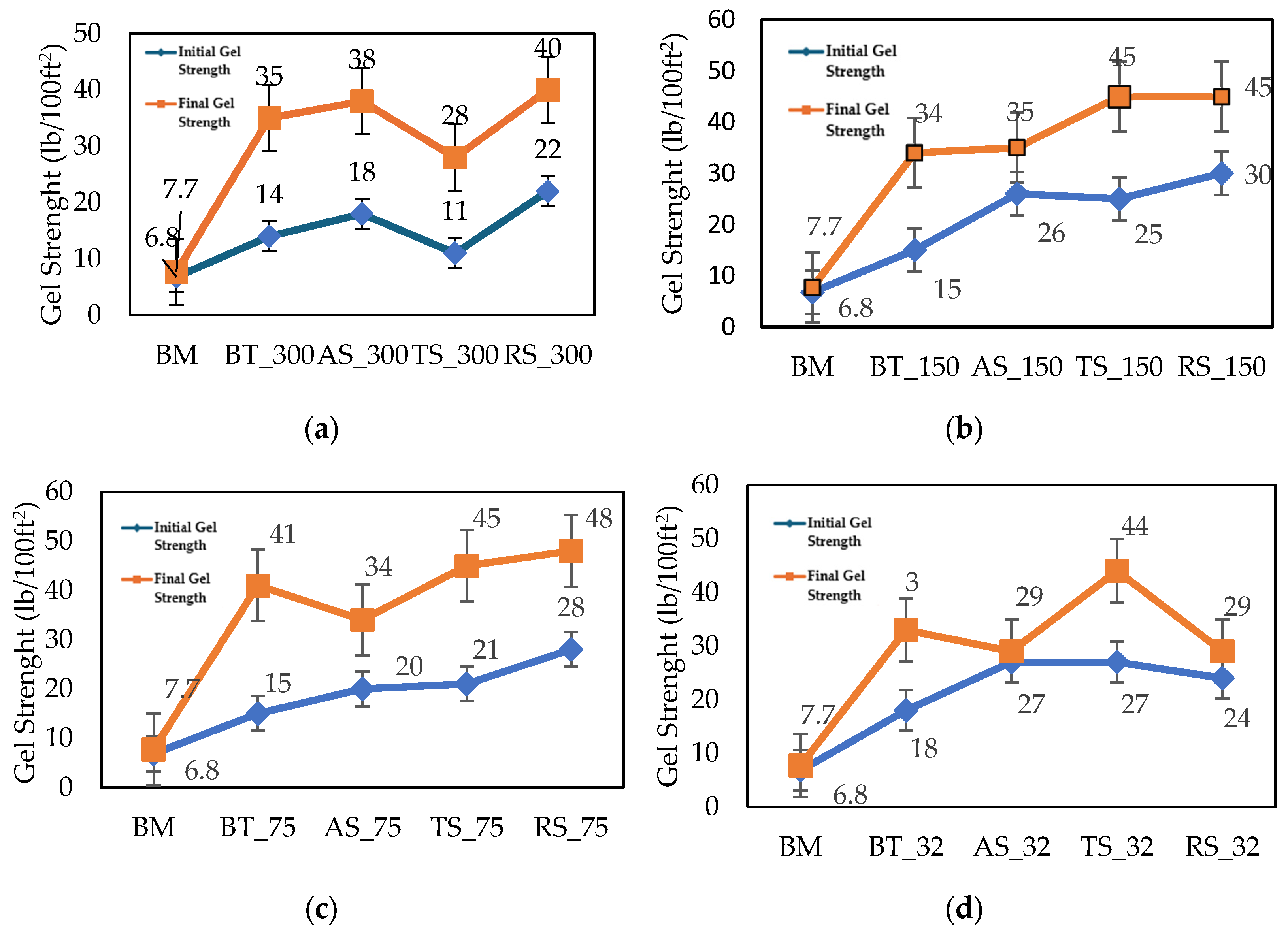
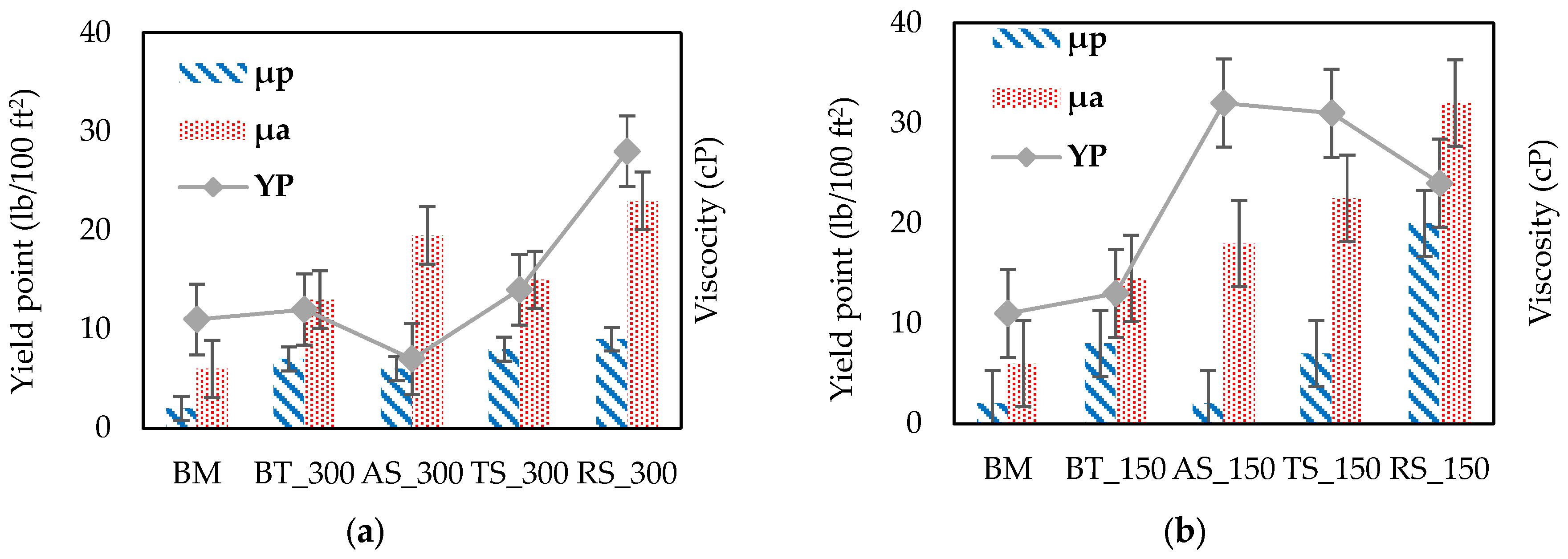
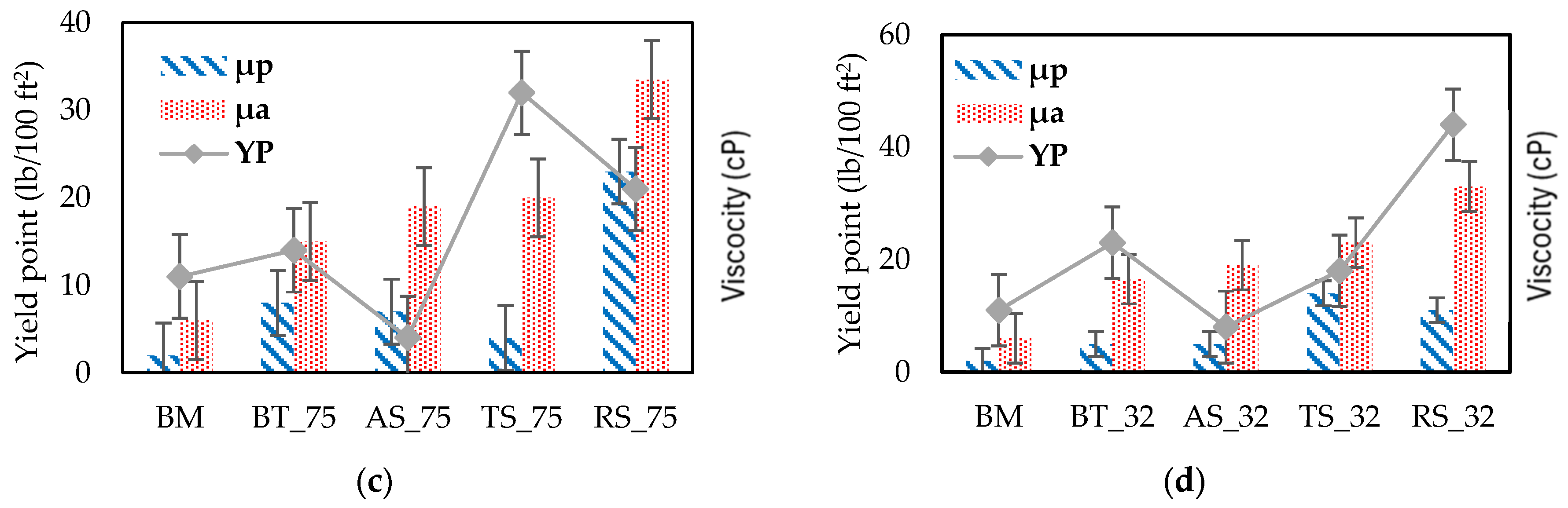
Figure 6a–d illustrate the initial and final gel strength of the base mud as well as the proposed mud incorporated with different particle sizes of the biodegradable materials. Other rheological parameters, including yield point, apparent and plastic viscosities, measured at 25 °C, are shown in
Figure 7a–d. The results indicate that the reference mud exhibited an apparent viscosity of 8.5 cP, a plastic viscosity of 2 cP, and a yield point of 11.2 lb/100 ft
2, with gel strengths of 6.8 lb/100 ft
2 at 10 s and 7.7 lb/100 ft
2 at 10 min. The influence of particle size is most clearly observed by comparing
Figure 7a–d. Across all biodegradable additives, decreasing particle size from 300 μm to 32 μm resulted in a systematic increase in apparent and plastic viscosities, particularly evident for RS and TS formulations. This behavior is attributed to the increased surface area and enhanced particle–fluid interactions associated with finer particles. Ultrafine formulations (32 μm) also exhibited higher gel strengths, indicating improved suspension capacity and structural development at low shear. In contrast, the effect of additive concentration is reflected in the magnitude of rheological parameters within each particle-size group. At a fixed particle size (e.g.,
Figure 7a–d), increasing additive concentration generally enhanced viscosity and gel strength due to increased solids loading and interparticle contact. However, excessive concentration led to reduced yield point and fluctuating gel strengths in some formulations, suggesting a trade-off between enhanced suspension and flowability. For example, at 32 μm particle size (
Figure 7d), RS- and TS-based fluids exhibited pronounced increases in
μa and
μp with concentration, while YP showed non-monotonic behavior, indicating a complex interplay between electrochemical interactions and mechanical crowding effects. Coarser particles (300 μm,
Figure 7a) required higher concentrations to achieve comparable viscosity enhancement but generally displayed lower gel strength and weaker structural stability.
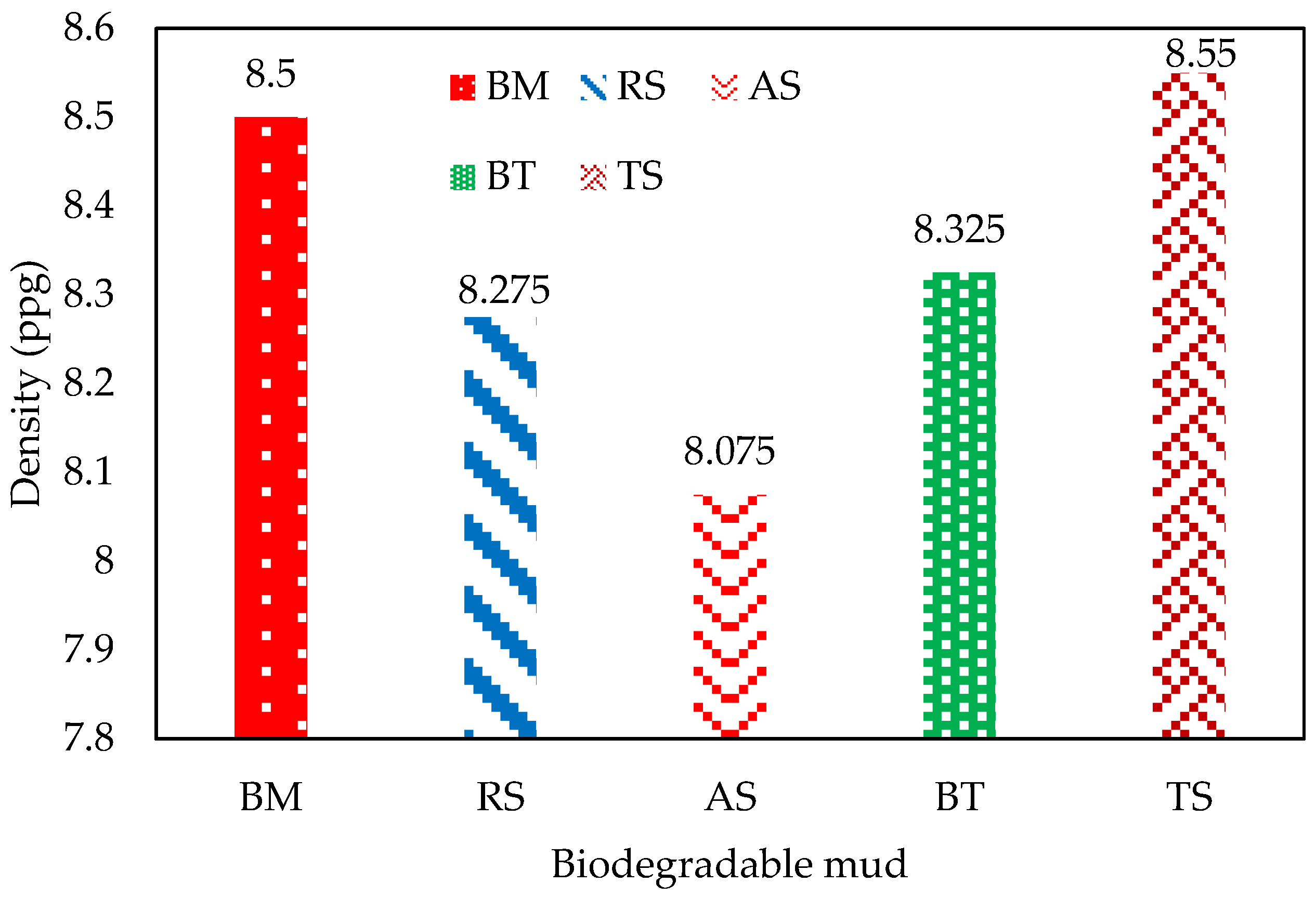
Figure 8 further shows that additive type influences mud density, with biodegradable additives slightly reducing density relative to BM, particularly for AS and RS formulations. These density changes are secondary compared to the dominant effects of particle size and concentration on rheology. Overall, these results demonstrate that particle size is the dominant parameter governing rheological behavior, primarily controlling viscosity and gel strength through surface area and packing effects, while additive concentration acts as a secondary modifier that amplifies or suppresses these trends. By clearly separating these effects, the rheological response of biodegradable drilling fluids can be more accurately interpreted and optimized.
Figure 8 illustrates the density measurements of mud formulated from various biodegradable materials, providing insight into their suitability for drilling fluid applications. The x-axis categorizes five mud types—BM (base mud), RS, AS, BT and TS, while the y-axis represents density values ranging from 7.8 to 8.6. Among the samples, TS exhibits the highest density at 8.55, closely followed by BM at 8.5, indicating that tamarind shell-based mud can match or slightly exceed the density of conventional formulations. RS and BT show intermediate densities of 8.275 and 8.325, respectively, while AS records the lowest at 8.075. These variations suggest that the type of biodegradable additive significantly influences the mud’s density, which is a critical parameter for maintaining hydrostatic pressure and wellbore stability during drilling operations. Overall, the graph demonstrates that certain biodegradable materials, particularly TS and BT, offer promising density profiles, supporting their potential as sustainable alternatives in drilling fluid design.
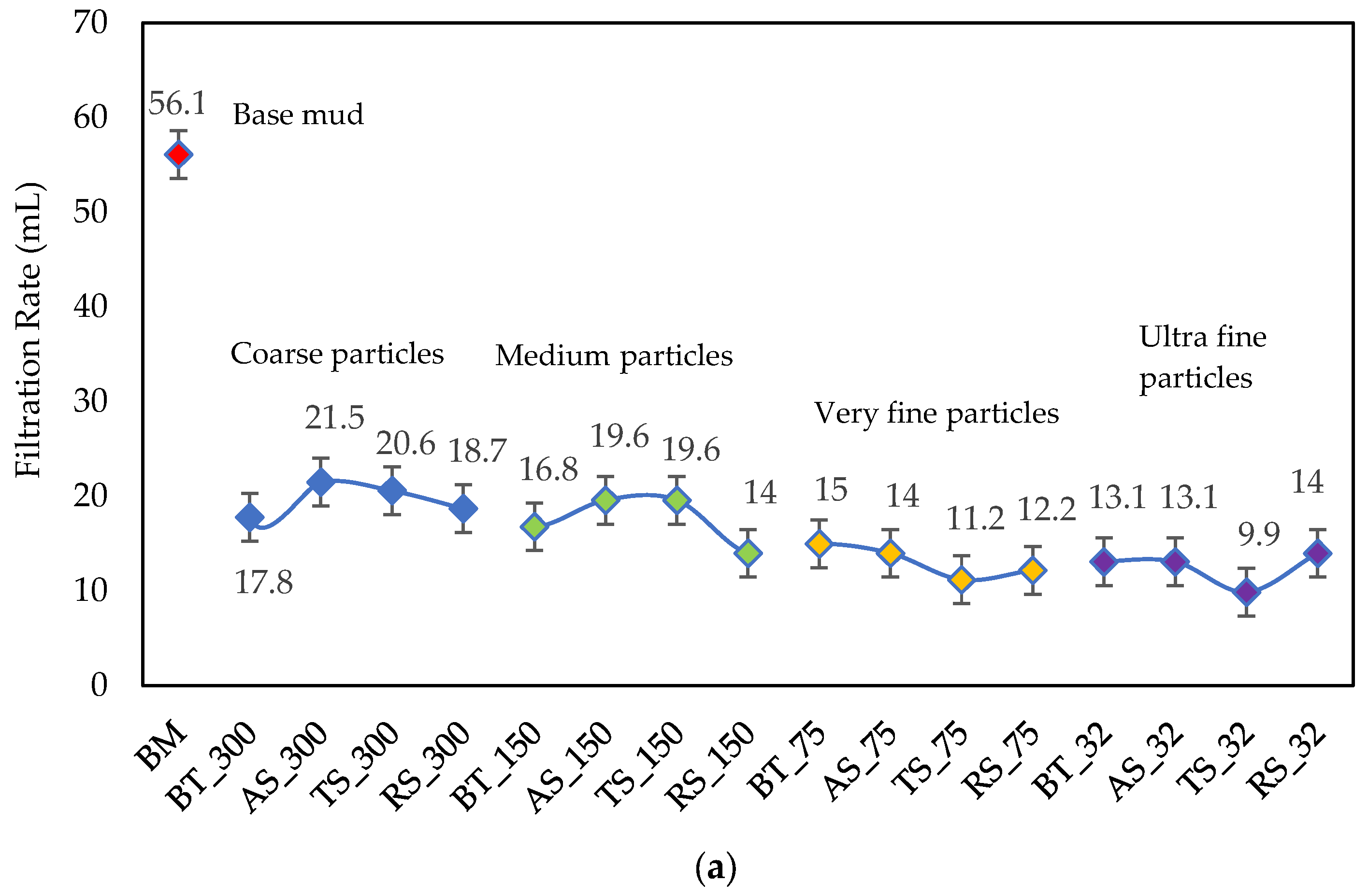
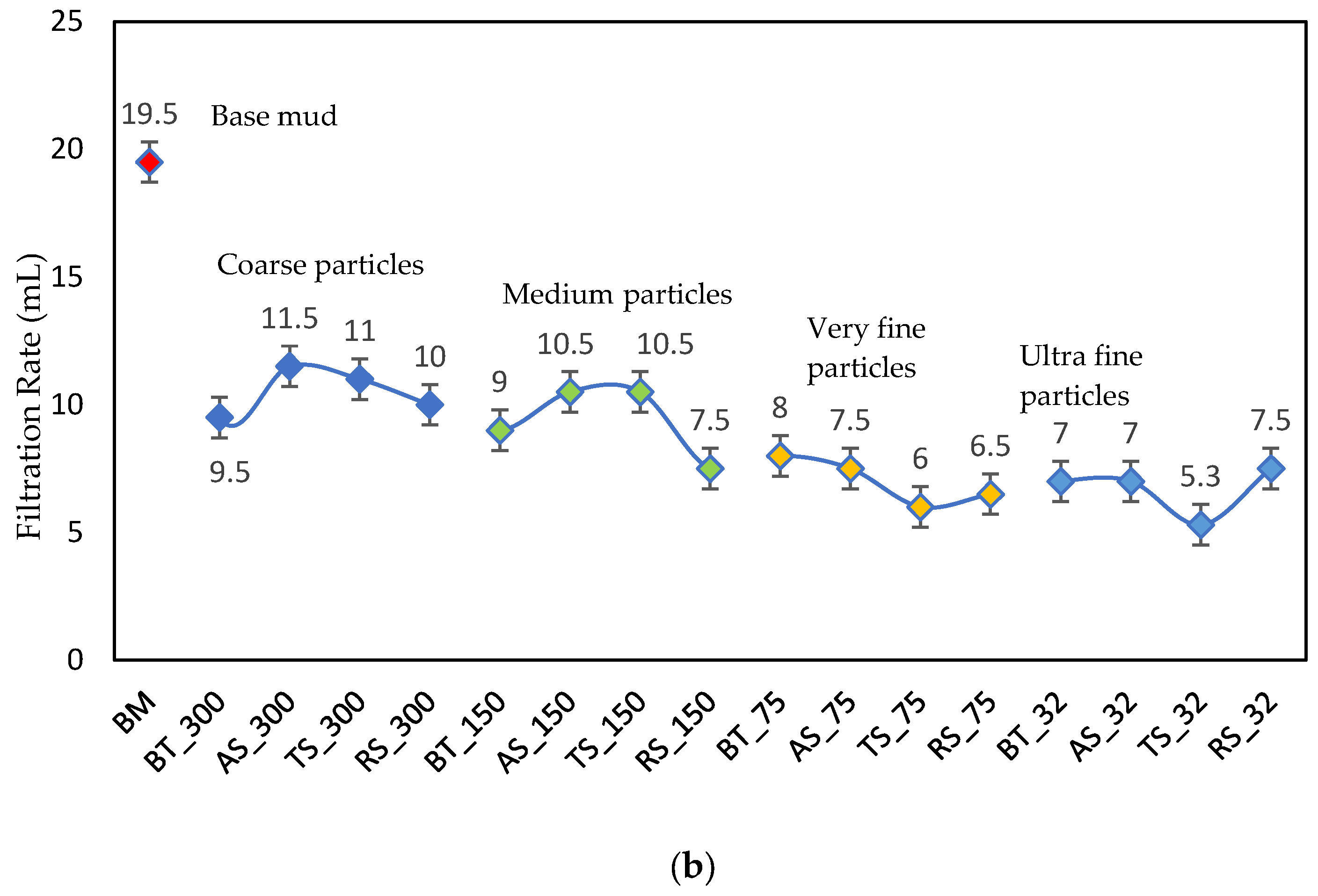
Based on filtration rates measured at 30 min for four samples of materials with different particle sizes,
Figure 9 and
Table 5 and
Table 6 show a comparison of filtration rates against base mud (BM). The stability of the wellbore and the protection of the formation are essential during drilling. This analysis focused on BM, BT, AS, TS and RS with particle sizes of 32 µm, 75 µm, 150 µm, and 300 µm. The analysis was conducted under two conditions: 25 °C and pressure of 100 psi (
Figure 9b), and high temperature (75 °C) and high pressure (1500 psi) as shown in
Figure 9a. Under LPLT conditions, the BM exhibited a filtrate volume of 19.5 mL at 30 min, whereas under HPHT conditions, the filtrate volume increased to 56.1 mL, indicating substantially greater fluid loss under downhole-like conditions. Meanwhile, at LPLT, TS with 32 µm exhibited a filter volume of 5.3 mL with the lowest filtration rate. For the coarsest particle size (300 µm), filtrate volumes were generally higher, whereas decreasing the particle size led to improved filtration control, with end-point filtrate volumes typically falling in the 14–19 mL range. Under more severe (HPHT) conditions, finer particles provided better mud retention by promoting more effective pore sealing and forming a tighter filter cake. A similar trend was observed under LPLT conditions, although overall filtrate volumes were lower. For example, the AS_300 formulation showed a comparatively high filtrate volume (21.5 mL), while the finer-particle formulations (powder-based samples) typically ranged from 5 to 10 mL. Overall, the results indicate that reducing particle size consistently minimizes fluid loss, confirming particle size as a key factor in optimizing drilling-fluid performance.
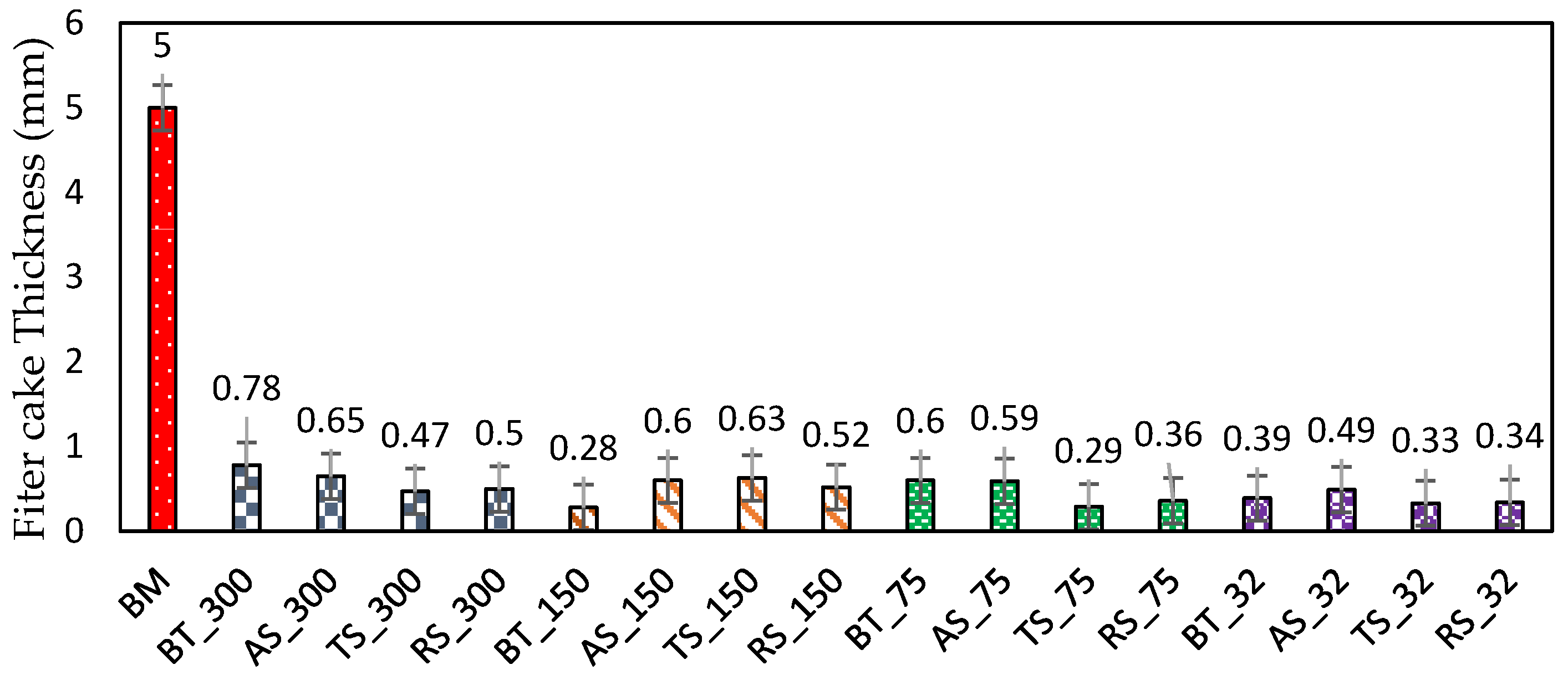
The mud cake formed by the base mud, along with various particle sizes of four materials at different concentrations, is presented in
Figure 10. Notably, under room-temperature conditions, similar trends in mud-cake thickness were observed. Thinner mud cakes were obtained with TS (32 µm), which produced the lowest thickness (0.32 mm) as concentration increased. Overall, biomaterial particle size and concentration influenced mud-cake thickness.
Figure 10 provides a comparative analysis of filter-cake thickness and the corresponding reduction in thickness (referred to as “lost thickness”) across the biodegradable mud samples. The base mud (BM) exhibits the highest filter-cake thickness (5 mm), serving as a benchmark. In contrast, samples incorporating biodegradable additives such as banana trunk (BT), avocado seed (AS), and rambutan shell (RS) at different particle sizes (300, 150, 75, and 32 µm) show substantially reduced thickness values, ranging from approximately 0.28 to 0.78 mm. Error bars indicate measurement variability, and numerical labels above each bar provide clarity.
The results suggest that incorporating biodegradable materials into drilling fluids can effectively reduce filter-cake buildup, which is important for minimizing formation damage and improving wellbore stability. Notably, BT_300 and AS_300 show the greatest reductions in thickness, indicating their potential as effective sealing agents. Overall, the results highlight the roles of particle size and material type in optimizing mud performance for more sustainable drilling operations.
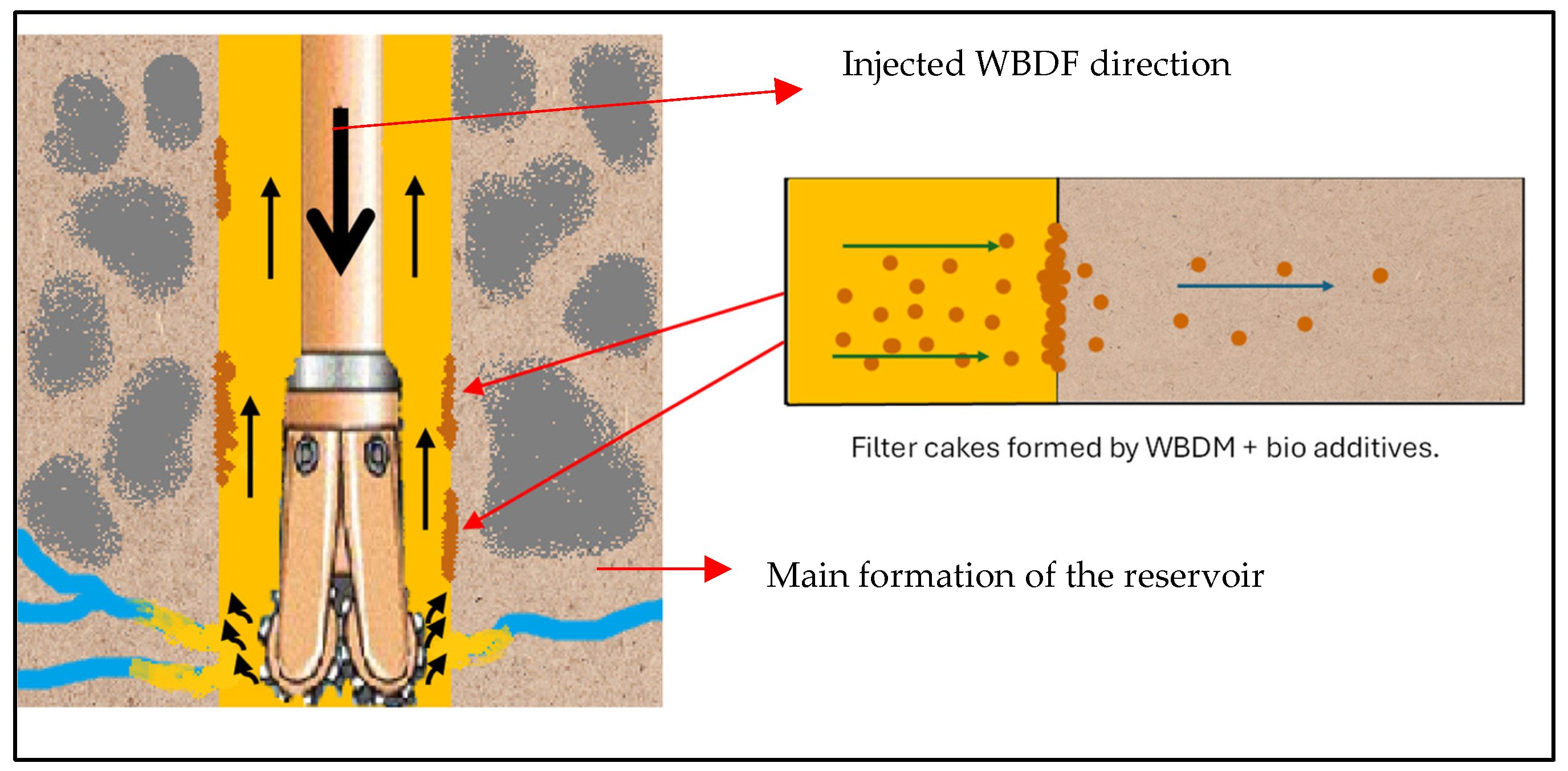
Figure 11 illustrates the mechanism of formation of a filter cake when water-based drilling mud is formulated with biodegradable additives. On the left, the drill string is shown within a porous rock formation. The drilling fluid flows downward through the drill pipe and then returns to the surface through the annulus. As the fluid contacts the porous wellbore wall, suspended solids and biomaterial particles deposit on the surface, forming a thin mud layer. This layer, known as the filter cake, is relatively low in permeability and helps restrict the invasion of drilling fluid into the formation, thereby reducing fluid loss. On the right, a magnified view highlights the filter-cake structure. The yellow region represents the deposited mud layer, while the orange particles illustrate additives that bridge and plug pore spaces in the formation. The green arrows indicate fluid flow within the filter cake, whereas the blue arrows show that flow into the formation is impeded. Overall, incorporating bio-additives such as BT, AS, TS, and RS enhances filter-cake sealing efficiency, reduces deep fluid invasion, and helps minimize formation damage.
While the present study demonstrates favorable rheological and filtration performance under both LPLT and HPHT conditions, it primarily reflects short-term behavior relevant to drilling fluid circulation and filtration control. Long-term stability under sustained temperature, pressure, and shear exposure, such as extended aging, prolonged circulation, and thermal degradation was not explicitly investigated. Nevertheless, the observed performance consistency under HPHT conditions, combined with the lignocellulosic and carbon-rich composition of the biomaterials, suggests a degree of thermal and mechanical resilience. The consistent shear stress–shear rate relationships observed across formulations indicate stable short-term flow behavior during rheological testing, suggesting no immediate structural breakdown under the applied shear conditions. Future work will focus on aging tests, prolonged shear exposure, and thermal stability assessments to evaluate long-term performance and confirm suitability for extended field operations.




 ,
,