


Abstract
Ultra-deep fault-controlled carbonate reservoirs exhibit strong heterogeneity, multi-scale fracture–cavity systems, and complex geological controls, which render conventional analytical well testing methods inadequate. This study proposes a geological model-based numerical well testing framework incorporating adaptive meshing, noise reduction, and machine-learning-assisted inversion. A multi-step workflow was established, including (i) single-well geological model extraction with localized grid refinement to capture near-wellbore flow behavior, (ii) pressure data denoising and preprocessing using low-pass filtering, and (iii) surrogate-assisted parameter inversion and sensitivity analysis using particle swarm optimization (PSO) to construct diagnostic type curves for different fracture–cavity control modes. The methodology was applied to different wells, yielding inverted fracture permeabilities ranging from approximately 140 to 480 mD and cavity permeabilities between about 110 and 220 mD. Results show that the numerical well testing method achieved an 85.7% interpretation accuracy, outperforming conventional approaches. Distinct parameter sensitivities were identified for single-, double-, and multi-cavity systems, providing a systematic basis for production allocation strategies. This integrated approach enhances the reliability of reservoir characterization and offers practical guidance for efficient development of ultra-deep carbonate reservoirs.
1. Introduction
Carbonate reservoirs represent one of the most important hydrocarbon-bearing systems worldwide, accounting for nearly 40% of global petroleum reservoirs and contributing approximately 60% of oil and gas production. In China, carbonate formations host nearly half of the remaining recoverable reserves, making them a strategic target for exploration and development. However, the intrinsic complexity of carbonate reservoirs, especially those influenced by tectonic deformation and karstification, makes their characterization and efficient development particularly challenging. Among these, ultra-deep fault-controlled carbonate reservoirs stand out as some of the most difficult reservoirs to evaluate due to their multi-scale heterogeneity, complex pore-fracture-cavity systems, and the extreme depth at which they occur.
The oil and gas field in the Tarim Basin in the west of China is a representative example of such reservoirs. It is characterized by the presence of fault-karst bodies formed through the interaction of tectonic faulting and karst dissolution processes [1]. These reservoirs are typically buried deeper than 6000 m, with structural and diagenetic complexities that lead to highly anisotropic flow patterns and poor connectivity between different reservoir units. Storage space is not limited to matrix pores but extends to large dissolution caves, interconnected fractures, and fault corridors [2]. The coexistence of continuous porous media with discrete karst systems creates a reservoir architecture where conventional well test methods, which rely on assumptions of homogeneity and radial flow, are unable to capture the true dynamic behavior. As a result, well test interpretation in these reservoirs is prone to non-uniqueness, and key reservoir parameters such as permeability, skin factor, and effective drainage radius remain highly uncertain [3].
Traditional well testing techniques are largely based on analytical solutions derived from simplified conceptual models. These approaches assume infinite or semi-infinite homogeneous media and often neglect the influence of discrete fractures and cavities. While such simplifications allow fast interpretation, they cannot reproduce the transient flow regimes observed in ultra-deep fault-controlled carbonate reservoirs, where pressure responses are governed by a combination of matrix flow, fracture-dominated linear flow, and cavity storage effects [4]. For instance, pressure derivative curves in these reservoirs often display multiple inflection points, delayed stabilization, or anomalous flattening that analytical models cannot explain. Consequently, analytical interpretation yields misleading parameter estimates and fails to provide reliable input for reservoir management and production optimization.
Over the past three decades, researchers have attempted to overcome these limitations through the development of geological modeling and numerical simulation techniques [5]. Early works by Lucia and Kerans highlighted the importance of structural controls and unconformities in shaping fracture–cavity systems, leading to classification schemes for connected and isolated karst bodies [6]. With the advent of advanced seismic techniques, geophysicists such as Chen and Wen used seismic attributes to infer cavity distributions and fracture connectivity. Although these methods improved large-scale characterization, their ability to resolve small-scale features remained limited, especially in ultra-deep settings where seismic imaging suffers from reduced resolution [7]. Parallel to seismic advances, reservoir engineers developed triple-porosity or triple-medium models to simulate flow in matrix–fracture–cavity systems [8]. Finite difference and finite element simulations demonstrated that numerical well testing could reproduce complex pressure responses absent in analytical solutions, thereby providing a more accurate framework for parameter estimation [9].
Despite these achievements, several fundamental challenges persist. One of the most critical is the mismatch between conceptual models and actual reservoir geology. Many numerical studies rely on oversimplified representations of fracture–cavity systems, which limit their predictive power when applied to real reservoirs. Another issue is the computational cost associated with high-resolution simulations. Capturing near-wellbore flow requires refined grids, and modeling multi-scale heterogeneity often demands large computational domains. As a result, direct numerical inversion of well test data can be prohibitively time-consuming [10]. In addition, well test data themselves are often contaminated with significant noise, stemming from downhole tool limitations, environmental disturbances, and operational fluctuations. This noise obscures subtle flow signatures, reducing the reliability of parameter inversion [11].
In response to these challenges, researchers have increasingly turned to data-driven and machine learning approaches. Surrogate modeling techniques, such as Gaussian process regression and polynomial chaos expansion, have been employed to approximate reservoir responses with reduced computational burden [12]. Particle swarm optimization and other evolutionary algorithms have been integrated into inversion workflows to improve convergence efficiency. More recently, deep learning architectures, particularly convolutional neural networks, have been applied for well test data denoising, enabling the extraction of cleaner signals while preserving critical flow features [13]. These advancements mark a significant step forward, yet they have rarely been combined into a unified workflow that integrates geological realism, signal processing, and efficient parameter inversion for ultra-deep fault-controlled carbonate reservoirs.
The motivation for this study arises from the pressing need to establish a robust methodology that can bridge the gap between geological complexity and well test interpretation accuracy [14]. By embedding geological modeling directly into the numerical well testing framework, applying advanced noise reduction techniques, and leveraging machine learning-based surrogate models for inversion, it becomes possible to significantly enhance the reliability and efficiency of reservoir characterization. The fault-karst system provides an ideal test case due to its extreme burial depth, complex tectonic setting, and abundant field test data.
In this work, we present a comprehensive numerical well testing methodology tailored for ultra-deep fault-controlled carbonate reservoirs, designed to address the limitations of conventional analytical and triple-porosity models. The proposed workflow distinguishes itself through three integrated advancements: first, it employs a single-well geological model extraction technique with localized grid refinement to accurately capture near-wellbore flow dynamics that simplified conceptual models often fail to resolve; second, it utilizes a preprocessing approach based on frequency-domain low-pass filtering to effectively denoise pressure data while preserving critical transient features; and third, it incorporates a surrogate-assisted inversion framework combining Gaussian process regression with particle swarm optimization to significantly accelerate parameter estimation. Furthermore, systematic sensitivity analyses are conducted across single-, dual-, and multi-cavity control modes, leading to the construction of diagnostic type curves for reservoir classification.
2. Methodology
2.1. Geological Model Extraction and Grid Refinement
Accurate numerical well testing in ultra-deep fault-controlled carbonate reservoirs requires a representative geological model that preserves the essential structural and petrophysical features around the tested well. The first step in constructing such a model is the extraction of a single-well sub-model from the larger three-dimensional geological framework. Unlike conventional homogeneous reservoirs, where simple radial models are sufficient, fault-controlled carbonate systems contain a complex mixture of matrix pores, fractures, and dissolution cavities. Therefore, the extraction process must balance geological fidelity with computational feasibility. The extraction domain is determined based on the estimated pressure propagation radius during the testing period [15]. Assuming pseudo-radial flow in an equivalent homogeneous medium, this distance can be approximated by:
where k is the effective permeability, t is the testing duration, ϕ is porosity, μ is fluid viscosity, and ct is total compressibility. For the target ultra-deep reservoirs, calculations yielded values ranging between 200 and 800 m, depending on local properties. Accordingly, the single-well sub-model radius was set within this range to ensure inclusion of all geological units that significantly influence pressure response.
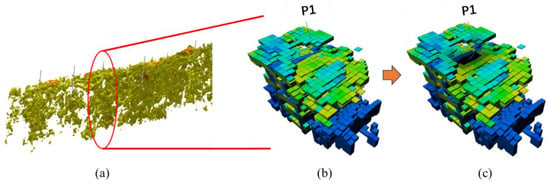
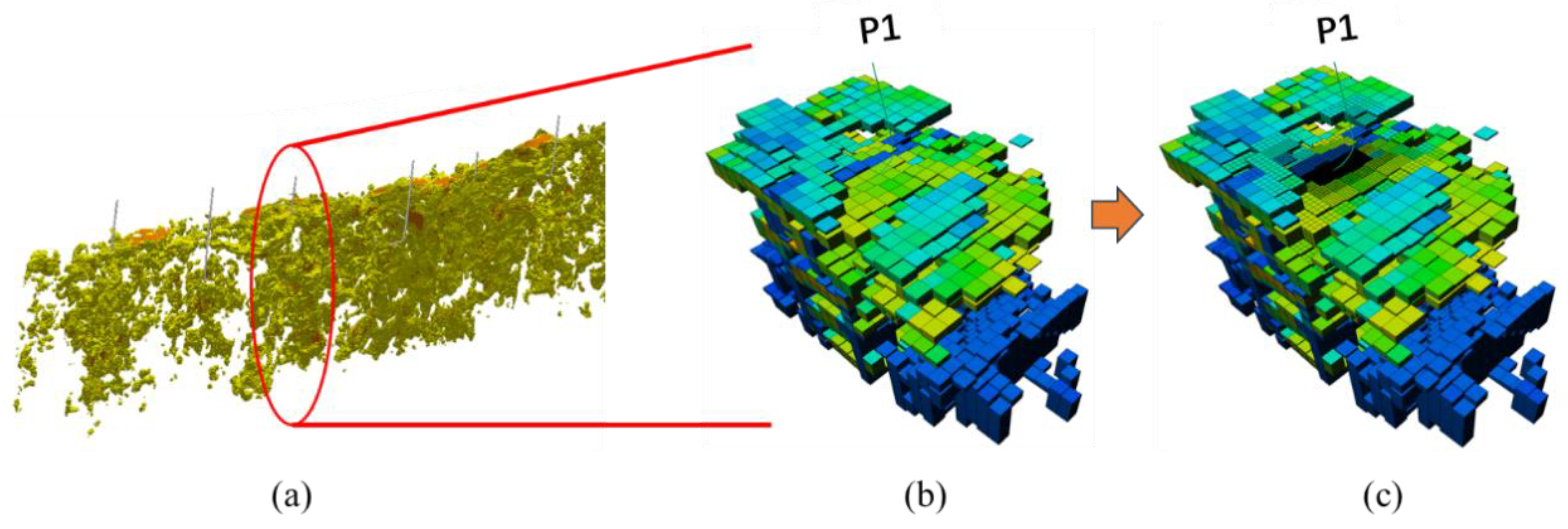
Once the domain is extracted, the model undergoes geological property mapping. Parameters such as porosity, permeability, fracture density, and cavity size distributions are transferred from the full-field model to the local sub-model using geostatistical interpolation to maintain spatial continuity. Particular care is taken to preserve discontinuities associated with faults and karst corridors [16], as these heterogeneities often dominate fluid flow pathways and strongly affect well test signatures [17]. The next step is grid refinement, which is critical for capturing sharp pressure gradients near the wellbore. If coarse grids are used, the steep pressure cone around the well cannot be resolved, leading to significant mismatch in early-time derivative curves. To address this, a nested concentric grid refinement strategy is applied. The central wellbore region is discretized into cells as small as 1 × 1 m2, ensuring accurate representation of radial and wellbore storage regimes. Moving outward, cell sizes increase logarithmically, e.g., 2 m, 4 m, 8 m, up to 50 m, thereby smoothly transitioning from fine to coarse resolution. This hierarchical design achieves high accuracy in the near-wellbore region while maintaining computational efficiency in the far-field. In addition, anisotropic grid refinement is introduced along fault planes and cavity-rich zones. Since these geological features often create preferential flow paths, additional resolution is required along their orientation. A directional refinement scheme is applied, where grid cells are elongated along faults to capture connectivity but compressed perpendicular to faults to better resolve pressure discontinuities, as shown in Figure 1. The final refined grid balances fidelity and efficiency: near-wellbore accuracy is sufficient to capture transient flow signatures, while the overall grid count remains within computational limits for surrogate model training and inversion. This refined single-well geological model serves as the foundation for subsequent numerical well testing and parameter estimation.
Figure 1.
Geological model used in this work. (a) Full-field model; (b) Extracted sub-model; (c) refined sub-model.
2.2. Signal Processing and Noise Reduction
Pressure data obtained from well testing in ultra-deep fault-controlled carbonate reservoirs are often affected by environmental disturbances, gauge limitations, and high-frequency operational noise. These irregular fluctuations can obscure characteristic pressure responses and distort derivative curves, thereby reducing the reliability of subsequent interpretation. To address this issue, a low-pass filtering technique was employed in this study to preprocess the raw pressure signals prior to numerical inversion [18]. The low-pass filter was designed to remove high-frequency components while preserving the essential flow information embedded in the low-frequency domain. First, the raw input signal f(x, y), representing the measured wellbore pressure series, was preprocessed and transformed into the frequency domain using the Fourier transform:
In the frequency domain, a low-pass filter function H(w) was applied to attenuate high-frequency components while retaining the low-frequency trends associated with reservoir dynamics. A Butterworth filter was selected due to its maximally flat frequency response in the passband, which ensures smooth attenuation without introducing ripples. The transfer function of an n-th order Butterworth filter can be expressed as:
where ω is the signal frequency, ωc is the cutoff frequency (selected based on power spectral density analysis to distinguish signal from noise), and n is the filter order. The filtered signal is thus expressed as:
Finally, the denoised pressure signal was reconstructed in the time domain through the inverse Fourier transform:
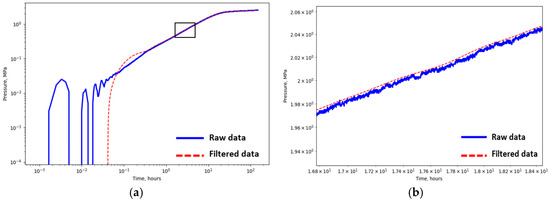
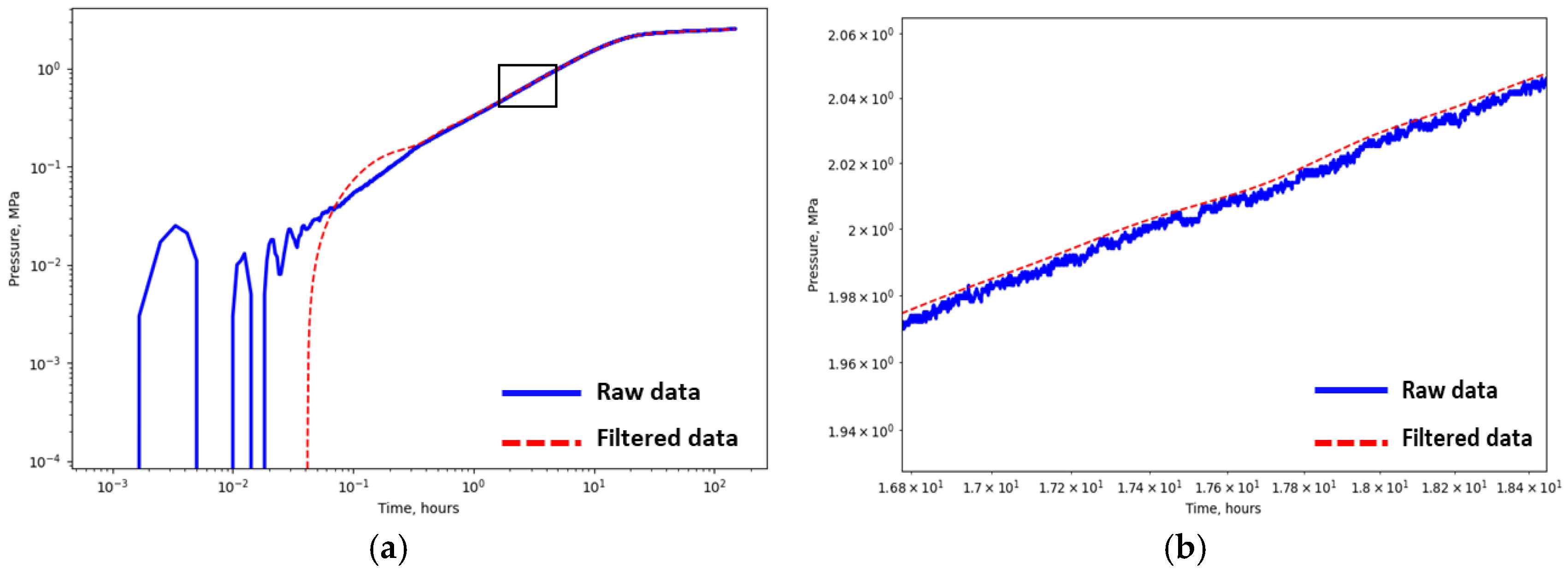
This process effectively removed oscillations and spurious fluctuations in the measured pressure data. As shown in the original dataset (blue curves in Figure 2), significant noise was present, which obscured diagnostic features of the pressure derivative curve. After low-pass filtering, the variance of the pressure signal was significantly reduced, and the derivative stabilized, making the identification of reservoir flow regimes more reliable.
Figure 2.
Noise Reduction with low-pass filtering approach. (a) Raw pressure data; (b) Zoomed zone in (a).
2.3. Surrogate Modeling and Inversion Framework
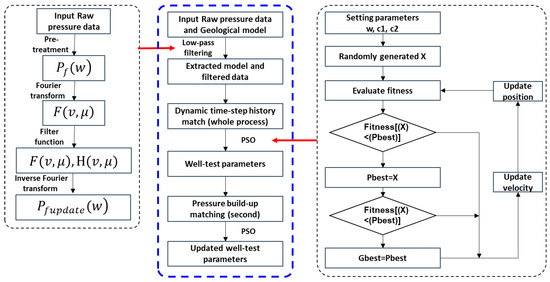
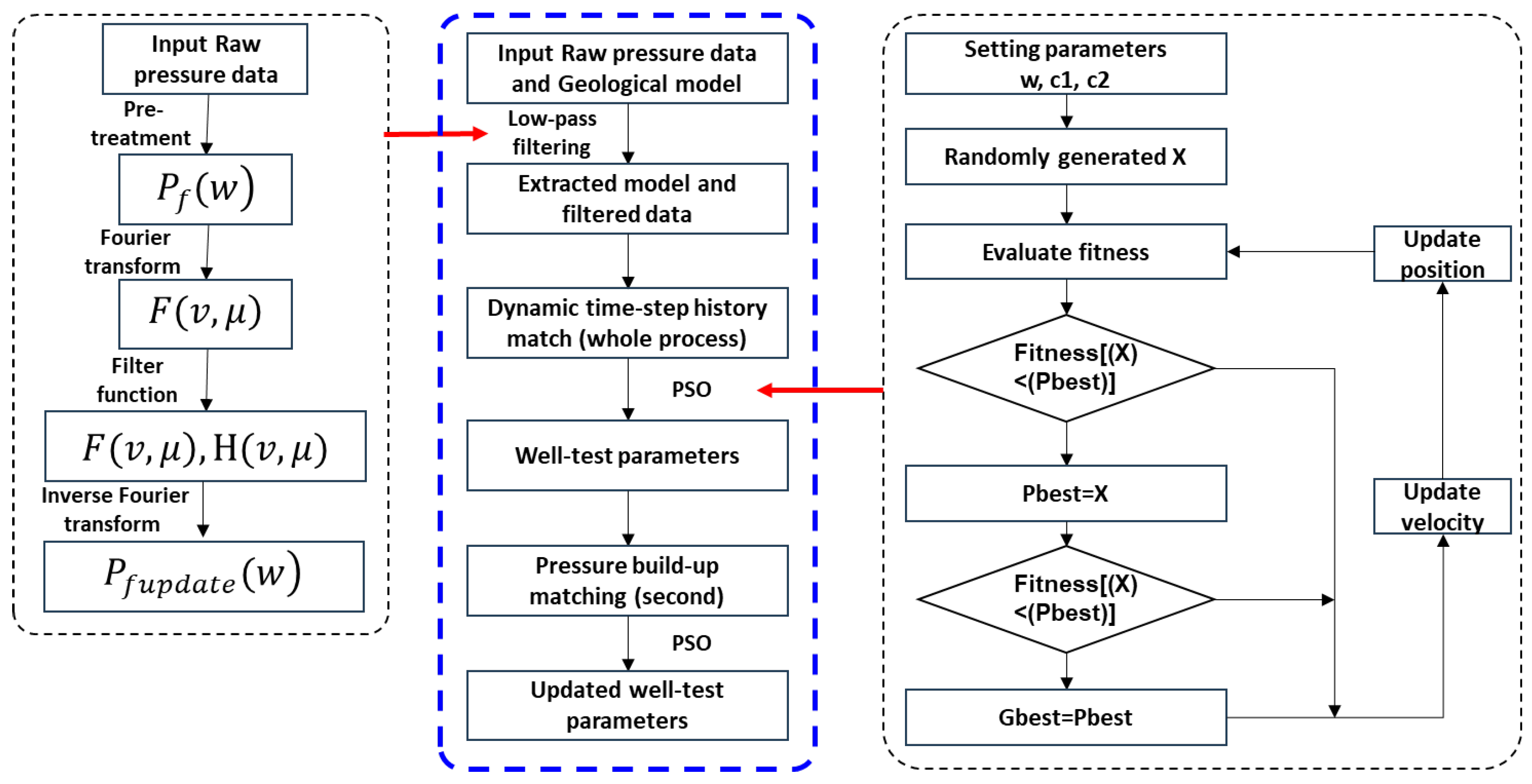
The inversion of well test data in ultra-deep fault-controlled carbonate reservoirs is inherently complex due to the coexistence of matrix pores, fractures, and dissolution cavities. Direct numerical simulations using fine geological models can capture these processes with high fidelity, but the associated computational burden makes iterative inversion impractical. To overcome this challenge, a surrogate modeling and optimization framework was established, enabling efficient yet accurate parameter estimation (Figure 3). The inversion task was formulated as a multi-objective optimization problem, seeking to minimize the mismatch between simulated and observed well test data. The objective function was defined as:
where θ is the parameter vector including matrix permeability (km), fracture permeability (kf), skin factor (s), and cavity radius (Rc); psim and qsim are simulated pressure and production values; pobs and qobs are the corresponding field measurements; and w1, w2 are weighting factors controlling the balance between pressure matching and production history fitting.
Figure 3.
Work flow of machine learning assisted well-testing.
To accelerate evaluation of this objective function, a surrogate model was constructed to approximate the nonlinear relationship between reservoir parameters and pressure responses. In this study, Gaussian Process Regression (GPR) was tested as surrogate candidates. The surrogates were trained using a dataset generated from Latin Hypercube Sampling (LHS) of the parameter space, with each sample evaluated by full numerical simulation. Once trained, the surrogate provided near-instantaneous predictions of pressure and flow curves, reducing evaluation time from hours to milliseconds.
For parameter inversion, the Particle Swarm Optimization (PSO) algorithm was employed. PSO is well-suited for high-dimensional, nonlinear problems, as it explores the parameter space through a population of particles updating their positions according to both individual and global best solutions [19]. The update rules are given by:
where and are the position and velocity of particle i at iteration t; is the best solution found by particle i; is the global best; ω is the inertia weight, set to decrease linearly from 0.9 to 0.4 to facilitate convergence; and c1, c2 are learning coefficients, fixed at 2.0, with random factors r1, r2 ∈ [0, 1], The optimization process terminates when the maximum iteration count (200) is reached or when the objective function improvement falls below 10−6.
The surrogate model served as the forward simulator within the PSO framework, allowing thousands of candidate parameter sets to be evaluated rapidly. Convergence was typically achieved within 200 iterations, compared with over 1200 iterations required by direct numerical simulations. All computations were performed on a workstation. A single direct numerical simulation step required approximately 45 min. Consequently, a direct PSO inversion would demand over 900 CPU hours. In contrast, the surrogate-based workflow, which required only 300 high-fidelity simulations for training and validation, reduced the total computational cost to approximately 225 h. This resulted in a 70–75% reduction in computational time without compromising accuracy. The inversion outputs provided reliable estimates of permeability, fracture aperture, and cavity dimensions, which were consistent with independent geological and logging data. Moreover, by simultaneously fitting both pressure and production history, the method avoided the non-uniqueness often encountered when only one dataset is considered. The integration of surrogate modeling with PSO thus represents a practical and robust approach for numerical well test interpretation in ultra-deep carbonate reservoirs, enabling efficient field-scale applications [20].
3. Results and Discussions
3.1. Single Cavity–Fracture Controlled Model
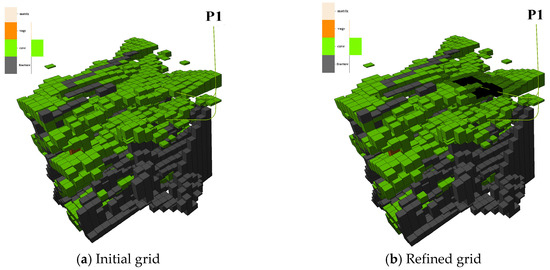
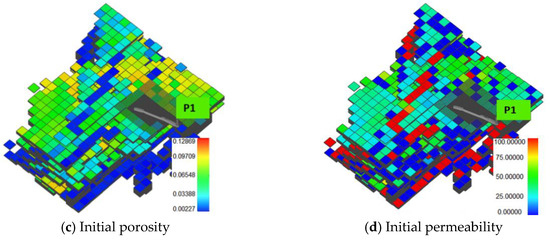
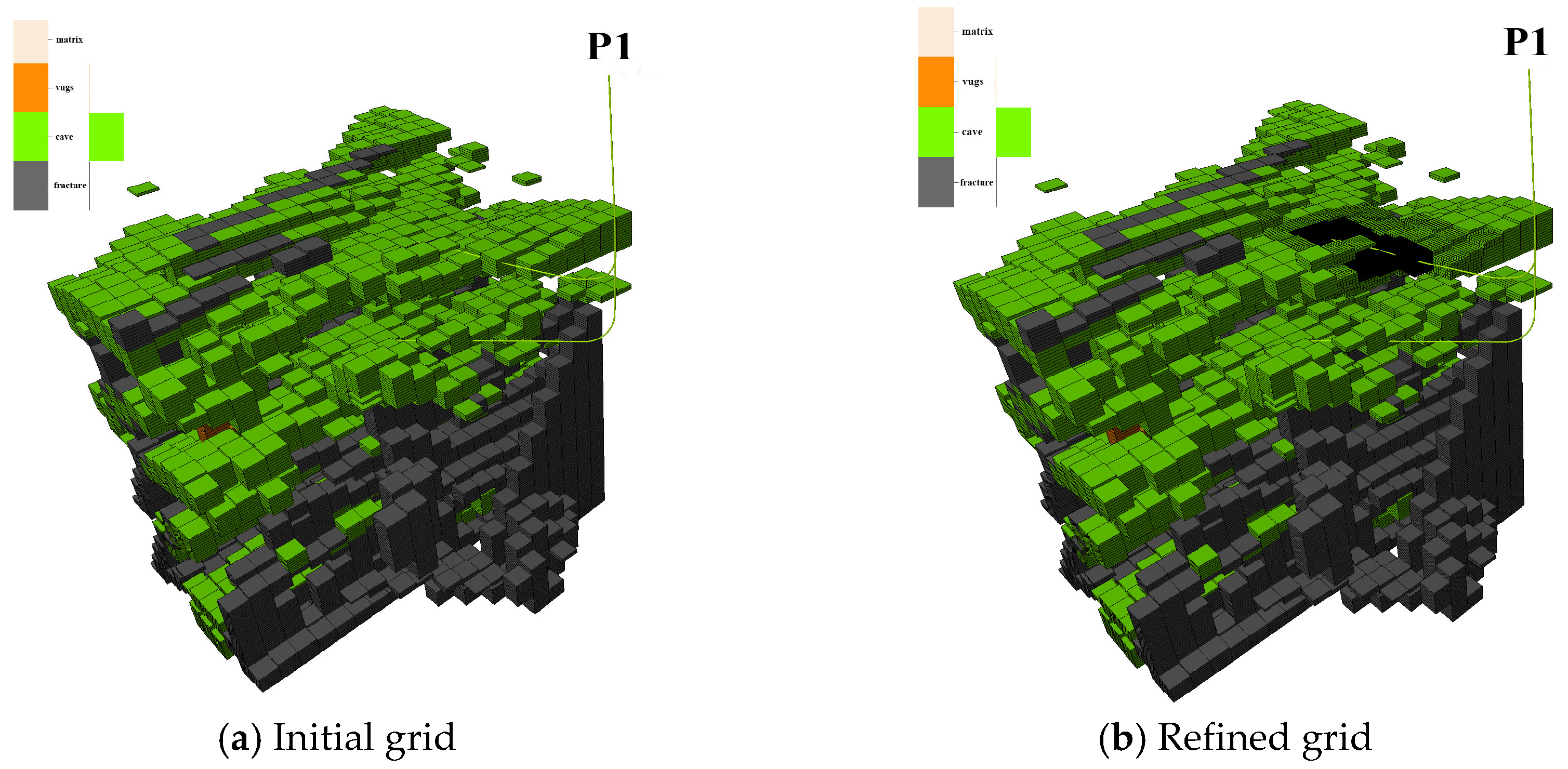
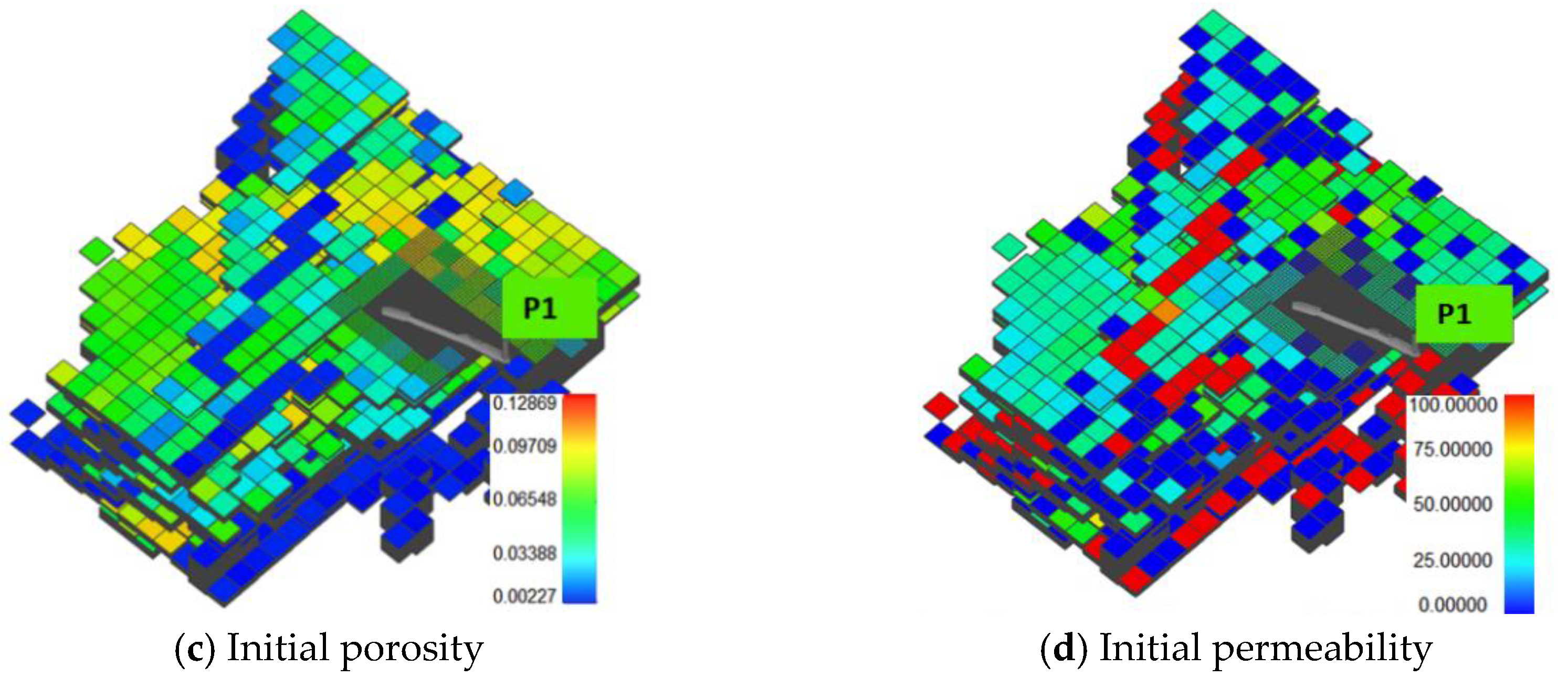
The P1 well was identified as a representative case of a single cavity–fracture controlled carbonate reservoir. This well is located in a localized tensile zone where a large dissolution cavity communicates with the wellbore through high-conductivity fractures, surrounded by a tight matrix background. Initial geological characterization shows that the reservoir space around the well is mainly composed of dissolution pores and cavities, while fractures provide preferential flow channels. The average porosity of the tested section is 0.06, and the average permeability is approximately 40 mD (Figure 4). Such values highlight the strong heterogeneity typical of fault-controlled carbonate reservoirs. This well commenced production in early 2017, and by February 2022, the well showed no obvious water breakthrough. A pressure recovery test was conducted after 244 h of shut-in, providing critical data for further well test analysis.
Figure 4.
Grid and initial properties of P1 well model.
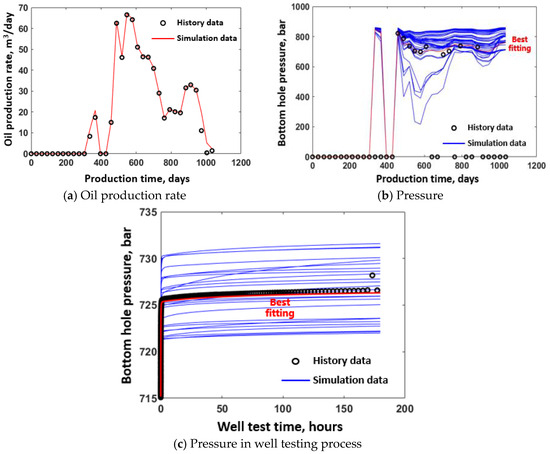
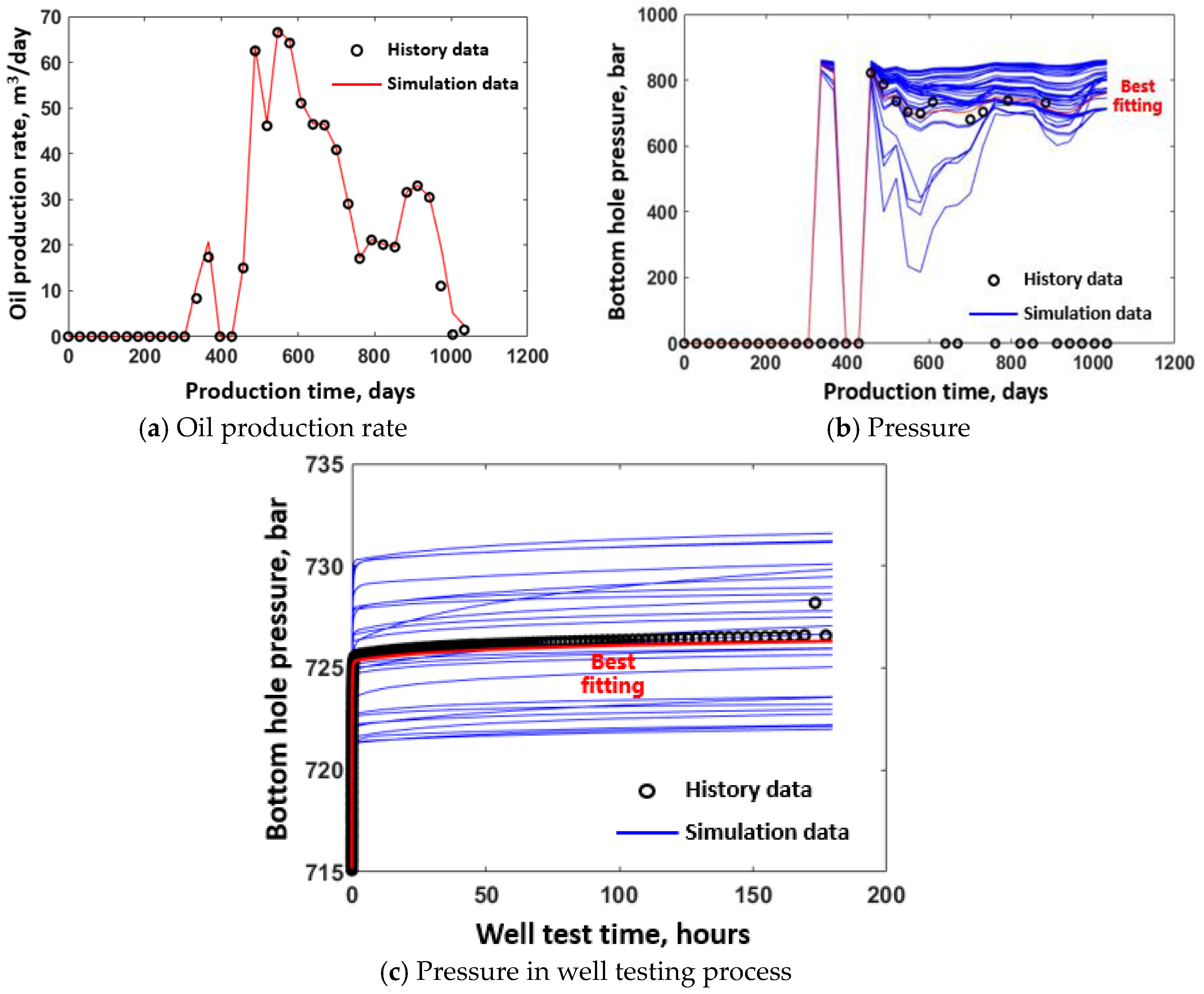
Figure 5 shows the history matching of oil rate and pressure during the whole process, i.e., well testing and production stage. The numerical model reproduced the production history with high fidelity, achieving a matching accuracy of 97% for oil production and 87.2% for bottom-hole pressure calculated based on the normalized residuals of the objective function defined in Equation (5). The calibrated parameters suggest that the average reservoir pressure decreased to 52 MPa by the end of the test period, while the wellbore flowing pressure stabilized around 40 MPa under constant liquid rate conditions. The history-matched results also confirm the importance of fracture contribution: production remained stable over several years without significant water invasion, consistent with a system dominated by a cavity-fracture conduit rather than matrix flow. These production-stage results established the parameter baseline for the subsequent pressure build-up interpretation.
Figure 5.
Production history matching of P1 well.
The pressure build-up analysis of P1 revealed highly diagnostic features of a single cavity–fracture controlled system, with a curve-fitting accuracy of approximately 87%, as shown in Figure 6. At early shut-in time, the derivative rapidly declines from a high value and develops into a straight segment with an approximate 1/2 slope, corresponding to linear flow dominated by a high-conductivity fracture [21]. This regime reflects the fracture acting as the primary drainage pathway immediately after shut-in. Subsequently, the derivative curve displays a pronounced deep V-shaped trough, a signature of cavity storage release and recharge. In this stage, the cavity delivers fluid into the fracture–wellbore system, causing a temporary increase in effective compressibility and a buffering effect on pressure diffusion, which results in the strong downward shift in the derivative. Once the transient exchange between the cavity and fracture reaches equilibrium, the derivative begins to rise from the trough and gradually stabilizes into a late-time horizontal platform, indicating the establishment of pseudo-radial flow governed by the surrounding matrix and low-permeability background media. The sequential pattern of linear flow (1/2 slope) → deep V-shaped trough → stabilized platform clearly reflects the time-dependent interaction among fracture, cavity, and matrix units. Thus, the P1 response shows a single dominant trough, consistent with the presence of only one major cavity connected to the wellbore.
Figure 6.
History matching of pressure and its derivatives in pressure build-up stage for Well P1.
3.2. Double Cavity–Fracture Controlled Model
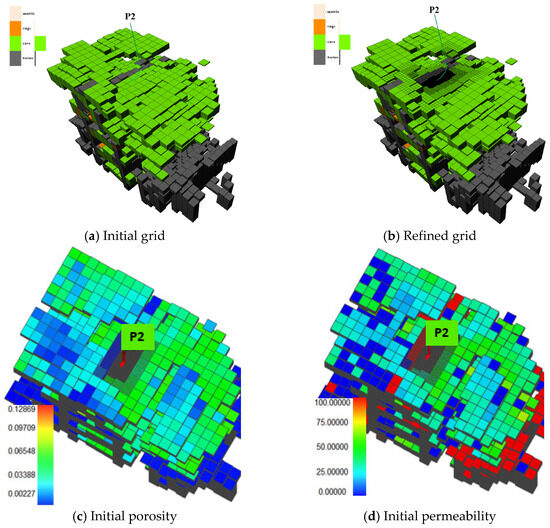
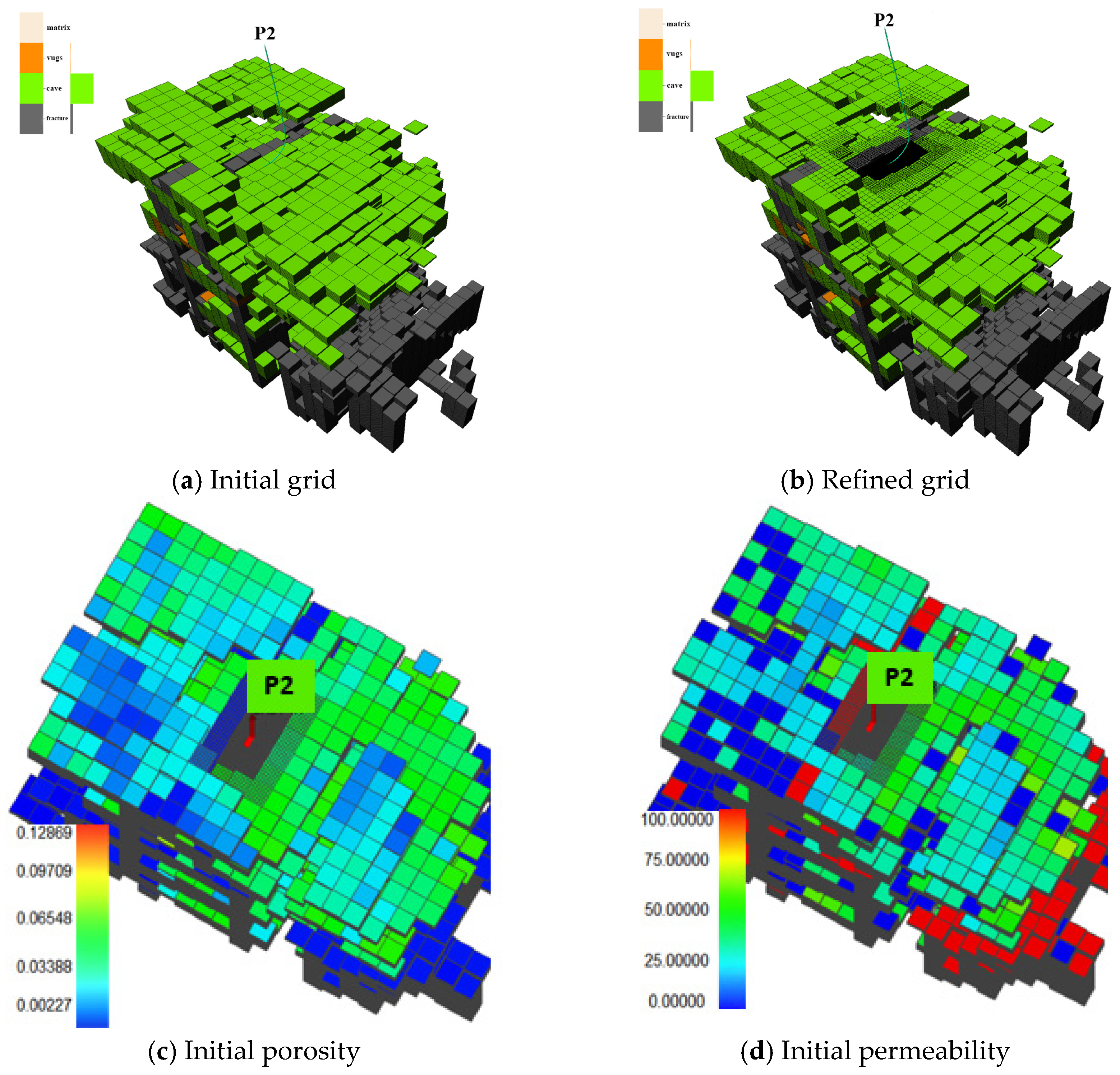
The P2 well is located in the transitional section of the fault zone, It represents a dual cavity–fracture system where a major fracture corridor acts as a hydraulic conduit connecting a near-wellbore cavity to a secondary, deeper cavity unit. Fracture development is accompanied by good cavity connectivity. The well is positioned directly on a major fracture corridor that links multiple karst dissolution cavities, forming a combined fracture-cavity reservoir system. The rock exhibits relatively favorable petrophysical characteristics with an average porosity of 0.07 and an average permeability of approximately 47 mD, indicating that both fracture conductivity and cavity storage capacity contribute significantly to flow behavior (Figure 7). The initial grid model and its refined version show that permeability and porosity are highest near the fracture intersections, gradually decreasing toward the outer matrix zones. In terms of production performance, P2 remained in stable operation up to February 2022 without evident water breakthrough, with an average water cut below 1%, suggesting effective reservoir connectivity and strong energy support. The well underwent multiple pressure build-up tests to evaluate reservoir dynamics.
Figure 7.
Grid and initial properties of P2 well model.
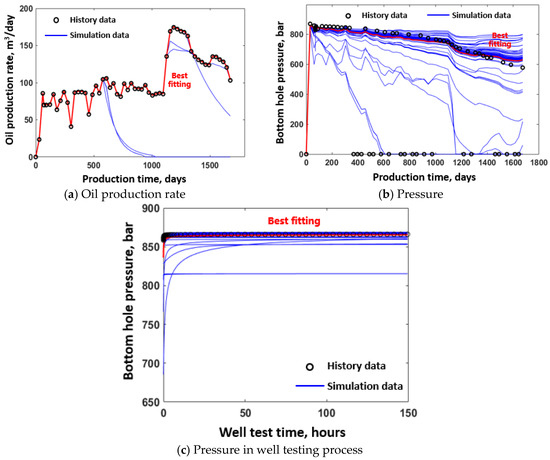
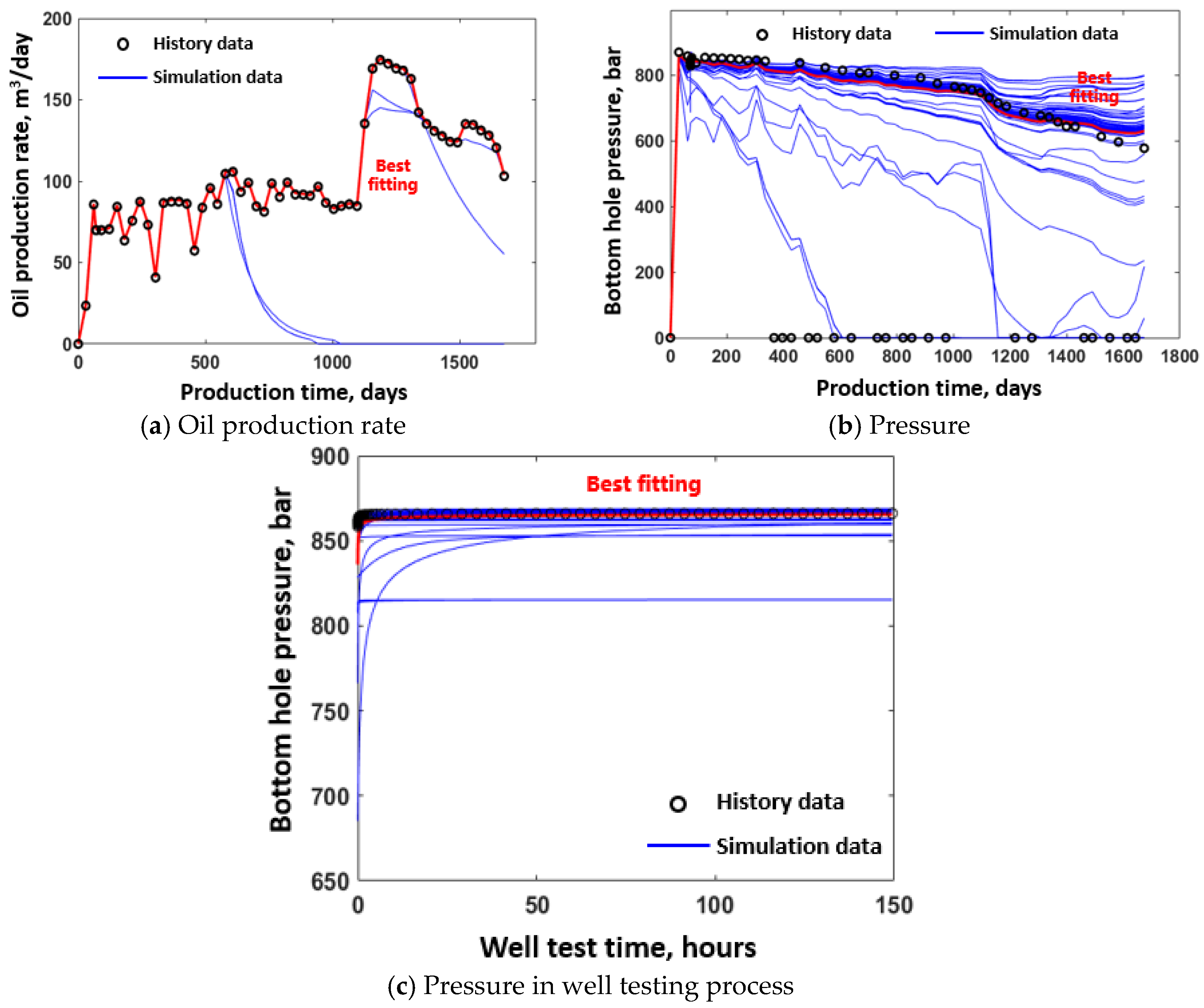
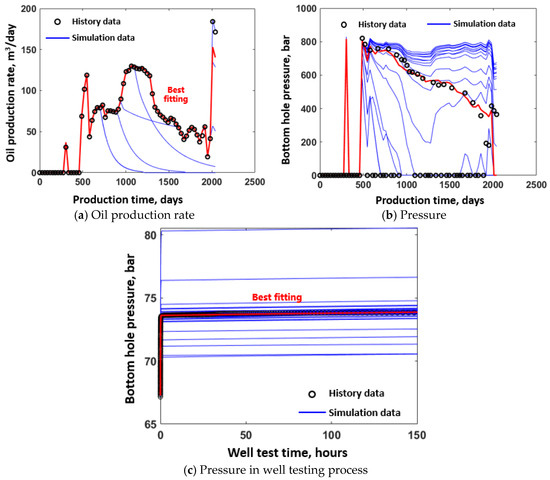
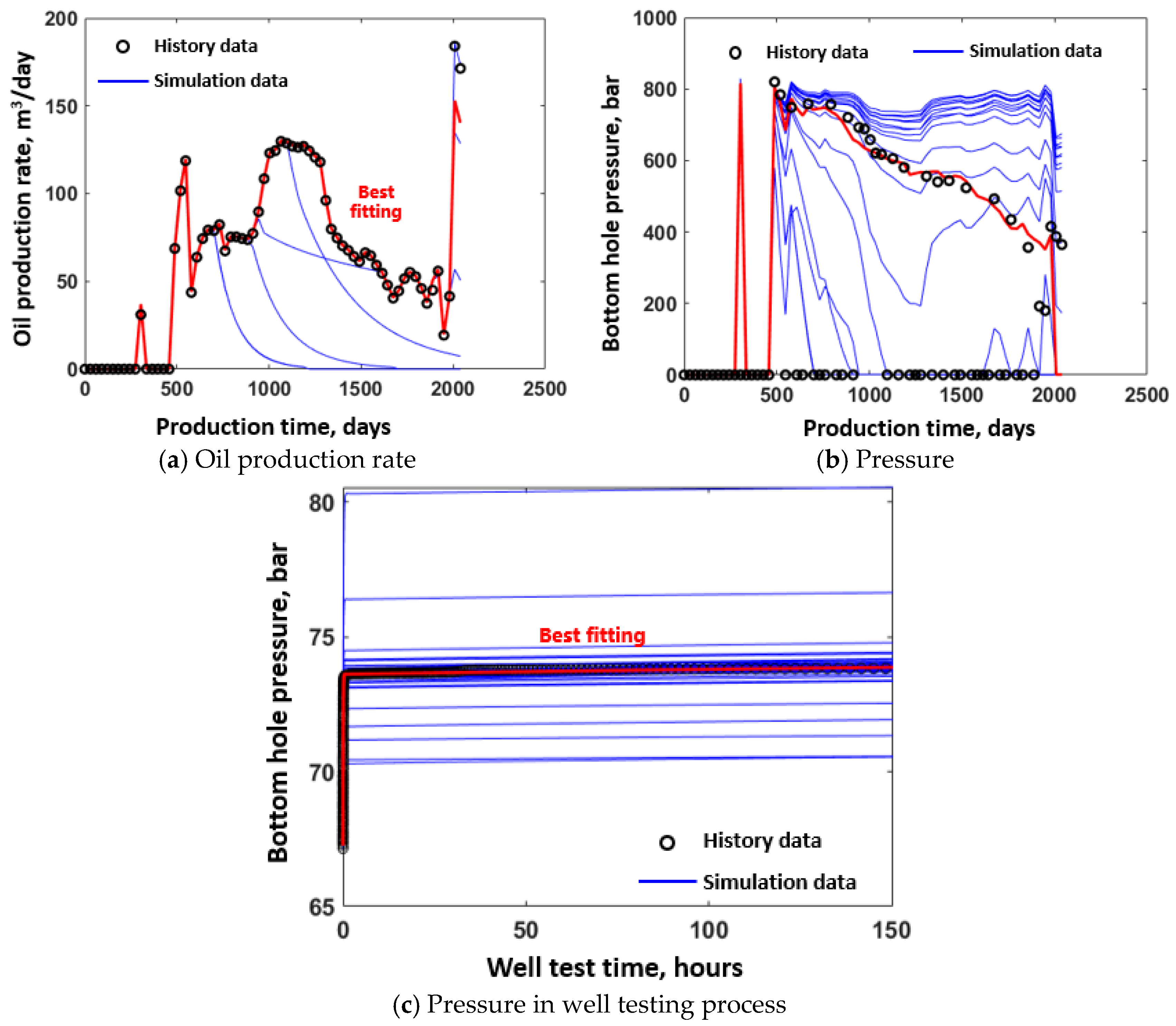
Figure 8 shows that P2 well demonstrated an excellent agreement between simulated and measured data, confirming the reliability of the established geological and numerical models. Under constant liquid production conditions, the oil production rate history was reproduced with a matching accuracy of 96.8%, indicating that the model successfully captured the reservoir dynamic behavior throughout the production period from 2015 to 2020 (Figure 8a). During this stage, the reservoir pressure showed a clear and gradual decline, with the average formation pressure decreasing to about 71 MPa and the bottom-hole pressure stabilizing around 57 MPa toward the end of production. The bottom-hole pressure history match demonstrates the capability of the model to represent pressure diffusion and boundary effects. The simulated curves envelope the historical data, while the best-fit curve aligns closely with measured pressure, yielding a fitting accuracy of 86.9%. The observed pressure trend suggests a moderate depletion rate and efficient connectivity between fracture and cavity systems, consistent with the geological interpretation of a fracture-dominated but well-supported reservoir. Furthermore, the matching of pressure buildup during well testing (Figure 8c) shows the model’s ability to reproduce transient pressure responses after shut-in. The smooth convergence of simulation and field data implies that the permeability and compressibility parameters used in the model are physically representative.
Figure 8.
Production history matching of P2 well.
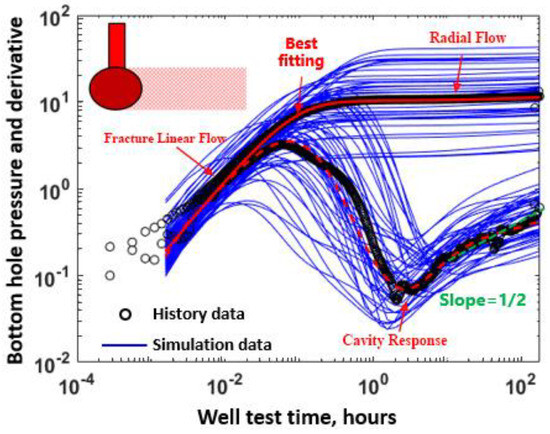
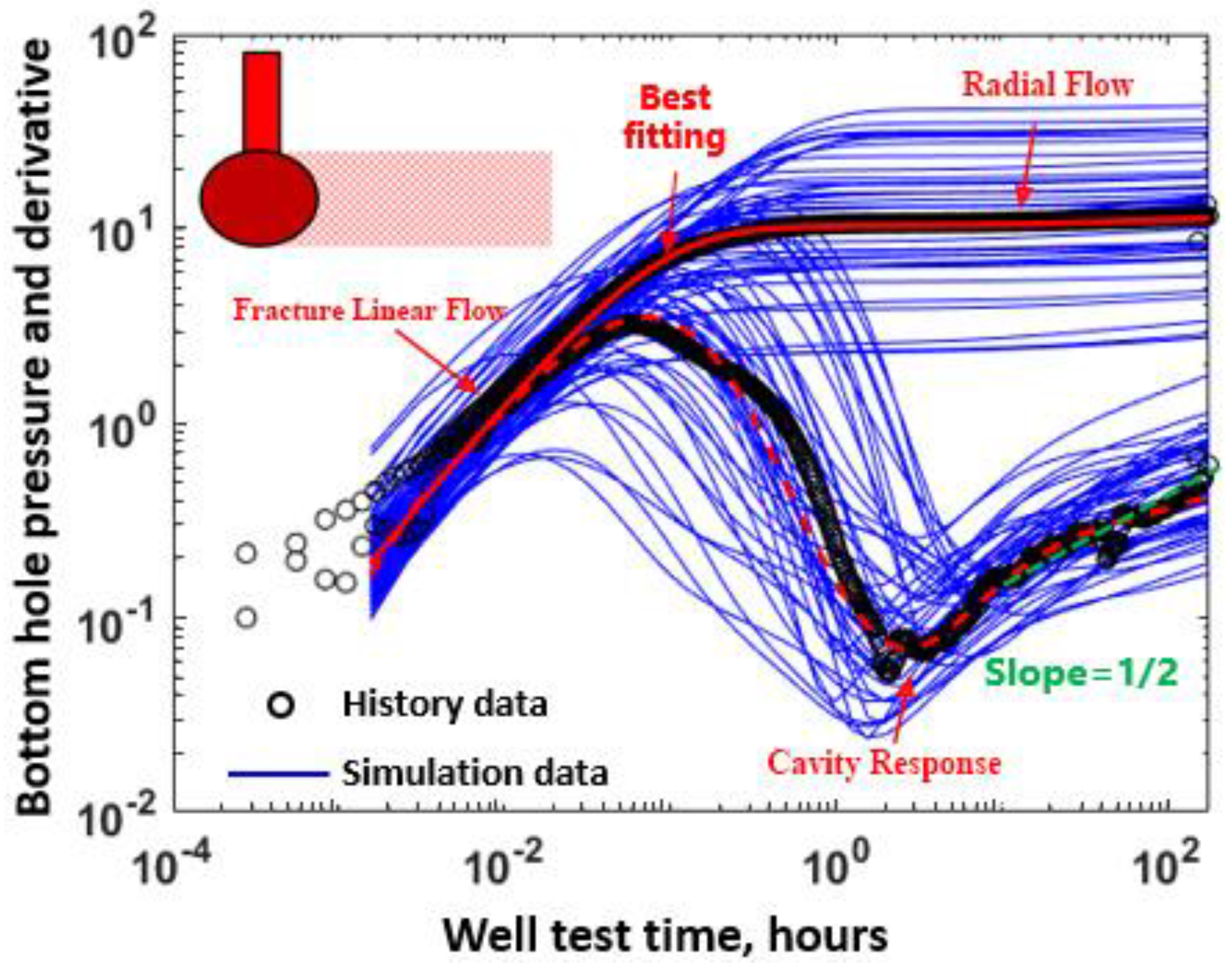
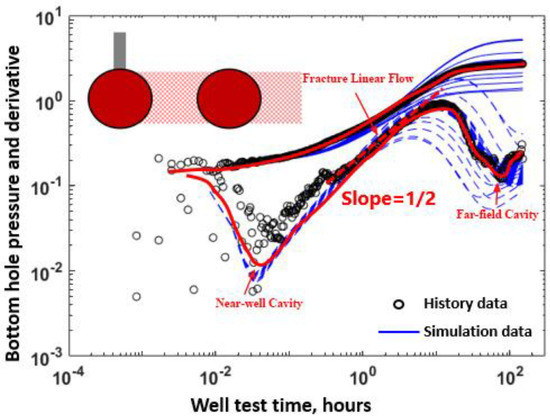
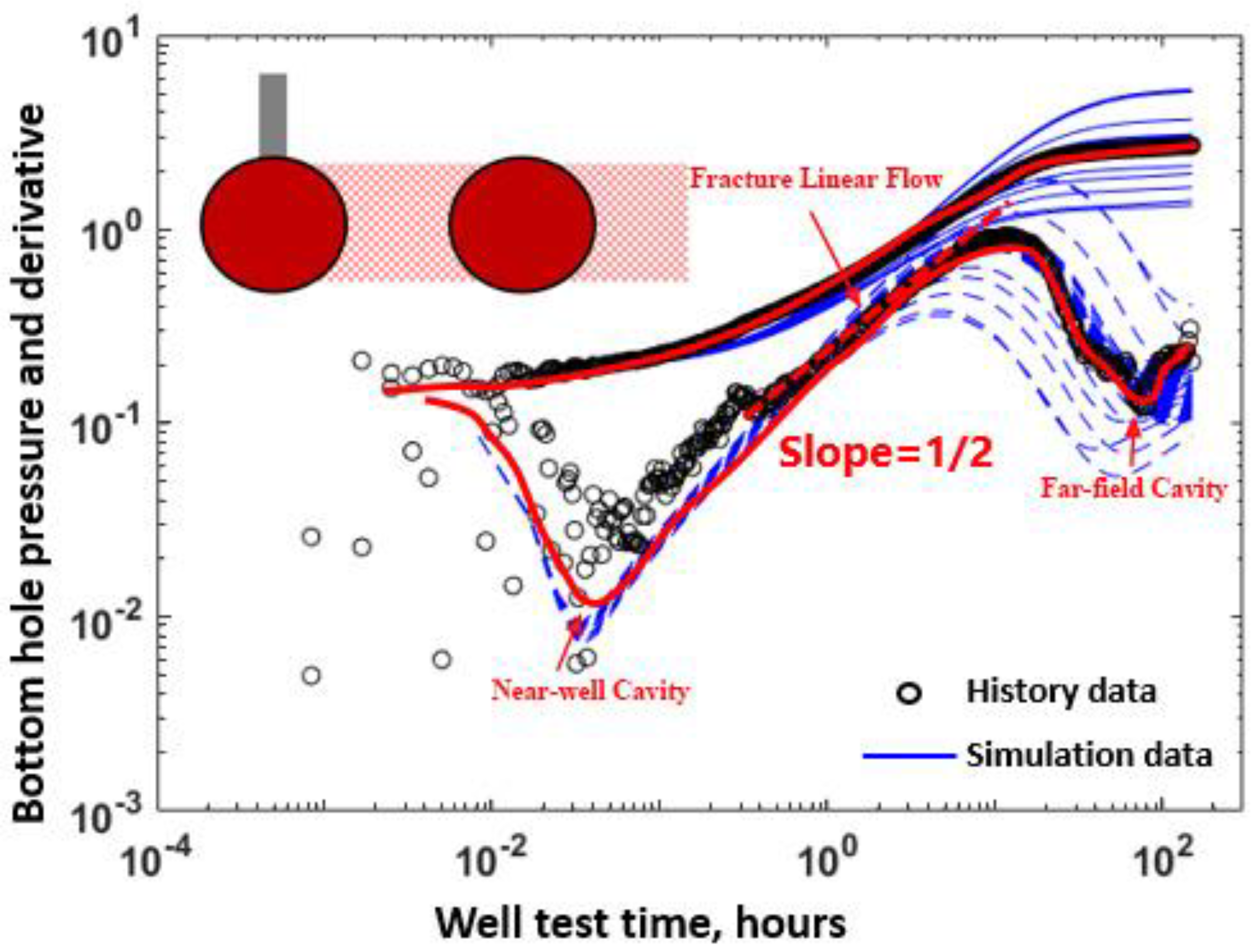
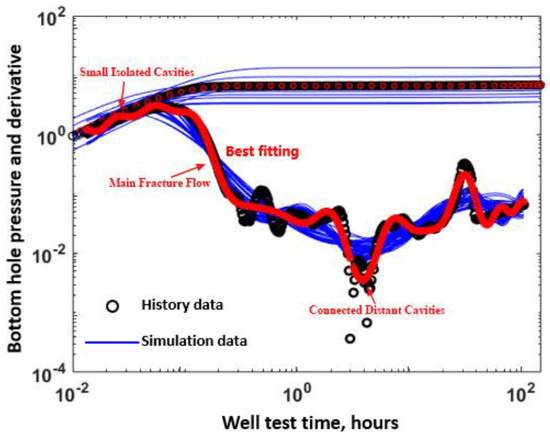
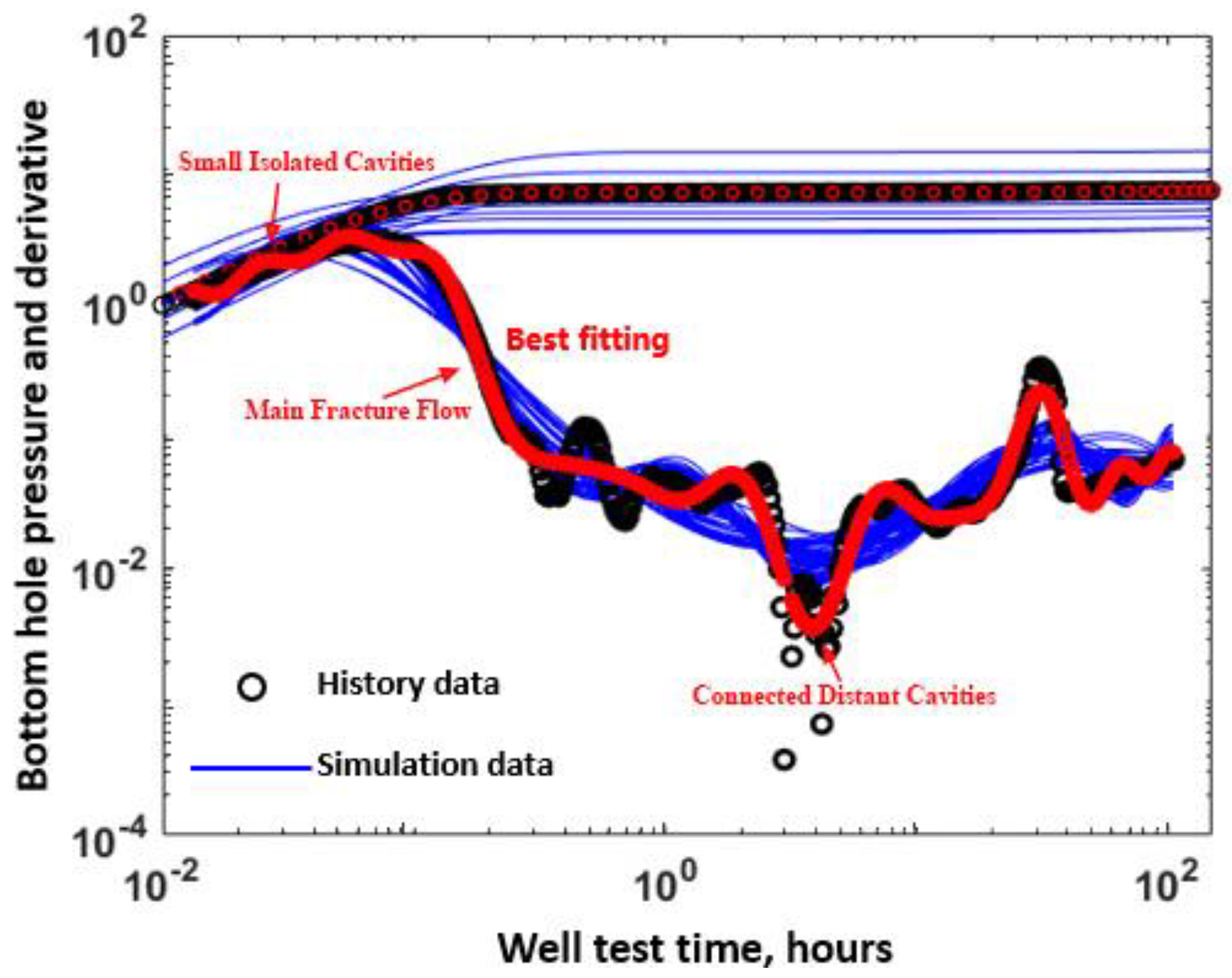
During the pressure build-up stage, the P2 well exhibited a complex but clearly interpretable flow regime characteristic of a dual-cavity–fracture coupled reservoir system (Figure 9). The well is located in a transitional zone dominated by fractures with well-developed dissolution cavities, and the corresponding pressure and derivative curves reflect this multi-scale heterogeneity. The derivative response shows a distinct early deep V-shaped trough, which corresponds to the first cavity response. This indicates a strong storage effect within the near-wellbore cavity, where rapid pressure diffusion along the connected fracture causes a sharp decrease in the derivative. Subsequently, a 1/2-slope segment appears in the mid-time period, signifying linear flow within the fracture system and marking the dominant contribution of fractures to transient flow. At later times, the derivative curve develops a second deep V-shape, corresponding to a secondary cavity response caused by pressure propagation into a more distant cavity unit connected by the fracture corridor. The occurrence of two troughs on the derivative curve demonstrates the superimposed influence of two storage units-a near-well cavity and a secondary, deeper cavity-connected through a shared fracture network. This behavior defines the flow mechanism of the P2 reservoir as a cavity-fracture-cavity composite system, rather than a simple single-cavity or purely fracture-dominated structure [22]. Numerical well-testing results successfully reproduced these multiple flow regimes with a curve-fitting accuracy of 88.4%, validating the geological model and the physical interpretation of the system.
Figure 9.
History matching of pressure and its derivatives in pressure build-up stage for Well P2.
3.3. Multiple Cavity–Fracture Controlled Model
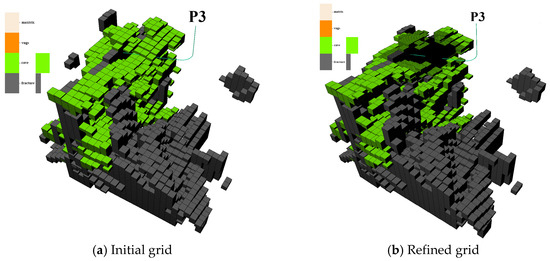
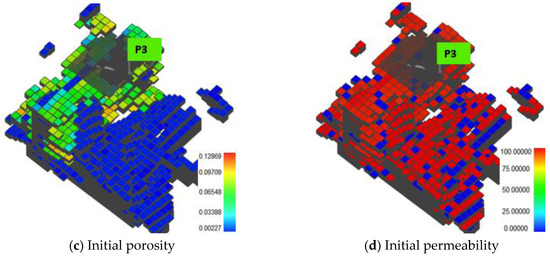
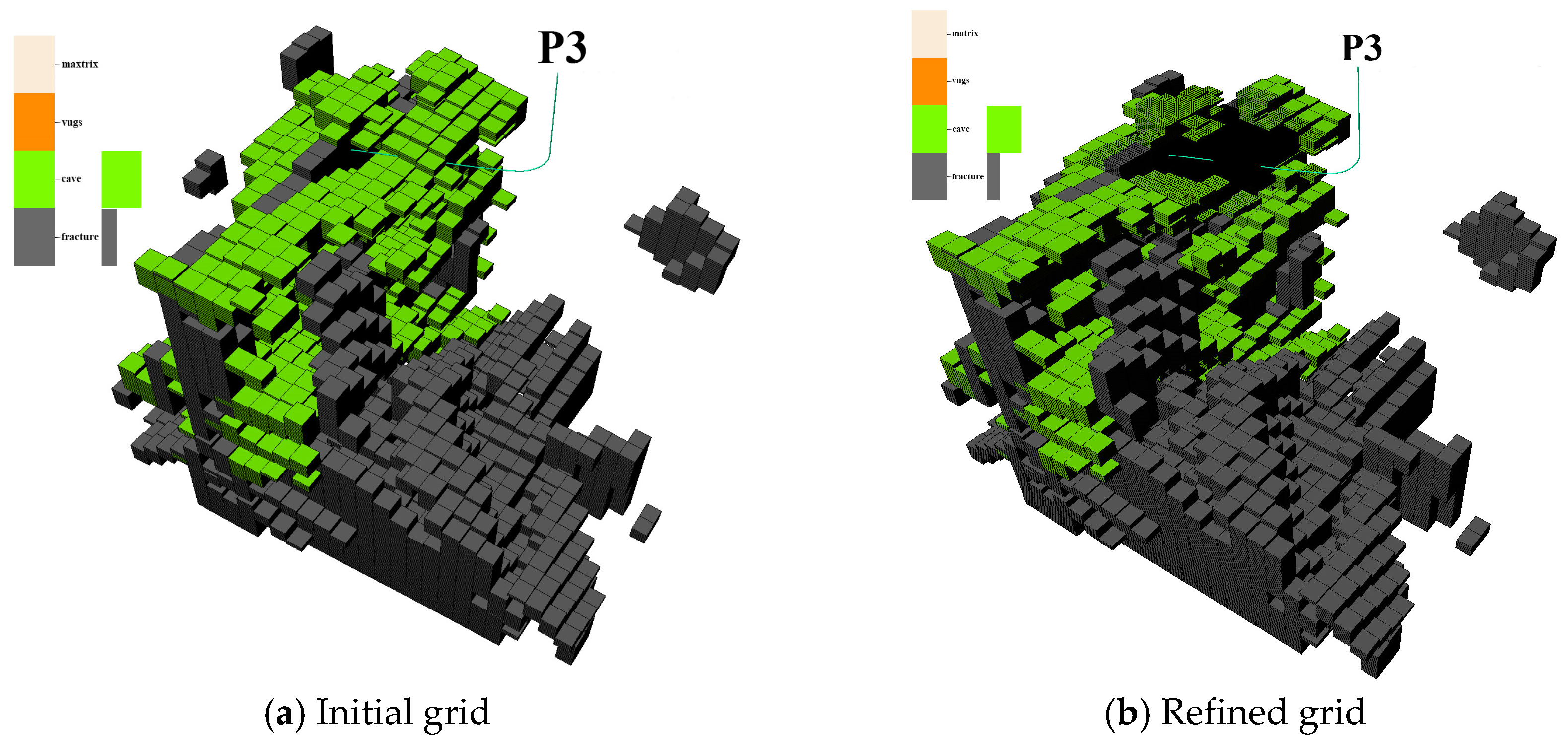
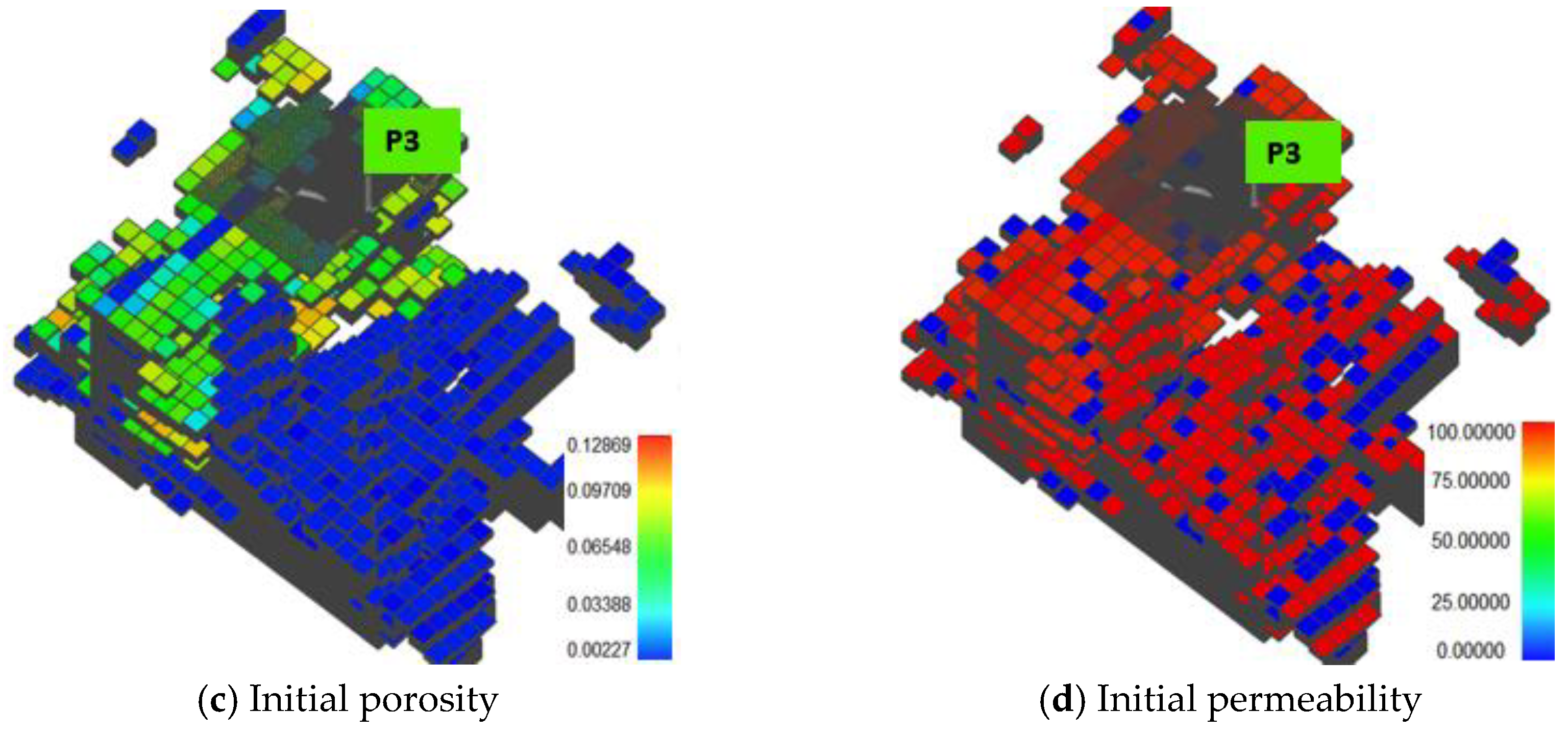
The P3 well is located in the compressional segment of the fault zone, This reservoir is characterized as a complex multi-cavity network, where multiple distributed karst cavities of varying sizes are interconnected by a web of secondary fractures. It is a structurally complex area dominated by dissolution cavities and influenced by secondary fractures. Geological interpretation indicates that the wellbore is surrounded primarily by large karst cavities, while several connecting fractures extend outward from the main void, providing partial hydraulic communication with the surrounding formation. The reservoir exhibits moderate porosity and permeability heterogeneity, with higher porosity concentrated around the cavity and enhanced permeability zones along fracture intersections, as shown in Figure 10. From a production perspective, the P3 well remained in stable operation through February 2022 without observable water breakthrough, maintaining an average water cut of less than 1%, which indicates effective reservoir energy and strong connectivity between the cavity and the fracture network. A pressure build-up test was performed in June 2016 with a shut-in duration of 172 h, providing key data for evaluating flow regimes and validating numerical well-testing models.
Figure 10.
Grid and initial properties of P3 well model.
During the production stage, the P3 well exhibited a stable and high-quality match between simulated and measured data (Figure 11), indicating the reliability of the geological and numerical models. Under constant liquid production conditions, the oil production rate fitting achieved a high accuracy of 97.3%, effectively reproducing the well output throughout the production period. The model accurately captured the fluctuating production profile, including transient increases related to wellbore stimulation and subsequent gradual declines driven by pressure depletion. This close match between observed and simulated production data confirms that the fracture-cavity system provides both effective drainage capacity and stable energy support, allowing sustained production without noticeable water breakthrough [23]. In terms of pressure history matching, the model reproduced the observed bottom-hole pressure evolution with a fitting accuracy of 84.3%, reflecting the strong coupling between the fracture-dominated flow system and the surrounding cavity storage. During production, the average formation pressure decreased to approximately 36 MPa, while the near-wellbore pressure dropped to about 30 MPa, indicating a significant pressure gradient that drives fluid exchange between the cavity and fracture network. The pressure decline trend was well captured by the simulation, showing that the model parameters-particularly permeability and compressibility-are representative of the actual reservoir conditions.
Figure 11.
Production history matching of P3 well.
As shown in Figure 12, the P3 well displayed a complex but distinctive pressure and derivative behavior, clearly reflecting the characteristics of a multi-cavity–fracture controlled reservoir system. The well is located in the compressional section of the fault zone, where both porosity and permeability are significantly enhanced due to the coexistence of multiple dissolution cavities and intersecting fractures. The pressure derivative curve demonstrates three major flow regimes that correspond to different reservoir responses during the shut-in process. In the early stage, the derivative curve shows multiple small V-shaped troughs, representing the responses of several small near-well cavities that are quickly drained through short, high-conductivity fractures. These early depressions in the derivative indicate rapid local pressure equilibration and strong near-well storage effects. As the pressure transient propagates further into the reservoir, the derivative evolves into a clear 1/2-slope segment, marking the linear flow regime dominated by the fracture network. This stage reflects the transition from isolated cavity responses to integrated flow through the connected fracture system, which efficiently transmits pressure changes across the reservoir. At late times, several pronounced deep V-shaped troughs reappear on the derivative curve, corresponding to the delayed response of larger, more distant cavities that become active as the pressure front expands outward. This sequential behavior—small-V early troughs, intermediate 1/2-slope linear flow, and late deep-V features—indicates a composite flow pattern involving multiple cavities hydraulically connected through fractures of varying lengths and conductivities. The numerical well-testing model successfully reproduced these multi-scale flow features with a curve-fitting accuracy of 87.3%, confirming the reliability of the identified flow regimes.
Figure 12.
History matching of pressure and its derivatives in pressure build-up stage for Well P3.
3.4. Comparison of Permeability Correction in Different Wells
Based on the comparison of permeability evolution across the three wells in Table 1 and the corresponding geological analyses, it is evident that different fracture-cavity structural patterns exert distinct impacts on reservoir model correction and dynamic response calibration during both production and pressure build-up matching. For the P1 well (single cavity-fracture type), permeability changes mainly reflect localized enhancement in fracture conductivity and limited adjustment in matrix properties. The fracture permeability increased significantly from 82.5 to 282.6 mD after production-data matching and further to 295.2 mD after pressure build-up calibration, while matrix permeability remained nearly constant. This indicates that the pressure response in P1 is dominated by fracture flow and single-cavity storage, with minimal matrix contribution. The large increase in fracture permeability suggests that transient pressure diffusion enhances flow connectivity between the cavity and the fracture, verifying the single conduit-single storage unit behavior identified from the derivative curve of P1.
Table 1.
Comparison of permeability evolution across different wells.
In contrast, the P2 well (dual cavity-fracture coupled type) shows the most pronounced permeability amplification, particularly in the fracture and cavity systems. The fracture permeability rose dramatically from 45.3 to 421.2 mD during production matching and to 481.8 mD after build-up calibration, while cavity permeability increased from 58.1 to 182.5 mD and then to 213.4 mD. This strong permeability escalation reflects a more complex and interactive hydraulic system where multiple cavities are interconnected through a major fracture corridor [24]. The significant adjustments indicate that transient pressure gradients mobilize previously less-connected void spaces, reinforcing the dual-cavity–fracture composite flow regime observed in P2. The continuous rise in permeability during build-up matching further suggests that this structure allows progressive pressure communication over time, enhancing overall reservoir transmissibility.
The P3 well (multi-cavity–fracture network) demonstrates more moderate but spatially distributed permeability evolution. Fracture permeability increased from 65.1 to 118.2 mD after production matching and to 144.3 mD after build-up, while cavity permeability increased from 38.2 to 90.5 mD and then to 112.8 mD. The smaller magnitude of change compared with P2 reflects the distributed pressure dissipation among multiple connected cavities, where each cavity–fracture subunit contributes partially to flow without forming a dominant high-conductivity pathway [25]. This pattern corresponds to the multi-cavity–fracture controlled model observed in P3, where multiple storage and drainage units interact simultaneously.
3.5. Discussion
The integrated numerical and geological analyses of the three representative wells-P1, P2, and P3-reveal clear distinctions in the dynamic behavior of ultra-deep carbonate reservoirs controlled by varying fracture-cavity architectures. These variations directly influence pressure-transient responses, permeability evolution, and model correction during production and pressure build-up stages [26]. The comparison demonstrates that as the reservoir system transitions from a single-cavity structure to multiple cavity clusters, the flow coupling between storage and conduit units becomes increasingly complex, demanding higher-fidelity models to capture transient behaviors.
3.5.1. Flow Mechanism Differentiation Among Structural Types
The P1 well, characterized by a single fracture-cavity system within a localized tensile zone, exhibits a relatively simple pressure-transient response. The derivative curve shows a distinct early 1/2-slope segment followed by a single deep V-shaped trough and a late-time pseudo-radial flow regime-typical of single conduit-single storage systems [27]. The dynamic permeability calibration (Table 1) indicates limited adjustment of the matrix (27.5 → 32.1 → 22.8 mD) but a pronounced increase in fracture conductivity (82.5 → 282.6 → 295.2 mD). This suggests that fracture flow dominates pressure propagation, while the matrix merely provides minor support [28]. The increase in fracture permeability after build-up matching reflects transient activation of near-well fractures and small voids that enhance connectivity between the wellbore and the main cavity. These findings confirm the single-cavity-dominated flow model, where localized pressure communication governs short-term productivity and rapid drawdown responses [29].
The P2 well, situated within a fault-intersection zone containing two major cavities connected by a dominant fracture corridor, represents a dual cavity–fracture composite system. The derivative curve displays two sequential V-shaped troughs separated by a prolonged 1/2-slope regime, corresponding to successive storage contributions from multiple cavities. The substantial rise in fracture permeability (45.3 → 421.2 → 481.8 mD) and cavity permeability (58.1 → 182.5 → 213.4 mD) demonstrates a stepwise enhancement of hydraulic connectivity. During production matching, permeability increased sharply as the main conduit was activated; during pressure build-up, further adjustment occurred as distant cavities participated in flow. This behavior reflects a hierarchical flow activation mechanism, in which pressure diffusion first energizes near-well fractures and then gradually mobilizes the secondary storage domains [3]. The continuous rise in transmissibility indicates that the dual-cavity system evolves toward a highly connected state under transient pressure gradients, validating the need for multi-domain flow modeling.
In contrast, the P3 well exhibits a multi-cavity-fracture network typical of the compressional block at the toe of the fault zone. The derivative curve reveals multiple shallow V-shaped depressions superimposed on broader trends, suggesting overlapping responses from numerous small cavities of differing sizes. Although permeability adjustments are moderate (fractures: 65.1 → 118.2 → 144.3 mD; cavities: 38.2 → 90.5 → 112.8 mD), the distributed increase across the model domain signifies that pressure dissipation occurs simultaneously through multiple sub-conduits rather than a single dominant pathway. This pattern indicates a distributed, multi-storage flow regime in which pressure fronts propagate through interconnected but hydraulically semi-isolated voids [30]. The moderate transmissibility growth implies that the system achieves equilibrium through small-scale pressure compensation among sub-units, conferring higher overall stability during depletion.
3.5.2. Dynamic Permeability Evolution and Model Correction
The comparative permeability evolution across P1–P3 underscores the necessity of coupling geological heterogeneity with transient hydraulic behavior. Static models derived from seismic or core data often underestimate reservoir connectivity because they neglect the transient enhancement of flow channels during production [31]. The results here show that permeability can increase by one to two orders of magnitude during dynamic calibration, particularly in fractures and large cavities. This reinforces the concept that effective transmissibility is a dynamic parameter, governed by evolving stress fields, dissolution effects, and pressure redistribution.
In P1, the permeability increase is concentrated in the main fracture conduit, indicating that the model correction primarily compensates for under-resolved local heterogeneity. In P2, the permeability enhancement involves both fractures and cavities, highlighting the growing dominance of inter-cavity communication during late-time recovery. For P3, the distributed permeability adjustment reveals the contribution of multiple small cavities to overall pressure support. These contrasting responses indicate that model corrections are physically meaningful, not mere numerical tuning: they correspond to structural differences in the flow-storage coupling hierarchy.
While the permeability increases of 1–2 orders of magnitude during calibration in Table 1 are substantial, they are considered physically plausible rather than artifacts of over-fitting. In ultra-deep carbonate reservoirs, static models based on core or logging data often capture only the matrix or minor fractures, significantly underestimating the hydraulic conductivity of the macro-fracture network. The dynamic inversion reveals the true connectivity of the “hidden” fault-karst system under production pressure differentials. Furthermore, the robustness of these estimates implies that the PSO algorithm, through its global search capability, consistently converged to these enhanced permeability values across multiple realizations, indicating that high transmissibility is a necessary physical condition to match the observed pressure derivative morphology.
Moreover, the permeability evolution observed in Table 1 provides quantitative evidence for progressive hydraulic connectivity enhancement from single- to multi-cavity systems. The strong coupling between fracture and cavity domains in P2 and P3 suggests that pressure build-up stages are particularly valuable for characterizing secondary connectivity, as the gradual re-pressurization activates compartments that remain unswept during production. Such insights cannot be captured by conventional single-porosity models but require dual- or triple-porosity formulations constrained by well-test inversion. The close agreement between simulated and historical data (matching accuracies > 85%) confirms that the hybrid geological–numerical calibration approach can robustly represent transient transmissibility variations. Unlike previous numerical studies that rely on static discrete fracture networks (DFN) or triple-porosity models with fixed inter-porosity flow coefficients, this study explicitly captures the dynamic evolution of hydraulic connectivity. While existing methods effectively handle rigid fracture systems, they often fail to account for the pressure-dependent activation of secondary cavity clusters observed here. By integrating machine-learning-assisted inversion with dynamic grid property updates, our approach provides a more rigorous physical explanation for the ‘deep V-shaped’ derivative signatures that conventional static models struggle to reproduce.
3.5.3. Implications for Reservoir Characterization and Field Development
Before delineating specific field development strategies, it is pertinent to address the algorithmic robustness and operational feasibility of the proposed workflow. The superior performance of PSO over traditional gradient-based methods observed in this study stems from the highly non-convex nature of the objective function in fault-karst reservoirs. Discrete fracture networks generate a rugged response surface replete with local minima where gradient descent algorithms easily become trapped; conversely, PSO’s population-based global search capability effectively navigates this complexity. Regarding inversion stability, the impact of noise characteristics cannot be overstated. Since pressure derivative calculations inherently amplify high-frequency fluctuations, the applied low-pass filtering is not merely cosmetic but a prerequisite to prevent the inversion algorithm from fitting operational noise. Practically, while the surrogate model enables millisecond-level predictions, true “real-time” field implementation is constrained by downhole data transmission rates and bandwidth. Consequently, a “periodic update” strategy—triggered by critical events such as extended shut-ins or water breakthrough is recommended over continuous streaming to balance computational efficiency with high-quality data integration.
From a broader perspective, the systematic permeability evolution across the three wells delineates a structural–hydraulic continuum from simple to complex systems. The transition from the localized, pressure-sensitive drainage of single-cavity systems (P1) to the sustained, multi-scale support of dual- (P2) and multi-cavity networks (P3) demonstrates that well productivity and recovery efficiency are primarily functions of the hierarchy in fracture–cavity connectivity rather than matrix quality alone [32].
For reservoir management, these findings suggest that drilling and completion strategies should target the intersection zones between major fractures and cavity clusters to maximize connected storage volume. Stimulation should focus on enhancing inter-cavity channels rather than solely increasing fracture aperture. Furthermore, the recognition of dynamic permeability evolution underscores the need for time-lapse well-test monitoring and model recalibration throughout the production life cycle. Incorporating transient permeability updates into reservoir simulators will improve production forecasts and optimize injection–production control.
Notwithstanding the demonstrated efficacy of the proposed framework, the current validation scope warrants a measured interpretation. As the methodology was established using three end-member wells from a specific fault-controlled tectonic unit, the surrogate models are inherently conditioned on prior parameter distributions representative of this block—specifically, high in situ stress and low matrix permeability. Consequently, the direct transferability of this inversion workflow to carbonate settings with distinct depositional or tectonic histories, such as high-porosity reef-flat systems or reservoirs under different stress regimes, is not guaranteed without a site-specific re-parameterization of the geological training dataset. Subsequent research will aim to address this by incorporating blind testing protocols and cross-field datasets to rigorously evaluate the methodological robustness across broader geological contexts.
4. Conclusions
- (1)
- A geological model–based numerical well-testing workflow-combining single-well sub-model extraction with localized/anisotropic grid refinement, low-pass denoising, and surrogate-assisted PSO inversion-achieved robust fits to production and build-up data (oil-rate match ≈ 97%, BHP ≥ 84%, well-test interpretation ≥ 85.7%), providing accurate and computationally efficient characterization of ultra-deep fault-controlled carbonate reservoirs.
- (2)
- Pressure-derivative morphology reliably discriminates reservoir types (achieving an overall interpretation accuracy of 85.7%): single cavity, dual cavity-fracture, and multi-cavity-fracture [33].
- (3)
- Model corrections show progressive transmissibility enhancement-strongest in fractures and connected cavities-from production to build-up stages.
- (4)
- Single-cavity systems are high-rate but pressure-sensitive (prioritize maintaining fracture transmissibility); dual-cavity systems benefit from inter-cavity support (target fracture–cavity intersections); multi-cavity systems drain stably via distributed pathways (sustain inter-cavity connectivity).
Author Contributions
Conceptualization, J.L.; Methodology, J.L. and L.Y.; Software, J.L.; Investigation, L.Y.; Resources, L.Y. and Z.W.; Data curation, H.F., Z.W. and S.W.; Writing—original draft, J.L. and S.W.; Writing—review & editing, H.F. and S.W.; Visualization, L.Y. and Z.W.; Supervision, H.L.; Project administration, H.L. and S.W. All authors have read and agreed to the published version of the manuscript.
Funding
This research was funded by National Key Research and Development Program of China (2022YFF0801204) and PetroChina Science and Technology Project (2023DQ0528).
Data Availability Statement
The original contributions presented in this study are included in the article. Further inquiries can be directed to the corresponding author.
Acknowledgments
We explicitly acknowledge Colchis PetroConsulting Co., Ltd. for the generous donation of the tNavigator software V25.1, which provided essential numerical simulation support for this study. We also extend our heartfelt gratitude to Xiaocong Lyu from the China University of Petroleum (Beijing) for his expert guidance and constructive assistance during the manuscript preparation and revision.
Conflicts of Interest
Authors Jin Li, Lin Yan, Zhiping Wang and Shaojun Wang were employed by the company CNPC. The remaining authors declare that the research was conducted in the absence of any commercial or financial relationships that could be construed as a potential conflict of interest.
References
- Cheng, W.; Wang, R.; He, T.; Sun, C.; Tian, H.; Zhao, J.; Zhao, Y.; He, J.; Zeng, Q.; Liu, J.; et al. Geochemical Evidence of Organic Matter Enrichment and Depositional Dynamics in the Lower Cambrian Yurtus Formation, NW Tarim Basin: Insights into Hydrothermal Influence and Paleoproductivity Mechanisms. Minerals 2025, 15, 288. [Google Scholar] [CrossRef] [Scilit]
- Guo, L.; Wang, S.; Sun, L.; Kang, Z.; Zhao, C. Numerical Simulation and Experimental Studies of Karst Caves Collapse Mechanism in Fractured-Vuggy Reservoirs. Geofluids 2020, 2020, 8817104. [Google Scholar] [CrossRef] [Scilit]
- Battiato, I.; Tartakovsky, D.M.; Tartakovsky, A.M.; Scheibe, T.D. Hybrid models of reactive transport in porous and fractured media. Adv. Water Resour. 2011, 34, 1140–1150. [Google Scholar] [CrossRef] [Scilit]
- Luo, Y.; Yang, Z.; Tang, Z.; Zhou, S.; Wu, J.; Xiao, Q. Longitudinal reservoir evaluation technique for tight oil reservoirs. Adv. Mater. Sci. Eng. 2019, 2019, 7681760. [Google Scholar] [CrossRef] [Scilit]
- Lyu, X.; Voskov, D.; Rossen, W.R. Numerical investigations of foam-assisted CO2 storage in saline aquifers. Int. J. Greenh. Gas Control 2021, 108, 103314. [Google Scholar] [CrossRef] [Scilit]
- Lucia, J.M.; Kerans, C.B. A new method for the classification of carbonate reservoirs. J. Pet. Technol. 1990, 42, 103–109. [Google Scholar]
- Chen, X.; Wen, S. Application of seismic attributes to characterize karst reservoirs in the Tarim Basin. J. Pet. Sci. Eng. 2010, 70, 256–264. [Google Scholar]
- Tan, P.; Chen, Z.W.; Huang, L.K.; Zhao, Q.; Shao, S.R. Evaluation of the combined influence of geological layer property and in-situ stresses on fracture height growth for layered formations. Pet. Sci. 2024, 21, 3222–3236. [Google Scholar] [CrossRef] [Scilit]
- Lyu, X.; Khait, M.; Voskov, D. Operator-based linearization approach for modeling of multiphase flow with buoyancy and capillarity. SPE J. 2021, 26, 1858–1875. [Google Scholar] [CrossRef] [Scilit]
- Wang, H.; Li, J.; Liu, H. Numerical simulation of pressure transient analysis for fractured-vuggy carbonate reservoirs. J. Nat. Gas Sci. Eng. 2020, 81, 103456. [Google Scholar]
- Oboué, Y.A.S.I.; Chen, Y.; Fomel, S.; Chen, Y. Protecting the weak signals in distributed acoustic sensing data processing using local orthogonalization: The FORGE data example. Geophysics 2024, 89, V103–V118. [Google Scholar] [CrossRef] [Scilit]
- Najm, H.N. Uncertainty quantification and polynomial chaos techniques in computational fluid dynamics. Annu. Rev. Fluid Mech. 2009, 41, 35–52. [Google Scholar] [CrossRef] [Scilit]
- Li, H.; Qiao, S.; Sun, Y. Multi-stream encoder and multi-layer comparative learning network for fluid classification based on logging data via wavelet threshold denoising. Phys. Fluids 2024, 36, 116610. [Google Scholar] [CrossRef] [Scilit]
- Liu, S.; Wang, L.; Li, X. A new method for well test interpretation of fractured-vuggy carbonate reservoirs. J. Pet. Sci. Eng. 2019, 176, 558–569. [Google Scholar]
- Xu, K.; Cai, Z.; Zhang, H.; Yin, G.; Wang, Z.; Fang, L.; Wang, H.; Qian, Z.; Zhang, W.; Lai, S.; et al. Geomechanical modeling of ultradeep fault-controlled carbonate reservoirs and its application, a case of the Fuman Oilfield in Tarim Basin. Energy Sci. Eng. 2023, 11, 3332–3343. [Google Scholar] [CrossRef] [Scilit]
- Wang, X.; Chen, J.; Ren, D. Research progress and prospect of pore structure representation and seepage law of continental shale oil reservoir. Pet. Reserv. Eval. Dev. 2023, 13, 23–30. [Google Scholar]
- Gonçalves, T.D.S.; Klammler, H.; Leal, L.R.B.; de Queiroz Salles, L. Multivariate geostatistics for mapping of transmissivity and uncertainty in Karst aquifers. Water 2024, 16, 2430. [Google Scholar] [CrossRef] [Scilit]
- Wei, S.; Kuru, E.; Yang, X. Numerical investigation of the factors affecting the cement sheath integrity in hydraulically fractured wells. J. Pet. Sci. Eng. 2022, 215, 110582. [Google Scholar] [CrossRef] [Scilit]
- Gomez, S.; Camacho, R.; Vasquez, M.; Ramos, G.; del Castillo, N.; Mesejo, J.A. Well test characterization of naturally fractured vuggy reservoirs, with a global optimization method. In Proceedings of the Offshore Technology Conference Asia, Kuala Lumpur, Malaysia, 25–28 March 2014; OTC: Houston, TX, USA, 2014; p. OTC-24762. [Google Scholar]
- Kant, R.; Kumar, B.; Maurya, S.P.; Verma, N.; Singh, A.P.; Hema, G.; Singh, R.; Singh, K.H.; Sarkar, P. Identification of the reservoir using seismic inversion based on particle swarm optimization method: A case study. J. Earth Syst. Sci. 2024, 133, 227. [Google Scholar] [CrossRef] [Scilit]
- Jia, B.; Cui, X. Pore pressure dependent gas flow in tight porous media. J. Pet. Sci. Eng. 2021, 205, 108835. [Google Scholar] [CrossRef] [Scilit]
- Gao, B.; Huang, Z.Q.; Yao, J.; Lv, X.R.; Wu, Y.S. Pressure transient analysis of a well penetrating a filled cavity in naturally fractured carbonate reservoirs. J. Pet. Sci. Eng. 2016, 145, 392–403. [Google Scholar] [CrossRef] [Scilit]
- Liu, J.; Liu, Z.; Gu, C.; Zou, N.; Yuan, H.; Jiang, L.; Wen, Y. A novel pressure transient analysis model for fracturing wells in fracture–cavity carbonate reservoirs. Geomech. Geophys. Geo-Energy Geo-Resour. 2024, 10, 69. [Google Scholar] [CrossRef] [Scilit]
- Nejadi, S.; Trivedi, J.J.; Leung, J. History matching and uncertainty quantification of discrete fracture network models in fractured reservoirs. J. Pet. Sci. Eng. 2017, 152, 21–32. [Google Scholar] [CrossRef] [Scilit]
- Kazemi, H.; Merrill, L.S., Jr.; Porterfield, K.L.; Zeman, P.R. Numerical simulation of water-oil flow in naturally fractured reservoirs. Soc. Pet. Eng. J. 1976, 16, 317–326. [Google Scholar] [CrossRef] [Scilit]
- Wu, Y.S.; Ehlig-Economides, C.; Qin, G.; Kang, Z.; Zhang, W.; Ajayi, B.; Tao, Q. A triple-continuum pressure-transient model for a naturally fractured vuggy reservoir. In Proceedings of the SPE Annual Technical Conference and Exhibition, Anaheim, CA, USA, 11–14 November 2007; Society of Petroleum Engineers: Richardson, TX, USA, 2007; p. SPE-110044. [Google Scholar]
- Tiab, D.; Donaldson, E.C. Petrophysics: Theory and Practice of Measuring Reservoir Rock and Fluid Transport Properties, 5th ed.; Elsevier Inc.: Amsterdam, The Netherlands, 2024. [Google Scholar]
- Sun, S.; Pollitt, D.A. Optimising development and production of naturally fractured reservoirs using a large empirical dataset. Pet. Geosci. 2021, 27, petgeo2020-079. [Google Scholar] [CrossRef] [Scilit]
- Weijermars, R.; van Harmelen, A.; Zuo, L.; Nascentes, I.A.; Yu, W. High-resolution visualization of flow interference between frac clusters (part 1): Model verification and basic cases. In Proceedings of the SPE/AAPG/SEG Unconventional Resources Technology Conference, Austin, TX, USA, 24–26 July 2017; URTEC: Eschborn, Germany, 2017; p. URTEC-2670073A. [Google Scholar]
- Yao, J.; Huang, Z.Q. Fractured Vuggy Carbonate Reservoir Simulation; Springer: Berlin/Heidelberg, Germany, 2016. [Google Scholar]
- Soulaine, C.; Roman, S.; Kovscek, A.; Tchelepi, H.A. Mineral dissolution and wormholing from a pore-scale perspective. J. Fluid Mech. 2017, 827, 457–483. [Google Scholar] [CrossRef] [Scilit]
- Jafari, M.; Grabinsky, M. Predicting the isotropic volumetric compression response of hydrating cemented paste backfill (CPB). Geotech. Geol. Eng. 2022, 40, 4821–4836. [Google Scholar] [CrossRef] [Scilit]
- Chen, L.; Jia, C.; Zhang, R.; Yue, P.; Jiang, X.; Wang, J.; Su, Z.; Xiao, Y.; Lv, Y. High-pressure capacity expansion and water injection mechanism and indicator curve model for fractured-vuggy carbonate reservoirs. Petroleum 2024, 10, 511–519. [Google Scholar] [CrossRef] [Scilit]

Disclaimer/Publisher’s Note: The statements, opinions and data contained in all publications are solely those of the individual author(s) and contributor(s) and not of MDPI and/or the editor(s). MDPI and/or the editor(s) disclaim responsibility for any injury to people or property resulting from any ideas, methods, instructions or products referred to in the content. |
© 2026 by the authors. Licensee MDPI, Basel, Switzerland. This article is an open access article distributed under the terms and conditions of the Creative Commons Attribution (CC BY) license.