Tailored Nutrient Feeding Strategies for mcl-PHA Production and Molecular Weight Regulation in Pseudomonas putida

 ,
,  ,
,  ,
,  and
and 
Abstract
1. Introduction
2. Materials and Methods
2.1. Microorganism and Cultivation Medium
2.2. Fermentation Conditions and Feeding Policies
2.3. Analytical Methods
2.4. PHA Extraction and Purification
2.5. PHA Characterization
2.6. Statistical Analysis
3. Results and Discussion
3.1. Effect of Carbon Source on Culture Growth, PHO Accumulation and Biopolymer Properties
3.2. Effect of Initial Octanoic Acid Concentration
3.3. Effect of Nitrogen Availability and Feeding
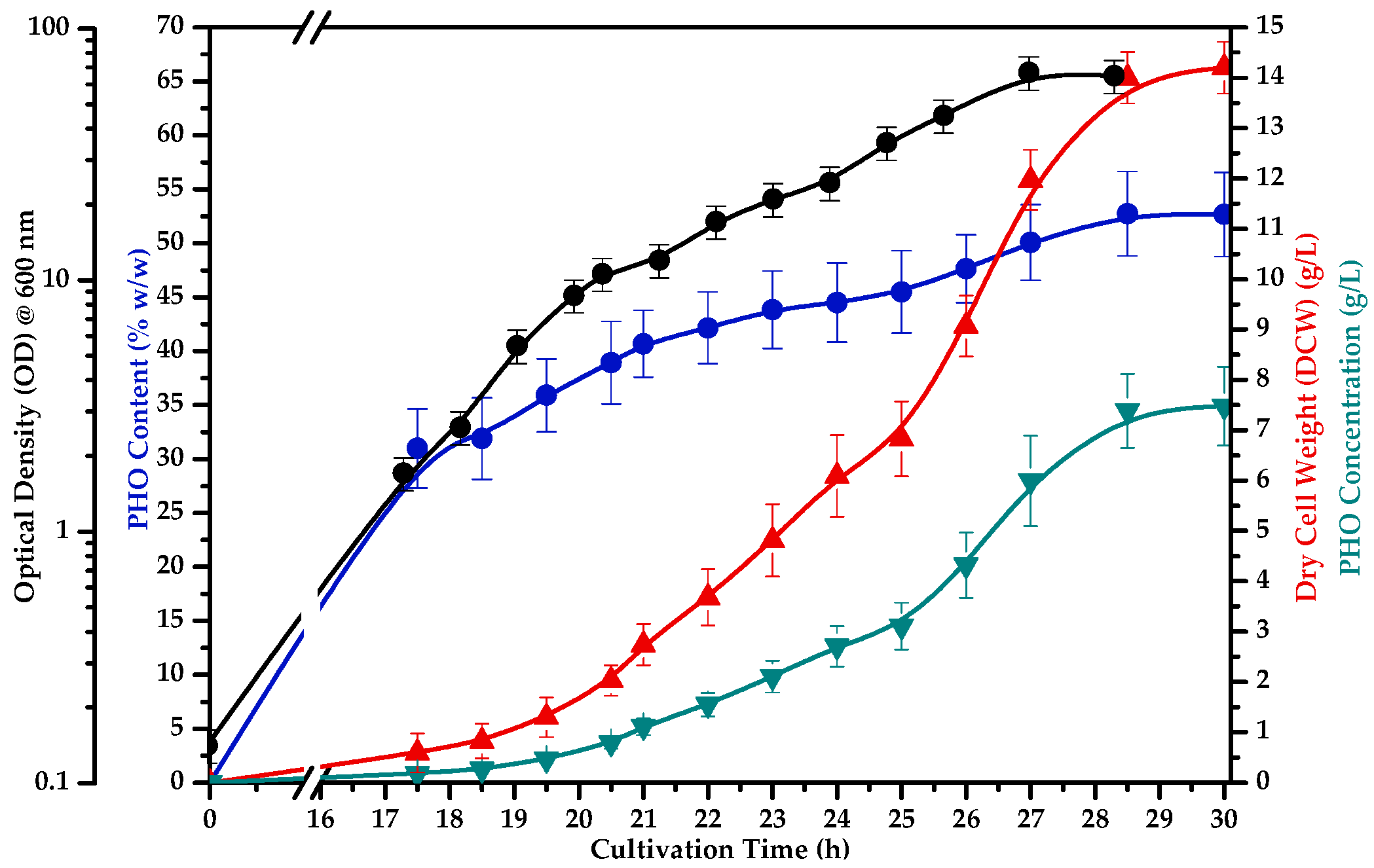
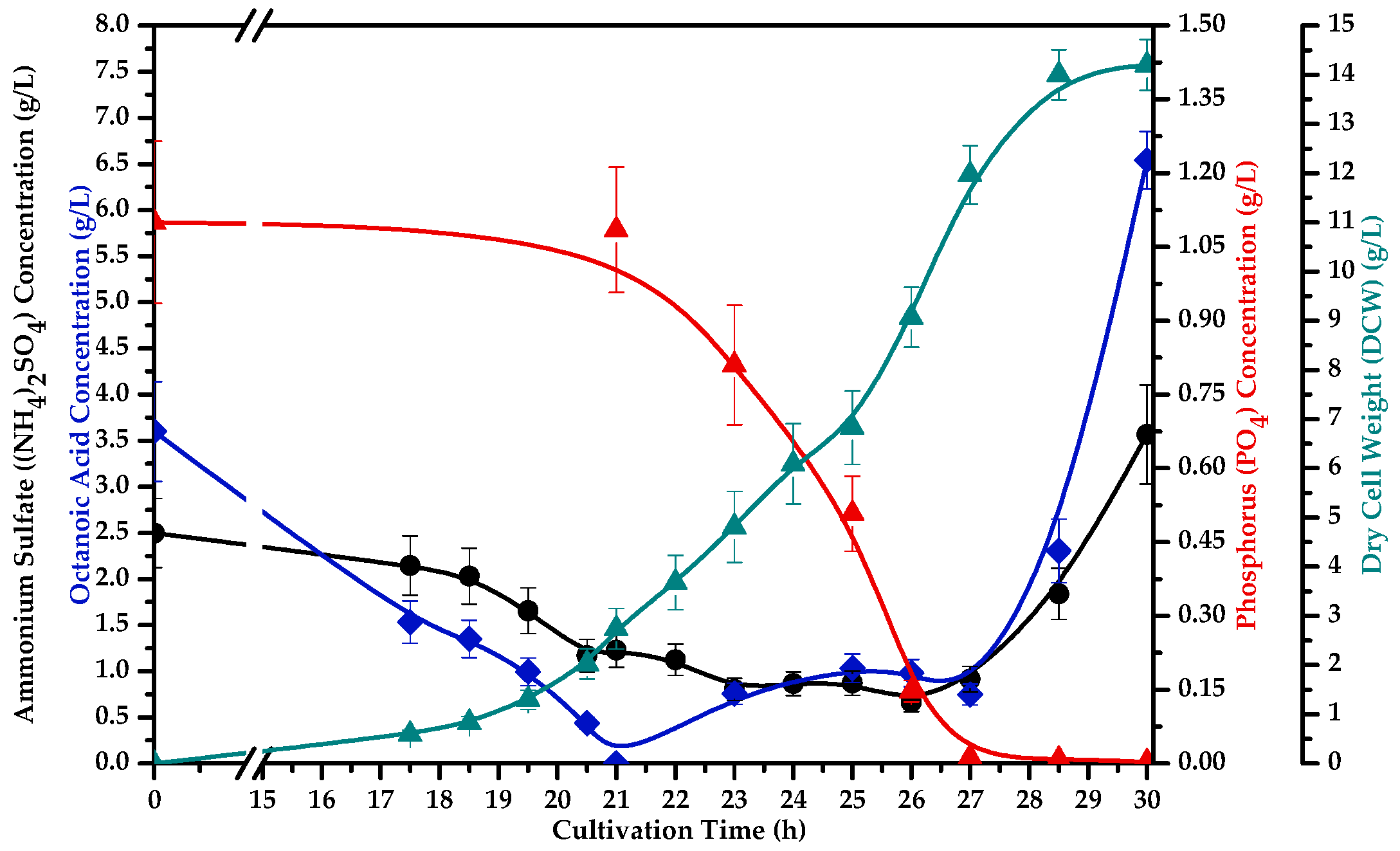
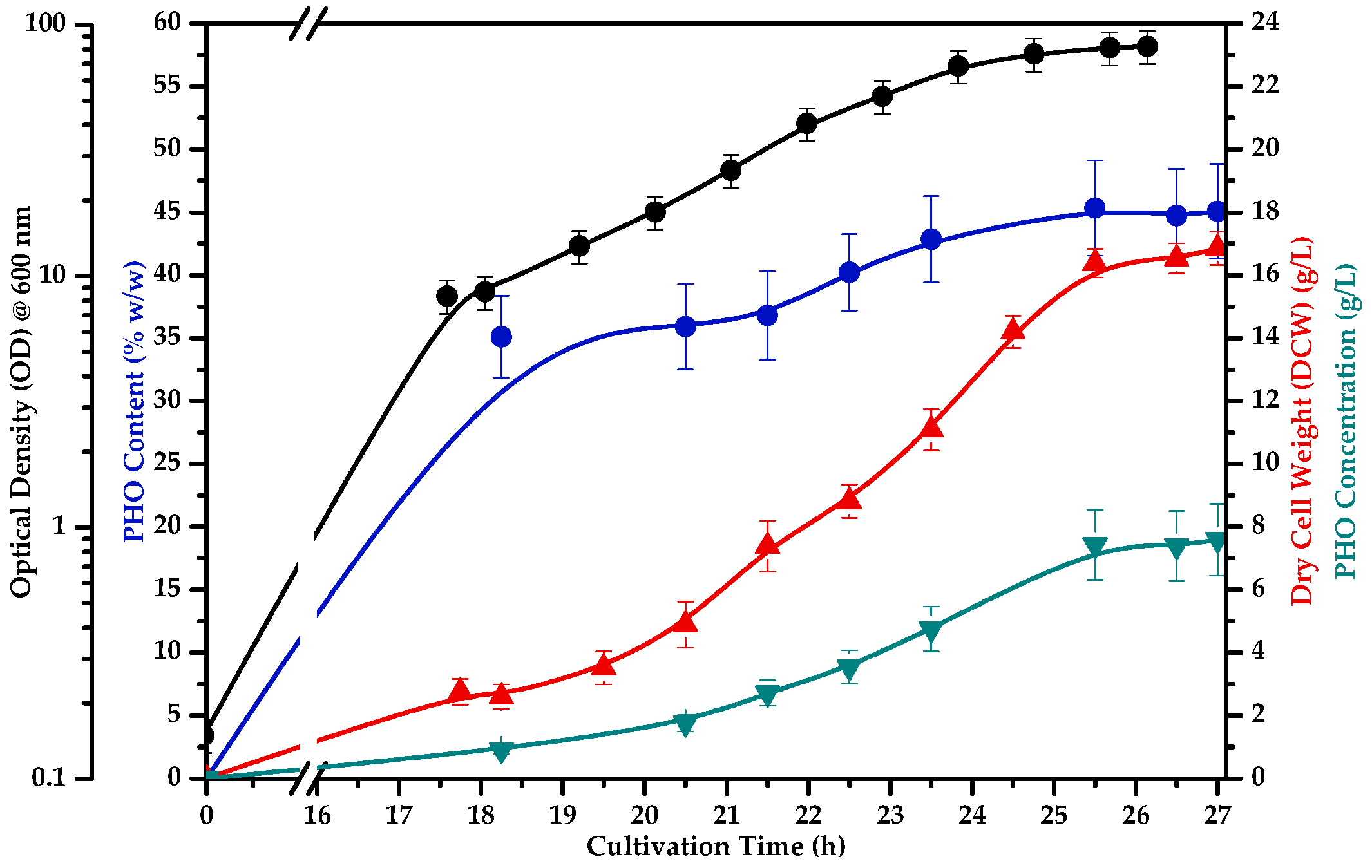
3.4. Fed-Batch Cultivation with Continuous Carbon and Nitrogen Feeding
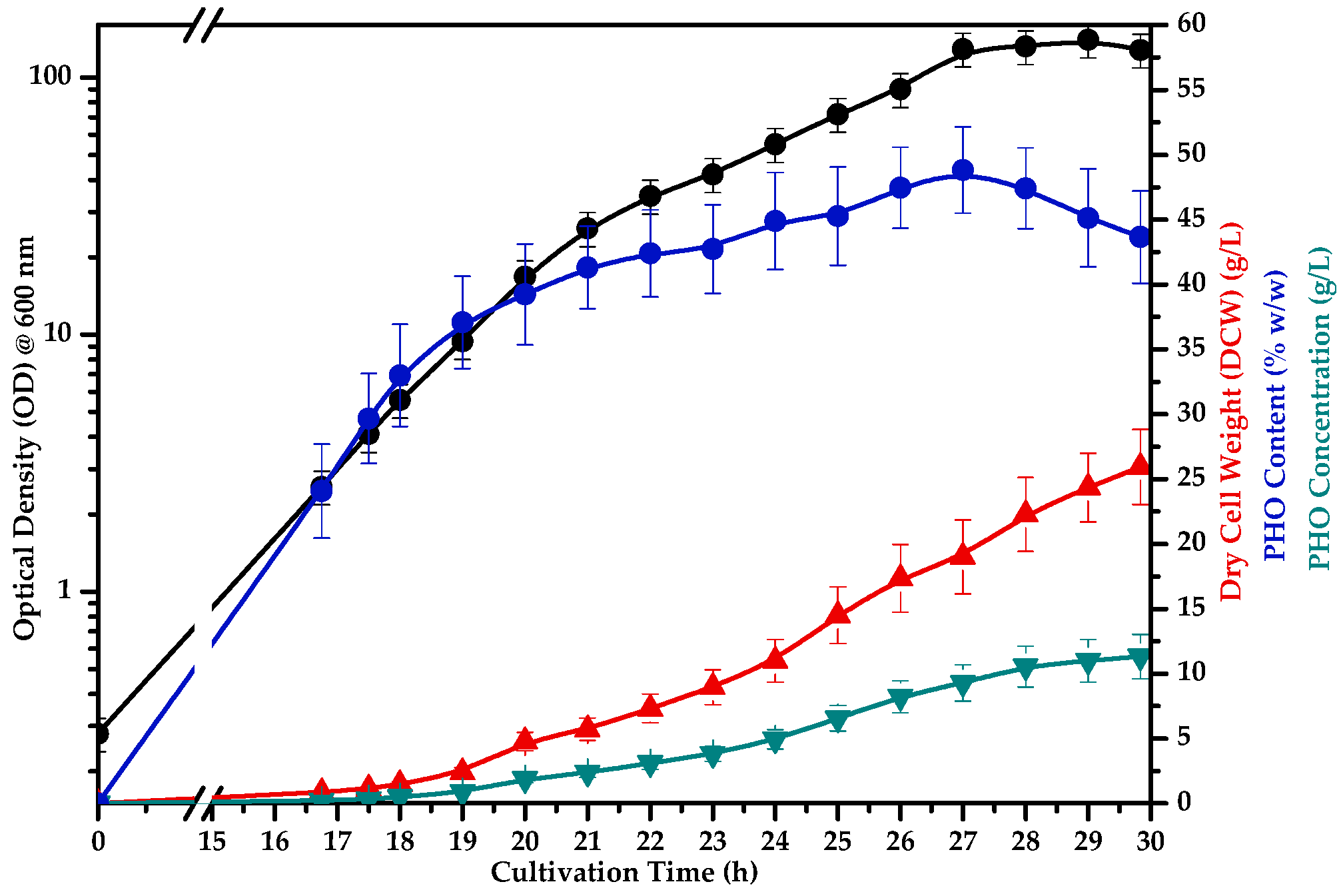
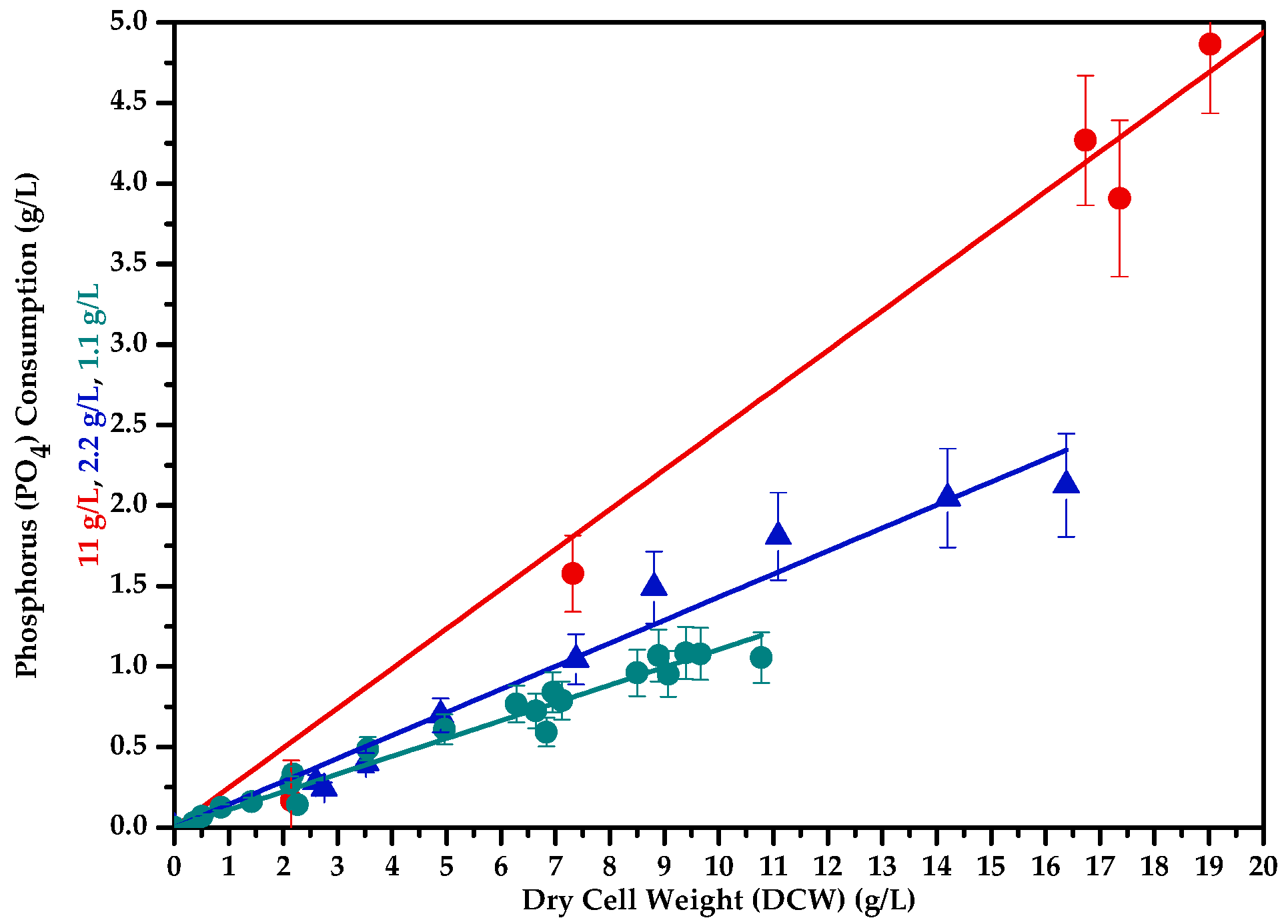
3.5. Effect of Phosphorus Limitation
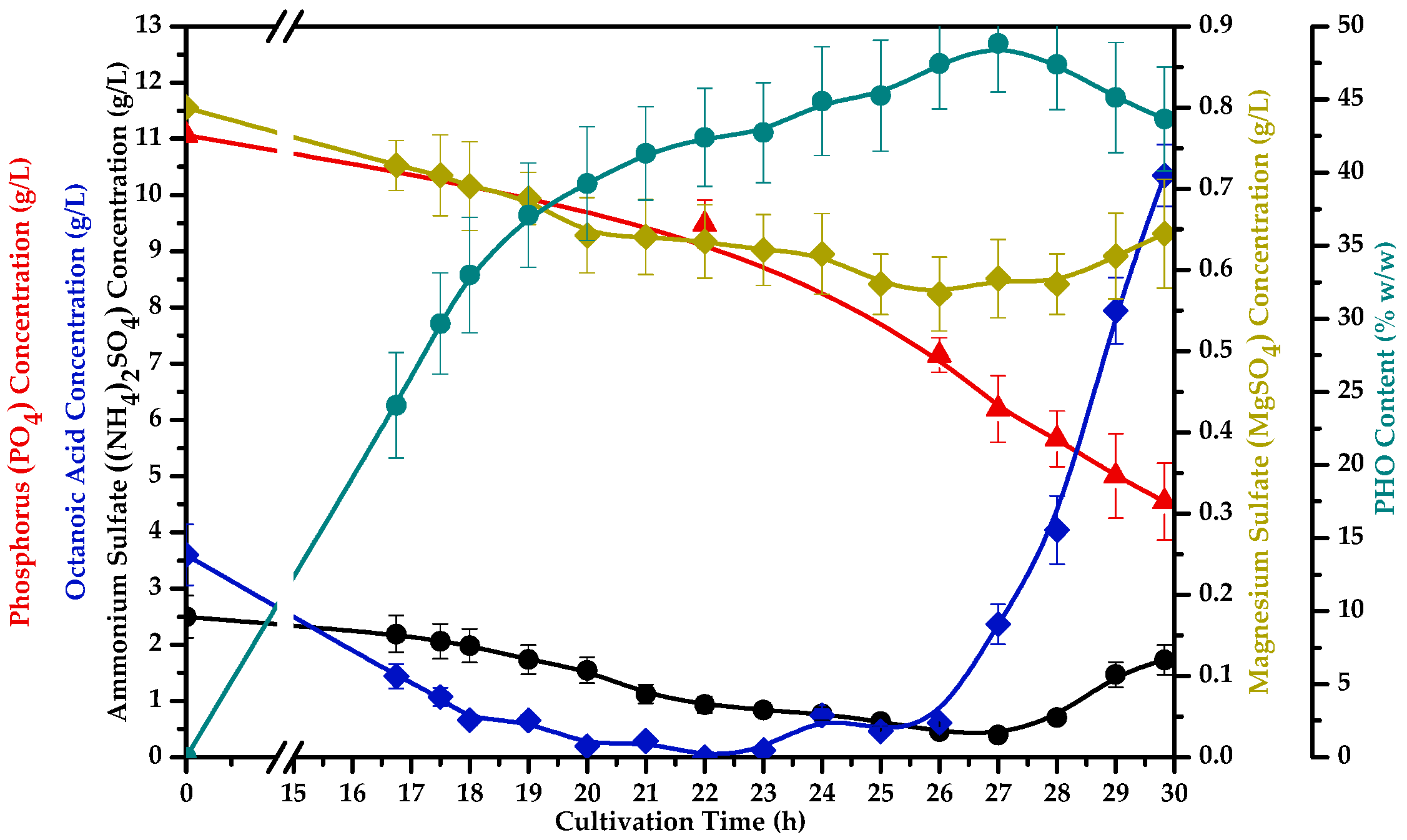
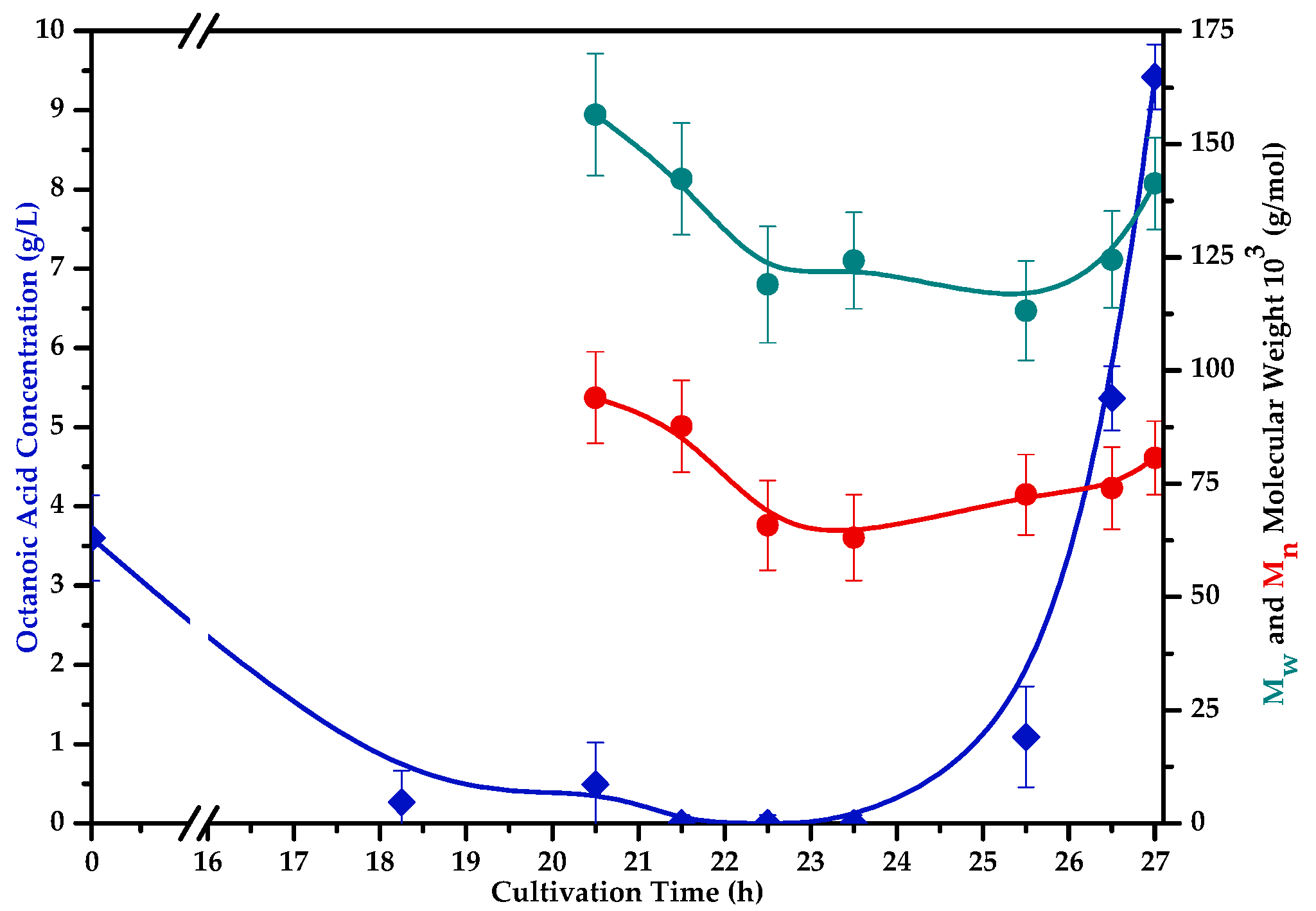
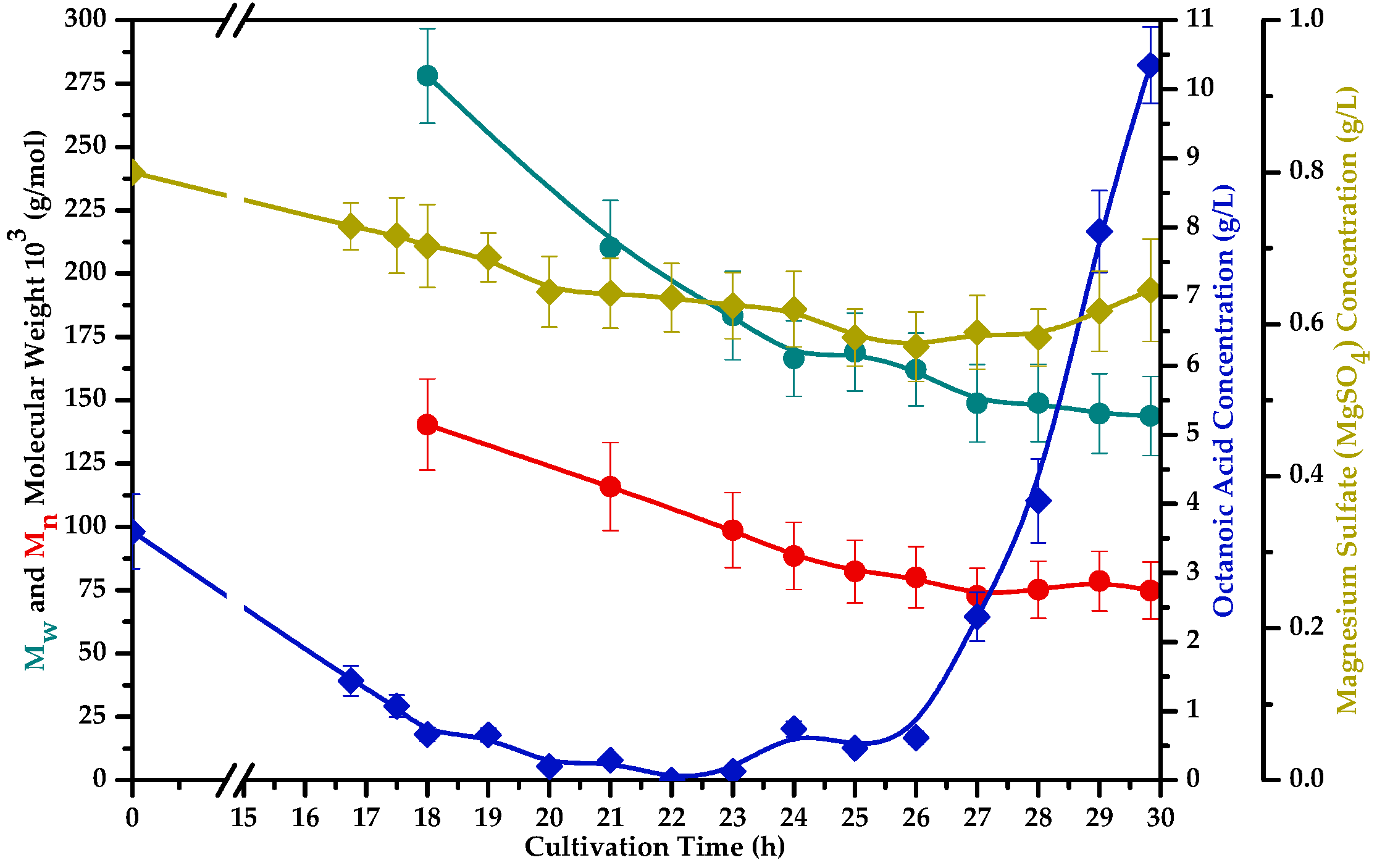
3.6. Effect of Magnesium on Fed-Batch PHO Production
3.7. Effect of Nutrient Feeding on Molecular Weight and Thermal Properties
4. Conclusions
Author Contributions
Funding
Data Availability Statement
Acknowledgments
Conflicts of Interest
References
- Geyer, R.; Jambeck, J.R.; Law, K.L. Production, use, and fate of all plastics ever made. Sci. Adv. 2017, 3, e1700782. [Google Scholar] [CrossRef] [Scilit] [PubMed]
- Jayalath, S.U.; de Alwis, A.P. PHA, the greenest plastic so far: Advancing microbial synthesis, recovery, and sustainable applications for circularity. ACS Omega 2025, 10, 32564–32586. [Google Scholar] [CrossRef] [Scilit] [PubMed]
- Getino, L.; Martín, J.L.; Chamizo-Ampudia, A. A review of polyhydroxyalkanoates: Characterization, production, and application from waste. Microorganisms 2024, 12, 2028. [Google Scholar] [CrossRef] [Scilit] [PubMed]
- Bolla, M.; Pettinato, M.; Ferrari, P.F.; Fabiano, B.; Perego, P. Polyhydroxyalkanoates production from laboratory to industrial scale: A review. Int. J. Biol. Macromol. 2025, 310, 143255. [Google Scholar] [CrossRef] [Scilit] [PubMed]
- Kourmentza, C.; Plácido, J.; Venetsaneas, N.; Burniol-Figols, A.; Varrone, C.; Gavala, H.N.; Reis, M.A.M. Recent advances and challenges towards sustainable polyhydroxyalkanoate (PHA) production. Bioengineering 2017, 4, 55. [Google Scholar] [CrossRef] [Scilit] [PubMed]
- Pagliano, G.; Galletti, P.; Samorì, C.; Zaghini, A.; Torri, C. Recovery of polyhydroxyalkanoates from single and mixed microbial cultures: A review. Front. Bioeng. Biotechnol. 2021, 9, 624021. [Google Scholar] [CrossRef] [Scilit] [PubMed]
- Lenz, R.W.; Marchessault, R.H. Bacterial polyesters: Biosynthesis, biodegradable plastics and biotechnology. Biomacromolecules 2005, 6, 1–8. [Google Scholar] [CrossRef] [Scilit] [PubMed]
- Hazer, B.; Steinbüchel, A. Increased diversification of polyhydroxyalkanoates by modification reactions for industrial and medical applications. Appl. Microbiol. Biotechnol. 2007, 74, 1–12. [Google Scholar] [CrossRef] [Scilit] [PubMed]
- Meier, D.A.; Carlson, H.K.; Coates, J.D. Polyhydroxyalkanoates as ecological currencies across the microbial tree of life. Adv. Microb. Phys. 2026, 88, 191–245. [Google Scholar] [CrossRef] [Scilit] [PubMed]
- Lee, S.Y. Plastic bacteria? Progress and prospects for polyhydroxyalkanoate production in bacteria. Trends Biotechnol. 1996, 14, 431–438. [Google Scholar] [CrossRef] [Scilit]
- Lee, S.Y.; Chang, H.N. Production of poly(hydroxyalkanoic acid). Adv. Biochem. Eng. Biotechnol. 1995, 52, 27–58. [Google Scholar] [CrossRef] [Scilit] [PubMed]
- Steinbüchel, A.; Valentin, H.E. Diversity of bacterial polyhydroxyalkanoic acids. FEMS Microbiol. Lett. 1995, 128, 219–228. [Google Scholar] [CrossRef] [Scilit]
- Lalonde, J.N.; Pilania, G.; Marrone, B.L. Materials designed to degrade: Structure, properties, processing, and performance relationships in polyhydroxyalkanoate biopolymers. Polym. Chem. 2025, 16, 235–265. [Google Scholar] [CrossRef] [Scilit] [PubMed]
- Mai, J.; Kockler, K.; Parisi, E.; Chan, C.M.; Pratt, S.; Laycock, B. Synthesis and physical properties of polyhydroxyalkanoate (PHA)-based block copolymers: A review. Int. J. Biol. Macromol. 2024, 263, 130204. [Google Scholar] [CrossRef] [Scilit] [PubMed]
- Penloglou, G.; Pavlou, A.; Kiparissides, C. Microbial conversion of cheese whey to polyhydroxybutyrate (PHB) via statistically optimized cultures. Fermentation 2023, 9, 624. [Google Scholar] [CrossRef] [Scilit]
- Penloglou, G.; Vasileiadou, A.; Chatzidoukas, C.; Kiparissides, C. Model-based intensification of a fed-batch microbial process for the maximization of polyhydroxybutyrate (PHB) production rate. Bioprocess Biosyst. Eng. 2017, 40, 1247–1260. [Google Scholar] [CrossRef] [Scilit] [PubMed]
- Chatzidoukas, C.; Penloglou, G.; Kiparissides, C. Development of a structured dynamic model for the production of polyhydroxybutyrate (PHB) in Azohydromonas lata cultures. Biochem. Eng. J. 2013, 71, 72–80. [Google Scholar] [CrossRef] [Scilit]
- Penloglou, G.; Kretza, E.; Chatzidoukas, C.; Parouti, S.; Kiparissides, C. On the control of molecular weight distribution of polyhydroxybutyrate in Azohydromonas lata cultures. Biochem. Eng. J. 2012, 62, 39–47. [Google Scholar] [CrossRef] [Scilit]
- Penloglou, G.; Chatzidoukas, C.; Kiparissides, C. Microbial production of polyhydroxybutyrate with tailor-made properties: An integrated modelling approach and experimental validation. Biotechnol. Adv. 2012, 30, 329–337. [Google Scholar] [CrossRef] [Scilit] [PubMed]
- Penloglou, G.; Roussos, A.; Chatzidoukas, C.; Kiparissides, C. A combined metabolic/polymerization kinetic model on the microbial production of poly(3-hydroxybutyrate). New Biotechnol. 2010, 27, 358–367. [Google Scholar] [CrossRef] [Scilit] [PubMed]
- Muthuraj, R.; Valerio, O.; Mekonnen, T.H. Recent developments in short- and medium-chain-length polyhydroxyalkanoates: Production, properties, and applications. Int. J. Biol. Macromol. 2021, 187, 422–440. [Google Scholar] [CrossRef] [Scilit] [PubMed]
- Reddy, V.U.N.; Ramanaiah, S.V.; Reddy, M.V.; Chang, Y.-C. Review of the developments of bacterial medium-chain-length polyhydroxyalkanoates (mcl-PHAs). Bioengineering 2022, 9, 225. [Google Scholar] [CrossRef] [Scilit] [PubMed]
- Hahn, T.; Ortega Alzate, M.; Leonhardt, S.; Tamang, P.; Zibek, S. Current trends in medium-chain-length polyhydroxyalkanoates: Microbial production, purification, and characterization. Eng. Life Sci. 2024, 24, e2300211. [Google Scholar] [CrossRef] [Scilit] [PubMed]
- Azizi, N.; Eslami, R.; Goudarzi, S.; Younesi, H.; Zarrin, H. A review of current achievements and recent challenges in bacterial medium-chain-length polyhydroxyalkanoates: Production and potential applications. Biomacromolecules 2024, 25, 2679–2700. [Google Scholar] [CrossRef] [Scilit] [PubMed]
- Dartiailh, C.; Blunt, W.; Sharma, P.K.; Liu, S.; Cicek, N.; Levin, D.B. The thermal and mechanical properties of medium-chain-length polyhydroxyalkanoates produced by Pseudomonas putida LS46 on various substrates. Front. Bioeng. Biotechnol. 2021, 8, 617489. [Google Scholar] [CrossRef] [Scilit] [PubMed]
- Loeschcke, A.; Thies, S. Pseudomonas putida—A versatile host for the production of natural products. Appl. Microbiol. Biotechnol. 2015, 99, 6197–6214. [Google Scholar] [CrossRef] [Scilit] [PubMed]
- Poblete-Castro, I.; Becker, J.; Dohnt, K.; dos Santos, V.M.; Wittmann, C. Industrial biotechnology of Pseudomonas putida and related species. Appl. Microbiol. Biotechnol. 2012, 93, 2279–2290. [Google Scholar] [CrossRef] [Scilit] [PubMed]
- Borrero-de Acuña, J.M.; Rohde, M.; Saldías, C.; Poblete-Castro, I. Fed-batch mcl-polyhydroxyalkanoates production in Pseudomonas putida KT2440 and ΔphaZ mutant on biodiesel-derived crude glycerol. Front. Bioeng. Biotechnol. 2021, 9, 642023. [Google Scholar] [CrossRef] [Scilit] [PubMed]
- Le Meur, S.; Zinn, M.; Egli, T.; Thöny-Meyer, L.; Ren, Q. Production of medium-chain-length polyhydroxyalkanoates by sequential feeding of xylose and octanoic acid in engineered Pseudomonas putida KT2440. BMC Biotechnol. 2012, 12, 53. [Google Scholar] [CrossRef] [Scilit] [PubMed]
- Sikkema, W.D.; Cal, A.J.; Hathwaik, U.I.; Orts, W.J.; Lee, C.C. Polyhydroxyalkanoate production in Pseudomonas putida from alkanoic acids of varying lengths. PLoS ONE 2023, 18, e0284377. [Google Scholar] [CrossRef] [Scilit] [PubMed]
- Sun, Z.; Ramsay, J.A.; Guay, M.; Ramsay, B.A. Automated feeding strategies for high-cell-density fed-batch cultivation of Pseudomonas putida KT2440. Appl. Microbiol. Biotechnol. 2006, 71, 423–431. [Google Scholar] [CrossRef] [Scilit] [PubMed]
- Sun, Z.; Ramsay, J.A.; Guay, M.; Ramsay, B.A. Carbon-limited fed-batch production of medium-chain-length polyhydroxyalkanoates from nonanoic acid by Pseudomonas putida KT2440. Appl. Microbiol. Biotechnol. 2007, 74, 69–77. [Google Scholar] [CrossRef] [Scilit] [PubMed]
- Sun, Z.; Ramsay, J.A.; Guay, M.; Ramsay, B.A. Increasing the yield of MCL-PHA from nonanoic acid by co-feeding glucose during the PHA accumulation stage in two-stage fed-batch fermentations of Pseudomonas putida KT2440. J. Biotechnol. 2007, 132, 280–282. [Google Scholar] [CrossRef] [Scilit] [PubMed]
- Sun, Z.; Ramsay, J.A.; Guay, M.; Ramsay, B.A. Enhanced yield of medium-chain-length polyhydroxyalkanoates from nonanoic acid by co-feeding glucose in carbon-limited, fed-batch culture. J. Biotechnol. 2009, 143, 262–267. [Google Scholar] [CrossRef] [Scilit] [PubMed]
- Kim, B.S. Production of medium-chain-length polyhydroxyalkanoates by fed-batch culture of Pseudomonas oleovorans. Biotechnol. Lett. 2002, 24, 125–130. [Google Scholar] [CrossRef] [Scilit]
- Huijberts, G.N.M.; Eggink, G. Production of poly(3-hydroxyalkanoates) by Pseudomonas putida KT2442 in continuous cultures. Appl. Microbiol. Biotechnol. 1996, 46, 233–239. [Google Scholar] [CrossRef] [Scilit]
- Lu, C.; Wijffels, R.H.; Martins dos Santos, V.A.; Weusthuis, R.A. Pseudomonas putida as a platform for medium-chain length α, ω-diol production: Opportunities and challenges. Microb. Biotechnol. 2024, 17, e14423. [Google Scholar] [CrossRef] [Scilit] [PubMed]
- Timm, A.; Steinbüchel, A. Formation of polyesters consisting of medium-chain-length 3-hydroxyalkanoic acids from gluconate by Pseudomonas aeruginosa and other fluorescent pseudomonads. Appl. Environ. Microbiol. 1990, 56, 3360–3367. [Google Scholar] [CrossRef] [Scilit] [PubMed]
- Ramsay, B.A.; Saracovan, I.; Ramsay, J.A.; Marchessault, R.H. Effect of nitrogen limitation on long-side-chain poly-β-hydroxyalkanoate synthesis by Pseudomonas resinovorans. Appl. Environ. Microbiol. 1992, 58, 744–746. [Google Scholar] [CrossRef] [Scilit] [PubMed]
- Kim, G.J.; Lee, I.Y.; Yoon, S.C.; Shin, Y.C.; Park, Y.H. Enhanced yield and high production of medium-chain-length poly(3-hydroxyalkanoates) in a two-step fed-batch cultivation of Pseudomonas putida by combined use of glucose and octanoate. Enzym. Microb. Technol. 1997, 20, 500–505. [Google Scholar] [CrossRef] [Scilit]
- Randriamahefa, S.; Renard, E.; Guérin, P.; Langlois, V. Fourier transform infrared spectroscopy for screening and quantifying production of PHAs by Pseudomonas grown on sodium octanoate. Biomacromolecules 2003, 4, 1092–1097. [Google Scholar] [CrossRef] [Scilit] [PubMed]
- Miller, G.L. Use of dinitrosalicylic acid reagent for determination of reducing sugar. Anal. Chem. 1959, 31, 426–428. [Google Scholar] [CrossRef] [Scilit]
- Tamer, I.M.; Moo-Young, M.; Chisti, Y. Optimization of poly(β-hydroxybutyric acid) recovery from Alcaligenes latus: Combined mechanical and chemical treatments. Bioprocess Eng. 1998, 19, 459–468. [Google Scholar] [CrossRef] [Scilit]
- Elbahloul, Y.; Steinbüchel, A. Large-scale production of poly(3-hydroxyoctanoic acid) by Pseudomonas putida GPo1 and a simplified downstream process. Appl. Environ. Microbiol. 2009, 75, 643–651. [Google Scholar] [CrossRef] [Scilit] [PubMed]
- Jiang, X.; Ramsay, J.A.; Ramsay, B.A. Acetone extraction of mcl-PHA from Pseudomonas putida KT2440. J. Microbiol. Methods 2006, 67, 212–219. [Google Scholar] [CrossRef] [Scilit] [PubMed]
- de Vrije, T.; Nagtegaal, R.M.; Veloo, R.M.; Kappen, F.H.J.; de Wolf, F.A. Medium-chain-length polyhydroxyalkanoate produced from ethanol by Pseudomonas putida grown in liquid obtained from acidogenic digestion of organic municipal solid waste. Bioresour. Technol. 2023, 375, 128825. [Google Scholar] [CrossRef] [Scilit] [PubMed]
- Nur-A-Tomal, M.S.; Attenborough, E.; Mazrad, Z.A.I.; Yang, Z.; Zeng, H.; Holt, P.; Banaszak Holl, M.M.; Cameron, N.R.; Kempe, K.; van ’t Hag, L. Tailoring Pseudomonas putida feedstocks for enhanced medium-chain-length polyhydroxyalkanoate production and biomedical nanoemulsion applications. ACS Sustain. Chem. Eng. 2024, 12, 14590–14600. [Google Scholar] [CrossRef] [Scilit]
- Kacanski, M.; Stelzer, F.; Walsh, M.; Kenny, S.; O’Connor, K.; Neureiter, M. Pilot-scale production of mcl-PHA by Pseudomonas citronellolis using acetic acid as the sole carbon source. New Biotechnol. 2023, 78, 68–75. [Google Scholar] [CrossRef] [Scilit] [PubMed]
- Hur, D.H.; Lee, J.; Park, S.J.; Jeong, K.J. Engineering of Pseudomonas putida to produce medium-chain-length polyhydroxyalkanoate from crude glycerol. Int. J. Biol. Macromol. 2024, 281, 136411. [Google Scholar] [CrossRef] [Scilit] [PubMed]
- Możejko, J.; Ciesielski, S. Pulsed feeding strategy is more favorable to medium-chain-length polyhydroxyalkanoates production from waste rapeseed oil. Biotechnol. Prog. 2014, 30, 1243–1246. [Google Scholar] [CrossRef] [Scilit] [PubMed]
- Groisman, E.A.; Hollands, K.; Kriner, M.A.; Lee, E.-J.; Park, S.-Y.; Pontes, M.H. Bacterial Mg2++ homeostasis, transport, and virulence. Annu. Rev. Genet. 2013, 47, 625–646. [Google Scholar] [CrossRef] [Scilit] [PubMed]
- Foster, L.J.R.; Stuart, E.S.; Tehrani, A.; Lenz, R.W.; Fuller, R.C. Intracellular depolymerase and polyhydroxyoctanoate granule integrity in Pseudomonas oleovorans. Int. J. Biol. Macromol. 1996, 19, 177–183. [Google Scholar] [CrossRef] [Scilit] [PubMed]
- Gao, D.; Maehara, A.; Yamane, T.; Ueda, S. Identification of the intracellular polyhydroxyalkanoate depolymerase gene of Paracoccus denitrificans and some properties of the gene product. FEMS Microbiol. Lett. 2001, 196, 159–164. [Google Scholar] [CrossRef] [PubMed]
- Asenjo, J.A.; Schmidt, A.S.; Andersen, P.R.; Andrews, B.A. Effect of single nutrient limitation on poly-β-hydroxybutyrate molecular weight distribution in Alcaligenes eutrophus. Biotechnol. Bioeng. 1995, 46, 497–502. [Google Scholar] [CrossRef] [Scilit] [PubMed]
- Sudesh, K.; Abe, H.; Doi, Y. Synthesis, structure and properties of polyhydroxyalkanoates: Biological polyesters. Prog. Polym. Sci. 2000, 25, 1503–1555. [Google Scholar] [CrossRef] [Scilit]
- Sánchez, R.J.; Schripsema, J.; da Silva, L.F.; Taciro, M.K.; Pradella, J.G.C.; Gomez, J.G.C. Medium-chain-length polyhydroxyalkanoic acids produced by Pseudomonas putida IPT 046 from renewable sources. Eur. Polym. J. 2003, 39, 1385–1394. [Google Scholar] [CrossRef] [Scilit]
- Gross, R.A.; DeMello, C.; Lenz, R.W.; Brandl, H.; Fuller, R.C. The biosynthesis and characterization of poly(β-hydroxyalkanoates) produced by Pseudomonas oleovorans. Macromolecules 1989, 22, 1106–1115. [Google Scholar] [CrossRef] [Scilit]







| Experiment Code: Carbon Source | Biomass (g/L) | PHO Content (% w/w) | Initial|Final Carbon Source Concentrations (g/L) | (NH4)2SO4 Final Concentration (g/L) | Mw (g/mol) | Mn (g/mol) |
|---|---|---|---|---|---|---|
| F-C1: Glucose | 1.73 ± 0.09 b | 10.02 ± 0.60 c | 20.0|11.9 ± 0.6 b | 0.002 ± 0.001 b | 159,200 ± 8000 a | 96,600 ± 4800 b |
| F-C2: Octanoic acid | 1.82 ± 0.10 b | 46.92 ± 1.90 b | 3.6|0 a | 0.091 ± 0.009 a | 152,100 ± 7600 a | 106,500 ± 5300 ab |
| F-C3: Glucose + octanoic acid | 2.68 ± 0.13 a | 56.15 ± 2.20 a | 20.0|14.1 ± 0.8 b 3.6|0 a | 0.007 ± 0.003 b | 157,300 ± 7900 a | 112,600 ± 5600 a |
| Experiment Code: Octanoic Acid Concentration (mM) | Biomass (g/L) | PHO Content (% w/w) | Mw (g/mol) | Mn (g/mol) |
|---|---|---|---|---|
| F-OA1: 15 | 1.27 ± 0.06 b | 55.0 ± 2.28 a | 153,600 ± 7700 a | 96,500 ± 4800 b |
| F-OA2: 25 | 2.68 ± 0.13 a | 56.15 ± 2.20 a | 157,300 ± 7900 a | 112,600 ± 5600 a |
| F-OA3: 30 | - | - | - | - |
| Experiment Code: (NH4)2SO4 Initial Concentration (g/L) | Biomass (g/L) | PHO Content (% w/w) | (NH4)2SO4 Final Concentration (g/L) | Mw (g/mol) | Mn (g/mol) |
|---|---|---|---|---|---|
| F-N1: 0.5 | 2.68 ± 0.13b | 56.15 ± 2.30 a | 0.007 ± 0.006 c | 150,200 ± 7500 a | 106,500 ± 5300 a |
| F-N2: 0.5 + 0.5 | 2.83 ± 0.14 b | 51.31 ± 2.10 a | 0.473 ± 0.047 b | 154,600 ± 7700 a | 114,400 ± 5700 a |
| F-N3: 1.0 | 3.39 ± 0.17 a | 50.71 ± 3.00 a | 0.434 ± 0.053 b | 154,600 ± 6900 a | 109,100 ± 6500 a |
| F-N4: 1.5 | 3.01 ± 0.13 b | 50.07 ± 2.00 a | 0.703 ± 0.081 a | 146,200 ± 8300 a | 90,500 ± 4900 b |
| Parameter | B-CN | B-P1 | B-P2 |
|---|---|---|---|
| Initial phosphate salt concentration (g/L) | 11.0 | 2.2 | 1.1 |
| Cultivation time (h) | 27.0 | 27.0 | 30 |
| Total octanoic acid supplied (mM) | 265 | 225 | 144 |
| Octanoic acid consumed (mM) | 177 ± 7.1 a | 145 ± 7.9 b | 125 ± 5.5 c |
| Total (NH4)2SO4 supplied (g/L) | 10.05 | 8.90 | 6.50 |
| (NH4)2SO4 consumed (g/L) | 8.00 ± 0.40 a | 6.20 ± 0.32 b | 4.66 ± 0.25 c |
| Phosphate consumed (g/L) | 6.0 ± 0.5 a | 2.2 ± 0.2 b | 1.1 ± 0.1 c |
| Final dry cell weight (DCW) (g/L) | 20.39 ± 1.11 a | 16.85 ± 1.21 b | 14.38 ± 0.87 b |
| PHO content (% w/w DCW) | 50 ± 2.5 ab | 45 ± 3.0 b | 53 ± 3.8 a |
| PHO concentration (g/L) | 10.19 ± 0.70 a | 7.58 ± 0.70 b | 7.62 ± 0.61 b |
| PHO productivity (g/(L·h)) | 0.377 ± 0.036 a | 0.281 ± 0.024 ab | 0.254 ± 0.021 b |
| Weight-average molecular weight, Mw (g/mol) | 131,200 ± 6600 a | 141,300 ± 7100 a | 129,400 ± 6500 a |
| Number-average molecular weight, Mn (g/mol) | 84,900 ± 4200 a | 80,700 ± 3900 a | 82,900 ± 4100 a |
| Polydispersity index (PDI) | 1.54 ± 0.08 b | 1.75 ± 0.09 a | 1.56 ± 0.07 ab |
| Glass transition temperature, Tg (°C) | −36.7 ± 0.3 b | −37.22 ± 0.3 b | −35.3 ± 0.3 a |
| Melting temperature, Tm (°C) | 53.7 ± 0.4 a | 52.8 ± 0.5 ab | 52.4 ± 0.4 b |
| Parameter | B-CN | B-Mg |
|---|---|---|
| Cultivation time (h) | 27.0 | 30.0 |
| Total octanoic acid supplied (mM) | 265 | 320 |
| Octanoic acid consumed (mM) | 177 ± 7.1 b | 250 ± 10.3 a |
| Total (NH4)2SO4 supplied (g/L) | 10.05 | 12.80 |
| (NH4)2SO4 consumed (g/L) | 8.00 ± 0.40 b | 11.07 ± 0.54 a |
| Total magnesium supplied (g/L) | 6.0 | 1.1 |
| Magnesium consumed (g/L) | 0.8 ± 0.04 b | 0.2 ± 0.06 a |
| Final dry cell weight (DCW) (g/L) | 20.39 ± 1.11 b | 26.00 ± 1.38 a |
| PHO content (% w/w DCW) | 50 ± 2.5 a | 44 ± 3.0 a |
| PHO concentration (g/L) | 10.19 ± 0.70 a | 11.50 ± 0.94 a |
| PHO productivity (g/(L·h)) | 0.377 ± 0.036 a | 0.384 ± 0.030 a |
| Weight-average molecular weight, Mw (g/mol) | 131,200 ± 6600 a | 145,000 ± 7300 a |
| Number-average molecular weight, Mn (g/mol) | 84,900 ± 4200 a | 82,000 ± 4100 a |
| Polydispersity index (PDI) | 1.54 ± 0.08 b | 1.74 ± 0.09 a |
| Glass transition temperature, Tg (°C) | −36.7 ± 0.3 a | −36.06 ± 0.3 a |
| Melting temperature, Tm (°C) | 53.7 ± 0.4 a | 52.0 ± 0.6 b |
Disclaimer/Publisher’s Note: The statements, opinions and data contained in all publications are solely those of the individual author(s) and contributor(s) and not of MDPI and/or the editor(s). MDPI and/or the editor(s) disclaim responsibility for any injury to people or property resulting from any ideas, methods, instructions or products referred to in the content. |
© 2026 by the authors. Licensee MDPI, Basel, Switzerland. This article is an open access article distributed under the terms and conditions of the Creative Commons Attribution (CC BY) license.
Share and Cite
Penloglou, G.; Pavlou, A.; Foka, K.; Topakas, E.; Chatzidoukas, C. Tailored Nutrient Feeding Strategies for mcl-PHA Production and Molecular Weight Regulation in Pseudomonas putida. Processes 2026, 14, 2852. https://doi.org/10.3390/pr14172852
Penloglou G, Pavlou A, Foka K, Topakas E, Chatzidoukas C. Tailored Nutrient Feeding Strategies for mcl-PHA Production and Molecular Weight Regulation in Pseudomonas putida. Processes. 2026; 14(17):2852. https://doi.org/10.3390/pr14172852
Chicago/Turabian StylePenloglou, Giannis, Alexandros Pavlou, Katerina Foka, Evangelos Topakas, and Christos Chatzidoukas. 2026. "Tailored Nutrient Feeding Strategies for mcl-PHA Production and Molecular Weight Regulation in Pseudomonas putida" Processes 14, no. 17: 2852. https://doi.org/10.3390/pr14172852
APA StylePenloglou, G., Pavlou, A., Foka, K., Topakas, E., & Chatzidoukas, C. (2026). Tailored Nutrient Feeding Strategies for mcl-PHA Production and Molecular Weight Regulation in Pseudomonas putida. Processes, 14(17), 2852. https://doi.org/10.3390/pr14172852