Article

Improved Methods for the Synthesis of Polynitrophenyl Derivatives of 1,2,4-Triazole

by
Jonas Sarlauskas
1,*,
Jonita Stankeviciute
1,
Justas Vaitekunas
1 and
Jelena Tamuliene
2,*
1
Institute of Biochemistry, Life Sciences Center, Vilnius University, Sauletekio av. 7, LT-10257 Vilnius, Lithuania
2
Institute of Theoretical Physics and Astronomy, Physics Faculty, Vilnius University, Sauletekio av. 3, LT-10257 Vilnius, Lithuania
*
Authors to whom correspondence should be addressed.
Processes 2026, 14(17), 2758; https://doi.org/10.3390/pr14172758
Submission received: 16 July 2026 / Revised: 24 August 2026 / Accepted: 25 August 2026 / Published: 28 August 2026
(This article belongs to the Section Chemical Processes and Systems)

Abstract

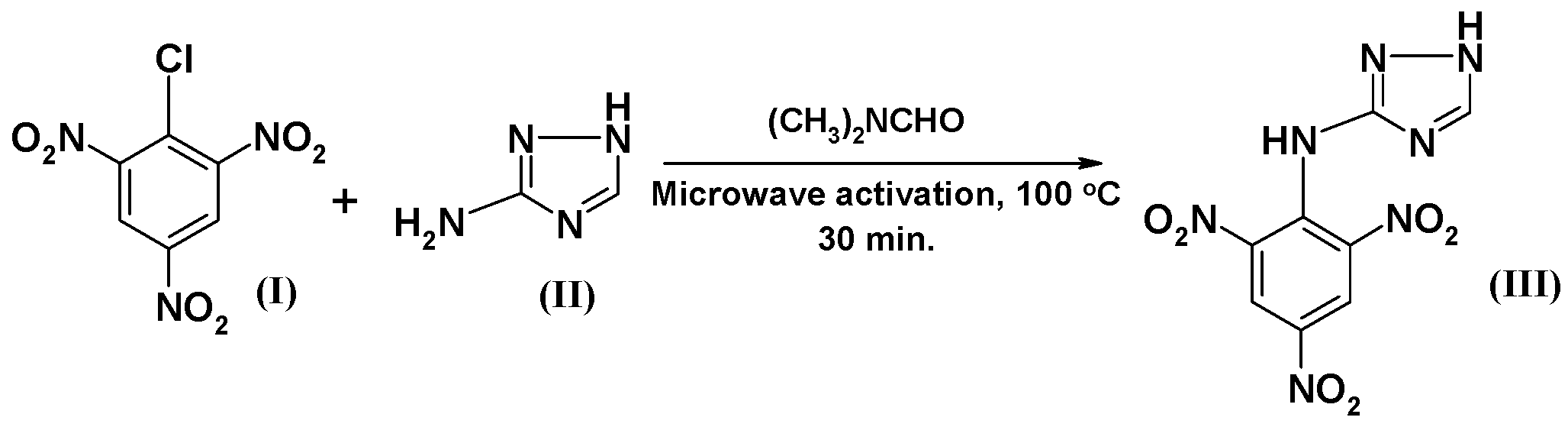
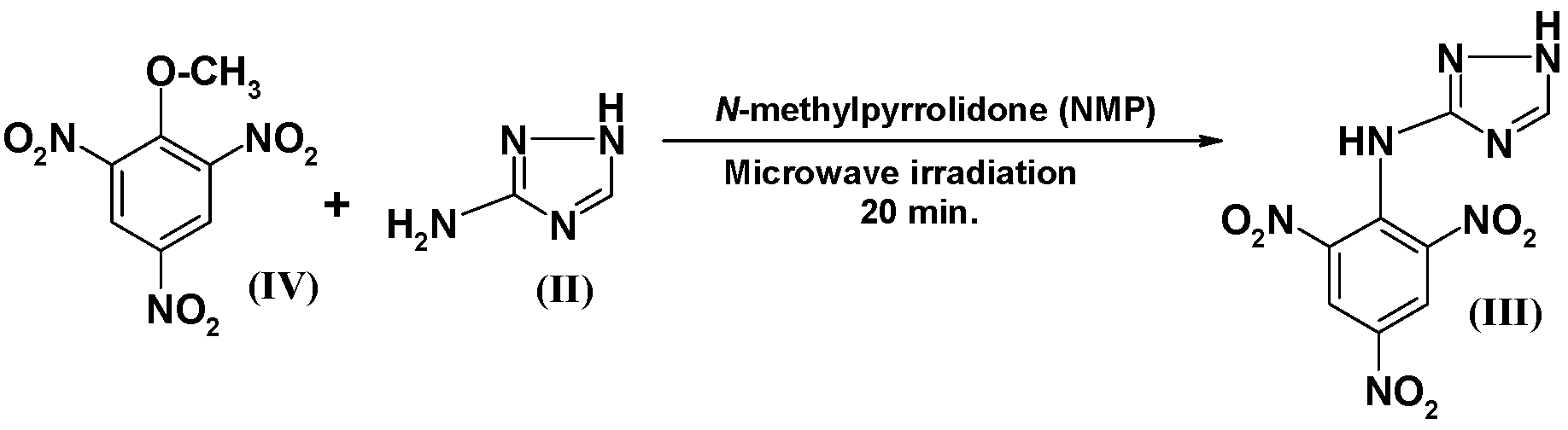
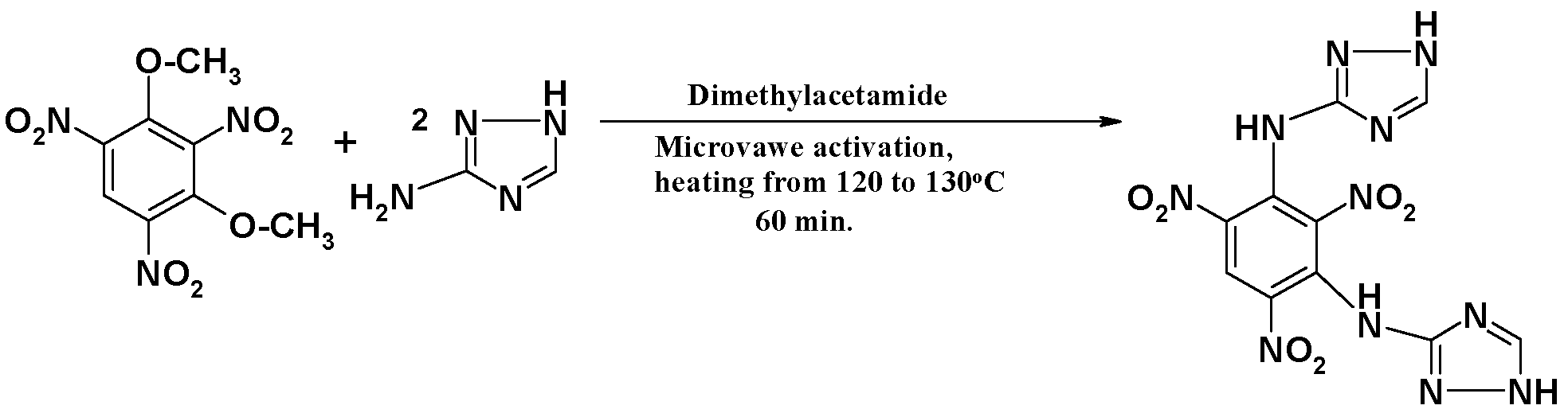
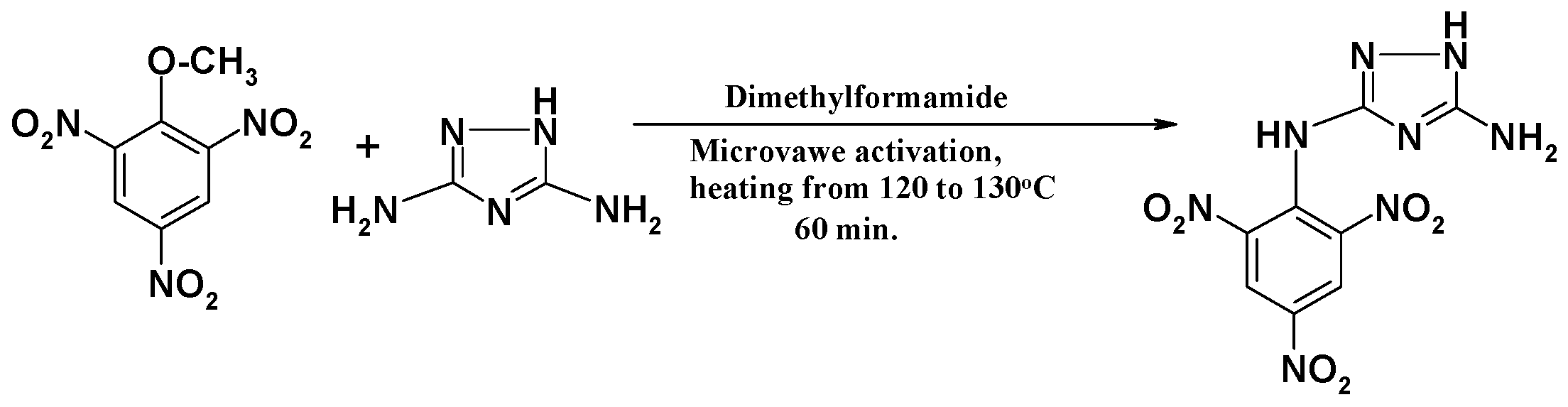
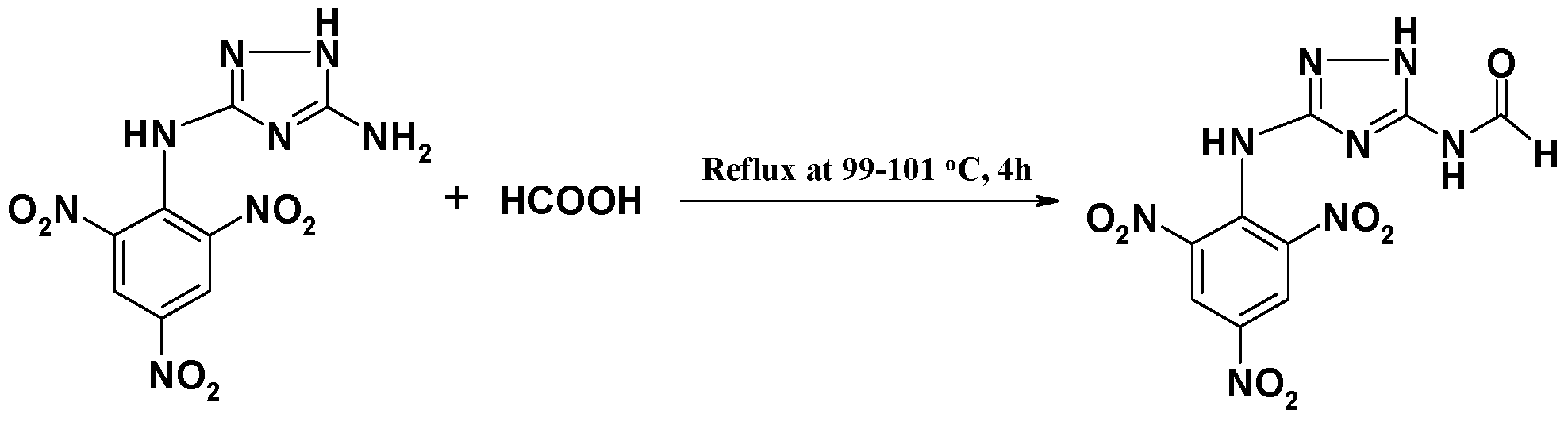
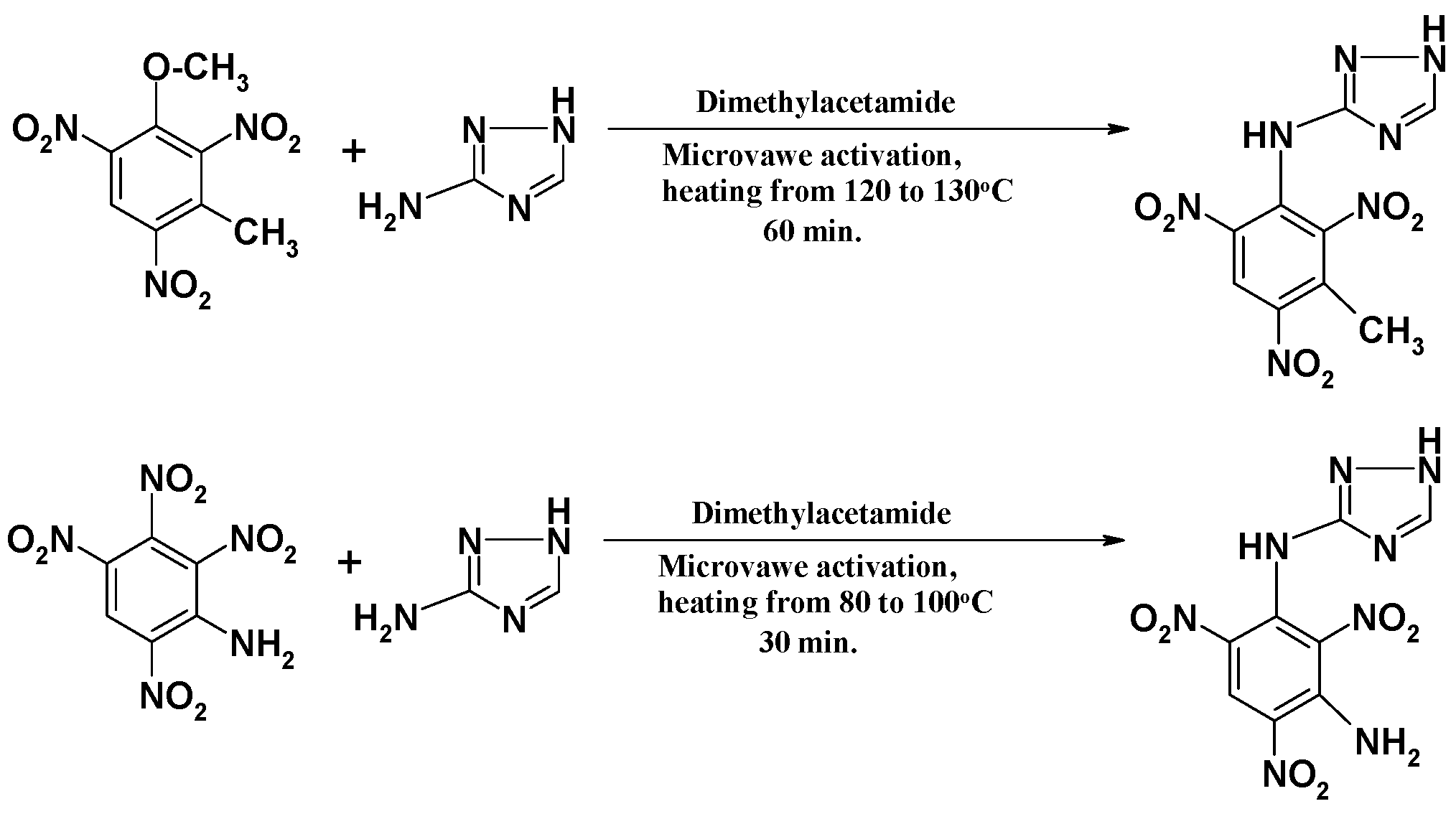
The development of safer and more efficient synthetic approaches to insensitive high-energy materials remains important because conventional synthesis may require hazardous reagents and relatively long reaction times. In this study, we aimed to develop improved methods for the synthesis of picrylamino derivatives and evaluate their applicability to the preparation of high-energy materials. Microwave-assisted synthesis was applied to previously known reactions and compared with conventional synthetic approaches. The purity of the synthesized compounds was confirmed by LC-MS analysis, while their impact sensitivity was qualitatively evaluated by bullet impact tests. In addition, the structure of 3-picrylamino-1H-1,2,4-triazole was analyzed to provide insight into its stability. The proposed microwave-assisted approaches substantially reduced reaction times and enabled the use of less hazardous reagents while providing products with good yields and high purity. One of the investigated methods is particularly suitable for the synthesis of 3-picrylamino-1H-1,2,4-triazole because of its slightly higher yield and reduced consumption of harmful picryl chloride; moreover, substitutions in the benzene or triazole ring can be introduced without additional synthetic steps, and the resulting compounds exhibit improved stability and/or detonation performance. These results demonstrate that the proposed methods provide a practical approach to the synthesis of insensitive high-energy materials. The developed methodology may facilitate the preparation and further development of safer, more stable, and high-performance energetic materials.
Keywords: 1,2,4-triazoles; nitrocompounds; picrylamino derivatives; high energy materials; thermostable; synthesis; HPLC-MS analysis; properties 1,2,4-triazoles; nitrocompounds; picrylamino derivatives; high energy materials; thermostable; synthesis; HPLC-MS analysis; properties