Improved Methods for the Synthesis of Polynitrophenyl Derivatives of 1,2,4-Triazole



Abstract
1. Introduction
2. Materials and Synthesis Methods
2.1. Materials
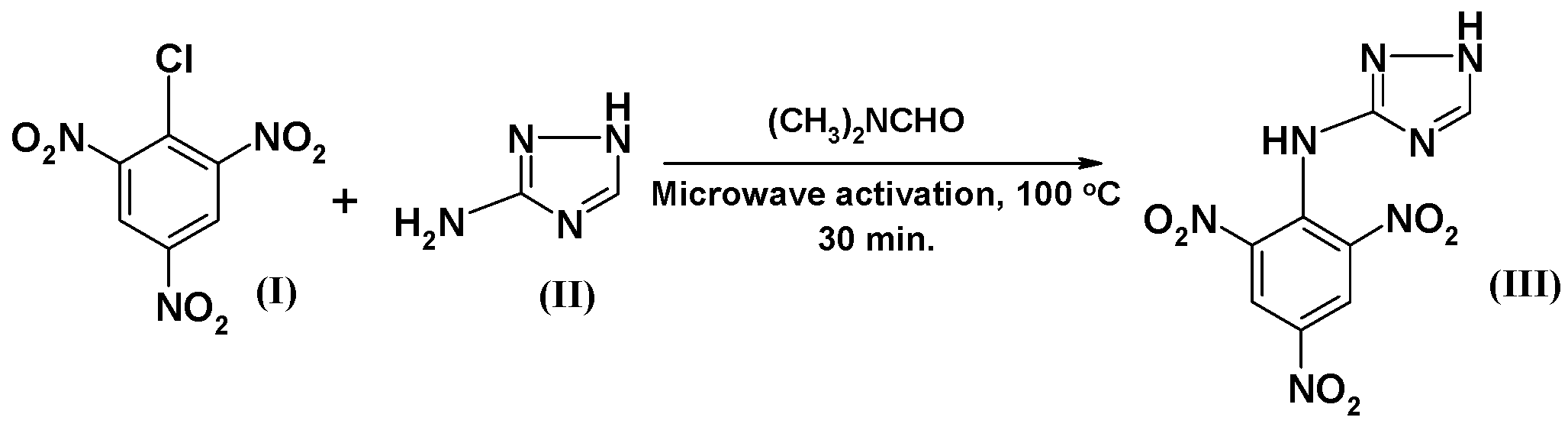
2.2. Synthesis Method for the Preparation of 3-Picrylamino-1H-1,2,4-triazole from Picryl Chloride by Application of Microwave Activation (Method A)
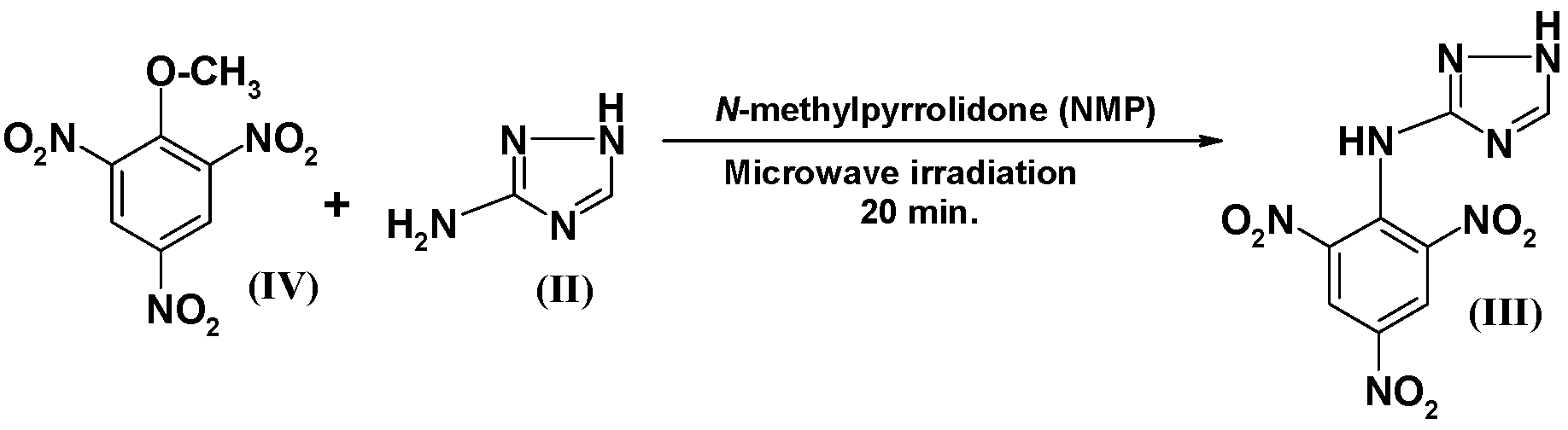
2.3. Synthetic Method for the Preparation of 3-Picrylamino-1H-1,2,4-triazole from 2,4,6-Trinitroanisole (IV) by Application of Microwave Activation (Method B) in N-Methylpyrrolidone (NMP) Medium (Method B)
3. Results
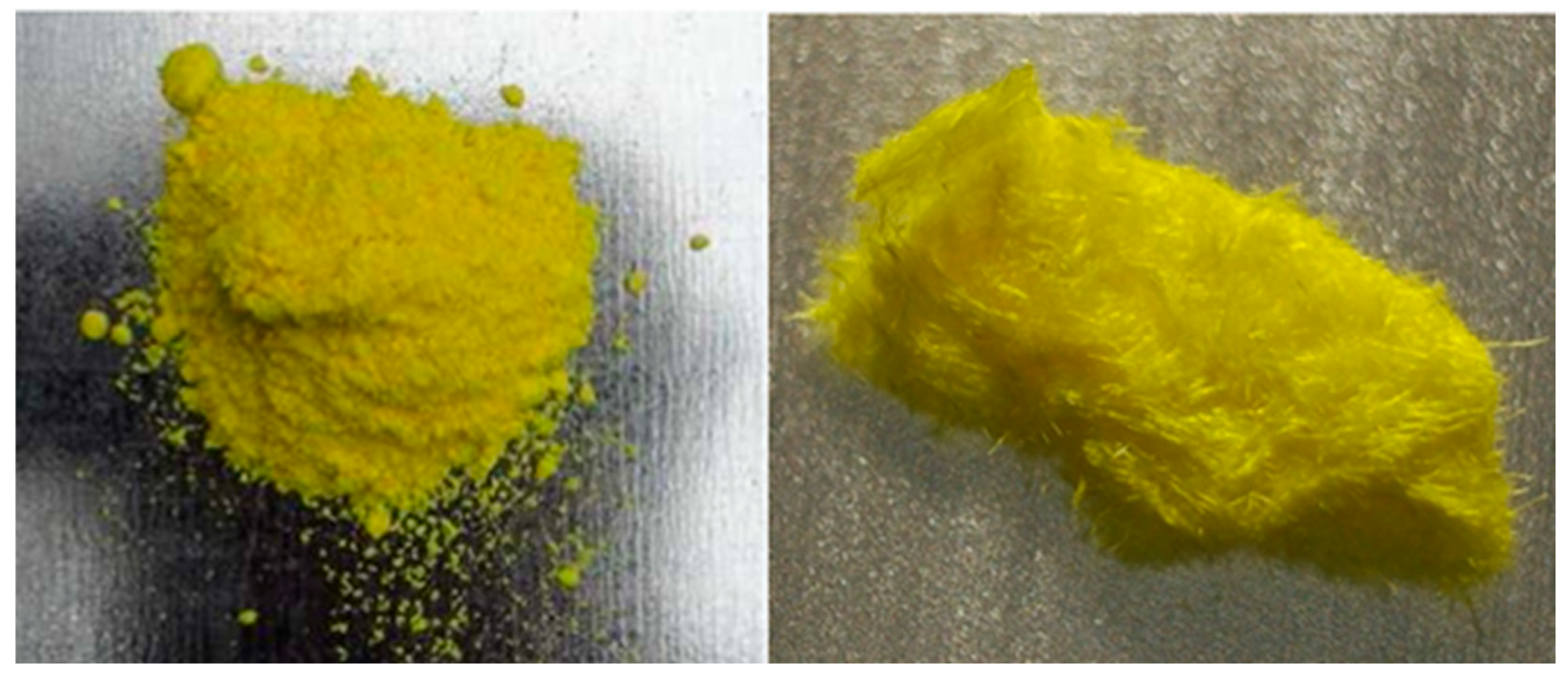
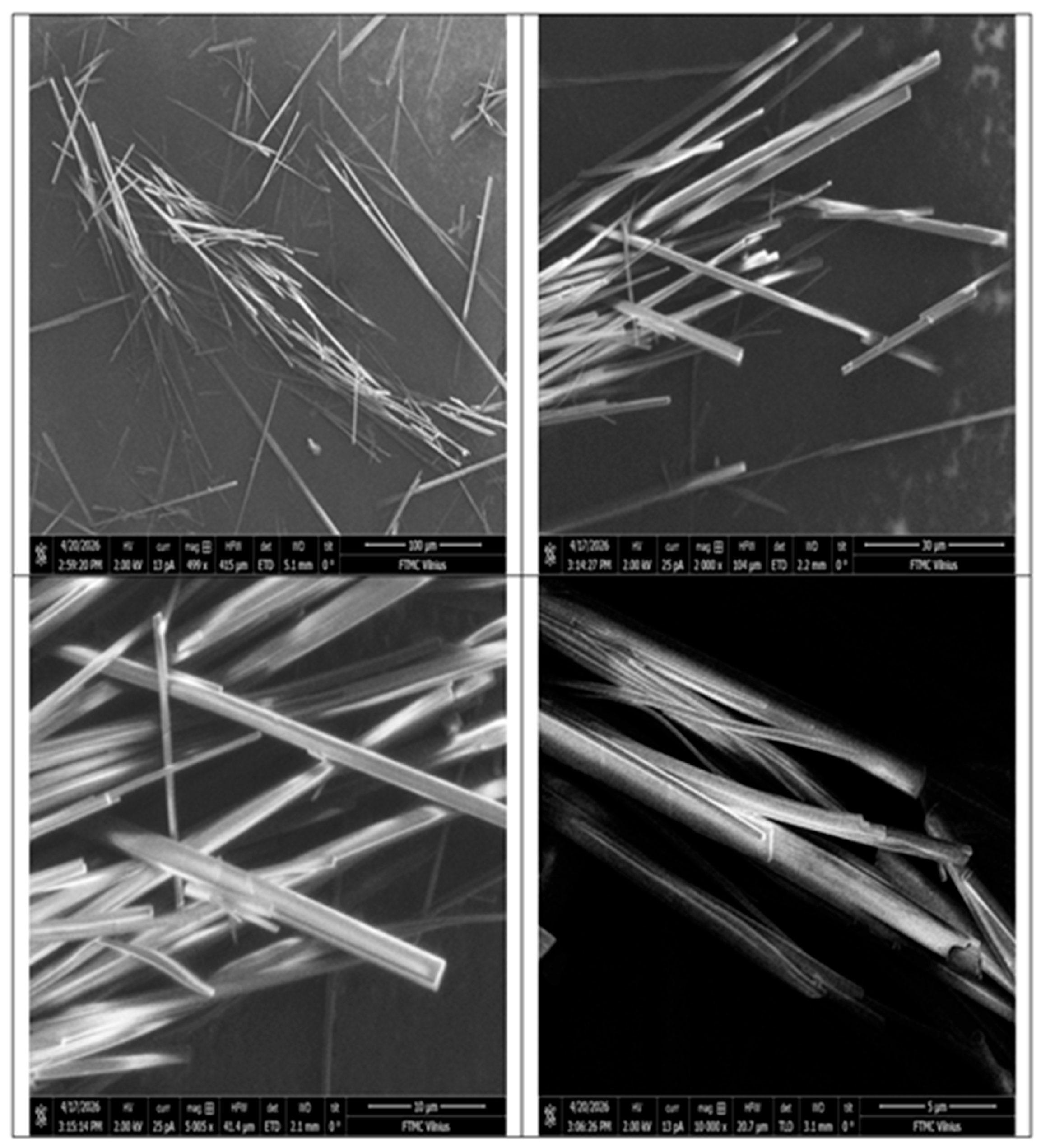
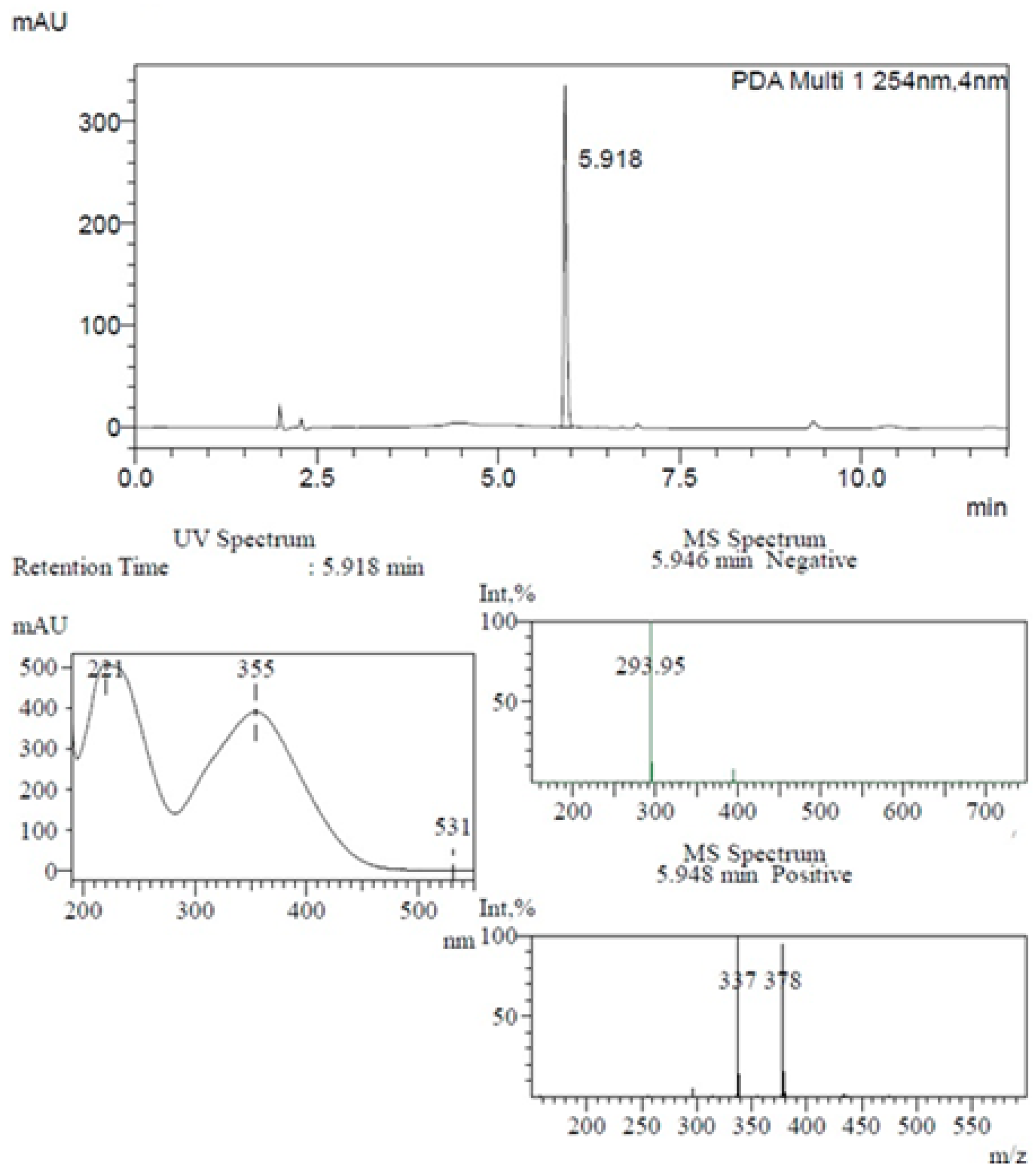
3.1. Purity and Properties of the 3-Picrylamino-1H-1,2,4-triazole Synthesized by the Suggested Methods A and B
3.2. Preliminary Experimental Study to Confirm the Shock Insensitivity of 3-Picrylamino-1H-1,2,4-triazole
3.3. 3-Picrylamino-1H-1,2,4-triazole Deflagration Point Determination on a Heated Hot Steel Plate
3.4. Reactions to Synthesize Ring-Substituted 3-Picrylamino-1H-1,2,4-triazole Derivatives
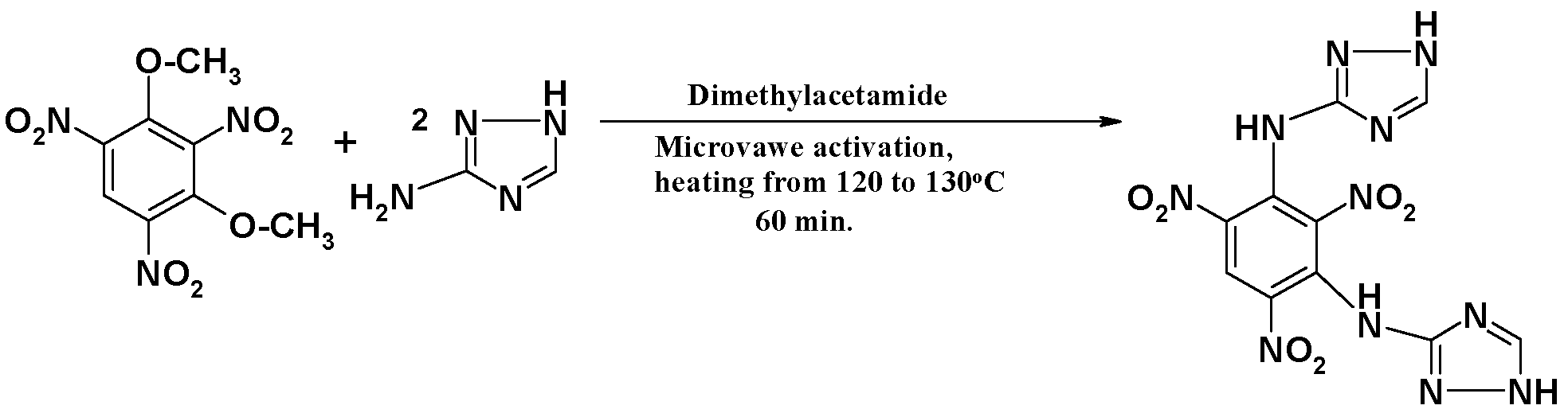
3.4.1. A Modified Synthetic Method for the Preparation of 2,4,6-Trinitro-N,N′-di(1H-1,2,4-triazol-3-yl)-1,3-benzenediamine
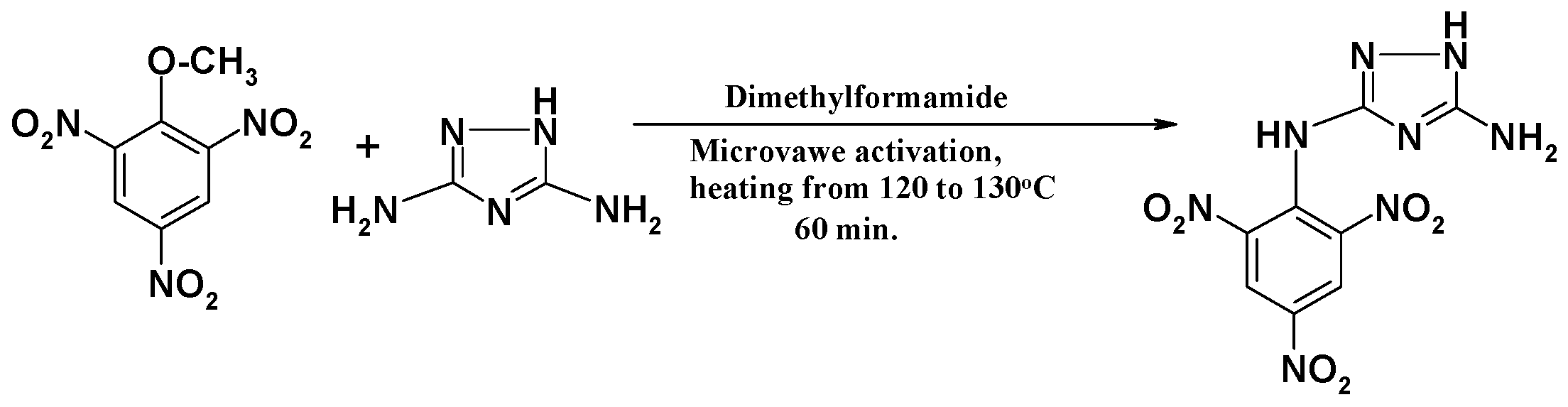
3.4.2. Synthesis of 3-Amino-5-picrylamino-1H-1,2,4-triazole from Trinitroanisole
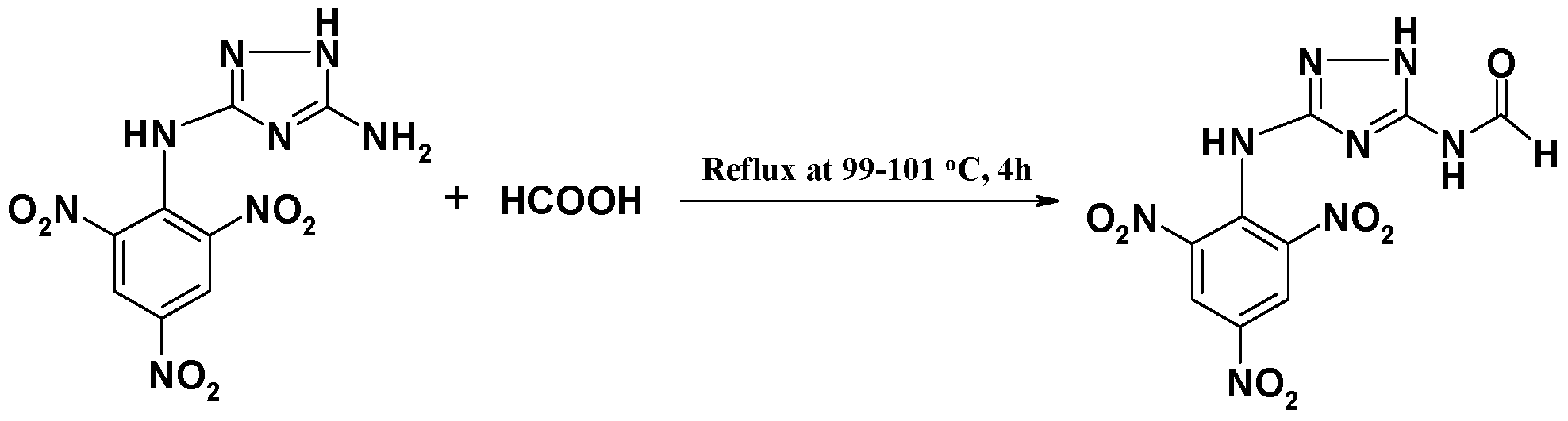
3.4.3. Preparation of a New Energetic Compound, 3-Formylamino-5-picrylamino-1H-1,2,4-triazole by Amine Formylation Reaction (Method C)
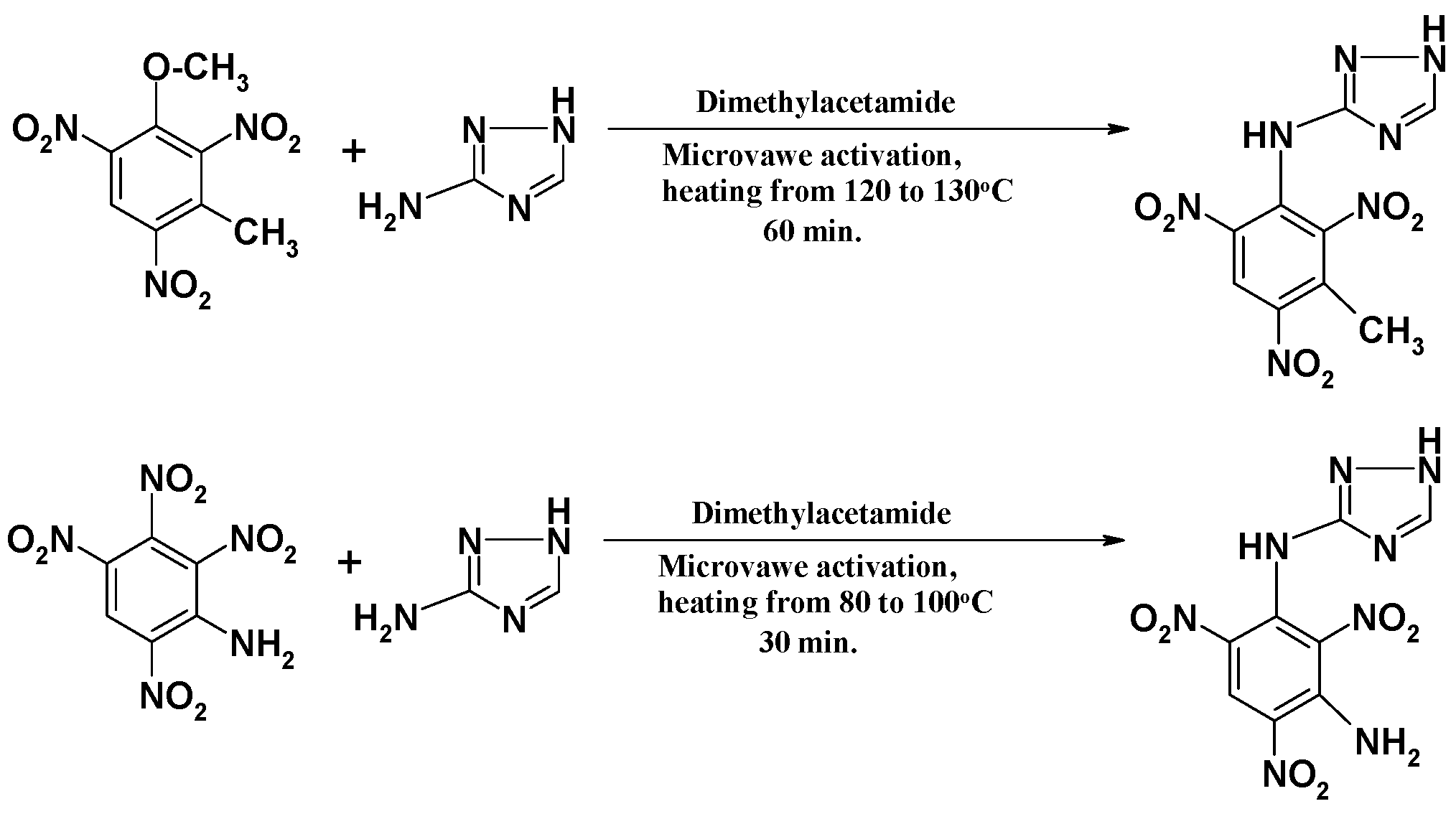
3.4.4. Modified Preparative Reactions of Benzene Ring-Substituted 3-Picrylamino-1H-1,2,4-triazole Analogs
4. Conclusions
Supplementary Materials
Author Contributions
Funding
Data Availability Statement
Acknowledgments
Conflicts of Interest
Abbreviations
| HPLC-MS | high-performance liquid chromatography-mass spectrometry |
| NMP | N-methylpyrrolidone |
| HMTP | hexamethylphosphoric triamide or hexametapol |
| DMF | Dimethylformamide |
Appendix A

References
- Encyclopaedia Britannica. Dynamite. Available online: https://www.britannica.com/technology/dynamite (accessed on 27 April 2026).
- Zeman, S.; Jungová, M. Sensitivity and performance of energetic materials. Propellants Explos. Pyrotech. 2016, 41, 426–451. [Google Scholar] [CrossRef] [Scilit]
- Talawar, M.B.; Sivabalan, R.; Anniyappan, M.; Gore, G.M.; Asthana, S.N.; Gandhe, B.R. Emerging trends in advanced high energy materials. Combust. Explos. Shock Waves 2007, 43, 62–72. [Google Scholar] [CrossRef] [Scilit]
- Yadav, A.K.; Dharavath, S. Shaping the future of energetic materials: Breakthroughs, barriers, and emerging frontiers. Chem. Commun. 2025, 61, 16547–16559. [Google Scholar] [CrossRef] [Scilit]
- Anniyappan, M.; Talawar, M.B.; Sinha, R.K.; Murthy, K.P. Review on advanced energetic materials for insensitive munition formulations. Combust. Explos. Shock Waves 2020, 56, 495–519. [Google Scholar] [CrossRef] [Scilit]
- Kuchurov, I.V.; Zharkov, M.N.; Fershtat, L.L.; Makhova, N.N.; Zlotin, S.G. Prospective symbiosis of green chemistry and energetic materials. ChemSusChem 2017, 10, 3914–3946. [Google Scholar] [CrossRef] [Scilit]
- Coburn, M.D.; Jackson, T.E. Picrylamino-substituted heterocycles. III. 1,2,4-Triazoles. J. Heterocycl. Chem. 1968, 5, 199–203. [Google Scholar] [CrossRef] [Scilit]
- Agrawal, J.P.; Mehilal; Prasad, U.S.; Surve, R.N. Synthesis of 1,3-bis(1,2,4-triazol-3-amino)-2,4,6-trinitrobenzene and its thermal and explosive behaviour. New J. Chem. 2000, 24, 583–585. [Google Scholar] [CrossRef] [Scilit]
- Chioato, Z.L.; Klapötke, T.M.; Mieskes, F.; Stierstorfer, J.; Weyrauther, M. (Picrylamino)-1,2,4-triazole derivatives—thermally stable explosives. Eur. J. Inorg. Chem. 2016, 956–962. [Google Scholar] [CrossRef] [Scilit]
- Tamulienė, J.; Šarlauskas, J.; Bekešienė, S. Influence of nitro group substituents on the stability and energetic properties of N-(2,4,6-trinitrophenyl)-1H-1,2,4-triazol-3-amine. Am. J. Anal. Chem. 2017, 8, 125–141. [Google Scholar] [CrossRef]
- Tamuliene, J.; Sarlauskas, J.; Bekesiene, S. Modeling and investigation of new explosive materials based on N-(3,5-dimethyl-2,4,6-trinitrophenyl)-1H-1,2,4-triazol-3-amine. J. Mol. Model. 2017, 23, 228. [Google Scholar] [CrossRef] [Scilit]
- Šarlauskas, J.; Tamulienė, J. Preparation and characterization of cationic energetic salts of 5-amino-3-[(2,4,6-trinitrophenyl)amino]-1H-1,2,4-triazole (APATO). Cent. Eur. J. Energ. Mater. 2022, 19, 311–325. [Google Scholar] [CrossRef] [Scilit]
- Nemeikaitė-Čėnienė, A.; Miliukienė, V.; Šarlauskas, J.; Maldutis, E.K.; Čėnas, N. Chemical aspects of cytotoxicity of nitroaromatic explosives: A review. Chemija 2006, 17, 34–41. [Google Scholar]
- Tamuliene, J.; Sarlauskas, J.; Bekesiene, S. Influence of substituents on the stability and energetic properties of N-(2,4,6-trinitrophenyl)-1H-1,2,4-triazol-3-amine. In Proceedings of the 10th International Conference on Environmental Engineering (ITELMS), Vilnius, Lithuania, 27–28 April 2017; pp. 266–269. [Google Scholar]
- Šarlauskas, J.; Misevičienė, L.; Nivinskas, H.; Anusevičius, Ž.; Čėnas, N.; Nemeikaitė-Čėnienė, A.; Maldutis, E.; Harris, R.J.; Scrutton, N.S. Reduction of nitroaromatic explosives by oxygen-insensitive NAD(P)H:nitroreductases: Implications for their cytotoxicity and biodegradation. Cent. Eur. J. Energ. Mater. 2006, 3, 89–101. [Google Scholar]
- Huber, T.; von der Heide, C.; Klapötke, T.M.; Krumm, B. Synthesis, Characterization, and Properties of Pentanitrobenzene C6H(NO2)5. Z. Anorg. Allg. Chem. 2019, 645, 126–132. [Google Scholar] [CrossRef] [Scilit]
- Kumar Mittal, A.; Prakash, G.; Pathak, P.; Maiti, D. Synthesis of picramide using nitration and ammonolysis in continuous flow. Chem. Asian J. 2023, 18, e202201028. [Google Scholar] [CrossRef] [Scilit]
- Zhang, X.; Zhang, Q.; Zhao, Y.; Li, G.; Jiang, T.; Suo, Z.; Sun, S.; Su, L. Synthesis, crystal structure and properties of 3-picrylamino-1,2,4-triazole–nitric acid self-assembled energetic material. RSC Adv. 2025, 15, 35109–35114. [Google Scholar] [CrossRef] [Scilit]
- Bougeard, D.; Le Calvé, N.; Roch, B.S.; Novak, A. 1,2,4-Triazole: Vibrational spectra, normal coordinate calculations, and hydrogen bonding. J. Chem. Phys. 1976, 64, 5152–5164. [Google Scholar] [CrossRef] [Scilit]
- Savithiri, S.; Rajarajan, G.; Thanikachalam, V. Molecular structure, vibrational spectral assignments (FT-IR and FT-Raman), UV–Vis, NMR, NBO, HOMO–LUMO and NLO properties of 3t-pentyl-2r,6c-diphenylpiperidin-4-one picrate based on DFT calculations. J. Mol. Struct. 2016, 1105, 225–237. [Google Scholar] [CrossRef] [Scilit]
- Ma, Q.; Fan, G.; Liao, L.; Huang, J.L. Theoretical screening of novel tetrazole derivatives: A new molecular design strategy for multi-nitrogen energetic materials. Polycycl. Aromat. Compd. 2017, 37, 327–344. [Google Scholar] [CrossRef] [Scilit]
- Schmidt, R.D.; Lee, G.S.; Pagoria, P.F.; Mitchell, A.R.; Gilardi, R. Synthesis and Properties of New Explosive 4-amino-3,5-dinitro-1H-pyrazole (LLM-116); Lawrence Livermore National Laboratory, 2001. Available online: https://www.osti.gov/biblio/15005359 (accessed on 1 June 2021).
- Klapötke, T.M. Chemistry of High-Energy Materials: Explosives, Propellants, Pyrotechnics, 7th ed.; Walter de Gruyter GmbH: Berlin, Germany; Boston, MA, USA, 2025; p. 8. [Google Scholar] [CrossRef] [Scilit]
- Leonard, P.; Bowden, P.; Shorty, M.; Schmitt, M. Synthesis and Evaluation of 3-Picrylamino-1, 2, 4-Triazole (PATO) Formulations. Propellants Explos. Pyrotech. 2019, 44, 203–206. [Google Scholar] [CrossRef] [Scilit]
- Chidester, S.K.; Tarver, C.M.; Green, L.G.; Urtiew, P.A. On the violence of thermal explosion in solid explosives. Combust. Flame 1997, 110, 264–280. [Google Scholar] [CrossRef] [Scilit]
- Folly, P. Thermal stability of explosives. Chimia 2004, 58, 394. [Google Scholar] [CrossRef] [Scilit]
- Available online: www.inchem.org/documents/icsc/icsc/eics0959.htm (accessed on 5 May 2026).
- Iyer, S. Explosive desensitization studies via chemical group modification. II. 3,5-diamino- and 3,5-dichloro-2,4,6-trinitrotoluene. J. Energ. Mater. 1984, 2, 151–158. [Google Scholar] [CrossRef] [Scilit]
- Nambiar, P.R.; Verneker, V.R.; Jain, S.R. Explosive sensitivity of methylammonium perchlorates. J. Therm. Anal. Calorim. 1975, 8, 15–26. [Google Scholar] [CrossRef] [Scilit]
- Bellamy, A.J.; Ward, S.J.; Golding, P. Synthesis of ammonium diaminopicrate (ADAP), a new secondary explosive. Propellants Explos. Pyrotech. 2002, 27, 59–61. [Google Scholar] [CrossRef]
- Singh, H.; Mukherjee, U.; Saini, R.S. Computational studies on nitro derivatives of 1-hydroxy-1,2,4-triazole. J. Energ. Mater. 2012, 30, 265–281. [Google Scholar] [CrossRef] [Scilit]
- Pagoria, P.F.; Lee, G.S.; Mitchell, A.R.; Schmidt, R.D. A review of energetic materials synthesis. Thermochim. Acta 2002, 384, 187–204. [Google Scholar] [CrossRef] [Scilit]
- Dobratz, B.M. The Insensitive High Explosive Triaminotrinitrobenzene (TATB): Development and Characterization—1888 to 1994; Los Alamos National Laboratory, 1995; Available online: https://digital.library.unt.edu/ark:/67531/metadc792393/ (accessed on 5 May 2026).
- Coburn, M.D.; Harris, B.W.; Lee, K.-Y.; Stinecipher, M.M.; Heyden, H.H. Explosives synthesis at Los Alamos. Ind. Eng. Chem. Prod. Res. Dev. 1986, 25, 68–72. [Google Scholar] [CrossRef] [Scilit]
- Talawar, M.B.; Sivabalan, R.; Mukundan, T.; Muthurajam, H.; Sikder, A.K.; Gandhe, B.R.; Rao, A.S. Environmentally compatible next-generation green energetic materials. J. Hazard. Mater. 2009, 161, 589–607. [Google Scholar] [CrossRef] [Scilit]
- Bottaro, J.C. Design and Synthesis of High Nitrogen Compounds. In Overview of Recent Research on Energetic Materials; Shaw, R.W., Brill, T.B., Thompson, D.L., Eds.; World Scientific: Singapore, 2005; pp. 474–485. [Google Scholar]







| Temperature, °C | Qualitative Results |
|---|---|
| 300 | no changes within 30 s |
| 320 | melting and some sublimation |
| 337 | decomposition during 6 s with fuming smoke |
| 350 | quick decomposition with smoke during 5–6 s |
| 355 | spark orange flash after 4–5 s exposure |
| 370 | orange flash with fumes after 1 s exposure |
| 395–400 | bright flash immediately (0.1 s) with sound effect (deflagration). |
Disclaimer/Publisher’s Note: The statements, opinions and data contained in all publications are solely those of the individual author(s) and contributor(s) and not of MDPI and/or the editor(s). MDPI and/or the editor(s) disclaim responsibility for any injury to people or property resulting from any ideas, methods, instructions or products referred to in the content. |
© 2026 by the authors. Licensee MDPI, Basel, Switzerland. This article is an open access article distributed under the terms and conditions of the Creative Commons Attribution (CC BY) license.
Share and Cite
Sarlauskas, J.; Stankeviciute, J.; Vaitekunas, J.; Tamuliene, J. Improved Methods for the Synthesis of Polynitrophenyl Derivatives of 1,2,4-Triazole. Processes 2026, 14, 2758. https://doi.org/10.3390/pr14172758
Sarlauskas J, Stankeviciute J, Vaitekunas J, Tamuliene J. Improved Methods for the Synthesis of Polynitrophenyl Derivatives of 1,2,4-Triazole. Processes. 2026; 14(17):2758. https://doi.org/10.3390/pr14172758
Chicago/Turabian StyleSarlauskas, Jonas, Jonita Stankeviciute, Justas Vaitekunas, and Jelena Tamuliene. 2026. "Improved Methods for the Synthesis of Polynitrophenyl Derivatives of 1,2,4-Triazole" Processes 14, no. 17: 2758. https://doi.org/10.3390/pr14172758
APA StyleSarlauskas, J., Stankeviciute, J., Vaitekunas, J., & Tamuliene, J. (2026). Improved Methods for the Synthesis of Polynitrophenyl Derivatives of 1,2,4-Triazole. Processes, 14(17), 2758. https://doi.org/10.3390/pr14172758