Article

Energy-Efficient Microwave Drying and Shelf-Life Prediction of Soybean Residue Powder: Sorption Isotherm Modeling and Bakery Application

Product and Process Research Center, Food Industry Research and Development Institute (FIRDI), Hsinchu 300, Taiwan
*
Authors to whom correspondence should be addressed.
Processes 2026, 14(13), 2211; https://doi.org/10.3390/pr14132211
Submission received: 25 May 2026 / Revised: 28 June 2026 / Accepted: 3 July 2026 / Published: 7 July 2026
(This article belongs to the Section Food Process Engineering)

Abstract

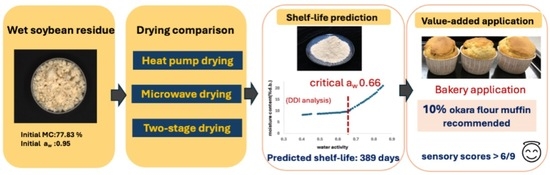
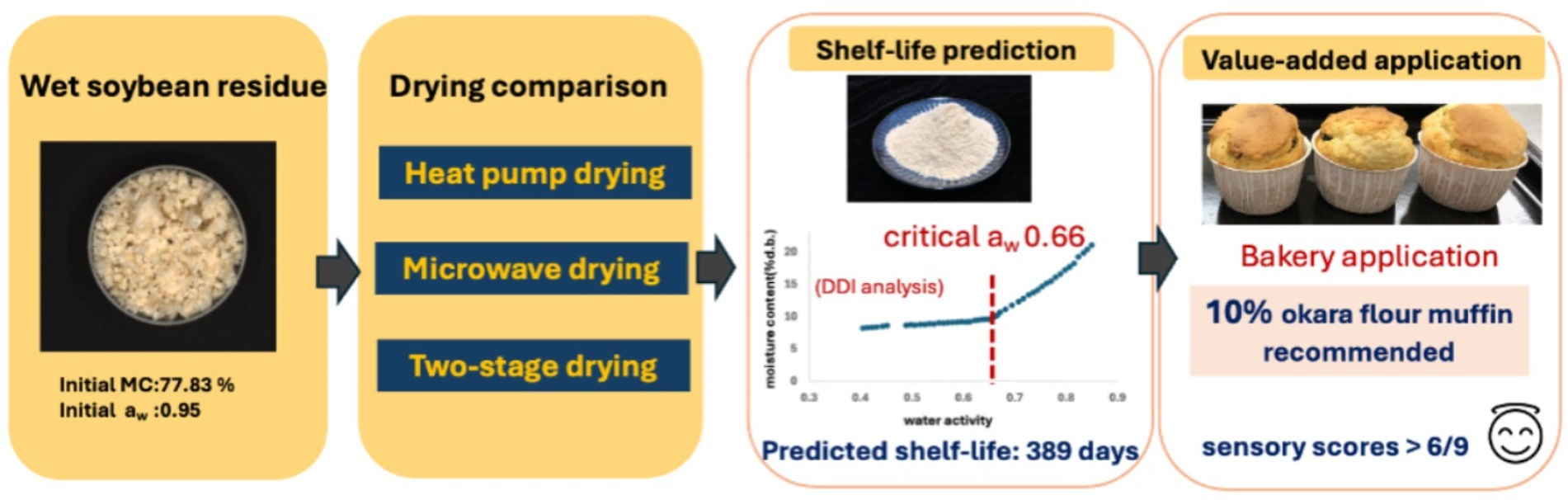
Soybean residue (Okara), a major by-product of soybean product processing, is highly susceptible to spoilage due to its high moisture content (approximately 78% w.b.), which creates both environmental and resource-related challenges. This study aimed to develop energy-efficient drying technologies and value-added application models to improve its storage stability. The effects of heat pump drying, microwave drying, and two-stage drying on the drying kinetics, energy consumption, and product quality of okara were systematically compared. The experimental results indicated that Heat Pump Drying (HPD) at 65 °C required a prolonged drying time of 360 min. In contrast, Microwave Drying (MWD) at 2.0 W/g significantly accelerated the process, achieving the shortest drying time of 50 min (an 86.1% reduction) and lowering the specific energy consumption (SEC) to 2.2 kWh/kg (a 42.1% energy saving compared to HPD). Meanwhile, the HPD–MWD two-stage drying process offered a balanced alternative, requiring 190 min and reducing thermal risk while maintaining high efficiency. The dried okara powder contained a total dietary fiber content of 47.78%, while its water activity was maintained below 0.60. Dynamic Dew Point Isotherm (DDI) analysis confirmed a critical water activity (awc) of 0.66, with mathematical modeling predicting a shelf life of up to 389 days under barrier packaging conditions. In value-added application experiments, muffins containing 10% okara powder achieved sensory scores above 6 on a 9-point scale and demonstrated significantly better flavor acceptability (p = 0.0093). In summary, this study established an efficient drying and value-added application approach for okara, providing a feasible strategy for the circular use and sustainable utilization of agricultural by-products.

Graphical Abstract

1. Introduction

Drying is one of the most traditional and essential processing technologies for food preservation. By reducing moisture content and water activity, it stabilizes material structure, inhibits microbial growth and chemical deterioration reactions, thereby extending the shelf life of the product and improving the processability of plant-based materials [1]. Moreover, drying treatment can significantly reduce food volume and weight, thereby decreasing packaging requirements and transportation costs [2]. Conventional hot air drying (HAD) has been widely used in agricultural product processing for a long time due to simple equipment requirements and well-established operation. Conventional hot air drying (HAD) has been widely used in agricultural product processing for a long time due to simple equipment requirements and well-established operation. However, HAD is generally associated with prolonged drying times and high energy consumption, and exposure to elevated temperatures for extended periods often results in undesirable quality deterioration, including color degradation, flavor loss, and nutrient destruction [3]. In terms of energy efficiency, more than 85% of industrial thermal drying systems used in the food industry remain conventional types, accounting for approximately 12–20% of total energy consumption. Nevertheless, the energy efficiency of these drying systems is only around 30%, while drying-related operations can account for up to 90% of the overall processing cost [4]. Accordingly, recent studies have increasingly focused on the development of novel drying technologies that emphasize both high efficiency and product quality, aiming to achieve a balance between energy efficiency and product quality [5]. For instance, Wang et al. (2021) demonstrated that implementing hot air-assisted radio frequency (HARF) drying for vegetable matrices could significantly enhance drying rates, reducing the treatment duration by 30% compared to single HAD while achieving the highest retention (p < 0.05) of heat-sensitive substances such as total carotenoids [3]. Heat pump drying (HPD) operates under low-temperature and low-humidity conditions, where moisture removal is primarily driven by the humidity gradient. This technology offers high drying efficiency, superior moisture removal capacity per unit energy input, and good product quality retention, making it particularly suitable for heat-sensitive materials and increasingly attractive for food processing applications [6,7]. In recent reviews, HPD systems have been shown to drastically reduce energy consumption with energy cost savings between 60% and 80% while safely maintaining the critical nutrients and sensory attributes of the food material [7]. Although HPD is considered as an energy-efficient, energy-saving, and environmentally friendly drying technology, experimental investigations have revealed that its energy utilization efficiency often declines, and moisture migration rates decrease under the constant-temperature operating condition, particularly during the later stages of drying due to the reduced temperature gradient and increased mass transfer resistance within specific food tissues, such as wood ear mushrooms [6] or chilis [8]. As a dielectric heating technology, microwave drying (MWD) uses electromagnetic waves in the frequency range of 300 MHz–300 GHz to interact with polar molecules within the material, generating volumetric heating throughout the sample. This technology offers advantages such as rapid heating, short drying times, and high energy efficiency [9]. Compared to the conventional HAD, MWD can significantly reduce processing time and energy demand [10], with kinetic modeling and empirical studies indicating accelerated effective moisture diffusivity alongside a high recovery yield (up to 85–87%) of major bioactive components during the simultaneous extraction and drying of complex plant matrices [10]. MWD also enables effective process temperature control and a lower carbon footprint [11]. However, the heating uniformity of MWD remains influenced by the dielectric properties of the material and the penetration depth of microwave energy, and further investigation is still required to achieve an optimal balance between drying efficiency and product quality.
Soybean residue(okara) is a major by-product generated during the soy milk and tofu production, with approximately 1.2 kg of wet okara generated from every 1 kg of soybeans processed [12]. With rich phenolic compounds, dietary fiber, and protein, Okara has considerable nutritional potential [13]. However, due to its high moisture content (70–80%), it possesses poor storage stability and is highly susceptible to spoilage. As a result, it is currently used primarily as a low-value animal feed, and its potential for high-value applications remains largely underutilized [14,15]. Therefore, the development of drying technologies with low energy consumption and a strong focus on product quality is of considerable industrial and sustainability significance for extending the shelf life of okara and promoting its application in food products. Based on this background, this study used okara as the model material to compare the effects of HPD, MWD, and two-stage drying on drying characteristics, product quality, and energy efficiency. Here, HPD was selected as the convective control framework due to its superior energy utilization and preservation of heat-sensitive components compared to conventional HAD, which is inherently limited by poor energy efficiency. The rationale for implementing the HPD–MWD two-stage configuration lies in its ability to combine the uniform pre-drying efficiency of convective heat pump systems with the accelerated volumetric heating capability of microwave systems. This approach explicitly aims to overcome the prolonged drying cycle typically observed during the falling-rate stage of traditional convective methods, while simultaneously mitigating the inherent risks of localized overheating and thermal non-uniformity caused by continuous single-stage microwave exposure [16].
To achieve these goals, the specific operational objectives of this study were to: (1) characterize the dynamic drying parameters and model the specific energy consumption (SEC) across the single-stage and two-stage configurations; (2) analyze the impact of these energy transfer mechanisms on resulting color coordinates and dietary fiber profiles; (3) establish thermodynamic storage stability criteria via Dynamic Dew Point Isotherm (DDI) analysis to model barrier-packaging shelf life; and (4) validate the formulation thresholds and consumer acceptance of the stabilized okara flour in a functional muffin application. By linking upstream processing thermodynamics to downstream product quality, this work establishes a clear, science-based technical pipeline for the circular and sustainable valorization of agricultural by-products.

2. Materials and Methods

2.1. Sample Preparation

Okara obtained from a food processing factory (My Corporation, Nantou County, Taiwan) was used as the experimental material in this study. Upon arrival, the samples were divided into 1 kg portions, sealed in individual bags, and immediately stored under refrigerated conditions at 4 °C. The initial moisture content of the okara was 77.83 ± 0.52% (wet basis, w.b.) with a water activity of 0.95 ± 0.00. The water activity (aw) of the okara samples was determined at 25 ± 0.5 °C using a calibrated water activity meter (AquaLab 4TEV, Decagon Devices Inc., Pullman, WA, USA). Prior to the drying experiments, the samples were removed from refrigerated storage and allowed to equilibrate to room temperature (approximately 25 °C).

2.2. Different Drying Processes

To prepare okara flour (OF), three different drying processes were utilized until the final moisture content of the product was reduced to below 10% [17], as described below. In this manuscript, the raw, high-moisture starting material is termed “okara”, while the dried and processed final product is designated as “okara flour (OF)”. For the HPD process, an initial mass of 1000 ± 5 g of raw okara was uniformly distributed onto a white perforated plastic tray (30 cm × 40 cm). For the MWD process, an initial mass of 400 ± 2 g was spread on a 20 cm diameter non-metallic plate. For the two-stage HPD–MWD process, a 400 g sample was transferred from HPD to MWD after 180 min. Across all treatments, the sample thickness was strictly maintained at 20 mm to ensure comparable mass transfer paths. All drying trials were performed independently in triplicate (n = 3).
HPD: Drying was carried out using a heat pump dryer (Bao Sheng Biotechnology Co., Ltd., Tainan City, Taiwan). The hot air temperature was set at 45 °C (HP45), 55 °C (HP55), and 65 °C (HP65), with the relative humidity maintained at 40% for all treatments. This temperature range was selected based on previous findings indicating that drying at 50–60 °C minimizes dietary fiber degradation and maximizes bioactive compound retention in agro-industrial by-products [18,19,20].
MWD: Drying was performed using a microwave dryer (Chin Ying Fa Mechanical Ind. Co., Ltd., Changhua County, Taiwan). The microwave power levels were set at 1.0, 1.5, and 2.0 W/g, respectively.
Two-stage drying: Samples were first dried under the optimal HPD conditions, followed by further drying under the optimal MWD conditions to form the two-stage drying process.
During the drying process, the temperature variations of the okara samples were monitored. For the heat pump drying (HPD) trials, sample temperature was continuously recorded using a HOBO U12-015-02 data logger (Onset Computer Corp., Bourne, MA, USA) equipped with an external temperature probe inserted into the okara matrix. For the microwave drying (MWD) trials, the surface temperature of the okara was periodically measured using a calibrated infrared thermometer. For the two-stage drying trials, the respective temperature monitoring methods were applied accordingly during each drying stage.

2.3. Moisture Ratio

The initial moisture content of okara was determined at 105 °C using the AOAC method [21]. During the drying process, the moisture ratio (MR) of the samples was calculated using Equation (1) [22]:
M R = M t M e M i M e
As the equilibrium moisture content M e is negligible compared with M t and M i , it is commonly ignored in engineering applications. Therefore, MR can be simplified as Equation (2) [16]:
M R = M t M i
where MR is the moisture ratio during the drying process, M t is the dry basis moisture content (g/g) of the sample at time t, M i is the initial dry basis moisture content of the sample, and M e is the equilibrium dry basis moisture content of the sample.

2.4. Effective Moisture Diffusivity (Deff)

The effective moisture diffusivity was calculated based on Fick’s second law for slab geometry under the assumptions that the sample shrinkage was negligible and the initial moisture distribution was uniform [23]:
M R = 8 π 2 n = 2 1 2 n + 1 2 exp 2 n + 1 2 π 2 D e f f t 4 L 2
where L is the half thickness of the sample (m), t is the drying time (s) and Deff is the effective moisture diffusivity (m2/s). The Deff values under different drying conditions were calculated using Equation (3). Under long-term drying conditions, the equation was simplified by considering only the first term of the series expansion, and Deff was estimated from the slope of the linear region of the plot of ln (MR) versus drying time. It should be noted that the values calculated herein represent the apparent effective moisture diffusivity, adhering to the standard food engineering convention of negligible shrinkage to ensure mathematical feasibility and comparative consistency between different drying methods.

2.5. Energy Consumption

Specific energy consumption (SEC) is defined as the amount of energy required per unit mass of evaporated water. This parameter was determined based on the total actual electrical energy consumption (E, in kWh) of the drying systems, which was measured in real-time using a digital power meter connected to the power supply loop. The SEC (kWh/kg) was then calculated according to Equation (4) [24]:
S E C = E Δ m
where E is the actual electrical energy consumed (kWh), and Δm is the total mass of evaporated water (kg). To align with operational logging, E can also be represented as (P × Δt)/60, where P is the average power input (kW) and Δt is the drying time interval (min). The SEC values for different drying processes were calculated according to Equation (4). SEC only accounts for the energy consumption directly utilized during the food drying process.

2.6. Color Measurements

The surface color of fresh and dried okara samples was measured using a colorimeter (Chroma Meter CR-200, Minolta, Inc., Tokyo, Japan). Color values were expressed in the CIE Lab color space, including L* (lightness), a* (redness/greenness), and b* (yellowness/blueness). The total color change (ΔE) between the fresh and dried samples was calculated using Equation (5) [25]:
Δ E = L 1 * L 0 * 2 + a 1 * a 0 * 2 + b 1 * b 0 * 2
where subscripts “0” and “1” represent the color values of fresh and dried samples, respectively. A larger ΔE value indicates a greater overall color difference relative to the reference sample.

2.7. Sorption Isotherm and Shelf-Life Prediction Framework

In this study, the moisture sorption isotherm of dried OF was determined using the Dynamic Dew Point Isotherm (DDI) method. Determinations were performed using a Vapor Sorption Analyzer (VSA; Meter Group Inc., Pullman, WA, USA) at a constant temperature of 25 °C to simulate typical storage conditions. The experimental parameters were set as follows: equilibrium relative humidity (ERH) ranging from 40% to 85%. For each determination, approximately 1.0 g of sample was transferred into a stainless-steel sample cup and placed in the VSA instrument, with the sample mass falling within the manufacturer-recommended loading range of 0.5–5.0 g. All experiments were performed in triplicate, and each determination required approximately 2–4 days. The final data were collected and analyzed using the AquaLab VSA Toolkit 2.0 software provided with the instrument [26]. Furthermore, the obtained thermodynamic data were applied to predict the technological shelf life of the packaged OF. The simulation boundary assumptions were established under standard accelerated storage environmental conditions (25 °C and 75% ambient relative humidity) using a high-barrier packaging envelope. The critical moisture threshold (Xc) was determined by the critical water activity (awc) identified from the DDI curve. Specifically, the critical water activity (awc) of the okara flour was identified at 0.66, which marks the thermodynamic inflection point where the quality stability transition occurs. The corresponding critical moisture content (Xc) was subsequently determined directly from the derived dynamic moisture sorption isotherm curve as the equilibrium moisture content (EMC) matching this 0.66 awc threshold. The deterministic mass-transfer permeation equations, variables, and mathematical integration steps applied for this shelf-life estimation are explicitly detailed later in Section 3.2.

2.8. Chemical Composition

Soluble dietary fiber and insoluble dietary fiber were determined enzymatically according to AOAC Method 991.43 using a total dietary fiber assay kit (Megazyme Ltd., Wicklow, Ireland) ([27]; n = 3).

2.9. Muffin Preparation

Muffin samples were formulated using an addition-based baker’s percentage framework rather than a flour-substitution method. With low-gluten flour serving as the absolute baseline (100.0%), okara flour (OF) was directly added at 10.0% and 15.0% levels. The finalized batter formulations included: low-gluten flour (100.0%), shortening (35.0%), sugar (40.0%), salt (1.0%), baking powder (6.0%), whole egg liquid (30.0%), and vanilla extract (1.0%).
For muffin preparation, the melted shortening was first thoroughly mixed with the liquid ingredients (whole egg liquid, milk, and vanilla extract). This mixture was then combined with the pre-sifted dry ingredients and blended using an electric mixer at low speed until a homogeneous batter was achieved. The prepared batter was portioned into standard muffin molds at 63 g per muffin and baked in a preheated oven at 200 °C for 20 min. After baking, the samples were allowed to cool to room temperature and immediately subjected to subsequent physical and sensory analyses. These two specific addition levels (10% and 15%) were selected based on preliminary baking trials, which indicated that exceeding 15% OF supplementation severely compromised product texture and flavor acceptability.

2.10. Evaluation of Sensory Characteristics

A total of 35 consumers were recruited through internal institutional communication networks to participate in the hedonic consumer acceptance test, of whom 69% were female and 31% were male. The participants ranged in age from 25 to 60 years. Sensory evaluation was conducted in individual booths within a sensory laboratory using a hedonic evaluation questionnaire. All muffin samples were provided at room temperature. Each sample consisted of one-half of a muffin, including both the crumb and crust, presented on a disposable plate and labeled with a random three-digit code. The evaluation attributes included appearance (overall appearance and cross-sectional appearance), texture, aroma, flavor, and overall acceptability. A structured 9-point hedonic scale was adopted for evaluation, where 1 = dislike extremely, 2 = dislike very much, 3 = dislike, 4 = dislike slightly, 5 = neither like nor dislike, 6 = like slightly, 7 = like, 8 = like very much, and 9 = like extremely. Participants were instructed to rinse their mouths with water between different sample evaluations to cleanse the palate. Two samples were presented simultaneously, and each was evaluated independently using the 9-point hedonic scale. To avoid bias due to positional effects, the sample presentation order was randomized [28]. Final data collection and analysis were performed using Compusense Cloud (Compusense Inc., Guelph, ON, Canada).

2.11. Statistical Analysis

All experiments in this study were conducted at least in triplicate and the results were expressed as mean ± standard deviation (Mean ± SD). Data analysis was performed using SPSS Statistics 19.0 software (IBM, Chicago, IL, USA). Differences among groups in the comparison of okara product quality were analyzed using one-way analysis of variance (ANOVA). Differences between the 10% and 15% okara addition levels in the sensory evaluation were analyzed using a paired-samples t-test. Statistical significance was set at p < 0.05 for all analyses.

3. Results and Discussion

3.1. Drying Kinetics

3.1.1. Heat Pump Drying

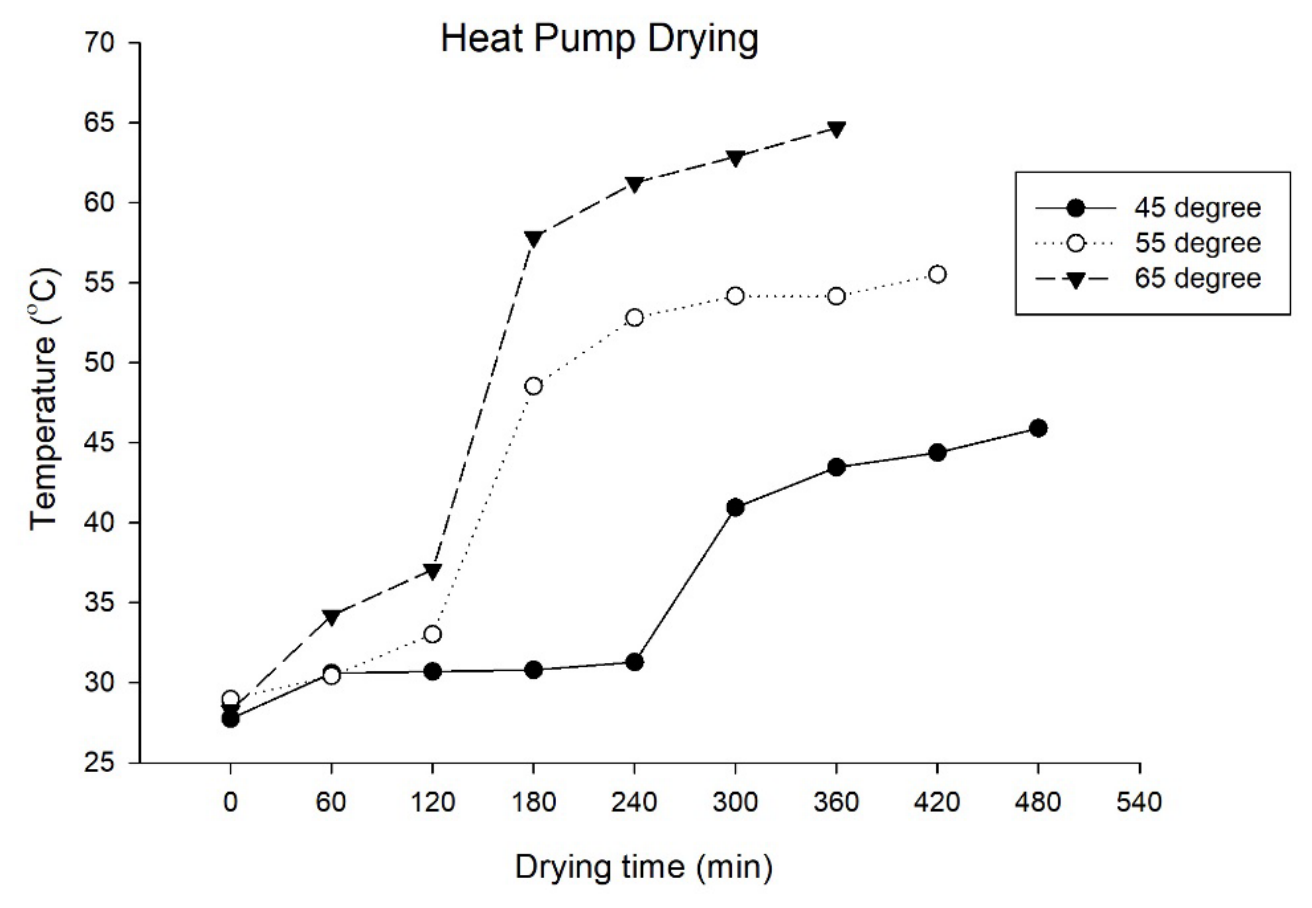
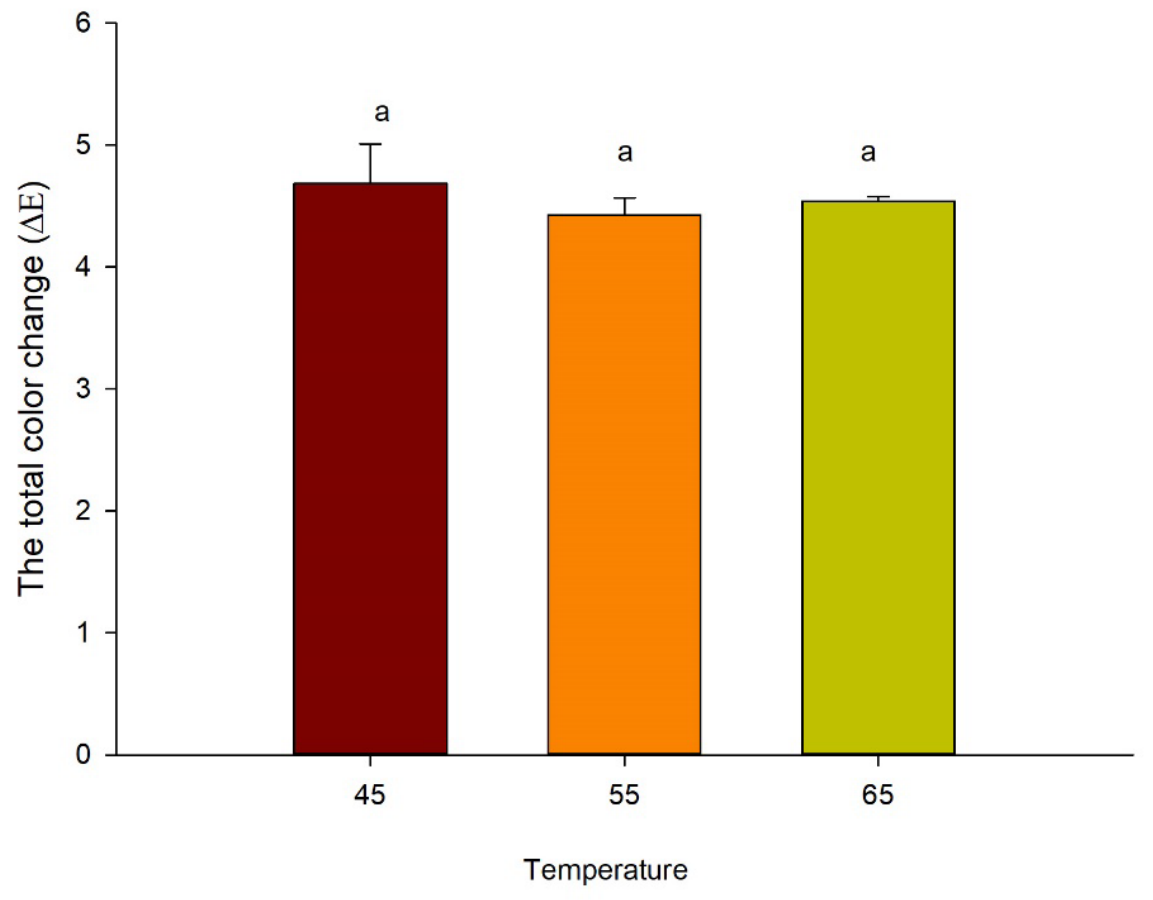
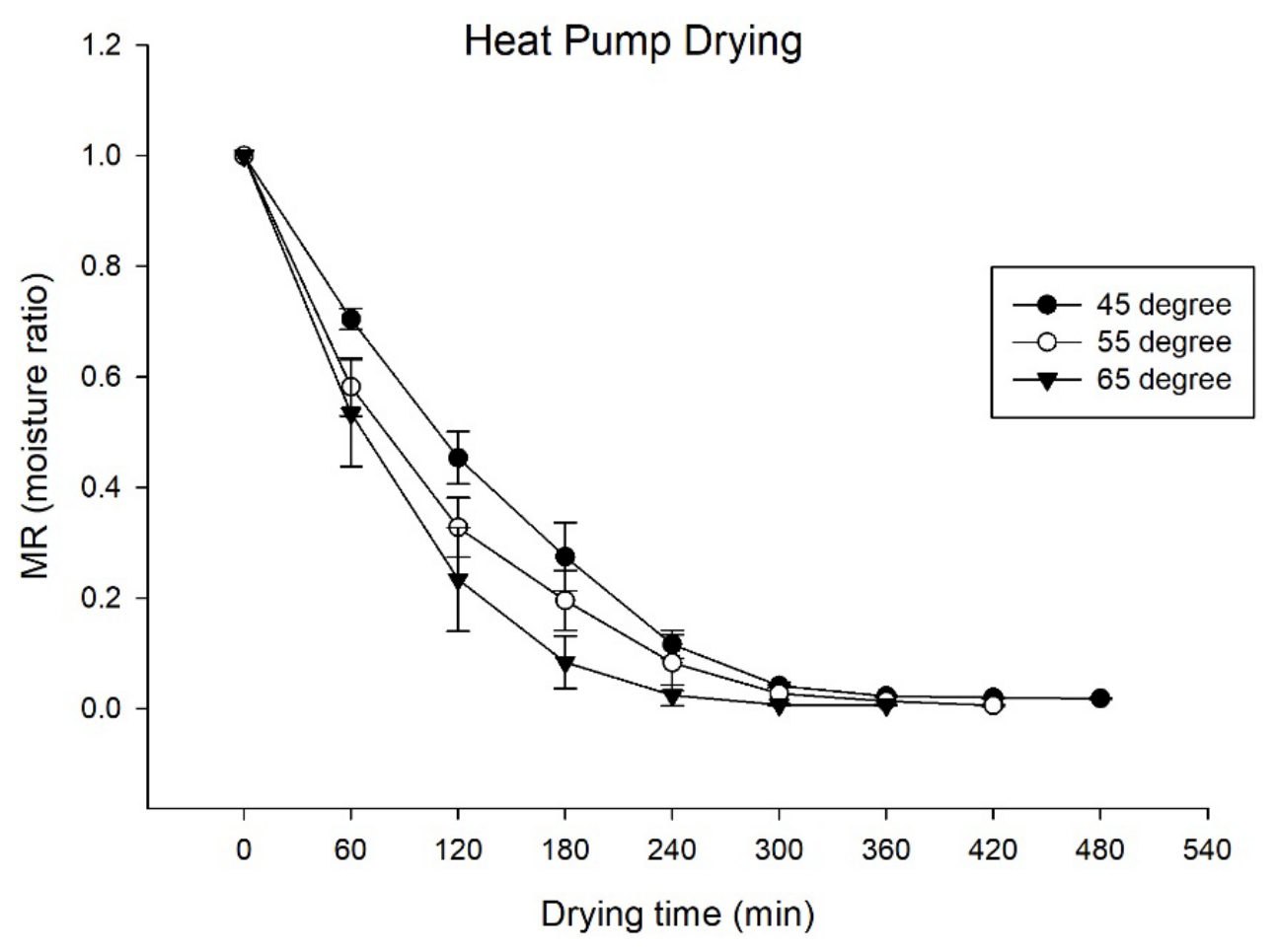
Fresh okara had an initial moisture content of 77.83 ± 0.52% (w.b.) and a water activity of 0.95 ± 0.00 (Table 1), indicating that it is a high-moisture and highly perishable material. Therefore, rapid moisture removal is necessary to ensure product stability. The drying curves obtained under different hot air temperatures (45 °C, 55 °C, and 65 °C; RH: 40%) are shown in Figure 1. The results indicated that all three drying conditions exhibited typical drying behavior, characterized by an initial constant-rate period followed by a falling-rate period. Under the temperature conditions of 55 °C and 65 °C, the transition to the falling-rate period occurred at approximately 180 min, whereas under the 45 °C condition, this transition was delayed to approximately 240 min. Higher drying temperatures enhanced the evaporation rate of surface moisture and improved internal moisture migration, leading to an earlier transition point and effectively shortening the overall drying time. This trend is consistent with the findings reported by Zhu et al. [29] in their study on the HPD of wood ear mushrooms, in which the drying time decreased with increasing temperature. Their study demonstrated that within the temperature range of 40–65 °C, higher drying temperatures resulted in a more pronounced reduction in moisture ratio (MR), with the drying time decreasing from 495 min to 255 min and the average drying rate increasing by 93.8%. This suggested that increasing the drying temperature in heat pump drying systems can significantly enhance moisture removal kinetics. As shown in Figure 2, the sample temperature gradually approached the set drying air temperature after entering the falling-rate drying period, while the rate of temperature increase became less pronounced. This phenomenon indicates that the temperature gradient between the material and the hot air gradually decreased, resulting in a reduced driving force for internal moisture diffusion and, consequently, a lower drying rate. As presented in Table 2, the effective moisture diffusivity increased with increasing hot air temperature, rising from 0.60 × 10⁻⁸ to 0.97 × 10⁻⁸ m2/s, indicating that higher temperatures enhanced moisture diffusion. A similar trend was reported by Xu et al. [8], who reported that increasing drying temperature significantly improved the moisture diffusion rate within chili tissues. The total drying times under the three experimental conditions were 480, 420, and 360 min, respectively, further demonstrating that increasing hot air temperature effectively shortened the drying process. The results of colorimetric analysis (Figure 3) revealed no significant difference (p > 0.05) between the three temperatures, indicating that drying within this temperature range did not cause noticeable thermal deterioration or intensified browning reactions. After drying, the moisture content of the resulting OF was reduced to below 10%, and the water activity remained below 0.6, meeting the criteria for storage stability.
SEC is expressed as the electrical energy required to remove 1 kg of water (kWh/kg). The results confirmed that the SEC decreased from 4.9 kWh/kg to 3.8 kWh/kg as the drying temperature was increased from 45 °C to 65 °C, indicating that higher drying temperatures shortened the drying time and reduced the energy required per unit mass of water removed. However, the reduction in SEC became less pronounced between 55 °C and 65 °C, suggesting that once the drying temperature reached a certain level, internal moisture diffusion became the limiting factor, thereby diminishing further improvements in energy efficiency. This trend is consistent with the findings of Zhang et al. [30] in their study on the heat pump drying of long cowpea, where the SEC decreased from 27.28 to 15.09 kWh/kg as the drying temperature increased from 35 °C to 65 °C, accompanied by a significant reduction in drying time. Their study also noted that the rate of SEC reduction became less pronounced at higher temperature ranges, which mirrors the present findings. Considering the overall performance in terms of drying time, energy consumption, and color quality, the optimal HPD condition identified in this study was 65 °C at RH 40%.

3.1.2. Microwave Drying

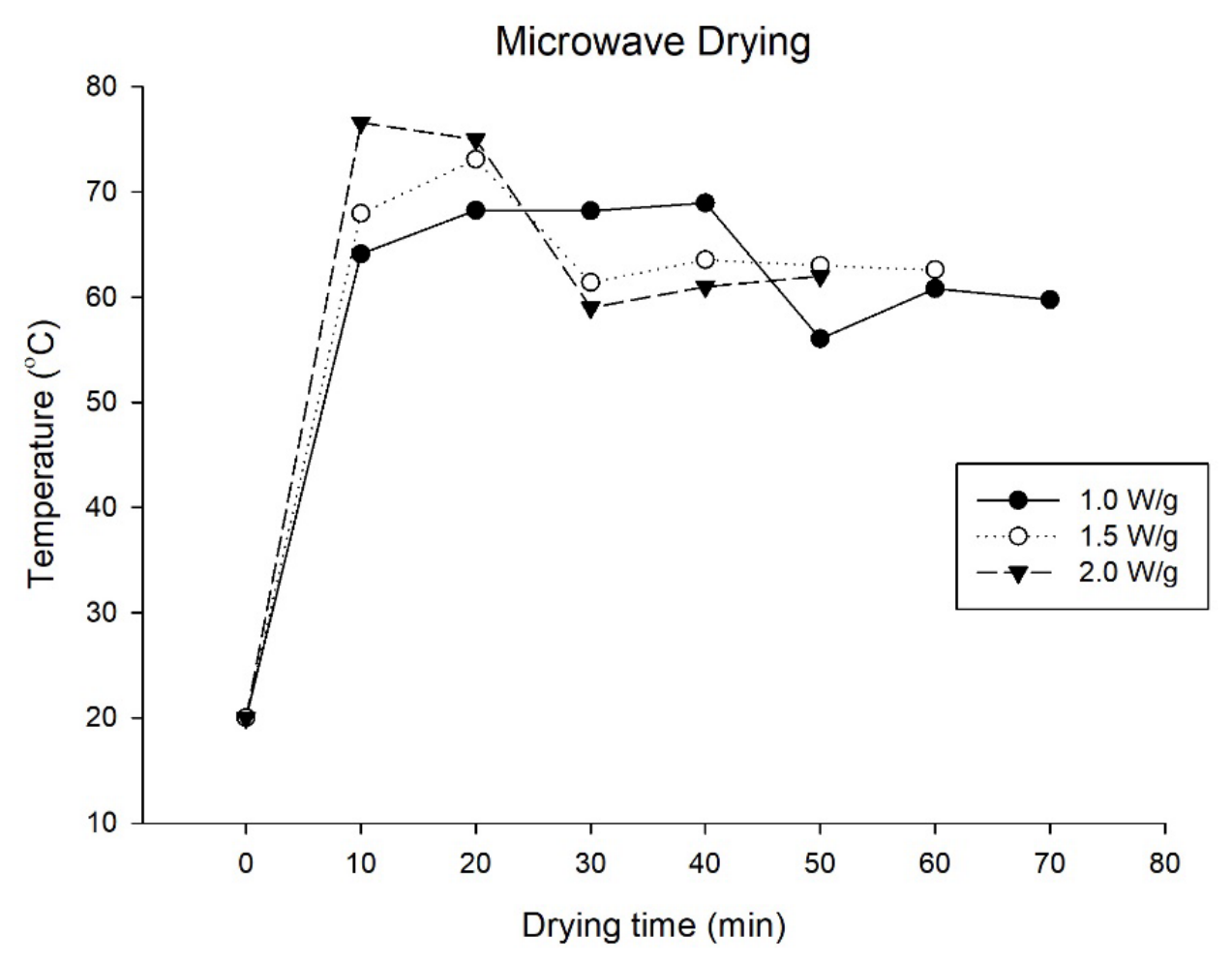
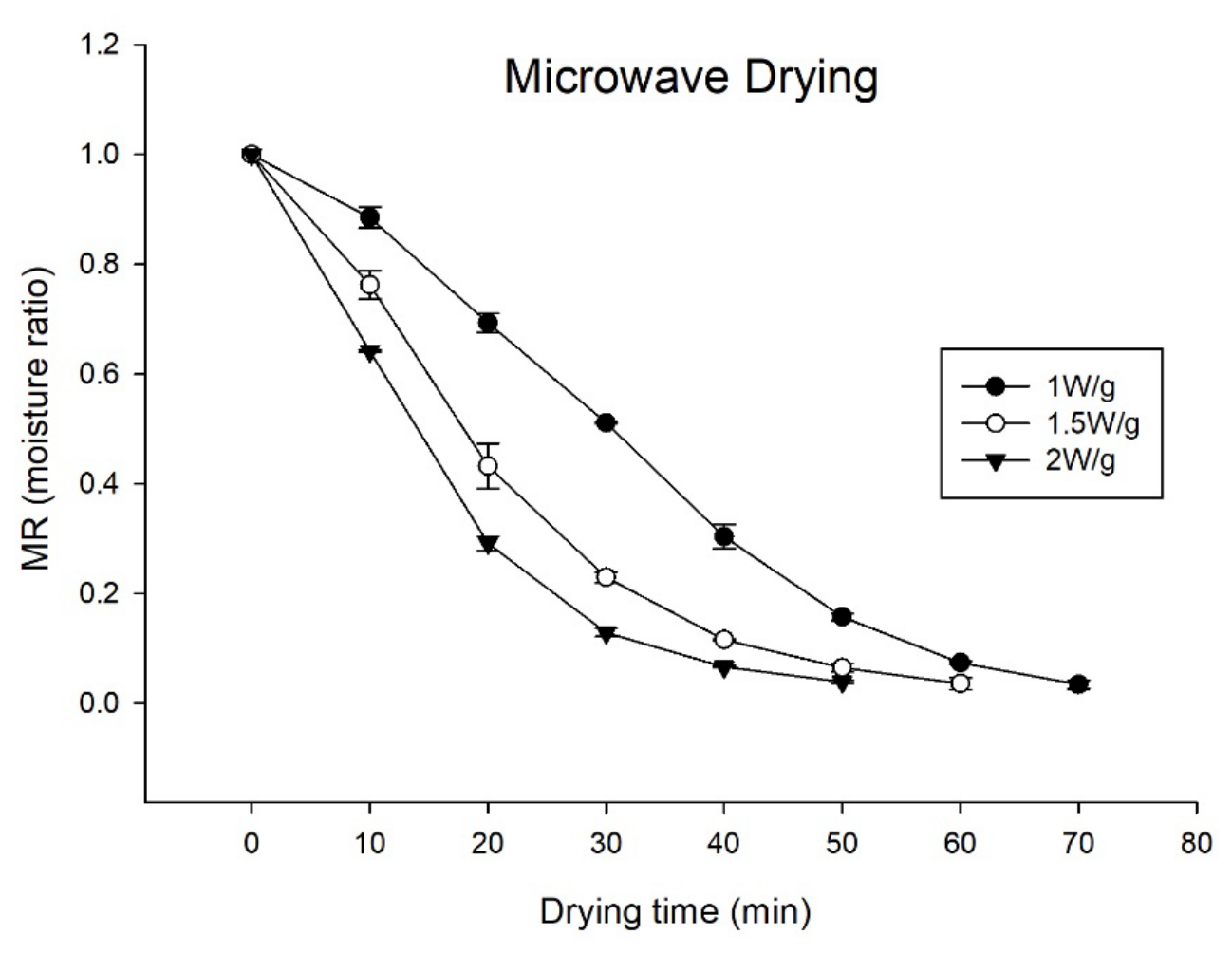
MWD experiments were conducted at power densities of 1.0, 1.5, and 2.0 W/g, and the corresponding drying curves are presented in Figure 4. A noticeable reduction in drying rate occurred at approximately 30 min under the 1.5 and 2.0 W/g conditions, whereas under the 1.0 W/g condition, this transition was delayed to approximately 50 min. According to Table 3, the effective moisture diffusivity (Deff) increased with increasing microwave power density, rising from 1.79 × 10⁻⁶ to 2.88 × 10⁻⁶ m2/s. These results indicate that higher microwave power density can effectively enhance the moisture removal rate, which is consistent with the trend reported by Lee et al. [19] in their study using MWD as a pretreatment for sugarcane bagasse. Similar behavior was reported by Luka et al. [31] on MWD kinetics, which showed that the moisture diffusion rate increased with increasing power density. The underlying mechanism is that microwave energy induces intense vibration of water molecules, generating a rapid internal-to-external vapor pressure gradient that accelerates moisture evaporation. Furthermore, microwave exposure may disrupt cellular structures or induce cell lysis, thereby increasing tissue permeability and facilitating moisture diffusion. As microwave power density increases, both the kinetic energy of water molecules and the permeability-enhancing effects within the material become more pronounced. The changes in sample temperature during the drying process are shown in Figure 5. During the early stage of MWD, rapid internal heating dominated the temperature profile, resulting in a sharp increase in sample temperature. As drying progressed, evaporative cooling and intermittent moisture removal led to temperature fluctuations and slight decreases. This behavior indicates that the temperature evolution during MWD was governed by the balance between microwave energy absorption and moisture evaporation. Similar temperature fluctuations during microwave drying have also been reported in previous studies, mainly due to changes in moisture availability and heat transfer behavior during the later drying stage [32].
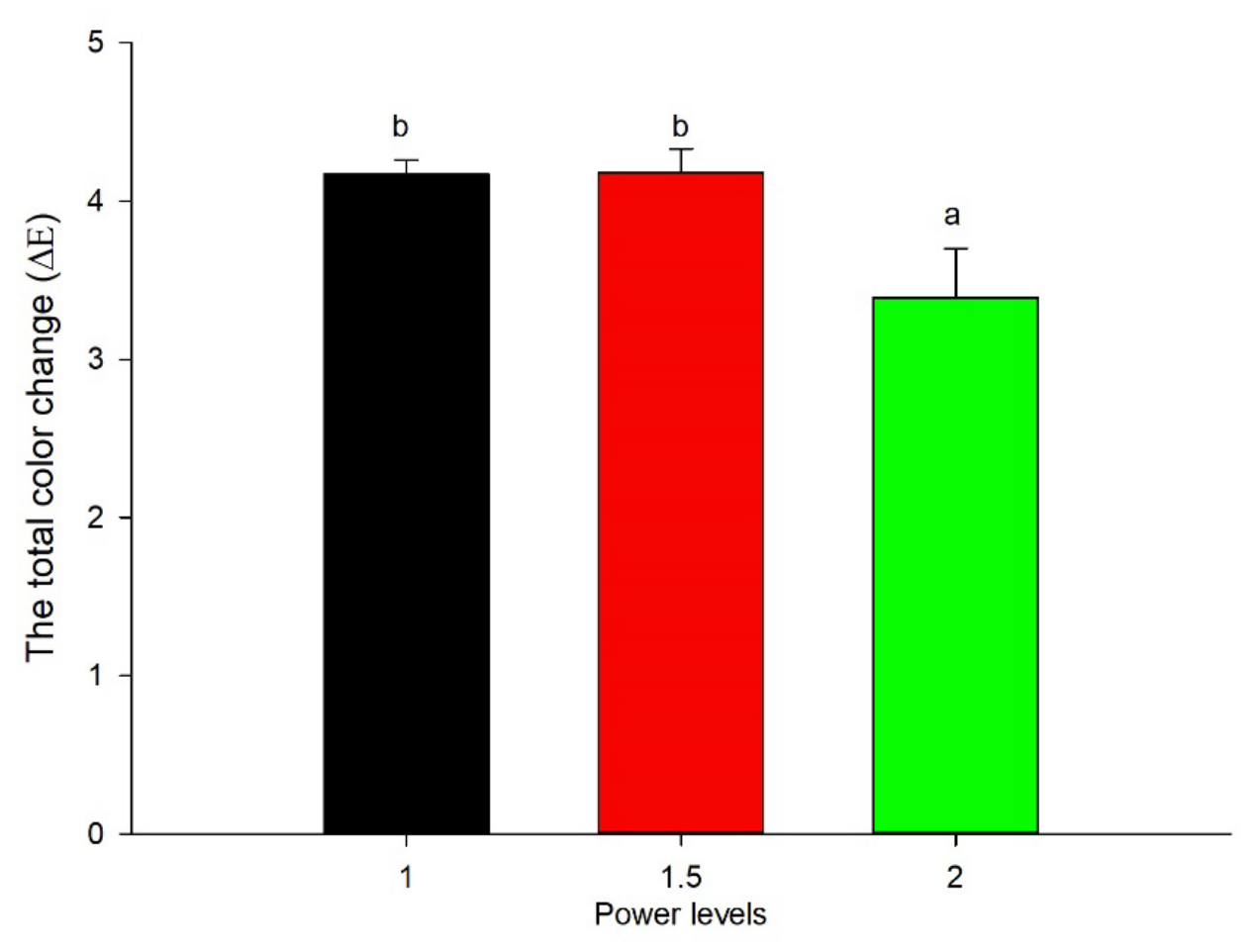
The color analysis results shown in Figure 6 indicate that the total color difference at 2.0 W/g was significantly lower than that of the other treatment groups (p < 0.05), indicating superior appearance quality. This effect may be attributed to the shorter drying time at the higher power density, which reduced the duration of thermal exposure and thereby better preserved product color. According to Koné et al. [33], the appropriate power setting can shorten the drying time while preventing thermal damage caused by excessive energy concentration during the final stage of drying, thereby improving color retention and nutrient preservation in dried fruits and vegetables such as tomatoes. Energy consumption analysis (Table 4) revealed that the SEC at 2.0 W/g was relatively high, despite the relatively short drying time. Although increasing microwave power generally shortens drying time, the relationship between SEC and power does not necessarily follow a monotonically decreasing trend. Tepe et al. [34] reported that MW may exhibit optimal energy efficiency at intermediate power levels. For example, in their studies on lemon slices, 460 W resulted in the lowest SEC, indicating that the highest microwave power does not necessarily correspond to the most energy-efficient condition. Their findings also suggested that SEC may increase with increasing power. In this study, an increase in SEC was observed under higher microwave power density conditions, which may be attributed to reduced energy utilization efficiency, localized overheating, or decreased energy conversion efficiency during the later drying stage as the moisture content became lower. The final moisture content and water activity were 8.54 ± 0.19% and 0.55 ± 0.00, respectively (Table 3), indicating good storage stability of the dried product. Based on the overall evaluation of drying efficiency, product quality, and production performance, 2.0 W/g was selected as the optimal MWD condition. Although its SEC was 2.2 kWh/kg, slightly higher than that of the other treatment groups, the higher power density significantly enhanced moisture diffusion, reducing the drying time to only 50 min, which represented approximately a 28.6% reduction compared with the 1.0 W/g treatment (from 70 min to 50 min). This not only improved processing efficiency but also resulted in better color quality, achieving the most favorable balance between production efficiency and quality control.

3.1.3. Two-Stage Drying

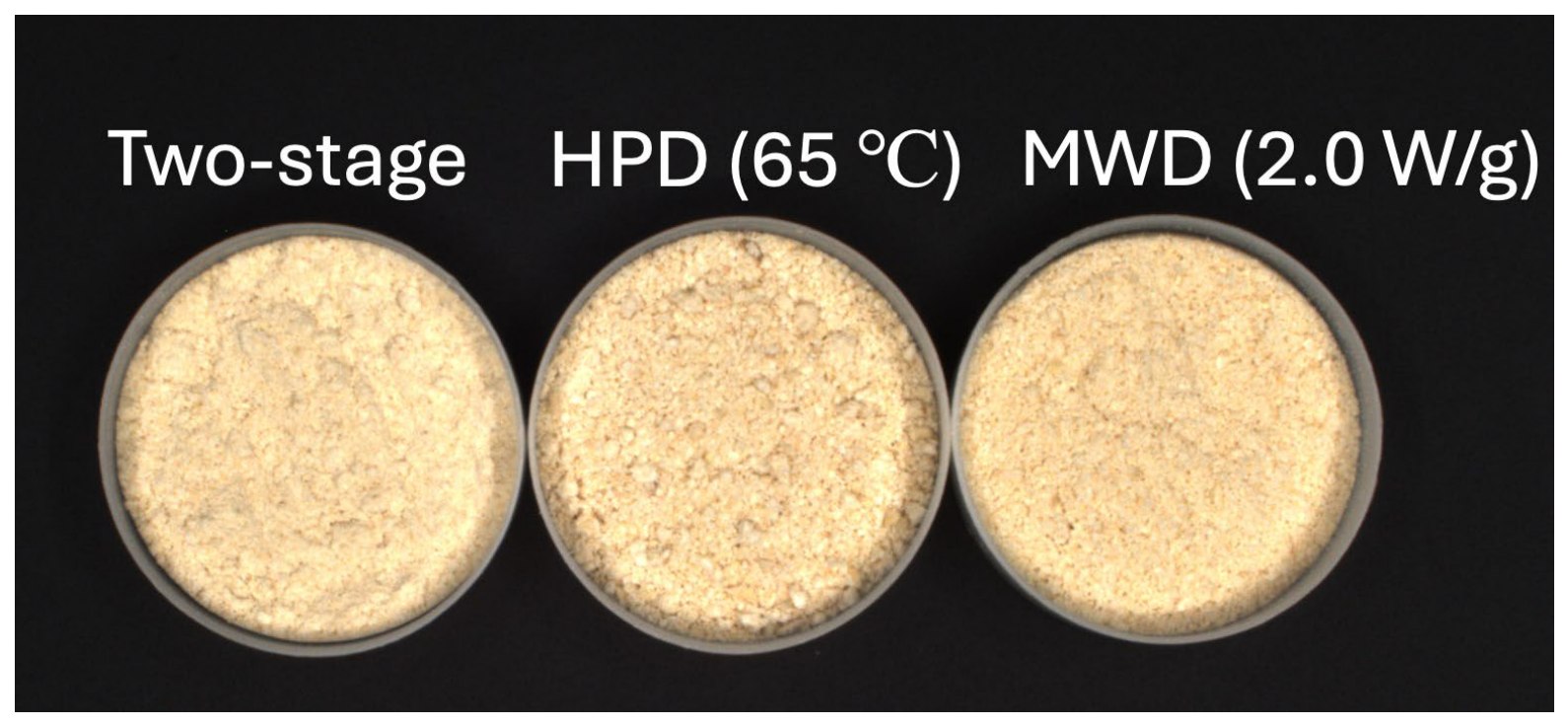
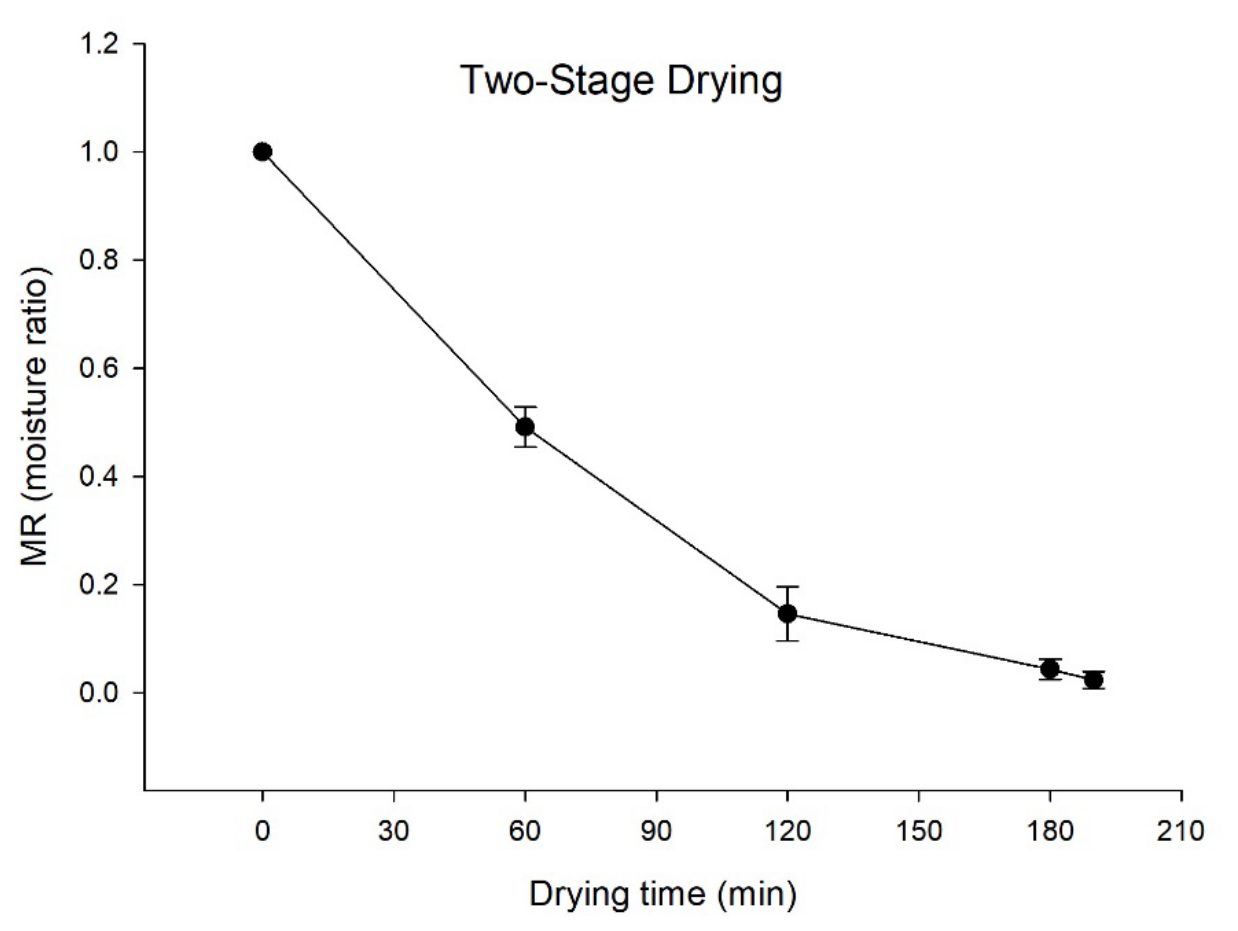
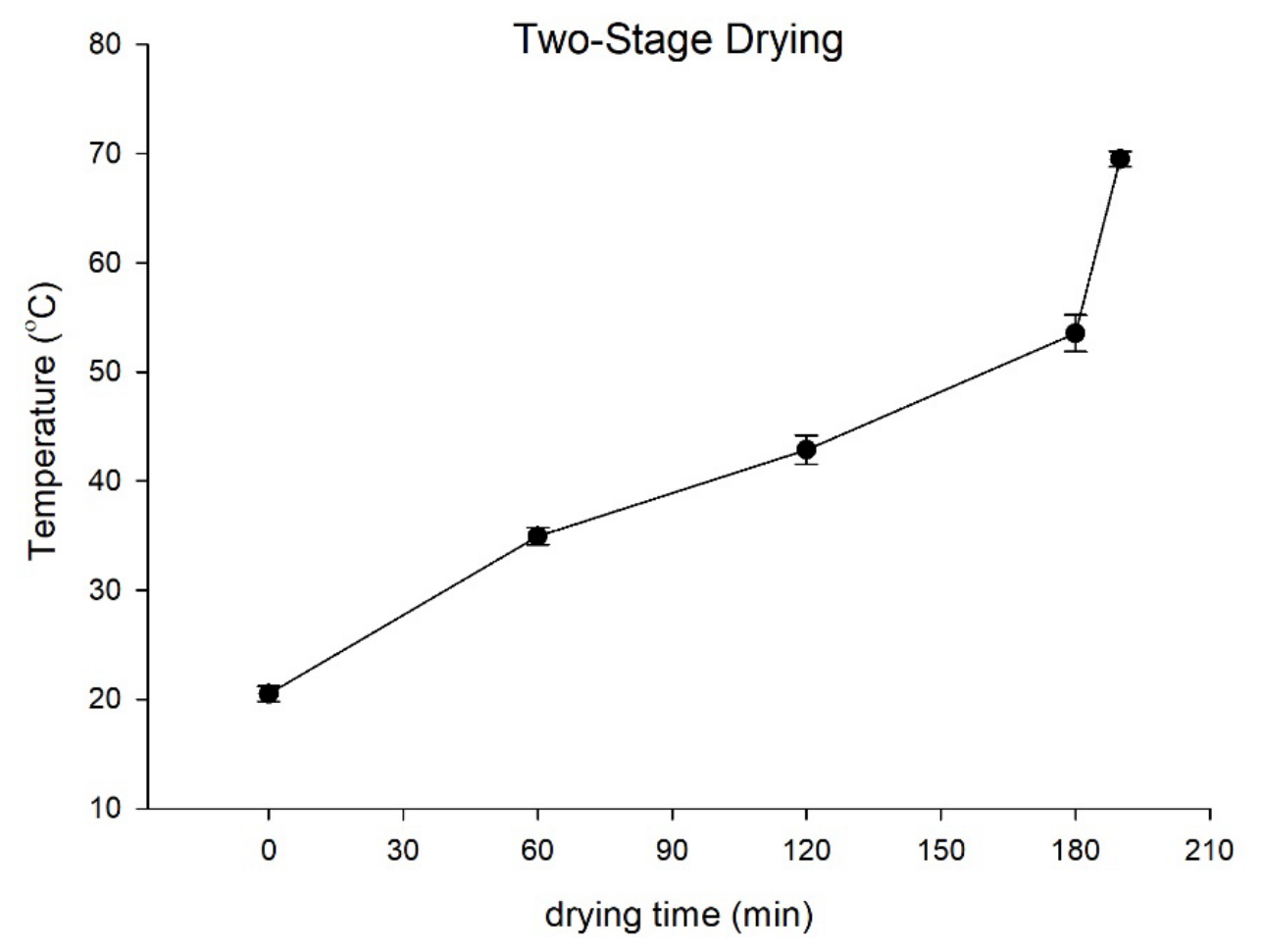
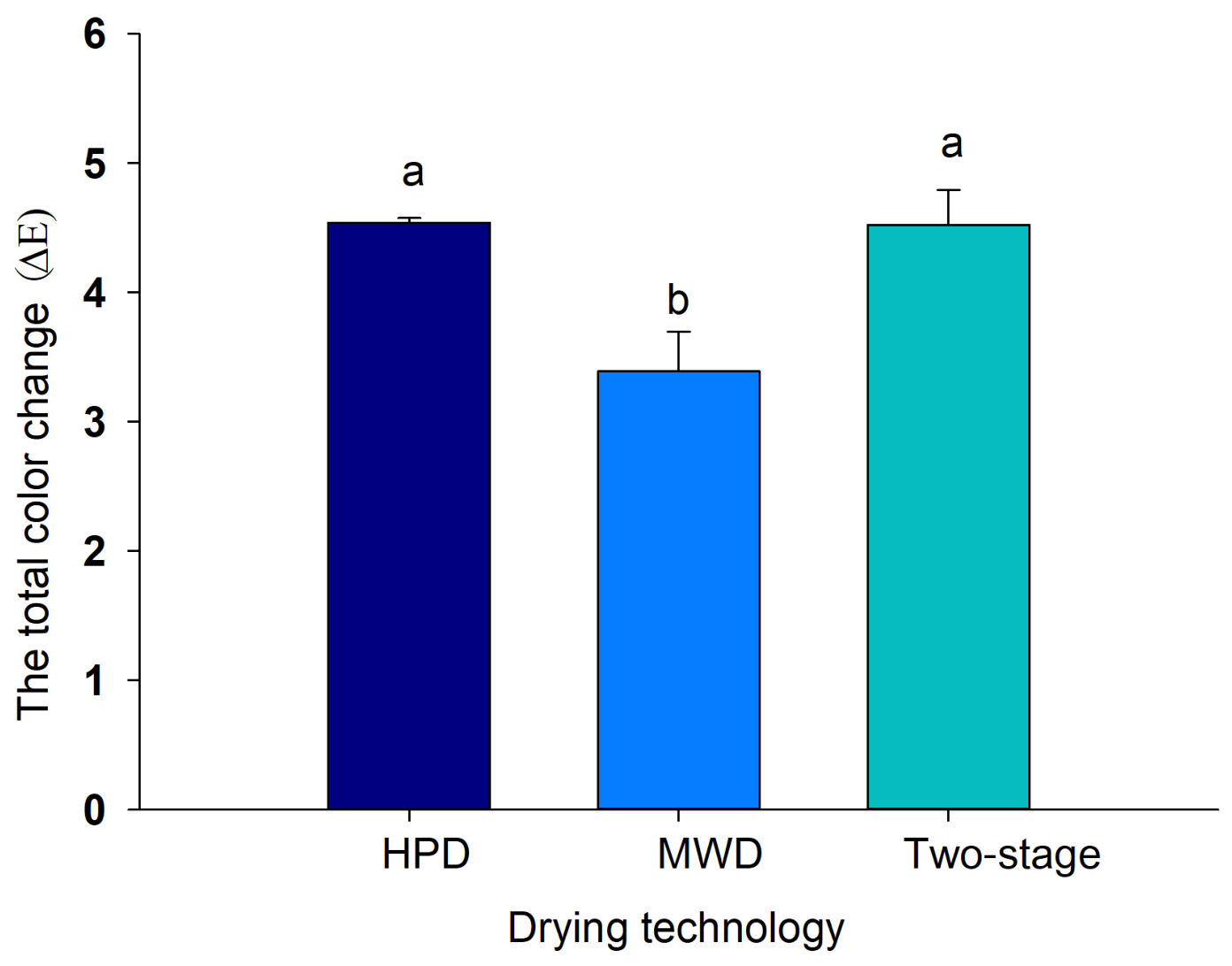
To combine the operational stability of HPD with the high efficiency of MWD, a two-stage drying strategy was designed in this study. Based on the drying behavior observed during HPD, the transition from the constant-rate to the falling-rate period occurred at approximately 180 min under the 65 °C and RH 40% condition, at which point the moisture ratio (MR) had reached approximately 0.08 under 65 °C (Figure 1), indicating the transition into the falling-rate period. Therefore, HPD was first applied for 180 min, after which MWD at 2.0 W/g was introduced to enhance internal moisture migration and accelerate moisture removal during the falling-rate stage. As shown in Figure 7, the drying curve indicates that after microwave treatment was introduced, the originally slow falling-rate period was markedly shortened to approximately 10 min. The temperature profile shown in Figure 8 further confirmed this trend, with the sample temperature exhibiting a clear turning point at 180 min, followed by a rapid increase. This phenomenon can be attributed to the volumetric heating characteristic of microwave energy, in which electromagnetic waves penetrate the material surface and directly interact with internal moisture, generating heat rapidly through dipole rotation. In contrast to conventional drying, which is often limited by case hardening and low heat transfer efficiency [35], microwave energy can form a high internal vapor pressure gradient that drives moisture migration from the interior to the surface [9], thereby shortening the total drying time to 190 min. The final product exhibited a moisture content of 6.55 ± 0.06% and a water activity of 0.41 ± 0.02 (Table 5). The visual appearance of okara obtained under the three drying technologies is shown in Figure 9. A comparison of the appearance quality and energy consumption among the three drying technologies is presented in Figure 10 and Table 6. The results indicated that MWD exhibited a significantly lower total color difference than the other treatment groups (p < 0.05). To further evaluate the color characteristics, the detailed CIE Lab coordinates (L*, a*, and b*) were analyzed. Fresh okara had initial color values of L* = 76.01 ± 0.13, a* = 1.93 ± 0.16, and b* = 15.94 ± 0.43. After the drying processes, the L* (lightness) values of the resulting OF were 80.30 ± 0.05 for HPD, 79.01 ± 0.39 for MWD, and 80.40 ± 0.34 for Two-stage drying. Although convective drying methods (HPD and Two-stage) resulted in higher L* values, the single-stage MWD treatment produced an L* value that was closest to that of the fresh okara. This indicates that the rapid volumetric heating of MWD effectively minimized excessive color shifting and preserved the natural chromatic attributes of the matrix, which directly contributed to its significantly lower ΔE. Compared with HPD and two-stage drying, MWD reduced the drying time by 86.1% and 73.7%, respectively, while decreasing energy consumption by 42.1% and 29.0%. It is noteworthy that this drying efficiency is also vastly superior to conventional hot air drying (HAD) of okara reported in the previous literature [13], which typically requires prolonged thermal exposure up to 400–500 min. This highlights the remarkable capacity of volumetric microwave heating to overcome internal mass transfer resistance. Further analysis of the effective moisture diffusivity (Deff) (Table 7) revealed that the drying method had a substantial influence on moisture transport behavior. MWD exhibited the highest effective moisture diffusivity, reaching 2.88 × 10⁻⁶ m2/s, which was substantially higher than those of HPD (0.97 × 10⁻⁸ m2/s) and two-stage drying (1.29 × 10⁻⁸ m2/s). This internal-to-external heating mechanism generates a strong pressure-driven force that promotes rapid moisture migration by overcoming structural resistance within the material [9], resulting in a Deff value of about 296 times that of HPD. The model fit (R2 > 0.99) further demonstrates that MWD is a key factor in overcoming mass transfer resistance when drying okara samples with a thickness of 2 cm. Overall, single-stage MWD at 2.0 W/g exhibited the best performance in terms of drying efficiency and quality preservation. However, two-stage drying, which combines stable surface quality control during the initial stage with accelerated moisture removal in the later stage, still shows potential value for integrated industrial drying applications.

3.2. Sorption Isotherm Analysis and Shelf-Life Prediction

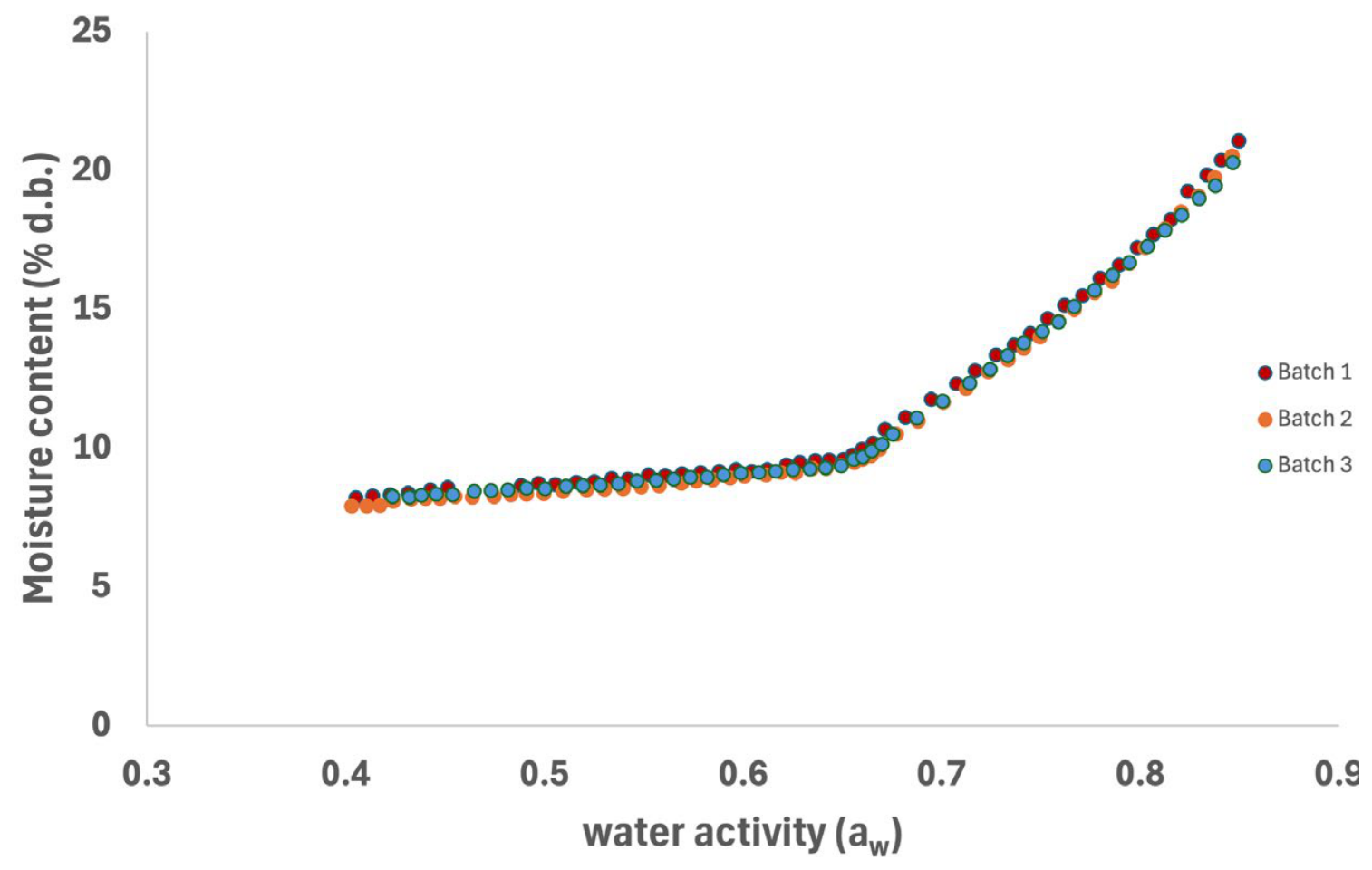
In this study, OF produced under the optimal drying condition (MWD at 2.0 W/g) was subjected to Dynamic Dewpoint Isotherm (DDI) analysis to investigate the thermodynamic relationship between equilibrium moisture content (EMC) and water activity at a constant temperature of 25 °C (Figure 11). Moisture sorption in food materials involves multiple complex mechanisms governed by the structural characteristics and compositional properties of the material. According to Carter et al. [36], the critical water activity (awc) is defined as the threshold at which a product undergoes abrupt physical state changes. When the environmental water activity exceeds this critical value, structural transitions occur within the material matrix, leading to sudden and pronounced changes in moisture sorption behavior and the formation of a distinct transition point on the sorption isotherm. This transition is typically accompanied by a substantial increase in molecular mobility, which may subsequently induce physical deterioration phenomena such as powder caking, structural collapse, or the onset of dissolution. To precisely identify the transition point associated with the hygroscopic behavior of okara flour, the DDI curve was further adopted for the second-derivative analysis. Second-derivative analysis effectively reflects changes in the slope of the sorption curve. By identifying the peak value (local maximum) in the second-derivative profile, background interference can be minimized, allowing precise determination of the critical point at which moisture sorption behavior changes dramatically. Based on the calculated results (Table 8) and comparison with the original DDI curve (Figure 11), a distinct transition was observed in okara flour at approximately aw = 0.66. This peak corresponds to the critical point at which hygroscopic behavior changes markedly and molecular water mobility increases. This value is comparable to the findings reported by Carter et al. [36] for wheat flour-containing premix powders, in which the critical transition occurred at approximately aw = 0.70, suggesting that OF similarly exhibits distinct matrix phase transition characteristics at specific water activity levels. Therefore, aw = 0.66 was defined as the critical limit value for subsequent moisture migration monitoring and shelf-life prediction. According to the stability theory, maintaining the product water activity below this threshold can restrict molecular diffusion and significantly suppress quality deterioration, thereby ensuring storage stability. By incorporating the packaging specifications—polypropylene/aluminum-coated polyester film (26 × 32 cm) with a water vapor transmission rate (WVTR) of 0.55 g/m2·day·mmHg—and applying the predictive model reported by Ekafitri et al. [37], the shelf life of the OF product was estimated using the moisture diffusion kinetics equation (Equation (6)). Under the conditions of a 1 kg product package, an initial water activity of 0.55, a storage temperature of 25 °C, and a relative humidity of 70%, the predicted shelf life was approximately 389 days. The evaluation framework adopted in this study is consistent with the predictive approach described by Robertson and Lee [38]. These findings indicate that precise control of drying processes and packaging strategies, combined with scientifically based mathematical modeling, can effectively enhance the quality, stability, and market competitiveness of value-added by-products. It must be emphasized that this 389-day shelf-life estimation represents a theoretical baseline derived solely from thermodynamic moisture permeation modeling. While this mathematical approach is a highly effective predictive tool for initial packaging selection, the absolute commercial shelf life must be further validated through empirical real-time storage trials. Consequently, comprehensive tracking of microbiological stability (including total plate counts, yeasts, and molds) alongside lipid oxidation markers within the packaged OF matrix is prioritized for subsequent implementation to finalize its practical industrial commercialization.
  T = ln M e M i M e M c k x × A W s × P 0 b
M i , M c and M e represent the initial moisture content, critical moisture content and equilibrium moisture content (%d.b.) of the product under the storage relative humidity, respectively. k / x denotes the water vapor permeability of the packaging material (g/m2.day.mmHg), A is the surface area of the packaging material (m2), and p 0 is the saturated water vapor pressure at the storage temperature (mmHg). W s refers to the mass of dried solids in the product (g), b is the slope of the sorption isotherm curve, and T is the predicted shelf life of the product (days).

3.3. Component Analysis and Value-Added Applications

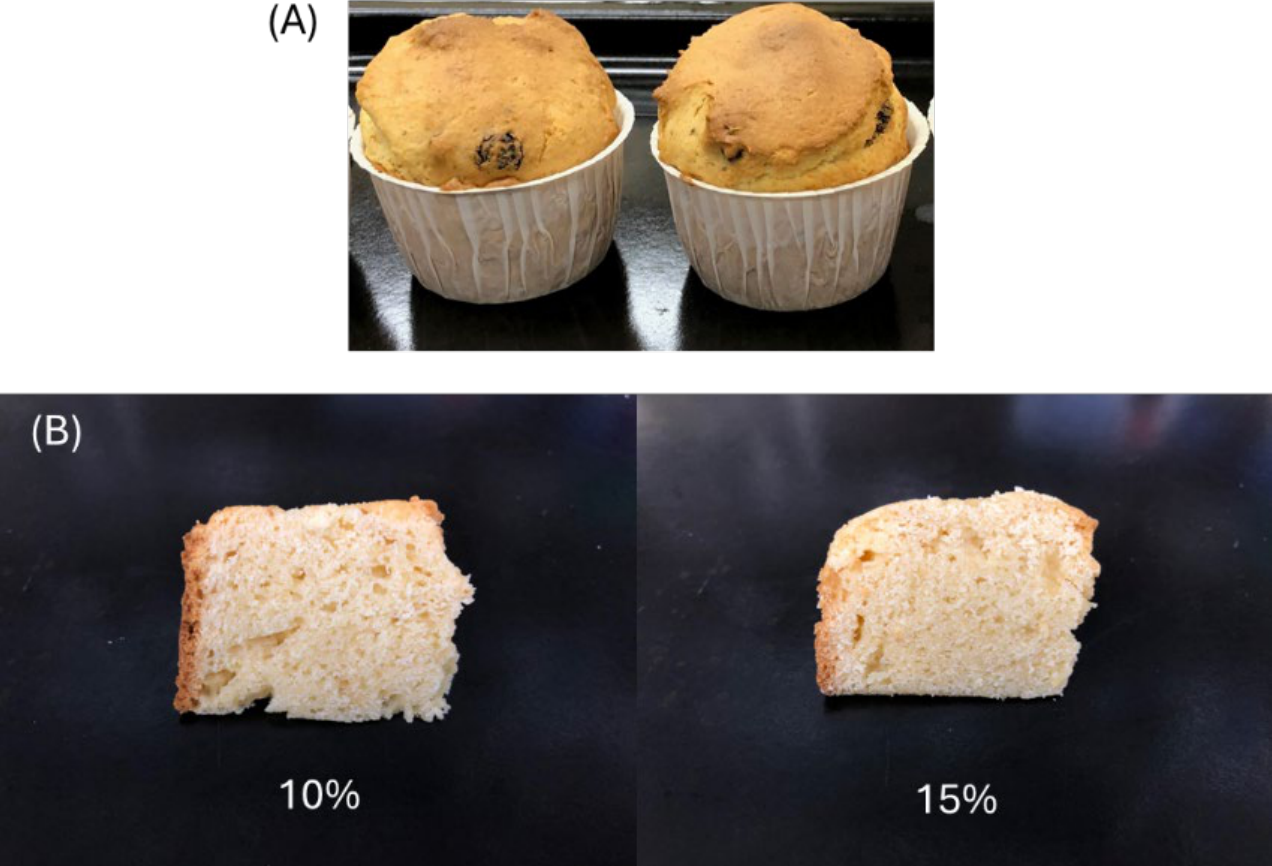
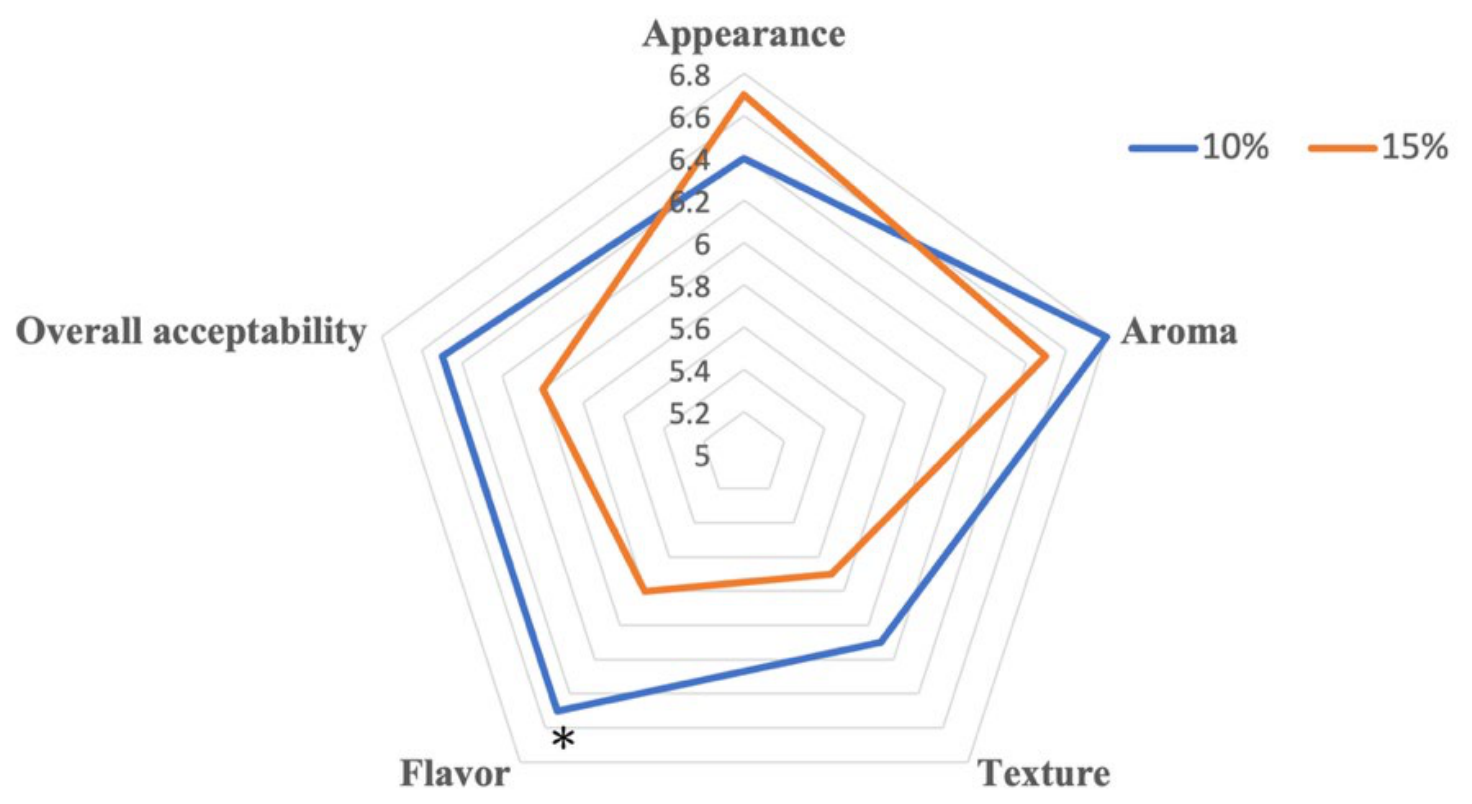
The quality analysis of okara products showed that the total dietary fiber content was 47.78 ± 0.64 g/100 g, which was predominantly composed of insoluble dietary fiber (approximately 98%) and soluble dietary fiber (2%) (Table 9). Insoluble dietary fiber provides the benefit of increasing stool bulk and preventing constipation [39]. Although okara contains a baseline protein fraction, its primary valorization potential lies in its exceptionally dense dietary fiber infrastructure (~47.78%). Therefore, this study strategically prioritized soluble and insoluble dietary fiber as the key nutritional markers, rather than generic protein fortification. Given that refined wheat flour characteristically lacks high-quality bulk fiber, utilizing OF as a targeted texturizer represents a more practical approach for bakery side-streams. Comprehensive mapping of protein and micronutrient degradation kinetics under advanced drying operations will be pursued as a separate topic in future research. The bakery industry is one of the largest sectors in the food industry and maintains steady growth momentum. Refined wheat flour is extensively used in the manufacture of baked goods, resulting in conventional bakery products that are generally low in dietary fiber and trace elements [40]. Therefore, OF was explored as a value-added ingredient for bakery applications, and muffins supplemented with 10% and 15% okara flour were developed (Figure 12). Based on the total dietary fiber content of okara, supplementation at 10–15% was estimated to increase the total dietary fiber content of each 63 g muffin by approximately 3.0–4.5 g. Consumer sensory evaluation (n = 35) was conducted to compare the acceptability of the two muffin formulations, and the results were analyzed using Compusense Cloud sensory evaluation software (Figure 13). Statistical analysis of the sensory attributes was performed using a paired-samples t-test. The specific mean scores (±SD) for muffins supplemented with 10% and 15% OF were reported as follows: appearance (6.43 ± 1.04 vs. 6.69 ± 1.13), aroma (6.80 ± 1.01 vs. 6.46 ± 1.34), texture (6.09 ± 1.25 vs. 5.71 ± 1.55), and overall acceptability (6.46 ± 1.05 vs. 6.03 ± 1.38), respectively. Among all parameters, flavor was the only attribute exhibiting a significant difference between the two formulations (p = 0.0093 < 0.01). Muffins containing 10% OF received a significantly higher flavor score (6.5 ± 1.5) than those containing 15% OF (5.8 ± 1.8). The results suggested that increasing the level of okara supplementation to 15% may have introduced perceptible negative sensory effects on product flavor, which may be attributed to the formation or intensified perception of specific flavor-active compounds at higher supplementation levels. Although no statistically significant differences were observed in appearance, aroma, texture, or overall acceptability (p > 0.05), the decline in flavor scores reflects a clear shift in consumer acceptance trends. In summary, despite the higher dietary fiber content provided by the 15% supplementation level, a 10% okara supplementation was recommended as the optimal proportion for value-added bakery applications to ensure flavor competitiveness in the market. This formulation enhances nutritional value while maintaining favorable consumer sensory acceptability.
It should be noted that this study serves as a preliminary evaluation of okara flour application in bakery products, utilizing a consumer panel of 35 participants. While a larger consumer sample size is generally preferred for broader market generalizations, the statistical power of the current sample size was sufficient to detect critical sensory differences. Specifically, the paired-samples t-test revealed a significant difference in flavor scores between the 10% and 15% formulation groups (p = 0.0093). This robust statistical significance strongly indicates that the negative impact of higher okara supplementation (15%) on product flavor is highly pronounced, validated even within this preliminary testing framework. Nevertheless, future study incorporating a larger and more diverse consumer cohort (n > 100) will be beneficial to further validate nationwide market acceptability.
Beyond consumer acceptance scores, the framework established in this study carries significant implications for the circular bioeconomy. Okara is a highly unstable, high-moisture industrial byproduct prone to rapid microbial spoilage, leading to environmental burdens and resource waste. By systematically validating advanced convective and dielectric configurations, this work demonstrates that single-stage MWD serves as the most efficient core technology, maximizing moisture diffusivity and minimizing processing duration. Simultaneously, the HPD–MWD two-stage approach provides a flexible, scalable technical pipeline to adapt to varying industrial throughput and quality needs. Upcycling this stabilized okara flour into bakery products not only elevates their nutritional profile but also demonstrates a practical closed-loop recycling paradigm within the food sector. Replacing energy-intensive thermal operations with optimized dielectric-driven pathways directly aligns with green manufacturing objectives. Consequently, this multi-tiered approach—linking upstream processing thermodynamics to downstream product development—provides a viable model for upgrading agro-industrial side-streams into high-value ingredients, minimizing food waste and promoting sustainable resource circulation.

4. Conclusions

This study successfully validated an energy-efficient, value-added utilization technical pipeline for okara. In terms of drying kinetics, single-stage MWD (2.0 W/g) exhibited superior performance with an effective moisture diffusivity of 2.88 × 10⁻⁶ m2/s, which was substantially higher than those of HPD (0.97 × 10⁻⁸ m2/s) and two-stage drying (1.29 × 10⁻⁸ m2/s). Compared to HPD, MWD shortened the drying duration by 86.1% and decreased specific energy consumption by 42.1%. The resulting OF retained a high total dietary fiber content (47.78%), with water activity safely below 0.60. Thermodynamic DDI analysis identified the critical water activity threshold as 0.66, yielding a mathematical shelf-life prediction of 389 days under high-barrier packaging. Furthermore, baking trials confirmed the application potential of upcycling, as a 10% supplementation level in functional muffins established an optimal balance between dietary fiber enhancement and sensory flavor acceptability (p = 0.0093). Overall, this integration of upstream thermodynamics and downstream food formulation supports the principles of circular bioeconomy and green manufacturing, although further systematic economic and energy cost analyses are warranted to fully validate its scale-up commercial implementation.

Author Contributions

Conceptualization: S.-C.W. and P.-H.W. Methodology: M.-J.T. and S.-C.W. Validation: P.-H.W. and S.-C.W. Formal analysis: M.-J.T. and C.-H.T. Investigation: S.-C.W. Resources: C.-H.T. and S.-C.W. Data curation: C.-H.T. and S.-C.W. Writing—original draft preparation: S.-C.W. Writing—review and editing: S.-C.W., M.-J.T., C.-H.T. and P.-H.W. Supervision: S.-C.W. and P.-H.W. Project administration: S.-C.W. Funding acquisition: S.-C.W. and M.-J.T. All authors have read and agreed to the published version of the manuscript.

Funding

The authors gratefully acknowledge the financial support provided by the Ministry of Agriculture, Taiwan, formerly the Council of Agriculture, for this study (110AS-1.7.1-AD-U1).

Institutional Review Board Statement

The sensory evaluation protocol of this study was implemented in strict accordance with institutional guidelines and classified as IRB-exempt under local regulatory criteria for standard food matrices.

Informed Consent Statement

Informed consent was obtained from all participants involved in the sensory evaluation.

Data Availability Statement

The data presented in this study are available on request from the corresponding author. The data are not publicly available due to institutional privacy and proprietary research restrictions associated with the funded project.

Acknowledgments

This study was supported by funding from the Ministry of Agriculture, Taiwan, formerly the Council of Agriculture. The authors would like to express their sincere gratitude.

Conflicts of Interest

The authors were employed by the Product and Process Research Center, Food Industry Research and Development Institute (FIRDI). The authors declare that the research was conducted in the absence of any commercial or financial relationships that could be construed as a potential conflict of interest.

Abbreviations

The following abbreviations are used in this manuscript:
HADConventional hot air drying
HPDHeat pump drying
MWDMicrowave drying
awWater activity
OFOkara flour
MRMoisture ratio
DeffEffective moisture diffusivity
SECSpecific energy consumption
DDIDynamic dew point isotherm
WVTRWater vapor transmission rate

References

  1. Kumar, A.; Kumar, A.; Rout, R.K.; Rao, P.S. Drying kinetics and quality attributes analysis of moringa (Moringa oleifera) leaves under distinct drying methods. J. Food Process Eng. 2024, 47, e14530. [Google Scholar] [CrossRef]
  2. Zielinska, M.; Zapotoczny, P.; Alves-Filho, O.; Eikevik, T.M.; Blaszczak, W. A multi-stage combined heat pump and microwave vacuum drying of green peas. J. Food Eng. 2013, 115, 347–356. [Google Scholar] [CrossRef]
  3. Wang, C.; Kou, X.; Zhou, X.; Li, R.; Wang, S. Effects of layer arrangement on heating uniformity and product quality after hot air assisted radio frequency drying of carrot. Innov. Food Sci. Emerg. Technol. 2021, 69, 102667. [Google Scholar] [CrossRef]
  4. Menon, A.; Stojceska, V.; Tassou, S.A. A systematic review on the recent advances of the energy efficiency improvements in non-conventional food drying technologies. Trends Food Sci. Technol. 2020, 100, 67–76. [Google Scholar] [CrossRef]
  5. Elik, A. Hot air-assisted radio frequency drying of black carrot pomace: Kinetics and product quality. Innov. Food Sci. Emerg. Technol. 2021, 73, 102800. [Google Scholar] [CrossRef]
  6. Yu, X.; Wu, W.; Wang, J.; Jin, Y.; Li, Z. Experimental study on effect of drying air supply temperature on performance of a quasi-two-stage closed loop heat pump drying system for lentinus edodes. Renew. Energy 2022, 201, 1038–1049. [Google Scholar] [CrossRef]
  7. Zhu, L.; Ji, X.; Yang, H.; Cao, X.; Wang, W.; Liang, M.; Li, J.; Zhang, Q.; Yang, X.; Geng, Z. Heat pump technology in the field of fruit and vegetable drying: A review. Foods 2025, 14, 2569. [Google Scholar] [CrossRef] [PubMed]
  8. Xu, N.; Wu, W.; Wang, Z.; Zhu, S.; Gao, P. Study of two-stage variable temperature heat pump drying process of chili peppers. Food Bioprod. Process. 2026, 157, 334–346. [Google Scholar] [CrossRef]
  9. Zeng, S.; Li, M.; Li, G.; Lv, W.; Liao, X.; Wang, L. Innovative applications, limitations and prospects of energy-carrying infrared radiation, microwave and radio frequency in agricultural products processing. Trends Food Sci. Technol. 2022, 121, 76–92. [Google Scholar] [CrossRef]
  10. Khan, M.K.I.; Maan, A.A.; Aadil, R.M.; Nazir, A.; Butt, M.S.; Rashid, M.I.; Afzal, M.I. Modelling and kinetic study of microwave assisted drying of ginger and onion with simultaneous extraction of bioactive compounds. Food Sci. Biotechnol. 2020, 29, 513–519. [Google Scholar] [CrossRef] [PubMed]
  11. Moreno, Á.H.; Aguirre, Á.J.; Hernández Maqueda, R.; Jiménez Jiménez, G.; Torres Miño, C. Effect of temperature on the microwave drying process and the viability of amaranth seeds. Biosyst. Eng. 2022, 215, 49–66. [Google Scholar] [CrossRef]
  12. Guimarães, R.M.; Silva, T.E.; Lemes, A.C.; Boldrin, M.C.F.; da Silva, M.A.P.; Silva, F.G.; Egea, M.B. Okara: A soybean by-product as an alternative to enrich vegetable paste. LWT 2018, 92, 593–599. [Google Scholar] [CrossRef]
  13. Guimarães, R.M.; Ida, E.I.; Falcão, H.G.; de Rezende, T.A.M.; Silva, J.d.S.; Alves, C.C.F.; da Silva, M.A.P.; Egea, M.B. Evaluating technological quality of okara flours obtained by different drying processes. LWT 2020, 123, 109062. [Google Scholar] [CrossRef]
  14. Li, S.; Zhu, D.; Li, K.; Yang, Y.; Lei, Z.; Zhang, Z. Soybean Curd Residue: Composition, Utilization, and Related Limiting Factors. Int. Sch. Res. Not. 2013, 2013, 423590. [Google Scholar] [CrossRef]
  15. Scarcella, J.V.; Lopes, M.S.; Silva, E.K.; Andrade, G.S.S. Valorization of okara by-product for obtaining soluble dietary fibers and their use in biodegradable carboxymethyl cellulose-based film. Int. J. Biol. Macromol. 2024, 280, 136032. [Google Scholar] [CrossRef] [PubMed]
  16. Kumar, C.; Karim, M.A. Microwave-convective drying of food materials: A critical review. Crit. Rev. Food Sci. Nutr. 2019, 59, 379–394. [Google Scholar] [CrossRef] [PubMed]
  17. Grizotto, R.K.; Aguirre, J.M.D. Study of the flash drying of the residue from soymilk processing—“okara”. Food Sci. Technol. 2011, 31, 645–653. [Google Scholar] [CrossRef]
  18. Garau, M.C.; Simal, S.; Rosselló, C.; Femenia, A. Effect of air-drying temperature on physico-chemical properties of dietary fibre and antioxidant capacity of orange (Citrus aurantium v. Canoneta) by-products. Food Chem. 2007, 104, 1014–1024. [Google Scholar] [CrossRef]
  19. Santos, D.; Lopes da Silva, J.A.; Pintado, M. Fruit and vegetable by-products’ flours as ingredients: A review on production process, health benefits and technological functionalities. LWT 2022, 154, 112707. [Google Scholar] [CrossRef]
  20. Yang, H.; Sombatngamwilai, T.; Yu, W.-Y.; Kuo, M.-I. Drying Applications during Value-Added Sustainable Processing for Selected Mass-Produced Food Coproducts. Processes 2020, 8, 307. [Google Scholar] [CrossRef]
  21. AOAC International. Official Methods of Analysis of AOAC International, 17th ed.; AOAC International: Gaithersburg, MD, USA, 2000. [Google Scholar]
  22. Gu, C.; Ma, H.; Tuly, J.A.; Guo, L.; Zhang, X.; Liu, D.; Ouyang, N.; Luo, X.; Shan, Y. Effects of catalytic infrared drying in combination with hot air drying and freeze drying on the drying characteristics and product quality of chives. LWT 2022, 161, 113363. [Google Scholar] [CrossRef]
  23. Lee, Y.; Ojo-kupoluyi, O.J.; Tahir, S.M.; Anuar, M.S.; Masuri, S.U.; Ya’acob, M.E. Microwave drying as an energy-efficient fuel pre-treatment and its cogeneration-level implications for sugarcane bagasse. Bioresour. Technol. Rep. 2026, 34, 102752. [Google Scholar] [CrossRef]
  24. Martynenko, A.; Bashkir, I.; Kudra, T. The energy efficiency of electrohydrodynamic (EHD) drying of foods. Trends Food Sci. Technol. 2021, 118, 744–764. [Google Scholar] [CrossRef]
  25. Bassey, E.J.; Cheng, J.-H.; Sun, D.-W. Enhancing infrared drying of red dragon fruit by novel and innovative thermoultrasound and microwave-mediated freeze-thaw pretreatments. LWT 2024, 202, 116225. [Google Scholar] [CrossRef]
  26. Kadas, E.; Oduola, A.; Rubinelli, P.M.; Atungulu, G.G.; Acuff, J.C. Modeling moisture sorption isotherms of milk powders at ambient and elevated temperatures using the dynamic dewpoint isotherm (DDI) method. JDS Commun. 2025, 6, 629–634. [Google Scholar] [CrossRef] [PubMed]
  27. AOAC International. Official Methods of Analysis of AOAC International, 21st ed.; AOAC International: Gaithersburg, MD, USA, 2019. [Google Scholar]
  28. García-Gómez, B.; Fernández-Canto, N.; Vázquez-Odériz, M.L.; Quiroga-García, M.; Muñoz-Ferreiro, N.; Romero-Rodríguez, M.Á. Sensory descriptive analysis and hedonic consumer test for Galician type breads. Food Control 2022, 134, 108765. [Google Scholar] [CrossRef]
  29. Zhu, S.; Wu, W.; Huang, H.; Jin, Y.; Gao, P. Experimental investigation of the effect of heat pump drying temperature on drying characteristics of Auricularia auricula. Sustain. Energy Technol. Assess. 2024, 71, 103973. [Google Scholar] [CrossRef]
  30. Zhang, B.; Ji, C.; Jiang, S.; Xu, W.; Tian, G.; Gu, B. Optimization of heat pump drying process for long cowpea. Food Sci. 2018, 39, 258–263. [Google Scholar] [CrossRef]
  31. Luka, B.S.; Vihikwagh, Q.M.; Ngabea, S.A.; Mactony, M.J.; Zakka, R.; Yuguda, T.K.; Adnouni, M. Convective and microwave drying kinetics of white cabbage (Brassica oleracae var capitata L.): Mathematical modelling, thermodynamic properties, energy consumption and reconstitution kinetics. J. Agric. Food Res. 2023, 12, 100605. [Google Scholar] [CrossRef]
  32. Usama, M.; Ali, Z.; Iqbal, A.; Ndukwu, M.C. Controlling surface temperature in Intermittent Microwave Drying of potato slices using evaporative cooling: An experimental study. Innov. Food Sci. Emerg. Technol. 2026, 109, 104470. [Google Scholar] [CrossRef]
  33. Koné, K.Y.; Druon, C.; Gnimpieba, E.Z.; Delmotte, M.; Duquenoy, A.; Laguerre, J.-C. Power density control in microwave assisted air drying to improve quality of food. J. Food Eng. 2013, 119, 750–757. [Google Scholar] [CrossRef]
  34. Tepe, F.B.; Tepe, T.K.; Ekinci, A. DRYING KINETICS AND ENERGY EFFICIENCY OF MICROWAVE-DRIED LEMON SLICES: Scientific paper. Chem. Ind. Chem. Eng. Q. 2022, 28, 297–304. [Google Scholar] [CrossRef]
  35. Gulati, T.; Datta, A.K. Mechanistic understanding of case-hardening and texture development during drying of food materials. J. Food Eng. 2015, 166, 119–138. [Google Scholar] [CrossRef]
  36. Carter, B.P.; Galloway, M.T.; Campbell, G.S.; Carter, A.H. The critical water activity from dynamic dewpoint isotherms as an indicator of pre-mix powder stability. J. Food Meas. Charact. 2015, 9, 479–486. [Google Scholar] [CrossRef]
  37. Ekafitri, R.; Kurniawan, Y.R.; Desnilasari, D.; Surahman, D.N.; Indriati, A. Shelf-life assessment of energy banana bar using acceleration method with critical moisture content approach. Food Sci. Technol. 2021, 41, 163–168. [Google Scholar] [CrossRef]
  38. Robertson, G.L.; Lee, D.S. Comparison of linear and GAB isotherms for estimating the shelf life of low moisture foods packaged in plastic films. J. Food Eng. 2021, 291, 110317. [Google Scholar] [CrossRef]
  39. Cui, J.; Liu, D.; Guo, L.; Tao, H.; Gao, W.; Cui, B. Individual and combined ultrasonic–enzymatic treatments for modifying soybean residue (okara) fiber: Impacts on structure, physicochemical, and functional properties. Ultrason. Sonochem. 2026, 128, 107801. [Google Scholar] [CrossRef] [PubMed]
  40. Thakur, K.; Vaidya, D.; Kaushal, M.; Ansari, F. Valorization of kodo millet for gluten-free muffin: Physicochemical characteristics, textural profile, and storage stability. Bioact. Carbohydr. Diet. Fibre 2026, 35, 100528. [Google Scholar] [CrossRef]
Figure 1. Changes in the MR of okara as a function of drying time under HPD conditions.
Processes 14 02211 g001
Figure 2. Changes in the temperature of okara as a function of drying time under HPD conditions.
Processes 14 02211 g002
Figure 3. Color parameters of okara dried under different hot air temperatures. Different letters indicate significant differences among samples (p < 0.05, n = 3).
Processes 14 02211 g003
Figure 4. Changes in the MR of okara as a function of drying time under MWD conditions.
Processes 14 02211 g004
Figure 5. Changes in the temperature of okara as a function of drying time during MWD.
Processes 14 02211 g005
Figure 6. Color parameters of okara dried under different microwave power densities. Different letters (a and b) indicate significant differences (p < 0.05) among samples (n = 3).
Processes 14 02211 g006
Figure 7. Changes in the MR of okara as a function of drying time under two-stage drying conditions.
Processes 14 02211 g007
Figure 8. Changes in the temperature of okara as a function of drying time under two-stage drying conditions.
Processes 14 02211 g008
Figure 9. Appearance of okara dried under different drying technologies.
Processes 14 02211 g009
Figure 10. Color parameters of okara dried under different drying technologies. Different letters (a and b) indicate significant differences (p < 0.05) among samples (n = 3). HPD: heat pump drying (65 °C); MWD: microwave drying (2.0 W/g); Two-Stage drying: HPD (65 °C) + MWD (2.0 W/g).
Processes 14 02211 g010
Figure 11. Sorption isotherm analysis of three batches of okara flour at 25 °C.
Processes 14 02211 g011
Figure 12. Muffin products with okara supplementation: (A) appearance; (B) cross-section.
Processes 14 02211 g012
Figure 13. Sensory characteristics of muffin products supplemented with okara. * indicates significant difference (p = 0.0093).
Processes 14 02211 g013
Table 1. Effects of drying temperature on the drying characteristics and SEC of okara under HPD conditions.
Drying ConditionsUntreated45 °C55 °C65 °C
Parameter
Moisture content (%) (w.b.)77.83 ± 0.528.85 ± 0.0708.51 ± 0.109.77 ± 0.17
Water activity (aw)0.95 ± 0.000.58 ± 0.000.58 ± 0.000.59 ± 0.00
Drying time (min)480420360
SEC (kWh/kg)4.93.93.8
Note: Values represent the mean ± standard deviation of triplicate determinations (n = 3). For drying time and SEC, values represent the overall dynamic measurements calculated from the combined experimental trials.
Table 2. Effective moisture diffusivity (Deff) of okara under HPD conditions (sample thickness: 2 cm).
Temperature (°C)Deff (×10−8 m2/s)R2
450.60 ± 0.070.97
550.66 ± 0.060.99
650.97 ± 0.200.97
Note: Values represent the mean ± standard deviation of triplicate determinations (n = 3).
Table 3. Effective moisture diffusivity (Deff) of okara under MWD conditions (sample thickness: 2 cm).
Power Density (W/g)Deff (×10−6 m2/s)R2
1.01.79 ± 0.120.93
1.52.25 ± 0.050.99
2.02.88 ± 0.080.99
Note: Values represent the mean ± standard deviation of triplicate determinations (n = 3).
Table 4. Effects of microwave power density on the drying characteristics and SEC of okara under MWD conditions.
ParameterUntreated1.0 W/g1.5 W/g2.0 W/g
Moisture content (%) (w.b.)77.83 ± 0.528.23 ± 0.338.34 ± 0.078.54 ± 0.19
Water activity (aw)0.95 ± 0.000.53 ± 0.010.56 ± 0.000.55 ± 0.00
Drying time (min)-706050
SEC (kWh/kg)-1.622.2
Note: Values represent the mean ± standard deviation of triplicate determinations (n = 3). For drying time and SEC, values represent the overall dynamic measurements calculated from the combined experimental trials.
Table 5. Moisture content and water activity of okara after two-stage drying.
ParameterHPD
(First Stage)
MWD
(Second Stage)
Moisture content (%) (w.b.)12.87 ± 0.286.55 ± 0.06
Water activity (aw)0.70 ± 0.010.41 ± 0.02
Drying time (min)18010
Note: Values represent the mean ± standard deviation of triplicate determinations (n = 3). For drying time values, represent the overall dynamic measurements calculated from the combined experimental trials.
Table 6. Effects of Different Drying Techniques on the Drying Characteristics and SEC of Okara.
ParameterHPD
(65 °C)
MWD
(2.0 W/g)
Two-Stage Drying
(HPD 65 °C +
MWD 2.0 W/g)
Moisture content (%) (w.b.)9.77 ± 0.178.54 ± 0.196.55 ± 0.06
Water activity (aw)0.59 ± 0.000.55 ± 0.000.41 ± 0.02
Drying time (min)36050190
SEC (kWh/kg)3.82.23.1
Note: Values represent the mean ± standard deviation of triplicate determinations (n = 3). For drying time and SEC, values represent the overall dynamic measurements calculated from the combined experimental trials.
Table 7. Effective moisture diffusivity (Deff) of okara under different drying conditions (sample thickness: 2 cm).
Drying MethodDeff (m2/s)R2
HPD0.97 ± 0.20 × 10−80.97
MWD2.88 ± 0.08 × 10−60.99
Two-stage drying1.29 ± 0.18 × 10−80.98
HPD: heat pump drying (65 °C); MWD: microwave drying (2.0 W/g); Two-Stage drying: HPD (65 °C) + MWD (2.0 W/g). Note: Values represent the mean ± standard deviation of triplicate determinations (n = 3).
Table 8. Water activity corresponding to the maximum absolute second derivative values of the sorption isotherms for three batches.
Batch ExperimentWater Activity (aw) Corresponding to the Maximum Absolute Second Derivative
10.6653
20.6646
30.6603
Table 9. Dietary fiber content of okara flour.
ProductsOkara Flour
Parameter
Total dietary fiber (g/100 g)47.78 ± 0.64
Soluble dietary fiber (g/100 g)1.00 ± 0.18
Insoluble dietary fiber (g/100 g)46.78 ± 0.57
Note: Values represent the mean ± standard deviation of triplicate determinations (n = 3).
Disclaimer/Publisher’s Note: The statements, opinions and data contained in all publications are solely those of the individual author(s) and contributor(s) and not of MDPI and/or the editor(s). MDPI and/or the editor(s) disclaim responsibility for any injury to people or property resulting from any ideas, methods, instructions or products referred to in the content.