Article

Fresh Properties of Tailings Slurry for Blasthole Stemming: A Comparative Study of Superplasticizers at Equal Fluidity

1
Key Laboratory of Safety Intelligent Mining in Non-Coal Open-Pit Mines, National Mine Safety Administration, Guangzhou 510000, China
2
Hongda Blasting Engineering Group Co., Ltd., Changsha 410000, China
3
BGRIMM Technology Group, Beijing 100160, China
4
National Centre for International Research on Green Metal Mining, Beijing 102628, China
*
Author to whom correspondence should be addressed.
Processes 2026, 14(13), 2180; https://doi.org/10.3390/pr14132180
Submission received: 20 May 2026 / Revised: 26 June 2026 / Accepted: 30 June 2026 / Published: 3 July 2026
(This article belongs to the Section Energy Systems)

Abstract

To address the inherent conflict between fluidity and stability in high-concentration unclassified tailings slurries for blasthole stemming slurry (BSS), this study establishes an evaluation system based on “equal fluidity” to screen and optimize chemical admixtures suitable for high-concentration BSS. Three typical superplasticizers—polycarboxylate (PCE), naphthalene-based (NF), and melamine-based (MF)—were selected to systematically compare their effects on rheological parameters and bleeding performance under a controlled, consistent fluidity condition (16.0 ± 0.5 cm). The results indicate that the effectiveness of superplasticizers exhibits noticeably concentration dependence. While NF demonstrates the highest dispersion efficiency at low concentrations, PCE emerges as the sole effective admixture capable of maintaining the fluidity of high-concentration BSS (71% solid mass fraction), attributed to its robust steric hindrance effect. Rheological analysis reveals that the PCE-modified BSS exhibits a unique state characterized by “low yield stress and high differential viscosity,” which effectively decouples the contradiction between macroscopic flow and microscopic stability. Furthermore, the synergistic effect of high concentration and PCE constructs a kinetically stable suspension system, achieving “zero bleeding.” This study confirms that PCE is the optimal choice for preparing high-concentration pumpable BSS, providing a theoretical foundation for the design of deep-hole stemming materials in mining engineering.

1. Introduction

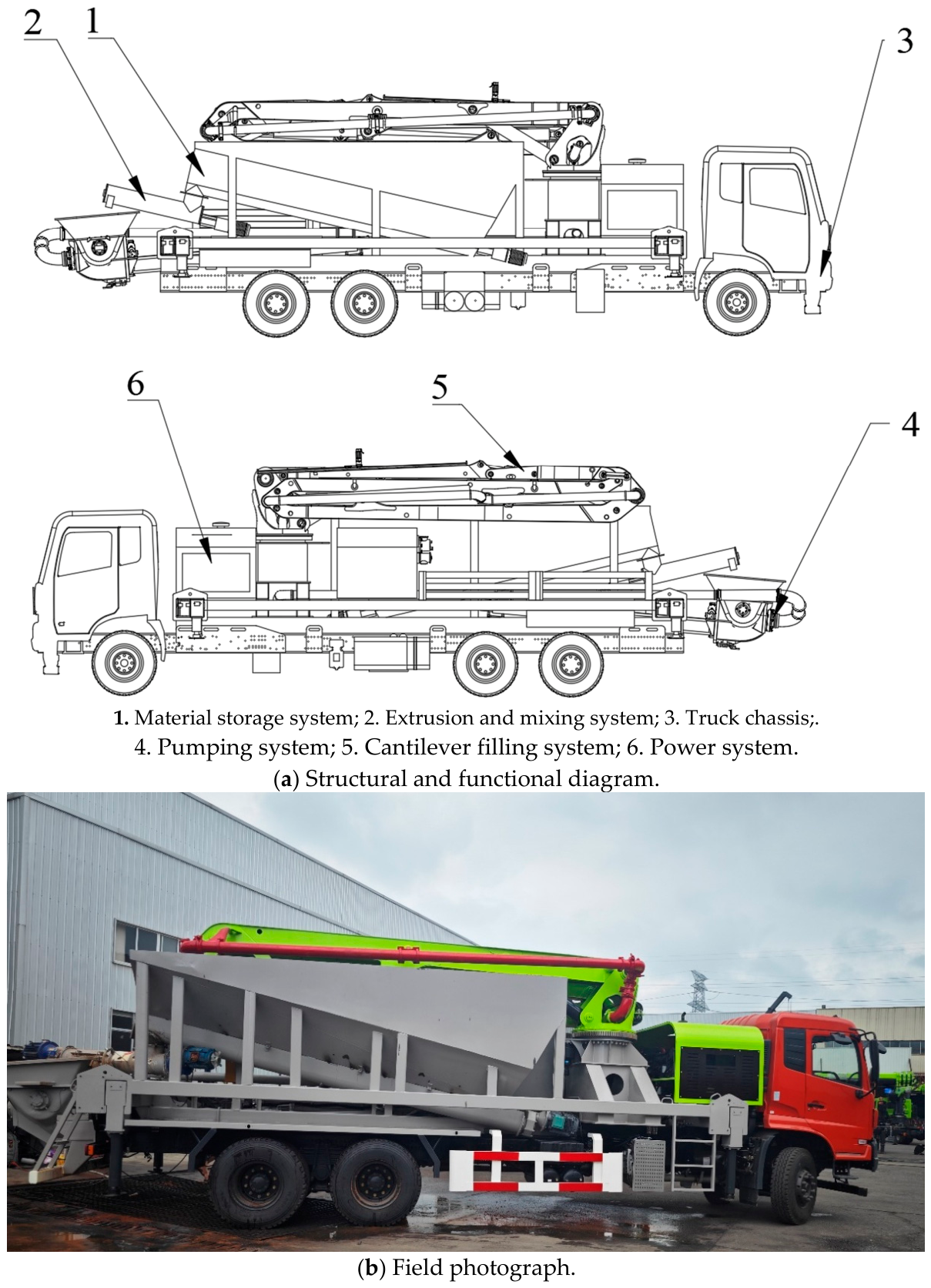
Blasthole stemming is a critical procedure for controlling blasting energy release and ensuring safe, efficient mining operations [1,2]. Traditional stemming materials, typically dry media such as sand or drill cuttings, rely heavily on manual labor for placement. This process often struggles to achieve uniform compaction, which can easily lead to the formation of gas leakage channels, resulting in energy loss and safety hazards such as rock fly [3,4]. The advent of integrated preparation and filling stemming trucks (as shown in Figure 1) has made pumpable blasthole stemming slurry (BSS) a superior alternative [5]. Utilizing unclassified tailings as aggregates to prepare pumpable BSS allows for the integrated completion of blasthole filling. This approach not only enables continuous, efficient, and mechanized pumping construction but also allows for mix proportion adjustments to adapt to blastholes of varying depths and inclination angles, considerably enhancing the reliability of the stemming operation. More importantly, the use of unclassified tailings to prepare BSS realizes the resource utilization of bulk solid waste, aligning perfectly with the sustainable development strategy of green mine construction [6,7].
However, the engineering application of this technology faces a core rheological contradiction: to ensure impact resistance and a low bleeding rate under blast loading, the BSS must be prepared at a high solid mass fraction (high concentration). Yet, as the concentration increases, the inter-particle friction intensifies, causing a sharp deterioration in flowability. This severely hinders rapid and uniform mixing, as well as pipeline transportation and pumping construction [8,9].
To resolve the conflict between high concentration and high flowability, the application of chemical admixtures (particularly superplasticizers) is crucial. Polycarboxylate (PCE), naphthalene-based (NF), and melamine-based (MF) are currently the three most widely used superplasticizers in engineering [10,11]. Although research on these superplasticizers in concrete and cemented backfill is relatively mature, their adaptability evaluation remains limited for the unclassified tailings non-cemented system, which is characterized by a high content of fine particles, large specific surface area, and complex mineral composition. Most current studies are confined to performance comparisons under a “fixed dosage,” comparing the fluidity differences of various slurries at the same superplasticizer dosage [12,13,14]. However, in practical engineering applications, the primary concern is whether the slurry meets specific construction fluidity requirements. Due to its portability, simplicity, and effectiveness, the slump (fluidity) test is often used as the primary performance indicator for pumpable BSS [15,16]. To achieve a specific target fluidity for construction, different types of superplasticizers often require different dosages. Therefore, comparisons based solely on a fixed dosage cannot accurately reflect the efficacy of superplasticizers under actual construction conditions.
Currently, there is a lack of systematic comparative research on the effects of different superplasticizers on the internal rheological properties and stability (e.g., bleeding rate) of tailings slurries under “equal fluidity” conditions. It remains unclear whether, for high-concentration tailings slurries, superplasticizers with different molecular structures will cause the slurry to exhibit distinct yield stresses, viscosities, and settling stabilities when achieving the same macroscopic fluidity due to differing microscopic dispersion mechanisms. To address these issues, this study aims to establish an evaluation system based on “equal fluidity” to systematically investigate the effects of the three mainstream superplasticizers (PCE, NF, and MF) on the fresh properties of unclassified tailings-based pumpable BSS. Instead of limiting the comparison to a single dosage, this paper first determines the optimal basic mix proportion for the target tailings and sets a target fluidity range suitable for pipeline transportation. Under this premise, the dosages of each superplasticizer are adjusted to achieve this target fluidity, followed by a comparative analysis of their effects on the rheological parameters (characterizing intrinsic flow capacity) and bleeding rate of the slurry. This study seeks to reveal the macroscopic interaction mechanisms between different superplasticizers and tailings slurries under equal fluidity conditions, clarifying which superplasticizer provides superior rheological control and stability when achieving equivalent workability. Ultimately, this provides a direct theoretical basis and technical support for the scientific selection of superplasticizers and mix proportion optimization in mining blasthole stemming engineering.

2. Experiment

2.1. Raw Materials and Mix Proportions

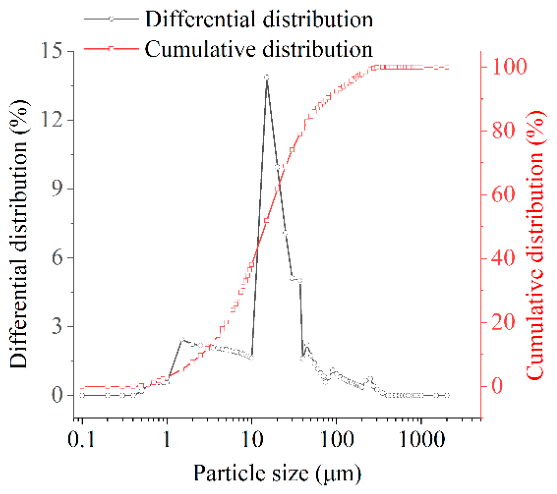
The BSS in this study was prepared using unclassified tailings, chemical admixtures, and mixing water. The tailings were sourced from a typical metal mine, and their chemical composition (determined by X-ray fluorescence spectrometry, PANalytical Axios) is presented in Table 1. The primary chemical elements in the tailings are Si, Al, Na, and K. The particle size distribution of the tailings (measured by laser diffraction, Malvern Mastersizer 3000 (Malvern Panalytical Ltd., Malvern, UK)) is shown in Figure 2. The most probable particle size of the tailings ranges from 10 to 20 μm. The true density of the tailings was measured by the pycnometer method in triplicate, giving an average value of 2.500 g/cm3. The specific surface area obtained from the laser diffraction particle size analysis is 0.982 m2/g.
Three types of commercial powder superplasticizers were procured from BASF and selected for the tests: PCE, NF, and MF. These three superplasticizers exhibit distinct differences in molecular structure and dispersion mechanisms. Both NF and MF superplasticizers belong to traditional anionic surfactants. Their molecular chains have a linear structure and are primarily adsorbed onto the surface of tailings particles through sulfonic acid groups. Their dispersion mechanism relies mainly on altering the Zeta potential of the particle surfaces, known as the electrostatic repulsion effect [17,18]. This type of force is highly efficient in low-concentration or low-adsorption environments but is easily affected by the electrolyte shielding effect at high concentrations. In contrast, the PCE superplasticizer possesses a unique “comb-like” molecular structure, characterized by a backbone that adsorbs onto particles and long side chains that extend into the solution. Its dispersion mechanism involves not only electrostatic repulsion but, more importantly, relies on the steric hindrance effect generated by the long polyethylene oxide (PEO) side chains in the solution [19,20]. This steric repulsion is independent of the solution’s electrical conductivity, thus typically exhibiting superior dispersion retention capability in tailings slurries with high solid content and high ionic strength.

2.2. Mix Proportions

To elucidate the mechanisms by which different types of admixtures affect the fresh properties of BSS, this study adopted the “Equal Fluidity Control Method” as the core experimental design principle. Specifically, a target fluidity range suitable for pipeline pumping was established (set at 16.0 ± 0.5 cm in this study). This range was determined based on preliminary laboratory tests and field trial experience with the integrated stemming truck (Figure 1). Samples with relatively lower fluidity tended to cause pipeline blockages during pilot pumping tests, while those with higher fluidity exhibited excessive bleeding and segregation. The fluidity of approximately 16.0 cm was found to provide an optimal balance between pumpability and stability. The dosage of each admixture was then adjusted to ensure that BSS with different mix proportions all achieved this target fluidity, thereby allowing for a comparative analysis of their rheological parameters and stability differences. It should be noted that although the fluidity of D1 (16.50 cm) is within the target range, it has reached the upper boundary of the target range.
Based on preliminary test results, three typical high-concentration conditions—65%, 68%, and 71%—were selected for in-depth investigation (corresponding to Groups B, C, and D in Table 2, respectively). For each concentration condition, the three types of admixtures (PCE, NF, and MF) were incorporated, and their dosages were finely tuned until the BSS fluidity fell within the target range. If a specific admixture failed to achieve the target fluidity at a given concentration regardless of the dosage applied, that test group was excluded. Additionally, groups without any admixture (A0, B0, C0, and D0) were established as baseline control groups to quantify the modification effects of the admixtures.

2.3. Test Methods

2.3.1. Fluidity Test

The fluidity of the BSS was measured using the truncated cone mold method, following the standard GB/T 8077-2012 [21]. A copper mold with a top diameter of 36 mm, a bottom diameter of 60 mm, and a height of 60 mm was used. The uniformly mixed BSS was filled into the mold and leveled. After the mold was lifted vertically, two perpendicular diameters of the spread BSS under its own weight were measured, and their average value was taken as the fluidity index.
Extensive preliminary screening tests were first conducted to identify the appropriate dosage range for each superplasticizer. Verification tests were then performed to confirm that the BSS fluidity of each selected formulation fell within the target range of 16.0 ± 0.5 cm.

2.3.2. Rheological Test

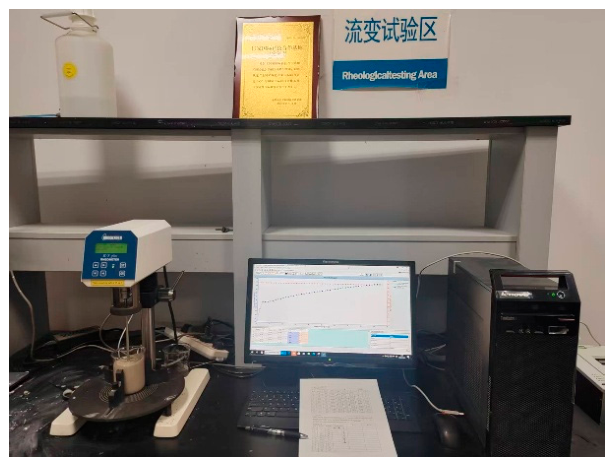
The rheological curves of the BSS were measured using a Brookfield rheometer (Model RST), as shown in Figure 3. The test was initiated within 8 min of water-solid contact, using a VT-40-20 rotor (vane diameter: 40 mm, vane height 20 mm). The vane geometry was adopted to mitigate wall slip effects. Approximately 200 mL of fresh BSS was used for each measurement. All tests were conducted at 25 ± 1 °C. Prior to the test, the BSS was pre-sheared at a shear rate of 150 s−1 for 0.5 min. Subsequently, the shear rate was gradually increased from 0 to 150 s−1, and the variation of shear stress with shear rate was recorded. No significant sedimentation was observed during the short measurement period.
Given that the BSS exhibits notable yield stress as well as shear-thinning/thickening characteristics, the Herschel-Bulkley model was employed to perform nonlinear fitting on the experimental data [22,23]. The selection of the Herschel-Bulkley model over other nonlinear rheological models was based on a comprehensive evaluation of fitting convergence and higher correlation coefficients. The rheological expression of the Herschel-Bulkley model is shown in Equation (1):
τ = τ 0 + κ d γ d t n τ τ 0 d γ d t = 0 τ < τ 0
where τ is shear stress (Pa); τ0 is yield stress (Pa); γ is shear strain (-); /dt is shear rate (s−1); κ is the consistency coefficient (Pa·sn); and n is the consistency index (-).
For fluids exhibiting yield stress along with shear-thickening or shear-thinning behaviors, the viscosity characteristics are typically characterized by differential viscosity [24,25]. In the Herschel-Bulkley model, the formula for calculating differential viscosity is shown in Equation (2). When the consistency index n is greater than 1, the fluid exhibits shear-thickening characteristics; when n is between 0 and 1, the fluid exhibits shear-thinning characteristics; and when n equals 1, the Herschel-Bulkley model degenerates into the Bingham model. In this case, the differential viscosity is equivalent to the plastic viscosity, remaining a constant value independent of the shear rate [26,27].
η d = κ n d γ d t n 1
where ηd is differential viscosity (Pa·s).

2.3.3. Bleeding Test

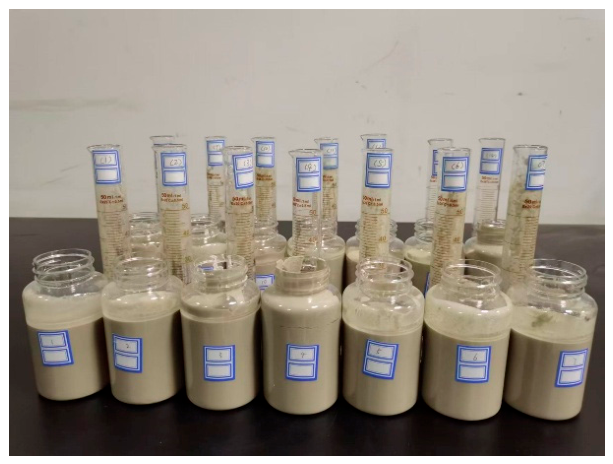
The uniformly mixed BSS was poured into a plastic bottle and sealed during the test to prevent water evaporation. After standing for 15 min, 30 min, 45 min, and 60 min, a pipette was used to extract the clear water separated at the top, and the mass of the extracted water was measured. The bleeding rate test is illustrated in Figure 4, and the bleeding rate is calculated using the following equation:
B = W 1 ( W / m ) ( m 1 m 2 ) × 100 %
where B is the bleeding rate (%); W1 is the mass of absorbed water (g); W is the mass of water in the BSS mixture (g); m is the total mass of the BSS mixture (g); m1 is the mass of the conical flask with the sample (g); and m2 is the mass of the empty conical flask (g).

3. Results

3.1. Superplasticizer Dosage Response at Equal Fluidity

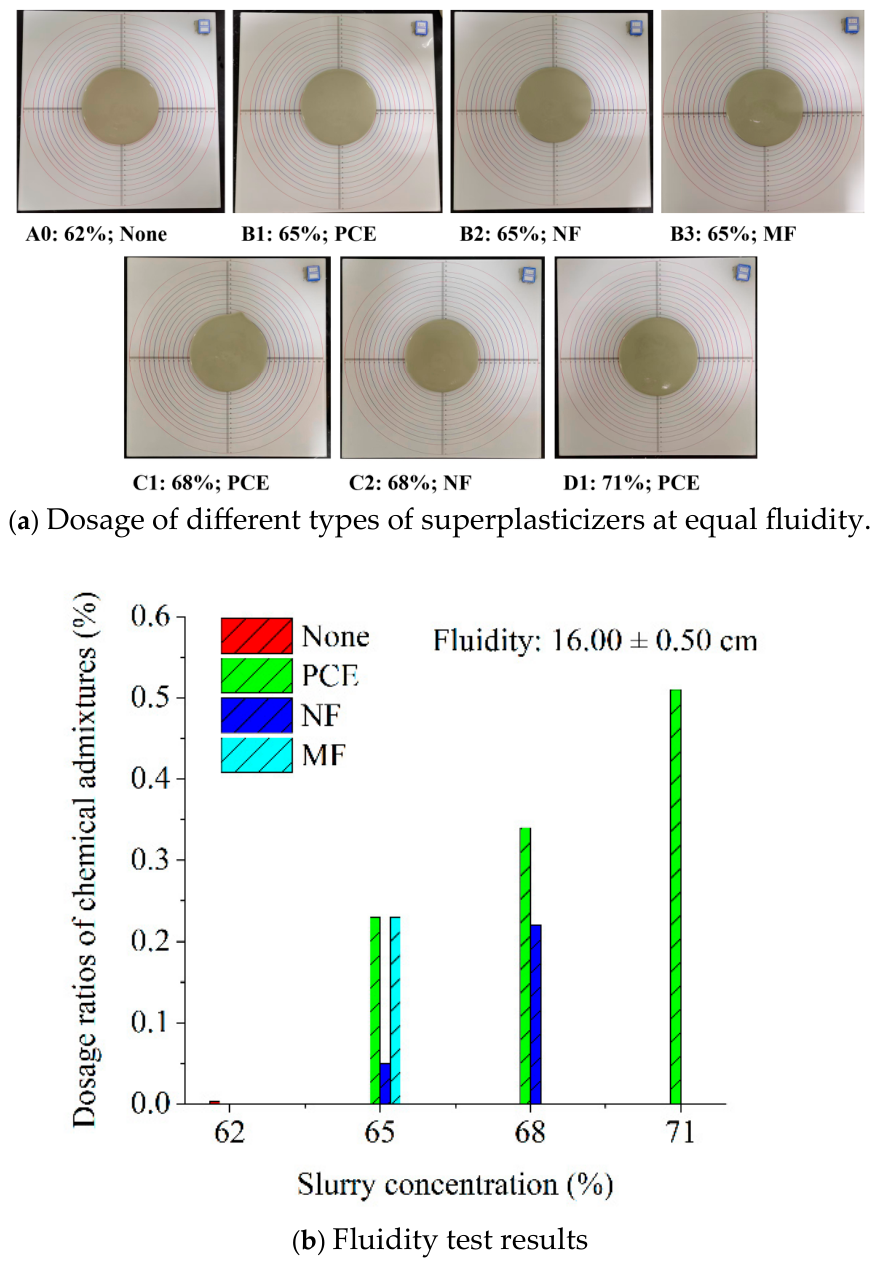
Figure 5 presents the dosages of different superplasticizers required to achieve the target fluidity (16.0 ± 0.5 cm) for the BSS at various solid mass fractions.
Under the low-concentration condition (65%), all three types of superplasticizers effectively improved the BSS’s fluidity. Among them, the naphthalene-based superplasticizer (NF) exhibited the highest dispersion efficiency, requiring only a 0.05% dosage to reach the target fluidity, which is markedly lower than that of PCE (0.23%) and MF (0.23%).
As the concentration increased to 68%, the dosages required to maintain the target fluidity generally increased. The dosage of NF needed to be raised to 0.22%, while that of PCE increased to 0.34%. Notably, at this concentration, even with a substantial increase in dosage, MF failed to bring the BSS fluidity within the target range, indicating that the dispersion capability of MF reached saturation at this concentration.
When the concentration was further increased to 71%, only PCE was able to maintain the BSS fluidity at 16.50 cm by increasing the dosage to 0.51%. In contrast, both NF and MF became ineffective under this high-concentration condition and could not meet the fluidity requirements through dosage adjustments.
Overall, in the low-concentration range, NF demonstrated the best fluidity improvement effect; whereas in the high-concentration range (71%), PCE was the sole effective admixture capable of maintaining high BSS fluidity.

3.2. Rheological Properties at Equal Fluidity

3.2.1. Shear Stress vs. Shear Rate

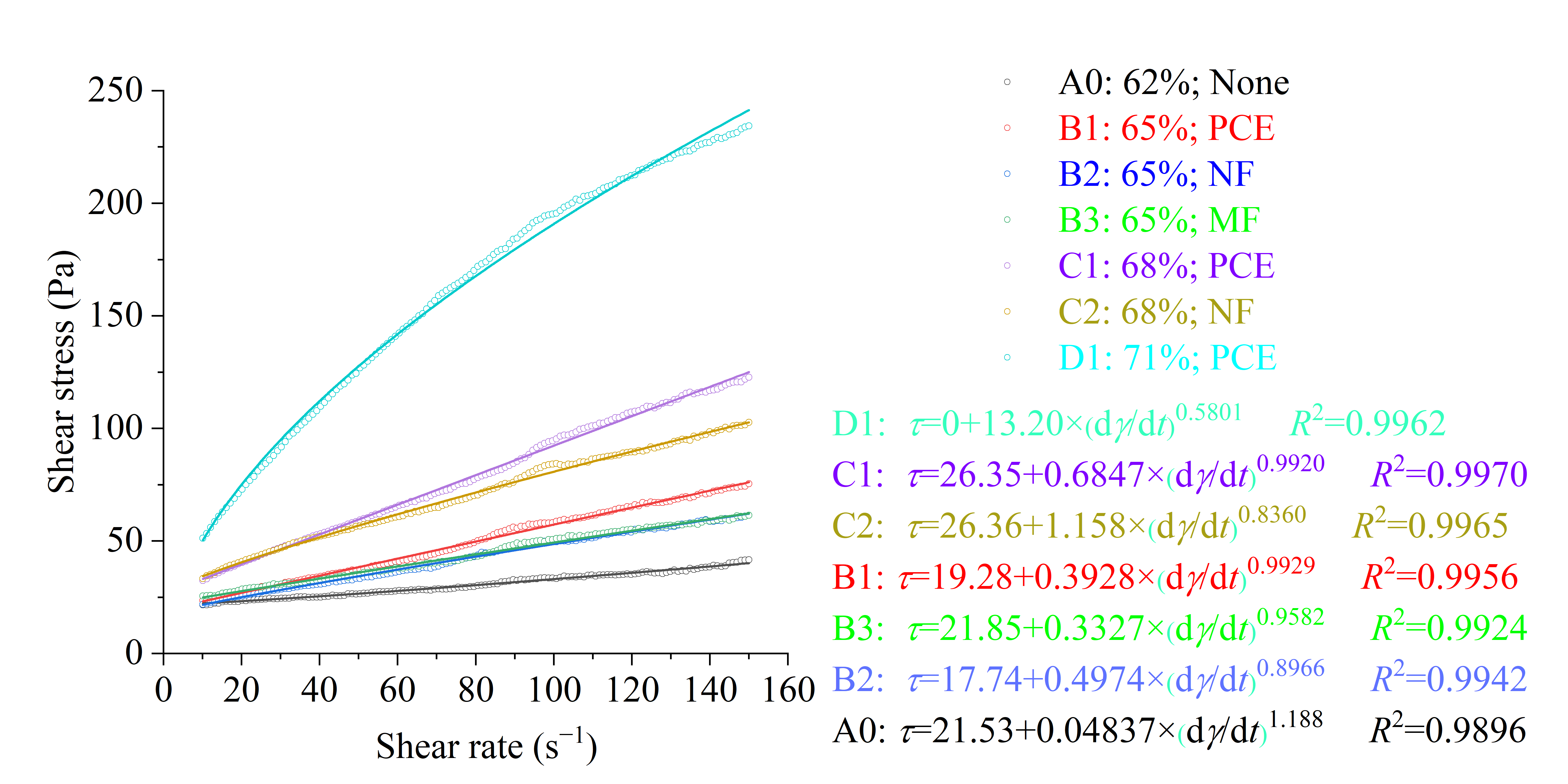
Figure 6 presents the rheological curves showing the variation of shear stress with shear rate for each BSS group. All tested samples exhibited a nonlinear increase in shear stress with increasing shear rate, fitting well with the Herschel-Bulkley model (R2 > 0.99). Overall, as the solid mass fraction increased, the shear stress response of the BSS intensified substantially, with Group D1 (71% concentration) exhibiting the highest shear stress levels. Under equal fluidity conditions, the type of superplasticizer also exerted a distinct influence on the rheological curves. At concentrations of 65% and 68%, the samples containing PCE (B1 and C1) showed higher shear stress values at the same shear rate compared to those containing NF (B2 and C2) or MF (B3). Notably, at 65% concentration, the curves for the NF and MF groups nearly overlapped, indicating similar internal friction characteristics, whereas the PCE system maintained a noticeably higher stress response to achieve the same macroscopic fluidity.

3.2.2. Yield Stress; Consistency Coefficient; Consistency Index

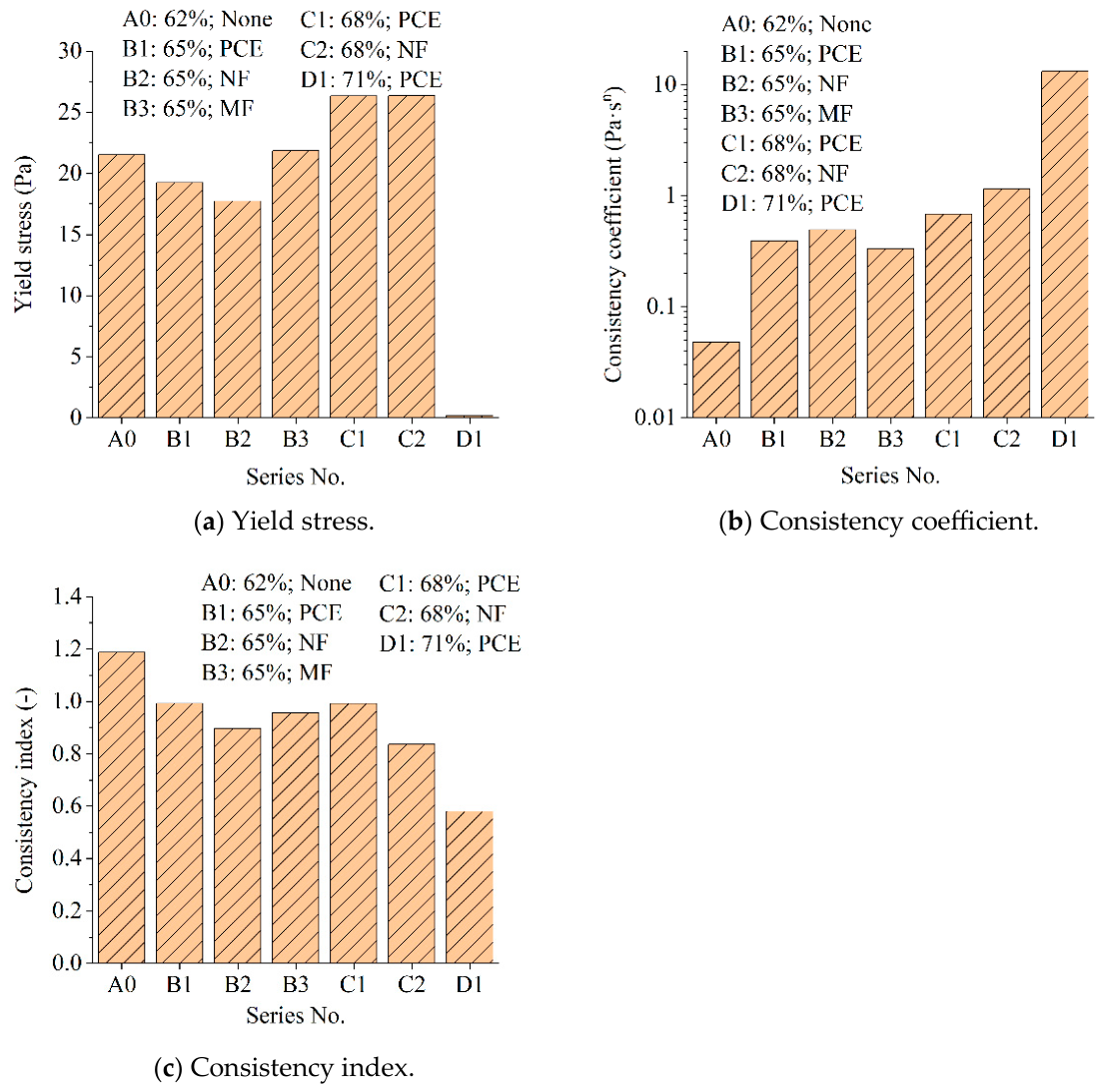
Figure 7 illustrates the evolution of rheological parameters derived from the Herschel-Bulkley model fitting. As shown in Figure 7a, the yield stress (τ0) of the control group (A0) and the 65% and 68% concentration groups (B1–C2) remained at comparable levels. However, Group D1 (71% + PCE) exhibited an anomalously low yield stress, approaching 0 Pa. This indicates that despite the high solid content, the high dosage of PCE effectively disrupted the initial flocculation structure of the BSS. Regarding the consistency coefficient (κ), Figure 7b shows that the κ values for all superplasticizer-added groups were considerably higher than those of the control group A0. This parameter increased exponentially with concentration and PCE dosage, with Group D1 exhibiting the highest magnitude. Furthermore, the consistency index (n) revealed a transition in fluid characteristics (Figure 7c). The control BSS A0 exhibited shear-thickening behavior (n > 1), whereas all BSS containing superplasticizers displayed shear-thinning behavior (n < 1). Group D1 showed the most pronounced shear-thinning characteristics, with the lowest n value of 0.58.

3.2.3. Differential Viscosity Characteristics

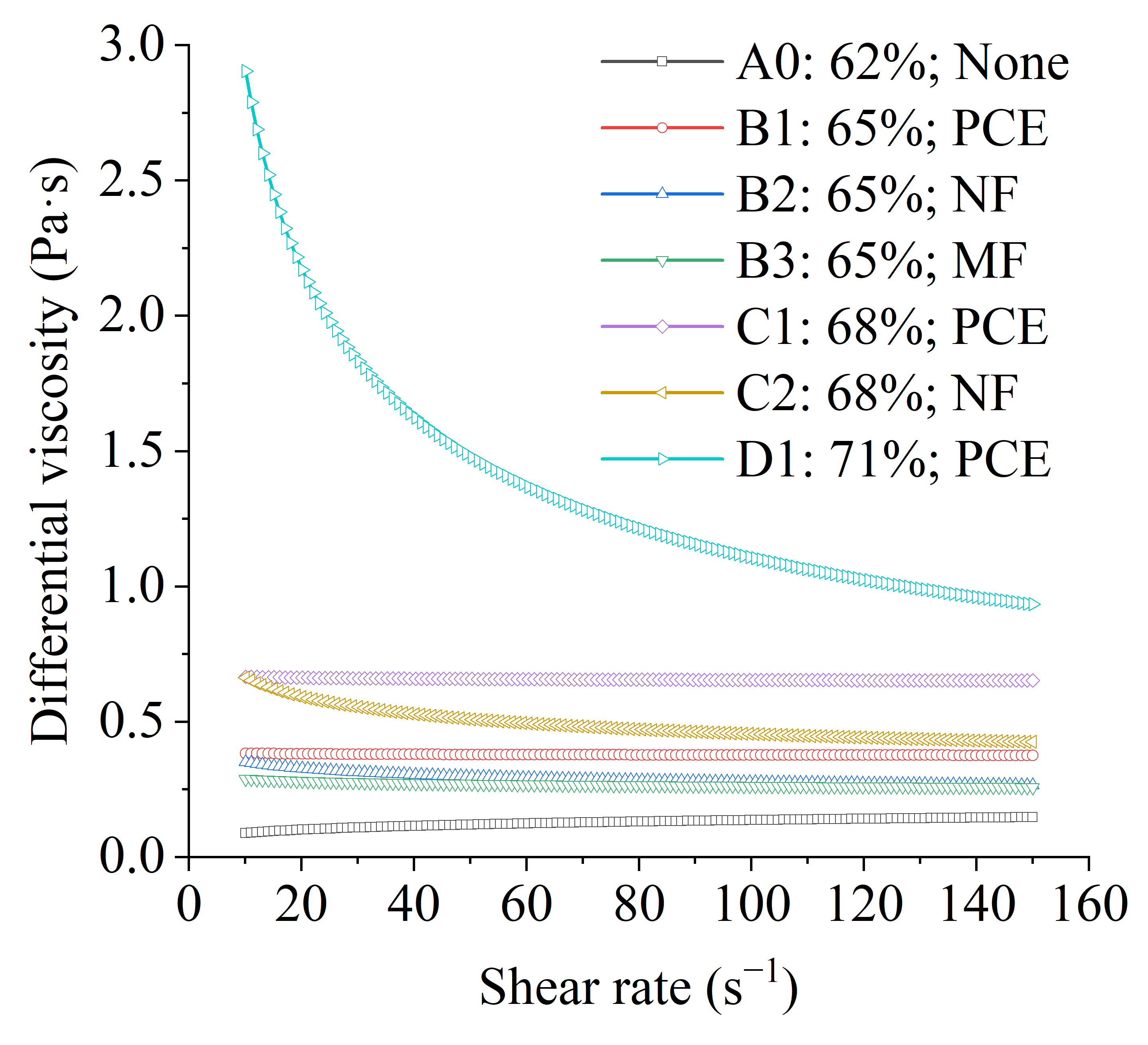
Figure 8 depicts the variation of differential viscosity with shear rate for the different BSS mixtures. A sharp contrast in viscosity behavior was observed between the control group and the superplasticizer-added groups. The control BSS A0 exhibited a shear-thickening trend, where viscosity increased with increasing shear rate. Conversely, all BSS containing superplasticizers (B1–D1) demonstrated typical shear-thinning behavior, with viscosity decreasing as shear rate increased. A comparison of different superplasticizers at 65% and 68% concentrations revealed that to achieve the target fluidity, the PCE-added groups (B1 and C1) generally maintained a slightly higher differential viscosity than the NF and MF groups. Most notably, Group D1 (71% + PCE) exhibited extreme shear sensitivity: it possessed a very high viscosity in the low shear rate region (10–20 s−1), but the viscosity dropped rapidly and substantially as the shear rate increased, confirming the strong shear dependence of the high-concentration PCE system.

3.3. Bleeding Performance at Equal Fluidity

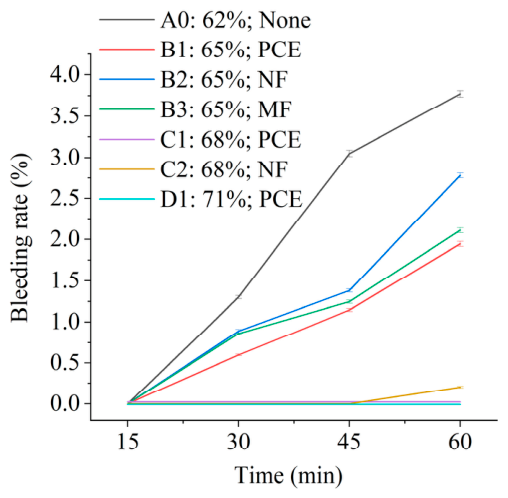
Figure 9 presents the variation in bleeding rate for each BSS group during a 60-min static period. The control group A0 (62% concentration, without admixture) exhibited the highest bleeding rate, which increased rapidly over time, indicating poor stability and a high tendency for particle settlement. The introduction of superplasticizers markedly improved the stability of the BSS. At a 65% concentration, the bleeding rates of groups B1, B2, and B3 were all lower than that of the control group A0. As the solid concentration increased to 68% and 71%, the bleeding phenomenon was further suppressed. Specifically, the high-concentration groups C1 (68% + PCE), and D1 (71% + PCE) essentially achieved “zero bleeding” throughout the 60-min observation period. The high-concentration groups C2 (68% + NF) exhibited a bleeding rate of ≤0.2% over the 60-min observation period, approaching zero bleeding. These results confirm that, under equal fluidity conditions, increasing the solid concentration combined with an appropriate dosage of superplasticizer can effectively eliminate water segregation and ensure the homogeneity of the BSS.

4. Discussion

4.1. Differential Effects of Superplasticizer Molecular Structure on Dispersion Mechanisms

The experimental results in Section 3 indicate that different types of superplasticizers exhibit distinct differences in improving the fluidity of unclassified tailings BSS. This is primarily attributed to the distinct dispersion mechanisms determined by their molecular structures. NF and MF superplasticizers are linear anionic surfactants containing a large number of sulfonic acid groups (-SO3) on their main chains. When these molecules adsorb onto the surface of tailings particles, they primarily increase the negative charge density on the particle surface to enhance the Zeta potential, thereby strengthening the electrostatic repulsion between particles to overcome van der Waals attraction [17,18]. This mechanism is highly effective in environments with low solid content (e.g., 65%) and low ionic strength in the liquid phase; hence, NF demonstrated extremely high dispersion efficiency at low concentrations in this study. However, as the concentration of the BSS increases, the free water in the liquid phase decreases, and the concentration of electrolyte ions rises sharply. This leads to the compression of the electrical double layer and a distinct shortening of the range of electrostatic repulsion, which is the main reason for the failure of NF and MF at high concentrations (71%).
In contrast, PCE superplasticizers possess a unique “comb-like” graft copolymer structure, consisting of a charged backbone and hydrophilic PEO long side chains. The dispersion effect of PCE involves not only electrostatic repulsion but relies more heavily on the steric hindrance effect. When PCE adsorbs onto the particle surface, its PEO side chains fully extend into the solution, forming an adsorption layer of a certain thickness. When two particles approach each other, the overlapping of these adsorption layers generates osmotic pressure and volume restriction effects, producing a powerful repulsive force. This steric hindrance is less affected by the ionic strength of the solution, allowing it to effectively prevent particle flocculation even in a high-concentration environment of 71%. This explains why, under equal fluidity conditions, only PCE was able to maintain the stability of the BSS at high concentrations, whereas traditional superplasticizers could not [19,20].

4.2. Rheological Behavior Transition and Shear-Thinning Mechanism of High-Concentration Slurry

The analysis of rheological parameters reveals a transition in the flow behavior of the BSS from low to high concentrations, and from without to with superplasticizers. The control group A0 (62%) exhibited shear-thickening behavior (n > 1), which typically occurs in suspensions with lower solid content and weaker inter-particle interactions, where particles are prone to collision and interlocking under shear, leading to an increase in viscosity. However, all groups containing superplasticizers (B1–D1) transitioned to shear-thinning behavior (n < 1), and this characteristic became more pronounced as the concentration increased (Group D1, n = 0.58). This phenomenon can be explained by the evolution of the microstructure of the particles: at rest or under low shear rates, although the tailings particles are dispersed by the superplasticizers, the extremely small inter-particle distance at high concentrations allows long-chain polymers (especially the side chains of PCE) to form a complex network structure or “bridging” between particles, resulting in a higher initial viscosity.
As the shear rate increases, these flocculated structures or networks built by polymer chains are destroyed, and the particles begin to align along the direction of the flow streamlines. This reduces the interlayer frictional resistance, manifesting as a decrease in viscosity (shear-thinning). For Group D1 (71% + PCE), the extremely high dosage of PCE means that the particle surfaces are covered with a large number of extended long side chains. At low shear rates, the entanglement of these side chains leads to extremely high viscosity; however, under high shear, these long chains can rapidly align along the flow direction, greatly reducing flow resistance. This strong shear-thinning characteristic is of great significance for blasthole stemming engineering, as it implies that the BSS has low viscosity and is easy to pump during pipeline transportation (high shear), while exhibiting high viscosity and a low segregation rate when the BSS is static in the blasthole (low shear).

4.3. Decoupling of Yield Stress and Fluidity: The Specific Role of PCE

An interesting finding of this study is that under the same macroscopic fluidity (16 ± 0.5 cm), there is a huge difference in yield stress (τ0) among different groups, with Group D1 exhibiting a yield stress approaching zero. It is generally believed that fluidity is negatively correlated with yield stress, but in the high-concentration PCE system, this correlation appears to be “decoupled.”
To explain this phenomenon, it must first be acknowledged that the macroscopic fluidity test measures the spreading ability of the BSS under its own gravity after overcoming the initial resistance [28]; whereas the yield stress measured by the rheometer reflects the critical stress required to destroy the three-dimensional flocculation structure within the BSS [29]. For Group D1, the high dosage of PCE forms a thick adsorbed water film and a steric hindrance layer on the particle surface, which greatly weakens the direct contact and friction between particles. As a result, there is almost no rigid flocculation network within the BSS capable of resisting deformation, leading to an extremely low yield stress. However, due to the high concentration of 71%, the liquid phase layer between particles is extremely thin, and the entanglement of the long PCE side chains provides a higher differential viscosity. Therefore, the BSS in Group D1 presents a special rheological state characterized by “low yield stress and high differential viscosity.” This state allows the BSS to flow under minimal disturbance (low yield stress) while maintaining a certain degree of cohesion during flow (high viscosity), which perfectly explains why this group of BSS could maintain high fluidity while achieving zero bleeding. Future work employing oscillatory stress sweep or creep tests is recommended to further validate this observation.

4.4. Stability Mechanism Under the Synergistic Effect of Concentration and Superplasticizers

The bleeding rate of the BSS is an important indicator of its stability [30,31]. The experimental results show that as the concentration increased and superplasticizers were incorporated, the bleeding rate of the BSS decreased substantially, with the high-concentration groups achieving zero bleeding. This phenomenon is the result of the combined effects of gravitational sedimentation, particle network support force, and liquid phase viscosity. According to Stokes’ law, the settling velocity of particles is proportional to the square of the particle diameter and inversely proportional to the viscosity of the liquid phase [32]. Although the addition of superplasticizers disperses the flocs and reduces the equivalent particle size, which helps to reduce sedimentation, its main contribution lies in altering the interaction potential between particles.
At a high concentration of 71%, the distance between particles is very close, forming a dense particle packing structure. At this point, the adsorption layer of PCE molecules not only provides steric hindrance but also reduces the friction between particles through a “lubricating” effect. More importantly, the high-concentration particle system itself forms a mutually supporting skeleton. When particles attempt to settle, they must overcome the geometric constraints of surrounding particles and the viscous resistance of the liquid phase. Furthermore, the shear-thinning characteristic introduced by PCE means that in the static state (low shear), the BSS possesses a high structural viscosity, which further hinders the migration of water and the sedimentation of particles. Therefore, the synergistic effect of high concentration and PCE constructs a kinetically extremely stable suspension system, thereby achieving excellent anti-segregation performance.

5. Conclusions

To address the conflict between fluidity and stability of pumpable blasthole stemming slurry (BSS) under high-concentration conditions, this study established an evaluation system based on “equal fluidity.” It systematically compared the effects of three superplasticizers—polycarboxylate (PCE), naphthalene-based (NF), and melamine-based (MF)—on the rheological properties and stability of unclassified tailings BSS, and revealed their underlying microscopic mechanisms. The main conclusions are as follows:
(1)
Under low-concentration conditions (65%), the NF exhibited the highest dispersion efficiency driven by the electrostatic repulsion mechanism. However, as the concentration increased, the electrostatic repulsion weakened sharply due to the compression of the electrical double layer. In contrast, the PCE, relying on the steric hindrance effect, demonstrated an irreplaceable advantage in the high-concentration environment (71%), proving to be the sole effective admixture capable of maintaining high BSS fluidity.
(2)
The introduction of superplasticizers induced a transition in the BSS from shear-thickening to shear-thinning behavior. Notably, the high-concentration PCE system (71%) presented a unique state characterized by “low yield stress and high differential viscosity.” This rheological characteristic achieved a decoupling of macroscopic fluidity from the microscopic structure: the low yield stress endowed the BSS with excellent self-leveling capability, while the high plastic viscosity ensured its internal stability.
(3)
The synergistic effect of high concentration and PCE constructed a kinetically stable suspension system. At a high solid content of 71%, the particles were densely packed, and when combined with the high structural viscosity formed by the long PCE side chains, particle sedimentation and water migration were effectively suppressed. Experiments demonstrated that this system achieved zero bleeding while maintaining excellent pumpability.
In summary, for the preparation of high-concentration pumpable BSS, the PCE is the preferred material over traditional superplasticizers. The “equal fluidity” evaluation method proposed in this study, along with the revealed rheological control mechanisms, provides a theoretical basis for the mix proportion design of BSS in mine paste backfill and blasthole stemming engineering.

Author Contributions

P.L.: Conceptualization, Investigation, Resources, Writing–review and editing, Supervision, Project administration, Funding acquisition; Z.L.: Conceptualization, Investigation, Resources, Data curation, Supervision, Project administration, Funding acquisition; S.X.: Conceptualization, Methodology, Validation, Investigation, Resources, Project administration, Funding acquisition. M.L.: Methodology, Software, Formal analysis, Investigation, Data curation, Writing–original draft, Writing–review and editing, Project administration, Funding acquisition; J.L.: Conceptualization, Investigation, Resources, Project administration, Funding acquisition; T.R.: Methodology, Software, Formal analysis, Data curation, Visualization; Y.Y.: Methodology, Formal analysis, Data curation, Visualization. All authors have read and agreed to the published version of the manuscript.

Funding

This study was financially supported by the National Science and Technology Major Project (Grant No. 2024ZD1003705), the National Natural Science Foundation of China (Grant No. 52274122), and the Mining and Metallurgy Yingfan Fund of BGRIMM Technology Group (Grant No. 09-2410).

Data Availability Statement

The raw data supporting the conclusions of this article will be made available by the authors on request.

Conflicts of Interest

No potential conflict of interest was reported by the authors.

References

  1. Wu, X.; Li, Y.; Lu, X.; Luo, X.; Yang, Z.; Gong, M. Experimental investigation on rock breaking mechanism in blasthole segmented delay blasting based on 3D-DIC. Eng. Fract. Mech. 2026, 339, 112092. [Google Scholar] [CrossRef]
  2. Ren, M.; Yue, Z.; Zhou, J.; Wang, X.; Xue, K.; Wang, P.; Xu, S. Experimental study on blasthole fracturing caused by stress waves from a cylindrical charge. Theor. Appl. Fract. Mech. 2025, 139, 105020. [Google Scholar] [CrossRef]
  3. Moomivand, H.; Nayebi, S.; Moomivand, H.; Masoumzad, H. An innovative method to assess specific charge, drilling and blasting costs considering critical factors of rock mass properties, fragment size and blasthole parameters. Results Eng. 2025, 27, 106333. [Google Scholar] [CrossRef]
  4. Li, R.; Xu, S.; Li, Z.; Suorineni, F.T.; Zhu, G. Development and testing of self-swelling cartridge for use as stemming material in open-pit blasting—A quarry case study. Int. J. Rock. Mech. Min. Sci. 2023, 170, 105503. [Google Scholar] [CrossRef]
  5. Li, P.; Chen, N.; Yang, F.; Liu, C.; Tang, H. A Stemming Device for Bench Blastholes in Open-Pit Mines. Chinese Patent CN 119468829 A, 18 February 2025. (In Chinese) [Google Scholar]
  6. Chen, J.; Gao, P.; Zhu, Y.; Liu, J.; He, J. Sustainable iron recovery from tailings via green reduction technology: From waste to resource. Sep. Purif. Technol. 2026, 380, 135241. [Google Scholar] [CrossRef]
  7. Padin, J.M.B.; Balayo, K.L.P.; Rapanot, E.M.S.; Logrosa, G.T. Material reusability in mine waste: A review on utilization of gold ore tailings in concrete production. Sustain. Chem. One World 2026, 9, 100159. [Google Scholar] [CrossRef]
  8. Rao, N.D.; Thatoi, D.N.; Biswal, S.K. Rheological study and numerical analysis of high concentration iron ore slurry pipeline transportation. Mater. Today Proc. 2020, 22, 3197–3202. [Google Scholar] [CrossRef]
  9. Wang, S.; Liu, J.; Pisupati, S.V.; Li, D.; Wang, Z.; Cheng, J. Dispersion mechanism of coal water slurry prepared by mixing various high-concentration organic waste liquids. Fuel 2021, 287, 119340. [Google Scholar] [CrossRef]
  10. Liu, S.; Wang, Y.; Wu, A.; Li, Y.; Zhang, M.; Zhai, Z.; Liu, P.; Wang, S. Rheological behavior, mechanical strength, and hydration of hemihydrate phosphogypsum backfill material: Effect of type and dosage of superplasticizer. Environ. Res. 2026, 300, 124461. [Google Scholar] [CrossRef] [PubMed]
  11. Bharati; Unluer, C. Investigation of the effects of silica source and superplasticizer type and dosage in MgO-SiO2 systems. Cem. Concr. Compos. 2026, 171, 106627. [Google Scholar] [CrossRef]
  12. Das, R.; Panda, S.; Sahoo, A.S.; Panigrahi, S.K. Effect of superplasticizer types and dosage on the flow characteristics of GGBFS based self-compacting geopolymer concrete. Mater. Today Proc. 2024, 103, 11–21. [Google Scholar] [CrossRef]
  13. Yang, L.; Yilmaz, E.; Li, J.; Liu, H.; Jiang, H. Effect of superplasticizer type and dosage on fluidity and strength behavior of cemented tailings backfill with different solid contents. Constr. Build. Mater. 2018, 187, 290–298. [Google Scholar] [CrossRef]
  14. Kalpana, G.; Rao, C.H.; Adamu, M.; Raut, A.; Ibrahim, Y.E. Effect of calcium carbide residue and superplasticizer dosages on the mechanical and microstructural properties of fly ash based geopolymer composites. Open Ceram. 2025, 22, 100794. [Google Scholar] [CrossRef]
  15. Li, P.; Xie, S.; Lu, J.; Li, M.; Peng, X.; Yang, K.; Zhang, L. Research on the flow characteristics of blasthole stemming slurry in open-pit mining. Front. Earth Sci. 2024, 12, 1430046. [Google Scholar] [CrossRef]
  16. Yao, Y.; Liu, W.; Zhu, D.; Ding, N.; Wang, S. High-flowability slight-expansion rapid-solidification tunnel blast hole stemming: Material proportion, automatic process, and mechanism. Tunn. Undergr. Space Technol. 2026, 168, 107184. [Google Scholar] [CrossRef]
  17. Li, H.; Wang, Z.; Zhang, Y.; Zhang, G.; Zhu, H. Composite application of naphthalene and melamine-based superplasticizers in alkali activated fly ash (AAFA). Constr. Build. Mater. 2021, 297, 123651. [Google Scholar] [CrossRef]
  18. Yan, S.; Wu, Y.; Lai, W.; Wang, X.; Dan, J.; Wang, J.; Lei, Z. Effects of naphthalene superplasticizer on geopolymers activated by calcium carbide residue and Glauber’s salt. Constr. Build. Mater. 2024, 411, 134599. [Google Scholar] [CrossRef]
  19. Eun, H.; Kim, H.; Kim, H.-K.; Yun, J.-I. Steric stabilization and dissolution behavior of calcium silicate hydrate (C-S-H) colloids induced by polycarboxylate-based superplasticizer: An extended DLVO theory approach. Cem. Concr. Res. 2026, 203, 108188. [Google Scholar] [CrossRef]
  20. Wang, L.; Wang, D.; Li, H.; Ran, Q.; Han, B. Effect and mechanism of different polycarboxylate superplasticizers on rheological properties of ultra-high performance cementitious composites with nickel-plated carbon nanotubes. Constr. Build. Mater. 2026, 525, 146362. [Google Scholar] [CrossRef]
  21. GB/T 8077; Methods for Testing the Uniformity of Concrete Admixtures. Publisher: City, Country, 2012.
  22. Alyaz, B.N.; Sorgun, M. Mean velocity profiles and wall shear stress of Herschel–Bulkley fluids in pipe flow: CFD modeling and experimental validation. Int. Commun. Heat Mass Transf. 2026, 172, 110645. [Google Scholar] [CrossRef]
  23. Chen, W.; Hu, R.; Ahmadi, G.; Massoudi, M.; Tao, C. Numerical analysis of gas migration into oilwell cement slurry modeled as a Herschel-Bulkley fluid. Chem. Eng. Sci. 2026, 321, 122846. [Google Scholar] [CrossRef]
  24. Li, B.; Tang, M.; Wang, Y.; Zou, L. Analysis of Herschel–Bulkley fluids flow through rough-walled rock fractures. Tunn. Undergr. Space Technol. 2025, 162, 106636. [Google Scholar] [CrossRef]
  25. Samanta, B.; Kaushal, M.; Das, G.; Ray, S. A numerical investigation of laminar planar hydraulic jump in Herschel-Bulkley fluid. J. Non-Newton. Fluid Mech. 2024, 333, 105325. [Google Scholar] [CrossRef]
  26. Zou, L.; Tang, M.; Li, B. Bingham and herschel-bulkley fluids flow regimes in rough-walled rock fractures. Int. J. Rock. Mech. Min. Sci. 2024, 180, 105832. [Google Scholar] [CrossRef]
  27. Song, Y.; Xiang, J.; Cui, W.; Xiong, G. Anhydrous ethanol as a medium used to grind soda-lime glass for cement-based materials preparation: Evaluating its rheological behavior by the Herschel–Bulkley and Modified–Bingham models. J. Build. Eng. 2023, 63, 105553. [Google Scholar] [CrossRef]
  28. Chen, Y.; Li, J.; Jin, J.; Wang, P.; Han, L.; Chen, X.; Xu, C.; Fu, S.; Xu, Y. Recycling of calcareous shield tunnel muck and industrial solid waste for preparation of self-consolidating backfill slurry: Perspectives on fluidity, mechanical properties, and carbon footprints. Case Stud. Constr. Mater. 2025, 23, e05357. [Google Scholar] [CrossRef]
  29. Zhu, M.; Zhao, L.; Liu, L.; Liu, Z.; Zhou, J.; Wang, R. Influence of lithology on the rheological properties of coal gangue backfill slurry and the regulatory effect of water reducing agent. Process Saf. Environ. Prot. 2025, 202, 107796. [Google Scholar] [CrossRef]
  30. Long, K.; Li, B.; Ma, J.; Liu, H.; Li, J. Ecological risk analysis of leakage caused by coal-based solid waste backfill slurry bleeding: An experimental study. J. Clean. Prod. 2025, 494, 144993. [Google Scholar] [CrossRef]
  31. Yin, S.; Zhou, Y.; Wang, L.; Pan, J.; Kou, Y. Setting, bleeding, and hardening strength properties of coarse aggregate backfill slurry. Case Stud. Constr. Mater. 2022, 17, e01667. [Google Scholar] [CrossRef]
  32. Jordan, J.J.; Lockerby, D.A. The method of fundamental solutions for multi-particle Stokes flows: Application to a ring-like array of spheres. J. Comput. Phys. 2025, 520, 113487. [Google Scholar] [CrossRef]
Figure 1. Integrated preparation and filling stemming truck for blasthole stemming materials.
Processes 14 02180 g001
Figure 2. Particle size distribution of unclassified tailings.
Processes 14 02180 g002
Figure 3. Rheological test of BSS.
Processes 14 02180 g003
Figure 4. Bleeding rate test of BSS.
Processes 14 02180 g004
Figure 5. Analysis of superplasticizer dosage for BSS under equal fluidity conditions.
Processes 14 02180 g005
Figure 6. Rheological curve characteristics of BSS under equal fluidity conditions.
Processes 14 02180 g006
Figure 7. Comparative analysis of rheological parameters of BSS under equal fluidity conditions.
Processes 14 02180 g007
Figure 8. Comparative analysis of differential viscosity of BSS under equal fluidity conditions.
Processes 14 02180 g008
Figure 9. Comparative analysis of bleeding rate variation over time for BSS under equal fluidity conditions. (Error bars represent standard deviation of triplicate measurements.).
Processes 14 02180 g009
Table 1. Chemical compositions of unclassified tailings.
Chemical ElementContent/%Chemical ElementContent/%
Si33.91As0.01
Al7.57Bi0.01
Na3.55Zn0.01
K3.31Cu<0.005
Fe0.73%Ba<0.005
Ca0.38Be<0.005
Li0.14Cd<0.005
Mn0.11Co<0.005
Mg0.07Ni<0.005
Pb0.04Sb<0.005
Cr0.02Sn<0.005
S0.02Sr<0.005
Ti0.02V<0.005
Table 2. Mix proportion of the BSS.
SampleBSS ConcentrationTailing/gWater/gChemical AdmixturesFluidity/cm
TypesDosage RatiosAddition Quality/g
A062.00%62.0038.00None0%016.10
B065.00%65.0035.00None0%011.35
B165.00%65.0035.00PCE0.23%0.149515.85
B265.00%65.0035.00NF0.05%0.032516.00
B365.00%65.0035.00MF0.23%0.149515.63
C068.00%68.0032.00None0%07.75
C168.00%68.0032.00PCE0.34%0.231216.20
C268.00%68.0032.00NF0.22%0.149615.80
D071.00%71.0029.00None0%06.95
D171.00%71.0029.00PCE0.51%0.362116.50
Note: “None” indicates that no chemical admixture was added. The dosage of chemical admixture refers to the mass ratio of the chemical admixture to the tailings.
Disclaimer/Publisher’s Note: The statements, opinions and data contained in all publications are solely those of the individual author(s) and contributor(s) and not of MDPI and/or the editor(s). MDPI and/or the editor(s) disclaim responsibility for any injury to people or property resulting from any ideas, methods, instructions or products referred to in the content.