Article

Enhanced Recovery of Phenolic Compounds from Oca (Oxalis tuberosa) Skin: A Comparative Study Between Pressurized Liquid Extraction and Conventional Extraction


by
María Fernanda Quispe Angulo
1,2,
Salome Mamani-Pari
1,2,
Mario Cotacallapa-Sucapuca
1,2,
Uber Quispe-Valenzuela
3,
María Mercedes Carrasco-Colque
3,
Juan Callañaupa-Quispe
3,
Bernardo Jorge-Rojas
3,
Valerio Urbano Eleazar Roque-Illanes
3 and
Nils Leander Huamán-Castilla
1,2,*
1
Laboratorio de Tecnologías Sustentables para la Extracción de Compuestos de Alto Valor, Universidad Nacional de Moquegua, Moquegua 18001, Peru
2
Escuela Profesional de Ingeniería Agroindustrial, Universidad Nacional de Moquegua, Moquegua 18001, Peru
3
Escuela Profesional de Ingeniería Agroindustrial, Universidad Nacional de San Antonio Abad del Cusco, Sicuani 08254, Peru
*
Author to whom correspondence should be addressed.
Processes 2026, 14(13), 2061; https://doi.org/10.3390/pr14132061 (registering DOI)
Submission received: 18 March 2026 / Revised: 18 June 2026 / Accepted: 19 June 2026 / Published: 25 June 2026
(This article belongs to the Special Issue Advances in Green Extraction and Separation Processes)

Abstract

Oca (Oxalis tuberosa) skin is considered an agroindustrial waste byproduct, which currently holds no economic value. Nevertheless, this waste is a natural source of antioxidant compounds, which can be recovered through the use of sustainable technologies. Thus, this study aims to evaluate and compare the efficacy of 15% ethanol combined with two extraction techniques like solid–liquid extraction (SLE) and pressurized liquid extraction (PLE) for the recovery of antioxidant compounds from five oca skin cultivars. Regardless of the oca cultivar, the use of PLE was more efficient for obtaining extracts rich in polyphenol with high antioxidant capacity compared to the SLE process. Under PLE conditions, Pachatusan and Yawar cultivars presented the highest value of total polyphenols and antioxidant capacity. In comparison, the QuesWe and Pachatusan cultivars presented the lowest values. Polyphenol profile analysis showed that the PLE process effectively disrupted the cell wall matrix, resulting in a greater release of monomers (gallic acid, catechin, and epicatechin) and procyanidin B2 compared to the SLE process, while procyanidin A2 was more efficiently recovered under SLE, particularly in the Pachatusan cultivar. Principal component analysis (PCA) confirmed cultivar-dependent polyphenolic patterns, explaining 81.7% and 84.8% of total variance for SLE and PLE, respectively, with PLE generating more pronounced differentiation among cultivars driven by catechin, epicatechin, and gallic acid. The integration of PLE technology with the Oca skin framework facilitates the standardized production of extracts rich in antioxidants. Future research should concentrate on evaluating the stability of these specific dimers within food matrices, as well as their bioavailability in human clinical models.

1. Introduction

Oca (Oxalis tuberosa) is an Andean tuber that is cultivated at altitudes above 2800 m above sea level [1]. This crop showcases a wide range of morphological and color diversity such as yellow, orange, pink, and purple [2,3]. Although Peru, Bolivia, and Ecuador all produce oca, Peru is the top producer, contributing approximately 32,000 tons per year [4].
Although oca has a low-fat nutritional profile (50 to 75 kcal/100 g) and is rich in vitamin C [5,6], this tuber contains high levels of antioxidant compounds like polyphenols and carotenoids [7]. In particular, Oca skin present high polyphenol concentration, which are metabolites that contain phenolic rings bonded to hydroxyl groups [8], whose content can vary between 5 and 25 milligrams of gallic acid equivalent (GAE)/g dry weight (dw) [3]. These compounds present different families of specific polyphenol families such as anthocyanins, flavonols, flavanols, and phenolic acids [9,10]; which are associated with chronic disease prevention and health benefits, including antioxidant, cardiovascular, anti-inflammatory, immune-supportive, antibacterial, antimicrobial, antidiabetic, and antitumor effects [8].
The antioxidant potential of these compounds is typically assessed using complementary in vitro methods (ORAC and DPPH) that operate through different reaction mechanisms. The DPPH assay measures the ability of antioxidant compounds to reduce the synthetic DPPH radical, while the ORAC assay is a hydrogen atom transfer evaluates the capacity of polyphenols to neutralize peroxyl radicals, which are biologically relevant species involved in oxidative chain reactions in lipid systems [11,12]. The combined use of both methods provides a more comprehensive characterization of antioxidant potential, as no single assay can fully capture the diversity of antioxidant mechanisms present in plant-derived extracts [13]. Thus, the pursuit of efficient technologies for the extraction and recovery of these compounds represents a critical area of research and development [14].
Conventional extraction methods like maceration and Soxhlet extraction, are characterized by extended processing times, which can last from 1 to 72 h, which often involve the use of toxic solvents such as methanol, acetone, and acetonitrile, and they typically operate under atmospheric conditions [15]. Furthermore, these methods frequently necessitate elevated temperatures, ranging from 50 °C to 100 °C, which may impair the stability of polyphenols [16]. For example, Chirinos et al. [10] conducted research on the extraction of polyphenols from six distinct genotypes of oca employing a conventional method that utilized 80% methanol adjusted to a pH of 2 for a duration of 10 min at room temperature. However, the extracts produced from this procedure were deemed unsuitable for future applications in food products. Thus, it is necessary to investigate new alternative methods that improve not only the extraction efficiency, but also allow the extracts to be used in future food applications [15].
Alternative extraction methods such as pressurized liquids, microwaves, supercritical fluids, and ultrasound have been development to recover antioxidant compounds [17]. Notably, pressurized liquid extraction (PLE) operates under elevated pressures ranging from 5 to 10 MPa and temperatures between 50 and 250 °C [18]. These conditions enhanced solvent penetration by reducing the viscosity and surface tension of the solvent, as well as increasing the solubility of phenolic compounds [18,19]. Unlike conventional solid–liquid extraction, where prolonged thermal exposure under atmospheric pressure and in the presence of oxygen promotes the oxidative degradation of thermolabile polyphenols, PLE operates in a sealed, oxygen-free system combined with short extraction times and food-grade solvents, which collectively preserves the integrity of thermosensitive phenolic compounds such as flavanols and flavonols at temperatures up to 90–100 °C [20,21,22]. Furthermore, the use of food-grade solvents under subcritical conditions can mitigates toxicity risks, minimizes environmental impact, and lowers production costs [21]. For instance, Wijngaard et al. [22] extracted polyphenols using 70% ethanol at 125 °C, yielding 3.68 mg GAE/gdw from potato peel. This result was three times greater than the yield obtained from conventional solid–liquid extraction using 100% methanol at room temperature.
Although the effectiveness of pressurized liquid extraction (PLE) has been validated across a variety of plant matrices, comparative studies focusing specifically on Andean tubers are relatively scarce [23]. Thus, the objective of this research was to evaluate the impact of extraction techniques (PLE versus conventional extraction) on total phenolic content, antioxidant capacity, and individual polyphenolic profiles from different Oca cultivars skin. The findings of this study aim to provide rigorous scientific evidence to support the valorization of Oxalis tuberosa within the functional food and pharmaceutical sectors.

2. Materials and Methods

2.1. Reagents

Solvents such as ethanol (99.9%), formic acid (99.9%), methanol (99.9%), and acetonitrile (99.9%) were purchased from Sigma Aldrich ((St. Louis, MO, USA). Analytical methods employed reagents acquired from Sigma-Aldrich (St. Louis, MO, USA) such as gallic acid (99.7%), Folin–Ciocalteu reagent (2 N), sodium hydroxide (≥97%), 2,2′-azobis(2-methylpropionamidine) dihydrochloride (AAPH, 97%), 2,2-diphenyl-1-picrylhydrazyl (DPPH, 90%), (±)-6-hydroxy-2,5,7,8-tetramethylchromane-2-carboxylic acid (Trolox, 98%), fluorescein (95%), monopotassium phosphate (99%), and dipotassium phosphate (99%). Additionally, catechin (≥99.9%), epicatechin (≥99.9%), and procyanidin A2 (≥99.9%) were acquired for characterizing the polyphenol profile.

2.2. Sample Conditioning

The conditioning process was conducted in accordance with a protocol from Geleta & De Meulenaer [24]. Five varieties of oca like Higos, Paucasi, Queswa, Pachatusan, and Yawar Oca were collected from the Puno region, Peru (latitude: −15.8433, longitude: −70.0236). After, only healthy oca samples exhibiting no visible damage were selected. The samples were thoroughly washed with distilled water to eliminate impurities, after which the skin was manually separated from the inner tissue. The moisture content of oca skin samples was determined prior to extraction by gravimetric analysis, and all analytical results are expressed on a dry weight basis (dw), calculated from the fresh weight and the moisture content of each sample. The skin fractions were then vacuum-packed using a VSV-300 vacuum sealer from VENTUS (Santiago, Chile) in polyethylene bags and stored at a temperature of −20 °C until further extraction and analysis.

2.3. Conventional Extraction

Conventional extraction was conducted according to method proposed by Paucar-Menacho et al. [25] with some modifications. Methanol was selected as the extraction solvent because it is widely recognized as the gold standard for polyphenol recovery from plant matrices under atmospheric conditions, showing superior extraction efficiency compared to other solvents such as water and ethanol [26,27,28]. Additionally, 15% ethanol was used as control in order to evaluate the ability of solvent to recover polyphenols under atmospheric conditions. Thus, 10 g of sample were combined with 100 mL of 60% methanol and 100 mL of 15% ethanol, maintaining a 1:10 ratio. Then, both mixtures were continuously stirred at 400 rpm at 30 °C for 1 h, employing a thermomagnetic stirrer (Cimarec, Thermo Scientific, Waltham, MA, USA). After, the mixture was subjected to centrifugation (4000 rpm) for 10 min at −4 °C. Subsequently, both solutions (methanol and ethanol) were filtered through Whatman No. 1 filter paper. The final extracts were stored in amber bottles at −20 °C until analysis. Prior to analysis, frozen extracts were thawed in a water bath at 20 °C for 1 h, without agitation and protected from light.

2.4. Pressurized Liquid Extraction

Pressurized liquid extraction (PLE) was performed according to the methodology proposed by Huaman-Castilla et al. [29] with some modifications. Prior to extraction, the extraction cell was conditioned with a cellulose filter (0.45 μm) to prevent the entrainment of undesired particulates, including carbohydrates, fibers, and proteins [30]. Subsequently, 10 g of quartz sand and 10 g of sample were added, followed by an additional 30 g of quartz sand. The extraction cell was installed into the ASE 150 system (Dionex, Thermo Fisher). The extraction temperature was set at 90 °C to avoid the formation of Maillard reaction products, such as hydroxymethylfurfural (HMF) and related derivatives during pressurized extraction [20,31]. The co-solvent concentration was set at 15% ethanol based on our previous work, where higher ethanol concentrations were shown to negatively affect subsequent purification steps in integrated PLE processes [29]. The remaining extraction parameters were set as follows: static time of 5 min, pressure of 10 MPa, purge time of 250 s, and wash volume of 20%. Under these conditions, the solvent volume of the extract was approximately 100 mL, yielding a solid-to-solvent ratio of 1:10 (w/v). The extracts obtained were subjected to centrifugation at 4000 rpm for 10 min at −4 °C using the 5920 R centrifuge (Eppendorf, Hamburg, Germany). The extracts were then filtered through Whatman No. 1 paper and stored in amber bottles at −20 °C until analysis. Prior to analysis, frozen extracts were thawed in a water bath at 20 °C for 1 h, without agitation and protected from light.

2.5. Total Polyphenols

The total phenolic content (TPC) of the oca skin extracts was quantified based on the method described by Singleton and Rossi [32]. In brief, 70 µL of extract, blank, or standard was combined with 70 µL of 0.5 N Folin–Ciocalteu reagent and 140 µL of 0.3 M NaOH. Following a 10 min incubation period in the dark at room temperature, absorbance was measured at 760 nm using a Synergy™ HTX multi-mode microplate reader (BioTek Instruments, Inc., Winooski, VT, USA). The analysis was achieved using an external calibration curve of gallic acid (0.02–0.08 mg/mL). The results were reported as milligrams of gallic acid equivalents per gram of dry weight (mg GAE/g dw). These results were expressed on a dry weight basis using the moisture content determined gravimetrically prior to extraction, the total extract volume (100 mL), and the fresh weight of the sample used for extraction (10 g).

2.6. DPPH Method

The antioxidant capacity of oca skin extracts was assessed using the 2,2-diphenyl-1-picrylhydrazyl (DPPH) radical scavenging assay, based on protocol established by Brand-Williams et al. [33]. The analysis was performed in 96-well microplates, wherein 100 µL of the extract was combined with 200 µL of DPPH methanolic solution (30.7 µM). The reaction mixture was homogenized and subsequently incubated in the dark at room temperature for 30 min. Then, the absorbance was measured at 517 nm utilizing a Synergy™ HTX multi-mode microplate reader from BioTek Instruments, Inc. Simultaneously, a mixture of methanol and the extraction solvent was employed as the blank, while the DPPH solution devoid of the sample served as the negative control. The radical scavenging activity was quantified and expressed as IC50 (mg/mL), indicating the concentration of the extract necessary to inhibit 50% of the DPPH radical activity.

2.7. ORAC Method

The Oxygen Radical Absorbance Capacity (ORAC) of oca skin extracts was evaluated in accordance with the protocol established by Chirinos et al. [34]. In this assay, 2,2′-azobis(2-methylpropionamidine) dihydrochloride (AAPH) was employed as the peroxyl radical generator, fluorescein acted as the fluorescent probe, and Trolox served as the reference standard for the calibration curve. Solutions of fluorescein (48 nM) and AAPH (153 nM) were prepared in phosphate-buffered saline (PBS), which consisted of PBS; KH2PO4 and K2HPO4 at a pH of 7.4. In summary, 25 µL of the extract, blank (PBS), or Trolox standards (8–40 µM) were introduced into 96-well microplates and pre-incubated for 10 min at 37 °C. The fluorescence decay was monitored every minute over a 60 min period, with excitation and emission wavelengths set to 485 nm and 520 nm, respectively. The ORAC values were calculated based on the net area under the curve (AUC) and expressed as micromoles of Trolox equivalents per gram of dry weight (µmol TE/g dw).

2.8. Polyphenol Profile

This analysis was conducted in accordance with the methodology described by Huamán-Castilla et al. [35]. Prior to analysis, samples were subjected to filtration through syringe filters (0.22 µm). 2 µL of sample was injected into the Chromatographic separation was performed using on a Vanquish UHPLC system (Thermo Scientific, Dreieich, Germany) which was equipped with an InfinityLab Poroshell 120 EC-C18 column (2.1 × 150 mm, 2.7 µm; Agilent Technologies, Santa Clara, CA, USA) and connected to an Orbitrap Exploris 120 mass spectrometer (Thermo Scientific, Waltham, MA, USA) equipped with a heated electrospray ionization (HESI) source. The mobile phases employed were (A) acetonitrile and (B) ultrapure water (Milli-Q), with both phases acidified utilizing 0.1% formic acid. The gradient elution program was optimized as follows: 0 min with 5% A and 95% B; 6 min with 12% A and 88% B; 8 min at 26% A and 74% B; 10 min at 40% A and 60% B; 25 min returning to 5% A and 95% B. The flow rate was set at 0.3 mL/min at 30 °C, with a column temperature maintained at 30 °C. Gallic acid, catechin, epicatechin, procyanidin B2, and procyanidin A2 were successfully identified and quantified utilizing the Orbitrap mass analyzer. Calibration curves were established for each compound using a mixture of standards with concentrations ranging from 2 to 20 ppm (R2 > 0.99), and the resulting data were expressed in µg/g dw. Identification and quantification parameters for each compound are summarized in Table 1.

2.9. Statistical Analysis

The effects of the extraction method, composition, and oca cultivars sink on the total phenolic content, antioxidant capacity, and phenolic profiles were evaluated using a full factorial design. This approach allowed for the comprehensive assessment of both the individual influence of the factors and their potential interactions on the response variables. Data were subjected to a two-way analysis of variance (two-way ANOVA) with a significance level of p < 0.05. In cases where significant differences were detected, Tukey’s post hoc test (p < 0.05) was applied for multiple comparisons of means. Statistical processing was performed using Statgraphics Plus software, version 4.0 (Statistical Graphics Corp., Rockville, MD, USA).

3. Results and Discussions

3.1. Total Polyphenol Extraction Efficiency

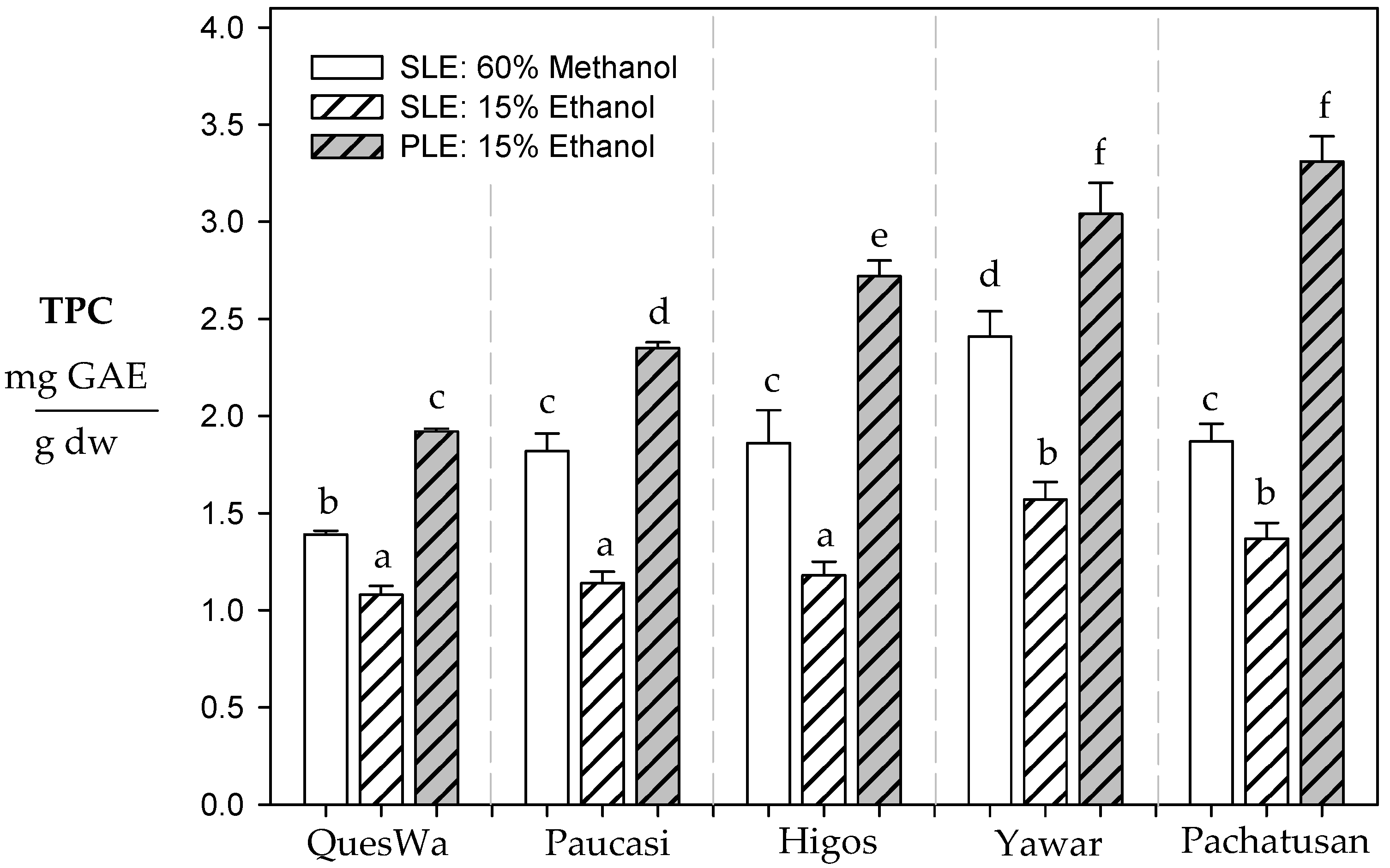
The results showed statistically significant differences (p < 0.05) in total polyphenol content (TPC) among the oca peel cultivars and extraction methods evaluated (Figure 1). Overall, the PLE method using 15% ethanol significantly outperformed the SLE methods in the recovery of total polyphenols across all cultivars. Specifically, PLE with 15% ethanol increased polyphenol recovery by 22, 37, 36, 34, and 26% compared with SLE using 15% ethanol in the QuesWa, Paucasi, Higos, Yawar, and Pachatusan cultivars, respectively (Figure 1). In contrast, the use of 60% methanol under the SLE method did not achieve the extraction efficiency obtained with PLE. Notably, the Yawar and Pachatusan cultivars presented the highest phenolic contents with 3.04 and 3.31 mg GAE/g dw, respectively (Figure 1). Conversely, the QuesWa cultivar displayed the lowest phenolic levels for both extraction methods employed (Figure 1).
The enhanced recovery of total polyphenols under PLE provides initial evidence of structural disruption of the Oca skin cell wall matrix under pressurized conditions. In a previous work, our research group performed scanning electron microscopy (SEM) analysis on grape pomace, which demonstrated that PLE induces pronounced structural disruption of the plant cell wall compared to atmospheric extraction, including collapse of cellular structures and increased surface porosity, effects that directly correlated with enhanced polyphenol recovery [36]. Although equivalent microscopic characterization of the Oca skin matrix was beyond the scope of the present study, the pressure-temperature conditions employed are comparable, and the fundamental cell wall composition (pectin, cellulose, hemicellulose, and lignin) is shared across plant tissues.
Machado et al. [37] reported that PLE process combined with 100% ethanol at 80 °C was 2 times more effective to recovering phenolic compounds compared to SLE process (100% ethanol at 30 °C) from grumixama residues when. Similarly, Maravić et al. [38] found that PLE with 50% ethanol at 150 °C improved by 56% the recovery of total compared to SLE process with 50% ethanol at 30 °C from sugar beet leaves. Further analysis of blackberry residue extracts obtained under subcritical conditions using 50% ethanol at 100 °C recovered by 59%, and 80% mor polyphenol content compared to SLE and Soxhlet extraction, respectively [39]. Moreover, de Souza et al. [40] established that PLE process with 25% ethanol at 90 °C yielded 14 times greater on total polyphenol recovery compared to SLE (100% ethanol—30 °C) from yacon leaves. The enhanced efficiency of PLE in comparison to SLE can be attributed to the synergistic effect of temperature and pressure. Pressure plays a primarily physical role, maintaining the solvent in a liquid state at temperatures exceeding its atmospheric boiling point and facilitating solvent penetration into the matrix pores [23]; while thermal energy (temperature) is the primary driver of extraction efficiency, reducing solvent viscosity and surface tension, increasing diffusivity, and providing the activation energy necessary to disrupt hydrogen bonds and weaken analyte–matrix interactions [23,37]. These combined effects enable the solvent to penetrate the plant matrix more effectively, disrupting cell wall structures and facilitating the release and solubilization of polyphenolic compounds [41]. In contrast, SLE is constrained by lower mass transfer rates and its limited ability to overcome matrix–analyte interactions under atmospheric conditions [42].
Cultivar dependence is a determining factor on total polyphenol content (Figure 1). For example, The Yawar and Pachatusan cultivars exhibit higher polyphenol levels compared to the QuesWa, Higos, and Paucasi cultivars (Figure 1). Different studies on tubers and fruits have corroborated these notable differences between cultivars, which are attributable to genotypic regulation [10,43,44,45,46]. This regulation governs the specific biosynthetic pathways for secondary metabolites within each cultivar [47,48,49]. Moreover, the elevated phenolic concentrations observed in cultivars like Yawar and Paucasi can be ascribed to genotypic differences in the regulation of secondary metabolite biosynthetic pathways, which govern the differential accumulation of phenolic compounds across cultivars [47,48,49]. The accumulation of these compounds varies between the peel and pulp, contingent on the morphological and genetic characteristics of each variety [45,50].

3.2. Antioxidant Capacity

3.2.1. DPPH Method

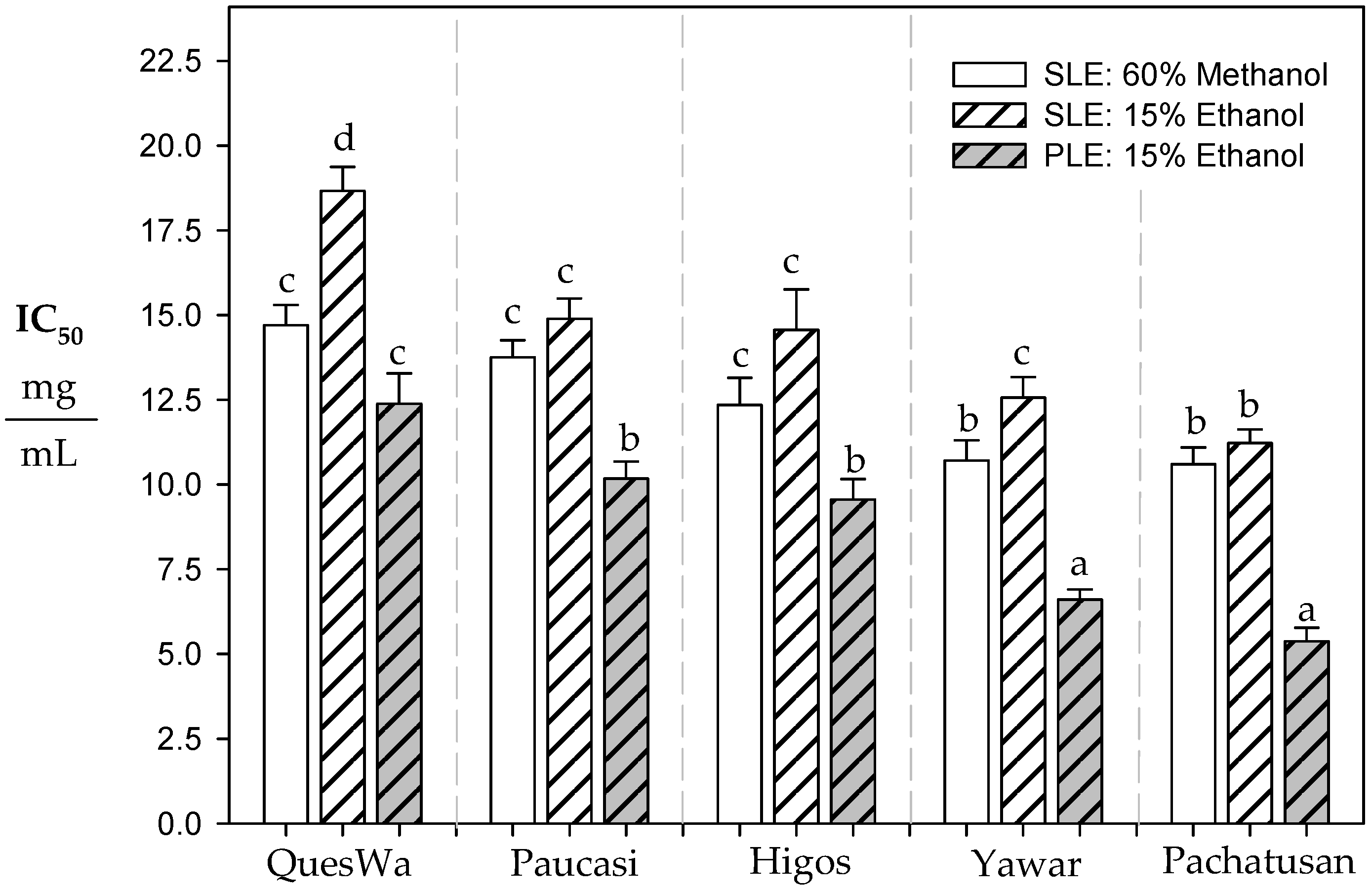
The antioxidant capacity of five Oca cultivars was evaluated using the DPPH radical scavenging assay, with results expressed as the half-maximal inhibitory concentration (IC50). Figure 2 shows that there were significant differences in antioxidant potential among the cultivars and the extraction methods used (p < 0.05). The IC50 values associated with SLE combined with 15% ethanol ranged from 11.23 to 18.67 mg/mL. Meanwhile, PLE process combined with 15% ethanol presents lower values between 12.38 and 5.38 mg/mL (Figure 2). Although the use of 60% methanol in the SLE process improved the antioxidant response in some cultivars compared with SLE using 15% ethanol, it was still less efficient than PLE with 15% ethanol. Under PLE conditions, the cultivars Pachatusan and Yawar demonstrated the highest levels of antioxidant activity, as indicated by their respective lowest IC50 values [51].
Similar studies were reported by Mamani-Pari et al. [52] reported that the use of 60% ethanol at 60 °C under subcritical conditions improved the IC50 value by 25% compared to 60% methanol at 30 °C under atmospheric conditions for red prickly pear skin (Opuntia ficus-indica). Similarly, Dobroslavić et al. [53] reported high DPPH antioxidant activity for laurel leaf PLE extracts at optimal conditions (50% ethanol, 150 °C). Machado et al. [39] demonstrated that use of PLE process with 50% ethanol at 100 °C showed antioxidant capacities of 162%, 92%, and 78% higher than those obtained through SLE, Soxhlet (methanol), and Soxhlet (ethanol) methods from blackberry residue extracts, respectively. In contrast, Machado et al. [37] reported that use of PLE (50% ethanol, 90 °C) improved by 16% the inhibition of DPPH radical compared to the SLE (100% ethanol—30 °C). The structural integrity of the cellular matrix (hemicellulose, pectin, and lignin) is essential for the effective recovery of antioxidant compounds [49]. Under subcritical conditions, elevated temperatures increase the kinetic energy of the solvent, thereby disrupting the interactions between polyphenols and the matrix (hydrogen bonds and van der Waals forces) [23,37]. Moreover, the application of high pressure facilitates the penetration of the solvent into the micro-pores of the matrix, enhancing the mass transfer rate and improving the extraction of antioxidant compounds [23,37]. On the other hand, these results indicate that the color associated with each variety serves as a significant determinant of antioxidant capacity, attributed to the elevated concentration of phenolic pigments [54]. This relationship is closely linked to the presence of anthocyanins and flavonoids, which function as hydrogen donors, thereby stabilizing the DPPH radical [55,56].

3.2.2. ORAC Method

For the DPPH method, antioxidant compounds neutralize the synthetic DPPH radical by transferring an electron, resulting in a color change from violet to yellow. In contrast, the ORAC assay measures the ability of extracts to donate hydrogen atoms and neutralize peroxyl radicals, which are naturally occurring radicals found in biological systems. Thus, both assays are necessary to provide a comprehensive understanding of how polyphenols stabilize various reactive species [57].
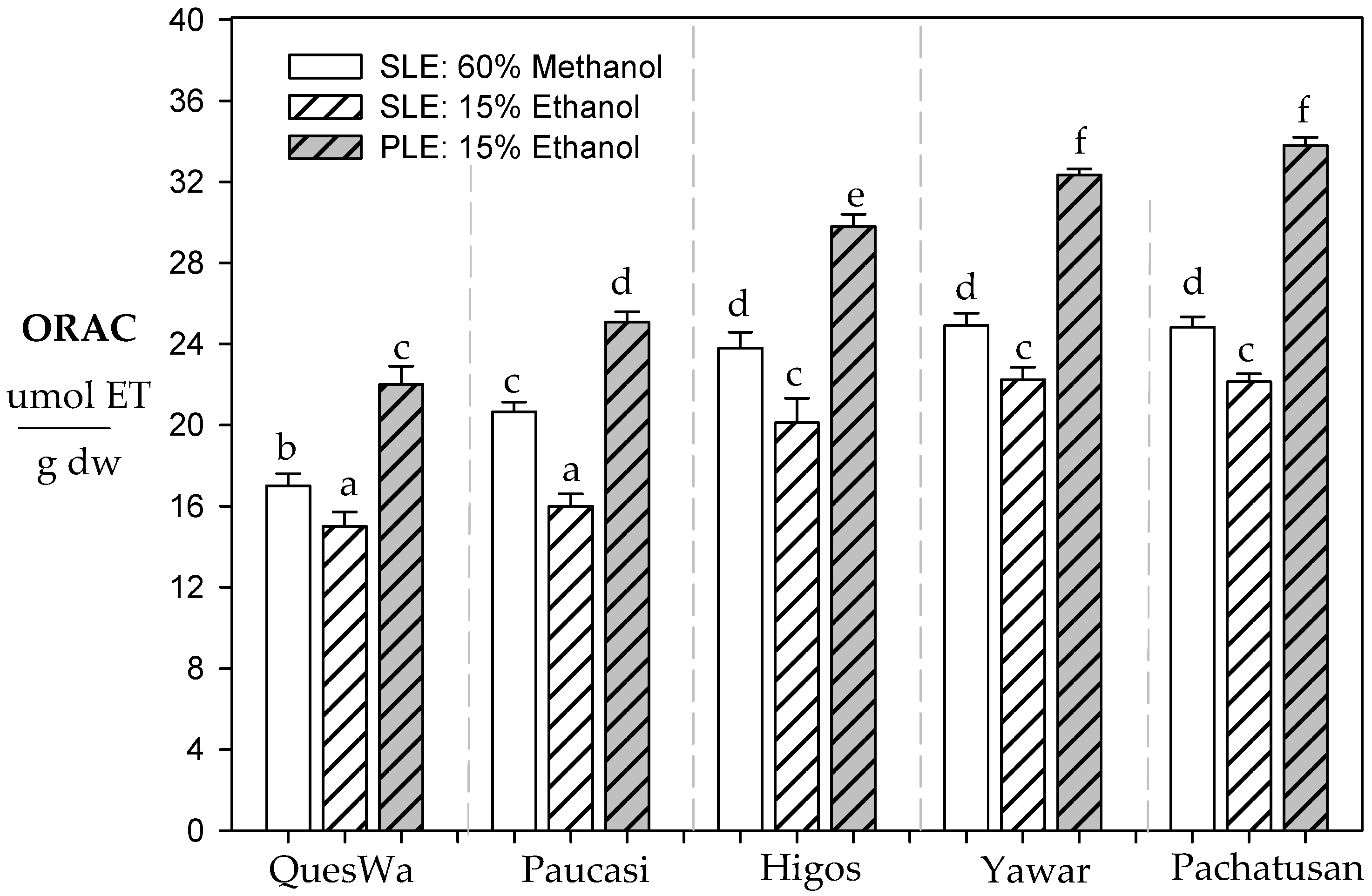
The ORAC values of the oca cultivars ranged from 15.2 to 22.13 μmol TE/g dw when SLE with 15% ethanol was used. In contrast, PLE combined with 15% ethanol significantly increased the ORAC values, reaching levels between 22.1 and 33.8 μmol TE/g dw (Figure 3). These results are consistent with those obtained in the DPPH assay, where the extracts produced under PLE conditions showed the highest antioxidant capacity. Among the cultivars evaluated, Pachatusan and Yawar exhibited the greatest antioxidant potential, with ORAC values of 33.8 and 32.3 μmol TE/g dw, respectively. Conversely, QuesWa and Paucasi showed the lowest antioxidant values in both extraction methods (Figure 3). Similar to the IC50 results, SLE using 60% methanol was not able to surpass the efficiency achieved by PLE with 15% ethanol, confirming the superior performance of the PLE process for obtaining antioxidant-rich extracts from oca peels.
De Souza et al. [40] reported a ~152% increase in ORAC antioxidant capacity using PLE (90 °C, 50% ethanol) compared to conventional extraction (100% ethanol, 30 °C) from yacon leaves. Similarly, Moreno et al. [58] found that extracts obtained under subcritical conditions (120 °C, 50% ethanol) presented ORAC values ~2 times higher than those obtained under atmospheric conditions (25 °C, 50% ethanol). This trend occurs because subcritical conditions enhance solvent solubility and diffusion, facilitating the release of high-molecular-weight phenolics while preserving thermolabile molecules with high peroxyl radical-scavenging capacity [59].
According to our results, Oca cultivars showed significant differences in ORAC values (Figure 3). In this sense, several studies have shown that antioxidant capacity varies significantly between cultivars like potato and mashua due to different mechanisms of secondary metabolite accumulation [49,60]. Particularly in oca, the observed variations derive from the skin’s role on the accumulation of phenolic metabolites, which function as an adaptive defense mechanism against high-altitude stressors, including intense ultraviolet (UV) radiation and extreme temperature fluctuations [10,49]. The skin serves as a protective barrier, enabling these antioxidants to neutralize reactive oxygen species (ROS) and thereby mitigate environmental damage [10].

3.3. Polyphenol Profile

The polyphenolic profile of oca peel extracts was evaluated using the two most effective extraction conditions identified in the previous assays: PLE combined with 15% ethanol and SLE combined with 60% methanol. The results showed significant variability depending on both the cultivar and the extraction strategy applied, with PLE using 15% ethanol consistently outperforming SLE using 60% methanol across most identified compounds and cultivars (Supplementary Materials S1). This indicates that the PLE process not only improved the overall recovery of total polyphenols and antioxidant compounds, but also enhanced the extraction of individual phenolic constituents.
Gallic acid was more effectively recovered by PLE, with Yawar and Higos yielding the highest concentrations with 0.097 and 0.092 µg/g dw, respectively, while Paucasi showed the lowest PLE recovery (0.036 µg/g dw). Under SLE, gallic acid concentrations were markedly lower across all cultivars, ranging from 0.011 µg/g dw (QuesWa) to 0.022 µg/g dw (Pachatusan) (Table 2).
Catechin and epicatechin followed a similar pattern. Under PLE, Higos yielded the highest concentrations for both compounds (1.85 and 0.95 µg/g dw, respectively), followed by Yawar for catechin (1.30 µg/g dw), while Pachatusan and QuesWa showed the lowest recoveries. Under SLE, Higos also led in catechin and epicatechin content (0.93 and 0.62 µg/g dw), with Pachatusan consistently presenting the lowest values (0.25 and 0.23 µg/g dw, respectively) (Table 2). The superior recovery of these monomeric flavanols under PLE is primarily attributed to the synergistic effect of high pressure and temperature, which forces the solvent into the microscopic pores of the Oca matrix, disrupting the polyphenol-matrix bonds that anchor these compounds to the cell walls.
Procyanidin B2 and procyanidin A2 also exhibited cultivar-dependent variability, with PLE showing higher efficacy than SLE for condensed tannin recovery. For procyanidin B2, PLE yielded the highest concentrations in Pachatusan (0.019 ± 0.000 µg/g) and Paucasi (0.016 ± 0.001 µg/g). Procyanidin A2 showed a distinct pattern: Pachatusan under SLE presented the highest concentration across all cultivars and methods (0.468 ± 0.05 µg/g), whereas Paucasi under PLE yielded the lowest (0.013 µg/g dw) (Table 1). These differences in extraction efficiency between monomeric and dimeric compounds reflect their structural complexity. Low-molecular weight monomers such as gallic acid readily solubilize by passive diffusion [61], while dimers such as procyanidin A2 predominant in Pachatusan possess multiple hydroxyl groups that form strong intermolecular hydrogen bonds with pectin and cellulose [62,63,64], requiring the elevated pressure and temperature that only PLE can provide.

3.4. Principal Component Analysis (PCA)

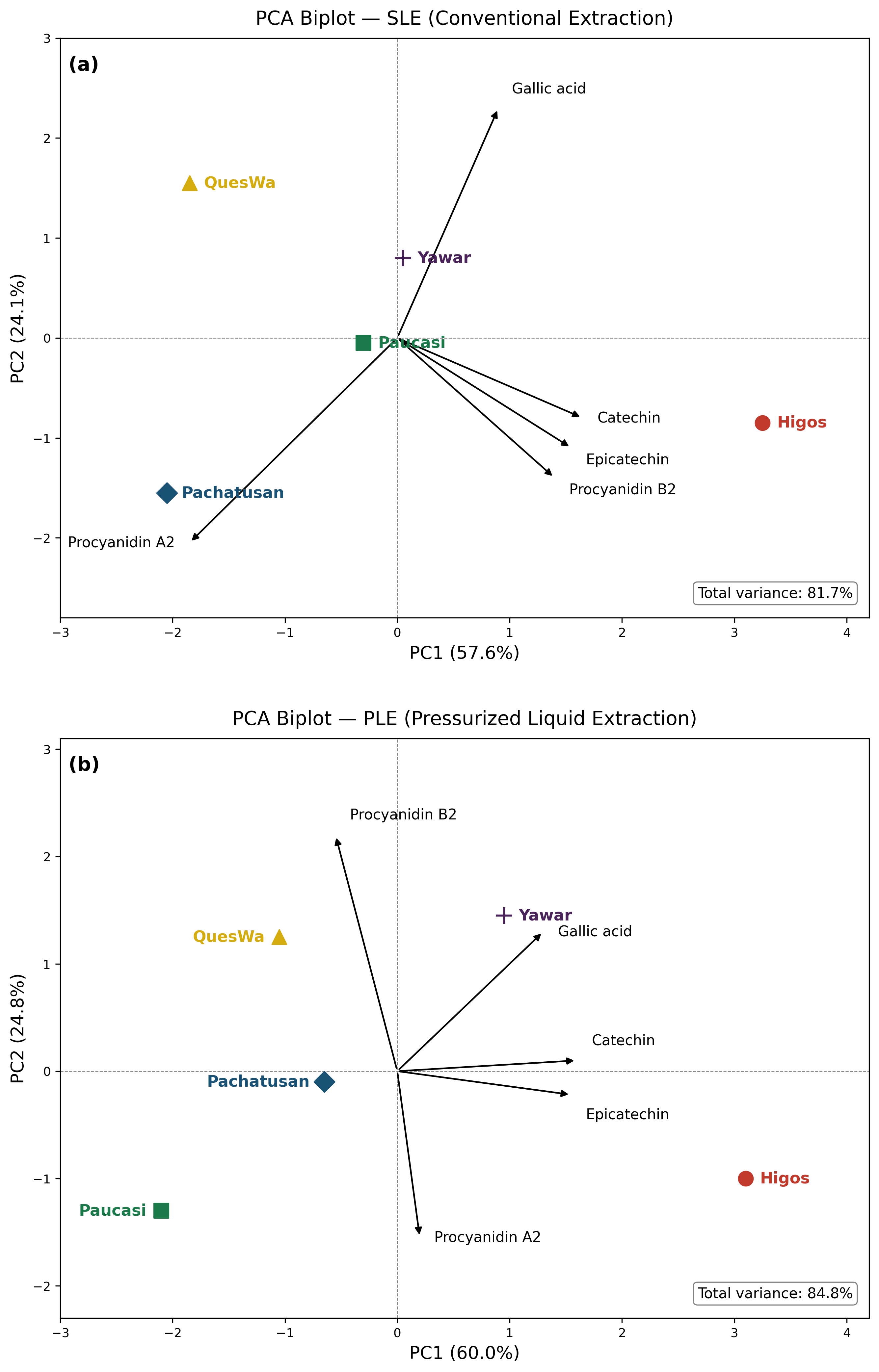
PCA was performed separately for SLE and PLE extracts to evaluate the polyphenolic profiles of the five Oca skin cultivars under each extraction method (Figure 4). For SLE, the biplot explained 81.7% of the total variance (PC1: 57.6%; PC2: 24.1%) (Figure 4a). PC1 discriminated cultivars based on the type of predominant compound, with epicatechin, catechin, and procyanidin B2 driving the positive direction, while procyanidin A2 drove the negative direction. Consequently, Higos was clearly separated from the remaining cultivars along PC1, reflecting its higher content of monomeric flavanols (epicatechin and catechin) under conventional extraction conditions. PC2 (24.1%) was primarily associated with gallic acid in the positive direction and procyanidin A2 in the negative direction, with QuesWa and Yawar positioned in the positive region, while Pachatusan scored most negatively along this axis.
For PLE, the biplot explained 84.8% of the total variance (PC1: 60.0%; PC2: 24.8%), reflecting a more structured separation among cultivars (Figure 4b). Higos and Yawar exhibited the highest scores along PC1, driven by gallic acid, catechin, and epicatechin, confirming a higher recovery of these compounds under pressurized conditions. In contrast, Paucasi and Pachatusan showed the lowest scores along PC1. PC2 (24.8%) was primarily associated with procyanidin B2 in the positive direction and procyanidin A2 in the negative direction, with QuesWa and Yawar positioned positively and Paucasi and Higos negatively along this axis. The higher total variance explained by the PLE biplot (84.8% vs. 81.7%) confirms that pressurized conditions generate more consistent and pronounced differences among cultivars, making PLE a more discriminating and efficient technology for the recovery of polyphenolic compounds from Oca skin.

4. Conclusions

This study provides the first evidence that PLE is a more efficient technology than SLE for recovering polyphenolic compounds from Oca (Oxalis tuberosa) skin, with extraction improvements depending on the cultivar. The superior performance of PLE is explained by the synergistic effect between thermal energy and pressure, which reduces solvent viscosity, increases diffusivity, and disrupts analyte–matrix interactions, enabling the recovery of both low-molecular weight phenolic acids (gallic acid) and high-molecular weight condensed tannins (procyanidin B2 and procyanidin A2). Regarding the polyphenolic profile, catechin and epicatechin were the predominant compounds across all cultivars and extraction methods, with Higos and Yawar showing the highest monomeric flavanol content under PLE. Procyanidin A2 was particularly abundant in Pachatusan under SLE, highlighting cultivar-specific differences in condensed tannin composition. PCA confirmed these patterns, explaining 81.7% and 84.8% of total variance for SLE and PLE, respectively, and revealing that PLE generates more consistent and pronounced differentiation among cultivars, with PC1 driven primarily by catechin, epicatechin, and gallic acid. Cultivar type was a determinant factor for polyphenolic composition, where Higos and Yawar cultivars presented the highest catechin and epicatechin content under PLE, while Pachatusan was distinguished by its elevated procyanidin A2 levels. In addition, the use of food-grade ethanol (15%) in PLE positions the resulting extracts as suitable and safe ingredients for nutraceutical and functional food applications, representing a sustainable valorization strategy for Oca skin as an underutilized agro-industrial byproduct. These findings highlight the potential of this natural source of bioactive compounds and provide a scientific basis for its incorporation into value-added products. Future work should address the optimization of PLE parameters through a Design of Experiments approach to fully exploit the extraction potential across different cultivars, and evaluate the in vivo bioavailability and biological activity of the recovered polyphenolic compounds.

Supplementary Materials

The following supporting information can be downloaded at: https://www.mdpi.com/article/10.3390/pr14132061/s1, Supplementary Material S1: Chromatographic profiles obtained by solid–liquid extraction (SLE) and pressurized liquid extraction (PLE) from different oca (Oxalis tuberosa) cultivars (Higo, Paucasi, Queswa, Pachatusan, and Yawar). The figures show the polyphenolic compound profiles and their distribution across extraction methods and cultivars.

Author Contributions

N.L.H.-C., U.Q.-V. and M.M.C.-C., supervision and project administration; N.L.H.-C., M.C.-S., J.C.-Q., B.J.-R., M.F.Q.A. and V.U.E.R.-I., conceptualization, investigation, methodology, and analysis for TPC, DPPH, ORAC and polyphenol profile; S.M.-P. and M.F.Q.A., validation and formal analysis data; N.L.H.-C. and S.M.-P., writing—review and editing. All authors have read and agreed to the published version of the manuscript.

Funding

The authors are grateful to the Universidad Nacional San Antonia Abad del Cusco and its Special Fund for University Development (FEDU) for the financial support provided for this research project (RESOLUCIÓN N° VRIN-31-2024-UNSAAC).

Data Availability Statement

The original contributions presented in this study are included in the article/Supplementary Materials. Further inquiries can be directed to the corresponding author.

Conflicts of Interest

The authors declare no conflicts of interest.

References

  1. Roca, W.M.; Ynouye, C.; Manrique, I.; Arbizu, C.; Gomez, R. Indigenous Andean Root and Tuber Crops: New Foods for the New Millennium. Chron. Hortic. 2007, 47, 13–19. [Google Scholar]
  2. Pissard, A.; Ghislain, M.; Bertin, P. Genetic Diversity of the Andean Tuber-Bearing Species, Oca (Oxalis tuberosa Mol.), Investigated by Inter-Simple Sequence Repeats. Genome 2006, 49, 8–16. [Google Scholar] [CrossRef] [PubMed]
  3. Acurio, L.; Salazar, D.; Guanoquiza, I.; García-Segovia, P.; Martínez-Monzó, J.; Igual, M. Ecuadorian Roots Flours: Bioactive Compounds and Processing Properties. J. Agric. Food Res. 2025, 19, 101740. [Google Scholar] [CrossRef]
  4. Lyon, P.J. Lost Crops of the Incas: Little-known Plants of the Andes with Promise for Worldwide Cultivation. Lat. Am. Anthropol. Rev. 1992, 4, 41. [Google Scholar] [CrossRef]
  5. Dubois, M.; Savage, G.P.; Martin, R.J. The Effect of Cooking on the Composition and Colour of New Zealand Grown Oca. Food Chem. 2007, 104, 768–773. [Google Scholar] [CrossRef]
  6. Aurora-Vigo, E.F.; Paucar-Menacho, L.M.; Anaya-Esparza, L.M.; Schmiele, M. Oca (Oxalis tuberosa Mol.): An Andean Tuber with Promising Physicochemical, Technological and Nutritional Properties for Potential Industrial Applications. Plant Foods Hum. Nutr. 2025, 80, 179. [Google Scholar] [CrossRef] [PubMed]
  7. Campos, D.; Noratto, G.; Chirinos, R.; Arbizu, C.; Roca, W.; Cisneros-Zevallos, L. Antioxidant Capacity and Secondary Metabolites in Four Species of Andean Tuber Crops: Native Potato (Solanum sp.), Mashua (Tropaeolum tuberosum Ruiz & Pavón), Oca (Oxalis tuberosa Molina) and Ulluco (Ullucus tuberosus Caldas). J. Sci. Food Agric. 2006, 86, 1481–1488. [Google Scholar] [CrossRef]
  8. El-Saadony, M.T.; Yang, T.; Saad, A.M.; Alkafaas, S.S.; Elkafas, S.S.; Eldeeb, G.S.; Mohammed, D.M.; Salem, H.M.; Korma, S.A.; Loutfy, S.A.; et al. Polyphenols: Chemistry, Bioavailability, Bioactivity, Nutritional Aspects and Human Health Benefits: A Review. Int. J. Biol. Macromol. 2024, 277, 134223. [Google Scholar] [CrossRef] [PubMed]
  9. Alcalde-Eon, C.; Saavedra, G.; de Pascual-Teresa, S.; Rivas-Gonzalo, J.C. Liquid Chromatography–Mass Spectrometry Identification of Anthocyanins of Isla Oca (Oxalis tuberosa, Mol.) Tubers. J. Chromatogr. A 2004, 1054, 211–215. [Google Scholar] [CrossRef] [PubMed]
  10. Chirinos, R.; Betalleluz-Pallardel, I.; Huamán, A.; Arbizu, C.; Pedreschi, R.; Campos, D. HPLC-DAD Characterisation of Phenolic Compounds from Andean Oca (Oxalis tuberosa Mol.) Tubers and Their Contribution to the Antioxidant Capacity. Food Chem. 2009, 113, 1243–1251. [Google Scholar] [CrossRef]
  11. Pisoschi, A.M.; Pop, A.; Cimpeanu, C.; Predoi, G. Antioxidant Capacity Determination in Plants and Plant-Derived Products: A Review. Oxid. Med. Cell. Longev. 2016, 2016, 9130976. [Google Scholar] [CrossRef] [PubMed]
  12. Chaves, N.; Santiago, A.; Alías, J.C. Quantification of the Antioxidant Activity of Plant Extracts: Analysis of Sensitivity and Hierarchization Based on the Method Used. Antioxidants 2020, 9, 76. [Google Scholar] [CrossRef] [PubMed]
  13. Dudonné, S.; Vitrac, X.; Coutière, P.; Woillez, M.; Mérillon, J.-M. Comparative Study of Antioxidant Properties and Total Phenolic Content of 30 Plant Extracts of Industrial Interest Using DPPH, ABTS, FRAP, SOD, and ORAC Assays. J. Agric. Food Chem. 2009, 57, 1768–1774. [Google Scholar] [CrossRef] [PubMed]
  14. Chen, S.; Yuan, Y.; Zhang, F.; Lin, S.; Zou, P.; Farag, M.A.; Simal-Gandara, J.; Cao, H.; Xiao, J. UPLC-ESI-MS/MS-Based Chemometric Approach for Investigating the Effect of Conventional versus Modern Extraction Methods on Polyphenols Recovery from Grape Seed Wastes. Food Chem. 2025, 487, 144619. [Google Scholar] [CrossRef] [PubMed]
  15. Mungwari, C.P.; King’ondu, C.K.; Sigauke, P.; Obadele, B.A. Conventional and Modern Techniques for Bioactive Compounds Recovery from Plants: Review. Sci. Afr. 2025, 27, e02509. [Google Scholar] [CrossRef]
  16. Bitwell, C.; Indra, S.S.; Luke, C.; Kakoma, M.K. A Review of Modern and Conventional Extraction Techniques and Their Applications for Extracting Phytochemicals from Plants. Sci. Afr. 2023, 19, e01585. [Google Scholar] [CrossRef]
  17. Alara, O.R.; Abdurahman, N.H.; Ukaegbu, C.I. Extraction of Phenolic Compounds: A Review. Curr. Res. Food Sci. 2021, 4, 200–214. [Google Scholar] [CrossRef] [PubMed]
  18. Plaza, M.; Marina, M.L. Pressurized Hot Water Extraction of Bioactives. TrAC Trends Anal. Chem. 2023, 166, 117201. [Google Scholar] [CrossRef]
  19. Barp, L.; Višnjevec, A.M.; Moret, S. Pressurized Liquid Extraction: A Powerful Tool to Implement Extraction and Purification of Food Contaminants. Foods 2023, 12, 2017. [Google Scholar] [CrossRef] [PubMed]
  20. Plaza, M.; Abrahamsson, V.; Turner, C. Extraction and Neoformation of Antioxidant Compounds by Pressurized Hot Water Extraction from Apple Byproducts. J. Agric. Food Chem. 2013, 61, 5500–5510. [Google Scholar] [CrossRef] [PubMed]
  21. Santos, D.T.; Veggi, P.C.; Meireles, M.A.A. Optimization and Economic Evaluation of Pressurized Liquid Extraction of Phenolic Compounds from Jabuticaba Skins. J. Food Eng. 2012, 108, 444–452. [Google Scholar] [CrossRef]
  22. Wijngaard, H.H.; Ballay, M.; Brunton, N. The Optimisation of Extraction of Antioxidants from Potato Peel by Pressurised Liquids. Food Chem. 2012, 133, 1123–1130. [Google Scholar] [CrossRef]
  23. Višnjevec, A.M.; Barp, L.; Lucci, P.; Moret, S. Pressurized Liquid Extraction for the Determination of Bioactive Compounds in Plants with Emphasis on Phenolics. TrAC Trends Anal. Chem. 2024, 173, 117620. [Google Scholar] [CrossRef]
  24. Geleta, G.A.; De Meulenaer, B. The Effect of Peeling and Cooking Processes on Nutrient Composition of Oromo dinich (Plectranthus edulis) Tuber. Food Res. Int. 2019, 116, 387–396. [Google Scholar] [CrossRef] [PubMed]
  25. Paucar-Menacho, L.M.; Peñas, E.; Hernandez-Ledesma, B.; Frias, J.; Martínez-Villaluenga, C. A Comparative Study on the Phenolic Bioaccessibility, Antioxidant and Inhibitory Effects on Carbohydrate-Digesting Enzymes of Maca and Mashua Powders. LWT 2020, 131, 109798. [Google Scholar] [CrossRef]
  26. Tarek, K.; Farid, A.; Safwat, G. Extraction of Grape Seeds by Different Solvents Affects the Activities of the Resultant Extract. AMB Express 2025, 15, 51. [Google Scholar] [CrossRef] [PubMed]
  27. Kalinowska, M.; Płońska, A.; Trusiak, M.; Gołębiewska, E.; Gorlewska-Pietluszenko, A. Comparing the Extraction Methods, Chemical Composition, Phenolic Contents and Antioxidant Activity of Edible Oils from Cannabis sativa and Silybum marianu Seeds. Sci. Rep. 2022, 12, 20609. [Google Scholar] [CrossRef] [PubMed]
  28. Mariotti-Celis, M.S.; Martínez-Cifuentes, M.; Huamán-Castilla, N.; Pedreschi, F.; Iglesias-Rebolledo, N.; Pérez-Correa, J.R. Impact of an Integrated Process of Hot Pressurised Liquid Extraction–Macroporous Resin Purification over the Polyphenols, Hydroxymethylfurfural and Reducing Sugars Content of Vitis vinifera ‘Carménère’ Pomace Extracts. Int. J. Food Sci. Technol. 2018, 53, 1072–1078. [Google Scholar] [CrossRef]
  29. Huaman-Castilla, N.L.; Martínez-Cifuentes, M.; Camilo, C.; Pedreschi, F.; Mariotti-Celis, M.; Pérez-Correa, J.R. The Impact of Temperature and Ethanol Concentration on the Global Recovery of Specific Polyphenols in an Integrated HPLE/RP Process on Carménère Pomace Extracts. Molecules 2019, 24, 3145. [Google Scholar] [CrossRef] [PubMed]
  30. Wang, B.; Qu, J.; Luo, S.; Feng, S.; Li, T.; Yuan, M.; Huang, Y.; Liao, J.; Yang, R.; Ding, C. Optimization of Ultrasound-Assisted Extraction of Flavonoids from Olive (Olea europaea) Leaves, and Evaluation of Their Antioxidant and Anticancer Activities. Molecules 2018, 23, 2513. [Google Scholar] [CrossRef] [PubMed]
  31. Wijngaard, H.; Brunton, N. The Optimization of Extraction of Antioxidants from Apple Pomace by Pressurized Liquids. J. Agric. Food Chem. 2009, 57, 10625–10631. [Google Scholar] [CrossRef] [PubMed]
  32. Singleton, V.L.; Rossi, J.A. Colorimetry of Total Phenolics with Phosphomolybdic-Phosphotungstic Acid Reagents. Am. J. Enol. Vitic. 1965, 16, 144–158. [Google Scholar] [CrossRef]
  33. Brand-Williams, W.; Cuvelier, M.E.; Berset, C. Use of a Free Radical Method to Evaluate Antioxidant Activity. LWT—Food Sci. Technol. 1995, 28, 25–30. [Google Scholar] [CrossRef]
  34. Chirinos, R.; Campos, D.; Warnier, M.; Pedreschi, R.; Rees, J.-F.; Larondelle, Y. Antioxidant Properties of Mashua (Tropaeolum tuberosum) Phenolic Extracts against Oxidative Damage Using Biological in Vitro Assays. Food Chem. 2008, 111, 98–105. [Google Scholar] [CrossRef]
  35. Huamán-Castilla, N.L.; Campos, D.; García-Ríos, D.; Parada, J.; Martínez-Cifuentes, M.; Mariotti-Celis, M.S.; Pérez-Correa, J.R. Chemical Properties of Vitis Vinifera Carménère Pomace Extracts Obtained by Hot Pressurized Liquid Extraction, and Their Inhibitory Effect on Type 2 Diabetes Mellitus Related Enzymes. Antioxidants 2021, 10, 472. [Google Scholar] [CrossRef] [PubMed]
  36. Huamán-Castilla, N.L.; Gajardo-Parra, N.; Pérez-Correa, J.R.; Canales, R.I.; Martínez-Cifuentes, M.; Contreras-Contreras, G.; Mariotti-Celis, M.S. Enhanced Polyphenols Recovery from Grape Pomace: A Comparison of Pressurized and Atmospheric Extractions with Deep Eutectic Solvent Aqueous Mixtures. Antioxidants 2023, 12, 1446. [Google Scholar] [CrossRef] [PubMed]
  37. Machado, A.P.D.F.; Pereira, A.L.D.; Barbero, G.F.; Martínez, J. Recovery of Anthocyanins from Residues of Rubus fruticosus, Vaccinium myrtillus and Eugenia brasiliensis by Ultrasound Assisted Extraction, Pressurized Liquid Extraction and Their Combination. Food Chem. 2017, 231, 1–10. [Google Scholar] [CrossRef] [PubMed]
  38. Maravić, N.; Teslić, N.; Nikolić, D.; Dimić, I.; Šereš, Z.; Pavlić, B. From Agricultural Waste to Antioxidant-Rich Extracts: Green Techniques in Extraction of Polyphenols from Sugar Beet Leaves. Sustain. Chem. Pharm. 2022, 28, 100728. [Google Scholar] [CrossRef]
  39. Machado, A.P.D.F.; Pasquel-Reátegui, J.L.; Barbero, G.F.; Martínez, J. Pressurized Liquid Extraction of Bioactive Compounds from Blackberry (Rubus fruticosus L.) Residues: A Comparison with Conventional Methods. Food Res. Int. 2015, 77, 675–683. [Google Scholar] [CrossRef]
  40. de Souza, L.L.; de Aguiar, A.C.; Martinez, J.; Brito-Oliveira, T.C.; Rostagno, M.A.; Pimentel-Filho, N.d.J. Pressurized Liquid Extraction and Characterization of Yacon Leaf Extracts under Different Solvent and Temperature Conditions. Food Res. Int. 2025, 220, 117101. [Google Scholar] [CrossRef] [PubMed]
  41. Huamán-Castilla, N.L.; Mariotti-Celis, M.S.; Martínez-Cifuentes, M.; Pérez-Correa, J.R. Glycerol as Alternative Co-Solvent for Water Extraction of Polyphenols from Carménère Pomace: Hot Pressurized Liquid Extraction and Computational Chemistry Calculations. Biomolecules 2020, 10, 474. [Google Scholar] [CrossRef] [PubMed]
  42. Erpel, F.; Mariotti-Celis, M.S.; Parada, J.; Pedreschi, F.; Pérez-Correa, J.R. Pressurized Hot Liquid Extraction with 15% v/v Glycerol-Water as An Effective Environment-Friendly Process to Obtain Durvillaea incurvata and Lessonia spicata Phlorotannin Extracts with Antioxidant and Antihyperglycemic Potential. Antioxidants 2021, 10, 1105. [Google Scholar] [CrossRef] [PubMed]
  43. Musilova, J.; Lidikova, J.; Vollmannova, A.; Frankova, H.; Urminska, D.; Bojnanska, T.; Toth, T. Influence of Heat Treatments on the Content of Bioactive Substances and Antioxidant Properties of Sweet Potato (Ipomoea batatas L.) Tubers. J. Food Qual. 2020, 2020, 8856260. [Google Scholar] [CrossRef]
  44. Duarte, H.; Aliaño-González, M.J.; Cantos-Villar, E.; Faleiro, L.; Romano, A.; Medronho, B. Sustainable Extraction of Polyphenols from Vine Shoots Using Deep Eutectic Solvents: Influence of the Solvent, Vitis sp., and Extraction Technique. Talanta 2024, 267, 125135. [Google Scholar] [CrossRef] [PubMed]
  45. Ooi, S.F.; Sukri, S.A.M.; Zakaria, N.N.A.; Harith, Z.T. Carotenoids, Phenolics and Antioxidant Properties of Different Sweet Potatoes (Ipomoea batatas) Varieties. IOP Conf. Ser. Earth Environ. Sci. 2021, 756, 012077. [Google Scholar] [CrossRef]
  46. Musilová, J.; Franková, H.; Fedorková, S.; Lidiková, J.; Vollmannová, A.; Sulírová, K.; Árvay, J.; Kasal, P. Comparison of Polyphenols, Phenolic Acids, and Antioxidant Activity in Sweet Potato (Ipomoea batatas L.) Tubers after Heat Treatments. J. Agric. Food Res. 2024, 18, 101271. [Google Scholar] [CrossRef]
  47. Zhang, W.; Li, L.; Zhao, Y.; Yang, H.; Zhang, X.; Zhang, Z.; Wang, X.; Xu, Z.; Wang, W.; Deng, J. Characterization of Differences in Volatile Compounds and Metabolites of Six Varieties of Potato with Different Processing Properties. Food Chem. X 2025, 25, 102116. [Google Scholar] [CrossRef] [PubMed]
  48. Makori, S.I.; Mu, T.-H.; Sun, H.-N. Total Polyphenol Content, Antioxidant Activity, and Individual Phenolic Composition of Different Edible Parts of 4 Sweet Potato Cultivars. Nat. Prod. Commun. 2020, 15, 1934578X20936931. [Google Scholar] [CrossRef]
  49. Sun, Y.; Pan, Z.; Yang, C.; Jia, Z.; Guo, X. Comparative Assessment of Phenolic Profiles, Cellular Antioxidant and Antiproliferative Activities in Ten Varieties of Sweet Potato (Ipomoea batatas) Storage Roots. Molecules 2019, 24, 4476. [Google Scholar] [CrossRef] [PubMed]
  50. Wang, A.; Li, R.; Ren, L.; Gao, X.; Zhang, Y.; Ma, Z.; Ma, D.; Luo, Y. A Comparative Metabolomics Study of Flavonoids in Sweet Potato with Different Flesh Colors (Ipomoea batatas (L.) Lam). Food Chem. 2018, 260, 124–134. [Google Scholar] [CrossRef] [PubMed]
  51. Huamán-Castilla, N.L.; Díaz Huamaní, K.S.; Palomino Villegas, Y.C.; Allcca-Alca, E.E.; León-Calvo, N.C.; Colque Ayma, E.J.; Zirena Vilca, F.; Mariotti-Celis, M.S. Exploring a Sustainable Process for Polyphenol Extraction from Olive Leaves. Foods 2024, 13, 265. [Google Scholar] [CrossRef] [PubMed]
  52. Parí, S.M.; Juárez, M.L.M.; Vilca, F.Z.; Vilca, O.M.L.; Alca, E.E.A.; Escobedo-Pacheco, E.; Huamán-Castilla, N.L. Alternative Green Extraction Techniques to Enhance Recovery of Antioxidant Compounds from Red Peel Prickly Pear (Opuntia ficus-indica L. Miller). Discov. Food 2024, 4, 58. [Google Scholar] [CrossRef]
  53. Dobroslavić, E.; Elez Garofulić, I.; Šeparović, J.; Zorić, Z.; Pedisić, S.; Dragović-Uzelac, V. Pressurized Liquid Extraction as a Novel Technique for the Isolation of Laurus nobilis L. Leaf Polyphenols. Molecules 2022, 27, 5099. [Google Scholar] [CrossRef] [PubMed]
  54. Kim, M.Y.; Lee, B.W.; Lee, H.; Lee, Y.Y.; Kim, M.H.; Lee, J.Y.; Lee, B.K.; Woo, K.S.; Kim, H.-J. Phenolic Compounds and Antioxidant Activity in Sweet Potato after Heat Treatment. J. Sci. Food Agric. 2019, 99, 6833–6840. [Google Scholar] [CrossRef] [PubMed]
  55. de Albuquerque, T.M.R.; Sampaio, K.B.; de Souza, E.L. Sweet Potato Roots: Unrevealing an Old Food as a Source of Health Promoting Bioactive Compounds—A Review. Trends Food Sci. Technol. 2019, 85, 277–286. [Google Scholar] [CrossRef]
  56. Zheng, X.; Zhang, X.; Zhao, J.; Yang, R.; Bai, L.; Li, Y.; Prusky, D.; Bi, Y. Metabolomics Reveals Antioxidant and Antifungal Functions of Flavonoids in the Early Stage Wounded Potato Tubers. Postharvest Biol. Technol. 2023, 206, 112569. [Google Scholar] [CrossRef]
  57. Mamani-Pari, S.; Angulo, M.F.Q.; Saldaña, E.; Escobedo-Pacheco, E.; Huamán-Castilla, N.L. Sustainable Valorization of Red Prickly Pear Seeds: Green Technologies for Antioxidant Compounds Recovery. Green Technol. Sustain. 2025, 4, 100279. [Google Scholar] [CrossRef]
  58. Moreno, I.F.; de Aguiar, A.C.; Rostagno, M.A.; Martínez, J. Pressurized Liquid Extraction for the Recovery of Alkaloids from Cocoa Pod Husk. J. Supercrit. Fluids 2026, 227, 106733. [Google Scholar] [CrossRef]
  59. Castilla, N.L.H.; Hancco, J.M.; Cuayla, K.M.L.; Saldaña, E. Pressurized Liquid Extraction as an Alternative Method to Recover Bioactive Compounds. In Application of Emerging Technologies and Strategies to Extract Bioactive Compounds; Munekata, P.E.S., Ed.; Elsevier: Amsterdam, The Netherlands, 2025; pp. 95–142. [Google Scholar]
  60. Chirinos, R.; Campos, D.; Costa, N.; Arbizu, C.; Pedreschi, R.; Larondelle, Y. Phenolic Profiles of Andean Mashua (Tropaeolum tuberosum Ruíz & Pavón) Tubers: Identification by HPLC-DAD and Evaluation of Their Antioxidant Activity. Food Chem. 2008, 106, 1285–1298. [Google Scholar] [CrossRef]
  61. Anjali; Kumar, S.; Korra, T.; Thakur, R.; Arutselvan, R.; Kashyap, A.S.; Nehela, Y.; Chaplygin, V.; Minkina, T.; Keswani, C. Role of Plant Secondary Metabolites in Defence and Transcriptional Regulation in Response to Biotic Stress. Plant Stress 2023, 8, 100154. [Google Scholar] [CrossRef]
  62. Tan, W.; Guo, X.; Wang, Z.; Zhang, R.; Tang, C.; Jiang, B.; Jia, R.; Deng, Y.; Yang, S.; Chen, J. Metabolic Profiles and Morphological Characteristics of Leaf Tips among Different Sweet Potato (Ipomoea batatas Lam.) Varieties. J. Integr. Agric. 2024, 23, 494–510. [Google Scholar] [CrossRef]
  63. Hu, C.; Shi, J.; Quan, S.; Cui, B.; Kleessen, S.; Nikoloski, Z.; Tohge, T.; Alexander, D.; Guo, L.; Lin, H.; et al. Metabolic Variation between Japonica and Indica Rice Cultivars as Revealed by Non-Targeted Metabolomics. Sci. Rep. 2014, 4, 5067. [Google Scholar] [CrossRef] [PubMed]
  64. Schauer, N.; Semel, Y.; Roessner, U.; Gur, A.; Balbo, I.; Carrari, F.; Pleban, T.; Perez-Melis, A.; Bruedigam, C.; Kopka, J.; et al. Comprehensive Metabolic Profiling and Phenotyping of Interspecific Introgression Lines for Tomato Improvement. Nat. Biotechnol. 2006, 24, 447–454. [Google Scholar] [CrossRef] [PubMed]
Figure 1. Recovery of total polyphenols by extraction method and oca skin cultivars. SLE: Solid–liquid extraction; PLE: Pressurized liquid extraction; GAE: Gallic acid equivalent. Different lowercase letters indicate significant differences (p < 0.05). Error bars represent standard deviation (SD) n = 3.
Processes 14 02061 g001
Figure 2. Effect of extraction method and oca skin cultivars on antioxidant capacity (DPPH); SLE: solid–liquid extraction; PLE: pressurized liquid extraction. Different lowercase letters indicate significant differences (p < 0.05). Error bars represent standard deviation (SD) n = 3.
Processes 14 02061 g002
Figure 3. Effect of extraction method and oca skin cultivar on antioxidant capacity evaluated by ORAC method. SLE: solid–liquid extraction; PLE: pressurized liquid extraction. Different lowercase letters indicate significant differences (p < 0.05). Error bars represent standard deviation (SD) n = 3.
Processes 14 02061 g003
Figure 4. PCA of specific polyphenols in Oca (Oxalis tuberosa) skin: cultivar differentiation under SLE (a) and PLE (b) Methods.
Processes 14 02061 g004
Table 1. Retention time, precursor ion and R2 for each compound analyzed.
CompoundRT (min)m/zR2
Gallic acid2.40169.014720.9993
Catechin8.74289.072370.9976
Epicatechin10.58289.072410.9923
Procyanidin B210.11577.137080.9996
Procyanidin A211.95575.120470.9965
Table 2. Specific polyphenol profile of skin extracts from different goose varieties obtained by pressurized liquids and conventional methods.
CultivarProcessGallic Acid
(µg/g dw)
Catechin
(µg/g dw)
Epicatechin
(µg/g dw)
Procyanidin B2
(µg/g dw)
Procyanidin A2
(µg/g dw)
HigosSLE0.014 ± 0.00 a0.93 ± 0.03 a0.62 ± 0.10 a0.006 ± 0.008 a0.097 ± 0.02 a
PLE0.092 ± 0.01 b1.85 ± 0.06 b0.95 ± 0.08 b0.011 ± 0.000 b0.022 ± 0.01 b
PaucasiSLE0.021 ± 0.00 a0.92 ± 0.02 a0.18 ± 0.01 a0.001 ± 0.001 a0.116 ± 0.04 a
PLE0.036 ± 0.02 b0.49 ± 0.05 b0.25 ± 0.08 b0.016 ± 0.001 b0.013 ± 0.01 b
QuesWaSLE0.011 ± 0.00 a0.35 ± 0.04 a0.09 ± 0.08 a0.000 ± 0.000 a0.084 ± 0.04 a
PLE0.076 ± 0.02 b0.92 ± 0.11 b0.38 ± 0.05 b0.003 ± 0.003 b0.011 ± 0.01 b
PachatusanSLE0.022 ± 0.00 a0.25 ± 0.07 a0.23 ± 0.01 a0.009 ± 0.000 a0.468 ± 0.05 a
PLE0.045 ± 0.01 b0.36 ± 0.16 b0.37 ± 0.06 b0.019 ± 0.000 b0.062 ± 0.03 b
YawarSLE0.015 ± 0.00 a0.53 ± 0.03 a0.28 ± 0.04 a0.007 ± 0.001 a0.147 ± 0.01 a
PLE0.097 ± 0.00 b1.30 ± 0.06 b0.59 ± 0.06 b0.012 ± 0.000 b0.016 ± 0.01 b
Different letters within each cultivar indicate statistically significant differences between SLE and PLE (p < 0.05).
Disclaimer/Publisher’s Note: The statements, opinions and data contained in all publications are solely those of the individual author(s) and contributor(s) and not of MDPI and/or the editor(s). MDPI and/or the editor(s) disclaim responsibility for any injury to people or property resulting from any ideas, methods, instructions or products referred to in the content.