Article

Process Optimization of Amphiphobic Surfactant Treatments for Mitigating Water-Lock Damage in Shale Gas Reservoirs

1
Zhejiang Oilfield Company, PetroChina, Hangzhou 310023, China
2
Research Institute of Petroleum Exploration & Development, PetroChina, Beijing 100083, China
3
College of Petroleum and Natural Gas Engineering, Chongqing University of Science and Technology, Chongqing 401331, China
4
Sinopec Zhongyuan Oilfield Service Corporation, Puyang 457000, China
*
Author to whom correspondence should be addressed.
Processes 2026, 14(13), 2057; https://doi.org/10.3390/pr14132057 (registering DOI)
Submission received: 28 May 2026 / Revised: 20 June 2026 / Accepted: 23 June 2026 / Published: 25 June 2026

Abstract

Water blockage severely restricts gas transport in deep shale reservoirs, while effective mitigation requires a precise balance of multiple operational variables. This study utilizes core-flooding experiments to optimize the treatment processes of an amphiphobic fluorinated copolymer, focusing on the coupled roles of surfactant concentration, injected volume, and shut-in duration. The results show that permeability damage decreases rapidly with surfactant concentration, optimizing at 0.5 wt.%. Conversely, excessive liquid retention beyond a critical injection threshold of 1.0 PV triggers secondary water-blocking. Extending the shut-in duration to 8 days facilitates surfactant redistribution and interfacial equilibrium, gradually reversing rock wettability to a stable amphiphobic state. Crucially, the concurrent reduction in interfacial tension markedly lowers capillary resistance, allowing trapped water to detach and flow back under significantly lower driving pressures. This optimization effectively minimizes the energetic barrier for fluid displacement and creates a gas-preferential flow environment. The proposed laboratory operational window balances surfactant dosage, injection volume, and shut-in duration under the tested conditions, providing an experimental reference for optimizing post-fracturing cleanup, controlling liquid retention, and improving early-time gas flowback in shale gas reservoirs.

1. Introduction

Amid the global energy transition, shale gas is regarded as an important transitional energy resource, with recoverable reserves of approximately 214.5 Tcm, equivalent to more than six decades of global supply at current consumption levels [1]. China possesses substantial shale gas resources, with 2.01 Tcm of proven reserves [2], most of which are distributed in the Sichuan Basin. However, the combination of deep burial (>3500 m) and high clay content (>35%) often results in low fracturing-fluid flowback efficiency (<30%) and pronounced water-blocking effects within micro–nanopore systems. The associated capillary entrapment can reduce gas-phase permeability to 0.004–0.023 μD, thereby constraining productivity in key development areas such as the Longmaxi Formation [3,4].
Water-blocking damage remains a critical issue in shale gas development due to strong capillary forces and mixed-wet surfaces in nanoporous media. Recent studies have revealed that surfactants can effectively mitigate this damage by reducing interfacial tension (IFT) [5,6], altering rock wettability toward more gas-wet states [7,8], and improving desorption–diffusion pathways for gas molecules [9]. For example, Jin et al. [7] reported that fluorinated surfactants enhanced gas permeability recovery, accompanied by a reduction in interfacial tension (IFT), while Dou et al. [10] identified an optimal surfactant concentration for permeability restoration. Furthermore, viscoelastic and nano-composite surfactant systems have shown strong interfacial activity and stability under deep shale conditions (>120 °C), contributing to improved flowback performance [11,12,13,14,15].
From a formulation perspective, prior work can be grouped into single-surfactant, blended, and composite systems, with representative studies and their analysis techniques summarized in Table 1. Single-component surfactants have been used to quantify shale-relevant interfacial/wetting behaviors under geological or temperature-varied conditions [16,17]. However, their performance is often protocol- and condition-sensitive, and adsorption losses hinder translating results into a combined concentration–injection volume (PV)–aging design window. Surfactant blends have been engineered for high-salinity fracturing, with regained permeability/flowback used as key evaluation metrics [18,19]. Yet, most studies still optimize concentration or blend ratio alone, leaving concentration–injection volume (PV)–aging coupling and adsorption-driven formulation drift in clay-rich nanopores insufficiently constrained. Composite formulations (e.g., viscoelastic- or nano-enabled systems) have demonstrated improved stability and altered fluid–rock interaction relevant to cleanup [20,21,22,23,24]. Nonetheless, their complexity raises compatibility and transport/retention uncertainties—especially with clay-control brines—making robust operational envelopes difficult to define. Despite these advances, amphiphobic surfactant formulations (often deployed with KCl for clay control) have received relatively limited attention in shale reservoirs, and an experimentally validated operational window—linking surfactant concentration, injection volume, and aging time to permeability recovery—remains to be established, which constrains reliable treatment design and upscaling. Moreover, the dynamic interplay among adsorption behavior, interfacial tension (IFT) reduction, and wetting-state transition, which ultimately governs water detachment and gas-phase permeability restoration, has yet to be systematically characterized in real shale cores [25,26,27,28,29].
Although previous studies have demonstrated the potential of surfactants for mitigating water-blocking damage, the combined effects of surfactant concentration, injection volume, and aging time on permeability recovery in shale cores remain insufficiently understood. In particular, the relationship among surfactant adsorption, IFT reduction, wettability alteration, and flowback behavior has not been fully constrained under a unified experimental framework. To address these gaps, this study employs an amphiphobic surfactant formulated with 2 wt.% KCl to investigate its effectiveness in mitigating water-blocking damage in shale cores. Core-flooding experiments were conducted to evaluate the effects of surfactant concentration, injection volume, and aging time on permeability recovery following surfactant flowback. This work is designed to examine how these process parameters jointly influence post-treatment flowback behavior and permeability evolution in deep shale cores, providing an experimental reference for treatment design. These findings contribute to a better understanding of amphiphobic surfactant behavior in shale systems and provide a laboratory basis for optimizing post-fracturing cleanup and gas recovery in deep shale reservoirs [33,34,35].

2. Materials and Methods

2.1. Materials

2.1.1. Shale Samples

Shale cores were collected from the Longmaxi Formation in northeastern Chongqing, China. Core plugs were drilled parallel to bedding and trimmed to approximately 25 mm in length and 25 mm in diameter. The diameter and length of each plug were measured three times using Vernier calipers, and the average was recorded. Samples were dried in a thermostatic oven at 65 °C until a constant mass was achieved and then sealed to prevent moisture uptake prior to testing.
Porosity was measured using a gas porosimetry system, and permeability was determined with a steady-state gas permeability apparatus. The measured porosity of the 20 cores ranged from 0.53% to 2.87% with an average of 1.28%, while permeability ranged from 0.004 to 0.023 μD with an average of 0.014 μD (Table 2) Among the 20 prepared cores, cores 16–20 were damaged during sample preparation or preliminary screening and were therefore excluded from the core-flooding experiments. Only intact cores 1–15 were used for the concentration, injection volume, and aging time tests.

2.1.2. Fluids

The experimental fluid consisted of a 2 wt.% KCl solution supplemented with 0.1–0.5 wt.% amphiphobic surfactant, which is a fluorinated anionic copolymer synthesized via emulsion polymerization. The copolymer features a comb-like molecular architecture composed of a polyacrylic acid backbone grafted with dense fluorocarbon side chains derived from perfluorooctylethyl acrylate, acrylic acid, and perfluorohexylethyl methacrylate (molar ratio 2:5:3). Sodium dodecyl sulfate was used as the emulsifier to ensure dispersion stability. This fluorinated copolymer formulation is based on the optimized synthesis parameters reported by Li et al. [31], who demonstrated that such a polymer prepared at 80 °C, at a 2.5:1 monomer ratio, and with a 0.06 g initiator achieves high yield (84.36%) and exhibits strong hydrophobic–oleophobic behavior, reducing surface free energy from 73 mN/m to 8.2 mN/m. Accordingly, the present surfactant was designed to effectively modify rock wettability and improve gas permeability during core-flooding. Nitrogen gas (99.99%) was used as the displacement medium for permeability measurements and flowback evaluation. It should be noted that the present work focuses on gas–water flow behavior and water-blocking mitigation in shale cores. Therefore, the amphiphobic nature of the surfactant system is discussed based on its fluorinated molecular structure and previously reported hydrophobic–oleophobic characterization, while direct oil-contact-angle measurements were not included in this study.

2.2. Experimental Setups

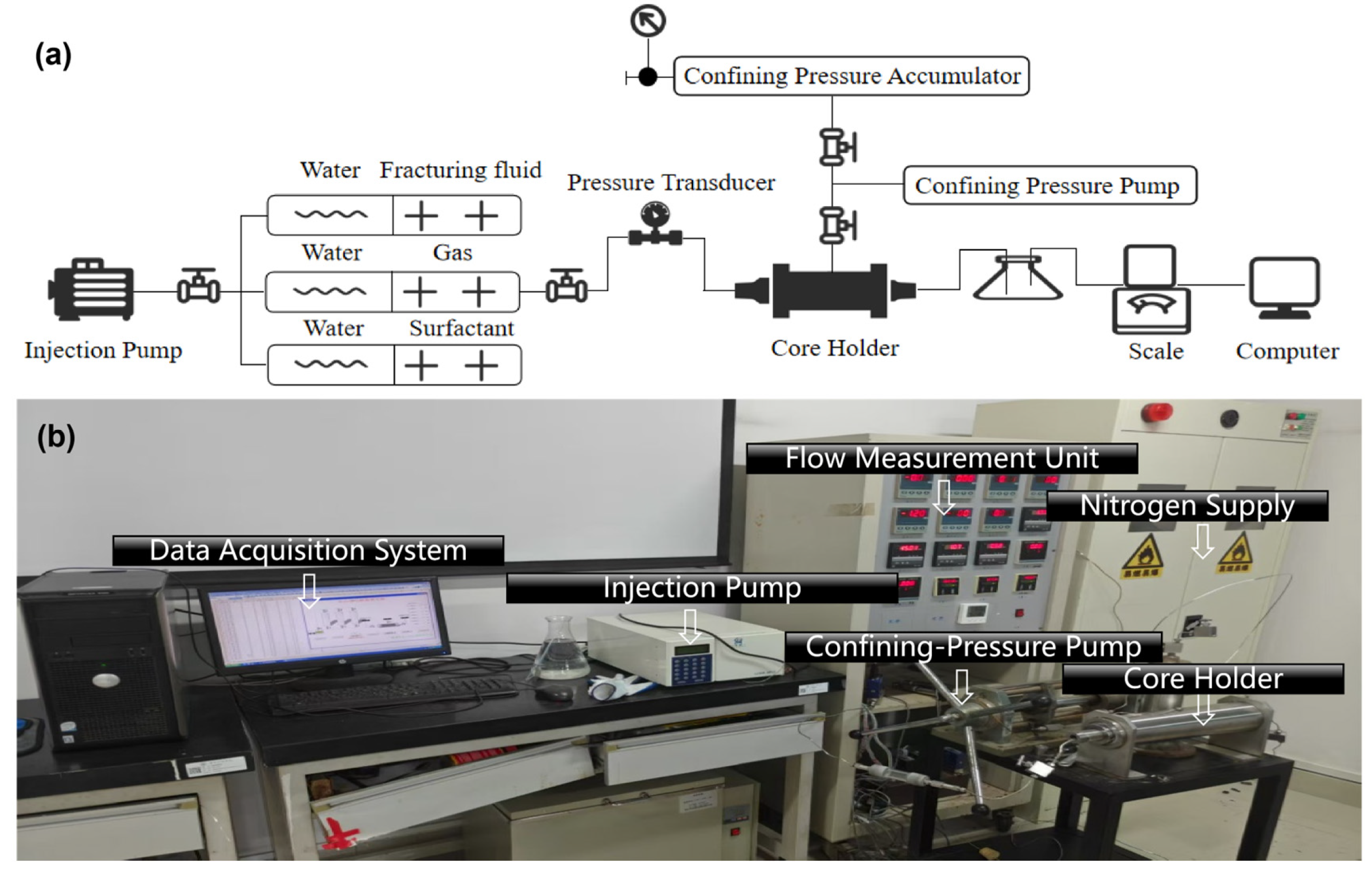
The laboratory setup used for the surfactant injection and flowback tests is presented in Figure 1, including a schematic diagram of the experimental system (Figure 1a) and a photograph of the actual laboratory apparatus (Figure 1b). The setup comprises a fluid injection system equipped with a dual-cylinder pump for core-flooding and a gas measurement system consisting of a conical flask, a metering tank, and an electronic balance (0–220 g range, ±0.0001 g accuracy). To improve measurement accuracy, the metering tank was equipped with a lower-positioned, smaller-diameter, and extended anti-evaporation opening, and an oil film was applied to the liquid surface to minimize evaporation. The metering line was also prefilled with distilled water to allow the prompt identification of the onset of amphiphobic surfactant injection [31,36,37].

2.3. Procedure

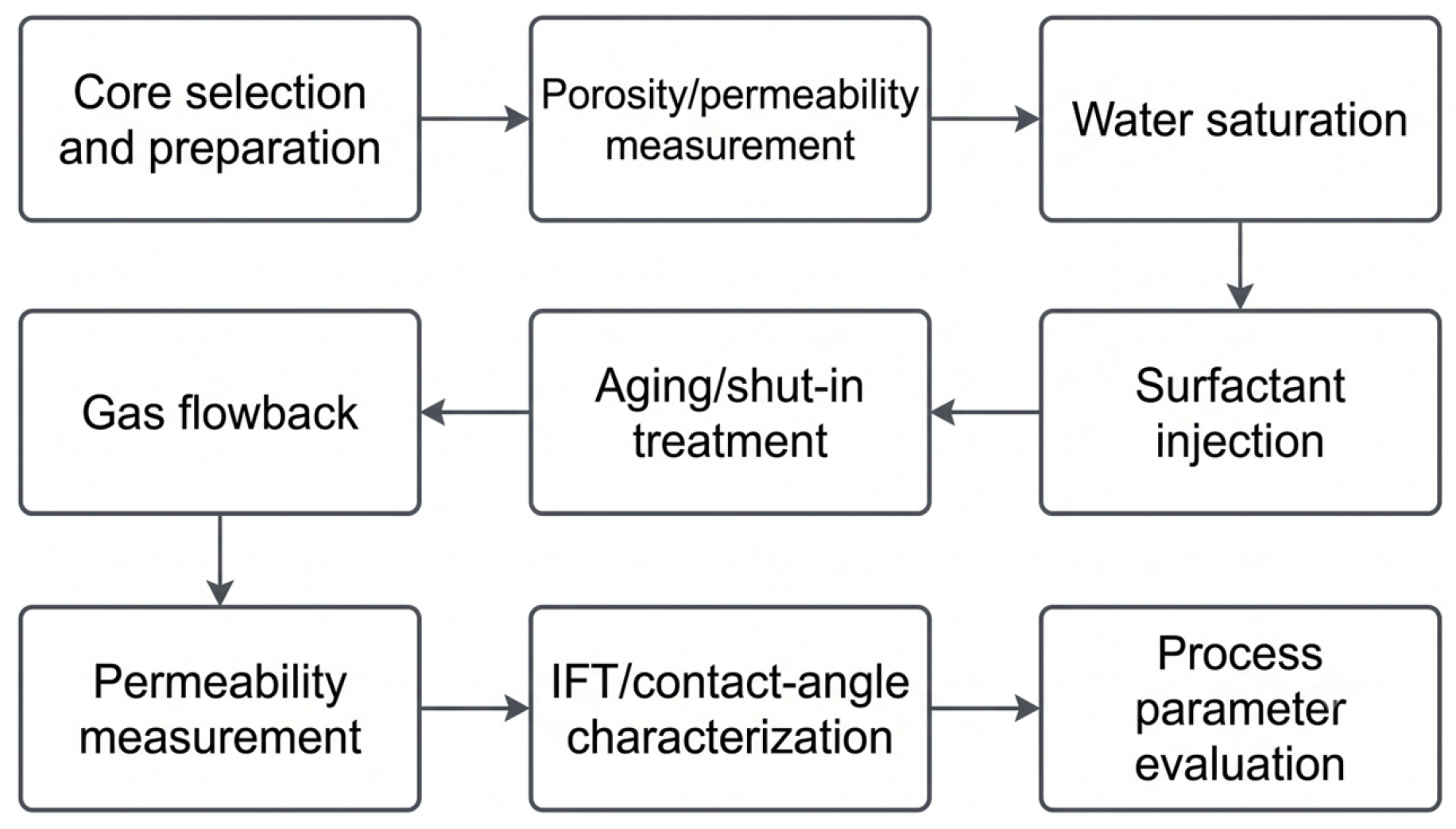
Core preparation and basic petrophysical measurements were conducted with reference to API RP 40. Interfacial tension measurements of surfactant solutions followed the general principles of ASTM D1331. Contact-angle measurements were performed using the captive-bubble method according to previously reported shale wettability evaluation procedures. The water-blocking experiments were then conducted following a standardized sequence to maintain consistency among the tested procedures (Figure 2).
(1) Core preparation and system configuration. The selected shale core was oriented according to its bedding direction and mounted within the core holder. All valves were initially closed, and the entire apparatus was carefully connected to ensure sealing integrity. The surfactant solution, prepared according to the designed formulation, was loaded into the upper chamber of the accumulator for subsequent injection.
(2) Core saturation. The core was saturated with deionized water using a manual injection pump until complete pore filling was achieved. Prior to core loading, the connecting line between the intermediate accumulator and the core holder was prefilled with surfactant solution to eliminate trapped air and ensure immediate liquid contact once injection began.
(3) Pressure stabilization. The confining pressure was applied to the target value and maintained constant throughout the experiment. The injection pressure was then adjusted to approximately 2.0 MPa below the confining pressure to establish a steady and controlled differential driving force for the displacement process.
(4) Surfactant injection and data acquisition. The surfactant solution was injected into the core under the pre-set conditions. The appearance of bubbles in the conical collection flask was continuously monitored as an indicator of effluent flow. Effluent mass was recorded at one-minute intervals using an electronic balance linked to a computer-based acquisition system for the real-time monitoring of injection dynamics.
(5) System reconfiguration for flowback stage. Once the designated pore volume (PV) of surfactant solution had been injected, pumping was terminated, and the inlet valves were closed. The metering device was disconnected from the outlet and reinstalled on the right-side three-way valve of the core holder to prepare for the flowback test configuration.
(6) Flowback and permeability measurement. Valves associated with the gas permeability system were opened to initiate the flowback phase. The core remained fixed in place throughout this stage to preserve the established saturation and stress conditions. Gas permeability was subsequently measured to quantify the extent of water-block damage removal and permeability recovery.
(7) Data collection and stabilization. After the effluent flow rate stabilized—confirmed by consistent bubble frequency and balance readings—at least 30 consecutive data points were collected to ensure statistical reliability for further analysis.
(8) Experiment termination. Following the completion of measurements, the injection pump was turned off, and confining pressure was gradually released using the manual pump to avoid abrupt pressure changes. The entire system was then depressurized to ambient conditions for safe disassembly and post-experiment inspection.

3. Results

Because shale cores are highly heterogeneous and the available intact cores were limited, each designed condition was tested using one individual core. Therefore, the results are used to identify indicative trends under the tested laboratory conditions rather than to provide statistically averaged values. To reduce the influence of initial permeability differences, permeability reduction was used as the main comparative indicator.

3.1. Effect of Concentration on Water-Blocking

The experimental results for water-blocking mitigation by amphiphobic surfactant at different concentrations (0.1%, 0.2%, 0.3%, 0.4%, 0.5%) are presented in Table 2. To further evaluate the influence of amphiphobic surfactant concentration on the mitigation of water-blocking in shale cores, the permeability reduction was defined as the relative permeability decrease before and after surfactant injection, expressed as
K r = K b K a K b × 100 %
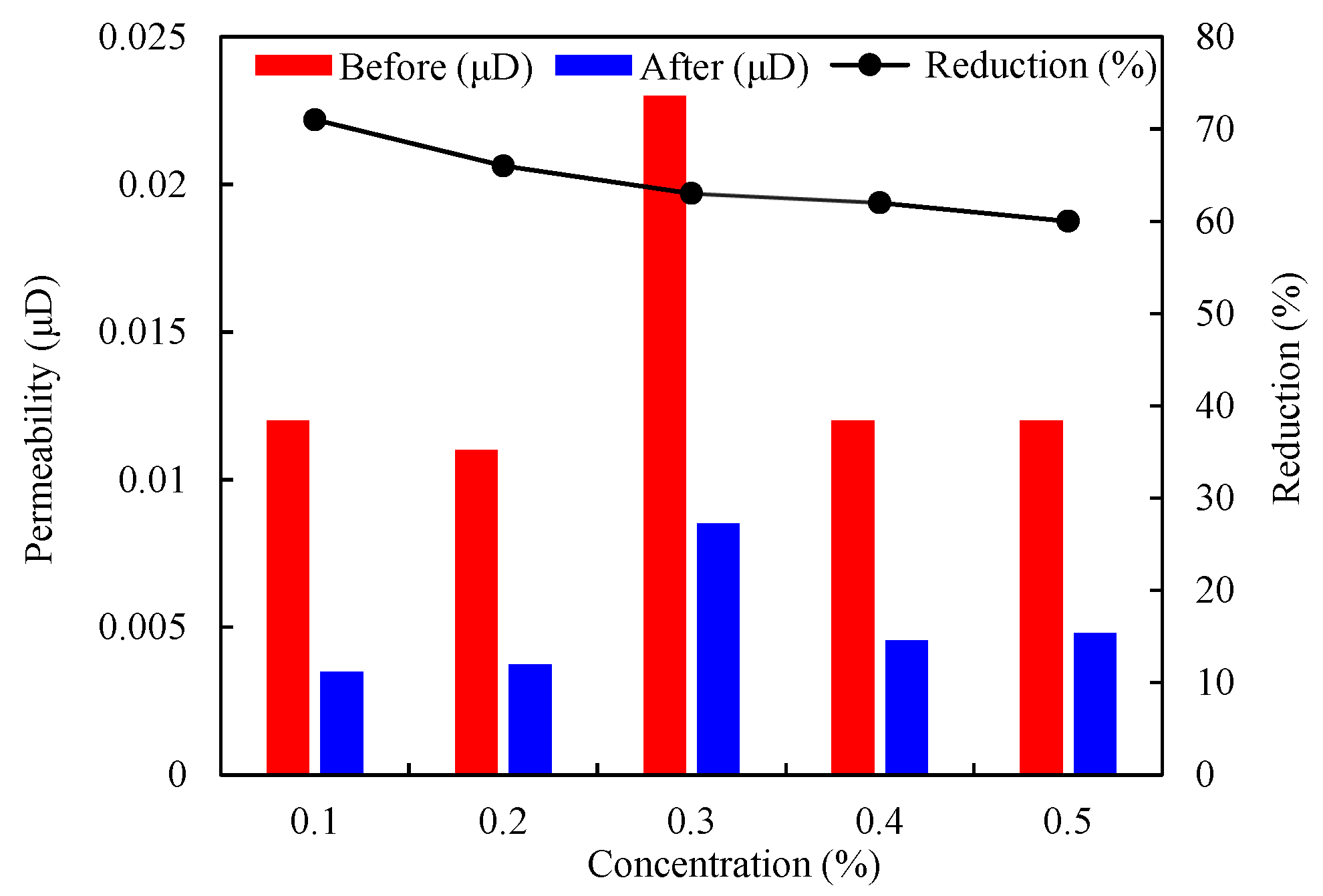
The variations in permeability and the corresponding permeability reductions at different concentrations are illustrated in Figure 3. It can be clearly seen that the permeability after surfactant injection remains lower than that before injection, indicating that the injection process induces a certain degree of permeability loss. As the surfactant concentration increases from 0.1% to 0.3%, the permeability reduction decreases rapidly, suggesting that the surfactant can effectively alleviate water-blocking damage within this range. When the concentration further increases from 0.3% to 0.5%, the reduction ratio tends to level off, implying that the improvement in permeability retention gradually reaches a steady state. This phenomenon may be associated with the formation of a hydrophobic film on pore surfaces induced by the amphiphobic surfactant, which limits water accumulation and facilitates gas transport. Therefore, under the tested laboratory conditions, 0.5 wt.% provided the lowest permeability reduction among the tested concentrations and can be regarded as the preferred concentration in this experimental series (Table 3).

3.2. Effect of Injection Volume on Water-Blocking

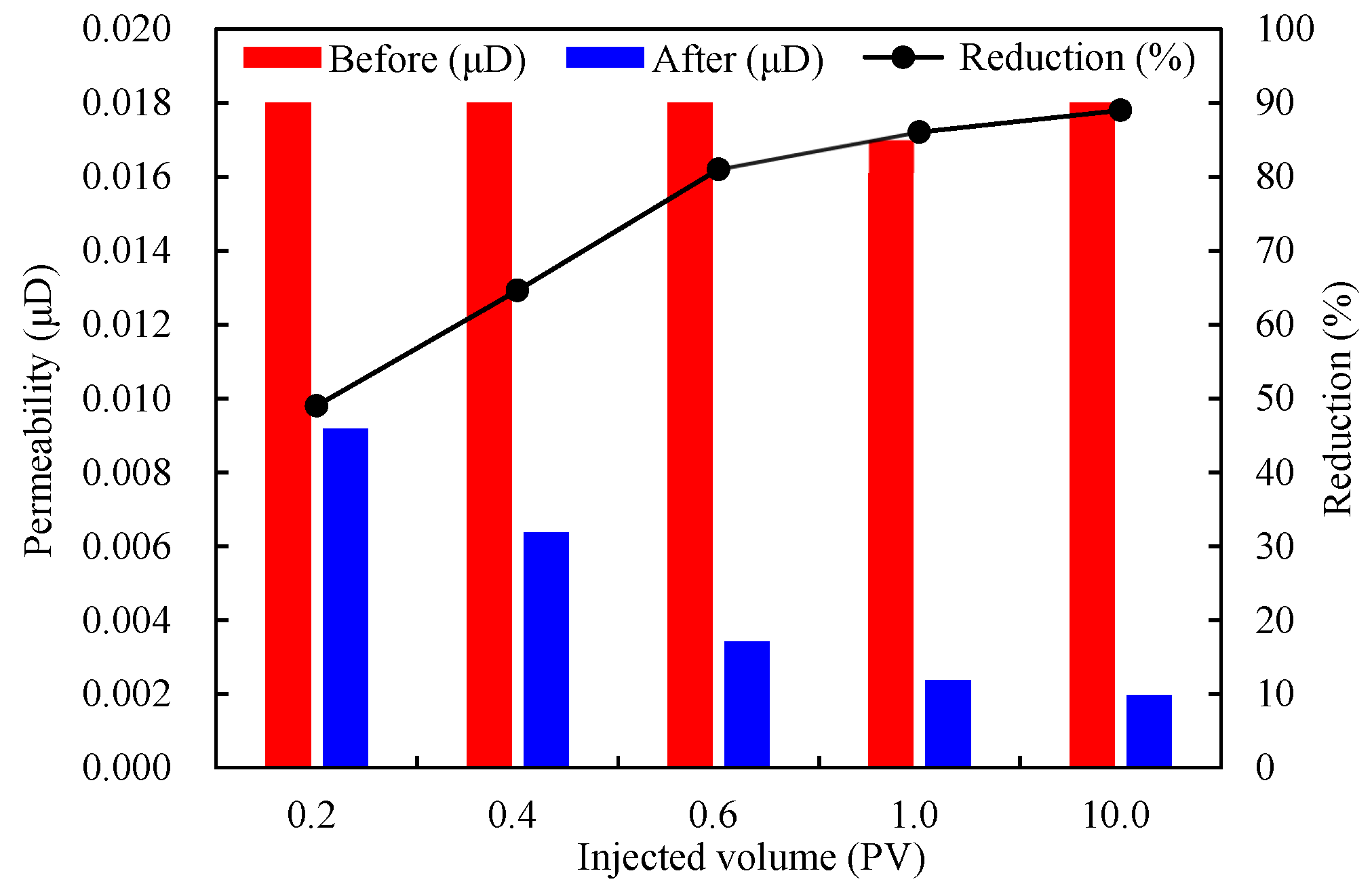
Experimental determination of the optimal injection volume of amphiphobic surfactant was performed by comparing the gas permeability of cores after injecting 0.5% surfactant solution at volumes of 0.20 PV, 0.40 PV, 0.60 PV, 1.00 PV, and 10.00 PV against the pre-injection permeability. Data are presented in Table 4. Building upon the analysis of the surfactant concentration’s effect, this section further examines how the injection volume influences water-blocking behavior in shale cores. To better understand this relationship, permeability variations and the corresponding reduction ratios at different injection volumes are presented in Figure 4, where the permeability reduction ratio is defined as in Section 3.1. A noticeable decrease in permeability is observed after surfactant injection compared with that before, suggesting that the introduced liquid phase inevitably results in a certain degree of permeability impairment. As the injection volume increases from 0.20 PV to 1.00 PV, the permeability declines rapidly, while beyond 1.00 PV, it tends to remain nearly constant. This observation indicates that permeability after injection decreases progressively with increasing injected volume. In addition, the permeability reduction ratio increases almost linearly with the injection volume and approaches a plateau once the volume exceeds 1.00 PV, implying that water-blocking damage becomes more significant as more solution is retained in the pore system. This behavior can be attributed to the accumulation and trapping of the injected liquid within finer pore throats, which restricts gas flow and enhances capillary resistance. Hence, the water-blocking damage is positively correlated with the injected volume, and the permeability reduction tends to stabilize when the injection volume surpasses approximately 1.00 PV.

3.3. Effect of Aging Time on Water-Blocking

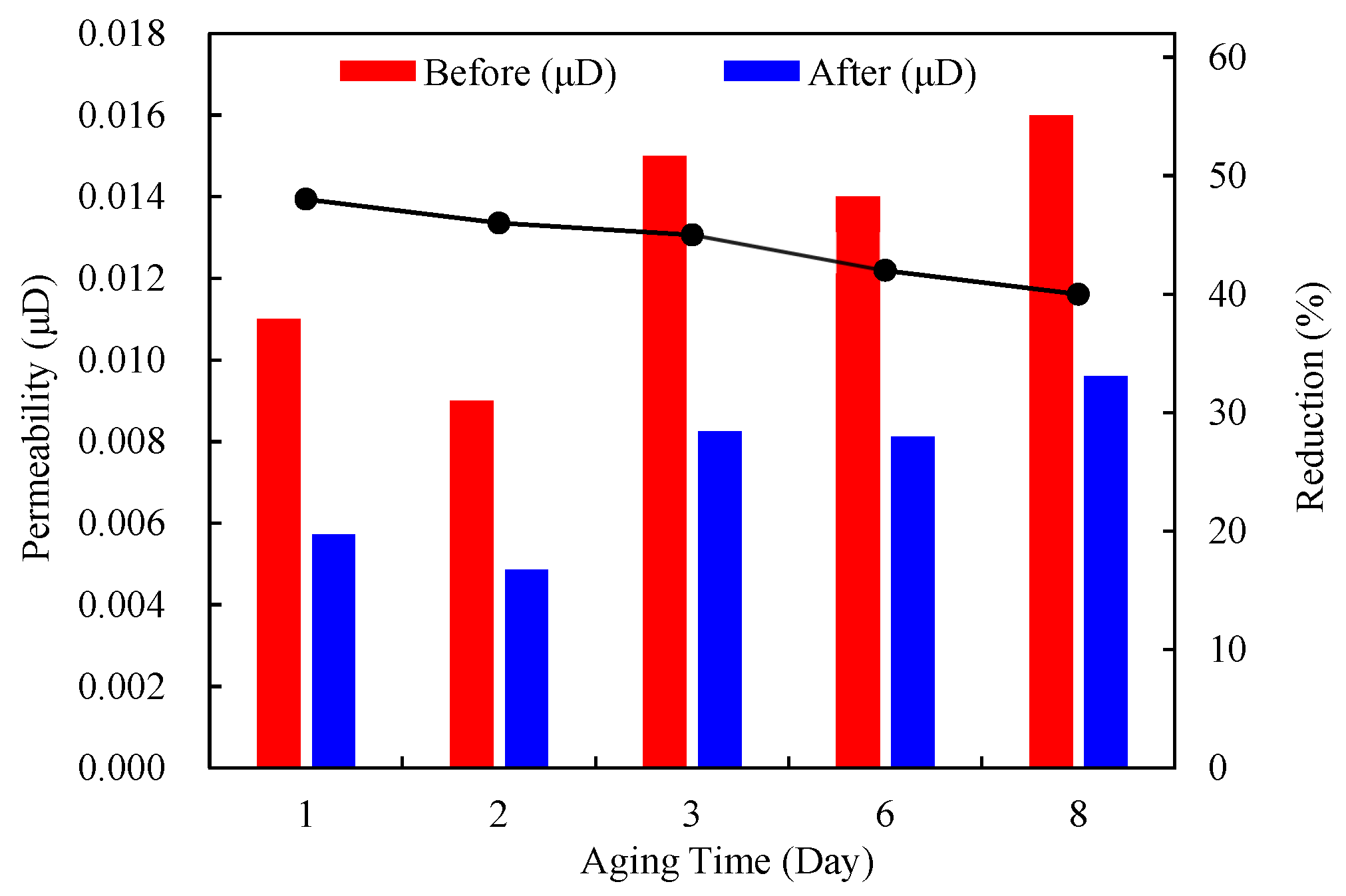
A 0.5% surfactant solution was injected into the core at 0.2 PV. The core was held under 5 MPa of pressure for 1, 2, 3, 6, and 8 days. Gas permeability was subsequently measured, then compared with pre-injection values. The correlation between aging time and water-blocking mitigation by amphiphobic surfactant is presented in Table 5. Following the analysis of injection volume, this section further examines the effect of aging time on the water-blocking behavior of shale cores. The aging time after the amphiphobic surfactant solution injection was used to simulate the shut-in period following hydraulic fracturing. The permeability before and after surfactant injection and the corresponding permeability reduction are presented in Figure 5, where the permeability reduction ratio is defined as in Section 3.1. It can be clearly observed that the permeability after surfactant injection remains lower than that before injection, indicating that the presence of the liquid phase still results in partial permeability reduction. However, as the aging time increases from 1 to 8 days, the permeability reduction ratio gradually decreases, suggesting that the water-blocking damage becomes less severe with prolonged aging. This trend implies that extending the aging duration contributes to the gradual recovery of gas flow channels and the alleviation of fluid blockage within the pore system. This improvement can be attributed to the redistribution and diffusion of the amphiphobic surfactant molecules within the pore structure during the aging process, promoting the formation of a more stable hydrophobic surface film and facilitating the release of trapped liquid. Therefore, it can be inferred that prolonging the aging time effectively mitigates water-blocking damage and enhances permeability recovery, implying that an appropriately extended shut-in period may be beneficial for improving shale gas productivity. It should be noted that the aging time experiments were conducted at a fixed injection volume of 0.2 PV. Therefore, the observed trend provides a laboratory basis for optimizing shut-in duration, although further experiments coupling aging time with larger injection volumes are needed to verify its applicability under field-scale conditions.

4. Discussion

4.1. Molecular Adsorption

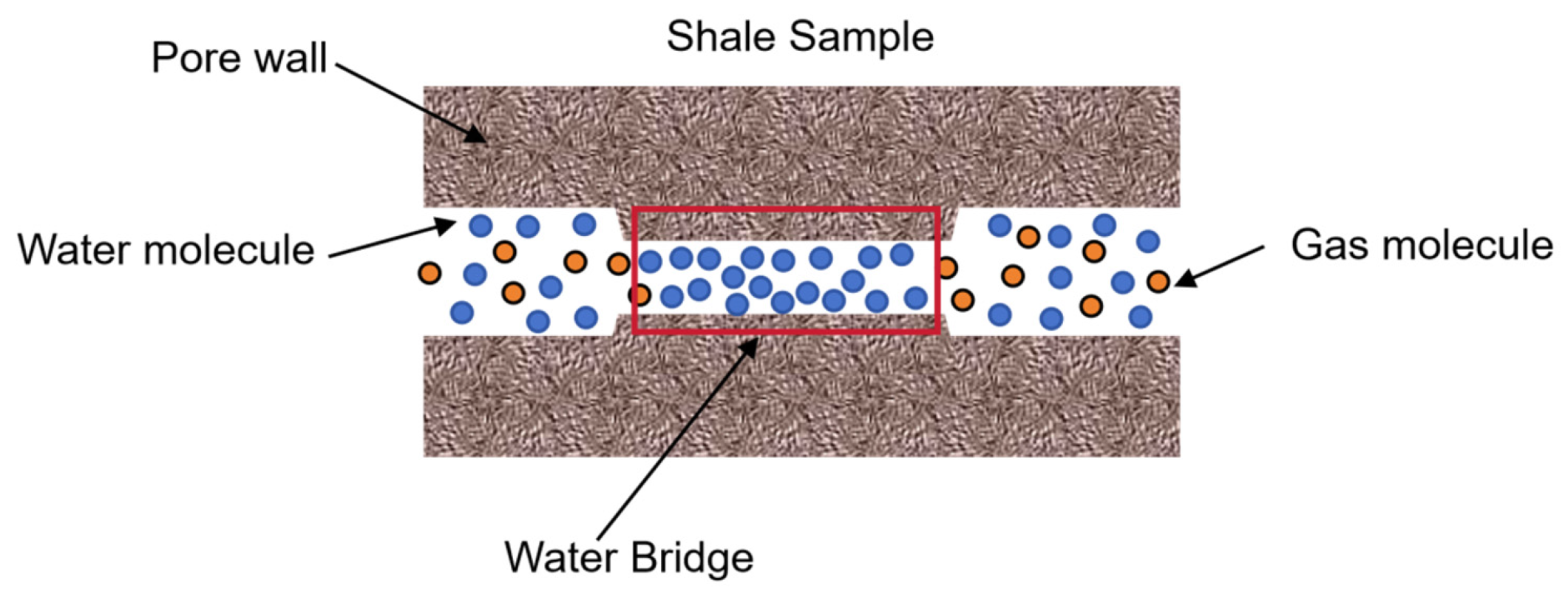
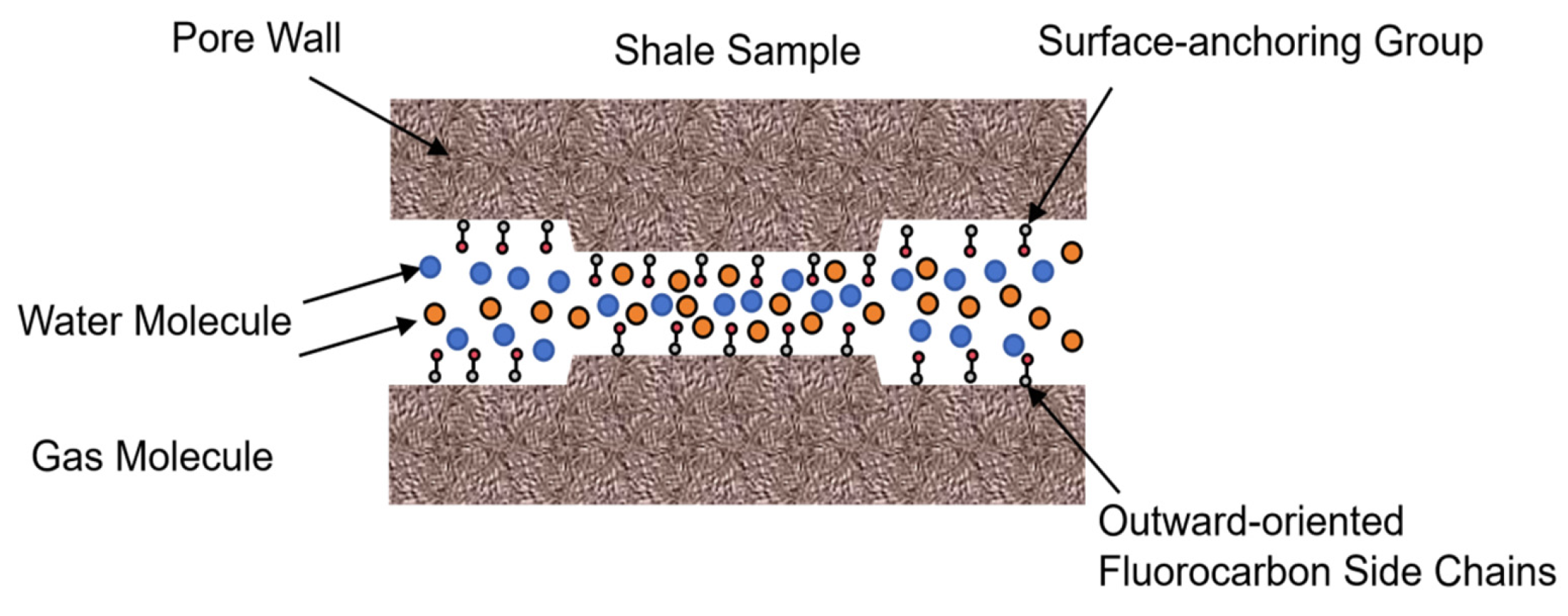
The mitigation of water-blocking damage observed in this study is primarily governed by the molecular adsorption of the amphiphobic (anionic–fluoro-surfactant) species on the inner surfaces of shale pores [38]. As illustrated in Figure 6 and Figure 7, the hydrophilic head groups of the surfactant molecules preferentially anchor onto polar mineral sites of the pore walls—such as clays and oxides—through hydrogen bonding or electrostatic interactions, while the hydrophobic tails extend toward the pore interior. This oriented adsorption induces the formation of a relatively stable amphiphobic interfacial layer under experimental conditions, effectively isolating the mineral surface from direct contact with bulk water. Nevertheless, a small amount of hydrogen-bonded water molecules may still remain loosely associated with the adsorbed surfactant layer, maintaining a dynamic interfacial balance [7].
At the molecular scale, the formation of this adsorption layer significantly redistributes the interfacial energy within the confined pore system. Such modification originates from surfactant-induced molecular realignment at the solid–liquid interface, which weakens the hydrogen-bond network between bound-water molecules and the shale matrix, thereby disturbing the integrity of the bound-water film. Consequently, the local contact angle increases while the solid–liquid interfacial free energy decreases, indicating a transition of the pore wall from a strongly water-wet to a more gas-wet state, favoring gas occupancy within the pore channels [27,39]. This transition does not imply the complete desorption of water from the surface; instead, it reflects a thermodynamic redistribution of surface energy that makes gas phase retention more favorable than aqueous trapping.
This adsorption-driven transition reduces the capillary retention of the aqueous phase and promotes the detachment of loosely bound-water molecules from the pore walls. At the macroscopic level, the decreased interfacial adhesion enhances water flowback and improves gas-phase permeability, thus effectively alleviating water-blocking damage. Recent experiments have shown that higher concentrations of fluoro-surfactant systems yield stronger surface coverage and greater permeability recovery. Therefore, optimizing molecular adsorption and interfacial layer stability provides a practical strategy for mitigating capillary-controlled water blockage and improving shale-gas production efficiency [32,38,39,40].

4.2. Interfacial Tension

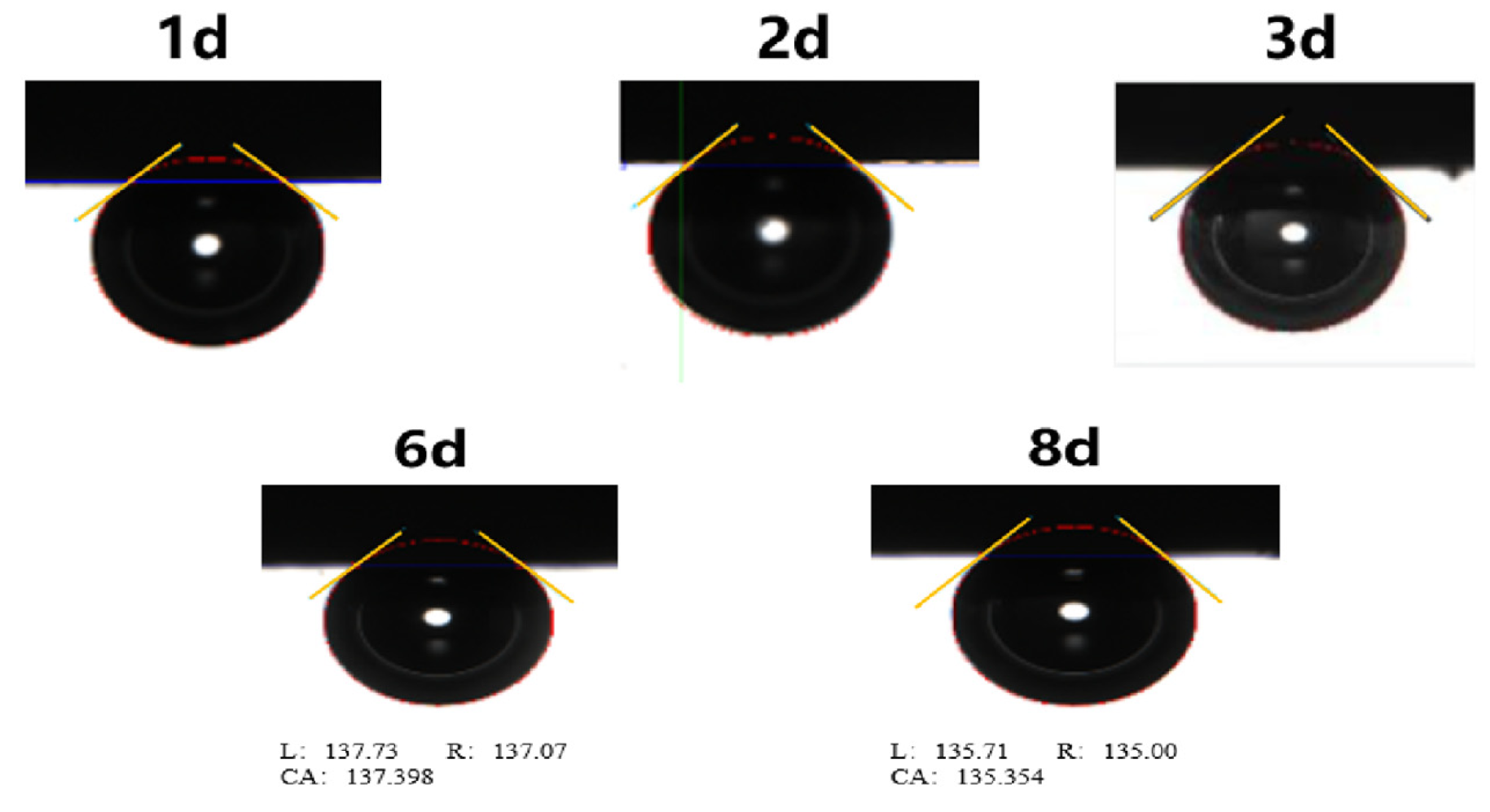
To evaluate the influence of the surfactant on shale wettability, the captive-bubble method was employed under both atmospheric and high-pressure immersion conditions. Variations in the wetting angle were monitored over time, as shown in Figure 8. The contact angle of the core sample progressively decreased with aging, indicating continuous adsorption of fluorinated amphiphilic surfactant molecules at the solid–liquid interface and the gradual establishment of interfacial equilibrium [41]. Although this reduction in apparent contact angle might appear to suggest an increase in water-wetness, it actually reflects a redefinition of the three-phase contact line once the surfactant adsorption reaches equilibrium. As the surface free energy is minimized, the pore surface becomes more gas-wet, which facilitates gas migration through nanopores [42,43]. Building upon the molecular adsorption mechanism discussed in Section 4.1, the alteration of interfacial tension (IFT) plays a decisive role in mitigating water-blocking damage. The adsorbed surfactant molecules accumulate at both the liquid–gas and liquid–solid interfaces, markedly lowering interfacial free energy and weakening adhesive interactions between the aqueous phase and mineral surfaces. This modification of interfacial behavior facilitates the detachment of water films from pore walls and enhances the mobility of both liquid and gas phases [41,42,43].
The blank 2 wt.% KCl solution without surfactant exhibited an interfacial tension (IFT) of 71.6 mN/m. After adding the fluorinated amphiphobic surfactant, the IFT decreased sharply to 28.8 mN/m at 0.1 wt.% and further decreased to 8.3 mN/m at 0.5 wt.% (Table 6). The decrease became less pronounced above 0.3 wt.%, indicating that interfacial adsorption gradually approached saturation. This concentration-dependent behavior is consistent with the strong interfacial activity and wettability alteration effects reported for fluorinated surfactant systems in gas-condensate and tight reservoir applications [13,32]. Such saturation behavior suggests that additional surfactant molecules preferentially form aggregates in the bulk phase rather than further adsorbing at the interface, which stabilizes the interfacial layer without further reducing surface energy.
According to the Young–Laplace relation, the capillary pressure (Pc) required for liquid removal is directly proportional to the interfacial tension (γ). Thus, a reduction in γ effectively decreases Pc, allowing water to detach more readily from pore surfaces and flow back under lower driving pressures [43]. A reduction of approximately 10 mN/m in γ is estimated to lower Pc by about 15–20% for a typical pore radius of 50 nm. This explains the observed improvement in permeability during surfactant treatment, where reduced IFT promotes easier water release and enhances gas-phase flow. Maintaining sufficiently low IFT through an optimized surfactant formulation is therefore essential for efficient post-fracturing cleanup and enhanced shale-gas recovery. The fluorinated amphiphilic surfactant system proposed in this study provides high adsorption efficiency and stable interfacial modification even at relatively low concentrations, making it a promising solution for mitigating water-blocking effects [41,42,43].

4.3. Contact Angle

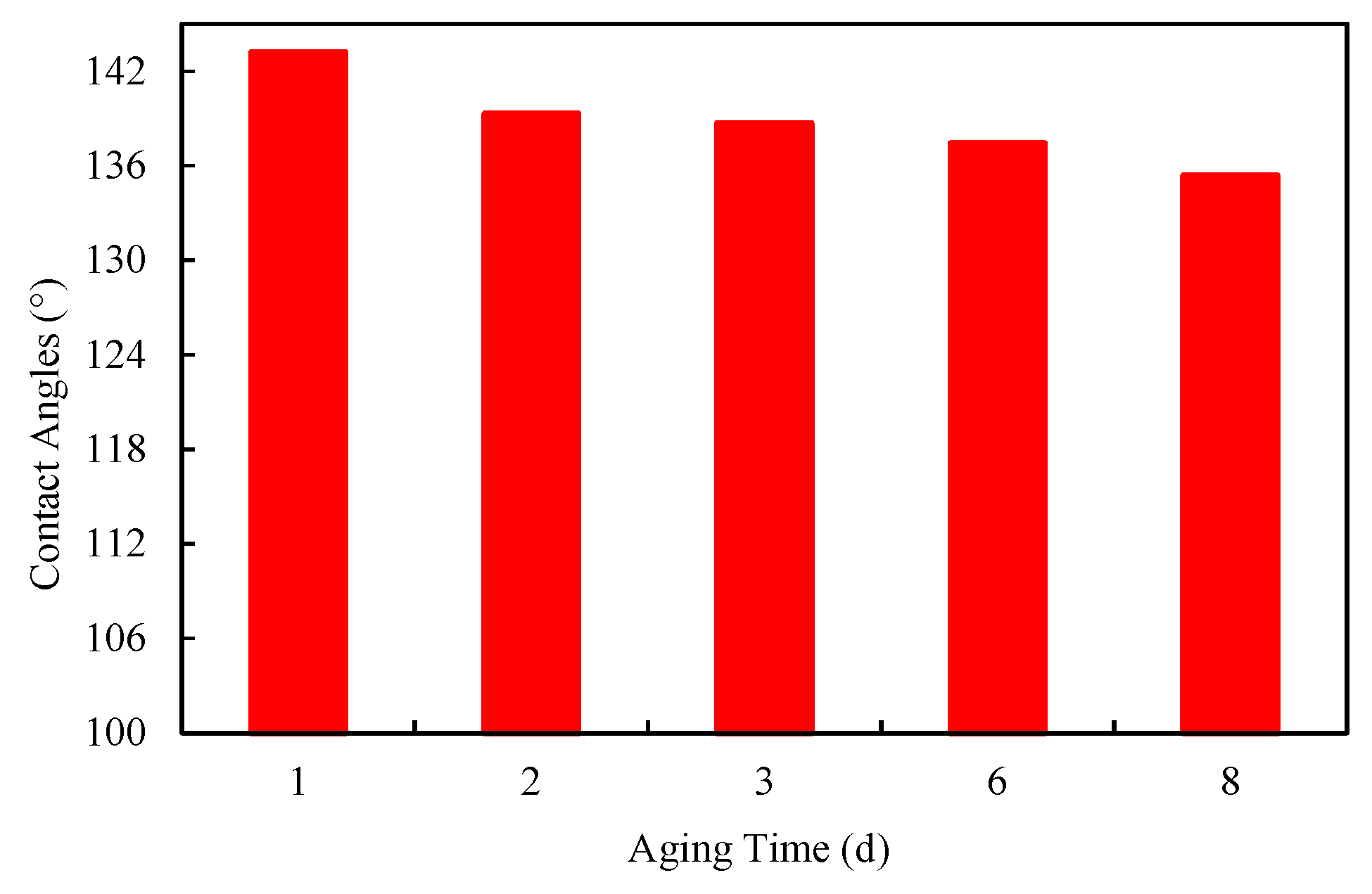
Following the interfacial tension analysis in Section 4.2, contact angle measurements were conducted to further explore the time-dependent adsorption behavior of the fluorinated amphiphilic surfactant on shale surfaces. In this study, contact angle was used as a wettability indicator rather than a direct shale durability index. It reflects the affinity of the surfactant-treated shale surface for the aqueous phase and helps to interpret the tendency of water retention or detachment during water-blocking mitigation. The contact angle was determined by the captive-bubble method, in which a gas bubble was introduced onto the shale surface immersed in the testing fluid, and the angle at the gas–liquid–solid three-phase contact line was recorded after image stabilization. Typical contact-angle measurement images and the corresponding variation trend are shown in Figure 8 and Figure 9, respectively. The contact angle of the shale core gradually decreased from 143.2° to 135.4° with aging time increasing from 1 to 8 days. Although the apparent reduction in contact angle might seem to indicate a more water-wet tendency, this variation actually represents a transition from a strongly hydrophobic to a thermodynamically balanced amphiphobic surface [39]. Such behavior is consistent with the progressive rearrangement of surfactant molecules and the establishment of interfacial equilibrium over time. Similar time-dependent contact-angle stabilization has been reported for fluorinated surfactant systems in shale reservoirs [32,38]. The moderate decline in θ indicates reduced surface free energy, as the adsorption layer evolves from a random orientation to an ordered configuration, reflecting the formation of a stable low-energy interface (Table 7).
The observed wettability evolution can be interpreted by the replacement adsorption–hydrophobic tail reorientation mechanism [32]. In the initial stage, the polar surface of shale minerals, rich in –Si–OH and –Al–OH sites, strongly attracts water molecules and forms a bound-water layer responsible for water-blocking. When fluorinated surfactant molecules diffuse to the mineral surface, their hydrophilic headgroups preferentially adsorb onto these polar sites, effectively replacing the previously adsorbed water molecules [40]. This substitution disrupts the hydrogen-bond network between water and the rock, thereby detaching the bound-water film. Simultaneously, the hydrophobic fluorocarbon chains (–CF2–, –CF3) reorient outward toward the pore fluid, forming a compact, low-surface-energy film. This “hydrophobic chain flipping” prevents further water adsorption and reconstructs the solid–liquid interfacial energy distribution. The resulting interfacial configuration minimizes adhesion work and shifts the surface to a moderately gas-wet state, which is more favorable for gas migration under reservoir conditions [41,42].
According to the Young–Laplace relation, the capillary pressure P c = 2 γ cos θ / r depends on both interfacial tension and contact angle. During surfactant aging, γ decreases while θ increases, leading to a pronounced reduction in Pc [7]. When the wettability approaches an amphiphobic equilibrium (θ ≈ 130–140°), capillary pressure may decrease markedly, significantly reducing the trapping of liquid water within nanopores. Consequently, the bound-water layer becomes mobile and can be displaced at much lower driving pressures [43]. This explains the enhanced flowback performance observed after surfactant treatment. Therefore, optimizing surfactant concentration and aging time to achieve interfacial equilibrium is essential for mitigating water-blocking and improving post-fracturing gas recovery in shale reservoirs [13].
Direct water-absorption measurements were not included in the present experimental design; therefore, a scatter plot or correlation analysis between water absorption and shale durability was not provided. Instead, gas permeability reduction was used as the primary response variable to evaluate water-blocking damage, because permeability loss directly reflects the obstruction of gas transport caused by liquid retention in shale pores. Among the rock properties considered in this study, gas permeability is therefore the most directly affected and experimentally quantified property related to water absorption and liquid retention, while pore–throat connectivity, clay swelling, capillary pressure, wettability, and stress-sensitive microstructures may be indirectly influenced.
In addition to interfacial tension reduction and wettability alteration, surfactant adsorption may also influence water-blocking behavior through its interactions with clay minerals and the stress-sensitive pore structure of shale. The use of 2 wt.% KCl in the treatment fluid can help to suppress clay hydration and swelling, thereby reducing the risk of pore–throat narrowing caused by water-sensitive minerals. Meanwhile, the adsorption of fluorinated surfactant molecules on pore surfaces lowers solid–liquid interfacial energy and weakens capillary retention, which may reduce local capillary-induced stress and facilitate water detachment from nanopores. However, changes in effective stress and the initiation or closure of microcracks were not directly measured in this study. Therefore, these effects are discussed as possible mechanisms, and future work using in situ stress-sensitive permeability tests, clay swelling measurements, or microstructural characterization is needed to further verify their contribution.
Compared with previous studies on shale formation damage during fracturing-fluid imbibition and flowback [30], fluorochemical gas-wetting alteration [7,32,39], and nano-enabled or composite systems for water-blocking mitigation [13,22,23,24], the present work provides a process-oriented laboratory evaluation of an amphiphobic surfactant treatment by jointly considering surfactant concentration, injection volume, and aging time. The main advantage of this study is that it links permeability reduction, IFT reduction, and contact-angle evolution within the same core-flooding framework, which helps to identify a practical laboratory treatment window. However, the study also has limitations. Each condition was tested using one individual shale core, repeated core-flooding tests and standard deviations were not included, direct water-absorption measurements were not performed, and effective-stress changes and microcrack evolution were not directly monitored. Therefore, the proposed treatment window should be regarded as a laboratory-based reference, and further work is needed to verify its applicability using replicated tests, water-absorption measurements, in situ stress-sensitive permeability tests, and field-scale validation.


5. Conclusions

Core-flooding experiments were performed to evaluate water-blocking damage and its mitigation in shale cores after amphiphobic surfactant treatment. These laboratory observations provide a useful basis for optimizing surfactant concentration, injection volume, and shut-in duration under the tested conditions.
(1) Water-blocking during fracturing-fluid flowback significantly reduced shale permeability. Under the tested conditions, the amphiphobic surfactant treatment helped to alleviate water-blocking damage and improve gas-phase permeability recovery.
(2) Within the tested concentration range, increasing surfactant concentration reduced permeability loss, with the improvement becoming less pronounced at higher concentrations. In contrast, excessive injection volume increased liquid retention and aggravated secondary water-blocking, suggesting that the injection volume should be carefully controlled during treatment design.
(3) Within the tested aging time range, a longer shut-in duration promoted surfactant redistribution and interfacial equilibration, corresponding to lower permeability reduction and improved flowback behavior. These results suggest that sufficient soaking time is beneficial for surfactant adsorption and wettability adjustment, although further tests coupling aging time with larger injection volumes are needed for field-scale validation.

Author Contributions

J.Y. (Jingjia Yang): Conceptualization, Methodology. G.C.: Validation, Credit data availability statement, Supervision. N.L.: Resources, Data curation, Gas shale sample preparation. Z.X.: Experimental test, Date analysis. Y.P.: Writing—original draft preparation. Z.L.: Experimental design, Writing—Reviewing and Editing, Funding acquisition. J.Y. (Jun Yang): Data curation, Date analysis. All authors have read and agreed to the published version of the manuscript.

Funding

This research was supported by the Science and Technology Research Program of the Chongqing Municipal Education Commission (Grant No. KJZD-M202201502) and the Natural Science Foundation of Chongqing, China (CSTB2022NSCQ-MSX0917).

Data Availability Statement

The data that support the findings of this study are available from the corresponding author upon reasonable request.

Acknowledgments

The authors gratefully acknowledge the technical support provided during the experimental work. During the preparation of this manuscript, the authors used ChatGPT to improve the clarity and readability of the language. The authors have reviewed and edited the output and take full responsibility for the content of this publication.

Conflicts of Interest

Jingjia Yang, Guangqiang Cao and Nan Li were employed by the PetroChina and Jun Yang was employed by the Sinopec Zhongyuan Oilfield Service Corporation. The remaining authors declare that the research was conducted in the absence of any commercial or financial relationships that could be construed as potential conflicts of interest. The PetroChina and Sinopec Zhongyuan Oilfield Service Corporation had no role in the design of the study; the collection, analysis, or interpretation of data; the writing of the manuscript; or the decision to publish the results.

References

  1. Jiang, H.Y. Control of Structural Evolution in Southern Sichuan on Differential Enrichment of Longmaxi Formation Shale Gas. Ph.D. Thesis, China University of Petroleum (Beijing), Beijing, China, 2021. (In Chinese) [Google Scholar] [CrossRef]
  2. Hu, D.; Wei, Z.; Wang, W.; Wei, X.; Liu, Z.; Chen, F.; Wei, F.; Li, F. Exploration Breakthrough and Implications of Shale Gas in the Dalong Formation of the Upper Permian in Leiye-1 Well, Northeastern Sichuan Basin. Nat. Gas Ind. 2023, 43, 28–39. (In Chinese) [Google Scholar]
  3. Liu, Y.S. Comparative Study on the Enrichment Patterns of Shale Gas and Tight Gas in the Sichuan Basin. Ph.D. Thesis, Yangtze University, Jingzhou, China, 2023. (In Chinese) [Google Scholar] [CrossRef]
  4. Wang, Y.B. Study on the Accumulation Process of Shale Gas in Wufeng-Longmaxi Formation of Tiangongtang Anticline, Changning Area. Ph.D. Thesis, China University of Petroleum (Beijing), Beijing, China, 2024. (In Chinese) [Google Scholar] [CrossRef]
  5. Zhou, L.; Das, S.; Ellis, B.R. Effect of Surfactant Adsorption on the Wettability Alteration of Gas-Bearing Shales. Environ. Eng. Sci. 2016, 33, 766–777. [Google Scholar] [CrossRef]
  6. Li, S.; Tang, J.; Ding, Y.; Liu, S.; Liu, G.; Cai, B. Recovery of Low Permeability Reservoirs Considering Well Shut-Ins and Surfactant Additivities. Energies 2017, 10, 1279. [Google Scholar] [CrossRef]
  7. Jin, J.; Sun, J.; Rong, K.; Lv, K.; Nguyen, T.A.H.; Wang, R.; Huang, X.; Bai, Y.; Liu, J.; Wang, J. Gas-Wetting Alteration by Fluorochemicals and Its Application for Enhancing Gas Recovery in Gas-Condensate Reservoirs: A Review. Energies 2020, 13, 4591. [Google Scholar] [CrossRef]
  8. Reis, P.K.P.; Carvalho, M.S. Pore-Scale Analysis of Condensate Blockage Mitigation by Wettability Alteration. Energies 2020, 13, 4673. [Google Scholar] [CrossRef]
  9. Dou, L.; Chen, J.; Li, N.; Bai, J.; Fang, Y.; Wang, R.; Zhao, K. Quantitative Evaluation of Imbibition Damage Characteristics of Foaming Agent Solutions in Shale Reservoir. Energies 2022, 15, 5768. [Google Scholar] [CrossRef]
  10. Pal, N.; Verma, A. Applications of Surfactants as Fracturing Fluids: Chemical Design, Practice, and Future Prospects in Oilfield Stimulation Operations. In Surfactants in Upstream E&P; Springer International Publishing: Cham, Switzerland, 2021; pp. 331–355. [Google Scholar]
  11. Shang, J.; Dong, Z.; Tan, W.; Zhang, Y.; Liang, T.; Xing, L.; Wang, Z. A Review of Fracturing and Enhanced Recovery Integration Working Fluids in Tight Reservoirs. Processes 2024, 12, 1241. [Google Scholar] [CrossRef]
  12. Xu, J.; Wang, L.; Lyu, X.; Azadbakht, S.; Li, M.; Su, K.; Huang, Y. Evaluation of a Novel Paraffin Wax Microemulsion for Improving Wellbore Stability in Shale Formations. Geoenergy Sci. Eng. 2024, 240, 213083. [Google Scholar] [CrossRef]
  13. Chen, C.; Zhuo, S.; Li, S.; Yin, N.; Luo, C.; Ren, H.; Jia, M.; Wang, X.; Cheng, Q. Wettability Modification of a Nano-Silica/Fluoro Surfactant Composite System for Reducing the Damage of Water Blocking in Tight Sandstone Reservoirs. RSC Adv. 2025, 15, 5264–5276. [Google Scholar] [CrossRef] [PubMed]
  14. Lu, Y.; Yang, F.; Ge, Z.; Wang, Q.; Wang, B. Influence of Viscoelastic Surfactant Fracturing Fluid on Permeability of Coal Seams. Fuel 2017, 194, 1–6. [Google Scholar] [CrossRef]
  15. Xie, J.; Shi, Y.; Chen, D.; Wang, Y.; Yin, L.; Lyu, J. Study on the Optimal Proportion of Nano-Modified Viscoelastic Surfactant Fracturing Fluid and Its Effect on Coalbed Permeability. Chem. Eng. Res. Des. 2025, 224, 544–560. [Google Scholar] [CrossRef]
  16. Tian, H.; Chen, T.; Ma, Q.; Aidarova, S.; Gabdullin, M.; Li, Y.; Pan, B. Wettability Modification by Surfactants and Temperature in Shale Oil Reservoir Conditions. J. Mol. Liq. 2024, 401, 124607. [Google Scholar] [CrossRef]
  17. Abdulelah, H.; Negash, B.M.; Keshavarz, A.; Hoteit, H.; Iglauer, S. Interfacial and Wetting Properties in Shale/Methane/Water and Shale/Methane/Surfactant Systems at Geological Conditions. Energy Fuels 2022, 36, 10155–10166. [Google Scholar] [CrossRef]
  18. Jin, X.; Phatak, A.; Friesen, D.; Sanders, A.; Ren, G.; Koster, N. Analyzing the Benefits of Designing a Multifunctional Surfactant Blend from Laboratory Scale to Field Scale in Hydraulic Fracturing under High-Salinity Conditions: A Case Study of the Mississippian Limestone Play. SPE Prod. Oper. 2023, 38, 88–103. [Google Scholar] [CrossRef]
  19. Yuan, L.; Yousefi, M.; Oswald, D.; Dehghanpour, H. Regained Permeability Measurement When Using Different Surfactants in Fracturing Operations. In Proceedings of the SPE/AAPG/SEG Unconventional Resources Technology Conference, Houston, TX, USA, 17–19 June 2024; p. D011S015R002. [Google Scholar] [CrossRef]
  20. Jia, H.; Wei, Z.; Wang, Q.; Wang, Z.; Zhang, X.; Wen, X.; Yuan, S.; Li, X.; Wang, B.; Huang, P. Performance Evaluation and Formation Mechanism of Low-Concentration Silicon Quantum Dot-Enhanced Viscoelastic Surfactant Fracturing Fluids. Energy Fuels 2025, 39, 18406–18416. [Google Scholar] [CrossRef]
  21. Xu, Z.; Zhao, M.; Xie, Y.; Li, T.; Meng, X.; Dong, Y.; Yang, Z.; Dai, C. Nanoslickwater Fracturing Fluid with Enhanced Imbibition Capacity for Low-Permeability Reservoirs. Energy Fuels 2024, 39, 1141–1151. [Google Scholar] [CrossRef]
  22. Guo, S.; Zhang, J.; Gao, Y.Q.; Tan, H.G.; Cheng, H.B.; Li, H.Y.; Zhu, D.Y. Imbibition Mechanism Analysis of Modified Black Nanosheet and Low Salinity Water Composite System for Enhanced Oil Recovery by NMR Method. Pet. Sci. 2025, 22, 5166–5175. [Google Scholar] [CrossRef]
  23. Zhang, J.; Tan, H.G.; Zhang, T.; Gao, Y.Q.; Cheng, H.B.; Li, H.Y.; Zhu, D.Y. New Injection Method Using Composite Gel System and Gel Breaker to Improve Sweep Efficiency and Mitigate Formation Damage. Pet. Sci. 2026, 23, 383–392. [Google Scholar] [CrossRef]
  24. Guo, S.; Zhu, D. Mini-Review of Black Nanosheets for Enhanced Oil Recovery Used in Low-Permeability/Ultra-Low-Permeability Reservoirs. Energy Fuels 2025, 39, 16768–16793. [Google Scholar] [CrossRef]
  25. Lin, P. Damage Mechanism and Protection Measures for Yanchang Shale Chang 7 Reservoir, China. Front. Earth Sci. 2025, 13, 1694288. [Google Scholar] [CrossRef]
  26. Rezaeyan, A.; Tran, S.; Rezvani, H.; Yu, Y.; Keshavarz, M.; Zhang, L. Recovery Enhancement in Unconventional Shale Resources. In Unconventional Resources; CRC Press: Boca Raton, FL, USA, 2025; pp. 284–356. [Google Scholar]
  27. Hajibolouri, E.; Kord, S.; Hashemi, A.; Tamsilian, Y. Improving Fluid Flow Capacity in Gas-Condensate Reservoirs through Condensate Blockage Remediation Using Nanofluid Wettability Alteration. J. Dispers. Sci. Technol. 2025, 46, 1–14. [Google Scholar] [CrossRef]
  28. Bigdeli, A. Wettability Alteration or Wettability Improvement? A Fundamental Question toward a Deeper Understanding of Low Salinity Water Flooding (LSWF). J. Resour. Recovery 2025, 3, e722248. [Google Scholar]
  29. Sikiru, S.; Yusuf, J.Y.; Soleimani, H.; Kumar, N.; Rehman, Z.u.; Bonnia, N.N. Enhanced Oil Recovery in Sandstone Reservoirs: A Review of Mechanistic Advances and Hydrocarbon Predictive Techniques. Energy Eng. 2025, 122, 3917–3960. [Google Scholar] [CrossRef]
  30. Chen, M.; Yan, M.; Kang, Y.; Fang, S.; Liu, H.; Wang, W.; Shen, J.; Chen, Z. Shale Formation Damage during Fracturing Fluid Imbibition and Flowback Process Considering Adsorbed Methane. Energies 2022, 15, 9176. [Google Scholar] [CrossRef]
  31. Li, Y.; Wang, Y.; Wang, Q.; Tang, L.; Yuan, L.; Wang, G.; Zhang, R. Optimization the Synthesis Parameters of Gas-Wetting Alteration Agent and Evaluation Its Performance. Colloids Surf. A Physicochem. Eng. Asp. 2018, 558, 438–445. [Google Scholar] [CrossRef]
  32. Nowrouzi, I.; Mohammadi, A.H.; Khaksar Manshad, A. Modifying the Wettability of Carbonate Gas Condensate Reservoirs Rocks toward Gasophilic for Condensate Blockage Removal and Enhanced Hydrocarbon Recovery Using a Synthesized Anionic Fluorinated Surfactant. Energy Fuels 2023, 37, 11707–11719. [Google Scholar] [CrossRef]
  33. Oguntade, T.I. Investigation of Surfactant-Enhanced Oil Recovery in High Salinity and High Temperature (HSHT) Reservoir Conditions: A Case Study in the Bakken Formation. Ph.D. Thesis, University of North Dakota, Grand Forks, ND, USA, 2025. [Google Scholar]
  34. Deshmukh, M.; Pathan, A. Advancements and Challenges in the Use of Surfactants and Nanoparticles for Enhanced Oil Recovery: Mechanisms, Synergies, and Field Applications. Environ. Sci. Pollut. Res. 2025, 32, 8766–8800. [Google Scholar] [CrossRef] [PubMed]
  35. Li, B.; Song, H.; Xue, P.; Guo, J. Analysis of Reservoir Damage Mechanisms Induced by CO2 Flooding and Research on Prevention and Control Strategies. Energy Proc. 2025. [Google Scholar] [CrossRef]
  36. Liu, Z.; Bai, B.; Tang, J.; Xiang, Z.; Zeng, S.; Qu, H. Investigation of Slickwater Effect on Permeability of Gas Shale from Longmaxi Formation. Energy Fuels 2021, 35, 3104–3111. [Google Scholar] [CrossRef]
  37. Li, Y.; Wang, Y.; Wang, Q.; Tang, L.; Yuan, L.; Zhang, R. Achieving the Super Gas-Wetting Alteration by Functionalized Nano-Silica for Improving Fluid Flowing Capacity in Gas Condensate Reservoirs. ACS Appl. Mater. Interfaces 2021, 13, 10996–11006. [Google Scholar] [CrossRef] [PubMed]
  38. Li, X.; Huang, W.; Sun, J.; Li, X.; Jia, J.; Duan, W.; Sun, J. Wettability Alteration and Mitigating Aqueous Phase Trapping Damage in Tight Gas Sandstone Reservoirs Using Mixed Cationic Surfactant/Nonionic Fluoro-Surfactant Solution. J. Pet. Sci. Eng. 2020, 195, 107490. [Google Scholar] [CrossRef]
  39. Kazemi, F.; Khlyupin, A.; Azin, R.; Osfouri, S.; Khosravi, A.; Sedaghat, M.; Kazemzadeh, Y.; Gerke, K.M.; Karsanina, M.V. Wettability Alteration in Gas Condensate Reservoirs: A Critical Review of the Opportunities and Challenges. Energy Fuels 2024, 38, 1539–1565. [Google Scholar] [CrossRef]
  40. Nowrouzi, I.; Mohammadi, A.H.; Manshad, A.K. Effect of a Synthesized Anionic Fluorinated Surfactant on Wettability Alteration for Chemical Treatment of Near-Wellbore Zone in Carbonate Gas Condensate Reservoirs. Pet. Sci. 2020, 17, 1655–1668. [Google Scholar] [CrossRef]
  41. Li, Y.; Wang, Y.; Jin, J.; Tang, L.; Yuan, L.; Zhang, R. Synthesis and Evaluation of Two Gas-Wetting Alteration Agents for a Shale Reservoir. Energy Fuels 2018, 32, 1515–1524. [Google Scholar] [CrossRef]
  42. Moradi, P.; Chahardowli, M.; Simjoo, M. Insights into Underground Gas Storage in Water-Wet Carbonate Saline Aquifers: The Use of Fluorinated Surfactants to Change the Wettability. Fuel 2024, 364, 130843. [Google Scholar] [CrossRef]
  43. Wang, Y.; Liang, L.; Li, Y.; Liu, B.; Tang, L. Preparation and Application of a Fluoropolymer Emulsion as Novel Wettability Reversal Agent. Colloids Surf. A Physicochem. Eng. Asp. 2021, 612, 125985. [Google Scholar] [CrossRef]
Figure 1. The laboratory setup used for surfactant injection and flowback tests: (a) a schematic diagram of the experimental system; (b) a photograph of the actual laboratory apparatus.
Processes 14 02057 g001
Figure 2. The surfactant treatment workflow.
Processes 14 02057 g002
Figure 3. The effect of surfactant concentration on permeability and permeability reduction.
Processes 14 02057 g003
Figure 4. The effect of surfactant injection volume on water-blocking mitigation efficiency.
Processes 14 02057 g004
Figure 5. The effect of core aging t ime on permeability.
Processes 14 02057 g005
Figure 6. Amphiphobic surfactant adsorption on shale pore surfaces (Before).
Processes 14 02057 g006
Figure 7. Amphiphobic surfactant adsorption on shale pore surfaces (after).
Processes 14 02057 g007
Figure 8. Contact-angle measurement images of shale cores with aging time.
Processes 14 02057 g008
Figure 9. Variation trend of the contact angle with aging time.
Processes 14 02057 g009
Table 1. Representative studies on water-blocking mitigation and wettability alteration.
StudyReservoir/Rock TypeMethod/Analysis TechniqueMain Achievement or Finding
Chen et al. [30]Shale gas reservoirPressure-decay imbibition–flowback test and permeability measurement under adsorbed methane and in situ stress conditionsEvaluated shale formation damage during fracturing-fluid imbibition and flowback and highlighted the effects of pressure difference, pore structure, surface properties, mechanical properties, and mineral composition.
Dou et al. [10]Shale reservoirImbibition damage evaluation using foaming agent solutionsQuantified imbibition damage and highlighted the role of surfactant-related mitigation.
Jin et al. [7]Gas-condensate reservoirsReview of fluorochemical gas-wetting alterationReview of fluorochemical gas-wetting alteration|Summarized gas-wetting alteration by fluorochemicals and its application for gas recovery.
Li et al. [31]Shale reservoirSynthesis and performance evaluation of gas-wetting alteration agentsDeveloped fluorinated gas-wetting agents and evaluated their wettability alteration performance.
Nowrouzi et al. [32]Carbonate gas-condensate reservoirContact-angle and core-scale flow evaluationDemonstrated wettability alteration toward gasophilic conditions using an anionic fluorinated surfactant.
Chen et al. [13]Tight sandstone reservoirTight sandstone reservoir|Nano-silica/fluoro-surfactant composite, contact-angle measurement, and permeability recoveryReduced water-blocking damage through wettability modification.
Present studyShale coreCore-flooding, IFT/contact-angle analysis, and concentration–PV–aging optimizationEvaluated the coupled effects of surfactant concentration, injection volume, and aging time on water-blocking mitigation.
Table 2. The measurement data for shale samples.
Core No.Porosity (%)Permeability (μD)Note
11.970.012Concentration 0.1%
22.080.011Concentration 0.2%
31.280.023Concentration 0.3%
41.330.012Concentration 0.4%
51.510.012Concentration 0.5%
61.60.018Injected volume 0.16 PV
71.150.018Injected volume 0.28 PV
80.840.018Injected volume 0.36 PV
91.010.017Injected volume 0.44 PV
101.250.018Injected volume 0.56 PV
110.530.011Aging Time 1 d
120.70.009Aging Time 2 d
130.840.015Aging Time 3 d
141.010.014Aging Time 6 d
150.940.016Aging Time 8 d
160.930.006Broken
172.070.012Broken
182.870.004Broken
193.930.005Broken
201.270.01Broken
Note: Cores 16–20 marked as “Broken” were not used in the core-flooding experiments or subsequent data analysis.
Table 3. Permeability before and after surfactant injection at different concentrations.
Core IDConcentration (%)Before (μD)After (μD)Reduction (%)
10.100.0120.0034871
20.200.0110.0037466
30.300.0230.0085163
40.400.0120.0045662
50.500.0120.0048060
Table 4. Permeability pre- and post-surfactant injection at different volumes.
Core IDInjected Volume (PV)Before (μD)After (μD)Reduction (%)
60.200.0180.0091849
70.400.0180.0063765
80.600.0180.0034281
91.000.0170.0023786
1010.000.0180.0019889
Table 5. The effect of core aging time on permeability.
Core IDDaysBefore (μD)After (μD)Reduction (%)
1110.0110.0057248
1220.0090.0048646
1330.0150.0082545
1460.0140.0081242
1580.0160.0096040
Table 6. Interfacial tension at different surfactant concentrations.
Fluid/ConcentrationIFT (mN/m)
2 wt.% KCl, no surfactant71.6
0.1 wt.% surfactant28.8
0.2 wt.% surfactant19.2
0.3 wt.% surfactant11.5
0.4 wt.% surfactant9.3
0.5 wt.% surfactant8.3
Table 7. Variation in the core wetting angle with aging time.
Aging Time (d)Contact Angles (°)
1143.214
2139.296
3138.679
6137.398
8135.354
Disclaimer/Publisher’s Note: The statements, opinions and data contained in all publications are solely those of the individual author(s) and contributor(s) and not of MDPI and/or the editor(s). MDPI and/or the editor(s) disclaim responsibility for any injury to people or property resulting from any ideas, methods, instructions or products referred to in the content.