1. Introduction
Industrial systems based on a linear economy generate substantial environmental impacts due to inefficient resource use and the disposal of recoverable materials, contributing to pollution, climate change, and biodiversity loss [
1,
2,
3,
4,
5,
6]. In response, the circular economy promotes strategies such as reuse, repair, remanufacture and recycling to reduce waste and improve resource efficiency [
7,
8]. International initiatives, including the European Commission Circular Economy Action Plan, and national policies aligned with the United Nations Sustainable Development Goals have accelerated the implementation of these principles worldwide and in Chile [
9,
10].
Within this context, reducing food loss and waste (FLW) is a major priority because it contributes to food security while reducing environmental burdens [
11,
12]. In Antofagasta, local food production supplies less than 5% of the food required by the regional population, making the region highly dependent on external food sources and emphasizing the need for sustainable food management strategies [
13]. Among Brassica vegetables, cauliflower processing generates large amounts of leaves and stems, representing approximately 45–60% of the total biomass, which are commonly discarded despite being rich sources of fiber, minerals, vitamins, and bioactive compounds with nutritional and functional value [
14,
15].Their recovery therefore represents an important opportunity for valorization within circular food systems.
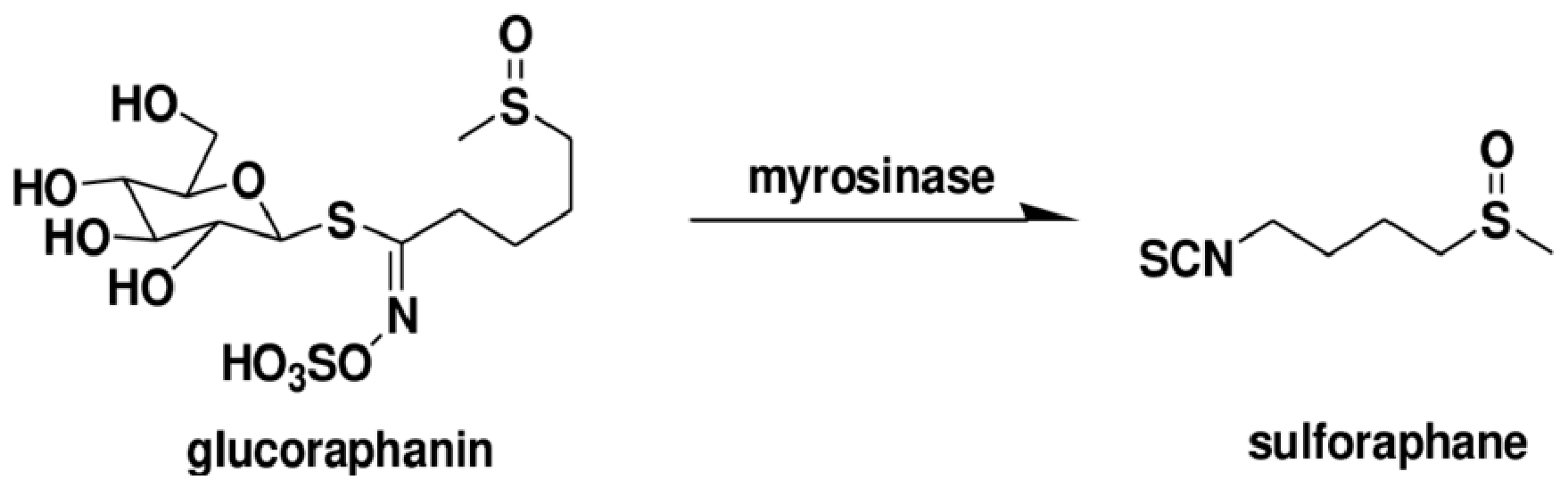
Among these compounds, glucosinolates (GSLs) are characteristic metabolites of Brassicaceae species. Glucoraphanin acts as the precursor of sulforaphane (SFN), a bioactive isothiocyanate produced through myrosinase-catalyzed hydrolysis following tissue disruption [
16,
17]. The conversion of glucoraphanin into sulforaphane is influenced by several factors, including temperature, pH, and the presence of specifier proteins (
Figure 1) [
17].
Sulforaphane has been associated with chemopreventive, cardiometabolic and neuroprotective effects [
18], while phenolic compounds, flavonoids, carotenoids, and chlorophylls contribute antioxidant and anti-inflammatory properties [
19,
20,
21]. Cauliflower tissues are also recognized as an important source of vitamin C, a water-soluble antioxidant whose retention is highly dependent on processing conditions, particularly temperature, oxygen exposure, and drying duration [
22,
23].
Drying is one of the most important processing operations affecting the stability of bioactive compounds in plant matrices. Through its influence on heat and mass transfer, drying conditions directly affect enzyme activity, structural integrity, and the preservation of thermolabile compounds [
24,
25,
26]. Different drying technologies impose distinct thermal, oxidative and dehydration conditions, resulting in variable effects on glucosinolate conversion, sulforaphane formation and the stability of phenolic compounds, chlorophylls, and carotenoids [
24,
25,
26,
26,
27,
28,
29,
30,
31,
32]. In addition, thermal processing may alter tissue structure and diffusional mechanisms, influencing antioxidant activity and overall functional quality [
26,
32].
From an industrial perspective, the choice of drying technology involves balancing product quality and economic feasibility. Freeze-drying is highly effective in preserving thermolabile compounds and structural characteristics but is associated with high operational costs [
33]. Conversely, convective, and solar drying represent more accessible and scalable alternatives, although prolonged exposure to heat, oxygen and light may compromise the retention of sensitive bioactive compounds [
24,
27,
28,
34,
35]. Consequently, understanding the interaction between plant tissue characteristics and drying conditions is essential for developing sustainable and economically viable valorization strategies.
Despite increasing interest in the upcycling of vegetable by-products, there remains a lack of studies simultaneously evaluating the combined effects of plant section and drying technology on the physicochemical and functional properties of cauliflower by-product flours. Most available studies focus either on specific drying methods or on isolated plant fractions, limiting the understanding of how matrix-specific and process-dependent factors interact to determine ingredient quality [
25,
27,
31]. This knowledge gap is particularly relevant for Brassica by-products, where drying conditions can strongly influence both bioactive compound retention and technological properties.
Therefore, the aim of this study was to valorize cauliflower leaves and stems generated as agro-industrial by-products at La Vega Central wholesale market by converting them into functional flours and evaluating the combined effects of plant section and drying method on their physicochemical, nutritional, and functional properties. Proximate composition, pigments (chlorophylls and carotenoids), total polyphenols (TPC), total flavonoids (TFC), glucosinolates (GSLs) and sulforaphane (SFN) were determined, together with antioxidant activity using ABTS and DPPH assays. In addition, colour parameters (L*, a*, b*, chroma, hue angle and browning index) were assessed to evaluate visual quality and pigment preservation.
2. Materials and Methods
2.1. Chemicals
Analytical-grade reagents and HPLC-grade solvents were used throughout the study. Methanol (absolute and 80% v/v), acetonitrile (HPLC grade), dichloromethane (CH2Cl2), Folin–Ciocalteu phenol reagent, sodium carbonate (Na2CO3), gallic acid, quercetin, aluminum chloride (AlCl3), potassium acetate (CH3COOK), 2,2-diphenyl-1-picrylhydrazyl (DPPH), 2,2′-azino-bis(3-ethylbenzothiazoline-6-sulphonic acid) (ABTS), potassium persulphate (K2S2O8), Trolox, thymol, sulphuric acid (H2SO4), glucose and anhydrous sodium sulphate (Na2SO4) were purchased from Merck KGaA (Darmstadt, Germany). L-sulforaphane (SFN) standard was obtained from Sigma-Aldrich (St. Louis, MO, USA). Membrane filters (0.22 µm) were obtained from Whatman (Cytiva, London, UK). Ultrapure water was used for the preparation of all solutions, standards, and dilutions.
2.2. Plant Material and Initial Characterization
Fresh cauliflower leaves and stems were collected at La Vega Central wholesale market (Antofagasta, Chile) and transported to the Pilot Plant of the Food Laboratory, Universidad de Antofagasta (Antofagasta, Chile). The material was rinsed with water and cut into uniform pieces of approximately 10 cm. An initial characterization recorded the individual weights of leaves and stems. Samples were processed using an industrial juice extractor (JSJD-06-120; Ecobeck, Santiago, Chile), yielding a solid pulp (fresh solid fraction) and a liquid extract (fresh liquid fraction) for subsequent analyses.
2.3. Drying Treatments
2.3.1. Conventional Hot-Air Drying
Solid fractions were spread on two trays (17 × 29 cm; 90–120 g per tray; approximately 0.5 mm layer thickness) and dried in a forced-air oven (Venticell 55 L; MMM MedCenter, Planegg, Germany) at 40 °C for 4–5 h. Tray mass was recorded every 10 min until a final moisture content of 10–15% was reached. Dried samples were milled (HC-800Y; DAMAI Machinery Co., Beijing, China) for 30 s and vacuum-sealed (FoodSaver-3840; Newell Brands, WA, USA).
2.3.2. Solar Drying
Solid fractions were prepared as described above and dried in an indirect solar dryer equipped with water-based thermal energy storage, U-pipe solar collectors, and monocrystalline photovoltaic cells, with an air velocity of 2 m s
−1, following the system described by Cerezal Mezquita et al. [
24]. Sample mass was recorded using a computer-linked balance, and temperature was monitored with a thermal camera (FT31; Hikmicro, Hangzhou, China) every 10 min. Drying continued for 5–6 h until a final moisture content of 10–15% was reached. Samples were then milled and vacuum sealed as described above.
2.3.3. Freeze-Drying
Solid fractions (50–60 g per 50 mL tube) were frozen at −80 °C for 24 h (DW-HL858HC; Zhongke Meiling Cryogenics Co., Hefei, China) and subsequently freeze-dried for 24 h (FreeZone Legacy 2.5 L; Labconco, Kansas City, MO, USA). The dried samples were then vacuum-sealed (FoodSaver-3840; Newell Brands, Washington, USA).
2.4. Colour Analysis
The colour of flours obtained after solar, hot-air and freeze-drying was measured using a benchtop colorimeter (ColorFlex EZ; HunterLab, Reston, VA, USA; illuminant D65, 45°/0° geometry). Triplicate measurements were taken and CIELAB coordinates L*, a* and b* were recorded. Chroma (C*), hue angle (H°) and browning index (BI) were subsequently calculated.
2.5. Proximate Composition
Moisture content was determined using a moisture balance (MX-50; A&D Company, Tokyo, Japan). Ash content was determined according to AOAC method 923.03, crude protein according to AOAC method 979.09 (N × 6.25), crude fat according to AOAC method 920.39, and crude fibre according to AOAC method 962.09 based on sequential acid and alkaline hydrolysis. A muffle furnace (Thermo Fisher Scientific, Waltham, WA, USA) was used for ash determination. Kjeldahl digestion, distillation, and titration, as well as Soxhlet extraction, were performed using dedicated systems (Velp Scientifica, Usmate Velate, Italy). All determinations were carried out in triplicate. Carbohydrates were calculated by difference. Results are expressed on a dry weight (DW) basis.
2.6. Preparation of Methanolic Extracts
Methanolic extracts were prepared according to Adefegha and Oboh [
29], with minor adaptations. Dry sample (0.4 g) was mixed with 10 mL of 80% (
v/
v) methanol (1:25,
w/
v) in screw-cap tubes wrapped in aluminum foil. The mixture was vortex-mixed for 30 s (VM-300; GEMMY Industrial Corp., Taipei, Taiwan) and incubated at ambient temperature with orbital agitation at 350 rpm for 30 min (MS-100 Thermo-Shaker; Allsheng, Hangzhou, China). Tubes were centrifuged at 4000 rpm for 10 min (5702; Eppendorf AG, Hamburg, Germany), and the supernatants were filtered through 0.22 μm membranes (Whatman, Cytiva, Marlborough, MA, USA). For photosynthetic pigment determination, absolute methanol was used. All extractions were performed in triplicate.
2.7. Extract Characterization
2.7.1. Chlorophylls and Carotenoids
Chlorophylls a and b and total carotenoids were determined from methanolic extracts according to Lichtenthaler and Buschmann [
36]. Absorbance was recorded at 470, 652.4 and 665.2 nm using a microplate reader (BioTek Instruments, Winooski, VT, USA). Concentrations were calculated using the following equations:
where
and
are chlorophyll a and b (μg mL
−1),
is total carotenoids (μg mL
−1), and
is absorbance at wavelength
(nm). All determinations were run in triplicate.
2.7.2. Total Polyphenols (TPC; Folin–Ciocalteu)
Total polyphenol content was determined by the Folin–Ciocalteu method according to Adefegha and Oboh [
29]. A mixture containing 0.5 mL of extract, 0.5 mL of 10% Folin reagent and 1.0 mL of 7.5% (
w/
v) Na
2CO
3 was incubated at 30 °C for 30 min (MS-100; Allsheng) and absorbance was measured at 765 nm (Epoch; BioTek/Agilent, Winooski, VT, USA). Quantification was based on a gallic acid calibration curve (0–200 mg L
−1). Results are expressed as mg GAE g
−1 DW.
2.7.3. Total Flavonoids (TFC)
Total flavonoid content was determined according to Adefegha and Oboh [
29], adapted from Dowd [
37] mixture of 0.5 mL of extract, 0.5 mL of methanol, 50 μL of 10% AlCl
3, 50 μL of 1 M CH
3COOK and 1.4 mL of HPLC-grade water was incubated for 30 min and then read at 415 nm (Epoch; BioTek/Agilent). Quantification was based on a quercetin calibration curve (0–100 mg L
−1). Results are expressed as mg QE g
−1 DW.
2.7.4. Antioxidant Activity by DPPH
The DPPH assay was performed according to Adefegha and Oboh [
29], with volume adjustments. A mixture of 60 μL of extract and 140 μL of 0.1 mM DPPH prepared in 80% methanol was incubated for 30 min in the dark and absorbance was measured at 517 nm (Epoch; BioTek/Agilent). Quantification was based on a Trolox calibration curve (1.953–62.5 mg L
−1). Results are expressed as mg TE g
−1 DW.
2.7.5. Antioxidant Activity by ABTS
The ABTS•
+ assay was carried out according to Re et al. [
38]. The stock solution, prepared with 7 mM ABTS and 2.45 mM K
2S
2O
8, was allowed to react for 16 h in the dark. The working solution was adjusted to an absorbance of A734 = 0.700 ± 0.020. Then, 20 μL of extract and 180 μL of ABTS•
+ working solution were mixed and absorbance was read at 734 nm (Epoch; BioTek/Agilent). Quantification was based on a Trolox calibration curve (1.953–62.5 mg L
−1). Results are expressed as mg TE g
−1 DW.
2.8. Total Glucosinolates
Total glucosinolate (GSL) content was quantified colorimetrically with internal modifications of previously described methods [
34,
39,
40,
41]. Solid fractions were heated at 100 °C for 2 h in a forced-air oven (Venticell 55 L; MMM MedCenter, Planegg, Germany) to inactivate myrosinase, then milled (HC-800Y; DAMAI Machinery Co., Beijing, China), extracted with 80% methanol and filtered through 0.22 μm membranes. For the reaction, 50 μL of extract were combined with 1 mL of 1% thymol and 7 mL of 77% H
2SO
4, incubated at 95 °C for 35 min with agitation (MS-100; Allsheng), and read at 505 nm (Epoch; BioTek/Agilent, Winooski, USA). Quantification was based on a glucose calibration curve (0–100 μg mL
−1). Results are expressed as mg GLU g
−1 DW.
2.9. Sulforaphane
Sulforaphane (SFN) was quantified by HPLC-UV according to Park et al. [
42], with internal adjustments. Dried solid fractions (5 g) were extracted with 50 mL of CH
2Cl
2, vortexed for 5 min and incubated for 30 min; 1.25 g of anhydrous Na
2SO
4 was then added. Filtrates (0.22 μm) were adjusted to 50 mL, concentrated under nitrogen, re-dissolved in 1–3 mL of HPLC-grade acetonitrile and re-filtered. Chromatographic analysis was carried out using a LaChrom Elite HPLC system (Hitachi, Tokyo, Japan) equipped with a C18 column (5 μm, 4.6 × 250 mm) operated at 30 °C. The mobile phase consisted of 100% acetonitrile under isocratic conditions, at a flow rate of 1.0 mL min
−1, with an injection volume of 20 μL and UV detection at 254 nm for 12 min. Quantification was based on an L-sulforaphane calibration curve. Results are expressed as mg SFN g
−1 DW.
2.10. Statistical Analysis
All analyses were performed in triplicate unless otherwise stated, and results are expressed as mean ± standard deviation. Statistical analysis was conducted using Statgraphics Centurion XVI v16.0 [
43] (Statgraphics Technologies, The Plains, VA, USA). Differences between treatments were evaluated using one-way or two-way analysis of variance (ANOVA), as appropriate, followed by multiple comparison tests when required. Pearson correlation analysis was used to examine relationships between variables. Statistical significance was established at
p < 0.05.
3. Results
3.1. Proximate Composition
The proximate composition of cauliflower by-product flours is presented in
Table 1. Only samples obtained by solar and conventional hot-air drying were considered, as freeze-drying required larger sample amounts and involved higher processing costs.
Plant section had a significant effect on protein, lipid, and ash contents (p < 0.05), whereas drying method only significantly affected ash content (p < 0.05). No significant effects of either factor were observed for carbohydrates and fibre (p > 0.05). In general, stem-derived flours showed higher carbohydrate content, while leaf-derived flours presented higher protein, lipid, and ash contents.
Protein content was significantly higher in leaves than in stems (p < 0.05), with no differences among drying treatments. A similar trend was observed for lipids, which were also significantly higher in leaves and unaffected by drying method. Ash content was influenced by both factors, with higher values in leaves and in solar-dried samples (p < 0.05). Although not statistically significant, fibre content tended to be higher in leaves than in stems.
Pearson correlation analysis revealed strong negative correlations between carbohydrates and both protein and lipids, and a positive correlation between fibre and ash (
p < 0.05). These results suggest that proximate composition is primarily governed by plant matrix rather than drying conditions, indicating limited compositional sensitivity to thermal processing within the studied range. Detailed correlation matrices are provided in
Table S1.
3.2. Colour Parameters of Dried Flours
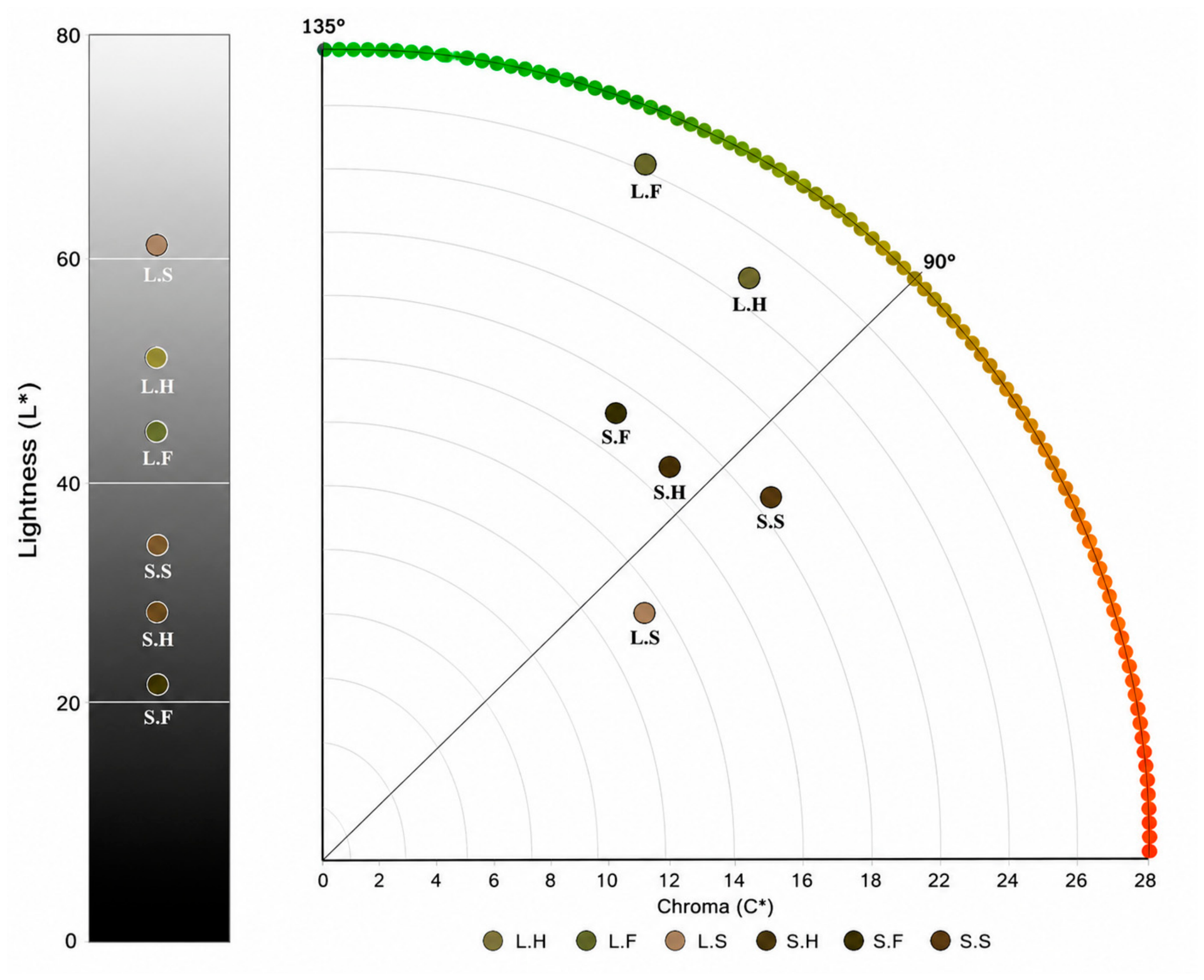
The colour parameters of cauliflower by-product flours are presented in
Table 2, while the overall distribution of colour coordinates is illustrated in
Figure 2. Both plant section and drying method significantly influenced colour attributes (
p < 0.05).
Lightness (L*) varied considerably among treatments, ranging from 21.23 to 61.10. The highest L* value was observed in solar-dried leaf flour (L.S), whereas freeze-dried stem flour (S.F) showed the lowest luminosity. Significant differences were detected among all treatments (p < 0.05), indicating that both plant section and drying technology affected flour brightness.
The red–green coordinate (a*) was strongly influenced by the drying method. Freeze-dried leaf flour (L.F) exhibited the lowest a* value (−9.02), indicating greater preservation of green pigments, whereas solar-dried samples showed positive a* values, particularly L.S and S.S, reflecting a shift towards red–brown tonalities associated with pigment degradation. These differences are clearly visualized in
Figure 2. L.S and S.S did not differ significantly from each other (
p > 0.05).
The yellow–blue coordinate (b*) and chroma (C*) followed similar trends, with the highest values recorded in freeze-dried leaf flour (L.F), followed by hot-air-dried leaf flour (L.H). Significant differences were observed among all treatments (p < 0.05), indicating that drying conditions influenced colour saturation and yellowness.
Hue angle (H°) ranged from 81.25 to 110.43. The highest value was obtained for freeze-dried leaf flour (L.F), suggesting better preservation of green–yellow colour characteristics. In contrast, solar-dried leaf flour (L.S) showed the lowest hue angle, indicating a greater shift towards warmer colour tones. These trends are also evident in the polar representation shown in
Figure 2.
Browning index (BI) showed marked differences among treatments. The lowest BI value was observed in solar-dried leaf flour (L.S), whereas stem-derived flours exhibited substantially higher values, particularly S.F and S.H. Freeze-dried and hot-air-dried leaf flours showed similar BI values and did not differ significantly (
p > 0.05). Overall, the results demonstrate that both plant section and drying method substantially affected colour preservation and browning development in cauliflower by-product flours. Detailed correlation data are presented in
Table S2.
3.3. Pigment Content (Chlorophylls and Carotenoids)
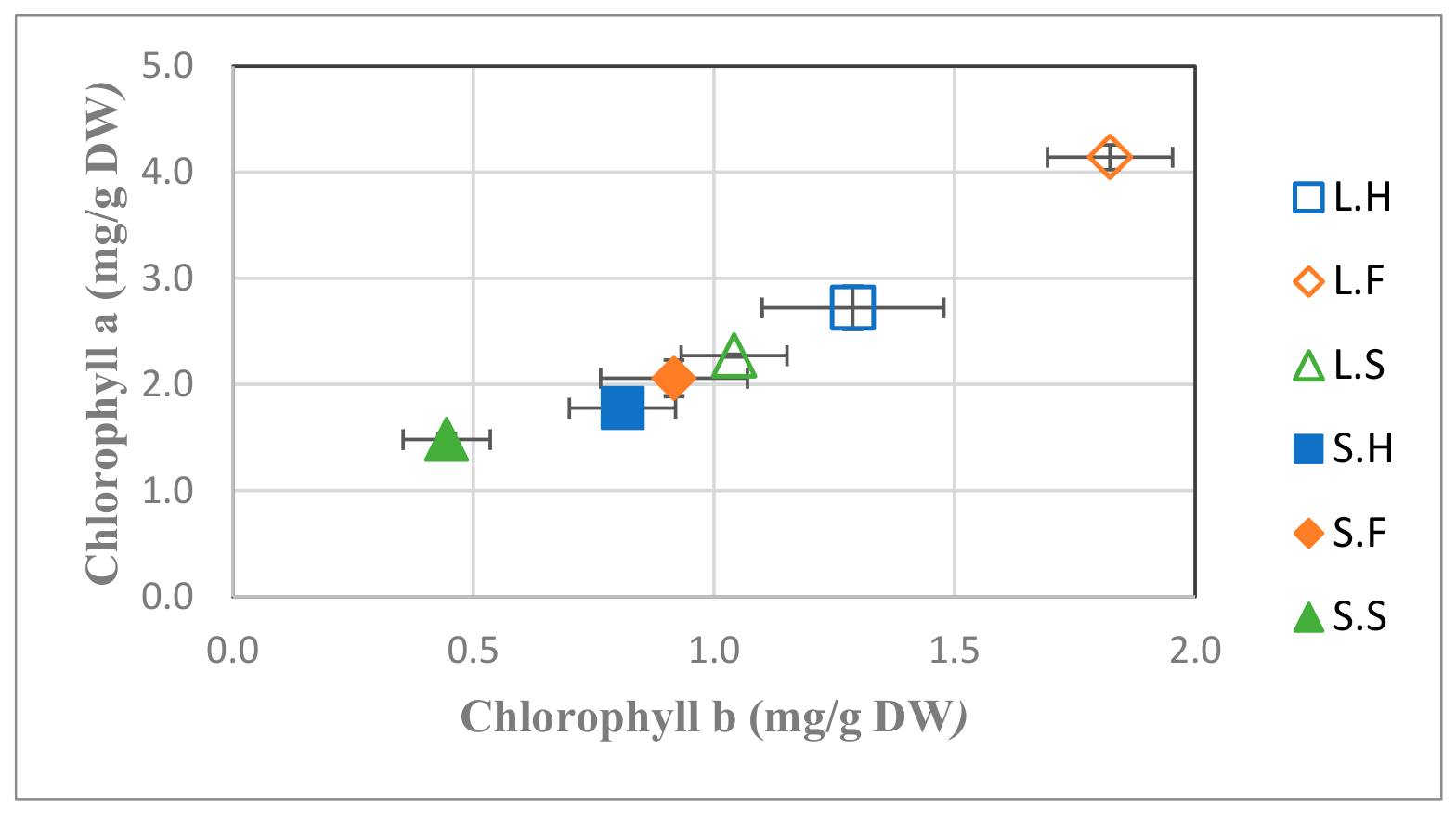
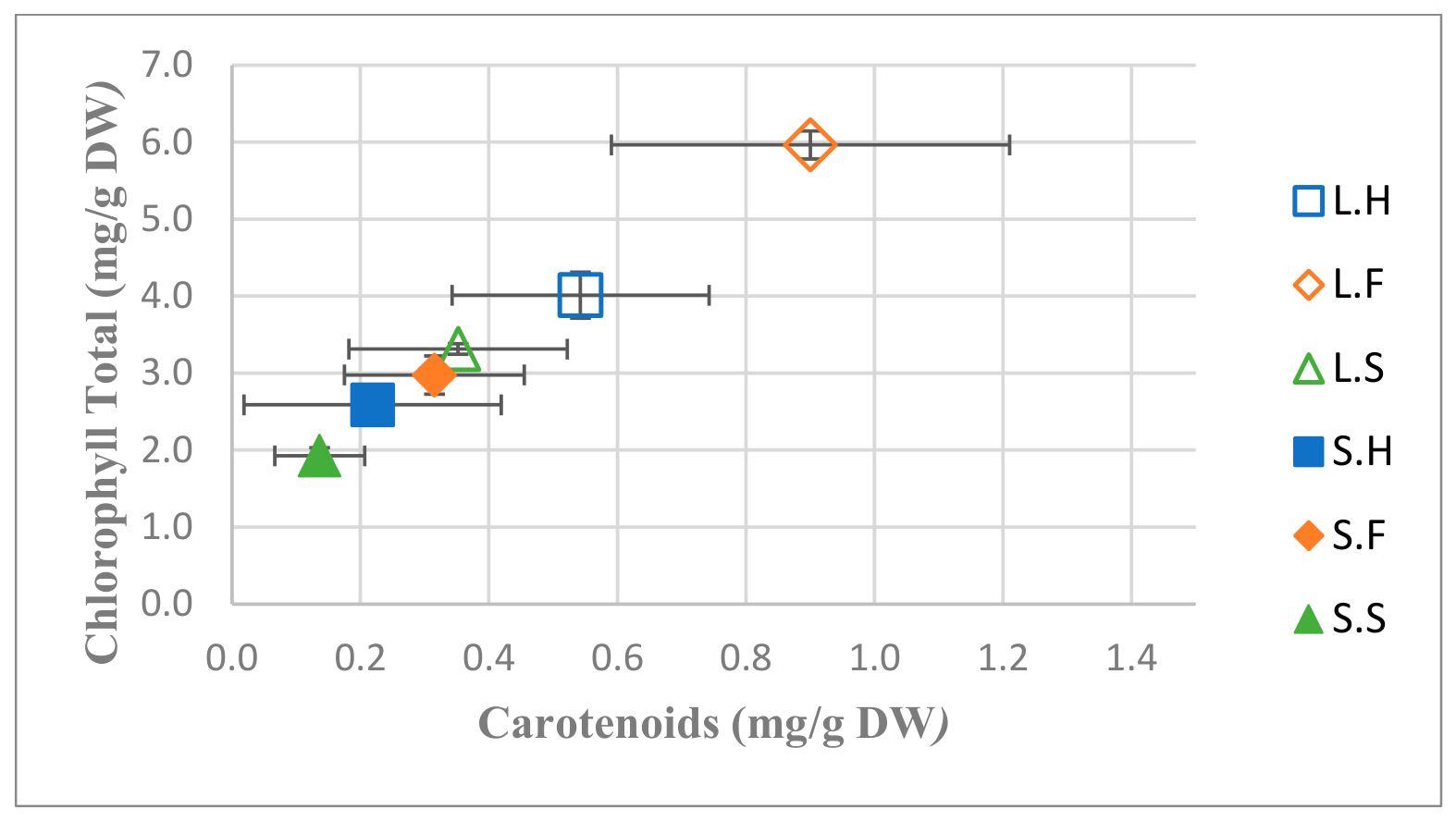
The chlorophyll and carotenoid contents of cauliflower by-product flours are presented in
Figure 3 and
Figure 4. Both plant section and drying method significantly affected pigment levels (
p < 0.05).
Leaf-derived flours consistently exhibited higher pigment contents than stem-derived flours. Chlorophyll a ranged from approximately 2.8 to 3.2 mg g−1 DW in leaves and from 1.6 to 1.9 mg g−1 DW in stems, while chlorophyll b ranged from approximately 1.3 to 1.5 mg g−1 DW in leaves and from 0.6 to 0.8 mg g−1 DW in stems. Total carotenoids showed a similar pattern, reaching values close to 0.60 mg g−1 DW in leaves and approximately 0.20–0.25 mg g−1 DW in stems.
Drying method had a significant influence on pigment retention. Freeze-dried samples showed the highest chlorophyll and carotenoid contents in both plant sections, followed by hot-air drying, whereas solar-dried samples exhibited the lowest values. This decreasing trend was consistent across all pigment fractions and was more pronounced in leaf-derived flours.
Strong positive correlations were observed among pigment variables. Chlorophyll a and chlorophyll b were highly correlated (r = 0.98, p < 0.05). In addition, chlorophyll a showed a strong correlation with carotenoids (r = 0.997, p < 0.05), as did chlorophyll b (r = 0.982, p < 0.05). This behavior suggests that pigment degradation occurred in a coordinated manner, likely driven by temperature-dependent oxidation and structural breakdown of chloroplast components.
Overall, pigment retention was higher in leaf-derived flours and in samples subjected to freeze-drying, whereas solar drying resulted in the lowest pigment levels. Detailed correlation data are presented in
Table S3.
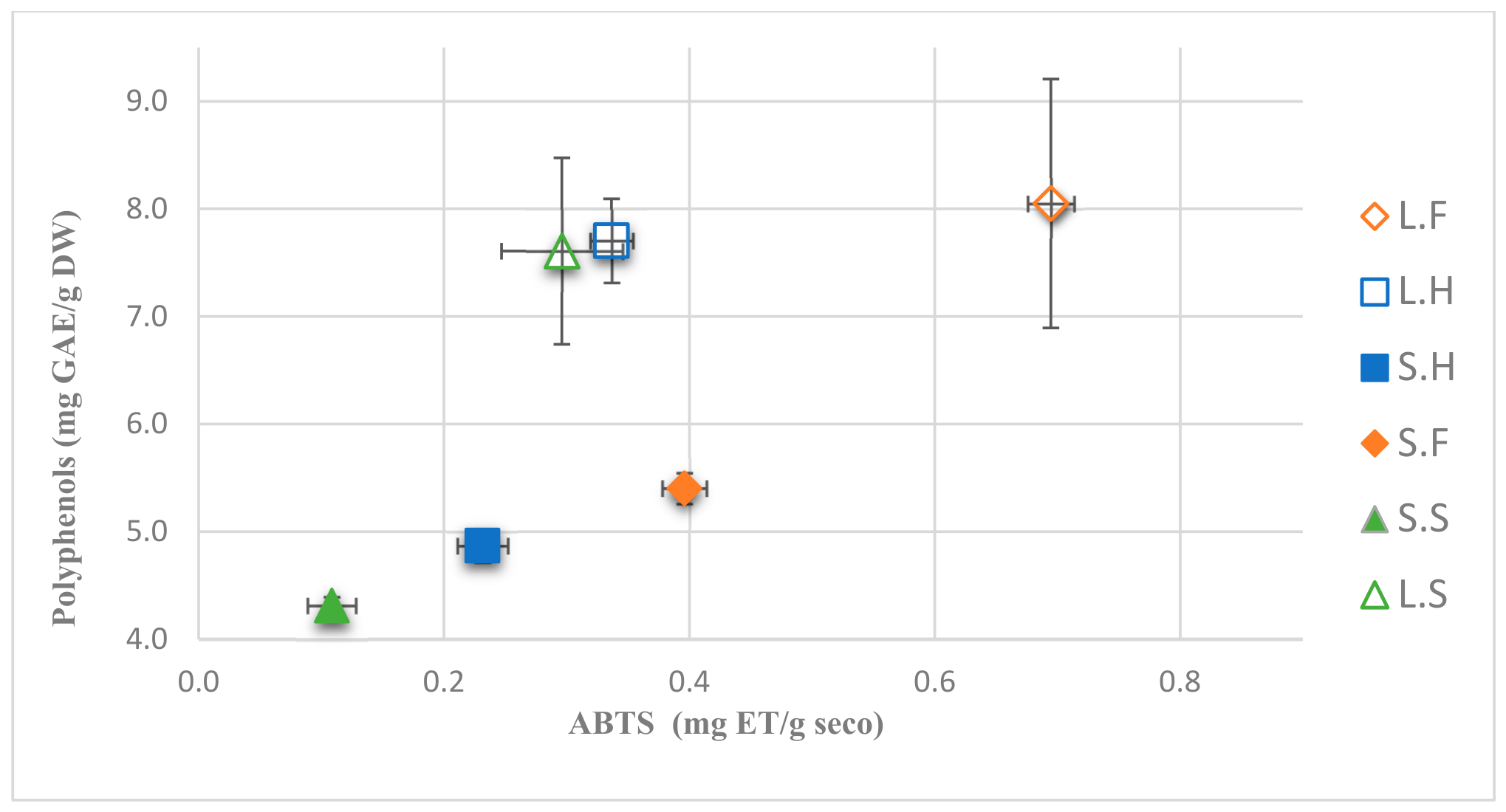
3.4. Antioxidant Activity (ABTS, DPPH, TPC and TFC)
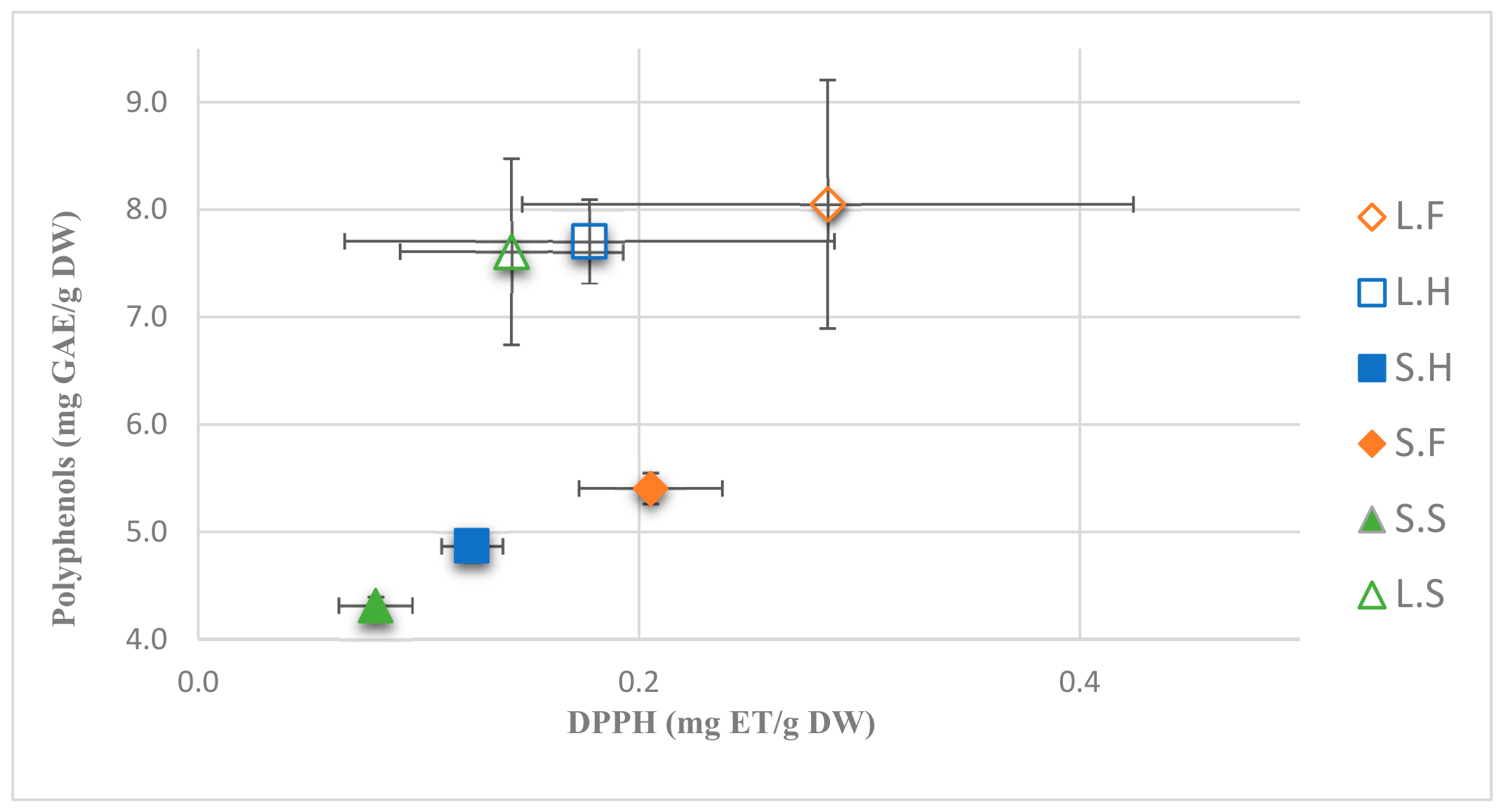
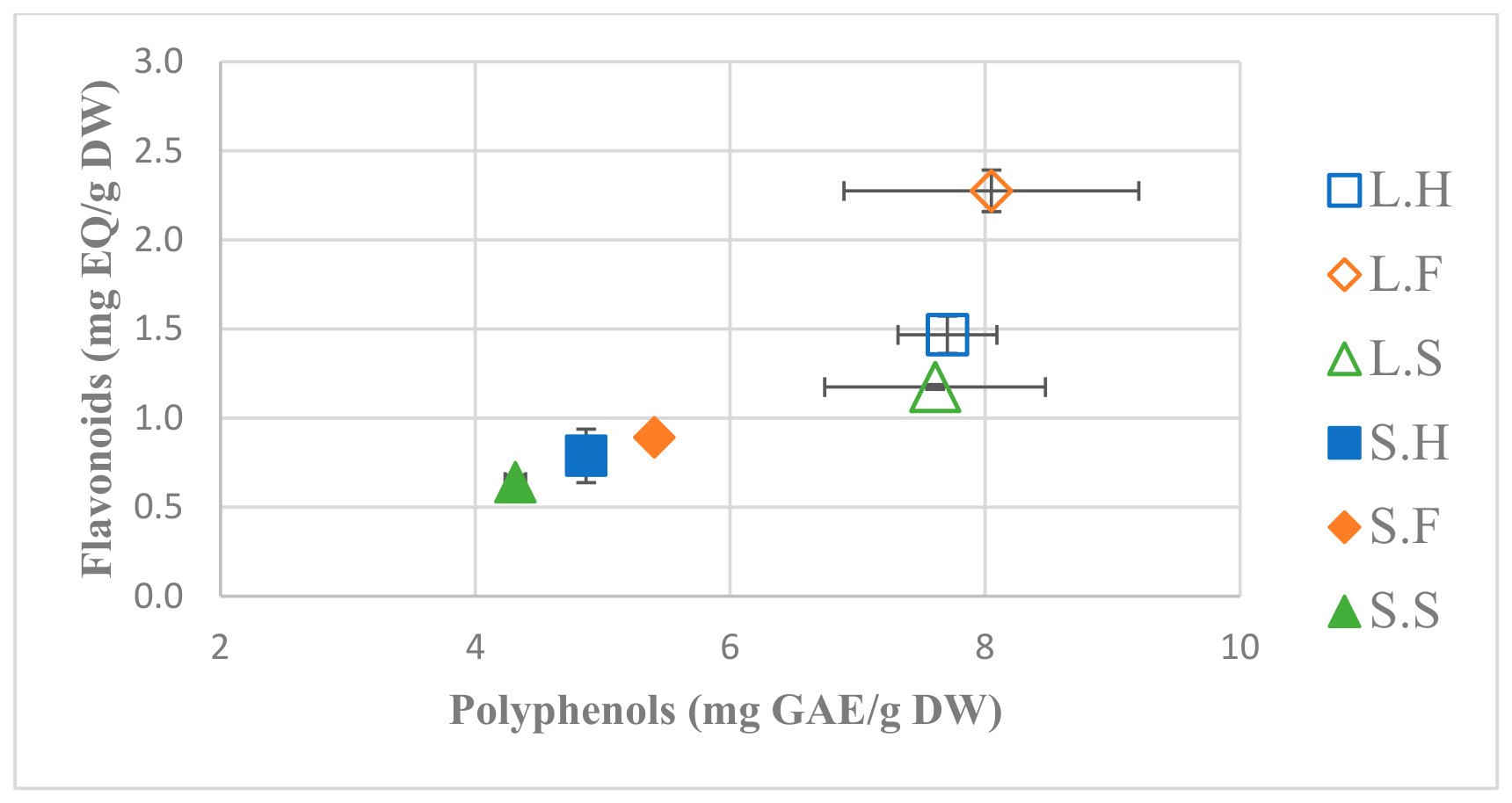
The antioxidant activity of cauliflower by-product flours is presented in
Table 3 and
Figure 5,
Figure 6 and
Figure 7. Both plant section and drying method significantly affected antioxidant-related parameters (
p < 0.05). Leaf-derived flours consistently exhibited higher antioxidant activity than stem-derived flours. ABTS values ranged approximately from 0.40 to 0.45 mg TE g
−1 DW in leaves and from 0.23 to 0.27 mg TE g
−1 DW in stems. A similar pattern was observed for DPPH, although differences between plant sections were less pronounced. Drying method significantly influenced antioxidant activity, with freeze-dried samples showing the highest values (e.g., L.F: 0.69 mg TE g
−1 DW for ABTS and 0.29 mg TE g
−1 DW for DPPH), followed by hot-air drying, while solar-dried samples exhibited the lowest values (e.g., S.S: 0.11 and 0.08 mg TE g
−1 DW for ABTS and DPPH, respectively). This trend was consistent across both essays. A significant interaction between plant section and drying method was observed for ABTS (
p < 0.05), whereas for DPPH only drying method showed a significant effect.
Total polyphenol content (TPC) and total flavonoid content (TFC) followed similar trends. TPC values ranged from approximately 7.5 to 8.0 mg GAE g−1 DW in leaves and from 4.7 to 5.1 mg GAE g−1 DW in stems, while TFC values ranged from approximately 1.5 to 1.7 mg QE g−1 DW in leaves and from 0.7 to 0.9 mg QE g−1 DW in stems. TFC showed greater sensitivity to drying conditions, decreasing from freeze-drying to solar drying, whereas TPC remained relatively stable and was primarily influenced by plant section.
Strong positive correlations were observed among antioxidant-related variables, confirming the contribution of phenolic compounds to antioxidant capacity. TPC and TFC were positively correlated (r = 0.81, p < 0.05), while both parameters showed consistent associations with ABTS and DPPH values. Samples with higher TPC and TFC, such as freeze-dried leaf flours, exhibited the highest antioxidant activity, whereas samples with lower phenolic content, such as solar-dried stem flours, showed the lowest values. This indicates that phenolic compounds are major contributors to radical scavenging activity, acting as electron donors and hydrogen atom transfer agents.
The positive correlation between ABTS and DPPH (r = 0.72, p < 0.05) further supports the consistency of antioxidant responses across assays, although ABTS values were consistently higher than DPPH. This difference can be attributed to the broader reactivity of ABTS towards both hydrophilic and lipophilic antioxidants, whereas DPPH is more selective towards less polar compounds. Therefore, the combined use of both assays provides a more comprehensive evaluation of antioxidant capacity and suggests that drying conditions influence not only the total amount but also the composition and polarity of retained bioactive compounds.
These results indicate that antioxidant capacity is primarily driven by phenolic composition but also modulated by processing conditions that affect compound stability and interactions with other bioactive components such as pigments. Detailed correlation data are presented in
Table S3.
Table 3.
Effect of drying method and plant section on antioxidant activity (ABTS and DPPH) of cauliflower by-product flours (mg TE g−1 DW).
Table 3.
Effect of drying method and plant section on antioxidant activity (ABTS and DPPH) of cauliflower by-product flours (mg TE g−1 DW).
| Treatment | ABTS | DPPH |
|---|
| L.H | 0.34 ± 0.02 c | 0.18 ± 0.11 a |
| L.F | 0.69 ± 0.02 d | 0.29 ± 0.14 a |
| L.S | 0.30 ± 0.05 bc | 0.14 ± 0.05 a |
| S.H | 0.23 ± 0.02 b | 0.12 ± 0.01 a |
| S.F | 0.40 ± 0.02 c | 0.21 ± 0.03 a |
| S.S | 0.11 ± 0.02 a | 0.08 ± 0.02 a |
3.5. Glucosinolates and Sulforaphane
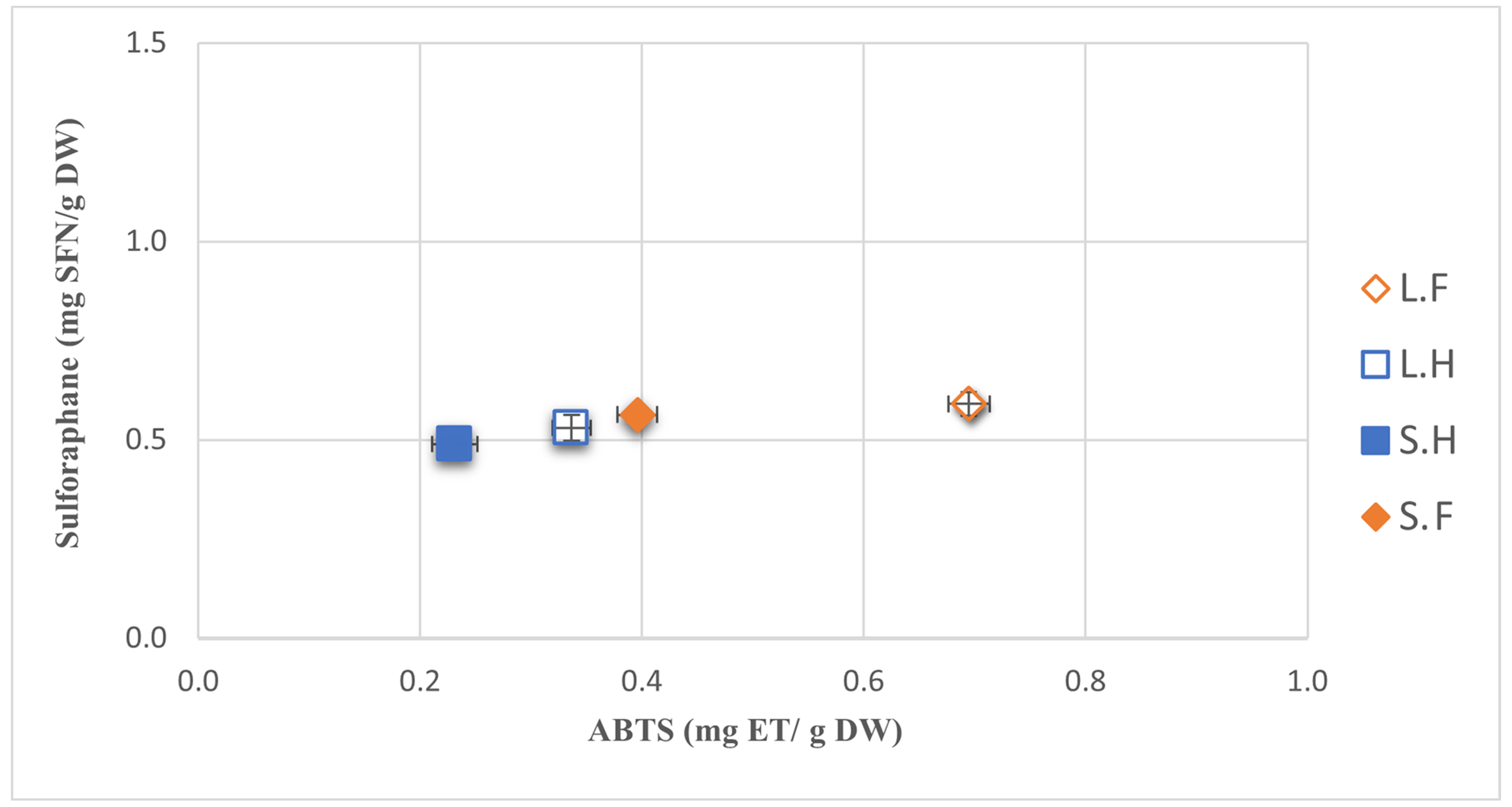
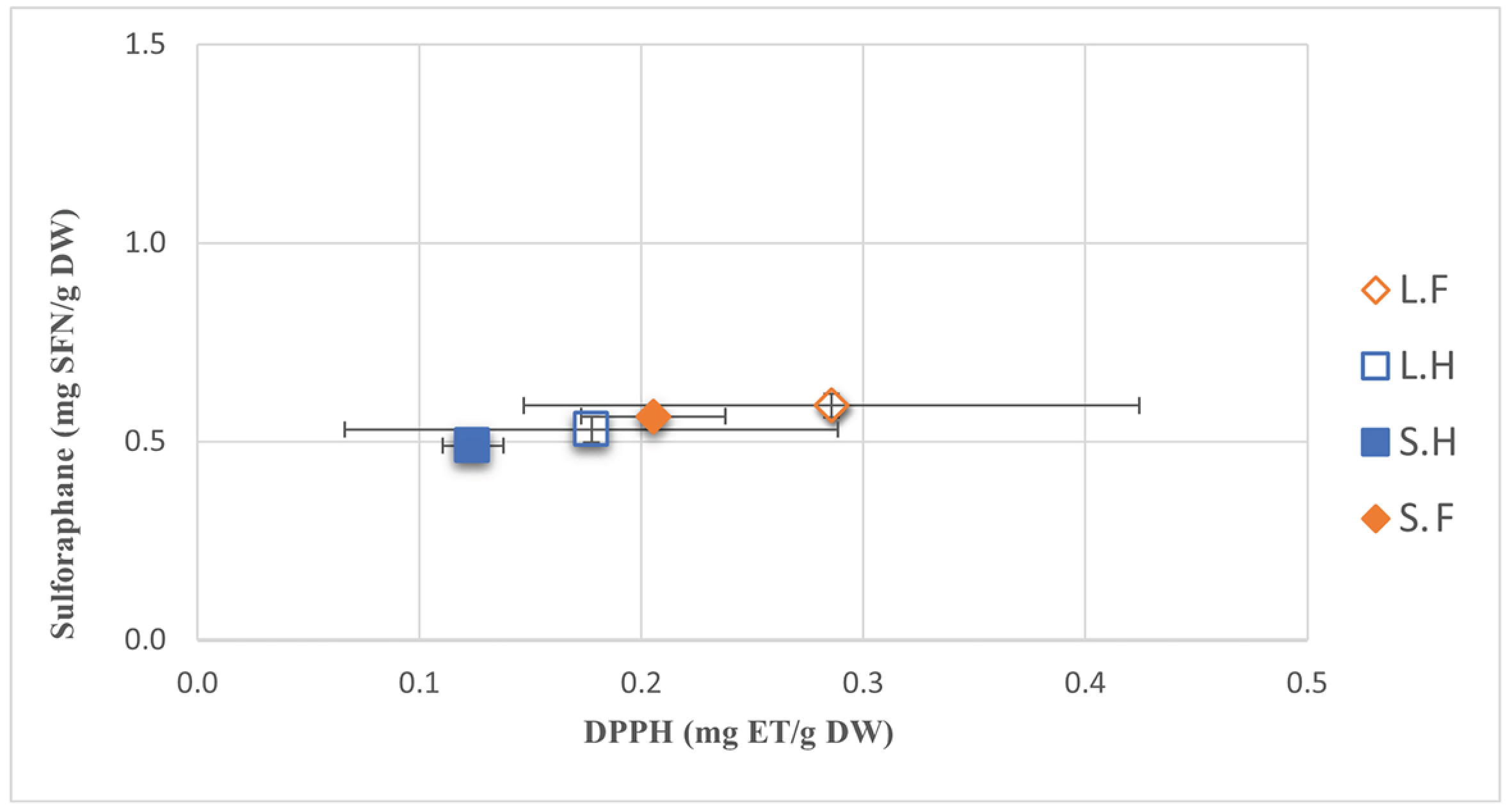
The results for total glucosinolates (GSL) and sulforaphane (SFN) are presented in
Table 4 and
Table 5 and
Figure 8 and
Figure 9. Both plant section and drying method significantly affected sulforaphane content (
p < 0.05).
Leaf-derived flours showed slightly higher SFN concentrations than stem-derived flours. Sulforaphane values ranged from approximately 0.54 to 0.56 mg g−1 DW in leaves and from 0.50 to 0.53 mg g−1 DW in stems. Drying method had a significant influence on SFN content, with freeze-dried samples exhibiting the highest values in both plant sections, followed by hot-air drying. Sulforaphane quantification was not performed for solar-dried samples due to analytical limitations.
No significant interaction between plant section and drying method was observed for SFN (p > 0.05), indicating a consistent effect of drying across both plant matrices. This limited variation between plant sections suggests that sulforaphane formation may depend more strongly on enzymatic activity and processing conditions than on initial glucosinolate concentration alone.
For total glucosinolate content, only plant section showed a significant effect (p < 0.05). Leaf-derived flours contained values close to 4.8–5.1 mg GLU g−1 DW, whereas stem-derived flours ranged from approximately 2.6 to 3.1 mg GLU g−1 DW.
Pearson correlation analysis revealed a strong positive association between SFN and total GSL (r = 0.83, p < 0.05). From a processing perspective, these results are particularly relevant, as stem-derived fractions, despite their lower glucosinolate content, show comparable sulforaphane levels, which may be advantageous considering their higher biomass availability.
Table 4.
Effect of plant section on total glucosinolate content of cauliflower by-product flours.
Table 4.
Effect of plant section on total glucosinolate content of cauliflower by-product flours.
| Treatment | Glucosinolates (mg Glu/g DW) |
|---|
| Leaves | 4.97 ± 0.22 a |
| Stems | 2.85 ± 0.30 b |
Table 5.
Effect of drying method and plant section on sulforaphane content of cauliflower by-product flours.
Table 5.
Effect of drying method and plant section on sulforaphane content of cauliflower by-product flours.
| Treatment | Sulforaphane (mg SFN/g DW) |
|---|
| S.H | 0.48 ± 0.03 a |
| S.F | 0.56 ± 0.02 ab |
| L.H | 0.53 ± 0.01 bc |
| L.F | 0.59 ± 0.01 c |
3.6. Effect of Drying Method and Plant Section on Bioactive Compound Stability
Overall, freeze-drying was the most effective drying method for preserving bioactive compounds in cauliflower by-products, including chlorophylls, carotenoids, phenolics, flavonoids, glucosinolates and sulforaphane. Solar drying generally showed intermediate retention, whereas conventional hot-air drying resulted in the greatest losses of thermolabile compounds. These differences can be attributed to the lower thermal stress and reduced oxidative exposure associated with freeze-drying, while prolonged exposure to heat, oxygen and light during convective drying promote degradation reactions. In addition, plant section influenced compound stability, with leaves generally exhibiting higher concentrations of pigments and antioxidant-related compounds than stems. The combined effects of drying technology and plant matrix therefore played a critical role in determining the final functional quality of the resulting flours. A summary of the main effects of drying method and plant section on bioactive compound stability is presented in
Table 6.
Table 6.
Summary of the effect of drying method and plant section on the stability of bioactive compounds in cauliflower by-products.
Table 6.
Summary of the effect of drying method and plant section on the stability of bioactive compounds in cauliflower by-products.
| Factor | Best Condition | Intermediate | Lowest Retention | Main Degradation Mechanism |
|---|
| Chlorophylls | Freeze-drying | Solar drying | Hot-air drying | Thermal and oxidative degradation |
| Carotenoids | Freeze-drying | Solar drying | Hot-air drying | Oxidation and isomerization |
| Total polyphenols | Freeze-drying | Solar drying | Hot-air drying | Thermal degradation and oxidation |
| Total flavonoids | Freeze-drying | Solar drying | Hot-air drying | Oxidative degradation |
| Antioxidant activity (ABTS/DPPH) | Freeze-drying | Solar drying | Hot-air drying | Loss of antioxidant compounds |
| Glucosinolates | Freeze-drying | Solar drying | Hot-air drying | Thermal degradation and enzymatic changes |
| Sulforaphane | Freeze-drying | Solar drying | Hot-air drying | Myrosinase inactivation and thermal degradation |
| Colour preservation | Freeze-drying | Solar drying | Hot-air drying | Pigment degradation and browning |
4. Discussion
4.1. Proximate Composition
The higher protein, lipid, fibre, and ash contents observed in leaf-derived flours compared with stem-derived flours can be attributed to the physiological and metabolic roles of plant tissues. Leaves are photosynthetically active organs characterized by higher enzymatic activity, protein synthesis, and mineral accumulation, whereas stems primarily function as structural support and carbohydrate storage tissues. These findings are consistent with previous studies on Brassica by-products and leafy vegetables, where leaves exhibit superior nutritional profiles compared to stems [
44,
45,
46].
The limited influence of drying methods on most proximate components suggests that macronutrients remain relatively stable under the applied thermal conditions. However, the higher ash content observed under solar drying may be associated with concentration effects during moisture removal, as well as differences in mineral retention linked to drying kinetics and mass transfer phenomena [
45]. This indicates that, although drying does not substantially alter macronutrient composition, it may affect mineral concentration through process-dependent mechanisms.
The observed negative correlations between carbohydrates and both protein and lipids, together with the positive association between fibre and ash, reflect compositional trade-offs typical of plant matrices. These relationships indicate that increases in structural and metabolically active components occur at the expense of carbohydrate fractions, a pattern widely reported in plant-based materials [
47]. From a functional perspective, these compositional differences may influence the techno-functional properties of the resulting flours, including water absorption, stability, and nutritional value.
4.2. Colour Parameters of Dried Flours
Colour changes in cauliflower by-product flours were strongly influenced by drying conditions, highlighting the sensitivity of visual attributes to processing. According to the results presented in
Table 2 and
Figure 2, significant differences were observed among drying methods and plant sections (
p < 0.05). The most pronounced colour changes were observed in stem-derived flours subjected to hot-air and freeze-drying, which exhibited the lowest lightness (L*) values (26.32 and 21.23, respectively) and the highest browning index (BI) values (123.71 and 129.82, respectively). In contrast, solar-dried leaf flour showed the highest lightness (61.10) and the lowest browning index (26.80), indicating better preservation of visual quality under the conditions evaluated.
The higher lightness values observed in freeze-dried leaf flour indicate reduced browning and improved preservation of the native appearance of plant tissues. This behavior is consistent with studies reporting that low-temperature and oxygen-limited conditions minimize pigment oxidation and non-enzymatic browning reactions [
27,
48]. Conversely, the lower L* values and higher BI values observed in stem-derived flours suggest greater colour degradation during processing.
The red–green coordinate (a*) was strongly affected by the drying method. Freeze-dried leaf flour presented the lowest a* value (−9.02), indicating greater retention of green pigments, whereas solar drying promoted positive a* values in both leaf and stem flours, reflecting a shift towards reddish-brown tonalities associated with chlorophyll degradation and pheophytin formation. Similar colour transitions have been reported in dehydrated plant matrices subjected to thermal processing [
49].
Likewise, b* and chroma (C*) values were significantly influenced by drying treatment. Freeze-dried and hot-air-dried leaf flours exhibited the highest values, indicating greater colour saturation and retention of yellow pigments. The higher hue angle observed in freeze-dried leaf flour (110.43°) further supports the preservation of green–yellow colour characteristics. These findings agree with previous reports demonstrating that drying conditions significantly affect colour stability and visual quality in plant-derived powders [
50,
51].
From a process engineering perspective, these differences can be explained by variations in heat and mass transfer mechanisms. Freeze-drying operates under low-temperature and vacuum conditions, minimizing thermal gradients and oxygen exposure, whereas convective and solar drying involve higher temperatures and longer exposure times, promoting oxidative and thermal degradation. The browning index results reinforce these observations, confirming that drying conditions substantially affect colour stability and the visual quality of the final product [
35,
52].
The total colour difference (ΔE) was not determined in the present study because fresh cauliflower by-products were not included as a reference material for colour comparison. Nevertheless, ΔE is widely recognized as a useful parameter for evaluating the perceptibility of colour changes from a consumer perspective [
48]. Therefore, its inclusion should be considered in future studies to provide a more comprehensive assessment of colour stability during processing.
4.3. Pigment Stability (Chlorophylls and Carotenoids)
The higher pigment content observed in leaf-derived flours is consistent with their role as photosynthetic tissues, where chlorophylls and carotenoids are abundant due to their involvement in light harvesting and photoprotection [
28,
53]. These pigments contribute not only to colour but also to the functional and antioxidant properties of plant-derived ingredients.
The superior pigment retention observed in freeze-dried samples can be attributed to the low-temperature and low-oxygen conditions of this process, which limit oxidative degradation. In contrast, convective and solar drying expose pigments to heat, oxygen and light, promoting chlorophyll breakdown and carotenoid degradation [
28,
29].
The strong correlations observed between chlorophylls and carotenoids suggest a coordinated response of pigment systems to drying stress. This indicates that treatments preserving chlorophyll integrity also contribute to carotenoid stability, maintaining a more intact pigment profile. Moreover, this coordinated behavior suggests that pigment degradation follows similar kinetic pathways under thermal stress.
Importantly, the observed relationships between pigment retention and antioxidant activity indicate an integrated response of bioactive compounds. Samples with higher pigment contents, particularly those obtained by freeze-drying, also exhibited increased antioxidant capacity, suggesting a synergistic contribution of pigments and phenolic compounds to the overall redox behavior. This highlights the importance of controlling processing conditions to preserve multiple classes of bioactive compounds simultaneously.
4.4. Antioxidant Activity and Phenolic Compounds
The higher antioxidant activity observed in leaf-derived flours is directly associated with their greater content of phenolic and flavonoid compounds, which play a central role in the redox behavior of plant matrices through electron donation and radical scavenging mechanisms [
54,
55].
Freeze-drying resulted in the highest preservation of antioxidant activity, which is consistent with the enhanced stability of thermolabile compounds under mild processing conditions. In contrast, hot-air and solar drying promote oxidative degradation of phenolic compounds, leading to reduced antioxidant capacity [
29,
44]. These differences reflect the sensitivity of phenolic compounds to temperature, oxygen, and light exposure.
The differences observed between ABTS and DPPH assays reflect their distinct reaction mechanisms. ABTS can detect both hydrophilic and lipophilic antioxidants, whereas DPPH is more selective towards less-polar compounds, which explains the higher values obtained with ABTS [
38,
54]. Furthermore, the stronger response observed in ABTS suggests a broader spectrum of antioxidant compounds preserved in the samples, indicating that drying methods may influence not only total antioxidant capacity but also the profile and polarity of retained bioactive compounds.
The positive correlations between TPC, TFC and antioxidant activity confirm that phenolic compounds are major contributors to the antioxidant potential of cauliflower by-product flours. However, antioxidant capacity is not solely determined by total phenolic content, but also by stability, composition, and interactions among different classes of bioactive compounds under varying processing conditions.
It is important to note that cauliflower (Brassica oleracea L. var. botrytis L.) is recognized as a valuable source of ascorbic acid (vitamin C), a compound that may contribute significantly to the overall antioxidant capacity of Brassica vegetables. However, the scope of the present study focused on the characterization of phenolic compounds, flavonoids, pigments, glucosinolates and sulforaphane in cauliflower by-product flours. Therefore, ascorbic acid content was not determined. Future studies should include vitamin C quantification to provide a more comprehensive assessment of the bioactive profile and antioxidant potential of cauliflower by-products.
It is also important to clarify that antioxidant activity in this study was evaluated exclusively in processed samples (dried cauliflower by-product flours), as the experimental design focused on comparing the effects of drying methods and plant sections. Fresh cauliflower by-products were not available at the time of analysis; therefore, no fresh reference condition was included. As a result, the antioxidant activity data presented in this work reflects relative differences among processing conditions rather than retention values compared to fresh material. Future studies should incorporate fresh cauliflower tissues as baseline controls to enable the calculation of antioxidant retention during processing.
4.5. Glucosinolates and Sulforaphane
The higher glucosinolate content observed in leaf-derived flours reflects the role of these compounds in plant defense mechanisms, where they are concentrated in metabolically active tissues. The approximately two-fold difference between leaves and stems is consistent with previous reports in Brassica species [
49,
52].
The higher sulforaphane content observed in freeze-dried samples indicates that this processing method is more effective in preserving glucosinolate-derived compounds. Sulforaphane is sensitive to thermal degradation, and its retention is favored under conditions that limit both enzymatic hydrolysis and chemical breakdown [
17,
30].
The influence of drying technology on sulforaphane levels can be explained by the interaction between glucoraphanin stability and myrosinase activity. Myrosinase is the endogenous enzyme responsible for the hydrolysis of glucoraphanin into sulforaphane following tissue disruption. However, the enzyme is highly sensitive to temperature, and prolonged exposure to heat may lead to partial or complete inactivation, thereby reducing sulforaphane formation [
17]. At the same time, excessive temperatures can also promote the degradation of both glucosinolates and the sulforaphane already formed. Consequently, drying processes involving sustained thermal exposure may negatively affect both the precursor and the bioactive product [
17,
30].
Freeze-drying minimizes these effects because water is removed at low temperatures and under reduced pressure, limiting thermal degradation and oxidative reactions. In contrast, hot-air drying exposes the material to continuous heating and oxygen, conditions that may reduce myrosinase activity and accelerate the degradation of glucosinolates and sulforaphane [
17,
30,
49]. Solar drying showed intermediate behavior, suggesting that the lower processing temperatures partially preserved these compounds, although exposure to oxygen and fluctuating drying conditions may still have contributed to some losses.
The strong positive correlation between glucosinolates and sulforaphane supports their precursor–product relationship, confirming that higher glucosinolate availability contributes to greater sulforaphane formation. This relationship has been widely documented in cruciferous vegetables [
17,
40].
Interestingly, although leaf-derived flours exhibited higher glucosinolate contents, the differences in sulforaphane concentrations between plant sections were relatively small. This suggests that sulforaphane retention or formation may be less dependent on plant section than expected, potentially due to similar conversion efficiencies or stabilization mechanisms across tissues.
Interestingly, although leaf-derived flours exhibited higher glucosinolate contents, the differences in sulforaphane concentrations between plant sections were relatively small. This suggests that sulforaphane retention or formation may be less dependent on plant section than expected, potentially due to similar glucoraphanin-to-sulforaphane conversion efficiencies or stabilization mechanisms across tissues. Similar observations have been reported in Brassica by-products, where processing conditions often exert a stronger influence on sulforaphane retention than tissue type itself [
52].
From an industrial perspective, this finding is particularly relevant. Stem fractions typically represent a larger proportion of total biomass and are more abundantly available as processing residues. Therefore, their relatively similar sulforaphane levels, despite lower glucosinolate content, already position them as a promising and underutilized raw material to produce sulforaphane-rich functional ingredients.
In addition, when considering process efficiency, differences in flour yield between plant sections become highly relevant. Stem-derived flours showed an average yield of approximately 5%, whereas leaf-derived flours reached values close to 10%. This difference can be attributed to the higher moisture content of stems, which results in greater mass loss during dehydration. In contrast, leaves contain a lower proportion of free water, allowing for higher recovery of dry solids.
This indicates that, although stems offer advantages in terms of biomass availability and comparable sulforaphane levels, leaves may represent a more efficient raw material for flour production in terms of yield. Therefore, the selection of plant fraction should not rely on a single parameter, but rather on an integrated evaluation that considers bioactive composition, raw material availability, and process yield.
Methodological limitations, including the absence of sulforaphane data for solar-dried samples, should be considered when interpreting these results. These aspects underline the need for improved analytical approaches to enable more robust comparisons among processing methods.
4.6. Implications and Future Perspectives
From an application and scaling perspective, the results highlight the importance of selecting drying technologies according to the intended use of the final product. While freeze-drying ensures maximum preservation of bioactive compounds, its industrial implementation remains limited by high operational costs and energy requirements. In contrast, hot-air and solar drying represent more feasible and scalable alternatives, although process optimization is required to minimize losses of thermolabile compounds and maintain product quality.
In particular, the relatively similar sulforaphane levels observed between plant sections, with only minor differences between leaves and stems, combined with the higher biomass yield and availability of stem fractions, suggest that stem-derived materials may represent a more scalable and sustainable raw material for industrial applications. This shifts the focus from composition alone towards a more integrated approach that considers raw material availability, processing yield and functional performance when designing valorization strategies.
Importantly, the results also indicate that it is not strictly necessary to prioritize a single plant fraction, as both leaves and stems present complementary compositional and functional characteristics. Therefore, the combined utilization of both by-products may represent a practical and efficient strategy to maximize resource use, simplify processing logistics and enhance overall yield. Such integrated approaches could allow the development of composite flours with balanced nutritional and functional profiles, although this requires further investigation.
These findings reinforce the relevance of cauliflower by-products as a source of functional ingredients within circular food systems, where both technological feasibility and resource efficiency must be considered. The selection of processing conditions should therefore be aligned not only with the preservation of bioactive compounds but also with economic and operational constraints.
Future research should focus on optimizing drying conditions at pilot and industrial scales, evaluating the stability of bioactive compounds during storage, assessing the incorporation of these flours into functional food systems, and exploring the techno-functional and nutritional implications of combining leaf and stem fractions. In addition, studies on bioavailability and in vivo effects are required to better understand the health potential of these ingredients and support their application in food products.
Several limitations should be considered when interpreting the present results. Fresh cauliflower leaves and stems were not available for analysis during the revision stage; therefore, direct retention percentages relative to the original fresh biomass could not be determined. Consequently, the results allow comparisons among drying technologies and plant sections but do not permit direct quantification of processing-induced losses of pigments, phenolic compounds, glucosinolates, sulforaphane, antioxidant activity, or other quality attributes. In addition, proximate composition analyses were not performed on freeze-dried flours due to the limited amount of material available after processing. Although freeze-drying showed the highest retention of bioactive compounds, the absence of nutritional composition data prevents a complete comparison among all drying technologies evaluated. Future studies should therefore include fresh cauliflower by-products as reference controls, determine compound retention percentages, incorporate the proximate characterization of freeze-dried flours, and evaluate additional quality indicators such as vitamin C retention, total colour difference (ΔE), storage stability, and bioavailability in food applications.
5. Conclusions
The present study demonstrates that both plant section and drying method are critical factors influencing the physicochemical and functional quality of cauliflower by-products. The results highlight the importance of considering the interaction between plant matrix and processing conditions when designing strategies for the valorization of vegetable residues. Overall, leaf fractions exhibited greater potential as sources of bioactive compounds, whereas stem fractions also showed considerable value due to their abundance and their ability to retain relevant functional attributes after processing.
Among the evaluated technologies, freeze-drying provided the best overall preservation of bioactive compounds, antioxidant activity and colour quality, confirming its suitability for applications where maximum retention of thermolabile constituents is required. However, conventional drying technologies may represent more feasible alternatives for large-scale implementation, emphasizing the need to balance product quality with economic and operational considerations.
From a scientific perspective, this work contributes to the understanding of how plant tissue characteristics and drying conditions jointly influence the quality of cauliflower by-product ingredients. From a practical perspective, the findings support the development of sustainable valorization strategies that can reduce food waste and promote circular economy approaches within agri-food systems.
Future research should focus on process optimization at pilot and industrial scales, the determination of vitamin C retention, the assessment of total colour difference (ΔE), storage stability studies, and the evaluation of bioavailability and functional performance in food applications.



 ,
,