Article

Heterologous Expression and Enzymatic Characterization of a Stable β-Galactosidase from Aspergillus niger


School of Pharmacy & School of Biological and Food Engineering, Changzhou University, Gehu Middle Road 21, Changzhou 213164, China
*
Author to whom correspondence should be addressed.
Processes 2026, 14(12), 2002; https://doi.org/10.3390/pr14122002 (registering DOI)
Submission received: 2 May 2026 / Revised: 8 June 2026 / Accepted: 16 June 2026 / Published: 19 June 2026
(This article belongs to the Section Catalysis Enhanced Processes)

Abstract

β-Galactosidase is an important enzyme for lactose hydrolysis because it catalyzes the conversion of lactose into glucose and galactose. In this study, Aspergillus niger C18, which showed β-galactosidase-producing ability during preliminary screening, was selected as the gene source. A β-galactosidase gene from this strain was cloned into the pET28a vector and heterologously expressed in Escherichia coli. Solid-state fermentation conditions were optimized to produce the native enzyme as a reference for comparison. The enzymatic properties of the recombinant enzyme were then systematically characterized and compared with those of the native enzyme. The recombinant β-galactosidase exhibited favorable thermal and pH stability. After incubation for 2 h at its optimal pH and optimal temperature, the recombinant enzyme retained 88.9% and 94.1% of its initial activity, respectively; specifically, 88.9% corresponded to pH stability and 94.1% corresponded to thermal stability. These results indicate favorable stability of the recombinant enzyme under the tested conditions. Thin-layer chromatography and high-performance liquid chromatography analyses confirmed that the recombinant enzyme efficiently hydrolyzed lactose in a model lactose solution, achieving more than 99.0% lactose degradation after 12 h of reaction. These findings suggest that β-galactosidase derived from A. niger C18 is a promising candidate for lactose hydrolysis.

1. Introduction

β-Galactosidase (EC 3.2.1.23) is a hydrolase that specifically catalyzes the cleavage of β-1,4-glycosidic bonds. It hydrolyzes β-galactoside substrates, such as lactose, into galactose and the corresponding aglycone, including glucose. Owing to this catalytic activity, β-galactosidase has broad application potential in food processing, dairy product improvement, feed additives, biomass energy production, and environmental protection [1,2,3]. In dairy processing, β-galactosidase efficiently hydrolyzes lactose into glucose and galactose, thereby improving the suitability of dairy products for lactose-intolerant consumers [4,5,6]. In addition, wastewater generated during dairy processing often contains high concentrations of lactose and other carbohydrates. Untreated discharge of such wastewater may contribute to eutrophication. Therefore, β-galactosidase-mediated lactose degradation is also important for dairy wastewater treatment and environmental protection [7,8,9].
Microorganisms, including bacteria, fungi, and yeasts, are important sources of β-galactosidase because of their metabolic diversity, short growth cycles, controllable cultivation conditions, and relatively high enzyme production efficiency [10,11,12]. Nevertheless, the limited operational stability of many β-galactosidases remains a major obstacle to their practical application because enzyme activity may be reduced by elevated processing temperatures, non-optimal or fluctuating pH, high ionic strength, prolonged reaction time, and salts or other components present in dairy matrices [13,14]. For example, β-galactosidase from Erwinia sp. E602 retained 55% and 85% residual activity after treatment at pH 4.0 and pH 9.0 for 1 h, respectively [15]. β-Galactosidase from Lactobacillus curieae M2011381 retained 58% residual activity after incubation at 45 °C for 2 h and only 20% activity after treatment at pH 5.0 for 1 h [16]. Enzyme inactivation under industrial conditions decreases lactose conversion efficiency and increases production costs. In food processing, poor enzyme stability may result in incomplete lactose hydrolysis and excessive residual lactose, limiting the suitability of dairy products for lactose-intolerant consumers. In dairy wastewater treatment, insufficient enzyme stability may also reduce lactose degradation efficiency. Therefore, identifying β-galactosidases with improved stability and catalytic efficiency is essential for promoting their large-scale application.
Aspergillus niger is generally recognized as safe and has been widely used for the production of food-related and industrial enzymes [17]. As a filamentous fungus, A. niger has strong enzyme-producing capacity and is therefore a valuable source for identifying genes encoding extracellular hydrolases [18,19]. In the present study, A. niger C18 was used as the native β-galactosidase-producing strain and gene source, whereas E. coli BL21(DE3) was selected as the heterologous expression host because of its rapid growth, well-established genetic manipulation system, and convenience for recombinant protein production.
Microbial enzymes are commonly produced by submerged fermentation or solid-state fermentation. Submerged fermentation is performed in liquid media and has advantages such as homogeneous mixing, convenient process control, and relatively easy scale-up. In contrast, solid-state fermentation is carried out on moist solid substrates with little or no free water. It is particularly suitable for filamentous fungi and can utilize low-cost agricultural by-products, such as wheat bran and soybean meal, as substrates. Compared with submerged fermentation, solid-state fermentation may reduce wastewater generation and production cost and may increase product concentration in some fungal enzyme production systems [20,21]. In addition to fermentation-based production, recombinant enzyme technology is an important strategy for improving enzyme availability and facilitating molecular characterization [22,23,24]. Heterologous expression in Escherichia coli provides a rapid and controllable platform for recombinant protein production because of its fast growth, relatively low cost, mature genetic tools, and well-established expression systems [22,23,24]. However, enzyme purification remains necessary for accurate biochemical characterization, kinetic analysis, and comparison of catalytic properties, because crude enzyme preparations may contain other proteins, contaminating enzymes, metabolites, salts, or assay-interfering components that affect the reliability and comparability of enzyme assays [25,26,27].
Solid-state fermentation optimization and heterologous expression served different but complementary purposes in this study. Solid-state fermentation was used to produce the native enzyme from A. niger C18, whereas heterologous expression in E. coli was used to obtain the recombinant enzyme. This design enabled a direct comparison between the native and recombinant β-galactosidases under the same analytical framework.
Although many β-galactosidases have been cloned and characterized, enzymes with favorable operational stability and efficient lactose-hydrolyzing ability under conditions relevant to dairy processing are still needed. Moreover, limited information is available on the direct comparison between native β-galactosidase produced by solid-state fermented A. niger and its heterologously expressed recombinant enzyme. In this study, A. niger C18, which showed β-galactosidase-producing ability during preliminary screening, was selected as the gene source. The native and recombinant enzymes were purified and systematically compared in terms of pH profile, thermal stability, metal-ion response, kinetic parameters, and lactose hydrolysis efficiency. This study provides a comparative basis for evaluating the catalytic properties of A. niger C18 β-galactosidase and its potential for lactose hydrolysis.

2. Materials and Methods

2.1. Microorganisms and Chemicals

Aspergillus niger C18, pET28a, Escherichia coli DH5α, and Escherichia coli BL21(DE3) (Laboratory of Applied Microbiology and Enzyme Engineering, Changzhou University, Changzhou, China). 2-Nitrophenyl-β-D-galactopyranoside (ONPG; purity >98.0%) (Shanghai Aladdin Biochemical Technology Co., Ltd., Shanghai, China). 5-bromo-4-chloro-3-indolyl-β-D-galactopyranoside (X-Gal; purity >98.0%) (Shanghai Aladdin Biochemical Technology Co., Ltd., Shanghai, China). HiScript III 1st Strand cDNA Synthesis Kit (+gDNA wiper), 2× Phanta Max Master Mix (Dye Plus), DNA gel extraction kit, and plasmid extraction kit (Nanjing Vazyme Biotech Co., Ltd., Nanjing, China). Kanamycin, isopropyl β-D-1-thiogalactopyranoside (IPTG; purity ≥99.0%), Ni-NTA 6FF His-tag purification resin, and DEAE Sepharose 6FF anion-exchange resin (Sangon Biotech Co., Ltd., Shanghai, China). Primers (Suzhou Genewiz Biotechnology Co., Ltd., Suzhou, China). Origin 2024 software (OriginLab Corporation, Northampton, MA, USA). SnapGene 8.0.1 software (Dotmatics, Boston, MA, USA).

2.2. Culture Media

PDA solid medium: Potato 200 g, glucose 20 g, agar 20 g, distilled water 1000 mL [28]. The medium was adjusted to natural pH and sterilized at 115 °C for 30 min.
Solid-state fermentation medium: Wheat bran 9.7 g, yeast extract 2.0 g, NaCl 0.06 g, distilled water 18.3 mL [29]. The initial pH was adjusted to 6.0, and the medium was sterilized at 121 °C for 20 min.
Luria–Bertani (LB) medium: Tryptone 10 g, yeast extract 5 g, NaCl 10 g, and distilled water 1000 mL. The medium was adjusted to natural pH and sterilized at 121 °C for 20 min.

2.3. Optimization of Solid-State Fermentation

Single-factor experiments were performed to evaluate the effects of fermentation time, medium composition, and culture conditions on β-galactosidase production according to previously reported approaches for fungal enzyme production under solid-state fermentation, with appropriate modifications [30]. The investigated medium components included nitrogen source type, nitrogen source concentration, metal ion type, and metal ion concentration, whereas the culture parameters included initial pH, incubation temperature, substrate moisture content, and inoculum volume. A Box–Behnken design was subsequently applied to further optimize the key variables, with yeast extract concentration, moisture content, and inoculum volume selected as independent factors. The effects of individual factors and their interactions on enzyme activity were analyzed. The experimental factors and levels are shown in Table 1. All treatments were performed in triplicate.
All experiments were performed in triplicate, and the results are expressed as mean ± standard deviation. Statistical analysis was performed using one-way analysis of variance followed by Tukey’s multiple comparison test. Differences were considered statistically significant at p < 0.05. Different lowercase letters in the figures indicate significant differences among treatments.

2.4. Extraction of β-Galactosidase from A. niger C18

A. niger C18 was cultivated on PDA plates for 3 days. Spores were washed from the plates with sterile physiological saline, and an appropriate volume of the spore suspension was inoculated into the solid-state fermentation medium. After 4 days of cultivation, pH 4.5 phosphate buffer was added to the solid-state fermentation product, and the mixture was soaked at 4 °C for 3 h. The extract was then filtered through four layers of gauze and centrifuged at 10,000× g for 5 min at 4 °C. The resulting supernatant was collected as the crude β-galactosidase extract [31].

2.5. Expression of β-Galactosidase in E. coli BL21(DE3)

Total RNA was extracted from A. niger C18 and reverse-transcribed into cDNA. The β-galactosidase gene lacB was amplified by PCR using cDNA as the template. The primer sequences were as follows: lacB-F, 5′-CAAATGGGTCGCGGATCCATGACGCGGATCACCAAGTTA-3′, and lacB-R, 5′-GAGTGCGGCCGCAAGCTTTCAAGCAAACTTCAACCTCTCCAC-3′. The PCR product was purified using a DNA gel extraction kit. The expression vector pET28a was digested with BamHI and HindIII, purified, and ligated with the PCR product [32]. The ligation product was transformed into competent E. coli DH5α cells and plated on LB agar containing 50 μg/mL kanamycin, followed by incubation at 37 °C for 16 h. Positive colonies were verified by colony PCR, restriction enzyme digestion, and DNA sequencing. The verified recombinant plasmid was then transformed into competent E. coli BL21(DE3) cells to obtain the recombinant β-galactosidase-producing strain [33].

2.6. Cultivation of the Recombinant Strain

The recombinant strain was inoculated into LB medium containing kanamycin and cultured at 37 °C and 160 r/min until the optical density at 600 nm reached 0.6–0.8. IPTG was then added to a final concentration of 0.5 mmol/L to induce protein expression, and cultivation was continued at 37 °C and 160 r/min for 4 h [32]. Cells were harvested by centrifugation at 6000× g for 10 min. The collected cells were resuspended in 20 mM Tris-HCl buffer pH 8.0 and disrupted by ultrasonication on ice at 200 W for 30 min using a pulse mode of 3 s on and 4 s off. The lysate was centrifuged at 12,000× g for 20 min at 4 °C [33].

2.7. Determination of β-Galactosidase Activity

β-Galactosidase activity was determined using ONPG as the substrate according to the spectrophotometric method described in the Chinese national standard for β-galactosidase activity determination, with appropriate modifications [34]. The national standard method was used as the basic assay procedure, including ONPG hydrolysis, reaction termination with Na2CO3, and absorbance measurement at 420 nm. Unless otherwise stated, the recombinant β-galactosidase was assayed under its optimum conditions, namely pH 7.0 and 45 °C, whereas the native β-galactosidase was assayed under its optimum conditions, namely pH 4.0 and 55 °C. The reaction mixture contained 5.0 mL of 2.5 mmol/L ONPG solution prepared in the corresponding buffer and 1.0 mL of enzyme solution. After incubation for 10 min, the reaction was terminated immediately by adding 2.0 mL of 1 mol/L Na2CO3, and the absorbance was measured at 420 nm. Heat-inactivated enzyme solution was used as the blank control. One unit of enzyme activity was defined as the amount of enzyme required to release 1 μmol of o-nitrophenol per minute under the assay conditions. For pH-profile and temperature-profile assays, only the tested variable was changed, whereas the other reaction parameters were kept constant. All assays were performed in triplicate.

2.8. Purification of Recombinant and Native β-Galactosidases

The recombinant enzyme was purified using a Ni-NTA 6FF column. The column was pre-washed with a solution containing 20 mM Tris-HCl (pH 8.0). After pre-washing, the crude enzyme solution was loaded onto the Ni-NTA 6FF column and allowed to bind at 4 °C for 30 min. Following binding, non-target proteins were eluted using a solution containing 10 mM imidazole and 500 mM Tris-HCl (pH 8.0). After the removal of non-target proteins, gradient elution was performed using imidazole at concentrations of 50, 100, 150, 200, and 250 mM [32].
The native enzyme was purified using a DEAE Sepharose FF column. Preliminary purification was carried out using the ammonium sulfate precipitation method [21]. The partially purified crude enzyme solution was then loaded onto the DEAE Sepharose FF column and allowed to bind at 4 °C for 30 min. After binding, elution was performed using eluents prepared with the equilibration buffer (20 mM Tris-HCl, pH 7.0) containing 50, 100, 200, and 300 mM NaCl [34].
The purity and apparent molecular weights of the recombinant and native enzymes were determined by SDS-PAGE. SDS-PAGE analysis was performed according to the method of Laemmli with minor modifications [35]. Protein samples were mixed with 5× loading buffer and heated at 100 °C for 5 min. The samples were separated using a 8% polyacrylamide gel. After electrophoresis, the gel was stained with Coomassie Brilliant Blue R-250 and destained until clear protein bands were observed. A pre-stained protein molecular-weight marker was used to estimate the apparent molecular weight of the target protein. Protein concentration was measured using the Coomassie Brilliant Blue method [35]. The purification fold and recovery rate were calculated as follows:
Purification   fold = specific   activity   after   purification specific   activity   of   the   crude   enzyme   solution
Recovery   rate   ( % ) = total   enzyme   activity   after   purification total   enzyme   activity   of   the   crude   enzyme   solution × 100 %

2.9. Determination of Enzymatic Properties of β-Galactosidase

2.9.1. Determination of Optimal pH and Stability at the Optimal pH

Purified native and recombinant enzymes were diluted with citrate buffer (pH 3.0–6.0) and phosphate buffer (pH 6.0–9.0), and enzyme activity was measured. The highest activity was defined as 100%, and relative enzyme activity was calculated. To evaluate pH stability, enzyme solutions were incubated at their respective optimal pH values for 0, 30, 60, 90, and 120 min, followed by activity measurement. The activity before incubation was defined as 100%. Each group was assayed in triplicate [33].

2.9.2. Determination of Optimal Temperature and Stability at the Optimal Temperature

The activities of the purified native enzyme and recombinant enzyme were measured at 25, 35, 45, 55, 65, 75, and 85 °C. The highest activity was defined as 100%, and the relative enzyme activity was calculated accordingly. To evaluate thermal stability, the enzyme solutions were incubated at 25, 35, 45, 55, 65, 75, and 85 °C for 0, 30, 60, 90, and 120 min, respectively, and the residual activity was then determined. The activity before incubation was defined as 100%. All experiments were performed in triplicate [33].

2.9.3. Effect of Metal Ions on Enzyme Activity

Na+, Mg2+, K+, Mn2+, Fe2+, Zn2+, and Ca2+ were separately added to the purified enzyme solutions at final concentrations of 2 mmol/L and 10 mmol/L. The mixtures were pre-incubated at 4 °C for 1 h, followed by measurement of β-galactosidase activity. An enzyme solution without added metal ions was used as the control. Each group was assayed in triplicate [33].

2.10. Determination of Enzymatic Kinetic Parameters

The kinetic parameters of the purified enzymes were determined using ONPG as the substrate. ONPG solutions with different concentrations were prepared, and the substrate concentrations were converted to mmol/L for kinetic analysis. The initial reaction rates were measured under the optimal reaction conditions of each enzyme. The kinetic parameters were calculated using the Lineweaver–Burk double-reciprocal plot based on the reciprocal form of the Michaelis–Menten equation:
1 v = 1 [ S ] × K m V max + 1 V max
where v is the initial reaction rate, [S] is the substrate concentration, Km is the Michaelis constant, and Vmax is the maximum reaction rate. The values of Km and Vmax were obtained from the slope and intercept of the Lineweaver–Burk plot. All measurements were performed in triplicate [36].

2.11. Lactose Hydrolysis by β-Galactosidase

2.11.1. Lactose Hydrolysis Reaction

Lactose hydrolysis was performed using a high-concentration lactose solution as the substrate. The lactose solution was prepared by dissolving 0.8 g of lactose in 10 mL of sterile water with sufficient heating and mixing to ensure complete dissolution. The recombinant and native enzyme solutions, each with an activity of 5 U/mL, were separately mixed with the lactose solution at a volume ratio of 1:7, enzyme solution:lactose solution, v/v. The final enzyme activity in the reaction mixture was 0.6 U/mL, and the final lactose concentration was approximately 70 g/L. The reaction mixtures were incubated at 45 °C and 55 °C for the recombinant and native enzymes, respectively, for 0, 2, 4, 6, 8, 10, and 12 h. At each time point, 500 μL of the reaction mixture was collected and heated in a boiling water bath for 10 min to terminate the reaction. The samples were then centrifuged at 12,000× g for 5 min, appropriately diluted, and stored at −20 °C for further HPLC and TLC analyses [37].

2.11.2. HPLC Analysis

Lactose hydrolysis efficiency was analyzed by high-performance liquid chromatography (HPLC). The chromatographic conditions were as follows: mobile phase, 70% acetonitrile; flow rate, 1.0 mL/min; column temperature, 30 °C; detector, refractive index detector (RID); detector temperature, 30 °C; and injection volume, 10 μL. The lactose degradation rate was calculated based on the change in lactose peak area before and after the reaction. The lactose degradation rate was calculated according to the following equation:
Lactose   degradation   rate   % = C 0 C t C 0 × 100 %
where C0 is the initial lactose concentration and Ct is the lactose concentration at reaction time t [37].

2.11.3. TLC Analysis

Thin-layer chromatography (TLC) was used to analyze the lactose hydrolysis products. Samples were spotted 1 cm from the bottom edge of the silica gel plate, with a spotting volume of 1 μL for each sample. Lactose, glucose, and galactose were used as standards. The silica gel plate was developed to the top in a developing solvent consisting of n-butanol:ethanol:water = 5:3:2 (v/v/v), removed, air-dried, and developed once again. After development, the plate was evenly sprayed with a chromogenic reagent consisting of methanol:sulfuric acid = 19:1 (v/v) and heated in an oven at 90 °C for 10 min for color development. The hydrolysis products were identified by comparison with the standards [38].

3. Results and Discussion

3.1. Optimization of the Solid-State Fermentation Cycle and Medium Composition

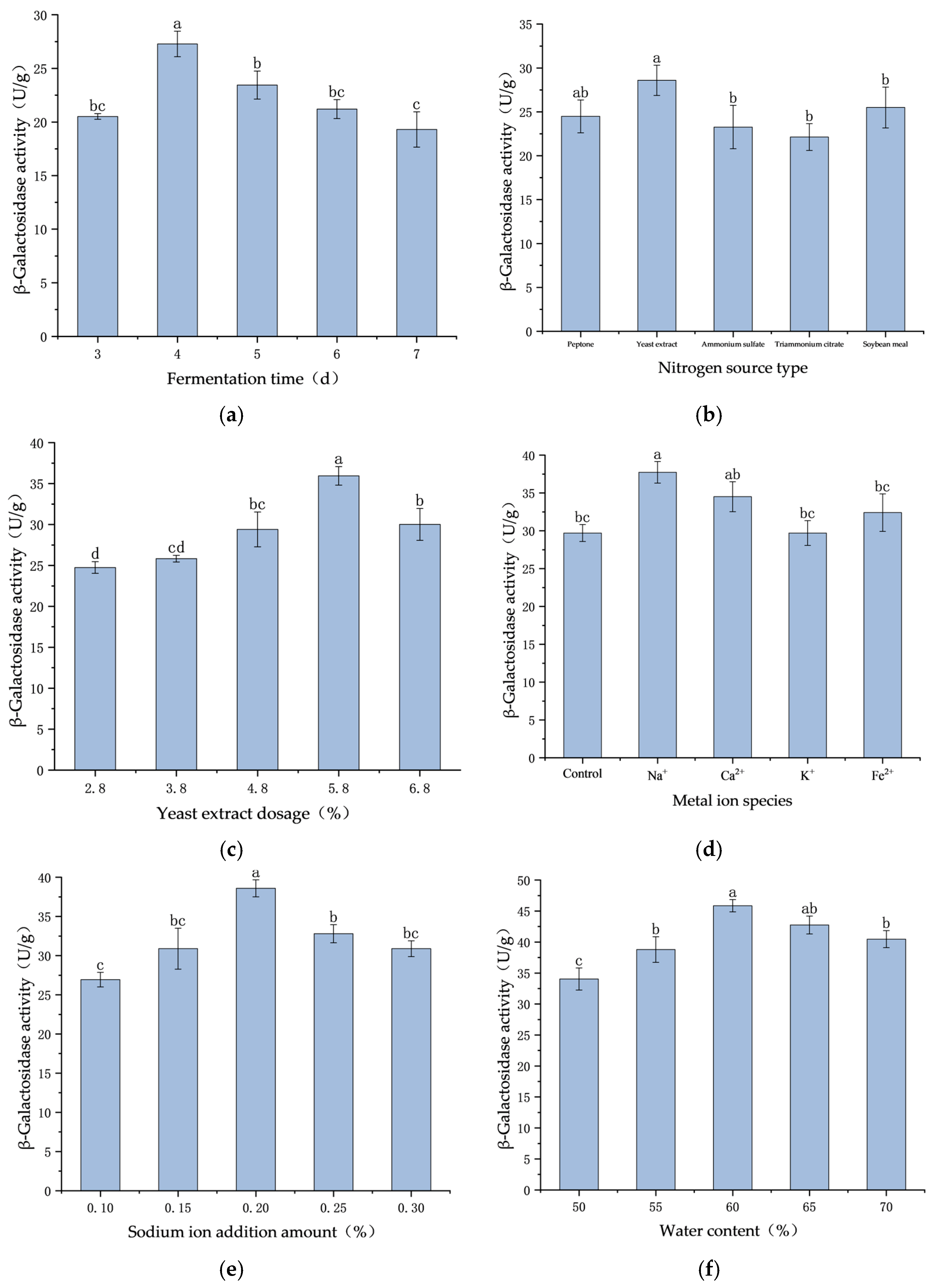
The β-galactosidase-producing capacity of strain C18 was significantly affected by fermentation time. As shown in Figure 1a, enzyme activity increased gradually with fermentation time and reached a maximum of 27.3 ± 1.2 U/g dry substrate on day 4. Further extension of fermentation time resulted in decreased enzyme activity. Among the tested nitrogen sources, including peptone, yeast extract, ammonium sulfate, triammonium citrate, and soybean meal, yeast extract was identified as the most favorable nitrogen source. At a yeast extract concentration of 5.8%, β-galactosidase activity reached 35.9 ± 1.1 U/g dry substrate. Since nitrogen is essential for fungal growth and protein biosynthesis, an appropriate nitrogen source may promote extracellular enzyme production. The decrease in enzyme activity after day 4 may be related to nutrient depletion, accumulation of metabolic by-products, or proteolytic degradation during prolonged fermentation. Yeast extract may enhance β-galactosidase production because it supplies readily assimilable nitrogen sources as well as amino acids, peptides, vitamins, minerals, nucleotides and other growth-promoting factors that support fungal growth, metabolism and extracellular protein biosynthesis [39]. Recent fermentation studies also showed that yeast-extract-containing media improved β-galactosidase production; for example, yeast extract supplementation increased β-galactosidase activity in Kluyveromyces marxianus grown on cheese whey [40], and yeast extract was identified as a key positive factor in optimizing β-galactosidase production by Aspergillus niger [41].
Metal ions were also evaluated because they may affect enzyme synthesis, catalytic activity, and protein folding [40]. Among the tested ions, Na+ produced the highest enzyme activity, reaching 37.7 ± 1.4 U/g dry substrate. Further optimization showed that 0.2% Na+ resulted in the maximum activity of 38.6 ± 1.1 U/g dry substrate. Moisture content was another important factor affecting β-galactosidase production. The highest enzyme activity, 45.9 ± 1 U/g dry substrate, was obtained at 60% moisture content. Insufficient moisture may restrict nutrient transport and fungal metabolism, whereas excessive moisture may reduce substrate porosity, limit oxygen transfer, and increase the risk of substrate aggregation. Therefore, the optimal moisture content of 60% observed in this study likely reflects a balance between nutrient diffusion and aeration during solid-state fermentation [42].

3.2. Optimization of Culture Conditions

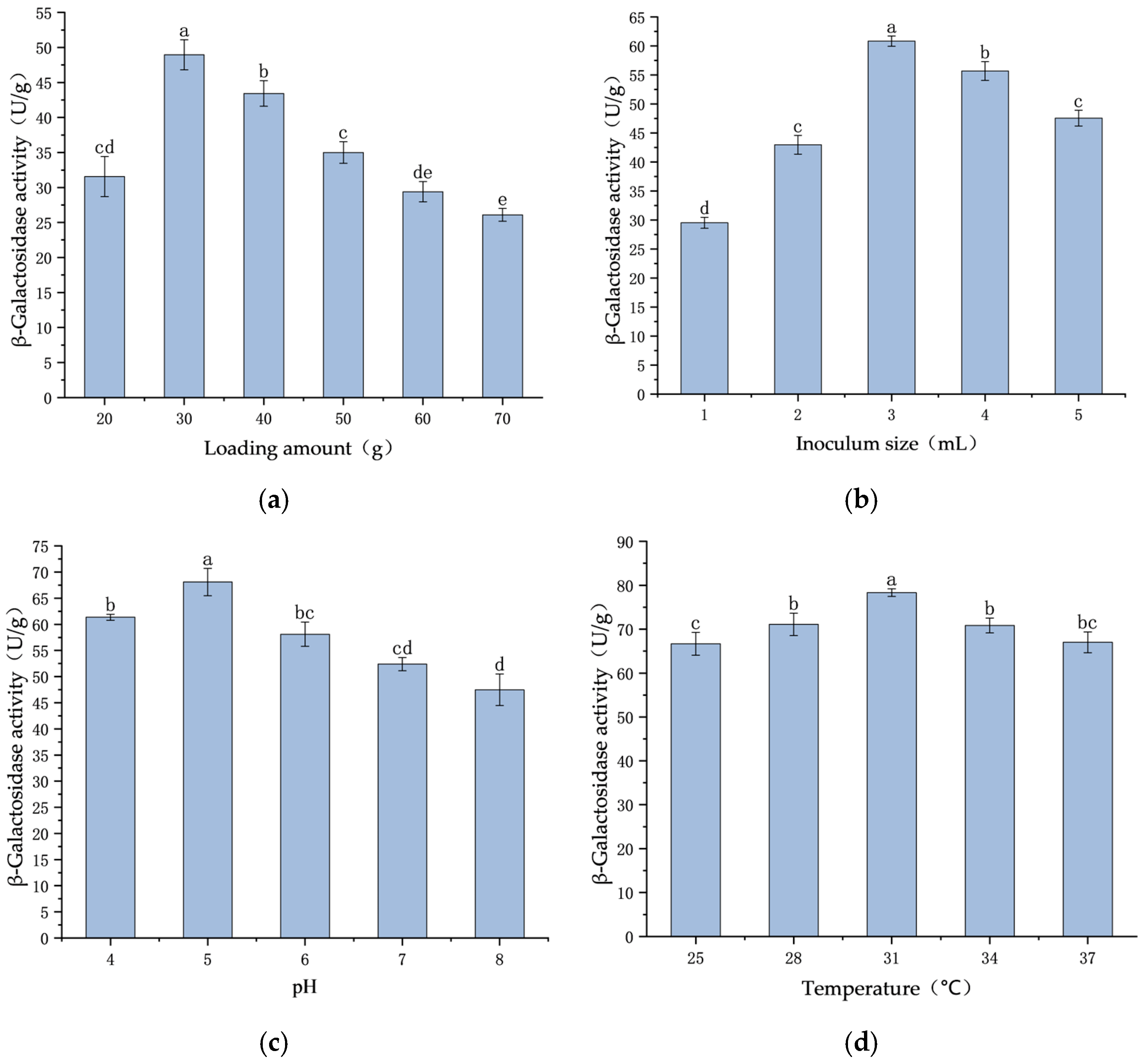
Culture parameters, including loading amount, inoculum volume, initial pH, and incubation temperature, were further optimized. As shown in Figure 2, β-galactosidase activity reached 49.0 ± 2.1 U/g dry substrate when the loading amount was 30 g. An inoculum volume of 3 mL, corresponding to 1.0 × 10⁶ spores, increased enzyme activity to 60.8 ± 0.9 U/g dry substrate. The optimal initial pH was 5.0, at which the enzyme activity reached 68.1 ± 2.6 U/g dry substrate. The maximum activity of 78.3 ± 0.9 U/g dry substrate was obtained at an incubation temperature of 31 °C. These results indicate that appropriate loading amount, inoculum volume, pH, and temperature are critical for β-galactosidase production by A. niger C18, probably because these parameters influence fungal growth, nutrient utilization, oxygen transfer, and enzyme secretion. An insufficient inoculum may delay fungal colonization of the solid substrate, whereas excessive inoculum may intensify nutrient competition and oxygen limitation. The optimal initial pH of 5.0 is consistent with the acidophilic growth preference of many Aspergillus species and may also favor secretion of fungal glycoside hydrolases. The optimal incubation temperature of 31 °C suggests that moderate temperature promotes mycelial development and enzyme biosynthesis, whereas higher temperatures may cause thermal stress and reduce metabolic activity [41].

3.3. Response Surface Analysis

Response surface methodology was used to further optimize β-galactosidase production by A. niger C18. Based on the experimental results shown in Table 2, a quadratic polynomial regression model was established using Design-Expert 13 software. The regression equation was as follows: Y = 89.53 + 1.00A + 4.43B + 1.15C + 3.34AB − 0.45AC + 0.24BC − 1.16A2 − 15.43B2 − 5.78C2, where Y represents β-galactosidase activity, and A, B, and C represent yeast extract concentration, moisture content, and inoculum volume, respectively. Analysis of variance showed that the model was highly significant, with an F value of 65.08 and a p value of <0.0001, whereas the lack of fit was not significant. The R2 and adjusted R2 values were 0.9882 and 0.9730, respectively, indicating that the model adequately explained the variation in enzyme activity and showed good agreement between the experimental and predicted values. The coefficient of variation was approximately 1.7%, suggesting good experimental reliability and precision. Among the model terms, B, AB, B2, and C2 significantly affected β-galactosidase production, indicating that moisture content was the most important factor. The predicted optimal conditions were 6.5% yeast extract, 61% moisture content, and 3 mL inoculum, under which the predicted enzyme activity was 90.4 U/g dry substrate. Validation experiments produced an actual activity of 92.6 ± 1.4 U/g dry substrate, with a relative error of 2.4%, confirming the reliability of the model for optimizing β-galactosidase production by A. niger C18.

3.4. Cloning and Expression of the lacB Gene

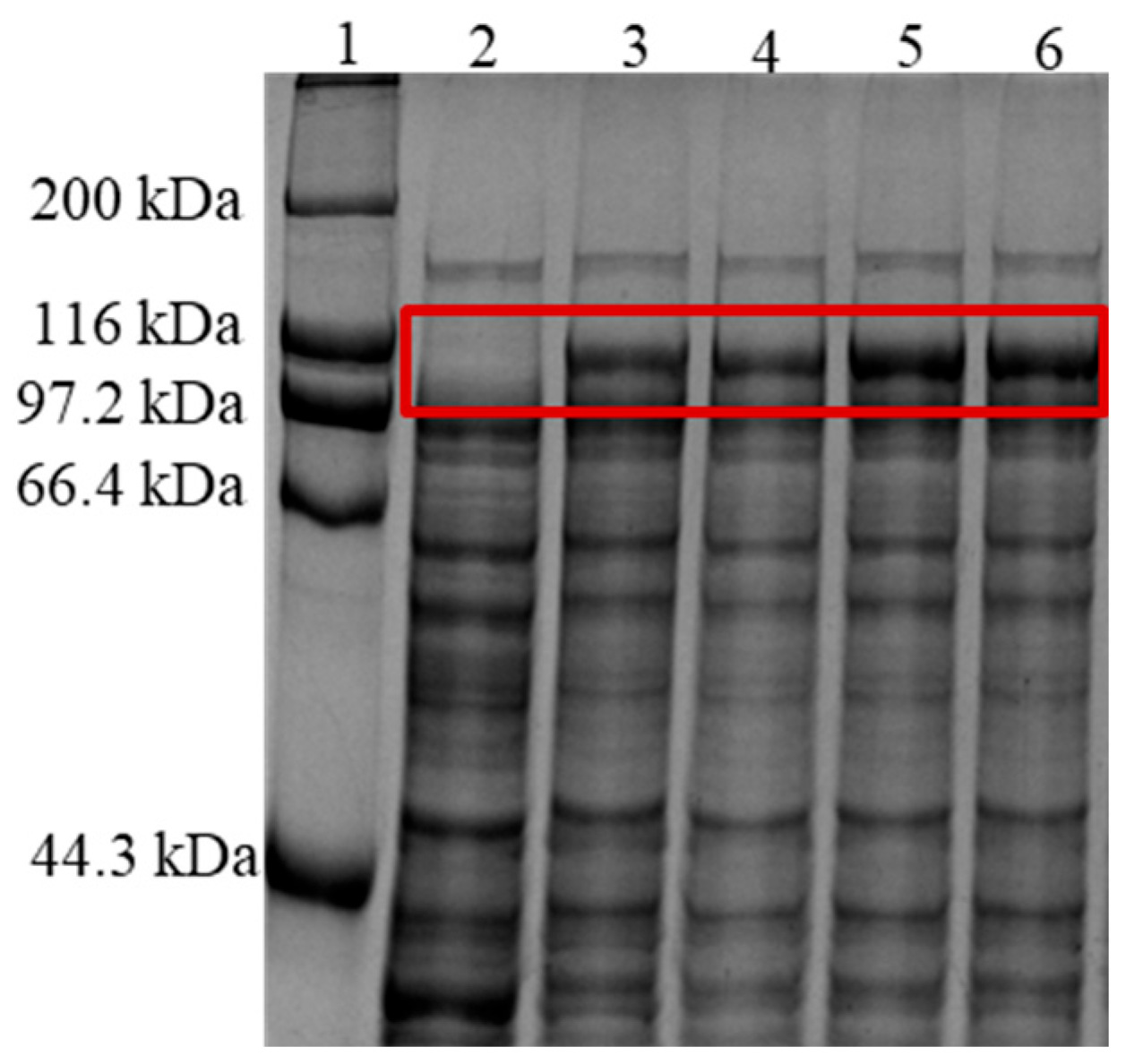
The lacB gene was amplified from cDNA by PCR. The amplified fragment was 3045 bp in length and encoded 1014 amino acids, with a predicted molecular weight of approximately 111.5 kDa. The lacB gene was inserted into the pET28a vector to construct the recombinant plasmid pET28a-lacB, which was subsequently transformed into E. coli BL21(DE3). Sequence analysis confirmed that the inserted fragment was identical to the original cDNA sequence. As shown in Figure 3, SDS-PAGE analysis confirmed successful expression of recombinant β-galactosidase in E. coli.

3.5. Purification of β-Galactosidase

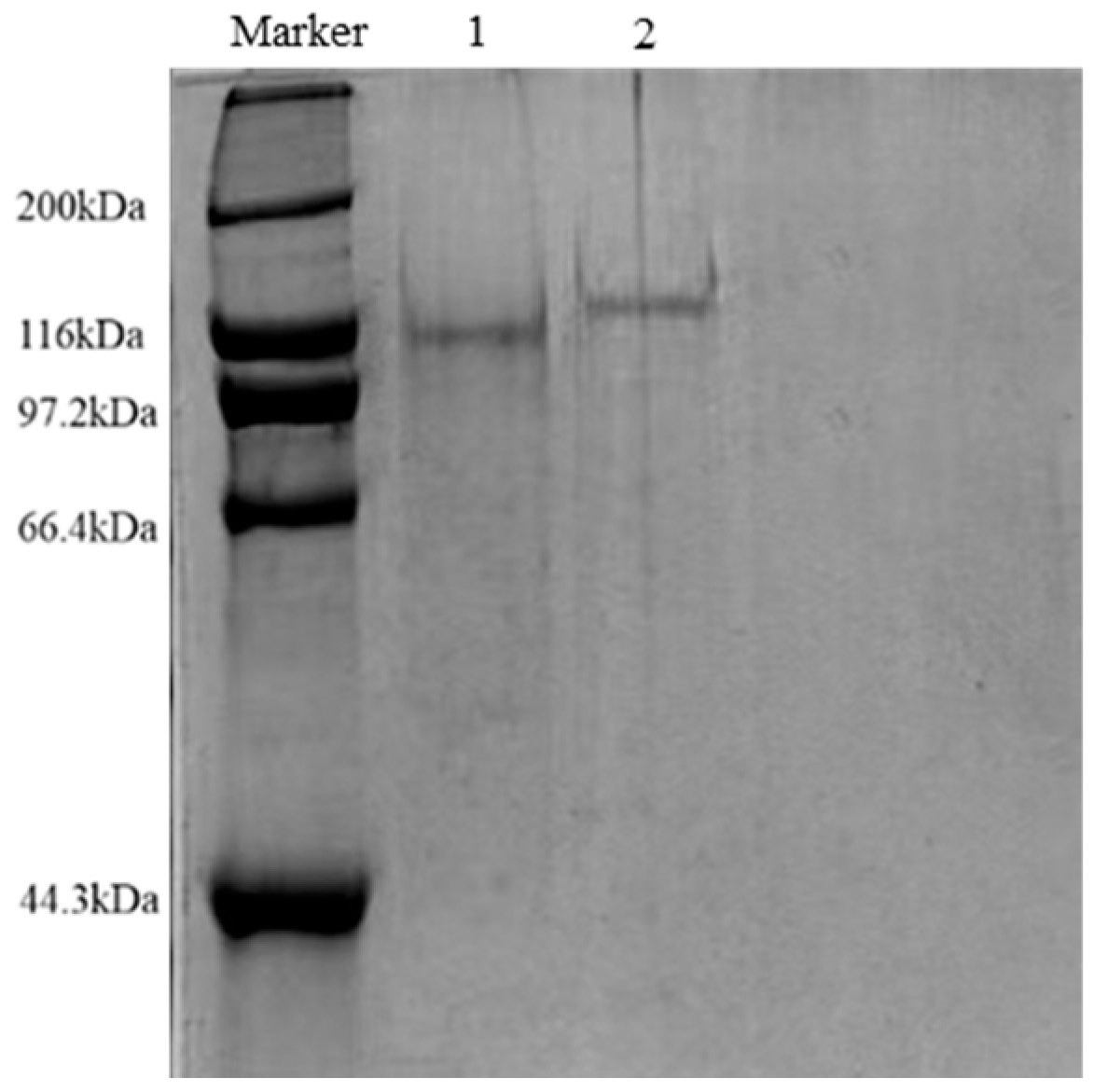
The SDS-PAGE results are shown in Figure 4. The purified recombinant enzyme showed an apparent molecular weight of approximately 115.0 kDa, whereas the purified native enzyme showed an apparent molecular weight of approximately 120.0 kDa. The slight difference in apparent molecular weight may be related to differences in post-translational modification, protein processing, or electrophoretic mobility between the recombinant and native enzymes. The purification results are summarized in Table 3 and Table 4. After purification, the recombinant enzyme exhibited a specific activity of 7.0 U/mg, with a purification fold of 4.7 and an activity recovery of 41.2%. The native enzyme exhibited a specific activity of 137.0 U/mg, with a purification fold of 3.5 and an activity recovery of 41.6%.

3.6. Optimal pH and pH Stability

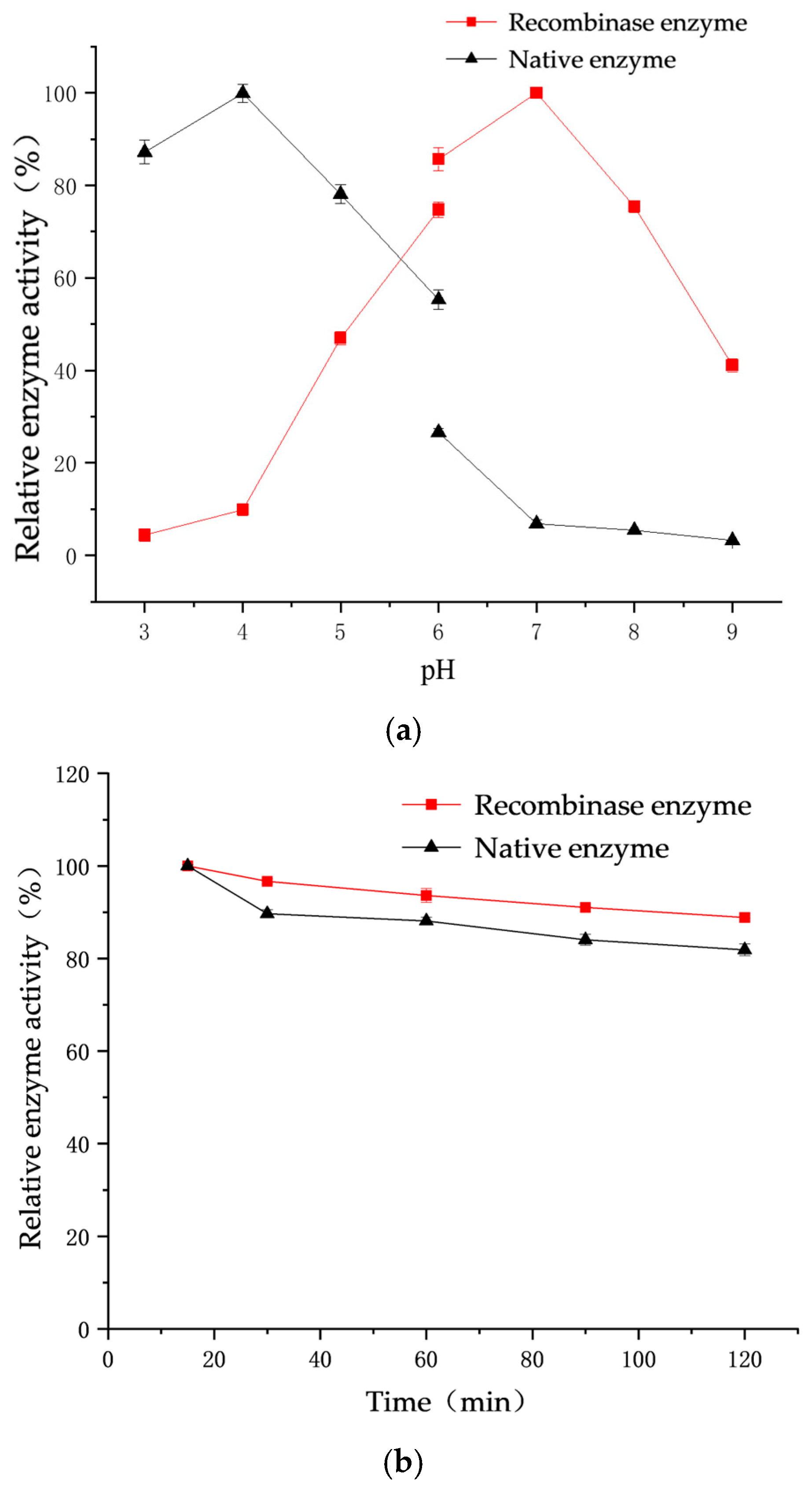
As shown in Figure 5a, recombinant β-galactosidase and native β-galactosidase exhibited markedly different optimum pH values. The recombinant enzyme showed maximal activity at pH 7.0, whereas the native enzyme showed maximal activity at pH 4.0, indicating a clear shift in optimum pH from acidic to near-neutral conditions. This shift is particularly important for dairy-related applications because milk and whey generally have near-neutral or weakly acidic pH values. In comparison, the recombinant β-galactosidase from Microbulbifer sp. ALW1 has an acidic optimum pH of 4.5 and is mainly stable within the pH range of 4.0–5.0 [43], whereas Gal42 from marine Bacillus sp. BY02 has an optimum pH of 7.4 and retains high activity at pH 7.0–8.0 [1]. Therefore, the optimum pH of the recombinant enzyme in this study is closer to that of neutral bacterial β-galactosidases than to that of typical acidic fungal β-galactosidases.
More importantly, as shown in Figure 5b, the recombinant enzyme retained 88.9% of its initial activity after incubation for 2 h at its optimum pH, indicating good stability under its working pH condition. This value was higher than the residual activity of the native enzyme under its corresponding optimum pH condition, suggesting that heterologous expression not only altered the catalytic pH preference but also improved operational pH stability.
The pronounced shift in optimum pH between the recombinant and native enzymes may be associated with host-dependent differences in protein maturation and expression systems. The native enzyme produced by Aspergillus niger may undergo fungal-specific post-translational modifications, such as glycosylation, signal peptide processing, and extracellular maturation, whereas the recombinant enzyme expressed in Escherichia coli is generally expected to be non-glycosylated because of the limited post-translational modification capacity of this host. These differences could potentially influence protein folding, the active-site microenvironment, surface charge distribution, and the apparent pKa values of catalytic residues [42,44,45]. However, these explanations remain hypothetical, as structural characterization, glycosylation analysis, metal-binding assessment, and mutational studies were not performed in the present study. Therefore, the exact molecular basis underlying the observed pH shift remains unresolved and should be validated in future investigations through sequence analysis, structural modeling, site-directed mutagenesis, and glycosylation analysis.
Figure 5. (a) Optimal reaction pH of β-galactosidase; (b) pH stability of β-galactosidase.
Processes 14 02002 g005

3.7. Optimal Temperature and Thermal Stability

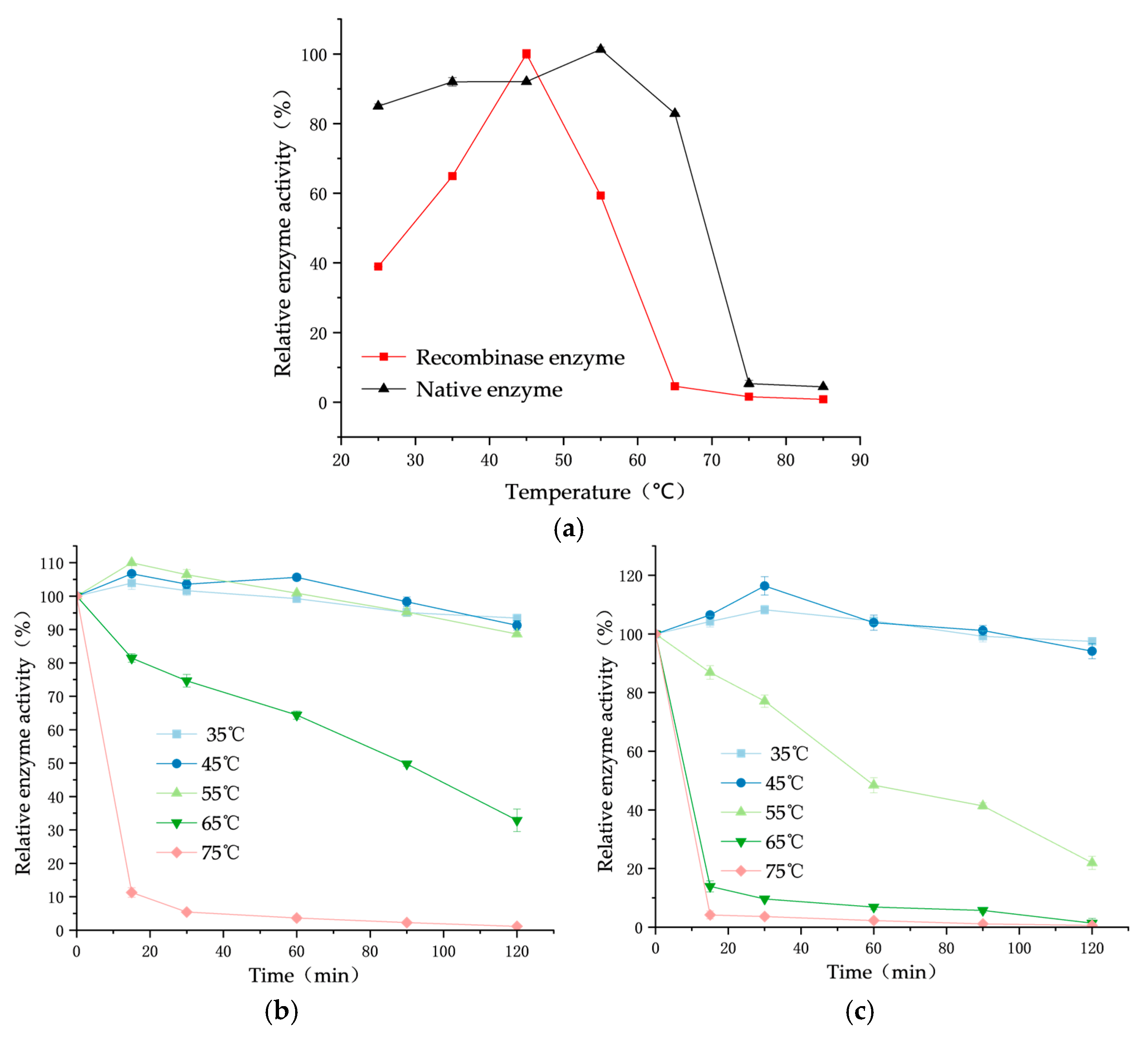
The effects of temperature on the activity and stability of the native and recombinant β-galactosidases are shown in Figure 6. The recombinant enzyme exhibited maximal activity at 45 °C, whereas the native enzyme showed an optimum temperature of 55 °C, indicating that the recombinant enzyme had a lower catalytic temperature optimum. Nevertheless, 45 °C is suitable for moderate-temperature lactose hydrolysis and may reduce energy consumption compared with higher-temperature processes. This optimum temperature is comparable to those reported for other recombinant β-galactosidases, such as Gal42 from Bacillus sp. BY02 and LacZBa from Bacillus aryabhattai GEL-09 [2].
Thermal stability analysis showed that both enzymes maintained high residual activity at 35 °C and 45 °C after 120 min of incubation. However, their stability decreased markedly at higher temperatures. The native enzyme remained relatively stable at 55 °C but gradually lost activity at 65 °C and was rapidly inactivated at 75 °C. In contrast, the recombinant enzyme showed good stability at 45 °C but was less stable above this temperature, with substantial activity loss at 55 °C and near-complete inactivation at 65 °C and 75 °C. At their respective optimum temperatures, the recombinant enzyme retained 94.1% activity after 2 h, whereas the native enzyme retained 88.6%, indicating slightly better short-term thermal stability of the recombinant enzyme under its optimal condition.

3.8. Effect of Metal Ions

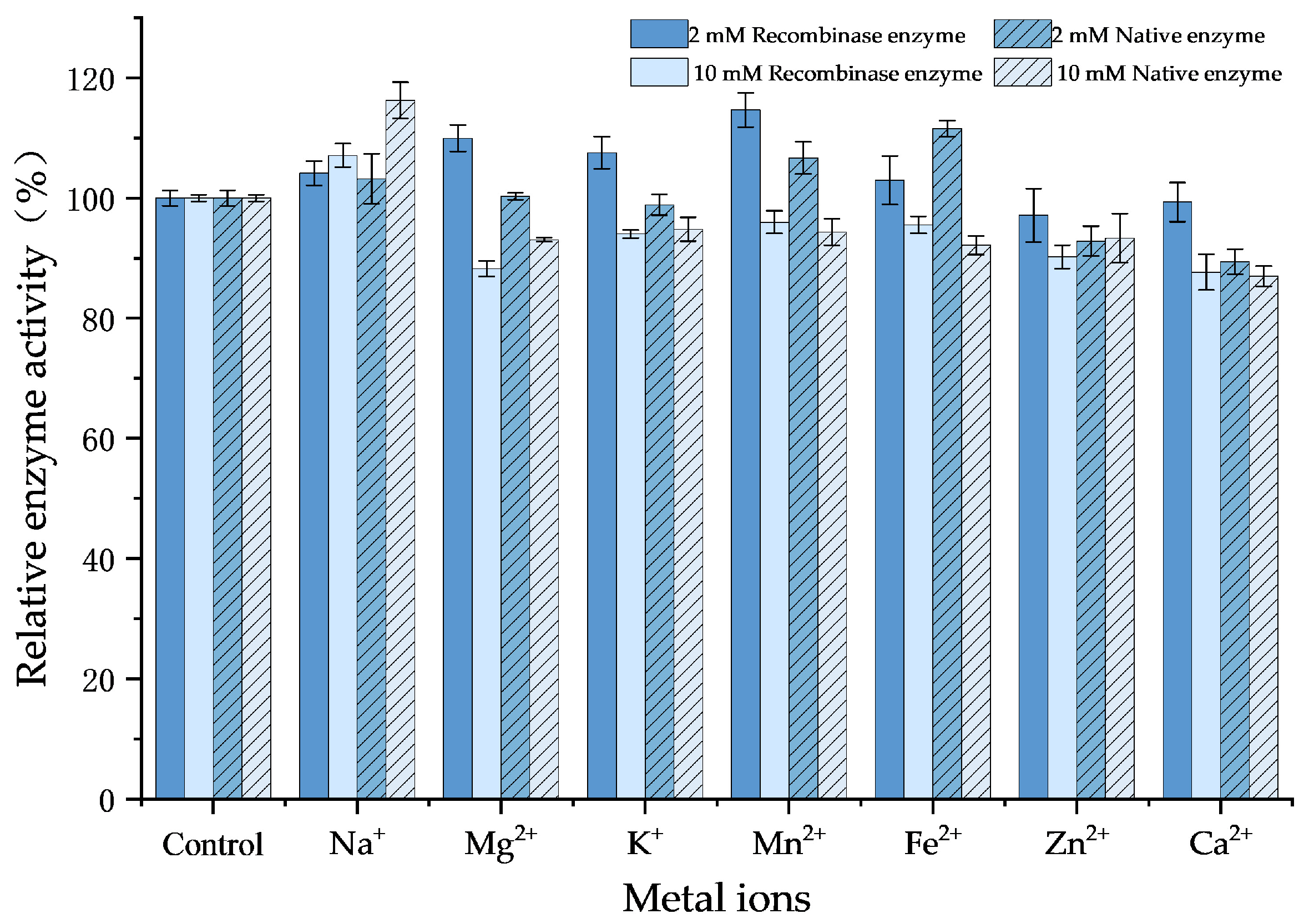
Metal ions may affect β-galactosidase activity by influencing protein conformation, charged residues, metal-binding sites, or the catalytic microenvironment [1]. Previous studies have shown that β-galactosidases from different microbial sources exhibit ion-specific responses; for example, Co2+, Mn2+, Zn2+, Fe2+, Mg2+, and Ca2+ enhanced the activity of a recombinant GH42 β-galactosidase from Bacillus aryabhattai, whereas Cu2+ and EDTA inhibited its activity [2]. As shown in Figure 7, metal ions tested at 2 mmol/L and 10 mmol/L showed ion-specific and concentration-dependent effects. Mn2+ most strongly activated the recombinant enzyme, increasing relative activity to 114.7%, whereas Na+ most strongly activated the native enzyme, increasing relative activity to 116.3%. These results indicate that the recombinant and native enzymes differed in their metal-ion responses. However, explanations involving expression-system-dependent folding, glycosylation, local charge distribution, or metal-binding-site accessibility remain hypothetical because structural characterization, glycosylation analysis, metal-binding assays, and mutational studies were not performed in this study. Future studies are needed to validate these mechanisms and to optimize metal-ion conditions for lactose hydrolysis in milk or whey systems.
Figure 7. Effects of metal ions on β-galactosidase activity.
Processes 14 02002 g007

3.9. Enzymatic Kinetic Parameters

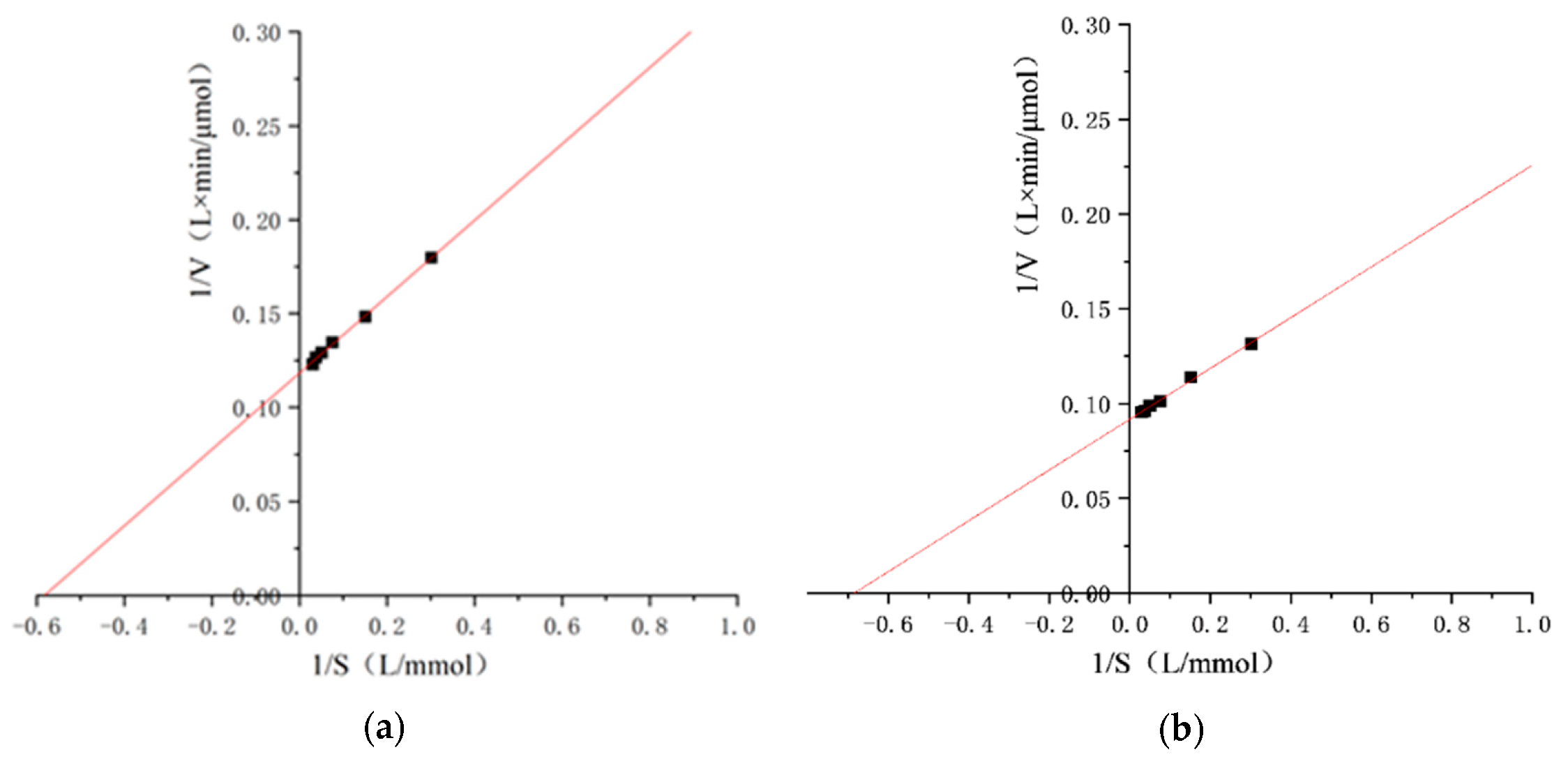
As shown in Figure 8, the recombinant enzyme showed a Km value of 1.4 mmol/L and a Vmax value of 10.9 μmol·L−1·min−1 toward ONPG, whereas the native enzyme showed a Km value of 1.7 mmol/L and a Vmax value of 8.5 μmol·L−1·min−1. Therefore, compared with the native enzyme, the recombinant enzyme had a 16.3% lower Km and a 29.1% higher Vmax. These results indicate that the recombinant enzyme had stronger apparent substrate affinity and higher catalytic capacity toward ONPG.
The Km value of the recombinant enzyme was lower than those reported for several β-galactosidases. For example, the β-galactosidase from Microbulbifer sp. ALW1 showed a Km value of 11.0 mmol/L toward ONPG [43], and LacZBa from B. aryabhattai GEL-09 showed a Km value of 14.4 mmol/L toward ONPG [2]. However, direct comparison of Vmax values is limited because different studies use different units, assay conditions, substrates, and enzyme concentrations. In addition, ONPG is an artificial substrate and may not fully reflect the catalytic behavior of the enzyme toward lactose. Therefore, future studies should determine Km, Vmax, kcat, and kcat/Km using lactose as the substrate.
Figure 8. (a) Lineweaver–Burk plot of recombinant β-galactosidase; (b) Lineweaver–Burk plot of native β-galactosidase.
Processes 14 02002 g008

3.10. Lactose Degradation Efficiency

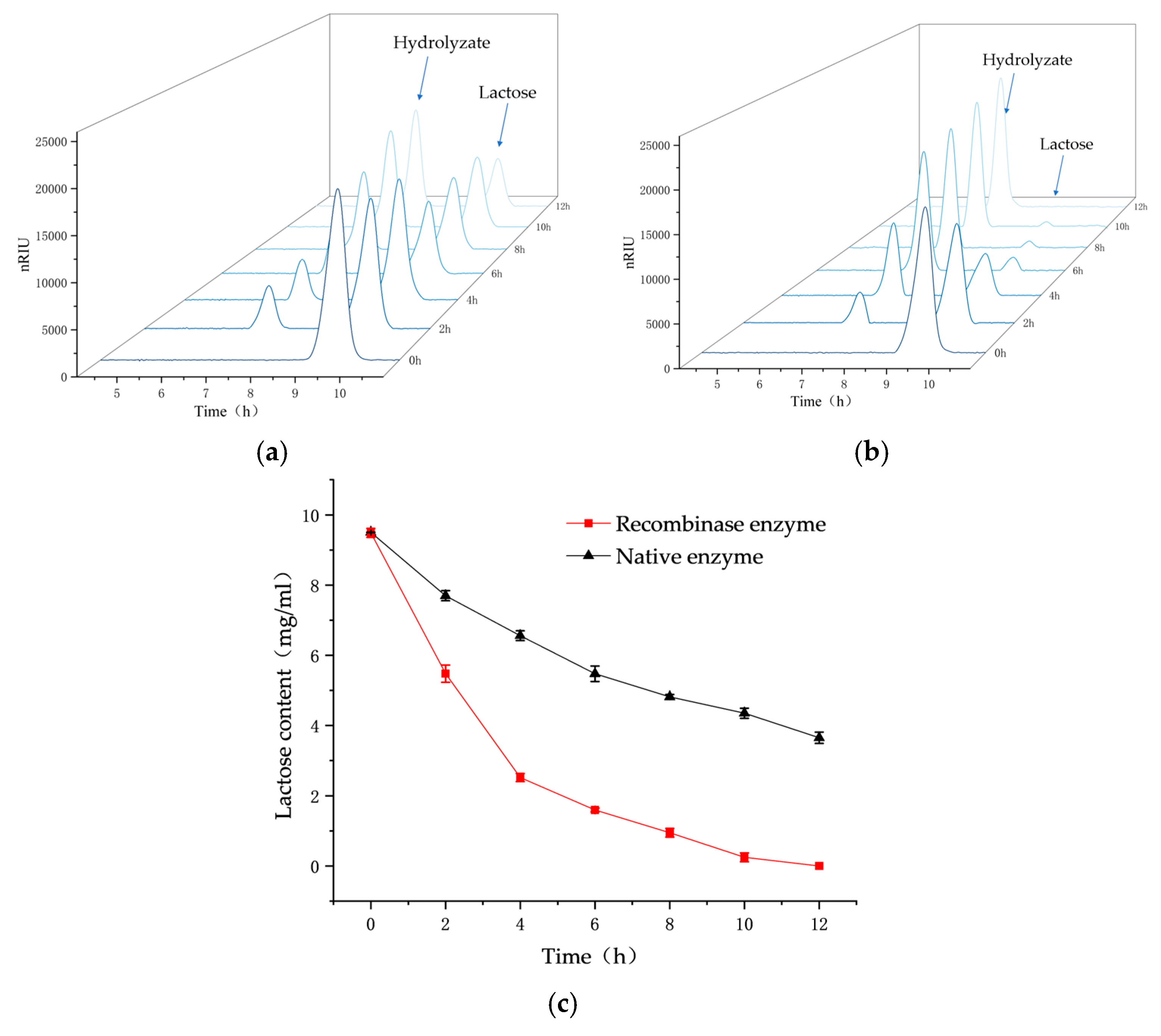
As shown in Figure 9, HPLC analysis showed that both enzymes could gradually hydrolyze lactose, but the recombinant enzyme exhibited significantly higher hydrolysis efficiency. After 12 h, under the tested conditions, the recombinant enzyme achieved more than 99.0% lactose degradation, whereas the native enzyme achieved 63.5% degradation. The improved lactose hydrolysis performance may be associated with its lower Km value, higher Vmax value, near-neutral optimum pH, and better residual activity during incubation.
Compared with previously reported β-galactosidases, the recombinant enzyme showed strong hydrolytic performance in a model lactose solution. Gal42 from Bacillus sp. BY02 completely hydrolyzed lactose after 360 min under its tested conditions [1], and LacZBa from B. aryabhattai GEL-09 completely hydrolyzed lactose within 4 h at 45 °C using 8 U/mL enzyme. In the present study, the recombinant enzyme achieved >99.0% lactose degradation after 12 h at a final enzyme activity of 0.6 U/mL and an initial lactose concentration of approximately 70 g/L. Although the reaction time was longer than that reported for LacZBa, the enzyme dosage used here was much lower. This suggests that the recombinant enzyme may be effective for lactose hydrolysis, particularly under high-lactose model conditions [2].
However, this assay was conducted in a model lactose solution rather than in milk, whey, or whey permeate. Therefore, further validation in real dairy matrices is required, especially considering the possible effects of proteins, lipids, minerals, mass transfer, and product inhibition by glucose and galactose [46].
Figure 9. Analysis of lactose degradation by β-galactosidase: (a) HPLC analysis of lactose hydrolysis by native β-galactosidase; (b) HPLC analysis of lactose hydrolysis by recombinant β-galactosidase; (c) lactose degradation efficiency of β-galactosidase.
Processes 14 02002 g009

3.11. TLC and HPLC Analysis of Hydrolysis Products

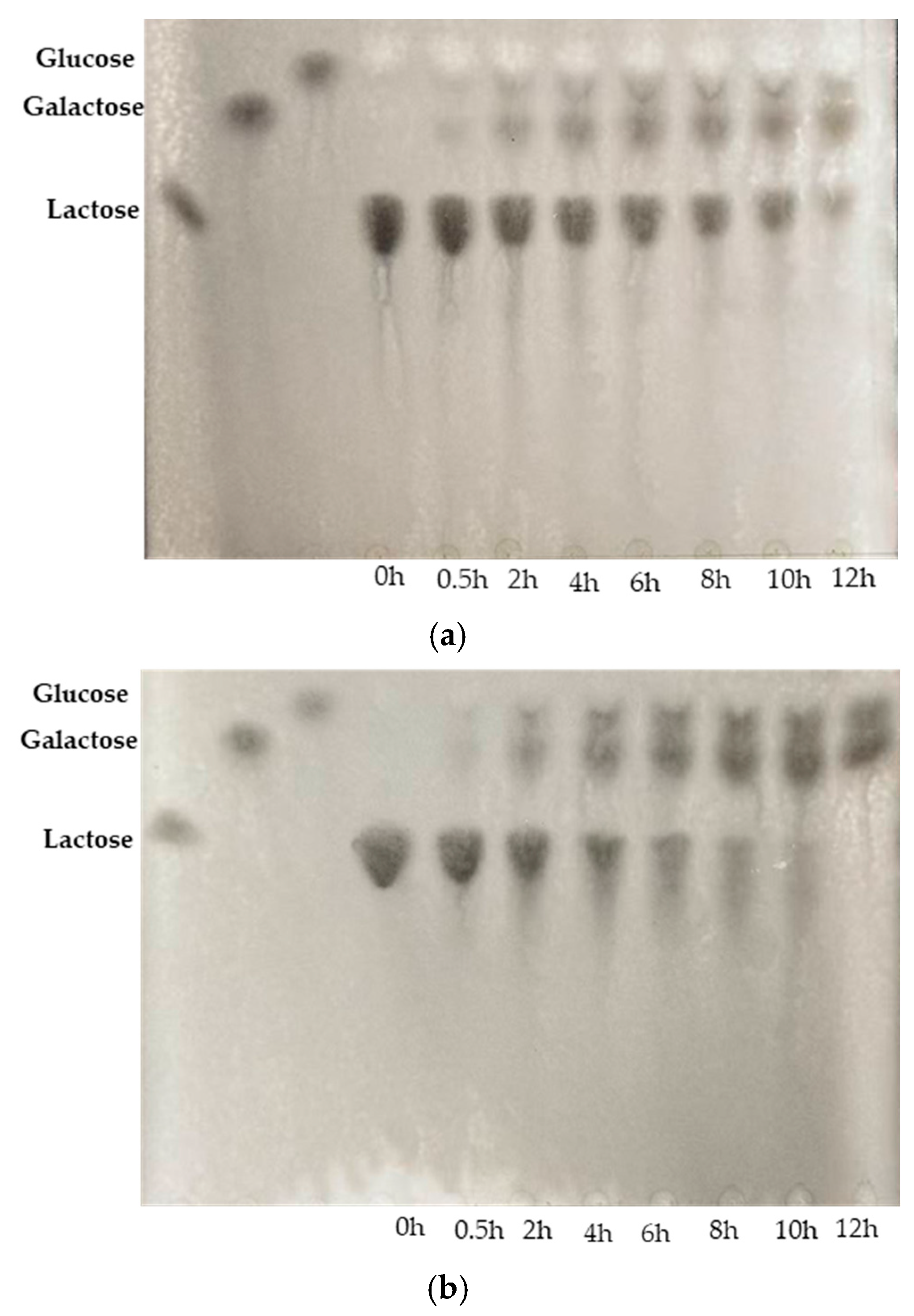
TLC analysis was performed to identify the products of lactose hydrolysis. As shown in Figure 10, the main hydrolysis products were glucose and galactose, confirming that lactose was hydrolyzed by β-galactosidase through cleavage of the β-1,4-glycosidic bond. These results were consistent with the HPLC analysis and further verified the lactose-hydrolyzing activity of the recombinant enzyme.

4. Conclusions

This study demonstrated that A. niger C18 is a promising source of β-galactosidase and that heterologous expression improved the enzyme performance under the tested conditions. The optimized solid-state fermentation conditions also enhanced native enzyme production, confirming the importance of nutrient composition and culture parameters for fungal β-galactosidase biosynthesis.
The recombinant enzyme showed an optimal pH of 7.0 and an optimal temperature of 45 °C, whereas the native enzyme showed an optimal pH of 4.0 and an optimal temperature of 55 °C. After incubation for 2 h at their respective optimal temperatures, the recombinant and native enzymes retained 94.1% and 88.6% of their initial activities, respectively. However, the recombinant enzyme exhibited reduced thermal stability above 45 °C. These results indicate that the recombinant enzyme had good activity under the tested near-neutral and moderate-temperature conditions, while its relatively limited thermal tolerance at higher temperatures should be improved in future studies.
The recombinant enzyme exhibited favorable catalytic performance toward ONPG, with a lower Km value (1.4 mmol/L) and a higher Vmax value (10.9 μmol·L−1·min−1) than the native enzyme. In the lactose model solution, the recombinant enzyme achieved more than 99.0% lactose degradation after 12 h, indicating efficient lactose hydrolysis under the tested conditions. However, the hydrolysis assay was conducted in a lactose model solution rather than in actual dairy matrices. Future studies should further evaluate its performance in milk, whey, or whey permeate and improve its operational stability and reusability through immobilization, protein engineering, or process optimization.

Author Contributions

Conceptualization, Y.D., H.H., Y.L. and Z.C.; methodology, Y.D., X.Y. and J.Q.; investigation, Y.D., J.Q., H.H. and Y.L.; formal analysis, Y.D., J.Z. and Y.L.; software, Y.D.; resources, Z.C.; writing—original draft preparation, Y.D.; writing—review and editing, H.H., Y.L. and Z.C.; validation, J.Z. and X.Y.; supervision, Z.C.; project administration, Z.C.; funding acquisition, Z.C. All authors have read and agreed to the published version of the manuscript.

Funding

This work was supported by Jiangsu Youheng Biotechnology Co., Ltd. (grant number JS20210036).

Data Availability Statement

The original contributions presented in this study are included in the article. Further inquiries can be directed to the corresponding author.

Acknowledgments

The authors gratefully acknowledge Changzhou University for providing the laboratory facilities.

Conflicts of Interest

The authors declare that this study received funding from Jiangsu Youheng Biotechnology Co., Ltd. The funder was not involved in the study design, collection, analysis, interpretation of data, the writing of this article or the decision to submit it for publication.

References

  1. Zhou, Z.; He, N.; Han, Q.; Liu, S.; Xue, R.; Hao, J.; Li, S. Characterization and application of a new β-galactosidase Gal42 from marine bacterium Bacillus sp. BY02. Front. Microbiol. 2021, 12, 742300. [Google Scholar] [CrossRef] [PubMed]
  2. Luan, S.; Duan, X. A novel thermal-activated β-galactosidase from Bacillus aryabhattai GEL-09 for lactose hydrolysis in milk. Foods 2022, 11, 372. [Google Scholar] [CrossRef] [PubMed]
  3. Mangiagalli, M.; Lotti, M. Cold-active β-galactosidases: Insight into cold adaptation mechanisms and biotechnological exploitation. Mar. Drugs 2021, 19, 43. [Google Scholar] [CrossRef] [PubMed]
  4. Li, D.; Wang, Z.; Yu, Y.; Li, H.; Luo, W.; Chen, B.; Niu, G.; Ding, H. Biochemical insights into a novel family 2 glycoside hydrolase with both β-1,3-galactosidase and β-1,4-galactosidase activity from the Arctic. Mar. Drugs 2023, 21, 521. [Google Scholar] [CrossRef] [PubMed]
  5. Núñez-Montero, K.; Salazar, R.; Santos, A.; Gómez-Espinoza, O.; Farah, S.; Troncoso, C.; Hoffmann, C.; Melivilu, D.; Scott, F.; Barrientos Díaz, L. Antarctic Rahnella inusitata: A producer of cold-stable β-galactosidase enzymes. Int. J. Mol. Sci. 2021, 22, 4144. [Google Scholar] [CrossRef] [PubMed]
  6. Taher, A.Y.; Alizadeh, M.; Aslan, Y. The covalent immobilization of β-galactosidase from Aspergillus oryzae and alkaline protease from Bacillus licheniformis on amino-functionalized multi-walled carbon nanotubes in milk. Heliyon 2024, 10, e32223. [Google Scholar] [CrossRef] [PubMed]
  7. Gabardo, S.; Rech, R.; Rosa, C.A.; Ayub, M.A.Z. Dynamics of ethanol production from whey and whey permeate by immobilized strains of Kluyveromyces marxianus in batch and continuous bioreactors. Renew. Energy 2014, 69, 89–96. [Google Scholar] [CrossRef]
  8. Gabardo, S.; Pereira, G.F.; Klein, M.P.; Rech, R.; Hertz, P.F.; Ayub, M.A.Z. Dynamics of yeast immobilized-cell fluidized-bed bioreactors systems in ethanol fermentation from lactose-hydrolyzed whey and whey permeate. Bioprocess Biosyst. Eng. 2016, 39, 141–150. [Google Scholar] [CrossRef] [PubMed]
  9. Kosseva, M.R.; Panesar, P.S.; Kaur, G.; Kennedy, J.F. Use of immobilised biocatalysts in the processing of cheese whey. Int. J. Biol. Macromol. 2009, 45, 437–447. [Google Scholar] [CrossRef] [PubMed]
  10. Kalathinathan, P.; Sain, A.; Pulicherla, K.; Muthukaliannan, G.K. A review on the various sources of β-galactosidase and its lactose hydrolysis property. Curr. Microbiol. 2023, 80, 122. [Google Scholar] [CrossRef] [PubMed]
  11. Movahedpour, A.; Ahmadi, N.; Ghalamfarsa, F.; Ghesmati, Z.; Khalifeh, M.; Maleksabet, A.; Shabaninejad, Z.; Taheri-Anganeh, M.; Savardashtaki, A. β-Galactosidase: From its source and applications to its recombinant form. Biotechnol. Appl. Biochem. 2022, 69, 612–628. [Google Scholar] [CrossRef] [PubMed]
  12. Li, Q.X.; Cao, H.; Cao, Y.H.; Dong, B. Research progress on the sources, catalytic mechanisms and applications of β-galactosidase. Chin. J. Anim. Sci. 2025, 61, 61–67. (In Chinese) [Google Scholar] [CrossRef]
  13. Yi, Y.Z.; Li, J.L.; Zong, Z.P.; Liu, X.J.; Song, H.Z.; Wang, H.N.; Zhang, Z.F.; Zhang, H.; Li, Y.N. Cloning, expression, and characteristic analysis of the novel β-galactosidase from silkworm, Bombyx mori. Genesis 2021, 59, e23446. [Google Scholar] [CrossRef] [PubMed]
  14. Liu, Y.; Wu, Z.F.; Zeng, X.X.; Weng, P.F.; Zhang, X.; Wang, C.Y. A novel cold-adapted phospho-β-galactosidase from Bacillus velezensis and its potential application for lactose hydrolysis in milk. Int. J. Biol. Macromol. 2021, 166, 760–770. [Google Scholar] [CrossRef] [PubMed]
  15. Xia, Y.; He, L.L.; Mao, J.J.; Fang, P.; Ma, X.; Wang, Z. Purification, characterization, and gene cloning of a new cold-adapted β-galactosidase from Erwinia sp. E602 isolated in northeast China. J. Dairy Sci. 2018, 101, 6946–6954. [Google Scholar] [CrossRef] [PubMed]
  16. Zhu, J.Y.; Sun, J.Q.; Tang, Y.J.; Sun, Z.; Guo, X.N.; Chen, J.F.; Zhang, H.; Chen, W. Expression, characterization and structural profile of a heterodimeric β-galactosidase from the novel strain Lactobacillus curieae M2011381. Process Biochem. 2020, 97, 87–95. [Google Scholar] [CrossRef]
  17. Yassein, A.S.; Hassan, M.M.; Elamary, R.B. Prevalence of lipase producer Aspergillus niger in nuts and anti-biofilm efficacy of its crude lipase against some human pathogenic bacteria. Sci. Rep. 2021, 11, 7981. [Google Scholar] [CrossRef] [PubMed]
  18. Yao, S.J.; Cai, L.N.; Lin, D.Q. Research progress of Aspergillus niger as a cell factory for secretory proteins. CIESC J. 2019, 70, 3690–3703. (In Chinese) [Google Scholar] [CrossRef]
  19. Dong, Z.; Yang, S.; Lee, B.H. Bioinformatic mapping of a more precise Aspergillus niger degradome. Sci. Rep. 2021, 11, 693. [Google Scholar] [CrossRef] [PubMed]
  20. Patidar, M.K.; Nighojkar, S.; Kumar, A.; Nighojkar, A. Pectinolytic enzymes—Solid state fermentation, assay methods and applications in fruit juice industries: A review. 3 Biotech. 2018, 8, 199. [Google Scholar] [CrossRef] [PubMed]
  21. Mital, S.; Christie, G.; Dikicioglu, D. Recombinant expression of insoluble enzymes in Escherichia coli: A systematic review of experimental design and its manufacturing implications. Microb. Cell Fact. 2021, 20, 208. [Google Scholar] [CrossRef] [PubMed]
  22. Zhang, Z.-X.; Nong, F.-T.; Wang, Y.-Z.; Yan, C.-X.; Gu, Y.; Song, P.; Sun, X.-M. Strategies for efficient production of recombinant proteins in Escherichia coli: Alleviating the host burden and enhancing protein activity. Microb. Cell Fact. 2022, 21, 191. [Google Scholar] [CrossRef] [PubMed]
  23. Bartolo-Aguilar, Y.; Chávez-Cabrera, C.; Flores-Cotera, L.B.; Badillo-Corona, J.A.; Oliver-Salvador, C.; Marsch, R. The potential of cold-shock promoters for the expression of recombinant proteins in microbes and mammalian cells. J. Genet. Eng. Biotechnol. 2022, 20, 173. [Google Scholar] [CrossRef] [PubMed]
  24. Wei, H.; Lunin, V.V.; Alahuhta, M.; Himmel, M.E.; Huang, S.; Bomble, Y.J.; Zhang, M. Streamlining heterologous expression of top carbonic anhydrases in Escherichia coli: Bioinformatic and experimental approaches. Microb. Cell Fact. 2024, 23, 190. [Google Scholar] [CrossRef] [PubMed]
  25. Gygli, G. On the reproducibility of enzyme reactions and kinetic modelling. Biol. Chem. 2022, 403, 717–730. [Google Scholar] [CrossRef] [PubMed]
  26. Marques, S.M.; Planas-Iglesias, J.; Velecký, J.; Musil, M.; Asano, Y.; Borowski, T.; Brissos, V.; Cespugli, M.; Chorozian, K.; Dadashipour, M.; et al. Mobilizing the biocatalysis community for reproducible and reusable data collection. ACS Catal. 2026; in press.
  27. McDonald, A.G.; Tipton, K.F. Parameter reliability and understanding enzyme function. Molecules 2022, 27, 263. [Google Scholar] [CrossRef] [PubMed]
  28. Wang, Y.; Chen, J.; Yang, Y.; Zhang, Z.; Cai, W.; Yan, X.; Peng, Y.; Li, Y.; Liu, P. Optimization of liquid culture of extracellular flavonoids of Sanghuangporus and evaluation of antioxidant activity of fermentation broth. Foods 2026, 15, 455. [Google Scholar] [CrossRef] [PubMed]
  29. Ali, S.; Noor, P.; Ahmad, M.U.; Khan, Q.F.; William, K.; Liaqat, I.; Shah, T.A.; Alsahli, A.A.; Younous, Y.A.; Bourhia, M. Kinetics of cellulase-free endo xylanase hyper-synthesis by Aspergillus niger using wheat bran as a potential solid substrate. BMC Biotechnol. 2024, 24, 69. [Google Scholar] [CrossRef] [PubMed]
  30. Ainiwaer, A.; Liang, Y.; Ye, X.; Gao, R. Characterization of a novel Fe2+ activated non-blue laccase from Methylobacterium extorquens. Int. J. Mol. Sci. 2022, 23, 9804. [Google Scholar] [CrossRef] [PubMed]
  31. Lappa, I.K.; Kachrimanidou, V.; Papadaki, A.; Stamatiou, A.; Ladakis, D.; Eriotou, E.; Kopsahelis, N. A comprehensive bioprocessing approach to foster cheese whey valorization: On-site β-galactosidase secretion for lactose hydrolysis and sequential bacterial cellulose production. Fermentation 2021, 7, 184. [Google Scholar] [CrossRef]
  32. Xu, Y.; Huang, H.; Lu, H.; Wu, M.; Lin, M.; Zhang, C.; Zhao, Z.; Li, W.; Zhang, C.; Li, X.; et al. Characterization of an Aspergillus niger for efficient fatty acid ethyl ester synthesis in aqueous phase and the molecular mechanism. Front. Microbiol. 2022, 12, 820380. [Google Scholar] [CrossRef] [PubMed]
  33. Li, T.; Li, J.; Yan, Q.; Yang, S.; Jiang, Z. Biochemical characterization of a novel β-galactosidase from Lacticaseibacillus zeae and its application in synthesis of lacto-N-tetraose. J. Dairy Sci. 2023, 106, 6623–6634. [Google Scholar] [CrossRef] [PubMed]
  34. GB/T 33409-2016; Determination of the activity of beta-galactosidase—Spectrophotometric method. National Technical Committee on Biochemical Testing of Standardization Administration of China; Standards Press of China: Beijing, China, 2016. (In Chinese)
  35. Hussien, S.A.; Doosh, K. Extraction, purification and characterization of β-galactosidase from tomato (Lycopersicon esculentum). IOP Conf. Ser. Earth Environ. Sci. 2021, 761, 012123. [Google Scholar] [CrossRef]
  36. Gennari, A.; Simon, R.; Sperotto, N.D.M.; Bizarro, C.V.; Basso, L.A.; Machado, P.; Benvenutti, E.V.; Viegas, A.D.C.; Nicolodi, S.; Renard, G.; et al. One-step purification of a recombinant beta-galactosidase using magnetic cellulose as a support: Rapid immobilization and high thermal stability. Bioresour. Technol. 2022, 345, 126497. [Google Scholar] [CrossRef] [PubMed]
  37. Yan, Y.; Guan, W.; Li, X.; Gao, K.; Xu, X.; Liu, B.; Zhang, W.; Zhang, Y. β-Galactosidase GALA from Bacillus circulans with high transgalactosylation activity. Bioengineered 2021, 12, 8908–8919. [Google Scholar] [CrossRef] [PubMed]
  38. Albuquerque, T.L.; Sousa, M.; Gomes e Silva, N.C.; Girão Neto, C.A.C.; Gonçalves, L.R.B.; Fernandez-Lafuente, R.; Rocha, M.V.P. β-Galactosidase from Kluyveromyces lactis: Characterization, production, immobilization and applications—A review. Int. J. Biol. Macromol. 2021, 191, 881–898. [Google Scholar] [CrossRef] [PubMed]
  39. Tao, Z.; Yuan, H.; Liu, M.; Liu, Q.; Zhang, S.; Liu, H.; Jiang, Y.; Huang, D.; Wang, T. Yeast extract: Characteristics, production, applications and future perspectives. J. Microbiol. Biotechnol. 2023, 33, 151–166. [Google Scholar] [CrossRef] [PubMed]
  40. Coelho, R.J.S.; Gabardo, S.; Marim, A.V.C.; Bolognesi, L.S.; Filho, N.J.P.; Ayub, M.A.Z. Porungo cheese whey: A new substrate to produce β-galactosidase. An. Acad. Bras. Cienc. 2023, 95, e20200483. [Google Scholar] [CrossRef] [PubMed]
  41. Souza, W.S.; do Nascimento Silva, G.; Chaves, R.V.; Rodrigues, J.R.d.S.; Cerqueira, K.S.; Souza, R.R.d. Optimization in the production of β-galactosidase from Aspergillus niger in cheese whey and purification by aqueous two-phase system. Biomass Conv. Bioref. 2026, 16, 190. [Google Scholar] [CrossRef]
  42. Shi, X.; Wu, D.; Xu, Y.; Yu, X. Engineering the optimum pH of β-galactosidase from Aspergillus oryzae for efficient hydrolysis of lactose. J. Dairy Sci. 2022, 105, 4772–4782. [Google Scholar] [CrossRef] [PubMed]
  43. Tang, G.J.; Li, H.B.; Zhu, Y.B.; Jiang, Z.D.; Ni, H.; Li, Q.B.; Chen, Y.H. Heterologous expression and enzymatic properties of recombinant β-galactosidase from Microbulbifer sp. ALW1. Mod. Food Sci. Technol. 2022, 38, 111–118. (In Chinese) [Google Scholar] [CrossRef]
  44. Soyeurt, H.; Dehareng, F.; Gengler, N.; McParland, S.; Wall, E.; Berry, D.P.; Coffey, M.; Dardenne, P. Multiple breeds and countries’ predictions of mineral contents in milk from milk mid-infrared spectrometry. Foods 2021, 10, 2235. [Google Scholar] [CrossRef] [PubMed]
  45. Szymański, K.; Hapeta, P.; Moroz, P.; Wąsik, B.; Robak, M.; Lazar, Z. The influence of Yarrowia lipolytica glycosylation on the biochemical properties and oligomerization of heterologous invertase. Sustainability 2022, 14, 7926. [Google Scholar] [CrossRef]
  46. Rosolen, M.D.; Gennari, A.; Volpato, G.; de Souza, C.F.V. Lactose Hydrolysis in Milk and Dairy Whey Using Microbial β-Galactosidases. Enzym. Res. 2015, 806240. [Google Scholar] [CrossRef]
Figure 1. Optimization of fermentation cycle and medium composition of Aspergillus niger C18. Effect of (a) fermentation time; (b) different nitrogen sources; (c) yeast extract concentration; (d) different metal ions; (e) sodium ion concentration; and (f) moisture content on β-galactosidase production by strain C18. Different lowercase letters above the bars indicate significant differences among treatments according to Tukey’s multiple comparison test p < 0.05.
Processes 14 02002 g001
Figure 2. Optimization of culture conditions of Aspergillus niger C18. Effect of (a) loading amount; (b) inoculum volume; (c) initial pH; and (d) temperature on β-galactosidase production by strain C18. Different lowercase letters above the bars indicate significant differences among treatments according to Tukey’s multiple comparison test p < 0.05.
Processes 14 02002 g002
Figure 3. SDS-PAGE analysis of the recombinant enzyme (1. protein marker; 2. control; 3–6. supernatants of disrupted cells).
Processes 14 02002 g003
Figure 4. Electrophoretic analysis of purified β-galactosidase (1. Purified recombinant enzyme; 2. Purified native enzyme).
Processes 14 02002 g004
Figure 6. (a) Optimal temperature of β-galactosidase; (b) effect of temperature on the stability of the native enzyme; (c) effect of temperature on the stability of the recombinant enzyme.
Processes 14 02002 g006
Figure 10. TLC analysis of β-galactosidase hydrolysates: TLC analysis of lactose hydrolysis by (a) native and (b) recombinant β-galactosidase.
Processes 14 02002 g010
Table 1. Factors and levels for response surface analysis of β-galactosidase production.
CodeFactorLevel 1Level 2Level 3
AYeast extract concentration/%w/w4.85.86.8
BMoisture content/%55.060.065.0
CInoculum volume/mL2.03.04.0
Table 2. Analysis of variance for the quadratic response surface model.
SourceSum of SquaresdfMean SquareF Valuep ValueSignificance
Model1430.49158.965.1<0.0001Significant
A—Yeast extract concentration8.118.13.00.1121Not significant
B—Moisture content157.31157.364.4<0.0001Significant
C—Inoculum volume10.5110.54.30.0764Not significant
AB44.6144.618.20.0037Significant
AC0.810.80.30.5868Not significant
BC0.210.20.10.7723Not significant
A25.715.72.30.1710Not significant
B21002.011002.0410.3<0.0001Significant
C2140.91140.957.70.0001Significant
Residual17.172.4
Lack of fit12.734.23.90.1118Not significant
Pure Error4.441.1
Cor total1447.516
Table 3. Purification results of recombinant β-galactosidase.
SourceTotal Activity/UProtein Content/mgSpecific Activity/(U/mg)Purification FoldRecovery/%
Crude enzyme solution1.71.11.5--
Ni-NTA 6FF0.70.17.04.741.2
Table 4. Purification results of native β-galactosidase.
SourceTotal Activity/UProtein Content/mgSpecific Activity/(U/mg)Purification FoldRecovery/%
Crude enzyme solution65.91.738.8--
DEAE Sepharose FF27.40.2137.03.541.6
Disclaimer/Publisher’s Note: The statements, opinions and data contained in all publications are solely those of the individual author(s) and contributor(s) and not of MDPI and/or the editor(s). MDPI and/or the editor(s) disclaim responsibility for any injury to people or property resulting from any ideas, methods, instructions or products referred to in the content.