Article

Structural, Thermal, Optical and Dielectric Properties of New Synthesized Keggin-Type Lacunary Polyoxometalates Cs5PMMo11(H2O)O39 (M = Cu and Zn)

1
Laboratoire des Procédés, Matériaux et Environnement (LPME), Faculté des Sciences et Techniques de Fès, Université Sidi Mohammed Ben Abdellah, Fès B.P. 2202, Morocco
2
Laboratory of Spectroscopy, Molecular Modelling, Materials, Nanomaterials, Water and Environment, Environmental Materials Team, ENSAM, Mohammed V University in Rabat, Avenue des Forces Armées Royales, Rabat B.P. 6207, Morocco
3
Laboratoire des Procédés, Matériaux et Environnement (LPME), Faculté Polydisciplinaire (FP-Taza), Université Sidi Mohammed Ben Abdellah, Taza B.P. 1223, Morocco
*
Author to whom correspondence should be addressed.
Processes 2026, 14(12), 1928; https://doi.org/10.3390/pr14121928 (registering DOI)
Submission received: 3 April 2026 / Revised: 23 May 2026 / Accepted: 11 June 2026 / Published: 13 June 2026

Abstract

New lacunary Keggin-type polyoxometalate salts with the formula Cs5PMMo11(H2O)O39 (M = Cu, Zn) were synthesized via the inorganic solution condensation method. X-ray diffraction and FT-IR spectroscopy confirmed the preservation of the Keggin structure. The surface morphology and elemental composition were characterized using scanning electron microscopy coupled with energy-dispersive X-ray spectroscopy. Thermal analysis, performed by differential scanning calorimetry coupled with thermogravimetry, demonstrated a significant enhancement in thermal stability upon the incorporation of the transition metals into the heteropolyacid framework. Specifically, the substitution of protons by cesium and of molybdenum by copper or zinc positively influenced the crystallographic configuration of the salts, raising their thermal resistance (up to 526 °C). Furthermore, optical and dielectric measurements revealed promising electronic properties in the synthesized lacunary salts. Notably, the compound Cs5PZnMo11(H2O)O39 exhibited a substantially increased dielectric constant at low frequency, underscoring the synergistic effect of zinc addition on its dielectric performance.

1. Introduction

Polyoxometalates (POMs) represent a rich and important class of inorganic molecular compounds with unique electronic versatility [1]. These are complexes composed of [MnOr]n isopolyanions (M = WVI, MoVI, VV, NbV, and TaV) centered around a heteroatom X to form a heteropolyanion [XxMmOy]p− (x ≤ m) [2]. Nearly 70 elements of the periodic table, such as Si, P, S, B, Ge, Cr, and As, can function as the heteroatom X. This confers a wide variety of structures and interesting properties on these materials, which make them relevant for potential applications in various fields, including materials science [3], medicine [4], catalysis [5], electrochemistry [6], magnetism, and electronics [7].
Among the most studied POMs are Keggin-type heteropolyanions, which form a vast class of inorganic metal-oxide cluster compounds with transition metals in their highest oxidation states [8]. They have the general formula XnM12O40n−, where an XO4 tetrahedron is surrounded by 12 MO6 octahedra. These octahedra share edges to form M3O13 trimetallic groups, which are interconnected via shared corners. The accumulation of transition-metal centers within a single molecular unit, as nearly all transition metals can be and have been incorporated into POMs, confers a diversity of physicochemical properties [9]. However, the binding stability constant of these materials with electrophiles is relatively low. This is largely attributed to the weakly basic surface oxygens and the lack of suitable inner-sphere coordination sites [10,11]. To enhance the reactivity of the oxo ligands, three empirical strategies are typically adopted: (i) increasing the overall charge by total or partial reduction of the addenda atoms, although post-reduced POMs are generally not air-stable; (ii) substituting one or more addenda MVI ions with lower-valent metal ions (e.g., TiIV, VV et NbV), but the alternatives are limited due to strict coordination geometry and ionic radius requirements; (iii) creating one or more vacancies in the POM structures, followed by the incorporation of targeted transition-metal ions into these vacancies, leading to a subclass of Keggin POMs known as transition-metal-substituted polyoxometalates (TMPOMs) [12]. This pathway allows for the tuning of structure and properties at the molecular level, as well as a degree of control over the final cluster architectures. TMPOMs have attracted considerable interest in recent years due to their remarkable structures and characteristics, such as thermodynamic stability towards oxidation, acidity, redox properties, and solubility in various media. The substitution of a transition metal in the POM structure has been studied as a promising route to extending the application range of these compounds [11].
Extensive research has been dedicated to the study of TMPOMs. Day and Kemperer [13], Chen and Zubieta [14], and other researchers have focused their work on investigating structural properties. Lachquer et al. [15] studied the electrocatalytic and optical properties of Keggin POM salts for use as components of photo-cathodes in microbial fuel cells. Chada et al. [16] proposed the use of a POM blend in semiconductors. Tsigdinos and Hallada [17] examined the proton conductivities of POMs for their potential integration as proton exchange membranes in fuel cells. Other researchers have investigated the dielectric properties of materials based on polyurethane/POM, polyimide/POM, and silane-modified POMs [18]. From a practical standpoint, it is advantageous to have a variety of properties within a single material for multiple applications. Recently, the need for materials possessing high optical and dielectric properties has significantly increased in the electronics industry for use in various applications.
Despite extensive research on transition-metal-substituted POMs, to the best of our knowledge, no previous work has reported the combination of three structural and compositional features in a single POM salt. In this work, we investigated, for the first time, new lacunary Keggin-type POM salts combining three modifications simultaneously: (i) cesium counter-cation substitution, (ii) lacunary framework (PMo11O397−), and (iii) transition-metal incorporation (Cu2+ or Zn2+), reported with the formula Cs5PMMo11(H2O)O39 (M = Cu and Zn). These salts were prepared via inorganic solution condensation method and subsequently characterized by various analytical techniques to confirm their composition and structure. The effect of transition-metal substitution (Cs, Cu, and Zn) on the structural, optical, and dielectric properties of lacunary Keggin-type POMs was investigated. To elucidate their electronic properties, measurements of optical and dielectric behaviors were performed.

2. Materials and Methods

2.1. Materials Preparation

All commercial products used in this work were obtained from Sigma-Aldrich (St. Louis, MO, USA). The prepared materials are lacunary Keggin-type POM (L-POM) salts modified by transition metals, with the formula Cs5PMMo11(H2O)O39 (M = Cu2+, Zn2+). The synthesis was performed using the inorganic solution condensation technique [19]. The heteropolyacid H3PMo12O40 (HPMo) was employed as the starting material and dissolved in distilled water. The pH of the solution was maintained at 4.8 using sodium hydroxide (NaOH). Subsequently, 1 equivalent of the metal cation, obtained from MCl2, nH2O (M = Cu2+, Zn2+), was added to the initial solution. The mixture was heated at 80 °C under vigorous magnetic stirring for 1 h. Following this, an appropriate quantity of CsCl, 5H2O was added to the mixture, the final pH of the solution was 4.8. The excess water was removed using a rotary evaporator. The obtained salts Cs5PCuMo11(H2O)O39 (CsPCuMo) and Cs5PZnMo11(H2O)O39 (CsPZnMo) were washed several times with distilled water to remove any sodium residues, and the resulting powders were dried at 80 °C for 4 h.

2.2. Characterization Methods

The synthesized materials were characterized using various techniques. The crystalline structure was verified by X-ray diffraction (XRD) using a PANalytical diffractometer (Malvern Panalytical B.V., Almelo, The Netherlands) with Cu-Kα radiation over a 3–60° 2θ range, with a step size of 0.02° and a scanning speed of 0.05° s−1. The Keggin structure was confirmed by Fourier-transform infrared spectroscopy (FT-IR) performed on an ATR-JASCO FT/IR-4100 spectrometer (JASCO Corporation, Tokyo, Japan). Spectra were recorded in transmission mode as transmittance from 4000 to 400 cm−1 with a resolution of 4 cm−1 and 64 scans. Samples were prepared using the KBr pellet technique. Surface morphology and composition were investigated by scanning electron microscopy (SEM) coupled with energy-dispersive X-ray spectroscopy (EDX) using a Thermo Fisher QUATTRO S-FEG instrument (FEI Company, Hillsboro, OR, USA). To evaluate the thermal stability of the materials, differential scanning calorimetry coupled with thermogravimetric analysis (TGA/DSC) profiles were obtained using a LINSEIS STA PT1600 thermogravimetric analyzer (LINSEIS, Selb, Germany). Measurements were conducted from 0 to 700 °C at a heating rate of 10 °C min−1 under a dry air atmosphere. UV-Vis diffuse reflectance spectra were collected using a PerkinElmer Lambda 900 spectrophotometer (PerkinElmer, Waltham, MA, USA) with barium sulfate (BaSO4) as a reference standard. Dielectric experiments were performed using an impedance analyzer (Agilent 4294A) (Agilent Technologies, Santa Clara, CA, USA). The synthesized powders were pressed into circular pellets with a diameter of 10 mm. The thickness of each pellet was individually measured using a micrometer prior to analysis. Conductive silver paste was then applied to both flat surfaces of each pellet to serve as electrodes and ensure good electrical contact during impedance measurements. The dielectric constant (ε′) was recorded across a frequency range of 1 kHz to 1.5 MHz with an applied voltage of 500 mV at room temperature (25 °C). This frequency range was selected to probe the low-frequency relaxation phenomena commonly observed in polyoxometalate-based materials, such as interfacial polarization and charge carrier hopping mechanisms.

3. Results and Discussion

3.1. XRD Results

Figure 1 shows the characteristic pattern for HPMo, which crystallizes in the triclinic system (JCPDS: 01-075-1588) [20]. The principal diffraction peaks at 2θ = 7.01°, 7.77°, 8.68°, 9.06°, 10.98°, 17.58°, 18.32°, 27.51°, 28.06°, and 28.70° are indexed to the crystallographic planes (001), (110), (0-11), (-101), (121), (-202), (-141), (3-11), (312), and (-312), respectively. Significantly, the cesium salts exhibited more numerous and better-defined diffraction peaks than the pristine HPMo. The incorporation of transition metals had a clear effect on the diffraction peak positions, which can be attributed to changes in the hydration state and local environment around the lacunary POM units. Crucially, these characteristic peaks were preserved in the patterns of the synthesized salts, confirming that crystallinity was maintained and that the POM salts are isostructural with HPMo. XRD refinement using JCPDS: 01-075-1588 (Table 1) revealed an increase in the HPMo lattice volume upon cations incorporation. This expansion can be attributed to the larger ionic radii of Cs+ (1.88 Å), Cu2+ (0.87 Å), and Zn2+ (0.88 Å) compared to H+ (0.37 Å) and Mo6+ (0.59 Å), which leads to an overall enlargement of the POM framework. The average crystallite size (dXRD) was determined using the Debye–Scherrer equation. The synthesized salts, CsPCuMo (35 nm) and CsPZnMo (45 nm), exhibited significantly smaller crystallite sizes than HPMo (92 nm), confirming the dispersive effect of NaOH during synthesis, which effectively nanostructured the polyacid framework into finer, salt-based materials.

3.2. FT-IR Spectroscopy

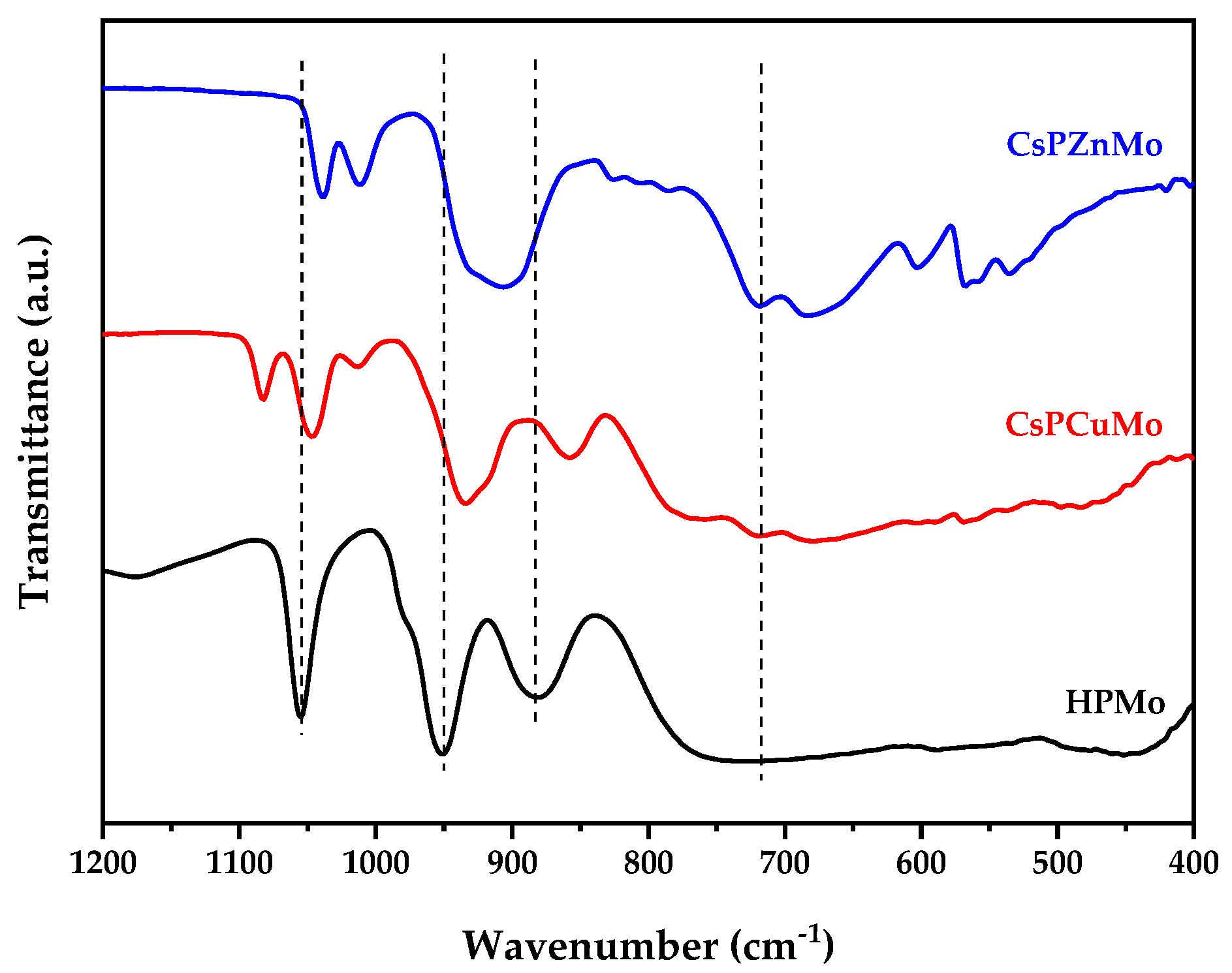
FT-IR spectra of the synthesized POMs are presented in Supplementary Materials Figure S1 and Figure 2 . All POMs exhibited similar spectra. In the high-wavenumber region (Figure S1), two bands were detected at approximately 3400 and 1600 cm−1, attributed to the O–H stretching vibration and the H–O–H bending vibration, respectively. HPMo displayed four characteristic bands at 1067, 964, 868, and 786 cm−1 which correspond to the vibrational modes of the Keggin structure: the symmetric and asymmetric stretches of νas(P–Oa), νs(Mo=Ot), νas(Mo–Ob–Mo), and νas(Mo–Oc–Mo), respectively (Table 2). The spectra of the prepared salts were similar to that of the HPMo, confirming the preservation of the Keggin structure. However, for both salts, the transition-metal substitution induced a reduction in the symmetry of the P–Oa bonds evidenced by the formation of a shoulder at approximately 1078 cm−1 on the νas(P–Oa) vibration. This shift indicates that the PO4 tetrahedron evolves from a perfect tetrahedral symmetry to a lower C3 symmetry due to the elongation of one of the P–Oa bonds [21]. This symmetry lowering is mainly associated with the formation of the lacunary transition-metal-substituted Keggin structure itself. Specifically, the creation of the vacant site and the incorporation of Cu2+ or Zn2+ induce a local distortion around the PO4 tetrahedron, reducing its ideal Td symmetry toward a lower C3-like environment. Furthermore, the incorporation of the metal ions led to the appearance of new bands in the 400–800 cm−1 region, which are attributed to metal-oxygen vibrations [22].

3.3. Morphology and Composition

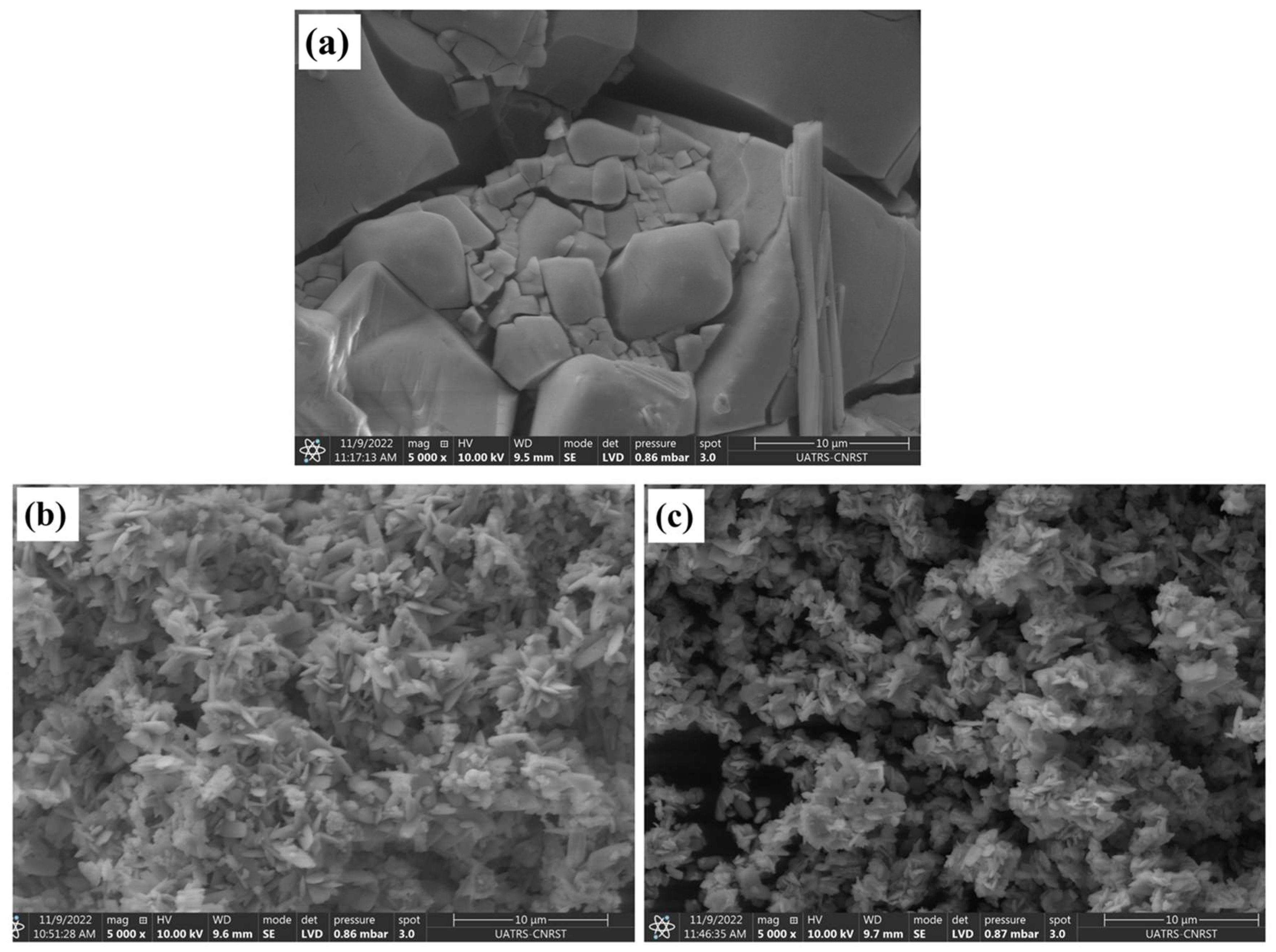
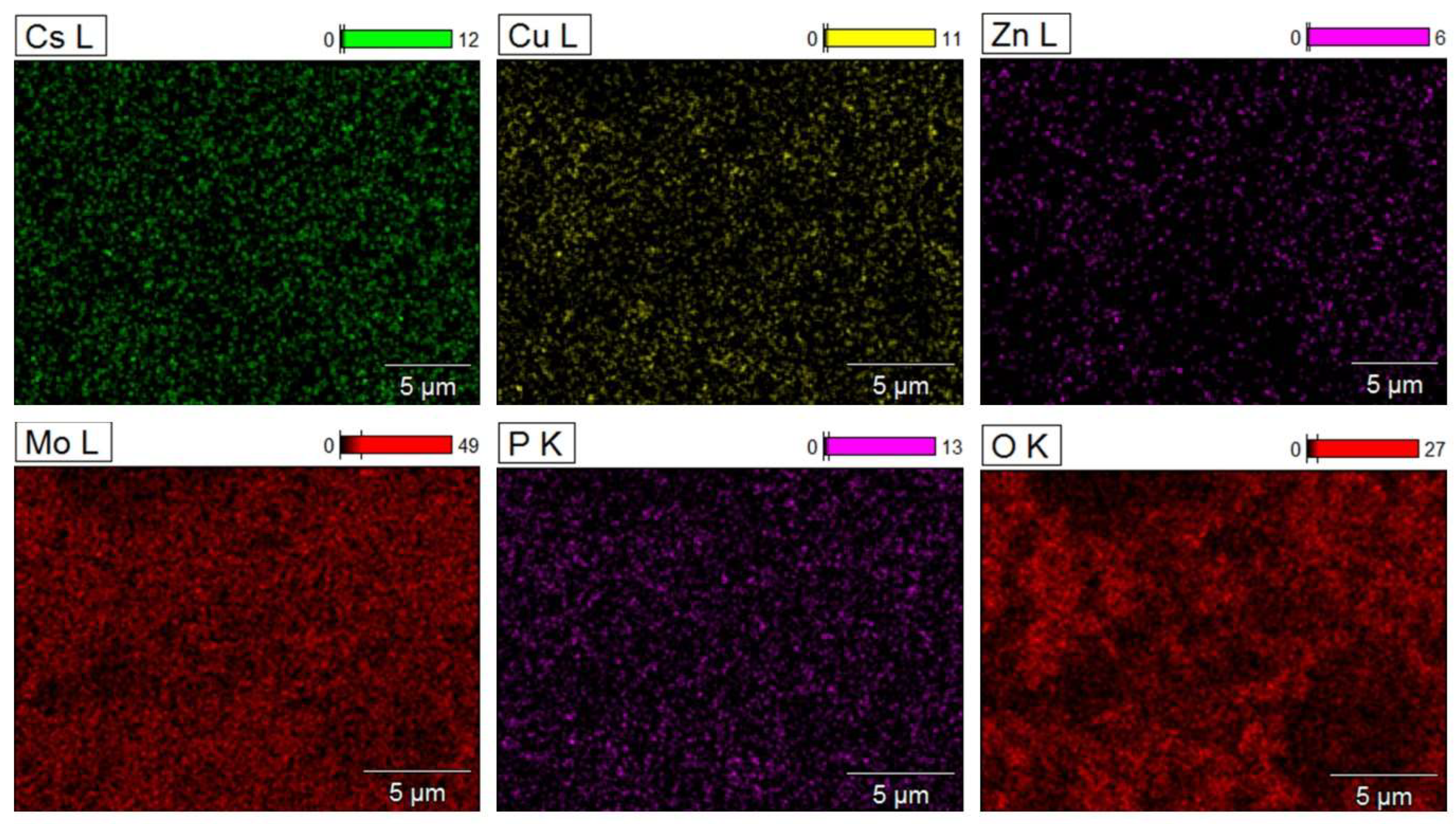
The influence of metal cation substitution on the surface morphology of L-POMs was examined by SEM-EDX (Figure 3). HPMo exhibits a morphology with large, well-defined grains of non-uniform size. The grains appear highly agglomerated, with relatively smooth surfaces and sharp fractures, suggesting a dense crystalline structure and anisotropic crystal growth. In contrast, the prepared salts reveals a highly disaggregated and more porous structure with agglomerates of fine particles, displaying a rough and heterogeneous texture. This arrangement suggests an advanced disaggregation of the initial structure, leading to enhanced porosity. The surface chemical composition is presented in Figure S2 and Table 3. Both HPMo and the prepared salts revealed the presence of all the elements of the starting heteropolyacid (P, Mo, and O) with a homogeneous distribution, as evidenced by the elemental mapping (Figure 4). Furthermore, new peaks corresponding to the incorporated Cs+, Cu2+, and Zn2+ cations were detected in the spectra of the salts. No sodium signal was detected, indicating that the residual Na+ content is negligible. This confirms that the repeated washing step with distilled water during the preparation effectively removed sodium species originating from the pH adjustment step. It should be noted that the elemental ratios obtained from EDX are semi-quantitative and mainly representative of the surface composition. The higher experimental Cs/P ratios compared to the theoretical values may result from the lower accuracy of phosphorus quantification and possible surface enrichment of cesium species during the precipitation and drying processes.

3.4. Thermal Stability

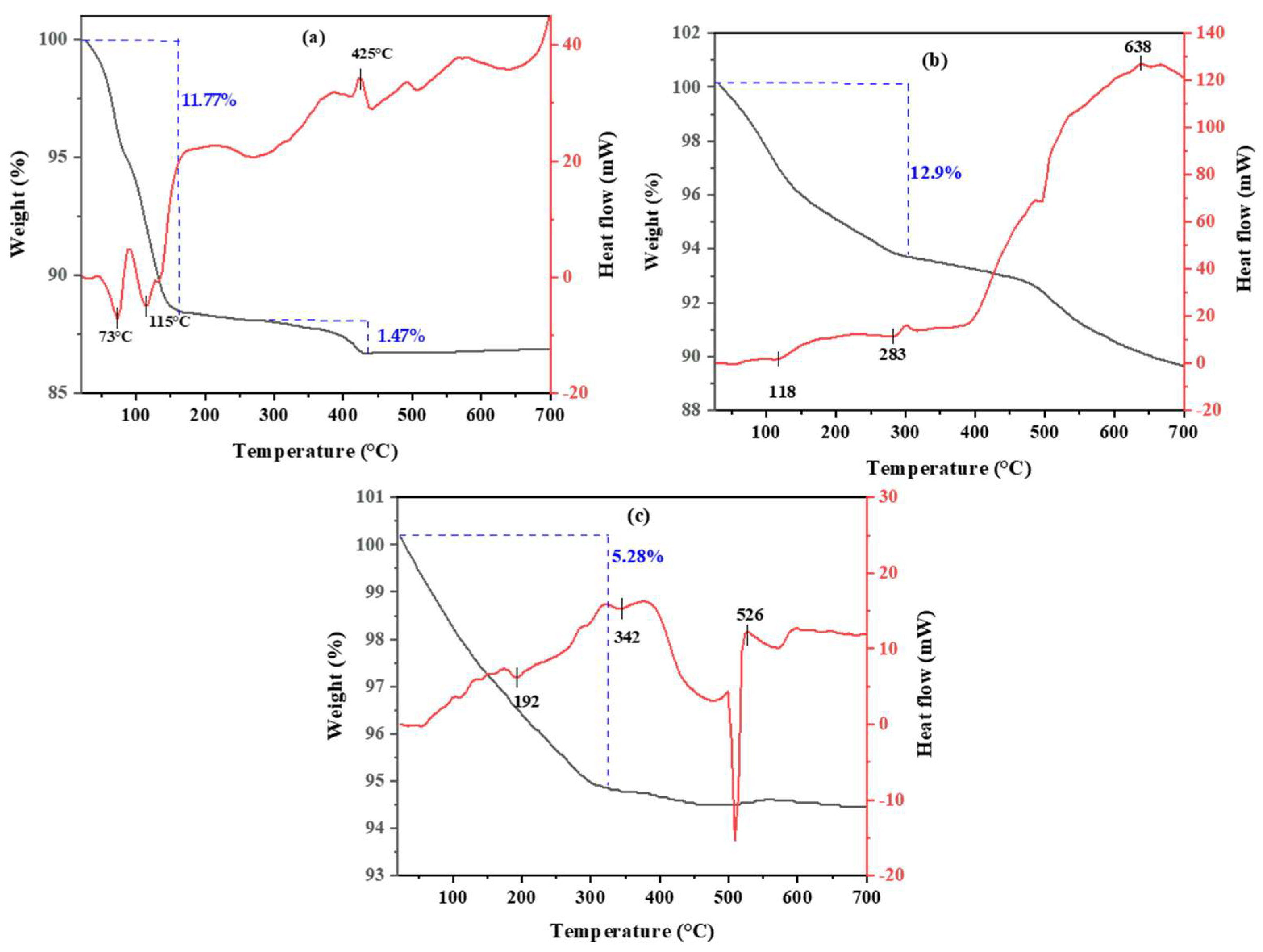
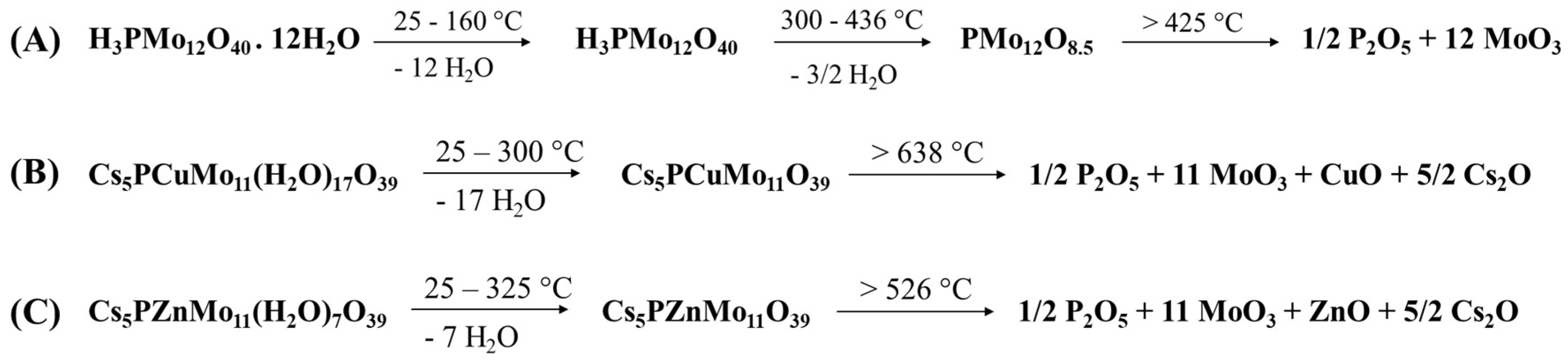
Figure 5 displays the TGA-DSC profiles of the studied materials. HPMo exhibits a high degree of hydration, with a mass loss of 11.77% between 25 and 175 °C associated with the two endothermic peaks at 73 and 115 °C and attributed to the removal of crystallization water. A subsequent, smaller mass loss of 1.47% occurs between 300 and 430 °C, accompanied by an exothermic peak at 425 °C, which corresponds to the decomposition of the Keggin structure into constituent oxides (P2O5 and MoO3). In contrast, the l-POM salts demonstrate significantly enhanced thermal stability. CsPCuMo shows a mass loss of 12.9% extending up to 300 °C, linked to the endothermic peaks at 118 and 283 °C that indicates the gradual elimination of a significant amount of water, including water coordinated to the Cu2+ ion. Two exothermic peaks at 486 and 638 °C indicate a multi-stage decomposition leading to stable oxide phases. CsPZnMo presents lower hydration (5.28% mass loss) with endothermic peaks shifted to higher temperatures (192 and 342 °C), reflecting stronger interactions with water structure. Two exothermic peaks mark its thermal decomposition at 496 and 526 °C. These multi-step decomposition pathways in the salts can be interpreted as follows: the first exothermic event is likely due to a crystallographic reorganization involving the transition metals (Cu or Zn) and the compensating Cs+ cation [23,24]. This reorganization is a key step that contributes to the improved thermal stability of the L-POM salts. The second exothermic stage presumably results from the final decomposition of the salts into their corresponding oxides (e.g., Cs2O, P2O5, MoO3, and MO) [15]. The proposed decomposition sequence for the studied materials is summarized in Scheme 1.

3.5. Optical Behavior

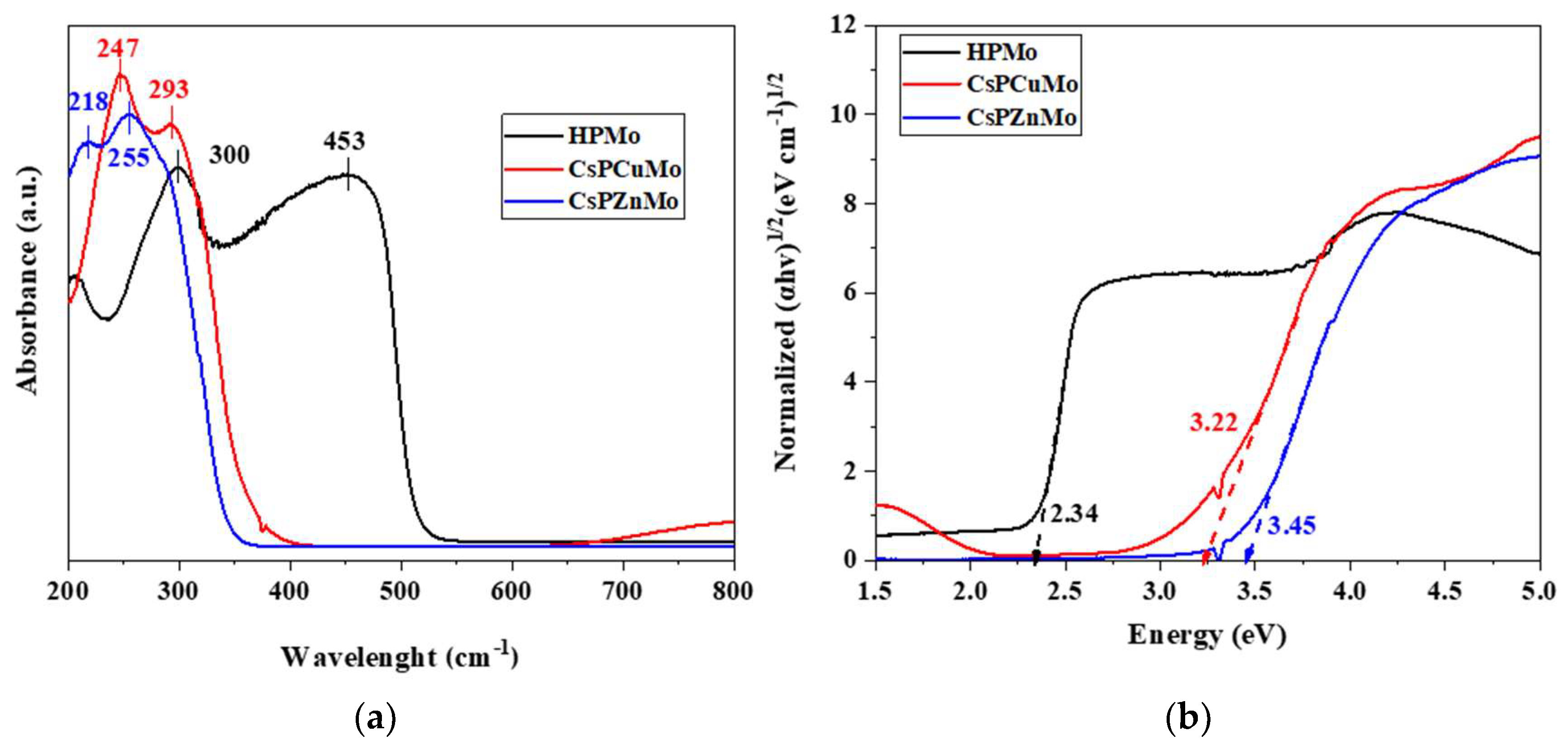
Figure 6a presents the UV-Vis DRS collected over the 200–800 nm range. HPMo exhibits two intense bands at 300 and 453 nm, attributed to the dπ–pπ electronic transitions of Mo=Ot bonds and the dπ–pπ–dπ transitions within Mo–O–Mo bridges, respectively [25]. The introduction of Cu and Zn cations induced a notable shift in these bands to lower absorbance values, likely due to the incorporation of the transition metals into the POM framework. Notably, the shift of the molybdenum-related absorbance in the UV region indicates an increase in the oxidation potential of the samples [26]. Based on this result, CsPZnMo is considered more oxidizing than the other studied compound.
The optical and electronic properties of the POM salts were further elucidated using Tauc’s plots derived from the Kubelka–Munk function, assuming an indirect band gap transition (Figure 6b). HPMo exhibits a band gap of 2.34 eV, characteristic of its semiconducting behavior. The band gaps increased significantly upon transition-metal incorporation. CsPCuMo and CsPZnMo exhibited larger band gaps of 3.22 eV and 3.45 eV, respectively. This finding is consistent with a prior study by Glass et al. [27], which demonstrated that the substitution of transition metals in POM materials affects their electronic structure, including changes in the effective band gap associated with the metal-to-POM charge transfer transition. The interaction between the POM framework and the cations raises the energies of both the HOMO and LUMO levels, resulting in the formation of distinct conduction and valence bands [28]. Furthermore, it has been established that the electronegativity of the incorporated cations plays a key role in band gap engineering. In POM compounds, the band gap energy correlates with the cation electronegativity, such that the gap decreases as the cation electronegativity increases. Therefore, the observed band gap trend (Cu < Zn) follows the expected inverse relationship, given that Cu is more electronegative than Zn.

3.6. Dielectric Measurement

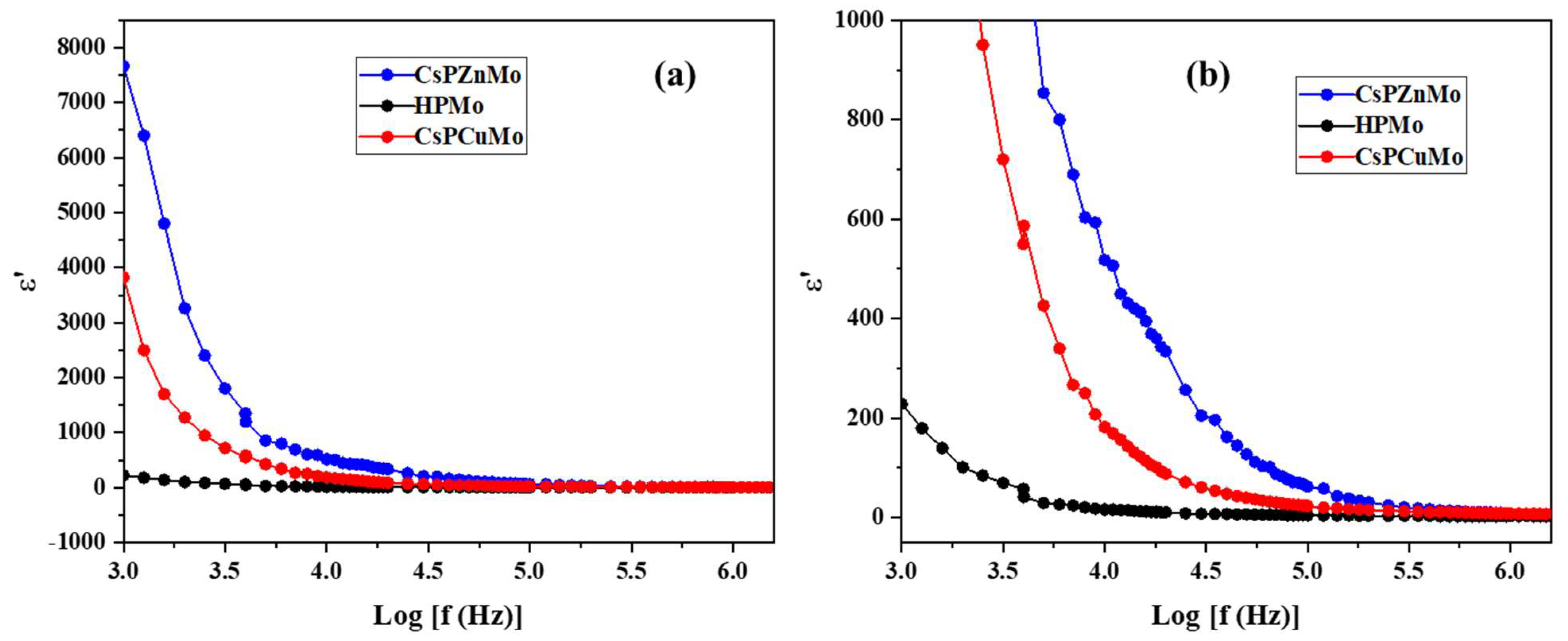
The dielectric behavior of the prepared compounds was tested at room temperature across a frequency range of 1 kHz to 1.5 MHz (Figure 7). The graph reveals that the dielectric constant (ε′) decreases with increasing frequency and stabilizes at high frequencies. The high ε′ values observed at low frequencies can be attributed to four polarization mechanisms: electronic, ionic, orientation and space-charge polarizations [29,30,31]. Owing to the heterogeneous surface structure of the prepared POMs, interfacial space-charge polarization plays a dominant role in enhancing the dielectric constant in the low-frequency regime. As demonstrated by Shivaraja et al. [32], this space-charge polarization is associated with grain boundaries within the compounds. At low frequencies, grain boundaries in POM structures are more active, impeding electron hopping between ions. This behavior enhances interfacial polarization by restricting electron movement, thereby leading to a higher ε′ value [33]. Conversely, at high frequencies, the polarization effect diminishes as electron hopping between ions increases, accounting for the lower dielectric constant [34]. Above 0.5 MHz, the dielectric constant becomes frequency-independent and approaches zero, as clearly observed in the enlarged representation of ε′ with a reduced scale in Figure 7b. Among the studied POMs, CsPZnMo exhibits the highest dielectric constant. These results suggest that the association of the cesium and zinc cations with the lacunary polyanion (PMo11O39)7− framework may effectively restrict electron hopping between Mo6+ and Zn2+ sites within the crystalline lattice. This restriction enhances polarization and consequently increases the dielectric constant.
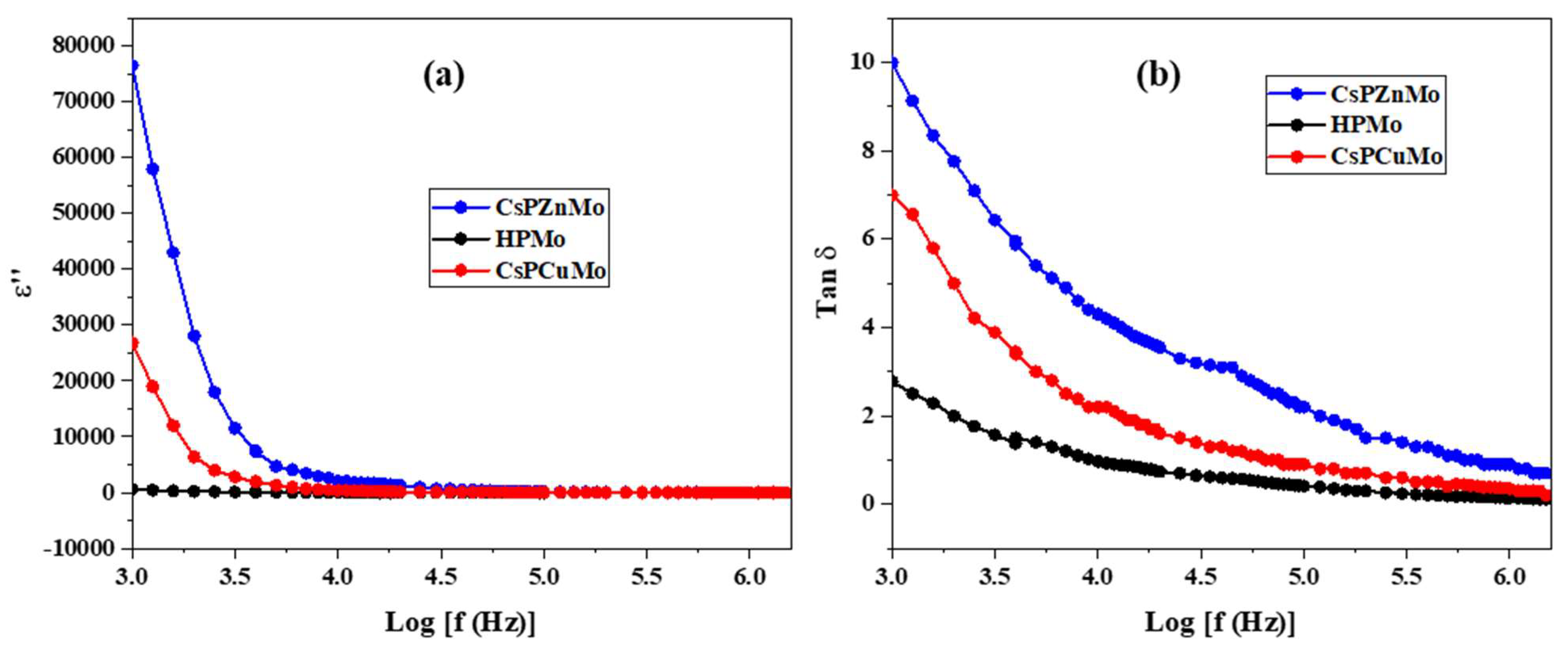
The frequency dependence of the imaginary part of the permittivity (ε″) and the dielectric loss (tan δ) for the HPMo, CsPZnMo, and CsPCuMo samples were illustrated in Figure 8a,b. These parameters were measured to evaluate the electromagnetic energy dissipated within the POM matrix and to understand the underlying relaxation mechanisms [35]. Both ε″ and tan δ exhibit a characteristic dispersion, they are significantly higher at low frequencies (103 Hz) and decrease drastically as the frequency increases toward the MHz range. This behavior is primarily attributed to interfacial polarization, also known as the Maxwell–Wagner effect, which promoted the relaxation effect and reduce the resistivity into the POMs matrix at low frequencies [36]. The introduction of transition metals significantly modifies the dielectric profile of the HPMo. The CsPZnMo sample displays the highest dielectric loss at low frequencies (tan δ ≈ 10 at 1 kHz). This suggests a higher density of mobile charge carriers or enhanced interfacial effects compared to the other compositions. The introduction of copper leads to a marked reduction in loss compared to the zinc-substituted analog, reaching tan δ ≈ 7 at 1 kHz. This improvement may be associated with the d9 electronic configuration of Cu2+, which could promote charge carrier trapping effects and consequently reduce dielectric losses. In contrast, the fully filled d10 configuration of Zn2+ may limit the introduction of additional active electronic states within the POM framework [37].
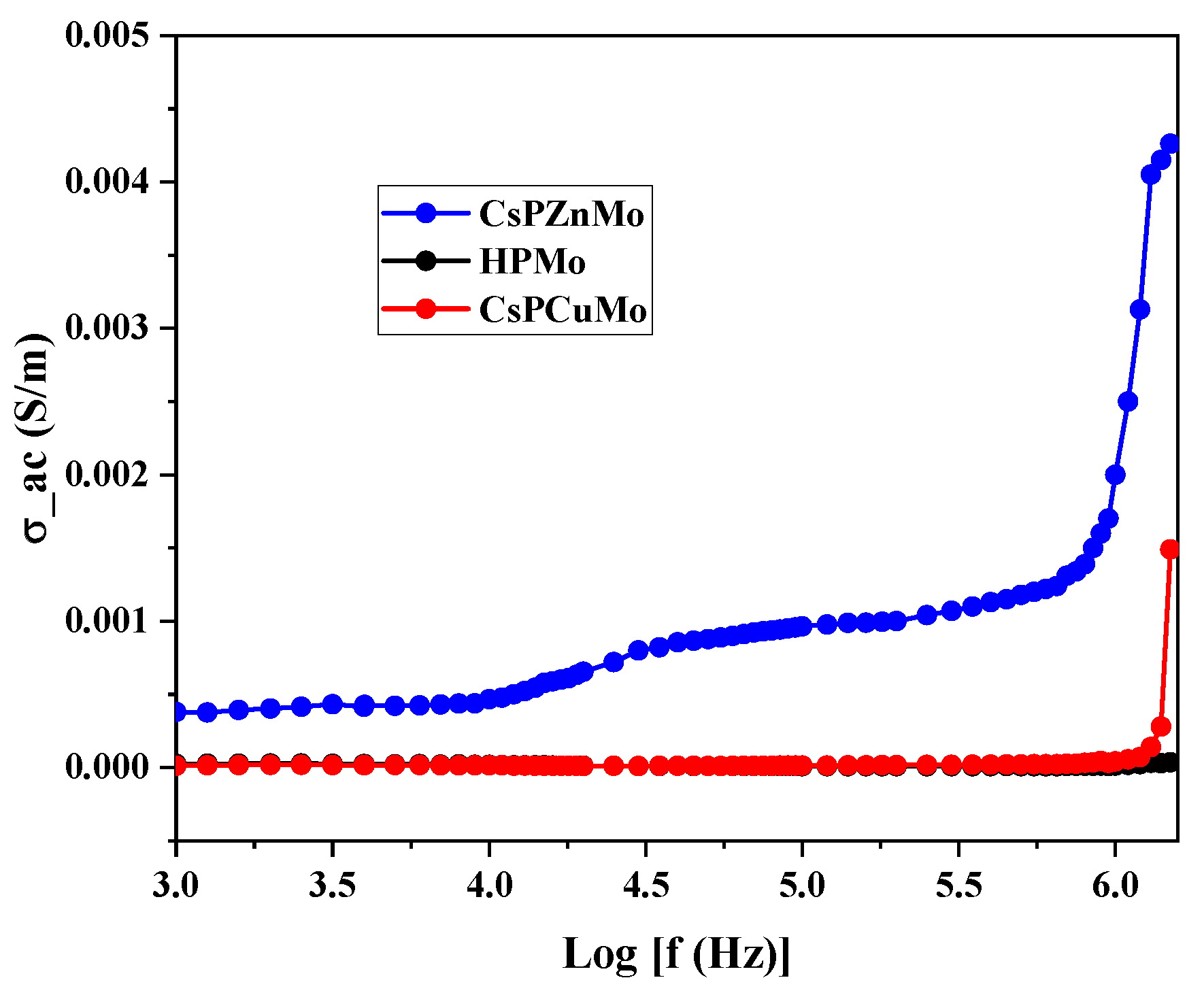
To further elucidate the dissipation mechanisms, the AC conductivity (σac) was calculated across different frequencies (1 kHz–1.5 MHz) using the following Equation (1) [38], and the data are presented in Figure 9:
σac = 2 π ε′ ε0 tan δ f,
where ε′ is the dielectric constant, ε0 is the vacuum permittivity, tan δ is the loss factor, and f is the frequency.
All L-POM samples showed that AC conductivity increases with frequency. This behavior is attributed to the activated jumping process corresponding to the ionic diffusion mechanism [38,39]. Indeed, the grain boundaries become less active, which improve the electrons jumping process at high frequency. The plots reveal a distinct low-frequency plateau followed by a sharp dispersion at higher frequencies (log f > 5.5). This transition indicates a shift from long-range translational motion to short-range localized hopping. CsPZnMo displays the highest conductivity (>0.004 S/m at 106 Hz), which correlates directly with its higher tan δ values. The lower conductivity of CsPCuMo compared to the zinc-substituted sample confirms that copper, with its d9 electronic configuration and strong redox character, acts as an effective trap for mobile charge carriers, which is in agreement with the extended absorption observed in the visible region. This trapping mechanism minimizes energy dissipation and stabilizes the dielectric response across the measured spectrum. Conversely, the d10 electron configuration of Zn2+ does not introduce additional active electronic levels, resulting in lower conductivity and an insulator-like, wide-band gap behavior.

4. Conclusions

In this work, new Keggin-type L-POMs, Cs5PMMo11(H2O)O39 (M = Cu, Zn), are successfully synthetized and characterized using XRD, FT-IR, SEM-EDX, ATG-DSC, UV-Vis DSR spectroscopies, and dielectric measurements. The incorporation of transition metals (Cu2+, Zn2+) coupled with proton substitution by Cs+ cations induced modifications in the surface morphology and grain size of HPMo. However, the structure did not change, the prepared salts showed a triclinic structure characteristic of the Keggin structure. Thermal analyses demonstrated enhanced thermal stability of the substituted salts, with decomposition temperatures reaching above 500 °C. Optical investigations exhibited that transition-metal incorporation significantly modified the electronic structure of the lacunary POMs, leading to increased band gap energies compared with heteropolyacid. Dielectric measurements revealed a strong frequency-dependent behavior characteristic of interfacial polarization phenomena. Among the studied compounds, CsPZnMo exhibited the highest dielectric constant (7660) and AC conductivity values within the investigated frequency range (>0.004 S/m at 106 Hz), indicating that Zn substitution strongly influences the dielectric response of the lacunary framework.
These results demonstrate that transition-metal substitution provides an effective strategy for tuning the physicochemical and dielectric properties of lacunary POMs, highlighting their potential interest for future dielectric and electronic materials research.

Supplementary Materials

The following supporting information can be downloaded at: https://www.mdpi.com/article/10.3390/pr14121928/s1, Figure S1: Complete IR spectra of HPMo and prepared L-POM salts; Figure S2: EDX spectra of HPMo (a), CsPCuMo (b) and CsPZnMo (c).

Author Contributions

Conceptualization, F.L. and J.T.; formal analysis, A.B. and A.O.; data curation, F.L.; writing—original draft preparation, F.L.; writing—review and editing, N.T., A.B., A.O. and J.T.; supervision, J.T. All authors have read and agreed to the published version of the manuscript.

Funding

This research received no external funding.

Data Availability Statement

The original contributions presented in this study are included in the article. Further inquiries can be directed to the corresponding author.

Conflicts of Interest

The authors declare no conflicts of interest.

References

  1. Lian, X.; Chen, H.; Lin, Y.; Li, X.; Zheng, S. Polyoxometalate-Based All-Inorganic Open Frameworks. Coord. Chem. Rev. 2023, 497, 215440. [Google Scholar] [CrossRef]
  2. Flores, D.; Granadeiro, C.M. Introduction to Polyoxometalates. In Applied Polyoxometalate-Based Electrocatalysis; John Wiley and Sons: Hoboken, NJ, USA, 2025; ISBN 9783527842711. [Google Scholar]
  3. Cui, X. Special Issue: Research on Polyoxometalate Materials. Molecules 2023, 28, 4662. [Google Scholar] [CrossRef] [PubMed]
  4. Moghadasi, M.; Abbasi, M.; Mousavi, M.; Mirzaei, M. Polyoxometalate-Based Materials in Therapeutic and Biomedical Applications: Current Status and Perspective. Dalt. Trans. 2025, 54, 6333–6345. [Google Scholar] [CrossRef]
  5. Wang, S.; Yang, G. Recent Advances in Polyoxometalate-Catalyzed Reactions. Chem. Rev. 2015, 115, 4893–4962. [Google Scholar] [CrossRef] [PubMed]
  6. Lachquer, F.; Touach, N.; Benzaouak, A. Recent Advances in the Development of Noble Metal-Free Cathode Catalysts for Microbial Fuel Cell Technologies. Processes 2026, 14, 440. [Google Scholar] [CrossRef]
  7. Veríssimo, M.I.S.; Evtuguin, D.V.; Gomes, M.T.S.R. Polyoxometalate Functionalized Sensors: A Review. Front. Chem. 2022, 10, 840657. [Google Scholar] [CrossRef] [PubMed]
  8. Macht, J.; Janik, M.J.; Neurock, M.; Iglesia, E. Catalytic Consequences of Composition in Polyoxometalate Clusters with Keggin Structure. Angew. Chem. Int. Ed. 2007, 46, 7864–7868. [Google Scholar] [CrossRef]
  9. An, S.; Liu, J.C.; Zhang, H.; Wu, L.; Qi, B.; Song, Y.F. Recent Progress on the Frontiers of Polyoxometalates Structures and Applications. Sci. China Chem. 2018, 62, 159–161. [Google Scholar] [CrossRef]
  10. Passadis, S.; Kabanos, T.A.; Song, Y.; Miras, H.N. Self-Assembly in Polyoxometalate and Metal Coordination-Based Systems: Synthetic Approaches and Developments. Inorganics 2018, 6, 71. [Google Scholar] [CrossRef]
  11. Liu, L.L.; Wang, L.; Xiao, X.Y.; Yang, P.; Zhao, J.; Kortz, U. Structural Overview and Evolution Paths of Lacunary Polyoxometalates. Coord. Chem. Rev. 2024, 506, 215687. [Google Scholar] [CrossRef]
  12. Patel, A.; Narkhede, N.; Singh, S.; Pathan, S. Keggin-Type Lacunary and Transition Metal Substituted Polyoxometalates as Heterogeneous Catalysts: A Recent Progress. Catal. Rev. Sci. Eng. 2016, 58, 337–370. [Google Scholar] [CrossRef]
  13. Day, V.W.; Klemperer, W.G. Metal Oxide Chemistry in Solution: The Early Transition Metal Polyoxoanions. Science 1985, 228, 533–541. [Google Scholar] [CrossRef] [PubMed]
  14. Chen, Q.; Zubieta, J. Coordination Chemistry of Soluble Metal Oxides of Molybdenum and Vanadium. Coord. Chem. Rev. 1992, 114, 107–167. [Google Scholar] [CrossRef]
  15. Lachquer, F.; Touach, N.; Benzaouak, A.; Oulmekki, A.; Lotfi, E.M.; El Mahi, M.; Jos, F.; Toyir, J. New Application of Polyoxometalate Salts as Cathode Materials in Single Chamber MFC Using Wastewater for Bioenergy Production. Processes 2023, 11, 836. [Google Scholar] [CrossRef]
  16. Chada, V.G.R.; Yao, H.; Padmanaban, M.; Cho, J.; Wolfer, E.; Dioses, A.D.; Mullen, S.K. Polyoxometalate and Heteropolyoxometalate Compositions and Methods for Their Use. U.S. Patent No 9,418,836, 16 August 2016. [Google Scholar]
  17. Tsigdinos, G.A.; Hallada, C.J. Synthesis and Electrochemical Properties of Heteropolymolybdates. J. Less Common Met. 1974, 36, 79–93. [Google Scholar] [CrossRef]
  18. Küçük, İ.; Vural, S.; Köytepe, S.; Seçkin, T. Synthesis, Characterization and Dielectric Properties of Nickel-Based Polyoxometalate/Polyurethane Composites. Polym. Technol. Mater. 2019, 58, 1445–1460. [Google Scholar] [CrossRef]
  19. Shringarpure, P.; Kumar Tripuramallu, B.; Patel, K.; Patel, A. Synthesis, Structural, and Spectral Characterization of Keggin-Type Mono Cobalt (II) -Substituted Phosphotungstate. J. Coord. Chem. 2011, 64, 4016–4028. [Google Scholar] [CrossRef]
  20. Lachquer, F.; Touach, N.E.; Benzaouak, A.; Oulmekki, A.; Lotfi, E.M.; El Mahi, M.; Toyir, J. Electrocatalytic Performance of Highly Effective Biofuel Cell Using Wastewater Feedstock and Keggin-Type Heteropolyacids-Coated Cathodes. J. Environ. Chem. Eng. 2024, 12, 112116. [Google Scholar] [CrossRef]
  21. Coronel, N.C.; da Silva, M.J.; Ferreira, S.O.; da Silva, R.C.; Natalino, R. K5PW11NiO39-Catalyzed Oxidation of Benzyl Alcohol with Hydrogen Peroxide. ChemistrySelect 2019, 4, 302–310. [Google Scholar] [CrossRef]
  22. Lachquer, F.; Oulmekki, A.; Toyir, J. Selective Direct Oxidation of 1-Butanol into Acetal Using Hydrogen Peroxide and Cs5MPW11(H2O)O39 (M=Fe, Co, Cu) Catalysts. Chempluschem 2024, 89, e202300772. [Google Scholar] [CrossRef]
  23. Tong, X.; Tian, N.; Wu, W.; Zhu, W.; Wu, Q.; Cao, F.; Yan, W.; Yaroslavtsev, A.B. Preparation and Electrochemical Performance of Tungstovanadophosphoric Heteropoly Acid and Its Hybrid Materials. J. Phys. Chem. 2013, 117, 3258−3263. [Google Scholar] [CrossRef]
  24. Castelo, B.V.; Da Silva, M.J. Unraveling the Role of the Lacunar Na7PW11O39 Catalyst on the Oxidation of Terpene Alcohols with Hydrogen Peroxide at Room Temperature. New J. Chem. 2020, 44, 2813–2820. [Google Scholar] [CrossRef]
  25. Youn, M.H.; Kim, H.; Song, I.K.; Barteau, K.P.; Barteau, M.A. UV-visible spectroscopic study of solid state 12-molybdophosphoric acid catalyst. React. Kinet. Catal. Lett. 2005, 87, 85–91. [Google Scholar] [CrossRef]
  26. Trach, Y.; Sydorchuk, V.; Makota, O.; Khalameida, S.; Leboda, R.; Skubiszewska-Zieba, J.; Zazhigalov, V. Synthesis, Physical-Chemical, and Catalytic Properties of Mixed Compositions Ag/H3PMo12O40/SiO2. J. Therm. Anal. Calorim. 2012, 107, 453–461. [Google Scholar] [CrossRef]
  27. Glass, E.N.; Fielden, J.; Huang, Z.; Xiang, X.; Musaev, D.G.; Lian, T.; Hill, C.L. Transition Metal Substitution E Ff Ects on Metal-to-Polyoxometalate Charge Transfer. Inorg. Chem. 2016, 55, 4308−4319. [Google Scholar] [CrossRef] [PubMed]
  28. Chen, L.; Chen, W.; Wang, X.; Li, Y.-G.; Su, Z.-M.; Wang, E.-B. Polyoxometalates in Dye-Sensitized Solar Cells. Chem. Soc. Rev. 2018, 48, 260–284. [Google Scholar] [CrossRef]
  29. Chi, M.O.; Lide, Z.; Guozhong, W. Characteristics of Dielectric Behavior in Nanostructured Materials. Nanostructured Mater. 1995, 6, 823–826. [Google Scholar] [CrossRef]
  30. Arunseshan, S.S.C. Dielectric Properties of Cadmium Selenide (CdSe) Nanoparticles Synthesized by Solvothermal Method. Appl. Nanosci. 2014, 4, 179–184. [Google Scholar] [CrossRef]
  31. Althumairi, N.A.; Hjiri, M.; Aldukhayel, A.M.; Jbeli, A.; Nassar, K.I. Recent Advances in Dielectric and Ferroelectric Behavior of Ceramic Nanocomposites: Structure Property Relationships and Processing Strategies. Nanomaterials 2025, 15, 1329. [Google Scholar] [CrossRef]
  32. Shivaraja, I.; Matteppanavar, S.; Deshpande, S.K.; Rayaprol, S.; Angadi, B. Investigation of Space Charge Polarization Behavior in Pb0.9Bi0.1Fe0.7W0.3O3 Ceramic. J. Alloys Compd. 2019, 800, 334–342. [Google Scholar] [CrossRef]
  33. Sagadevan, S.; Podder, J.; Das, I. Synthesis and Characterization of CoWO4 Nanoparticles via Chemical Precipitation Technique. J. Mater. Sci. Mater. Electron. 2016, 27, 9885–9890. [Google Scholar] [CrossRef]
  34. Zhang, C.; He, F.; Chen, X.; Zhou, H.; Fang, L. High-Temperature Dielectric and Impedance Spectroscopy of Ca2NaNb3O10 Ceramic. J. Mater. Sci. Mater. Electron. 2017, 28, 13673–13677. [Google Scholar] [CrossRef]
  35. Baraker, B.M.; Lobo, B. Dielectric Relaxation in a Cadmium Chloride-Doped Polymeric Blend. Bull. Mater. Sci. 2019, 42, 18. [Google Scholar] [CrossRef]
  36. Samet, M.; Levchenko, V.; Boiteux, G.; Seytre, G.; Kallel, A.; Serghei, A. Electrode Polarization vs. Maxwell-Wagner-Sillars Interfacial Polarization in Dielectric Spectra of Materials: Characteristic Frequencies and Scaling Laws. J. Chem. Phys. 2015, 142, 194703. [Google Scholar] [CrossRef] [PubMed]
  37. Wang, J.; Gu, Y.; Lv, Q. Three-Dimensional Conductive Copper–Organic Framework with a Dual-Redox Center for High- Performance Aqueous Zinc Batteries†. CrystEngComm 2025, 27, 3800. [Google Scholar] [CrossRef]
  38. El Ghouch, N.; Al-Oweini, R.; Awad, R. Effects of Adding Transition Metal-Substituted Polyoxotungstates on the Frequency and Temperature-Dependent Dielectric Properties of (Bi1.8Pb0.4)Sr2Ca2Cu3O10+δ Superconducting Phase. J. Low Temp. Phys. 2020, 200, 62–75. [Google Scholar] [CrossRef]
  39. Charoonsuk, T.; Sriphan, S.; Pulphol, P.; Vittayakorn, W.; Vittayakorn, N.; Maluangnont, T. AC Conductivity and Dielectric Properties of Lepidocrocite-Type Alkali Titanate Tunable by Interlayer Cation and Intralayer Metal. Inorg. Chem. 2020, 59, 15813−15823. [Google Scholar] [CrossRef] [PubMed]
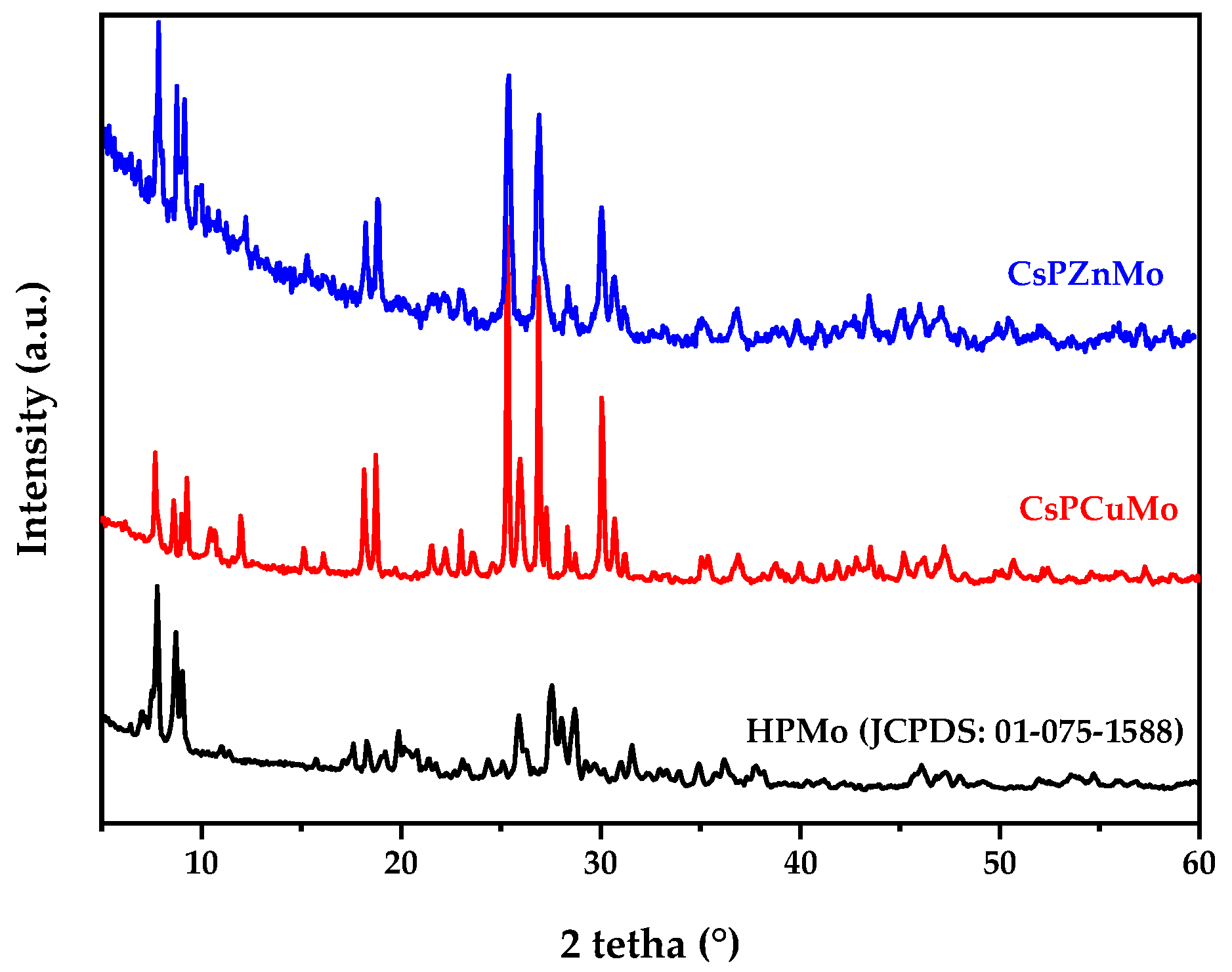
Figure 1. X-ray diffractograms of HPMo, CsPCuMo and CsPZnMo.
Processes 14 01928 g001
Figure 2. FT-IR spectra of HPMo, CsPCuMo and CsPZnMo.
Processes 14 01928 g002
Figure 3. SEM images of (a) HPMo, (b) CsPCuMo and (c) CsPZnMo.
Processes 14 01928 g003
Figure 4. Elemental mapping of HPMo, CsPCuMo and CsPZnMo.
Processes 14 01928 g004
Figure 5. TGA-DSC curves of (a) HPMo, (b) CsPCuMo and (c) CsPZnMo.
Processes 14 01928 g005
Figure 6. UV-Vis DRS (a) and Tauc’s plot (b) of HPMo, CsPCuMo and CsPZnMo.
Processes 14 01928 g006
Figure 7. (a) Variation in the dielectric constant (ε′) as a function of frequency and (b) enlarged view of ε′ in the low-value region.
Processes 14 01928 g007
Figure 8. (a) Frequency dependence of the imaginary part of the permittivity (ε″) and (b) dielectric loss (tan δ) for HPMo, CsPCuMo and CsPZnMo.
Processes 14 01928 g008
Figure 9. Variation in AC conductivity as a function of frequency for HPMo, CsPCuMo and CsPZnMo.
Processes 14 01928 g009
Scheme 1. Decomposition process of HPMo (A), CsPCuMo (B) and CsPZnMo (C).
Processes 14 01928 sch001
Table 1. Lattice parameters of HPMo, CsPCuMo and CsPZnMo.
CompoundCrystal Structure
(Space Group)
ParametersVolume (Å3)dXRD (nm)
HPMoTriclinic
(P-1)
a = 15.342 Å421692
b = 15.156 Å
c = 14.478 Å
α = 112.87°
β = 111.12°
γ = 60.04°
CsCuPMoa = 15.902 Å456835
b = 15.787 Å
c = 16.356 Å
α = 113.91°
β = 114.08°
γ = 59.95°
CsZnPMoa = 17.312 Å482445
b = 17.534 Å
c = 14.708 Å
α = 114.94°
β = 114.05°
γ = 58.98°
Table 2. IR frequencies (cm−1) of HPW and prepared L-POM salts.
Compoundνas (P–Oa)νs (Mo=Ot)νas (Mo–Ob–Mo)νas (Mo–Oc–Mo)ν (M–O)
HPMo1054949883717-
CsCuPMo1047934858718533
CsZnPMo1034910827720480
Table 3. Elemental analysis of HPMo, CsPCuMo and CsPZnMo using EDX analysis (using spectra of Figure S2).
CompoundWeight %Atom %
PMoOCsMPMoOCsM
HPMo2.063.035.0--2.222.675.2--
CsCuPMo1.144.119.233.61.91.923.260.612.81.5
CsZnPMo1.146.817.833.41.01.825.758.513.20.8
Disclaimer/Publisher’s Note: The statements, opinions and data contained in all publications are solely those of the individual author(s) and contributor(s) and not of MDPI and/or the editor(s). MDPI and/or the editor(s) disclaim responsibility for any injury to people or property resulting from any ideas, methods, instructions or products referred to in the content.