Article

Insights into Key Technologies and Innovation Trends of Pipeline Valves in the Oil and Gas Industry: Evidence from Global Patent Mining


1
School of Intellectual Property, Nanjing University of Science and Technology, Nanjing 210094, China
2
Institute of Big Data, Fudan University, Shanghai 200433, China
*
Author to whom correspondence should be addressed.
Processes 2026, 14(12), 1915; https://doi.org/10.3390/pr14121915
Submission received: 24 April 2026 / Revised: 6 June 2026 / Accepted: 10 June 2026 / Published: 12 June 2026
(This article belongs to the Special Issue Design, Inspection and Repair of Oil and Gas Pipeline)

Abstract

Pipeline valves play a crucial role in oil and gas exploration, production, transportation, and storage, and a systematic understanding of patent technologies in this field can help identify innovation trends and formulate research and development (R&D) strategies. This study collected more than 5000 pipeline-valve-related patents worldwide from 2006 to 2025, including 2292 invention patents, and adopted a progressive patent analytics approach integrating statistical analysis, network analysis, text mining, and high-value invention patent analysis. The results show that innovation activity in this field has remained active over the past two decades, especially since 2016, when the number of patent publications exceeded 300 in almost every year. China, Russia, the United States, South Korea, and Canada are the major sources of patent activity, with Chinese enterprises and universities making important contributions in terms of patent quantity. However, the analysis of high-value invention patents indicates that representative patents from the United States, Canada, and Russia also have a strong influence. Core innovation directions cover multiple pipeline valve applications in oil and gas extraction, transportation, and storage, with valve control systems and mechanical structures constituting the dominant technologies. The ten identified technological themes and their evolution show that technological innovation in this field has gradually expanded from mechanical improvements in traditional valve bodies, sealing components, and pressure relief devices to diversified directions such as wellhead control, intelligentization, and low-carbon development. The analysis of high-value invention patents further confirms this trend, indicating that pipeline valve technology is being reshaped from a relatively mature mechanical technology field into an integrated technological system that combines mechanical reliability, intelligent control, and other dimensions.

1. Introduction

Oil and natural gas remain dominant energy sources, accounting for 31% and 24% of global energy demand in 2023, respectively, and play critical roles in sectors such as chemicals, metallurgy, and transportation [1]. However, the industry faces instability with fluctuating oil prices and growing acquisition pressures. Additionally, emissions from refineries and petrochemical industries pose health risks and contribute to global warming [2,3]. This highlights the need for transition in the oil and gas industry [4,5]. In response, the industry is advancing technological innovation to improve efficiency and reduce costs. Pipeline systems, including valves, account for 25% of the plant area and are crucial for regulating flow, pressure, and direction in oil and gas exploration, production, storage, and other processes. As such, challenges related to valve reliability, corrosion resistance, and stability are common, especially in harsh environments. The global oil and gas valve market has continued to grow, with previous estimates projecting a market size of nearly 14 billion US dollars by 2024 and a compound annual growth rate of 3.5% over the following decade [6].
Engineers and inventors have advanced processes, materials, and designs to ensure the reliable operation of oil and gas valves under harsh conditions such as high temperature, high pressure, and corrosive environments. For example, Klenam et al. [7] demonstrated that complex concentrated alloys (CCAs) are effective in high-pressure high-temperature (HPHT) wells to resist corrosion and cracking. Corrosion-resistant alloys also extend the service life of valve components in acidic environments containing H2S and CO2 [8]. From a structural perspective, Guan et al. [9] improved valve cage designs to reduce wall shear stress and erosion rates, while other studies suggest that axial and Y-type valves are better suited for offshore pipeline systems [6].
In addition, digitalization and intelligent operation and maintenance, including online valve monitoring, are creating new opportunities for oil and gas pipeline valves by reducing operational failures and environmental risks [10]. Supported by artificial intelligence (AI), safety valves equipped with sensors and computing units are being tested for real-time monitoring and predictive assessment of oil and gas pipeline network conditions [11,12]. They also collectively reflect the evolution of oil and gas pipeline valves from traditional mechanical components toward integrated engineering systems incorporating multiple functions such as control, monitoring, and safety assurance.
It is evident that pipeline valves will continue to receive attention and technological refinement in niche markets with high temperature, pressure, deep-sea deployment, and corrosive environments. In the near future, big data and the Internet of Things (IoT) are expected to further integrate with the oil and gas pipeline valve sector, becoming key components of Oil and Gas Industry 4.0 [13,14]. Overall, technological transformation in valve systems is both necessary and highly active within the oil and gas industry. Nevertheless, comprehensive investigations into innovation activities in this field remain limited. A new perspective is therefore needed to further uncover the complex relationships between engineering challenges and innovation practices. Fortunately, patent analytics provides an appropriate perspective for systematically exploring the technological evolution of oil and gas valves and identifying inventions with practical significance, thereby offering valuable insights for industrial development and sustainable progress. The remainder of this paper is organized as follows. The literature review surveys the main approaches to patent analytics and highlights their typical application scenarios, thereby providing the methodological foundation for selecting appropriate analytical tools. Section 3 details the retrieval and preprocessing of patent data and presents an integrated patent analytics framework combining multiple methods. Section 4 reports the main findings, with the patent landscape of pipeline valves in the oil and gas industry as the core contribution. Finally, Section 5 summarizes the study and suggests future research directions.

2. Literature Review

Patents constitute an important source of technological information for understanding innovation activities, technological competition, and industrial evolution, capturing a substantial proportion of global technological inventions and engineering solutions [15]. Compared with scientific publications, patent documents place greater emphasis on industrial applicability, technical implementation, and commercialization potential, making them particularly valuable for investigating engineering-oriented technologies in industrial sectors [16]. In the oil and gas industry, many technological innovations related to pipeline systems, wellhead control, corrosion resistance, sealing structures, and intelligent monitoring are directly embodied in patent documents, thereby providing important insights into operational requirements and industrial innovation trajectories.
Early patent analytics studies mainly relied on quantitative indicators, including patent counts, growth trends, geographical distributions, major assignees, and technology life cycles, to characterize innovation activities in different technological fields [17]. Based on patent statistics, Yuan and Cai [18] analyzed the development trajectory of low-emission vehicle technologies and identified the strong growth potential of hybrid electric vehicles. Li et al. [19] investigated offshore liquefied natural gas storage and transportation technologies by examining patent filing authorities and leading innovators. Similar approaches have also been employed to evaluate technological competition in renewable energy and assess green innovation activities among Brazil, Russia, India, China, and South Africa (BRICS) oil and gas enterprises [20,21]. In addition, patent statistics and life-cycle analysis have been used to evaluate the commercialization readiness and competitive potential of hydrogen production technologies [22]. Quantitative patent indicators are effective for revealing macro-level innovation dynamics and industrial competition patterns. However, patent counts and growth trends alone cannot adequately reflect technological significance, operational applicability, or innovation quality.
The introduction of network analysis represented an important development in patent analytics, as technological innovation activities are inherently interconnected rather than isolated [23,24]. Patent citation networks can reveal technological evolution paths, inter-organizational knowledge flows, and firms’ positions within innovation systems [25]. Moreover, co-occurrence relationships among patent classification codes or technical terms are widely used to measure technological convergence and structural relationships between technological categories. For example, Block and Song [26] explored the dynamic evolution of technological knowledge structures in solid-state batteries using convergence networks and centrality indicators. Ampah et al. [27] constructed co-occurrence networks to identify key technological categories and evolutionary trends in hydrogen production technologies. Sun et al. [28] further employed term co-occurrence analysis to compare technological structures and development prospects across multiple green fuel technologies. Although network analysis is effective in identifying technological relationships, convergence patterns, and core innovation structures, it is still limited in precisely capturing technological trends, application scenarios, and engineering implications.
Recent advances in text mining and natural language processing (NLP) have enabled more fine-grained patent analytics and significantly expanded the analytical capability of patent studies. Wang et al. [29] investigated the diffusion of artificial intelligence technologies in the energy sector by constructing AI-related technical lexicons and analyzing patent application trends. Lee and He [30] extracted AI-related terms from wind power patent abstracts and combined topic clustering with International Patent Classification (IPC) co-occurrence analysis to evaluate technological convergence patterns. Jeon et al. [31] proposed a text vectorization approach to identify highly novel patents using structured semantic representations. Jia et al. [32] further constructed multidimensional disruption indicators to identify key technologies in intelligent logistics robotics based on extracted technical and functional terms.
Moreover, recent studies have increasingly integrated large language models and embedding techniques into patent analytics. Kim and Lee [33], for example, employed Transformer-based models to forecast future developments in natural gas technologies and identify emerging technological opportunities. Sun et al. [34] analyzed the innovation landscape of oil and gas pipeline transportation technologies through patent text mining and identified frontier innovation themes such as pipeline heating, cooling, and inspection robotics.
Overall, patent analytics has demonstrated strong applicability in exploring innovation trends across energy and industrial technologies. However, several important limitations remain in existing studies. Current research mainly focuses on renewable energy, hydrogen technologies, intelligent energy systems, and pipeline transportation, while systematic investigations into technological innovation landscapes in the oil and gas valve sector remain relatively limited, and their relationships with practical engineering challenges have not yet been sufficiently clarified. In addition, existing studies have shown that individual analytical approaches often exhibit methodological limitations. Therefore, it is necessary to develop a comprehensive analytical framework integrating multiple methods in order to leverage their complementary strengths and provide a more comprehensive understanding of innovation activities, representative engineering breakthroughs, and their application scenarios.

3. Data and Methods

In this study, patent records were retrieved from the IncoPat patent database under institutional subscription access. IncoPat is a commercial global patent search and analytics platform (Beijing IncoPat Technology Co., Ltd., Beijing, China; https://www.incopat.com/) that provides standardized bibliographic information, abstracts, assignee information, legal-status information, and patent family data. It was used in this study for patent retrieval, data export, and access to standardized patent fields. The authors do not own the copyright of IncoPat; all use of the platform complied with the institutional license and terms of access.
Based on operating principles and application scenarios, pipeline valves in the oil and gas industry can be classified into several major types, including ball valves, butterfly valves, gate valves, check valves, globe valves, safety valves, and control valves. These valve types differ in their engineering functions, application scenarios, technical challenges, and cost-related characteristics [35]. Table 1 summarizes the major valve types considered in this study and provides the basis for constructing the patent retrieval strategy.
The IPC system, using a hierarchical tree structure of sections, classes, subclasses, and groups, efficiently identifies relevant patent records based on specific search objectives [36]. In addition, keywords extracted from the title, abstract, and claims were used to balance retrieval completeness and accuracy. Taking gate valves as an example, keywords such as gate valve, slab gate valve, wedge gate valve, parallel gate valve, petroleum, and oilfield equipment were included. Meanwhile, the IPC scope was restricted to classifications relevant to the research topic, including F16K*, E21B34*, E21B33/06, F17D1/04, F16J15*, and G05D16*.
It should be noted that, before the formal data retrieval, a comparative retrieval test was conducted to verify the completeness of the IncoPat database for patent data from countries and regions outside China. Based on IPC classifications closely related to oil and gas pipeline valve technologies, a test search query (see Appendix A Table A1) was constructed and separately executed in IncoPat, the World Intellectual Property Organization (WIPO) Patent platform (https://patentscope.wipo.int/, accessed on 1 February 2026), the European Patent Office (EPO) Espacenet platform (https://worldwide.espacenet.com/), Clarivate’s Derwent Innovation database (Clarivate, London, UK; https://clarivate.com/intellectual-property/derwent/, accessed on 1 February 2026), and the official search system of the United States Patent and Trademark Office (USPTO) (https://ppubs.uspto.gov/basic/, accessed on 1 February 2026). The comparison results (see Appendix A Table A2) indicate that the IncoPat database provides a comprehensive and regularly updated global patent dataset, thereby supporting the reliability of the global patent analysis conducted in this study.
To further identify inventions with stronger technological significance and engineering relevance, an invention-patent subset was constructed from the full sample. Compared with utility models and other patent types, invention patents generally undergo stricter substantive examination and have higher requirements in terms of technological novelty, inventiveness, and engineering complexity. The invention-patent subset contained 2292 records from 2006 to 2025. Representative high-value invention patents were further selected based on two indicators: forward citations and international patent family size. Forward citations were used to reflect the knowledge influence of a technical solution on subsequent innovation activities, while international patent family size was used to indicate applicants’ expectations regarding market value and transnational protection. Considering that both indicators are subject to time-accumulation effects, the invention patents were divided into three periods: 2006–2015, 2016–2020, and 2021–2025. Within each period, patents were ranked by forward citations and patent family size, respectively. The union of highly cited patents and patents with larger family sizes was then selected as the set of representative high-value invention patents for engineering-oriented interpretation.
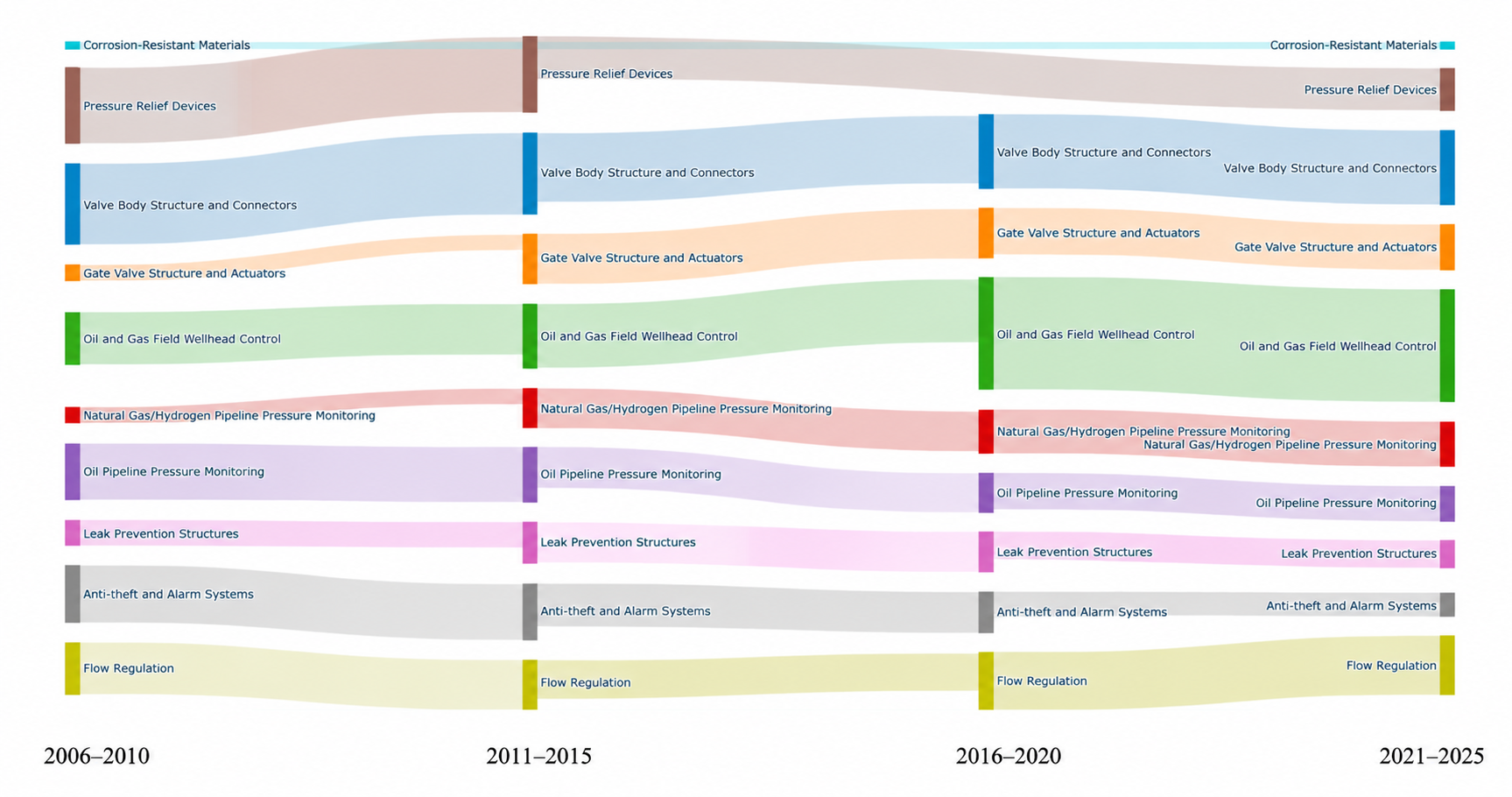
Patent count statistics, patent network analysis, and patent text mining were combined to reveal technological innovation and development trends in the oil and gas pipeline valve domain. Innovation activity in this field was examined at a macro level based on annual disclosure trends, patent shares, leading countries/regions, and major assignees. To characterize the technological structure and reveal relationships among key technologies, patent classification codes and technical terms were used to construct co-occurrence networks. Network visualization and layout analysis were conducted using Gephi 0.10.1 (https://gephi.org/), an open-source tool specifically designed for network visualization and analysis. This helped present the overall technological landscape and facilitated the identification of relationships among key technologies. These two networks are complementary and jointly valuable for producing multi-level insights. Text mining was further employed to investigate the dynamic evolution of technical topics. Patent titles and abstracts were used as the main textual sources because they provide concise descriptions of patented technical solutions and are suitable for identifying major technological themes. Nouns and noun phrases were extracted to construct a set of candidate technical terms, and general or low-information expressions not directly related to valve technologies were manually removed. The remaining technical terms were transformed into semantic vectors using Qwen3-Embedding-8B (Alibaba Group, Hangzhou, China; https://qwen-ai.com/), which was used in this study only for semantic vectorization. Mini-Batch K-Means clustering was implemented using Scikit-learn version 1.6.1 (https://scikit-learn.org/). Since Mini-Batch K-Means requires the number of clusters to be specified in advance, several candidate k values were compared in terms of topic granularity, keyword distribution, interpretability, and consistency with patent contexts. After iterative comparison and consultation with domain experts, the solution with k = 10 was finally retained because it provided a suitable balance between topic differentiation and engineering interpretability. In comparison, solutions with a smaller number of clusters tended to produce relatively broad and coarse-grained topics, in which several distinct engineering functions were mixed together, whereas solutions with a larger number of clusters tended to generate fragmented topics that were difficult to summarize as stable technological themes. The topic meanings and labels were then manually checked and adjusted according to technical meanings and patent contexts. Finally, ten technological topics were identified and visualized using a Sankey diagram to compare their proportional changes across four periods: 2006–2010, 2011–2015, 2016–2020, and 2021–2025.

4. Results and Discussion

4.1. Overall Patent Trends, Geographical Distribution, and Major Assignees

Figure 1 illustrates the number and temporal trends of patent publications in the oil and gas valve domain over the past two decades. Overall, innovation activity in this field has shown a sustained upward trend, with annual patent publications exceeding 300 in nearly every year since 2016. One issue that warrants clarification is that patent applications are typically published within up to 18 months after filing. As a result, data for the most recent two years are incomplete, which accounts for the apparent decline observed at the end of the trend line.
Analyzing the geographical distribution of innovation helps evaluate the market size and competitiveness of each jurisdiction. This information supports stakeholders in patent portfolio planning and overseas market expansion.
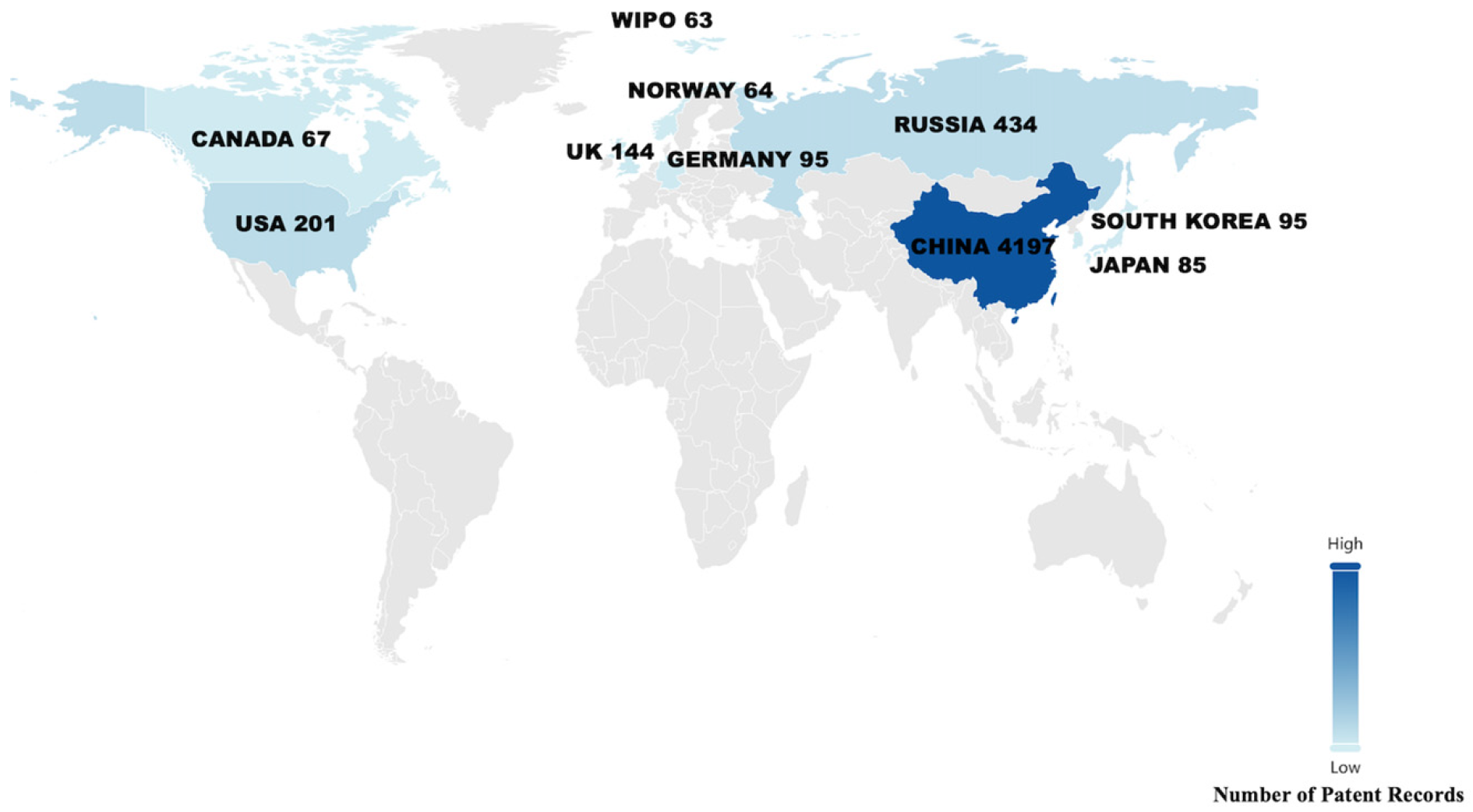
As shown in Figure 2, China is the most important global source of patent activity and target market, with more than 3000 patents. Russia, the United States, South Korea, and Canada follow. Brazil, Turkey, Germany, the United Kingdom, and Japan have also accumulated patents in the oil and gas valve field, but at much lower levels. It should also be noted that 63 patents were filed through the World Intellectual Property Organization, indicating an intention to extend patent protection to multiple jurisdictions. The large number of Chinese patent records should also be interpreted carefully. This reflects its strong demand for localized engineering improvements in pipeline valve technologies. However, countries such as China and Germany maintain utility model systems to protect more incremental but practical technical improvements, which may partly inflate patent counts. Therefore, full-sample patent counts are used only as reference indicators of overall patent activity. To address this limitation, Section 4.4 further focuses on invention patents to identify engineering-oriented inventions with higher technological value.
As shown in Table 2, Chinese state-owned enterprises and research institutions hold a leading position in pipeline valve technologies. In particular, China National Petroleum Corporation (CNPC) and China Petroleum & Chemical Corporation (Sinopec) stand out as the most prominent assignees. CNPC ranks first in the field with 457 patents, underscoring its strong R&D capacity in oil and gas valve technologies. As a leading global energy company, CNPC operates across exploration, development, production, transportation, refining, and marketing, with sustained R&D efforts in oil and gas extraction, pipeline transportation, and refining. Sinopec follows with 234 patents. As another major oil and gas enterprise in China, it has long focused on exploration, development, and related technological innovation and has accumulated substantial expertise in oil and gas valve technologies. Other important Chinese assignees include China National Offshore Oil Corporation, Southwest Petroleum University, Haixing Valve General Factory, and China University of Petroleum, all of which play significant roles in the development of oil and gas pipeline valve technologies.
Halliburton Company (29 patents) is a U.S.-based oilfield services company headquartered in Texas. It provides integrated technical services across oil and gas exploration, development, production, and downstream operations. Its service portfolio covers drilling, completion, field management, geophysical exploration, well logging, hydraulic fracturing, seismic surveying, and field optimization, with hydraulic fracturing recognized as one of its core technologies. Other assignees, such as Saudi Arabian Oil Company, have also demonstrated R&D interest in oil and gas valve technologies. Their innovation strategies and patent portfolios merit continued attention over the long term. Although these assignees have filed a notable number of patents related to oil and gas pipeline valves, their shares remain small relative to the total patent volume in this field. This indicates that technological innovation in this domain is not concentrated among a few actors but involves a broad range of participants. It also suggests that the technology has not yet fully matured and that market competition remains active.

4.2. Core Technology Categories and Their Relationships

Technologies do not exist in isolation. Direct and indirect relationships exist among different categories and components. Each patent is assigned at least one classification code by patent offices based on the technical information described in the title, abstract, and claims.
In this section, Derwent Manual Codes (DMCs) are used instead of IPC codes to analyze relationships among technology categories. Each patent contains one or more DMCs, which adopt a hierarchical structure similar to that of IPC. More importantly, DMCs are defined across multiple dimensions, including purpose, function, materials, and structure. This design allows DMCs to provide more informative signals for patent analysis [27,37].
Inventors often detail application fields and usage scenarios in patent texts to secure grants and maximize commercial value, providing insights into technology categories and their interrelationships. The IncoPat database processes patent texts to generate fields with terms related to application scenarios, which are used in this study to construct an additional co-occurrence network for a broader set of technological elements. In summary, co-occurrence relationships at two levels—DMCs and application-scenario terms—are visualized. The results are further filtered to highlight the most important structures within the network.
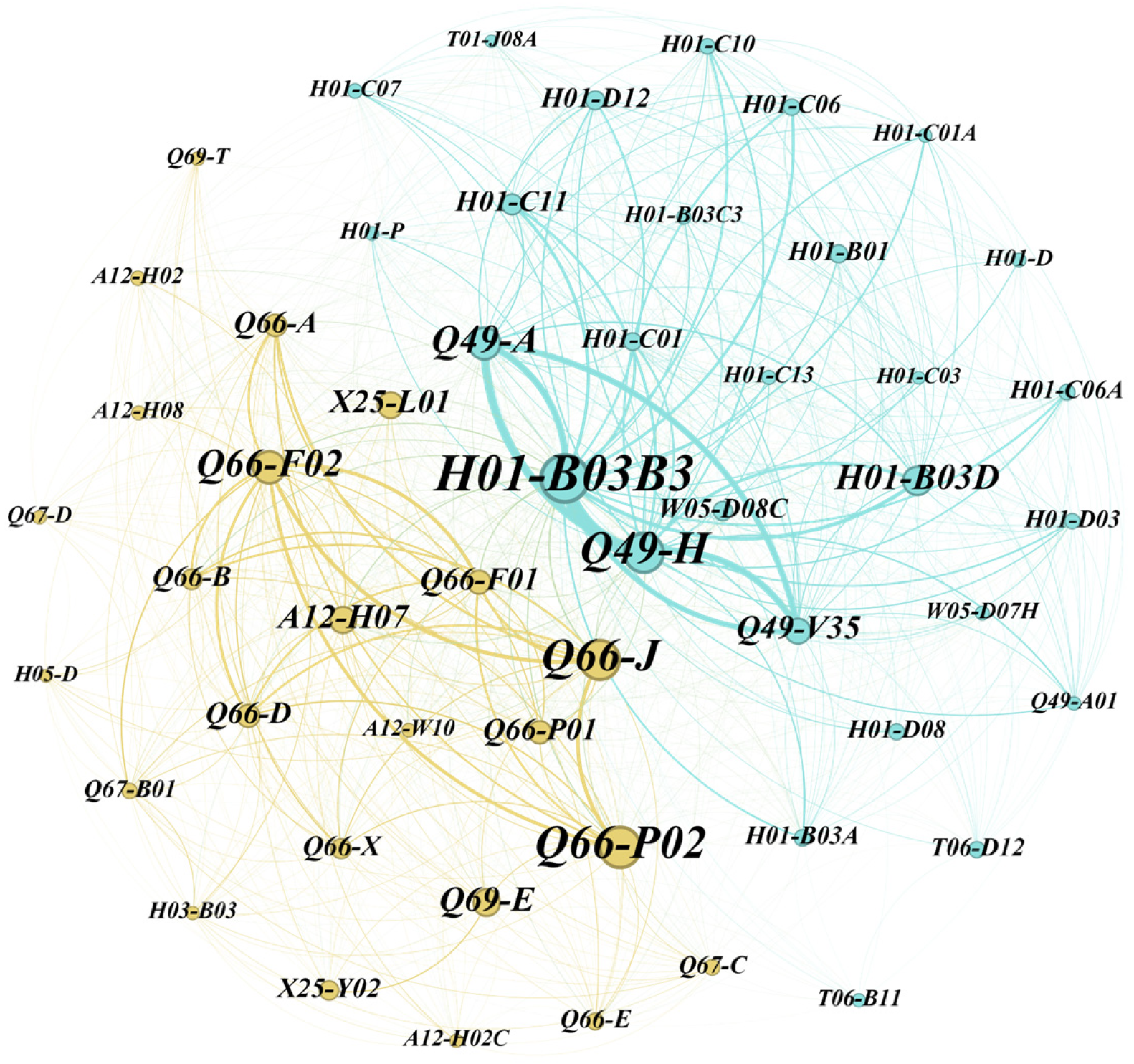
As shown in Figure 3, H01-B03B3 exhibits a co-occurrence strength of 5261 with other codes and appears in 1825 patents. This code is related to rotary drilling and specifically refers to the control of valves and equipment, representing one of the most central technological branches in this field. In addition, H01-B03B3 shows strong associations with DMCs Q49-A, Q49-H, and H01-B03D, which together form a core technology cluster in the domain. These codes also display high co-occurrence strength and high frequency. Q49-A and Q49-H both fall within the mining category: Q49-A refers to mining and quarrying equipment, while Q49-H relates to equipment and methods for removing tools from mines, boreholes or wells. H01-B03D denotes technologies for the transmission and generation of electricity and data. In drilling operations, valves are used to control fluid flow, wellhead pressure, and related processes, serving as a critical safeguard for safe and precise operations. Closely related DMCs—including Q66-F02 (valve housings; casings), Q66-F01 (valve members; valve seats; seals), Q66-J (Valve actuation arrangements), and A12-H07 (valves, diaphragms [mechanical engineering])—form another core technology cluster. These findings are further corroborated by Figure 4. The main DMCs and their definitions are presented in Table 3.
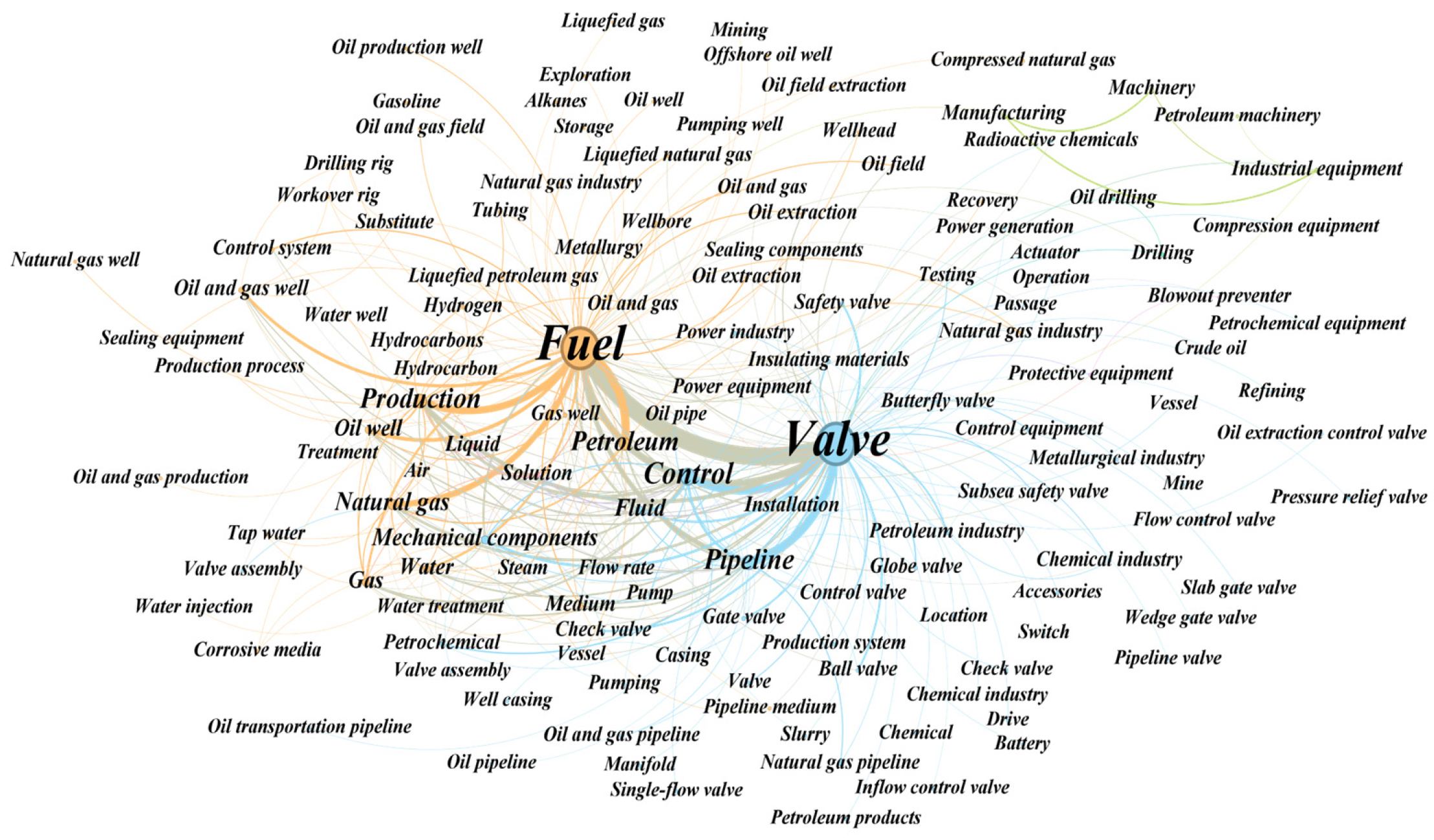
As shown in Figure 4, fuel and valve occupy particularly prominent positions in the patent landscape of this field, which is reasonable given that the present study focuses on pipeline valves used in the oil and gas industry. From the perspective of spatial clustering and edge density, the network provides a clear visualization that pipeline valves play critical roles across oil and gas extraction, transportation, and storage. Terms such as “production,” “well,” and “petroleum” correspond to valve applications in extraction systems and wellhead-related scenarios, representing pipeline valves used in the production segment. By contrast, “pipeline,” “pressure,” “installation,” and “equipment” emphasize reliability, safety, and engineering deployability requirements in transportation systems. Moreover, a substantial body of patents adopts a function-oriented narrative that highlights the optimization of control modules (e.g., “control,” “fluid,” “flowrate,” and “filter”), indicating a functional shift in valves from traditional on/off isolation toward regulating or managing fluid behavior. Notably, “control” and “pipeline” exhibit a strong association and high connectivity in the network, suggesting that many patents explicitly bind control functions to pipeline scenarios. Nodes showing strong collinearity with “control” include protective equipment, downhole safety valves, flow rate, shut-off valves, oil and gas wells, media, solutions, test methods, and related terms, implying that these specific controllers or control systems constitute key innovation foci. Figure 4 further indicates that, beyond frequently discussed valve bodies, valve seats, and sealing elements, commonly cited breakthrough directions in pipeline valve patents also include insulating materials for mechanical components, mechanical components of ancillary pipelines or casings paired with valves, installation methods for valves or pipeline systems, and mechanical components specific to ball valves.

4.3. Topic-Level Evolution of Pipeline Valve Technologies

Based on the text-mining procedure described in Section 3, ten technological topics were identified from the full patent sample and visualized using a Sankey diagram. Figure 5 shows the proportional evolution of these topics across four periods: 2006–2010, 2011–2015, 2016–2020, and 2021–2025. It should be noted that the results in this section are based on the full patent sample and should be interpreted as a descriptive topic-evolution map rather than direct evidence of high-value technological frontiers. Representative innovations with stronger technological and engineering significance are further examined through invention-patent-based analysis in the following section.
Figure 5 visualizes the evolution results, highlighting key topics such as “Oil and Gas Field Wellhead Control,” “Natural Gas/Hydrogen Pipeline Pressure Monitoring,” “Oil Pipeline Pressure Monitoring,” and “Flow Regulation,” all closely related to valve control systems. This confirms the central role of control systems in pipeline valves within the oil and gas industry. Additionally, topics like “Valve Body Structure and Connectors,” “Leak Prevention Structures,” and “Pressure Relief Devices” reflect efforts to optimize valve designs, enhance sealing, reduce leakage, and improve mechanical strength. “Corrosion-Resistant Materials” also emerges as a distinct topic, important under extreme operating conditions despite its smaller share.
During 2006–2010, structural optimization and redesign emerged as the dominant theme, with “Valve Body Structure and Connectors” accounting for 26.6% of patents, focusing on sealing performance and pressure resistance. Key terms included valve bodies, bonnets, flanges, stems, sleeves, and other connectors, emphasizing the need to extend valve and pipeline service life under high pressure, long-distance transmission, and corrosive environments. “Pressure Relief Devices” (15.2%) became another major focus to prevent pipeline rupture or leakage under high pressure, with key terms such as relief valves, check valves, and overpressure detection. “Natural Gas/Hydrogen Pipeline Pressure Monitoring” and “Oil Pipeline Pressure Monitoring” were closely linked to pressure relief devices, highlighting the importance of controlling pressure fluctuations. “Oil and Gas Field Wellhead Control” also gained attention, while other topics, including materials, mechanical structures, controllers, and auxiliary components, had smaller shares.
During 2011–2015, as the oil and gas industry increasingly demanded high-performance, long-life, and intelligent equipment, valve technologies became more refined. “Valve Body Structure and Connectors” remained important, with a focus on maintaining sealing performance under high-temperature and high-pressure conditions. The “Gate Valve Structure and Actuators” gained more attention, with designs optimized based on pipeline characteristics, and remote operation became a key feature. The share of “Oil and Gas Field Wellhead Control” continued to rise, reflecting its growing importance for safety and production efficiency, particularly in complex geological settings where controlling events like kicks and blowouts is more challenging [38,39]. Innovations in remote operation, automation, and control systems for drilling-site operations were explored, signaling the industry’s shift toward automation and intelligence. Nanocoatings were introduced to enhance valve performance, particularly in high-temperature environments with corrosive gases. “Leak Prevention Structures” emerged as an independent topic, addressing risks in fluid leakage during oil and gas extraction, with inventions combining valves and sensors for leak detection and specialized devices for accidental releases.
During 2016–2020, mechanical structures and controllers for gate valves, regulating valves, and related types continued to develop, with “Valve Body Structure and Connectors” remaining a high-share topic. “Oil and Gas Field Wellhead Control” made significant advances, with real-time monitoring, automated regulation, and intelligent management increasingly integrated into valves and the broader pipeline network, extending automation to extreme environments like polar and offshore settings. Innovation in this area grew markedly from 2016, with artificial intelligence playing a key role in driving this surge.
The period 2021–2025 was special, providing an approximate reference because some recently filed patents had not yet been disclosed. However, intelligentization and green, low-carbon development emerged as key trends. In “Oil and Gas Field Wellhead Control,” intelligent monitoring, big data, and AI influenced processes such as water injection and gas injection, enabling real-time data transmission and precise long-term control while reducing risks and costs. Topics such as flow regulation, anti-theft and alarm systems, and leak-prevention devices also integrated big data and IoT. Green and low-carbon innovations included new flange and valve-body structures designed to reduce product loss and pollution, as well as pressure relief systems that harvested energy for power generation. To cope with extreme cold, some patents redesigned pipeline layouts and ensured valve safety through waste-heat recovery. “Corrosion-Resistant Materials” re-emerged as an independent topic, highlighting its potential value.
Overall, the topic-evolution results provide a broad map for understanding changes in technological attention in oil and gas pipeline valves. The field has gradually evolved from an early focus on valve body structures, connecting components, pressure relief devices, and sealing reliability toward a more diversified pattern involving wellhead control, flow regulation, leakage prevention, intelligent monitoring, and low-carbon-oriented system optimization. However, these results represent full-sample topic signals rather than direct evidence of high-value technological frontiers. Therefore, they should be further combined with invention-patent-based analysis and engineering-oriented interpretation.

4.4. High-Value Patent Analysis and Engineering Relevance

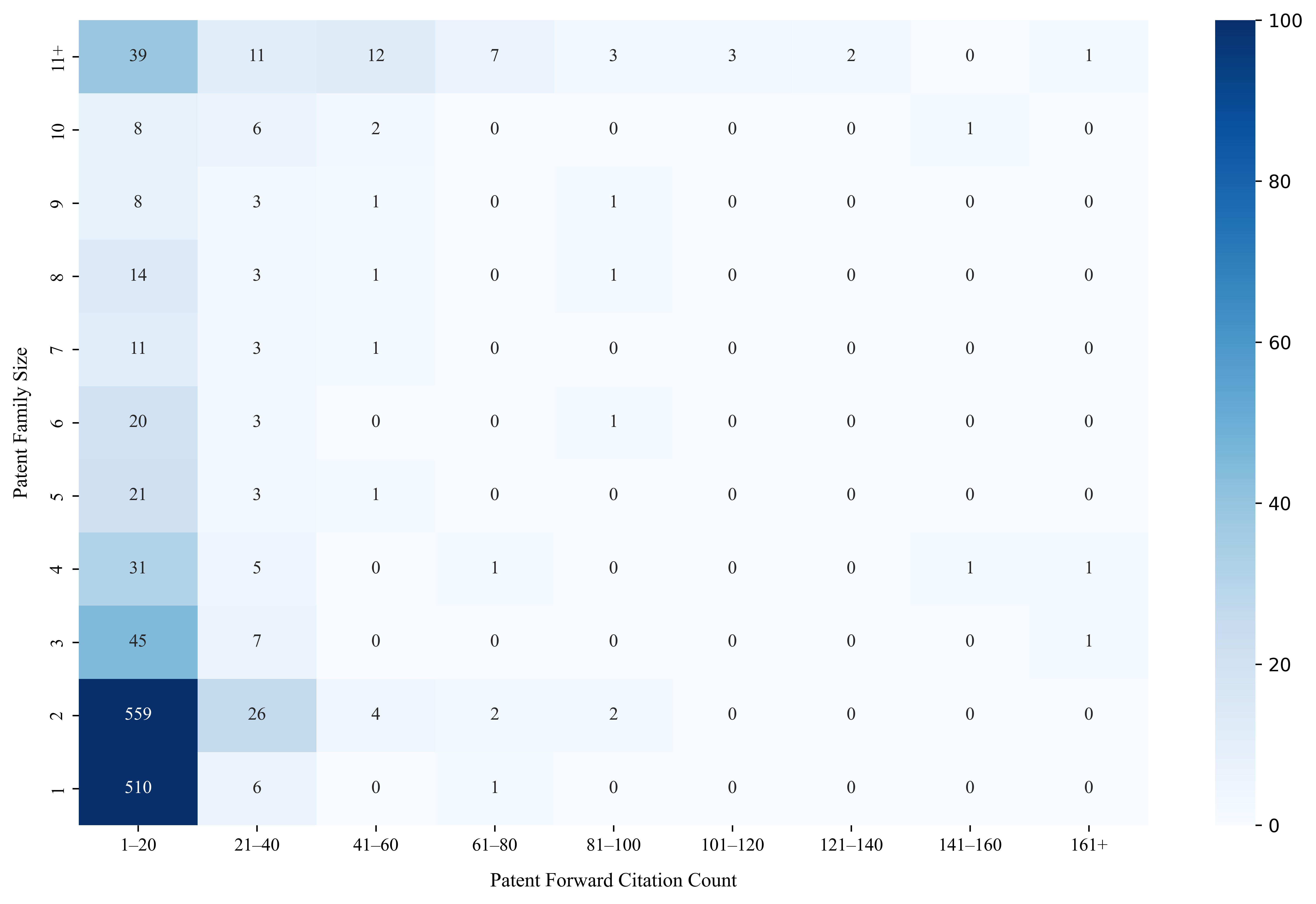
Based on the high-value invention patent selection procedure described in Section 3, representative invention patents were identified across three periods to further examine the engineering relevance of key technological breakthroughs. The invention-patent subset contained 2292 records from 2006 to 2025. As shown in Figure 6, the joint distribution of forward citation counts and patent family size for all global invention patent applications is highly skewed: most patents are concentrated in the lower-left region, while patents with both high citation counts and large family sizes are relatively rare. This pattern indicates that high-value invention patents constitute only a small subset of the overall invention-patent dataset. China, Russia, and the United States remained the main sources of invention patents, with China contributing the largest number of records; however, the United States showed a relatively stronger presence among highly cited patents and patents with larger international family sizes. Therefore, the following analysis focuses on representative high-value invention patents and interprets their relationships with practical operational challenges in oil and gas engineering.
As shown in Table 4, representative invention patents from different stages demonstrate how key technological breakthroughs in pipeline valves respond to operational challenges in oil and gas engineering. In the early stage, high-value patents were mainly concentrated in wellhead safety, pressure regulation, and conventional flow control. For example, US12642661 and CA2657209 mainly focused on pressure stability and flow regulation under complex fluid conditions. The latter dynamically regulates fluid velocity through an autonomous flow control structure, thereby reducing local pressure fluctuations and flow instability while minimizing the influence of manual intervention on system operation. This technology is applicable to scenarios involving complex flow-state changes, throttling impacts, gas–liquid mixed transportation, and liquid accumulation during oil and gas production and transportation, with the core objective of improving transportation continuity and process stability. Previous experimental work on gas–liquid flow management suggests that liquid accumulation may reduce gas deliverability and production efficiency, which further highlights the engineering importance of flow regulation and pressure control [40]. Meanwhile, wellhead safety and pressurized operation control also represent important directions among representative patents. For example, US14700702, CN202110650268.X, and CN202110994957.2 are closely related to safety control under complex wellhead operating conditions, mainly focusing on pressurized operations, rapid wellhead control, and remote operation requirements during fracturing processes. The core idea of CN202110650268.X is to enable automatic casing replacement under pressurized conditions. By integrating mechanical linkage mechanisms with the wellhead gate valve structure, this invention reduces safety risks and operational interruptions associated with traditional manual replacement. In contrast, CN202110994957.2 emphasizes remote self-control capability. Through an automated control system, it enables rapid wellhead response and remote operation during ultra-high-pressure fracturing processes, thereby reducing high-risk on-site manual intervention. During deep-well, ultra-deep-well, and high-pressure fracturing operations, wellhead valves are exposed to long-term pressure fluctuations, frequent opening and closing, and complex fluid impacts, which may easily lead to sealing failure and pressure instability. This invention responds to these concerns by improving remote control and safety interlock capabilities.
In addition, other patents focus on leakage control, sealing stability, and valve reliability under complex operating conditions. For example, CN202310828152.X, CN202210279747.X, and RU2017131093 all address sealing reliability and regulation stability in complex operating environments. The first patent mainly targets leakage risks during the long-term operation of wellhead gate valves and improves sealing stability under high-pressure conditions by optimizing the sealing structure and valve-body connection. RU2017131093 places greater emphasis on the thermally actuated response capability of regulating valves under extreme conditions. In this technical solution, stable regulation and rapid response under changing temperature and pressure conditions are regarded as key requirements.
In recent years, representative invention patents have increasingly involved intelligent monitoring, remote control, and digital operation and maintenance, which is consistent with the topic-evolution results in the preceding subsection. CN202510012564.5 focuses on natural gas station distribution scenarios. It collects flow, pressure, and valve operating-status data through IoT sensors and combines data filtering, proportional–integral–derivative (PID) control, adaptive compensation, and control-mode switching to realize dynamic control of regulating valve opening and stable regulation of the distribution process. CN201910422782.0 adopts a fully electric driving mechanism to replace the traditional hydraulic control structure and improves the response speed and status visualization capability of downhole safety valves through surface–downhole information transmission, action sensors, and status feedback modules. CN202110994957.2 improves remote operation capability and erosion-resistant reliability during ultra-high-pressure fracturing through a remotely controlled fracturing tree structure, hydraulically driven rising-stem slab valves, and high-nickel–chromium–molybdenum hard alloy wear-resistant layers. These cases indicate that the integration of multi-source status sensing, remote communication, automatic execution, real-time feedback, anomaly identification, and predictive maintenance may become a key direction for future intelligent valve development, which will likely require the joint advancement of high-reliability sensors, advanced algorithms, and advanced materials. Meanwhile, complex operating conditions such as extreme HPHT environments and deep-sea downhole scenarios remain unavoidable challenges in this technological trend.
Compared with related technological fields in the oil and gas industry, the observed innovation patterns are not isolated developments within valve technology alone but part of the broader transition toward safer, more automated, and more digitally integrated production systems. For example, subsea production equipment and pipeline systems increasingly rely on sensors, communication modules, and data-driven predictive maintenance. As key nodes for isolation, pressure regulation, flow control, leakage prevention, and emergency shutdown, valves are also undergoing corresponding technological transformation. In this sense, pipeline valve technology can be regarded as a relatively mature mechanical domain that is being reshaped by broader changes in the oil and gas industry [14].

5. Conclusions and Limitations

Pipeline valves are critical control and safety components in oil and gas production and transportation systems. Under increasingly complex operating conditions, understanding the technological trends of pipeline valves is of great significance for improving system reliability and promoting sustainable development in the oil and gas industry. Based on global patent data from 2006 to 2025, this study systematically investigated the technological innovation trends of pipeline valves in the oil and gas industry.
A progressive patent analytics framework integrating statistical analysis, co-occurrence network analysis, text mining, and high-value invention patent analysis was developed. Based on 5313 full-sample patent records and a subset of 2292 invention patents, a multi-level innovation landscape covering patent activity, technological structure, topic evolution, and engineering relevance was comprehensively revealed. The results show that innovation activity in this field has remained active over the past two decades, especially since 2016, when the number of patent publications exceeded 300 in almost every year. China, Russia, the United States, South Korea, and Canada are the major sources of patent activity, while Chinese oil and gas enterprises, universities, and equipment manufacturers occupy important positions among leading assignees. However, patent counts do not fully represent technological influence. Further high-value invention patent analysis indicates that a small number of representative patents in this field have strong knowledge influence and transnational protection value, and countries such as the United States, Canada, and Russia also show strong performance in this regard.
From a technological perspective, the patent networks, topic-evolution results, and high-value invention patent analysis consistently indicate that pipeline valve innovation is becoming more diversified and system-oriented. Representative inventions are closely associated with practical operational challenges in oil and gas systems, including wellhead safety, leakage prevention, sealing reliability, remote control, and adaptation to complex operating conditions. These findings suggest that future pipeline valve technologies will increasingly depend on the integration of mechanical reliability and intelligent control capabilities within broader oil and gas process systems.
While this study offers valuable insights, it is subject to several limitations. First, because patent applications are usually published after a time lag, some recent patent records, especially those from 2024 to 2025, may not have been fully disclosed. Therefore, emerging technological trends identified in the most recent period require continuous tracking in future research. Second, although patent family consolidation and the invention-patent subset were used to reduce potential bias, patent indicators cannot fully capture engineering performance, commercial application, or field reliability. Third, although patent documents provide valuable information on technological innovation, other sources, such as scientific publications, technical standards, field test reports, corporate annual reports, and expert interviews, may also offer important complementary evidence. Future research could therefore adopt a multi-source analytical approach to enhance the robustness of the findings, validate the engineering relevance of identified trends, and further examine the interactions between pipeline valves and related technologies such as subsea production equipment and pipeline systems.

Author Contributions

Conceptualization, Y.J. and M.S.; methodology, Y.J. and M.S.; writing—original draft preparation, Y.J.; writing—review and editing, Y.J. and J.X.Z.; visualization, Y.J. and M.S.; supervision, J.X.Z.; funding acquisition, Y.J. All authors have read and agreed to the published version of the manuscript.

Funding

This research was funded by the Fundamental Research Funds for the Central Universities of Nanjing University of Science and Technology, China, grant number 30924010410.

Data Availability Statement

The data are available from the corresponding author upon reasonable request.

Conflicts of Interest

The authors declare no conflicts of interest.

Appendix A

Table A1. The test patent search queries based on IPC classifications closely related to oil and gas pipeline valve technologies.
Globally DatabasesThe Test Patent Search Queries
IncoPatIPC=(F16K* OR E21B34* OR E21B33/06 OR F17D1/04 OR F16J15* OR G05D16*)
Patentscope (WIPO)IC:“F16K” OR IC:“E21B34” OR IC:“E21B33/06” OR IC:“F17D1/04” OR IC:“F16J15” OR IC:“G05D16”
Espacenet (EPO)pc =/low “F16K” OR ipc =/low “E21B34” OR ipc =/low “E21B33/06” OR ipc =/low “F17D1/04” OR ipc =/low “F16J15” OR ipc =/low “G05D16”
DerwentIP=(F16K* OR E21B-034* OR E21B-033/06 OR F17D-001/04 OR F16J-015* OR G05D-016*)
PPUBS (USPTO)F16K*.ipc. or E21B34/.ipc. or E21B33/06.ipc. or F17D01/04.ipc. or F16J15/.ipc. or G05D16/*.ipc.
Note: Search queries follow the native search syntax of each database platform. The wildcard symbol “*” was used to retrieve all subordinate classifications and extensions associated with the corresponding IPC codes.
Table A2. The comparison results of the test patent search queries.
Major Countries/RegionsIncoPatPatentscope (WIPO)Espacenet (EPO)DerwentPPUBS (USPTO)
China468,975455,837465,380441,790-
the United States141,808131,772130,173113,677144,259
Russia13,11712,04611,39712,399-
European Patent Office 44,72743,24942,37840,228-
the United Kingdom38,77633,53036,38621,781-
Canada22,91822,83020,46620,037-

References

  1. Ekejiuba, A.I. Natural Petroleum: Chemistry and Valuable Products Fractions. Carbon 2021, 82, 80–85. [Google Scholar]
  2. Hagos, F.Y.; Abd Aziz, A.R.; Zainal, E.Z.; Mofijur, M.; Ahmed, S.F. Recovery of gas waste from the petroleum industry: A review. Environ. Chem. Lett. 2022, 20, 263–281. [Google Scholar] [CrossRef] [Scilit]
  3. Adebiyi, F.M. Air quality and management in petroleum refining industry: A review. Environ. Chem. Ecotoxicol. 2022, 4, 89–96. [Google Scholar] [CrossRef] [Scilit]
  4. Lu, H.; Guo, L.; Azimi, M.; Huang, K. Oil and Gas 4.0 era: A systematic review and outlook. Comput. Ind. 2019, 111, 68–90. [Google Scholar] [CrossRef] [Scilit]
  5. Duch-Brown, N.; Costa-Campi, M.T. The diffusion of patented oil and gas technology with environmental uses: A forward patent citation analysis. Energy Policy 2015, 83, 267–276. [Google Scholar] [CrossRef] [Scilit]
  6. Sotoodeh, K. Erosion Prevention for Piping and Valves in Offshore Oil and Gas Industry: A Case Study. J. Fail. Anal. Prev. 2023, 23, 624–635. [Google Scholar] [CrossRef] [Scilit]
  7. Klenam, D.E.P.; McBagonluri, F.; Bamisaye, O.S.; Asumadu, T.K.; Ankah, N.K.; Bodunrin, M.O.; Andrews, A.; Soboyejo, W.O. Corrosion resistant materials in high-pressure high-temperature oil wells: An overview and potential application of complex concentrated alloys. Eng. Fail. Anal. 2024, 157, 107920. [Google Scholar] [CrossRef] [Scilit]
  8. Iannuzzi, M.; Barnoush, A.; Johnsen, R. Materials and corrosion trends in offshore and subsea oil and gas production. npj Mat. Degrad. 2017, 1, 2. [Google Scholar] [CrossRef] [Scilit]
  9. Guan, A.; Zhong, F.; Qiu, C.; Jin, Z.; Qian, J. Erosion Wear Analysis on Valve Cage of Cage-Typed Sleeve Control Valve for Coal Liquefaction. J. Fluids Eng. 2024, 146, 101206. [Google Scholar] [CrossRef] [Scilit]
  10. Sotoodeh, K. Development of a Numeric Method to Validate the Reliability Improvement of Safety Critical Valves During Operation Through Online Monitoring Implementation. Sens. Imaging 2020, 21, 57. [Google Scholar] [CrossRef] [Scilit]
  11. Schmidt, C.; Schmidt, J.; Denecke, J.; Seewig, J. Application of Smart Overpressure Protection Devices to batch and semi-batch processes: The zero-emission mode. Process Saf. Environ. 2024, 181, 535–546. [Google Scholar] [CrossRef] [Scilit]
  12. Schmidt, C.; Schmidt, J.; Denecke, J.; Seewig, J. Advanced overpressure protection: A concept for smart controlled safety pressure relief systems. Process Saf. Environ. 2024, 190, 506–516. [Google Scholar] [CrossRef] [Scilit]
  13. Cană, P.; Ripeanu, R.G.; Diniță, A.; Tănase, M.; Portoacă, A.I.; Pătîrnac, I. A review of safety valves: Standards, design, and technological advances in industry. Processes 2025, 13, 105. [Google Scholar] [CrossRef] [Scilit]
  14. Mohammadpoor, M.; Torabi, F. Big Data analytics in oil and gas industry: An emerging trend. Petroleum 2020, 6, 321–328. [Google Scholar] [CrossRef] [Scilit]
  15. Peng, W.; Yu, X.; Ji, Y. Obtaining advantages from knowledge base: Mapping the potential to develop new technologies. Technol. Anal. Strateg. Manag. 2024, 36, 4144–4161. [Google Scholar] [CrossRef] [Scilit]
  16. Govindarajan, U.H.; Zhang, C.; Raut, R.D.; Narang, G.; Galdelli, A. A Review of Academic and Patent Progress on Internet of Things (IoT) Technologies for Enhanced Environmental Solutions. Technologies 2025, 13, 64. [Google Scholar] [CrossRef] [Scilit]
  17. Harwell, K.R. United states patent and trademark office. J. Bus. Financ. Librariansh. 2002, 8, 47–54. [Google Scholar] [CrossRef] [Scilit]
  18. Yuan, X.; Cai, Y. Forecasting the development trend of low emission vehicle technologies: Based on patent data. Technol. Forecast. Soc. 2021, 166, 120651. [Google Scholar] [CrossRef] [Scilit]
  19. Li, T.; He, X.; Gao, P. Analysis of offshore LNG storage and transportation technologies based on patent informatics. Clean. Eng. Technol. 2021, 5, 100317. [Google Scholar] [CrossRef] [Scilit]
  20. Jiang, L.; Zou, F.; Qiao, Y.; Huang, Y. Patent analysis for generating the technology landscape and competition situation of renewable energy. J. Clean. Prod. 2022, 378, 134264. [Google Scholar] [CrossRef] [Scilit]
  21. Jaffe, A.M.; Myslikova, Z.; Qi, Q.; Zhang, F.; Oh, S.; Elass, J. Green innovation of state-owned oil and gas enterprises in BRICS countries: A review of performance. Clim. Policy 2023, 23, 1167–1181. [Google Scholar] [CrossRef] [Scilit]
  22. Chung, D.; Kwon, Y.; Kim, Z. Technology life cycle and commercialization readiness of hydrogen production technology using patent analysis. Int. J. Hydrogen Energy 2023, 48, 12139–12154. [Google Scholar] [CrossRef] [Scilit]
  23. Jeong, S.; Kim, J.; Choi, J.Y. Technology convergence: What developmental stage are we in? Scientometrics 2015, 104, 841–871. [Google Scholar] [CrossRef] [Scilit]
  24. Zhu, C.; Motohashi, K. Identifying the technology convergence using patent text information: A graph convolutional networks (GCN)-based approach. Technol. Forecast. Soc. Chang. 2022, 176, 121477. [Google Scholar] [CrossRef] [Scilit]
  25. Zhang, J.; Cao, Y.; Shen, N. Research on the evolution of disruptive technological innovation cooperation network: A case study of blockchain and automatic driving technology. Technol. Anal. Strateg. Manag. 2024, 36, 3066–3081. [Google Scholar] [CrossRef] [Scilit]
  26. Block, A.; Song, C.H. Exploring the characteristics of technological knowledge interaction dynamics in the field of solid-state batteries: A patent-based approach. J. Clean. Prod. 2022, 353, 131689. [Google Scholar] [CrossRef] [Scilit]
  27. Ampah, J.D.; Jin, C.; Rizwanul Fattah, I.M.; Appiah-Otoo, I.; Afrane, S.; Geng, Z.; Yusuf, A.A.; Li, T.; Mahlia, T.M.I.; Liu, H. Investigating the evolutionary trends and key enablers of hydrogen production technologies: A patent-life cycle and econometric analysis. Int. J. Hydrogen Energy 2023, 48, 37674–37707. [Google Scholar] [CrossRef] [Scilit]
  28. Sun, M.; Jia, Y.; Wei, J.; Zhu, J.X. Exploring the Green-Oriented Transition Process of Ship Power Systems: A Patent-Based Overview on Innovation Trends and Patterns. Energies 2023, 16, 2566. [Google Scholar] [CrossRef] [Scilit]
  29. Wang, J.; Cheng, L.; Feng, L.; Lin, K.; Zhang, L.; Zhao, W. Tracking and predicting technological knowledge interactions between artificial intelligence and wind power: Multimethod patent analysis. Adv. Eng. Inform. 2023, 58, 102177. [Google Scholar] [CrossRef] [Scilit]
  30. Lee, M.; He, G. An empirical analysis of applications of artificial intelligence algorithms in wind power technology innovation during 1980–2017. J. Clean. Prod. 2021, 297, 126536. [Google Scholar] [CrossRef] [Scilit]
  31. Jeon, D.; Ahn, J.M.; Kim, J.; Lee, C. A doc2vec and local outlier factor approach to measuring the novelty of patents. Technol. Forecast. Soc. Chang. 2022, 174, 121294. [Google Scholar] [CrossRef] [Scilit]
  32. Jia, W.; Wang, S.; Xie, Y.; Chen, Z.; Gong, K. Disruptive technology identification of intelligent logistics robots in AIoT industry: Based on attributes and functions analysis. Syst. Res. Behav. Sci. 2022, 39, 557–568. [Google Scholar] [CrossRef] [Scilit]
  33. Kim, M.; Lee, J. What are the future trends in natural gas technology to address climate change? Patent analysis through large language model. Energy 2024, 312, 133644. [Google Scholar] [CrossRef] [Scilit]
  34. Sun, M.; Zhu, J.X.; Hao, S. Analyzing the Innovation Progress in Global Oil and Gas Pipeline Transportation. J. Pipeline Syst. Eng. Pract. 2025, 16, 4025007. [Google Scholar] [CrossRef] [Scilit]
  35. Smith, P.; Zappe, R.W. Valve Selection Handbook: Engineering Fundamentals for Selecting the Right Valve Design for Every Industrial Flow Application, 5th ed.; Gulf Professional Publishing: Burlington, MA, USA, 2004. [Google Scholar]
  36. Leydesdorff, L.; Kushnir, D.; Rafols, I. Interactive overlay maps for US patent (USPTO) data based on International Patent Classification (IPC). Scientometrics 2014, 98, 1583–1599. [Google Scholar] [CrossRef] [Scilit]
  37. Gu, W.; Wang, J.; Zhang, Y.; Liang, S.; Ai, Z.; Li, J. Evolution of Digital Health and Exploration of Patented Technologies (2017–2021): Bibliometric Analysis. Interact. J. Med. Res. 2024, 13, e48259. [Google Scholar] [CrossRef] [Scilit]
  38. Fu, W.; Wang, Z.; Zhang, J.; Cao, Y.; Sun, B. Investigation of rheological properties of methane hydrate slurry with carboxmethylcellulose. J. Pet. Sci. Eng. 2020, 184, 106504. [Google Scholar] [CrossRef] [Scilit]
  39. Liao, Y.; Sun, X.; Sun, B.; Wang, Z.; Zhang, J.; Lou, W. Wellhead backpressure control strategies and outflow response characteristics for gas kick during managed pressure drilling. J. Nat. Gas. Sci. Eng. 2020, 75, 103164. [Google Scholar] [CrossRef] [Scilit]
  40. Soomro, N.A.; Ansari, U.; Shams, B.; Memon, M.K.; Bhutto, D.K.; Rui, Z.; Pan, Y. Optimizing Gas Well Deliquification: Experimental Analysis of Surfactant-Based Strategies for Liquid Unloading in Gas Wells for Enhanced Recovery. Unconv. Resour. 2025, 7, 100200. [Google Scholar] [CrossRef] [Scilit]
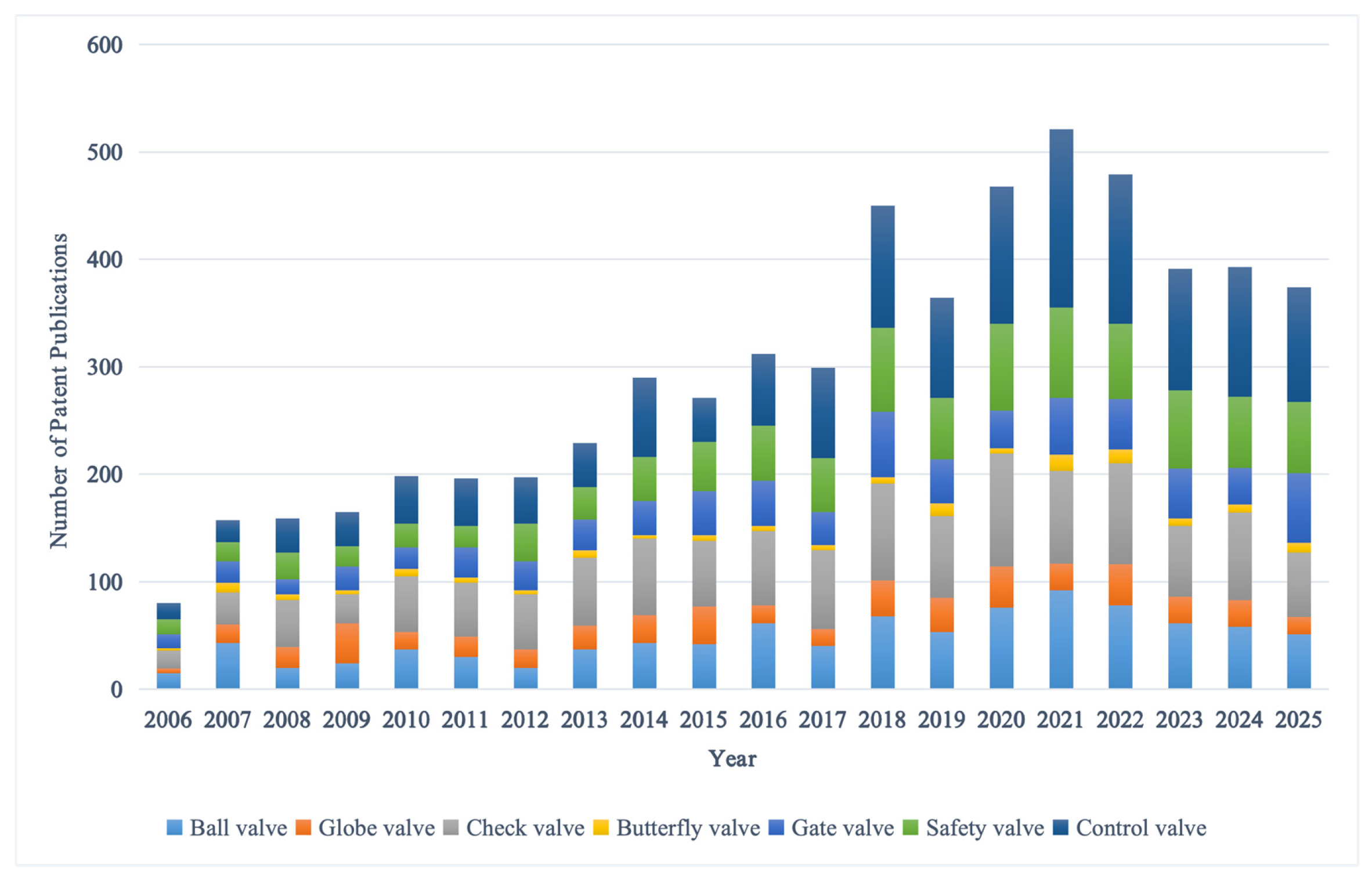
Figure 1. Annual patent publication trends in oil and gas pipeline valves.
Processes 14 01915 g001
Figure 2. Patent activity of oil and gas pipeline valves in major countries/regions.
Processes 14 01915 g002
Figure 3. Co-occurrence network of core technological categories.
Processes 14 01915 g003
Figure 4. Co-occurrence network of application-scenario terms.
Processes 14 01915 g004
Figure 5. The dynamic evolution of topics from 2006 to 2025.
Processes 14 01915 g005
Figure 6. Heatmap of forward citation counts and patent family sizes for global invention patents in oil and gas pipeline valves.
Processes 14 01915 g006
Table 1. Major types of pipeline valves in the oil and gas industry and their typical application scenarios.
Valve TypeTypical Application ScenariosKey Engineering FunctionsMain Technical Challenges
Ball valveLong-distance pipelines, high-pressure isolation, emergency shutdownRapid opening/closing, low flow resistanceSealing reliability, wear, large-diameter operation
Gate valveWellhead systems, pipelines, isolation serviceFull-bore isolationStem sealing, gate wear, high-pressure sealing
Check valvePump/compressor outlets, backflow preventionPrevent reverse flowWater hammer, response delay, fatigue
Globe valveFlow regulation, process controlThrottling and pressure regulationErosion, pressure loss
Butterfly valveLarge-diameter, low/medium-pressure pipelinesCompact flow controlSealing under pressure, torque control
Safety valveOverpressure protection, wellhead/pipeline safetyPressure reliefAccurate set pressure, leakage, reliability
Control valveAutomated process control, remote monitoringFlow/pressure regulation, intelligent controlActuator reliability, sensor integration, data communication
Table 2. Top 10 assignees of patents related to pipeline valves in the oil and gas industry.
RankAssigneePatents DepositedLocationShare of Total Patents (%)
1China National Petroleum Corporation457Beijing, China8.6
2China Petroleum and Chemical Corporation234Beijing, China4.4
3China National Offshore Oil Corporation90Beijing, China1.7
4Southwest Petroleum University (SWPU)58Chengdu, China1.1
5Haixing Valve General Factory45Shanghai, China0.8
6China University of Petroleum (CUP)39Qingdao, China0.7
7Halliburton Company29Houston, TX, USA0.5
8National Petroleum and Natural Gas Pipeline Network Group23Beijing, China0.4
9MSP/DRILEX (Shanghai) Co., Ltd.15Shanghai, China0.3
10Saudi Arabian Oil Company15Dhahran, Saudi Arabia0.3
Table 3. Top 10 DMCs with the highest frequency of common categories.
RankDMCFrequencyLink StrengthExplanation
1H01-B03B318255261Rotary drilling—valves and control equipment
2Q49-H14924616Maintenance equipment; equipment and methods for removing tools from mines, boreholes or wells
3Q66-F027692110Valve housings; Casings
4Q66-P027631650Safety valves; Equalising valves
5Q66-J7422019Valve actuation arrangements
6Q49-A6662682Mining and quarrying equipment
7Q66-F015421519Valve members; Valve seats; Seals
8Q49-V355102276Fluids, slurry
9Q66-D404980Rotary valves
10Q66-B358850Valves; Taps; Cocks; Vents
Note: Detailed definitions of Derwent Manual Codes can be found at https://clarivate.com/intellectual-property/training-support/derwent/dwpi-reference-center/manual-codes/ (accessed on 1 February 2026).
Table 4. High-value patents of pipeline valves in the oil and gas industry across different periods.
PeriodApplication No.Main Engineering Challenge
2006–2015US12642661Pressure fluctuation and flow control
2006–2015US14700702Wellhead safety
2006–2015CA2657209Multiphase flow and flow assurance
2006–2015CA2676915Throttling regulation and pressure stability
2006–2015CN02814183.0Safety of high-pressure fluid transportation
2016–2020CN201710485901.8Natural gas pressure regulation
2016–2020CN201910422782.0Automated downhole control
2016–2020US16687058Abrasive fluid control and operational safety
2016–2020US16426276Complex deep-sea operating conditions
2016–2020RU2017131093Safety regulation under extreme conditions
2021–2025CN202110650268.XPressurized wellhead operations
2021–2025CN202110994957.2Remote wellhead control
2021–2025CN202110471982.2Deep-sea high-pressure safety control
2021–2025CN202310828152.XLeakage prevention and sealing failure
2021–2025CN202510012564.5Intelligent monitoring and digital operation and maintenance
2021–2025US17202882Low-carbon transition and carbon emission reduction
Disclaimer/Publisher’s Note: The statements, opinions and data contained in all publications are solely those of the individual author(s) and contributor(s) and not of MDPI and/or the editor(s). MDPI and/or the editor(s) disclaim responsibility for any injury to people or property resulting from any ideas, methods, instructions or products referred to in the content.