Digital Twin Technology for TIDES Process Development and Manufacturing

 ,
,  ,
, 
Abstract
1. Introduction
2. State of the Art
2.1. Solid-Phase Peptide Synthesis
2.2. Liquid-Phase Peptide Synthesis
2.3. Hybrid Process
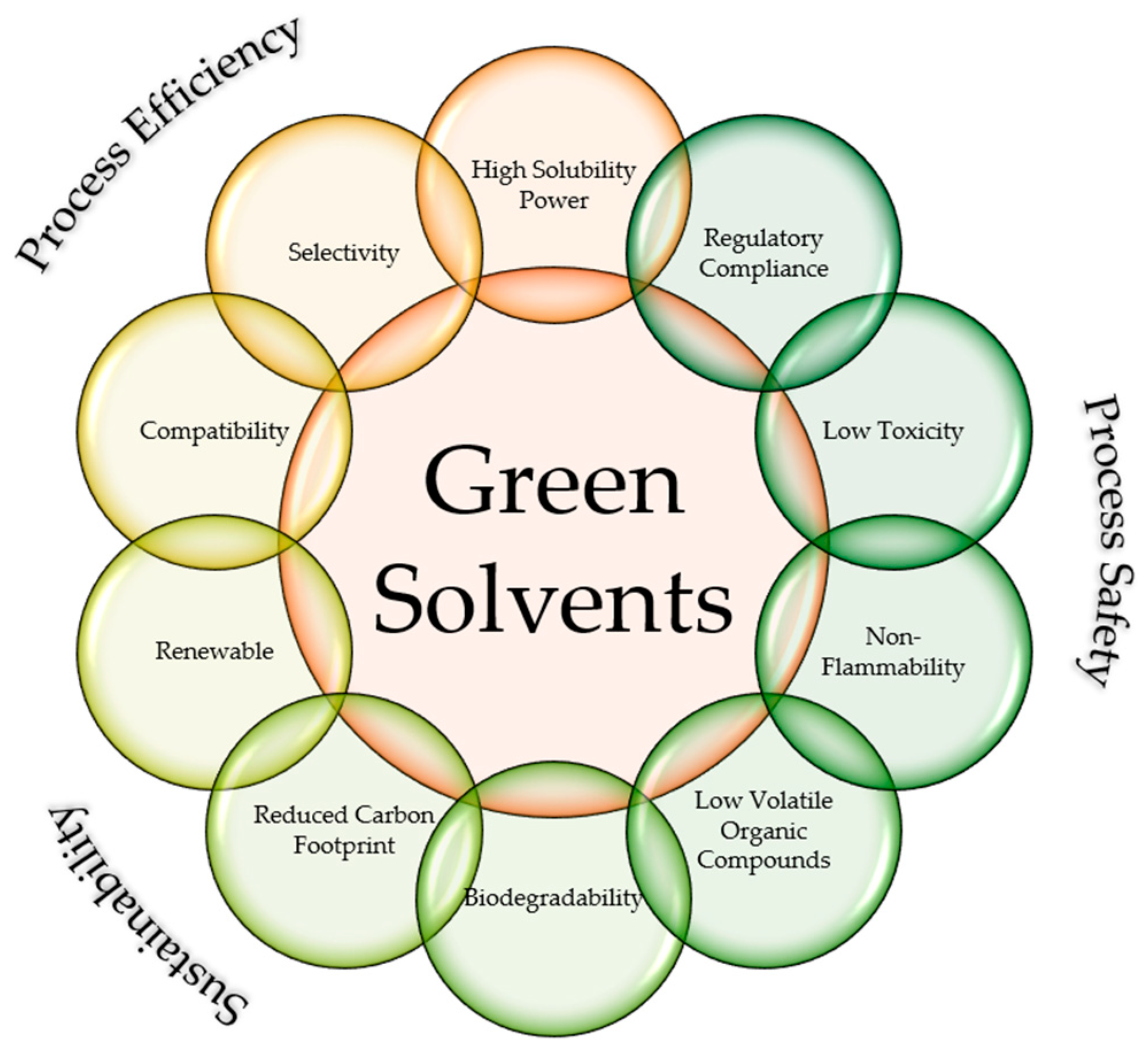
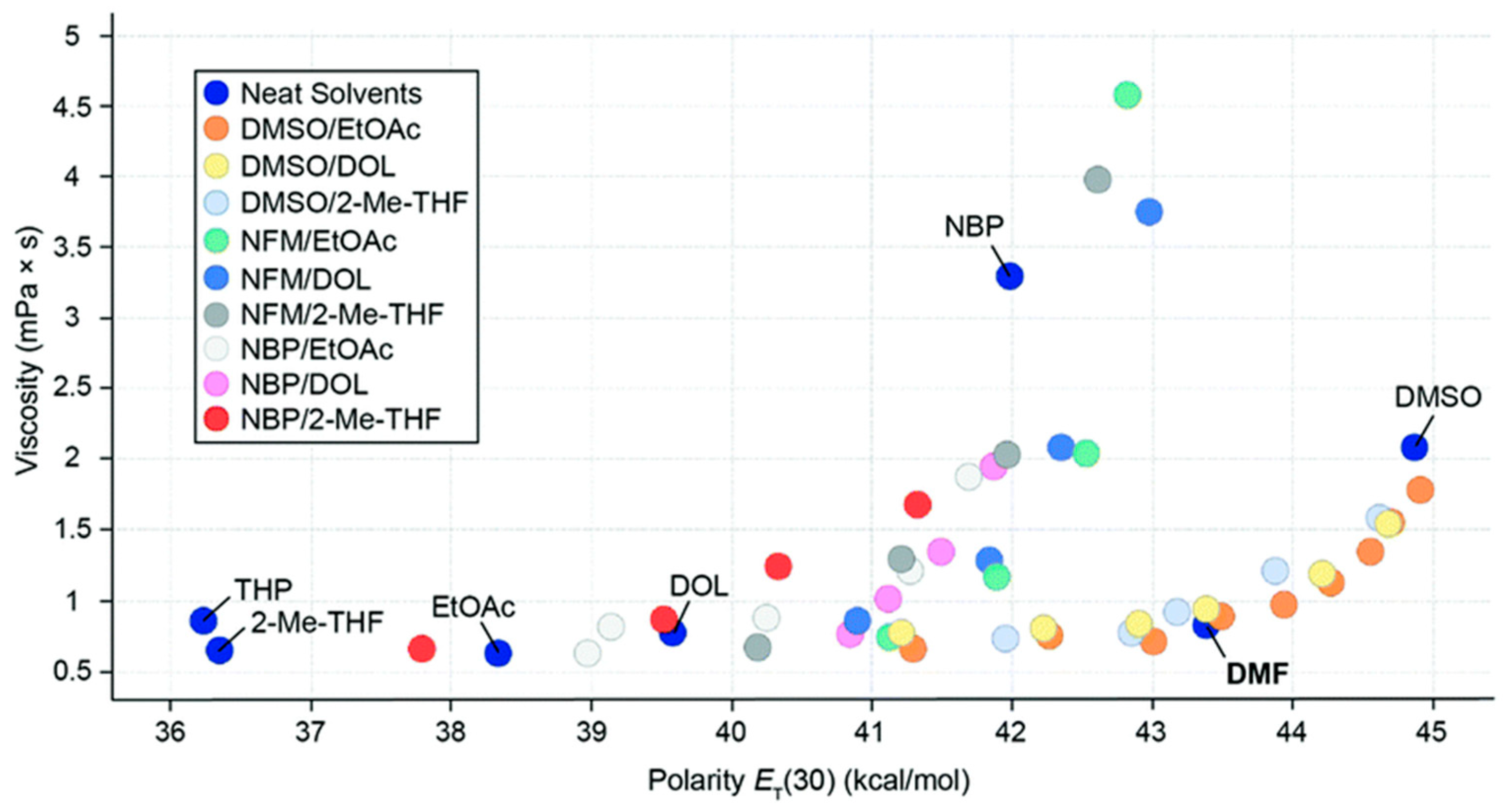
2.4. Alternative Greener Solvents for Solid-Phase-Peptide-Synthesis
2.5. Water-Based Solid-Phase Peptide Synthesis
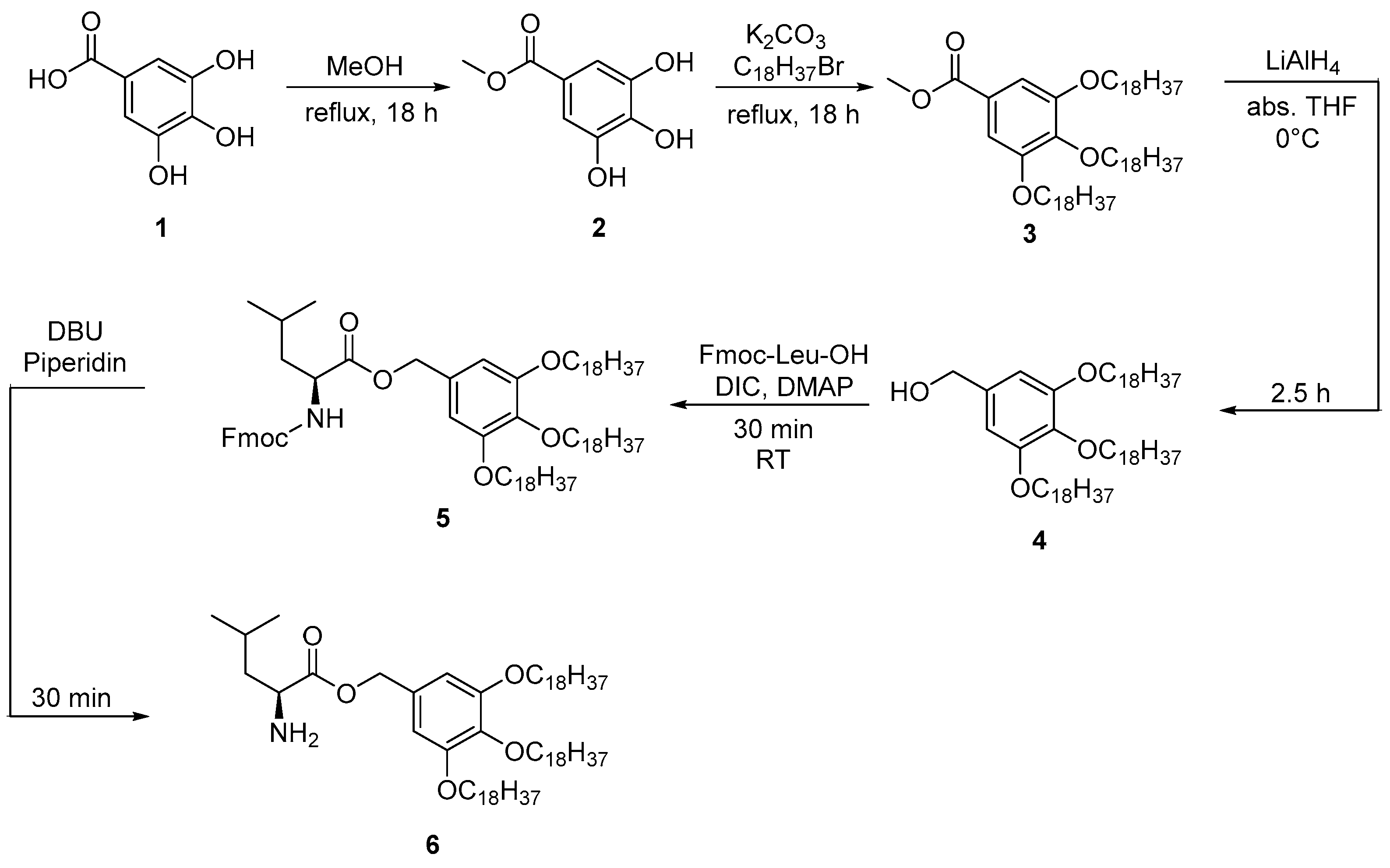
2.6. Tag-Assisted Peptide Synthesis
3. Materials and Methods
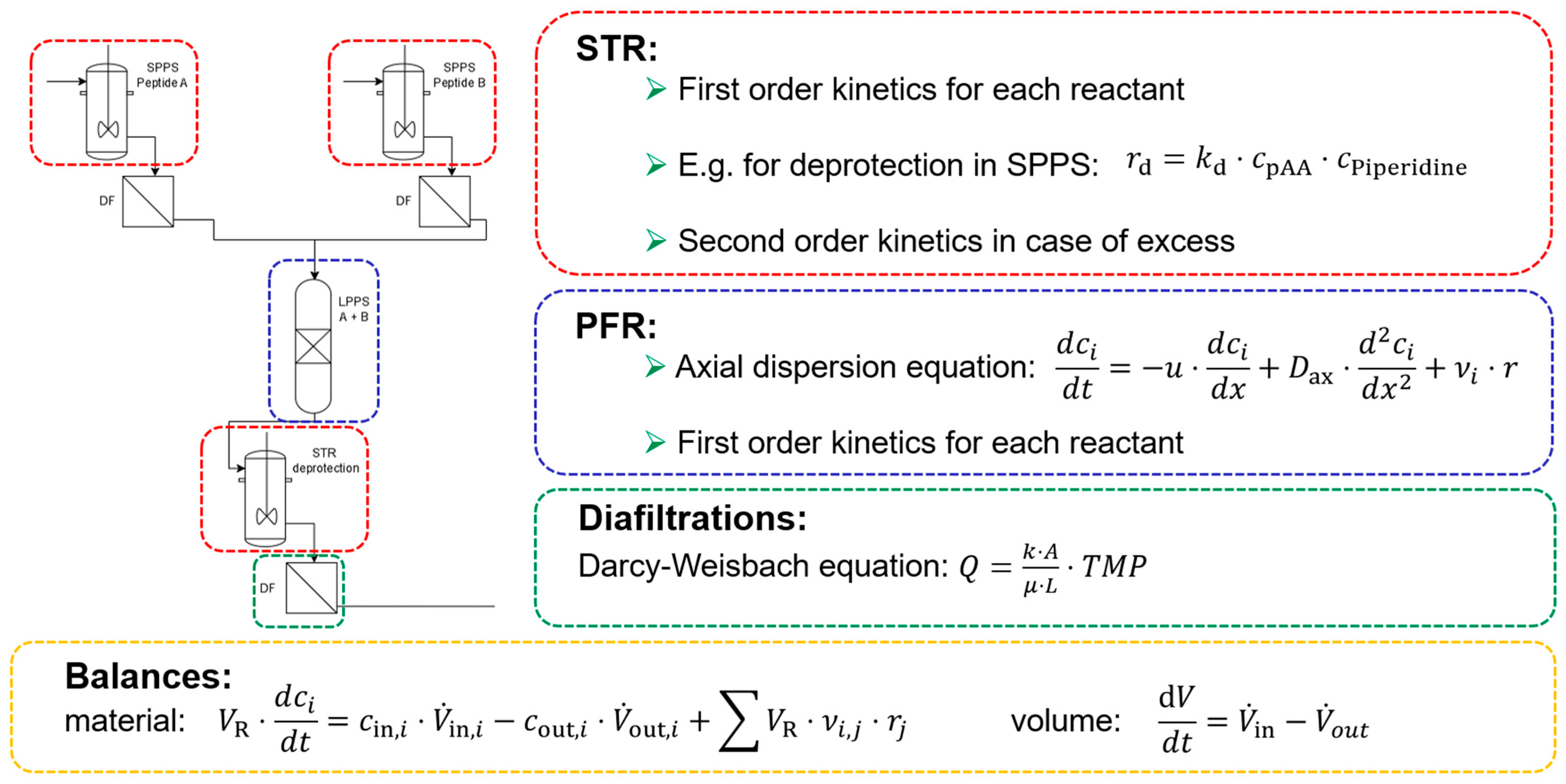
3.1. Process Models
3.1.1. Stirred Reactor
3.1.2. Plug Flow Reactor
3.1.3. Diafiltration
3.1.4. Liquid–Liquid Extraction
3.2. Techno-Economical and Ecological Analysis
3.2.1. Capital Expenditure
3.2.2. Operational Expenditure
3.2.3. Ecological Analysis
3.3. Experimental Setup
3.3.1. Chemicals
3.3.2. Synthesis
3.3.3. Experimental Determination of Kinetic Parameter
3.3.4. Analytics
4. Results
4.1. Process Model Implementation
4.1.1. Reference Process
4.1.2. Alternative Processes
4.1.3. Tag-Assisted Peptide Synthesis
4.1.4. Comparison of Fragment Elongation
4.2. Techno-Ecological and Economical Analysis
4.3. Experimental Model Parameter Determination
4.4. Process Analytical Technologies
5. Discussion and Conclusions
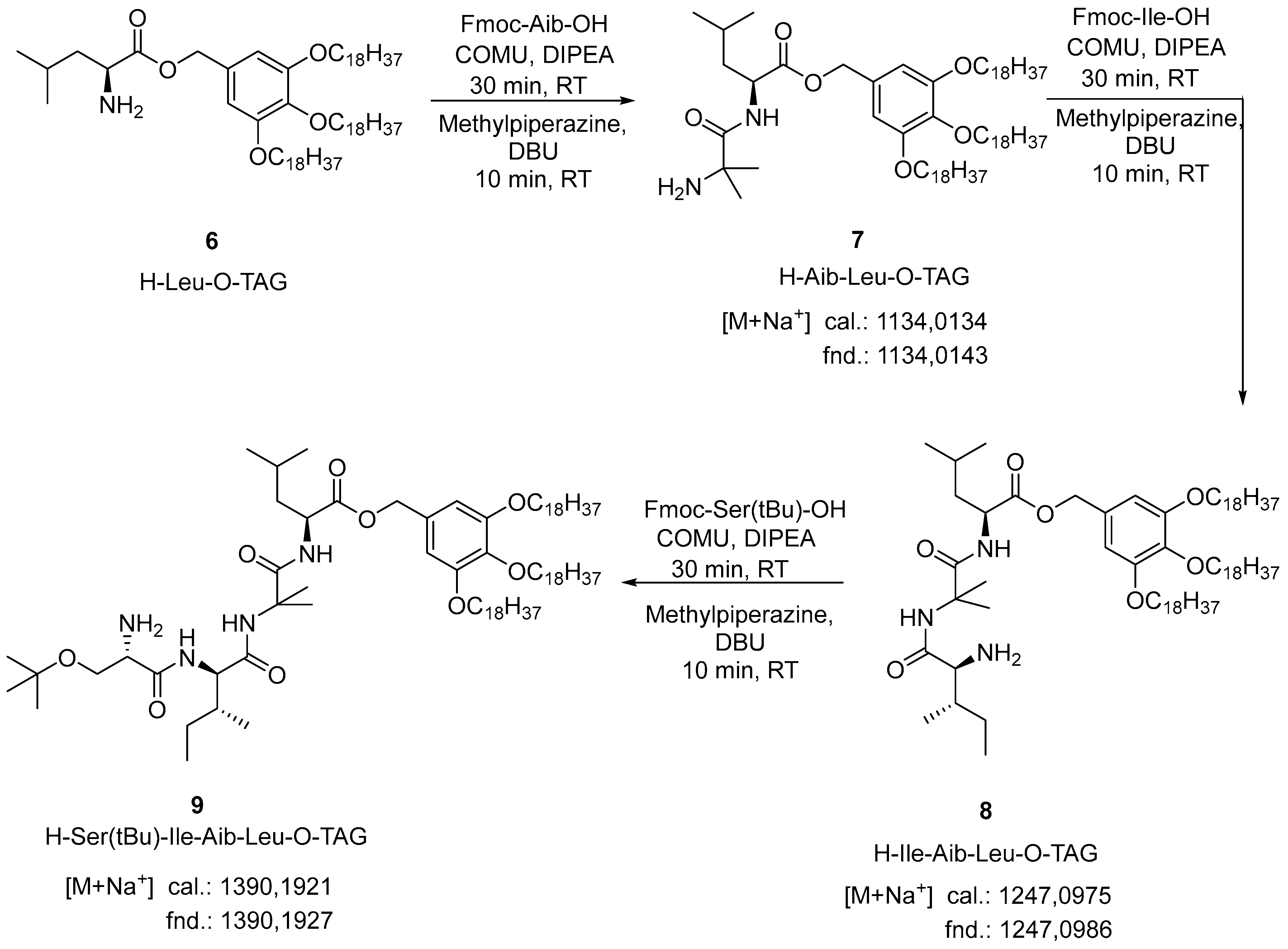
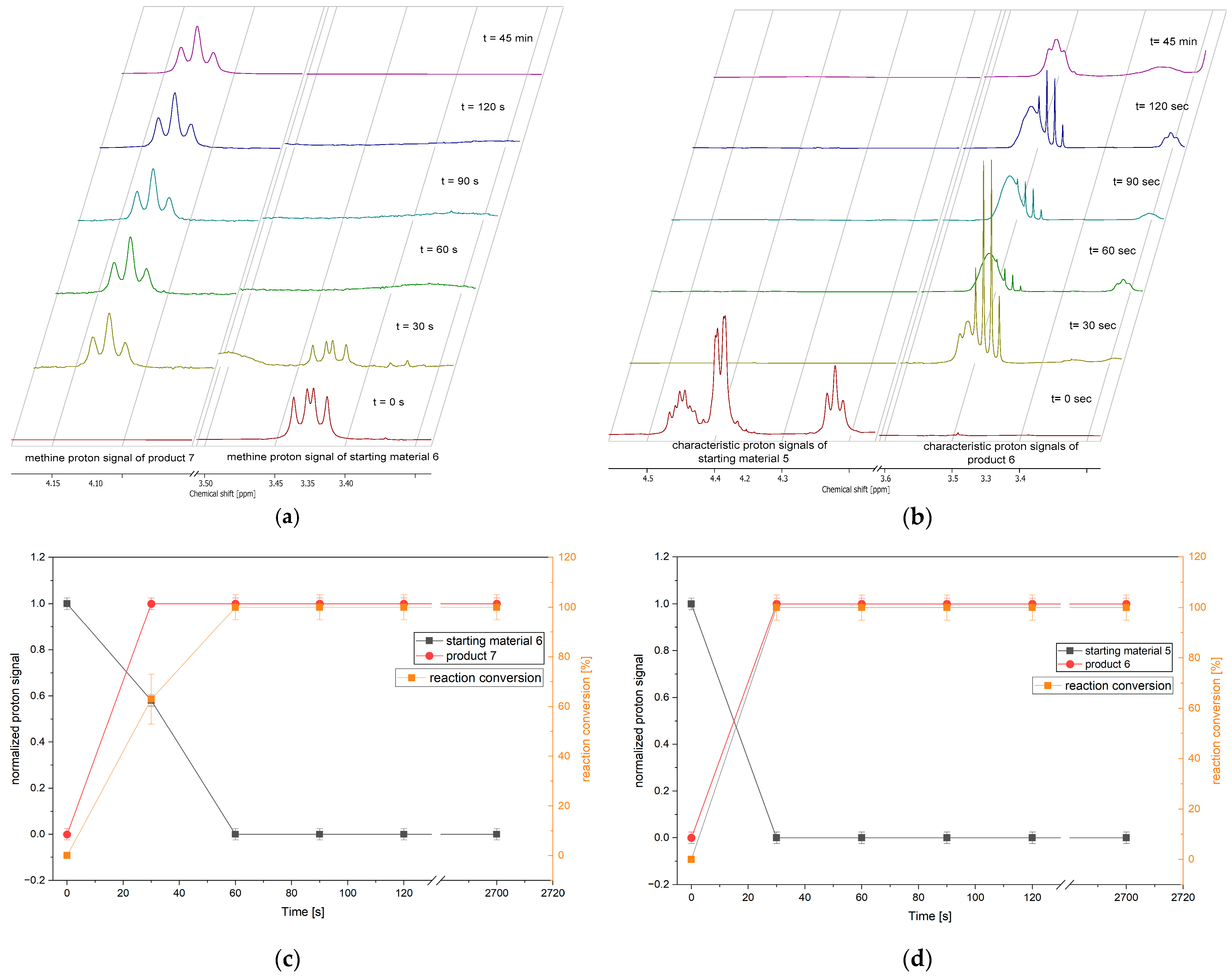
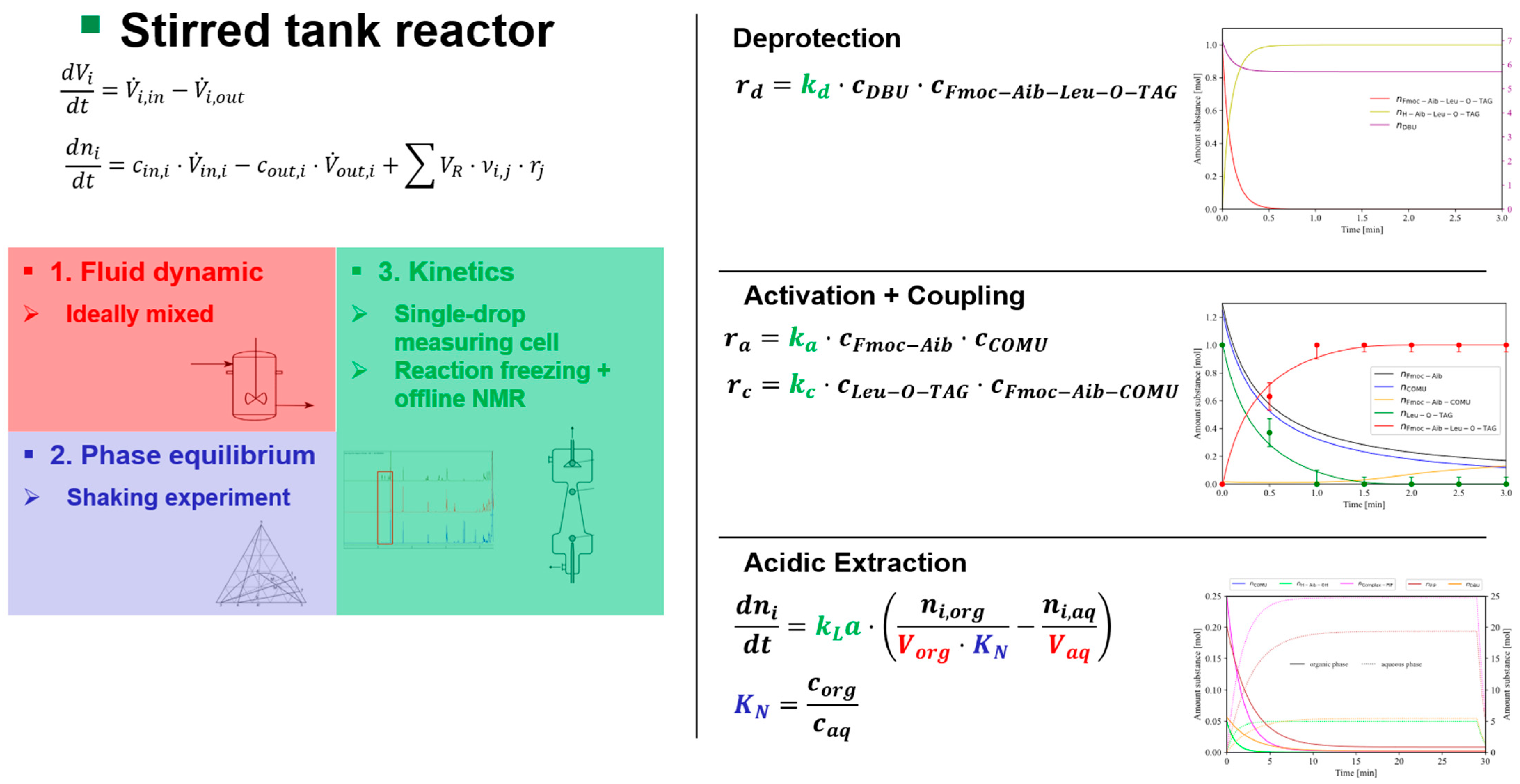
- The rapid kinetics of deprotection, activation, and coupling in the liquid phase observed in Section 4.3, combined with the techno-economic and ecological analysis performed in Section 4.2, indicate that the TAPS process is significantly more productive than previously assumed regarding the literature found. From experimental data, an improvement of factor 13 is achievable in the elongation reaction and deprotection. Therefore, high reactor utilization result in very high output on a small production footprint. Therefore, more flexible production is possible. Furthermore, continuous production should be stronger considered, which would bring additional cost advantages [61]. This is even more feasible with a pure liquid-phase reaction than with heterogeneous SPPS. Here, a high STY can be achieved in a short tubular reactor. In coupling with process intensification for LLE in a continuous mixer-separator or even centrifugal extractor will be associated with significant further increases in STY [67].
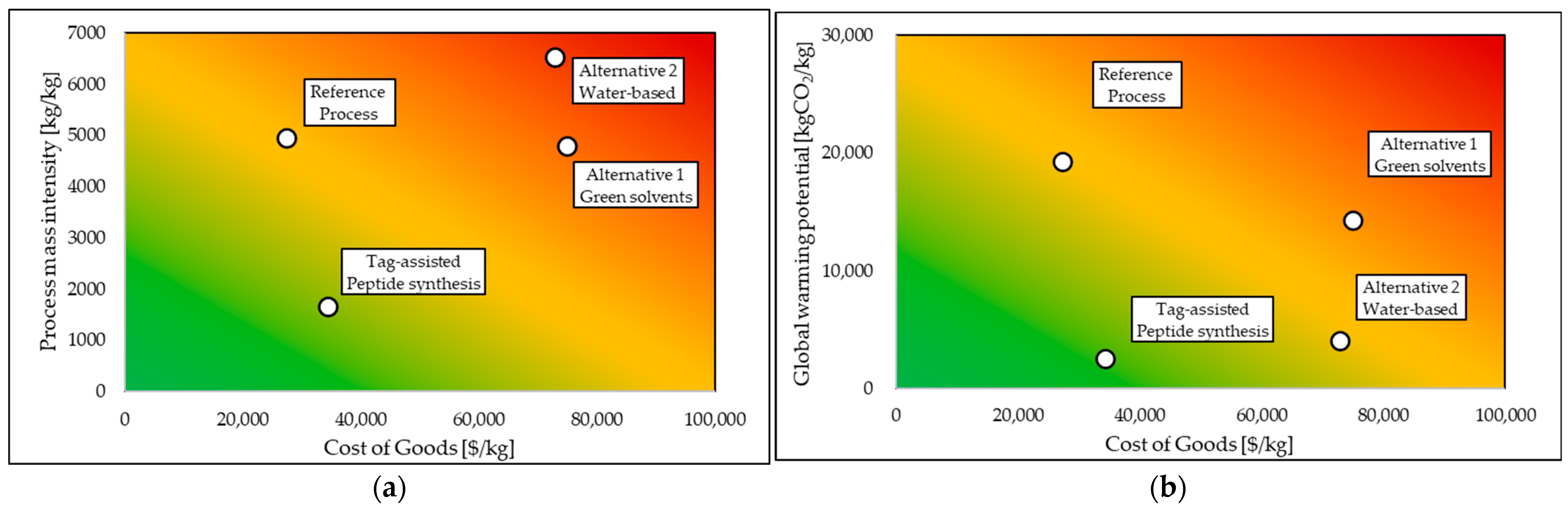
- For the ecological analysis, a key weakness in the evaluation of chemical processes with PMI can also be shown in Figure 13. Via PMI, a water-based SPPS is worse by a factor of 1.3 to the reference process, whereas by comparing the processes on the basis of GWP, it shows an improvement of nearly a factor of 5; this also improves upon the SPPS based on greener solvents. An analysis based on GWP is therefore to be preferred to PMI when assessing water-based processes [101,102,103].
- The kinetics in this paper are included, exemplifying the modeling method for deprotection, activation, and coupling steps. Slower reaction kinetics may occur for the deprotection, activation, and coupling of amino acids at any longer peptide chain. Increased viscosities, solution aggregations, and steric hindrances can have a negative process effect. In addition, it has already been shown in SPPS that the identity of the final amino acid and the one to be coupled has an influence on the effectiveness of the coupling [104]. The exemplified modeling approach is, in general, feasible to be applied for longer chains as well, especially since established inline PAT is more feasible and of higher value at slower process steps.
- For conceptual process design, either a typical safety factor is required or model parameters must be determined for all coupling steps. This is demonstrated in this work and involves little experimental effort but somewhat more analytical effort, logically.
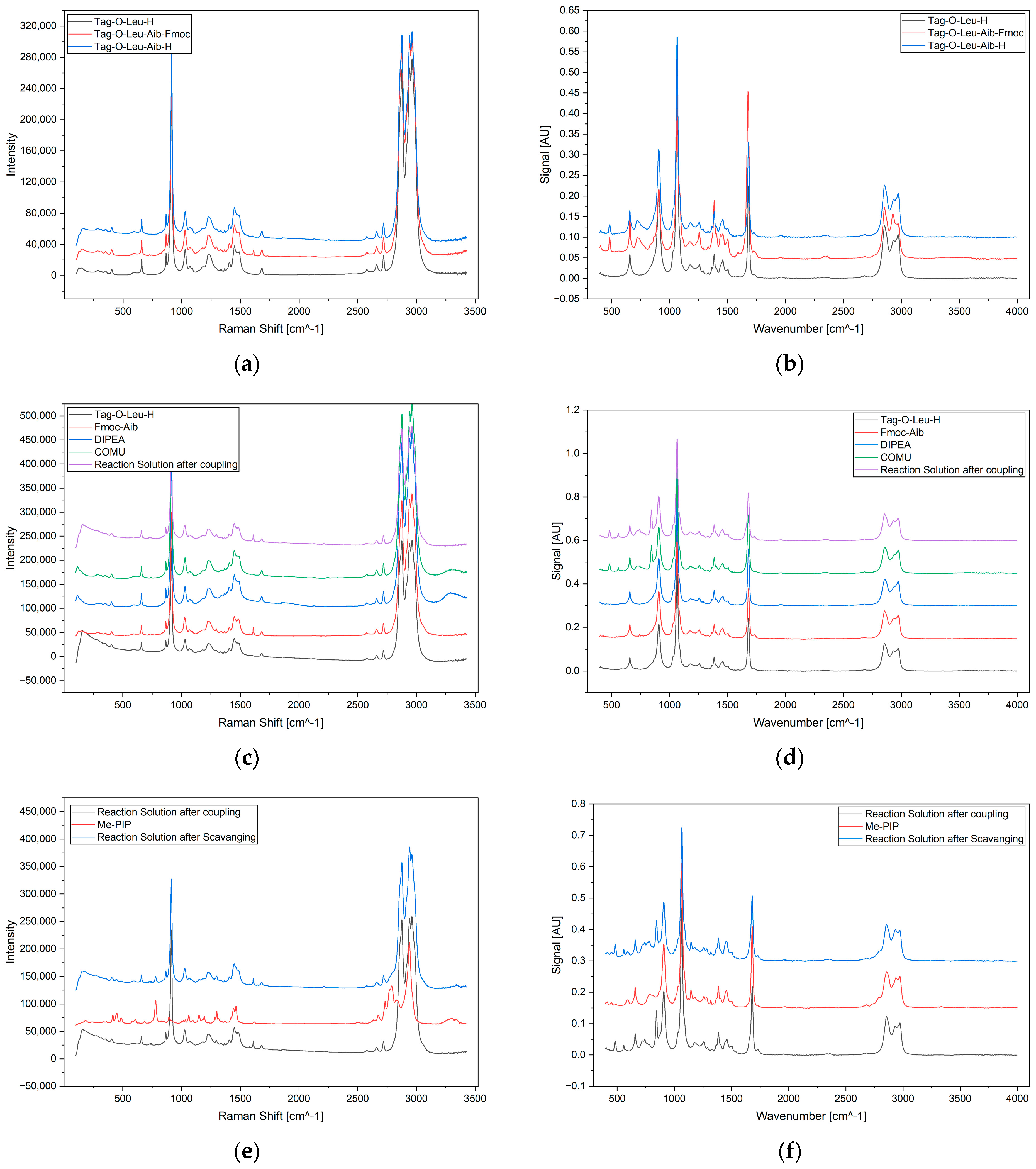
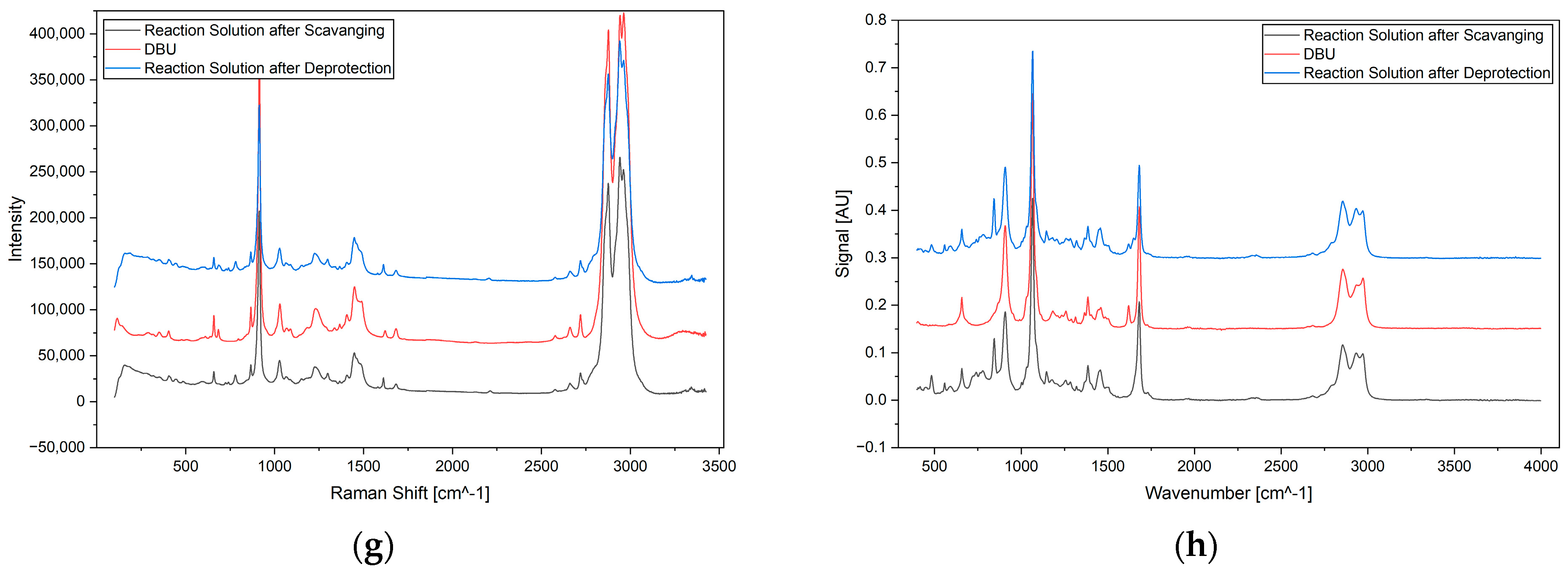
- In this work, the conceptual process development of the relevant process steps were observed using spectroscopic methods. Changes in the spectra are visible. For the expansion to a dedicated PAT model, further experiments with different concentrations of reactants need to be carried out. In addition, the rapid reaction kinetics make it difficult to track the progress of the reaction using spectroscopic methods in general. Furthermore, the reactions take place homogeneously in the liquid phase—not two phases which could be balanced with the aid of separate analytics. As a result, the expected differences in the spectra are very small, since there is no adsorption of molecules compared to SPPS. For SPPS, Raman or UV can be used for online tracking of the reaction progress [92,105]. However, with fast kinetics, the benefit of a PAT system is generally lower, as it has not been a critical process step, and focuses on slower processes, e.g., larger peptide chains is recommended.
- Having the theoretical feasibility shown and the experimental feasibility exemplified, further process development studies are intended: For a complete validated process model of the TAPS process, the full experimental determination of the LLE parameters is necessary, in detail and dedicated [67,68]. In addition, important steps for validating the model should be taken according to the published and, for 10 years, manyfold successfully applied workflow by [106]. For this purpose, the accuracy and precision of the model will be compared with mini-plant data according to the specific experimental plan derived by process modeling. If the model successfully completes these steps, it can be considered distinctly valid [106] and can then be used for QbD-based process development and optimization. Applications for process control as a digital shadow or digital twin are also at hand [67,68]. Digital twin-enabled advanced process control has shown to reduce batch failures and ensure a high product quality within specifications, thereby reducing CoGs, GWP and waste [70,107]. These, process optimizations and efficiency improvements in process conceptual design can further reduce CoGs and GWPs by typically about 30% to factor of 5 due to an increased throughput [70].
Author Contributions
Funding
Data Availability Statement
Acknowledgments
Conflicts of Interest
Abbreviations
| 2-Me-THF | 2-Methyltetrahydrofuran |
| API | Active pharmaceutical ingredients |
| ACN | Acetonitrile |
| CAPEX | Capital expenditures |
| CoGs | Cost of goods |
| COMU | 1-[1-(Cyano-2-ethoxy-2-oxoethylideneaminooxy)-dimethylamino-morpholino]-uronium hexafluorophosphate |
| CPME | Cyclopentyl methyl ether |
| CPPs | Critical process parameters |
| CQAs | Critical quality attributes |
| DBU | 1,8-Diazabicyclo[5.4.0]undec-7-ene |
| DCM | Dichloromethane |
| DEA | Diethylamine |
| DIC | Diisopropylcarbodiimide |
| DIPEA | Diisopropylethylamine |
| DIU | Diisopropyl urea |
| DMC | Dimethyl carbonate |
| DMF | Dimethylformamide |
| DMSO | Dimethyl sulfoxide |
| DTT | Dithiothreitol |
| EDC HCl | 1-Ethyl-3-(3-dimethylaminopropyl)carbodiimide hydrochloride |
| Fmoc | 9-Fluorenylmethyloxycarbonyl |
| FT-IR | Fourier-transform infrared spectroscopy |
| GLP | Glucagon-like peptide |
| GWP | Global warming potential |
| HPLC | High-performance liquid chromatography |
| LLE | Liquid–liquid extraction |
| LPPS | Liquid-phase peptide synthesis |
| MSA | Methanesulfonic acid |
| MTBE | Methyl tert-butyl ether |
| NBP | N-butyl-2-pyrrolidone |
| NMP | N-methyl-2-pyrrolidone |
| NMR | Nuclear magnetic resonance |
| OPEX | Operational expenditures |
| Oxyma Pure | Hydroxyiminocyanacetic acid ethyl ester |
| PAT | Process analytical technology |
| PFAS | Per- and polyfluoroalkyl substances |
| PFR | Plug flow reactor |
| PMI | Process mass intensity |
| PIPa | Piperazine |
| PIPe | Piperidine |
| QdD | Quality by design |
| SPPS | Solid-phase peptide synthesis |
| STR | Discontinuous stirred tank reactor |
| STY | Space-time yield |
| TAPS | Tag-assisted peptide synthesis |
| TFA | Trifluoroacetic acid |
| TIDES | Therapeutic peptides and oligonucleotides |
| TIPS | Triisopropylsilane |
| TMP | Transmembrane pressure |
| WFI | Water for injection |
References
- Al Musaimi, O.; AlShaer, D.; De La Torre, B.G.; Albericio, F. 2024 FDA TIDES (Peptides and Oligonucleotides) Harvest. Pharmaceuticals 2025, 18, 291. [Google Scholar] [CrossRef]
- Al Shaer, D.; Al Musaimi, O.; Albericio, F.; De La Torre, B.G. 2023 FDA TIDES (Peptides and Oligonucleotides) Harvest. Pharmaceuticals 2024, 17, 243. [Google Scholar] [CrossRef] [PubMed]
- Al Musaimi, O.; Al Shaer, D.; Albericio, F.; De La Torre, B.G. 2022 FDA TIDES (Peptides and Oligonucleotides) Harvest. Pharmaceuticals 2023, 16, 336. [Google Scholar] [CrossRef]
- Ozempic Market Analysis—Size, Share, and Forecast Outlook 2025 to 2035. Available online: https://www.futuremarketinsights.com/reports/ozempic-market (accessed on 4 April 2026).
- Thompson, E.J. Eli Lilly’s Tirzepatide Sales Reach $24.8 Billion, Bright Outlook Ahead 2026. Available online: https://intellectia.ai/news/stock/eli-lillys-tirzepatide-sales-reach-248-billion-bright-outlook-ahead (accessed on 28 January 2026).
- Lilly’s Oral GLP-1, Orforglipron, Is Successful in Third Phase 3 Trial, Triggering Global Regulatory Submissions This Year for the Treatment of Obesity. 2025. Available online: https://investor.lilly.com/news-releases/news-release-details/lillys-oral-glp-1-orforglipron-successful-third-phase-3-trial (accessed on 26 August 2025).
- Șeremet, O.C.; Pușcașu, C.; Andrei, C.; Nițulescu, G.; Zbârcea, C.E.; Olaru, O.T. Small-Molecule GLP-1 Receptor Agonists: A Promising Pharmacological Approach. Medicina 2025, 61, 1902. [Google Scholar] [CrossRef] [PubMed]
- Allian, A.D.; Berglud, K.D.; Cole, K.P.; Davis, A.J.; Hess, M.; Jemison, A.; Kerr, M.S.; Mack, A.G.; Ortiz-Medina, X.A.; Remick, D.M.; et al. Process to Make GLP1 RA and Intermediates Therefor. U.S. Patent 12,365,682, 22 July 2025. [Google Scholar]
- Sison, G. How Much Does Tirzepatide Cost? Available online: https://policylab.us/tirzepatide/cost/ (accessed on 26 August 2025).
- Eli Lilly and Company What to Know About Orforglipron: An Investigational Oral GLP-1 2025. Available online: https://investor.lilly.com/news-releases/news-release-details/fda-approves-lillys-foundayotm-orforglipron-only-glp-1-pill (accessed on 3 June 2026).
- Josch, J.P.; Strube, J. Characterization of Feed Properties for Conceptual Process Design Involving Complex Mixtures. Chem. Ing. Tech. 2012, 84, 918–931. [Google Scholar] [CrossRef]
- Häussling Löwgren, B.; Hoffmann, C.; Vijver, M.G.; Steubing, B.; Cardellini, G. Towards Sustainable Chemical Process Design: Revisiting the Integration of Life Cycle Assessment. J. Clean. Prod. 2025, 491, 144831. [Google Scholar] [CrossRef]
- ICH. Guideline Q8 (R2) on Pharmaceutical Development: EMA/CHMP/ICH/167068/2004; European Medicines Agency: London, UK, 2006. [Google Scholar]
- Uhlenbrock, L. Quality-by-Design Zur Systematischen Entwicklung von Wertschöpfungsprozessen Pflanzlicher Rohstoffe. Ph.D. Thesis, Technische Universität Clausthal, Clausthal-Zellerfeld, Germany, 2021. [Google Scholar]
- Marchetti, P.; Butté, A.; Livingston, A.G. Quality by Design for Peptide Nanofiltration: Fundamental Understanding and Process Selection. Chem. Eng. Sci. 2013, 101, 200–212. [Google Scholar] [CrossRef]
- Yu, L.X.; Amidon, G.; Khan, M.A.; Hoag, S.W.; Polli, J.; Raju, G.K.; Woodcock, J. Understanding Pharmaceutical Quality by Design. AAPS J. 2014, 16, 771–783. [Google Scholar] [CrossRef]
- Kekessie, I.; Wegner, K.; Martinez, I.; Kopach, M.E.; White, T.D.; Tom, J.K.; Kenworthy, M.N.; Gallou, F.; Lopez, J.; Koenig, S.G.; et al. Process Mass Intensity (PMI): A Holistic Analysis of Current Peptide Manufacturing Processes Informs Sustainability in Peptide Synthesis. J. Org. Chem. 2024, 89, 4261–4282. [Google Scholar] [CrossRef] [PubMed]
- Schmidt, A.; Uhlenbrock, L.; Strube, J. Technical Potential for Energy and GWP Reduction in Chemical–Pharmaceutical Industry in Germany and EU—Focused on Biologics and Botanicals Manufacturing. Processes 2020, 8, 818. [Google Scholar] [CrossRef]
- Uhl, A.; Schmidt, A.; Jensch, C.; Köster, D.; Strube, J. Development of Concepts for a Climate-Neutral Chemical–Pharmaceutical Industry in 2045. Processes 2022, 10, 1289. [Google Scholar] [CrossRef]
- Wegner, K.; Barnes, D.; Manzor, K.; Jardine, A.; Moran, D. Evaluation of Greener Solvents for Solid-Phase Peptide Synthesis. Green Chem. Lett. Rev. 2021, 14, 153–164. [Google Scholar] [CrossRef]
- Varnava, K.G.; Sarojini, V. Making Solid-Phase Peptide Synthesis Greener: A Review of the Literature. Chem. Asian J. 2019, 14, 1088–1097. [Google Scholar] [CrossRef] [PubMed]
- Sharma, A.; Kumar, A.; De La Torre, B.G.; Albericio, F. Liquid-Phase Peptide Synthesis (LPPS): A Third Wave for the Preparation of Peptides. Chem. Rev. 2022, 122, 13516–13546. [Google Scholar] [CrossRef]
- Østergaard, S. Advancing Obesity Treatments through Innovations in the Design and Manufacturing of Therapeutic Peptides. Expert Opin. Drug Discov. 2026, 21, 49–72. [Google Scholar] [CrossRef] [PubMed]
- Akahane, S.; Takahashi, Y.; Morikawa, E.; Sugai, M.; Umemoto, H.; Onaka, T.; Ito, S.; Taki, N.; Yoshida, Y.; Toichi, Y.; et al. Tag-Assisted Liquid-Phase Oligonucleotide Synthesis: Toward a Convergent Approach. Chem. Eur. J. 2025, 31, e202500616. [Google Scholar] [CrossRef] [PubMed]
- Ferrazzano, L.; Corbisiero, D.; Tolomelli, A.; Cabri, W. From Green Innovations in Oligopeptide to Oligonucleotide Sustainable Synthesis: Differences and Synergies in TIDES Chemistry. Green Chem. 2023, 25, 1217–1236. [Google Scholar] [CrossRef]
- Virta, P. From Liquid-Phase Synthesis to Chemical Ligation: Preparation of Oligonucleotides and Their Backbone Analogs in Solution. Nucleic Acids Res. 2025, 53, gkaf1084. [Google Scholar] [CrossRef]
- Brown, T., Sr.; Brown, T., Jr. Solid Phase Oligonucleotide Synthesis. Available online: https://www.biotage.com/hubfs/bynder/Document/PPS676-biotage-solid-phase-oligonucleotide-synthesis-white-paper.pdf (accessed on 29 January 2026).
- Solid-Phase Oligonucleotide Synthesis; ATDBio: Southhampton, UK, 2022; Available online: https://data.biotage.co.jp/pdf/atdbio/pps676_biotage-solid-phase-oligonucleotide-synthesis-white-paper.pdf (accessed on 3 June 2026).
- Jad, Y.E.; Govender, T.; Kruger, H.G.; El-Faham, A.; De La Torre, B.G.; Albericio, F. Green Solid-Phase Peptide Synthesis (GSPPS) 3. Green Solvents for Fmoc Removal in Peptide Chemistry. Org. Process Res. Dev. 2017, 21, 365–369. [Google Scholar] [CrossRef]
- Kent, S.B.H. Fundamental Aspects of SPPS and Green Chemical Peptide Synthesis. J. Pept. Sci. 2025, 31, e70013. [Google Scholar] [CrossRef] [PubMed]
- Öhlander, A. Greening Peptide Chemistry by Using NBP as Solvent for SPPS. Master’s Thesis, Lund University, Lund, Sweden, 2022. [Google Scholar]
- Jaradat, D.M.M.; Al Musaimi, O.; Albericio, F. Advances in Solid-Phase Peptide Synthesis in Aqueous Media (ASPPS). Green Chem. 2022, 24, 6360–6372. [Google Scholar] [CrossRef]
- Frederick, M.O.; Boyse, R.A.; Braden, T.M.; Calvin, J.R.; Campbell, B.M.; Changi, S.M.; Coffin, S.R.; Condon, C.; Gowran, O.; McClary Groh, J.; et al. Kilogram-Scale GMP Manufacture of Tirzepatide Using a Hybrid SPPS/LPPS Approach with Continuous Manufacturing. Org. Process Res. Dev. 2021, 25, 1628–1636. [Google Scholar] [CrossRef]
- Merrifield, R.B. Solid Phase Peptide Synthesis. I. The Synthesis of a Tetrapeptide. J. Am. Chem. Soc. 1963, 85, 2149–2154. [Google Scholar] [CrossRef]
- Musaimi, O.A.; Tomkins, J.; Barry, S.M.; Basso, A.; Kou, X.; Zhang, C.; Serban, S. Towards Green, Scalable Peptide Synthesis: Leveraging DEG-Crosslinked Polystyrene Resins to Overcome Hydrophobicity Challenges. RSC Adv. 2024, 14, 40255–40266. [Google Scholar] [CrossRef]
- Martin, V.; Jadhav, S.; Egelund, P.H.G.; Liffert, R.; Johansson Castro, H.; Krüger, T.; Haselmann, K.F.; Thordal Le Quement, S.; Albericio, F.; Dettner, F.; et al. Harnessing Polarity and Viscosity to Identify Green Binary Solvent Mixtures as Viable Alternatives to DMF in Solid-Phase Peptide Synthesis. Green Chem. 2021, 23, 3295–3311. [Google Scholar] [CrossRef]
- Uzoma Introduction to Peptide Synthesis Methods. Bachem. 2025. Available online: https://www.bachem.com/knowledge-center/peptide-guide/introduction-to-peptide-synthesis-methods/ (accessed on 22 January 2026).
- Knauer, S.; Koch, N.; Uth, C.; Meusinger, R.; Avrutina, O.; Kolmar, H. Sustainable Peptide Synthesis Enabled by a Transient Protecting Group. Angew. Chem. Int. Ed. 2020, 59, 12984–12990. [Google Scholar] [CrossRef]
- Wang, J.; Agrawal, P.; Berglund, M.R.; Groh, J.M.; Kopach, M.E.; Seibert, K.D.; Viswanath, S.K. Quality by Design of Solid-phase Peptide/Protein Coupling Reaction via Mechanistic Reaction Kinetics Modeling Approach. AIChE J. 2024, 70, e18453. [Google Scholar] [CrossRef]
- Johnson, M.D.; Kopach, M.E.; Webster, L.P. Three Resin Reactors in Series Peptide Synthesizer. U.S. Patent 12,485,402, 2 December 2021. [Google Scholar]
- Martin, V.; Egelund, P.H.G.; Johansson, H.; Thordal Le Quement, S.; Wojcik, F.; Sejer Pedersen, D. Greening the Synthesis of Peptide Therapeutics: An Industrial Perspective. RSC Adv. 2020, 10, 42457–42492. [Google Scholar] [CrossRef]
- Lawrenson, S.B. Greener Solvents for Solid-Phase Organic Synthesis. Pure Appl. Chem. 2018, 90, 157–165. [Google Scholar] [CrossRef]
- Prat, D.; Wells, A.; Hayler, J.; Sneddon, H.; McElroy, C.R.; Abou-Shehada, S.; Dunn, P.J. CHEM21 selection guide of classical- and less classical-solvents. Green Chem. 2016, 18, 288–296. [Google Scholar] [CrossRef]
- Usman, M.; Cheng, S.; Boonyubol, S.; Cross, J.S. Evaluating Green Solvents for Bio-Oil Extraction: Advancements, Challenges, and Future Perspectives. Energies 2023, 16, 5852. [Google Scholar] [CrossRef]
- Schuler, H.; Wiley InterScience (Online Service) (Eds.) Prozesssimulation; VCH: Weinheim, Germany; New York, NY, USA, 1995; ISBN 978-3-527-28635-5. [Google Scholar]
- Lopez, J.; Pletscher, S.; Aemissegger, A.; Bucher, C.; Gallou, F. N-Butylpyrrolidinone as Alternative Solvent for Solid-Phase Peptide Synthesis. Org. Process Res. Dev. 2018, 22, 494–503. [Google Scholar] [CrossRef]
- Vivenzio, G.; Noki, S.; Chakraborty, A.; Lopez, J.; De La Torre, B.G.; Albericio, F. Scope and Limitations of the Use of Methanesulfonic Acid (MSA) as a Green Acid for Global Deprotection in Solid-Phase Peptide Synthesis. ChemSusChem 2025, 18, e202402752. [Google Scholar] [CrossRef]
- Ralhan, K.; KrishnaKumar, V.G.; Gupta, S. Piperazine and DBU: A Safer Alternative for Rapid and Efficient Fmoc Deprotection in Solid Phase Peptide Synthesis. RSC Adv. 2015, 5, 104417–104425. [Google Scholar] [CrossRef]
- Al Musaimi, O.; Jad, Y.E.; Kumar, A.; Collins, J.M.; Basso, A.; De La Torre, B.G.; Albericio, F. Investigating Green Ethers for the Precipitation of Peptides after Global Deprotection in Solid-Phase Peptide Synthesis. Curr. Opin. Green Sustain. Chem. 2018, 11, 99–103. [Google Scholar] [CrossRef]
- Shemyakin, M.M.; Ovchinnikov, Y.A.; Kinyushkin, A.A.; Kozhevnikova, I.V. Synthesis of Peptides in Solution on a Polymeric Support I. Synthesis of Glycylglycyl-l-Leucylglycine. Tetrahedron Lett. 1965, 6, 2323–2327. [Google Scholar] [CrossRef]
- Tamiaki, H.; Obata, T.; Azefu, Y.; Toma, K. A Novel Protecting Group for Constructing Combinatorial Peptide Libraries. Bull. Chem. Soc. Jpn. 2001, 74, 733–738. [Google Scholar] [CrossRef]
- Okada, Y.; Hosoya, S.; Suzuki, H.; Chiba, K. Total Synthesis of Elastin Peptide Using High Pressure–Liquid Phase Synthesis Assisted by a Soluble Tag Strategy. Org. Lett. 2014, 16, 6448–6451. [Google Scholar] [CrossRef] [PubMed]
- Chiba, K.; Shokaku Kim, K.; Yusuke Kono, K. Carrier for Separation, Method for Separation of Compound, and Method for Synthesis of Peptide Using the Carrier. U.S. Patent 8,633,298, 21 January 2014. [Google Scholar]
- Okada, Y.; Suzuki, H.; Nakae, T.; Fujita, S.; Abe, H.; Nagano, K.; Yamada, T.; Ebata, N.; Kim, S.; Chiba, K. Tag-Assisted Liquid-Phase Peptide Synthesis Using Hydrophobic Benzyl Alcohols as Supports. J. Org. Chem. 2013, 78, 320–327. [Google Scholar] [CrossRef]
- Kitada, S.; Fujita, S.; Okada, Y.; Kim, S.; Chiba, K. Hydrophobic Tag-Assisted Liquid-Phase Synthesis of a Growth Hormone-Inhibiting Peptide Somatostatin. Bioorg. Med. Chem. Lett. 2011, 21, 4476–4479. [Google Scholar] [CrossRef]
- Fujita, Y.; Fujita, S.; Okada, Y.; Chiba, K. Soluble Tag-Assisted Peptide Head-to-Tail Cyclization: Total Synthesis of Mahafacyclin B. Org. Lett. 2013, 15, 1155–1157. [Google Scholar] [CrossRef] [PubMed]
- Pang, Z.-J.; Mao, C.-Y.; Feng, T.-T.; Dong, L. Hydrophobic Tag-Assisted Liquid-Phase Synthesis of Tirzepatide. Org. Lett. 2025, 27, 10442–10446. [Google Scholar] [CrossRef]
- Emig, G.; Klemm, E. Chemische Reaktionstechnik; Springer-Lehrbuch; Springer: Berlin/Heidelberg, Germany, 2017; ISBN 978-3-662-49267-3. [Google Scholar]
- Zobel-Roos, S.; Schmidt, A.; Mestmäcker, F.; Mouellef, M.; Huter, M.; Uhlenbrock, L.; Kornecki, M.; Lohmann, L.; Ditz, R.; Strube, J. Accelerating Biologics Manufacturing by Modeling or: Is Approval under the QbD and PAT Approaches Demanded by Authorities Acceptable Without a Digital-Twin? Processes 2019, 7, 94. [Google Scholar] [CrossRef]
- Schmidt, A.; Zobel-Roos, S.; Helgers, H.; Lohmann, L.; Vetter, F.; Jensch, C.; Juckers, A.; Strube, J. Digital Twins for Continuous Biologics Manufacturing. In Process Control, Intensification, and Digitalisation in Continuous Biomanufacturing; Subramanian, G., Ed.; Wiley: Hoboken, NJ, USA, 2022; pp. 265–350. ISBN 978-3-527-34769-8. [Google Scholar]
- Schmidt, A.; Hengelbrock, A.; Strube, J. Continuous Biomanufacturing in Upstream and Downstream Processing. Phys. Sci. Rev. 2024, 9, 3167–3222. [Google Scholar] [CrossRef]
- Levenspiel, O. Chemical Reaction Engineering, 3rd ed.; Wiley: New York, NY, USA, 1999; ISBN 978-0-471-25424-9. [Google Scholar]
- Danckwerts, P.V. Continuous Flow Systems. Chem. Eng. Sci. 1953, 2, 1–13. [Google Scholar] [CrossRef]
- Alopaeus, V.; Laavi, H.; Aittamaa, J. A Dynamic Model for Plug Flow Reactor State Profiles. Comput. Chem. Eng. 2008, 32, 1494–1506. [Google Scholar] [CrossRef]
- Hengelbrock, A.; Schmidt, A.; Strube, J. Digital Twin Fundamentals of mRNA In Vitro Transcription in Variable Scale Toward Autonomous Operation. ACS Omega 2024, 9, 8204–8220. [Google Scholar] [CrossRef]
- Haindl, S.; Stark, J.; Dippel, J.; Handt, S.; Reiche, A. Scale-up of Microfiltration Processes. Chem. Ing. Tech. 2020, 92, 746–758. [Google Scholar] [CrossRef]
- Uhl, A.; Schmidt, A.; Strube, J. Digital Twin for Centrifugal Extractors Exemplified for pDNA Clarification Process after Lysis. ACS Omega 2024, 9, 31120–31127. [Google Scholar] [CrossRef]
- Uhl, A.; Schmidt, A.; Hlawitschka, M.W.; Strube, J. Autonomous Liquid–Liquid Extraction Operation in Biologics Manufacturing with Aid of a Digital Twin Including Process Analytical Technology. Processes 2023, 11, 553. [Google Scholar] [CrossRef]
- Kirk, R.E.; Othmer, D.F. (Eds.) Kirk-Othmer Encyclopedia of Chemical Technology; Wiley online library; Wiley: New York, NY, USA, 2013; ISBN 978-0-471-23896-6. [Google Scholar]
- Schmidt, A.; Lütge, J.; Uhl, A.; Köster, D.; Strube, J. Business Cases for Digital Twins in Biopharmaceutical Manufacturing—Market Overview, Stakeholders, Technologies in 2025 and Beyond. Processes 2025, 13, 1498. [Google Scholar] [CrossRef]
- Uhl, A.; Knierim, L.; Tegtmeier, M.; Schmidt, A.; Strube, J. Is Regulatory Approval without Autonomous Operation for Natural Extract Manufacturing under Economic Competitiveness and Climate-Neutrality Demands Still Permissible? Processes 2023, 11, 1790. [Google Scholar] [CrossRef]
- Woods, D.R. Rules of Thumb in Engineering Practice; John Wiley [Distributor]: Chichester, UK, 2007; ISBN 978-3-527-31220-7. [Google Scholar]
- The Chemical Engineering Plant Cost Index. Available online: https://www.chemengonline.com/pci-home/ (accessed on 3 June 2026).
- Parisis, V.; Da Gama Ferreira, R.; Misailidis, N.; Petrides, D. Semaglutide (Ozempic and Wegovy) Manufacturing—Process Modeling and Techno-Economic Assessment (TEA) Using SuperPro Designer; Intelligen, Inc.: Freehold, NJ, USA, 2025. [Google Scholar] [CrossRef]
- DocMorris. Available online: https://www.docmorris.de/search?query=mounjaro (accessed on 8 July 2025).
- Benison, C.H.; Payne, P.R. Manufacturing Mass Intensity: 15 Years of Process Mass Intensity and Development of the Metric into Plant Cleaning and Beyond. Curr. Res. Green Sustain. Chem. 2022, 5, 100229. [Google Scholar] [CrossRef]
- Pastore, B.M.; Savelski, M.J.; Slater, C.S.; Richetti, F.A. Life Cycle Assessment of N-Methyl-2-Pyrrolidone Reduction Strategies in the Manufacture of Resin Precursors. Clean. Technol. Environ. Policy 2016, 18, 2635–2647. [Google Scholar] [CrossRef]
- Becks, H.; Gelbke, H. Die Ökoeffizienz-Analyse nach BASF. TATuP 2001, 10, 34–39. [Google Scholar] [CrossRef]
- Burger, J.; Asprion, N.; Blagov, S.; Böttcher, R.; Nowak, U.; Bortz, M.; Welke, R.; Küfer, K.; Hasse, H. Multi-Objective Optimization and Decision Support in Process Engineering—Implementation and Application. Chem. Ing. Tech. 2014, 86, 1065–1072. [Google Scholar] [CrossRef]
- Fukuda, T.; Matsumoto, E.; Onogi, S.; Miura, Y. Aggregation of Alzheimer Amyloid β Peptide (1−42) on the Multivalent Sulfonated Sugar Interface. Bioconjugate Chem. 2010, 21, 1079–1086. [Google Scholar] [CrossRef]
- Kim, S.; Matsumoto, M.; Chiba, K. Liquid-Phase RNA Synthesis by Using Alkyl-Chain-Soluble Support. Chem. Eur. J. 2013, 19, 8615–8620. [Google Scholar] [CrossRef]
- Hirose, T.; Kasai, T.; Akimoto, T.; Endo, A.; Sugawara, A.; Nagasawa, K.; Shiomi, K.; Ōmura, S.; Sunazuka, T. Solution-Phase Total Synthesis of the Hydrophilic Natural Product Argifin Using 3,4,5-Tris(Octadecyloxy)Benzyl Tag. Tetrahedron 2011, 67, 6633–6643. [Google Scholar] [CrossRef]
- Suzuki, H.; Muto, S.; Fujita, S.; Kubo, D. Peptide Synthesis Method. US Patent WO 2019/198833, 17 October 2019. [Google Scholar]
- Okada, Y.; Takasawa, R.; Kubo, D.; Iwanaga, N.; Fujita, S.; Suzuki, K.; Suzuki, H.; Kamiya, H.; Chiba, K. Improved Tag-Assisted Liquid-Phase Peptide Synthesis: Application to the Synthesis of the Bradykinin Receptor Antagonist Icatibant Acetate. Org. Process Res. Dev. 2019, 23, 2576–2581. [Google Scholar] [CrossRef]
- Uhlenbrock, L.; Jensch, C.; Tegtmeier, M.; Strube, J. Digital Twin for Extraction Process Design and Operation. Processes 2020, 8, 866. [Google Scholar] [CrossRef]
- Sixt, M.; Schmidt, A.; Mestmäcker, F.; Huter, M.; Uhlenbrock, L.; Strube, J. Systematic and Model-Assisted Process Design for the Extraction and Purification of Artemisinin from Artemisia annua L.—Part I: Conceptual Process Design and Cost Estimation. Processes 2018, 6, 161. [Google Scholar] [CrossRef]
- Pfennig, A.; Müller, E.; Berger, R.; Blass, E.; Sluyts, D. Liquid–Liquid Extraction. In Ullmann’s Encyclopedia of Industrial Chemistry; Wiley: Hoboken, NJ, USA, 2024; pp. 1–65. ISBN 978-3-527-30385-4. [Google Scholar]
- Heller, F.D.; Casella, A.J.; Lumetta, G.J.; Nash, K.L.; Sinkov, S.I.; Bryan, S.A. Incorporating Spectroscopic On-Line Monitoring as a Method of Detection for a Lewis Cell Setup. Analyst 2017, 142, 2426–2433. [Google Scholar] [CrossRef] [PubMed]
- Lewis, J.B. The Mechanism of Mass Transfer of Solutes across Liquid-Liquid Interfaces. Chem. Eng. Sci. 1954, 3, 260–278. [Google Scholar] [CrossRef]
- Altenhöner, U.; Meurer, M.; Strube, J.; Schmidt-Traub, H. Parameter Estimation for the Simulation of Liquid Chromatography. J. Chromatogr. A 1997, 769, 59–69. [Google Scholar] [CrossRef]
- Lütge, J.; Schmidt, A.; Köster, D.; Strube, J. Piloting for Scale-Up—An Ancient Technology Only for Non-Chemical Engineering Trained Investors. Processes 2025, 13, 2925. [Google Scholar] [CrossRef]
- Stager, M.A.; Peroza, C.; Villaumie, J.; Bilham, C.; Desmond, C.; Harris, M.; Sambasivan, R.; Rowe, G.; Chen, L.; Tucker, C. Optimizing Industrial Solid-Phase Peptide Synthesis: Integration of Raman Spectroscopy as Process Analytical Technology. Org. Process Res. Dev. 2024, 28, 4501–4512. [Google Scholar] [CrossRef]
- Henkel, B.; Emeröz, C.; Egger, N. Low-Field NMR for the Online-Monitoring of Solid-Phase Peptide Synthesis—A First Evaluation. ChemRxiv 2026. [Google Scholar] [CrossRef]
- Mine, S.; Ochiai, H.; Tamura, K.; Iijima, S.; Suzuki, S.; Akao, K. In-Situ Raman Monitoring for Flow Synthesis of Peptide Drugs Poster presented at: RSC-JAIMA Symposium on Analytical Chemistry 2024, September 2024, Chiba. Available online: https://www.jasco-global.com/solutions/in-situ-raman-monitoring-for-flow-synthesis-of-peptide-drugs/ (accessed on 3 June 2026).
- De La Torre, B.G.; Ramkisson, S.; Albericio, F.; Lopez, J. Refractive Index: The Ultimate Tool for Real-Time Monitoring of Solid-Phase Peptide Synthesis. Greening the Process. Org. Process Res. Dev. 2021, 25, 1047–1053. [Google Scholar] [CrossRef]
- Ayoub, M. Tag-Assisted Peptide Synthesis (TAPS)—Development of an Efficient, Sustainable and Cost-Effective Continuous Liquid-Phase Process. In Proceedings of the Tides US, San Diego, CA, USA, 19–22 May 2025. [Google Scholar]
- El-Faham, A.; Albericio, F. COMU: A Third Generation of Uronium-type Coupling Reagents. J. Pept. Sci. 2010, 16, 6–9. [Google Scholar] [CrossRef]
- BenchChem Technical Support Team. A Comparative Analysis of Oxyma and COMU Coupling Reagents in Peptide Synthesis. 2026. Available online: https://pdf.benchchem.com/123/A_Comparative_Analysis_of_Oxyma_and_COMU_Coupling_Reagents_in_Peptide_Synthesis.pdf (accessed on 1 April 2026).
- BenchChem Technical Support Team. The Next Generation of Peptide Synthesis: An In-Depth Technical Guide to the COMU Coupling Reagent. 2026. Available online: https://pdf.benchchem.com/8018/The_Next_Generation_of_Peptide_Synthesis_An_In_depth_Technical_Guide_to_the_COMU_Coupling_Reagent.pdf (accessed on 1 April 2026).
- Schiefelbein, K.; Hartrampf, N. Flow-Based Methods in Chemical Peptide and Protein Synthesis. Chimia 2021, 75, 480. [Google Scholar] [CrossRef]
- Monteith, E.R.; Mampuys, P.; Summerton, L.; Clark, J.H.; Maes, B.U.W.; McElroy, C.R. Why We Might Be Misusing Process Mass Intensity (PMI) and a Methodology to Apply It Effectively as a Discovery Level Metric. Green Chem. 2020, 22, 123–135. [Google Scholar] [CrossRef]
- Eichwald, S.; Ostovari, H.; Minten, H.; Meyer-Waßewitz, J.; Förtsch, D.; Von Der Assen, N. Assessing Mass Intensity as a Green Chemistry Metric: Why Expanding System Boundaries Is Not Enough. Green Chem. 2025, 27, 10153–10168. [Google Scholar] [CrossRef]
- Jimenez-Gonzalez, C.; Ponder, C.S.; Broxterman, Q.B.; Manley, J.B. Using the Right Green Yardstick: Why Process Mass Intensity Is Used in the Pharmaceutical Industry To Drive More Sustainable Processes. Org. Process Res. Dev. 2011, 15, 912–917. [Google Scholar] [CrossRef]
- Boutin, J.A.; Gesson, I.; Henlin, J.-M.; Bertin, S.; Lambert, P.-H.; Volland, J.-P.; Fauchere, J.-L. Limitations of the Coupling of Amino Acid Mixtures for the Preparation of Equimolar Peptide Libraries. Mol. Divers. 1997, 3, 43–60. [Google Scholar] [CrossRef]
- Menakuru, M.S.; Hensley, R.W.; Blais, J.B.E. On-Line Monitoring of Deprotection Reaction in Peptide Automated Synthesizer Comprising UV Detector. U.S. Patent 8,535,947, 17 September 2013. [Google Scholar]
- Sixt, M.; Uhlenbrock, L.; Strube, J. Toward a Distinct and Quantitative Validation Method for Predictive Process Modelling—On the Example of Solid-Liquid Extraction Processes of Complex Plant Extracts. Processes 2018, 6, 66. [Google Scholar] [CrossRef]
- Hengelbrock, A.; Probst, F.; Baukmann, S.; Uhl, A.; Tschorn, N.; Stitz, J.; Schmidt, A.; Strube, J. Digital Twin for Continuous Production of Virus-like Particles toward Autonomous Operation. ACS Omega 2024, 9, 34990–35013. [Google Scholar] [CrossRef]



| Step | Reference | Alternative 1 (Green Solvents) | Time Factor | Alternative 2 (Water-Based) | Time Factor |
|---|---|---|---|---|---|
| Swelling | DMF | 2-Me-THF/NBP | 0.5 | Water | 1 |
| Deprotection | PIPe/NMP | PIPe/2-Me-THF/NBP | 2 | PIPa/Water | 3 |
| Wash | DMF | 2-Me-THF/NBP | ~1 | Water | ~1 |
| Coupling | DIC/NMP | DIC/2-Me-THF/NBP | 2 | EDC/NaHCO3 | ~0.5 |
| Separation | TFA | MSA | 1 | MSA | 1 |
| Reference Process | Alternative 1 (Green Solvents) | Alternative 2 (Water-Based) | TAPS | |
|---|---|---|---|---|
| PMI [kg/kg] | 4940 | 4790 | 6510 | 1660 |
| GWP [/kg] | 19,190 | 14,240 | 4010 | 2490 |
| STY in Fragment Synthesis [g/(Ld)] | 4.340 | 2.390 | 4.170 | 13.960 |
| STY overall [g/(Ld)] | 0.325 | 0.256 | 0.325 | 0.362 |
| Cost of Goods [$/kg] | 27,400 | 75,000 | 72,900 | 34,400 |
Disclaimer/Publisher’s Note: The statements, opinions and data contained in all publications are solely those of the individual author(s) and contributor(s) and not of MDPI and/or the editor(s). MDPI and/or the editor(s) disclaim responsibility for any injury to people or property resulting from any ideas, methods, instructions or products referred to in the content. |
© 2026 by the authors. Licensee MDPI, Basel, Switzerland. This article is an open access article distributed under the terms and conditions of the Creative Commons Attribution (CC BY) license.
Share and Cite
Uhl, A.; Broocks, M.; Schulz, T.O.J.; Mendoza, A.M.; Schmidt, A.; Strube, J. Digital Twin Technology for TIDES Process Development and Manufacturing. Processes 2026, 14, 1873. https://doi.org/10.3390/pr14121873
Uhl A, Broocks M, Schulz TOJ, Mendoza AM, Schmidt A, Strube J. Digital Twin Technology for TIDES Process Development and Manufacturing. Processes. 2026; 14(12):1873. https://doi.org/10.3390/pr14121873
Chicago/Turabian StyleUhl, Alexander, Marcel Broocks, Tom O. J. Schulz, Atzin Moran Mendoza, Axel Schmidt, and Jochen Strube. 2026. "Digital Twin Technology for TIDES Process Development and Manufacturing" Processes 14, no. 12: 1873. https://doi.org/10.3390/pr14121873
APA StyleUhl, A., Broocks, M., Schulz, T. O. J., Mendoza, A. M., Schmidt, A., & Strube, J. (2026). Digital Twin Technology for TIDES Process Development and Manufacturing. Processes, 14(12), 1873. https://doi.org/10.3390/pr14121873