Optimal Scheduling of Integrated Energy Systems Considering Dynamic Carbon Emission Factors and Spatiotemporal Uncertainty of Wind Power


Abstract
1. Introduction
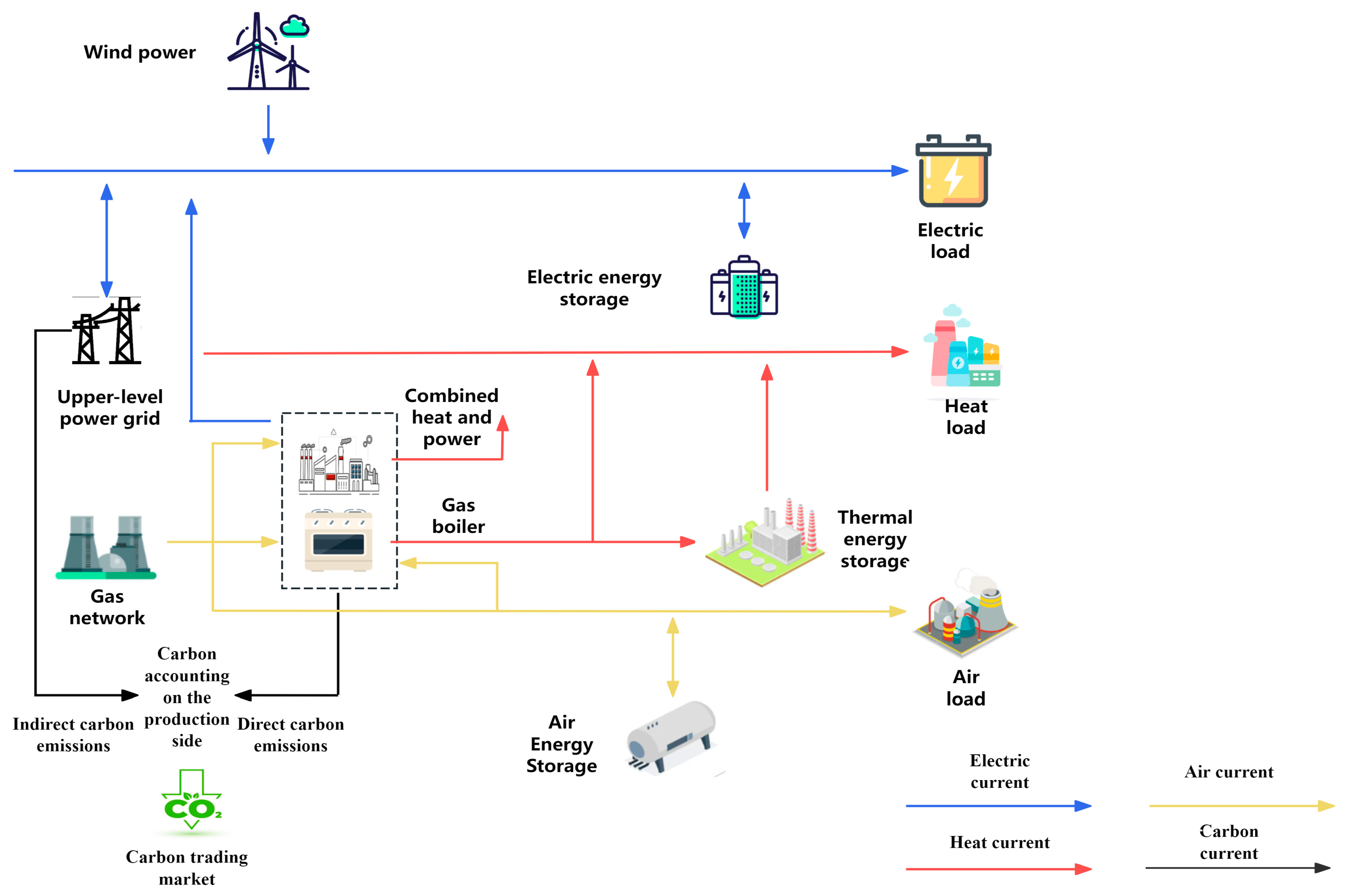
2. Structure of Integrated Energy Systems
3. Dynamic Carbon Emission Factors and Tiered Carbon Trading Mechanisms
3.1. Dynamic Carbon Emission Factor Model
3.2. Modelling of a Tiered Carbon Trading Mechanism
- (1)
- Ref carbon emission allowance calculation model:
- (2)
- Free quota model:
- (3)
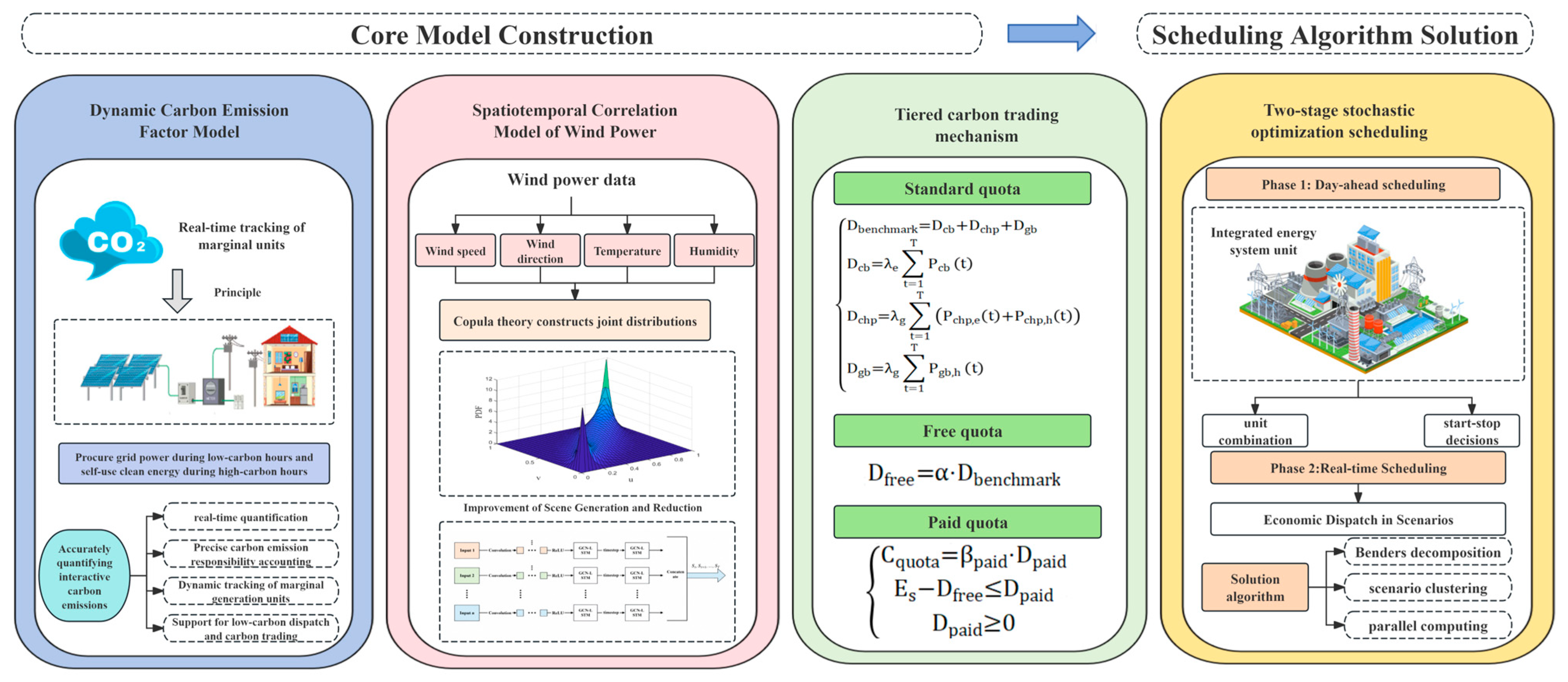
- Tiered quota cost calculation model:where is the carbon emission quota for CHP. is the carbon emission quota for electricity purchased from the upstream grid. is the carbon emission quota for GB. represents the electricity supplied to the system by the upstream grid during time period t. represents the carbon emission quota per unit of electricity consumed by natural gas-fired units. represents the carbon emission quota per unit of electricity consumed by coal-fired units. Pgb,h(t) represents the output power of GB. represents the IES benchmark carbon emission quota. represents the free carbon emission allowances obtained by IES. α is the proportion of free allowances, with a coefficient of (0 < α < 1). is the total cost of carbon allowances payable by IES. is the unit purchase price of paid allowances. is the quantity of paid carbon emission allowances that IES needs to purchase. is the total actual carbon emissions of IES.
- (4)
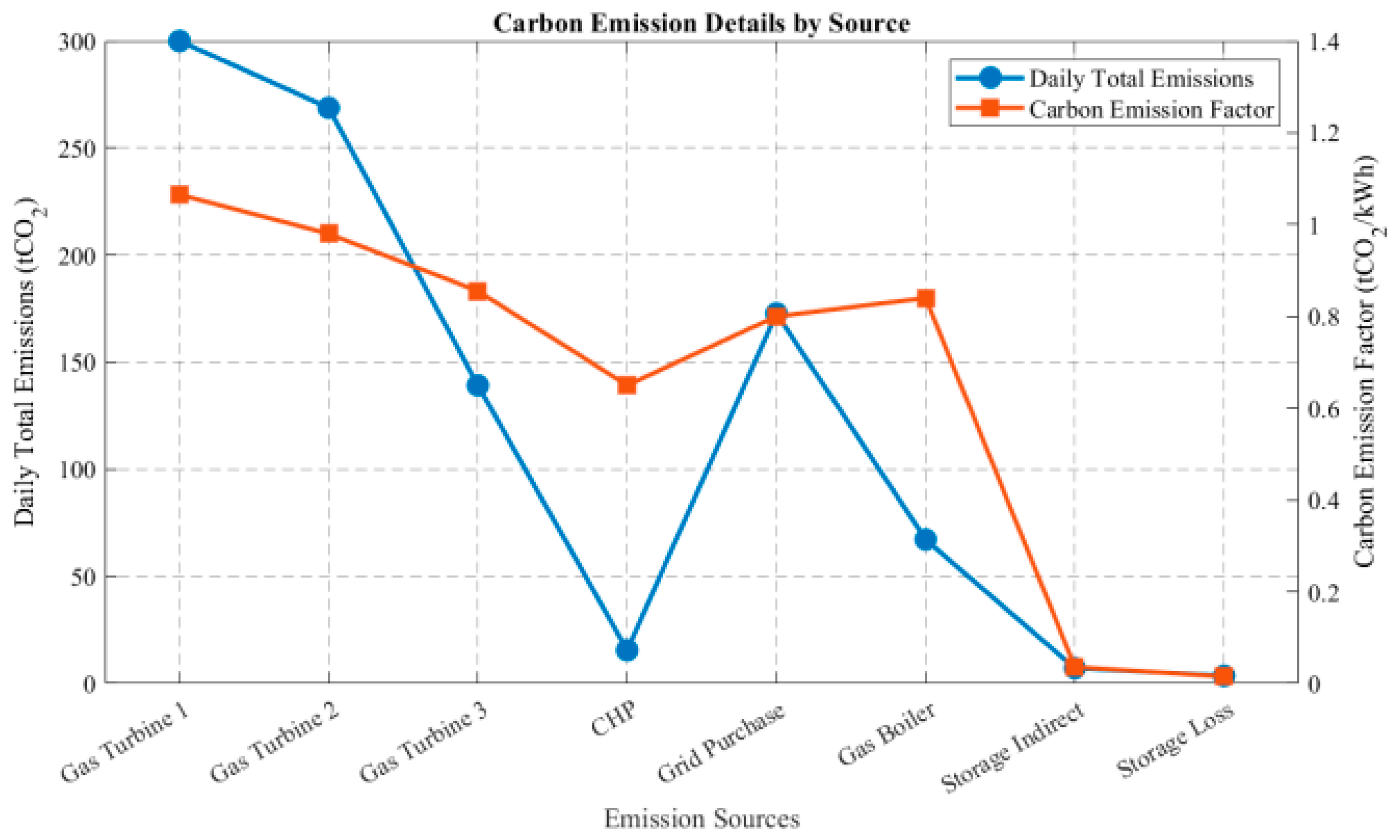
- Actual carbon emissions model:where represents the actual carbon emissions generated by the IES. represents the actual carbon emissions resulting from the CHP’s consumption of natural gas. represents the indirect carbon emissions resulting from the system’s electricity purchases and the GB’s consumption of natural gas.
3.3. Validation of the Exogenous Dynamic CEF
4. Modelling the Uncertainty of Spatio-Temporal Correlations in Wind Power
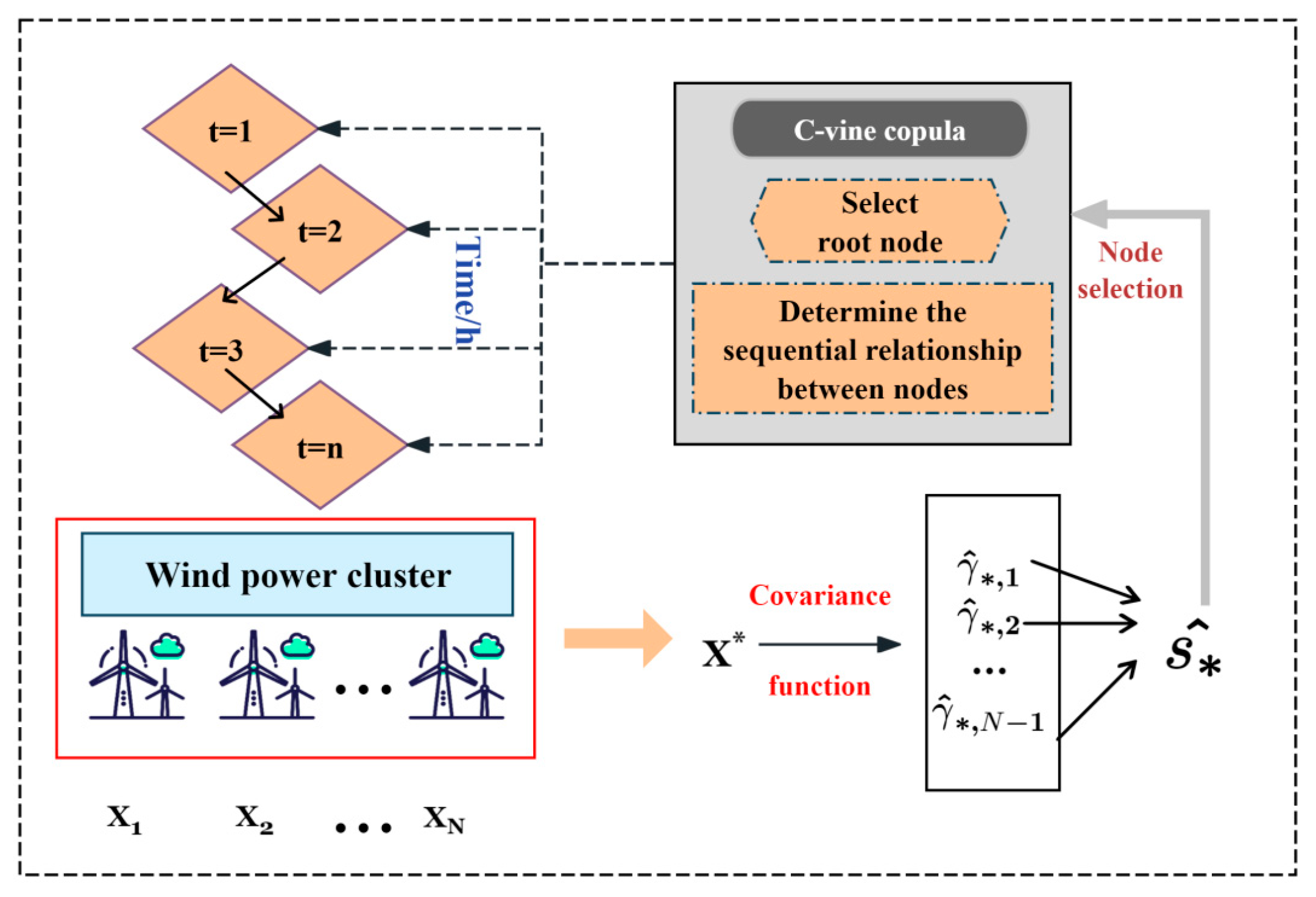
4.1. Wind Power Correlation Models
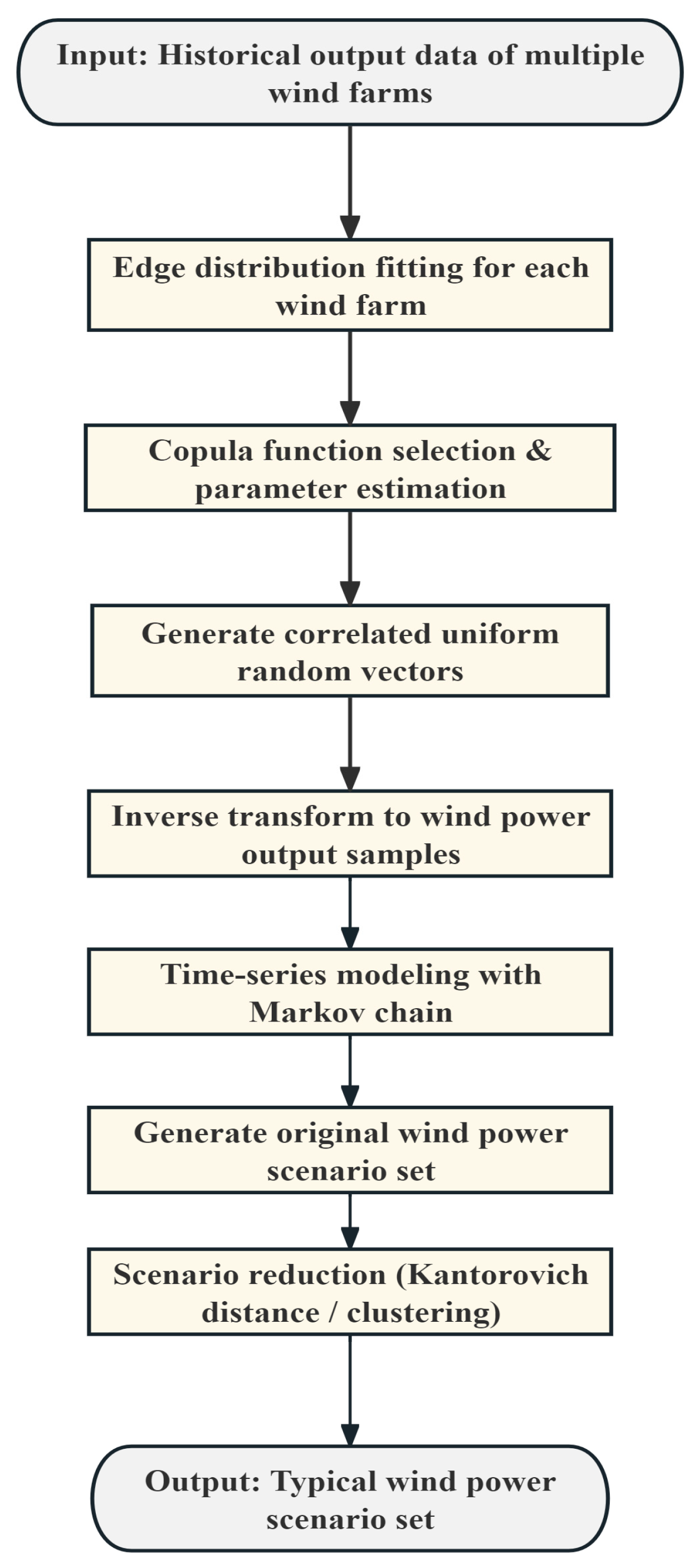
4.2. Scenario Generation and Reduction Techniques
5. A Two-Stage Stochastic Optimization Scheduling Model Accounting for the Spatio-Temporal Uncertainty of Wind Power
5.1. Development of a Two-Stage Stochastic Optimization Scheduling Model
5.1.1. Phase One Real-Time Dispatch Model
- (1)
- System power balance constraintswhere denotes the output of gas turbine or CHP unit i at time t. denotes the net output of the energy storage device at time t. denotes the system load demand.
- (2)
- Upper and lower limits on unit outputwhere is the minimum output of unit i. is the maximum output of unit i; is the actual output of unit i. is the operational status of unit i.
- (3)
- Unit climb rate constraintswhere is the maximum ramp-up rate of unit i. is the minimum ramp-up rate of unit i. is the output of unit i at time t. is the output of unit i at time t − 1.
- (4)
- Minimum start-stop time constraintwhere denotes the operating status of unit i at time t; denotes the minimum continuous operating time of unit i; denotes the maximum continuous operating time of unit i; denotes the start-up indicator variable for unit i at time t; denotes the shutdown indicator variable for unit i at time t.
- (5)
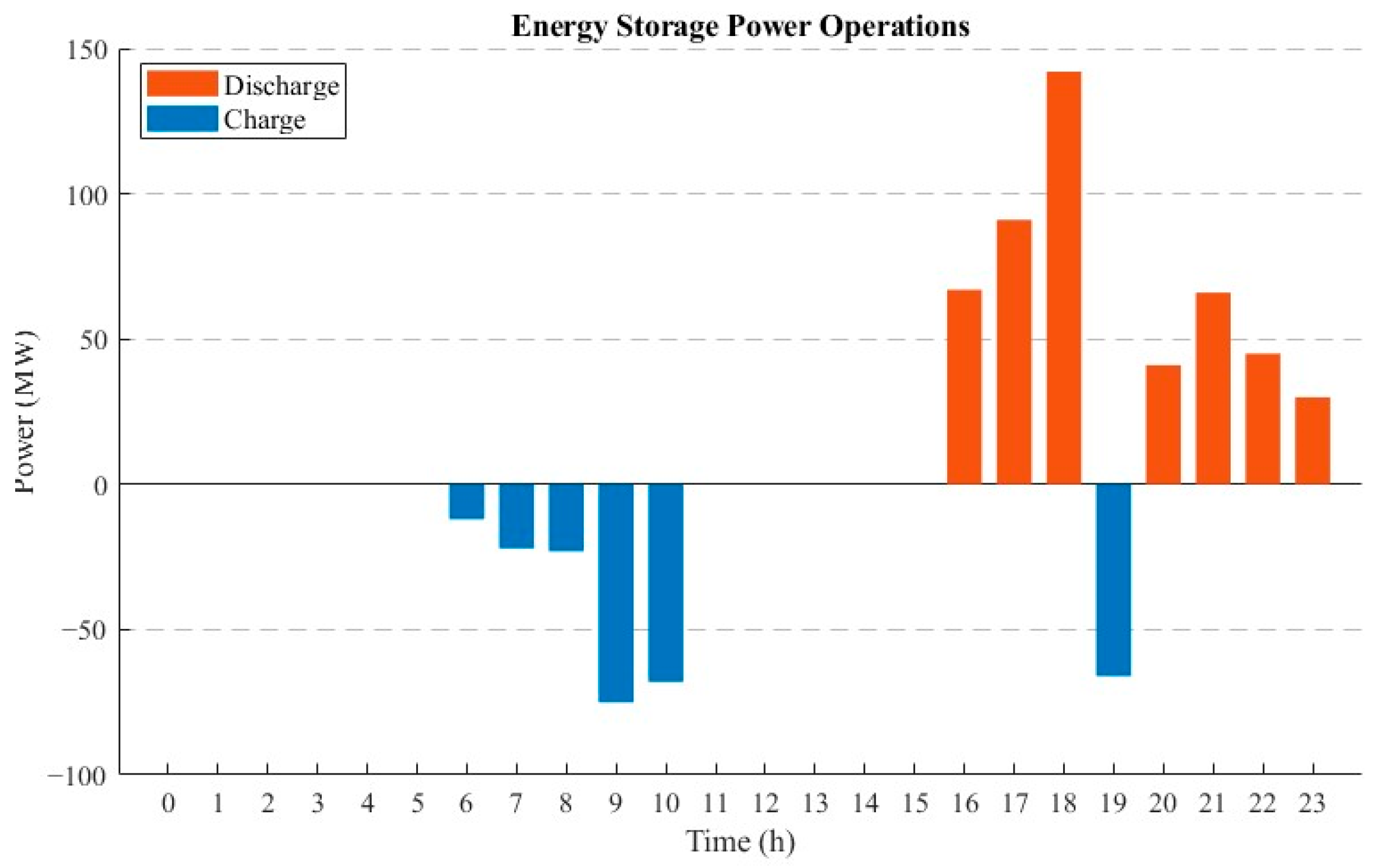
- Constraints on energy storage capacity and charging/discharging power:where is the energy storage capacity of the energy storage device at time t. is the minimum capacity of the energy storage device. is the maximum capacity of the energy storage device. denotes the charging power of the energy storage device at time t. denotes the discharging power of the energy storage device at time t. denotes the maximum charging power of the energy storage device. denotes the maximum discharging power of the energy storage device. denotes the charging efficiency. denotes the discharging efficiency. denotes the scheduling time step. denotes the charging mode indicator variable. denotes the discharging mode indicator variable.
5.1.2. Phase Two Real-Time Dispatch Model
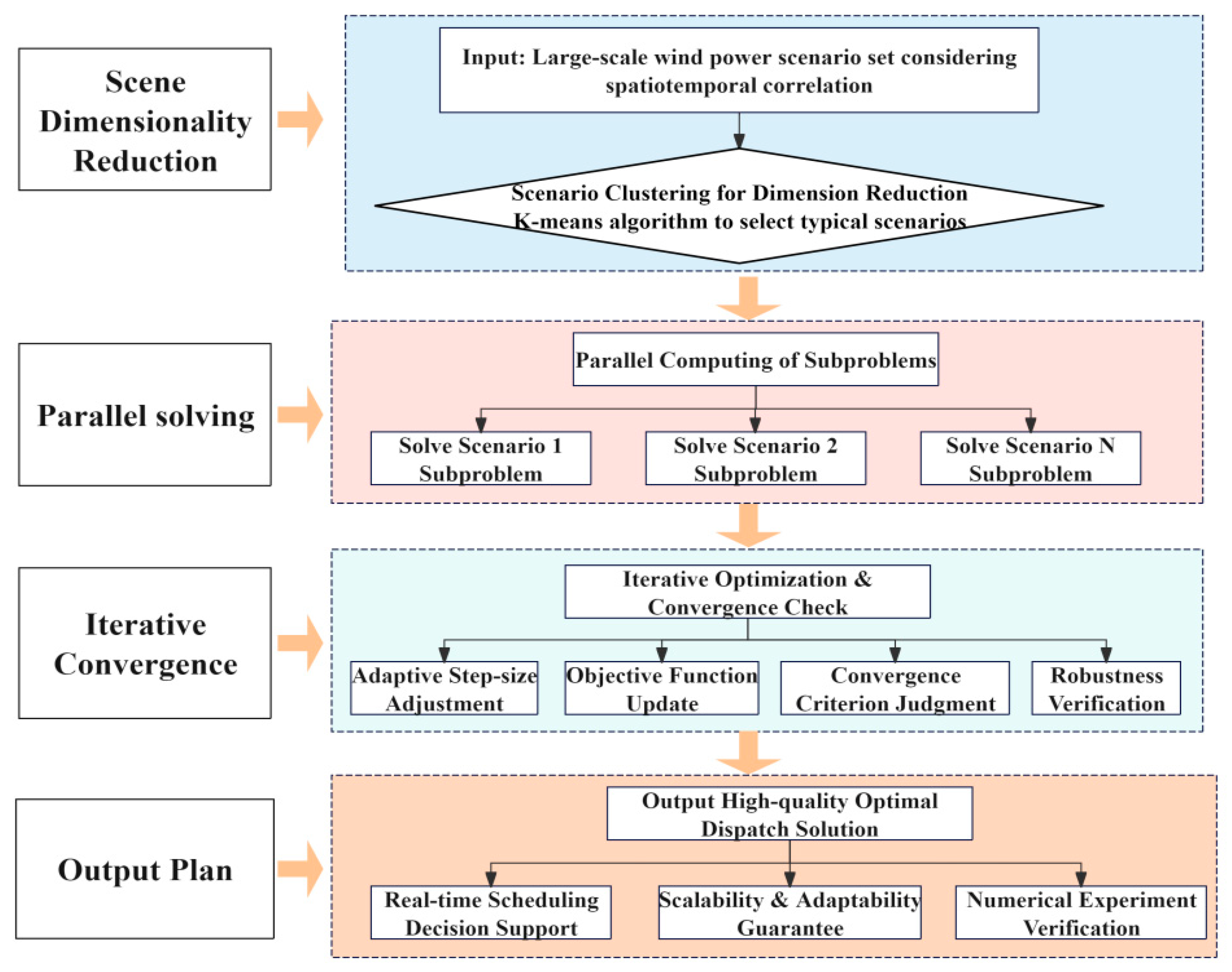
5.2. Design of Model-Solving Algorithms
6. Case Study Design and Analysis
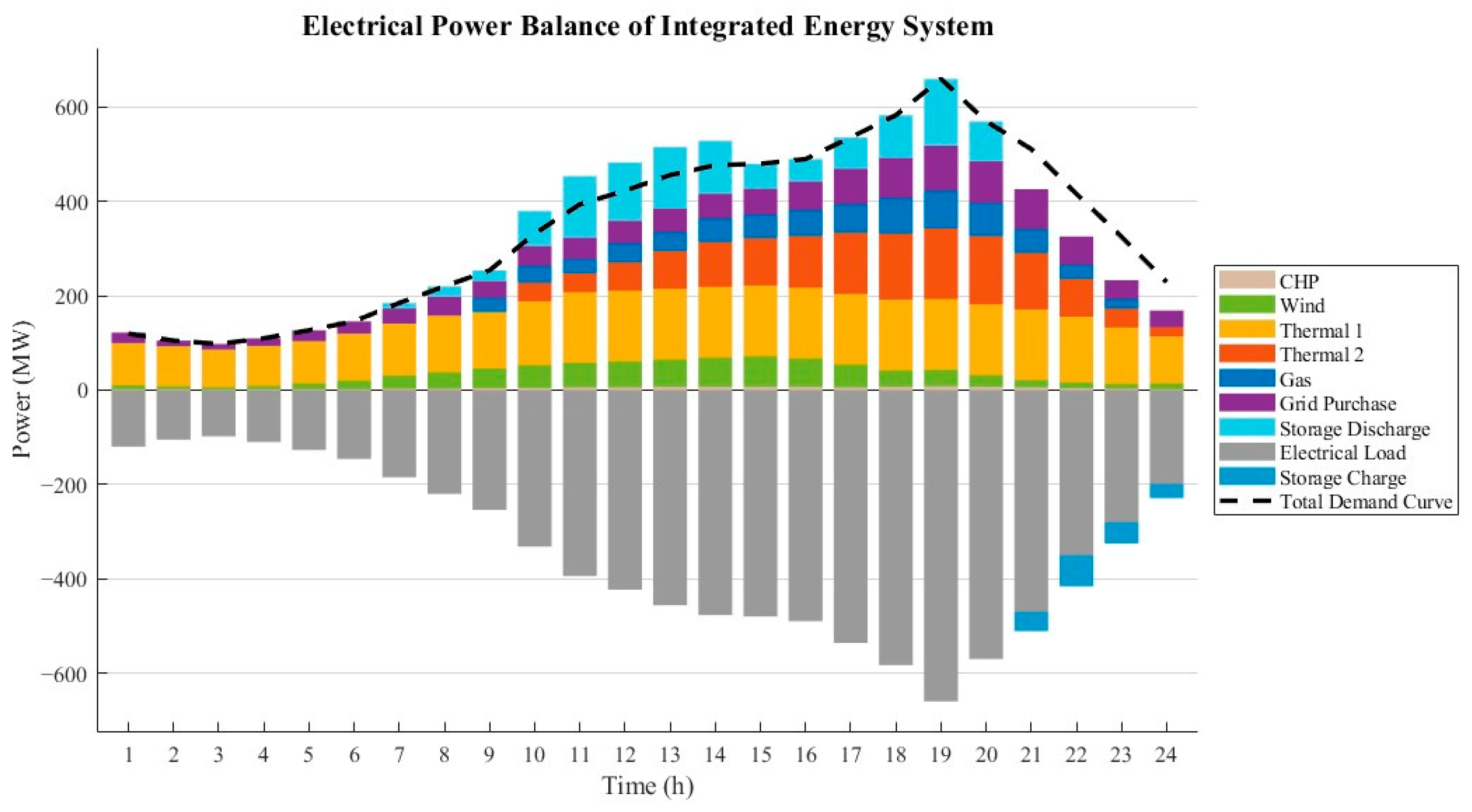
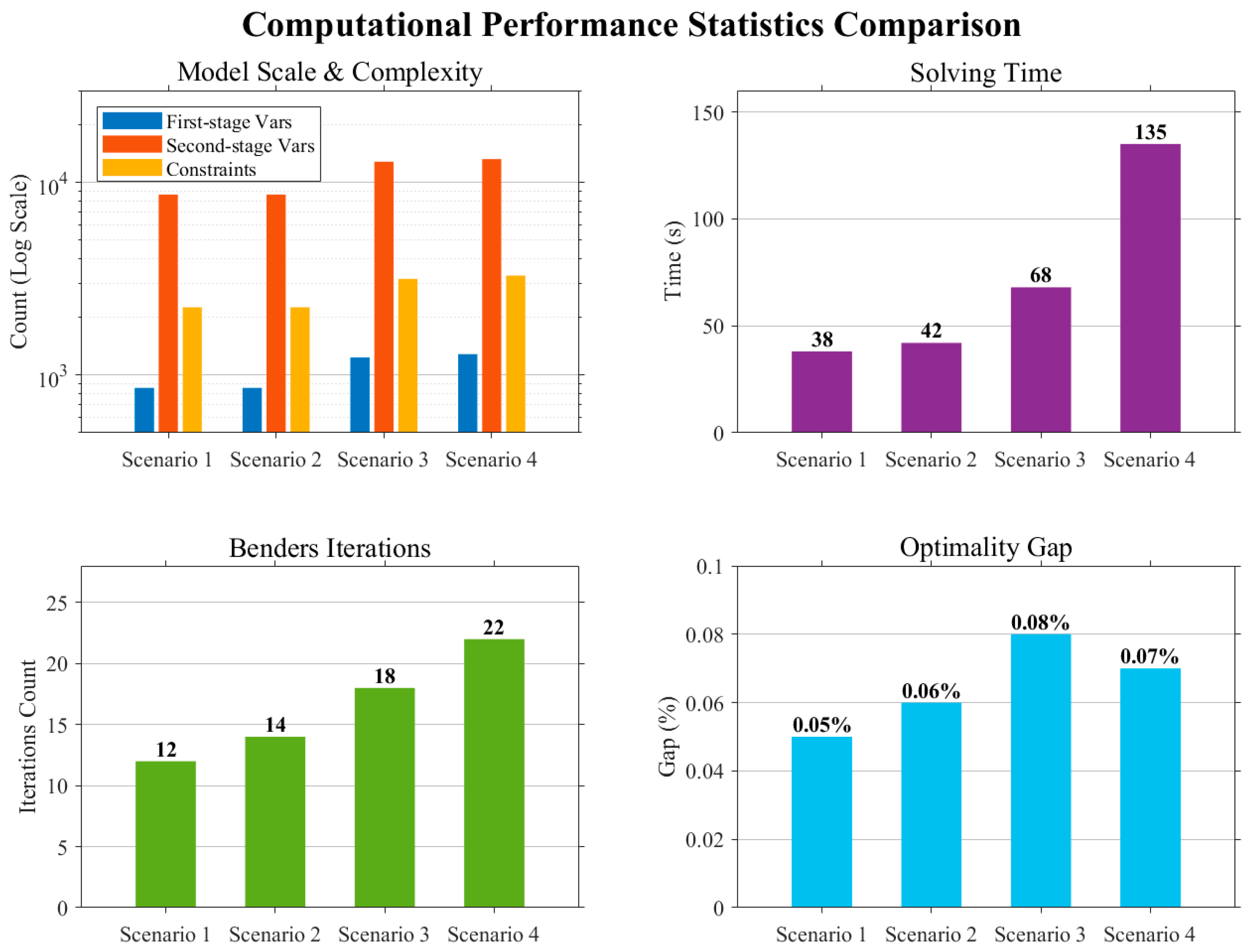
6.1. System Baseline Operation and Multi-Scenario Full-Cycle Performance Analysis
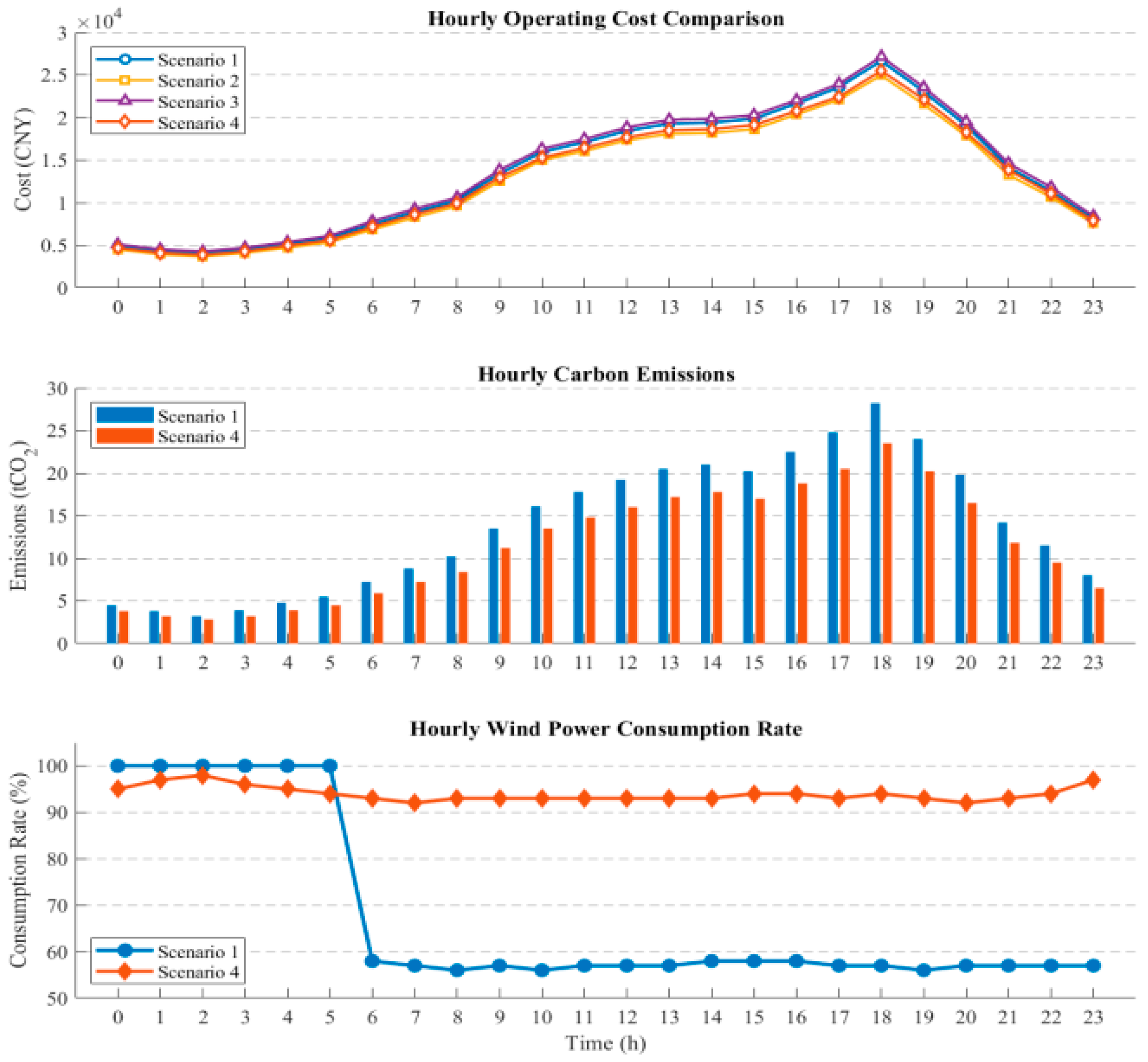
6.2. Comparison of the Effectiveness of Dynamic Carbon Emission Factor Optimization
- (1)
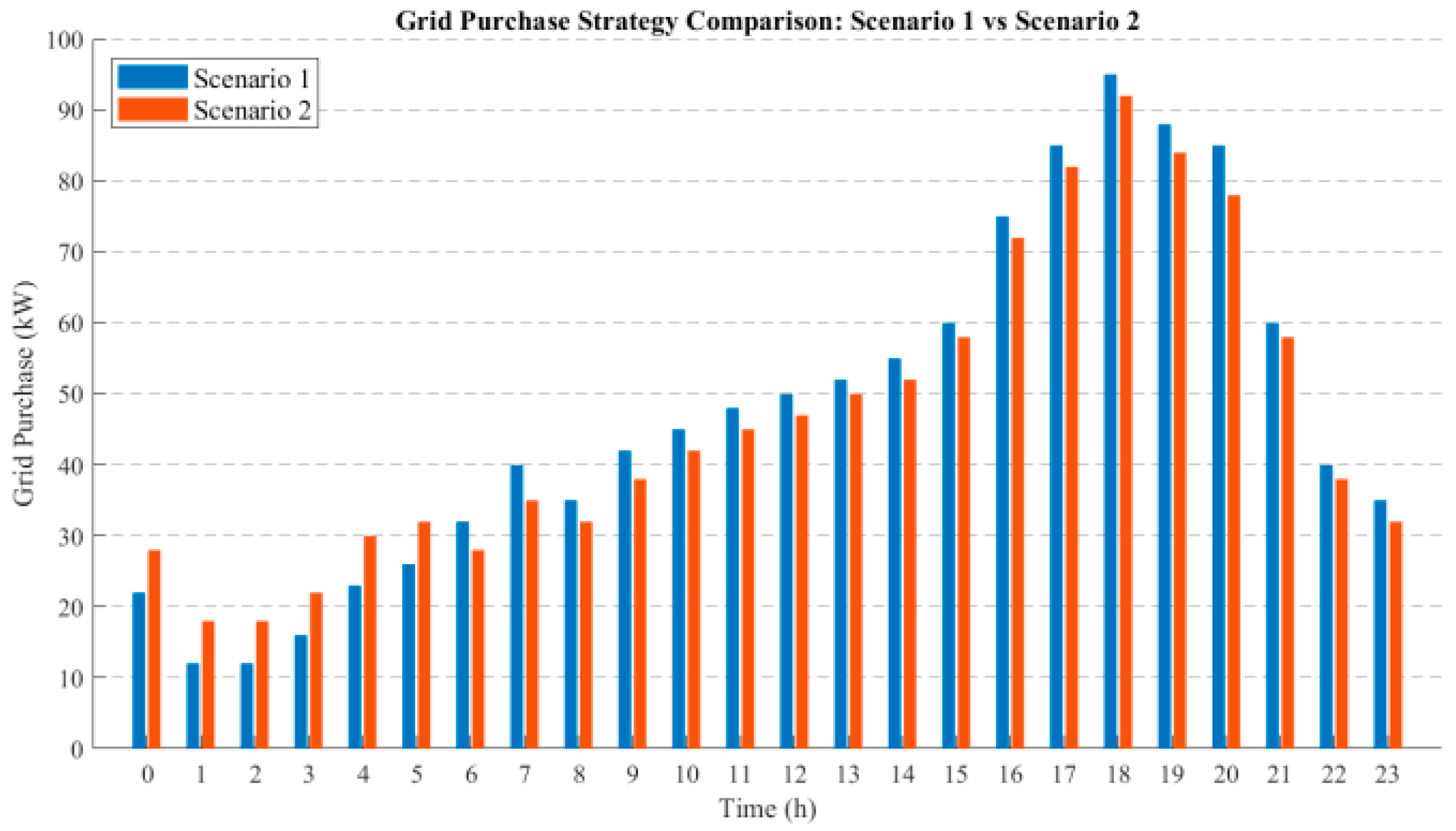
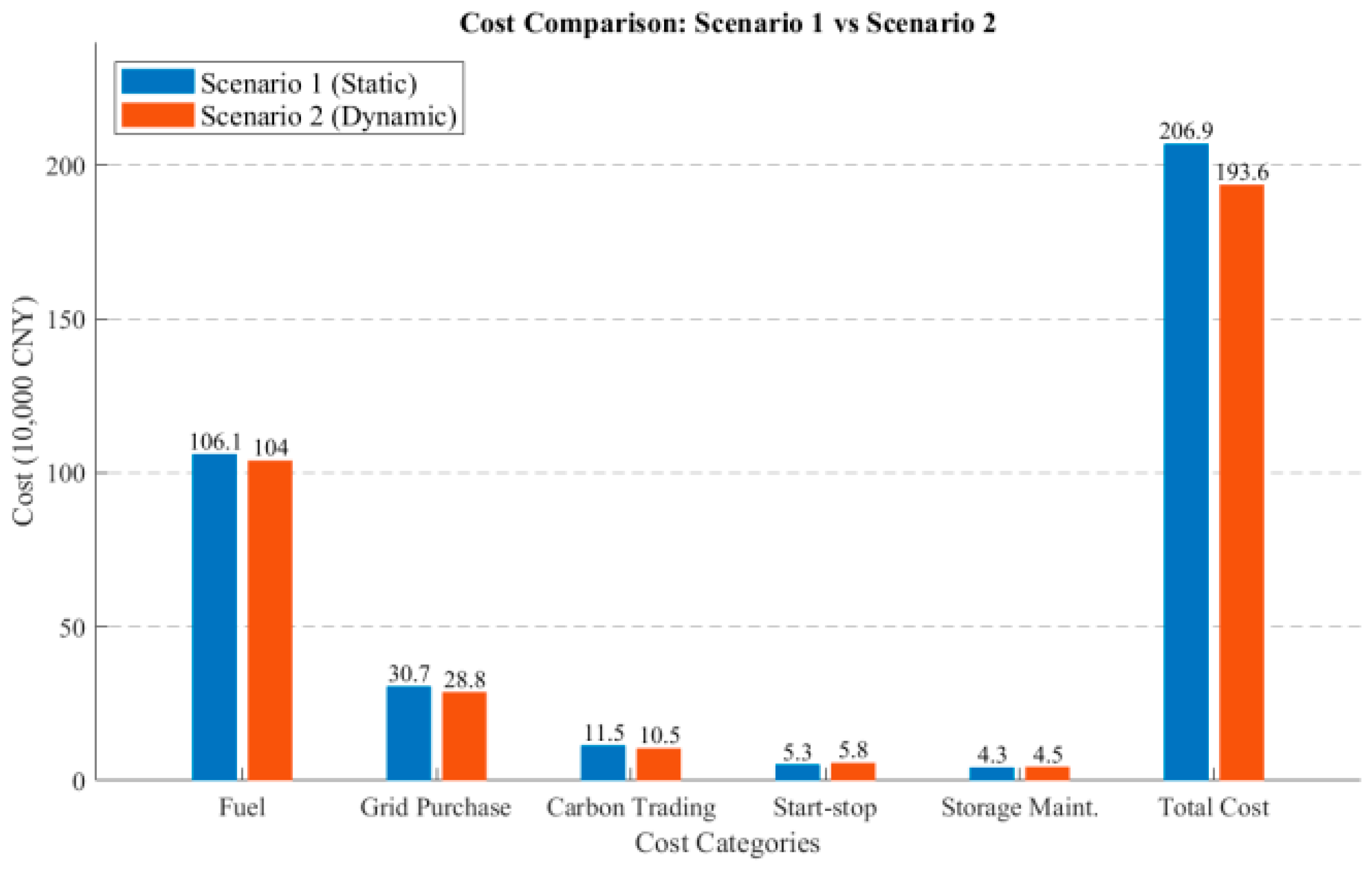
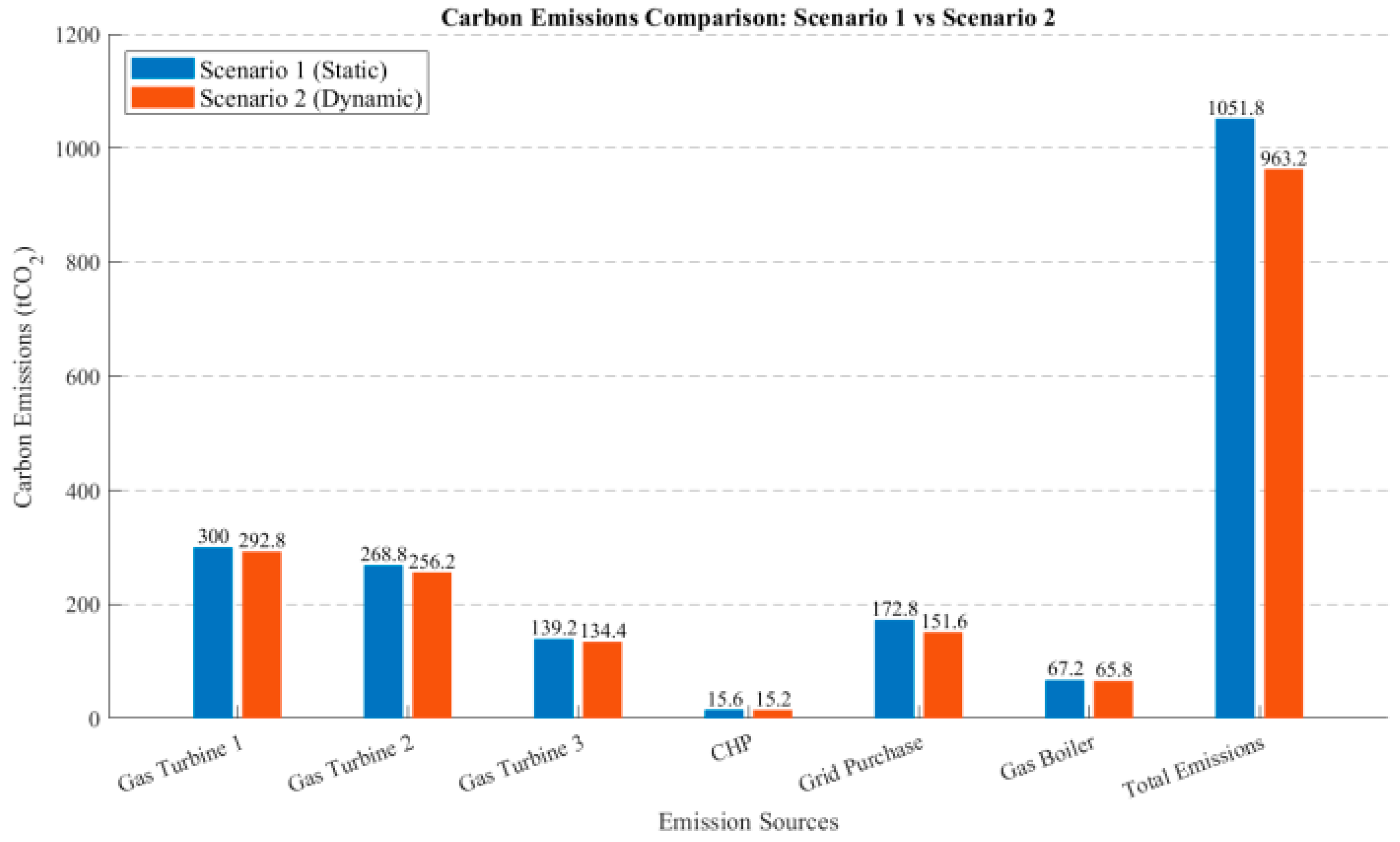
- Scenario 1: This scenario employs a traditional fixed carbon emission factor, disregards the real-time operational status of marginal power generation units in the grid, and conducts optimization based on conventional economic dispatch objectives, serving as a benchmark for comparison.
- (2)
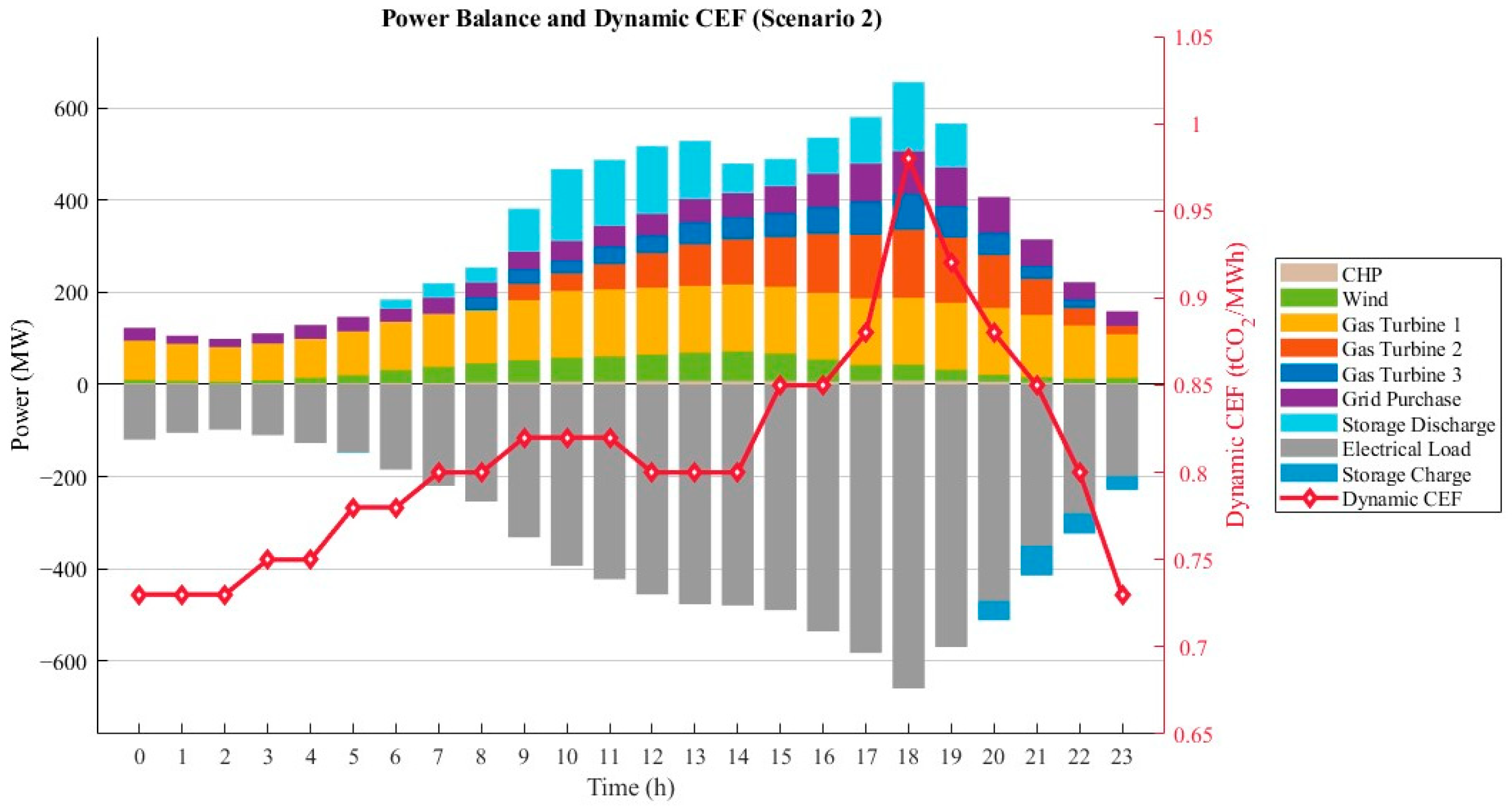
- Scenario 2: This employs the exogenous dynamic carbon emission factor model proposed in this paper. The IES does not alter this factor during optimization, tracking the output and carbon intensity of marginal power generation units in the grid in real time. A two-stage stochastic optimization scheduling model that accounts for dynamic carbon trading costs is constructed to achieve low-carbon optimization of the power procurement strategy.
6.3. Modelling of Spatio-Temporal Correlations in Wind Power and Analysis of Grid Integration Performance
- (1)
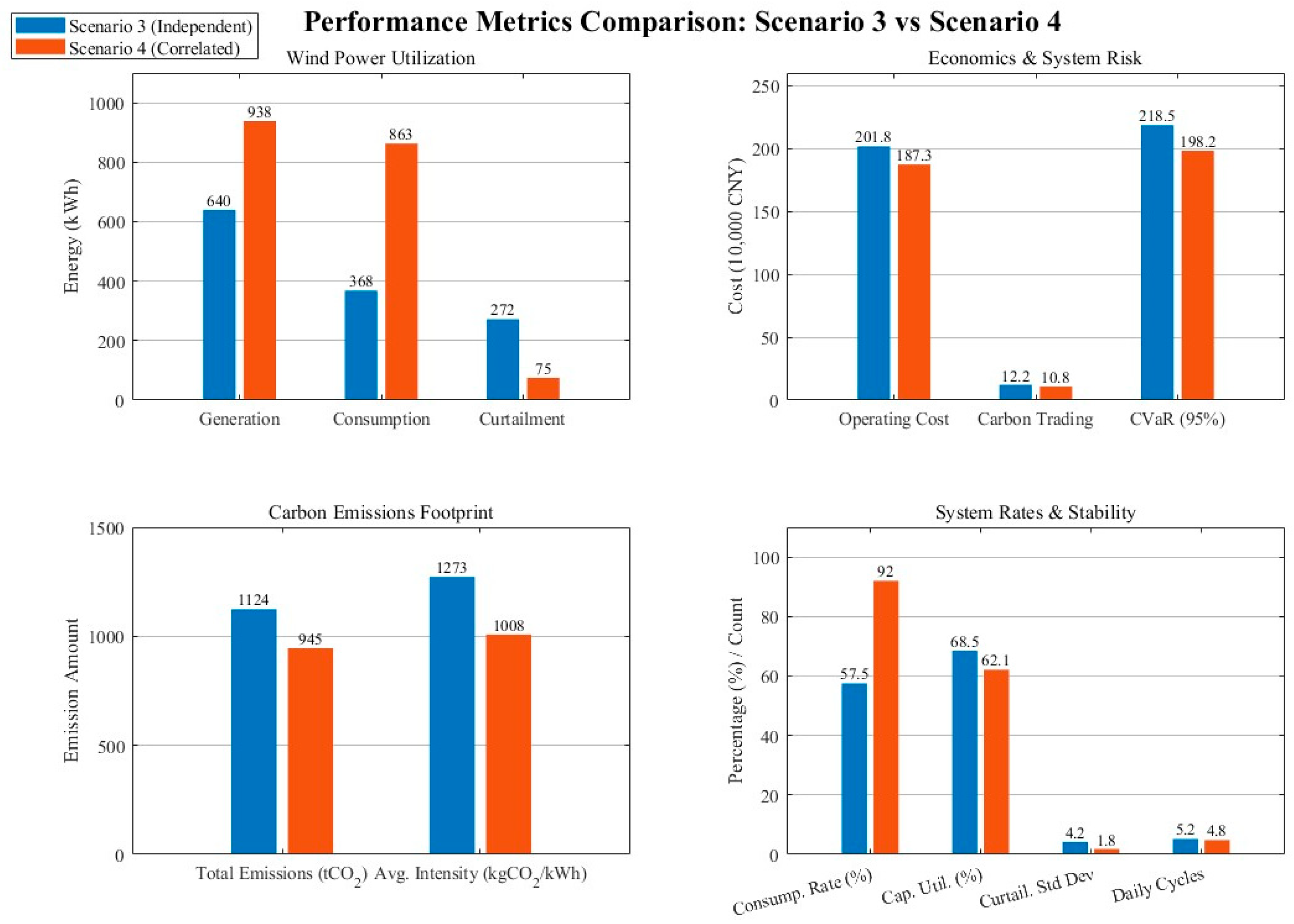
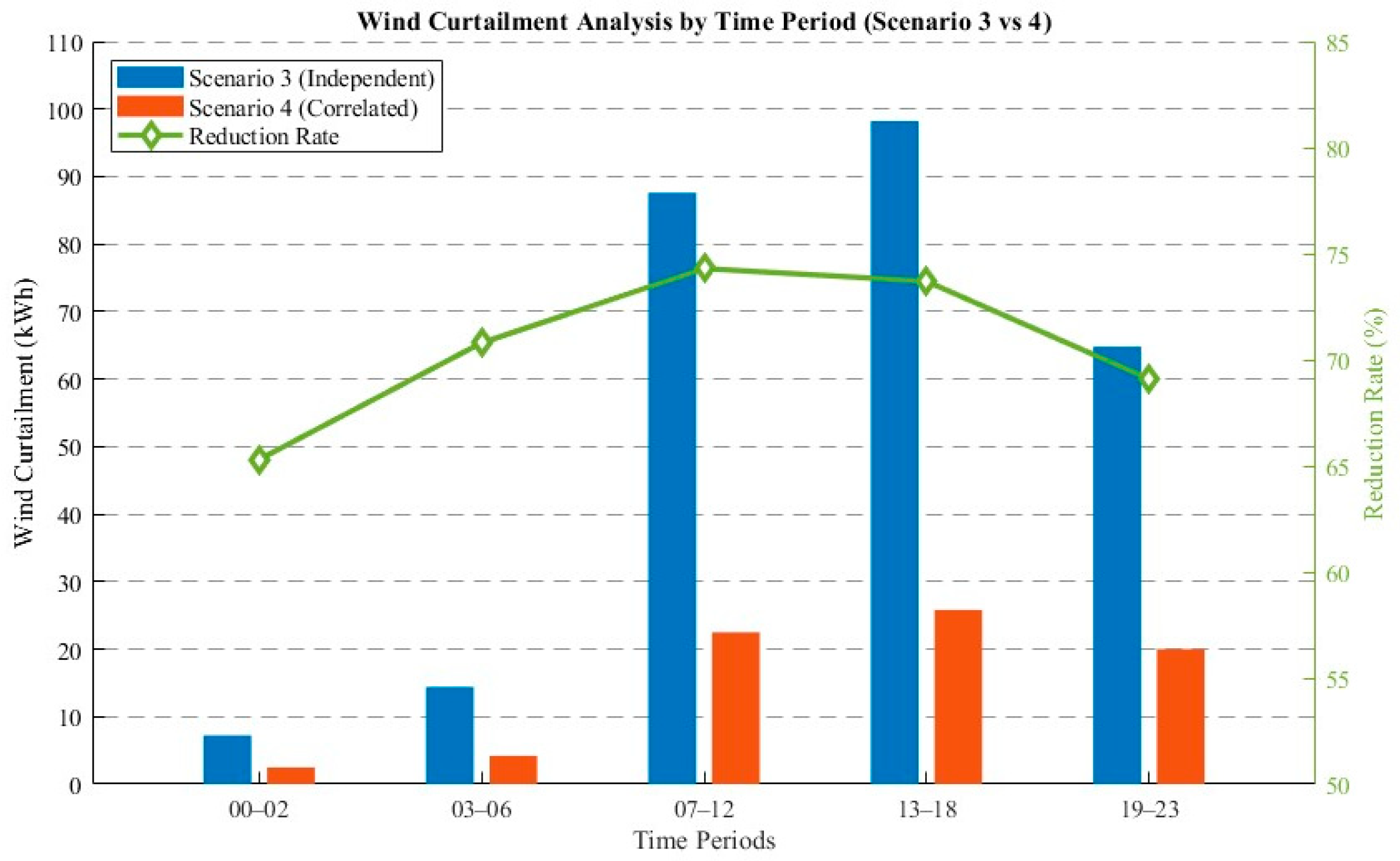
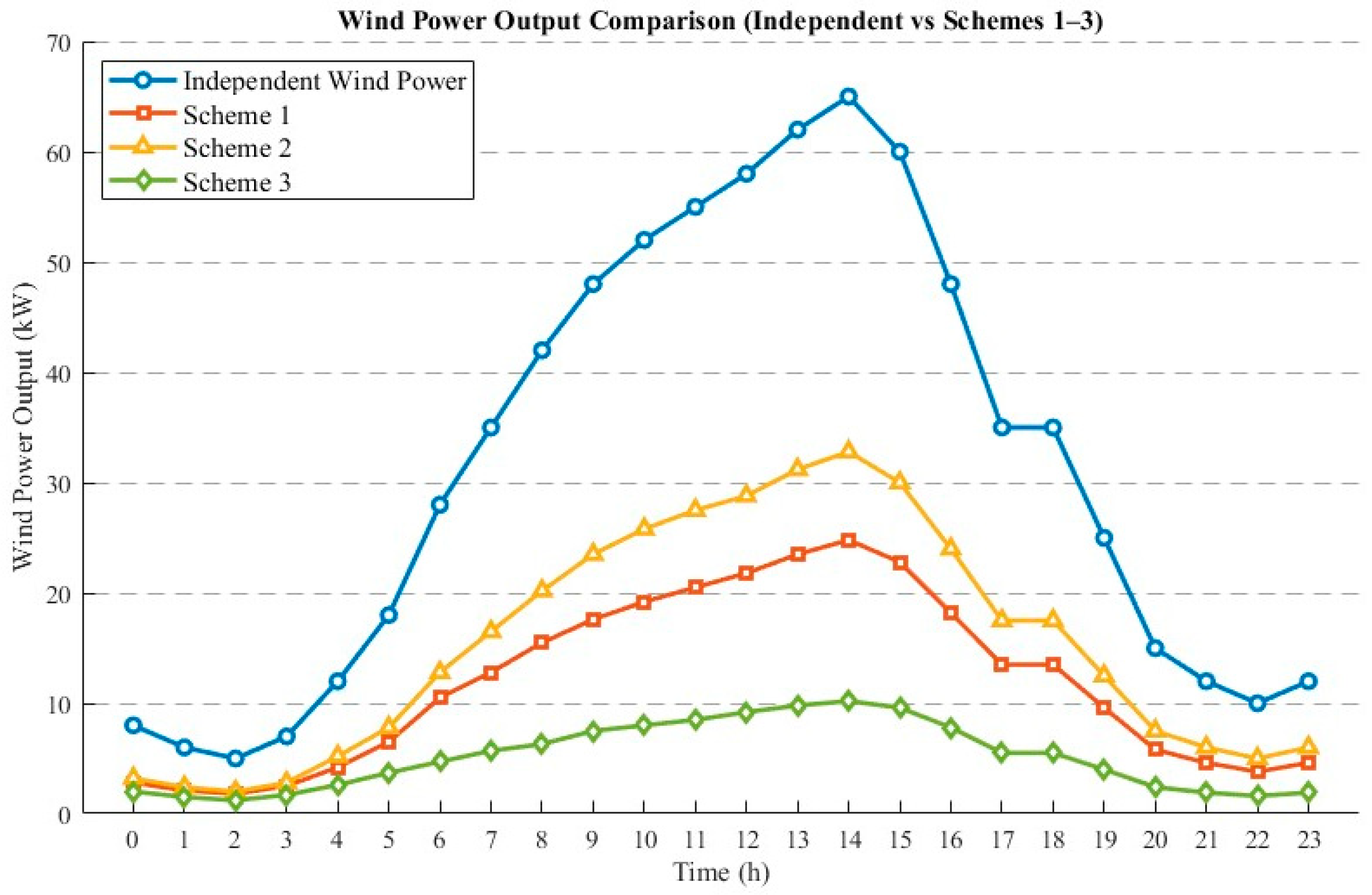
- Scenario 3: This scenario employs the traditional method for generating independent wind power scenarios, disregarding both temporal autocorrelation and spatial cross-correlation. The output scenarios for each wind farm are generated independently by sampling from its marginal distribution (without time dependence), and the two farms are treated as independent. The scale of the scenario set is the same as in Scenario 4. This serves as the baseline for evaluating the impact of spatiotemporal correlation.
- (2)
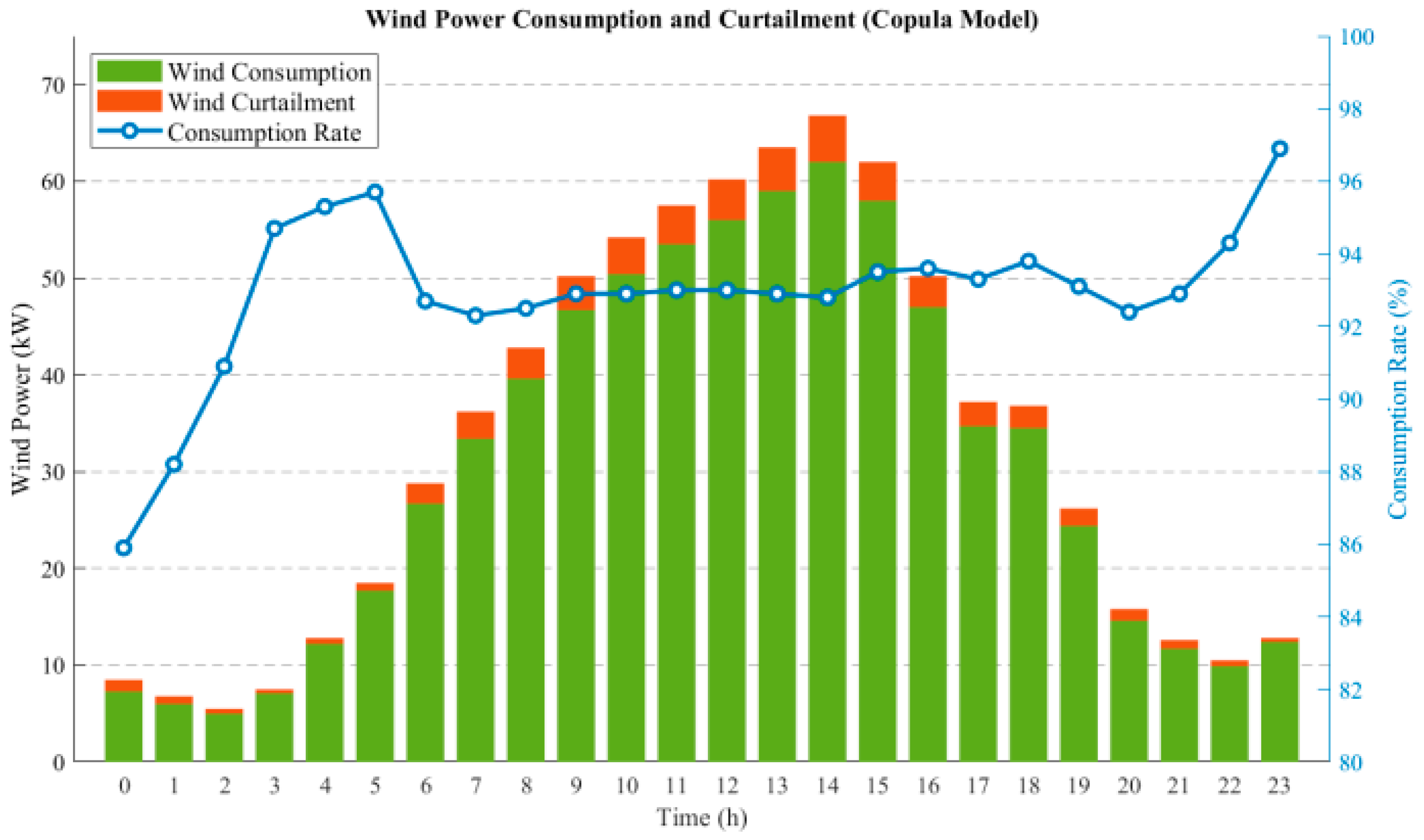
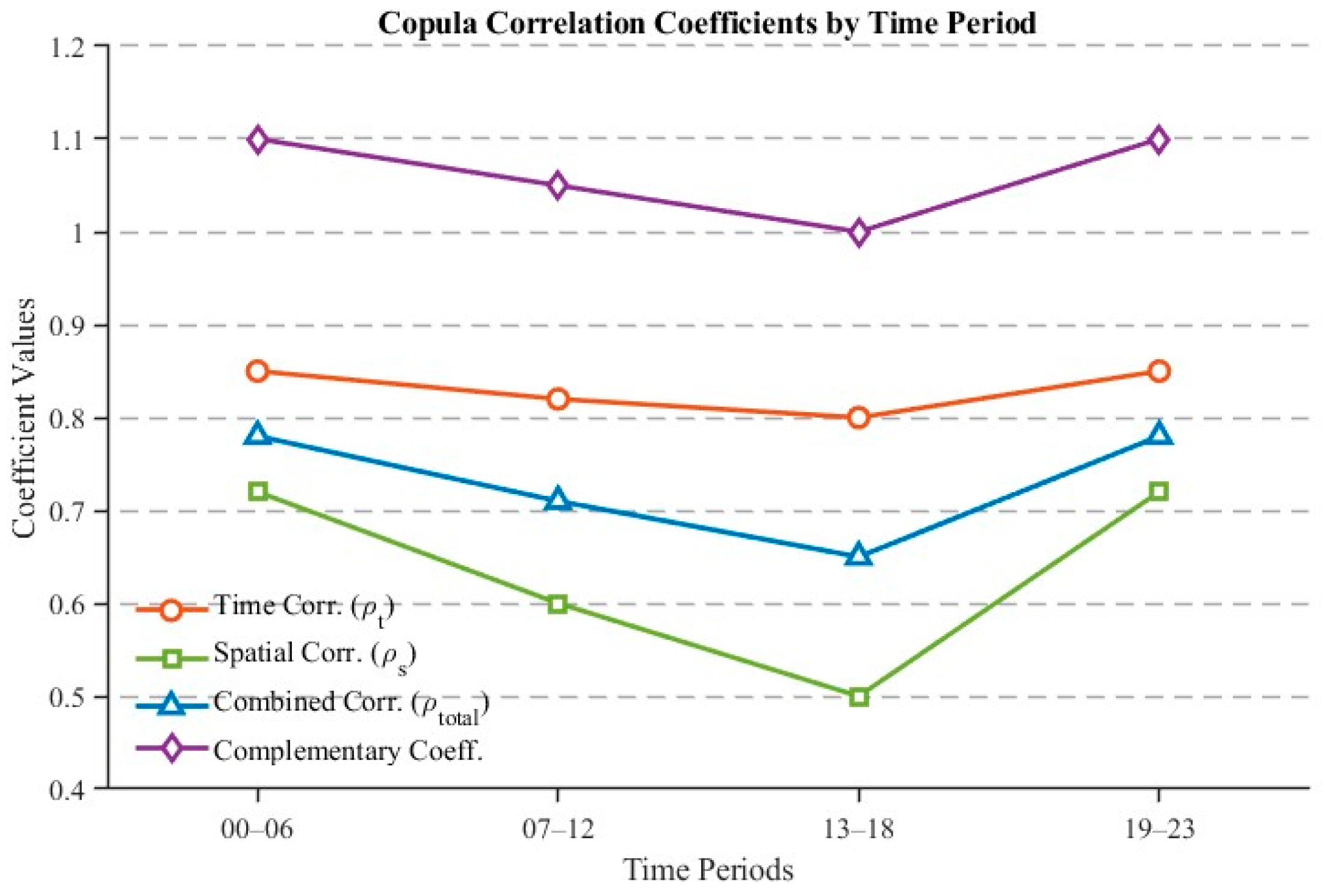
- Scenario 4: This scenario employs the Copula-based spatiotemporal correlation modelling method proposed in this paper. The joint distribution of the two wind farms’ outputs is constructed using a Gaussian Copula with parameters estimated from historical data, and the temporal autocorrelation of each farm is captured by a first-order Markov chain. The generated scenario set reflects the real spatiotemporal coupling characteristics and is used to validate the optimization effects of the proposed model in enhancing wind power integration, reducing system risk, and improving computational efficiency.
7. Conclusions
- (1)
- An exogenous dynamic carbon emission factor model based on the real-time operational status of the power grid was developed, which uses only grid-level marginal unit data and is independent of the IES’s own dispatch decisions. The model was validated against an independent grid carbon intensity benchmark with a correlation coefficient of 0.97, confirming the absence of endogenous circularity. This model accurately quantifies the actual carbon emission responsibility during power exchange between the system and the higher-level grid, overcoming the limitations of traditional fixed carbon emission factors and effectively guiding the system to purchase electricity during low-carbon periods of the grid.
- (2)
- A joint probability distribution model for multiple wind farms was established using Copula theory, accurately capturing the complex correlation structure of wind power clusters across temporal and spatial dimensions. Combined with improved scenario generation and reduction techniques, a set of typical scenarios was constructed that fully reflects the randomness of wind power output.
- (3)
- A two-stage stochastic optimization dispatch model was established, optimized to minimize the sum of system operating costs and tiered carbon trading costs. This achieves an organic integration of robustness and economic efficiency in dispatch decision-making, providing effective theoretical support and practical guidance for the low-carbon and economical operation of integrated energy systems.
Supplementary Materials
Author Contributions
Funding
Data Availability Statement
Conflicts of Interest
References
- Wang, D.S.; Du, P.; Zhang, G.Y. A review of optimal dispatch of combined power and heat integrated energy system to promote wind power consumption. Coal Econ. Res. 2024, 44, 113–121. [Google Scholar]
- Yan, C.C. Research on Wind Power Prediction Algorithm Based on Deep Learning. Ph.D. Thesis, Tianjin University of Technology, Tianjin, China, 2024. [Google Scholar]
- Zhang, Z.W. Research on Distributed Optimal Dispatch of Inter-Regional Integrated Energy System Considering Wind Power Uncertainty. Ph.D. Thesis, Shandong University, Jinan, China, 2022. [Google Scholar]
- Shi, Y.; Li, W.; Zhang, L.; Zhang, Y.; Li, Y. Quantification model of carbon emission reduction benefits based on dynamic carbon emission factor. Other Conf. 2024, 13159, 874–881. [Google Scholar]
- Su, Z.; Huang, Y.; Gu, W.; Chen, L.; Niu, Y. Calculation method for dynamic carbon emission factors of thermal power plants based on coupling of energy flow and carbon flow. Energy Convers. Manag. 2026, 353, 121179. [Google Scholar] [CrossRef]
- Li, J.; Lu, F.; Xu, W.; Qiao, B.; Gang, W.; Li, Z.; Zhang, G.; Li, B.; Liu, M. Two-stage collaborative optimization for low-carbon park energy systems: Day-ahead planning and intra-day rolling with dynamic carbon emission factors. Renew. Energy 2026, 266, 125692. [Google Scholar] [CrossRef]
- Wang, Z.; Zhang, Y.; Li, W. A bi-level optimization operation method for hydrogen-enriched integrated energy systems incorporating dynamic carbon emission factors. Renew. Energy 2026, 256, 124168. [Google Scholar] [CrossRef]
- Zhang, C.; Qi, Y.; Cao, X.; Zhang, Y. Low-Carbon Economic Dispatch of an Integrated Energy System with Multi-Device Coupling under Ladder-Type Carbon Trading. Energy Eng. 2026, 123, 12. [Google Scholar] [CrossRef]
- Yang, Y.; He, J.; Chen, W.; Li, Z.; Chen, K. Low-Carbon Economic Dispatch of Electric-Thermal-Hydrogen Integrated Energy System Based on Carbon Emission Flow Tracking and Step-Wise Carbon Price. Energy Eng. 2025, 122, 4653–4678. [Google Scholar] [CrossRef]
- Zhai, M.; Su, S.; Gu, Y.; Liu, L.; Wu, Y. Dynamic modeling of interregional carbon emission transfers and mitigation responsibilities. Energy 2026, 347, 140361. [Google Scholar] [CrossRef]
- Hou, B.; Hui, Z.; Yu, Y. Research on Tracking and Calculating Model of Branch Carbon Flow in Power Grid Based on Dynamic Carbon Factor. In Proceedings of the 2023 IEEE 3rd International Conference on Data Science and Computer Application (ICDSCA); IEEE: New York, NY, USA, 2023; pp. 455–459. [Google Scholar]
- Liu, J.F.; Shuai, W.; Ma, R.H.; Xun, H.; Zheng, X.B.; Wang, Y.Y. The Research on the Factors Influencing the Characteristics of Power System Frequency. In Proceedings of the 2023 4th International Conference on Advanced Electrical and Energy Systems (AEES); IEEE: New York, NY, USA, 2023; pp. 108–113. [Google Scholar]
- Zhang, X.; Wu, J.; Zhang, C.; Han, W.; Zhang, Y. Research on modeling and evaluation of spatiotemporal uncertainty wind speed for wind turbines. Int. J. Reliab. Qual. Saf. Eng. 2025, 32, 2550017. [Google Scholar] [CrossRef]
- Liu, Y.; Qiu, Y.; Feng, Y.; Zhou, H.; Xiong, X.-L. Spatiotemporal physics-guided graph neural network for wind farm power prediction. Eng. Appl. Artif. Intell. 2026, 171, 114301. [Google Scholar] [CrossRef]
- Rathod, D.; Gidwani, L. A literature review based on density forecasting and uncertainty quantification of wind power generation. Renew. Sustain. Energy Rev. 2026, 229, 116559. [Google Scholar] [CrossRef]
- Wang, L.; Gao, J.; Li, Y.; Wang, D. A method for ultra-short-term wind power forecasting of large-scale wind farms based on adaptive spatiotemporal graph convolution. Renew. Energy 2025, 249, 123321. [Google Scholar] [CrossRef]
- He, H.; Zhao, D.; Zhang, Z.; Long, X.; Luo, D.; Huang, S. Multi-scale wind cluster power prediction based on unified spatiotemporal generative adversarial model. Electr. Power Syst. Res. 2026, 257, 112994. [Google Scholar] [CrossRef]
- Jiang, W.; Wang, J.; He, X.; He, M. PSTG-Net: A physics-informed spatiotemporal multimodal dynamic graph network for wind power forecasting. Expert Syst. Appl. 2026, 320, 132224. [Google Scholar] [CrossRef]
- Zhang, M.; Han, Y.; Sun, Y.; Zhang, H.; Yang, F.; Wang, C. Power forecasting for distributed wind farms using a1hybrid deep learning model with spatiotemporal clustering and feature mining. Measurement 2026, 265, 120383. [Google Scholar] [CrossRef]
- Zhang, Q.; Mei, K.; Zhou, Q.; Ding, X.; Dong, Z.; Tian, M.; Liu, D.; He, W.; Zeng, Z.; Li, M. A wind farm cluster power prediction method based on globally aware dynamic spatiotemporal graph continual learning framework. Energy 2026, 348, 140591. [Google Scholar] [CrossRef]
- Wang, D.; Yang, M.; Zhang, W.; Ma, C.; Su, X. Short-term power prediction method of wind farm cluster based on deep spatiotemporal correlation mining. Appl. Energy 2025, 380, 125102. [Google Scholar] [CrossRef]
- Tan, J.; Zhang, J.; Liu, H.; Lan, B. A high dimensional uncertain scenario generating method for wind power and photovoltaic considering spatiotemporal correlation. Energy 2025, 340, 139224. [Google Scholar] [CrossRef]
- Fang, X.; Hodge, B.; Jiang, H.; Zhang, Y. Decentralized wind uncertainty management: Alternating direction method of multipliers based distributionally-robust chance constrained optimal power flow. Appl. Energy 2019, 239, 259. [Google Scholar] [CrossRef]
- Gao, X.; Xiao, T.; Li, J.; Hao, J.; Ma, Z. Study on Wind Field Characteristics in a Coastal Plain Based on a New Three-Dimensional Joint Distribution Model. Appl. Sci. 2021, 11, 9114. [Google Scholar] [CrossRef]
- Ministry of Ecological Environment of the People’s Republic of China. China Regional Grid Baseline Emission Factors for FY2019 Emission Reduction Programs; Ministry of Ecological Environment of the People’s Republic of China: Beijing, China, 2020.









| Ref. | Objectives | Carbon Emission Factor | Wind Power Uncertainty | Spatio-Temporal Correlation | Scheduling Model |
|---|---|---|---|---|---|
| [5] | Carbon responsibility allocation of thermal power plants | Dynamic carbon emission factor | ✗ | ✗ | Energy flow-carbon flow coupling, equipment-level carbon accounting |
| [6] | Day-ahead scheduling & intra-day rolling low-carbon optimization | Dynamic carbon emission factor | Renewable energy fluctuation considered | ✗ | Two-stage collaborative optimization, MPC rolling optimization |
| [7] | Economic & low-carbon & hydrogen utilization | Dynamic carbon emission factor | Stochastic volatility considered | ✗ | Bi-level optimization, Stackelberg game, P2G-CCS-CHP |
| [8] | Economic & low-carbon & robustness | Ladder-type carbon trading | Wind-PV uncertainty considered | ✗ | Two-stage robust optimization, two-stage P2G, multi-equipment coordination |
| [9] | Low-carbon economic dispatch of electricity-heat-hydrogen IES | Stepped carbon trading | Wind-PV uncertainty considered | ✗ | Carbon emission flow tracking, MILP model |
| [16] | Ultra-short-term wind power forecasting | ✗ | Wind power fluctuation considered | Adaptive spatio-temporal graph convolution modelling | Spatiotemporal graph neural network, multi-head attention |
| [19] | Wind farm cluster power forecasting accuracy | ✗ | Intermittency & fluctuation considered | Spatio-temporal correlation mining, graph attention network | GAT, Bi-directional recurrent residual network, multi-task learning |
| [20] | Wind farm cluster power forecasting | ✗ | Fluctuation & time-varying uncertainty | Dynamic spatio-temporal graph, globally aware correlation | GADSG-CL, spatiotemporal graph neural network, continual learning |
| [21] | Ultra-short-term wind power prediction | ✗ | Stochastic volatility & non-stationarity | Spatial clustering & temporal feature mining | IAO-VMD, BiTCN-BiGRU, attention mechanism, transfer learning |
| This paper | Minimum operation cost & minimum carbon emission | Dynamic carbon emission factor | Two-stage stochastic optimization & scenario clustering | Copula-based accurate modelling | Two-stage stochastic optimization, K-means, parallel computing |
| Metric | Value |
|---|---|
| Mean absolute error (MAE) | 0.026 tCO2/kWh |
| Relative error (mean) | 3.12% |
| Pearson correlation coefficient | 0.97 |
| Scenario | Total Generation (kWh) | Absorbed (kWh) | Curtailed (kWh) | Utilization Rate |
|---|---|---|---|---|
| Scenario 3 (independent) | 640 | 368 | 272 | 57.5% |
| Scenario 4 (Copula) | 938 | 863 | 75 | 92.0% |
Disclaimer/Publisher’s Note: The statements, opinions and data contained in all publications are solely those of the individual author(s) and contributor(s) and not of MDPI and/or the editor(s). MDPI and/or the editor(s) disclaim responsibility for any injury to people or property resulting from any ideas, methods, instructions or products referred to in the content. |
© 2026 by the authors. Licensee MDPI, Basel, Switzerland. This article is an open access article distributed under the terms and conditions of the Creative Commons Attribution (CC BY) license.
Share and Cite
Gao, J.; Zeng, L.; Chen, K.; Liu, F.; Bai, Y.; Mao, Y. Optimal Scheduling of Integrated Energy Systems Considering Dynamic Carbon Emission Factors and Spatiotemporal Uncertainty of Wind Power. Processes 2026, 14, 1815. https://doi.org/10.3390/pr14111815
Gao J, Zeng L, Chen K, Liu F, Bai Y, Mao Y. Optimal Scheduling of Integrated Energy Systems Considering Dynamic Carbon Emission Factors and Spatiotemporal Uncertainty of Wind Power. Processes. 2026; 14(11):1815. https://doi.org/10.3390/pr14111815
Chicago/Turabian StyleGao, Junjie, Linjun Zeng, Kun Chen, Feng Liu, Yunfan Bai, and Yun Mao. 2026. "Optimal Scheduling of Integrated Energy Systems Considering Dynamic Carbon Emission Factors and Spatiotemporal Uncertainty of Wind Power" Processes 14, no. 11: 1815. https://doi.org/10.3390/pr14111815
APA StyleGao, J., Zeng, L., Chen, K., Liu, F., Bai, Y., & Mao, Y. (2026). Optimal Scheduling of Integrated Energy Systems Considering Dynamic Carbon Emission Factors and Spatiotemporal Uncertainty of Wind Power. Processes, 14(11), 1815. https://doi.org/10.3390/pr14111815