Review

Soil Biofilms in Pollutant Dynamics and Detoxification

UCD School of Agriculture and Food Science, University College Dublin, Belfield, D04 V1W8 Dublin, Ireland
Processes 2026, 14(11), 1776; https://doi.org/10.3390/pr14111776
Submission received: 18 April 2026 / Revised: 26 May 2026 / Accepted: 26 May 2026 / Published: 29 May 2026
(This article belongs to the Section Biological Processes and Systems)

Abstract

Soil biofilms are structured, dynamic microbial consortia embedded within extracellular polymeric substances that regulate microscale physicochemical heterogeneity and drive biogeochemical transformations in soils. Despite increasing interest in biofilm-mediated remediation, current reviews have largely examined microbial ecology, engineered biofilm functions, and predictive modelling independently, limiting systems-level understanding of pollutant fate in complex soils. This review, therefore, proposes a revised conceptual framework integrating biofilm ecology, synthetic biology, and AI-driven predictive modelling to improve mechanistic and predictive understanding of emerging pollutant detoxification. Emerging pollutants, including pharmaceuticals, pesticides, per- and polyfluoroalkyl substances, micro- and nanoplastics, and heavy metals, exhibit persistence, bioaccumulation, and mixture-dependent effects that challenge conventional remediation strategies. Biofilm matrices function as reactive interfaces facilitating adsorption, sequestration, and enzymatic transformation, while steep redox and nutrient gradients support metabolically diverse processes such as cometabolism, syntrophic degradation, and biomineralisation. Increasing evidence indicates that quorum sensing, horizontal gene transfer, and low-abundance microbial taxa contribute significantly to adaptive responses and functional plasticity within biofilms. Advances in high-resolution imaging, spatial multi-omics, and microfluidic platforms have resolved previously inaccessible biofilm architectures and processes; however, integration with machine learning and process-based modelling remains limited, restricting field-scale prediction of pollutant behaviour and remediation outcomes. Synthetic biology enables targeted optimisation of biofilm functions, whereas AI-driven models enhance prediction of contaminant transport, transformation, and detoxification. Soil biofilms function both as sinks and catalytic hotspots, and resolving this duality through a predictive, systems-level framework represents a major advance beyond existing descriptive reviews.

1. Introduction

Soil represents one of the most complex and dynamic ecosystems on Earth, hosting an immense diversity of microorganisms that regulate biogeochemical cycling and underpin ecosystem functioning and human well-being [1]. Within this matrix, microorganisms predominantly exist as structured, surface-associated consortia known as biofilms rather than as free-living cells. Soil biofilms are highly organised microbial communities embedded within a self-produced extracellular polymeric substance matrix that facilitates adhesion to mineral surfaces, stabilisation within pore networks, and coordinated metabolic activity [2]. These assemblages colonise diverse ecological niches, including soil aggregates, rhizosphere interfaces, and particulate substrates such as microplastics, thereby influencing nutrient transformations, soil structure, and contaminant dynamics [3].
The ecological characteristics of soil biofilms are closely linked to their structural complexity and functional plasticity, enabling microorganisms to persist under fluctuating environmental conditions. Compared with planktonic cells, biofilm-associated communities exhibit greater resistance to desiccation, pH variation, and toxic compounds while maintaining high metabolic activity and functional redundancy [4,5]. Soil biofilms also act as reactive interfaces within heterogeneous soil matrices, where microscale gradients in oxygen, redox potential, and nutrients create distinct ecological niches that support diverse metabolic pathways. This spatial organisation enables biofilms to function as microreactors regulating the transformation and retention of organic and inorganic compounds in soils [6].
In parallel, the accumulation of emerging contaminants in terrestrial environments has become a critical global concern. Emerging contaminants comprise a diverse group of synthetic and naturally occurring compounds, including pharmaceuticals and personal care products, pesticides, per- and polyfluoroalkyl substances, micro- and nanoplastics, engineered nanomaterials, electronic waste derivatives, and industrial additives. In addition, persistent pollutants such as heavy metals continue to pose significant environmental risks due to their persistence, bioaccumulation potential, and toxicity (Figure 1). These contaminants are introduced into soils through multiple pathways such as wastewater irrigation, agricultural amendments, industrial discharge, and atmospheric deposition, where they interact with soil constituents and biota [7,8,9]. Their environmental relevance is further amplified by their capacity to alter soil physicochemical properties, disrupt microbial communities, and facilitate the transport of toxic compounds across ecological compartments.
Soil biofilms have emerged as central mediators of emerging contaminant fate due to their dual role as both sinks and transformation hubs. The extracellular polymeric matrix provides abundant reactive sites for contaminant adsorption and sequestration, while the metabolic diversity of biofilm communities enables processes such as cometabolism, redox transformation, and biomineralisation [8,9,10]. However, these interactions are not unidirectional, as contaminants can also reshape biofilm composition, alter functional pathways, and promote the enrichment of resistance genes. For example, biofilm colonisation of microplastics forms a distinct ecological niche often referred to as the plastisphere, which can facilitate pollutant transport and microbial adaptation [3]. Similarly, biofilm-associated microorganisms can immobilise heavy metals through biosorption and precipitation, while tolerating elevated toxicity [4,7]. These findings underscore the role of soil biofilms as dynamic interfaces that regulate contaminant mobility, persistence, and ecological risk across spatial scales [8,9].
Beyond their physicochemical interactions with contaminants, soil biofilms also act as hotspots of microbial interaction and genetic exchange. The close spatial proximity of cells within the biofilm matrix enhances horizontal gene transfer, thereby facilitating the dissemination of antibiotic resistance and metabolic capabilities relevant to contaminant degradation [11,12]. This capacity for rapid genetic and functional adaptation positions biofilms as key drivers of microbial evolution in contaminated environments, with implications for both ecosystem resilience and environmental health. Advances in meta-omics, stable isotope probing, and high-resolution imaging have begun to reveal these complex interactions, although challenges remain in disentangling biofilm-specific processes from bulk soil dynamics and in scaling observations to field conditions [2,13].
Soil biofilms represent a fundamental yet underexplored component of the soil microbiome governing emerging contaminant dynamics. This review develops a conceptual framework positioning soil biofilms as central regulators of contaminant fate by synthesising current knowledge on their structural organisation, mechanistic interactions with diverse contaminant classes, and ecological implications. Unlike previous reviews focused mainly on degradation pathways or conventional bioremediation, this review integrates biofilm ecology, spatial microenvironmental processes, synthetic biology, and AI-assisted predictive modelling within a unified systems-level perspective. Furthermore, it identifies critical knowledge gaps and evaluates the potential of biofilm-based strategies for sustainable bioremediation in terrestrial ecosystems.

2. Structural Organisation and Functional Mechanisms of Soil Biofilms

Soil biofilms are highly structured microbial consortia embedded within extracellular polymeric substance (EPS) matrices that regulate biogeochemical cycling, contaminant fate, and ecosystem resilience [14]. These biofilms are primarily formed by diverse bacteria, archaea, and fungi, including environmentally important genera such as Pseudomonas, Bacillus, Burkholderia, Cupriavidus, Rhodococcus, and Cunninghamella, which collectively drive pollutant transformation and biofilm stability [1,5,8]. Their functional performance is governed by physicochemical heterogeneity, metabolic stratification, and coordinated microbial interactions across microscale environments.

2.1. Extracellular Polymeric Substances as Reactive and Sorptive Matrices

Extracellular polymeric substances constitute the structural and functional matrix of soil biofilms and are primarily composed of polysaccharides, proteins, extracellular DNA, and humic-like substances [15]. EPS production by microorganisms such as Pseudomonas and Bacillus contributes substantially to biofilm cohesion, stress tolerance, and contaminant interactions [7]. Depending on environmental conditions, microbial composition, and biofilm maturity, EPS can represent a substantial proportion of biofilm biomass and strongly influence biofilm physicochemical properties. EPS mediate contaminant interactions through abundant carboxyl, hydroxyl, amino, and phosphoryl functional groups that facilitate adsorption, ion exchange, complexation, and precipitation of inorganic pollutants such as heavy metals and metalloids [11]. EPS also enhance the apparent solubility and bioavailability of hydrophobic organic contaminants, including polycyclic aromatic hydrocarbons, via emulsification and partitioning processes.
In addition to sorption, EPS concentrate nutrients, enzymes, and substrates within confined microsites, thereby enhancing catalytic efficiency and stabilising extracellular enzymes involved in nutrient cycling and contaminant degradation. Their hygroscopic properties further improve water retention and tolerance to desiccation stress [16].

2.2. Microscale Gradients and Redox Stratification Within Biofilms

A defining feature of soil biofilms is the development of steep gradients in oxygen, pH, redox potential, and nutrient availability caused by diffusion limitation, microbial metabolism, and structural heterogeneity [17]. These gradients generate spatially distinct microenvironments that regulate microbial activity, electron transfer, and contaminant transformation. External factors such as fluid flow and pore-scale sediment interactions further influence mass transfer and biofilm organisation at the soil interface [18]. Consequently, oxic zones near the biofilm surface transition into suboxic and anoxic regions in deeper layers. High-resolution approaches such as NanoSIMS demonstrate that metabolic activity is spatially constrained, with activity concentrated near electron acceptors and reduced in deeper regions due to electron transport limitations [19].
This stratification supports the coexistence of aerobic heterotrophs, denitrifiers, sulfate-reducing bacteria, and methanogens, enabling syntrophic metabolism and sequential electron transfer processes. Electroactive microorganisms, including Pseudomonas aeruginosa and other soil-associated electroactive taxa, further contribute through extracellular electron transfer linking spatially separated redox reactions [20]. Biofilm architecture, including differentiated base layers and streamers, modulates oxygen flux and flow dynamics, thereby influencing denitrification, sulfate reduction, and contaminant immobilisation via mechanisms such as metal sulfide precipitation [21]. Collectively, these processes establish soil biofilms as spatially organised systems that optimise nutrient cycling and contaminant transformation.

2.3. Mechanistic Pathways of Contaminant Transformation

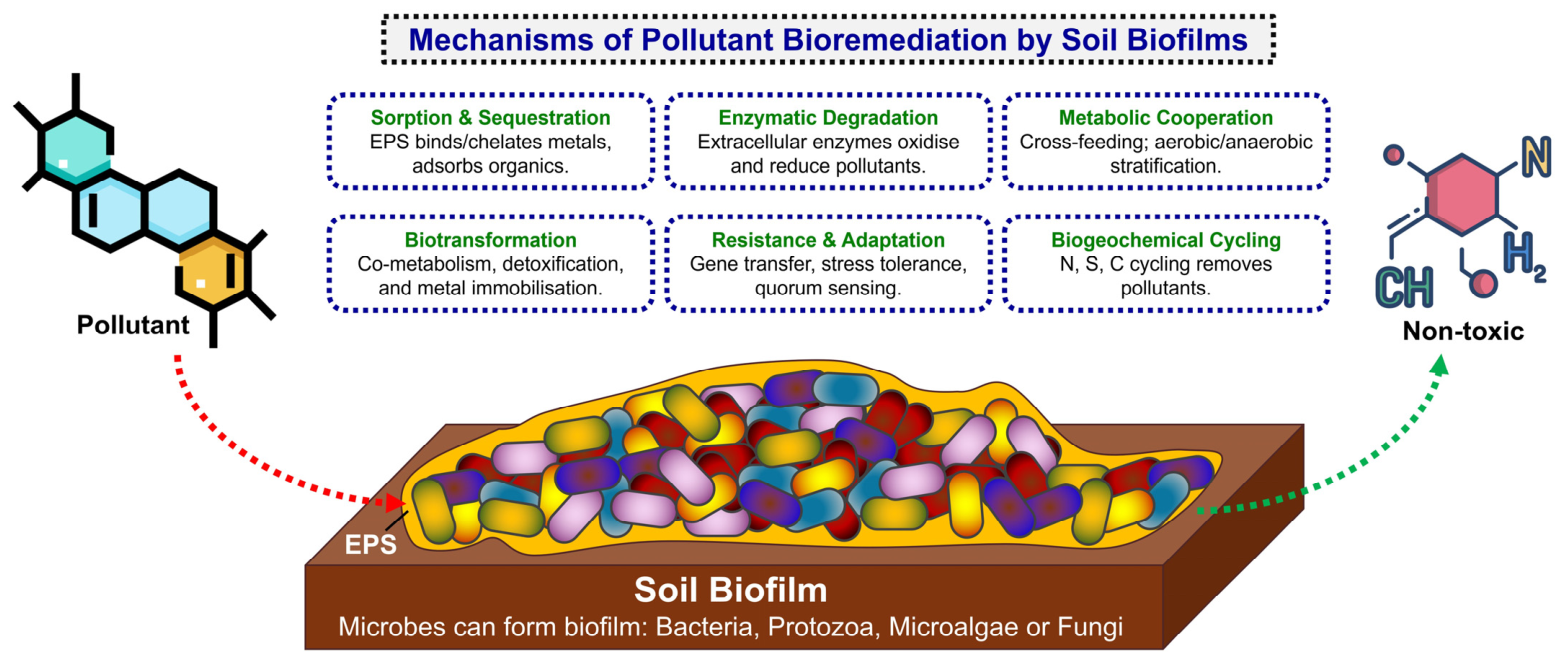
Soil biofilms function as highly efficient biogeochemical reactors that integrate physicochemical and biological processes to mediate contaminant transformation. An initial and critical step is biosorption, whereby the EPS matrix, rich in polysaccharides, proteins, and extracellular DNA, acts as a reactive sink for pollutants. Functional groups such as carboxyl and sulfonic moieties facilitate adsorption, ion exchange, and complexation, immobilising heavy metals (e.g., Cd, Cu, Zn) and concentrating hydrophobic organic compounds at the biofilm interface. This passive sequestration reduces contaminant mobility while enhancing local bioavailability for subsequent degradation. In addition to sorption, biofilms enable bioaccumulation and interfacial partitioning processes that promote sustained interaction between contaminants and microbial cells, particularly in solid-associated environments [22].
Active biodegradation and biotransformation are mediated by diverse enzymatic systems, including oxidoreductases, hydrolases, dioxygenases, and alkane hydroxylases, which catalyse the breakdown of persistent organic pollutants into less toxic intermediates or complete mineralisation products [23,24,25,26,27]. Microorganisms such as Cupriavidus necator, Pseudomonas spp., Bacillus spp., and the model fungus Cunninghamella elegans are particularly important due to their metabolic versatility and xenobiotic-transforming capabilities [5,23,24,25,26,27]. Biofilm architecture enhances co-metabolic interactions, allowing microbial consortia to perform sequential degradation steps and expand substrate specificity. For example, biofilm formation on polymer surfaces facilitates enzymatic oxidation and hydrolysis of microplastics, increasing degradation efficiency under controlled environmental conditions [28]. Redox-driven processes further contribute to detoxification, as microorganisms alter metal oxidation states through reductive precipitation or oxidative immobilisation. Additionally, electroactive biofilms enable extracellular electron transfer, extending degradation processes into anoxic zones. Horizontal gene transfer within densely packed communities accelerates the dissemination of catabolic genes, enhancing metabolic plasticity and adaptive responses [17]. Collectively, these interconnected pathways, summarised in Figure 2, underpin the high efficiency of biofilm-mediated bioremediation in complex soil environments.

2.4. Biofilm Adaptive Responses and Pollutant-Driven Community Shifts

Soil biofilms exhibit pronounced adaptive plasticity in response to environmental perturbations, particularly under pollutant stress. A central adaptive mechanism involves the upregulation of EPS production, which reinforces structural cohesion while simultaneously enhancing sorptive capacity and protection against toxic compounds, desiccation, and nutrient limitation [29]. Beyond its physicochemical barrier function, the EPS matrix sustains elevated microbial density, activity, and diversity, enabling biofilm-associated communities to maintain significantly higher metabolic rates and more rapid responsiveness to environmental fluctuations than planktonic counterparts [30]. This functional intensification positions biofilms as dynamic and resilient microenvironments capable of maintaining biogeochemical processes under stress conditions.
These adaptive responses are tightly regulated through quorum sensing (QS), which synchronises gene expression, biofilm maturation, and the activation of enzymatic pathways involved in contaminant transformation, thereby optimising collective metabolic performance [31]. For example, AHL-mediated signalling in soil-associated Pseudomonas and Burkholderia biofilms regulates catabolic genes involved in pesticide and polycyclic aromatic hydrocarbon degradation, while QS-regulated EPS production in rhizosphere-associated Stenotrophomonas enhances biofilm stability under nitrophenol stress [32,33]. In addition, QS-controlled plasmid transfer in soil microbial consortia promotes dissemination of xenobiotic degradation pathways, including genes involved in pesticides, PAHs, phenol transformation [7,32,33]. Importantly, QS-mediated regulation operates in concert with environmental drivers such as pH, moisture content, and nutrient availability, which modulate signal production, metabolic pathway expression, and overall degradation efficiency [31]. This integration of physicochemical and biological controls enables biofilms to dynamically reconfigure their functional potential in response to fluctuating environmental constraints. Table 1 primarily highlights QS-regulated mechanisms reported in soil and rhizosphere-associated biofilms, while selected examples from model biofilm systems are included where they provide mechanistic insights relevant to contaminant transformation and stress adaptation in terrestrial environments. The regulatory role of QS in orchestrating these processes is synthesised in Table 1, which delineates signal-specific mechanisms, microbial systems, and their associated bioremediation outcomes across diverse contaminant classes.
Pollutant exposure can impose selective pressures that restructure microbial communities, although the magnitude and direction of these responses may vary depending on pollutant type, concentration, exposure duration, and soil physicochemical conditions. In many cases, contaminant stress is associated with reduced overall diversity alongside enrichment of specialised degraders. For instance, petroleum hydrocarbon contamination promotes the proliferation of functional genes associated with polycyclic aromatic hydrocarbon degradation, methanogenesis, and denitrification, alongside the formation of phylogenetically clustered yet functionally specialised communities [40]. These shifts favour metabolically versatile genera such as Pseudomonas, Bacillus, and Rhodococcus, which exhibit enhanced enzymatic capabilities and resistance to toxic compounds. Concurrently, biofilms maintain ecological resilience by enabling coexistence of functionally distinct taxa, thereby preserving key biogeochemical processes despite environmental stress [41]. This dynamic balance between functional specialisation and community stability underscores the role of biofilms as adaptive, self-organising systems capable of sustaining contaminant transformation and ecosystem functionality under fluctuating environmental conditions.

3. Biofilm Mediated Interactions Across Emerging Pollutant Classes

Emerging contaminants (ECs) encompass a diverse spectrum of anthropogenic compounds, including pharmaceuticals, pesticides, microplastics, industrial chemicals, and persistent synthetic substances, which collectively disrupt soil microbial ecology and ecosystem functioning [42]. Soil biofilms act as critical interfaces mediating interactions between these contaminants and the microbiome. Within this framework, organic micropollutants (e.g., pharmaceuticals and pesticides) undergo enzymatic transformation; plastic-derived contaminants form biofilm-associated “plastisphere” habitats; inorganic pollutants such as heavy metals and nanoparticles are immobilised or transformed via EPS-mediated processes; and highly recalcitrant compounds, including per- and polyfluoroalkyl substances (PFAS), challenge microbial degradation pathways. These interactions reshape microbial diversity, metabolic activity, and soil health.

3.1. Organic Micropollutants Including Pharmaceuticals and Pesticides

Organic micropollutants, particularly pharmaceuticals and pesticides, represent a critical class of emerging contaminants that interact dynamically with soil biofilms, influencing both pollutant fate and microbial ecology. Soil biofilms function as reactive interfaces where EPS enhance sorption and retard transport of compounds such as carbamazepine, diclofenac, and metoprolol, while simultaneously facilitating their biodegradation under biologically active conditions [9]. Sorption–biodegradation coupling, often exhibiting biphasic kinetics and microbial adaptation phases, governs the persistence and mobility of organic micropollutants in soils [43]. However, pharmaceuticals can also disrupt biofilm metabolism; analgesics such as ibuprofen, paracetamol, and diclofenac alter enzymatic activity and reduce photosynthetic efficiency, indicating functional impairment of microbial communities [44].
Pesticides exert similarly complex, context-dependent effects on soil biofilms. While compounds such as glyphosate and atrazine can initially simplify community structure and shift dominance toward tolerant taxa like cyanobacteria, biofilms demonstrate resilience and recovery following exposure removal [45]. Biofilm-forming bacteria, including Bacillus, Pseudomonas, and Arthrobacter, play a central role in pesticide degradation via hydrolysis, oxidation, and co-metabolic pathways, with several laboratory and controlled-environment studies reporting substantial removal efficiencies under optimised conditions [46,47]. In addition, fungal systems such as Cunninghamella elegans contribute to the biotransformation of pharmaceutical and fluorinated xenobiotics through oxidative enzymatic pathways [24,25,27]. However, these efficiencies may vary considerably under field-scale soil conditions due to environmental heterogeneity and fluctuating physicochemical parameters. Importantly, degradation efficiency is strongly modulated by environmental parameters, particularly soil pH, which can outweigh pesticide identity in shaping microbial diversity and activity [48]. These findings highlight soil biofilms as both buffers and vulnerable targets of organic micropollutants, where pollutant-driven shifts in structure and function ultimately determine ecosystem resilience and bioremediation potential.

3.2. Plastic Derived Contaminants and the Soil Plastisphere

Plastic-derived contaminants represent an emerging class of pollutants that profoundly influence soil ecosystems through both chemical release and the creation of novel microbial habitats known as the soil plastisphere. Microplastics (MPs), formed from the fragmentation of larger plastic debris, are persistent, mobile, and chemically active particles that interact dynamically with soil biota and environmental contaminants [49]. Unlike conventional pollutants, plastics act simultaneously as physical substrates and chemical sources, releasing additives such as plasticisers and stabilisers while adsorbing co-contaminants including heavy metals and organic pollutants. Consequently, microplastics can function both as carriers that facilitate contaminant transport across soil environments and as surfaces supporting biofilm-mediated contaminant transformation. The soil plastisphere is defined as the biofilm-based microbial community colonising plastic surfaces and their immediate surroundings. These plastisphere communities differ markedly from bulk soil, typically exhibiting reduced microbial diversity but enhanced functional specialisation [50,51]. Studies demonstrate that MPs selectively enrich taxa such as Proteobacteria and Actinobacteria, including genera like Pseudomonas, Rhodococcus, and Streptomyces, many of which possess xenobiotic degradation capabilities [51,52]. However, this specialisation comes at an ecological cost, as plastisphere formation can disrupt native microbial community structure and soil biogeochemical processes [50].
Plastic-associated biofilms also act as hotspots for contaminant interactions. The high surface area and hydrophobicity of MPs facilitate the co-transport of pollutants, amplifying their bioavailability and toxicity [49]. For example, combined exposure to contaminants such as copper and disinfectants significantly disrupts soil microfood webs, altering trophic interactions among bacteria, fungi, and protists and increasing the prevalence of potential pathogens [53]. Notably, plastispheres intensify these effects, exerting stronger impacts than pollutants in bulk soil alone.
Ecologically, MPs influence nutrient cycling and microbial functionality. While they may enhance certain processes, such as xenobiotic degradation and nitrogen or phosphorus availability, they can simultaneously suppress key functions like nitrification [51]. Furthermore, plastispheres can serve as reservoirs for antibiotic resistance genes and pathogens, posing risks to soil health, plant productivity, and potentially human health [54,55]. Collectively, these findings highlight the dual role of the soil plastisphere as both a vector for contaminant dissemination and a specialised microbial habitat with pollutant-transforming potential. Overall, the soil plastisphere represents a complex interface where plastic-derived contaminants, microbial ecology, and biogeochemical processes converge, necessitating further research to understand long-term environmental implications.

3.3. Inorganic Contaminants Including Heavy Metals and Nanoparticles

Inorganic contaminants such as heavy metals (HMs) and engineered nanoparticles (NPs) represent persistent and complex stressors in soil ecosystems, where microbial biofilms act as critical mediators of their fate and toxicity [56,57,58]. Heavy metals, including Cd, Pb, Cu, and Zn, are non-biodegradable and accumulate in soils, disrupting biogeochemical cycles and posing long-term ecological risks [59,60]. Within soil biofilms, microorganisms including metal-resistant Pseudomonas spp. and other EPS-producing bacteria generate extracellular polymeric substances that function as highly reactive matrices capable of binding, sequestering, and transforming metals through chelation, ion exchange, and precipitation mechanisms [61]. These biofilms reduce metal bioavailability while enhancing microbial tolerance through protective barrier formation and adaptive responses, including increased EPS synthesis and biofilm density under metal stress [61]. Moreover, microbial processes regulate metal speciation and mobility through redox transformations and enzymatic activities, ultimately influencing their bioavailability and entry into food webs [62]. Such interactions underscore the dual role of biofilms as both sinks and active transformers of inorganic contaminants in soils.
Simultaneously, the emergence of nanoparticles introduces a new dimension of complexity to soil biofilm–contaminant interactions. Due to their small size, high surface area, and reactivity, NPs readily interact with biofilms, where they can be immobilised, transformed, or accumulated within the EPS matrix [63,64]. Biofilms significantly reduce NP mobility by trapping particles and altering their transport behaviour, although dissolved organic matter may modulate these interactions [65]. At the cellular level, nanoparticles can penetrate microbial membranes, generate reactive oxygen species, and disrupt metabolic functions, thereby altering microbial diversity and ecosystem processes [66]. In response, microbes employ defence strategies including antioxidant production, efflux systems, and biofilm formation, which collectively enhance resilience to nanotoxicity. Importantly, the integration of nanotechnology with microbial systems, termed nano-bioremediation, offers innovative pathways for contaminant removal, leveraging the synergistic properties of nanomaterials and microbial metabolism for improved remediation efficiency [57,67,68]. Thus, soil biofilms represent dynamic interfaces where heavy metals and nanoparticles converge, governing their environmental fate while simultaneously offering promising avenues for sustainable remediation.

3.4. Recalcitrant Contaminants Including per and Polyfluoroalkyl Substances

Recalcitrant contaminants such as per- and polyfluoroalkyl substances (PFAS), polychlorinated biphenyls (PCBs), and dioxins represent a critical class of persistent organic pollutants characterised by extreme chemical stability, resistance to degradation, and long-term environmental persistence. PCBs, comprising 209 congeners with varying degrees of chlorination, exhibit differential biodegradability and ecological impacts, as demonstrated by microcosm studies showing reduced microbial abundance and transformation efficiency with increasing chlorination [69]. Specifically, lower-chlorinated congeners such as PCB-3 exhibited up to 75% degradation, whereas highly chlorinated forms like PCB-77 showed significantly lower transformation rates (~22%), accompanied by shifts in microbial community composition, including enrichment of β-Proteobacteria and Actinobacteria and increased expression of biphenyl dioxygenase (BPH) genes. These findings highlight that contaminant structure directly governs microbial selection and degradation pathways. Similarly, PFAS, often termed “forever chemicals”, are highly recalcitrant due to strong carbon–fluorine (C–F) bonds, leading to widespread environmental accumulation across soils, water bodies, and biota, with persistent low-level release even after wastewater treatment [70,71,72,73]. Conventional remediation techniques remain inadequate, often failing to achieve complete mineralisation or generating secondary pollutants, thus necessitating advanced biological strategies.
Soil biofilms have emerged as a promising but still developing frontier for addressing recalcitrant contaminants due to their structurally complex, metabolically versatile microbial consortia embedded within EPS. These biofilms facilitate multiple degradation mechanisms, including biosorption, enzymatic transformation, and co-metabolism, enabling the immobilisation and potential partial transformation of compounds such as PFAS and PCBs. EPS matrices act as reactive interfaces that concentrate contaminants and enhance microbial interactions, thereby improving degradation efficiency under nutrient-limited and stress-prone conditions. Notably, biofilms provide microenvironments that support reductive dechlorination of PCBs and dioxins by anaerobic bacteria (e.g., Dehalococcoides spp.), while also enabling limited and often incomplete PFAS transformation via defluorination pathways mediated by specialised microbes such as Acidimicrobium sp. [74,75]. Hybrid remediation systems involving fungal biocatalysts such as Cunninghamella elegans have also demonstrated promising PFAS transformation potential under controlled conditions [76,77]. Emerging strategies, including hybrid systems combining photocatalysis and fungal biocatalysis, have demonstrated promising degradation performance under controlled experimental conditions (up to 90% for PFOA) and improved defluorination [76,77], underscoring the importance of integrated approaches. Key PFAS–soil microbiome interactions, transformation mechanisms, and sorption controls are summarised in Table 2. Future advancements will likely depend on coupling biofilm-based systems with molecular tools, synthetic biology, and engineered enzymatic pathways to overcome current limitations and improve the feasibility of scalable and sustainable remediation strategies for recalcitrant contaminants.

4. Ecological Consequences and Cross-Scale Implications

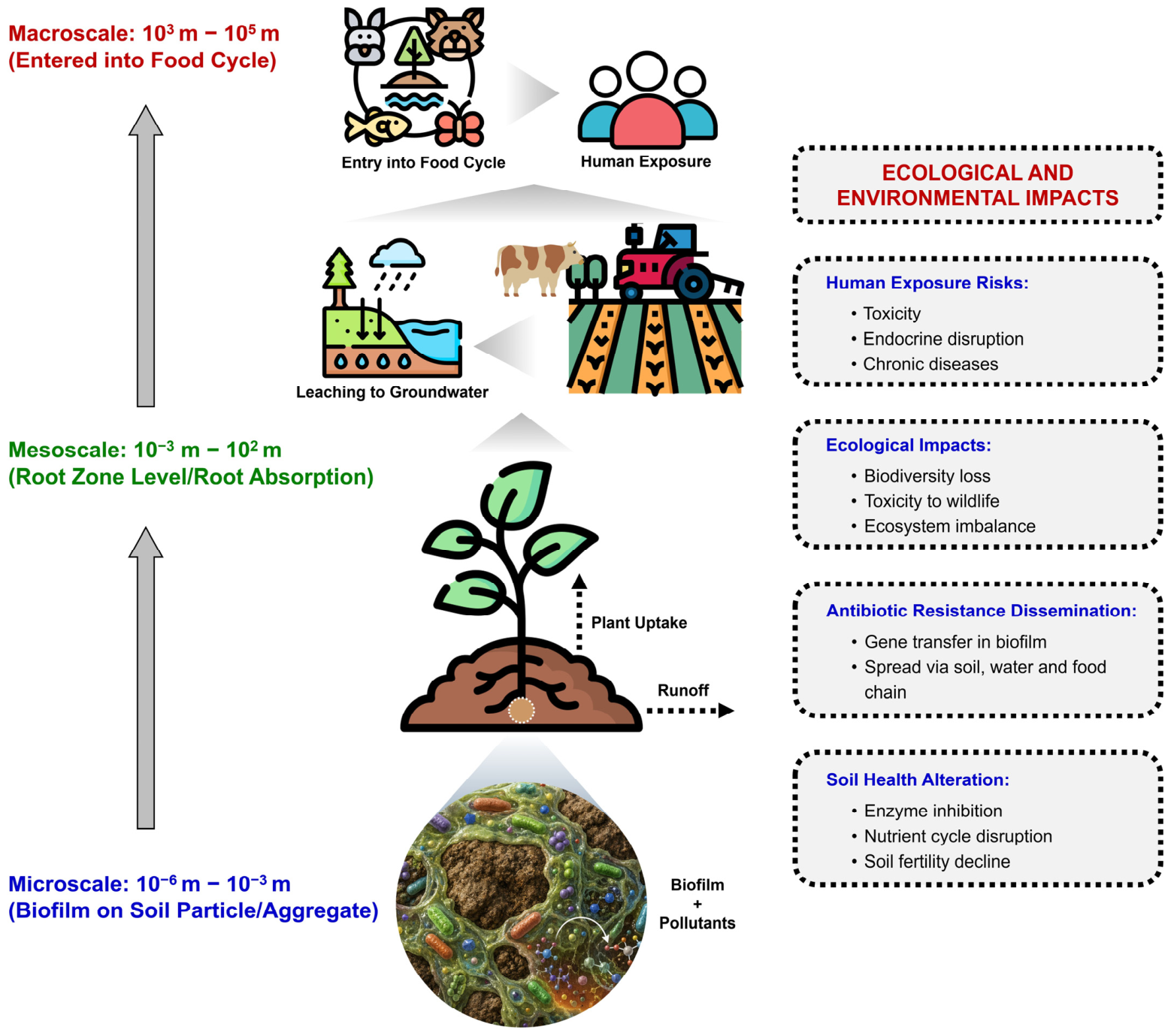
Soil biofilms influence ecological processes across scales by altering soil structure, nutrient cycling, and ecosystem functioning. They promote the formation of pollutant hotspots within aggregates and facilitate the dissemination of antibiotic resistance. These interactions extend beyond soils, linking to groundwater systems, food webs, and human exposure, thereby shaping the environmental fate and risks of emerging pollutants (Figure 3).

4.1. Impacts on Soil Structure, Nutrient Cycling, and Ecosystem Function

Soil pollutants, including heavy metals, pesticides, microplastics, and persistent industrial chemicals, fundamentally alter soil structure by disrupting the biofilm-mediated biological and physicochemical processes that maintain aggregation and porosity. The decline of key soil engineers such as earthworms and fungi reduces pore network formation, leading to compaction, reduced aeration, and impaired water infiltration [91]. In addition, contaminant stress can disrupt EPS production and biofilm stability, weakening particle adhesion and aggregate formation within soil microhabitats. Microplastics and hydrophobic organic contaminants further destabilise aggregates by interfering with particle binding and promoting surface hydrophobicity, increasing erosion and runoff [92,93]. These structural degradations diminish the soil’s capacity to retain water and nutrients, thereby compromising its resilience to environmental stress.
Contaminant-induced shifts in microbial communities exert profound effects on nutrient cycling. Toxic substances such as pesticides and heavy metals inhibit microbial enzymatic activity, slowing organic matter decomposition and disrupting key biogeochemical cycles, including nitrogen, phosphorus, and carbon. Because soil biofilms spatially organise microbial interactions and extracellular enzyme activity, pollutant-driven disturbances to biofilm structure can directly alter nutrient transformation pathways and metabolic cooperation among microbial taxa. For instance, pesticide degradation products have been shown to alter microbial metabolism and reduce nutrient bioavailability, directly affecting soil fertility and plant productivity [94]. Similarly, microplastics influence carbon and nitrogen cycling by modifying microbial biomass, enzyme activity, and denitrification processes, ultimately reducing microbial carbon use efficiency [93]. These disruptions collectively impair nutrient turnover and lead to long-term declines in soil fertility.
At the ecosystem scale, soil pollution drives biodiversity loss, weakens trophic interactions, and reduces ecosystem functionality. Contaminants selectively favour resistant microbial taxa while suppressing sensitive populations, leading to altered community composition and reduced biomass [95]. Biofilm-associated communities may partially buffer these impacts through metabolic cooperation, stress tolerance, and contaminant sequestration; however, persistent pollutant exposure can still destabilise biofilm structure and associated ecosystem functions. This imbalance affects primary productivity, carbon sequestration, and greenhouse gas regulation, with microplastic-induced shifts in microbial metabolism contributing to increased emissions [92]. Furthermore, polluted soils act as secondary sources of contamination through leaching and erosion, transferring pollutants into groundwater and food webs, thereby posing risks to ecological and human health [96]. These impacts highlight the cascading consequences of soil pollution across structural, functional, and ecological dimensions.

4.2. Formation of Contaminant Hotspots Within Soil Aggregates

Contaminant hotspot formation within soil aggregates represents a fundamental outcome of the interplay between physical structure and microbial organisation. Soil microaggregates provide confined, heterogeneous microhabitats, while biofilms, stabilised by EPS, create reactive interfaces that selectively accumulate pollutants. EPS matrices, rich in functional groups, facilitate adsorption and chelation of metals and hydrophobic organic compounds, including microplastics and PFAS, thereby concentrating them within discrete pore domains [97]. Concurrently, biofilm-induced bioclogging restricts fluid flow, enhancing contaminant retention and limiting diffusion, which promotes localised accumulation and persistence.
These hotspots exhibit pronounced spatial and biochemical heterogeneity, often occupying a minor fraction of soil volume yet driving disproportionately high transformation rates. Microbial activity within aggregates can be 2–20 times greater than in bulk soil, supporting intense metabolic turnover and “hot moments” of rapid biogeochemical processing [98]. Oxygen depletion within dense biofilms generates redox gradients, enabling processes such as metal reduction, precipitation, and anaerobic degradation pathways. Experimental evidence further demonstrates that biofilm-associated soils sustain significantly higher microbial diversity and respiration rates, reinforcing their role as dynamic centres of nutrient and contaminant cycling [30].
The environmental implications of these microscale hotspots extend across trophic and ecosystem levels. While biofilms can immobilise contaminants through sequestration mechanisms such as microbial-induced mineral precipitation, they may also shield persistent pollutants from degradation, prolonging their residence time. Microplastics, for instance, form “plastisphere” biofilms that act as reservoirs for co-contaminants and antibiotic resistance genes, amplifying ecological risks [99]. Moreover, contaminants concentrated within aggregates can become bioavailable to soil fauna, facilitating trophic transfer and entry into food webs. Understanding and manipulating these hotspots, through strategies such as bioaugmentation or engineered biofilms, offers a promising pathway for enhancing targeted soil remediation and controlling pollutant fate at the microscale.

4.3. Dissemination of Antibiotic Resistance Within Biofilm Networks

The dissemination of antibiotic resistance within soil systems is strongly governed by the structural and functional properties of biofilm networks, which act as dense, interactive microbial consortia. Within these biofilms, close cellular proximity, high biomass density, and the accumulation of antibiotics create ideal conditions for horizontal gene transfer (HGT), enabling rapid exchange of antibiotic resistance genes (ARGs) via plasmids, integrons, and bacteriophages [100]. Environmental inputs such as wastewater discharge and agricultural amendments further intensify this process, with biofilms consistently exhibiting higher ARG abundance than surrounding planktonic communities, highlighting their role as persistent reservoirs [101].
Agricultural practices are a major driver of ARG dissemination through biofilm-mediated pathways. The application of manure and slurry introduces both antibiotic residues and resistant microorganisms into soils, significantly altering microbial community structure and resistome composition. For instance, slurry fertilisation has been shown to enhance the prevalence of tetracycline and β-lactam resistance genes across soil and plant-associated microbiomes, with evidence of ARG transfer into edible plant tissues [102]. Similarly, environmental stressors such as pesticides and nutrient deposition can amplify ARG propagation by stimulating phage-mediated gene transfer and microbial competition, further accelerating resistance evolution [103]. These findings underscore the role of soil as a dynamic reservoir where anthropogenic pressures interact with microbial ecology to drive resistance dissemination.
Biofilm-associated microenvironments, including those formed on microplastics (“plastisphere”), represent critical hotspots for ARG accumulation and transmission. These structures support diverse microbial communities and enhance gene exchange through increased connectivity and network complexity [11]. Network-based analyses reveal that microbial interactions and community modularity play key roles in regulating ARG spread, with certain environmental conditions promoting highly connected systems that facilitate gene transfer [104]. From a One Health perspective, the movement of ARGs across soil, water, plants, and food systems highlights the far-reaching implications of biofilm-mediated resistance dissemination [105]. Addressing this challenge requires integrated strategies targeting environmental reservoirs, microbial interactions, and pollutant co-selection mechanisms to mitigate the global spread of antimicrobial resistance.

4.4. Linkages to Groundwater Systems, Food Webs, and Human Exposure

Soil–groundwater–food web linkages represent a tightly coupled continuum in which microbial processes regulate contaminant mobility and ultimately human exposure. Soil biofilms, composed of dense microbial consortia embedded in EPS, act as reactive interfaces controlling adsorption, transformation, and transport of pollutants. These interfacial processes, governed by adsorption/desorption equilibria, redox reactions, and colloidal transport, determine whether contaminants such as heavy metals, pesticides, and antibiotics are immobilised or mobilised into subsurface flow paths [91]. However, long-term irrigation with treated wastewater can disrupt native microbial assemblages, increase bacterial abundance while altering vertical community structure and facilitating the introduction of exogenous contaminants into deeper soil horizons, thereby enhancing leaching potential toward aquifers [106].
Groundwater systems, which supply nearly one-third of global drinking water, are particularly vulnerable due to their slow recharge and limited natural attenuation capacity [107]. Contaminants originating from agricultural runoff, industrial effluents, and landfill leachates can persist and migrate through aquifers, where biofilms exhibit partial resilience but limited degradation capacity under environmental stress [108]. Once contaminants enter irrigation systems, they propagate through food webs via plant uptake and trophic transfer. For example, cadmium and arsenic can bypass soil barriers and accumulate in staple crops such as rice and root vegetables, while antibiotic–heavy metal co-contamination further enhances ecological and human health risks through synergistic toxicity and resistance selection [109]. These processes directly link groundwater quality to food security, as contaminated irrigation water reduces crop safety and productivity [110].
Human exposure occurs through multiple converging pathways, including ingestion of contaminated groundwater, consumption of polluted crops, and inhalation or dermal contact with soil-derived particulates. Children are particularly vulnerable due to higher soil ingestion rates and physiological sensitivity. Chronic exposure to contaminants such as lead, arsenic, and organic pollutants is associated with neurological, cardiovascular, and carcinogenic outcomes, contributing substantially to global disease burdens [111]. Importantly, emerging evidence suggests that soil-derived contaminants can alter the human gut microbiome, increasing the bioavailability and toxicity of ingested pollutants. Thus, managing groundwater–soil–food linkages requires integrated strategies that reduce surface contamination, protect recharge zones, and harness microbial processes for sustainable bioremediation within a One Health framework.

5. Integrative Advances in Soil Biofilm Science: From Mechanistic Insight into Scalable Bioremediation of Emerging Pollutants

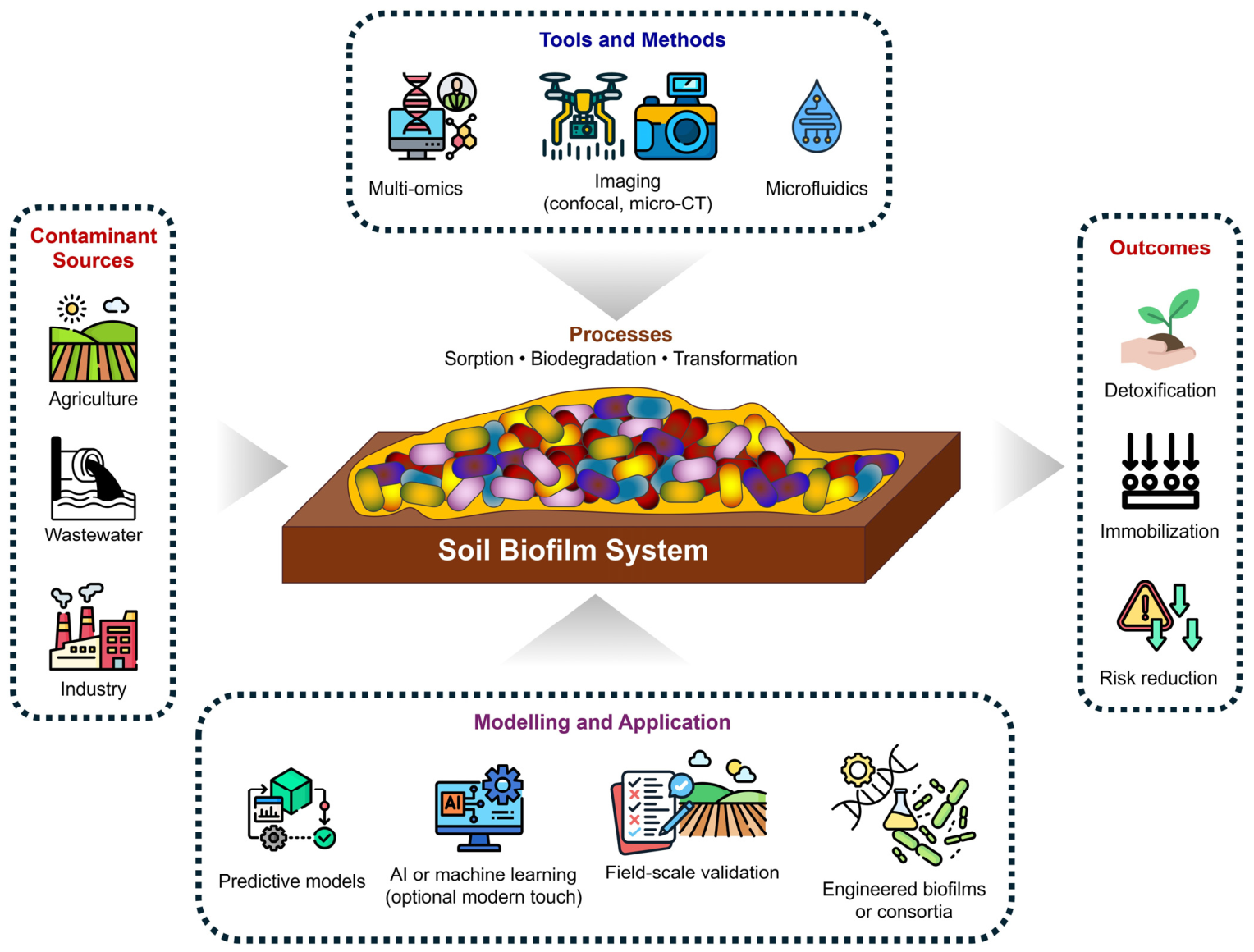
Integrative advances in soil biofilm science are reshaping our understanding of how complex microbial assemblages regulate the fate, transport, and transformation of emerging contaminants across environmental matrices. Soil biofilms function as dynamic biogeochemical interfaces, where EPS, diverse microbial consortia, and embedded enzymes collectively mediate sorption, biodegradation, and transformation processes under fluctuating physicochemical conditions [14]. Recent progress in multi-omics, high-resolution imaging, and in situ analytical techniques has enabled unprecedented insights into the spatial organisation, metabolic activity, and interaction networks within these systems, while also revealing critical gaps in scaling laboratory findings to heterogeneous field environments. As illustrated in Figure 4, a systems-level framework is emerging that integrates contaminant inputs, biofilm-mediated mechanisms, and environmental outcomes through iterative feedback between experimental data and predictive modelling. This integrative perspective not only advances mechanistic understanding but also supports the rational design of engineered biofilms and microbial consortia for sustainable bioremediation, bridging the divide between fundamental science and real-world environmental applications.

5.1. Emerging Analytical and Imaging Approaches for In Situ Biofilm Study

Emerging analytical and imaging approaches are advancing in situ biofilm studies by enabling high-resolution, non-invasive analysis of microbial structure and activity. Confocal laser scanning microscopy (CLSM) supports 3D and time-lapse imaging, while stimulated emission depletion microscopy (STED) and photoactivated localisation microscopy/stochastic optical reconstruction microscopy (PALM/STORM) resolve nanoscale microbial interactions and extracellular polymeric substance (EPS) architecture [112]. Additional techniques, including micro-computed tomography (micro-CT) and fluorescence in situ hybridisation (FISH)-based methods such as combinatorial labelling and spectral imaging FISH (CLASI-FISH) and bioorthogonal non-canonical amino acid tagging FISH (BONCAT-FISH), enable in situ taxonomic and metabolic mapping of microbial consortia [113].
Microfluidic platforms have transformed biofilm research by replicating environmental gradients, shear forces, and nutrient fluxes under tightly controlled conditions, enabling real-time monitoring of adhesion, maturation, and antimicrobial response dynamics [114]. Parallel advances in multi-omics (metatranscriptomics, spatial metabolomics) now connect gene expression and metabolite distribution to precise spatial coordinates within biofilm matrices, bridging structure–function relationships [114]. Importantly, AI-driven integration of imaging and omics datasets is emerging as a predictive tool for biofilm development and resilience [115]. Together, these convergent technologies provide a systems-level framework for decoding biofilm heterogeneity, enabling next-generation strategies for environmental and clinical bioremediation applications, as summarised in Table 3.

5.2. Bridging the Gap: From Controlled Experiments to Field-Scale Complexity

Despite major advances in laboratory-scale biofilm research, translating mechanistic insights into field-scale soil systems remains a persistent challenge due to the intrinsic complexity and multiscale variability of natural environments. Controlled experiments typically isolate single variables, yet real soils exhibit strong spatiotemporal heterogeneity, fluctuating redox gradients, hydrological intermittency, and chemically diverse contaminant mixtures that collectively generate nonlinear microbial and geochemical responses. As highlighted by Chen et al., these mismatches arise from scale-dependent processes, sampling disturbances, and the absence of plant–soil–microbial feedback loops, which together distort functional predictions when upscaling laboratory observations to ecosystem behaviour [118]. For example, biofilm-mediated carbon turnover observed under stable incubation conditions may shift dramatically in field soils where wet–dry cycles and root exudation continuously reshape microbial activity and nutrient availability [118].
Moreover, rare microbial taxa and stochastic ecological events, often excluded in laboratory consortia, can disproportionately influence resilience, resistance evolution, and long-term contaminant fate, particularly in heterogeneous soil–water interfaces where microscale gradients dominate function [17]. Although mathematical and computational models have improved predictive capacity for biofilm behaviour under defined constraints, their transferability to ecosystem-scale dynamics remains limited without robust field calibration [119]. Bridging this gap, therefore, requires integrative frameworks that couple controlled experiments with in situ observations and adaptive modelling, enabling a realistic representation of biofilm-mediated processes in complex environmental matrices.

5.3. Engineering Biofilm Systems and Predictive Models for Sustainable Remediation

Engineering biofilm integrated with predictive modelling is emerging as a promising approach for the sustainable remediation of persistent agrochemicals and plastics. Recent studies demonstrate bacterial–fungal consortia degrade fluorinated herbicides tembotrione via CYP-mediated pathways, where soil isolated Bacillus sp. MFK6 cleaves cyclohexane-1,3-dione moieties while Cunninghamella elegans biofilm with Bacillus sp. MFK6 transforms fluorinated aromatic groups, producing TFA as the terminal product [120]. Similar CYP-dependent biodegradation of fluorinated pyrethroids further confirms enzymatic convergence across xenobiotics [121]. Recent studies on Cunninghamella spp. further demonstrate that fungal biofilm growth and stability are tightly regulated by quorum-sensing molecules such as 3-hydroxytyrosol, tyrosol, tryptophol, and 2-phenylethanol, which selectively inhibit biofilm formation and promote biofilm detachment under specific conditions [122,123,124]. These findings provide mechanistic insights into fungal biofilm regulation and may support future strategies for engineering stable and controllable biofilm-based biotransformation systems. These processes are amplified in engineered biofilms, where spatial organisation enhances syntrophic exchange and resilience, a principle recognised in synthetic consortia design [125] and biofilm control modelling [119]. Biofilm-based reactors embedded with plastic-degrading and alkane-catabolizing enzymes also enable LDPE and HDPE transformation, highlighting scalable consortial strategies for waste valorisation [126].
However, field deployment requires predictive, data-driven frameworks capable of capturing nonlinear soil–water–microbiome interactions. Machine learning integrated with multi-omics has shown potential for optimising synthetic microbial consortia for remediation [127]. CRISPR-based genome editing may further improve pathway robustness and interspecies coordination, while AI-guided modelling can assist in predicting degradation kinetics under heterogeneous conditions [128]. Despite these advances, many engineered biofilm, CRISPR, and AI-assisted remediation strategies remain at an early stage of development for field-scale soil applications. Importantly, soil heterogeneity, redox fluctuations, and plant–soil–microbial feedbacks remain major scaling barriers identified in ecosystem studies [129]. Emerging frameworks integrate quorum sensing and enzyme networks to stabilise engineered biofilms in situ [23]. Collectively, these developments highlight the potential of engineered biofilms and predictive models for sustainable remediation, although further validation under realistic environmental conditions remains necessary before large-scale deployment [130].
Recent AI-assisted phytoremediation frameworks may also complement biofilm-based remediation strategies by predicting how soil physicochemical properties and plant–microbe interactions influence contaminant removal efficiency. Deep learning models trained on soil pH, moisture, pollutant concentrations, and plant biomass have been used to estimate remediation performance, while complementary soil-property-based models predict heavy metal uptake in crops such as tomato, improving agronomic risk forecasting [131]. These approaches are particularly relevant where rhizosphere-associated biofilms contribute to contaminant transformation, nutrient cycling, and regulation of metal bioavailability in plant–soil systems.

6. Conclusions and Future Directions

Soil biofilms emerge as central regulators of contaminant fate in terrestrial ecosystems due to their structural organisation, metabolic diversity, and capacity to engineer microscale environments. Their EPS matrices provide multifunctional interfaces for sorption and catalysis, while biofilm-associated metabolisms enable the transformation of chemically diverse pollutants. Importantly, recent insights emphasise that biofilms operate as self-organising, adaptive systems governed by interspecies signalling, metabolic cross-feeding, and evolutionary processes such as horizontal gene transfer, which collectively influence degradation efficiency and the propagation of resistance. This dual functionality, simultaneous detoxification and contaminant stabilisation, positions biofilms as both mitigators and reservoirs of environmental risk. Consequently, incorporating biofilm-explicit mechanisms into next-generation contaminant fate models is no longer optional but essential for accurate environmental prediction.
The complexity of biofilm–contaminant interactions arises from tightly coupled drivers, including soil structure, hydrology, redox dynamics, and microbiome composition, resulting in nonlinear and context-dependent outcomes. Future frameworks must integrate multi-scale experimental data with AI and machine learning approaches to capture these nonlinearities, enabling predictive modelling of contaminant degradation, microbial interactions, and ecosystem feedback. AI-driven phytoremediation and soil-property-based predictive models offer new opportunities to couple plant–microbe–soil processes, allowing real-time optimisation of remediation strategies under variable field conditions. However, major knowledge gaps persist for highly recalcitrant pollutants such as PFAS and nanoplastics, where enzymatic pathways and long-term transformation products remain poorly resolved.
Advancing the field requires a shift toward integrative and translational research. Combining spatial multi-omics, non-invasive imaging, and microsensor technologies with synthetic biology will enable the rational design of engineered biofilms and microbial consortia with enhanced functional stability and resilience. The incorporation of CRISPR-based genome editing, quorum-sensing engineering, and metabolite channelling can further optimise degradation pathways and interspecies cooperation. Equally critical is the development of hybrid experimental–computational platforms, including digital twins of soil systems, to bridge laboratory discoveries with field-scale implementation. Regulatory, ecological, and biosafety considerations must be embedded within these designs to ensure responsible deployment. Ultimately, a systems-level paradigm integrating microbial ecology, environmental chemistry, data science, and engineering is required to harness soil biofilms effectively. Such a convergence will enable the transition from descriptive studies to predictive, controllable, and scalable biofilm-based remediation technologies, supporting sustainable management of emerging contaminants under global environmental change.

Funding

The UCD Internal supported this research financially (award number: 82930-NP).

Data Availability Statement

All relevant data are included in the paper.

Acknowledgments

MFK would like to thank Aathika, his wife, for her unwavering support and encouragement throughout this work. He also acknowledges University College Dublin for providing excellent research facilities and laboratory resources that made this study possible.

Conflicts of Interest

The author declares no conflicts of interest.

References

  1. Flemming, H.C.; Wuertz, S. Bacteria and archaea on Earth and their abundance in biofilms. Nat. Rev. Microbiol. 2019, 17, 247–260. [Google Scholar] [CrossRef] [PubMed]
  2. Wang, G.; Li, T.; Zhou, Q.; Zhang, X.; Li, R.; Wang, J. Characterization and environmental applications of soil biofilms: A review. Environ. Chem. Lett. 2024, 22, 1989–2011. [Google Scholar] [CrossRef]
  3. Chen, Y.; Wang, X.; Wang, X.; Cheng, T.; Fu, K.; Qin, Z.; Feng, K. Biofilm structural and functional features on microplastic surfaces in greenhouse agricultural soil. Sustainability 2022, 14, 7024. [Google Scholar] [CrossRef]
  4. Booth, S.C.; Workentine, M.L.; Wen, J.; Shaykhutdinov, R.; Vogel, H.J.; Ceri, H.; Turner, R.J.; Weljie, A.M. Differences in metabolism between the biofilm and planktonic response to metal stress. J. Proteome Res. 2011, 10, 3190–3199. [Google Scholar] [CrossRef]
  5. Lerch, T.Z.; Chenu, C.; Dignac, M.F.; Barriuso, E.; Mariotti, A. Biofilm vs. planktonic lifestyle: Consequences for pesticide 2,4-D metabolism by Cupriavidus necator JMP134. Front. Microbiol. 2017, 8, 904. [Google Scholar] [CrossRef] [PubMed]
  6. Baxter, K.J.; Sas, E.; Clark, K.B.; Walsh, M.; Pradeep, N.; Batool, A.; Naney, C.; Vargas Cruz, M.A.; Kennerdale, N.; Das, K.; et al. Biofilms: From the cradle of life to life support. npj Biofilms Microbiomes 2026, 12, 11. [Google Scholar] [CrossRef]
  7. Mishra, S.; Huang, Y.; Li, J.; Wu, X.; Zhou, Z.; Lei, Q.; Bhatt, P.; Chen, S. Biofilm-mediated bioremediation is a powerful tool for the removal of environmental pollutants. Chemosphere 2022, 294, 133609. [Google Scholar] [CrossRef] [PubMed]
  8. Khan, M.F.; Murphy, C.D. Application of microbial biofilms in biocatalysis and biodegradation. In Enzymes for Pollutant Degradation; Mulla, S.I., Bharagava, R.N., Eds.; Springer: Singapore, 2022; Volume 30, pp. 1–25. [Google Scholar]
  9. Muñoz-Vega, E.; Schulz, S.; Rodriguez-Escales, P.; Behle, V.; Spada, L.; Vogel, A.L.; Sanchez-Vila, X.; Schüth, C. Role of soil biofilms in clogging and fate of pharmaceuticals: A laboratory-scale column experiment. Environ. Sci. Technol. 2023, 57, 12398–12410. [Google Scholar] [CrossRef]
  10. Mahto, K.U.; Vandana; Priyadarshanee, M.; Samantaray, D.P.; Das, S. Bacterial biofilm and extracellular polymeric substances in the treatment of environmental pollutants: Beyond the protective role in survivability. J. Clean. Prod. 2022, 379, 134759. [Google Scholar] [CrossRef]
  11. Zhang, X.; Dong, Z.; Zhang, S.; Ma, J.; Liu, S. Microplastic biofilm as hotspots of antibiotic resistance genes and potential pathogens. npj Biofilms Microbiomes 2025, 12, 24. [Google Scholar] [CrossRef]
  12. Gao, Z.; Tan, J.; Khan, M.F.; Chugh, G.; Schmidt, O.; Ma, L.; Bu, D. Emerging microbial and enzymatic approaches for sustainable antibiotic biodegradation in livestock manure to mitigate water pollution risks. Water 2025, 17, 2960. [Google Scholar] [CrossRef]
  13. Bystrianský, L.; Hujslová, M.; Hršelová, H.; Řezáčová, V.; Němcová, L.; Šimsová, J.; Gryndlerová, H.; Kofroňová, O.; Benada, O.; Gryndler, M. Observations on two microbial life strategies in soil: Planktonic and biofilm-forming microorganisms are separable. Soil Biol. Biochem. 2019, 136, 107535. [Google Scholar] [CrossRef]
  14. Cai, P.; Sun, X.; Wu, Y.; Gao, C.; Mortimer, M.; Holden, P.A.; Redmile-Gordon, M.; Huang, Q. Soil biofilms: Microbial interactions and characterization techniques. Soil Ecol. Lett. 2019, 1, 85–93. [Google Scholar] [CrossRef]
  15. Zhang, M.; Wu, Y.; Qu, C.; Huang, Q.; Cai, P. Microbial extracellular polymeric substances (EPS) in soil: From interfacial behaviour to ecological multifunctionality. Geo-Bio Interfaces 2024, 1, e4. [Google Scholar] [CrossRef]
  16. Costa, O.Y.A.; Raaijmakers, J.M.; Kuramae, E.E. Microbial Extracellular Polymeric Substances: Ecological Function and Impact on Soil Aggregation. Front. Microbiol. 2018, 9, 1636. [Google Scholar] [CrossRef] [PubMed]
  17. Majumdar, A.; Moulick, D.; Dey, A.; Das, D.; Ghosh, S.; Majumder, S.; Lama, U.; Roychowdhury, T. Micro-Scale Microbial Dynamics at the Soil–Water Interface: Biofilm Architecture, Non-Linear Response, and Emerging Methodological Frontiers. Water 2026, 18, 658. [Google Scholar] [CrossRef]
  18. Gerbersdorf, S.U.; Koca, K.; de Beer, D.; Chennu, A.; Noss, C.; Risse-Buhl, U.; Weitere, M.; Eiff, O.; Wagner, M.; Aberle, J.; et al. Exploring flow-biofilm-sediment interactions: Assessment of current status and future challenges. Water Res. 2020, 185, 116182. [Google Scholar] [CrossRef] [PubMed]
  19. Hadwick, G.L.; Jiménez Otero, F.; Gralnick, J.A.; Bond, D.R.; Orphan, V.J. NanoSIMS imaging reveals metabolic stratification within current-producing biofilms. Proc. Natl. Acad. Sci. USA 2019, 116, 20716–20724. [Google Scholar] [CrossRef] [PubMed]
  20. Modesto, L.R.; Baquedano, I.; Ramalhete, E.Ö.; Mena, S.; Sharma, M.; Rodríguez-Núñez, P.; Danilov, I.; Nath, D.; Tait, N.; Moro, I.J.; et al. Integrating electroactive microorganisms into active soil management strategies. Front. Microbiol. 2026, 17, 1753999. [Google Scholar] [CrossRef]
  21. Scheidweiler, D.; Peter, H.; Pramateftaki, P.; de Anna, P.; Battin, T.J. Unraveling the biophysical underpinnings to the success of multispecies biofilms in porous environments. ISME J. 2019, 13, 1700–1710. [Google Scholar] [CrossRef]
  22. Modkovski, T.A.; Haminiuk, C.W.I.; Nawate, B.A.L.; Chaves, J.R.D.; Azevedo, J.C.R. Exploring Periphytic Biofilms as Nature’s Cleanup Crew for Contaminated Surface Waters. Environ. Manag. 2026, 76, 100. [Google Scholar] [CrossRef]
  23. Khan, M.F. Microbial Remediation of Agrochemical-Contaminated Soils: Enzymatic Mechanisms, Quorum Sensing, and Emerging Opportunities. Integr. Environ. Assess. Manag. 2025, vjaf167. [Google Scholar] [CrossRef]
  24. Khan, M.F.; Hof, C.; Niemcová, P.; Murphy, C.D. Recent advances in fungal xenobiotic metabolism: Enzymes and applications. World J. Microbiol. Biotechnol. 2023, 39, 296. [Google Scholar] [CrossRef]
  25. Khan, M.F. Fungi for Sustainable Pharmaceutical Remediation: Enzymatic Innovations, Challenges, and Applications—A Review. Processes 2025, 13, 1034. [Google Scholar] [CrossRef]
  26. Khan, M.F. Recent Advances in Microbial Enzyme Applications for Sustainable Textile Processing and Waste Management. Sci 2025, 7, 46. [Google Scholar] [CrossRef]
  27. Khan, M.F.; Hof, C.; Niemcova, P.; Murphy, C.D. Biotransformation of fluorinated drugs and xenobiotics by the model fungus Cunninghamella elegans. Methods Enzymol. 2024, 696, 251–285. [Google Scholar]
  28. Nguyen, M.K.; Rakib, M.R.; Hwangbo, M.; Kim, J. Microplastic accumulation in soils: Unlocking the mechanism and biodegradation pathway. J. Hazard. Mater. Adv. 2025, 17, 100629. [Google Scholar] [CrossRef]
  29. Kidinda, L.K.; Babin, D.; Doetterl, S.; Kalbitz, K.; Mujinya, B.B.; Vogel, C. Extracellular polymeric substances are closely related to land cover, microbial communities, and enzyme activity in tropical soils. Soil Biol. Biochem. 2023, 187, 109221. [Google Scholar] [CrossRef]
  30. Wu, Y.; Cai, P.; Jing, X.; Niu, X.; Ji, D.; Ashry, N.M.; Gao, C.; Huang, Q. Soil biofilm formation enhances microbial community diversity and metabolic activity. Environ. Int. 2019, 132, 105116. [Google Scholar] [CrossRef] [PubMed]
  31. Liu, P.; Wen, S.; Zhu, S.; Hu, X.; Wang, Y. Microbial Degradation of Soil Organic Pollutants: Mechanisms, Challenges, and Advances in Forest Ecosystem Management. Processes 2025, 13, 916. [Google Scholar] [CrossRef]
  32. Mangwani, N.; Kumari, S.; Das, S. Bacterial biofilms and quorum sensing: Fidelity in bioremediation technology. Biotechnol. Genet. Eng. Rev. 2016, 32, 43–73. [Google Scholar] [CrossRef]
  33. Xiong, F.; Zhao, X.; Wen, D.; Li, Q. Effects of N-acyl-homoserine lactones-based quorum sensing on biofilm formation, sludge characteristics, and bacterial community during the start-up of bioaugmented reactors. Sci. Total Environ. 2020, 735, 139449. [Google Scholar] [CrossRef]
  34. Bhatt, P.; Huang, Y.; Zhan, H.; Chen, S. Insight into microbial applications for the biodegradation of pyrethroid insecticides. Front. Microbiol. 2019, 10, 1778. [Google Scholar] [CrossRef]
  35. Phour, M.; Sehrawat, A.; Sindhu, S.S.; Glick, B.R. Interkingdom signaling in plant-rhizomicrobiome interactions for sustainable agriculture. Microbiol. Res. 2020, 241, 126589. [Google Scholar] [CrossRef]
  36. Mondal, S.; Melzi, A.; Zecchin, S.; Cavalca, L. Quorum sensing in biofilm-mediated heavy metal resistance and transformation: Environmental perspectives and bioremediation. Front. Microbiol. 2025, 16, 1607370. [Google Scholar] [CrossRef] [PubMed]
  37. Toyofuku, M.; Zhou, S.; Sawada, I.; Takaya, N.; Uchiyama, H.; Nomura, N. Membrane vesicle formation is associated with pyocin production under denitrifying conditions in Pseudomonas aeruginosa PAO1. Environ. Microbiol. 2014, 16, 2927–2938. [Google Scholar] [CrossRef]
  38. Thalhammer, K.O.; Newman, D.K. A phenazine-inspired framework for identifying biological functions of microbial redox-active metabolites. Curr. Opin. Chem. Biol. 2023, 75, 102320. [Google Scholar] [CrossRef] [PubMed]
  39. Top, E.M.; Holben, W.E.; Forney, L.J. Characterization of diverse 2,4-dichlorophenoxyacetic acid-degradative plasmids isolated from soil by complementation. Appl. Environ. Microbiol. 1995, 61, 1691–1698. [Google Scholar] [CrossRef] [PubMed]
  40. Ren, L.; Zhang, J.; Geng, B.; Zhao, J.; Jia, W.; Cheng, L. Ecological Shifts and Functional Adaptations of Soil Microbial Communities Under Petroleum Hydrocarbon Contamination. Water 2025, 17, 1216. [Google Scholar] [CrossRef]
  41. Joshi, Y.; Divyanshu; Karmakar, R.; Andjelković, S.; Boyno, G.; Santoyo, G.; Olatunbosun, A.N.; Fathi, A.; Fazeli, A.; Roy, D.D.; et al. Unearthing and Harnessing the Role of Microbial Biofilms in Soil Ecosystems: Structure, Function and Potential for Enhancing Soil Integrity and Climate Mitigation. Agric. Commun. 2026, 4, 100133. [Google Scholar] [CrossRef]
  42. Joda, J.F.; Raji, R.O.; Nmadu, M.E.; Oyewole, O.A. The Interactions of Emergent Contaminants (ECs) with Soil Microbiome. Ecotoxicology 2026, 35, 71. [Google Scholar] [CrossRef]
  43. Thalmann, M.; Klitzke, S.; Lange, A.; Ruhl, A.S.; Peters, A. Modeling the fate of organic micropollutants in agricultural soils: Laboratory parameterization and field-scale implications. J. Contam. Hydrol. 2025, 276, 104779. [Google Scholar] [CrossRef] [PubMed]
  44. Proia, L.; Osorio, V.; Soley, S.; Köck-Schulmeyer, M.; Pérez, S.; Barceló, D.; Romaní, A.; Sabater, S. Effects of pesticides and pharmaceuticals on biofilms in a highly impacted river. Environ. Pollut. 2013, 178, 220–228. [Google Scholar] [CrossRef] [PubMed]
  45. Bodean, M.F.; Regaldo, L.M.; Mayora, G.; Mora, C.; Giri, F.; Gervasio, S.; Popielarz, A.; Repetti, M.R.; Licursi, M. Effects of herbicides and fertilization on biofilms of Pampean lotic systems: A microcosm study. Sci. Total Environ. 2024, 917, 170238. [Google Scholar] [CrossRef] [PubMed]
  46. Dhakal, G.; Thapa Magar, S.; Fujino, T. Pesticide Degradation by Soil Bacteria: Mechanisms, Bioremediation Strategies, and Implications for Sustainable Agriculture. Environments 2025, 12, 492. [Google Scholar] [CrossRef]
  47. Bhaskaralingam, A.; Sharma, G.; Wang, T.; Kumar, A.; Dhiman, P.; Kumar, D.; Shi, H. Bioremediation of pharmaceuticals waste and pesticides using various microorganisms: A review. Process Saf. Environ. Prot. 2024, 194, 1116–1132. [Google Scholar] [CrossRef]
  48. Némethová, E.; Řezáč, M.; Gryndler, M.; Abeyawardana, O.A.J.; Řezáčová, V. Soil pH mediates the impact of pesticides on bacterial communities, diversity, and abundance. Front. Microbiol. 2026, 16, 1670425. [Google Scholar] [CrossRef]
  49. Wang, C.; Wang, L.; Ok, Y.S.; Tsang, D.C.; Hou, D. Soil plastisphere: Exploration methods, influencing factors, and ecological insights. J. Hazard. Mater. 2022, 430, 128503. [Google Scholar] [CrossRef]
  50. MacLean, J.; Mayanna, S.; Benning, L.G.; Horn, F.; Bartholomäus, A.; Wiesner, Y.; Wagner, D.; Liebner, S. The Terrestrial Plastisphere: Diversity and Polymer-Colonizing Potential of Plastic-Associated Microbial Communities in Soil. Microorganisms 2021, 9, 1876. [Google Scholar] [CrossRef]
  51. Aralappanavar, V.K.; Mukhopadhyay, R.; Yu, Y.; Liu, J.; Bhatnagar, A.; Praveena, S.M.; Li, Y.; Paller, M.; Adyel, T.M.; Rinklebe, J.; et al. Effects of microplastics on soil microorganisms and microbial functions in nutrients and carbon cycling—A review. Sci. Total Environ. 2024, 924, 171435. [Google Scholar] [CrossRef]
  52. Rüthi, J.; Bölsterli, D.; Pardi-Comensoli, L.; Brunner, I.; Frey, B. The “Plastisphere” of Biodegradable Plastics Is Characterized by Specific Microbial Taxa of Alpine and Arctic Soils. Front. Environ. Sci. 2020, 8, 562263. [Google Scholar] [CrossRef]
  53. Ni, B.; Lin, D.; Cai, T.; Du, S.; Zhu, D. Soil Plastisphere Reinforces the Adverse Effect of Combined Pollutant Exposure on the Microfood Web. Environ. Sci. Technol. 2024, 58, 21641–21652. [Google Scholar] [CrossRef] [PubMed]
  54. Ran, T.; Liao, H.; Zhao, Y.; Li, J. Soil plastisphere interferes with soil bacterial community and their functions in the rhizosphere of pepper (Capsicum annuum L.). Ecotoxicol. Environ. Saf. 2024, 270, 115946. [Google Scholar] [CrossRef] [PubMed]
  55. Pahlavan, A. Soil plastisphere: The nexus of microplastics, bacteria, and biofilms. InterPore J. 2024, 1, 3. [Google Scholar] [CrossRef]
  56. Kundu, D.; Khan, M.F.; Gogoi, M.; Patra, S. Environmental impact and econanotoxicity of engineered nanomaterials. In Nanotoxicology and Nanoecotoxicology; Kumar, V., Guleria, P., Ranjan, S., Dasgupta, N., Lichtfouse, E., Eds.; Springer: Cham, Switzerland, 2021; Volume 1, pp. 287–312. [Google Scholar]
  57. Khan, M.F.; Murphy, C.D. Environmental remediation by novel nanomaterials and fungi with high-degradation capacity of hazardous contaminants. In Bio and Nanoremediation of Hazardous Environmental Pollutants; Fernández-Luqueño, F., López-Valdez, F., Medina-Pérez, G., Eds.; CRC Press: Boca Raton, FL, USA, 2023; pp. 283–310. [Google Scholar]
  58. Khan, M.F.; Kundu, D.; Gogoi, M.; Shrestha, A.K.; Karanth, N.G.; Patra, S. Enzyme-responsive and enzyme immobilised nanoplatforms for therapeutic delivery: An overview of research innovations and biomedical applications. Nanopharm. Princ. Appl. 2020, 3, 165–200. [Google Scholar]
  59. Dixit, R.; Wasiullah; Malaviya, D.; Pandiyan, K.; Singh, U.B.; Sahu, A.; Shukla, R.; Singh, B.P.; Rai, J.P.; Sharma, P.K.; et al. Bioremediation of Heavy Metals from Soil and Aquatic Environment: An Overview of Principles and Criteria of Fundamental Processes. Sustainability 2015, 7, 2189–2212. [Google Scholar] [CrossRef]
  60. Pande, V.; Pandey, S.C.; Sati, D.; Bhatt, P.; Samant, M. Microbial Interventions in Bioremediation of Heavy Metal Contaminants in Agroecosystem. Front. Microbiol. 2022, 13, 824084. [Google Scholar] [CrossRef]
  61. Chien, C.C.; Lin, B.C.; Wu, C. Biofilm formation and heavy metal resistance by an environmental Pseudomonas sp. Biochem. Eng. J. 2013, 78, 132–137. [Google Scholar] [CrossRef]
  62. Madawala, H.M.S.P. Role of Microorganisms in Bioavailability of Soil Pollutants. In One Health; Vithanage, M., Prasad, M.N.V., Eds.; Wiley: Hoboken, NJ, USA, 2023. [Google Scholar]
  63. Ikuma, K.; Decho, A.W.; Lau, B.L. When nanoparticles meet biofilms-interactions guiding the environmental fate and accumulation of nanoparticles. Front. Microbiol. 2015, 6, 591. [Google Scholar] [CrossRef]
  64. Desmau, M.; Carboni, A.; Le Bars, M.; Doelsch, E.; Benedetti, M.F.; Auffan, M.; Levard, C.; Gelabert, A. How Microbial Biofilms Control the Environmental Fate of Engineered Nanoparticles? Front. Environ. Sci. 2020, 8, 82. [Google Scholar]
  65. Kim, J.; Roche, K.R.; Bolster, D.; Doudrick, K. The impact of biofilms and dissolved organic matter on the transport of nanoparticles in field-scale streams. Water Res. 2022, 226, 119206. [Google Scholar] [CrossRef] [PubMed]
  66. Das, D.; Ingti, B.; Paul, P.; Jamatia, J.P.; Ete, T.; Khan, T.; Kalita, J. Soil microbial dynamics in response to the impact of nanoparticles on agricultural implications. Discov. Soil 2025, 2, 58. [Google Scholar] [CrossRef]
  67. Aliyari Rad, S.; Nobaharan, K.; Pashapoor, N.; Pandey, J.; Dehghanian, Z.; Senapathi, V.; Minkina, T.; Ren, W.; Rajput, V.D.; Asgari Lajayer, B. Nano-Microbial Remediation of Polluted Soil: A Brief Insight. Sustainability 2023, 15, 876. [Google Scholar] [CrossRef]
  68. Li, H.; Cui, X.; Sun, Y.; Zheng, P.; Wang, L.; Shi, X. Advances in Microbial Remediation of Heavy Metal-Contaminated Soils: Mechanisms, Synergistic Technologies, Field Applications and Future Perspectives. Toxics 2025, 13, 1069. [Google Scholar] [CrossRef] [PubMed]
  69. Correa, P.A.; Lin, L.; Just, C.L.; Hu, D.; Hornbuckle, K.C.; Schnoor, J.L.; Van Aken, B. The effects of individual PCB congeners on the soil bacterial community structure and the abundance of biphenyl dioxygenase genes. Environ. Int. 2010, 36, 901–906. [Google Scholar] [CrossRef]
  70. Thompson, K.A.; Mortazavian, S.; Gonzalez, D.; Bott, C.B.; Hooper, J.L.; Schaefer, C.E.; Dickenson, E.R. Poly- and Perfluoroalkyl Substances in Municipal Wastewater Treatment Plants in the United States: Seasonal Patterns and Meta-Analysis of Long-Term Trends and Average Concentrations. ACS EST Water 2022, 2, 690–700. [Google Scholar] [CrossRef]
  71. Nasrollahpour, S.; Purewal, S.; Kaur Brar, S.; Kumar Das, R. Biodegradation of Per- and Polyfluoroalkyl Substances: Mechanisms, Challenges, and Emerging Strategies for Sustainable Remediation. Environ. Sci. Water Res. Technol. 2026, 12, 397–420. [Google Scholar] [CrossRef]
  72. Khan, M.F. Recent Progress and Challenges in Microbial Defluorination and Degradation for Sustainable Remediation of Fluorinated Xenobiotics. Processes 2025, 13, 2017. [Google Scholar] [CrossRef]
  73. Kareem, H.A.; Khan, M.F. Current Research Advances and Future Prospects on Microbial Consortia for Sustainable PFAS Remediation. Int. J. Mol. Sci. 2026, 27, 2084. [Google Scholar] [CrossRef]
  74. Huang, S.; Sima, M.W.; Long, Y.; Messenger, C.; Jaffé, P.R. Anaerobic degradation of perfluorooctanoic acid (PFOA) in biosolids by Acidimicrobium sp. strain A6. J. Hazard. Mater. 2021, 424, 127699. [Google Scholar] [CrossRef]
  75. Chen, C.; Xu, G.; Rogers, M.J.; He, J. Metabolic Synergy of Dehalococcoides Populations Leading to Greater Reductive Dechlorination of Polychlorinated Biphenyls. Environ. Sci. Technol. 2024, 58, 2384–2392. [Google Scholar] [CrossRef]
  76. Khan, M.F.; Paul Guin, J.; Thampi, R.K.; Sullivan, J.A.; Murphy, C.D. Enhanced removal of perfluorooctanoic acid with sequential photocatalysis and fungal treatment. Environ. Sci. Pollut. Res. 2023, 30, 91478–91486. [Google Scholar] [CrossRef] [PubMed]
  77. Khan, M.F.; Murphy, C.D. Fluorotelomer alcohols are efficiently biotransformed by Cunninghamella elegans. Environ. Sci. Pollut. Res. 2023, 30, 23613–23623. [Google Scholar] [CrossRef] [PubMed]
  78. Campos-Pereira, H.; Kleja, D.B.; Ahrens, L.; Enell, A.; Kikuchi, J.; Pettersson, M.; Gustafsson, J.P. Effect of pH, surface charge and soil properties on the solid-solution partitioning of perfluoroalkyl substances (PFASs) in a wide range of temperate soils. Chemosphere 2023, 321, 138133. [Google Scholar] [CrossRef]
  79. Kim, J.; Leonard, S.W.; Van Meter, M.I.; Kim-Fu, M.L.; Cao, D.; Field, J.A.; Chu, K.H. Nexus of Soil Microbiomes, Genes, Classes of Carbon Substrates, and Biotransformation of Fluorotelomer-Based Precursors. Environ. Sci. Technol. 2024, 58, 20553–20565. [Google Scholar] [CrossRef]
  80. Lorah, M.M.; He, K.; Blaney, L.; Akob, D.M.; Harris, C.; Tokranov, A.; Hopkins, Z.; Shedd, B.P. Anaerobic biodegradation of perfluorooctane sulfonate (PFOS) and microbial community composition in soil amended with a dechlorinating culture and chlorinated solvents. Sci. Total Environ. 2024, 932, 172996. [Google Scholar] [CrossRef] [PubMed]
  81. Cai, Y.; Chen, H.; Yuan, R.; Wang, F.; Chen, Z.; Zhou, B. Metagenomic analysis of soil microbial community under PFOA and PFOS stress. Environ. Res. 2020, 188, 109838. [Google Scholar] [CrossRef]
  82. Haluska, A.A.; Röhler, K.; Fabregat-Palau, J.; Alexandrino, D.A.M.; Abramov, S.; Thompson, K.J.; Straub, D.; Kleindienst, S.; Bugsel, B.; Zweigle, J.; et al. Complementary Field and Laboratory Batch Studies to Quantify Generation Rates of Perfluoroalkyl Acids in a Contaminated Agricultural Topsoil with Unknown Precursors. Groundw. Monit. Remediat. 2024, 44, 61–75. [Google Scholar] [CrossRef]
  83. Yang, S.H.; Shan, L.; Chu, K.H. Root exudates enhanced 6:2 FTOH defluorination, altered metabolite profiles and shifted soil microbiome dynamics. J. Hazard. Mater. 2024, 466, 133651. [Google Scholar] [CrossRef] [PubMed]
  84. Sun, T.; Wang, F.; Xie, Y.; Liu, X.; Yu, H.; Lv, M.; Zhang, Y.; Xu, Y. Biochar remediation of PFOA contaminated soil decreased the microbial network complexity. J. Environ. Chem. Eng. 2023, 11, 109239. [Google Scholar] [CrossRef]
  85. Askeland, M.; Clarke, B.O.; Cheema, S.A.; Mendez, A.; Gasco, G.; Paz-Ferreiro, J. Biochar sorption of PFOS, PFOA, PFHxS and PFHxA in two soils with contrasting texture. Chemosphere 2020, 249, 126072. [Google Scholar] [CrossRef]
  86. Zhang, W.; Liang, Y. Performance of Different Sorbents toward Stabilising Per- and Polyfluoroalkyl Substances (PFAS) in Soil. Environ. Adv. 2022, 8, 100217. [Google Scholar] [CrossRef]
  87. Liu, H.; Hu, W.; Li, X.; Hu, F.; Liu, Y.; Xie, T.; Liu, B.; Xi, Y.; Su, Z.; Zhang, C. Effects of perfluoroalkyl substances on root and rhizosphere bacteria: Phytotoxicity, phyto-microbial remediation, risk assessment. Chemosphere 2021, 289, 133137. [Google Scholar] [CrossRef]
  88. Wu, E.; Wang, K.; Zhou, J.; Wang, J.; Liu, Z.; Yan, H.; Zhu, X.; Chen, B. Fatty Acid Metabolic Impairment in Soil Microbes Induced by PFAS: Dependence on the Fluorocarbon Chain Length, Headgroups, and Ether Attached. Environ. Sci. Technol. 2025, 59, 5452–5462. [Google Scholar] [CrossRef]
  89. Dong, S.; Yan, P.F.; Mezzari, M.P.; Abriola, L.M.; Pennell, K.D.; Cápiro, N.L. Using Network Analysis and Predictive Functional Analysis to Explore the Fluorotelomer Biotransformation Potential of Soil Microbial Communities. Environ. Sci. Technol. 2024, 58, 7480–7492. [Google Scholar] [CrossRef]
  90. Sørmo, E.; Silvani, L.; Bjerkli, N.; Hagemann, N.; Zimmerman, A.R.; Hale, S.E.; Hansen, C.B.; Hartnik, T.; Cornelissen, G. Stabilization of PFAS-contaminated soil with activated biochar. Sci. Total Environ. 2021, 763, 144034. [Google Scholar] [CrossRef]
  91. Omo-Okoro, P.; Ofori, P.; Amalapridman, V.; Dadrasnia, A.; Abbey, L.; Emenike, C. Soil Pollution and Its Interrelation with Interfacial Chemistry. Molecules 2025, 30, 2636. [Google Scholar] [CrossRef] [PubMed]
  92. Aslam, I.; Bux, N.; Yu, X.; Bi, M.; Guo, H.; Niu, Y.; Ma, Q.; Wang, T. Microplastics in agricultural soils: Impacts on soil microbial communities, nutrient cycling, earthworm health, and soil ecosystem functions. Environ. Chem. Ecotoxicol. 2026, 8, 1157–1175. [Google Scholar] [CrossRef]
  93. Wijesooriya, M.; Wijesekara, H.; Sewwandi, M.; Soysa, S.; Rajapaksha, A.U.; Vithanage, M.; Bolan, N. Microplastics and Soil Nutrient Cycling. In Microplastics in the Ecosphere; Vithanage, M., Prasad, M.N.V., Eds.; Wiley: Hoboken, NJ, USA, 2023; pp. 321–338. [Google Scholar]
  94. Yasir, M.; Hossain, A.; Pratap-Singh, A. Pesticide Degradation: Impacts on Soil Fertility and Nutrient Cycling. Environments 2025, 12, 272. [Google Scholar] [CrossRef]
  95. Baudrot, V.; Fritsch, C.; Perasso, A.; Banerjee, M.; Raoul, F. Effects of contaminants and trophic cascade regulation on food chain stability: Application to cadmium soil pollution on small mammals—Raptor systems. Ecol. Model. 2018, 382, 33–42. [Google Scholar] [CrossRef]
  96. Nuruzzaman, M.; Bahar, M.M.; Naidu, R. Diffuse soil pollution from agriculture: Impacts and remediation. Sci. Total Environ. 2025, 962, 178398. [Google Scholar] [CrossRef]
  97. Singh, P.; Shivashankar, M. Unveiling the Soil-Altering Synergy: The Dynamic Interplay Between Microplastics and Extracellular Polymeric Substances (EPS) in Agricultural Landscapes. Chem. Eng. J. Adv. 2026, 25, 101042. [Google Scholar] [CrossRef]
  98. Kuzyakov, Y.; Blagodatskaya, E. Microbial hotspots and hot moments in soil: Concept & review. Soil Biol. Biochem. 2015, 83, 184–199. [Google Scholar]
  99. Joos, L.; de Tender, C. Soil under stress: The importance of soil life and how it is influenced by (micro)plastic pollution. Comput. Struct. Biotechnol. J. 2022, 20, 1554–1566. [Google Scholar] [CrossRef]
  100. Li, L.; Li, J.; Rahman, S.U.; Rehman, A.; Khalid, M. Antibiotic resistance dissemination in soil ecosystems: Deep understanding for effective management and global health protection. BioMetals 2026, 39, 59–83. [Google Scholar] [CrossRef]
  101. Haenelt, S.; Richnow, H.-H.; Müller, J.A.; Musat, N. Antibiotic resistance indicator genes in biofilm and planktonic microbial communities after wastewater discharge. Front. Microbiol. 2023, 14, 1252870. [Google Scholar] [CrossRef] [PubMed]
  102. Ransirini, A.M.; Elżbieta, M.; Joanna, G.; Bartosz, K.; Wojciech, T.; Agnieszka, B.; Magdalena, U. Fertilizing drug resistance: Dissemination of antibiotic resistance genes in soil and plant bacteria under bovine and swine slurry fertilization. Sci. Total Environ. 2024, 946, 174476. [Google Scholar] [CrossRef] [PubMed]
  103. Shen, L.; Lin, D.; Ye, Y.; Liu, Y.; Ni, B.; Wu, D.; Wang, L.; Zhu, D. Combined pesticide pollution enhances the dissemination of the phage-encoded antibiotic resistome in the soil under nitrogen deposition. Proc. Natl. Acad. Sci. USA 2025, 122, e2516722122. [Google Scholar] [CrossRef]
  104. Gao, Q.; Gao, S.; Bates, C.T.; Zeng, Y.; Lei, J.; Su, H.; Dong, Q.; Qin, Z.; Zhao, J.; Zhang, Q.; et al. The microbial network property as a bio-indicator of antibiotic transmission in the environment. Sci. Total Environ. 2020, 758, 143712. [Google Scholar] [CrossRef] [PubMed]
  105. Sassi, A.; Basher, N.S.; Kirat, H.; Meradji, S.; Ibrahim, N.A.; Idres, T.; Touati, A. The Role of the Environment (Water, Air, Soil) in the Emergence and Dissemination of Antimicrobial Resistance: A One Health Perspective. Antibiotics 2025, 14, 764. [Google Scholar] [CrossRef]
  106. Dang, Q.; Tan, W.; Zhao, X.; Li, D.; Li, Y.; Yang, T.; Li, R.; Zu, G.; Xi, B. Linking the response of soil microbial community structure in soils to long-term wastewater irrigation and soil depth. Sci. Total Environ. 2019, 688, 26–36. [Google Scholar] [CrossRef]
  107. Li, P.; Karunanidhi, D.; Subramani, T.; Srinivasamoorthy, K. Sources and Consequences of Groundwater Contamination. Arch. Environ. Contam. Toxicol. 2021, 80, 1–10. [Google Scholar] [CrossRef]
  108. Weaver, L.; Webber, J.B.; Hickson, A.C.; Abraham, P.; Close, M.E. Biofilm resilience to desiccation in groundwater aquifers: A laboratory and field study. Sci. Total Environ. 2015, 514, 281–289. [Google Scholar] [CrossRef]
  109. Shu, Y.; Li, D.; Xie, T.; Zhao, K.; Zhou, L.; Li, F. Antibiotics-heavy metals combined pollution in agricultural soils: Sources, fate, risks, and countermeasures. Green Energy Environ. 2024, 10, 869–897. [Google Scholar] [CrossRef]
  110. Irfeey, A.M.M.; Najim, M.M.M.; Alotaibi, B.A.; Traore, A. Groundwater Pollution Impact on Food Security. Sustainability 2023, 15, 4202. [Google Scholar] [CrossRef]
  111. Münzel, T.; Hahad, O.; Daiber, A.; Landrigan, P.J. Soil and water pollution and human health: What should cardiologists worry about? Cardiovasc. Res. 2023, 119, 440–449. [Google Scholar] [CrossRef]
  112. Neu, T.R.; Kuhlicke, U. Biofilm Analysis by Confocal Microscopy-Basics and Practical Aspects. Microsc. Res. Tech. 2026, 89, 183–206. [Google Scholar] [CrossRef]
  113. Barbosa, A.; Miranda, S.; Azevedo, N.F.; Cerqueira, L.; Azevedo, A.S. Imaging biofilms using fluorescence in situ hybridization: Seeing is believing. Front. Cell Infect. Microbiol. 2023, 13, 1195803. [Google Scholar] [CrossRef]
  114. Yu, Y.; Wen, H.; Li, S.; Cao, H.; Li, X.; Ma, Z.; She, X.; Zhou, L.; Huang, S. Emerging microfluidic technologies for microbiome research. Front. Microbiol. 2022, 13, 906979. [Google Scholar] [CrossRef]
  115. Parmar, D.; Rosado-Rosa, J.M.; Shrout, J.D.; Sweedler, J.V. Metabolic insights from mass spectrometry imaging of biofilms: A perspective from model microorganisms. Methods 2024, 224, 21–34. [Google Scholar] [CrossRef]
  116. Carsten, A.; Wolters, M.; Aepfelbacher, M. Super-resolution fluorescence microscopy for investigating bacterial cell biology. Mol. Microbiol. 2024, 121, 646–658. [Google Scholar] [CrossRef] [PubMed]
  117. Carrel, M.; Beltran, M.A.; Morales, V.L.; Derlon, N.; Morgenroth, E.; Kaufmann, R.; Holzner, M. Biofilm imaging in porous media by laboratory X-Ray tomography: Combining a non-destructive contrast agent with propagation-based phase-contrast imaging tools. PLoS ONE 2017, 12, e0180374. [Google Scholar] [CrossRef]
  118. Chen, J.; Zhang, Y.; Kuzyakov, Y.; Wang, D.; Olesen, J.E. Challenges in upscaling laboratory studies to ecosystems in soil microbiology research. Glob. Change Biol. 2023, 29, 569–574. [Google Scholar] [CrossRef]
  119. Dzianach, P.A.; Dykes, G.A.; Strachan, N.J.C.; Forbes, K.J.; Pérez-Reche, F.J. Challenges of biofilm control and utilization: Lessons from mathematical modelling. J. R. Soc. Interface 2019, 16, 20190042. [Google Scholar] [CrossRef]
  120. Khan, M.F.; Rama, M.; Murphy, C.D. Biodegradation of fluorinated β-triketone herbicide tembotrione by a bacterial–fungal consortium. Biocatal. Agric. Biotechnol. 2025, 15, 103828. [Google Scholar] [CrossRef]
  121. Khan, M.F.; Liao, J.; Liu, Z.; Chugh, G. Bacterial cytochrome P450 involvement in the biodegradation of fluorinated pyrethroids. J. Xenobiot. 2025, 15, 58. [Google Scholar] [CrossRef]
  122. Hof, C.; Khan, M.F.; Murphy, C.D. Endogenous production of 2-phenylethanol by Cunninghamella echinulata inhibits biofilm growth of the fungus. Fungal Biol. 2023, 127, 1384–1388. [Google Scholar] [CrossRef]
  123. Khan, M.F.; Saleem, D.; Murphy, C.D. Regulation of Cunninghamella spp. biofilm growth by tryptophol and tyrosol. Biofilm 2021, 3, 100046. [Google Scholar] [CrossRef]
  124. Khan, M.F.; Murphy, C.D. 3-Hydroxytyrosol regulates biofilm growth in Cunninghamella elegans. Fungal Biol. 2021, 125, 211–217. [Google Scholar] [CrossRef] [PubMed]
  125. Brune, K.D.; Bayer, T.S. Engineering microbial consortia to enhance biomining and bioremediation. Front. Microbiol. 2012, 3, 203. [Google Scholar] [CrossRef] [PubMed]
  126. Skariyachan, S.; Manjunath, M.; Shankar, A.; Bachappanavar, N.; Patil, A.A. Application of Novel Microbial Consortia for Environmental Site Remediation and Hazardous Waste Management Toward Low- and High-Density Polyethylene and Prioritizing the Cost-Effective, Eco-friendly, and Sustainable Biotechnological Intervention. In Handbook of Environmental Materials Management; Hussain, C., Ed.; Springer: Cham, Switzerland, 2019; pp. 431–478. [Google Scholar]
  127. Renganathan, P.; Gaysina, L.A.; García Gutiérrez, C.; Rueda Puente, E.O.; Sainz-Hernández, J.C. Harnessing Engineered Microbial Consortia for Xenobiotic Bioremediation: Integrating Multi-Omics and AI for Next-Generation Wastewater Treatment. J. Xenobiot. 2025, 15, 133. [Google Scholar] [CrossRef] [PubMed]
  128. Ali, A.; Zedan, T.H.; Hassan, M.; Ali, N.; Naeem, Z.; Devi, K.G.; Attique, Z. A Review of CRISPR-Engineered Microbial Consortia for Biodegradation of Petroleum Pollutants. Desal. Water Treat. 2025, 325, 101612. [Google Scholar] [CrossRef]
  129. Li, X.; Wu, S.; Dong, Y.; Fan, H.; Bai, Z.; Zhuang, X. Engineering Microbial Consortia towards Bioremediation. Water 2021, 13, 2928. [Google Scholar] [CrossRef]
  130. Pegu, D.; Sarkar, S.; Kumar, A.; Teronpi, V. Sustainable bioremediation through microbial community design and smart ecological monitoring. Ann. Microbiol. 2026, 76, 3. [Google Scholar] [CrossRef]
  131. Sujitha, S.; Vikram, M.; Yuvaraj, J.; Ripam, R.; Dhanush Aravind, S. AI-Driven Phytoremediation: Predictive Modeling for Soil Contaminant Reduction. In 2025 Third International Conference on Augmented Intelligence and Sustainable Systems (ICAISS), Trichy, India, 21–23 May 2026; IEEE: Piscataway, NJ, USA, 2025; pp. 1436–1441. [Google Scholar]
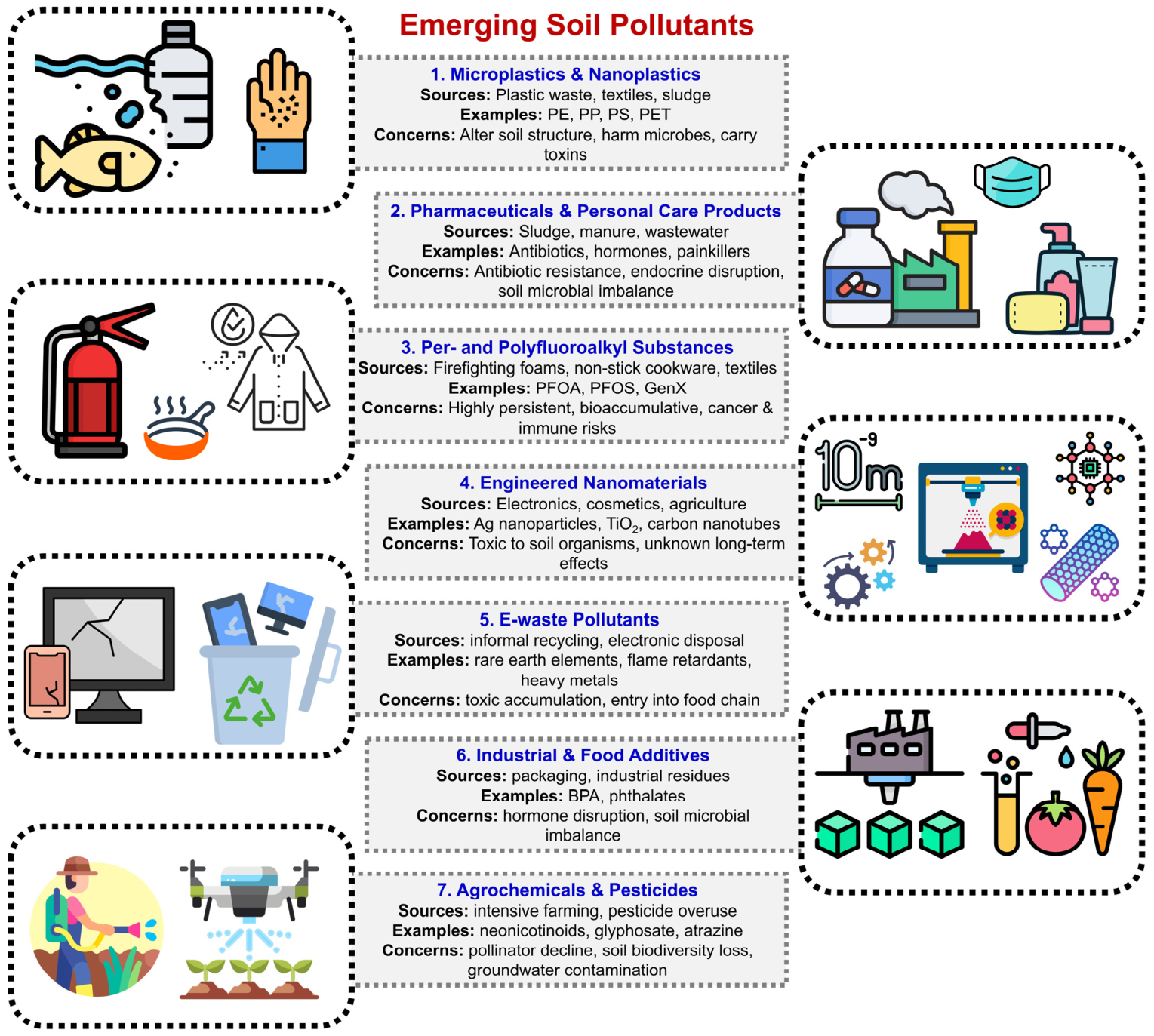
Figure 1. Classification, sources, and risks of major emerging soil contaminants. The figure illustrates major contaminant categories, including microplastics, pharmaceuticals, per- and polyfluoroalkyl substances (PFAS), engineered nanomaterials, electronic waste pollutants, industrial additives, and agrochemicals. Abbreviations: PE, polyethylene; PP, polypropylene; PS, polystyrene; PET, polyethylene terephthalate; PFOA, perfluorooctanoic acid; PFOS, perfluorooctane sulfonate; BPA, bisphenol A; TiO2, titanium dioxide.
Processes 14 01776 g001
Figure 2. Mechanisms of pollutant bioremediation mediated by soil biofilms. Soil biofilms transform pollutants through physicochemical and biological processes within the EPS matrix. Key mechanisms include sorption, sequestration, enzymatic degradation, biotransformation, metabolic cooperation, quorum sensing, and gene transfer. Together, these processes promote pollutant removal and conversion into less harmful forms, highlighting biofilms as dynamic microreactors in soil remediation.
Processes 14 01776 g002
Figure 3. Cross-scale transport and ecological impacts mediated by soil biofilms. This figure illustrates a multiscale framework linking biofilm processes to ecosystem and human health outcomes. At the microscale, EPS mediate pollutant sorption and transformation within soil pores. At larger scales, contaminants accumulate, undergo transport, enter plant roots and groundwater, and contribute to ecological disruption, biodiversity loss, antibiotic resistance spread, soil health alteration, and human exposure risks.
Processes 14 01776 g003
Figure 4. Integrated framework for biofilm-based bioremediation and predictive modelling of contaminant fate. This figure presents a systems-level framework linking contaminant inputs, biofilm-mediated processes, and environmental outcomes. Soil biofilms drive sorption, biodegradation, and transformation within microbial consortia and EPS matrices. Multi-omics, imaging, predictive modelling, and engineered biofilm systems support mechanistic understanding and field-scale remediation, while feedback loops enable adaptive strategies for sustainable contaminant management.
Processes 14 01776 g004
Table 1. Quorum sensing–regulated mechanisms in soil and rhizosphere-associated biofilm-mediated pollutant degradation.
QS Signal TypeSoil and Rhizosphere-Associated Biofilm SystemRegulatory Function in BiofilmTarget ContaminantTransformation OutcomeReference
N-acyl homoserine lactones (AHLs)Gram-negative biofilms (Pseudomonas, Burkholderia)LuxR–LuxI regulation of catabolic genes and biofilm formationPesticides, PAHs, phenolEnhanced enzymatic degradation and mineralisation[7,32,33]
Autoinducing peptides (AIPs)Gram-positive biofilms (Bacillus subtilis)Two-component signaling controlling enzyme production and stress responsePyrethroids, PAHsInduction of degradative enzymes and stress-resistant populations[34]
Autoinducer-2 (AI-2)Mixed-species biofilmsInterspecies signaling coordinating metabolic activityAgrochemicalsSynchronized consortial degradation[35]
Diffusible signal factors (DSFs)Rhizosphere biofilms (Xanthomonas, Stenotrophomonas)Regulation of EPS production and stress tolerancePAHs, nitrophenolsImproved biofilm stability and degradation efficiency[36]
Quinolone signals (PQS)Pseudomonas aeruginosa biofilmsRegulation of redox activity and biosurfactant productionHydrophobic organicsEnhanced pollutant solubilisation and uptake[37]
Phenazines (redox-active signals)Soil-associated Pseudomonas spp.Redox cycling and electron transferRecalcitrant organicsIncreased bioavailability and transformation[38]
QS-regulated HGTSoil and rhizosphere microbial consortiaRegulation of plasmid transfer and gene exchangeXenobiotics (e.g., 2,4-D)Rapid dissemination of degradation pathways[39]
Table 2. PFAS behaviour in soils: influence of soil properties, microbial community responses, and biotransformation pathways including sorption, defluorination, and degradation.
Substrates (PFAS/Precursors)Soil Type and Microbial Community ResponseMechanism and OutcomeReferences
PFOA, PFDA, PFUnDA, PFHxS, PFOS, FOSATemperate mineral soils rich in OC and Fe/Al oxides; native microbiota showed minimal biodegradation responsepH-dependent sorption; chain length increases binding; Fe/Al oxides + OC control partitioning; no biodegradation[78]
6:2 FTOH, 6:2 FTS, n:2 FTOHsSoil microcosms with enrichment of Pseudomonas, Variovorax, and RhodococcusCo-metabolic oxidation and desulfonation; forms 5:3 FTCA, PFHxA, PFOA; carbon source controls activity[79]
PFOSAFFF-contaminated soils where sulfate reducers and dehalogenating culture WBC-2 were enrichedPartial anaerobic transformation (~46%); limited metabolites; likely ultrashort PFAS or F formation[80]
PFOA, PFOSAgricultural soils exhibiting shifts toward Proteobacteria, Acidobacteria, Bacillus, and SphingomonasCommunity shift under PFAS stress; altered C/N metabolism and transport pathways[81]
Short-chain PFAAs (precursors)Agricultural topsoil microbial communities with limited mineralisation capacitySlow precursor breakdown; long-term formation of short-chain PFAS; low mineralisation[82]
6:2 FTOH (rhizosphere)Rhizosphere soils with root exudate-stimulated Rhodococcus jostii RHA1 activityEnhanced co-metabolic defluorination; root exudates increase metabolite diversity[83]
PFOS, PFOABiochar-amended soils with reduced native microbial network complexitySorption dominates; reduced leaching; microbial network complexity decreases[84]
PFOS, PFHxS, PFHxA, PFOABiochar-amended sandy loam and loamy sand soils with immobilisation-dominated responsesStrong immobilisation of long-chain PFAS; weak retention of short-chain PFAS[85]
PFAS mixtures (PFOA, PFOS, PFBS, GenX, PFHxA)Activated carbon/biochar-amended soils with adsorption-driven contaminant retentionStrong adsorption of long-chain PFAS; short-chain PFAS remain mobile[86]
PFOA, HFPO-DA, mixturesRhizosphere systems with altered root-associated microbiomes under PFAS stressBioaccumulation, oxidative stress; phyto-microbial remediation potential[87]
PFAS (PFCAs, PFSAs, PFECAs)Soil systems involving Pseudomonas aeruginosa with membrane and QS-associated stress responsesStructure-dependent fatty acid disruption; membrane, acetyl-CoA, QS effects[88]
8:2 FTOH, 6:2 FTSSoil microcosms where Variovorax, Rhodococcus, and Cupriavidus were associated with defluorination activityDefluorination genes linked to microbial network interactions[89]
PFAS mixtureContaminated soils with activated biochar-associated microbiomes reduce PFAS mobilityBiochar reduces leaching (up to 100%); depends on activation and TOC[90]
Abbreviations: PFAS: Per- and polyfluoroalkyl substances, PFOA: Perfluorooctanoic acid, PFOS: Perfluorooctane sulfonic acid, PFHxS: Perfluorohexane sulfonic acid, PFHxA: Perfluorohexanoic acid, PFDA: Perfluorodecanoic acid, PFUnDA: Perfluoroundecanoic acid, PFECA: Perfluoroether carboxylic acids, FOSA: Perfluorooctane sulfonamide, PFSA: Perfluoroalkane sulfonic acids, PFBS: Perfluorobutane sulfonic acid, FTOH: Fluorotelomer alcohol, FTS: Fluorotelomer sulfonate, FTCA: Fluorotelomer carboxylic acid, AFFF: Aqueous film-forming foam, HFPO-DA: Hexafluoropropylene oxide-dimer acid, TOC: Total organic carbon, OC: Organic carbon, C/N: Carbon/nitrogen.
Table 3. Techniques for in situ biofilm analysis.
TechniqueWorking PrincipleApplication in BiofilmsReference
CLSMLaser-based optical sectioning for 3D fluorescence imagingBiofilm architecture, EPS distribution, live/dead structure[112]
Super-resolution microscopyBreaks the diffraction limit using stimulated emission or stochastic switchingNanoscale microbial interactions and EPS organisation[116]
Micro-CTX-ray-based non-destructive 3D imagingBiofilm structure on opaque/complex substrates[117]
FISH variantsFluorescent probes targeting rRNA/gene transcriptsSpecies localisation, metabolic activity mapping[113]
MicrofluidicsControlled flow and chemical gradients in miniaturised channelsReal-time biofilm growth and antimicrobial testing[114]
Multi-omicsSequencing/metabolite profiling of community functionGene expression, metabolic pathway mapping[115]
Disclaimer/Publisher’s Note: The statements, opinions and data contained in all publications are solely those of the individual author(s) and contributor(s) and not of MDPI and/or the editor(s). MDPI and/or the editor(s) disclaim responsibility for any injury to people or property resulting from any ideas, methods, instructions or products referred to in the content.