
Article

Photoreactivation and Dark Repair of Coliform Bacteria in Wastewater After UV-C Disinfection Treatment


1
Engineering and Environmental Biotechnology Group (GIBA-UDEC), Environmental Sciences Faculty, Universidad de Concepción, Concepción 4070386, Chile
2
Water Research Center for Agriculture and Mining (CRHIAM), ANID Fondap Center, Victoria 1295, Concepción 4070411, Chile
3
Department of Civil Engineering, Faculty of Engineering, Universidad Católica de la Santísima Concepción, Concepción 4090541, Chile
*
Author to whom correspondence should be addressed.
Processes 2026, 14(11), 1777; https://doi.org/10.3390/pr14111777
Submission received: 21 April 2026 / Revised: 24 May 2026 / Accepted: 27 May 2026 / Published: 29 May 2026

Abstract

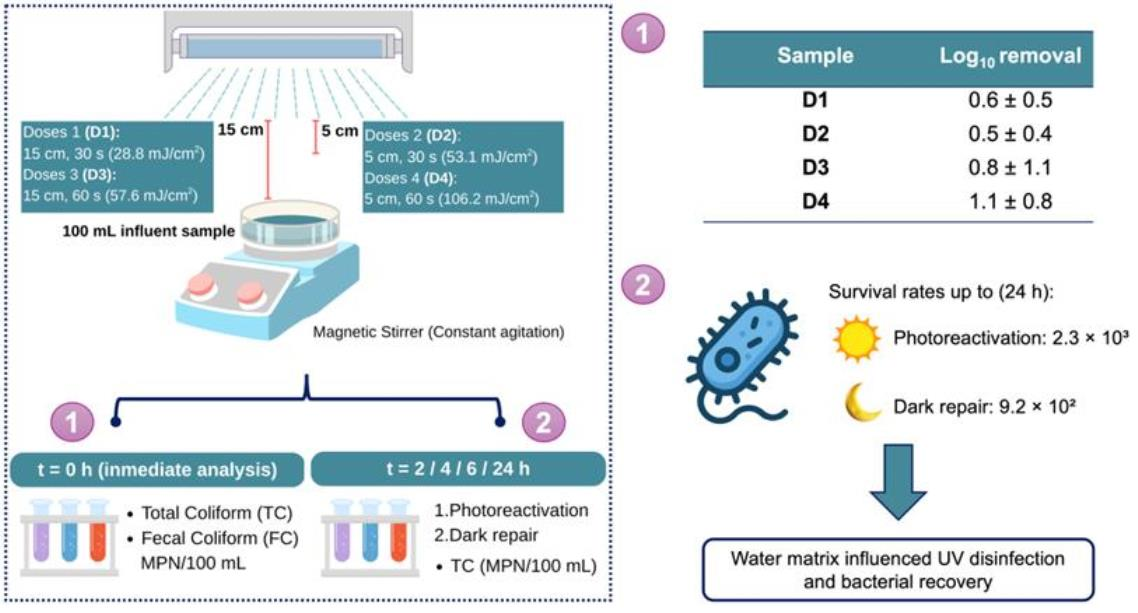
The disinfection process in wastewater treatment is key to the discharge and/or reuse of high-quality effluent. However, disinfection using ultraviolet (UV) light may be inefficient because bacteria possess mechanisms for repairing damaged DNA. This study aimed to assess the photoreactivation and dark repair of total coliform (TC) in wastewater effluent after UV-C disinfection treatment. Four UV-C doses (28.8, 53.1, 57.6, and 106.2 mJ/cm2) and two post-irradiation conditions (light vs. darkness) were applied. Reactivation was monitored after 2, 4, 6 and 24 h (25 °C). Similar TC inactivation efficiencies were observed for the three lowest UV-C doses, whereas the 106.2 mJ/cm2 dose achieved the greatest reduction (1.1 Log of TC), decreasing TC concentrations from 3.1 × 10⁵ ± 3.5 × 10⁵ to 1.2 × 10⁵ ± 1.4 × 10⁵ MPN/100 mL. Reactivation assays revealed substantial bacterial recovery after UV treatment, with 24 h survival rates up to 2.3 × 10³ under light and 9.2 × 10² in darkness. Photoreactivation and dark repair assays revealed substantial variability in bacterial recovery after UV treatment depending on UV-C dose, post-irradiation condition and incubation time. In general, bacterial recovery was still detected even at the 106.2 mJ/cm2 dose, particularly after 24 h of incubation (178–604%). These findings suggest that effective organic matter removal before UV-C disinfection is critical to improve UV transmittance, reduce shielding effects, and limit subsequent bacterial recovery.

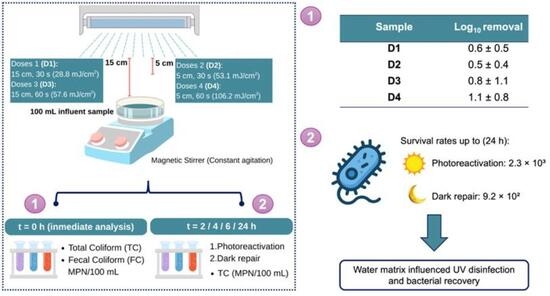
Graphical Abstract

1. Introduction

Water disinfection is the process of removing or reducing harmful microorganisms, such as bacteria, viruses, and parasites, in wastewater to make it safe for reuse [1]. Among the most commonly used disinfection technologies are chlorine, ozone, and ultraviolet radiation. Chlorine is the most widely used due to its low cost and high oxidizing power; however, when it interacts with natural organic matter (NOM), it produces disinfection byproducts (DBPs). Ozone is effective against a wide range of pathogens, acts quickly, produces no hazardous waste, and minimizes the generation of DBPs; however, this technology has high operating costs. In recent years, interest in advanced oxidation processes (AOPs) has grown because they are environmentally friendly, have a rapid oxidation rate, and are highly efficient in eliminating pathogens; their application in municipal wastewater is still under study due to their costs and operational complexity [2,3,4].
Ultraviolet (UV) radiation is defined as a physical agent that does not generate DBPs (e.g., chlorine and chloramine), which can affect human health [5,6]. UV disinfection is a physical method that uses short-wavelength light, specifically in the UV-C range (200–280 nm), to inactivate microorganisms. Some cities (e.g., New York City, Vancouver) have adopted UV systems as their primary disinfection method [7].
The inactivating effects of UV rays are due to DNA alterations (e.g., strand breaks, formation of thymine dimers) that result in an inhibition of replication and, in the case of lethal doses, in a loss of reproducibility. However, microorganisms possess several mechanisms to enable cell survival following UV exposure [8].
Bacteria possess DNA repair mechanisms. This is especially important when they have been exposed to low doses of UV light. There is a repair process that occurs in the presence of light (photoreactivation) and one that occurs in the dark (dark repair). In the first case, the photoreactivating enzymes present in the organisms bind to a pyrimidine dimer (previously formed by UV radiation) to form a complex; the photoreactivation process then results in the monomerization of the dimer. For dark repair, enzymes are used to replace the damaged DNA with undamaged nucleotides. In both steps, the UV dose would be a key factor [9].
It has been reported that bacteria that retain their ability to grow after UV disinfection form biofilms by establishing colonies, which could serve as a refuge for other pathogens. Consequently, the prevalence of resistant bacteria is likely to increase, and these may become more resistant to antibiotics [10,11].
While UV disinfection is commonly used as a tertiary treatment for wastewater, its efficiency depends on the characteristics of the secondary effluent. Specifically, characteristics such as suspended solids and turbidity are monitored prior to UV disinfection to ensure optimal system efficiency. The transmission of UV radiation is primarily affected by suspended solids or the turbidity of the influent being treated. Suspended solids absorb light, contributing to shading effects, protecting microorganisms from UV radiation exposure, and affecting the transmittance of the water being treated [9]. China has incorporated this factor into the optimization of UV disinfection through the Reduction Equivalent Dose (RED), which considers the specific UV transmittance (UVT) while considering the optical variability of different effluents [12]. Another factor to consider is the UV dose. Each UV reactor must deliver the required amount of radiation at the point where the fluid velocity is highest to ensure effective disinfection [5]. Various doses have been tested in other studies. Ref. [13] found a reduction in MS2 coliphage of 3.7 Log units with a dose of 69.4 mJ/cm2 and of 3.7 Log units with a dose of 69.4 mJ/cm2. At a dose of 40 mJ/cm2, Echovirus 30 was reduced by 3.6 Log, while Simian rotavirus 11 and adenovirus type 2 were reduced by 1 Log. At 60 mJ/cm2, the reduction increased to 2.9 and 3.1 Log, respectively [14]. For E. coli, a dose of approximately 12 mJ/cm2 was required to achieve a 3 Log reduction [15]. These studies show that the effective dose for eliminating pathogenic microorganisms in wastewater can vary widely, depending on the differing sensitivities of bacteria and viruses to disinfectants [16]. However, established doses are used for wastewater treatment. In Nordic countries, for example, a dose of between 25 and 40 mJ/cm2 is often used in drinking water treatment, and since 2003, 186 mJ/cm2 has been recommended to ensure 4 Log inactivation of viruses, according to the Environmental Protection Agency (EPA) [14,17]. However, the appropriate dose will vary depending on the characteristics of the influent.
Previous studies have focused on assessing the inactivation and reactivation of certain individual bacterial strains under controlled conditions [18,19,20]. However, disinfection performance in wastewater treatment is assessed using groups of microbial indicators such as total coliforms (TCs), fecal coliforms (FCs), and E. coli [21]. Despite their widespread use as indicators of microbiological water quality, there is limited information on TC recovery after UV-C irradiation, especially in complex water matrices such as effluents from constructed wetlands treating wastewater. Therefore, the aim of this study is to assess the photoreactivation and dark repair of TCs in wastewater effluent after UV-C disinfection. For this purpose, four doses were used (28.8, 53.1, 57.6, and 106.2 mJ/cm2) and reactivation was monitored at 2, 4, 6 and 24 h.

2. Materials and Methods

2.1. Influent Collection

Wastewater samples were collected from the primary treatment stage of a wastewater treatment plant operated by ESSBIO S.A. in the municipality of Hualqui, Biobío Region, Chile. These samples were treated using a constructed subsurface vertical flow wetland [22]. This batch-fed constructed wetland had a surface area of 2.24 m2, with gravel as the support material and a hydraulic retention time (HRT) of between 5 and 9 days. The species Schoenoplectus americanus was used. The characteristics of the wetland effluent (UV influent) are detailed in Table 1. The tests were carried out using separate batches of wastewater.

2.2. Design and Operational Characteristics of UV System

The influent UV was treated using a batch-operated reactor comprising a sealed UV chamber designed to prevent the entry and interference of external light. A Petri dish containing 100 mL of the influent UV water was placed inside the chamber on a magnetic stirrer to ensure constant agitation, as shown in Figure 1.
The samples were exposed to direct radiation from a lamp comprising four UV-C tubes, each rated at 15 W. Four different doses were applied by varying the distance and duration of exposure to UV radiation. The dose measured using a short-wave UVX radiometer (Meter UVP J-225, Analytik Jena AG, Jena, Germany) is shown in brackets. The dose was verified before each experiment, keeping the geometry of the Petri dishes and the sample depth constant during irradiation.
  • Dose 1 (D1): 15 cm, 30 s (28.8 mJ/cm2);
  • Dose 2 (D2): 5 cm, 30 s (53.1 mJ/cm2);
  • Dose 3 (D3): 15 cm, 60 s (57.6 mJ/cm2);
  • Dose 4 (D4): 5 cm, 60 s (106.2 mJ/cm2).

2.3. Analytical Methods

2.3.1. Characterization of the UV Influent and Effluent

The UV influent samples were analyzed in situ for various parameters (temperature (T°), pH, electrical conductivity (EC), turbidity, dissolved oxygen (DO)), physicochemical parameters (total and soluble chemical oxygen demand (COD and CODS), biological oxygen demand (BOD5), total nitrogen (TN), ammonium nitrogen (NH4+-N), nitrite nitrogen (NO2-N), nitrate nitrogen (NO3-N), total phosphorus (TP), phosphate phosphorus (PO43−-P), total suspended solids (TSSs) and volatile suspended solids (VSSs)), and microbiological parameters.
Meanwhile, the UV effluent samples were analyzed microbiologically only, by assessing total coliforms (TCs) and fecal coliforms (FCs).
The in situ parameters were measured using an OAKTON multi-parameter meter (PC650-480485, OAKTON, Vernon Hills, IL, USA), an OAKTON turbidimeter (OAKTON T-100, OAKTON, USA), and a portable oximeter (HANNA OXI 330i/set HI 9146-04, HANNA Instruments Inc., Woonsocket, RI, USA). The physicochemical parameters (COD, BOD5, NH4+-N, NO2-N, NO3-N, PO43−-P, TSS and VSS) were measured in accordance with the protocols described in standard methods [23]. For TN and TP, kits from the Merck Spectroquant (Spectroquant-Nova 60, Merck kits, Darmstadt, Germany) range were used.
For microbiological analysis, TCs and FCs were determined using the Most Probable Number (MPN) technique, which involves a presumptive and confirmatory test for the presence of the bacterial group, as indicated in Standard Method 9221-TC [23].

2.3.2. Reactivation Analysis

To measure TC reactivation, an experiment was conducted in the presence of light (photoreactivation) and in the absence of light (dark repair). A total of 20 mL was taken from the 100 mL of UV effluent and transferred to disposable Petri dishes. It was incubated in a Termoshake unit at 25 °C with a LUMILUX OSRAM L 15 W/840 (OSRAM AG, Premstaetten/Graz, Austria) visible light lamp for a total of 24 h under constant illumination conditions. Samples were taken at 2, 4, 6 and 24 h, in addition to time 0, after the samples had been irradiated with UV light. Although light intensity was not measured, the same lamp configuration and incubation conditions were maintained in all experiments to ensure consistency among assays. In the case of samples in the absence of light, the plates were covered with aluminum foil to prevent light from entering. UV disinfection and reactivation tests were performed using biological triplicates for each experimental condition.
TC counts during the temporal follow up of reactivation were obtained from the same irradiated samples incubated under each experimental condition.
Reactivation was expressed as the percentage of reactivation (Equation (1)) and the survival ratio (Equation (2)) [6,9].
%   r e a c t i v a t i o n = N t N N 0 N × 100
where N0 is the number of bacteria before UV irradiation (MPN/100 mL), N is the number of bacteria after UV irradiation (MPN/100 mL), and Nt is the number of bacteria after a reactivation period of ‘t’ (MPN/100 mL). This concept illustrates the degree of microorganisms recovered (Nt − N) among the microorganisms inactivated by UV radiation (N0 − N). Only microorganisms that have been inactivated are capable of being reactivated.
S   ( % ) = N t N 0 × 100
where S is the survival rate over a period “t”, N0 is the number of bacteria prior to UV irradiation (MPN/100 mL) and Nt is the number of bacteria after reactivation over a period “t”. This concept is independent of the initial number of microorganisms before irradiation. This survival rate gives the final UV inactivation effect when reactivation is considered [18].
The methodology used in this study to evaluate bacterial reactivation is consistent with approaches previously reported in the literature, particularly regarding the simulation of photoreactivation and dark repair following UV disinfection. Recent studies, such as that by [24], incubated disinfected samples under light and dark conditions at 25 °C, subsequently quantifying viable bacteria at different time points. Similarly, ref. [25] specifically evaluated dark repair by incubating irradiated bacteria in darkness at 25 °C for 8 h, performing periodic counts using microbiological culture. Likewise, ref. [26] developed assays to evaluate reactivation in darkness, maintaining irradiated samples for 22 h in darkness at room temperature. In comparison to these studies, the methodology applied in the present work incorporates simultaneous evaluation under light and dark conditions at multiple post-UV follow up times (2, 4, 6 and 24 h), allowing for the description of the temporal dynamics of bacterial recovery in both early and late stages.

3. Results and Discussion

3.1. Analysis of Disinfection Achieved by the UV System

Table 2 shows the removal of TCs and FCs following the application of different UV doses. The influent water had concentrations of 3.1 × 10⁵ ± 3.5 × 10⁵ MPN/100 mL for TCs and 0.5 × 10⁵ ± 1.0 × 10⁵ MPN/100 mL for FCs. This is similar to the value reported by [8] of 5.3 × 10⁶ ± 1.4 × 10⁵ MPN/100 mL for TCs [27], achieving a removal of 2.5 Log of TC using a vertical subsurface constructed wetland. However, despite this pretreatment, microorganism concentrations remained well above the recommended limit of 200 MPN/100 mL of E. coli for agricultural reuse established by [28], highlighting the need for an additional disinfection stage.
When evaluating the disinfection achieved under the different configurations, for D1 a removal of 0.6 Log for TCs and 0.5 Log for FCs was achieved. This is between 17% and 25% lower than that obtained in D3 for FCs and TCs, respectively; indicating that this level of irradiation was insufficient for the effective removal of microorganisms. Increasing the doses to D2 and D3 the reductions were between 0.5 and 0.8 Log for TCs and 0.6 Log for FCs. Therefore, these doses would not be sufficient for the removal of coliforms from wastewater.
With the highest dose evaluated (D4, 106.2 mJ/cm2), the removal efficiency increases to 1.1 and 0.8 Log for TCs and FCs, respectively. Ref. [29] used a dose of 70 mJ/cm2 and achieved a reduction from 4.3 to 1.0 Log for E. coli.
Although comparisons with previous studies are useful for contextualizing UV disinfection performance, they should be interpreted with caution due to significant differences in the characteristics of the influent being treated and operating conditions. Many published studies have evaluated UV inactivation using isolated bacterial strains, synthetic wastewater, or secondary effluents with lower concentrations of suspended solids and organic matter [15,19,30]. In contrast, the present study uses real effluent from a constructed wetland characterized by relatively high and variable concentrations of suspended solids and organic matter (Table 1). Organic matter and suspended solids can influence the reactivation of viable but non-culturable (VBNC) bacterial cells [31]. Previous studies have associated bacterial recovery with characteristics such as turbidity, suspended solids, and dissolved organic matter, which can reduce transmittance and promote protective effects [6,9,32]. However, there is limited information on the direct influence of the COD/BOD5 ratio on bacterial recovery. Biodegradable organic matter can provide substrates that favor bacterial recovery after UV-C irradiation. Although bacterial recovery has not been extensively investigated, it is likely that the organic characteristics of the influent may contribute to the limited disinfection performance observed in this study. The dissolved organic matter content, as reflected in the COD (260.6 ± 87.9 mg/L) and TOC (30.3 ± 14.8 mg/L) values, include compounds such as proteins, amino acids and humic substances, which have been linked to the promotion of bacterial growth, such as E. coli [11]. In this context, the COD/BOD5 ratio of 1.4 indicates a significant presence of biodegradable organic matter (COD/BOD5 < 2.5, [33]), which could promote bacterial recovery following UV irradiation by providing readily assimilable substrates. This value is lower than that reported by [34] (COD/BOD5 = 2.9), suggesting a high proportion of organic matter in the present study. In their study, despite the initial concentrations of 2.3·105 and 4.3·104 MPN/100 mL for TCs and FCs, respectively, a dose of 40 mJ/cm2 was sufficient to achieve complete inactivation. However, the initial COD and BOD5 concentrations were 36.7 and 12.8 mg/L, respectively. This contrast highlights the role of the influent composition, as a lower COD/BOD5 ratio may enhance the potential for bacterial recovery and reduce the effectiveness of UV irradiation, even at high doses (106.2 mJ/cm2).
On analysis of organic matter, more than half corresponds to the particulate fraction ((COD-CODS)/COD = 0.5), which is critical due to its ability to physically protect microorganisms. Furthermore, the VSS/TSS ratio (0.7) indicates that a significant proportion of the suspended solids are organic, which would intensify this protective effect. These conditions, together with the values for total suspended solids (31.7 ± 5.8 mg/L) and turbidity (33.9 ± 48.8 NTU, up to 172 NTU), may have reduced UV transmittance, promote the ‘shading effect’ and limit the exposure of microorganisms to effective irradiation [35].
Therefore, the results suggest that the UV dose alone was not the main factor affecting disinfection performance; rather, effluent quality played a key role. The bacterial reductions even with the highest UV-C dose evaluated (106.2 mJ/cm2) indicate that disinfection alone was insufficient to guarantee reliable microbiological control. Therefore, under the effluent quality conditions evaluated in this study, UV-C disinfection should not be considered a safe disinfection strategy without prior, improved removal of solids and organic matter.

3.2. Analysis of Photoreactivation and Dark Repair as a Function of the Applied Dose

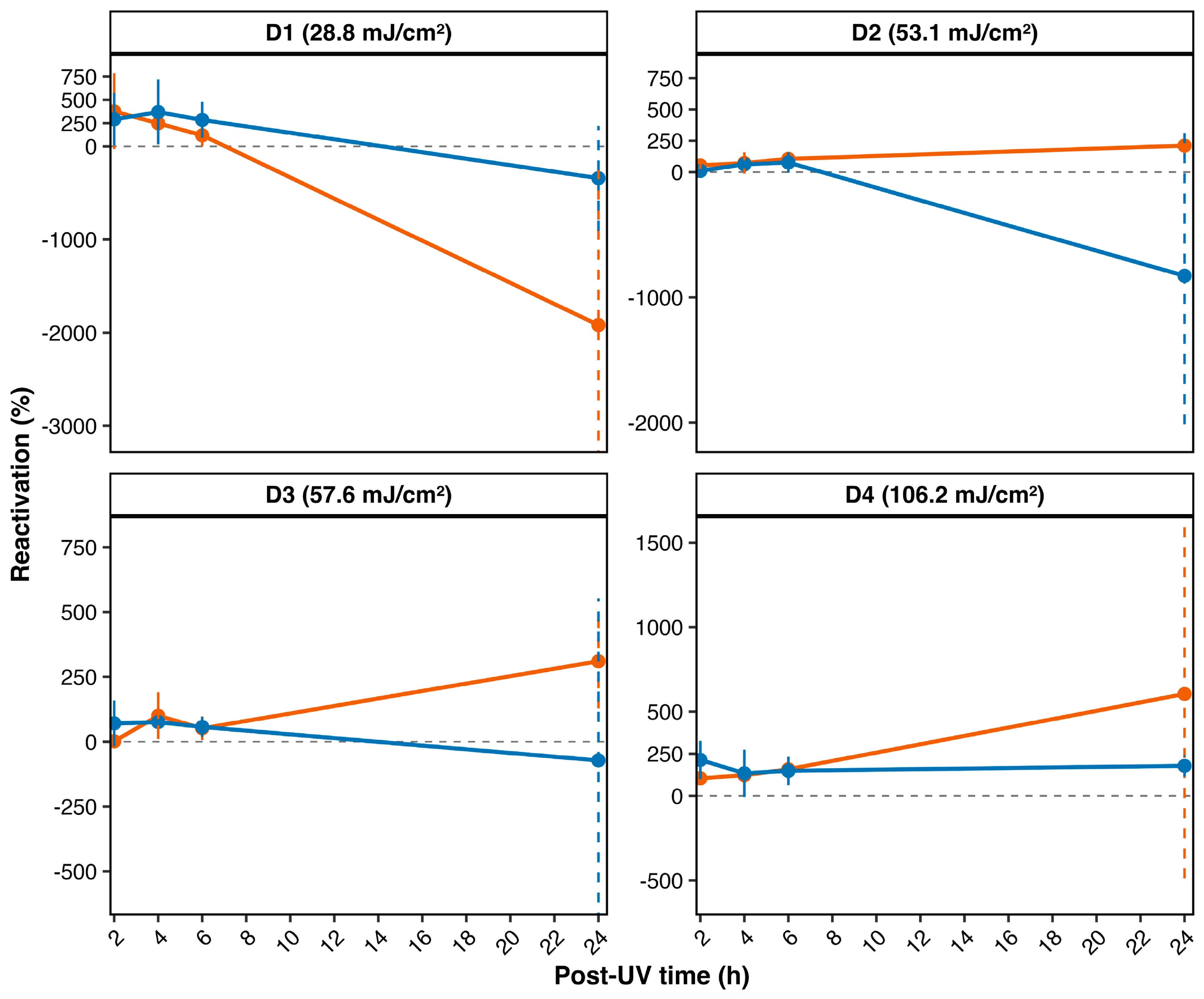
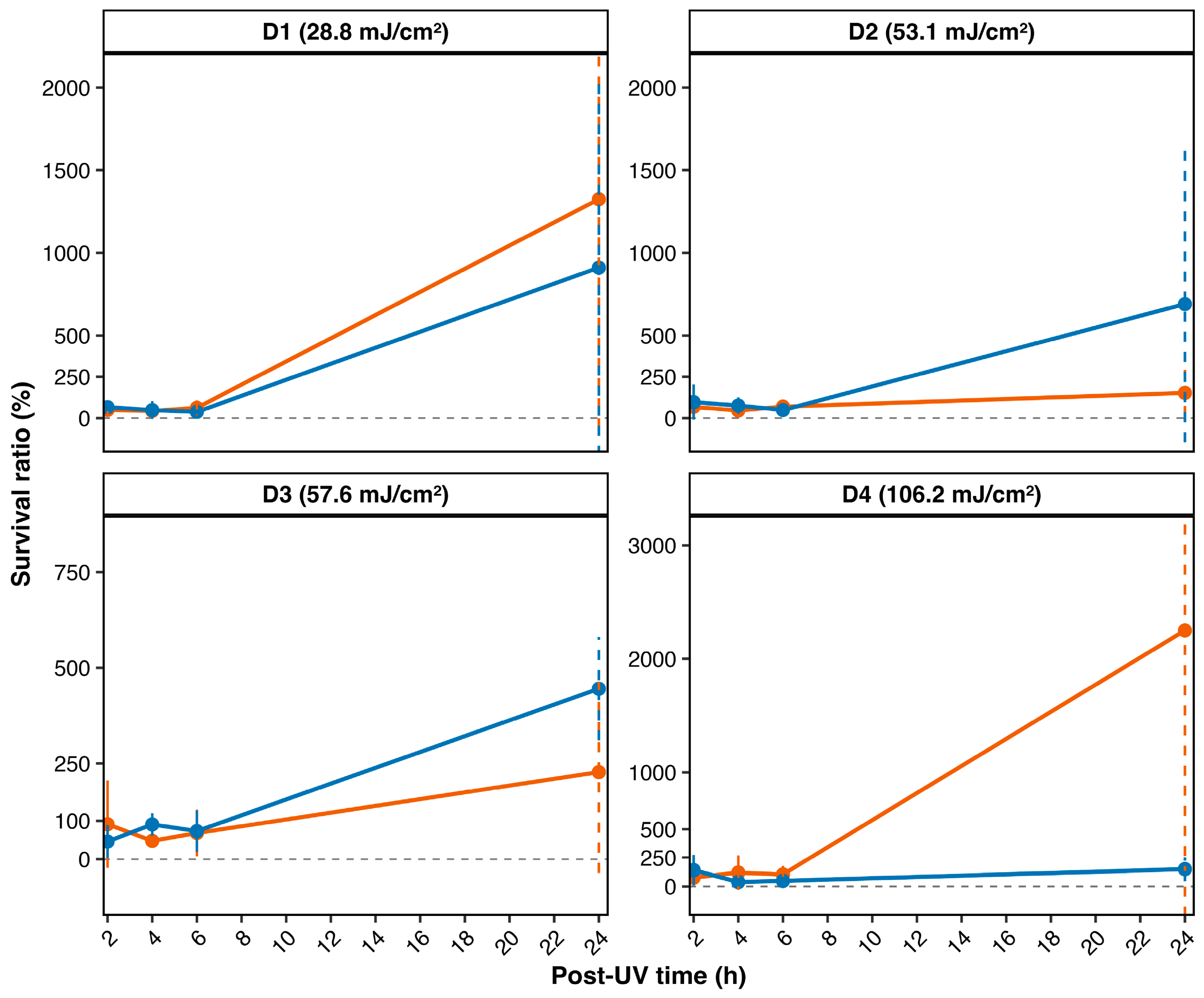
The evolution of the TC concentration following UV irradiation clearly demonstrated the occurrence of reactivation processes, both under photoreactivation and dark repair conditions (Figure 2 and Figure 3). The extent of this process depended mainly on the dose applied, the type of condition and the reactivation time observed.
Under photoreactivation conditions, a rapid increase in TC concentration was observed during the first few hours following UV irradiation, particularly at lower doses.
For D1 (28.8 mJ/cm2), reactivation reached values of 377 ± 408% at 2 h, remaining high at 4 h (249 ± 121%) and 6 h (118.5 ± 116%). In D2, reactivation was lower but significant, with values ranging from 53 ± 44% to 105 ± 52% over the same time interval. In the case of D3, a more moderate response was observed in the first few hours (1.7 ± 2.4% at 2 h), although it subsequently increased, reaching 100 ± 90% at 4 h. Even with the highest dose (D4), reactivation was not inhibited, with values of 105 ± 40% at 2 h and up to 158 ± 66% at 6 h.
When analyzing the longer period (24 h), a significant increase in the survival rate was observed (Figure 3). This suggests that there was not only recovery, but also possible bacterial growth. Under photoreactivation conditions, values of 1325 ± 1386% were recorded for D1, 153 ± 139% for D2, 227 ± 263% for D3 and 2250 ± 2517% for D4. This behavior indicates that a significant proportion of the bacterial community was not completely inactivated by UV irradiation and managed to regain its activity. Furthermore, negative reactivation values were obtained in some cases (e.g., −1918 ± 1671% in D1), which may be due to high experimental variability and fluctuations in bacterial counts, rather than actual inactivation. The increase in bacterial concentrations observed after 24 h should be interpreted with caution, given that the experimental design does not allow differentiation between actual DNA repair mechanisms, delayed recovery of damaged cells, or bacterial regrowth favored by the influent characteristics. Therefore, the observed responses likely reflect a combination of post-irradiation recovery processes, rather than solely reactivation processes. Furthermore, the high variability observed during reactivation may indicate that bacterial recovery is not uniform within the matrix used.
Under dark repair conditions, reactivation was also observed, although generally with lower intensity than photoreactivation.
For D1, the values ranged from 292 ± 284% (2 h) to 285 ± 195% (6 h), whereas in D2, the reactivation was considerably lower (between 10 ± 13% and 76 ± 81% for 2 and 6 h, respectively). In D3, intermediate values were recorded (between 57 and 76%), and in D4, significant reactivation was observed, peaking at 213 ± 114% at 2 h. This confirms that repair mechanisms are also active in the absence of light, although they tend to be less efficient than those induced in the presence of light.
After 24 h in the dark, the survival rate increased significantly, reaching 911 ± 1140% (D1), 690 ± 958% (D2), 445 ± 135% (D3) and 150 ± 103% (D4). As with photoreactivation, some negative values were obtained (e.g., −829 ± 1185% reactivation on D2), reflecting the high dispersion of the data and the complexity of interpreting this parameter when concentrations are highly variable.
In terms of doses, it was observed that the lowest doses (D1 and D2) generated a higher percentage of reactivation in the first few hours, suggesting that the damage induced was insufficient to prevent bacterial recovery. As the doses increased (D3 and D4), this phenomenon was partially reduced; however, it was not eliminated. This indicates that a portion of the bacterial community remained in a viable but damaged state, with the capacity to recover. These results could also be similarly replicated in the growth patterns of other Gram-negative, nonsporulating and rod-shaped bacteria [11].
Due to the complexity of the treated wastewater matrix, the experimental design was unable to differentiate between DNA repair mechanisms, damaged cell recovery, and exponential bacterial growth following UV radiation [36]. Therefore, the increase in bacterial concentrations after radiation was interpreted as post-irradiation bacterial recovery.
It is important to consider the role of the physicochemical characterization of the influent to be treated in the results obtained. As discussed in Section 3.1, the presence of suspended solids and organic matter may have protected the microorganisms during irradiation, allowing them to survive with sublethal damage. These microorganisms, particularly those associated with particles, are more likely to repair their DNA subsequently. The high variability observed in the results also suggests a heterogeneous distribution of particles, and consequently, of effective exposure to UV irradiation.
The combination of low initial inactivation and significant reactivation, particularly through photoreactivation, indicates that UV disinfection may not be sufficient to guarantee the microbiological safety of the effluent, especially considering that under real-world conditions, the treated water may be exposed to sunlight, favoring photoreactivation.
Overall, the results show that it is not enough to evaluate the immediate efficiency of disinfection; rather, it is important to consider the possibility of subsequent reactivation. In this context, it is important to consider strategies such as improving the quality of the influent prior to disinfection, increasing the UV dose, or combining it with other chemical agents to prevent bacterial recovery.
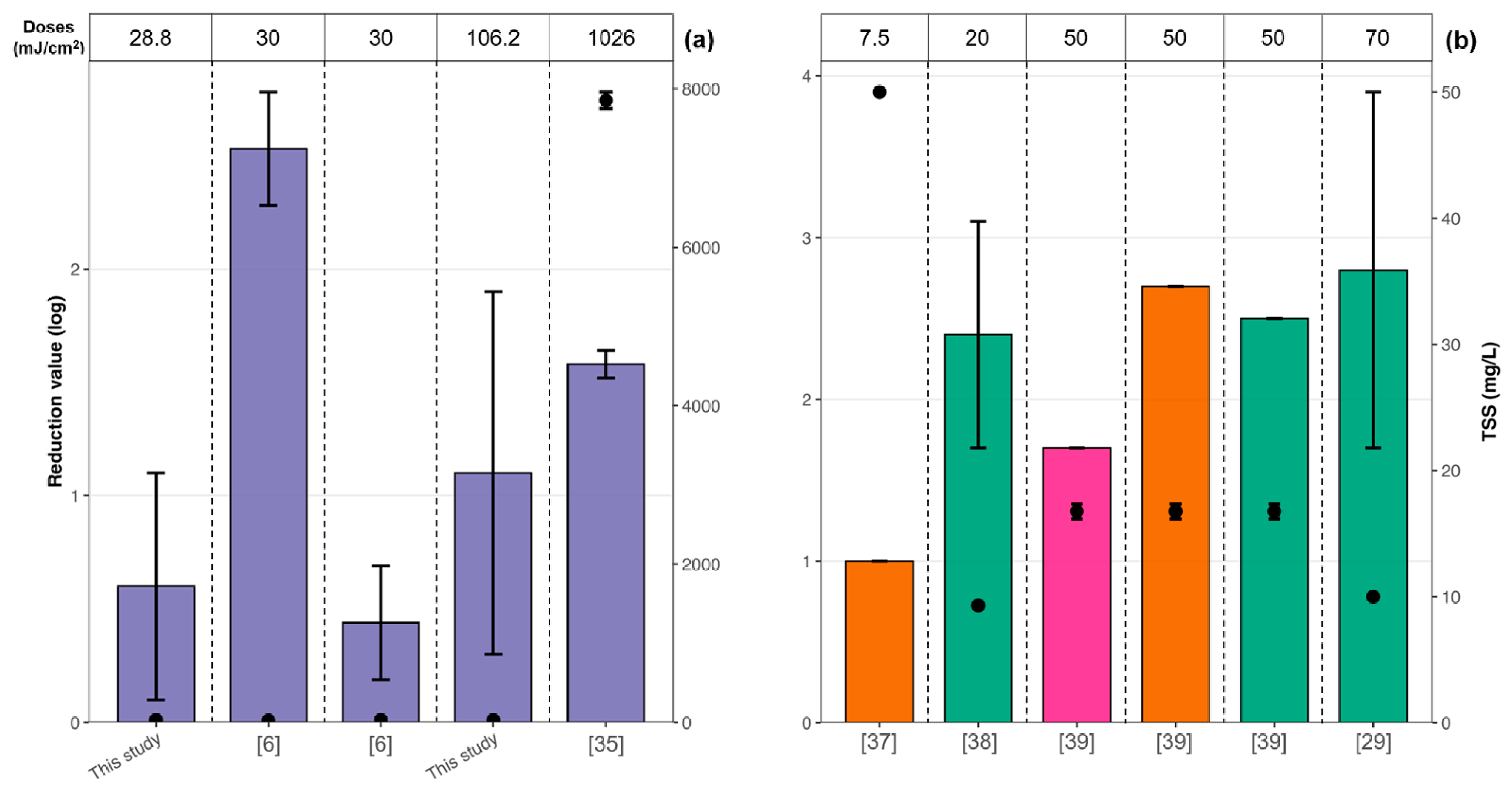
Figure 4 shows the logarithmic reduction in various microbiological contaminants, as described in other studies, and compares this with the results of the present study. It includes the TSS concentrations in the influent water and the UV doses used.
The results indicate that UV-C disinfection was limited in this study, even when the dose was increased from 28.8 to 106.2 mJ/cm2, achieving only a 1.1 ± 0.8 Log reduction in TCs. This difference is consistent with the observed TSS levels. While some studies operate with relatively low TSS values (10–50 mg/L), other studies report values of up to 7855 mg/L [35,37,38,39], requiring a higher dose of 1026 mJ/cm2 to achieve a 1.6 ± 0.06 Log reduction in TCs.
Differences between microorganisms are also evident. E. coli (2.8 ± 1.1 Log reduction at 70 mJ/cm2) [21] shows high susceptibility compared to TCs or FCs (<3 Log reduction even at high doses), highlighting the variability in resistance to UV disinfection and the presence of repair mechanisms. In this respect, the behavior of E. coli cannot be directly compared to that of heterogeneous populations such as TCs or FCs since they may exhibit different resistance capacities under UV stress.
The comparison highlights that simply increasing the UV dose does not guarantee greater bacterial inactivation. Studies with lower TSS concentrations generally achieved greater logarithmic reductions, while high TSSs likely reduced transmittance and limited disinfection performance.
These results confirm that UV dose is not the only factor to be considered. Instead, TSS concentration, the type of microorganism and the potential for reactivation must also be considered. Agencies around the world (e.g., the California Department of Public Health, USA) have highlighted the need for additional monitoring, specifically of parameters such as turbidity, conductivity, ORP, residual chlorine, UV absorbance and fluorescence intensity of the excitation–emission matrix (EEM) [21].
From a practical perspective, the results indicate that UV-C disinfection of secondary effluents can be strongly influenced by suspended solids and organic matter. Consequently, improving the efficiency of secondary treatments before UV irradiation application can minimize the protective effects and reduce bacterial recovery after irradiation. These findings are particularly relevant for water reuse applications, where bacterial recovery can compromise microbiological safety during storage or subsequent use. It is urged that in future full-scale applications, systems prioritize improving pretreatment and maximizing efficiency to reduce organic matter and enhance UV transmittance before UV radiation application. Additionally, post-disinfection effluent maintenance should be considered to limit the potential for bacterial recovery. In this regard, an integrated treatment approach combining improved solids removal, optimized UV disinfection, and post-treatment monitoring would be necessary to ensure adequate microbiological quality for safe reuse in future STPs/WWTPs. Furthermore, it should be considered that the use of UV-C radiation has disadvantages. The lamps contain mercury, a hazardous element. They also require large amounts of energy, as their energy efficiency varies between 15 and 35%, and they have a lifespan of approximately 10,000 h, which is considered low [9].
Although UV irradiation generates less DBPs (between 27 and 67 mg/L) than conventional treatments like chlorine, the presence of nitrate accelerates the degradation of organic matter, generating various radicals such as methoxy or phenolic hydroxyl groups and esters in the benzene ring. Under continuous oxidation, these can be converted into phenolic, hydroxyl, and carboxyl groups. These compounds, when interacting with nitrogen species, can form DBPs such as nitrophenols, nitrogenous alicyclic carboxylic acids, and nitro-methoxybenzene [40,41].

4. Conclusions

The results obtained show that UV-C disinfection does not guarantee stable microbiological inactivation. At the lowest dose tested (28.8 mJ/cm2), a reduction of 0.6 ± 0.5 Log was achieved for TCs and 0.5 ± 0.8 Log for FCs. Upon increasing the dose (106.2 mJ/cm2), reductions of 1.1 ± 0.8 Log and 0.8 ± 0.9 Log were achieved for TCs and FCs, respectively. Under the effluent quality conditions evaluated in this study, UV-C disinfection is insufficient to guarantee efficient bacterial removal. Furthermore, a significant reactivation of coliforms was observed under photoreactivation conditions (53.1 ± 44.1% with D2 at 2 h) and, to a lesser extent, in the dark (9.5 ± 13.4 in the same condition). Even with the highest dose evaluated (106.2 mJ/cm2), using the lamp for 60 s at 5 cm from the influent, reactivation processes were observed (105 ± 40% photoreactivation at 2 h and up to 158 ± 66% at 6 h). Although bacterial recovery was observed, this study could not determine whether the increase detected after 24 h was due to DNA repair mechanisms, the recovery of damaged cells, or bacterial growth promoted by residual organic matter (COD/BOD5 = 1.4). Future studies incorporating molecular or viability-based techniques are needed to better differentiate these post-irradiation processes.
The results highlight that not only is an appropriate dose required, but also strict control of the water’s physicochemical parameters, particularly suspended solids and organic matter. These can reduce UV transmittance, protect microorganisms and promote reactivation.

Author Contributions

Y.G.: Conceptualization, Writing—review and editing, Writing—original draft, Visualization, Investigation, Formal analysis. P.S.: Writing—review and editing, Supervision. N.G.: Investigation, Data curation, Methodology. G.V.: Conceptualization, Writing—review and editing, Supervision, Funding acquisition. All authors have read and agreed to the published version of the manuscript.

Funding

This study was supported by ANID/FONDAP/1523A0001.

Data Availability Statement

Data will be made available on request.

Acknowledgments

Y. González thanks the National Agency for Research and Development (ANID)/Scholarship Program/Doctorado Nacional/2022-21222126 for supporting her Ph.D. studies at the University of Concepción. N. Guerrero thanks the grant number ANID/FONDAP/1523A0001.

Conflicts of Interest

The authors declare that they have no known competing financial interests or personal relationships that could have appeared to influence the work reported in this paper.

References

  1. González, C.; Negrete, C.; Do, A.; Herrera, J.; Díaz, I.M.; Calderón, R.; Rodríguez, B. Tertiary treatment of domestic wastewater for reuse: Implementation and evaluation in a rural context in Chile. J. Environ. Manag. 2026, 402, 129143. [Google Scholar] [CrossRef]
  2. González, Y.; Salgado, P.; Gómez, G.; Vidal, G. Advanced sewage disinfection technologies eco-friendly with the environment and public health. In Sustainable Management of Environmental Contaminants Eco-Friendly Remediation Approaches; Aftab, T., Ed.; Springer Nature: Singapore, 2022; pp. 51–69. ISBN 978-3-031-08445-4. [Google Scholar] [CrossRef]
  3. Simiyu, R.; Apollo, S.; Muriithi, G. A Review of Municipal Wastewater Disinfection using Advanced Oxidation Processes. J. Chem. Soc. Pak. 2024, 46, 600–616. [Google Scholar] [CrossRef]
  4. Lan, X.; Liu, Y.; Wang, L.; Jin, Q. A comparative analysis of ozone disinfection mainstream processes in wastewater treatment plants: Exergy and exergoeconomic viewpoints. J. Environ. Chem. Eng. 2025, 13, 114991. [Google Scholar] [CrossRef]
  5. Vázquez-López, M.; Amabilis-Sosa, L.E.; Moeller-Chávez, G.E.; Roé-Sosa, A.; Neumann, P.; Vidal, G. Evaluation of the ultrasound effect on treated municipal wastewater. Environ. Technol. 2019, 40, 3568–3577. [Google Scholar] [CrossRef] [PubMed]
  6. González, Y.; Salgado, P.; Vidal, G. Disinfection behavior of a UV-treated wastewater system using constructed wetlands and the rate of reactivation of pathogenic microorganisms. Water Sci. Technol. 2019, 80, 1870–1879. [Google Scholar] [CrossRef]
  7. Montazeri, M.M.; Hejazi, S.A.; Taghipour, F. Ultraviolet light-emitting diode (UV-LED) water disinfection photoreactors: A review. J. Environ. Manag. 2025, 386, 125678. [Google Scholar] [CrossRef] [PubMed]
  8. Süß, J.; Volz, S.; Obst, U.; Schwartz, T. Application of a molecular biology concept for the detection of DNA damage and repair during UV disinfection. Water Res. 2009, 43, 3705–3716. [Google Scholar] [CrossRef] [PubMed]
  9. González, Y.; Gómez, G.; Moeller-Chávez, G.E.; Vidal, G. UV disinfection systems for wastewater treatment: Emphasis on reactivation of microorganisms. Sustainability 2023, 15, 11262. [Google Scholar] [CrossRef]
  10. Hou, A.M.; Yang, D.; Miao, J.; Shi, D.Y.; Yin, J.; Yang, Z.W.; Shen, Z.Q.; Wang, H.R.; Qiu, Z.G.; Liu, W.L.; et al. Chlorine injury enhances antibiotic resistance in Pseudomonas aeruginosa through over expression of drug efflux pumps. Water Res. 2019, 156, 366–371. [Google Scholar] [CrossRef]
  11. Hatano, Y.; Wang, M.; Guo, Z.; Yoshimura, C. Effect of dissolved organic matter property on the regrowth of Escherichia coli after ultraviolet disinfection. J. Water Process Eng. 2023, 51, 103383. [Google Scholar] [CrossRef]
  12. Sun, W.; Ao, X.; Lu, D.; Zhang, Y.; Xue, Y.; He, S.; Zhang, X.; Mao, T. Ultraviolet technology application in urban water supply and wastewater treatment in China: Issues, challenges and future directions. Water Res. X 2024, 23, 100225. [Google Scholar] [CrossRef]
  13. Nguyen, T.M.H.; Suwan, P.; Koottatep, T.; Beck, S.E. Application of a novel, continuous-feeding ultraviolet light emitting diode (UV-LED) system to disinfect domestic wastewater for discharge or agricultural reuse. Water Res. 2019, 153, 53–62. [Google Scholar] [CrossRef] [PubMed]
  14. Saguti, F.; Churqui, M.P.; Kjellberg, I.; Wang, H.; Ottoson, J.; Paul, C.; Bergstedt, O.; Norder, H.; Nyström, K. The UV dose used for disinfection of drinking water in Sweden inadequately inactivates enteric virus with double-stranded genomes. Int. J. Environ. Res. Public Health 2022, 19, 8669. [Google Scholar] [CrossRef]
  15. Duque-Sarango, P.; Romero-Martínez, L.; Pinos-Vélez, V.; Sánchez-Cordero, E.; Samaniego, E. Comparative study of UV radiation resistance and reactivation characteristics of E. coli ATCC 8739 and native strains: Implications for water disinfection. Sustainability 2023, 15, 9559. [Google Scholar] [CrossRef]
  16. Chen, X.; Chen, Z.; Ngo, H.H.; Mao, Y.; Cao, K.; Shi, Q.; Lu, Y.; Hu, H.Y. Comparison of inactivation characteristics between Gram-positive and Gram-negative bacteria in water by synergistic UV and chlorine disinfection. Environ. Pollut. 2023, 333, 122007. [Google Scholar] [CrossRef]
  17. U.S. EPA. Ultraviolet Disinfection Guidance Manual for the Final Long Term 2 Enhanced Surface Water Treatment Rule; Office of Water: Washington, DC, USA, 2006; Volume 20460, p. 53. Available online: https://www.epa.gov/system/files/documents/2022-10/ultraviolet-disinfection-guidance-manual-2006.pdf (accessed on 17 April 2026).
  18. Li, G.; Wang, W.; Huo, Z.; Lu, Y.; Hu, H.Y. Comparison of UV-LED and low pressure UV for water disinfection: Photoreactivation and dark repair of Escherichia coli. Water Res. 2017, 126, 134–143. [Google Scholar] [CrossRef]
  19. Romero-Martínez, L.; Prieto-Pérez-Juez, A.; Nebot, E.; Moreno-Andrés, J. UV-LED disinfection of emerging Vibrio pathogens: Inactivation kinetics and reactivation potential. Front. Mar. Sci. 2025, 12, 1608367. [Google Scholar] [CrossRef]
  20. Duque-Sarango, P.; Delgado-Armijos, N.; Romero-Martínez, L.; Cruz, D.; Pinos-Vélez, V. Advancing waterborne fungal spore control: UV-LED disinfection efficiency and post-treatment reactivation analysis. Water 2025, 17, 922. [Google Scholar] [CrossRef]
  21. Shi, Q.; Chen, Z.; Wei, F.; Mao, Y.; Xu, Q.; Li, K.; Lu, Y.; Hu, H.Y. Identification of surrogates for rapid monitoring of microbial inactivation by ozone for water reuse: A pilot-scale study. J. Hazard. Mater. 2022, 424, 127567. [Google Scholar] [CrossRef] [PubMed]
  22. Gutiérrez, J.; Leiva, A.M.; Gómez, G.; Vidal, G. Performance of vertical subsurface flow constructed wetlands for commercial laundry greywater treatment: Effects of design and operational parameters. J. Water Process Eng. 2025, 75, 107951. [Google Scholar] [CrossRef]
  23. APHA. Standard Methods for the Examination of Water and Wastewater; American Public Health Association: Washington, DC, USA, 2005. [Google Scholar]
  24. Cheng, L.; Wei, X.; Gao, A.; Zhou, L.; Shi, X.; Zhou, X.; Bi, X.; Yang, T.; Huang, S. Performance and mechanism of sequential UV-NaClO disinfection: Inactivation and reactivation of antibiotic-resistant bacteria, disinfection byproduct formation and microbial community variation. J. Water Process Eng. 2024, 58, 104824. [Google Scholar] [CrossRef]
  25. Wang, J.J.; Zhou, Y.Y.; Xiang, J.L.; Du, H.S.; Zhang, J.; Zheng, T.G.; Liu, M.; Ye, M.Q.; Chen, Z.; Du, Y. Disinfection of wastewater by a complete equipment based on a novel ultraviolet light source of microwave discharge electrodeless lamp: Characteristics of bacteria inactivation, reactivation and full-scale studies. Sci. Total Environ. 2024, 917, 170200. [Google Scholar] [CrossRef]
  26. Huang, J.J.; Xi, J.; Hu, H.Y.; Li, Y.; Lu, S.Q.; Tang, F.; Pang, Y.C. UV light tolerance and reactivation potential of tetracycline-resistant bacteria from secondary effluents of a wastewater treatment plant. J. Environ. Sci. 2016, 41, 146–153. [Google Scholar] [CrossRef]
  27. Santos, V.B.; Machado, B.S.; Atalla, A.; Cavalheri, P.S.; Magalhães Filho, F.J. Microbiological evaluation of constructed wetlands and solar disinfection in wastewater treatment and reuse. J. Water Health 2020, 18, 1146–1153. [Google Scholar] [CrossRef]
  28. USEPA. Guidelines for Water Reuse. EPA/600/R-12/618; 2012, pp. 1–28. Available online: https://nepis.epa.gov/Exe/ZyPURL.cgi?Dockey=P100FS7K.txt (accessed on 20 April 2026).
  29. Russo, N.; Marzo, A.; Randazzo, C.; Caggia, C.; Toscano, A.; Cirelli, G.L. Constructed wetlands combined with disinfection systems for removal of urban wastewater contaminants. Sci. Total Environ. 2019, 656, 558–566. [Google Scholar] [CrossRef] [PubMed]
  30. Lu, H.; Wang, X.Y.; Li, X.Q.; Yan, B.J. Review on the effect of light intensity on the photoreactivation of Escherichia coli after ultraviolet disinfection of sewage. Fresenius Environ. Bull. 2022, 11, 10556–10562. [Google Scholar]
  31. Wang, Y.; Wang, H.; Wang, X.; Xiao, Y.; Zhou, Y.; Su, X.; Cai, J.; Sun, F. Resuscitation, isolation and immobilization of bacterial species for efficient textile wastewater treatment: A critical review and update. Sci. Total Environ. 2020, 730, 139034. [Google Scholar] [CrossRef]
  32. Carré, E.; Pérot, J.; Jauzein, V.; Lopez-Ferber, M. Impact of suspended particles on UV disinfection of activated-sludge effluent with the aim of reclamation. J. Water Process Eng. 2018, 22, 87–93. [Google Scholar] [CrossRef]
  33. González, Y.; Carrillo, V.; Gómez, G.; Carballa, M.; Vidal, G. A comprehensive review of treatment technologies for greywater contaminants: An emphasis on surfactants. J. Environ. Manag. 2025, 392, 126861. [Google Scholar] [CrossRef]
  34. Shekhawat, S.S.; Kulshreshtha, N.M.; Vivekanand, V.; Gupta, A.B. Impact of combined chlorine and UV technology on the bacterial diversity, antibiotic resistance genes and disinfection by-products in treated sewage. Bioresour. Technol. 2021, 339, 125615. [Google Scholar] [CrossRef]
  35. Bai, W.; Xu, J.; Hu, Z.H.; Tang, R.; Zhan, X. Suspended solids dominated tailing effect in UV disinfection of livestock wastewater: Mechanistic deciphering and modelling prediction for epidemic control. Water Res. 2025, 285, 124133. [Google Scholar] [CrossRef]
  36. Randall, T.E.; Linden, Y.S.; Gamboa, J.; Real, B.; Friedler, E.; Linden, K.G. Bacterial repair and recovery after UV LED disinfection: Implications for water reuse. Environ. Sci. Water Res. Technol. 2022, 8, 1700–1708. [Google Scholar] [CrossRef]
  37. Friedler, E.; Chavez, D.F.; Alfiya, Y.; Gilboa, Y.; Gross, A. Impact of suspended solids and organic matter on chlorine and UV disinfection efficiency of greywater. Water 2021, 13, 214. [Google Scholar] [CrossRef]
  38. MacIsaac, S.A.; Reid, B.; Ontiveros, C.; Linden, K.G.; Stoddart, A.K.; Gagnon, G.A. UV LED wastewater disinfection: The future is upon us. Water Res. X 2024, 24, 100236. [Google Scholar] [CrossRef]
  39. Ben Rajeb, A.; Mehri, I.; Nasr, H.; Najjari, A.; Saidi, N.; Hassen, A. Nitrifying–denitrifying filters and UV-C disinfection reactor: A combined system for wastewater treatment. Environ. Technol. 2017, 38, 762–771. [Google Scholar] [CrossRef]
  40. Suyamud, B.; Lohwacharin, J.; Ngamratanapaiboon, S. Effect of dissolved organic matter on bacterial regrowth and response after ultraviolet disinfection. Sci. Total Environ. 2024, 926, 171864. [Google Scholar] [CrossRef] [PubMed]
  41. Dos Santos Matos, D.G.; de Campos, S.X. Disinfection methods for wastewater aiming reuse: A review. Urban Water J. 2026, 23, 717–746. [Google Scholar] [CrossRef]
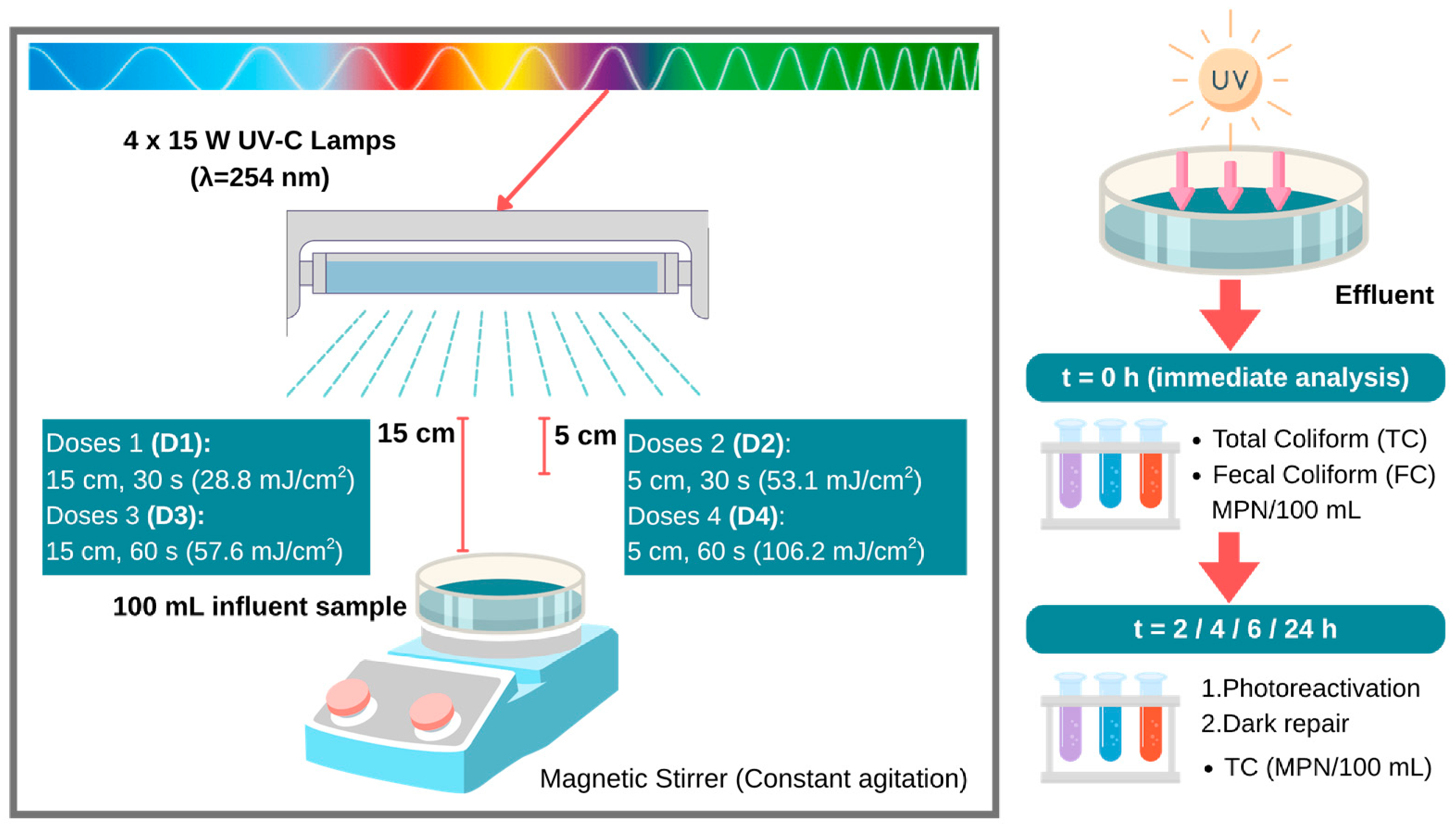
Figure 1. Experimental design for UV reactivation analysis. The square represents the batch UV reactor, which was operated as a closed system.
Processes 14 01777 g001
Figure 2. Percentage of reactivation (%) of total coliforms according to the dose applied for photoreactivation and reactivation in the dark. Photoreactivation; dark repair.
Processes 14 01777 g002
Figure 3. Survival rate as a function of the dose applied for total coliforms. Photoreactivation; dark repair.
Processes 14 01777 g003
Figure 4. Log reduction values (bar plot) from studies compared with the present study regarding the removal of different microbiological contaminants, in relation to influent TSS (scatter plot) concentration and the doses of UV. (a) Total coliforms; (b) fecal coliforms, E. coli, microbial flora.
Processes 14 01777 g004
Table 1. Physicochemical and microbiological characterization of the UV influent.
ParameterUnitLower ValueHigher ValueAverage ± SD
pH-7.17.87.6 ± 0.2
°C9.817.213.0 ± 2.7
ECmS/cm3.94.94.4 ± 0.3
ORPmV−87.0240.822.2 ± 95.3
TurbidityNTU10.8172.033.9 ± 48.8
DOmg/L1.53.72.2 ± 0.8
TSSmg/L26.443.231.7 ± 5.8
VSSmg/L16.826.021.3 ± 4.2
CODmg/L143.1363.2260.6 ± 87.9
CODSmg/L81.5182.9118.9 ± 45.3
BOD5mg/L118.0243.0182.3 ± 62.6
TOCmg/L14.143.230.3 ± 14.8
TNmg/L70.0100.087.0 ± 15.4
NH4+-Nmg/L3.2127.880.2 ± 39.9
NO2-Nmg/L0.010.030.02 ± 0.01
NO3-Nmg/L0.31.81.1 ± 0.5
TPmg/L12.016.413.9 ± 2.2
PO43−-Pmg/L8.716.912.9 ± 2.6
TCMPN/100 mL6.1 × 1041.1 × 1063.1 × 105 ± 3.5 × 10⁵
FCMPN/100 mL2.1 × 1042.3 × 1051.5 × 105 ± 1.0 × 10⁵
Note: T°: temperature; EC: electrical conductivity; ORP: oxidation-reduction potential; DO: dissolved oxygen; TSS: total suspended solids; VSS: volatile suspended solids; COD: total chemical oxygen demand; CODS: soluble chemical oxygen demand; BOD5: biological oxygen demand; TOC: total organic carbon; TN: total nitrogen; N-NH4+: ammonium nitrogen; NO2-N: nitrite as nitrogen; NO3-N: nitrate as nitrogen; TP: total phosphorus; PO43−-P: phosphate as phosphorus, TC: total coliform; FC: fecal coliform.
Table 2. Microbiological analysis of influent and effluent under UV irradiation at the various doses evaluated.
SampleTotal Coliforms (MPN/100 mL)Fecal Coliforms (MPN/100 mL)
RangeAverage ± SDLog10 Removal (Log)RangeAverage ± SDLog10
Removal
(Log)
Influent6.1 × 104–1.1 × 1063.1 × 105 ± 3.5 × 10⁵-2.1 × 10⁴–2.3 × 1051.7 × 105 ± 9.3 × 10⁴-
D12.3 × 104–2.4 × 1051.2 × 105 ± 8.9 × 1040.6 ± 0.51.8 × 103–3.5 × 1051.4 × 105 ± 1.5 × 1050.5 ± 0.8
D21.3 × 105–1.8 × 1051.6 × 105 ± 3.5 × 1040.5 ± 0.44.5 × 103–1.7 × 1056.6 × 104 ± 9.1 × 1040.6 ± 0.4
D31.6 × 103–9.2 × 1052.3 × 105 ± 3.9 × 1050.8 ± 1.1 1.1 × 10⁴–1.3 × 1057.5 × 104 ± 6.0 × 1040.6 ± 0.4
D41.6 × 103–9.3 × 1041.2 × 105 ± 1.4 × 1051.1 ± 0.81.6 × 103–9.3 × 1044.3 × 104 ± 4.6 × 1040.8 ± 0.9
Disclaimer/Publisher’s Note: The statements, opinions and data contained in all publications are solely those of the individual author(s) and contributor(s) and not of MDPI and/or the editor(s). MDPI and/or the editor(s) disclaim responsibility for any injury to people or property resulting from any ideas, methods, instructions or products referred to in the content.