Editorial

Intelligent and Integrated Approaches for Efficient Oil and Gas Development


1
State Key Laboratory of Petroleum Resources and Engineering, China University of Petroleum (Beijing), Beijing 102249, China
2
Key Laboratory of Enhanced Oil & Gas Recovery, Ministry of Education, Northeast Petroleum University, Daqing 163318, China
*
Authors to whom correspondence should be addressed.
Processes 2026, 14(11), 1727; https://doi.org/10.3390/pr14111727
Submission received: 23 May 2026 / Accepted: 25 May 2026 / Published: 26 May 2026
(This article belongs to the Special Issue Applications of Intelligent Models in the Petroleum Industry)

Abstract

This editorial synthesizes the key findings from 17 original research articles featured in the Special Issue on “Intelligent and Integrated Approaches for Efficient Oil and Gas Development.” The collection demonstrates a paradigm shift from purely data-driven methods toward physics-informed, interpretable, and operationally deployable intelligent systems across the upstream lifecycle. Advances span intelligent drilling with real-time model predictive control frameworks achieving sub-20 ms execution times and bottomhole pressure fluctuations below 0.30 MPa; AI-assisted reservoir characterization using multiscale convolutional neural networks, seismic waveform-constrained inversion, and geology-informed transformers that improve sandstone thickness prediction (R2 = 0.895) and stratigraphic correlation (F1 = 0.886); production optimization through hybrid decomposition-ensemble models (R2 = 0.954) and improved XGBoost (R2 = 0.989); and enhanced oil recovery via self-assembled foam systems and polymer injector designs. Fundamental geochemical studies on the Qiongzhusi Formation shale and tight sandstone gas in the Ordos Basin provide critical geological constraints. The editorial identifies persistent challenges, including real-time performance versus physical fidelity, interpretability and uncertainty quantification, multi-scale integration, and generalizability across diverse geological settings. Future directions highlight reinforcement learning for autonomous operations, physics-informed digital twins, generative AI for subsurface scenario modelling, and integration with carbon capture, utilization, and storage. This Special Issue advances the convergence of petroleum engineering, artificial intelligence, and Earth sciences toward intelligent, secure, and sustainable hydrocarbon development.

1. Introduction

The upstream oil and gas sector is undergoing a revolutionary phase when digitalization, automation, and data-driven decision-making have transitioned from aspirational ideas to operational necessities. Mature fields, intricate unconventional resources, offshore settings, and the necessity to diminish carbon emissions are forcing operators to use intelligent systems capable of sensing, analyzing, and acting with little human involvement [1,2,3,4]. This Special Issue has 17 original research articles that jointly advance the fields of intelligent drilling, real-time well control, AI-assisted reservoir characterization, improved oil recovery (EOR), and production optimization. A prominent theme in these works is the intentional integration of physics-based domain expertise with contemporary machine learning—advancing beyond opaque models towards interpretable, resilient, and computationally efficient solutions for subsurface issues [5,6,7]. The articles report not only incremental advances but also significant advancements in accuracy, speed, and operational reliability over the full hydrocarbon development lifecycle.

2. Advances in Intelligent Drilling and Real-Time Control

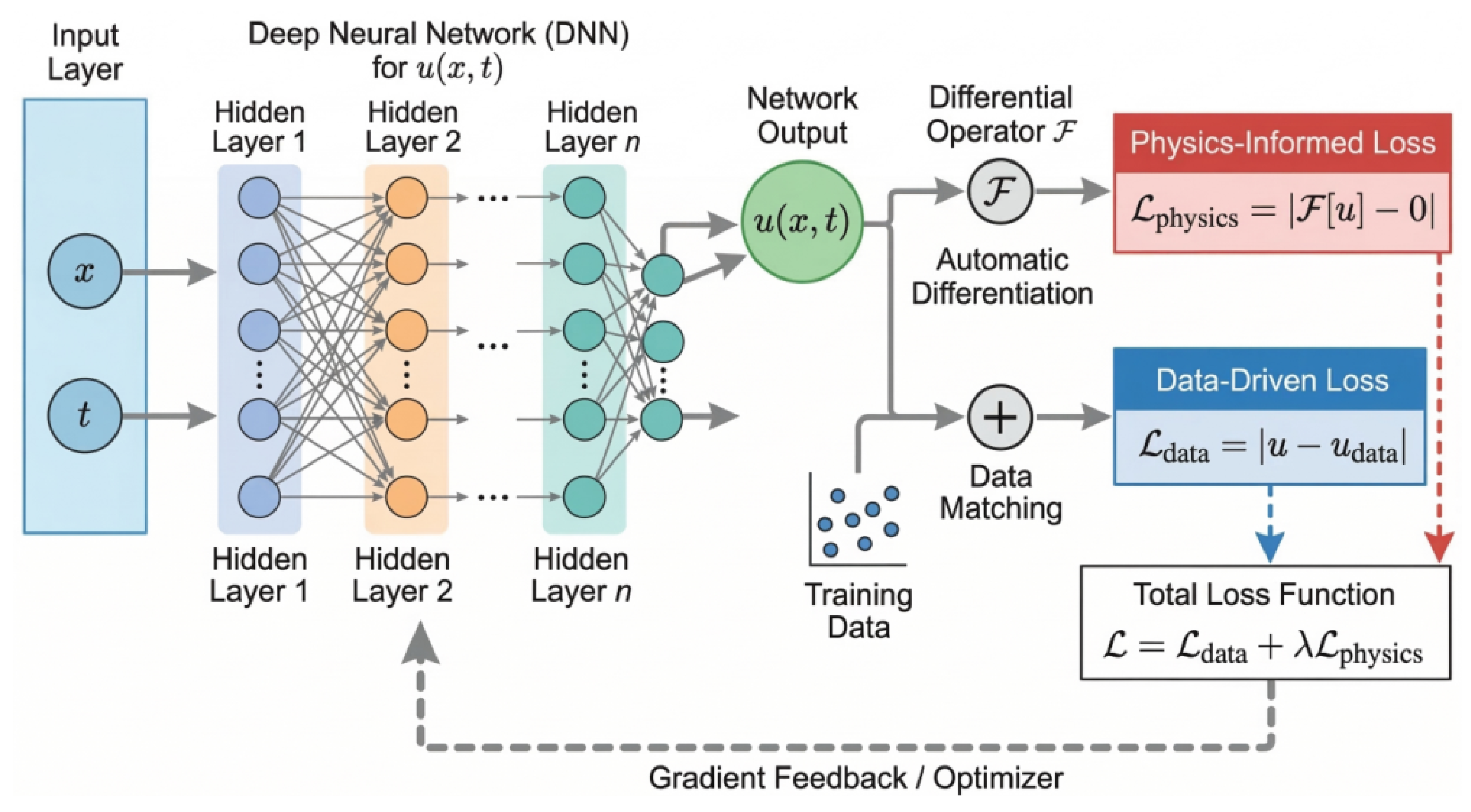
Several contributions tackle the long-standing tension between control accuracy and computational feasibility in drilling automation. A real-time lexicographic model predictive control (MPC) framework with candidate pre-screening, move blocking, and online correction is developed for mud-pulse telemetry rotary valves [8]. By prioritizing pressure-pulse fidelity under strict actuator limits and parameter drift, the controller cuts the step-tracking rise time from 2.18 s to 1.76 s and reduces steady-state pressure error by an order of magnitude relative to conventional MPC, all while maintaining worst-case execution times within the 20 ms sampling period. This simulation-validated design represents a practical pathway toward field-deployable, low-complexity rotary-valve control. For managed pressure drilling (MPD), a physics-informed neural network MPC framework embeds conservation laws and wellbore dynamics directly into deep surrogate models [9] (Figure 1). During training, prior physical knowledge constrains the network to remain consistent with mass conservation and multiphase flow physics; during control, the surrogate replaces expensive numerical iterations, achieving single-step solving times of only 16.81 ms—an 11.1-fold acceleration over mechanistic solvers—while keeping bottomhole pressure fluctuations within 0.30 MPa even under simulated gas kicks and pump shutdowns.
A geological-sequence-matched, physics-driven deep learning framework for pre-drill mud weight window prediction couples rock mechanics with a long short-term memory network, shrinking collapse, pore, and fracture pressure errors by approximately 30–40% and capturing meter-scale pressure variations that conventional methods overlook [10]. Complementing these downhole intelligence capabilities, a multi-branch parallel neural network processes surface-measured weight-on-bit, rotational speed, pump pressure, and torque to track well depth with a mean absolute error of 1.18 and a per-point comparison error averaging only 0.012 m, providing a reliable basis for downhole state awareness when direct depth measurements are unavailable [11]. These studies build on recent advances in machine-learning-based drilling dynamics prediction [12,13], real-time lithology identification [14,15], and vibration or kick monitoring [16,17], establishing that the path to real-time field-deployable intelligence lies in encoding physical principles rather than discarding them and that rigorous validation under realistic disturbance profiles is essential for transitioning from simulation to hardware-in-the-loop testing.

3. Intelligent Reservoir Characterization and Interpretation

High-fidelity subsurface imaging and stratigraphic interpretation receive a strong boost from deep learning architectures that respect geological fabric. A multiscale convolutional neural network integrated with a self-attention module fuses multiple seismic attribute volumes—organized as multi-channel 2D slices with parallel 3 × 3, 5 × 5, and 7 × 7 kernels—to predict sandstone thickness in the South Sumatra Basin [18]. The dual-output design yields both a high-resolution thickness map (R2 = 0.895) and quantitative attribute importance scores, revealing that amplitude-related attributes dominate the prediction while frequency- and energy-related attributes contribute less, a result consistent with bandwidth-limited resolution. Seismic waveform-constrained high-resolution inversion embeds lithological, logging, and waveform data into a deep learning framework with geological and physical constraints, achieving 0.5 m vertical resolution and cutting parameter inversion errors by over 25%, and has already supported new well placement that increased initial oil production by 22% in a pilot area [19].
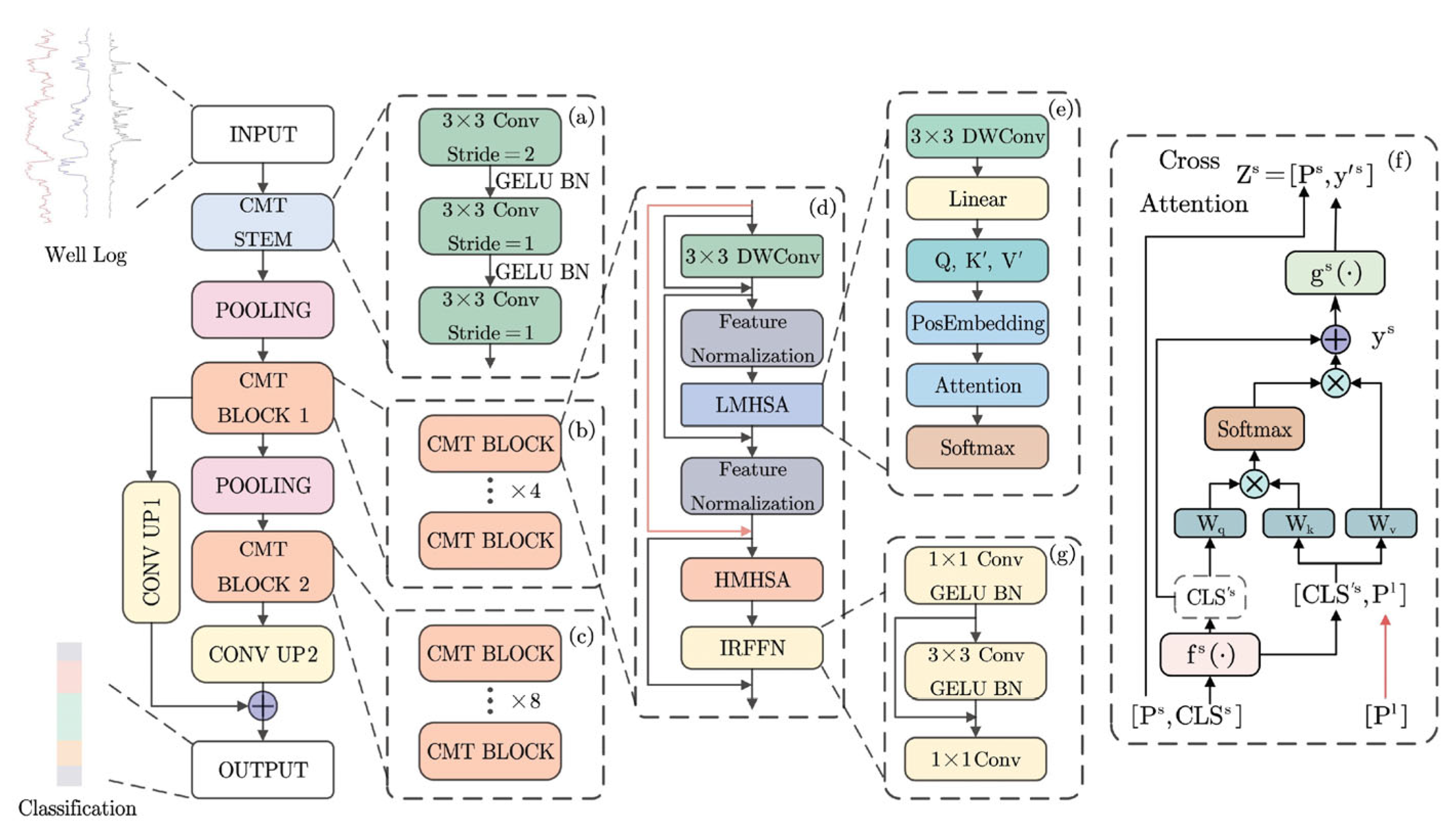
A geology-informed transformer–CNN hybrid (CMT-enhanced Hiformer) for well-log stratigraphic correlation integrates a geological constraint with regularization parameters into the loss function, explicitly promoting the accuracy of formation boundaries, and achieves an F1 score of 0.886 on blind test data from the Shuanghe oil field [20] (Figure 2). Process-based sedimentary numerical simulations using Delft3D with 21 controlled-variable experiments on braided-river reservoirs in the Sulige Gas Field quantify the sensitivity of channel-bar morphology to discharge, slope gradient, and sediment grain size, demonstrating that slope gradient exerts the strongest control on erosion–deposition balance, while discharge promotes bar extension and grain size stabilizes bar shape [21].
These contributions are in line with the broader shift toward data-driven optimal point identification and lithofacies classification using both supervised and unsupervised machine learning [22,23,24,25], and they strengthen the linkage between depositional physics, seismic response, and deep-learning-based reservoir models, offering a pathway toward geologically consistent and interpretable reservoir characterization at scales relevant to development decisions.

4. Production Optimization and Enhanced Oil Recovery

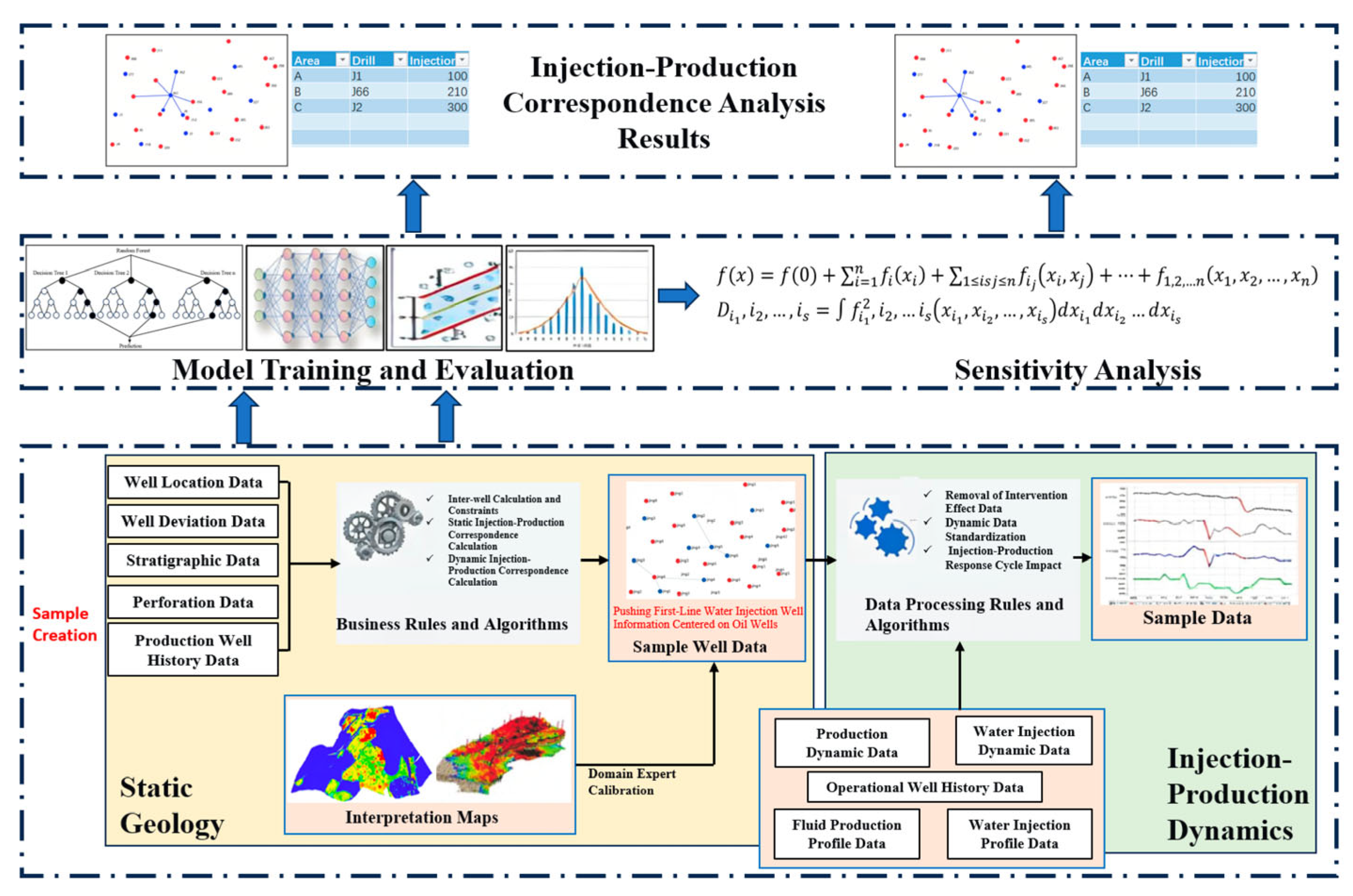
Operational intelligence is equally prominent in this Special Issue, with multiple contributions demonstrating that the same physics–data fusion paradigm can transform day-to-day field management. An intelligent cable-controlled injection–production integrated system deployed in the Bohai Sea leverages a cloud-native microservice architecture and nine functional modules to achieve closed-loop management from data acquisition to intelligent decision-making [26] (Figure 3). A weighted ensemble of Random Forest and SVM delivers 92% diagnostic accuracy for blockage detection, while a Bayesian fusion framework combining static geological priors with dynamic sensitivity analysis quantifies injector–producer connectivity with 85% accuracy and rigorous uncertainty propagation; the resulting three-stage human–machine collaborative mechanism slashes anomaly response time from over 72 h to under 2 h. Fine-scale water injection is dynamically managed through a seepage-resistance-driven method that establishes quantitative relationships between seepage resistance, liquid absorption ratio, and injection allocation, maintaining inter-zone seepage-resistance step differences within the 3–5 range and effectively suppressing water-cut increase rates in high-water-cut blocks [27].
For production forecasting, a CEEMDAN–SR–BiLSTM hybrid framework employs complete ensemble empirical mode decomposition, Hilbert–Huang transform-based subsequence reconstruction, and Bayesian-optimized bidirectional LSTM to achieve an R2 of 0.954 for wells with 87.6% water cut, while SHAP-based interpretability analysis reveals how water injection volume and flowing pressure contribute to different frequency components, establishing a mechanistic mapping between data features and wellbore-reservoir physics [28]. An improved XGBoost model tuned by the Improved Crowned Porcupine Optimization algorithm, incorporating Chebyshev chaotic mapping and elite opposition-based learning, predicts CO2-WAG performance with a coefficient of determination of 0.989 and errors consistently within ±2% [29]. A comprehensive data-driven tight-gas framework trained on 3146 Montney horizontal wells uses Random Forest to identify fluid-injection volumes, burial depth, and completion parameters as key variables, demonstrating that production can be nearly doubled by increasing fracturing fluid injection by 97.5% [30].
In the EOR domain, an in situ self-assembled composite foam system combining soft polymer particles with a low-interfacial-tension foaming agent increases oil recovery by up to 27.2% across heterogeneous offshore reservoirs [31], while an improved Carreau–Yasuda viscosity constitutive model enables the design of a novel spindle-type polymer injector that simultaneously enhances pressure drop by 65% and preserves over 85% viscosity retention [32]. These works align with a growing body of research that leverages ensemble learning, deep reinforcement learning, and hybrid physics-guided models to optimize production and recovery in both conventional and unconventional plays [33,34,35,36,37,38,39]. Together, they illustrate that explainable, physics-aware machine learning, when embedded in operational workflows, can deliver measurable improvements in recovery, efficiency, and safety.

5. Fundamental Geoscience and Unconventional Resources

Grounding these engineering advances are new geochemical and paleoenvironmental insights that refine our understanding of resource distribution and quality. A multi-proxy study of the Lower Cambrian Qiongzhusi Formation shale in western Hubei Province identifies five dominant rock types—siliceous, argillaceous–siliceous mixed, argillaceous–calcareous, calcareous–siliceous, and calcareous shales—and traces their vertical and lateral transitions from marine trough to trough margin [40]. By integrating core observations, organic geochemistry, and elemental analysis, the study demonstrates that redox conditions, water-mass stagnation, and paleoproductivity are the primary drivers of organic matter enrichment, while terrigenous input plays a secondary role, and that a consistent shallowing-upward trend is accompanied by diminished upwelling and declining total organic carbon.
Geochemical fingerprinting of tight sandstone gas in the Daning–Jixian Block of the Ordos Basin, based on systematic compositional and carbon–hydrogen isotope analyses across multiple stratigraphic units, reveals higher average methane concentrations and notably heavier δ13C1 and δ2H-CH4 values compared to other basin gas fields, along with a distinctive δ13C1 > δ13C2 reversal [41]. The gas is interpreted as primarily early-stage kerogen-cracking gas with minor contributions from oil-derived gas, and the isotopic reversal is attributed to mixing between highly mature kerogen gas and secondary cracking gas, indicating that ethane carbon isotopes alone are insufficient for genetic classification. Such fundamental geochemical and petrophysical studies are complemented by machine-learning-based predictions of porosity, permeability, and total organic carbon [42,43], and by integrated analyses of fault reactivation and fracture network evolution that influence hydrocarbon storage and flow [44,45,46,47,48]. These studies collectively provide critical constraints for exploration risk assessment and for the stratigraphic and geochemical frameworks within which the intelligent drilling and production technologies reported in this issue must operate.

6. Bridging Gaps and Charting Future Directions

Notwithstanding the remarkable advancements documented above, significant knowledge deficiencies remain. The compromise between physical fidelity and real-time performance necessitates the development of lightweight, physics-integrated neural architectures capable of operating on edge devices while maintaining the extrapolation assurances afforded by first-principles constraints [49]. Interpretability and robust uncertainty quantification are inadequately developed in numerous AI-driven subsurface workflows, constraining the trust of field engineers in implementing model suggestions [50,51]. Multi-scale integration—from pore-scale physics to reservoir-scale simulation and from millisecond control loops to decades-long field life—continues to pose a significant challenge that necessitates innovative coupling solutions [52]. Furthermore, several documented methodologies have been verified solely on simulated testbeds or specific field examples; comprehensive benchmarking across varied geological contexts and operating conditions is essential to ascertain generalizability [53,54,55,56,57].
This Special Issue addresses these deficiencies by introducing models that are physically bound, provide interpretable diagnostics, and are validated against empirical or high-fidelity simulation data. We anticipate significant research trajectories, including: (1) reinforcement learning and adaptive control for fully autonomous drilling and production operations in non-stationary environments; (2) physics-informed digital twins for comprehensive reservoir management with continuous data assimilation; (3) generative AI for subsurface scenario modelling amidst geological uncertainty, facilitating probabilistic decision-making; and (4) seamless integration of carbon capture, utilization, and storage We urge the community to expand upon the foundations established by the writers in this issue and to explore these avenues with equal dedication to rigour, interpretability, and relevance to the discipline.
We express our profound gratitude to all writers for their exemplary contributions, to the numerous reviewers for their critical and prompt evaluations, and to the editorial team for their steadfast support. The editors have assembled a collection with a balanced citation profile to represent the diversity of the discipline. We anticipate that this Special Issue will stimulate ongoing innovation at the convergence of petroleum engineering, artificial intelligence, and Earth sciences, advancing the sector towards a more intelligent, secure, and sustainable future.

7. Conclusions

This Special Issue demonstrates that integrating physics-based domain knowledge with machine learning—rather than discarding physical principles—is the key to developing interpretable, resilient, and operationally deployable intelligent systems for oil and gas development. The 17 contributions collectively achieve measurable improvements in drilling accuracy, reservoir characterization, production forecasting, and enhanced oil recovery across diverse geological settings. Persistent challenges remain in real-time performance, uncertainty quantification, multi-scale integration, and generalizability. Future advances will likely be driven by reinforcement learning for autonomous operations, physics-informed digital twins, generative AI for subsurface modelling, and seamless integration with carbon capture, utilization, and storage. The convergence of petroleum engineering, artificial intelligence, and Earth sciences promises a more intelligent, secure, and sustainable energy future.

Author Contributions

Conceptualization, G.H.; methodology, G.H. and H.W.; writing—original draft preparation, G.H.; writing—review and editing, H.W. All authors have read and agreed to the published version of the manuscript.

Funding

This research is funded by the National Major Science and Technology Programme (2025ZD1401405).

Data Availability Statement

The data presented in this study are available on request from the corresponding author.

Acknowledgments

We thank the anonymous reviewers and the editor for their instructive comments that considerably improved the manuscript’s quality.

Conflicts of Interest

The author declares that the research was conducted in the absence of any commercial or financial relationships that could be construed as potential conflicts of interest.

References

  1. Hui, G.; Chen, Z.; Wang, Y.; Zhang, D.; Gu, F. An Integrated Machine Learning-Based Approach to Identifying Controlling Factors of Unconventional Shale Productivity. Energy 2023, 266, 126512. [Google Scholar] [CrossRef]
  2. LeCun, Y.; Bengio, Y.; Hinton, G. Deep Learning. Nature 2015, 521, 436–444. [Google Scholar] [CrossRef]
  3. Hui, G.; Chen, Z.; Wang, H.; Song, Z.; Wang, S.; Zhang, H.; Zhang, D.M.; Gu, F. A Machine Learning-Based Study of Multifactor Susceptibility and Risk Control of Induced Seismicity in Unconventional Reservoirs. Pet. Sci. 2023, 20, 2232–2243. [Google Scholar] [CrossRef]
  4. Li, M.; Kolouri, S.; Mohammadi, J. Learning to Solve Optimization Problems With Hard Linear Constraints. IEEE Access 2023, 11, 59995–60004. [Google Scholar] [CrossRef]
  5. Hui, G.; Chen, S.; Gu, F. Strike–Slip Fault Reactivation Triggered by Hydraulic-Natural Fracture Propagation during Fracturing Stimulations near Clark Lake, Alberta. Energy Fuels 2024, 38, 18547–18555. [Google Scholar] [CrossRef]
  6. Lever, J.; Cheng, S.; Casas, C.Q.; Liu, C.; Fan, H.; Platt, R.; Rakotoharisoa, A.; Johnson, E.; Li, S.; Shang, Z.; et al. Facing & Mitigating Common Challenges When Working with Real-World Data: The Data Learning Paradigm. J. Comput. Sci. 2025, 85, 102523. [Google Scholar] [CrossRef]
  7. Hui, G.; Chen, S.; He, Y.; Wang, H.; Gu, F. Machine Learning-Based Production Forecast for Shale Gas in Unconventional Reservoirs via Integration of Geological and Operational Factors. J. Nat. Gas Sci. Eng. 2021, 94, 104045. [Google Scholar] [CrossRef]
  8. Dong, X.; Yan, L.; Wang, L.; Zhou, Z.; Jian, Y.; Li, R. Real-Time Lexicographic MPC with Online Correction for Intelligent Drill-Bit Rotary Valves in Mud-Pulse Telemetry. Processes 2026, 14, 1589. [Google Scholar] [CrossRef]
  9. Wu, L.; Zhang, Z.; Zhang, C.; Li, G.; Song, X.; Zhou, M.; Yao, X. Physics-Informed Fusion Neural Network for Real-Time Bottomhole Pressure Control in Managed Pressure Drilling. Processes 2026, 14, 1240. [Google Scholar] [CrossRef]
  10. Chen, Y.; Sun, T.; Yang, J.; Chen, X.; Ren, L.; Wen, Z.; Jia, S.; Wang, W.; Wang, S.; Zhang, M. Prediction of Mud Weight Window Based on Geological Sequence Matching and a Physics-Driven Machine Learning Model for Pre-Drilling. Processes 2025, 13, 2255. [Google Scholar] [CrossRef]
  11. Liu, W.; Ma, B.; Yu, X. Research on Well Depth Tracking Calculation Method Based on Branching Parallel Neural Networks. Processes 2025, 13, 3147. [Google Scholar] [CrossRef]
  12. Baki, S.; Dursun, S. Flowing Bottomhole Pressure Prediction with Machine Learning Algorithms for Horizontal Wells. In Proceedings of the SPE Annual Technical Conference and Exhibition, Houston, TX, USA, 3–5 October 2022; p. D021S038R004. [Google Scholar]
  13. Mazen, A.Z.; Rahmanian, N.; Mujtaba, I.M.; Hassanpour, A. Effective Mechanical Specific Energy: A New Approach for Evaluating PDC Bit Performance and Cutters Wear. J. Pet. Sci. Eng. 2021, 196, 108030. [Google Scholar] [CrossRef]
  14. Qingfeng, L.; Chi, P.; Jianhong, F.; Xiaomin, Z.; Yu, S.; Chengxu, Z.; Pengcheng, W.; Chenliang, F.; Yaozhou, P. A Comprehensive Machine Learning Model for Lithology Identification While Drilling. Geoenergy Sci. Eng. 2023, 231, 212333. [Google Scholar] [CrossRef]
  15. You, M.; Tan, F.; Zhang, Y.; Sheng, D.; Zuo, C.; Jiao, Y. Development and Application of a Monitoring-While-Drilling System with an Optimized Machine Learning Algorithm for Lithology Identification and Rock Strength Prediction. Rock Mech. Rock Eng. 2025, 58, 10381–10399. [Google Scholar] [CrossRef]
  16. Saadeldin, R.; Gamal, H.; Elkatatny, S. Machine Learning Solution for Predicting Vibrations While Drilling the Curve Section. ACS Omega 2023, 8, 35822–35836. [Google Scholar] [CrossRef]
  17. Yin, Q.; Yang, J.; Tyagi, M.; Zhou, X.; Wang, N.; Tong, G.; Xie, R.; Liu, H.; Cao, B. Downhole Quantitative Evaluation of Gas Kick during Deepwater Drilling with Deep Learning Using Pilot-Scale Rig Data. J. Pet. Sci. Eng. 2022, 208, 109136. [Google Scholar] [CrossRef]
  18. Cheng, Z.; Huang, W.; Zhang, X.; Lei, Z.; Hong, G.; Wang, W.; Zhang, M.; Li, L.; Li, J. Seismic Attribute Fusion and Reservoir Prediction Using Multiscale Convolutional Neural Networks and Self-Attention: A Case Study of the B Gas Field, South Sumatra Basin. Processes 2026, 14, 981. [Google Scholar] [CrossRef]
  19. Zhao, H.; Wu, J.; Li, K.; He, Y.; Hu, R.; Wang, T.; Zhao, Z.; Liu, H.; Li, Y.; Yang, X. Seismic Waveform-Constrained Artificial Intelligence High-Resolution Reservoir Inversion Technology. Processes 2025, 13, 2876. [Google Scholar] [CrossRef]
  20. Xu, Z.; Zheng, B.; Liu, B.; Song, W. Stratigraphic Correlation of Well Logs Using Geology-Informed Deep Learning Networks. Processes 2025, 13, 1288. [Google Scholar] [CrossRef]
  21. Li, J.; Wang, K.; Li, F.; Ma, Z.; Liu, X.; Liu, Y. Morphological Controlling Factors of Braided River Reservoir Based on Delft3D Sedimentary Numerical Simulation: Application to Ordos Basin, China. Processes 2025, 13, 3661. [Google Scholar] [CrossRef]
  22. Cao, L.; Jiang, F.; Chen, Z.; Gao, Y.; Huo, L.; Chen, D. Data-Driven Interpretable Machine Learning for Prediction of Porosity and Permeability of Tight Sandstone Reservoir. Adv. Geo-Energy Res. 2025, 16, 21–35. [Google Scholar] [CrossRef]
  23. Deng, Y.; Wang, W.; Su, Y.; Sun, S.; Zhuang, X. An Unsupervised Machine Learning Based Double Sweet Spots Classification and Evaluation Method for Tight Reservoirs. J. Energy Res. Technol. 2023, 145, 072602. [Google Scholar] [CrossRef]
  24. Tahmasebi, P.; Javadpour, F.; Sahimi, M. Data Mining and Machine Learning for Identifying Sweet Spots in Shale Reservoirs. Expert Syst. Appl. 2017, 88, 435–447. [Google Scholar] [CrossRef]
  25. Wang, Y.-F.; Xu, S.; Hao, F.; Liu, H.-M.; Hu, Q.-H.; Xi, K.-L.; Yang, D. Machine Learning-Based Grayscale Analyses for Lithofacies Identification of the Shahejie Formation, Bohai Bay Basin, China. Pet. Sci. 2025, 22, 42–54. [Google Scholar] [CrossRef]
  26. Bai, J.; Chen, Z.; Zhang, W.; Zhou, Z.; Wang, L.; Xu, Y.; Jiang, S.; Zhu, C.; Liu, Z.; Zhang, L.; et al. Research and Application of an Intelligent Cable-Controlled Injection–Production Integration and Control System. Processes 2026, 14, 1238. [Google Scholar] [CrossRef]
  27. Dong, C.; Hui, W.; Shan, G.; Yang, E.; Qu, M.; Wang, H. Research on Dynamic Control Methods for Fine-Scale Water Injection Zones Based on Seepage Resistance. Processes 2025, 13, 3966. [Google Scholar] [CrossRef]
  28. Li, Z.; Qian, Q.; Guo, H.; Wu, T.; Cui, H.; Zhu, B. A Hybrid Framework for Production Prediction in High-Water-Cut Oil Wells: Decomposition-Feature Enhancement-Integration. Processes 2025, 13, 1467. [Google Scholar] [CrossRef]
  29. Su, B.; Li, J.; Li, J.; Han, C.; Feng, S. An Improved XGBoost Model for Development Parameter Optimization and Production Forecasting in CO2 Water-Alternating-Gas Processes: A Case Study of Low Permeability Reservoirs in China. Processes 2025, 13, 2506. [Google Scholar] [CrossRef]
  30. Yao, F.; Hui, G.; Meng, D.; Ge, C.; Zhang, K.; Ren, Y.; Li, Y.; Zhang, Y.; Yang, X.; Zhang, Y.; et al. Integrated Data-Driven Framework for Forecasting Tight Gas Production Based on Machine Learning Algorithms, Feature Selection and Fracturing Optimization. Processes 2025, 13, 1162. [Google Scholar] [CrossRef]
  31. Jiang, M.; Tang, S.; Xia, Y. In Situ Self-Assembled Particle-Enhanced Foam System for Profile Control and Enhanced Oil Recovery in Offshore Heterogeneous Reservoirs. Processes 2026, 14, 411. [Google Scholar] [CrossRef]
  32. Qian, Q.; Li, T.; Ren, C.; Zhou, Y.; Che, C.; Zhang, X.; Ma, J.; An, P.; Zhao, Q. Numerical Simulation and Optimization of Polyacrylamide Solution Flow in a Polymer Injector Using an Improved Viscosity Constitutive Model. Processes 2026, 14, 883. [Google Scholar] [CrossRef]
  33. Bekhit, A.M.; Sobh, M.; Abdel Zaher, M.; Abdel Fattah, T.; Diab, A.I. Predicting Terrestrial Heat Flow in Egypt Using Random Forest Regression: A Machine Learning Approach. Geotherm. Energy 2025, 13, 18. [Google Scholar] [CrossRef]
  34. Batanero, E.A.; Pascual, Á.F.; Jiménez, Á.B. RLBoost: Boosting Supervised Models Using Deep Reinforcement Learning. Neurocomputing 2025, 618, 128815. [Google Scholar] [CrossRef]
  35. Brantson, E.T.; Ju, B.; Omisore, B.O.; Wu, D.; Selase, A.E.; Liu, N. Development of Machine Learning Predictive Models for History Matching Tight Gas Carbonate Reservoir Production Profiles. J. Geophys. Eng. 2018, 15, 2235–2251. [Google Scholar] [CrossRef]
  36. Breiman, L. Random Forests. Mach. Learn. 2001, 45, 5–32. [Google Scholar] [CrossRef]
  37. Kalantari-Dahaghi, A.; Mohaghegh, S.; Esmaili, S. Coupling Numerical Simulation and Machine Learning to Model Shale Gas Production at Different Time Resolutions. J. Nat. Gas Sci. Eng. 2015, 25, 380–392. [Google Scholar] [CrossRef]
  38. Meng, J.; Zhou, Y.; Ye, T.; Xiao, Y.; Lu, Y.; Zheng, A.W.; Liang, B. Hybrid Data-Driven Framework for Shale Gas Production Performance Analysis via Game Theory, Machine Learning, and Optimization Approaches. Pet. Sci. 2023, 20, 277–294. [Google Scholar] [CrossRef]
  39. Mohammed, A.I.; Bartlett, M.; Oyeneyin, B.; Kayvantash, K.; Njuguna, J. An Application of FEA and Machine Learning for the Prediction and Optimisation of Casing Buckling and Deformation Responses in Shale Gas Wells in an In-Situ Operation. J. Nat. Gas Sci. Eng. 2021, 95, 104221. [Google Scholar] [CrossRef]
  40. Lan, Z.; He, J.; Chen, F.; Yang, T.; Wang, L. Paleoenvironmental Evolution and Its Dominant Controls on Organic Matter Enrichment: Insights from the Lower Cambrian Qiongzhusi Formation Shale. Processes 2026, 14, 882. [Google Scholar] [CrossRef]
  41. Wang, B.; Chen, M.; Tian, H.; Sun, J.; Liu, L.; Liang, X.; Chen, B.; Yu, B.; Zhang, Z.; Qu, Z. Geochemical Characteristics and Genetic Origin of Tight Sandstone Gas in the Daning–Jixian Block, Ordos Basin. Processes 2025, 13, 4019. [Google Scholar] [CrossRef]
  42. Saporetti, C.; Fonseca, D.; Oliveira, L.; Pereira, E.; Goliatt, L. Hybrid Machine Learning Models for Estimating Total Organic Carbon from Mineral Constituents in Core Samples of Shale Gas Fields. Mar. Pet. Geol. 2022, 143, 105783. [Google Scholar] [CrossRef]
  43. Yuan, Y.; Fu, H.; Yan, D.; Wang, G.; Yang, S.; Liu, M.; Jiang, Q.; Wang, X.; Wang, W. Machine Learning-Driven Classification and Production Capacity Prediction of Tight Sandstone Reservoirs: A Case Study of the Taiyuan Formation, Ordos Basin. Energy Sci. Eng. 2026, 14, 2514–2538. [Google Scholar] [CrossRef]
  44. Bao, P.; Hui, G.; Hu, Y.; Song, R.; Chen, Z.; Zhang, K.; Pi, Z.; Li, Y.; Ge, C.; Yao, F.; et al. Comprehensive Characterization of Hydraulic Fracture Propagations and Prevention of Pre-Existing Fault Failure in Duvernay Shale Reservoirs. Eng. Fail. Anal. 2025, 173, 109461. [Google Scholar] [CrossRef]
  45. Cheng, C.; Chen, Z.-X.; Hui, G. Energy-Efficient Fracturing Based on Stress-Coupled Perforation. Pet. Sci. 2026; in press. [CrossRef]
  46. Hui, G.; Chen, Z.; Schultz, R.; Chen, S.; Song, Z.; Zhang, Z.; Song, Y.; Wang, H.; Wang, M.; Gu, F. Intricate Unconventional Fracture Networks Provide Fluid Diffusion Pathways to Reactivate Pre-Existing Faults in Unconventional Reservoirs. Energy 2023, 282, 128803. [Google Scholar] [CrossRef]
  47. He, Y.-P.; Cheng, H.-B.; Zeng, P.; Zang, C.-Z.; Dong, Q.-W.; Wan, G.-X.; Dong, X.-T. Working Condition Recognition of Sucker Rod Pumping System Based on 4-Segment Time-Frequency Signature Matrix and Deep Learning. Pet. Sci. 2024, 21, 641–653. [Google Scholar] [CrossRef]
  48. Nascimento, J.; Maitelli, A.; Maitelli, C.; Cavalcanti, A. Diagnostic of Operation Conditions and Sensor Faults Using Machine Learning in Sucker-Rod Pumping Wells. Sensors 2021, 21, 4546. [Google Scholar] [CrossRef]
  49. Nour, M.; Elsayed, S.K.; Mahmoud, O. A Supervised Machine Learning Model to Select a Cost-Effective Directional Drilling Tool. Sci. Rep. 2024, 14, 26624. [Google Scholar] [CrossRef]
  50. Xiao, C.; Wang, G.; Zhang, Y.; Deng, Y. Machine-Learning-Based Well Production Prediction under Geological and Hydraulic Fracture Parameters Uncertainty for Unconventional Shale Gas Reservoirs. J. Nat. Gas Sci. Eng. 2022, 106, 104762. [Google Scholar] [CrossRef]
  51. Vikara, D.; Remson, D.; Khanna, V. Machine Learning-Informed Ensemble Framework for Evaluating Shale Gas Production Potential: Case Study in the Marcellus Shale. J. Nat. Gas Sci. Eng. 2020, 84, 103679. [Google Scholar] [CrossRef]
  52. Mehana, M.; Guiltinan, E.; Vesselinov, V.; Middleton, R.; Hyman, J.D.; Kang, Q.; Viswanathan, H. Machine-Learning Predictions of the Shale Wells’ Performance. J. Nat. Gas Sci. Eng. 2021, 88, 103819. [Google Scholar] [CrossRef]
  53. Yi, J.; Qi, Z.; Li, X.; Liu, H.; Zhou, W. Spatial Correlation-Based Machine Learning Framework for Evaluating Shale Gas Production Potential: A Case Study in Southern Sichuan Basin, China. Appl. Energy 2024, 357, 122483. [Google Scholar] [CrossRef]
  54. Delshad, M.; Al-Husseini, A.; Sharma, M.M. A Comprehensive Review of Well Integrity Challenges and Digital Twin Applications Across Conventional, Unconventional, and Storage Wells. Energies 2025, 18, 4757. [Google Scholar] [CrossRef]
  55. Radhasharan, N. Real-Time Edge-To-Cloud Intelligence Architecture for Autonomous Drilling Systems. J. Int. Crisis Risk Commun. Res. 2026, 9, 90–102. [Google Scholar]
  56. Mazhar, S.; Mumtaz, M.W.; El Oirdi, M.; Mukhtar, H.; Raza, M.A.; Farhan, M.; Aatif, M.; Muteeb, G. Synergizing Advanced Materials and Artificial Intelligence for Next-Generation Carbon Capture, Utilization, and Storage (CCUS): A Review. RSC Adv. 2026, 16, 2621–2651. [Google Scholar] [CrossRef] [PubMed]
  57. Mao, S.; Chen, B.; Malki, M.; Chen, F.; Morales, M.; Ma, Z.; Mehana, M. Efficient Prediction of Hydrogen Storage Performance in Depleted Gas Reservoirs Using Machine Learning. Appl. Energy 2024, 361, 122914. [Google Scholar] [CrossRef]
Figure 1. Schematic of the PINN architecture, where automatic differentiation differentiates network outputs to calculate PDE residuals [9].
Processes 14 01727 g001
Figure 2. Architecture of the proposed CMT-enhanced Hiformer: (a) CMTSTEM, (bd) CMTBLOCK, (e) LMHSA, (f) cross attention, and (g) IRFFN [20].
Processes 14 01727 g002
Figure 3. Methodology for injector–producer connectivity analysis [26].
Processes 14 01727 g003
Disclaimer/Publisher’s Note: The statements, opinions and data contained in all publications are solely those of the individual author(s) and contributor(s) and not of MDPI and/or the editor(s). MDPI and/or the editor(s) disclaim responsibility for any injury to people or property resulting from any ideas, methods, instructions or products referred to in the content.