1. Introduction
Red mud is a solid waste generated during the production of alumina, with approximately 1–2 tons of red mud produced for every ton of alumina manufactured [
1,
2]. According to statistics, China’s alumina output reached 67.831 million tons in 2024, accounting for approximately 60% of the global production. In the same year, about 115 million tons of red mud were newly generated, while the cumulative stockpile exceeded 1.5 billion tons. However, the comprehensive utilization rate of red mud remains only about 12%, which is far behind the rapid development of the alumina industry. Red mud mainly contains Fe
2O
3, Al
2O
3, SiO
2, CaO and Na
2O [
3,
4,
5,
6], and exhibits strong alkalinity. Large-scale stockpiling of red mud not only leads to significant resource waste and land occupation, but also poses potential risks of groundwater pollution.
At present, the utilization approaches of red mud mainly include cement production [
7,
8,
9], construction brick manufacturing [
10,
11,
12], preparation of thermal insulation rock wool products [
13], flue gas desulfurization [
14], soil improvement [
1], and adsorption of fluoride and lead ions from wastewater [
15,
16,
17,
18]. However, many of these applications still carry the potential risk of secondary pollution. In terms of resource recovery, various methods have been explored worldwide, including magnetic separation [
19,
20,
21,
22,
23,
24], wet recovery processes [
25], application as a dephosphorization agent in steelmaking, co-sintering for iron and aluminum recovery [
26], and direct iron reduction in electric furnaces under an Ar–10% H
2 atmosphere [
27]. Nevertheless, these processes generally involve high costs and face difficulties in large-scale industrial application.
Approximately 95% of the global alumina is produced by the Bayer process, and the red mud generated from this process typically contains a high Fe2O3 content. After magnetic separation, the total iron content can exceed 45%, which meets the requirements for low-grade sintering raw materials. Therefore, red mud can potentially be utilized as a component of sintering feed. The iron can subsequently be recovered through smelting in a small blast furnace, specifically for the integrated process route of red mud valorization via sintering followed by iron recovery, while the final slag can be used as premelted slag or synthetic slag. Compared with existing recovery methods, this process route exhibits several advantages, including a short process flow, low production cost, simultaneous recovery of iron and aluminum, high red mud consumption capacity, and minimal risk of secondary pollution. Compared to the traditional sintering process in the iron ore industry, using red mud sintering for iron recovery presents substantial economic and environmental advantages.
However, the main challenge of this process lies in the high Al
2O
3 content in red mud. When the Al
2O
3 content in iron ore exceeds approximately 3%, the sintering difficulty increases significantly. Al
2O
3 reacts with Fe
2O
3 to form high-melting-point aluminoferrite phases (melting point around 1600 °C), which inhibit the formation of calcium ferrite (SFCA). As a result, the sintering temperature window becomes narrower and the formation of the liquid phase is delayed. Consequently, the reduction degradation index (RDI) and tumbler index (TI) of sintered ore decrease significantly. In addition, the crack sensitivity of sintered ore increases, and its compressive strength may decrease by about 15–20%, seriously affecting the quality of the sintered product. Meanwhile, the viscosity of the liquid phase also increases [
28]. When the Al
2O
3 content in red mud exceeds 11%, it becomes necessary to explore suitable sintering routes under high-Al
2O
3 conditions and to clarify the sintering mechanism in a high-aluminum environment. In addition, Na
2O contained in red mud can act as a flux, forming low-melting-point silicate phases that promote particle bonding and facilitate the sintering process. Therefore, the influence of Na
2O on the sintering temperature and liquid phase formation was also analyzed in this study.
To address these challenges, a large number of simulation calculations and laboratory experiments were conducted to explore the sintering process route of red mud under high basicity conditions. The sintering mechanism of red mud was systematically investigated, providing a new theoretical basis for the sintering utilization of high-aluminum iron ores.
2. Experimental
The chemical compositions of the raw materials used in this study, including red mud, limestone, and coke breeze, are presented in
Table 1,
Table 2 and
Table 3.
Red mud, the primary feedstock, was obtained from an alumina refinery in Hebei, China, and is a typical byproduct of the Bayer process for alumina production. Its chemical composition is detailed in
Table 1.
Limestone, employed as a fluxing agent, was purchased from Sinopharm Chemical Reagent Co., Ltd. (Shanghai, China), with its composition provided in
Table 2.
Coke breeze, used as both fuel and reductant in the sintering process, was obtained from a local steel plant in Hebei, China. Its proximate analysis and ash composition are summarized in
Table 3.
All materials were characterized by standard chemical analysis methods to ensure the quality and stability of the resulting sinter. Based on the chemical assay data, the proportions of raw materials were precisely calculated using the trial-and-error method and single-ore method, which enabled the composition of the sinter to be kept stable, with the fluctuation of the fuel ratio controlled within ±0.2%.
Figure 1 illustrates the technical route of this study, presenting the complete experimental procedure from material preparation to mechanistic analysis. The closed-loop optimization logic provides support for the reliability of process parameters and subsequent mechanism analysis.
2.1. Sintering Process Parameters
Because red mud contains a large amount of alumina, it increases the sintering temperature. According to simulation results from Factsage and preliminary experimental data, a sufficient liquid phase ratio for sintering can only be achieved at low temperatures under high basicity conditions.
The basicity parameters were controlled at R2 = 4.97 and R5 = 1.15, and the mass fraction of ferrous iron was maintained at 12 ± 3%. The mass fractions of wet-based red mud, limestone, and fuel were 78.27%, 15.67%, and 6.05%, respectively. The corresponding solid fuel consumption was 121 kg/t.
All simulations were performed in triplicate to ensure convergence, and experimental trials were repeated at least three times to confirm reproducibility of the results.
2.2. Determination of Tumbler Index
The determination of the sinter drum index is significant for assessing the mechanical strength of sintered ore, ensuring its excellent resistance to breakage and abrasion during the blast furnace smelting process. Core parameters: drum diameter: 1000 ± 5 mm, drum length: 500 ± 5 mm, rotational speed: 25 ± 1.5 r/min, sample weight: 15 kg, preset revolutions: 200 rev, motor power: 1.5 kW.
The sample was placed in a tumbler drum and rotated at a speed of 25 r/min for 200 revolutions. After rotation, the material was sieved, and the mass fraction of particles with a size larger than 6.3 mm was defined as the tumbler index (TI).
The standard GB/T 14201-2018 “Test method for determining the compressive strength of iron ore agglomerates using a tumbling drum” specifies that the feed sample size shall be sintered ore particles within the range of 10–16 mm, with fines and oversized particles removed to ensure uniform particle size distribution [
29]. Each experimental condition was replicated three times.
2.3. Determination of Reducibility
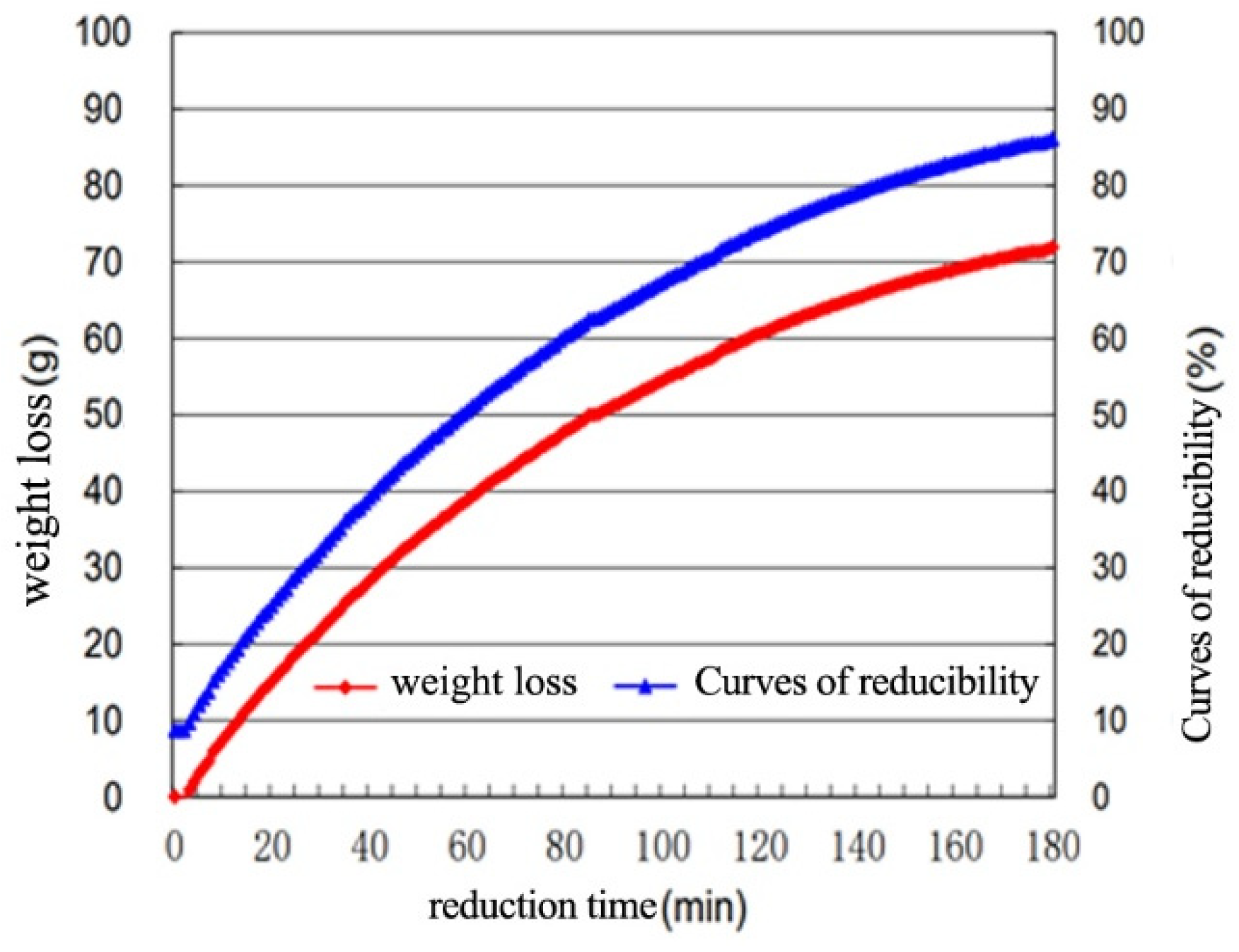
The Reducibility Index (RI) refers to the ease with which oxygen bound to iron in sintered ore is captured by gaseous reducing agents (CO) under simulated reduction conditions in the upper blast furnace (900 °C, CO/N2 atmosphere), expressed as the oxygen removal rate per unit time. A higher RI indicates that the ore is more susceptible to indirect reduction, which is more conducive to reducing the coke ratio in the blast furnace.
A 500 g dried sample with a particle size of 10–12.5 mm was weighed and placed in a fixed-bed reduction apparatus. The sample was reduced at a constant temperature of 900 °C for 180 min. The reducing gas flow rate was 15 L/min, with a composition of 30% CO and 70% N2.
The standard is ISO 7215:2015 “Iron ore—Determination of reducibility”; The temperature control accuracy is ±5 °C; the weighing precision reaches 0.01 g; the gas flow is computer-controlled [
30]. The system records the time-mass loss curve for reduction behavior analysis. Each experimental condition was replicated three times.
2.4. Determination of Softening–Melting–Dripping Properties
The determination of softening and melt-dripping properties is primarily used to evaluate the physical state changes of materials during heating and their structural stability under high-temperature conditions.
The main experimental setup consisted of a melting–dripping furnace, a gas distribution system, and a computer-based data acquisition and processing system. The melting–dripping furnace was the core equipment and included a high-temperature heating furnace, a crucible device, an intelligent temperature control unit, a loading system, a real-time pressure difference recording system, and a material layer displacement measurement system.
The graphite reactor had dimensions of Φ75 × 200 mm. The heating procedure was as follows: the temperature was increased from 0 to 900 °C at a rate of 10 °C/min, maintained at 900 °C for 60 min, and then increased above 900 °C at a rate of 5 °C/min. All samples had a particle size of 10–12.5 mm. When the sample temperature reached 500 °C, the reducing gas was introduced at a flow rate of 15 L/min, with a composition of 30% CO and 70% N2.
The standard is GB/T 34211-2017 “Determination Method of Softening and Melting Characteristics of Iron Ore” [
31]. Each experimental condition was replicated three times.
2.5. Determination of Phase Composition and Element Distribution of Sintered Ore
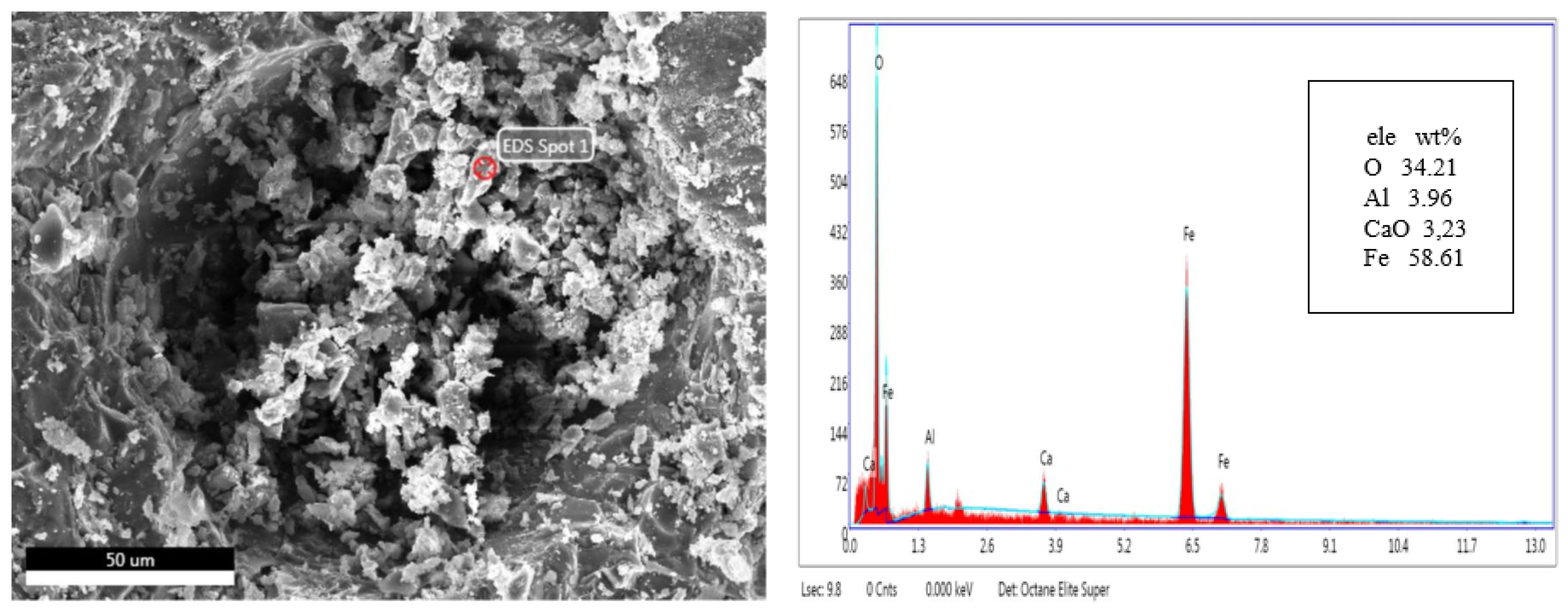
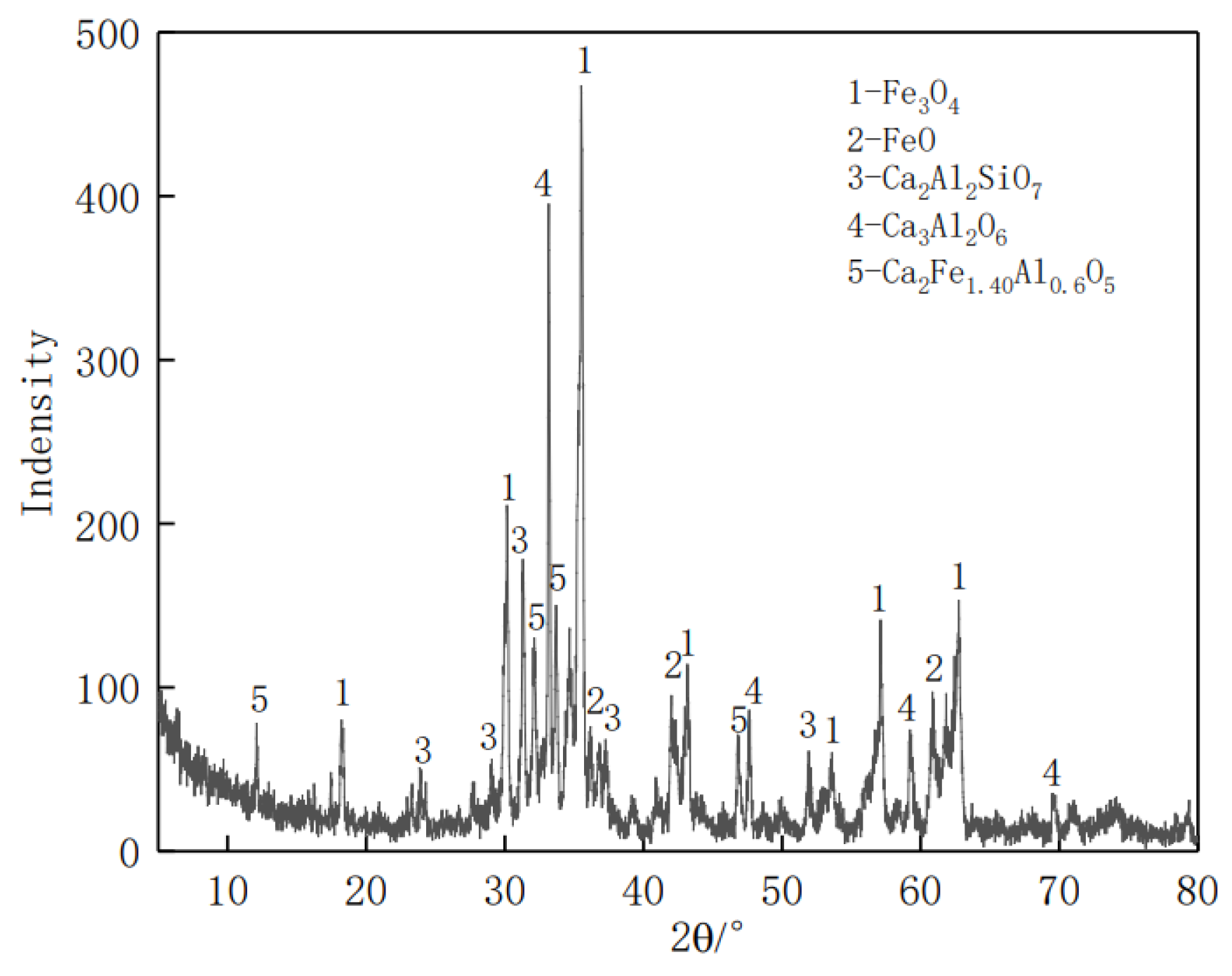
The phase composition of the sintered ore was analyzed using X-ray diffraction (XRD) and scanning electron microscopy (SEM). XRD was performed on a Bruker D8 ADVANCE diffractometer (Bruker AXS GmbH, Karlsruhe, Germany) with a Co target, operating at a tube voltage of 35 kV and a tube current of 40 mA. The scanning range was set from 10° to 90° 2θ with a step size of 0.02° and a scanning speed of 2°/min. A Lynxeye XE detector was used for high-sensitivity data collection. SEM observations and elemental analysis were conducted using a ZEISS GeminiSEM 300 scanning electron microscope (Carl Zeiss AG, Oberkochen, Germany) coupled with an Oxford Ultim Max EDS system (Oxford Instruments PLC, Abingdon, UK).
Sintered ore samples were crushed and sieved to a particle size of 10–12.5 mm. For XRD analysis, representative subsamples were ground to a particle size of <0.074 mm and homogenized. For SEM observation, polished cross-sections were prepared by mounting samples in epoxy resin, followed by grinding with SiC papers and polishing with diamond pastes to a mirror finish. Carbon coating was applied to non-conductive areas to avoid charging effects during imaging.
2.6. Thermodynamic Simulation
FactSage software (v.8.2) was used to simulate and calculate the liquid phase composition and solid phase distribution during the red mud sintering process. The FToxid database was selected for thermodynamic calculations. The Phase Diagram module was used to construct isobaric phase diagrams of the relevant system and to analyze the stable phases under different temperatures and compositions.
The Equilib module was employed to calculate the equilibrium phase composition of the system at atmospheric pressure over a temperature range of 800–1500 °C. The liquid phase fraction, the major liquid and solid phase components at different basicity levels, as well as mineral phase evolution, melting temperature curves, Gibbs free energy, and phase diagrams were obtained. These results were used to clarify the sintering behavior and mineralization formation mechanism of red mud.
2.7. Determination of Melting Point
The melting point was measured by a fully automatic melting point apparatus with argon protection throughout the test. The sample was loaded into a crucible, and the linear heating rate was controlled at 5 °C/min. The morphological changes of the sample were monitored in real time by the built-in high-definition optical imaging system, and the temperatures at different shrinkage rates were recorded synchronously. Deformation temperature (DT, 10% shrinkage), softening temperature (ST, 25% shrinkage), hemispherical temperature (HT, 50% shrinkage) and flow temperature (FT, 75% shrinkage) were obtained, and the flow temperature was selected as the final melting temperature.
2.8. Determination of Viscosity
The viscosity was measured using a high-precision automatic rotational viscometer. The sample was slowly poured into the sample cup, and the entire test was conducted under an argon atmosphere. The heating rate was set to 3°C/min, and the rotor rotational speed was fixed at 60 r/min before starting the test procedure. The instrument continuously monitored and recorded the viscosity at various temperatures in real time. When the viscosity became thermally stable and the data fluctuation was less than 2% over three consecutive tests, the corresponding viscosity value at this temperature was recorded.
4. Discussion
4.1. Influence of Mechanism on Phase Formation of Sintered Ore
4.1.1. Influence of Basicity on Phase Formation of Sintered Ore
Traditional sintering processes conventionally adopt low-basicity formulations to balance sinter reducibility and mechanical strength. However, red mud contains inherently high alumina content. Under low-basicity conditions, abundant alumina readily forms refractory aluminosilicate phases with elevated melting points, increasing sintering temperature and energy consumption while reducing process efficiency. Thermodynamic simulation results confirm that elevating sintering basicity represents an effective strategy to mitigate this challenge.
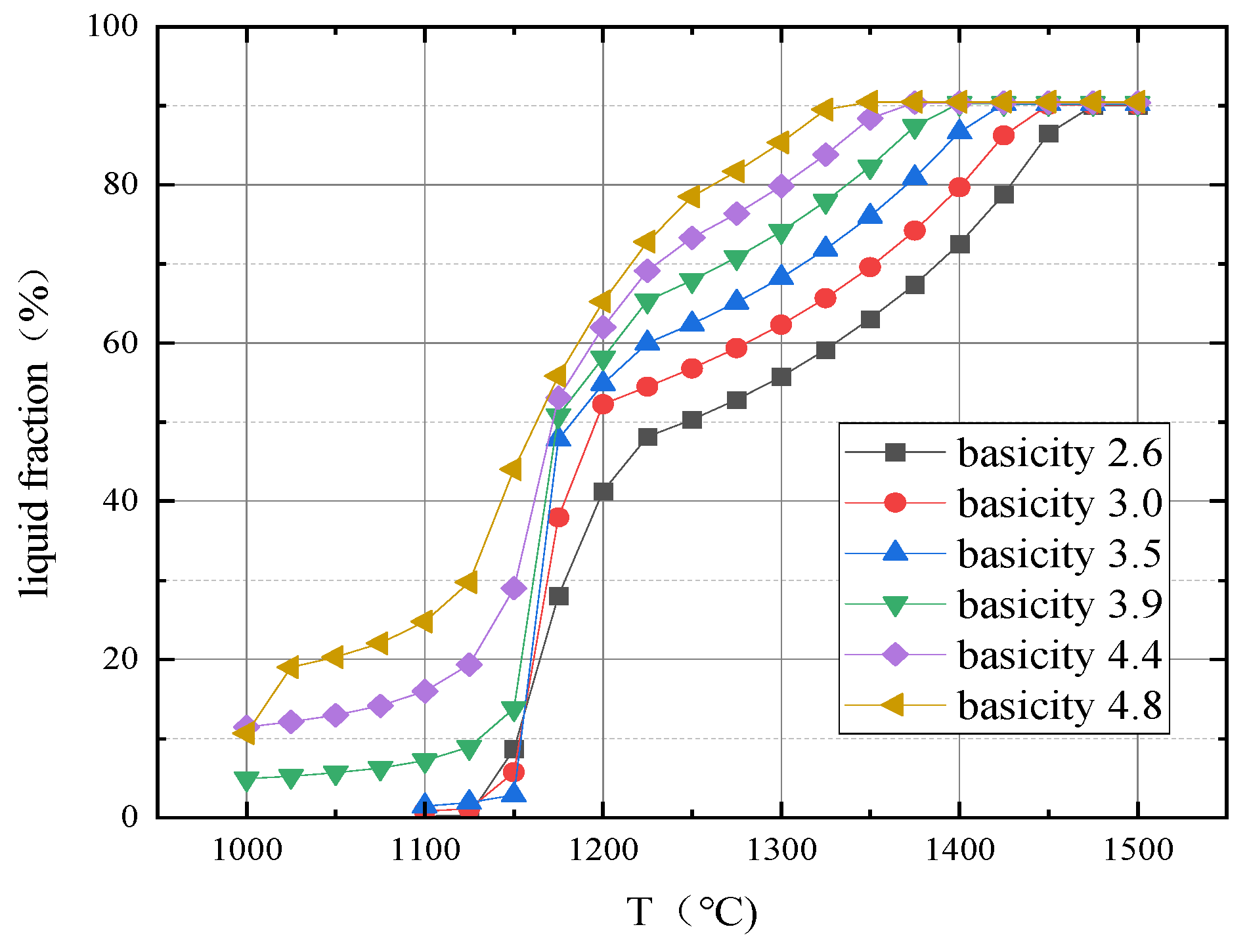
The liquid phase fraction, as well as the main components of the liquid and solid phases, was calculated using FactSage software for a system consisting of 100 g of red mud with added pure CaO, corresponding to basicity values of 2.6, 3.0, 3.5, 3.9, 4.4, and 4.8. The simulation results are presented in
Figure 5. The results showed that the initial liquid phase formation temperature decreased with increasing basicity. When the basicity was 2.6, the initial liquid phase formation temperature was 1125 °C, and the liquid phase fraction reached 50% at 1275 °C. In contrast, when the basicity increased to 4.8, the liquid phase fraction reached 50% at only 1150 °C. These results indicate that under high-basicity conditions, a sufficient amount of liquid phase required for sintering can form in red mud at relatively lower temperatures, which is beneficial for the sintering process.
XRD qualitative analysis indicated the existence of calcium aluminosilicate in liquid-phase component. Since no quantitative characterization was performed, the primary constituent of the liquid phase cannot be determined to be calcium aluminosilicate.
Under high basicity conditions, CaO reacts with calcium aluminosilicate to form low-melting-point eutectic oxides, effectively reducing the sintering temperature. This explains why high basicity is indispensable for red mud sintering.
Calcium aluminosilicate-rich phases strengthen the sinter bonding matrix, improve tumbler strength, and develop an open crystal structure that enhances reducing gas diffusion, boosting reducibility. Concurrently, they improve liquid phase fluidity, lower viscosity in the softening–melting zone, and facilitate effective slag–metal separation. Collectively, these effects enable high-alumina sinters to meet metallurgical quality requirements.
4.1.2. Influence of Temperature on Phase Formation in Sintered Ore
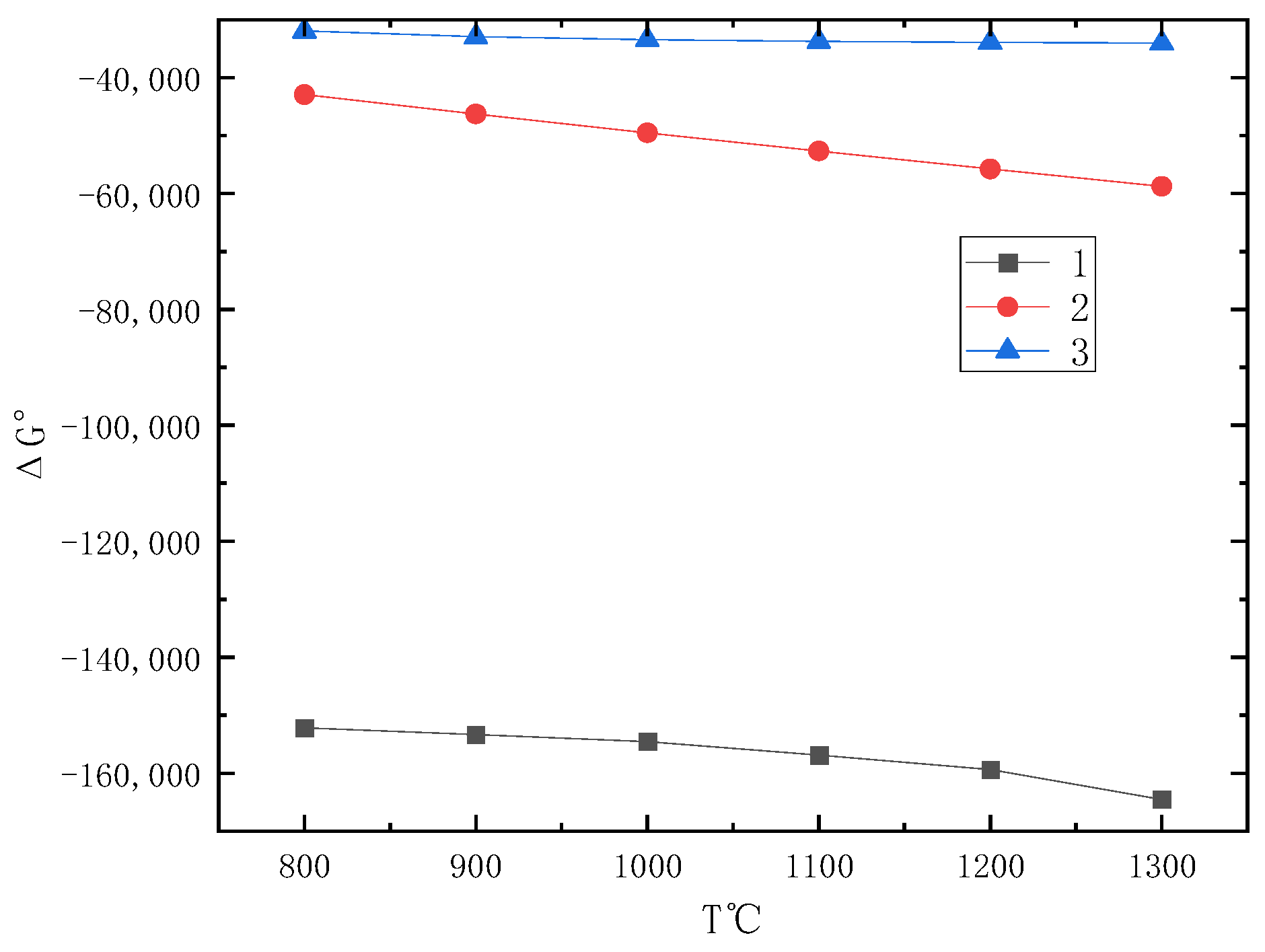
The red mud sintering system is complicated with various coexisting mineral phases. Nevertheless, calcium aluminosilicate constitutes the dominant liquid-phase component, and calcium ferrite is the key iron-bearing product during sintering. Accordingly, these three typical core phases were selected for Gibbs free energy calculation, which simplifies the complex reaction system and effectively reflects the main thermodynamic characteristics of red mud sintering.
Using the chemical composition of red mud and the above reaction equations, the Gibbs free energy of each reaction at different temperatures was calculated using FactSage software. The calculated results are presented in
Figure 6.
As shown in
Figure 6, the Gibbs free energy of Equation (1) is significantly lower than that of Equations (2) and (3) at the same temperature. Therefore, Ca
2Al
2SiO
7 is preferentially formed compared with CaFe
2O
4 during the sintering process.
A simple comparison of ΔG among the three standard reactions is insufficient to verify the preferential formation of Ca2Al2SiO7 during the actual sintering process. Considering the complexity of the multi-component system, it can only be concluded that its formation possesses a relatively strong thermodynamic tendency.
This explains why calcium aluminosilicate becomes the dominant component in the liquid phase. In addition, the relative amounts of the three reaction products are mainly determined by the chemical composition of the system rather than by temperature.
4.1.3. Influence of CaO/Al2O3 Ratio on Phase Formation in Sintered Ore
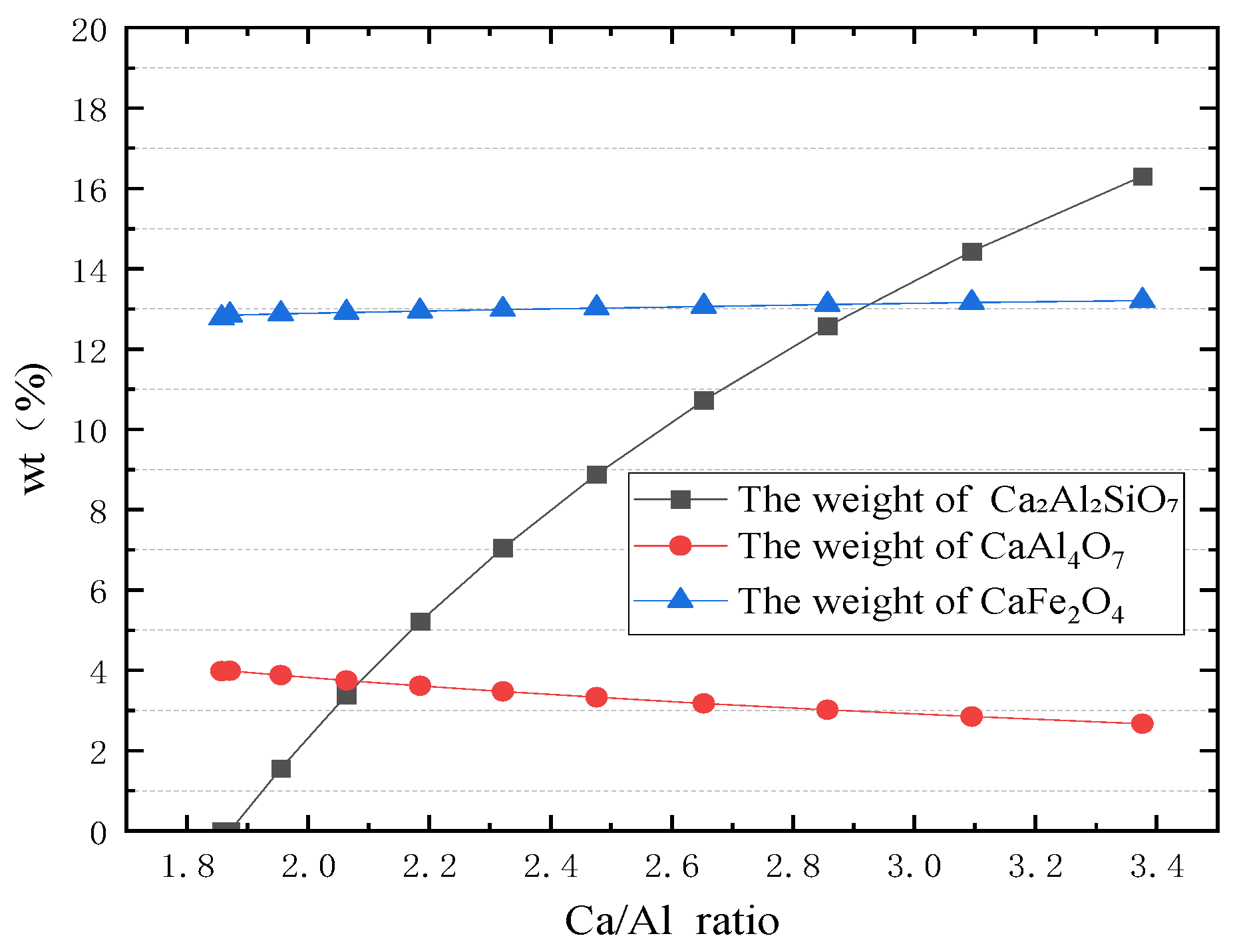
The formation amounts of Ca
2Al
2SiO
7, CaAl
4O
7, and CaFe
2O
4 were simulated for a system containing 100 g of red mud at 1000 °C with the addition of different amounts of CaO, corresponding to various CaO/Al
2O
3 ratios. The simulation results are presented in
Figure 7. The results show that as the CaO/Al
2O
3 ratio increased, the formation amount of Ca
2Al
2SiO
7 increased significantly, while the formation of CaAl
4O
7 slightly decreased, and the amount of CaFe
2O
4 remained nearly unchanged. This indicates that the formation of Ca
2Al
2SiO
7 is mainly controlled by the amount of added CaO. With increasing CaO addition, Al
2O
3 preferentially reacted with CaO and SiO
2 to form calcium aluminosilicate and calcium aluminate, thereby suppressing the formation of calcium ferrite. In addition, in the presence of CaO and SiO
2, low-melting eutectic mixtures were formed, which reduced the melting temperature of the system. As a result, the slag system shifted from a high-melting fayalite-based system to a lower-melting silicate-based system.
This also explains why the initial liquid phase formation temperature decreases with increasing basicity. In conventional sintering, the basicity is typically around 1.8, and the Al2O3 content is relatively low, making it difficult to form low-melting eutectic compounds in the silicate system. In red mud sintering, the primary liquid phase is calcium aluminosilicate, whereas in conventional sintering the main liquid phase is calcium ferrite. This difference represents one of the most significant distinctions between the two sintering processes.
4.2. The Influence of Na2O on Sintering
Red mud contains Na2O, and the presence of Na can effectively increase the basicity of the system. Phase diagram simulations using FactSage software were carried out under different basicity and temperature conditions. The results show that, compared with red mud without Na2O, the presence of Na2O reduced the initial liquid phase formation temperature by approximately 50 °C.
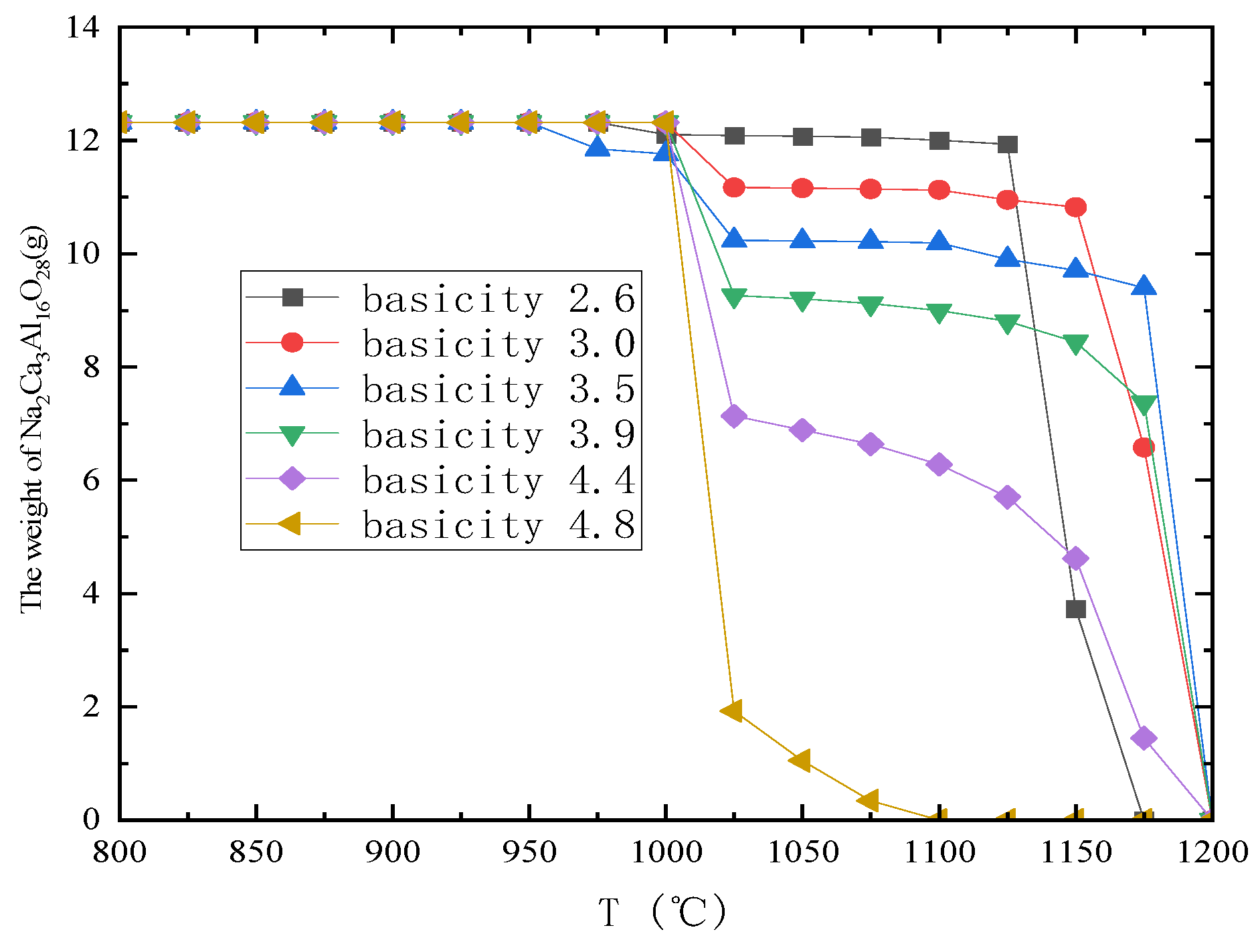
In addition, simulations were conducted by adding different amounts of CaO to 100 g of red mud to determine the main Na-bearing phases formed under various basicity conditions. The calculated results are shown in
Figure 6. In the solid phase, Na
2O reacted with calcium aluminates to form Na
2Ca
3Al
16O
28. The formation amounts of Na
2Ca
3Al
16O
28 under different basicity and temperature conditions are presented in
Figure 8.
According to the simulation results, Na2Ca3Al16O28 began to form at approximately 300 °C, accounting for about 12 wt% of the total solid phase. This compound started to decompose at temperatures above 1050 °C, and the decomposition temperature varied with basicity. When the basicity was 2.6, the decomposition temperature of Na2Ca3Al16O28 was approximately 1150 °C, whereas when the basicity increased to 4.8, the decomposition temperature decreased to about 1050 °C. This indicates that the decomposition temperature of Na2Ca3Al16O28 decreases with increasing basicity.
The melting point of CaO·2Al2O3 is approximately 1600 °C, whereas that of Na2Ca3Al16O28 is around 1200 °C. As a basic oxide, Na2O reacts with Al2O3 and CaO in calcium aluminates at high temperatures to form low-melting eutectic mixtures, which disrupt the original crystal lattice and consequently reduce the melting temperature. Furthermore, Na2O can also form low-melting eutectic compounds with SiO2, CaO, and Ca2Al2SiO7, further lowering the liquid phase formation temperature during sintering, which can be reduced to approximately 900 °C.
This mechanism explains why the liquid phase formation temperature differs by about 50 °C between red mud with and without Na2O. Moreover, once the liquid phase forms, low-melting compounds such as NaAlO2 and NaFeO2 are generated, which further reduce the overall sintering temperature.
From the simulation results, it can be observed that the decomposition temperature of Na
2Ca
3Al
16O
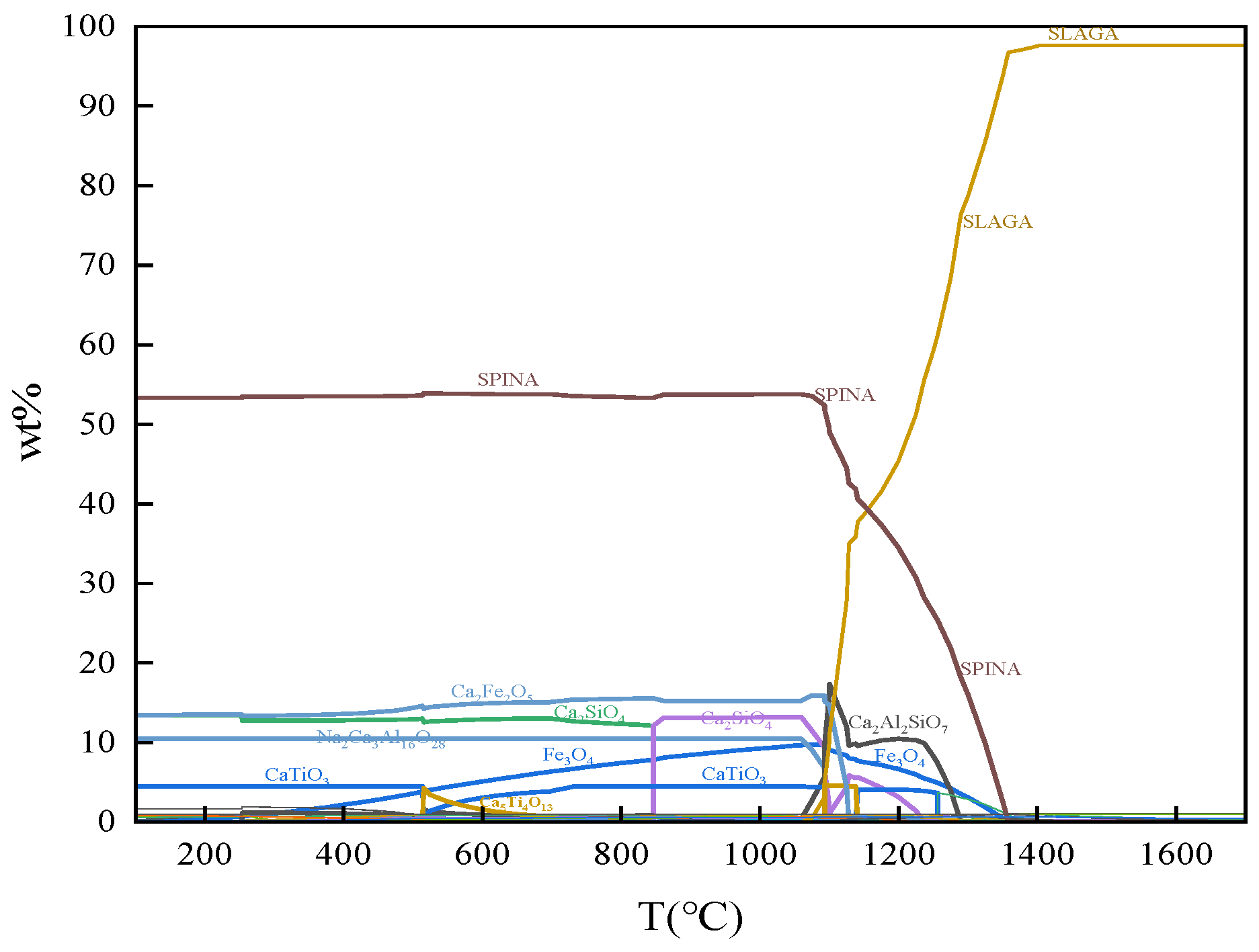
28 decreases with increasing basicity. When the basicity is 2.6, the decomposition temperature is approximately 1150 °C, while at a basicity of 4.8, it decreases to about 1050 °C. The mineral phases of the sinter and the corresponding melting temperature curves were also simulated, and the results are shown in
Figure 9. With increasing basicity and temperature, Na
2O gradually separates from calcium aluminates and enters the slag phase, where it reacts with iron and aluminum to form NaAlO
2 and NaFeO
2. At the initial stage, when the basicity is relatively low, the liquid phase formation temperature is high, and Na
2O remains mainly in the solid phase without entering the liquid phase. As the basicity increases, the liquid phase formation temperature decreases, and the amount of calcium aluminates in the solid phase increases. When the temperature exceeds approximately 1000 °C, Na
2O separates from calcium aluminates, enters the slag phase, and reacts with iron and aluminum to form NaAlO
2 and NaFeO
2, which further reduces the liquid phase formation temperature and promotes the sintering of red mud.
Based on these results, when sintering iron ores with high Al2O3 content, it is recommended to increase the basicity or add Na2CO3 in order to reduce the sintering temperature.
When the Na2O content increases from 0.8% to 1.5%, the formation temperature of the initial liquid phase decreases by approximately 25–40 °C. This phenomenon can be attributed to the fact that Na2O, as a strong basic oxide, is capable of disrupting the silicate network structure and promoting the formation of low-temperature eutectics, thereby lowering the temperature at which the liquid phase emerges. However, excessively high Na2O content may lead to a reduction in sinter strength and the problem of cyclic enrichment of alkali metals. Therefore, it is necessary to control its content within a reasonable range.
4.3. The Influence of TiO2 on Sintering
Thermodynamic simulation results indicate that TiO2 reacts with CaO to form CaTiO3, with an approximate yield of 6.7 g. Notably, the yield remains constant as basicity increases. When the basicity reaches 3.4, the formation of CaTiO3 decreases to less than 5% of the final yield, a level that can be neglected in subsequent analysis.
4.4. Performance Analysis of Final Smelting Slag
According to the chemical composition of sinter, the iron content in pig iron was set at 95%, with a coke ratio of 600 kg/t and pulverized coal injection rate of 120 kg/t. The calculated content of Al2O3 in the final smelting slag exceeded 32%, accompanied by a melting temperature higher than 1475°C and a viscosity above 1 Pa·s, indicating that slag modification was necessary. After adding 17% CaO to the final slag, the melting temperature decreased to 1425°C, and the viscosity decreased to 0.551 Pa·s. The melting temperature and viscosity of the modified slag can meet the operational requirements of small blast furnaces.