Article

Research Progress in Lanthanum Extraction from Boehmite
1
Doctoral School, Department of Biochemistry and Pharmacology, Faculty of Medicine, Victor Babeş University of Medicine and Pharmacy, 2 Eftimie Murgu Square, 300041 Timisoara, Romania
2
Renewable Energy Research Institute-ICER, Polytechnica University of Timişoara, Gavril Musicescu Street, No. 138, 300774 Timisoara, Romania
3
Faculty of Chemical Engineering, Biotechnologies and Environmental, Politehnica University of Timişoara, Victoriei Square, No. 2, 300006 Timisoara, Romania
4
“Coriolan Drăgulescu” Institute of Chemistry, Bv. Mihai Viteazul, No. 24, 300223 Timisoara, Romania
5
National Institute for Research and Development in Electrochemistry and Condensed Matter, 144th Dr. A.P. Podeanu Street, 300569 Timisoara, Romania
6
Vimetco Alum SA Tulcea, Romania, Alum SA Tulcea, 82 Isaccei Str., 820228 Tulcea, Romania
*
Author to whom correspondence should be addressed.
Processes 2026, 14(11), 1674; https://doi.org/10.3390/pr14111674
Submission received: 20 March 2026 / Revised: 22 April 2026 / Accepted: 18 May 2026 / Published: 22 May 2026

Abstract

The purpose of this study was to examine the utilization of 0–45 μm aluminum hydrate fraction (gibbsite) manufactured by Alum SA Tulcea, as a precursor in the hydrothermal synthesis process of nanosize boehmite from gibbsite suspensions. Furthermore, the use of the produced material as adsorbent of lanthanum (III) ions was investigated using aqueous solutions. Thermogravimetric analysis (TG), Fourier Transform InfraRed Spectroscopy (FT-IR), Wide-Angle X-Ray Scattering (WAXS), and atomic force microscopy (AFM) were used to demonstrate the preparation of the required material. Additionally, the material point of zero charge (pHpzc) and material specific surface (using BET approach) were evaluated. By conducting adsorption studies, the specific parameters for the lanthanum adsorption process were evaluated. The effects of pH, the ratio of adsorbent material to La(III) quantity from aqueous solution, contact time, and La(III) initial concentration were also assessed. Based on the obtained experimental data, it was proved that the maximum adsorption capacity of 97.7 mg/g was obtained for a solid:liquid ratio = 0.1 g:25 mL, pH between 3 and 6, temperature of 298 K, and contact time of 90 min. The studied adsorption process is most effectively described by the Sips model, suggesting an intricate interaction among the adsorbent material and La (III) ions. The prepared adsorbent exhibited a good desorption capacity (higher than 93%) when 20% HCl was used for desorption.

1. Introduction

According to the well-known phase transition series (gibbsite–boehmite–γ–δ–θ–α), common boehmite represents a mineralogical phase that is produced after the thermal dehydration process of alumina hydrate [1,2]. One of the widely used precursors for the synthesis of different types of special aluminas is the boehmite γ-AlOOH, which is founded in a large variety of crystallographic forms with distinct structural properties. It can be used for multiple applications in different fields, such as: synthesis of biomaterials [3,4,5,6,7,8]; catalyst and catalyst support preparation [9,10,11,12,13,14]; composite material synthesis [1,15,16,17,18,19]; coating materials [6,20,21,22,23,24,25]; thermal insulation materials [26,27,28,29,30]; flame retardants [20,31,32,33,34,35]; luminescent materials [36,37,38,39,40]; and adsorbents [41,42,43,44,45]. Regarding the boehmite as a precursor for different syntheses, different technologies have been developed to satisfy the highest quality standards for of its applications. The most commonly used technologie for the conversion of aluminum trihydrate and of aluminum into boehmite are the Bayer modified precipitation technology [46,47,48,49,50] and the water oxidation of aluminum under hydrothermal conditions [51,52,53,54]. In fact, because pH is one of most important parameters in hydrothermal reactions, the boehmite as a precursor synthesis could be produced in acidic [55,56,57,58,59], alkaline [60,61,62,63,64], or neutral solutions [50,59,65,66,67], using the common adequate reactants solutions and water. Some particular ways used for boehmite synthesis are: hydrolysis of aluminum alkoxides; hydrolysis of aluminum double salts [50,68,69,70]; high technologies using treatments in inductively coupled non-thermal plasma [71,72]; ultrasonic assistance [73]; and amorphous alumina cluster mediated processes [74,75]. Alumina hydrate of good quality for boehmite synthesis is available in many alumina Bayer factories that produce calcined alumina. SC Alum SA Tulcea is the only producer of Bayer alumina in Romania. In this factory, the main product is calcined alumina, as well, as a secondary product, as the dried, milled, and classified aluminum trihydrate (dry gibbsite). Some additional data concerning these products are available in the papers published by authors [76,77,78,79,80,81,82,83,84,85,86,87].
In this study, we describe the usage of γ-AlOOH obtained from aluminum hydrate (gibbsite) manufactured by Alum SA Tulcea, as an adsorbent material for La(III) ion recovery. The adsorbent material was prepared through the hydrothermal synthesis process starting from gibbsite suspensions. The raw material (gibbsite) used was the fraction 0–45 μm of SC Alum SA Tulcea product, consisting of dried, milled, and classified aluminum trihydrate. Previous studies reported the usage of γ-AlOOH as an efficient adsorbent for silica removal [88], heavy metal ions removal [89], and organic pollutants removal [90]. The surface properties of the prepared γ-AlOOH were studied using advance analytical techniques (BET, AFM, WAXS). The impact of the adsorbent amount, pH, time, and temperature, adsorption thermodynamics, and kinetics were examined by carrying out batch experiments.

2. Material and Methods

2.1. Preparation

In order to investigate the hydrothermal recrystallization of boehmite in acidic, alkaline and neutral conditions, three separate experiments were conducted. The experiments were conducted under similar conditions, following the methods used by Kozerozhets [58,59].

2.2. Characterization

Thermal analysis (TGA) was performed by using a Thermogravimetric analyzer 5500 from TA Instruments, New Castle, DE, USA. The sample, with a mass of around 11 mg, was positioned into a platinum HT pan of 100 µL. The experiment was performed in a dynamic nitrogen atmosphere with a flow rate of 40 mL/min, in a range of 25–800 °C, at a rate of 10 °C/min.
The attenuated total reflection (ATR) spectrum was recorded using infrared Fourier transform spectroscopy (ATR/FT-IR) on a Nicolet™ iS50 FT-IR Spectrometer (Thermo Fisher Scientific, Waltham, MA, USA), equipped with a diamond crystal. These spectra were recorded in the spectral range of 4000–400 cm−1 with 64 scans per spectrum at a resolution of 4 cm−1.
Wide-Angle X-ray Scattering (WAXS) (Xenocs Xeuss 3.0, Xenocs SAS, Grenoble, France) was utilized to acquire data about the structure of the materials at the mesoscale.
The following stage involved analyzing the produced material by recording the AFM image using a Scanning Probe Microscopy Platform (MultiView-200 system, Nanonics Imaging Ltd., Jerusalem, Israel), in intermittent mode in normal conditions (25 °C, atmospheric pressure). This analysis was carried out by using a chromium-doped tip with a 20 nm radius and 30–40 kHz resonance. Atomic force microscopy (AFM), MultiView-200 system, Nanonics Imaging Ltd., Jerusalem, Israel, was used to quantify the material surface roughness.
Nitrogen desorption isotherms were recorded at 77 K using a Nova 1200e (QUANTACHROME) system; pore size distributions were determined with the Barrett–Joyner–Halenda (BJH) method; and specific surface areas were obtained using the Brunauer–Emmett–Teller (BET) method. In previous evaluations, the probes were degassed in vacuum for 5 h at room temperature. All the experiments were performed in duplicate to assess the standard error, which was less than 5%.
The point of zero chargepHpZc, was determined by bringing the system to equilibrium. In this experiment, 0.1 g of material was mixed with 25 mL of 0.1 N KCl solution, stirred at 200 rpm, maintaining the entire system at 298 K using a Julabo SW23 water bath equipped with thermostatic control and stirring. The pH of the KCl solutions was adjusted in the range of 1–14 by adding NaOH solutions with concentrations between 0.05 N and 2 N, or HNO3 solutions in the same concentration range. After filtering the samples, the pH of the resulting solution was measured using a METTLER TOLEDO SevenCompact S 210 pH meter. pH values were measured after a contact time of 60 min, which was chosen to allow the system to reach equilibrium. This time value was selected based on the preliminary experiments, which demonstrated that the system pH did not change after this time.

2.3. Application: Adsorption Experiments

2.3.1. Effect of Operating Conditions on the Performance of La(III) Adsorption

Influence of Solid:Liquid Ratio
To determine the optimum solid:liquid (S:L) ratio for obtaining maximum efficiency of the La(III) ions recovery process, the amount of γ-AlOOH adsorbent involved was varied (0.05, 0.1, 0.2, 0.3, 0.4, and 0.5 g), while maintaining a constant 25 mL volume of a 500 mg La(III) per liter solution (prepared from LaCl3·7H2O, Merck). Adsorption experiments were performed using a JULABO SW23 shaker, at 298 K, for a contact time of 60 min. Adsorption efficiency was determined using the following equation:
E f f i c i e n c y = C i C r e z C i 100 , [ % ]
where: Ci—La(III) initial concentration, mg/L.
Crez—La(III) residual concentration, mg/L.
Influence of the Solution pH
The pH effect on La(III) adsorption was investigated, considering its influence on both the speciation of La(III) in solution and γ-AlOOH surface properties. The study focused on a pH range of 1 to 6. P. Patnaik’s “Handbook of Inorganic Chemical Compounds” states that La(III) precipitation begins at pH 8 and, because of that, the experiments were not carried out at pH values higher that 6 [91].
For these experiments, 0.1 g of γ-AlOOH adsorbent was mixed with 25 mL of a 500 mg/L La(III) solution. Adsorption experiments were carried out at 298 K for a contact time of 60 min. The solution pH was adjusted using HCl or NaOH solutions with concentrations ranging from 0.1 to 1 N.
Material adsorption capacity was evaluated using the following equation:
q = ( C i C r e z ) V m , [ m g / g ]
where: q—adsorption capacity, mg/g
Ci—La(III) initial concentration, mg/L.
Crez—La(III) residual concentration, mg/L.
V—solution volume, L.
m—material mass, g.
Contact Time and Temperature Effect
The effects of temperature and contact time on the adsorption capacity of La(III) ions were examined through a series of experiments. In all the experiments, 25 mL La(III) solution with an initial concentration of 500 mg of La(III) ions per liter were mixed with 0.1 g of adsorbent material. These mixtures were subsequently agitated at 200 rpm for different contact times (15, 30, 45, 60, 90, and 120 min) and temperatures (298, 308, 318, and 328 K).
Influence of La(III) Ions Initial Concentration
Solutions with initial concentrations of 10, 25, 50, 100, 250, 500, 600, 700, 800, 900, and 1000 mg/L were used to determine the impact of La(III) ion concentration on the maximum adsorption capacity. All the adsorptions were carried out into the pH 3–6, at 298 K, for an adsorption time of 90 min.

3. Results and Discussion

3.1. γ-AlOOH Synthesis and Characterization

All the samples involved in this study were obtained by hydrothermal recrystallization of boemithe. Preliminary experiments were conducted in smaller autoclaves (100 mL) to determine the optimal parameters for maximizing gibbsite—boehmite conversion. From these experiments, the parameters determined included: the autoclave degree of fullness; solid/liquid ratio; experimental times; and heating/cooling time duration (specific parameters are depicted in Table 1). Furthermore, to obtain the adsorbent material required for adsorption tests, all the experiments were conducted in a 2L autoclave. Boehmite purity was evaluated by comparing the recorded WAXS spectra with a specific CPDS PDF file.
For the test of hydrothermal boehmite as an adsorbent for La(III) ions from aqueous solutions, based on preliminary results obtained was choose the recrystallized boehmite obtained from pure water in the initial stage.

3.2. Thermal Analysis, TGA

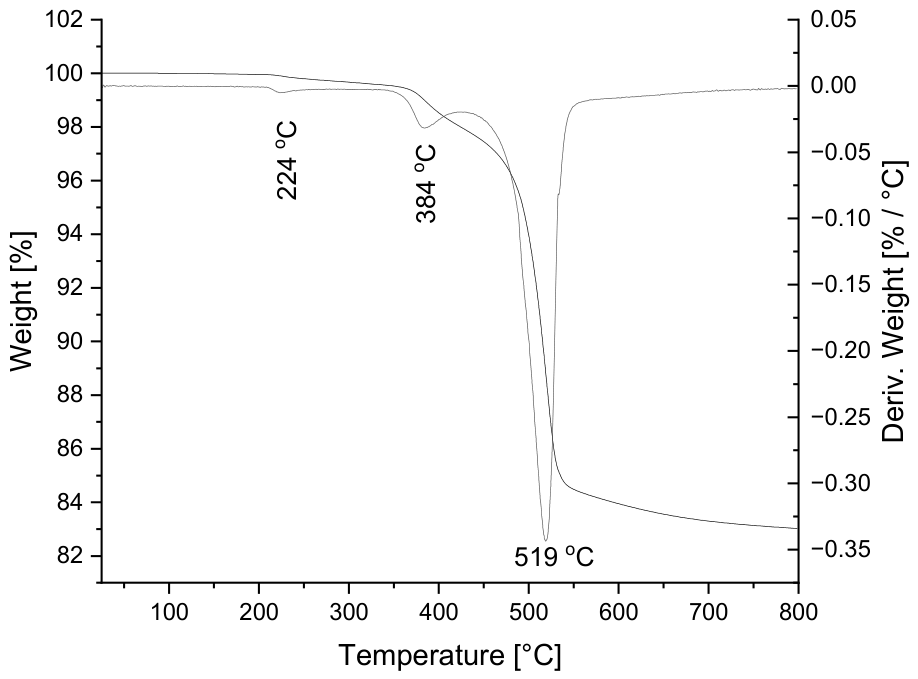
The thermal evolution of γ-AlOOH was investigated through thermogravimetry analysis, and the recorded TG-DTG curves of the boemithe are depicted in Figure 1.
The optimal temperature required for synthesis can be determined by estimating the thermal stability of γ-ALOOH. The TG pattern recorded for the sample used reveals three decomposition steps specific to the material, which take place in the range of 25 to 800 °C. The first step occurs at around 224 °C, with a mass loss of 0.2%, which is attributed to the dehydration of the chemisorbed water molecules [92].
The second peak occurred at 384 °C with an associated mass loss of 1.7%; this is attributed to the loss of interstitial water trapped between the γ-AlOOH layers, concomitant with the partial formation of γ-Al2O3 [93,94].
The main process of mass loss of approximately 15% occurs in the last stage, as observed through an endothermic effect at 519 °C. In this process, dehydration–dehydroxylation of the material take place, transforming it from boehmite into γ-Al2O3 [93,94].

3.3. The Attenuated Total Reflection, ATR /FT-IR

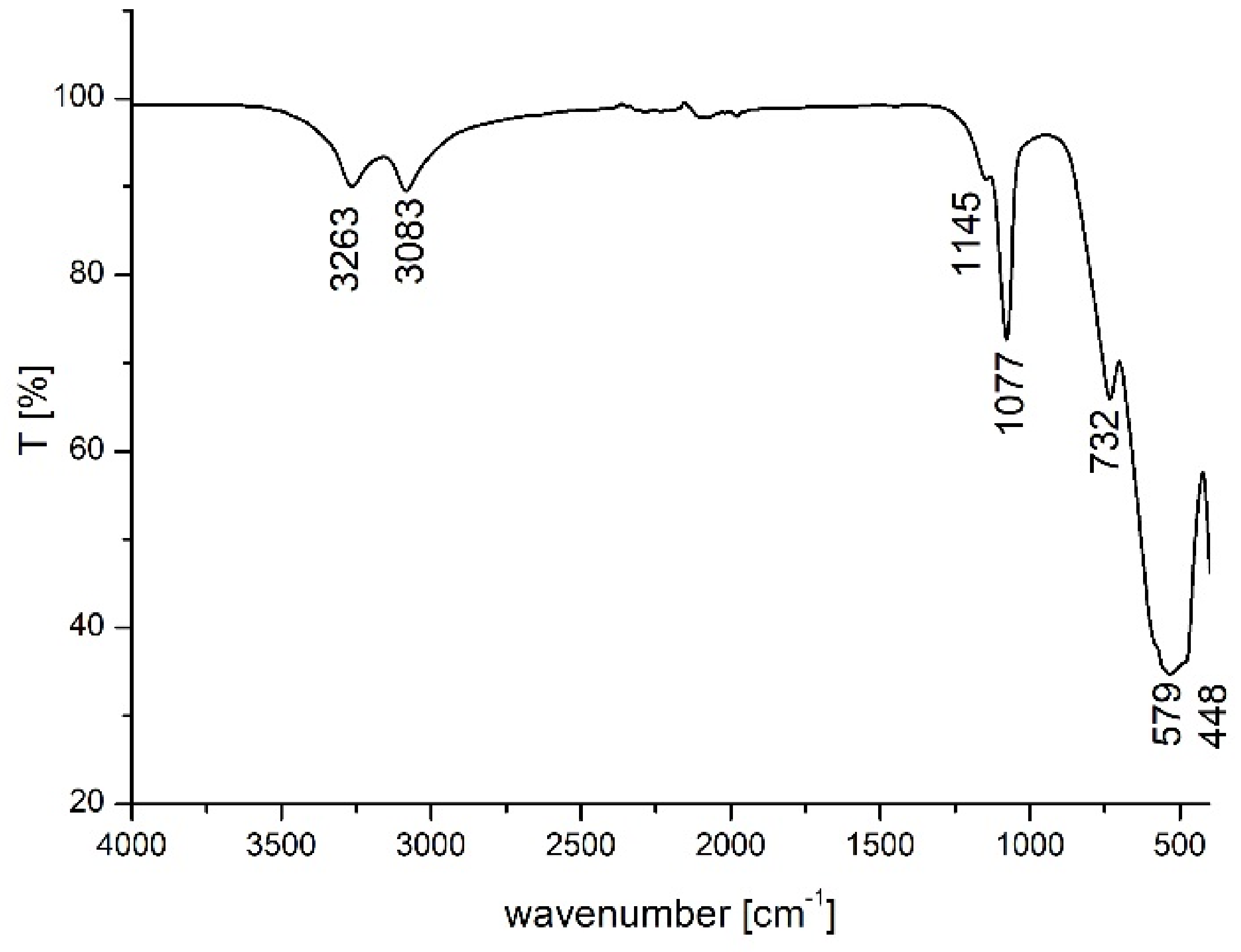
The ATR/FT-IR spectrum of γ-AlOOH in the 4000–400 cm−1 region is presented in Figure 2.
The infrared spectrum in the OH stretching region shows two bands, at 3083 cm−1 and 3263 cm−1, which are ascribed to the boehmite hydroxyl group stretching vibrations [92]. Peaks located at 1077 cm−1 and at 1145 cm−1 are associated with the symmetric bending vibrations of Al-O-H and with asymmetric bending vibration of the Al-O-H groups [94].
The three bands at 732, 579, and 478 cm−1 attributed to the symmetric stretching and bending vibrations of the Al-O-Al bond are also observed in the spectrum [92,95,96].

3.4. Wide-Angle X-Ray Scattering, WAXS

The degree of material crystallinity was determined using the WAXS scattering method. The analysis was carried out with a Genix 3D (Cu) source at room temperature using Kapton in vacuum. The data analysis for the scattering pattern was conducted in the range of 10–55 2θ degree with a DECTRIS detector.
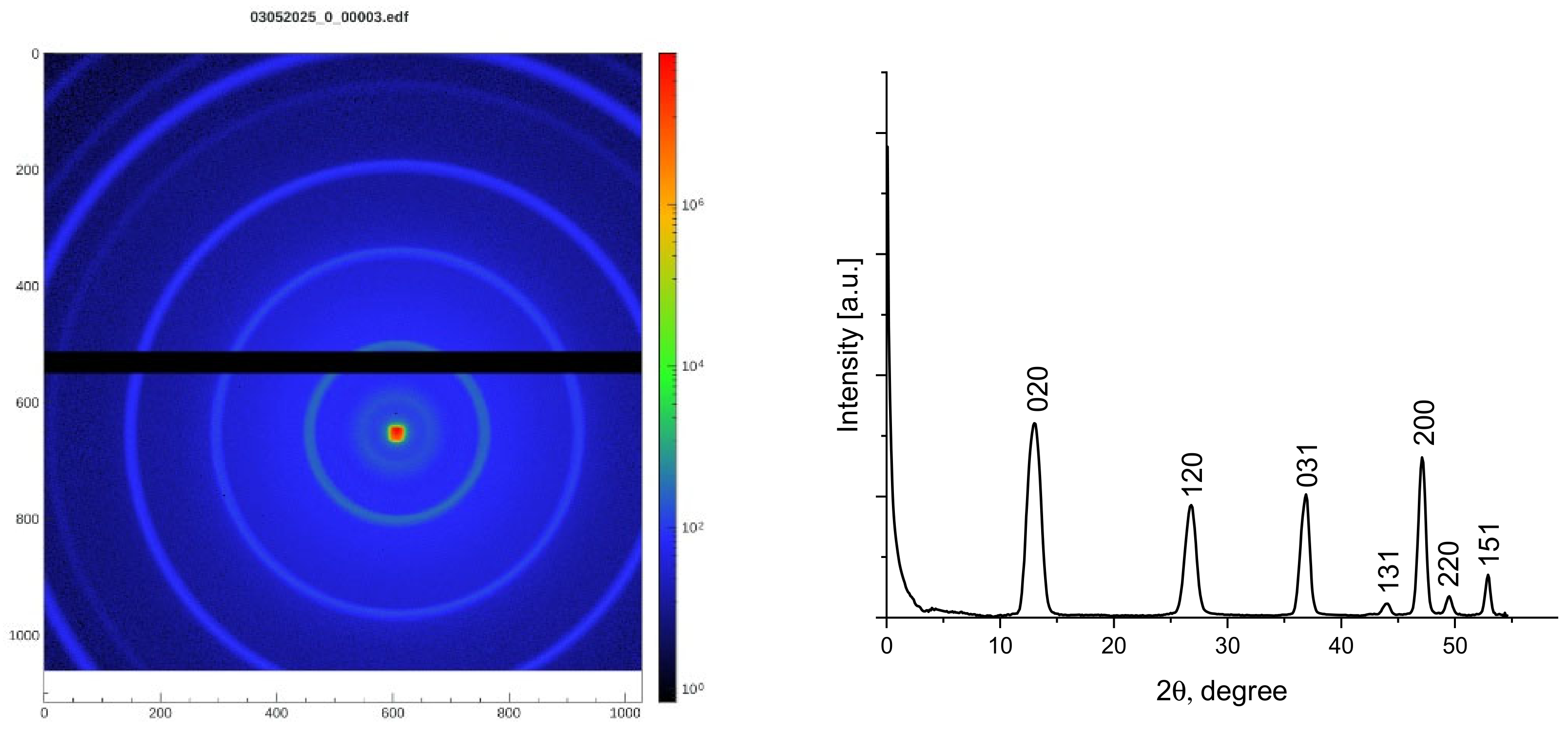
Figure 3 shows the 2D WAXS patterns and profile of the material obtained.
The obtained scattering patterns indicate that the sample presents well-defined crystallinity. Compared with the database and the literature, it is observed that the material presents a structure specific to γ-AlOOH (boehmite), with an orthorhombic crystallographic system with space group Amam 63, according to JCPDS PDF sheet No. 21-1307 [93,97].
The full width at half maximum (FWHM) of the peak (0 2 0) was used to compute the crystallite size based on the Scherrer equation, yielding a value of 215 nm.
Experiments carried out by Li et al. in 2019 [98] proved the interdependence between particle size and surface area. In this context, it was concluded that the larger surface area is associated with the smaller size of the constituent particles [98]. On this basis, it is clear that smaller value of the surface area recorded for the prepared material is due to the particle size being above 200 nm.

3.5. Atomic Force Microscopy, AFM

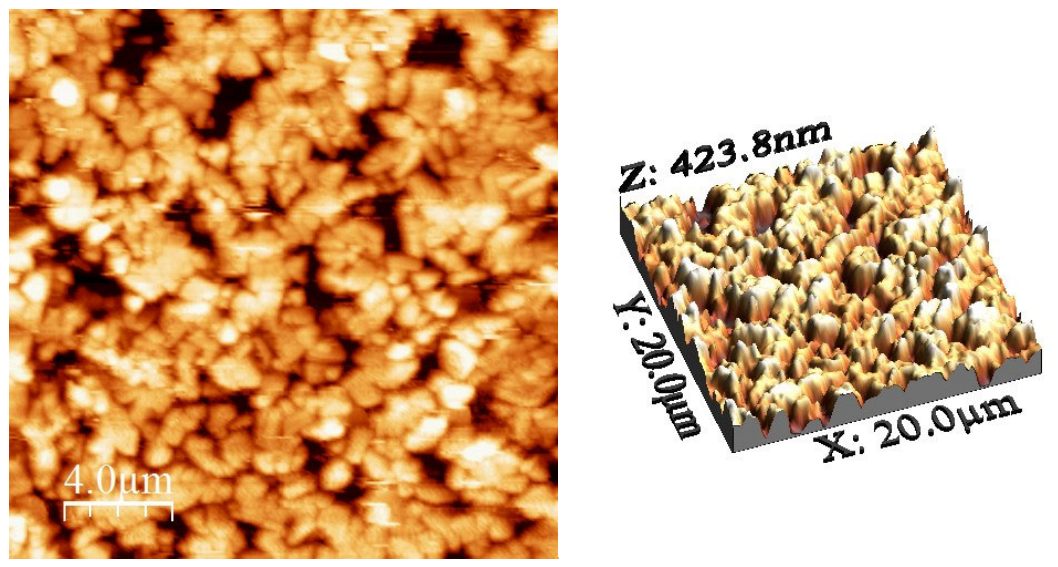
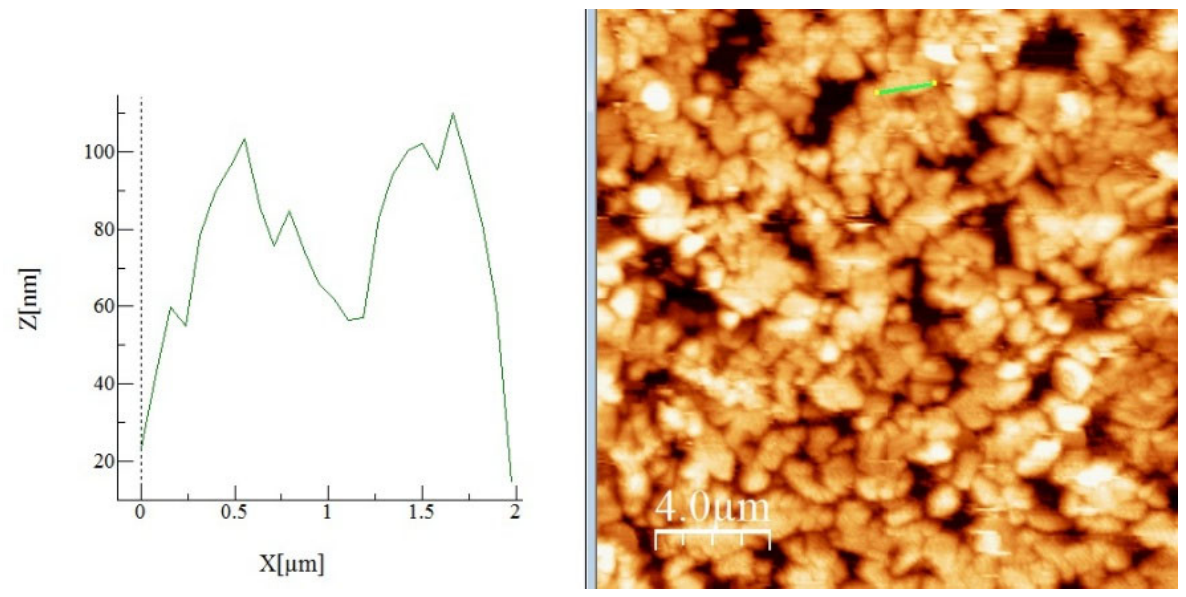
Given the importance of surface morphology in the adsorption process, AFM analysis for the γ-AlOOH was performed. AFM (2D and 3D) images, surface profile on the selected area, together with roughness data, were obtained; they are presented in Figure 4 and Figure 5 and Table 2.
From the AFM image presented, specific parameters were evaluated (Average roughness (Sa), Mean Square Root Roughness (Sq), Maximum peak height (Sp), Maximum valley depth (Sv), Maximum peak-to valley height (Sy), Surface kurtosis (Sku), and Surface skewness (Ssk)), as shown below in Table 2:
The 2D AFM image (Figure 4) reveals formations of similar morphology patterns, organized in compact clusters, as shown in the additional profile images (Figure 5). The surface roughness of the sample is determined by the Ra and Rq, whereas both have the same importance. However, their value differs due to distinct calculation formula [99]. Additional information linked with the material surface is described by the Sku and Ssk values. Symmetrical height distribution is determined by Ssk = 0, whereas an asymmetrical height distribution with a positive Ssk value implies the prevalence of peaks, a negative Ssk indicates the prevalence of valleys. The density sharpness of a profile is determined by Sku, indicating the preponderance of “sharper” (Sku > 3) and “flatter” (Sku < 3) surface aspects. Sp and Sv parameters indicate the height of the highest peak; the largest pit within the area can be correlated with the Sku and Ssk. Sy is defined as the sum of the largest peak height value (Sp) and the largest pit depth value (Sv) within the defined area [100]. The obtained results highlight the prevalence of valleys, as indicated by the Ssk value in addition to the more negative Sv value compared to the Sp. Additionally, the Sku is <3, indicating a “flatter” surface due to the presence of deep valleys. The obtained results are in concordance with the profile image on the selected areas, indicating the presence of wide peaks and valleys, with occasional smaller valleys on the top of the peaks. The negative Ssk, in combination with an Sku < 3, indicates a rough surface. However, given the profile image and nitrogen adsorption-desorption isotherms data, the obtained results indicate a limited surface porosity. In this context, the good adsorptive properties of prepared adsorbent material can be associated with the valleys observed in the images recorded in Figure 5. These valleys possibly act as traps in the adsorption process, leading to an increase of the adsorption capacity of the adsorbent material.

3.6. Nitrogen Adsorption-Desorption Isotherms: Brunauer–Emmett–Teller (BET) Method

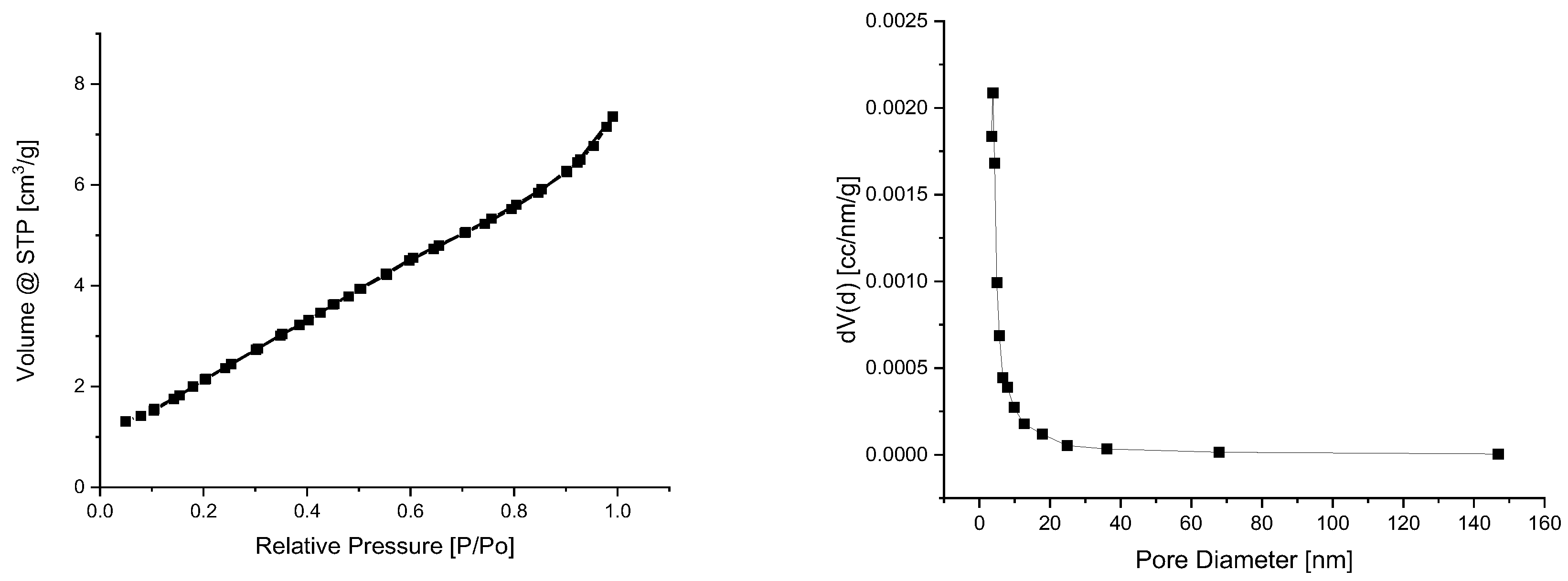
The nitrogen adsorption-desorption isotherm and pore size distribution are depicted in Figure 6.
According to IUPAC, the γ-AlOOH material presents a type II nitrogen adsorption isotherm [101]. This reversible type II isotherm is specific for materials that have macropores or no pores at all. Evaluating the data obtained, the specific surface area can be modeled using the BET (Brunauer, Emmet, Teller) method, obtaining a value of 14 m2/g.
Using the BJH (Barrett–Joyner–Halenda Model) and DFT (Density Functional Theory) methods, the pore distribution data were evaluated, showing an average value of approximately 4.2 nm. The total pore volume derived from the final point of adsorption at P/Po = 0.99037 is 0.0114 cm3/g, with mesopores smaller than 201.5 nm.
The Fractal Dimension showed by the FHH method (The Frenkel–Halsey–Hill model) indicates a value of D = 2.0151, which is specific for flat surfaces (2D). Correlating with AFM measurements, we can observe that even if the surface is in 2D, the material still presents porosity but with macropores.

3.7. Point of Zero Charge, pHpzc

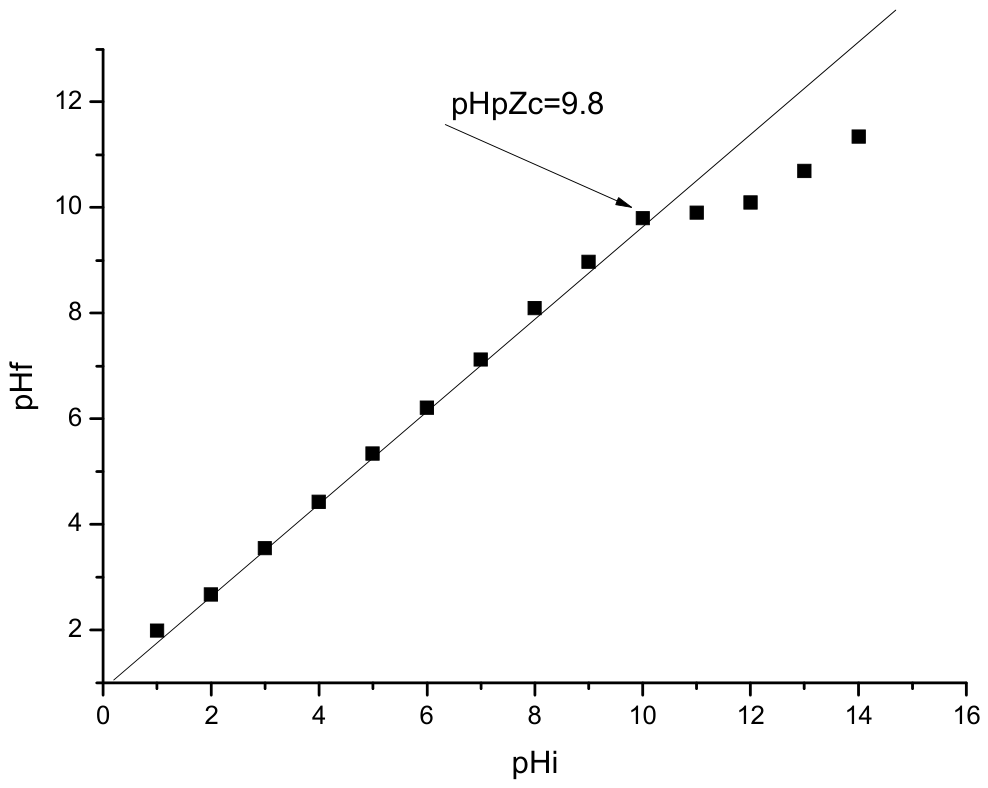
A fundamental concept in surface chemistry, point of zero charge (pHpzc), is used to characterize different adsorbent materials. This study reveals the nature of the functional groups presented on the surface of the adsorbent material surface. The pHpzc is the pH value at which there are as many positively charged groups as there are negatively charged ones on the adsorbent material surface. In order to obtain the optimum pH required for optimal adsorption based on the nature of the adsorbate, it is crucial to know the value of the adsorbent pHpzc. In Figure 7, the experimental data used for pHpzc determination are presented.
Taking into account the information depicted in Figure 7, it can be observed that the pHpzc of γ-AlOOH has a value, equal to 9.8. The evaluation of the adsorbent material surface charge indicates the charging behavior of the adsorbent material surface as a function of the pH of the solution in which it is immersed. Taking into account the value obtained during the experiments, we can conclude that if the solution pH is lower than 9.8, the adsorbent material surface will have a positive net charge, because the higher concentration of H+ ions from the solution tends to protonate the superficial groups from the material surface. At a pH higher than 9.8, the material surface will be negatively charged due to the higher concentration of HO ions present in the solution that tend to deprotonate the superficial groups. When the solution pH is equal to 9.8, the surface of the adsorbent material is electrically neutral. In this context, it is evident that the surface net charge plays an important role for all the adsorptive processes [102]. Thus, since our studies were performed at a pH lower than 9.8, we can state that an efficient recovery of the La(III) species is possible only if we admit the presence of Al–O groups located on the surface of adsorbent materials, as stipulated by as Li J. et al. [98].

3.8. Effect of Operating Conditions on the Performance of La(III) Adsorption

3.8.1. Influence of the Solid:Liquid Ratio

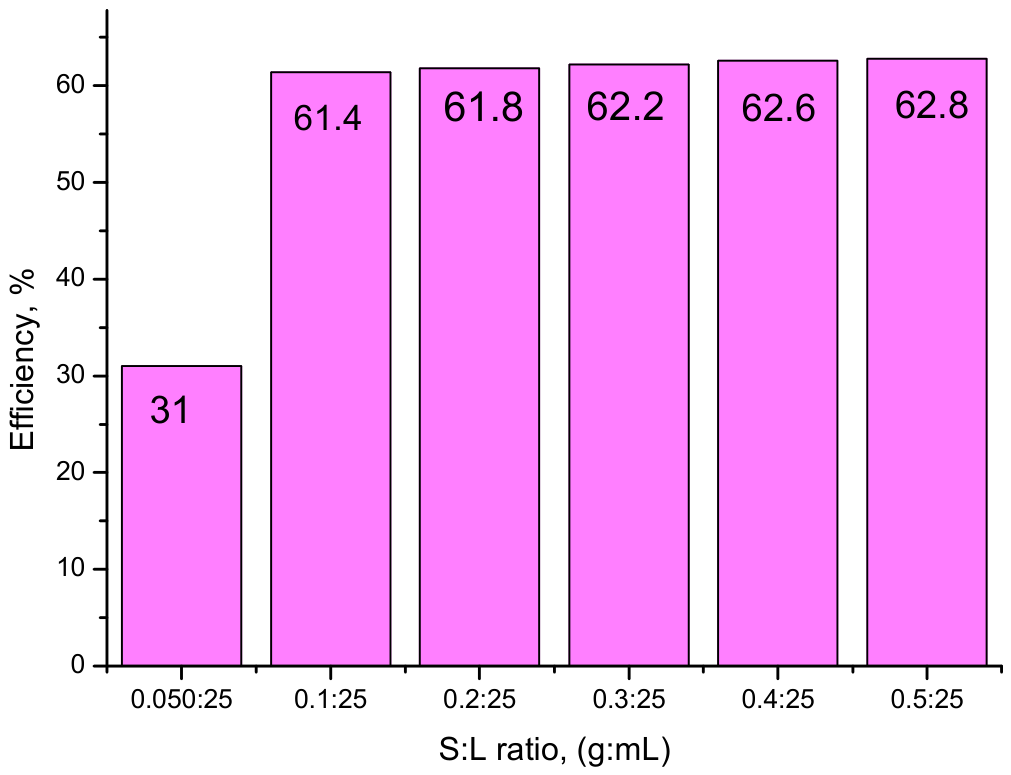
The effect of adsorbent type and its concentration is illustrated in Figure 8.
The analysis of the data presented in Figure 8 reveals that the increase in the quantity of the adsorbent material correlates with a rise in the percentage of the La(III) recovery. Based on these data, we can observe that the increase in the adsorbent efficiency is insignificant when the quantity of adsorbent material is higher than 0.1. Therefore, taking into account all the determining factors, we can conclude that the optimum solid:liquid ratio is 0.1 g of adsorbent material:25 mL of liquid, when the La(III) adsorption efficiency is around 62%, corresponding to approximatively 75 mg of La (III) ions per gram of adsorbent material.

3.8.2. Influence of the Solution pH

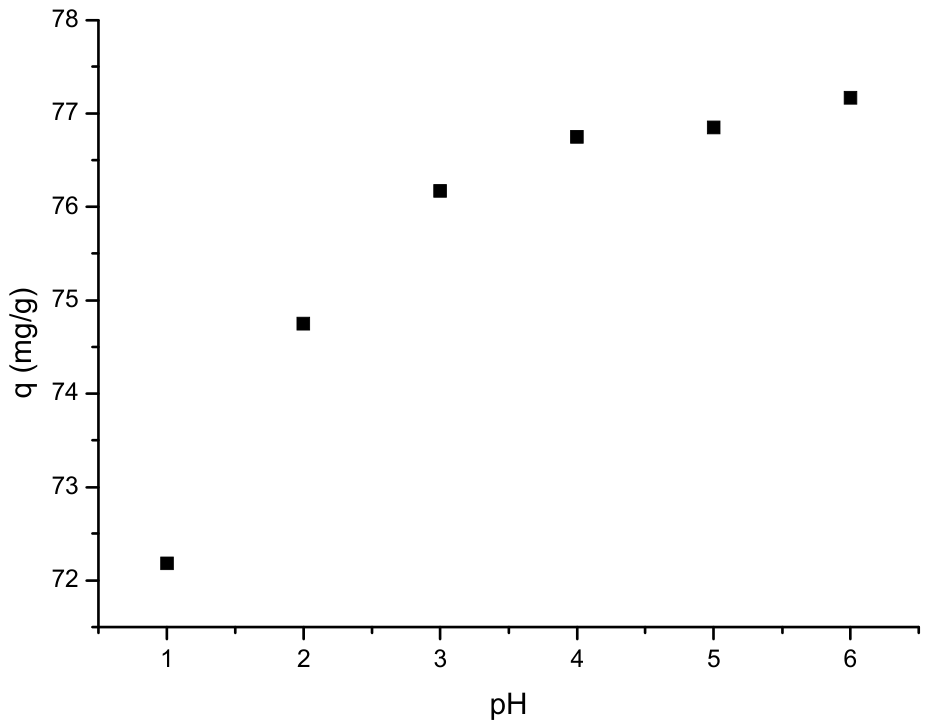
Figure 9 illustrate how the concentration of hydrogen ions affect the adsorption of La(III) ions on a pH range between 1 and 6.
It is well known that the characteristics of adsorption processes are dependent on the pH values. In this context, we assessed the optimal pH range for La(III) ion adsorption and concluded that La(III) adsorption is most effective when the solution pH is between 3 and 6, with a maximum adsorption capacity of around 76 mg of La(III) per g of adsorbent material. The pH-insensitive behavior of the lanthanum during adsorption is a notable observation [103]. In this condition, is important to take into account that at a pH below 6, lanthanum ions in an aqueous solution exist as La3+ ions [104]. This low sensitivity can be related to the weak electrostatic forces established between La(III) ions and the produced adsorbent material.

3.8.3. Influence of the Contact Time and Temperature

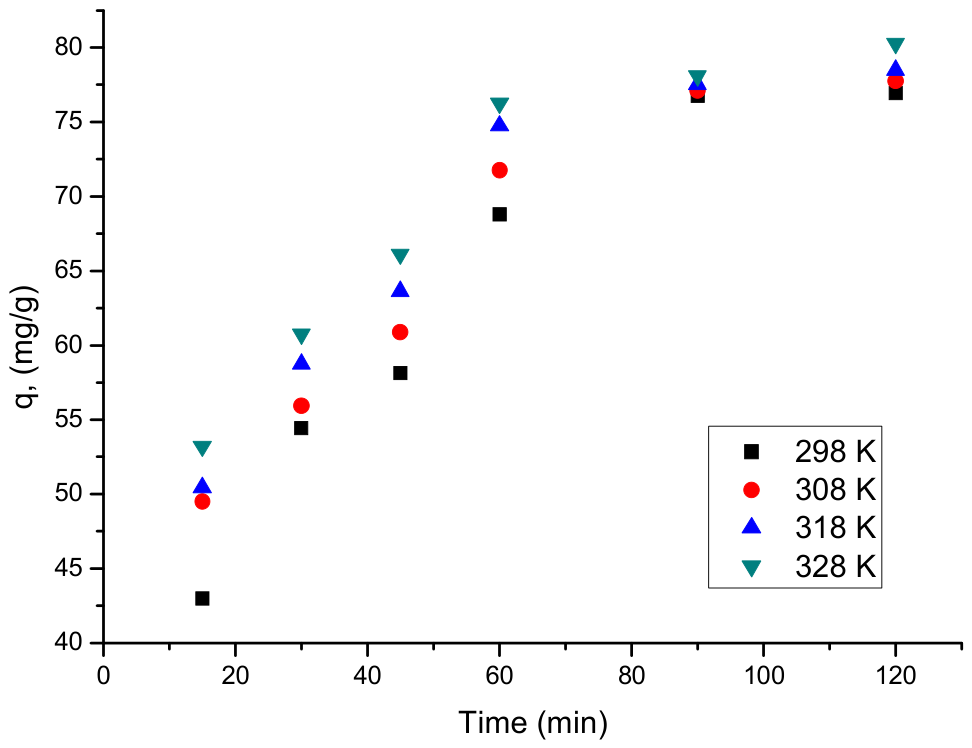
La(III) adsorption experiments were conducted with a contact time ranging from 15 to 120 min and a temperature ranging from 298 to 328 K in order to evaluate the impact of these two variables on the studied adsorptive process. The obtained results are presented in Figure 10.
From the data presented in Figure 10, it can be seen that for 90 min the adsorption takes place rapidly, after which the amount of adsorbed ions reaches a maximum that does not change significantly for any other increase in the adsorption time. In this context, it can be observed that the adsorption capacity increases up to 90 min, after which it remains constant (qe~77 mg/g at 298 K) regardless of the time increase. Also, it can be observed that as the temperature increases, the maximum adsorption capacity also increases, but not significantly enough to justify usage at temperatures higher than 298 K during La(III) ions adsorption. Even though the temperature effect on the studied adsorption is negligible, such experiments are important to determine if the process must be conducted at a temperature different from room temperature.

3.8.4. Influence of La(III) Ions Initial Concentration

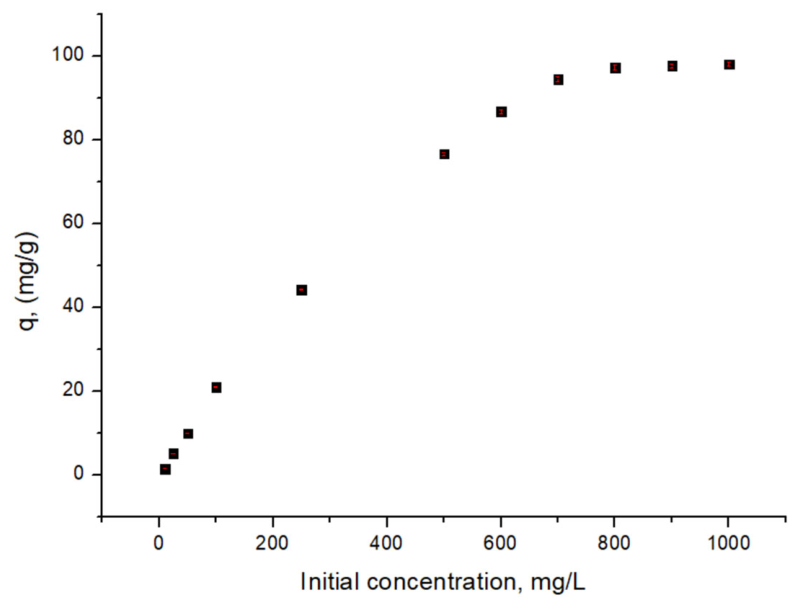
Under ideal adsorption circumstances (pH = 3–6, S:L ratio = 0.1 g:25 mL, contact time = 90 min and optimal temperature of 298 K), the impact of the initial concentration of the La(III) ions on the adsorptive process has been investigated. In Figure 11, the data showing the influence of the initial concentration of La(III) ions on the adsorption capacity are presented.
The information presented in Figure 11 proves that the maximum adsorption capacity increases with the increase in the La(III) ions initial concentration. The maximum adsorption capacity increases as the initial concentration of La(III) ions increases, until it reaches 800 mg/L, when a maximum adsorption capacity of 97.7 mg/g is attained. We may conclude that 97.7 mg/g represents the maximum adsorption capacity under the considered experimental conditions because any additional increase in the La(III) initial concentration results in no increase in the maximum adsorption capacity.

3.9. Adsorption Mechanism

3.9.1. Adsorption Kinetics

To understand the rate and mechanism of La(III) adsorption, kinetic modeling was performed. Specifically, pseudo-first-order (Lagergren) and pseudo-second-order (Ho and McKay) kinetic models were used to describe the adsorption kinetics.
Intraparticle diffusion, the movement of La(III) within the adsorbent’s pores after surface attachment, was analyzed using the Weber–Morris model. This step is crucial in the overall adsorption process, alongside film diffusion (transport from the bulk solution to the adsorbent surface) and surface adsorption (interaction between La(III) and the adsorbent).
Lagergren model is [105]:
l n ( q e q t ) = l n q e k 1 t
where: qe—equilibrium adsorption capacity (mg/g)
qt—adsorption capacity at a specific time—t (mg/g)
k1—pseudo-first order speed constant (min−1)
t—contact time (min)
The Ho and McKay model is [106,107,108]:
t q t = 1 k 2 q e 2 + t q e
where: qe—equilibrium absorption capacity (mg/g)
qt—adsorption capacity at a specific time—t (mg/g)
k2—pseudo-second-order speed constant (g/mg·min)
t—contact time (min)
A linear plot of ln(qe − qt) = f(t) gives the equilibrium adsorption capacity, qe,calc, as the intercept, while the slope gives the k1 rate constant for the pseudo-first-order kinetic model. For the pseudo-second-order kinetic model, the linear plot of t/qt function of time yields the slope as equilibrium adsorption capacity qe,calc and the intercept as the k2 rate constant.
The Weber and Morris model is [109,110] described by the following equation:
q t = k d i f f · t 1 2 + C
where: qt—adsorption capacity at t time, mg/g
kdiff—speed constant for intraparticle diffusion, mg/g·min1/2
C—constant correlated with the thickness of the liquid film surrounding the adsorbent particles.
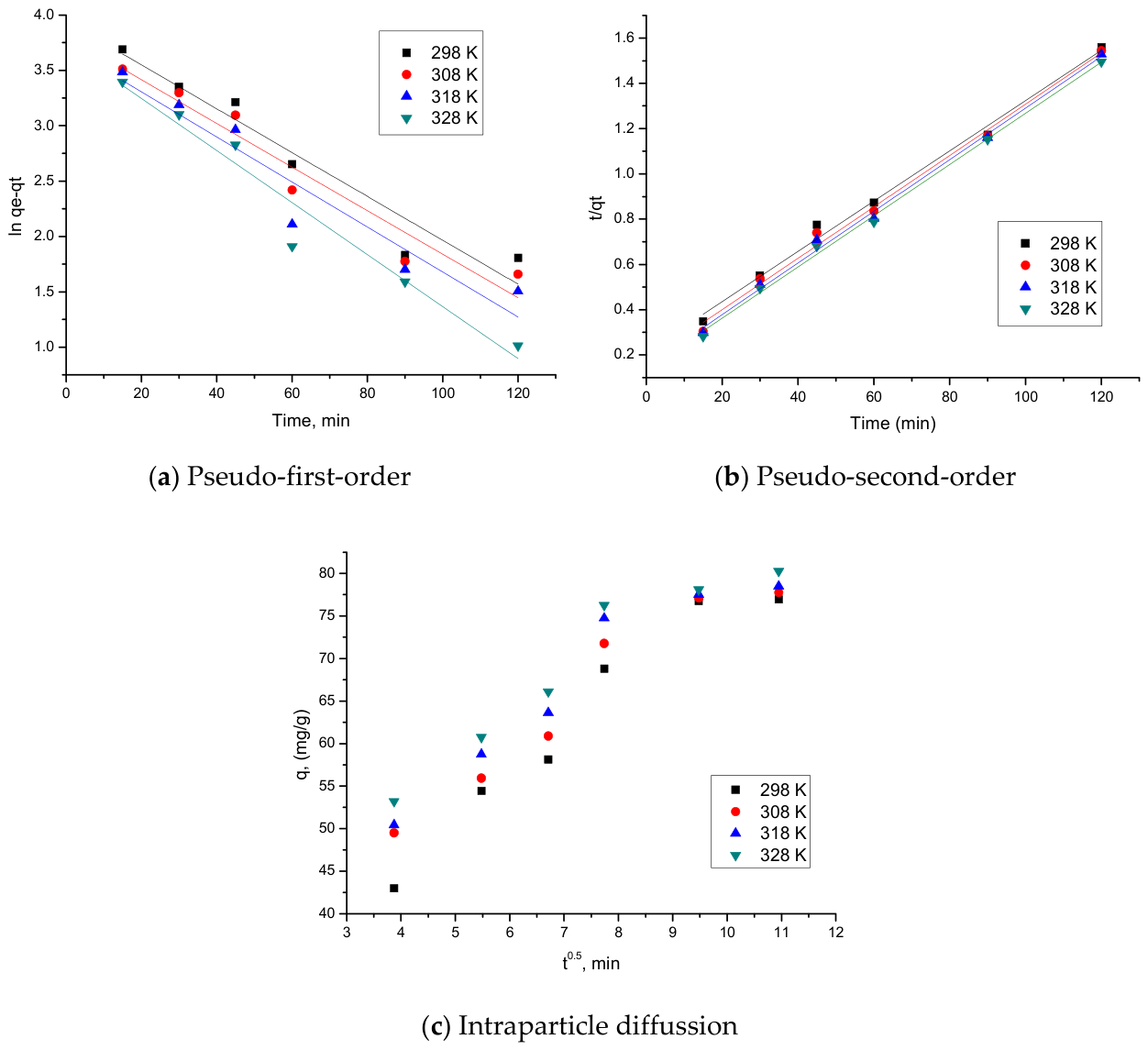
The obtained experimental data have been modeled using pseudo-first-order, pseudo-second-order, and Weber and Morris kinetic models (the obtained data are presented in Figure 12). The data obtained from the modeling of the experimental data are presented in Table 3.
As can be seen from the data presented in Table 3, the obtained experimental data fit the second-order kinetic model quite well, as indicated by the coefficient of determination (R2), which ranges from 0.993 to 0.997. Furthermore, can be observed that the calculated adsorption capacity has values close to the experimentally determined adsorption capacity, confirming that the pseudo-second-order kinetic model fits the experimental data.
It can also be observed that the La(III) adsorption mechanism takes place through several steps since the straight lines obtained by plotting the dependence qt as a function of t1/2 at different temperatures do not pass through the origin, which means that the adsorption kinetics are influenced by both intraparticle and film diffusion. Similarly, from the data presented in Table 3, it can be observed that as the temperature increases, so does the value of Kdiff. It can also be observed that the constant specific for stage 1 is higher than the diffusion constant specific for stage 2, which signifies that stage 2 determines the adsorption process speed [111].

3.9.2. Adsorption Isotherms

Adsorption equilibrium was analyzed using the following isotherm models:
(i)
Langmuir Isotherm: This model assumes monolayer adsorption onto a homogeneous surface;
(ii)
Freundlich Isotherm: This model describes adsorption onto heterogeneous surfaces; and
(iii)
Sips Isotherm: This model combines aspects of both the Langmuir and Freundlich isotherms, offering a more versatile description.
Equilibrium isotherms were obtained by plotting the equilibrium adsorption capacity (qe) against the equilibrium concentration (Ce). The parameters for each isotherm model were then determined. Specifically, the Langmuir and Freundlich constants were calculated using the linearized forms of the respective isotherm equations after fitting the experimental data.
The Langmuir isotherm is [112]:
q e = q L · K L · C e 1 + K L · C e
where: qe—equilibrium adsorbtion capacity (mg/g)
Ce—equilibrium concentration (mg/L)
qL—Langmuir maximum adsorption capacity (mg/g)
KL—Langmuir constant.
The Freundlich isotherm is [113] described by the following equation:
q e = K F C e 1 n F
where: qe—maximum adsorption capacity (mg/g)
Ce—equilibrium concentration (mg/L)
KF and nf—characteristic constants that can be associated with the relative adsorption capacity of the adsorbent and the adsorption intensity.
Sips isotherm is [114] described by the following equation:
q e = q S K S C e 1 n S 1 + K S C e 1 n S
where: qS—Sips maximum adsorption capacity (mg/g)
Ks—constant related to adsorbent adsorption capacity
ns—heterogeneity factor.
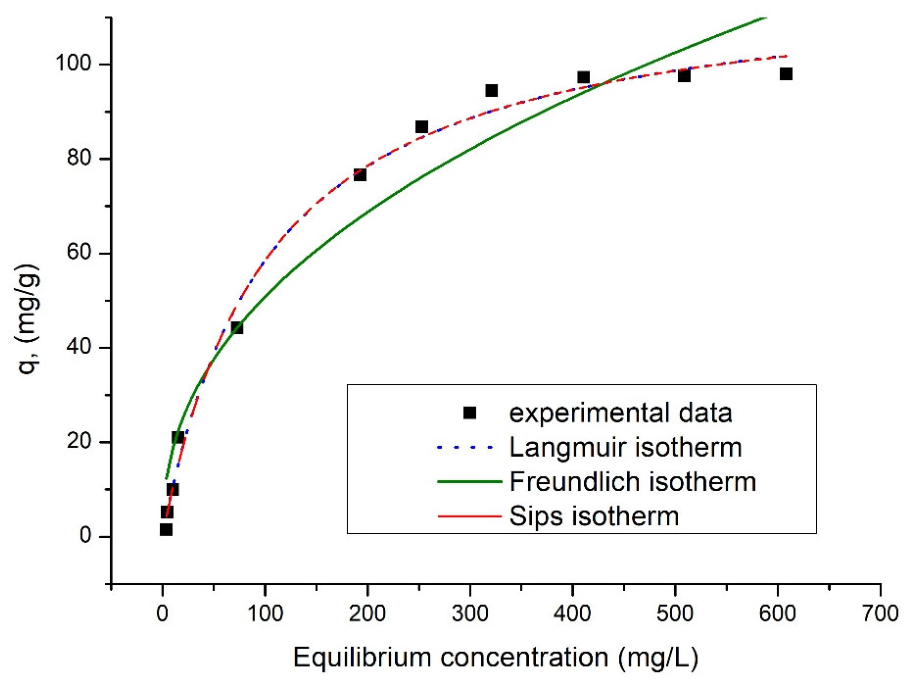
Experimental data were also modeled using Langmuir, Freundlich, and Sips isotherms. The obtained results are presented in Figure 13 and Table 4.
From the data presented in Figure 13, we can conclude that the studied adsorption process is effectively explained by the Langmuir isotherm, as evidenced by a high coefficient of determination—0.9929 (from the data presented in Table 5). The obtained results also suggest that temperature has a positive influence on the studied adsorptive process.

3.9.3. Adsorption Thermodynamics

Thermodynamic studies are useful for evaluating the viability of the adsorptive process, and provide general information on how temperature affects the studied process. To determine how La(III) ion adsorption takes place on the surface of the adsorbent material, Gibbs’ free energy (ΔG°) was calculated using the Gibbs–Helmholtz equation [115]:
G o = H o T · S o
where:
ΔGo—free Gibbs energy standard variation (J/mol)
ΔHo—enthalpy standard variation (J/mol)
ΔSo—entropy standard variation (J/mol·k)
T—absolute temperature (K)
Standard variations of enthalpy and entropy were evaluated from the linear dependence of ln Kd versus 1/T (linear form of van’t Hoff equation), where Kd is the equilibrium constant, calculated as the ratio between the equilibrium adsorption capacity (qe) and equilibrium concentration (Ce).
l n K d = S o R H o R T
where: Kd—constant of equilibrium;
ΔS°—standard variation of entropy (J/mol·K)
ΔH°—standard variation of enthalpy (kJ/mol)
T—absolute temperature (K);
R—ideal gas constant (8.314 J/mol·K).
The equilibrium constant is given by the ratio of the qe and Ce:
K d = q e C e
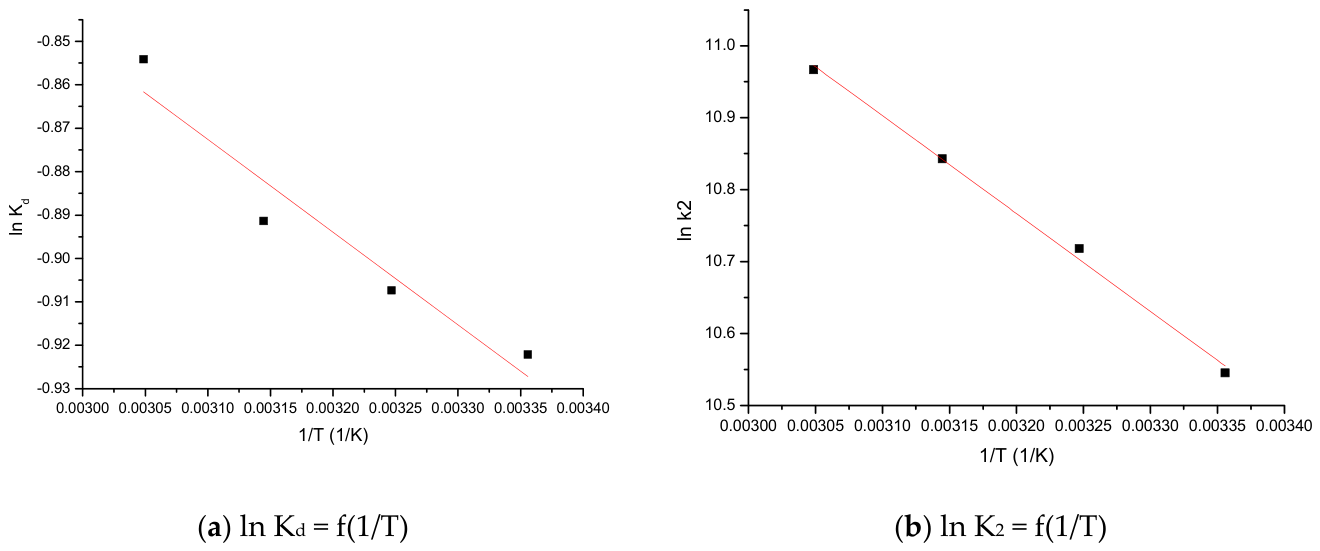
Figure 14a shows the dependence between ln(Kd) and 1/T, while Figure 14b presents the dependence between lnK2 and 1/T.
From the information presented in Figure 14, the values of the thermodynamic parameters associated with the La(III) adsorption were evaluated (parameters presented in Table 5).
Analyzing the data presented in Table 6, we can observe that La(III) ion adsorption is an endothermic process due to the positive value of the enthalpy. We can also conclude that the studied adsorption is a spontaneous process, as indicated by the negative values of the free Gibbs energy obtained for at all the studied temperatures.
The activation energy value can provide information about the nature of the adsorption process, whether it is physical or chemical. Thus, the activation energy Ea was calculated using the Arrhenius equation and the velocity constant from the pseudo-order kinetic model two k2.
k 2 = l n A E a R T
where: k2—Speed constant, g/min·mg
A—Arrhenius constant, g·min/mg1
Ea—Activation energy de activare, kJ/mol1
T—Absolut temperature, K
R—The ideal gas constant, 8.314 J/mol·K.
The activation energy of adsorption La (III) on γ-AlOOH was calculated from the linear equation associated with the graphical representation ln k2 = f (1/T). In Table 6, the calculated values for activation energy and for the determination coefficient are presented.
Based on the dependence depicted in Figure 14b, we evaluated the value of the activation energy, which has a value of 1.11 kJ/mol. This low value is in concordance with the thermodynamic parameters, suggesting that La(III) adsorption is spontaneous. Because the value of the activation energy is lower than 40 kJ/mol, we can stipulate that the adsorption process is a physical one [116].
To demonstrate that the produced adsorbent material is suitable for La(III) recovery using adsorption, the maximum adsorption capacities shown by different materials were compared (data presented in Table 7). Although, based on these data, we can observe that γ-AlOOH does not have the highest adsorption capacity, the exhibited adsorption capacity can be considered to be good. Due to the lower production price in comparison with the one for the MOF adsorbent, we my deduce that γ-AlOOH represents a suitable adsorbent for La(III) ion recovery.

3.9.4. Absorbent Regeneration

To ascertain the potential for reusing γ-AlOOH as an adsorbent material, La(III) desorption tests were performed. For these tests, 2 g of adsorbent material was loaded with the maximum amount of La(III) by performing adsorption. Furthermore, exhausted adsorbent material was used in desorption tests, which were performed using a 10 and 20% HCl solution for 4 h. Upon analyzing the amount of desorbed La(III) ions, it was found that more than 93% of the adsorbed La(III) ions could be desorbed when 20% HCl was used. Based on this observation, we can conclude that the γ-AlOOH adsorbent material lends itself to repeated adsorption–desorption cycles (adsorbent material was able to regenerate five times).

4. Conclusions

One objective of this study was to evaluate the use of aluminum hydrate (gibsite) as a precursor in the hydrothermal synthesis process of boehmite from gibbsite suspensions. The parameters of the boehmite synthesis process are also presented, along with their effect on the main properties of hydrothermal recrystallized boehmite. The final goal was to test synthesized nanomaterial as an adsorbent for lanthanum (III) ion from aqueous solutions.
Thermogravimetric analysis was performed to estimate the optimum temperature required for the synthesis of boehmite (γ-AlOOH). Furthermore, in the recorded FT-IR spectra, a band located at 1077 cm−1 and at 1145 cm−1 can be observed; these are associated with the symmetric and asymmetric bending vibrations of Al-OH groups, suggesting that the desired material was obtained. The WAXS scattering method was used to determine the crystallinity of the produced boehmite, proving that the synthesized material presents well-defined crystallinity, with an orthorhombic crystallographic system. AFM analysis reveals the presence of different formations with similar morphological shapes organized in compact clusters. BET analysis demonstrates that γ-AlOOH has a specific surface of 14 m2/g, with a pore distribution of approximately 4.2 nm. The pHpzc has a value equal to 9.8, meaning that, in the specific study conditions (pH = 3–6), the adsorbent material surface is positively charged, and the adsorbed La species must therefore be negatively charged for an efficient adsorption process.
To determine the optimum adsorption conditions, we investigated the effects of the adsorbent dose, pH, contact time, temperature, and initial conditions. In terms of the adsorbent dose, experimental data reveal that the maximum adsorption capacity increases with the increase in the adsorbent dose, yielding a maximum adsorption capacity for 0.1 of g γ-AlOOH. From the experiments carried out, in order to evaluate the influence of the pH, it was found that La adsorption occurs with good efficiency in the pH range of 3 to 6; at a pH higher than 6, precipitation of the dissolved La(III) ions occurs.
Experiments carried out to evaluate the optimum contact time revealed that the maximum adsorption capacity increases as the contact time increases, up to a maximum adsorption capacity obtained for a contact time of 90 min contact time. Any further increase in the contact time proved insignificant for the increase in adsorption capacity, and it can therefore be concluded that the optimum contact time is 90 min. Furthermore, these experiments proved that La(III) adsorption occurs with good results at 298 K, with any temperature increase leading to an insignificant increase in adsorption capacity. From all the obtained experimental data, it was observed that the maximum adsorption capacity has a value of 97.7 mg/g, obtained for an initial concentration of 800 mg La(III) ions per L, in established optimum sorption conditions.
From the adsorption isotherms, it was established that the Langmuir isotherm is most appropriate for describing the studied adsorption. Based on thermodynamic studies can conclude that La(III) adsorption is an endothermal process reflected by the positive value of the enthalpy and spontaneously one as indicated by the negative value of Gibbs free energy. Performed desorption studies proved that when 20% HCl was used approximately 93% of the amount of La(III) loaded on the adsorbent materials could be desorbed, meaning that the adsorbent material can be reused for several adsorption/desorption cycles.

Author Contributions

Conceptualization, A.N., P.N. and G.D.; Methodology, M.C.; Validation, N.D.; Formal analysis, A.-C.D., M.C., A.N., O.V., M.S., P.N., S.I. and L.C.; Investigation, N.S.N., I.B., C.I., O.V., P.S. and A.B.; Resources, G.D., S.I., L.C. and L.F.; Data curation, M.S.; Writing—original draft, N.S.N., M.C., A.N. and L.F.; Writing—review and editing, N.D. All authors have read and agreed to the published version of the manuscript.

Funding

This research received no external funding.

Data Availability Statement

The original contributions presented in this study are included in the article. Further inquiries can be directed to the corresponding author.

Conflicts of Interest

The authors declare no conflicts of interest. Authors Gheorghe Dobra, Sorin Iliev, Lucian Cotet, Alina Boiangiu and Laurentiu Filipescu were employed by the company Vimetco Alum SA Tulcea. The remaining authors declare that the research was conducted in the absence of any commercial or financial relationships that could be construed as a potential conflict of interest.

References

  1. Abdelsalam, A.A.; Ward, A.A.; Abdel-Naeem, G.; Mohamed, W.S.; El-Sabbagh, S.H. Effect of Alumina Modified by Silane on the Mechanical, Swelling and Dielectric Properties of Al2O3/EPDM/SBR Blend Composites. Silicon 2023, 15, 3609–3621. [Google Scholar] [CrossRef]
  2. Wefers, K.; Misra, C. Oxides and Hydroxides of Aluminum; Alcoa Laboratories: Pittsburgh, PA, USA, 1987; Volume 19. [Google Scholar]
  3. Tipan, N.; Pandey, A.; Mishra, P. Material synthesis and design optimization of biomaterials for biomedical implant applications. Bioimpacts 2024, 15, 30010. [Google Scholar] [CrossRef]
  4. Kalladi, A.J.; Ramesan, M. Green synthesis of boehmite-reinforced cashew gum/polypyrrole biopolymer blend for advanced biomaterials. J. Thermoplast. Compos. Mater. 2024, 38, 2393–2413. [Google Scholar] [CrossRef]
  5. Horsth, D.F.L.; Primo, J.d.O.; Balaba, N.; Correa, J.S.; Zanette, C.M.; Silva, D.K.; Bittencourt, C.; Anaissi, F.J. Synthesis and Characterization of Boehmite Particles Obtained from Recycling: Water Disinfection Application. Nanomaterials 2022, 12, 2771. [Google Scholar] [CrossRef]
  6. Bell, N.S.; Rodriguez, M.A.; Kotula, P.; Kruichak, J.N.; Hernandez-Sanchez, B.A.; Casillas, M.R.; Kolesnichenko, I.; Matteo, E.N. Polymer intercalation synthesis of glycoboehmite nanosheets. Appl. Clay Sci. 2021, 214, 106273. [Google Scholar] [CrossRef]
  7. Rahmati, M.; Mozafari, M. Biocompatibility of alumina-based biomaterials—A review. J. Cell. Physiol. 2019, 234, 3321–3335. [Google Scholar] [CrossRef]
  8. Solovev, Y.V.; Prilepskii, A.Y.; Krivoshapkina, E.F.; Fakhardo, A.F.; Bryushkova, E.A.; Kalikina, P.A.; Koshel, E.I.; Vinogradov, V.V. Sol-gel derived boehmite nanostructures is a versatile nanoplatform for biomedical applications. Sci. Rep. 2019, 9, 1176. [Google Scholar] [CrossRef]
  9. Asadi, Z.; Sadjadi, S.; Bahri-Laleh, N.; Nekoomanesh, M. Pd Nanoparticles Immobilized on Boehmite as an Efficient Heterogeneous Catalyst for Lubricant Hydrogenation. Korean J. Chem. Eng. 2024, 41, 933–943. [Google Scholar] [CrossRef]
  10. Jabbari, A.; Moradi, P.; Tahmasbi, B. Synthesis of tetrazoles catalyzed by a new and recoverable nanocatalyst of cobalt on modified boehmite NPs with 1,3-bis(pyridin-3-ylmethyl)thiourea. RSC Adv. 2023, 13, 8890–8900. [Google Scholar] [CrossRef]
  11. Huang, Z.; Zeng, Z.; Zhu, X.; Zhao, W.; Lei, J.; Xu, Q.; Yang, Y.; Liu, X. Boehmite-supported CuO as a catalyst for catalytic transfer hydrogenation of 5-hydroxymethylfurfural to 2,5-bis(hydroxymethyl)furan. Front. Chem. Sci. Eng. 2023, 17, 415–424. [Google Scholar] [CrossRef]
  12. Barik, M.; Mishra, J.; Dabas, S.; Chinnaraja, E.; Subramanian, S.; Subramanian, P.S. Modified boehmite: A choice of catalyst for the selective conversion of glycerol to five-membered dioxolane. New J. Chem. 2022, 46, 695–703. [Google Scholar] [CrossRef]
  13. Mohammadi, M.; Khodamorady, M.; Tahmasbi, B.; Bahrami, K.; Ghorbani-Choghamarani, A. Boehmite nanoparticles as versatile support for organic–inorganic hybrid materials: Synthesis, functionalization, and applications in eco-friendly catalysis. J. Ind. Eng. Chem. 2021, 97, 1–78. [Google Scholar] [CrossRef]
  14. Danilevich, V.V.; Nadeina, K.A.; Gerasimov, E.Y.; Shefer, K.I.; Klimov, O.V.; Noskov, A.S. Synthesis and characterization of lanthanum-modified pseudoboehmite—The precursor of alumina supports and catalysts. Microporous Mesoporous Mater. 2022, 335, 111800. [Google Scholar] [CrossRef]
  15. Alinezhad, H.; Zabihi, M.; Kahfroushan, D. Design and fabrication the novel polymeric magnetic boehmite nanocomposite (boehmite@ Fe3O4@PLA@SiO2) for the remarkable competitive adsorption of methylene blue and mercury ions. J. Phys. Chem. Solids 2020, 144, 109515. [Google Scholar] [CrossRef]
  16. Hayase, G. Boehmite Nanofiber–Melamine–Formaldehyde Composite Aerogels and Derivatives for Thermal Insulation and Optical Applications. ACS Appl. Nano Mater. 2023, 6, 13869–13873. [Google Scholar] [CrossRef]
  17. Zhang, H.; Zhou, H.; Ge, J.; Liu, G.; Tu, X.; Jin, L. Boehmite-graphene oxide hybrid filled epoxy composite: Synthesis, characterization, and properties. J. Polym. Eng. 2022, 42, 428–435. [Google Scholar] [CrossRef]
  18. Kausar, A. A review of current knowledge and future trends in polymer/boehmite nanocomposites. J. Plast. Film Sheeting 2022, 38, 278–305. [Google Scholar] [CrossRef]
  19. Tsioptsias, C.; Leontiadis, K.; Tzimpilis, E.; Tsivintzelis, I. Polypropylene nanocomposite fibers: A review of current trends and new developments. J. Plast. Film Sheeting 2021, 37, 283–311. [Google Scholar] [CrossRef]
  20. Wang, W.; Li, Z.; Chen, C.; Wei, Y.; Xu, X.; Liu, H.; Kuang, C.; Yang, G.; Li, X.; Qing, Y.; et al. Multifunctional superhydrophobic coating constructed from rosin-based polymer and nano-boehmite particles for oil-water separation, flame retardancy and anti-icing. Prog. Org. Coat. 2025, 198, 108872. [Google Scholar] [CrossRef]
  21. Gao, T.; Tian, P.; Xu, Q.; Pang, H.; Ye, J.; Ning, G. Class of Boehmite/Polyacrylonitrile Membranes with Different Thermal Shutdown Temperatures for High-Performance Lithium-Ion Batteries. ACS Appl. Mater. Interfaces 2023, 15, 2112–2123. [Google Scholar] [CrossRef]
  22. Lee, H.-B.; Choi, A.-J.; Kim, Y.-K.; Lee, M.-W. Composite Membrane Based on Melamine Sponge and Boehmite Manufactured by Simple and Economical Dip-Coating Method for Fluoride Ion Removal. Polymers 2023, 15, 2916. [Google Scholar] [CrossRef]
  23. Li, J.; Wang, N.; Zhuang, Y.; Xue, A.; Chen, L.; Li, Y. Preparation of high permeability γ-Al2O3 ultrafiltration membranes from pseudo-boehmite industrial precursor. Ceram. Int. 2023, 49, 28943–28953. [Google Scholar] [CrossRef]
  24. Kumar, A.; Ghosh, U.K. Polyvinylidene fluoride/boehmite nanocomposite membrane for effective removal of arsenate ion from water. J. Water Process Eng. 2022, 47, 102652. [Google Scholar] [CrossRef]
  25. Zhang, H.; Zhang, X.; Wang, P.; Chen, R.; Gu, G.; Hu, S.; Tian, R. Laminated polyacrylonitrile nanofiber membrane codoped with boehmite nanoparticles for efficient electrostatic capture of particulate matters. Nanotechnology 2021, 32, 235601. [Google Scholar] [CrossRef]
  26. Sun, Y.; Li, S.; Zhao, Q.; Cong, Z.; Yuguo, X.; Jiao, X.; Chen, D. Recent Advancements in Alumina-Based High-Temperature Insulating Materials: Properties, Applications, and Future Perspectives. High-Temp. Mater. 2025, 2, 10001. [Google Scholar] [CrossRef]
  27. Jia, S.; Yang, S.; Pan, Y.; Din, S.U.; Cai, Y. Boehmite-PVDF-CTFE/F-PI composite separator irradiated by electron beam for high-rate lithium-ion batteries. J. Membr. Sci. 2024, 704, 122827. [Google Scholar] [CrossRef]
  28. Ren, Y.; Zhang, B.; Zhong, Z.; Ye, J.; Zhang, J.; Fang, Z.; Ye, F. Reusable, high specific surface areas, and excellent thermal stability Al2O3–SiO2 aerogel composites as high-temperature thermal insulators for radome applications. J. Alloys Compd. 2024, 984, 173990. [Google Scholar] [CrossRef]
  29. Ren, Y.; Zhang, B.; Ye, J.; Zhong, Z.; Zhang, J.; Ye, F. Preparation of monolithic Al2O3–SiO2 aerogels with high-temperature resistance using boehmite nanorods. Ceram. Int. 2024, 50, 19429–19436. [Google Scholar] [CrossRef]
  30. Park, B.K.; Kim, K.H.; Kwon, Y.G.; Yang, J.H.; Kim, Y.M.; Nam, D.-W.; Kim, K.J. Boehmite/PAN nanocomposite fibrous separators with superior wettability and thermal properties for sodium-ion batteries with high electrochemical performances. J. Alloys Compd. 2023, 940, 168864. [Google Scholar] [CrossRef]
  31. Zhu, T.; Hao, X.; Li, T.; Li, Y.; Wang, W. Flame-retardant separator coated with Boehmite ammonium polyphosphate composite for high-safety lithium-ion batteries. Electrochim. Acta 2024, 498, 144699. [Google Scholar] [CrossRef]
  32. Zhu, K.; Yang, Y.; Lin, C.; Wang, Q.; Ye, D.; Jiang, H.; Wu, K. Effect of Compounded Aluminum Hydroxide Flame Retardants on the Flammability and Smoke Suppression Performance of Asphalt Binders. ACS Omega 2024, 9, 2803–2814. [Google Scholar] [CrossRef]
  33. Li, F.-F. Comprehensive Review of Recent Research Advances on Flame-Retardant Coatings for Building Materials: Chemical Ingredients, Micromorphology, and Processing Techniques. Molecules 2023, 28, 1842. [Google Scholar] [CrossRef]
  34. Tomiak, F.; Schartel, B.; Wolf, M.; Drummer, D. Particle Size Related Effects of Multi-Component Flame-Retardant Systems in poly(butadiene terephthalate). Polymers 2020, 12, 1315. [Google Scholar] [CrossRef]
  35. Brown, S.C. Flame retardants: Inorganic oxide and hydroxide systems. In Plastics Additives: An A-Z Reference; Pritchard, G., Ed.; Springer: Dordrecht, The Netherlands, 1998; pp. 287–296. [Google Scholar]
  36. Chen, L.; Su, S.; Tian, P.; Yuan, J.; Zheng, W. Sol-gel preparation and luminescent properties of Eu3+ doped Al2O3 hollow microspheres. Ceram. Int. 2025, 51, 5406–5413. [Google Scholar] [CrossRef]
  37. Ma, H.; Zhao, H.; Song, Y.; Liu, S.; Mao, Z.; Wang, D. Metastable polymorphs and luminescence of boehmite-derived alumina doped with divalent europium ions. Funct. Mater. Lett. 2022, 15, 2251023. [Google Scholar] [CrossRef]
  38. Abdou, N.Y.; Sabry, M.; El-Faramawy, N. Thermoluminescence characteristics of different phase transitions from nanocrystalline alumina. J. Radioanal. Nucl. Chem. 2022, 331, 3865–3876. [Google Scholar] [CrossRef]
  39. Rani, G. Photoluminescence characterizations in phase transition alumina with boehmite nanostructures. J. Korean Ceram. Soc. 2021, 58, 747–752. [Google Scholar] [CrossRef]
  40. Hu, H.; Ma, J.; Hu, Z.; Yang, J. Immobilization of dipyrenylphosphinic acid to boehmite: Fluorescent hybrid with weakened pyrene-aggregation. Adv. Powder Technol. 2020, 31, 4526–4532. [Google Scholar] [CrossRef]
  41. Wen, J.; Yuan, R.; Jiang, T.; Yu, T.; Zhang, Y. Solvothermal synthesis and adsorption performance of layered boehmite using aluminum chloride and high-alumina fly ash. Chin. J. Chem. Eng. 2024, 70, 280–290. [Google Scholar] [CrossRef]
  42. He, Y.; Mao, Q.; Zhou, Y.; Xie, X.; Luo, L. Adsorptive Removal of Sb(V) from Wastewater by Pseudo-Boehmite: Performance and Mechanism. Water 2024, 16, 1172. [Google Scholar] [CrossRef]
  43. El Ashmawy, A.A.; Tada, M.; Yoshimura, C. Weak dehydration enhances the adsorption capacity of boehmite for anionic dyes. Colloids Surf. A Physicochem. Eng. Asp. 2023, 674, 131954. [Google Scholar] [CrossRef]
  44. Li, K.; Yuan, G.; Dong, L.; Deng, G.; Duan, H.; Jia, Q.; Zhang, H.; Zhang, S. Boehmite aerogel with ultrahigh adsorption capacity for Congo Red removal: Preparation and adsorption mechanism. Sep. Purif. Technol. 2022, 302, 122065. [Google Scholar] [CrossRef]
  45. Li, Z.; He, L.; Tian, W.; Huang, R.; Wang, X.; Li, D.; Tang, P.; Feng, Y. Batch and fixed-bed adsorption behavior of porous boehmite with high percentage of exposed (020) facets and surface area towards Congo red. Inorg. Chem. Front. 2021, 8, 735–745. [Google Scholar] [CrossRef]
  46. Panias, D.; Krestou, A. Effect of synthesis parameters on precipitation of nanocrystalline boehmite from aluminate solutions. Powder Technol. 2007, 175, 163–173. [Google Scholar] [CrossRef]
  47. Panias, D.; Paspaliaris, I. Boehmite Process—A New Approach in Alumina Production. World Metall.—ERZMETALL 2003, 56, 75–81. [Google Scholar]
  48. Rai, S.; Chaddha, M.J.; Kulkarni, K.J.; Nimje, M.T.; Rajshekhar Rao, K.; Mahendiran, P.; Sharma, R.J.; Agnihotri, A. Innovative Process for Boehmite Precipitation in Bayer Circuit. J. Sustain. Metall. 2020, 6, 18–25. [Google Scholar] [CrossRef]
  49. Shin, G.; Kim, M.; Seo, S.; Tran, T.; Park, C.; Kang, J. Study on precipitation of microcrystalline boehmite from bayer process solutions. J. Ceram. Process. Res. 2020, 21, 50–56. [Google Scholar] [CrossRef]
  50. Tang, W.; Zhu, J.; Hu, G.; Jiang, H.; Zhang, J.; Fu, C.; Sun, B. One-step preparation of high-purity boehmite by the effect of sugar alcohol in the aluminum-water reaction. J. Clean. Prod. 2024, 445, 141353. [Google Scholar] [CrossRef]
  51. Ambaryan, G.N.; Buryakovskaya, O.A.; Kumar, V.; Valyano, G.E.; Kiseleva, E.A.; Grigorenko, A.V.; Vlaskin, M.S. Hydrothermal Oxidation of Coarse Aluminum Granules with Hydrogen and Aluminum Hydroxide Production: The Influence of Aluminum Purity. Appl. Sci. 2023, 13, 7793. [Google Scholar] [CrossRef]
  52. Fedotov, A.; Belyakov, A. Features of hydrothermal synthesis of nanostructured boehmite. Novye Ogneupory (New Refract.) 2021, 11, 36–41. [Google Scholar] [CrossRef]
  53. Nalivaiko, A.Y.; Arnautov, A.N.; Zmanovsky, S.V.; Ozherelkov, D.Y.; Shurkin, P.K.; Gromov, A.A. Al–Al2O3 powder composites obtained by hydrothermal oxidation method: Powders and sintered samples characterization. J. Alloys Compd. 2020, 825, 154024. [Google Scholar] [CrossRef]
  54. Vlaskin, M.S.; Valyano, G.E.; Zhuk, A.Z.; Shkolnikov, E.I. Oxidation of coarse aluminum in pressured water steam for energy applications. Int. J. Energy Res. 2020, 44, 8689–8715. [Google Scholar] [CrossRef]
  55. Rahimi-Tabar, F.; Hosseini-Monfared, H. Low temperature synthesis of nanosized boehmite powder from sodium aluminate by template-free hydrothermal method. Next Mater. 2025, 7, 100456. [Google Scholar] [CrossRef]
  56. He, F.; Li, W.; Pang, T.; Zhou, L.; Wang, C.; Liu, H.; Li, M.; He, X. Hydrothermal synthesis of boehmite nanorods from alumina sols. Ceram. Int. 2022, 48, 18035–18047. [Google Scholar] [CrossRef]
  57. Wang, H.; Lundin, S.-T.B.; Takanabe, K.; Oyama, S.T. Synthesis of size-controlled boehmite sols: Application in high-performance hydrogen-selective ceramic membranes. J. Mater. Chem. A 2022, 10, 12869–12881. [Google Scholar] [CrossRef]
  58. Kozerozhets, I.V.; Panasyuk, G.P.; Semenov, E.A.; Vasil’ev, M.G.; Ivakin, Y.D.; Danchevskaya, M.N. How Acid Medium Affects the Hydrothermal Synthesis of Boehmite. Russ. J. Inorg. Chem. 2020, 65, 1529–1534. [Google Scholar] [CrossRef]
  59. Huang, W.; Liu, G.; Qi, T.; Li, X.; Zhou, Q.; Peng, Z. Effects of pH and ions on the morphological evolution of boehmite prepared by hydrothermal treatment of ultrafine Bayer gibbsite. CrystEngComm 2020, 22, 6983–6992. [Google Scholar] [CrossRef]
  60. Wang, J.; Li, L.; Liu, F.; Wang, Y.; Wu, Y. Growth process of boehmite with large particles in ammonia system. Ceram. Int. 2024, 50, 41436–41447. [Google Scholar] [CrossRef]
  61. Wang, J.; Li, L.; Wu, Y.; Wang, Y. The Influence of Hydrothermal Temperature on Alumina Hydrate and Ammonioalunite Synthesis by Reaction Crystallization. Crystals 2023, 13, 763. [Google Scholar] [CrossRef]
  62. Van Truong, T.; Kim, D.-J. Synthesis of high quality boehmite and γ-alumina for phosphorus removal from water works sludge by extraction and hydrothermal treatment. Environ. Res. 2022, 212, 113448. [Google Scholar] [CrossRef]
  63. Kozerozhets, I.V.; Panasyuk, G.P.; Semenov, E.A.; Vasil’ev, M.G.; Nikiforova, G.E.; Voroshilov, I.L. Effect of Alkaline Medium on Hydrothermal Synthesis of Boehmite. Russ. J. Inorg. Chem. 2021, 66, 427–432. [Google Scholar] [CrossRef]
  64. Ji, Y.; Wu, Y.; Li, L. Synthesis and characterization of pseudoboehmite by neutralization method. Ceram. Int. 2021, 47, 15923–15930. [Google Scholar] [CrossRef]
  65. Peigney, E.; Poulon-Quintin, A.; Cavarroc, M.; Aubert, G.; Duttine, M.; Sarroste, C.L.; Aymonier, C. Investigation of the interaction between adsorbed water and various morphologies of boehmite nanoparticles prepared by continuous supercritical hydrothermal synthesis. J. Supercrit. Fluids 2023, 193, 105829. [Google Scholar] [CrossRef]
  66. Chamida, R.N.; Rois, M.F.; Widiyastuti, W.; Setyawan, H. Synthesis of boehmite from aluminum trihydrate through facile hydrothermal method. J. Phys. Conf. Ser. 2022, 2344, 012013. [Google Scholar] [CrossRef]
  67. Wang, F.; Yuan, X.; Wang, D. Hydrothermal synthesis of hierarchical boehmite (γ-AlOOH) hollow microspheres with highly active surface. AIP Adv. 2021, 11, 065209. [Google Scholar] [CrossRef]
  68. Lin, Y.; Luo, L.; Yang, Z.; Shi, Y.; Qian, G.; Peng, C.; Lv, Z.; Zhang, J.; Duan, X. Controlled engineering of high-purity pseudo-boehmite with large pore volume by aluminum alkoxide hydrolysis: Mechanistic understanding and reforming catalysis. Chem. Eng. Sci. 2024, 298, 120372. [Google Scholar] [CrossRef]
  69. Bello, A.M. An Overview of Mesoporous Alumina Synthesis with Controlled Particle Size Distribution and Improved Textural Morphology. Iran. J. Chem. Chem. Eng. 2024, 43, 522–543. [Google Scholar] [CrossRef]
  70. Yin, Q.; Jin, H.; Wu, F.; Wang, W.; Yang, Q. Preparation of High-purity Alumina via Hydrolysis of Aluminum Isopropoxide after Desilication with Lanthanum Oxide. IOP Conf. Ser. Earth Environ. Sci. 2021, 898, 012022. [Google Scholar] [CrossRef]
  71. Xiong, Z.; Andaraarachchi, H.P.; Held, J.T.; Dorn, R.W.; Jeong, Y.-J.; Rossini, A.; Kortshagen, U.R. Inductively Coupled Nonthermal Plasma Synthesis of Size-Controlled γ-Al2O3 Nanocrystals. Nanomaterials 2023, 13, 1627. [Google Scholar] [CrossRef]
  72. Urbonavicius, M.; Varnagiris, S.; Pranevicius, L.; Milcius, D. Production of Gamma Alumina Using Plasma-Treated Aluminum and Water Reaction Byproducts. Materials 2020, 13, 1300. [Google Scholar] [CrossRef]
  73. Gholizadeh, Z.; Aliannezhadi, M.; Ghominejad, M.; Shariatmadar Tehrani, F. Optical and structural properties of spherical-shaped boehmite and γ-alumina nanoparticles by ultrasonic-assisted hydrothermal method: The effects of synthesis route, calcination, and precursor concentration. Opt. Quantum Electron. 2023, 55, 880. [Google Scholar] [CrossRef]
  74. Baccarella, A.M.; Garrard, R.; Beauvais, M.L.; Bednarksi, U.; Fischer, S.; Abeykoon, A.M.; Chapman, K.W.; Phillips, B.L.; Parise, J.B.; Simonson, J.W. Cluster mediated conversion of amorphous Al(OH)3 to γ-AlOOH. J. Solid State Chem. 2021, 301, 122340. [Google Scholar] [CrossRef]
  75. Mukhamed’yarova, A.N.; Gareev, B.I.; Nurgaliev, D.K.; Aliev, F.A.; Vakhin, A.V. A Review on the Role of Amorphous Aluminum Compounds in Catalysis: Avenues of Investigation and Potential Application in Petrochemistry and Oil Refining. Processes 2021, 9, 1811. [Google Scholar] [CrossRef]
  76. Isopescu, R.; Dobra, G.; Iliev, S.; Cotet, L.; Boiangiu, A.; Filipescu, L. Kinetic modelling for thermal decomposition of the aluminum hydroxide dried, milled and classified. Univ. Politeh. Buchar. Sci. Bull. Ser. B-Chem. Mater. Sci. 2022, 84, 67–78. [Google Scholar]
  77. Dobra, G.; Badilita, V.; Iliev, S.; Cotet, L.; Filipesc, L.; Boiangiu, A. Identification of the crystalline and amorphous phases in the dried raw alumina hydroxide. UPB Sci. Bull. Ser. B Chem. Mater. Sci. 2019, 81, 163–174. [Google Scholar]
  78. Dobra, G.; Garcia-Granda, S.; Iliev, S.; Cotet, L.; Iosif, H.; Negrea, P.; Duteanu, N.; Boiangiu, A.; Filipescu, L. Aluminum hydroxide impurities occlusions and contamination sources. Rev. Chim. 2020, 70, 65–76. [Google Scholar] [CrossRef]
  79. Dobra, G.; Iliev, S.; Anghelovici, N.; Cotet, L.; Filipescu, L. Impurities accumulation on the surface of alumina hydrate particles in Bayer technology. Rev. Chim. 2019, 70, 355–360. [Google Scholar] [CrossRef]
  80. Daminescu, D.; Duţeanu, N.; Ciopec, M.; Negrea, A.; Negrea, P.; Nemeş, N.S.; Berbecea, A.; Dobra, G.; Iliev, S.; Cotet, L.; et al. Scandium Recovery from Aqueous Solution by Adsorption Processes in Low-Temperature-Activated Alumina Products. Int. J. Mol. Sci. 2022, 23, 10142. [Google Scholar] [CrossRef]
  81. Ciopec, M.; Negrea, A.; Duteanu, N.; Negrea, P.; Nemes, N.; Dobra, G.; Iliev, S.; Cotet, L.; Boiangiu, A.; Filipescu, L. Palladium recovery by adsorption on aluminum hydroxide. UPB Sci. Bull. Ser. B Chem. Mater. Sci. 2020, 82, 111–124. [Google Scholar]
  82. Vasile, B.S.; Dobra, G.; Iliev, S.; Cotet, L.; Neacsu, I.A.; Nicoara, A.I.; Surdu, V.A.; Boiangiu, A.; Filipescu, L. Thermally Activated Al(OH)3: Part I—Morphology and Porosity Evaluation. Ceramics 2021, 4, 265–277. [Google Scholar] [CrossRef]
  83. Vasile, B.S.; Dobra, G.; Iliev, S.; Cotet, L.; Neacsu, I.A.; Surdu, V.A.; Nicoara, A.I.; Boiangiu, A.; Filipescu, L. Thermally Activated Al(OH)3 Part II—Effect of Different Thermal Treatments. Ceramics 2021, 4, 564–575. [Google Scholar] [CrossRef]
  84. Dobra, G.; Iliev, S.; Cotet, L.; Boiangiu, A.; Hulka, I.; Kim, L.; Alina, C.; Laurentiu, F. Heavy Metals as Impurities in the Bayer Production Cycle of the Aluminum Hydroxide from Sierra Leone Bauxite. Preliminary Study. J. Sib. Fed. Univ. Eng. Technol. 2021, 14, 151–165. [Google Scholar] [CrossRef]
  85. Dobra, G.; Iliev, S.; Cotet, L.; Boiangiu, A.; Neacsu, I.A.; Nicoara, A.I.; Surdu, V.A.; Fillipescu, L. Technical properties and uses of the aliminum hydroxide, dried, milled and classified. IOSR—J. Appl. Chem. 2022, 15, 10–22. [Google Scholar]
  86. Dobra, G.; Garcia-Granda, S.; Negrea, A.; Ciopec, M.; Nmes, N.; Hulka, I.; Negrea, P.; Duteanu, N.; Iliev, S.; Cotet, L.; et al. Silver adsorption on the low temperature activate alumina grades. I. Adsorption capacity and kinetics. Rev. Chim. 2022, 73, 17–23. [Google Scholar] [CrossRef]
  87. Dobra, G.; Iliev, S.; Coteț, L.; Boiangiu, A.; Mohanu, I.; Cîrstea, N.F. Investigations regarding using of aluminum hydroxide as raw material at the obtaining of ceramic materials. Rev. Romana Mater./Rom. J. Mater. 2022, 52, 8–16. [Google Scholar]
  88. Sato, M.; Phan Thi Thu, N.; Kobayashi, T. Mesoporous γ-AlOOH as an adsorbent for silica removal from aqueous solutions. Desalination Water Treat. 2024, 317, 100084. [Google Scholar] [CrossRef]
  89. Wang, S.; Wang, L.; Peng, R.; Tang, H. Synthesis of γ-AlOOH Nanosheets and Their Adsorption Properties for Heavy Metal Ions. Processes 2025, 13, 1037. [Google Scholar] [CrossRef]
  90. Wang, D.; Li, Z.; Lv, F.; Chen, J.; Wu, C.; Li, Y.; Li, Y.; Shen, J. Synthesis of Nucleoshell γ-AlOOH as an ultra-high-capacity adsorbent for organic pollutants removal. Colloid Interface Sci. Commun. 2022, 50, 100658. [Google Scholar] [CrossRef]
  91. Patnaik, P. Handbook of Inorganic Chemicals; McGraw-Hill: Columbus, OH, USA, 2003. [Google Scholar]
  92. Caiut, J.M.A.; Ribeiro, S.J.L.; Messaddeq, Y.; Dexpert-Ghys, J.; Verelst, M.; Dexpert, H. Synthesis and luminescence properties of water dispersible Eu3+-doped boehmite nanoparticles. Nanotechnology 2007, 18, 455605. [Google Scholar] [CrossRef]
  93. Zanganeh, S.; Kajbafvala, A.; Zanganeh, N.; Mohajerani, M.S.; Lak, A.; Bayati, M.R.; Zargar, H.R.; Sadrnezhaad, S.K. Self-assembly of boehmite nanopetals to form 3D high surface area nanoarchitectures. Appl. Phys. A 2010, 99, 317–321. [Google Scholar] [CrossRef]
  94. Xu, X.; Liu, Y.; Li, Z.; Lv, Z.; Song, J.; He, M.; Wang, Q.; Yan, L.; Li, Z. Thermal study of boehmite nanofibers with controlled particle size. J. Therm. Anal. Calorim. 2014, 115, 1111–1117. [Google Scholar] [CrossRef]
  95. Paut, A.; Prkić, A.; Mitar, I.; Guć, L.; Marciuš, M.; Vrankić, M.; Krehula, S.; Tomaško, L. The New Ion-Selective Electrodes Developed for Ferric Cations Determination, Modified with Synthesized Al and Fe−Based Nanoparticles. Sensors 2022, 22, 297. [Google Scholar] [CrossRef]
  96. Hou, H.; Xie, Y.; Yang, Q.; Guo, Q.; Tan, C. Preparation and characterization of γ-AlOOH nanotubes and nanorods. Nanotechnology 2005, 16, 741. [Google Scholar] [CrossRef]
  97. Swanson, H.E.; Ugrinic, G.M. Circular of the Bureau of Standards no. 539 Volume 3::Standard X-Ray Diffraction Powder Patterns; National Bureau of Standards: Gaithersburg, MD, USA, 1954. [CrossRef]
  98. Li, J.; Li, M.; Yang, X.; Zhang, Y.; Liu, X.; Liu, F.; Meng, F. Morphology-controlled synthesis of boehmite with enhanced efficiency for the removal of aqueous Cr(VI) and nitrates. Nanotechnology 2019, 30, 195702. [Google Scholar] [CrossRef]
  99. Sedlaček, M.; Podgornik, B.; Vižintin, J. Correlation between standard roughness parameters skewness and kurtosis and tribological behaviour of contact surfaces. Tribol. Int. 2012, 48, 102–112. [Google Scholar] [CrossRef]
  100. Sedlaček, M.; Peter, G.; Podgornik, B. Use of the Roughness Parameters Ssk and Sku to Control Friction—A Method for Designing Surface Texturing. Tribol. Trans. 2017, 60, 260–266. [Google Scholar] [CrossRef]
  101. Thommes, M.; Kaneko, K.; Neimark, A.V.; Olivier, J.P.; Rodriguez-Reinoso, F.; Rouquerol, J.; Sing, K.S.W. Physisorption of gases, with special reference to the evaluation of surface area and pore size distribution (IUPAC Technical Report). Pure Appl. Chem. 2015, 87, 1051–1069. [Google Scholar] [CrossRef]
  102. Kluczka, J.; Dudek, G.; Kazek-Kęsik, A.; Gnus, M.; Krzywiecki, M.; Mitko, K.; Krukiewicz, K. The Use of Lanthanum Ions and Chitosan for Boron Elimination from Aqueous Solutions. Polymers 2019, 11, 718. [Google Scholar] [CrossRef]
  103. Guo, K.-S.; Zhuang, Y.-F. Lanthanum adsorption onto kaolinite: pH insensitivity behavior and competitive adsorption predictions through surface complexation models. Colloids Surf. A Physicochem. Eng. Asp. 2024, 700, 134598. [Google Scholar] [CrossRef]
  104. Awual, M.R.; Kobayashi, T.; Shiwaku, H.; Miyazaki, Y.; Motokawa, R.; Suzuki, S.; Okamoto, Y.; Yaita, T. Evaluation of lanthanide sorption and their coordination mechanism by EXAFS measurement using novel hybrid adsorbent. Chem. Eng. J. 2013, 225, 558–566. [Google Scholar] [CrossRef]
  105. Lagergren, S. About the theory of so-called adsorption of soluble substabces. Kungl. Sven. Vetenskapsakademiens Handl. 1898, 24, 1–39. [Google Scholar]
  106. Ho, Y.S. Review of second-order models for adsorption systems. J. Hazard. Mater. 2006, 136, 681–689. [Google Scholar] [CrossRef]
  107. Ho, Y.S.; McKay, G. A Comparison of Chemisorption Kinetic Models Applied to Pollutant Removal on Various Sorbents. Process Saf. Environ. Prot. 1998, 76, 332–340. [Google Scholar] [CrossRef]
  108. Ho, Y.S.; Mckay, G. The kinetics of sorption of basic dyes from aqueous solution by sphagnum moss peat. Can. J. Chem. Eng. 1998, 76, 822–827. [Google Scholar] [CrossRef]
  109. Weber, W.J.; Morris, J.C. Kinetics of Adsorption on Carbon from Solution. J. Sanit. Eng. Div. 1963, 89, 31–59. [Google Scholar] [CrossRef]
  110. Weber, W.J.; Morris, J.C. Equilibria and Capacities for Adsorption on Carbon. J. Sanit. Eng. Div. 1964, 90, 79–108. [Google Scholar] [CrossRef]
  111. Zhang, S.; Ning, S.; Liu, H.; Zhou, J.; Wang, S.; Zhang, W.; Wang, X.; Wei, Y. Highly-efficient separation and recovery of ruthenium from electroplating wastewater by a mesoporous silica-polymer based adsorbent. Microporous Mesoporous Mater. 2020, 303, 110293. [Google Scholar] [CrossRef]
  112. Langmuir, I. The adsorption of gases on plane surfaces of glass, mica and platinum. J. Am. Chem. Soc. 1918, 40, 1361–1403. [Google Scholar] [CrossRef]
  113. Freundlich, H.M.F. Over the adsorption in solution. J. Phys. Chem. 1906, 57, 385–470. [Google Scholar]
  114. Sips, R. On the Structure of a Catalyst Surface. J. Chem. Phys. 1948, 16, 490–495. [Google Scholar] [CrossRef]
  115. Atkins, P.; de Paula, J. Atkins’ Physical Chemistry; Oxford University Press: Oxford, UK, 2005; p. 1008. [Google Scholar]
  116. Zhang, Y.; Yu, F.; Cheng, W.; Wang, J.; Ma, J. Adsorption Equilibrium and Kinetics of the Removal of Ammoniacal Nitrogen by Zeolite X/Activated Carbon Composite Synthesized from Elutrilithe. J. Chem. 2017, 2017, 1936829. [Google Scholar] [CrossRef]
  117. Awwad, N.S.; Gad, H.M.H.; Ahmad, M.I.; Aly, H.F. Sorption of lanthanum and erbium from aqueous solution by activated carbon prepared from rice husk. Colloids Surf. B Biointerfaces 2010, 81, 593–599. [Google Scholar] [CrossRef]
  118. Zhang, H.; McDowell, R.G.; Martin, L.R.; Qiang, Y. Selective Extraction of Heavy and Light Lanthanides from Aqueous Solution by Advanced Magnetic Nanosorbents. ACS Appl. Mater. Interfaces 2016, 8, 9523–9531. [Google Scholar] [CrossRef]
  119. Gaete, J.; Molina, L.; Valenzuela, F.; Basualto, C. Recovery of lanthanum, praseodymium and samarium by adsorption using magnetic nanoparticles functionalized with a phosphonic group. Hydrometallurgy 2021, 203, 105698. [Google Scholar] [CrossRef]
  120. Chan, M.; Doan, H.; Dang-Vu, T. An Investigation of Lanthanum Recovery from an Aqueous Solution by Adsorption (Ion Exchange). Inorganics 2024, 12, 255. [Google Scholar] [CrossRef]
  121. Huang, Q.; Zhang, Q.; Zhao, S.; Zhang, C.; Guan, H.; Liu, J. Efficient recovery of rare metal lanthanum from water by MOF-modified biochar: DFT calculation and dynamic adsorption. Biochar 2025, 7, 29. [Google Scholar] [CrossRef]
Figure 1. TG-DTG curves of γ-AlOOH.
Processes 14 01674 g001
Figure 2. ATR/FT-IR spectra of γ-AlOOH.
Processes 14 01674 g002
Figure 3. 2D WAXS patterns and profile of γ-ALOOH.
Processes 14 01674 g003
Figure 4. Atomic force microscopy (AFM) 2D (left) and 3D (right) image for the γ-AlOOH material.
Processes 14 01674 g004
Figure 5. Atomic force microscopy profile image on the selected area for the γ-AlOOH material.
Processes 14 01674 g005
Figure 6. Nitrogen adsorption-desorption isotherms (left) and pore size distribution (right).
Processes 14 01674 g006
Figure 7. The zero charge point, pHpZc.
Processes 14 01674 g007
Figure 8. Effect of adsorbent dosage level on adsorption of La(III) with a pH of 3–6, initial La(III) concentration of 500 mg/L, and contact time of 60 min.
Processes 14 01674 g008
Figure 9. Effect of pH for an initial La(III) concentration of 500 mg/L, contact time of 60 min, and S:L = 0.1 g:25 mL ratio.
Processes 14 01674 g009
Figure 10. Contact time and temperature effect for an initial La(III) concentration of 500 mg/L, S:L = 0.1 g:25 mL ratio, and pH: 3–6.
Processes 14 01674 g010
Figure 11. La(III) initial concentration effect at pH = 3–6; S:L = 0.1 g:25 mL ratio; 90 min and 298 K.
Processes 14 01674 g011
Figure 12. Kinetic studies of La(III) ions adsorption.
Processes 14 01674 g012
Figure 13. Equilibrium isotherms obtained by modeling the experimental data with Langmuir, Freundlich, and Sips isotherms.
Processes 14 01674 g013
Figure 14. Variation of the thermodynamic equilibrium constant (Kd) (a), and the kinetic constant (K2) (b) with temperature.
Processes 14 01674 g014
Table 1. The parameters of the hydrothermal recrystallization process of boehmite from gibbsite suspensions.
ProductAcid Boehmite
Recystallization (A)
Alkaline Boehmite Recrystallization
(B)
Neutral Boehmite
Recrystallization (C)
Autoclave volume, mL200020002000
Degree of fullness, %505080
Solid/liquid ratio, g/mL375/850375/850592/1360
Temperature, °C200200200
Heating time till 200 °C111
Experiment time, h555
Cooling time, h111
Agitation, rpm150150150
Pressure, 200 °C, bar191920
pH initial2.511.05.1 (corrected)
pH final4.011.511.0
Boehmite purity, %99.397.998.8
Table 2. Values obtained from AFM analysis.
Sample NameIroned Area (µm2)Sa
(nm)
Sq
(nm)
Sp
(nm)
Sv
(nm)
Sy
(nm)
SkuSsk
Boehmite, γ-AlOOH 443.87773.94891.982209.977−213.977423.8102.6737−0.4507
Table 3. Kinetic parameters for the adsorption of La(III) onto γ-AlOOH.
Pseudo-first order
Temperature (K)qe,exp
(mg g−1)
k1
(min−1)
qe,calc
(mg g−1)
R2
29876.80.019851.70.9368
30877.10.019745.10.9390
31877.50.020340.90.9205
32878.10.024942.10.9531
Pseudo-second-order
Temperature (K)qe,exp
(mg g−1)
k2
(g mg−1∙min−1)
qe,calc
(mg g−1)
R2
29876.837.9 · 10390.00.9931
30877.145.2 · 10388.40.9936
31877.551.2 · 10387.70.9958
32878.157.9 · 10389.20.9970
Intraparticle diffusion model (IPD)
Temperature (K)Kdiff (mg·g−1 min−1/2)CR2
29815.60.5430.9301
30818.10.4480.9209
31819.80.4020.8911
32820.70.3210.9003
Table 4. Parameters of isotherm model for adsorption of La(III) onto γ – AlOOH.
Langmuir isotherm
qm,exp(mg/g)KL(L/mg)qL(mg/g)R2
97.70.01119.20.9929
Freundlich isotherm
KF(mg/g)1/nFR2
6.80.430.9498
Sips isotherm
KSqS(mg/g)1/nSR2
0.01118.60.010.9920
Table 5. Thermodynamic parameters for adsorption of of La(III) onto γ – AlOOH.
ΔH°
(kJ/mol)
ΔS° (J/mol∙K)ΔG°
(kJ/mol)
R2
1.7718.37298 K308 K318 K328 K0.9303
−5.4−5.6−5.8−6.0
Table 6. Activation energy and determination coefficient.
MaterialActivation Energy, Ea kJ/molR2
γ-AlOOH 1.110.9965
Table 7. Values of “q” for La(III) obtained with other adsorbents.
AdsorbentpHAdsorption Capacities, mg/gReferences
Activated carbon410.14[117]
Magnetic nanoparticles
functionalized with
diethylenetriamine-
pentaacetic acid (DTPA)
30.091[118]
Magnetite nanoparticles were
functionalized with a phosphonic acid group (PA-MNPs)
418.4[119]
Dowex 50W-X8, 5.510.80[120]
MOF@BC6288.89[121]
γ-AlOOH 3–697.7This paper
Disclaimer/Publisher’s Note: The statements, opinions and data contained in all publications are solely those of the individual author(s) and contributor(s) and not of MDPI and/or the editor(s). MDPI and/or the editor(s) disclaim responsibility for any injury to people or property resulting from any ideas, methods, instructions or products referred to in the content.