Article

Resource Utilization of Auricularia cornea var. Li. Residue-Derived Porous Carbon for Cd(II) Recovery Coupled with Photocatalytic Hydrogen Evolution


1
School of Energy and Power Engineering, Qilu University of Technology (Shandong Academy of Sciences), Jinan 250353, China
2
Key Laboratory of Energy Thermal Conversion and Control of Ministry of Education, Southeast University, Nanjing 210096, China
*
Authors to whom correspondence should be addressed.
These authors contributed equally to this work.
Processes 2026, 14(11), 1675; https://doi.org/10.3390/pr14111675
Submission received: 29 April 2026 / Revised: 15 May 2026 / Accepted: 20 May 2026 / Published: 22 May 2026

Abstract

With the rapid development of the edible fungus industry, the environmental pressure and resource waste caused by the massive generation of fungal residue have become increasingly prominent. Meanwhile, heavy metal wastewater pollution and the growing demand for clean energy pose dual challenges to sustainable development. This study focuses on Auricularia cornea var. Li. fungal residue, exploring the establishment of a multi-level resource utilization pathway integrating “porous carbon material preparation—heavy metal adsorption—photocatalytic hydrogen evolution.” Firstly, the Auricularia cornea var. Li. residue-based porous carbon material was examined by combining hydrothermal carbonization, activation and slow pyrolysis. In optimal conditions, the porous carbon obtained yielded a surface area of 675.56 m2/g and formed a composite pore structure consisting of micropores with coexisting micropore and mesopore. Secondly, we performed batch adsorption experiments to study the effects of solution pH, adsorbent dosage and contact time and the adsorption behavior via fitting adsorbing kinetic models. Under optimal conditions, Cd(II) removal efficiency reached 92.36% and an equilibrium adsorption capacity of 92.47 mg/g. We used Cd(II) adsorbed porous carbon as a cadmium source and converted into a CdS photocatalyst using a hydrothermal sulfidation process. The CdS prepared using sodium sulfide as a sulfur source gave an average hydrogen evolution rate of 668.01 μmol·g−1·h−1 and showed higher photocatalytic performance for water splitting to produce hydrogen.

1. Introduction

In recent years, driven by the development of modern agricultural industrial systems and the comprehensive revitalization and development of rural areas, the edible fungus industry in China has experienced rapid growth [1]. However, large quantities of edible fungus residue are inevitably generated during production and processing, posing increasingly severe challenges for environmental management and resource utilization. It is estimated that approximately 5.47 kg of residue is produced for every 1 kg of edible fungi, and without proper and effective utilization, this not only leads to environmental pollution but also results in significant resource waste [2]. Therefore, the efficient, clean, and high-value utilization of edible fungus residues has become a critical issue that must be urgently addressed in the field of biomass resource utilization.
As the modernization of agriculture accelerates, the treatment of contaminated wastewater has become a critical enabler of agriculture’s green transition. Heavy metals such as Cd(II) exhibit high bioaccumulation potential and are non-biodegradable. Prolonged exposure to these metals can pose serious risks to human health. Currently, the primary treatment technologies for heavy metal-contaminated wastewater encompass chemical precipitation, ion exchange, and adsorption. Among these, adsorption has emerged as one of the most promising remediation strategies, owing to its high removal efficiency, operational simplicity, and relatively low implementation cost [3,4,5]. Among the wide range of adsorbent materials, porous carbon has demonstrated outstanding performance in heavy metal removal, owing to its high specific surface area, tunable pore architecture, and abundant surface functional groups. These materials can be synthesized from carbonaceous precursors via routes such as pyrolysis, hydrothermal carbonization, and chemical activation, with biomass widely recognized as a primary and sustainable precursor [6,7,8]. For example, Dang et al. prepared porous of carbon aloe vera derivatives by one step activation, obtaining a well-developed porous network with a specific surface area around 1439 m2/g [9]. Other biomass feedstocks such as peanut shells [10] and Artemisia stems [11], have been used as precursor for the fabrication and characterization of porous carbon materials. These studies collectively demonstrate the feasibility of producing porous carbon from biomass resources. In contrast to typical lignocellulosic precursors (e.g., peanut shells, Artemisia stems), edible fungus residues feature a looser native structure, higher porosity, and richer heteroatom doping, which are beneficial for constructing porous carbon with enhanced adsorption properties and tunable surface chemistry. Regarding fungi and their derivatives as precursors, Li et al. employed boric acid as an activating agent to develop an optimized strategy for tailoring the pore structure of Auricularia-based porous carbon, achieving a specific surface area of up to 2279.5 m2/g [12]. Bian et al. synthesized nitrogen- and oxygen-co-doped porous carbon from mushrooms using KOH activation, with the optimal sample exhibiting a specific surface area of 935.8 m2/g and a pore volume of 0.56 cm3/g [13]. Edible fungus residues are characterized by a loose structure, high porosity, and a rich content of heteroatoms such as nitrogen, oxygen, and phosphorus. These intrinsic physicochemical features can be advantageous when converted into porous carbon [14,15]. However, work on the prepared porous carbon of edible fungus residues is still incomplete and much more research is needed for heavy metal removal from industrial wastewater [16].
It is worth noting that after being adsorbed with heavy metals, the carbon materials usually undergo desorption processes such as acid washing and alkali washing, but the recovery efficiency is low and the adsorption capacity deteriorates [17]. Driven by the “dual carbon” goals, photocatalytic decomposition of water to produce hydrogen has become a research hotspot both at home and abroad. The development of efficient photocatalytic systems relies on semiconductor materials with suitable band structures and strong photoresponse properties [18,19,20]. Metal sulfides are a typical class of semiconductors widely used for photocatalytic hydrogen evolution. Semiconductor materials such as CdS, ZnS and MoS2 are widely used due to their narrow band gaps, suitable energy levels and band structure. Xu et al. synthesised a ZnS-CdS composite containing cubic zinc sulphide and hexagonal cadmium sulphide [21]. They found that the formation of the outer CdS layer led to a more than four-fold increase in hydrogen production efficiency compared to pure ZnS, whilst also exhibiting good stability. Liu et al. synthesised CdS crystals in the form of long rods, short rods and triangular plates [22]. It was found that the rod-shaped CdS exhibited the highest photocatalytic activity, with a hydrogen production rate of 482 μmol/g/h, which was 2.6 times that of the short-rod-shaped CdS and 8.8 times that of the triangular plate-shaped CdS. Analysis suggested that this was due to the increase in the exposed area of the non-polar surface and the extent of surface defects as the aspect ratio increased. Li et al. prepared a CdS-C composite material for orange peel bio-carbon carriers by combining hydrothermal method and calcination method [23]. It was found that the hydrogen production efficiency of the composite material containing 60% CdS could reach 7.8 mmol/g/h, which was approximately 3.69 times that of the pure-phase synthesized CdS. Metal sulfides such as CdS are promising semiconductor materials for photocatalytic hydrogen evolution. However, the synthesis of CdS typically relies on chemical reagents such as Cd(NO3)2·4H2O, which despite well-established preparation routes, still involves relatively high costs [24]. Notably, the edible fungus residue-derived porous carbon contains cadmium species and thus provides an intrinsic Cd source after Cd(II) adsorption. The adsorbed Cd(II) can be extracted and then converted into CdS via sulfuration. This approach enables low-cost CdS synthesis. It also allows precise recovery of Cd(II). In addition, it supports value-added photocatalytic hydrogen evolution. Overall, it offers a promising route for multi-level resource utilization.
In this study, Auricularia cornea var. Li. residue was used as a precursor to prepare porous carbon materials. The adsorption behavior toward Cd(II) was systematically investigated. Building on this, the Cd(II)-loaded carbon was further used as a precursor to construct CdS photocatalytic materials, and their photocatalytic hydrogen evolution performance was evaluated. By establishing an integrated resource utilization pathway comprising “porous carbon material preparation—Cd(II) adsorption—photocatalytic hydrogen evolution”, this study provides a theoretical basis and technical support for the high-value utilization of biomass waste.

2. Materials and Methods

2.1. Materials

The Auricularia cornea var. Li. residue used in this study was obtained from Shandong Province, China. Prior to use, it was crushed, washed, and dried. Cadmium nitrate tetrahydrate (Cd(NO3)2·4H2O, 99%), thiourea (CH4N2S, 99%) and sodium sulfide (Na2S·9H2O, ≥98%), were bought from Shanghai Macklin (Shanghai, China). Ethanol absolute (C2H5OH, AR) was purchased from Fuyu Chemical (Tianjin, China). Triethanolamine (TEOA, AR), hydrochloric acid (HCl, AR), sodium hydroxide (NaOH, AR), potassium chloride (KCl, ≥99.5%) was purchased from Sinopharm Chemical Reagent Co., Ltd (Shanghai, China). All the above materials are analytically pure and used without purification.

2.2. Porous Carbon Material Preparation and Synthesis of CdS

In this study, the Cd(II) adsorbed by the Auricularia cornea var. Li. residue-derived porous carbon material was used for the preparation of CdS, and the research scheme is shown in Figure 1. Using Auricularia cornea var. Li. residue as the precursor, porous carbon materials were prepared via hydrothermal carbonization (170, 190, or 210 °C for 10 h), followed by activation with KCl (1:3 mass ratio) and slow pyrolysis in N2 at 650, 750, or 850 °C for 2 h. The resulting product was washed with HCl and deionized water to pH = 6, yielding the porous carbon. This carbon was then employed to adsorb Cd(II) from solution, and the Cd(II)-loaded solid was collected and dried. Using 10 mmol (2.402 g) Na2S·9H2O and 10 mmol (0.76 g) CH4N2S as sulfur sources, respectively, a certain amount of each sulfur source was dissolved in 60 mL of deionized water, and the Cd(II)-loaded porous carbon material (5 g) was added, ultrasonicated for 30 min, and hydrothermally reacted at 180 °C for 18 h. After natural cooling, the products were collected by centrifugation, thoroughly washed with deionized water, ethanol, and dilute nitric acid to remove unreacted sulfur sources, residual carbon, and impurities, then dried at 60 °C for 24 h and ground. The samples were designated CdS-1 (from Na2S·9H2O) and CdS-2 (from CH4N2S).

2.3. Characterization

The crystalline phases were identified using an X-ray diffractometer (Bruker smartlab SE, Akishima, Tokyo, Japan) with Cu-Kα radiation (λ = 0.15418 nm). The specific surface area was measured using a nitrogen adsorption analyzer (JW-BK100, Beijing, China) and calculated using the Brunauer–Emmett–Teller (BET) method. Functional groups on the surface of porous carbon material were analysed by Fourier-transform infra-red spectroscopy (Thermo Scientific Nicolet is 5, Waltham, MA, USA). The morphology of porous carbon material and CdS was characterized using transmission electron microscopy (JEOL JEM-F200, Akishima, Tokyo, Japan) and scanning electron microscopy (Hitachi Regulus 8100, Tokyo, Japan). The photoluminescent properties of the catalyst were measured using the fluorescence spectrometer (Edinburgh FLS1000, Edinburgh, UK). The chemical state, surface functional groups, and light absorption intensity of CdS were investigated using the X-ray photoelectron spectroscopy (Thermo Scientific ESCALAB 250 Xi, Waltham, MA, USA) and ultraviolet-visible-near-infrared spectrophotometers (Shimadzu UV-3600i Plus, Kyoto, Japan). Electrochemical impedance spectroscopy (EIS) and transient photo currents (it) data were collected on an electrochemical workstation (CHI 600E, Shanghai. China).
The photoelectrochemical tests included electrochemical impedance spectroscopy (EIS) and transient photocurrent response. They were carried out on the CHI660E electrochemical workstation, using a standard three-electrode system, 0.1 M Na2SO4 as the electrolyte, and the FTO conductive glass coated with the photocatalyst as the working electrode.

2.4. Cd(II) Adsorption by Porous Carbon Material

Cd(II) solutions of various concentrations were prepared using Cd(NO3)2·4H2O as the cadmium source, and the pH was adjusted with 0.1 mol/L HCl and NaOH. Batch adsorption experiments were conducted at room temperature (25 ± 1 °C) to investigate the effects of solution pH (3.0–8.0), contact time (10–1440 min), adsorbent dosage (0.1–0.8 g/L, corresponding to porous carbon material), and initial Cd(II) concentration (10–100 mg/L) on the adsorption performance. Each condition was tested in triplicate. After shaking, the mixtures were centrifuged and filtered, and the residual Cd(II) concentration in the supernatant was determined by atomic absorption spectrophotometry. The removal efficiency and adsorption capacity were calculated to determine the optimal levels of the investigated factors.

2.5. Evaluation of Photocatalytic H2 Evolution Activity

The hydrogen evolution test by photocatalysis was conducted on the Labsolar-6A system. In the experiment, the photocatalyst was added to the aqueous solution containing triethanolamine (TEOA) as the sacrificial agent. The reactor was evacuated to the initial pressure of 2.0 kPa and maintained at 5 °C by a water chiller. A 300 W Xe-lamp equipped with a 420 nm band-pass filter was used as the light source. The hydrogen production per hour was collected and the relevant data were recorded using a gas chromatograph (Fuller GC9790, Zhejiang Fuli Analytical Instruments Co., Ltd., Taizhou, China).

3. Results and Discussion

3.1. The Structure and Morphology of Porous Carbon Material

A total of 9 experimental groups were set up, with hydrothermal activation temperatures (170 °C, 190 °C, 210 °C) and slow pyrolysis temperatures (650 °C, 750 °C, 850 °C) as the variables. The experimental conditions and sample numbers are shown in Table 1.

3.1.1. The BET Results for the Carbon Material

The BET test results for the products obtained from experiments under different operating conditions are shown in Table 2.
The APC-190-750 sample exhibits the highest specific surface area (675.56 m2/g), providing the most abundant active sites for adsorption. The micropore surface area reaches 428.76 m2/g, with a micropore volume of 0.1752 cm3/g and a microporosity (Micropore volume/Pore volume) of approximately 35.33%. In addition, this sample shows the smallest average pore diameter, only 2.9361 nm, indicating a concentrated pore size distribution dominated by micropores. These results suggest that APC-190-750 possesses an optimal micro-mesoporous hierarchical structure. The micropores contribute a high surface area and abundant adsorption sites, while the mesopores facilitate rapid mass transfer and help overcome the limitations of a single-pore system [25]. Hydrothermal treatment at 190 °C enables moderate hydrolysis of the residue components and loosens the structure, forming a carbon precursor rich in functional groups. The pyrolysis temperature of 750 °C lies near the critical region of KCl molten salt activation, whose melting point is about 770 °C. Under these conditions, the combined effects of solid templating and molten salt etching promote pore development, while avoiding excessive pore widening at higher temperatures [26]. Compared with APC-190-750, APC-190-850 shows higher total pore volume and micropore volume, but its specific surface area decreases by about 57.4 m2/g (from 675.56 to 618.16 m2/g). The micropore surface area also drops significantly, indicating that excessive pore enlargement occurs at 850 °C. This is because higher pyrolysis temperature promotes the widening of micropores into mesopores (as evidenced by the increased average pore diameter from 2.94 nm for APC-190-750 to 3.77 nm for APC-190-850). For cylindrical pores, the specific surface area per unit pore volume is inversely proportional to the pore radius; thus, even if the micropore volume (nominally pores < 2 nm) increases slightly, the actual surface area contributed by these enlarged pores decreases sharply. Although APC-210-750 exhibits a higher microporosity of about 44.48%, its specific surface area is about 12.38% lower and the energy consumption is higher. Therefore, APC-190-750 is identified as the optimal sample.
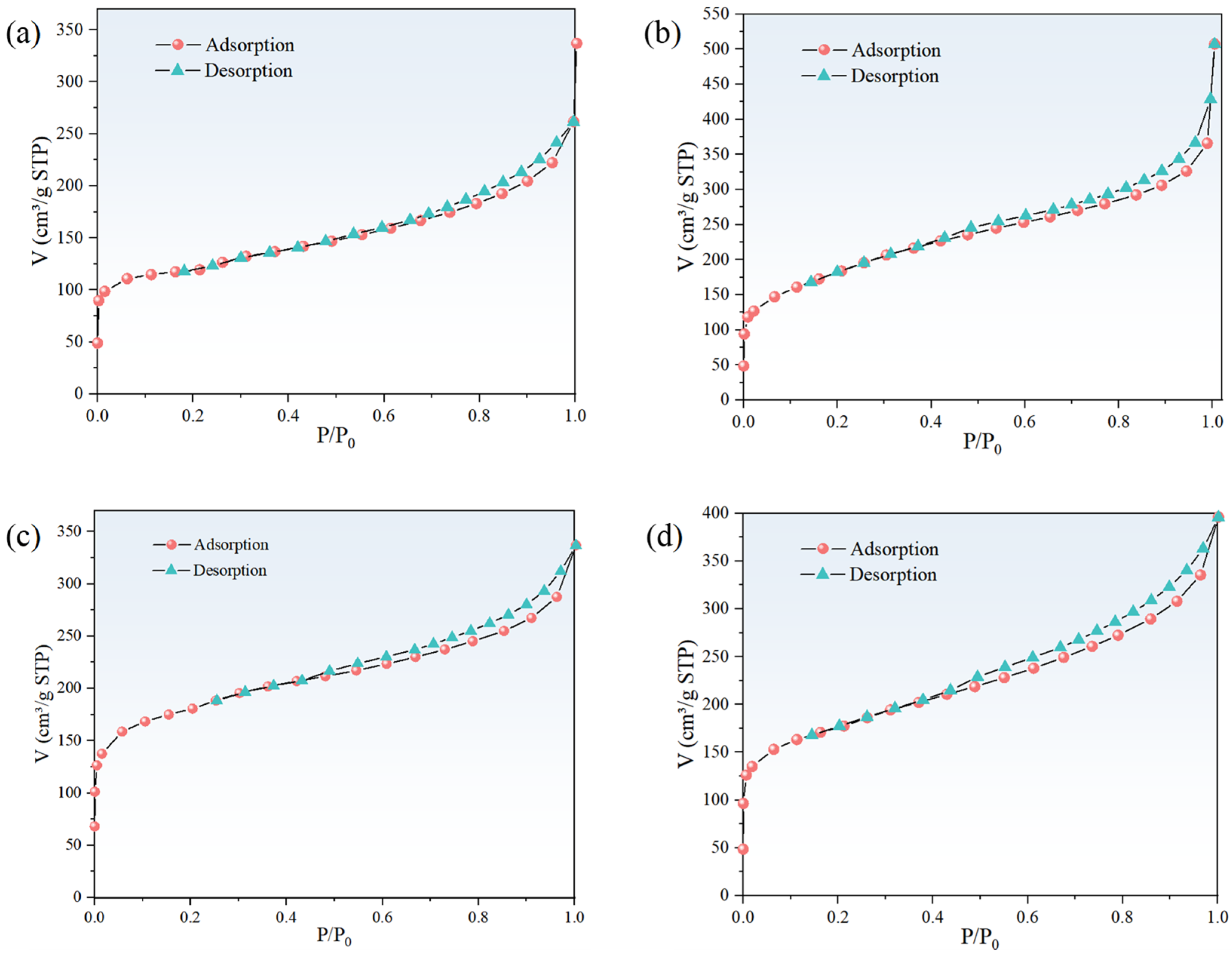
Furthermore, APC-190-650, APC-170-750, and APC-210-850 were selected as representative samples under adjacent preparation conditions. Their N2 adsorption desorption behaviors at 77.35 K were compared and analyzed. The results are shown in Figure 2. The adsorption isotherms of all samples exhibit typical type IV characteristics, accompanied by pronounced hysteresis loops. In the low relative pressure region (P/P0 < 0.1), the adsorption curves increase sharply, indicating the presence of abundant micropores. Nitrogen molecules in this region undergo mainly monolayer adsorption and micropore filling. This is consistent with the high micropore surface area and micropore volume reported in Table 2. As the relative pressure increases (0.1 < P/P0 < 0.8), the adsorption capacity continues to rise, suggesting the presence of mesoporous structures in addition to micropores. In the high relative pressure region (P/P0 > 0.8), the adsorption amount increases significantly, and a clear adsorption–desorption hysteresis loop appears. This hysteresis behavior is generally attributed to capillary condensation within mesopores, indicating a relatively complex mesoporous network or slit-like pore structure within the samples [27].
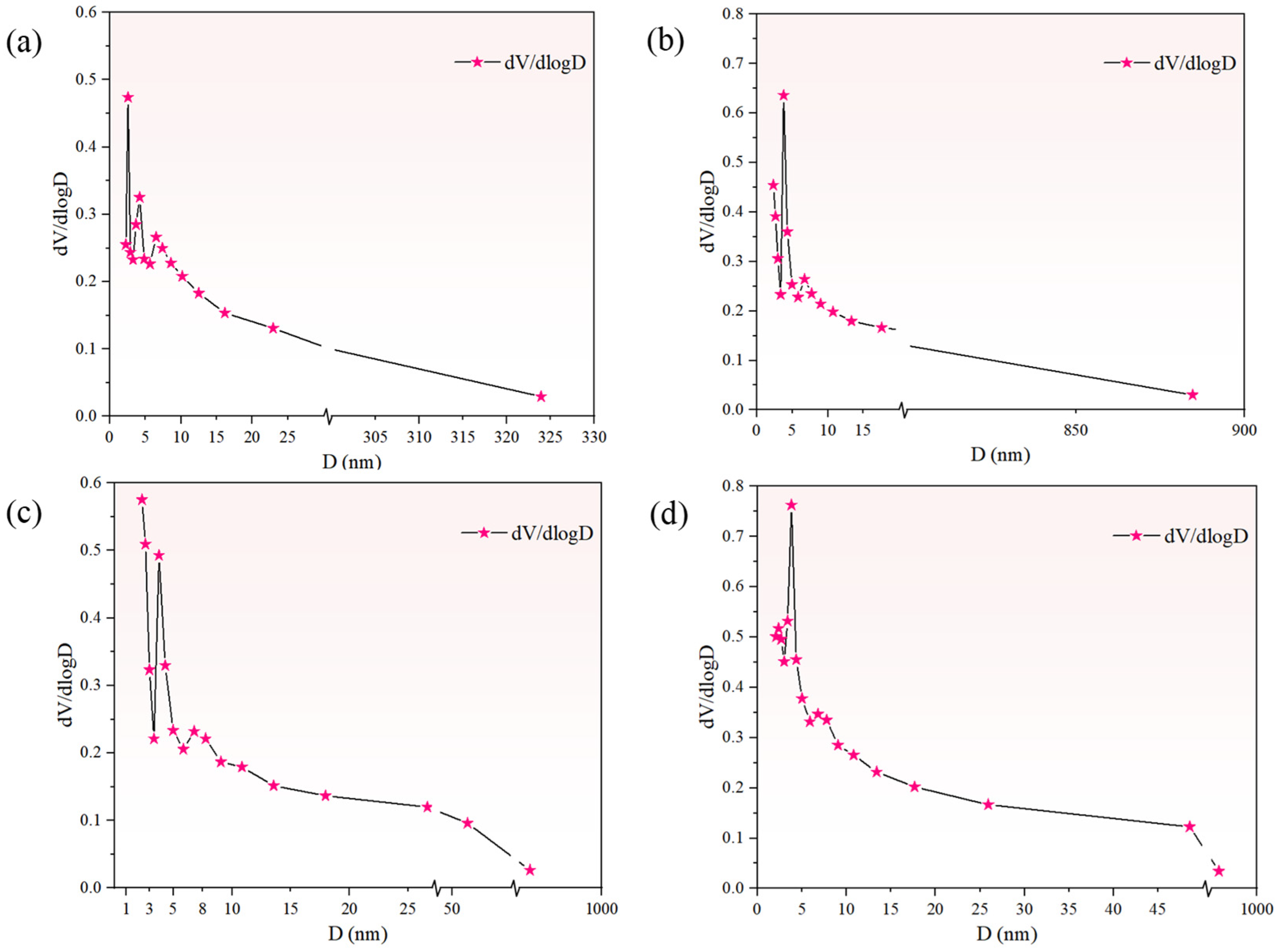
In addition, based on the BET results of samples prepared under different conditions, the pore size distribution characteristics were further analyzed. The pore size distribution was determined using the Barrett–Joyner–Halenda (BJH) method applied to the desorption branch of the N2 adsorption isotherm. The results are shown in Figure 3.
As shown in Figure 3, the pore size distribution is mainly concentrated in the range of 1–5 nm, with a distinct peak at approximately 2–3 nm. This indicates that micropores and small mesopores dominate the structure. In the small pore region (about 1–3 nm), the curve shows a sharp peak. This suggests a relatively concentrated pore distribution and a significant contribution to pore volume. Such a feature reflects a well-developed microporous structure, which is favorable for achieving a high specific surface area [28]. As the pore size increases (about 3–10 nm), the distribution curve gradually decreases. This indicates the presence of mesopores. In the larger pore size range (>10 nm), the curve declines markedly. This suggests that macropores are limited, and the overall structure is dominated by a micro–mesoporous hierarchical framework.

3.1.2. The XRD Analysis of Carbon Material

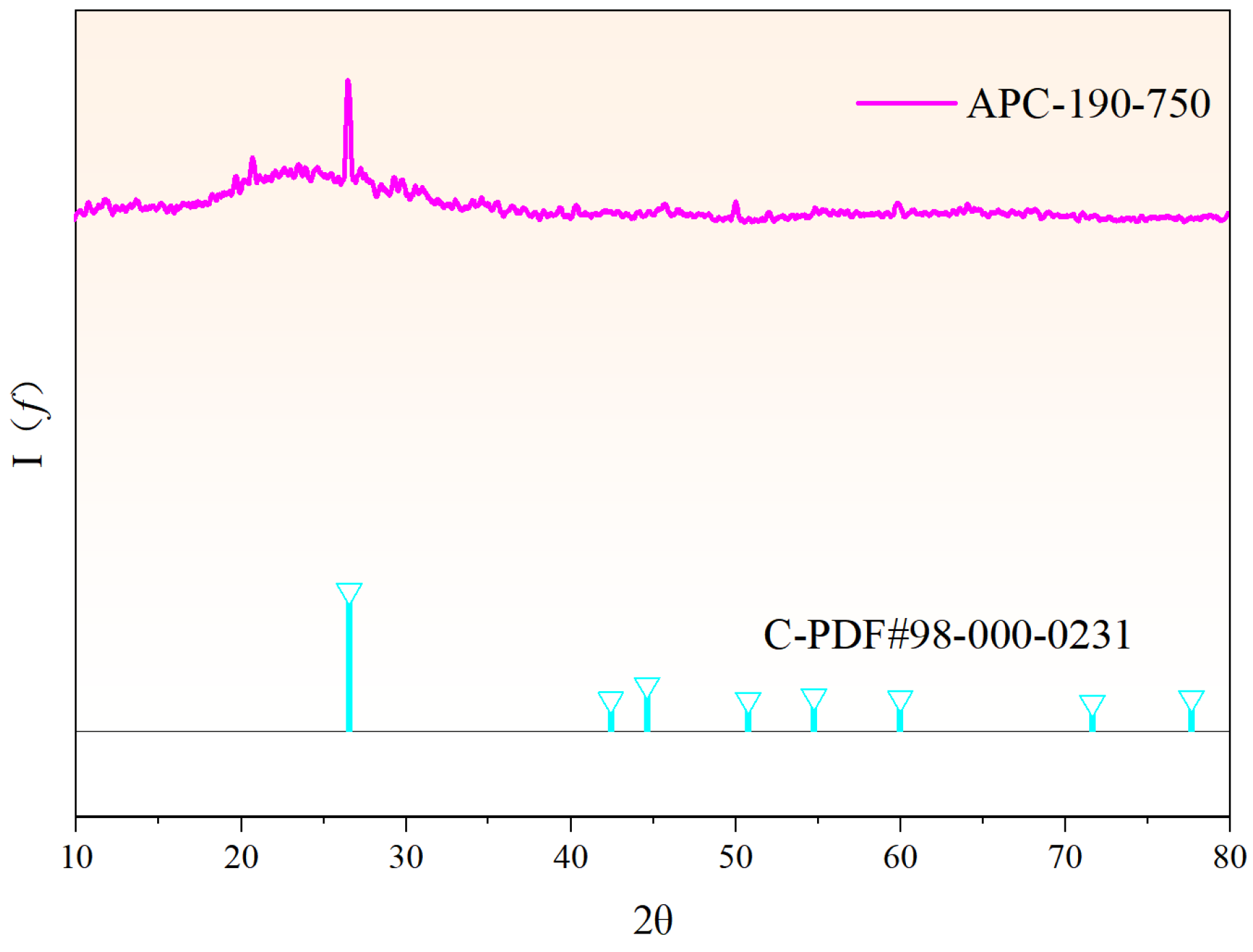
Given that the APC-190-750 sample exhibits a more favorable pore structure, XRD analysis was conducted using this sample. The XRD pattern is shown in Figure 4.
The APC-190-750 sample exhibits a broad diffraction peak in the range of 2θ ≈ 20–32°, which can be assigned to the (002) plane of carbon materials, indicating that the sample is predominantly composed of amorphous carbon. A weak feature around 2θ ≈ 26.5° suggests the presence of partially ordered graphitic domains within the largely amorphous matrix. These results indicate that aromatization and carbon framework rearrangement occur during pyrolysis. However, the material still retains the typical low crystallinity characteristic of porous carbon.

3.1.3. SEM Analysis of Carbon Material

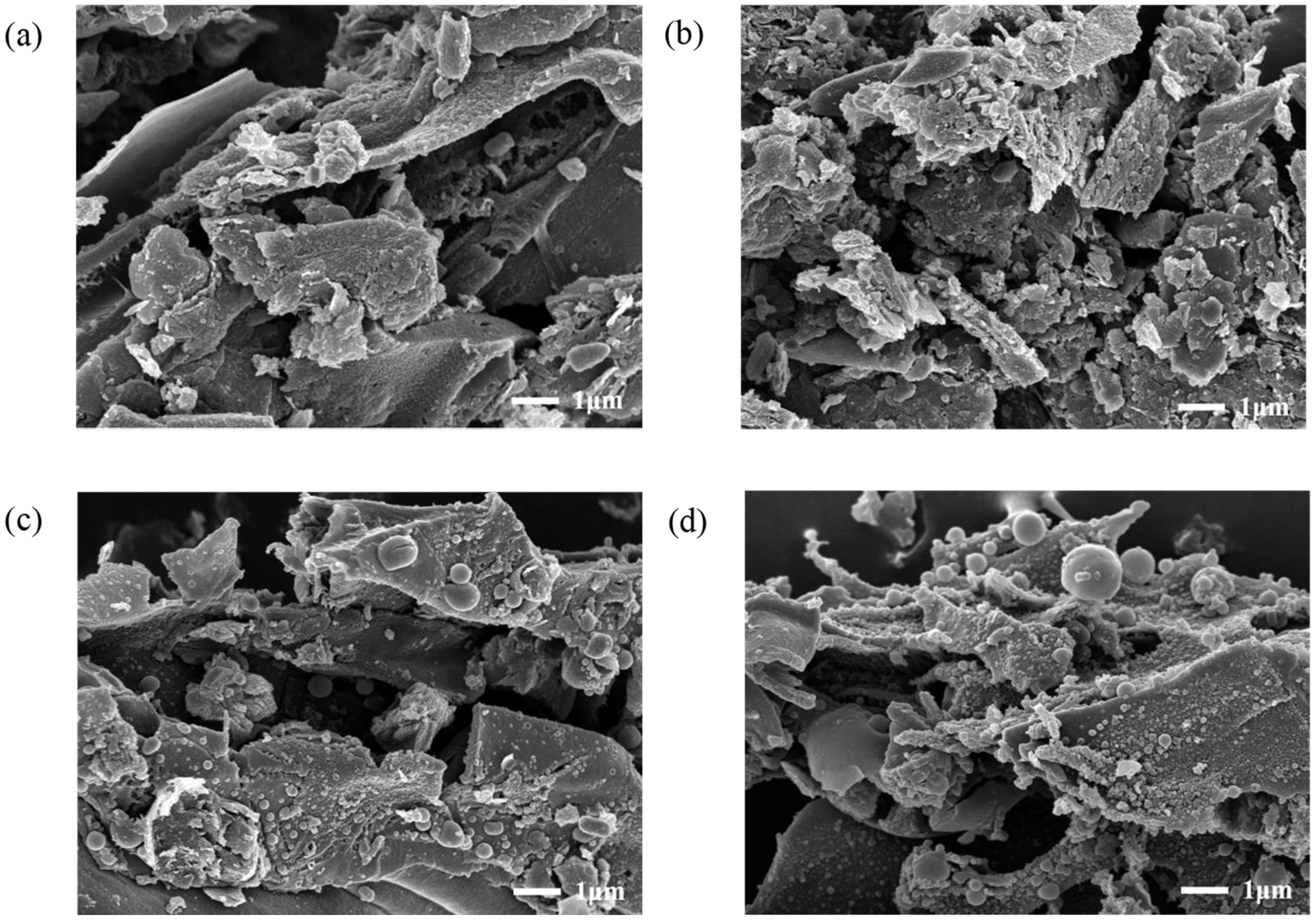
To investigate the effects of different preparation conditions on surface morphology and pore structure, SEM was employed for microstructural observation. The results are shown in Figure 5.
All samples exhibit relatively rough surface morphologies, accompanied by pores, cracks, and irregular wrinkle-like structures. This indicates that hydrothermal carbonization and subsequent pyrolysis promote the fragmentation of the precursor framework and the formation of pores. In contrast, the surface structure of the APC-190-750 sample is more porous, featuring distinct pore channels and wrinkles. APC-190-650, due to the lower pyrolysis temperature, presents less developed pore structures. APC-170-750 forms certain pores, but its overall uniformity and pore abundance are inferior to those of APC-190-750. Although APC-210-850 also displays visible pores, partial structural collapse and pore wall damage may occur in some regions. Combined with the BET results, it can be inferred that hydrothermal treatment at 190 °C coupled with pyrolysis at 750 °C is more favorable for forming a well-developed and abundant porous surface structure.

3.1.4. Surface Functional Group Analysis of Carbon Material

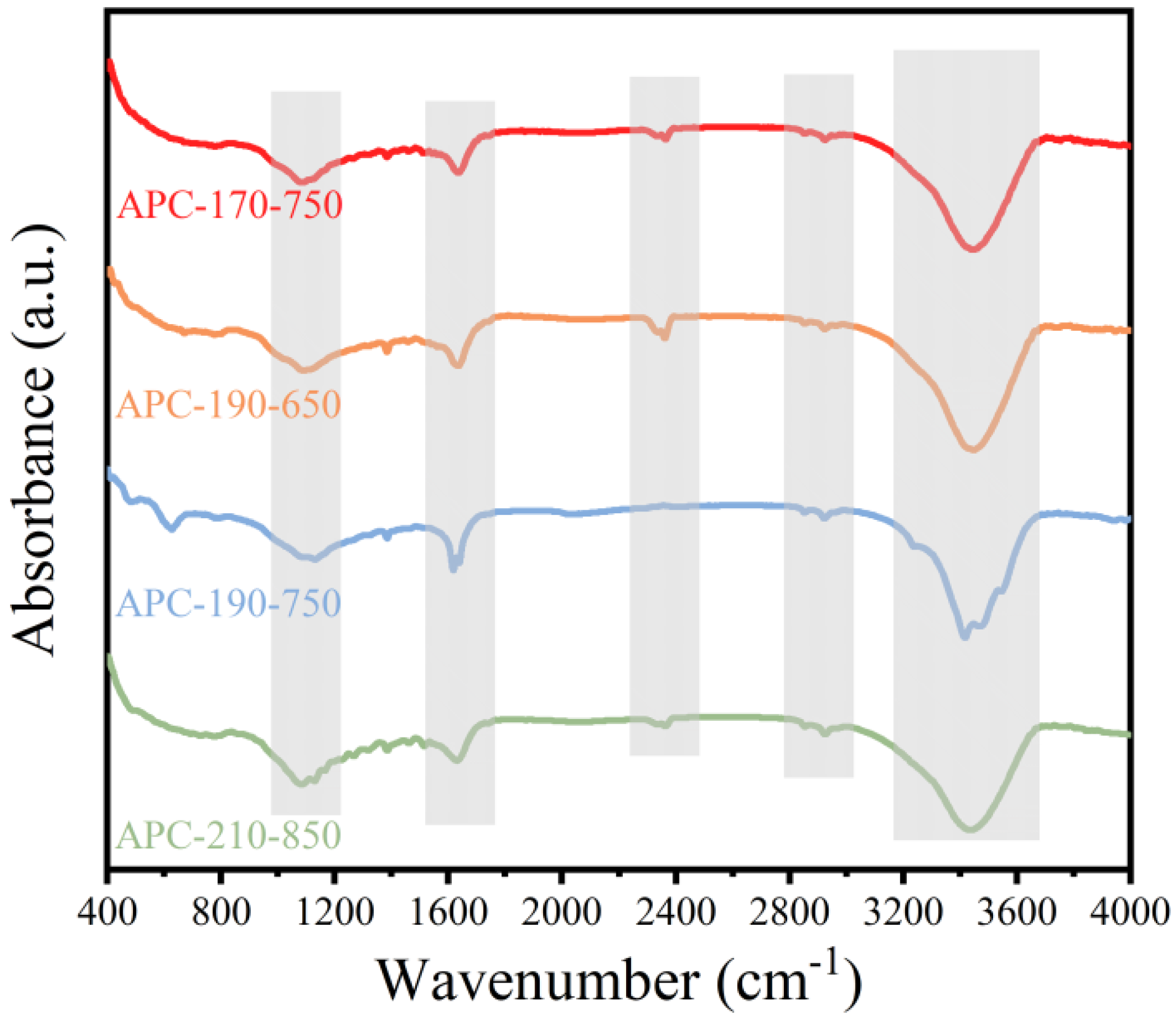
FTIR spectroscopy was employed to analyze the surface functional groups of the samples. The results are shown in Figure 6.
The porous carbon materials derived from edible fungus residue exhibit distinct absorption features in the range of 400–4000 cm−1 under different preparation conditions. This indicates that their surface chemical structures share common characteristics, while being strongly influenced by process parameters. A broad band around 3400 cm−1 is attributed to the stretching vibration of -OH groups, suggesting the presence and partial removal of oxygen-containing functional groups. The stretching vibrations of -CH2/-CH3 near 2920 and 2850 cm−1 become significantly weaker in samples treated at higher temperatures, indicating the gradual cleavage of aliphatic chains and the occurrence of condensation and aromatization during pyrolysis. The absorption peak around 1600 cm−1 corresponds to aromatic C=C or C=O vibrations, reflecting the formation of aromatic structures within the carbon framework. This feature is most pronounced in the APC-190-750 sample, suggesting a relatively higher degree of structural ordering. In addition, the C-O-C/C-O vibration bands in the range of 1000–1200 cm−1 decrease with increasing pyrolysis temperature, indicating the progressive decomposition of ether bonds and hydroxyl groups under high-temperature conditions. Overall, hydrothermal carbonization primarily affects the retention and rearrangement of oxygen-containing groups in the precursor, while subsequent pyrolysis further promotes aromatization of the carbon framework and the removal of part of these functional groups.

3.2. Analysis of Cd(II) Adsorption Performance of Porous Carbon Material

3.2.1. Effect of Single Factors on Cd(II) Adsorption Performance

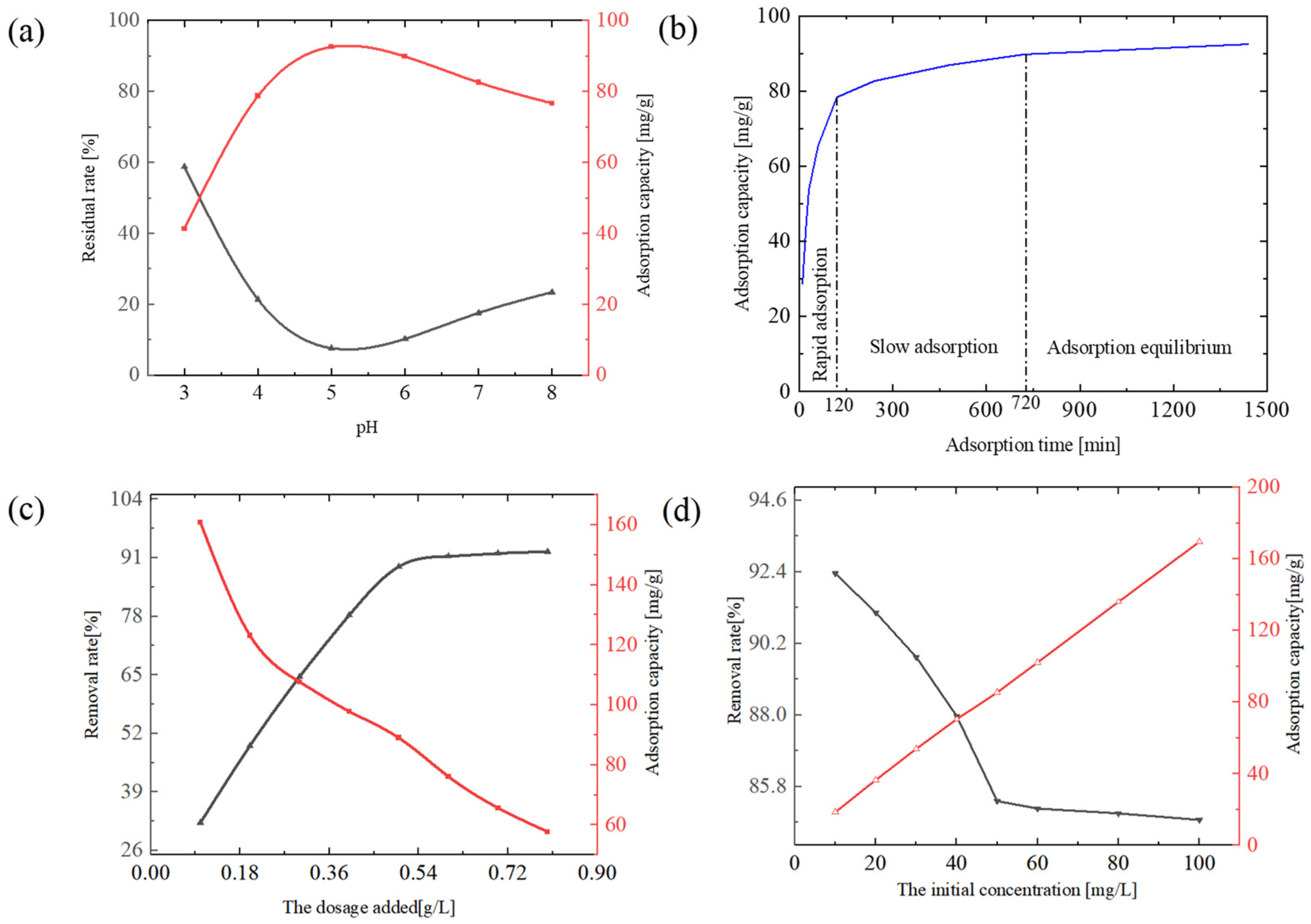
To evaluate the adsorption performance of the porous carbon material derived from Auricularia cornea var. Li. residue toward Cd(II), the effects of single factors—initial solution pH, adsorption time, adsorbent dosage, and initial concentration—on the adsorption efficiency were investigated. The results are presented in Figure 7.
The effect of pH on Cd(II) adsorption performance is presented in Figure 7a. The adsorption capacity and removal rate of Cd(II) by the porous carbon derived from Auricularia cornea var. Li. residue exhibited a trend of first increasing and then decreasing as the pH increased. The optimal adsorption performance was achieved at pH = 5, at which the residual rate of Cd(II) was 7.64% and the equilibrium adsorption capacity reached 92.47 mg/g. When the pH rose from 3 to 5, the adsorption capacity increased from 41.28 to 92.47 mg/g. As the pH continued to increase beyond 5 to 8, the adsorption capacity gradually declined. At pH = 8, the residual rate rose to 23.42% and the adsorption capacity decreased to 76.62 mg/g.
The effect of contact time on Cd(II) adsorption performance is presented in Figure 7b. The Cd(II) adsorption process by the porous carbon derived from Auricularia cornea var. Li. residue could be divided into three stages: a rapid adsorption stage, a slow adsorption stage, and an adsorption equilibrium stage. In the rapid adsorption stage (0–120 min), the adsorption capacity increased rapidly, and the removal rate improved significantly. At 120 min, the adsorption capacity reached 78.36 mg/g, which accounted for 84.7% of the equilibrium adsorption capacity. During the slow adsorption stage (120–720 min), the adsorption rate gradually decreased and the adsorption capacity increased slowly, reaching 89.74 mg/g at 720 min. In the adsorption equilibrium stage (720–1440 min), the adsorption capacity tended to stabilize without obvious changes.
The effect of the dosage of the Auricularia cornea var. Li. residue-derived porous carbon material on Cd(II) adsorption performance is shown in Figure 7c. As the dosage increased from 0.1 to 0.5 g/L, the Cd(II) removal rate rose rapidly from 32.16% to 89.03%, corresponding to an increase of 56.87%. Further increasing the dosage to 0.8 g/L only elevated the removal rate slightly to 92.36%, with an increase of merely 3.33%. In contrast, the adsorption capacity exhibited a continuous decreasing trend with increasing dosage. The capacity was 160.80 mg/g at 0.1 g/L, decreased to 89.03 mg/g at 0.5 g/L, and further dropped to 57.73 mg/g at 0.8 g/L, representing a decline of 35.16% compared with that at 0.5 g/L.
The effect of initial Cd(II) concentration on Cd(II) adsorption performance is shown in Figure 7d. As the initial Cd(II) concentration increased from 10 to 100 mg/L, the equilibrium adsorption capacity of Cd(II) onto the Auricularia cornea var. Li. residue-derived porous carbon material exhibited a significant upward trend, whereas the removal rate decreased initially and then remained relatively stable. Specifically, at an initial concentration of 10 mg/L, the equilibrium adsorption capacity was 18.47 mg/g and the removal rate was 92.35%; when the initial concentration was raised to 50 mg/L, the equilibrium adsorption capacity increased to 85.36 mg/g and the removal rate decreased to 85.36%, still maintaining a high level; upon further increasing the initial concentration to 100 mg/L, the equilibrium adsorption capacity further increased to 169.56 mg/g, while the removal rate declined to 84.78%, showing only a slight decrease of 0.58% compared with that at 50 mg/L.

3.2.2. Adsorption Kinetics Analysis

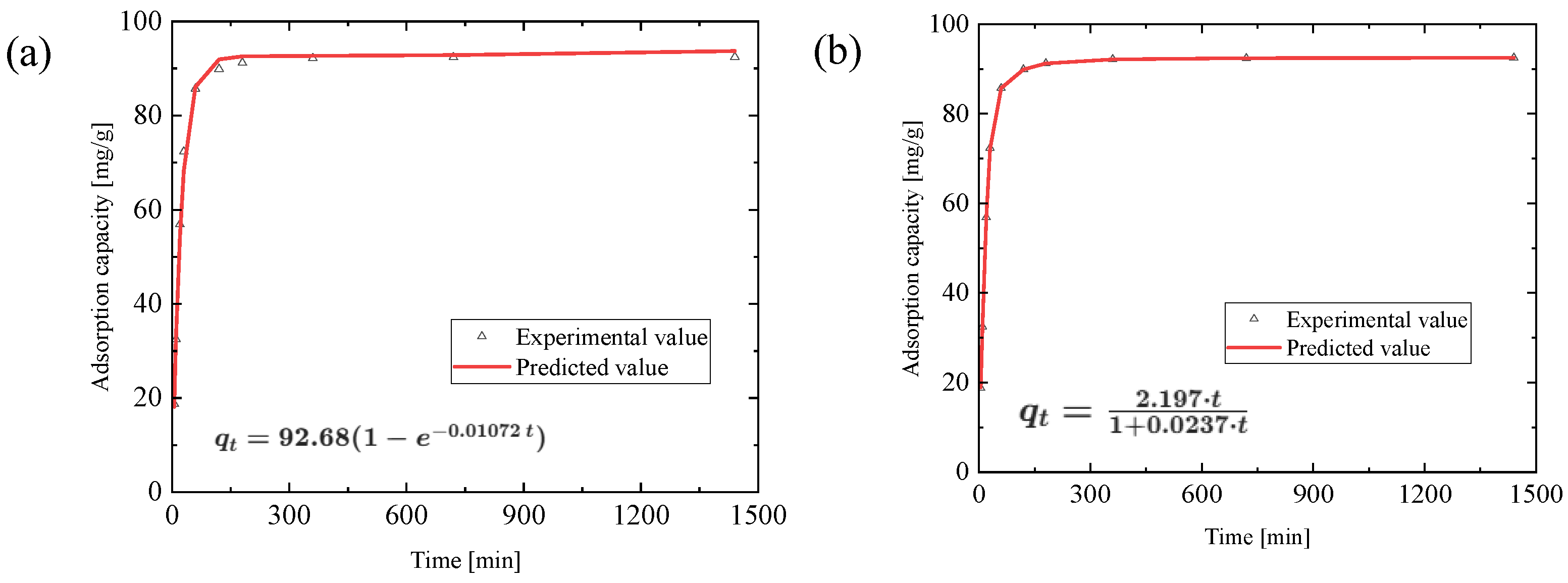
Based on the optimal experimental conditions (pH 5.0, adsorbent dosage 0.5 g/L, initial Cd(II) concentration 50 mg/L, and temperature 25 ± 1 °C), the adsorption kinetic data were nonlinearly fitted using the pseudo-first-order and pseudo-second-order kinetic models, and the results are presented in Figure 8. The fitting results show that the pseudo-second-order model yields a coefficient of determination R2 of 0.9987 and a mean squared error (MSE) of 0.326, which are significantly superior to those of the pseudo-first-order model (R2 = 0.9765, MSE = 5.892). The equilibrium adsorption capacity calculated from the pseudo-second-order model (93.02 mg/g) is in excellent agreement with the experimentally determined value (92.47 mg/g), with a relative error of only 0.59%. This indicates that the adsorption process of Cd(II) onto the Auricularia cornea var. Li. residue-derived porous carbon material is better described by the pseudo-second-order kinetic model, and that the adsorption rate is controlled by chemisorption rather than by a simple physical diffusion process [29,30].

3.2.3. Adsorption Isotherm Analysis

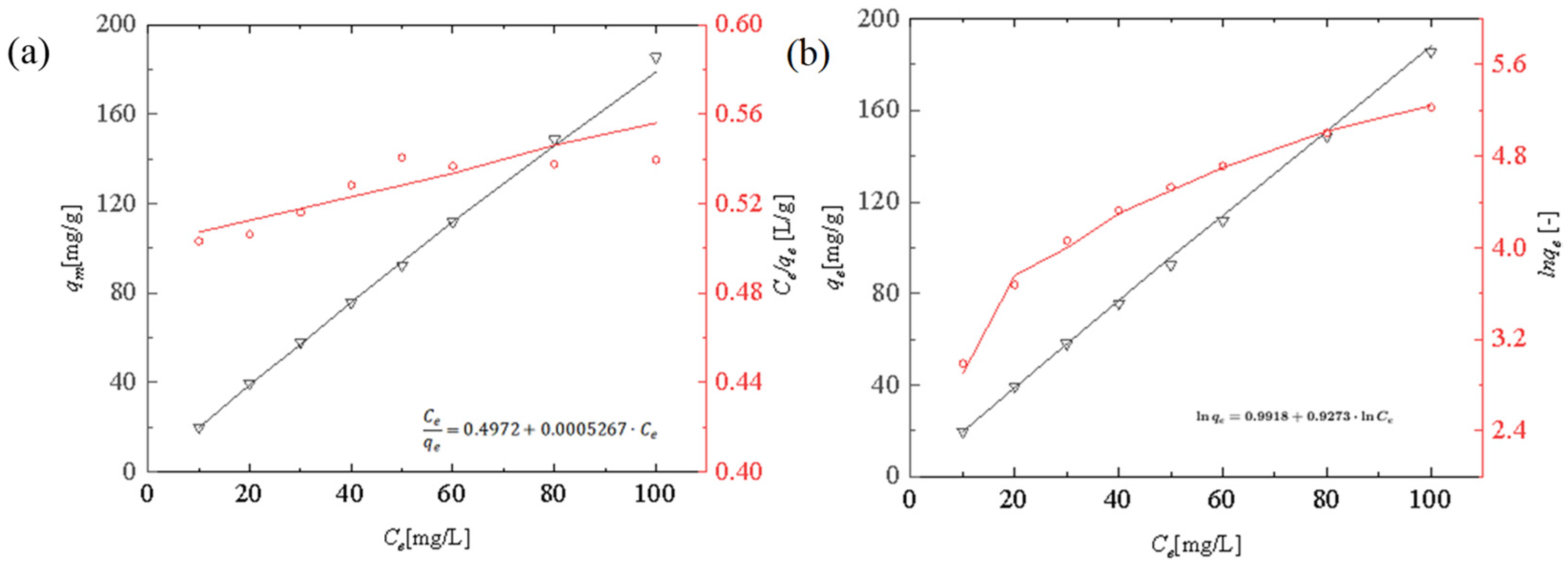
The adsorption isotherm data were fitted using the classical Langmuir and Freundlich isotherm models, and the results are presented in Figure 9.
The fitting results showed that the Freundlich isotherm model had R2 = 0.9972 and MSE = 0.875, exhibiting significantly higher fitting accuracy than the Langmuir model (R2 = 0.9456, MSE = 4.623). Therefore, the adsorption behavior of Cd(II) onto the Auricularia cornea var. Li. residue-derived porous carbon material was better described by the Freundlich isotherm model. The adsorption process was dominated by multilayer adsorption, with a heterogeneous distribution of adsorption sites and certain interactions among the adsorbate molecules.

3.2.4. Effect of Cycle Number on Adsorption Performance

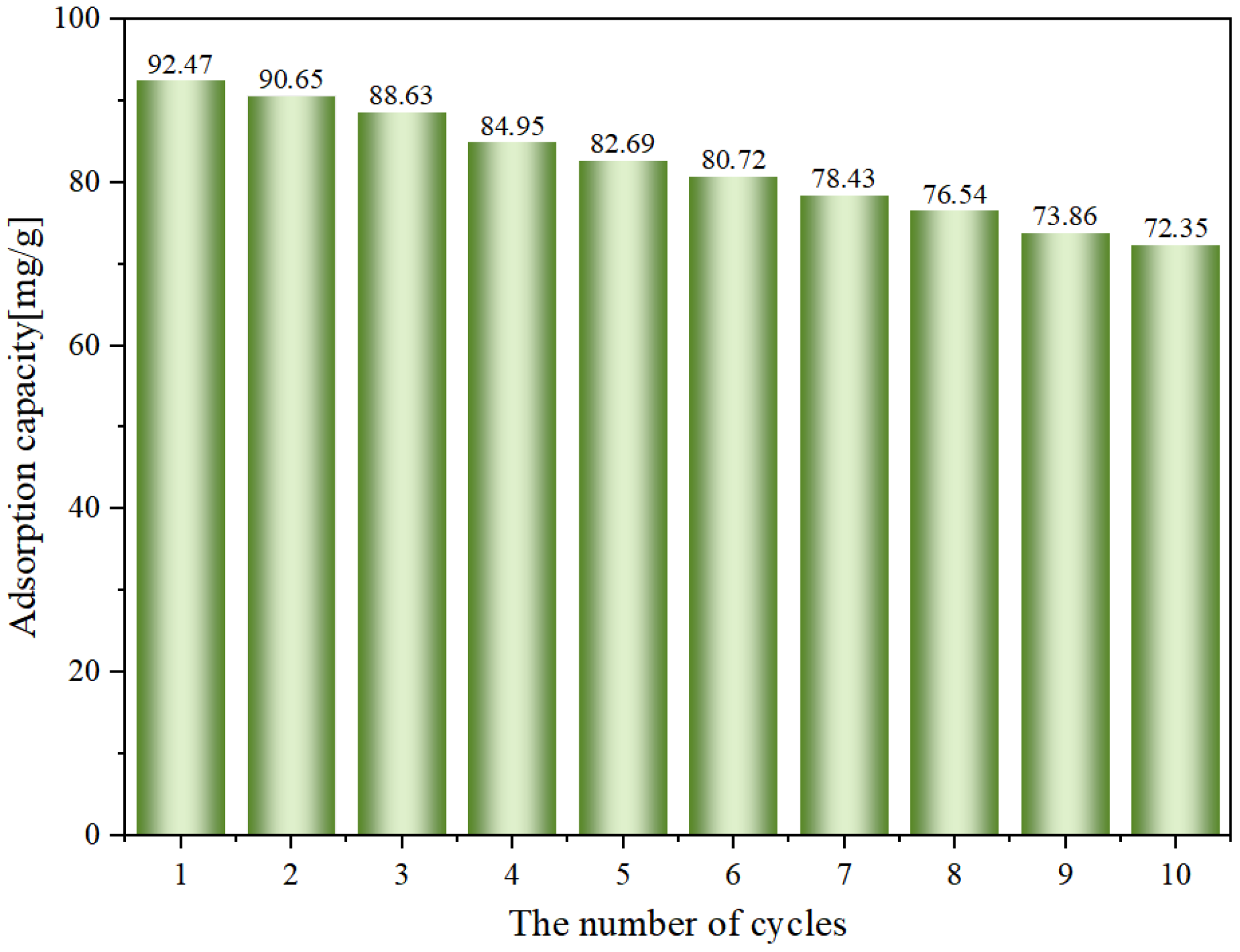
The evaluation of adsorbent performance should not only focus on its adsorption capacity but also comprehensively consider its recyclability and structural stability. To this end, multiple adsorption-regeneration cyclic experiments were conducted. The experimental conditions were as follows: solution pH of 5.0, adsorption temperature of 25 °C, adsorption time of 1440 min, adsorbent dosage of 0.5 g/L, and initial Cd(II) concentration of 50 mg/L. The regeneration of the adsorbent was performed using a high-temperature thermal regeneration method, which involved calcination at 750 °C in a tube furnace for 2 h under a nitrogen protective atmosphere (flow rate of 80 mL/min).
The evolution of adsorption performance with increasing cycle numbers is shown in Figure 10. The results indicate that after ten consecutive cycles, the Cd(II) removal efficiency of the Auricularia cornea var. Li. residue-derived porous carbon material remained above 72.3%, demonstrating favorable cyclic stability and regeneration capability. The slight decline in adsorption performance can be primarily attributed to incomplete desorption of a fraction of Cd(II) during the regeneration process. The residual Cd(II) species remained on the material surface and occupied a portion of the active adsorption sites, thereby reducing the number of available binding sites.

3.3. Characterization and Hydrogen Evolution Performance of CdS Photocatalysts

3.3.1. Morphological Characteristics

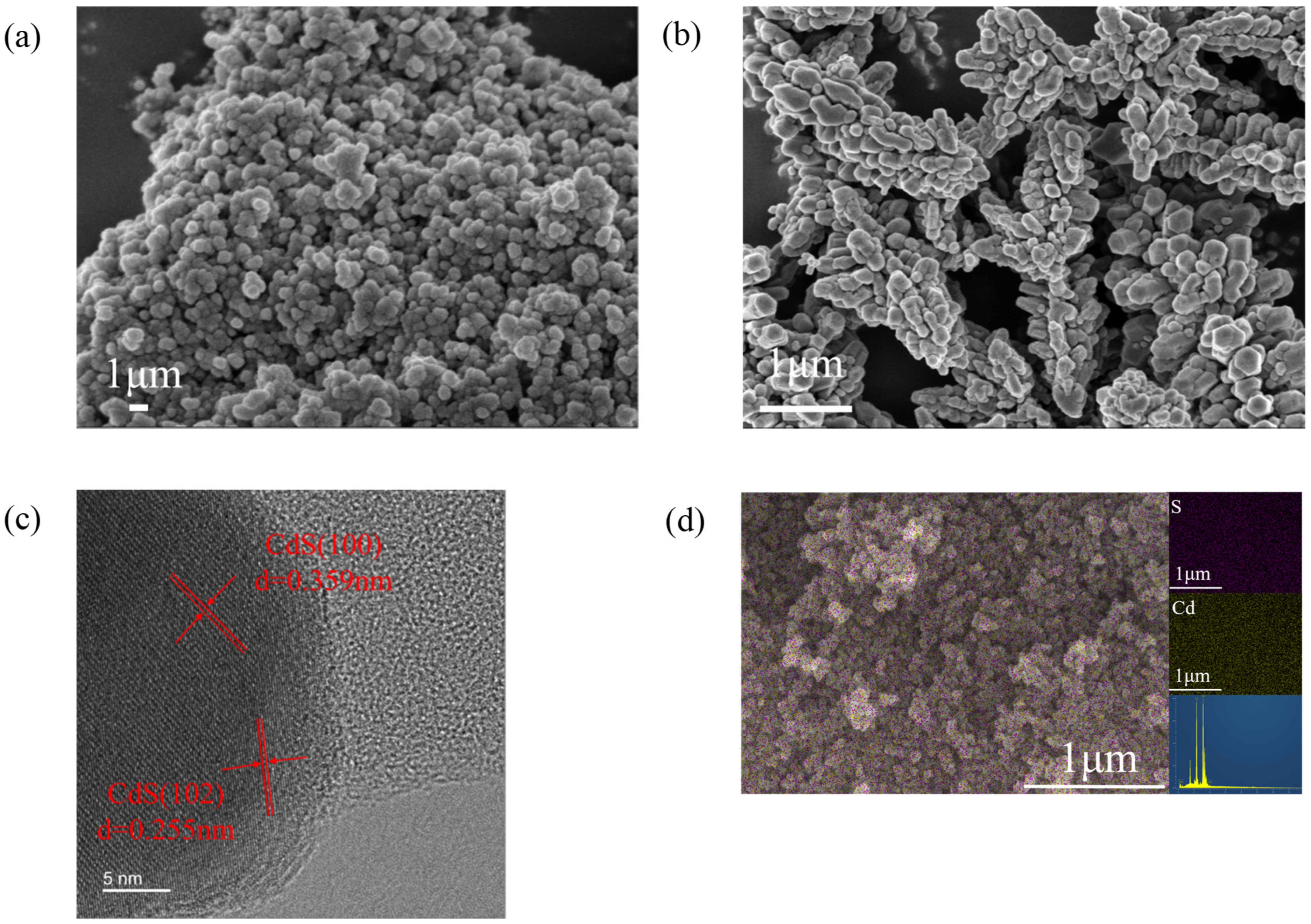
The morphological characteristics of CdS-1 and CdS-2 are shown in Figure 11. Based on the analysis of Figure 11a, the CdS-1 sample exhibits a relatively uniform particle distribution, a smooth surface, and consistent particle sizes, with the particles displaying a small and regular nanoscale morphology. A larger specific surface area generally implies more reactive sites [31]. Figure 11b presents the SEM image of the CdS-2 sample. Compared with the CdS-1 sample, the CdS-2 sample shows more pronounced particle agglomeration on the surface. Such aggregation leads to a reduction in specific surface area, thereby affecting the photocatalytic performance [32]. To further investigate the microstructure of the CdS-1 sample, Figure 11c shows its HRTEM image. The lattice spacings of the CdS-1 sample are measured to be 0.359 nm and 0.255 nm, corresponding to the (100) and (102) crystal planes of CdS, respectively. This indicates that the catalyst possesses a well-defined crystalline structure, and the different crystal planes provide distinct active sites for the photocatalytic reaction. Figure 11d presents the selected area electron probe energy-dispersive X-ray spectroscopy (EDS) pattern of the CdS-1 sample, which further confirms its elemental composition. The EDS analysis clearly reveals a relatively homogeneous distribution of Cd and S elements in the CdS-1 sample, suggesting a uniform formation of CdS particles.

3.3.2. Material Structure

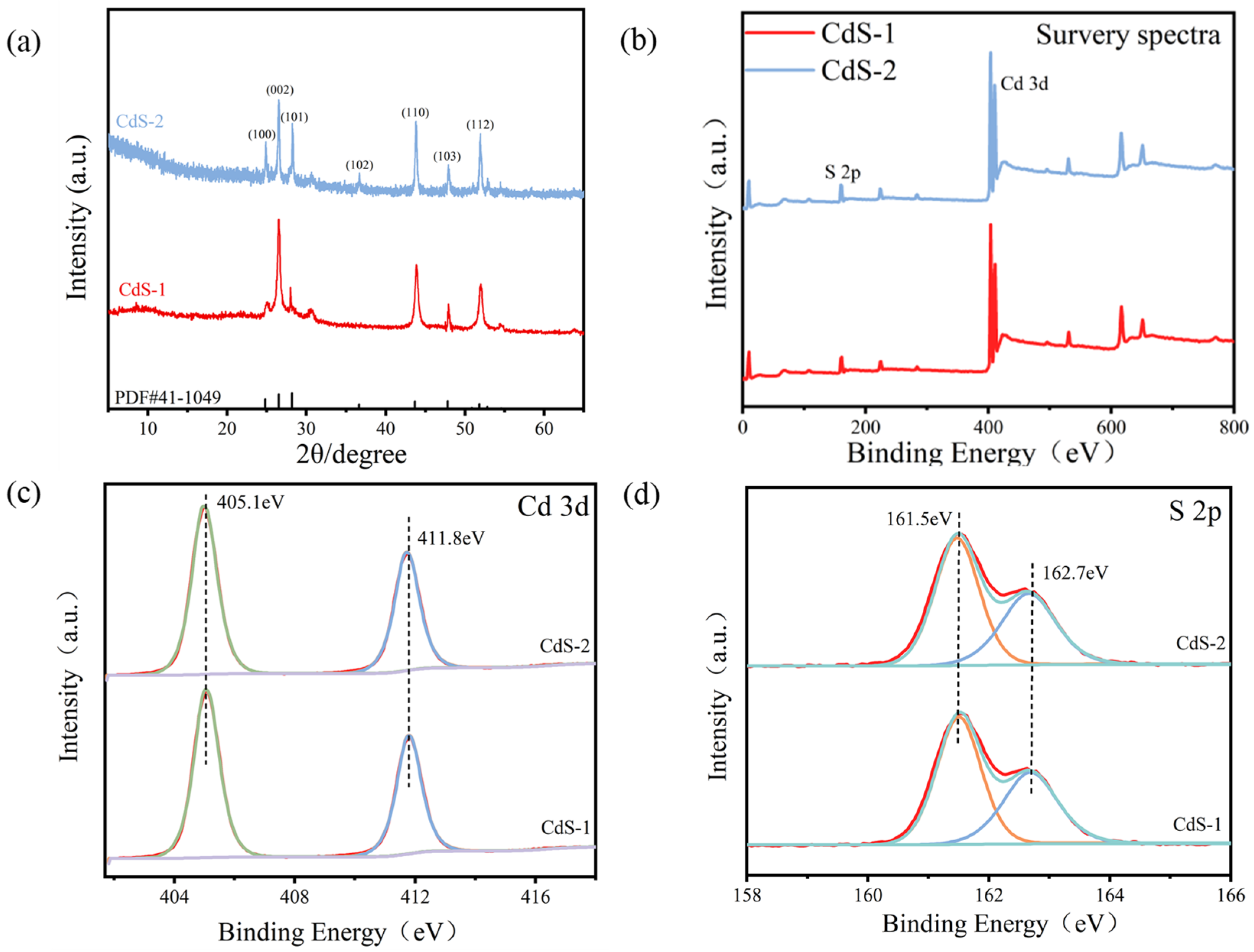
To investigate the effects of different sulfur sources on the crystal structure, phase composition, and surface chemical state of the CdS photocatalyst synthesized through hydrothermal sulfidation after Cd(II) extraction and recovery, the prepared CdS-1 and CdS-2 samples were characterized by XRD and XPS. The relevant test results are shown in Figure 12.
Figure 12a presents the X-ray diffraction (XRD) patterns of the as-synthesized CdS-1 and CdS-2 samples. By carefully comparing the measured patterns with the standard powder diffraction card (JCPDS No. 41-1049), both samples exhibited distinct and sharp characteristic diffraction peaks at 2θ angles of approximately 24.8°, 26.5°, 28.2°, 36.6°, 43.7°, 47.8°, and 51.8°. These peaks correspond to the (100), (002), (101), (102), (110), (103), and (112) crystal planes of hexagonal wurtzite CdS, respectively. This result demonstrates that, whether using sodium sulfide or thiourea as the sulfur source under constant hydrothermal conditions at 180 °C for 18 h, the Cd(II) adsorbed onto the Auricularia cornea var. residue-based porous carbon material was successfully converted into CdS nanocrystals with a highly pure hexagonal phase. No impurity peaks belonging to cadmium-containing precursors or byproducts such as CdO, Cd(OH)2, or CdCO3 were observed in the patterns, further confirming the effectiveness of the adsorption-hydrothermal sulfidation recovery strategy based on Auricularia cornea var. residue-based porous carbon in controlling phase purity [33]. Figure 12b shows the XPS survey spectra of the CdS-1 and CdS-2 samples. Characteristic photoelectron emission peaks of Cd, S, and C elements were clearly detected in both samples. The presence of characteristic peaks such as Cd 3d and S 2p intuitively confirms, from an elemental composition perspective, the successful preparation of CdS compounds. In the high-resolution Cd 3d spectrum shown in Figure 12c, two peaks for Cd 3d5/2 and Cd 3d3/2 appear at 405.1 and 411.8 eV, respectively, with an energy separation of approximately 6.7 eV. This indicates that Cd exists in the +2 oxidation state within CdS, without the formation of low-valence metallic Cd agglomerates or severe surface oxidation defects. Further analysis of the high-resolution S 2p spectrum is shown in Figure 12d. The binding energies of the S 2p3/2 and S 2p1/2 peaks are located near 161.5 eV and 162.7 eV, respectively. For the CdS-1 sample, these characteristic peaks exhibit a slight broadening and shift toward higher binding energy. This may be attributed to the instantaneous change in S2− concentration, leading to electron delocalization in local surface regions. The decreased electron cloud density around neighboring sulfur atoms causes their binding energies to shift to higher values [34].

3.3.3. Photocatalytic H2 Evolution Performance

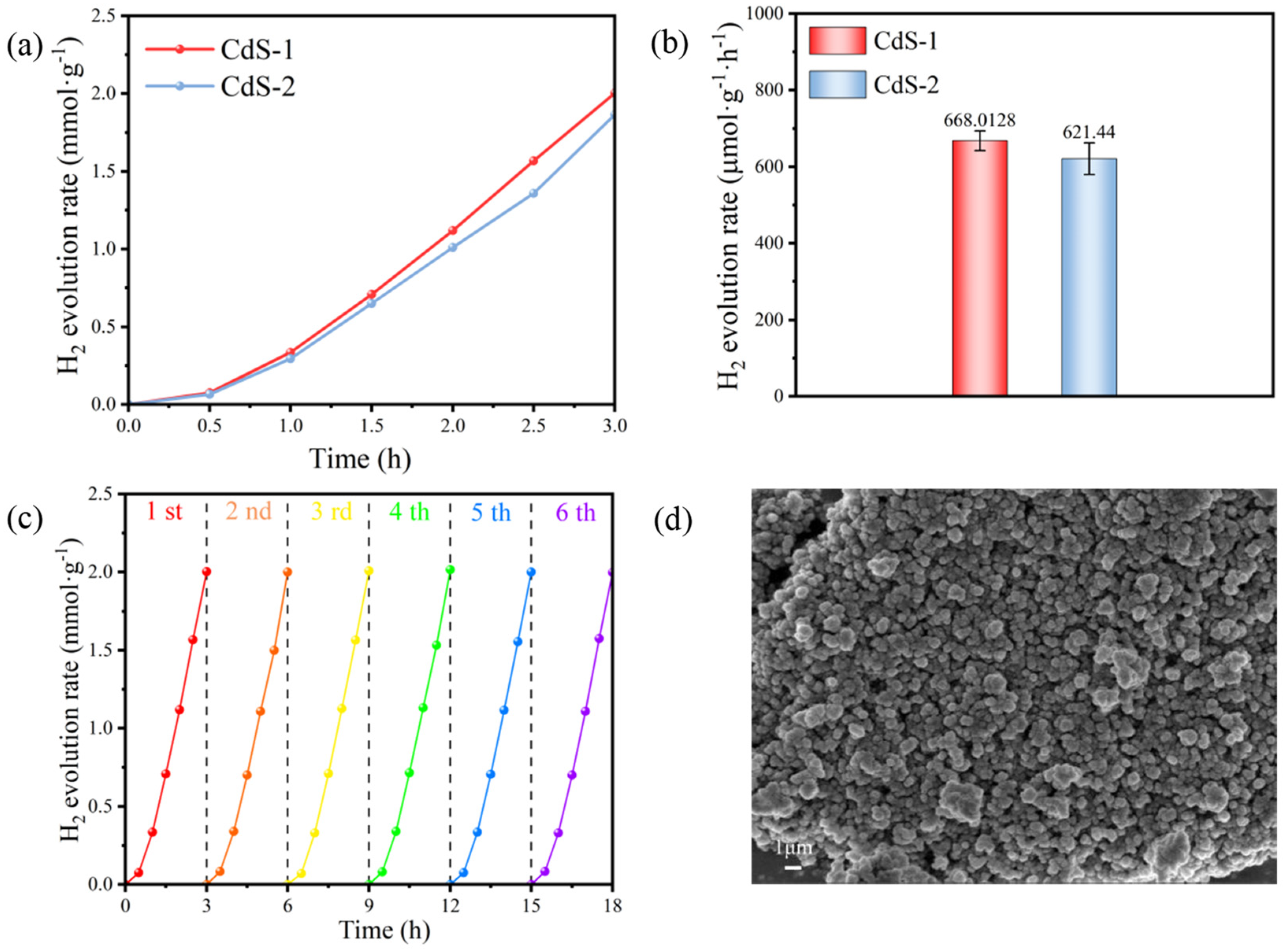
The photocatalytic hydrogen evolution performance of the as-prepared CdS-1 and CdS-2 samples was evaluated under visible light irradiation, and the results are shown in Figure 13. The time-dependent photocatalytic hydrogen evolution performance is presented in Figure 13a. CdS-1 exhibited a steeper slope during the continuous 3 h illumination period, indicating higher electron utilization efficiency and lower recombination loss. Both CdS-1 and CdS-2 samples showed a slow increase in the hydrogen evolution rate at the initial stage of illumination, followed by a gradual entry into a relatively stable hydrogen evolution phase. Throughout the entire reaction period, the hydrogen evolution amount of CdS-1 was consistently higher than that of CdS-2, demonstrating its superior photocatalytic hydrogen evolution performance.
Combined with the average hydrogen evolution rates shown in Figure 13b, the CdS-1 sample prepared using sodium sulfide as the sulfur source achieved an average hydrogen evolution rate of 668.01 μmol·g−1·h−1, while the CdS-2 sample prepared using thiourea as the sulfur source reached 621.44 μmol·g−1·h−1. This indicates that CdS-1 exhibits significantly better average hydrogen production performance than CdS-2. To further evaluate the stability of the photocatalyst, multiple-cycle photocatalytic hydrogen production tests were conducted on CdS-1, and the results are shown in Figure 13c. During six consecutive cycles (18 h), CdS-1 maintained good catalytic activity, demonstrating reasonable stability of the material. To further investigate the stability of the CdS-1 sample, SEM characterization was performed on the sample after cycling, as shown in Figure 13d. After the reaction, CdS-1 still retained its original fine particle morphology, with no observable significant grain growth or severe structural collapse. However, a certain degree of particle agglomeration was observed for CdS-1 after the reaction. In summary, under the current experimental conditions, CdS-1 exhibits superior photocatalytic hydrogen production performance compared to CdS-2.

3.3.4. Photoelectric Properties of CdS

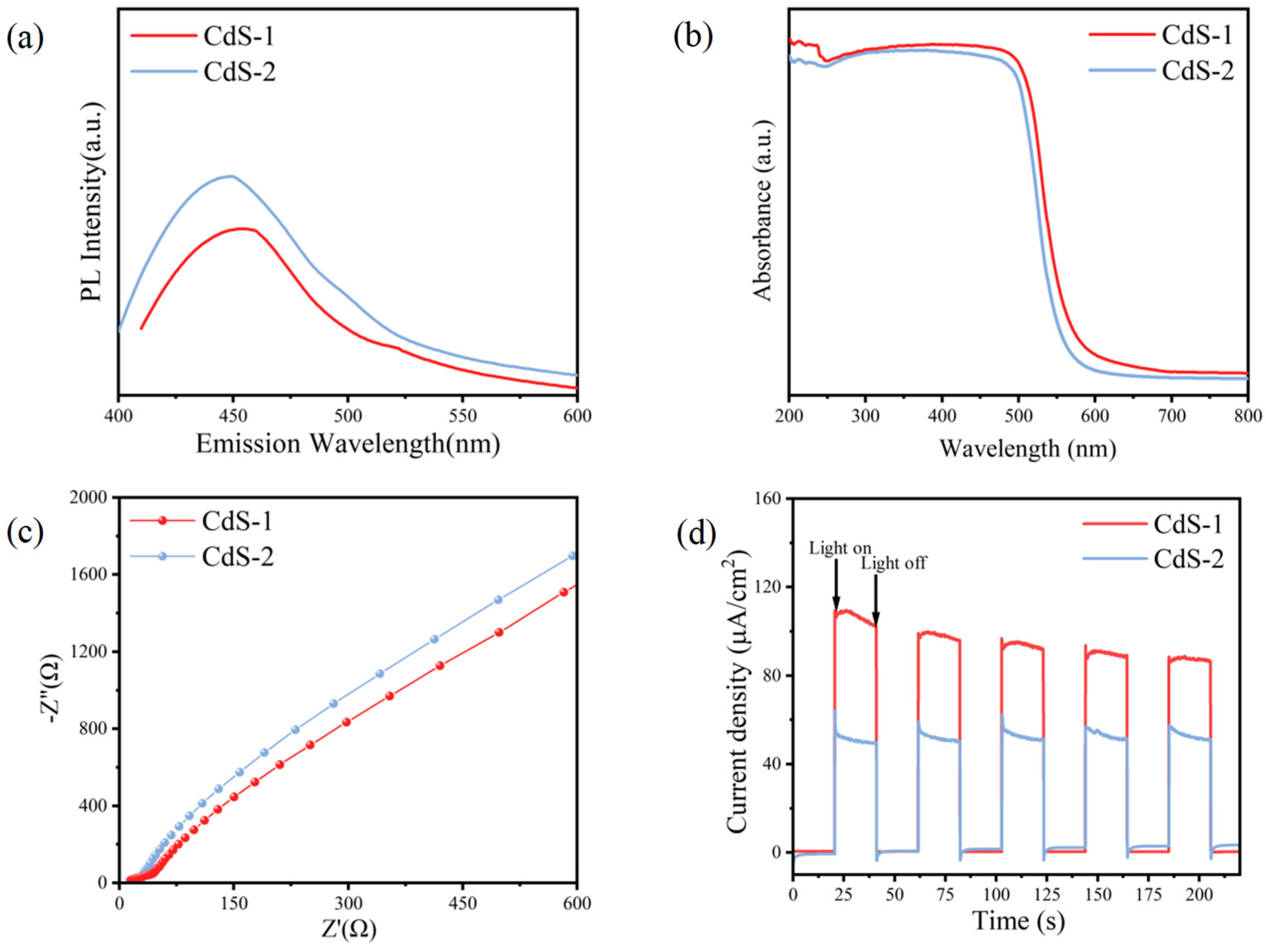
To thoroughly investigate the underlying reasons for the difference in photocatalytic hydrogen production performance between CdS-1 and CdS-2, their photoelectrochemical properties were characterized, and the results are presented in Figure 14. As shown in the photoluminescence (PL) spectra in Figure 14a, the emission peak intensity of CdS-1 is significantly lower than that of CdS-2. The lower PL intensity indicates that electron–hole pair recombination is effectively suppressed in CdS-1, allowing more photogenerated charge carriers to participate in surface reactions [35]. The UV-Vis absorption spectra of the CdS-1 and CdS-2 samples are shown in Figure 14b. Both samples exhibit good light absorption in the visible region; however, the overall absorption intensity of CdS-1 is higher than that of CdS-2. The interfacial charge transport characteristics of the CdS-1 and CdS-2 samples were further analyzed by electrochemical impedance spectroscopy (EIS), as shown in Figure 14c. The Nyquist plot of the CdS-2 sample exhibits a larger semicircle radius, indicating a high interfacial charge transfer resistance. In contrast, the arc radius of the CdS-1 sample is smaller than that of CdS-2, suggesting that CdS-1 experiences lower energy loss during the migration of photogenerated electrons from the bulk to the surface and their participation in reduction reactions. The transient photocurrent response results shown in Figure 14d further corroborate the above conclusions.
Taken together, the PL, UV-Vis, EIS, and transient photocurrent analyses reveal that CdS-1 exhibits significantly superior characteristics to CdS-2 in the generation, separation, and transport of photogenerated charge carriers. Specifically, its lower charge carrier recombination rate, stronger visible light absorption capability, and lower interfacial charge transfer resistance collectively promote the efficient participation of photogenerated electrons in reduction reactions, thereby substantially enhancing its photocatalytic hydrogen evolution performance.

4. Conclusions

This study explored a resource utilization pathway applicable to Auricularia cornea var. Li. residue, namely “porous carbon material preparation-heavy metal adsorption-photocatalytic hydrogen evolution”, providing a theoretical basis and technical reference for the resource utilization of solid waste. The main conclusions obtained from the research are as follows:
(1) A hydrothermal temperature of 190 °C and a pyrolysis temperature of 750 °C are relatively optimal conditions for preparing Auricularia cornea var. Li. residue-based porous carbon materials via the “hydrothermal carbonization-activation-slow pyrolysis” process. The corresponding sample exhibited a specific surface area of 675.56 m2/g, a micropore specific surface area of 428.76 m2/g, a micropore volume of 0.175 cm3/g, a microporosity of 35.3%, and an average pore diameter of only 2.94 nm. The prepared sample was predominantly composed of an amorphous carbon structure with a loose surface and well-developed pore structure. While forming a relatively stable aromatic carbon skeleton, a certain number of oxygen-containing functional groups were retained.
(2) The Auricularia cornea var. Li. residue-based porous carbon material was confirmed to be applicable for Cd(II) adsorption. For an aqueous solution with an initial Cd(II) concentration of 50 mg/L, under the conditions of solution pH 5.0, porous carbon material dosage of 0.5 g/L, and adsorption time of 24 h, the adsorption rate reached 85.36%, and the equilibrium adsorption capacity was 92.47 mg/g. The adsorption process of Cd(II) onto the Auricularia cornea var. Li. residue-based porous carbon followed the pseudo-second-order kinetic model (R2 = 0.9987), and the adsorption behavior was well described by the Freundlich isotherm model (R2 = 0.9972). This adsorption process is the result of the synergistic effect of physical adsorption and chemical adsorption.
(3) A coupled technical system of “Cd(II) recovery-photocatalytic hydrogen evolution” was established, and a method for preparing CdS photocatalysts based on Auricularia cornea var. Li. residue-based porous carbon Cd(II) adsorption followed by hydrothermal sulfidation was proposed and validated. Compared with thiourea, CdS prepared using sodium sulfide as the sulfur source exhibited a smaller particle size distribution and better interfacial dispersion, effectively increasing the number of reactive sites and shortening the charge carrier migration path. Its average hydrogen evolution rate reached 668.01 μmol·g−1·h−1. Photoelectric characterization results indicated that CdS prepared with sodium sulfide as the sulfur source possessed stronger light absorption capability, lower interfacial charge transfer resistance, and higher photogenerated charge carrier separation efficiency.

Author Contributions

C.L.: Methodology, Investigation, Writing—original draft, Writing—review and editing. Q.Z.: Methodology, Investigation, Writing—original draft, Writing—review and editing. J.C.: Methodology, Investigation, Writing—original draft, Writing—review and editing. X.Z.: Methodology, Writing—original draft, Writing—review and editing. J.J.: Supervision, Writing—review and editing. G.L.: Methodology, Supervision, Writing—review and editing. All authors have read and agreed to the published version of the manuscript.

Funding

This work was supported by the Natural Science Foundation of Shandong Province (Grant No. ZR2025QC467), the Science and Technology Project of Tokson County (Grant No. 2025003) and Jinan City-School Integration Strategic Project (Grant No. JNSX2024040), Education & Industry Integration Program of Qilu University of Technology (Shandong Academy of Sciences) (2025ZDZX16).

Data Availability Statement

The data that support the findings of this study are available from the corresponding authors upon reasonable request.

Conflicts of Interest

The authors declare no conflicts of interest.

References

  1. Yan, Y.R.; Chen, T.; Tan, R.; Han, S.; Zhang, X.Y.; Shen, Y.; Hu, X.L.; Zhao, S.K.; Qu, D.H.; Chen, L.X.; et al. In situ production of bacterial nanocellulose-activated carbon composites from pear juice industry wastewater by two new Komagataeibacter intermedius and Komagataeibacter xylinus isolates for heavy metal removal. Environ. Technol. Innov. 2024, 33, 103497. [Google Scholar] [CrossRef]
  2. bin Abu Bakar, W.; Yek, P.N.Y.; Cheong, K.Y.; Affam, A.C.; Wong, C.C.; Liew, R.K.; Tan, Y.H.; Lam, S.S. Utilization of microwave steam pyrolysis to produce biochar for thermal energy storage. Waste Dispos. Sustain. Energy 2022, 4, 335–341. [Google Scholar] [CrossRef]
  3. Siruru, H.; Syafii, W.; Wistara, I.N.J.; Pari, G.; Budiman, I. Properties of sago waste charcoal using hydrothermal and pyrolysis carbonization. Biomass Convers. Biorefinery 2022, 12, 5543–5554. [Google Scholar] [CrossRef]
  4. Qin, K.; Li, J.L.; Yang, W.C.; Wang, Z.H.; Zhang, H.Y. Role of minerals in mushroom residue on its adsorption capability to Cd(II) from aqueous solution. Chemosphere 2023, 324, 138290. [Google Scholar] [CrossRef]
  5. Liu, X.; Xiao, M.; Yang, X.; Wang, L.; Gu, H.; Xie, Y.; Hao, M.; Waterhouse, G.I.N.; Tai, X.; Yang, H. Construction of nanospace-confined adsorption electrocatalyst for efficient uranium extraction from fluoride-containing wastewater. Sci. China Chem. 2025, 68, 6503–6512. [Google Scholar] [CrossRef]
  6. Wang, Y.; Chen, J.; Ihara, H.; Guan, M.; Qiu, H.D. Preparation of porous carbon nanomaterials and their application in sample preparation: A review. Trac-Trends Anal. Chem. 2021, 143, 116421. [Google Scholar] [CrossRef]
  7. Peng, J.; Tian, Z.W.; Zhao, T.H.; Shang, H.; Wu, J. Recent Progress in Preparations and Multifunctional Applications Towards MOF/GDY Composites and Their Derivative Materials. Catalysts 2025, 15, 1041. [Google Scholar] [CrossRef]
  8. Choma, J.; Szczesniak, B.; Jaroniec, M. Mechanochemical Preparation of Biomass-Derived Porous Carbons. Molecules 2025, 30, 3125. [Google Scholar] [CrossRef] [PubMed]
  9. Dang, C.W.; Zhang, Y.W.; Han, F.; Dang, J.E.; Liu, Z.L.; Wang, Y.H.; Deng, Y.Y.; Yun, S.N. Chemical Co-precipitation Preparation of ZnMoO4/Aloe-Derived Porous Carbon and Catalytic Performance. Chin. J. Inorg. Chem. 2022, 38, 489–500. [Google Scholar] [CrossRef]
  10. Liu, S.B.; Zhang, Q.S.; Liu, J.N.; Li, J.R.; Liu, W.J.; Wang, Y.; Yuan, S.J. Nitrogen-Doped Porous Carbons Derived from Peanut Shells as Efficient Electrodes for High-Performance Supercapacitors. Int. J. Mol. Sci. 2024, 25, 7583. [Google Scholar] [CrossRef]
  11. Kong, W.; Wang, S.H.; Zhang, X.Y.; Fu, X.; Zhang, W.J. Evaluation of Biological Pretreatment of Wormwood Rod Reies with White Rot Fungi for Preparation of Porous Carbon. J. Fungi 2023, 9, 43. [Google Scholar] [CrossRef]
  12. Li, D.Y.; Huang, Y.; Yu, C.; Lu, Y.; Tang, C.C.; Lin, J. Pore structure regulation of hierarchical porous agaric-derived carbon via boric acid activation for supercapacitors. Diam. Relat. Mater. 2022, 130, 109432. [Google Scholar] [CrossRef]
  13. Bian, Z.T.; Zhao, G.Z.; Chao, L.; Liu, C.C.; Zhao, M.K.; Wang, H.Y.; Xie, Y.; Zhu, G.; Chen, C. Nitrogen and Oxygen Co-doped Hierarchical Porous Carbon Derived from Pine Mushroom Biomass for High-Performance Supercapacitor. Int. J. Electrochem. Sci. 2020, 15, 8296–8310. [Google Scholar] [CrossRef]
  14. Wang, A.Q.; Zheng, Z.K.; Li, R.Q.; Hu, D.; Lu, Y.R.; Luo, H.X.; Yan, K. Biomass-derived porous carbon highly efficient for removal of Pb(II) and Cd(II). Green Energy Environ. 2019, 4, 414–423. [Google Scholar] [CrossRef]
  15. Chen, G.Y.; Yu, H.D.; Lin, F.W.; Zhang, Z.M.; Yan, B.B.; Song, Y.J. Utilization of edible fungi residues towards synthesis of high-performance porous carbon for effective sorption of Cl-VOCs. Sci. Total Environ. 2020, 727, 138475. [Google Scholar] [CrossRef]
  16. Qin, P.F.; Li, T.Y.; Liu, C.; Liang, Y.S.; Sun, H.B.; Chai, Y.Z.; Yang, T.Y.; Gong, X.M.; Wu, Z.B. Extraction and utilization of active substances from edible fungi substrate and residue: A review. Food Chem. 2023, 398, 133872. [Google Scholar] [CrossRef]
  17. Zhang, J.Q.; Hu, X.L.; Zhang, K.J.; Xue, Y.W. Desorption of calcium-rich crayfish shell biochar for the removal of lead from aqueous solutions. J. Colloid Interface Sci. 2019, 554, 417–423. [Google Scholar] [CrossRef] [PubMed]
  18. Huang, H.; Cai, Y.H.; Xu, Q.M.; Xiong, M.L.; Ding, L.Y.; Wang, X.D.; Jiang, Q.Q.; Li, Q.; Han, X.L.; Hu, J.C.; et al. S-Scheme CdS/Co3S4 Double-Shelled Hollow Nanoboxes for Enhanced Photocatalytic Hydrogen Evolution. Small 2025, 21, 2501710. [Google Scholar] [CrossRef]
  19. Zeng, J.M.; Shi, H.Y.; Wang, Q.; Wang, C.C.; Wang, Y.K.; Zhou, Y.X.; Yang, G.B.; Li, J.; Mele, G.; Wang, C. Synthesis of CdS-Vo-TiO2 heterojunction composite catalyst by photodeposition of Pt-Pd nanoparticles and their photocatalytic reaction properties studies. Int. J. Hydrogen Energy 2025, 178, 151408. [Google Scholar] [CrossRef]
  20. Ladhane, S.; Shah, S.; Doiphode, V.; Shinde, P.; Kale, D.; Rahane, S.; Thombare, J.; Ingole, M.; Vairale, P.; Hase, Y.; et al. Tailoring CdS/WS2 heterostructures for enhanced photoelectrochemical water splitting via RF magnetron sputtering. J. Power Sources 2025, 656, 238056. [Google Scholar] [CrossRef]
  21. Xu, J.Y. Preparation of ZnS-CdS Nanocomposite for Photoelectrochemical Hydrogen Production. Int. J. Electrochem. Sci. 2017, 12, 2253–2261. [Google Scholar] [CrossRef]
  22. Liu, Z.M.; Liu, G.L.; Hong, X.L. Influence of Surface Defects and Palladium Deposition on the Activity of CdS Nanocrystals for Photocatalytic Hydrogen Production. Acta Phys.-Chim. Sin. 2019, 35, 215–222. [Google Scholar] [CrossRef]
  23. Li, X.; Zang, Y.X.; Zhang, J.D.; Zhang, L.L.; Zhang, J.; Huang, M.Y.; Wang, J.Q. Orange Peel Biochar-CdS Composites for Photocatalytic Hydrogen Production. Inorganics 2024, 12, 156. [Google Scholar] [CrossRef]
  24. Kumar, S.S.A.; Bashir, S.; Pershaanaa, M.; Kamarulazam, F.; Saidi, N.M.; Goh, Z.L.; Ma, I.A.W.; Kunjunee, V.; Jamaluddin, A.; Ramesh, K.; et al. A review on the recent progress of the plant-based porous carbon materials as electrodes for high-performance supercapacitors. J. Mater. Sci. 2023, 58, 6516–6555. [Google Scholar] [CrossRef]
  25. Dang, D.; Mei, L.; Yan, G.M.; Liu, W.J. Synthesis of Nanoporous Biochar from Rice Husk for Adsorption of Methylene Blue. J. Chem. 2023, 2023, 6624295. [Google Scholar] [CrossRef]
  26. Cuong, D.V.; Liu, N.L.; Nguyen, V.A.; Hou, C.H. Meso/micropore-controlled hierarchical porous carbon derived from activated biochar as a high-performance adsorbent for copper removal. Sci. Total Environ. 2019, 692, 844–853. [Google Scholar] [CrossRef]
  27. Liu, C.X.; Wang, J.N.; Zhang, S.Q.; Wei, C.L.; Cao, L.C.; Zhou, Y.M.; Zhang, J.L.; Zhang, S.C. Ultramicropore-rich N-doped porous biochar from discarded cigarette butts for efficient CO2 capture with ultra-high adsorption capacity and selectivity. Sep. Purif. Technol. 2025, 358, 130205. [Google Scholar] [CrossRef]
  28. Zhang, X.; Zheng, H.H.; Li, G.Y.; Gu, J.Y.; Shao, J.G.; Zhang, S.H.; Yang, H.P.; Chen, H.P. Ammoniated and activated microporous biochar for enhancement of SO2 adsorption. J. Anal. Appl. Pyrolysis 2021, 156, 105119. [Google Scholar] [CrossRef]
  29. Wang, W.J.; Lin, J.X.; Shao, S.B.; Chen, H.J.; Dai, J.W.; Yang, Y. Enhanced adsorption of benzo(a)pyrene in soil by porous biochar: Adsorption kinetics, thermodynamics, and mechanisms. J. Environ. Chem. Eng. 2023, 11, 109002. [Google Scholar] [CrossRef]
  30. Ding, R.; Chen, S.; Chen, M.; Lu, J.; Zhang, X. Engineering ion-framed porous organic polymer for synergistic high-capacity adsorption and ultra-trace recovery of gold. J. Colloid Interface Sci. 2026, 701, 138702. [Google Scholar] [CrossRef] [PubMed]
  31. Huang, F.; Guo, S.J.; Yan, Y.; Zhang, W.; Cao, J.G.; Li, G.B.; Ji, Y.Y. Integrated flexible photocatalytic composite nanofiber membranes combined in-situ grown CQDs/g-C3N4 with thermally etched porous silica. Sep. Purif. Technol. 2023, 325, 124672. [Google Scholar] [CrossRef]
  32. Zhu, Q.Y.; Liu, G.F.; Zhang, Y.H.; Wang, M.; Zhang, C.; Xu, D.; Song, A.A.; Hu, J.H.; Shen, D.K. Z-Scheme CQDs/g-C3N4@CdS heterojunction enhancing photogenerated carrier separation for photocatalytic hydrogen production from water splitting. Ceram. Int. 2026, 52, 10286–10297. [Google Scholar] [CrossRef]
  33. Zhang, H.; Yuan, Z.; Zhao, X.; Zhu, X.; Wang, H.; Luo, Y.; Wang, Z.; Jiang, Z. Graphitic carbon nitride photocatalysts for sustainable energy and environmental remediation: Performance optimization and future perspectives. J. Environ. Sci. 2026, 163, 59–75. [Google Scholar] [CrossRef]
  34. Zhang, Y.; Liu, Z.R.; Guo, C.Y.; Chen, T.X.; Guo, C.; Lu, Y.; Wang, J.D. CdS(ZB)/CdS(WZ)/Ni-BTC photocatalytic selective oxidation of benzyl alcohol to benzaldehyde coupled with hydrogen evolution. Appl. Surf. Sci. 2022, 571, 151284. [Google Scholar] [CrossRef]
  35. Zhu, X.; Zhou, E.; Tai, X.; Zong, H.; Yi, J.; Yuan, Z.; Zhao, X.; Huang, P.; Xu, H.; Jiang, Z. g-C3N4 S-Scheme Homojunction through Van der Waals Interface Regulation by Intrinsic Polymerization Tailoring for Enhanced Photocatalytic H2 Evolution and CO2 Reduction. Angew. Chem. Int. Ed. 2025, 64, e202425439. [Google Scholar] [CrossRef]
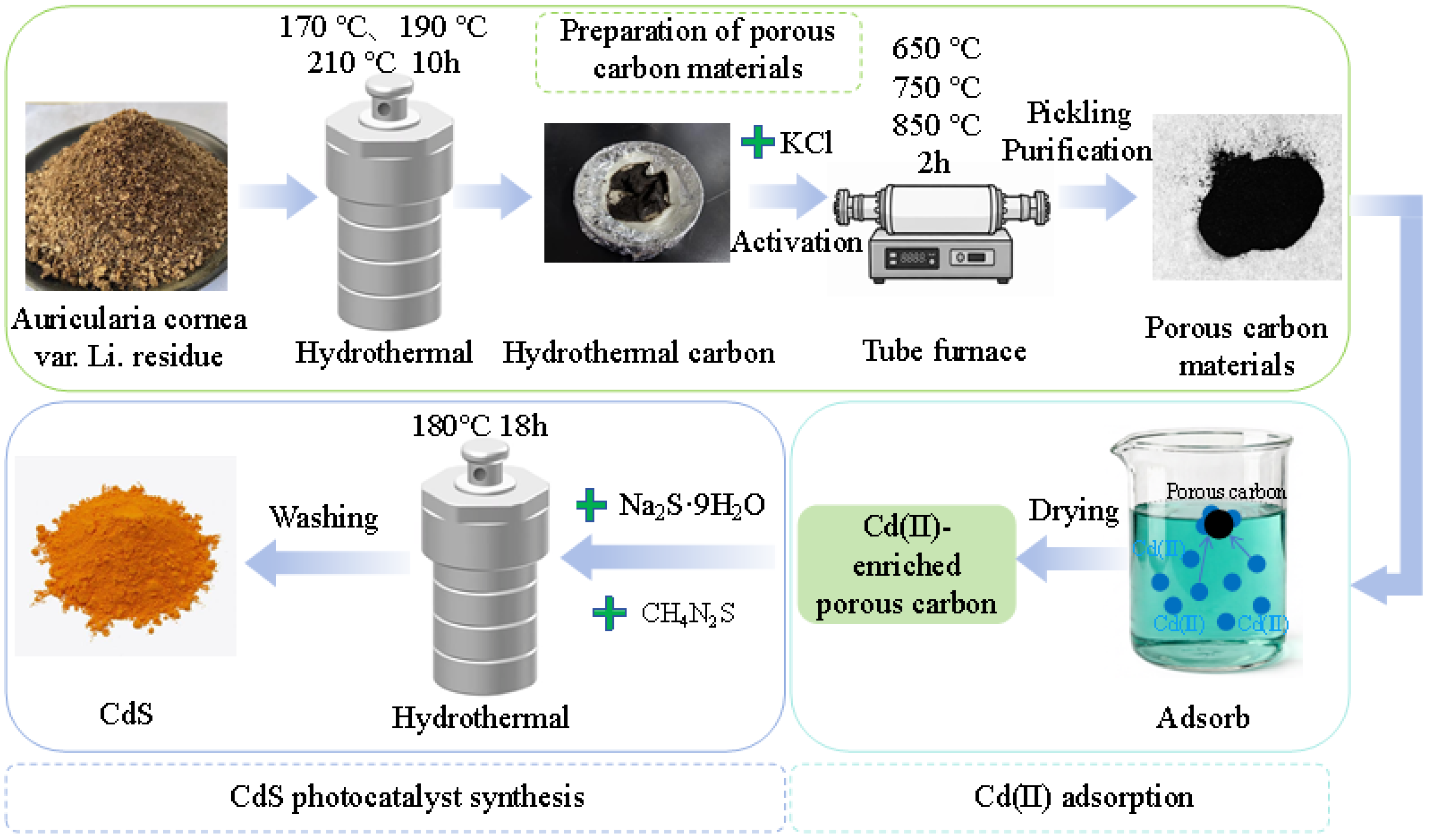
Figure 1. The preparation illustration of porous carbon material and CdS.
Processes 14 01675 g001
Figure 2. Adsorption isotherms of carbon materials prepared under different conditions: (a) APC-170-750, (b) APC-190-650, (c) APC-190-750 and (d) APC-210-850.
Processes 14 01675 g002
Figure 3. Pore size distribution curves of carbon materials prepared under different conditions: (a) APC-170-750, (b) APC-190-650, (c) APC-190-750 and (d) APC-210-850.
Processes 14 01675 g003
Figure 4. The XRD pattern of APC-190-750.
Processes 14 01675 g004
Figure 5. SEM images of (a) APC-170-750, (b) APC-190-650, (c) APC-190-750 and (d) APC-210-850.
Processes 14 01675 g005
Figure 6. FTIR of APC−170−750, APC−190−650, APC−190−750 and APC−210−850.
Processes 14 01675 g006
Figure 7. Effect of (a) pH, (b) contact time, (c) adsorbent dosage and (d) initial Cd(II) concentration on Cd(II) adsorption performance.
Processes 14 01675 g007
Figure 8. Adsorption kinetics analysis: (a) Pseudo-first-order kinetics, (b) Pseudo-second-order kinetics.
Processes 14 01675 g008
Figure 9. Adsorption isotherm analysis: (a) Langmuir model, (b) Freundlich model.
Processes 14 01675 g009
Figure 10. Effect of cycle number on Cd(II) adsorption capacity of the porous carbon material.
Processes 14 01675 g010
Figure 11. SEM image of (a) CdS-1, (b) CdS-2. (c) HRTEM image of CdS-1. (d) EDS Mapping images of CdS-1.
Processes 14 01675 g011
Figure 12. (a) XRD patterns of CdS-1 and CdS-2. XPS characterization results of CdS-1 and CdS-2: (b) survey spectra, (c) Cd 3d, (d) S 2p.
Processes 14 01675 g012
Figure 13. Photocatalytic hydrogen production under simulated sunlight illumination: (a) time-hydrogen production curves, (b) average hydrogen production rate, (c) cycling stability of CdS−1, (d) SEM images of CdS−1 after hydrogen production.
Processes 14 01675 g013
Figure 14. (a) Photoluminescence (PL) spectra, (b) UV−Vis DRS, (c) Electrochemical impedance spectroscopy (EIS) Nyquist plots, (d) Transient photocurrent-time plots of CdS−1 and CdS−2.
Processes 14 01675 g014
Table 1. The experimental conditions and sample numbers.
No.Hydrothermal Activation TemperatureSlow Pyrolysis TemperatureSample Numbers
1170 °C650 °CAPC-170-650
2170 °C750 °CAPC-170-750
3170 °C850 °CAPC-170-850
4190 °C650 °CAPC-190-650
5190 °C750 °CAPC-190-750
6190 °C850 °CAPC-190-850
7210 °C650 °CAPC-210-650
8210 °C750 °CAPC-210-750
9210 °C850 °CAPC-210-850
Table 2. The pore structure parameters of different experimental conditions.
Sample NumbersSpecific Surface Area (m2/g)Inner Specific Surface Area of Micropores (m2/g)Mesopores and Macropores (m2/g)Pore Volume (cm3/g)Micropore Volume (cm3/g)Average Pore Diameter (nm)
APC-170-650321.48152.77168.710.3560.0554.4331
APC-170-750462.79249.98212.810.3960.0933.4253
APC-170-850562.6181.95480.660.6250.0494.4395
APC-190-650664.83427.45235.500.52670.17463.1688
APC-190-750675.56428.76237.320.49590.17522.9361
APC-190-850618.16190.45470.920.58240.22623.7683
APC-210-650331.36169.94162.220.37200.06224.4909
APC-210-750591.93412.08228.660.50130.22303.3874
APC-210-850635.38306.47328.920.5830.1313.6731
Disclaimer/Publisher’s Note: The statements, opinions and data contained in all publications are solely those of the individual author(s) and contributor(s) and not of MDPI and/or the editor(s). MDPI and/or the editor(s) disclaim responsibility for any injury to people or property resulting from any ideas, methods, instructions or products referred to in the content.