Data-Driven Analysis of the Effectiveness of Water Control Measures in Offshore Horizontal Wells

Abstract
1. Introduction
- (1)
- A multi-dimensional data-driven evaluation framework is established for the first time to quantitatively assess the effectiveness of water control measures in offshore horizontal wells. By integrating geological, operational, and production parameters, the proposed method captures both static and dynamic influencing factors.
- (2)
- The study introduces a comprehensive correlation and sensitivity analysis approach combining Pearson, Spearman, and canonical correlation analyses, revealing the dominant variables that govern the effectiveness of different water control strategies.
- (3)
- A hybrid prediction model based on multiple machine learning algorithms (Logistic Regression, Random Forest, Gradient Boosting) is constructed to achieve high-accuracy effectiveness classification and duration regression prediction, offering data-driven decision support for offshore field management.
2. Related Work
3. Sample Set Preparation
3.1. Data Sources
3.2. Establishment of Indicator System
3.3. Construction of Indicator System
4. Methodology
4.1. Correlation and Sensitivity Analysis Methods
4.2. Machine Learning Model Construction and Algorithm Principles
4.2.1. Random Forest
4.2.2. Gradient Boosting
4.2.3. Logistic Regression
5. Sensitivity Analysis of Influencing Factors
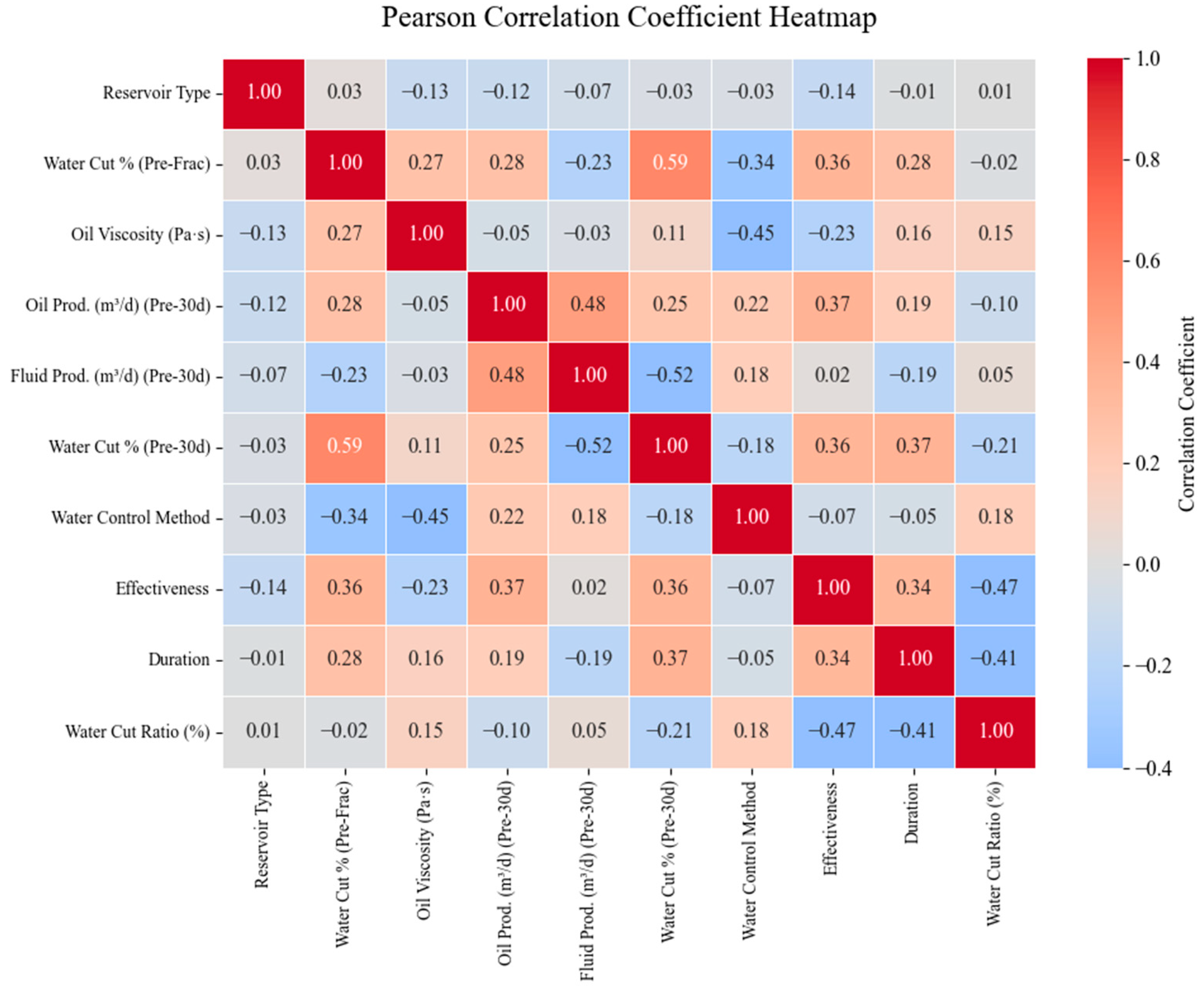
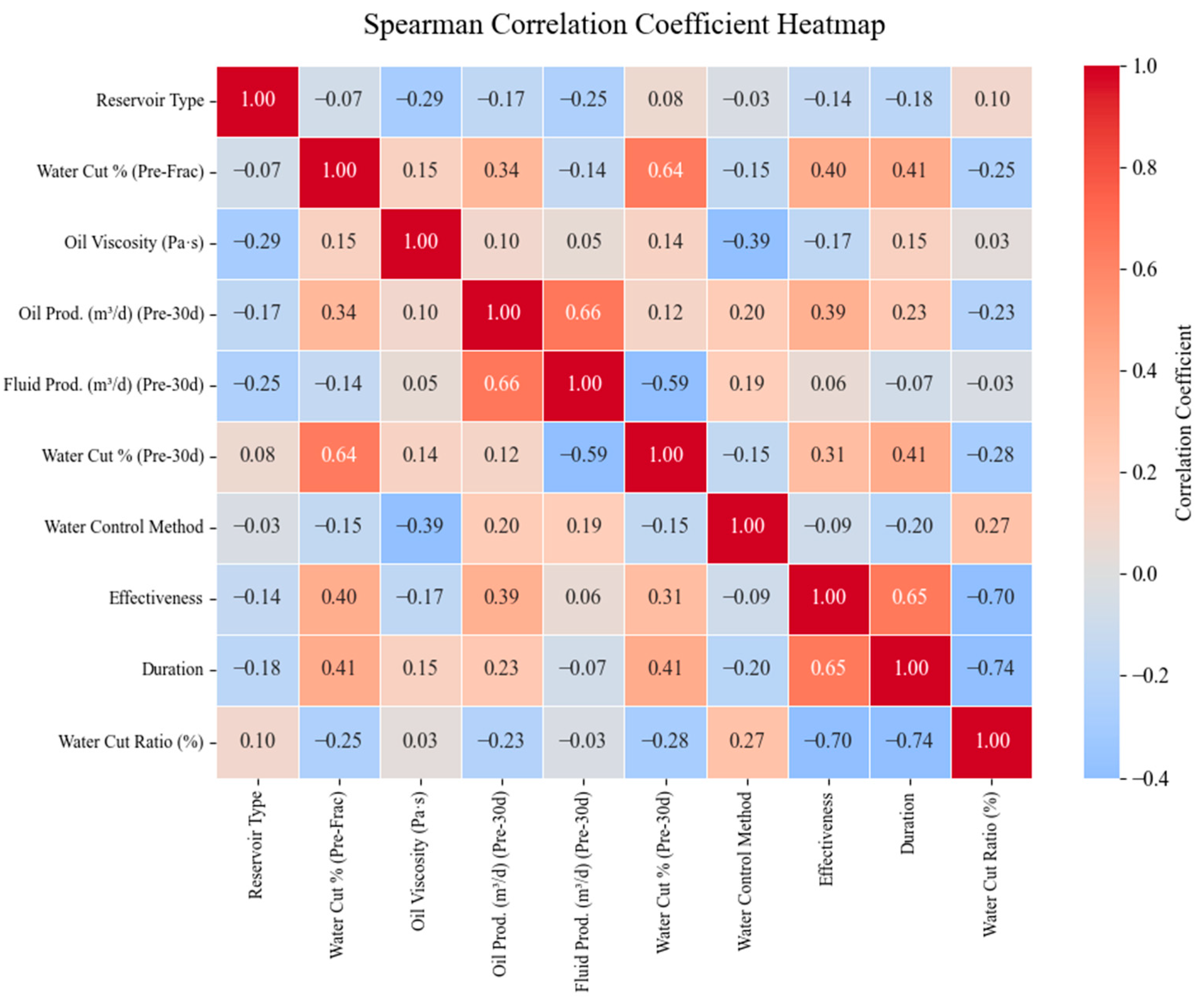
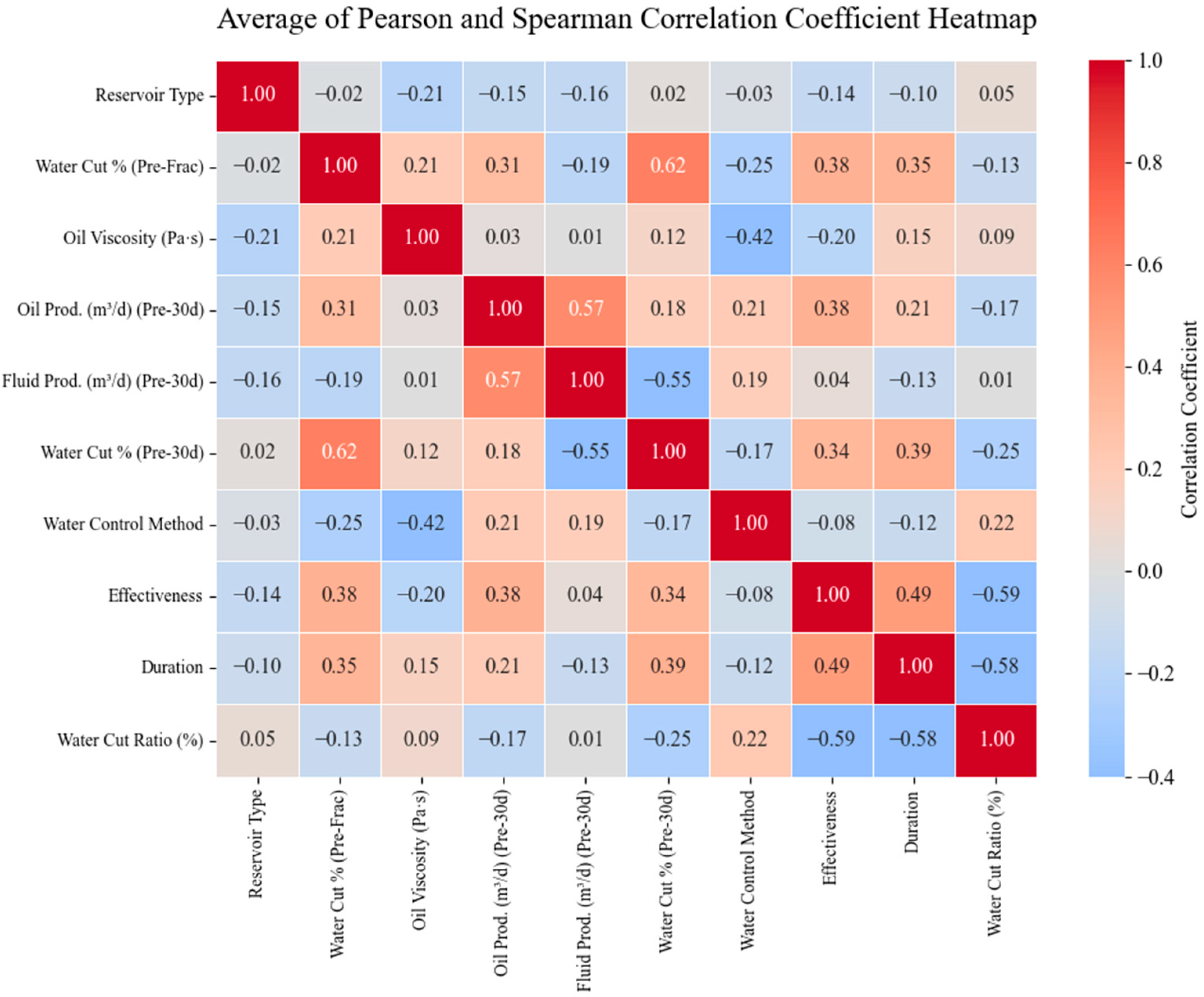
5.1. Quantitative Analysis of the Correlation of Measure Effectiveness Indicators
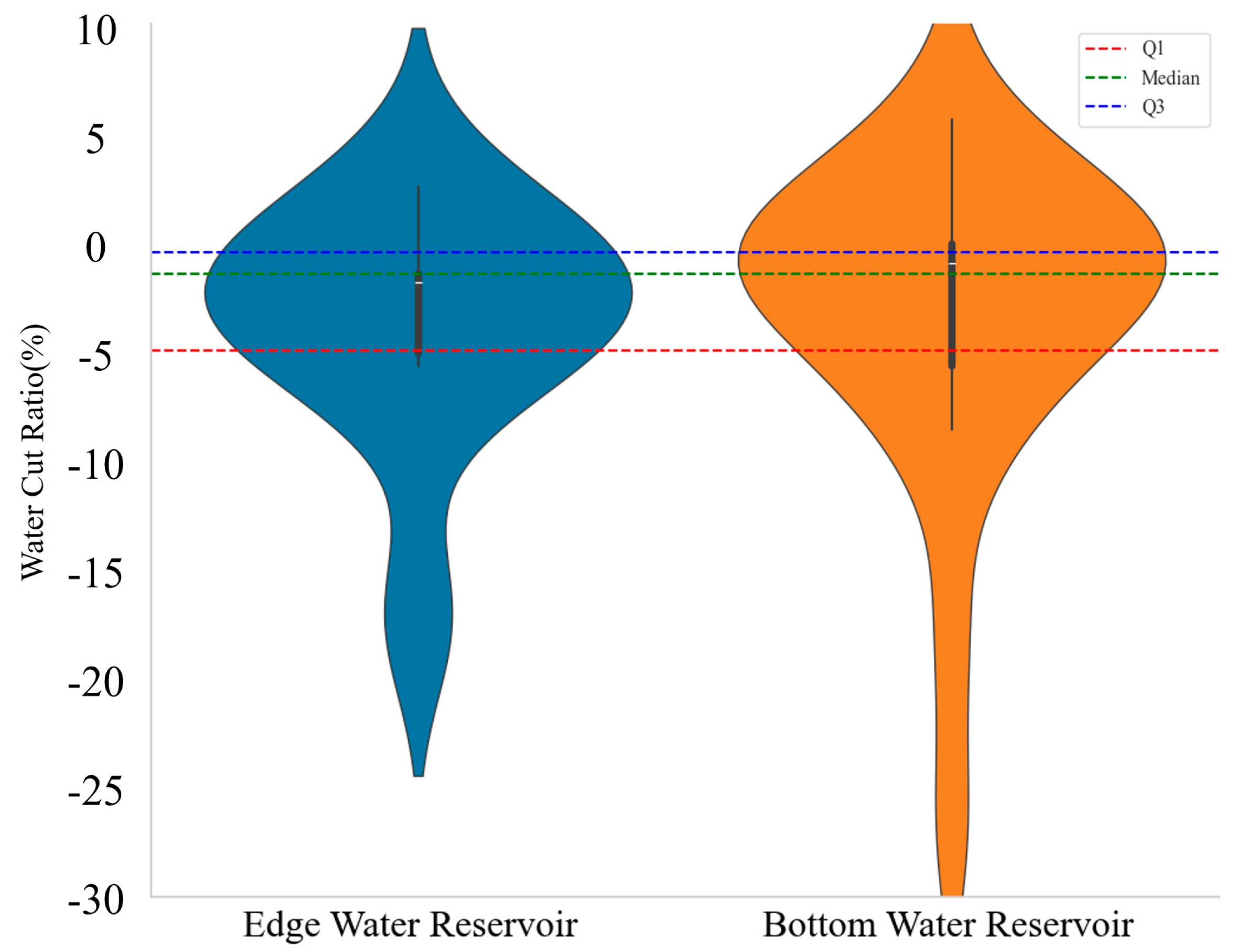
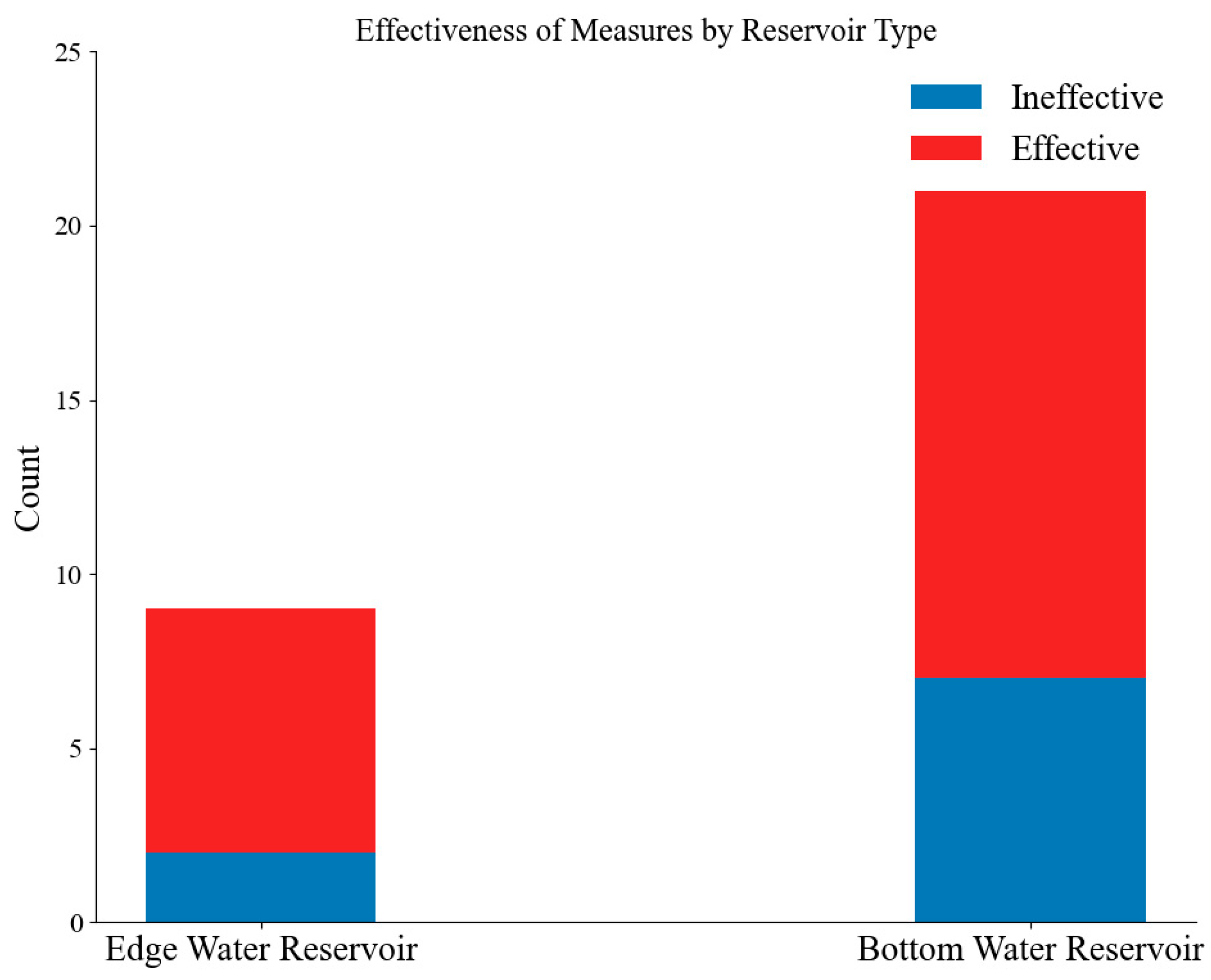
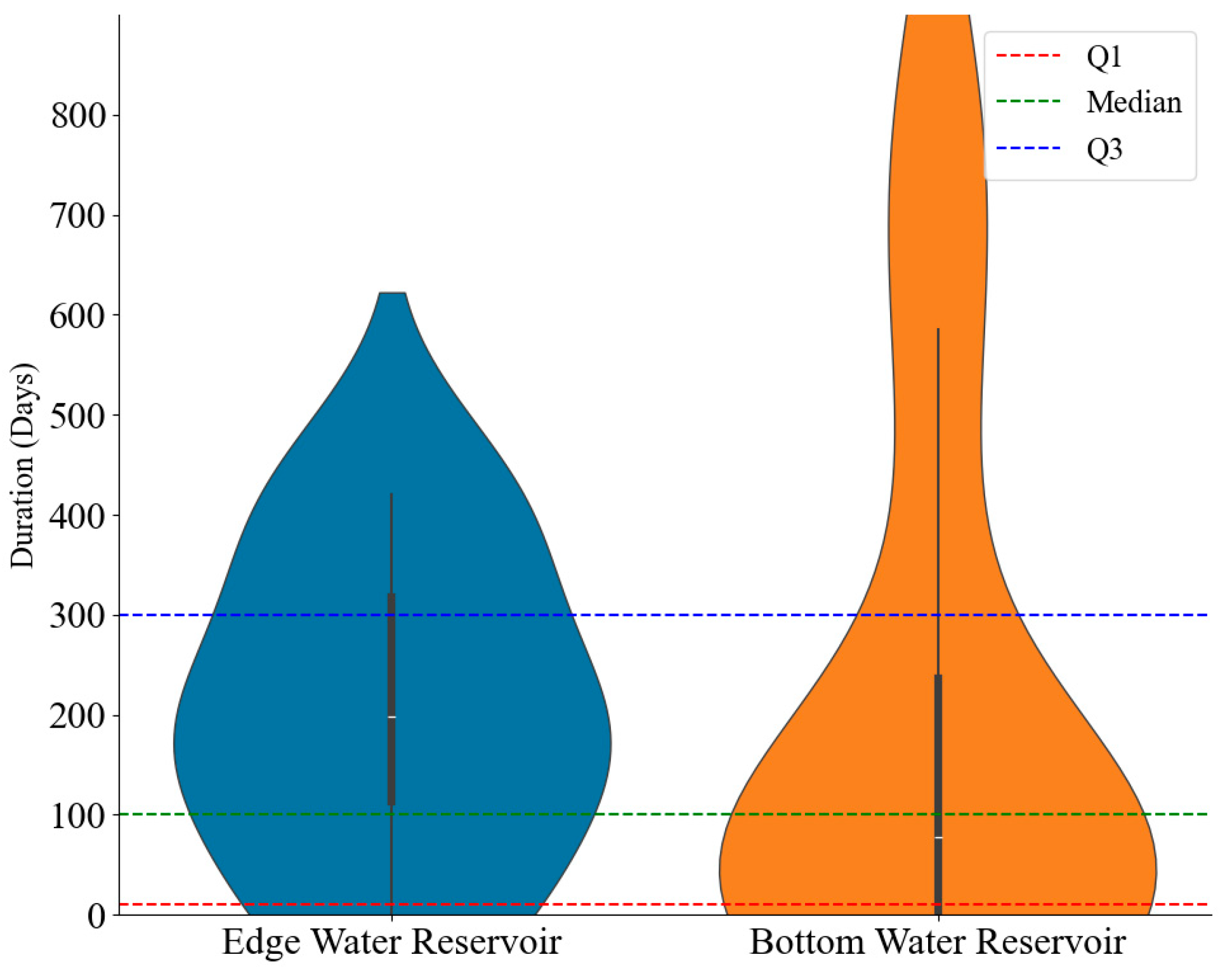
5.2. Analysis of Measure Effectiveness in Different Reservoir Types
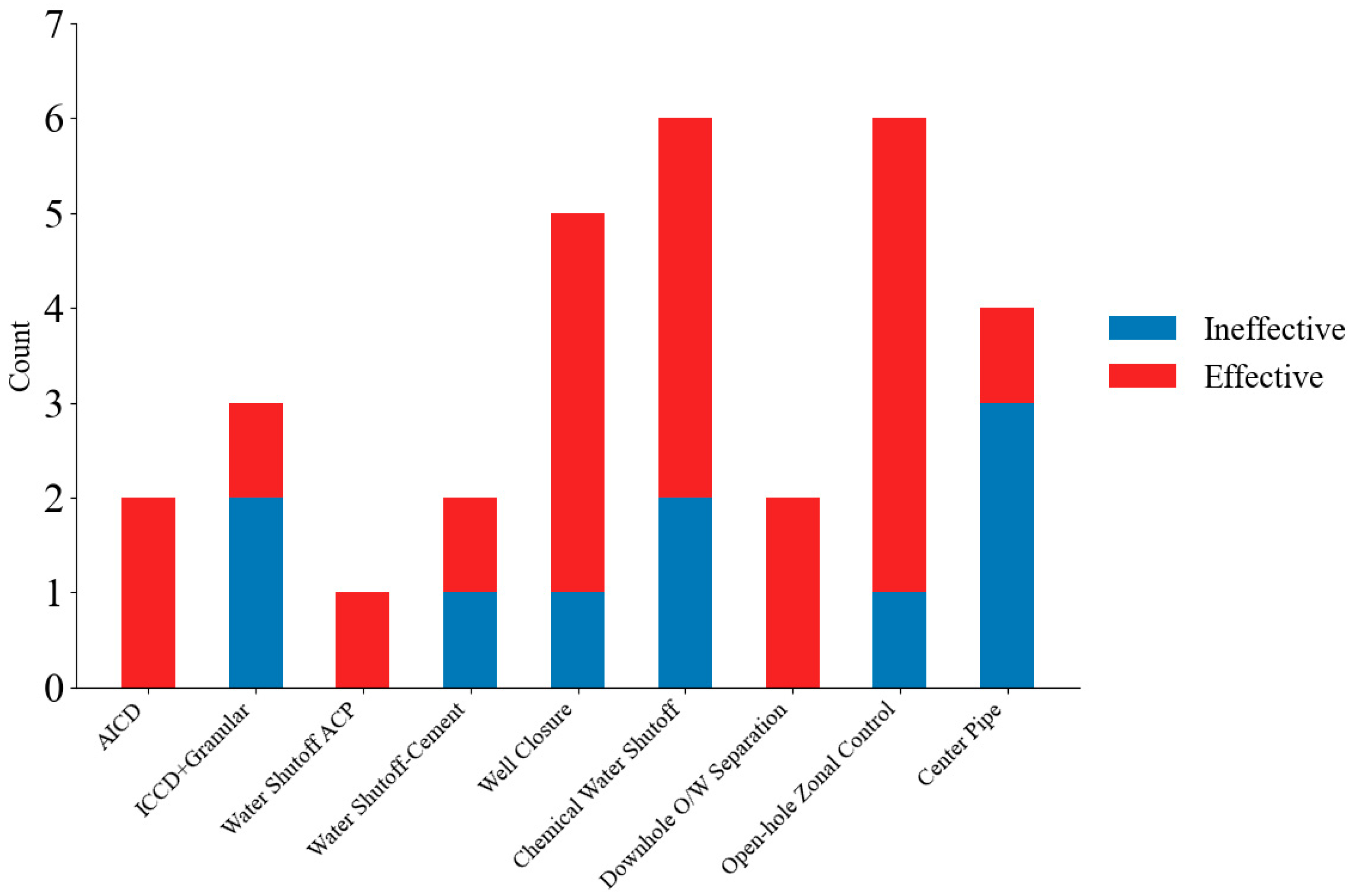
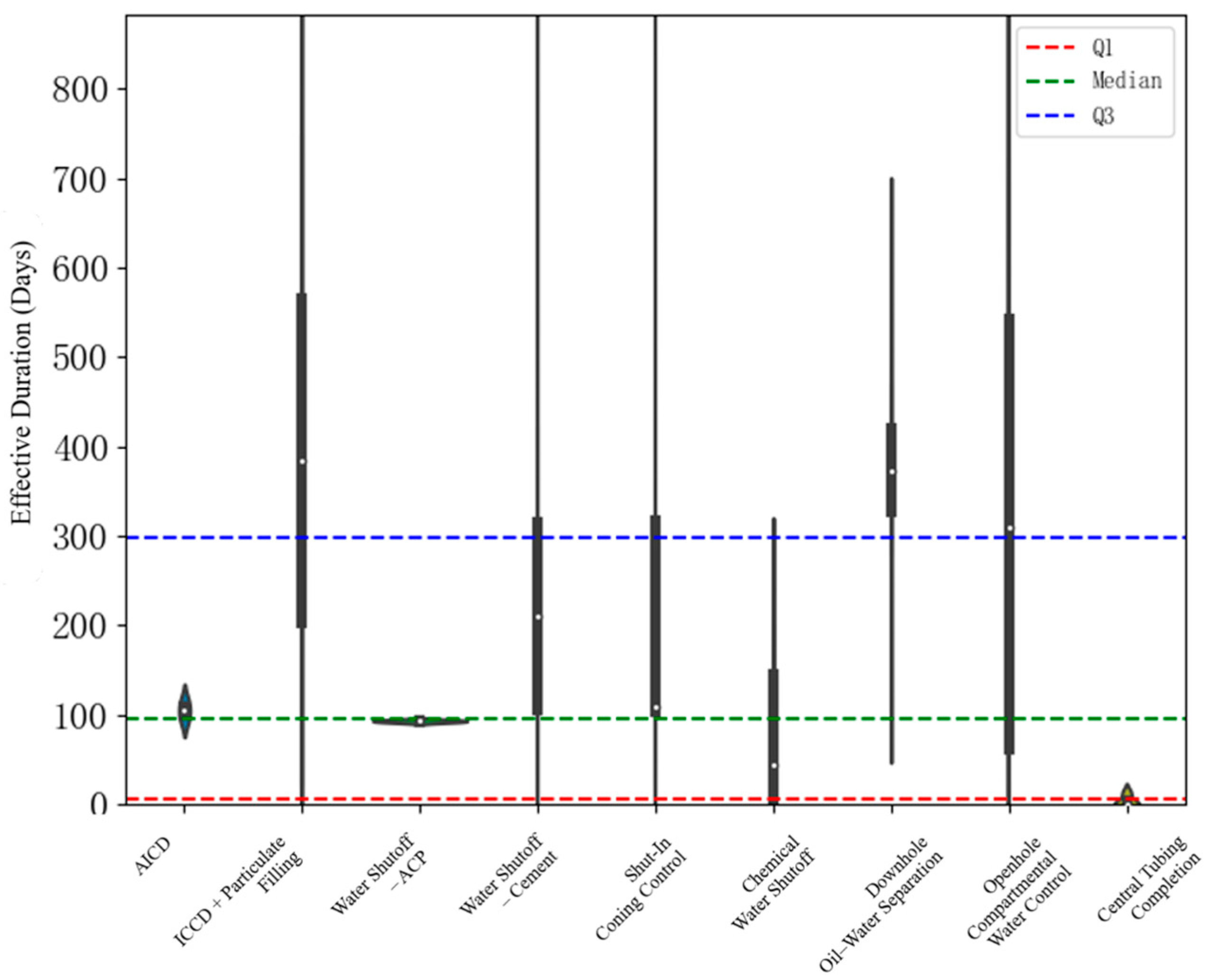
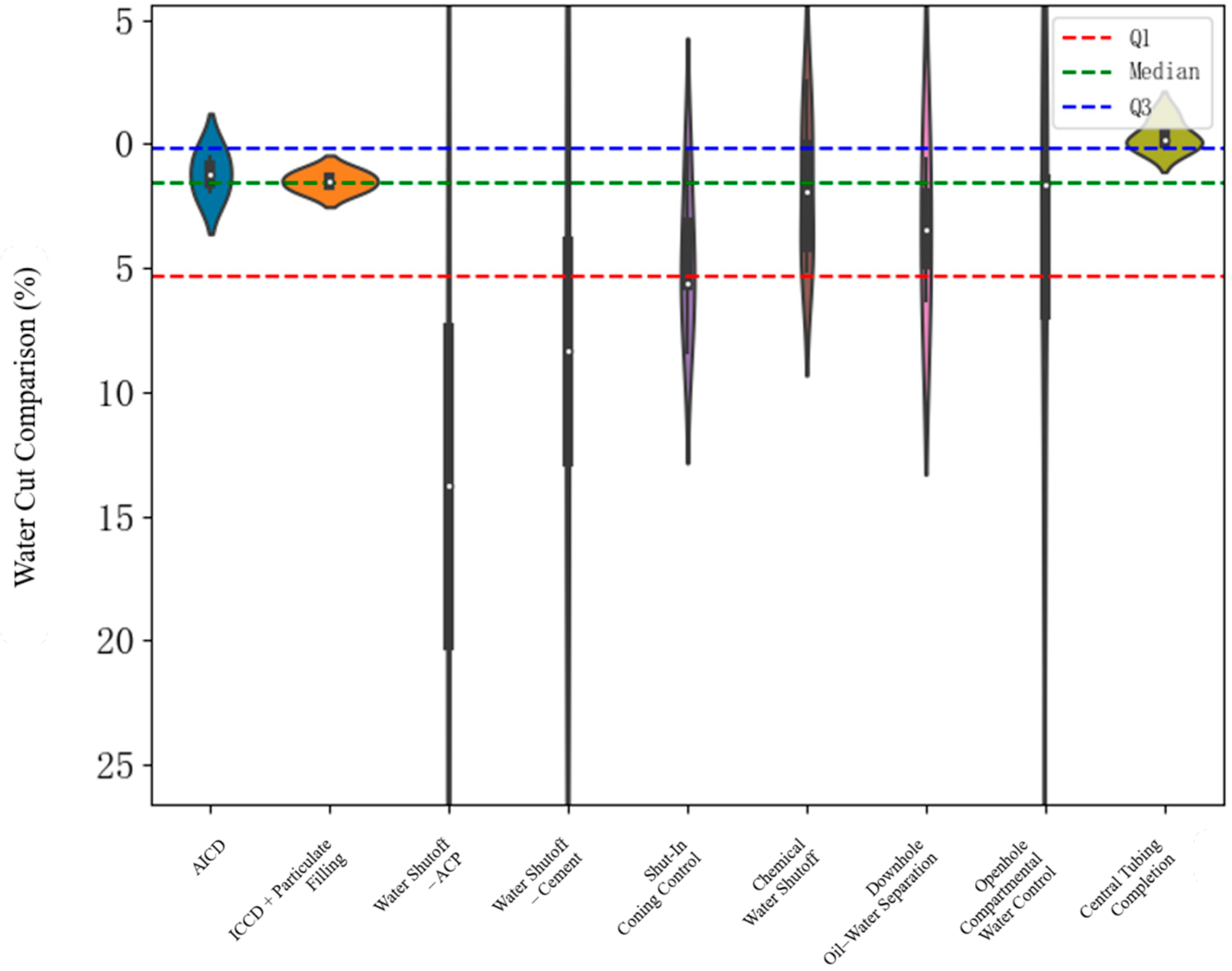
5.3. Analysis of the Effectiveness of Different Water Control Technologies
5.4. Canonical Correlation Analysis
6. Water Control Measures Effect Prediction
6.1. Model Design
6.1.1. Model Input and Output
6.1.2. Prediction Algorithm Selection and Design
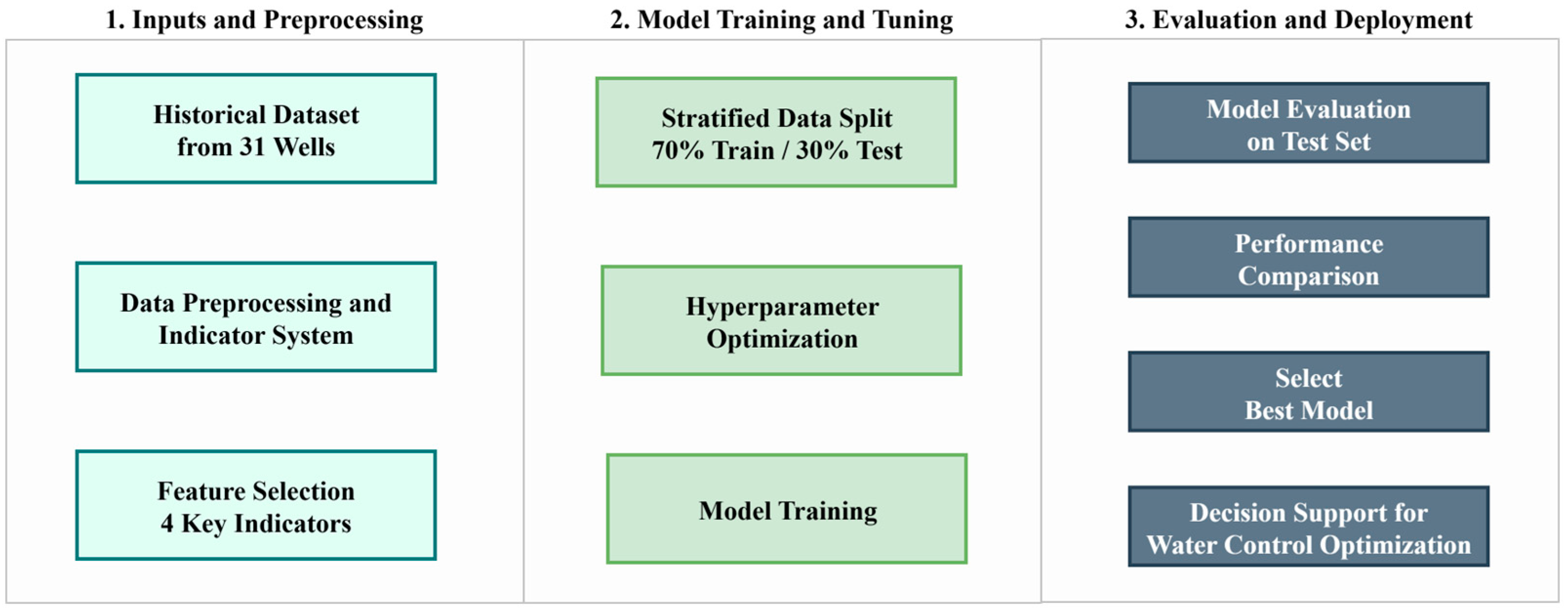
6.2. Model Construction and Validation
- (1)
- Model Training and Hyperparameter Optimization
- (2)
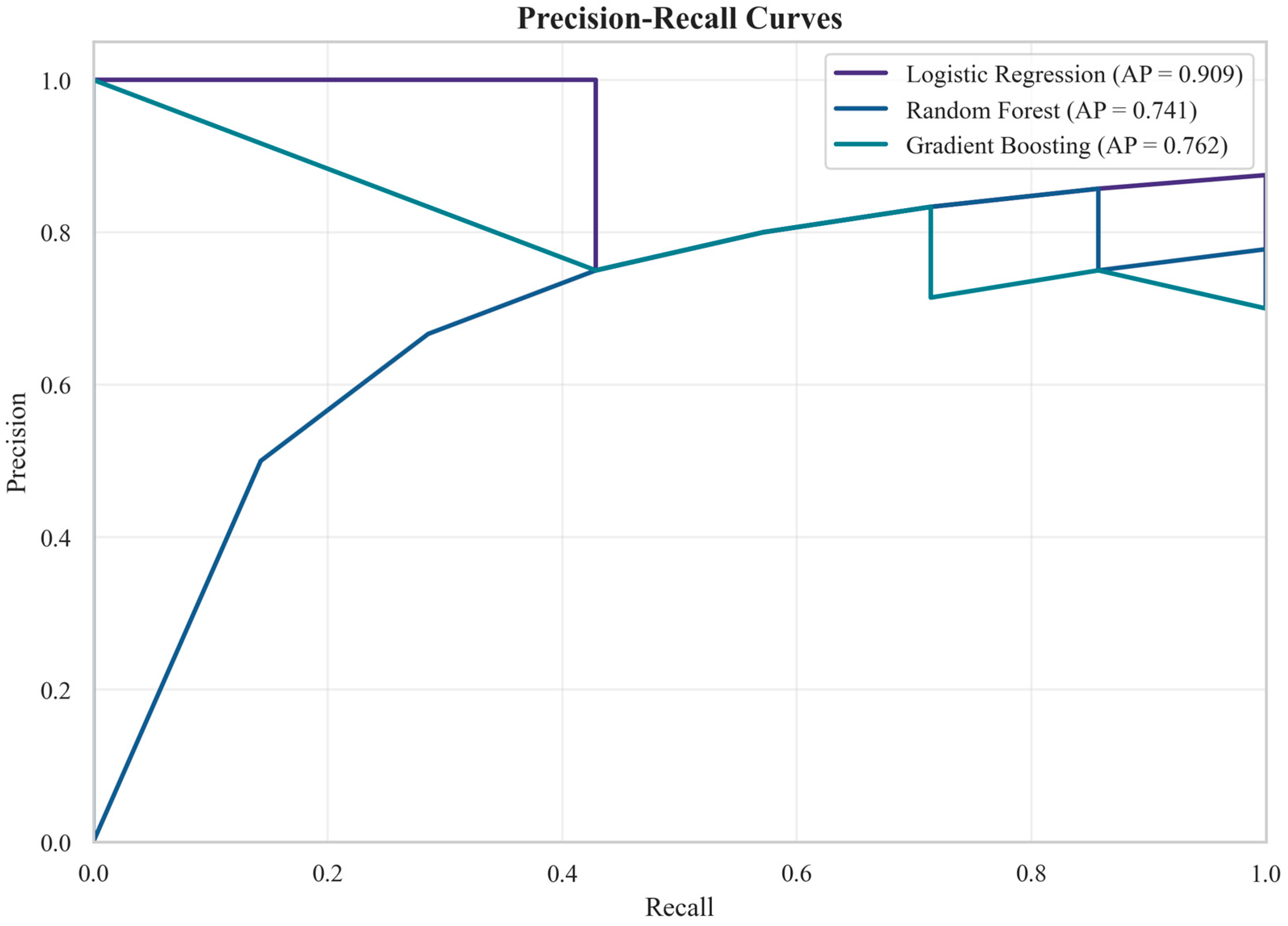
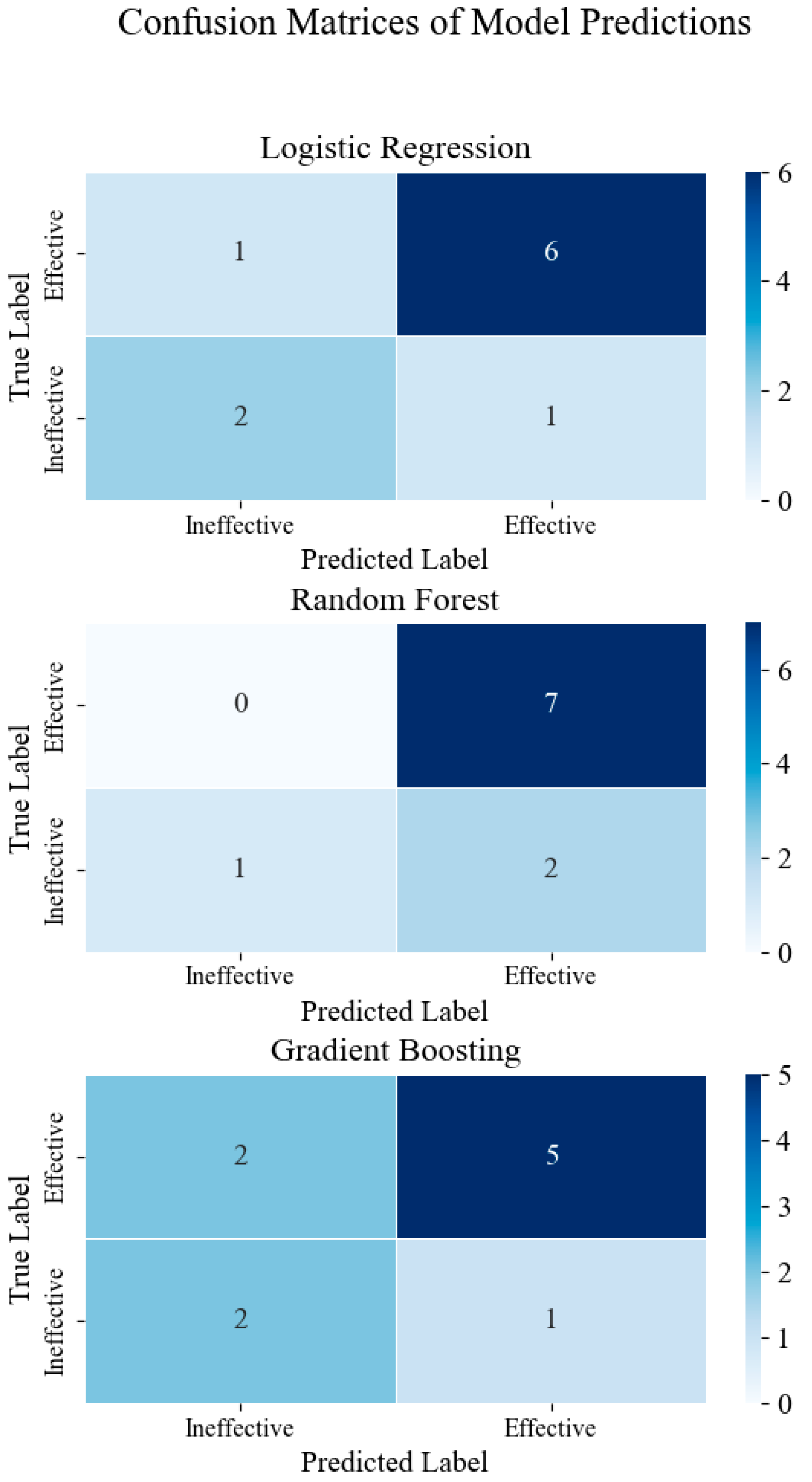
- Experimental Results and Analysis
7. Conclusions
Author Contributions
Funding
Data Availability Statement
Conflicts of Interest
References
- Seright, R.; Brattekas, B. Water shutoff and conformance improvement: An introduction. Pet. Sci. 2021, 18, 450–478. [Google Scholar] [CrossRef] [Scilit]
- Sun, X.; Bai, B. Comprehensive review of water shutoff methods for horizontal wells. Pet. Explor. Dev. 2017, 44, 1022–1029. [Google Scholar] [CrossRef] [Scilit]
- Bai, B.; Zhou, J.; Yin, M. A comprehensive review of polyacrylamide polymer gels for conformance control. Pet. Explor. Dev. 2015, 42, 525–532. [Google Scholar] [CrossRef] [Scilit]
- Okon, A.N.; Appah, D.; Akpabio, J.U. Water Coning Prediction Review and Control: Developing an Integrated Approach. J. Sci. Res. Rep. 2017, 14, 1–24. [Google Scholar] [CrossRef] [Scilit]
- Taha, A.; Amani, M. Overview of Water Shutoff Operations in Oil and Gas Wells; Chemical and Mechanical Solutions. ChemEngineering 2019, 3, 51. [Google Scholar] [CrossRef] [Scilit]
- Qu, J.; Wang, P.; You, Q.; Zhao, G.; Sun, Y.; Liu, Y. Soft Movable Polymer Gel for Controlling Water Coning of Horizontal Well in Offshore Heavy Oil Cold Production. Gels 2022, 8, 352. [Google Scholar] [CrossRef] [Scilit]
- Seifi, F.; Haghighat, F.; Nikravesh, H.; Kazemzadeh, Y.; Azin, R.; Osfouri, S. Using new chemical methods to control water production in oil reservoirs: Comparison of mechanical and chemical methods. J. Pet. Explor. Prod. Technol. 2024, 14, 2617–2655. [Google Scholar] [CrossRef] [Scilit]
- Das, H.S.; Das, D.K.; Maity, S.K.; Khatua, D.; Gupta, G.K.; Jalgham, R.T.T.; Akitsu, T.; Kaushik, A.; Bhattacharyya, S.; Roymahapatra, G. Challenges of Gel Treatment Application for Conformance Control. Eng. Sci. 2024, 31, 1238. [Google Scholar] [CrossRef] [Scilit]
- Ahmed, A.A.; Saaid, I.M.; Sambo, C.; Shafian, S.R.M.; Hamza, M.F. Experimental investigation and numerical simulation of relative permeability modifiers during water shut-off. Geoenergy Sci. Eng. 2023, 230, 212095. [Google Scholar] [CrossRef] [Scilit]
- Hu, J.; Zhang, G.; Jiang, P.; Wang, X.; Wang, L.; Pei, H. A new method of water control for horizontal wells in heavy oil reservoirs. Geoenergy Sci. Eng. 2023, 222, 211391. [Google Scholar] [CrossRef] [Scilit]
- Liu, X.; Song, H.; Zhao, L.; Zheng, Y.; Yang, N.; Qiu, D. Study on Optimal Water Control Methods for Horizontal Wells in Bottom Water Clastic Rock Reservoir. Fluid Dyn. Mater. Process. 2024, 20, 2377. [Google Scholar] [CrossRef] [Scilit]
- Zou, Q.; Chen, Z.; Cheng, Z.; Liang, Y.; Xu, W.; Wen, P.; Zhang, B.; Liu, H.; Kong, F. Evaluation and intelligent deployment of coal and coalbed methane coupling coordinated exploitation based on Bayesian network and cuckoo search. Int. J. Min. Sci. Technol. 2022, 32, 1315–1328. [Google Scholar] [CrossRef] [Scilit]
- Wang, X.; He, Y.; Li, F.; Wang, Z.; Dou, X.; Xu, H.; Fu, L. A working condition diagnosis model of sucker rod pumping wells based on deep learning. SPE Prod. Oper. 2021, 36, 317–326. [Google Scholar] [CrossRef] [Scilit]
- Liu, Y.; Zhang, Y.; Xue, B.; Lu, Y.; Wang, J.; Zhou, J.; Liu, T. Application of Binary Compound Water Control Technology in The Development of Horizontal Wells in Offshore Oil Fields. IOP Conf. Ser. Earth Environ. Sci. 2019, 384, 012111. [Google Scholar] [CrossRef] [Scilit]
- Wang, D.; Li, Y.; Ma, L.; Yu, F.; Liu, S.; Qi, T.; Jiang, S. Evaluation of the Effectiveness and Adaptability of a Composite Water Control Process for Horizontal Wells in Deepwater Gas Reservoirs. Front. Earth Sci. 2022, 10, 906949. [Google Scholar] [CrossRef] [Scilit]
- Mathiesen, V.; Aakre, H.; Werswick, B.; Elseth, G. The Autonomous RCP Valve—New Technology for Inflow Control in Horizontal Wells. In Proceedings of the SPE Offshore Europe Oil and Gas Conference and Exhibition, Aberdeen, UK, 6–8 September 2011. SPE-145737-MS. [Google Scholar] [CrossRef] [Scilit]
- Seright, R.S.; Lane, R.H.; Sydansk, R.D. A Strategy for Attacking Excess Water Production. SPE Prod. Facil. 2003, 18, 158–169. [Google Scholar] [CrossRef] [Scilit]
- Boyun, G.; Lee, R.L.-H. A Simple Approach to Optimization of Completion Interval in Oil/Water Coning Systems. SPE Reserv. Eng. 1993, 8, 249–255. [Google Scholar] [CrossRef] [Scilit]
- Wang, X.; Yu, W.; Xie, Y.; He, Y.; Xu, H.; Chu, X.; Li, C. Numerical Simulation of the Dynamic Behavior of Low Permeability Reservoirs Under Fracturing-Flooding Based on a Dual-Porous and Dual-Permeable Media Model. Energies 2024, 17, 6203. [Google Scholar] [CrossRef] [Scilit]
- Ahn, S.; Lee, K.; Choe, J.; Jeong, D. Numerical approach on production optimization of high water-cut well via advanced completion management using flow control valves. Pet. Explor. Prod. Technol 2023, 13, 1611–1625. [Google Scholar] [CrossRef] [Scilit]
- Obino, V.; Yadav, U. Application of polymer based nanocomposites for water shutoff—A review. Fuels 2021, 2, 304–322. [Google Scholar] [CrossRef] [Scilit]
- Xie, K.; Wu, Z.; Li, X.; Cao, W.; Yang, E.; Mei, J.; Gao, M.; Yuan, S. A review of research progress of in situ polyacrylamide gel for profile control and water plugging. Phys. Fluids 2025, 37, 091303. [Google Scholar] [CrossRef] [Scilit]
- Gu, P. A Study on Listening Comprehension Anxiety in Chinese Junior Middle School Students Based on the Pearson Correlation Analysis. In Proceedings of the 2021 2nd International Conference on Artificial Intelligence Education (ICAIE), Dali, China, 18–20 June 2021; pp. 332–335. [Google Scholar] [CrossRef] [Scilit]
- Janse, R.J.; Hoekstra, T.; Jager, K.J.; Zoccali, C.; Tripepi, G.; Dekker, F.W.; van Diepen, M. Conducting correlation analysis: Important limitations and pitfalls. Clin. Kidney J. 2021, 14, 2332–2337. [Google Scholar] [CrossRef] [Scilit]
- Uurtio, V.; Monteiro, J.M.; Kandola, J.; Shawe-Taylor, J.; Fernandez-Reyes, D.; Rousu, J. A Tutorial on Canonical Correlation Methods. ACM Comput. Surv. 2017, 50, 1–33. [Google Scholar] [CrossRef] [Scilit]
- Nimon, K.; Henson, R.K.; Gates, M.S. Revisiting Interpretation of Canonical Correlation Analysis: A Tutorial and Demonstration of Canonical Commonality Analysis. Multivar. Behav. Res 2010, 45, 702–724. [Google Scholar] [CrossRef] [Scilit]
- Wang, X.; Rui, C.; Liu, H. Analysis of Sensitive Factors for Sidetrack Drilling in Water-Flooded Oil Reservoirs: Data Mining Based on Actual Field Data. Front. Energy Res. 2023, 11, 1250336. [Google Scholar] [CrossRef] [Scilit]
- Alfarge, D.K.; Wei, M.; Bai, B. Numerical simulation study of factors affecting relative permeability modification for water-shutoff treatments. Fuel 2017, 207, 226–239. [Google Scholar] [CrossRef] [Scilit]
- Bin Marta, E.S.; Hammouda, M.M.M.S.; Tantawy, M.A.; Khamis, M.A.; Wahba, A.M. Diagnosing and Controlling Excessive Water Production: State-of-the-Art Review. J. Pet. Min. Eng. 2024, 25, 9–25. [Google Scholar] [CrossRef] [Scilit]
- Hayavi, M.T.; Kalantariasl, A.; Malayeri, M.R. Application of polymeric relative permeability modifiers for water control purposes: Opportunities and challenges. Geoenergy Sci. Eng. 2023, 231, 212330. [Google Scholar] [CrossRef] [Scilit]
- Zhang, D.; Li, Y.; Zhang, Z.; Li, F.; Liu, H. Research and Practice on Implementing Segmented Production Technology of Horizontal Well during Extra-High Water Cut Stage with Bottom Water Reservoir. Processes 2024, 12, 1142. [Google Scholar] [CrossRef] [Scilit]
- Yang, Y.; Li, F.; Zhang, W.; Li, X.; Pei, B. The continuous pack-off technology: A novel water-control method and application to offshore horizontal wells of limestone reservoir. J. Pet. Sci. Eng. 2022, 211, 110137. [Google Scholar] [CrossRef] [Scilit]







| Type | Indicator Name | Indicator Meaning | |
|---|---|---|---|
| Reservoir Geological Parameters | Sand Body | Refers to the stratigraphic section composed of sand particles, typically having good porosity and permeability, which is the main reservoir for oil and gas storage. | / |
| Reservoir Type | The classification of reservoirs based on the distribution of water within the reservoir, divided into edge water reservoirs and bottom water reservoirs. | / | |
| Reservoir Crude Oil Viscosity | The resistance to flow of oil in the reservoir. | mPa · s | |
| Water Shutoff and Control Measures | Water Shutoff Technologies | AICD (Autonomous Inflow Control Device): An intelligent completion device that autonomously regulates flow resistance according to fluid properties, thereby improving inflow profile control. ICCD + Particulate Filling: A fixed-choke inflow control device integrated into gravel-packed sand-control completions to enhance inflow regulation and delay water breakthrough. Water Shutoff—ACP: A delayed crosslinked polymer-clay composite plugging agent designed to seal high-permeability water channels and improve shutoff effectiveness. Water Shutoff—Cement: Application of oilwell cement slurry to seal water-producing intervals, providing low-cost isolation with high compressive strength. Shut-in Coning: A pressure management technique that suppresses upward water cone development by periodically shutting in wells to reduce drawdown. Chemical Water Shutoff: The use of chemical agents, such as polymers or gels, for selective plugging of water-bearing zones to enhance reservoir conformance. Downhole Oil–Water Separation: Downhole centrifugal or gravity-based technology that separates oil and water within the wellbore, enabling water reinjection and independent oil production. Openhole Compartmental Water Control: Deployment of expandable packers in open-hole horizontal sections to divide the borehole into multiple isolated compartments for targeted water control. Central Tubing Completion: Installation of a small-diameter tubing inside the casing to create a dual annulus-tubing flow channel, reducing production pressure differences at low cost. | / |
| Production Data Before and After Measures | Daily Liquid Production | The daily production of liquid (oil + water) of the well 30 days before and after the measure. | m3/d |
| Daily Oil Production | The daily production of oil of the well 30 days before and after the measure. | m3/d | |
| Water Cut Percentage | The percentage proportion of water in the produced liquid on a daily basis. | % | |
| Comparison of Production Data Before and After Measures | Daily Liquid Production Reduction | The decrease in daily liquid output after the water-shutoff measure compared to before the measure. | m3/d |
| Daily Water Production Reduction | The decrease in daily water production after the water-shutoff measure compared to before the measure. | m3/d | |
| Water Cut Percentage Comparison | The decrease in water cut after the water cut percentage measure compared to before. | % | |
| Daily Oil Increment (Industry Standard Method) | Daily oil increase = Post-measure daily oil − Predicted pre-measure daily oil. | m3/d | |
| Daily Oil Increment (Net Water Cut Reduction Method) | Daily oil increase = Post-measure daily liquid × (Pre-measure water cut percentage − Post-measure water cut percentage)/(1 − Post-measure water cut percentage). | m3/d | |
| Daily Oil Increment (Constant Liquid Production Method) | Daily oil increase = Post-measure daily oil − [Pre-measure daily oil × (Post-measure daily liquid/Pre-measure daily liquid)]. | m3/d |
| Geological Development Characteristics | Water Control Measures | Measure Effectiveness |
|---|---|---|
| Sand Body | Water Shutoff Technology | Effectiveness situation |
| Formation Crude Oil Viscosity | ||
| Fieldwide comprehensive water cut (%) at the time of the measure | ||
| Reservoir Type (Edge Water/Bottom Water) | Validity period | |
| Daily Liquid Production 30 days Before Measure (m3/d) | ||
| Daily Oil Production 30 days Before Measure (m3/d) | Water Cut Comparison | |
| Water Cut 30 Days Before Measure (%) |
| Pearson Correlation Coefficient | Relationship Between Variables | Degree of Correlation (Strength) |
|---|---|---|
| ρX, Y = 1 | Perfect Positive Linear Correlation | Very Strong |
| 0.8 < ρX, Y < 1.0 | Strong Positive Linear Correlation | Very Strong |
| 0.6 < ρX, Y < 0.8 | Positive Linear Correlation | Strong |
| 0.4 < ρX, Y < 0.6 | Weak Positive Linear Correlation | Moderate |
| 0.2 < ρX, Y < 0.4 | Very Weak Positive Linear Correlation | Weak |
| 0 < ρX, Y < 0.2 | Negligible Positive Linear Correlation | Very Weak or No Correlation |
| ρX, Y = 0 | Absence of a Linear Relationship | Very Weak or No Correlation |
| −0.2 < ρX, Y < 0 | Negligible Negative Linear Correlation | Very Weak or No Correlation |
| −0.4 < ρX, Y < −0.2 | Very Weak Negative Linear Correlation | Weak |
| −0.6 < ρX, Y < −0.4 | Weak Negative Linear Correlation | Moderate |
| −0.8 < ρX, Y < −0.6 | Strong Negative Linear Correlation | Strong |
| −1.0 < ρX, Y < −0.8 | Very Strong Negative Linear Correlation | Very Strong |
| ρX, Y = −1 | Perfect Negative Linear Correlation | Very Strong |
| Technology Type | Mechanism | Advantages | Limitations |
|---|---|---|---|
| AICD (Autonomous Inflow Control Device) | Adaptive inflow regulation based on fluid viscosity contrast | Precise autonomous water control, no surface intervention required | Strongly dependent on reservoir fluid properties; relatively high cost |
| ICCD + Particulate Filling | Inflow control completion device combined with particulate packing to regulate inflow profile | Delays water breakthrough; enhances flow stability in horizontal and multilateral wells | Limited applicability to specific well configurations |
| Water Shutoff—ACP | Polymer gel-cement composite plugging agent that seals high-permeability channels | High mechanical strength; extended effective duration | Risk of formation damage; potential impairment of reservoir permeability |
| Water Shutoff—Cement | Cement-based plugging of water-bearing channels | Low cost; high compressive strength | Brittle; susceptible to cracking; poor adaptability to heterogeneous formations |
| Shut-In Coning Control | Temporary well shut-in to reduce drawdown and induce collapse of the water cone | Simple operation; no direct cost | Effect is temporary; high risk of water re-coning after production resumption |
| Chemical Water Shutoff | Injection of polymer gels or cross-linked agents for selective water plugging | Effective in complex pore networks; capable of deep reservoir penetration | Requires sophisticated formulation design; variable treatment success |
| Downhole Oil–Water Separation | Downhole centrifugal or membrane-based separation of oil and water | Real-time water control; preserves reservoir integrity | High equipment failure rate; elevated maintenance cost |
| Openhole Compartmental Water Control | Segmented isolation and filling in openhole completions to suppress localized water breakthrough | Suitable for uncased wells; broad applicability across heterogeneous reservoirs | Technically challenging completion; elevated operational risk |
| Central Tubing Completion | Optimized concentric tubing structure to regulate production pressure differentials | Low cost; straightforward implementation | Only mitigates apparent water cut percentage; does not eliminate fundamental water invasion mechanisms |
| Variable | 1 | 2 | 3 |
|---|---|---|---|
| Reservoir Type | 0.227 | −0.038 | −0.154 |
| Comprehensive Water Cut of the Oilfield During the Measure | −0.575 | 0.606 | 0.032 |
| Formation Crude Oil Viscosity (mPa · s) | 0.397 | 0.527 | −0.265 |
| Daily Liquid Production During the First 30 Days (m3/d) | −0.590 | 0.276 | −0.003 |
| Daily Oil Production During the First 30 Days (m3/d) | −0.059 | −0.276 | 0.498 |
| Water Cut During the First 30 Days (%) | −0.560 | 0.431 | −0.604 |
| Water Control Technology | 0.096 | 0.207 | 0.422 |
| Variable | 1 | 2 | 3 |
|---|---|---|---|
| Effectiveness | −0.997 | 0.025 | −0.067 |
| Effective Duration | −0.276 | 0.642 | −0.716 |
| Water Cut Comparison (%) | 0.432 | 0.434 | 0.790 |
| Canonical Variable | Correlation | Eigenvalue | Wilks’ Statistic | F | Numerator df | Denominator df | Significance p |
|---|---|---|---|---|---|---|---|
| 1 | 0.619 | 0.622 | 0.418 | 1.027 | 21.000 | 60.851 | 0.047 |
| 2 | 0.492 | 0.320 | 0.679 | 0.784 | 12.000 | 44.000 | 0.663 |
| 3 | 0.323 | 0.116 | 0.896 | 0.535 | 5.000 | 23.000 | 0.747 |
| Model | Cross-Validation Mean AUC | Independent Test Set AUC | Test Set Accuracy |
|---|---|---|---|
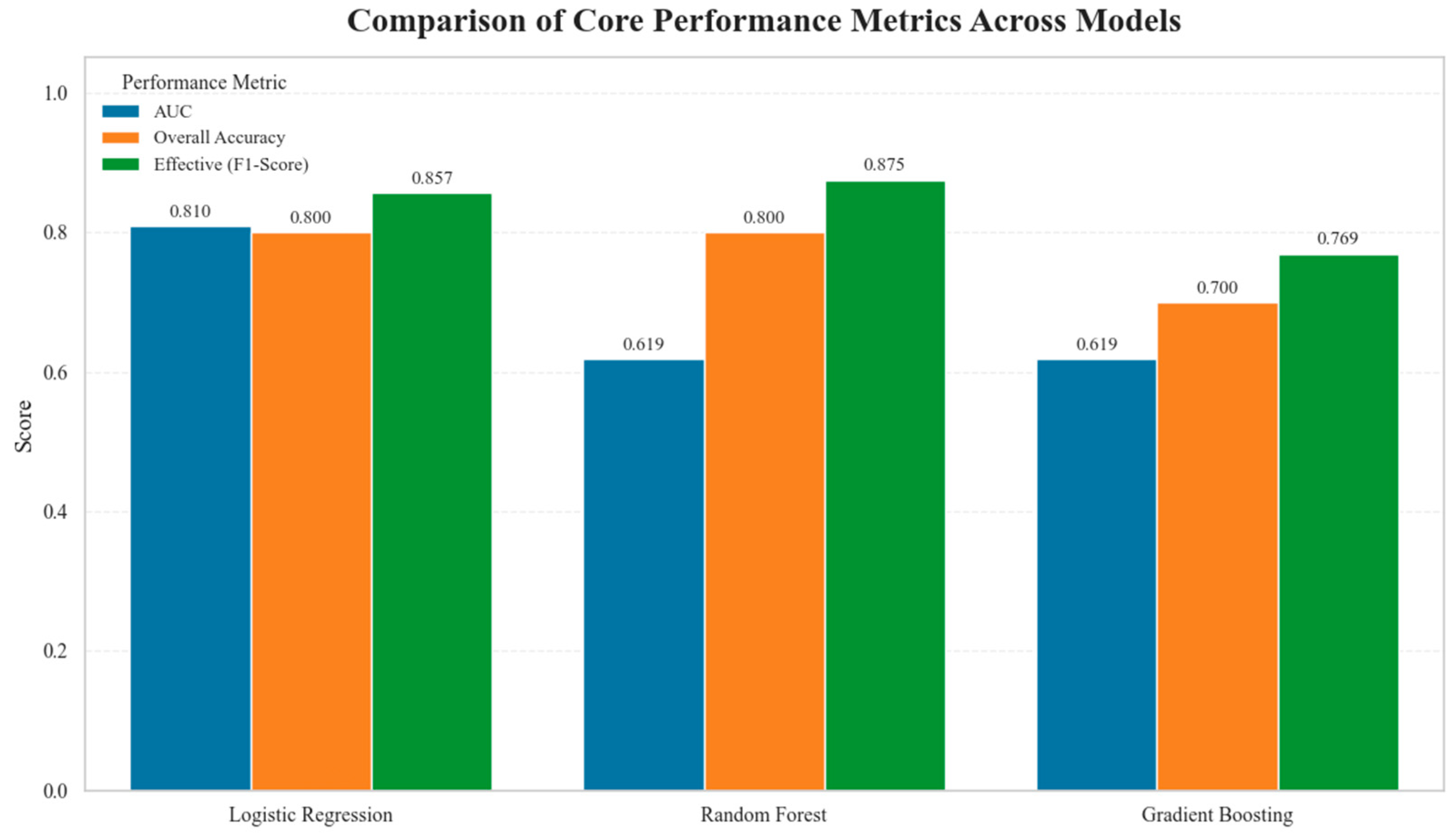
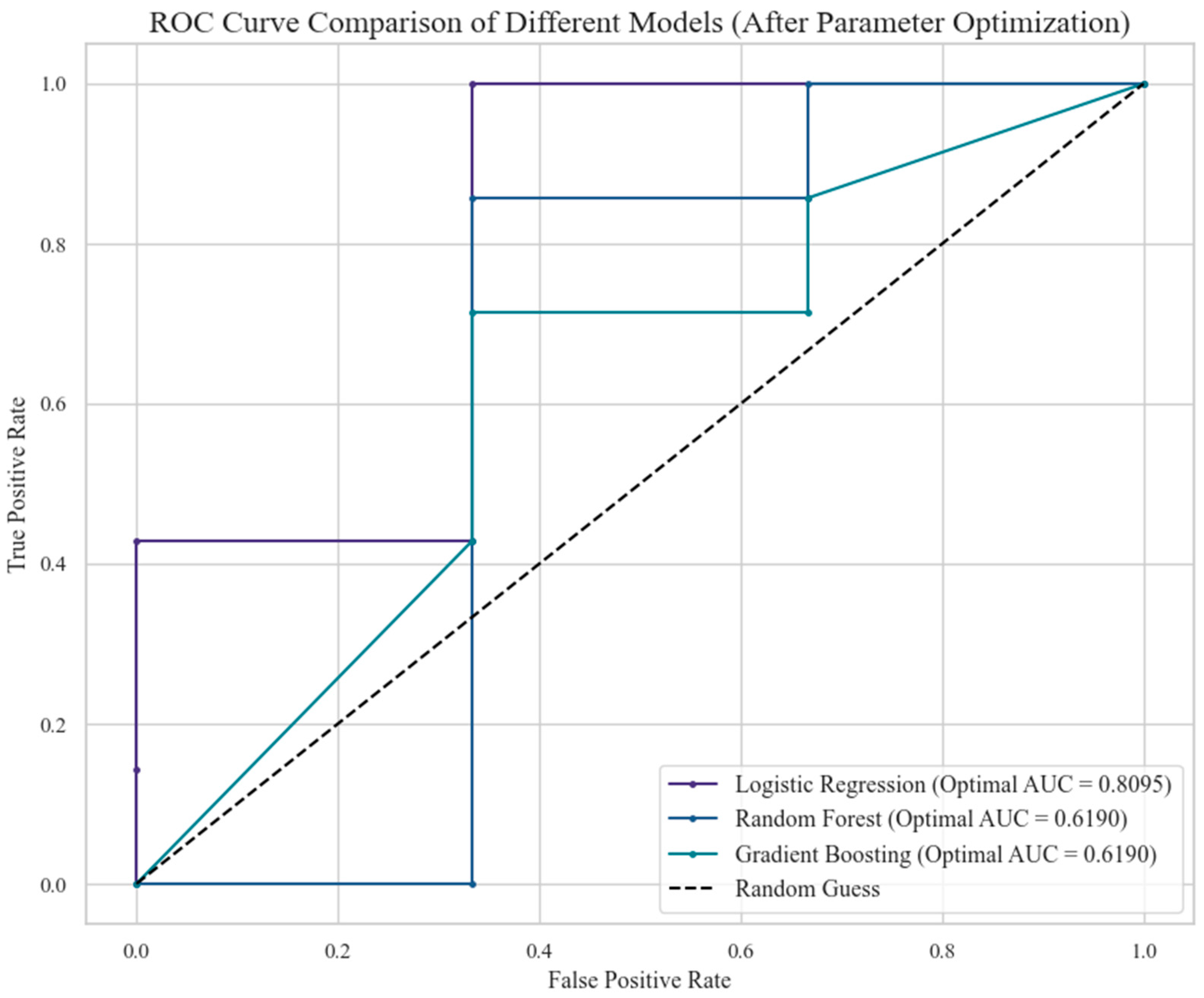
| Logistic Regression | 0.7667 | 0.8095 | 80.00% |
| Random Forest | 0.7000 | 0.6667 | 80.00% |
| Gradient Boosting | 0.6833 | 0.6190 | 60.00% |
Disclaimer/Publisher’s Note: The statements, opinions and data contained in all publications are solely those of the individual author(s) and contributor(s) and not of MDPI and/or the editor(s). MDPI and/or the editor(s) disclaim responsibility for any injury to people or property resulting from any ideas, methods, instructions or products referred to in the content. |
© 2025 by the authors. Licensee MDPI, Basel, Switzerland. This article is an open access article distributed under the terms and conditions of the Creative Commons Attribution (CC BY) license.
Share and Cite
Li, F.; Lu, Q.; He, Y.; Zheng, C.; Wang, X. Data-Driven Analysis of the Effectiveness of Water Control Measures in Offshore Horizontal Wells. Processes 2026, 14, 88. https://doi.org/10.3390/pr14010088
Li F, Lu Q, He Y, Zheng C, Wang X. Data-Driven Analysis of the Effectiveness of Water Control Measures in Offshore Horizontal Wells. Processes. 2026; 14(1):88. https://doi.org/10.3390/pr14010088
Chicago/Turabian StyleLi, Fenghui, Qiang Lu, Yingxu He, Chunfeng Zheng, and Xiang Wang. 2026. "Data-Driven Analysis of the Effectiveness of Water Control Measures in Offshore Horizontal Wells" Processes 14, no. 1: 88. https://doi.org/10.3390/pr14010088
APA StyleLi, F., Lu, Q., He, Y., Zheng, C., & Wang, X. (2026). Data-Driven Analysis of the Effectiveness of Water Control Measures in Offshore Horizontal Wells. Processes, 14(1), 88. https://doi.org/10.3390/pr14010088