Article

Optimizing Methane Production from Lignocellulosic Biomass: Low-Temperature Potassium Ferrate Pretreatment via Response Surface Methodology


by
Halil Şenol
1,* and
Emre Çolak
2
1
Giresun University, Faculty of Engineering, Department of Energy Systems Engineering, Giresun 28200, Türkiye
2
Giresun University, Institute of Science, Department of Energy Systems Engineering, Master’s Program, Giresun 28200, Türkiye
*
Author to whom correspondence should be addressed.
Processes 2025, 13(9), 2768; https://doi.org/10.3390/pr13092768
Submission received: 26 July 2025 / Revised: 18 August 2025 / Accepted: 26 August 2025 / Published: 29 August 2025

Abstract

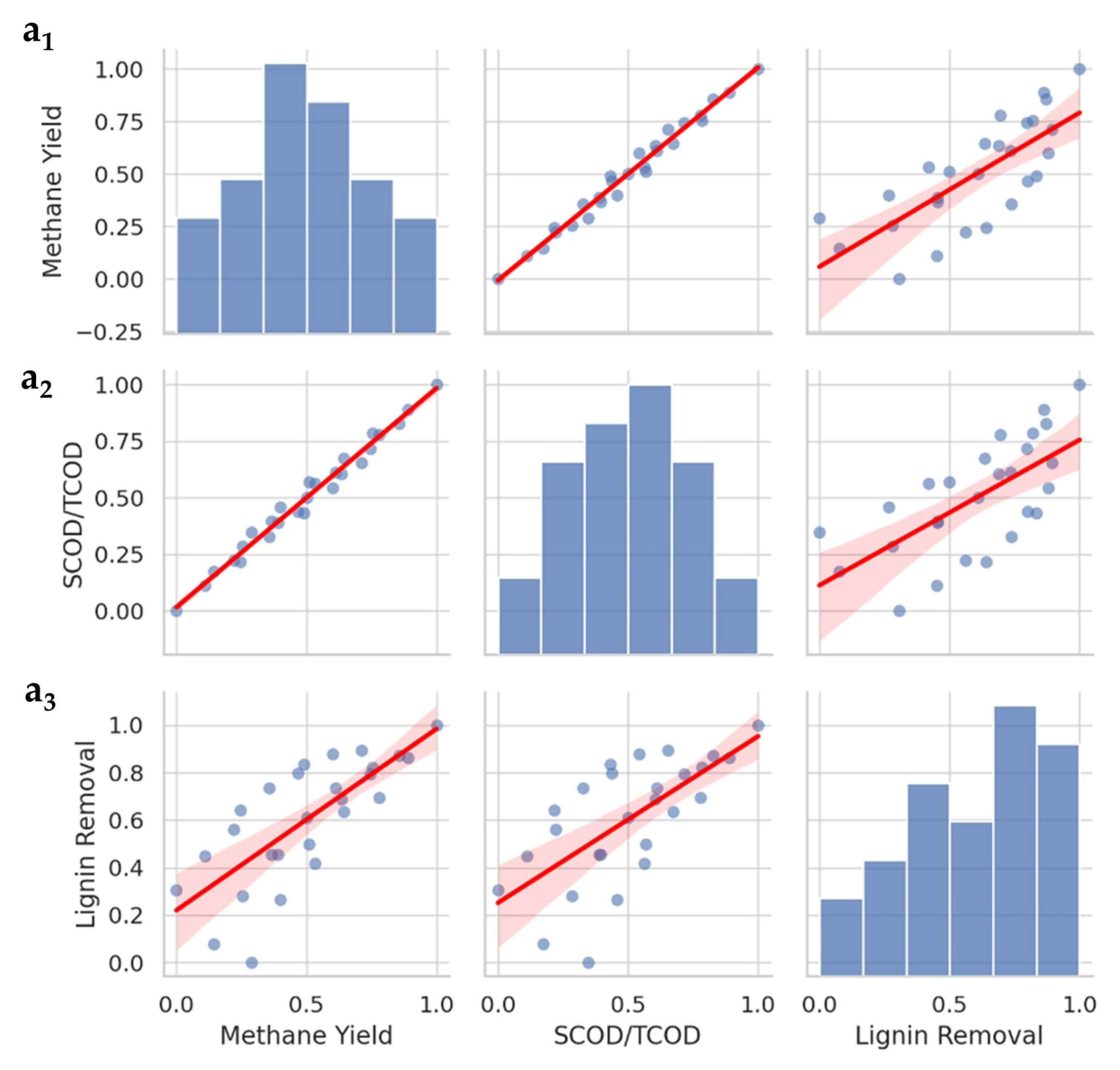
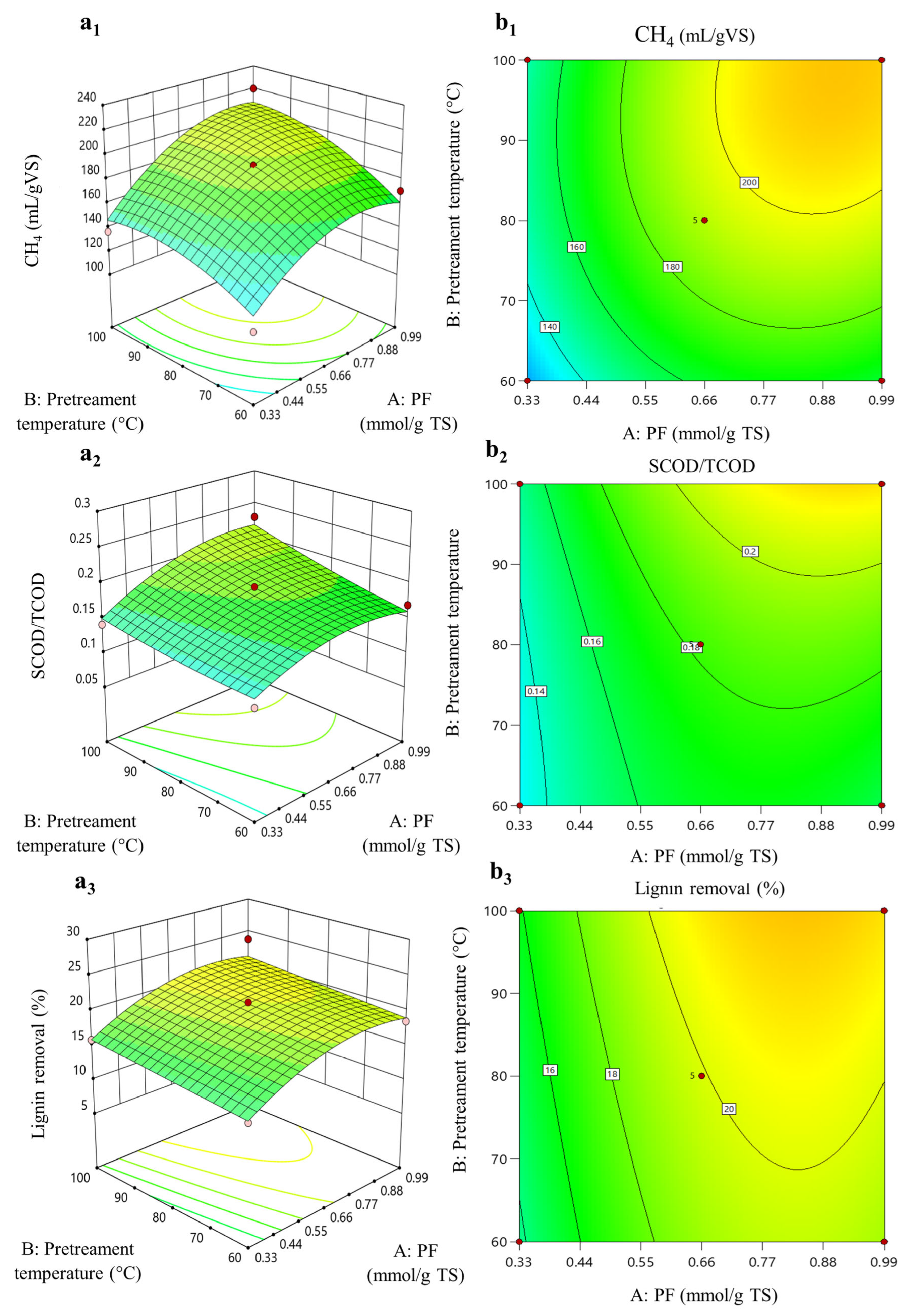
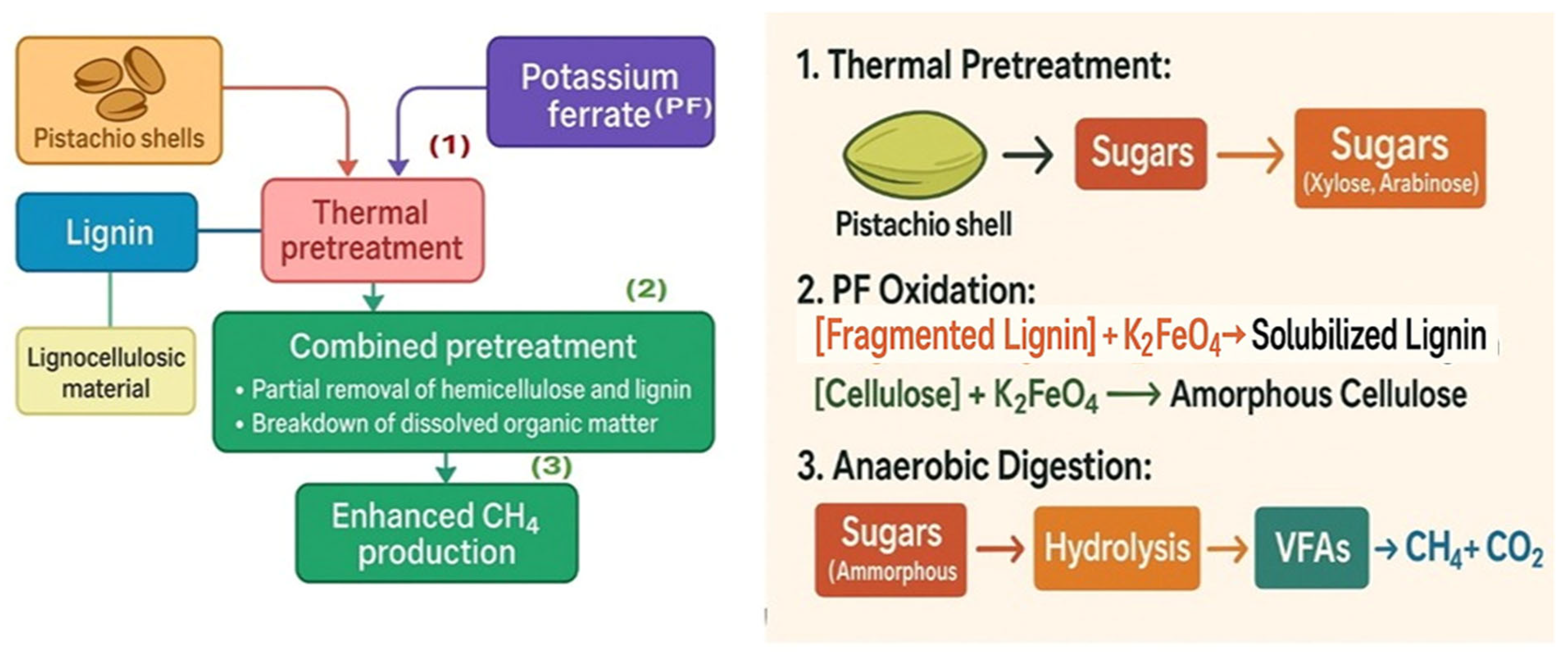
Lignocellulosic biomass like pistachio shells (PSs) is a promising feedstock for anaerobic digestion (AD), but lignin recalcitrance limits biodegradability. Conventional pretreatments suffer from high energy costs or inhibitor formation; here, potassium ferrate (PF) + low-thermal pretreatment offers a green alternative. A Box–Behnken Design was employed to optimize the PF dosage, pretreatment temperature, and time, with response variables including the methane (CH4) yield, soluble chemical oxygen demand (SCOD)/total chemical oxygen demand (TCOD) ratio, and lignin removal efficiency. The optimized conditions (0.637 mmol/g total solids PF dose, 66.76 °C, 55.84 min) achieved a CH4 yield of 171.00 mL CH4/g volatile solids, representing a 4.3-fold increase compared to untreated PSs. The ANOVA results showed strong links between how much lignin was removed, the ratio of SCOD to TCOD, and the amount of CH4 produced, with the interactions between temperature and time being the most important. This study highlights the potential of PF-based pretreatment as a cost-effective and environmentally sustainable strategy to maximize CH4 yields from lignocellulosic waste, supporting renewable energy adoption and circular economy principles. Further studies should explore scalability and economic feasibility for industrial applications.
Keywords: advanced oxidation processes; pretreatment optimization; lignocellulosic degradation; sustainable waste management; renewable bioenergy advanced oxidation processes; pretreatment optimization; lignocellulosic degradation; sustainable waste management; renewable bioenergy