Analysis of the Energy Loss Mechanism in Hydraulic Turbines with Different Guide-Vane Numbers Based on Entropy Generation Theory


Abstract
1. Introduction
2. Numerical Methodology
2.1. Entropy Generation Theory
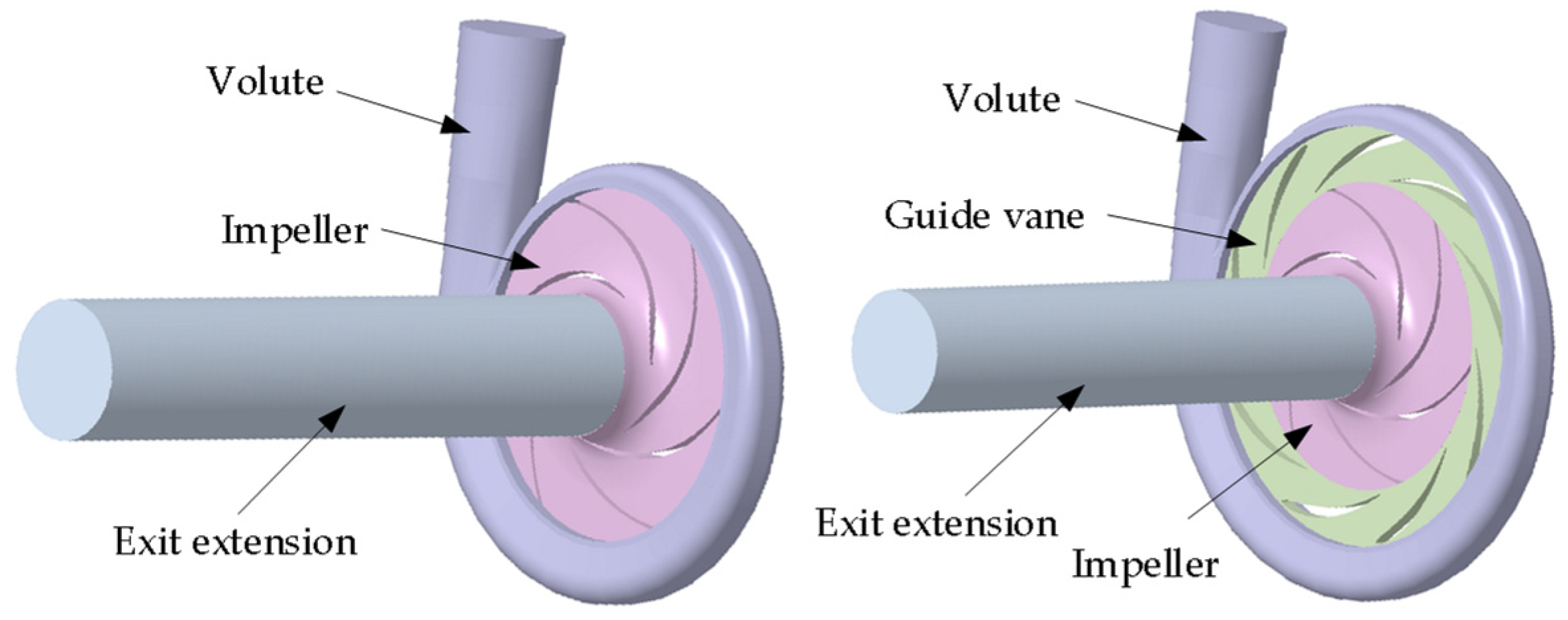
2.2. Geometric Model
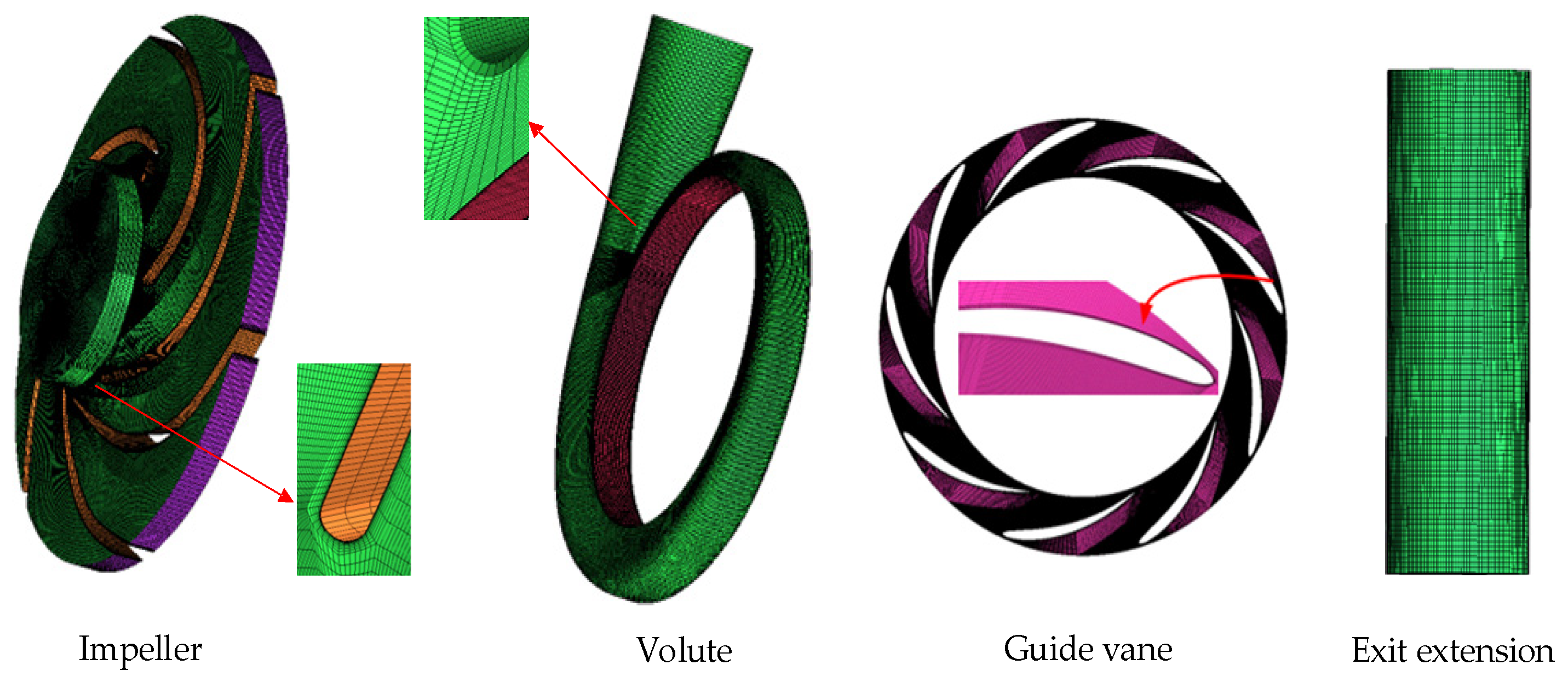
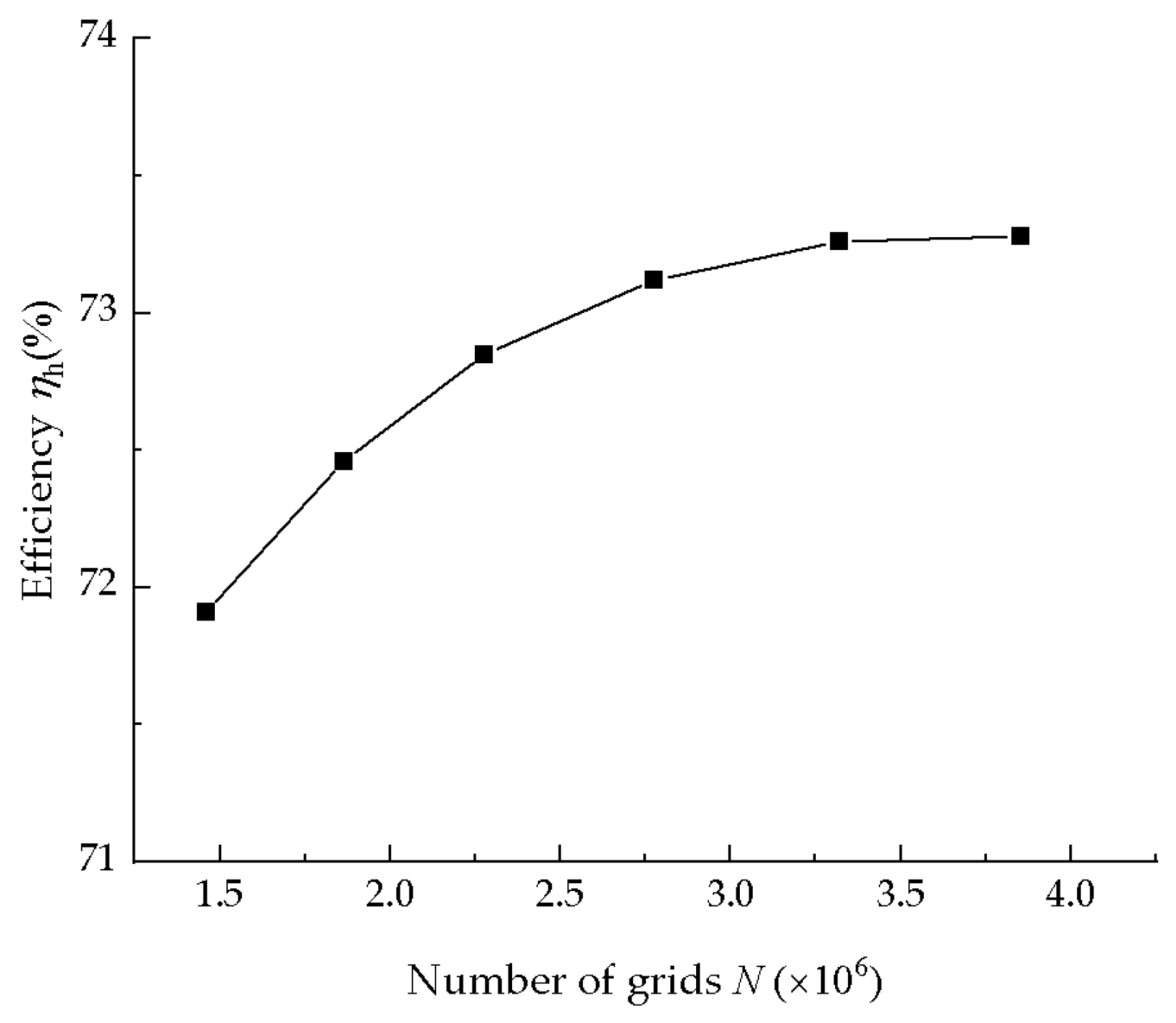
2.3. Mesh Generation
2.4. Numerical Setup
2.5. Experimental Validation
3. Analysis of Entropy Generation Loss
3.1. Entropy Generation Losses of Different Types in a Hydraulic Turbine
3.2. Entropy Generation Losses of Different Flow Components in a Hydraulic Turbine
4. Analysis of Impeller Entropy Generation Rates
4.1. Turbulent Entropy Generation Rates in the Impeller
4.2. Impeller Wall Entropy Generation Rates
5. Analysis of Entropy Generation Rates in a Draft Tube
5.1. Turbulent Entropy Generation Rates in a Draft Tube
5.2. Entropy Generation Rates in a Draft Tube Wall
6. Conclusions
- (1)
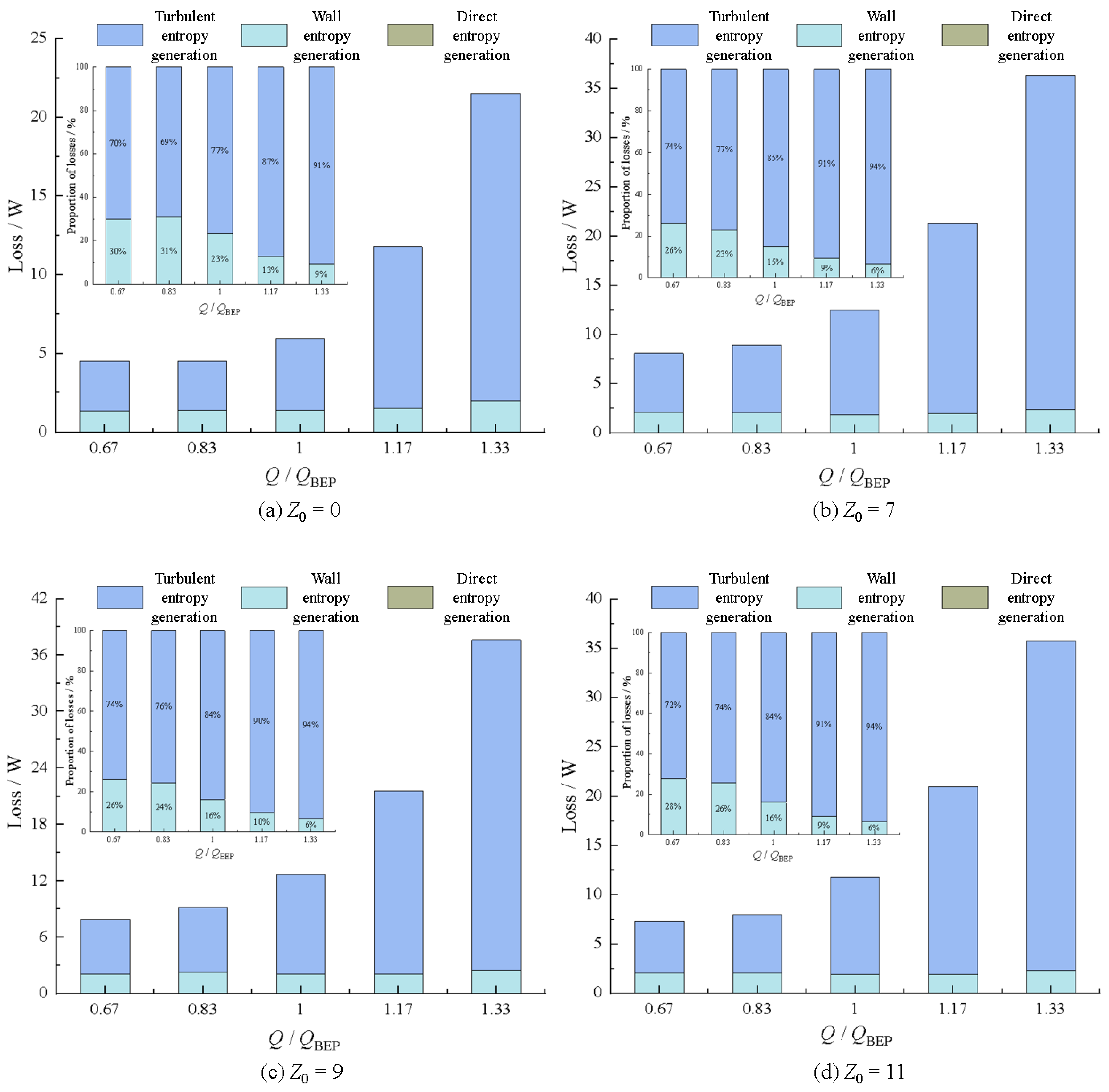
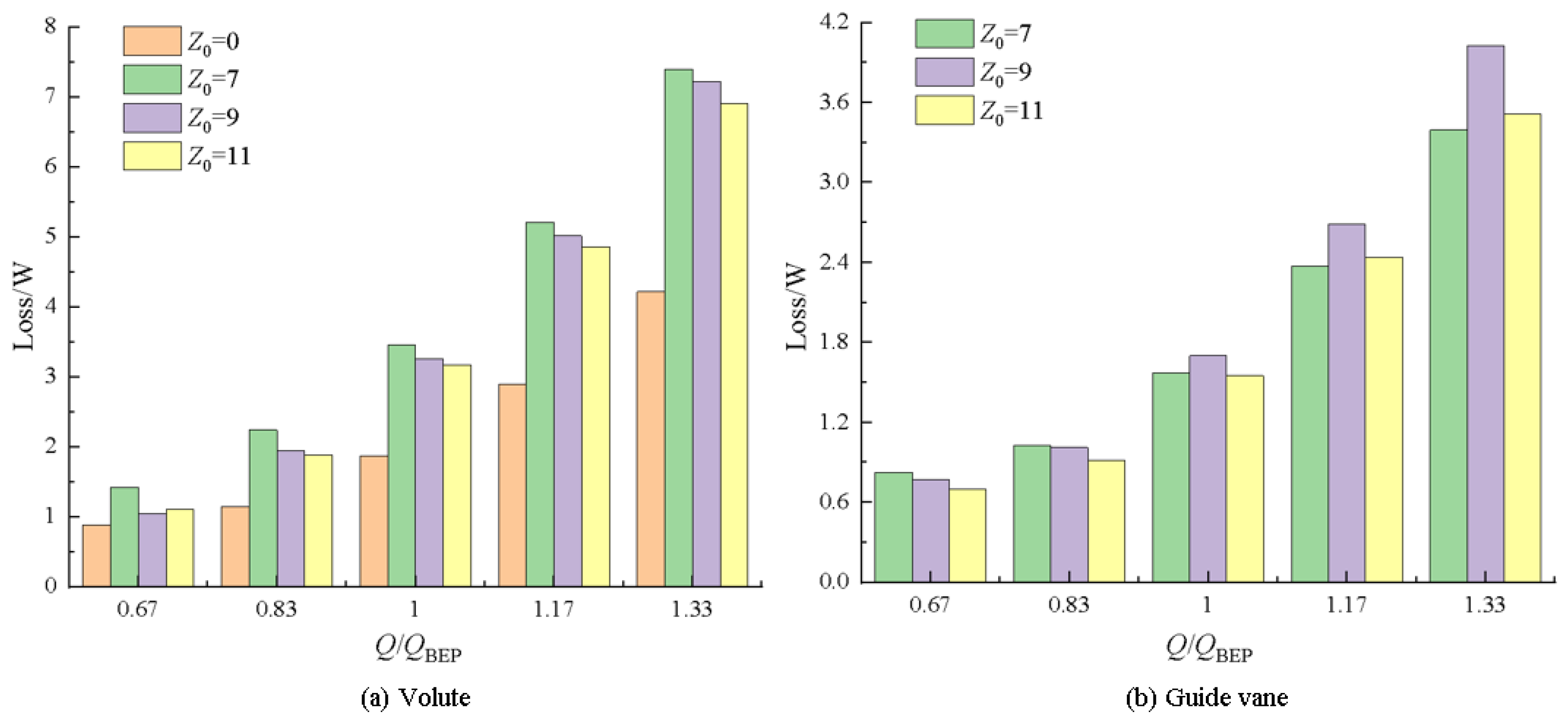
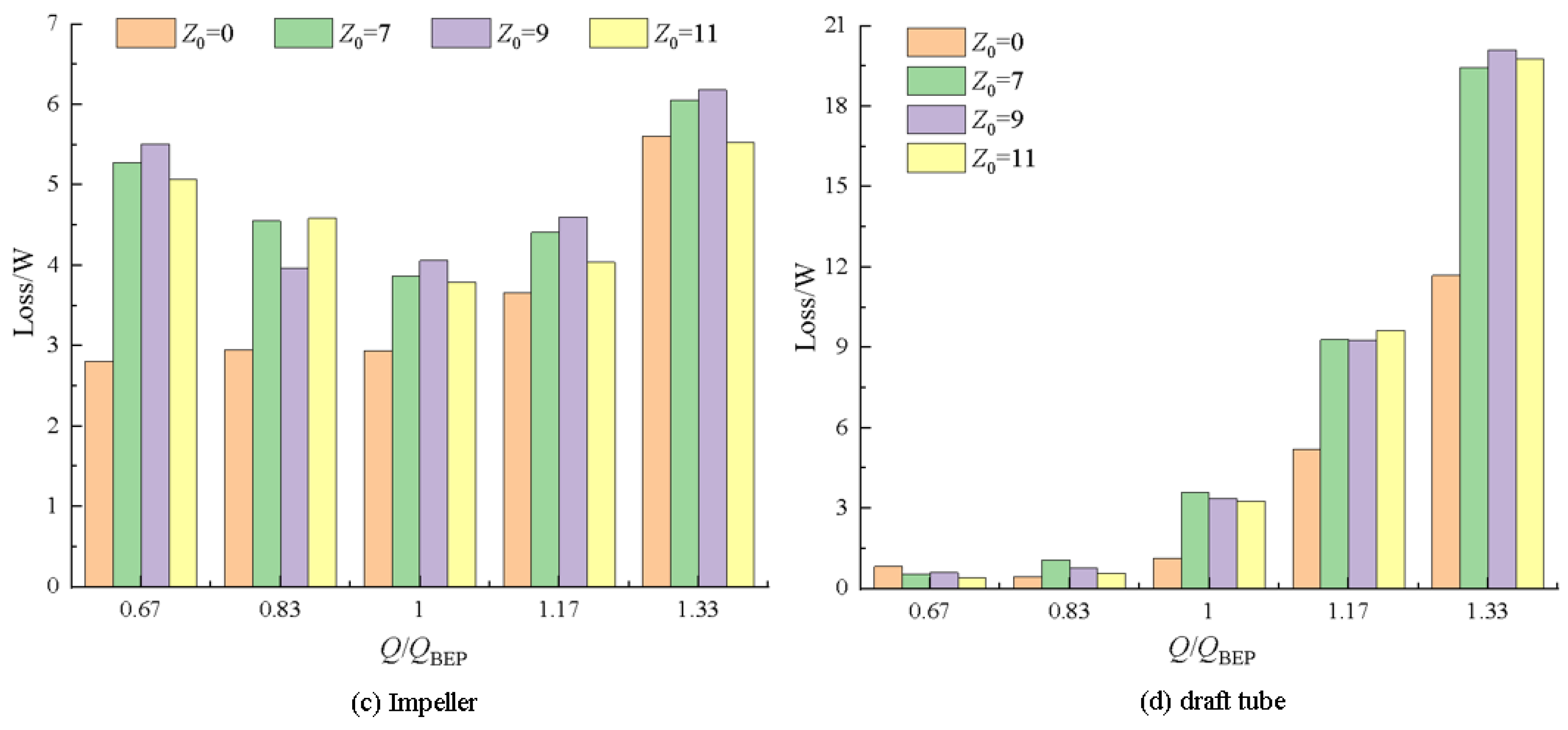
- For hydraulic turbines with different numbers of guide vanes, turbulent entropy generation was the main entropy generation loss, followed by wall entropy generation. The average proportion of turbulent entropy generation loss in guide-vane-free hydraulic turbines was 78.6%, while after adding guide vanes, the average proportion of turbulent entropy generation loss in hydraulic turbines was around 83%, indicating that turbulent fluctuations were the main cause of energy loss. Under optimal operating conditions, the proportions of impeller entropy generation loss in the Z0 = 0, Z0 = 7, Z0 = 9, and Z0 = 11 turbines were 49.24%, 30.52%, 32.79%, and 32.31%, respectively. The total entropy generation loss of the hydraulic turbine with added guide vanes gradually decreased as the number of guide vanes increased.
- (2)
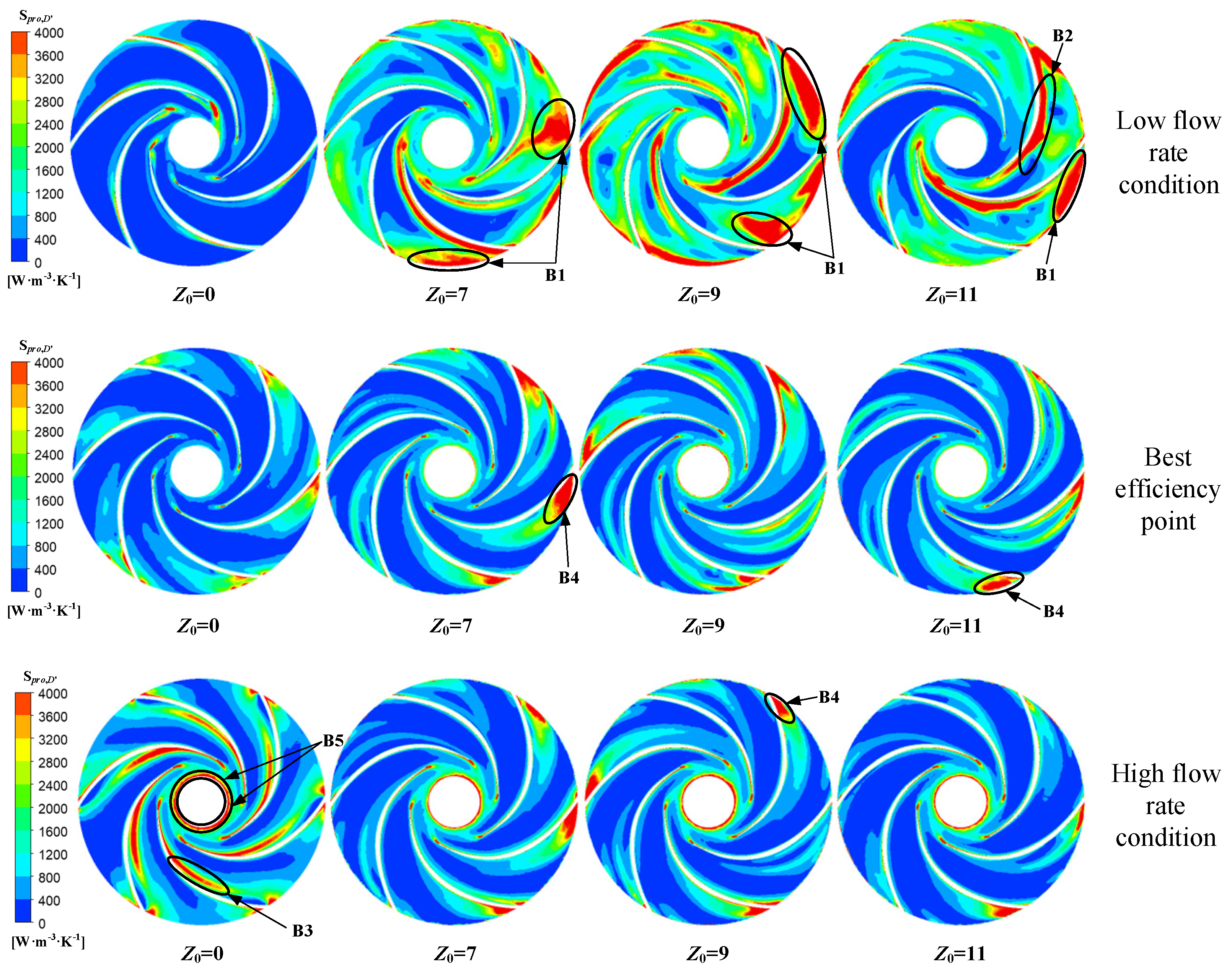
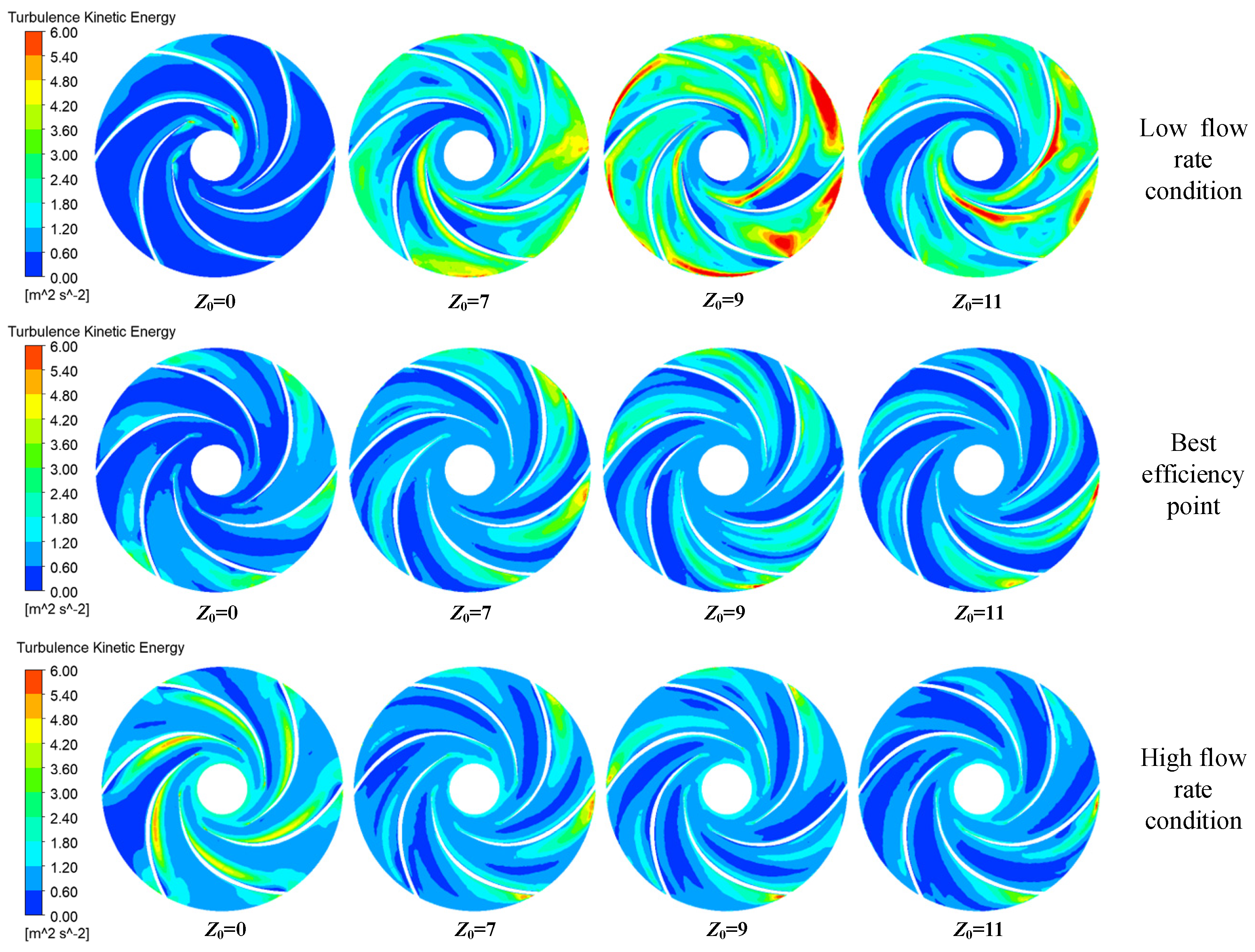
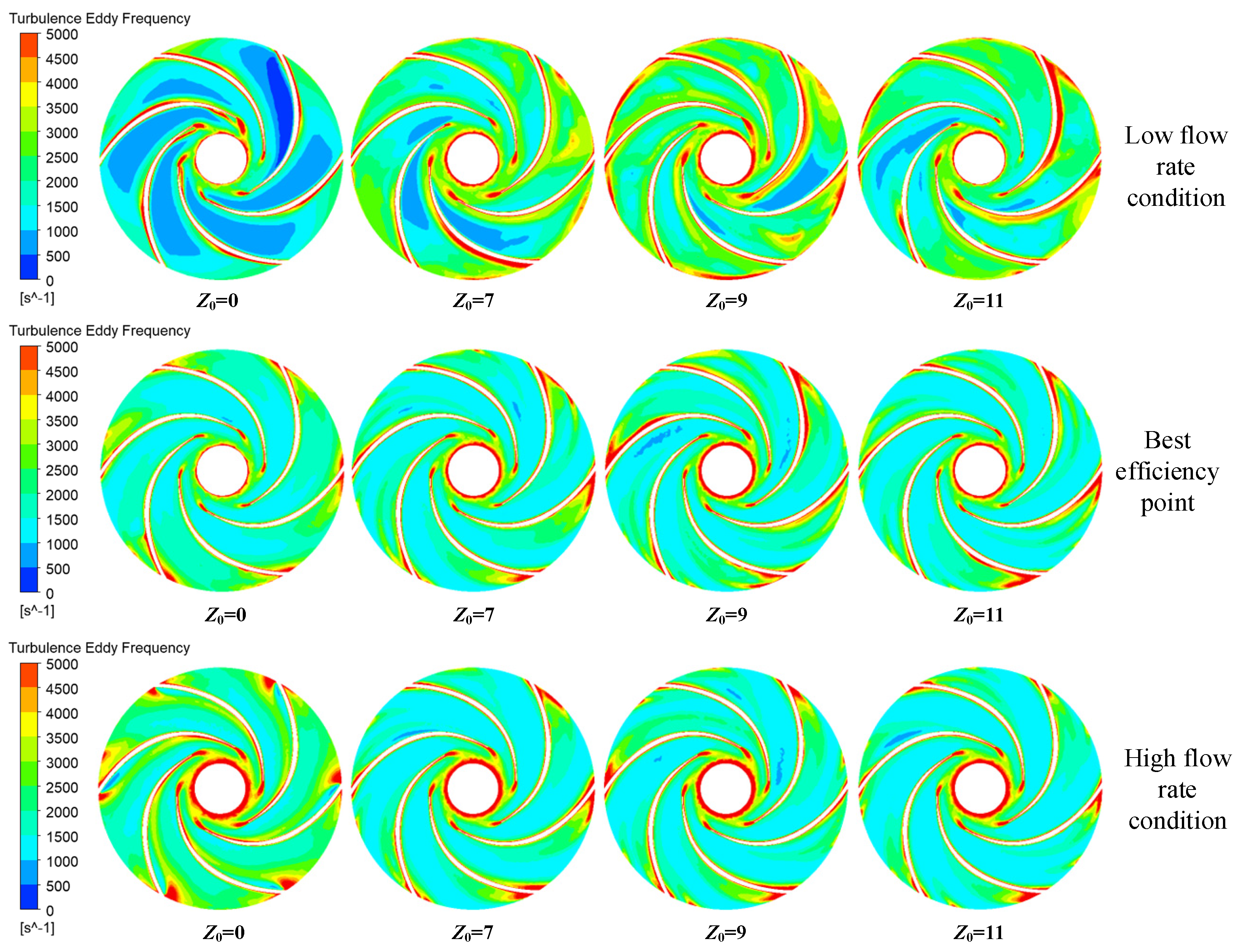
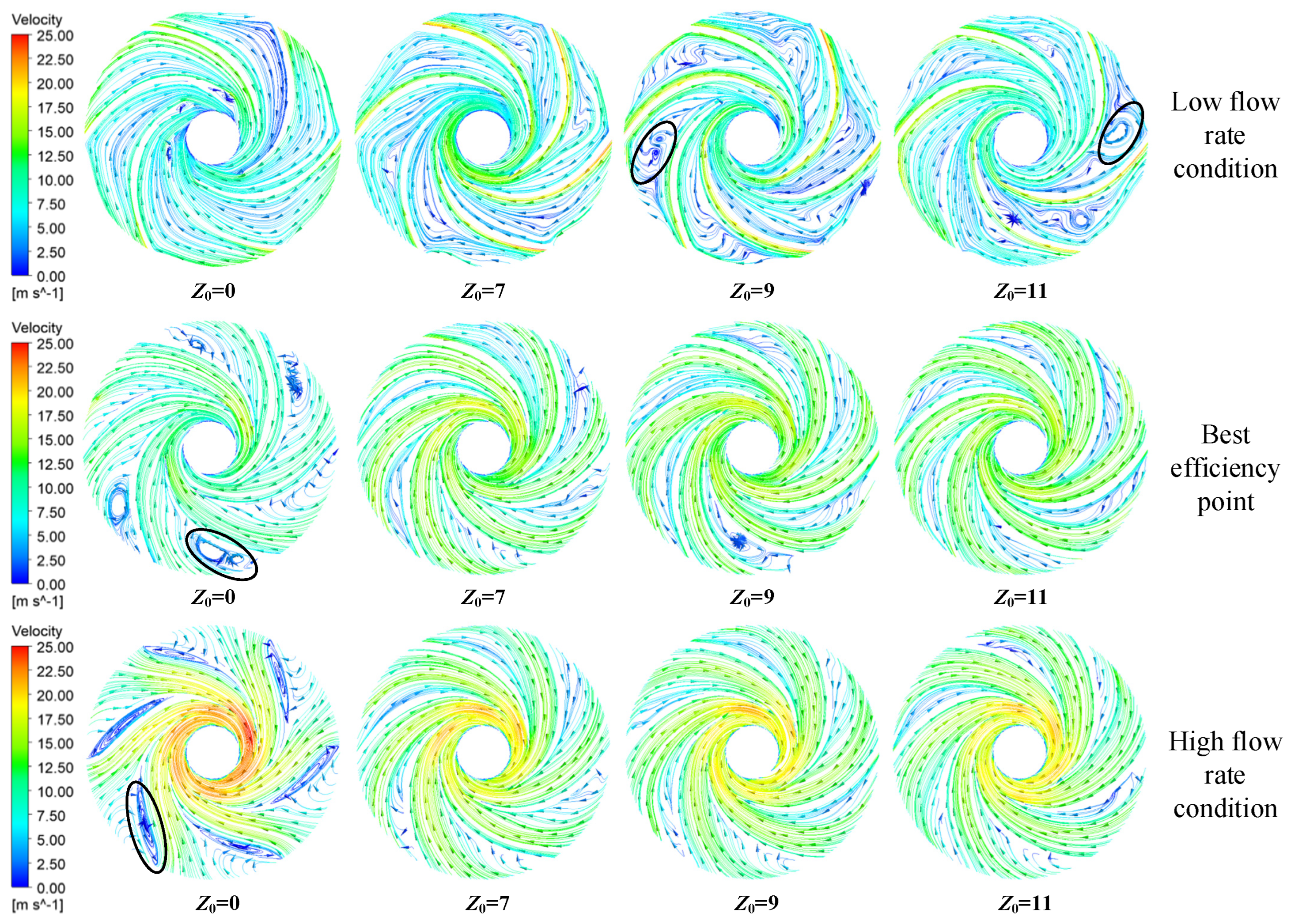
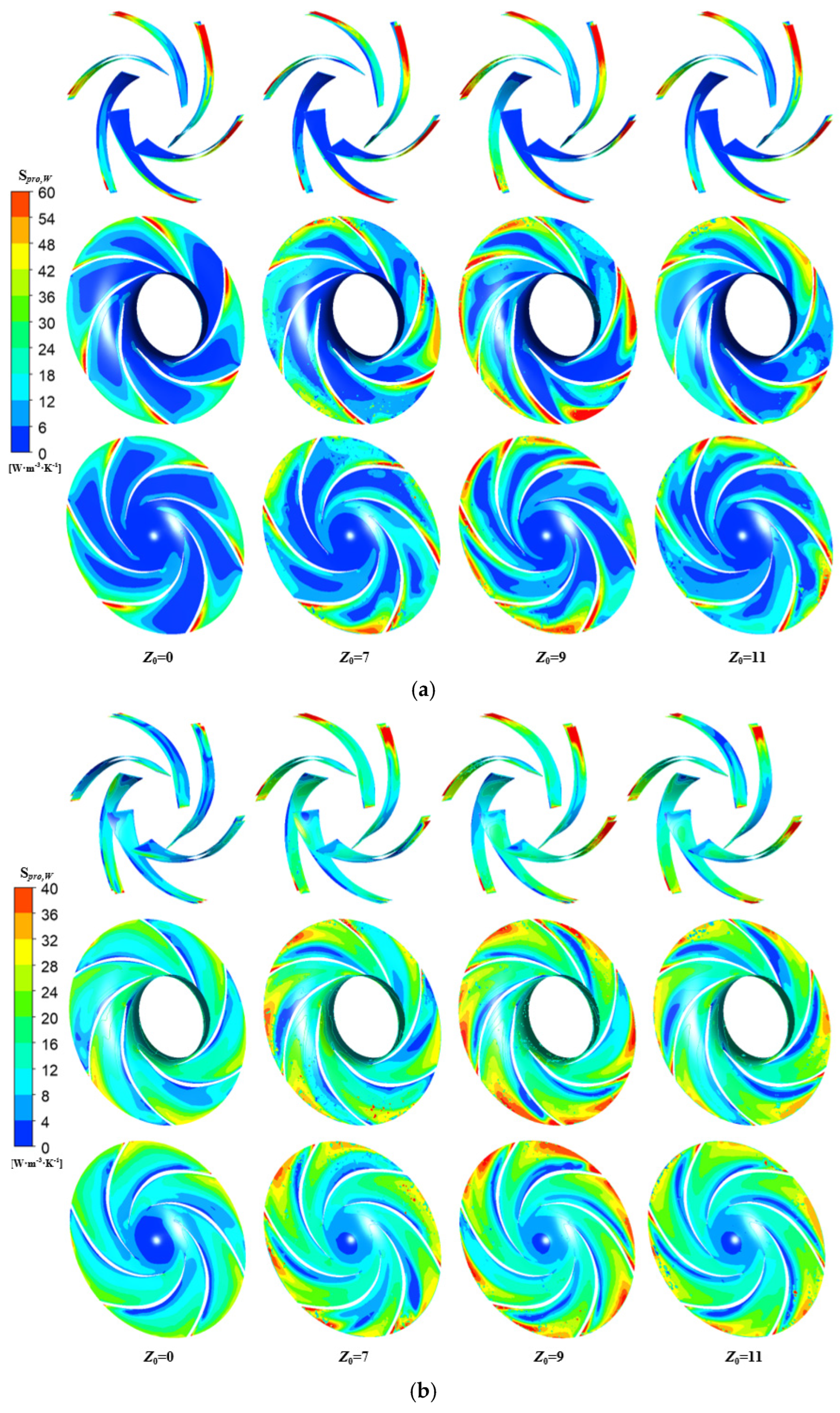
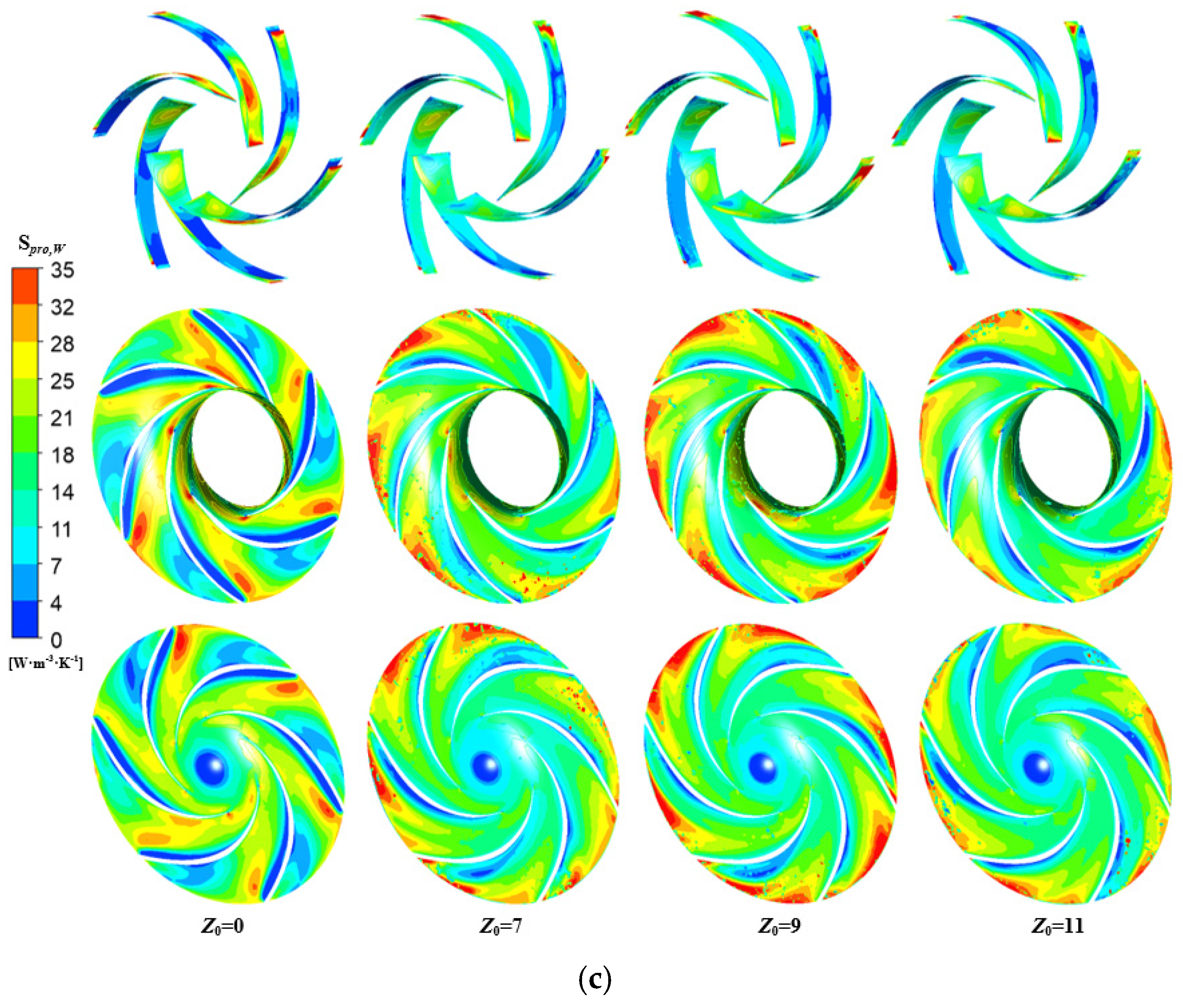
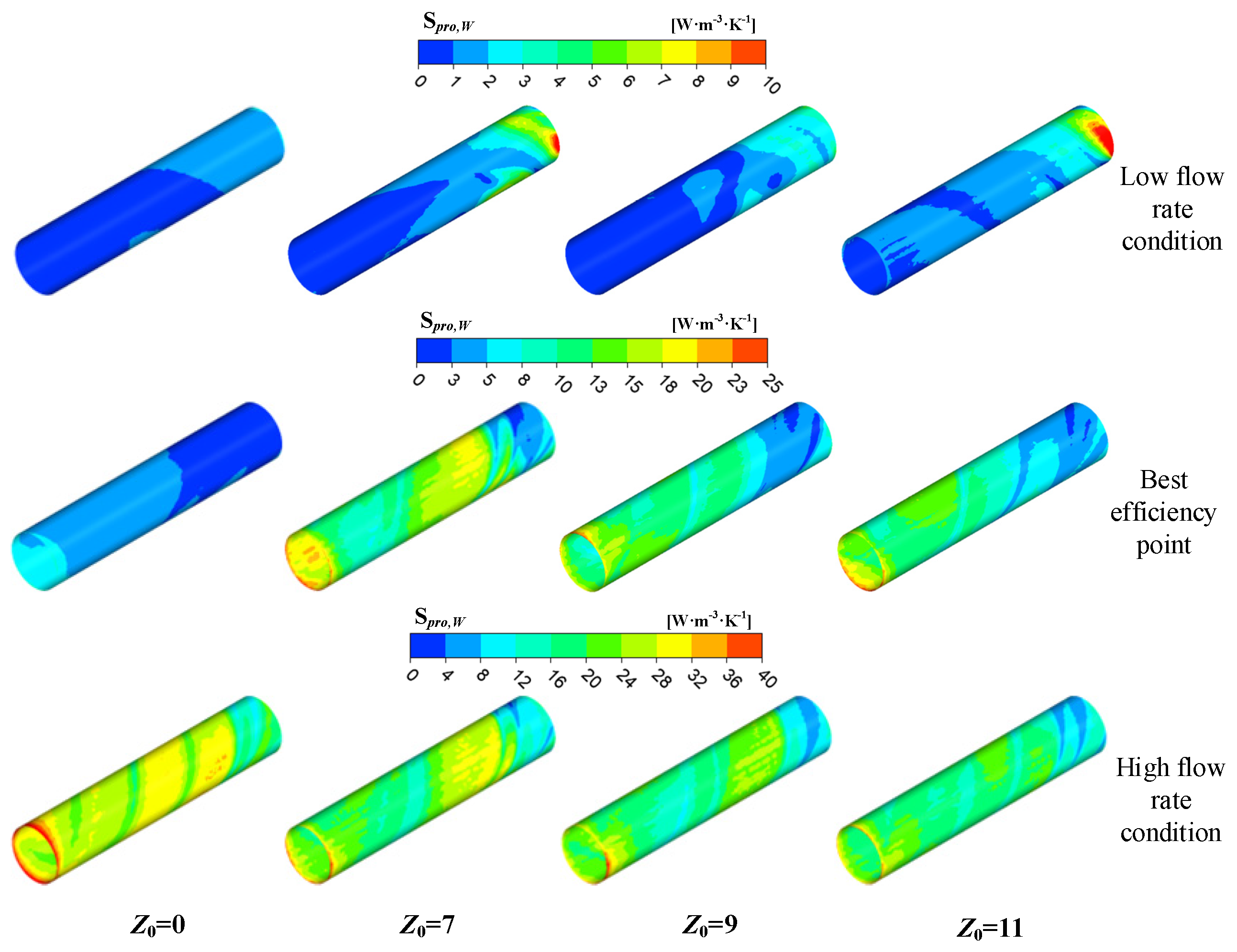
- Under optimal operating conditions, the impeller entropy generation losses in the Z0 = 7, Z0 = 9, and Z0 = 11 turbines were 32.08%, 48.81%, and 29.35% higher, respectively, than in the Z0 = 0 turbine. In guide-vane-free turbines, the high turbulent entropy generation rate region in the impeller was relatively large under high-flow-rate conditions and was located on the suction side of the blades, where significant velocity gradients induced vortices and backflow. For guide-vane-equipped turbines, the turbulent entropy generation rate was higher under low-flow-rate conditions, primarily occurring at the impeller passage inlets and the pressure sides of the blades. This was attributed to rotor–stator interactions and the influence of the guide-vane wake flow as well as flow separation caused by negative incidence angles at the blade inlets, which increased turbulence intensity.
- (3)
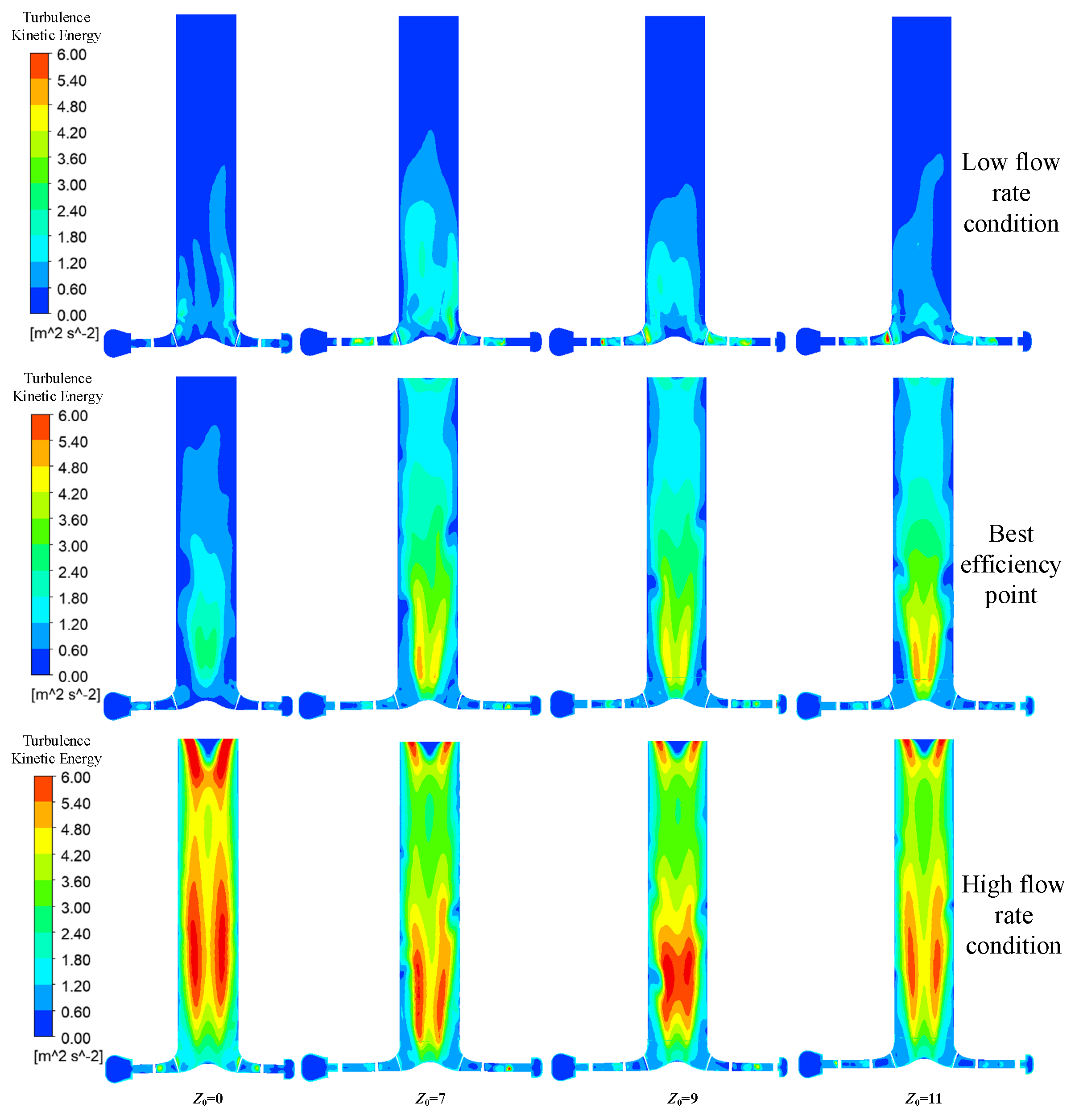
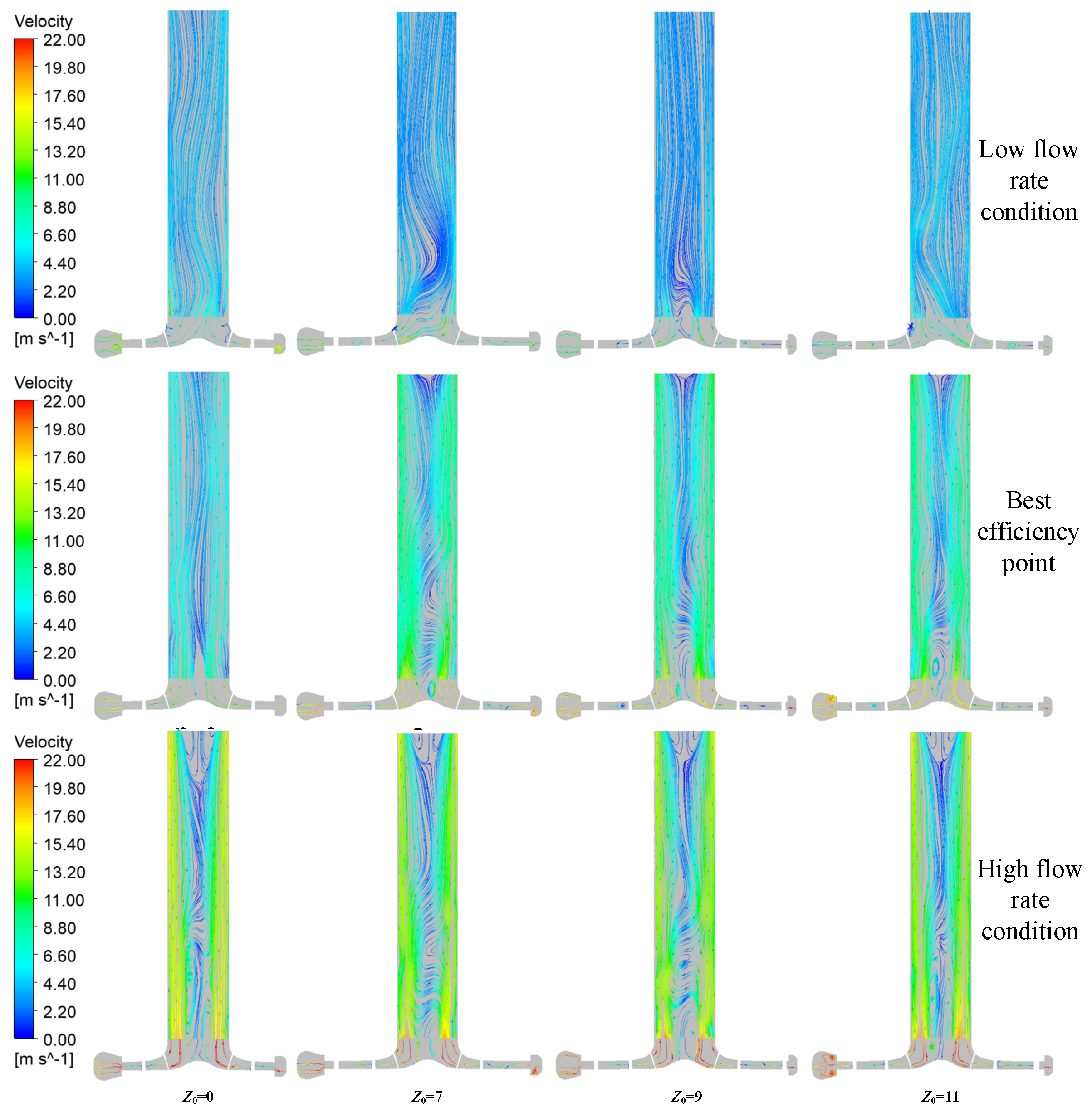
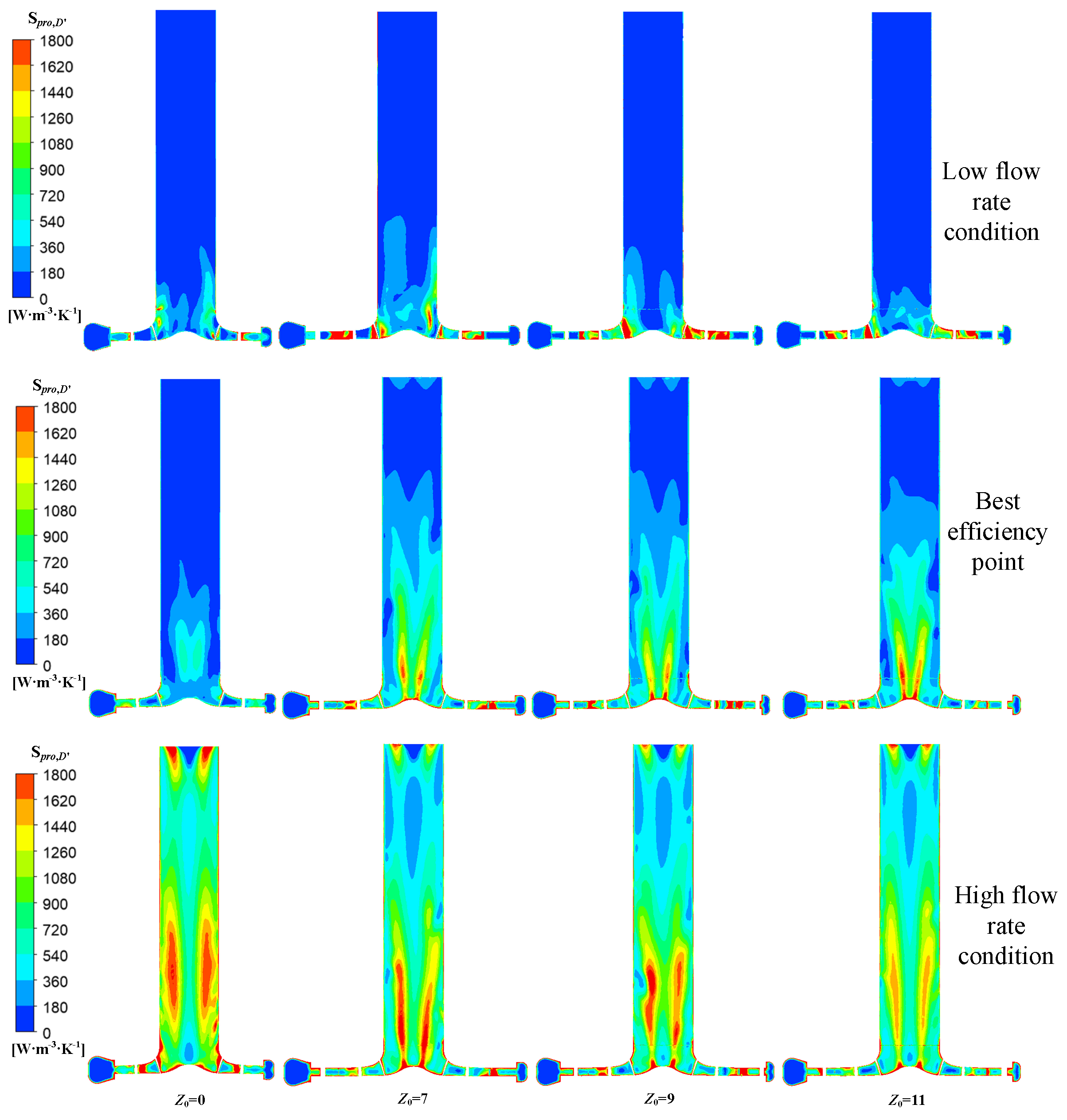
- When the flow rate exceeded the optimal operating condition, the entropy generation loss in the draft tube increased more significantly. Under optimal conditions, the draft tube entropy generation loss of the Z0 = 7 turbine was 6.84% and 10.12% greater than the Z0 = 9 and Z0 = 11 turbines, respectively. The draft tube entropy generation rate was higher under high-flow-rate conditions, with the region of the high turbulent entropy generation rate located near the middle flow passage in the upstream of the draft tube. This was due to strong velocity fluctuations and the formation of vortices under such conditions, which led to higher turbulent kinetic energy.
Author Contributions
Funding
Data Availability Statement
Acknowledgments
Conflicts of Interest
Abbreviations
| BEP | Best Efficiency Point |
| PAT | Pump as Turbine |
| EGR | Entropy Generation Rate |
| SST | Shear Stress Transport |
References
- Diao, W.S. Study on Application Feasibility of Hydraulic Turbine in High-Pressure Hydrotreating Unit. Pet. Refin. Eng. 2008, 38, 33–35. [Google Scholar]
- Zheng, Z.; Wang, S.L.; Wang, T.; Song, Q.; Xie, L. Present Status and Prospect of Fluid Pressure Energy Recovery in Natural Gas Transmission and Distribution. Nat. Gas Oil. 2009, 27, 11–15. [Google Scholar]
- Shi, F.; Zong, X.; Zhao, G.; Zhang, D.; Wang, P.; Zhan, H. Study on the Influence of Split Blades on the Force Characteristics and Fluid–Structure Coupling Characteristics of Pumps as Turbines. Energies 2025, 18, 1642. [Google Scholar] [CrossRef] [Scilit]
- Fu, X.; Li, D.; Wang, H.; Zhang, G.; Li, Z.; Wei, X.; Qin, D. Energy Analysis in a Pump-Turbine During the Load Rejection Process. J. Fluids Eng. 2018, 140, 101107. [Google Scholar] [CrossRef] [Scilit]
- Pei, J.; Meng, F.; Li, Y.J.; Yuan, S.Q.; Chen, J. Effects of Distance Between Impeller and Guide Vane on Losses in a Low Head Pump by Entropy Production Analysis. Adv. Mech. Eng. 2016, 8, 1687814016679568. [Google Scholar] [CrossRef] [Scilit]
- Li, D.Y.; Wang, H.J.; Qin, Y.L.; Han, L.; Wei, X.Z.; Qin, D.Q. Entropy Production Analysis of Hysteresis Characteristic of a Pump-Turbine Model. Energy Convers. Manag. 2017, 149, 175–191. [Google Scholar] [CrossRef] [Scilit]
- Chang, H.; Shi, W.D.; Li, W.; Liu, J.R. Energy Loss Analysis of Novel Self-Priming Pump Based on the Entropy Production Theory. J. Therm. Sci. 2019, 28, 306–318. [Google Scholar] [CrossRef] [Scilit]
- Zhang, Y.X.; Hou, H.C.; Xu, C.; He, W.X.; Li, Z.L. Application of Entropy Production Method to Centrifugal Pump Energy Loss Evaluation. J. Drain. Irrig. Mach. Eng. 2017, 35, 277–282+288. [Google Scholar]
- Brizuela, E.A. Numerical Modelling of Entropy Generation and Transport in the Blade-Tip Gap Layer of a Radial Impeller. In Proceedings of the ASME 1993 International Gas Turbine and Aeroengine Congress and Exposition, Cincinnati, OH, USA, 24–27 May 1993. [Google Scholar]
- Hou, H.C. 2D Viscous Hydraulic Design and Entropy Production Diagnosis Optimization of an Ultra-Low Specific Speed Centrifugal Pump. Ph.D. Thesis, China University of Petroleum, Beijing, China, 2019. [Google Scholar]
- Feng, J.J.; Zhang, Y.; Zhu, G.J.; Li, Y.Z.; Li, W.F.; Luo, X.Q. Transition Process Characteristics of Centrifugal Pump with Power-Off Based on Entropy Production Theory. Trans. Chin. Soc. Agric. Eng. 2020, 36, 10–17. [Google Scholar]
- Liu, K.T.; Liu, H.Y.; Qu, L.T.; Liu, D.C.; Chi, F.D.; Kan, K.; Zhou, D.Q. Analysis of Hydraulic Loss Characteristics of Francis Turbine Based on Entropy Production Theory. Wat. Res. Pow. 2024, 42, 157–161. [Google Scholar]
- Gong, R.Z.; Wang, H.J.; Chen, L.X.; Li, D.Y.; Zhang, H.C.; Wei, X.Z. Application of Entropy Production Theory to Hydro-Turbine Hydraulic Analysis. Sci. China Technol. Sci. 2013, 56, 1636–1643. [Google Scholar] [CrossRef] [Scilit]
- Altafi, D.; Mojaddam, M.; Bastankhah, M. Entropy generation rate analysis of turbocharger radial flow compressor in range from surge to choke. Proc. Inst. Mech. Eng. Part A J. Power Energy 2024, 238, 401–426. [Google Scholar] [CrossRef] [Scilit]
- Dennis, B.H.; Egorov, I.N.; Han, Z.X.; Dulikravich, G.S.; Poloni, C. Multi-Objective Optimization of Turbomachinery Cascades for Minimum Loss, Maximum Loading, and Maximum Gap-to-Chord Ratio. Int. J. Turbo Jet Eng. 2001, 18, 201–210. [Google Scholar] [CrossRef] [Scilit]
- Iandoli, C.L.; Sciubba, E.; Zeoli, N. The Computation of the Entropy Generation Rate for Turbomachinery Design Applications: Some Theoretical Remarks and Practical Examples. Int. J. Energy Technol. Policy 2008, 6, 75–92. [Google Scholar] [CrossRef] [Scilit]
- Chen, Q.F. Entropy Production Rate Analysis in S Zone for a Pump-Turbine. Master’s Thesis, Tsinghua University, Beijing, China, 2018. [Google Scholar]
- De Groot, S.R.; Mazur, P. Non-Equilibrium Thermodynamics; Courier Corporation: North Chelmsford, MA, USA, 2013. [Google Scholar]
- Kolmogorov, A.N. The local structure of turbulence in incompressible viscous fluid for very large Reynolds numbers. Proc. R. Soc. Lond. A 1991, 434, 9–13. [Google Scholar]
- Kock, F.; Herwig, H. Local Entropy Production in Turbulent Shear Flows: A High-Reynolds Number Model with Wall Functions. Int. J. Heat Mass Transf. 2004, 47, 2205–2215. [Google Scholar] [CrossRef] [Scilit]
- Kock, F.; Herwig, H. Entropy Production Calculation for Turbulent Shear Flows and Their Implementation in CFD Codes. Int. J. Heat Fluid Flow 2005, 26, 672–680. [Google Scholar] [CrossRef] [Scilit]
- Sadiki, A.; Agrebi, S.; Ries, F. Entropy Generation Analysis in Turbulent Reacting Flows and Near Wall: A Review. Entropy 2022, 24, 1099. [Google Scholar] [CrossRef] [Scilit]
- Zhang, X.; Wang, Y.; Xu, X.M.; Wang, H.Y. Energy Conversion Characteristics within Impeller of Low Specific Speed Centrifugal Pump. Trans. Chin. Soc. Agric. Mach. 2011, 42, 75–81. [Google Scholar]
- Wang, X.H.; Yang, J.H.; Xia, Z.T.; Guo, Y.L. Calculation and Analysis of Velocity Slip in Pump as Turbine. J. Huazhong Univ. Sci. Technol. 2017, 45, 64–68. [Google Scholar]
- Zhang, J.F.; Cai, H.K.; Chen, S.B.; Xue, J.; Li, Y.L. Influence of Long and Short Blade Trailing Edge Shape on Performance and Rotor-Stator Interaction in Centrifugal Pump. Trans. Chin. Soc. Agric. Mach. 2020, 51, 122–130+190. [Google Scholar]
- Lin, T.; Li, X.J.; Zhu, Z.C.; Xie, J.; Li, Y.; Yang, H. Application of Enstrophy Dissipation to Analyze Energy Loss in a Centrifugal Pump as Turbine. Renew. Energy 2021, 163, 43–55. [Google Scholar] [CrossRef] [Scilit]





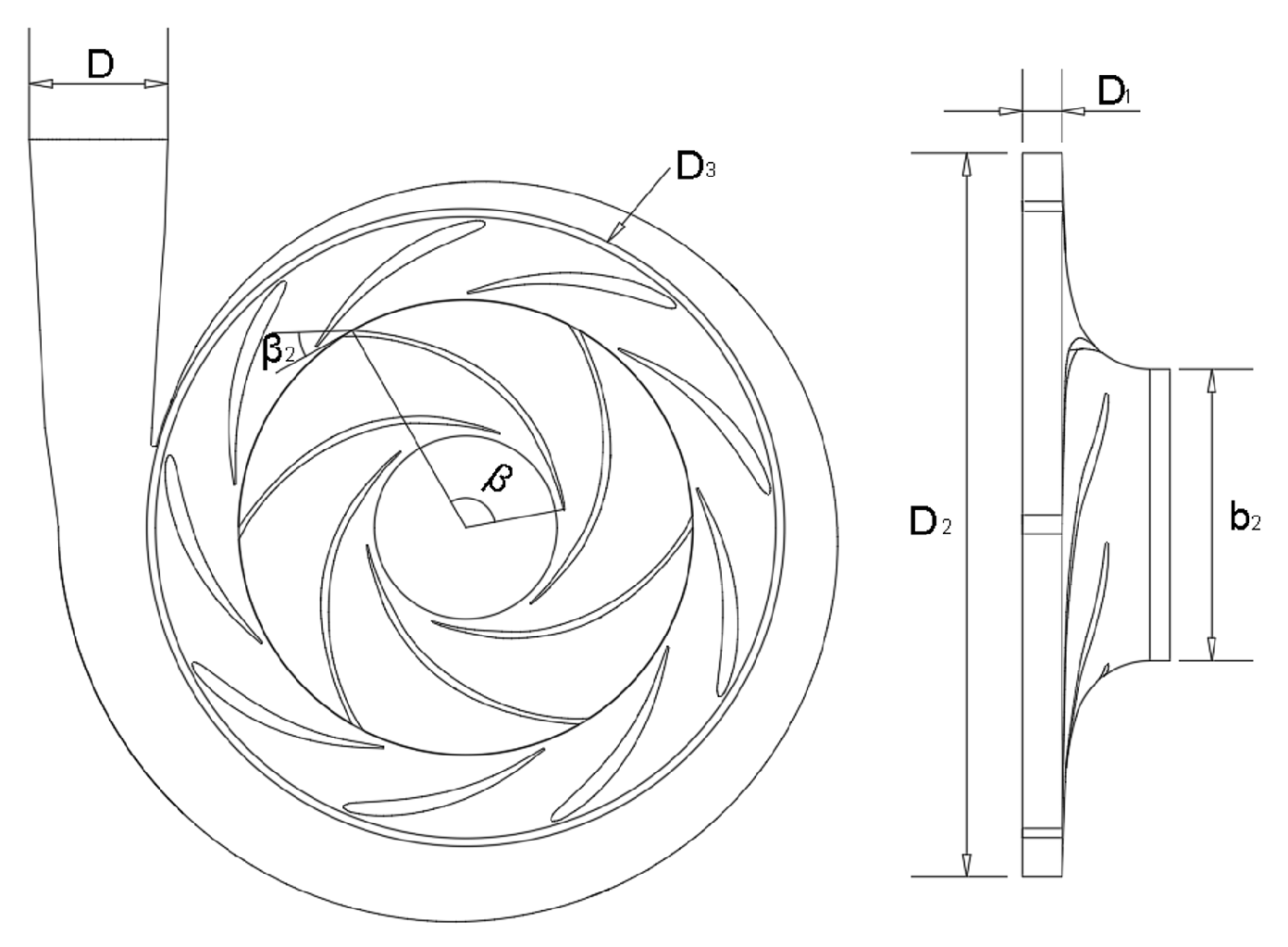
| Name | Component | Dimension | Numerical Value |
|---|---|---|---|
| The original hydraulic turbine | Impeller | Inlet diameter, D1/mm | 328 |
| Outlet diameter, D2/mm | 132 | ||
| Outlet width, b2/mm | 18 | ||
| Blade wrap angle, β/(°) | 105 | ||
| Inlet setting angle, β2/(°) | 29.5 | ||
| Outlet setting angle, β1/(°) | 36 | ||
| Number of blades, Z | 6 | ||
| Volute | Base circle diameter D3/mm | 340 | |
| Outlet width, b3/mm | 44 | ||
| Inlet diameter, D/mm | 100 | ||
| The improved hydraulic turbine (the impeller remained unchanged) | Volute | Base circle diameter, D3/mm | 456 |
| Outlet width, b3/mm | 44 | ||
| Inlet diameter, D/mm | 100 | ||
| Cross-sectional shape | Circular (elliptical) | ||
| Guide vane | Inlet angle, αa/(°) | 17 | |
| Outlet angle, αd/(°) | 12 | ||
| Chord length, l/mm | 18 | ||
| Height, h/mm | 151.7 | ||
| Number of blades, Z0 | 7, 9, and 11 |
| Name | Impeller | Volute | Guide Vane | Exit Extension |
|---|---|---|---|---|
| Hydraulic turbine | 29.02 | 26.28 | 27.43 | 19.24 |
Disclaimer/Publisher’s Note: The statements, opinions and data contained in all publications are solely those of the individual author(s) and contributor(s) and not of MDPI and/or the editor(s). MDPI and/or the editor(s) disclaim responsibility for any injury to people or property resulting from any ideas, methods, instructions or products referred to in the content. |
© 2025 by the authors. Licensee MDPI, Basel, Switzerland. This article is an open access article distributed under the terms and conditions of the Creative Commons Attribution (CC BY) license (https://creativecommons.org/licenses/by/4.0/).
Share and Cite
Shi, F.; Zhang, D.; Wang, P.; Wang, X.; Feng, C. Analysis of the Energy Loss Mechanism in Hydraulic Turbines with Different Guide-Vane Numbers Based on Entropy Generation Theory. Processes 2025, 13, 1899. https://doi.org/10.3390/pr13061899
Shi F, Zhang D, Wang P, Wang X, Feng C. Analysis of the Energy Loss Mechanism in Hydraulic Turbines with Different Guide-Vane Numbers Based on Entropy Generation Theory. Processes. 2025; 13(6):1899. https://doi.org/10.3390/pr13061899
Chicago/Turabian StyleShi, Fengxia, Denghui Zhang, Pengcheng Wang, Xiaohui Wang, and Chong Feng. 2025. "Analysis of the Energy Loss Mechanism in Hydraulic Turbines with Different Guide-Vane Numbers Based on Entropy Generation Theory" Processes 13, no. 6: 1899. https://doi.org/10.3390/pr13061899
APA StyleShi, F., Zhang, D., Wang, P., Wang, X., & Feng, C. (2025). Analysis of the Energy Loss Mechanism in Hydraulic Turbines with Different Guide-Vane Numbers Based on Entropy Generation Theory. Processes, 13(6), 1899. https://doi.org/10.3390/pr13061899