Article

Optimized Coordination of Distributed Energy Resources in Modern Distribution Networks Using a Hybrid Metaheuristic Approach


by
Mohammed Alqahtani
and
Ali S. Alghamdi
*
Department of Electrical Engineering, College of Engineering, Majmaah University, Al-Majmaah 11952, Saudi Arabia
*
Author to whom correspondence should be addressed.
Processes 2025, 13(5), 1350; https://doi.org/10.3390/pr13051350
Submission received: 28 March 2025 / Revised: 22 April 2025 / Accepted: 24 April 2025 / Published: 28 April 2025

Abstract

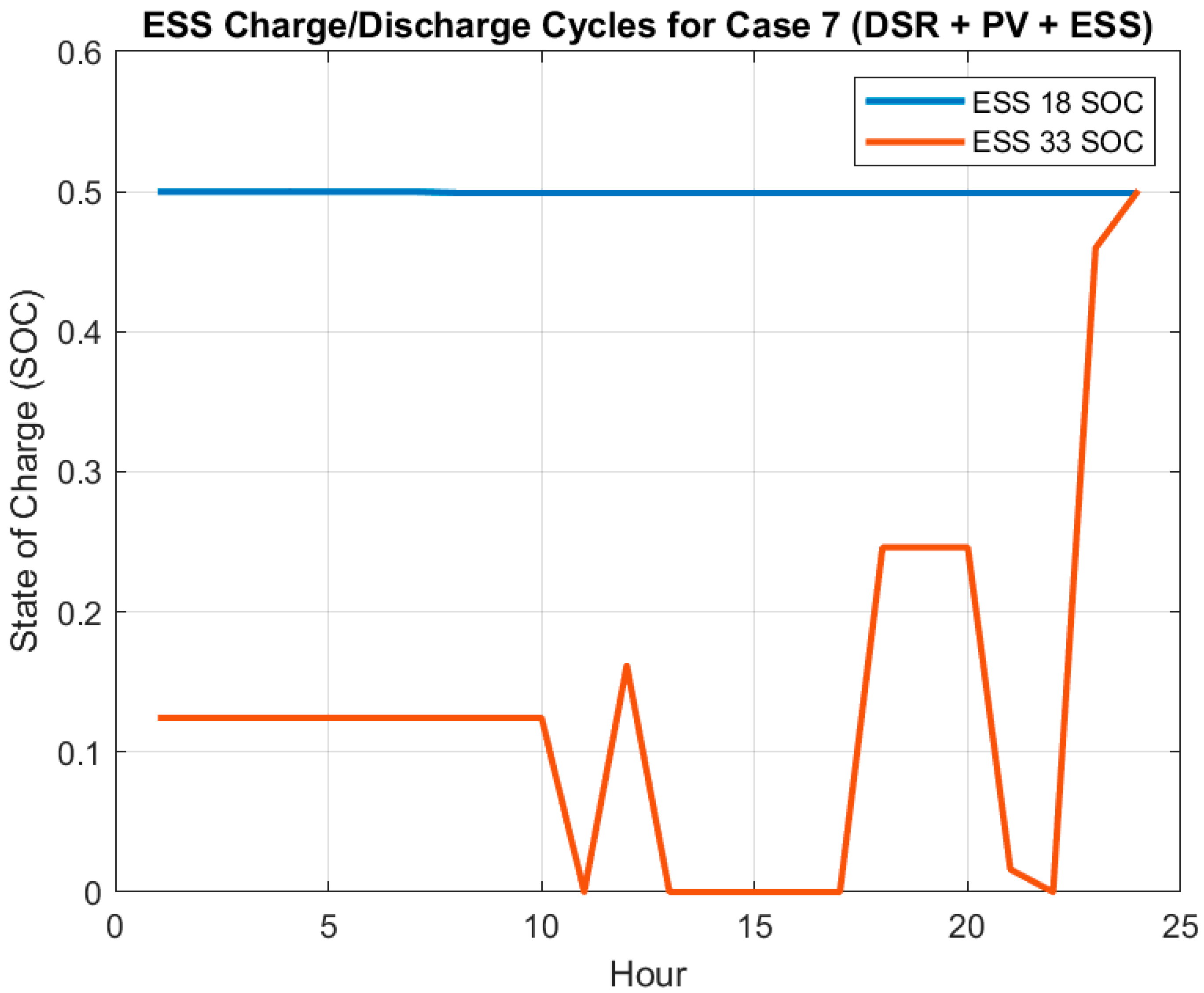
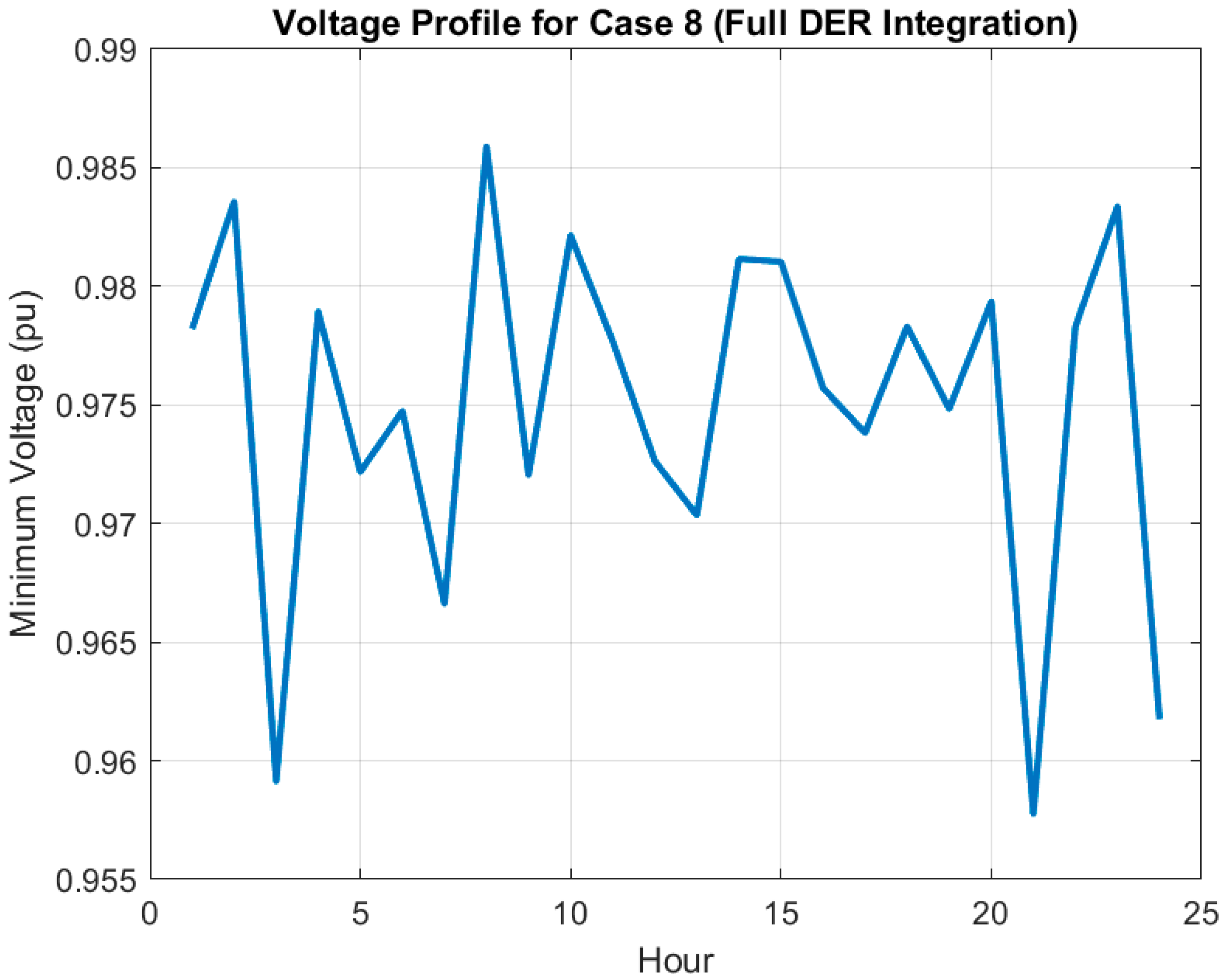
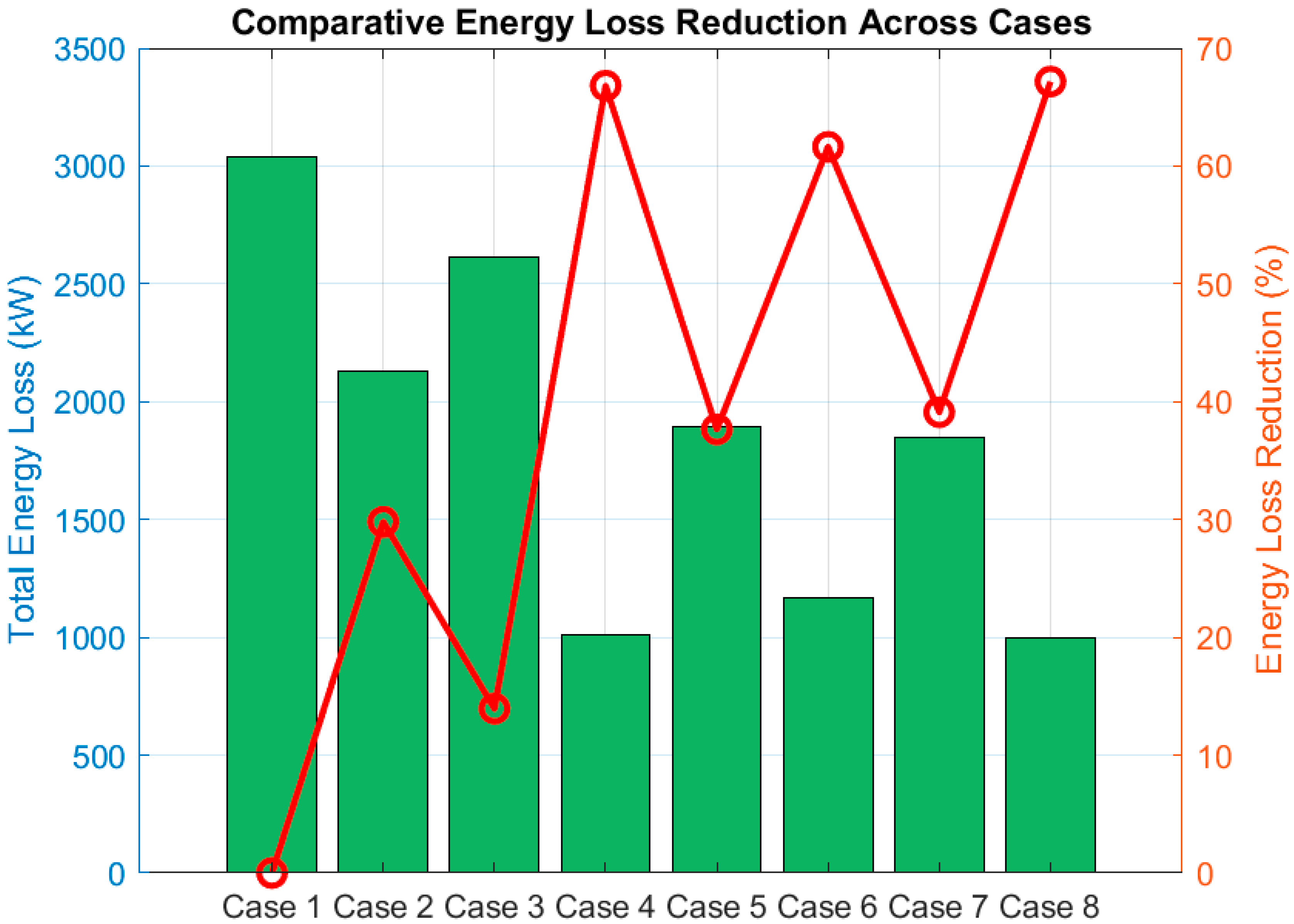
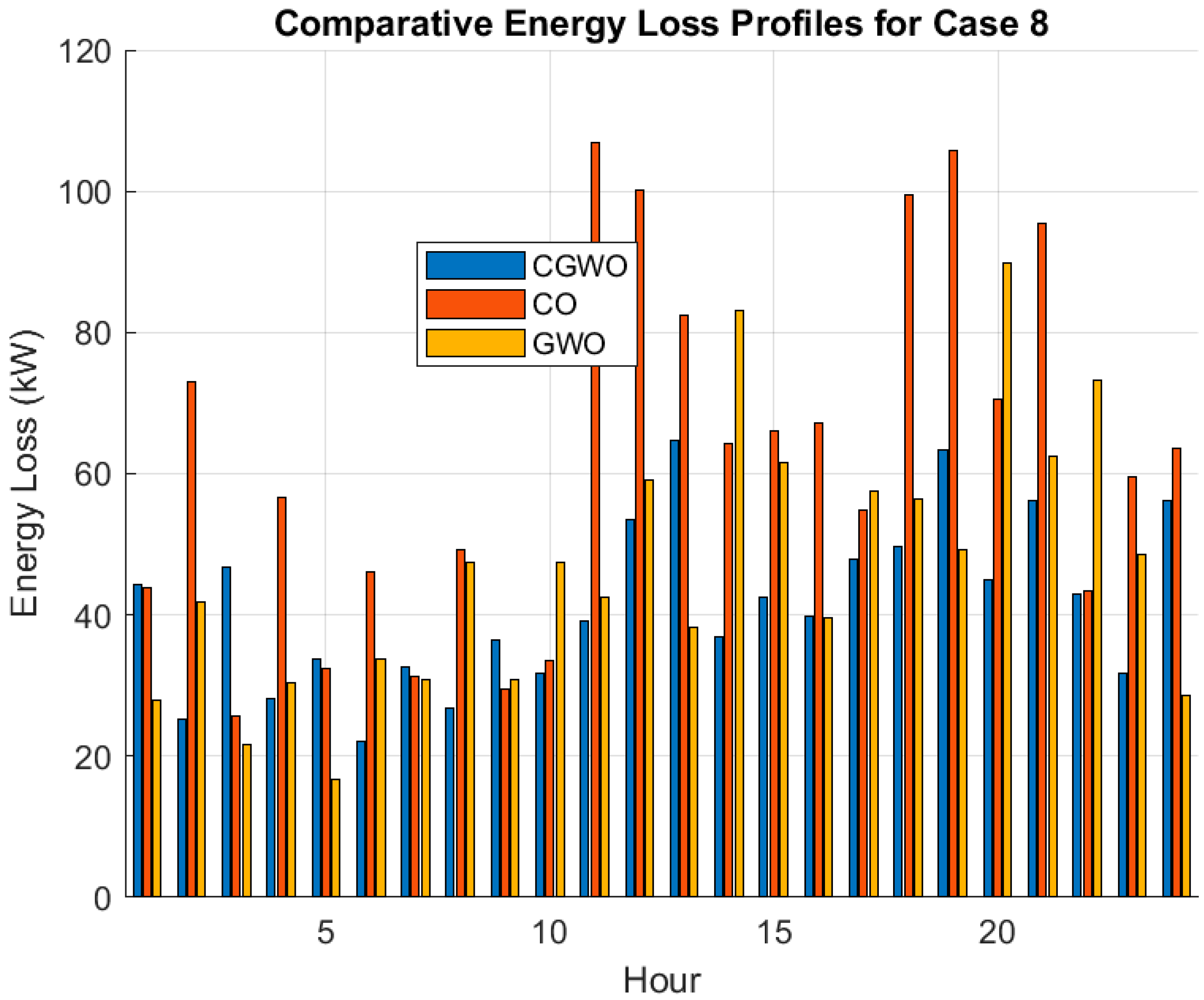
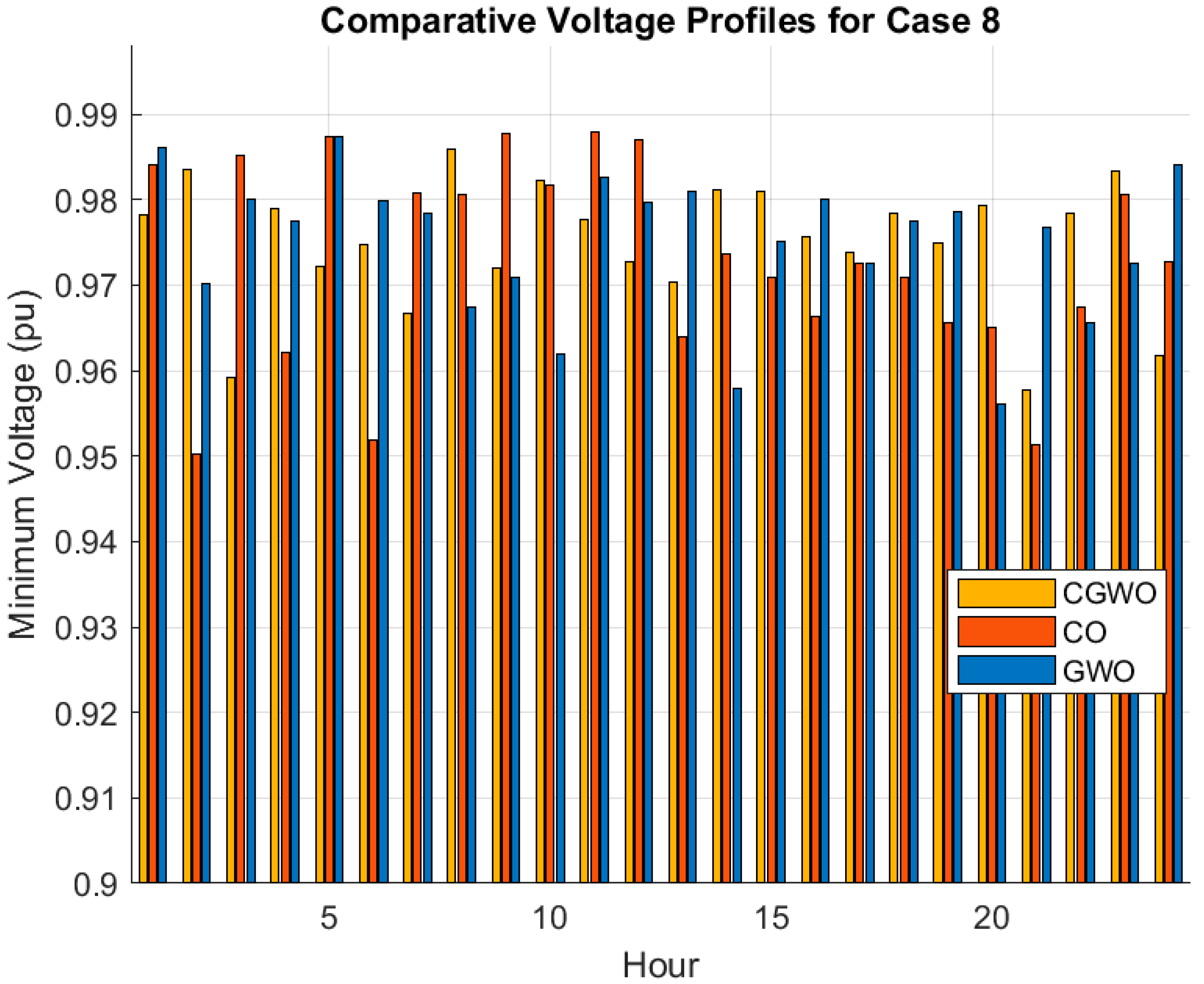
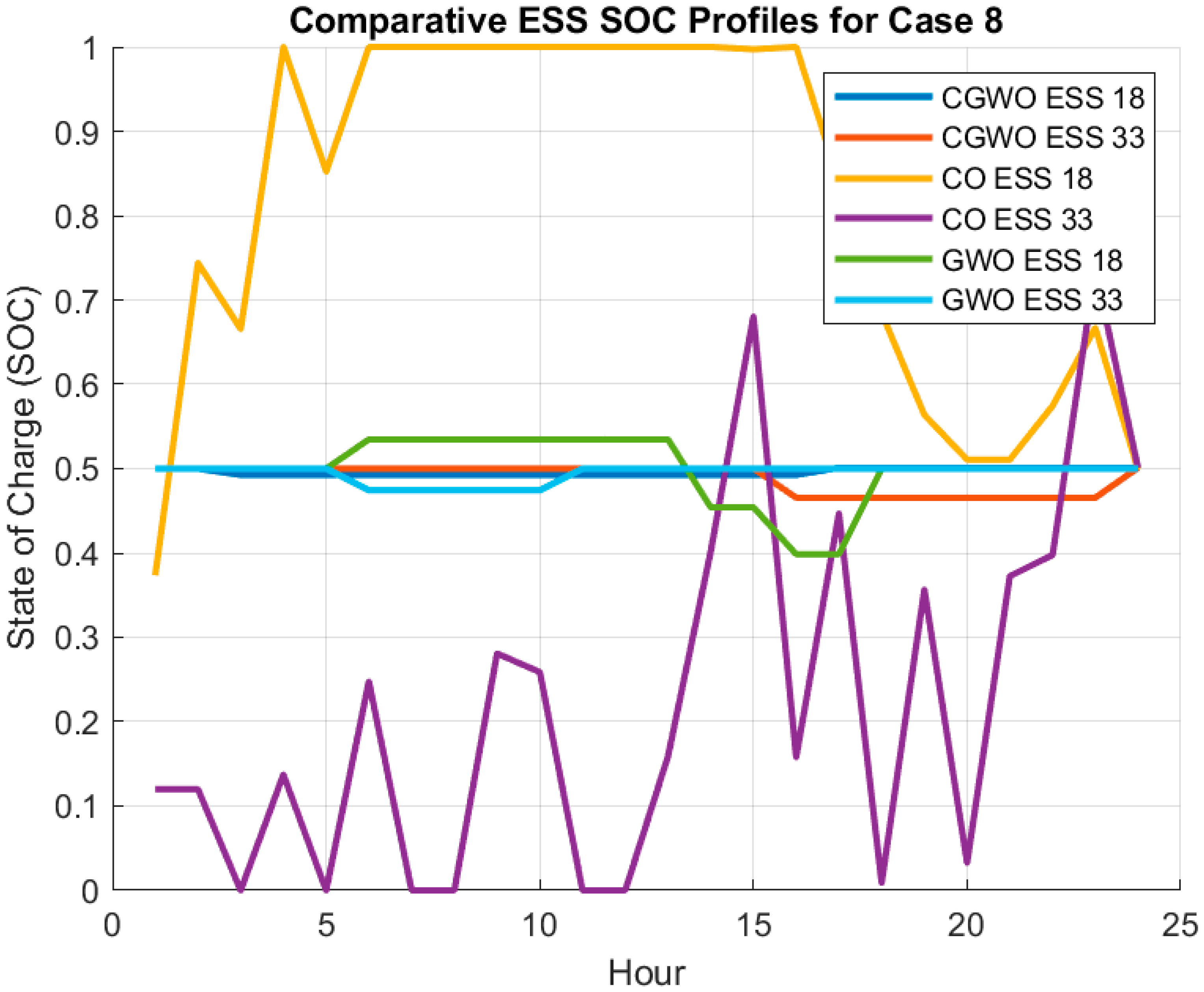
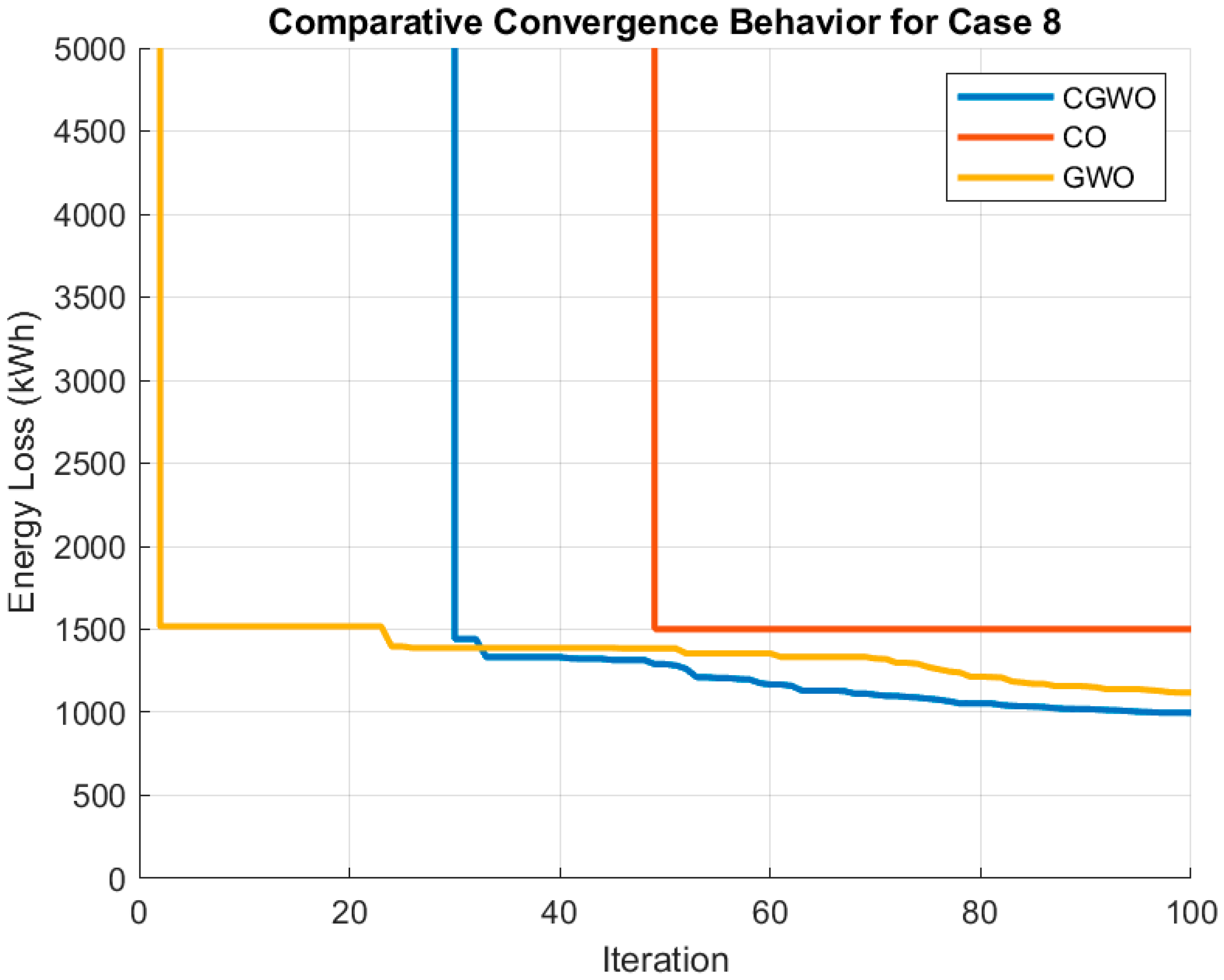
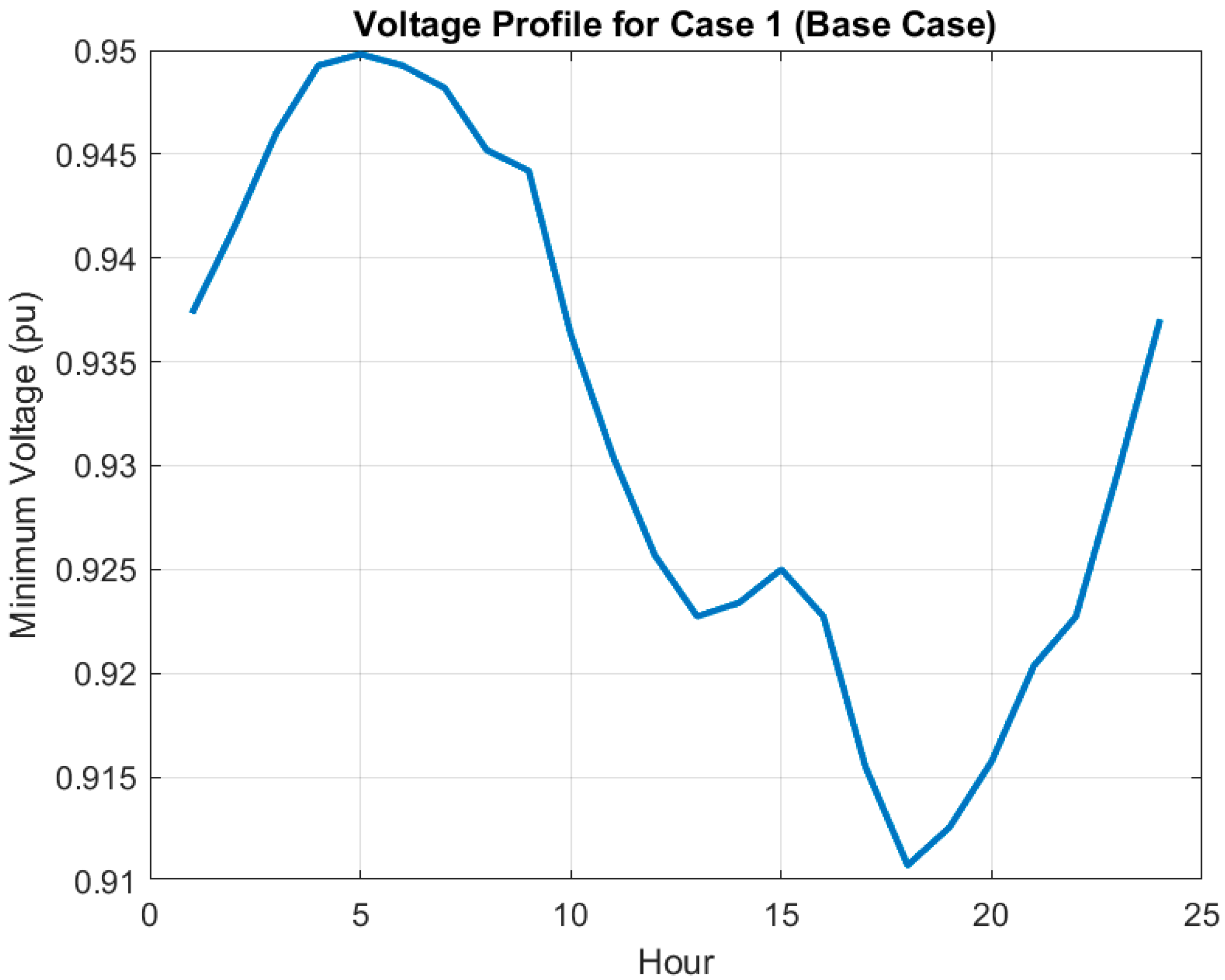
This paper presents a comprehensive optimization framework for modern distribution systems, integrating distribution system reconfiguration (DSR), soft open point (SOP) operation, photovoltaic (PV) allocation, and energy storage system (ESS) management to minimize daily active power losses. The proposed approach employs a novel hybrid metaheuristic algorithm, the Cheetah-Grey Wolf Optimizer (CGWO), which synergizes the global exploration capabilities of the Cheetah Optimizer (CO) with the local exploitation strengths of Grey Wolf Optimization (GWO). The optimization model addresses time-varying loads, renewable generation profiles, and dynamic network topology while rigorously enforcing operational constraints, including radiality, voltage limits, ESS state-of-charge dynamics, and SOP capacity. Simulations on a 33-bus distribution system demonstrate the effectiveness of the framework across eight case studies, with the full DER integration case (DSR + PV + ESS + SOP) achieving a 67.2% reduction in energy losses compared to the base configuration. By combining the global exploration of CO with the local exploitation of GWO, the hybrid CGWO algorithm outperforms traditional techniques (such as PSO and GWO) and avoids premature convergence while preserving computational efficiency—two major drawbacks of standalone metaheuristics. Comparative analysis highlights CGWO’s superiority over standalone algorithms, yielding the lowest energy losses (997.41 kWh), balanced ESS utilization, and stable voltage profiles. The results underscore the transformative potential of coordinated DER optimization in enhancing grid efficiency and reliability.
Keywords: optimization framework; distribution system reconfiguration; soft open point; photovoltaic allocation; energy storage system management; Cheetah-Grey Wolf Optimizer optimization framework; distribution system reconfiguration; soft open point; photovoltaic allocation; energy storage system management; Cheetah-Grey Wolf Optimizer