Abstract
With the rapid development of the coalbed methane (CBM) industry in China, coal seam No. 8 of the Benxi Formation in the Ordos Basin has emerged as a key target for CBM development due to its abundant deep reserves. However, wellbore instability during deep CBM extraction has become increasingly problematic, with the degradation of coal mechanical strength caused by drilling fluid invasion being identified as a critical factor affecting drilling safety and operational efficiency. This study focuses on coal seam No. 8 of the Benxi Formation in the Sulige Gas Field, Ordos Basin. Through experimental analyses of the coal’s mineral composition, microstructure, hydration expansion properties, and mechanical strength variations, the mechanism underlying drilling fluid invasion-induced mechanical strength degradation is elucidated. The experimental results reveal that coal seam No. 8 of the Benxi Formation exhibits a high carbon content and a low absolute clay mineral content (approximately 6.11%), with minimal expansive minerals (e.g., mixed-layer illite–smectite accounts for 26.4%). Consequently, the coal demonstrates a low linear expansion rate and weak hydration dispersion properties, indicating that hydration expansion is not the dominant mechanism driving mechanical strength degradation. However, drilling fluid invasion significantly reduced coal’s Young’s modulus (from 1988.1 MPa to 1676.1 MPa, a 15.69% decrease) and compressive strength (from 7.9 MPa to 6.5 MPa, a 17.72% drop), while markedly affecting its internal friction angle. Friction coefficient tests further demonstrate that the synergistic action of water molecules and additives decreases microcrack sliding resistance by 19.22% with simulated formation water and by 25.00% with drilling fluid, thereby promoting microcrack propagation and failure. This process ultimately leads to a degradation in mechanical strength. Hence, the enhancement of sliding effects induced by drilling fluid invasion is identified as the primary factor contributing to coal mechanical strength degradation, whereas hydration expansion plays a secondary role. To mitigate these effects, optimizing the design of drilling fluid systems and selecting suitable anti-collapse additives to reduce sliding effects are critical for minimizing wellbore instability risks in coal seams. These measures will ensure safer and more efficient drilling operations for deep CBM extraction.
1. Introduction
In recent years, China’s coalbed methane (CBM) production has shown steady growth, reaching 11.77 billion cubic meters in 2023, a year-on-year increase of 20.5%. In particular, the coal distribution area in the Ordos Basin exceeds 10 × 104 km2, with a predicted total resource volume of approximately 20.20 × 10¹² m3, indicating broad prospects for exploration and development [1,2,3]. Notably, coal seam No. 8 of the Benxi Formation has become the primary production layer for deep CBM. However, as deep CBM development progresses, wellbore instability has increasingly emerged as a critical challenge, particularly with regard to the degradation of coal mechanical strength caused by drilling fluid invasion. This issue has become a key factor adversely affecting drilling safety and efficiency [4,5,6]. Investigating the mechanisms underlying drilling fluid invasion-induced mechanical strength degradation in deep coal seams is essential for developing effective preventive and control measures to mitigate wellbore collapse and instability.
Coal is a heterogeneous material with a complex structure, and its mechanical properties are influenced by various factors. The pores and microcracks developed within coal can connect to form larger pore-fracture networks [7,8], resulting in pronounced discontinuities and anisotropic characteristics in its mechanical behavior. Weak structural planes such as cleats and microcracks further render coal a micro-heterogeneous material with inherent damage, leading to diverse deformation and failure mechanisms under stress [9,10,11]. During drilling operations, drilling fluid invasion can exacerbate mechanical strength degradation, resulting in wellbore collapse and instability, a phenomenon extensively studied by researchers worldwide [12,13,14]. Drilling operations alter the original in situ stress distribution in the coal seam, resulting in stress concentration around the wellbore. If local stress exceeds the coal’s strength limits, wellbore failure and collapse may occur. Drilling fluid plays a role in balancing formation pressure and maintaining wellbore stability [15,16,17]. However, drilling fluids can also infiltrate coal along fractures, adversely affecting its mechanical properties. For coal containing water-sensitive minerals, fluid invasion increases water content, leading to softening and a reduction in compressive and shear strength. The shear strength parameters of coal decline significantly with increasing water content, reducing its load bearing capacity [18,19,20]. Drilling fluid balances formation pressure and maintains wellbore stability by exerting hydrostatic pressure and supporting the wellbore walls. However, it can also contribute to mechanical strength degradation through several mechanisms, including chemical interactions that alter rock composition, fluid infiltration, which reduces effective stress, and thermal effects that induce differential expansion and contraction. For instance, alkaline or acidic components in drilling fluids may react with minerals in the coal, causing structural degradation and strength loss [21,22,23]. Finally, drilling fluid infiltration into coal pores increases pore water pressure, which weakens the effective stress between coal particles and reduces mechanical strength. Elevated pore water pressure may also induce coal expansion and deformation, exacerbating wellbore instability [24,25,26].
To address the severe wellbore instability observed in the deep coal seams of the Benxi Formation in the Ordos Basin, this study explores the mechanisms underlying drilling fluid invasion-induced mechanical strength degradation. Key factors, including hydration expansion, chemical interactions, and seepage pressure, are examined to identify the dominant controls on strength degradation and to inform the optimization of drilling fluid systems. Focusing on the wellbore instability issues in the Sulige Gas Field, this study combines coal microstructure analysis, hydration expansion experiments, and mechanical strength degradation tests to reveal the intrinsic mechanisms driving strength degradation and instability. The findings provide theoretical support for ensuring safe and efficient drilling operations in the deep CBM development of this region.
2. Experimental Program
All coal samples used in this study were collected from deep coal seam N0.8 of the Benxi Formation in the Ordos Basin, with a depth of approximately 3500 m. Pulverized coal samples were prepared for X-ray diffraction (XRD) analysis and expansion rate tests to characterize the mineral composition of the coal and evaluate the hydration dispersion and expansion behaviors under different working fluids. Cylindrical core samples, approximately 5 cm in length and 2.5 cm in diameter, were prepared for rock mechanic compression tests to evaluate the mechanical strength of the coal. Irregular coal samples were extracted along the natural fractures to perform friction coefficient tests, assessing the lubrication effects of various working fluids on structural weak planes.
To comprehensively investigate the mineralogical composition, microstructure, mechanical properties, and hydration expansion behavior of the coal and associated rocks, the following principal instruments and methodologies were applied.
- UItimaIV X-ray Diffractometer
A UItimaIV X-ray diffractometer was used for the qualitative and quantitative phase analysis of both whole-rock and clay minerals. Whole-rock samples were ground to a particle size of approximately 5 mm, whereas clay samples were further milled to less than 1 mm, and then subjected to ultrasonic dispersion and centrifugal purification prior to uniform loading into the sample holder. Diffraction patterns were collected under specified tube voltage, current, and scanning parameters; subsequent software analysis yielded the mineral content, crystallite size, and lattice distortion, as well as the interlayer spacing and ordering of clay minerals.
- Quanta 250 FEG Field Emission Environmental Scanning Electron Microscope
A Quanta 250 FEG field emission environmental scanning electron microscope, equipped with a field emission gun providing a resolution of approximately 1.0 nm, was employed for imaging. Samples were cut, dried, fixed with conductive adhesive, and sputter-coated with gold before mounting on stubs. During analysis, both secondary electron (SE) and backscattered electron (BSE) images were captured, and energy-dispersive spectroscopy (EDS) was performed for elemental analysis, thereby revealing micro-scale weak structures and fracture characteristics on the coal surface.
- MTS High-Temperature and High-Pressure Triaxial Testing Machine
The MTS high-temperature and high-pressure triaxial testing machine—capable of operating at temperatures above 600 °C and confining pressures exceeding 200 MPa under pore pressure coupling—was employed to evaluate the mechanical behavior of the rock. Following pre-treatment steps, including oil cleaning, drying, and sensor zeroing, rock samples were subjected to axial and lateral deformation tests under static or dynamic loading conditions to assess the detrimental effects of drilling fluids on coal mechanical performance.
- MCXS-3 Friction Coefficient Measuring Device
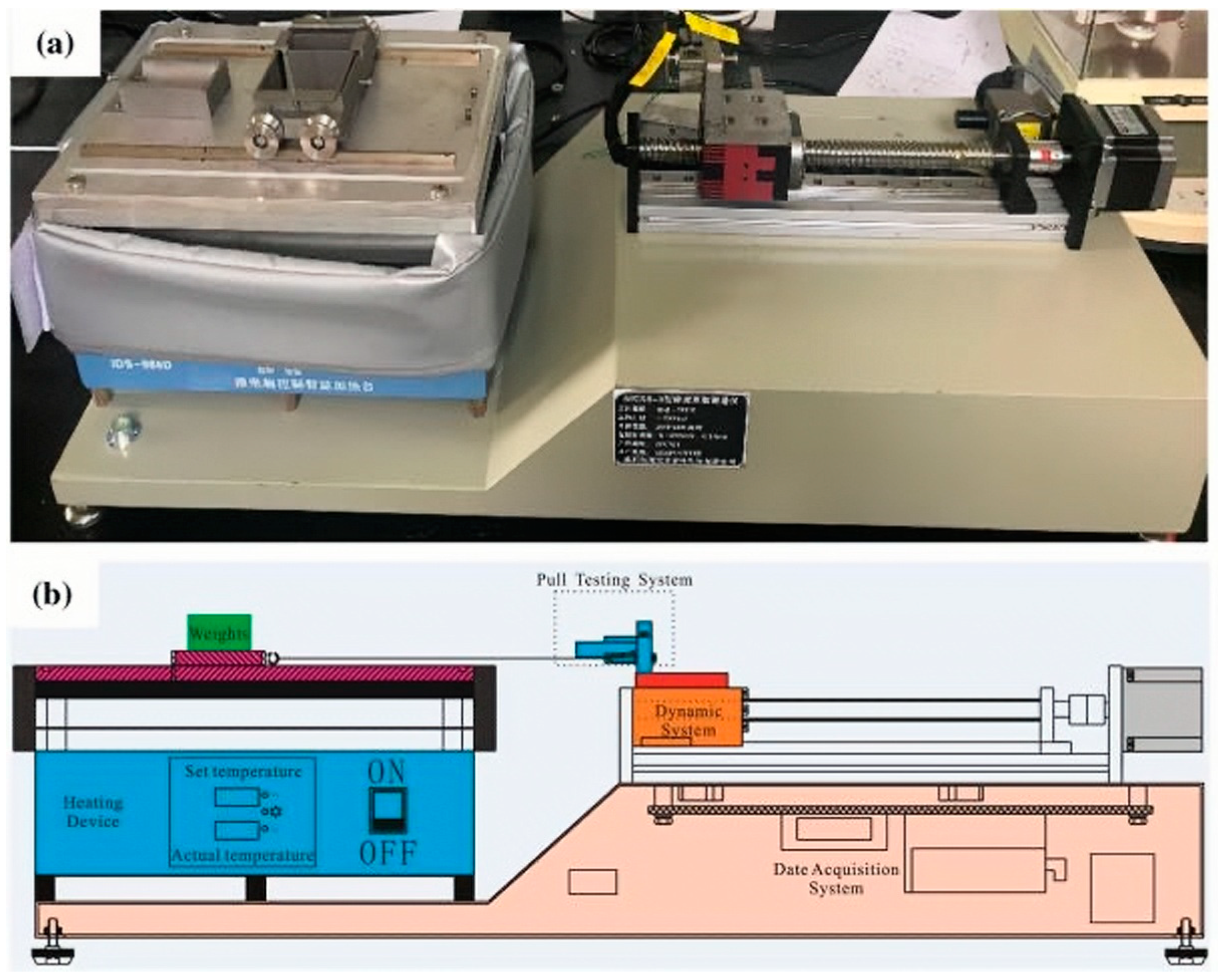
Additionally, a self-developed MCXS-3 friction coefficient measuring device—integrating speed and displacement sensors, motor control, and data acquisition—was utilized to determine the friction coefficient at coal contact surfaces. Prior to testing, samples were conditioned through constant-temperature drying and calibrated with standard weights; variations in tensile force were recorded during loading to compare frictional properties under different liquids (e.g., distilled water, formation water, and drilling fluids).
- Linear Expansion and Rolling Recovery Test Apparatus
Finally, a linear expansion and rolling recovery test apparatus, operated in accordance with the SY/T 5613-2016 standard, was employed to assess the water absorption expansion and hydration dispersion characteristics of the samples in various media. In the linear expansion test, expansion data were recorded under a pressure of 4.0 MPa and normalized against the original sample height to calculate the expansion rate, while the rolling recovery test involved high-temperature rolling, wet sieving, and drying to determine the recovery rate.
This integrated approach—combining mineralogical, microstructural, mechanical, and frictional analyses with hydration expansion testing—provides a robust framework for understanding the complex interactions between coal and its surrounding working fluids.
The working fluids included simulated formation water and drilling fluid, where the simulated formation water was standard saline water (NaCl:CaCl2:MgCl2·6H2O = 7:0.6:0.4), and the drilling fluid was directly sourced from the drilling site. The experimental protocol, summarized in Table 1, outlines the experimental comparison groups, test temperature and pressure conditions, objectives, and instruments used. Figure 1 illustrates the instrument used for friction coefficient measurements.
Table 1.
Experimental research program and experimental setup.
Figure 1.
MCXS-3 friction coefficient-measuring instrument. (a) experimental setup and (b) structural diagram.
3. Results and Discussion
3.1. Mineral Composition and Microstructural Characteristics of Coal Rocks
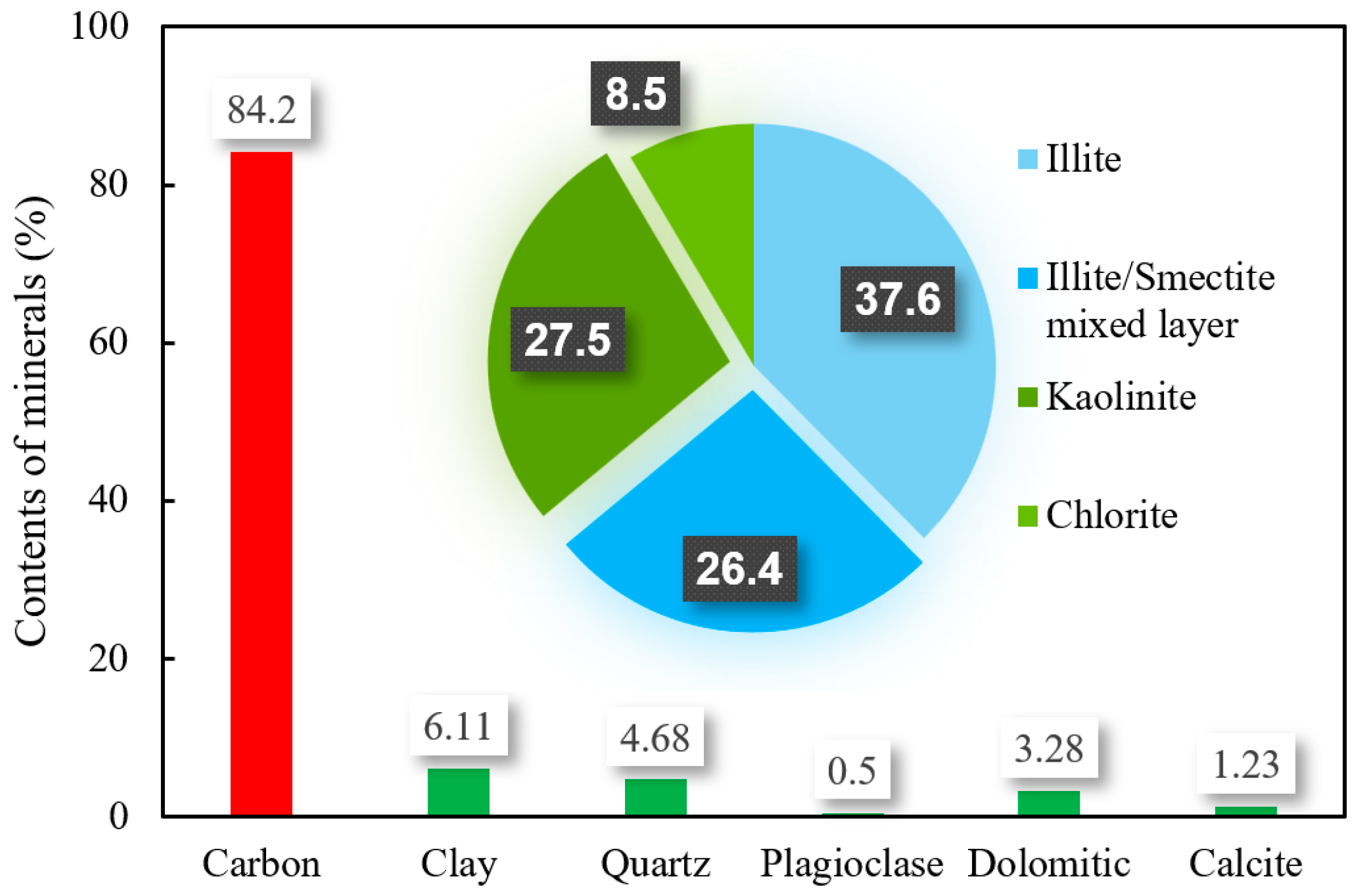
Figure 2 presents the mineral composition of coal seam No. 8, which primarily comprises carbon (84.2%), with minor amounts of clay minerals (6.11%) and quartz (4.68%). Among the clay minerals, illite predominates (37.6%), followed by illite–smectite mixed layers (26.4%) and kaolinite (27.5%). This composition indicates that coal seam No. 8 has a high carbon content and contains a limited amount of water-sensitive clay minerals. During drilling, filtrate invasion from drilling fluid may induce the hydration, expansion, and dispersion of the illite–smectite mixed layers, weakening the intergranular bonding strength. The resulting expansion stress from clay minerals may disrupt the stress equilibrium within the coal, reducing its mechanical strength and potentially causing wellbore collapse. However, due to the low absolute content of water-sensitive clay minerals, predicting the extent of hydration-induced expansion remains challenging. To assess the degree of hydration expansion caused by drilling fluid immersion, scanning electron microscopy (SEM) was used to examine the microstructure of coal samples before and after immersion.
Figure 2.
Mineral composition and relative content of clay minerals in coal rock # 8.
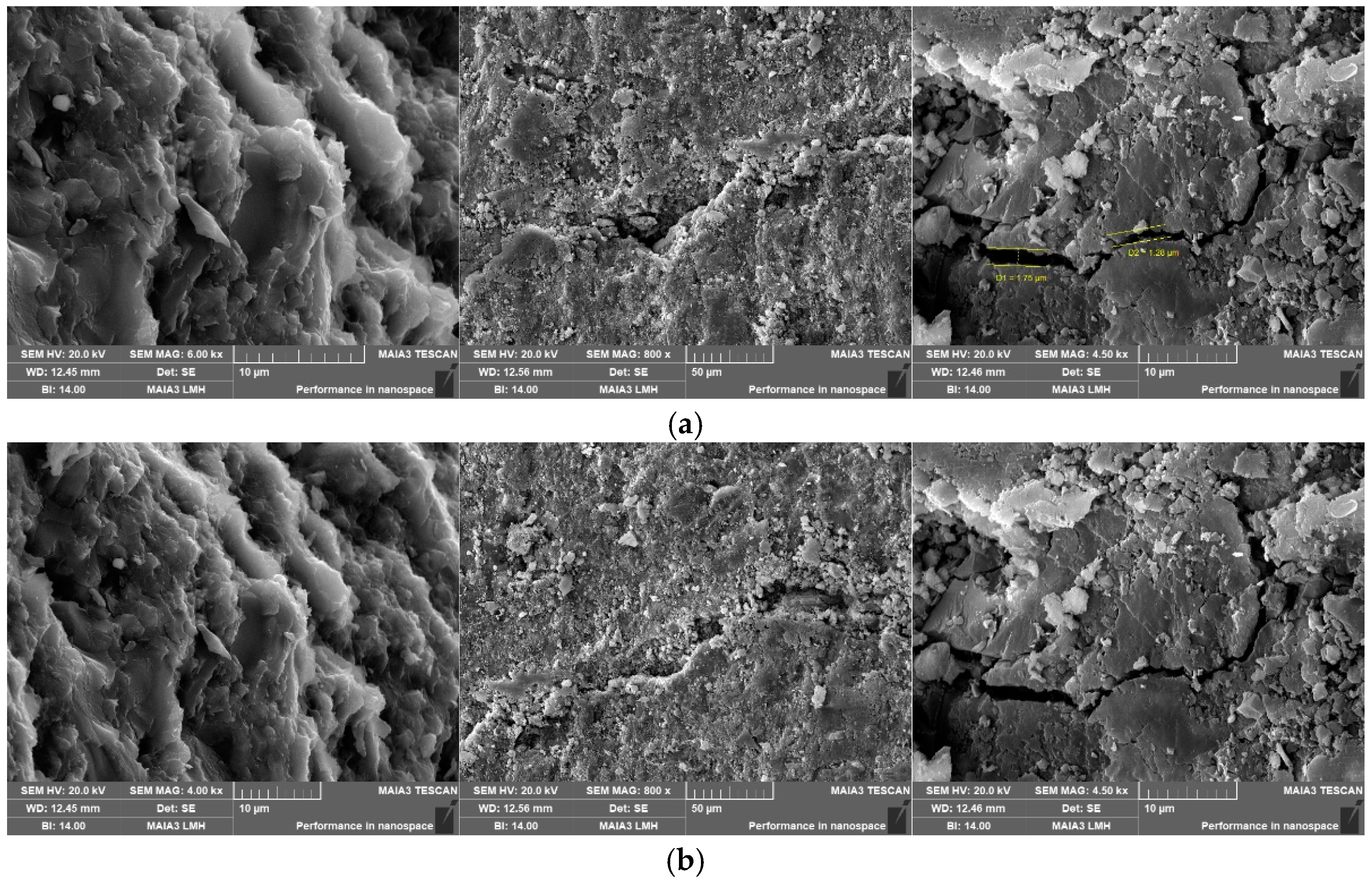
SEM images of the coal samples before drilling fluid immersion, shown in Figure 3a, reveal a layered stacking structure with well-developed cleats and fractures, exhibiting apertures of several micrometers. By comparing these results with untreated coal samples, as depicted in Figure 3b, no significant changes are observed in the layered stacking morphology, cleat and fracture apertures, or surface-attached mineral morphology. These findings suggest that the effects of drilling fluid on coal hydration dispersion and expansion are relatively limited. This conclusion is further corroborated by subsequent linear expansion and hydration dispersion experiments.
Figure 3.
Microstructure of coal rock # 8 before and after drilling fluid treatment; (a) before drilling fluid immersion treatment; (b) after drilling fluid immersion treatment.
Additionally, SEM analysis identified well-developed primary pathways, such as cleats and fractures, which facilitate drilling fluid infiltration and filtrate migration. This can induce elevated pore pressure in the coal, leading to excessive water accumulation within the formation and posing a significant risk of wellbore instability.
3.2. Physicochemical Properties of Coal Rock Linear Expansion and Hydration Dispersion
The linear expansion ratio is defined as the ratio of the expanded volume to the original volume of a core sample after immersion in a working fluid. Factors determining the expansion performance of rocks include the content of expandable clay minerals and the alignment of the rock’s fundamental structural components. By measuring the linear expansion ratio, the physicochemical properties of coal rocks can be evaluated. Generally, a higher content of expandable clay minerals results in a greater linear expansion ratio, while a higher degree of particle alignment within the rock leads to a lower expansion ratio.
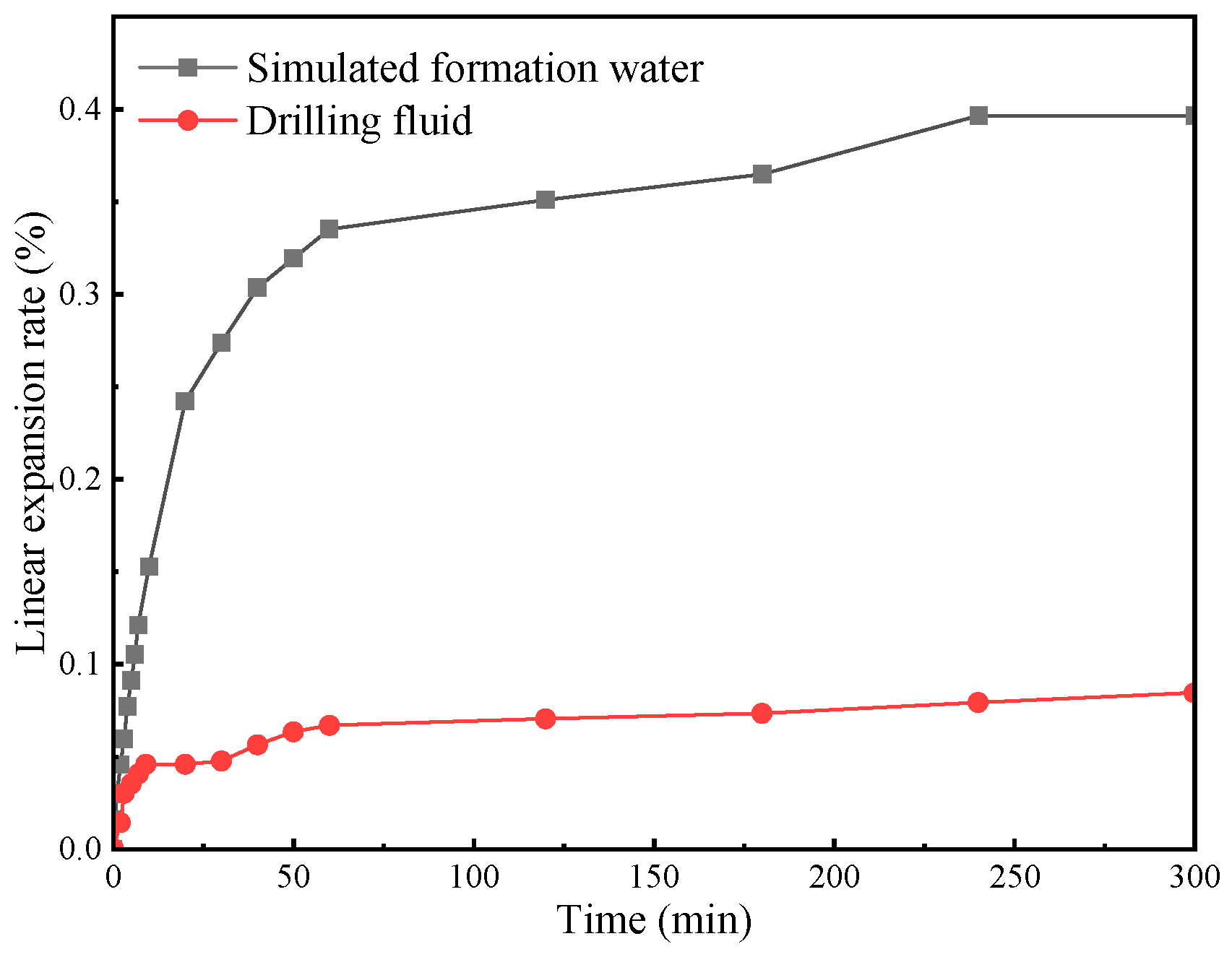
In this study, coal samples from coal seam No. 8 of the Benxi Formation were subjected to linear expansion tests in simulated formation water and drilling fluid at 110 °C. As shown in Figure 4, the linear expansion ratio of coal rock pressed tablets reached 0.396% after 5 h of immersion in simulated formation water and 0.077% after immersion in drilling fluid for the same duration.
Figure 4.
Linear expansion rate of coal rock # 8 in different working fluids (110 °C).
The results indicate that the linear expansion ratios of the No. 8 coal rock in both simulated formation water and drilling fluid are relatively low. This can be attributed to the low absolute content of expandable clay minerals in the coal rock (6.11% of total clay content, with expansion minerals such as illite/smectite mixed layers comprising 26.4%). Consequently, fluid-induced expansion is minimal. Additionally, a hydrophobic surface layer on the coal rock samples may hinder water molecule penetration into the rock interior, further reducing the water absorption-induced expansion.
Moreover, the linear expansion ratio of coal rocks in drilling fluid is observed to be lower than that in simulated formation water. This suggests that the drilling fluid additives inhibit coal rock expansion. These additives likely form a strongly adsorbed layer on the coal rock surface, blocking the absorption of water by clay minerals and mitigating their expansion.
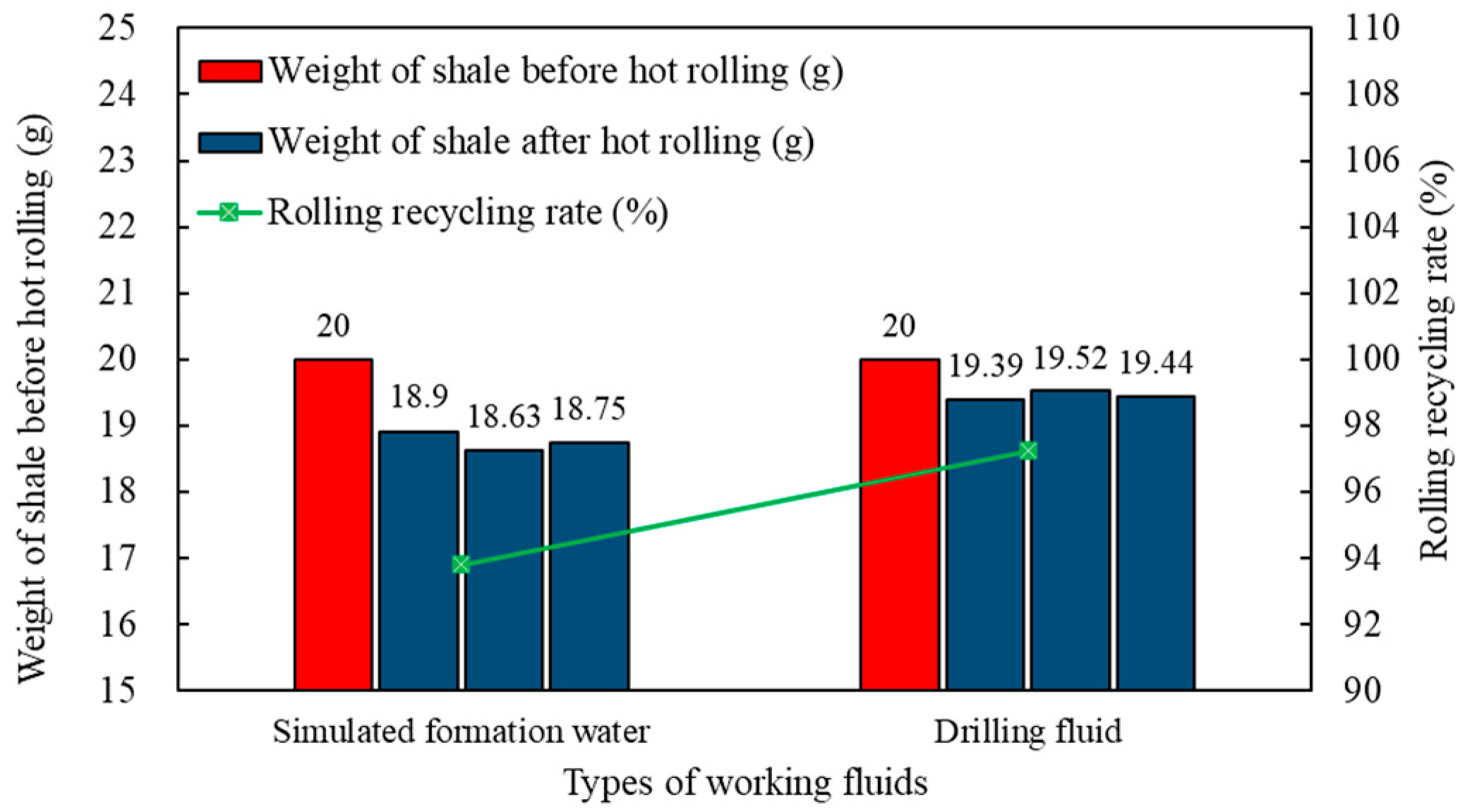
The hydration dispersion capacity of coal rocks was evaluated through rolling recovery experiments. The mass loss of coal rocks due to hydration dispersion was quantified by testing the rolling recovery rate of coal rocks after 12 h of immersion in simulated formation water and drilling fluid at 110 °C. The results showed that the rolling recovery rates of coal rocks in simulated formation water and drilling fluid were 93.80% ± 0.68% and 97.25% ± 0.33%, respectively (calculated as mean ± standard deviation), with relative errors of 0.72% and 0.34%. These values indicate the weak hydration effects and minimal mass loss of coal rocks. These findings align with the results of linear expansion experiments. The limited hydration-induced mass loss is attributed to the relatively low absolute content of hydration-expansive clay minerals in the coal. Furthermore, the inhibitory effect of anti-collapse additives in the drilling fluid formed an adsorption layer that blocked the hydration dispersion of clay minerals, leading to a higher rolling recovery rate compared to that of simulated formation water (Figure 5).
Figure 5.
Rolling recovery rate of coal rock in different working fluids.
Based on the analyses of the physicochemical properties (the recovery rate and expansion ratio) of the coal rocks, it can be concluded that drilling fluid infiltration does not significantly influence the hydration expansion behavior of coal seam No. 8 from the Benxi Formation. Therefore, the degradation of mechanical strength causing borehole collapse and instability in deep coal seams of the Benxi Formation is not primarily driven by hydration expansion induced by drilling fluid infiltration. The underlying mechanisms responsible for coal rock mechanical strength degradation will be further analyzed in the following section.
3.3. Mechanical Strength Degradation of Coal Rocks After Drilling Fluid Soaking
To investigate the impact of drilling fluid infiltration on the mechanical properties of coal rocks, a triaxial stress-loading experiment was conducted using the MTS rock mechanics testing system. The experiment covered the complete stress–strain response of coal rocks under triaxial stress conditions. The triaxial compression test results, as shown in Table 2, indicate a reduction in both Young’s modulus and the compressive strength of coal rocks after drilling fluid immersion. For instance, at a confining pressure of 0 MPa, Young’s modulus of coal rocks decreased from 1988.1 Mpa to 1676.1 Mpa, and the compressive strength dropped from 7.9 Mpa to 6.5 Mpa, with degradation rates of 15.69% and 17.72%, respectively. This demonstrates that drilling fluid immersion weakens the mechanical strength of coal rocks, making them more susceptible to deformation. This reduction in strength and Young’s modulus has been widely observed in both laboratory and field experiments [27,28].
Table 2.
Mechanical parameters of coal rock before and after immersion in drilling fluid.
It was also observed that the cohesion of coal rocks was minimally affected by drilling fluid infiltration. Since cohesion represents the bonding or cementing capacity between particles, the findings suggest that the adhesion or bonding degree between coal particles is not significantly influenced by the invasion of drilling fluid. This observation aligns with the earlier conclusion of minimal hydration dispersion and expansion effects on coal rocks. However, the internal friction angle of coal rocks was nearly halved after drilling fluid immersion, suggesting that the invasion of drilling fluid enhanced the sliding effect between microcrack contact surfaces within the coal rocks. This reduced the sliding resistance at these contact surfaces, making microcracks more prone to displacement under stress, leading to crack propagation and mechanical strength degradation.
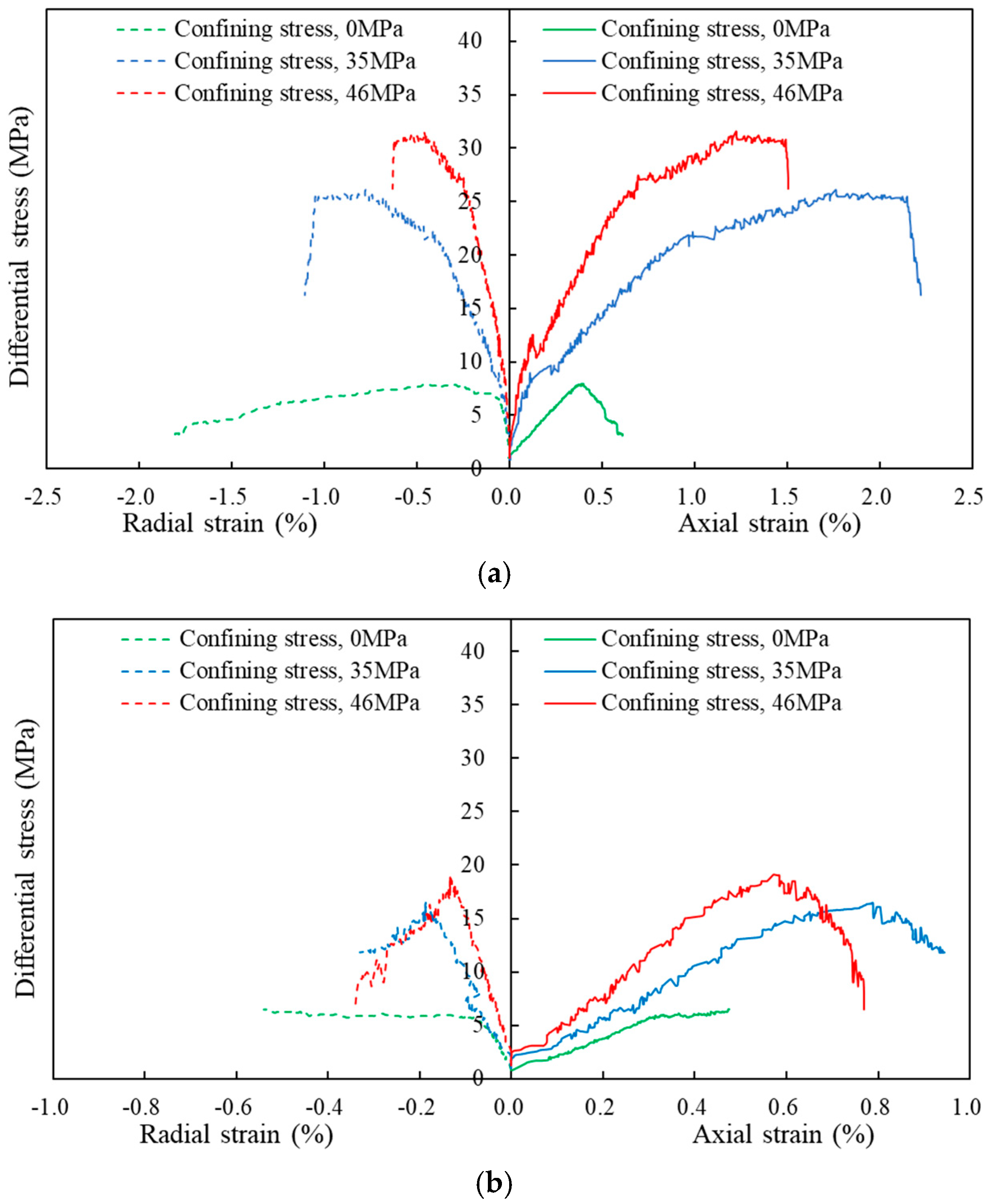
The stress–strain curves of coal rocks before and after drilling fluid immersion, as shown in Figure 6, exhibit distinct failure characteristics. Before immersion, the coal rocks underwent a gradual microcrack creep displacement process, leading to ultimate failure under stress. After immersion, this phenomenon was significantly diminished, supporting the notion that the invasion of drilling fluid reduces the sliding resistance between microcrack contact surfaces, thereby degrading the mechanical strength of coal rocks.
Figure 6.
Stress-strain curves of coal rock under different amounts of confining stress, (a) not soaked in drilling fluid and (b) soaked in drilling fluid for 12 h.
3.4. Friction Coefficient of Coal Rocks Under Different Treatment Conditions
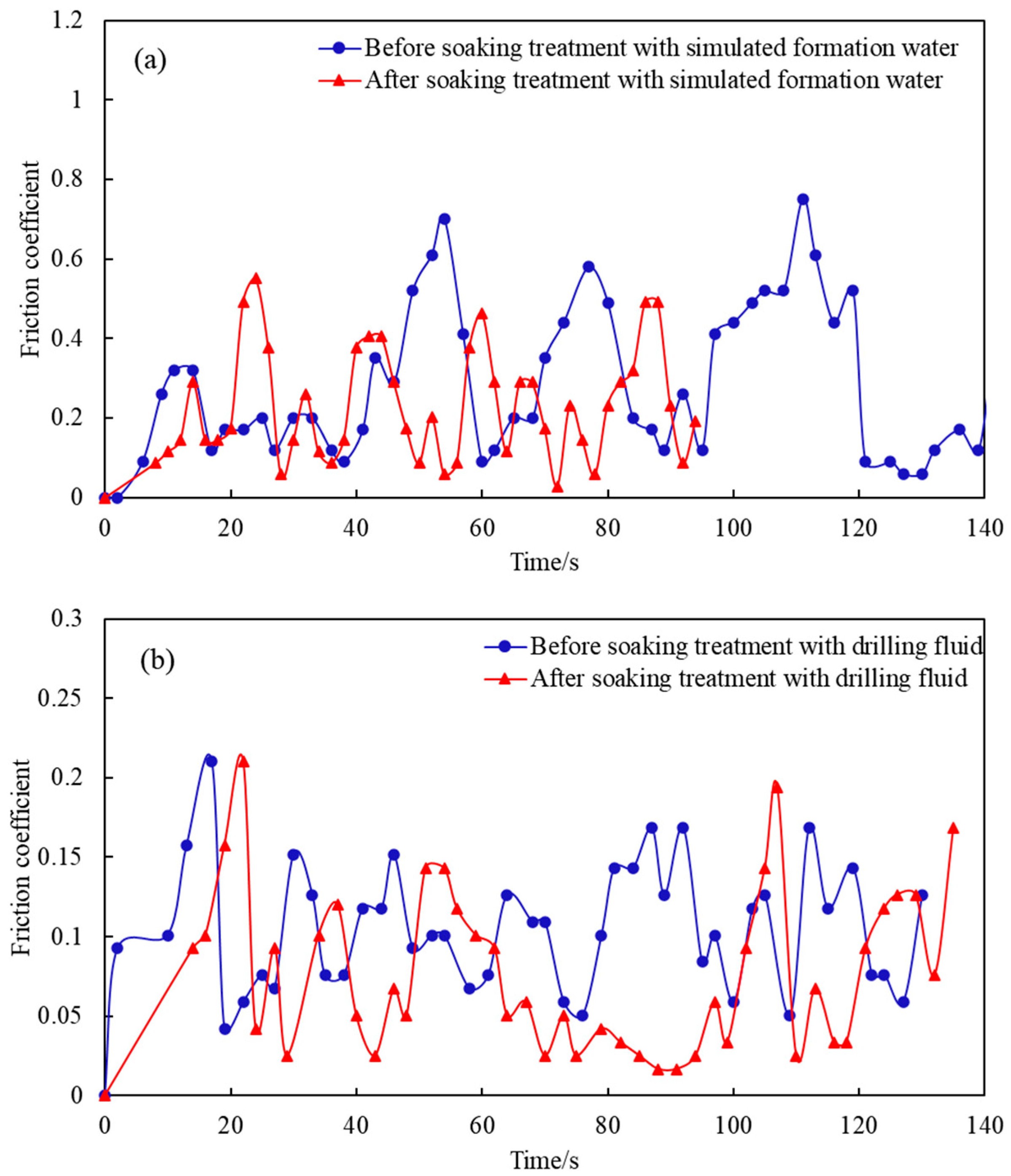
Friction coefficient tests were conducted to further characterize the sliding resistance between coal rock contact surfaces. These tests measured the changes in the friction coefficients of the coal rocks before and after immersion in simulated formation water and drilling fluid. As shown in Table 3 and Figure 7, the friction coefficient of coal rocks decreased by 19.22% after treatment with simulated formation water, indicating that water molecules enhanced sliding between coal rock contact surfaces, thereby reducing relative sliding resistance. After treatment with drilling fluid, the friction coefficient decreased by 25.00%, showing a more significant reduction compared to simulated formation water. This suggests that, in addition to water molecules, additives in the drilling fluid further lubricated fracture surfaces, exacerbating the reduction in friction coefficients.
Table 3.
Results of coal rock friction coefficients before and after treatment with working fluids.
Figure 7.
Friction coefficients of coal rock before and after treatment with different working fluids, (a) treatment with simulated formation water and (b) treatment with drilling fluid.
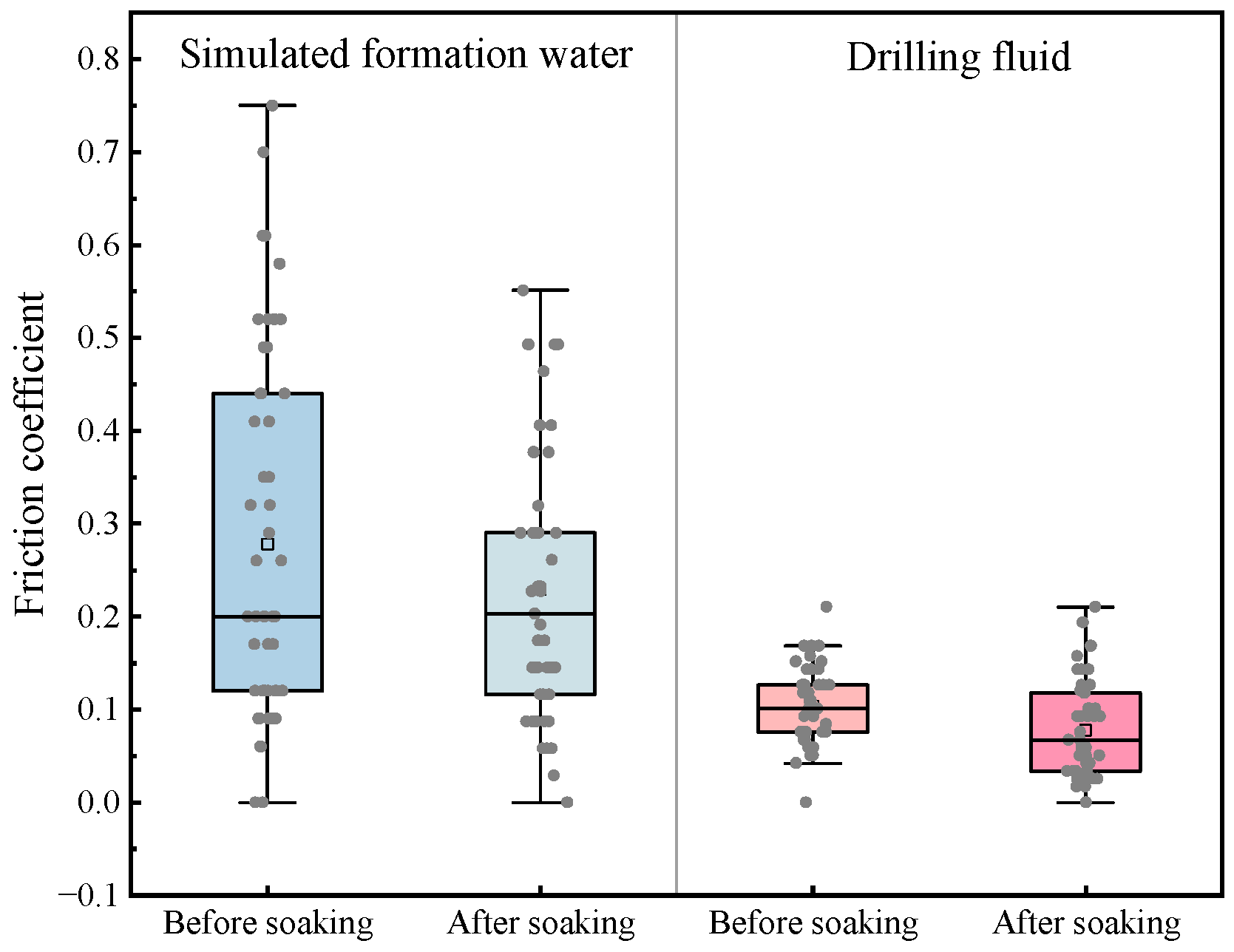
As shown in Figure 8, the box plot illustrates the distribution of friction coefficients under different treatment conditions, providing insights into the effects of simulated formation water and drilling fluid on coal rock sliding resistance. Before treatment, the friction coefficients exhibited a broad distribution range, with a relatively high median value and significant data dispersion, as indicated by the large interquartile range (IQR). The presence of numerous outliers suggests substantial variability in friction measurements, likely influenced by surface roughness and heterogeneity in coal rock contact areas.
Figure 8.
Distribution of friction coefficients of coal rock before and after treatment with different working fluids.
After treatment with simulated formation water, the friction coefficient decreased. Additionally, the reduction in IQR indicates improved data consistency, suggesting that water molecules enhanced surface lubrication and reduced frictional resistance. The decrease in data dispersion, along with fewer outliers, implies a more uniform response of the coal rock surface to water immersion, minimizing experimental variability.
Similarly, the treatment with drilling fluid resulted in a further decrease in friction coefficients, with the median value exhibiting a more pronounced reduction compared to simulated formation water treatment. The IQR also shrank, indicating greater stability and consistency in the friction coefficient measurements. The decrease in the number of outliers suggests that the additives in the drilling fluid further enhanced lubrication, leading to a more uniform reduction in sliding resistance.
These results are supported by laboratory observations showing that water injection can severely reduce the frictional strength. This pronounced reduction is attributed to water lubricating the rough, irregular fracture surfaces and asperities, which collapse under lower shear stress, as well as to weakening effects near the surface caused by water adsorption, interactions between water minerals and water-sensitive coal minerals, and mineral dissolution [28].
These findings confirm that the invasion of drilling fluid reduces the sliding resistance between coal rock cleats or microcrack contact surfaces, leading to mechanical strength degradation. From a borehole stability and collapse prevention perspective, selecting appropriate anti-collapse and sealing additives can mitigate the lubrication-induced risks of borehole instability caused by drilling fluid infiltration.
4. Conclusions
In summary, the experimental analyses of the mineral composition, microstructure, linear expansion, hydration dispersion capacity, and mechanical strength of No. 8 coal samples from the Benxi Formation elucidate the mechanism of mechanical strength degradation induced by drilling fluid infiltration. These insights provide theoretical support for preventing coal rock borehole instability and optimizing drilling fluid systems. The key findings are as follows:
- (1)
- Drilling fluid infiltration significantly reduces both Young’s modulus and compressive strength. Under a confining pressure of 0 MPa, Young’s modulus decreased from 1988.1 MPa to 1676.1 MPa (a 15.69% reduction) and the compressive strength dropped from 7.9 MPa to 6.5 MPa (a 17.72% reduction). While cohesion remained nearly unchanged, the internal friction angle was almost halved, indicating enhanced sliding between microcrack surfaces. These findings suggest that the deterioration in mechanical properties is mainly due to microcrack sliding influenced by the coal’s heterogeneous structure, rather than hydration-induced dispersion or clay expansion.
- (2)
- The enhancement of sliding effects is the primary mechanism for mechanical strength degradation. Although drilling fluid infiltration has a limited impact on coal rock cohesion, it significantly reduces the internal friction angle. This indicates that drilling fluid infiltration enhances the relative sliding effects between microcrack contact surfaces, making them more susceptible to displacement and failure under stress, thereby causing a reduction in mechanical strength.
- (3)
- Friction coefficient tests showed that simulated formation water reduced the coal rock friction coefficient by 19.22%, whereas drilling fluid treatment resulted in a 25.00% reduction. This greater decrease is attributed to the combined lubrication effects of water molecules and additives, which further lower sliding resistance at contact surfaces and, consequently, increase the risk of mechanical strength degradation and borehole instability. Therefore, selecting appropriate anti-collapse additives could help improve borehole stability.
Author Contributions
Conceptualization, Q.Z. and W.W.; methodology, M.Z.; validation, Y.Z. and Q.W.; investigation, Q.Z.; resources, H.S.; writing—original draft preparation, Q.Z.; writing—review and editing, J.S. All authors have read and agreed to the published version of the manuscript.
Funding
This research was funded by the Science and Technology Project of Chuanqing Drilling Engineering Limited Company, grant number CQ2024B-6-Z1-3.
Data Availability Statement
The original contributions presented in this study are included in the article. Further inquiries can be directed to the corresponding author.
Conflicts of Interest
Authors Qin Zhang, Weiliang Wang, Mingming Zhu, Yanbing Zhang, Qingchen Wang and Huan Sun were employed by the Changqing Drilling Branch, CNPC Chuanqing Drilling Engineering Limited Company. The remaining author declare that the research was conducted in the absence of any commercial or financial relationships that could be construed as a potential conflict of interest.
Abbreviation
The following abbreviations are used in this manuscript:
| CBM | Deep coalbed methane |
References
- Li, S.; Qin, Y.; Tang, D.; Shen, J.; Wang, J.; Chen, S. A comprehensive review of deep coalbed methane and recent developments in China. Int. J. Coal Geol. 2023, 279, 104369. [Google Scholar] [CrossRef]
- Xu, F.; Hou, W.; Xiong, X.; Xu, B.; Wu, P.; Wang, H.; Feng, K.; Yun, J.; Li, S.; Zhang, L.; et al. The status and development strategy of coalbed methane industry in China. Pet. Explor. Dev. 2023, 50, 765–783. [Google Scholar]
- Lu, Y.; Zhao, G.; Ge, Z.; Jia, Y.; Tang, J.; Gong, T.; Huang, S.; Li, Z.; Fu, W.; Mi, J. Challenges and development direction of deep fragmented soft coalbed methane in China. Earth Energy Sci. 2024, 1, 38–64. [Google Scholar] [CrossRef]
- Guo, W.; Wang, G.; Li, Y.; Chen, D. Research on coal wall failure and stability control technology of large coal seams with a soft and thick seam. Energy Sci. Eng. 2024, 12, 3599–3613. [Google Scholar] [CrossRef]
- Zhang, J.; Zhang, Y.; Song, Z.; Wu, S.; Fan, W.-B.; Dong, X.; Yao, Z. Study on the mechanism of coal pillar instability in coal seam sections containing gangue. Phys. Chem. Earth Parts A/B/C 2023, 132, 103502. [Google Scholar] [CrossRef]
- Hou, Q.; Li, H.; Fan, J.; Ju, Y.; Wang, T.; Li, X.; Wu, Y. Structure and coalbed methane occurrence in tectonically deformed coals. Sci. China Earth Sci. 2012, 55, 1755–1763. [Google Scholar] [CrossRef]
- Ma, Q.; Tan, Y.; Liu, X.; Gu, Q.; Li, X. Effect of coal thicknesses on energy evolution characteristics of roof rock-coal-floor rock sandwich composite structure and its damage constitutive model. Compos. Part B Eng. 2020, 198, 108086. [Google Scholar] [CrossRef]
- Wu, G.; Yu, W.; Zuo, J.; Du, S. Experimental and theoretical investigation on mechanisms performance of the rock-coal-bolt (RCB) composite system. Int. J. Min. Sci. Technol. 2020, 30, 759–768. [Google Scholar] [CrossRef]
- Pan, J.; Meng, Z.; Hou, Q.; Ju, Y.; Cao, Y. Coal strength and Young’s modulus related to coal rank, compressional velocity and maceral composition. J. Struct. Geol. 2013, 54, 129–135. [Google Scholar] [CrossRef]
- Jaiswal, A.; Shrivastva, B. Numerical simulation of coal pillar strength. Int. J. Rock Mech. Min. Sci. 2009, 46, 779–788. [Google Scholar] [CrossRef]
- Bieniawski, Z. In situ strength and deformation characteristics of coal. Eng. Geol. 1968, 2, 325–340. [Google Scholar] [CrossRef]
- Chen, G.; Tang, W.; Chen, S.; Wang, E.; Wang, C.; Li, T.; Zhang, G. Damage Effect and Deterioration Mechanism of Mechanical Properties of Fractured Coal–Rock Combined Body Under Water–Rock Interaction. Rock Mech. Rock Eng. 2024, 58, 513–537. [Google Scholar] [CrossRef]
- Gao, F.; Kang, H.; Yang, L. Experimental and numerical investigations on the failure processes and mechanisms of composite coal–rock specimens. Sci. Rep. 2020, 10, 13422. [Google Scholar] [CrossRef] [PubMed]
- Shan, P.; Li, W.; Lai, X.; Zhang, S.; Chen, X.; Wu, X. Research on the response mechanism of coal rock mass under stress and pressure. Materials 2023, 16, 3235. [Google Scholar] [CrossRef]
- Gentzis, T.; Deisman, N.; Chalaturnyk, R.J. Effect of drilling fluids on coal permeability: Impact on horizontal wellbore stability. Int. J. Coal Geol. 2009, 78, 177–191. [Google Scholar] [CrossRef]
- Zhao, X.; Qiu, Z.; Wang, M.; Xu, J.; Huang, W. Experimental investigation of the effect of drilling fluid on wellbore stability in shallow unconsolidated formations in deep water. J. Pet. Sci. Eng. 2019, 175, 595–603. [Google Scholar] [CrossRef]
- He, S.; Liang, L.; Zeng, Y.; Ding, Y.; Lin, Y.; Liu, X. The influence of water-based drilling fluid on mechanical property of shale and the wellbore stability. Petroleum 2016, 2, 61–66. [Google Scholar] [CrossRef]
- Yu, J.; Tahmasebi, A.; Han, Y.; Yin, F.; Li, X. A review on water in low rank coals: The existence, interaction with coal structure and effects on coal utilization. Fuel Process. Technol. 2013, 106, 9–20. [Google Scholar] [CrossRef]
- Cao, D.; Li, X.; Zhang, S. Influence of tectonic stress on coalification: Stress degradation mechanism and stress polycondensation mechanism. Sci. China Ser. D Earth Sci. 2007, 50, 43–54. [Google Scholar] [CrossRef]
- Liu, X.; Tan, Y.; Ning, J.; Lu, Y.; Gu, Q.H. Mechanical properties and damage constitutive model of coal in coal-rock combined body. Int. J. Rock Mech. Min. Sci. 2018, 110, 140–150. [Google Scholar] [CrossRef]
- Liu, J.; Wang, E.-Y.; Song, D.-Z.; Yang, S.-L.; Niu, Y. Effects of rock strength on mechanical behavior and acoustic emission characteristics of samples composed of coal and rock. J. China Coal Soc. 2014, 39, 685–691. [Google Scholar]
- Xie, H.; Gao, M.; Zhang, R.; Peng, G.; Wang, W.; Li, A. Study on the mechanical properties and mechanical response of coal mining at 1000 m or deeper. Rock Mech. Rock Eng. 2019, 52, 1475–1490. [Google Scholar] [CrossRef]
- Cheng, Z.-B.; Li, L.-H.; Zhang, Y.-N. Laboratory investigation of the mechanical properties of coal-rock combined body. Bull. Eng. Geol. Environ. 2020, 79, 1947–1958. [Google Scholar] [CrossRef]
- Lu, J.; Huang, G.; Gao, H.; Li, X.; Zhang, D.; Yin, G.Z. Mechanical properties of layered composite coal–rock subjected to true triaxial stress. Rock Mech. Rock Eng. 2020, 53, 4117–4138. [Google Scholar] [CrossRef]
- Yao, Q.; Wang, W.; Zhu, L.; Xia, Z.; Tang, C.; Wang, X. Effects of moisture conditions on mechanical properties and AE and IR characteristics in coal–rock combinations. Arab. J. Geosci. 2020, 13, 615. [Google Scholar] [CrossRef]
- Deng, J.; Ren, S.-J.; Xiao, Y.; Shu, C.-M. Mechanical properties of coal and rock mass under thermo-mechanical coupling. Arab. J. Geosci. 2019, 12, 398. [Google Scholar] [CrossRef]
- Vaziri, H.H.; Wang, X.; Palmer, I.D.; Khodaverdian, M.; McLennan, J. Back analysis of coalbed strength properties from field measurements of wellbore cavitation and methane production. Int. J. Rock Mech. Min. Sci. 1997, 34, 963–978. [Google Scholar] [CrossRef]
- Fan, L.; Liu, S. Fluid-dependent shear slip behaviors of coal fractures and their implications on fracture frictional strength reduction and permeability evolutions. Int. J. Coal Geol. 2019, 212, 103235. [Google Scholar] [CrossRef]
Disclaimer/Publisher’s Note: The statements, opinions and data contained in all publications are solely those of the individual author(s) and contributor(s) and not of MDPI and/or the editor(s). MDPI and/or the editor(s) disclaim responsibility for any injury to people or property resulting from any ideas, methods, instructions or products referred to in the content. |
© 2025 by the authors. Licensee MDPI, Basel, Switzerland. This article is an open access article distributed under the terms and conditions of the Creative Commons Attribution (CC BY) license (https://creativecommons.org/licenses/by/4.0/).