Article

Coordinated Optimization of Household Air Conditioning and Battery Energy Storage Systems: Implementation and Performance Evaluation

1
School of Electrical Engineering and Automation, Wuhan University, Wuhan 430072, China
2
Collage of Engineering, University of Babylon, Babylon 53001, Iraq
3
School of Automation, Wuhan University of Technology, Wuhan 430070, China
*
Authors to whom correspondence should be addressed.
Processes 2025, 13(3), 631; https://doi.org/10.3390/pr13030631
Submission received: 27 December 2024 / Revised: 23 January 2025 / Accepted: 31 January 2025 / Published: 23 February 2025

Abstract

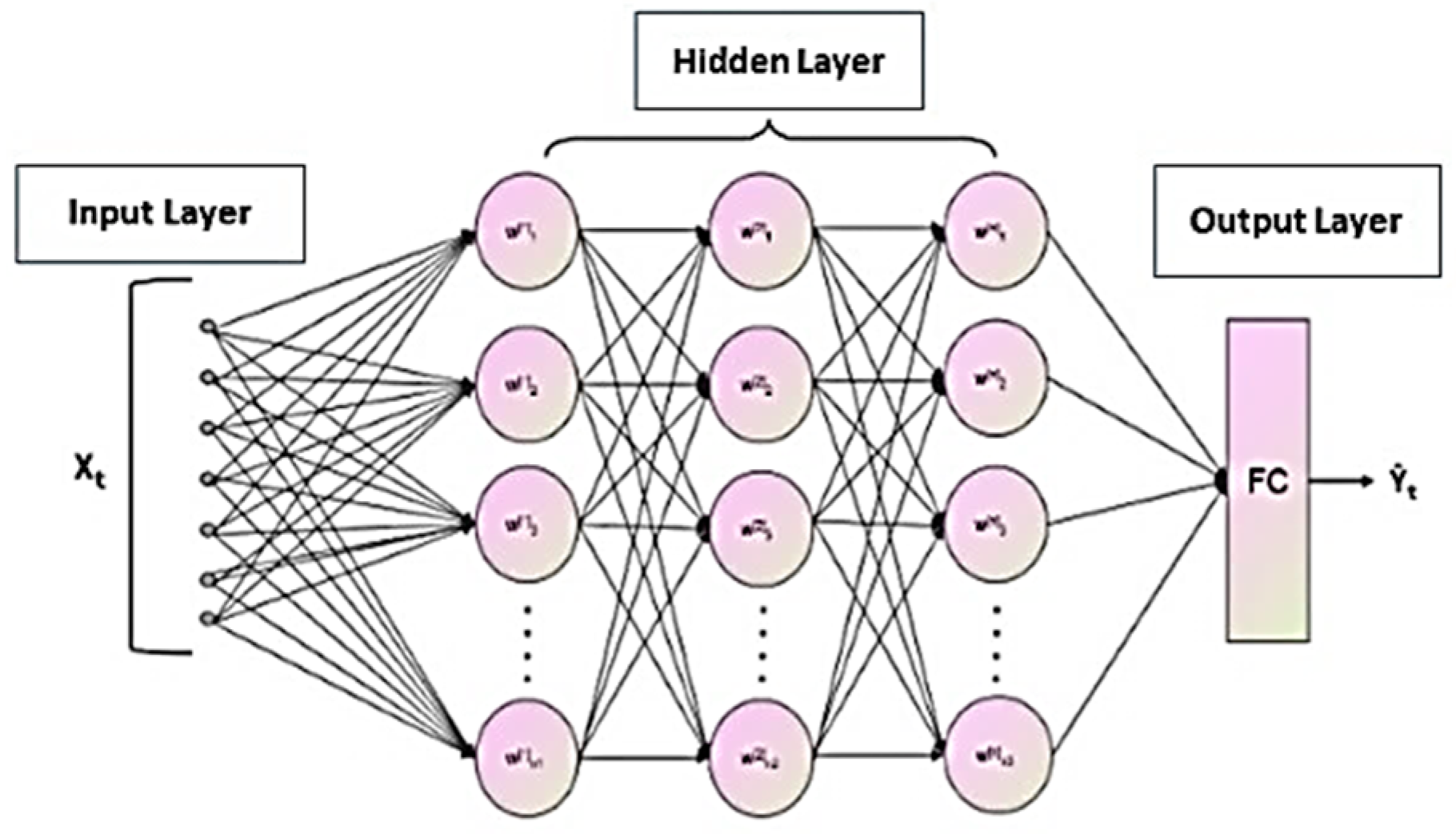
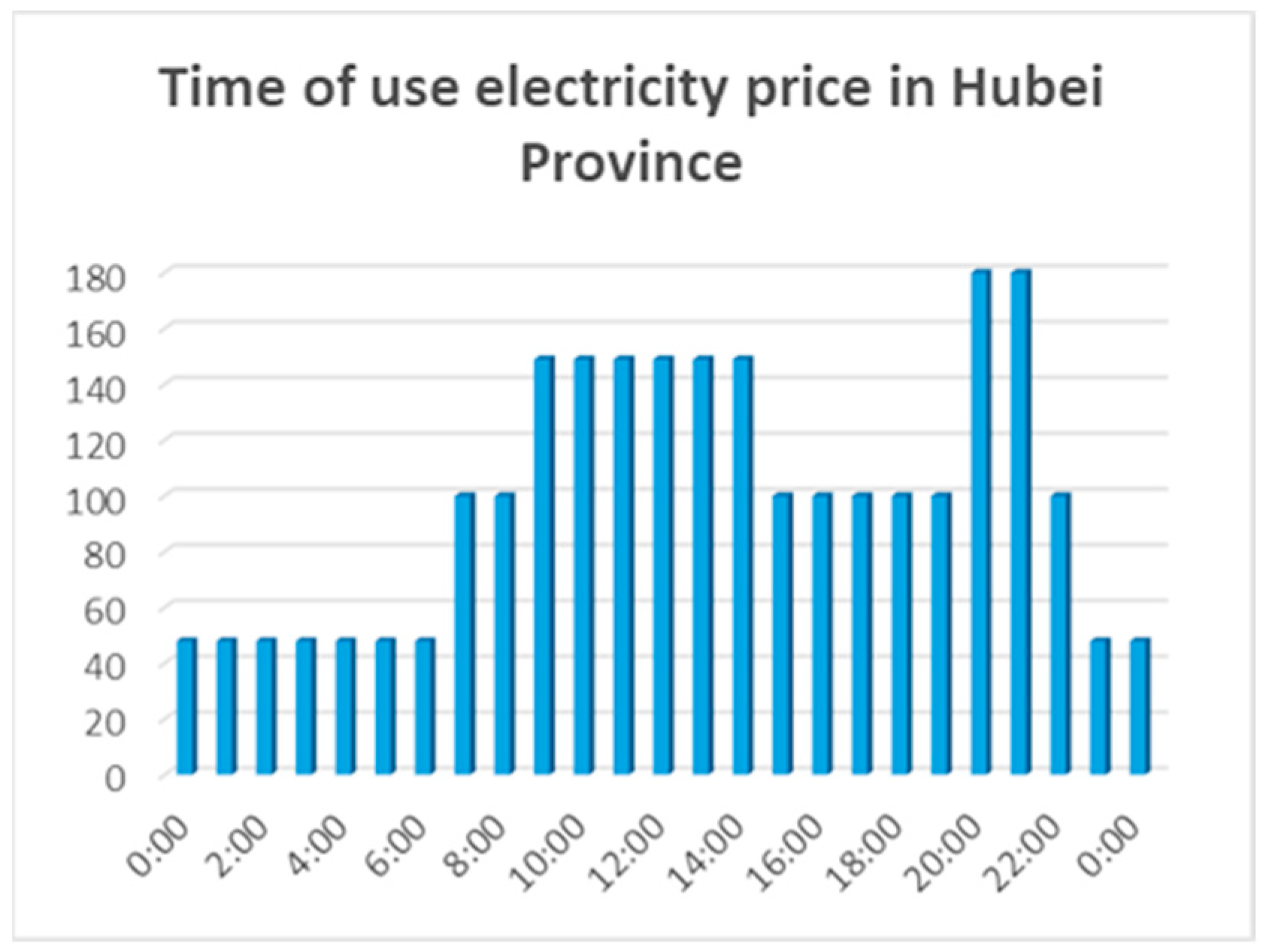
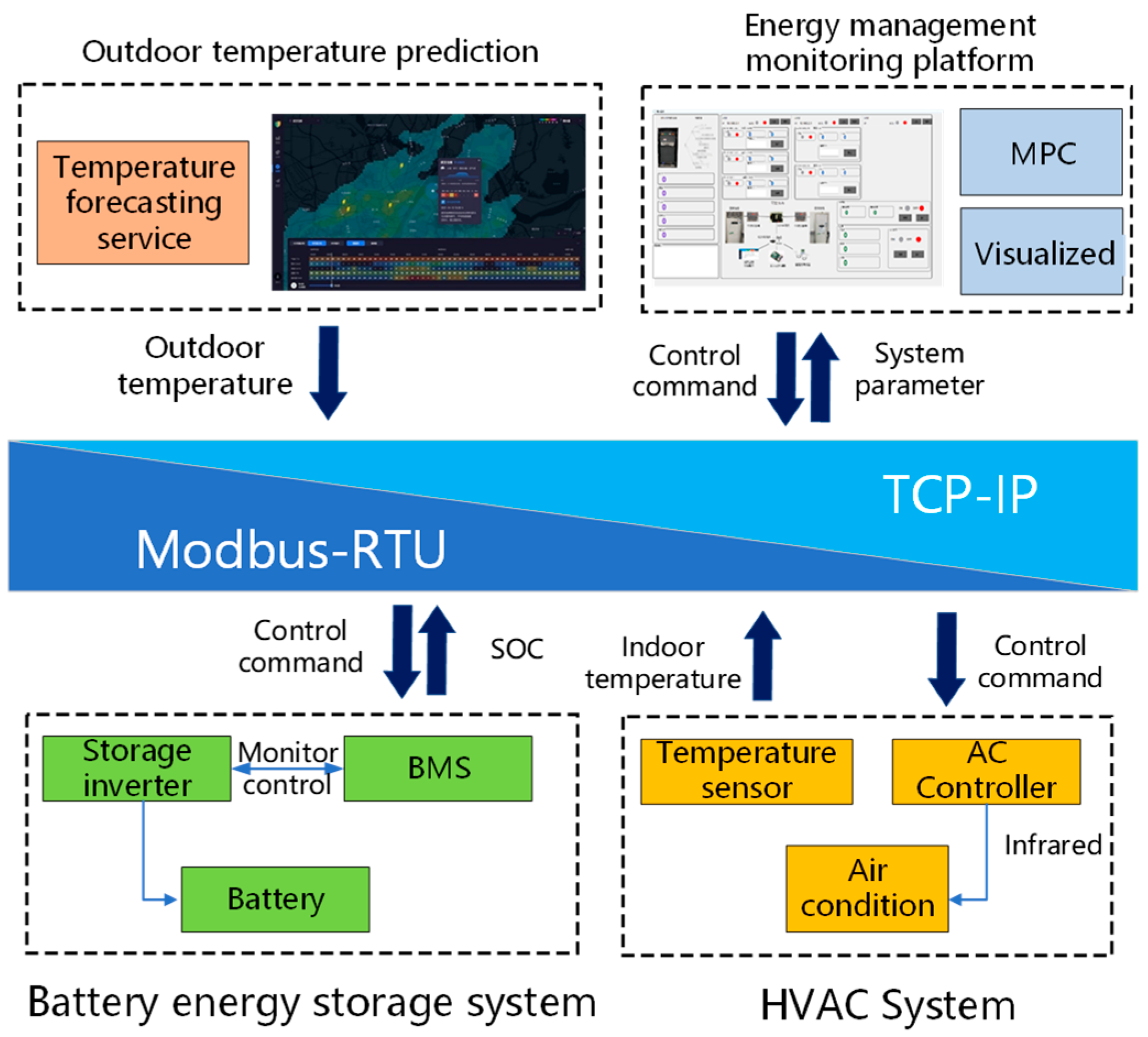
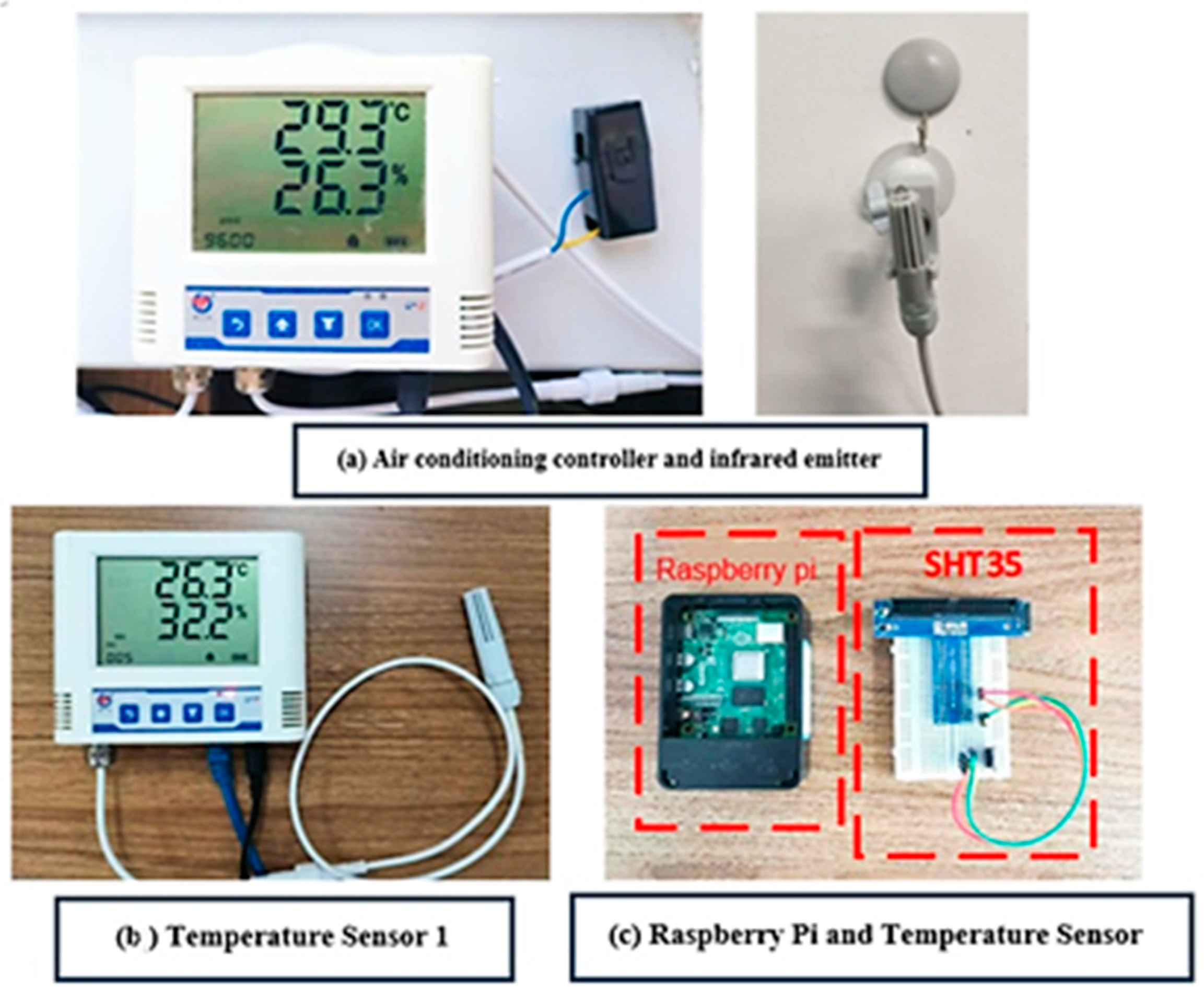
Improving user-level energy efficiency is critical for reducing the load on the power grid and addressing the challenges created by tight power balance when operating domestic air conditioning equipment under time-of-use (ToU) pricing. This paper presents a data-driven control method for HVAC (heating, ventilation, and air conditioning) systems that is based on model predictive control (MPC) and takes ToU electricity pricing into account. To describe building thermal dynamics, a multi-layer neural network is constructed using time-delayed embedding, with the rectified linear unit (ReLU) serving as the activation function for hidden layers. Using this piecewise affine approximation, an optimization model is developed within a receding horizon control framework, integrating the data-driven model and transforming it into a mixed-integer linear programming issue for efficient problem solving. Furthermore, this research suggests a hybrid optimization model for integrating air conditioning systems and battery energy storage systems. By employing a rolling time-domain control method, the proposed model minimizes the frequency of switching between charging and discharging states of the battery energy storage system, improving system reliability and efficiency. An Internet of Things (IoT)-based home energy management system is developed and validated in a real laboratory environment, complemented by a distributed integration solution for the energy management monitoring platform and other essential components. The simulation results and field measurements demonstrate the system’s effectiveness, revealing discernible pre-cooling and pre-charging behaviors prior to peak electricity pricing periods. This cooperative economic operation reduces electricity expenses by 13% compared to standalone operation.
Keywords: air conditioning system; battery energy storage; energy management; system implementation; rolling time-domain control air conditioning system; battery energy storage; energy management; system implementation; rolling time-domain control