


Abstract
In this study, the aerodynamic performance of single- and multi-rotor sail systems was numerically investigated under various inflow directions and array configurations using Computational Fluid Dynamics (CFD) simulations. For a single-rotor sail, the optimal spin ratio (SR) for each wind direction was derived from the energy efficiency index, and an appropriate spacing distance of 9D was identified, within the present steady-RANS framework, as a preliminary guideline based on wake-recovery characteristics. Using these findings, four array configurations were established to reflect the practical installation conditions of a medium-range (MR) tanker. The wake interference and aerodynamic performance variations in each configuration were quantitatively compared and analyzed. The results showed that the average lift in all arrays remained within ±1% of that of a single-rotor, and the 1 × 1 × 1 array exhibited the most stable performance. These findings confirm that the wake-based spacing design and wind direction-dependent SR optimization proposed in this study are crucial for maintaining aerodynamic stability and improving efficiency in multi-rotor sail systems. It is expected that the results of this study will contribute to establishing design guidelines and operational strategies for the practical applications of rotor sails on ships.
1. Introduction
The maritime industry is currently undergoing a technological transition to reduce greenhouse gas (GHG) emissions in response to the strengthened environmental regulations and decarbonization strategy of the International Maritime Organization (IMO). Maritime transport accounts for approximately 3% of global GHG emissions, and the IMO has announced a plan to mandate the adoption of alternative low-emission fuels by 2030, with the ultimate goal of achieving net-zero emissions by 2050 [1]. To meet these environmental regulations, various alternative fuels and energy efficiency technologies (EETs) have been developed. Among them, the wind-assisted propulsion system (WAPS), which can be applied to both new-build and retrofitted vessels, has been regarded as a promising solution [2].
According to the Energy Efficiency Retrofit Report 2024 published by Lloyd’s Register, a total of 101 vessels have been equipped with or are planned to be equipped with WAPS since 2018, among which rotor sails account for approximately 37.6% [3]. The key factors determining the adoption of WAPS are compliance with emission regulations and fuel cost reduction, with current suppliers reporting an average fuel-saving rate of 5–15%. However, the performance of a rotor sail strongly depends on multiple factors, including wind speed, wind direction, installation position, and operating conditions of the vessel. Therefore, the actual fuel-saving effect can vary considerably depending on these conditions. Accordingly, to quantitatively evaluate and validate these effects, it is essential to conduct aerodynamic analyses that comprehensively consider the flow structure and aerodynamic characteristics of rotor sails, wake interference between rotors, and the wake-recovery characteristics of the system.
Although research on rotor sails stagnated in the past owing to economic limitations, recent trends toward maritime decarbonization have reignited interest, particularly in experimental and numerical studies focusing on single rotors. Badalamenti and Prince (2008) [4] experimentally investigated the influence of end-plate size and rotation conditions on aerodynamic performance and clarified the lift enhancement effect. Bordogna et al. (2019) [5] performed wind-tunnel experiments at various Reynolds numbers (1.8 × 10⁵–1.0 × 10⁶) and spin ratio (SR), quantitatively presenting the aerodynamic characteristics corresponding to SR variations. Numerical studies on single-rotor sails have also been systematically conducted. Li et al. (2012) [6] analyzed wake formation around rotor sails under high Reynolds number conditions and quantified the vortex characteristics according to SR ranges. De Marco et al. (2016) [7] performed a parametric study on design variables such as SR, aspect ratio (AR) and end-plate diameter ratio (de/D) and proposed a second-order polynomial-based surrogate model that enables performance prediction and sensitivity assessment at the preliminary design stage. Kwon et al. (2022) [8] established a CFD methodology for rotor sail simulations through verification of turbulence models, analysis of y+ sensitivity, and evaluation of boundary condition effects, and systematically presented parametric results according to changes in AR and end-plate size.
In contrast, studies on aerodynamic-interference effects among multi-rotor sail systems remain limited. Bordogna et al. (2020) [9] experimentally analyzed the wake interaction between two rotor sails at different spacing distances (3D, 7.5D, and 15D) and SR (1.0, 1.5, and 2.0). They reported that when the rotors are positioned closer to each other, the thrust of the downstream rotor decreases while the overall drag increases owing to wake interaction.
Most existing studies have primarily focused on the aerodynamic performance of a single-rotor sail and have not comprehensively addressed key aspects necessary for practical applications, such as estimating the wake recovery distance, deriving optimal operating conditions considering generator efficiency, and establishing multi-rotor sail configuration strategies under spatial constraints for ship installation. Furthermore, the majority of previous studies were conducted under idealized cross-wind conditions (wind direction = 90°), which limits their applicability in proposing optimal operational strategies for real-world maritime environments characterized by diverse wind conditions.
To address these research gaps, the objective of this study is to determine the optimal SR that maximizes the net propulsive efficiency across a wide range of wind directions, and evaluate the effectiveness of spacing strategies derived from wake-recovery characteristics for practical multi-rotor sail arrangements.
Accordingly, this study analyzes the aerodynamic performance of a single-rotor sail under a wide range of wind directions (15–165°) and derives the optimal operating SR for each direction by incorporating generator efficiency. Based on these analyses, the appropriate spacing distance between rotors was determined according to the wake recovery criterion (U/Uref = 0.95), and multi-rotor sail configurations were established considering the available installation space on the medium-range (MR) tanker. Furthermore, CFD simulations for these multi-rotor sail configurations were conducted to quantitatively analyze aerodynamic-interference and wake interaction effects between rotors. Based on the results, this study proposes a layout design guideline for efficient operation of multi-rotor sail systems.
2. Numerical Approach
2.1. Rotor Sail and Medium Range Tanker Model
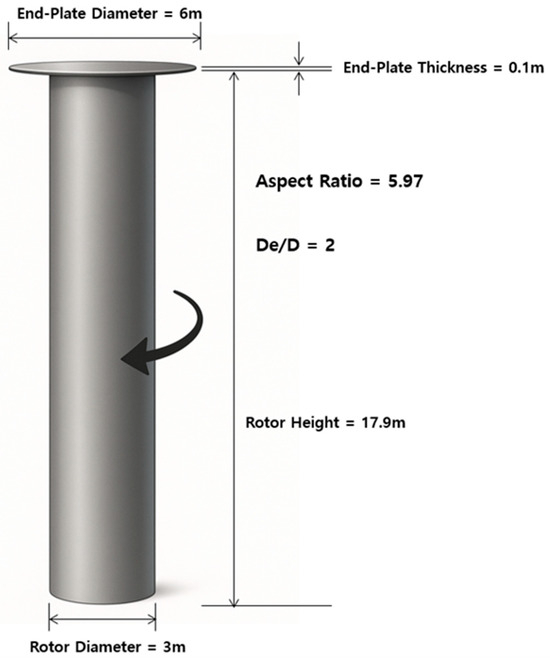
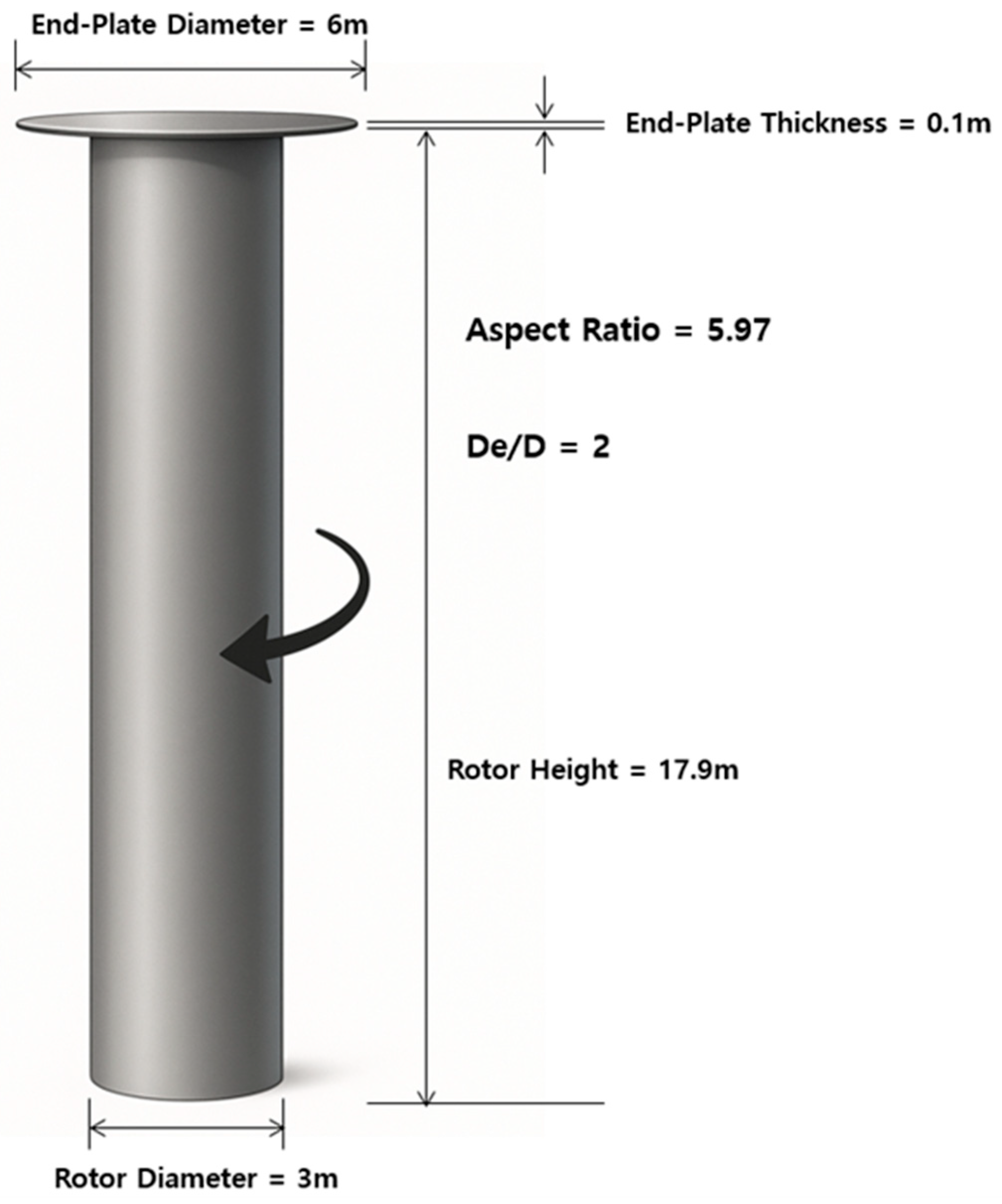
Figure 1 shows the geometry of the rotor sail used in this study. The rotor sail consists of a cylindrical shape with a diameter D = 3.0 m and a height H = 17.9 m, giving an AR of approximately 5.97. An end-plate with a diameter De = 6.0 m and a thickness of 0.1 m is attached to the top of the rotor. This configuration was designed considering the practical installation conditions on the MR tanker.
Figure 1.
Rotor sail Concept design for medium-range tanker.
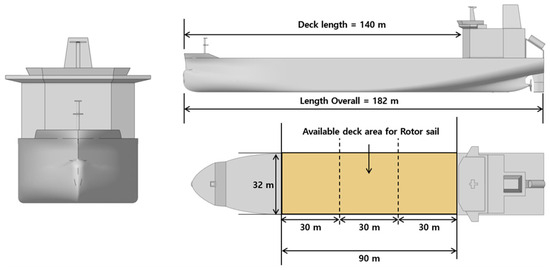
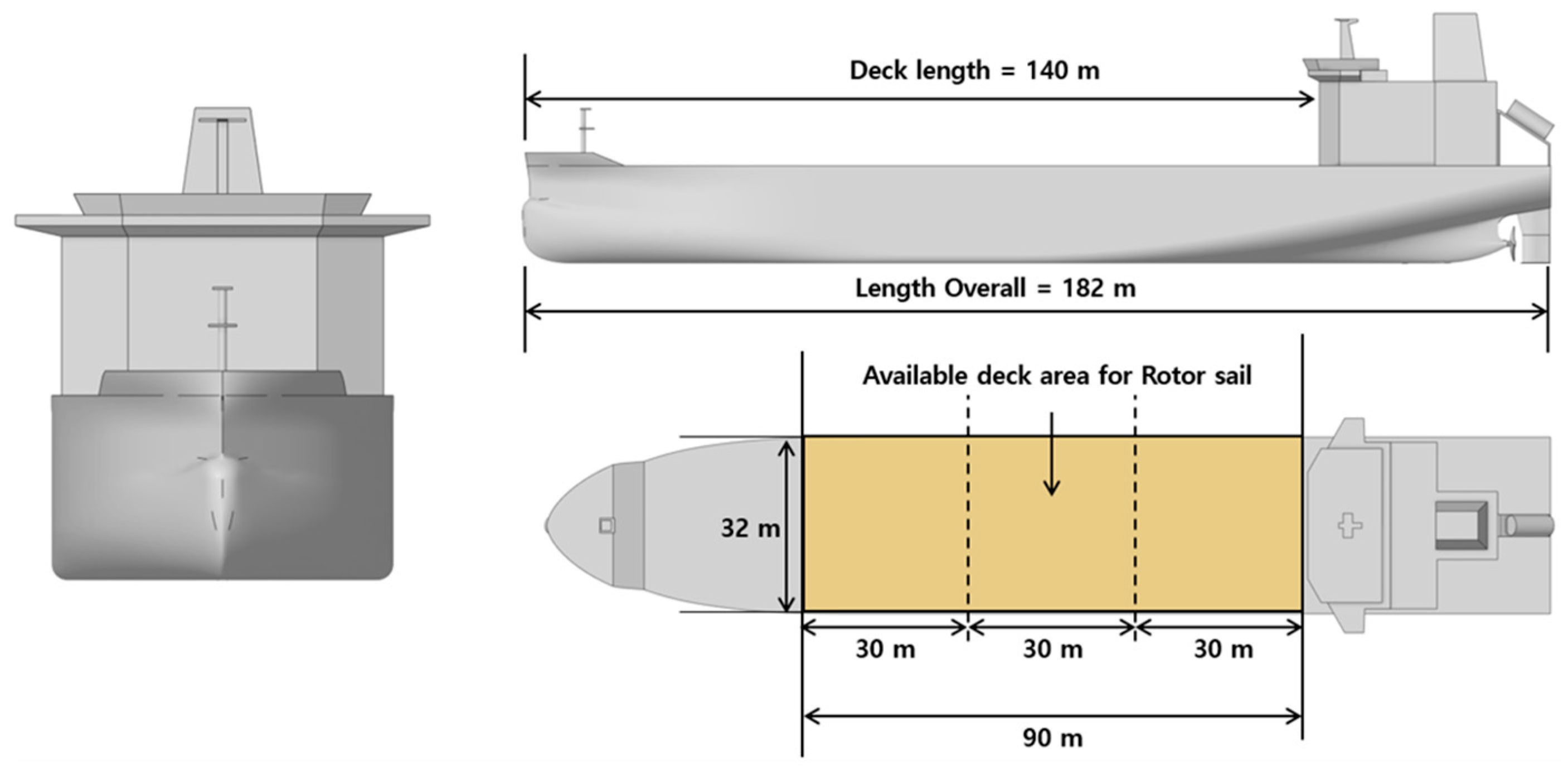
Figure 2 illustrates the principal dimensions of the MR tanker on which multi-rotor sail systems are installed. The vessel has a length overall (LOA) of 182 m and a breadth of 32 m, while the upper-deck length is approximately 140 m.
Figure 2.
General arrangement of the MR tanker and available deck area for rotor sail installation.
The available deck area for rotor-sail installation is defined as the region extending from the point amidships where the breadth of 32 m remains constant amidships to the front of the superstructure located at the stern, corresponding to an area of 2880 m2.
In addition, according to a technical report by MAN Energy Solution, the typical service speed of MR tankers ranges between 14 and 15 knots [10]. Therefore, in this study, a representative service speed of 14 knots was adopted to calculate the apparent wind speed acting on the rotor sails.
2.2. Numerical Method and Boundary Conditions
Steady-state simulations based on the Reynolds-Averaged Navier–Stokes (RANS) equations were performed using the commercial CFD software Ansys Fluent 2023 R2. The Shear Stress Transport (SST) k- turbulence model proposed by Menter (1994) [11] was adopted, as it can accurately predict flow separation and vortex structures. The validity of this turbulence model for rotor-sail simulations has been demonstrated in several previous studies [12,13].
For the pressure–velocity coupling, the Coupled scheme was applied, and second-order upwind discretization was used for the momentum, pressure, turbulent kinetic energy, and specific dissipation rate terms to improve numerical accuracy. The convergence criterion was determined based on the stabilization of the monitored lift and drag coefficients during the iterative calculation process.
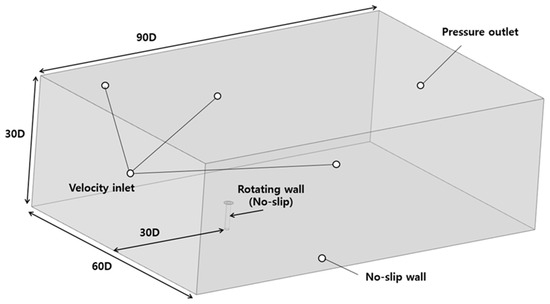
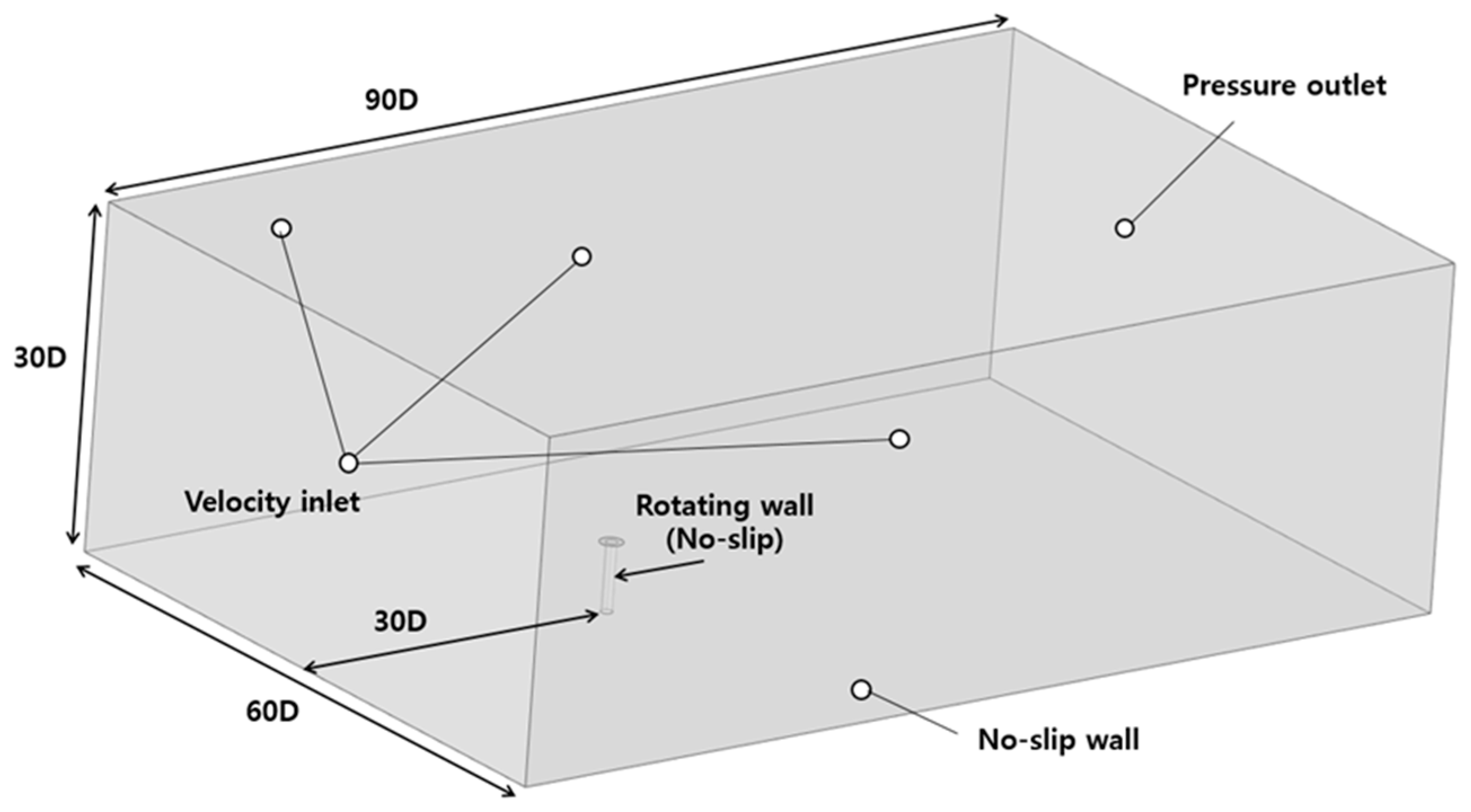
The computational domain and boundary conditions for the single-rotor sail simulation are presented in Figure 3. The computational domain was defined as 30D in the inlet direction, 60D in the outlet direction, and 30D in both the vertical and lateral directions, where D denotes the rotor diameter, in order to minimize the influence of boundary effects. Uniform velocity-inlet conditions were applied to the inlet, side, and top boundaries, while the outlet was defined as a pressure-outlet condition. Both the bottom wall and the rotor sail surface were defined as no-slip walls, and a rotating-wall condition was imposed on the rotor to simulate the rotational effect. For the multi-rotor sail simulations, the computational domain was extended to 70D in the outlet direction and 60D in the lateral direction to adequately capture the wake-interference effects between rotors.
Figure 3.
Computational domain and boundary conditions.
2.3. Mesh Dependency Test and Mesh Strategy
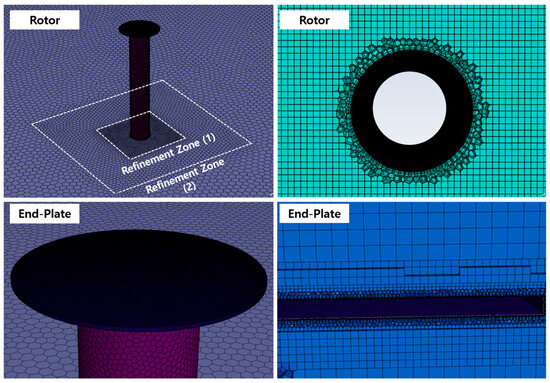
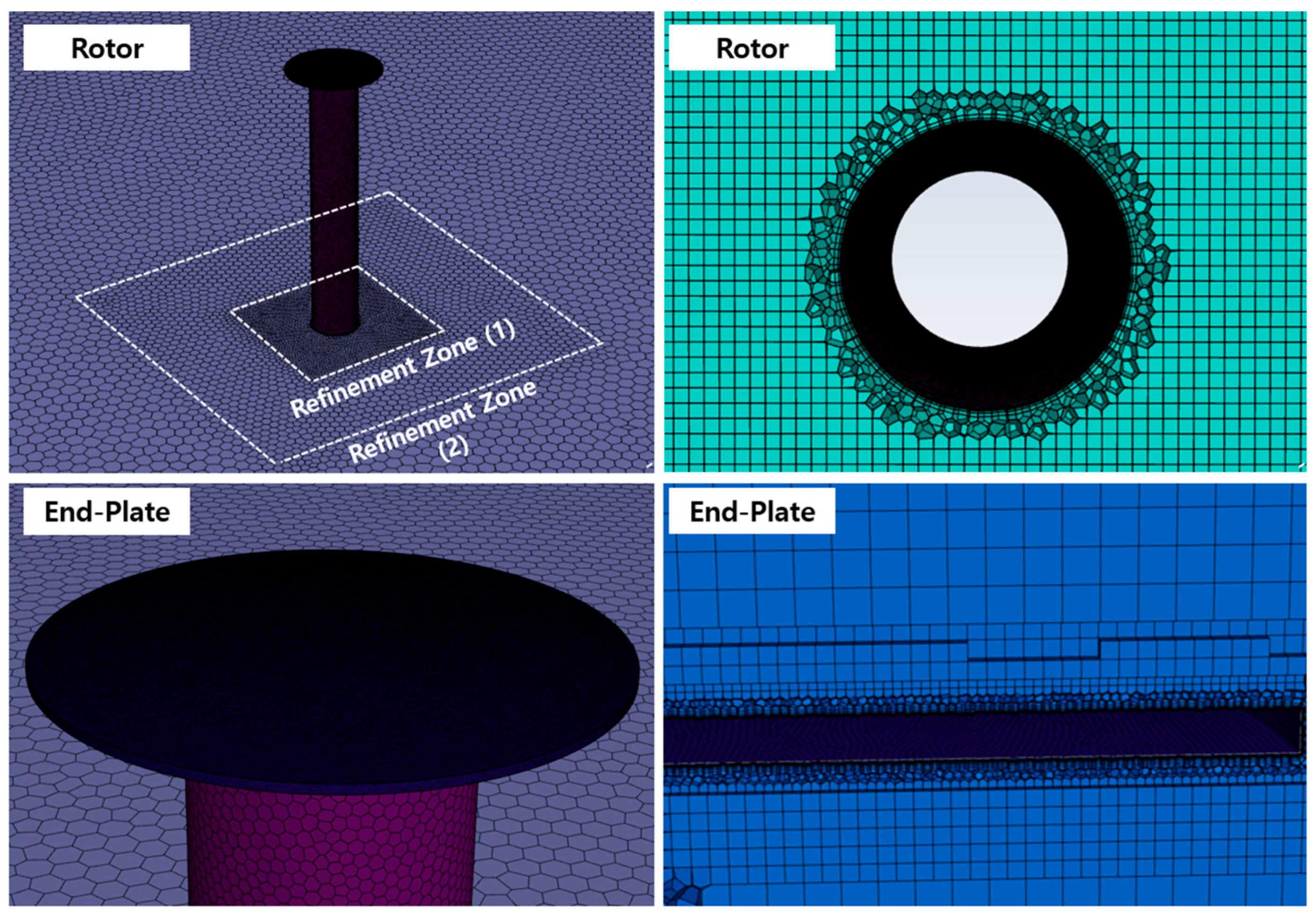
A poly-hexcore-based unstructured mesh was generated for the rotor sail simulations. A total of 12 prism layers were applied near the wall surfaces to accurately capture the boundary-layer flow, and the first-layer thickness was determined so that the non-dimensional wall distance (y+) was maintained at approximately of 1~2. This ensured the accuracy of the SST k- turbulence model.
To evaluate the sensitivity of the analysis results to the number of mesh elements, a mesh dependency test was conducted using four different mesh configurations. For each configuration, two refinement zones were defined around the rotor sail surface and near the upper end-plate region, where significant flow variations occur. The total number of volume cells was gradually increased for each case. Figure 4 presents the refinement zones and the generated mesh.
Figure 4.
Mesh in computational domain.
The computed lift (CL) and drag (Cd) coefficients for each mesh configuration are summarized in Table 1. The simulation was performed with an inflow velocity of 10 m/s, a crosswind direction of 90°, and a SR of 2.5. The relative error (E), defined as the percentage difference in coefficient values compared with the fine-mesh case (Case 1), was also calculated to assess mesh sensitivity. The results indicate that the difference in CL between Case 1 and Case 2 is within 0.01%, and that of Cd is within 0.34%, confirming that mesh independence was sufficiently achieved under Case 2.
Table 1.
Mesh dependency test result.
For the multi-rotor sail configurations, the mesh generation strategy employed individual refinement zones around each rotor to accurately resolve the near-wall boundary layer and local flow gradients. In addition, a global refinement zone encompassing all rotors was implemented to capture the complex wake interactions and flow interference effects among the rotors with sufficient spatial resolution. The mesh resolution and grid-size criteria were directly inherited from the single-rotor mesh dependency test to ensure consistent mesh quality and spatial resolution across all computational cases.
For Cases 1–3, which consist of three rotors, the total number of cells was approximately 18 million, while Case 4, consisting of four rotors, employed roughly 24 million cells. This approach ensured that the multi-rotor simulations preserved the same level of mesh quality as the validated single-rotor analysis.
2.4. CFD Validation
To ensure the reliability of the numerical analysis, a preliminary validation study was conducted to verify the CFD methodology by comparing the numerical results with wind-tunnel experimental data for a single-rotor sail. The reference experimental results were obtained from the study of Bordogna (2020) [9], conducted at the Politecnico di Milano wind tunnel facility. In that study, the aerodynamic coefficients of lift and drag were measured for various SR using a rotor with a height of 1.5 m, diameter of 0.3 m, and end-plate diameter of 0.6 m.
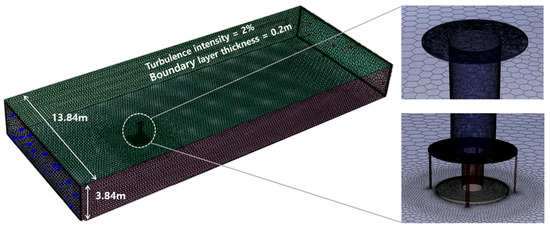
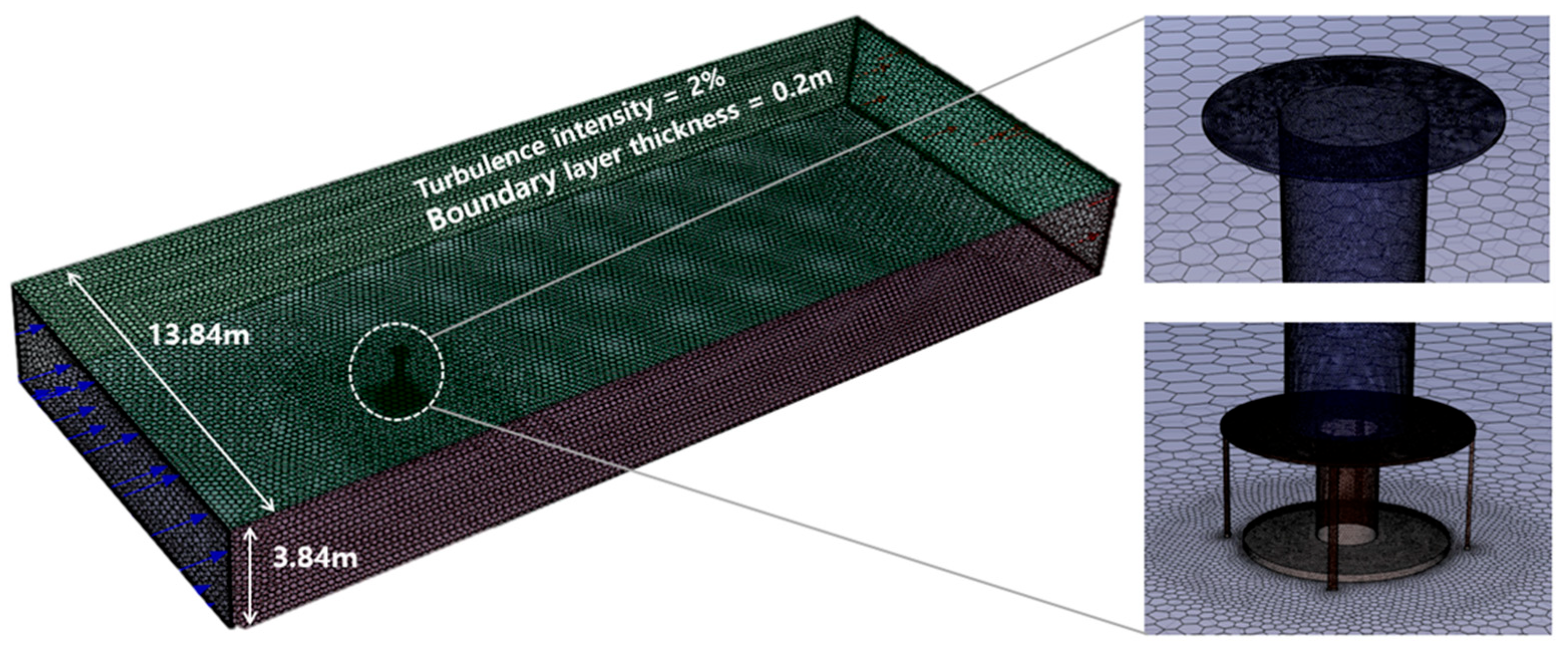
In the CFD simulations, the same geometry and flow conditions as in the experiment were reproduced, as shown in Figure 5 and the mesh consisted of approximately 3.95 million cells. The computational domain was defined according to the internal test section of the wind tunnel (13.84 m × 3.84 m), and all wall boundaries were treated as no-slip walls. The inlet velocity was set to 3.5 m/s, corresponding to a Reynolds number of 7.0 × 10⁴, with a turbulence intensity of 2% and a boundary-layer thickness of 0.2 m applied at the inlet.
Figure 5.
Computational domain and mesh used for CFD validation.
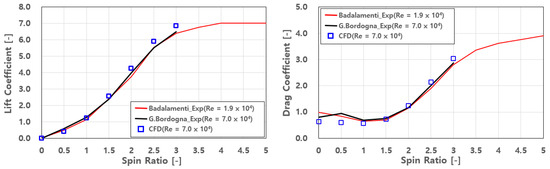
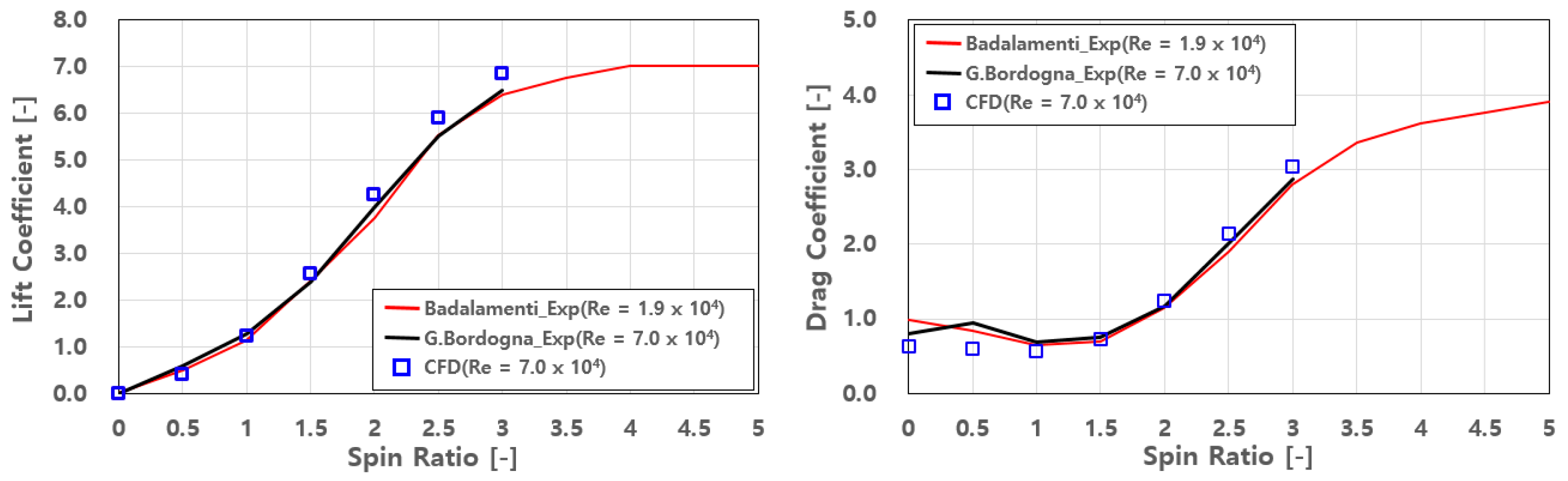
Figure 6 compares the lift and drag coefficients obtained from the CFD simulations and the experimental measurements for different SR. The lift coefficients exhibited overall agreement with the experimental trends, showing only slight deviations as the SR increased. For the drag coefficient, larger differences were observed in the low SR range (0~0.5), while the results at higher SR values showed good agreement with the experimental data. These discrepancies are attributed to the limitations of the steady RANS-based SST model in accurately reproducing strong vortex shedding and asymmetric vortex structures that occur under low rotation or stationary conditions. In fact, Karabelas et al. (2010) reported through Large Eddy Simulation (LES)-based numerical analysis that, under low rotational conditions, the vortex pair in the wake of a rotating cylinder develops asymmetrically [14]. Therefore, the deviation in this range can be attributed to the limited capability of the steady RANS approach in capturing unsteady flow characteristics and the inherent structural limitations of the SST model.
Figure 6.
Comparison of CFD results and wind tunnel Experiments.
However, the primary objective of this study is not to resolve the detailed unsteady flow features at low SR, but rather to evaluate the overall aerodynamic trends and relative performance differences across various wind directions, SR, and multi-rotor configurations within the practical operating range of rotor sails. Previous studies have demonstrated that steady or quasi-steady RANS approaches can sufficiently reproduce the mean aerodynamic performance of rotor sails within this SR range [8,13,15]. In the present validation as well, the CFD results showed reasonable agreement with the experimental data for SR ≥ 1, confirming that the mean aerodynamic loading is adequately predicted.
Considering this physical background, the agreement with experimental measurements, and the extremely large number of wind-direction/SR/array combinations required in this study, the steady RANS method with the SST k- model was adopted as the most practical and appropriate numerical approach for capturing the mean aerodynamic performance relevant to the scope of this work.
3. Aerodynamic Analysis of Single-Rotor Sail
3.1. Aerodynamic Performance Evaluation
To determine the optimal operating conditions of a single-rotor sail under various wind directions, three-dimensional steady-state CFD analyses were performed considering a range of SR and inflow angles. The inflow angles were set at 15° intervals from 15° to 165°, resulting in a total of eleven cases, while SR varied from 1.0 to 4.0 at 0.25 intervals, yielding thirteen conditions in total. The apparent wind speed was set to 10 m/s, derived from the representative service speed of the MR tanker (14 knots) and the most frequently observed sea-level wind speed (7 m/s).
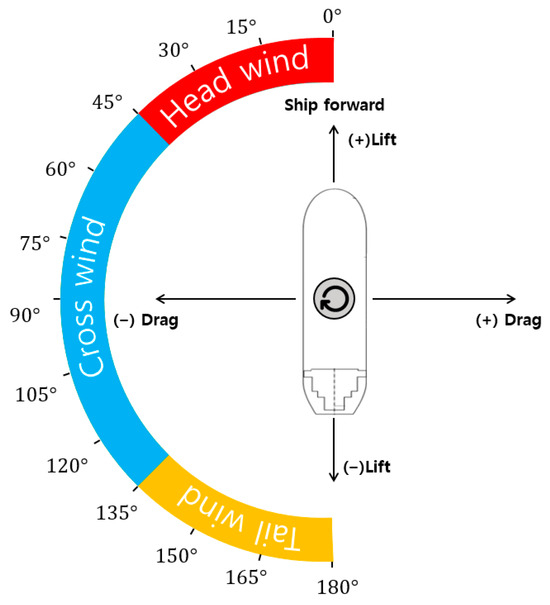
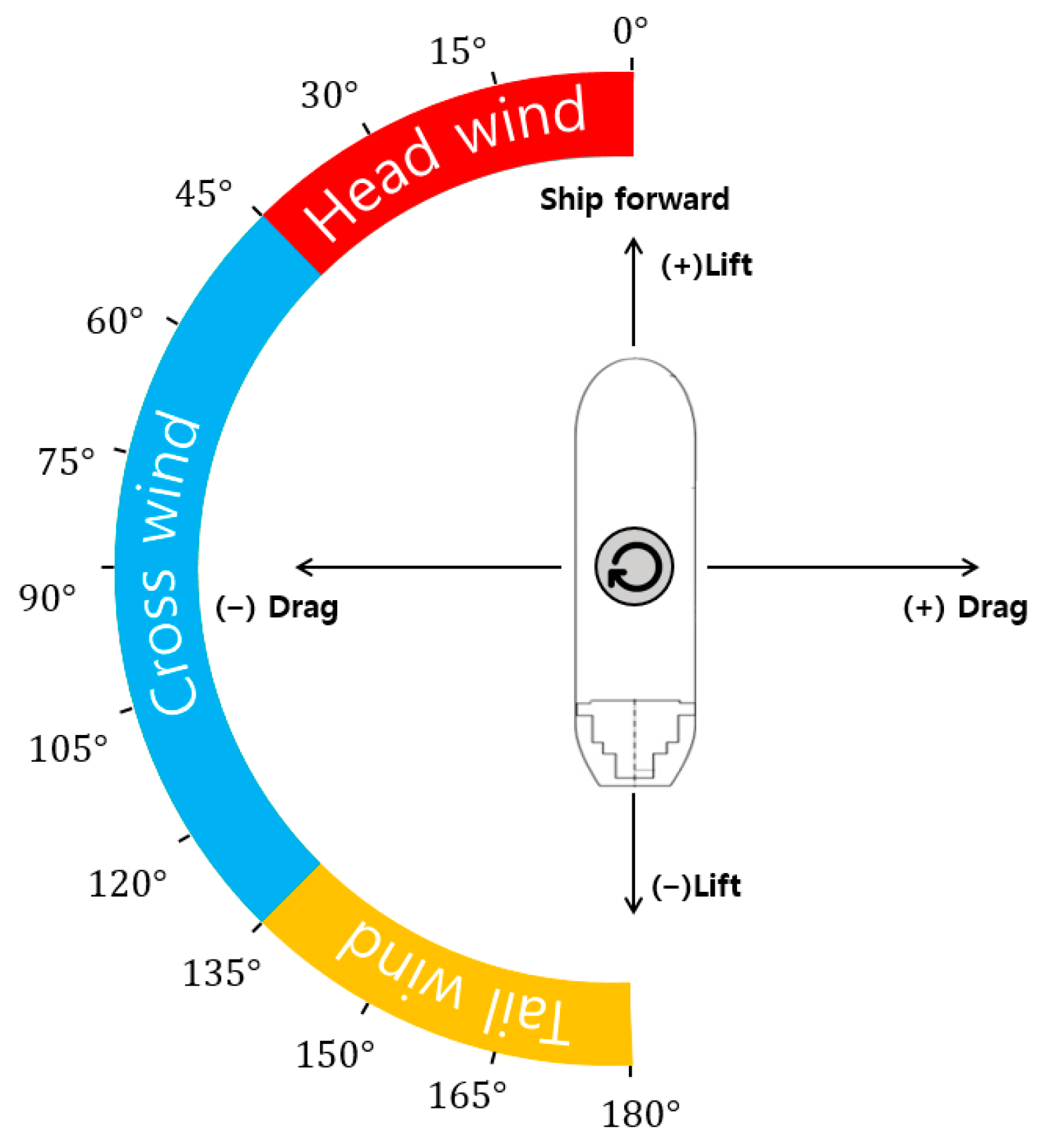
Figure 7 presents the wind-direction sectors and the aerodynamic reference coordinate system adopted in this study. In conventional aerodynamics, lift and drag are defined as the force components perpendicular and parallel to the incoming flow direction, respectively. However, to consistently evaluate the propulsive contribution of the rotor sail under varying wind conditions, the aerodynamic force vector was projected onto the ship-fixed longitudinal and transverse axes. In this coordinate system, 0° denotes the ship’s bow direction, 180° the stern, 90° the port side, and 270° the starboard side.
Figure 7.
Definition of wind direction sectors and the aerodynamic reference coordinate system.
All wind direction in this study refer to the apparent wind angle (AWA) measured relative to the ship’s heading. The AWA was categorized into three sectors: 0–45° as head-wind, 60–120° as cross-wind, and 135–165° as tail-wind conditions. The rotor sail was modeled as rotating in the clockwise direction when viewed from above.
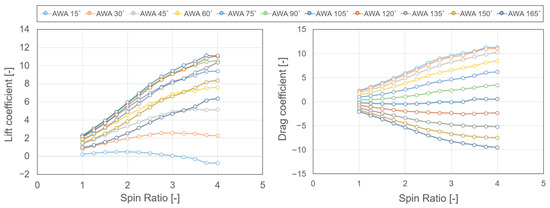
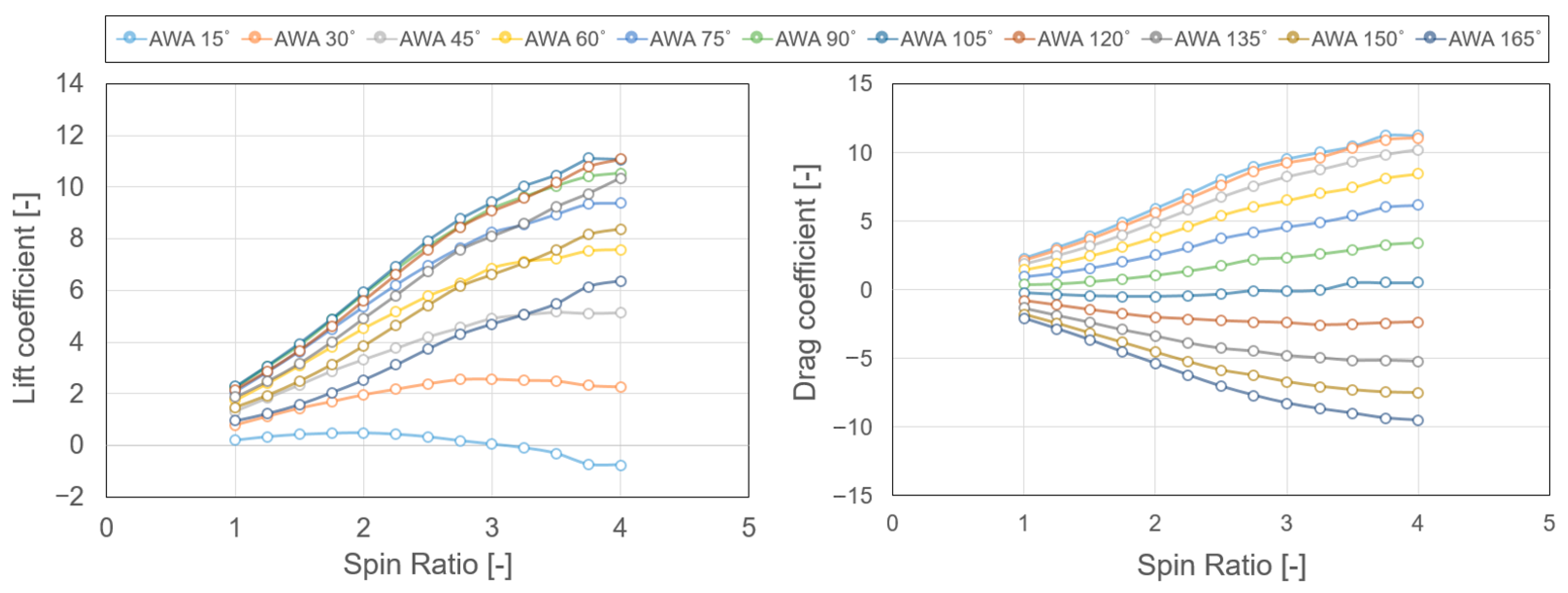
Figure 8 shows the aerodynamic results of the single-rotor sail according to changes in SR and AWA. In most wind conditions, the lift coefficient exhibited a linear increase with increasing SR. In the head-wind condition, the lift coefficient reached its maximum within the SR range of 2.0~3.0 and then gradually decreased. Particularly at the 15° AWA, negative lift occurred when SR exceeded 3.0, acting as a resistive force opposing the ship’s forward direction. Ideally, under head-wind (15°) conditions, lift should be generated around 285°, nearly perpendicular to the inflow. However, as SR increased, the asymmetry of the pressure distribution over the rotor surface intensified, causing the principal lift vector to shift toward 255~270°. Consequently, at sufficiently high SR, the lift vector aligns opposite to the ship’s forward direction, generating negative lift that contributes to increased resistance.
Figure 8.
Variation in lift and drag coefficient with SR under different AWA.
The drag coefficient increased with SR under all AWA, with a higher rate of increase observed under head-wind and tail-wind conditions compared to cross-wind. In particular, under tail-wind conditions (120~165°), the influence of the Magnus lift induced in the direction perpendicular to the inflow resulted in the occurrence of negative drag. This negative drag partially offset the positive drag acting parallel to the inflow, allowing the rotor sail to maintain relatively lower drag coefficients compared with the forward wind conditions.
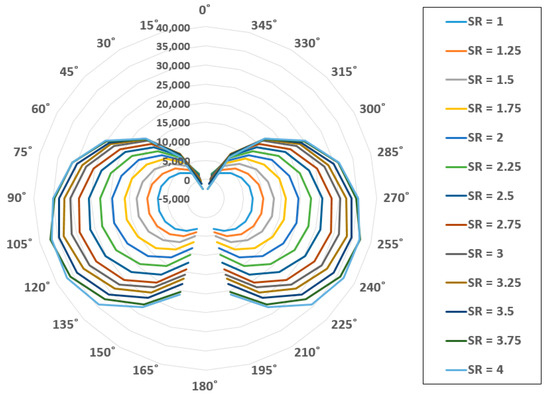
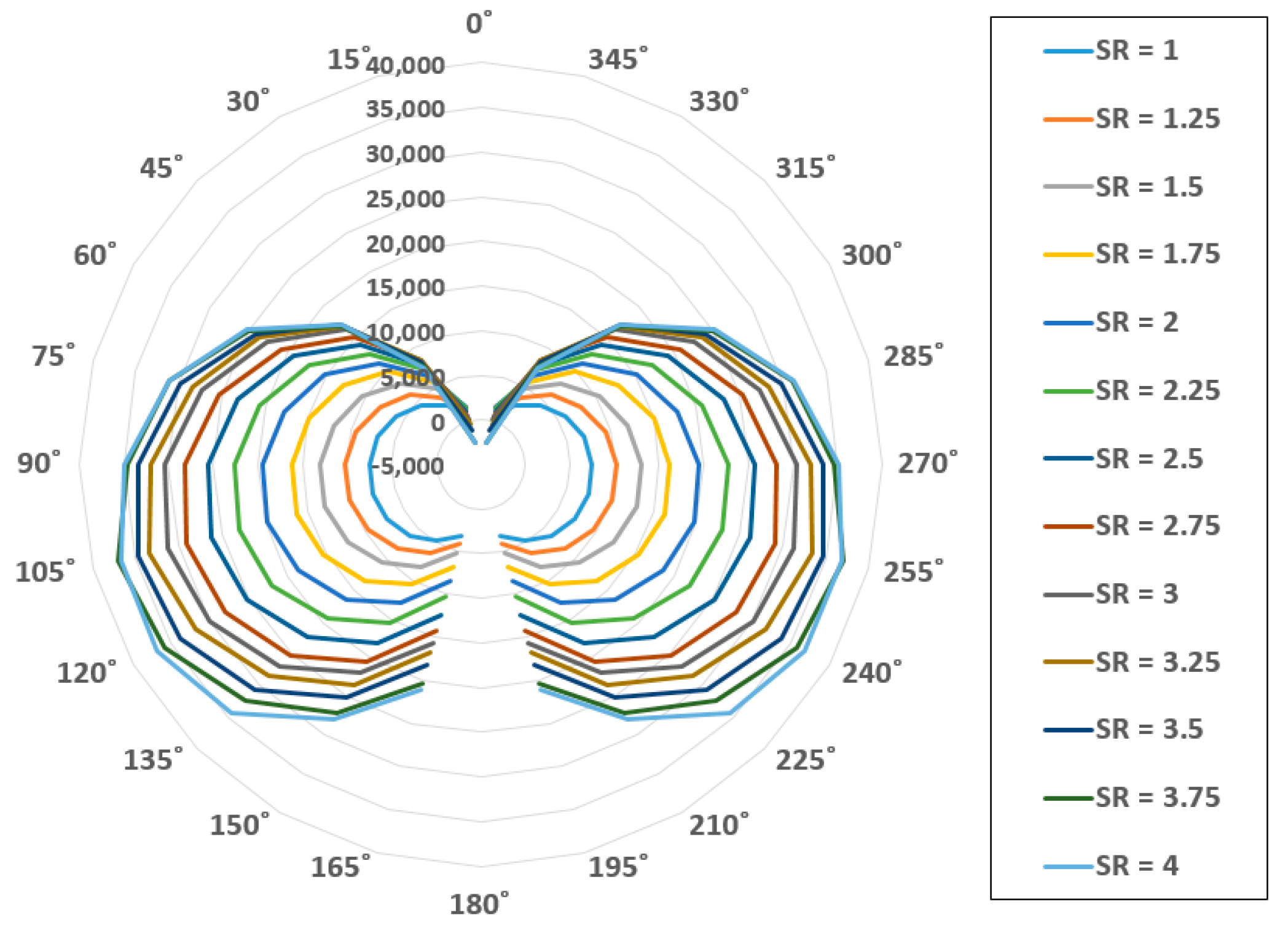
Figure 9 illustrates the lift distribution under various SR in the form of a polar diagram. As the SR increased, the magnitude of lift generally increased over all AWA. The maximum lift was observed at AWA values slightly greater than the ideal cross-wind (90°), specifically around 105° for SR values between 1.0 and 3.75 and around 120° for SR = 4.0. This behavior can be explained by the same physical mechanism as the occurrence of negative lift under head-wind conditions described in Figure 8. As the rotational speed of the rotor increased, the stagnation point on the front surface shifted rearward along the pressure side, while the accelerated attached flow on the suction side was sustained over a longer region. Consequently, the lift vector became more aligned with the ship’s forward direction at AWA 105~120° compared with the 90° cross-wind condition, thereby enhancing the net propulsive component acting on the vessel.
Figure 9.
Polar diagram of lift force according to AWA under various SR conditions.
To derive the optimal operating conditions for the rotor sail, the energy efficiency index (E) proposed by Jones et al. (2019) [16] was employed. This index is defined as the ratio between the effective thrust generated by the rotor sail and the mechanical power consumed by the driving motor, as expressed in Equation (1).
Here, represents the lift (N) or propulsive force generated by the rotor sail, is the inflow wind speed (m/s), is the torque of the driving motor (N·m), and is the angular velocity of the motor (rad/s). The motor efficiency was calculated based on the specifications of the HMC3 280S-4 V1 (HOYER) model, which is planned to be installed on the MR tanker. The rotational speeds (rpm) and output power values corresponding to each SR condition are summarized in Table 2. Using these parameters, the energy efficiency for each AWA was evaluated according to variations in SR.
Table 2.
Driving motor performance by SR.
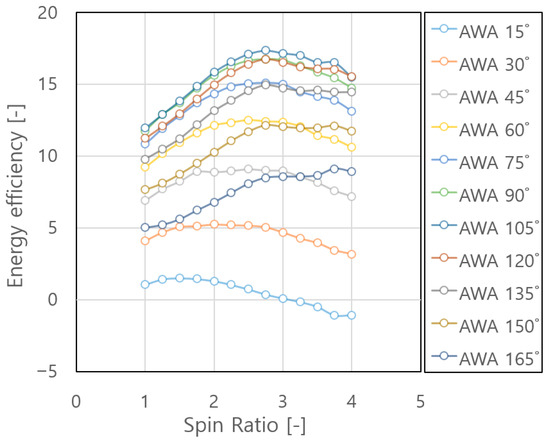
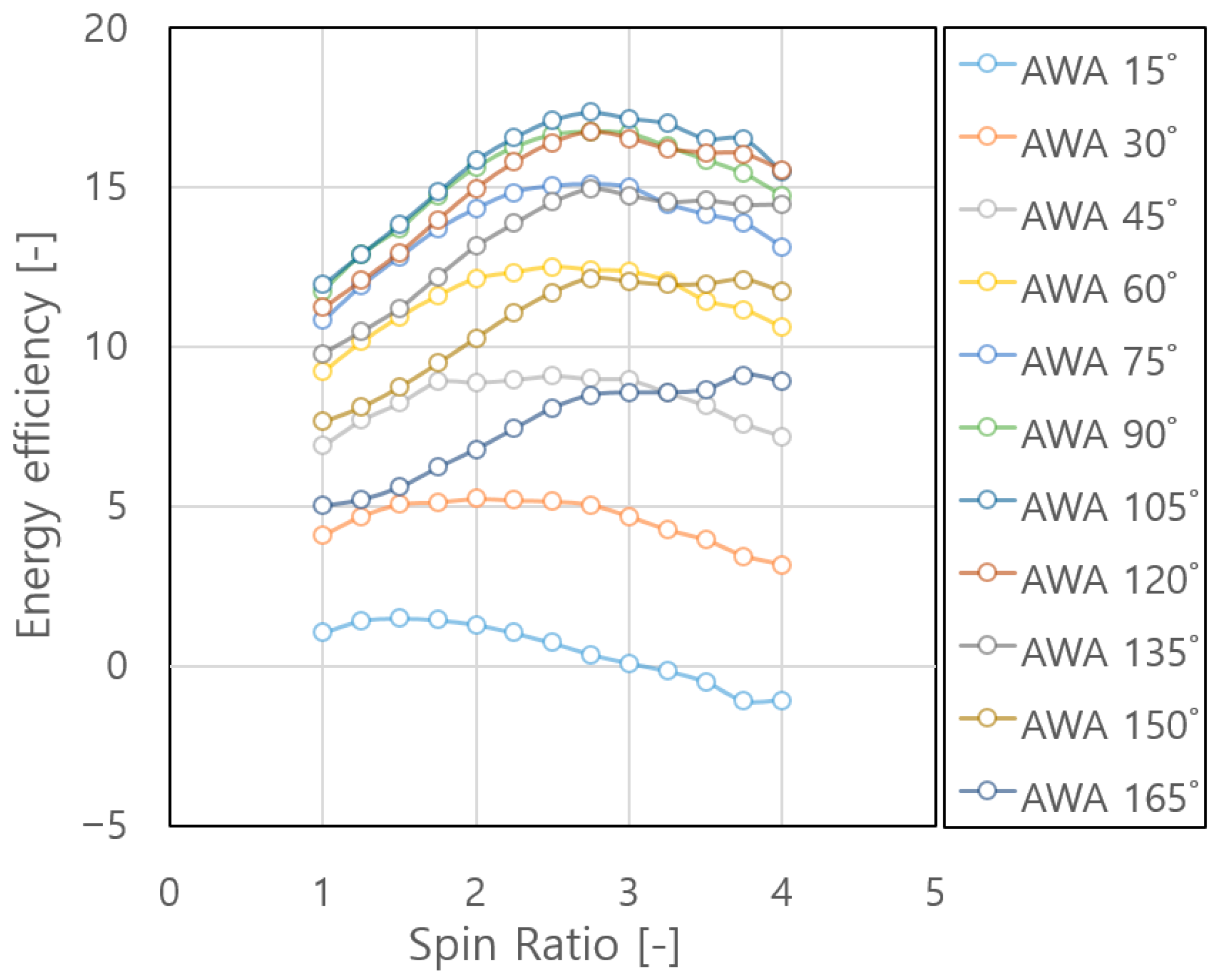
Figure 10 shows the energy efficiency curves with respect to SR under different AWA. The maximum efficiencies occurred at SR = 1.5 and 2.0 for 15° and 30°, respectively; SR = 2.5 for 45° and 60°; SR = 2.75 for 75~150°; and SR = 3.75 for 165°. These results indicate that the optimal efficiency point arises from the coupled influence of SR, AWA, and motor power consumption characteristics, highlighting the importance of implementing an active rotational speed control strategy that can adapt to real time changes in wind direction.
Figure 10.
Energy efficiency curves for single-rotor sail.
3.2. Flow Field and Wake Recovery Analysis for Rotor Sail Deployment
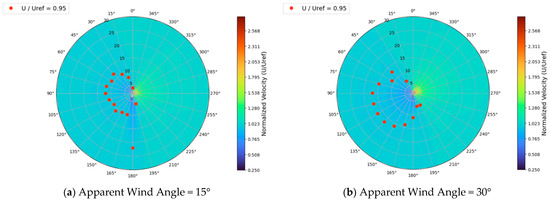
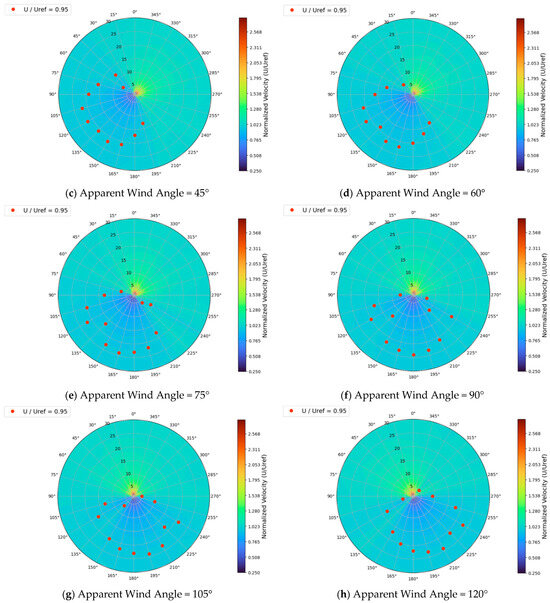
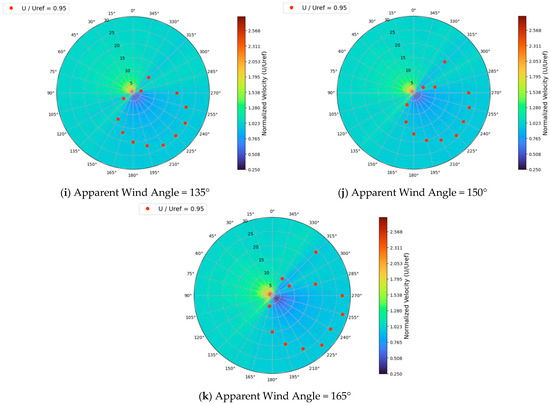
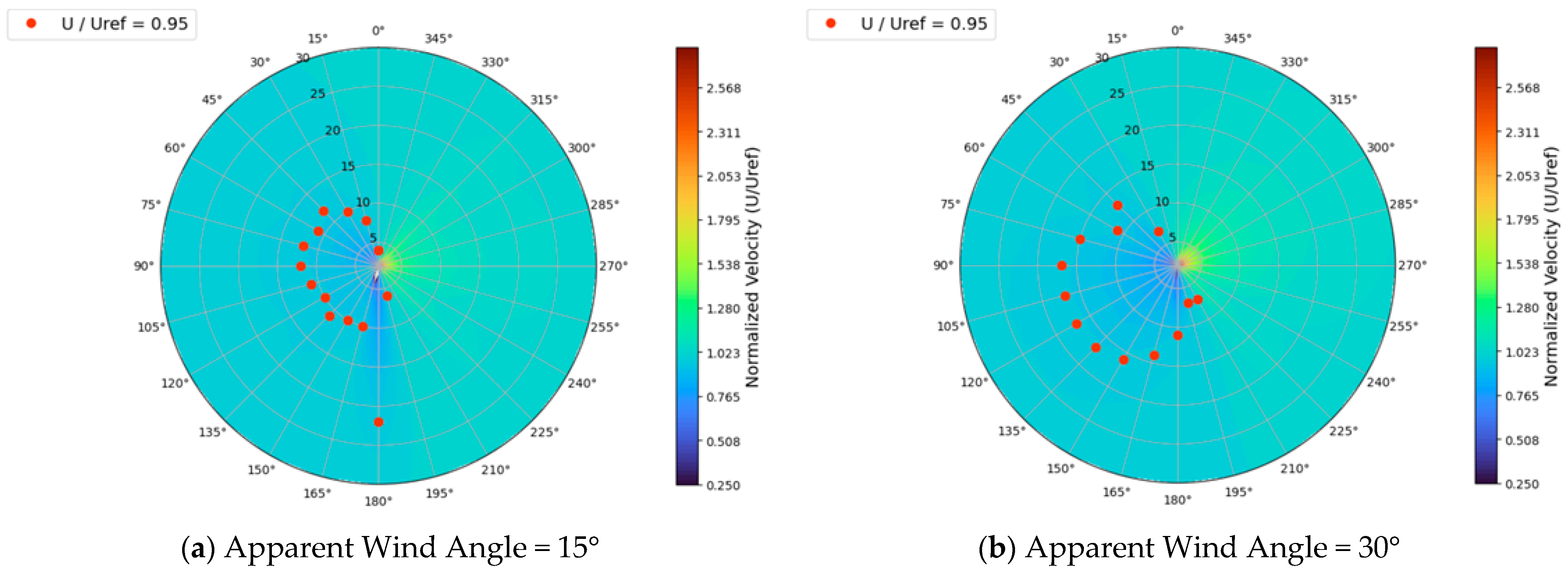
To establish a criterion for determining the appropriate spacing distance that minimizes wake interference in multi-rotor configurations, the wake flow characteristics of a single-rotor sail operating under the optimal SR condition were analyzed for each AWA.
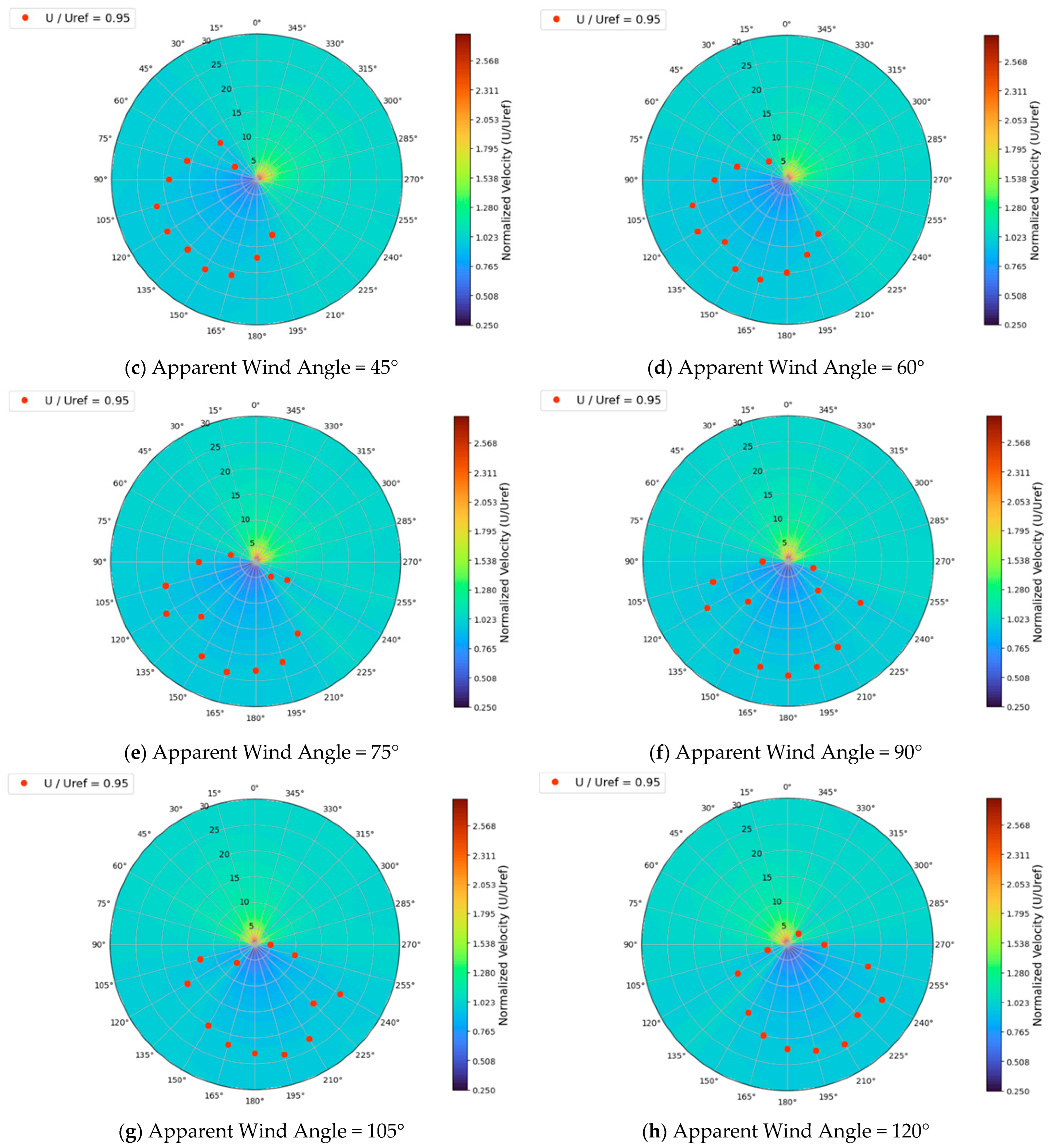
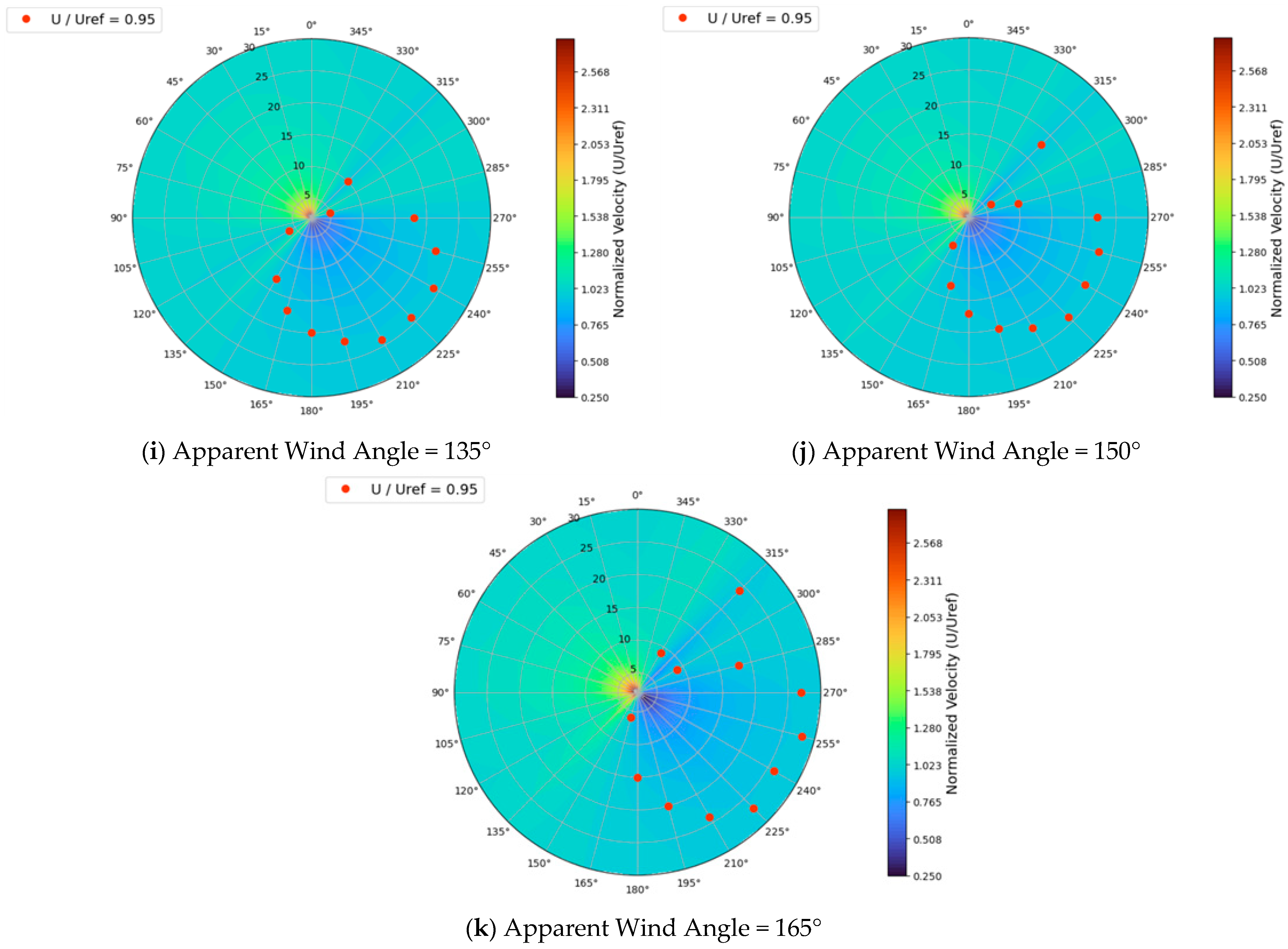
Figure 11 shows the normalized velocity distribution (U/Uref ) calculated in all AWA from the rotor-sail center. Considering the available deck width of the MR tanker, the practically allowable spacing is limited to within about 10D. Reflecting this installation constraint, the first location at which the velocity recovered to U/Uref = 0.95 was identified as the wake-recovery point.
Figure 11.
Normalized velocity distribution and wake recovery point under various AWA.
The wake of the rotor sail did not develop straight in the same horizontal direction as the incoming flow. Instead, it exhibited a deflected distribution toward the pressure side formed by rotation, accompanied by a reduction in velocity. Conversely, a region of increased flow velocity appeared on the suction side, which is interpreted as a typical flow-field feature associated with the Magnus effect.
The extent of the wake influence varied depending on the wind direction at the optimal SR. For wind directions of 15~30°, the wake influence extended approximately 6D downstream; for 45~150°, it reached up to 8D; and for 165°, the influence persisted beyond 9D. Considering the deck-width limitation that restricts feasible spacing to less than 10D, the longest observed wake-recovery distance within this range which is approximately 9D, was adopted as a preliminary spacing guideline.
These differences are attributed to changes in the vorticity structure and boundary-layer development around the rotor, which depend on SR and AWA. As SR increases, the pressure gradient between the suction and pressure sides becomes stronger, enhancing the asymmetry of the flow and resulting in a broader wake-dispersion region.
In most AWA, a velocity-reduction phenomenon was also observed in front of the rotor. This behavior is commonly seen in flows around rotating bodies and can be explained by the rotation-induced flow generated by the rotor, which disturbs the incoming flow field and forms a localized stagnation zone near the frontal area.
4. Aerodynamic Performance Analysis of Multi-Rotor Sails
4.1. Design Procedure for Multi-Rotor Layouts
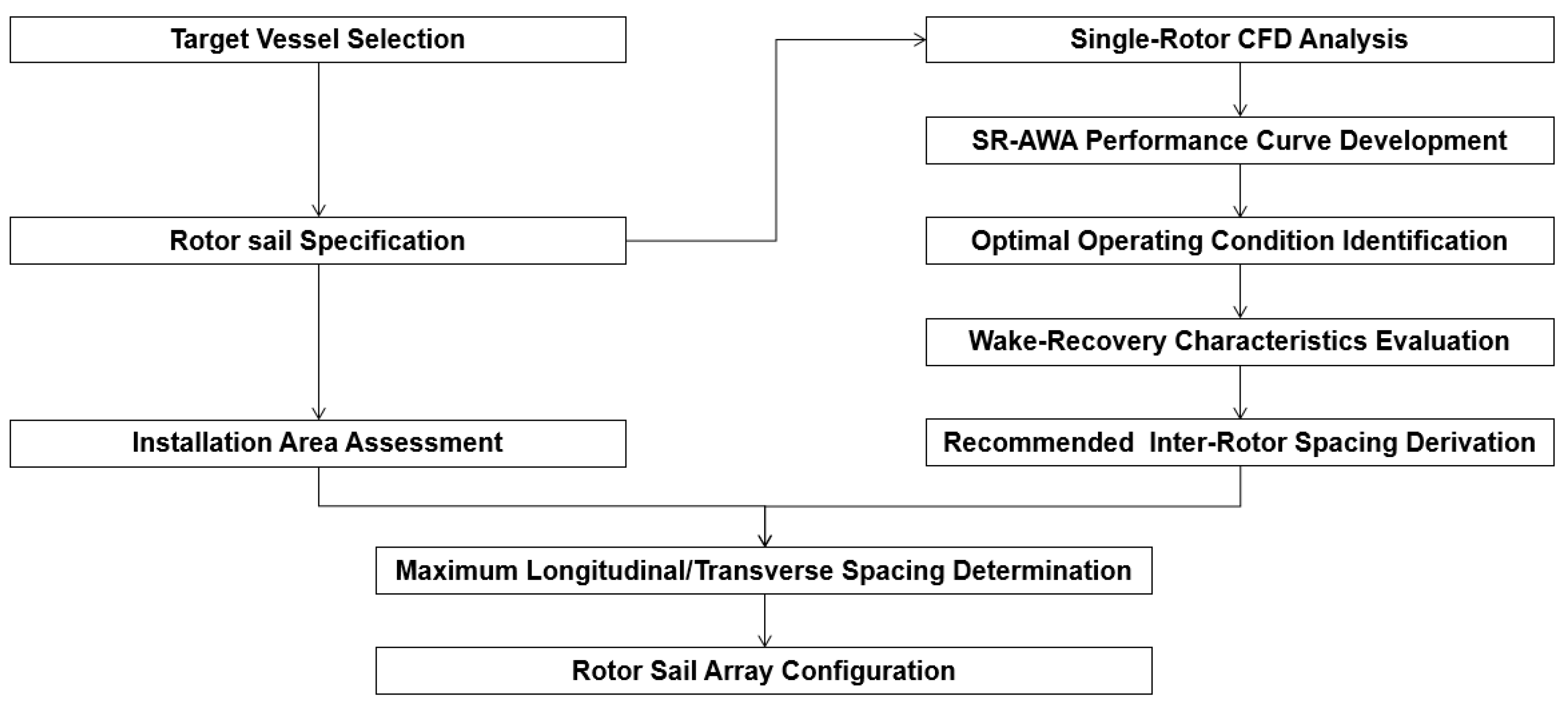
Figure 12 presents the overall design procedure through which the key findings from the single-rotor analysis were systematically extended to the development of multi-rotor sail layouts. The process began by identifying the feasible installation region and structural constraints on the target vessel based on the selected ship type and the specified rotor-sail dimensions. Subsequently, single-rotor CFD simulations were conducted to determine the optimal operating conditions for each AWA and to quantitatively evaluate the wake-recovery characteristics, which provided the fundamental design criteria for estimating the required inter-rotor spacing.
Figure 12.
Overall design procedure for Multi-rotor layouts.
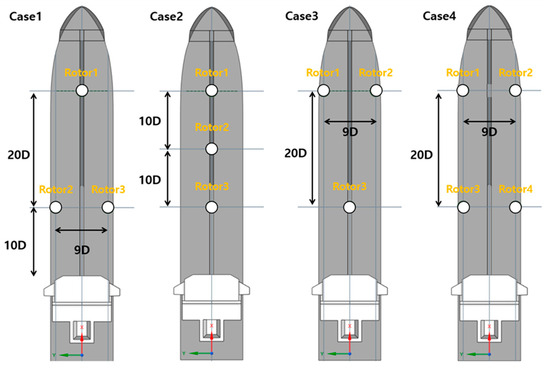
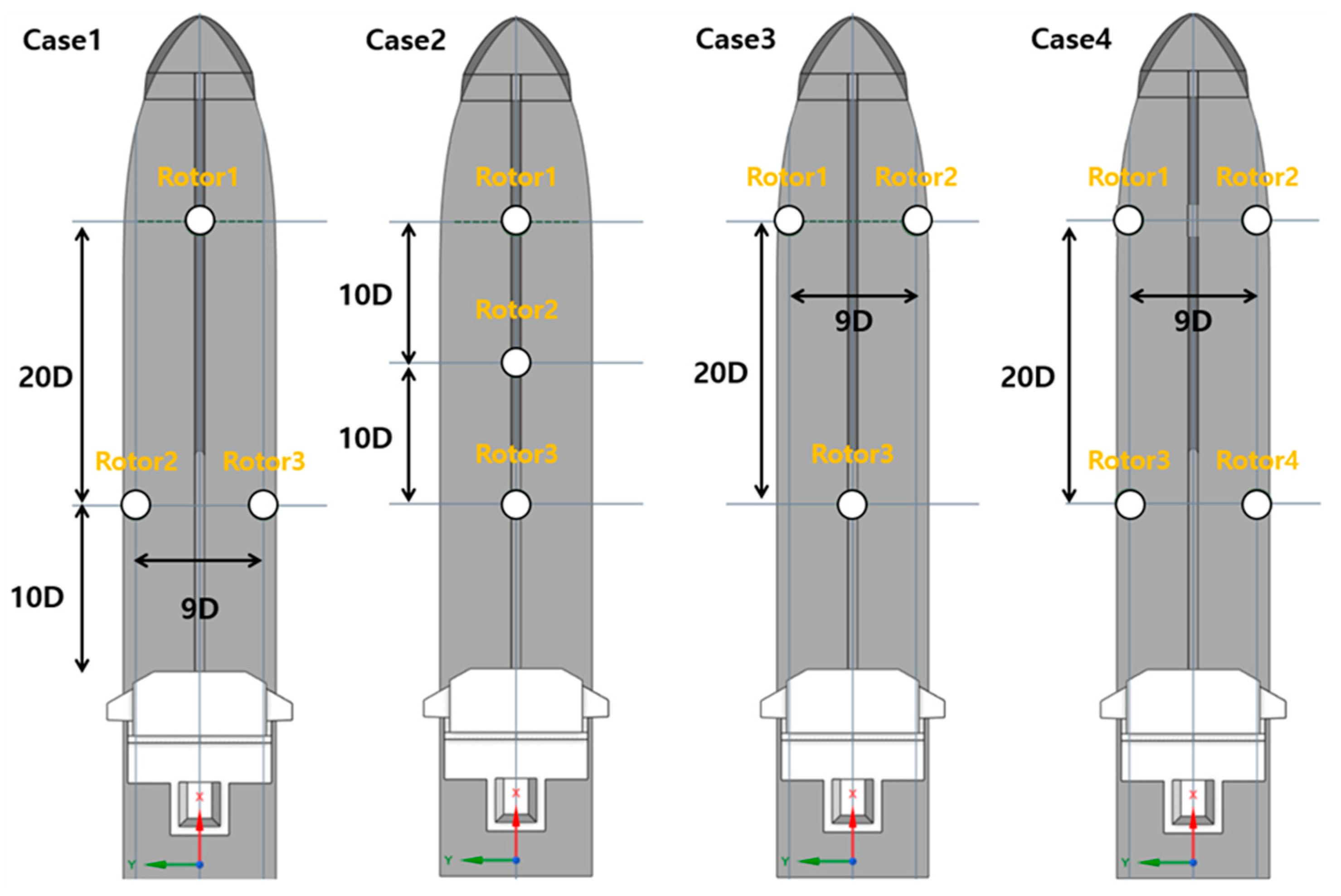
By integrating the single-rotor aerodynamic characteristics with the installation constraints of the vessel, four practical multi-rotor configurations—1 × 2, 1 × 1 × 1, 2 × 1, and 2 × 2—were established, as illustrated in Figure 13. The final spacing between rotors was set to 9D in the transverse direction and up to 20D in the longitudinal direction, ensuring efficient utilization of the available deck area while minimizing wake interference among the rotors.
Figure 13.
Configuration of multi-rotor layouts.
The simulation conditions were identical to those of the single-rotor sail analysis, with an apparent wind speed of 10 m/s and the optimal SR operating conditions for each AWA, as derived in Section 3.1. The same mesh quality and boundary conditions used in the single-rotor simulations were maintained. In addition, refinement zones were added to the regions where wake interference between rotors was expected, thereby ensuring both detailed capture of flow interactions and consistency of numerical accuracy across all multi-layout simulations.
4.2. Aerodynamic Interaction and Wake Interference Effects
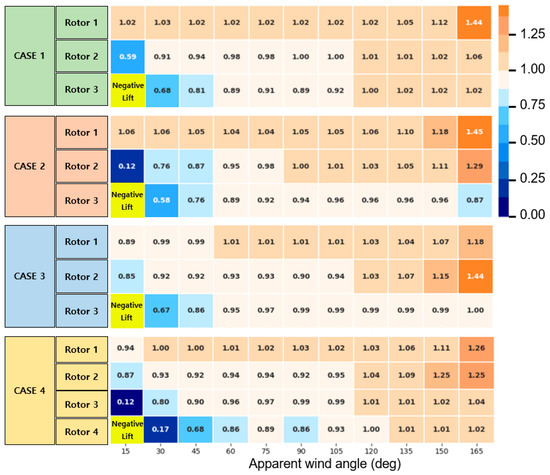
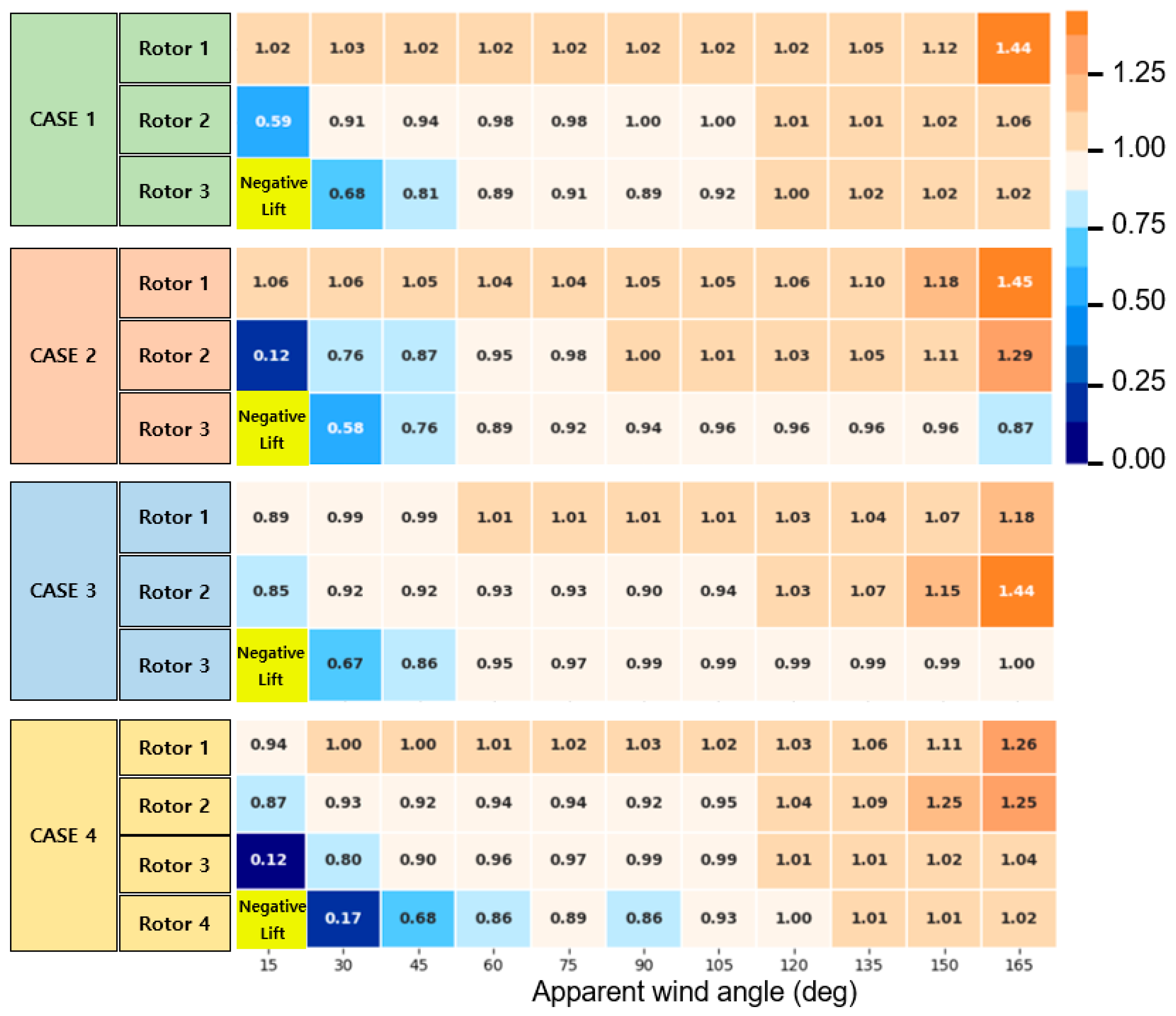
To quantify the relative performance variation according to different multi-rotor sail configurations, the normalized lift ratio was calculated as shown in Equation (2), using the lift coefficient of a single-rotor sail as the reference. The results are presented in Figure 14.
Figure 14.
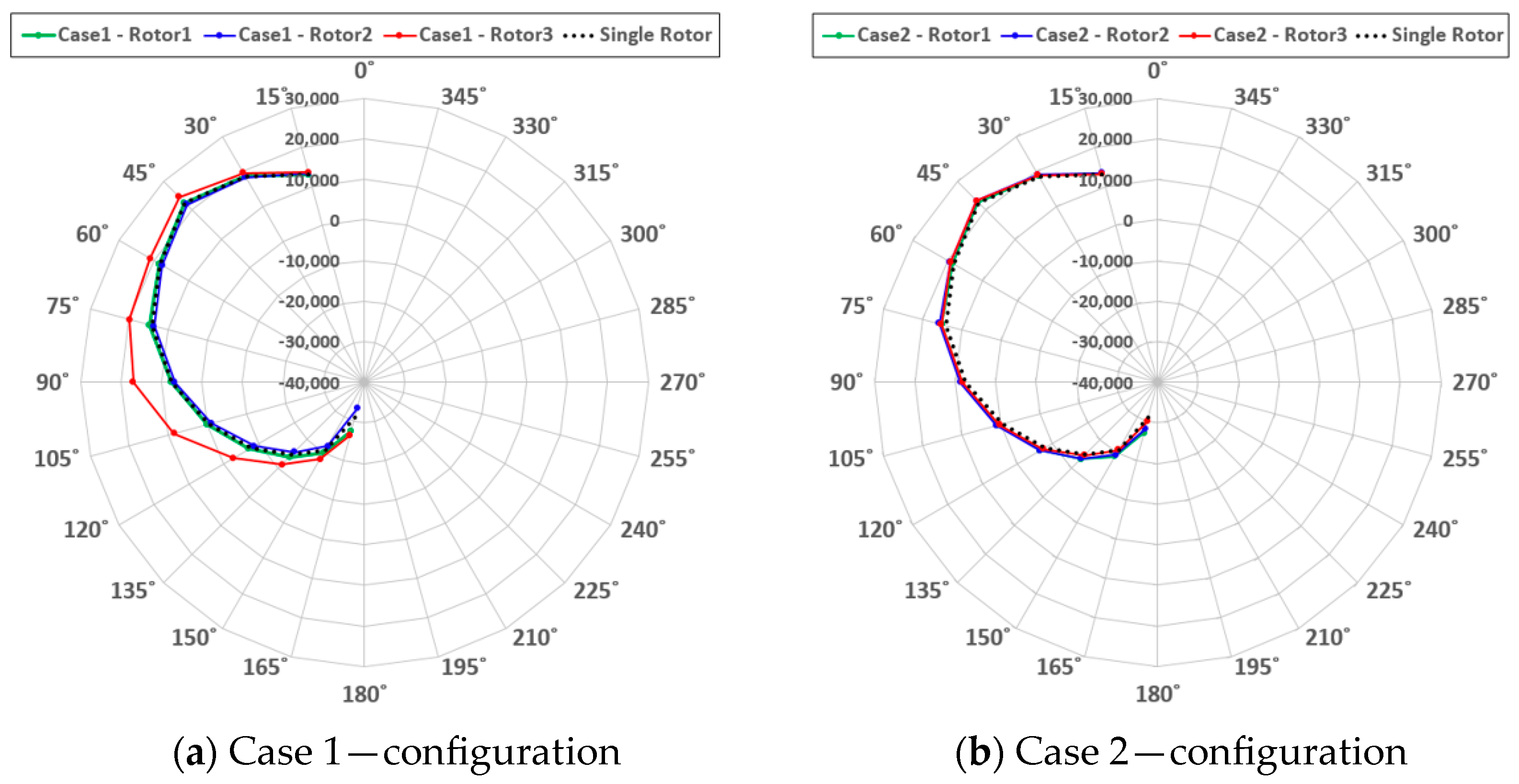
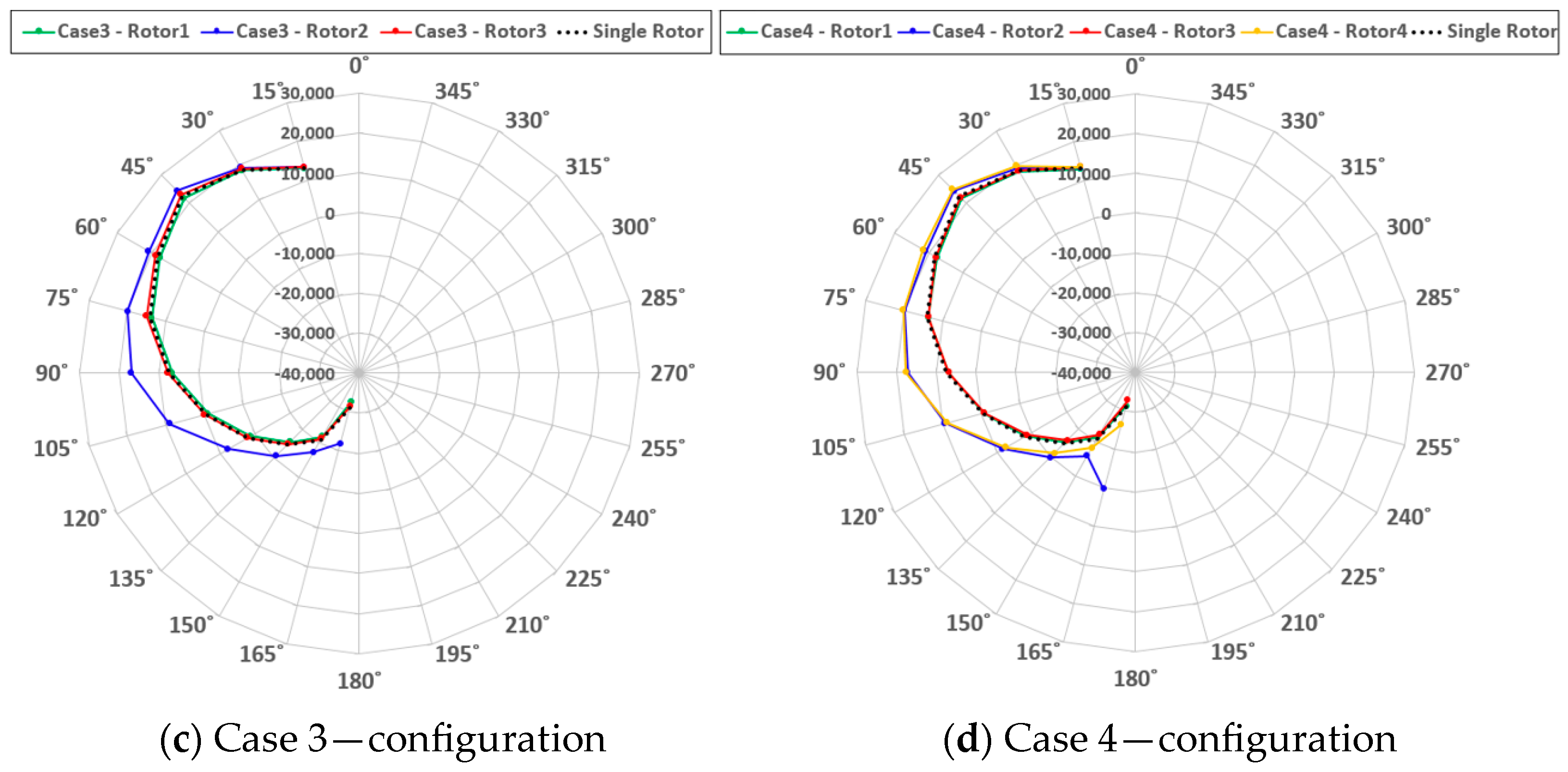
Normalized lift coefficient of each rotor in multi-rotor sail configurations (case 1~4).
Here, denotes the lift coefficient obtained under multi-rotor sail configuration conditions, and represents the reference value derived from the single-rotor sail analysis.
Distinct differences in wake interference patterns were observed depending on the array configuration and AWA. These variations directly affected the directionality of the incoming flow and the wake-velocity distribution, thereby leading to differences in lift performance among the multi-rotor sails. The upstream rotor located at the bow of the vessel exhibited lift performance comparable to that of the single-rotor sail—or even slightly enhanced under certain AWA. This tendency is closely related to the wake-flow characteristics analyzed in Section 3.2.
The wake generated by the rotation of the rotor sail is deflected toward the pressure side, forming a velocity-reduction region biased downstream relative to the vessel’s reference frame. Consequently, the upstream rotor operates under a nearly free-stream condition, experiencing minimal wake interference even under tail-wind condition. In addition, the accelerated flow generated on the suction side of the downstream rotor alters the velocity distribution of the incoming flow to the upstream rotor, resulting in a slight enhancement in lift performance compared with that of a single-rotor sail.
Across the range of AWA, most rotors maintained lift levels similar to the single-rotor sail when AWA exceeded 120°. However, in the range of 15~105°, a significant decrease in lift performance was observed for the downstream rotors. In particular, at AWA = 15°, certain rotors generated negative lift, acting opposite to the vessel’s propulsion direction.
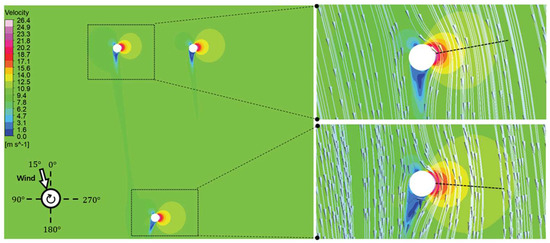
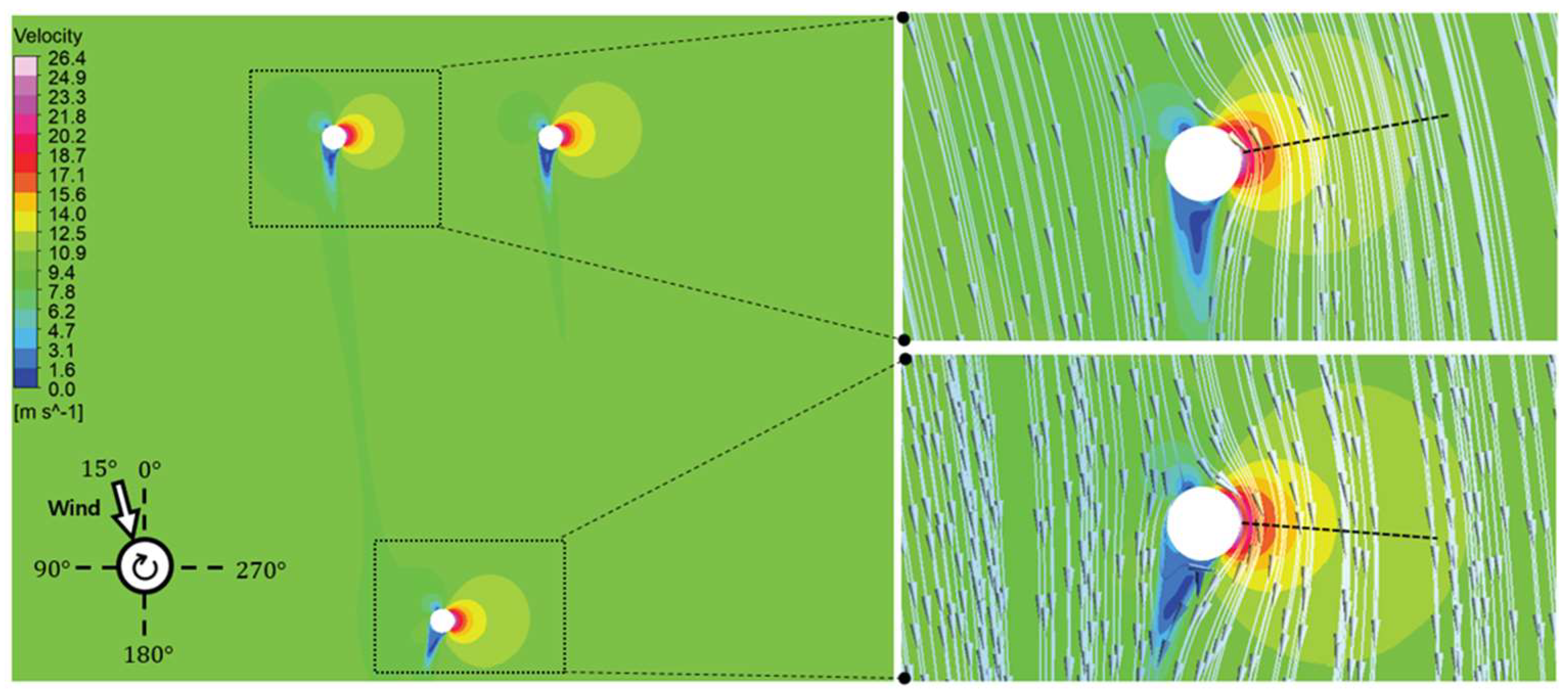
Figure 15 shows the streamlines and velocity contour for the 15° AWA condition of Case 3, where negative lift occurred at Rotor 3. The wake produced by the upstream rotor interacted with the inflow to the downstream rotor, distorting the local inflow angle. As a result, the primary lift vector acted opposite to the vessel’s forward direction, as clearly observed in the figure.
Figure 15.
Velocity contour and streamline visualization of case 3 under the 15 AWA.
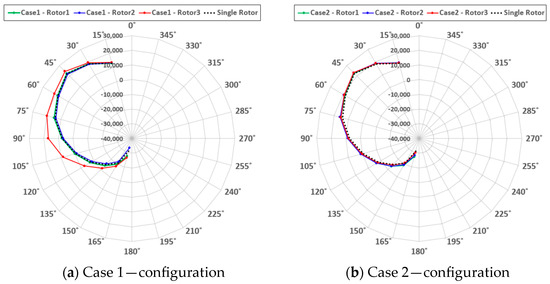
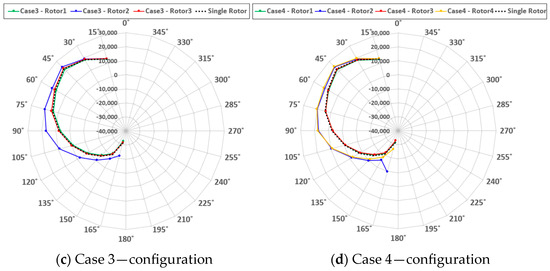
To analyze the drag variation characteristics of the multi-rotor sail configurations, Figure 16 presents drag polar diagrams comparing the multi-rotor with the single-rotor. Here, the sign (±) indicates the drag component direction relative to the vessel: port side (–) and starboard side (+).
Figure 16.
Drag polar diagram of each multi-rotor configurations compared with a single-rotor.
Significant drag variations were observed in the rotors located downstream along the same row—Rotor 3 in Case 1, Rotor 2 in Case 3, and Rotors 2 and 4 in Case 4—where drag increases were particularly prominent under cross-wind conditions.
In contrast, Case 2, in which the rotors were aligned longitudinally in a single line, exhibited the smallest drag-variation rate compared with the single-rotor case, indicating that each rotor maintained nearly independent inflow conditions.
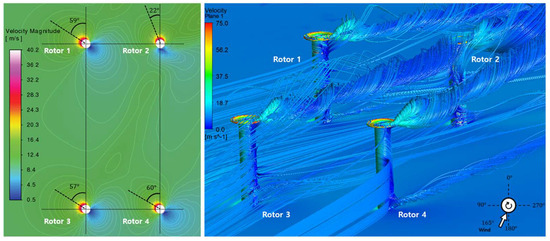
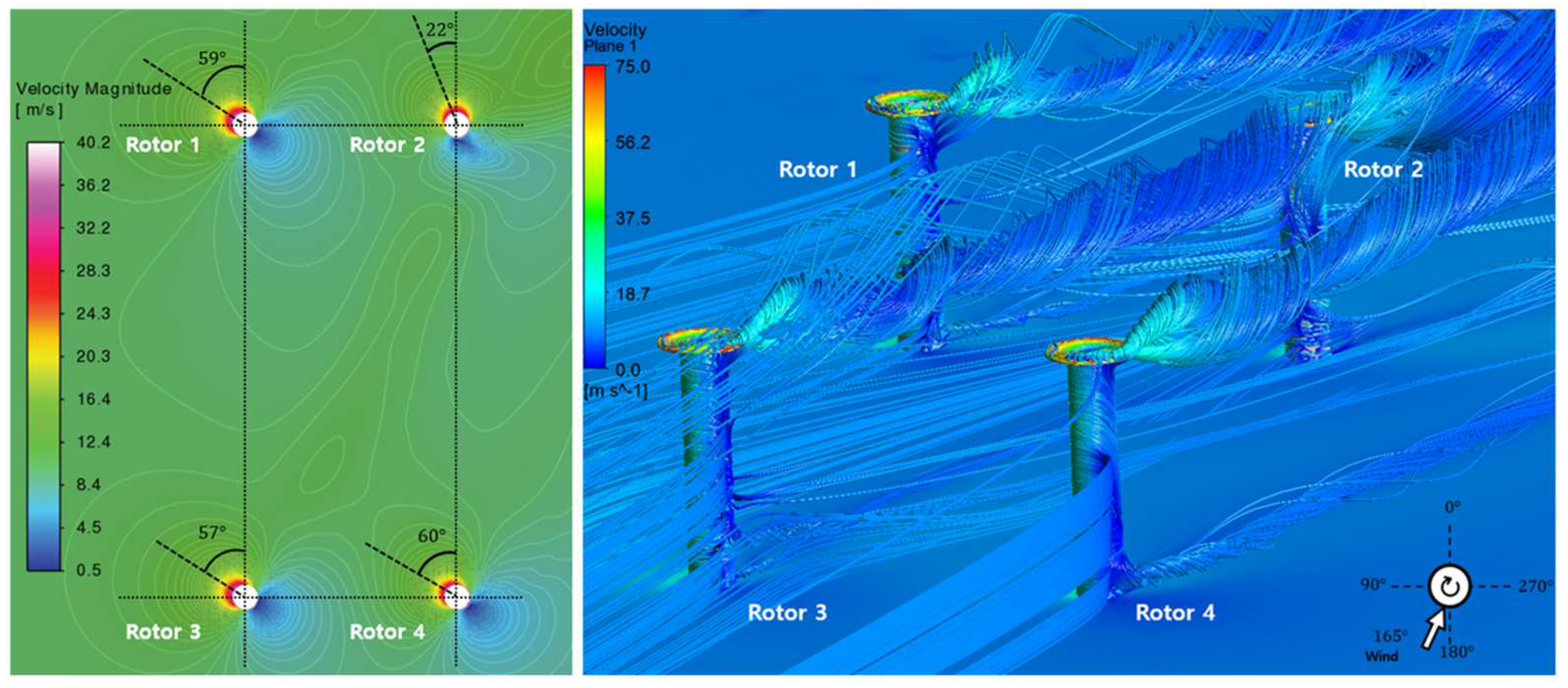
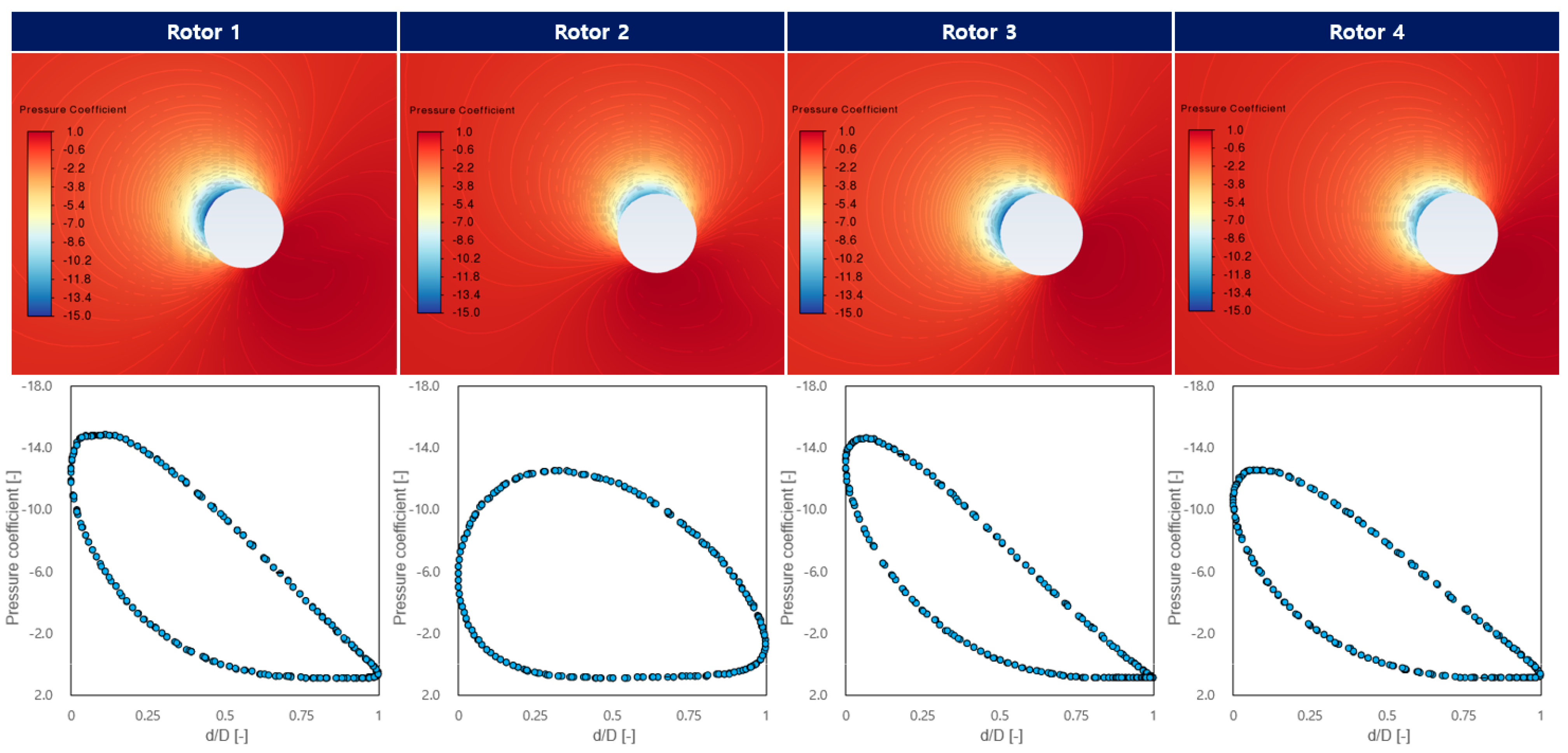
In particular, under the 165° AWA condition in Case 4, an abnormal drag pattern was detected at Rotor 2, distinct from the other configurations. As shown in Figure 17, which presents the velocity field and streamline distributions, a strong vorticity structure generated from Rotor 3 propagated toward Rotor 2, inducing a local deflection of the inflow angle. Consequently, the primary lift vector of Rotor 2 became more closely aligned with the vessel’s forward direction, with an alignment angle of approximately 22°.
Figure 17.
Velocity contour and 3D streamline of the multi-rotor configurations (Case 4, AWA = 165).
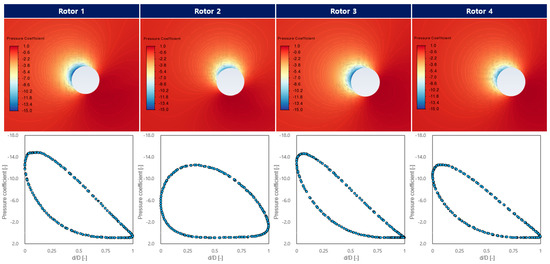
To further investigate this phenomenon under the influence of the wake, Figure 18 compares the pressure-coefficient (Cp) distributions and contours at the mid-sections of each rotor. For Rotor 2, the pressure asymmetry between the suction and pressure sides was substantially reduced, leading to a more symmetric pressure field. As a result, the lift vector was redirected more parallel to the vessel’s forward axis, and the drag magnitude decreased to less than one-third of that of the other rotors.
Figure 18.
Pressure-coefficient (Cp) contour and distributions of each rotor (Case 4, AWA = 165).
These findings confirm that, in multi-rotor sail configurations, the lift and drag characteristics exhibit nonlinear variations depending on array configurations and AWA.
Therefore, establishing an optimal array layout requires a comprehensive consideration of both wake-interaction and local flow-field variation characteristics, which serve as critical determinants of the overall aerodynamic performance of the system.
4.3. Integrated Performance Comparison of Multi-Rotor Configurations
In this section, an integrated analysis of energy efficiency and lift characteristics was conducted to comprehensively compare the auxiliary propulsion performance of the proposed multi-rotor sail configurations.
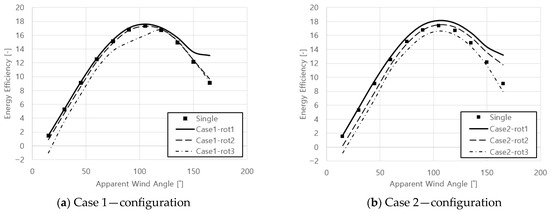
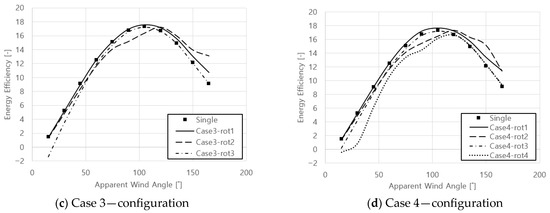
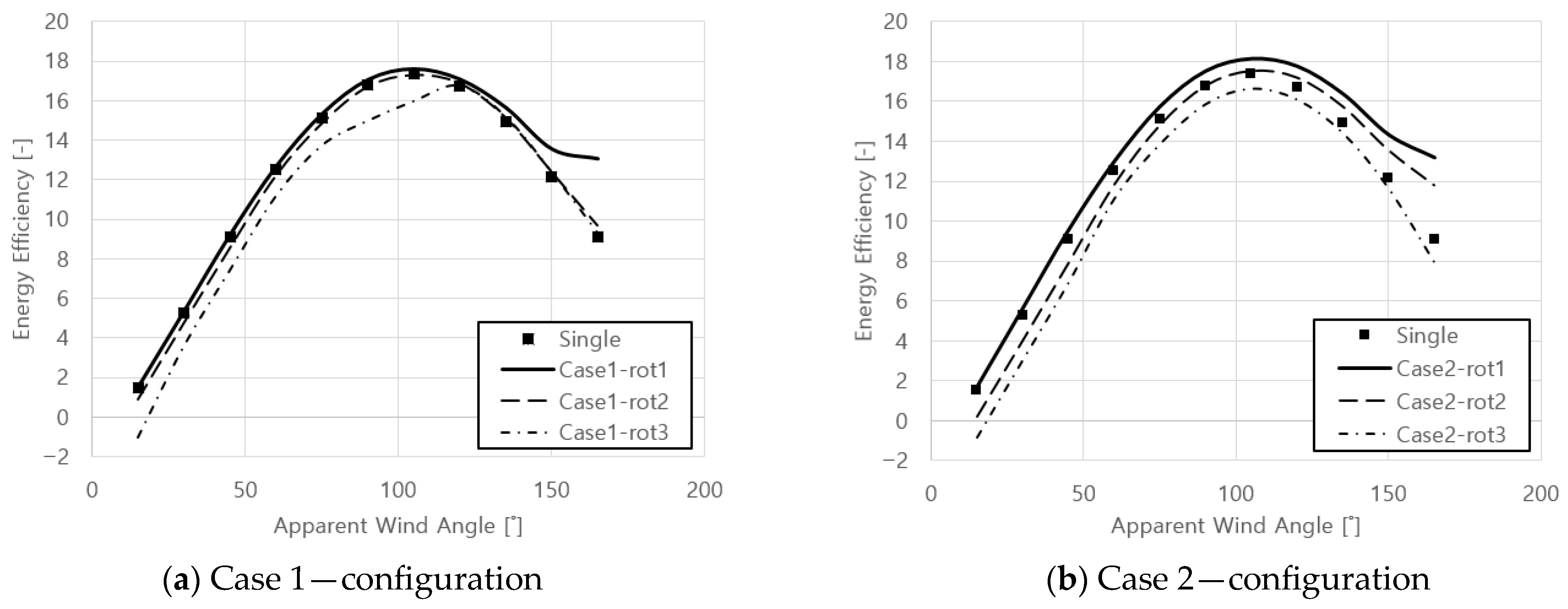
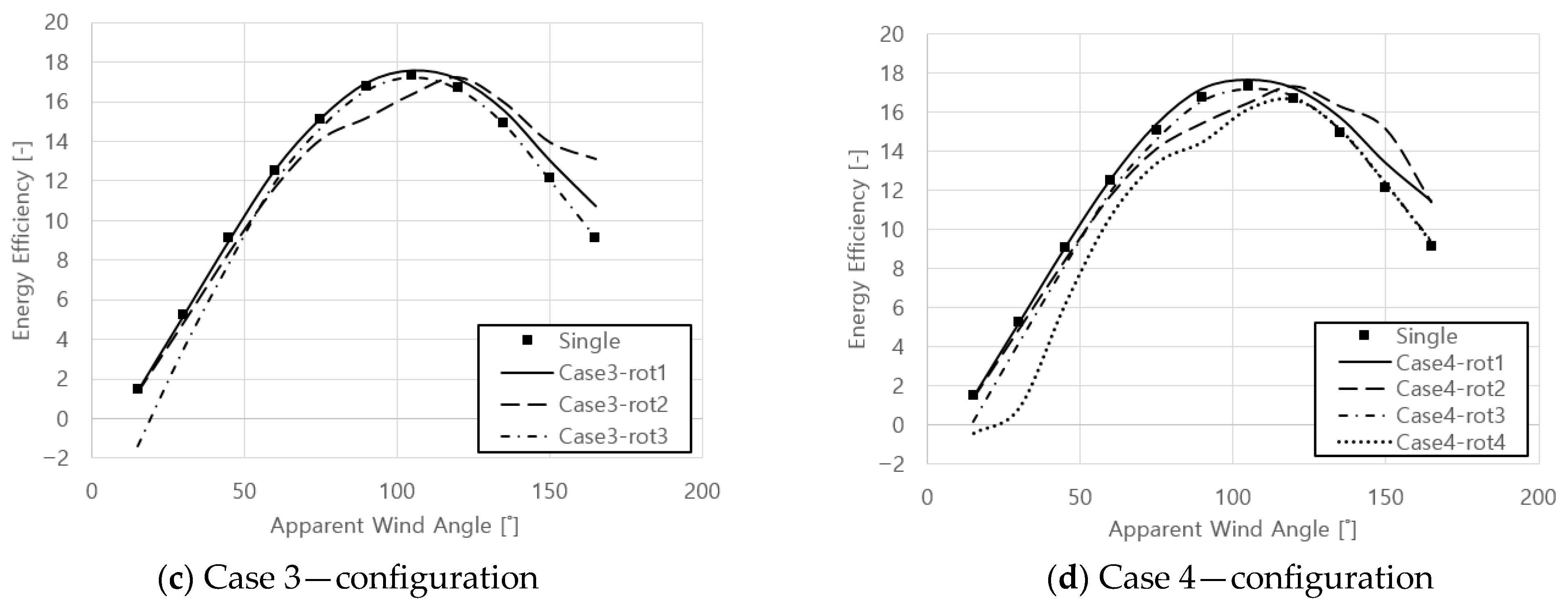
Figure 19 presents the energy-efficiency curves of each rotor as a function of the AWA. Rotors located in free-stream regions with minimal wake interference exhibited higher efficiency compared with the single-rotor. Across all configurations, the maximum energy efficiency was observed within the AWA range of 90~105°, whereas rotors directly exposed to wake interference exhibited a noticeable efficiency degradation under certain AWA. Representative cases include Rotor 3 in Case 1, Rotor 2 in Case 3, and Rotors 2 and 4 in Case 4, all positioned in regions strongly affected by wake interactions. In contrast, Case 2 (1 × 1 × 1 configuration) demonstrated the most stable efficiency distribution due to its inline arrangement.
Figure 19.
Energy efficiency curve of each rotor in multi-rotor sail configurations.
As described in Section 3.1, the aerodynamic forces were transformed from the apparent-wind-based lift–drag coordinates into the ship-fixed reference frame, in which the force component aligned with the ship’s forward direction was defined as the net propulsive force. Accordingly, the configuration-averaged net propulsive force for each array was computed using Equation (3):
where denotes the forward-direction force component generated by rotor i in the ship-fixed coordinate system.
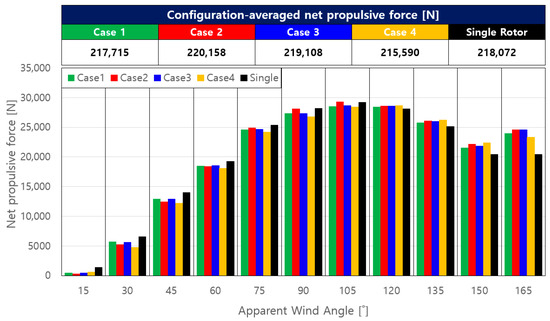
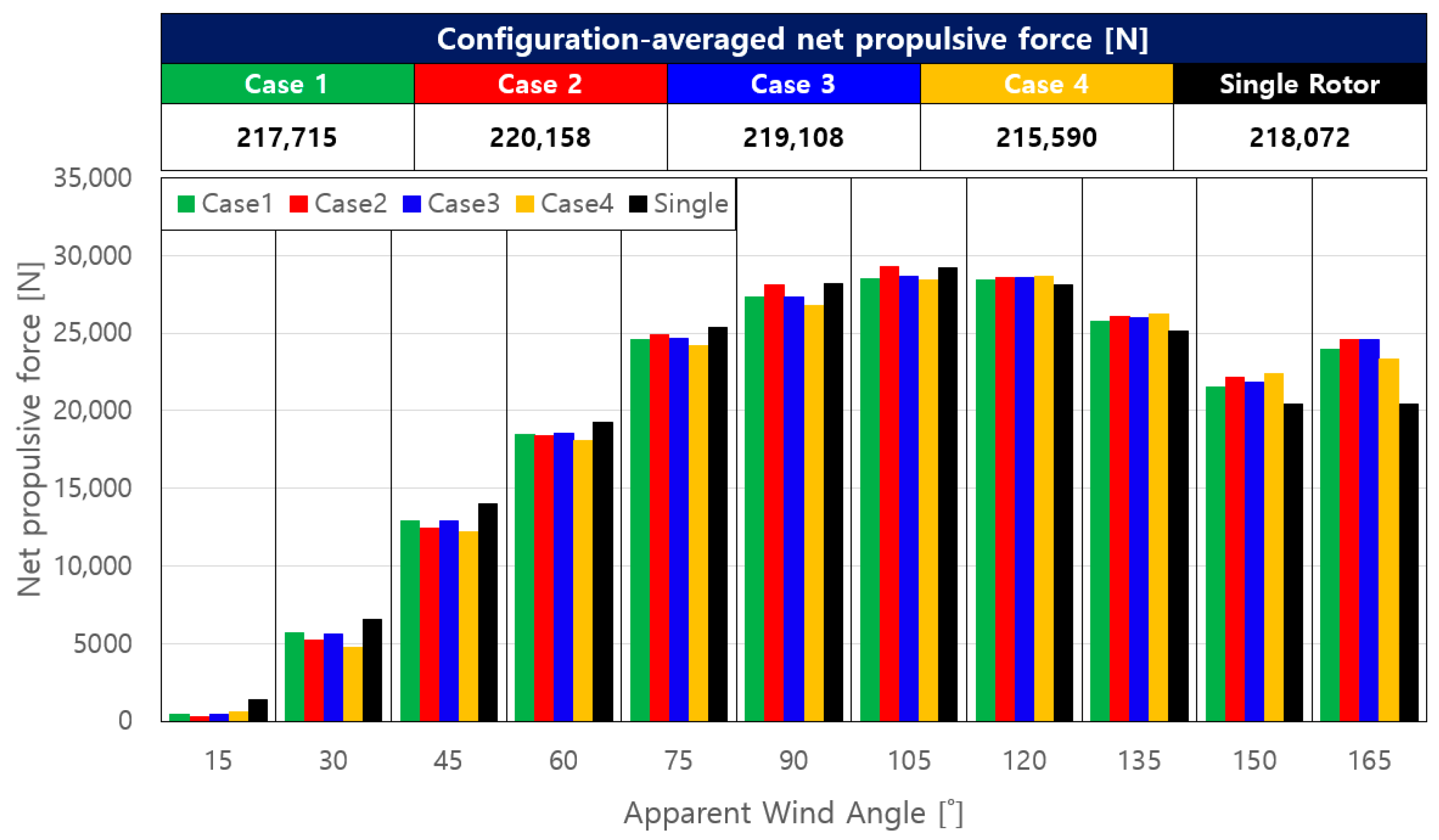
Figure 20 compares the configuration-averaged net propulsive force of each array with that of the single-rotor reference. In all configurations, the net propulsive force gradually increased with AWA, reaching its maximum within the 90–105° AWA range, and then decreased for AWA greater than 120°. The single rotor maintained the highest net propulsive force up to approximately 105° AWA, whereas at AWA values above 120°, all multi-rotor configurations exhibited higher averaged propulsive force than the single-rotor case.
Figure 20.
Configuration-averaged net propulsive force for each rotor-sail array compared with the single-rotor reference.
When the configuration-averaged net propulsive force was integrated over the entire AWA range, Case 2 yielded the highest total value of 220,158 N, representing an approximately 1% increase relative to the single-rotor result. In contrast, Case 4 recorded the lowest total value of 215,590 N, corresponding to a roughly 1% reduction compared with the single-rotor case.
In general, wake interference between rotors in multi-rotor sail systems can induce lift loss and drag increase, thereby reducing the overall propulsion efficiency of the system. However, the present results reveal that, across all configurations, the variation in total lift relative to the single-rotor case remained within ±1%. This confirms that the spacing-based layout derived in Section 3.2 effectively suppressed interference effects. Furthermore, the 1 × 1 × 1 configuration (Case 2) maintained an aerodynamic environment similar to that of the single-rotor configuration, achieving slightly improved performance.
These findings verify that maintaining an appropriate inter-rotor spacing, based on wake-recovery analysis, ensures stable aerodynamic performance of the overall system. Moreover, to further enhance the efficiency of multi-rotor layouts, it is necessary to quantitatively assess the interference characteristics between rotors and to implement layout optimization during the early design stage to minimize sensitivity to interference effects.
5. Conclusions
This study conducted aerodynamic analyses of single- and multi-rotor sail systems to quantitatively evaluate wake interference and propulsion performance under various array configurations and AWA.
For the single-rotor sail, the optimal SR for each AWA was determined, and an appropriate spacing distance of 9D was proposed as a preliminary guideline based on the wake-recovery behavior captured by the steady-RANS analysis. Using these findings, four multi-rotor configurations were designed considering the installation constraints of an MR tanker, and aerodynamic interference, wake development, and flow-field structures among the rotors were comparatively analyzed both qualitatively and quantitatively.
The results revealed that lift degradation due to wake influence in downstream rotors occurred under certain AWA (15~105°); however, the configuration-averaged lift remained within ±1% of that of the single-rotor. This confirms that the wake-based spacing strategy proposed in this study effectively suppresses interference effects. In particular, the 1 × 1 × 1 configuration (Case 2) exhibited the most stable propulsion performance, as each rotor operated under nearly independent flow conditions. Furthermore, by employing an energy-efficiency index, the optimal SR corresponding to each AWA was determined, enabling identification of the operating conditions that maximize energy efficiency.
These findings indicate that securing an appropriate spacing distance based on wake characteristics, together with determining optimal operating conditions according to AWA, are key factors for ensuring stable aerodynamic performance and efficient operation of multi-rotor sail systems.
Nevertheless, this study primarily aimed to evaluate the overall aerodynamic trends and relative performance differences in Rotor sails under various AWA, SR, and multi-rotor arrangements. Accordingly, the steady-state RANS approach with the SST k- model has inherent limitations in faithfully representing flow fidelity and real-sea operating conditions. The absence of a direct CFD-to-experiment validation for multi-rotor configurations also limits the ability to guarantee absolute predictive accuracy for the multi-rotor aerodynamic results.
Steady RANS methods are particularly limited in capturing key unsteady wake behaviors of rotating cylinders—such as vortex shedding, vortex merging, and wake meandering—which may lead to over- or under-prediction of the wake velocity deficit, vortex strength, and the onset of vortex breakdown. Real ship operations further introduce hull-induced flow distortion and motion-induced inflow variations that were not considered in this study. Additionally, all rotors were operated using an identical SR, even though wake interference causes rotor-to-rotor variations in inflow angle and velocity; thus, the present results may not fully reflect the performance achievable under independently optimized operating conditions.
Future research should integrate LES-based unsteady simulations with coupled hull–rotor analyses to more accurately reproduce the temporal evolution of multi-rotor wake interactions and the realistic operating conditions encountered at sea. To further enhance the reliability of multi-rotor predictions, additional numerical validation—and, where feasible, wind-tunnel experiments or full-scale measurements—will be essential. Moreover, future work will explore optimized SR control strategies and active-control schemes that incorporate real-time wake characteristics, thereby improving the operational efficiency of rotor-sail systems in practical sea conditions.
Collectively, these advancements are expected to significantly improve the reliability and design efficiency of rotor-sail operations, contributing directly to fuel savings and carbon-emission reduction in maritime transport. The multi-rotor layout design and single-rotor operating-condition derivation methods proposed in this study may also serve as a technical reference framework for future research on green-ship design and rotor-sail-assisted propulsion.
Author Contributions
Conceptualization, W.H. and W.K.; methodology, W.H.; software, W.H.; validation, W.H. and D.C.; formal analysis, W.H.; investigation, W.K.; writing—original draft preparation, W.H.; writing—review and editing, W.K., D.C. and K.L.; visualization, W.H.; supervision, K.L.; funding acquisition, W.K. All authors have read and agreed to the published version of the manuscript.
Funding
This research was financially supported by the Ministry of Trade, Industry and Energy (MOTIE) and the Korea Planning & Evaluation Institute of Industrial Technology (KEIT) through the Material & part Technology Development Program (Grant Number: 20024857, Development of Composite Based Wind assisted Propulsion System and Equipment (2023)).
Data Availability Statement
The original contributions presented in this study are included in the article. Further inquiries can be directed to the corresponding author.
Conflicts of Interest
The authors declare no conflicts of interest. The sponsors had no role in the design, execution, interpretation, or writing of this study.
Abbreviations
The following abbreviations are used in this manuscript:
| CFD | Computational Fluid Dynamics |
| GHG | Greenhouse gas |
| IMO | International Maritime Organization |
| EETs | Energy efficiency technologies |
| WAPS | Wind-assisted propulsion systems |
| SR | Spin ratio |
| MR | Medium Range |
| AR | Aspect ratio |
| LOA | Length overall |
| RANS | Reynolds-Averaged Navier–Stokes |
| SST | Shear Stress Transport |
| LES | Large Eddy Simulation |
References
- International Maritime Organization (IMO). Resolution MEPC.377(80): 2023 IMO Strategy on Reduction of GHG Emissions from Ships; Adopted on 7 July 2023; Marine Environment Protection Committee: London, UK, 2023; MEPC 80/17/Add.1, Annex 15. Available online: https://www.imo.org/en/ourwork/environment/pages/2023-imo-strategy-on-reduction-of-ghg-emissions-from-ships.aspx (accessed on 30 October 2025).
- Kolodziejski, M.; Sosnowski, M. Review of Wind-Assisted Propulsion Systems in Maritime Transport. Energies 2025, 18, 897. [Google Scholar] [CrossRef] [Scilit]
- Lloyd’s Register. Energy Efficiency Retrofit Report 2024: Applying Wind-Assisted Propulsion to Ships, 2024. Available online: https://www.lr.org/en/knowledge/research-reports/2024/applying-wind-assisted-propulsion-to-ships (accessed on 30 October 2025).
- Badalamenti, C.; Prince, S. Effects of Endplates on a Rotating Cylinder in Crossflow. In Proceedings of the 26th AIAA Applied Aerodynamics Conference, Honolulu, HI, USA, 18–21 August 2008; American Institute of Aeronautics and Astronautics: Reston, VA, USA, 2008. AIAA 2008-7063. [Google Scholar] [CrossRef] [Scilit]
- Bordogna, G.; Muggiasca, S.; Giappino, S.; Belloli, M.; Keuning, L.; Huijsmans, R.; van der Veer, A. Experiments on a Flettner Rotor at Critical and Supercritical Reynolds Numbers. J. Wind Eng. Ind. Aerodyn. 2019, 188, 19–29. [Google Scholar] [CrossRef] [Scilit]
- Li, D.-Q.; Leer-Andersen, M.; Allenström, B. Performance and Vortex Formation of Flettner Rotors at High Reynolds Numbers. In Proceedings of the 29th Symposium on Naval Hydrodynamics, Gothenburg, Sweden, 26–31 August 2012; Available online: https://www.diva-portal.org/smash/record.jsf?pid=diva2:1839341 (accessed on 30 October 2025).
- De Marco, A.; Mancini, S.; Pensa, C.; Calise, G.; De Luca, F. Flettner Rotor Concept for Marine Applications: A Systematic Study. Int. J. Rotat. Mach. 2016, 2016, 3458750. [Google Scholar] [CrossRef] [Scilit]
- Kwon, C.S.; Yeon, S.; Kim, Y.-C.; Kim, Y.; Kim, Y.; Kang, H. A Parametric Study for a Flettner Rotor in Standalone Condition Using CFD. Int. J. Nav. Archit. Ocean Eng. 2022, 14, 100493. [Google Scholar] [CrossRef] [Scilit]
- Bordogna, G.; Muggiasca, S.; Giappino, S.; Belloli, M.; Keuning, J.A.; Huijsmans, R.H.M. The Effects of the Aerodynamic Interaction on the Performance of Two Flettner Rotors. J. Wind Eng. Ind. Aerodyn. 2020, 196, 104024. [Google Scholar] [CrossRef] [Scilit]
- MAN Energy Solutions. Propulsion of 46,000–50,000 DWT MR Tankers; Technical Report. 2019. Available online: https://www.man-es.com/docs/default-source/document-sync/propulsion-of-46-000-50-000-dwt-mr-tankers-eng.pdf (accessed on 30 October 2025).
- Menter, F.R. Two-Equation Eddy-Viscosity Turbulence Models for Engineering Applications. AIAA J. 1994, 32, 1598–1605. [Google Scholar] [CrossRef] [Scilit]
- De Marco, A.; Mancini, S.; Pensa, C. Preliminary Analysis for Marine Application of Flettner Rotors. In Proceedings of the 2nd International Symposium on Naval Architecture and Maritime, Istanbul, Turkey, 23–24 October 2014. [Google Scholar] [CrossRef] [Scilit]
- Garenaux, M.; Schot, J.; Eggers, R. Numerical Analysis of Flettner Rotors Performances on the MARIN Hybrid Transition Coaster. In Proceedings of the High-Performance Marine Vehicles (HIPER), Cortona, Italy, 12 October 2020; Available online: https://www.marin.nl/en/publications/numerical-analysis-of-flettner-rotors-performances-on-the-marin-hybrid-transition-coaster (accessed on 30 October 2025).
- Karabelas, S.J. Large Eddy Simulation of High-Reynolds-Number Flow Past a Rotating Cylinder. Int. J. Heat Fluid Flow 2010, 31, 518–527. [Google Scholar] [CrossRef] [Scilit]
- Everts, M.; Ebrahim, R.; Kruger, J.P.; Miles, E.; Sharifpur, M.; Meyer, J.P. Turbulent Flow across a Rotating Cylinder with Surface Roughness. In Proceedings of the 10th International Conference on Heat Transfer, Fluid Mechanics and Thermodynamics, Orlando, FA, USA, 14–16 July 2014; pp. 1606–1614. Available online: http://hdl.handle.net/2263/44562 (accessed on 25 November 2025).
- Jones, L.; Prince, M.; Hudson, D.; Cocks, J. Predicted Fuel-Savings for a Flettner Rotor Assisted Tanker Using Computational Fluid Dynamics. In Proceedings of the International Conference on Wind Propulsion, London, UK, 15–16 October 2019. [Google Scholar]

Disclaimer/Publisher’s Note: The statements, opinions and data contained in all publications are solely those of the individual author(s) and contributor(s) and not of MDPI and/or the editor(s). MDPI and/or the editor(s) disclaim responsibility for any injury to people or property resulting from any ideas, methods, instructions or products referred to in the content. |
© 2025 by the authors. Licensee MDPI, Basel, Switzerland. This article is an open access article distributed under the terms and conditions of the Creative Commons Attribution (CC BY) license (https://creativecommons.org/licenses/by/4.0/).