Article

Numerical Simulation of the Combustion Characteristics of a 330 MW Tangentially Fired Boiler with Preheating Combustion Devices Under Various Loads

School of Energy and Power Engineering, Northeast Electric Power University, Jilin 132012, China
*
Author to whom correspondence should be addressed.
Processes 2025, 13(12), 4026; https://doi.org/10.3390/pr13124026
Submission received: 4 October 2025 / Revised: 6 December 2025 / Accepted: 10 December 2025 / Published: 12 December 2025

Abstract

With the rapid development of renewable energy sources in power generation, utility boilers need to perform load regulation over a wide range to maintain the stability of the power supply system. Preheating combustion technology is a potential approach to achieve wide load range operation, improve combustion stability, and lower NOx emissions from utility boilers. Preheating combustion devices (PCDs) were designed and installed in the reduction zone of a boiler. These devices preheated the coal at an excess air ratio ranging from 0.35 to 0.7 to generate high-temperature gas and char, which effectively reduced NOx formation in the furnace. Numerical studies were conducted to evaluate the combustion performance and nitrogen oxides emissions of a 330 MW utility boiler retrofitted with PCDs at different loads. The simulations were conducted over a load range of 20% to 100% of the rated load, corresponding to an electrical power of 66 MW to 330 MW. The preheated combustion device’s previous experimental data served as the boundary conditions of the preheated product nozzles. The simulation results demonstrated that the retrofitted boiler could operate stably from 20% to 100% of the rated load, maintaining acceptable combustion efficiency and lower NOx emissions. The combustion efficiency gradually dropped with decreasing boiler load, reaching a minimum value of 95.6%. As the load declined, the size of the imaginary tangent circle of the boiler shrank, while the ignition distance increased. Additionally, the variation in NOx concentration with load was complex. The NOx concentration at the furnace outlet was between 102.7 and 220.3 mg/m3, and the preheated products effectively reduced the nitrogen oxides produced by combustion in the furnace at all loads.

1. Introduction

To facilitate the low-carbon transition of the power system, the proportion of renewable energy generation in the power grid is gradually increasing. However, the instability of renewable energy generation poses a severe challenge to the stable operation of the power grid [1,2]. Coal-fired power plants, as a fundamental energy source of the power grid, need to innovate their operating modes to adapt to the evolving energy situation. Coal-fired boilers achieve optimal efficiency when operating at loads exceeding 70% of their rated capacity. The rapid growth of renewable energy generation has caused fluctuations in power grid load. To accommodate these fluctuations, a coal-fired boiler’s load must be adjusted over a wide range, with the lowest load reaching 30% of the rated load or even lower. Operating the boiler at low loads significantly deviates from optimal conditions, resulting in operational risks during load regulation [3]. The primary issues for coal-fired boilers operating at low loads are ignition delay [4], combustion instability [5], and raised NOx emissions [6]. Given the context, it is vital to explore the combustion performance and pollutant emissions of utility boilers operating under various loads.
Researchers have conducted experimental studies and numerical simulations on the combustion performance and pollutant emissions of coal-fired boilers operating at various loads. Ma et al. [4] conducted experimental and numerical studies on the combustion stability of a 300 MWe tangentially fired boiler under a wide load range. The results indicated that as the load decreased, the ignition of the pulverized coal stream was delayed, and the imaginary tangential circle gradually diminished. Compared with the rated load, the ignition distance increased from 2.7 m to 5.4 m under low-load conditions. Jiang et al. [7] optimized operating conditions for a 550 MW utility boiler to stabilize combustion and reduce NOx formation at half-load. Their study examined the effects of burner configuration, overfire air distribution, and the stoichiometric ratio on combustion performance. The simulations indicated that a middle burner configuration and a specific close-coupled overfire air (CCOFA)/separated overfire air (SOFA) distribution maintained efficient and clean combustion. Chang et al. [8] conducted numerical simulations on the flow field, temperature field, and nitrogen oxide formation in a coal-fired boiler under various loads. The results revealed that the reduced load impaired air–fuel reaction and combustion stability, leading to increased O2 and NOx contents and decreased CO content. The tilt angles of burners played a significant role in combustion performance and heat transfer. Li et al. [9] performed investigations on boiler efficiency and species distribution of a retrofitted opposite-wall-fired boiler under various loads. The results indicated that flue gas temperature decreased with decreasing boiler load, while the ignition distance increased. After the retrofit, the NOx concentration at the furnace exit significantly dropped under the same load. Gu et al. [10] evaluated the effects of boiler load, burner configuration, and burner tilt angles on combustion characteristics of a 660 MW utility boiler. They concluded that the temperature and NO concentration decreased with the decrease in boiler load. The optimal combustion performance was achieved by using ABDE burners under the boiler maximum continuous rating (BMCR) scenario.
Previous research on low-load boiler operation has primarily focused on optimizing boiler combustion characteristics by adjusting air distribution and burner arrangement. Preheating combustion, by preheating the fuel to enhance its reactivity and adjusting the distribution of air and fuel within the furnace, strengthens the combustion stability of the boiler. This pulverized coal preheating technology is a pulverized coal pretreatment method that can achieve stable and clean combustion at various boiler loads [11,12]. In the preheating device, pulverized coal is initially ignited and preheated, with an excess air coefficient far less than 1 [13]. Preheated products, consisting of high-temperature reductive gases and coke, are introduced into the furnace chamber, where they ignite rapidly to ensure stable and efficient combustion [14]. Additionally, the reductive gases can reduce nitrogen oxide generation in the burner area of the furnace [15]. Currently, this preheating technology is widely acknowledged as a feasible, efficient, and clean combustion technology. Tang [16] conducted experiments on the combustion characteristics of a burner with a preheating function in a test boiler. A detailed analysis was conducted on the temperature and species distribution in the burner. The results showed that the preheating temperature remained stably above 700 °C, significantly improving the combustion efficiency and reducing NO formation from the boiler. At a thermal load of 25 MW, the NOx emission at the boiler outlet was 47.9 mg/Nm3. Hui [17] explored the combustion characteristics of coal-preheating combustion using a circulating fluidized bed during load regulation. The results indicated that the preheating treatment enhanced the reactivity of pulverized coal and ensured stable combustion of the system. In numerical studies on preheating technology, Hong [18] performed numerical simulations to study the effects of a new type of burner on the combustion characteristics of a 660 MW utility boiler under low loads. Self-sustaining combustion could be realized within the burner. The results showed that the retrofitted burners improved the rigidity of jet flow, thus enhancing combustion stability. The reductive gas from the burners inhibited the NO generation in the furnace, resulting in low NOx emissions. Yao [19] performed simulations to study a 600 MW utility boiler with preheating burners. The results showed that the preheating products, such as reductive gas and char, enhanced the combustion stability of the boiler at 50% rated load. During the preheating combustion in the burners, the fuel nitrogen was converted into N2 with a stoichiometric ratio of less than 1.
Research on preheating combustion has primarily concentrated on laboratory-scale investigations of NOx formation and reduction during the preheating stage. In previous studies [20], experiments and numerical simulations have verified that preheating combustion devices can reduce NOx emissions from boilers under rated load. However, the impacts of the preheating combustion on the combustion characteristics of coal-fired boilers at various loads have not been evaluated, resulting in a limitation of efficient and clean combustion in industrial applications. In this study, numerical investigations are conducted to evaluate the combustion performance and NOx emissions of a coal-fired boiler at a range of 20–100% rated load. The retrofitting strategy is to connect the preheating combustion devices’ (PCDs’) outlets directly to the nozzles of the preheated products within the reduction zone. A three-dimensional CFD model was employed using experimentally measured PCD gas properties as inlet conditions. This simulation compared the combustion stability, temperature, and species distributions of the boiler under different loads. The effects of the PCDs on the boiler’s combustion efficiency and NOx emissions are discussed in detail. The simulation results demonstrate that the retrofitted boiler can realize lower NOx emissions and higher combustion efficiency at a load range of 66 MW to 330 MW, which provides insight into efficient and clean combustion at various loads.

2. Methodology

2.1. Boiler Description

A PCD test system was established and experimentally investigated in our previous work, and the details about the device, including experimental setup and procedure, are shown in the literature [20]. The operating principle of preheating combustion technology is illustrated in Figure 1. The pulverized coal is ignited inside the PCD at a stoichiometric ratio (SR) of less than 1. The pulverized coal is primarily converted into reductive gases and char through volatile pyrolysis and char gasification reactions. After the boiler retrofit, the furnace chamber is divided into three regions: the primary combustion zone, the reduction zone, and the burnout zone. The primary combustion zone is the region where most of the coal is burned with air, releasing the majority of heat. In the reduction zone, reductive gases and char are injected through the nozzles to mitigate NO formed during primary combustion. Furthermore, efficient combustion can be achieved through the reaction of air with unburned carbon and gases in the burnout zone.
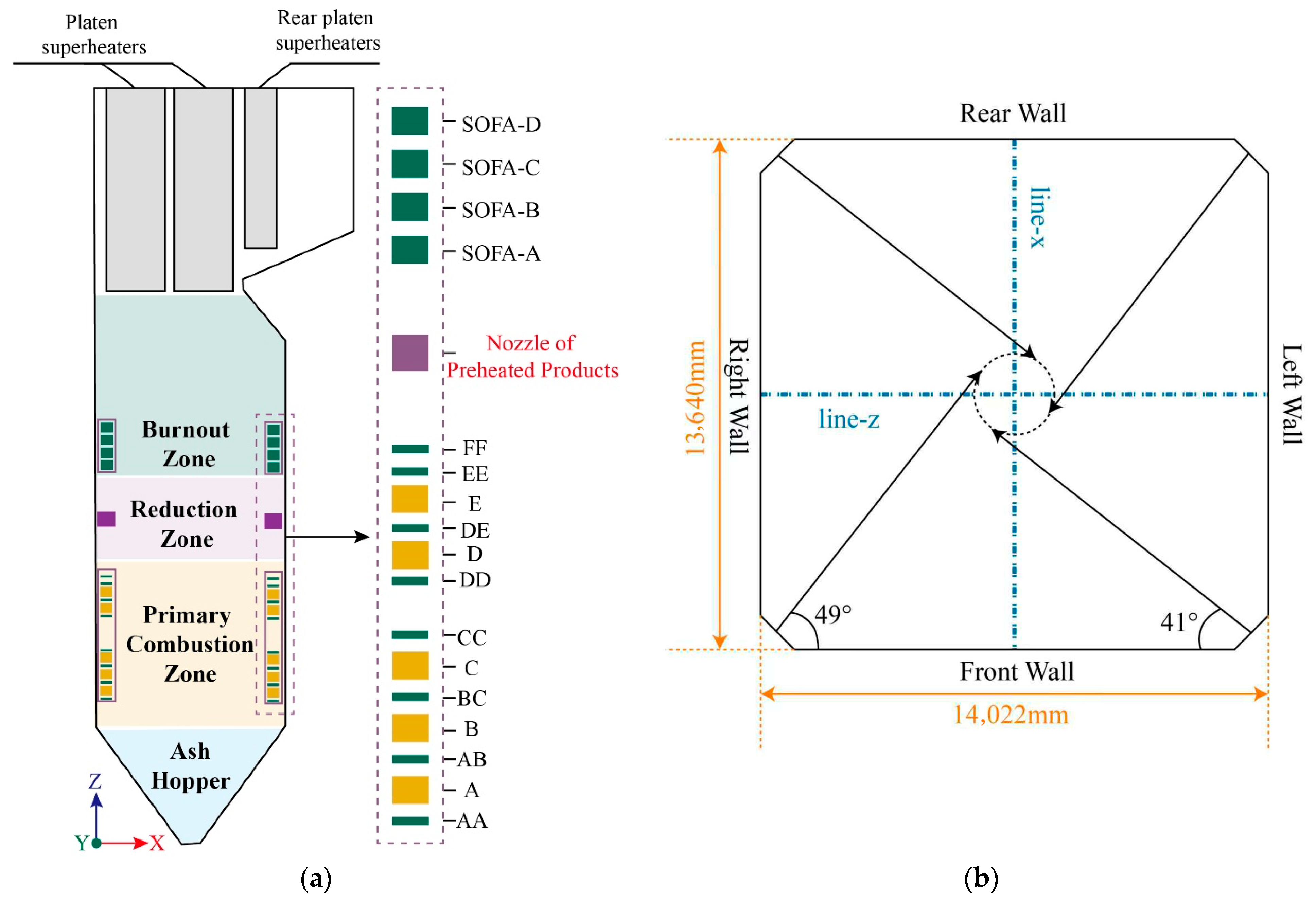
A 330 MW coal-fired retrofitted boiler is used in this study. The retrofit involves integrating PCDs with the boiler by installing preheated product nozzles at each corner of the furnace chamber. Figure 2 presents the retrofitted boiler’s operating mode, burner arrangement, and dimensions. Figure 2a illustrates the boiler’s burner configuration after the retrofit. The burner zone consists of the bottom-three-layer burners (A, B, and C) and top-two-layer burners (D and E), along with the surrounding secondary air (SA) nozzles. The FF-layer nozzles are set as the CCOFA nozzles, which are located at the top of the primary combustion zone. The reduction zone is composed of preheated product nozzles located 2.23 m above the FF-layer nozzles. Four layers of SOFA nozzles are arranged at the top of the furnace chamber to ensure complete combustion. Figure 2b shows the direction of jet flow and cross-section dimensions. The pulverized coal stream and the secondary air are injected in the same direction and form an imaginary circle at the center of the furnace. During boiler operation, the fuel for the PCDs is supplied by a standby coal mill.

2.2. Case Setup and Coal Properties

Numerical simulations were conducted for boiler loads ranging from 20 to 100% rated load, corresponding to 66–330 MW of electric power. To ensure combustion stability and efficiency under various loads, the flow rate of the preheated coal varies almost proportionally with the load. Table 1 presents the operational parameters and boundary conditions of the retrofitted boiler. The boiler outlet pressure is −80 Pa. Cases 1–5 investigate the effects of various boiler loads on the boiler’s combustion performance and NO formation after the retrofit. Additionally, the influence of preheated products on the gas components, temperature distribution, and combustion stability is discussed in detail. Considering the PCD, experimental studies were performed with a stoichiometric ratio (SR) of 0.42 and the preheating coal amount ranging from 2.78 kg/s to 11.11 kg/s. Table 2 summarizes the composition (wt. %, dry basis), flow rate, and temperature of the preheated products at the PCD outlet, according to the literature [20]. The gaseous composition is presented as volume percentages measured on a dry basis. These parameters are also used as the inputs for the boundary conditions of the preheated products’ nozzles in this simulation.
The heat exchangers at the top of the boiler are simplified as zero-thickness walls [21]. For thermal boundary conditions, wall temperatures are defined as the arithmetic mean of steam inlet/outlet temperatures, while the wall emissivity is prescribed as 0.7 according to the literature [7]. The same bituminous coal is used in both the boiler and PCD. Table 3 presents the bituminous coal properties derived from proximate and ultimate analysis. The particle diameter distribution ranges from 6 μm to 230 μm. The Rosin-Rammler distribution function is used to describe the diameter distribution of the pulverized coal particles, with a mean diameter of 69 μm and a spread parameter of 1.1.

2.3. Numerical Models

The governing equations involved in the combustion process are solved using Ansys Fluent(Version 2020 R2) (Canonsburg, United States). The SIMPLE algorithm couples pressure–velocity fields when discretizing the RANS conservation equations for mass, momentum, and energy. Since the pulverized coal combustion involves heat, mass, and momentum transfer, the Eulerian–Lagrangian approach is employed for gas–solid flow simulation [22]. The discrete phase model (DPM) is employed to track the motion of pulverized coal particles [23]. The motion of a single particle is governed by multiple-force interactions, and the force balance equation describing the particle’s motion is expressed as
d u p d t = F D ( u u p ) + g ( ρ p ρ ) ρ p p ρ p
The turbulent flow of the gas phase is simulated by the Realizable k-ε model [24]. The model performs well in calculating complex gas-phase flow, and the transport equations of the model are given as
( ρ k u i ) x j = x j μ + μ t σ k k x j + G k + G b ρ ε
( ρ ε u i ) x j = x j μ + μ t σ ε ε x j + ρ C 1 S ε ρ C 2 ε 2 k + ν ε + C 1 ε ε k C 3 ε G b
In Equation (3), C 1 = max 0.43 , η η + 5 with η = S k ε , S = 2 S i j S i j and S i j = 1 2 ( u j x i + u i x j ) ; C2, C, and C are constants [25].
The discrete ordinates (DO) model has been widely applied in radiative heat transfer calculations due to its good computational accuracy. Therefore, radiative heat transfer is solved using the DO model. The gas-phase absorption coefficient is calculated with the weighted-sum-of-gray-gases model, and the particle emissivity is set to 0.9 [26].
The moisture evaporation is considered during coal combustion, and the moisture evaporates at a temperature of 373.15 K [27]. The two-competing-rates model [28] describes the volatile release of pulverized coal. The model considers devolatilization reactions at both high and low temperatures, and the primary and secondary kinetic rates are expressed as
R 1 = A 1   exp ( E 1 / R T p )
R 2 = A 2   exp ( E 2 / R T p )
In the equations above, the parameters for coal devolatilization and combustion are obtained from the literature [29] due to the similar coal properties. Therefore, A1 and E1 for the primary reaction rate are set to 2 × 10⁵ s−1 and 1.046 × 10⁸ J/kmol, respectively, while A2 and E2 for the secondary reaction rate are set to 1.3 × 10⁷ s−1 and 1.674 × 10⁸ J/kmol.
The devolatilization rate is derived from the weighted combination of the primary and secondary reaction rates, which is given as
m ν ( t ) 1 f w , 0 m p , 0 m a = 0 t α 1 R 1 + α 2 R 2 exp ( 0 t ( R 1 + R 2 ) d t ) d t
The homogeneous combustion rate is obtained by the eddy-dissipation model [30]. Based on the coal analysis data in Table 3, the volatiles are defined as a pseudo-compound (C3.08H10.4O2.95N0.184S0.0818). Additionally, the combustion mechanism involves two reaction steps: (1) oxidation of volatile carbon to CO; (2) further oxidation of CO to CO2. The detailed reaction steps are given as follows [31]:
C 3 . 08 H 10 . 4 O 2 . 95 N 0 . 184 S 0 . 0818 + O 2 3 . 08 CO + 5 . 2 H 2 O + 0 . 0937 N 2 + 0 . 0818 SO 2
CO + O 2 CO 2
The kinetic/diffusion-limited model is used to calculate the reaction rate of char combustion [32]. The model assumes that the surface reaction rate of char particles is determined by the competition between the kinetic rate and diffusion rate. The diffusion rate coefficient D0 and the kinetic rate of char particles Rp are given as
D 0 = C ( T p + T ) / 2 0.75 d p
R p = A p exp ( E p / R T p )
The char combustion rate is determined by weighting the kinetic rate and the diffusion rate coefficient, which is given as follows [27]:
d m p d t = π d p 2 p o x D 0 R p D 0 + R p
A post-processing method is chosen to calculate the NOx formation from coal combustion. The simulation models both thermal and fuel NOx generation mechanisms during the reaction of nitric oxide. Thermal NOx is generated via the reaction of nitrogen and oxygen inside the furnace at high temperature, and the Zeldvich mechanism [33] is used to describe this process. Thermal NOx formation mechanisms are dominated by the following reactions:
O + N 2 k r 1 k f 1 N + NO
N + O 2 k r 2 k f 2 NO + O
N + OH k r 3 k f 3 H + NO
In addition, the NO production rate is given below:
  d [ NO ] d t   =   2   k f 1 [ O ] [ N 2 ]   1 k r 1 k r 2 [ NO ] 2 k f 1 [ N 2 ]   k f 2 [ O 2 ] 1 + k r 1 [ NO ] k f 2 [ O 2 ] + k f 3 [ OH ]
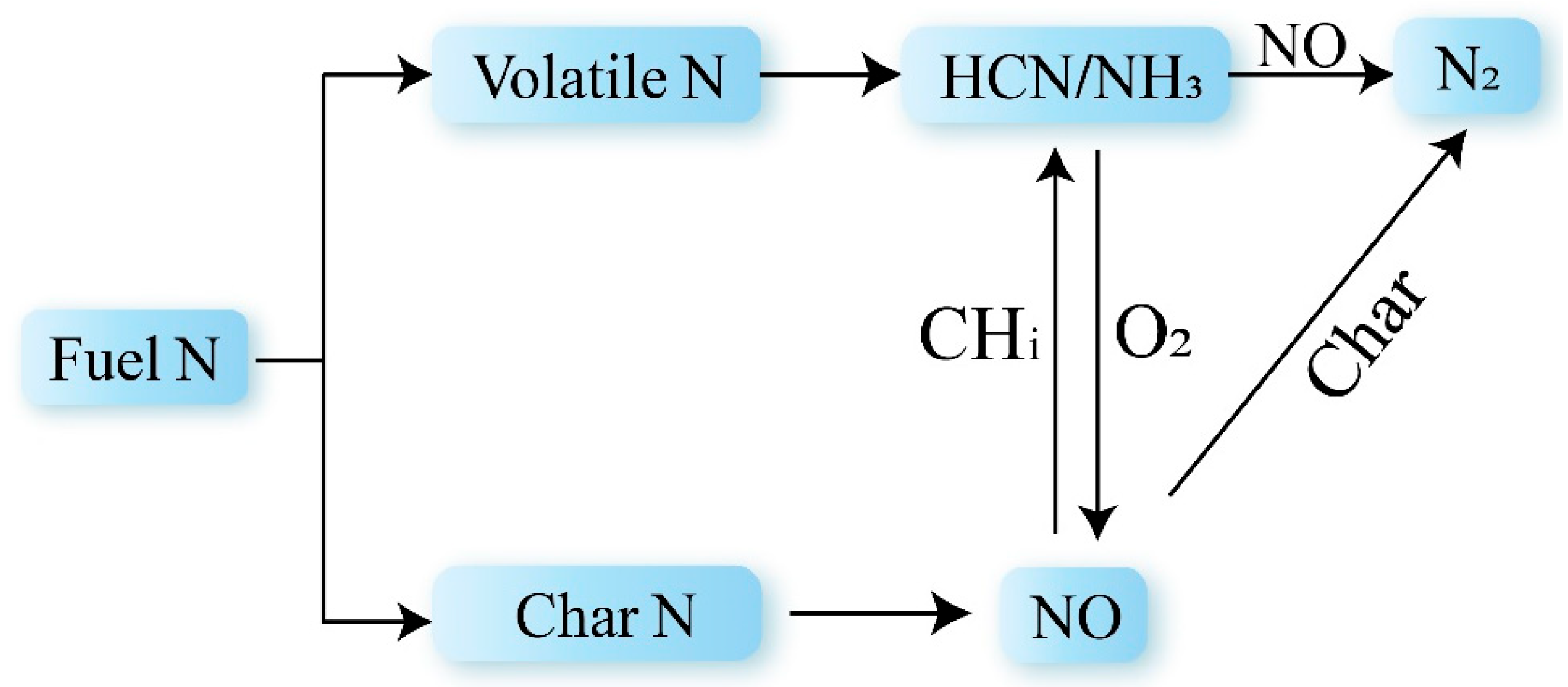
Oxidation of fuel-bound nitrogen generates fuel NOx, and the De Soete model [34] is used to calculate the formation rate of fuel NOx. Figure 3 exhibits the detailed reaction paths for the fuel-bound nitrogen. During coal combustion, the fuel-bound nitrogen is released as volatile nitrogen by pyrolysis, while the remainder is retained as char nitrogen. During the fuel nitrogen reaction, the volatile N initially converts to intermediates such as HCN and NH3, with an HCN/NH3 ratio of 9/1 [35]. Within oxygen-rich zones, NOx precursors (HCN/NH3) are oxidized to NO, while these intermediates reduce NO to N2 in oxygen-lean zones. Meanwhile, char N is completely converted into NO. The presence of reductive gases in the preheated products allows the fuel reburning model to be activated, with CH4 and H2 serving as the fuel species.

2.4. Mesh Independence and Model Verification

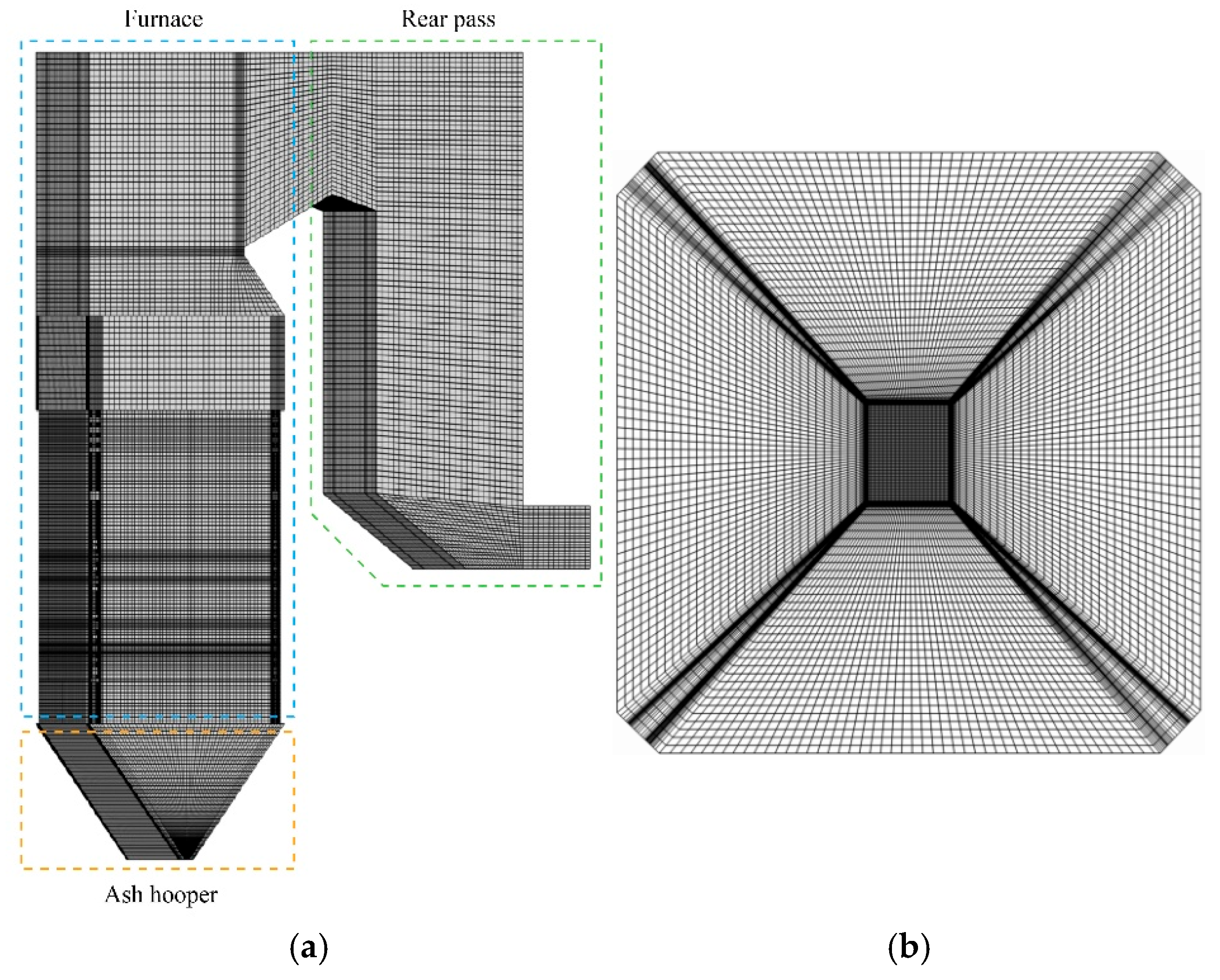
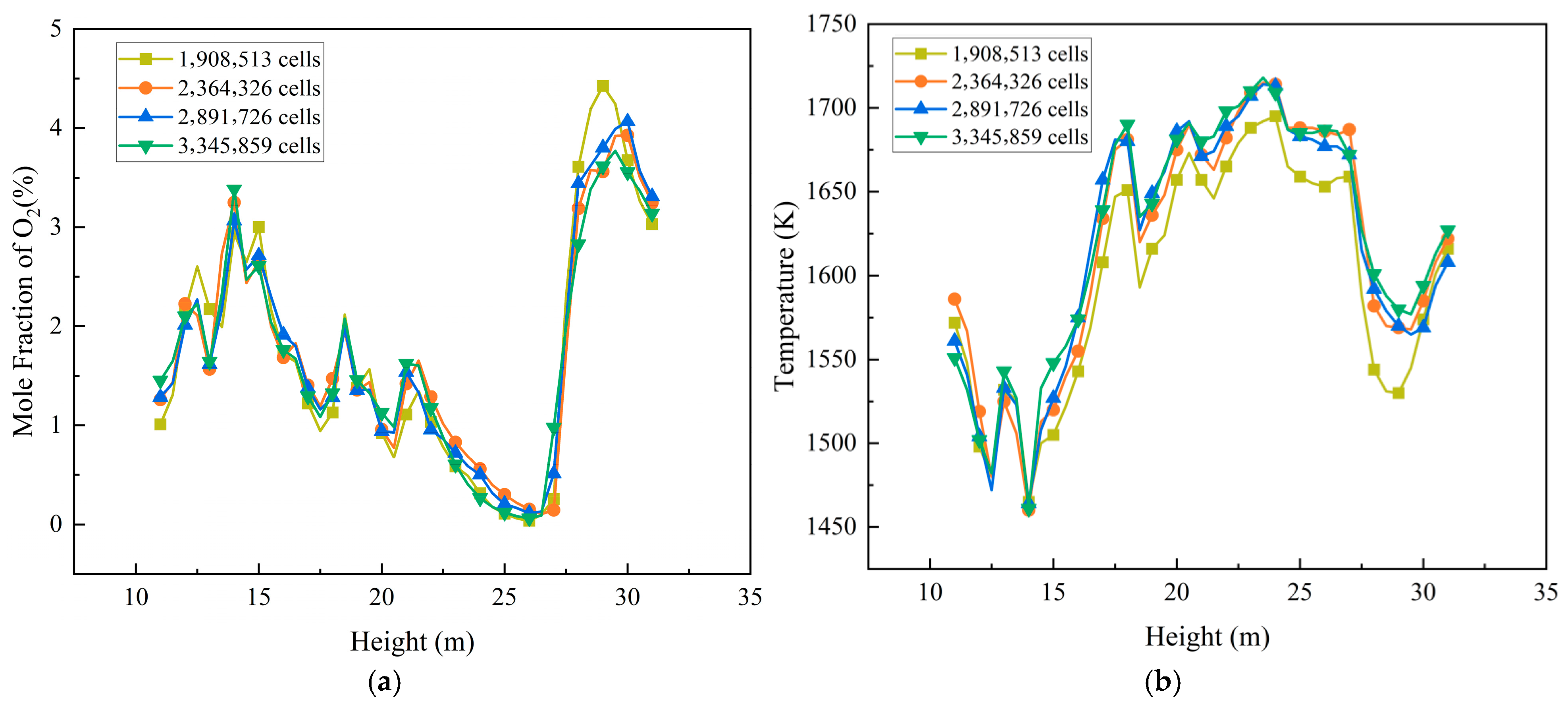
The structured mesh is established based on a simplified boiler structure using the ICEM preprocessor. To minimize the influence of outlet backflow on the accuracy of the in-furnace calculation, the computational domain extends to the boiler rear pass. Figure 4 shows the mesh of the boiler computational domain and furnace cross-sectional mesh. To ensure that the computational results are not influenced by the mesh size, mesh independence verification is performed on meshes with 1.90, 2.36, 2.89, and 3.34 million cells, respectively. Figure 5 compares the cross-section average gas temperature and O2 concentration profiles along the furnace height for the four meshes. The simulated results demonstrate no significant deviation among the temperature curves when the mesh number exceeds 1.90 million. The average relative error for the oxygen concentration and temperature profiles between the 2.36-million-cell mesh and the finest mesh is less than 2%. Therefore, a 2.36-million-cell mesh is employed to ensure accuracy and computational efficiency in this simulation. Table 4 shows the mesh quality specification. The results show that the average values of QEAS and QAR are smaller than the average standard value, indicating a high-quality 3D mesh [36].
During the field test, the composition of flue gas was measured at the entrance of the selective catalytic reduction reactor, which is situated at the rear pass of the boiler. The computational accuracy is validated through comparison of the simulated values with the field test data. The field tests were conducted on both the original boiler and the retrofitted boiler at full load. Table 5 illustrates the verification results between the calculated results and test values, with the deviation less than 6.1%, which proves that the numerical models and the related parameter settings are reasonable. Table 6 shows the convergence criteria of the numerical simulation.

3. Results and Discussion

3.1. Effects of Load on Combustion Performance of the Boiler

3.1.1. Temperature Distribution

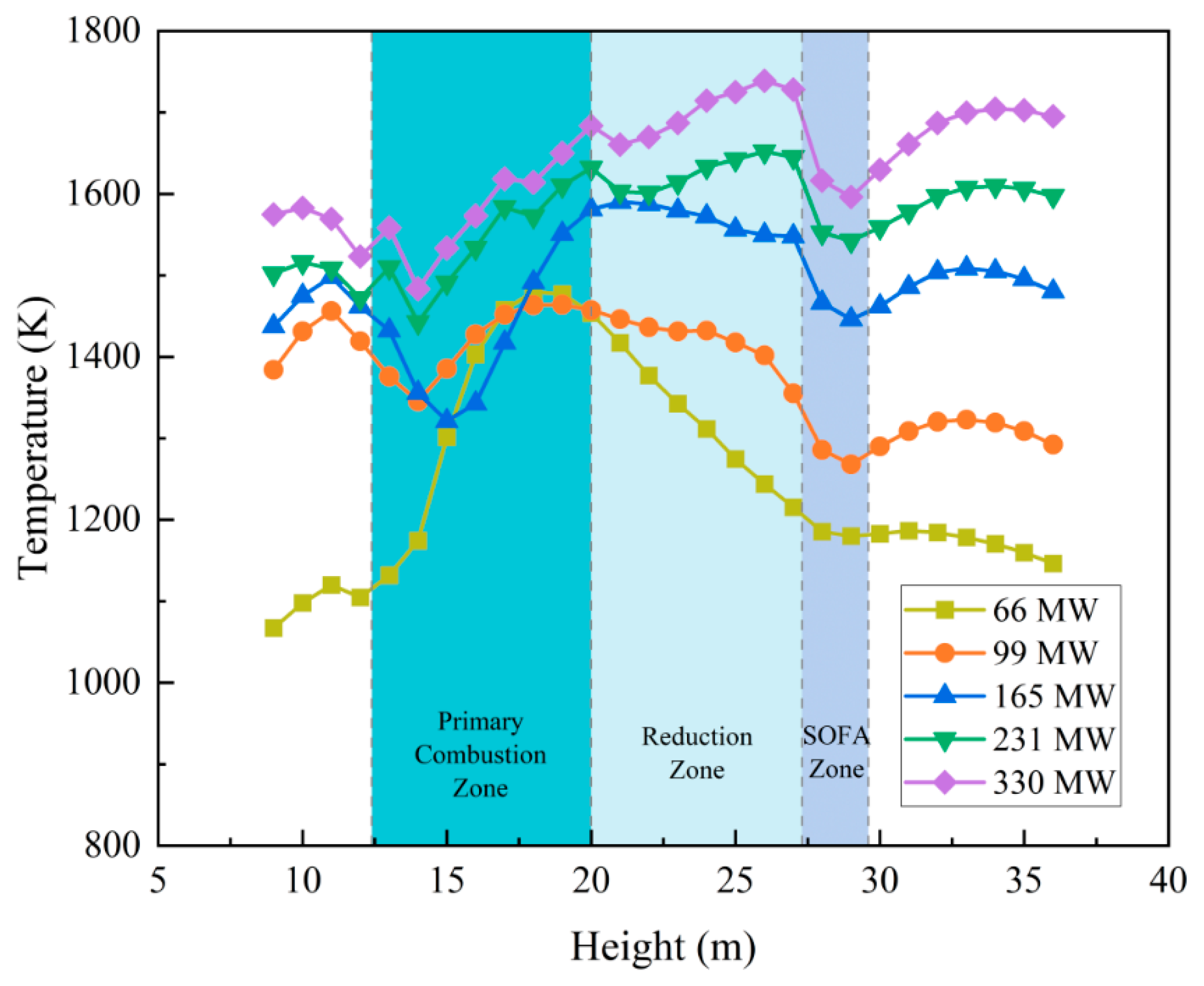
Figure 6 demonstrates the mean temperature distribution in the furnace under various loads. Since the coal feed rate rises with increasing load, the average temperature within the furnace rises significantly as the boiler load increases. In the 66 MW load scenario, the coal feed rate is minimal, drastically reducing the combustion rate and leading to a considerably lower furnace temperature than that in other operational scenarios. At 66 MW and 99 MW, only the bottom burners (A and B) are in operation. As a result, heat release is concentrated in the primary combustion zone, leading to a significant temperature increase in this area. In other operating scenarios, with the upper burners in operation, the continuous supply of fuel and air to the downstream flue gas area results in temperature rises in both the primary combustion zone and the reduction zone. In the reduction zone, preheated combustion products react with residual oxygen from the primary combustion zone, releasing heat through exothermic reactions. However, due to the low combustion temperature in low-load conditions, the heat release from the flue gas to the furnace walls is greater than the heat generated by combustion, leading to a continuous temperature decrease in the reduction zone. The flue gas temperature in the burnout zone rises slightly due to the heat released from the reaction of combustibles with excess air. Additionally, the 66 MW scenario exhibits a much smaller temperature increase compared to the others due to its lower combustion temperature. Since the burner operating mode is identical in both cases, the average temperature distributions at 99 MW and 66 MW are similar to each other. The 165 MW case employs a three-layer burner operating mode. Compared with the 99 MW and 66 MW cases, the three-layer burner operation enables continuous supplementation of fuel and air to the downstream flue gas regions, resulting in a sustained temperature rise in the primary combustion zone and enhanced heat release in the furnace. Exothermic reactions occur between excess oxygen and preheated products in the reduction zone. However, the exothermic process is limited by low oxygen concentrations, causing a gradual temperature decrease. It is worth noting that the decline rate of temperature is slower than that observed in the 99 MW and 66 MW cases. Four-layer burner configurations in both the 231 MW and 330 MW cases exhibit similar temperature distribution trends in the furnace. These burner configurations enable multiple fuel and air injections along the furnace height. In the primary combustion zone, the temperature curves for both cases exhibit an upward trend with fluctuations. The oxygen concentration of flue gas in the reduction zone increases with the injection of the CCOFA. The excess oxygen reacts with the highly reactive preheated products (CO, H2, CH4, and char) in the reduction zone, resulting in notable temperature rises observed in the two curves.

3.1.2. Combustion Stability and Efficiency Under Various Loads

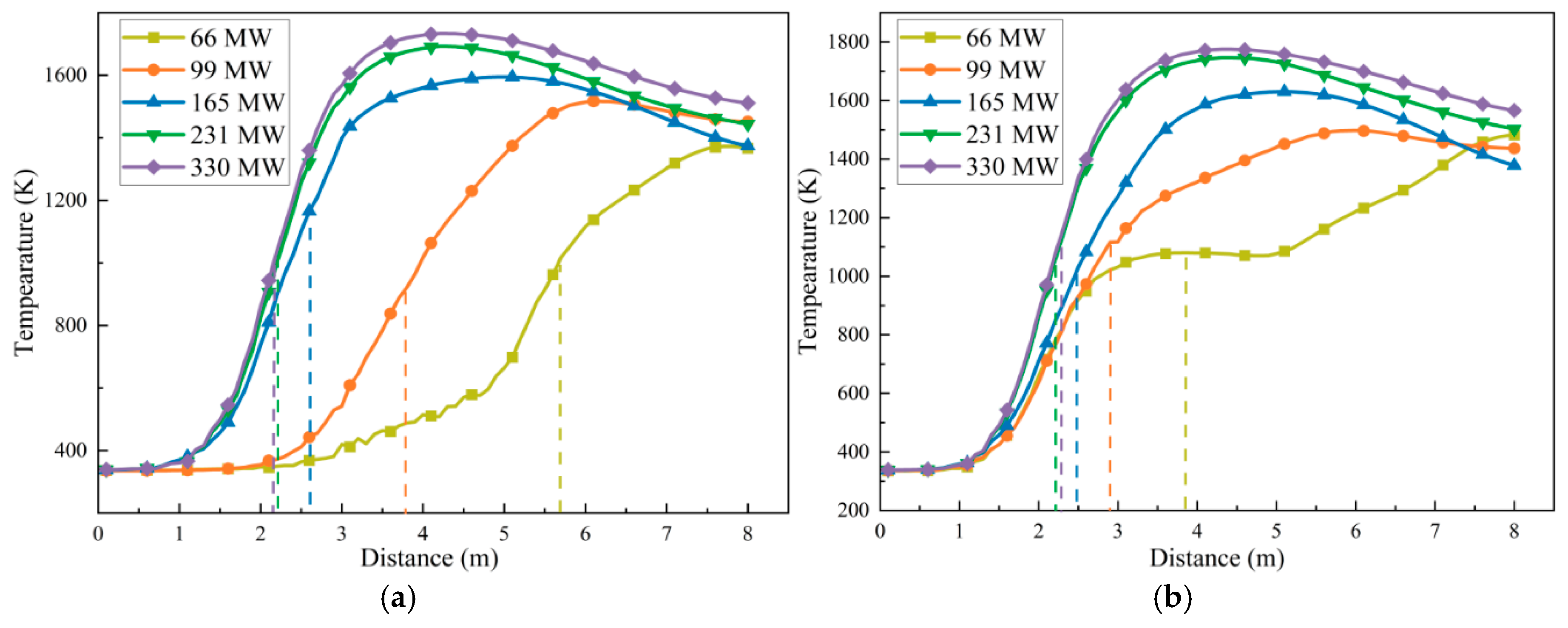
To evaluate the combustion stability of the boiler at different loads, Figure 7 compares the temperature distributions in the direction of the pulverized coal stream for the A- and B-layer burners. The ignition distance is a crucial parameter for assessing combustion stability, and the location of the ignition point of the pulverized coal stream is determined using Semenov’s thermal ignition theory. According to the theory, the location of the ignition point is defined as
d T d x 0 , d 2 T d x 2 = 0
In Equation (16), x represents the distance between the pulverized coal stream and the burner nozzle. Correspondingly, the ignition point is identified as the inflection point in the first derivative of the temperature profile. In Figure 7, the x-coordinates corresponding to dashed lines denote the ignition positions, revealing that the ignition distance significantly decreases with the increase in boiler load. Table 7 shows the values of the ignition distance under different loads. Additionally, the temperature distributions at 330 MW and 231 MW are similar, indicating that under high-load scenarios, with the same burner operating mode, boiler load has minimal effect on the ignition distance. Figure 7b shows that the ignition distance of the B-layer burner is generally less than that of the A-layer burner. The pulverized coal stream receives more radiant heat with the upward flow of flue gas. The increase in flow rate of flue gas intensifies the disturbance inside the furnace, strengthens the mixing of flue gas and pulverized coal gas stream, and is conducive to heating the pulverized coal. As a result, the ignition distance of the upper burner is shorter, and the combustion stability is enhanced.
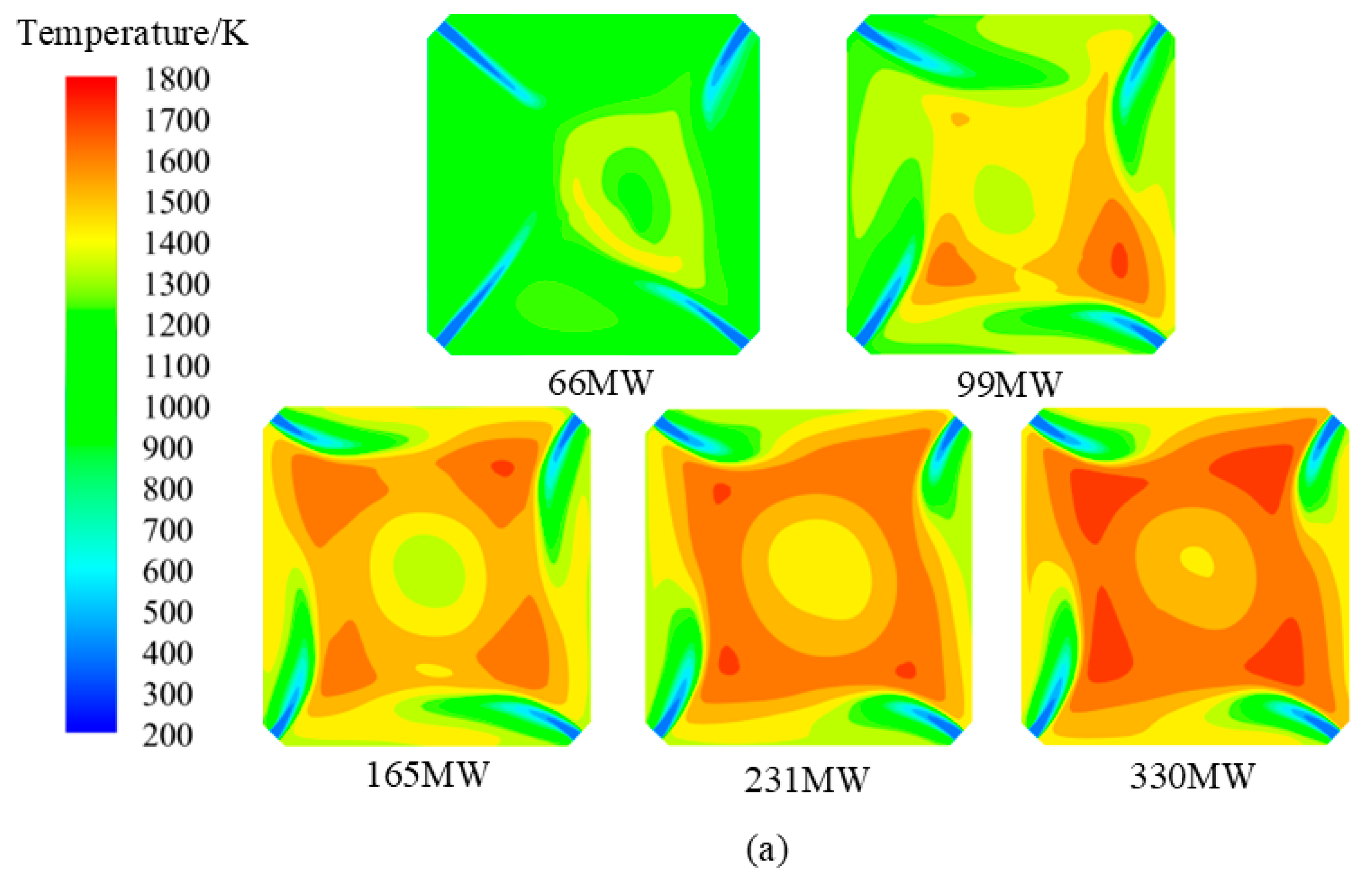
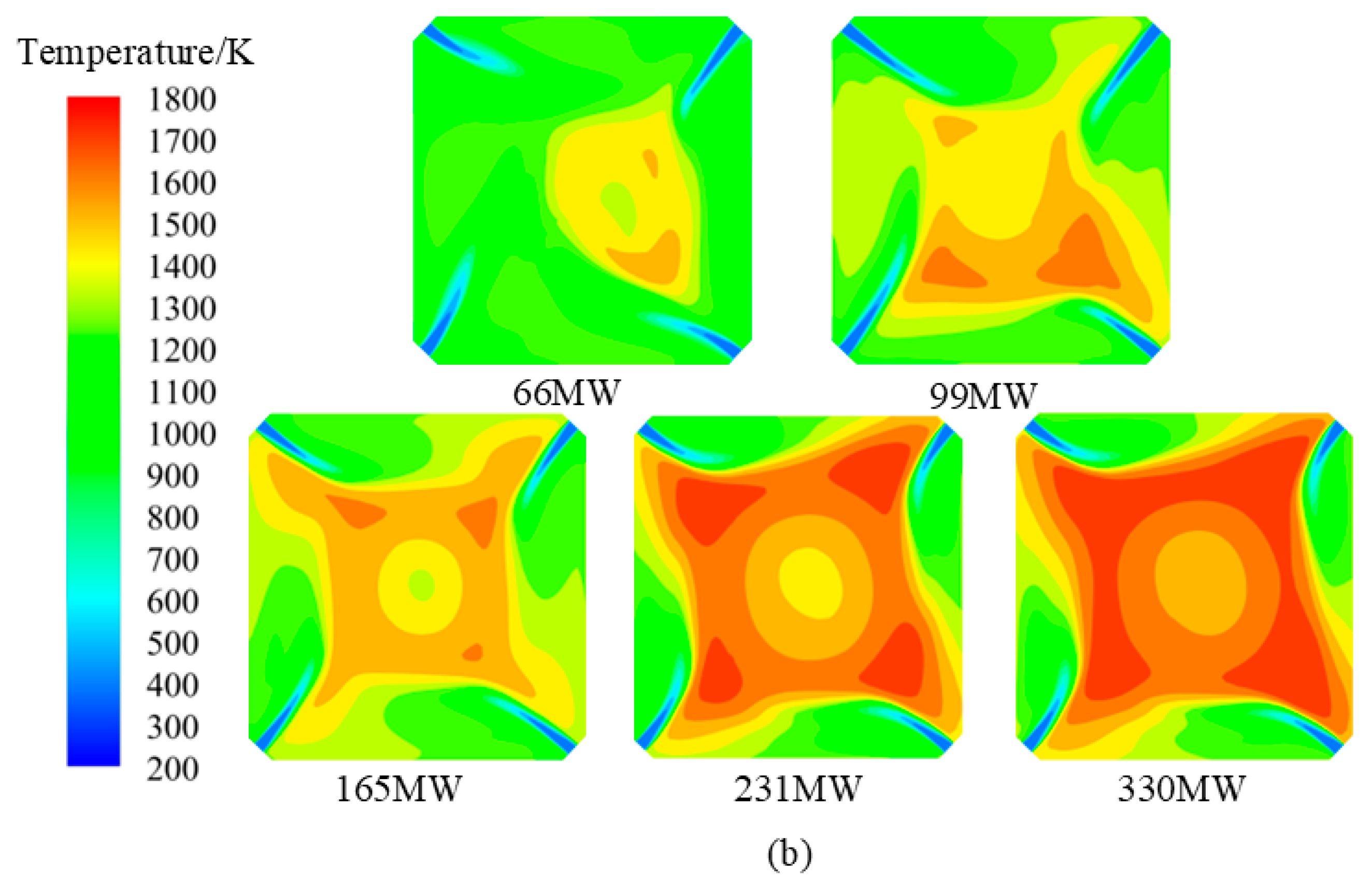
To comprehensively evaluate the combustion characteristics under various loads, Figure 8 presents the cross-sectional temperature contours of the A and B burners. As the load decreases, the size of the imaginary circles inside the furnace gradually diminishes, resulting in a decrease in the high-temperature area. In addition, the imaginary circles at 66 MW and 99 MW deviate from the geometric center of the furnace, leading to an uneven temperature distribution.
The ignition distance increases as boiler load decreases, which shortens the combustion time and reduces the heat released during combustion. A decline in the flow rate of PA weakens the penetration of the pulverized coal stream into the flue gas, causing a reduction in the flame spreading speed. Furthermore, when the load drops from 330 MW to 66 MW, the flow rate of SA decreases from 190.61 kg/s to 38.11 kg/s. This reduction in SA weakens the interaction between adjacent airflows, which prevents the expansion of the imaginary circle created by the collision of neighboring gas streams. Consequently, the heating effect of the upstream gas on the downstream gas is diminished. As a result, the gas streams from the four corners of a burner layer become more independent, leading to unstable combustion.
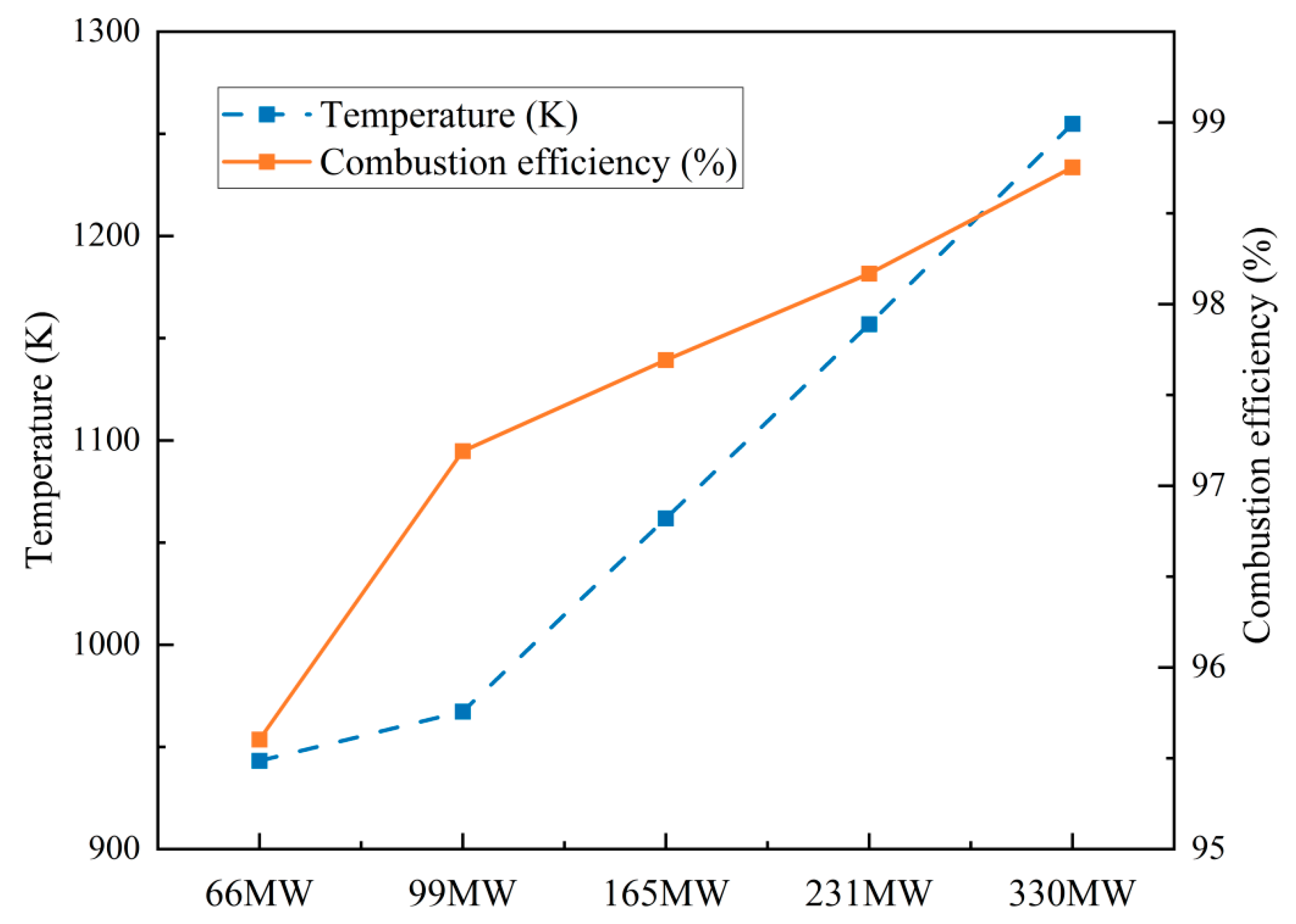
Figure 9 exhibits the boiler’s combustion efficiency and the furnace outlet temperature at different loads. The combustion efficiency is expressed as follows [37]:
η r = 100 q 3 q 4 %
The combustible gas heat loss q3 and the unburnt char heat loss q4 are given by the following expressions:
q 3 = V gy × 123.36 CO Q a r , n e t × 100 %
q 4 = C f 1 C f × 33727 A a r Q a r , n e t × 100 %
In Equation (18), Qar, net is the low heating value, kJ/kg, and CO means the volumetric fraction of carbon monoxide in flue gas. The boiler’s combustion efficiency and the furnace outlet temperature decrease with a decline in boiler load. As the load decreases, the total coal feed rate of the boiler decreases proportionally, lowering the combustion temperature. The lower combustion temperature results in unstable combustion in the furnace, increasing the ignition distance and thereby reducing combustion efficiency. However, since part of the fuel and air are preheated in the PCDs, the coal feed rate and air flow rate are reduced in the primary combustion zone. This extends the reaction time of pulverized coal in this zone, resulting in more complete combustion of fuel at lower loads. Furthermore, the fuel-rich combustion in the PCDs produces highly reactive char and gas. The preheated products are more likely to react with the oxygen in the burnout zone, improving combustion efficiency. As a result, although the lower-load operation reduces the boiler efficiency, the minimum combustion efficiency remains above 95%.

3.2. Effects of Loads on the O2 and NOx Distribution of the Boiler

3.2.1. O2 Distribution Under Various Loads

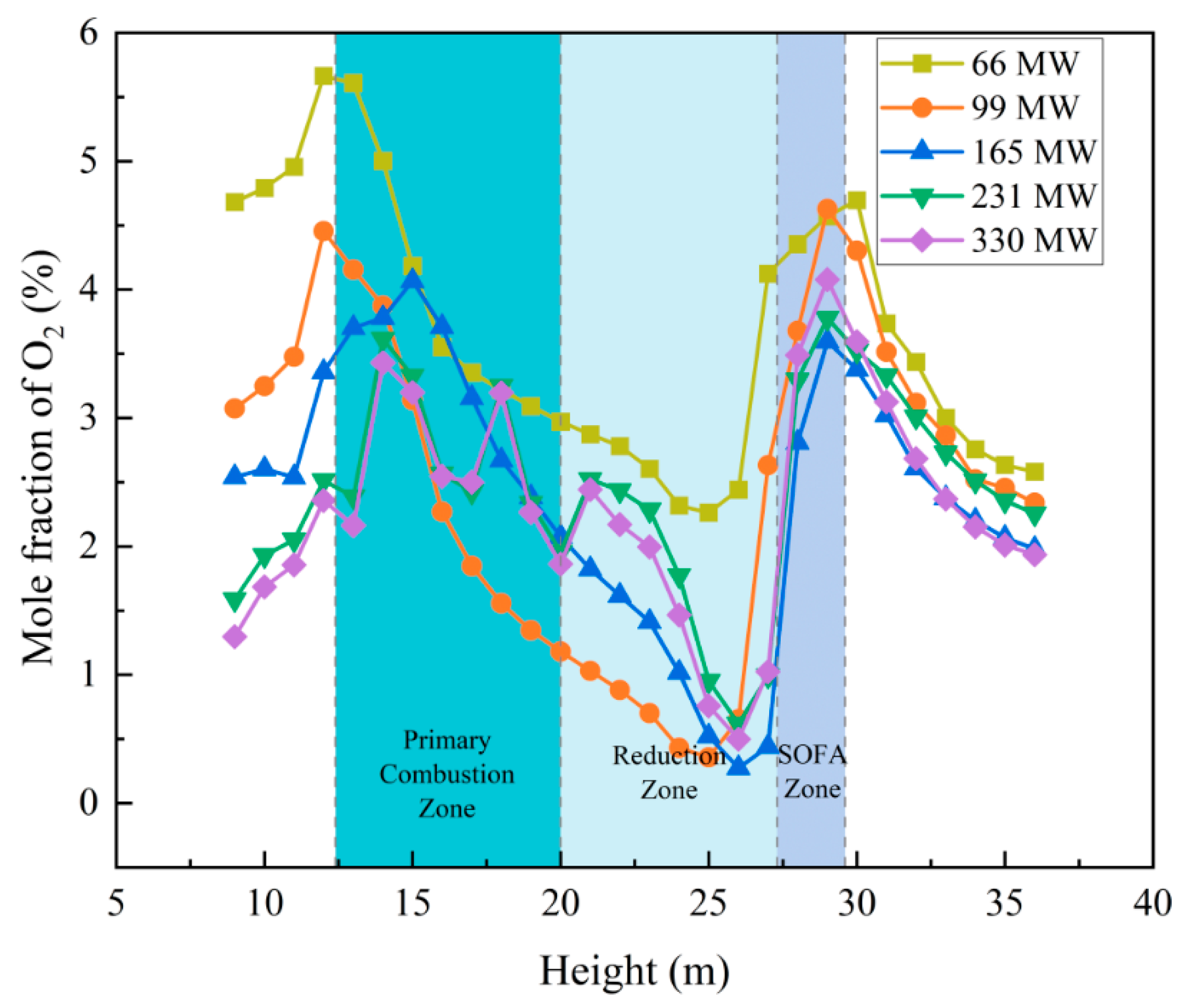
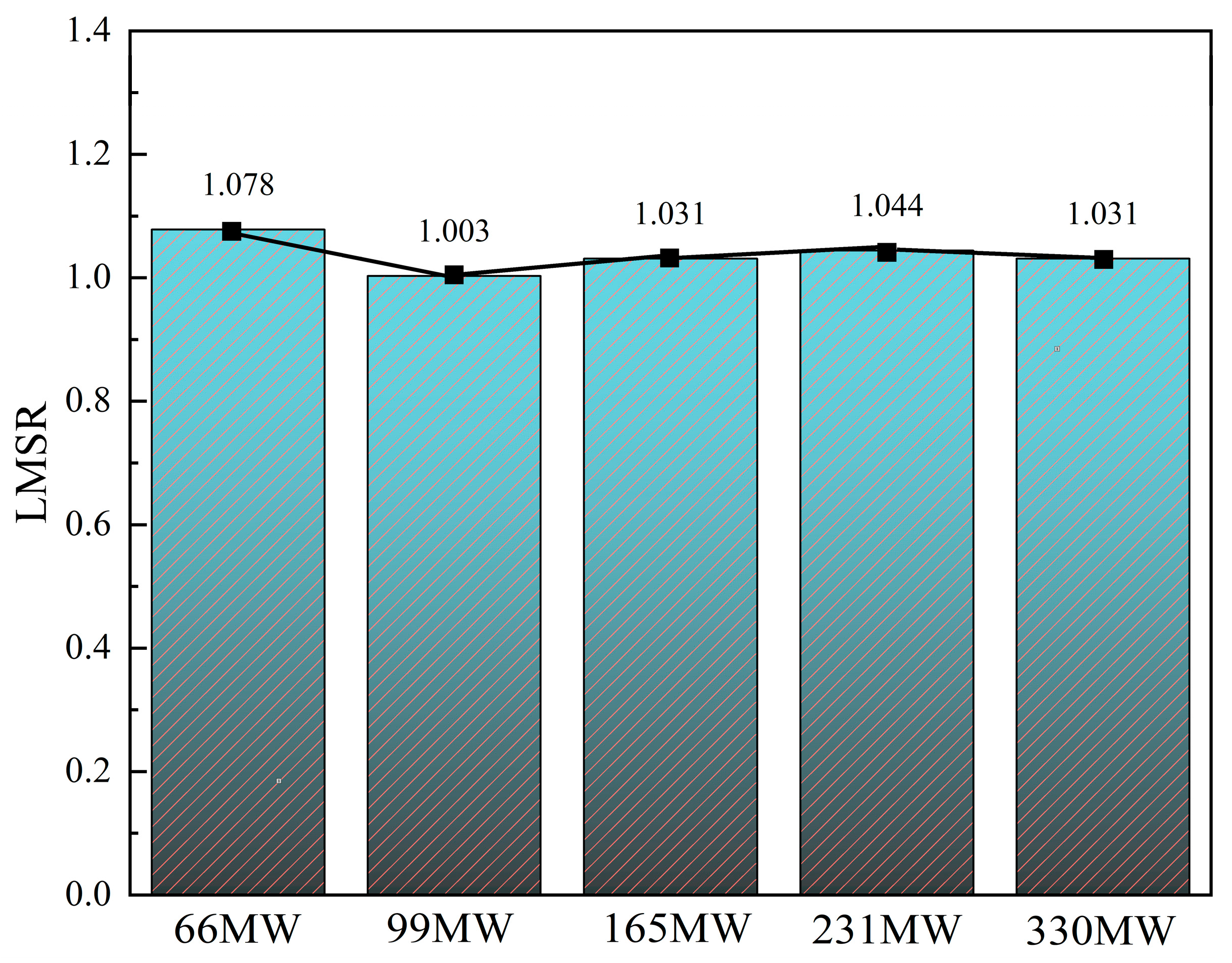
Figure 10 demonstrates the mean O2 distribution in the furnace at varying loads. The boiler employs air-staging technology, with an SR of 0.9 at the reduction zone outlet for all operating conditions. However, due to variations in the preheating coal feeding rate within the PCDs, the stoichiometric ratio in the primary combustion zone also varies under different operating conditions. The stoichiometric ratio significantly influences the combustion and pollutant formation in the furnace, and the local mean stoichiometric ratio (LMSR) [9] is introduced to accurately compare the stoichiometric ratios in the primary combustion zone for different cases. The LMSR is the ratio of the actual air flow rate in the primary combustion zone to the theoretical air flow rate required for complete combustion of pulverized coal. The theoretical air flow rate is calculated from the analysis data and the feed rate of pulverized coal, while the actual air flow rate is the sum of the primary and secondary air flow rates in the burner region. Figure 11 shows the LMSRs of the primary combustion zone for all cases. In the 66 MW case, the highest LMSR in the primary combustion zone leads to an excessive oxygen supply, resulting in the highest oxygen concentration but simultaneously causing low combustion temperature and slow combustion rate. In the reduction zone, residual oxygen is consumed by reacting with preheated products. However, the low temperature hinders the combustion of pulverized coal, resulting in a high oxygen concentration in the reduction zone. As the boiler load decreases, both the coal feed rate and the average temperature decline, resulting in a slow combustion rate in the furnace. Therefore, at the bottom of the primary combustion zone, the oxygen concentration at low loads is higher than that at high loads. Since the 99 MW and 165 MW boilers operate without the top burners D and E, there is no air supply during the upward flow of flue gas, and the oxygen concentration decreases rapidly. Moreover, as the boiler load decreases, the flue gas velocity correspondingly decreases. The reduced velocity significantly increases the residence time of flue gas in the furnace, which in turn promotes more complete reactions between combustibles and oxygen. Moreover, the injected preheated products further decrease the oxygen concentration. Under the 330 MW and 231 MW scenarios, the bottom burners A, B, and C, the upper burner D, and the top CCOFA nozzles FF are in operation. The identical air distribution and burner configuration lead to a similar oxygen concentration distribution in both cases. Given that burner nozzles C and D, as well as D and FF, are separated from each other, the oxygen concentration in the flue gas exhibits an initial increase followed by a subsequent decrease as it passes through the D-layer burners and the CCOFA nozzles. In the reduction zone, the injected preheated products, which consist of highly reactive combustible gas and char, react intensely with the residual oxygen in the flue gas, leading to a rapid decrease in oxygen concentration.

3.2.2. NOx Distribution Under Various Loads

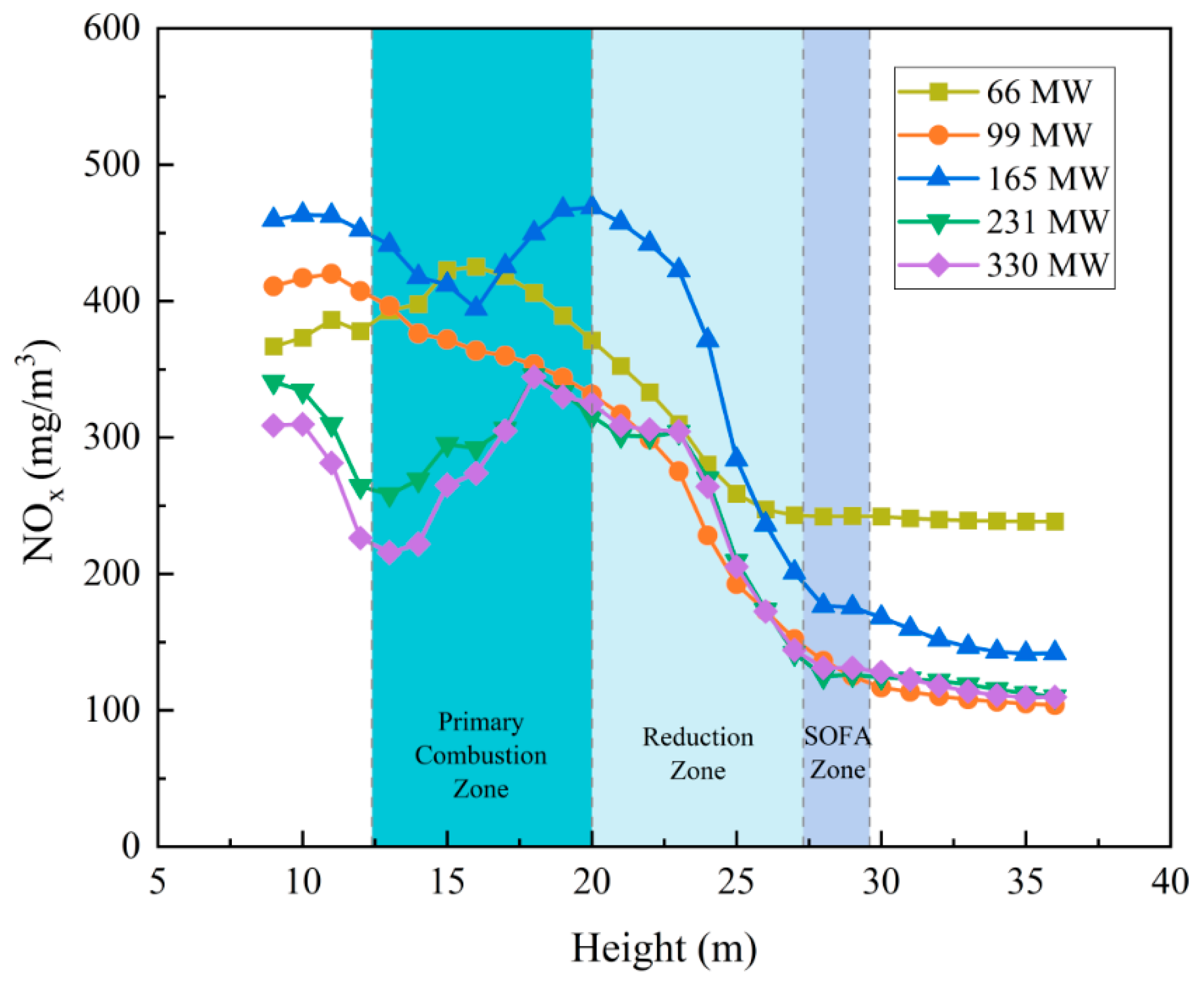
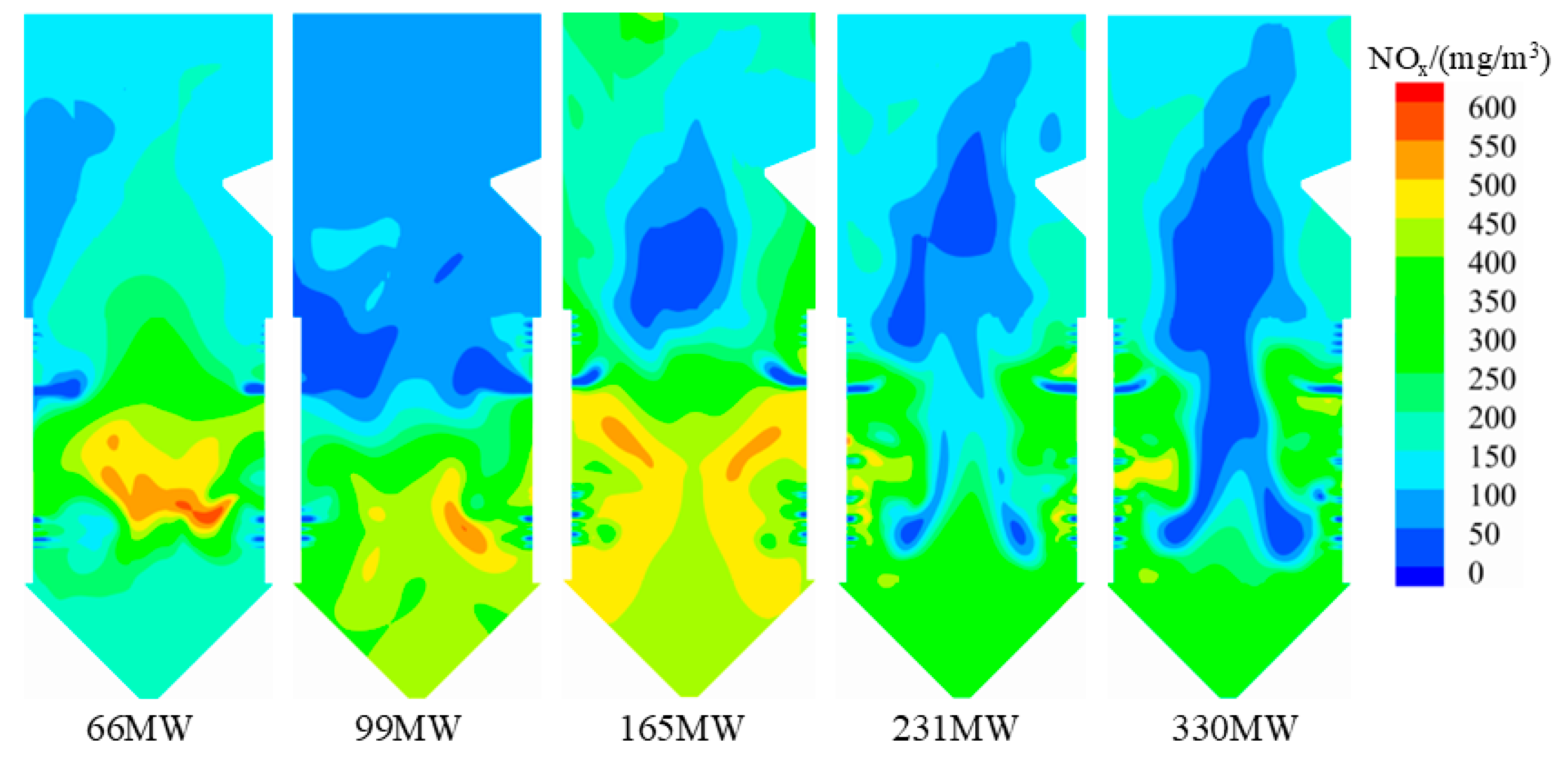
Figure 12 presents the comparison of the cross-section average NOx concentration along the furnace height under various loads. Figure 13 shows the NOx distributions on the furnace’s vertical section at different loads. The results indicate that the peak NOx concentration is located in the primary combustion zone. Low-load conditions lead to combustion instability and consequently result in a non-uniform NOx concentration distribution. As only the thermal and fuel NOx are considered in this study, the formation of NOx in the furnace depends on the combustion temperature and oxygen concentration. In the primary combustion zone, the 330 MW scenario exhibits a lower LMSR compared with the 231 MW scenario, resulting in a lower NOx concentration. Under low-load conditions, the complexity of NOx distribution is influenced by the oxygen distribution and burner configuration. The 66 MW scenario demonstrates a high oxygen concentration and the lowest combustion rate at the bottom of the burner zone, which leads to a lower NOx concentration compared to the 99 MW and 165 MW scenarios during the early stage of combustion. With the upward flow of furnace gases, the temperature in the 66 MW case increases while maintaining a high oxygen concentration, leading to a rise in NOx concentration. In the reduction zone, the flue gas at 66 MW exhibits the highest oxygen concentration, which inhibits the reduction of NOx by the preheated products. In the 99 MW scenario, only the bottom two layers of burners are in operation, and the LMSR is the lowest among the cases. The NOx concentration progressively declines, owing to the low oxygen concentration in both the primary combustion zone and the reduction zone. Compared to the 66 MW and 99 MW boilers, the 165 MW boiler maintains a significantly higher temperature and high oxygen concentration in the primary combustion zone, resulting in the highest NOx generation in this zone among the low-load cases.
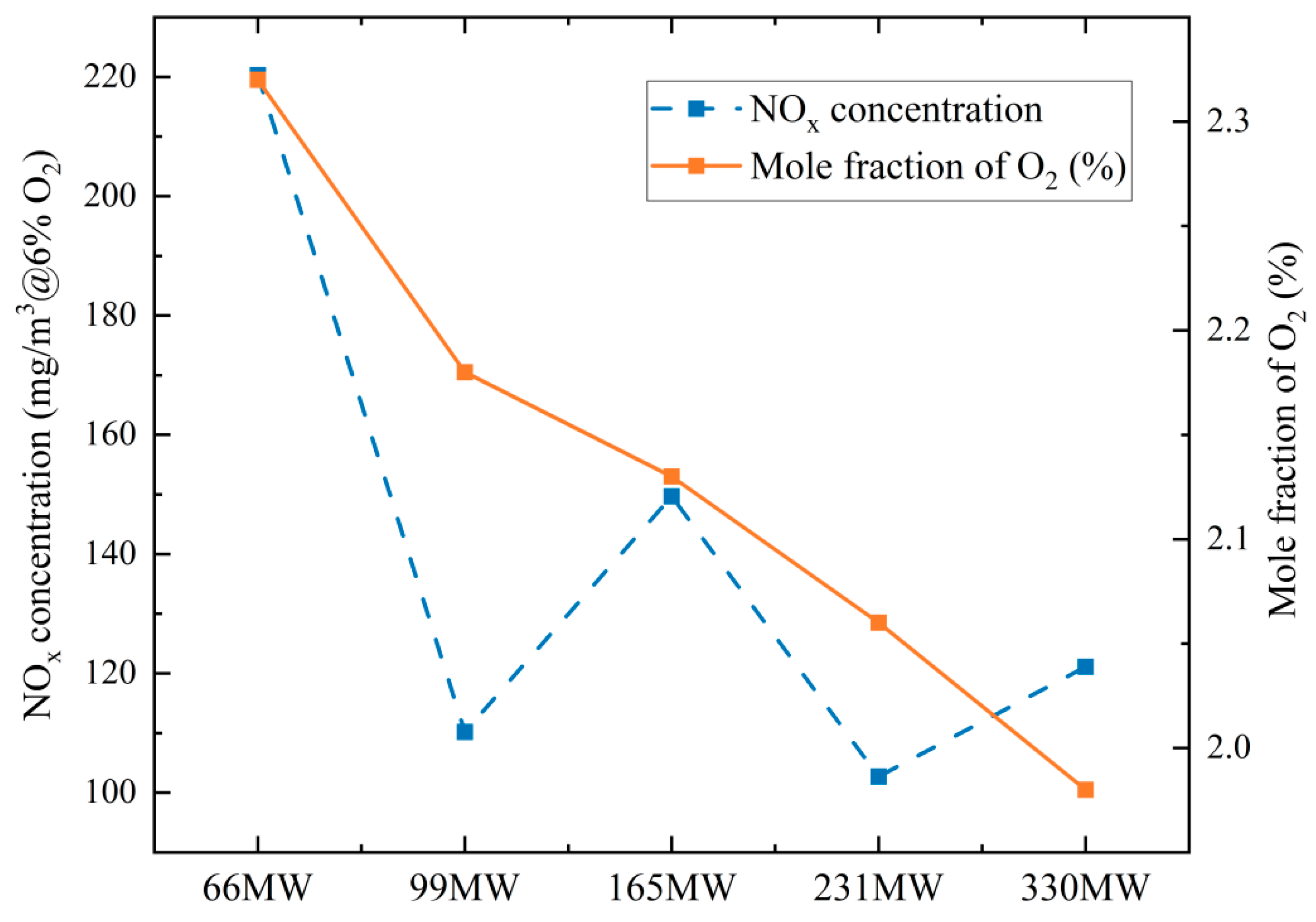
Figure 14 presents the oxygen and NOx concentrations at the furnace exit at different loads. As boiler load decreases, the NOx concentration at the furnace outlet exhibits a fluctuating pattern. The formation of NOx in the furnace is influenced by the preheated products, load, and burner arrangement. Compared to the 330 MW case, the 231 MW case exhibits a higher proportion of preheated fuel compared to the total fuel and a lower combustion temperature. Both factors inhibit the generation of NOx, resulting in a lower NOx concentration at 231 MW. At 165 MW, the furnace adopts a three-layer bottom burner configuration. The reduction in load results in a significant drop in combustion temperature in the primary combustion zone. A lower combustion temperature and a higher oxygen concentration weaken the reduction of the preheated products on the NOx in the reduction zone, leading to a higher NOx concentration at the outlet of the furnace. The 99 MW boiler operates at a low combustion temperature with high oxygen concentration during the initial stage of combustion. It employs a two-layer burner arrangement, which extends the fuel reaction time in the burner region. Moreover, the LMSR of the 99 MW boiler in the primary combustion zone is the lowest. A low LMSR creates a strongly reducing atmosphere, which effectively suppresses the conversion of fuel nitrogen to NOx by favoring the formation of molecular nitrogen (N2) over nitrogen oxides. In the reduction zone, the 99 MW boiler exhibits the lowest oxygen concentration, enabling effective NOx reduction after the preheated products mix with the furnace gas, which ultimately leads to the lowest NOx concentration at the furnace outlet. In the 66 MW scenario, the ignition delay and the highest LMSR result in the highest oxygen concentration in the furnace for all operating conditions. Therefore, the high oxygen concentration inhibits the reduction of NOx by the preheated products in the reduction zone, resulting in the highest NOx concentration at the furnace outlet. Under the same excess air coefficient, a higher combustion efficiency means that more pulverized coal and oxygen are consumed. Consequently, the oxygen concentration at the furnace outlet decreases with increasing boiler load.

4. Conclusions

Numerical investigations were conducted on a 330 MW coal-fired boiler retrofitted with PCDs. The combustion characteristics and NOx emissions of the retrofitted boiler were studied at 20–100% rated load. This simulation compares the combustion stability, temperature, and species distributions of the boiler under different loads. Key findings are summarized as follows.
(1)
The boiler with the PCDs can achieve stable operation with an acceptable combustion efficiency over a load range of 66 MW to 330 MW. As the load declines, the temperature distribution in the furnace becomes uneven, while the ignition distance of pulverized coal increases.
(2)
As the load decreases from 330 MW to 66 MW, the boiler’s combustion efficiency gradually declines from 98.7% to 95.6%. The PCDs help achieve complete combustion. Under the 66 MW scenario, boiler combustion stability markedly decreases, accompanied by a significant rise in NOx emissions. Therefore, the PCDs should not be engaged at a boiler load of 66 MW.
(3)
With fluctuations in boiler load, the NOx concentration at the furnace outlet varies from 102.7 mg/Nm3 to 220.3 mg/Nm3. The preheated products effectively reduce NOx generated during the combustion process under most loads, thereby lowering NOx emissions at the boiler outlet.
In future work, it is necessary to investigate the integration of preheating technology with burner arrangement and air distribution, aiming to optimize combustion stability and NOx emissions during boiler low-load operation.

Author Contributions

Methodology, S.W. and Z.X.; Software, S.W. and S.G.; Validation, Z.L. and H.T.; Funding acquisition, Z.L. and Z.X.; Writing—original draft preparation, S.W.; Writing—review and editing, S.W. and Z.X. All authors have read and agreed to the published version of the manuscript.

Funding

This research was funded by the National Natural Science Foundation of China (grant number 51976028) and the Program of the Education Department of Jilin Province (grant number JJKH20240138KJ).

Data Availability Statement

The original contributions presented in this study are included in the article. Further inquiries can be directed to the corresponding author.

Conflicts of Interest

The authors declare no conflicts of interest.

Nomenclature

A1, A2Pre-exponential factors of devolatilization at low temperature and high temperature (s−1)
CDiffusion rate constant of oxygen to particle surface
CfCombustible percentage of fly ash (%)
dpDiameter of particle (m)
D0Diffusion rate coefficient (m2/s)
E1, E2Activation energy of devolatilization at low temperature and high temperature (J/kmol)
fw,0Initial mass fraction of moisture in coal particle
FDParticle drag coefficient under turbulence
GbTurbulence kinetic energy generated by buoyancy (kg/(m⋅s3))
GkTurbulence kinetic energy generated by mean velocity gradients (kg/(m⋅s3))
kTurbulence kinetic energy (m2/s2)
kf,iRate constants for forward reactions of thermal NO formation (i = 1, 2, 3) (m3/(gmol·s))
kr,iRate constants for reverse reactions of thermal NO formation (i = 1, 2, 3) (m3/(gmol·s))
maAsh content in coal particle (kg)
mpCoal particle mass (kg)
mp,0Initial mass of particle (kg)
mv(t)Volatile yield over time (kg)
pStatic pressure (Pa)
poxPartial pressure of oxidant around char (Pa)
RUniversal gas constant (J/(kmol·K))
RpKinetic rate at particle surface (s−1)
SSource term
TpTemperature of pulverized coal (K)
TGas-phase temperature (K)
uVelocity vector of gas phase (m/s)
VgyVolume of flue gas (Nm3/kg)
Abbreviations
CCOFAClose-coupled overfire air
LMSRLocal mean stoichiometric ratio
PAPrimary air
PCDPreheating combustion device
SASecondary air
SOFASeparated overfire air
SRStoichiometric ratio
Greek Symbols
α1, α2Yield factors
εTurbulence dissipation rate (m2/s3)
ηrCombustion efficiency (%)
μMolecular viscosity (N⋅s/m2)
μtGas-phase turbulent viscosity (N⋅s/m2)
ρGas density (kg/m3)
υKinematic viscosity (m2/s)
σk, σεTurbulent Prandtl numbers for k and ε

References

  1. Wang, H.; Jin, H.; Yang, Z.; Deng, S.; Wu, X.; An, J.; Sheng, R.; Ti, S. CFD modeling of flow, combustion and NOx emission in a wall-fired boiler at different low-load operating conditions. Appl. Therm. Eng. 2023, 236, 121824. [Google Scholar] [CrossRef]
  2. Liu, Z.; Wang, C.; Fan, J.; Liu, M.; Xing, Y.; Yan, J. Enhancing the flexibility and stability of coal-fired power plants by optimizing control schemes of throttling high-pressure extraction steam. Energy 2023, 288, 129756. [Google Scholar] [CrossRef]
  3. Liu, T.; Wang, Y.; Zou, L.; Bai, Y.; Shen, T.; Wei, Y.; Li, F.; Zhao, Q. Numerical investigation of stable combustion at ultra-low load for a 350 MW wall tangentially fired pulverized-coal boiler: Effect of burner adjustments and methane co-firing. Appl. Therm. Eng. 2024, 246, 122980. [Google Scholar] [CrossRef]
  4. Ma, D.; Zhang, S.; He, X.; Zhang, J.; Ding, X. Combustion stability and NOX emission characteristics of a 300 MWe tangentially fired boiler under ultra-low loads with deep-air staging. Energy 2023, 269, 126795. [Google Scholar] [CrossRef]
  5. Zhang, X.; Chen, Z.; Zhang, M.; Zeng, L.; Li, Z. Combustion stability, burnout and NO emissions of the 300-MW down-fired boiler with bituminous coal: Load variation and low-load comparison with anthracite. Fuel 2021, 295, 120641. [Google Scholar] [CrossRef]
  6. Li, Z.; Qiao, X.; Miao, Z. Low load performance of tangentially-fired boiler with annularly combined multiple airflows. Energy 2021, 224, 120131. [Google Scholar] [CrossRef]
  7. Jiang, Y.; Lee, B.-H.; Oh, D.-H.; Jeon, C.-H. Optimization of operating conditions to achieve combustion stability and reduce NOx emission at half-load for a 550-MW tangentially fired pulverized coal boiler. Fuel 2021, 306, 121727. [Google Scholar] [CrossRef]
  8. Chang, J.; Zhou, Z.; Ma, X.; Liu, J. Computational investigation of hydrodynamics, coal combustion and NOx emissions in a tangentially fired pulverized coal boiler at various loads. Particuology 2022, 65, 105–116. [Google Scholar] [CrossRef]
  9. Li, S.; Chen, Z.; He, E.; Jiang, B.; Li, Z.; Wang, Q. Combustion characteristics and NOx formation of a retrofitted low-volatile coal-fired 330 MW utility boiler under various loads with deep-air-staging. Appl. Therm. Eng. 2017, 110, 223–233. [Google Scholar] [CrossRef]
  10. Gu, W.; Zheng, Z.; Zhao, N.; Wang, X.; Cheng, Z. Combustion characteristics of a 660 MW tangentially fired pulverized coal boiler considering different loads, burner combinations and horizontal deflection angles. Case Stud. Therm. Eng. 2024, 64. [Google Scholar] [CrossRef]
  11. Zhang, X.; Zhu, S.; Zhu, J.; Liu, Y.; Zhang, J.; Hui, J.; Ding, H.; Cao, X.; Lyu, Q. Preheating and combustion characteristics of anthracite under O2/N2, O2/CO2 and O2/CO2/H2O atmospheres. Energy 2023, 274, 127419. [Google Scholar] [CrossRef]
  12. Ruan, R.; Wang, X.; Li, J.; Cui, B.; Lyu, Z.; Wang, X.; Tan, H. The effect of preheating temperature and combustion temperature on the formation characteristics of PM0.4 from preheating combustion of high-alkali lignite. Fuel 2023, 348, 128560. [Google Scholar] [CrossRef]
  13. Lv, Z.; Xiong, X.; Tan, H.; Wang, X.; Liu, X.; Rahman, Z.U. Experimental investigation on NO emission and burnout characteristics of high-temperature char under the improved preheating combustion technology. Fuel 2022, 313, 122662. [Google Scholar] [CrossRef]
  14. Zhang, H.; Lin, H.; Zhou, X.; Wang, X.; Zheng, H.; Liu, Y.; Tan, H. CFD modeling and industry application of a self-preheating pulverized coal burner of high coal concentration and enhanced combustion stability under ultra-low load. Appl. Therm. Eng. 2024, 253, 123831. [Google Scholar] [CrossRef]
  15. Ding, H.; Ouyang, Z.; Su, K.; Wang, W.; Zhang, J.; Wang, H.; Zhu, S. Experimental research on effects of multi-layer injection of the high-temperature preheated pulverized coal on combustion characteristics and NO emission. Fuel 2023, 347, 128424. [Google Scholar] [CrossRef]
  16. Tang, H.; Liu, Z.; Han, X.; Shen, X.; Liu, Y.; Wang, S.; Xu, Z. Experimental study on combustion characteristics of a 40 MW pulverized coal boiler based on a new low NOx burner with preheating function. Energy 2024, 305, 132319. [Google Scholar] [CrossRef]
  17. Hui, J.; Zhu, S.; Zhang, X.; Liu, Y.; Lin, J.; Ding, H.; Su, K.; Cao, X.; Lyu, Q. Experimental study of deep and flexible load adjustment on pulverized coal combustion preheated by a circulating fluidized bed. J. Clean. Prod. 2023, 418, 138040. [Google Scholar] [CrossRef]
  18. Tang, H.; Yao, G.; Wang, Z.; Yang, J.; Han, X.; Sun, L.; Xu, Z. Study on low-load combustion characteristics of a 600 MW power plant boiler with self-sustaining internal combustion burners. Appl. Therm. Eng. 2025, 267, 125859. [Google Scholar] [CrossRef]
  19. Yao, G.; Han, X.; Liu, Z.; Tang, H.; Zhou, Y.; Wang, Z. Low-NOx study of a 600 MW tangentially fired boiler based on pulverized coal preheating method. Case Stud. Therm. Eng. 2023, 48, 125859. [Google Scholar] [CrossRef]
  20. Wang, S.; Tang, H.; Liu, Z.; Han, X.; Shen, X.; Xu, Z. Combustion performance and NOx emissions in a 330 MW tangentially fired boiler retrofitted with preheating combustion devices. Energy 2025, 318, 134803. [Google Scholar] [CrossRef]
  21. Jin, W.; Si, F.; Kheirkhah, S.; Yu, C.; Li, H.; Wang, Y. Numerical study on the effects of primary air ratio on ultra-low-load combustion characteristics of a 1050 MW coal-fired boiler considering high-temperature corrosion. Appl. Therm. Eng. 2022, 221, 119811. [Google Scholar] [CrossRef]
  22. Lu, H.; Huang, S.; Li, H.; Cheng, Z.; Chang, X.; Dong, L.; Kong, D.; Jing, X. Numerical simulation of combustion characteristics in a 660 MW tangentially fired pulverized coal boiler subjected to peak-load regulation. Case Stud. Therm. Eng. 2023, 49, 103168. [Google Scholar] [CrossRef]
  23. Lin, C.; Wang, Y.; Wang, X.; Cui, B.; Tan, H. Numerical simulation of NO formation during combustion process of gasified fuel generated from partial gasification of pulverized coal. Process. Saf. Environ. Prot. 2025, 201, 107484. [Google Scholar] [CrossRef]
  24. Shih, T.-H.; Liou, W.W.; Shabbir, A.; Yang, Z.; Zhu, J. A new k-ϵ eddy viscosity model for high reynolds number turbulent flows. Comput. Fluids 1995, 24, 227–238. [Google Scholar] [CrossRef]
  25. Cardoso, J.S.; Silva, V.; Eusébio, D.; Tarelho, L.A.; Hall, M.J.; Dana, A.G. Numerical modelling of ammonia-coal co-firing in a pilot-scale fluidized bed reactor: Influence of ammonia addition for emissions control. Energy Convers. Manag. 2022, 254, 115226. [Google Scholar] [CrossRef]
  26. Jin, W.; Si, F.; Cao, Y.; Ma, H.; Wang, Y. Numerical optimization of separated overfire air distribution for air staged combustion in a 1000 MW coal-fired boiler considering the corrosion hazard to water walls. Fuel 2022, 309, 122022. [Google Scholar] [CrossRef]
  27. Laubscher, R.; Rousseau, P. Numerical investigation into the effect of burner swirl direction on furnace and superheater heat absorption for a 620 MWe opposing wall-fired pulverized coal boiler. Int. J. Heat Mass Transf. 2019, 137, 506–522. [Google Scholar] [CrossRef]
  28. Kobayashi, H.; Howard, J.; Sarofim, A. Coal devolatilization at high temperatures. Symp. (Int.) Combust. 1977, 16, 411–425. [Google Scholar] [CrossRef]
  29. Bian, C.; Huang, J.; Sun, R. Numerical optimization of combustion and NOX emission in a retrofitted 600MWe tangentially-fired boiler using lignite. Appl. Therm. Eng. 2023, 226, 120228. [Google Scholar] [CrossRef]
  30. Kang, W.; Jo, H.; Lee, J.; Jang, K.; Ryu, C. Numerical investigations on overfire air design for improved boiler operation and lower NOx emission in commercial wall-firing coal power plants. Appl. Therm. Eng. 2022, 219, 119604. [Google Scholar] [CrossRef]
  31. Bolegenova, S.; Askarova, A.; Georgiev, A.; Nugymanova, A.; Maximov, V.; Bolegenova, S.; Adil’Bayev, N. Staged supply of fuel and air to the combustion chamber to reduce emissions of harmful substances. Energy 2024, 293, 130622. [Google Scholar] [CrossRef]
  32. Baum, M.M.; Street, P.J. Predicting the Combustion Behaviour of Coal Particles. Combust. Sci. Technol. 1971, 3, 231–243. [Google Scholar] [CrossRef]
  33. Zeldvich, Y.B. The Oxidation of Nitrogen in Combustion and Explosions. J. Acta Physicochim. 1946, 21, 577. [Google Scholar]
  34. De Soete, G. Overall reaction rates of NO and N2 formation from fuel nitrogen. Symp. Combust. 1975, 15, 1093–1102. [Google Scholar] [CrossRef]
  35. Du, Y.; Wang, C.; Lv, Q.; Li, D.; Liu, H.; Che, D. CFD investigation on combustion and NOx emission characteristics in a 600 MW wall-fired boiler under high temperature and strong reducing atmosphere. Appl. Therm. Eng. 2017, 126, 407–418. [Google Scholar] [CrossRef]
  36. Ding, H.; Ouyang, Z.; Shi, Y.; Chen, R.; Zhang, Z.; Zhu, S.; Lyu, Q. Effects of the T-abrupt exit configuration of riser on fuel properties, combustion characteristics and NO emissions with coal self-preheating technology. Fuel 2022, 337, 126860. [Google Scholar] [CrossRef]
  37. Tan, P.; Tian, D.; Fang, Q.; Ma, L.; Zhang, C.; Chen, G.; Zhong, L.; Zhang, H. Effects of burner tilt angle on the combustion and NOX emission characteristics of a 700 MWe deep-air-staged tangentially pulverized-coal-fired boiler. Fuel 2017, 196, 314–324. [Google Scholar] [CrossRef]
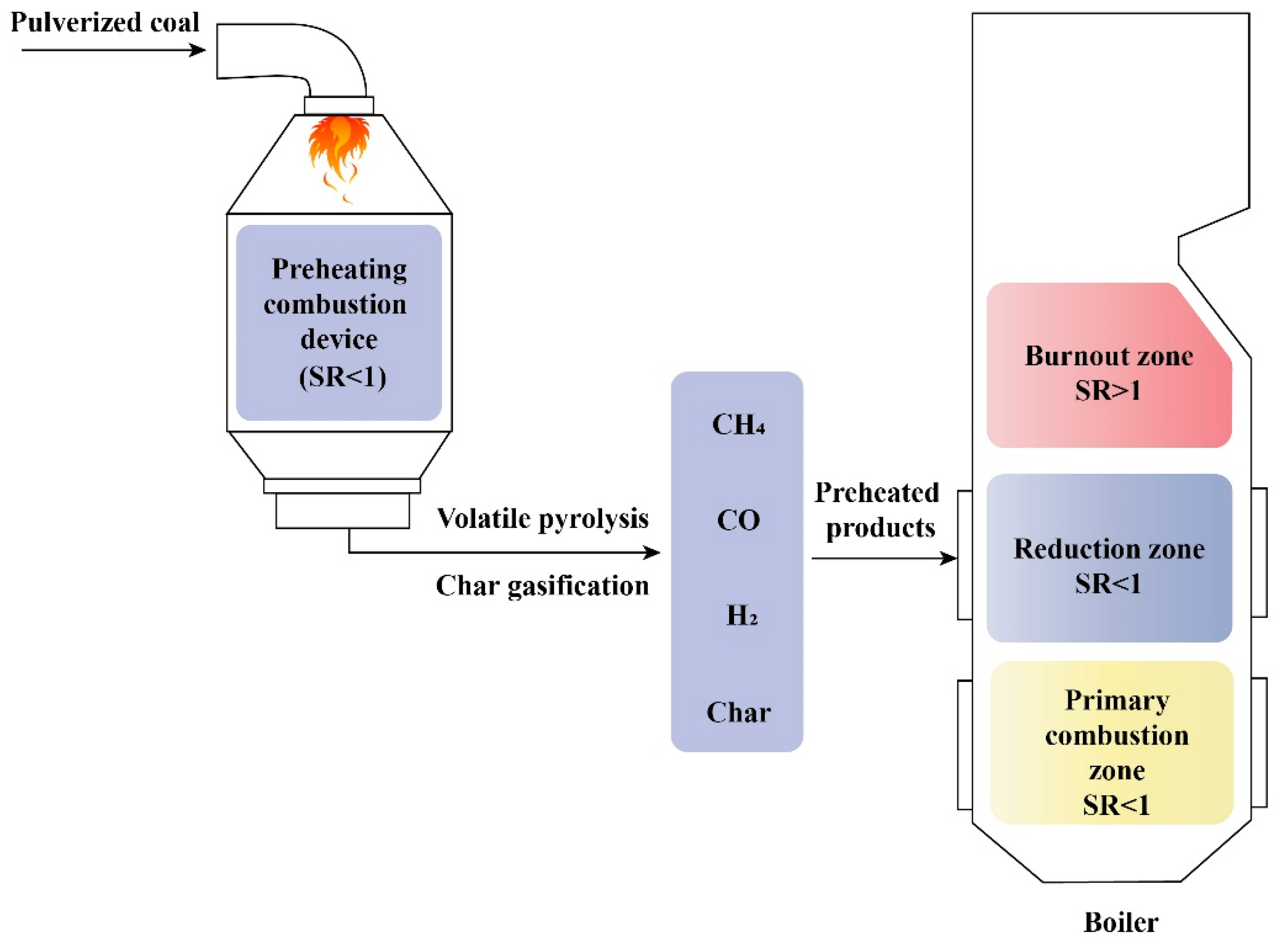
Figure 1. Principle of preheating combustion technology.
Processes 13 04026 g001
Figure 2. Schematic diagram of the retrofitted boiler configuration. (a) Burner configuration after retrofit. (b) Cross-sectional view of the furnace.
Processes 13 04026 g002
Figure 3. Detailed reaction pathways of the fuel N.
Processes 13 04026 g003
Figure 4. The boiler mesh. (a) Mesh of computational domain. (b) Furnace cross-sectional mesh.
Processes 13 04026 g004
Figure 5. Mesh independence validation. (a) Average O2 concentration. (b) Average temperature.
Processes 13 04026 g005
Figure 6. Average temperature distribution under various loads.
Processes 13 04026 g006
Figure 7. Temperature distribution along the direction of the pulverized coal stream. (a) A-layer burner. (b) B-layer burner.
Processes 13 04026 g007
Figure 8. Temperature distributions of the furnace cross-section under various loads. (a) Burner A. (b) Burner B.
Processes 13 04026 g008aProcesses 13 04026 g008b
Figure 9. Temperature at the furnace outlet and combustion efficiency under various loads.
Processes 13 04026 g009
Figure 10. Cross-section average O2 concentration under various loads.
Processes 13 04026 g010
Figure 11. LMSRs of the primary combustion zone at different loads.
Processes 13 04026 g011
Figure 12. Cross-section average NOx concentration under various loads.
Processes 13 04026 g012
Figure 13. NOx distributions on furnace vertical section under various loads.
Processes 13 04026 g013
Figure 14. O2 and NOx emissions at different loads.
Processes 13 04026 g014
Table 1. Boiler operating parameters at various loads.
Case NumberCase 1Case 2Case 3Case 4Case 5
Load (MW)3302311659966
Running burnersABCDABCDABCABAB
Total coal feed rate (kg/s)52.22 36.94 26.39 16.39 10.83
Preheating coal feed rate (kg/s)11.11 8.33 5.56 2.78 2.78
Preheating air mass-flow (kg/s)27.78 20.83 13.89 6.94 6.94
Primary air (PA) mass-flow (kg/s)118.17 82.72 59.08 35.44 23.64
Secondary air (SA) mass-flow (kg/s)190.61 133.44 95.31 57.19 38.11
SOFA mass-flow (kg/s)102.92 72.06 51.47 30.89 20.58
PA temperature (K)343343343343343
SA temperature (K)615589567537537
Boiler outlet temperature (K)643621592554492
Table 2. Boundary conditions of the preheated products’ nozzles.
Feed Rate of Preheated Coal (kg/s)SRCO (%)CO2 (%)CH4 (%)H2 (%)N2 (%)Flow Rate of Char (kg/s)Flow Rate of Gas (kg/s)Temperature of Gas (K)
2.78 0.4211.68 13.20 0.68 0.65 73.79 0.96 8.77 926
5.56 0.4212.33 12.74 0.80 0.68 73.45 1.89 17.55 1006
8.33 0.4212.71 12.41 0.96 0.72 73.20 2.81 26.36 1121
11.11 0.4213.16 12.01 1.13 0.78 72.92 3.73 35.16 1236
Table 3. Coal properties.
Ultimate Analysis (Dry Basis, wt. %)Vdaf (wt. %)Qar, net (kJ/kg)
CHONSA38.6317,220
63.773.6215.380.940.615.69
Table 4. Summary of mesh quality.
Quality SpecificationRangeAverage ValueAverage Standard Value [36]
Equi-angle skewness (QEAS)0–0.810.36≤0.4
Aspect ratio (QAR)1–504.65≤5
Table 5. Comparison of measured data and calculated values.
Item330 MW (Original)330 MW (Retrofitted)
MeasuredCalculatedErrorMeasuredCalculatedError
O2 (%)2.983.166.0%2.122.043.8%
NOx (mg/m3, at 6% O2)185.7194.54.7%126.7121.14.4%
Gas temperature at the furnace outlet (K)1279 (design value)1200.16.1%/1254.9/
Table 6. Convergence criteria.
ParametersCriteriaParametersCriteriaParametersCriteria
Continuity10−6ε10−6CO10−4
vx10−6Energy10−6CO210−4
vy10−6DO10−6H210−4
vz10−6H2O10−6CH410−4
k10−6O210−4vol10−4
Table 7. Ignition distances under different loads.
66 MW99 MW165 MW231 MW330 MW
Ignition distance of burner A/(m)5.683.792.612.212.18
Ignition distance of burner B/(m)3.892.932.492.172.19
Disclaimer/Publisher’s Note: The statements, opinions and data contained in all publications are solely those of the individual author(s) and contributor(s) and not of MDPI and/or the editor(s). MDPI and/or the editor(s) disclaim responsibility for any injury to people or property resulting from any ideas, methods, instructions or products referred to in the content.