
Pre-Crosslinked Gel Particles Enhanced by Amphiphilic Nanocarbon Dots in Harsh Reservoirs: Synthesis and Deep Stimulation Mechanism


Abstract
1. Introduction
2. Materials and Methods
2.1. Main Reagents and Instruments
2.1.1. Reagents
2.1.2. Instrumentation and Equipment
- (1)
- The following synthesis and processing equipment was used: microwave reactor (for carbon dot synthesis), heat-collecting constant-temperature magnetic stirrer, precision electronic balance, vacuum drying oven, high-speed grinder, and standard inspection sieve.
- (2)
- In addition, the characterization equipment included a Fourier transform infrared spectrometer (FT-IR, VERTEX70), scanning electron microscope (SEM, ZEISS EV0MA15), thermogravimetric analyzer (TGA, STA449 F3), laser particle size analyzer, and advanced rotational rheometer.
- (3)
2.2. Preparation of Amphiphilic Carbon Dots (A-CDs)
2.3. Synthesis and Optimization of CD-PPG
2.4. Characterization and Testing Methods
- (1)
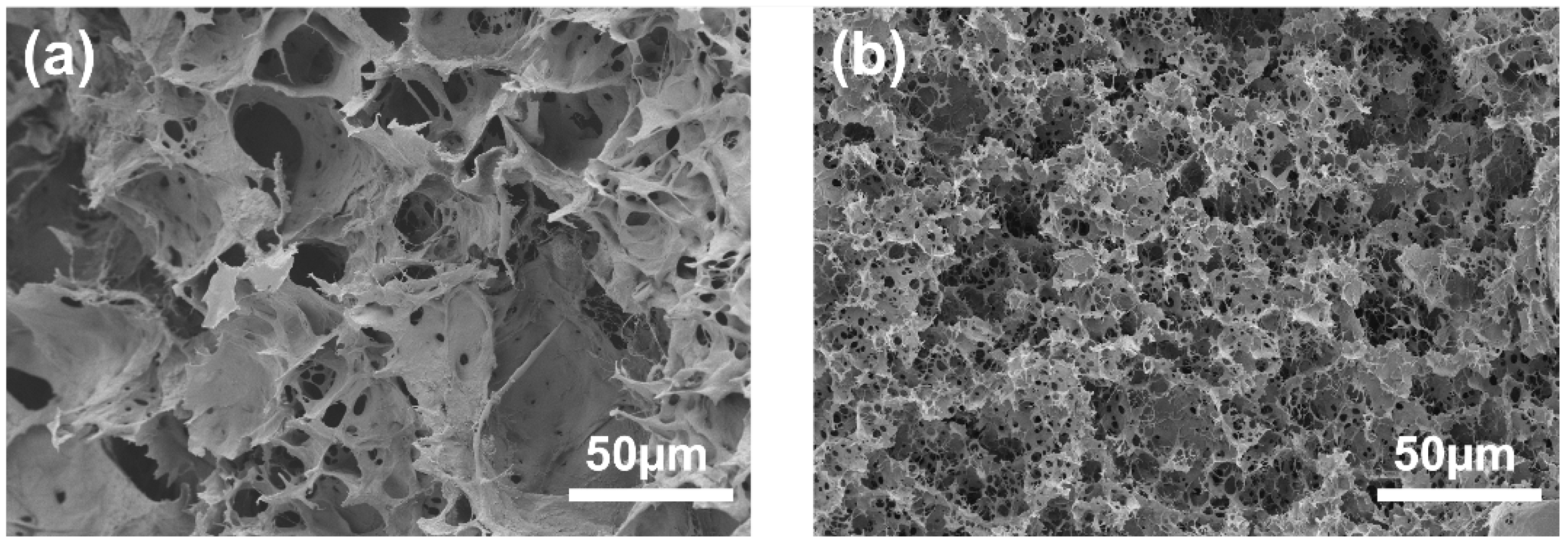
- SEM observation: After the sample was fully swollen and quenched with liquid nitrogen, it was subjected to a gold-spraying treatment and then observed for its internal microstructure under a 15 kV acceleration voltage.
- (2)
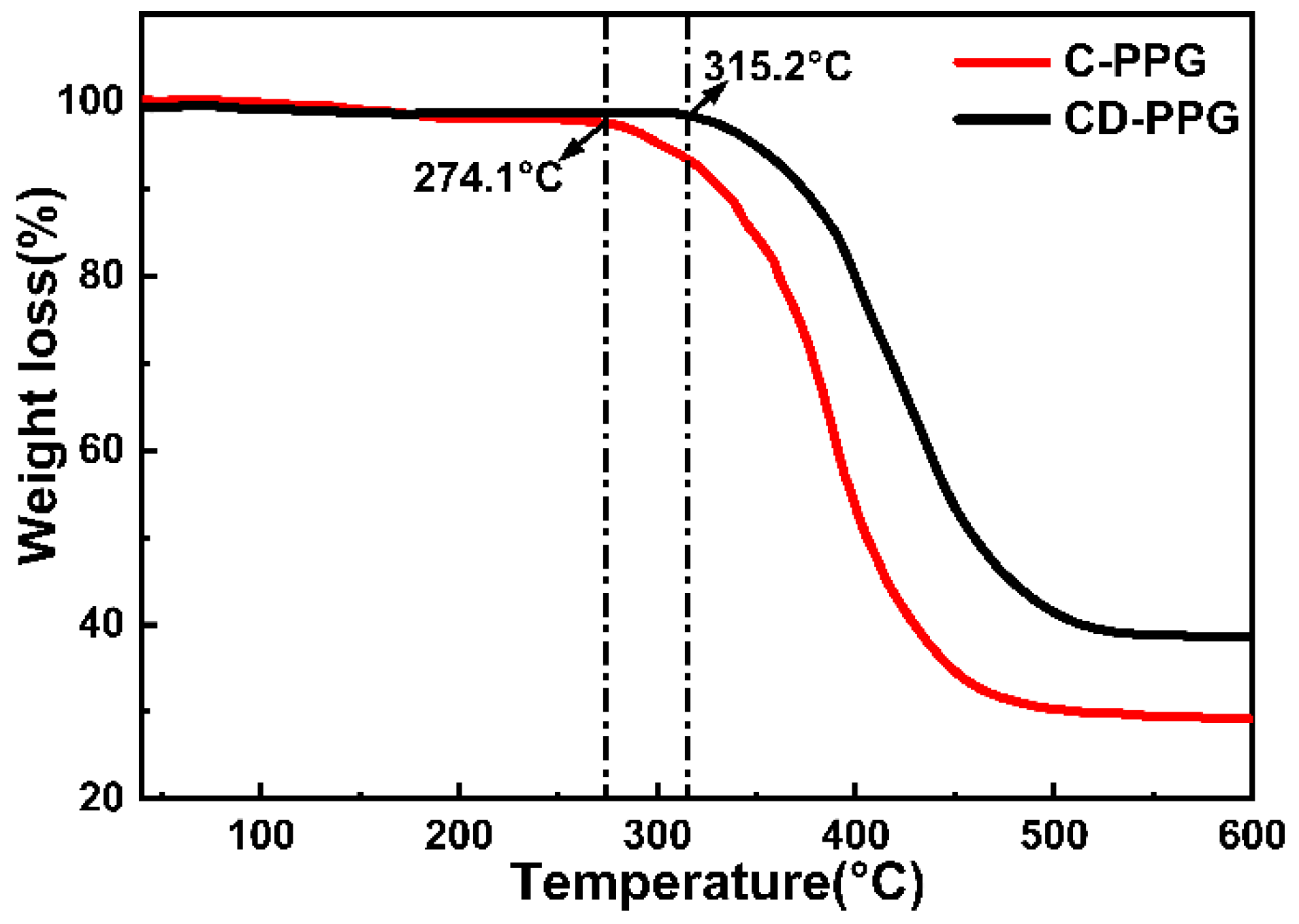
- Thermal stability analysis (TGA): In the presence of a nitrogen gas flow (50 mL/min), the sample was heated at a rate of 10 °C/min from room temperature to 800 °C, and the change in sample mass with temperature was recorded.
- (3)
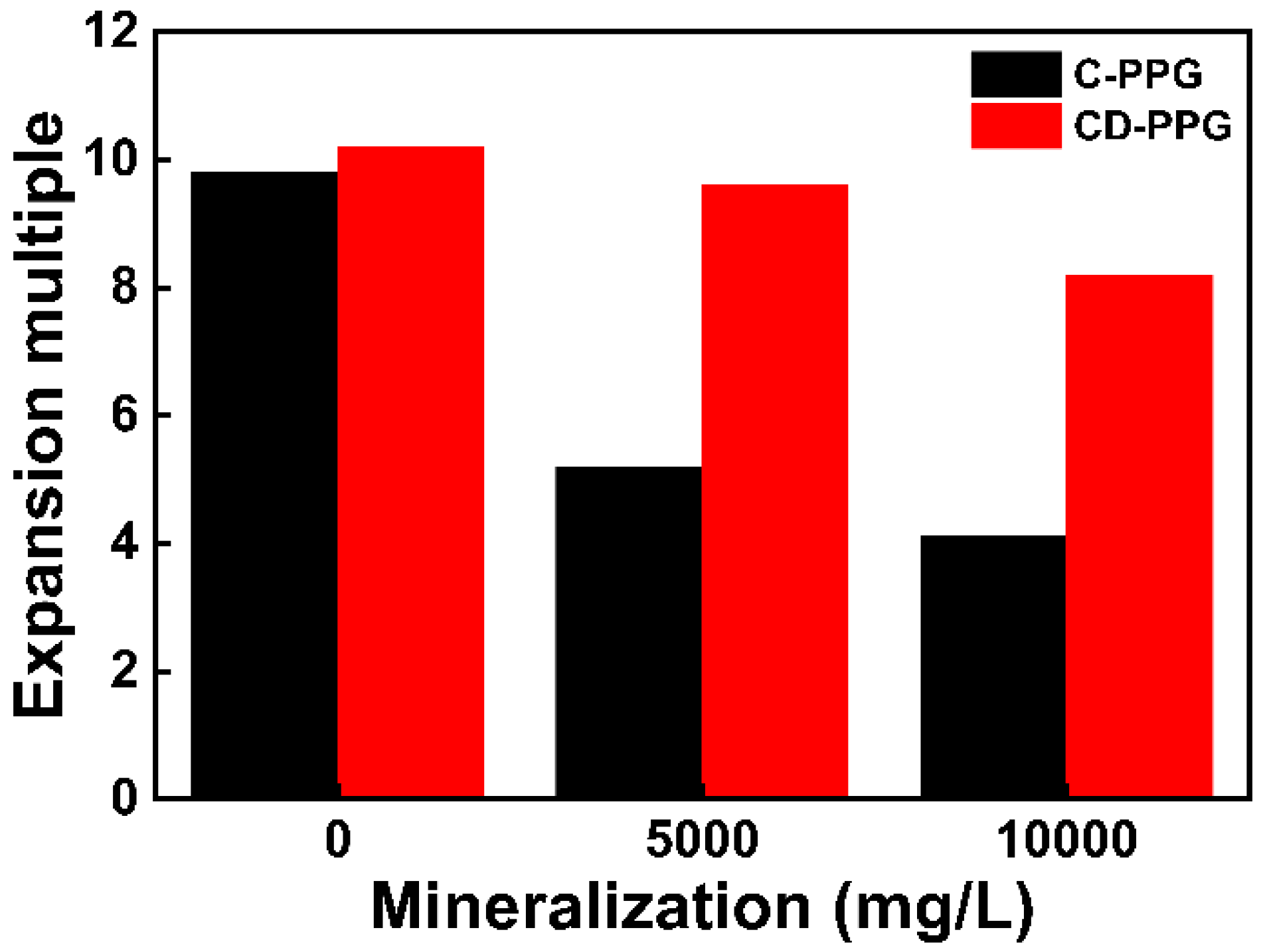
- Expansion and temperature/alkali resistance performance test: We accurately weighed 0.100 g (denoted as Wd) of the dry CD-PPG and C-PPG, and immersed them, respectively, in different mineralization degrees (fresh water, 5 × 10⁴ mg/L, 10 × 104 mg/L, 15 × 104 mg/L NaCl/CaCl2 mixed salt water (with Ca2+ concentration fixed at 500 mg/L)). We took them out regularly, dried the surface free of water with filter paper, and weighed them again (denoted as Ws). The expansion ratio (Q) calculation formula is Q = (Ws − Wd)/Wd. At the same time, we placed the fully swollen samples in a constant temperature oven at 95 °C for a long-term aging experiment. We regularly observed and recorded their morphological and weight changes [31].
- (4)
- Texture analyzer analysis: The test was conducted using the CT3 texture analyzer from Brookfield USA. The main body gel blocks were cut into cuboid pieces with dimensions of 100 mm × 80 mm × 20 mm. To ensure uniform force application, the surface of the samples had to be flat, smooth, and free of visible bubbles or defects. The compression and TPA tests were carried out under indoor conditions (room temperature 15 °C, relative humidity 38%).
- (5)
- Particle steady-state viscoelasticity: During the migration process in the formation, the actual shear stress direction that PPGs were subjected to by the porous medium of the formation remained unchanged. The elastic behavior exhibited under such conditions is referred to as the steady-state viscoelasticity of PPGs. The steady-state viscoelasticity of particles can reflect the actual viscoelasticity of the viscoelastic particle system during the migration process in the formation. Steady-state rate scanning experiments were conducted using a rotational rheometer to determine the elastic behavior of viscoelastic particles during the steady-state shear process. The main indicators used for characterization were the normal stress difference (N1) and the Wiesenberg number. The concentration of viscoelastic particles was 0.2%, and the test temperature was 85 °C [32,33].
2.5. Plugging Performance Test
2.6. Water Control Flooding Experiment for Oil Recovery
3. Experimental Results and Discussion
3.1. Characterization of Amphiphilic Carbon Dots (A-CDs)
3.2. Structural Characterization and Formation Mechanism of CD-PPGs
3.3. Systematic Evaluation of Thermal Resistance, Salt Resistance, and Mechanical Properties
3.3.1. Thermal Stability (TGA)
3.3.2. Salt-Tolerance and Temperature Tolerance Properties
- (1)
- Salt-tolerance at room temperature
- (2)
- Long-term stability at high temperatures
3.3.3. Mechanical Properties of the Matrix Adhesive
3.3.4. CD-PPG Steady-State Viscoelasticity
3.4. Comprehensive Evaluation of Blocking and Oil Expulsion Effects
3.4.1. Plugging Performance
3.4.2. Water Control and Oil Recovery Effect
4. Conclusions
- (1)
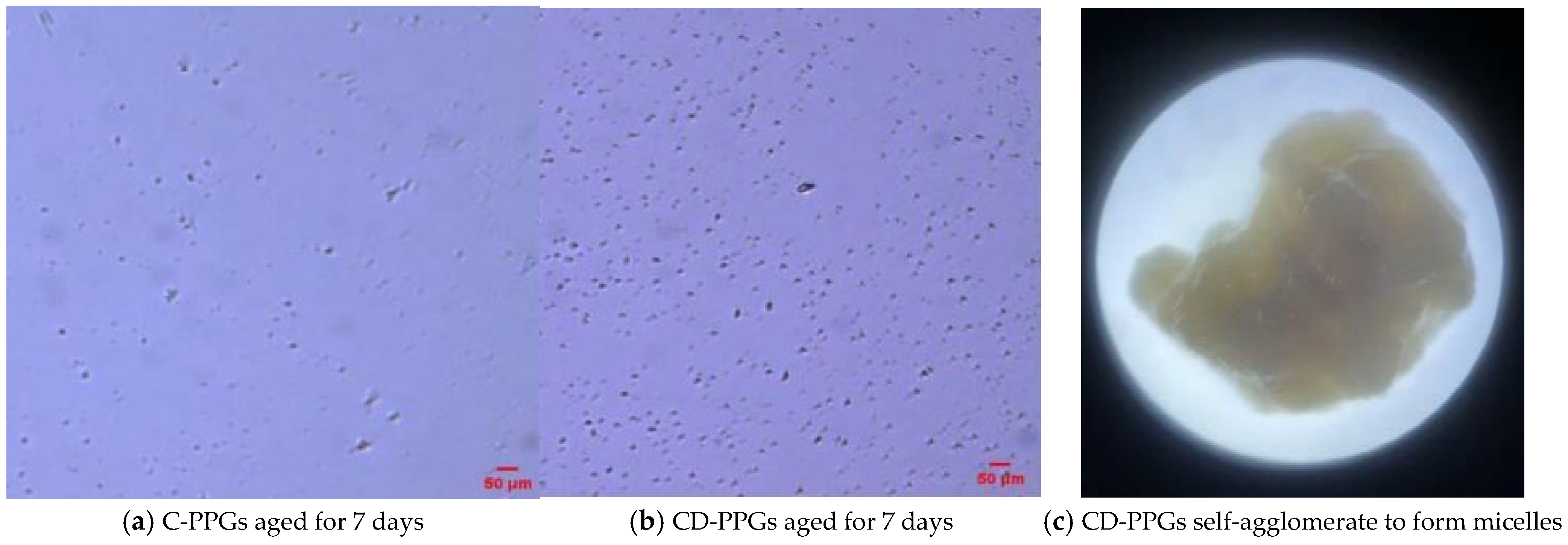
- A novel PPG based on a dual crosslinking network of “hydrogen bonding—hydrophobic association” was successfully developed, which significantly improved the temperature and salt resistance as well as the mechanical stability of the particle plugging agent. At 110 °C and a salinity of 15 × 104 mg/L, CD-PPGs began to aggregate after aging for 3 days, forming viscoelastic gel clusters, effectively enhancing the plugging capacity of the particle system in porous media.
- (2)
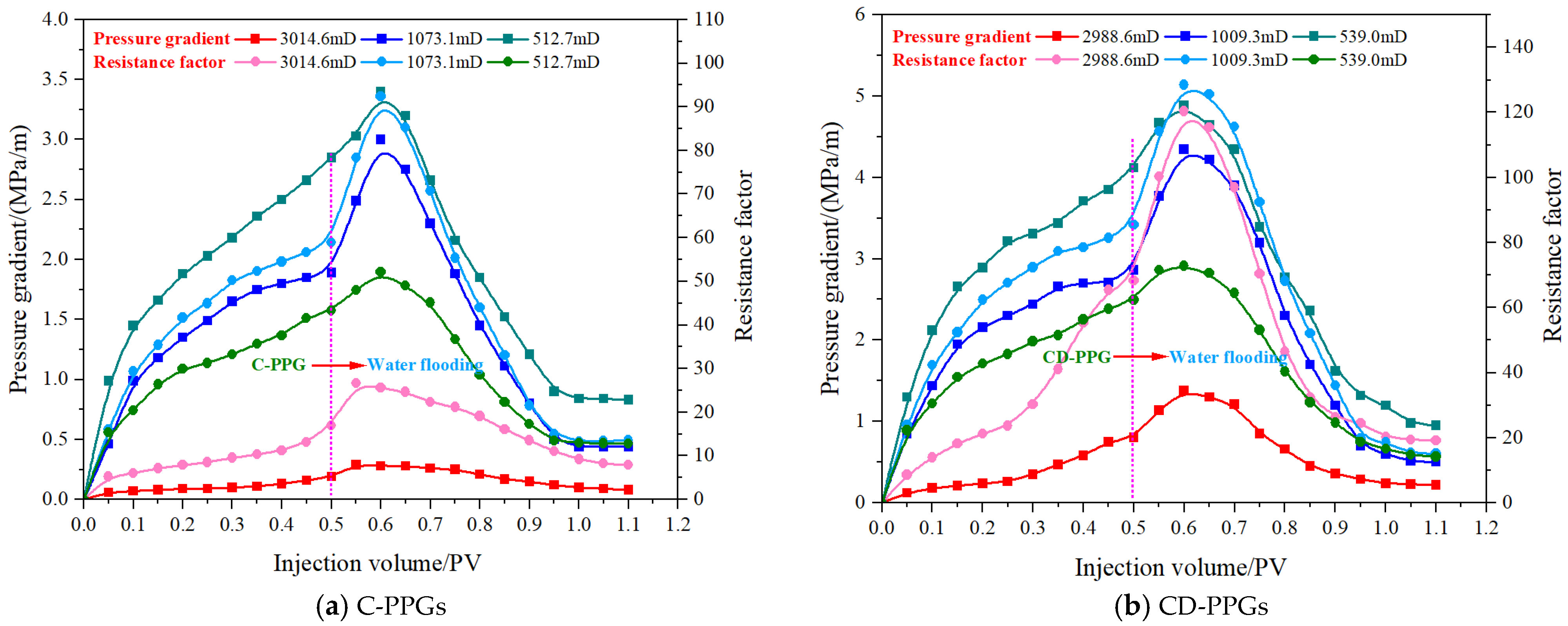
- Under simulated heterogeneous reservoir conditions with permeabilities ranging from 539.0 to 2988.6 mD, the plugging efficiency of 0.5 PV CD-PPGs was above 95%. The gel particles could achieve secondary plugging by migrating deep into the reservoir under pressure deformation, and they had good anti-erosion stability.
- (3)
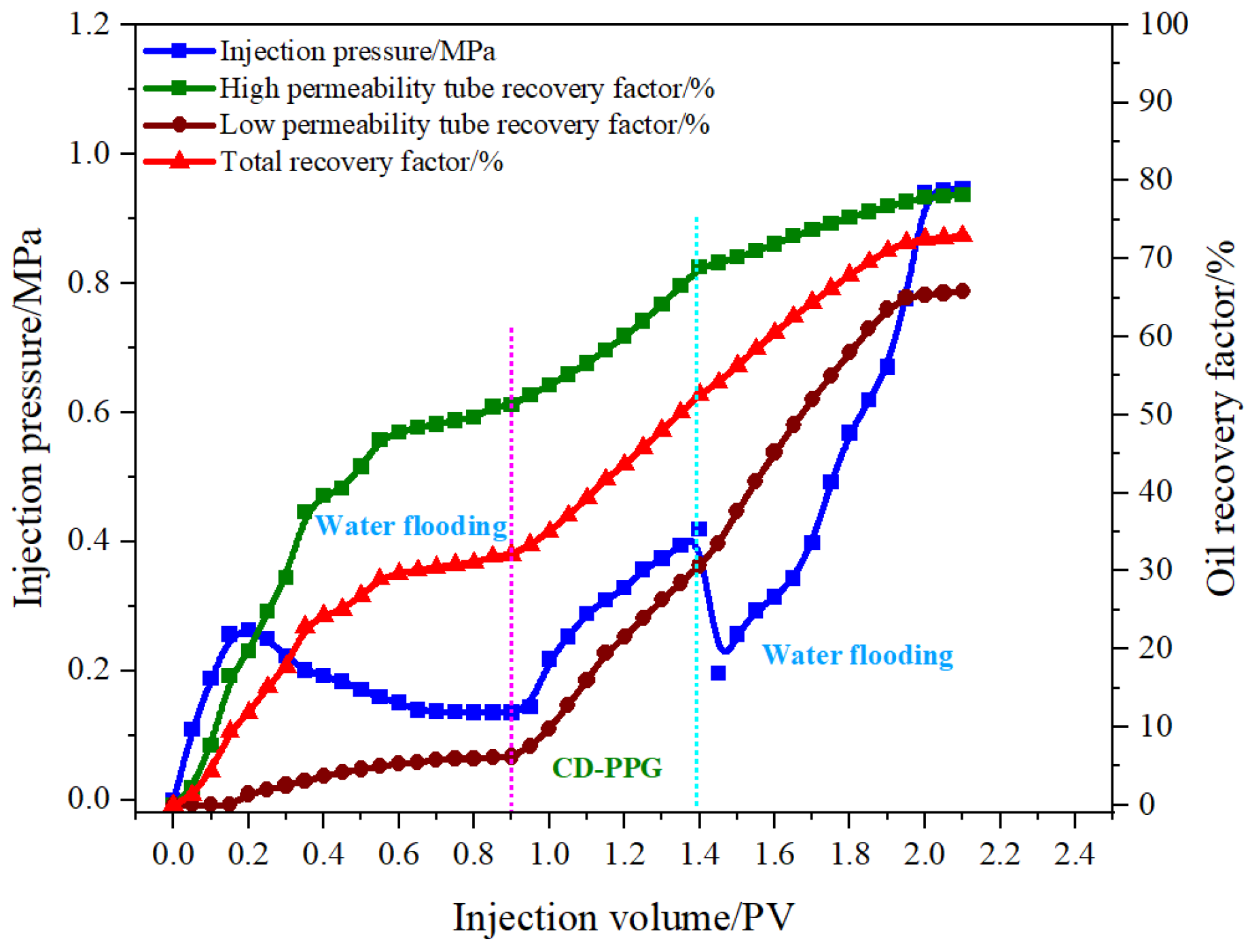
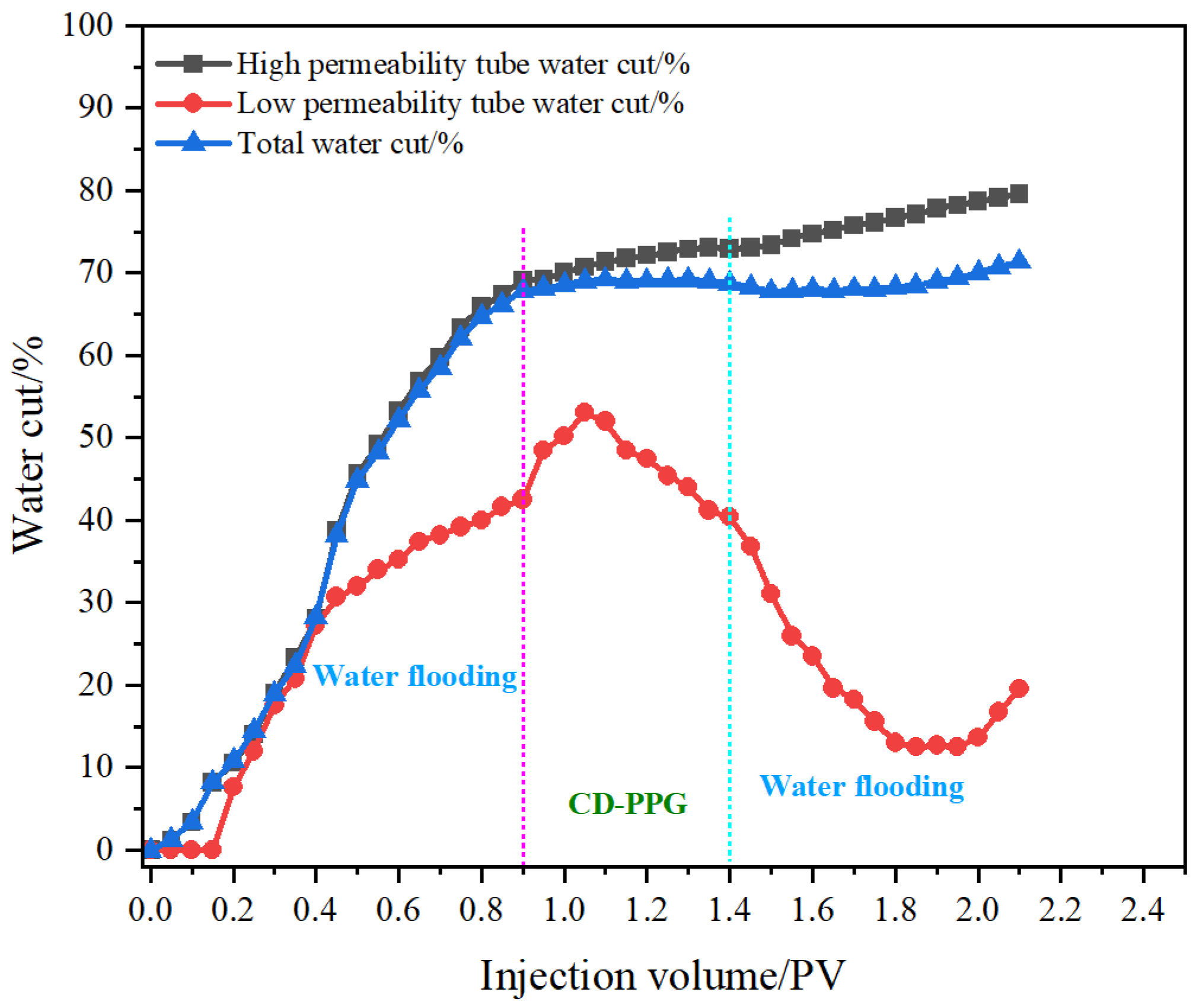
- Under simulated heterogeneous reservoir conditions with permeabilities of 490.1 mD and 3020.5 mD, the total recovery after displacement by CD-PPGs was 52.6%, which was 20.5% higher than that of primary water flooding. During secondary water flooding, the expansion of gel particles in the pores could effectively plug high-permeability channels, increase the sweep efficiency, and, through fluid flow diversion, enhance the oil recovery efficiency in low-permeability zones.
Author Contributions
Funding
Data Availability Statement
Acknowledgments
Conflicts of Interest
References
- Song, T.; Bai, B.J.; Huang, R.; Zhang, S.; Liu, P.D.; Eriyagama, Y.; Tian, X.Y.; Ahdaya, M.; Schuman, T. Development and evaluation of lysine-crosslinked re-crosslinkable particle gel for water control in high-temperature reservoirs. J. Mol. Liq. 2024, 407, 125133. [Google Scholar] [CrossRef]
- Li, M.; Gong, W.H.; Wang, F.; Li, L.; Nie, Y.H.; Chen, Q.B. A novel carbon dot-based degradable preformed particle gel for sensitive detection of iron ions. Colloids Surf. A 2025, 711, 136414. [Google Scholar] [CrossRef]
- Lai, N.J.; Chen, S.F.; Tang, L.; Huang, Y.J.; Xu, H.W. Migration characteristics and profile control capabilities of preformed particle gel in porous media. Petroleum 2022, 8, 483–498. [Google Scholar] [CrossRef]
- Zhu, D.Y.; Zhang, H.J.; Qin, J.H.; Zhao, Q.; Wang, G.Q.; Su, Z.H.; Shi, C.Y. Experimental evaluation of temporary plugging performance and mechanism analysis of degradable preformed particle gel based on NMR technology. Geoenergy Sci. Eng. 2025, 244, 213480. [Google Scholar] [CrossRef]
- Rezaei, A.; Khodabakhshi, A.; Esmaeili, A.; Razavifar, M. Effects of initial wettability and different surfactant-silica nanoparticles flooding scenarios on oil-recovery from carbonate rocks. Petroleum 2022, 8, 499–508. [Google Scholar] [CrossRef]
- Du, L.; Xiao, Y.Y.; Jiang, Z.C.; Zeng, H.B.; Li, H.Z. High-temperature stable dispersed particle gel for enhanced profile control in carbon capture, utilization, and storage (CCUS) applications. Engineering 2025, 48, 128–140. [Google Scholar] [CrossRef]
- Li, W.Z.; Luo, P.Y.; Wang, X.D. Preparation and performance evaluation of graphene oxide-based self-healing gel for lost circulation control. Polymers 2025, 17, 1999. [Google Scholar] [CrossRef]
- Jin, F.Y.; Jiang, T.T.; Varfolomeev, M.A.; Yuan, C.D.; Zhao, H.Y.; He, L.; Jiao, B.L.; Du, D.J.; Xie, Q. Novel preformed gel particles with controllable density and its implications for EOR in fractured-vuggy carbonated reservoirs. J. Pet. Sci. Eng. 2021, 205, 108903. [Google Scholar] [CrossRef]
- Li, M.; Liu, J.; Xia, Y. Risk prediction of gas hydrate formation in the wellbore and subsea gathering system of deep-water turbidite reservoirs: Case analysis from the South China Sea. Reserv. Sci. 2025, 1, 52–72. [Google Scholar] [CrossRef]
- Wu, W.P.; Hou, J.R.; Qu, M.; Yang, Y.L.; Zhang, W.; Wu, W.M.; Wen, Y.C.; Liang, T.; Xiao, L.X. A novel polymer gel with high-temperature and high-salinity resistance for conformance control in carbonate reservoirs. Pet. Sci. 2022, 19, 3159–3170. [Google Scholar] [CrossRef]
- Wang, L.L.; Wang, T.F.; Wang, J.X.; Tian, H.T.; Chen, Y.; Song, W. Enhanced oil recovery mechanism and technical boundary of gel foam profile control system for heterogeneous reservoirs in Changqing. Gels 2022, 8, 371. [Google Scholar] [CrossRef] [PubMed]
- Pu, J.Y.; Johnston, K.P.; Wu, P.; Ahmad, M.; Luo, M.L.; Zhang, N.; He, J.T. Facile synthesis of chromium chloride/poly(methyl methacrylate) core/shell nanocapsules by inverse miniemulsion evaporation method and application as delayed crosslinker in secondary oil recovery. Pet. Sci. 2023, 20, 396–406. [Google Scholar] [CrossRef]
- Kurnia, I.; Fatchurrozi, M.; Anwary, R.; Zhang, G. Lessons learned from coreflood experiments with surfactant-polymer and alkali-surfactant-polymer for enhanced oil recovery. Petroleum 2023, 9, 487–498. [Google Scholar] [CrossRef]
- Liu, Q.; Zhou, K.M.; Liu, Y.J.; Zhang, Y.F.; Chen, W.; Tang, S. Exploring the potential applications of amphiphilic carbon dots based nanocomposite hydrogel in liquid chromatographic separations. Anal. Chim. Acta 2024, 1299, 342445. [Google Scholar] [CrossRef]
- Gao, P.L.; Xie, Z.G.; Zheng, M. Small nanoparticles bring big prospect: The synthesis, modification, photoluminescence and sensing applications of carbon dots. Chin. Chem. Lett. 2022, 33, 1659–1672. [Google Scholar] [CrossRef]
- Cai, M.X.; Lai, L.; Zhao, M.W. Synthesis, properties, and applications of amphiphilic carbon dots: A review. Carbon 2025, 233, 119921. [Google Scholar] [CrossRef]
- Xiao, C.Q.; Wu, J.; Lai, L. Demicellization thermodynamics of amphiphilic carbon dots via isothermal titration calorimetry. Thermochim. Acta 2025, 745, 179935. [Google Scholar] [CrossRef]
- Cao, L.; Lv, M.; Li, C.; Sun, Q.; Wu, M.; Xu, C.; Dou, J. Effects of crosslinking agents and reservoir conditions on the propagation of fractures in coal reservoirs during hydraulic fracturing. Reserv. Sci. 2025, 1, 36–51. [Google Scholar] [CrossRef]
- Zhao, M.W.; Yang, X.Y.; Ma, Z.F.; Li, Y.; Meng, X.J.; Dai, C.L.; Wang, Y.N. A novel nanosurfactant for EOR: Amphiphilic carbon quantum dots (ACDs). Langmuir 2025, 41, 24004–24015. [Google Scholar] [CrossRef] [PubMed]
- Sazzad Parveg, A.S.M.; Zhou, Y.Q.; Leblanc, R.M.; Ratner, A. Effects of gel-like carbon dots (G-CDs) and surfactant (Span80) on the droplet combustion dynamics of liquid fuels. Fuel 2025, 381, 133385. [Google Scholar] [CrossRef]
- Zhai, Y.Y.; Fang, Z.; Feng, J.; Sun, C.J.; Deng, W.J.; Wen, Y.B. Development and performance evaluation of re-crosslinkable preformed particle gel under high temperature and high salt conditions. Polymer 2024, 296, 126824. [Google Scholar] [CrossRef]
- Yang, C.H.; Xiao, D.; Wang, J.; Liang, T. Evaluation and experiment of high-strength temperature- and salt-resistant gel system. Gels 2025, 11, 669. [Google Scholar] [CrossRef]
- Amraeiniya, A.; Shojaei, S.; Mohseni, A.; Mahani, B.; Saatchi, S.; Bahari, A.; Sisakht, S. Experimental study on nanoparticles-assisted low-salinity water for enhanced oil recovery in asphaltenic oil reservoirs. Petroleum 2023, 9, 395–402. [Google Scholar] [CrossRef]
- Liang, L.; Li, J.L.; Li, D.X.; Xu, J.; Zheng, B.; Zhao, J.K. Urea delays high-temperature crosslinking of polyacrylamide for in situ preparation of an organic/inorganic composite gel. Gels 2025, 11, 256. [Google Scholar] [CrossRef]
- Zhou, G.W.; Zhang, X.; Yan, W.J.; Qiu, Z.S. Synthesis, characteristics, and field applications of high-temperature and salt-resistant polymer gel tackifier. Gels 2025, 11, 378. [Google Scholar] [CrossRef]
- Jia, H.; Chen, H.; Zhao, J.Z. Development of a highly elastic composite gel through novel intercalated crosslinking method for wellbore temporary plugging in high-temperature reservoirs. SPE J. 2020, 25, 2853–2866. [Google Scholar] [CrossRef]
- Xin, H.; Fang, B.; Yu, L.Y.; Lu, Y.J.; Xu, K.; Li, K.J. Rheological performance of high-temperature-resistant, salt-resistant fracturing fluid gel based on organic-zirconium-crosslinked HPAM. Gels 2023, 9, 151. [Google Scholar] [CrossRef] [PubMed]
- Bai, Y.Y.; Wen, Y.; Pu, W.F.; Fang, W.; Jin, X. Preparation and self-growth characteristics of in situ self-growing dispersed gel system for offshore large-well-distance reservoirs. ACS Omega 2025, 10, 40450–40459. [Google Scholar] [CrossRef] [PubMed]
- Zhang, J.; Liang, D.; Wang, L.Q.; Tang, E.G.; Li, X.J.; Zhao, W.S. Application of horizontal well discontinuous chemical flooding technology in Bohai oilfield. Front. Energy Res. 2023, 10, 1036835. [Google Scholar]
- Xin, X.K.; Liu, Q.; Liu, S.J.; Yu, G.M.; Wan, Q.S. Optimization of gel flooding during the high water cut stage in a conglomerate reservoir of the Xinjiang A Oilfield. Polymers 2023, 15, 1809. [Google Scholar] [CrossRef]
- Ge, L.Z.; Chen, X.M.; Wang, G.; Zhang, G.H.; Li, J.Y.; Liu, Y.; Xiao, L.X.; Wen, Y.C.; Yuan, W.F.; Qu, M.; et al. Analysis of the distribution pattern of remaining oil and development potential after weak gel flooding in the offshore LD Oilfield. Gels 2024, 10, 236. [Google Scholar] [CrossRef]
- Wang, F.; Kobina, F. The Influence of geological factors and transmission fluids on the exploitation of reservoir geothermal resources: Factor discussion and mechanism analysis. Reserv. Sci. 2025, 1, 3–18. [Google Scholar] [CrossRef]
- Xie, K.; Su, C.; Liu, C.L.; Cao, W.J.; He, X.; Ding, H.N.; Mei, J.; Yan, K.; Cheng, Q.; Lu, X.G. Synthesis and performance evaluation of an organic/inorganic composite gel plugging system for offshore oilfields. ACS Omega 2022, 7, 12870–12878. [Google Scholar] [CrossRef]
- Gallego, J.F.; Medina, O.E.; Tengono, J.A.; Mazo, C.; Maya, A.F.; Caro, C.; Cortés, F.B.; Franco, C.A. Demulsification of Water-in-oil emulsion with carbon quantum dot (CQD)-enhanced demulsifier. Processes 2025, 13, 575. [Google Scholar] [CrossRef]
- Qu, J.; Wang, P.; You, Q.; Zhao, G.; Sun, Y.; Liu, Y. Soft movable polymer gel for controlling water coning of horizontal well in offshore heavy oil cold production. Gels 2022, 8, 352. [Google Scholar] [CrossRef] [PubMed]
- Gao, J.; Wang, X.; Zhang, D.; Wang, J. The formation mechanism of residual oil and methods of enhanced oil recovery in a fractured low-permeability metamorphic rock reservoir in Bohai Bay. Processes 2024, 12, 2281. [Google Scholar] [CrossRef]
- Li, Y.; Liu, C.; Zhang, Y.; Xue, B.; Lv, J.; Miao, C.; Li, Y.; Liu, Z. Experimental investigation on the application of polymer agents in offshore sandstone reservoirs: Optimization design for enhanced oil recovery. Polymers 2025, 17, 673. [Google Scholar] [CrossRef]
- Lai, N.; Wang, D.; Wang, J.; Tang, L. Synthesis, optimization, and characterization of fluorescent particle preformed gel. Energies 2022, 15, 8712. [Google Scholar] [CrossRef]
- Rahman, A.; Torabi, F.; Shirif, E. Surfactant and nanoparticle synergy: Towards improved foam stability. Petroleum 2023, 9, 255–264. [Google Scholar] [CrossRef]
- Zhang, L.; Gao, Z.; Liu, Y.; Li, Y.; Zhou, K.; Wang, P.; Zhang, K.; Wang, C.; Zhang, M. Study on rapid screening method for different chemical flooding methods in heavy-oil reservoirs. Processes 2025, 13, 2992. [Google Scholar] [CrossRef]
- Wang, J.; Wang, R.; Liu, P.; Xu, H. Gel-Forming and plugging performance evaluation of emulsion polymer crosslinking system in fractured carbonate rock. Processes 2022, 10, 1550. [Google Scholar] [CrossRef]
- Tang, E.; Zhang, J.; Jin, Y.; Li, L.; Xia, A.; Zhu, B.; Sun, X. Optimization of discontinuous polymer flooding processes for offshore oilfields using a novel PSO–ICA algorithm. Energies 2024, 17, 1971. [Google Scholar] [CrossRef]
- Shen, M.; Qi, L.; Zhang, L.; Ma, P.; Liu, W.; Ngai, T.; Jiang, H. Dual-responsive hybrid microgels enabling phase inversion in pickering emulsions. Polymers 2025, 17, 2762. [Google Scholar] [CrossRef] [PubMed]
- Wang, R.; Wu, H.; Liu, Z.; Wang, H.; Zhang, Y. Development of high-performance composite cementitious materials for offshore engineering applications. Materials 2025, 18, 3324. [Google Scholar] [CrossRef]



| Gel Particles | Foam Agent Mass Fraction/wt% | Injection Rate/(mL/min) | Porosity/% | Permeability/mD |
|---|---|---|---|---|
| C-PPG | 0.2 | 1 | 30.8 | 1073.1 |
| 1 | 33.2 | 3014.6 | ||
| CD-PPG | 0.2 | 1 | 30.7 | 1009.3 |
| 1 | 33.6 | 2988.6 |
| Reservoir Model | Porosity/% | Permeability/mD |
|---|---|---|
| High-permeability tube | 35.6 | 3020.5 |
| Low-permeability tube | 28.9 | 490.1 |
| Type of the Main Body Adhesive Block | Fracture Strain/% | Breaking Stress/MPa | Elasticity Modulus/MPa | Tenacity/(MJ·m−3) |
|---|---|---|---|---|
| CD-PPG | 79.37 | 11.91 | 14.23 | 10.76 |
| C-PPG | 64.42 | 2.66 | 11.78 | 5.46 |
| Particle Type | N1/kPa | We |
|---|---|---|
| CD-PPG | 132 | 0.51 |
| C-PPG | 35 | 0.22 |
Disclaimer/Publisher’s Note: The statements, opinions and data contained in all publications are solely those of the individual author(s) and contributor(s) and not of MDPI and/or the editor(s). MDPI and/or the editor(s) disclaim responsibility for any injury to people or property resulting from any ideas, methods, instructions or products referred to in the content. |
© 2025 by the authors. Licensee MDPI, Basel, Switzerland. This article is an open access article distributed under the terms and conditions of the Creative Commons Attribution (CC BY) license (https://creativecommons.org/licenses/by/4.0/).
Share and Cite
Xu, G.; Li, X.; Yang, J.; Tong, C.; Wang, X.; Wang, T. Pre-Crosslinked Gel Particles Enhanced by Amphiphilic Nanocarbon Dots in Harsh Reservoirs: Synthesis and Deep Stimulation Mechanism. Processes 2025, 13, 3994. https://doi.org/10.3390/pr13123994
Xu G, Li X, Yang J, Tong C, Wang X, Wang T. Pre-Crosslinked Gel Particles Enhanced by Amphiphilic Nanocarbon Dots in Harsh Reservoirs: Synthesis and Deep Stimulation Mechanism. Processes. 2025; 13(12):3994. https://doi.org/10.3390/pr13123994
Chicago/Turabian StyleXu, Guorui, Xiaoxiao Li, Jinzhou Yang, Chunyu Tong, Xiaolong Wang, and Tengfei Wang. 2025. "Pre-Crosslinked Gel Particles Enhanced by Amphiphilic Nanocarbon Dots in Harsh Reservoirs: Synthesis and Deep Stimulation Mechanism" Processes 13, no. 12: 3994. https://doi.org/10.3390/pr13123994
APA StyleXu, G., Li, X., Yang, J., Tong, C., Wang, X., & Wang, T. (2025). Pre-Crosslinked Gel Particles Enhanced by Amphiphilic Nanocarbon Dots in Harsh Reservoirs: Synthesis and Deep Stimulation Mechanism. Processes, 13(12), 3994. https://doi.org/10.3390/pr13123994