This is an early access version, the complete PDF, HTML, and XML versions will be available soon.
Review

Research Situation and Prospect Analysis of Corrosion of Rubber Materials: A Study Based on Bibliometric Mapping


College of Energy Environment and Safety Engineering, China Jiliang University, Hangzhou 310018, China
*
Author to whom correspondence should be addressed.
Processes 2025, 13(12), 3996; https://doi.org/10.3390/pr13123996 (registering DOI)
Submission received: 27 October 2025 / Revised: 28 November 2025 / Accepted: 2 December 2025 / Published: 10 December 2025
(This article belongs to the Section Materials Processes)

Abstract

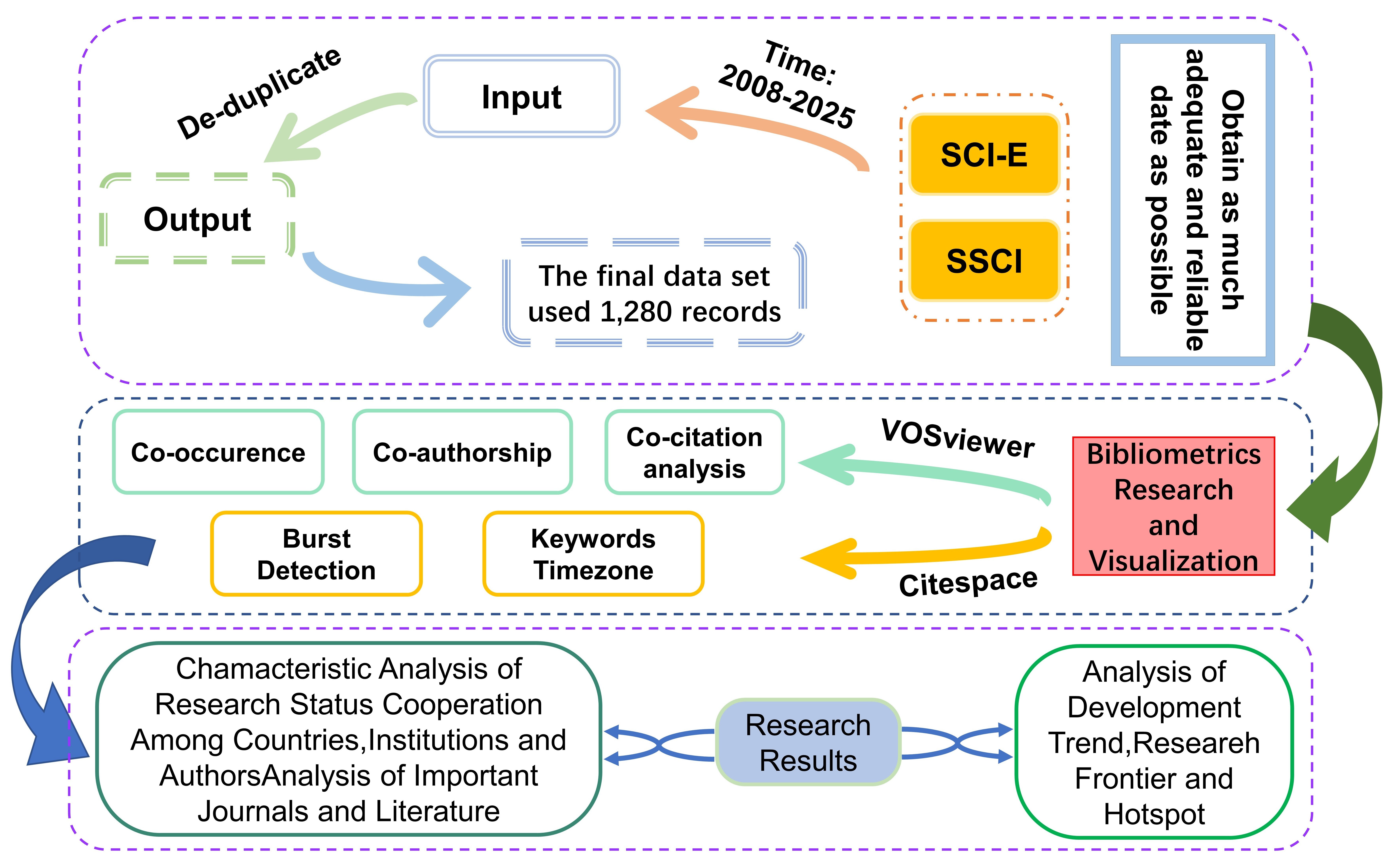
Rubber materials are widely used in industrial sectors such as petrochemicals and energy due to their excellent elasticity, flexibility, and sealing properties. However, in complex and demanding service environments, rubber is susceptible to swelling or dissolution caused by medium corrosion, leading to seal failure or structural damage and ultimately resulting in safety incidents. To systematically review research progress and trends in this field, this paper employs 729 literature samples from the Web of Science core database (2008–2025) and utilizes VOSviewer and Citespace knowledge mapping tools to conduct a bibliometric analysis of corrosion research on rubber materials. This reveals existing knowledge gaps, technological challenges, hot trends, and future demands. Findings indicate that China, the United States, and India lead in publication volume. Research spans multiple disciplines including multidisciplinary materials science, applied physics, and polymer science, reflecting a cross-disciplinary nature. Current rubber corrosion studies focus on three key areas: fundamental properties and performance of rubber materials, corrosion mechanisms, and protective/corrosion-resistant technologies. Key international challenges include unclear mechanisms of complex media interactions, insufficient multi-scale characterization and life prediction, and limited adaptability to service environments. Future development trends will concentrate on three aspects: systematic research on novel multi-media coupling effects, precision in micro-mechanism and life prediction, and highly reliable advancement in green modification and high-performance protection.
Keywords: rubber materials; corrosion; safety protection; research hotspots and trends; Lifespan Prediction; bibliometric analysis rubber materials; corrosion; safety protection; research hotspots and trends; Lifespan Prediction; bibliometric analysis
Graphical Abstract