Effect of Aggregate and Void Characteristics on Shear Resistance of Asphalt Mixtures


Abstract
1. Introduction
2. Experimental Program
2.1. Raw Materials
2.2. Laboratory Triaxial Test
2.3. Virtual Triaxial Test
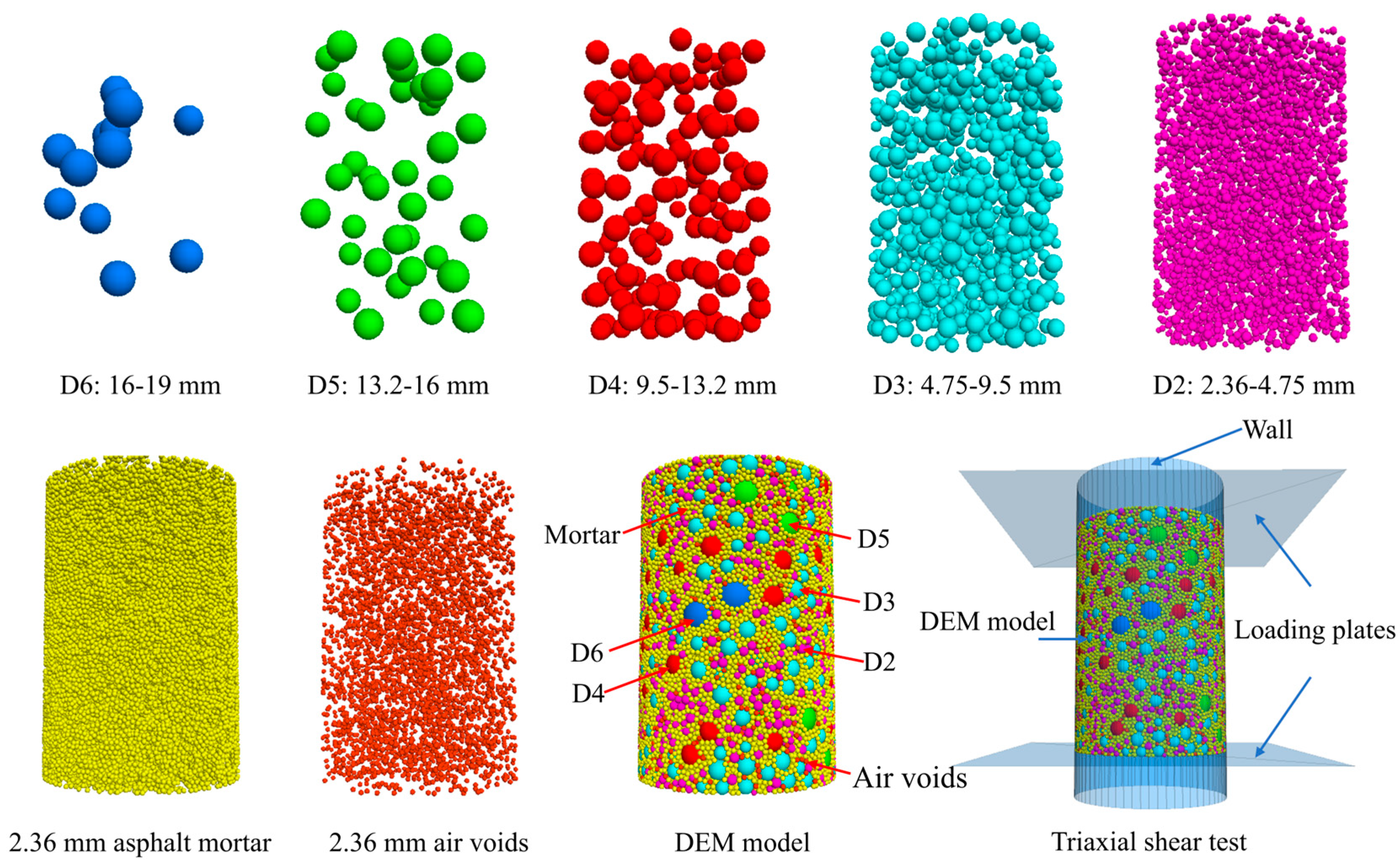
2.3.1. DEM Model Construction
2.3.2. Model Parameter Setting
3. Results and Discussion
3.1. Evaluation of Virtual Triaxial Test
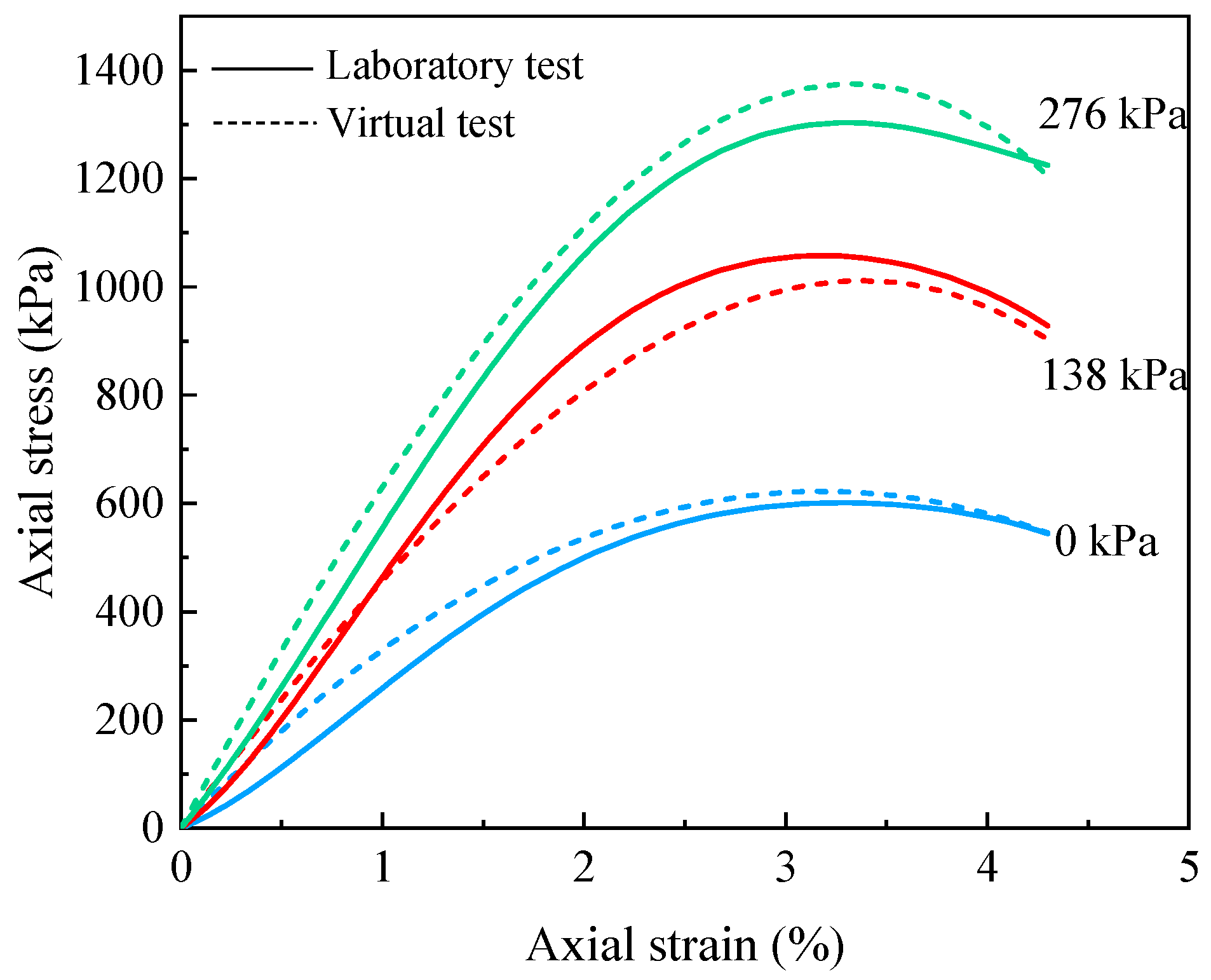
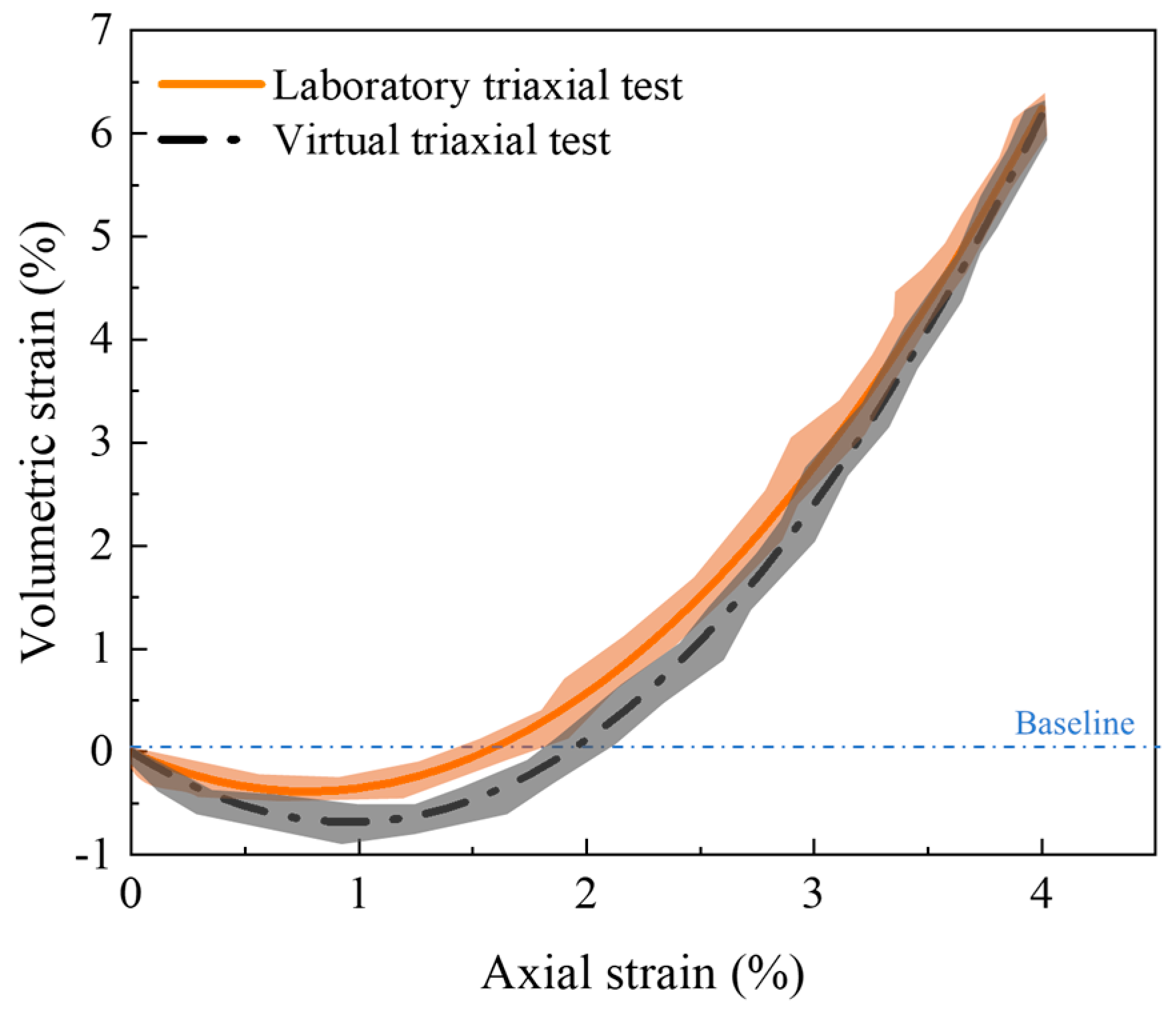
3.1.1. Numerical Simulation Accuracy
3.1.2. Numerical Simulation Applicability
3.2. Influence of Aggragates Characteristics on Shear Tests
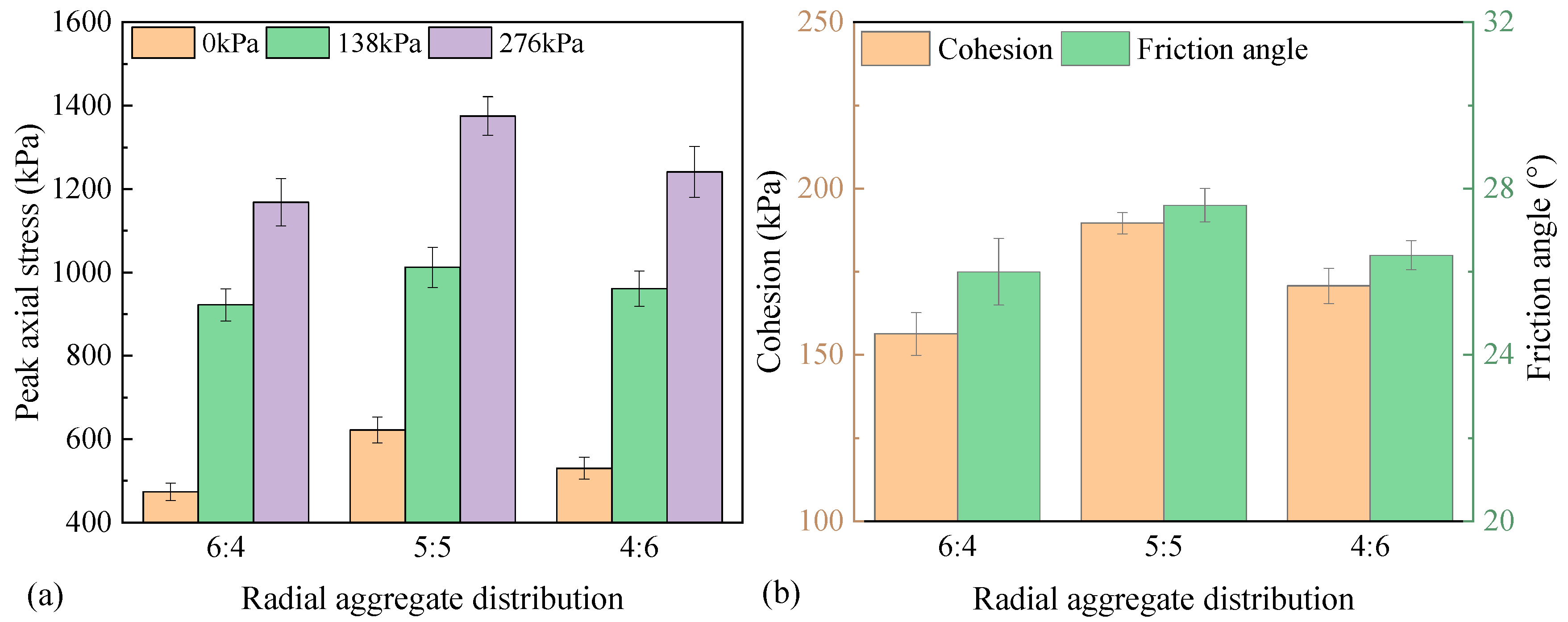
3.2.1. Radial Aggregate Distribution
3.2.2. Longitudinal Aggregate Distribution
3.2.3. Aggregate Surface Texture
3.3. Influence of Void Characteristics on Shear Tests
3.3.1. Longitudinal Void Distribution
3.3.2. Air-Void Content
3.3.3. Air-Void Size
4. Conclusions
- (1)
- The DEM model accurately reproduced the shear response of asphalt mixtures under different confining pressures and gradations, showing strong agreement with laboratory results. In practical applications, this model can partially substitute physical triaxial tests to reduce specimen preparation time and enable rapid parametric analysis, thereby supporting efficient pre-evaluation of mixture performance during mix design and compaction standard development.
- (2)
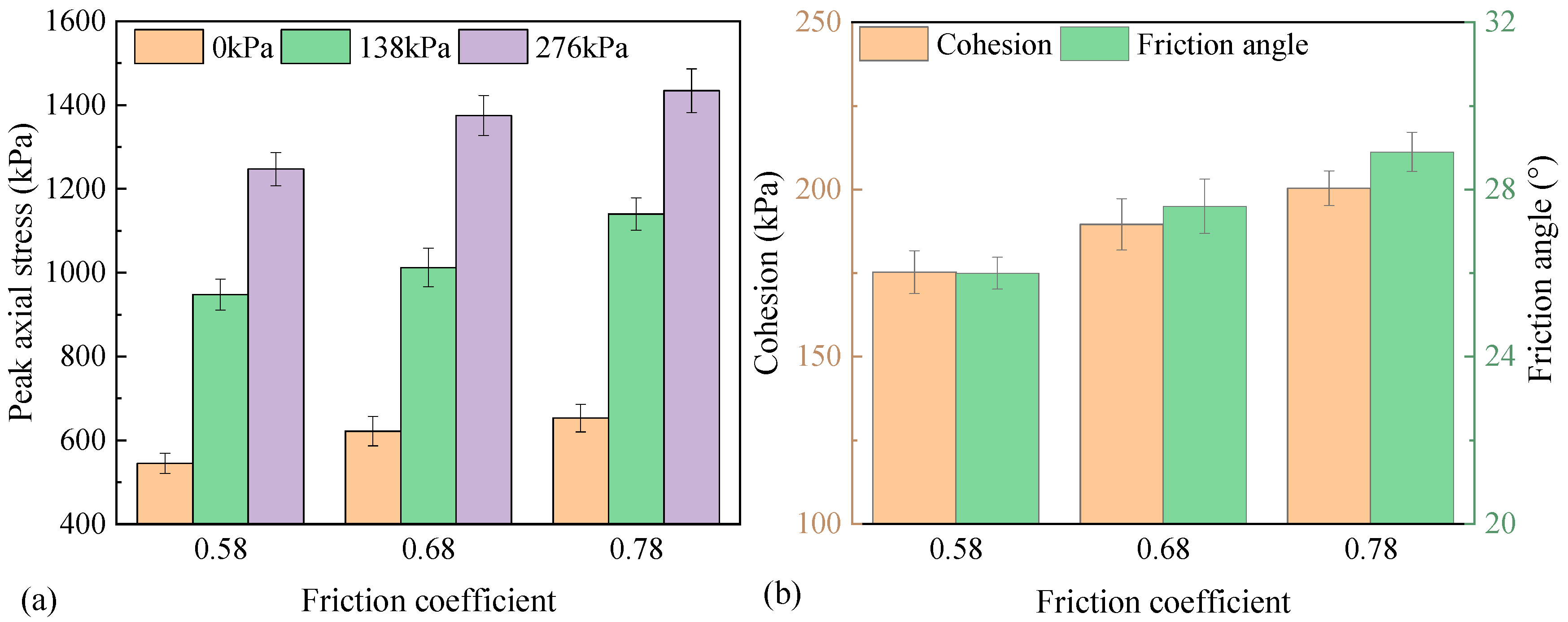
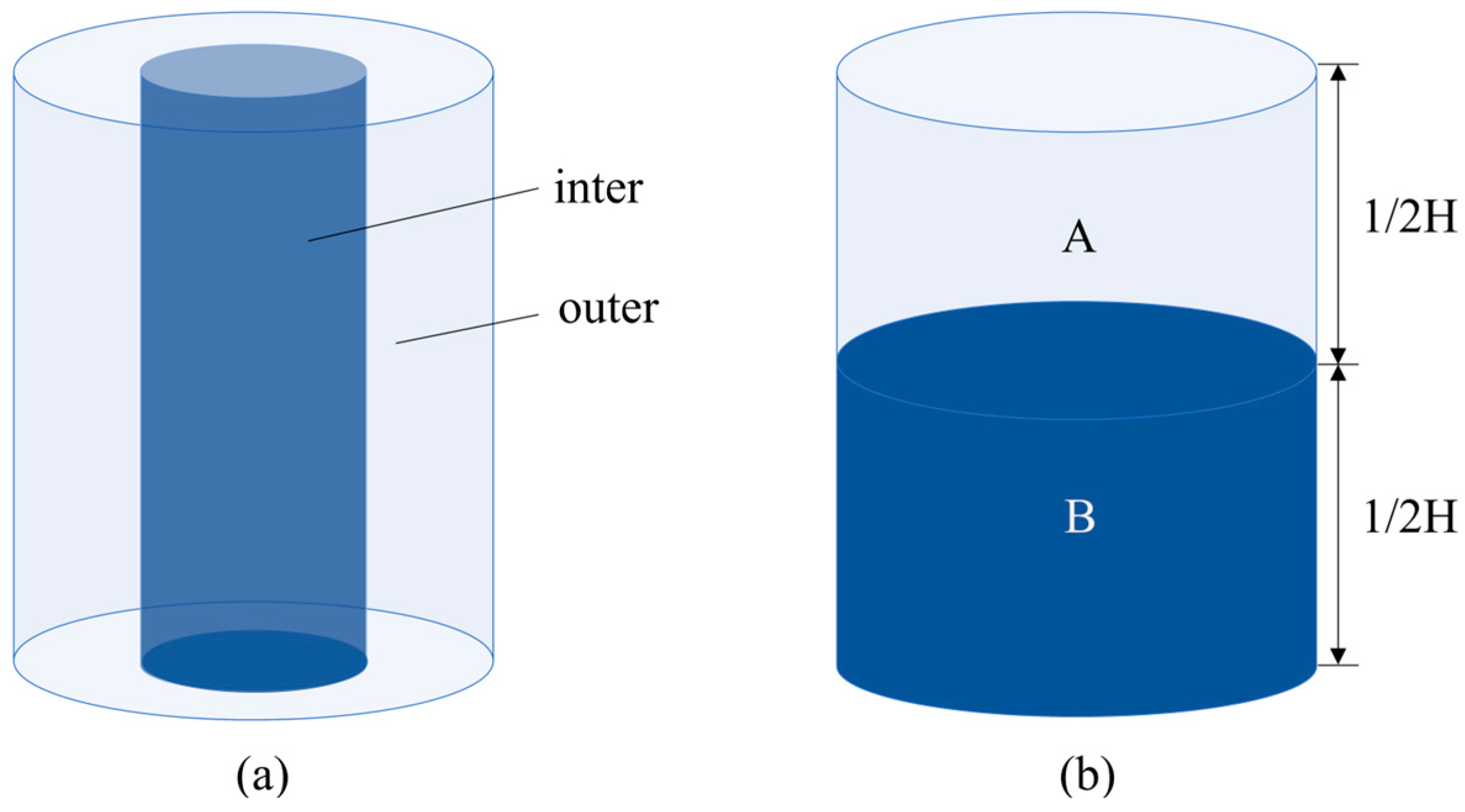
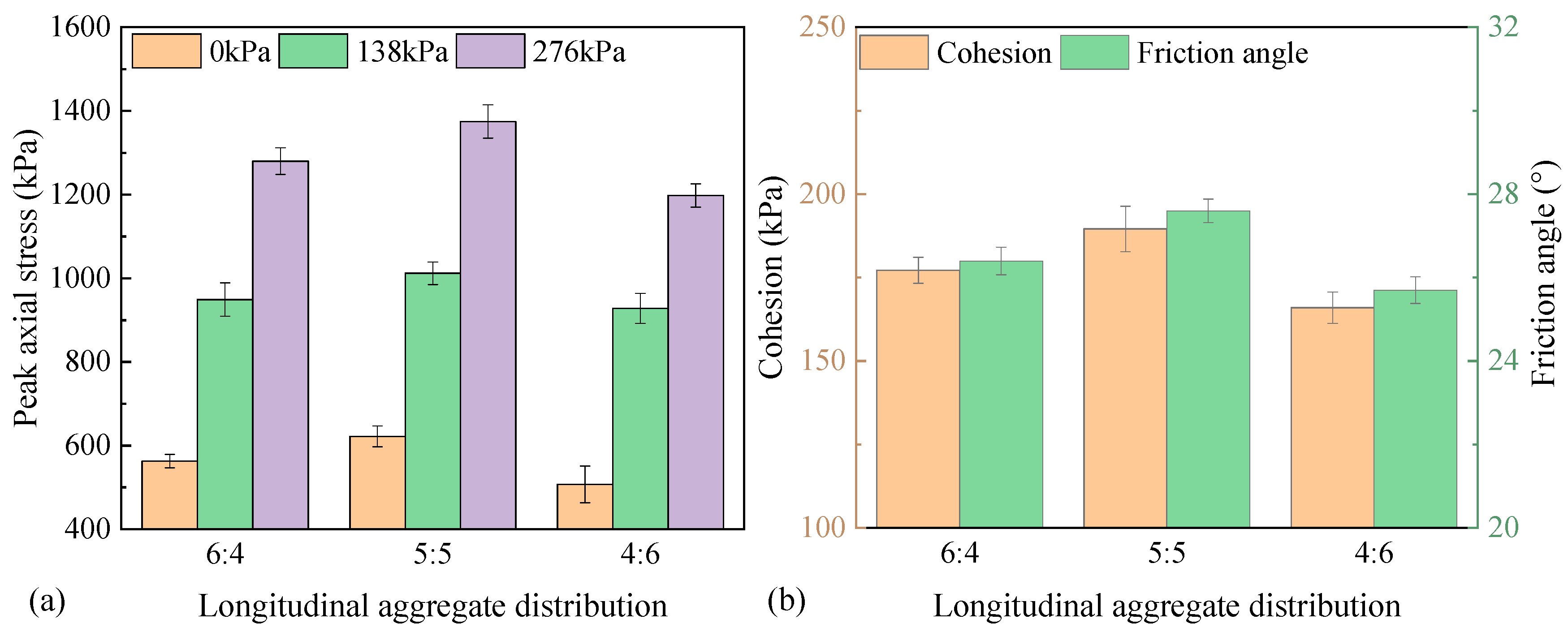
- Aggregate characteristics exert a dominant influence on shear resistance. A uniform radial or longitudinal aggregate distribution (outer-to-inner or upper-to-lower ratio of 5:5) increased cohesion by 21.3–27.6% and internal friction angle by 4.6–7.4% compared with nonuniform configurations (6:4 or 4:6 ratios), indicating that field compaction standards should emphasize aggregate homogeneity rather than density alone. Moreover, each 0.1 increase in aggregate friction coefficient enhanced cohesion by 7.2% and internal friction angle by 5.6%, suggesting that the use of high-friction, angular aggregates should be prioritized in mix design to improve skeleton stability instead of relying solely on binder modification.
- (3)
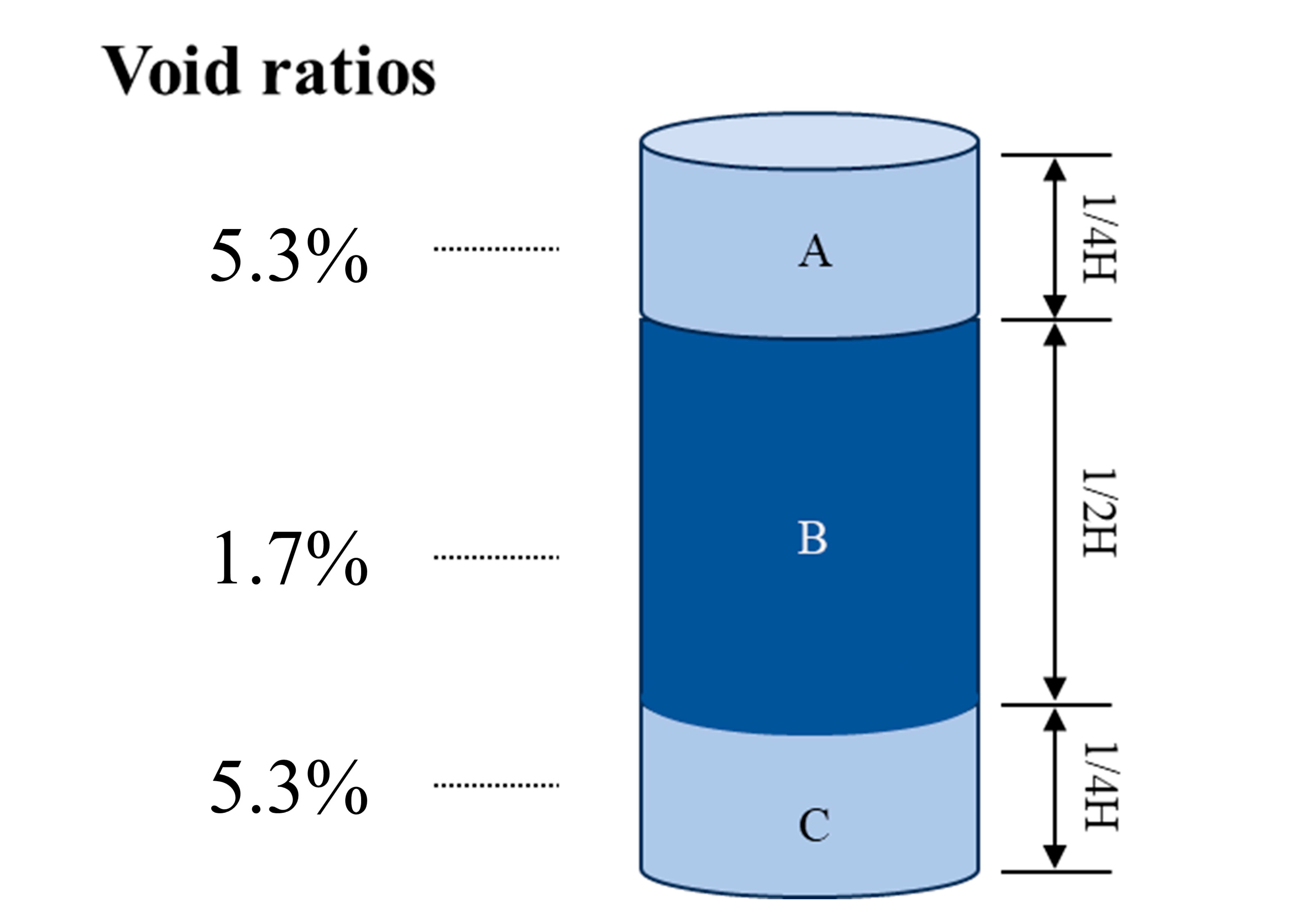
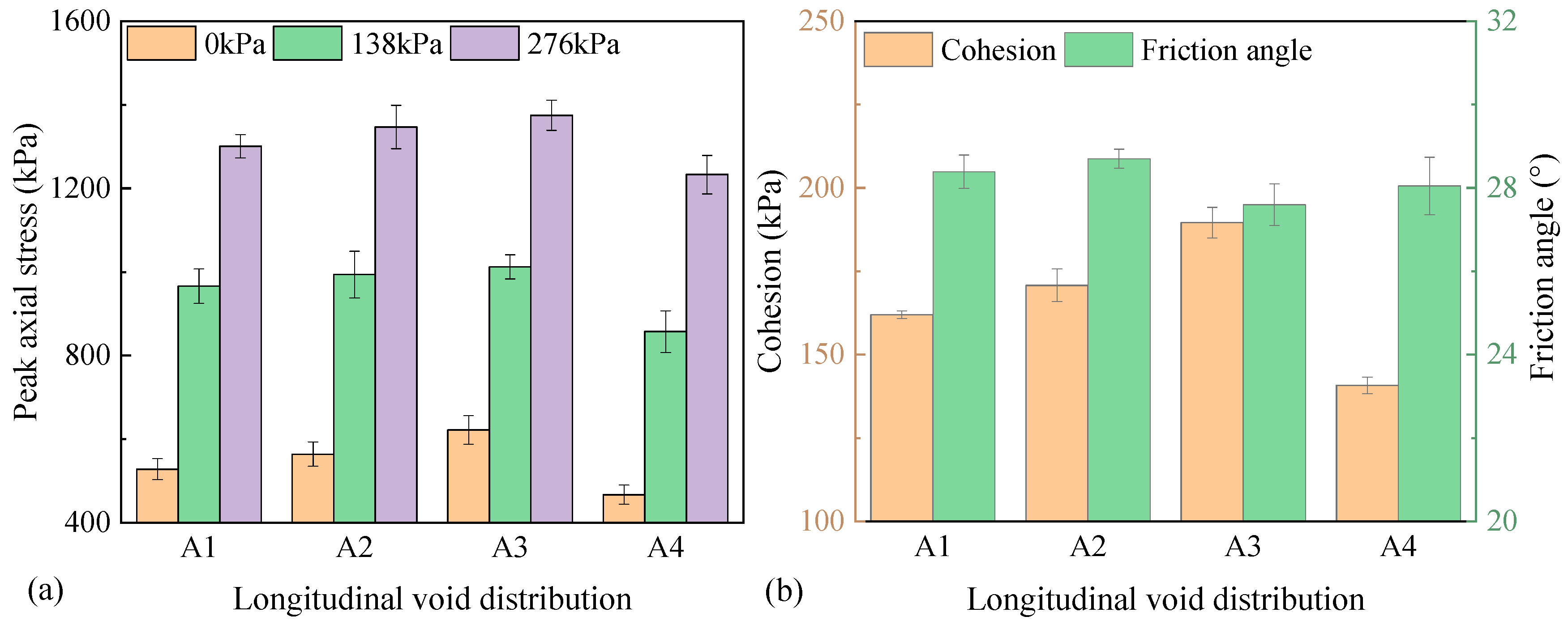
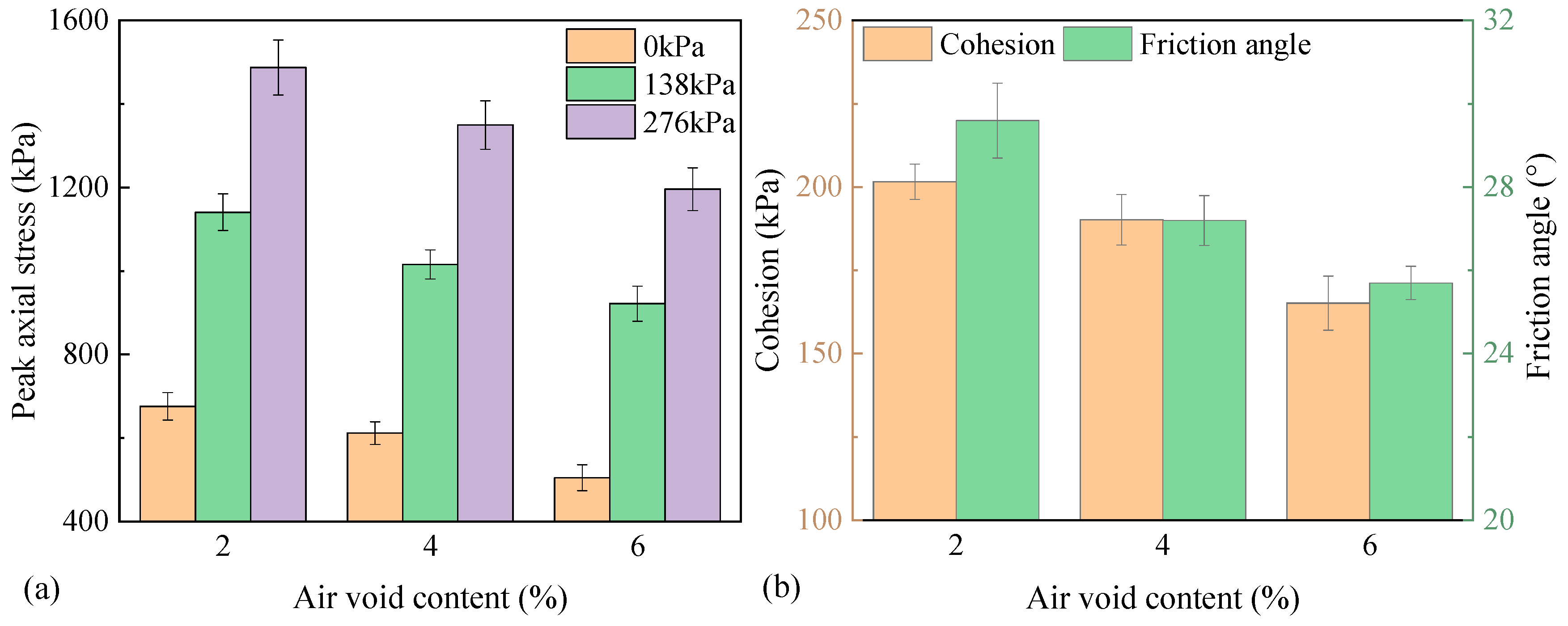
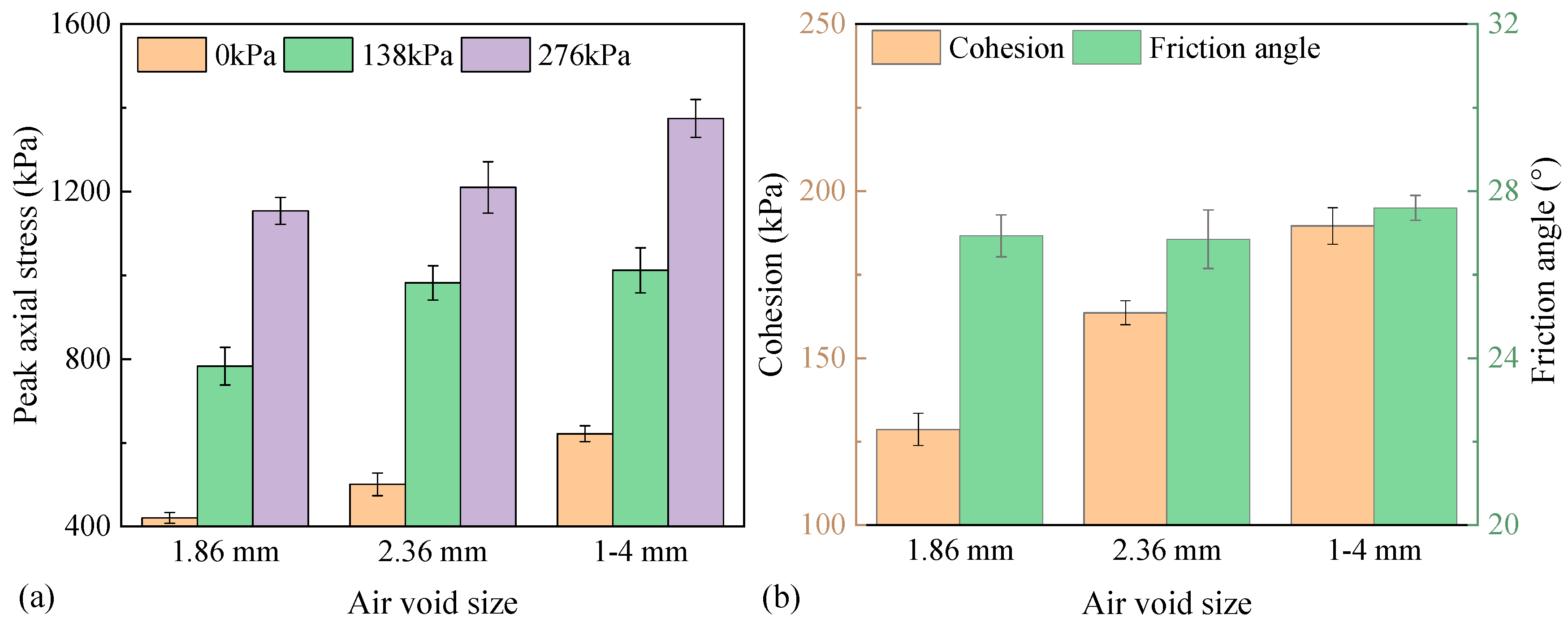
- Void characteristics also play a critical role in shear performance. A uniform longitudinal void distribution optimized stress transmission and particle contact, whereas nonuniform distributions—especially those with higher voids in the upper region—caused stress concentrations and reduced shear strength. Increasing air-void content led to a distinct loss of shear resistance, with each 2% increase in air-void content resulting in an average 11.9% reduction under 138 kPa confinement. Furthermore, a continuous void size range of 1–4 mm improved axial peak stress, cohesion, and internal friction angle by 2.5–47.8% compared with single-sized voids, owing to enhanced particle interlocking and stress diffusion. These results suggest that both void content and size distribution should be included as quantitative indicators in laboratory mix design and field compaction quality control.
Author Contributions
Funding
Data Availability Statement
Conflicts of Interest
References
- Liu, W.; Lin, H.; Guo, H.; Zhang, H.; Zhang, S.; Mao, Y.; Fu, H. An approach to investigate coarse aggregates movement of asphalt mixture based on wheel tracking test. Constr. Build. Mater. 2021, 309, 125161. [Google Scholar] [CrossRef]
- Sun, C.; Li, P.; Niu, B.; Xu, Y.; Zhang, W. Structure stability and shear failure behaviors of asphalt mixtures from the perspective of aggregate particle migration. Constr. Build. Mater. 2023, 408, 133653. [Google Scholar] [CrossRef]
- Ramadan, S.; Kassem, H.; Elkordi, A.; Joumblat, R. Advancing Pavement Sustainability: Assessing Recycled Aggregates as Substitutes in Hot Mix Asphalt. Sustainability 2025, 17, 5472. [Google Scholar] [CrossRef]
- Li, H.; Xing, C.; Zhu, B.; Zhang, X.; Gao, Y.; Tang, S.; Cheng, H. Comparative analysis of four styrene-butadiene-styrene (SBS) structure repair agents in the rejuvenation of aged SBS-modified bitumen. Constr. Build. Mater. 2025, 476, 141232. [Google Scholar] [CrossRef]
- Xing, C.; Tang, S.; Chang, Z.; Han, Z.; Li, H.; Zhu, B. A comprehensive review on the plant-mixed cold recycling technology of emulsified asphalt: Raw materials and factors affecting performances. Constr. Build. Mater. 2024, 439, 137344. [Google Scholar] [CrossRef]
- Dong, M.; Sun, W.; Li, L.; Gao, Y. Effect of asphalt film thickness on shear mechanical properties of asphalt-aggregate interface. Constr. Build. Mater. 2020, 263, 120208. [Google Scholar] [CrossRef]
- Dong, M.; Sun, B.; Thom, N.; Li, L. Characterisation of temperature and loading rate dependent bond strength on the Bitumen-aggregate interface using direct shear test. Constr. Build. Mater. 2023, 394, 132284. [Google Scholar] [CrossRef]
- Li, Q.; Ma, X.; Ni, F.; Li, G. Characterization of Strain Rate and Temperature-Dependent Shear Properties of Asphalt Mixtures. J. Test. Eval. 2015, 43, 1120–1133. [Google Scholar] [CrossRef]
- Canestrari, F.; Ferrotti, G.; Graziani, A. Shear failure characterization of time–temperature sensitive interfaces. Mech. Time-Depend. Mater. 2016, 20, 405–419. [Google Scholar] [CrossRef]
- Qiu, X.; Xiao, S.; Yang, Q.; Wang, Y.; Wang, F. Meso-scale analysis on shear failure characteristics of asphalt–aggregate interface. Mater. Struct. 2017, 50, 209. [Google Scholar] [CrossRef]
- Su, J.; Li, P.; Wei, X.; Sun, S.; Zhu, L.; Dong, C. Analysis of interface interaction of aggregate-asphalt system and its effect on shear-slip behavior of asphalt mixture. Constr. Build. Mater. 2020, 264, 120680. [Google Scholar] [CrossRef]
- Jia, X.; Huang, B. Characterization of Shear Resistance of Interlayer between Concrete Bridge Deck and Asphalt Concrete Overlay Utilizing Inclination Shear Test. J. Mater. Civ. Eng. 2022, 34, 04021424. [Google Scholar] [CrossRef]
- Noroozi, A.G.; Ajalloeian, R.; Bayat, M. Effect of FTC on the interface between soil materials and asphalt concrete using a direct shear test. Case Stud. Constr. Mater. 2022, 17, e01632. [Google Scholar] [CrossRef]
- Qian, G.; Luo, X.; Yu, H.; Shi, C.; Zhang, C.; Li, P. Evaluation of Material Composition on the Shear Performance of Asphalt Mixtures under Different Test Conditions. Buildings 2023, 13, 936. [Google Scholar] [CrossRef]
- Shi, C.; Cai, X.; Yi, X.; Wang, T.; Yang, J. Fatigue crack density of asphalt binders under controlled-stress rotational shear load testing. Constr. Build. Mater. 2021, 272, 121899. [Google Scholar] [CrossRef]
- Xiao, B.; Cao, W.; Zhou, L. Mesoscopic Perspective into the High-Temperature Triaxial Dilation of Asphalt Mixtures via PFC–FLAC Coupled Simulation. Materials 2025, 18, 1722. [Google Scholar] [CrossRef]
- Kou, C.; Pan, X.; Xiao, P.; Kang, A.; Wu, Z. Shear Deformation Behavior of a Double-Layer Asphalt Mixture Based on the Virtual Simulation of a Uniaxial Penetration Test. Materials 2020, 13, 3700. [Google Scholar] [CrossRef] [PubMed]
- Huang, T.; Qi, S.; Liu, H.; Yu, H.; Li, S. Shear Properties of Asphalt Mixtures under Triaxial Compression. Appl. Sci. 2019, 9, 1489. [Google Scholar] [CrossRef]
- Xiao, M.; Chen, Y.; Feng, H.; Huang, T.; Xiong, K.; Zhu, Y. Evaluation of Fatigue Behavior of Asphalt Field Cores Using Discrete Element Modeling. Materials 2024, 17, 3108. [Google Scholar] [CrossRef]
- Cao, Y.; Zeng, J.; Muhsen, S.; Ponnore, J.J.; Ali, H.E.; Assilzadeh, H.; Escorcia-Gutierrez, J. Particle dynamics and void distribution in Asphalt mixtures: Discrete element modeling. Powder Technol. 2026, 467, 121486. [Google Scholar] [CrossRef]
- Buttlar, W.G.; You, Z. Discrete Element Modeling of Asphalt Concrete: Microfabric Approach. Transp. Res. Rec. 2001, 1757, 111–118. [Google Scholar] [CrossRef]
- Zhao, G.; Wang, Q.; Yan, Z. Research on Asphalt Mixture Bending Test and Micromechanical Evolution Based on 2D Discrete-Element Method. J. Mater. Civ. Eng. 2021, 33, 04021179. [Google Scholar] [CrossRef]
- Wang, L.B.; Frost, J.D.; Lai, J.S. Three-Dimensional Digital Representation of Granular Material Microstructure from X-Ray Tomography Imaging. J. Comput. Civ. Eng. 2004, 18, 28–35. [Google Scholar] [CrossRef]
- Collop, A.C.; McDowell, G.R.; Lee, Y. Use of the Distinct Element Method to Model the Deformation Behavior of an Idealized Asphalt Mixture. Int. J. Pavement Eng. 2004, 5, 1–7. [Google Scholar] [CrossRef]
- Jiang, Y.; Zhang, Y.; Yi, Y.; Tian, T.; Fan, J.; Xue, J. Study of shear strength and gradation optimization of asphalt mixture based on uniaxial penetration numerical test. Constr. Build. Mater. 2023, 397, 132398. [Google Scholar] [CrossRef]
- Peng, Y.; Bao, J.-x. Micromechanical Analysis of Asphalt-Mixture Shear Strength Using the Three-Dimensional Discrete Element Method. J. Mater. Civ. Eng. 2018, 30, 04018302. [Google Scholar] [CrossRef]
- Yang, J.; Zhang, X.; Zhu, H. Discrete element simulation on triaxial shear test of asphalt mixtures. J. Build. Mater. 2012, 15, 64–68. [Google Scholar] [CrossRef]
- Fan, J.; Jiang, Y.; Yi, Y.; Tian, T.; Yuan, K.; Deng, C. Investigation on triaxial numerical test method and dilatancy behavior of asphalt mixture. Constr. Build. Mater. 2022, 316, 125815. [Google Scholar] [CrossRef]
- Zou, X.; Xie, Y.; Bi, Y.; Li, B.; Wang, W.; Ye, X. Study on the shear strength of asphalt mixture by discrete element modeling with coarse aggregate morphology. Constr. Build. Mater. 2023, 409, 134058. [Google Scholar] [CrossRef]
- JTG F40-2004; Technical Standards of the Chinese Technical Specifications for Construction of Highway Asphalt Pavements. Ministry of Transport of the People’s Republic of China: Beijing, China, 2004.
- Li, J.; Zhang, J.; Qian, G.; Zheng, J.; Zhang, Y. Three-Dimensional Simulation of Aggregate and Asphalt Mixture Using Parameterized Shape and Size Gradation. J. Mater. Civ. Eng. 2019, 31, 04019004. [Google Scholar] [CrossRef]
- Zheng, J.; Hua, J. Geological Engineering Handbook; China Architecture & Building Press: Beijing, China, 2018. [Google Scholar]
- Shan, J.; Du, Y.; Fan, D.; Guo, L. Determination of Parameters of the Discrete Element Bond Model for Asphalt Mixture Based on Splitting Test. Adv. Civ. Eng. 2019, 2019, 5047214. [Google Scholar] [CrossRef]
- Ai, X.; Yi, J.; Pei, Z.; Zhou, W.; Feng, D. Advances in Discrete Element Modeling of Asphalt Mixture: A Literature Review. Arch. Comput. Methods Eng. 2024, 31, 4003–4029. [Google Scholar] [CrossRef]
- Lv, Q.; Huang, W.; Zheng, M.; Sadek, H.; Zhang, Y.; Yan, C. Influence of gradation on asphalt mix rutting resistance measured by Hamburg Wheel Tracking test. Constr. Build. Mater. 2020, 238, 117674. [Google Scholar] [CrossRef]
- Yu, H.; Yang, M.; Qian, G.; Cai, J.; Zhou, H.; Fu, X. Gradation Segregation Characteristic and Its Impact on Performance of Asphalt Mixture. Int. J. Pavement Res. Technol. 2021, 33, 04020478. [Google Scholar] [CrossRef]
- Wu, W.; Si, L.; Lu, J. Influence of aggregate on study on shear performance of asphalt mixture based on virtual uniaxial penetration test. J. Highw. Transp. Res. Dev. 2021, 38, 1–8. [Google Scholar] [CrossRef]
- Li, J.; Li, P.; Su, J.; Xue, Y.; Rao, W. Effect of aggregate contact characteristics on densification properties of asphalt mixture. Constr. Build. Mater. 2019, 204, 691–702. [Google Scholar] [CrossRef]
- Masad, E.; Jandhyala, V.K.; Dasgupta, N.; Somadevan, N.; Shashidhar, N. Characterization of Air Void Distribution in Asphalt Mixes using X-ray Computed Tomography. J. Mater. Civ. Eng. 2002, 14, 122–129. [Google Scholar] [CrossRef]
- Suo, Z.; Wong, W.G. Nonlinear properties analysis on rutting behaviour of bituminous materials with different air void contents. Constr. Build. Mater. 2009, 23, 3492–3498. [Google Scholar] [CrossRef]
- Peng, Y.; Xia, S.; Xu, Y.-R.; Lu, X.-Y.; Li, Y.-W. Discrete-Element Modeling of Influence of Void Characteristics on Uniaxial Penetration Strength of Asphalt Mixtures. J. Mater. Civ. Eng. 2021, 33, 04020399. [Google Scholar] [CrossRef]






| Indices | Softening Point (°C) | 15 °C Ductility (cm) | 25 °C Penetration (0.1 mm) |
|---|---|---|---|
| Test Value | 68 | 35 | 53.2 |
| Test Standard [30] | ≥45 | ≥40 | 60–80 |
| Mix Types | Mass Percentage Passing Through Sieves (mm) | ||||||||||
|---|---|---|---|---|---|---|---|---|---|---|---|
| 19 | 16 | 13.2 | 9.5 | 4.75 | 2.36 | 1.18 | 0.6 | 0.3 | 0.15 | 0.075 | |
| AC-16 | 100.0 | 95.0 | 86.0 | 70.0 | 48.0 | 34.0 | 24.5 | 17.5 | 12.5 | 9.5 | 6.0 |
| SMA-16 | 100.0 | 95.0 | 75.0 | 55.0 | 26.0 | 19.5 | 18.0 | 15.0 | 12.5 | 11.5 | 10.0 |
| SUP-16 | 100.0 | 95.0 | 82.5 | 64.0 | 41.0 | 30.0 | 22.5 | 18.0 | 14.0 | 10.0 | 7.0 |
| Particles (mm) | D1 | D2 | D3 | D4 | D5 | D6 |
|---|---|---|---|---|---|---|
| kn (MPa) | 82.6 | 124.4 | 249.4 | 397.3 | 511.0 | 612.5 |
| ks (MPa) | 32.5 | 49.0 | 98.2 | 156.4 | 201.2 | 241.1 |
| Parameters | σc (MPa) | τc (MPa) | (GPa) | Parallel Bond Radius Multiplier (PBRM) Between Mortar and Different Particles | ||||||
|---|---|---|---|---|---|---|---|---|---|---|
| D1 | D2 | D3 | D4 | D5 | D6 | |||||
| Values | 0.68 | 0.68 | 0.525 | 1.0 | 0.50 | 0.61 | 0.76 | 0.81 | 0.82 | 0.80 |
| Parameters | Coarse Aggregates | Fine Aggregates | Asphalt Mortar | Voids | ||||
|---|---|---|---|---|---|---|---|---|
| D6 | D5 | D4 | D3 | D2 | D1 | |||
| Mass fraction (%) | 4.75 | 8.55 | 15.19 | 20.89 | 13.30 | 32.29 | 5.03 | 0.00 |
| Volume fraction (%) | 4.27 | 7.68 | 13.65 | 18.69 | 12.00 | 30.29 | 9.32 | 4.10 |
| Particle quantities | 12 | 39 | 147 | 812 | 4195 | 36,196 | 11,135 | 4899 |
| σ3 (kPa) | Measured Values | Simulated Values | Relative Error | ||||||
|---|---|---|---|---|---|---|---|---|---|
| σ1 (kPa) | φ (°) | c (kPa) | σ1 (kPa) | φ (°) | c (kPa) | δσ1 | δc | δφ | |
| 0 | 601 | 26.38 | 194.98 | 622 | 27.63 | 189.58 | 3.49% | 2.77% | 4.55% |
| 138 | 1058 | 1012 | 4.35% | ||||||
| 276 | 1303 | 1375 | 5.53% | ||||||
| Mix Type | Parameters | Coarse Aggregates | Fine Aggregates | Asphalt Mortar | Voids | ||||
|---|---|---|---|---|---|---|---|---|---|
| D6 | D5 | D4 | D3 | D2 | D1 | ||||
| SMA-16 | Mass fraction (%) | 4.73 | 18.91 | 18.91 | 27.42 | 6.15 | 18.44 | 5.44 | 0.00 |
| Volume fraction (%) | 4.19 | 16.76 | 16.76 | 24.20 | 5.47 | 17.06 | 11.96 | 3.60 | |
| Particle quantities | 12 | 85 | 180 | 1051 | 1913 | 20,389 | 14,287 | 4301 | |
| PBRM value | 0.80 | 0.84 | 0.81 | 0.76 | 0.60 | 0.48 | |||
| SUP-16 | Mass fraction (%) | 4.77 | 11.92 | 17.64 | 21.93 | 10.49 | 28.60 | 4.67 | 0.00 |
| Volume fraction (%) | 4.19 | 10.47 | 15.50 | 19.19 | 9.26 | 26.25 | 11.14 | 4.00 | |
| Particle quantities | 12 | 53 | 166 | 833 | 3237 | 31,365 | 13,307 | 4779 | |
| PBRM value | 0.80 | 0.84 | 0.81 | 0.76 | 0.61 | 0.50 | |||
| Mix Type | σ3 (kPa) | Measured Values | Simulated Values | Relative Error | ||||||
|---|---|---|---|---|---|---|---|---|---|---|
| σ1 (kPa) | φ (°) | c (kPa) | σ1 (kPa) | φ (°) | c (kPa) | δσ1 | δc | δφ | ||
| SMA-16 | 0 | 708 | 33.92 | 178.25 | 731 | 33.66 | 182.25 | 3.25% | 0.77% | 2.24% |
| 138 | 1089 | 1078 | 1.01% | |||||||
| 276 | 1670 | 1676 | 0.36% | |||||||
| SUP-16 | 0 | 676 | 28.46 | 195.52 | 693 | 30.13 | 191.05 | 2.51% | 5.86% | 2.29% |
| 138 | 1011 | 1028 | 1.68% | |||||||
| 276 | 1451 | 1518 | 4.62% | |||||||
Disclaimer/Publisher’s Note: The statements, opinions and data contained in all publications are solely those of the individual author(s) and contributor(s) and not of MDPI and/or the editor(s). MDPI and/or the editor(s) disclaim responsibility for any injury to people or property resulting from any ideas, methods, instructions or products referred to in the content. |
© 2025 by the authors. Licensee MDPI, Basel, Switzerland. This article is an open access article distributed under the terms and conditions of the Creative Commons Attribution (CC BY) license (https://creativecommons.org/licenses/by/4.0/).
Share and Cite
Yu, Y.; Huang, W.; Sun, M.; Du, X.; Lin, H. Effect of Aggregate and Void Characteristics on Shear Resistance of Asphalt Mixtures. Processes 2025, 13, 3461. https://doi.org/10.3390/pr13113461
Yu Y, Huang W, Sun M, Du X, Lin H. Effect of Aggregate and Void Characteristics on Shear Resistance of Asphalt Mixtures. Processes. 2025; 13(11):3461. https://doi.org/10.3390/pr13113461
Chicago/Turabian StyleYu, Yuanzhuo, Wenyuan Huang, Mutian Sun, Xiaobo Du, and Hongwei Lin. 2025. "Effect of Aggregate and Void Characteristics on Shear Resistance of Asphalt Mixtures" Processes 13, no. 11: 3461. https://doi.org/10.3390/pr13113461
APA StyleYu, Y., Huang, W., Sun, M., Du, X., & Lin, H. (2025). Effect of Aggregate and Void Characteristics on Shear Resistance of Asphalt Mixtures. Processes, 13(11), 3461. https://doi.org/10.3390/pr13113461