
Abstract
There has recently been a pronounced global escalation in scholarly output concerning Artificial Intelligence (AI) within the context of higher education (HE). However, the precise locus of this growth remains ambiguous, thereby hindering the systematic integration of critical AI trends into HE practices. To address this opacity, the present study adopts a rigorous and impartial analytical approach by synthesizing datasets from the Web of Science (WoS) and Scopus through the Biblioshiny platform. In addition, independent examinations of WoS and Scopus data were conducted using co-occurrence network analyses in VOSviewer, which revealed comparable patterns of cluster strength across both datasets. Complementing these methods, Latent Dirichlet Allocation (LDA) was employed to extract and interpret thematic structures within locally cited references, thereby providing deeper insights into the extant research discourse. Findings revealed significant acceleration patterns from 2023 concerning publication trends, annual growth patterns, cited references, top authors, leading journals, and leading countries. Patterns of strengths from co-occurrence networks in VOSviewer revealed growing interest in generative AI tools, AI ethics, and concerns about AI integration into the curriculum in HE. The LDA analysis identified two dominant themes: the pedagogical integration of generative AI tools and broader academic discourse on AI ethics that correlated with the VOSviewer findings. This enhanced the credibility, reliability, and validity of the bibliometric techniques applied in the study. Recommendations and future directions offer valuable insights for policymakers and stakeholders to address pedagogical integration of generative AI tools in HE. The development of frameworks and ethical guidelines are important to address fair and transparent adoption of AI in HE. Further, global inequalities in adoption, aligning with UNESCO’s Sustainable Development Goals, are crucial to ensure equitable and responsible AI integration in HE.
1. Introduction
Post-COVID-19, Higher Education Institutions (HEIs) began exploring the use of Artificial Intelligence (AI) to enhance their teaching, learning, and research agendas [1]. Whilst integrating AI elucidates that HEIs are progressive, it also presents challenges, including ethics, credibility, bias, reliability, cybersecurity, financial sustainability, technological infrastructure, and professional development [2,3]. AI appears to improve, enhance and simplify academic programmes at HEIs. However, within the parameters of universities, it is gradually eroding the fabric of education by replacing human-centred approaches with machines [4,5]. Moreover, AI also transcends beyond the boundaries of HEIs into the private and public sectors [6]. Large corporations and small- to medium-sized companies use AI to justify a return on investment by improving profit margins and reducing the need for human resources. Kumar and Rao [7] posit that within the context of HEIs, academics and students are foremost in AI discussions, questioning teaching methods, assessments, and disrupting normative patterns. Discussions on AI integration into the curriculum cause apprehension, with opacity in how it should unfold and not compromise teaching or learning boundaries [8]. Currently, there are no definitive answers on AI integration within the curriculum at HEIs [9]. Although AI promises to improve educational access and creativity, the higher education industry lacks a comprehensive grasp of its worldwide research patterns, ethical implications, and regional differences. Recent reports highlight this fragmentation. EDUCAUSE’s Horizon Action Plan [10] highlights the lack of agreement on AI’s educational function, while Eaton and Keyhani [11] emphasize that academic integrity frameworks have not advanced with generative AI capabilities. Furthermore, uneven adoption between the Global North and South continues to impede equitable participation in AI-driven transformation [12,13]. This study tackles these deficiencies by undertaking a decade-long bibliometric mapping (2015–2025) that quantifies worldwide productivity, identifies key contributors, and clarifies emergent topic clusters impacting AI in higher education. Interestingly, the term “AI” was coined in 1955 by John McCarthy, a mathematician and computer scientist. McCarthy had the foresight to predict that humans would engineer intelligent thinking machines [14]. These machines would be intuitive and provide solutions to problems, unthinkable at the time McCarthy lived. Sixty-seven years later, McCarthy’s foresight materialized, and it is unequivocally clear that the AI wave is a permanent fixture in HEIs post-COVID-19.
Recent scholarship underscores that generative artificial intelligence (GenAI) is no longer a peripheral innovation but a transformative force in teaching, learning, and institutional governance. Eaton and Keyhani [11] emphasize that GenAI technologies compel educators to rethink academic integrity and assessment ethics, while the EDUCAUSE Horizon Action Plan [10] identifies generative AI as the most rapidly adopted technology in higher education history, reshaping pedagogy, research, and administrative decision-making. Likewise, Weil [13] describes this period as Digital Transformation 2.0, in which AI accelerates systemic change across technology, culture, and the workforce, necessitating new kinds of leadership and ethical literacy. Fleming [12] emphasizes higher education’s critical role in fostering public trust in AI research, describing institutions as ethical stewards rather than passive adopters. Collectively, these analyses highlight the significance of documenting the previous decade’s increase in AI scholarship and support the current study’s bibliometric focus on identifying the themes, actors, and ethical issues that define AI’s absorption into higher education.
Undoubtedly, AI does explicitly provide solutions to the problems facing society. However, there are disparities, as the Global North has greater opportunities, apart from countries in the Far East [15,16]. This is concerning since the United Nations Educational, Scientific and Cultural Organization’s (UNESCO) Sustainable Development Goals (SDGs) highlight the importance of quality education, inclusivity, equality, and justice with the aim to ‘leave no one behind’ [17,18]. Juxtaposed, the AI discourse is raging in the literature, yet countries in Africa, Asia, South America, and certain countries in the Middle East are still grappling with widening gaps in issues related to SDGs 1 and 6 [19,20]. This is compelling as, despite pressing challenges, scholars from the developing world continue to contribute to the AI discourse [21]. One must be bold enough to admit that there are anomalies in SDGs 1, 4, 6, 10, and 16 when comparing HEIs from the Global North and South [22]. With all these inequalities, it is fascinating that HEIs across the globe are still rapidly evolving at an alarming rate toward AI-based education, notwithstanding the Global North and South debate.
Academic programmes are in chaos and require strategic direction since challenges persist with generative AI platforms that provide generic responses in nanoseconds to academics and students, let alone the hallucinations [23,24]. This has fundamentally challenged traditional teaching methods, learning paradigms, and research practices, disrupting the foundations of education at HEIs [25]. Consequently, novel paths need to be mapped, charted, and then navigated to address the role of HEIs in the age of AI [26]. Hence, it is against this backdrop that the authors conducted a bibliometric analysis to ascertain how AI has accelerated and impacted HEIs over the past decade. The objective was to explore which are the leading authors, countries, citations, documents, journals, and network collaborations, trends, growth patterns, and thematic clusters over the last decade. This is important to know as it can assist in gaining a deeper understanding of the countries, authors, and journals that are leading the race against AI in reshaping policies, governance, strategies, pedagogy, and learning at HEIs. Furthermore, the study underscores the ethical and privacy concerns associated with AI at HEIs through a quantifiable analytical lens. Thus, the following research questions were explored:
RQ1. What are the global research trends related to Artificial Intelligence and Higher Education Institutions?
RQ2. Which are the leading journals that have actively contributed to Artificial Intelligence and Higher Education Institutions?
RQ3. Who are the leading authors and which countries have actively contributed to Artificial Intelligence and Higher Education Institutions?
RQ4. Which are the most-cited articles contributing to the body of knowledge on Artificial Intelligence and Higher Education Institutions?
The study aimed to answer these research questions to explore whether disparities exist between AI and HEIs from a global perspective. This is vital since the SDGs aim to reduce inequalities by 2030 and provide quality education. Juxtaposed, the literature underscores widening gaps in AI and HEIs between the Global North and South. Therefore, this study explored whether inequalities exist through quantifiable data, providing valuable insights to policymakers, university stakeholders, and practitioners to address these disparities at HEIs globally as society approaches 2030.
This study is significant because it provides an evidence-based foundation for policymakers, educators, and researchers to manage the ethical, pedagogical, and governance issues raised by generative AI. The research supports strategic planning in accordance with the United Nations Sustainable Development Goals, particularly SDG 4 (Quality Education) and SDG 10 (Reduced Inequality). As higher education moves into the ‘Age of AI’ [13], empirically grounded bibliometric findings like these are critical for ensuring equitable, accountable, and human-centred digital transformation. The findings also reinforce the call from EDUCAUSE [10] for institutions to balance innovation with ethical stewardship, ensuring that generative AI tools empower rather than replace human creativity and academic integrity.
2. Method
2.1. Bibliometric Analysis
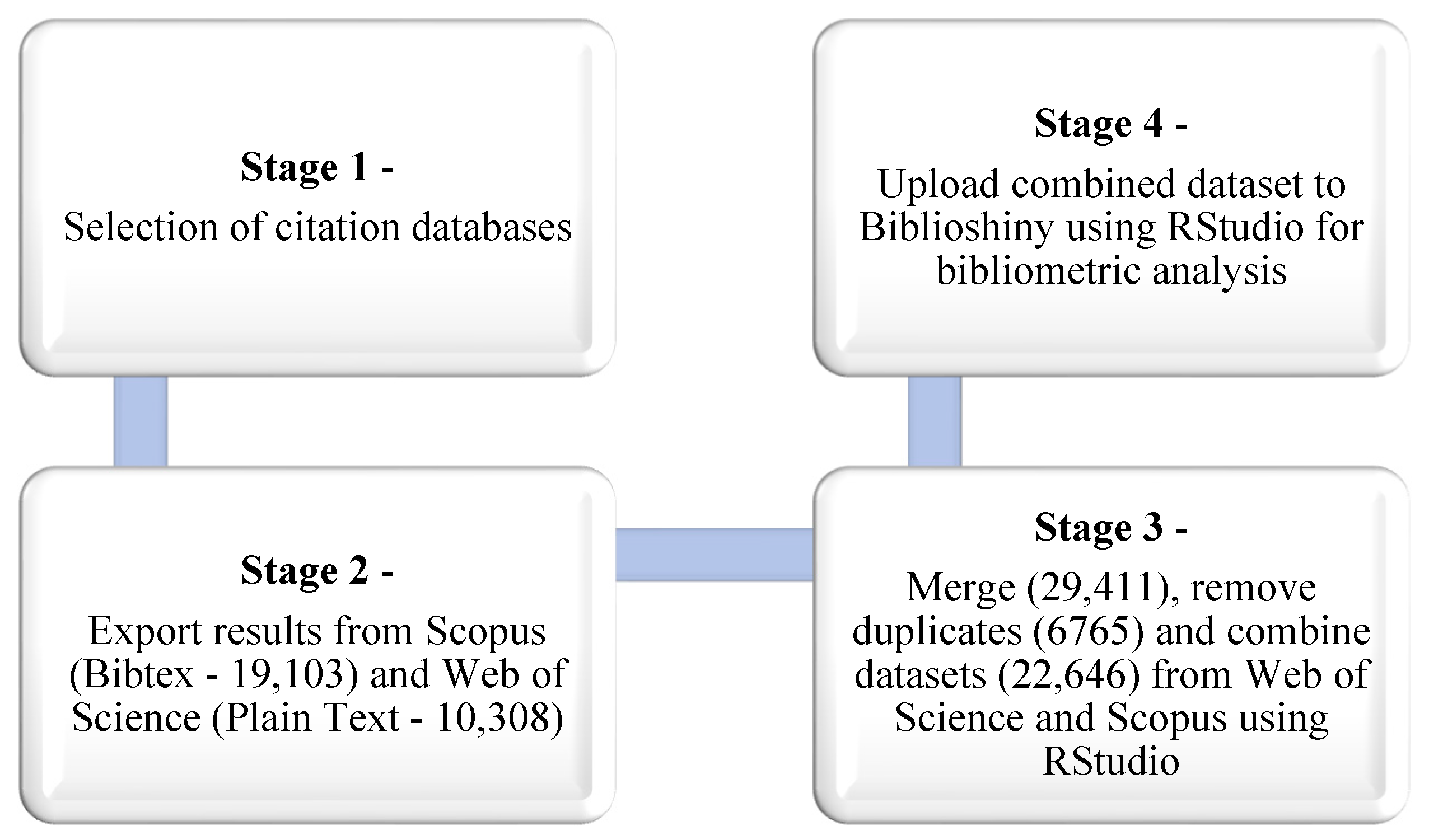
The “x-factor” of this bibliometric study lies in its comprehensive global scientific mapping and performance analysis of AI in HE, through combining and integrating datasets from both the Web of Science (WoS) and Scopus databases. Performance analysis focused on leading countries, authors, global trends, co-authorship analysis, and collaboration networks, providing valuable insights into scholarly interconnectedness. These scientific mapping and performance analysis techniques enabled the authors to determine the acceleration patterns of AI and its impact on higher education between 2015 and 2025. To do this, the authors used bibliometric software (Biblioshiny Version 4.1.3) to analyze the bibliometric data [27]. This software uses a descriptive level of analysis and knowledge structures to merge and view data from databases such as WoS and Scopus. Biblioshiny also enables researchers to configure results, interpret findings, draw associations, plot data trends, and make recommendations. Ultimately, this study provides stakeholders with scientifically reliable and valid data to determine the strategic direction for HEIs. To address the research questions (RQ1–RQ4), 22,646 literature sources related to AI and HEIs were analyzed between 2015 and 2025 (23 May 2025). Figure 1 illustrates the method, comprising four stages.
Figure 1.
Stages for merging data. Source: Figure by authors.
2.2. Selected Databases and Search Strategies
Experts in the scientific mapping of research highlight WoS and Scopus as reputable citation databases when attempting bibliometrics and systematic reviews [28]. This study was no different, as both WoS and Scopus were used to find, organize, and analyze data on the acceleration and impact of AI in HEIs. A search strategy was formulated using appropriate terms for searching WoS and Scopus. The primary search terms AI or “artificial intelligence” and “higher education” were combined with secondary terms when searching WoS and Scopus. The secondary terms included derivatives such as universit* OR “academic institution*” OR college* OR “higher education” OR “tertiary institution*” to describe HEIs. Terms with alternate meanings were identified and removed from the results to maintain relevancy in the dataset. These terms included “Apnea index” OR “American Indian*” OR “Aromatase inhibitors” OR “acetabular index” OR “ai ha”. Traditionally, AI has a lengthy history spanning sixty years. Nonetheless, this study explored the acceleration and impact of AI during the past decade at HEIs, since it has recently been gaining momentum in the literature [29].
To ensure integrity and transparency, the authors applied the same criteria in both WoS and Scopus during the research process. The only exception is that WoS has another criterion built into the search string results—Keyword Plus. This criterion improves search results by combining words or phrases that appear in article references but not in the actual article. Table 1 presents the search criteria used in the two citation databases, WoS and Scopus.
Table 1.
Search criteria used in WoS and Scopus.
2.3. Merging and Mapping the Data Using Bibliometric Research Steps
Figure 1 illustrates the stages of conducting a bibliometric analysis, commencing with selecting databases (Stage 1) and culminating in utilizing Biblioshiny for performance analysis and scientific mapping (Stage 4). In Stage 1, the authors had robust discussions about which databases should be considered for the bibliometric analysis. WoS and Scopus were selected as the literature pointed to these being the two world leaders in indexing scientific works [30]. Stage 2 entailed retrieving results using Scopus (Bibtex format) and WoS (Plain text format) to facilitate data preparation. During Stage 3, the novelty and integrity of this study were unearthed using RStudio software version 2024.12.1. This software merges data, removes duplicates, and combines data from Bibtex (Scopus) and Plain Text (WoS) files into one Excel spreadsheet. Additionally, during Stage 3, the Bibtex (Scopus—19,103) and Plain Text (WoS—10,308) datasets were combined (18,763) into an Excel spreadsheet, with duplicates removed (6765) using RStudio, resulting in a final combined dataset of 22,646 being ready for uploading into Biblioshiny, an interactive online web-based tool available via RStudio. Biblioshiny interprets datasets from citation databases in Excel format, providing visual and tabulated graphical information [31]. Notably, visual and graphical information in Biblioshiny is categorized by authors, countries, journals, citations, institutions, and collaboration networks. Biblioshiny opened an empirical window to view the acceleration of AI and its impact on HEIs through an objective-based orientation screen. It provided multiple layers of data, allowing for deeper insights into trends, performance analysis, and patterns of scientific mapping on AI and HEIs.
3. Discussion of the Findings
3.1. Publication Growth Trends and Annual Scientific Production (RQ1)
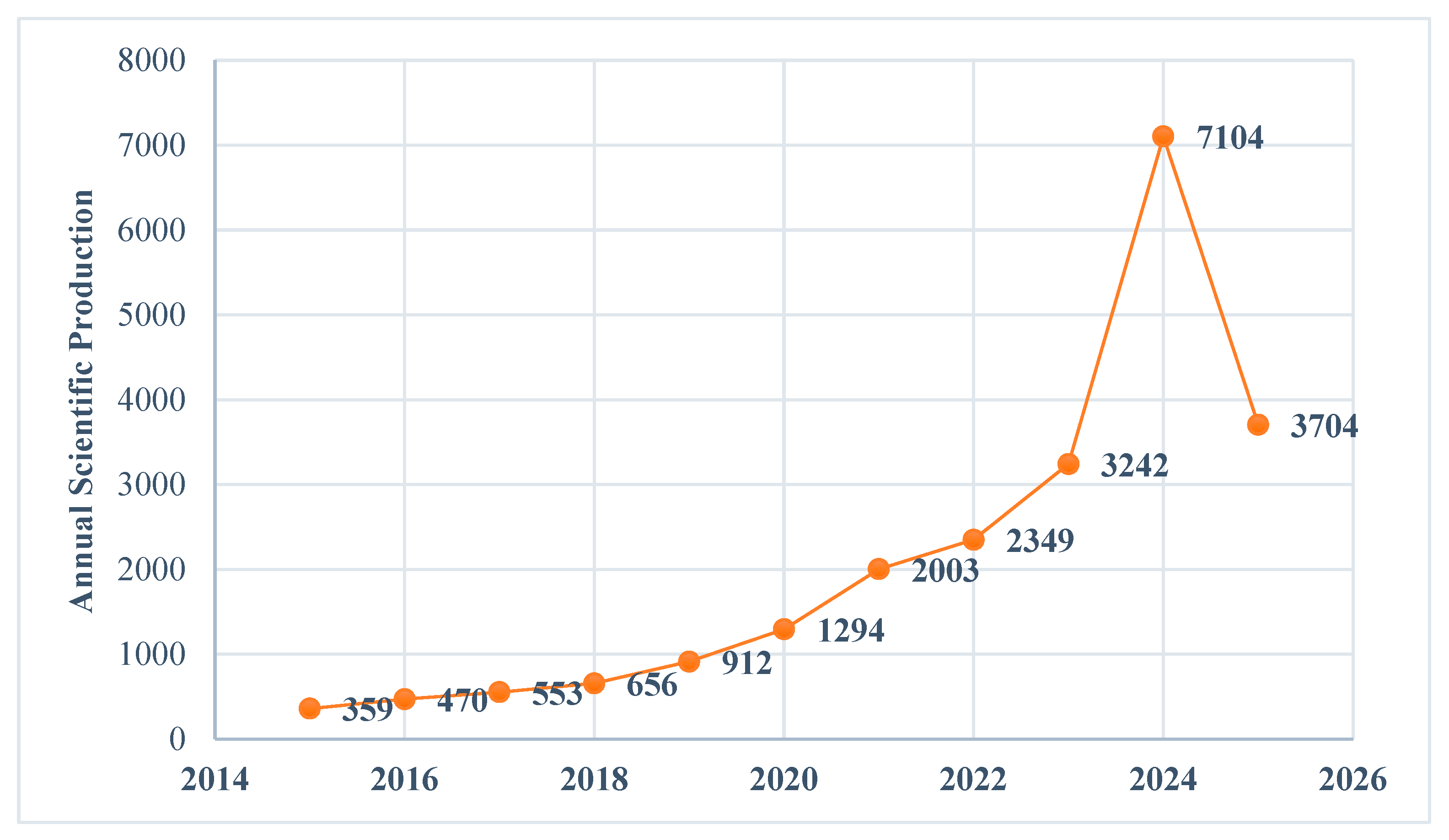
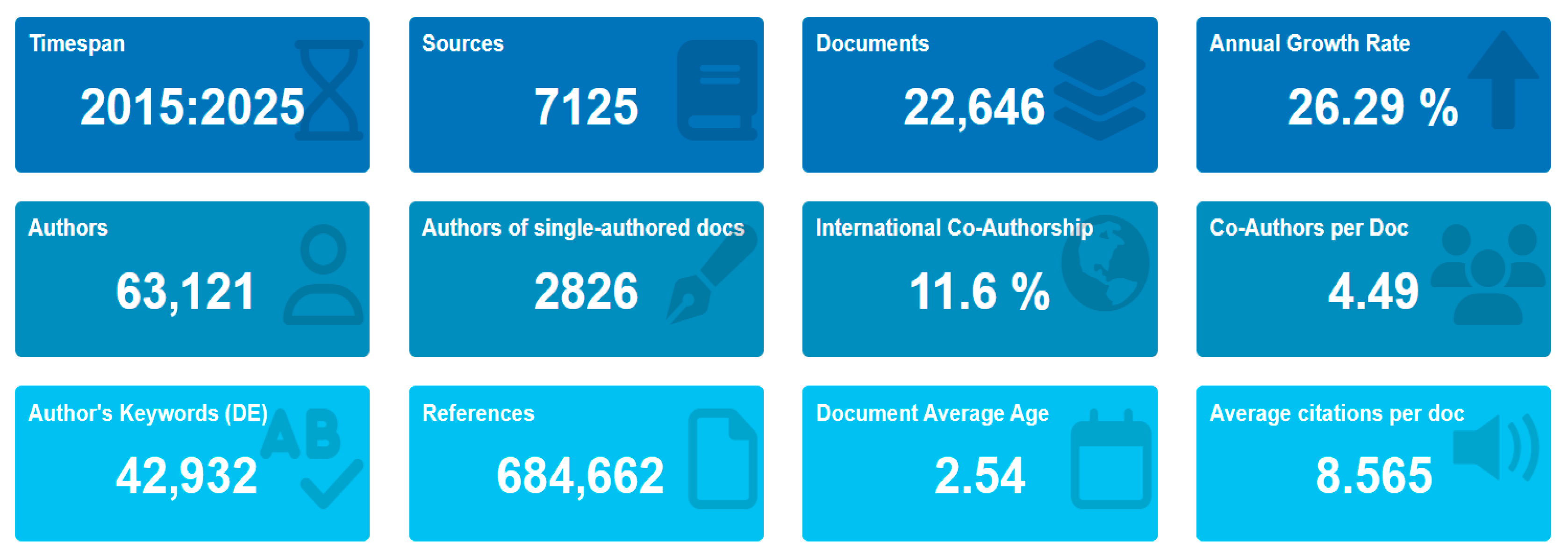
To explore the topic, a combination of datasets from Scopus and WoS between January 2015 and May 2025 was merged. Figure 2 presents 22,646 documents, of which 2826 were single-authored publications across 7125 sources. Within the context of AI and HEIs, there was an average citation per document of 8.565 from references of 684,662 between 2015 and 2025. The average citations per document indicate a significant usage trend and annual growth rate of 26.29% in the past decade on the topic, as depicted in Figure 2. Nonetheless, it is interesting to note that acceleration points are mainly depicted between 2023 and 2025, as shown in Figure 3. This could be attributed to the limited interest in AI within HEIs from 2015 to 2022 [32]. Findings in Crompton and Burkes Crompton and Burke [33] concur that there were limited opportunities with challenges and less interest at HEIs before 2023. Considering this, it is anomalous that bibliometric studies present a positive trajectory and narrative on AI in HEIs from 2015 to 2022 [34,35,36,37,38]. Conversely, the period 2015 to 2022 demonstrated limited upward mobility due to the infancy of the topic [39]. Furthermore, numerous bibliometric studies concur with Khan et al. [39], indicating low growth trends before 2023 [34,35,36,37,40,41,42].
Figure 2.
Overall information retrieved generated by Biblioshiny (Version 4.1.3).
Figure 3.
Publication growth trends and annual scientific production (2015–2025) generated by authors and data from Biblioshiny (Version 4.1.3).
This is fascinating since experts allude to a scarcity of AI research at HEIs, even after the COVID-19 pandemic [43,44,45]. In the nomological process of understanding data from bibliometric studies, recent trends seem to be blurred on the topic. From the authors’ perspective, the emphasis on AI within HEIs gained momentum in 2023, coinciding with the post-pandemic era. Pasara and Mhlanga [46] posited that the COVID-19 pandemic was the catalyst, accelerating AI. However, interest only emerged from 2023 onwards. Furthermore, Figure 3 supports Pasara and Mhlanga’s [46] perspective by illustrating gradual linear progress between 2015 and 2022, followed by a steep acceleration from 2023 onwards. Thus, this seems to be a rational argument since researchers began seriously plugging their thoughts into AI and its importance to HEIs in 2023 [39]. Juxtaposed, the authors adequately justified their position from the literature and Figure 2 and Figure 3. However, post-pandemic, a sustainable and transformative agenda is critical for HEIs concerning AI. Sustained transformation must include socio-economic recovery plans to reduce unemployment and poverty and bridge the inequality gap to address UNESCO’s Agenda 2030 to leave no one behind, irrespective of the Global South or North debate at HEIs.
3.2. Leading Journals and Bradford’s Law (RQ2)
Table 2 illustrates the leading journals between 2015 and 2025. Leading journals are categorized in Biblioshiny into three zones by Bradford’s Law. This is defined through the process of scattering or distribution [47,48]. Bradford’s Law clusters leading journals into the Core Group (most productive zone), Allied Group (moderately productive zone), and Peripheral Group (least productive zone) [49]. The core group showcases the influential, prolific, and core journals with the largest share of total publications. Zones 2 (Allied Group) and 3 (Peripheral Group) include journals that are categorized as moderate and slightly less productive than Zone 1. These journals are still important as seminal works, and highly cited articles may reside in Zone 2 and 3 publications. Bradford’s Law further measures journal productivity on a topic by frequency and cumulative frequency distribution [50]. Frequency distribution refers to the class intervals, whereas the cumulative frequency distribution points to corresponding class intervals between each journal based on the final cumulative frequency. The punchline between the cumulative frequency distributions is that it is added from the first-ranked in a Zone, in this case Zone 1, together with the frequency distribution from the second journal, and increases in Bradford’s Law within a Zone. In Table 2, when the cumulative frequency distribution (1949) from the first-ranked journal (Advances in Intelligent Systems and Computing) is added to the frequency distribution (193) of the second-ranked journal (Communication in Computer and Information Science), the cumulative frequency distribution 2142 emerges as the obtrusive value between these two journals in Zone 1. This pattern continued until the journal Academic Radiology, illustrating the tightly measured class intervals and productivity trends based on frequency and cumulative frequency in Zone 1. Within this study, the frequency and cumulative counts between the journals in Table 2 are tightly pressed as the frequency and cumulative frequency counts between the leading journals are minimal. The frequency and cumulative frequency counts are further condensed and distributed almost equally from Procedia Computer Science to Academic Radiology in Table 2. This reveals that the leading core journals on AI and HEIs appear prominently and are highly competitive in terms of visibility and citations.
Table 2.
Frequency and cumulative frequency of leading journals using Bradford’s Law.
3.3. Impact of Authors on AI and HEIs (RQ3)
Table 3 presents the top 25 authors based on their H-Index, total citations, and net production, providing insights into their scientific impact on AI and HEI. The H-Index taps into the scientometrics of a researcher in a specific field using publications and citation counts [51]. According to Hirsch [52], H-Index reports on the researchers’ importance, significance, impact, and cumulative contribution to scientific production. This measures the productivity and citation metrics of a researcher over a period. Additionally, in Table 3, the leading authors in AI and HEIs have Asian surnames. Hence, one may infer that these scholars reside and are affiliated with universities in the Far East. However, the authors needed to delve deeper into the bibliometric study to establish whether these Asian scholars were affiliated with institutions in the Far East or residing in other academic institutions globally.
Table 3.
Top authors based on H-Index.
3.4. Authors’ Production on AI and HEIs (RQ3)
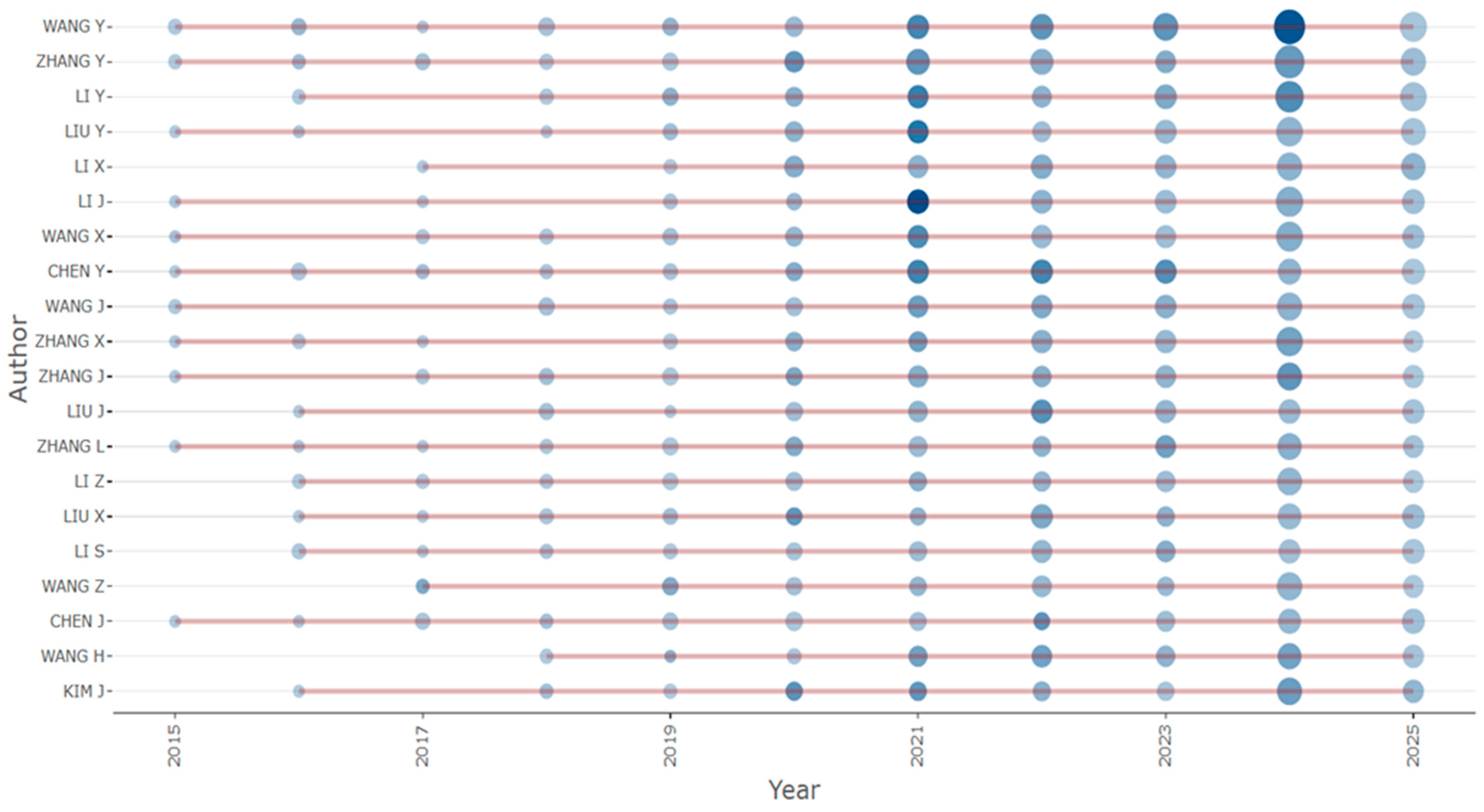
The earlier discussion highlighted the correlations, acceleration patterns, and trends from the literature to justify the authors’ position on the topic—Figure 2 and Figure 3. Furthermore, Figure 4 illustrates the acceleration points in author production related to AI in HEIs. The graphical representation portrays larger and darker blue dots from 2021 to 2024, signifying an increase in the number of articles and citations per annum by authors. This concurs with the authors’ perspective on the post-pandemic years on AI and HEIs—Figure 3. With the cessation of the “new norm” and the resumption of face-to-face education, learning and research activities at HEIs, the blue dots in Figure 4 transition to a lighter and darker hue intermittently. This indicates an increase in size compared to the pandemic years (2019–2020), revealing an emphasis on AI in 2021 that accelerated in 2023 and became noticeable in 2024. This denotes the normalization and enhancement of production trends amongst authors on this subject in 2024. Despite the impact of the pandemic, the authors posit that interest in AI and HEIs experienced a considerable surge from 2023 onwards, and this momentum persists in 2024, as evidenced in Figure 4. Conversely, author production on AI and HEIs was sporadic and virtually non-existent from 2014 to 2019, particularly from 2014 to 2016.
Figure 4.
Top 20 authors’ production over time generated by Biblioshiny (Version 4.1.3).
3.5. Most Local Cited References on AI and HEIs (RQ4)
When drilling into a topic underpinned by bibliometric methods, one can establish which publications are influential within a defined research area. This provides insightful glimpses into the core literature that is currently mapping and steering the research agenda. Table 4 illustrates the most locally cited references between 2015 and 2025. It is pertinent to mention that the authors grounded this bibliometric analysis in a principle-driven approach, emphasizing clarity and transparency. This is demonstrated in the availability of live DOI links that denote the most locally cited references in Table 4. Firstly, it is interesting but unsurprising that the most locally cited references represent Science, Technology, Engineering, and Health in Table 4. Therefore, the researchers argue that worldwide, these fields are the torchbearers on the topic. Concurrently, the contribution of the Humanities, Social Sciences, Arts, and other domains towards AI in HEIs over the last decade is called into question. Secondly, of the 20 records presented in Table 4, 12 are published from 2023 onwards. This means that sixty percent (60%) of the locally cited references, although appearing in the latter part of Table 4, have been published and heavily cited in the post-pandemic years. Interestingly, these findings in Table 4 correlate with Figure 2 and Figure 3, wherein acceleration is evident from 2023 onwards. Thus, this study also contends that acceleration patterns began in 2023, and will continue beyond 2025, as it is novel and trending. Thirdly, the authors drilled even deeper in Table 4 to identify if semantic relationships exist between the most-cited references. To do this, the authors decided to explore the topics and themes using a machine learning unsupervised algorithm, Latent Dirichlet Allocation (LDA), which is widely used in natural language processing to extract latent themes from large textual datasets [53,54].
Table 4.
Most local cited reference.
3.6. Scientific Production and Countries (RQ1, RQ3)
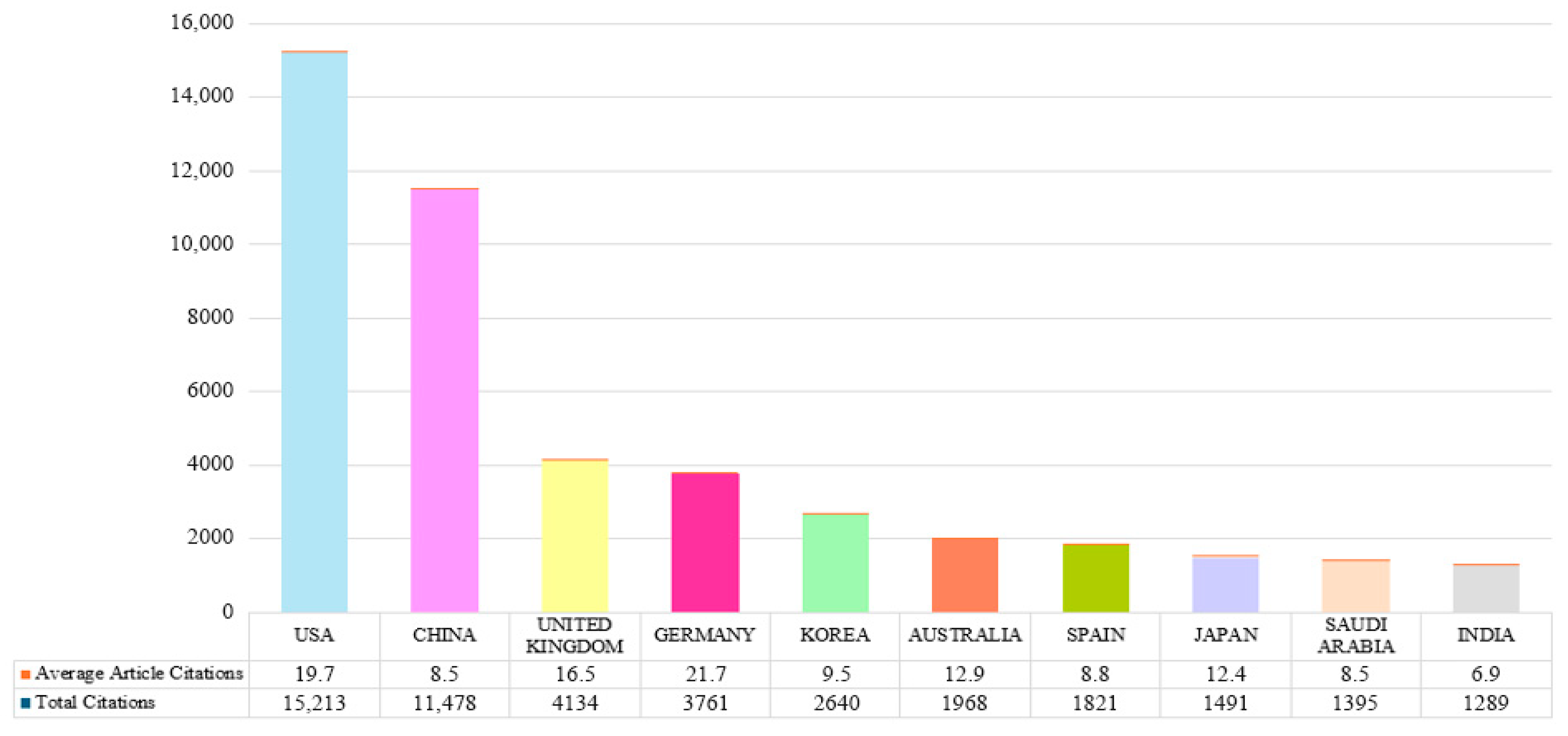
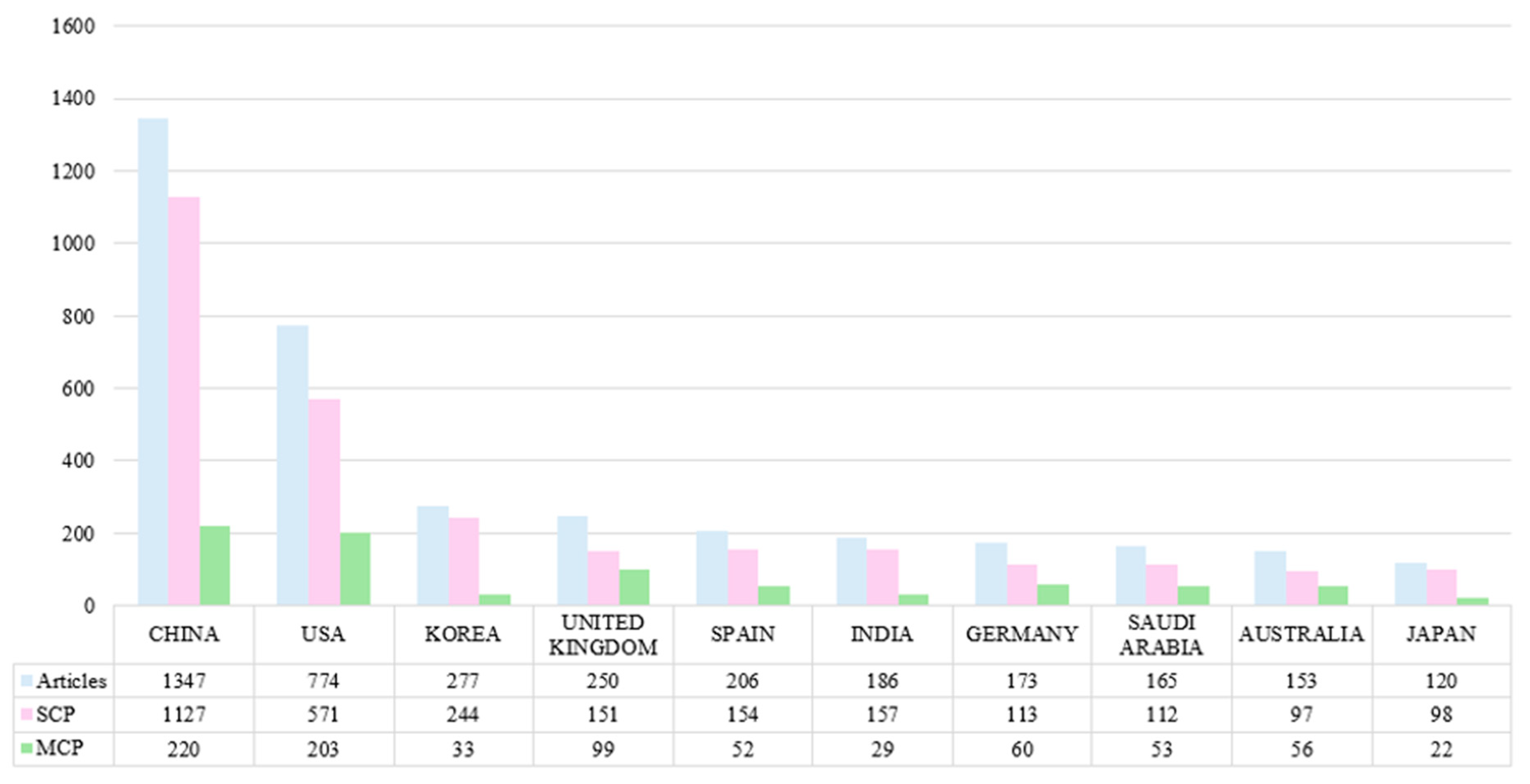
Figure 5 and Figure 6 highlight the top-performing countries in scientific production from 2015 to 2025, addressing aspects of RQ1 and RQ3. Figure 5 distinguishes between MCPs, which depict “inter” (working together with authors in two or more countries), and SCPs—“intra” (authors collaborating within a country). The MCP ratios of the eight countries are moderate and similar in terms of “inter” relationships outside their countries—Figure 5. This means that corresponding authors in scientific production outside their own countries is significant, yet still incomparable to China (MCP—220) and the USA (MCP—203), the top two performing countries in Figure 5. Interestingly, Figure 6 illustrates “average article citations” and “total citations” in which China and the USA are also the torchbearers in scientific production on the topic. These results suggest a correlation between Figure 5 and Figure 6, with China and the USA consistently taking the lead, albeit in different rankings. Moreover, Avelar, da Silva Oliveira [73] expound that these partnerships transcend beyond research and contribute to the public and private sectors with a comprehensive representation of the 17 SDGs. The values of SDGs are also reflected in Figure 5, wherein the leading countries are the torchbearers in AI within the context of HEIs and industry. Additionally, correlations of this nature are important as knowledge-sharing partnerships develop that have the potential to enhance curriculum design, assessments, research, technology, and innovation through a multidisciplinary approach, globally, at HEIs. Moreover, the inference made in Table 3 about Asian scholars and their affiliations as leading scholars to countries in the Far East or other countries is laid to rest since the “inter” networks between the USA and China are strong, as displayed in Figure 5.
Figure 5.
Corresponding authors—multiple country publications (MCPs) and single country publications (SCPs) on AI and HEIs (2015–2025). Source: Figure created by authors and data generated by Biblioshiny (Version 4.1.3).
Figure 6.
Top ten countries in total and average citations on AI and HEIs (2015–2025). Source: Figure created by authors and data generated by Biblioshiny (Version 4.1.3).
3.7. Keyword Co-Occurrence Analysis (RQ1)
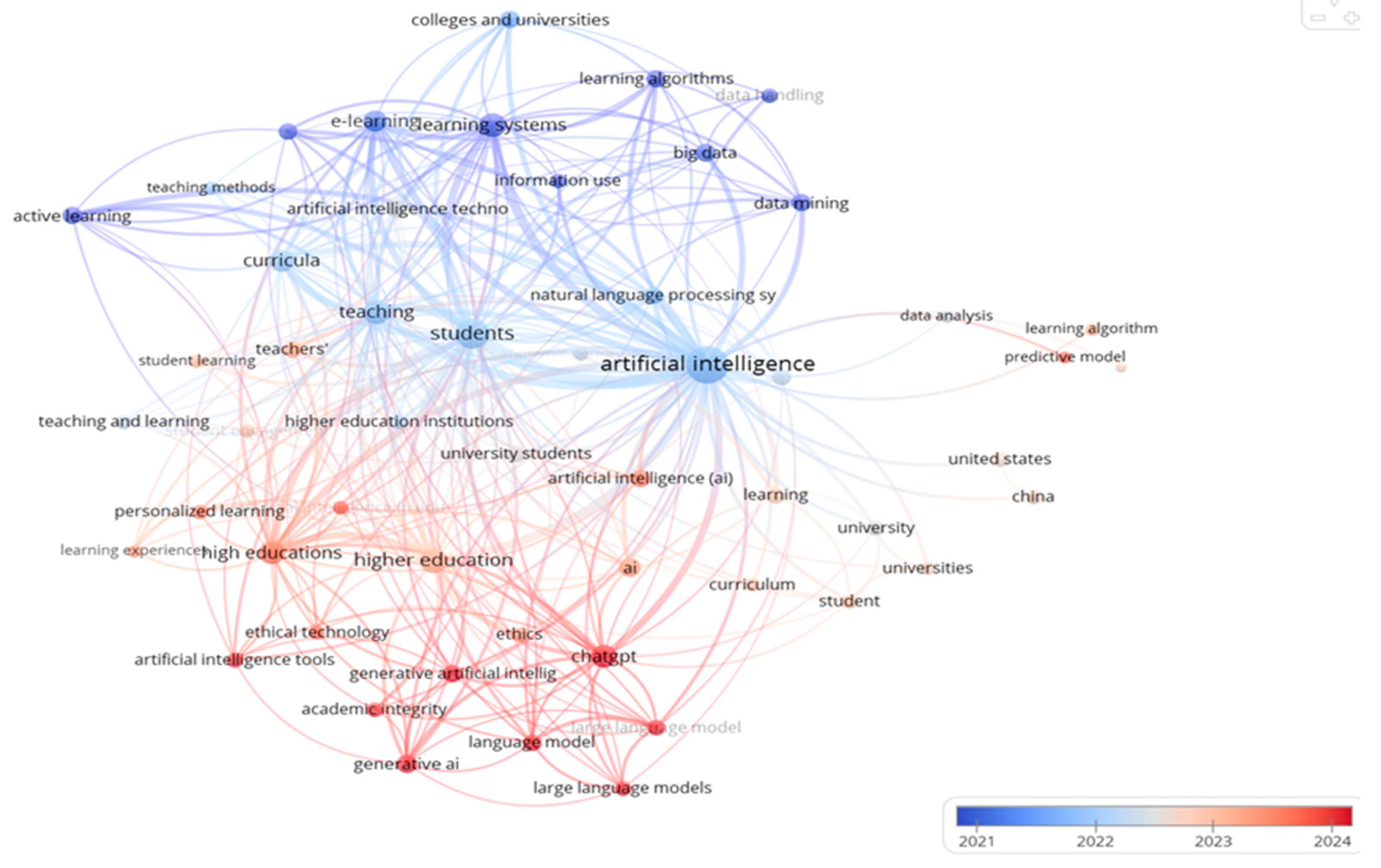
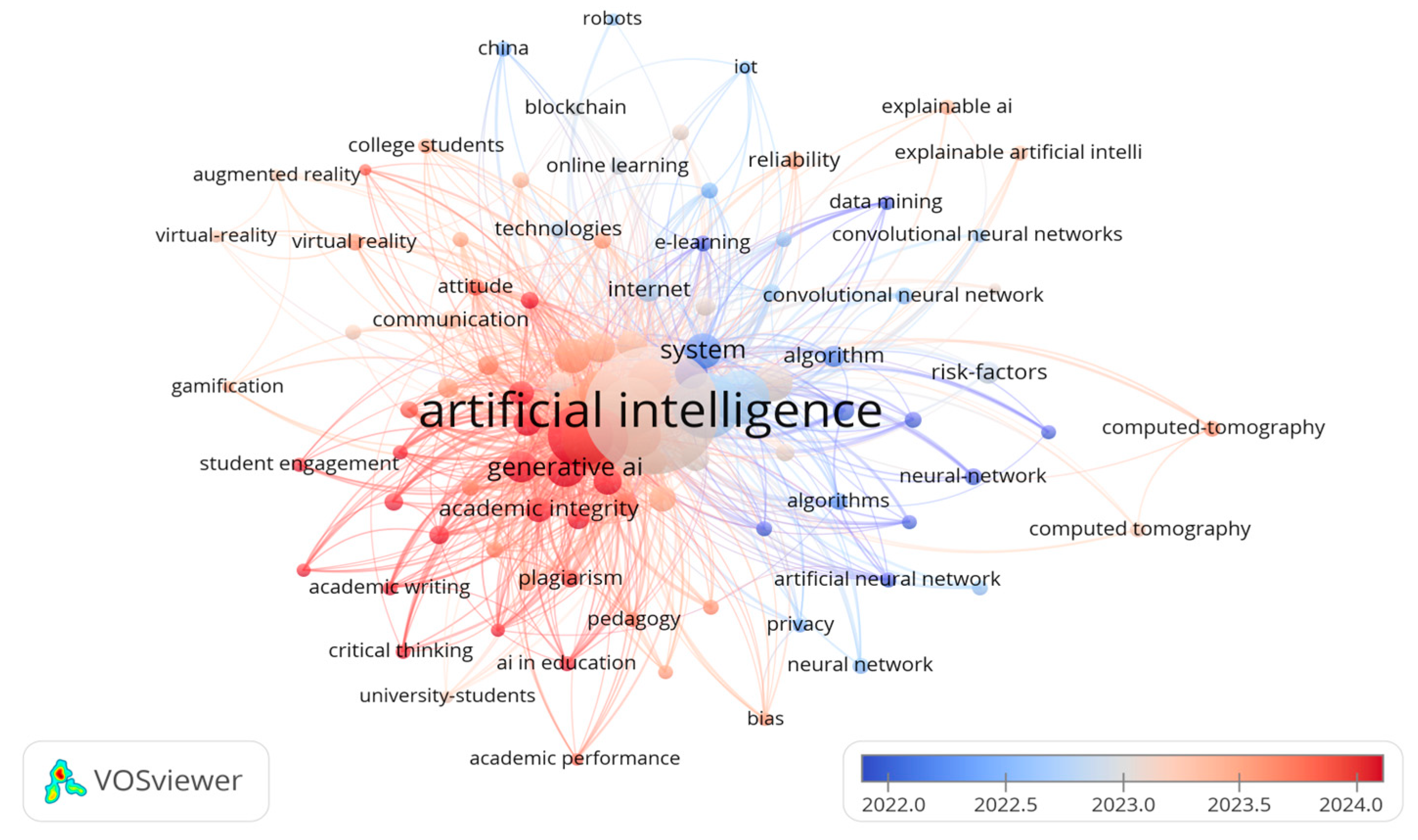
To further explore AI and HEIs, this study examined the strength of co-occurrence networks from Scopus and WoS using the data from Figure 1 (Stage 2). To facilitate this analysis, the authors used VOSviewer, a software tool (Version 1.6.20) for constructing, visualizing, and assessing the strength of clustering relationships, to identify patterns in the topic [74]. Within this context, we selected the Type of analysis—Co-occurrence and Unit of analysis—All keywords on VOSviewer. The counting method used was Full counting, as this assured that co-occurrence keywords had equal weighting. Initially, 300 keywords were selected in the setting section with 19 occurrences. A verification process was followed, and irrelevant keywords were manually removed from the software to create a bibliometric network. Figure 7 (Scopus) and Figure 8 (WoS) illustrate the occurrences of keywords using an overlay visualization and average publication per year aligned to the past decade on AI and HEIs.
Figure 7.
Keyword occurrence network—Scopus generated by VosViewer (Version 1.6.20).
Figure 8.
Keyword occurrence network—WoS generated by VosViewer (Version 1.6.20).
Figure 7 and Figure 8 show how the text was mined from the title and abstract of Scopus and WoS using VOSviewer on the topic [74]. The generation of the two-dimensional maps in Figure 7 and Figure 8 involved the application of diverse settings within VOSviewer. In Figure 7, 1825 keywords met the threshold, leading to the total strength of the co-occurrence links being extracted for analysis. A closer manual inspection revealed three keywords appearing more than 1000 times, aligning with AI and HEIs. These keywords are artificial intelligence, students, and teaching. Furthermore, 53 items, comprising four clusters, were selected based on their relevance to the topic using the ‘Method—Association Strength’ under the Analysis tab in VOSviewer to generate an Overlay Visualisation map representing data extracted from Scopus for Figure 7.
Similarly, in Figure 8, 452 keywords met the threshold, with artificial intelligence appearing more than 3888 times. There were 100 items with three clusters using the Method—LinLog Modularity under the Analysis tab and Overlay Visualisation—Figure 8. Whilst Association Strength presents links between items (keywords), LinLog Modularity ascertains the density within and between keywords. Different methods of analysis were explored because the researchers wanted to elucidate how keywords from Scopus and WOS data compare through varied analyses on the topic in VOSviewer.
Interestingly, as one examines the network nodes, there are similar patterns of strengths in clusters (Figure 7 and Figure 8). Specifically, in Figure 7, the keyword ‘higher education’ is strongly associated with several terms, including ChatGPT, academic integrity, ethics, and generative artificial intelligence. These associations are consistent in Figure 8, where ‘generative ai/generative artificial intelligence’ also shows strong connections with ‘academic integrity’. This demonstrates that these associations hold across different analytical methods used in VOSviewer. Additionally, emerging topics appear on the periphery of Figure 7 and Figure 8 while still in the early stages of development, indicating their growing importance to the higher education sector. These topics include active learning, teaching and learning, personalized learning, Artificial Intelligence tools, academic performance, gamification, augmented reality, virtual reality, and block-chain technology.
3.8. Latent Dirichlet Allocation (LDA) Analysis (RQ1, RQ4)
In this study, LDA was employed to supplement the results generated through Biblioshiny and VOSviewer, providing an additional layer of topic modelling that deepens the interpretation of literature on AI in higher education. The LDA topic modelling analysis was conducted in Python (version 3.9.7) using the Gensim library (version 4.2.0). While VOSviewer mapped keyword co-occurrences to show term relationships and Biblioshiny identified the most-cited references, LDA offered a topic-based perspective, grouping frequently co-occurring words into dominant themes prevalent in the literature [75]. The LDA algorithm works by identifying clusters or patterns of words and phrases that frequently appear across research articles [76,77]. These clusters are then used to generate a set of topics from the textual data that illustrate underlying themes within the literature [53,76]. By assigning weights to the dominant terms within each topic, LDA automatically detects and structures key themes across the documents, thereby allowing for a more nuanced understanding of the dataset [54]. The outcomes of this topic modelling process can then be visualized to depict patterns, correlations, and trends in the literature, offering insights that might not have been visible through traditional manual literature review processes [78,79].
The implementation of LDA in this study was crucial in reinforcing the objectivity of the findings. Unlike manual literature reviews, which are inherently subject to human bias and oversight [80,81], Biblioshiny, VOSviewer, and LDA serve as impartial review tools [27,82,83]. Their automated processing of textual data ensures that the analysis is consistent, repeatable, and free from bias [27,82,83]. This strengthens the credibility of the themes identified. The utilization of these visualization tools helps validate the researchers’ analysis by cross-validating patterns found in the literature [84,85].
To identify the most suitable number of topics for the LDA model, a coherence score was calculated to guide the selection. Based on this score, the LDA model identified two clear and interpretable topics that reflect the dominant themes discussed across the 20 selected most locally cited articles.
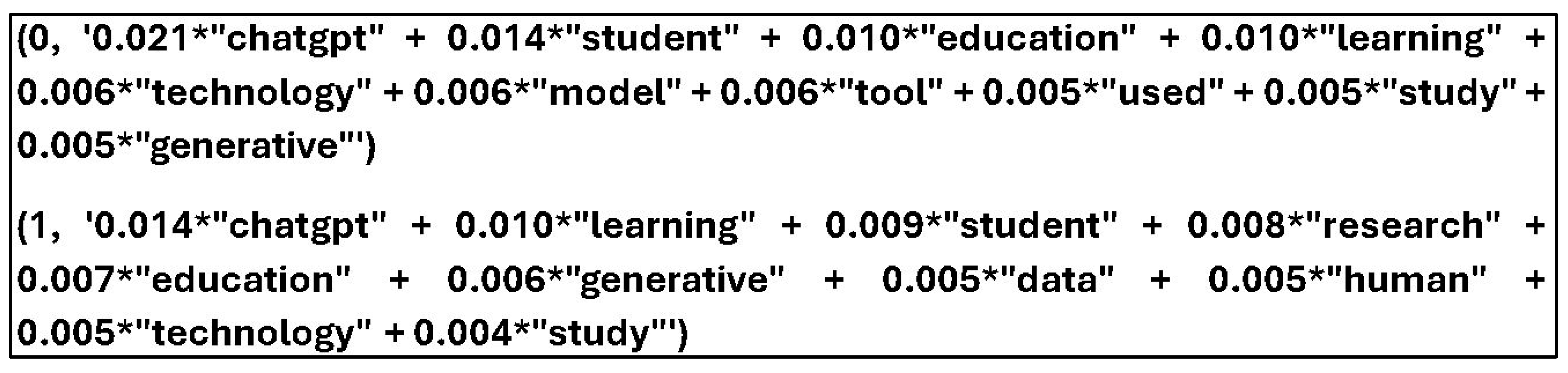
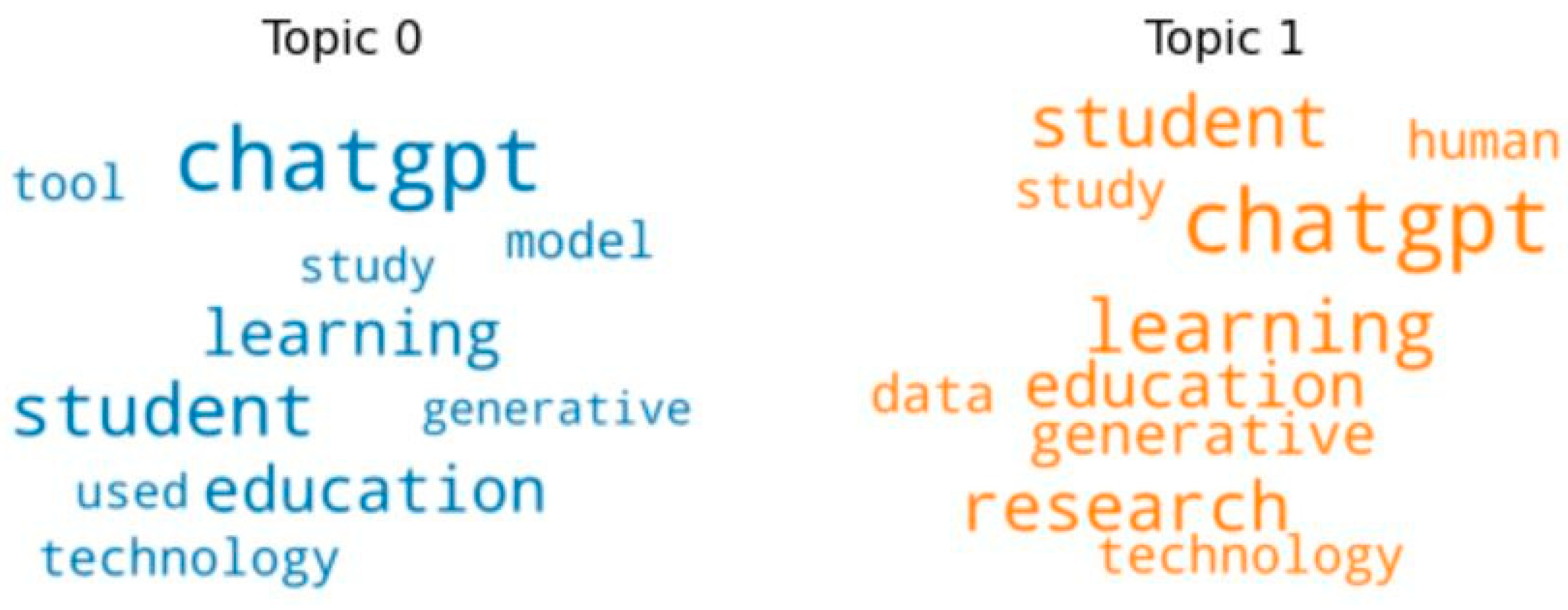
Figure 9 presents the most prominent keywords and their respective weights within each topic, providing a breakdown of the key drivers behind the topic modelling. The themes for each topic were identified by analyzing the highest-weighted and most commonly occurring words associated with that topic. Topic 0 focuses on the integration of generative AI tools, particularly ChatGPT, into teaching and learning within higher education. It captures how students and educators engage with these technologies to enhance educational delivery and experience. The presence of keywords such as “chatgpt”, “education”, “learning”, “tool”, “generative”, and “technology” points to the practical use of AI models in classroom settings. This topic highlights the pedagogical potential of generative AI and its growing role in shaping modern higher educational practices.
Figure 9.
Dominant keywords and their relative weights within each topic. Source: Figure generated by LDA using Python 3.9.7 with Gensim 4.2.0.
Topic 1 reflects the broader academic discourse on generative AI in higher education, with an emphasis on research, ethical considerations, and the role of human agency. Whilst ChatGPT and learning remain core to this theme, the inclusion of terms such as “research”, “data”, and “human” indicates a shift toward critical inquiry and scholarly reflection. This topic foregrounds the evolving relationship between technology and the academic community, particularly around questions of responsible use, data ethics, and the impact of generative AI on traditional scholarly processes.
Table 5 demonstrates the assignment of themes to each topic based on the dominant keywords within that topic. Topic 0 is characterized as “Generative AI Tools and Their Pedagogical Integration in Higher Education”, shaped by the prevalence of terms such as ChatGPT, education, generative student, learning, and tool. Topic 1 is defined as “Generative AI in Higher Education Research and Ethical Implications”, driven by the frequent appearance of keywords such as research, data, human, generative, and ChatGPT.
Table 5.
Themes, topics, and prevalent terms revealed through LDA analysis.
Figure 10 presents a word cloud that visually represents the dominant terms identified within each topic utilizing the LDA topic modelling technique. The word cloud enhances the findings by offering an immediate visual representation of the most frequent and strongly weighted words drawn from the reviewed literature. Each word’s size corresponds to its weighting within the topic, indicating its relative importance. Larger words such as ChatGPT, student, education, and learning in Topic 0 reflect the central focus on AI tools in teaching and learning contexts, particularly within higher education, highlighting the role of generative AI in classroom settings. In contrast, Topic 1 emphasizes terms like research, human, and data, aligning with the theme of the ethical use of generative AI in research within Higher Education Institutions (HEIs). This visualization reinforces the themes derived from the LDA model by emphasizing the key concepts and their relative prominence across the literature.
Figure 10.
Word clouds illustrating the most frequently occurring terms within each identified topic. Source: Figure generated by LDA in Python 3.9.7 with Gensim 4.2.0.
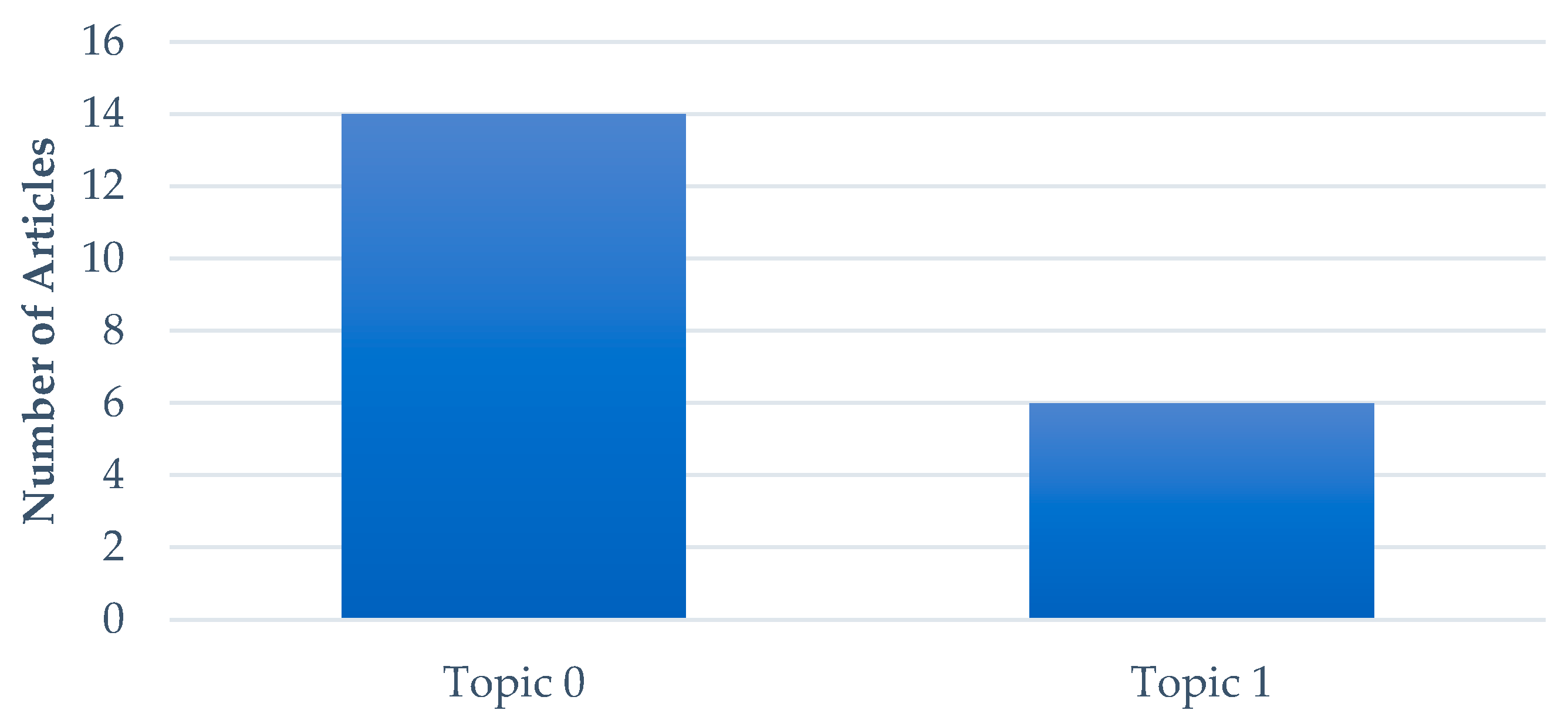
Table 6 depicts the dominant topic and its percentage contribution for each of the 20 most locally cited articles, highlighting how the topics are spread across the selected studies, and which articles share similar dominant topics. This table offers a detailed view of which topics prevail in the literature on AI in higher education between 2015 and 2025. The results show that Topic 0, centred on the role of generative AI tools like ChatGPT in teaching and learning in higher education, is the dominant theme in 14 articles. In contrast, Topic 1, which focuses on the ethical use of generative AI in research within Higher Education Institutions, is predominant in six articles. Complementing this, Figure 11 illustrates the number of articles assigned to each topic, visually reinforcing the prevalence of Topic 0 over Topic 1. Together, these findings provide a clear understanding of where the scholarly emphasis lies in higher education, highlighting the need for further research to explore both the pedagogical applications of AI and its responsible, ethical integration in academic research.
Table 6.
The dominant topic and its corresponding percentage contribution within each article.
Figure 11.
Topic distribution by dominant topics. Source: Figure generated by LDA using Python 3.9.7 with Gensim 4.2.0.
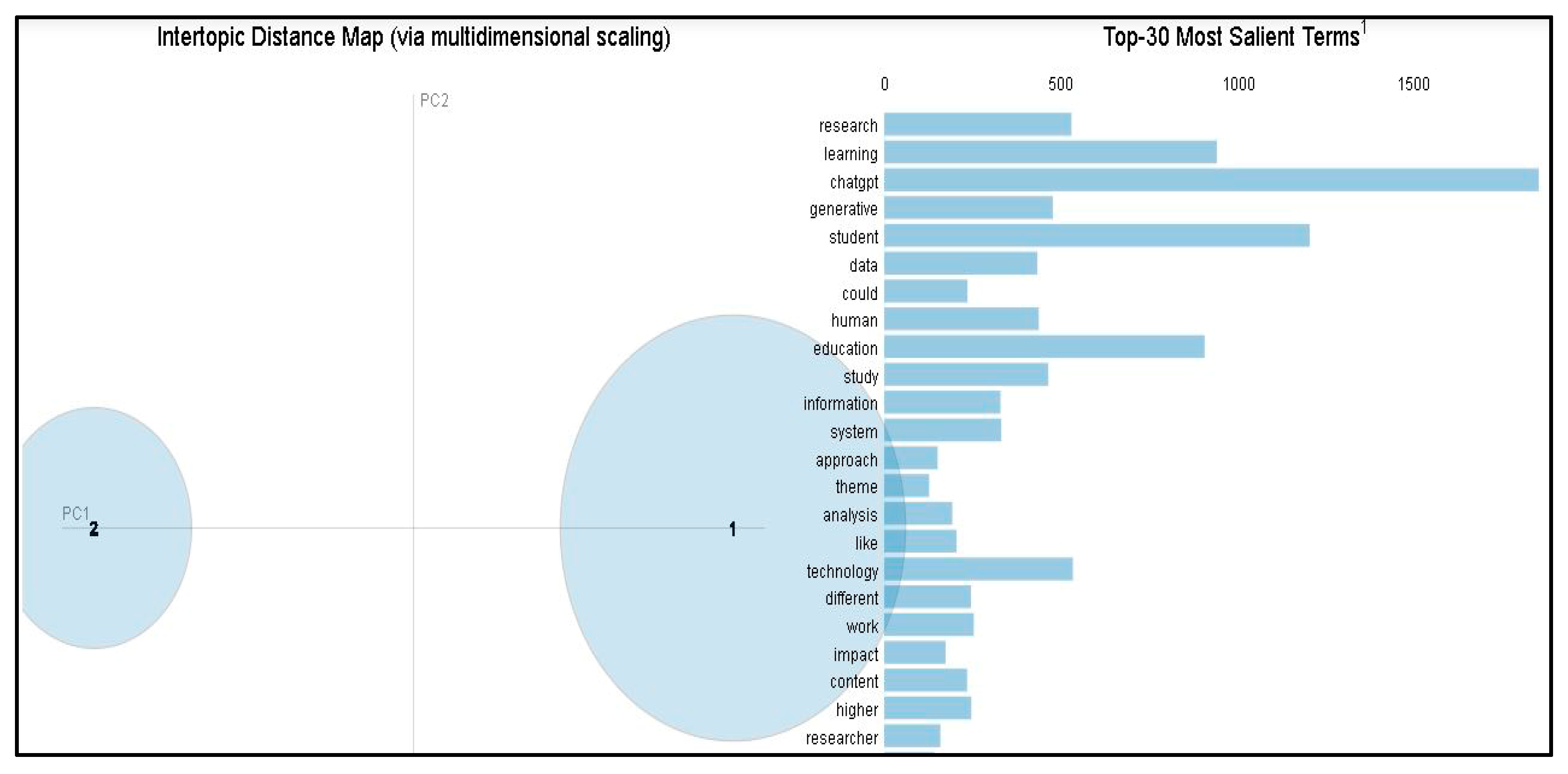
Figure 12 illustrates the distribution of the two identified topics across the 20 most locally cited articles, alongside the top 30 prevalent terms appearing throughout the selected papers. The word count reflects how frequently each term occurs across all articles, with key terms such as “ChatGPT”, “student”, “learning”, “education”, and “generative” emerging as the most dominant. This indicates a strong scholarly focus on the role of generative AI tools in higher educational contexts, particularly in relation to student learning and teaching practices. In this diagram, Topic 0 is labelled as ‘1’ and Topic 1 as ‘2’. Furthermore, each circle’s size demonstrates how dominant each topic is across the dataset, with larger circles indicating a stronger dominance. Topic 0, which centres on generative AI in teaching and learning within higher education, shows greater prominence compared to Topic 1, which emphasizes the ethical considerations of AI use in research. These findings highlight the dual focus of the current literature on both practical AI applications in higher education and the ethical implications surrounding its use in higher education research.
Figure 12.
Topic distribution based on prevalent topics, along with the most frequently appearing terms. Source: Figure generated by LDA using Python 3.9.7 with Gensim 4.2.0.
Key topics that emerged and need to be navigated for future research are generative artificial intelligence, AI ethics, and how AI can be integrated into teaching, learning and research at HEIs. Furthermore, rather than focusing on global debates surrounding different regions and AI, HEIs should be the custodians of innovative solutions underpinned by AI as this will help to address UNESCO’s SDGs. At the same time, drivers of SDGs must harness opportunities to effectively prioritize AI in countries that are lagging and not merely focus on the Global North. Furthermore, as AI continues to grow at an exponential rate, policymakers must be actively involved in ongoing research and dialogue at HEIs. This will harness and channel the potential of AI responsibly into the teaching, learning, and research agenda in Higher Education Institutions on a global scale.
4. Conclusions
This study has comprehensively illuminated the rapid evolution and significant impact of Artificial Intelligence (AI) within Higher Education Institutions (HEIs) globally. Through a rigorous bibliometric analysis of combined datasets from Scopus and Web of Science (WoS), the research successfully mapped key publication trends and identified leading journals, prominent authors, and influential countries. Integrating Latent Dirichlet Allocation (LDA) for thematic analysis alongside keyword co-occurrence networks from VOSviewer further enriched the researchers’ understanding of the evolving discourse surrounding AI in higher education. This multifaceted methodological approach, particularly the rare combination of WoS and Scopus data, significantly enhances the integrity and objective perspective of the findings. The analysis demonstrates a substantial acceleration in AI-related HEI research from 2023 onwards, marking a distinct post-pandemic surge following a period of more gradual growth. The dominance of the Global North and Far East, notably China and the USA, in scientific production and collaborative networks underscores existing disparities in AI research and adoption. The underrepresentation of African and South American countries as top contributors highlights a critical challenge to the UNESCO Sustainable Development Goals (SDGs), particularly concerning equitable access to quality education and the reduction in global inequalities. The thematic analyses revealed a dual focus in the literature: a strong emphasis on the pedagogical integration of generative AI tools and an emerging, yet crucial, discourse on AI’s ethical implications and responsible use in research within HEIs. To truly “leave no one behind” by 2030, efforts must be intensified to bridge the AI development and adoption gaps. In lagging nations, this requires targeted investment in AI infrastructure, research capacities, and human capital development. Fostering equitable collaborations globally that extend beyond research encompassing capacity building, policy development, and the co-creation of AI solutions tailored to diverse educational contexts is essential. HEIs must also actively integrate AI literacy and critical thinking into curricula, preparing students to understand the ethical, societal, and economic implications of AI. Finally, developing robust ethical guidelines and governance frameworks at HEIs is crucial to ensure responsible, fair and transparent adoption in teaching, learning, and research. Ultimately, this study underscores that mapping the AI surge in higher education is not merely a technical exercise but a necessary ethical and strategic endeavour for shaping the future of global learning.
5. Limitations and Future Directions
Whilst this study offers valuable insights, it is essential to acknowledge certain limitations inherent in bibliometric analysis. The findings are primarily based on data indexed in Scopus and Web of Science, which, despite their comprehensiveness, may not capture the entirety of relevant literature across all regional or specialized databases. Future studies should therefore consider widening the database scope to ensure a more exhaustive representation of global research on AI in HEIs. Building upon this study’s findings, future research should delve into the qualitative explorations of disparities, aiming to understand the specific barriers and facilitators to AI research and adoption in underrepresented regions (e.g., Africa and South America), including an examination of policy environments, funding mechanisms, and institutional strategies. Additionally, investigating the long-term pedagogical and ethical impacts of specific generative AI tools on learning outcomes, assessment methods, and academic integrity across various disciplines will be crucial. Lastly, continuing to monitor publication trends beyond 2025 through longitudinal studies will provide ongoing insights for adaptability and foresight as the thematic evolution of AI in HEIs progresses. By pursuing these avenues, the academic community can ensure that AI’s transformative potential in higher education is realized effectively, ethically, and equitably, contributing meaningfully to global sustainable development.
Author Contributions
M.O. and S.B.M. managed the data gathering, analysis, and presentation of the results and findings. A.V. contributed to drafting the Introduction, Conclusion, and Abstract, as well as proofreading and formatting the manuscript according to the journal’s guidelines. G.M.M. managed the analysis and presentation of the results and findings using Latent Dirichlet Allocation. All authors have read and agreed to the published version of the manuscript.
Funding
The authors declare that no funding was received for this study.
Informed Consent Statement
No informed consent was needed for this study.
Data Availability Statement
Not applicable.
Conflicts of Interest
The authors declare that they have no competing interests or conflicts of interest.
Abbreviations
The following abbreviations are used in this manuscript:
| AI | Artificial Intelligence |
| HE | Higher Education |
| HEIs | Higher Education Institutions |
| LDA | Latent Dirichlet Analysis |
| WoS | Web of Science |
References
- Lytras, M.D.; Serban, A.C.; Alkhaldi, A.; Aldosemani, T.; Malik, S. Digital transformation in higher education in times of artificial intelligence: Setting the emerging landscape. In Digital Transformation in Higher Education, Part A; Lytras, M.D., Serban, A.C., Alkhaldi, A., Malik, S., Aldosemani, T., Eds.; Emerald Publishing Limited: Leeds, UK, 2024; pp. 1–22. [Google Scholar]
- Javed, F. The evolution of artificial intelligence in teaching and learning of english language in higher education: Challenges, risks, and ethical considerations. In The Evolution of Artificial Intelligence in Higher Education; Lytras, M.D., Alkhaldi, A., Malik, S., Serban, A.C., Aldosemani, T., Eds.; Emerald Publishing Limited: Leeds, UK, 2024; pp. 249–276. [Google Scholar]
- Albareda-Tiana, S.; Fernandez-Borsot, G.; Berbegal-Mirabent, J.; Regadera González, E.; Mas-Machuca, M.; Graell, M.; Manresa, A.; Fernández-Morilla, M.; Fuertes-Camacho, M.T.; Gutiérrez-Sierra, A.; et al. Enhancing curricular integration of the SDGs: Fostering active methodologies through cross-departmental collaboration in a Spanish university. Int. J. Sustain. High. Educ. 2024, 25, 1024–1047. [Google Scholar] [CrossRef]
- George, B.; Wooden, O. Managing the strategic transformation of higher education through artificial intelligence. Adm. Sci. 2023, 13, 196. [Google Scholar] [CrossRef]
- Kamalov, F.; Santandreu Calonge, D.; Gurrib, I. New era of artificial intelligence in education: Towards a sustainable multifaceted revolution. Sustainability 2023, 15, 12451. [Google Scholar] [CrossRef]
- Wang, C.; Teo, T.S.; Janssen, M. Public and private value creation using artificial intelligence: An empirical study of AI voice robot users in Chinese public sector. Int. J. Inf. Manag. 2021, 61, 102401. [Google Scholar] [CrossRef]
- Kumar, S.; Rao, P.; Singhania, S.; Verma, S.; Kheterpal, M. Will artificial intelligence drive the advancements in higher education? A tri-phased exploration. Technol. Forecast. Soc. Chang. 2024, 201, 123258. [Google Scholar] [CrossRef]
- Bozkurt, A.; Karadeniz, A.; Baneres, D.; Guerrero-Roldán, A.E.; Rodríguez, M.E. Artificial intelligence and reflections from educational landscape: A review of AI Studies in half a century. Sustainability 2021, 13, 800. [Google Scholar] [CrossRef]
- Pisica, A.I.; Edu, T.; Zaharia, R.M.; Zaharia, R. Implementing artificial intelligence in higher education: Pros and cons from the perspectives of academics. Societies 2023, 13, 118. [Google Scholar] [CrossRef]
- Pelletier, K.; Robert, J.; Muscanell, N.; McCormack, M.; Reeves, R.; Arbino, N.; Grajek, S. 2023 EDUCAUSE Horizon Report: Teaching and Learning Edition; Educause: Longmont, CO, USA, 2023. [Google Scholar]
- Eaton, S.E.; Keyhani, M. The pedagogical ethics: Navigating learning in a generative AI-augmented environment in a post-plagiarism era. In Navigating Generative AI in Higher Education: Ethical, Theoretical, and Practical Perspectives; Sabbaghan, S., Ed.; Edward Elgar: Cheltenham, UK, 2025; pp. 160–178. [Google Scholar]
- Fleming, B. Artificial Intelligence: Threat or Opportunity. Available online: https://er.educause.edu/articles/2020/5/artificial-intelligence-threat-or-opportunity (accessed on 10 March 2025).
- Weil, D. Digital Transformation 2.0: The Age of AI. Available online: https://er.educause.edu/articles/2024/2/digital-transformation-20-the-age-of-ai (accessed on 5 February 2025).
- Sutton, R.S. John McCarthy’s definition of intelligence. J. Artif. Gen. Intell. 2020, 11, 66–67. [Google Scholar]
- Banerjee, D.K.; Kumar, A.; Sharma, K. Artificial Intelligence in Advance Manufacturing. Int. J. Multidiscip. Innov. Res. Methodol. 2024, 3, 77–79. [Google Scholar]
- Garcia, E.V. The technological leap of AI and the Global South: Deepening asymmetries and the future of international security. In Research Handbook on Warfare and Artificial Intelligence; Geiß, R., Lahmann, H., Eds.; Edward Elgar Publishing: Cheltenham, UK, 2024; pp. 370–387. [Google Scholar]
- Heleta, S.; Bagus, T. Sustainable development goals and higher education: Leaving many behind. High. Educ. 2021, 81, 163–177. [Google Scholar]
- Pradhan, P.; Subedi, D.R.; Khatiwada, D.; Joshi, K.K.; Kafle, S.; Chhetri, R.P.; Dhakal, S.; Gautam, A.P.; Khatiwada, P.P.; Mainaly, J. The COVID-19 pandemic not only poses challenges, but also opens opportunities for sustainable transformation. Earth’s Future 2021, 9, e2021EF001996. [Google Scholar] [CrossRef]
- Ajaj, R.; Buheji, M.; Hassoun, A. Optimizing the readiness for industry 4.0 in fulfilling the Sustainable Development Goal 1: Focus on poverty elimination in Africa. Front. Sustain. Food Syst. 2024, 8, 1393935. [Google Scholar] [CrossRef]
- Goralski, M.A.; Tan, T.K. Artificial intelligence: Poverty alleviation, healthcare, education, and reduced inequalities in a post-COVID world. In The Ethics of Artificial Intelligence for the Sustainable Development Goals; Mazzi, F., Floridi, L., Eds.; Springer: Berlin/Heidelberg, Germany, 2023; pp. 97–113. [Google Scholar]
- Maja, P.W.; Meyer, J.; Von Solms, S. Development of smart rural village indicators in line with industry 4.0. IEEE Access 2020, 8, 152017–152033. [Google Scholar] [CrossRef]
- Bhattacharyya, S.; Sanasam, R. Developmentalism, technocracy and legitimacy crises of humanities: A Third World perspective. Int. J. Comp. Educ. Dev. 2024, 26, 139–154. [Google Scholar] [CrossRef]
- Park, H.; Ahn, D. The Promise and Peril of ChatGPT in Higher Education: Opportunities, Challenges, and Design Implications. In Proceedings of the 2024 CHI Conference on Human Factors in Computing Systems, Honolulu, HI, USA, 11–16 May 2024; pp. 1–21. [Google Scholar]
- Popenici, S. Artificial Intelligence and Learning Futures: Critical Narratives of Technology and Imagination in Higher Education; Routledge: New York, NY, USA, 2022. [Google Scholar]
- Farrelly, T.; Baker, N. Generative artificial intelligence: Implications and considerations for higher education practice. Educ. Sci. 2023, 13, 1109. [Google Scholar] [CrossRef]
- Omarsaib, M. Integrating a digital pedagogy approach into online teaching: Are academic librarians at Universities of Technology in South Africa prepared? Inf. Learn. Sci. 2024, 126, 192–213. [Google Scholar] [CrossRef]
- Aria, M.; Cuccurullo, C. Bibliometrix: An R-tool for comprehensive science mapping analysis. J. Informetr. 2017, 11, 959–975. [Google Scholar] [CrossRef]
- Pranckutė, R. Web of Science (WoS) and Scopus: The titans of bibliographic information in today’s academic world. Publications 2021, 9, 12. [Google Scholar] [CrossRef]
- Borges, A.F.; Laurindo, F.J.; Spínola, M.M.; Gonçalves, R.F.; Mattos, C.A. The strategic use of artificial intelligence in the digital era: Systematic literature review and future research directions. Int. J. Inf. Manag. 2021, 57, 102225. [Google Scholar] [CrossRef]
- Zhu, J.; Liu, W. A tale of two databases: The use of Web of Science and Scopus in academic papers. Scientometrics 2020, 123, 321–335. [Google Scholar] [CrossRef]
- Moral-Muñoz, J.A.; Herrera-Viedma, E.; Santisteban-Espejo, A.; Cobo, M.J. Software tools for conducting bibliometric analysis in science: An up-to-date review. Prof. Inf. 2020, 29, e290103. [Google Scholar] [CrossRef]
- Graven, O.H.; MacKinnon, L. Developing Higher Education—Post-Pandemic—Influenced by AI. In Proceedings of the 2023 IEEE Frontiers in Education Conference (FIE), College Station, TX, USA, 18–21 October 2023; pp. 01–08. [Google Scholar]
- Crompton, H.; Burke, D. Artificial intelligence in higher education: The state of the field. Int. J. Educ. Technol. High. Educ. 2023, 20, 22. [Google Scholar] [CrossRef]
- Ilham, R.; Muhammad, I.; Aji, L.J.; Rizal, S.U.; Özbilen, F.M. Artificial intelligence research in education: A bibliometric analysis. J. Educ. Glob. 2023, 1, 45–55. [Google Scholar]
- Kavitha, K.; Joshith, V.; Rajeev, N.P.; Asha, S. Artificial Intelligence in Higher Education: A Bibliometric Approach. Eur. J. Educ. Res. 2024, 13, 1121–1137. [Google Scholar] [CrossRef]
- López-Chila, R.; Llerena-Izquierdo, J.; Sumba-Nacipucha, N.; Cueva-Estrada, J. Artificial intelligence in higher education: An analysis of existing bibliometrics. Educ. Sci. 2023, 14, 47. [Google Scholar] [CrossRef]
- Maphosa, V.; Maphosa, M. Artificial intelligence in higher education: A bibliometric analysis and topic modeling approach. Appl. Artif. Intell. 2023, 37, 2261730. [Google Scholar] [CrossRef]
- Zawacki-Richter, O.; Marín, V.I.; Bond, M.; Gouverneur, F. Systematic review of research on artificial intelligence applications in higher education–where are the educators? Int. J. Educ. Technol. High. Educ. 2019, 16, 39. [Google Scholar] [CrossRef]
- Khan, M.S.; Umer, H.; Faruqe, F. Artificial intelligence for low income countries. Humanit. Soc. Sci. Commun. 2024, 11, 1422. [Google Scholar] [CrossRef]
- Fitriani, A.; Rosidah, R.; Zafrullah, Z. Biblioshiny: Implementation of artificial intelligence in education (1976–2023). J. Technol. Glob. 2023, 1, 11–25. [Google Scholar]
- Metli, A. Articles on education and artificial intelligence: A bibliometric analysis. J. Soc. Sci. Educ. 2023, 6, 279–312. [Google Scholar] [CrossRef]
- Rodrigues, M.; Silva, R.; Borges, A.P.; Franco, M.; Oliveira, C. Artificial intelligence: Threat or asset to academic integrity? A bibliometric analysis. Kybernetes 2024, 54, 2939–2970. [Google Scholar] [CrossRef]
- Hannan, E.; Liu, S. AI: New source of competitiveness in higher education. Compet. Rev. Int. Bus. J. 2023, 33, 265–279. [Google Scholar] [CrossRef]
- Jafari, F.; Keykha, A. Identifying the opportunities and challenges of artificial intelligence in higher education: A qualitative study. J. Appl. Res. High. Educ. 2024, 16, 1228–1245. [Google Scholar] [CrossRef]
- Ouyang, F.; Zheng, L.; Jiao, P. Artificial intelligence in online higher education: A systematic review of empirical research from 2011 to 2020. Educ. Inf. Technol. 2022, 27, 7893–7925. [Google Scholar] [CrossRef]
- Pasara, M.T.; Mhlanga, D. Accelerating sustainable development goals in the wake of COVID-19: The role of higher education institutions in South Africa. Emerald Open Res. 2023, 1, 30. [Google Scholar] [CrossRef]
- Gupta, S.; Kanaujia, A.; Lathabai, H.H.; Singh, V.K.; Mayr, P. Patterns in the growth and thematic evolution of Artificial Intelligence research: A study using Bradford distribution of productivity and Path Analysis. Int. J. Intell. Syst. 2024, 2024, 5511224. [Google Scholar] [CrossRef]
- Summers, E.G. Bradford’s law and the retrieval of reading research journal literature. Read. Res. Q. 1983, 19, 102–109. [Google Scholar] [CrossRef]
- Amarathunga, P.A.B.H. Mapping social capital and unveiling emerging trends through systematic literature review and bibliometric analysis. J. Soc. Sci. Humanit. Rev. 2025, 9, 133–153. [Google Scholar] [CrossRef]
- Gupta, S.; Singh, V.K. Quantitative estimation of trends in artificial intelligence research: A study of Bradford distributions using Leimkuhler model. J. Scientometr. Res. 2023, 12, 234–242. [Google Scholar] [CrossRef]
- Kamrani, P.; Dorsch, I.; Stock, W.G. Do researchers know what the h-index is? And how do they estimate its importance? Scientometrics 2021, 126, 5489–5508. [Google Scholar] [CrossRef]
- Hirsch, J.E. An index to quantify an individual’s scientific research output. Proc. Natl. Acad. Sci. USA 2005, 102, 16569–16572. [Google Scholar] [CrossRef]
- Chauhan, U.; Shah, A. Topic modeling using latent Dirichlet allocation: A survey. ACM Comput. Surv. (CSUR) 2021, 54, 1–35. [Google Scholar] [CrossRef]
- Jelodar, H.; Wang, Y.; Yuan, C.; Feng, X.; Jiang, X.; Li, Y.; Zhao, L. Latent Dirichlet allocation (LDA) and topic modeling: Models, applications, a survey. Multimed. Tools Appl. 2019, 78, 15169–15211. [Google Scholar] [CrossRef]
- He, K.; Zhang, X.; Ren, S.; Sun, J. Deep Residual Learning for Image Recognition. In Proceedings of the 2016 IEEE Conference on Computer Vision and Pattern Recognition (CVPR), Las Vegas, NV, USA, 27–30 June 2016; pp. 770–778. [Google Scholar]
- Krizhevsky, A.; Sutskever, I.; Hinton, G.E. ImageNet classification with deep convolutional neural networks. Commun. ACM 2017, 60, 84–90. [Google Scholar] [CrossRef]
- Esteva, A.; Kuprel, B.; Novoa, R.A.; Ko, J.; Swetter, S.M.; Blau, H.M.; Thrun, S. Dermatologist-level classification of skin cancer with deep neural networks. Nature 2017, 542, 115–118. [Google Scholar] [CrossRef] [PubMed]
- Braun, V.; Clarke, V. One size fits all? What counts as quality practice in (reflexive) thematic analysis? Qual. Res. Psychol. 2021, 18, 328–352. [Google Scholar] [CrossRef]
- Kasneci, E.; Sessler, K.; Küchemann, S.; Bannert, M.; Dementieva, D.; Fischer, F.; Gasser, U.; Groh, G.; Günnemann, S.; Hüllermeier, E.; et al. ChatGPT for good? On opportunities and challenges of large language models for education. Learn. Individ. Differ. 2023, 103, 102274. [Google Scholar] [CrossRef]
- Chen, L.; Chen, P.; Lin, Z. Artificial Intelligence in Education: A Review. IEEE Access 2020, 8, 75264–75278. [Google Scholar] [CrossRef]
- Dwivedi, Y.K.; Kshetri, N.; Hughes, L.; Slade, E.L.; Jeyaraj, A.; Kar, A.K.; Baabdullah, A.M.; Koohang, A.; Raghavan, V.; Ahuja, M.; et al. Opinion Paper: “So what if ChatGPT wrote it?” Multidisciplinary perspectives on opportunities, challenges and implications of generative conversational AI for research, practice and policy. Int. J. Inf. Manag. 2023, 71, 102642. [Google Scholar] [CrossRef]
- Baidoo-Anu, D.; Ansah, L.O. Education in the era of generative artificial intelligence (AI): Understanding the potential benefits of ChatGPT in promoting teaching and learning. J. AI 2023, 7, 52–62. [Google Scholar] [CrossRef]
- Cotton, D.R.E.; Cotton, P.A.; Shipway, J.R. Chatting and cheating: Ensuring academic integrity in the era of ChatGPT. Innov. Educ. Teach. Int. 2024, 61, 228–239. [Google Scholar] [CrossRef]
- Rudolph, J.; Tan, S.; Tan, S. ChatGPT: Bullshit spewer or the end of traditional assessments in higher education? J. Appl. Learn. Teach. 2023, 6, 342–363. [Google Scholar] [CrossRef]
- Popenici, S.A.D.; Kerr, S. Exploring the impact of artificial intelligence on teaching and learning in higher education. Res. Pract. Technol. Enhanc. Learn. 2017, 12, 22. [Google Scholar] [CrossRef]
- Lo, C.K. What Is the Impact of ChatGPT on Education? A Rapid Review of the Literature. Educ. Sci. 2023, 13, 410. [Google Scholar] [CrossRef]
- Tlili, A.; Shehata, B.; Adarkwah, M.A.; Bozkurt, A.; Hickey, D.T.; Huang, R.; Agyemang, B. What if the devil is my guardian angel: ChatGPT as a case study of using chatbots in education. Smart Learn. Environ. 2023, 10, 15. [Google Scholar] [CrossRef]
- Chan, C.K.Y.; Hu, W. Students’ voices on generative AI: Perceptions, benefits, and challenges in higher education. Int. J. Educ. Technol. High. Educ. 2023, 20, 43. [Google Scholar] [CrossRef]
- Lim, W.M.; Gunasekara, A.; Pallant, J.L.; Pallant, J.I.; Pechenkina, E. Generative AI and the future of education: Ragnarök or reformation? A paradoxical perspective from management educators. Int. J. Manag. Educ. 2023, 21, 100790. [Google Scholar] [CrossRef]
- Farrokhnia, M.; Banihashem, S.K.; Noroozi, O.; Wals, A. A SWOT analysis of ChatGPT: Implications for educational practice and research. Innov. Educ. Teach. Int. 2024, 61, 460–474. [Google Scholar] [CrossRef]
- Cooper, G. Examining Science Education in ChatGPT: An Exploratory Study of Generative Artificial Intelligence. J. Sci. Educ. Technol. 2023, 32, 444–452. [Google Scholar] [CrossRef]
- Sullivan, M.; Kelly, A.; McLaughlan, P. ChatGPT in higher education: Considerations for academic integrity and student learning. J. Appl. Learn. Teach. 2023, 6, 31–40. [Google Scholar] [CrossRef]
- Avelar, A.B.A.; da Silva Oliveira, K.D.; Farina, M.C. The integration of the Sustainable Development Goals into curricula, research and partnerships in higher education. Int. Rev. Educ. 2023, 69, 299–325. [Google Scholar] [CrossRef]
- Van Eck, N.J.; Waltman, L. Citation-based clustering of publications using CitNetExplorer and VOSviewer. Scientometrics 2017, 111, 1053–1070. [Google Scholar]
- Luo, Z.; Amayri, M.; Fan, W.; Ihou, K.E.; Bouguila, N. Parallel inference for cross-collection latent generalized Dirichlet allocation model and applications. Expert Syst. Appl. 2024, 238, 121720. [Google Scholar] [CrossRef]
- Sharma, C.; Batra, I.; Sharma, S.; Malik, A.; Hosen, A.S.; Ra, I.-H. Predicting trends and research patterns of smart cities: A semi-automatic review using latent dirichlet allocation (LDA). IEEE Access 2022, 10, 121080–121095. [Google Scholar] [CrossRef]
- Vijayan, R. Teaching and learning during the COVID-19 pandemic: A topic modeling study. Educ. Sci. 2021, 11, 347. [Google Scholar] [CrossRef]
- O’Mara-Eves, A.; Thomas, J.; McNaught, J.; Miwa, M.; Ananiadou, S. Using text mining for study identification in systematic reviews: A systematic review of current approaches. Syst. Rev. 2015, 4, 5. [Google Scholar] [CrossRef]
- Zulkarnain; Putri, T.D. Intelligent transportation systems (ITS): A systematic review using a Natural Language Processing (NLP) approach. Heliyon 2021, 7, e08615. [Google Scholar] [CrossRef]
- Bacinger, F.; Boticki, I.; Mlinaric, D. System for semi-automated literature review based on machine learning. Electronics 2022, 11, 4124. [Google Scholar] [CrossRef]
- Viswanathan, M.; Patnode, C.D.; Berkman, N.D.; Bass, E.B.; Chang, S.; Hartling, L.; Murad, M.H.; Treadwell, J.R.; Kane, R.L. Assessing the risk of bias in systematic reviews of health care interventions. In Methods Guide for Effectiveness and Comparative Effectiveness Reviews; Agency for Healthcare Research and Quality: Rockville, MD, USA, 2018. [Google Scholar]
- De Jong, R.; Bus, D. VOSviewer: Putting Research into Context. Available online: https://researchsoftware.pubpub.org/pub/j3sr4bo9/release/2 (accessed on 5 January 2025). [CrossRef]
- Tang, J.; Huo, R.; Yao, J. Evaluation of stability and similarity of latent dirichlet allocation. In Proceedings of the 2013 Fourth World Congress on Software Engineering, Hong Kong, China, 3–4 December 2013; pp. 78–83. [Google Scholar]
- Liu, X.; Chau, K.Y.; Chan, H.S.; Wan, Y. A visualisation analysis using the vosviewer of literature on virtual reality technology application in healthcare. In Cases on Virtual Reality Modeling in Healthcare; Tang, Y.M., Lun, H.H., Chau, K.Y., Eds.; IGI Global: Hershey, PA, USA, 2022; pp. 1–20. [Google Scholar]
- Rowley, M.; Barfield, W.; Rivas, G.; Reid, K.; Hartsock, L. Analysis of the orthopaedic trauma literature utilizing machine learning and latent dirichlet allocation. Curr. Orthop. Pract. 2024, 35, 171–176. [Google Scholar] [CrossRef]
Disclaimer/Publisher’s Note: The statements, opinions and data contained in all publications are solely those of the individual author(s) and contributor(s) and not of MDPI and/or the editor(s). MDPI and/or the editor(s) disclaim responsibility for any injury to people or property resulting from any ideas, methods, instructions or products referred to in the content. |
© 2025 by the authors. Licensee MDPI, Basel, Switzerland. This article is an open access article distributed under the terms and conditions of the Creative Commons Attribution (CC BY) license (https://creativecommons.org/licenses/by/4.0/).