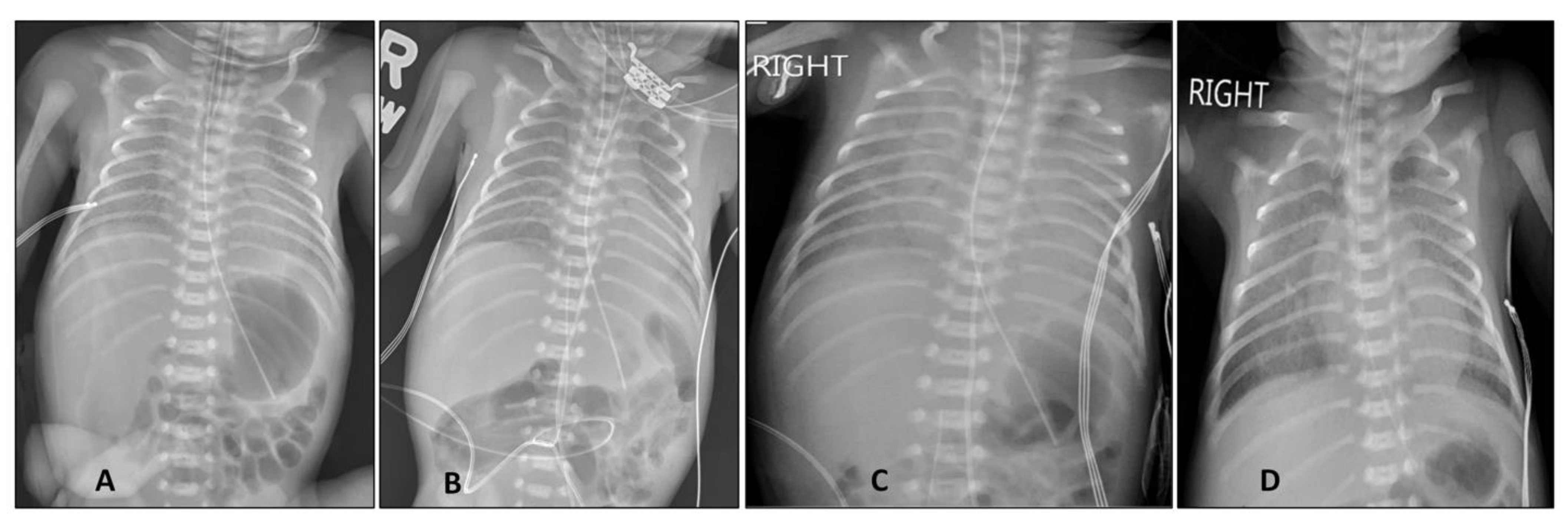
Respiratory Failure in an Extremely Premature Neonate with COVID-19
 ,
, Abstract
Share and Cite
Kumar, V.H.S.; Prasath, A.; Blanco, C.; Kenney, P.O.; Ostwald, C.M.; Meyer, T.S.; Clementi, C.F.; Maciejewski, R.; Wilby, M.T.; Reynolds, A.M.; et al. Respiratory Failure in an Extremely Premature Neonate with COVID-19. Children 2021, 8, 477. https://doi.org/10.3390/children8060477
Kumar VHS, Prasath A, Blanco C, Kenney PO, Ostwald CM, Meyer TS, Clementi CF, Maciejewski R, Wilby MT, Reynolds AM, et al. Respiratory Failure in an Extremely Premature Neonate with COVID-19. Children. 2021; 8(6):477. https://doi.org/10.3390/children8060477
Chicago/Turabian StyleKumar, Vasantha H. S., Arun Prasath, Clariss Blanco, Patrick O. Kenney, Christina M. Ostwald, Tracy S. Meyer, Cara F. Clementi, Richard Maciejewski, Mark T. Wilby, Anne Marie Reynolds, and et al. 2021. "Respiratory Failure in an Extremely Premature Neonate with COVID-19" Children 8, no. 6: 477. https://doi.org/10.3390/children8060477
APA StyleKumar, V. H. S., Prasath, A., Blanco, C., Kenney, P. O., Ostwald, C. M., Meyer, T. S., Clementi, C. F., Maciejewski, R., Wilby, M. T., Reynolds, A. M., Hpa, N. J., & Yu, K. O. A. (2021). Respiratory Failure in an Extremely Premature Neonate with COVID-19. Children, 8(6), 477. https://doi.org/10.3390/children8060477