Autonomic Function and Cerebral Autoregulation in Children Receiving Extracorporeal Life Support
 ,
, 
Highlights
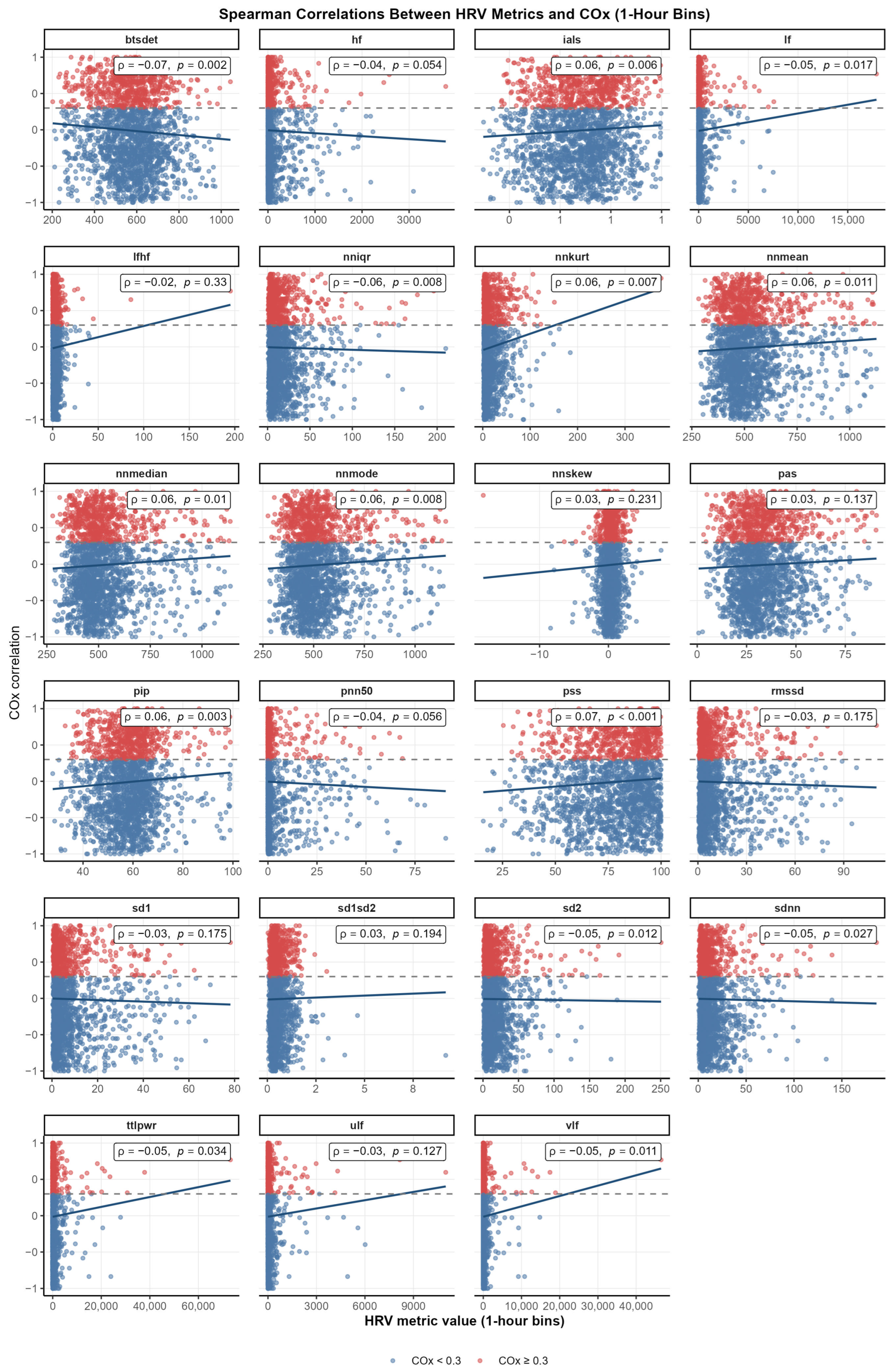
- In children supported with ECMO, heart rate variability and cerebral autoregulation showed weak coupling.
- Both NN skewness and COx were independently associated with neurological outcomes without evidence of interaction.
- Autonomic function and cerebrovascular regulation represent distinct physiologic domains that independently contribute prognostic information regarding neurological outcomes.
- These findings support the need for multimodal monitoring approaches and larger multicenter studies incorporating high-resolution data to better characterize neurological risk.
Abstract
1. Introduction
2. Materials and Methods
2.1. Study Design and Data Collection
2.2. Cerebral Autoregulation
2.3. Heart Rate Variability
2.4. Statistical Analysis
3. Results
3.1. Clinical Characteristics
3.2. Cerebral Autoregulation and HRV
3.3. HRV and Outcomes
4. Discussion
5. Conclusions
Supplementary Materials
Author Contributions
Funding
Institutional Review Board Statement
Informed Consent Statement
Data Availability Statement
Conflicts of Interest
Abbreviations
| HRV | Heart Rate Variability |
| CAR | Cerebral Autoregulation |
| ECMO | Extracorporeal Membrane Oxygenation |
| NN | Normal-to-Normal interval |
| COx | Cerebral Oximetry Index |
| PCPC | Pediatric Cerebral Performance Category |
| ANS | Autonomic Nervous System |
| TBI | Traumatic Brain Injury |
| CBF | Cerebral Blood Flow |
| ABI | Acute Brain Injury |
| VA | Venoarterial (extracorporeal membrane oxygenation) |
| VV | Venovenous (extracorporeal membrane oxygenation) |
| MAP | Mean Arterial Pressure |
| NIRS | Near-infrared Spectroscopy |
| StO2 | Cerebral Oxygen Saturation |
References
- Schmidt, M.; Burrell, A.; Roberts, L.; Bailey, M.; Sheldrake, J.; Rycus, P.T.; Hodgson, C.; Scheinkestel, C.; Cooper, D.J.; Thiagarajan, R.R.; et al. Predicting survival after ECMO for refractory cardiogenic shock: The survival after veno-arterial-ECMO (SAVE)-score. Eur. Heart J. 2015, 36, 2246–2256. [Google Scholar] [CrossRef]
- Zabrocki, L.A.; Brogan, T.V.; Statler, K.D.; Poss, W.B.; Rollins, M.D.; Bratton, S.L. Extracorporeal membrane oxygenation for pediatric respiratory failure: Survival and predictors of mortality. Crit. Care Med. 2011, 39, 364–370. [Google Scholar] [CrossRef]
- Barreto, J.A.; Qu, P.; Thiagarajan, R.R.; McGuire, J.K.; Brogan, T.V. Outcomes of Pediatric Venovenous Extracorporeal Membrane Oxygenation Using Dual-Lumen or Multisite Cannulation: Extracorporeal Life Support Database Study, 2000–2019. Pediatr. Crit. Care Med. 2025, 26, e689–e698. [Google Scholar] [CrossRef] [PubMed]
- Said, A.S.; Guilliams, K.P.; Bembea, M.M. Neurological Monitoring and Complications of Pediatric Extracorporeal Membrane Oxygenation Support. Pediatr. Neurol. 2020, 108, 31–39. [Google Scholar] [CrossRef] [PubMed]
- Nasr, D.M.; Rabinstein, A.A. Neurologic complications of extracorporeal membrane oxygenation. J. Clin. Neurol. 2015, 11, 383–389. [Google Scholar] [CrossRef]
- Lin, G.; Li, Y.; Zhuang, Y.; Fan, Q.; Luo, Y.; Zeng, H. Seizures in children undergoing extracorporeal membrane oxygenation: A systematic review and meta-analysis. Pediatr. Res. 2023, 93, 755–762. [Google Scholar] [CrossRef]
- Shah, N.; Mathur, S.; Shanmugham, P.; Li, X.; Thiagarajan, R.R.; Natarajan, S.; Raman, L. Neurologic Statistical Prognostication and Risk Assessment for Kids on Extracorporeal Membrane Oxygenation-Neuro SPARK. ASAIO J. 2024, 70, 305–312. [Google Scholar] [CrossRef]
- Hadad, R.; Haugaard, S.B.; Christensen, P.B.; Sarac, A.; Dominguez, M.H.; Sajadieh, A. Autonomic nerve function predicts risk of early death after discharge in acute medical disease. Am. J. Med. 2024, 137, 649–657.e642. [Google Scholar] [CrossRef] [PubMed]
- Limmer, A.; Laser, M.; Schütz, A. Mobile heart rate variability biofeedback as a complementary intervention after myocardial infarction: A randomized controlled study. Int. J. Behav. Med. 2022, 29, 230–239. [Google Scholar] [CrossRef]
- Burger, A.J.; Charlamb, M.; Sherman, H.B. Circadian patterns of heart rate variability in normals, chronic stable angina and diabetes mellitus. Int. J. Cardiol. 1999, 71, 41–48. [Google Scholar] [CrossRef]
- de Sousa, T.L.W.; Ostoli, T.L.V.d.P.; Sperandio, E.F.; Arantes, R.L.; Gagliardi, A.R.d.T.; Romiti, M.; da Silva, R.P.; Dourado, V.Z. Dose-response relationship between very vigorous physical activity and cardiovascular health assessed by heart rate variability in adults: Cross-sectional results from the EPIMOV study. PLoS ONE 2019, 14, e0210216. [Google Scholar]
- García, J.; Trigo, J.D.; Alesanco, Á.; Serrano, P.; Mateo, J.; Istepanian, R.S. Design and evaluation of a wireless decision-support system for heart rate variability study in haemodialysis follow-up procedures. Comput. Methods Programs Biomed. 2007, 88, 273–282. [Google Scholar] [CrossRef]
- Quispe-Cornejo, A.A.; Crippa, I.A.; Bakos, P.; Dominguez-Faure, A.; Creteur, J.; Taccone, F.S. Correlation between heart rate variability and cerebral autoregulation in septic patients. Auton. Neurosci. 2023, 244, 103051. [Google Scholar] [CrossRef]
- Chen, W.-L.; Chen, J.-H.; Huang, C.-C.; Kuo, C.-D.; Huang, C.-I.; Lee, L.-S. Heart rate variability measures as predictors of in-hospital mortality in ED patients with sepsis. Am. J. Emerg. Med. 2008, 26, 395–401. [Google Scholar] [CrossRef]
- Moridani, M.K.; Setarehdan, S.K.; Nasrabadi, A.M.; Hajinasrollah, E. Analysis of heart rate variability as a predictor of mortality in cardiovascular patients of intensive care unit. Biocybern. Biomed. Eng. 2015, 35, 217–226. [Google Scholar] [CrossRef]
- Ko, N.U. Cardiac manifestations of acute neurologic lesions. In Aminoff’s Neurology and General Medicine; Elsevier: Amsterdam, The Netherlands, 2014; pp. 183–198. [Google Scholar]
- Bauer, A.; Camm, A.J.; Cerutti, S.; Guzik, P.; Huikuri, H.; Lombardi, F.; Malik, M.; Peng, C.K.; Porta, A.; Sassi, R.; et al. Reference values of heart rate variability. Heart Rhythm. 2017, 14, 302–303. [Google Scholar] [CrossRef] [PubMed]
- Task Force of the European Society of Cardiology and the North American Society of Pacing and Electrophysiology. Heart rate variability: Standards of measurement, physiological interpretation and clinical use. Task Force of the European Society of Cardiology and the North American Society of Pacing and Electrophysiology. Circulation 1996, 93, 1043–1065. [Google Scholar]
- Kirschen, M.P.; Majmudar, T.; Beaulieu, F.; Burnett, R.; Shaik, M.; Morgan, R.W.; Baker, W.; Ko, T.; Balu, R.; Agarwal, K.; et al. Deviations from NIRS-derived optimal blood pressure are associated with worse outcomes after pediatric cardiac arrest. Resuscitation 2021, 168, 110–118. [Google Scholar] [CrossRef]
- Castillo-Pinto, C.; Yu, P.; Wainwright, M.S.; Kirschen, M.P. Impaired Cerebral Autoregulation in Children. Pediatr. Neurol. 2025, 167, 9–16. [Google Scholar] [CrossRef] [PubMed]
- Claassen, J.A.; Thijssen, D.H.; Panerai, R.B.; Faraci, F.M. Regulation of cerebral blood flow in humans: Physiology and clinical implications of autoregulation. Physiol. Rev. 2021, 101, 1487–1559. [Google Scholar] [CrossRef]
- Brady, K.M.; Mery, C.M. Cerebral autoregulation: Making sense of the nonsensical. J. Thorac. Cardiovasc. Surg. 2017, 154, 1045–1046. [Google Scholar] [CrossRef][Green Version]
- Czosnyka, M.; Brady, K.; Reinhard, M.; Smielewski, P.; Steiner, L.A. Monitoring of cerebrovascular autoregulation: Facts, myths, and missing links. Neurocritical Care 2009, 10, 373–386. [Google Scholar] [CrossRef] [PubMed]
- Castillo-Pinto, C.; Carpenter, J.L.; Donofrio, M.T.; Zhang, A.; Wernovsky, G.; Sinha, P.; Harrar, D. Incidence and predictors of epilepsy in children with congenital heart disease. Cardiol. Young 2022, 32, 918–924. [Google Scholar] [CrossRef] [PubMed]
- Vavilala, M.S.; Lee, L.A.; Boddu, K.; Visco, E.; Newell, D.W.; Zimmerman, J.J.; Lam, A.M. Cerebral autoregulation in pediatric traumatic brain injury. Pediatr. Crit. Care Med. 2004, 5, 257–263. [Google Scholar] [CrossRef]
- Joram, N.; Beqiri, E.; Pezzato, S.; Moscatelli, A.; Robba, C.; Liet, J.M.; Chenouard, A.; Bourgoin, P.; Czosnyka, M.; Léger, P.L.; et al. Continuous Monitoring of Cerebral Autoregulation in Children Supported by Extracorporeal Membrane Oxygenation: A Pilot Study. Neurocrit. Care 2021, 34, 935–945. [Google Scholar] [CrossRef]
- Fedriga, M.; Czigler, A.; Nasr, N.; Zeiler, F.A.; Park, S.; Donnelly, J.; Papaioannou, V.; Frisvold, S.K.; Wolf, S.; Rasulo, F.; et al. Autonomic Nervous System Activity during Refractory Rise in Intracranial Pressure. J. Neurotrauma 2021, 38, 1662–1669. [Google Scholar] [CrossRef]
- Zhang, R.; Zuckerman, J.H.; Iwasaki, K.; Wilson, T.E.; Crandall, C.G.; Levine, B.D. Autonomic neural control of dynamic cerebral autoregulation in humans. Circulation 2002, 106, 1814–1820. [Google Scholar] [CrossRef]
- Tian, F.; Morriss, M.C.; Chalak, L.; Venkataraman, R.; Ahn, C.; Liu, H.; Raman, L. Impairment of cerebral autoregulation in pediatric extracorporeal membrane oxygenation associated with neuroimaging abnormalities. Neurophotonics 2017, 4, 041410. [Google Scholar] [CrossRef]
- Hilz, M.J.; Wang, R.; Markus, J.; Ammon, F.; Hösl, K.M.; Flanagan, S.R.; Winder, K.; Koehn, J. Severity of traumatic brain injury correlates with long-term cardiovascular autonomic dysfunction. J. Neurol. 2017, 264, 1956–1967. [Google Scholar] [CrossRef]
- Mrozek, S.; Gobin, J.; Constantin, J.-M.; Fourcade, O.; Thomas, G. Crosstalk between brain, lung and heart in critical care. Anaesth. Crit. Care Pain Med. 2020, 39, 519–530. [Google Scholar] [CrossRef] [PubMed]
- Dong, K.; Krishnamoorthy, V.; Vavilala, M.S.; Miller, J.; Minic, Z.; Ohnuma, T.; Laskowitz, D.; Goldstein, B.A.; Ulloa, L.; Sheng, H.; et al. Data analysis protocol for early autonomic dysfunction characterization after severe traumatic brain injury. Front. Neurol. 2024, 15, 1484986. [Google Scholar] [CrossRef]
- Singh, J.; Lanzarini, E.; Paramala, S. Organic features of autonomic dysregulation in paediatric brain injury—Clinical and research implications for the management of patients with Rett syndrome. Neurosci. Biobehav. Rev. 2020, 118, 809–827. [Google Scholar] [CrossRef]
- Chen, M.W.; Lee, J.K.; Vezina, G.; Tekes, A.; Perin, J.; Li, R.; O’Kane, A.; McGowan, M.; Chang, T.; Parkinson, C.; et al. The Utility of Cerebral Autoregulation Indices in Detecting Severe Brain Injury Varies by Cooling Treatment Phase in Neonates with Hypoxic-Ischemic Encephalopathy. Dev. Neurosci. 2022, 44, 363–372. [Google Scholar] [CrossRef]
- Caicedo, A.; De Smet, D.; Vanderhaegen, J.; Naulaers, G.; Wolf, M.; Lemmers, P.; Van Bel, F.; Ameye, L.; Van Huffel, S. Impaired cerebral autoregulation using near-infrared spectroscopy and its relation to clinical outcomes in premature infants. Adv. Exp. Med. Biol. 2011, 701, 233–239. [Google Scholar] [CrossRef] [PubMed]
- Chock, V.Y.; Rose, L.A.; Mante, J.V.; Punn, R. Near-infrared spectroscopy for detection of a significant patent ductus arteriosus. Pediatr. Res. 2016, 80, 675–680. [Google Scholar] [CrossRef]
- Brady, K.M.; Lee, J.K.; Kibler, K.K.; Smielewski, P.; Czosnyka, M.; Easley, R.B.; Koehler, R.C.; Shaffner, D.H. Continuous time-domain analysis of cerebrovascular autoregulation using near-infrared spectroscopy. Stroke 2007, 38, 2818–2825. [Google Scholar] [CrossRef]
- Brady, K.M.; Mytar, J.O.; Lee, J.K.; Cameron, D.E.; Vricella, L.A.; Thompson, W.R.; Hogue, C.W.; Easley, R.B. Monitoring cerebral blood flow pressure autoregulation in pediatric patients during cardiac surgery. Stroke 2010, 41, 1957–1962. [Google Scholar] [CrossRef] [PubMed]
- Bourgoin, P.; Beqiri, E.; Smielewski, P.; Chenouard, A.; Gaultier, A.; Sadones, F.; Gouedard, U.; Joram, N.; Amedro, P. Optimal brain perfusion pressure derived from the continuous monitoring of cerebral autoregulation status during neonatal heart surgery under cardiopulmonary bypass in relation to brain injury: An observational study. Anaesth. Crit. Care Pain Med. 2025, 44, 101509. [Google Scholar] [CrossRef]
- Vest, A.N.; Da Poian, G.; Li, Q.; Liu, C.; Nemati, S.; Shah, A.J.; Clifford, G.D. An open source benchmarked toolbox for cardiovascular waveform and interval analysis. Physiol. Meas. 2018, 39, 105004. [Google Scholar] [CrossRef] [PubMed]
- Wiedemann, A.; Gr, G. Heart Rate Variability in Healthy Children Younger than 18 Months. J. Cardiovasc. Dis. Diagn. 2023, 11, S3. [Google Scholar]
- Silvetti, M.S.; Drago, F.; Ragonese, P. Heart rate variability in healthy children and adolescents is partially related to age and gender. Int. J. Cardiol. 2001, 81, 169–174. [Google Scholar] [CrossRef] [PubMed]
- Lavinio, A.; Ene-Iordache, B.; Nodari, I.; Girardini, A.; Cagnazzi, E.; Rasulo, F.; Smielewski, P.; Czosnyka, M.; Latronico, N. Cerebrovascular reactivity and autonomic drive following traumatic brain injury. Acta Neurochir. Suppl. 2008, 102, 3–7. [Google Scholar] [CrossRef]
- Appavu, B.; Dunning, E.; Hildebrandt, K.; Hanalioglu, D.; Abruzzo, T. Changes in autonomic function and cerebral and somatic oxygenation with arterial flow pulsatility for children requiring veno-arterial extracorporeal membrane oxygenation. Brain Spine 2024, 4, 102731. [Google Scholar] [CrossRef] [PubMed]
- Bozkurt, S.; van de Vosse, F.N.; Rutten, M.C. Enhancement of Arterial Pressure Pulsatility by Controlling Continuous-Flow Left Ventricular Assist Device Flow Rate in Mock Circulatory System. J. Med. Biol. Eng. 2016, 36, 308–315. [Google Scholar] [CrossRef]
- Marabotti, A.; Cianchi, G.; Bertini, P.; di Valvasone, S.; Lazzeri, C.; Bernardo, P.; Sangalli, F.; Paternoster, G.; Biavati, L.; Peris, A.; et al. The effect of intra-aortic balloon pump on survival and neurological outcome in patients treated with extracorporeal cardiopulmonary resuscitation: A meta-analysis and systematic review. Int. J. Cardiol. 2025, 419, 132690. [Google Scholar] [CrossRef] [PubMed]
- Temesgen, N.; Chekol, B.; Tamirie, T.; Eshetie, D.; Simeneh, N.; Abatneh, F. Adult sedation and analgesia in a resource limited intensive care unit—A Systematic Review and evidence based guideline. Ann. Med. Surg. 2021, 66, 102356. [Google Scholar] [CrossRef]
- Watson, B.D.; Kane-Gill, S.L. Sedation assessment in critically ill adults: 2001-2004 update. Ann. Pharmacother. 2004, 38, 1898–1906. [Google Scholar] [CrossRef]
- Nunan, D.; Sandercock, G.R.; Brodie, D.A. A quantitative systematic review of normal values for short-term heart rate variability in healthy adults. Pacing Clin. Electrophysiol. 2010, 33, 1407–1417. [Google Scholar] [CrossRef]
- Perkiömäki, J.S. Heart rate variability: Recent developments. Ann. Noninvasive Electrocardiol. 2002, 7, 83–85. [Google Scholar] [CrossRef]
- Clair, M.P.; Rambaud, J.; Flahault, A.; Guedj, R.; Guilbert, J.; Guellec, I.; Durandy, A.; Demoulin, M.; Jean, S.; Mitanchez, D.; et al. Prognostic value of cerebral tissue oxygen saturation during neonatal extracorporeal membrane oxygenation. PLoS ONE 2017, 12, e0172991. [Google Scholar] [CrossRef]
- Caicedo, A.; Naulaers, G.; Lemmers, P.; van Bel, F.; Wolf, M.; Van Huffel, S. Detection of cerebral autoregulation by near-infrared spectroscopy in neonates: Performance analysis of measurement methods. J. Biomed. Opt. 2012, 17, 117003. [Google Scholar] [CrossRef] [PubMed]
- Papademetriou, M.D.; Tachtsidis, I.; Elliot, M.J.; Hoskote, A.; Elwell, C.E. Multichannel near infrared spectroscopy indicates regional variations in cerebral autoregulation in infants supported on extracorporeal membrane oxygenation. J. Biomed. Opt. 2012, 17, 067008. [Google Scholar] [CrossRef]
- Bulas, D.; Penny, G. Neonatal ECMO: Neuroimaging and neurodevelopmental outcome. Semin. Perinatol. 2005, 29, 58–65. [Google Scholar] [CrossRef]
- Liu, J.-F.; Liu, Y.-N.; Zeng, Y.-T.; Gao, Z.-Y.; Cai, H.; Zheng, Y.-R.; Zhang, Q.-L.; Qiang, C. The association between changes in cerebral hemodynamics and cerebrovascular complications during ECMO treatment in neonates. PLoS ONE 2024, 19, e0314166. [Google Scholar] [CrossRef]
- Panunzi, S.; D’Orsi, L.; Iacoviello, D.; De Gaetano, A. A stochastic delay differential model of cerebral autoregulation. PLoS ONE 2015, 10, e0118456. [Google Scholar] [CrossRef]
- Julian, F.T. Neurovisceral Integration and Regulation of Peripheral Indices of ANS Function. In Catecholamine Research in the 21st Century; Academic Press: Cambridge, MA, USA, 2014. [Google Scholar]
- Thayer, J.F.; Lane, R.D. A model of neurovisceral integration in emotion regulation and dysregulation. J. Affect. Disord. 2000, 61, 201–216. [Google Scholar] [CrossRef] [PubMed]
- Papaioannou, V.E.; Budohoski, K.P.; Placek, M.M.; Czosnyka, Z.; Smielewski, P.; Czosnyka, M. Association of transcranial Doppler blood flow velocity slow waves with delayed cerebral ischemia in patients suffering from subarachnoid hemorrhage: A retrospective study. Intensive Care Med. Exp. 2021, 9, 11. [Google Scholar] [CrossRef] [PubMed]
- Rodrigues, G.D.; da Nobrega, A.C.L.; da Silva Soares, P.P. Respiratory training in older women: Unravelling central and peripheral hemodynamic slow oscillatory patterns. Exp. Gerontol. 2023, 172, 112058. [Google Scholar] [CrossRef]
- Antonio Franco, F. Cerebral Autoregulation and Syncope. Prog. Progress Cardiovasc. Dis. 2007, 50, 49–80. [Google Scholar] [CrossRef]
- Wagner, C.D.; Just, A.; Nafz, B.; Persson, P.B. Very low frequency oscillations in arterial blood pressure after autonomic blockade in conscious dogs. Am. J. Physiol. 1997, 272, R2034–R2039. [Google Scholar] [CrossRef]
- Kirschen, M.P.; Majmudar, T.; Diaz-Arrastia, R.; Berg, R.; Abella, B.S.; Topjian, A.; Balu, R. Deviations from PRx-derived optimal blood pressure are associated with mortality after cardiac arrest. Resuscitation 2022, 175, 81–87. [Google Scholar] [CrossRef]
- Thamjamrassri, T.; Watanitanon, A.; Moore, A.; Chesnut, R.M.; Vavilala, M.S.; Lele, A.V. A Pilot Prospective Observational Study of Cerebral Autoregulation and 12-Month Outcomes in Children With Complex Mild Traumatic Brain Injury: The Argument for Sufficiency Conditions Affecting TBI Outcomes. J. Neurosurg. Anesth. Anesthesiol. 2022, 34, 384–391. [Google Scholar] [CrossRef]
- Uryga, A.; Mataczyński, C.; Pelah, A.I.; Burzyńska, M.; Robba, C.; Czosnyka, M. Exploration of simultaneous transients between cerebral hemodynamics and the autonomic nervous system using windowed time-lagged cross-correlation matrices: A CENTER-TBI study. Acta Neurochir 2024, 166, 504. [Google Scholar] [CrossRef] [PubMed]
- Ono, M.; Joshi, B.; Brady, K.; Easley, R.B.; Kibler, K.; Conte, J.; Shah, A.; Russell, S.D.; Hogue, C.W. Cerebral blood flow autoregulation is preserved after continuous-flow left ventricular assist device implantation. J. Cardiothorac. Vasc. Anesth. 2012, 26, 1022–1028. [Google Scholar] [CrossRef]
- Hori, D.; Brown, C.; Ono, M.; Rappold, T.; Sieber, F.; Gottschalk, A.; Neufeld, K.J.; Gottesman, R.; Adachi, H.; Hogue, C.W. Arterial pressure above the upper cerebral autoregulation limit during cardiopulmonary bypass is associated with postoperative delirium. Br. J. Anaesth. 2014, 113, 1009–1017. [Google Scholar] [CrossRef] [PubMed]
- Andropoulos, D.B.; Brady, K.M.; Easley, R.B.; Fraser, C.D., Jr. Neuroprotection in Pediatric Cardiac Surgery: What is On the Horizon? Prog. Pediatr. Cardiol. 2010, 29, 113–122. [Google Scholar] [CrossRef]
- Pezzato, S.; Govindan, R.B.; Beqiri, E.; Smielewski, P.; Waberski, A.; Nuszkowski, M.; Licht, D.J.; du Plessis, A.J.; Munoz, R.A.; Yerebakan, C.; et al. Intraoperative Assessment of Cerebral Autoregulation With Cerebral Oximetry Index in Neonates Undergoing Cardiac Surgery: A Pilot Study. J. Cardiothorac. Vasc. Anesth. 2025, 39, 2049–2056. [Google Scholar] [CrossRef]
- Pezzato, S.; Govindan, R.B.; Bagnasco, F.; Panagopoulos, E.M.; Robba, C.; Beqiri, E.; Smielewski, P.; Munoz, R.A.; d’Udekem, Y.; Moscatelli, A.; et al. Cerebral autoregulation monitoring using the cerebral oximetry index after neonatal cardiac surgery: A single-center retrospective cohort study. J. Thorac. Cardiovasc. Surg. 2024, 168, 353–363.e354. [Google Scholar] [CrossRef]
- Spilka, J.M.; O’Halloran, C.P.; Marino, B.S.; Brady, K.M. Perspective on Cerebral Autoregulation Monitoring in Neonatal Cardiac Surgery Requiring Cardiopulmonary Bypass. Front. Neurol. 2021, 12, 740185. [Google Scholar] [CrossRef] [PubMed]
- Teixeira, M.T.; Goyal, A. Remimazolam. Adv. Anesth. 2024, 42, 131–150. [Google Scholar] [CrossRef]
- Battaglini, D.; da Silva, A.L.; Felix, N.S.; Rodrigues, G.; Antunes, M.A.; Rocha, N.N.; Capelozzi, V.L.; Morales, M.M.; Cruz, F.F.; Robba, C.; et al. Mild hypothermia combined with dexmedetomidine reduced brain, lung, and kidney damage in experimental acute focal ischemic stroke. Intensive Care Med. Exp. 2022, 10, 53. [Google Scholar] [CrossRef] [PubMed]
- Nakagawa, K.; Serrador, J.M.; LaRose, S.L.; Sorond, F.A. Dynamic cerebral autoregulation after intracerebral hemorrhage: A case-control study. BMC Neurol. 2011, 11, 108. [Google Scholar] [CrossRef] [PubMed]
- Rajeeb Kumar, M. Intravenous or inhalational anesthetics? In Essentials of Evidence-Based Practice of Neuroanesthesia and Neurocritical Care; Academic Press: Cambridge, MA, USA, 2022. [Google Scholar]
- Shimizu, Y.; Irifune, M.; Takahashi, T.; Oda, A.; Kamio, H.; Imamura, S.; Sasaki, U.; Imado, E.; Okada, Y.; Ago, Y.; et al. Nitrous oxide increases peripheral blood flow and decreases plasma adrenaline and noradrenaline concentrations in human volunteers: An in vivo nonrandomized clinical and in vitro chromaffin cell culture study. Eur. J. Pharmacol. 2025, 1003, 177899. [Google Scholar] [CrossRef] [PubMed]
- Galletly, D.C.; Buckley, D.H.; Robinson, B.J.; Corfiatis, T. Heart rate variability during propofol anaesthesia. Br. J. Anaesth. 1994, 72, 219–220. [Google Scholar] [CrossRef]
- Joe, H.B.; Chae, Y.J.; Song, S.H.; In Kyong, Y. Comparison of the effects of dexmedetomidine and propofol on the cardiovascular autonomic nervous system during spinal anesthesia: Preliminary randomized controlled observational study. J. Clin. Monit. Comput. 2023, 37, 1541–1551. [Google Scholar] [CrossRef]


| Abbreviation | Definition/Description | Unit |
|---|---|---|
| —Time-domain metrics— | ||
| NNmean | Mean NN interval | ms |
| NNmedian | Median NN interval | ms |
| NNmode | Mode NN interval | ms |
| NNskew | Skewness of NN intervals (distribution asymmetry) | — |
| NNkurt | Kurtosis of NN intervals (distribution peakedness) | — |
| NNIQR | Interquartile range of NN intervals | ms |
| SDNN | Standard deviation of all NN intervals (overall HRV) | ms |
| RMSSD | Root mean square of successive NN differences (short-term HRV) | ms |
| pNN50 | Percentage of NN intervals differing by >50 ms | % |
| —Frequency-domain metrics— | ||
| ULF | Power in ultra-low-frequency band (<0.003 Hz) | ms2 |
| VLF | Power in very-low-frequency band (0.003–0.04 Hz) | ms2 |
| LF | Power in low-frequency band (0.04–0.15 Hz) | ms2 |
| HF | Power in high-frequency band (0.15–0.4 Hz) | ms2 |
| LF/HF | Ratio of low- to high-frequency power | — |
| Total Power | Total spectral power (<0.4 Hz) | ms2 |
| —Nonlinear (Poincaré) metrics— | ||
| SD1 | Short-term HRV (Poincaré SD1) | ms |
| SD2 | Long-term HRV (Poincaré SD2) | ms |
| SD1/SD2 | Ratio of SD1 to SD2 (balance of short- and long-term HRV) | — |
| Clinical Characteristic | N | COx Preserved (N = 75) 1 | COx Impaired (N = 14) 1 | All (N = 89) 1 | p-Value 2 |
|---|---|---|---|---|---|
| Age at ECMO (months) | 89 | 1.80 [0.12, 12.72] | 0.12 [0.00, 83.28] | 1.80 [0.12, 13.80] | 0.5 |
| Sex | 89 | 0.6 | |||
| Male | 41 (55%) | 9 (64%) | 50 (56%) | ||
| Female | 34 (45%) | 5 (36%) | 39 (44%) | ||
| Indication | 89 | >0.9 | |||
| Respiratory | 21 (28%) | 4 (29%) | 25 (28%) | ||
| Hemodynamic | 54 (72%) | 10 (71%) | 64 (72%) | ||
| ECPR performed | 89 | 15 (20%) | 4 (29%) | 19 (21%) | 0.5 |
| Type (VV/VA) | 89 | >0.9 | |||
| VA | 59 (79%) | 11 (79%) | 70 (79%) | ||
| VV | 16 (21%) | 3 (21%) | 19 (21%) | ||
| Cannulation site | 52 | >0.9 | |||
| Peripheral | 30 (73%) | 8 (73%) | 38 (73%) | ||
| Central | 11 (27%) | 3 (27%) | 14 (27%) | ||
| ICU location | 89 | 0.046 | |||
| Cardiac ICU | 41 (55%) | 3 (21%) | 44 (49%) | ||
| Neonatal ICU | 24 (32%) | 7 (50%) | 31 (35%) | ||
| Pediatric ICU | 10 (13%) | 4 (29%) | 14 (16%) | ||
| Race/Ethnicity | 89 | 0.4 | |||
| 2 or more races | 2 (2.7%) | 0 (0%) | 2 (2.2%) | ||
| American Indian or Alaska Native | 6 (8.0%) | 1 (7.1%) | 7 (7.9%) | ||
| Asian | 7 (9.3%) | 0 (0%) | 7 (7.9%) | ||
| Black or African American | 4 (5.3%) | 1 (7.1%) | 5 (5.6%) | ||
| Hispanic | 12 (16%) | 5 (36%) | 17 (19%) | ||
| Native Hawaiian or Other Pacific Islander | 1 (1.3%) | 0 (0%) | 1 (1.1%) | ||
| Non-Hispanic White | 24 (32%) | 6 (43%) | 30 (34%) | ||
| Other/Unknown | 19 (25%) | 1 (7.1%) | 20 (22%) | ||
| ECMO run duration (hours) | 89 | 160.25 [92.42, 392.58] | 202.82 [108.43, 406.00] | 170.00 [93.00, 392.58] | 0.7 |
| Number of preexisting conditions | 89 | >0.9 | |||
| 0 | 7 (9.3%) | 1 (7.1%) | 8 (9.0%) | ||
| 1 | 14 (19%) | 3 (21%) | 17 (19%) | ||
| >2 | 54 (72%) | 10 (71%) | 64 (72%) | ||
| Number of prior neurologic diagnoses | 89 | 0.4 | |||
| 0 | 63 (84%) | 11 (79%) | 74 (83%) | ||
| 1 | 11 (15%) | 2 (14%) | 13 (15%) | ||
| >2 | 1 (1.3%) | 1 (7.1%) | 2 (2.2%) | ||
| ADHD diagnosis | 89 | 0 (0%) | 1 (7.1%) | 1 (1.1%) | 0.2 |
| Autism spectrum disorder | 89 | 1 (1.3%) | 1 (7.1%) | 2 (2.2%) | 0.3 |
| Cerebral palsy | 89 | 1 (1.3%) | 1 (7.1%) | 2 (2.2%) | 0.3 |
| Developmental delay/ learning disability | 89 | 5 (6.7%) | 1 (7.1%) | 6 (6.7%) | >0.9 |
| Epilepsy/seizure disorder | 89 | 1 (1.3%) | 1 (7.1%) | 2 (2.2%) | 0.3 |
| History of febrile/provoked seizures | 89 | 2 (2.7%) | 0 (0%) | 2 (2.2%) | >0.9 |
| Prior metabolic injury | 89 | 4 (5.3%) | 1 (7.1%) | 5 (5.6%) | 0.6 |
| Lactic acid (mmol/L) | 89 | 1.90 [1.20, 4.30] | 3.30 [2.50, 8.60] | 2.40 [1.30, 4.30] | 0.069 |
| Hemoglobin (g/dL) | 89 | 11.30 [10.30, 12.20] | 11.70 [11.10, 13.00] | 11.30 [10.40, 12.50] | 0.3 |
| pH category | 89 | 0.034 | |||
| Severe acidosis (<7.10) | 4 (5.3%) | 2 (14%) | 6 (6.7%) | ||
| Moderate acidosis (7.10–7.24) | 5 (6.7%) | 1 (7.1%) | 6 (6.7%) | ||
| Mild acidosis (7.25–7.34) | 28 (37%) | 9 (64%) | 37 (42%) | ||
| Normal (≥7.35) | 38 (51%) | 2 (14%) | 40 (45%) | ||
| Arterial pCO2 (mmHg) | 89 | 43.90 [39.50, 48.00] | 44.10 [37.30, 47.80] | 43.90 [39.50, 47.80] | 0.7 |
| Arterial pO2 (mmHg) | 89 | 124.40 [107.50, 146.80] | 131.35 [98.60, 159.50] | 124.90 [106.60, 146.80] | >0.9 |
| End-tidal CO2 (mmHg) | 83 | 24.44 [16.19, 31.22] | 25.42 [21.15, 31.57] | 24.61 [16.80, 31.32] | 0.5 |
| Rectal temperature (°F) | 54 | 97.71 [96.54, 98.18] | 97.39 [97.08, 97.88] | 97.62 [96.54, 98.18] | 0.6 |
| Modified PEWS | 33 | 11.48 [9.26, 13.59] | 13.37 [12.82, 13.92] | 12.03 [9.40, 13.76] | 0.2 |
| Number of vasopressor infusions | 89 | >0.9 | |||
| 0 | 22 (29%) | 3 (21%) | 25 (28%) | ||
| 1 | 27 (36%) | 6 (43%) | 33 (37%) | ||
| 2 | 18 (24%) | 4 (29%) | 22 (25%) | ||
| 3 | 8 (11%) | 1 (7.1%) | 9 (10%) | ||
| Number of sedative/analgesic infusions | 89 | 0.7 | |||
| 0 | 16 (21%) | 3 (21%) | 19 (21%) | ||
| 1 | 19 (25%) | 2 (14%) | 21 (24%) | ||
| 2 | 27 (36%) | 8 (57%) | 35 (39%) | ||
| 3 | 11 (15%) | 1 (7.1%) | 12 (13%) | ||
| 4 | 2 (2.7%) | 0 (0%) | 2 (2.2%) | ||
| Cerebral oxygenation index (COx) | 89 | −0.04 [−0.22, 0.13] | 0.48 [0.38, 0.64] | 0.01 [−0.17, 0.21] | <0.001 |
| PCPC at admission | 89 | 0.091 | |||
| 1 | 63 (84%) | 11 (79%) | 74 (83%) | ||
| 2 | 5 (6.7%) | 2 (14%) | 7 (7.9%) | ||
| 3 | 7 (9.3%) | 0 (0%) | 7 (7.9%) | ||
| 4 | 0 (0%) | 1 (7.1%) | 1 (1.1%) | ||
| PCPC at discharge | 86 | 0.4 | |||
| 1 | 11 (15%) | 1 (7.1%) | 12 (14%) | ||
| 2 | 20 (28%) | 3 (21%) | 23 (27%) | ||
| 3 | 16 (22%) | 2 (14%) | 18 (21%) | ||
| 4 | 1 (1.4%) | 1 (7.1%) | 2 (2.3%) | ||
| 6 | 24 (33%) | 7 (50%) | 31 (36%) | ||
| PCPC at 12 months | 66 | 0.9 | |||
| 1 | 13 (24%) | 2 (17%) | 15 (23%) | ||
| 2 | 7 (13%) | 2 (17%) | 9 (14%) | ||
| 3 | 9 (17%) | 1 (8.3%) | 10 (15%) | ||
| 4 | 1 (1.9%) | 0 (0%) | 1 (1.5%) | ||
| 6 | 24 (44%) | 7 (58%) | 31 (47%) | ||
| ICU length of stay (days) | 89 | 32.90 [18.47, 64.20] | 18.93 [8.78, 37.04] | 30.58 [16.18, 58.56] | 0.12 |
| Total hospital stay (days) | 86 | 56.52 [27.00, 120.50] | 23.00 [14.00, 68.00] | 49.00 [26.00, 107.96] | 0.069 |
| 30-day mortality | 86 | 11 (15%) | 5 (36%) | 16 (19%) | 0.13 |
| Mortality at discharge | 86 | 24 (33%) | 7 (50%) | 31 (36%) | 0.2 |
| Diffuse edema | 51 | 2 (4.7%) | 2 (25%) | 4 (7.8%) | 0.11 |
| Diffuse ischemia | 51 | 0 (0%) | 1 (13%) | 1 (2.0%) | 0.2 |
| Focal ischemia | 51 | 1 (2.3%) | 2 (25%) | 3 (5.9%) | 0.061 |
| Hemorrhage (extra-axial) | 51 | 5 (12%) | 1 (13%) | 6 (12%) | >0.9 |
| Hemorrhage (intraparenchymal) | 51 | 1 (2.3%) | 1 (13%) | 2 (3.9%) | 0.3 |
| IVH (severe) | 51 | 0 (0%) | 0 (0%) | 0 (0%) | >0.9 |
| Any abnormal imaging | 51 | 9 (21%) | 4 (50%) | 13 (25%) | 0.2 |
| HRV Metric | N | COx Preserved (N = 75) 1 | COx Impaired (N = 14) 1 | All (N = 89) 1 | p-Value 2 |
|---|---|---|---|---|---|
| Mean NN (ms) | 89 | 497.6 [426.2, 561.3] | 487.7 [446.6, 559.4] | 492.0 [433.8, 559.4] | 0.8 |
| Median NN (ms) | 89 | 496.7 [425.7, 560.9] | 487.7 [446.2, 559.0] | 491.8 [433.7, 559.0] | 0.8 |
| Mode NN (ms) | 89 | 495.5 [424.7, 559.4] | 487.9 [445.7, 558.2] | 491.6 [433.3, 558.2] | 0.8 |
| NN Skewness | 89 | 0.2 [−0.1, 0.6] | 0.3 [0.1, 0.5] | 0.2 [−0.1, 0.6] | 0.3 |
| NN Kurtosis | 89 | 12.5 [7.0, 21.2] | 16.8 [10.8, 33.0] | 12.6 [7.1, 21.6] | 0.3 |
| NN IQR (ms) | 89 | 10.4 [7.0, 17.8] | 8.3 [4.0, 10.4] | 10.2 [6.8, 17.3] | 0.14 |
| SDNN (ms) | 89 | 10.4 [6.9, 14.5] | 7.5 [4.1, 11.7] | 9.9 [6.3, 14.1] | 0.2 |
| RMSSD (ms) | 89 | 6.9 [3.4, 12.3] | 5.7 [2.8, 7.6] | 6.0 [3.2, 12.1] | 0.4 |
| pNN50 (%) | 89 | 0.3 [0.1, 2.3] | 0.3 [0.2, 0.5] | 0.3 [0.1, 1.6] | 0.8 |
| Detrended fluctuation (BTS) | 89 | 571.2 [499.6, 677.1] | 591.7 [526.4, 604.0] | 577.4 [513.0, 660.5] | 0.8 |
| ULF Power | 89 | 34.6 [11.3, 68.5] | 19.1 [6.5, 45.8] | 31.1 [11.1, 64.4] | 0.4 |
| VLF Power | 89 | 66.4 [19.6, 163.8] | 45.8 [18.8, 126.9] | 58.7 [19.6, 161.1] | 0.5 |
| LF Power | 89 | 23.1 [8.6, 83.7] | 18.6 [8.4, 63.9] | 22.4 [8.6, 73.9] | 0.6 |
| HF Power | 89 | 28.8 [8.5, 85.4] | 26.1 [9.0, 36.4] | 26.6 [9.0, 78.5] | 0.6 |
| LF/HF Ratio | 89 | 2.0 [0.9, 4.0] | 2.0 [1.5, 2.4] | 2.0 [1.0, 3.6] | >0.9 |
| Total Power | 89 | 177.0 [85.8, 357.8] | 121.0 [45.9, 403.9] | 167.9 [75.6, 357.8] | 0.3 |
| SD1 (ms) | 89 | 4.9 [2.4, 8.7] | 4.0 [2.0, 5.3] | 4.3 [2.3, 8.6] | 0.4 |
| SD2 (ms) | 89 | 12.1 [7.9, 18.6] | 9.5 [5.1, 16.0] | 11.4 [7.8, 18.2] | 0.3 |
| SD1/SD2 Ratio | 89 | 0.4 [0.3, 0.7] | 0.5 [0.4, 0.6] | 0.4 [0.3, 0.7] | 0.7 |
Disclaimer/Publisher’s Note: The statements, opinions and data contained in all publications are solely those of the individual author(s) and contributor(s) and not of MDPI and/or the editor(s). MDPI and/or the editor(s) disclaim responsibility for any injury to people or property resulting from any ideas, methods, instructions or products referred to in the content. |
© 2026 by the authors. Licensee MDPI, Basel, Switzerland. This article is an open access article distributed under the terms and conditions of the Creative Commons Attribution (CC BY) license.
Share and Cite
Castillo-Pinto, C.; Lake, E.; Vong, K.; Brogan, T.V.; Wainwright, M.S. Autonomic Function and Cerebral Autoregulation in Children Receiving Extracorporeal Life Support. Children 2026, 13, 409. https://doi.org/10.3390/children13030409
Castillo-Pinto C, Lake E, Vong K, Brogan TV, Wainwright MS. Autonomic Function and Cerebral Autoregulation in Children Receiving Extracorporeal Life Support. Children. 2026; 13(3):409. https://doi.org/10.3390/children13030409
Chicago/Turabian StyleCastillo-Pinto, Carlos, Edward Lake, Kin Vong, Thomas V. Brogan, and Mark S. Wainwright. 2026. "Autonomic Function and Cerebral Autoregulation in Children Receiving Extracorporeal Life Support" Children 13, no. 3: 409. https://doi.org/10.3390/children13030409
APA StyleCastillo-Pinto, C., Lake, E., Vong, K., Brogan, T. V., & Wainwright, M. S. (2026). Autonomic Function and Cerebral Autoregulation in Children Receiving Extracorporeal Life Support. Children, 13(3), 409. https://doi.org/10.3390/children13030409