Study of the Relationship Between Cyberbullying and Mental Health in Adolescents—A Systematic Review

 , , , and
Highlights
- Cyberbullying victims experience significantly higher rates of depression (90%) and anxiety (87%) compared to aggressors, with effects often being more severe and prolonged than traditional bullying due to anonymity and lack of safe spaces.
- Vulnerable populations, specifically females and LGBTQ+ adolescents, show a higher susceptibility to victimization and severe emotional outcomes, such as suicidal ideation and post-traumatic stress symptoms.
- Effective prevention requires a multidimensional approach involving families, schools, and health professionals, moving beyond school-only interventions to include parental mediation and societal awareness.
- Interventions must prioritize emotional regulation training and the development of prosocial skills (empathy) for both victims and aggressors to mitigate long-term mental health deterioration.
Abstract
1. Introduction
2. Materials and Methods
2.1. Research Question and Eligibility Criteria
2.2. Objectives
2.2.1. General Objective
2.2.2. Specific Objectives
- Identify the prevalence of cyberbullying in the adolescent population, considering sociodemographic and contextual variables (age, sex, geographic environment, and socioeconomic status).
- Explore the emotional and psychological consequences of cyberbullying in victims, including symptoms such as anxiety, depression, suicidal ideation, stress, and social isolation.
- Examine the psychosocial effects of cyberbullying on aggressors, especially in terms of risk behaviors, low empathy, and mental health problems.
- Analyze the role of bystanders in cyberbullying situations, as well as their influence on the perpetuation or mitigation of the phenomenon.
- Explore intervention proposals against cyberbullying, evaluating the role of educational institutions, families, and psychoeducational programs.
- Evaluate the epidemiological aggregates and risk/protective factors that influence the development of mental health disorders in the context of digital harassment.
2.3. Search Strategy and Sources Used
2.4. Study Selection
2.5. Data Extraction
2.6. Synthesis Method
2.7. Quality Assessment
3. Results
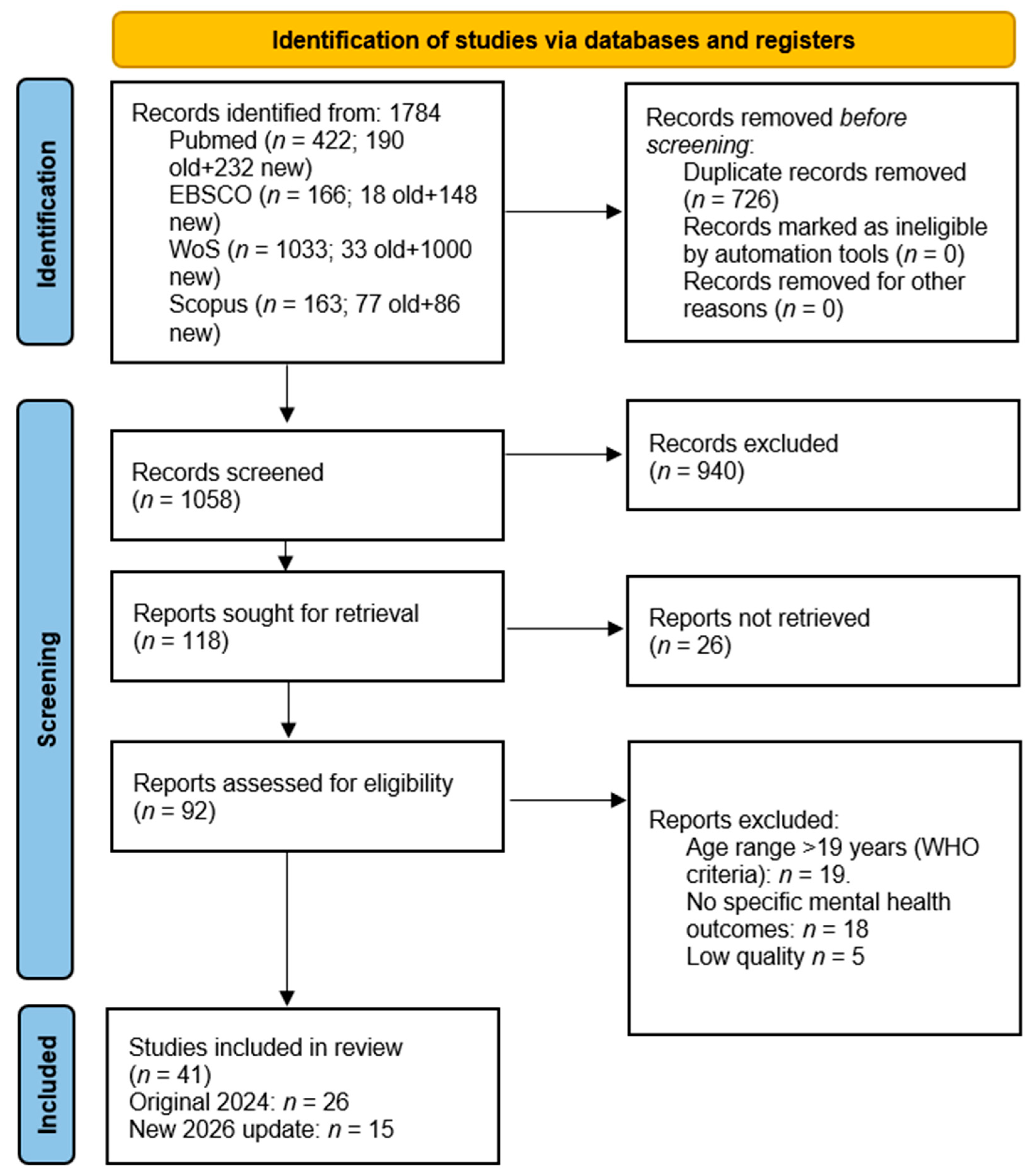
3.1. Flow Chart
3.2. Articles Included in the Review
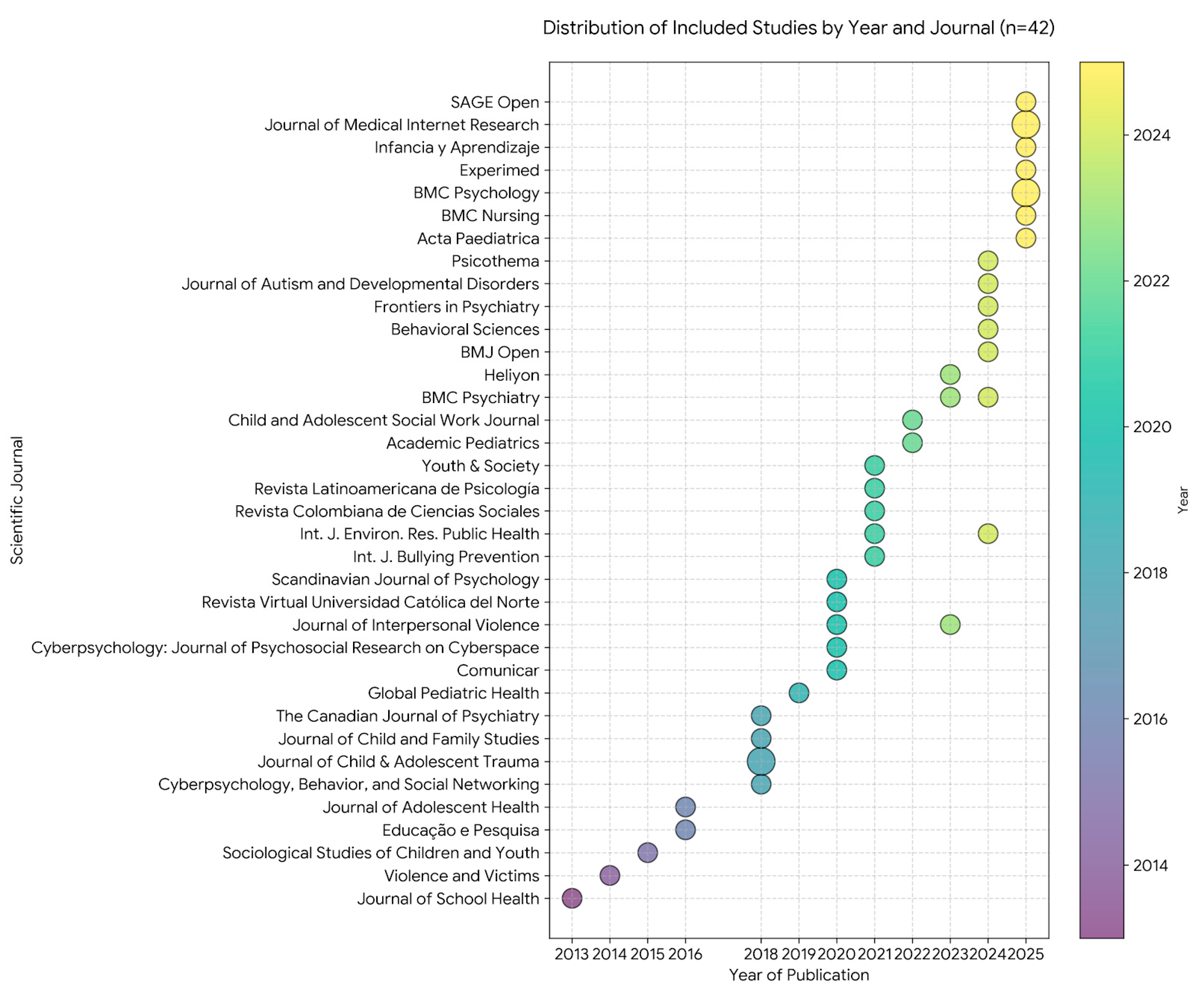
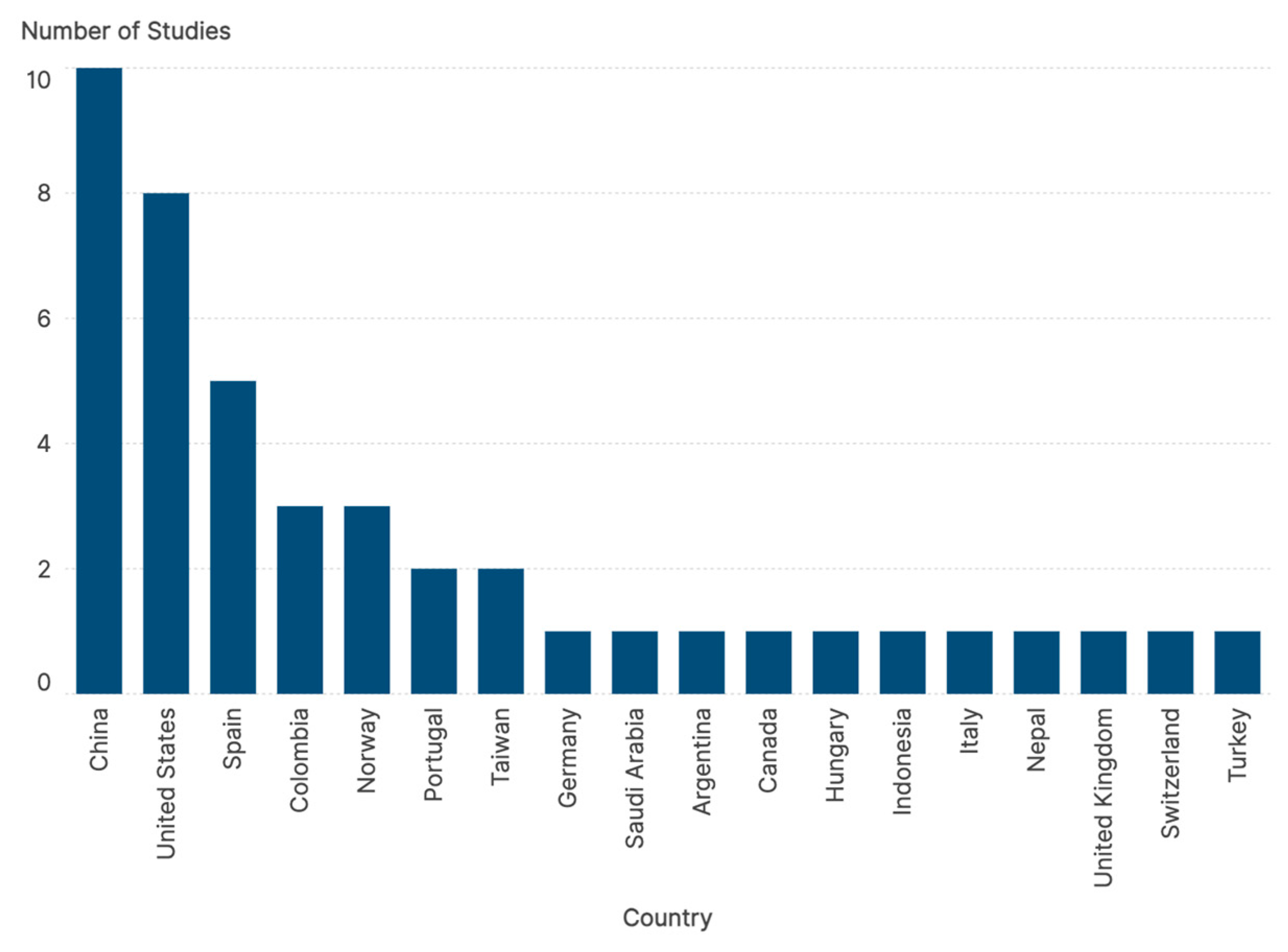
3.3. Characteristics of the Studies Included in the Review (Bibliometric Study)
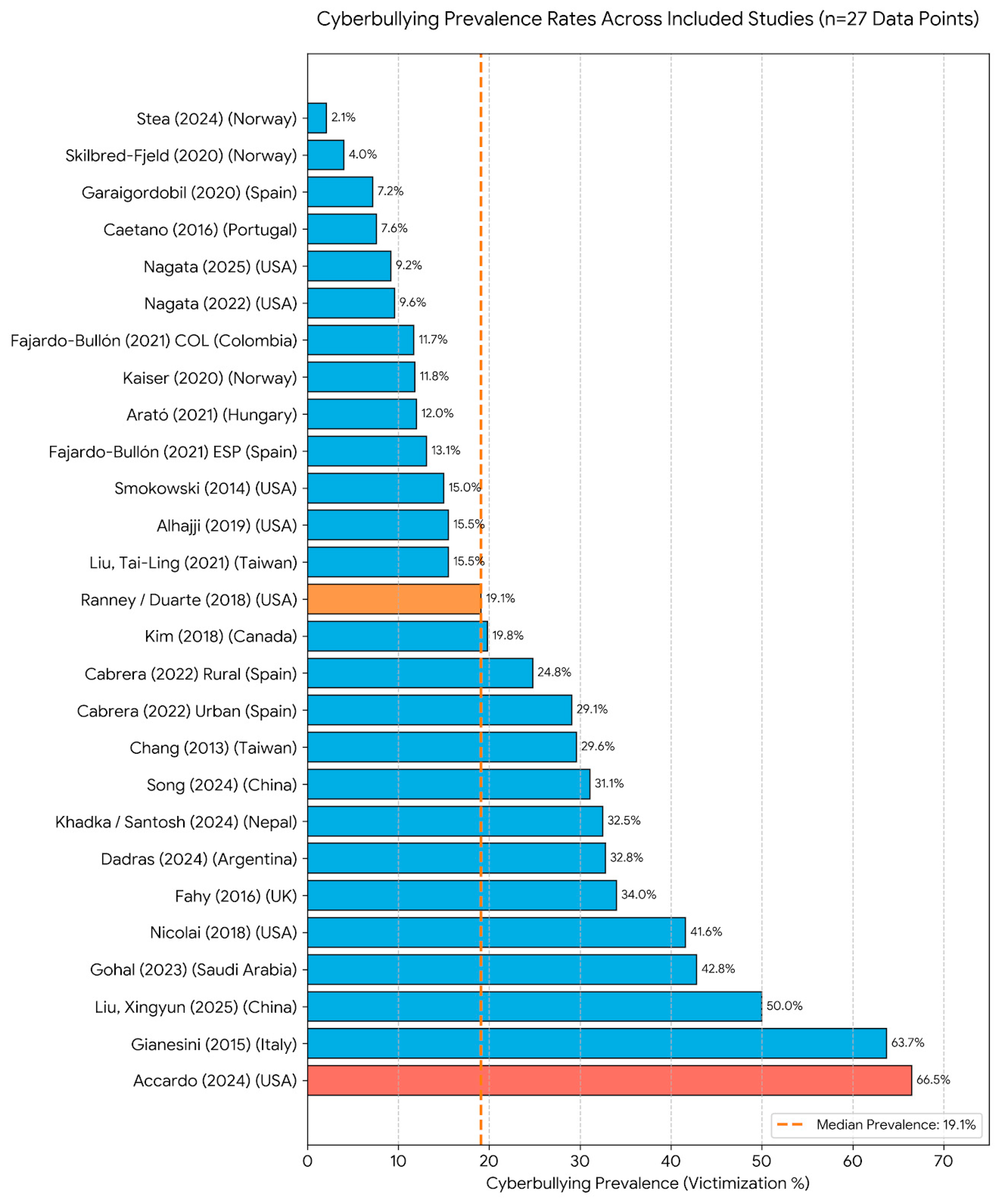
3.4. Prevalence of Bullying and Cyberbullying
3.5. Emotional Impact on Victims and Aggressors of Bullying and Cyberbullying
3.6. Perceptions of Bullying and Cyberbullying
3.7. Contextual and Demographic Factors
3.8. Role of Bystanders
- Followers and Accomplices: Individuals who actively collaborate with the aggressor in executing the bullying.
- Passive Reinforcers: Subjects who indirectly validate the aggression through digital interactions (e.g., “liking” or sharing content), often without a direct link to the parties involved.
- Minimizers: Observers who strip the act of its violent nature, frequently categorizing it as a joke or a trivial interaction.
- Prosocial Bystanders: Those who actively intervene in defense of the victim by providing emotional support, confronting the aggressor, or seeking third-party mediation.
- The fear of being socially labeled as suffering from reactive cyberbullying inhibits helpful behavior.
- The nature of the digital environment, with massive audiences, encourages the assumption that other participants or adults will intervene, thereby displacing individual responsibility.
- A significant proportion of bystanders report lacking the communication or coping strategies necessary to manage the conflict effectively.
3.9. Cyberbullying Prevention
3.10. Intervention in Cases of Cyberbullying
- (1)
- Diagnosis and assessment through interviews with all involved parties (victims, aggressors, families, and peers);
- (2)
- Design and implementation of an action plan (victim support, aggressor monitoring, and peer sensitization);
- (3)
- Long-term evaluation and follow-up [75].
- Behavioral Techniques: Social skills training, assertiveness, and self-advocacy.
- Cognitive Techniques: Cognitive restructuring to challenge irrational beliefs and self-control training to mitigate anger.
- Emotional Techniques: Use of play and dramatization to facilitate the expression of feelings.
4. Discussion
4.1. Prevalence Heterogeneity and Methodological Implications
4.2. Clinical Impact and Psychiatric Morbidity
4.3. Modernized Interventions and the Role of Nursing
4.4. Limitations of the Study
4.5. Strengths of the Study
5. Conclusions
- Cyberbullying prevalence exhibits significant global variability, with a identified median of 19.1%. This fluctuation is driven by methodological heterogeneity and the emergence of specialized harassment strategies in the post-pandemic era.
- There is a direct and severe relationship between digital victimization and mental health deterioration, characterized by high rates of depression (90%) and anxiety (87%). Most critically, the report of suicide attempts in 19.0% of victims identifies cyberbullying as a primary clinical indicator for psychiatric risk.
- Beyond gender and sexual orientation (LGBTQ+), neurodivergent adolescents—specifically those with autism spectrum disorder—represent a critical risk group, with prevalence rates reaching 68.9%. Interventions must be urgently tailored to address the unique social–digital challenges faced by these populations.
- Bystanders are not passive observers but secondary victims who experience significant psychological distress, including fear and moral frustration. Transforming “passive reinforcers” into “active upstanders” is essential to breaking the cycle of violence.
- Traditional educational models are insufficient for the current digital landscape. The implementation of modernized cyber-education, utilizing interactive tools and “serious games,” is fundamental to fostering digital citizenship and empathy.
- As health leaders, nursing professionals must play a central role in school-based prevention and clinical intervention. A holistic care model focused on emotional regulation and the mitigation of “thwarted belongingness” is necessary to provide effective support for affected youth.
Supplementary Materials
Author Contributions
Funding
Institutional Review Board Statement
Informed Consent Statement
Data Availability Statement
Acknowledgments
Conflicts of Interest
Abbreviations
| BDI-II | Beck Depression Inventory-II |
| BSI | Brief Symptom Inventory |
| CES-D | Center for Epidemiologic Studies Depression Scale |
| CYBAGRESS | Cyber-Aggression Scale for Mobile Phone and Internet |
| CYBVYC | Cyber-Victimization Scale for Mobile Phone and Internet |
| DASS | Depression, Anxiety and Stress Scale |
| DERS-SF | Difficulties in Emotion Regulation Scale—Short Form |
| GSHS | Global School-based Student Health Survey |
| HBSC | Health Behaviour in School-aged Children |
| HSCL-25 | Hopkins Symptom Checklist-25 |
| ICIB | School Cyberbullying Instrument |
| ICT | Information and Communication Technologies |
| JBI | Joanna Briggs Institute |
| KPDS-10 | Kessler Psychological Distress Scale |
| LGBT | Lesbian, Gay, Bisexual, and Transgender |
| MeSH | Medical Subject Headings |
| MHI-5 | Mental Health Inventory-5 |
| NSSI | Non-Suicidal Self-Injury |
| OECD | Organisation for Economic Co-operation and Development |
| OSF | Open Science Framework |
| PEO | Population, Intervention, Outcome |
| PRISMA | Preferred Reporting Items for Systematic Reviews and Meta-Analyses |
| PTSD | Post-Traumatic Stress Disorder |
| SAS-A | Social Anxiety Scale for Adolescents |
| SCL-90-R | Symptom Checklist-90-Revised |
| SDQ | Strengths and Difficulties Questionnaire |
| SES | Socioeconomic Status |
References
- Peebles, E. Cyberbullying: Hiding behind the Screen. Paediatr. Child Health 2014, 19, 527–528. [Google Scholar] [CrossRef] [Scilit]
- Belsey, B. Cyberbullying: An Emerging Threat to the Always on Generation. Available online: http://www.cyberbullying.ca/ (accessed on 19 February 2026).
- Smith, P.K.; Mahdavi, J.; Carvalho, M.; Fisher, S.; Russell, S.; Tippett, N. Cyberbullying: Its Nature and Impact in Secondary School Pupils. J. Child Psychol. Psychiatry 2008, 49, 376–385. [Google Scholar] [CrossRef] [Scilit]
- Giumetti, G.W.; Kowalski, R.M. Cyberbullying via Social Media and Well-Being. Curr. Opin. Psychol. 2022, 45, 101314. [Google Scholar] [CrossRef] [Scilit]
- OECD. Measuring the Digital Transformation; OECD: Paris, France, 2019. [Google Scholar]
- Tao, S.; Lan, M.; Tan, C.Y.; Liang, Q.; Pan, Q.; Law, N.W.Y. Adolescents’ Cyberbullying Experience and Subjective Well-Being: Sex Difference in the Moderating Role of Cognitive-Emotional Regulation Strategy. Comput. Hum. Behav. 2024, 153, 108122. [Google Scholar] [CrossRef] [Scilit]
- Kemp, S. Digital 2024: Global Overview Report. Available online: https://datareportal.com/reports/digital-2024-global-overview-report (accessed on 19 February 2026).
- Janta, B.; Webb, S.; Copping, D.; Kritikos, E.; Curran, L.B. EU Children’s Participation Platform Findings from the Consultation with Children on Cyberbullying; EU Children’s Participation Platform: Brussels, Belgium, 2025. [Google Scholar]
- Patchin, J.; Hinduja, S. 2025 Cyberbullying Data. Available online: https://cyberbullying.org/2025-cyberbullying-data (accessed on 19 February 2026).
- Alina, C.; Molcho, M.; Pickett, W. A Focus on Adolescent Peer Violence and Bullying in Europe, Central Asia and Canada. In Health Behaviour in School-Aged Children International Report from the 2021/2022 Survey; WHO: Copenhagen, Denmark, 2024; Volume 2. [Google Scholar]
- Patiño-Masó, J.; Gras, M.-E.; Salamó Avellaneda, A.; Arboix Perejamo, M.; Font-Mayolas, S. Acoso Escolar En Estudiantes de Secundaria: Consumo de Alcohol, Percepción de Salud y Calidad de Las Relaciones Familiares En Agresores y/o Víctimas. Health Addict./Salud Drog. 2021, 21, 76–90. [Google Scholar] [CrossRef] [Scilit]
- Hinduja, S.; Patchin, J.W. Cyberbullying: An Exploratory Analysis of Factors Related to Offending and Victimization. Deviant Behav. 2008, 29, 129–156. [Google Scholar] [CrossRef] [Scilit]
- Buelga, S.; Martínez–Ferrer, B.; Cava, M. Differences in Family Climate and Family Communication among Cyberbullies, Cybervictims, and Cyber Bully–Victims in Adolescents. Comput. Hum. Behav. 2017, 76, 164–173. [Google Scholar] [CrossRef] [Scilit]
- Pieschl, S.; Porsch, T.; Kahl, T.; Klockenbusch, R. Relevant Dimensions of Cyberbullying: Results from Two Experimental Studies. J. Appl. Dev. Psychol. 2013, 34, 241–252. [Google Scholar] [CrossRef] [Scilit]
- Kowalski, R.M.; Giumetti, G.W.; Schroeder, A.N.; Lattanner, M.R. Bullying in the Digital Age: A Critical Review and Meta-Analysis of Cyberbullying Research among Youth. Psychol. Bull. 2014, 140, 1073–1137. [Google Scholar] [CrossRef] [Scilit] [PubMed]
- Kreši Ori, M.; Kaštelan, A. Bullying through the Internet-Ciberbullying. Psychiatr. Danub. 2020, 32, 269–272. [Google Scholar]
- António, R.; Guerra, R.; Moleiro, C. Cyberbullying during COVID-19 Lockdowns: Prevalence, Predictors, and Outcomes for Youth. Curr. Psychol. 2024, 43, 1067–1083. [Google Scholar] [CrossRef] [Scilit] [PubMed]
- Beckman, L.; Hellström, L.; von Kobyletzki, L. Cyber Bullying among Children with Neurodevelopmental Disorders: A Systematic Review. Scand. J. Psychol. 2020, 61, 54–67. [Google Scholar] [CrossRef] [Scilit] [PubMed]
- Macmillan, K.; Berg, T.; Just, M.; Stewart, M.E. Online Safety Experiences of Autistic Young People: An Interpretative Phenomenological Analysis. Res. Autism Spectr. Disord. 2022, 96, 101995. [Google Scholar] [CrossRef] [Scilit]
- Liu, T.-L.; Chen, Y.-L.; Hsiao, R.C.; Ni, H.-C.; Liang, S.H.-Y.; Lin, C.-F.; Chan, H.-L.; Hsieh, Y.-H.; Wang, L.-J.; Lee, M.-J.; et al. Adolescent–Caregiver Agreement Regarding the School Bullying and Cyberbullying Involvement Experiences of Adolescents with Autism Spectrum Disorder. Int. J. Environ. Res. Public Health 2023, 20, 3733. [Google Scholar] [CrossRef] [Scilit]
- Liu, T.-L.; Hsiao, R.C.; Chou, W.-J.; Yen, C.-F. Social Anxiety in Victimization and Perpetration of Cyberbullying and Traditional Bullying in Adolescents with Autism Spectrum Disorder and Attention-Deficit/Hyperactivity Disorder. Int. J. Environ. Res. Public Health 2021, 18, 5728. [Google Scholar] [CrossRef] [Scilit]
- Varjas, K.; Henrich, C.C.; Meyers, J. Urban Middle School Students’ Perceptions of Bullying, Cyberbullying, and School Safety. J. Sch. Violence 2009, 8, 159–176. [Google Scholar] [CrossRef] [Scilit]
- Zhu, C.; Huang, S.; Evans, R.; Zhang, W. Cyberbullying Among Adolescents and Children: A Comprehensive Review of the Global Situation, Risk Factors, and Preventive Measures. Front. Public Health 2021, 9, 634909. [Google Scholar] [CrossRef] [Scilit] [PubMed]
- Suraseth, C.; Koraneekij, P. Cyberbullying among Secondary School Students: Analyzing Prediction and Relationship with Background, Social Status, and ICT Use. Heliyon 2024, 10, e30775. [Google Scholar] [CrossRef] [Scilit]
- Heiman, T.; Olenik-Shemesh, D. Cyber-Victimization Experience among Higher Education Students: Effects of Social Support, Loneliness, and Self-Efficacy. Int. J. Environ. Res. Public Health 2022, 19, 7395. [Google Scholar] [CrossRef] [Scilit]
- Yildiirm, T.; Tan Kurtay, D.; Caner-Yildirim, S. Investigation of University Students’ Cyber Victimization Experience in Relation to Psychological Symptoms and Social Media Use. Türk Psikolojik Danışma Rehb. Derg. 2022, 12, 579–592. [Google Scholar] [CrossRef] [Scilit]
- Serrano Marchuet, P.; López Granados, L. Redes Sociales y Pantallas: Impacto En La Edad Pediátrica. Pediatr. Integral 2023, 27, 193–200. [Google Scholar]
- Bussu, A.; Pulina, M.; Ashton, S.-A.; Mangiarulo, M.; Molloy, E. Cyberbullying and Cyberstalking Victimisation among University Students: A Narrative Systematic Review. Int. Rev. Vict. 2025, 31, 59–90. [Google Scholar] [CrossRef] [Scilit]
- Gupta, S.; Soohinda, G.; Sampath, H.; Dutta, S. Cyberbullying: A Study of Its Extent, Coping Resources, and Psychological Impact among College Students. Ind. Psychiatry J. 2023, 32, 375–379. [Google Scholar] [CrossRef] [Scilit]
- Brailovskaia, J.; Teismann, T.; Margraf, J. Cyberbullying, Positive Mental Health and Suicide Ideation/Behavior. Psychiatry Res. 2018, 267, 240–242. [Google Scholar] [CrossRef] [Scilit]
- Chen, Q.; Lin, W.; Wu, Q.; Chan, K.L. The Effectiveness of Interventions on Bullying and Cyberbullying Bystander: A Meta-Analysis. Trauma Violence Abus. 2025, 26, 938–954. [Google Scholar] [CrossRef] [Scilit] [PubMed]
- Hu, Y.; Zhang, T.; Shi, H.; Fan, C. Empathy and Bystander Helping Behavior in Cyberbullying among Adolescents: The Mediating Role of Internet Moral Judgment and the Moderating Role of Internet Self-Efficacy. Front. Psychol. 2023, 14, 1196571. [Google Scholar] [CrossRef] [Scilit] [PubMed]
- Jia, Y.; Konold, T.R.; Cornell, D.; Huang, F. The Impact of Validity Screening on Associations Between Self-Reports of Bullying Victimization and Student Outcomes. Educ. Psychol. Meas. 2018, 78, 80–102. [Google Scholar] [CrossRef] [Scilit]
- Jetelina, K.K.; Reingle Gonzalez, J.M.; Cuccaro, P.M.; Peskin, M.F.; Pompeii, L.; Atem, F.; Elliott, M.N.; Earnshaw, V.A.; Davies, S.L.; Schuster, M.A. Self-Reporting Discrepancies of Bullying Victimization and Perpetration Measures. Ann. Epidemiol. 2019, 32, 58–63. [Google Scholar] [CrossRef] [Scilit]
- Garaigordobil, M.; Martínez-Valderrey, V. Effects of Cyberprogram 2.0 on “Face-to-Face” Bullying, Cyberbullying, and Empathy. Psicothema 2015, 1, 45–51. [Google Scholar] [CrossRef] [Scilit]
- Garandeau, C.F.; Laninga-Wijnen, L.; Salmivalli, C. Effects of the KiVa Anti-Bullying Program on Affective and Cognitive Empathy in Children and Adolescents. J. Clin. Child Adolesc. Psychol. 2022, 51, 515–529. [Google Scholar] [CrossRef] [Scilit] [PubMed]
- Ortega-Barón, J.; Buelga, S.; Cava, M.J.; Iranzo, B. Eficacia Del Programa Prev@cib 2.0 En Cyberbullying, Conductas de Ayuda y Percepción de Ayuda Del Profesor. Electron. J. Res. Educ. Psychol. 2022, 20, 427–448. [Google Scholar] [CrossRef] [Scilit]
- Garaigordobil, M.; Martínez-Valderrey, V. Technological Resources to Prevent Cyberbullying During Adolescence: The Cyberprogram 2.0 Program and the Cooperative Cybereduca 2.0 Videogame. Front. Psychol. 2018, 9, 745. [Google Scholar] [CrossRef] [Scilit]
- Page, M.J.; McKenzie, J.E.; Bossuyt, P.M.; Boutron, I.; Hoffmann, T.C.; Mulrow, C.D.; Shamseer, L.; Tetzlaff, J.M.; Akl, E.A.; Brennan, S.E.; et al. The PRISMA 2020 Statement: An Updated Guideline for Reporting Systematic Reviews. BMJ 2021, 372, n71. [Google Scholar] [CrossRef] [Scilit]
- JBI. JBI Manual for Evidence Implementation; Porritt, K., McArthur, A., Lockwood, C., Munn, Z., Eds.; JBI: New York, NY, USA, 2020. [Google Scholar]
- Stea, T.H.; Bonsaksen, T.; Smith, P.; Kleppang, A.L.; Steigen, A.M.; Leonhardt, M.; Lien, L.; Vettore, M.V. Are Social Pressure, Bullying and Low Social Support Associated with Depressive Symptoms, Self-Harm and Self-Directed Violence among Adolescents? A Cross-Sectional Study Using a Structural Equation Modeling Approach. BMC Psychiatry 2024, 24, 239. [Google Scholar] [CrossRef] [Scilit]
- Gianesini, G.; Brighi, A. Cyberbullying in the Era of Digital Relationships: The Unique Role of Resilience and Emo-tion Regulation on Adolescents’ Adjustment. In Technology and Youth: Growing Up in a Digital World; Blair, S.L., Claster, P.N., Claster, S.M., Eds.; Emerald Group Publishing Limited: Bingley, UK, 2015; Volume 19, pp. 1–46. Available online: https://www.emerald.com/books/edited-volume/11977/chapter-abstract/82006407/Cyberbullying-in-the-Era-of-Digital-Relationships?redirectedFrom=fulltext (accessed on 26 February 2026).
- Accardo, A.L.; Neely, L.C.; Pontes, N.M.H.; Pontes, M.C.F. Bullying Victimization Is Associated with Heightened Rates of Anxiety and Depression Among Autistic and ADHD Youth: National Survey of Children’s Health 2016–2020. J. Autism Dev. Disord. 2025, 55, 3605–3621. [Google Scholar] [CrossRef] [Scilit] [PubMed]
- Duarte, C.; Pittman, S.K.; Thorsen, M.M.; Cunningham, R.M.; Ranney, M.L. Correlation of Minority Status, Cyberbullying, and Mental Health: A Cross-Sectional Study of 1031 Adolescents. J. Child Adolesc. Trauma 2018, 11, 39–48. [Google Scholar] [CrossRef] [Scilit]
- Khadka, S.; Limbu, A.; Chalise, A.; Pandey, S.; Paudel, S. Cyberbullying Victimisation and Its Association with Depression, Anxiety and Stress among Female Adolescents in Deumai Municipality, Nepal: A Cross-Sectional Survey. BMJ Open 2024, 14, e081797. [Google Scholar] [CrossRef] [Scilit]
- Dadras, O.; Takashi, N. Traditional, Cyberbullying, and Suicidal Behaviors in Argentinian Adolescents: The Protective Role of School, Parental, and Peer Connectedness. Front. Psychiatry 2024, 15, 1351629. [Google Scholar] [CrossRef] [Scilit]
- Kim, S.; Colwell, S.R.; Kata, A.; Boyle, M.H.; Georgiades, K. Cyberbullying Victimization and Adolescent Mental Health: Evidence of Differential Effects by Sex and Mental Health Problem Type. J. Youth Adolesc. 2018, 47, 661–672. [Google Scholar] [CrossRef] [Scilit]
- Liu, X.; Liu, M.; Kang, X.; Han, N.; Liao, Y.; Ren, Z. More Cyberbullying, Less Happiness, and More Injustice—Psychological Changes During the Pericyberbullying Period: Quantitative Study Based on Social Media Data. J. Med. Internet Res. 2025, 27, e64451. [Google Scholar] [CrossRef] [Scilit] [PubMed]
- Song, K.; Zhou, F.J.; Niu, G.F.; Fan, C.Y.; Zhou, Z.K. The Association between Cyberbullying Victimization and Depression among Children: A Moderated Mediation Model. Behav. Sci. 2024, 14, 414. [Google Scholar] [CrossRef] [Scilit]
- Arató, N.; Zsidó, A.N.; Rivnyák, A.; Péley, B.; Lábadi, B. Risk and Protective Factors in Cyberbullying: The Role of Family, Social Support and Emotion Regulation. Int. J. Bullying Prev. 2022, 4, 160–173. [Google Scholar] [CrossRef] [Scilit]
- Kaiser, S.; Kyrrestad, H.; Fossum, S. Cyberbullying Status and Mental Health in Norwegian Adolescents. Scand. J. Psychol. 2020, 61, 707–713. [Google Scholar] [CrossRef] [Scilit]
- Skilbred-Fjeld, S.; Reme, S.E.; Mossige, S. Cyberbullying Involvement and Mental Health Problems among Late Adolescents. Cyberpsychology 2020, 14, 5. [Google Scholar] [CrossRef] [Scilit]
- Caetano, A.P.; Freire, I.; Veiga Simão, A.M.; Martins, M.J.D.; Pessoa, M.T. Emoções No Cyberbullying: Um Estudo Com Adolescentes Portugueses. Educ. Pesqui. 2016, 42, 199–212. [Google Scholar] [CrossRef] [Scilit]
- Gohal, G.; Alqassim, A.; Eltyeb, E.; Rayyani, A.; Hakami, B.; Al Faqih, A.; Hakami, A.; Qadri, A.; Mahfouz, M. Prevalence and Related Risks of Cyberbullying and Its Effects on Adolescent. BMC Psychiatry 2023, 23, 39. [Google Scholar] [CrossRef] [Scilit]
- Cabrera, M.C.; Larrañaga, E.; Yubero, S. Bullying/Cyberbullying in Secondary Education: A Comparison Between Secondary Schools in Rural and Urban Contexts. Child Adolesc. Soc. Work J. 2024, 41, 617–631. [Google Scholar] [CrossRef] [Scilit]
- Fajardo-Bullón, F.; Rasskin-Gutman, I.; Pacheco, J.R.; Barco, B.L.-D.; Burguillo, B.; Felipe-Castaño, E. Analysis of Mental Health in Cyberbullying Victims and Perpetrators in Spanish and Colombian Adolescents. Rev. Latinoam. Psicol. 2021, 53, 122–132. [Google Scholar] [CrossRef] [Scilit]
- Chang, F.C.; Lee, C.M.; Chiu, C.H.; Hsi, W.Y.; Huang, T.F.; Pan, Y.C. Relationships Among Cyberbullying, School Bullying, and Mental Health in Taiwanese Adolescents. J. Sch. Health 2013, 83, 454–462. [Google Scholar] [CrossRef] [Scilit]
- Fahy, A.E.; Stansfeld, S.A.; Smuk, M.; Smith, N.R.; Cummins, S.; Clark, C. Longitudinal Associations Between Cyberbullying Involvement and Adolescent Mental Health. J. Adolesc. Health 2016, 59, 502–509. [Google Scholar] [CrossRef] [Scilit]
- Alhajji, M.; Bass, S.; Dai, T. Cyberbullying, Mental Health, and Violence in Adolescents and Associations with Sex and Race: Data From the 2015 Youth Risk Behavior Survey. Glob. Pediatr. Health 2019, 6, 2333794X19868887. [Google Scholar] [CrossRef] [Scilit]
- Nagata, J.M.; Trompeter, N.; Singh, G.; Ganson, K.T.; Testa, A.; Jackson, D.B.; Assari, S.; Murray, S.B.; Bibbins-Domingo, K.; Baker, F.C. Social Epidemiology of Early Adolescent Cyberbullying in the United States. Acad. Pediatr. 2022, 22, 1287–1293. [Google Scholar] [CrossRef] [Scilit]
- Nagata, J.M.; Zamora, G.; Wong, J.H.; Al-Shoaibi, A.A.A.; Ganson, K.T.; Testa, A.; He, J.; Lavender, J.M.; Baker, F.C. Cyberbullying Victimisation Was Associated with Greater Manic Symptoms in Early Adolescence: A Prospective Cohort Study. Acta Paediatr. Int. J. Paediatr. 2025, 114, 1904–1909. [Google Scholar] [CrossRef] [Scilit]
- Nicolai, S.; Geffner, R.; Stolberg, R.; Yaruss, J.S. Retrospective Experiences of Cyberbullying and Emotional Outcomes on Young Adults Who Stutter. J. Child Adolesc. Trauma 2018, 11, 27–37. [Google Scholar] [CrossRef] [Scilit]
- Smokowski, P.R.; Evans, C.B.R.; Cotter, K.L. The Differential Impacts of Episodic, Chronic, and Cumulative Physical Bullying and Cyberbullying: The Effects of Victimization on the School Experiences, Social Support, and Mental Health of Rural Adolescents. Violence Vict. 2014, 29, 1029–1046. [Google Scholar] [CrossRef] [Scilit]
- Garaigordobil, M.; Larrain, E. Bullying and Cyberbullying in LGBT Adolescents: Prevalence and Effects on Mental Health. Comunicar 2020, 28, 77–87. [Google Scholar] [CrossRef] [Scilit]
- Marín-Cortés, A.; Betancur-Hoyos, E.; Franco-Bustamante, S.; Vélez-Zapata, V. Miedo y Tristeza En Adolescentes Espectadores de Cyberbullying. Vulneración de La Salud Mental En La Era Digital; Revista Virtual Universidad Católica del Norte: Medellín, Colombia, 2020; pp. 66–82. [Google Scholar] [CrossRef] [Scilit]
- Hu, A.; Bai, L.; Sun, Y.; Lin, C. Exploring the Effects of Traditional and Cyberbullying Victimization on Chinese Adolescents’ Mental Health: Emotion Regulation as a Mediator and Family Support as a Moderator. Sage Open 2025, 15, 21582440251394096. [Google Scholar] [CrossRef] [Scilit]
- Jiang, Q.; Zhao, F.; Xie, X.; Wang, X.; Nie, J.; Lei, L.; Wang, P. Difficulties in Emotion Regulation and Cyberbullying Among Chinese Adolescents: A Mediation Model of Loneliness and Depression. J. Interpers. Violence 2022, 37, NP1105–NP1124. [Google Scholar] [CrossRef] [Scilit]
- Meng, F.; Zhu, X.; Gao, Q.; Li, X.; Chen, J.; Sa, Q. Integrating the Interpersonal Theory of Suicide into the Relations Between Cyber-Victimization and Suicidality Among Adolescents: A Short-Term Prospective Study. J. Interpers. Violence 2023, 38, NP981–NP1006. [Google Scholar] [CrossRef] [Scilit]
- Wang, L. The Effects of Cyberbullying Victimization and Personality Characteristics on Adolescent Mental Health: An Application of the Stress Process Model. Youth Soc. 2022, 54, 935–956. [Google Scholar] [CrossRef] [Scilit]
- Wu, J.; Gao, Y.; Xiao, Q.; Hao, Q.; Liu, Z. Associations between Cyberbullying Victimization and Cyberbullying: A Three-Wave Longitudinal Moderated Mediation Model. BMC Psychol. 2025, 13, 1356. [Google Scholar] [CrossRef] [Scilit]
- Wright, M.F. The Associations among Cyberbullying Victimization and Chinese and American Adolescents’ Mental Health Issues: The Protective Role of Perceived Parental and Friend Support. Int. J. Environ. Res. Public Health 2024, 21, 1069. [Google Scholar] [CrossRef] [Scilit]
- Baier, D.; Hong, J.S.; Kliem, S.; Bergmann, M.C. Consequences of Bullying on Adolescents’ Mental Health in Germany: Comparing Face-to-Face Bullying and Cyberbullying. J. Child Fam. Stud. 2019, 28, 2347–2357. [Google Scholar] [CrossRef] [Scilit]
- Gomes, S.D.S.; Ferreira, P.D.C.; Pereira, N.; Simão, A.M.V. A Comparative Analysis of Adolescents’ Emotions and Emotion Regulation Strategies When Witnessing Different Cyberbullying Scenarios. Heliyon 2024, 10, e29705. [Google Scholar] [CrossRef] [Scilit]
- Buelga, S.; Cava, M.J.; Ortega-Barón, J.; Goossens, L.; Ruiz, D.M. The Moderating Role of Family Communication in Suicidal Ideation and Victimization in Adolescents. Psicothema 2024, 36, 369–379. [Google Scholar] [CrossRef] [Scilit]
- Garaigordobil, M. Cyberbullying, Problematic Use of the Internet and Social Media: The Dark Side of the Technological Era/Ciberacoso, Uso Problemático de Internet y Las Redes Sociales: El Lado Oscuro de La Era Tecnológica. J. Study Educ. Dev. Infanc. Aprendiz. 2025, 48, 504–545. [Google Scholar] [CrossRef] [Scilit]
- Schulz, P.J.; Boldi, M.O.; van Ackere, A. Adolescent Cyberbullying and Cyber Victimization: Longitudinal Study Before and During COVID-19. J. Med. Internet Res. 2025, 27, e70508. [Google Scholar] [CrossRef] [Scilit]
- Uysal, C.; Cobanoglu, T.; Guvendeger Doksat, N.; Yildirim, Z.; Aslan, H.; Aslan, M.; Inceoglu, F.; Polat, O. Experimed Relationship between Cyberbullying, Victimization and Depression among High School Students in Turkiye. Experimed 2025, 15, 144–152. [Google Scholar] [CrossRef] [Scilit]
- Marín-Cortés, A.; Palacio, D.; Medina, J.; Carmona, A. Compasión, Celos y Envidia: Emociones Sociales y Cyberbullying Entre Adolescentes. Rev. Colomb. Cienc. Soc. 2021, 12, 494. [Google Scholar] [CrossRef] [Scilit]
- Calpbinici, P.; Tas Arslan, F. Virtual Behaviors Affecting Adolescent Mental Health: The Usage of Internet and Mobile Phone and Cyberbullying. J. Child Adolesc. Psychiatr. Nurs. 2019, 32, 139–148. [Google Scholar] [CrossRef] [Scilit]
- Yosep, I.; Mardhiyah, A.; Suryani, S.; Hikmat, R.; Kurniawan, K.; Purnama, H. Experiences of Mental Health Nurses Who Give Nursing Intervention among Child and Adolescent with Cyberbullying: A Qualitative Study. BMC Nurs. 2025, 24, 527. [Google Scholar] [CrossRef] [Scilit] [PubMed]



| MeSH Term | Descriptor ID |
|---|---|
| Adolescent | D000293 |
| Child | D002648 |
| Childhood | Free term |
| Cyberbullying | D000077224 |
| Mental Health | D008603 |
| Depression | D003863 |
| Anxiety | D001007 |
| Suicide | D013405 |
| Neurodiversity | Free term |
| Gender Identity | D005783 |
| Database | Search Date | Search Equation/String | Results (n) |
|---|---|---|---|
| PubMed | 22 August 2024 | (Cyberbullying [Title] OR “Digital bullying” [Title]) AND (“Emotional impact” OR “Psychological effects” OR “Psychological Stress”) AND (“Childhood” OR “Child” OR “Adolescent”) | 8 |
| WoS | 22 August 2024 | TI = (“Cyberbullying” OR “Digital bullying”) AND TI = (“Emotional impact” OR “Psychological effects” OR “Psychological Stress”) AND TI = (“Childhood” OR “Child” OR “Adolescent”) | 17 |
| Scopus | 22 August 2024 | TITLE((“Cyberbullying” OR “Digital bullying”) AND (“Emotional impact” OR “Psychological effects”) AND (“Childhood” OR “Child” OR “Adolescent”)) | 28 |
| EBSCO | 22 August 2024 | (“Cyberbullying” OR “Digital bullying”) AND (“Emotional impact” OR “Psychological effects” OR “Psychological Stress”) AND (“Childhood” OR “Child” OR “Adolescent”) | 12 |
| PubMed | 15 January 2025 | (Cyberbullying [Title/Abstract] OR “Online Harassment” OR “Internet Bullying”) AND (Adolescent OR Child OR Youth) AND (“Mental Health” OR Emotions) | 182 |
| WoS | 15 January 2025 | TS = (“Cyberbullying” OR “Online Harassment”) AND TS = (“Adolescent” OR “Children” OR “Youth”) AND TS = (“Mental Health” OR “Emotions”) | 16 |
| Scopus | 15 January 2025 | TITLE-ABS-KEY((“Cyberbullying” OR “Online Harassment”) AND (“Adolescent” OR “Youth”) AND (“Mental Health” OR “Emotions”)) | 49 |
| EBSCO | 15 January 2025 | (“Cyberbullying” OR “Online Harassment”) AND (“Adolescent” OR “Children”) AND (“Mental Health” OR “Emotions”) | 6 |
| PubMed | 20 February 2026 | (Cyberbullying [MeSH] OR “online harassment” OR “digital bullying”) AND (“Mental Health” [MeSH] OR “Suicide” [MeSH] OR “Depression” OR “Anxiety”) AND (“Adolescent” [MeSH] OR “Child”) | 232 |
| WoS | 20 February 2026 | TS = (“Cyberbullying” OR “Online Harassment”) AND TS = (“Mental Health” OR “Suicide” OR “Depression” OR “Anxiety”) AND TS = (“Adolescent*” OR “Child*”) | 989 |
| Scopus | 20 February 2026 | TITLE-ABS-KEY((“Cyberbullying” OR “Online Harassment”) AND (“Mental Health” OR “Suicide” OR “Depression” OR “Anxiety”) AND (“Adolescent” OR “Child”)) | 86 |
| EBSCO | 20 February 2026 | (“Cyberbullying” OR “Digital bullying”) AND (“Mental Health” OR “Suicide” OR “Depression” OR “Anxiety”) AND (“Adolescent” OR “Child”) | 148 |
| TOTAL | Total Records Identified (Gross) | 1784 |
| Country | Author(s) | Type of Harassment | Sample Size (n) | Gender Percentage | Victims (%) | Aggressors (%) |
|---|---|---|---|---|---|---|
| Argentina | Dadras, 2024 [46] | Both | 56,783 | 48.0% Male, 52.0% Female | CB: 17.1–48.5%; B: 21.2–46.9% | N.S. |
| Canada | Kim, 2018 [47] | Both | 4940 | 43.3% Male, 56.7% Female | CB: 19.8% | N.S. |
| China | Hu, 2025 [66] | Both | 582 | 49.1% Male, 50.9% Female | N.S. | N.S. |
| Jiang, 2022 [67] | CB | Not specified | Not specified | N.S. | N.S. | |
| Liu, 2025 [48] | CB | 120 | 22.0% Male, 78.0% Female | 50.0% | N.S. | |
| Meng, 2023 [68] | Both | 497 | 46.1% Male, 53.9% Female | N.S. | N.S. | |
| Song, 2024 [49] | CB | 344 | 56.1% Male, 43.9% Female | CB: 31.1% | N.S. | |
| Wang, 2022 [69] | CB | 607 | 48.9% Male, 51.1% Female | N.S. | N.S. | |
| Wu, 2025 [70] | CB | 460 | 47.0% Male, 53.0% Female | N.S. | N.S. | |
| China and US | Wright, 2024 [71] | Both | 908 | CN: 49.0% F, US: 52.0% F | N.S. | N.S. |
| Colombia | Marín-Cortés, 2020 [65] | CB | 31 | 45.2% Male, 54.8% Female | N.S. | N.S. |
| Germany | Baier, 2019 [72] | Both | 10,502 | 50.2% Male, 49.8% Female | N.S. | N.S. |
| Hungary | Arató, 2021 [50] | CB | 1105 | 49.9% Male, 50.1% Female | CB: 12.0% | CB: 6.5% |
| Italy | Gianesini, 2015 [42] | CB | 494 | 50.8% Male, 49.2% Female | CB: 67.7% | CB: 55.6% |
| Nepal | Khadka, 2024 [45] | CB | 501 | 100% Female | N.S. | N.S. |
| Norway | Kaiser, 2020 [51] | Both | 2117 | 50.4% Male, 49.6% Female | CB: 11.8%; B: 12.3% | CB: 4.2% |
| Skilbred-Fjeld, 2020 [52] | Both | 4531 | 40.8% Male, 59.2% Female | CB: 4.0% | CB: 2.0% | |
| Stea 2024 [41] | Both | 16,482 | 49.2% Male, 50.8% Female | CB: ~2.1%; B: ~4.3% | B: ~2.0% | |
| Portugal | Caetano, 2016 [53] | CB | 3525 | 47.8% Male, 52.1% Female | CB: 7.6% | CB: 3.9% |
| Gomes, 2024 [73] | CB | 140 | 49.3% Male, 50.7% Female | N.S. | N.S. | |
| Saudi Arabia | Gohal, 2023 [54] | CB | 355 | 32.0% Male, 68.0% Female | CB: 88.0% | CB: 11.0% |
| Spain | Buelga, 2024 [74] | Both | 1007 | 51.9% Male, 48.1% Female | N.S. | N.S. |
| Cabrera, 2024 [55] | Both | 1139 | Not specified | Rural: 24.8%; Urban: 29.1% | Rural: 10.7%; Urban: 13.4% | |
| Garaigordobil, 2025 [75] | Both | 1748 | 47.4% Male, 52.6% Female | CB: 7.2%; B: 11.0% | B: 2.7% | |
| Spain and COL | Fajardo-Bullón, 2021 [56] | CB | 1510 | ES: 48.9% M, 51.1% F; CO: 40.5% M, 59.5% F | ES: 13.1%; CO: 11.7% | ES: 6.1%; CO: 9.6% |
| Switzerland | Schulz, 2025 [76] | CB | 2052 | 51.0% Male, 49.0% Female | N.S. | N.S. |
| Taiwan | Chang, 2013 [57] | Both | 2992 | 52.0% Male, 48.0% Female | CB: 29.6%; B: 13.3% | CB: 17.0%; B: 15.7% |
| Liu, 2021 [21] | Both | 506 | 16.2% Male, 83.8% Female | CB: 13–18%; B: 20–26% | CB: 8–14%; B: 13–18% | |
| Turkey | Uysal, 2025 [77] | CB | 1985 | 46.8% Male, 53.2% Female | N.S. | N.S. |
| UK | Fahy, 2016 [58] | CB | 2480 | 55.2% Male, 44.8% Female | CB: 34.0% | CB: 28.6% |
| US | Accardo, 2025 [43] | Both | 71,973 | Not specified overall | 64.1–68.9% (Autistic youth) | N.S. |
| Alhajji, 2019 [59] | CB | 15,465 | 51.3% Male, 48.7% Female | CB: 15.5% | N.S. | |
| Nagata, 2022 [60] | CB | 9429 | 51.4% Male, 48.6% Female | CB: 9.6% | CB: 1.1% | |
| Nagata, 2025 [61] | CB | 9095 | 51.3% Male, 48.7% Female | CB: 9.2% | N.S. | |
| Nicolai, 2018 [62] | Both | 137 | 30.0% Male, 70.0% Female | CB: 41.6% | N.S. | |
| Duarte, 2018 [44] | CB | 1031 | 47.8% Male, 52.2% Female | CB: 19.1% | CB: 13.6% | |
| Smokowski, 2014 [63] | Both | 3127 | 47.8% Male, 52.2% Female | CB: 15.0%; B: 31.0% | N.S. |
| Emotional/Clinical Implication | Percentage in Victims | Percentage in Aggressors | Reference Study |
|---|---|---|---|
| No reaction/Indifference | 30.4% | 45.6% | Gianesini, 2015 [42] |
| Shame/Embarrassment | 13.5% | 8.9% | |
| Anger/Rage | 39.5–39.7% | N/S | Gianesini, 2015 [42] Caetano, 2016 [53] |
| Sadness | 17.2–44.9% | N/S | |
| Humiliation | 23.6–25.9% | N/S | |
| Fear | 9.5–24.6% | N/S | |
| Insecurity/Helplessness | 16.4–19.9% | N/S | |
| Guilt/Regret | N/S | 10.6–26.6% | |
| Feeling good/Satisfaction | N/S | 15.2–32.6% | |
| Confidence/Relief | N/S | 8.9–26.5% | |
| Desire for revenge | 35.8% | N/S | Caetano, 2016 [53] |
| Depression (Clinical score) | 69.6% | 50.0% | Skilbred-Fjeld, 2020 [52] |
| Anxiety (Clinical score) | 56.6% | 56.9% | |
| Self-harm | 28.9% | 15.2% | |
| Suicide attempts | 19.0% | 3.0% |
| Sex | Probability (Prevalence) | Emotional Impact | Types of Harassment | Behavioral Consequences | Anonymity Role | Suicidal Ideation |
|---|---|---|---|---|---|---|
| Female | Tend to report a higher probability of being cybervictims, especially during early and middle adolescence [54,60]. | Greater negative impact and internalization; experience higher levels of anxiety, depression, alienation, anger, humiliation, and psychosomatic symptoms [42,47,72,73]. | Suffer and perpetrate indirect and relational harassment (spreading rumors and social exclusion). Online, they are targets of sexual harassment, attacks on their appearance, or private photos on social networks (“drama”) [42,72]. | Tend to internalize experiences (developing depression or anxiety) and show greater clinical problems and, in some cases, increased substance use [72]. | Virtual anonymity fits with female socialization practices, facilitating indirect forms of aggression (rumors without physical confrontation) [52]. As aggressors, they sometimes report relief or confusion [53]. | Show significantly higher rates of suicidal ideation and are much more vulnerable to interpersonal stress that triggers these thoughts after cyberbullying [47,59]. |
| Male | Higher probability of being cyberaggressors and physical bullies [60]. Although in some studies or specific countries, they also report high rates in the dual role of bully–victim [57]. | Show less overall emotional reactivity and report less initial affectation (indifference) [42]. However, when victimized, the emotions they experience most are a desire for revenge, fear, and sadness [53,78]. | Suffer and perpetrate more direct and aggressive harassment [72]. In the cyber environment, attacks usually occur through online video games or through direct insults and homophobic comments (“trash talk”) [42]. | Tend to externalize stress, blaming others and becoming aggressive or developing conduct problems [72]. Their victimization has been associated with physical fights and carrying weapons [59]. | Anonymity allows them to perpetrate aggression under “online disinhibition” without using physical force [52,58]. In addition, due to gender roles (masculinity), men avoid asking for help and hide that they are victims [59]. | Although they report less initial “ideation” than women, in men, cyberbullying strongly predicts suicide planning, and completed suicide rates are much higher [59]. |
Disclaimer/Publisher’s Note: The statements, opinions and data contained in all publications are solely those of the individual author(s) and contributor(s) and not of MDPI and/or the editor(s). MDPI and/or the editor(s) disclaim responsibility for any injury to people or property resulting from any ideas, methods, instructions or products referred to in the content. |
© 2026 by the authors. Licensee MDPI, Basel, Switzerland. This article is an open access article distributed under the terms and conditions of the Creative Commons Attribution (CC BY) license.
Share and Cite
Casaña Mohedo, J.; Murillo-Llorente, M.T.; Perez-Bermejo, M.; Legidos-García, M.E.; Martínez-Peris, M. Study of the Relationship Between Cyberbullying and Mental Health in Adolescents—A Systematic Review. Children 2026, 13, 367. https://doi.org/10.3390/children13030367
Casaña Mohedo J, Murillo-Llorente MT, Perez-Bermejo M, Legidos-García ME, Martínez-Peris M. Study of the Relationship Between Cyberbullying and Mental Health in Adolescents—A Systematic Review. Children. 2026; 13(3):367. https://doi.org/10.3390/children13030367
Chicago/Turabian StyleCasaña Mohedo, Jorge, María Teresa Murillo-Llorente, Marcelino Perez-Bermejo, María Ester Legidos-García, and Miriam Martínez-Peris. 2026. "Study of the Relationship Between Cyberbullying and Mental Health in Adolescents—A Systematic Review" Children 13, no. 3: 367. https://doi.org/10.3390/children13030367
APA StyleCasaña Mohedo, J., Murillo-Llorente, M. T., Perez-Bermejo, M., Legidos-García, M. E., & Martínez-Peris, M. (2026). Study of the Relationship Between Cyberbullying and Mental Health in Adolescents—A Systematic Review. Children, 13(3), 367. https://doi.org/10.3390/children13030367